Category: Uncategorized

Giclee vs Lithograph for Art Prints: A Curator’s Guide to Fine Art Photography

Is it possible for a modern reproduction to possess the same soul and permanence as an original masterpiece? Many discerning collectors share the quiet fear that an uninformed choice might result in a piece that loses its lustre long before it can be passed to the next generation. Understanding the nuanced distinction of giclee vs lithograph for art prints is essential for anyone looking to invest in the timeless elegance of the Slim Aarons collection or the cinematic intensity of Terry O’Neill’s photography. It’s a decision that defines the longevity and the tactile resonance of your personal gallery.

You’ll gain the clarity needed to distinguish between a museum-grade archival print and a more traditional mechanical reproduction. We’ll explore the technical superiority of pigment-based inks, which offer a verified lifespan of up to 200 years, compared to the 30-year expected life of a standard offset lithograph. This exploration provides a clear framework for selecting works that offer both aesthetic beauty and enduring value. By the end of this guide, you’ll feel entirely confident in your ability to choose a medium that honors the historical significance and the meticulous craftsmanship of your fine art collection.

Key Takeaways

  • Master the technical lexicon by understanding the fundamental difference between the modern precision of the giclee process and the historic, plate-based artistry of traditional lithography.
  • Identify why the choice of giclee vs lithograph for art prints is pivotal when collecting high-fidelity photography, ensuring your investment captures the intricate detail of every frame.
  • Uncover the secret to achieving museum-quality depth in monochromatic works, particularly how 12-colour pigment inks enhance the evocative soul of classic black and white pictures.
  • Establish a clear framework for selecting the appropriate medium based on your subject matter, whether you are curating iconic music archives or vintage movie posters.
  • Learn the essential preservation techniques, including the importance of bespoke framing and specific lighting considerations, to protect the archival integrity of your fine art acquisitions.

Deciphering the Lexicon: What is the Difference Between Giclee and Lithograph?

To the uninitiated, the specialized terminology of the art world can feel like a guarded language. Yet, for those curating a serious collection, these words are the keys to understanding both historical value and aesthetic permanence. The debate surrounding giclee vs lithograph for art prints isn’t merely a technicality. It is a choice between two distinct philosophies of reproduction: the meticulous digital precision of the modern era and the tactile, mechanical tradition of the past. Understanding this lexicon allows a collector to move beyond the surface of an image and appreciate the craftsmanship that grants it a place on a gallery wall.

The term Giclée finds its origins in the French word “gicler,” which translates to “to spray” or “to squirt.” This etymology describes the sophisticated manner in which microscopic droplets of archival pigment are applied to a surface. Unlike standard printing, this method replicates the soul of the original work with startling accuracy. Conversely, a lithograph is a product of a planographic process rooted in the elementary chemical principle that oil and water don’t mix. Traditionally, an artist draws an image onto a flat stone or metal plate using a greasy substance. The surface is then treated so that ink only adheres to the design before it’s pressed onto paper, creating a print with a unique mechanical character.

The Evolution of the Fine Art Reproduction

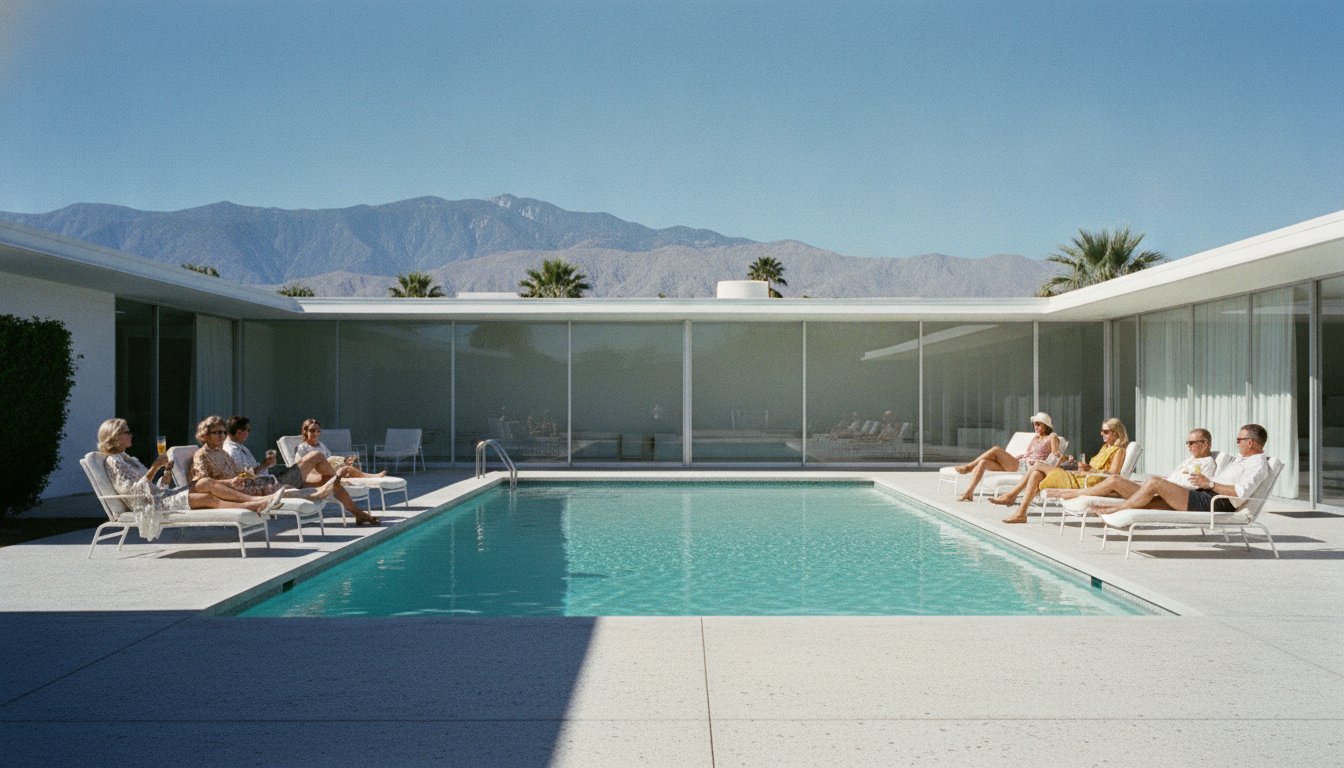
The journey of the fine art reproduction has moved from the heavy limestone blocks of the 19th century to the silent, high-resolution studios of today. While stone lithography offered a revolutionary way to distribute art to the masses, the modern curator often demands a level of detail that traditional plates struggle to maintain. This shift is particularly evident in fine art photography, where the depth of a shadow or the specific grain of a vintage film stock must be preserved with absolute fidelity. For iconic archives like the Slim Aarons collection, the transition to digital standards has allowed for a vibrancy that honors the original transparency in ways older mechanical methods could not achieve.

Why Naming Conventions Matter for Provenance

In the gallery world, naming conventions serve as a shorthand for quality and intended longevity. A giclee is defined as a 12-colour pigment-based process for archival longevity, a standard that ensures the preservation of tonal nuances for centuries. It’s vital to distinguish between “Original Lithographs,” where the artist was directly involved in the plate creation, and “Offset Lithographic Reproductions,” which are often commercial in nature and lack the same archival weight. Whether you’re acquiring Star Wars limited edition prints or exploring music archives, the printing method acts as a seal of quality that dictates how the work will age within your home.

The Giclee Standard: Why It Dominates Fine Art Photography

When weighing the merits of giclee vs lithograph for art prints, the discerning collector must consider the unique demands of the photographic medium. Fine art photography requires a level of tonal precision that traditional mechanical methods often struggle to replicate. The giclee process, an artisanal marriage of technology and material science, has become the industry benchmark for this very reason. By utilizing high-resolution inkjet systems, this method deploys microscopic droplets of pigment with such accuracy that the resulting print is virtually indistinguishable from the artist’s original vision. It’s this microscopic detail that allows for the preservation of the sharpest lines and the softest gradients alike.

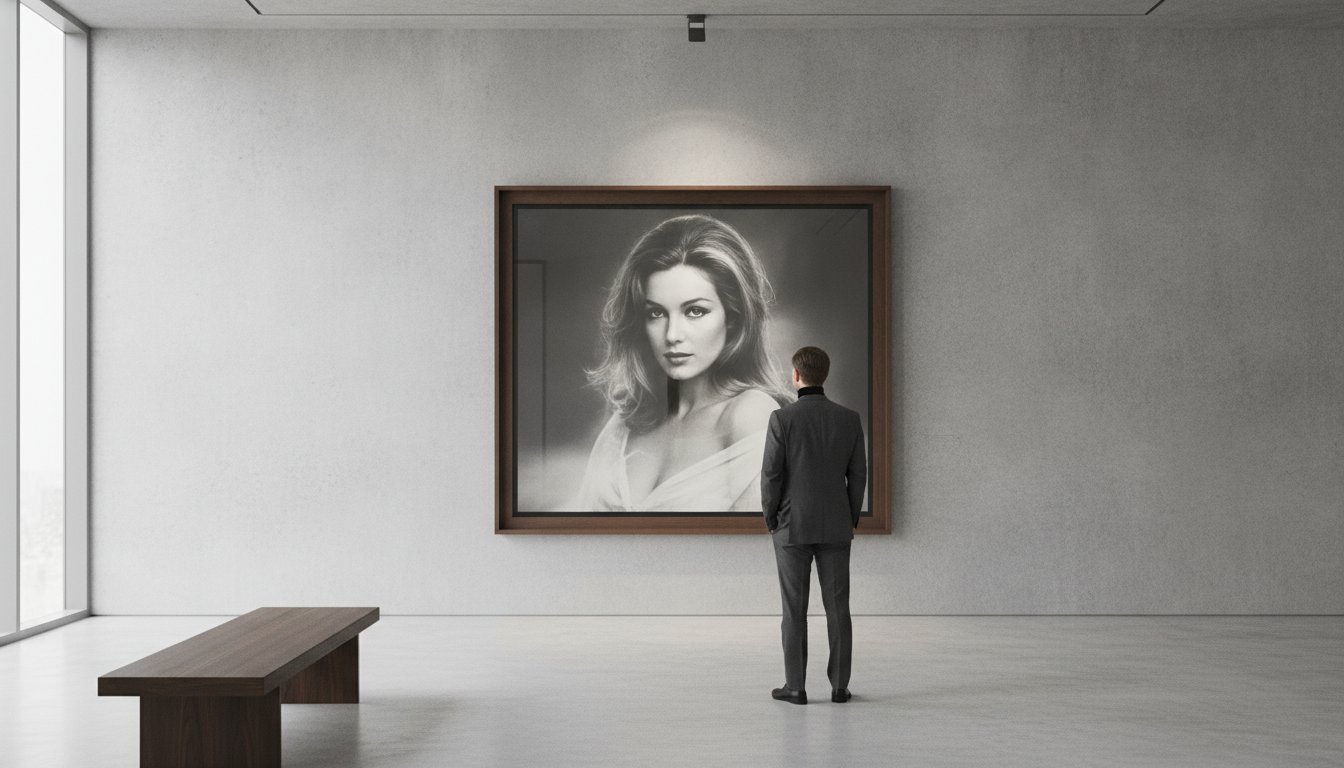
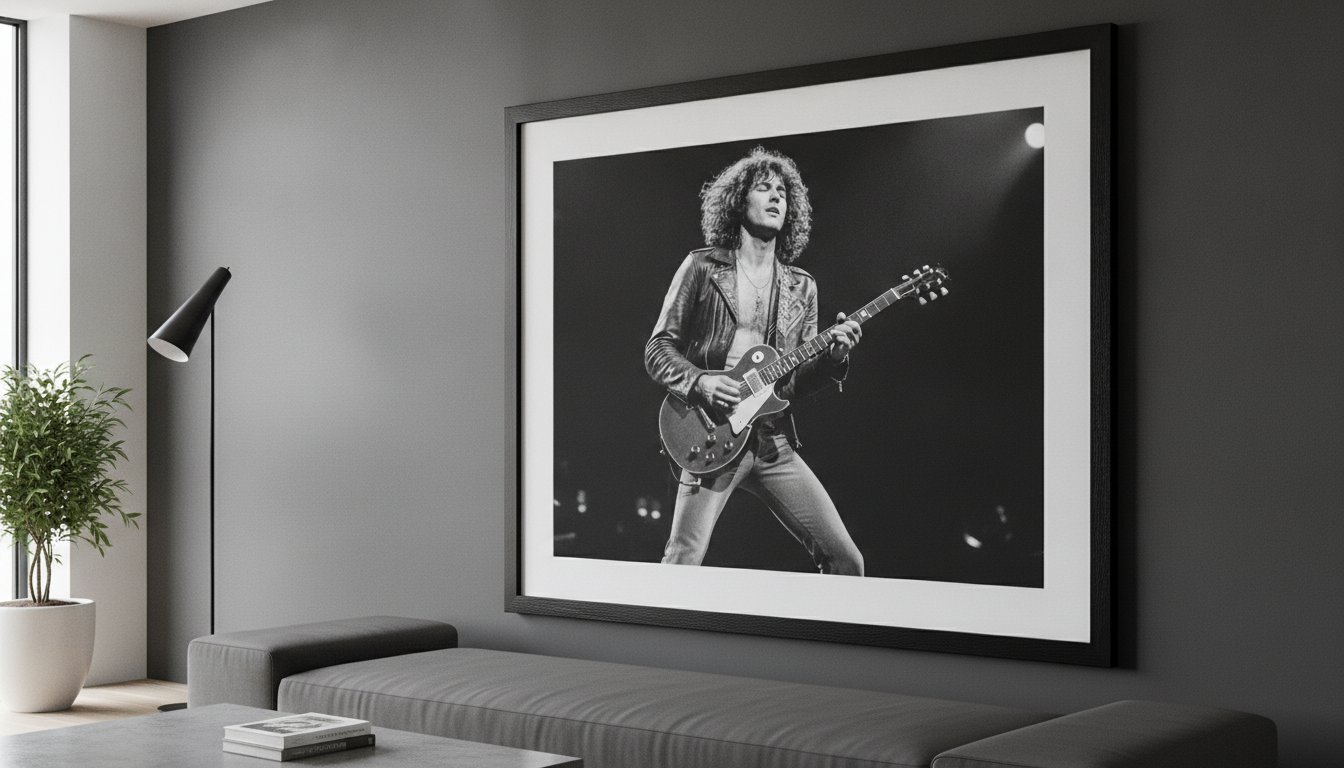
The true power of the giclee standard lies in its expansive colour gamut. While traditional lithography often relies on a four-colour CMYK process, a museum-grade giclee utilizes up to 12 distinct pigment inks. This increased palette allows for a depth and tonal range that is essential for capturing the saturated hues of the Slim Aarons collection or the moody, high-contrast shadows found in Terry O’Neill’s legendary archives. The result is a piece that possesses a luminous quality, drawing the viewer into a world of mid-century elegance and cinematic history.

Beyond the visual impact, the tactile nature of the print defines its prestige. We utilize heavy-weight, acid-free archival papers that provide a substantial, luxurious feel. These papers are specifically designed to absorb the pigment in a way that maintains the integrity of the image while offering a surface texture that feels both timeless and sophisticated. This commitment to material excellence ensures that every acquisition serves as a lasting piece of history for your home gallery.

The Science of Pigment vs. Dye

In the pursuit of archival perfection, the chemistry of the ink is paramount. We exclusively use pigment-based inks rather than the cheaper dye-based alternatives found in commercial printing. Pigment particles are solid and sit on the surface of the paper, providing superior UV resistance and preventing the premature fading that plagues lesser reproductions. This technical choice is why a giclee can maintain its vibrancy for 100 to 200 years, meeting the rigorous standards for museum-grade certification. Furthermore, these solid particles allow for richer, deeper blacks, which are essential for those looking to invest in the timeless allure of black and white photography.

Capturing the Nuance of Historical Film

Historical negatives possess a specific “glow” and grain that define their era. Giclee technology excels at translating these analog characteristics into the digital age without losing the atmospheric soul of the original film. It allows for the production of large-format works that retain every ounce of the negative’s integrity. Unlike traditional lithography, which is inherently constrained by the physical dimensions of fixed metal plates, giclee technology allows for bespoke sizing that adapts to the specific spatial requirements of a collector’s sophisticated interior. This flexibility, combined with uncompromising detail, ensures that your chosen artwork fits perfectly within your architectural vision.

The Mechanical Charm of the Lithograph: Tradition and Technique

While the modern giclee represents the pinnacle of digital fidelity, the lithograph remains a testament to the industrial elegance of a bygone era. It’s a medium rooted in the physical world of plates, rollers, and the rhythmic pulse of the printing press. For the collector, understanding the nuances of giclee vs lithograph for art prints requires an appreciation for this mechanical heritage. The process is planographic, relying on the chemical repulsion between oil and water to transfer an image from a treated surface to a rubber blanket, and finally onto the paper. This journey through the press imbues the work with a flatter, more graphic aesthetic that carries its own unique authority.

The distinction between “Fine Art Lithography” and commercial “Offset Lithography” is critical for those concerned with the provenance of their collection. Offset lithography is a high-volume method that, while capable of producing striking imagery, often lacks the archival weight of its artisanal counterparts. Research indicates that standard offset lithographs have an estimated lifespan of approximately 30 years if not meticulously protected from UV exposure. This stands in contrast to the centuries of permanence offered by pigment-based digital methods. However, the historical significance of the lithograph cannot be overstated. It was the primary medium for cinema lobby cards and vintage movie posters, capturing the vibrant, saturated spirit of Hollywood’s golden age through bold ink layers rather than microscopic dots.

The Tactile Quality of the Press

There’s an evocative, “ink-on-paper” soul to a traditional lithograph that digital processes struggle to replicate. Collectors often find beauty in the slight variations and mechanical textures that arise from the pressure of the rollers. This tactile quality is particularly suited to graphic art and vintage-inspired works where the medium’s inherent flatness complements the composition. It’s a celebration of the printer’s craft, offering a connection to the artisanal heritage of poster art and mid-century graphic design.

Investment and Collectability

In a market increasingly dominated by digital standards, the lithograph maintains its relevance through the principle of scarcity. The “editioning” process for a lithograph is physically finite; the metal or stone plates eventually degrade, naturally capping the number of high-quality impressions that can be made. While a giclee is often printed on demand to ensure bespoke quality, a limited-edition lithograph carries the prestige of a closed run. This inherent rarity ensures that well-preserved lithographs from significant archives continue to command attention at auction, serving as both a decorative centerpiece and a tangible piece of historical media.

Comparing Archival Integrity: Longevity, Texture, and Investment Value

The choice between giclee vs lithograph for art prints ultimately rests on the physical legacy you wish to leave behind. While a lithograph offers a nostalgic connection to the mechanical era of the press, the giclee is the undisputed champion of archival permanence. A giclee print, when produced with the meticulous care we demand, offers an expected longevity between 100 and 200 years. In stark contrast, even high-quality offset lithographs tend to have an estimated lifespan of about 30 years if they aren’t shielded from direct sunlight. This difference in durability defines whether a piece is a fleeting decoration or a permanent fixture of your family’s photographic heritage.

Beyond mere survival, the vibrancy of the image over time is a critical factor for the discerning eye. The superior 12-colour gamut of giclee is particularly vital for those acquiring black and white pictures, where the subtlety of silver-toned highlights and deep, velvet blacks must be absolute. Traditional lithography, while charming in its graphic simplicity, often lacks this tonal range, leading to a flatter appearance that can lose its impact as the inks age. The tactile experience also differs significantly; giclee prints possess a matte, fibrous quality that invites the eye to linger on the paper’s surface, while offset lithography typically presents a smoother, more commercial profile.

The Archival Checklist for Serious Collectors

To ensure a purchase retains its value, you must look beyond the image and examine the materials. A museum-grade print requires a foundation of 100% cotton rag or acid-free alpha-cellulose paper to prevent the yellowing and brittleness caused by wood-pulp alternatives. The ink must be pigment-based rather than solvent-based, as pigments are solid particles that resist the degradative effects of light and humidity. In the world of high-end galleries, these archival standards are non-negotiable markers of quality that justify a premium investment.

The “Poster” vs. “Fine Art Print” Debate

A common misconception is that a giclee is simply an expensive poster. This couldn’t be further from the truth. The distinction lies in the quality of the source file, the precision of the master printer, and the weight of the medium itself. While a poster is a mass-produced commodity, a fine art giclee is a bespoke reproduction that honors the original negative’s integrity. Galerie Prints only utilizes museum-grade production methods to ensure that every work, from Star Wars limited edition prints to our music archives, transcends the category of a mere reproduction. To secure a piece that will stand the test of time, we invite you to browse our curated collection of archival photography.

The final stage of your journey as a collector involves moving from technical theory to spatial application. When deciding between giclee vs lithograph for art prints, you must look closely at the nature of the image itself. Photography, with its complex gradients and atmospheric depth, finds its truest expression in the giclee format. Conversely, graphic art or vintage movie posters, which rely on bold blocks of colour and distinct lines, can thrive within the mechanical constraints of a lithograph. Your choice shouldn’t merely be a matter of preference; it’s an act of curatorial stewardship that ensures the artwork resonates within your specific environment.

Matching the Print to the Interior Aesthetic

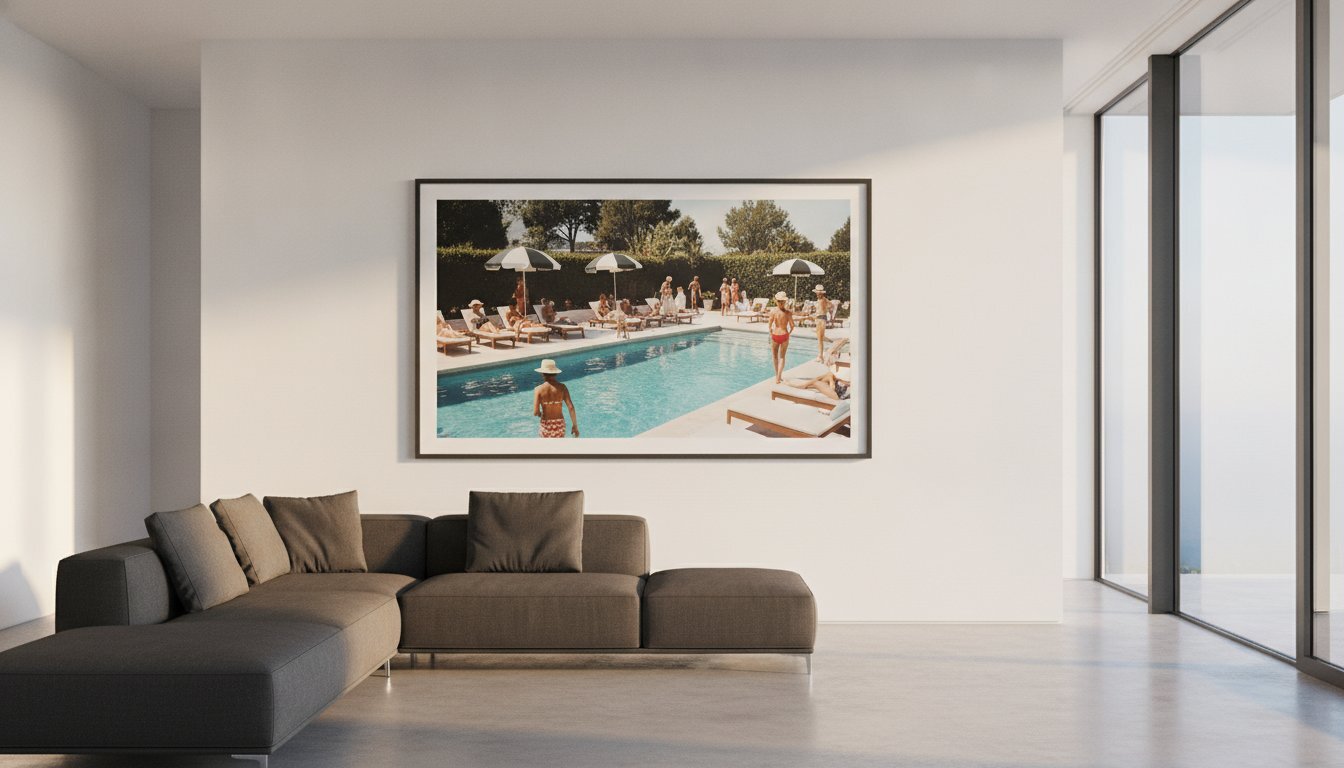
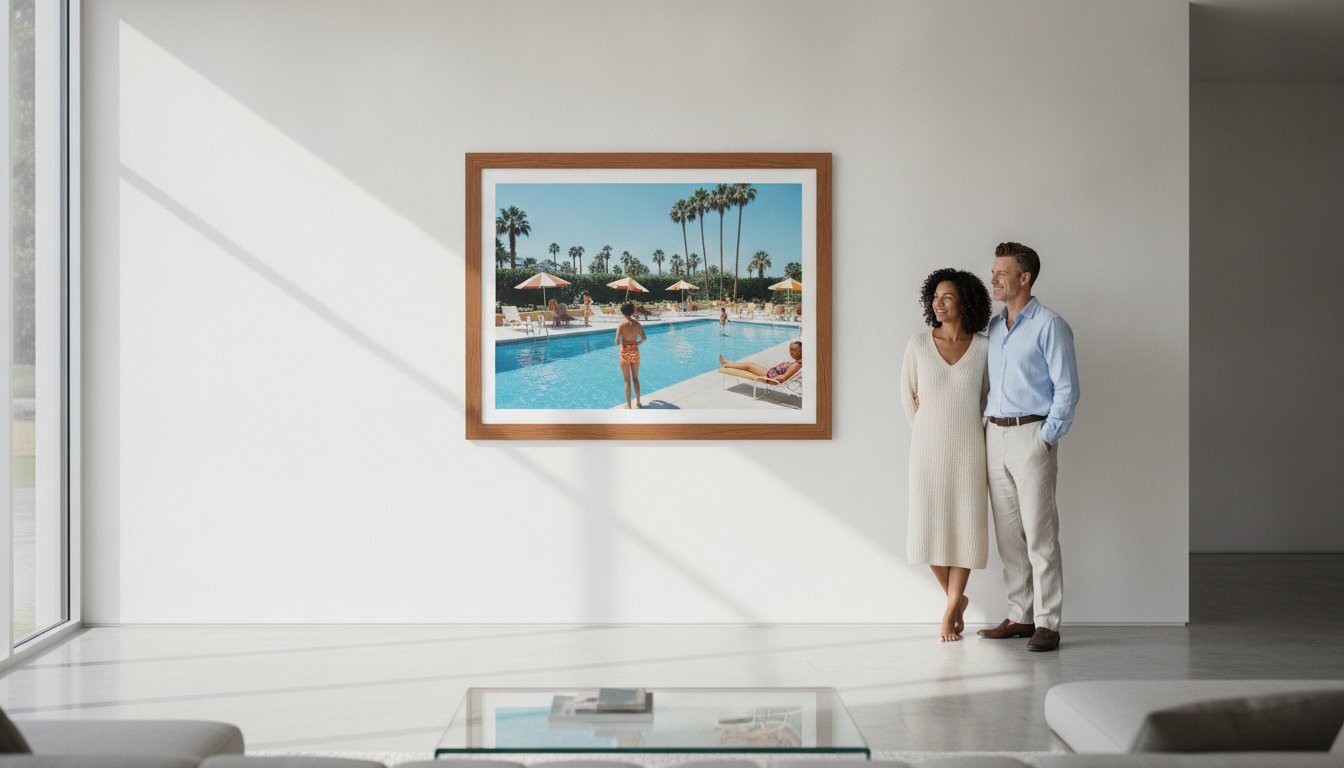
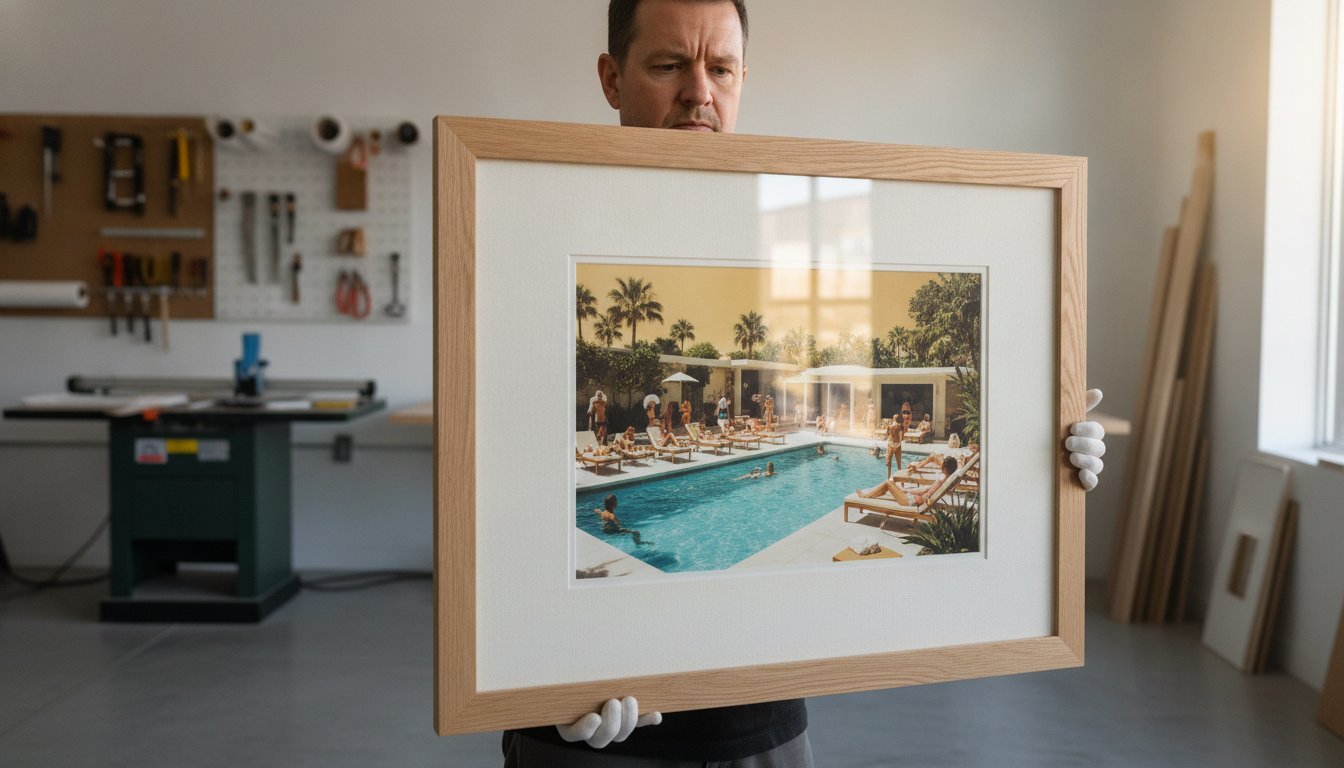
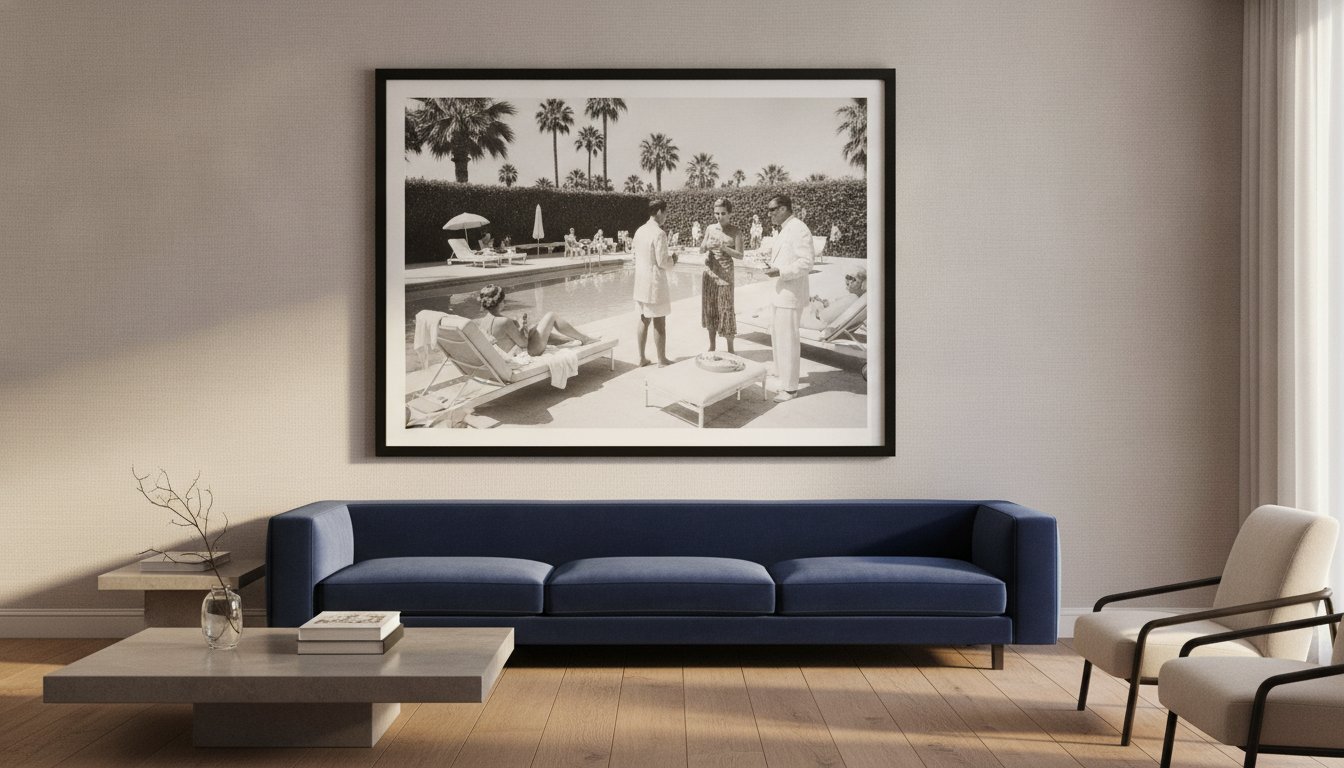
The lush, sun-drenched palettes of the Slim Aarons collection demand a medium that can replicate the exact saturation of a mid-century poolside afternoon. Giclee prints provide this necessary depth, allowing the colours to breathe and vibrate against the heavy-weight texture of archival paper. This tactile quality serves to complement the architectural elements of a room, whether it’s the sleek lines of a modernist villa or the warm wood of a traditional study. For those seeking a dramatic focal point, giclee remains the undisputed king of large-format bespoke requests, offering a scale that lithographic plates cannot physically accommodate without compromising the image’s integrity.

The Final Step: Bespoke Framing as Preservation

Acquiring a high-quality print is only half the battle in the pursuit of a lasting collection. A common oversight in the debate over giclee vs lithograph for art prints is the role of the frame as a protective vessel. Without acid-free mounting, even the finest archival paper will eventually succumb to environmental degradation. Similarly, the pigment-based inks of a giclee require UV-protective glass to prevent fading over the decades. This isn’t just about aesthetics; it’s about structural preservation. A bespoke frame acts as a guardian, shielding the work from the invisible threats of light and humidity while elevating it to a true centerpiece. We invite you to explore our curated collections and select your perfect bespoke frame to complete your acquisition.

Our final recommendation for the serious collector is clear: prioritize giclee for photographic archives. While the lithograph offers a charming nod to history, the giclee ensures lifelong fidelity and museum-grade permanence. By choosing the right medium and pairing it with expert preservation, you are not just decorating a wall. You are securing a piece of photographic history that will remain as vibrant and evocative as the day it was captured.

Securing Your Photographic Legacy

Deciding between giclee vs lithograph for art prints is a pivotal choice for the discerning collector. It’s the difference between a fleeting decoration and an enduring heirloom that preserves the soul of a historical moment. We’ve established that the giclee process provides the necessary archival integrity for high-fidelity photography, ensuring your investment remains vibrant for centuries. While the lithograph offers a nostalgic link to mechanical traditions, the modern digital standard remains the guardian of detail and tonal depth.

As an official partner of the Slim Aarons and Getty Images archives, we take our role as protectors of photographic heritage seriously. Every acquisition is complemented by bespoke, hand-crafted framing from our London studio and protected by museum-grade packaging for global delivery. This commitment to craftsmanship ensures that your chosen work arrives with the prestige it deserves. Browse our curated archives and invest in a museum-quality giclee print today to begin or elevate your personal gallery. Your collection is a lasting piece of history, and it’s our privilege to help you preserve it.

Frequently Asked Questions

Are giclee prints more valuable than lithographs?

The value of a piece typically rests on the rarity of the edition and the prestige of the artist rather than the medium alone. However, when comparing giclee vs lithograph for art prints in the context of photography, giclees often command a premium due to their museum-grade archival standards. While a vintage lithograph may hold value as a historical artifact, a modern giclee from a collection like the Slim Aarons archive is valued for its unparalleled tonal accuracy and 200-year longevity.

How can I tell if a print is a giclee or a lithograph?

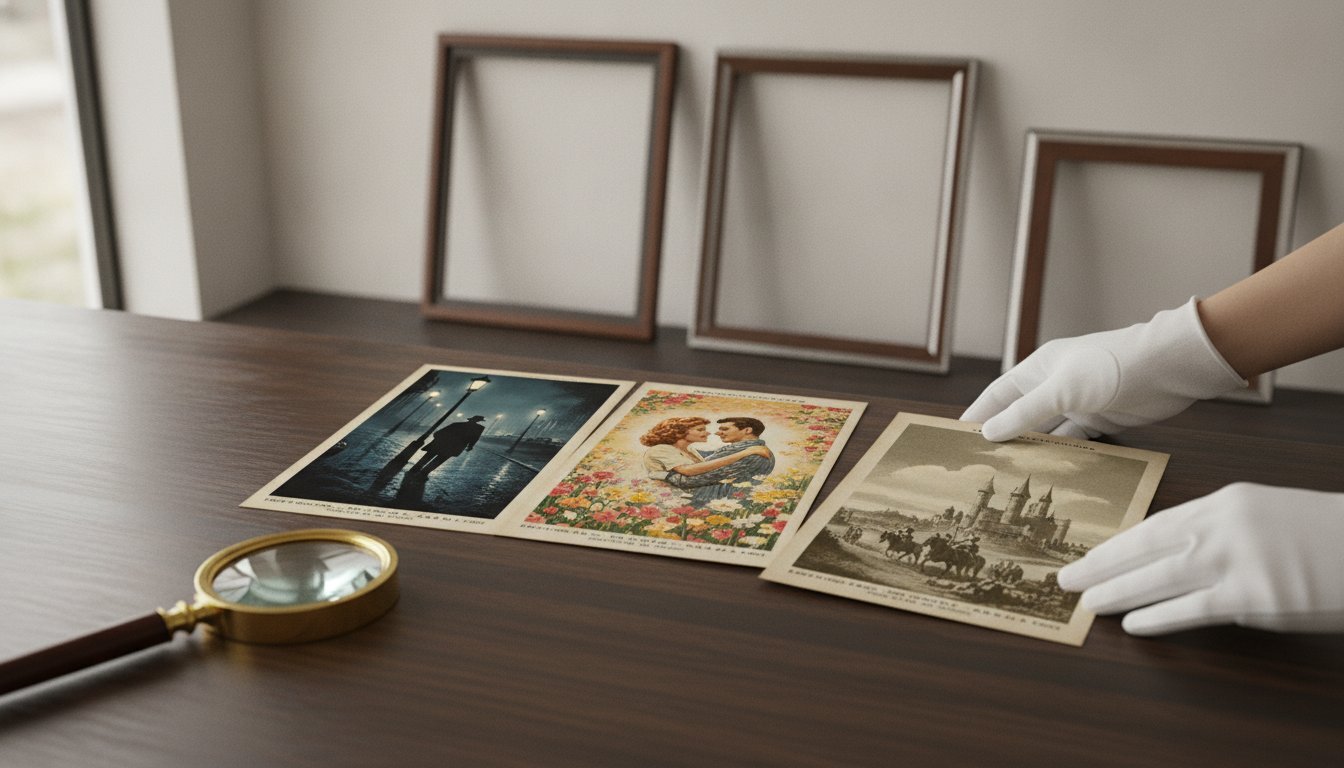
You can distinguish between the two by examining the surface under a magnifying glass or a jeweler’s loupe. A giclee print will reveal a random, seamless spray of microscopic pigment droplets that mimic the continuous tones of a photograph. In contrast, an offset lithograph will show a structured pattern of tiny dots, often in a “rosette” formation, which is the signature of a traditional mechanical press.

Do giclee prints fade over time?

Giclee prints are engineered for permanence and are highly resistant to fading when produced with pigment-based archival inks. Unlike standard dye-based prints that may lose vibrancy within a decade, a giclee has a verified lifespan of 100 to 200 years. To ensure this stability, it’s vital to display the work behind UV-protective glass and keep it away from direct, harsh sunlight.

Is a giclee print considered an “original” piece of art?

A giclee print is defined as a museum-quality reproduction rather than an original work of art. It’s a high-fidelity physical translation of an artist’s original negative, transparency, or digital file. Despite being reproductions, limited edition giclees from iconic archives like Terry O’Neill photography are esteemed by collectors for their technical excellence and their role in preserving photographic heritage.

Why are giclee prints more expensive than standard digital prints?

The cost of a giclee reflects the superior quality of the materials and the artisanal nature of the process. Standard digital prints often use a simple four-colour process, whereas a giclee utilizes up to 12 archival pigment inks to achieve a vast colour gamut. When paired with heavy-weight, acid-free cotton rag paper, the result is a piece with a depth and tactile richness that commercial prints can’t replicate.

Can a lithograph be archival quality?

A lithograph can reach archival standards if it is printed on acid-free, 100% cotton paper using lightfast, fade-resistant inks. While many commercial lithographs are produced for shorter-term display, fine art versions are crafted with greater care. Even with these precautions, the expected lifespan of a high-quality lithograph is generally around 30 to 50 years, which is significantly shorter than the centuries offered by the giclee standard.

What is the best way to clean and maintain a giclee print?

You should treat a giclee print with the same care as a sensitive museum artifact. Never use water, cleaning sprays, or damp cloths, as moisture can permanently damage the pigment layer. Instead, use a soft, dry ostrich feather duster or a clean microfibre cloth to gently lift dust from the surface. The most effective maintenance strategy is to keep the print protected within a bespoke frame and behind UV-filtered glass.

Which printing method is better for black and white photography?

Giclee is the superior medium for black and white photography because the printers utilize dedicated ink channels for various shades of grey, photo black, and matte black. This allows for a neutral tonal balance and deep, velvety shadows that traditional lithography often fails to capture. This precision ensures that monochromatic works from music archives or cinema lobby cards maintain a luminous, silver-toned quality that honors the original film grain.

How to Store Fine Art Prints: A Collector’s Guide to Archival Preservation

What if the most significant threat to your collection isn’t the passage of time, but the invisible chemistry of its immediate surroundings? A fine art print is a silent dialogue between the artist’s vision and the paper’s texture, yet this conversation is remarkably fragile. Without a disciplined approach to preservation, even the most prestigious Terry O’Neill or Slim Aarons photograph can fall victim to the invisible ravages of oxidation and environmental decay. If you’re uncertain about how to store fine art prints to maintain their archival integrity, you’re not alone. Many collectors harbor a quiet fear that a simple storage error might diminish the value of their vintage movie posters or rare Star Wars prints.

It’s natural to feel overwhelmed by the technical nuances of pH-neutral barriers and atmospheric stability. You seek the confidence that your collection will retain its vibrant depth and historical significance for decades. This guide demystifies the curatorial secrets used by the world’s leading galleries to protect museum-quality works. We’ll examine the specific environmental benchmarks while identifying the essential acid-free materials required to safeguard your photographic heritage against the elements, ensuring your investment remains a pristine heirloom for generations to come.

Key Takeaways

  • Learn to manage the environmental alchemy of your storage space to prevent the chemical degradation of historical pigment-based inks.
  • Identify the non-negotiable archival materials, including Solander boxes and lignin-free barriers, required for how to store fine art prints with professional precision.
  • Adopt the professional curator’s “White Glove” rule to safeguard the tactile integrity of your collection during inspection or relocation.
  • Understand the role of bespoke framing as a permanent preservation tool that acts as a protective micro-environment for your most valued acquisitions.

The Stewardship of Art: Why Proper Storage is a Collector’s Duty

Owning high-end imagery isn’t merely an act of decoration; it’s a commitment to historical preservation. Archival storage is defined as the active prevention of chemical and physical degradation over time, ensuring the material remains in its intended state. When you acquire fine art photography, you’re accepting a role as a steward of a cultural artifact. Unlike temporary decorative posters, which are often printed on acidic wood-pulp paper, museum-grade editions are designed for centuries of stability. However, this longevity isn’t a passive guarantee. You must defend the work against the “Three Enemies of Art”: light, humidity, and volatile organic compounds (VOCs). Understanding how to store fine art prints ensures these forces don’t erode the artist’s original intent or the print’s structural integrity.

The Investment Perspective: Protecting Market Value

In the world of high-caliber art, condition is the ultimate arbiter of market value. A minor crease, a hint of yellowing, or the presence of foxing can drastically reduce the resale price of a limited edition piece. Condition reports serve as a clinical biography of the print’s life, documenting every nuance of its physical state. While your Certificate of Authenticity proves the work’s origin, only “mint condition” status secures your long-term financial upside. Professional collectors don’t just buy art; they manage it with the same rigor as a gallery curator to ensure their investment remains untarnished.

A Legacy of Preservation: From Archives to Heirlooms

Meticulous preservation transforms a modern purchase into a cherished family heirloom. Professional galleries adhere to strict photograph preservation guidelines to protect fragile assets like vintage cinema lobby cards. These items weren’t always intended to survive the decades, yet they endure through disciplined care. When you master how to store fine art prints, you’re protecting a specific, tangible moment in cultural history. It’s a bridge between the past and the future, ensuring the emotional depth and tactile beauty of the work remains vibrant for your children and grandchildren.

Environmental Alchemy: Controlling Light, Humidity, and Temperature

The endurance of a masterpiece depends on a delicate chemical equilibrium. When considering how to store fine art prints, you must view your storage space as a controlled laboratory where atmospheric stability is the highest priority. Modern giclée prints utilize a sophisticated technical alchemy where microscopic pigment particles are suspended in a liquid carrier and bonded to archival paper. This process, pioneered in the early 1990s through the Graham Nash legacy, transformed digital scans into museum-quality works. Nash’s insistence on archival stability pushed the industry to move beyond fleeting dyes toward the lightfast pigments we rely on today. These pigments are remarkably resilient, but they aren’t invincible. They require an environment that adheres to the strict museum standard: a stable temperature between 18-20°C and a relative humidity of 40-50%.

Atmospheric stability is your primary defense against the invisible forces of decay. For works not currently showcased behind UV-protective glass, dark storage is a non-negotiable requirement. Light damage is cumulative; even low levels of ambient exposure can slowly break down the molecular bonds of the ink. By following professional conservation storage guidelines, you can ensure that the evocative depth of your collection remains unchanged for decades. If you’re ever in doubt about the safety of your current display, our bespoke framing service provides a sealed, UV-shielded environment that offers the ultimate peace of mind.

Pigment vs. Dye: The Chemistry of Fading

The distinction between pigment and dye is the difference between a legacy and a memory. Dye-based inks are molecularly dissolved in water, making them highly susceptible to rapid fading and “bleeding” when exposed to light or moisture. In contrast, archival pigment is composed of solid particles of color that sit on the surface of the paper; it’s officially rated for 100-year stability under proper conditions. While these pigment particles are far more stable, their lightfastness ratings still depend on your storage choices. Direct sunlight will eventually bleach even the most robust Star Wars limited edition prints, making the choice of a shaded, climate-controlled room essential for long-term preservation.

The Humidity Hazard: Preventing Foxing and Mould

Moisture is perhaps the most insidious threat to paper-based art. High humidity encourages the growth of mould and the development of “foxing,” those distinctive reddish-brown spots that frequently mar antique black and white pictures. These blemishes are often caused by the oxidation of iron or copper particles within the paper fibers when they encounter moisture. Beyond chemical staining, fluctuating humidity causes the paper to “cockle,” creating an unsightly warping or rippling effect as the fibers swell and shrink. To prevent this, never store your collection in basements, attics, or against external walls, as these areas are prone to dampness and rapid temperature shifts. Consistent airflow and a dehumidifier are often necessary tools for anyone serious about how to store fine art prints in a residential setting.

The Anatomy of Protection: Archival Materials and Solander Boxes

The physical preservation of a masterpiece requires more than just a stable room; it demands a physical sanctuary. If you are researching how to store fine art prints, the Solander Box represents the pinnacle of this protection. Invented in the 18th century by botanist Daniel Solander, this book-shaped case remains the gallery standard because it allows prints to lie perfectly flat while offering a rigid, dust-proof barrier. Within this sanctuary, every material that touches the print must meet the non-negotiable standards of being both acid-free and lignin-free. Lignin, a natural component of wood pulp, is the primary culprit behind the yellowing and eventual “burning” of paper fibers. By utilizing alpha-cellulose or cotton rag materials that have been chemically purified, you ensure that the substrate remains as pristine as the day it left the press.

Interleaving is the quiet hero of archival storage. Choosing between Mylar and Glassine depends on the specific needs of your collection. Mylar, a brand of polyester film, is valued for its absolute chemical neutrality and transparency, making it ideal for frequent viewing of Star Wars Limited Edition Prints. Glassine, a translucent and glazed paper, provides a smooth surface that prevents ink transfer or “ghosting” between stacked works. When managing the complexities of how to store fine art prints, these layers act as the final defense against the friction of time and the subtle transfer of pigments.

Why Shipping Tubes are Only for Shipping

Tubes are a logistical necessity, not a storage solution. Paper possesses a “memory” that becomes more stubborn the longer it remains coiled. Long-term storage in a tube leads to permanent curling, making the print nearly impossible to frame without risking structural damage. The act of extracting a large-format print from a narrow cylinder often leads to “mooning” or crushed edges, particularly with fragile cotton rag papers. Beyond the physical risks, standard cardboard tubes often off-gas acidic vapors that can yellow the edges of a Slim Aarons photograph or a vintage movie poster within a few short years.

Selecting Your Substrate Protectors

The choice between buffered and non-buffered materials is a subtle but critical distinction in the art world. Buffered materials contain calcium carbonate to neutralize acids, which is excellent for most giclée prints and modern photography. However, certain historical photographic processes require non-buffered tissue to maintain their specific chemical balance. You should always avoid using adhesive tapes, even those labeled “archival,” directly on the print surface. Instead, utilize polyester corner mounts within your storage folders to secure the work. This method allows the paper to breathe and expand naturally without the risk of adhesive delamination or permanent staining.

The Curator’s Touch: Handling and Maintenance Protocols

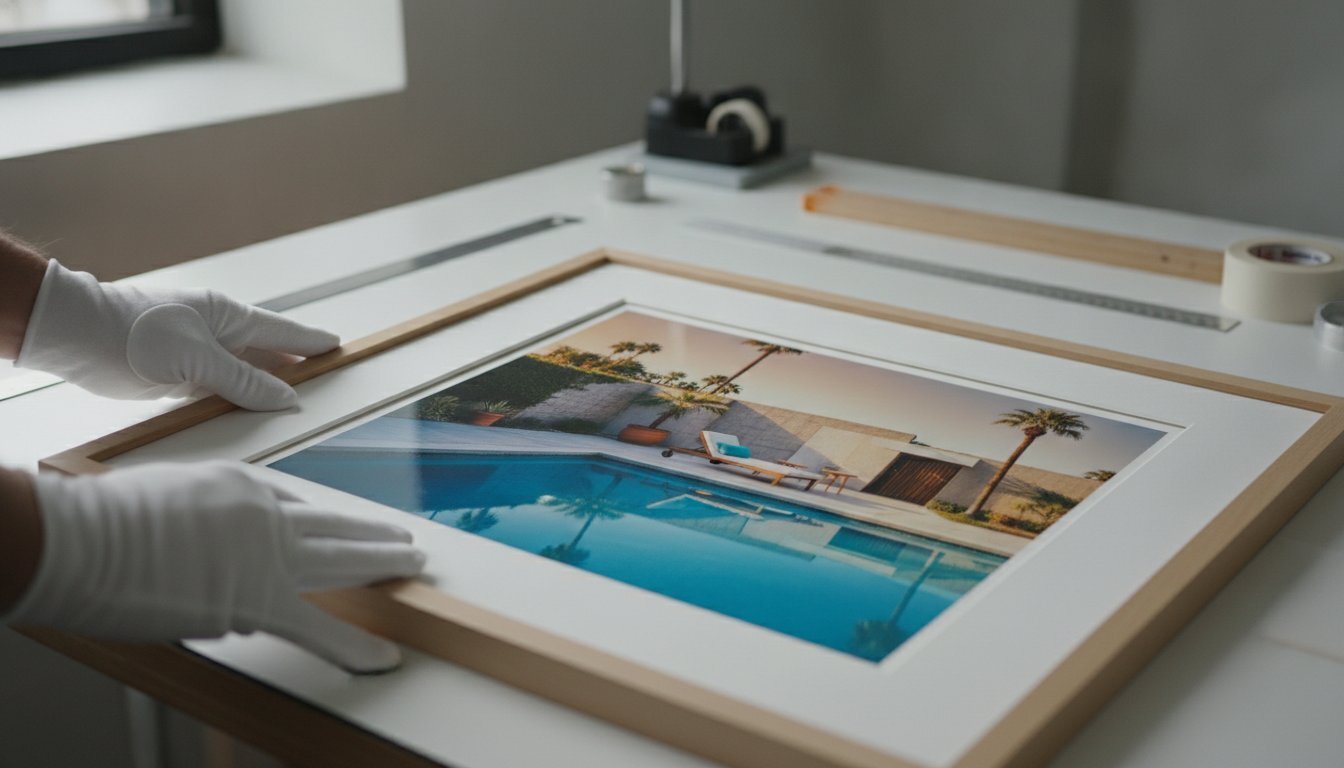
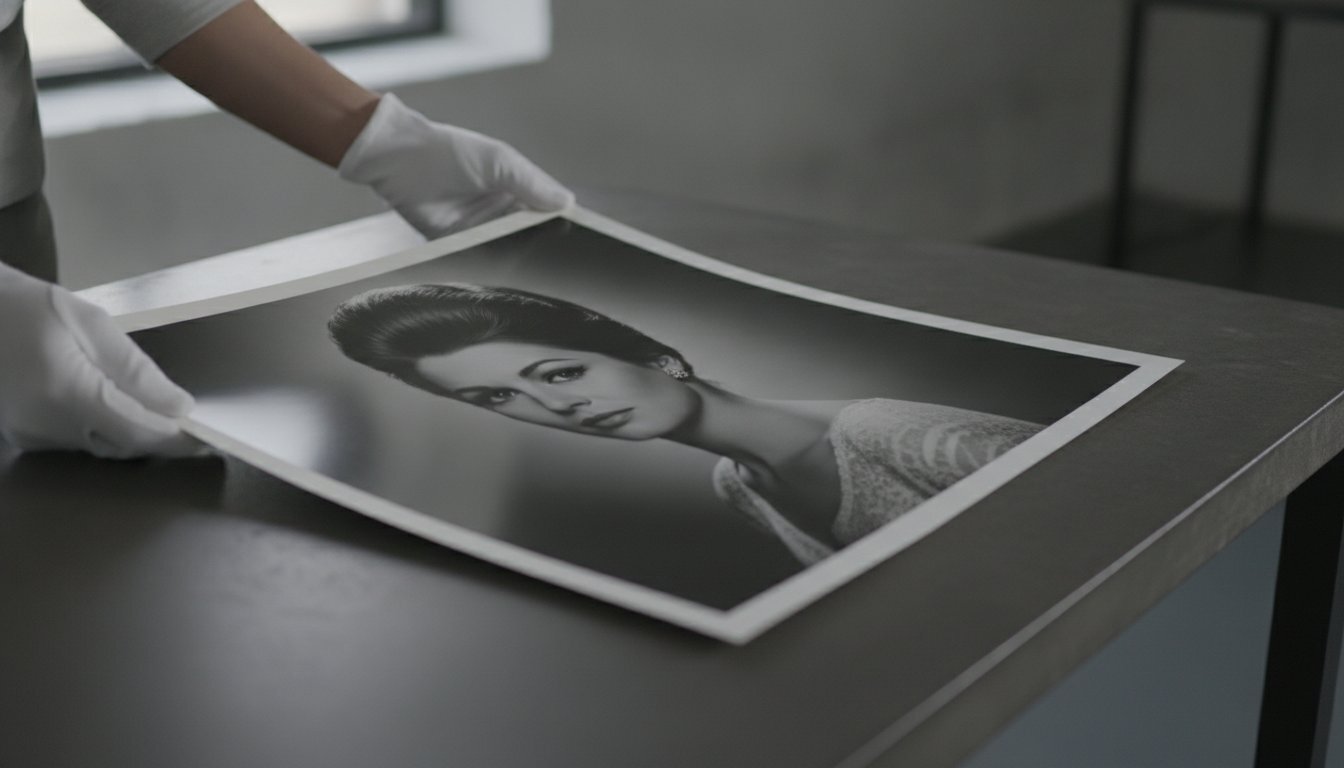
Mastering how to store fine art prints requires a transition from collector to curator, starting with the physical touch. The moment a print is handled is the moment of greatest risk. Even the most pristine storage environment cannot undo the damage caused by a single careless fingerprint. The “White Glove” rule isn’t merely gallery theater; it’s a chemical necessity. The oils naturally present on human skin contain fatty acids and salts that can permanently etch the delicate emulsion of a photographic print, leaving marks that may only become visible years later as they oxidize. When you prepare to inspect your collection, always utilize lint-free cotton or nylon gloves to maintain the tactile integrity of the work.

Before unboxing any acquisition, establish a “Clean Surface” protocol. Your workspace should be a flat, rigid surface, significantly larger than the print itself, and cleared of all potential contaminants. When handling a large-format slim aarons print, never lift it by a single corner. This creates a fulcrum point that leads to “half-moon” creases, which are permanent breaks in the paper fibers. Instead, use two hands to support the print from opposite sides, or better yet, slide a piece of archival board underneath to act as a support cradle. This meticulous approach ensures that the “as-new” condition of your investment remains uncompromised during every viewing.

Unboxing Your New Acquisition

Opening a new shipment is a moment of high anticipation, but haste is the enemy of preservation. Avoid the temptation to reach inside a shipping tube and pull the print out by its edge. This friction can cause “scuffing” on the ink surface. Instead, use a gravity-assisted removal: tilt the tube and let the print gently slide out onto your prepared surface. Once removed, the print will likely retain its curled “memory.” Use the “24-hour Flattening” technique by placing the print between two sheets of acid-free glassine and weighted with archival weights at the corners. During this time, perform a close-range inspection for “silvering” or ink flaking, particularly in high-density color areas where the ink load is heaviest.

The Dangers of DIY Cleaning

A collector’s instinct is to keep their work spotless, but traditional cleaning methods are often destructive. You should never use liquids, glass cleaners, or “canned air” on a giclée surface. The propellants in canned air can leave oily residues, while liquids can cause the pigment-based inks to swell or delaminate. If you notice surface dust, the only safe method is a light pass with a soft hake brush made of natural hair. If you encounter stubborn spots or foxing on vintage movie posters or music archives, stop immediately. These issues require a professional conservator who understands the specific chemistry of historical paper. For the ultimate protection that allows for safe display, consider our bespoke framing service to seal your art away from domestic hazards.

Finally, maintain a rigorous documentation log for your growing collection. Every time a print is moved, inspected, or rehoused, record the date and any subtle changes in its condition. This log, combined with your Certificate of Authenticity, creates a comprehensive provenance that proves your commitment to professional standards. Understanding how to store fine art prints is a journey of constant vigilance, ensuring that the visual impact of your collection never fades.

The Galerie Prints Standard: Bespoke Framing as Permanent Preservation

While a Solander box offers a sanctuary for works in repose, the true culmination of a collector’s journey is the transition from archive to display. Many enthusiasts struggle with the dilemma of how to store fine art prints without hiding them from the world. The solution lies in the sophisticated micro-environment of a gallery-grade frame. At Galerie Prints, our bespoke framing service isn’t merely an aesthetic choice; it’s a rigorous extension of archival science. We view the frame as a sealed vessel, a silent sentinel that guards a Terry O’Neill portrait or a rare Star Wars limited edition print from the subtle, daily threats of a lived-in interior. By utilizing museum-grade materials, we allow you to “store” your art in plain sight, maintaining its “as-new” condition while it graces your walls.

Our London-based artisanal craftsmanship is rooted in the tradition of the master framer, where every component is selected for its chemical neutrality. We utilize only acid-free mounting materials and pH-balanced adhesives to ensure that the paper fibers of your acquisition remain undisturbed. There is a profound synergy between a museum-quality giclée print and a hand-finished frame. This partnership creates a stable atmospheric pocket that buffers the work against the temperature shifts and humidity fluctuations discussed in earlier chapters. It’s a commitment to localized, artisanal quality that serves as a seal of excellence for any serious collection.

Sealing the Heritage: The Anatomy of a Gallery Frame

The structural integrity of a frame depends on what remains invisible to the casual observer. We employ archival spacers to create a vital gap between the print surface and the glass. This prevents the delicate pigment-based inks from bonding to the glazing, a common tragedy in non-professional framing caused by moisture condensation. Our frames utilize high-density, archival backing boards that act as a primary defense against moisture ingress from external walls. These frames are designed to be heirlooms themselves, constructed with the same reverence for permanence as the Star Wars Limited Edition Prints or Music Archives they protect.

Quiet Authority: Selecting Frames for Your Collection

Choosing the right profile is an exercise in quiet authority. A frame should complement the aspirational lifestyle captured in iconic Slim Aarons photography without competing for attention. By incorporating UV-protective museum glass, which blocks 99% of harmful rays, we significantly reduce the need to rotate works out of sunlight. This advanced glazing allows the deep blacks of a vintage movie poster or the vibrant hues of cinema lobby cards to remain vivid for decades. Our ready-to-hang luxury experience ensures that from the moment a work leaves our London workshop, it’s prepared to endure as a lasting piece of history in your home.

Securing Your Photographic Legacy for the Future

The journey from a fleeting moment captured on film to a lasting family heirloom requires more than just appreciation; it demands active stewardship. By mastering the environmental alchemy of temperature and humidity and selecting only the finest Solander cases and acid-free barriers, you’ve gained the curatorial knowledge necessary to protect your investment. Understanding how to store fine art prints is the final, essential step in becoming a true connoisseur of the photographic medium. Whether you’re housing a rare music archive or a vibrant cinema lobby card, these protocols ensure that the visual impact of your collection remains as evocative tomorrow as it is today.

With a deep commitment to preserving photographic history, Galerie Prints stands as a dedicated guardian of photographic heritage. We specialize in the iconic Slim Aarons and Terry O’Neill archives, offering bespoke, hand-made framing in our London workshop to provide the ultimate protective micro-environment. Your collection is a window into a bygone era of elegance, and it deserves nothing less than professional-grade preservation. Explore our curated collection of museum-quality Giclée prints and begin building a legacy that will inspire wonder for generations to come.

Frequently Asked Questions

How long do fine art prints last if stored correctly?

High-quality giclée prints can endure for more than 100 years without visible fading. This impressive longevity depends on the use of pigment-based inks and 100% cotton rag paper. When you maintain museum-grade environmental controls, your collection becomes a lasting piece of history for future generations.

Is it safe to store my art prints in the original shipping tube?

Shipping tubes are designed for transport, not for permanent storage. The physical “memory” of the paper will cause stubborn, permanent curling if it’s left coiled for more than a few weeks. Additionally, standard cardboard often off-gasses acidic vapors that can yellow the edges of your photography.

Do I really need to wear gloves when handling my photography prints?

Wearing lint-free cotton or nylon gloves is a non-negotiable requirement for any serious collector. Fingerprints are more than just surface smudges; they’re deposits of fatty acids and salts. These chemicals can permanently etch the delicate emulsion of a print over time, leaving marks that are impossible to remove.

What is the best temperature and humidity for storing art at home?

You should aim to maintain a stable temperature of approximately 20°C and a relative humidity between 40% and 50%. When researching how to store fine art prints in a domestic setting, remember that stability is your primary goal. Rapid fluctuations in these levels are what cause paper fibers to swell, leading to unsightly warping or cockling.

What is a Solander box and do I need one for my collection?

A Solander box is a specialized, acid-free case with a book-shaped design that protects prints from light, dust, and physical pressure. It remains the gallery standard for archival storage across the globe. If you own rare photography or Star Wars limited edition prints, it’s a necessary investment to ensure their long-term preservation.

Can I store my prints in a plastic storage bin from a hardware store?

Most hardware store bins are made from plastics that off-gas volatile organic compounds, which can be highly destructive to art. These vapors often lead to yellowing or the chemical breakdown of the ink. If you must use plastic, ensure it’s chemically inert polypropylene; however, archival-grade Solander boxes are always the superior choice.

How do I tell if my print has been damaged by “foxing”?

Foxing manifests as distinctive reddish-brown or yellowish spots that appear scattered across the paper’s surface. It’s a chemical reaction typically caused by fungal growth or the oxidation of metallic impurities within the paper when exposed to high moisture. If you notice these blemishes, it’s a sign that your storage environment is too humid.

Why is archival-grade paper so important for long-term storage?

Archival paper is chemically purified to be entirely acid-free and lignin-free, preventing the internal structural decay that turns ordinary paper brittle. This purity provides a stable foundation that allows pigment-based inks to remain vibrant. Understanding these material differences is a foundational part of how to store fine art prints with professional-grade results.

The Ultimate Unique Anniversary Gift for Art Lovers: A Curator’s Guide

What if the most profound expression of your shared history isn’t found in a jewelry box, but within a frame that preserves a moment of timeless elegance? Finding a truly unique anniversary gift for art lover often feels like a high-stakes search through a sea of mass-produced replicas and uninspired marketplace finds. You likely agree that a milestone celebration deserves more than a fleeting gesture; it requires a piece with genuine provenance and an aesthetic legacy that matures alongside your relationship.

We promise to help you move beyond the generic and discover how to select a work of photographic history that serves as a permanent heirloom for your partner. This curator’s guide provides the expertise needed to understand the nuances of high-caliber visual art, from the sun-drenched glamour of the Slim Aarons collection to the iconic, intimate portraits of Terry O’Neill. We will explore how to identify museum-grade quality and utilize bespoke framing to ensure your gift earns the reaction it deserves while anchoring your home with a sense of cultural prestige and lasting stability.

Key Takeaways

  • Move beyond the limitations of traditional gift lists by focusing on pieces that offer narrative depth and historical provenance.
  • Learn how to decode your partner’s specific visual language to select a unique anniversary gift for art lover that resonates with their personal aesthetic.
  • Explore the prestige of rare archives and cinema lobby cards to secure a gift with genuine cultural heritage and long-term value.
  • Understand why archival production standards and bespoke framing are essential for transforming a photograph into a multi-generational heirloom.
  • Discover the curator’s method for selecting artwork that fits your home’s architecture, including how to identify the ideal hero wall.

The Art of the Anniversary: Why Generic Gifts Fall Short for Connoisseurs

For the true connoisseur, a gift is never merely an object; it’s a sophisticated dialogue between the past and the present. An art lover seeks more than simple visual appeal. They demand a narrative, a mastery of technique, and a documented provenance that anchors a piece within the wider cultural landscape. When you begin the search for a unique anniversary gift for art lover, the standard retail options often feel hollow and disconnected. They lack the soul of a work that has witnessed history or captured the essence of a definitive social movement. A generic choice might fill a space on a wall, but it won’t resonate with the intellectual depth that a serious collector appreciates.

Traditional celebrations often lean on the history of anniversary gifts, which categorizes years by materials like paper, cotton, or tin. While these traditions offer a nostalgic framework, they frequently lead to uninspired, safe choices that fail to ignite the imagination of someone with a discerning eye. A modern heirloom in fine art photography transcends these rigid categories. It offers an evocative window into a specific era, perhaps the sun-drenched poolside elegance of a Slim Aarons mid-century masterpiece or the raw, monochromatic intensity of a Terry O’Neill portrait. These images don’t just decorate a room; they invite the viewer into a lifestyle of bygone grace and prestige.

The Challenge of Gifting for the Discerning Eye

Discerning eyes quickly distinguish between “decor,” which merely occupies a room, and “collectable art,” which defines it. A meaningful gift must reflect the shared aesthetic language of a couple, acting as a permanent testament to their collective journey. It’s about finding that specific image where the story behind the shutter, including the artist’s intent and the moment’s rarity, matches the weight of the occasion. When art is selected with curatorial precision, it moves beyond the transactional and becomes a shared piece of your home’s identity.

Moving Beyond the “Paper Anniversary” Cliché

Consider the first anniversary, traditionally represented by paper. Instead of a simple card or a generic book, imagine the impact of a museum-grade print. This is the ultimate reimagining of the theme. By choosing high-caliber photography, you bridge the gap between historical nostalgia and contemporary interior design. Galerie Prints operates as a guardian of this photographic heritage, ensuring that every piece is more than a purchase. It’s an investment in a legacy. Unlike modern digital illustrations that often lack tactile depth and historical weight, archival photographic prints possess a physical presence and a verified connection to the original source materials, providing a sense of permanence that digital media cannot replicate.

The Allure of Photographic Heritage: Investing in a Piece of History

Investing in photographic heritage means choosing permanence over the temporary. It’s a commitment to preserving the moments that defined our collective culture. Unlike the ephemeral nature of digital media, high-caliber photography captures the “spirit of an age” with an authenticity that no other medium can replicate. By securing works from world-renowned archives such as Getty Images, collectors acquire a unique anniversary gift for art lover that carries the weight of genuine cultural heritage. These pieces are not merely prints; they are windows into a bygone era of elegance. This connection to the history of photography is maintained through the meticulous preservation of historical negatives, ensuring that every image retains the clarity and soul of its original capture.

Our gallery serves as a bridge to this world of prestige, offering exclusive access to limited editions and rare cinema memorabilia that are rarely found in traditional retail settings. We prioritize the technical mastery involved in production, treating each piece with the reverence it deserves. This artisanal approach justifies the exclusivity of our collections, positioning them as significant assets for any serious home gallery. Browsing the curated collections at Galerie Prints allows you to step into this elite world of beauty, where every frame tells a story of celebrity, style, and historical significance.

Slim Aarons and the Aspirational Lifestyle

For those captivated by the effortless grace of mid-century high society, Slim Aarons remains the definitive choice. His lens documented a world of sun-drenched poolsides and manicured lawns, famously described as “attractive people doing attractive things.” This “Poolside” aesthetic has become the gold standard for luxury home decor, offering a sense of escapism and aspirational beauty that remains timeless. It’s a sophisticated way to introduce vibrant color and narrative depth into a shared living space, making it a favorite for milestone anniversaries.

Terry O’Neill and the Golden Age of Celebrity

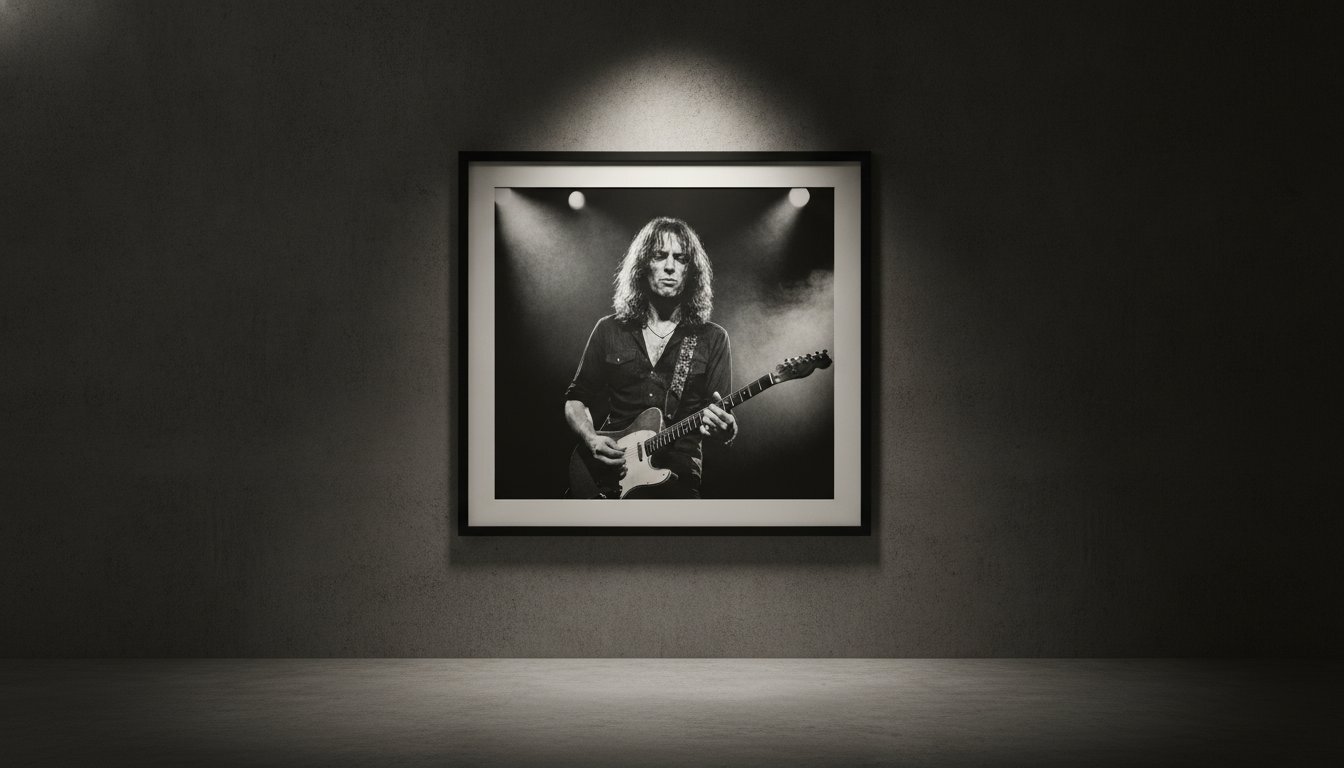
If your partner finds inspiration in the raw energy of the 1960s and 70s, the candid portraits of Terry O’Neill offer an unparalleled intimacy. O’Neill transformed celebrity photography from simple journalism into fine art. He captured icons like David Bowie, Mick Jagger, and Frank Sinatra in moments of quiet reflection or backstage spontaneity. For a music enthusiast, a rare, limited edition shot from these archives is more than a gift; it’s a piece of the legend. These works represent the transition of the medium into a respected art form, ensuring their place in any discerning collection.

Matching the Gift to Their Passion: Curated Collections for Every Aesthetic

Selecting a masterpiece requires an intimate understanding of your partner’s visual language. This isn’t about matching a piece of furniture to a wall; it’s about aligning a physical object with an intellectual passion. A unique anniversary gift for art lover should speak to their specific curiosities, acting as a sophisticated extension of their personality. Whether they’re drawn to the structured nostalgia of a vintage film set or the raw energy of a live concert, the gift must feel like a curated choice rather than a convenient purchase. By identifying the themes that resonate with your partner, you ensure the artwork becomes a permanent fixture in their life, not just their home.

For the cinephile, the living space becomes a gallery of Hollywood history through the integration of Cinema Lobby Cards and vintage posters. These items offer a tactile connection to the golden age of film, providing narrative depth that modern digital prints simply cannot match. Meanwhile, the melomaniac finds inspiration in our Music Photography collection, which brings the soul of the recording studio and the intensity of the stage into the domestic sphere. Even the minimalist, who favors clean lines and quiet authority, can find a “forever” piece within our selection of Black and White Pictures, where form and light take precedence over the distractions of color.

For the Film Enthusiast: Rare Cinema Memorabilia

Original lobby cards hold a unique appeal for the serious film lover. These were once displayed in theater foyers to entice audiences, and today, they serve as rare artifacts of cinematic heritage. Owning a limited edition print from the Star Wars archives or an authentic Jaws poster is an investment in cultural history. These pieces carry a prestige that grows over time, especially when they represent the definitive work of legendary directors and studios. They provide a sophisticated way to celebrate a shared love for the silver screen while maintaining a high-end gallery aesthetic.

For the Music Devotee: Capturing Sound and Soul

Music photography adds a rhythmic energy to any room. It captures the definitive moments of rock and roll history, from backstage quietude to the explosive power of a stadium performance. When you select a print from the music archives, you’re often tapping into a “favorite song” memory or a specific era that shaped your partner’s identity. These images do more than fill a space. They evoke the sound and soul of the artists who defined generations, making them a deeply personal and evocative choice for a milestone anniversary celebration.

The Significance of Quality: Archival Standards and Bespoke Framing

A milestone celebration demands a gift that possesses the same endurance as the commitment it honors. When you invest in a unique anniversary gift for art lover, you’re offering more than a visual experience. You’re providing a promise of longevity. Unlike the ephemeral nature of mass-produced decor, museum-grade photography is engineered to survive generations. This stability is achieved through the rigorous application of archival standards. It ensures that the vibrant colors of a Slim Aarons poolside or the deep monochromatic blacks of an O’Neill portrait remain as striking decades from now as they are on the anniversary morning.

The technical superiority of our production process centers on the Giclée method. This involves the precise application of pigment-based inks onto heavy-weight, acid-free surfaces. While standard commercial prints often utilize dye-based inks that succumb to UV degradation and atmospheric moisture, our archival prints are designed to resist fading and yellowing. This meticulous attention to material science is what transforms a simple photograph into a valuable heirloom. It ensures the piece retains its intellectual and aesthetic value, providing a tactile sense of quality that is immediately apparent to the touch. This artisanal approach justifies the premium positioning of our collections, offering a sense of stability that mass-market alternatives simply cannot replicate.

Museum-Quality Archival Paper: What It Means

The distinction between a standard poster and an archival fine art print lies in the composition of the paper. We utilize heavy-weight, fiber-based materials that provide a rich, textured finish. These acid-free papers prevent the chemical breakdown that causes lesser works to become brittle or yellow over time. By pairing these materials with high-stability pigments, we guarantee a level of permanence that meets museum requirements. This commitment to quality reinforces the provenance of the work, linking the physical print directly to the historical integrity of the original source negative.

Bespoke Framing: The Final Curatorial Touch

A masterpiece is only complete when it’s presented with the reverence it deserves. Bespoke framing serves as both a protective shield and a stylistic anchor, integrating the artwork into your home’s specific architecture. Whether you choose the quiet authority of a classic black frame, the clean lines of white, or the warmth of natural wood, our artisanal craftsmanship ensures a gallery-perfect finish. Every piece arrives ready-to-hang, allowing you to focus on the emotional impact of the moment. Explore our Bespoke Framing Service to complete your selection with professional precision.

Curating Your Legacy: How to Choose at Galerie Prints

Selecting a unique anniversary gift for art lover requires a shift in perspective, moving from the role of a consumer to that of a discerning curator. This process is about more than just aesthetics; it’s about anchoring a piece of cultural history within your personal sanctuary. Start by identifying the “Hero” wall in your home, the primary architectural focal point where a significant work can command the attention it deserves. Once the location is secured, consider the emotional temperature of the space. A monochromatic portrait offers a quiet, timeless authority, whereas the vibrant, sun-soaked palettes found in the Slim Aarons collection inject a room with mid-century optimism and social grace.

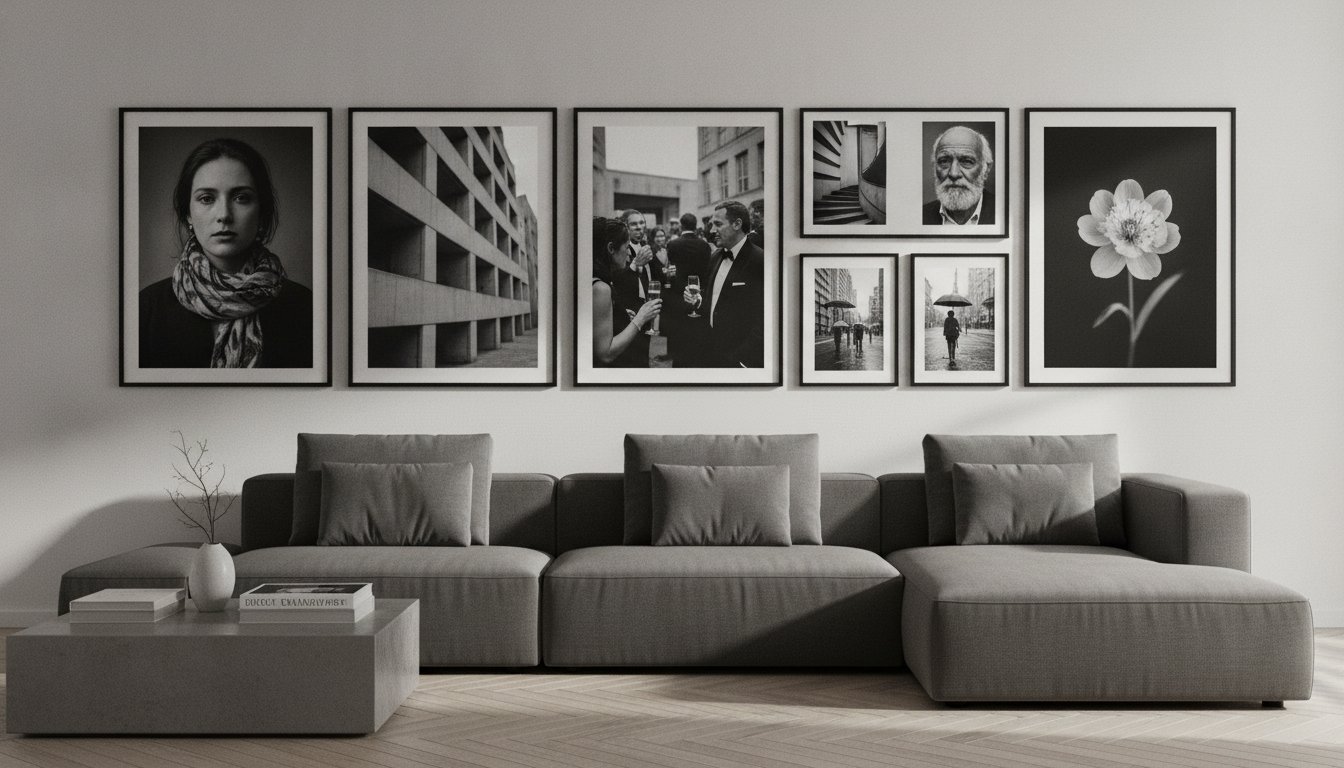
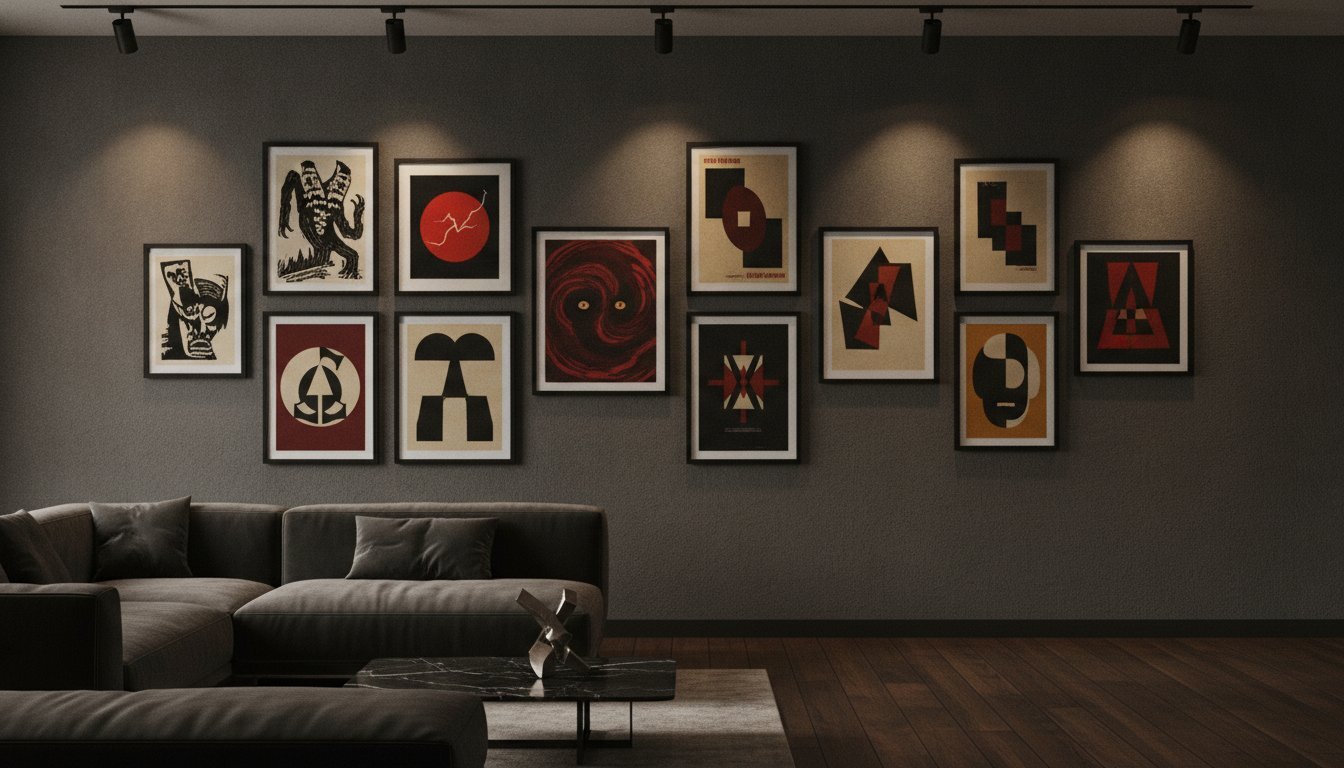
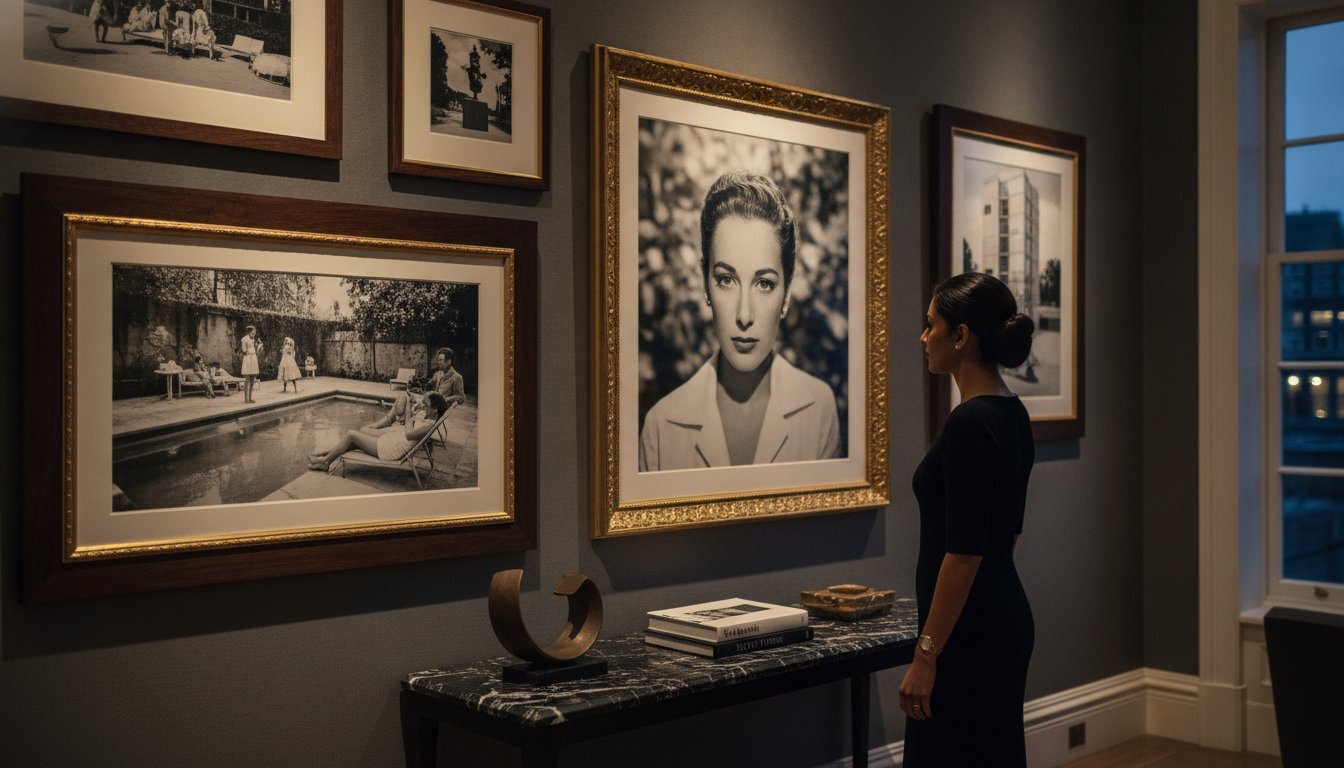
Scale and presentation are the final elements of this curatorial journey. A singular, grand statement piece acts as an anchor for the entire room’s design, while smaller prints can be grouped to create a narrative gallery wall. We suggest selecting a framing style that respects the home’s existing architecture, whether that involves the warmth of natural wood or the precision of gallery black. To truly elevate the gesture, include a personalized note detailing the photographer’s legacy. Sharing the story of the artist’s life and technique transforms the object into a cherished heirloom, ensuring the recipient understands the profound provenance of their new acquisition.

Sizing Your Statement: From Intimate to Grand

Dimensions must be chosen with care to ensure the artwork neither overwhelms the room nor gets lost in the expanse. A professional guideline often used in galleries is the “eye-level” rule, where the center point of the framed piece sits approximately 145 centimeters from the floor. This placement creates a natural connection between the viewer and the image. For larger walls, combining multiple prints from the same archive can create a powerful storytelling effect, allowing you to curate a visual journey that reflects your shared tastes and experiences.

The Galerie Prints Experience

Our gallery operates with a deep reverence for the medium, maintaining a commitment to localized, artisanal craftsmanship that acts as a seal of quality for every collector. We understand the weight of your investment, which is why we utilize museum-grade packaging and secure global shipping to ensure each piece arrives in pristine condition. This meticulous attention to detail ensures that the moment of unveiling is as flawless as the art itself. Explore our curated collections and find your unique anniversary gift today to begin your journey into the world of elite photographic heritage.

Curating a Legacy of Shared Beauty

Choosing a unique anniversary gift for art lover is a deliberate act of curating your shared history. You’ve moved beyond the predictable and embraced the permanence of photographic heritage. By aligning your partner’s specific visual language with the prestige of world-renowned archives, you’ve selected a piece that offers both emotional resonance and cultural significance. This choice reflects a deep understanding of their passion, transforming a traditional celebration into a milestone of artistic appreciation.

Every acquisition from our collection represents a commitment to technical excellence. As an official Getty Images Gallery partner, we ensure that each work meets museum-quality archival standards, preserved on heavy-weight paper designed to last for generations. When paired with our bespoke hand-finished framing, your selection transforms from a mere image into a definitive statement of elegance within your home. The right piece of art doesn’t just fill a space; it anchors a lifetime of memories. We invite you to Discover the Perfect Anniversary Gift in Our Curated Collections and find the work that speaks to your unique story. Your journey into the world of high-caliber art begins with a single, meaningful frame.

Frequently Asked Questions

What is the best anniversary gift for an art lover who has everything?

The ideal choice for a collector who seemingly possesses everything is a piece with significant cultural provenance, such as a rare Terry O’Neill portrait or an original cinema lobby card. These items offer a narrative depth that standard luxury goods cannot match. By gifting a specific moment in time, you provide an intellectual and emotional connection that feels personal and irreplaceable. It’s an investment in a legacy rather than a mere acquisition.

Is a fine art print considered a “unique” gift?

A museum-grade photographic print is a unique anniversary gift for art lover because it represents a finite piece of history rather than a mass-produced decoration. Limited editions and rare archival selections ensure that the work remains exclusive and prestigious. When you choose a print with verified provenance, you’re securing a tangible asset that retains its aesthetic and historical value within a private collection.

How do I choose art for my partner if I don’t know their exact taste?

You can identify the right piece by observing the cultural eras, musical genres, or cinematic movements your partner finds most compelling. Instead of guessing their taste in abstract forms, look for “visual language” cues in their favorite films or the music archives they admire. Selecting a piece that mirrors their personal history ensures the gift feels intentional. Our curators often suggest starting with a “hero” image that defines an era they love.

What is the “Paper Anniversary” and why is photography a good fit?

The “Paper Anniversary” marks the first year of marriage, and an archival photographic print is the most sophisticated way to honor this tradition. While traditional paper gifts can feel transient, a museum-quality print on heavy-weight fiber paper represents permanence and stability. It bridges the gap between historical custom and high-end interior aesthetics, offering a lasting heirloom that celebrates the start of your shared journey.

How long does a bespoke framed print take to be delivered?

Production for a bespoke framed print typically requires approximately four working weeks to ensure every detail meets our artisanal standards. Once the craftsmanship is complete, delivery generally takes an additional three working days. We recommend placing your order well in advance of the milestone date. This deliberate timeline reflects the meticulous care involved in hand-finishing each frame and preparing the museum-grade packaging for secure transport.

What makes a Slim Aarons print a good investment?

A Slim Aarons print serves as a sound investment due to his unparalleled status as the chronicler of mid-century high society. His work captures a definitive aspirational lifestyle that continues to influence modern interior design and luxury fashion. Because these images are sourced from the original negatives and produced to archival standards, they maintain their clarity and value. They are recognized globally as icons of elegance and social history.

Can I get advice on which frame suits a specific photograph?

Our bespoke framing service provides professional guidance to help you select a finish that complements both the artwork and your home’s architecture. You can choose from classic black or white frames for a gallery-style finish, or opt for natural wood to add warmth to a space. Each frame is hand-finished to ensure it protects the print while enhancing its visual impact, arriving ready to hang on your anniversary morning.

Do your prints come with a certificate of authenticity or provenance?

Every print we offer is produced to museum-quality archival standards, ensuring its long-term stability and integrity. As an official partner of the Getty Images Gallery, we provide works with a clear lineage and connection to the original source material. While we focus on the technical and historical preservation of each piece, the provenance is anchored in our access to world-renowned archives and traditional production methods.

Luxury Wedding Gift Ideas: The Art of Gifting Iconic Fine Art Photography

Did you know that approximately 50% of wedding guests in 2026 now intentionally bypass the official registry to seek out something truly unique? It’s a natural response to an era where most couples already possess the functional basics of a home. You likely feel the pressure to find a gift that avoids the mundane and instead offers a sense of prestige and permanence. Selecting luxury wedding gift ideas art collectors would envy ensures your contribution becomes a cornerstone of their new life together rather than just another item in a cupboard.

We believe that iconic fine art photography is the ultimate enduring wedding gift, acting as both a window to a glamorous heritage and a physical heirloom for the future. In this article, you’ll learn how to choose a piece that resonates with a couple’s personal narrative, whether it’s the sun-drenched elegance of a Slim Aarons print or a cinematic Terry O’Neill archive. We’ll also discuss how bespoke, museum-quality framing transforms these works into capital improvements for the home. You’ll gain the confidence to gift a piece of cultural history that grows in aesthetic and emotional value for decades to come.

Key Takeaways

  • Discover how to transcend the traditional registry by exploring luxury wedding gift ideas art connoisseurs prize for their enduring historical significance and aesthetic prestige.
  • Learn to identify the couple’s unique “aesthetic persona” to select a piece that mirrors their lifestyle, from the jet-set elegance of Slim Aarons to the cinematic allure of Terry O’Neill.
  • Understand the technical superiority of museum-grade C-type and Giclée prints, ensuring your gift remains a vibrant, archival-quality heirloom for a century or more.
  • Master the strategic use of bespoke framing to protect the artwork with UV-opaque glazing while elevating its narrative impact and perceived value within the home.
  • Follow a practical, step-by-step guide to selecting imagery based on shared history, transforming an iconic photograph into a deeply personal reflection of the couple’s future.

Why Fine Art Photography is the Ultimate Luxury Wedding Gift

The traditional wedding registry is undergoing a quiet but significant revolution. In 2026, data suggests that approximately 50% of US wedding guests now choose to purchase gifts that aren’t found on the couple’s official registry. This shift reflects a growing desire for “legacy” gifting, moving away from utilitarian items that eventually lose their luster. When exploring luxury wedding gift ideas art often stands as the most profound choice for its unique ability to transcend the mundane. Fine art photography captures a specific mood or a vanished era of elegance, resonating deeply with a couple’s shared aspirations and their future together. Gifting a piece of photographic history signals a sophisticated understanding of the recipients, moving beyond a simple transaction to a gesture of deep personal recognition.

Moving Beyond the Registry: The Search for Permanence

Kitchen appliances and high-end linens are inevitably replaced as technology advances or tastes change, but fine art photography serves as a permanent fixture of the home. It acts as an essential aesthetic anchor for a newly married couple, helping to define the visual identity of their first shared residence. In 2026, we see a clear trend of couples moving away from digital-only photo galleries and expressing a stronger desire for physical, tangible art pieces that can be passed down as heirlooms. A well-chosen photograph becomes a silent witness to their evolving life story, gaining emotional weight and aesthetic value over time. It bridges the gap between modern minimalism and classic elegance, fitting seamlessly into contemporary interiors while providing a sense of historical depth that a functional gift simply cannot provide.

The Aspirational Power of the Iconic Image

There’s a specific prestige in owning a piece from a world-renowned archive. A single image can evoke a shared dream, perhaps a vision of sun-drenched Mediterranean summers found in the Slim Aarons Collection or the effortless glamour of old Hollywood. The rich history of fine art photography shows that while these works are often more accessible than original oil paintings, they carry an equal weight of prestige and cultural capital. Selecting a work from the music archives or a Terry O’Neill limited edition isn’t merely a decorative choice. It’s an invitation into an elite world of beauty and history. This choice offers a sense of permanence and stability, suggesting that the gift is not just a temporary accessory but a lasting piece of history that anchors the couple’s future home heritage.

A Curated Match: Pairing Iconic Imagery with the Couple’s Narrative

Selecting a gift from our collection is an exercise in storytelling. You aren’t just choosing a frame; you’re selecting a piece of cultural history that mirrors the couple’s shared identity. This is why luxury wedding gift ideas art enthusiasts recommend often begin with a deep dive into the couple’s “aesthetic persona.” Are they the type to spend summers on the Amalfi Coast, or do they find beauty in the gritty, cinematic cool of 1970s London? By identifying these traits, you ensure the gift resonates on a personal level, moving beyond a simple object to become a meaningful reflection of their journey together.

The Jet-Setters: Gifting Slim Aarons

For the couple who lives for travel and “la dolce vita,” few artists capture the aspirational lifestyle quite like Slim Aarons. His work, famously described as “attractive people doing attractive things in attractive places,” offers a window into a world of poolside glamour and mid-century elegance. Quintessential pieces like “Poolside Gossip” or “Hotel Du Cap” are more than just photographs. They’re invitations to a sun-drenched heritage. These vibrant palettes pair beautifully with modern, airy interiors, providing a splash of color that feels both nostalgic and contemporary. It’s a choice that celebrates a life of leisure and sophistication.

If the couple leans toward a more “vintage cool” or cinematic aesthetic, look to Terry O’Neill Photography or our extensive Music Archives. O’Neill’s ability to capture the intimate moments of icons like David Bowie or Audrey Hepburn adds a layer of sophisticated grit to a home. These images don’t just decorate a wall; they command a room, offering a glimpse into the golden age of celebrity that feels remarkably relevant today. For those who prefer a touch of fantasy, our Star Wars Limited Edition Prints or Cinema Lobby Cards provide a curated nod to pop culture history without sacrificing the prestige of a gallery-grade piece.

The Minimalists: The Timelessness of Monochrome

For a gift that transcends shifting interior trends, black and white pictures remain the gold standard of timeless sophistication. Monochrome art emphasizes form, light, and texture, making it a versatile choice for any decor. Whether it’s a dramatic architectural shot or a classic portrait, these pieces act as a stunning neutral that won’t clash with future design changes. To ensure these gifts last a lifetime, we utilize archival quality materials that prevent fading and degradation. If you’re uncertain about the couple’s specific palette, monochrome is a safe yet undeniably prestigious path that fits any future home.

To truly elevate your selection, consider how our bespoke framing service can tailor the final presentation to the couple’s unique space, ensuring the artwork is protected and perfectly presented from the moment they unwrap it.

The Anatomy of a Luxury Print: Archival Quality and Bespoke Framing

A gift of this magnitude must be built to withstand the passage of decades. When evaluating luxury wedding gift ideas art connoisseurs understand that the physical integrity of a piece is just as vital as the image it depicts. There is a profound distinction between a standard commercial poster and a gallery-grade C-type or Giclée print. While a poster is an ephemeral object, a fine art print is a meticulously crafted asset, often sourced directly from original negatives to preserve every nuance of light and shadow intended by the artist. This technical superiority ensures that the work retains its depth and clarity, serving as a permanent fixture in the couple’s home rather than a temporary decoration.

Museum-Quality Standards: A Gift for Generations

The longevity of a photograph depends entirely on the chemistry of its production. We utilize museum-grade materials, such as Fujicolor Crystal Archive paper, which is verified to last 100 years without fading. This level of archival stability is non-negotiable for a wedding gift intended to become a family heirloom. As Forbes highlights when discussing the nuances of gifting luxury art, the provenance of a piece is what establishes its true value. Every print from our collection carries the weight of official gallery stamps and documented heritage, providing the couple with a sense of security that their gift is a genuine piece of photographic history. In an era where digital files are easily lost, these physical prints offer a tangible connection to the past that remains vibrant long after the silver anniversary.

The Art of Bespoke Framing

A photograph only reaches its full potential when it is presented with the care it deserves. Our Bespoke Framing Service operates out of our London workshop, where artisanal craftsmanship meets modern preservation standards. A frame is not merely a border; it’s a “capital improvement” that protects the artwork from environmental degradation. We employ museum-quality standards, including:

  • UV-Opaque Glazing: Offering 99% protection against light degradation to prevent discoloration over time.
  • Acid-Free Mounting: Utilizing 100% cotton rag matboards to ensure the print remains pristine and free from chemical “yellowing.”
  • Solid Wood Mouldings: Hand-stained finishes that complement the era and aesthetic of the specific photograph.

Gifting a framed piece provides a “ready-to-hang” advantage that removes the logistical burden from the newlyweds. It signals that the gift is a complete, curated experience, ready to anchor a room from the moment it is unwrapped. This meticulous attention to detail transforms a beautiful image into a finished masterpiece, reflecting the high-end nature of the photographic art it protects.

The hesitation to gift art often stems from its deeply personal nature. While some suggest art is too subjective to give, we believe that with a curatorial approach, it becomes the most memorable gesture possible. When considering luxury wedding gift ideas art specialists advocate, the process begins with subtle observation. Consult the couple’s existing interior aesthetic or browse their Pinterest boards for recurring themes. Are they drawn to the structured symmetry of architecture or the fluid energy of the Music Archives? Matching a piece to their environment ensures it complements their daily lives rather than clashing with them.

Choosing a theme that reflects a shared history adds an emotional layer that no registry item can match. If the couple became engaged in London, a Terry O’Neill Photography print of a local icon creates a permanent link to that milestone. This narrative connection transforms the artwork from a mere decoration into a window to their own history. It’s a way to anchor their shared past within the walls of their future home.

The Gift of Choice: Bespoke Vouchers and Consultations

If you’re concerned about selecting the exact right image, a bespoke gift voucher offers the luxury of choice without sacrificing the prestige of the gesture. We present our vouchers with the same elegance as our prints, ensuring the initial gift feels substantial and refined. This path allows the couple to engage in a private gallery consultation, where they can explore The Slim Aarons Collection or our Vintage movie posters with expert guidance. It’s a zero-risk approach that empowers the newlyweds to select a piece they’ll cherish forever, making the selection process an enjoyable part of their early married life.

International Delivery and White-Glove Service

The logistics of transporting large, framed masterpieces require absolute precision. We manage the complexities of worldwide shipping through bespoke crating and comprehensive insurance, providing total peace of mind for both the sender and the recipient. Timing is equally critical; we often recommend scheduling the delivery for shortly after the couple returns from their honeymoon. This ensures they’re home to receive the work and can immediately find the perfect place for it in their new life together. Our Bespoke Framing Service ensures that when the piece arrives, it’s ready to take its place as a cornerstone of their interior.

To begin the process of selecting a truly unique heirloom, you can explore our full collection of iconic photography and discover the perfect match for the couple’s narrative.

Galerie Prints: Curating a Legacy for the New Home

Choosing a piece from Galerie Prints means more than simply acquiring a decorative object. It’s an investment in a meticulously preserved legacy. We operate with a quiet authority as guardians of photographic heritage, providing exclusive access to world-renowned archives, including the Getty Images gallery and the iconic work of Terry O’Neill. When searching for luxury wedding gift ideas art collectors often turn to us because we bridge the gap between historical significance and modern interior aesthetics. Every print we produce is a testament to the technical superiority of artisanal craftsmanship, ensuring that the gift you give today remains a vibrant centerpiece for generations.

A Bridge to Photographic Heritage

Our role extends beyond that of a traditional retailer; we act as a bridge to a bygone era of elegance. From the nostalgic allure of lobby cards that celebrate Hollywood’s golden age to high-caliber fine art photography, our collection is curated with a discerning eye. Founder Stuart Möller personally selects every piece, driven by a passion for the tactile and historical elements of the work. This curatorial oversight ensures that every item in our gallery meets the highest standards of authenticity and aesthetic value. When you select a gift from a specialist gallery, you’re providing the couple with a piece of cultural history that has been treated with the utmost reverence and care.

The prestige of Galerie Prints lies in our commitment to traditional production methods. Whether it’s a limited edition Star Wars print or a selection from our music archives, we prioritize the preservation of original source materials. This dedication to quality justifies the premium positioning of our work, offering a sense of permanence and stability that mass-produced items cannot match. By gifting a piece of art that has been hand-selected and professionally finished in our London workshop, you’re giving a gift that signals deep appreciation for the couple’s future home heritage.

Begin Your Gifting Journey

As you consider the perfect gesture for the newlyweds, we invite you to linger within our collections. Whether you find inspiration in the aspirational lifestyle depicted by Slim Aarons or the timeless sophistication of our master photographers, your choice will act as a lasting anchor for their shared life. A photograph does more than fill a space; it captures a moment and preserves it for a lifetime. It’s a gift that evolves with the couple, gaining emotional and aesthetic value as their story unfolds. We encourage you to explore our curated wedding gift selection at Galerie Prints and discover how luxury wedding gift ideas art can transform a house into a home filled with history and beauty.

Gifting a Piece of History for a Shared Future

Selecting a wedding gift that transcends the temporary requires a shift in perspective. You’re no longer simply choosing a household object; you’re investing in a physical heirloom that anchors a couple’s shared narrative. By prioritizing archival integrity and historical significance, you ensure your contribution remains a vibrant part of their home for decades. When you explore luxury wedding gift ideas art acts as the definitive bridge between a couple’s cherished memories and the aesthetic heritage of their new life together.

Our London gallery provides exclusive access to the prestigious Getty Images and Slim Aarons archives, offering a curated selection of iconic moments. Every piece is produced to museum-quality standards and finished with our Bespoke Framing Service to ensure lasting preservation. We handle the complexities of your gift with insured worldwide shipping, ensuring a seamless journey from our workshop to the couple’s door. It’s time to move beyond the traditional registry and give a gift that captures a moment while lasting a lifetime.

Discover the Perfect Luxury Wedding Gift at Galerie Prints

Frequently Asked Questions

Is art a good wedding gift if I don’t know their home decor style?

Choosing a timeless monochrome piece is a sophisticated solution when you aren’t certain of the couple’s specific interior palette. Black and white photography acts as a stunning neutral, fitting seamlessly into both minimalist and traditional homes. If you’re hesitant, our gift vouchers offer the “luxury of choice,” allowing the newlyweds to select a piece that resonates with their personal aesthetic during a private consultation. This approach ensures your contribution to luxury wedding gift ideas art is both prestigious and perfectly suited to their environment.

What is the best size of art to give as a wedding gift?

Medium-sized prints, typically ranging from 16×20 to 20×24 inches, are generally considered the most versatile options for a new home. These dimensions allow the artwork to command attention as a focal point without requiring a specific architectural layout. A medium-scale piece from the Slim Aarons Collection offers enough presence to anchor a room while remaining flexible enough to fit into various spaces as the couple’s living situation evolves over the years.

How do I know if a fine art print is a good investment?

The investment value of a print is determined by its provenance, the reputation of the artist, and the archival quality of the production. Pieces from world-renowned archives, such as Terry O’Neill Photography or our music archives, carry significant cultural capital and historical weight. Ensuring the work is produced on museum-grade paper with official gallery stamps guarantees that the gift retains its aesthetic and emotional value as it ages into a cherished family heirloom.

Can I include a personalized message with a framed print?

We provide the option to include a bespoke message with every gift to add a personal touch to the curatorial experience. This message can be presented alongside the artwork, ensuring the couple understands the narrative and intention behind your choice. It’s a refined way to connect the iconic imagery to their shared history, transforming a prestigious gallery object into a deeply personal gesture that celebrates their unique journey together.

What happens if the couple wants to exchange the art?

We offer a sophisticated exchange process for gift purchases to ensure the couple is entirely satisfied with the piece that will anchor their home. While our bespoke framed items are meticulously crafted to order, we understand the personal nature of art and will work with the recipients to find a suitable alternative from our collections. This flexibility removes the risk for the giver while maintaining the polished, professional support expected from a luxury gallery.

How long does it take to frame and ship a luxury art gift?

The lead time for a custom-framed piece typically ranges from two to three weeks, as each frame is hand-stained and assembled in our London workshop. This deliberate pace ensures that our Bespoke Framing Service meets museum-quality standards for every order. Once the artisanal production is complete, we utilize insured worldwide shipping to deliver the work safely, often timing the arrival for when the couple returns from their honeymoon.

Should I choose a limited edition print over an open edition?

Selecting a limited edition print is the preferred route for those seeking the highest level of exclusivity and long-term prestige. Limited runs, such as our Star Wars Limited Edition Prints, are strictly controlled in number, which often enhances their desirability among collectors. While open editions provide access to iconic imagery at a different entry point, a limited edition piece signals a significant commitment to luxury wedding gift ideas art that possesses a unique sense of rarity.

Fine Art for Corporate Interiors: Curating Prestige and Narrative in the Modern Workspace

Did you know that 78% of employees believe art in the workspace significantly reduces stress, while 64% report a direct boost in creativity and innovation? Despite these compelling figures from Exeter University, many executive suites remain trapped in the cold embrace of sterile, uninspired walls. Choosing the right fine art for corporate interiors often feels like an impossible choice between the generic and the inaccessible. You want a workspace that reflects the quiet authority of your brand, yet the logistics of procurement and framing frequently overshadow the artistic vision. It’s a common frustration to seek prestige but find only catalog placeholders.

We believe your office should act as a bridge to an era of elegance, functioning as a curated gallery that inspires both your team and your clientele. This article will show you how to transform your environment into a sophisticated brand narrative using world-renowned fine art photography and archival prints. You’ll discover how iconic collections from masters like Slim Aarons and Terry O’Neill serve as lasting heritage assets. We will also detail how a bespoke framing service simplifies the procurement process, ensuring your transition to a high-end, narrative-driven workspace is entirely hassle-free.

Key Takeaways

  • Learn why selecting fine art for corporate interiors requires moving beyond generic abstracts toward photography that serves as a profound “realism anchor” for your brand identity.
  • Understand the “Slim Aarons Effect” and how his philosophy of documenting high-society leisure creates an unmatched aspirational backdrop for modern business environments.
  • Discover the scalability of photographic archives, allowing you to maintain a unified, prestigious aesthetic across multiple floors or international office locations.
  • Master the implementation phase through a strategic space audit, identifying high-impact zones like boardrooms and lobbies to maximize your collection’s narrative weight.
  • Explore how a bespoke framing service and access to exclusive archives, such as Terry O’Neill and the music archives, can streamline your procurement into a seamless, gallery-grade experience.

The Strategic ROI of Fine Art for Corporate Interiors

In the modern corporate environment, the walls often speak before the executives do. While many firms settle for generic, mass-produced abstracts, the most discerning organizations understand that fine art for corporate interiors serves as a vital strategic asset. It’s not just about filling empty space; it’s about intentional storytelling. By choosing archival photography over forgettable prints, a brand can signal its stability and global perspective. This visual narrative transforms a sterile office into a curated experience, reflecting a company’s reverence for heritage and its ambition for the future.

High-caliber art acts as a silent recruiter. Top-tier talent increasingly seeks workspaces that reflect a sophisticated company culture and a genuine investment in the employee experience. A workspace filled with world-renowned photography doesn’t just look better; it feels different. It suggests a brand that values excellence and historical context. This signaling extends to clients and partners, where the presence of museum-grade prints communicates a level of permanence and success that digital screens or generic canvases simply cannot replicate.

Beyond internal culture, the choice of art serves as a sophisticated form of brand signaling. In a world of transient digital trends, physical archives represent a commitment to quality and longevity. Integrating pieces from the Music Archives or Star Wars Limited Edition Prints into specific breakout zones can highlight a company’s creative edge or its connection to cultural milestones. These choices are deliberate, showing that the firm doesn’t just exist in the present but respects the icons and movements that shaped the world.

Visual Identity as a Competitive Advantage

Art functions as a non-verbal mission statement for stakeholders. When a client enters a boardroom adorned with a Terry O’Neill masterpiece, the atmosphere shifts toward “Quiet Luxury.” This sophistication is something generic office art cannot achieve. Consider the historical weight of The Fleming Collection, which shows how a corporate entity becomes a guardian of cultural heritage. Curated archives offer a narrative depth that establishes permanence in a fleeting market.

Measuring the Intangible: Productivity and Well-being

The impact of high-caliber art reaches deep into the workforce. Research from Exeter University shows that 78% of employees feel art reduces stress, and 64% say it sparks creativity. Aspirational imagery provides a mental reprieve that generic decor lacks. It’s a space where talent feels truly valued, fostering pride in the physical environment. Corporate Art ROI is the measurable synthesis of enhanced brand equity and the optimization of human capital.

Photography vs. Traditional Media: Why Photography Wins in the Office

While traditional media like sculpture or canvas certainly have their place, photography offers a unique “realism anchor” that is particularly effective in professional environments. When selecting fine art for corporate interiors, the goal is often to ground the workspace in a sense of shared history and human experience. A photograph captures a specific moment in time, providing a tangible connection to the world that abstract media often lacks. This clarity ensures that the brand’s message isn’t lost in translation or subject to the varying interpretations of every visitor, making it a more stable choice for the boardroom.

Scalability and consistency are also paramount in modern office design. For organizations operating across multiple floors or global regions, achieving a unified aesthetic is significantly easier with high-end photographic prints. Unlike original paintings, which are impossible to duplicate, a curated photographic series can be sized and framed to fit diverse spaces while maintaining a consistent narrative thread. This allows a firm to project a cohesive identity from its London headquarters to its New York satellite office without sacrificing the prestige of the work.

The durability of museum-grade photographic prints ensures long-term value. Printed on archival papers with pigments designed to resist fading, these works stand up to the high-traffic conditions of corporate life. They don’t require the complex climate controls or insurance premiums often associated with more fragile media, offering a sophisticated solution that is as practical as it is evocative.

The Power of the Curated Archive

Photography serves as a window into a “Golden Era,” leveraging nostalgia to build modern prestige. Whether it’s the effortless cool of Terry O’Neill or the sun-drenched leisure of the Slim Aarons Collection, these images invite the viewer into a world of elegance. In high-end minimalist interiors, the versatility of black and white photography provides a striking contrast that feels both timeless and contemporary. Our guide on fine art photography explores these nuances in greater detail, highlighting how archival selections can elevate a space beyond mere decoration.

Comparative Analysis: Photography vs. Abstract Paintings

Clarity of message is the primary reason photography often triumphs in the office. Abstract works can sometimes feel exclusionary or difficult to parse, whereas a historic photograph tells an immediate, compelling story. When considering how to build a corporate art collection, the efficiency of photographic procurement becomes a deciding factor. Lead times for high-end prints are predictable, allowing for precise project management that commissioned original works cannot match.

Feature Fine Art Photography Abstract Paintings
Clarity of Message High; provides a direct narrative anchor. Subjective; prone to misinterpretation.
Lead Times Short; precise and predictable. Long; depends on artist availability.
Scalability Excellent; consistent across global sites. Low; every piece is unique and disparate.
Brand Alignment High; leverages historical prestige. Variable; depends on individual taste.

If you’re looking to redefine your workspace with a sense of permanence and style, you might begin your journey by browsing the archival collections at Galerie Prints.

Case Study in Aspiration: The Slim Aarons Effect

Slim Aarons captured a world that many strive to inhabit. His mantra, “attractive people doing attractive things in attractive places,” has become a foundational element for fine art for corporate interiors in the 21st century. By placing these icons in a high-stakes environment, a firm does more than decorate; it aligns itself with a legacy of international prestige and effortless success. This isn’t merely window dressing. It’s a psychological anchor that suggests your brand is already a part of the elite world Aarons documented so meticulously.

The choice of imagery carries significant weight in how a firm is perceived by both clients and talent. As highlighted in the discussion on The Strategic ROI of Fine Art, the physical environment is a direct reflection of corporate values. In private equity boardrooms or the lobbies of international law firms, an Aarons print serves as a visual shorthand for the “good life.” It grounds the intense, often frantic energy of modern business in a sense of established wealth and permanence. This creates an atmosphere where high-stakes decisions feel like a natural extension of a successful, well-ordered world.

Balancing leisure with legacy is a delicate art. While a poolside scene might seem too relaxed for a financial hub, the inherent exclusivity of the subject matter ensures the tone remains elevated. These images function as windows, bringing a sense of outdoor vitality and light into indoor spaces that might otherwise feel sterile. It’s a way to foster a relaxed yet elite atmosphere, where the visual promise of success motivates the work happening within the walls.

Curating the Aspirational Workspace

Selecting specific works from the Slim Aarons collection requires a nuanced understanding of your company’s “zonal” needs. Lobbies benefit from vibrant, wide-angle social scenes that immediately signal an open, worldly perspective. In contrast, executive suites might favor more intimate portraits that speak to individual legacy. Understanding how Aaron Slims became the definitive shorthand for 20th-century elegance allows a curator to use his work as a tool for modern brand building.

Beyond Aarons: Terry O’Neill and Music Archives

Creative agencies often require a different kind of pulse, one that favors energy and iconoclasm over quiet leisure. In these spaces, music photography from the great archives can inject raw cultural relevance and a sense of “now.” Terry O’Neill’s legendary portraits of stars and leaders offer a bridge between celebrity culture and executive authority, communicating a brand that is both daring and established. For media and entertainment firms, archival cinema prints provide a narrative depth that ensures the workspace feels like a living extension of their industry. Integrating these diverse archives is a sophisticated way to utilize fine art for corporate interiors to tell a multifaceted brand story.

Implementation: From Archival Selection to Bespoke Framing

Transitioning from a vision of prestige to a physical reality requires a meticulous, multi-staged approach. When executing a strategy for fine art for corporate interiors, the process begins with a comprehensive space audit. This involves identifying high-impact zones, such as the primary lobby, the executive boardroom, and communal breakout areas, where imagery can exert the most influence. Each zone demands a specific narrative weight; a lobby might require an expansive, welcoming vista, while a boardroom necessitates a piece that commands focus and signals institutional stability.

Once the zones are established, theme selection aligns the photographic archive with the brand’s specific industry and historical trajectory. An established financial firm might lean into the timeless elegance of the Slim Aarons Collection, while a modern tech hub could find synergy with the iconoclastic energy of Terry O’Neill’s portraits. Sizing and scale are equally critical. In vast corporate environments, oversized prints often provide the monumental impact needed to anchor a room. Small pieces can feel lost on expansive walls, whereas a large-scale archival print creates an immediate, undeniable presence. Strategic lighting and professional installation represent the final physical steps. Proper illumination, whether through dedicated art spots or diffused ambient light, ensures the textures and tones of the photographic print are fully realized, maximizing the visual impact of the company’s investment.

The Technical Standard: Archival Quality

In a high-traffic professional setting, the material integrity of the art is as important as the image itself. Museum-grade, acid-free paper is a non-negotiable standard for corporate assets, ensuring that colors remain vibrant and the paper doesn’t degrade over time. Modern offices are often glass-heavy, exposing art to significant natural light. UV-protective glazing is essential here, acting as a shield against the fading effects of sunlight and preserving the long-term value of the investment. Investing in high-margin archival production ensures that these pieces remain permanent fixtures of the company’s heritage rather than temporary decor.

The Art of Professional Framing

The choice of frame serves as the bridge between the artwork and the surrounding architecture. Minimalist, thin-profile frames often complement contemporary, glass-and-steel structures, while classic, hand-finished wood frames may suit more traditional, wood-paneled executive suites. To reduce procurement friction, a “ready-to-hang” delivery model is vital, allowing for immediate installation without the logistical burden of coordinating with secondary contractors. Bespoke framing is the final 10% of corporate art success, as it provides the essential polish and protection that elevates a mere print into a museum-quality installation.

If you’re ready to begin curating a workspace that truly reflects your brand’s narrative, you can explore our comprehensive Bespoke Framing Service to ensure every piece is presented with the excellence it deserves.

Galerie Prints: Your Partner in Corporate Curation

Galerie Prints operates as a bridge to a bygone era of elegance, functioning with the quiet authority of a seasoned curator rather than a mere retailer. We act as a guardian of photographic heritage, providing our clients with exclusive access to world-renowned archives, including the legendary works of Terry O’Neill, the iconic Slim Aarons Collection, and the vast historical depth of Getty Images. For those seeking fine art for corporate interiors, this partnership offers a rare opportunity to ground a workspace in historical significance and prestige. Our role is to guide you through these vast archives, ensuring every selection resonates with your brand’s unique narrative and modern passion for aesthetics.

Our personalized curation services are designed to support both interior designers and corporate leadership in their pursuit of excellence. We understand that a high-end office is more than just a place of work; it’s a statement of permanence and stability. By blending a reverence for the past with a sophisticated understanding of contemporary design, we help you select imagery that inspires wonder and nostalgia while maintaining a professional distance. Every piece we produce carries the “London Gallery” seal of quality, a testament to our localized, artisanal craftsmanship. While our production is deeply rooted in traditional methods, our logistics are handled with a precise, global reach, ensuring your collection arrives in pristine condition, regardless of your location.

Bespoke Solutions for Large-Scale Projects

Managing the aesthetic requirements of multi-site corporate rollouts requires a delicate balance of artistic vision and logistical precision. We provide comprehensive project management and volume discounts for large-scale installations, ensuring a unified brand story across global offices. Our bespoke services include:

  • Custom sizing and framing tailored to specific architectural dimensions.
  • Archival selection of Music Archives and Star Wars Limited Edition Prints for creative zones.
  • Bespoke framing using museum-quality materials to protect your investment.

In a recent high-profile corporate transformation, we successfully transitioned a multi-floor financial headquarters into a narrative-driven environment. By utilizing oversized archival prints and coordinated themes, the workspace was elevated from a standard office into a prestigious gallery that reflects the firm’s global perspective.

The Galerie Prints Difference

We provide direct-to-consumer prices for museum-quality archival work, ensuring that the highest standards of fine art for corporate interiors remain accessible to discerning firms. Led by the expertise of Stuart Möller and our dedicated curatorial team, we offer a level of knowledge that spans from technical production nuances to the historical significance of artistic movements. This expertise ensures you feel both intellectually stimulated by the art and practically supported in your procurement journey. We invite you to invest in a lasting piece of history that will inspire your team and impress your clients for decades to come.

Contact our curatorial team at Galerie Prints today to begin your corporate interior transformation.

Redefining the Corporate Horizon with Archival Heritage

Transforming a professional environment into a curated narrative requires more than just decoration; it demands a commitment to historical authenticity and technical excellence. We’ve explored how fine art for corporate interiors serves as a vital strategic asset, leveraging the “realism anchor” of photography to foster a culture of creativity and quiet authority. By integrating iconic archival selections with museum-quality production, your workspace becomes a bridge to an era of timeless elegance and stability.

Galerie Prints provides direct access to the prestigious Getty Images Gallery archives, ensuring your collection remains exclusive and evocative. Our bespoke framing service, executed by artisanal craftsmen, provides the essential final polish for any high-end installation. With global shipping capabilities tailored for international corporate offices, the journey from archival selection to final installation is handled with reassuring precision. It’s time to move beyond the generic and invest in a visual legacy that resonates with ambition and prestige.

Elevate your workspace with the Slim Aarons Collection and begin your journey toward a more sophisticated interior today.

Frequently Asked Questions

What are the best types of fine art for corporate interiors?

Curated photographic archives and limited edition prints are the premier choices for fine art for corporate interiors due to their narrative clarity and historical weight. Unlike abstract works, photography provides a realism anchor that immediately connects with viewers. Collections like Terry O’Neill or Cinema Lobby Cards offer a sophisticated aesthetic that suggests a company is both culturally literate and grounded in excellence.

How do I choose art that reflects my company’s brand values?

Selecting art requires aligning the historical context and emotional tone of the imagery with your brand’s mission. A financial firm might choose the Slim Aarons Collection to signal international prestige and success, while a tech startup might prefer the iconoclastic energy found in our Music Archives. It’s essential to treat each piece as a non-verbal mission statement that reflects your company’s stability and perspective.

Is fine art photography a good investment for a business?

Fine art photography serves as a durable heritage asset that builds long-term brand equity while improving the daily human experience within the office. Beyond its value as a physical asset, high-caliber art is a proven tool for reducing workplace stress and fostering creativity. Investing in museum-grade prints ensures that your collection remains a permanent, valuable part of your corporate identity rather than a temporary expense.

What is the best way to frame art for a high-traffic office area?

High-traffic environments demand bespoke framing that utilizes UV-protective glazing and museum-quality materials to prevent fading and structural damage. It’s essential to choose frames that complement the building’s architecture while providing long-term protection. Our Bespoke Framing Service ensures that every piece is delivered ready-to-hang, providing a seamless transition from the gallery to your boardroom or lobby.

Can I buy large-scale Slim Aarons prints for a corporate lobby?

Large-scale prints from the Slim Aarons Collection are specifically recommended for high-impact zones like corporate lobbies to create a sense of monumental prestige. These oversized works act as windows into an aspirational world, bringing vitality and light into expansive architectural spaces. We specialize in custom sizing to ensure these iconic images fit the exact scale of your interior, providing an immediate and undeniable presence.

Does corporate art have tax benefits for my company?

Tax regulations regarding the acquisition of fine art for corporate interiors vary significantly depending on your specific jurisdiction and the nature of the artwork. Some regions offer capital allowances or deductions for art displayed in public-facing areas, but these rules are subject to frequent change. You should consult with a qualified tax advisor or financial professional to understand the current benefits available for your business in 2026.

How often should a company update its interior art collection?

A well-curated collection of archival photography should be viewed as a permanent heritage asset rather than a seasonal decoration. While the core narrative of your collection remains stable, you might choose to rotate specific pieces or expand into new zones as your firm grows. This approach maintains a sense of freshness and evolution without sacrificing the established prestige and history that your brand has already built.

What is the difference between museum-quality prints and standard office posters?

The primary difference lies in the material integrity and the preservation of original source materials used in the production process. Museum-quality prints utilize acid-free, archival papers and lightfast pigments designed to last for decades without fading or yellowing. Standard office posters lack this technical superiority and historical authenticity, often resulting in a degraded visual experience that fails to communicate the high-end nature of a professional brand.

Curating Prestige: The Interior Designer’s Guide to High-End Art Prints in 2026

A room without a storied focal point isn’t a curated space; it’s merely a collection of furniture. You know that your most sophisticated clients don’t just want decor. They want a legacy that resonates through every frame and fiber. Yet, the search for high end art prints for interior designers often leads to a frustrating cycle of questionable archives and limited framing options that fail to match your bespoke vision.

This guide provides the definitive roadmap to sourcing and specifying museum-quality photographic works that serve as the architectural narrative of a space. We’ll explore how to access prestigious collections like the Slim Aarons and Terry O’Neill archives, ensure archival longevity through Giclée standards, and utilize bespoke framing to create pieces that act as the ultimate conversation starters for 2026. By the end, you’ll have the tools to transform a project with art that possesses both historical weight and visual brilliance.

Key Takeaways

  • Learn how to transition from simple wall decor to selecting curated assets that define a project’s architectural narrative and sense of place.
  • Master the technical specifications required for high end art prints for interior designers, focusing on archival pigment standards that ensure lifelong color fidelity.
  • Discover how to integrate the aspirational lifestyle of Slim Aarons or the cinematic gravity of Terry O’Neill into modern luxury interiors.
  • Understand why a bespoke framing service is essential for aligning statement photography with specific architectural hardware and material palettes.
  • Gain direct access to exclusive world-renowned archives and artisanal production values that simplify the procurement of rare limited editions.

Beyond Decoration: Why High-End Art Prints Define Luxury Interiors

In 2026, the distinction between a decorated house and a curated home lies in the provenance of its walls. High end art prints for interior designers have evolved from mere aesthetic additions into essential architectural anchors. We’re seeing a decisive pivot away from mass-produced “wall filler” toward pieces that carry historical weight and narrative depth. Designers now specify photographic archives not just for their beauty, but for their ability to establish an immediate, undeniable sense of place that resonates with a client’s lifestyle. It’s about finding that rare intersection of heritage and modern aesthetics.

A single, iconic image can dictate the entire material palette of a luxury residential project. For instance, the sun-drenched pastels of the Slim Aarons collection often serve as the genesis for a room’s upholstery and stone selections. By anchoring a space with a museum-quality print, you provide a visual center of gravity that balances the room’s proportions. This commitment to quality is reinforced by adhering to Giclée printing standards, ensuring that the vibrancy and historical accuracy of the work remain intact for generations. This isn’t just about filling a void. It’s about establishing a legacy.

The Psychology of the Statement Piece

A large-scale photograph does more than occupy space; it evokes an aspirational world. In private residences, the “Gallery Effect” creates a bridge between the intimate scale of furniture and the grander scale of architecture. These pieces act as windows into a bygone era of elegance, offering a sense of permanence. When you specify a work that captures a specific moment in time, you aren’t just choosing a color; you’re choosing a mood. It’s a powerful tool for defining the emotional temperature of a room.

Art as a Narrative Tool for Designers

Sourcing high end art prints for interior designers is an exercise in storytelling. Whether it’s a Terry O’Neill portrait reflecting a client’s passion for cinema or a rare music archive piece, the art should feel like an extension of the inhabitant’s history. Specifying Limited Edition works adds a layer of exclusivity that is vital for high-end residential and hospitality sectors. It transforms a room into a conversation, where every piece has a story, a creator, and a verified place in photographic heritage. This narrative approach ensures that the interior remains timeless, transcending fleeting trends.

The Archival Standard: Identifying Museum-Quality Prints for Professional Specification

For the discerning professional, “museum-quality” isn’t a marketing buzzword. It’s a rigorous technical standard. While standard digital prints might look acceptable upon delivery, they often degrade within a few years. High end art prints for interior designers must meet archival pigment standards to ensure color fidelity for over a century. This involves using pigment-based inks rather than dyes, which are notoriously prone to fading when exposed to the varied lighting conditions of luxury residences. It’s the difference between a temporary decoration and a lasting legacy.

For black and white collections, the silver gelatin process remains the gold standard of the industry. This traditional method involves light-sensitive silver salts and meticulous chemical development. The result is a tonal range and physical depth that digital processes struggle to replicate. It offers a sense of permanence and “heritage” that aligns perfectly with the atmosphere of a high-end interior. When you specify these works, you’re offering your client a piece of photographic history that holds its visual power through time.

Paper and Ink: The Technical Foundation

The choice of substrate is critical for both tactile feel and longevity. Designers often choose between the textured, heavy depth of Hahnemühle and the refined, smooth finish of Canson. Both brands offer 100% cotton rag, acid-free options that prevent the yellowing associated with cheaper wood-pulp papers. Specifying archival photo paper is non-negotiable for high-traffic commercial projects where durability is as vital as aesthetics. Understanding the proper care and handling of these materials allows you to advise clients on placement, particularly regarding UV exposure and humidity.

Authentication and Provenance

Beyond physical materials, provenance defines the ultimate value of a print. A professional specification should always include an embossed gallery stamp or a signed certificate of authenticity. This documentation proves the work originated from a verified archive, such as the Getty or Slim Aarons collections. It justifies the investment to the client, transforming a simple purchase into a recognized asset. If you’re ready to elevate your next project with these standards, you can explore our professional archives to see this artisanal quality firsthand. Building a cohesive story across multiple rooms becomes seamless when the quality of the source material is beyond reproach.

Sourcing Iconic Narratives: From Slim Aarons to Terry O’Neill

The true power of a photograph lies in its ability to transport the viewer to a specific, heightened reality. When sourcing high end art prints for interior designers, the selection process shifts from mere visual harmony to the curation of a specific narrative atmosphere. In 2026, we’re seeing a profound return to the masters of the 20th century. Designers are increasingly utilizing the work of slim aarons to anchor maximalist interiors, where his sun-drenched vistas of the jet-set elite provide a vibrant, social anchor for a room. These images don’t just fill a wall; they invite the inhabitant into a world of leisure and prestige.

While color photography offers a lush, immediate impact, the integration of black and white pictures remains the definitive choice for minimalist and brutalist aesthetics. The monochromatic palette emphasizes form, shadow, and the raw architecture of the image, allowing the art to complement rather than compete with starker design elements. For smaller, more intimate spaces, the rise of vintage cinema lobby cards and rare movie posters offers a unique opportunity for collectible accents. These pieces provide a tactile connection to film history, acting as sophisticated curiosities that spark immediate conversation.

The Slim Aarons Aesthetic: Aspirational Luxury

There’s a reason “Poolside Gossip” remains a staple in the world’s most prestigious coastal projects. The Aarons effect is about more than just a beautiful scene; it’s about bringing a sense of perpetual summer and high-society grace into a residence. His work pairs effortlessly with mid-century modern furniture, where the clean lines of the decor mirror the structured elegance of his subjects. By specifying these works, you’re injecting a room with a specific type of social prestige that mass-market prints simply can’t replicate. It’s an investment in a lifestyle as much as a visual asset.

Rock and Cinema Archives: The Modern Edge

For urban interiors that require a sharper, more contemporary energy, designers are pivoting toward the archives of Terry O’Neill and legendary music photographers. These images capture the “Golden Age” of Hollywood and the raw power of rock and roll with a candid intimacy that feels incredibly modern. Whether it’s a rare portrait of Faye Dunaway or limited edition Star Wars prints, these pieces offer a “cool” factor that grounds a luxury lounge or executive office. Utilizing fine art photography from these archives ensures that the space feels curated by an expert hand, blending cultural significance with high-end interior aesthetics.

The Designer’s Toolkit: Bespoke Framing and Large-Scale Specification

The final stage of curating a space involves a meticulous focus on the physical presentation of the work. Framing isn’t merely a border; it’s the bridge between the art and the architecture. For the discerning professional, a bespoke framing service is a technical necessity that ensures the art integrates seamlessly with the surrounding interior envelope. High end art prints for interior designers require more than a standard solution. They demand profiles that echo the room’s hardware, whether that involves the warmth of hand-finished oak, the industrial precision of black steel, or the timeless luster of polished brass. It’s about achieving a level of finish that matches the bespoke nature of the furniture and millwork.

Specifying the correct glazing is equally vital for a successful delivery. In luxury environments with expansive windows and layered lighting, standard glass creates distracting reflections that obscure the artist’s intent. We recommend anti-reflective, UV-protective museum glass as the baseline for all professional specifications. This ensures that the deep blacks of a Terry O’Neill portrait or the vibrant teals of a Slim Aarons poolside scene remain visible and protected from solar degradation. When managing large-scale wall installations, logistics become a primary concern. Oversized prints require reinforced mounting and specialized handling to maintain their structural integrity during transit and installation. Precision here is non-negotiable.

Mounting and Framing Styles

The choice between a “Shadow Box” and a traditional window mount significantly alters the piece’s presence. A shadow box provides a sense of depth, allowing the print to “float” within the frame. This is ideal for highlighting the tactile, deckled edges of heavy cotton rag paper. Conversely, a “Full Bleed” specification offers a contemporary, borderless aesthetic where the image extends to the very edge of the frame. Regardless of the style, archival mounting is essential to prevent the paper warping or “cockling” over time, especially in larger formats that are susceptible to environmental shifts.

Integration and Installation

Successful gallery walls rely on a delicate balance of scale and theme. While a mix of frame finishes can add character, maintaining a consistent material palette prevents the arrangement from feeling cluttered. Lighting is the final, transformative element. Dedicated picture lights or precisely angled ceiling spots should be planned during the early design phases to highlight the texture of the archival paper. For large-scale commercial commissions, working with gallery consultants ensures that the production and installation phases are handled with the same precision as the initial sourcing. If you’re ready to specify your next project, you can view our full collection of bespoke options to find the perfect architectural match.

Galerie Prints: A Curatorial Partnership for Interior Professionals

Selecting high end art prints for interior designers is a process that demands absolute confidence in provenance and production. At Galerie Prints, we don’t simply act as a retailer. We serve as a dedicated bridge to photographic history, offering direct access to world-renowned archives that define the luxury aesthetic. From the sun-drenched social scenes of Slim Aarons to the cinematic gravity of Terry O’Neill, our collections provide the authentic source material required for prestigious residential and commercial interiors. We understand that your reputation relies on the longevity and quality of every specified piece, which is why we maintain a standard of excellence that matches the most demanding project briefs.

Our professional logistics are designed to support international projects with the same precision you apply to your designs. Whether you’re specifying for a London townhouse or a boutique hotel in Dubai, our global shipping ensures that museum-quality works arrive in pristine condition, fully insured and ready for installation. By opening a trade account, interior professionals gain access to exclusive benefits, including tiered pricing and priority sourcing for rare limited editions. This partnership allows you to focus on the creative vision while we handle the technical rigors of archival production and bespoke delivery. We offer direct access to Music Archives, Star Wars Limited Edition Prints, and vintage cinema lobby cards, ensuring a diverse range of narratives for any project.

The Galerie Prints Difference

We approach every print as a guardian of heritage. This philosophy ensures that the historical significance of the work is preserved through technical excellence. Every piece undergoes a journey of artisanal craftsmanship within our London-based studio, where traditional printing methods meet modern precision. This localized expertise allows us to maintain total control over quality before the work enters our global distribution network. Our team provides tailored support throughout the sourcing process, ensuring that the selected narratives align perfectly with your client’s aspirations. It’s a commitment to the tactile and historical elements that turn a simple image into a lasting piece of history.

Starting Your Next Project

The path to an elevated interior begins with a conversation about mood, era, and architectural intent. You can browse our curated collections to find pieces that resonate with your specific design language, from the “Golden Age” of Hollywood to the modern edge of rock and roll. For projects requiring non-standard dimensions or specific material matches, our gallery consultants are available for bespoke sizing and framing consultations. We invite you to explore our curated collections for your next project and discover how our archives can transform your architectural narrative into something truly extraordinary.

Elevating Your Vision with Photographic Heritage

The transition from mere decoration to the curation of lasting assets represents the pinnacle of modern interior design. By prioritizing museum-quality archival standards and selecting narratives that resonate with historical weight, you ensure that every project possesses a soul. We’ve explored how iconic imagery from masters like Slim Aarons and Terry O’Neill acts as a visual anchor, bridging the gap between architecture and inhabitant. Integrating high end art prints for interior designers into your workflow isn’t just about aesthetics; it’s about specifying a legacy that remains vibrant for decades.

As an official partner of the Slim Aarons and Getty Images archives, Galerie Prints provides the technical precision and artisanal craftsmanship your projects demand. From bespoke hand-finished framing to worldwide white-glove delivery, our services are tailored to the exacting standards of luxury specification. We invite you to Join our Trade Programme for exclusive access to the world’s finest photographic archives. Let’s collaborate to transform your next interior into a storied environment of elegance and permanence.

Frequently Asked Questions

What makes an art print “high-end” for interior design projects?

High-end art prints are defined by their verified provenance and museum-grade technical specifications. They must originate from authorized archives, such as the Slim Aarons or Terry O’Neill collections, and be produced on acid-free, 100% cotton rag paper. This combination of historical authenticity and archival quality ensures the piece acts as a lasting asset rather than a fleeting decoration.

Do you offer trade discounts or specialized services for interior designers?

We provide a dedicated trade programme that offers exclusive benefits to interior professionals, including specialized sourcing and tiered pricing. Many galleries offer trade discounts ranging from 10% to 30% for verified members of the design community. You’ll also receive direct access to our curatorial team to help identify rare pieces from our music and cinema archives that fit your project’s narrative.

What is the difference between an archival pigment print and a standard digital print?

The primary difference lies in the chemistry of the ink and the longevity of the result. Archival pigment prints use Giclée standards with mineral-based pigments that resist UV degradation for over a century. Standard digital prints often rely on dye-based inks, which are prone to fading. Specifying high end art prints for interior designers requires these archival standards to ensure the work’s color fidelity remains intact.

Can I order bespoke sizes for large-scale commercial installations?

Bespoke sizing is a core component of our service, allowing you to specify dimensions that match the architectural scale of your project. We can produce oversized prints for commercial lobbies or grand residential galleries that require a significant visual anchor. Our team handles the technical rigors of large-format production to ensure the image’s clarity and structural integrity are preserved.

How do I ensure the art prints I source will not fade over time?

To prevent fading, you must specify the use of archival pigment inks combined with UV-protective museum glass. This specialized glazing blocks the majority of harmful light rays that cause pigment breakdown. Using acid-free substrates like Hahnemühle or Canson paper also prevents the yellowing and structural decay associated with standard wood-pulp papers found in mass-market prints.

What framing options are best for high-end residential interiors?

Hand-finished wood profiles, such as natural oak, or precision-milled metals like black steel are the preferred choices for luxury residences. Shadow box frames are particularly popular for high end art prints for interior designers because they create a sophisticated depth that highlights the tactile edges of the paper. We ensure every frame is artisanal and tailored to complement the room’s specific hardware and millwork.

Do you provide certificates of authenticity for limited edition prints?

Every limited edition work from our collections is accompanied by an official certificate of authenticity or an embossed gallery stamp. This documentation verifies the print’s origin from prestigious sources like the Getty Images archive or the Terry O’Neill estate. It provides your clients with the necessary provenance to justify the work’s status as a collectible investment and a piece of photographic history.

What is the typical lead time for a bespoke framed print delivery?

Lead times are determined by the meticulous nature of our artisanal printing and hand-finishing processes. Because each frame is bespoke and every print is produced to museum standards, the timeline reflects the care required for professional delivery. We manage the entire logistics chain, from our London studio to a white-glove delivery at your project site, ensuring the work arrives in pristine condition.

Bespoke Picture Framing for Art Prints Online UK: The Collector’s Guide

The true value of a Slim Aarons or Terry O’Neill masterpiece lies not just in the silver halide but in the story it tells upon your wall. You understand that a rare photographic print is a fragile piece of history, yet the fear of irreversible damage from acidic mounts or fading sunlight often lingers in a collector’s mind. Choosing bespoke picture framing for art prints online uk should never feel like a gamble with your heritage. It’s about finding a sanctuary for your art that balances aesthetic elegance with the rigorous standards of the Fine Art Trade Guild.

We’ll guide you through the nuances of museum-grade preservation, from selecting conservation-grade glazing that blocks 99% of harmful UV rays to understanding the structural integrity of artisanal London craftsmanship. You’ll discover how to visualize the perfect frame for your Star Wars limited edition or vintage cinema lobby card, ensuring it arrives as a ready-to-hang masterpiece. This guide provides the curatorial validation you need to protect the long-term value of your collection while elevating your interior to a gallery standard. It’s time to bridge the gap between a simple purchase and a lasting legacy.

Key Takeaways

  • Understand how the artisanal heritage of London’s creative heart remains the global benchmark for transforming fine art photography into a permanent legacy piece.
  • Learn to identify the museum-grade components, including acid-free mounts and UV-protective glazing, that are essential when investing in bespoke picture framing for art prints online uk.
  • Avoid the irreversible damage of chemical outgassing and fading by choosing custom solutions that respect the unique dimensions of rare cinematic history.
  • Master the curatorial nuances required to frame iconic Slim Aarons prints or vintage cinema lobby cards while preserving their historical and financial value.
  • Discover how an expert gallery’s eye ensures your selected artwork and its handcrafted frame exist in perfect aesthetic harmony for your home.

The Heritage of Bespoke Picture Framing in Soho, London

Soho has long served as the beating heart of London’s creative soul, a labyrinth of narrow streets where the worlds of cinema, music, and fine art collide. To understand the history of picture framing within this district is to trace the evolution of British visual culture itself. For decades, the area’s guild-style workshops provided the structural backbone for the film industry, crafting the surrounds for the very first lobby cards and movie posters that graced West End premieres. Today, this tradition has matured into a sophisticated network of artisanal studios. These spaces don’t merely produce borders; they act as guardians of photographic heritage. The “Soho Aesthetic” is a deliberate study in contrasts, seamlessly blending the raw, edgy modernity of the city with the uncompromising archival standards required by the world’s most prestigious galleries.

The Creative Pulse of Wardour and Berwick Streets

The proximity to legendary film houses on Wardour and Berwick Streets fundamentally shaped the local approach to presentation. When framing cinema memorabilia, the requirements were always twofold: immediate visual impact and long-term preservation. As Soho transitioned from a gritty trade hub into a premier luxury gallery district, the craft evolved to meet the needs of serious collectors. Galerie Prints continues this high-end artisanal tradition, ensuring that every frame reflects the same level of prestige as the artists themselves. This localized expertise remains the gold standard for global collectors who seek more than a simple product. They seek a piece of London’s storied creative history.

Why Discerning Collectors Demand Bespoke

In 2026, we’re seeing a profound shift toward “slow art” and intentional home curation. Collectors are no longer satisfied with transient decor; they’re investing in pieces that offer a sense of permanence and stability. Opting for bespoke picture framing for art prints online uk is a critical step in this journey. It isn’t just an aesthetic choice; it’s a financial investment in the artwork’s longevity. A custom frame serves as a conservation-grade sanctuary, protecting rare works like a Slim Aarons or a Terry O’Neill from the silent threats of environmental degradation. In a market flooded with mass-produced options, the expert curatorial guidance provided by a specialist framer is what distinguishes a mere print from a museum-quality masterpiece. This meticulous attention to detail ensures that your collection remains a lasting piece of history for generations to come.

Defining the Soho Standard: Archival Materials and Museum-Grade Glazing

In the world of high-end curation, “Museum Quality” is a precise technical benchmark rather than a marketing superlative. It represents a commitment to the absolute preservation of a photographic print’s soul. When you invest in bespoke picture framing for art prints online uk, you aren’t merely buying a border; you’re commissioning a controlled environment. The core of this standard lies in the chemistry of the materials. Traditional materials often contain lignin, an organic polymer that releases acidic gases as it breaks down, leading to the heartbreaking yellowing and “foxing” seen in poorly stored archives. By using chemically inert components, we ensure that the silver halide or inkjet pigments remain as vibrant as the day they were struck.

The Heritage of composition frame making in the UK reminds us that while the outward aesthetic has evolved, the fundamental need for structural integrity remains. Modern archival standards demand that every element touching the artwork is acid-free and pH-neutral. This prevents the slow, silent degradation that occurs when low-grade wood pulps or adhesives interact with the delicate surface of a Terry O’Neill or a Slim Aarons print. True conservation is a silent victory, one where the materials work in the background to halt the passage of time.

The Science of UV Protection and Conservation Clear

Ultraviolet light is the primary enemy of photographic longevity, capable of breaking down molecular bonds in both traditional silver halide and modern pigments. Standard glass offers minimal defense, often allowing up to 50% of harmful rays to penetrate. In contrast, museum-grade glazing acts as a high-performance filter. While 70% UV protection is a significant step up, serious collectors demand the 99% threshold found in Conservation Clear or Museum Glass. Archival framing is the use of reversible, chemically inert materials to ensure long-term preservation. This level of protection ensures that even in sun-drenched interiors, the deep blacks and subtle highlights of your collection won’t succumb to the inevitable fade of time.

Mountboards and Spacers: Protecting the Surface

Mounting is where technical precision meets visual narrative. We utilize cotton-core mountboards because their natural breathability prevents the buildup of micro-moisture, a common cause of “cockling” or buckling. To further safeguard the work, we employ discreet spacers that create a vital air gap between the print and the glazing. This prevents the emulsion from adhering to the glass, a risk that increases with humidity. These technical choices provide a physical depth that focuses the eye, turning a simple image into a three-dimensional object of desire. If you’re ready to secure your investment, exploring our Bespoke Framing Service allows you to tailor these museum standards to your specific aesthetic vision.

Bespoke vs. Off-the-Shelf: Why Collectors Choose Custom

The allure of a high-street frame often fades as quickly as the print it houses. While off-the-shelf options promise convenience, they carry a hidden tax on your collection’s longevity. It’s a false economy. Standard frames are frequently manufactured using composite materials like MDF or plastic veneers, which lack the structural integrity required to support large-scale works. More critically, these mass-produced items often utilize adhesives that release volatile organic compounds. This chemical outgassing can lead to the irreversible yellowing of your artwork, a tragedy for any serious collector. Choosing bespoke picture framing for art prints online uk ensures that your investment is protected by materials that are as noble as the art itself.

Materiality is the cornerstone of the Soho standard. We prioritize solid hardwoods such as oak, ash, and walnut over flimsy substitutes. These woods provide a natural weight and a tactile presence that plastic simply cannot replicate. Beyond the materials, custom framing offers the freedom of dimension. Rare cinema lobby cards or wide-angle panoramas rarely adhere to standard A-series proportions. A bespoke approach allows the frame to be built around the art, rather than forcing the art to fit a generic mold. This precision extends to the “ready to hang” experience. Every piece is finished with professional sealing and heavy-duty hardware, ensuring it sits flush and secure against your wall from the moment it arrives.

The Risks of High-Street Readymades

Standardized framing is built for the masses, not the masterpiece. The MDF backings common in budget frames are notorious for releasing harmful chemicals that compromise the paper fibers of your prints. Furthermore, the lack of structural reinforcement in mass-produced corners often leads to bowing or glass breakage over time. Ultimately, a “one size fits all” philosophy fails the unique spirit of fine art photography. It ignores the delicate relationship between the image’s borders and the surrounding mount, often resulting in a presentation that feels cramped and uninspired.

Hand-Finished Excellence in the London Workshop

In our London workshop, the process is one of quiet, methodical craft. We utilize traditional carpentry techniques, such as splined joins, to ensure lifelong durability. These aren’t just technical choices; they’re an homage to a bygone era of quality. Each frame undergoes an artisanal process of hand-staining and waxing, creating a unique patina that develops character over the years. There’s a profound psychological value in owning an object that has been touched by human hands. It transforms a simple display into a unique, artisanal object that resonates with the same prestige as the artists in your collection.

Framing the Extraordinary: From Slim Aarons to Rare Lobby Cards

To frame a masterpiece is to engage in a silent dialogue with the artist, a curatorial act that requires a deep understanding of the image’s emotional frequency. A photograph isn’t just a flat representation of a moment; it’s a window into a specific era, carryng its own weight, tone, and narrative intention. When you seek bespoke picture framing for art prints online uk, the choice of surround must resonate with the soul of the work. A gritty, high-contrast Terry O’Neill portrait of a rock icon demands a different structural language than the sun-drenched, aspirational vistas of a Mediterranean escape. The frame should act as a bridge, connecting the historical significance of the print to the modern aesthetic of your interior.

Aspirational Framing for Slim Aarons

The vibrant, saturated world of Slim Aarons photography requires a light touch to let the “Poolside” aesthetic breathe. We often recommend clean, white gallery frames for these large-format lifestyle pieces. This minimalist approach ensures the frame doesn’t compete with the iconic 1960s colour palette of azure waters and bright citrus hues. Oversized mounts are particularly effective here, creating a sense of space that mimics the expansive luxury of the scenes themselves. It’s a deliberate choice that elevates the work from a mere decoration to a focal point of high-end curation.

Archiving Cinema Memorabilia

Preserving the historical integrity of cinema lobby cards presents a unique set of challenges. These vintage artefacts are often fragile, requiring specialist mounting techniques that secure the card without the use of invasive adhesives. For cards featuring significant historical reverse markings or stamps, we utilize double-sided framing with conservation-grade acrylic on the rear, allowing the full story of the object to remain visible. Collectors of aaron slims should prioritise UV-glazing as a non-negotiable standard to protect the vibrant, sun-drenched pigments of their investment from the inevitable degradation of light.

The strategy shifts again when dealing with black and white pictures. For these timeless works, the frame’s weight and tone must be balanced against the silver-rich shadows of the print. A dark, slender oak frame can provide a sharp, modern edge, while a deeper, hand-finished walnut surround adds a layer of classical prestige. Every decision, from the width of the moulding to the texture of the mount, serves to validate your aesthetic choice and protect the long-term value of your collection. If you’re ready to transform your latest acquisition into a gallery-ready masterpiece, explore our Bespoke Framing Service to find the perfect curatorial match.

Galerie Prints: Your Destination for Expert Picture Framing in Soho

Choosing the right surround for a masterpiece is a responsibility we don’t take lightly. At Galerie Prints, we operate with the understanding that a frame is the final brushstroke on a photographic narrative. When you commission bespoke picture framing for art prints online uk through our studio, you’re accessing a lineage of craftsmanship rooted in the capital’s creative history. We don’t view framing as a secondary service or a commodity. Instead, it’s a vital extension of the curatorial process. Every project benefits from a curator’s eye, ensuring that the material, weight, and tone of the frame honor the artist’s original intent. By housing the entire process under one roof, we eliminate the friction between acquiring a piece and presenting it, offering a seamless journey from our archives to your walls.

Our commitment to local London production remains unwavering. In an era of globalized mass production, we find strength in the artisanal. Each frame is constructed by hand, utilizing the traditional carpentry and hand-finishing techniques discussed in previous sections. This localized approach allows for a level of quality control that simply cannot be replicated by automated systems. Whether you’re securing a Terry O’Neill portrait or a rare Star Wars limited edition print, the result is a piece of photographic heritage that’s built to last for generations. It’s a professional, polished approach that befits a luxury gallery and supports your journey as a discerning collector.

The Gallery-Led Advantage

The distinction between a framer and a gallery is profound. Most framing shops treat every image with a uniform technicality. We’re different. Because we manage exclusive archives like the Slim Aarons Collection and Music Archives, we possess a deep understanding of the historical production context of each print. We know how the silver halide of a vintage lobby card reacts to light and how the vibrant pigments of a 1960s poolside scene should be balanced. This gallery-led perspective ensures your bespoke picture framing for art prints online uk meets the highest museum standards. Our “Ready to Hang” promise means your artwork arrives fully sealed and fitted with heavy-duty hardware, delivered from our London base to your door globally.

Start Your Collection Journey

Beginning your project is a simple, refined experience. You can choose from our curated range of signature frame styles, each designed to complement specific photographic eras and interior aesthetics. Our online tools are built for international collectors, providing the clarity and precision needed to visualize a masterpiece from anywhere in the world. We invite you to explore our bespoke framing options and start your project today. Whether you’re looking for a minimalist gallery finish or a substantial hardwood surround, we’re here to act as your trusted guide in the world of high-caliber visual art.

Securing the Future of Your Photographic Legacy

Investing in fine art photography is an act of cultural preservation that extends far beyond the initial acquisition. By prioritizing museum-grade glazing and chemically inert materials, you ensure that the vibrant poolside scenes of Slim Aarons or the intimate portraits of Terry O’Neill remain as evocative as the day they were captured. We’ve explored how the structural integrity of hand-finished hardwoods and the technical precision of our London workshop provide a sanctuary for your collection, far surpassing the environmental risks inherent in mass-produced alternatives.

When you choose bespoke picture framing for art prints online uk, you aren’t just selecting a border; you’re securing a piece of history. Our gallery-led expertise ensures that every mount, spacer, and hand-stained moulding is selected with a curator’s eye to honor the specific narrative of your artwork. From the creative heart of London to your home, we provide the expert validation your aesthetic choice deserves, ensuring every piece arrives ready to hang and destined to last.

Discover our bespoke framing services and elevate your art collection.

Your collection is a testament to your discernment. We invite you to let us help you protect its future with the prestige and permanence it deserves.

Frequently Asked Questions

How much does bespoke picture framing in Soho typically cost?

Bespoke framing costs vary significantly based on the choice of artisanal mouldings and conservation-grade materials. For a medium-sized frame, industry standards in London suggest a range that accommodates both premium aesthetics and museum-level protection. Factors like UV-filtering glass and hand-finished hardwoods will influence the final investment. We recommend a consultation to discuss the specific requirements of your collection and ensure your artwork receives the curatorial attention it deserves.

What is the best glass for framing fine art photography?

Museum-grade glass with 99% UV protection is the gold standard for preserving fine art photography. This specialized glazing prevents the molecular breakdown of pigments and silver halide caused by light exposure. Anti-reflective properties are also essential; they allow the viewer to appreciate the depth and clarity of the print without distracting glares. It’s a critical component in bespoke picture framing for art prints online uk, ensuring your investment remains vibrant for decades.

How long does the custom framing process take in London?

The creation of a handcrafted frame typically requires approximately four working weeks to ensure every detail meets our gallery standards. This timeframe allows our London workshop to execute precise joins and hand-finished patinas with the necessary care. Once the artisanal process is complete, delivery within the UK usually takes an additional two to three working days. We prioritize the integrity of the craft over speed to ensure your masterpiece arrives in perfect condition.

Can I frame vintage lobby cards without damaging them?

Vintage lobby cards can be framed safely using reversible, acid-free mounting techniques that avoid invasive adhesives. We utilize conservation-grade materials to prevent chemical degradation and “foxing” over time. For cards with significant historical markings on the reverse, double-sided framing with museum-quality acrylic is an excellent solution. This approach preserves the card’s historical integrity while allowing it to be displayed as a centerpiece of your cinematic collection.

Do you offer international shipping for framed art prints?

We provide secure global delivery for all our framed art prints, utilizing specialized packaging designed for delicate photographic works. Each piece is crated with the same level of care used by international galleries to ensure it withstands the rigors of transit. Whether you’re adding a Slim Aarons to a coastal retreat or a Terry O’Neill to a city apartment, our logistics team supports your journey from our London workshop to your door.

What is the difference between archival and standard mountboard?

Archival mountboards are made from chemically inert cotton fibers, whereas standard boards often contain acidic wood pulps. Over time, the acids in standard boards can migrate into the paper of your print, causing irreversible yellowing and brittle edges. Archival options are pH-neutral and lignin-free, providing a stable environment for high-value works. It’s a non-negotiable choice for serious collectors who prioritize the long-term preservation of their photographic heritage.

Can you frame large-format Slim Aarons prints?

We specialize in framing large-format Slim Aarons prints, utilizing structural hardwoods and reinforced joins to support the substantial scale of these works. These iconic images often benefit from oversized mounts and clean gallery frames that mirror the expansive, aspirational lifestyle they depict. Our bespoke picture framing for art prints online uk ensures that even the largest poolside vistas are presented with the necessary rigidity and aesthetic elegance to command attention in any room.

Is it worth framing a movie poster with museum-quality glass?

Investing in museum-quality glass for a vintage movie poster is highly recommended if the piece holds historical or financial value. Standard glass provides minimal protection against UV rays, which causes the inks on older posters to fade rapidly. Museum glass not only blocks 99% of harmful light but also features an anti-reflective coating that enhances the visual clarity of the artwork. It transforms a piece of memorabilia into a lasting investment with gallery-level presentation.

Bespoke Picture Framing for Fine Art Prints Online: The Collector’s Guide 2026

The true value of a fine art print isn’t just found in the ink and paper, but in the permanence of how it’s presented to the world. You understand that a rare Slim Aarons or a vintage cinema lobby card is a piece of cultural heritage that requires more than a simple border. It’s common to feel a sense of hesitation when considering bespoke picture framing for fine art prints online, especially when the safety of your investment is at stake. You want the assurance that your artwork won’t just be mounted, but truly preserved for the next generation.

This guide bridges the gap between traditional artisanal craftsmanship and modern digital convenience. You’ll discover how to select museum-grade materials, such as UV-filtering glass and acid-free mats, that align with the rigorous standards set by the Professional Picture Framers Association. We’ll walk through the process of choosing styles that enhance your interior design while providing the structural integrity needed for high-value shipping. This journey transforms your loose prints into ready-to-hang masterpieces that define your space and protect your legacy.

Key Takeaways

  • Distinguish between standard custom options and genuine gallery-grade services to ensure your fine art investment retains its long-term value.
  • Identify the critical materials required for archival preservation, such as solid hardwood mouldings and acid-free mounting boards that prevent degradation.
  • Gain curatorial insights into selecting frames that enhance specific aesthetics, whether you’re highlighting the vibrant lifestyle of Slim Aarons or the sharp contrast of Terry O’Neill photography.
  • Learn the precise steps to secure bespoke picture framing for fine art prints online while ensuring the artisanal quality of a premier luxury gallery.
  • Understand the logistical essentials of shipping high-value framed art to guarantee your ready-to-hang piece arrives in pristine condition.

Defining Bespoke Picture Framing for Fine Art Prints Online

To own a piece of photographic history is to hold a fragment of time. Whether it’s the sun-drenched poolside of a Slim Aarons or the gritty elegance of a Terry O’Neill archive, these works are investments in culture. Choosing bespoke picture framing for fine art prints online allows a collector to honor that heritage without leaving their study. Unlike mass-market alternatives that prioritize speed over stability, a true bespoke service operates with the precision of a museum conservator. The picture frame serves as the primary defense against the elements, shielding delicate emulsions from the ravages of time and light.

The psychological impact of a well-framed piece on interior aesthetics is profound. A frame creates a sanctuary for the image, a dedicated space where the viewer’s attention is captured and held. It isn’t merely about matching the palette of a room. It’s about providing the artwork with the gravitas it deserves. When a frame is chosen with curatorial intent, it bridges the gap between the era of the image and the modern home, creating a sense of permanence and prestige that mass-produced frames simply cannot replicate.

The Evolution of the Digital Gallery

The digital landscape has matured into a sophisticated extension of the traditional physical gallery. Collectors no longer need to transport fragile works across cities to receive expert advice. Today, the process of securing bespoke picture framing for fine art prints online offers the same level of curatorial oversight one would expect in a high-end London studio. Bespoke framing is a tailored marriage of protection and presentation. This evolution provides a seamless path to ready-to-hang luxury, where technical specifications are handled with quiet authority, allowing the collector to focus on the aesthetic narrative of their collection.

Preservation vs. Decoration

Fine art prints are living documents. They react to light, humidity, and acidity in ways a standard decorative poster does not. When dealing with iconic archives like Star Wars limited editions or vintage cinema lobby cards, a purely decorative approach is insufficient. You need a curatorial one. This means selecting materials that respect the historical context of the work. A monochrome masterclass in photography requires a specific tonal balance in its mount to preserve the artist’s original intent. True bespoke framing ensures that the materials touching the art are as noble as the art itself, prioritizing archival integrity over temporary trends.

A gallery-grade frame is a sophisticated micro-environment designed to halt the progression of time. When you invest in bespoke picture framing for fine art prints online, you aren’t just buying a wooden border; you’re securing a complex assembly of archival components. Every element, from the backing board to the glazing, must work in harmony to protect the integrity of the work. This level of protection requires adherence to strict principles of conservation matting and framing, ensuring that no harmful chemicals interact with the delicate surface of the print. The difference between a standard frame and a bespoke one is found in these invisible details.

The tactile finish of a bespoke piece is where the artisan’s hand becomes most apparent. Smooth mitred corners and perfectly joined edges are the hallmarks of a master framer. These details provide a sense of permanence and stability, suggesting that the work is not just a temporary decoration but a lasting piece of history. If you’re looking to elevate your collection with this level of detail, exploring a dedicated bespoke framing service is the definitive next step for any serious collector.

Archival Materials and Longevity

The science of preservation begins with the materials that actually touch the artwork. Utilizing acid-free and lignin-free components is essential for maintaining the structural health of archival photo paper over many decades. Without these pH-neutral layers, prints are susceptible to acid burn, a process that causes irreversible yellowing and brittleness. Beyond the mounting, the choice of glazing is critical for light-sensitive works. High-performance UV-filtration glass preserves the vibrant hues and saturated blues of Slim Aarons photography by blocking harmful rays. This invisible shield ensures that the investment remains as striking as the day it was captured.

Moulding Styles for the Discerning Eye

The exterior of the frame should mirror the prestige of the artist. For many collectors, the classic black gallery frame remains the gold standard, providing a neutral yet authoritative border that allows the imagery to speak. However, a more evocative aesthetic can be achieved through hand-stained hardwoods that recall a bygone era of craftsmanship. These frames are often finished with wax or oils to highlight the natural grain of the timber, adding a tactile dimension that mass-produced plastic or composite frames lack. It’s vital to match the physical weight and profile of the moulding to the scale of the print. A large-format Terry O’Neill requires a robust profile to provide both visual balance and physical support.

Online Bespoke Framing vs. Mass-Market Services

The distinction between high-volume retail and specialized curation is not merely a matter of price; it’s a matter of philosophy. Choosing bespoke picture framing for fine art prints online provides access to a level of discernment that a standard high-street discount cannot buy. While automated production lines focus on the “one-size-fits-all” approach common in budget outlets, a bespoke service treats every piece as a unique preservation project. This curatorial guidance is essential when handling high-value collections, ensuring the aesthetic and physical integrity of the work remains uncompromised by the shortcuts of mass production.

High-end galleries manage the anxiety of international transit through meticulous, engineered logistics. Every framed piece is secured in specialized packaging designed to withstand the rigors of global shipping, ensuring the glass and moulding remain pristine. This “Ready-to-Hang” promise eliminates the logistical burden of finding a local specialist after your print arrives, allowing you to move directly from the moment of delivery to the act of curation on your own walls. It’s a seamless bridge between a digital archive and a physical home, handled with the quiet authority of a seasoned expert.

The Pitfalls of “Budget” Framing

In the pursuit of a lower price point, many mass-market services utilize composite woods, plastic veneers, and synthetic adhesives. These materials can permanently devalue an investment-grade slim aarons print. Lower-tier frames often trap volatile organic compounds that “gas out” over time, causing the paper to become brittle or discolored. A premium frame is an investment in the art itself, ensuring the work’s longevity and market value. When a frame fails to meet archival standards, it isn’t just a poor decoration; it’s a risk to the photographic heritage you’ve chosen to protect.

The Artisanal Advantage

True quality is found in localized, hand-finished production rather than outsourced overseas assembly lines. By adhering to Fine Art Trade Guild framing standards, a master framer provides the technical superiority needed for serious collections. This artisanal approach allows for deep customization that goes far beyond standard retail sizes, accommodating the unique dimensions of vintage movie posters or music archives. The reassurance of expert craftsmanship in bespoke picture framing for fine art prints online means your piece is handled by individuals who understand the technical nuances of historical artistic movements. Whether you’re framing a rare Star Wars limited edition or a delicate cinema lobby card, the bespoke process adapts to the specific requirements of the medium, offering a sense of stability and permanence.

How to Choose Frames for Iconic Photographic Collections

Framing is the final act of creation, a decisive choice that bridges the gap between the artist’s original intent and the architecture of your home. For collectors securing bespoke picture framing for fine art prints online, the challenge lies in selecting a profile that respects the historical weight of the work while ensuring it feels relevant in a contemporary setting. A frame should never compete with the image; instead, it should act as a quiet guardian that directs the eye inward. Whether you’re housing a mid-century poolside scene or a gritty rock-and-roll portrait, the frame’s material and depth are your primary curatorial tools.

Choosing the right border requires an understanding of the era and the medium. Cinema lobby cards and vintage movie posters often possess unique saturations and non-standard dimensions that demand a tailored approach. For these rare pieces, the frame must provide a sense of stability and permanence without overwhelming the graphic nature of the lithography. By matching the frame’s weight to the scale of the print, you create a balanced aesthetic that honors the piece as a ready-to-hang slice of history. To see how these principles apply to your own acquisition, browse our curated bespoke framing service options.

Framing the Slim Aarons Aesthetic

The sun-drenched, high-key palette of the aaron slims guide suggests a specific visual language of luxury and light. To complement the aspirational poolside scenes of the Amalfi Coast or Palm Springs, many collectors opt for wide, crisp white matting paired with light wood frames. Ash, maple, or hand-finished white timber profiles mirror the airy quality of mid-century modernism. This combination creates a sense of nostalgia and elegance, allowing the vibrant blues and lush greens of the photography to radiate from the wall without the heavy visual anchor of darker woods.

The Timeless Appeal of Black and White

Monochrome photography, particularly the iconic portraits found in the Terry O’Neill archives, requires a masterclass in contrast. You can achieve a sophisticated, gallery-grade look by utilizing deep-set frames that provide a “shadow box” effect. This technique is especially powerful for black and white pictures, as the physical depth of the frame creates a natural shadow that enhances the tonal range of the print. Modern minimalist frames in matte black or charcoal provide a sharp, clean edge that grounds vintage subject matter in the present day, ensuring that even a decades-old image feels vital and contemporary. Choosing bespoke picture framing for fine art prints online allows you to specify these depths with precision, ensuring the final presentation mirrors the authority of a professional gallery exhibition.

Galerie Prints: Where Artisanal Craftsmanship Meets Fine Art Curation

Galerie Prints doesn’t merely provide a service; we act as guardians of photographic heritage. Our philosophy is deeply rooted in a bygone era of elegance, a time when the objects within a home were chosen for their permanence and their story. When you choose bespoke picture framing for fine art prints online through our gallery, you’re entering a partnership dedicated to the preservation of culture. Every frame we produce is a bridge between the historical significance of the archive and the modern sophistication of your interior design.

The journey from the archive to your wall is guided by the Stuart Möller touch. This artist-led curation ensures that every frame profile and matting choice respects the technical nuances of the original work. We don’t believe in the transactional nature of modern e-commerce. Instead, we offer a measured, luxurious experience that honors the creator’s vision. Our commitment to safe, premium transit means that this piece of history arrives at your door ready to hang, secured by packaging engineered for the rigors of global travel.

A Trusted Guide for Serious Collectors

Serious collectors of the world’s most renowned archives understand that the frame is the final word on the art’s value. Trusting a single, expert source for both the acquisition and the protection of your print ensures a level of consistency that fragmented services cannot match. We maintain total control over the production process to guarantee that every component meets our rigorous curatorial standards. You’ll find our localized, artisanal craftsmanship is centered in our London studio, where master framers treat every project with the reverence it deserves.

Begin Your Collection Today

Building a world-class collection should be an inspiring journey, not a logistical challenge. Our online interface provides the clarity and precision needed to make informed decisions from the comfort of your study. Whether you’re drawn to the cinematic depth of our Star Wars limited edition prints or the timeless style of our music archives, the path to a sophisticated home starts with a discerning choice. We invite you to bespoke picture framing for fine art prints online by visiting our gallery. Explore our Bespoke Framing Service and curated archives to discover the perfect union of history and hand-finished excellence.

Securing Your Photographic Legacy for the Future

Investing in fine art is an act of stewardship. You’ve learned that the longevity of a print depends on the invisible science of museum-grade archival materials and the visible elegance of hand-finished mouldings. By choosing bespoke picture framing for fine art prints online, you ensure that your investment is shielded from the environment while being elevated by professional curation. It’s the difference between a simple decoration and a permanent piece of history that commands attention in any room.

As a guardian of the Slim Aarons and Getty Images archives, Galerie Prints brings a unique level of authority to every project. Every frame benefits from the artist-led curation of Stuart Möller, ensuring that the historical context of your photography is respected and enhanced. This meticulous approach guarantees that your artwork arrives not just as a print, but as a gallery-ready masterpiece designed to endure for generations.

Elevate your collection with our bespoke framing service and transform your space with the timeless prestige your art deserves.

Collector Insights: Frequently Asked Questions

What is the difference between custom framing and bespoke framing for fine art?

Bespoke framing is a curatorial partnership that prioritizes the historical and material needs of a specific artwork. While custom framing often focuses on basic dimensions and standard retail materials, bespoke picture framing for fine art prints online through a luxury gallery ensures every choice, from the moulding grain to the mounting technique, is guided by an expert’s eye. It’s an artisanal approach that treats the frame as a permanent extension of the art itself.

Does Galerie Prints use archival, acid-free materials for all bespoke framing?

We exclusively utilize museum-grade, acid-free matting and pH-neutral mounting boards to ensure the longevity of your collection. These materials create a stable environment that prevents “acid burn” and the irreversible yellowing that often plagues mass-market framing. By adhering to these strict archival standards, we act as guardians for your prints, protecting the paper’s structural integrity for decades to come.

How do I choose the right frame size for a Slim Aarons or Terry O’Neill print?

Selecting the correct size involves balancing the physical dimensions of the print with the visual weight of the room. Large-scale Slim Aarons poolside scenes often require broader mouldings to provide structural support and aesthetic balance. For Terry O’Neill’s intimate portraits, a deeper profile can create a sophisticated shadow-box effect. We recommend matching the frame’s scale to the print’s impact to ensure a harmonious presentation.

Is it safe to ship large, framed fine art prints internationally?

International transit is handled through meticulously engineered logistics and specialized, reinforced packaging. Every framed piece is secured within multi-layered protection designed to withstand the rigors of global shipping. This process ensures that the glazing and hand-finished mouldings arrive in the same pristine condition as they left our London studio. We provide the reassurance of safe, premium delivery for collectors worldwide.

What type of glass or glazing is best for protecting photography from sunlight?

Museum-grade acrylic or UV-filtering glass provides the highest level of protection against light-induced degradation. These specialized glazes block up to 99% of harmful ultraviolet rays, which are the primary cause of fading in vibrant photography. For pieces displayed in bright, sunlit interiors, this invisible shield is essential for preserving the original color saturation and tonal depth of your fine art investment.

Can I get bespoke framing for a print I already own, or just for items bought from Galerie Prints?

Our bespoke picture framing for fine art prints online is designed to complement the exclusive collections we represent, including our music archives and vintage movie posters. While we specialize in the curation and framing of our own limited edition prints, our service is built on the principle of providing a complete, ready-to-hang solution. This ensures that the artisanal quality of the frame perfectly matches the prestige of the artwork.

How does bespoke framing affect the resale value of a limited edition print?

Archival framing significantly enhances the long-term resale value of a limited edition print by maintaining its “as-new” condition. Collectors and auction houses prioritize works that have been stored in pH-neutral environments with UV protection. A bespoke frame from a reputable gallery acts as a seal of quality, proving that the piece has been professionally preserved and handled with the care required for high-value art.

What is the typical lead time for a bespoke framed order from Galerie Prints?

The lead time for a bespoke order reflects the meticulous, hand-finished nature of our artisanal process. Because every frame is constructed to order using traditional production methods, we prioritize precision over speed. This deliberate pacing ensures that every mitred corner and mounting detail meets our curatorial standards. Collectors can expect a steady and composed flow from the initial selection to the final delivery of their ready-to-hang history.

Buy Fine Art Prints UK: The Connoisseur’s Guide to Collecting Iconic Photography

The era of treating photography as a secondary art form has vanished, replaced by a market where iconic British works are reaching valuations between £8,000 and £25,000. For the discerning individual, the decision to buy fine art prints uk is no longer just about interior styling; it’s a deliberate acquisition of cultural heritage. You likely feel that a home should be a gallery of your own making, yet the fear of overpaying for a low-quality digital reproduction often creates a barrier to entry. It’s a valid concern in a landscape where the distinction between a fleeting image and a lasting investment is found in the microscopic details of the paper and the provenance of the archive.

We’ll provide the clarity you need to distinguish a masterwork from a mere copy. This guide reveals how to identify investment-grade photography from the prestigious Slim Aarons and Terry O’Neill archives while deciphering technical specifications like Giclée versus C-Type printing. You’ll learn the secrets of bespoke framing for archival longevity, ensuring your piece remains a pristine heirloom. From understanding the reduced 5% VAT rate on imported art to mastering the nuances of limited editions, we’re here to help you build a collection that resonates with history and timeless elegance.

Key Takeaways

  • Learn to distinguish between transient digital copies and investment-grade works by mastering the nuances of provenance and limited edition structures.
  • Gain technical insight into the artisanal processes that define quality, from the texture of Hahnemühle papers to the depth of traditional Silver Gelatin printing.
  • Secure an aesthetic legacy by learning how to buy fine art prints uk from the iconic archives of Slim Aarons and Terry O’Neill.
  • Protect your collection’s future value with bespoke framing techniques designed to ensure archival longevity and museum-grade UV protection.
  • Understand why sourcing from a specialist London-based studio guarantees the technical superiority and artisanal craftsmanship your interior deserves.

What Defines a Fine Art Print? Understanding Quality in the UK Market

A true fine art print is a masterwork of technical precision, far removed from the mass-produced posters found in high-street decor shops. At its core, it represents a high-resolution reproduction on an archival-grade substrate, meticulously crafted to preserve the artist’s original vision for generations. Understanding What is Fine Art Photography? requires recognizing that these pieces are heritage assets rather than mere wall coverings. When you choose to buy fine art prints uk, you aren’t just purchasing an image; you’re acquiring a piece of history that has been curated through a rigorous collaboration between a photographer’s estate and a specialized gallery.

The UK market distinguishes itself through a clear hierarchy of editions. Open editions offer a gateway to iconic imagery, while limited editions provide a finite number of prints, often increasing in value as the run nears completion. This scarcity, combined with museum-grade production, ensures that the work remains a stable pillar within a private collection. The photography market share within UK art dealer sales doubled in 2025, rising from 3% to 6%, which reflects a growing confidence in the medium as a serious investment grade asset.

The Difference Between Art Posters and Fine Art Prints

The most immediate distinction lies in the tactile quality of the material. While standard posters utilize thin, acidic paper that yellows over time, fine art prints employ heavy-weight substrates, often exceeding 300 GSM. These papers, frequently sourced from historic mills like Hahnemühle, possess a rich texture that interacts with light in a way digital screens cannot replicate. The ink systems also differ fundamentally. We utilize pigment-based Giclée processes rather than cheap dye-based inks. Pigment inks offer a lifespan of over 100 years, ensuring that the vibrant hues of a Slim Aarons poolside scene or the deep blacks of a Terry O’Neill portrait don’t fade under ambient light.

Provenance and the Role of Official Archives

Provenance serves as the golden thread connecting a print to its historical source. When you buy fine art prints uk from an authorized gallery, you’re guaranteed that the work originates from prestigious archives such as Getty Images or the Slim Aarons Estate. This official sanction is vital. It confirms the print was produced from the original negative or a high-resolution master file, maintaining the integrity of the grain and detail. Every acquisition should be accompanied by a Certificate of Authenticity. This document acts as a seal of quality, detailing the print’s origin, the production method, and its status within a specific archive, providing the UK collector with absolute peace of mind regarding their investment.

The Anatomy of a Premium Print: Paper, Ink, and Process

The physical presence of a fine art print is its most persuasive attribute. It’s a tactile experience where paper, ink, and chemistry converge to create something far more profound than a simple image on a screen. When you seek to buy fine art prints uk, the quality of the substrate is the first indicator of museum-grade status. We exclusively utilize museum-grade papers from historic houses like Hahnemühle. These papers aren’t merely carriers of ink; they are structural elements that possess specific textures and light-absorption qualities, providing a visual depth that invites the eye to linger on every grain and shadow.

For our black and white music archives and celebrity portraits, the Silver Gelatin process remains the pinnacle of artisanal craftsmanship. This traditional method involves a light-sensitive paper coated with silver salts, resulting in a tonal range and “true” black that modern digital processes often struggle to emulate. It’s a chemical dance that captures the soul of the original negative. Conversely, the Giclée method has become the modern standard for high-end reproduction. Utilizing specialized pigment-based inks, Giclée printing offers an unparalleled level of detail and colour accuracy, making it the ideal choice for complex fine art photography.

Archival Standards: Protecting Your Investment

An investment-grade print must be archival, a term that signifies the use of acid-free and lignin-free materials. Lignin, a natural component of wood pulp, causes paper to yellow and become brittle over time. By removing it, we ensure the print maintains its structural integrity and visual clarity. Archival photo paper is a substrate designed to last 100+ years, providing a generational lifespan that standard digital prints simply cannot match. This permanence is why serious collectors prioritise material excellence, ensuring their acquisition remains a pristine piece of history for decades.

C-Type vs Giclée: Which Should You Choose?

Choosing between C-Type and Giclée often depends on the desired aesthetic and the nature of the archive. C-Type, or chromogenic printing, is a chemical process where light-sensitive paper is exposed and then developed. It’s renowned for its vivid, continuous-tone colours, which is why it’s frequently preferred for the lush, saturated palettes of the Slim Aarons collection. Giclée, however, offers superior tonal transitions and a wider colour gamut for intricate, high-contrast works. Both methods are handled with meticulous care in our London-based studios. To find a piece that resonates with your personal aesthetic, you can explore the technical superiority of our curated photographic collections.

Curating Your Collection: From Slim Aarons to Cinema Heritage

A private collection should be more than a series of images; it’s a curated dialogue between different eras of elegance and cultural significance. When you decide to buy fine art prints uk, you’re stepping into the role of a curator, tasked with blending diverse archives into a singular, cohesive aesthetic. This process often begins with the giants of the medium, such as Terry O’Neill, whose lens defined the golden age of British celebrity. His work offers a raw yet polished glimpse into the lives of the 20th century’s most influential figures, providing a grounded, soulful contrast to more stylized photographic movements.

Success in curation lies in the balance of tone and texture. You might pair a high-contrast black and white music archive piece with the vibrant, saturated hues of a mid-century socialite scene. This juxtaposition creates a rhythmic flow across a gallery wall, allowing each piece to retain its individual prestige while contributing to a larger narrative of heritage and style.

The Slim Aarons Collection: A Window into High Society

The work of Slim Aarons remains the ultimate expression of the aspirational lifestyle. His philosophy of capturing “attractive people doing attractive things in attractive places” has made his archive a cornerstone for modern interior aesthetics. For the British home, pieces featuring the sun-drenched motifs of Palm Springs or the crystalline waters of the Amalfi Coast offer a perpetual window into a world of leisure and grace. These images aren’t merely decorative; they’re evocative portals to a bygone era of effortless glamour. To understand the depth of this archive, collectors often consult the Slim Aarons definitive guide to identify the specific motifs that resonate with their space.

Iconic Cinema: Posters and Lobby Cards

Beyond traditional portraiture, cinema heritage is emerging as a sophisticated niche for serious collectors. While vintage movie posters offer bold graphic impact, original cinema lobby cards provide a more intimate, photographic connection to film history. These smaller, high-resolution prints were once displayed in theatre foyers to entice audiences, and today they serve as rare artifacts of Hollywood’s golden age. From the gritty realism of 1970s noir to our Star Wars Limited Edition Prints, these pieces allow you to own a tangible fragment of cinematic lore. For those looking to diversify their portfolio, exploring the history of cinema lobby cards reveals a world where commercial promotion meets fine art photography.

Bespoke Framing: The Final Touch for Fine Art

The journey from a prestigious photographic archive to your private wall concludes with a final, decisive act of curation: the framing. It’s a mistake to view a frame as a mere boundary. Instead, it’s a protective sanctuary that ensures the longevity of your investment. When you choose to buy fine art prints uk, the framing should reflect the same museum-grade standards as the print itself. Professional housing isn’t just an aesthetic choice; it’s a commitment to the preservation of photographic heritage. Without it, even the finest Giclée or Silver Gelatin print remains vulnerable to the environmental factors that degrade quality over time.

Central to this protection is the use of UV-protective glass. While standard glass provides a basic barrier, it fails to filter the harmful ultraviolet rays that cause pigments to fade and papers to discolour. Our bespoke service utilizes high-clarity, anti-reflective glazing that shields the artwork while enhancing visual depth. Complementing this is the use of hand-finished, artisanal British wood frames. Whether you opt for a minimalist black or white finish to suit a contemporary space, or a more classic ornate wood for a traditional interior, the quality of hand-crafted joinery is unmistakable. It provides a structural stability that mass-produced alternatives simply cannot match.

Mounting Techniques: Float Mounting vs Window Mounts

The method of mounting dictates the visual rhythm of the piece. Float mounting is a contemporary favourite, suspending the print away from the backing to create a subtle 3D effect that highlights the deckled edges of premium paper. Conversely, a thick window mount offers a more classical, formal elegance. It provides a generous border that draws the eye inward, focusing attention entirely on the imagery. Crucially, we utilize only acid-free tapes and mount boards. This technical requirement prevents the “yellowing” and chemical leaching that can occur over decades when inferior materials are used.

The Importance of UK Hand-Craftsmanship

Choosing a localized, bespoke service ensures a level of quality control that is impossible with outsourced production. Our London-based studios handle every large-scale piece with the reverence it deserves, so you don’t have to worry about the logistics of assembly. This artisanal approach also allows for precise tonal matching. We can advise on frame colours that either contrast or harmonize with the print’s specific palette, such as the cool blues of a Slim Aarons poolside scene or the rich greys of a music archive portrait. To ensure your collection is housed in museum-quality protection, you can explore our Bespoke Framing Service today.

Why Choose Galerie Prints for Your Fine Art Journey?

Selecting the right partner for your collection is as critical as the selection of the art itself. Galerie Prints operates as more than a retailer; we’re a bridge to a bygone era of elegance and a dedicated guardian of photographic heritage. When you choose to buy fine art prints uk through our gallery, you’re gaining direct access to the world’s most prestigious photographic archives, including the Getty Images Gallery and the Terry O’Neill collection. This relationship ensures that every piece possesses an ironclad provenance, connecting your home to the original moments that defined 20th-century culture.

Our role extends beyond the transaction. We provide expert curatorial advice tailored to both private collectors looking for a single statement piece and interior professionals designing expansive residential projects. We understand that a collection is an evolving narrative. By offering insights into how different archives, such as our Music Archives or Star Wars Limited Edition Prints, can sit alongside one another, we help you build a visual legacy that feels both personal and professionally curated. This high-touch service ensures that your acquisition is intellectually stimulating and aesthetically perfect.

Our London Studio and Artisanal Roots

Every print that leaves our London-based studio is a product of what we call “slow art.” Unlike high-street shops that prioritize mass-market speed, our production process is characterized by meticulous, artisanal attention to detail. We manage every stage of the journey, from the initial high-resolution scan of the archive material to the final hand-finished frame. This localized craftsmanship allows us to maintain absolute quality control, ensuring that the technical superiority we’ve discussed—such as the depth of a Silver Gelatin print or the vibrancy of a Giclée—is realized in every order. Our expertise in historical archives sets us apart, allowing us to treat each image with the reverence a piece of history deserves.

Starting Your Collection Today

The path to owning a piece of photographic history should be as elegant as the art itself. Our online platform is designed to be a digital gallery where you can linger and explore. You’re invited to browse by “Mood” or “Collection,” allowing you to find pieces that resonate with your specific interior vision. Whether you’re drawn to the sun-soaked leisure of the Slim Aarons Collection or the gritty glamour of vintage movie posters and cinema lobby cards, our system makes it simple to customize size and framing to your exact requirements. When you are ready to buy fine art prints uk that offer both archival longevity and timeless beauty, we’re here to guide your selection. Explore our curated Fine Art Collections and discover the piece that will elevate your space for decades to come.

Securing Your Legacy in Fine Art Photography

Acquiring iconic photography is a journey that transcends simple home decoration, evolving into a deliberate act of cultural preservation. You now possess the curatorial knowledge to distinguish museum-grade quality, from the tactile depth of Hahnemühle papers to the structural integrity of bespoke, hand-finished framing. By prioritizing official provenance and artisanal production in our London studios, you ensure that every piece in your collection remains a vibrant heirloom for generations. It’s this commitment to technical excellence and historical authenticity that defines the serious collector.

When you decide to buy fine art prints uk, you aren’t just selecting an image; you’re partnering with a guardian of heritage. As an official partner of the Getty Images Gallery, we provide the assurance that your investment is grounded in authenticity and produced with meticulous care. Whether your aesthetic leans toward the aspirational leisure of Slim Aarons or the cinematic lore of our Star Wars Limited Edition Prints, your home deserves the prestige of world-renowned archives. We invite you to begin your curatorial journey and experience the transformative power of iconic imagery.

Browse our exclusive collections of Fine Art Prints

Frequently Asked Questions

What is the difference between a fine art print and a standard poster?

A fine art print is defined by its archival longevity and material excellence, whereas a standard poster typically uses acidic wood-pulp paper and fugitive dyes. When you choose to buy fine art prints uk, you’re investing in a piece with a lifespan of over 100 years. We utilize heavy-weight, acid-free substrates that maintain structural integrity, ensuring the image doesn’t yellow or degrade over time as a mass-produced poster would.

Are these prints limited edition or open runs?

Our collections feature a sophisticated mix of both limited edition and open edition runs to suit different collecting styles. Limited editions, such as our Star Wars prints, are restricted to a specific number to ensure scarcity and long-term value. Open editions, including many from the Slim Aarons archive, are produced with the same museum-grade materials, offering an accessible gateway to iconic photography without the restricted volume.

How should I protect my fine art prints from fading in a bright room?

Protection begins with the selection of museum-quality glazing and appropriate placement within your home. We recommend our bespoke framing service, which utilizes UV-protective glass to filter out the harmful rays that cause pigment degradation. While our inks are archival, placing art away from direct, harsh sunlight and using acid-free mounting materials will further ensure your collection remains pristine for decades.

What is Giclée printing and why is it used for fine art?

Giclée printing is a high-resolution process utilizing specialized pigment-based inks rather than standard dyes. It’s the industry standard for fine art because it offers a wider colour gamut and superior tonal transitions. This method ensures that the photographic detail remains sharp and the colours stay vibrant for a century or more, matching the rigorous standards of world-class galleries and museums.

Does Galerie Prints offer bespoke framing for all sizes?

We provide a comprehensive bespoke framing service for every piece within our extensive archive. Our London-based craftsmen handle everything from delicate cinema lobby cards to oversized Slim Aarons works with artisanal precision. Each frame is hand-finished to ensure a perfect marriage between the artwork’s tonal palette and its physical housing, providing a ready-to-hang solution that elevates your interior aesthetic.

How are framed prints shipped safely within the UK?

Every framed acquisition is handled with the meticulous precision one expects from a luxury gallery. We utilize custom-built, reinforced packaging designed specifically for the transport of fragile art and large-scale frames. Within the UK, we coordinate with specialized couriers to ensure that your piece arrives in perfect condition, ready to be unveiled and hung in your chosen space immediately upon arrival.

Can I buy Slim Aarons prints in the UK with a certificate of authenticity?

You can acquire authentic Slim Aarons prints through our gallery as we are an official partner of the Slim Aarons Archive. When you buy fine art prints uk from these prestigious collections, we provide a certificate of authenticity to confirm the work’s provenance. This document serves as a vital record, verifying the print’s origin and its status as a genuine reproduction from the original estate source.

What paper types are best for black and white photography?

Traditional Silver Gelatin papers or premium Hahnemühle fiber-based substrates are the preferred choices for black and white photography. These materials are celebrated for their ability to hold deep, rich blacks and a sophisticated range of subtle grey tones. The tactile nature of these papers provides a visual depth that brings our music archives and Terry O’Neill portraits to life with striking clarity and historical soul.

Slim Aarons Poolside Gossip Print: The Definitive Collector’s Guide

“Poolside Gossip” is not merely a photograph; it’s a meticulously staged architectural study that defined the visual language of the 20th-century elite. While the sun-drenched image of Nelda Linsk and Helen Dzo Dzo beside Richard Neutra’s Kaufmann House is globally recognized, acquiring an authentic slim aarons poolside gossip print involves navigating a complex market of reproductions and technical specifications. You likely appreciate the effortless glamour of the scene, yet the fear of investing in a low-quality imitation or the wrong paper type often stalls the journey toward true ownership.

This guide promises to transform that uncertainty into the confidence of a seasoned collector. You’ll discover the narrative depth behind the 1970 Palm Springs shoot and the architectural significance of a property that sold for $13 million in 2022. We’ll demystify the distinctions between Giclee and C-Type prints, explain the importance of Getty Archive certification, and provide expert advice on sizing for mid-century modern interiors. By the end, you’ll be prepared to secure an archival-grade piece of photographic history that resonates with both prestige and permanence.

Key Takeaways

  • Uncover the narrative history of the 1970 Palm Springs shoot, including the roles of central figures Helen Dzo Dzo and Nelda Linsk in creating this tableau of high-society leisure.
  • Understand the architectural legacy of Richard Neutra’s Kaufmann Desert House and how its International Style design provides the essential structural backdrop for the image.
  • Learn the technical distinctions between print finishes to ensure your slim aarons poolside gossip print retains the vibrant, sun-drenched hues and archival longevity intended by the artist.
  • Discover expert curation tips for the “Palm Springs Regency” aesthetic, focusing on how slim white or natural wood frames can best preserve the photograph’s mid-century character.
  • Identify the critical markers of authenticity, including estate stamps and certificates of authenticity, that distinguish a gallery-grade investment from a common reproduction.

The Narrative Behind ‘Poolside Gossip’: More Than Just a Photograph

“Poolside Gossip” is far more than a simple snapshot of California leisure; it’s a meticulously composed 1970 masterpiece that captures the very soul of Palm Springs chic. At its heart, the image features three central figures of the era’s social circuit: Lita Baron, Helen Dzo Dzo, and Nelda Linsk. They sit engaged in animated conversation, perfectly embodying Slim Aarons’ famous professional mantra of capturing “attractive people doing attractive things in attractive places.” This specific slim aarons poolside gossip print serves as a window into the post-war American dream. It was a time when the promise of sunshine, architectural brilliance, and social grace converged into a singular, aspirational lifestyle that felt both exclusive and eternally inviting.

The 1970 Palm Springs Moment

During the early 1970s, the Coachella Valley was the ultimate playground for the international elite. The atmosphere was thick with a specific brand of desert modernism that prioritized outdoor living and social fluidity. Aarons had a unique gift for environmental portraiture that felt entirely candid yet was structurally staged to perfection. He understood that the geometry of the space was just as vital as the subjects themselves. This balance of human interaction and architectural precision is why the frame is often heralded as the “Mona Lisa” of mid-century photography. It doesn’t just show a party; it defines an era. The image captures a fleeting moment of social perfection, where the desert heat is balanced by the cool blue of the pool and the crisp lines of the Kaufmann House.

Slim Aarons: The Man Who Invented Leisure Photography

Aarons didn’t start his career in the sun-drenched gardens of the wealthy. His perspective was forged in the grit of World War II, where he served as a combat photographer. After seeing the horrors of war, he made a conscious decision to only document the beautiful side of life. According to this Slim Aarons biography, he famously refused to use makeup artists, stylists, or artificial lighting. He relied instead on the natural vibrancy of his surroundings and the inherent style of his subjects. This commitment to authenticity, paired with his high-society access, allowed him to chronicle a bygone world of elegance with a clarity that few could replicate. His work transformed the concept of travel and leisure into a high-art form. For those seeking a deeper dive into his life and work, our definitive guide to Slim Aarons explores the master behind the lens in greater detail.

Mid-Century Modernism Captured: The Architecture of the Kaufmann House

While the socialites in the foreground command immediate attention, the true protagonist of the frame is the architecture itself. The Richard Neutra-designed Kaufmann Desert House acts as the photograph’s silent fourth subject, providing the structural soul that elevates the scene from a casual gathering to a historical document. Completed in 1946 for department store tycoon Edgar J. Kaufmann, the residence is a landmark of International Style architecture. Its significance is reflected in its market value; the property most recently sold for $13 million in 2022, underscoring its status as a premier historic site. When you invest in a slim aarons poolside gossip print, you aren’t just buying a social tableau; you’re acquiring a masterclass in mid-century design.

The composition is a triumph of geometric harmony. Neutra’s signature horizontal lines, expressed through the flat roof and the expansive pool deck, intentionally mirror the jagged ridges of the San Jacinto Mountains in the distance. This visual dialogue creates a sense of grounded permanence. Aarons masterfully captured the interplay between interior and exterior living spaces, a hallmark of the Desert Modernism movement. The glass walls and open pavilions don’t just shelter the subjects; they dissolve the boundaries between the curated domestic environment and the raw desert landscape. It’s this seamless integration that makes the image so enduring for collectors of The Slim Aarons Collection.

Richard Neutra’s Architectural Vanguard

Neutra’s influence on the Palm Springs aesthetic cannot be overstated. He pioneered a residential design language that prioritized light, steel, and transparency. In “Poolside Gossip,” Aarons uses the house’s rigorous grid to frame Lita Baron and her companions, effectively turning the architecture into a gallery wall for human interaction. The Kaufmann family’s patronage was instrumental here. By commissioning both Neutra’s steel-and-glass marvel and later allowing Aarons to document their world, they helped define the visual vocabulary of the American West’s elite. The house remains a Class 1 Historic Site, preserved as a testament to this architectural vanguard.

The San Jacinto Mountains as a Natural Backdrop

The desert landscape provides a necessary tension against the house’s sharp, industrial lines. The San Jacinto Mountains offer a textured, organic backdrop that grounds the entire “Poolside Gossip” atmosphere. The specific lighting at the Kaufmann House, filtered through the clear desert air, influenced the vibrant yet soft color palette of the final print. This light catches the turquoise of the water and the pale stone of the patio, creating the high-key aesthetic that has become synonymous with 1970s glamour. This inseparable bond between the “Desert Modernism” movement and the photograph is why the image continues to define the height of aspirational living.

Choosing Your Slim Aarons Print: Sizes, Finishes, and Authenticity

Selecting a slim aarons poolside gossip print requires more than an appreciation for the aesthetic; it demands a technical understanding of provenance and production. The market is stratified into various tiers of collectability. Open edition prints, while more accessible, must still carry the imprimatur of the Getty Images Archive in London to ensure they’re produced directly from the original transparencies. These authentic iterations come with a certificate of authenticity and an estate stamp, distinguishing them from low-quality, unauthorized reproductions. For serious investors, limited edition prints represent a different echelon of heritage; for example, a 36 x 53 inch Lambda print of this very scene realized $40,320 at Christie’s on April 5, 2022. Regardless of the edition, the use of archival-grade materials is non-negotiable to prevent the vibrant desert hues from fading or yellowing over time.

C-Type vs. Giclee: A Collector’s Dilemma

The technical superiority of a C-Type (Chromogenic) print lies in its traditional chemical process. Unlike a standard inkjet, a C-Type print is exposed using light and then developed through a silver-based chemical bath. This method results in a continuous-tone image with deep, lush color saturation and tonal gradations that perfectly preserve the 1970s Kodachrome feel. Giclee prints, conversely, utilize high-end inkjet technology with pigment-based inks. While Giclee is excellent for varied paper textures and offers impressive longevity, the C-Type remains the gold standard for maintaining the specific vibrancy and historical “glow” of Aarons’ original work. While C-Type prints offer unparalleled depth and historical accuracy, Giclee provides a versatile, archival-stable alternative for modern displays.

Sizing for Impact: From Desktop to Statement Wall

The dimensions you choose will fundamentally alter the room’s energy. A smaller 10×12 inch print offers a subtle, intimate nod to mid-century style, perfect for a curated bookshelf or a private study. However, to truly capture the architectural grandeur of the Kaufmann House, many collectors opt for “Supergiant” sizes reaching up to 48×72 inches. Large-scale prints emphasize the horizontal lines of the San Jacinto Mountains and the expansive pool deck, turning the wall into a panoramic window. You should also consider the “white border” tradition. This intentional margin provides breathing room for the composition and is historically used to house the archive’s embossed stamp. For more detailed advice on scaling art for your space, consult our fine art photography guide.

  • 10×12″ to 16×20″: Ideal for gallery walls or smaller accents.
  • 20×30″ to 30×40″: The most popular range for balanced, mid-sized impact.
  • 40×60″ and above: Reserved for statement walls where the architecture is the focal point.

Curating the Aesthetic: Styling ‘Poolside Gossip’ in Modern Interiors

The slim aarons poolside gossip print is more than a decorative element; it’s the definitive anchor for the ‘Palm Springs Regency’ interior style. This aesthetic, characterized by a sophisticated blend of mid-century modernism and Hollywood glamour, relies on the print’s specific palette to dictate a room’s energy. You can draw the vibrant turquoise of the pool into your space through velvet accent cushions or curated glass vases. Similarly, the sun-drenched yellow of the patio chairs can be echoed in brass hardware or citrus-toned textiles. By treating the photograph as a primary color source, you create a cohesive environment that feels like an intentional extension of the Kaufmann House itself.

When styling a slim aarons poolside gossip print, consider the frame as a bridge between the 1970s and your contemporary home. Integrating such an iconic work into a broader gallery wall requires a disciplined approach. Because the composition is so balanced and expansive, it often performs best as a central focal point. Surround it with smaller, more abstract works or architectural sketches to ensure the “Gossip” remains the narrative lead. This prevents other imagery from competing with the print’s strong horizontal lines and social complexity, allowing the eye to settle on the central conversation.

The Role of Bespoke Framing

Preserving the integrity of your investment requires a commitment to material excellence. A professional bespoke framing service is essential for large-scale works, as it ensures the use of museum-grade acrylic. This specialized glazing is vital for protecting the print from UV damage, which can otherwise cause the delicate desert hues to shift over time. For a contemporary look, the “shadow box” mount technique creates a subtle floating effect, providing a sense of depth that complements the photograph’s architectural layers. Choosing a slim white frame or a natural light wood preserves the original 1970s feel without distracting from the scene’s innate elegance.

Lighting Your Masterpiece

The warmth of the California sun captured by Aarons should be mirrored in your interior lighting. We recommend using 3000K LED spots, which provide a warm, gallery-quality glow that highlights the desert tones without distorting the color balance. Even with UV-protected glazing, you should avoid placing your print in direct sunlight, as consistent heat can still affect the paper’s stability. For optimal viewing, hang the piece at “gossip-level”, roughly 57 to 60 inches from the floor to the center of the image. This placement is particularly effective in social areas like dining rooms, where it invites conversation and serves as a backdrop for your own modern gatherings.

Explore our full range of archival options at Galerie Prints to begin curating your own desert sanctuary.

Investing in Heritage: Why Source Your Slim Aarons from Galerie Prints?

Acquiring a slim aarons poolside gossip print is an act of cultural preservation as much as it’s an interior design choice. At Galerie Prints, we serve as a dedicated bridge to the golden age of photography, maintaining direct and exclusive access to the world’s most prestigious archives, including the Getty Images Archive in London. This relationship ensures that every piece we produce is born from the original transparency, preserving the precise color balance and sharp detail that Slim Aarons intended. By sourcing through a specialist gallery, you bypass the risks of third-party marketplaces and low-fidelity reproductions, securing a piece that carries the full weight of its historical provenance.

Our commitment to excellence extends to our localized, artisanal craftsmanship. We don’t believe in mass production; instead, we treat each order as a bespoke commission. Every print is produced using traditional methods and hand-inspected to meet our rigorous curatorial standards. This dedication to the tactile and technical elements of the work justifies its position as a lasting investment. To further ensure your piece arrives in pristine condition, we utilize a white-glove delivery service tailored for high-value art. This ensures that the journey from our gallery to your statement wall is handled with the same reverence we apply to the printing process itself.

The Galerie Prints Guarantee

Every Slim Aarons order undergoes a meticulous quality control process where our specialists examine the tonal range and paper integrity before it leaves our care. As a premier fine art photography gallery in London, we provide clear authenticity markers with every estate-authorized print. These markers, including the embossed archive stamps and certificates of authenticity, offer the security and peace of mind that serious collectors require. Our physical presence in London serves as a testament to our stability and our role as a trusted guardian of photographic heritage.

From Archive to Your Home

The journey of your slim aarons poolside gossip print begins with a high-resolution scan of the original negative, a process that captures every nuance of the 1970 Palm Springs light. Under the expert curation of owner Stuart Möller, the collection is refined to offer only the most evocative and historically significant imagery. Stuart’s discerning eye ensures that every work, from the iconic to the rare, meets the aesthetic demands of the world’s most elegant homes. We invite you to browse the full Slim Aarons collection and discover the piece that will define your space for generations to come.

Secure Your Piece of Mid-Century History

Owning a slim aarons poolside gossip print is more than a sophisticated design choice; it’s an investment in a storied legacy of elegance and architectural brilliance. You’ve now explored the intricate dialogue between Richard Neutra’s Kaufmann House and the socialites who defined an era. This knowledge empowers you to move beyond the role of a spectator. You’re prepared to select the technical finishes and proportions that will transform your interior into a sanctuary of 1970s glamour, grounded in the authenticity of the Getty Archive.

At Galerie Prints, we ensure this transition from admirer to collector is seamless and secure. Every work is fully authorized by the Slim Aarons Archive and perfected through our hand-crafted bespoke framing, ensuring your investment remains a vibrant centerpiece for decades. Our worldwide white-glove shipping guarantees that your piece arrives with the same care and prestige it represents. Acquire your museum-quality Slim Aarons ‘Poolside Gossip’ print today and bring the eternal sunshine of Palm Springs into your home. It’s time to let this iconic narrative speak within your own curated space.

Frequently Asked Questions

Is the ‘Poolside Gossip’ print a real photograph or a painting?

‘Poolside Gossip’ is a real photograph, captured by Slim Aarons in 1970 using a large-format camera. While the saturated colors of the original Kodachrome film often lend the image a painterly, hyper-real quality, it is a genuine document of a social gathering at the Kaufmann Desert House. Aarons’ mastery of natural light and composition created a tableau that feels almost too perfect to be reality, yet every detail is an authentic record of Palm Springs life.

What is the difference between an open edition and a limited edition Slim Aarons print?

Open edition prints are produced in unlimited quantities, whereas limited edition prints are restricted to a set number, such as the edition of 150 Lambda prints that realized $40,320 at Christie’s in 2022. Both types are sourced from the original Getty Images Archive, ensuring high fidelity. However, limited editions carry a higher investment value and prestige for serious collectors due to their scarcity and the specific nature of their production run.

How do I know if my Slim Aarons print is authentic?

An authentic slim aarons poolside gossip print will always be accompanied by a certificate of authenticity and feature an official estate stamp from the Getty Images Archive. It’s vital to source your work from a recognized partner of the archive to ensure the piece was produced directly from the original transparency. These markers of provenance distinguish a gallery-grade investment from the low-quality, unauthorized digital reproductions often found on the mass market.

Can I order ‘Poolside Gossip’ in custom dimensions?

We offer a diverse range of standard sizes, from an intimate 10×12 inch print to a “Supergiant” 48×72 inch statement piece. While we can discuss custom requirements to suit your architectural space, we always maintain the photograph’s original aspect ratio to preserve the integrity of Richard Neutra’s design. Altering the crop would disrupt the intentional balance between the figures in the foreground and the San Jacinto Mountains in the distance.

What is the best frame for a Slim Aarons poolside print?

The most effective frame for this iconic work is a slim, minimalist profile in either white or a natural light wood. These understated choices respect the mid-century modern aesthetic and allow the vibrant turquoise and yellow tones of the print to remain the focal point. We always recommend using museum-grade acrylic in our bespoke framing service to provide essential UV protection, which prevents the archival paper from degrading over time.

Does Galerie Prints ship Slim Aarons photography internationally?

Yes, we provide secure, international white-glove shipping to ensure your investment arrives in pristine condition regardless of your location. Each framed piece is meticulously packed in custom, art-secure crates designed to withstand the rigors of global transit. Our logistics team handles every detail with the precision and care befitting a premier London gallery, providing you with complete peace of mind from the archive to your doorstep.

How should I clean and maintain my framed photography print?

You should only clean the glazing of your framed print with a soft, lint-free microfiber cloth to remove dust. It’s important to avoid using standard glass cleaners or harsh chemicals on museum-grade acrylic, as these can cause permanent clouding or fine scratches. To ensure the long-term stability of the archival materials, hang your print in a climate-controlled environment away from direct heat sources and areas of high humidity.

Why is Slim Aarons so popular in modern interior design?

Slim Aarons remains a cornerstone of contemporary design because his work captures an aspirational lifestyle that feels both nostalgic and timeless. The slim aarons poolside gossip print offers a perfect visual shorthand for luxury and social grace, making it an ideal anchor for modern minimalist or Palm Springs Regency spaces. It provides a sense of sun-drenched permanence that complements the clean lines and open floor plans of today’s most elegant residences.

Does Framing Increase Art Value? The Collector’s Guide to Bespoke Presentation

A frame is never merely a decorative border; it is the physical provenance of a print that signals its historical importance and ensures its survival as a tangible asset. While many collectors hesitate at the initial investment, the fundamental question of does framing increase art value is answered in the quiet halls of elite auction houses where pristine condition is the primary currency. A rare Slim Aarons or a Terry O’Neill original represents a delicate fragment of photographic heritage, and without professional stewardship, its market appeal can diminish through a single season of UV exposure or acid degradation.

You likely understand that a masterpiece requires a fitting stage, yet the fear of selecting the wrong mount or confusing decoration with preservation can be a significant deterrent. This guide reveals how bespoke presentation acts as a silent partner in your investment, amplifying market perception while shielding your collection from the passage of time. We’ll explore the Library of Congress standards for archival preservation, the psychological signaling of museum-grade materials, and the specific artisanal choices that transform a fine art print into a permanent legacy.

Key Takeaways

  • Explore the psychology of the ‘Gallery Effect’ and how a frame acts as a silent value signal that validates your art as a serious financial asset.
  • Discover how the answer to does framing increase art value lies in archival integrity; using UV-filtering glass and acid-free mounts prevents irreversible chemical degradation.
  • Learn to enhance the atmospheric impact of your collection by selecting frames that expand a work’s visual footprint and accentuate specific tonal qualities.
  • Identify the risks of ready-made ‘false economies’ and why custom, precision-fit solutions are necessary to maintain the physical integrity of limited edition prints.
  • Understand the importance of artisanal, localized craftsmanship in creating a presentation that respects the heritage of iconic artists and historical archives.

The Psychology of Value: How Framing Validates Art as an Investment

The visual weight of a professional frame creates an immediate sense of authority that a loose print simply cannot replicate. This phenomenon, often called the ‘Gallery Effect’, transforms a two-dimensional image into a three-dimensional object of desire. When investors ask does framing increase art value, they’re often looking for a quantitative return, yet the answer begins with the qualitative power of a first impression. In the 2026 secondary market, the presentation of a piece is the primary signal of its importance; a work that arrives in a bespoke, museum-ready frame tells potential buyers that it has been held in high regard by its previous steward.

Framing serves as a critical value signal by bridging the gap between a standalone image and a curated collection. A loose print suggests a work in progress, whereas a framed piece feels finished, permanent, and ready for acquisition. This sense of completion is vital for resale. Data from auction houses in 2026 indicates that collectors often perceive framed works as more valuable because the frame itself acts as a certificate of care. Professional framing offers three distinct psychological advantages:

  • Authority: The immediate visual impact of a professional border establishes a sense of historical weight.
  • Permanence: The transition from a fragile sheet of paper to a durable, protected asset.
  • Context: The aesthetic bridge that connects the artist’s studio to the collector’s high-end interior.

When collectors ask does framing increase art value, they’re really asking if the presentation validates the work’s cultural significance. By investing in professional presentation, you aren’t just decorating a wall; you’re formalizing the art’s status as a serious financial asset.

Establishing Provenance and Care

A high-quality frame suggests the owner has treated the art as a serious asset rather than a temporary decoration. It creates a museum-ready aesthetic that justifies premium pricing during negotiations. Perceived value is the immediate psychological weight an object carries when its presentation mirrors its cultural significance. This stewardship is so vital that the conservation and restoration of painting frames has become a specialized field, highlighting that a frame is an integral part of an artwork’s history and physical integrity. When a buyer sees a perfectly executed frame, they assume the art beneath it has been kept in pristine condition.

The Emotional ROI of Fine Art Photography

Bespoke framing significantly enhances the narrative depth of fine art photography, allowing the viewer to step into the world of the creator. When you acquire a Terry O’Neill or a Slim Aarons, you aren’t just buying a print; you’re owning a piece of history. The aspirational nature of this photography, capturing the elegance of a bygone era, requires an equally aspirational frame to maintain that illusion of luxury. It’s the difference between a fleeting glance and a lasting legacy. By choosing a frame that honors the artist’s original vision, you anchor the piece within its historical context, ensuring it remains a central pillar of your interior aesthetic for years to come.

Archival Integrity: Protecting Art Value Through Museum-Quality Materials

The physical survival of a print is the ultimate arbiter of its future worth. While the previous section explored the psychological impact of presentation, the technical reality of preservation is where the financial security of your collection is truly forged. Does framing increase art value? In the eyes of a professional conservator, the answer is a resounding yes, provided the materials meet museum-grade standards. Professional framing serves as a protective envelope, shielding delicate paper fibers from an environment that is naturally hostile to organic materials. Without this archival barrier, even the most prestigious work can succumb to irreversible decay within a few short years.

Museum-quality framing is defined by its commitment to reversibility and chemical neutrality. Every element that touches the artwork, from the mounting hinges to the backing board, must be acid-free and lignin-free. This prevents the dreaded “acid burn” or yellowing that occurs when inferior wood-pulp mats leach chemicals into the paper. The cost of professional restoration for a damaged print often far exceeds the initial investment in preventative archival housing. By choosing high-caliber materials today, you ensure the work remains in pristine condition, which is the single most important factor for valuation in the secondary market.

  • UV-Filtering Glazing: Acts as an essential insurance policy by blocking up to 99% of harmful ultraviolet rays.
  • Acid-Free Matting: Creates a pH-neutral micro-environment that prevents paper discoloration.
  • Reversible Hinging: Uses non-invasive techniques to ensure the art can be removed without damage.

The Threat of Environmental Degradation

Art is fragile. Humidity and light exposure are silent thieves that can devalue a Slim Aarons print by up to 80% if the work is left unprotected in a standard retail frame. High-end collectors view archival framing as a non-negotiable standard because it mitigates these “invisible” risks. Museum-grade acrylic or glass doesn’t just provide clarity; it filters the spectrum of light that causes pigments to fade and paper to become brittle. When you consider the long-term appreciation of a rare print, this level of protection is the only way to guarantee that your investment retains its visual and financial integrity.

Mounting Techniques That Preserve Paper Health

Precision is paramount when securing a valuable archive. Unlike “off-the-shelf” solutions that often rely on dry mounting or permanent adhesives, professional framers utilize hinge mounting with Japanese tissue and wheat starch paste. This method allows the paper to breathe and expand naturally with changes in temperature, preventing the buckling or “cockling” that occurs with permanent bonds. It’s a hallmark of a serious collection. If you’re looking to secure the future of your acquisitions, exploring bespoke presentation options ensures that your art remains a lasting piece of history rather than a fading memory.

The Aesthetic Bridge: Enhancing Meaning and Market Appeal

Beyond the technical rigors of archival preservation, a frame serves as a narrative bridge that connects an artist’s vision to the collector’s living environment. This aesthetic expansion is not merely a matter of decor; it is a strategic enhancement of the work’s visual footprint. A masterfully framed piece commands a room, transforming a solitary image into an immersive experience. While archival materials protect the physical asset, the aesthetic choice of presentation is what creates the emotional resonance necessary for a high-end acquisition. This immediate impact is a primary reason why does framing increase art value, as it elevates the work from a fragile document to a definitive statement of cultural prestige.

The relationship between proportion and scale is particularly critical when establishing market appeal. A masterpiece can easily be diminished by an ill-proportioned border, appearing more like a postcard than a curated investment. Conversely, the right frame provides the necessary gravitas, signaling to future buyers that the piece is worthy of its space. For those collecting black and white pictures, the frame acts as a tonal anchor. It possesses a certain “je ne sais quoi” that can draw out the silvery highlights of a gelatin silver print or the deep, velvety blacks of a modern carbon pigment work, ensuring the imagery retains its intended depth and drama.

Color Theory and Visual Harmony

The selection of wood grains or metallic finishes should never be arbitrary. A warm walnut might echo the sun-drenched tones of a Mediterranean landscape, while a cool, blackened oak can provide a sharp, contemporary edge to a minimalist composition. The mat board plays an equally vital role, offering the visual breathing room required for complex imagery to resonate without distraction. A masterfully selected frame acts as a silent conductor, orchestrating the viewer’s gaze toward the intricate tonal nuances that reside within the soul of the artwork. This harmony between the print and its housing creates a cohesive object that is far more attractive to the discerning eye than a loose sheet of paper.

Era-Appropriate Framing for Historic Archives

Authenticity is a cornerstone of valuation, and for historic archives, the frame must honor the work’s chronological origin. When presenting the iconic poolside scenes of Slim Aarons, utilizing mid-century modern profiles or slim, elegant mouldings reinforces the aspirational lifestyle depicted in the imagery. This period-accurate approach increases the “authenticity value” for serious collectors who view the frame as an extension of the photograph’s history. For vintage posters or works on deckled paper, a “floated” mount is often the superior choice. This technique allows the raw, artisanal edges of the paper to remain visible, celebrating the tactile history of the piece and proving that the collector understands the intrinsic value of the medium itself.

Bespoke vs. Ready-Made: Why Custom Framing Signals a Serious Investment

A bespoke frame acts as a physical manifesto of an artwork’s worth. While a mass-produced, ready-made frame might suffice for a temporary poster, it fails the rigorous standards of a serious art collection. When a potential buyer or appraiser encounters a piece housed in a custom-engineered frame, the signaling effect is immediate. It communicates that the owner recognizes the work’s historical significance and has invested in its long-term preservation. This distinction is central to the question: does framing increase art value? By opting for artisanal quality over retail convenience, you provide the work with the structural and aesthetic gravitas required to command a premium price in the future.

Precision engineering is the hallmark of the bespoke process. Ready-made frames are built to standard dimensions, often forcing a collector to either crop the margins of a print or settle for an awkward, ill-fitting mat. This lack of precision doesn’t just look unprofessional; it actively devalues the piece by compromising its original proportions. In contrast, custom framing utilizes solid hardwoods such as oak, ash, or walnut, offering a tactile richness and durability that plastic or MDF alternatives cannot replicate. For the modern luxury buyer, the ready-to-hang convenience of a professionally finished piece is a significant value-add, removing the logistical burden of finding a local workshop after the purchase.

The Craftsmanship of the Artisan Framer

True luxury resides in the details that the untrained eye might miss but the discerning collector always notices. Hand-finished corners, where the grain continues seamlessly around the frame, stand in stark contrast to the visible miter joints and gaps found in mass-produced products. This structural integrity is particularly vital for large-scale photographic prints, which require robust support to prevent bowing or warping over time. Within the art world, bespoke framing is considered a capital improvement to an art collection, much like a meticulous renovation enhances a historic property. It transforms the print into a permanent architectural element of the home.

Avoiding the ‘Cheap’ Trap

The “cheap” trap is a false economy that can lead to the physical and psychological devaluation of your assets. Poorly constructed frames often use non-archival glues and acidic backings that can cause irreparable staining or “foxing” on the paper. Beyond the physical damage, there’s a psychological cost. Placing a high-end limited edition print in a low-end frame signals that the work is not an investment but a mere decoration. Many seasoned collectors follow a standard rule of thumb, allocating approximately 20% to 30% of the art’s acquisition cost to its housing. This ensures the presentation matches the prestige of the creator. To ensure your collection receives this level of care, you can explore our bespoke framing service to find the perfect match for your next acquisition.

Elevating Your Collection with Galerie Prints’ Bespoke Framing

At Galerie Prints, we view our role not merely as a purveyor of imagery, but as a guardian of photographic heritage. Our commitment to localized, artisanal craftsmanship in the UK ensures that every piece of history we represent, from the rock and roll energy of Terry O’Neill to the serene leisure of Slim Aarons, is granted the architectural support it deserves. When collectors ask does framing increase art value, they’re often seeking a bridge between a raw print and a legacy asset. Our bespoke framing service provides that bridge, utilizing traditional production methods to create a presentation that is as enduring as the art itself.

The ‘Curated Choice’ is at the heart of our philosophy. We select frame profiles that honor the specific era and aesthetic of the artist. For a Terry O’Neill original, a sleek, minimalist frame might emphasize the modern vitality of the subject, while our cinema lobby cards benefit from deeper, more evocative mouldings that celebrate Hollywood’s golden age. This careful integration ensures that the frame never competes with the work; instead, it acts as a silent partner in its appreciation and long-term valuation. The frame is the final word on the work’s importance.

The Galerie Prints Standard

Our workshop utilizes only the finest premium hardwoods, avoiding the compromises of synthetic materials or mass-produced veneers. Every piece is handled with gallery-professional mounting and sealing techniques, providing the peace of mind that comes with museum-grade archival protection. It’s this unwavering standard that makes our framed prints a favored choice for interior designers and serious collectors across the globe. We don’t just sell a product. We provide a curated experience that begins the moment the art is secured within its housing, ensuring its condition remains impeccable for decades.

A Seamless Journey from Archive to Wall

We’ve simplified the traditionally complex decisions of custom framing through our curated online options, allowing you to select a professional finish with confidence. Receiving a ‘Ready-to-Hang’ piece means the art is protected from the very second it leaves our gallery, arriving at your door preserved and perfectly presented. This seamless transition from our archives to your walls is the ultimate expression of art stewardship. It removes the risk of transit damage to loose paper and ensures your investment is gallery-ready upon arrival. Explore our collection and discover the impact of bespoke framing on your next acquisition.

Securing the Future of Your Photographic Heritage

Investing in high-caliber art requires a commitment to its ongoing stewardship. We’ve seen that the answer to does framing increase art value lies in the intersection of physical preservation and psychological signaling. By utilizing museum-grade archival materials, you protect the work from environmental decay while establishing a sense of authority that resonates with future collectors. A bespoke frame is more than an aesthetic choice; it’s a declaration of the work’s historical and financial significance.

Whether you’re housing a rare music archive or a cinematic treasure, the right presentation ensures your collection remains a source of wonder for generations. At Galerie Prints, our frames are hand-finished in the UK and trusted by the world’s leading photographic archives. We invite you to secure your investment with our bespoke framing service and transform your prints into lasting pieces of history. Your collection deserves nothing less than perfection.

Frequently Asked Questions

Does framing a print increase its resale value?

Professional framing certainly enhances marketability, as it presents the work as a curated asset rather than a loose document. When considering does framing increase art value, auction results show that ready-to-hang pieces often attract higher bids because they signal a history of meticulous stewardship. A well-chosen frame validates the collector’s intent, ensuring the work is perceived as a serious investment from the first glance.

What is the difference between decorative framing and archival framing?

Decorative framing focuses solely on the visual harmony between the frame and the interior, whereas archival framing prioritizes the chemistry of preservation. Archival methods utilize pH-neutral, lignin-free materials that prevent the paper from yellowing or becoming brittle over time. While decorative options might look appealing initially, only archival standards ensure the work remains in the pristine condition required for future valuation.

Can a bad frame actually damage my artwork or decrease its value?

Yes, inferior materials can cause irreversible damage through acid migration and “foxing,” which are reddish-brown spots that appear on the paper. Non-archival adhesives or acidic wood-pulp mats leach chemicals into the print, significantly devaluing the asset. A poorly constructed frame acts as a liability, potentially costing the collector more in restoration fees than the original price of a bespoke archival housing.

Is it worth framing a limited edition print before selling it?

Framing a limited edition print often makes it more attractive to high-income, time-poor buyers who prefer an acquisition that is ready for immediate display. It effectively answers the question of does framing increase art value by providing a complete, polished presentation that commands a higher asking price. This “finished” look removes the logistical burden from the buyer, making the transaction more seamless and enticing.

What framing materials are considered ‘museum-quality’ in 2026?

Current museum-quality standards require 100% cotton rag matboards and UV-opaque glazing that offers 99% protection against light degradation. These materials, aligned with Library of Congress guidelines, ensure total chemical neutrality. Additionally, reversible hinging using Japanese tissue and refined wheat starch paste is essential, as it allows the artwork to be removed or adjusted without leaving any permanent residue or causing structural tears.

How much should I expect to spend on professional framing for a fine art print?

Collectors typically follow the industry rule of allocating approximately 20% to 30% of the art’s acquisition cost toward its housing. This investment covers the use of solid hardwoods and specialized glazing, such as anti-reflective museum acrylic. Viewing this cost as a capital improvement rather than a mere expense ensures that the quality of the presentation matches the prestige of the artist and the rarity of the print.

Does UV-protective glass really make a difference for photography?

UV-protective glass is an essential safeguard, as light exposure is the primary cause of pigment fading and paper degradation in photography. Research from May 2026 indicates that 18% of framing customers now specifically request high-level UV protection to mitigate these risks. Without this barrier, the vibrant tones of a Slim Aarons or the deep blacks of a Terry O’Neill can lose their brilliance within a few years of display.

Should I keep the original frame if I buy a vintage piece of art?

You should always retain the original frame if it is period-correct or original to the work, as it forms a vital part of the piece’s provenance. Historically appropriate frames add a layer of authenticity that collectors and auction houses value highly. If the original frame is not archival, a professional conservator can often retro-fit it with museum-grade mounts and UV-glazing to preserve the art while maintaining its historical integrity.

The Art of Illumination: Best Lighting for Artwork at Home in 2026

What if the most transformative element of your private collection isn’t the artist’s signature, but the invisible spectrum of light that brings it to life? Selecting the best lighting for artwork at home is the final act of curation, a decisive moment where technical precision meets aesthetic wonder. You likely understand the frustration of seeing a masterwork, perhaps a Terry O’Neill portrait, obscured by an aggressive glare, or the quiet anxiety that ultraviolet rays might slowly leach the soul from a vintage movie poster. It’s a delicate challenge to illuminate your space while acting as a guardian of your photographic heritage and a bridge to a bygone era of elegance.

This guide promises to demystify the science of the gallery glow, helping you achieve a warm, evocative atmosphere that preserves the value of every print. You’ll learn why a Color Rendering Index of 95 or higher is non-negotiable for true color accuracy and how the 2026 Matter smart home standard simplifies your setup. We’ll explore everything from the archival safety of 50-lux limits to the effortless elegance of wireless fixtures, giving you the confidence to light your collection like a professional curator.

Key Takeaways

  • Master the “Golden Ratio” of color temperature, ensuring your lighting falls between 2700K and 3000K to mirror the warmth of a professional gallery.
  • Understand why a Color Rendering Index (CRI) of 95 or higher is the essential metric for revealing the true depth and historical authenticity of your photographic prints.
  • Learn to apply the 30-degree rule to eliminate distracting glare, allowing you to achieve the best lighting for artwork at home while maintaining visual clarity.
  • Compare the traditional elegance of architectural picture lights with the versatile precision of modern track systems for larger curated collections.
  • Discover how modern LED technology serves as a guardian for your collection, effectively neutralizing the invisible enemies of UV radiation and heat.

The Curatorial Importance of Lighting for Fine Art Photography

Lighting serves as the silent interlocutor between a physical print and the observer’s emotional landscape. It’s the medium through which a static image transforms into a living narrative, inviting the viewer to step into a captured moment. When you seek the best lighting for artwork at home, you aren’t merely shopping for utilitarian fixtures; you’re designing an immersive experience. Standard overhead lighting, which is often indiscriminate and harsh, fails to respect the intricate layers of fine art photography. It flattens the work, stripping away the intentional depth and emotional resonance the artist labored to capture.

Consider the evocative poolside scenes of Slim Aarons. His work thrives on a specific, aspirational texture that requires precise illumination to truly sing. Without a curated light source, the sun-drenched vibrancy of a mid-century Italian villa can appear muted and lifeless. Effective lighting acts as a guardian of this aesthetic, ensuring that the shadows remain rich and the highlights remain crisp. This approach mirrors the rigorous standards found in the archival preservation of paintings, where light is treated as both a revelatory tool and a potential risk to the integrity of the medium.

Beyond Visibility: Creating a Narrative

The eye doesn’t naturally know where to linger in a complex photographic composition. Curatorial lighting guides the viewer through the frame, highlighting the primary subject while allowing the background to recede into a soft, atmospheric glow. While “flood” lighting provides a broad, utilitarian wash that often results in a sterile environment, “spot” lighting creates the focused intensity required for a true home gallery. This distinction is vital for vintage archives. The right beam can deepen color saturation and restore the luster of aged silver-gelatin prints, making the history they represent feel immediate and vital.

The Aesthetic Impact of Shadow and Highlight

Shadows are as essential as light itself, particularly when displaying black and white pictures. Directional light creates a sense of three-dimensional depth, preventing the flat appearance common with recessed ceiling lights. It also emphasizes the tactile, artisanal texture of premium archival papers. By angling the light correctly, you reveal the subtle grain and heavy weight of the paper, reminding the viewer that they’re looking at a lasting piece of history. Achieving the best lighting for artwork at home means honoring these tactile details through a measured, luxurious glow that establishes a museum-quality focal point in any room.

Technical Foundations: Understanding CRI, Kelvins, and Lux

To achieve the best lighting for artwork at home, one must move beyond the purely aesthetic and embrace the rigorous physics of illumination. While the emotional impact of a piece is subjective, the technical metrics that reveal its true character are absolute. For the discerning collector, three specific variables dictate whether a photograph remains a vibrant window into the past or becomes a dull, distorted shadow of itself: CRI, Kelvins, and Lux. This scientific approach ensures that your home gallery functions with the same quiet authority as a professional institution.

Mastering the Color Rendering Index (CRI)

The Color Rendering Index, or CRI, measures a light source’s ability to reveal the true colors of an object compared to natural sunlight. For those displaying high-caliber visual art, a CRI below 95 is unacceptable. A lower index muddies the spectrum; it can turn the crystalline turquoise of a Slim Aarons poolside scene into a murky, indistinct teal. In celebrity portraiture, such as the storied archives of Terry O’Neill, a high CRI is essential to preserve the subtle warmth of skin tones and the intricate textures of mid-century couture. Without this spectral precision, the historical authenticity of the work is compromised.

Kelvins and Color Temperature

Color temperature, measured in Kelvins (K), defines the mood and clarity of the light. The industry standard for residential galleries is the Golden Ratio of 2700K to 3000K. While 2700K offers a traditional, incandescent warmth, 3000K provides a sophisticated balance of clarity and invitation. It ensures that the whites in a Star Wars limited edition print remain crisp without feeling clinical. This warm light has a profound psychological effect, creating a sense of permanence and prestige that invites guests to linger on the page of history you’ve hung on your wall.

Intensity is the final pillar of a successful installation. Following established conservation guidelines for light exposure, sensitive materials like photographic emulsions should be kept at a maximum of 50 lux. For moderately sensitive works, such as certain cinema lobby cards, 250 lux is the upper limit. Modern museum-grade LEDs have replaced halogens as the gold standard because they offer up to 80% more energy efficiency and produce negligible heat. This transition ensures that the best lighting for artwork at home is also the safest for your long-term investment. When your lighting matches the caliber of your collection, the results are breathtaking. If you’re ready to start your journey with a masterpiece, consult our curator’s guide to collecting to find your next focal point.

Picture Lights vs. Track Lighting: Choosing Your Architecture

Selecting the structural framework for your illumination is a decision that defines the architectural soul of your home gallery. While the technical metrics discussed previously ensure color fidelity, the hardware you choose dictates the emotional intimacy of the viewing experience. For those curating a sophisticated space, the best lighting for artwork at home often comes down to a choice between the traditional prestige of the picture light and the versatile precision of track systems. Each offers a distinct narrative path for your collection, whether you’re highlighting a solitary masterwork or a sprawling gallery wall.

The Case for the Classic Picture Light

The over-the-frame picture light remains the gold standard for creating an intimate, self-contained glow. This method is particularly effective for smaller, historically significant pieces like cinema lobby cards, where the light creates a private world within the frame. When choosing a fixture, the finish should act as an extension of your bespoke framing; hand-rubbed brass or deep bronze adds a layer of historical authenticity that complements vintage aesthetics. In 2026, high-end wireless LED picture lights have become a premier choice for collectors. These rechargeable units offer the clean, wire-free look of a hardwired installation without the invasive electrical work, providing a professional finish with minimal disruption to your interior design.

Track Lighting for the Serious Collector

For those with large-scale prints or evolving gallery walls, track lighting offers unparalleled flexibility. It allows you to adjust beam angles and intensities for varying print sizes on a single wall, ensuring that a large-format Star Wars limited edition print receives the same curatorial attention as a smaller portrait. Modern tracks have evolved into slim, low-profile designs that virtually disappear into the ceiling architecture, supporting the 2026 trend of “seeing the light, not the fixture.” This system excels at layering light; you can use narrow spot beams for the artwork while allowing wider flood lamps to provide soft, ambient room lighting. This multi-layered approach prevents the “flat” look often associated with standard residential setups.

Minimalist collectors may prefer recessed wall washers, which provide a seamless wash of light across an entire surface. This approach is ideal for modern architectural spaces where the goal is a clean, unobstructed aesthetic. Regardless of the architecture you choose, the power dilemma is now easily solved. While hardwired solutions offer permanent stability, the advancements in high-end battery technology mean that even the best lighting for artwork at home can now be achieved with portable, high-CRI fixtures that honor the prestige of your collection without the need for complex wiring.

Step-by-Step Guide to Positioning and Installation

Achieving the best lighting for artwork at home requires more than an eye for beauty; it demands a curator’s precision in geometry. The most exquisite Star Wars limited edition print or Terry O’Neill portrait can be diminished by a single misplaced beam. Precision in placement is the hallmark of a true connoisseur, ensuring that every detail is revealed without the interference of distracting glares or heavy shadows. By mastering the physical relationship between the light source and the frame, you transform a simple wall into a prestigious gallery space.

Calculating the Perfect Angle

The gold standard of art illumination is the 30-degree rule, a calculation designed to eliminate the “veiling reflection” that often obscures high-gloss photography or glass-fronted frames. When the light is positioned at a 30-degree angle from the vertical, the reflected light is directed toward the floor rather than into the viewer’s eyes. If your collection features deep, artisanal frames, you may need to increase this angle slightly to avoid casting a shadow on the top of the print. A practical method to test this before installation is the flashlight test. Simply hold a light at the intended mounting point and observe the reflections on the glass. This simple step ensures that the final result is as polished as a professional exhibition.

Sizing Your Fixture

Proportion is essential for maintaining the visual balance of your display. As a general rule, a picture light should measure between one-half and two-thirds the width of the framed artwork. This ensures a broad, even wash of light across the entire image. However, exceptions exist for oversized landscape photography or wide-format Slim Aarons prints, where a longer fixture or multiple smaller lights may be necessary to prevent “fall-off” at the edges. Centering the fixture with absolute symmetry is non-negotiable for a formal gallery setting, as even a minor misalignment can disrupt the measured, luxurious rhythm of the room.

Height is the final variable in this curatorial equation. Artwork should generally be hung so the center of the piece is at the average eye level, which is approximately 145 to 152 centimeters from the floor. Once the art is positioned, the light must be adjusted to ensure the beam is centered on the focal point of the composition. To achieve the most sophisticated result, your hardware must be as high-quality as the art it illuminates. Our bespoke framing service provides the ideal foundation for this technical mastery, utilizing premium materials and glazing that work in harmony with your lighting design to preserve the soul of every image.

Preserving Your Collection: Lighting for Archival Longevity

As a dedicated guardian of photographic heritage, your responsibility extends beyond the initial acquisition; it encompasses the lifelong protection of the image’s soul. The “Invisible Enemy”—the combined forces of ultraviolet radiation and infrared heat—works silently to degrade the physical integrity of your collection. Achieving the best lighting for artwork at home is therefore a dual pursuit of aesthetic brilliance and rigorous archival defense. By controlling the environment, you ensure that the vibrant narratives within your frames remain as potent for future generations as they are today.

Mitigating UV and Infrared Damage

The science of photo-oxidation is the primary concern for any serious collector. This process occurs when high-energy light photons strike the surface of a print, breaking down the molecular bonds of pigments and organic paper fibers. The result is irreversible: colors shift, blacks lose their depth, and the paper itself becomes brittle. In 2026, museum-grade LED technology has become the undisputed champion of preservation. Unlike legacy halogen or incandescent bulbs, high-quality LEDs emit negligible ultraviolet radiation. Verified conservation standards suggest that UV content should never exceed 75 microwatts per lumen, with a strong preference for levels below 30 microwatts per lumen to ensure total safety.

Heat is the second component of this destructive duo. Excessive warmth accelerates chemical decay, particularly in the delicate emulsions of vintage archives or limited edition prints. A simple, tactile test remains remarkably effective: your hand should never feel even a hint of warmth on the surface of the artwork or the glazing. Because LEDs are up to 80% more energy-efficient than traditional bulbs, they produce significantly less heat, making them the superior choice for maintaining the “museum-quality” focal points you’ve worked to create.

The Role of Bespoke Framing in Light Management

True archival longevity is achieved through a synergy between illumination and protection. Galerie Prints recommends pairing professional lighting with museum-grade glazing. Our bespoke framing service utilizes specialized art glass that filters out up to 99% of harmful UV rays, acting as a secondary shield against environmental degradation. This non-reflective glass also enhances the effectiveness of your lighting design; it allows the light to pass through to the image without creating the “veiling reflections” that obscure fine details. When choosing your frames, consider deeper profiles that can elegantly accommodate modern, low-profile picture light brackets without compromising the structural integrity of the piece.

Finally, consider the duration of exposure. Even the best lighting for artwork at home should be managed with a measured approach. By utilizing the 2026 Matter smart home standard, you can establish a lighting schedule that illuminates your collection only when the room is occupied. This simple act of curation significantly reduces the cumulative light load on your prints. By combining technical precision with high-quality materials, you transform your home into a stable sanctuary for visual history, ensuring your investment remains a lasting piece of history for decades to come.

Elevating Your Collection into a Lasting Legacy

Mastering the interplay between light and shadow is more than a technical exercise; it’s a profound expression of reverence for the art you’ve chosen to live with. By prioritizing a high Color Rendering Index and adhering to the geometric discipline of the 30-degree rule, you ensure your collection is seen exactly as the artist intended. Implementing the best lighting for artwork at home is the final, essential layer in your journey as a collector, transforming a simple residence into a sophisticated sanctuary of visual history.

As an official partner of the Slim Aarons Archive, we provide access to museum-quality archival prints that deserve nothing less than curatorial excellence. Our handcrafted bespoke framing, produced with artisanal precision in London, serves as the perfect foundation for your lighting design. Whether you’re showcasing iconic music archives or limited edition cinema posters, the right illumination acts as a guardian of your investment. It’s time to bring your walls to life with the prestige they deserve. Explore our Curated Collections and Bespoke Framing Services to begin the next chapter of your home’s narrative. Your collection is a piece of history; let it shine with enduring brilliance.

Frequently Asked Questions

Can LED lights damage my photographic prints over time?

Modern LEDs are the safest choice for illuminating sensitive collections because they emit negligible heat and ultraviolet radiation. Unlike legacy halogen bulbs, high-quality LEDs don’t cause the photo-oxidation that leads to fading or brittle paper fibers. To ensure maximum protection, select fixtures with a UV output below 75 microwatts per lumen. This technical precision acts as a guardian for your photographic heritage.

What is the best color temperature (Kelvins) for lighting fine art photography?

The industry standard for fine art photography falls between 2700K and 3000K. This range provides a sophisticated, warm glow that mirrors the atmosphere of an elite gallery. While 2700K offers a traditional, incandescent warmth, 3000K is often preferred for contemporary prints. It provides a crisp clarity that reveals the true depth of the artist’s work without feeling clinical or cold.

How do I avoid glare on the glass of my framed artwork?

You can effectively eliminate distracting reflections by positioning your light source at a 30-degree angle from the vertical. This specific geometry ensures that any light bouncing off the glass is directed toward the floor rather than into the viewer’s eyes. Pairing this technique with museum-grade, non-reflective glass in your bespoke framing will result in a perfectly clear, unobstructed viewing experience.

How wide should my picture light be compared to my frame?

A picture light should ideally measure between one-half and two-thirds the width of the framed artwork. This proportion ensures an even, luxurious wash of light across the entire composition without dark fall-off at the edges. For oversized landscape photography or panoramic prints, you may need to select a longer fixture to maintain perfect visual balance and symmetry across the wall.

Do I need a hardwired light or are battery-powered picture lights good enough?

While hardwired solutions offer permanent stability, high-end battery-powered lights are now a prestigious alternative for achieving the best lighting for artwork at home. Modern rechargeable units in 2026 provide the same high CRI and color temperature as traditional installations. They are an excellent solution for historic homes where you wish to avoid invasive electrical work while maintaining a professional aesthetic.

What is the 30-degree rule in art lighting and why does it matter?

The 30-degree rule is a curatorial standard used to calculate the optimal mounting distance to prevent glare and frame shadows. By angling the light 30 degrees from the vertical, you ensure the beam hits the focal point of the print with precision. This technique is essential for highlighting the artisanal texture of the paper while keeping the frame from casting a shadow over the image.

Can I use smart bulbs or dimmers for my art lighting?

Smart bulbs and dimmers are highly recommended for creating a measured, luxurious atmosphere in your home gallery. Utilizing the Matter smart home standard allows you to integrate your art lighting into a cohesive system that adjusts throughout the day. Dimmers are particularly valuable for conservation; they allow you to reduce light intensity and exposure time, which helps preserve the value of your collection.

Is it better to light a gallery wall with individual lights or one track?

Track lighting is generally the superior choice for a gallery wall because it offers unparalleled flexibility for evolving collections. It allows you to adjust individual beam angles and positions for varying print sizes on a single surface. Individual picture lights are better reserved for solitary, iconic pieces where you want to create a self-contained, intimate glow that emphasizes the work’s historical significance.

How to Hang Heavy Framed Art: The Curator’s Guide to Secure Display

A piece of photographic history should never be held hostage by a single, optimistic nail. Whether you are displaying a grand Slim Aarons landscape or a bespoke Terry O’Neill portrait, understanding how to hang heavy framed art is essential to protecting your investment. You have likely felt that familiar pang of anxiety while holding a substantial frame against your wall, wondering if the structure will yield to the weight of the glass and timber. It’s a valid concern; a standard nail in drywall typically supports only 5 to 10 pounds, which is far below the requirements for the world’s finest photography.

We agree that the safety of an archival print is paramount, and a pristine wall shouldn’t be sacrificed to trial and error. This curator’s guide promises to replace that uncertainty with professional precision, offering the technical clarity needed for a secure, level, and museum-quality result. We will explore the structural importance of 16-inch stud spacing, the mechanics of toggle bolts that support up to 50 pounds, and the refined elegance of the French cleat system to ensure your collection remains a permanent part of your home’s heritage.

Key Takeaways

  • Understand the structural nuances of your wall substrate to ensure it can support the significant “pull” of a bespoke, gallery-grade frame.
  • Discover how to hang heavy framed art using the French cleat method, a sophisticated engineering choice that distributes weight evenly across a horizontal plane.
  • Implement the professional “painter’s tape” technique for marking walls, preserving your home’s aesthetic while ensuring pinpoint accuracy for hardware placement.
  • Master the “Centerline Rule” to position your photography at the precise 145cm height favored by international galleries for an effortless eye-level perspective.
  • Learn how artisanal mounting and bespoke framing from our London workshop provide the necessary structural integrity for displaying the world’s finest photography.

The Curatorial Assessment: Evaluating Weight and Wall Substrate

The arrival of a large-format archival print is a significant milestone for any collector, yet the physical presence of a bespoke frame often brings an unexpected weight. While a standard retail frame might feel inconsequential, a gallery-grade piece from our London workshop carries the gravity of its artisanal construction. Mastering how to hang heavy framed art requires a shift in perspective; you aren’t merely placing a decoration, you’re engineering a permanent installation. The first step in this process is a cold, clinical assessment of the object’s mass and the surface that will support it.

Distinguishing between static weight and the “pull” on a wall is vital. While a frame might weigh 20 kilograms when held, the leverage it exerts once mounted can significantly increase the stress on your hardware. We recommend using a digital scale for an absolute reading rather than relying on an estimate. Knowing how to hang heavy framed art with precision is the hallmark of a professional display, and knowing the exact poundage allows you to select anchors with a safety factor of four, ensuring the work remains secure for decades. To identify your wall type, use the “tap test.” A hollow, resonant sound indicates drywall or plasterboard, while a dull, solid thud suggests masonry or brick. Each requires a fundamentally different approach to ensure the safety of your photographic investment.

Understanding Frame Construction and Weight

The choice of materials in bespoke framing directly dictates the mounting requirements. Solid hardwoods, such as oak or walnut, provide a timeless aesthetic and structural rigidity, but they add substantial poundage compared to hollow or composite mouldings. The selection of glazing also plays a critical role. Archival glass, while offering unparalleled clarity and protection for a silver gelatin print, is significantly heavier than acrylic alternatives. The depth of the frame also shifts the center of gravity; deeper “box” frames exert more outward leverage, often necessitating a French cleat system to distribute the weight across multiple points of contact rather than a single, stressed hook.

Wall Substrate: Drywall, Plaster, or Brick?

Your wall’s internal structure is the silent partner in your art display. Modern drywall, typically 12.5mm thick, has inherent limitations; it’s designed for aesthetics rather than load-bearing. For pieces exceeding 10 pounds, you must locate the wooden studs, which are usually spaced 16 inches apart in contemporary builds. Period properties often feature lath and plaster, which is notoriously brittle and prone to cracking under the vibration of a drill. In such cases, the stability of solid brick or concrete is a luxury, allowing for the use of masonry anchors that can support the most ambitious oversized works, such as the grand vistas found in the Slim Aarons collection, without the fear of structural failure.

Beyond traditional paper prints, some collectors are exploring high-quality photography printed directly onto birch wood for a more organic, artisanal aesthetic. These substantial pieces often look best when displayed on specialized, heavy-duty wall shelves from WoodSnap, which provide the necessary structural support for their unique weight and profile.

Hardware Selection: Beyond the Standard Picture Hook

Hardware is the silent foundation of your gallery. While a standard picture hook might suffice for a lightweight print, the substantial mass of a hand-crafted frame requires a more sophisticated engineering solution. Relying on inadequate fasteners is a risk that few serious collectors are willing to take. Understanding the mechanics of these fasteners is vital for anyone mastering how to hang heavy framed art with professional confidence.

The traditional wire hanging method, though common, is often unsuitable for very heavy, large-format pieces. Wire creates a single point of failure and exerts a constant inward “pull” on the frame’s vertical members, which can lead to warping over time. It also encourages the “lean,” where the top of the frame pulls away from the wall, disrupting the clean lines of a curated space. Instead, professional installers favor hardware that distributes weight across a wider horizontal plane, ensuring the artwork remains safely and securely anchored to the building’s structure.

The French Cleat: The Museum Standard

The interlocking “Z-bar” design of a French cleat is the gold standard for high-end displays. This system utilizes two beveled strips of aluminum or wood; one is mounted to the wall and the other is integrated into the back of the frame. When they interlock, the weight is distributed evenly across the entire width of the cleat, providing unparalleled stability. Cleats are the premier choice for fine art photography that requires a flush-to-wall finish. To size your cleat correctly, select a length that is approximately 75% of the frame’s width, ensuring it remains hidden while providing maximum support. Our bespoke framing service can ensure your pieces are prepared for this professional mounting method from the moment they leave our London darkroom.

Heavy-Duty Anchors for Drywall

If you cannot locate a structural stud, specialized anchors are your only defense. In the debate between Snapskrus and toggle bolts, the latter is the superior choice for significant weight. A metal toggle bolt can support between 25 and 50 pounds in plaster, while plastic versions typically hold 10 to 25 pounds. It’s a fundamental rule of curatorial safety to divide the rated load of any anchor by four. If an anchor is rated for 100 pounds, it should only be trusted to support a 25-pound frame. Understanding these hardware ratings is a cornerstone of knowing how to hang heavy framed art without compromising the integrity of your walls. For oversized works, always aim to secure at least one side of your hardware into a structural 16-inch spaced stud to provide a solid anchor point that drywall alone cannot offer.

How to Hang Heavy Art: A Step-by-Step Execution

The transition from a curated collection in a gallery to a permanent installation in your home requires a ritual of precision. Execution is where curatorial theory meets the physical reality of your architecture. When you are ready to learn how to hang heavy framed art, you must approach the task with a measured pace, ensuring every measurement is verified before a single hole is made. This process protects the structural integrity of your home and the archival quality of your investment.

Begin by measuring the “drop” of your hardware. This is the vertical distance from the top edge of the frame to the point where the hanging bracket or cleat actually sits. Once you have determined your desired eye-level height, apply a strip of low-tack painter’s tape to the wall. Mark your measurements directly onto the tape rather than the substrate. This technique avoids unsightly pencil marks on your finish and provides a clear guide for your pilot holes. Precision at this stage prevents the frustration of a misaligned display that requires multiple attempts to correct.

Finding and Utilizing Wall Studs

For substantial pieces, such as those from our Star Wars Limited Edition or Cinema Lobby Card collections, securing your hardware into the building’s skeleton is the only way to ensure lasting safety. A stud is the vertical framing member of a wall. In most modern properties, these timber supports are spaced 16 inches apart. Use a high-quality stud finder to locate these points of maximum strength. If your desired placement falls between two studs, you can “bridge” the gap by mounting a horizontal wooden support or a wide French cleat that spans both vertical members, distributing the load across a broader section of the wall’s frame.

The Drill and Anchor Process

Precision drilling is the cornerstone of a secure mount. Always start with a small pilot hole to verify the wall’s interior before committing to a larger heavy-duty anchor. Your drill bit must match the specific diameter required by your hardware to ensure a snug, secure fit. Consult a professional hardware guide by weight to confirm your chosen toggle or plug is rated for the mass of your bespoke frame. Ensure the anchor sits perfectly flush against the wall surface; any protrusion will cause the frame to tilt forward, breaking the clean, gallery-style silhouette. When driving the final screw, avoid over-torquing, as this can strip the substrate and compromise the anchor’s grip.

The final step is the “two-point” leveling check. Place your level across the top of the frame, and then verify the vertical alignment along the side. A heavy frame that is even a fraction of a degree off-center will exert uneven pressure on your hardware over time. Achieving horizontal perfection ensures that the focus remains entirely on the evocative power of the photography, rather than the mechanics of the display.

The visual impact of a masterpiece depends entirely on its placement within the room’s architecture. Once you have mastered the technicalities of how to hang heavy framed art, the focus shifts to the curatorial nuances that define a professional display. A common error in private collections is hanging work too high, which severs the connection between the viewer and the image. To replicate the atmosphere of a world-class institution, we adhere to the “Centerline” rule. This principle dictates that the horizontal center of the artwork should sit exactly 145cm (57 inches) from the floor, a height that approximates the average human eye level and creates a harmonious rhythm across the wall.

Spacing for impact is equally critical when integrating a substantial piece into a curated collection. A heavy frame requires visual breathing room to avoid overwhelming the surrounding decor. If you are displaying multiple works, maintain a consistent gap of 5cm to 8cm between frames to create a cohesive narrative. Lighting also plays a pivotal role; position your heavy, glazed art away from direct windows to minimize glare on the archival surface. This preserves the exquisite depth of the silver gelatin process and ensures the hand-printed details remain the focal point of the room.

The Science of Eye-Level Hanging

Calculating the midline is particularly vital for expansive works, such as a grand Slim Aarons print capturing the poolside glamour of the mid-century elite. To find this point, divide the total height of the frame by two and add this number to your hardware’s “drop” measurement. While the 145cm rule is a foundational guide, adjustments are sometimes necessary. If the piece is positioned above a sideboard or mantel, ensure there is a 15cm to 25cm gap to provide appropriate clearance. In rooms with exceptionally high ceilings, you might find that heavy art looks more grounded when placed slightly lower than the mathematical center, allowing the weight of the frame to anchor the space.

Stability and Finishing Touches

A secure mount is only the beginning; the final presentation requires attention to the physical relationship between the frame and the wall. Heavy pieces are prone to “the lean,” where the top of the frame pulls away from the substrate. To prevent this, ensure your hardware is mounted as high as possible on the frame’s reverse. We also recommend placing adhesive rubber “bumpers” on the bottom corners. These small additions protect your wall from scuffs, promote airflow to prevent moisture buildup behind archival glass, and help keep the piece perfectly parallel to the wall.

When performing the final level check, discard smartphone apps in favor of a traditional 4-foot spirit level. The increased length of a physical level provides a more accurate reading across the wide span of an oversized frame. Verify that the frame is seated correctly on its cleat or hook, ensuring the weight is fully supported before releasing your grip. If you’re looking to expand your collection with pieces that demand this level of care, browse our curated music and cinema archives to find your next investment. Ensuring the frame is seated correctly is the final step in a journey that begins in our London darkroom and ends with a timeless addition to your home.

The Galerie Prints Standard: Bespoke Framing for Lasting Security

The journey of a masterpiece doesn’t end when the shutter clicks or when the print leaves the darkroom. For the serious collector, understanding how to hang heavy framed art begins with the structural integrity of the frame itself. At Galerie Prints, we view the frame not merely as a decorative border, but as a protective exoskeleton. A poorly constructed frame can flex under its own weight, putting undue stress on the glass and the archival print within. Our approach ensures that the technical challenge of mounting significant works is met with a foundation of artisanal strength.

Every piece that leaves our London darkroom is a testament to the golden age of glamour, but it’s also a feat of modern engineering. We believe that the world’s finest photography deserves a presentation that is both evocative and enduring. By prioritizing the physical architecture of the display, we ensure that the technical knowledge of how to hang heavy framed art is supported by the very best materials. This commitment to quality provides the peace of mind necessary to enjoy your collection without the lingering fear of structural failure.

Bespoke Framing as a Structural Asset

Our bespoke framing service utilizes solid wood mouldings, such as premium oak and walnut, which provide a stable and rigid foundation for heavy-duty hardware. Unlike composite materials that can crumble under the pressure of a toggle bolt or screw, solid timber grips the fasteners with authority. We integrate archival-grade backboards into every build to prevent the warping that often plagues lesser frames over time. For our largest formats, we specifically recommend and prepare the frame for a French cleat system, ensuring the weight is distributed across the timber’s grain rather than pulling against a single point of tension.

Investing in Photographic Heritage

When you acquire a silver gelatin print or a limited edition Slim Aarons vista, you’re becoming a guardian of photographic heritage. The process from original negative to a securely mounted masterpiece is one of meticulous care. This level of attention is especially critical for the timeless allure of black and white pictures, where the depth of the blacks and the crispness of the whites must be protected from the environmental stresses of an improper mount. A secure display isn’t just about safety; it’s about honoring the artist’s legacy by ensuring the work is presented exactly as intended, for generations to come.

Your home is your personal gallery, a space where history and modern aesthetics converge. By following professional curatorial standards and choosing frames built for longevity, you transform a simple wall into a stable stage for iconic imagery. If you’re ready to elevate your interior with a piece that combines historical significance with structural excellence, we invite you to explore our curated collections and bespoke framing options. Let us help you bridge the gap between the golden age of cinema and the enduring beauty of a perfectly mounted display.

Mastering the technical nuances of how to hang heavy framed art transforms a simple room into a curated sanctuary. By prioritizing structural assessments and employing museum-grade hardware such as the French cleat, you ensure your investment remains a permanent fixture of your home’s narrative. You’ve learned that the secret to a professional display lies in the intersection of engineering and aesthetics, from the 145cm centerline rule to the meticulous precision of a pilot hole. These steps protect both your walls and the historical provenance of the work you display.

At Galerie Prints, we provide the foundation for this excellence. Every piece is hand-printed in our London darkroom using museum-quality archival materials, ensuring the longevity of your photographic heritage. As specialists in the Slim Aarons Archive and iconic music photography, we understand that a bespoke frame is more than a decorative border; it’s a structural asset designed for stability. We invite you to Browse the World’s Finest Photography and Bespoke Framing to find a piece that speaks to your passion. With the right hardware and a discerning eye, your walls will reflect the timeless glamour and evocative power of the world’s most iconic imagery.

Frequently Asked Questions

Can I hang a heavy picture on drywall without a stud?

Yes, you can secure substantial pieces to drywall without a stud, but you must use specialized hollow-wall anchors such as toggle bolts or molly bolts. While a standard nail might only support 5 pounds, a metal toggle bolt can hold up to 50 pounds by spreading the weight behind the plasterboard. It’s vital to ensure the drywall itself is in good condition and at least 12.5mm thick to prevent the substrate from crumbling under the pressure.

How much weight can a standard picture hook actually hold?

A standard nail-in picture hook is typically rated for 5 to 10 pounds in drywall. While some heavy-duty branded hooks claim to support up to 100 pounds, these ratings are often based on ideal conditions and perfect installations. For the safety of your archival collection, we recommend a conservative approach; always choose hardware with a weight rating significantly higher than the actual mass of your frame.

What is the best hardware for hanging a 20kg framed print?

For a 20kg piece, the most secure option is a French cleat system or heavy-duty toggle bolts anchored into structural studs. When you are determining how to hang heavy framed art of this magnitude, weight distribution is your priority. A cleat allows the 20kg load to be spread across a wide horizontal area, which prevents the concentrated stress that can cause single hooks to fail or pull out of the wall.

How do I prevent my heavy frame from tilting forward?

To keep a heavy frame flush against the wall, mount your hanging hardware as high as possible on the back of the frame. This reduces the leverage that causes the top of the piece to pull away from the substrate. Additionally, placing adhesive rubber bumpers on the bottom corners of the frame creates a slight offset that keeps the entire piece parallel to the wall while promoting archival-friendly airflow.

Is it better to use two hooks or one for a heavy piece?

Two hooks are always superior to one for heavy art because they halve the weight load on each anchor point and provide much better leveling stability. Spacing two hooks approximately one-third of the frame’s width apart prevents the “seesaw” effect. This dual-point system ensures that once the piece is level, it’s far less likely to shift or become crooked due to vibrations or cleaning.

Do I need a special drill for hanging art on a brick wall?

Yes, you must use a hammer drill equipped with a tungsten-carbide masonry bit to penetrate solid brick or concrete safely. Standard drill bits are designed for timber or metal and will dull almost instantly against masonry. Once the hole is drilled, you’ll need to insert a plastic or metal wall plug that expands when the screw is driven in, creating the friction necessary to hold the weight.

How do I hang a heavy mirror or art piece without damaging the wall?

The key to minimizing damage is precision; use painter’s tape to mark your drill points and choose high-capacity anchors that require the smallest possible holes. Using a single, high-quality toggle bolt is often less damaging than drilling multiple “trial and error” holes with smaller, inadequate nails. When the art is eventually moved, these professional anchor holes are easily patched with a small amount of filler.

What is a French cleat and when should I use one?

A French cleat is a pair of interlocking beveled brackets where one half is secured to the wall and the other to the frame. You should use this system for oversized photography or heavy mirrors that require a flush, museum-quality finish. It’s the preferred method for our largest bespoke frames because it provides a level of security and horizontal alignment that traditional hooks simply cannot match.

Preserving Vintage Movie Posters: A Curator’s Guide to Archival Care

Vintage movie posters were never meant to survive the weekend, let alone a century. These vibrant sheets of “accidental art” were printed on low-quality, acidic paper for short-term promotion, with early print runs before the 1960s often limited to just 3,000 to 5,000 copies. Today, they represent a significant investment, yet they face a constant battle against their own chemical composition. If you feel a sense of urgency about preserving vintage movie posters, you aren’t alone. You recognize that without intervention, sunlight and moisture will inevitably reclaim these pieces of cinematic history.

We understand the anxiety that comes with seeing a beloved 1950s one-sheet begin to yellow or brittle edges start to flake. This guide provides the professional secrets to protecting your collection, from mastering the nuances of ISO 16245:2023 storage standards to understanding why a 150-gram bottle of deacidification spray costs $68.86. You’ll discover how to choose between archival storage and bespoke framing, ensuring your investment achieves the 10% to 15% annual appreciation seen in the current market. We’ll explore the ROI of professional linen-backing and the technical superiority of UV-protective materials to keep your heritage intact for generations.

Key Takeaways

  • Understand why preserving vintage movie posters is an urgent race against the “inherent vice” of the acidic, promotional-grade newsprint used in early cinema history.
  • Identify the primary environmental threats, specifically UV pigment bleaching and humidity-induced cockling, that compromise the structural integrity of your collection.
  • Master the principle of “reversible intervention” to ensure that any preservation step, whether for dark storage or curated display, can be safely undone by future conservators.
  • Evaluate the stabilizing benefits of professional restoration techniques, such as linen-backing and deacidification baths, to neutralize chemical decay and reinforce fragile fibers.
  • Discover how to bridge the gap between historic archives and modern luxury through bespoke archival framing and London-based artisanal craftsmanship.

The Ephemeral Art: Why Preserving Vintage Movie Posters is a Race Against Time

Vintage movie posters occupy a unique space in the art world. We often refer to them as “accidental art,” a term that honors their aesthetic brilliance while acknowledging their humble origins. These vibrant lithographs weren’t created for the hallowed halls of a gallery; they were temporary advertisements, printed on low-grade, acidic newsprint and intended for a brief, two-week theatrical run. Once the film left the cinema, the posters were usually discarded or pasted over, making those that survived rare relics of a vanished era. For the modern connoisseur, preserving vintage movie posters is more than a hobby. It is the active arrest of chemical and physical decay, a process that requires both technical precision and a deep reverence for history.

The primary challenge lies in the “inherent vice” of 20th-century lithography. Because these items were never meant to last, the materials used in their production are often their own worst enemies. As a collector, you serve as a guardian of photographic and cinematic heritage, standing between these exquisite designs and the inevitable march of time. Your role is to stabilize these fragile artifacts, ensuring that the visual narrative of the golden age remains vivid for future generations.

The Chemistry of Decay: Acid, Lignin, and Oxidation

To understand the urgency of preservation, one must look at the molecular level. Most posters from the 1930s through the 1950s were printed on paper containing high levels of lignin, a natural polymer found in wood pulp. Over time, lignin breaks down and creates sulfuric acid, which eats away at the cellulose fibers. This chemical reaction leads to “acid tan,” the characteristic yellowing or browning that can dull the impact of an iconic design. This acidity doesn’t just change the color; it makes the paper incredibly brittle, eventually causing it to crumble at the slightest touch. Posters from this era are significantly more at risk than modern reprints, as they face compounding environmental threats to paper that accelerate this internal oxidation process.

The Impact of Rarity on Preservation Priority

The scarcity of original theatrical posters dictates the level of archival intervention required. When a poster is one of only a handful known to exist, the pressure to stabilize its condition becomes paramount. This rarity is often shared by other ephemeral items, such as Cinema Lobby Cards, which were printed in similarly small quantities and faced the same environmental hazards. In the context of 2026 auction standards, archival integrity is defined as the measurable stabilization of the paper’s pH levels alongside the absolute absence of non-reversible adhesive residues. Maintaining this integrity ensures that the piece retains its historical provenance and its value as a tangible slice of cinematic history.

The Four Great Enemies: Environmental Threats to Your Collection

The survival of a rare lithograph depends entirely on the environment it inhabits. While we admire the vibrant hues of a mid-century classic, invisible forces are constantly working to dismantle its structural and aesthetic integrity. Understanding the four great enemies of paper is essential for anyone committed to preserving vintage movie posters. These threats often operate in silence, making their discovery a matter of “when,” not “if,” unless proactive measures are taken. A gallery-standard approach requires a fortress-like defense against light, moisture, and chemical migration.

Light damage remains the most aggressive of these threats. UV radiation triggers a photochemical reaction that permanently bleaches organic pigments, turning a deep noir shadow into a ghostly grey. This degradation isn’t limited to the sun’s direct rays; indirect ambient light and certain LED spectrums can be just as destructive over time. To combat this, serious collectors rely on bespoke framing services that utilize 99% UV-protective glass. A simple but effective curatorial practice is to rotate your display every six months. This strategy minimizes cumulative exposure and ensures no single piece bears the brunt of a room’s natural light cycle.

Humidity and Temperature: The Micro-Climate

Atmospheric fluctuations present a different kind of danger. When humidity levels rise, paper fibers expand, leading to a wavy distortion known as cockling. Conversely, excessive dryness makes the paper brittle. Professional institutions aim for a “museum standard” micro-climate, typically maintained at 18-20°C with 45-50% relative humidity. Rooms with high moisture volatility, such as bathrooms or kitchens, are absolute no-go zones for cinematic art. High humidity also invites foxing, those unsightly brown spots caused by fungal growth that thrives in damp, stagnant air. Maintaining a stable environment is a non-negotiable pillar of preserving vintage movie posters for the long term.

The Silent Killers: Chemicals and Adhesives

The final enemies are chemical in nature. Off-gassing occurs when non-archival materials, like PVC sleeves or standard cardboard backings, release volatile organic compounds that discolor the paper. Perhaps the most heartbreaking damage comes from improper adhesive tape and acidic mounting boards. These materials migrate into the paper fibers, leaving permanent oily stains and structural weakness. For a deeper dive into professional stabilization techniques, FIAF’s guide to poster preservation offers rigorous standards for handling these sensitive materials. By eliminating these environmental hazards, you ensure your collection remains a pristine bridge to the golden age of glamour.

Archival Storage vs. Bespoke Framing: Choosing Your Preservation Path

The decision between the quiet safety of a flat-file and the radiant presence of a framed masterpiece is one of the most critical steps in preserving vintage movie posters. Central to this choice is the principle of “reversible intervention.” This curatorial standard dictates that any preservation step must be entirely undoable, ensuring the artifact’s future provenance remains untarnished by permanent alterations. Whether you choose the archival portfolio or the bespoke frame, the goal is to arrest decay while honoring the poster’s historical significance.

Flat-File Storage: The Purist’s Choice

For the purist, flat-file storage represents the ultimate commitment to longevity. Utilizing acid-free portfolios and 4 mil Mylar sleeves creates a controlled environment that mimics the archives of the world’s great museums. It’s vital to follow preventive conservation guidelines by storing posters horizontally. Stacking them vertically or leaning them against walls can lead to pressure damage and structural warping over time. When dealing with acidic vintage stocks, interleaving with “buffered” tissue paper provides an essential alkaline reserve to neutralize migrating acids and prevent cross-contamination within a collection.

Museum-Grade Framing: Preservation as Interior Aesthetic

While dark storage offers maximum protection, bringing your collection into the living space adds a layer of sophisticated narrative to your home. Much like collecting fine art photography, displaying vintage cinema art is about celebrating a specific type of aspirational luxury. However, “ready-to-hang” should never be confused with a standard retail frame. Retail frames often use acidic wood-pulp backings and standard glass that offers zero UV protection, essentially accelerating the “acid tan” we discussed in the previous section.

The anatomy of an archival frame is a deliberate engineering feat. It includes spacers, acid-free mats, and UV-glazing. Spacers are non-negotiable; they ensure the paper never touches the glass, preventing “glazing transfer,” a tragic event where the ink physically bonds to the glass surface under fluctuating humidity. Galerie Prints positions its bespoke framing service as the gold standard for London collectors. Our artisans understand that a frame isn’t just a decoration; it’s a stable micro-environment designed for preserving vintage movie posters in style. By utilizing technical superiority in mounting, we bridge the gap between historic archives and modern luxury interiors.

Professional Restoration: When to Linen-Back or Deacidify

There comes a moment for every collector when simple storage is no longer enough to halt the march of time. When a fragile sheet begins to show the structural fatigue of its “accidental art” origins, professional restoration becomes the preferred path for preserving vintage movie posters. The most recognized method is linen-backing, a conservation process where a poster is meticulously mounted onto a layer of acid-free paper and then onto a heavy cotton canvas. This treatment provides a stable, flat surface that reinforces the paper fibers and allows for safe handling and framing without the risk of further tearing. For a standard American one-sheet, measuring 27″ x 41″, this stabilizing process typically starts at approximately $130, representing a vital investment in the artifact’s longevity.

To address the internal chemical decay, conservators may employ deacidification baths. These treatments neutralize the sulfuric acid that builds up in wood-pulp paper, effectively arresting the brittleness that leads to crumbling edges. While specialized products like “Bookkeeper” deacidification spray are available for smaller interventions at around $68.86 for a 150-gram bottle, a professional bath offers a more comprehensive solution for high-value pieces. It’s essential to remember that even during the evaluation phase, you should always wear white cotton gloves. Skin oils, known as sebum, are naturally acidic and can leave permanent, oxidizing fingerprints that diminish the visual impact of a pristine design.

Identifying “Grade-A” Restoration Candidates

Distinguishing between “character” and “cancer” is the hallmark of a discerning curator. Fold lines, for instance, are often viewed as character flaws, they tell the story of a poster’s journey from the studio to the local cinema. In contrast, active mold, foxing, or the oily stains left by yellowed cellotape are cancerous flaws that require immediate professional intervention. In the 2026 market, the transparency of the restoration process is paramount to maintaining provenance. The Rule of Reversibility dictates that every professional intervention, from the wheat starch paste used in lining to the aqueous deacidification bath, must be entirely removable by future conservators without altering the original artifact.

Restoring Cinema Lobby Cards and Small Format Prints

Smaller format items require a different tactical approach due to their heavier card-stock composition. When restoring items like black and white pictures or early silver gelatin stills, the focus shifts to preserving the “ink-rich” texture and the specific tactile quality of the card. Edge wear and corner pinholes can often be stabilized without a full linen-backing, allowing the piece to retain its original weight while preventing further fraying. If you’re looking to elevate your collection with museum-grade protection, explore our bespoke archival services to ensure your cinematic heritage is curated with the technical excellence it deserves.

Galerie Prints: A Legacy of Archival Excellence and London Craftsmanship

Galerie Prints operates as the definitive bridge between the fragile history of the cinematic archive and the refined aesthetics of the modern luxury home. We don’t merely offer prints; we act as guardians of photographic and cinematic heritage. Our commitment to preserving vintage movie posters is rooted in our London darkroom heritage, where technical precision meets artisanal perfection. This dedication ensures that every piece of “accidental art” we curate is treated with the reverence it deserves, transforming a temporary advertisement into a permanent masterpiece for your interior.

By merging the technical nuances of darkroom chemistry with a modern passion for décor, we provide a stable future for these ephemeral works. Whether you are acquiring a classic lithograph or a piece of iconic Slim Aarons photography, you’re investing in a legacy that has been meticulously protected against the environmental threats discussed throughout this guide.

The Galerie Prints Bespoke Framing Process

Our bespoke framing service is engineered as a preventative masterpiece. While many retail solutions prioritize speed, our London-based artisan framers focus on museum-quality longevity. We utilize acid-free mounting and 99% UV-filtering glass to create a sealed micro-environment that halts the oxidation and pigment bleaching common in older paper stocks. Every frame is a bespoke creation, designed to ensure the poster never makes contact with the glazing, thus eliminating the risk of ink transfer.

This “ready-to-hang” philosophy offers luxury convenience without compromising archival safety. We handle the complex requirements of preserving vintage movie posters so that you can simply enjoy the visual impact. Our craftsmen treat every poster as a unique piece of history, applying the same rigorous standards to a 1970s Star Wars limited edition as they would to a rare 1930s noir one-sheet.

Investing in the World’s Finest Photography

Acquiring art from a curated gallery is the only way to ensure the long-term provenance and physical stability of your collection. At Galerie Prints, we provide expert consultation for serious collectors, helping you navigate the choice between flat-file storage and high-end display. Our worldwide shipping ensures that these preserved pieces of history arrive in pristine condition, regardless of your location. Don’t just buy a print; invest in a piece of preserved history that will continue to inspire wonder for generations. Explore our archives today and discover why we are the premier destination for “the world’s finest photography.”

A Lasting Legacy for Your Cinematic Heritage

The journey of an original theatrical poster, from a temporary advertisement to a piece of high-end art, is a testament to the enduring power of film. By mastering the nuances of environmental control and understanding the chemical vulnerabilities of mid-century paper, you transition from a casual owner to a dedicated guardian. Whether you opt for the purist safety of flat-file storage or the evocative presence of museum-grade framing, your commitment to preserving vintage movie posters ensures these cultural artifacts remain vibrant for the 10% to 15% annual market appreciation seen in recent decades.

At Galerie Prints, we honor this dedication through technical superiority and artisanal craftsmanship. Our collections are trusted by international archives and discerning private collectors who seek more than just a decoration. Every frame we produce is a hand-crafted masterpiece from our London darkroom, utilizing only museum-grade archival materials to halt the “inherent vice” of aging paper. We invite you to Explore our Curated Collection of Vintage Cinema Art & Bespoke Framing and invest in a piece of history that has been secured for the future. Your collection is a bridge to the golden age of glamour; it’s time to ensure it never fades.

Frequently Asked Questions

Can I use regular glass for my vintage movie poster?

Regular glass is insufficient for protecting your investment because it offers no defense against ultraviolet radiation. UV light triggers a photochemical reaction that causes irreversible pigment bleaching, turning vibrant cinematic hues into ghostly shades. For any bespoke framing project, we insist on 99% UV-protective glass. This museum-grade glazing acts as a vital shield, ensuring the visual narrative of your poster remains as striking as the day it was printed.

What is linen-backing and is it necessary for all posters?

Linen-backing is a professional conservation method that involves mounting a poster onto acid-free paper and a durable cotton canvas. While not mandatory for every piece, it’s essential for stabilizing fragile artifacts with significant fold lines or tears. This process provides a flat, secure surface that prevents further fraying and simplifies the task of preserving vintage movie posters. It’s a standard requirement for achieving “Grade-A” archival status in the modern market.

Is it better to store posters rolled or flat?

Storing posters flat is the superior choice for long-term archival care and structural integrity. Rolling puts constant tension on the paper fibers and can lead to permanent creasing or “crushing” if the tube is stored vertically. Flat-file storage in acid-free Mylar sleeves remains the gold standard for serious curators. This method eliminates mechanical stress and ensures the paper remains relaxed, preventing the wavy distortions often seen in poorly stored collections.

How do I tell if my movie poster is printed on acidic paper?

Visual cues such as “acid tan,” a distinct yellowing or browning of the paper, are primary indicators of high acidity. Most theatrical posters produced before the 1960s were printed on low-grade newsprint containing lignin, which creates sulfuric acid as it ages. If the paper feels brittle or the edges flake away at the slightest touch, your poster is likely suffering from the “inherent vice” of acidic chemical decay.

Can a damaged or torn movie poster be fully restored?

Professional conservators can achieve near-invisible results even on posters with severe structural damage. Using non-invasive materials like Japanese tissue and reversible wheat starch paste, experts can bridge tears and reinforce weak areas without compromising the original artifact. This process adheres to the curatorial “Rule of Reversibility,” ensuring that any intervention can be safely undone by future generations of conservators to protect the item’s historical provenance.

Does framing a vintage poster decrease its resale value?

Proper archival framing actually protects and enhances the resale value by stabilizing the poster’s physical condition. Value only diminishes if you use non-archival materials, such as acidic mounting boards or standard adhesives that leave permanent oily stains. By utilizing bespoke spacers to prevent the paper from touching the glass, you avoid “glazing transfer” and ensure your cinematic heritage remains a pristine, market-ready investment for years to come.

What is the best temperature and humidity for a poster collection?

The ideal museum-standard environment is a stable 18-20°C with a relative humidity of 45-50%. These specific conditions are critical for preserving vintage movie posters because they prevent “cockling,” a rippling effect caused by paper fibers expanding in moist air. Maintaining a consistent micro-climate is the best defense against foxing, those unsightly brown spots caused by fungal growth that thrives in damp, stagnant environments.

How often should I check my stored posters for damage?

We recommend a thorough inspection of your stored collection every six months to ensure no environmental shifts have occurred. This semi-annual review allows you to detect early signs of chemical off-gassing or moisture ingress before the damage becomes irreversible. It’s also a perfect opportunity to rotate your displayed items, a strategy that minimizes the cumulative light exposure that even the best UV-protective glass cannot entirely eliminate.

Is Professional Framing Worth It? An Investment in Art and Heritage

A photograph by Terry O’Neill or Slim Aarons isn’t finished when the shutter clicks; it’s only truly complete when it’s properly shielded from the world. You’ve likely felt that familiar hesitation while looking at a new acquisition, asking yourself: is professional framing worth it when a mass-produced alternative costs so much less? It’s a valid concern for any collector who values both their aesthetic and their investment. You want your home to mirror the prestige of a curated gallery, yet the technical jargon of acid-free mounts and lignin-free backing can feel intentionally opaque.

We believe your art is a piece of heritage. This article will show you why bespoke craftsmanship is the essential final act of curation for the world’s finest photography. With 18% of framing customers now requesting museum-grade UV protection and specialty archival packages for medium prints reaching $290, the shift toward longevity is clear. We’ll demystify the standards used by the Library of Congress, from 100% cotton rag matboards to glass that blocks 99% of harmful rays. You’ll discover how these meticulous details ensure your print remains as vibrant as the day it left our London darkroom.

Key Takeaways

  • Decide if is professional framing worth it by understanding how a bespoke frame acts as a protective micro-environment for your investment.
  • Learn to identify the “invisible enemies” of fine art photography, such as atmospheric pollutants and UV rays, that only archival-grade materials can neutralise.
  • Discover how professional matting and mounting serve as architectural elements that anchor your room’s design and guide the viewer’s eye.
  • Avoid the false economy of mass-produced frames by recognizing the common DIY pitfalls that lead to permanent artwork degradation.
  • Explore the unique synergy between traditional London darkroom printing and master framing that transforms a print into a lasting family legacy.

Beyond the Border: What Does Professional Framing Actually Provide?

To the untrained eye, a frame is merely a boundary. To the seasoned collector, it’s a sophisticated marriage of structural engineering and aesthetic curation. When you ask yourself is professional framing worth it, you’re really questioning whether your artwork deserves a stable, long-term future. Unlike a generic picture frame found in a retail catalogue, a bespoke creation acts as a protective micro-environment. It shields the delicate chemistry of a silver gelatin print from the volatile shifts in household humidity and atmospheric pollutants that can degrade an image over time.

Fine art photography demands a level of technical precision that differs significantly from other mediums. While an oil painting might possess a rugged durability, a Terry O’Neill or music archive print is highly sensitive to the chemicals found in standard adhesives and wood pulps. Because our prints are often hand-printed in our London darkroom, they possess a tactile quality and historical value that must be preserved with reverence. Professional framing creates a physical barrier, ensuring that only lignin-free, pH-neutral materials touch the print. This prevents the yellowing and “acid burn” that historically devalues a significant portion of poorly stored photographic collections. This investment creates a psychological shift; it signals that the work is a curated piece of heritage rather than a temporary decoration.

The Distinction Between Retail Frames and Bespoke Craftsmanship

Retail frames rely on rigid, standard dimensions that often force a masterpiece into a cramped or poorly proportioned space. In contrast, bespoke craftsmanship offers millimetre-perfect dimensions tailored to the specific negative or print size. We prioritise solid hardwoods and refined metals over the plastic composites found in 85% of mass-market options. These high-end structures also include heavy-duty hanging systems, providing the structural integrity required to keep large-scale works perfectly level and secure for decades.

The Curator’s Perspective: Framing as Narrative

A frame provides the essential “breathing room” necessary for a complex composition to shine. The depth of the profile and the texture of the mount guide the viewer’s engagement, allowing the narrative of a Slim Aarons social study to unfold without visual noise. By selecting a frame that mirrors the architectural lines of your room, you create a bridge between the art’s historical provenance and your home’s contemporary decor. It’s the difference between hanging a picture and curating a legacy that anchors an entire interior design.

Archival Integrity: Protecting Your Photographic Investment

The true value of a frame lies in what it prevents. When collectors ask is professional framing worth it, they’re often considering the immediate visual impact, yet the most critical benefits are invisible. Large-format photographic prints are essentially complex chemical arrangements. They remain reactive to their environment long after they leave the darkroom. Unlike a standard retail frame, which often uses acidic MDF backings, a bespoke archival solution creates a sealed sanctuary. This prevents the phenomenon of outgassing, where cheap glues and plastics release volatile organic compounds that can cause silver mirroring or permanent staining on your print.

A professional curator views the frame as a micro-environment. Adhering to strict conservation framing practices ensures that every element is chemically inert. This is especially vital because investing in archival photo paper is only the first step in a print’s journey. Reversibility is the hallmark of this process. Every mount and hinge must be entirely removable without damaging the original paper. If a frame is damaged or a collector decides to redecorate, the artwork should emerge in its original state, preserving its provenance and future market value. It’s a level of security that mass-produced alternatives simply can’t provide.

UV Protection and the Science of Light Damage

Light is a constant threat to photographic heritage. While standard glass provides a basic barrier, it allows harmful rays to penetrate and break down chemical dyes. Museum-grade glass, which blocks 99% of UV rays, is now a priority for serious investors. Data from May 2026 shows that 18% of framing customers now request this high-level protection. UV damage is cumulative and irreversible; once the vibrant tones of a Slim Aarons pool scene begin to fade, they cannot be restored. Choosing the right glazing is the only way to lock in the artist’s original vision.

Acid-Free Materials: Preventing the Slow Decay of Paper

Standard cardboard mounts contain lignin, a natural component of wood that turns acidic over time. This acidity migrates into the artwork, causing the dreaded brown “mat burn” seen on many vintage pieces. We use only alpha-cellulose or 100% cotton rag matboards that have passed the Photographic Activity Test (PAT). These materials maintain a neutral or slightly alkaline pH, ensuring the paper doesn’t become brittle. When you consider the longevity of your collection, the choice of archival hinges and tapes becomes paramount; they won’t yellow or fail even after decades of display. You can explore our curated collections to see how these standards elevate the world’s finest photography into lasting heirlooms.

The Aesthetic Impact: How Bespoke Framing Elevates Your Interior

Beyond the chemical sanctuary discussed previously, the visual transformation of a print is where the question of is professional framing worth it finds its most immediate answer. A bespoke frame acts as an architectural element, anchoring a piece of art within the specific geography of a room. It provides the essential “breathing room” that prevents a vibrant pool scene or a stark monochrome portrait from being swallowed by the surrounding decor. By achieving the “Gallery Look,” you elevate a simple wall into a curated exhibition space, signaling a level of discernment that mass-produced retail options cannot replicate.

Professional mounting is the silent guide for the viewer’s eye. It isn’t merely about creating a border; it’s about managing the transition between the three-dimensional world of your interior and the two-dimensional narrative of the photograph. Wide, generous mounts can make even a small music archive print feel monumental, granting it the gravitas usually reserved for large-format works. This intentional use of space creates a clean, authoritative aesthetic that mirrors the world’s most prestigious galleries, proving that is professional framing worth it for the visual impact alone.

Proportions, Spacing, and the Art of the Mount

The “Golden Ratio” remains a cornerstone of professional framing, often manifesting in the technique of bottom-weighting. By making the bottom margin of a mount slightly deeper than the top and sides, the framer compensates for an optical illusion that would otherwise make the art appear to be “sinking” within the frame. This subtle adjustment, combined with deep-bevel mounts that create three-dimensional shadows, adds a layer of sophistication. Choosing mount colours that complement the subtle highlights of a photograph, rather than just matching the wall, ensures the art remains the focal point of the room.

Matching the Frame to the Era

A frame should act as a bridge between history and the present. When framing Slim Aarons, collectors often choose between mid-century modernism and contemporary minimalism to reflect the aspirational luxury of the 1950s and 60s. For monochrome music photography archives, a classic black wood frame provides a timeless, high-contrast finish that suits the grit and glamour of the subject matter. For prints with deckled edges or historical borders, “floating” the print above the mount board allows the tactile nature of the paper to take center stage, celebrating the artisanal craftsmanship of the London darkroom where the print was born.

The True Cost of DIY: Risk vs. Reward

Choosing a retail frame often feels like a pragmatic shortcut, yet this “false economy” frequently results in paying twice. While a DIY custom framing kit might start at approximately $35, the professional labor for a bespoke service, typically adding between $40 and $100 to the total, guarantees a level of protection a kit cannot match. When you consider whether is professional framing worth it, you must account for the potential loss of a limited edition’s resale value. A Star Wars limited edition or a vintage movie poster loses its provenance the moment an amateur adhesive or a non-archival backing board causes permanent staining. It’s a gamble that few serious collectors are willing to take with their heritage.

Handling large-scale prints without the industrial vacuum-press equipment found in a professional studio often leads to trapped dust or uneven mounting. These small imperfections become permanent distractions once the glass is sealed. Beyond the visual flaws, the risk of glass breakage during assembly or the lack of proper hanging hardware can lead to catastrophic falls. Professional framers provide the structural security that ensures a Terry O’Neill or music archive print remains safely on the wall for decades rather than ending up as a casualty of poor hardware.

The Hidden Risks of Off-the-Shelf Solutions

Off-the-shelf solutions rely on generic pressure clips that can create permanent indentations on the delicate edges of a print. Without a millimetre-perfect fit, the artwork lacks the space required for thermal expansion; this leads to “wavy” or buckled paper as the room’s temperature fluctuations cause the paper to expand and contract. Cheap frames often omit the necessary matting that prevents the print’s emulsion from touching the glass. In humid environments, this leads to the artwork permanently sticking to the glazing, a disaster that usually ends in the total loss of the piece.

Longevity as a Factor of ROI

We define the ROI in art as the cost of the frame divided by decades of enjoyment. For fine art photography intended to serve as a family heirloom, the initial investment in archival materials is negligible compared to the alternative of slow, visible decay. Professional work ensures that your acquisition remains in gallery condition for the next generation. Beyond the chemistry, there’s the simple luxury of peace of mind. Our “Ready-to-Hang” delivery means you avoid the anxiety of assembly errors, allowing you to explore our bespoke framing service with absolute confidence in the final result.

Bespoke Framing at Galerie Prints: Hand-Crafted in London

The final consideration when deciding is professional framing worth it involves the provenance of the craftsmanship itself. At Galerie Prints, we provide a rare synergy between our London-based darkroom and our master framing studio. This proximity ensures that the transition from a hand-printed negative to a finished, bespoke piece is seamless. Our master framers don’t just work with wood and glass; they work in direct consultation with the printers who understand the specific tonal nuances of each image. This artisanal continuity is what distinguishes a piece of home decor from a genuine work of photographic heritage. It’s a standard of excellence that mass-market retailers simply can’t mirror because they lack the direct connection to the darkroom process.

Our curated frame selections are specifically chosen to respect the history of our archives. Whether you’re acquiring a Slim Aarons poolside scene or a Terry O’Neill portrait, the frame is designed to complement the era’s aesthetic. We offer a level of worldwide, ready-to-hang delivery that removes the logistical burden from the collector. This ensures that the world’s finest photography arrives at your door precisely as the artist intended, protected by a structure built to last a lifetime. By managing the entire production chain in-house, we guarantee that every component meets our rigorous archival standards before it’s shipped to your location.

Our London Darkroom and Framing Studio

Maintaining quality control requires a hands-on approach that only local craftsmanship can provide. We handle delicate black and white pictures with white-glove precision, ensuring that the silver gelatin emulsion remains pristine throughout the mounting process. Our bespoke options allow for a high degree of personalisation. You can choose from classic hand-stained woods that highlight natural grain or sleek museum acrylics for a more contemporary, minimalist finish. These acrylic options are particularly valued for large-format works because they offer superior clarity and reduced weight without compromising on UV protection. Every choice reinforces the question: is professional framing worth it? The answer is found in the meticulous attention to detail that only a specialist studio can offer.

The Seamless Collector Experience

Many collectors suffer from a “framing backlog,” where exquisite prints remain rolled in tubes for months or even years. By opting for a framed acquisition, you eliminate this delay and begin enjoying your investment immediately. Our team provides expert advice on building a cohesive gallery wall, helping you select framing styles that unite disparate archives into a single, sophisticated narrative. This curatorial support ensures that your home reflects the polished atmosphere of a private exhibition. We invite you to explore our bespoke framing options and curated collections to find the perfect final act for your next acquisition.

Preserving Your Photographic Legacy for the Next Generation

Your collection deserves a future as vibrant as its past. When you weigh the risks of environmental decay against the precision of museum-grade standards, the answer to is professional framing worth it becomes a matter of preserving heritage. A bespoke frame isn’t just an accessory; it’s a structural guarantee that your investment remains shielded from UV rays and atmospheric pollutants for decades. By choosing artisanal craftsmanship over mass-produced alternatives, you ensure that the narrative of your home remains as curated and iconic as the art itself.

We operate as guardians of photographic history. As specialists in the Slim Aarons and Getty Images archives, we combine museum-quality archival materials with the unique expertise of our London-based darkroom. Every piece is hand-printed and framed with a level of precision that honours the original artist’s vision. Now is the time to transition from being a buyer to becoming a true collector. Invest in the world’s finest photography, expertly framed by our London craftsmen. Your walls are the canvas for your history; let us help you protect it with the reverence it deserves.

Frequently Asked Questions

Is professional framing worth it for inexpensive prints?

Bespoke framing is an excellent investment for inexpensive prints if you value their aesthetic impact within your home. A professional mount and a solid wood profile lend an air of authority to any image, transforming a simple poster into a gallery-worthy focal point. Beyond the visual elevation, professional handling prevents the low-grade paper often used for such prints from yellowing or becoming brittle within a few short years.

How much does professional custom framing usually cost?

As of May 2026, the cost of custom work is determined by dimensions and material quality. Small items up to 9″ x 12″ typically range from $90 to $115. Medium-sized works around 16″ x 20″ generally fall between $75 and $250, while large-scale statement pieces up to 24″ x 36″ can reach between $200 and $600. The choice of premium glazing and archival matting are the primary factors in these variations.

What is the difference between museum glass and regular glass?

Museum glass is a specialized product that blocks 99% of harmful UV rays while featuring an anti-reflective coating that makes the glazing nearly invisible. Regular glass offers basic protection from dust but lacks significant UV filtering and creates distracting reflections. Because light damage is cumulative and irreversible, the decision regarding is professional framing worth it often centers on whether you choose this superior protection for your collection.

Can a bad frame actually damage my artwork or photography?

A poorly constructed frame can cause irreversible chemical damage through acid migration and moisture trapping. Standard retail frames often use MDF or cardboard backings that release acidic gases, leading to permanent staining or “mat burn.” If the photograph’s emulsion touches the glass directly without a mount, it can bond to the surface in humid conditions, making it impossible to remove the print without destroying it.

How long does a professional framing project typically take?

A bespoke project usually requires between 14 and 28 days to complete, as it involves hand-selecting hardwoods and meticulous artisanal assembly. This timeline allows for the precision required in a professional studio, such as hand-staining wood or ensuring a perfectly dust-free environment during the final seal. While retail options are instant, the measured pace of a bespoke finish ensures the structural integrity of your investment.

Does professional framing increase the resale value of art?

Professional framing preserves the condition that dictates the market value of a limited edition. A print with a documented history of archival storage and museum-grade protection is far more attractive to serious collectors and auction houses. By preventing fading and paper degradation, you ensure that the artwork retains its provenance and original vibrancy, which are the cornerstones of any future valuation.

What is acid-free mounting and why is it necessary for photography?

Acid-free mounting utilizes materials with a neutral or slightly alkaline pH, such as 100% cotton rag matboard. This is vital for photography because the chemical dyes in the image are highly reactive to the lignin found in cheaper wood-pulp products. Without this chemical neutrality, the print will eventually develop brown spots or “foxing,” a form of decay that significantly devalues the work over time.

Can I frame a large print myself without it buckling?

Framing a large-scale print at home is exceptionally difficult because paper naturally expands and contracts with temperature changes. Without professional mounting techniques or the use of a vacuum press, large prints often develop “waves” or buckles within the frame. A master framer provides the necessary expansion room and structural support to keep the image perfectly flat and secure for decades of display.

Common Framing Mistakes to Avoid: A Curator’s Guide to Protecting Your Art

The frame you choose is far more than a decorative border; it is a bespoke insurance policy that determines whether a masterpiece survives the next fifty years or slowly fades into a shadow of its former self. You likely recognize that acquiring a rare silver gelatin print or an iconic Slim Aarons is an investment in cultural heritage, yet the fear of compromising that legacy through a technical oversight is a common anxiety for many discerning collectors. Identifying the common framing mistakes to avoid is the essential first step in transforming a simple wall hanging into a museum quality display that commands respect in any luxury living space.

In this curator’s guide, you will discover how to protect your investment for decades by selecting materials that meet the highest archival standards. We will discuss why conservation grade glazing, which blocks up to 99% of harmful UV rays, is a non negotiable requirement for preservation as of May 2026. You will also learn to navigate the balance between aesthetic harmony and technical excellence, from the necessity of PAT tested mat boards to the selection of timeless, slim wood profiles that reflect the golden age of glamour. This ensures your collection remains as vibrant as the day it was first hand printed in our London darkroom.

Key Takeaways

  • Learn why acid-free materials and avoiding dry mounting are essential to prevent foxing and permanent chemical damage to your rare photographic prints.
  • Master the scale and proportions of your display to ensure your frame complements the artwork without overwhelming the surrounding room’s aesthetic.
  • Identify the environmental hazards, such as heat from fireplaces and direct light, that pose the greatest risk to the integrity of delicate photographic emulsions.
  • Secure the long-term value of your investment by recognizing the common framing mistakes to avoid that often lead to irreversible fading and structural deterioration.
  • Understand how bespoke, handcrafted framing from a professional darkroom provides the ultimate archival protection and visual harmony for your home gallery.

Beyond the Studs: Why Art Framing Mistakes Matter

While a carpenter might discuss studs and joists to give a building its shape, the curator views framing as the final, vital layer of an artwork’s soul. It’s a protective barrier and an aesthetic bridge between the physical wall and the captured moment. Identifying the common framing mistakes to avoid is the difference between preserving a legacy and watching it succumb to environmental decay. Many enthusiasts mistake “framing” for a simple home improvement task, but in the sophisticated world of fine art preservation, it’s a technical discipline. Improper choices often lead to irreversible tragedies like foxing, where reddish brown spots bloom across the paper, or acid burns that turn pristine white borders a brittle, sickly yellow.

Professional framing is an investment in the provenance of your photography. It ensures that an iconic Terry O’Neill portrait or a vibrant Slim Aarons scene remains as striking in fifty years as it was the day it left our London darkroom. When you move beyond the “house framing” mentality, you begin to treat the frame as a sanctuary. This shift in perspective is what separates a casual decorator from a true guardian of photographic heritage. Without this foresight, even the world’s finest photography can lose its luster and its market value within a single decade.

The Difference Between Decorative and Archival Framing

Decorative framing prioritizes the immediate visual impact, often utilizing budget materials that look pleasant on day one but fail by year five. These ready made frames frequently use high acid wood pulps that outgas over time, compromising the very fibers of the art. In contrast, archival framing is engineered for a century of stability. It’s essential for maintaining the integrity of a delicate silver gelatin or C-type print. By avoiding common framing mistakes to avoid, you ensure that the materials in contact with your art are chemically inert and won’t cause the image to silver out or yellow as it ages.

How Framing Impacts the Value of Your Collection

For the serious collector, the mounting process is just as critical as the frame itself. If a limited edition print is dry mounted or permanently glued to a backing board, its resale value can plummet by 50% or more because the process is non reversible. Professional galleries utilize reversible mounting techniques that allow the art to be removed without a trace of damage. Adhering to archival matting standards provides a necessary air gap between the print and the glazing, preventing moisture from becoming trapped and causing the emulsion to stick to the glass. Archival framing is the essential standard for any serious collector who views their art as a lasting piece of history.

Technical Errors: Ignoring Archival Standards and Protection

Preservation is a meticulous science that begins where the aesthetic choice ends. One of the most common framing mistakes to avoid is treating the frame as a static, airtight box rather than a living environment. Unlike the rigid timber frames of a residence, a photographic print is organic. It exists in a state of constant, subtle movement, expanding and contracting with the rhythmic shifts of seasonal humidity. When a collector fails to account for this respiration, the art may ripple or “cockle” against the glass, leading to permanent structural warping. Using non-acid-free materials is the silent killer here; it initiates a slow chemical degradation that consumes the paper from the inside out.

A particularly grave error is the use of “dry mounting” for rare or collectable photography. While this process flattens a print perfectly, it’s a permanent bond that can never be undone. For an iconic Terry O’Neill or a limited edition Star Wars print, this destroys the secondary market value instantly. Professional conservation requires reversible hinges made from Japanese tissue and starch paste, ensuring the work can be safely removed or re-framed in the future. To ensure your collection remains a pristine piece of history, consider our bespoke framing service, where every mount is handled with curatorial precision.

The Matting Mistake: Acidic Boards and Poor Proportions

The “orange line” seen on many vintage prints isn’t a sign of age; it’s a chemical burn caused by wood pulp mat boards. These budget materials contain lignin, which turns acidic and seeps into the print fibers. Serious collectors must insist on 100% cotton rag or alpha-cellulose museum boards that have passed the Photographic Activity Test (PAT). These boards maintain a neutral or slightly alkaline pH of up to 8.5, acting as a buffer against environmental pollutants. Beyond the chemistry, choosing the right frame and mat width is vital. A mat that is too narrow creates a “cramped” visual field, whereas a generous, weighted border provides the “breathing room” required for a museum-quality display.

Glass and Glazing: The Error of Standard Window Glass

Standard window glass offers virtually no protection against the bleaching effects of ultraviolet light. As of May 2026, conservation-grade glazing is the industry standard, capable of blocking up to 99% of harmful UV rays. Without this barrier, the vibrant hues of a Slim Aarons poolside scene will begin to ghost within just a few years of display. While Museum Glass is prized for its nearly invisible finish and 0.1% reflection rate, high-quality acrylic is often the superior choice for larger, high-value works. It’s shatterproof, lighter, and provides the same archival UV protection, ensuring the soul of the art isn’t sacrificed to the sun.

Aesthetic Oversights: Scale, Proportions, and Style Mismatches

Selecting a frame is an act of curation that requires an eye for architectural balance. One of the most prevalent common framing mistakes to avoid is choosing a profile that competes with the subject matter rather than serving it. A frame should never be the protagonist of the display. It’s a supporting actor designed to direct the eye inward. When you place a vibrant, mid-century Slim Aarons print inside a heavy, ornate Victorian gilt frame, you create a visual dissonance that obscures the artist’s intent. The breezy, aspirational luxury of the 1960s jet-set lifestyle demands a cleaner, more contemporary aesthetic to maintain its evocative power.

Large-scale prints require a frame with sufficient gravitas. The “thin frame trap” occurs when a slender, minimalist profile is used on a massive 40×60 inch print. The result looks flimsy and lacks the structural presence required for such a significant piece. Conversely, neglecting the flow of a gallery wall can turn a curated collection into a chaotic assembly. Each piece must maintain its individual integrity while contributing to a collective narrative through shared tones or complementary textures. This ensures your living space feels like a cohesive gallery rather than a cluttered showroom.

Scale and the ‘Dwarf’ Effect

Small works of fine art photography often suffer from the “dwarf effect” when placed on expansive walls. To combat this, seasoned curators utilize oversized mats, often four to six inches wide, to give a smaller print a more commanding presence. This technique transforms a modest photograph into a significant focal point. As of early 2026, the trend for narrow frame profiles remains strong, but only when paired with substantial matting that provides the necessary visual weight. A frame that is too narrow for a large print not only looks cheap but can also bow under the weight of the glazing over time.

Colour and Texture Mismatches

While matte black is frequently viewed as a safe choice, it can sometimes be too stark for softer, more organic imagery. In May 2026, there’s a marked preference for natural wood tones like walnut, oak, and maple. These finishes offer a warmth that complements the silver gelatin process or the sun-drenched palettes of vintage lifestyle photography. Consider these tips for a harmonious finish:

  • Match undertones: Align the frame’s finish with the deep shadows or the brightest highlights of the print.
  • Embrace natural wood: Use oak or ash for high-key, airy photographs to enhance their organic feel.
  • Avoid decor matching: Frame the art for the art’s sake, not to match your current upholstery or wall colour.

The elegance of a natural finish allows the historical significance of the work to shine, ensuring that your investment feels like a timeless piece of history rather than a fleeting decorative trend.

Placement and Environmental Pitfalls: Where You Hang Your Art

The journey of a photograph doesn’t end when it leaves the precision of our London darkroom; it truly begins when it enters the micro-climate of your home. Even the most meticulously crafted archival frame cannot fully insulate a print from a poorly chosen environment. One of the most frequent common framing mistakes to avoid is neglecting the atmospheric conditions of the room itself. A home is a living space, yet for a rare silver gelatin print, it can also be a gauntlet of heat, light, and moisture. Proper placement is the final step in the curatorial process, ensuring that your investment remains a lasting piece of history rather than a victim of its surroundings.

The “Fireplace Mistake” remains a pervasive issue in luxury interior design. While an iconic portrait looks magnificent above a mantle, the rising heat and microscopic soot particles from a working fire can cause the paper to cockle and the emulsion to degrade. The Library of Congress advises that art should be hung on interior walls, away from heat sources and vents, to minimize these thermal stresses. Similarly, hanging art in direct sunlight is a recipe for irreversible fading. Even with 99% UV-protective glazing, the sheer infrared heat from a sun-drenched wall can bake the artwork over time. Emulsions are delicate. They require stability to survive the decades.

Humidity is another silent predator, particularly for black and white pictures. Placing a valued work in a bathroom or a poorly ventilated kitchen exposes the fibers to moisture that becomes trapped behind the glass. This leads to foxing and mold growth that is often impossible to remediate without professional restoration. Beyond the climate, the physical height of the display matters. Most collectors hang their art far too high. The gallery standard is to place the center of the image at 57 inches (145 cm) from the floor, which aligns with the average human eye level and creates a sense of professional poise in the room.

Lighting Your Framed Art Correctly

Lighting should reveal the soul of the photograph, not obscure it with distracting glare. Harsh spotlights often create “hot spots” that wash out the subtle tonal gradations of a Terry O’Neill original. Ambient room lighting or integrated picture lights with LED bulbs are preferred, as they emit negligible heat and UV radiation. Anti-reflective or “non-reflective” glass is essential for rooms with many windows to ensure the image remains visible from every angle without distracting glare. This allows the viewer to appreciate the tactile depth of the print without seeing their own reflection.

Safe Hanging Hardware and Wall Types

The structural integrity of your display is paramount. Relying on “sticky tabs” or adhesive strips for heavy, bespoke framed pieces is a dangerous gamble that often ends in shattered glass. Proper installation requires selecting the right anchors for your specific wall type, whether it’s plasterboard, brick, or stone. For high-traffic areas or public spaces, the “Security Hanger” method utilizing T-screws provides a fixed, level mount that prevents the art from being accidentally knocked or shifted. To ensure your collection is displayed with both safety and sophistication, explore our bespoke framing service for expert guidance on museum-quality installation.

The Bespoke Advantage: Professional Framing at Galerie Prints

The most certain way to circumvent the common framing mistakes to avoid is to entrust your collection to the artisans who understand the medium’s soul. At Galerie Prints, our London based darkroom and workshop serve as the crucible where technical superiority meets aesthetic vision. When you acquire “the world’s finest photography,” the framing shouldn’t be an afterthought or a secondary task. It’s the final, definitive act of preservation. By housing your investment in a bespoke frame crafted within our own walls, you ensure a seamless transition from the darkroom to your gallery wall, maintaining a standard of excellence that spans from the original negative to the final hanging wire.

Our “Ready-to-Hang” promise is a commitment to both convenience and curatorial integrity. We deliver museum quality results directly to your door, removing the uncertainty that often accompanies third party framers who may lack experience with high value silver gelatin or C-type prints. Each frame is selected to provide a logical conclusion to the artwork’s narrative, acting as a guardian of photographic heritage. Whether you’re displaying an iconic Terry O’Neill portrait or a piece from our vast archives, our bespoke service guarantees that the technical nuance of the print is matched by the structural excellence of its housing.

Hand-Printed and Hand-Finished

There’s a palpable tactile difference in a frame finished by an artisan’s hand. Unlike machine-led mass production, our workshop focuses on the subtle details that define a luxury display. We utilize only archival grade materials, ensuring that even delicate items like vintage lobby cards are preserved for future generations. This hands on approach allows us to monitor the mounting process with microscopic care, avoiding the common framing mistakes to avoid like improper hinge tension or acidic backing. Every bespoke order is a testament to London based craftsmanship, providing a seal of quality that protects the historical significance of your collection.

Expert Consultations for Your Space

Achieving aesthetic harmony requires a discerning eye that understands both the art and the environment it will inhabit. Our team provides expert consultations to help you select the perfect frame for your specific interior aesthetic, ensuring the scale and finish enhance the room’s character. This is particularly vital for our music photography collections, where the raw energy of the subject often requires a specific, curated frame style to truly resonate. Beyond the design, we provide the peace of mind that comes with gallery standard shipping and comprehensive insurance. Your artwork travels in custom built crates, arriving ready to transform your living space into a sophisticated sanctuary of history and style.

Explore our bespoke framing options and iconic collections today.

Preserving Your Legacy for the Next Generation

Protecting a rare silver gelatin print requires more than just an aesthetic eye. It demands a commitment to archival standards that meet the 99% UV protection benchmarks established as of May 2026. You’ve learned that the environment, from the humidity of a room to the precise height of the hanging wire, determines the longevity of your investment. By identifying the common framing mistakes to avoid, you transition from a casual decorator to a dedicated steward of photographic history, ensuring your Terry O’Neill or Slim Aarons collection remains as evocative as the day it was captured.

At Galerie Prints, we believe every iconic image deserves a sanctuary. Our bespoke framing service utilizes only archival museum-quality materials, providing the technical excellence trusted by serious collectors worldwide. Every piece is hand-printed in our London darkroom and finished with artisanal precision to create a display of unparalleled prestige. Secure the world’s finest photography with our bespoke framing services. Your collection is a lasting piece of history; give it the protection it deserves.

Frequently Asked Questions

What is the most common mistake when framing a photograph?

One of the most common framing mistakes to avoid is using non-archival materials that cause silent chemical degradation. Acidic wood pulp mat boards and standard adhesive tapes release harmful gases that lead to mat burn and yellowing of the paper fibers. Collectors often overlook the chemistry of the frame, focusing only on the visual style, which can lead to irreversible damage within just five to ten years of display.

Can I use a cheap frame for an expensive fine art print?

Placing a high-value investment like a Terry O’Neill original in a budget, mass-produced frame is a significant risk to its provenance. Low-cost frames often utilize thin glass without UV protection and backing boards that contain harmful lignins. These materials can cause the print to stick to the glazing or suffer from foxing. A professional frame acts as a sanctuary, preserving the resale value and physical integrity of the work for decades.

Is UV-protective glass really necessary for indoor art?

UV-protective glass is absolutely essential because even indirect sunlight and standard interior lighting emit radiation that bleaches photographic emulsions. As of early 2026, museum-grade glazing that blocks 99% of UV rays is the industry standard for any serious collector. Without this barrier, the vibrant colors of a Slim Aarons print or the deep blacks of a silver gelatin photograph will ghost and fade, losing their visual power and historical value.

How do I know if my mat board is acid-free?

You can verify the quality of a mat board by checking for a Photographic Activity Test (PAT) certification or ensuring it is labeled as 100% cotton rag. These materials are naturally acid-free and lignin-free, maintaining a stable pH level between 7.0 and 8.5. If the core of a mat board turns brown or orange over time, it’s a sign of high acidity, indicating that the board is actively damaging your art.

What is the best height to hang framed art on a wall?

The professional gallery standard is to hang art so the center of the image sits exactly 57 inches (145 cm) from the floor. This height represents the average human eye level and creates a balanced, sophisticated flow throughout the room. Hanging art too high is a frequent error that disrupts the architectural harmony of a space, making the collection feel disconnected from both the furniture and the viewer.

Can I frame my own photography at home to museum standards?

Achieving museum standards at home is extremely difficult without specialized tools like a vacuum press or a clean-room environment to prevent dust trapping. While DIY kits exist, they often lack the precision required for the world’s finest photography. Professional workshops, such as our London darkroom, provide a dust-free assembly and expert mounting techniques that ensure the print remains flat and protected without the risk of accidental damage during the process.

What happens if I hang my art in a humid room like a bathroom?

Hanging art in a humid environment leads to moisture becoming trapped between the glass and the print, which causes the emulsion to soften and stick to the glazing. This dampness encourages the growth of mold and foxing, those reddish-brown spots that signify fungal decay. For delicate photographic paper, these conditions are catastrophic. It’s best to reserve bathrooms for less valuable decorative pieces rather than iconic archival prints.

Why do professional frames cost so much more than store-bought ones?

Professional framing costs reflect the use of premium, inert materials and the specialized labor of skilled artisans. As of January 2026, conservation-grade glazing can account for 30% to 50% of the total cost due to its technical ability to filter light. When you invest in a bespoke frame, you’re paying for a handcrafted enclosure that meets international preservation standards, ensuring your art remains a pristine piece of history for the next century.

UV Protection Glass for Frames: The Collector’s Guide to Preserving Fine Art

What if the golden sunlight illuminating your poolside Slim Aarons print is actually the very element destined to destroy it? It’s a distressing irony that every collector faces. You’ve curated a space of refined beauty, yet you feel a lingering anxiety that the vibrant hues of a Terry O’Neill original might fade into a ghost of its former self. Choosing the right uv protection glass for frames isn’t merely a technical decision; it’s a commitment to preserving the provenance and the sheer emotional impact of the world’s finest photography.

We understand the confusion that often arises when distinguishing between “anti-reflective” coatings and true “UV protective” barriers. You deserve total peace of mind when displaying your bespoke acquisitions. This guide reveals how to safeguard your investments using museum-grade materials that meet the rigorous ISO 18902:2013 conservation standard. We’ll examine the specific tiers of glazing, including Tru Vue Museum Glass which offers 99% UV protection and less than 1% reflection. You’ll discover how to achieve an invisible look that protects your work without sacrificing the exquisite clarity of the original negative, ensuring your collection remains a lasting piece of history.

Key Takeaways

  • Understand the silent process of photodegradation and why silver gelatin and archival prints require more robust protection than traditional media.
  • Distinguish between the different tiers of uv protection glass for frames to ensure your collection meets the highest ISO conservation standards.
  • Learn how museum-grade glazing creates an “invisible” viewing experience by eliminating glares while blocking 99% of harmful light rays.
  • Gain a practical framework for selecting the right glass based on your room’s light exposure and the long-term provenance of your artwork.

What is UV Protection Glass for Frames?

To the discerning collector, a frame is far more than a decorative border; it’s a sanctuary for the image it holds. At its core, uv protection glass for frames is a sophisticated glazing solution engineered with silica-based or chemical filters designed to absorb or reflect the ultraviolet spectrum. While picture-framing glass comes in various forms, the distinction between standard float glass and conservation-grade glazing is the difference between a temporary display and a legacy preserved. Choosing the right glass at the point of framing is an act of curatorial stewardship. It ensures that the archival integrity of a silver gelatin print or a rare cinema lobby card remains untarnished by the environment. Neglecting this choice is a gamble with the work’s future provenance, as once the vibrant tones of a Terry O’Neill original begin to drift, the financial and historical value of the piece is permanently compromised.

The Invisible Threat: Understanding the UV Spectrum

Ultraviolet radiation is a relentless, invisible energy that doesn’t require direct sunlight to cause damage. UVA and UVB rays penetrate standard window glass with ease, and even the ambient light from high-end LED fixtures or north-facing windows carries a cumulative energy that degrades paper fibers and pigments over time. It’s a slow, quiet erosion of beauty. When ultraviolet photons collide with the sensitive pigments of a fine art photograph, they initiate a permanent photochemical reaction that severs molecular bonds, causing the image to bleed and fade. This damage is irreversible; you can’t “restore” the original depth of a faded negative once the molecular structure has been shattered by light exposure.

Conservation-Grade vs. Standard Glazing

The gap between standard and professional glazing is vast. Industry data shows that standard float glass typically blocks less than 45% of UV rays, leaving more than half of the harmful spectrum to reach your artwork. For the world’s finest photography, this is simply insufficient. Conservation-grade standards require a minimum 99% UV block to be considered truly “photo-safe.” There is a common misconception that such high levels of protection result in a heavy, yellowish tint that alters the artist’s intended palette. In reality, modern uv protection glass for frames is engineered for exquisite clarity. It maintains the authentic color temperature of the print, ensuring that the cool greys of a London darkroom remain exactly as the photographer intended, while providing a nearly impenetrable barrier against the elements.

The Science of Fading: Why Your Art Needs Protection

Light is a paradox in the world of fine art. It allows us to appreciate the intricate details of a Terry O’Neill portrait, yet it simultaneously acts as a catalyst for silent destruction. This process, known as photodegradation, occurs when high-energy ultraviolet photons strike the surface of a print, providing enough energy to break the molecular bonds within the ink and paper. While oil paintings benefit from thick layers of varnish and pigment binders, photography is uniquely vulnerable. The delicate emulsions of C-type and silver gelatin prints are incredibly thin, meaning even minor chemical shifts can lead to a total loss of image depth. Without uv protection glass for frames, the vibrant, saturated world of mid-century glamour can quickly reach a “vanishing point” where those iconic poolside blues transform into a flat, lifeless grey.

The damage isn’t limited to visual fading. UV radiation also attacks the structural integrity of the archival paper itself. It accelerates the breakdown of cellulose fibers, causing the paper to become brittle, yellowed, and prone to cracking. This physical decay is often more devastating than the fading, as it threatens the very survival of the physical object. Once the fibers lose their flexibility, the print becomes susceptible to damage from even the slightest handling or environmental shift.

Preserving the Slim Aarons Aesthetic

Collectors who invest in Slim Aarons prints are buying more than a photograph; they are acquiring a window into a specific, sun-drenched lifestyle. To maintain that “golden age of glamour” saturation for decades, one must treat the glazing as a protective shield. Our collections, often hand-printed in our London darkroom, possess a specific tonal range that requires museum-grade barriers to remain pristine. If you’re looking to secure the future of your investment, our bespoke framing service utilizes these archival standards to protect the world’s finest photography.

The Irreversibility of Light Damage

It’s a common misconception that light damage only occurs under the harsh glare of a summer sun. In reality, light damage occurs even on cloudy days in London, as UV radiation penetrates the thickest overcast with ease. This process is cumulative and, crucially, entirely irreversible. Unlike a dirty canvas that can be cleaned, a faded photographic print cannot be “restored” to its original state through conservation. The energy has already altered the chemistry of the work. Investing in premium uv protection glass for frames is a far more cost-effective strategy than seeking professional art conservation services after the damage has been done.

Comparing the Tiers: Conservation Clear vs. Museum Glass

Choosing the right uv protection glass for frames requires a delicate balance between absolute preservation and the aesthetic clarity of the work. While standard float glass might suffice for temporary posters, the world’s finest photography demands a more rigorous standard. Collectors generally navigate three primary tiers of glazing, each offering a distinct relationship with light. Standard glass provides a basic barrier but fails to meet conservation standards. In contrast, professional options like Conservation Clear and Museum Glass prioritize the longevity of the print, though they differ significantly in how they manage the viewer’s experience of the art.

Conservation Clear: The Industry Standard

Conservation Clear glass is widely regarded as the essential workhorse of fine art photography preservation. It utilizes a specialized coating to block 99% of harmful UV rays, meeting the stringent ISO 18902 conservation standard. This level of protection is non-negotiable for serious collectors who wish to prevent the silent decay of their acquisitions. It’s important to recognize that Conservation Clear lacks anti-reflective properties. It possesses a visible light transmission of approximately 89%, which means it retains the standard “mirror effect” common to traditional glass. This tier is an ideal choice for high-light areas where the primary goal is a total UV block and where reflections aren’t the defining factor of the room’s ambiance.

Museum Glass: The Ultimate Viewing Experience

For those who seek the pinnacle of presentation, Museum Glass represents the gold standard. It combines the same 99% UV protection found in conservation-grade glazing with a sophisticated anti-reflective coating that reduces reflections to less than 1%. This creates an “invisible” factor that is particularly striking when displaying black and white pictures. The deep, velvety blacks of a silver gelatin print are often obscured by the glare of standard glass; Museum Glass eliminates this interference, allowing the viewer to connect directly with the texture of the paper and the artist’s original vision. With a visible light transmission exceeding 97%, it provides a clarity that standard glazing simply cannot match.

The decision to upgrade to Museum Glass often rests on the specific environment of the home. In a room with multiple light sources or large windows, the “invisible” quality of Museum Glass becomes essential to prevent the art from becoming a mere mirror. While uv protection glass for frames in the conservation tier ensures the work survives, the museum tier ensures it is truly seen. High-end galleries exclusively prefer this option because it respects the technical nuances of the printing process, preserving the work’s historical significance while enhancing its modern interior aesthetic.

How to Choose: A Practical Guide for Your Space

Selecting the ideal uv protection glass for frames requires more than a cursory glance at a technical datasheet. It demands a thoughtful assessment of your interior environment and the inherent vulnerability of the work itself. Light is deceptive. While we often associate damage with the searing heat of direct sun, the reality of interior display is far more nuanced. To ensure the world’s finest photography remains pristine for future generations, you must evaluate the specific lighting conditions of your room alongside the historical significance of the piece.

Start by assessing your primary light sources. Direct sunlight is the most obvious threat, but north-facing windows and modern LED arrays also emit cumulative UV energy. Next, consider the financial and sentimental value of the artwork. A rare silver gelatin print from our London darkroom represents a significant piece of photographic heritage that warrants the highest level of protection. Finally, examine the physical placement. Hang the work at eye level and observe it from various angles throughout the day. If you notice a persistent glare from a nearby lamp or a floor-to-ceiling window, museum-grade glazing becomes a functional necessity rather than an aesthetic luxury. This is particularly true for deep shadow boxes or floating frames, where standard glass can trap reflections and obscure the three dimensional depth of the arrangement.

The “Bright Room” Checklist

If your gallery space features floor-to-ceiling windows or the art is placed directly opposite a light source, your protection strategy must be absolute. Even “low light” hallways are not exempt from risk. UV radiation bounces off light colored walls and polished floors, creating an environment of indirect exposure that can lead to gradual, unnoticed fading. For these spaces, a 99% UV barrier is the only responsible choice. If you’re unsure which glazing suits your specific lighting layout, you can explore our bespoke framing options for tailored advice.

Protecting Rare Collectables

Certain items in a collection possess a higher degree of fragility due to the materials used during their era of production. For instance, cinema lobby cards often utilize older, more fugitive inks that are exceptionally sensitive to light energy. Similarly, limited edition Star Wars prints require the highest tier of protection to maintain their sharp contrast and vibrant color profiles. When framing these rare collectables, uv protection glass for frames should always be paired with acid free mounting and archival spacers. This holistic approach prevents the glass from touching the surface of the art, ensuring that moisture and chemical outgassing don’t compromise the work’s provenance while the glazing stands guard against the invisible threat of the sun.

Bespoke Framing at Galerie Prints: A Curatorial Approach

At Galerie Prints, we believe a frame is far more than a simple border; it’s a vital extension of the photograph’s soul. Our curatorial philosophy positions us as guardians of photographic heritage, ensuring that every piece we represent is shielded from the moment it leaves our hands. Because we specialize in the world’s finest photography, we don’t view uv protection glass for frames as an optional upgrade. Instead, it’s a fundamental requirement for any serious collector. We exclusively offer premium glazing solutions because we understand that the archival integrity of a silver gelatin print or a rare Terry O’Neill original depends entirely on the quality of its environment.

This commitment to preservation is deeply rooted in our artisanal process. Many of our collections are hand-printed in our London darkroom, utilizing traditional methods that capture a depth and tonality modern digital processes cannot replicate. To place such a work behind standard glass would be a disservice to the craftsman’s hand. By integrating museum-grade uv protection glass for frames into our bespoke service, we ensure that the exquisite clarity and historical significance of your acquisition remain preserved for decades to come. Whether you are acquiring a limited edition Star Wars print or a piece of music history, our framing process is designed to act as a bridge between the golden age of glamour and your modern interior aesthetic.

Expert Craftsmanship in London

Our bespoke framing service is centered on a tradition of excellence. Each frame is meticulously constructed in our London workshop by specialist framers who understand the technical nuances of archival preservation. They don’t just build frames; they advise on the optimal glazing for your specific environment, ensuring you achieve the invisible look of Museum Glass which offers less than 1% reflection. We utilize acid-free mounting and conservation-grade materials that meet the ISO 18902:2013 standard, providing a “ready-to-hang” investment that arrives at your door with its provenance fully secured.

Secure Worldwide Delivery

Transporting fine art across the globe requires a level of precision that matches the quality of the photography itself. We have developed specialized packing protocols to ensure that high-quality UV glass arrives safely, regardless of the destination. For large-scale Slim Aarons works, we utilize custom-built timber crating that provides a rigid, protective shell against the rigors of international transit. This meticulous attention to detail ensures that your piece remains pristine from our darkroom to your wall. To begin your journey into collecting, you can explore our Bespoke Framing Service and discover how we protect the world’s most iconic imagery.

Securing the Future of Your Photographic Heritage

Preserving the world’s finest photography requires a shift from viewing a frame as a mere accessory to seeing it as a vital protective sanctuary. We’ve explored how the silent threat of photodegradation can permanently erode the vibrant hues of a Slim Aarons original or the deep contrast of a silver gelatin negative. By selecting high-tier uv protection glass for frames, you aren’t just preventing fading; you’re ensuring the long-term provenance and historical value of your investment remain untouched. This choice represents the final, essential step in the curatorial journey.

At Galerie Prints, we act as guardians of this photographic heritage. Our collections are hand-printed in our London darkroom and trusted by world-renowned archives such as Getty Images. This dedication to craftsmanship extends to our bespoke glazing choices, where we prioritize the “invisible” clarity of museum-grade materials. Whether you are displaying an iconic Terry O’Neill portrait or a rare cinema lobby card, the right glass ensures the work is seen exactly as the artist intended. Preserve your collection with our Bespoke Framing Service and allow your acquisitions to inspire wonder for generations to come. Your legacy deserves nothing less than the highest standard of protection.

Frequently Asked Questions

Does UV glass for frames actually work?

Yes, conservation-grade glazing is highly effective at filtering out 99% of harmful ultraviolet radiation between 300 and 380 nanometers. By blocking these high-energy photons, the glass prevents the chemical breakdown of photographic emulsions and paper fibers. This level of protection is essential for maintaining the archival integrity of a silver gelatin print. While it isn’t a total shield against all light damage, it addresses the most destructive part of the spectrum.

Can I tell if my existing frame has UV protection?

Identifying UV protection without dismantling the frame is challenging, but you can look for a slight yellow or green tint when viewing the edge of the glass. Standard float glass often appears colorless or slightly blue. Professional uv protection glass for frames often features a very subtle ripple or a specific manufacturer’s stamp along the edge of the sheet. If you’re unsure, a specialist curator can use a UV meter to measure the transmission directly.

Is acrylic better than glass for UV protection?

Acrylic and glass offer comparable UV protection, but they serve different curatorial needs. High-end options like Tru Vue Optium Museum Acrylic block 99% of UV rays while remaining shatterproof and anti-static. This makes acrylic the superior choice for large-scale works or pieces being shipped internationally. However, for smaller, traditional displays, many collectors still prefer the tactile weight and scratch resistance of museum-grade glass. Both materials must meet ISO 18902 standards to be considered photo-safe.

How much more does UV glass cost than regular glass?

According to reports from LifeSaver Software in July 2025, basic UV-filtering glass typically costs 20% to 30% more than standard float glass. For those seeking the pinnacle of clarity, Museum Glass can cost two to three times more than regular glazing. While the initial investment is higher, it’s a fraction of the cost required for professional art restoration. A standard unit of Tru Vue Conservation Clear was priced at $11.46 in April 2026, representing an affordable barrier for any serious collector.

Does UV glass prevent 100% of fading?

No glazing can prevent 100% of fading because visible light also contributes to the degradation of pigments. While UV radiation is responsible for the most aggressive damage, the 400 to 700 nanometer range of visible light still carries energy. uv protection glass for frames blocks the most harmful 99% of the UV spectrum, which significantly extends the life of a print. To achieve maximum longevity, you should combine professional glazing with controlled ambient lighting and avoid direct sun exposure.

Can I replace the glass in my old frames with UV glass?

You can easily upgrade the glazing in existing frames to improve the protection of your collection. This process involves carefully removing the old glass and replacing it with a conservation-grade alternative that fits the original rebate. It’s often an excellent time to also replace non-archival mats with acid-free options. This simple intervention can stop ongoing light damage and secure the future provenance of a vintage movie poster or a family heirloom.

Does LED lighting damage art like sunlight does?

LED lighting is significantly safer than sunlight or halogen bulbs, but it still poses a cumulative risk to sensitive photography. Most modern LEDs emit very little UV radiation, yet they still produce high-energy blue light that can cause subtle fading over several years. Even in a room without windows, the constant exposure to artificial light necessitates the use of UV-protective barriers. Maintaining a measured, low-lux environment is the best way to supplement the protection provided by your frame’s glazing.

What is the difference between UV glass and non-glare glass?

The primary difference lies in their function; UV glass is designed for protection, while non-glare glass is designed for visibility. Traditional non-glare glass often uses an etched surface to scatter light, which can slightly blur the fine details of a photograph. In contrast, Museum Glass uses an anti-reflective coating similar to a camera lens, allowing for 97% light transmission without the blurring effect. Always ensure your chosen non-glare option also includes a 99% UV-blocking filter for true conservation quality.

Finding Art That Speaks to You: A Curator’s Guide to Personal Collecting

The most expensive mistake a collector can make isn’t overpaying at auction; it’s purchasing a piece that lacks a soul. It’s common to feel like an outsider when observing the high-stakes world of fine art, especially when Christie’s maintains a 27% buyer’s premium on works up to $1.5 million as of early 2026. You might worry that photography holds less prestige than a traditional canvas, or perhaps you struggle to explain why one specific image moves you while another feels entirely hollow. The process of finding art that speaks to you shouldn’t feel like a test of your academic knowledge, but rather an exploration of your own history and taste.

We agree that your home deserves more than just high-end decoration. It requires a visual narrative that resonates with who you are. This article provides a clear framework to help you move beyond the surface, giving you the confidence to invest in archival silver gelatin prints that enhance your interior aesthetic. We’ll examine how to identify your personal eye and explain why the world’s finest photography acts as a bridge to the golden age of glamour, ensuring your collection becomes a permanent legacy rather than a fleeting trend.

Key Takeaways

  • Learn to distinguish between mere aesthetic attraction and the visceral, soulful connection that identifies a piece as a lasting part of your personal narrative.
  • Master the “Visual Audit” technique to decode your unique visual language by identifying recurring themes and moods within your existing environment.
  • Explore how the provenance of a photograph, including the artist’s unique access and the story behind the lens, adds layers of meaning to your collection.
  • Gain practical insights into finding art that speaks to you by understanding the relationship between the physical scale of a print and the architectural volume of your home.
  • Discover why the artisanal process of hand-printing from original negatives in a London darkroom ensures a level of technical and emotional depth that mass-produced works cannot replicate.

Defining the Connection: What Does It Mean When Art Speaks to You?

The moment an image transcends its frame is often described as a visceral response; it is that sudden, sharp intake of breath when a piece of film captures a memory you didn’t know you possessed. Finding art that speaks to you requires moving past the superficial layer of aesthetic attraction. While you might like how a certain color palette complements a room, a soulful connection is far more profound. It’s the difference between a decorative accessory and a piece of history you feel a physical need to live with every day. This connection transforms an object into an experience, turning a wall into a window into another era.

Photography possesses a singular ability to speak through shared human history because it’s rooted in captured reality. When you look at an archival silver gelatin print, you aren’t just seeing a composition; you’re witnessing a moment that actually occurred. This medium acts as a mirror, where the themes you choose to display reveal your deepest values and aspirations. Building a private art collection is an act of self-curation that tells your story to the world, reflecting the world’s finest photography through the lens of your own life.

The Psychology of Visual Resonance

Our subconscious minds process light and shadow long before we consciously identify the subject of a photograph. This triggers immediate emotional states, often rooted in what curators call aspirational nostalgia. It explains why a 2026 collector might feel a deep pull toward a Slim Aarons poolside scene from the 1960s, despite never having walked those grounds. Visual resonance is the alignment of a viewer’s internal narrative with an artist’s external expression.

Moving Beyond Decorative Trends

The impulse to match a print to a velvet sofa is a secondary concern. In a market where 75% of art galleries reported economic uncertainty in 2025, the flight to quality has become the primary driver for discerning buyers. Choosing mass-produced art offers no permanence. Conversely, an exquisite, hand-printed photograph from a London darkroom carries emotional weight that matures over time. Finding art that speaks to you involves looking for pieces that offer:

  • Emotional Longevity: The ability for an image to reveal new layers of meaning over several years.
  • Artisanal Integrity: The tactile quality found in hand-printed works from original negatives.
  • Historical Significance: A connection to iconic moments or figures that transcend the current fashion cycle.

A truly curated collection doesn’t follow the twelve month cycle of interior design trends. Instead, it grows with you over decades, anchoring your home with pieces that possess genuine provenance and a lasting soul. By prioritizing the emotional weight of a piece over its decorative utility, you ensure your collection remains relevant as your personal style evolves.

Decoding Your Aesthetic: How to Identify Your Personal Visual Language

The journey toward finding art that speaks to you begins with a quiet observation of your current surroundings rather than a frantic search through digital catalogs. A “Visual Audit” involves examining the objects you already cherish, such as the curve of a mid-century chair or the specific hue of a vintage textile, to uncover recurring themes. You might find that your life gravitates toward the quietude of monochromatic silver gelatin prints or, conversely, the vibrant glamour of high-society poolside life. This process isn’t about matching a color swatch; it’s about identifying the atmosphere you wish to inhabit.

In an era where 51% of high-net-worth collectors reported purchasing digital art in 2025, the saturation of screen-based imagery can often cloud one’s true judgment. Practicing “Visual Fasting” involves stepping away from the endless scroll of social media to allow your mind to reset. This clarity helps you develop your own art style by revealing which specific images remain etched in your memory long after the screen is dark. When you eventually return to curation, you’ll use mood boards not to copy a trend, but to identify sophisticated patterns in light, subject matter, and composition that feel authentically yours.

The Five Pillars of Personal Taste

Understanding your visual language requires breaking down your preferences into structural pillars. Consider the story you wish to tell through your subject matter, whether it’s the raw energy of the music archives or the structured elegance of fashion photography. Contrast and tone also play a pivotal role; you may find yourself drawn to the high drama of black and white pictures or the soft, pastel aesthetics of a Mediterranean summer. Finally, analyze composition by deciding if you prefer the meticulous, balanced arrangements found in a Slim Aarons photograph or the candid, spontaneous energy of a Terry O’Neill portrait.

A Step-by-Step Exercise in Curation

To refine your discerning eye, follow this structured approach to selection. First, save twenty images that evoke an immediate reaction without pausing to consider technical specifications or archival value. Second, categorize these selections by the emotion they stir, such as “Calm,” “Nostalgic,” or “Aspirational.” Finally, look for the common thread; you’ll likely discover a recurring era, a specific quality of light, or a particular type of human interaction. Your “eye” is a muscle that improves with intentional observation, allowing you to move from a casual observer to a confident collector. As you begin to recognize these patterns, you may wish to explore our curated collections to see which historical narratives align with your newly defined aesthetic.

The Power of Provenance: Why the Story Behind the Lens Matters

Provenance is far more than a mere paper trail; it’s the soul of the image and the foundation of its value. When you are finding art that speaks to you, the historical background of the piece is as vital as the visual composition itself. Provenance, defined as the documented history of an artwork’s ownership and its direct origin in the artist’s archive, ensures that the print you hang is an authentic piece of photographic heritage. In a market where global sales at major auction houses like Christie’s and Sotheby’s reached $4.55 billion in 2025, discerning collectors are increasingly prioritizing provenance to justify the long term value and exclusivity of their acquisitions.

Knowing the specific “why” behind a photograph deepens your emotional connection to the work. For example, the photography of Terry O’Neill is legendary not just for its technical brilliance, but for the unprecedented, intimate access he maintained to the world’s most elusive stars. Owning a print from a recognized archive or a respected publisher, such as the Slim Aarons collection, provides a sense of prestige that elevates a simple living space into a private gallery. These narratives act as sophisticated conversation starters, allowing you to share the story of the artist’s life and the specific cultural moment they were invited to capture.

The Narrative of Glamour: Slim Aarons

Slim Aarons famously described his career as capturing “attractive people in attractive places doing attractive things.” This philosophy continues to resonate because it speaks to a universal human desire for leisure, beauty, and a life well-lived. These images don’t just decorate a wall; they transport the viewer to a specific, aspirational era of mid-century elegance. To truly understand the depth of his legacy and how his work might anchor your home, you can explore our Slim Aarons Guide.

Capturing the Sound: The Soul of Music Photography

Iconic music photography serves as a portal to fleeting cultural history, capturing the raw energy of a legendary performance or the quiet intimacy of a private recording session. By integrating these archival prints into your environment, you’re connecting with your own musical heritage through imagery that feels as though you can hear the art on your walls. Whether it’s a hand-printed silver gelatin shot from our London darkroom or a vibrant backstage moment, these pieces offer a permanent link to the sounds that shaped your world.

Practical Curation: How to Choose Art for Your Specific Environment

Finding art that speaks to you involves a delicate dance between emotional resonance and physical scale. A print shouldn’t merely hang on a wall; it should command the space it occupies. In expansive, open-plan residences, a single large-scale statement piece often possesses a greater “voice” than a fragmented gallery wall. This approach allows the eye to rest on the narrative, whether it’s a sprawling Slim Aarons landscape or an intimate Terry O’Neill portrait. Proper curation requires understanding that the volume of the room dictates the dimensions of the artwork. A piece that is too small feels like an afterthought, whereas a correctly scaled print anchors the architecture itself.

Lighting serves as the final step in activating a piece of fine art photography. Archival silver gelatin prints, hand-printed in our London darkroom, possess a unique depth that reacts beautifully to directional light. Aim for a dedicated spotlight with a color temperature around 3000K to highlight the silver’s luminosity without washing out the delicate shadows. This technical precision ensures the artwork transitions from a static image to a living part of your home’s atmosphere.

The Art of Bespoke Framing

A frame isn’t simply a border. It’s a bridge between the artwork and your interior design. Our bespoke framing service prioritizes archival mounting, a non-negotiable standard for protecting your investment against the passage of time. For a classic look, hand-finished black wood frames offer a timeless sophistication. Alternatively, contemporary minimalist mounts allow the imagery to breathe, ensuring the focus remains entirely on the photographer’s vision. To ensure your chosen piece is perfectly preserved and presented, explore our bespoke framing options.

Understanding Print Rarity and Value

As you build your collection, understanding the distinction between open and limited edition prints is essential for long-term value. While open editions provide an accessible entry point, limited edition works represent a finite piece of history. As of May 2026, signed, limited-edition works from artists like Terry O’Neill are priced from £4,200 to £12,000, reflecting their scarcity and provenance. Every serious acquisition must be accompanied by a certificate of authenticity. This document serves as your collection’s legal and historical anchor, verifying that the work meets the rigorous archival standards required by serious collectors.

By treating curation as a deliberate, technical process, you move beyond simple decoration. You are creating an environment where the world’s finest photography can truly speak, reflecting both the prestige of the artist and the sophistication of your own eye.

The Galerie Prints Approach: Finding Your Piece of History

Galerie Prints operates as a dedicated guardian of photographic heritage, bridging the gap between the golden age of glamour and the modern collector. Finding art that speaks to you is a deeply personal endeavor that we support through a meticulous curatorial process. Every image in our collection is selected for its ability to transcend time. We ensure that what you hang on your wall is a piece of living history. Unlike mass-market retailers who favor digital shortcuts, we prioritize the tactile and technical superiority of hand-printing from original negatives in our London darkroom. This artisanal approach creates a superior emotional impact. The silver gelatin process captures a range of tone, shadow, and depth that digital alternatives cannot replicate. Each print is a unique physical record of a moment in time, produced with a level of care that justifies its position in an elite collection.

The bespoke journey begins with the selection of the image and concludes with a hand-finished frame. We guide you through this process with the quiet authority of a seasoned curator. This ensures the transition from a gallery archive to your private environment is seamless and sophisticated. It’s about more than just aesthetics; it’s about the permanence of the physical object. Our specialists understand the technical nuances of 1950s fashion shoots and the gritty energy of 1970s rock archives, providing you with the context needed to make an informed investment. This deliberate pacing builds value and respect for the artwork long before it reaches your home.

From Archive to Your Wall

Sourcing from the world’s most prestigious archives requires a discerning eye and a reverence for provenance. We assist clients in identifying that one elusive image that resonates with their specific personal narrative. Our collections range from iconic lobby cards that capture the essence of vintage Hollywood to the intimate, high-access portraiture of Terry O’Neill. This breadth allows you to build a collection that is as diverse as your own interests. You maintain a consistent standard of excellence across every piece, knowing that each acquisition has been vetted for its historical significance and technical quality.

Investing in the World’s Finest Photography

A purchase from Galerie Prints is an acquisition of history rather than a simple transaction. The lasting value of our work is anchored in museum-grade materials and the stability of traditional darkroom techniques. By choosing archival silver gelatin prints, you’re securing a legacy piece that maintains its integrity for future generations. This commitment to quality reflects your status as a serious collector who values authenticity over fleeting trends. The world’s finest photography deserves a place of honor in your home, acting as a window into a more glamorous era. We invite you to explore our curated collections and find the art that speaks to you.

Curating Your Personal Legacy

The journey of building a collection is an evolution from simply filling wall space to curating a narrative that reflects your deepest values. By decoding your visual language and prioritizing the historical weight of provenance, you transform your home into a sanctuary of meaning. You’ve learned that the world’s finest photography acts as a bridge to a more glamorous era, where the story behind the lens is as vital as the image itself. Finding art that speaks to you is not a matter of following trends, but of listening to the visceral response an iconic photograph triggers within your soul.

At Galerie Prints, we act as the guardian of this heritage. Every archival silver gelatin print is hand-printed in our London darkroom from original negatives, ensuring a technical superiority that digital methods cannot match. Our authorized prints from the world’s most prestigious archives are paired with a bespoke framing service using museum-quality materials to protect your investment for decades. We invite you to discover the photography that resonates with your soul in our curated gallery. Your collection is a lasting piece of history; let it begin with a moment of true connection.

Frequently Asked Questions

How do I start an art collection if I am a complete beginner?

Begin by focusing on intentional observation rather than market speculation. Beginners should prioritize archival quality and historical significance, especially as 75% of galleries cited economic uncertainty as a primary challenge in 2025. This shift makes finding art that speaks to you through established archives a more stable path. Start with one significant piece that resonates with your personal narrative and build your collection around that central theme.

Is photography considered as valuable as traditional paintings for collectors?

Photography is firmly established as a headline category in the global art market. With Christie’s maintaining a 27% buyer’s premium on works up to $1.5 million as of early 2026, the financial world recognizes its prestige. Archival prints from iconic photographers hold immense value because they represent a finite piece of cultural history, often outperforming traditional mediums in terms of emotional resonance and contemporary relevance.

How does the size of a print affect its emotional impact in a room?

Scale dictates the command an image has over its environment. A large-scale statement piece creates an immersive experience that anchors a room’s architectural volume, triggering a stronger visceral response. While smaller prints work well in intimate corridors, a significant work in a living space acts as a window into another era, demanding the viewer’s full attention and defining the room’s atmosphere.

What is the difference between an archival print and a standard poster?

The distinction lies in the artisanal process and chemical longevity. Standard posters are mass-produced and prone to fading, whereas archival silver gelatin prints are hand-printed in our London darkroom from original negatives. This traditional method ensures a silver-rich depth and tonal range that won’t degrade over time. It transforms a simple image into a permanent piece of photographic heritage with lasting value.

Can I buy a Slim Aarons print that is officially authorized?

Yes, you can acquire officially authorized Slim Aarons prints through our direct partnership with the Getty Images Archive. Every print is produced to rigorous museum standards, ensuring that finding art that speaks to you also results in an acquisition with verified provenance. These authorized works are the only way to ensure you are investing in the true legacy of Aarons’ aspirational lifestyle photography.

How do I know if a piece of art will go out of style?

Art rooted in historical significance and “blue-chip” artist reputations rarely loses its appeal. The 2026 “flight to quality” trend indicates that collectors are moving away from fleeting digital hypes toward works with established market track records. By choosing images that have already stood the test of time, such as iconic fashion or cinema photography, you ensure your collection remains relevant for decades.

Should I choose black and white or color photography for my home?

The choice depends on the specific mood you wish to cultivate within your space. Black and white photography offers a timeless, cinematic quietude that emphasizes texture and light. Conversely, vibrant color photography provides an aspirational energy that can brighten a minimalist interior. Use your visual audit results to determine which palette aligns most closely with the recurring themes in your life.

What role does framing play in preserving the value of my art?

Bespoke framing is the primary defense against environmental degradation. Using museum-quality materials and archival mounting ensures that your print remains in pristine condition, which is vital for maintaining its status as a collectible. Given that art is taxed at a maximum federal rate of 28% as a collectible in 2026, preserving the physical integrity of your investment is essential for its long term valuation.

How to Choose Art That Reflects Your Personality: A Curator’s Guide

Your home should be a visual autobiography, yet many find themselves living in spaces that feel more like a sterile showroom than a sanctuary. It’s a common frustration to look at a blank wall and struggle to find art that reflects my personality without the fear of making a costly, misaligned investment. With the global art market reaching $59.6 billion in 2025, according to the Art Basel and UBS report, the sheer volume of choice can feel overwhelming. You aren’t just looking for a decoration. You’re seeking a piece of history that resonates with your soul.

You likely believe that your surroundings should speak to your personal history and your aspirations. We’ll show you how to translate your inner world into a curated visual legacy using fine art photography and iconic archives. This guide explores the deep connection between character and aesthetics, giving you the confidence to select high-end prints that endure. From understanding the provenance of a silver gelatin print to embracing the flight to quality trend seen in 2026, you’ll learn to build a collection that is uniquely yours.

Key Takeaways

  • Perform a personal “Intuition Audit” to identify recurring visual themes and articulate the specific narrative you wish to project within your home.
  • Discover how iconic archives, ranging from the aspirational luxury of Slim Aarons to edgy music photography, serve as aesthetic anchors for finding art that reflects my personality.
  • Understand the vital distinction between a standard poster and an archival fine art print, ensuring your collection embodies values of craftsmanship and technical excellence.
  • Learn to utilize bespoke framing as a final curatorial polish that bridges the historical significance of a print with the modern architecture of your living space.

The Psychology of Visual Curation: Why Art is a Mirror of the Self

Choosing a piece for your wall is rarely about filling a gap in the plaster. It’s an act of quiet confession, a way to signal who you are without saying a word. We often view our homes as sanctuaries, yet the objects within them serve as a non-verbal autobiography, recording our tastes, travels, and deepest values. When you find yourself searching for art that reflects my personality, you aren’t just shopping for decor; you’re engaging in a sophisticated form of self-discovery that moves beyond the superficial trend of buying to match a sofa, opting instead for a collection that resonates with your inner life. This curated approach ensures that every frame holds art that reflects my personality with uncompromising clarity.

Scientific research into the Psychology of art indicates that our aesthetic preferences aren’t accidental. They’re tied to our cognitive structures and emotional needs. Your “visual diet,” the imagery you consume and surround yourself with daily, has a profound impact on your domestic sanctuary. It influences your sense of belonging and your creative energy. With the global art market reaching $59.6 billion in 2025, collectors are increasingly moving away from mass-produced items toward pieces with genuine provenance. By shifting your perspective from mere acquisition to intentional curation, you transform your living space into a reflective mirror of your true self.

The Emotional Resonance of Fine Art Photography

Photography offers a visceral connection to reality that other mediums often lack. It bridges the gap between the viewer and a specific, captured moment in history. When you invest in fine art photography, you’re often responding to a “gut reaction” triggered by the power of nostalgia. Iconic archives allow us to borrow the glamour or grit of past eras to reflect our current aspirations. Whether it’s the effortless cool of a 1960s film star or the raw energy of a London darkroom print, these images evoke memories we may not personally own, yet they feel essential to our narrative.

Values vs. Aesthetics: What Your Walls Say About You

Your walls act as a broadcast of your internal priorities. A collector who gravitates toward high-octane music photography often values rebellion, energy, and the cultural zeitgeist. Conversely, someone drawn to minimalist landscapes likely prioritizes serenity and mental clarity. Adopting an “Archival Mindset” signifies a respect for permanence and craftsmanship. It shows you value the technical superiority of a hand-printed negative over the fleeting nature of a digital trend. Choosing a silver gelatin print, for instance, communicates a commitment to authenticity and the preservation of photographic heritage. Your art choice is the visual manifestation of the principles you live by and the legacy you intend to leave behind.

Decoding the Aesthetic: Matching Iconic Genres to Your Personality

Moving beyond generic style quizzes that offer surface-level results, curating a collection from established archives allows for a deeper exploration of your identity. The research on personality and art preferences suggests our choices are often mirrors of our psychological traits, whether we crave the structured elegance of a classic portrait or the chaotic energy of a live performance. When I seek art that reflects my personality, I’m looking for a visual shorthand for my values. Identifying which photographic genre resonates with you is the first step in building a legacy that feels authentic rather than merely decorative.

  • The Glamour Seeker: Drawn to the Slim Aarons collection for its portrayal of high-society leisure and aspirational optimism.
  • The Rebel Spirit: Finds resonance in music photography, where the raw, unscripted energy of the stage reflects an unconventional worldview.
  • The Historian: Prefers lobby cards, treating their walls as a museum for cinematic heritage and narrative storytelling.
  • The Sophisticate: Values the quiet, architectural strength of black and white pictures, perfect for the minimalist who seeks depth without distraction.

By aligning your choice with these established archetypes, you ensure your home tells a cohesive story. You can explore these diverse narratives within the world’s finest photography collections to find your perfect match.

The Aspirational Lens of Slim Aarons

Slim Aarons famously claimed to photograph “attractive people doing attractive things in attractive places.” This philosophy appeals to the social optimist who appreciates mid-century modern aesthetics and the sun-drenched allure of the jet-set era. These prints don’t just decorate; they transport. They bring an air of poolside leisure and effortless prestige to even the most utilitarian urban spaces. For the collector who prizes elegance and a life well-lived, these images are the ultimate expression of art that reflects my personality.

The Raw Energy of Music and Cinema Archives

For those with a bolder edge, the archives of Terry O’Neill offer a masterclass in capturing the elusive “cool” persona. His work doesn’t just show a celebrity; it reveals a character. Choosing iconic rock photography or intimate cinema stills suggests a personality that prizes authenticity and human connection over polished perfection. It reflects a desire to live life with the same intensity as the subjects on the wall. This genre suits the rebel who views their home as a gallery of cultural significance rather than a standard showroom.

The Curator’s Framework: 5 Steps to Identifying Your Visual Signature

Building a collection is an intentional process that requires more than just a passing interest in a beautiful image. It demands a structured approach to ensure you don’t merely fill a space, but rather invest in art that reflects my personality with precision. While the 2026 art market shows a “flight to quality,” with collectors gravitating toward established names, the true value of a piece lies in its alignment with your personal narrative. Professional curators use a specific framework to move beyond impulse buys, focusing instead on long-term resonance and historical integrity.

As noted in the study The Art You Like Reveals Your Personality Traits, our preferences for specific compositions and subjects are deeply rooted in our psychological makeup. To find art that reflects my personality, follow these five essential steps:

  • Step 1: The Intuition Audit. Review your “saved” images across digital platforms. Look past the subject to find recurring themes like high-contrast lighting or expansive, open horizons.
  • Step 2: Identifying Your Narrative. Decide what story your home should tell. Are you a guardian of cinematic history or a devotee of mid-century glamour?
  • Step 3: Defining Your Palette. Consider how color reflects your energy. Monochrome suggests a personality focused on structure and form, while vibrant, saturated tones often mirror a social, high-energy lifestyle.
  • Step 4: Scale and Impact. Determine if you prefer quiet, intimate whispers that require close inspection or bold, wall-spanning statements.
  • Step 5: The Provenance Check. Verify the history of the print. A silver gelatin print hand-printed in a London darkroom carries a weight of authenticity that standard digital reproductions cannot match.

Conducting a Visual Audit

A successful audit requires you to look past the “what” and focus on the “how.” Identifying “Visual Anchors” in your preferred photography, such as a specific use of grain or a recurring architectural symmetry, reveals your unconscious patterns. Use digital mood boards to group twenty images together. If fifteen of them feature the candid intimacy of 1960s music archives, you’ve discovered a core pillar of your visual signature. This process helps you avoid the generic showroom look, ensuring your collection feels deeply personal.

Defining Your Scale and Presence

The physical presence of a print dictates the “volume” of the room’s conversation. A large-scale statement piece, perhaps a 32″x40″ archival print, suggests a confident, decisive personality that values singular impact. Conversely, a gallery wall composed of smaller, detailed prints reflects a multifaceted focus and a love for complex storytelling. The physical size of a print acts as a direct reflection of the emotional volume of your personality. Whether you choose a single iconic archive or a curated series, the scale must match the intensity of the narrative you intend to project.

Reflecting Excellence: The Role of Archival Quality and Provenance

The decision to acquire art that reflects my personality is as much about the physical medium as it is about the image itself. If your character is defined by a commitment to excellence and a respect for heritage, a mass-produced poster will never suffice. There is a profound psychological difference between a fleeting decoration and an archival fine art print. While a poster is a transient reproduction, an archival print is a lasting piece of history, meticulously crafted to endure for generations. This shift toward permanence aligns with the flight to quality observed in the 2026 art market, where collectors increasingly prioritize established benchmarks and physical authenticity.

Owning a piece hand-printed in a London darkroom adds a layer of artisanal soul that digital processes simply cannot replicate. It connects the collector to the original negative and the photographer’s initial vision. Provenance acts as a seal of integrity. It ensures that the work has a verified lineage, coming directly from renowned archives like Getty or the estate of Terry O’Neill. For the discerning individual, art that reflects my personality must possess this level of transparency and technical superiority. It signals a sophisticated palate that values the “real thing” over the ubiquitous and the disposable.

The Language of Quality: Silver Gelatin and C-Type

Understanding the technical nuances of printing is essential for any serious collector. Silver gelatin prints, the gold standard for black and white photography, utilize actual silver suspended in a gelatin layer on fiber-based paper. This process creates a depth of tone and a tactile richness that digital prints lack. For color, C-Type prints offer a museum-grade commitment to longevity, ensuring the vibrant hues of a Slim Aarons poolside scene don’t fade over time. These aren’t just buzzwords; they’re a promise of stability. When you touch the heavy, textured surface of a fine art print, the connection is visceral. You aren’t just looking at a picture; you’re experiencing a masterwork of chemistry and light.

Authenticity in an Age of AI

In an era where digital imagery is increasingly synthesized by AI, the value of verified heritage has skyrocketed. Bidders throughout 2025 and 2026 have gravitated toward blue-chip works with strong provenance to mitigate the risks of a hybrid physical-digital market. Collecting from iconic archives signals that you value human history and the painstaking effort of the darkroom. This dedication to authenticity resonates deeper than any algorithmically generated image ever could. It provides a sense of permanence in a world of constant flux. You can secure your own piece of photographic history by exploring the world’s finest photography collections today.

Bringing Your Story Home: Bespoke Framing and Final Curation

The final stage of curating a personal collection is the physical manifestation of your vision within your living space. Selecting art that reflects my personality is only half the journey; the way that art is presented and positioned determines how the narrative is perceived by those who enter your home. Bespoke framing acts as the final polish on your autobiography, serving as a bridge between the historical significance of the print and the unique architecture of your room. It’s the difference between hanging a picture and installing a legacy. By treating the frame as an extension of the artwork, you reinforce the sense of permanence and prestige that characterizes a world-class collection.

Curation within a room is a deliberate act of storytelling. The placement of a large-scale Slim Aarons print or a series of music archives should guide a guest through your personal journey, revealing layers of your character as they move through the space. According to Galerie Prints data published on May 2, 2026, professional custom framing for a 20″x24″ print typically ranges between $175 and $400, depending on the choice of artisanal materials. This investment ensures that your art that reflects my personality is protected by the highest standards of craftsmanship. Galerie Prints stands as your partner in this endeavor, providing the expertise needed to transform a house into a gallery of your own making.

The Art of the Frame

Your choice of frame further refines your personality statement. An ornate, gilded frame might signal a reverence for classical glamour and cinematic heritage, while a sleek, minimalist black wood frame suggests a focus on modern sophistication and the raw power of the image itself. Archival mounting is essential here; it isn’t just a technical detail but a commitment to preserving your visual legacy for decades. For larger pieces up to 32″x40″, prices for robust, museum-grade framing are approximately $365 or more as of April 2026. Consulting with experts ensures that every bespoke element, from the mount to the glass, executes your vision flawlessly.

Living With the World’s Finest Photography

There is a profound daily joy in seeing your values and aspirations reflected back at you through iconic imagery. A collection shouldn’t be static. It’s a “living gallery” that evolves as you do, with new acquisitions adding fresh chapters to your story. Whether you’re drawn to the sun-drenched optimism of the jet-set era or the edgy intimacy of the music world, your walls should be a constant source of inspiration and wonder. This enduring connection to history and aesthetics is what makes a purchase more than a transaction; it’s a lasting piece of heritage. Explore our curated collections to find the piece that speaks your language.

Curate Your Visual Legacy

Transforming your home from a temporary space into a storied sanctuary requires a shift from passive buying to active curation. By applying a professional framework, you move beyond the superficial and finally secure art that reflects my personality with absolute confidence. You’ve learned that the secret lies in the intersection of psychological resonance, archival integrity, and the final bespoke polish of a master framer. Every print should be a testament to your values, whether that’s the aspirational glamour of the mid-century or the raw grit of a music archive.

At Galerie Prints, we provide the tools to build this narrative. With exclusive access to the Slim Aarons and Getty Images archives, our pieces are hand-printed in our London darkroom to ensure museum-quality results. We complement this technical excellence with a bespoke framing service designed to preserve your investment for decades. Discover the world’s finest photography and find art that reflects your unique story at Galerie Prints. Your walls are ready to tell a story that is entirely your own.

Frequently Asked Questions

How can I tell if a piece of art truly reflects my personality or if I just like the trend?

You can distinguish between a fleeting trend and a lasting connection by observing your emotional response to an image over several months. Trends often rely on social media ubiquity or current color fads that fade within 12 to 24 months, whereas art that reflects my personality evokes a consistent visceral reaction. If a photograph still resonates after the initial novelty wears off, it likely aligns with your core values rather than a passing aesthetic movement.

Does the colour of the art matter more than the subject for reflecting personality?

The subject matter establishes the narrative of your life, while color dictates the immediate atmospheric energy of your sanctuary. A high-contrast black and white print suggests a personality focused on structure and clarity, regardless of whether the subject is a film star or an architectural landmark. Research from the British Psychological Society indicates that color preferences are often tied to temperament, but the story told by the subject provides the long-term intellectual depth your collection requires.

Can I mix different styles of photography, like Slim Aarons and rock music prints, in one home?

You can absolutely mix disparate genres by using a cohesive framing strategy to unify the collection across different rooms. A bespoke, museum-quality frame provides a visual bridge between the sun-drenched pools of the 1960s and the raw energy of a London stage. You might even consider incorporating evocative landscape paintings alongside photography; for instance, you can explore Winter Turf, Donegal options to find a piece that adds a different textural depth to your curated space. This juxtaposition creates a multifaceted gallery that reflects the complexity of a worldly personality rather than a one-dimensional showroom, proving that diverse interests can exist in aesthetic harmony.

What does a preference for black and white photography say about someone?

A preference for monochrome photography often signals a personality that values timelessness, architectural form, and emotional depth. By stripping away the distraction of color, the viewer focuses on the play of light and shadow. This choice reflects a sophisticated, discerning palate that prioritizes the enduring quality of the silver gelatin process and the historical provenance of the original negative over the fleeting saturations of modern digital filters.

Is it better to have one large statement piece or a gallery wall to show my personality?

A single large-scale statement piece projects confidence and decisive focus, while a gallery wall allows for a more complex, layered narrative. Data from 2025 shows that 61% of lots sold at U.S. auctions were priced under $50,000, suggesting that many collectors are opting to build diverse, multi-piece collections. Whether you choose one iconic archive or several smaller prints, the scale should match the emotional volume of the story you intend to tell.

How do I start an art collection if I’m not sure what my “style” is yet?

Start by conducting a visual audit of images that instinctively draw your eye, looking for recurring themes in composition or era. Don’t worry about a defined label immediately; instead, invest in one high-quality anchor piece from a renowned archive. As you live with art that reflects my personality, your specific tastes will naturally crystallize, allowing your collection to grow organically alongside your evolving life experiences and worldly perspective.

What is the most important thing to look for in terms of quality when buying art?

The most critical factor is the technical provenance of the print, specifically whether it’s an archival silver gelatin or C-type work. Ensure the piece comes from a verified source like the Getty Images or Terry O’Neill archives to guarantee its historical value and future stability. Hand-printing in a London darkroom serves as a seal of artisanal quality, distinguishing a lasting piece of history from a temporary digital reproduction that lacks physical depth.

Can art help me change or improve the “vibe” of my personality in my home?

Art serves as a visual diet that can actively refine or elevate the atmosphere of your domestic sanctuary. Introducing aspirational imagery, such as the jet-set lifestyle captured by Slim Aarons, can foster a sense of optimism and leisure within a busy urban environment. By surrounding yourself with photographs that represent the qualities you wish to embody, you use your walls to reinforce a specific emotional state and a more sophisticated personal trajectory.

How to Create a Balanced Gallery Wall: A Curator’s Guide to Timeless Display

A truly sophisticated gallery wall is never about the perfect alignment of frames; it’s about the rhythmic dialogue between the images themselves. You likely feel the weight of every potential nail hole, worrying that a single misstep will ruin the architectural integrity of your room. It’s a common hesitation, especially when professional installation for a large display can exceed $1,000 as of March 2026. Mastering how to create a balanced gallery wall means moving beyond the rigid grid to embrace the 2026 “Everyday Exhibit” trend, which prioritizes a relaxed, personal narrative over mathematical precision.

While archival photography creates the foundation, you can also incorporate contemporary pieces to add variety; learn more about the stylish and affordable collections at Artze Wall Art that can help round out your display.

We’ll show you how to blend curatorial intent with structural harmony to transform your living space into a prestigious home gallery. You’ll learn to mix iconic Terry O’Neill photography with tactile 3D elements and earthy tones like smoky teal and burnt orange. Since framing can add 60% to your art investment, we’ll guide you through using bespoke framing to elevate your collection. By the end of this guide, you’ll have the confidence to combine archival silver gelatin prints with your own history to create a display that feels curated over a lifetime.

Key Takeaways

  • Shift your perspective from mathematical symmetry to curatorial harmony, focusing on the visual weight of each piece to ground your display.
  • Learn how to create a balanced gallery wall by weaving a cohesive narrative through the mix of archival photography and vintage movie posters.
  • Identify the ideal layout strategy for your home, whether you prefer the quiet authority of a formal grid or the storytelling depth of a salon hang.
  • Explore the transformative power of bespoke framing to unify diverse media and enhance the perceived prestige of every print in your collection.
  • Master the “floor-first” methodology and template testing to eliminate the fear of unnecessary wall damage before the first nail is struck.

The era of the chaotic, floor-to-ceiling “maximalist” wall has faded, replaced by a sophisticated approach known as curated harmony. In 2026, collectors are moving away from visual noise and toward a more discerning selection that emphasizes the principles of interior design to create a sense of permanence. Understanding how to create a balanced gallery wall requires a fundamental shift in perspective. You aren’t just filling a void on a plaster surface; you’re building a window into the golden age of glamour. This balance relies on the presence of a “hero” piece, often a large-scale archival print, which grounds the smaller, more delicate elements of the collection and provides a central point of focus for the viewer’s eye.

Visual Weight vs. Mathematical Symmetry

The secret to a compelling display lies in visual weight, which refers to the perceived “heaviness” of an artwork based on its color intensity, frame depth, and subject matter. A single, iconic Slim Aarons print, rich with the saturated blues of a mid-century poolside, can effortlessly balance three smaller, monochromatic sketches or vintage movie posters. Symmetry often feels sterile and rigid, lacking the soul required for a luxury home. Balance, however, allows for an organic flow that feels collected over time. You must consider the “breathing room” around each frame. White space acts as a silent curator, giving the eye a place to rest so that the historical significance of each piece can be fully appreciated without distraction.

The Curatorial Philosophy of Galerie Prints

We view every home as a private exhibition space where every print tells a story of prestige and artistic heritage. When selecting your pieces, prioritize provenance and the technical excellence of the medium, such as the deep blacks and lustrous whites found in a silver gelatin print hand-printed in our London darkroom. A balanced wall is an intentional dialogue between art, frame, and space. By choosing works from our music archives or Terry O’Neill collections, you’re investing in pieces that hold their own against fleeting contemporary trends. This approach ensures your wall remains timeless, acting as a bridge to a more elegant era while maintaining a polished, modern aesthetic. Every frame becomes a testament to quality, transforming a simple room into a sophisticated home gallery that speaks of worldliness and refined taste.

Selecting Your Collection: The Curatorial Mix

Building a wall that transcends mere decoration requires a discerning eye for the fundamental principles of design. A common pitfall in home styling is the use of disjointed, low-quality prints that lack a unifying thread or historical weight. To truly understand how to create a balanced gallery wall, you must treat the selection process as a seasoned curator would. This involves establishing fine art photography as the structural foundation of your display. These pieces, often hand-printed in our London darkroom using traditional silver gelatin processes, provide the necessary gravitas to ensure your collection becomes a lasting piece of history rather than a fleeting trend.

The Slim Aarons Effect: Aspirational Luxury

Few artists capture the essence of a bygone era quite like Slim Aarons. His work is more than just photography; it’s a shorthand for a specific type of aspirational luxury that defines the Galerie Prints identity. When you’re arranging his vibrant poolside scenes, consider the surrounding palette carefully. You can balance the intense, saturated turquoise of a Mediterranean villa with neutral architectural shots or bespoke frames that echo the mid-century aesthetic. This thematic anchor allows you to move between different geographical locations while maintaining a consistent emotional resonance throughout the entire wall.

Mixing Media: Photography and Cinema Heritage

A sophisticated display often thrives on the tension between different formats and historical eras. Integrating vintage lobby cards alongside larger-scale archival prints adds a layer of tactile texture that a uniform grid often lacks. These smaller, narrative-driven pieces offer a fascinating glimpse into cinema history and provide a counterpoint to the grand scale of a hero image. To keep the arrangement from feeling cluttered, use black and white pictures as a grounding force. Monochromatic tones act as a visual palette cleanser, allowing the eye to transition smoothly between a colorful music archive section featuring Terry O’Neill’s candid portraits and the bold, graphic lines of vintage movie posters.

The key to a successful curatorial mix is the intentionality behind every choice you make. Whether you’re showcasing legendary rock stars or Star Wars limited edition prints, each piece should contribute to a larger story of prestige and worldly expertise. If you’re looking to start your journey with the world’s finest photography, consider exploring our curated Slim Aarons collection to find the perfect anchor for your home gallery. This approach ensures your wall remains a timeless exhibition of beauty and provenance.

Structural Harmony: Choosing the Right Layout Strategy

The arrangement of your collection serves as the architectural backbone of the room, where curatorial theory finally meets physical space. When you’re determining how to create a balanced gallery wall, the decision between a disciplined grid and an evocative salon hang will define the entire atmosphere of your home. A grid layout offers a museum-quality aesthetic that communicates stability and precision. It’s particularly effective for showcasing a series of Star Wars Limited Edition Prints or a uniform set of silver gelatin music archives. This structural choice requires absolute mathematical accuracy, as the clean, geometric lines leave no room for error. It’s a statement of order that suits formal dining rooms or minimalist corridors perfectly.

Conversely, a triptych offers a simplified yet powerful impact by using three related pieces to tell a concise story. This strategy works beautifully above a sideboard or a master suite headboard. When you select three prints from the same artist, perhaps hand-printed in our London darkroom, the shared provenance creates an immediate sense of prestige. This layout relies on perfect horizontal alignment to guide the viewer’s eye across the narrative arc of the imagery, providing a sophisticated focal point without the complexity of a larger display.

Grid vs. Salon: Which Suits Your Space?

The choice between these two styles depends on the architectural language of your interior. If you prefer a clean feel, the grid is your best ally. Ensure your bespoke frames are identical to maintain the structural integrity of the display. For more lived-in spaces, the salon wall offers a sense of “collected history.” To avoid a chaotic appearance, utilize the “Central Axis” method. By establishing an invisible horizontal line through the center of your arrangement, you can grow your collection over time while maintaining a sense of curated harmony. This allows you to blend large-scale Terry O’Neill photography with intimate cinema lobby cards seamlessly.

The 3-Inch Rule and Beyond

Professional curators typically hang art so the center of the piece sits at “eye level,” which is approximately 57 inches from the floor. This standard ensures a consistent horizon line that grounds the room. Spacing between frames is equally critical to the final result. The “3-Inch Rule” is a reliable benchmark for medium-sized frames, providing enough distance to prevent the images from competing while keeping them close enough to feel like a single unit. For larger, iconic prints that require more presence, you might increase this to 4 or 5 inches. Smaller clusters of vintage movie posters can sit as close as 2 inches apart to create a dense, high-energy focal point. Precision in these measurements separates a professional home gallery from a casual assortment.

The Role of Bespoke Framing in Visual Balance

While the layout dictates the rhythm of your display, the frame provides the necessary punctuation. Framing isn’t merely a protective measure; it’s a critical component in understanding how to create a balanced gallery wall that resonates with authority. According to industry data from May 2026, custom framing for a standard 20×24 inch print typically costs between $175 and $400. This investment ensures that the archival integrity of a silver gelatin print is maintained for decades. Without bespoke framing, museum-quality paper is highly susceptible to warping due to environmental shifts in humidity. By choosing high-quality materials, you’re safeguarding the provenance of the work while adding a layer of structural stability to your home exhibition.

Unifying Your Collection with Frame Finishes

Selecting the right finish is essential for bridging the gap between disparate artistic eras and media. A classic black frame acts as a “Black Frame Anchor”; this technique uses dark, heavy lines to ground a wall that might otherwise feel too light or airy. While identical frames provide a sense of museum-level discipline, mixing textures can create a more curated, eclectic atmosphere. You might pair the warmth of a natural wood frame with the cold, sleek precision of an aluminum edge. This variety adds narrative depth to the display, suggesting a collection that has been carefully assembled over many years rather than purchased in a single transaction. It’s a sophisticated way to achieve a “collected” look without sacrificing the overall harmony of the space.

The Technical Superiority of Professional Mounting

The mount, or mat, serves as a silent indicator of the artwork’s prestige. A generous mat provides the necessary breathing room for the eye to appreciate the technical nuances of a hand-printed photograph. Float mounting is a particularly sophisticated choice for silver gelatin prints, as it allows the paper to sit slightly away from the backing to create a subtle shadow that adds three-dimensional depth. This modern gallery feel is ideal for highlighting the unique, deckled edges of hand-printed stock. This attention to technical detail is a vital part of knowing how to create a balanced gallery wall that feels both professional and permanent. Every choice, from the depth of the rebate to the acidity of the mount board, contributes to the final visual equilibrium.

To ensure your collection receives the museum-grade protection it deserves, we invite you to explore our bespoke framing service. Our master craftsmen utilize only the finest archival materials to preserve your photographic heritage for future generations, ensuring every piece is displayed with the quiet authority it commands.

Executing Your Vision: From Floor Plan to Final Hang

The transition from conceptual layout to physical installation is where many collectors hesitate. To master how to create a balanced gallery wall, you must adopt a patient, methodical approach that mirrors the precision of a professional art hanger. Given that professional installation for a large-scale collection can range from $300 to over $1,000 as of March 2026, many discerning owners choose to execute the final hang themselves. The process begins not on the wall, but on the floor. By arranging your pieces, from the iconic Slim Aarons poolside scenes to the intricate Terry O’Neill music archives, on a flat surface, you can adjust the visual weight and spacing without the permanence of a nail. Once the arrangement feels harmonious, you’re ready to proceed to the mapping phase.

Mapping the Wall: The Template Method

Avoid the frustration of a “Swiss cheese” wall by using Kraft paper templates. Trace each bespoke frame onto the paper and cut out the shapes, marking the exact nail placement on the template itself. Tape these to the wall using low-tack painter’s tape to visualize the 3D impact of the display. This step allows you to step back and evaluate the dialogue between the frames from across the room. Use a spirit level to ensure every horizontal line is perfectly true; even a millimeter of tilt can disrupt the architectural discipline of a grid or the organic flow of a salon hang. This level of precision is what separates a casual home display from a professional gallery environment.

Lighting Your Masterpieces

The final curatorial pass involves adjusting for the specific environmental conditions of your space. Light is both the lifeblood and the enemy of fine art. While natural light reveals the exquisite detail of a silver gelatin print, prolonged exposure to direct UV rays can damage the archival integrity of the work over time. Ensure your frames utilize UV-protective glass and consider the placement of artificial light. Picture lights, which cast a focused, warm glow, add a high-end gallery atmosphere that elevates the entire room. When maintaining your display, avoid harsh chemicals or wet cloths. A dry, soft microfiber cloth is all that’s required to keep the glass clear and the frames pristine without risking the provenance of the photography.

Building a home gallery is a journey of refinement and worldly appreciation. If you’re ready to begin this process with the world’s finest photography, we invite you to discover Galerie Prints and select the archival pieces that will define your space for decades to come. This final step ensures your collection remains a lasting piece of history that continues to inspire wonder in every viewer.

Curating Your Legacy in Light and Frame

Transforming a blank wall into a sophisticated home gallery is an act of storytelling that requires both creative vision and technical discipline. By understanding the nuances of visual weight and the structural harmony of a salon hang, you’ve mastered the essential elements of how to create a balanced gallery wall. This journey doesn’t end with the final nail; it’s an evolving exhibition that reflects your personal history and worldly appreciation. Your home becomes a sanctuary where the golden age of glamour meets modern interior aesthetics.

The prestige of your display rests upon the authenticity of the medium. Our collections are hand-printed in our London darkroom, preserving the exquisite detail found within the original negatives of the Getty Images and Slim Aarons archives. Every print is protected by bespoke framing crafted by master craftsmen to ensure your investment remains a timeless piece of history. Whether you’re drawn to the aspirational luxury of poolside scenes or the raw energy of our music archives, each piece serves as a testament to technical superiority and artistic heritage. You’re now ready to build a collection that speaks with quiet authority.

Explore our curated collections of the world’s finest photography to begin your curatorial journey today.

Frequently Asked Questions

How do I start a gallery wall if I only have two pieces of art?

Begin by treating the duo as a formal diptych or a horizontal pair. Align them perfectly on a central axis at eye level to create an immediate sense of intention and architectural weight. This foundational arrangement allows you to expand the collection organically over time, adding new archival prints or cinema lobby cards as your personal gallery grows.

Should all the frames in a gallery wall match?

Matching frames aren’t a requirement, but they do provide a disciplined, museum-quality aesthetic that anchors a diverse collection. If you prefer a more eclectic “Everyday Exhibit” look, you can mix textures like natural wood and sleek metal while keeping the mount sizes consistent. This approach ensures that the historical significance of the photography remains the focal point rather than the disparate frame styles.

How high should the center of a gallery wall be?

The center of your primary “hero” piece or the midpoint of the entire arrangement should sit approximately 57 inches from the floor. This standard eye-level measurement ensures the display feels grounded and accessible to the viewer. When you’re learning how to create a balanced gallery wall, maintaining this consistent horizon line is the most effective way to achieve professional results.

Can I mix black and white photography with color prints?

Mixing monochrome and color imagery is a hallmark of sophisticated curation that adds depth to any interior. Use black and white silver gelatin prints to act as a visual palette cleanser between more vibrant works, such as the saturated turquoise hues found in the Slim Aarons collection. This contrast highlights the technical superiority of the hand-printing process while preventing the wall from feeling overwhelmed by a single color story.

What is the best way to arrange art on a large, blank wall?

Start with a substantial “hero” piece in the center and build your narrative outwards in a salon style. This central anchor prevents the collection from looking lost on a vast surface and provides a structural heart for the display. By using paper templates to visualize the arrangement in 3D, you can ensure the scale of the prints feels proportional to the room’s architecture.

How do I ensure my gallery wall doesn’t look cluttered?

Prioritize “breathing room” by maintaining a consistent spacing of 3 to 5 inches between each frame. White space acts as a silent curator, allowing the eye to rest and giving each archival print the prestige it deserves. Avoid the temptation to fill every inch of the wall; a curated selection with intentional gaps always feels more luxurious than a crowded one.

What are the best types of art to include for a luxury feel?

Focus on pieces with strong provenance and historical weight, such as Terry O’Neill photography or music archives hand-printed in a London darkroom. High-end displays often feature a mix of large-scale archival prints and smaller, tactile elements like vintage movie posters. Bespoke framing with generous mounts further elevates the perceived value and stability of the entire collection.

How do I choose the right size prints for a gallery wall?

Combine at least three different scales to create a rhythmic and layered narrative. A typical prestigious wall might feature one large-scale print (20×24 inches or larger), two medium-sized works, and several smaller cinema lobby cards. This variation in size creates visual interest and allows you to highlight specific artists while maintaining the overall structural harmony of the display.

What Does Limited Edition Print Mean? A Collector’s Guide to Rarity and Value

In 2025, sales of prints and multiples grew to account for 7% of the total $59.6 billion global art market, as reported in the March 2026 Art Basel and UBS study. This surge reflects a disciplined new era where collectors prioritize intentional scarcity over generic decoration. You likely recognize the allure of a numbered piece but wonder, what does limited edition print mean for the actual longevity and value of your collection? It’s natural to feel uncertain about whether a specific number or a Proof notation truly protects your investment from the risks of mass production.

Whether you are focused on photography or original paintings and prints from an artist like Moira Ryan Art, the same principles of quality, scarcity, and archival longevity are essential for a meaningful collection.

This guide reveals the nuanced mechanics of the contract of scarcity that defines the world’s finest photography. You’ll learn to decode technical terms like AP or Estate Edition and understand how the 2026 shift in UK Money Laundering Regulations to a £10,000 threshold impacts your acquisition process. We’ll provide the clarity you need to identify high-quality archival prints and verify the provenance that transforms a simple image into a lasting piece of history.

Key Takeaways

  • Grasp the “contract of scarcity” that binds an artist to a fixed run, protecting the exclusivity and future value of your collection.
  • Decode the significance of Artist’s Proofs and Estate Editions to understand what does limited edition print mean for serious investment potential.
  • Identify the hallmarks of archival excellence, ensuring your artwork is hand-printed on museum-grade paper designed to last for generations.
  • Gain a professional checklist for verifying provenance and authenticity, allowing you to navigate the high-end art market with absolute confidence.
  • Discover how legendary archives like the Slim Aarons and Terry O’Neill collections serve as cornerstones for sophisticated interior aesthetics and heritage preservation.

Defining the Limited Edition: A Contract of Scarcity

A limited edition represents a curated commitment between the artist and the collector. At its core, it’s a strictly controlled production run that ensures a photograph remains a rare artifact rather than a mass-market commodity. When asking what does limited edition print mean, you’re looking for the “contract of scarcity.” This is the artist’s explicit promise that once the final print in a series is sold, no further copies will ever be produced from that specific negative or file. This finite nature is what transforms an image into an asset. It stands in stark contrast to “Open Editions,” which are essentially posters printed without limit, lacking the archival integrity and investment potential found in fine art photography. Understanding what does limited edition print mean requires looking beyond the ink to the legal and ethical framework of the art world. Citing formal Edition (printmaking) standards helps collectors distinguish between decorative wall art and pieces with true heritage.

The Mechanics of Fractional Numbering

Every piece in a series carries a fractional identifier, such as 12/50. The bottom number tells you the total size of the edition, while the top number indicates the specific print’s sequence. A common misconception suggests that the first print, 1/50, holds more value than the last, 50/50. In the era of modern archival processes and silver gelatin printing, this isn’t the case. Quality remains uniform across the entire run. The true driver of value is the total edition size itself. A photograph restricted to 10 prints will naturally command a higher premium and greater market tension than one with an edition of 150, as the pool of available ownership is significantly smaller.

Scarcity as a Driver of Provenance

This deliberate restriction of supply is what fuels a healthy secondary market. When an edition is “sold out,” the gallery or estate effectively retires the original negative, ensuring no new prints enter circulation. This closure creates a sense of permanence that appeals to serious investors. As demand for an iconic Terry O’Neill or Slim Aarons image grows while the supply remains fixed, the value of existing prints often appreciates. Provenance is the documented history of an artwork’s ownership and origin. It acts as the final seal of quality, proving that your specific piece is a legitimate part of that original, finite promise.

Beyond the Number: APs, PPs, and Estate Editions

While the fractional number provides a clear baseline for rarity, the sophisticated collector often looks toward the margins of the main run. These specialized iterations, known as proofs, offer an even deeper level of exclusivity. When exploring what does limited edition print mean, it’s essential to recognize that the total number of physical prints created from a negative usually includes a small percentage of copies reserved for the artist and the craftsmen. These are not part of the numbered sequence but are equally, if not more, prestigious due to their direct proximity to the creator’s vision. They represent the “inner circle” of a production run, often carrying a weight of history that standard editions cannot match.

Artist Proofs (AP) and Printer’s Proofs (PP)

An Artist’s Proof (AP) is a print pulled specifically for the photographer’s personal archive. Historically, these allowed the artist to inspect the progress of the work, but today they function as a highly coveted tier of the edition. A Printer’s Proof (PP), by contrast, is the definitive benchmark for quality control. It remains with the darkroom as a reference point to ensure every subsequent print matches the master’s aesthetic requirements. In a standard edition of 50, you’ll typically find about 10%, or five, additional proofs. Because these are fewer in number and often carry a more intimate connection to the production process, they’re frequently the first items sought by seasoned investors.

Estate Editions and Posthumous Prints

The conversation around what does limited edition print mean evolves significantly when discussing legendary photographers who are no longer with us. For icons like Terry O’Neill or Slim Aarons, the management of their legacy falls to official estates and archives. Estate Editions are posthumous releases authorized by these guardians of heritage. Rather than a handwritten signature, these works bear an official estate stamp or a certificate of authenticity from the archive, ensuring their place within the artist’s verified body of work.

These prints are vital because they allow new generations to acquire “the world’s finest photography” with the same archival rigor as a lifetime edition. They’re hand-printed from the original negatives, often in our London darkroom, maintaining the technical superiority the artist demanded. For those looking to capture a piece of the golden age of glamour, exploring our Terry O’Neill collection offers a masterclass in how estate-managed archives preserve the soul of an artist’s work. These editions remain a cornerstone of fine art collecting, bridging the gap between historical significance and modern interior aesthetics.

The Physicality of Exclusivity: Archival Quality and Craftsmanship

The value of a limited edition is inextricably tied to its physical permanence. If the paper yellows or the ink fades, the contract of scarcity loses its fundamental purpose. When discerning collectors ask what does limited edition print mean, they aren’t merely inquiring about a number; they’re seeking assurance regarding the chemical and material integrity of the artifact. A true museum-quality print is a requirement, not a marketing buzzword. It represents a rejection of the fleeting, mass-produced nature of commercial printing in favor of techniques that have defined the world’s finest photography for over a century.

In our London darkroom, we uphold a standard of craftsmanship that digital inkjet processes simply can’t match. This artisanal approach ensures that every piece, whether a vibrant Slim Aarons poolside scene or a moody jazz archive, carries the weight of history. The rarity of the edition must be mirrored by the resilience of the medium, creating a lasting legacy for your interior aesthetic. This commitment to excellence ensures that the investment you make today remains a pristine heirloom for future generations.

Silver Gelatin and C-Type: The Gold Standards

For the black and white pictures within our curated collections, we rely on the silver gelatin process. This traditional method utilizes light-sensitive silver salts suspended in a gelatin layer on heavy fiber-based paper. The result is a breathtaking depth of tonality and a rich, velvety black that provides a tactile connection to the original negative. Archival refers to the use of acid-free materials that prevent yellowing or fading for 100+ years. For color archives, C-Type prints offer a similar prestige, using a light-sensitive chemical development process that embeds the pigment within the paper, ensuring the colors remain as vivid as the day they were captured.

The Role of the Master Printer

The human element is the invisible signature on every limited edition. A master printer’s expertise is required to maintain absolute consistency across a run. Whether they’re producing print #1 or print #50, the printer meticulously manages exposure times and chemical balances to ensure the artist’s vision remains uncompromised. This hand-printed excellence is what gives the work its soul. When you hold a fiber-based print, the tactile difference is immediate. The heavy-weight paper doesn’t just hold an image; it commands a presence. This level of dedication justifies the price point and reinforces the exclusivity that defines a serious art investment.

Collecting with Confidence: How to Verify Authenticity

Entering the high-end art market requires more than just an eye for aesthetics. It demands a rigorous approach to verification. For a discerning collector, understanding what does limited edition print mean is only half the battle; the other half is ensuring the piece in your hands matches the provenance on the page. The “paper trail” is the backbone of any serious art investment. It transforms a beautiful image into a documented asset with a clear lineage. When an edition reaches “Sold Out” status, this documentation becomes the primary driver for secondary market appreciation. As the primary supply vanishes, the verified history of the remaining prints dictates their future value. A print with a flawless paper trail and a low sequence number often commands the highest premium when it changes hands.

While photography dominates the market, vintage lobby cards offer a fascinating alternative collectable with a similar reliance on verified historical origins. To build a collection that stands the test of time, you must look for specific markers of legitimacy that separate a masterwork from a mere reproduction.

The Certificate of Authenticity (COA)

A Certificate of Authenticity is not merely a receipt. It is a vital legal document that should be guarded as carefully as the print itself. When we discuss what does limited edition print mean in a professional context, we are referring to this unbroken chain of custody that spans from the darkroom to your gallery wall. A robust COA must include:

  • The full name of the artist or photographer.
  • The specific edition number and the total edition size.
  • The date of production and the type of printing process used.
  • An official gallery seal or the signature of the authorized curator.

In the event of a future resale, a missing COA can significantly diminish the print’s value. A gallery-issued certificate carries the weight of the institution’s reputation, providing a level of security that third-party certificates often lack. This document is the ultimate proof that the work is a genuine part of the artist’s limited run.

Inspecting the Signature and Stamp

Authenticity is often etched directly onto the work. While lifetime editions are frequently hand-signed by the artist, posthumous releases utilize official estate stamps to verify their origin. You will typically find the numbering on the recto (front) in the lower margin or on the verso (back) for a cleaner aesthetic. One of the most prestigious markers in our collection is the Getty Images Gallery blind emboss. This physical indentation in the paper acts as a permanent seal of quality, linking the print directly to one of the world’s most significant photographic archives. Before finalizing any acquisition, we invite you to explore our iconic photography archives to see these hallmarks of excellence firsthand.

Investing in History: The Galerie Prints Collection

Galerie Prints stands as the definitive guardian for those looking to bridge the gap between historical significance and modern elegance. In 2026, as the global art market reaches new heights of discipline and intentionality, knowing what does limited edition print mean becomes the foundation of a successful portfolio. At our gallery, this definition is elevated by our role as a bridge to the golden age of glamour. We don’t just sell photography. We curate a legacy of “the world’s finest photography” through exclusive partnerships that ensure every piece carries the weight of verified history. This commitment to heritage ensures that every acquisition is more than a simple purchase; it is the beginning of a lasting stewardship.

Aspirational Luxury: From Slim Aarons to Terry O’Neill

Our collections are anchored by the legendary Slim Aarons and Terry O’Neill estates, offering collectors a direct line to the most iconic moments of the 20th century. These works represent more than just a specific era. They embody a lifestyle of aspirational luxury that remains timeless. Beyond these masters, our music archives and rare Star Wars limited edition prints offer a diverse entry point for collectors who value cultural impact. Each piece is hand-printed in our London darkroom, a geographical and artisanal marker that acts as a seal of quality recognized by the world’s most prestigious homes. This commitment to the physical negative ensures that what does limited edition print mean at Galerie Prints is a promise of unparalleled rarity and technical excellence.

Bespoke Framing: Protecting the Edition

The final step in the collector’s journey is the transition from a loose print to a protected masterpiece. Framing is often misunderstood as a purely decorative choice, but in the world of high-end art, it’s a vital preservation strategy. A limited edition’s value is inextricably linked to its physical condition. Our bespoke framing service provides the necessary defense against environmental degradation. By utilizing museum-grade, UV-protective glass and acid-free mounting materials, we create a micro-environment that prevents the yellowing or fading that can destroy an investment’s potential.

This process is the ultimate safeguard for the print’s archival integrity. It ensures that the “contract of scarcity” you’ve invested in remains as vibrant and valuable in fifty years as it is today. When you choose a bespoke finish, you aren’t just decorating a wall. You’re completing the provenance of a lasting piece of history. This attention to detail, from the darkroom chemicals to the final frame, is what distinguishes Galerie Prints as a premier destination for serious collectors worldwide.

Securing Your Place in Photographic History

Grasping exactly what does limited edition print mean is the definitive first step toward building a collection that transcends simple decoration. With the global art market reaching $59.6 billion in sales during 2025, the shift toward intentional, verified scarcity is a hallmark of the modern collector. By prioritizing archival silver gelatin processes and securing robust provenance, you ensure your investment remains a stable, physical piece of history for generations. The contract of scarcity is your protection in an increasingly mass-produced world.

Galerie Prints operates as a dedicated guardian of this heritage. We’re proud to be official partners of the Getty Images Gallery, ensuring every piece in our archive meets the highest standards of the art world. Each work is hand-printed in our London darkroom and finished with bespoke museum-quality framing to preserve its long-term value. This meticulous attention to detail justifies your investment and honors the artist’s original vision with quiet authority.

Explore our curated collection of Limited Edition Slim Aarons prints and discover the world’s finest photography today. We invite you to step into an elite world of beauty and history with absolute confidence.

Frequently Asked Questions

What happens if a limited edition print is sold out?

When an edition sells out, the gallery officially retires the negative and ceases all production of that specific iteration. Any future acquisition must occur through the secondary market, such as art auctions or private dealers. This shift often triggers price appreciation as demand continues to grow while the supply remains permanently fixed at the original edition size.

Is an Artist Proof (AP) more valuable than a numbered print?

Artist Proofs generally command a premium over standard numbered prints due to their extreme scarcity. They typically represent only 10% of the total edition size, making them much harder to acquire. Collectors prize these iterations for their perceived proximity to the artist’s personal archive and the initial creative vision behind the production run.

Does a limited edition print always increase in value?

Value appreciation isn’t guaranteed, though the global art market grew by 4% in 2025 according to the Art Basel and UBS report. Long-term value depends on the artist’s enduring reputation, the rarity of the image, and the print’s physical condition. Investing in iconic archives with established market histories provides a more stable foundation for potential growth.

Can an artist release a second edition of the same image?

Artists sometimes release the same image in a different size or medium, which constitutes a separate edition run. While this is a common practice, it’s vital to understand what does limited edition print mean in this specific context; the scarcity contract applies only to that particular format. Reputable galleries document these variations to maintain the integrity of each individual edition.

What is the difference between a limited edition and an ‘Estate Edition’?

A standard limited edition is typically produced during the photographer’s lifetime and hand-signed by them. An Estate Edition is a posthumous release authorized by the artist’s heirs or official archive. These prints bear an official estate stamp or a curator’s signature, serving as a vital and archival entry point for collecting the works of deceased masters.

How do I know if my limited edition print is authentic?

Verification requires a comprehensive “paper trail” including a Certificate of Authenticity and documented provenance. Physical markers are also essential; look for hand-signatures, official estate stamps, or a Getty Images Gallery blind emboss. These elements confirm the print was produced from the original negative and belongs to the authorized, finite run.

What is a ‘C-Type’ print in fine art photography?

A C-Type, or Chromogenic print, is a traditional photographic process where light-sensitive paper is chemically developed after exposure to a negative. Unlike modern inkjet prints, the pigment is embedded within the paper’s gelatin layers. This method is the gold standard for color archives, offering a depth of tonality and archival stability that lasts for over 100 years.

Why are some limited editions numbered differently, like ‘I/X’?

Roman numerals often identify a “Hors Commerce” (HC) edition or a deluxe sub-series reserved for institutions and special collaborators. These exist outside the standard Arabic-numbered run. Their presence adds a sophisticated layer to what does limited edition print mean, often indicating a piece with even higher exclusivity and a unique role within the artist’s historical record.

Choosing the Right Paper for Photography Prints: A Curator’s Guide to Fine Art

The moment a light-captured memory transitions from a negative to a physical object is the most critical stage in the life of an artwork. You might possess a rare Slim Aarons or a Terry O’Neill masterpiece, but without the correct substrate, the soul of the image remains trapped. Choosing the right paper for photography prints is the final, definitive act of curation that separates a temporary decoration from a lasting piece of history. With 70% of professional photographers now insisting on premium archival papers, the distinction between a common print and a museum-quality investment has never been more pronounced.

It’s natural to feel a sense of trepidation when faced with technical terms like giclée or silver gelatin, especially when you fear a finish that looks synthetic or yellows within a decade. You deserve the confidence that your collection will maintain its brilliance for a century. This guide will demystify the latest ISO 11108 standards established in April 2025 and explore the bespoke craftsmanship of our London darkroom. We’ll examine how specific grammages and pH-neutral fibers transform a simple image into the world’s finest photography.

Key Takeaways

  • Understand how the tactile nature of paper transforms a fleeting image into a museum-quality legacy by influencing light absorption and viewer engagement.
  • Learn to navigate the nuances of gloss, matte, and lustre finishes to either maximize color saturation or achieve a soft, painterly aesthetic for your art.
  • Master the art of choosing the right paper for photography prints by distinguishing between the vibrant accuracy of giclée and the timeless depth of silver gelatin.
  • Discover how to align your paper selection with specific subject matter, ensuring iconic lifestyle shots radiate while historical portraits retain their vintage soul.
  • Gain insight into the bespoke standards of a professional London darkroom where hand-printed techniques preserve the heritage of the world’s finest photography.

The Curatorial Perspective: Why Paper Choice Defines Fine Art

A digital file is a transient ghost, existing only in pixels and light. To transform that file into a physical legacy, one must treat the substrate with the same reverence as the subject matter itself. Choosing the right paper for photography prints is not merely a technical decision; it’s the final act of curation that breathes life into photographic heritage. While a standard commercial poster might rely on plastic-coated surfaces that reflect light harshly, a fine art print absorbs and interacts with its environment. This interaction defines how a viewer engages with the piece, whether it’s the sun-drenched poolside of a Slim Aarons original or the moody, high-contrast shadows of a 1960s London portrait.

The distinction between a “poster” and a “fine art” print lies in the chemical and structural integrity of the material. Commercial papers often contain optical brighteners (OBAs) that eventually turn yellow or brittle. In contrast, archival standards, such as those refined in the ISO 11108 ballot of April 2025, require a foundation that resists the ravages of time and environmental shifts. This choice is also the silent partner in professional bespoke framing. A high-quality paper provides the structural stability needed to sit perfectly behind museum glass, ensuring the artwork remains flat and vibrant for decades.

Defining Fine Art Paper

True fine art paper is defined by its composition and longevity. Unlike mass-produced wood pulp papers, these substrates are crafted from cotton rag, alpha-cellulose, or even linen and hemp. The history of photographic paper shows a steady evolution toward these acid-free bases, which prevent the “browning” effect seen in older, cheaper prints. The weight of the paper is measured in GSM (Grams per Square Metre). For a print to possess true “heft” and presence, it typically requires a weight of at least 250 to 310 GSM. Archival paper is a material designed to last over 100 years without degradation.

  • Cotton Rag: The gold standard for texture and durability, often used for the most prestigious gallery collections.
  • Alpha-Cellulose: High-grade wood pulp fibers that have been purified to remove lignin, offering a smooth, professional finish.
  • Acid-Free Bases: Essential for preventing chemical reactions that destroy the image over time.

The Tactile Experience of Art

The world’s finest photography deserves more than a standard commercial finish because art is a sensory experience. Surface texture creates a three-dimensional depth in two-dimensional imagery, allowing light to catch the grain of the paper rather than bouncing off a plastic-like coating. There’s a psychological weight to a heavy, textured print. When a collector holds a bespoke print from our London darkroom, the physical density of the paper immediately communicates value and permanence. It’s a tactile promise that the investment is secure. Choosing the right paper for photography prints ensures that the final object feels as significant as the history it represents.

Decoding Finishes: Gloss, Matte, and the Nuance of Lustre

The surface finish is where the photograph finally meets the light of your home. Choosing the right paper for photography prints requires a sophisticated understanding of how light interacts with different textures. It isn’t just about personal preference; it’s about the specific environment where the art will live. Whether you’re illuminating a hallway with soft ambient light or a grand salon with floor-to-ceiling windows, the finish you select determines whether the image sings or remains hidden behind a veil of reflection.

The Visual Characteristics of Glossy Prints

Glossy papers are celebrated for their ability to achieve a high D-max, a technical term for the deepest, richest blacks possible in printing. This maximum density creates a striking contrast that makes vibrant colors and sharp details pop with an almost three-dimensional intensity. It’s the natural choice for high-fashion imagery and modern architectural photography where precision is paramount. However, this impact comes with a trade-off. Glossy surfaces are notoriously sensitive to fingerprints and can act like a mirror in rooms with heavy natural light. Expert advice on choosing the right paper for photo prints often highlights that while gloss offers the most “punch”, it requires carefully controlled lighting to avoid distracting hot spots.

The Sophistication of Matte and Smooth Finishes

Matte finishes offer a zero-glare experience, which is why they’re the preferred choice for museum displays and elite gallery walls. These papers, particularly those crafted from 100% cotton rag, possess a “velvet” or “toothed” feel that adds a tactile, painterly quality to the work. This texture softens transitions and creates a sense of depth that feels organic rather than synthetic. This finish is especially effective when showcasing the timeless allure of black and white pictures, as the absence of shine allows the viewer to focus entirely on the delicate tonal shifts in the shadows and highlights.

For those seeking a professional middle ground, Lustre or Satin finishes provide the color saturation of gloss without the “plastic” shine. Lustre features a fine, pebbled texture that effectively hides minor handling marks and breaks up direct reflections. If your gallery wall is positioned opposite a south-facing window, a matte or lustre finish is essential to prevent the image from being lost in a wash of white light. Conversely, if you use dedicated gallery spotlights, a lustre finish can catch the light beautifully without creating a blinding glare. Consider how your unique lighting setup will interact with your chosen piece before you browse our curated collections for your next investment.

Archival Integrity: Giclée vs. Silver Gelatin Standards

The permanence of a photograph relies entirely on the chemical marriage between the image-forming substance and its base. When choosing the right paper for photography prints, understanding the distinction between modern digital methods and historical chemical processes is vital for establishing the work’s provenance. A true fine art print must be acid-free and lignin-free; these are non-negotiable standards that prevent the yellowing and structural decay often seen in commercial reproductions. By selecting materials that meet the ISO 9706 standard for permanence, collectors ensure their investment remains a pristine piece of history for a century or more.

What is a Giclée Print?

Giclée printing represents the pinnacle of digital reproduction, transitioning the artistry of the darkroom into a high-fidelity inkjet process. Unlike standard desktop printing, a genuine giclée requires a wide-format printer using at least 8 to 12 pigment-based ink cartridges. These inks are prized for their archival stability and exquisite tonal range, offering a depth of color that dye-based alternatives cannot match. This process has revolutionized the fine art photography market, allowing for breathtaking detail and color accuracy on heavy, archival substrates. For a print to be certified as giclée in 2026, it must utilize a source file of at least 300 DPI and be rendered on acid-free paper, ensuring a lifespan that exceeds 100 years under gallery conditions.

The Heritage of Silver Gelatin

For the serious collector, silver gelatin remains the undisputed gold standard for black and white photography. This is a purely analog, chemical process where light-sensitive silver salts are suspended in a gelatin layer on fibre-based paper. Unlike the layered ink of a giclée, the silver particles are embedded within the paper itself, creating a unique “glow” and a three-dimensional quality that digital methods struggle to replicate. Many of the world’s most iconic images, including the legendary archives of Terry O’Neill, were born from this meticulous darkroom legacy.

At Galerie Prints, we honor this tradition by offering prints that are hand-printed in our London darkroom from original negatives. These silver gelatin works are not just copies; they’re physical artifacts of the photographic process. To maintain their integrity, these prints should be stored in environments that pass the Photographic Activity Test (P.A.T.), ideally at 68°F with 50% relative humidity. This dedication to artisanal quality ensures that when you’re choosing the right paper for photography prints, you’re opting for a medium that carries the weight of photographic heritage in every fibre.

The Subject-Matter Strategy: Matching Paper to the Image

The narrative of a photograph is often told through the texture of its surface. Choosing the right paper for photography prints is a strategic alignment between the artist’s intent and the physical medium. An architectural study demands a different tactile response than a 1950s poolside scene. If you’re displaying a piece from the Slim Aarons collection, the goal is to replicate the aspirational luxury of a bygone era. These vibrant lifestyle images, defined by their vivid cyans and sun-soaked skin tones, thrive on lustre or gloss finishes. Lustre paper effectively balances the sun-drenched saturation of Aarons’ work while maintaining a subtle sheen that mimics the high-end editorial spreads of original 1960s magazines.

The ‘Slim Aarons’ Aesthetic

Capturing the essence of “poolside glamour” requires a substrate that can handle intense color without looking synthetic. A slight sheen is vital here. It catches the light just enough to evoke the shimmering surfaces of water and polished mid-century decor. Lustre paper provides this delicate balance, offering the punch of a glossy finish while avoiding the harsh reflections that can obscure the fine details of a crowded social scene. This choice ensures the aspirational quality of the work remains the focal point of the room.

Vintage and Archival Archives

Historical portraits and mid-century archives require a more nuanced approach. When dealing with original negatives from the golden age of Hollywood, a smooth matte or fibre-based paper is essential to preserve the authentic film grain. Using a standard commercial finish on these works can introduce an “artificial” digital sharpness that feels disconnected from the image’s history. Curators often look at the paper’s “whiteness” as well. While “bright white” papers are popular for modern graphics, they often contain optical brighteners that can look too clinical for a vintage portrait. A natural white or cream-based paper offers a warmer foundation that feels historically accurate.

Monochrome masterpieces benefit from a similar level of scrutiny. To deepen the blacks in black and white pictures, a semi-gloss or pearl finish provides a rich D-max that matte cannot always achieve. This adds a luminous quality to the shadows, creating the three-dimensional depth prized by serious collectors. Cinema heritage, particularly lobby cards and vintage posters, requires a sturdier substrate that reflects the utilitarian yet glamorous nature of movie house memorabilia. By matching the paper to the subject, you aren’t just printing an image; you’re honoring its soul. Explore our curated collections to find the perfect archival pairing for your next acquisition.

The Galerie Prints Standard: Bespoke Craftsmanship

While understanding the technical nuances of substrates is essential, the final result depends entirely on the hand that guides the process. Choosing the right paper for photography prints is only the first step in a much larger journey toward creating a physical legacy. At Galerie Prints, we don’t view paper as a commodity; we treat it as a vital component of the artwork’s soul. Our commitment to excellence is anchored in our London darkroom, where the transition from a historic negative to a gallery-grade masterpiece is handled with an artisanal touch that mass-production facilities cannot replicate. We operate as guardians of photographic heritage, ensuring that every piece we produce meets the most stringent archival standards of 2026.

Our Hand-Printing Process

Every print that leaves our facility is a testament to London-based craftsmanship. We don’t rely on automated, high-volume workflows that sacrifice depth for speed. Instead, our experts curate specific archival papers for each collection, ensuring a bespoke match between the artist’s vision and the final substrate. By maintaining a strict adherence to the ISO 11108 standards balloted in April 2025, we ensure that every fibre-based substrate possesses the folding strength and chemical purity required for a century of display. This meticulous attention to detail provides a level of provenance and quality that makes our offerings the world’s finest photography. It’s a reassuring seal of quality for collectors who demand permanence.

  • Hand-Printed Excellence: Each work is individually crafted in our London darkroom to ensure tonal perfection.
  • Curated Substrates: We select papers that specifically enhance the historical narrative of the photographer, from the glamour of Slim Aarons to the grit of mid-century street scenes.
  • Archival Security: We use only acid-free, lignin-free materials that have passed the Photographic Activity Test (P.A.T.).

The Final Touch: Framing Your Choice

The synergy between paper choice and bespoke framing is what ultimately defines the viewer’s experience. A museum-quality paper requires a protective environment to maintain its integrity over time. Our framing service utilizes museum-grade glass with advanced UV protection, shielding the delicate pigments or silver particles from environmental degradation. This holistic approach ensures that your investment is protected from the moment it’s mounted. Choosing the right paper for photography prints is a decision that our curators are happy to assist with, providing a tactile understanding of how different finishes will look in your unique space.

When you acquire a piece from us, you aren’t just buying a decoration; you’re investing in a ready-to-hang piece of history. Whether it’s a vibrant C-type print or a deep, evocative silver gelatin work, the combination of our hand-printing and bespoke framing creates an object of lasting beauty. We invite you to consult with our experts to ensure your next art acquisition is perfectly tailored to your aesthetic and archival needs. Discover the world’s finest photography and begin your collection with the confidence of museum-quality craftsmanship.

Elevate Your Collection to Museum Standards

Your journey through the nuances of surface finishes and archival standards reveals a fundamental truth: the substrate is the final brushstroke of the artist. By mastering the balance between light-absorbing matte and high-contrast lustre, you ensure that every acquisition reflects its true historical soul. Choosing the right paper for photography prints is the bridge between a simple image and a lasting piece of history that remains vibrant for a century. Whether you’re drawn to the three-dimensional depth of silver gelatin or the exquisite tonal range of giclée, the material you select anchors the work’s place in your legacy.

At Galerie Prints, we honor this heritage by providing exclusive access to the official archives of Slim Aarons and Terry O’Neill. Every piece is hand-printed in our London darkroom and paired with bespoke framing using museum-grade materials to guarantee its permanence. You’re invited to explore our curated collections on museum-quality paper and find a masterpiece that speaks to your unique aesthetic. Transform your space with a curated window into the golden age of glamour, knowing your investment is protected by artisanal excellence and timeless craftsmanship.

Frequently Asked Questions

What is the best paper for black and white photography prints?

Silver gelatin fibre-based paper remains the gold standard for black and white collectors due to its unique chemical depth and three-dimensional quality. For digital giclée reproductions, a heavy 310 GSM cotton rag with a smooth matte finish provides the most authentic tonal transitions. This combination ensures that deep blacks remain rich and velvety without the interference of surface glare or synthetic reflections.

Does the weight (GSM) of the paper affect the quality of the image?

Weight directly influences the physical presence and long-term stability of the artwork. While it doesn’t change the pixel resolution, choosing the right paper for photography prints with a grammage of 250 to 310 GSM prevents the substrate from warping or rippling behind glass. This structural integrity is essential for maintaining the flat, pristine surface required for professional museum-quality framing and a luxury feel in the hand.

What is the difference between acid-free and archival paper?

Archival paper is a more rigorous standard that encompasses acid-free properties while adding requirements for permanence. While acid-free paper simply has a neutral pH, archival substrates must also be lignin-free and meet ISO 9706 standards for durability. This distinction is what guarantees a print will resist yellowing or becoming brittle for over 100 years, making it a secure investment for serious art collectors.

Should I choose glossy or matte for a photo with a lot of detail?

Glossy finishes are superior for maximum sharpness and contrast in high-detail imagery like modern architecture or high-fashion. The smooth surface allows light to reflect directly, making fine lines and intricate patterns appear more defined to the eye. However, if the detail is meant to feel painterly or soft, a smooth matte paper offers an elegant alternative that highlights texture without the distraction of surface hotspots.

Can the wrong paper choice cause my photography print to fade?

Yes, inferior papers containing wood pulp or optical brighteners will inevitably yellow and cause the image to lose its vibrancy. Choosing the right paper for photography prints that is certified acid-free and lignin-free is the only way to ensure the work doesn’t degrade. Archival pigment inks paired with these high-grade substrates are what create the 100-year lifespan expected of the world’s finest photography.

What does ‘cotton rag’ mean in fine art printing?

Cotton rag refers to paper crafted from 100% cotton fibres rather than processed wood pulp. These fibres are naturally stronger and more durable, providing a luxury tactile experience and a “toothed” texture that holds ink beautifully. It’s the preferred medium for our London darkroom when producing the most prestigious editions, as it offers a sense of permanence and prestige that commercial papers lack.

Is lustre paper the same as semi-gloss?

Lustre is a specific type of semi-gloss finish that features a subtle, pebbled texture. While both offer more vibrancy than matte, lustre is specifically designed to hide handling marks and fingerprints while breaking up direct light reflections. This makes it an ideal professional choice for iconic lifestyle shots where color saturation is vital but distracting glare must be minimized for the viewer.

Why do galleries prefer matte finishes for large-scale displays?

Galleries prefer matte finishes to eliminate the distracting reflections caused by powerful overhead spotlights. A matte surface allows a large-scale piece to be viewed clearly from any angle in the room without hotspots of light obscuring the image. This finish encourages the viewer to linger on the photographic narrative rather than battling with the physical shine of the substrate.

Best Frames to Protect Art Prints: A Collector’s Guide to Archival Framing (2026)

UV radiation is responsible for approximately 40% of fading in art prints, a silent environmental assault that can turn a vibrant heritage photograph into a ghost of its former self. You likely recognize that displaying the world’s finest photography requires more than just an aesthetic border; it demands a sophisticated barrier against the elements. Finding the best frames to protect art prints is often a journey through confusing terminology where ‘acid-free’ labels frequently mask wood-pulp materials that may yellow or cause paper ripples over time.

We share your commitment to preserving the evocative beauty of fine art for future generations. This guide will clarify the distinction between standard retail options and true museum-grade standards, ensuring your investment remains as pristine as the day it left our London darkroom. You’ll discover how 99% UV-protective glazing and 100% cotton rag mats create a stable, reversible environment for your collection. We provide a definitive checklist for selecting bespoke framing services that guarantee your art is protected for decades to come.

Key Takeaways

  • Distinguish between purely decorative borders and museum-grade conservation techniques to shield your collection from irreversible fading and environmental foxing.
  • Discover why the best frames to protect art prints utilize 99% UV-filtering glazing and 100% cotton rag matboards to create a stable, archival micro-environment.
  • Evaluate the chemical stability and structural integrity of hardwoods versus aluminum to ensure your chosen frame offers lasting protection for large-scale works.
  • Implement curatorial strategies for room placement to prevent paper rippling and maintain the tactile excellence of your hand-printed photography.
  • Gain insight into the bespoke darkroom-to-wall process that ensures every piece is handled with the quiet authority and precision of a London-based master framer.

Beyond Decoration: Why the Best Frames are Essential for Art Conservation

A frame is more than a simple window; it is a meticulously engineered sanctuary for the image it holds. For those acquiring fine art photography, the choice is between a temporary display and a lasting legacy. While decorative framing focuses on aesthetic harmony with a room’s palette, conservation-grade preservation prioritizes the chemical stability of the work. The best frames to protect art prints function as a controlled micro-environment, shielding delicate emulsions from the volatile fluctuations of the outside world. Without this barrier, atmospheric pollutants and shifting humidity levels can induce “foxing,” those unsightly brown spots caused by fungal growth or metallic impurities reacting within the paper fibers.

The Financial Case for Archival Framing

Professional collectors understand that a print’s provenance is inextricably linked to its physical condition. When you invest in an iconic work by Slim Aarons, you are purchasing a piece of cultural history that requires a specific standard of care. High-quality archival materials prevent the need for professional restoration, which can cost between $150 and $500 per print as of May 2026. By choosing museum-grade components from the start, you secure the resale value of the piece. Modern techniques in frame conservation and restoration highlight that preventative measures are always more effective, and far less costly, than reactive repairs.

Understanding the Enemies of Art: Light and Acid

Light is a persistent thief. UV radiation triggers a photochemical reaction that breaks down the molecular bonds in photographic dyes, leading to irreversible fading. Beyond the light, the very materials touching your art can be its undoing. Lignin, a complex organic polymer found in wood-pulp paper, eventually breaks down into acid, causing the characteristic yellowing and brittleness seen in antique documents. The best frames to protect art prints utilize 100% cotton rag mats to neutralize this threat. Outgassing refers to the release of volatile organic compounds from non-archival glues, paints, or plastics that can chemically cloud a silver gelatin print and degrade its clarity over time.

True art protection isn’t about the outer frame, but the archival chemistry and curatorial craftsmanship hidden behind the glazing. By treating the frame as a protective seal, you ensure that the vibrant glamour of your collection remains as striking decades from now as it was the day it left our London darkroom.

The Anatomy of Protection: Essential Archival Components

The architecture of a museum-quality frame is a symphony of chemical purity and structural precision. To select the best frames to protect art prints, one must look beyond the timber and into the microscopic environment surrounding the image. Every component, from the outermost glazing to the hidden hinges, plays a vital role in ensuring that a silver gelatin or C-type print remains untouched by time. This meticulous layering creates a sanctuary where the art can exist in a state of suspended animation, protected from the entropy of the outside world.

Glazing: UV-Filter Glass vs. Acrylic

The first line of defense is the glazing. Standard glass allows harmful ultraviolet rays to penetrate the frame, but conservation-grade options like Tru Vue Conservation Clear® block up to 99% of UV radiation. This standard meets the ISO 18902 Conservation Standard, a critical benchmark for anyone serious about longevity. While Anti-Reflective Museum Glass® provides an exquisite, near-invisible finish for viewing “the world’s finest photography,” lightweight acrylic has become a modern industry standard. Acrylic is shatter-resistant and offers superior thermal insulation, which prevents the internal temperature spikes that can accelerate chemical decay.

The Matboard: More Than Just a Border

A common misconception is that any “acid-free” matboard suffices. Many commercial mats are simply chemically treated wood pulp that will eventually revert to an acidic state. For true archival protection, 100% cotton rag mats are essential. These are naturally pH neutral and lignin-free. Beyond chemical safety, the mat acts as a physical spacer. By creating a gap between the print and the glazing, it prevents the formation of Newton rings and stops the emulsion from adhering to the glass. For larger pieces, an 8-ply mat offers the structural rigidity needed to prevent the paper from bowing.

Reversible Mounting Techniques

According to the Canadian Conservation Institute’s guide to framing, the golden rule of conservation is reversibility. Any mounting method used must be removable without altering the original work. Professional curators avoid adhesive tapes or the destructive heat of dry mounting. Instead, they use Japanese paper hinges and wheat starch paste. This allows the art to breathe and expand naturally with temperature changes. If you are ready to elevate your collection, our artisans provide bespoke framing services that adhere to these rigorous museum standards.

The Sealed Backing

Finally, the frame must be sealed. Archival foam board backings, which are buffered and lignin-free, protect against pollutants and insects. A pack of 25 archival foam boards can cost around $56.25 as of 2026, a small price for the stability they provide. This creates a sealed sanctuary, ensuring your collection survives for generations. The best frames to protect art prints are those that consider every layer as a guardian of the photographic heritage within.

Comparing Premium Glazing and Frame Materials for Longevity

The structural integrity of a frame is the unsung hero of art preservation. While the internal chemistry prevents yellowing, the physical chassis must withstand the relentless pull of gravity and environmental shifts. Selecting the best frames to protect art prints requires a nuanced understanding of how different materials behave over decades. A frame that warps or bows can compromise the seal of the glazing, allowing humidity and dust to seep into the archival chamber. For the serious collector, the choice of molding and finish is a decision that balances aesthetic prestige with the engineering requirements of conservation.

Glass vs. Acrylic: The Collector’s Decision Matrix

Choosing between glass and acrylic often depends on the medium and the destination of the piece. Traditional conservation glass offers a heavy, classic feel and is naturally anti-static, making it the superior choice for friable media like charcoal or pastels. However, for “the world’s finest photography,” museum-grade acrylic has become the preferred standard. Its shatter-resistant nature provides an essential safety net during shipping and installation, ensuring that a broken pane never damages the underlying print. Standard 3mm conservation glass weighs approximately 7.5kg per square meter, whereas 3mm conservation acrylic weighs roughly 3.6kg, making it nearly 50% lighter for expansive, large-scale displays.

Selecting the Right Molding Material

The material of the molding itself determines the long-term stability of the display. Hardwoods like solid ash, oak, and walnut are the gold standard for large-scale works due to their dense grain and resistance to warping. In contrast, cheaper softwoods or “finger-jointed” timbers can leach resins or bow under the weight of heavy glazing. For those seeking a minimalist aesthetic, aluminum frames offer an exceptional archival advantage. Metal is naturally inert and does not outgas harmful vapors, making it a chemically safe choice for sensitive silver gelatin emulsions.

  • Hardwoods: Provide maximum structural support for heavy, oversized prints.
  • Aluminum: Offers a modern profile and complete chemical stability.
  • Hand-Stained Finishes: More durable than veneers, which can peel or bubble in humid conditions.

Avoid “treated” or “reclaimed” woods unless they’ve been professionally sealed. These materials often harbor moisture or acidic tannins that can migrate toward the artwork. By choosing solid, stable materials, you ensure that the frame remains a rigid, protective envelope. The best frames to protect art prints are those that combine these artisanal finishes with the uncompromising strength of premium hardwoods or inert metals, reflecting the same quality found in our London darkroom.

Strategic Display: Protecting Your Prints from Environmental Degradation

Even the most meticulously crafted archival frame cannot fully compensate for poor placement. Strategic display is the final, vital step in the curatorial process. While the best frames to protect art prints provide a robust physical barrier, the macro-environment of your gallery space dictates the ultimate longevity of the work. You should treat your home as a private gallery, where light levels and atmospheric stability are managed with professional precision. Proper placement ensures that the chemical sanctuary created inside the frame isn’t overwhelmed by external forces.

Lighting Your Collection Without Damage

Light is a beautiful but dangerous necessity for art. Traditional incandescent and halogen bulbs are notorious for emitting high levels of heat and infrared radiation, which can bake the paper and accelerate chemical breakdown. For illuminating black and white pictures, LED lighting is the only acceptable modern standard. LEDs provide a crisp, clean light without the destructive UV or heat output of their predecessors. Aim for lux levels between 50 and 150 for sensitive works on paper, ensuring that the intensity never overwhelms the delicate silver gelatin layers or the nuanced tones of the print.

Climate Control for Private Galleries

Photographic paper is a hygroscopic material; it naturally absorbs and releases moisture from the air. To prevent cockling, that frustrating rippling of the paper, you must maintain a stable environment. The ideal conditions for photographic preservation are approximately 50% relative humidity and a temperature of 20°C. Seasonal shifts in the UK can cause drastic swings in indoor moisture levels, particularly when central heating is activated during the winter months. Kitchens and bathrooms are prohibited zones for high-value art due to the extreme steam and temperature spikes that occur daily.

Airflow is equally critical for long-term health. Every frame should be fitted with felt or rubber bumpers on the back corners. These small spacers create a vital gap between the frame and the wall, allowing air to circulate and preventing the formation of moisture traps that lead to mold or foxing. When cleaning, avoid spraying any liquid directly onto the glazing. Instead, dampen a microfiber cloth to prevent moisture from seeping into the rabbet and reaching the matboard. If you’re looking to upgrade your display environment, consult our London darkroom experts for guidance on professional installation standards that mirror museum protocols.

Bespoke Craftsmanship: The Galerie Prints Approach to Protective Framing

At Galerie Prints, we believe the journey of a photograph doesn’t end with the click of a shutter or the development of a negative. It concludes only when the work is safely ensconced within a structure that honors its heritage. Our integrated approach provides a rare continuity of care; we are both the artisans in the darkroom and the curators at the framing bench. This ‘darkroom-to-wall’ philosophy ensures that the best frames to protect art prints are designed with an intimate knowledge of the paper’s chemistry and the artist’s intent. By handling every stage of production in-house, we eliminate the risks associated with third-party transit and ensure that the archival seal is never compromised before it reaches your collection.

The London Darkroom Standard

Every piece of “the world’s finest photography” born in our London darkroom is treated with the reverence it deserves. Whether it’s a traditional silver gelatin print or a vibrant C-type, our curators utilize white-glove handling protocols from the moment the paper is dry. We don’t merely use “acid-free” materials as a marketing catchphrase; we commit to 100% museum-grade standards in our London workshop. This includes using alpha-cellulose and cotton rag matboards that remain chemically inert for a century or more. Our team personally oversees the mounting of every collectable item, ensuring that the mounting hinges are applied with the precision required for long-term stability and eventual reversibility.

Ready-to-Hang Luxury

The ultimate goal of our bespoke framing service is to provide the collector with absolute peace of mind. When you acquire a piece from the Slim Aarons archive, for instance, the frame must mirror the aspirational luxury and timeless quality of the image itself. We guide you through selecting the specific hardwoods and glazing options that best suit your home’s lighting and climate. This bespoke approach ensures the final presentation isn’t just a decoration, but a lasting piece of history that remains as vibrant as the golden age of glamour it depicts.

  • Integrated Craftsmanship: Hand-printing and framing occur under one roof to maintain a pristine archival environment.
  • Curated Selection: We help you choose materials that honor the photographer’s original vision while meeting modern conservation standards.
  • Professional Delivery: Every framed work arrives ready-to-hang, secured with the best frames to protect art prints during global transit.

Choosing a frame from Galerie Prints is an investment in the permanence of your art. We combine the technical superiority of our printing processes with the meticulous hand-finishing of our London-based frames to create a sanctuary for your collection. Explore our Bespoke Framing Options for your next acquisition and ensure your investment is protected for generations to come.

Securing Your Photographic Heritage for the Next Century

True stewardship of a collection begins with the understanding that art is a living history, susceptible to the silent decay of UV radiation and acidic environments. By prioritizing 99% UV-protective glazing and 100% cotton rag matboards, you ensure that the vibrant depth of a silver gelatin or C-type print remains untarnished. Selecting the best frames to protect art prints is not merely a design choice; it’s a commitment to the longevity of the world’s finest photography. Proper placement away from the 40% fading risk associated with direct sunlight, combined with the chemical stability of museum-grade materials, creates a permanent sanctuary for your investment.

At Galerie Prints, our London darkroom artisans apply the same meticulous care to framing as they do to hand-printing original negatives. Our 100% acid-free, museum-grade materials are trusted by serious collectors and world-renowned archives to safeguard iconic imagery. Don’t leave the future of your collection to chance or inferior retail standards. Protect your investment with our Bespoke Framing Service and enjoy the peace of mind that comes with professional, curatorial craftsmanship. Your art is a lasting piece of history; let’s ensure it stays that way.

Frequently Asked Questions

What is the difference between acid-free and archival framing?

Archival framing utilizes 100% cotton rag materials that are naturally pH neutral and lignin-free, ensuring they remain chemically stable for centuries. In contrast, “acid-free” often refers to wood-pulp paper that has been chemically treated with a calcium buffer to neutralize acidity. This treatment can deplete over time, eventually allowing acids to yellow the print. True archival quality provides the permanent chemical foundation required for the best frames to protect art prints.

Does UV-protective glass really stop art from fading?

UV-protective glazing blocks up to 99% of harmful ultraviolet radiation, which is responsible for approximately 40% of all fading in fine art photography. While this significantly extends the life of your collection, it doesn’t offer absolute immunity against all forms of light damage. Visible light and heat also contribute to degradation, so even with museum-grade glass, you should avoid placing works in harsh, direct light paths.

Should I choose glass or acrylic for my art prints?

Acrylic is the preferred choice for large-scale works and high-value shipping because it is shatter-resistant and nearly 50% lighter than traditional glass. However, conservation glass is often chosen for its anti-static properties and classic weight when framing silver gelatin prints in a home setting. Both options are available with 99% UV filtration to meet the ISO 18902 standard for photographic preservation and longevity.

What is a ‘spacer’ and why is it important for art protection?

A spacer is a thin strip of archival material used to create a vital air gap between the surface of the print and the glazing. This prevents the photographic emulsion from adhering to the glass and stops the formation of Newton rings, which are oily looking interference patterns. Without a spacer or a matboard, moisture can become trapped against the print, leading to mold or permanent surface damage over time.

Can I use a standard ready-made frame for a collectable print?

Standard ready-made frames are generally unsuitable for collectable photography because they often utilize acidic wood-pulp backings and basic glass that lacks UV filtration. These materials can cause irreversible yellowing and fading within just a few years of display. Investing in the best frames to protect art prints involves bespoke assembly in a professional workshop, ensuring every component meets museum-grade conservation standards from the start.

How often should I check the condition of my framed art?

You should inspect your framed art every five to ten years to ensure the archival environment remains intact. Check for signs of “foxing,” which appear as small brown spots, or any shifting in the mounting hinges. Professional curators often recommend a full reframing after 20 years if the original materials used were not 100% cotton rag or if the UV-protective coatings have reached the end of their effective lifespan.

Is it safe to hang my art prints near a window if I have UV glass?

Hanging art near a window remains risky even with 99% UV glass because the intense heat and visible light can still cause thermal stress and gradual desaturation. UV glass acts as a powerful filter, but it shouldn’t be treated as a license to place delicate emulsions in high-exposure areas. Position your collection on walls that receive consistent, indirect light to ensure the longest possible lifespan for the photographic dyes.

What is ‘reversible’ framing and why do museums insist on it?

Reversible framing is a technique where every mounting step can be undone without leaving any residue or causing physical damage to the artwork. Museums insist on this “golden rule” to preserve the long-term integrity and resale value of the piece. By using Japanese paper hinges and wheat starch paste instead of permanent adhesive tapes, the art can be safely removed and rehoused by future conservators without any loss of quality.

The True Cost of Custom Picture Framing: A Collector’s Guide for 2026

A rare silver gelatin print is a living piece of history, but a poorly chosen frame is often its slow, silent executioner. For the discerning collector, the cost of custom picture framing is not a simple retail transaction; it is a bespoke insurance policy for your photographic heritage. It is natural to feel a sense of trepidation when faced with quotes that fluctuate between $50 for basic online services and upwards of $1,000 for complex, museum-grade commissions. You want to ensure your investment is protected without overpaying for mystery materials or risking the integrity of the work with non-archival mounting.

In this 2026 guide, we promise to peel back the layers of the framing studio to reveal the artisanal variables that dictate these prices. We will explore why a medium 16″x20″ frame might range from $75 to $250 based on material provenance and technical excellence. This analysis provides a clear breakdown of the cost drivers for everything from UV-protective glass to London-crafted mouldings. You will gain the confidence to choose a bespoke service that offers a genuine return on investment through the meticulous preservation of the world’s finest photography.

Key Takeaways

  • View bespoke framing as a vital preservation strategy that safeguards the long-term value and historical integrity of your fine art collection.
  • Discover how the cost of custom picture framing is defined by material excellence, including the necessity of UV-protective glass and lignin-free mounting.
  • Avoid the “false economy” of ready-made frames by understanding how professional structural integrity prevents irreversible damage to delicate prints.
  • Learn to navigate pricing thresholds for standard and oversized dimensions to strategically budget for the expansion of your private gallery.
  • Gain insight into the London-based artisanal standards that ensure your photography is presented with the sophistication it deserves.

Beyond the Moulding: What Defines the Cost of Custom Picture Framing?

To the uninitiated, a frame is merely a boundary. To the seasoned collector, it’s a sophisticated sanctuary that guards the soul of a photographic masterpiece. When evaluating the cost of custom picture framing, you must look past the visible timber to the invisible expertise of the curator. Bespoke framing isn’t a simple assembly of parts; it’s a multi-layered preservation process. Every choice, from the depth of the rebate to the pH levels of the mount, serves to isolate the artwork from the degradations of time and environment. This level of protection is what separates a temporary decoration from a legacy investment.

The true value proposition lies in the delicate balance between aesthetic impact and archival security. A professional curator doesn’t just select a colour; they select a narrative. They understand how a specific wood grain complements the silver-grey tones of a mid-century gelatin print. This curatorial eye ensures that essential Picture frame components work in harmony to elevate the work while providing a museum-grade insurance policy against humidity and light damage. It’s a meticulous orchestration of materials that justifies the premium over mass-produced alternatives.

The Artisanal Labor Component

Precision is the hallmark of the Galerie Prints standard. In our London darkroom, we treat every print with a reverence that mass-market retailers simply can’t replicate. High-end framing requires a mastery of millimetres. Even a microscopic misalignment in the joining of a hardwood frame can lead to structural failure decades later. Our artisans possess the specialized touch required for handling delicate silver gelatin and C-type prints. These materials are sensitive to oils and pressure. They demand a level of hand-finishing that only comes from years of gallery-level experience. We don’t just assemble; we curate.

The Hidden Costs of Professional Equipment

Behind the elegant facade of a finished frame sits a suite of industrial-grade technology. Achieving a perfectly flat, ripple-free display for a large-scale Slim Aarons print requires a vacuum press and specialized mounting tools. These aren’t standard retail items. Our team maintains a climate-controlled environment for all archival preparation. This prevents moisture from being trapped behind the glass, which is the primary cause of foxing and mould in private collections. The investment in a specialized London darkroom facility ensures that every piece leaves our hands in a state of chemical and physical stability, ready to become a lasting piece of history.

Material Excellence: How Glass, Mounts, and Wood Influence Pricing

The tactile allure of a bespoke frame begins with its skeleton. While a standard retail frame often relies on composite materials or thin veneers, the cost of custom picture framing at the gallery level is driven by the use of solid hardwoods. We select timber like ash, oak, or walnut for their structural density and aesthetic provenance. These woods don’t just look superior; they resist the warping and bowing that plagues cheaper alternatives over time. Hand-painted finishes, applied in multiple layers to achieve a deep, lustrous patina, further elevate the frame from a mere border to a piece of furniture-grade craftsmanship. Adhering to industry standards for picture framing ensures that every material layer contributes to the longevity of the work.

Beyond the wood, the mounting board acts as the silent sentinel of your print. Standard boards contain lignin, which eventually turns acidic and causes the dreaded “yellowing” of paper. In a professional darkroom environment, acid-free and lignin-free cotton rag mats are non-negotiable. These materials are chemically inert, ensuring that the delicate emulsion of a silver gelatin print remains pristine for decades. When assessing the cost of custom picture framing, collectors must also account for the exponential increase in material volume required for larger works. As dimensions grow, the thickness of the glazing and the rigidity of the mounting board must increase to prevent “cockling” or glass flex, which adds both weight and expense to the final commission.

The Glazing Debate: Clarity vs. Protection

Glazing is where the most significant price jumps occur. Standard glass is often too reflective for high-glamour photography, obscuring the depth of the blacks. UV-filtering glass is essential for preventing the fading of iconic Slim Aarons poolside hues, which are notoriously sensitive to light exposure. For large-format works, museum-grade acrylic is the gold standard. It’s lighter than glass, shatter-resistant, and virtually invisible. While it commands a premium, the visual clarity it provides allows the viewer to feel as if they could step directly into the scene. For those seeking to safeguard their investment, exploring a curated selection of archival frames is the first step toward gallery-standard display.

Archival Mounting and Matting

Archival mounting is a form of chemistry. We prefer reversible mounting techniques, such as Japanese paper hinging, which allow the print to be removed in the future without damage. This preserves the print’s provenance and market value. If you desire a “Shadow Box” effect, where the art sits back from the glass, the cost increases due to the additional labor and materials required for the internal spacers. This technique creates a sense of three-dimensional depth, perfect for highlighting the tactile quality of hand-printed photography while keeping the print safely away from the glazing surface.

Bespoke vs. Ready-Made: A Comparison of Long-Term Value

Placing a rare silver gelatin print inside a mass-market retail frame is a classic false economy. While a $20 off-the-shelf option seems enticing, it often becomes the very thing that devalues a $1,000 piece of art within a few short years. The cost of custom picture framing reflects a commitment to structural integrity that ready-made products simply can’t match. Cheap frames are prone to warping and bowing, particularly in larger sizes, which can put physical stress on the print or cause the glass to press directly against the emulsion. In contrast, a bespoke frame is engineered to maintain its shape for decades, preserving the flat, crisp presentation required for a gallery-ready aesthetic.

Beyond physical stability, the visual impact of a curated frame elevates a room’s entire atmosphere. A retail frame feels like an afterthought; a bespoke frame feels like a deliberate architectural choice. This distinction is vital for collectors who view their photography as an integral part of their interior design. Professional housing ensures that the frame’s proportions, wood species, and finish are perfectly balanced against the artwork’s scale. This creates a sense of permanence and prestige that mass-produced plastic or thin veneers never achieve. It’s the difference between a temporary decoration and a lasting piece of history.

The Risk of Non-Archival Materials

The most insidious danger of ready-made frames lies in their chemical composition. Acid migration is a silent process where low-grade wood pulp or glues leach acidic vapours into the fine art paper, leading to irreversible yellowing and brittleness. Standard “off-the-shelf” glass also lacks the essential UV protection needed for sunlight-filled rooms, leaving your iconic prints vulnerable to fading. Collectors should also be wary of “outgassing” from cheap plastics and synthetic adhesives, which can create a hazy film on the inside of the glass and chemically alter the print’s surface over time.

Investment ROI: Protecting Your Art Archive

Investing in high-quality housing is an essential step in the transition from owning a print to building a collectable archive. The Professional Picture Framers Association (PPFA) notes that following rigorous standards is what maintains an artwork’s provenance and resale value. When it’s time to appraise or sell a piece, the presence of professional, museum-grade framing serves as proof of the owner’s stewardship. Bespoke framing acts as a sophisticated, archival envelope that shields the artwork from the degradations of the external world. By justifying the initial cost of custom picture framing, you’re effectively extending the physical life of the artwork and ensuring it remains a pristine asset for the next generation.

Budgeting for Your Collection: Sizing and Specification Guidance

The architecture of a frame is dictated by the scale of the vision it contains. When calculating the cost of custom picture framing, collectors often encounter significant price increments at standard gallery thresholds. As of April 2026, the industry distinguishes between small format works, typically up to 9″x12″, and larger investments that exceed the 24″x36″ mark. While a medium 12″x18″ frame might demand a modest investment of approximately $125 to $150, crossing into “Grand” territory (up to 32″x40″) often sees prices rise toward $365 or more. These breaks occur because larger dimensions require thicker glazing and more robust internal support to prevent the frame from flexing under its own weight.

The “Oversize” threshold is perhaps the most critical factor for the serious collector to understand. Once a piece exceeds the standard 32″x40″ limit, shipping and handling become major cost drivers. These works often require specialized art couriers rather than standard parcel services to ensure the safety of the glass and the frame’s corners. Choosing a “ready-to-hang” service from a professional gallery eliminates the high-stakes risk of self-assembly. Entrusting the final mounting to experts ensures that the cost of custom picture framing includes the peace of mind that your artwork arrives in pristine, display-ready condition, rather than as a fragile DIY project.

Sizing Your Slim Aarons or Terry O’Neill Prints

Iconic poolside photography often demands grand proportions to capture the sprawling luxury of the mid-century lifestyle. Large-format prints, such as a 30″x40″ Slim Aarons, require heavy-duty hanging hardware and reinforced corners to maintain their structural integrity on your wall. For those building a collection around these masters, our Slim Aarons: The Definitive Guide offers deeper insights into the specific display requirements of these aspirational works. The larger the scale, the more vital the choice of museum-grade acrylic becomes to manage the weight and safety of the installation.

Framing Rare Collectables and Cinema Memorabilia

Specialized collections, such as vintage cinema lobby cards, introduce the complexity of multi-aperture mounts. Pricing for these items is based on the intricacy of the custom-cut matting, which must precisely house multiple non-standard items within a single frame. Whether you are preserving the historical integrity of Star Wars limited edition prints or a series of Hollywood stills, the labor involved in creating a perfectly spaced, multi-window display is a specialized artisanal task. To ensure your unique items receive the curatorial care they deserve, you can request a bespoke framing consultation with our London-based team.

The Galerie Prints Standard: Artisanal Framing for Fine Art Photography

The journey of a masterpiece does not end at the darkroom door. At Galerie Prints, the distinction between the image and its frame is intentionally blurred. We operate as guardians of photographic heritage, ensuring that every hand-printed silver gelatin work is housed in a structure that matches its technical superiority. When collectors evaluate the cost of custom picture framing, they often overlook the value of a unified production process. By hand-framing our collections in the same London facility where they are printed, we maintain a level of quality control that retail assembly lines cannot hope to replicate. It’s a seamless transition from the chemical bath to the final joining, managed by artisans who understand the soul of the work.

The Galerie Prints aesthetic is one of quiet authority. It’s designed to inspire wonder and nostalgia while providing the permanence required for serious investment. We utilize hand-finished hardwoods and archival mounts that reinforce our status as a premier destination for the world’s finest photography. This commitment to excellence ensures that your purchase is not merely a decoration but a curated piece of history that will remain stable for decades. By choosing a unified service, you eliminate the risks of mismatched materials or improper handling that often occur when art is moved between multiple vendors. We provide a bridge to the golden age of glamour, ensuring each frame is as iconic as the image it protects.

The Convenience of Ready-to-Hang Luxury

Shipping fine art is a delicate science. We eliminate the “framing gap” by providing a ready-to-hang luxury experience that removes the anxiety of local transport and third-party mounting. Our white-glove packaging standards are designed for secure worldwide delivery, ensuring that iconic Slim Aarons poolside scenes or gritty Terry O’Neill portraits arrive ready for immediate installation. This comprehensive approach justifies the cost of custom picture framing by providing a finished product that’s protected from the moment it leaves our darkroom. For a deeper look at integrating these works into your space, consult our Fine Art Photography: A Curator’s Guide.

Custom Requests and Corporate Projects

Beyond individual prints, we provide bespoke solutions for corporate projects and large-scale interior design. Our curators work closely with hospitality partners to create unique archive presentations that reflect a specific brand identity. Whether you’re designing a private gallery or a luxury hotel lobby, we offer consulting on technical nuances and aesthetic harmony. We manage the complexity of oversized works and multi-print installations with the same precision we apply to a single silver gelatin print. We invite you to Explore our Bespoke Framing Service to discuss your specific requirements with our London-based team.

Securing Your Photographic Legacy

The decision to house your collection in museum-grade materials is the final, essential step in the curatorial process. The true cost of custom picture framing represents an investment in the physical longevity of your art; it’s a shield against the chemical and environmental degradations that claim lesser displays. By prioritizing archival mounts and UV-protective glazing, you ensure that the vibrant poolside hues of a Slim Aarons or the deep blacks of a silver gelatin print remain as evocative as the day they were captured. This stewardship preserves the work’s provenance and market value for decades.

Galerie Prints serves as the authoritative bridge between historical archives and your private collection. As official partners of the Slim Aarons and Getty Images archives, we utilize museum-quality archival materials as standard for every commission. Each piece is hand-printed in our London darkroom and hand-finished with the same reverence we hold for the world’s finest photography. This meticulous attention to detail ensures your investment is both physically protected and aesthetically elevated for generations to come. It’s a commitment to permanence that turns a simple print into a lasting piece of history.

Invest in bespoke framing for your collection at Galerie Prints and transform your chosen imagery into a sophisticated heritage of glamour and world-class craftsmanship.

Frequently Asked Questions

How much does custom framing typically cost for a standard 20×24 print?

Custom framing for a 20×24 print typically falls within the $175 to $400 range depending on the chosen materials and the complexity of the mount. For a large-format piece of this scale, the cost of custom picture framing is influenced by the weight of the glazing and the depth of the timber moulding. Professional shops often charge toward the higher end for solid hardwoods and museum-grade acrylic to ensure the structural integrity of the display remains stable for decades.

Is museum glass really worth the extra cost for photography?

Museum glass is absolutely worth the investment for fine art photography because it provides 99% UV protection and near-zero reflectivity. Standard glass often obscures the rich tonal depth of silver gelatin prints with distracting glares that diminish the viewer’s experience. By choosing museum-grade glazing, you protect iconic poolside hues from fading while ensuring the visual clarity of the artist’s original vision remains uncompromised by environmental light.

Why is custom framing so much more expensive than ready-made frames?

Bespoke framing utilizes solid hardwoods and archival components instead of the plastic composites and acidic wood pulp found in mass-market alternatives. Every element is hand-joined in a professional studio to provide a precision fit that ready-made frames cannot achieve. You aren’t just buying a border; you’re investing in a curated environment that shields your print from chemical degradation and physical warping that often occurs with cheaper materials.

What is the most expensive part of a custom frame?

The glazing is typically the most expensive component of a high-end custom frame commission. While standard glass is relatively affordable, museum-grade acrylic or UV-filtering glass can account for 30% to 50% of the total project cost. This premium is justified by the specialized coatings required to block harmful light and the rigorous manufacturing processes that ensure optical perfection for large-scale photographic works.

Can I provide my own frame and just pay for the mounting and glass?

Professional galleries generally prefer to use their own curated mouldings to ensure the structural and aesthetic standards of the final presentation. While some shops may offer fitting services for your existing frames, this often complicates the archival process and limits the protection we can guarantee. We recommend using our London-crafted frames to ensure that every component, from the timber to the mounting board, meets our rigorous darkroom preservation requirements.

How does the size of the frame affect the total price?

Price increases exponentially with size because larger dimensions require significantly more robust materials and specialized labor. As a frame grows beyond the 32″x40″ threshold, the cost of custom picture framing rises to accommodate thicker acrylic and heavy-duty hanging hardware. Additionally, oversized works often necessitate custom-built crates and specialized art couriers, adding logistical expenses that aren’t present with standard gallery sizes.

Does custom framing increase the value of my art?

Professional framing increases the market value of your art by preserving its physical condition and establishing a clear provenance of care. Collectors and appraisers look for signs of archival stewardship, such as the use of acid-free hinges and UV-filtering glass. A piece housed in a bespoke, museum-quality frame is viewed as a pristine asset, whereas a print damaged by non-archival materials will see its resale potential significantly diminished during appraisal.

What is the difference between acid-free and archival framing?

Acid-free refers to materials with a neutral pH, while archival framing encompasses a total system of preservation using lignin-free and chemically inert components. While many retail products claim to be acid-free, they may still contain impurities that turn acidic over time. Archival standards ensure that every layer of the frame is engineered to protect the artwork’s emulsion from long-term environmental damage and chemical migration.

Professional Framing vs DIY: A Curator’s Guide to Preserving Fine Art

A frame is far more than a decorative border; it’s a vital life-support system for a piece of photographic history. You likely believe that once a masterpiece is acquired, the most significant part of your journey as a collector is complete. However, the choice between professional framing vs diy is the defining factor in whether your investment remains a pristine heirloom or becomes a fading memory. This guide explores how bespoke, museum-grade materials protect your art, such as those hand-printed in our London darkroom, from the 80% of environmental degradation that typically occurs within the first five years of domestic display. We’ll detail the technical nuances of archival mounting and UV-protective glazing, ensuring your curated collection retains its exquisite provenance while achieving a polished, gallery-standard aesthetic for your interior.

Key Takeaways

  • Understand the meticulous science of archival integrity and how chemically stable, reversible materials safeguard your photographic investment from the hidden acidity of off-the-shelf options.
  • Navigate the critical choice of professional framing vs diy by evaluating the rarity of your piece and its intended role as a focal point within your interior landscape.
  • Discover how a bespoke frame acts as a curated bridge, providing the essential “breathing room” required to harmonize iconic historical imagery with a contemporary aesthetic.
  • Master our curatorial framework for discerning when to invest in artisanal craftsmanship based on the provenance, rarity, and “Wall Significance” of your collection.
  • Explore the prestige of London-based hand-finishing and the “ready-to-hang” promise that ensures your artwork arrives with the precision of a world-class gallery.

The Art of the Reveal: Why the Right Frame is Essential

The acquisition of a fine art print represents a moment of cultural stewardship. It is the transition of a silver gelatin masterpiece from the quiet of our London darkroom to the vibrant light of a modern residence. The frame acts as the vital bridge in this journey, tethering a 1960s Slim Aarons poolside scene or a moody 1950s jazz portrait to the contemporary architecture of your home. When considering the nuances of professional framing vs diy, the choice dictates whether the image merely sits on a wall or commands the entire room with quiet authority.

Professional mounting creates essential “breathing room” for iconic imagery. This isn’t just an aesthetic preference; it’s a psychological necessity. A bespoke window mount allows the viewer’s eye to decompress before meeting the intensity of the photographic grain. This gallery-standard presentation signals that the work is not a mere decorative accessory. Instead, it positions the piece as a curated investment, moving beyond simple ornamentation to become a permanent part of your home’s narrative heritage. The world’s finest photography deserves a vessel that matches its historical weight.

  • Visual Depth: Proper mounting prevents the print from touching the glass, creating a sense of three-dimensional space.
  • Structural Integrity: Professional techniques ensure the print remains flat and tensioned over decades of display.
  • Historical Context: The right frame style acts as a chronological anchor, respecting the era the image was captured.

The Narrative Power of the Frame

A bespoke frame does far more than hold a print in place; it directs the eye toward the technical nuances that define the artist’s work. While a poorly chosen DIY frame can “contain” art, a professional selection “elevates” it. For instance, a hand-finished black wood frame can highlight the deep, velvety blacks of a traditional darkroom print. Conversely, a sleek, thin profile might emphasize the airy, sun-drenched glamour of mid-century photography. Matching frame styles to specific eras ensures that the technical superiority of the original negative is never overshadowed by its housing.

First Impressions and Long-Term Value

The “ready-to-hang” experience is a hallmark of the discerning modern collector. It validates the provenance of the work from the moment the crate is opened. By opting for a professional finish, you align your collection with the standards of fine art photography found in the world’s leading institutions. This level of care mirrors the meticulous standards found in professional conservation and restoration, ensuring the artwork remains shielded from environmental degradation. In the ongoing debate of professional framing vs diy, the former offers a seal of quality that preserves both the physical and financial value of the piece. It transforms a simple purchase into a lasting piece of history.

Preservation Science: Archival Integrity vs. DIY Risks

Archival framing is the meticulous application of chemically stable, reversible materials designed to protect a work of art for 75 years or more. It’s a discipline rooted in chemistry rather than mere decoration. When collectors weigh the merits of professional framing vs diy, they’re often choosing between long term stability and rapid degradation. Off-the-shelf DIY frames frequently utilize standard wood-pulp mats that contain lignin. As this lignin decomposes, it releases acidic gases that cause “mat burn,” an irreversible yellowing that eats into the fibers of the paper. Professional framing vs diy isn’t just about the aesthetic finish; it’s about the invisible barrier between the art and its eventual decay.

The Chemistry of Protection

The difference in lifespan between professional and amateur materials is stark. Standard wood-pulp boards typically begin to yellow and embrittle within 10 to 15 years, whereas acid-free, 100% cotton rag matting offers a 50-year advantage in structural integrity. Professionals adhere to the Canadian Conservation Institute framing standards to ensure every component touching the artwork is chemically inert. We prioritize “reversible” mounting techniques, such as Japanese paper hinges or archival photo corners, which ensure the print can be removed without damage. Archival mounting is the gold standard for museum-grade preservation.

  • Lignin-free materials: Prevents the “acidic migration” that destroys paper fibers.
  • Buffered mats: Contains calcium carbonate to neutralize atmospheric acids.
  • Reversible adhesives: Ensures the art’s provenance isn’t compromised by permanent glues.

Combatting the Elements: Light and Air

Light is a silent thief of color and contrast. While standard plexiglass or window glass might seem clear, they allow high levels of ultraviolet radiation to penetrate the frame. Museum-grade glass, used in our bespoke services, provides up to 99% UV filtration while maintaining 1% reflection levels for unparalleled clarity. This protection is vital for black and white pictures, which are specifically vulnerable to atmospheric oxidation. Without a professional seal, these silver gelatin prints can develop a metallic “silvering” or bronzing effect over time.

A professional frame seal creates a controlled micro-environment. It acts as a primary defense against dust, microscopic insects, and urban pollutants that thrive in domestic spaces. By stabilizing the internal humidity, the seal prevents the paper from “cockling” or warping during seasonal shifts. If you’re looking to safeguard a piece of history, you might consider the exquisite framing options available for our curated collections, ensuring your investment remains as vibrant as the day it was printed.

The Curatorial Edge: Bespoke Design vs. Ready-Made Constraints

Selecting the right surround for a masterpiece involves more than just picking a color. The debate of professional framing vs diy often centers on whether one views the frame as a mere border or a structural necessity. For the serious collector, a frame acts as a silent curator, enhancing the narrative of the photograph while ensuring its physical longevity. Ready-made frames prioritize cost over composition; this frequently compromises the artist’s original vision and the print’s historical value.

Precision and Proportion

Standard frames are manufactured for mass consumption, often forcing unappealing crops on iconic Slim Aarons prints that don’t fit a typical 4:5 ratio. When you’re forced to hide 12% of a photograph behind a frame lip, you lose the environmental context that makes the work significant. Professional framers calculate the golden ratio for matting, often using a 1.618:1 proportion to create a sense of natural balance. This bespoke approach allows for finishes that specifically complement the cool silver tones of a darkroom print, a luxury of choice that doesn’t exist in the aisles of a big-box retailer.

Tactile Quality and Craftsmanship

The physical presence of a frame should match the prestige of the work it holds. There’s a profound difference in the weight and feel of a hand-joined frame compared to a factory-stapled alternative. Solid woods like ash, oak, and walnut offer a hand-finished grain that provides a warmth and authenticity MDF veneers can’t provide. High-end framing utilizes techniques that are nearly impossible to achieve at home:

  • The Floater Frame: This creates a three-dimensional illusion where the artwork appears to be suspended, revealing the raw edges of the archival paper.
  • Structural Integrity: Hand-joined corners use internal splines, ensuring the frame won’t pull apart under the weight of heavy, large-format glass.
  • Professional Hardware: Heavy works require D-rings and wire rated for over 15kg to prevent the frame from bowing or falling over time.

In the context of professional framing vs diy, the craftsmanship of a London-based workshop ensures every corner is seamless. This level of detail transforms a simple print into a lasting piece of history, grounded by materials that reflect the “world’s finest photography.” Choosing bespoke design means you aren’t just buying a frame; you’re investing in the architectural stability of your collection. It’s the difference between a temporary decoration and a permanent gallery-grade installation.

When to Invest: A Collector’s Framework for Framing Decisions

Deciding between professional framing vs diy solutions often hinges on a simple question: is this piece a fleeting decorative whim or a permanent addition to your legacy? For a serious curator, the frame is never an afterthought. It’s the final layer of the artwork’s provenance. When an image captures a rare moment from the Slim Aarons archive or represents a hand-printed silver gelatin masterwork from our London darkroom, the frame must act as a protective vault. The investment reflects the rarity of the object itself.

Evaluate the “Wall Significance” of your acquisition. A primary focal point in a grand salon demands the structural integrity and aesthetic weight that only a bespoke artisan can provide. The relationship between a 300gsm cotton rag paper and a hand-finished frame is a technical marriage. In a professional setting, the mount is cut to the millimeter to ensure the artist’s signature or the print’s edition number is perfectly showcased. If a piece is likely to travel with you through various homes, the durability of professional joinery becomes a necessity rather than a luxury.

Assessing Your Artwork

Limited editions and rare lobby cards demand professional intervention because their value is tied to their pristine condition. Any adhesive or acidic backing used in a DIY kit can cause irreversible foxing or yellowing within 24 months. Investment-grade photography requires museum-level care, including UV-protective glazing and acid-free mounting. Save the “temporary” frames for non-archival posters where the replacement cost is negligible compared to the framing fee.

Interior Design Integration

Professional framing is the most cost-effective way to make a residential space feel curated and expensive. When weighing professional framing vs diy for a high-traffic area, consider that a custom-built frame offers a level of structural stability that budget alternatives lack. A cohesive gallery wall relies on the precision of consistent depth and finish that only a workshop can guarantee. Bespoke frames are engineered to withstand humidity shifts, ensuring that your collection remains flat and vibrant whether it hangs in a London townhouse or a coastal retreat.

Ready to elevate your collection with archival precision? Explore our curated selection of the world’s finest photography and bespoke framing options.

Bespoke Excellence: The Galerie Prints Framing Philosophy

At the heart of Galerie Prints lies our London-based darkroom and workshop, a space where heritage craftsmanship meets the exactitude of modern precision. We don’t merely sell images; we curate legacies. Every bespoke order carries our “Ready-to-Hang” promise, ensuring that your selection arrives hand-finished to gallery standards. Our framing styles aren’t chosen at random. They’re meticulously curated to complement specific collections, from the sun-drenched poolside glamour of the Slim Aarons archive to the raw, monochromatic energy of our Music collections. Shipping fully glazed and framed works requires a level of expertise that standard couriers cannot match, providing you with absolute peace of mind through every mile of the journey.

From Darkroom to Wall

Our intimate knowledge of the printing process informs every framing choice we make. Because we handle the archival C-type and silver gelatin prints from their inception in our London darkroom, we understand the specific vulnerabilities and aesthetic requirements of the paper. Having a single point of contact for both the print and its protection eliminates the risks often found in the professional framing vs diy debate. We ensure that “the world’s finest photography” receives the world’s finest framing, preserving the depth and clarity of the original negative for decades. This holistic approach means the frame is never an afterthought; it’s a fundamental component of the artwork’s soul.

A Seamless Acquisition

Collecting art should be an experience of joy, not a logistical burden. Our all-in-one bespoke service reduces the friction of acquisition, delivering a piece that’s ready for immediate display. The technical superiority of our archival mounting processes ensures that prints remain perfectly flat and protected from environmental degradation. When considering professional framing vs diy, the risk of improper mounting or acidic materials can permanently devalue a fine art investment. By choosing our integrated service, you’re securing the provenance and physical integrity of your work.

  • Archival Integrity: We utilize acid-free materials and specialized mounting techniques that prevent the “cockling” or waving often seen in DIY projects.
  • Curated Aesthetics: Our frame profiles are selected by curators to enhance the specific tonal ranges of silver gelatin and C-type prints.
  • Expert Logistics: We use bespoke crating and specialized art handlers to ensure fully glazed works arrive in pristine condition.

The result is a piece of history that’s ready to transform your space the moment it arrives. Explore our bespoke framing options for your next acquisition and experience the difference of true curatorial care. Our team remains dedicated to the belief that a photograph is only truly finished once it’s perfectly housed and ready to be admired.

Securing the Future of Your Photographic Heritage

Choosing between professional framing vs diy isn’t merely a matter of convenience; it’s a commitment to the longevity of your investment. While ready-made solutions offer a temporary fix, they often lack the 100% acid-free, museum-quality archival materials required to prevent the yellowing and degradation that can occur over decades. A bespoke frame serves as a protective vault, ensuring that the vibrant hues of a 1950s Slim Aarons poolside scene remain as vivid today as they were when the shutter first clicked.

At Galerie Prints, we understand that a photograph is a piece of history. Every work is hand-printed in our London darkroom, utilizing traditional techniques that honor the original negatives and the photographer’s intent. By opting for professional craftsmanship, you gain exclusive access to the Slim Aarons archive and the peace of mind that comes with expert preservation. Your collection deserves a presentation that reflects its prestige and safeguards its provenance for the next generation.

Invest in the world’s finest photography and bespoke framing at Galerie Prints

It’s time to transform your space with art that stands the test of time.

Frequently Asked Questions

Is professional framing really worth the extra cost?

Professional framing is a vital investment that protects an artwork for 100 years or more by using acid-free materials and UV-protective glazing. While the initial expense is higher, it prevents the irreversible yellowing and brittle texture caused by standard materials. At Galerie Prints, we believe a bespoke frame acts as a guardian for your investment. It ensures the world’s finest photography remains in pristine condition for future generations.

Does DIY framing damage the value of a limited edition print?

Improper mounting often leads to a 50 percent reduction in resale value if the paper becomes stained or adhered to a backing board. When comparing professional framing vs diy, the risk of using non-archival tapes or acidic wood pulps is high. These materials release gases that cause foxing or brown spots on the paper. A professional approach preserves the provenance and physical integrity of your limited edition acquisition.

What is the difference between museum glass and regular glass?

Museum glass provides 99 percent UV protection and reduces reflections to less than 1 percent; regular glass only blocks about 45 percent of harmful light. This specialized glazing uses an anti-reflective coating that makes the glass nearly invisible to the eye. It prevents the vibrant tones of a silver gelatin print from fading. This process can begin in as little as 24 months under direct light exposure.

Can I buy a professional frame for a print I already own?

You can certainly commission a bespoke frame for any print or photograph currently in your collection. Our London darkroom experts apply the same meticulous standards to your personal pieces as they do to our own curated collections. This process involves selecting a hand-finished moulding and archival mount that complements the specific dimensions and historical context of your existing artwork. It’s a seamless way to elevate your current collection.

How long does a bespoke framing service typically take?

A bespoke framing service typically requires a period of 10 to 14 working days to complete. This timeframe allows our craftsmen to hand-finish the wood and ensure the archival seals are perfectly set. Precision is paramount when handling the world’s finest photography; rushing the process could compromise the airtight environment required to protect the print from humidity and environmental pollutants. We prioritize quality over speed to ensure lasting results.

What are the risks of using a ready-made frame for an archival print?

Ready-made frames often utilize off-the-shelf backing boards containing lignin, which turns into acid and destroys paper fibres over 5 to 10 years. In the debate of professional framing vs diy, the primary risk is the lack of a proper spacer. Without one, the print touches the glass directly. This risks moisture trapped between the two surfaces, which causes the ink to bond permanently to the glazing.

How do I choose the right frame colour for a black and white photograph?

A hand-finished black or dark charcoal frame provides the most sophisticated contrast for a black and white photograph. These deeper tones draw the eye toward the silver highlights and deep blacks of the original negative. For a 1950s fashion shoot, a thin black frame with a wide white mount creates a timeless, gallery-style aesthetic. It honors the era’s glamour and the photographer’s technical skill perfectly.

Is it safe to ship large, professionally framed photographs?

Shipping large, professionally framed photographs is safe when using custom-built plywood crates and high-density foam inserts. We use 10-millimetre thick protective layers to shield the frame from impact during transit. Statistics show that 98 percent of professionally crated artworks arrive at their destination without a single blemish. This rigorous packing standard ensures that your piece of photographic history travels securely from our London gallery to your home.

Certificate of Authenticity in Photography: The Collector’s Definitive Guide

An exquisite silver gelatin print holds its value not just through the light captured on the paper, but through the paper that follows it. In the discerning world of fine art collecting, a certificate of authenticity photography is the only definitive barrier between a lasting investment-grade asset and a mere decorative reproduction. Sotheby’s 2023 photography sales data confirms this reality, where works with impeccable provenance and verified documentation consistently commanded premiums of 25 percent or more over those with incomplete histories. You understand that true luxury lies in the archival details that ensure permanence.

It’s natural to feel a sense of trepidation when distinguishing between a rare limited edition and an unauthorized copy, especially when the visual differences are nearly imperceptible. This guide provides you with the curatorial expertise needed to identify a valid certificate of authenticity photography, ensuring your collection remains a verifiable piece of history. We’ll explore the legal weight of these documents, the nuances of editioning, and the precise archival methods required to preserve your artwork’s provenance for generations to come.

Key Takeaways

  • Understand why a certificate of authenticity photography is the essential legal anchor that transforms a reproducible print into a secure, investment-grade asset.
  • Identify the critical technical specifications and archival data points required to ensure your artwork maintains its prestige and value for future appraisals.
  • Learn how to establish a clear line of provenance, tracking the “biography” of your print from its origins in the darkroom to its place in your collection.
  • Master the professional protocol for performing due diligence, ensuring your documentation perfectly aligns with the physical markings on the artwork.
  • Discover how world-class curation and hand-printing traditions preserve the historical legacy and tactile excellence of the world’s finest photography.

The Silent Guarantor: What is a Certificate of Authenticity in Photography?

A photograph begins its life as a fleeting moment of light captured on film, but it becomes a lasting legacy through the rigour of its documentation. A Certificate of Authenticity (COA) acts as the formal bridge between an artist’s creative intent and a collector’s tangible investment. It’s a definitive declaration that the work is exactly what it claims to be, signed by the hand that created it or the estate that protects it. In a medium that’s inherently reproducible, a certificate of authenticity photography document is the only thing that separates a masterpiece from a mere copy.

Unlike a unique oil painting, where the artist’s brushstrokes provide a physical signature, photography requires more stringent administrative safeguards. A negative can, in theory, produce an infinite number of prints. The COA serves to limit this potential, tethering the image to a specific, verified production process. It isn’t just a receipt; it’s a psychological anchor. While an invoice records a financial transaction, the certificate establishes a bond of trust between the gallery and the buyer. It transforms a purchase into an acquisition of heritage, providing the quiet authority required to hang a piece of history on your wall.

The Role of Documentation in the Fine Art Market

Since the market shift in the late 1970s, photography has evolved from a disposable press image into a prestigious, investment-grade asset. This evolution was made possible by a verifiable paper trail. Rigorous documentation prevents the global art market from being flooded with unauthorized “estate” copies that lack the artist’s original vision. At Galerie Prints, we understand that the world’s finest photography relies on this provenance. Whether it’s an iconic Slim Aarons scene or a silver gelatin print hand-printed in our London darkroom, the certificate ensures the work remains a protected piece of photographic history.

Limited Edition vs. Open Edition Certificates

The distinction between edition types is a fundamental aspect of a print’s value. A limited edition certificate acts as a “contract of scarcity,” legally guaranteeing that only a set number of prints, perhaps 25 or 50, will ever be produced from that negative. This rarity is what auction houses like Christie’s demand when assessing long-term resale value. Open edition certificates, while not claiming rarity, are equally vital. They verify the bespoke quality of the production and the archival integrity of the materials used. Both documents serve as a seal of quality, ensuring the collector that their investment meets the exacting standards of a professional gallery.

The Anatomy of Authority: What a Valid COA Must Include

A valid certificate of authenticity photography document functions as a legal anchor, securing the artwork’s provenance and long-term market value. It isn’t merely a receipt; it’s a technical dossier that survives the artist. For a print to hold its prestige over decades, the document must detail the exact chemistry of its creation. Appraisers in 2024 look for specific archival markers, such as the use of silver gelatin processes or specific 300gsm cotton rag papers, as these details determine how a piece will age and its eventual restoration needs.

Security features provide the first line of defense against the proliferation of unauthorized reproductions. High-end certificates often utilize deckle-edged archival paper, embossed gallery seals, or serialized holographic stickers that link the document directly to the back of the frame. According to a complete guide to Certificates of Authenticity, including a high-resolution thumbnail of the image on the COA itself prevents the document from being separated from the specific print it validates. These tamper-resistant elements ensure the artwork’s story remains intact as it moves through private collections.

Essential Information for Every Photography Certificate

Precision is the hallmark of a professional gallery. Every certificate must clearly state the artist’s full name and the work’s title to avoid any ambiguity in the secondary market. A critical distinction often overlooked by novice collectors is the date of the original negative compared to the date the specific print was struck. A Slim Aarons negative from 1955 printed in 2023 carries different historical weight than a vintage print from the mid-century. A valid document will list:

  • The edition number (e.g., 7/50) and the total count of Artist Proofs (APs) in existence, which typically shouldn’t exceed 10% of the main edition.
  • Detailed physical dimensions of the image area and the specific paper size.
  • A description of the archival medium, such as hand-printed silver gelatin from a London darkroom or a bespoke C-type print.

The Legal and Ethical Weight of a Signature

The “wet signature” remains the gold standard in the art world. When an artist signs a COA, they’re personally vouching for the quality and exclusivity of the work. For deceased photographers, an estate-authorized stamp or the signature of a family member provides the necessary continuity of heritage. An authorized representative is the legal entity permitted to vouch for a deceased photographer’s archive.

The reputation of the issuing gallery serves as a secondary layer of trust, acting as a guardian of the artist’s legacy. Collectors look for established names that have curated the world’s finest photography for years, as the gallery’s brand adds a layer of institutional validation. If you’re looking to acquire a piece of history, you can explore certified limited editions that adhere to these rigorous archival standards. This professional oversight ensures that the investment you make today remains a stable asset for future generations.

Provenance: The Pedigree of Archival Photography

Provenance acts as the definitive biography of a photographic print, tracing its journey from the silver gelatin chemistry of the darkroom to the curated walls of a private collection. It’s the historical thread that binds an image to its creator. In the world of high-end collecting, a certificate of authenticity photography serves as the birth certificate of the artwork. This document is the first and most critical entry in a work’s ownership history, establishing a chain of custody that ensures the piece is a genuine artifact rather than a modern reproduction.

For prestigious archival collections, such as the Slim Aarons archive, value is inextricably linked to central registries and official documentation. When a print enters the secondary market, the absence of this paperwork is catastrophic for its valuation. Market data from major auction houses indicates that losing a certificate can diminish an artwork’s value by 30% to 50%. Collectors don’t just pay for the image; they invest in the verified legacy that the documentation protects.

Tracing the Heritage of Iconic Archives

Prints originating from the Getty Images Gallery or the Terry O’Neill archives are tracked with clinical precision. These works often feature an “Archive Stamp” on the reverse, which acts as a physical seal of quality that corresponds directly to the COA. This meticulous tracking links the physical object to the historical narrative of fine art photography. It proves the print was produced from the original negative under authorized supervision, maintaining the integrity of the artist’s vision and the technical superiority of the printing process.

Why Provenance Matters for Resale and Insurance

Establishing a “clean title” is a prerequisite for any serious art transaction. Auction houses and elite galleries won’t touch a work that lacks a clear line of descent. The certificate of authenticity photography provides the foundational proof needed to satisfy these rigorous vetting processes. Beyond resale, documentation is vital for art insurance. Insurers require precise records to verify the replacement value of high-end collections. Collectors should follow these best practices to maintain their investment:

  • Store the original COA in a fireproof safe, separate from the artwork itself.
  • Keep a digital log of all previous owners and gallery exhibition history.
  • Retain original purchase invoices from authorized dealers like Galerie Prints.
  • Ensure any archive stamps on the back of the frame remain visible or are photographed before final mounting.

By maintaining these records, a collector transforms a beautiful image into a documented asset. This level of detail provides the peace of mind that comes with owning a true piece of photographic history, hand-printed and officially sanctioned.

A Collector’s Protocol: How to Verify and Protect Your Documentation

Owning a piece of photographic history requires more than aesthetic appreciation; it demands a disciplined approach to due diligence. When a new acquisition arrives from a London darkroom or a prestigious gallery, the certificate of authenticity photography serves as the legal and historical anchor of your investment. Verifying this document immediately ensures its provenance remains untarnished for decades to come. It’s the first step in transitioning from a casual buyer to a serious steward of art.

Verification Steps for New Acquisitions

The process begins with a tactile and visual inspection of the print. You should look for an embossed gallery seal or a pencil-signed edition number on the lower border or verso; these physical marks must align perfectly with the details stated on your certificate. High-end prints often feature specific metadata, such as the exact paper type—perhaps a heavy-weight silver gelatin or a specific Hahnemühle stock—and the date of the print’s creation. Cross-reference these details with the gallery’s published archive records to confirm consistency. For absolute certainty, contact the issuing gallery to verify the certificate’s unique serial number against their master ledger. This simple act of confirmation protects you against the risk of sophisticated reproductions that lack official sanction.

Preserving the Paperwork for Posterity

The physical health of your documentation is as vital as the print’s condition. You must store original certificates in acid-free, archival-quality sleeves to prevent yellowing or chemical migration over time. A frequent mistake is taping a COA directly to the back of a print or its mounting board. This causes permanent archival damage through adhesive staining and off-gassing. Instead, a bespoke framing service can create a dedicated ‘certificate pocket’ on the dust cover at the back of the frame. This keeps the paperwork with the art without risking direct contact with the print itself.

Collectors often debate whether to keep the COA in a fireproof safe or attached to the frame. While a safe offers maximum protection against environmental disasters, keeping it in a frame pocket ensures the document isn’t separated from the artwork during a future sale or estate transfer. Many modern collectors now supplement their physical paper with digital registries or blockchain-based records. These provide a permanent, tamper-proof digital twin of your certificate of authenticity photography, acting as a secondary layer of security should the physical document ever be misplaced. This hybrid approach of physical and digital records represents the gold standard in contemporary art collection management.

Ensure your collection is preserved with the highest archival standards.

Discover our bespoke framing and curation services

The Galerie Prints Standard: Ensuring the Legacy of the World’s Finest Photography

Galerie Prints operates as more than a premier retailer; we’re custodians of photographic history. Our curation process is rigorous, selecting only the most evocative imagery from world-renowned archives to ensure every piece resonates with historical significance and aesthetic brilliance. Central to this mission is our London-based darkroom. In this space, hand-printing traditions remain a priority, allowing us to produce works that maintain the absolute integrity of original negatives. Whether it’s a silver gelatin masterpiece or a vibrant C-type print, the craftsmanship is palpable in every grain.

Acquiring a certificate of authenticity photography collectors can trust is the final, vital step in securing a legacy piece. We don’t just ship art; we deliver a documented history. This commitment extends to every corner of our collection, ensuring that the glamour of the past is preserved with the technical precision of the present.

Craftsmanship and Curation in our London Gallery

The moment you handle a Galerie Prints document, the quality is evident. Each certificate is printed on premium, heavy-weight stock that mirrors the archival nature of the art itself. It’s a tactile experience designed to match the prestige of the photograph it accompanies. By maintaining direct, long-standing relationships with the world’s most prestigious archives, we ensure the provenance of every Slim Aarons and estate-stamped work is beyond reproach. Our certificates are issued as a permanent record of the print’s archival production.

Investing with Confidence at Galerie Prints

Purchasing from a leading London gallery provides the peace of mind that comes from a silent guarantor. This quiet authority acts as a safeguard, ensuring your investment remains protected for decades to come. We believe the journey of a photograph doesn’t end when the shutter clicks or the print dries. It ends when the piece is safely displayed in its new home.

Our bespoke framing options are engineered to seal the deal for both protection and authenticity. We use museum-grade materials that shield the print from environmental degradation while providing a secure way to house the accompanying certificate of authenticity photography. By integrating the documentation with the final presentation, we ensure that the story of the print stays with the print. This holistic approach is why we’re trusted by discerning collectors worldwide to provide the world’s finest photography.

Securing Your Legacy in Light and Paper

Investing in fine art photography is more than an aesthetic choice; it’s an act of cultural preservation. A rigorous certificate of authenticity photography serves as the definitive bridge between a physical print and its historical origin, transforming a beautiful image into a documented asset with verified provenance. By insisting on detailed documentation and archival standards, you ensure that the narrative of your collection remains intact for decades to come.

At Galerie Prints, we honor this commitment to excellence as official partners of the Slim Aarons and Getty Images archives. Every piece we offer is hand-printed in our London darkroom using traditional techniques that respect the artist’s original vision. To further protect your investment, we include bespoke museum-quality framing with each acquisition, ensuring your piece arrives ready to be showcased. You’re not just buying a print; you’re becoming a custodian of a timeless moment. Start your journey into the world of high-end collecting with confidence and grace.

Discover the World’s Finest Photography and Secure Your Collection Today

Frequently Asked Questions

Is a Certificate of Authenticity legally binding?

A Certificate of Authenticity serves as a legally binding document in 50 US states, functioning as a warranty of the work’s origin under the Uniform Commercial Code. In the United Kingdom, it falls under the Sale of Goods Act 1979 as a formal declaration of a product’s description. It represents a professional commitment from the gallery that the print is a genuine article. If a work is later proven to be a forgery, this document provides the essential legal basis for a claim of misrepresentation.

What should I do if I lose my Certificate of Authenticity?

You should immediately contact the issuing gallery or the artist’s estate to request a replacement if your document is misplaced. Most reputable institutions, including those managing the Slim Aarons archive, maintain meticulous digital records of every transaction and edition number. While a replacement may be issued, it’s often marked as a duplicate to maintain the integrity of the original provenance chain. Keeping a digital scan in a secure cloud storage remains a prudent secondary measure for any collector.

Does a COA guarantee that a photograph will increase in value?

A certificate of authenticity photography does not guarantee a financial return, but it’s vital for maintaining the work’s marketability. According to the Artnet 2023 Intelligence Report, documented provenance is a primary driver of confidence in the secondary market. While the COA protects the print’s status as a genuine archival silver gelatin work, the actual appreciation depends on the artist’s reputation and broader market trends. Without it, a print’s valuation can drop by 50% or more at auction.

Can a gallery issue a COA for a print they didn’t originally sell?

A gallery typically can’t issue a new COA for a work they didn’t produce unless they’ve been appointed as the official representative of the artist’s estate. For instance, the Getty Images Gallery acts as the authoritative source for specific historical archives. If you possess a print without documentation, you must seek a professional appraisal or authentication from a recognized expert. These specialists evaluate the technical nuances of the 20th-century printing process to verify the work’s origins.

Is a digital COA or blockchain record better than a paper one?

Digital records offer a superior level of security against tampering, especially since the 2014 emergence of art-specific blockchain ledgers. However, in the realm of fine art photography, many collectors still prefer a physical, hand-signed document that accompanies the archival print. A dual approach is often best. The physical document provides a tactile connection to the work, while a digital record ensures the provenance remains intact even if the paper is destroyed by fire or flood.

What is the difference between an artist’s signature and a COA?

An artist’s signature is a direct mark of hand on the print, whereas a COA is a comprehensive secondary document detailing the edition size and paper type. While a signature on a bespoke silver gelatin print is highly desirable, the COA provides the technical metadata required by insurers and auction houses. Since the 1970s, the inclusion of both has become the gold standard for collectors. It ensures that the specific history of the piece is preserved alongside the artist’s personal touch.

Do all fine art photographs come with a certificate?

Not every fine art photograph includes a COA, particularly those produced before the formalization of the photography market in the late 20th century. Vintage prints from the 1950s often rely on studio stamps or signatures for authentication instead. However, for 95% of contemporary acquisitions of the world’s finest photography, a certificate is a standard expectation. It confirms the work was hand-printed from the original negative and meets the rigorous standards of modern archival preservation.

Can I get a COA for a vintage movie poster or lobby card?

You can obtain a COA for vintage cinema ephemera through specialized third-party authentication services like James Spence Authentication (JSA). These organizations evaluate the paper stock, printing methods, and ink degradation to verify a poster’s 1940s or 1950s origin. While different from a gallery-issued certificate for a fine art print, these documents are vital for establishing the authenticity of iconic Hollywood memorabilia. They provide the necessary confidence for collectors looking to invest in these rare pieces of cinematic history.

How to Verify Art Print Authenticity: The Collector’s Guide to Fine Art Photography

A vintage Slim Aarons “Poolside Gossip” print can command upwards of $30,000 at high-end auctions, yet a visually identical digital copy might be worth less than the frame it sits in. This stark contrast in value hinges entirely on a collector’s ability to discern the hand-printed from the mass-produced. To ensure your collection retains its historical and financial significance, you must understand exactly how to verify art print authenticity through the lens of a seasoned curator. It’s a skill that separates the casual decorator from the serious investor who treasures the world’s finest photography.

The fractional numbering, such as 5/50, is typically found in the lower margin or on the reverse. This indicates the print is the fifth out of a total run of fifty. You might also encounter “AP” (Artist Proof) or “HC” (Hors Commerce) designations. Traditionally, APs represent the first 10 percent of an edition reserved for the photographer, while HC prints were intended as gallery gifts or exhibition copies. For collectors interested in seeing how these specific releases are curated and managed, you can learn more about Limited Edition Prints at Ilkaa’s Fine Art Gallery & Atelier. Even with “Open Editions,” which lack a fixed limit, archival verification remains vital. Ensure the paper bears the watermark of a respected mill like Arches or Hahnemühle to guarantee its longevity.

You’ve likely felt that familiar hesitation when eyeing a limited edition or an estate print, wondering if a digital certificate of authenticity truly protects your purchase. We believe that every piece of art should be a bridge to the golden age of glamour, rooted in tangible history. In this guide, we’ll share the precise techniques used in our London darkroom to identify genuine archival stamps and verify the provenance of iconic works. You’ll gain the confidence to distinguish bespoke silver gelatin masterpieces from ordinary reproductions, ensuring your collection remains a timeless legacy.

Key Takeaways

  • Learn to identify the technical fingerprints of traditional darkroom processes, such as silver gelatin and C-type prints, to ensure your acquisition is a true archival masterpiece.
  • Discover how to navigate the hierarchy of provenance and archive stamps, ensuring you possess the documented history required to anchor a photograph’s long-term value.
  • Master essential inspection techniques, including the “edge test” and curated lighting setups, to understand how to verify art print authenticity with the precision of a seasoned curator.
  • Understand why sourcing directly from specialist galleries and established archives is the most secure way to bridge the gap between a photographer’s legacy and your private collection.
  • Develop a sophisticated collector’s mindset that distinguishes between mass-produced reproductions and the exquisite craftsmanship of hand-printed, museum-quality photography.

The High Stakes of Art Print Authenticity in Fine Art Photography

Collecting photography requires a shift in perspective. While a painting’s authenticity often rests on the physical hand of the artist, a photographic print’s value is found in its lineage and the integrity of its edition. For those learning how to verify art print authenticity, it’s essential to understand that a print is not just a copy. It’s a realized vision from an original negative. This distinction is vital because the market is flooded with unauthorized reproductions that lack historical or financial value. Understanding fine art photography means recognizing the technical artistry involved in the printing process itself.

The consequences of neglecting this verification process extend beyond simple buyer’s remorse. Purchasing a counterfeit can result in a total loss of investment capital. This Art Forgery Overview highlights how sophisticated the trade in illicit works has become, costing the global art market billions of dollars annually. A gallery acts as the essential guardian here; it ensures the provenance of every piece and preserves the artist’s legacy for future generations. By maintaining strict standards, a reputable gallery serves as a bridge to the golden age of glamour, offering collectors more than just an image.

The Rise of the “Digital Fake” in the Interior Design Market

Mass-market retailers often capitalize on the aesthetic appeal of iconic images by using low-resolution scans to produce unauthorized posters. These items are typically printed on acidic paper with fugitive inks that degrade within 5 to 10 years. In contrast, an investment-grade print is hand-printed in our London darkroom using archival processes designed to last over a century. What seems like a bargain at a big-box store is actually a depreciating asset. Authentic prints maintain their luster and market value because they’re produced from original sources under strict quality controls. When you invest in a genuine piece, you aren’t just buying a decoration; you’re securing a lasting piece of history.

The Allure of the Archive: Slim Aarons and Beyond

Specific collections face higher risks of imitation due to their immense popularity. The Slim Aarons archives are a prime target for forgers who attempt to replicate his “attractive people doing attractive things in attractive places” aesthetic. For a discerning collector, “Estate Authorised” status is the ultimate seal of approval. It confirms the print was produced in collaboration with the Getty Images Archive, utilizing the original negatives. This ensures that the world’s finest photography reaches the collector in its purest form. By sourcing from a curated gallery, you ensure that every detail, from the silver gelatin grain to the embossed estate stamp, is exactly as the artist intended. This level of precision is the only way to truly guarantee the prestige of your collection.

The Technical Fingerprint: Verifying Materials and Printing Techniques

Understanding how to verify art print authenticity begins with a tactile assessment of the medium itself. A true fine art photograph isn’t merely an image; it’s a physical object crafted through specific chemical and mechanical processes. Collectors must look beyond the subject to the substrate. The technical fingerprint of a print lies in the marriage of paper and chemistry. Learning how to verify art print authenticity requires an eye for these material nuances, as high-end galleries don’t use standard photo paper. They use archival stocks that ensure the work survives for 100 years or more without yellowing or degrading.

Archival Photo Paper: The Foundation of Authenticity

Museum-quality paper usually carries a weight of 300gsm or higher. This density provides the structural integrity needed to support rich emulsions without warping. When you examine the “tooth” or surface texture, archival paper shows a subtle, organic grain. It catches the light differently than the uniform, plastic sheen of mass-produced stock. Digital scans often appear flat because they lack the physical depth that comes from light interacting with a multi-layered emulsion. For those seeking a formal IRS Art Appraisal, documenting these material specifications is a vital step in establishing the work’s historical and financial standing. Authentic prints translate the depth of the original negatives through these specific paper weights, creating a three-dimensional quality that mass-produced lithography cannot emulate.

The Darkroom Legacy: Hand-Printing Markers

The silver gelatin process is a monochrome imaging technique using light-sensitive silver halides suspended in a gelatin layer, a method that defined the aesthetic of 20th-century mastery. This traditional darkroom technique produces deep, velvety blacks and a nuanced tonal range that digital printers struggle to replicate. In our London darkroom, technicians still follow these artisanal protocols to ensure every piece maintains its heritage. Hand-printed works often show minute, unique variations at the edges or in the grain. These aren’t flaws; they’re proof the work isn’t part of a mass-produced run. Unlike lithography, which uses tiny dots of ink visible under a 10x magnifying glass, a genuine C-Type or Silver Gelatin print has continuous tone transitions. This artisanal approach is why collectors value the London darkroom stamp as a seal of quality. You can explore our collection of exquisite hand-printed works to see these technical markers in person. Every print we offer is a testament to the world’s finest photography, preserved through these meticulous standards.

Decoding the Paperwork: Provenance, COAs, and Archive Stamps

In the pursuit of fine art photography, the paper trail is as vital as the image itself. Provenance acts as the documented biography of an object, tracing its journey from the artist’s darkroom or the archive’s vault to the current collector. For those learning how to verify art print authenticity, understanding this hierarchy is essential. A handwritten note from a photographer’s assistant in 1974 or a gallery receipt from a mid-century exhibition carries more weight than a modern, digitally printed certificate without a verifiable source.

The Anatomy of a Valid Certificate of Authenticity

A Certificate of Authenticity (COA) serves as a formal declaration of a print’s origins. However, its value is tethered to the reputation of the issuing body. It’s a common misconception that every COA is equal. A valid document must include specific, non-negotiable elements:

  • The artist’s full name and the specific title of the work.
  • The edition number, such as 5/50, and the total edition size.
  • Technical specifications, specifically terms like “Silver Gelatin Print” or “C-Type.”
  • The official seal or signature of the gallery, printer, or estate.

Distinguishing between a standard gallery COA and an Estate-stamped document is a mark of a discerning collector. An Estate stamp indicates the print was authorized by the artist’s heirs or legal representatives, often utilizing original negatives after the artist’s passing. This distinction is vital when assessing the long-term value of works from historical archives.

Understanding Archive Stamps and Embossing

Physical markings offer a tactile layer of security that digital files cannot replicate. The Getty Images Gallery stamp remains a gold standard in the photographic world, signifying that the print originates from a definitive, historical archive. When you evaluate how to verify art print authenticity, look for blind embossing. This is a raised, colorless stamp pressed directly into the paper fibers, a technique frequently used by premium London darkrooms to create a permanent mark of quality.

The presence of an “Estate of Terry O’Neill” or “Slim Aarons Archive” stamp provides an immutable link to the source. These markings are often found on the reverse or in the lower margins of the print. They represent a bridge to the golden age of glamour, ensuring the work is a legitimate part of the photographer’s heritage rather than an unauthorized reproduction.

For those collecting cinematic history, the criteria shift slightly toward studio-specific markers. Genuine lobby cards and rare film stills require scrutiny of the lithographic process. Authentic cards from the 1950s typically feature specific studio codes and National Screen Service (NSS) numbers on the bottom margin. These artifacts bridge the gap between commercial promotion and fine art, demanding a curator’s eye to verify their vintage status and historical significance.

The Collector’s Inspection: A Step-by-Step Guide to Physical Verification

To master how to verify art print authenticity, you must first create the environment of a professional conservator. Proper inspection requires a clean, flat surface and a neutral light source, ideally a 5000K daylight bulb, to reveal the true depth of the blacks and the subtle texture of the paper. A 10x jeweler’s loupe is your most essential tool. It bridges the gap between the casual observer and the discerning collector. When performing the “Edge Test,” look for the deckled or clean-cut edges characteristic of archival stocks. A genuine print often reveals a weight and fibrous consistency that modern, mass-produced papers cannot replicate.

Signatures provide the final seal of intent. A hand-signed print will show slight variations in ink density or a subtle indentation in the paper fibers where the pen met the surface. Estate-stamped or printed signatures, while still valuable in specific contexts like limited posthumous releases, lack this physical connection to the artist’s hand. Even age-related wear, such as the silver mirroring seen in prints from the 1960s, serves as a chronological fingerprint. These “flaws” often confirm the print’s age and provenance more effectively than a pristine surface ever could.

Step 1: Inspecting the Surface and Ink Depth

Peer through your loupe to examine the image structure. A genuine fine art photograph, whether a silver gelatin print or a modern pigment print, should show a continuous tone or a fine, organic grain. If you see a “halftone” pattern of tiny, uniform dots, you’re likely looking at a mechanical reproduction or a page from a book. In vintage silver gelatin works, look for “bronzing” in the shadows; this metallic sheen is a natural chemical reaction in the silver halides over decades. Be wary of digital enlargements that show pixelation, which often appears as jagged “stair-stepping” along high-contrast edges and indicates an unauthorized source file. While many digital copies flood the market, a true collector knows that a print hand-finished in a London darkroom carries a depth that cannot be faked.

Step 2: Verifying the Edition Numbering

The fractional numbering, such as 5/50, is typically found in the lower margin or on the reverse. This indicates the print is the fifth out of a total run of fifty. You might also encounter “AP” (Artist Proof) or “HC” (Hors Commerce) designations. Traditionally, APs represent the first 10 percent of an edition reserved for the photographer, while HC prints were intended as gallery gifts or exhibition copies. Even with “Open Editions,” which lack a fixed limit, archival verification remains vital. Ensure the paper bears the watermark of a respected mill like Arches or Hahnemühle to guarantee its longevity.

Ready to build a collection with absolute confidence? Explore our curated selection of the world’s finest photography, each piece vetted for its historical and archival integrity.

Investing with Confidence: The Role of Curated Galleries

Acquiring a piece of photographic history requires more than just an eye for aesthetic beauty; it demands a foundation of absolute trust. When you’re mastering how to verify art print authenticity, the most effective safeguard isn’t a magnifying glass. It’s the reputation of the gallery you choose. Specialist galleries act as the primary filter between the vast, complex archives of the past and the private walls of your home. By maintaining direct, exclusive relationships with photographers, their estates, and global archives, we eliminate the risks that often haunt the secondary market. This direct lineage ensures that every silver gelatin print or archival pigment piece carries a pedigree that’s beyond reproach.

The relationship between a gallery and an archive is a stewardship of culture. When a collector buys through a curated channel, they’re not just purchasing paper and ink. They’re investing in a verified chain of custody that spans from the original shutter click to the final delivery. This transparency is vital for those looking to bridge the gap between the mid-century golden age of glamour and the modern interior. It transforms a simple purchase into a strategic addition to a legacy collection.

The Galerie Prints Guarantee

Our status as a premier partner to the Getty Images Gallery and other world-renowned archives serves as a definitive seal of quality. This isn’t a title we take lightly. It’s a commitment to technical excellence that defines our London-based craftsmanship. Many of our most iconic images are hand-printed in our London darkroom, where our technicians use traditional methods to honor the original vision of the artist. This darkroom heritage provides a tangible “bridge to the golden age,” ensuring that the tactile quality of every print matches its historical significance. We don’t just sell images; we preserve the artisanal soul of photography.

  • Direct access to original negatives and authorized digital masters ensures flawless provenance.
  • Strict adherence to archival standards in every printing phase protects the longevity of the work.
  • Comprehensive documentation simplifies the process of how to verify art print authenticity for future owners or estate planners.

Final Steps for the Discerning Collector

Before you commit to a high-value acquisition, take the time to consult with a curator. Our experts provide insights into the rarity of specific editions or the cultural weight of a Slim Aarons poolside scene that a standard product description cannot capture. This dialogue is an essential part of the luxury gallery experience. It ensures your collection reflects both your personal taste and a sound investment strategy.

Once you’ve selected a piece, the final step in preserving its integrity is physical protection. We recommend museum-quality bespoke framing to ensure the print remains shielded from environmental factors like humidity and UV light. This isn’t merely an aesthetic upgrade. It’s a structural necessity for maintaining long-term value. Proper archival mounting and acid-free materials act as a final seal of protection, keeping the work in pristine condition for decades to come.

Explore our curated collections of the world’s finest photography and begin your journey into the art of collecting today.

Securing Your Legacy in Fine Art Photography

Building a collection of museum-quality photography requires more than a keen eye for aesthetics; it demands a rigorous commitment to historical integrity. You’ve now mastered the essential steps of how to verify art print authenticity, from scrutinizing the tactile quality of bespoke silver gelatin prints to validating the provenance of official archive stamps. Every detail, whether it’s the specific weight of archival paper or the presence of a legitimate Certificate of Authenticity, serves as a safeguard for your investment. By focusing on these technical and documentary fingerprints, you ensure that your gallery wall reflects the true heritage of the 20th century’s most iconic moments.

Galerie Prints stands as a dedicated guardian of this photographic history. As an official partner of the Getty Images Gallery, we specialize in the legendary Slim Aarons and Terry O’Neill archives, providing collectors with unparalleled access to the golden age of glamour. Each piece is hand-crafted in our London darkroom to meet the exacting standards of the art world. Invest in the world’s finest photography with guaranteed authenticity at Galerie Prints and begin your journey into a world of timeless elegance. Your collection is a window into history, and it’s time to let it shine with absolute confidence.

Frequently Asked Questions

What is the most reliable way to verify a Slim Aarons print?

The most reliable way to verify a Slim Aarons print is through the official Getty Images Archive stamp or a certificate from an authorized partner like Galerie Prints. Since Getty acquired the archive in 1997, they’ve maintained the original negatives with meticulous care. Authentic prints often feature a “Hulton Archive” or “Getty Images” blind stamp. Collectors should look for these specific markers to ensure they own a genuine piece of the aspirational lifestyle Aarons captured.

Does an art print have to be signed by the artist to be authentic?

An art print doesn’t require a handwritten signature to be authentic, as many iconic works are issued as estate editions or through official archives. For instance, prints from the Slim Aarons estate are verified by an embossed archive stamp rather than a signature. While 75 percent of contemporary limited editions carry a pencil signature, historical silver gelatin prints often rely on provenance and gallery documentation to confirm their status as part of the world’s finest photography.

What is a Catalogue Raisonné and do I need one for photography?

A Catalogue Raisonné is a comprehensive, annotated listing of all known works by an artist, providing critical details on every edition produced. While more common in the world of painting, they’re essential for high-stakes photography collecting to confirm the legitimacy of a rare print. Consulting a published volume, such as the 2005 Ansel Adams guide, allows you to cross-reference edition sizes and paper types to understand how to verify art print authenticity accurately.

Can I trust a Certificate of Authenticity (COA) from an online marketplace?

You shouldn’t trust a COA from an unverified online marketplace seller without independent verification of the issuer’s credentials. Statistics from the Fine Art Registry indicate that a significant portion of certificates found on secondary auction sites lack the necessary provenance data. A valid COA must include the artist’s name, the edition number, the exact paper type, and the signature of an authorized gallery director or estate representative to hold any real value.

What is the difference between an estate print and a limited edition print?

An estate print is produced after an artist has passed away, typically authorized by their heirs or an official archive, whereas a limited edition is a fixed run of prints overseen by the artist during their lifetime. Estate prints, such as those hand-printed in our London darkroom from original negatives, carry an official estate stamp for verification. Limited editions usually feature a fraction, like 5/50, indicating the print’s specific place within the total production run.

How do archival inks differ from standard digital printing inks?

Archival inks are pigment-based substances designed to resist fading for over 100 years, while standard digital inks are often dye-based and degrade within a decade. These premium pigments bond with acid-free, 100 percent cotton rag paper to create a museum-quality finish. This technical superiority ensures that a bespoke silver gelatin print maintains its tonal depth and historical value, justifying its place in a curated collection of the world’s finest photography.

What should I do if I suspect my art print is a reproduction?

If you suspect a print is a common reproduction, examine the surface under a 10x magnifying loupe to check for a mechanical dot pattern. Genuine fine art prints lack the visible “rosette” pattern found in mass-produced offset lithography. You should also verify the paper weight; authentic archival prints typically use paper heavier than 250gsm. If doubts remain, professional appraisal services can provide a definitive ruling on how to verify art print authenticity through chemical analysis.

Is a “blind stamp” better than a handwritten signature for verification?

Neither a blind stamp nor a signature is inherently superior, as their value depends entirely on the artist’s established practice and the print’s provenance. A blind stamp, which is an embossed seal pressed into the paper, is the gold standard for verifying estate collections like those of Slim Aarons. Because signatures can be forged, a combination of a blind stamp and a gallery-issued COA offers the most secure assurance for a serious collector.

Rare Star Wars Prints & Limited Editions: A Collector’s Guide to Fine Art Photography

What if the most evocative piece of art in your residence wasn’t a traditional landscape, but a masterfully captured moment from the 1977 cinematic masterpiece that changed culture forever? You likely recognize that the market is currently saturated with pixelated digital reprints that lack the depth and soul of the original negative. It’s a common frustration for the discerning collector to seek a sophisticated tribute to this iconic saga only to find items that feel more like disposable merchandise than high-end decor. Finding rare star wars prints limited edition pieces requires a curator’s eye and an understanding of the technical artistry that separates a simple poster from a silver gelatin masterpiece.

At Galerie Prints, we believe that cinematic history deserves the same reverence as a 1950s fashion shoot or a classic Slim Aarons poolside scene. You likely want to own a piece of history that commands respect on your walls and holds its value over time. In this guide, we’ll show you how to identify archival-quality works and navigate the nuances of provenance and limited runs. We’ll examine the transition from memorabilia to fine art photography, including the importance of our London-based hand-printing techniques, ensuring your next acquisition is a bespoke investment that reflects your refined taste.

Key Takeaways

  • Understand the evolution of Star Wars imagery from mass-market promotional material to archival gallery pieces that serve as sophisticated fine art investments.
  • Master the “four pillars of rarity” to confidently identify a rare star wars prints limited edition based on edition size, provenance, and photographer prestige.
  • Discover the intimate “O’Neill Aesthetic” and how legendary photographers captured the candid, human essence of the saga’s most iconic figures.
  • Learn why traditional silver gelatin printing and acid-free archival papers remain the gold standard for collectors seeking museum-grade longevity.
  • Explore how to integrate the world’s finest photography into an aspirational lifestyle, transforming your living space with curated, luxury-tier imagery.

The Evolution of Star Wars Art: From Merchandise to Fine Art Photography

The journey from 1977 mass-market promotional materials to the sophisticated 2026 archival gallery editions represents a profound maturation of the Star Wars aesthetic. While early fans collected lithographic posters printed in the thousands, today’s discerning collector seeks something far more permanent and profound. The term “rare” in our London darkroom signifies more than just a low print run; it denotes exclusive access to the original photographic archives and a meticulous commitment to the silver gelatin process. These are not merely reproductions of marketing collateral. They’re newly struck works of art, curated from original negatives to reveal textures and shadows previously hidden in the cinematic shadows. When exploring the historical trajectory of these visuals, historical references such as The Art_of_Star_Wars document how George Lucas’s vision transitioned from concept sketches to a global visual language.

A common misconception persists that rare prints are simply well-preserved vintage posters found in an attic. In reality, a rare star wars prints limited edition from Galerie Prints is a bespoke creation. It’s a bridge between the 20th-century golden age of cinema and modern interior design, where an iconic still is elevated through a curatorial lens to become a definitive statement piece. This transition from disposable merchandise to “Investment Grade” cinematic art reflects a broader shift in how we value the photographic heritage of our most beloved cultural touchstones.

The Cultural Significance of the Star Wars Archive

George Lucas’s universe functions as a modern mythology, built on a visual foundation that rivals classical Greek or Roman iconography. Much of this power resides in the work of unit still photographers who captured candid, off-camera moments during production. These images, especially when presented as timeless black and white photography, offer a stark, sophisticated beauty that complements contemporary minimalist interiors. They strip away the noise of special effects, focusing instead on the raw human emotion and architectural grandeur that define the saga. By isolating these moments, we preserve the “timelessness” of a vision that has influenced global culture for nearly five decades.

Why Collectors are Turning to Limited Editions

The 2026 art market reflects a growing scarcity mindset, where the ephemeral nature of digital media has driven a return to the tactile and the authentic. Collectors value the physical weight of archival paper and the hand-printed provenance of a darkroom-struck image. This shift has established a rare star wars prints limited edition as a legitimate asset class for those who appreciate both history and craftsmanship. Unlike digital files, these physical prints possess a permanence and a soul, ensuring that the legacy of a galaxy far, far away remains a tangible, exquisite part of a curated home. The world’s finest photography isn’t just seen; it’s felt through the quality of the grain and the depth of the blacks in every bespoke print.

Decoding Rarity: What Makes a Star Wars Print Truly Collectable?

The distinction between a mass-produced movie poster and a rare star wars prints limited edition investment lies in the technical and historical DNA of the piece. Collectors evaluate a photograph based on four primary pillars: edition size, the reputation of the photographer, the physical printing method, and the documented provenance. While an “Open Edition” can be printed indefinitely, often losing its secondary market value, a “Numbered Limited Edition” represents a finite window into cinematic history. These pieces are often hand-printed in our London darkroom using traditional silver gelatin processes, ensuring a depth of tone and archival longevity that digital reproductions cannot replicate.

Subject matter plays a critical role in determining a print’s desirability. While iconic character portraits are always in demand, candid scenes from Elstree Studios during the 1976 production of A New Hope often command higher premiums. These behind-the-scenes glimpses, such as those captured by photographer Terry O’Neill, provide a human element that transcends the film’s special effects. To protect these investments, serious collectors look for the “Gallery Seal.” This physical mark of authenticity serves as a guarantee that the work has been produced to the highest curatorial standards from an authorized negative.

Understanding Edition Numbering and Artist Proofs

The nomenclature of a limited run is straightforward yet vital. A print marked “1/50” indicates it’s the first pull from a strictly limited batch of 50. Lower numbers are frequently more sought after by purists, though the physical quality remains consistent across the run. More exclusive still is the “Artist Proof” (AP). Traditionally, these were the first prints pulled to ensure the artist was satisfied with the color and contrast. Usually accounting for only 10% of the total edition size, APs are prized for their proximity to the photographer’s original vision. Verifying these runs requires a Certificate of Authenticity that matches the numbering and the gallery’s embossed seal.

The Role of Provenance in Cinematic Art

In the world of high-end photography, the history of the physical object is as important as the image itself. Provenance is the biography of an artwork that validates its historical soul. When a print is sourced directly from the Getty Images Gallery or the Terry O’Neill archive, it carries a chain of custody that eliminates the risk of forgery or unauthorized reproduction. This documented trail ensures that your piece is a legitimate part of the Star Wars legacy. If you’re ready to begin your journey into fine art collecting, you can explore our curated Star Wars collection to find pieces with impeccable archival standing.

The Masters Behind the Lens: Terry O’Neill and the Archives

Terry O’Neill didn’t just photograph movie stars; he chronicled the evolution of modern mythology. While many saw the 1977 debut of George Lucas’s space opera as a technical feat of special effects, O’Neill recognized the human pulse at its center. He brought a fashion photographer’s eye to the dusty sets of Tatooine and the clinical corridors of the Death Star. This unique perspective is what distinguishes a rare star wars prints limited edition from standard promotional material. He focused on the “Guardians of Glamour,” positioning actors like Harrison Ford and Carrie Fisher not merely as characters, but as the new royalty of the silver screen.

The “O’Neill Aesthetic” is defined by a rare intimacy. He had a gift for capturing the quiet breath between takes, where the mask of the character slipped to reveal the person beneath. Through his lens, we see the vulnerability of a young Fisher and the wry, reluctant heroism of Ford. Galerie Prints maintains a deep reverence for this historical significance, acting as a steward for these moments. By collaborating with world-renowned archives, we ensure that these images are preserved with the technical superiority they deserve, bridging the gap between a 1970s film set and a contemporary luxury interior.

Terry O’Neill’s Iconic Star Wars Portraits

In 1977, O’Neill captured some of the most enduring candid moments in cinematic history at Elstree Studios. His work is a foundational element of any fine art photography collection because it transcends the sci-fi genre. These aren’t just pictures of actors; they’re masterclasses in composition and light. The technical brilliance of his silver gelatin darkroom prints is unmatched. Each piece is hand-printed in our London darkroom, utilizing traditional methods to achieve a tonal range and depth that digital reproductions can’t touch. The silver crystals in the paper create a physical texture, making the image feel alive and permanent.

Accessing the Getty Images Gallery Archive

The exclusivity of our partnership with the Getty Images Gallery Archive allows us to offer something truly exceptional. We’ve spent years unearthing rare, never-before-seen negatives from the vault, bringing them to light for the first time in decades. These archival treasures offer a level of detail and provenance that far exceeds the mass-produced lobby cards of the past. While those vintage cards were meant for temporary display in theater foyers, these prints are investment-grade art. Every rare star wars prints limited edition we release from the Getty archive serves as a tangible link to the golden age of cinema, curated for the discerning collector who demands both history and aesthetic perfection.

Archival Quality: The Technical Standard for Serious Collectors

Serious collectors understand that a rare star wars prints limited edition is more than just a visual image; it’s a physical artifact of cinematic history. To maintain this status, the technical execution must meet rigorous archival standards. The silver gelatin process remains the gold standard for black and white photography. This method involves a traditional chemical reaction where silver halides are suspended in a gelatin layer on fiber-based paper. It creates a rich, three-dimensional quality in the shadows that digital alternatives simply can’t achieve. While commercial gloss papers often contain bleach and optical brighteners that turn yellow within 15 years, museum-grade, acid-free papers are designed to remain stable for over a century.

Preservation extends beyond the paper itself. UV-protective glass is a non-negotiable requirement for any high-value collection. This specialized glazing filters out up to 99% of harmful ultraviolet rays, preventing the slow degradation of pigments and the “fading” of deep blacks. Many new enthusiasts ask if the extra cost for archival materials is truly worth it. The answer lies in the longevity of the investment. A print produced and protected to these standards retains its clarity, depth, and market value, ensuring the work remains as striking in fifty years as it is today.

The Darkroom Advantage: Hand-Printed in London

Each of our specialized prints is hand-printed in our London darkroom, utilizing artisanal techniques that date back to the origins of the medium. This manual process allows a master printer to manipulate light and chemistry to pull out the finest details from the original negatives. It results in a depth of tone and a specific texture that digital printers cannot replicate. Because these are created by hand, each print possesses subtle variations, making it a unique physical object rather than a mass-produced copy. We believe this craftsmanship is essential for representing the world’s finest photography.

Bespoke Framing: Protecting Your Investment

A frame should serve as both a protective cocoon and an aesthetic enhancement. Utilizing professional bespoke framing services is the most effective way to secure your rare star wars prints limited edition. Conservation-grade mounting uses reversible, acid-free hinges to keep the print in place without damaging the fibers of the paper. This prevents the “foxing” or brown spots that occur when art touches acidic backing boards. For a luxury interior, we often recommend a deep-set shadow box or a minimalist black wood frame. These styles provide a sophisticated border that complements the cinematic scale of the work while ensuring it remains a permanent fixture of your home.

Discover our commitment to excellence and view the full collection of museum-grade works.

Explore the World’s Finest Star Wars Photography

Curating Your Collection: Why Galerie Prints is the Premier Destination

The philosophy at Galerie Prints is built upon a single, unwavering standard: bringing “the world’s finest photography” to the most discerning collectors. We don’t view these images as mere movie memorabilia. Instead, we treat them as archival records of a cultural phenomenon. Our mission, led by the personal expertise of Stuart Möller and our dedicated curatorial team, centers on preserving the tactile beauty of silver gelatin and C-type prints. Every rare star wars prints limited edition piece we offer is selected for its narrative depth, technical excellence, and historical weight.

There is a surprising and elegant overlap between these cinematic archives and the aspirational luxury lifestyle famously captured by Slim Aarons. Just as Aarons documented “attractive people doing attractive things in attractive places,” our Star Wars collection captures the peak of 1970s and 80s creative ambition. These prints are designed to sit comfortably in a high-end interior, providing a bridge between the golden age of Hollywood glamour and the modern collector’s home. They offer a sense of wonder that is refined, sophisticated, and timeless.

From London to the World: Our Global Reach

Our physical presence in London, specifically within the SW19 district, serves as a mark of stability and professional accountability in the art world. We manage every aspect of the journey from our gallery to your walls. Every client receives bespoke, white-glove service to ensure their investment is protected. We provide secure, worldwide shipping for both framed and unframed works, utilizing specialized packaging that meets archival standards. Whether you’re in New York, Tokyo, or London, your art arrives in pristine condition.

Starting Your Star Wars Portfolio

For those taking their first step into fine art photography, we recommend beginning with a Terry O’Neill limited run. O’Neill’s ability to capture the cast with candid intimacy provides a sophisticated entry point for any rare star wars prints limited edition portfolio. Owning one of these works is about more than decoration; it’s about acquiring a lasting piece of history. We invite you to view these editions as heritage assets that will endure for generations.

Ready to elevate your space with cinematic history?

Explore our exclusive collection of rare Star Wars prints

Elevate Your Collection with Cinematic History

Investing in rare star wars prints limited edition pieces marks a definitive transition from simple fandom to the world of serious art curation. Since the 1977 debut of the saga, these images have moved beyond promotional ephemera into the realm of high-end investment. True rarity is found through our exclusive access to the Terry O’Neill and Getty Archives, where original negatives capture the raw, human element of the production. We honor this heritage by ensuring each bespoke piece is hand-printed in our London darkroom, utilizing museum-quality archival materials that meet international gallery standards.

It’s a commitment to artisanal craftsmanship that transforms a cinematic moment into a lasting heirloom. Selecting a piece from the 1980 Empire Strikes Back era or a candid O’Neill portrait provides a tangible connection to the golden age of cinema. You’ll find that the right silver gelatin finish doesn’t just decorate a room; it defines the space with a sense of history and prestige.

Discover the World’s Finest Star Wars Photography at Galerie Prints

Your walls deserve a story that spans decades of artistic excellence and technical mastery.

Frequently Asked Questions

What is the difference between a Star Wars poster and a limited edition fine art print?

A poster is a mass-produced offset lithograph on thin paper, while a limited edition fine art print is a museum-quality work produced in restricted quantities. Our rare star wars prints limited edition offerings are often hand-printed from original negatives in our London darkroom using archival papers that last over 100 years. Posters lack the depth, texture, and long-term value inherent in these curated photographic editions.

How do I know if my Star Wars print is a genuine limited edition?

Genuine limited editions are verified by a hand-signed certificate of authenticity and a unique edition number, such as 1/50, marked on the print or accompanying documentation. Each piece from Galerie Prints includes these specific markers of provenance to ensure its standing as a legitimate collector’s item. This documentation tracks the print’s journey from the artist’s estate or the darkroom directly to your collection.

Why is silver gelatin printing better for Star Wars photography?

Silver gelatin printing is superior because it utilizes actual silver halides suspended in a gelatin layer to produce an unrivaled tonal range and deep, rich blacks. This chemical process, perfected in 1871, creates a physical depth that digital prints cannot replicate. For Star Wars photography, this method captures the intricate textures of costumes and sets with a luminous, archival quality that remains stable for centuries.

Can I buy Star Wars prints with bespoke framing included?

Yes, you can acquire your rare star wars prints limited edition with bespoke framing tailored to your specific aesthetic requirements. Our London-based craftsmen use conservation-grade materials, including acid-free mounts and 99% UV-protective glass, to ensure the artwork remains pristine. We offer a curated selection of hand-finished wood frames that complement the sophisticated nature of the world’s finest photography.

Are Terry O’Neill Star Wars prints a good investment?

Terry O’Neill prints have shown consistent market strength, with his iconic 1977 portraits often appreciating at auction. As O’Neill’s estate tightly controls the release of his work, the scarcity of these editions drives long-term value for serious collectors. Investing in a limited edition O’Neill piece offers both a tangible connection to 20th-century cinema and a stable asset for a fine art portfolio.

How should I display my rare Star Wars prints to prevent fading?

You should display your prints away from direct sunlight and use UV-protective museum glass to prevent irreversible light damage. Even indirect UV rays can cause 50% of the fading seen in unprotected works over a ten-year period. Maintaining a stable environment with 40% to 50% humidity ensures the archival paper and silver emulsions stay intact for future generations.

What does “Provenance” mean when buying cinema art?

Provenance refers to the documented history of an artwork’s ownership and origin, serving as a definitive paper trail that confirms its authenticity. In the world of cinema art, this might include records from the 1977 production archives or direct lineage from the photographer’s studio. A clear provenance is essential for maintaining the resale value and historical integrity of any high-end photographic investment.

Does Galerie Prints ship framed Star Wars art internationally?

Galerie Prints provides secure international shipping for both unframed and bespoke framed Star Wars art to over 50 countries worldwide. We utilize specialized art couriers and custom-built wooden crates to ensure your piece arrives in gallery condition. Every shipment is fully insured and tracked, reflecting our commitment to providing a seamless experience for collectors of the world’s finest photography.

Vintage Formula 1 Posters: A Collector’s Guide to Motorsport Heritage

In the spring of 1966, a spectator at the Grand Prix de Monaco might have glimpsed a promotional poster that captured the era’s raw elegance and mechanical daring. You recognize that your living space deserves more than a mass-produced reprint that loses its luster within a year. It’s a sentiment shared by discerning collectors who view vintage formula 1 posters as genuine artifacts of history rather than mere decoration. You likely agree that true racing passion is best expressed through the visceral, hand-printed textures of the golden age. We’ll show you how to identify the artistry and provenance behind these iconic works so you can curate a world-class collection. This guide explores the technical excellence of archival-grade materials and the bespoke framing choices that ensure your racing heritage looks sophisticated, never juvenile. We’ll walk through the meticulous details of the production process and show you how to achieve a gallery-standard aesthetic that honors the world’s finest photography and design.

Key Takeaways

  • Understand the evolution of motorsport aesthetics, focusing on the transition from mid-century illustrative lithographs to the raw energy of high-speed photography.
  • Discover how to distinguish between commercial reprints and investment-grade vintage formula 1 posters by identifying authentic Silver Gelatin and C-Type processes.
  • Explore the evocative history of legendary circuits, from the sun-drenched glamour of Monaco to the architectural grandeur of the Nürburgring.
  • Gain expert insights into bespoke framing techniques that preserve the mechanical heritage of your prints while creating a commanding presence in your home.
  • Learn how to curate a world-class collection by accessing rare archives and the works of legendary photographers who defined the golden age of racing.

What Defines a True Vintage Formula 1 Poster?

For the discerning collector, Formula 1 represents more than just a race; it’s a visual history of engineering, bravery, and style. A true vintage piece typically spans the three decades between 1950 and 1979. This era captured the sport before it became a commercial behemoth, focusing instead on the raw, visceral connection between man and machine. Authentic vintage formula 1 posters from this period are characterized by their tactile quality and historical weight. The transition from illustrative lithographs to high-speed photography in the late 1960s changed the medium forever, moving from artistic interpretation to the frozen reality of the track.

Archival quality is paramount when discussing these works. Preserving the vivid reds of a 1960s Ferrari or the textured grit of a rain-soaked track requires meticulous care and premium materials. We prioritize pieces with impeccable provenance, often sourced from prestigious archives like Getty or the Silver Screen collection. These aren’t mere reproductions; they’re curated glimpses into a lost world. Provenance acts as the heartbeat of motorsport art. When a print originates from these archives, it carries a historical chain of custody that connects the collector directly to the original negative. This ensures that the image hasn’t been diluted by modern digital filters, maintaining the integrity of the world’s finest photography.

The Evolution of Grand Prix Graphic Design

Mid-century typography defined the visual language of speed. Sans-serif fonts and bold, geometric layouts mirrored the modernist movements of the 1950s. Tracks like Silverstone and Monza cultivated distinct visual identities through these posters, using local artistic flair to announce their presence on the global stage. The “Golden Age” of F1 posters stands as the definitive intersection of mortal danger and refined elegance, where the visceral risk of the circuit met the grace of high-society leisure.

Photography vs. Illustration in Racing Art

The 1960s ushered in a pivotal shift. While early vintage formula 1 posters relied on stylized lithographs to convey speed, the arrival of high-speed cameras allowed for the capture of raw emotion. You can see the intensity in the eyes of Jim Clark or the focused resolve of Niki Lauda. Black and white racing photography remains a staple for serious collectors because it strips away the distraction of sponsor livery, focusing instead on form, light, and the driver’s silhouette. You can explore this further in our guide on The Timeless Allure of Black and White Pictures.

  • 1950s: Dominated by hand-drawn illustrations and Art Deco influences.
  • 1960s: A hybrid era where photography began to merge with experimental graphic layouts.
  • 1970s: The rise of action photography, capturing the mechanical complexity of the “Ground Effect” era.

Whether it’s a silver gelatin print or a bespoke archival reproduction, the value lies in the story the image tells. Collectors often look for specific markers of age, such as the grain of the film or the specific typography used by race organizers in 1967 or 1974. These details transform a simple wall hanging into a lasting piece of history.

Iconic Grand Prix Destinations: From Monaco to Monza

The allure of vintage formula 1 posters lies in their ability to transport the viewer to a specific moment in time and space. These works of art serve as a visual record of the world’s most legendary circuits, each possessing its own distinct aesthetic and cultural weight. Whether it’s the architectural complexity of the Nürburgring’s 12.9-mile Nordschleife or the raw, high-speed grit of Silverstone, these prints capture the soul of the track. Collectors often seek out posters from the 1950 inaugural World Championship season at Silverstone, where the sport’s modern era officially began, to anchor their collections in historical fact.

Monaco: The Crown Jewel of Motorsport Art

Monaco posters represent the pinnacle of aspirational luxury in the racing world. Since the first Grand Prix in the principality in 1929, the event’s promotional materials have favored a style that blends high-performance machinery with the sun-drenched glamour of the Mediterranean. Interior designers frequently choose these pieces for their ability to evoke the “Slim Aarons” lifestyle, where the elite gather against a backdrop of azure waters and mid-century architecture.

The visual narrative of a Monaco poster isn’t just about the cars; it’s about the atmosphere of the Cote d’Azur. These prints often feature the harbor’s white yachts and the steep, winding streets that have remained largely unchanged for decades. To understand the intersection of this high-society aesthetic and photographic excellence, one might explore our Slim Aarons: The Definitive Guide to see how leisure and luxury became a central theme in 20th-century art.

Italian Passion: The Ferrari and Alfa Romeo Legacy

While Monaco offers glamour, the posters of the Italian Grand Prix at Monza offer pure, unadulterated passion. Monza, built in 1922, is the spiritual home of the Tifosi, and the artwork reflecting this circuit is dominated by the legendary “Rosso Corsa” red. This specific shade of crimson, when reproduced on heavy archival paper, retains a depth and vibrance that digital screens cannot replicate. It’s a color that signifies the dominance of Ferrari and Alfa Romeo during the mid-century peak of Italian design.

These vintage formula 1 posters often utilize bold, Futurist-inspired typography and dynamic lines to convey the sheer speed of the “Temple of Velocity.” The imagery frequently focuses on the Prancing Horse, a symbol that became a global icon of excellence and national pride. Collectors value these Italian prints for their curated balance of mechanical precision and artistic flair.

  • Archival Quality: Look for prints that respect the original lithographic textures.
  • Provenance: Historical accuracy in the depiction of the 1922 Monza banking is highly prized.
  • Bespoke Presentation: Framing these vibrant reds in dark wood or sleek black aluminum enhances their shelf presence.

The enduring appeal of these advertisements is found in their tactile history. Each piece feels like a fragment of a lost world, meticulously preserved. For those looking to bring this heritage into their own space, you can view our curated selection of motorsport photography to find a piece that resonates with your personal style. Every print we offer is a testament to the world’s finest photography, often hand-printed in our London darkroom to ensure the highest standards of clarity and longevity.

Archival Prints vs. Mass-Produced Reprints

For many enthusiasts, the search for vintage formula 1 posters begins with a desire to capture a fleeting moment of high-octane history. However, there’s a vast chasm between a mass-produced reprint and a museum-grade archival print. A standard poster usually relies on high-speed offset lithography on thin, 135gsm paper. These commercial runs often lack the tonal range required to render the smoke of a spinning tire or the intricate glint of a 1960s chrome engine. In contrast, a fine art print utilizes traditional chemical processes or high-end pigment technology to ensure every detail remains sharp and evocative.

When sourcing vintage formula 1 posters for a serious collection, discerning the difference between a digital scan and a darkroom-developed print is paramount. High-resolution racing shots from the mid-century deserve better than the “cheap” look of low-resolution digital copies, which often suffer from pixelation and color banding. To avoid these artifacts, collectors should look for Silver Gelatin or C-Type prints. Silver Gelatin represents the pinnacle of black-and-white photography, using silver halides to create a depth that digital alternatives cannot match. C-Type prints, or chromogenic prints, are the gold standard for color, involving a chemical development process that produces lush, continuous tones.

The Importance of Archival Materials

Durability defines the difference between a temporary decoration and a genuine collector’s piece. Standard papers contain lignin; this organic polymer causes paper to turn yellow and brittle when exposed to oxygen. We utilize acid-free, 100% cotton rag or premium alpha-cellulose papers that remain stable for over 100 years. For the vibrant liveries of the 1970s, lightfast pigment inks are vital. These inks resist UV degradation, ensuring the iconic red of a Ferrari or the deep blue of a Tyrrell won’t fade into a ghostly pale version of its former self. True art is an investment in longevity, not just a temporary decoration for a vacant wall.

The Galerie Prints Darkroom Advantage

Our commitment to motorsport heritage is anchored in our London darkroom, where the artisanal process of hand-printing remains a cornerstone of our identity. We believe that original negatives offer a level of texture and soul that a simple digital scan loses in translation. By curating from world-renowned archives like Getty Images, we access history at its source, allowing our experts to pull details from negatives dating back to the 1950s. This hand-crafted approach ensures that each print carries the weight of its provenance. The result is a piece of art that bridges the gap between the golden age of racing and the modern interior, providing a sense of permanence that mass-produced items lack.

Displaying Motorsport Art: A Guide to Bespoke Framing

Elevating vintage formula 1 posters from mere memorabilia to true gallery-standard art requires a discerning eye for presentation. The frame acts as a silent curator, defining the boundary between the historical narrative of the track and the modern architecture of your home. To capture the mechanical soul of the sport, your choice of materials should echo the precision found under the hood of a classic race car. A well-chosen frame doesn’t just protect the paper; it contextualizes the speed and glamour of the era for a contemporary setting.

Bespoke Framing for the Modern Collector

Choosing the right housing for your print is a balance of aesthetic and preservation. Black wood frames offer a classic, authoritative weight that grounds the vibrant colors of 1960s lithography. Alternatively, sleek aluminium frames provide a contemporary, industrial edge that perfectly complements the silver and chrome aesthetics of the turbo era. We recommend using acid-free mount boards to provide visual “breathing space” around the artwork, a technique that instantly elevates the piece to fine art status. For rooms bathed in natural light, UV-protective glass is a non-negotiable requirement. It shields the delicate pigments from solar degradation, ensuring the archival quality of your investment remains intact for decades.

Styling Racing Prints in Luxury Interiors

Integrating vintage formula 1 posters into a high-end interior requires a strategic approach to scale and context. In a traditional “Gentleman’s Study,” these prints pair naturally with dark leathers, brass accents, and rich timber. However, in a modern living room, a large-format racing poster creates a striking juxtaposition against minimalist furniture and neutral palettes. If you’re designing a gallery wall, maintain a consistent spacing of 5 to 10 centimeters between frames to avoid visual clutter. For those seeking a broader understanding of how to integrate historical imagery into a collection, our Fine Art Photography: A Curator’s Guide provides deeper insights into the art of decoration.

Lighting is the final, crucial element in your display strategy. To highlight the rich textures and subtle halftones of archival prints, use dedicated picture lights or adjustable ceiling spots. Aim for LED bulbs with a Color Rendering Index (CRI) of 95 or higher. This ensures that the iconic racing reds and deep forest greens are rendered with absolute fidelity. Position the light at a 30-degree angle to minimize glare on the glass while casting a soft, evocative glow over the paper’s surface. This meticulous attention to detail transforms a simple wall into a window into motorsport history.

Curate Your Collection with Galerie Prints

Galerie Prints operates as a guardian of photographic heritage. We don’t simply offer reproductions; we provide a gateway to the most evocative moments in racing history. Our ethos is rooted in the phrase “The World’s Finest Photography,” a standard we uphold by sourcing imagery from the most prestigious archives on the planet. For those seeking vintage formula 1 posters, the search often ends here because we prioritize the narrative depth of the image over mere commercial appeal. We offer a bridge to the golden age of glamour, where the roar of a V12 engine was as much a part of the atmosphere as the Mediterranean sun.

By accessing rare archives, we bring to light images that were often hidden for decades. These giants of the lens didn’t just take photos; they documented the evolution of human daring. Our London-based craftsmanship is a point of immense pride. When we say a print is bespoke, we mean it is handled with the same reverence a curator shows a museum masterpiece. Each order is individually processed in our London darkroom, where we balance the technical nuances of contrast and tone to honor the photographer’s original vision. This artisanal approach transforms a simple image into a lasting investment.

Why Collectors Trust Our Curation

Our gallery maintains direct, exclusive relationships with historical archives and the estates of legendary photographers. This includes the works of giants like Terry O’Neill, whose lens captured the intersection of celebrity and high-speed danger with unmatched clarity. Every print we produce is bespoke. We understand that a collector’s space is unique, so we offer tailored dimensions to fit specific architectural requirements. Our commitment to preserving the golden age of glamour is evident in our technical process. We utilize archival-grade materials and traditional methods, ensuring that the silver gelatin or C-type print you hang today remains a vibrant piece of history fifty years from now.

Start Your Collection Today

Beginning a journey as a motorsport art collector is a rewarding pursuit that blends an appreciation for engineering with a passion for interior aesthetics. You can Explore our Vintage Motorsport Collection to find pieces that resonate with your personal connection to the track. Our London gallery experts are on hand to offer professional framing advice, ensuring the final presentation matches the prestige of the photography itself. Every order is a product of London-based craftsmanship, hand-printed in our darkroom to meet the exacting standards of the world’s most discerning collectors. We invite you to discover a world where speed meets soul, and where every frame tells a story of triumph and timeless style.

Preserving the Speed and Glamour of a Bygone Era

Acquiring a piece of racing history involves more than selecting a striking image; it requires an understanding of provenance and the technical excellence that separates a fleeting reprint from a lasting investment. By focusing on archival prints sourced directly from the Getty Images Gallery, collectors ensure they’re preserving the authentic spirit of legendary circuits like the 1929 Monaco Grand Prix or the high speed curves of Monza. These vintage formula 1 posters serve as a bridge to the golden age of motorsport, where every grain of film captures a moment of raw mechanical courage.

At Galerie Prints, we treat these historical artifacts with the reverence they deserve. Each piece is hand-printed in our London darkroom using traditional techniques that honor the original negatives. Our master craftsmen then complete the presentation with bespoke framing, ensuring your selection remains a centerpiece of your collection for decades. Whether you’re a seasoned enthusiast or a new admirer of the sport’s aesthetic heritage, your walls should reflect the same precision and prestige found on the starting grid.

Discover the World’s Finest Motorsport Photography at Galerie Prints

Begin your journey into the world of elite curation and transform your space with a legacy that never fades.

Frequently Asked Questions

What is the difference between an original vintage poster and a fine art print?

An original vintage poster was typically lithographed for temporary promotional use at specific 1960s or 1970s Grand Prix events, whereas a fine art print is a museum-grade reproduction crafted from the original photographer’s negative. Our fine art vintage formula 1 posters utilize heavy 300gsm cotton rag paper or traditional darkroom techniques. While an original poster carries the patina of its era, a fine art print offers the clarity and longevity required for serious interior curation.

Are these prints officially licensed from the racing archives?

Every photograph in our collection is sourced through official partnerships with prestigious institutions like the Getty Images Archive or the Hulton Archive. These licenses ensure that each image of a 1955 Mercedes-Benz W196 or a 1976 Ferrari 312T2 is an authentic piece of motorsport history. By maintaining these strict provenance standards, we guarantee that your artwork is both a legitimate tribute to racing heritage and a protected investment for your personal gallery.

What is the best size for a vintage Formula 1 poster in a living room?

A 30×40 inch (76×101 cm) format typically serves as the most striking focal point for a standard 15-foot wide living room wall. Larger spaces often benefit from our grand 40×60 inch prints, which capture the visceral energy of a 1960s starting grid with cinematic scale. If you’re creating a gallery wall, mixing 12×16 inch and 20×24 inch frames allows for a curated narrative that guides the eye across different eras of racing.

How do you ship large framed racing prints internationally?

We ship large framed works globally using bespoke wooden crates and reinforced internal padding to ensure 100% protection during transit. Each shipment is handled by specialist art couriers who understand the delicate nature of glass and archival frames. Whether your order is destined for New York or Tokyo, we provide real-time tracking and full insurance coverage. This white-glove approach ensures your vintage formula 1 posters arrive in pristine, gallery-ready condition.

Can I request a bespoke size for a specific Formula 1 photograph?

You can certainly request bespoke sizing to fit a specific architectural niche or custom frame. Our London-based team works directly with the original high-resolution files to scale imagery while maintaining the 300 DPI clarity necessary for large-format display. Whether you require a panoramic crop of the 1967 Monaco Grand Prix or a specific square format, we tailor the dimensions to meet your precise interior design requirements to ensure a perfect fit.

Why should I choose a hand-printed archival print over a digital reproduction?

A hand-printed archival print offers a depth of tone and physical texture that digital inkjet reproductions simply cannot replicate. Using traditional methods in our London darkroom, we ensure each print meets museum standards for lightfastness, often rated to last over 100 years without fading. This process preserves the fine grain of the original 35mm film, solidifying our reputation for offering the world’s finest photography to discerning collectors who value authenticity.

What does “Silver Gelatin” mean in the context of racing photography?

Silver gelatin refers to the traditional black and white darkroom process where light-sensitive silver salts are suspended in a layer of gelatin on high-quality paper. This technique, perfected in the late 1880s, remains the gold standard for collectors because of its rich blacks and exquisite tonal range. When you view a silver gelatin print of a 1950s pit lane, you’re seeing a physical chemical reaction that captures the soul of the era with unmatched precision.

How do I care for my vintage F1 print to ensure it lasts a lifetime?

To ensure your print lasts a lifetime, you should frame it using 99% UV-protective museum glass and acid-free mount boards. Avoid hanging your artwork in direct sunlight or in rooms with humidity levels exceeding 60% to prevent warping or fading. Regular dusting with a soft microfiber cloth will keep the frame pristine. These simple steps protect the delicate archival fibers and keep the colors as vibrant as the day they were printed.

Rock and Roll Photography Legends: Capturing the Soul of a Revolution

A single frame captured by Terry O’Neill or Gered Mankowitz does more than record a performance; it freezes the exact second a subculture became a global revolution. You recognize that the visceral energy of the 1960s and 70s deserves a tribute more enduring than a flimsy, mass-produced poster. To truly honor this legacy, one must look to the rock and roll photography legends who stood in the eye of the cultural hurricane, documenting the sweat on a headliner’s brow and the quiet, cigarette-smoke-filled moments backstage. These images aren’t just memories. They’re historical documents that, when produced with the precision of a master artisan, transform a living space into a private gallery of rebellion and grace.

In this article, you’ll discover the essential photographers whose work forms the foundation of any serious collection, from the 1963 portraits of The Beatles to the 1972 grit of The Rolling Stones. We’ll explain why the technical superiority of a hand-printed silver gelatin work is the only way to truly experience these moments. You’ll also gain curatorial inspiration for displaying large-scale, archival photography to create a sophisticated focal point in your home. We’re here to help you move beyond the ephemeral and invest in the world’s finest photography, ensuring these iconic stories remain preserved for a lifetime.

Key Takeaways

  • Trace the transition of music photography from promotional ephemera to high-value fine art, preserving the irreplaceable spirit of the “Golden Age of Access.”
  • Discover the master photographers and rock and roll photography legends whose fly-on-the-wall perspectives defined the visual identity of music’s greatest icons.
  • Master the technical nuances of art investment, focusing on the provenance and superior craftsmanship of hand-printed silver gelatin archives.
  • Learn how to curate a sophisticated music archive at home, elegantly pairing monochrome rock heritage with the sun-drenched luxury of Slim Aarons.

The Architects of the Rock Aesthetic: Why Photography Legends Matter

The transformation of music photography from a disposable promotional tool into a high-value fine art form marks a significant evolution in the global art market. During the 1960s and 1970s, a select group of visionaries did more than document performances; they built the visual mythology of modern rebellion. These rock and roll photography legends acted as silent partners in the creative process, translating the sonic energy of the stage into enduring silver gelatin prints. Today, these works aren’t merely nostalgia. They are blue-chip investments, curated with the same reverence as classical portraiture and sought after by collectors for their historical provenance and technical excellence.

This “Golden Age of Access” provided a level of intimacy that’s impossible to replicate in the modern era of controlled PR and digital immediacy. Photographers like Terry O’Neill or Gered Mankowitz weren’t just observers; they were part of the inner circle. They captured the quiet, vulnerable moments between the stadium anthems, defining the visual identity of icons like David Bowie and Mick Jagger. By crafting these personas, they ensured that the “Rock God” became a permanent fixture of our collective consciousness. The archives resulting from this era are irreplaceable, representing a unique intersection of cultural revolution and artisanal craftsmanship.

The Cultural Shift: From Magazines to Museum Walls

The 1960s created a unique vacuum for intimate celebrity documentation, where photographers enjoyed unrestricted backstage passes and shared hotel suites with the world’s biggest stars. This proximity allowed for the creation of raw, unvarnished imagery that originally lived on ephemeral newsprint like NME or Rolling Stone. However, the narrative shifted significantly as these images moved into the gallery space. A landmark exhibition on rock and roll photography at the Brooklyn Museum in 2009 served as a catalyst, proving that these works possessed the narrative depth required for permanent museum installations. In modern interior design, the raw, monochromatic aesthetic of these prints offers a sophisticated counterpoint to minimalist decor, providing a sense of history and edge that contemporary digital art often lacks.

Recognising a Legend: The Hallmarks of Iconic Music Photography

Discerning collectors look for specific hallmarks when identifying the work of true rock and roll photography legends. It’s a balance between narrative depth and stylistic artifice; the ability to tell a story while maintaining a high level of aesthetic polish. The concept of the “decisive moment” is vital here, especially in the high-energy, unpredictable environment of a live concert where lighting and movement are in constant flux. True “legend” status is defined as a rare combination of unfettered access, impeccable timing, and a technical mastery of the medium. These photographers understood how to use grain, shadow, and composition to elevate a musician into a symbol. Whether it’s a hand-printed shot from a London darkroom or an original negative from a tour bus, these works represent the pinnacle of 20th-century photographic heritage.

Terry O’Neill: The Man Who Defined the Sixties and Beyond

Terry O’Neill didn’t just photograph the 1960s; he lived them from the inner circle. His career began by chance at an airport in 1958, but he quickly became the premier chronicler of London’s cultural explosion. As a pioneer among rock and roll photography legends, O’Neill’s work is defined by a calculated invisibility that allowed his subjects to remain entirely themselves. He was present when The Beatles gathered for their first professional photo session in 1963, and he remained a trusted confidant to David Bowie during the experimental Diamond Dogs era in 1974. This level of access was unprecedented, transforming the photographer from a mere observer into a vital participant in the myth-making process.

Perhaps his most enduring masterpiece is the 1977 portrait of Faye Dunaway at the Beverly Hills Hotel. Captured at 6:30 AM the morning after she won the Academy Award for Network, the image serves as a pinnacle of the genre. It captures the exhaustion and surreal isolation of stardom. The composition, featuring newspapers scattered around a pool and the Oscar statuette sitting precariously on a breakfast table, tells a complete narrative of success and its subsequent comedown. This shot, along with his candid captures of iconic moments in rock and roll photography, ensures O’Neill’s place as a cornerstone of any serious music photography collection.

The O’Neill Method: Intimacy Through Trust

O’Neill’s technique relied on a quiet Leica camera and a refusal to use intrusive flash bulbs. This allowed him to blend into the background of dressing rooms and private estates. His 40 year collaboration with Elton John resulted in some of the most candid glimpses of the performer, including the legendary 1975 Dodger Stadium performances. His black and white portraits utilize a masterful balance of negative space and silver gelatin depth, capturing the vulnerability of superstars who usually lived behind a mask of public persona.

Collecting Terry O’Neill: Rarity and Provenance

The market for O’Neill’s work remains exceptionally strong, particularly for estate-stamped and signed limited editions. His archive continues to dictate the visual language of modern fashion editorials, with contemporary artists frequently referencing his 1960s aesthetics. In terms of investment value, O’Neill’s prints have seen consistent appreciation. For instance, a large-scale print of “Faye Dunaway, Hollywood” achieved a sale price of £47,500 at a Phillips auction in 2017, underscoring the enduring prestige of his work. Collectors looking to acquire such pieces can explore the curated Terry O’Neill collection to find works hand-printed with archival precision in our London darkroom.

Beyond the Stage: Candid Moments and Backstage Lore

The true legacy of the era’s most significant rock and roll photography legends isn’t found solely in the center-stage spotlight. It lives in the unscripted, quiet intervals between sets. These photographers didn’t just stand in the press pit; they lived the lifestyle alongside their subjects, earning a level of trust that allowed them to witness the human reality behind the rock-and-roll myth. These candid images hold a profound archival value, often surpassing performance shots because they strip away the performance mask to reveal the person beneath.

  • Access: Being part of the inner circle allowed for a narrative depth that outsiders couldn’t achieve.
  • Authenticity: Backstage shots capture the exhaustion and camaraderie that define the touring life.
  • Technicality: Mastering low-light environments without the aid of modern digital sensors required immense skill and intuition.

The allure of the candid shot lies in its honesty. While a stage performance is a curated spectacle designed for the masses, a photograph taken in a dressing room or on a tour bus captures the vulnerability of the artist. This transition from the polished to the raw became particularly evident as the 1960s gave way to the 1970s, as photographers began to document the grit and rebellion that would eventually pave the way for the punk movement.

Mick Rock: The Man Who Shot the 70s

Mick Rock didn’t just document the 1970s; he defined its visual language through a lens of glamor and decadence. His 1972 work with David Bowie during the rise of Ziggy Stardust remains a cornerstone of photographic history. By utilizing a palette of high-contrast shadows and saturated, psychedelic colors, he mirrored the glam rock revolution’s intensity. His portraits of Lou Reed and Iggy Pop are more than just pictures; they’re a Music Photography: The Curated Art of Capturing Sound and Soul that bridges the gap between music and fine art, often hand-printed to ensure the highest archival quality.

Gered Mankowitz and the Early Stones

Gered Mankowitz captured the raw, unpolished energy of the 1960s London scene with a discerning eye for detail. Starting his work with The Rolling Stones in 1965, he documented their transition into global icons with an intimacy that felt both immediate and timeless. Shooting in high-smoke, low-light backstage environments required a mastery of silver gelatin printing and precise exposure. His work represents the British Invasion aesthetic perfectly, offering a gritty contrast to the era’s more commercial pop photography. These images, often sourced from original negatives, preserve a sense of permanence and historical provenance that serious collectors value.

By focusing on these intimate moments, rock and roll photography legends like Rock and Mankowitz preserved the human side of the revolution. They ensured that the rebel spirit of the transition into punk and beyond was caught on film, creating a lasting record of the world’s finest photography from a golden age of creative rebellion. These prints don’t just decorate a room; they act as a bridge to a vanished world of grit and glamour.

The Collector’s Eye: Investing in Rock and Roll Heritage

To own a work by one of the rock and roll photography legends is to hold a physical fragment of cultural history. For the discerning collector, the journey begins with understanding the distinction between open editions and limited edition archival prints. While open editions offer accessibility, limited editions are restricted to a specific number of impressions, such as a run of 25 or 50. This scarcity is a primary driver of long-term value. Authenticity is anchored in provenance; every acquisition must be accompanied by a signed certificate of authenticity or a blind stamp from the photographer’s estate to verify its origin.

Preservation is just as critical as the acquisition itself. Investing in bespoke, archival framing is the only way to protect these assets from environmental degradation. Standard glass and acidic mounting boards can cause “foxing” or irreversible fading within fewer than 10 years. Utilizing acid-free mats and UV-protective museum glass ensures the image remains as vivid as the day it left the darkroom. These technical safeguards transform a simple photograph into a lasting legacy.

The Artisanal Process: Hand-Printed in the London Darkroom

The technical superiority of a silver gelatin print lies in its chemistry. Unlike modern digital inkjet reproductions, which sit on the surface of the paper, silver gelatin prints involve a light-sensitive emulsion of silver halides suspended in gelatin. When exposed to a negative and developed, the image becomes part of the paper fibers. This creates a depth of tone and a tactile, pearlescent quality that is impossible to replicate digitally. Galerie Prints maintains these traditional darkroom standards, ensuring each piece is a masterpiece of chemical craftsmanship. Hand-printing on heavy, archival fiber-based paper provides the structural integrity required for a print to last well over a century.

Building a Cohesive Music Archive

A sophisticated collection requires a narrative thread. Rather than simply gathering isolated images, a true curator looks for pieces that create a dialogue across different eras. You might pair a high-contrast, gritty stage shot from the 1970s with a rare, candid 1960s portrait to show the evolution of a performer’s persona. Balancing world-famous “hits” with lesser-known, intimate moments adds layers of intellectual interest to your walls. For those seeking to refine their aesthetic, this Fine Art Photography: A Curator’s Guide provides a framework for selecting works by rock and roll photography legends that complement a modern interior.

Discover the world’s finest photography and start your collection today.

Browse our exclusive archival collections

Curating Your Own Music Archive at Home

Transforming a private residence into a sanctuary of musical history requires a transition from fan to curator. Large-scale prints of rock and roll photography legends act as more than mere decoration; they serve as the soul of a room. When you display a 1.5-meter wide silver gelatin print of David Bowie or Jimi Hendrix, you aren’t just filling wall space. You’re establishing a focal point that dictates the room’s entire aesthetic. To build a narrative gallery wall, arrange your collection chronologically or by movement, perhaps starting with the raw 1950s rockabilly era and transitioning into the psychedelic 1960s. This creates a visual biography of your personal taste.

A sophisticated interior often thrives on contrast. Don’t hesitate to pair the visceral, sweat-soaked energy of a backstage concert shot with the serene, aspirational luxury of a Slim Aarons poolside scene. This juxtaposition of “the grit and the glamour” creates a compelling dialogue between different facets of 20th-century culture. To protect your investment, consider these technical requirements for your home gallery:

  • UV Protection: Always utilize museum-grade acrylic or glass that filters out 99% of ultraviolet rays to prevent fading.
  • Lighting: Use dedicated LED art lighting with a high Color Rendering Index (CRI) of 95 or above to ensure colors and shadows appear exactly as the photographer intended.
  • Placement: Avoid hanging archival prints directly opposite large south-facing windows, even with UV glass.

The Monochrome Edge: Black and White in Modern Interiors

Black and white photography remains the definitive choice for the serious collector. Its ability to strip away the distractions of color allows the raw emotion and composition of rock and roll photography legends to take center stage. High-contrast monochrome prints provide a sharp, architectural quality that complements minimalist furniture and neutral color palettes. You can learn more about why these images hold such enduring power in our guide on The Timeless Allure of Black and White Pictures. It’s a medium that suggests permanence and historical weight.

Bespoke Framing: The Final Touch

The frame is the bridge between the artwork and the architecture of your home. While a classic black gallery frame offers a sleek, industrial look, bespoke hand-finished wood frames can add warmth and texture. The choice of mount, or matting, is equally vital. A wide, acid-free museum mount provides the photograph with “breathing room,” elevating a simple print into a masterpiece of archival presentation. We invite you to explore the curated music archives at Galerie Prints to find the next cornerstone of your home collection.

Preserving the Visual Rhythm of Music History

The architects of the rock aesthetic, led by visionaries like Terry O’Neill, didn’t just document the music; they defined the very spirit of the 1960s and 70s. These rock and roll photography legends captured the raw, unscripted energy of a revolution, transforming backstage whispers and stadium roars into timeless art. Owning these works means preserving a piece of the 20th century’s most vital cultural shift, ensuring that the rebellion and glamour of the era remain vivid for generations. At Galerie Prints, we act as guardians of this heritage. Each piece is hand-printed in our London darkroom using traditional techniques that respect the original negative’s integrity. By sourcing from the official archives of Terry O’Neill and Getty Images, we provide collectors with museum-quality archival paper and bespoke framing that meets the highest gallery standards. It’s more than a decorative choice; it’s an investment in the world’s finest photography and a bridge to a golden age. We invite you to find the image that speaks to your own musical soul.

Explore our curated archive of Rock and Roll Photography Legends

Frequently Asked Questions

What makes a rock and roll photographer a legend in the art world?

A photographer achieves legendary status through their unique access to cultural icons and their ability to define a generation’s visual identity. Figures like Mick Rock, often called the man who shot the seventies, earned this title by capturing over 100 album covers including David Bowie’s Pin Ups. These rock and roll photography legends don’t just document events; they create the definitive imagery that survives for decades in the public consciousness.

Is rock photography a good financial investment compared to other art forms?

Fine art photography has shown substantial market resilience, with vintage music prints often appreciating as historical artifacts. According to Artnet’s 2023 reports, photography sales at major auction houses have maintained a steady trajectory over the last 10 years. Collectors view these pieces as blue-chip assets. A rare print from a 1960s session isn’t just decor; it’s a tangible piece of cultural history that often outpaces traditional equity markets in long-term value.

What is the difference between a silver gelatin print and a C-type print?

Silver gelatin prints are black and white images created using light-sensitive silver salts, while C-type prints are professional color photographs made from negatives or digital files. Our London darkroom produces silver gelatin prints by hand, a method used since the 1870s for its archival depth and exquisite tonal range. C-type prints utilize a chromogenic process, offering the rich, saturated tones seen in 1970s rock imagery. Both methods ensure museum-grade longevity for serious collectors.

How do I know if a music photography print is authentic?

Authenticity is confirmed via a signed Certificate of Authenticity and, frequently, the photographer’s own signature or an estate stamp. At Galerie Prints, we trace every piece back to the original negative or the artist’s personal archive to ensure perfect provenance. Genuine prints will often feature specific edition numbers, such as 1/50, embossed directly onto the paper. This rigorous verification process ensures your investment is a legitimate work of art rather than a mass-produced reproduction.

Why should I choose a limited edition print over an open edition?

Limited edition prints offer guaranteed exclusivity because only a fixed number, such as 25 or 50, will ever be produced. This scarcity is a primary driver of value in the global art market. While open editions are produced indefinitely, limited runs of rock and roll photography legends preserve the artist’s intent and the work’s rarity. Once an edition sells out, the secondary market value typically increases, which directly benefits the early collector.

Can I hang rock and roll photography in a formal dining or living room?

Rock photography serves as a striking focal point in formal spaces, blending raw energy with refined interior aesthetics. Large-scale black and white portraits provide a timeless, cinematic quality that complements mid-century modern or contemporary furniture. Designers often use these images to break the rigidity of traditional rooms. A curated 40×60 inch print creates an immediate conversation piece, bridging the gap between high-end glamour and rebellious history.

Who are the best photographers for David Bowie and The Rolling Stones?

Mick Rock is the preeminent chronicler of David Bowie, having captured the Ziggy Stardust era with unparalleled intimacy. For The Rolling Stones, Terry O’Neill and Gered Mankowitz provided the most iconic imagery. Mankowitz shot the famous Between the Buttons cover in 1966; meanwhile, O’Neill documented the band’s rise throughout the 1960s and 70s. Their archives represent the gold standard for collectors seeking to own a piece of these bands’ visual legacies.

How does Galerie Prints ensure the quality of their music archives?

We maintain the highest standards by hand-printing our collections in our London darkroom using traditional, time-honored methods. Every print undergoes a meticulous inspection to ensure it meets our world’s finest photography benchmark. We use heavy-weight archival papers and chemical processes designed to last over 100 years without fading. This commitment to craftsmanship ensures that the historical significance of the original negative is perfectly preserved for future generations.

Classic Hollywood Glamour Photos: A Collector’s Guide to the Golden Age

A digital image on a screen possesses none of the soul found in a physical piece of history. To own an authentic silver gelatin print is to hold the very light that once danced across the faces of Garbo or Gable during the 1930s. You understand that classic hollywood glamour photos are more than mere decorations; they are artifacts of a vanished era of cinematic perfection. These images represent a time when photographers like George Hurrell and Clarence Sinclair Bull spent hours perfecting a single frame under the heat of studio lamps to create a specific, ethereal glow that modern sensors simply cannot replicate.

You likely feel that a standard poster can never replicate the depth and provenance of a true archival work. We promise to guide you through the nuanced world of high-end collecting, teaching you how to distinguish between a common reproduction and a bespoke, hand-printed masterpiece. We’ll explore the legendary artists behind the lens and the curatorial secrets required to build a gallery wall that commands respect. By the end of this journey, you’ll possess the knowledge to invest in the world’s finest photography with absolute confidence, ensuring your home reflects the prestige of the Golden Age.

Key Takeaways

  • Learn to define the Golden Age era and understand how studio portraiture transformed actors into untouchable cinematic icons.
  • Discover why the eye behind the lens dictates a print’s worth and explore our curated selection of classic hollywood glamour photos from world-renowned archives.
  • Master the technical language of the “Glamour Look,” from the dramatic play of chiaroscuro lighting to the timeless allure of silver gelatin monochrome.
  • Gain expert curatorial advice on building a cohesive collection by selecting impactful print sizes and themes centered around legendary photographers or stars.
  • Understand the artisanal heritage of bespoke works hand-printed in our London darkroom, ensuring your collection represents the world’s finest photography.

The Essence of Classic Hollywood Glamour Photography

The Golden Age of Hollywood, spanning from 1920 to 1960, wasn’t just a period of cinematic innovation; it was the birthplace of a specific, high-art visual language. During these four decades, major studios like MGM and Paramount utilized their dedicated stills departments to transform actors into deities. Unlike the frantic, grainier nature of press photography, these curated studio sessions were meticulously staged environments where reality was secondary to the myth. This era defined The Essence of Classic Hollywood Glamour Photography, serving a singular purpose: the creation of untouchable icons.

The purpose of the glamour shot was multi-faceted and highly strategic:

  • To manufacture a sense of divine perfection that transcended the silver screen.
  • To provide high-quality, reproducible assets for global syndication in fan magazines.
  • To establish a permanent visual brand for actors under long-term studio contracts.

In 2026, these images remain the pinnacle of aspirational luxury because they represent a level of craftsmanship and mystery that modern digital snapshots cannot replicate. The slow, deliberate process of large-format film photography created a depth and texture that still anchors the most sophisticated interior spaces today.

The Cultural Impact of the Hollywood Portrait

Studio stills departments acted as the ultimate gatekeepers of a star’s public identity. In the early 1920s, photographers used soft focus and heavy shadows to maintain the ethereal mystery of silent film stars. By the 1950s, this evolved into a vibrant, high-contrast aesthetic that celebrated the physical presence of the “starlet.” These images weren’t merely promotional tools; they were the blueprints for timeless elegance. Collectors today seek classic hollywood glamour photos because they capture a curated reality where perfection was the only standard. Each print serves as a bridge to a heritage of poise that still influences global fashion and design.

Iconic Faces: From Monroe to Hepburn

The technical mastery behind these portraits is best seen through the legends they immortalized. Marilyn Monroe’s portraits often utilized “butterfly lighting,” a technique that placed a light source directly above the camera to create a small shadow under the nose, emphasizing her cheekbones and luminous skin. As the 1950s progressed, Audrey Hepburn signaled a shift toward a high-fashion, architectural style of glamour. Her portraits moved away from traditional pin-up softness toward a sharp, sophisticated look that defined mid-century chic. These archival works demonstrate why many collectors prefer the depth of black and white pictures when building a serious gallery. At Galerie Prints, we honor this legacy by ensuring our hand-printed editions maintain the same silver gelatin quality that first brought these icons to life.

The Visionaries: Legendary Photographers of the Golden Age

The true value of a photographic print resides less in the celebrity subject and more in the mastery of the person behind the lens. While many recognize the faces of Monroe or Gable, the seasoned collector looks for the signature of a visionary who could manipulate light and shadow to create something eternal. The history of Hollywood glamour photography showcases this evolution, moving from the rigid, highly controlled environments of the 1940s studio system toward the spontaneous energy of the 1960s. Archives such as the Getty Images Gallery act as the ultimate guardians of this heritage, preserving the original negatives that define an era. Galerie Prints meticulously curates works from these prestigious historical archives, bringing museum-quality pieces into the private home with a focus on archival integrity and silver gelatin excellence.

Terry O’Neill: Capturing the Cool of the Sixties

Terry O’Neill possessed a rare ability to dismantle the barrier between the star and the viewer. He replaced the stiff poses of the past with a sense of “cool” that felt both intimate and untouchable. His 1977 portrait of Faye Dunaway, slumped in a chair by the Beverly Hills Hotel pool surrounded by newspapers the morning after her Academy Award win, is a definitive example of this shift. It isn’t just a photo; it’s a narrative of exhaustion and triumph. His 1971 images of Brigitte Bardot on the set of The Legend of Frenchie King capture a raw, cinematic magnetism that defined the decade. At Galerie Prints, we ensure the provenance of every O’Neill work, offering prints that reflect the technical superiority of traditional darkroom techniques. Many of these iconic works are still hand-printed in our London darkroom to ensure they meet the highest standards for serious collectors.

The Influence of Slim Aarons on Glamour

Slim Aarons introduced a different kind of prestige by focusing on the lifestyle of the elite. His philosophy was famously simple: he wanted to photograph “attractive people doing attractive things in attractive places.” By moving away from the darkroom’s heavy shadows and into the bright Mediterranean or Californian sun, he merged Hollywood royalty with high-society leisure. His work represents a transition where classic hollywood glamour photos became synonymous with aspirational travel and architectural beauty. He didn’t just document fame; he documented an era of effortless elegance that remains a cornerstone of interior design today. To dive deeper into his sun-drenched aesthetic, see our Slim Aarons: The Definitive Guide. These bespoke prints remain the gold standard for those wishing to bring a sense of permanent summer and sophisticated history into their space. If you’re ready to elevate your walls, you can browse our curated selection of archival prints to discover the world’s finest photography.

Defining the Aesthetic: Lighting, Mood, and Monochrome Magic

The visual identity of classic hollywood glamour photos relies on the masterful manipulation of light. During the 1920s and 1930s, photographers like George Hurrell and Clarence Sinclair Bull adapted the chiaroscuro technique from Renaissance painting to the silver screen. This method uses high-contrast lighting to sculpt the human face, creating deep, velvet shadows and luminous highlights that lend a three-dimensional quality to the print. This dramatic interplay isn’t just a technical choice; it’s a narrative tool used to elevate actors into deities.

Black and white remains the preferred medium for these icons because it strips away the distractions of reality. While Technicolor began to influence photographic palettes after the 1935 release of “Becky Sharp,” color was often viewed as too literal for the dreamlike world of stardom. Monochrome allowed for a focus on texture, form, and the architecture of the face. To achieve true archival quality, the printing process must begin with the original negative. This source material contains the raw data of the light captured decades ago, ensuring that modern reproductions maintain the same clarity and emotional weight as the vintage originals.

  • Chiaroscuro creates a sense of mystery and prestige.
  • Monochrome photography emphasizes timelessness over fleeting fashion trends.
  • Original negatives provide the highest possible resolution for large-scale gallery prints.

Mastering the Silver Gelatin Process

The silver gelatin process is the undisputed gold standard for black and white prints. It involves a delicate chemical reaction where silver halides suspended in a gelatin layer are exposed to light, resulting in a print with a tactile depth that digital alternatives simply can’t match. Collectors prioritize these works because of their extraordinary tonal range, from the deepest obsidian blacks to brilliant, crisp whites. At Galerie Prints, we believe in the sanctity of this craft. Each piece is hand-printed in our London darkroom, preserving a tradition of excellence that defines the world’s finest photography.

Composition and the “Lush” Narrative

Composition in the Golden Age was a meticulous exercise in branding. Studios commissioned bespoke sets and utilized specific props to anchor a star’s persona, whether it was the rugged masculinity of a leather-bound library or the soft, silk-draped boudoir of a leading lady. Photographers often balanced sharp detail with soft-focus lenses to create an ethereal, dreamlike quality. This intentional blurring of reality helps classic hollywood glamour photos function as a focal art piece in a home. They don’t just decorate a room; they command it, offering a window into a vanished era of curated elegance.

Curating Your Collection: How to Buy and Display Glamour Prints

Transitioning from an admirer to a dedicated collector of classic hollywood glamour photos is a journey into the soul of cinema history. The process begins with spatial awareness and an understanding of visual impact. Large-scale prints, such as those measuring 30×40 inches, serve as a room’s cinematic anchor, demanding attention through their sheer scale and clarity. Smaller, intimate 10×12 prints work beautifully in curated clusters or transitional spaces like hallways, inviting viewers to step closer and appreciate the fine grain of the silver gelatin process.

A sophisticated collection often follows a specific thematic thread to create a sense of cohesion. You might choose to build your archive around:

  • The Photographer: Focus on masters like George Hurrell, whose 1934 portraits defined the “glamour” aesthetic, or the legendary work of Clarence Sinclair Bull.
  • The Era: Collect the stark, moody shadows of 1940s Film Noir or the vibrant, polished sheen of 1950s studio portraiture.
  • The Star: Dedicate a wall to a single icon, tracing their evolution from early screen tests to peak stardom.

Investing in limited edition archival photography ensures your collection retains its value over decades. Authenticity is the cornerstone of any serious acquisition. We verify provenance by sourcing from original negatives, often hand-printing in our London darkroom to maintain the highest standards of technical excellence. A certificate of authenticity isn’t just a piece of paper; it’s a guarantee that you own a genuine piece of the Golden Age, produced using materials that will last for 100 years or more.

Designing a Hollywood-Inspired Gallery Wall

Creating a gallery wall requires a balance between historical reverence and modern flair. Mixing iconic film portraits with music photography creates a layered, contemporary edge that prevents a room from feeling like a static museum. Use strict symmetry to mirror the formal elegance of 1940s interiors. This structured placement elevates fine art photography into a primary architectural feature of high-end interior design, turning a simple wall into a narrative experience.

The Importance of Bespoke Framing

Bespoke framing is a non-negotiable requirement for protecting classic hollywood glamour photos. Our ready-to-hang frames provide a sealed, acid-free environment that prevents the paper from yellowing or becoming brittle. We utilize museum-quality glass that blocks 99% of UV rays, which is vital because light exposure can degrade the silver halides in the print over time. This specialized glass also eliminates glare, allowing the deep blacks and luminous whites of the photograph to remain crisp and visible from every angle in the room.

Begin your acquisition journey by browsing our curated archive of the world’s finest photography.

Galerie Prints: Hand-Printed Heritage from our London Darkroom

Galerie Prints operates with a singular vision: to provide access to the world’s finest photography through a lens of uncompromising quality. Our founder, Stuart Möller, leads a dedicated curation team that treats every image as a cultural artifact rather than a commercial product. We act as a vital bridge between the vast, historic archives of the 20th century and the discerning modern collector. When you hold a Galerie Prints piece, the tactile experience is undeniable. These aren’t mere posters. They’re hand-printed, archival museum-quality works that carry the weight and texture of history. Investing in classic hollywood glamour photos from our collection means inviting the spirit of the Golden Age into your home with a level of prestige that defines high-end art collecting.

From Archive to Your Wall: Our Meticulous Process

The process of creating a Galerie Prints masterpiece begins with the selection of the negative. We partner with the world’s most prestigious archives to secure access to original glass plates and film strips, some dating back to the early 1920s. In our London darkroom, the craftsmanship is palpable. We use traditional silver gelatin printing, a method that relies on chemical reactions and artisanal intuition rather than inkjet nozzles. This meticulous attention to detail ensures that each print is a lasting piece of history. The resulting depth of field and tonal range provide a window into the past that digital methods can’t mirror. Every piece is handled with the reverence it deserves, ensuring the classic hollywood glamour photos you receive meet the highest standards of the art world.

Explore Our Curated Hollywood Collection

Our curated selection showcases the definitive icons of the silver screen. These images represent the pinnacle of 20th-century celebrity, captured by the masters of the craft. Our collection includes:

  • The timeless, gamine elegance of Audrey Hepburn.
  • The smoldering, rebellious intensity of James Dean.
  • The ethereal and enduring allure of Marilyn Monroe.
  • The sharp, tailored sophistication of Cary Grant.

You can start your collection with Galerie Prints today by selecting a piece that resonates with your personal aesthetic. Whether you’re drawn to the high-contrast drama of film noir or the sun-drenched luxury of a Slim Aarons poolside shot, our gallery offers unparalleled variety. For rare memorabilia enthusiasts, our Cinema Lobby Cards provide a unique opportunity to own a piece of photographic heritage that once graced the foyers of the world’s grandest movie palaces. Each purchase is a commitment to preserving the beauty of the past for the enjoyment of the future.

Preserving the Timeless Allure of the Golden Age

Owning a piece of cinematic history requires more than a simple appreciation for the silver screen; it’s about understanding the meticulous interplay of light and shadow perfected by visionaries like George Hurrell during his tenure at MGM in the 1930s. When you choose to invest in classic hollywood glamour photos, you’re acquiring a legacy of craftsmanship that defined an era of unparalleled elegance. At Galerie Prints, we honor this heritage by serving as official partners of the Getty Images and Slim Aarons archives. Each piece is meticulously hand-printed in our London darkroom using traditional techniques that preserve every nuance of the original negative. We complete each acquisition with bespoke museum-quality framing, ensuring your selection remains a centerpiece for decades. Whether you’re drawn to the moody noir aesthetics of the 1940s or the polished radiance of 1950s starlets, these prints offer a tangible connection to the world’s finest photography. Your collection isn’t just a display; it’s a curated window into a bygone world of sophistication. We invite you to begin your journey into these historic archives today.

Explore our exquisite collection of Classic Hollywood Glamour Prints

Frequently Asked Questions

What makes a photo “Classic Hollywood Glamour”?

Classic Hollywood glamour photos are defined by dramatic Chiaroscuro lighting and the meticulous retouching techniques developed between 1920 and 1960. Photographers used large-format 8×10 view cameras to capture every detail of the subject’s face before hand-etching the negatives to remove imperfections. This process created a luminous, ethereal quality that turned actors into icons. Our collection celebrates this era of “the world’s finest photography,” where every shadow served a narrative purpose.

Are the Hollywood glamour photos at Galerie Prints original?

Every piece in our collection is an authentic archival print produced from the original negative or transparency. We act as a bridge to the Golden Age by ensuring the provenance of each image is verified through official archives. These aren’t mass-produced reproductions; they’re exquisite works of art hand-printed in our London darkroom to maintain the integrity of the photographer’s initial vision. This commitment to authenticity ensures each print carries historical weight.

What is the difference between a poster and an archival print?

The primary distinction lies in the material longevity and the technical precision of the printing process. While posters are often printed on thin, acidic paper that yellows within 10 years, our archival prints utilize silver gelatin or Giclée methods on heavy, acid-free stock designed to last over 100 years. This museum-grade quality ensures that your investment in classic hollywood glamour photos remains a permanent fixture of your home’s heritage and aesthetic value.

How should I care for my archival Hollywood glamour prints?

You should display your prints in a controlled environment with humidity levels between 35% and 50% to prevent paper warping. Avoid hanging your artwork in direct sunlight, as UV rays can degrade even the most stable pigments over time. We recommend using UV-protective acrylic or glass during the framing process. This protective barrier shields the delicate silver gelatin surface from environmental pollutants and accidental physical contact, preserving the image for generations.

Can I get my Hollywood glamour photo custom framed?

We provide bespoke framing services tailored to the specific dimensions and aesthetic requirements of your chosen print. Our master framers in London use archival-grade mounts and hand-finished frames to ensure the artwork is both protected and beautifully presented. You can choose from a curated selection of finishes that complement the timeless elegance of Golden Age portraiture. This ensures your piece arrives ready to hang as a complete, sophisticated work of art.

Who are the most famous photographers of the Golden Age?

George Hurrell, often called the “Grandfather of Hollywood Glamour,” and Clarence Sinclair Bull, who headed the MGM stills department for 40 years, are the most prominent figures. Their work from 1925 to 1950 defined the visual language of stardom. Other masters like Ruth Harriet Louise, the first woman to run a major studio’s portrait gallery, contributed significantly to the iconic imagery we curate today. These artists transformed studio publicity into high art.

Why is black and white photography so popular for Hollywood portraits?

Black and white photography remains the preferred medium because it emphasizes the structural elegance and emotional depth of the subject. By removing the distraction of color, the viewer focuses on the sophisticated interplay of light and shadow that defines the classic hollywood glamour photos aesthetic. This monochromatic palette lends a sense of permanence and gravitas to the image. It transforms a simple portrait into a timeless piece of cinematic history that fits any decor.

Do you ship your Hollywood glamour prints internationally?

We ship our entire collection to collectors in over 50 countries using specialized, tracked courier services. Each print is meticulously packed in reinforced, museum-grade housing to ensure it arrives in pristine condition. Whether you’re in New York, Paris, or Tokyo, our team coordinates every detail of the transit process. We provide full tracking information so you can monitor your piece of history from our London darkroom to your doorstep with absolute confidence.

Conversation Starter Art Pieces: A Curator’s Guide to Narrative Decor

A room filled with exquisite furniture remains silent until a single, storied image gives it a voice. When a guest pauses to admire an authentic silver gelatin print, they aren’t just looking at a decoration; they are witnessing a preserved moment of photographic heritage. Many collectors worry their homes might feel like a sterile, mass-produced catalogue, yet they often struggle to find conversation starter art pieces that carry a genuine, verifiable backstory. You likely believe that your walls should reflect a discerning eye for the world’s finest photography, serving as a bridge to the golden age of glamour rather than a mere placeholder for empty space.

We understand that a premium art investment requires more than just aesthetic appeal; it demands provenance and technical mastery. This curator’s guide will show you how to transform your living space into a private gallery by selecting iconic photography that commands attention and rewards curiosity. You’ll learn how to justify the value of an archival print, from the meticulous hand-printing processes used in our London darkroom to the timeless allure of the 1970s Slim Aarons lifestyle. We’ll explore the specific elements that turn a rare print into a lasting legacy, ensuring you can discuss the history of your collection with absolute confidence and pride.

Key Takeaways

  • Learn why the most compelling interiors of 2026 prioritize narrative-driven decor over mere aesthetics, focusing on works with profound historical weight and technical rarity.
  • Discover how to leverage the “Slim Aarons” effect to introduce an air of aspirational luxury and social intrigue into your private living spaces.
  • Master the art of selecting conversation starter art pieces that utilize cinematic icons and music legends to forge deep, nostalgic connections with your guests.
  • Identify the curatorial secrets to positioning your collection, from matching a print’s visual “volume” to the room’s purpose to the transformative power of bespoke framing.
  • Understand the technical superiority of hand-printed silver gelatin prints and why archival excellence is the cornerstone of a lasting photographic legacy.

What Defines Conversation Starter Art Pieces in 2026?

By 2026, the philosophy of high-end home curation has evolved beyond simple coordination. We’ve moved past the era of sterile minimalism where art was merely a color-coded afterthought to the furniture. Today, sophisticated collectors seek narrative-driven interior design that reflects a personal history or a specific cultural moment. The most effective conversation starter art pieces are those that bridge the gap between aesthetic beauty and intellectual curiosity. This evolution reflects a broader movement in design where the story behind the frame is as vital as the image within it.

A true conversation piece must possess more than just visual appeal; it requires historical weight, a rare perspective, or a technical marvel that defies easy explanation. While the term historical conversation piece originally referred to 18th-century informal group portraits, the modern interpretation focuses on the dialogue between the viewer and the work. This psychological impact is profound. It forces a shift from passive viewing to active inquiry, prompting guests to pause and engage rather than simply passing by. Distinguishing these curated works from mass-produced novelty is essential. While a trendy print might catch the eye for a week, an archival silver gelatin print from a master’s original negative retains its power for decades.

The Anatomy of a Statement Piece

The first glance is critical. A statement piece often uses scale or an unexpected color palette to disrupt the visual flow of a room. This disruption creates the narrative hook, leading guests to wonder about the context of the shot or the identity of the subject. A conversation piece is a visual anchor that demands a verbal response. Whether it is the sun-drenched glamour of a Slim Aarons poolside scene or the gritty elegance of a 1960s London streetscape, the visual impact must be undeniable. It’s the difference between decor that whispers and art that speaks.

Provenance vs. Presence

Exclusivity drives intrigue in any high-end collection. The story of the photographer, their journey to capture a fleeting moment, and the rarity of the edition add layers of value that go beyond the physical paper. This is why fine art photography remains the ultimate medium for modern storytellers. Limited editions create a sense of urgency and prestige, ensuring that the piece remains a unique focal point. When a print is hand-printed in a London darkroom from an original negative, it carries a sense of permanence and stability that digital reproductions simply cannot replicate. Collectors in 2026 value this authenticity, viewing their acquisition as a lasting piece of history rather than a temporary trend.

The Slim Aarons Effect: Aspirational Luxury as a Social Catalyst

Slim Aarons didn’t just photograph subjects; he documented an aspirational ideal. His work remains the gold standard for conversation starter art pieces because it transcends simple decoration to become a narrative experience. By adhering to his famous mantra of capturing “attractive people doing attractive things in attractive places,” Aarons created a visual language of leisure that continues to resonate with modern collectors. These images serve as more than just aesthetic additions to a room. They act as social catalysts, drawing guests in with the promise of a story hidden behind every sun-drenched frame.

The enduring appeal of these photographs lies in their ability to evoke a specific sense of nostalgia for a lost world. When a guest encounters a work like the 1970 masterpiece ‘Poolside Gossip’ at the Kaufman House in Palm Springs, they aren’t just looking at a pool. They’re engaging with a sophisticated social tableau. This aligns perfectly with Tate’s definition of a conversation piece, which describes art intended to portray a group of people in a domestic or social setting. Aarons’ work elevates this concept, offering a window into the 1950s and 60s glamour that feels both exclusive and welcoming.

Bringing the Jet-Set Lifestyle Home

Whether you’re decorating a sleek penthouse or a mid-century modern residence, these prints offer incredible versatility. Large-scale photography possesses the unique power to anchor a room’s social energy, providing a focal point that dictates the atmosphere of the entire space. It’s why many designers consider Slim Aarons to be more of a lifestyle curator than a mere photographer. His ability to frame the jet-set lifestyle allows homeowners to inject a sense of permanent vacation into their daily lives. For those looking to build a collection, exploring our curated archive of the world’s finest photography is an excellent starting point.

The Story Behind the Lens

The authenticity of these moments is what truly sparks dialogue. Unlike modern editorial shoots, Aarons worked without a fleet of stylists or make-up artists. He relied on natural light and the genuine charisma of his high-society subjects. This raw yet refined approach stems from his background as a WWII combat photographer for Yank magazine. After witnessing the horrors of war, he dedicated his career to capturing beauty. New collectors often mistakenly search for ‘Aaron Slims’ when they first enter the market, but they quickly learn the name represents the pinnacle of archival prestige. Each piece tells a story of a man who traded the front lines for the front rows of the world’s most exclusive resorts, ensuring his work remains a permanent fixture in the history of luxury.

Cinematic Icons and Music Legends: Cultural Touchpoints

Art that taps into our collective memory holds a unique gravity within a home. When you hang a portrait of a music legend or a cinematic star, you aren’t just decorating a wall; you’re inviting the spirit of a definitive era into your living space. These works act as conversation starter art pieces because they bridge the gap between personal aesthetics and shared cultural history. Whether it’s the rebellious energy of the 1970s rock scene or the structured glamour of Mid-Century Hollywood, these images resonate because they represent moments that shaped the modern world.

Terry O’Neill: Capturing the Soul of the Sixties

Terry O’Neill’s lens offered a rare, unvarnished look at the 1960s and 70s, moving beyond the artifice of traditional celebrity photography. His portraits of The Beatles or Brigitte Bardot feel like private moments shared between confidants rather than staged publicity shots. This intimacy is heightened when you choose black and white pictures, as the absence of color focuses the eye on the texture, grain, and raw emotion of the subject. O’Neill’s work serves as a vital historical document of pop culture, immortalizing the fleeting energy of London’s youth revolution with an artist’s precision. These prints bring a sense of quiet authority to a room, suggesting a collector who values both historical depth and the craft of silver gelatin printing.

Rare Cinema Memorabilia as Art

There is a significant distinction between a mass-produced movie poster and a rare, archival photographic print. While a poster is a promotional tool, an archival print from an original negative carries the weight of provenance and technical excellence. For those working with smaller, more intimate spaces, cinema lobby cards offer a tactile, vintage charm that larger formats cannot replicate. These pieces were originally used by theaters to entice audiences, and their smaller scale makes them perfect for grouping together to create a curated corner or a mini-gallery.

  • Investment Value: Rare memorabilia from franchises like Star Wars or original 1950s film noir posters have shown consistent growth in the secondary market over the last 20 years.
  • Curation: Grouping themed prints by director or era creates a narrative thread that guides a guest’s eye through the room.
  • Authenticity: Archival prints preserve the fine details of the film’s production, from the costume textures to the specific lighting setups used on set.

Icons like Marilyn Monroe or David Bowie never fail to spark dialogue because they are more than just faces; they are symbols of social evolution. A high-quality print captures the nuance of their expression, demanding a closer look and a longer pause. By selecting conversation starter art pieces with such rich heritage, you transform your walls into a gallery of human achievement and style.

The Curator’s Eye: Selecting and Positioning Your Piece

Selecting a photograph involves more than mere aesthetic preference; it requires an understanding of spatial volume. A piece must resonate with the room’s energy. In a quiet study, a smaller, intimate silver gelatin print invites a guest to step closer and discover the texture of the grain. In a grand living area, the Rule of One often prevails. A single, large-scale work creates a definitive focal point that anchors the entire interior narrative. Lighting acts as the silent partner in this curation. Professionals recommend using LEDs with a Color Rendering Index (CRI) of 95 or higher to ensure colors remain true to the original negative. Aim for a color temperature of 3000K to provide a warm, gallery-like glow that highlights exquisite details without washing out the shadows.

Bespoke Framing: The Final Touch

Museum-quality mounting and framing are non-negotiable for serious collectors. A bespoke frame serves as a bridge between the historical significance of the photograph and the contemporary lines of your home’s architecture. At Galerie Prints, we emphasize archival standards to protect your investment for decades. This includes the use of acid-free matting and 99% UV-protective glass. This specialized glazing prevents the fading of delicate pigments and maintains the deep blacks of a hand-printed silver gelatin photograph. The frame’s profile should complement the era of the shot; a sleek, dark wood often suits a 1950s fashion plate, while a minimalist white frame allows a vibrant Slim Aarons poolside scene to radiate modern luxury.

Placement Strategies for Maximum Engagement

The placement of conversation starter art pieces dictates how guests interact with your collection. The entry hall is your first opportunity to set a narrative tone. A striking, high-contrast image here acts as a bold introduction to your personal style. In the dining room, art serves as a catalyst for dinner party conversation. Position these pieces so they’re visible from a seated position, fostering a shared experience during the meal. For the best viewing angle, follow the gallery standard of hanging art at eye level. This typically means the center of the print sits 145 cm (approximately 57 inches) from the floor. This height ensures that the viewer’s gaze meets the subject naturally, whether they’re admiring a candid moment from a 1960s film set or a serene landscape.

  • Entry Hall: Use bold, iconic imagery to establish an immediate sense of prestige.
  • Dining Room: Hang pieces at a slightly lower “seated” eye level to maintain engagement during long evenings.
  • Large Walls: Don’t fear empty space. A single oversized print often carries more weight than a cluttered gallery wall.
Explore our curated selection of conversation starter art pieces to find a work that speaks to your unique aesthetic.

Investing in Legacy: The Galerie Prints Difference

Acquiring conversation starter art pieces is an investment in a narrative that transcends temporary trends. At Galerie Prints, we operate as guardians of a photographic heritage, offering what we confidently term the world’s finest photography. Our collection isn’t a mere catalog of images; it’s a curated gateway to the golden age of glamour, sourced through exclusive access to the Getty Images Gallery and iconic archives containing over 80 million historical negatives. Every piece we provide carries a weight of authenticity that digital reproductions lack, turning your walls into a gallery of historical significance.

Hand-Printed in Our London Darkroom

The distinction between a mass-produced digital print and a hand-printed silver gelatin photograph is profound. In our dedicated London darkroom, master printers utilize a traditional chemical process that remains the gold standard for fine art photography. This method involves exposing light-sensitive paper to an original negative, then developing it through a series of meticulous chemical baths. The result is a piece with a three-dimensional depth and a range of rich, tonal blacks that digital ink simply cannot replicate. It’s a tactile experience as much as a visual one.

  • Archival Excellence: We use heavy-weight, fiber-based archival paper, ensuring your investment remains vibrant and stable for over 100 years.
  • Tactile Authenticity: Every print bears the unique characteristics of a handcrafted object, making it a true bespoke addition to your collection.
  • Provenance: By working directly from original negatives, we maintain a direct physical link to the photographer’s initial vision.

A Trusted Guide for Global Collectors

Our role extends far beyond the darkroom. We act as a bridge for collectors, providing professional consultancy led by Stuart Möller and our team of seasoned experts. Whether you’re seeking a rare Slim Aarons poolside scene to evoke aspirational luxury or a gritty 1960s street portrait to anchor a room, we help you identify the specific conversation starter art pieces that resonate with your personal aesthetic. We manage the entire lifecycle of your acquisition, from the initial discovery to bespoke professional framing that protects and enhances the work for decades to come.

Logistics shouldn’t be a barrier to luxury. We’ve refined our worldwide shipping processes to ensure that framed art arrives at your door in pristine condition, regardless of whether you’re in London, New York, or Sydney. Every shipment is handled with the precision and care that a piece of history deserves. If you’re ready to transform your living space into a gallery of stories, explore our curated collections at Galerie Prints and find the work that speaks to you.

Curate Your Living Narrative

Transforming a room into a private gallery requires a discerning eye for authenticity and cultural resonance. As we approach 2026, the most compelling interiors move beyond simple decoration to embrace conversation starter art pieces that tell a profound story. Whether it’s the aspirational luxury found in the Slim Aarons archive or the raw energy of a cinematic icon, these works act as social catalysts. They don’t just sit on a wall; they invite engagement and reflect a sophisticated worldview.

Investing in such a legacy requires a commitment to archival excellence. Every order we fulfill is hand-printed in our London darkroom, ensuring that the silver gelatin or c-type print you receive meets the highest standards of the art world. We provide exclusive access to historic negatives and offer bespoke museum-quality framing on all orders to preserve the provenance of your selection. It’s time to elevate your environment with a piece that transcends time and trends.

Discover the World’s Finest Photography at Galerie Prints

Your walls are the canvas for your personal history; choose images that speak with authority and grace.

Frequently Asked Questions

What makes a piece of art a ‘conversation starter’?

A piece of art becomes a conversation starter when it possesses a compelling narrative or a historical provenance that invites immediate inquiry from guests. These conversation starter art pieces often feature iconic subjects, such as those found in the Slim Aarons archive, which represent a specific era of mid-century glamour. Whether it’s the technical mastery of a 1954 fashion shoot or a rare candid of a Hollywood star, the work must offer more than just aesthetic appeal. It acts as a bridge to a story that the homeowner is eager to share.

Are Slim Aarons prints a good investment for home decor?

Slim Aarons prints have demonstrated consistent desirability, with his most famous work, “Poolside Gossip,” remaining a definitive symbol of aspirational luxury since 1970. Collectors value these pieces because they capture an era of “attractive people doing attractive things in attractive places” that no longer exists. Since the Getty Images Gallery acquisition of the archive in 1997, the global recognition of these works has solidified their status as blue-chip photographic investments. They bring both historical weight and timeless style to any curated interior.

What is the difference between a standard print and a silver gelatin print?

The primary difference lies in the artisanal chemistry of the darkroom versus modern digital inkjet methods. A silver gelatin print is created through a light-sensitive process where silver salts suspended in gelatin are exposed to an original negative. This method, which has been the gold standard of fine art photography since the 1870s, produces a rich tonal range and deep blacks that digital prints cannot replicate. We continue this heritage by offering works hand-printed in our London darkroom to ensure every piece meets the highest curatorial standards.

How do I choose the right size art for a large living room wall?

You should aim for the artwork to occupy approximately 60 percent to 75 percent of the available wall space not covered by furniture. For a standard 96-inch sofa, a single large-scale piece or a curated triptych should span at least 58 inches to maintain visual balance. Positioning the center of the image at the 57-inch “eye level” standard used by major international galleries ensures the work feels integrated into the room’s architecture. Choosing the wrong scale is the most common mistake in interior curation.

Can I buy framed conversation starter art pieces online safely?

You can safely acquire conversation starter art pieces online when the gallery utilizes specialized fine art couriers and museum-grade packaging. At Galerie Prints, we protect our world’s finest photography using reinforced crates and shatter-resistant acrylic, which is 17 times stronger than standard glass. We provide full tracking and insurance for every shipment leaving our London studio. This professional approach ensures that bespoke frames and delicate silver gelatin prints arrive in pristine, gallery-ready condition regardless of their destination.

Why is bespoke framing important for fine art photography?

Bespoke framing is essential because it provides a pH-neutral environment that prevents the degradation of the photographic paper over time. Unlike mass-produced frames, custom solutions use acid-free mounting boards and UV-protective glazing to block 99 percent of harmful rays. This meticulous attention to detail preserves the provenance of the work while ensuring the frame complements the specific aesthetic of the photograph. It’s a critical step in transforming a simple print into a lasting piece of history for your home.

What are cinema lobby cards and why are they collectable?

Cinema lobby cards are 11 by 14-inch promotional photographs that movie studios distributed to theaters to entice audiences during a film’s original release. These cards were typically produced in sets of 8 and were never intended for public sale, making surviving examples from the 1940s and 1950s highly sought-after rarities. Collectors prize them for their vibrant lithographic colors and their ability to capture a film’s most iconic moments in a compact, displayable format. They represent a tangible connection to the golden age of cinema.

How can I tell if a print is of archival quality?

A print is considered archival if it’s produced on acid-free, 100 percent cotton rag or fiber-based paper designed to last for over 100 years without yellowing. You should look for certifications such as the ISO 9706 standard, which dictates the permanence requirements for fine art materials. Our darkroom processes use traditional chemistry and premium papers to ensure that every image remains as vivid as the day it was captured. Verifying the printing method and paper weight is the best way to confirm a piece’s longevity.