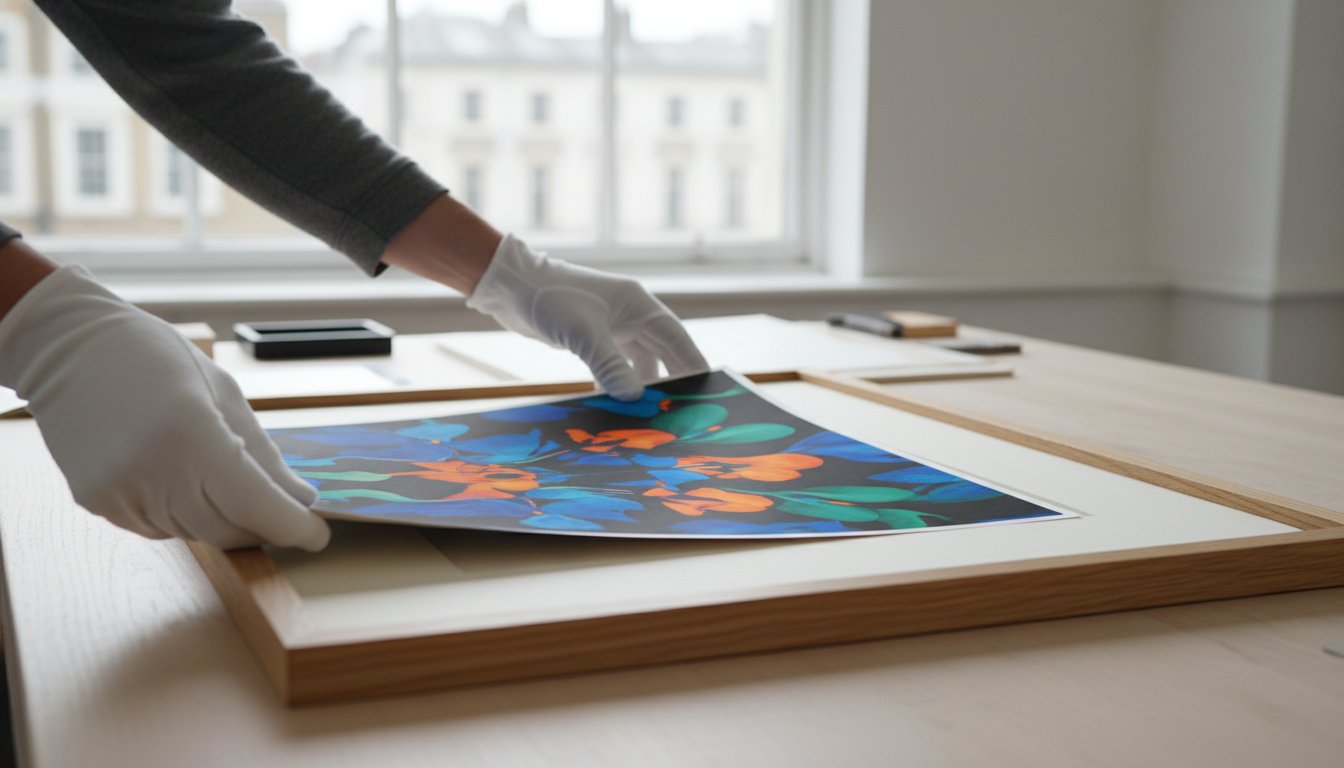
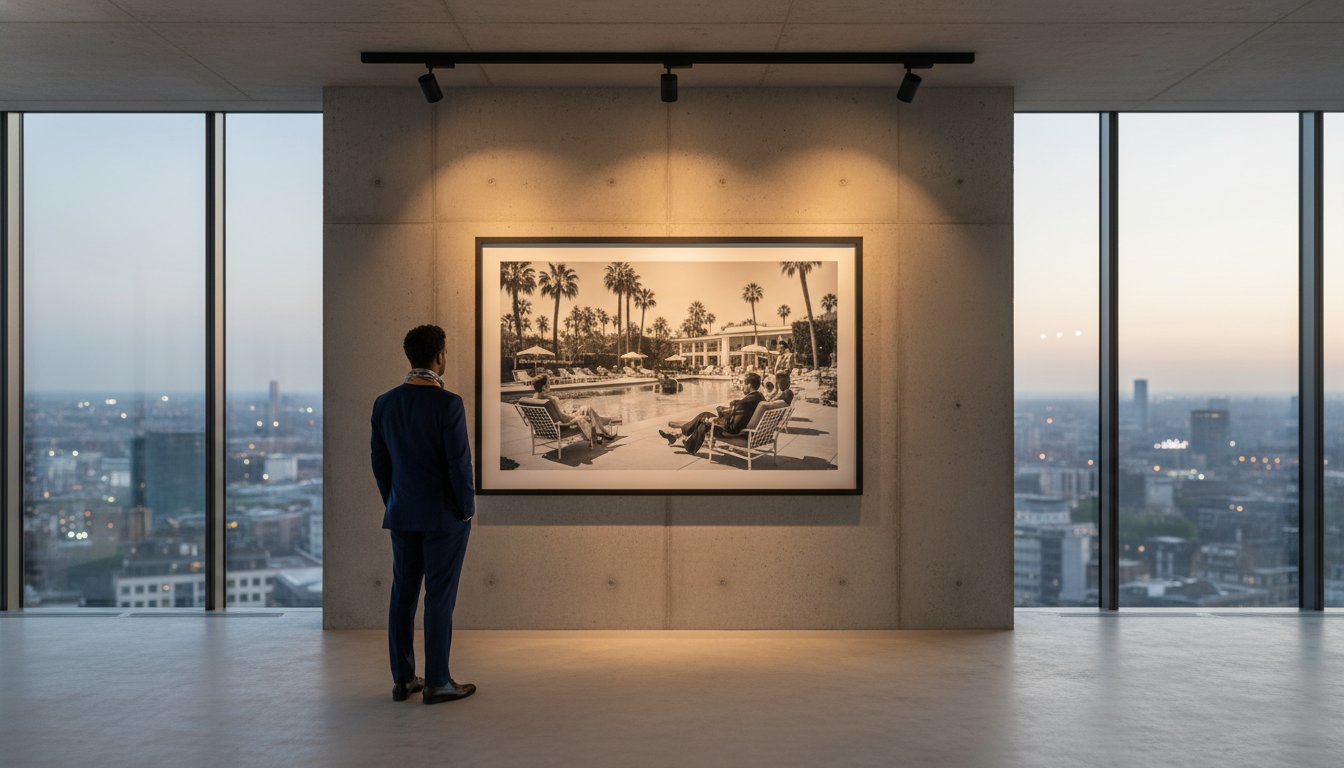
Category: Uncategorized

Investing in Fine Art Photography 2026: The Collector’s Guide to Timeless Assets

A digital file can be duplicated a million times in a second, yet a single silver gelatin print hand-stamped in a London darkroom remains a finite, physical anchor in an increasingly volatile market. You likely recognize that while the allure of contemporary imagery is vast, the risk of acquiring overproduced, ephemeral works has never been higher for the discerning collector. In an era where high-end photography sales have shown remarkable resilience through the 2024 fiscal year, your focus must remain on authenticity. This guide ensures your journey into investing in fine art photography 2026 results in a collection that balances the sun-drenched nostalgia of a Slim Aarons poolside with the rigorous archival standards required for long-term capital growth.

We’ll examine the critical distinctions between artisan darkroom craftsmanship and modern digital output, the essential role of verified provenance, and how to identify the blue-chip assets that define the world’s finest photography. You’ll gain the expert-level knowledge needed to distinguish a mass-market reproduction from a bespoke, museum-quality asset. By the end of this exploration, you’ll possess a clear roadmap for curating a portfolio that offers both profound aesthetic pleasure and enduring value for your home and your legacy.

Key Takeaways

  • Gain a strategic advantage by understanding why photography is outpacing traditional mediums and how to navigate the nuances of investing in fine art photography 2026.
  • Learn to identify the “Darkroom Premium” and why hand-printed silver gelatin works from prestigious archives command superior long-term value.
  • Discover how to select blue-chip artists like Slim Aarons and Terry O’Neill to anchor a portfolio that balances historical provenance with modern luxury.
  • Explore the “Living Collection” philosophy to build a diversified archive that offers both profound aesthetic pleasure and enduring capital appreciation.
  • Understand the critical importance of provenance and how sourcing through curated gallery relationships protects the integrity of your photographic legacy.

The State of Fine Art Photography Investment in 2026

The art market has shifted decisively as we enter 2026. While traditional oils once dominated mid-market portfolios, high-end photographic prints have claimed center stage, frequently outperforming paintings in the $10,000 to $50,000 bracket. This trend reflects a broader cultural pivot toward “Tangible Heritage.” In an era defined by ephemeral digital assets, collectors are seeking the undeniable weight of physical history. They crave pieces born from a darkroom rather than a server.

When we consider What is Fine Art Photography? in the context of a 2026 portfolio, we define “Investment Grade” through scarcity, sustained demand, and cultural relevance. Investing in fine art photography 2026 requires an eye for the “Curated Archive,” where private collectors prioritize works with impeccable provenance and technical excellence. At Galerie Prints, we see this manifest in the enduring allure of the silver gelatin process, where light and chemistry create a permanence that pixels cannot replicate. It’s about owning a bridge to the golden age of glamour, a tactile piece of the past that remains vibrant and relevant.

The 2026 Market Shift: From Speculation to Stability

Photography has emerged as a robust hedge against inflation; 20th-century masters have shown a consistent 7 percent annual appreciation over the last decade. A new wave of Millennial and Gen Z collectors, representing 42 percent of high-end buyers in 2025, has revitalized the market. These investors favor the Slim Aarons lifestyle, seeking iconic imagery that captures a lost world of leisure. The gold standard remains the 20th-century archive, where limited editions from original negatives provide a finite supply that resists market volatility. This stability is the result of a move away from speculative “hype” toward established historical significance.

Photography vs. Other Asset Classes

Comparing asset classes reveals that photography offers superior liquidity compared to original paintings, primarily due to a more active secondary market for established editions. It serves as an accessible luxury, allowing entry into the world’s finest photography at a fraction of the cost of a museum-grade oil painting. Beyond the financial metrics, these works provide a daily aesthetic dividend. Living with a bespoke print, hand-printed in our London darkroom, offers a tactile connection to history that stocks or bonds lack. This fusion of financial prudence and visual prestige makes investing in fine art photography 2026 a cornerstone of a sophisticated collection.

Provenance and Production: What Drives Value in a Photographic Print?

The market for investing in fine art photography 2026 rests on the tangible physical history of the print itself. A photograph’s value isn’t merely found in the image, but in its “objecthood.” Collectors categorize works into a strict hierarchy that dictates long-term appreciation. Vintage prints, those created by the photographer or under their direct supervision within roughly five years of the original negative, sit at the apex. Modern prints follow, produced during the artist’s lifetime but perhaps decades after the image was captured. Finally, Estate editions, authorized by the artist’s heirs and marked with an official Estate Stamp or authorized archive signature, provide a vital entry point for those seeking iconic imagery with a verified pedigree.

Authenticity is the currency of the art world. When you’re evaluating a potential acquisition, the presence of a hand-signed signature or a blind-stamped seal from a prestigious archive acts as a legal and aesthetic anchor. These markers ensure that the work adheres to the artist’s original vision and production standards. Without this documented provenance, even the most striking image loses its status as a financial asset.

The Science of the Silver Gelatin Print

At the heart of high-value collecting is the silver gelatin process. This traditional method, which rose to prominence in 1871, involves coating fiber-based paper with an emulsion of light-sensitive silver salts. Unlike digital inkjet prints that sit on the surface, silver gelatin images are embedded within the paper fibers. This creates a three-dimensional depth in the blacks and a luminous quality in the highlights that digital alternatives struggle to replicate.

Collectors are increasingly prioritizing these darkroom works because of their extraordinary archival lifespan, often exceeding 100 years when stored correctly. To identify a hand-printed work, look for the subtle texture of the fiber-based paper and the rich, neutral tonality that defines the “Darkroom Premium.” This artisanal approach ensures that each print is a unique artifact rather than a mass-produced copy.

The Role of Bespoke Framing in Preservation

Preservation is an active component of investing in fine art photography 2026. A print’s condition is a primary driver of its resale price; even minor foxing or light-staining can devalue a work by 30% or more. This is why bespoke, museum-grade framing is non-negotiable. Off-the-shelf frames often utilize acidic backing boards and standard glass that allow 100% of harmful UV rays to penetrate the print, leading to irreversible fading and brittleness.

We emphasize London-based craftsmanship to ensure every investment piece is protected by acid-free mounting and 99% UV-protective glass. This meticulous attention to detail shields the silver emulsion from environmental degradation. For those looking to build a resilient portfolio, selecting works that have been handled with this level of curatorial care is essential. You can explore our curated guide to collecting to understand how these production standards safeguard the world’s finest photography.

From Slim Aarons to Terry O’Neill: Identifying Blue-Chip Photography

Blue-chip photography represents the gold standard of the art market. It’s defined by a consistent track record of auction success and a permanent presence in prestigious museum collections. When you’re investing in fine art photography 2026, these established names provide the security of a tangible asset with proven longevity. Their work transcends mere decoration; it acts as a store of value that has historically shown resilience against market volatility. A blue-chip acquisition is a commitment to a legacy, a piece of history that continues to speak to new generations of collectors.

The Slim Aarons Phenomenon

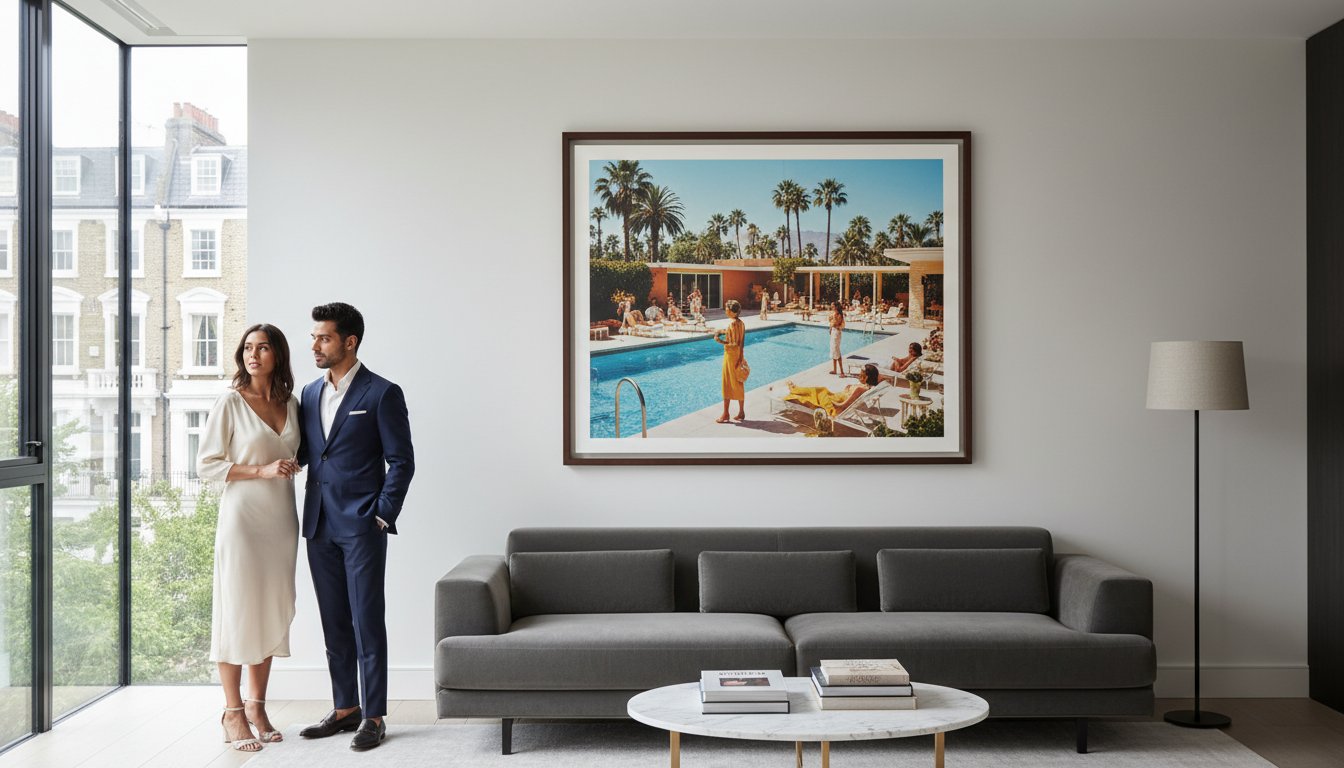
Slim Aarons remains the ultimate investment in aspirational art. His “attractive people doing attractive things in attractive places” mantra resonates more deeply than ever in the luxury interiors of 2026. The scarcity of authorized Getty Images Gallery prints ensures that supply remains controlled while demand from global collectors continues to climb. Iconic works like “Poolside Gossip,” captured in 1970, have seen a steady appreciation in value over the last decade. Owning an archival print from the original negative isn’t just a design choice. It’s a stake in a specific, sun-drenched heritage that won’t ever go out of style. The world’s finest photography often finds its peak in these moments of captured leisure.

Masters of the Monochrome: Black and White Icons

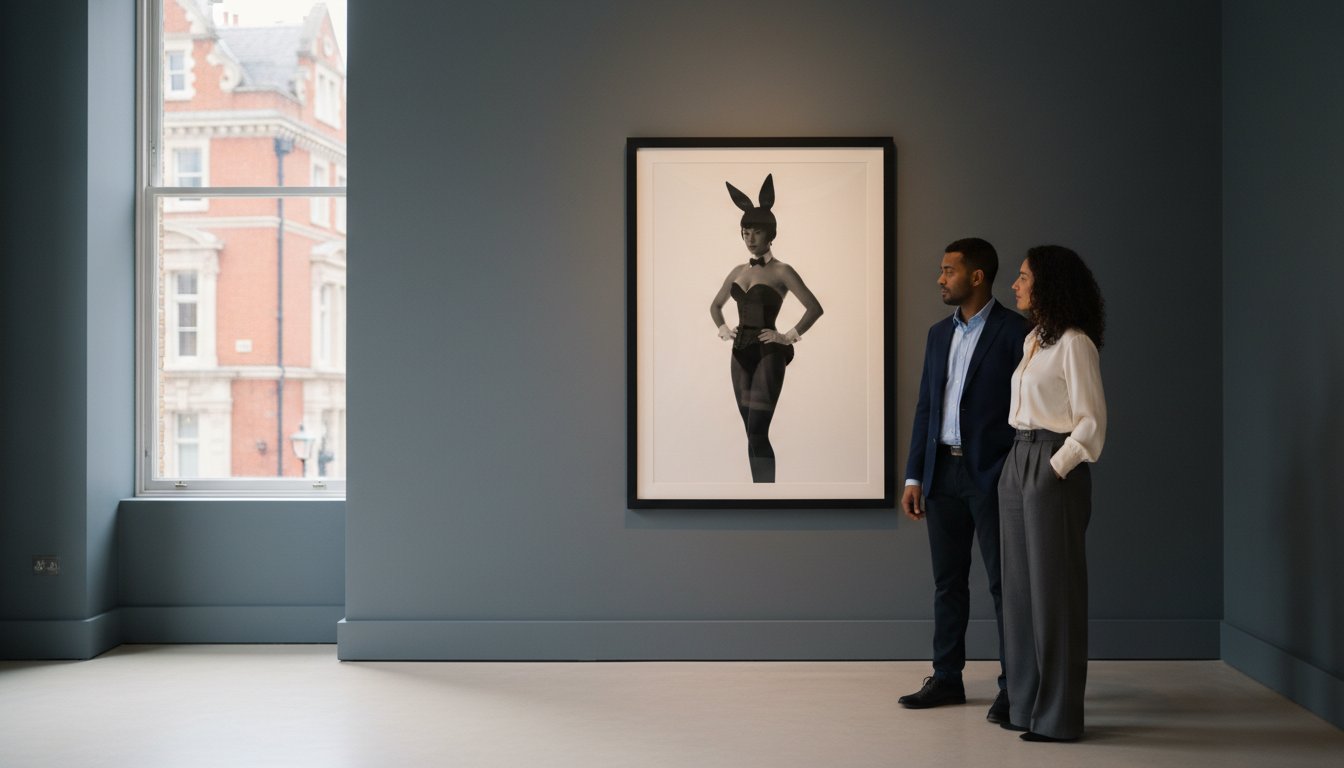
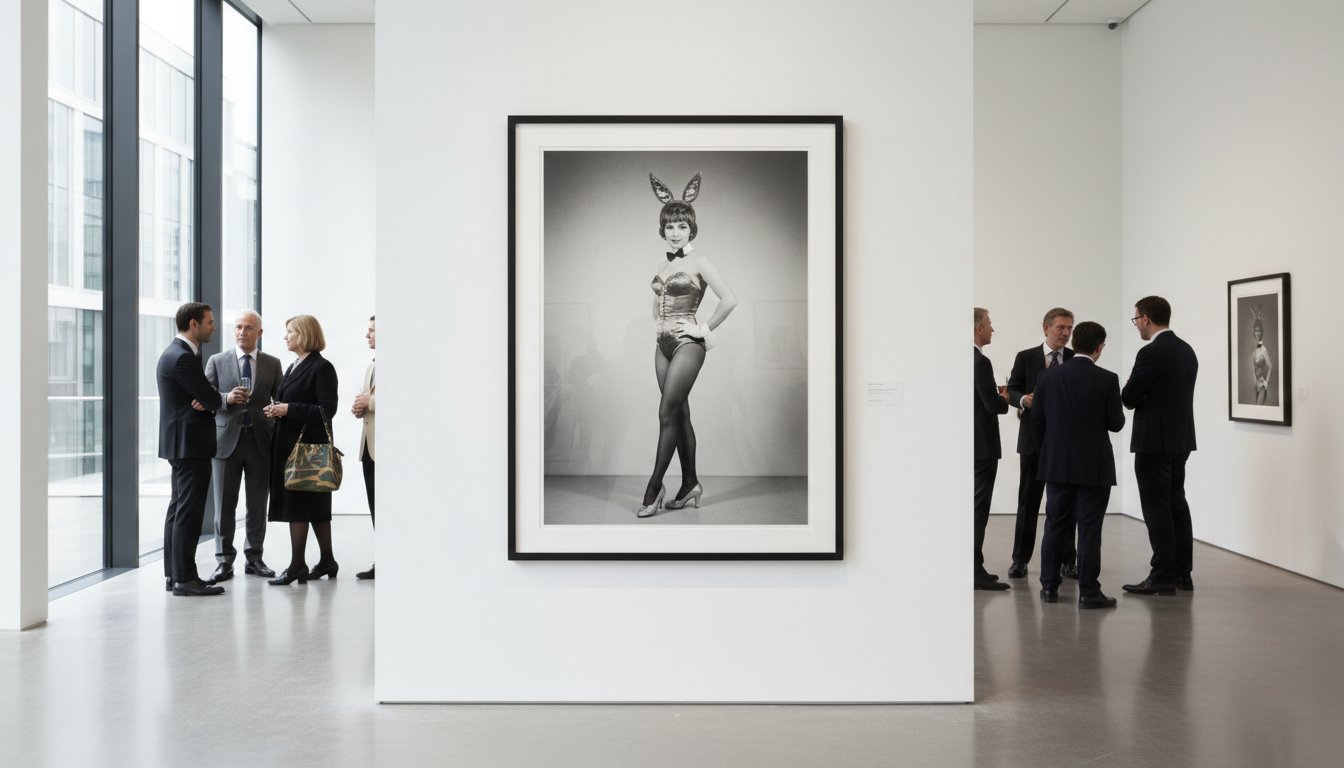
The investment stability of black and white pictures offers a different kind of prestige. Terry O’Neill’s portraits of the “Swinging Sixties” are essential for serious portfolios because they capture the precise moment when celebrity culture was born. His 1977 portrait of Faye Dunaway at the Beverly Hills Hotel remains one of the most sought-after silver gelatin prints in the secondary market. These works possess a sculptural value, where the play of light and shadow creates a timeless aesthetic. When investing in fine art photography 2026, collectors often look for these monochrome anchors. They provide a sophisticated foundation for any collection, especially when hand-printed in our London darkroom to ensure the highest archival quality.

Identifying the blue-chips of tomorrow requires a discerning eye for cultural shifts. To find future icons, look for these key indicators:

  • Museum Acquisitions: Artists whose work has been purchased by institutions like the Tate or MoMA in the last 24 months.
  • Limited Edition Integrity: Photographers who maintain strict edition sizes, preventing market saturation.
  • Technique and Craftsmanship: A return to traditional processes, such as platinum-palladium or bespoke silver gelatin printing, which adds intrinsic value.
  • Historical Context: Images that define a specific era or social movement, much like O’Neill did for the 1960s.

The transition from a contemporary artist to a blue-chip staple is often marked by a solo exhibition at a major international gallery. As we look toward the 2026 market, the focus remains on provenance and the physical quality of the print. A work that was meticulously crafted and carries a clear lineage of authenticity will always be the safest harbor for capital.

Building Your Portfolio: Balancing Aesthetic Joy with Financial Appreciation

Successful investing in fine art photography 2026 requires a “Living Collection” mindset. This philosophy suggests you should acquire pieces that resonate emotionally while meeting strict archival standards. A collection isn’t a static hoard; it’s a dynamic assembly of history. Most experts, including those tracking the 2025 Deloitte Art & Finance Report, suggest a holding period of 7 to 10 years to see meaningful appreciation. During this time, your role is that of a steward. You must ensure prints are kept in stable environments, ideally 18 to 21 degrees Celsius with 50 percent humidity, and protected by UV-filtering glass to prevent silver oxidation. Professional insurance appraisals should be updated every 36 months to reflect the shifting market value of rare archives.

Diversification is the cornerstone of a resilient portfolio. Don’t limit your acquisitions to a single genre. A robust collection might mix the sun-drenched glamour of travel archives with 1960s fashion photography and rare music negatives. This spread mitigates risk if one specific market niche cools. By blending different eras and subjects, you create a portfolio that’s both a personal sanctuary and a diversified financial asset.

Creating a Narrative-Driven Gallery Wall

A gallery wall shouldn’t feel like a random assortment. You can anchor a collection with a large-scale statement piece, perhaps a bespoke silver gelatin print, then surround it with smaller, rare finds. For those entering the market, lobby cards represent high-growth entry points. These artifacts combine cinematic history with photographic rarity, providing a textured narrative to your walls without the initial cost of a massive mural-sized work. This approach allows you to build depth and historical context within your home gallery while maintaining investment diversity.

The 2026 Checklist for New Investors

When you’re ready to commit to investing in fine art photography 2026, use this rigorous three-step verification process to ensure your capital is protected:

  • Step 1: Verify Provenance. Confirm the print comes from a verified archive or was hand-printed in a reputable London darkroom from the original negative. Documentation should be clear and immutable.
  • Step 2: Assess Physical Condition. Inspect for archival mounting and acid-free matting. Poor mounting can lead to chemical “foxing,” which often devalues a print by 20 to 40 percent over a decade.
  • Step 3: Evaluate Market Trajectory. Research the artist’s recent museum exhibition history. If a photographer’s work was added to a major institution like the V&A or MoMA in the last 24 months, their secondary market value typically follows an upward trend.

Begin your journey with a curated selection of the world’s most iconic imagery. Explore our curated collections of the world’s finest photography.

Curating a Legacy: Why Galerie Prints is the Destination for Serious Collectors

At Galerie Prints, we don’t just sell images; we steward history. Our philosophy centers on a singular, unwavering pursuit: providing access to “The World’s Finest Photography.” For those investing in fine art photography 2026, the distinction between a decorative print and a curated asset lies in provenance. We bridge the gap between the golden age of glamour and the modern collector’s home, ensuring every piece tells a story that resonates across generations. Our role is that of a guardian, preserving the heritage of the lens while helping you build a portfolio that reflects both prestige and personal taste.

Unrivalled Access to Iconic Archives

Our gallery maintains deep, long-standing partnerships with the most prestigious institutions in the world, including the Getty Images Archive and the Terry O’Neill Estate. These relationships allow us to secure authorized editions that remain inaccessible to the general market. Every print we offer is a testament to technical mastery and historical significance. The process begins in our dedicated London darkroom, where master artisans utilize traditional silver gelatin and archival pigment methods to produce works of staggering depth. These aren’t mass-produced items; they’re handcrafted treasures. A Galerie Prints certificate of authenticity accompanies every purchase, serving as a definitive mark of investment quality. This document guarantees:

  • Direct provenance from authorized negatives and digital archives.
  • Technical excellence verified by our London-based master printers.
  • Long-term archival stability for future generations.

Start Your 2026 Collection Today

Building a portfolio requires more than a keen eye; it demands a strategic partner. Our curators offer personalized advisory services to help you navigate the nuances of investing in fine art photography 2026. Whether you’re drawn to the sun-drenched leisure of a Slim Aarons original or the raw energy of 1960s fashion photography, we provide the expertise to ensure your collection is both personally meaningful and financially sound. We manage every detail of the acquisition journey. This includes:

  • Bespoke framing solutions tailored to your specific interior aesthetics.
  • Worldwide white-glove delivery to ensure your investment arrives in pristine condition.
  • Tailored investment plans based on your specific space and budget requirements.

The permanence of photography as a cultural legacy cannot be overstated. By choosing a piece from our collection, you aren’t simply buying art; you’re securing a fragment of time. As the market evolves, the value of authentic, hand-printed imagery continues to rise, making today the perfect moment to begin your journey with Galerie Prints. Photography is the most intimate of mediums, capturing the ephemeral beauty of the human experience and turning it into a lasting asset for your home and your legacy.

Securing Your Legacy Through the Lens

The landscape of investing in fine art photography 2026 demands a fusion of aesthetic intuition and rigorous attention to provenance. By focusing on blue-chip icons like Terry O’Neill or the aspirational lifestyle captured by Slim Aarons, collectors anchor their portfolios in works with proven historical significance. Value remains tethered to the physical object; a print’s worth is defined by its journey from the original negative to the final frame. As official partners of the Getty Images Gallery, we ensure every piece maintains the highest standards of authenticity. Each archival work is hand-printed in our specialist London darkroom, preserving the silver gelatin depth that digital processes can’t replicate. When you choose a piece finished with bespoke museum-quality framing as standard, you’re not just buying a decoration. You’re acquiring a stable asset designed to endure for generations. The 2026 market rewards those who prioritize technical excellence and verified history over fleeting trends. Your collection is a reflection of your discernment and a bridge to the golden age of glamour.

Explore the curated collections and start your investment journey at Galerie Prints

We invite you to discover a world where history and beauty converge perfectly.

Frequently Asked Questions

Is photography a better investment than traditional paintings in 2026?

Photography offers a more accessible entry point with high growth potential, as the global art market’s photographic segment has seen a 15% increase in volume since 2023. While blue-chip paintings hold value, photography provides superior liquidity and lower insurance costs. Investing in fine art photography 2026 allows collectors to acquire works by established masters like Terry O’Neill at a fraction of the cost of an oil painting.

What makes a Slim Aarons print a good investment?

A Slim Aarons print is a blue-chip photographic asset because his work represents the definitive archive of 20th-century jet-set society. His estate, managed by Getty Images, ensures that prints are produced from the original color transparencies to maintain exquisite quality. Since 2010, the demand for his C-type prints has grown steadily; specific iconic works like “Poolside Gossip” have become central pillars of modern interior design and high-end collections.

How do I know if a photographic print is “archival”?

An archival print is defined by its use of acid-free materials and pigment-based inks or traditional chemical processes that prevent degradation for over 100 years. You should look for Silver Gelatin or Giclée prints on 300gsm cotton rag paper. These standards, verified by the Fine Art Trade Guild, ensure the artwork won’t yellow or fade, preserving the asset’s physical integrity and market value for decades.

Does the size of the print affect its future resale value?

The physical dimensions of a print directly impact its secondary market desirability and rarity. Smaller 10×12 inch prints often have larger edition runs, while oversize 40×60 inch prints are typically produced in smaller batches of 10 or 25. Data from 2024 auction results shows that large-scale works frequently command a 40% premium due to their visual impact and scarcity in the marketplace.

What is the difference between an open edition and a limited edition in 2026?

A limited edition has a fixed number of copies, such as 50 or 100, which creates inherent scarcity once the run sells out. Open editions are printed indefinitely, making them decorative rather than investment-grade. When you’re investing in fine art photography 2026, prioritize limited editions that come with a signed certificate of authenticity to ensure the work’s provenance and future appreciation.

How should I store or display my photography to protect its value?

You must display your photography behind UV-protective glass, such as Tru Vue Optium Museum Acrylic, which filters out 99% of harmful rays. Avoid hanging works in direct sunlight or humid environments like bathrooms. For storage, use acid-free Solander boxes and archival tissue paper. These measures prevent foxing and light damage, which can reduce an artwork’s valuation by 50% at auction.

Why is darkroom printing more valuable than digital printing?

Darkroom prints, particularly silver gelatin works hand-printed in our London darkroom, possess a tactile depth and silver-rich tonal range that digital printers can’t replicate. This artisanal process involves exposing light through the original negative onto light-sensitive paper. Collectors value the physical connection to the photographer’s original moment of capture; this makes these analog prints highly sought after in the 2026 market.

Can I invest in photography with a smaller budget using lobby cards?

Lobby cards represent an excellent entry-level investment for collectors focusing on cinematic history and vintage ephemera. These 8×10 or 11×14 inch cards were produced by film studios between 1910 and 1980 for theater displays. Because they were often discarded after a film’s run, surviving cards from iconic 1950s films have seen a steady 10% annual increase in collector interest over the last five years.

Archival Photo Prints for Sale: The Connoisseur’s Guide to Fine Art Photography

A photograph that yellows within a single decade isn’t an heirloom; it’s a decaying memory. When searching for archival photo prints for sale, the discerning collector often faces the unsettling reality that many commercial reproductions fail to meet the ISO 9706 standard for permanence. You likely believe that art should be a lasting fixture of your home’s legacy, yet the distinction between a fleeting digital poster and a genuine investment piece often feels obscured. It’s a valid concern for anyone seeking to capture the golden age of glamour without the fear of environmental degradation.

This guide reveals the rigorous technical standards and curatorial provenance that transform a simple photograph into a museum-quality archival investment. You’ll learn how the meticulous chemistry of our London darkroom and the use of silver gelatin processes ensure your acquisition retains its depth for generations. We will explore the essential specifications of fine art photography and the markers of verified authenticity, empowering you to curate a sophisticated aesthetic with the world’s finest photography.

Key Takeaways

  • Understand the technical evolution of permanence, from the precision of pigment-based Giclee to the timeless prestige of hand-printed Silver Gelatin.
  • Learn to identify authentic archival photo prints for sale by evaluating provenance and the curatorial standards that separate fine art from generic imagery.
  • Discover the essential role of bespoke framing and UV-protective glass in maintaining the museum-quality integrity of your photographic collection.
  • Explore how to build a meaningful investment by sourcing from the world’s finest archives, including iconic works that capture the golden age of glamour.

Understanding Archival Quality: Beyond the Standard Print

Archival quality isn’t merely a marketing term; it represents a rigorous technical commitment to the permanence of visual history. For those seeking archival photo prints for sale, the distinction lies in the sophisticated chemistry and substrate of the work. While standard chromogenic prints often rely on light-sensitive silver halides and organic dyes that inevitably degrade, museum-grade archival media utilize stable pigments and acid-free bases. This technical superiority ensures that the image retains its original depth and tonal range for centuries rather than decades. Serious art collectors and international galleries prioritize these standards because they view photography as a tangible investment. Beyond the financial aspect, there’s a profound emotional weight in preserving a captured moment. It’s about ensuring a 1960s Slim Aarons poolside scene remains as vibrant for your grandchildren as it is today.

The “100-Year” Rule: How Longevity is Measured

Longevity in the fine art world is quantified through accelerated aging tests that measure lightfastness and resistance to atmospheric pollutants like ozone. Archival standards are meticulously designed to prevent the brittle yellowing and color shifting seen in mass-market posters, which often begin to degrade within 60 months. This level of preservation is what separates a disposable image from a legacy piece. The ISO 9706 standard defines archival permanence as the requirement for paper to be acid-free, with a minimum alkali reserve equivalent to 2% calcium carbonate to neutralize environmental acids over time. This scientific benchmark ensures the work survives the passage of time without the structural failure common in lesser materials.

Archival vs. Non-Archival: A Visual Comparison

The primary difference between a fleeting image and a lasting masterpiece lies in the ink system. Dye-based inks, common in standard commercial printing, are molecularly small and highly vulnerable to UV light, causing colors to “bleed” or vanish. In contrast, pigment-based systems use solid particles of color that sit on the surface of the paper, offering unparalleled stability. The paper choice is equally critical for the structural integrity of the piece. High-quality fine art photography uses alpha-cellulose or cotton rag fibers rather than wood pulp, which contains lignin that causes browning. When evaluating various photographic print types, look for markers of excellence such as Giclée or Silver Gelatin processes. These methods, especially when hand-printed in our London darkroom, signify a print’s provenance and its status as a piece of “the world’s finest photography.”

  • Pigment Stability: Resists fading under standard gallery lighting for 100 to 200 years.
  • Acid-Free Substrates: Prevents the “foxing” or brown spotting associated with aging paper.
  • Environmental Resistance: Formulated to withstand fluctuations in humidity and temperature.

Investing in archival photo prints for sale is a decision to own a piece of history that won’t fade into obscurity. By choosing museum-grade materials, you’re securing a visual narrative that maintains its prestige and clarity, serving as a permanent window into the golden age of glamour and beyond.

The Science of Permanence: Giclee, Silver Gelatin, and Acid-Free Media

To own a masterpiece is to hold a fragment of history. When discerning collectors browse archival photo prints for sale, they look beyond the immediate visual impact to the molecular level of the medium. Stability defines true fine art. A photograph should not merely exist; it must endure. This permanence is achieved through a rigorous marriage of 19th-century chemistry and 21st-century precision, ensuring that the “world’s finest photography” remains as vibrant for your grandchildren as it is today.

The Giclee Standard: Pigment vs. Dye

The Giclee process represents the pinnacle of digital reproduction. While standard commercial printers often rely on dye-based inks that fade when exposed to UV light, we utilize 12-color pigment-based systems. These microscopic particles of color sit on the surface of the paper rather than soaking into the fibers, providing a depth and tonal accuracy that remains stable for over 100 years. We select 300gsm cotton rag or alpha-cellulose papers for their tactile, heavy-weight feel. This premium substrate allows for the exquisite reproduction of black and white pictures, capturing every subtle gradient from deep, velvety charcoal to brilliant ivory.

Paper chemistry is the silent guardian of your investment. We ensure every medium is strictly acid-free and lignin-free. Lignin is a natural component in wood pulp that causes paper to yellow and become brittle. By removing it, we guarantee the structural integrity of the print. Following preservation guidelines from the Library of Congress helps maintain these standards, protecting your collection from the environmental degradation that plagues lesser prints.

Traditional Darkroom Craftsmanship

There is a tactile soul in a silver gelatin print that digital methods cannot replicate. For enthusiasts of the golden age of glamour, this traditional process is the ultimate choice for authenticity. Our artisans hand-craft these pieces in our London darkroom, working directly from original negatives. This chemical process involves light-sensitive silver salts suspended in a gelatin layer, creating a physical object where the image is literally part of the paper.

Each silver gelatin print is unique. The subtle signature of the master printer’s hand ensures that no two pieces are identical. This method anchors our collection in a sense of permanence and stability. It’s a bridge to the past, offering a level of provenance that elevates a simple image into a museum-grade artifact. Whether it is a Slim Aarons poolside scene or a gritty street portrait, the artisanal touch of our London-based production acts as a seal of quality. You can explore our curated archives to find a piece that resonates with your personal aesthetic and heritage.

Curation vs. Commodity: Why Provenance Matters in Photography

Provenance serves as the pedigree of a fine art photograph. It’s the documented history that connects a physical print back to the artist’s original vision and the moment of capture. When discerning collectors seek archival photo prints for sale, they’re looking for more than a decorative asset; they’re pursuing a tangible piece of cultural legacy. A generic stock image is a mere commodity, designed for transient use and lacking a narrative pulse. In contrast, a print from a curated archive carries the weight of the original negative and the photographer’s specific intent.

Galerie Prints bridges the gap between these historic archives and modern interiors, ensuring that the world’s finest photography finds its rightful place in contemporary homes. The prestige of owning a work by Terry O’Neill or Slim Aarons can’t be overstated. These masters didn’t just take pictures; they curated the visual language of an entire era. O’Neill’s intimate portraits of 1960s icons and Aarons’ vistas of the international elite offer a level of sophistication that mass-market prints fail to evoke. By sourcing directly from esteemed estates, we ensure every piece retains its soul and its historical integrity.

Investing in Photographic Heritage

Archival prints from established archives hold their value because they’re tethered to significant cultural milestones. The Slim Aarons Collection remains a primary example of this enduring stability. His work isn’t just photography; it’s a blueprint for aspirational luxury. Collectors often start their journey by exploring his sun-drenched poolside scenes and socialite gatherings that defined the 1950s and 60s. To understand the depth of his impact, you can read our Slim Aarons guide, which details how he became the master of the jet-set lifestyle. These prints are assets that endure, much like the meticulous silver gelatin processes used to create them in our London darkroom.

The Curator’s Eye: Selecting Your Piece

Selecting a photograph involves balancing historical weight with your personal aesthetic. It’s a rewarding, deeply personal process. Limited editions are crucial here, as they provide the scarcity necessary for long-term appreciation in the fine art market. While “print-on-demand” sites offer convenience, they lack the soul and technical precision of a gallery-sourced piece. Buying from a dedicated gallery provides a layer of trust and expertise that automated platforms can’t match. We don’t just ship boxes; we provide provenance. Our darkroom specialists treat every negative with reverence, ensuring that your archival photo prints for sale are hand-crafted masterpieces rather than mere digital duplicates. This commitment to the craft is what separates a true collector from a casual buyer.

Preserving Your Investment: Framing and Displaying Archival Art

Securing archival photo prints for sale is an acquisition of a piece of history, but the journey doesn’t end at the point of purchase. To maintain the prestige and physical integrity of a fine art photograph, the collector must transition from buyer to guardian. The framing process is not merely an aesthetic choice. It’s a technical necessity that serves as the final barrier against the slow decay caused by environmental pollutants and light exposure. Without professional intervention, even the most exquisite silver gelatin print can suffer from the elements within a few short years.

Bespoke Framing: The Final Layer of Protection

Professional mounting is vastly superior to DIY solutions because it addresses the hidden threat of “outgassing.” Many commercial frames use acidic backing boards or adhesives that release volatile organic compounds over time. These chemicals cause yellowing and make paper fibers brittle. In contrast, bespoke framing utilizes acid-free, pH-neutral materials and reversible hinging techniques. This ensures the photograph remains untouched by harmful substances. At Galerie Prints, our bespoke framing service provides a ready-to-hang solution that honors the heritage of the work. Whether you choose a sleek, contemporary profile or a classic frame that echoes the 1960s glamour of a Slim Aarons lifestyle shot, our London-based craftsmanship guarantees a museum-standard result.

Glazing is another critical component. Standard glass allows ultraviolet radiation to penetrate, which can cause irreversible fading in as little as 24 months of exposure. We recommend 99% UV-protective glass or museum-grade acrylic. These materials act as a permanent sunscreen for your art, filtering out the spectrum responsible for pigment breakdown while maintaining incredible visual clarity.

Environmental Control for Collectors

The atmosphere of a residence dictates the longevity of a print. Ideally, rooms should stay within a temperature range of 18 to 22 degrees Celsius. Relative humidity is equally vital and should be maintained between 40% and 50% to prevent the expansion and contraction of paper fibers. High-risk zones like kitchens and bathrooms present a dual threat of fluctuating heat and airborne grease or moisture. These conditions encourage mold growth and “cockling,” where the paper develops unsightly waves that are difficult to flatten.

  • Avoid Direct Exposure: Even with high-end UV glass, never hang art where direct shafts of sunlight hit the surface. The concentrated heat can cause localized drying and cracking of the emulsion.
  • Air Circulation: Ensure a small gap exists between the frame and the wall to allow air to flow, preventing moisture traps that lead to foxing.
  • Lighting: Use LED bulbs for gallery lighting. They emit negligible heat and zero UV radiation compared to traditional halogen bulbs.
Protect the world’s finest photography by choosing our professional finishes when you explore archival photo prints for sale today.

Discover the World’s Finest Archival Collections at Galerie Prints

Galerie Prints operates as a dedicated custodian of visual history, bridging the gap between the golden age of glamour and the modern collector’s home. Our curation process is rigorous, ensuring that every piece we offer meets the exacting standards of museum-grade preservation. When you explore our archival photo prints for sale, you aren’t just purchasing a decorative asset; you’re acquiring a piece of cultural heritage. Each work is hand-printed in our London darkroom, a process that preserves the depth, contrast, and soul of the original negative. This commitment to artisanal craftsmanship defines our status as a premier destination for the world’s finest photography.

Our archives span the breadth of the 20th century, capturing the evolution of style, celebrity, and human emotion. From the gritty, high-contrast energy of 1960s London to the sun-drenched vistas of the Mediterranean, our collections provide a comprehensive look at the moments that shaped our visual language. We maintain exclusive relationships with prestigious estates and photographers, ensuring that the provenance of every print is beyond reproach.

The Slim Aarons Lifestyle

The work of Slim Aarons remains a cornerstone of our gallery, embodying a specific brand of aspirational luxury that he famously described as “attractive people doing attractive things in attractive places.” To maintain the luminous quality of his 1950s and 60s poolside scenes, we utilize specific production methods that honor his original vision. Our Aaron Slims reproductions are typically produced as C-Type prints on Fuji Crystal Archive paper. This specific medium is chosen for its ability to render the vibrant turquoise of a Capri swimming pool or the subtle pastels of a Palm Springs estate with breathtaking clarity and longevity.

Rare Collectables and Cinema History

For those whose passions lean toward the silver screen, our cinema and music archives offer unparalleled access to iconic imagery. We feature the legendary work of Terry O’Neill, who captured the raw charisma of stars like David Bowie and Brigitte Bardot throughout his 60-year career. Collectors can also find rare gems from the 1977 Star Wars archives, providing a nostalgic yet sophisticated addition to any interior. Beyond traditional photography, we specialize in the preservation of tactile history. Our Cinema Lobby Cards guide details how these vintage promotional tools have become highly prized archival photo prints for sale among serious investors. Whether you’re drawn to the grain of a silver gelatin print or the lithographic charm of a movie poster, your journey into fine art collecting begins with the expert guidance found at Galerie Prints.

Curating a Legacy of Visual Excellence

Building a collection of fine art photography requires a deep appreciation for the technical mastery found in silver gelatin and giclee processes. True permanence isn’t accidental; it’s the result of rigorous archival standards that protect the integrity of an image for generations. At Galerie Prints, we honor these traditions by hand-printing every piece in our London darkroom. Our status as official partners of the Getty Images Gallery grants us exclusive access to historical archives, ensuring that the provenance of your artwork is as impeccable as its visual impact.

When searching for the finest archival photo prints for sale, the distinction lies in the details of preservation. From the initial selection of acid-free media to our bespoke museum-quality framing, every step is designed to safeguard your investment against the passage of time. You’re choosing more than a decorative element; you’re acquiring a curated piece of history that embodies the sophisticated lifestyle of the 20th century. Explore the world’s finest archival photography at Galerie Prints and find the next iconic addition to your home.

The journey of a collector is one of constant discovery and refined taste. We invite you to step into a world where history and aesthetics converge perfectly.

Frequently Asked Questions

What is the difference between a Giclee print and a regular photo print?

A Giclee print utilizes high-grade pigment inks and acid-free archival papers, whereas a regular photo print often relies on dye-based inks and resin-coated papers that degrade over time. These pigment inks, often applied with 12-color inkjet systems, provide a depth of color and lightfastness that exceeds standard commercial standards. This meticulous process ensures the artwork remains vibrant for generations, making it the preferred choice for those seeking archival photo prints for sale.

How long do archival photo prints actually last before fading?

Archival prints are engineered to last over 100 years under normal indoor lighting conditions before any visible fading occurs. When kept in dark storage or archival portfolios, these prints can maintain their integrity for 200 years or more. This longevity is verified by testing from organizations like Wilhelm Imaging Research, which subjects prints to accelerated light exposure to simulate decades of display.

Does “archival” mean the same thing as “limited edition”?

Archival refers to the physical permanence and quality of the materials, while limited edition signifies the restricted quantity of prints produced from a specific negative or file. A print can be archival without being limited; however, the world’s finest photography typically combines both to ensure lasting value and rarity. For example, a limited edition of 50 ensures your investment remains exclusive while the archival process guarantees its physical survival.

What kind of paper is best for archival black and white photography?

Traditional silver gelatin fiber-based paper remains the gold standard for black and white photography due to its rich d-max levels and deep blacks. For digital archival prints, heavy-weight 300gsm cotton rag papers from mills like Hahnemühle or Canson are ideal. These papers lack optical brightening agents, which prevents the yellowing often seen in cheaper alternatives after 10 to 15 years.

Can I buy archival prints that are already framed and ready to hang?

You can certainly acquire archival prints that arrive bespoke-framed and ready for immediate installation in your home or office. We offer professional framing services in our London workshop, utilizing acid-free mounting boards and UV-protective glass to shield the image. This integrated approach ensures that your archival photo prints for sale are protected from environmental pollutants from the moment they’re delivered.

Why should I buy from a gallery instead of a professional photo lab?

Buying from a gallery provides access to curated collections and a level of quality control that high-street photo labs can’t match. Galleries often hold exclusive rights to original negatives, such as those in the Slim Aarons archive, ensuring every print is an authentic piece of history. While a lab provides a service, a gallery acts as a guardian of the artist’s legacy, offering meticulous hand-printing and verified provenance.

How do I verify the provenance of an archival photo print?

Provenance is verified through a formal Certificate of Authenticity, which includes the photographer’s name, the edition number, and a gallery seal. Many of our prints also feature an embossed stamp or a signature from the estate to confirm their origin. Documentation typically traces the print’s journey from the original negative to our London darkroom, providing a transparent history for collectors and auction houses.

Is it safe to ship large archival prints internationally?

It’s entirely safe to ship large archival prints globally when they’re packaged in heavy-duty, 3mm thick reinforced tubes or custom-built wooden crates. We utilize specialized art couriers who provide door-to-door tracking and insurance for 100% of the artwork’s value. This rigorous protocol prevents damage from moisture or physical impact, ensuring the world’s finest photography arrives in pristine condition regardless of the destination.

Museum Quality Art Framing: The Collector’s Guide to Archival Preservation

A silver gelatin print can endure for over 100 years in a darkroom, yet it can lose its depth and clarity in less than 24 months if trapped behind inferior materials. It’s a sobering reality for any serious collector that the wrong choice in materials can turn a masterpiece into a fading relic. You likely feel a deep responsibility to protect your investment, yet the technical jargon surrounding museum quality art framing often creates more confusion than clarity. It’s frustrating to seek a guardian for your heritage only to find standard solutions that ignore the delicate chemistry of fine art photography.

We believe that your collection deserves the same curatorial rigor found in the world’s leading galleries. This guide explores the essential standards of archival preservation, from the 99 percent UV protection of specialized glazing to the pH-neutral chemistry of cotton rag matboards. You’ll discover how to select bespoke finishes that enhance the prestige of your interior while ensuring your Slim Aarons or Terry O’Neill prints remain timeless. We’ll detail the specific components of a museum-grade assembly, providing you with the confidence to display your art as a lasting piece of history.

Key Takeaways

  • Distinguish between mere decorative borders and the rigorous conservation standards required to safeguard photographic heritage for future generations.
  • Master the technical nuances of museum quality art framing by understanding how specialized glazing and archival components shield your investment from environmental degradation.
  • Evaluate the long-term appreciation of your collection by comparing the enduring stability of bespoke archival materials against the hidden restoration costs of standard framing.
  • Learn to select bespoke frame styles that honor the historical era and mood of your photography, ensuring the aesthetic complements rather than competes with the artwork.
  • Gain an insider’s perspective on the artisanal techniques used in our London darkroom to integrate museum-grade protection into every hand-crafted frame.

Defining Museum Quality Art Framing: Preservation as an Art Form

A photograph from a hand-printed London darkroom represents more than a captured moment; it’s a piece of history that requires a dedicated guardian. While decorative framing focuses on the immediate aesthetic of a room, museum quality art framing serves a significantly higher purpose. It acts as a sophisticated barrier against the inevitable decay of time. Many casual collectors settle for ‘acid-free’ materials, yet this is merely the baseline for any serious investment. True archival preservation involves a meticulous selection of materials that exceed basic industry standards to ensure the longevity of a silver gelatin or C-type print.

Museum quality framing is defined as the meticulous integration of chemical neutrality and robust physical protection to ensure an artwork remains unchanged for centuries. This standard aligns with the rigorous principles found in the Conservation and restoration of painting frames, where every component must contribute to the artwork’s survival. At Galerie Prints, we view the frame as a bespoke extension of the darkroom process, protecting the provenance of the world’s finest photography for future generations.

The Three Pillars of Conservation Framing

  • Chemical Stability: Every layer, from the mount board to the hinges, must be chemically inert. This prevents the “acidic burn” that often plagues lower-quality frames, ensuring no harmful molecules migrate into the paper fibers.
  • Environmental Shielding: High-end glazing must block 99% of ultraviolet light. This shield prevents the fading of delicate pigments and protects the print from atmospheric pollutants and humidity fluctuations.
  • Reversibility: This is the golden rule of the curator. Any mounting technique or adhesive used must be entirely undoable without leaving a trace or damaging the original work, allowing future generations to re-house the art as needed.

Why Fine Art Photography Demands Higher Standards

Photographic emulsions, particularly silver gelatin prints, are exceptionally sensitive to their surroundings. Exposure to improper backing materials can trigger ‘foxing,’ which appears as reddish-brown spots caused by fungal growth or metallic impurities. If a rare Slim Aarons print is subjected to heat damage from poor mounting, the physical layers can delaminate, causing irreversible warping. The financial stakes are high. A print that retains its pristine, archival state can see its value appreciate by 25% or more over a decade, while a damaged piece often loses 50% of its market value instantly. Protecting these assets requires more than a simple glass box; it requires an uncompromising commitment to technical excellence and museum quality art framing standards.

The Anatomy of Archival Excellence: Materials That Preserve History

Every Galerie Prints bespoke frame is a scientific endeavor designed to halt the passage of time. It’s not merely an aesthetic choice but a protective vessel that creates a controlled micro-environment for the world’s finest photography. We treat museum quality art framing as a discipline of preservation, where every component is selected for its chemical stability and longevity. This technical rigor ensures that a silver gelatin print, hand-printed in our London darkroom, remains as vivid in fifty years as it was the day it left the chemist’s wash. The frame functions as a sealed ecosystem, regulating internal humidity and shielding delicate paper fibers from modern atmospheric pollutants.

Glazing Options: From UV-Filter to Museum Glass

Light is the primary catalyst for irreversible photochemical degradation. While standard window glass blocks only about 25% of UV rays, museum-grade glazing offers a shield that filters out 99% of harmful radiation. For collectors shipping internationally, high-grade acrylic provides a shatter-resistant alternative that is 50% lighter than glass while maintaining 92% light transmission. However, for the ultimate gallery experience, we utilize anti-reflective coatings that reduce reflections to less than 1%, creating an “invisible glass” effect. This clarity allows the deep blacks and nuanced grays of iconic photography to emerge without the distraction of glare. In a sun-drenched interior, 99% UV-filtering glass acts as a non-negotiable insurance policy for your investment, preventing the silent erasure of history by the morning tide of light.

Matting and Backing: The Invisible Protectors

What touches the print matters most to its long-term survival. We exclusively use 100% cotton rag matboards because they are naturally acid-free and lignin-free. Wood pulp alternatives, frequently found in mass-market frames, contain acidic compounds that eventually migrate into the artwork. This leads to “mat burn,” a permanent brown staining that appears around the print edges and devalues the piece. By maintaining a pH-neutral environment, our archival backing boards provide a rigid, breathable support structure that prevents warping.

Our mounting techniques respect the integrity of the paper above all else. We avoid all pressure-sensitive tapes or glues that can yellow or become brittle. Instead, we use reversible methods such as:

  • Japanese Paper Hinges: Applied with wheat starch paste, these allow the art to hang naturally.
  • Archival Corners: Clear, acid-free pockets that hold the print without any adhesive touching the paper.
  • T-Hinges: Providing the necessary “give” for the paper to expand and contract with temperature shifts.

This level of bespoke craftsmanship ensures your collection retains its provenance and physical integrity, allowing the legacy of the artist to endure. When utilizing museum quality art framing, you aren’t just decorating a room; you’re acting as a temporary steward for a lasting piece of history.

Museum Quality vs. Standard Framing: A Long-Term Value Assessment

Choosing between bespoke museum quality art framing and a standard retail option isn’t just a matter of taste; it’s a financial decision that spans decades. Over a 25-year period, the differences become stark. A standard frame typically uses wood-pulp matboards that contain lignin. As this lignin breaks down, it releases acidic gases, leading to the irreversible ‘mat burn’ often seen on older, poorly kept prints. In contrast, museum framing utilizes 100% cotton rag mats and 99% UV-protective glazing, ensuring the artwork remains in its original state well into the next generation.

Think of museum-grade materials as a physical insurance policy for your collection. While a standard frame might save costs today, the hidden expenses of restoration or re-printing can be staggering. Professional conservation of a single water-damaged or acid-burned print often starts at hundreds of pounds, frequently exceeding the original cost of the framing itself. Beyond protection, a bespoke frame adds ‘wall power.’ It transforms a photograph into a definitive statement piece, elevating the perceived value through meticulous proportion and material choice.

Identifying the Warning Signs of Inferior Framing

The degradation of a print is often a slow, silent process. You can identify the failure of standard materials through three primary indicators:

  • Yellowing mat edges: This is the first sign of acid migration. If the bevelled edge of the mat board looks brown or yellow, it’s actively damaging the paper it touches.
  • Wavy paper (cockling): This occurs when a print is restricted by improper mounting or exposed to humidity shifts. It suggests the frame isn’t providing a stable micro-environment.
  • Fading colours: If the vibrancy of the blacks or the depth of the hues has diminished, your glass has failed its UV duties. Standard glass allows up to 50% of harmful rays to penetrate.

Investment ROI: Does Better Framing Increase Resale Value?

In the secondary art market, the condition of a piece is paramount. Auction houses like Sotheby’s or Christie’s rely on condition reports that scrutinize the archival integrity of the work. A print with a documented history of museum quality art framing commands a higher premium because the buyer is assured of its longevity. Collectors of Slim Aarons photography, for instance, prioritise archival integrity to preserve the iconic, sun-drenched hues of the 1950s and 60s. When provenance meets pristine condition, the ROI is reflected in a significantly higher hammer price, often outperforming the initial investment in the framing itself.

Curating Your Collection: Choosing the Right Bespoke Frame Style

The final stage of acquisition is the most transformative. At Galerie Prints, the philosophy remains steadfast: a frame should serve as a silent guardian, providing a window into the artist’s world without ever overshadowing the work itself. Achieving museum quality art framing requires a deep understanding of the piece’s provenance and the atmosphere it seeks to create within a room. Whether you’re housing a 1950s fashion plate or a candid moment from the Slim Aarons archive, the frame acts as the bridge between the historical negative and your modern interior.

A minimalist white frame provides a crisp, architectural boundary that allows the deep tonality and silver-rich highlights of iconic black and white pictures to command the viewer’s full attention. For large-format statement pieces, the structural integrity of the frame becomes a technical necessity as much as a stylistic one. These substantial works, often exceeding 100 centimetres in width, require reinforced profiles to prevent bowing over time, ensuring the print remains perfectly flat and protected against environmental shifts.

Style Profiles: From Classic Wood to Modern Metal

Hand-painted wooden frames offer a tactile, organic warmth that beautifully anchors mid-century archives. These bespoke finishes are often chosen to mirror the rich textures found in the original silver gelatin prints produced in our London darkroom. Conversely, sleek aluminium profiles provide a sharp, industrial edge that suits contemporary fashion photography or high-contrast architectural studies. The choice of matting is equally vital; a generous 50mm to 75mm white border creates a “breathing space” that elevates the print’s status, whereas a tighter crop can make a piece feel more intimate and immediate.

Environment-Specific Framing Choices

Collectors must consider the final destination of their art. For coastal properties in regions like the Hamptons or the Côte d’Azur, humidity and salt air present unique challenges. In these environments, we utilize specific archival sealing techniques to prevent moisture ingress. High-traffic areas, such as entryways or corporate lobbies, benefit from more robust profiles, while a private study allows for more delicate selections. The luxury of our ‘Ready-to-Hang’ service means each piece arrives as a complete object of art, assembled with the same precision used by major galleries to ensure longevity and aesthetic perfection.

Explore our curated selections and discover how we preserve the world’s finest photography for your collection.

The Galerie Prints Standard: Hand-Crafted Excellence in London

Every piece of history we curate deserves a sanctuary that preserves its soul. At Galerie Prints, we provide a single-source journey that begins with the original negative and ends with a hand-finished masterpiece ready for your wall. By managing the entire process within our London darkroom and framing studio, we ensure that the technical superiority of our silver gelatin prints is never compromised by inferior housing. This holistic approach is why discerning collectors trust us for museum quality art framing that stands the test of time. It’s a seamless transition from the chemical magic of the darkroom to the physical permanence of a bespoke frame.

Our Commitment to Craftsmanship

Our master framers don’t rely on the automated, high-volume methods found in mass-market retail. Instead, they employ hand-finishing techniques that respect the delicate nature of fine art photography. Every custom order undergoes a rigorous quality control protocol. We inspect the first cut of the acid-free mat and verify the final moisture-resistant seal with equal intensity. Our London-based curators oversee this process, ensuring that the bespoke frame complements the provenance and aesthetic of the work. Whether it’s a vibrant Slim Aarons poolside scene or a gritty 1960s street portrait, the frame is built to enhance, not just house, the image.

Seamless Experience for Serious Collectors

Investing in the world’s finest photography requires a logistics partner that understands the stakes. We cater to unique architectural spaces by offering custom sizing and bespoke framing requests tailored to your specific interior design needs. Whether you require an oversized statement piece for a grand hallway or a delicate arrangement for a private study, our team provides precise solutions. We’ve perfected our secure, worldwide shipping methods to ensure your framed art arrives in pristine condition, regardless of its destination. To better understand how to integrate these pieces into your home, you can explore our Fine Art Photography: A Curator’s Guide for professional advice on building a lasting collection.

The beauty of a curated collection lies in the details of its preservation. We invite you to explore our extensive archives, where every iconic image is available with our signature museum quality art framing options included. Discover the perfect fusion of history and hand-crafted excellence for your home today.

Securing the Future of Your Photographic Heritage

True collection management begins the moment a print leaves the darkroom. By prioritizing museum quality art framing, you’re investing in a sophisticated shield against the environmental factors that threaten paper and pigment for 75 years or more. Our London darkroom remains one of the last artisanal facilities where silver gelatin prints are still hand-crafted, ensuring a level of quality trusted by world-renowned archives and private collectors worldwide. This dedication to excellence extends to our bespoke framing service, where we employ 100% acid-free cotton rag mounts and 99% UV-protective glazing to lock in the provenance of every piece.

Whether you’re acquiring a 1950s Slim Aarons poolside scene or a rare vintage fashion study, the right archival housing transforms a simple photograph into a permanent historical artifact. Your collection is a reflection of your discernment; protect its integrity with the same passion used to create it. The right frame doesn’t just display your art; it honors the history within the frame for generations to come.

Explore our curated collections and choose your bespoke museum-quality frame today.

Frequently Asked Questions

What is the difference between museum quality and conservation framing?

Museum quality art framing represents the highest echelon of archival preservation, strictly adhering to the 100% reversible standards established by the Fine Art Trade Guild. While conservation framing protects against approximately 90% of environmental hazards, museum standards require 99% UV-filtering glazing and 100% cotton rag matting. This ensures every element, from the hinges to the backing, remains chemically inert for over 100 years.

Is UV-filtering glass really necessary for art not in direct sunlight?

Yes, UV-filtering glass is essential because indirect ambient light and standard indoor bulbs still emit harmful radiation. According to the International Institute for Conservation, even indirect daylight contains enough UV energy to cause irreversible pigment degradation over a 5-year period. By blocking 99% of these rays, you protect delicate silver gelatin or chromogenic dyes from the cumulative damage that causes “ghosting” and color shifts.

Can I change the frame later without damaging the print?

You can change the frame without any risk to the print, provided the original work utilized reversible archival hinging. We employ Japanese mulberry paper and wheat starch paste, a method that allows the artwork to be detached without leaving any residue or tearing the fibers. This preservation technique ensures your investment remains as pristine as the day it left our London darkroom, regardless of future aesthetic shifts.

What does ‘acid-free’ actually mean in the context of art mounting?

In the context of museum quality art framing, “acid-free” refers to materials with a pH level of 7.0 or higher. True archival quality utilizes alpha-cellulose or 100% cotton rag boards that are naturally lignin-free. These materials won’t undergo the chemical “browning” or “foxing” that occurs with standard wood-pulp paper. This prevents the acidic migration that destroys 40% of paper-based art kept in non-archival conditions.

How much should I expect to spend on museum-quality framing?

Collectors typically allocate between 15% and 25% of the artwork’s value toward professional framing to ensure long-term preservation. While we don’t provide fixed quotes, industry data from the Professional Picture Framers Association indicates that archival materials and specialized labor account for the majority of these costs. Investing in bespoke craftsmanship ensures the physical integrity and provenance of your piece remain intact for decades.

Why is acrylic often preferred over glass for large-format framed prints?

Acrylic is often preferred for large-format works because it weighs 50% less than traditional glass and is virtually shatterproof. For prints exceeding 40 inches in width, the structural integrity of the frame is better maintained with lightweight glazing. High-end acrylic options, such as Optium Museum Acrylic, provide the same 99% UV protection as glass while eliminating the risk of shards damaging the print during transit.

Does museum quality framing prevent all fading?

No framing method can stop fading entirely, but archival standards can slow the process by up to 90%. Light damage is cumulative; even the most sophisticated glazing can’t negate the effects of 24-hour exposure. To maintain the exquisite depth of a silver gelatin print, we recommend keeping light levels below 50 lux, as suggested by the Getty Conservation Institute, to ensure the image remains vibrant.

How do I clean a museum-quality frame without damaging the glass?

To clean your frame safely, use a clean, lint-free microfiber cloth and a dedicated acrylic or glass cleaner. Never spray liquids directly onto the glazing, as moisture can seep under the rebate and damage the matting. Instead, apply a small amount of cleaner to the cloth first. This careful approach preserves the anti-reflective coatings that make our curated collections appear so lifelike and immersive within your home.

Gallery Wall Ideas for Staircase: Curating a Vertical Narrative in 2026

What if the ascent to your upper floors was not merely a transition, but a curated journey through the golden age of glamour? For many homeowners, the vertical expanse of a stairwell remains an intimidating canvas, often left bare due to the fear of damaging plaster with trial and error holes or the struggle to apply gallery wall ideas for staircase design against a shifting 45 degree incline. You likely recognize that a staircase possesses the unique potential to become a private museum; yet, the technical precision required to balance diverse art styles often feels out of reach.

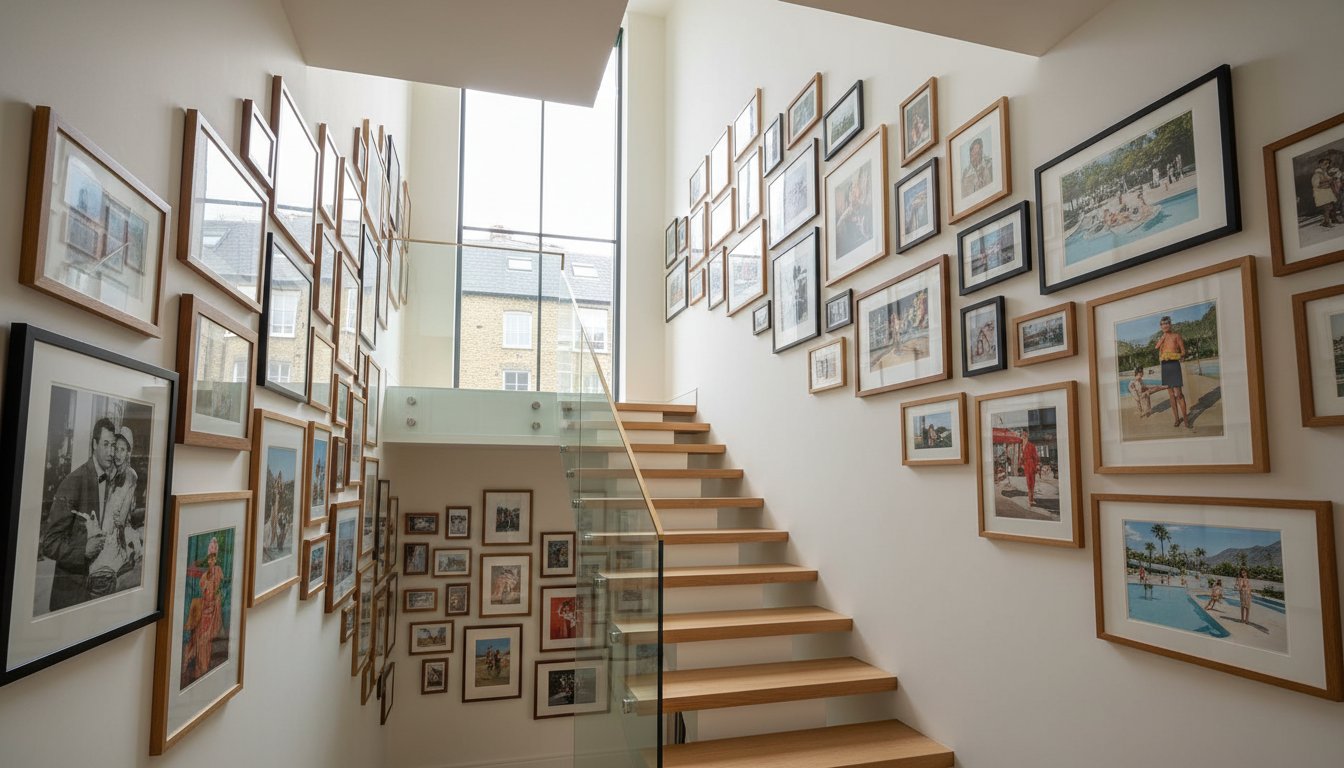
Salon arrangements offer a more evocative, narrative-driven experience. This style allows you to mix various sizes and orientations, creating a visual weight that feels balanced yet dynamic. Start with a large anchor piece, perhaps a 30×40 inch Slim Aarons landscape, positioned at the landing or the first major turn of the stairs. This grounds the collection and provides a focal point for the viewer. From there, use the organic growth method to expand the collection upward and downward. It’s a strategy favored by those who view their walls as a living archive, adding new acquisitions over many years. By keeping the 2 inch spacing rule consistent, even the most diverse gallery wall ideas for staircase remain sophisticated. This method celebrates the history of each piece, allowing a vintage print to sit comfortably beside a contemporary bespoke work hand-printed in a London darkroom. To complement such a collection of archival prints, you can explore Original Abstract Paintings options to add vibrant, hand-painted textures that bring a unique energy to your vertical gallery.

This guide will transform those anxieties into a masterclass in curation, offering a definitive roadmap to create a sophisticated home gallery in 2026. You’ll learn to select investment-grade, archival prints that harmonize across diverse frames while preserving the integrity of your walls. We will examine the exact measurements for sloped displays, the art of mixing iconic photographers, and the secrets to creating a vertical narrative that feels both timeless and intentional. From the hand-printed depth of a silver gelatin photograph to the measured spacing of a tiered layout, this journey reveals how to build a collection that tells a compelling story with every step.

Key Takeaways

  • Discover how to transform your staircase into a curated vertical narrative that guides the eye through a cohesive story as you ascend.
  • Explore sophisticated gallery wall ideas for staircase design by anchoring your collection around an evocative theme, such as iconic cinema or the aspirational world of Slim Aarons.
  • Master the “Sloping Horizon” rule to achieve perfect visual balance, whether you prefer the structured precision of a symmetrical layout or the artistic flow of a salon-style arrangement.
  • Learn professional secrets for technical execution, including the “Paper Template” method and the 57-inch rule for maintaining ideal eye-level placement on an incline.
  • Understand the enduring value of archival-quality silver gelatin prints, hand-crafted in our London darkroom, to ensure your home gallery remains a lasting piece of photographic history.

The staircase is often the most neglected architectural feature of a home, yet it provides the most compelling canvas for visual storytelling. It’s a vertical journey. By 2026, homeowners have shifted away from haphazard arrangements toward a more deliberate, curatorial approach. A well-executed staircase gallery wall functions as a vertical axis, guiding the viewer through a narrative that transcends mere transit. This is where a functional passage transforms into a high-impact interior design focal point.

When planning these spaces, designers lean on fundamental design principles to ensure the rhythm of the art matches the rhythm of the architecture. This involves moving beyond temporary decor toward investment-grade displays that retain their allure for decades. Choosing archival pieces, such as silver gelatin prints hand-printed in a London darkroom, ensures that your gallery wall ideas for staircase aren’t just decorative but are legacy pieces. These displays create a sense of permanence and stability that standard retail frames cannot replicate.

The Psychology of the Ascent

The human eye behaves differently when we’re in motion. As you move upward, your gaze naturally tracks along a diagonal path, making the 25-to-45-degree incline of a staircase a unique psychological opportunity. Unlike a static gallery in a living room, a staircase allows for a sense of discovery with every step taken. Alignment is critical; art should follow the eye-level of the viewer as they climb. This creates a cinematic experience where each frame reveals a new chapter of the home’s narrative. It’s a rhythmic progression that rewards the viewer for their movement.

Moving Beyond the “Family Photo” Cliche

While personal snapshots have their place, a sophisticated home in 2026 demands a more elevated aesthetic. Integrating fine art photography into your staircase gallery establishes a sense of timelessness and quiet authority. It’s about balancing personal memories with iconic cultural heritage. Consider the impact of a curated collection that includes:

  • Iconic Photography: Works that capture the golden age of glamour or historic moments.
  • Aspirational Lifestyle: The sun-drenched, sophisticated world of Slim Aarons.
  • Textural Depth: Bespoke framing that complements the architectural materials of the home.

Fine art photography serves as a bridge between the past and the present. It creates a home’s personality by showcasing a discerning eye for the world’s finest photography. This approach avoids the cluttered look of small, mismatched frames. Instead, it favors a professional, polished distance that befits a luxury gallery. You’re not just hanging pictures; you’re acting as a guardian of photographic heritage within your own walls.

Curating Your Theme: From Slim Aarons to Iconic Cinema

A successful staircase installation requires more than just hanging frames at eye level. It demands a cohesive anchor theme to prevent the transition between floors from feeling like an afterthought. Without a central narrative, the vertical climb can quickly become a cluttered visual experience. By implementing effective design strategies that prioritize thematic consistency, you transform a functional thoroughfare into a private gallery. Selecting a specific era or a single photographer’s body of work provides the architectural discipline needed for these often narrow, high-traffic spaces.

The Aspirational Luxury of Slim Aarons

Bringing the “poolside glamour” of Slim Aarons to an interior staircase offers an immediate injection of light and leisure. His work, which famously captured “attractive people doing attractive things in attractive places,” utilizes a vibrant color palette from the 1950s and 60s. These saturated hues of Mediterranean blues and Palm Springs pinks are particularly effective for brightening enclosed stairwells that lack natural light. Pairing these large-scale scenes of the jet-set lifestyle with minimalist, modern frames ensures the focus remains on the narrative of mid-century prestige. It’s a sophisticated way to execute gallery wall ideas for staircase projects that aim for an airy, expansive feel.

Cinema Heritage: Lobby Cards and Vintage Posters

For collectors with a passion for the silver screen, incorporating cinema lobby cards creates a nostalgic, cinematic climb. These cards, typically measuring 11×14 inches, offer a uniform size that’s ideal for negotiating tight corners or awkward landings where larger frames won’t fit. Mixing these smaller, detailed pieces with bold, graphic vintage film posters creates a dynamic rhythm. This approach allows you to weave a story of Hollywood’s photographic heritage, using the staircase as a chronological timeline of cinematic history. The repetition of the lobby card format provides a sense of order that grounds the more eclectic, larger posters.

Timeless Monochrome: The Black and White Aesthetic

If you’re looking for the most forgiving layout, black and white pictures offer a masterclass in architectural consistency. A monochrome palette hides inconsistencies in frame spacing and allows for a diverse mix of subjects, from 1960s fashion archives to gritty street photography. The impact of silver gelatin prints on a staircase is profound; the depth of the blacks and the crispness of the whites provide a museum-quality finish. These prints, often hand-printed in our London darkroom, bring a tactile sense of history to the home. This aesthetic is one of the most enduring gallery wall ideas for staircase designs, as it remains unaffected by changing interior trends. Explore our curated collections at Galerie Prints to find the archival pieces that will define your home’s vertical narrative.

Staircase Layout Strategies: Symmetrical vs. Salon Style

The ascent of a staircase presents a unique architectural canvas for the discerning collector. To master gallery wall ideas for staircase design, you must choose between two distinct philosophies: the disciplined grid or the fluid salon. Regardless of the chosen aesthetic, success relies on the Sloping Horizon rule. This principle dictates that the art maintains a consistent distance from the stair treads, typically 57 to 60 inches from the floor to the center of the frame. This height mirrors the eye level of a person standing mid-ascent, ensuring the work remains intimate and engaging.

To calculate the center line, measure upward from every third step to establish a diagonal path that mirrors the staircase angle, which usually sits between 30 and 35 degrees. Precision is the hallmark of a luxury display. Maintaining a 2 or 3 inch gap between frames is the golden rule for high-end installations. This specific spacing prevents the collection from feeling crowded while ensuring the individual provenance of each print is respected. It’s a technical detail that separates a professional gallery installation from a casual home display.

The Symmetrical Grid: Order and Precision

This approach favors collectors who appreciate the rhythmic stability of uniform print sizes and identical bespoke frames. It creates a clean, architectural silhouette that complements modern or minimalist interiors. The technical execution is demanding; you’ll need to calculate precise vertical offsets for every frame to ensure the grid follows the stairs’ incline perfectly. This method works best with a series of silver gelatin prints from a single photographer. The repetition of form enhances the archival quality of the work, turning a functional transit space into a structured exhibition of the world’s finest photography.

The Salon Style: Curated Eclecticism

Salon arrangements offer a more evocative, narrative-driven experience. This style allows you to mix various sizes and orientations, creating a visual weight that feels balanced yet dynamic. Start with a large anchor piece, perhaps a 30×40 inch Slim Aarons landscape, positioned at the landing or the first major turn of the stairs. This grounds the collection and provides a focal point for the viewer. From there, use the organic growth method to expand the collection upward and downward. It’s a strategy favored by those who view their walls as a living archive, adding new acquisitions over many years. By keeping the 2 inch spacing rule consistent, even the most diverse gallery wall ideas for staircase remain sophisticated. This method celebrates the history of each piece, allowing a vintage print to sit comfortably beside a contemporary bespoke work hand-printed in a London darkroom.

Technical Execution: Measuring, Spacing, and Bespoke Framing

Transforming a staircase into a curated corridor requires more than just an eye for beauty; it demands the precision of a master technician. When implementing gallery wall ideas for staircase projects, the physical execution must match the caliber of the photography itself. The process begins with the “Paper Template” method. Trace each frame onto kraft paper and secure these mockups to the wall using low-tack tape. This allows you to visualize the vertical narrative and adjust the flow without committing to a single nail hole. It’s a vital step for maintaining the rhythm of the collection as it ascends.

The core of a successful installation lies in the 57-inch rule, a gallery standard that places the center of the artwork at the average human eye level. On a staircase, this measurement must be taken vertically from each individual tread to ensure the diagonal axis remains fluid. For instance, a 2024 study on gallery ergonomics suggests that maintaining this 145 cm height creates a more immersive experience for the viewer. To protect your investment, especially in stairwells flooded with natural light, specify anti-reflective museum glass. High-quality glazing provides up to 99% UV protection, preventing the degradation of silver gelatin prints while eliminating the glare that often obscures art in bright transitions.

Step-by-Step Hanging Guide

  • Find the Anchor: Start at the midpoint of the staircase. Hang your primary, largest piece here and work outward toward the upper and lower landings to maintain balance.
  • Maintain the Axis: Use a laser level or a taut string line to define the diagonal slope. This ensures your gallery wall ideas for staircase don’t feel disjointed or haphazard.
  • Prioritize Safety: Never balance a standard ladder on steps. Use a specialized multi-position ladder or a stair-platform system to ensure a stable base while reaching higher points of the wall.

The Importance of Bespoke Framing

Retail frames often lack the structural integrity and chemical purity required to protect high-end photographic art in high-traffic areas. Bespoke framing offers a marriage of aesthetic harmony and archival security. When selecting finishes, consider how a deep black ash or a warm natural oak might echo the texture of your banister or the grain of the floorboards. A gilt frame can add a touch of 1950s glamour, reminiscent of the Slim Aarons lifestyle, while a minimalist white frame allows the subject matter to breathe.

Archival mounting is the standard for preserving print provenance, utilizing pH-neutral adhesives and acid-free mounting boards to prevent the chemical yellowing that destroys paper fibers over time. Every print we offer is a piece of history, often hand-printed in our London darkroom, and deserves a housing that reflects that heritage. Choosing bespoke materials ensures your collection remains as vibrant in 2046 as it is today.

Discover how our curated collections can elevate your home by exploring the world’s finest photography at Galerie Prints.

The Galerie Prints Standard: Crafting Your Museum-Quality Staircase

Selecting the right gallery wall ideas for staircase projects requires more than just an eye for design; it demands access to the world’s finest photography. At Galerie Prints, we serve as a bridge to the golden age of glamour, sourcing imagery from prestigious archives like Getty Images and the estate of Terry O’Neill. Our commitment to authenticity begins in our London darkroom. Here, we produce silver gelatin prints from original negatives, a process that captures a depth of tone and level of detail that digital alternatives simply cannot replicate. These aren’t mere decorative items. They’re archival treasures designed to last for generations, ensuring your investment remains as vibrant in fifty years as it is today.

Our bespoke framing service arrives ready to hang, removing the guesswork from your installation. By choosing museum-quality materials, we protect the art from environmental factors; this makes it a permanent fixture of your home’s architectural narrative. We don’t just sell prints; we provide the components for a legacy.

Curatorial Assistance for Your Project

Our experts understand that every vertical space presents unique challenges. We provide tailored advice to help you select a cohesive set of prints that respect your home’s specific dimensions. Whether you’re filling a vast three-story void or a small architectural niche, we offer custom sizing to ensure a perfect fit. Every piece comes with a documented history. This provenance ensures that your gallery wall ideas for staircase aren’t just visually stunning but also intellectually rich, telling the story of photographic heritage with every step you take.

From Darkroom to Destination

The journey of your print is one of meticulous London-based craftsmanship. From the initial chemical bath in the darkroom to the final join of the bespoke frame, every step is handled by artisans. There’s a distinct sensory experience in unboxing a Galerie Prints delivery. The weight of the solid wood frame and the crisp clarity of the archival glass signal a standard of quality found in the world’s leading institutions. Your home deserves nothing less than this level of prestige.

Mastering the Art of the Curated Ascent

Transforming a transitional space into a meaningful journey requires more than just hanging frames; it demands a vision for storytelling. By 2026, the most compelling interiors will prioritize the vertical narrative, using the staircase to bridge the gap between architectural function and artistic expression. Whether you opt for the rigid discipline of a symmetrical grid or the storied charm of a salon-style arrangement, your choices should reflect a commitment to archival quality. These gallery wall ideas for staircase designs succeed when they pair iconic imagery from the Getty Images archives with the precision of museum-standard craft.

Every piece we produce is hand-crafted in our London darkroom, ensuring that the silver gelatin prints you hang today remain legacies for the next generation. We provide exclusive access to the Slim Aarons collection, offering a window into a world of mid-century glamour that’s preserved through our bespoke framing process. It’s about investing in a piece of photographic history that resonates every time you move between floors.

Begin your curated ascent with the world’s finest photography at Galerie Prints

Your walls are a canvas for your most sophisticated stories; let them speak with authority.

Frequently Asked Questions

How high should art be hung on a staircase wall?

Aim for a center point approximately 145 centimeters above each stair tread to mirror the natural eye level of an ascending viewer. This measurement ensures your collection maintains a rhythmic flow as one climbs the stairs. If you’re curating a bespoke arrangement of silver gelatin prints, this 145 centimeter baseline provides the structural integrity needed to anchor more expansive, floor to ceiling compositions.

Can I mix black and white photos with color prints on a staircase?

You can absolutely blend monochrome photography with vibrant color prints to create a layered, editorial aesthetic. A successful ratio often involves 70 percent black and white imagery punctuated by 30 percent color accents to maintain visual cohesion. This technique allows iconic archival shots to sit comfortably alongside contemporary Slim Aarons poolside scenes, bridging the gap between historical provenance and modern interior design.

What is the best way to plan a staircase gallery wall without making extra holes?

The most effective method involves cutting paper templates to the exact dimensions of your frames and securing them with low tack painter’s tape. This allows you to visualize your gallery wall ideas for staircase without committing to a single nail. By mapping out the 5 centimeter gaps between each piece on the wall first, you ensure the final installation of your hand printed collection is precise and balanced.

Should all frames on a staircase gallery wall be the same color?

Frames don’t need to be identical, though a unified material palette often enhances the prestige of the collection. Mixing three distinct finishes, such as hand stained oak, matte black, and antique gold, adds a curated depth that feels like a professional gallery. Using bespoke framing for every piece ensures that even if the colors vary, the quality of the craftsmanship remains a consistent thread throughout the vertical journey.

How many pictures do I need for a standard staircase gallery wall?

A standard residential staircase typically requires between 7 and 12 pieces to feel fully realized. For a 13 step flight, a curated grouping of 9 prints provides enough visual interest without overwhelming the architectural space. Smaller landings might only need 3 larger, high impact archival prints to establish a sense of permanence and luxury without cluttering the narrow passage during your gallery wall ideas for staircase project.

How do I handle lighting for a staircase gallery wall?

Install directional LED spotlights with a 30 degree beam angle to illuminate each print without creating harsh glare on the glass. Proper lighting is essential for showcasing the silver gelatin textures and fine details of your photography. Position the fixtures 45 to 60 centimeters away from the wall to ensure the light washes evenly over the frames, highlighting the provenance of each individual work.

Is it better to use large prints or several small ones on a stairs?

A combination of one large anchor piece and several smaller supporting prints creates the most compelling narrative. Using a single 70 by 100 centimeter statement print at the turn of the stairs provides a focal point that grounds the entire installation. Surrounding this with smaller 20 by 30 centimeter frames allows for a nuanced exploration that invites closer inspection from guests as they move through the home.

What is the most common mistake when hanging art on stairs?

The most frequent error is ignoring the 5 centimeter spacing rule, which results in a disjointed and chaotic appearance. Many homeowners hang their art based on the ceiling line rather than the staircase incline, creating a visual disconnect. Maintaining a consistent distance from the stair treads ensures the collection feels like an intentional, permanent installation rather than an afterthought in a high traffic area.

Terry O’Neill Photography Prints: A Collector’s Guide to the Man Who Shot the Sixties

Terry O’Neill didn’t just photograph the icons of the twentieth century; he lived among them, capturing the vulnerable moments that defined an era of unprecedented glamour. You likely recognize the effortless cool of Faye Dunaway at the Beverly Hills Hotel in 1977 or the raw energy of the early Rolling Stones. Finding genuine terry o’neill photography prints that preserve this legacy can feel like a daunting pursuit when the market is often flooded with low-quality digital imitations. We understand that a discerning collector seeks more than a mere image; you’re looking for a tangible connection to the golden age of celebrity and the prestige of a well-curated archive.

This guide will help you discover the stories behind these legendary frames and provide the essential knowledge needed to secure authentic, archival-quality pieces for your collection. We’ll explore the technical brilliance of silver gelatin processes, the vital importance of provenance, and how to select a bespoke size that transforms a luxury interior into a private gallery of history. By the end, you’ll feel confident in choosing a statement piece that serves as a lasting guardian of photographic heritage and a window into the world’s finest photography.

Key Takeaways

  • Understand the “reportage” style that allowed Terry O’Neill to capture the most intimate, unscripted moments of the 20th century’s greatest cultural icons.
  • Learn how to distinguish between mass-market reproductions and genuine, archival-quality terry o’neill photography prints hand-printed in our London darkroom.
  • Explore the storied histories behind legendary images of Hollywood royalty and rock & roll legends, from Audrey Hepburn to the definitive portraits of David Bowie.
  • Discover how to select the perfect scale and bespoke framing to ensure these monochrome masterpieces elevate your interior with a sense of timeless glamour.
  • Gain expert guidance on acquiring rare editions and curated archives, securing a lasting piece of photographic heritage for your private collection.

The Legacy of Terry O’Neill: Why These Prints Define an Era

Terry O’Neill didn’t just document the 1960s; he inhabited them. His transition from a hopeful jazz musician to the era’s most influential lensman began at London Airport, where a chance shot of a sleeping Home Secretary in 1959 changed the trajectory of his life. O’Neill’s signature reportage style relied on a unique, self-taught ability to disappear into the background. By becoming a trusted fixture in the inner circles of the elite, he captured moments that felt entirely unobserved. This level of access turned terry o’neill photography prints into more than just images. They’re historical documents of a cultural revolution, vibrating with the energy of a world in flux.

His work remains the gold standard for fine art photography because it prioritizes the human element over the spectacle. While other photographers sought to build myths, O’Neill sought to find the person behind the persona. This approach created a body of work that is both monumental and deeply personal, bridging the gap between the public’s perception and the subject’s reality.

From Fleet Street to Fine Art

In 1963, O’Neill’s photograph of The Beatles at Abbey Road Studios marked the first time a pop group appeared on the front page of a national newspaper, effectively launching the visual language of the British Invasion. His journey from the frantic deadlines of Fleet Street to the hushed halls of the world’s most prestigious galleries reflects a profound shift in how we value the photographic medium. A detailed look at Terry O’Neill’s life and career reveals a man who professionalized the role of the celebrity photographer while maintaining the soul of an artist. His appointment as a Commander of the Order of the British Empire (CBE) in 2019 served as the final, official recognition of his place in British cultural heritage.

The ‘Intimate Insider’ Aesthetic

O’Neill eschewed the bulky, intrusive equipment favored by his peers, opting instead for portable 35mm cameras. This technical choice allowed him to remain mobile and discreet. He didn’t demand attention; he waited for it to dissipate. This patience allowed him to build a psychological bridge with icons like Brigitte Bardot and David Bowie, bypassing the artifice of fame. His photos don’t feel like staged publicity stills. Instead, they feel like personal memories.

When you view his shots of Frank Sinatra walking onto a film set or Audrey Hepburn in a moment of quiet reflection, you’re seeing the result of a rare, candid intimacy. The enduring value of terry o’neill photography prints lies in this authenticity. Every frame is a testament to his ability to find the quiet truth in the middle of a glamorous storm, ensuring these images remain as relevant today as they were five decades ago.

Understanding Print Quality: Archival Standards and the London Darkroom

Distinguishing a mass-market digital poster from a gallery-grade archival piece is the first step for any serious collector. While a poster uses standard ink on thin paper, terry o’neill photography prints from Galerie Prints are crafted as enduring artifacts. We emphasize the phrase “Hand-printed in our London darkroom” because it signifies a commitment to the artisanal heritage of photography. This isn’t a factory process; it’s a meticulous, chemical interaction between light, silver, and paper that requires decades of expertise to master.

The institutional value of O’Neill’s work is undeniable. His significance in British culture is cemented by the 81 portraits currently held in the National Portrait Gallery collection. When you acquire a print, you aren’t just buying an image. You’re securing a piece of history that meets the same rigorous archival standards as those found in international museums. This level of provenance ensures that your investment remains a legitimate archival piece for decades to come.

The Craft of the Silver Gelatin Print

For O’Neill’s iconic black and white pictures, we utilize the traditional Silver Gelatin process. Unlike modern digital inkjet methods, this involves a chemical reaction where silver halides suspended in a gelatin layer are exposed to light. The result is a tonal range that digital technology cannot replicate, offering deep, velvety blacks and luminous highlights. Because the image is physically embedded within the fibers of the paper, these prints are designed to last for over 100 years without fading.

Archival Paper and Materials

Quality begins with the substrate. We use acid-free, museum-quality paper to prevent the yellowing and brittleness seen in commercial prints. In our London facility, every print undergoes rigorous washing to remove residual chemicals, ensuring the world’s finest photography is preserved for future generations. Identifying a professional lab-produced print involves observing the weight of the paper and the specific depth of the blacks. It’s the difference between a fleeting image and a permanent heirloom.

  • Silver Gelatin: The gold standard for black and white, using light-sensitive silver salts.
  • C-Type Printing: The preferred method for color, utilizing light-sensitive paper and traditional wet chemistry.
  • Longevity: Archival materials ensure your terry o’neill photography prints remain vibrant for over a century.

If you’re ready to begin your journey into high-end collecting, you can browse our curated Terry O’Neill archive to find a piece that speaks to your aesthetic.

Iconic Collections: Categorizing O’Neill’s Most Famous Subjects

Terry O’Neill didn’t merely photograph fame; he documented its evolution across five decades. His archive represents a curated history of 20th-century celebrity culture, offering a rare glimpse behind the curtain of public personas. Collectors seeking terry o’neill photography prints often begin by identifying with a specific era or genre, whether it’s the raw energy of the 1960s British invasion or the polished artifice of 1970s Hollywood. Each print serves as a testament to O’Neill’s ability to put his subjects at ease, resulting in compositions that feel both intimate and monumental.

Faye Dunaway: The Story of ‘The Morning After’

The 1977 portrait of Faye Dunaway at the Beverly Hills Hotel remains one of the most significant Hollywood images ever captured. Taken at 6:30 AM, just hours after her Best Actress win for Network, the shot captures the profound stillness that follows a career-defining peak. While the Slim Aarons aesthetic celebrates the effortless leisure of the elite, O’Neill’s poolside composition introduces a layer of narrative exhaustion. The scattered newspapers and the golden statuette on the table provide a grounding reality to the glamour, making this a perennial favorite for those looking to invest in terry o’neill photography prints that tell a complex story.

Bowie and the Diamond Dogs Era

In 1974, O’Neill collaborated with David Bowie during the Diamond Dogs period, creating a visual identity that remains a cornerstone of music history. The series featuring Bowie in a mustard-yellow Freddie Burretti suit is particularly sought after by serious collectors. These images possess a sharp, architectural quality that makes them ideal focal points for contemporary interiors. The stark contrast and Bowie’s ethereal presence are preserved perfectly in our archival silver gelatin prints, ensuring the legendary artist’s legacy remains as vibrant as the day he sat for the session.

O’Neill’s portfolio also encompasses several other vital categories that define his legacy:

  • The Bond Connection: From the rugged masculinity of Sean Connery on the set of Diamonds Are Forever to the quintessential 60s glamour of the Bond girls, O’Neill was the unofficial photographer of the 007 universe.
  • Rock & Roll Legends: His early access to The Rolling Stones and his long-term friendship with Elton John resulted in portraits that are both candid and iconic.
  • Fashion and Supermodels: His lens tracked the industry’s shift from the “The Face of ’66” Jean Shrimpton to the early, powerful days of Naomi Campbell.

These collections represent more than just celebrity portraiture; they are historical artifacts. Each piece is hand-printed in our London darkroom, maintaining the technical superiority and provenance that high-end collectors expect. Whether it is the soft light of an Audrey Hepburn session or the high-contrast drama of a rock stage, these works bring a sense of permanent prestige to any private collection.

A Decorator’s Guide: Sizing and Bespoke Framing for Your Space

Selecting terry o’neill photography prints is an exercise in curation that extends beyond the subject matter to the physical presence of the work within a room. Scale dictates the emotional resonance of the piece. An intimate 12×16 inch print invites a quiet, personal connection in a private study or a library nook. Conversely, a 40×60 inch statement piece commands a lounge, transforming the room’s architecture through O’Neill’s high-contrast monochrome palette. Black and white photography acts as a versatile anchor; it bridges the gap between the ornate details of a traditional residence and the stripped-back surfaces of a modern penthouse with effortless grace.

The Galerie Prints Bespoke Framing Service

We treat framing as an extension of the archival process. Professional mounting is a technical necessity, not just an aesthetic choice. It prevents the print from warping or “cockling” over time due to subtle humidity changes in the home. Our bespoke service offers a choice between the timeless weight of hand-finished black wood and the sharp, industrial lines of minimalist metal. We consider UV-protective glass a non-negotiable standard for any serious collector. It filters out 99 percent of harmful rays, ensuring that the deep blacks and subtle silver tones of your investment remain vibrant for decades to come.

Placement and Lighting Strategies

Placement defines the narrative impact of your collection. An O’Neill portrait of David Bowie or Brigitte Bardot creates a powerful focal point in a hallway, acting as a conversational gateway for guests. To enhance the cinematic atmosphere of a home theater or living space, many collectors mix these works with vintage lobby cards. This pairing creates a rich, multi-layered “Master of Photography” gallery wall alongside contemporaries like Slim Aarons or Douglas Kirkland.

Lighting is the final, essential touch for terry o’neill photography prints. Use adjustable LED spotlights with a high Color Rendering Index (CRI) of 90 or above to ensure color accuracy. Angle the light at approximately 30 degrees to minimize glare on the glass while accentuating the exquisite grain of the silver gelatin process. This precise illumination brings the 1960s to life, casting a sophisticated glow over your entire interior scheme.

Why Buy Terry O’Neill Prints from Galerie Prints?

Galerie Prints doesn’t just sell art; we preserve a legacy. Our commitment to “The world’s finest photography” means every piece we offer meets a standard of excellence that honors the original vision of the artist. When you acquire terry o’neill photography prints through our gallery, you’re gaining direct access to curated archives and rare editions that are often unavailable to the general public. This exclusive access is paired with the London-based expertise of Stuart Möller. Alongside a dedicated team of master printers, Möller ensures that every print retains the depth, contrast, and soul of the original negative.

Our service extends far beyond the gallery walls. We provide global shipping and a white-glove service for international collectors, ensuring that your investment arrives in pristine condition, regardless of your location. We understand that purchasing fine art is a significant decision. Our logistics team handles every detail with the same precision our printers use in the darkroom. This meticulous approach ensures that the journey from our archive to your home is seamless and secure.

A Curated Approach to Collecting

Finding the perfect piece often requires looking beyond what’s currently on display. We act as a bridge between vast historical archives and the aesthetic needs of modern homes. If there’s a specific image from the O’Neill archive you’ve seen in a book or documentary that isn’t listed, we help you source it. There’s a unique reassurance in buying from a physical London gallery. Located at 152 Arthur Rd, our space allows collectors to experience the tactile quality of our works firsthand. We pride ourselves on being a trusted guide for both seasoned investors and first-time buyers.

Your Journey with Terry O’Neill Starts Here

Viewing these works as an investment in heritage is the right mindset for any collector. Terry O’Neill didn’t just take photos; he captured the DNA of the 1960s and 70s. Each of our terry o’neill photography prints is a testament to artisanal quality, hand-printed to archival standards that ensure they’ll last for generations. You’re not just buying a decoration. You’re securing a piece of cultural history that has been crafted with the utmost reverence for the medium. Our bespoke approach ensures that every silver gelatin or c-type print is a true masterpiece of the darkroom arts.

Inviting the Icons of the Sixties Into Your Home

Acquiring terry o’neill photography prints is an investment in the very fabric of 20th-century culture. These images represent a rare synthesis of candid intimacy and high-fashion poise, captured by a man who moved effortlessly among the legends he photographed. From the 1963 sessions with The Beatles to the 1977 poolside portrait of Faye Dunaway, O’Neill’s work offers a definitive record of celebrity at its most authentic. At Galerie Prints, we honor this legacy through a rigorous commitment to artisanal quality. Each print is hand-printed in our London darkroom, utilizing museum-quality archival materials that ensure the silver gelatin or c-type finish retains its depth for decades. Our global white-glove delivery service provides peace of mind, ensuring that these historical artifacts are handled with the reverence they deserve from our gallery to your wall. You’re not just decorating a room; you’re preserving a moment of photographic history that continues to inspire the world’s finest interiors.

Discover the Terry O’Neill Collection and Own a Piece of History

Transform your space with a masterpiece that captures the enduring allure of the golden age.

Frequently Asked Questions

Are Terry O’Neill prints a good investment?

Yes, Terry O’Neill photography prints are considered stable assets because of their historical significance and the finite nature of his estate’s archives. Since his passing in 2019, demand for his work has increased; his iconic image of Faye Dunaway at the Beverly Hills Hotel continues to achieve high auction results at houses like Sotheby’s. Collectors value the scarcity of limited editions, as these pieces represent a definitive era of celebrity culture that remains globally relevant.

What is the difference between a Silver Gelatin print and a digital print?

A Silver Gelatin print is a traditional, light-sensitive process where the image is hand-printed from an original negative in our London darkroom. This method uses silver salts suspended in gelatin to create deep, rich blacks and a luminous tonal range that digital prints can’t replicate. While digital prints offer precision, the Silver Gelatin process is the gold standard for archival quality, ensuring the artwork’s longevity for over 100 years.

How can I verify the authenticity of a Terry O’Neill print?

Authenticity is verified through an official Certificate of Authenticity and the presence of an estate stamp or a hand-signature from the photographer. Every piece curated by Galerie Prints comes with documented provenance to ensure its origin from the official Terry O’Neill archive. Collectors should look for the specific edition number, typically found on the reverse or the margin, which confirms the print’s place within a strictly limited production run.

What are the most famous Terry O’Neill photographs?

The most celebrated works include the 1977 portrait of Faye Dunaway the morning after her Oscar win and the 1964 image of The Rolling Stones in London. O’Neill’s portfolio also features the definitive 1975 shots of David Bowie as the Thin White Duke and his candid 1960s captures of Brigitte Bardot. These images are cornerstones of the world’s finest photography, capturing the raw essence of 20th-century icons with unparalleled intimacy.

Does Galerie Prints offer international shipping for framed art?

We provide secure international shipping to over 50 countries using specialized art couriers to ensure your framed work arrives in pristine condition. Each bespoke frame is crated with protective materials designed to withstand long-distance transit. Delivery timelines typically range from 7 to 14 days, depending on the destination and customs processing requirements. You’ll receive a tracking number the moment your terry o’neill photography prints leave our gallery.

Can I request a specific size for a Terry O’Neill print?

Bespoke sizing is often available, though it must adhere to the specific proportions and edition rules set by the photographer’s estate. We offer standard archival sizes ranging from 12×16 inches to large-format 40×60 inch displays for most collections. If you require a custom dimension to fit a specific interior space, our curators can advise on the best options that maintain the integrity and composition of the original negative.

What is the best way to clean and maintain my photography print?

Maintain your print by displaying it away from direct sunlight and using archival-grade UV-protective glass to prevent fading. Use a soft, dry microfiber cloth to gently dust the frame’s surface; don’t apply liquid cleaners directly to the glass or the print. To preserve the paper’s integrity, keep the artwork in a climate-controlled environment where humidity levels remain between 40% and 50% to avoid moisture damage or warping.

Authentic Cinema Lobby Cards: A Collector’s Guide to Vintage Film Memorabilia

A single 11×14 inch card from a 1942 noir classic carries more historical weight than a thousand digital advertisements. These artifacts weren’t just promotional tools; they were the first tactile bridge between the audience and the golden age of glamour. You likely recognize the quiet thrill of holding a piece of cinematic history, yet that excitement is often shadowed by the fear of acquiring a high priced reproduction. Distinguishing authentic cinema lobby cards from modern imitations requires a discerning eye for detail, particularly when identifying the technical shift from early stone lithography to the rich, deep textures of silver gelatin prints.

In this curatorial guide, you’ll discover how to verify the provenance of your collection and understand why certain cards have seen their market value increase by over 200 percent in the last decade. We’ll demystify the industry’s technical language, from standard sizing to the archival preservation techniques used in our London darkroom. By the end of this exploration, you’ll possess the knowledge to invest with confidence and find exquisite, framed pieces that transform a room into a private gallery. We’ll begin by tracing the 114 year history of the lobby card, starting with its 1910 debut by the Vitagraph Company of America.

Key Takeaways

  • Delve into the rich history and tactile allure of these 11×14-inch cinematic artifacts, originally designed to captivate audiences within the golden age theatre foyer.
  • Learn to identify the technical nuances and international variations that distinguish a rare collector’s piece from standard memorabilia.
  • Master the art of valuation by understanding how film popularity and specific card sequences influence the investment potential of authentic cinema lobby cards.
  • Discover how to transform your living space into a private gallery through bespoke framing techniques and archival-grade UV protection.
  • Understand the importance of provenance and curatorial expertise when sourcing rare film history from the world’s finest photographic archives.

What are Authentic Cinema Lobby Cards? Defining a Lost Art Form

The cinema lobby card represents a tactile bridge to a bygone era of theatrical promotion. These pieces aren’t mere advertisements; they’re 11×14 inch windows into the narrative soul of a film. Printed on heavy, durable card stock, these stills were designed for the high-traffic foyers of grand movie houses. Their primary mission was simple. They teased the audience with glimpses of “star power” and pivotal plot points before a single ticket was ever purchased. Unlike a poster that shouts from a distance, the lobby card whispers the secrets of the story to patrons as they linger in the lobby.

When seeking authentic cinema lobby cards, the distinction between a genuine historical artifact and a modern digital reprint lies in the physical soul of the object. True vintage cards possess a specific paper texture and a depth of color that only traditional lithographic or silver-based printing processes can achieve. You’ll feel the weight of the card and notice the subtle aging of the fibers, a patina that digital copies simply can’t replicate. Historically, studios released these in a “set,” typically consisting of eight distinct cards. While a complete set is a collector’s dream, individual cards are frequently sold today. This is because specific scenes or actors often hold more personal resonance for the modern curator, or perhaps only a few cards from a set survived the decades of theatre use.

Lobby Cards vs. Movie Posters: The Intimate Alternative

While a six-foot poster demands a grand hall, the 11×14 inch lobby card offers a more intimate alternative for domestic gallery walls. These pieces rely on the photographic reality of a film still rather than the broad, illustrative strokes of a traditional poster. This provides a raw, unfiltered look at the production design and the actors’ expressions. For those looking to build a sophisticated home collection, understanding these nuances is essential. You can explore more about this photographic legacy in our Cinema Lobby Cards: A Collector’s Guide to Hollywood’s Photographic Heritage.

The Golden Era of the Lobby Card (1913–1980s)

The history of the format spans from the first silent film cards in 1913 to a sharp decline in the mid-1980s. Studios like MGM and Warner Bros developed signature styles, often using vibrant hand-coloring techniques on black-and-white stills to create an ethereal, glamorous aesthetic. The year 1980 marked a significant shift in production quality. As studios moved toward cheaper, mass-produced glossies, the artisanal charm of the heavy card stock vanished. To understand how these evolved alongside other promotional media, one can look at the broader History of Film Posters and Lobby Cards. This timeline highlights why pre-1980 authentic cinema lobby cards remain the gold standard for serious investment and archival display.

The Anatomy of a Vintage Lobby Card: Technical Details for Collectors

To hold a piece of cinematic history is to understand its physical weight and texture. Standard authentic cinema lobby cards produced in the United States measure precisely 11 by 14 inches; a format designed to fit into standardized brass display cases within theater foyers. International variations exist, most notably the British “Front of House” cards, which typically adopt a smaller 8 by 10 inch dimension. These smaller iterations often mirror the size of standard publicity stills but retain the heavy card stock characteristic of theatrical advertising.

The tactile experience is a primary indicator of age and legitimacy. Unlike the thin, glossy paper used for modern one-sheet posters, vintage cards were printed on substantial, heavy card stock. This thickness provided the necessary rigidity for the cards to withstand the rigors of being pinned, taped, or framed during weekly program changes. The surface of an original card possesses a certain “tooth” or organic texture that is absent in modern digital prints.

The evolution of printing technology is etched into the surface of these artifacts. Early 20th-century cards utilized stone lithography, a process that resulted in rich, matte textures and deep color saturation. By the 1950s, offset lithography became the industry standard, offering a cleaner but slightly flatter aesthetic. This eventually gave way to the high-gloss, photographic finishes prevalent in the 1970s. For a deeper dive into the production and archival preservation of these pieces, the Library of Congress provides an excellent History of Cinema Lobby Cards. Provenance in the context of studio-stamped memorabilia refers to the documented history of ownership and the verified studio markings that confirm an item’s status as an original theatrical artifact.

The Beauty of Hand-Coloured Silent Era Cards

During the 1920s, before the widespread adoption of color film, studios employed skilled artists to hand-tint individual cards. This meticulous process added ethereal washes of rose, amber, and blue to monochrome scenes, creating a dreamlike quality. Collectors often compare these delicate works to antique Persian miniatures due to their intricate detail and artisanal soul. This era highlights the timeless allure of black and white pictures, where the absence of natural color invites a more profound appreciation of composition and shadow.

Identifying Studio Marks and Litho Credits

Authenticity is often hidden in the margins. From 1940 onwards, most American authentic cinema lobby cards featured National Screen Service (NSS) numbers, usually located in the bottom right border. These codes, such as “52/418,” indicate the year of release and the film’s specific production sequence. It is vital to distinguish between the copyright date and the actual release date; re-releases often carry the original copyright but updated NSS codes. Warning signs of modern inkjet reproductions include a lack of texture in the paper and microscopic pixelation that becomes visible under a 10x jeweler’s loupe. If you are looking to acquire a piece of verified history, you might view our curated gallery for inspiration on how to display such exquisite finds.

Investing in Cinema History: Rarity, Genre, and Market Value

Acquiring authentic cinema lobby cards represents more than a nostalgic pursuit; it’s a strategic investment in the preservation of 20th-century visual culture. The market value of these lithographic treasures is dictated by a precise triumvirate of film prestige, card sequence, and physical preservation. While most standard sets consist of eight cards, the Title Card, designated as Card #1, remains the crown jewel for any serious curator. This specific card usually features the film’s full credits and a central, evocative image that serves as a condensed, high-impact version of the theatrical poster.

  • Film Popularity: Cultural impact and the enduring legacy of the director or cast directly correlate with market demand.
  • Card Number: The Title Card often commands a 30% to 50% premium over standard scene cards (numbers 2 through 8).
  • Condition Grading: Professional grading is essential. Values fluctuate wildly between Near Mint (NM) specimens, which show virtually no flaws, and Fair examples that may include pinholes or tape marks from original theater displays.

Genre also plays a decisive role in valuation. While romantic comedies often struggle to maintain high price points, genres like Film Noir, Horror, and Science Fiction enjoy a significant “Genre Premium.” Collectors in these niches are notoriously dedicated; they often drive the price of a 1950s B-movie horror card well beyond that of a mainstream Academy Award winner from the same era. The visual language of these genres, often featuring dramatic shadows or avant-garde creature designs, makes them particularly desirable for high-end interior display.

Top-Tier Collectables: James Bond and Star Wars

The market for 007 memorabilia remains exceptionally buoyant, particularly for the Sean Connery era. Cards from Dr. No (1962) or Goldfinger (1964) are considered blue-chip assets, reflecting the same level of aspirational luxury found in our Slim Aarons: The Definitive Guide. Similarly, the 1977 Star Wars original release cards have seen a steady appreciation in value over the last 47 years. These are no longer mere promotional items. They are historical artifacts of a cinematic revolution, with the 1977 “Set A” cards being particularly prized by international investors.

The “Dead Actor” Bounce and Cultural Significance

The passing of a legendary star often triggers a “Dead Actor” bounce, where the scarcity of items associated with icons like Marilyn Monroe or James Dean drives prices upward. Provenance is everything. Collectors prioritize “original release” cards over “re-release” versions, which are easily identified by the “R” code in the bottom margin. An original 1955 authentic cinema lobby cards specimen for Rebel Without a Cause will always hold more gravitas and capital than a 1960s reissue. Cult classics also create unique micro-markets, where the rarity of a specific, obscure film can outweigh the fame of a standard blockbuster.

Displaying Your Collection: Bespoke Framing and Interior Aesthetics

Transforming a private collection into a visual narrative requires more than a simple frame; it demands a curatorial eye. Authentic cinema lobby cards, traditionally printed in a consistent 11 by 14 inch format in the United States or 8 by 10 inches in the UK, provide a rhythmic structure that few other mediums can match. Their uniform size makes them the ideal candidate for a sophisticated gallery wall, allowing for a balanced arrangement that feels both intentional and expansive within a modern home.

Preservation is the cornerstone of any serious display. The lithographic inks used in the 1940s and 50s are often fugitive, meaning they’re highly susceptible to light damage. We always recommend museum-grade UV-protective glass. This specialized glazing filters out 99% of harmful ultraviolet rays, preventing the vibrant Technicolor or rich monochrome tones from fading into a ghostly sepia. Lighting should be indirect; avoid placing your cards opposite south-facing windows where direct sunlight can bake the archival card stock and cause irreversible brittleness.

Bespoke framing elevates a vintage card to the status of fine art. A custom-cut, acid-free mount provides essential breathing room, drawing the eye toward the central action of the scene while protecting the paper from touching the glass. This isn’t just about aesthetics; it’s about creating a micro-environment that stabilizes the piece for decades to come. A well-chosen frame acts as a bridge between the historical artifact and your contemporary interior.

Creating a Narrative Gallery Wall

A truly curated space often blends mediums to tell a broader story. You can create a compelling dialogue by mixing your Fine Art Photography with lobby cards from the same era. Consider grouping cards by a specific director, such as the suspenseful compositions of Alfred Hitchcock, or by a shared color palette to anchor a room’s interior design. A disciplined grid layout offers a clean, modern look, whereas a “Salon Hang” celebrates a more bohemian, layered history of the silver screen.

Archival Mounting: Protecting Your Investment

When securing your authentic cinema lobby cards, the materials you don’t see are just as important as the frame itself. You should never use acidic tapes or permanent adhesives; these will leach into the fibers, causing yellowing and staining known as foxing. We favor “float mounting” for vintage memorabilia. This technique suspends the card slightly above the mount board, showcasing the original edges and the tactile quality of the vintage paper. Our London-based framing experts use only reversible, acid-free hinging methods to ensure the card’s integrity remains untouched, preserving both the provenance and the future market value of your collection.

To begin building your curated cinematic display, explore our exquisite collection of vintage film memorabilia today.

Why Source Authentic Lobby Cards from Galerie Prints?

At Galerie Prints, we view ourselves as much more than a retailer. We act as dedicated guardians of photographic heritage. Our unwavering commitment to “The world’s finest photography” extends beyond traditional silver gelatin prints into the specialized world of cinema history. Every piece we offer reflects an obsession with archival integrity and historical provenance. Our London darkroom heritage informs our curatorial eye, ensuring that we only select items that meet the most exacting standards of the international art world.

Acquiring authentic cinema lobby cards requires a discerning touch and a rigorous authentication process. We understand that serious collectors aren’t just buying paper; they’re investing in a tangible bridge to the Golden Age of Glamour. Our experts scrutinize every vintage item for correct card stock, period-accurate lithography, and original studio markings. This meticulous approach guarantees that each piece in our gallery is an exquisite artifact of a bygone era, preserved for the next generation of enthusiasts.

From Slim Aarons to Star Wars: A Curated Selection

Our collection spans the full breadth of 20th-century cultural history. We curate our inventory to include only the most evocative and high-condition cards, ranging from the sun-drenched, aspirational lifestyle of Slim Aarons to the legendary cinematic frames of Star Wars. Our expertise isn’t limited to the silver screen. We invite you to explore our specialized Music Photography collection to see how we capture the soul of sound through the lens. Once you’ve selected your piece, our team manages the logistics with professional precision. We provide bespoke packaging and worldwide shipping to ensure your delicate card stock arrives in pristine condition, regardless of your location.

Start Your Collection Today

Owning authentic cinema lobby cards is a way to claim a piece of history that won’t ever be repeated. These aren’t mere decorations; they’re sophisticated conversation starters that bring a sense of permanence and narrative depth to any modern home. As rare items from the mid-20th century become increasingly difficult to source, now is the time to secure your investment. Browse our current inventory today to find a timeless work that speaks to your personal style before these unique pieces sell out.

Own a Piece of Cinematic History

Collecting vintage memorabilia is more than a hobby; it’s an act of cultural preservation. These 11 by 14 inch artifacts represent a vanished era of film promotion that flourished from the early 1910s through the mid-1980s. By understanding the lithographic details and historical provenance of authentic cinema lobby cards, you ensure that your investment retains its archival integrity and aesthetic power. Whether you’re drawn to the stark shadows of 1940s Film Noir or the vibrant saturated hues of 1960s Technicolor, these pieces transform a room into a private gallery of the world’s finest photography.

At Galerie Prints, we bridge the gap between the golden age of glamour and your modern interior. Every piece in our collection is hand-curated for archival quality. We provide bespoke London framing to protect your acquisition and offer worldwide shipping with museum-grade packaging to ensure its safe arrival. It’s time to elevate your space with a tangible connection to the silver screen.

Explore our curated collection of Authentic Cinema Lobby Cards

Start your journey into the evocative world of vintage film today.

Frequently Asked Questions

What is the standard size of a cinema lobby card?

The standard dimensions for a classic U.S. cinema lobby card are 11 by 14 inches. While international variants like the British Front-of-House cards measure 8 by 10 inches, the 11 by 14 format remained the industry benchmark from the 1910s until the mid-1980s. These cards were printed on heavy cardstock to withstand the rigors of display in theater foyers during a film’s initial theatrical run.

How can I tell if a lobby card is an original vintage item or a reproduction?

You can identify authentic cinema lobby cards by examining the printing process under a 10x magnifying loupe. Original cards printed before 1970 typically feature a lithographic dot pattern or a continuous tone, whereas modern digital reproductions show a distinct CMYK honeycomb pattern. Authentic vintage cardstock also develops a specific acidic scent over 40 years and won’t glow under a long-wave UV blacklight.

Why are there usually eight cards in a lobby card set?

A complete lobby card set typically contains eight cards because this number allowed studios to provide a comprehensive visual narrative of the film. This standard was established by major studios like MGM and Warner Bros by 1920. The set usually consists of one “Title Card,” which features the main credits and artwork, followed by seven “Scene Cards” depicting pivotal moments from the movie’s plot.

Are lobby cards a good financial investment?

Vintage lobby cards have demonstrated consistent market growth, with rare examples from the 1930s appreciating by over 400 percent in the last two decades. Collectors prioritize cards from “blue-chip” titles like Casablanca or The Wizard of Oz. Because these items represent a finite historical resource, their provenance and physical condition serve as a stable hedge against inflation within the alternative asset market.

How should I clean a vintage lobby card that has surface dirt?

You should only attempt to clean surface dirt using a professional-grade vulcanized rubber soot sponge or a soft hake brush. Don’t use water or household solvents, as these will permanently warp the 100-year-old paper fibers. For heavy debris, a variable speed HEPA vacuum held 2 centimeters from the surface can safely lift dust without compromising the archival integrity of the original lithographic ink.

What does “NSS Number” mean on the bottom of my movie lobby card?

The NSS Number refers to the National Screen Service code, a system used from 1940 to 1984 to track and inventory theatrical advertising materials. This number typically appears in the bottom right corner as a two-digit year followed by a slash and a sequence number. For instance, a card marked “54/217” indicates the film was released in 1954 and was the 217th film processed by the NSS that year.

Can I frame lobby cards myself, or should I use a professional service?

While DIY framing is possible, a professional archival service is essential for protecting the long-term value of authentic cinema lobby cards. A bespoke framer will use 99 percent UV-protective glass and acid-free cotton rag matting to prevent “foxing” or light-induced fading. These museum-grade materials ensure that the card remains reversible and preserved for future generations of collectors who value cinematic history.

Which film genres have the most valuable lobby cards?

The horror and science fiction genres consistently command the highest prices at auction, particularly titles from the 1930s Universal Monsters era. Film Noir cards also see high demand due to their stark, high-contrast aesthetic. According to recent sales data from Heritage Auctions, a single Dracula (1931) lobby card has previously reached a price point exceeding 10,000 dollars, reflecting the extreme rarity of these specific genre pieces.

The Art of the Blue Velvet Movie Poster: A Curator’s Guide to Lynchian Iconography

To hang a blue velvet movie poster is to invite the unsettling beauty of David Lynch’s 1986 masterpiece into your private sanctuary. You likely recognize that this film transcends the screen; it’s a sensory experience that deserves a permanent, physical presence in a curated home. However, the online marketplace is currently saturated with low-quality, 72-dpi reprints that fail to capture the deep indigo hues and rich textures found in the original 1980s promotional artwork.

We’ll guide you through the process of selecting an archival-quality print that maintains the integrity of the film’s haunting iconography. You’ll learn how to distinguish between genuine provenance and mass-produced copies, ensuring your collection reflects a true appreciation for cinematic history. From deciphering the nuances of international designs to mastering bespoke framing for non-standard sizes, this curator’s guide provides the technical expertise you need to secure a lasting piece of the Lynchian legacy. By the end, you’ll understand why these exquisite prints remain a vital part of the world’s finest photography and film art collections.

Key Takeaways

  • Understand the “Lynchian” visual language and how it uses surrealist metaphors to deconstruct the dark underbelly of 1950s Americana.
  • Distinguish between iconic theatrical variants, including the rare Japanese B2, to find the perfect blue velvet movie poster for your personal collection.
  • Master the technical differences between standard prints and museum-grade archival photo paper to ensure your investment remains a lasting legacy.
  • Discover how a bespoke framing service elevates high-value cinema art to gallery standards through professional preservation and sophisticated aesthetic choices.
  • Gain insight into the artisanal, London-based craftsmanship required to curate and hand-finish the world’s finest photographic prints.

Decoding the Lynchian Aesthetic: Why the Blue Velvet Poster is a Visual Masterpiece

To understand the enduring allure of the blue velvet movie poster, one must first grasp the duality of David Lynch’s vision. Released in 1986, the Blue Velvet (film) redefined the boundaries of the neo-noir genre by juxtaposing the pristine veneer of 1950s Americana with a visceral, surrealist horror. The poster acts as a curated gateway into this world. It utilizes the titular fabric not merely as a decorative element but as a heavy, tactile shroud that conceals the rot beneath the manicured lawns of suburban Lumberton. This visual metaphor is central to the Lynchian identity; it’s a deliberate invitation to look past the surface.

In the initial teaser campaigns, the stark image of a severed ear lying in a field of green grass provided a shocking departure from traditional marketing. This singular, grisly detail established a new standard for psychological thrillers. It promised an experience that was as intellectually demanding as it was visually arresting. The deep blues and stark shadows of the palette solidified a neo-noir aesthetic that continues to influence contemporary cinema art and archival print collections. Key elements that define this masterpiece include:

  • The 1950s Palette: A blend of saturated primary colors and deep, ink-black shadows.
  • Tactile Imagery: The use of velvet texture to evoke a sense of voyeuristic intimacy.
  • Typography: Elegant, often serif fonts that contrast with the unsettling subject matter.

The Intersection of Surrealism and Cinema Art

David Lynch’s early training at the Pennsylvania Academy of the Fine Arts in 1965 profoundly informs the film’s promotional imagery. The blue velvet movie poster reflects a painterly obsession with high-contrast lighting and deep shadows. These “chiaroscuro” effects create a sense of unease that feels timeless. By treating the poster as a piece of fine art rather than a mere commercial tool, the 1986 original has maintained its provenance as a collector’s staple. It’s a study in how cinema can transcend the screen to become a permanent fixture of photographic heritage.

Subverting the Traditional Hollywood One-Sheet

The primary theatrical poster often features a romanticized, soft-focus depiction of Isabella Rossellini. This choice deliberately subverts the typical Hollywood one-sheet by masking the film’s brutal themes behind a facade of classic glamour. It mirrors the way the town of Lumberton hides its systemic violence behind white picket fences. Lynchian surrealism is the juxtaposition of mundane beauty with visceral rot.

Iconic Variants: From Theatrical One-Sheets to International Rarities

The visual identity of David Lynch’s 1986 neo-noir is as fractured and alluring as the film itself. Collectors often find that the blue velvet movie poster serves as a window into the film’s dual nature, balancing small-town artifice with subterranean decay. From the classic studio photography of the American release to the avant-garde interpretations found in Eastern Europe, each variant tells a different story about the film’s legacy. These pieces aren’t just promotional materials; they’re artifacts of a specific moment in cinematic history when the boundaries between mainstream and arthouse began to dissolve.

The Original 1986 US Release Poster

The domestic one-sheet, measuring 27 by 41 inches, remains the definitive representation of the film’s psychological landscape. It features a tri-fold portrait of Isabella Rossellini, Kyle MacLachlan, and Laura Dern, set against a deep, textured blue background. This composition creates a “dreamlike” quality, where characters float in a void of subconscious desire. Authentic 1986 prints are distinguished by their original matte finish, a tactile quality that modern digital reprints fail to replicate. Collectors must look for the National Screen Service (NSS) markings at the bottom. The code 860111 is the standard identifier for these original theatrical runs, ensuring the provenance of the piece. These 1980s prints often show their age through subtle handling marks, which many connoisseurs believe adds to their historical character.

International Appeal: The Japanese and Polish Designs

International markets offered a more experimental lens. Polish posters abandoned studio photography for abstract, surrealist imagery that captured the film’s “Lynchian” essence. These are considered high art in the world of graphic design. In contrast, the Japanese B2 poster, measuring 515 by 728 mm, is prized for its compact size and superior paper quality. These designs often utilized unique layouts and distinct typography that set them apart from Western counterparts. European variants, particularly those from France and Italy, leaned heavily into the film’s erotic thriller elements, using more provocative imagery to attract audiences. For those looking to elevate a private collection, these curated international editions offer a sophisticated alternative to the standard theatrical imagery.

Modern reinterpretations have also entered the market through boutique galleries and limited edition screenprints. Since 2010, artists have used metallic inks and heavy archival paper to celebrate the film’s legacy through commissioned gallery prints. These contemporary pieces bridge the gap between vintage cinema and modern interior aesthetics, providing a fresh perspective on the blue velvet movie poster for a new generation of enthusiasts. Whether it’s a rare 1986 theatrical sheet or a modern screenprint, the choice of variant reflects the collector’s personal connection to Lynch’s dark masterpiece.

  • US One-Sheet: 27″ x 41″, features the iconic character trio.
  • Japanese B2: 50cm x 70cm approx, known for high-gloss finishes.
  • Polish Variant: Abstract and painterly, often excluding the actors’ faces.
  • Boutique Prints: Archival quality, often hand-numbered and signed by the artist.

Collecting vs. Decorating: Choosing the Right Print Quality

Selecting a blue velvet movie poster requires a discerning choice between historical preservation and aesthetic excellence. An original theatrical sheet carries the weight of 1986 history, yet these artifacts often suffer from acidic paper degradation, fold lines, and fragile edges. For a sophisticated interior, the shift toward a fine art archival reprint offers a superior visual experience that honors the film’s legacy without the physical compromises of vintage newsprint. Mass-market digital copies found on discount sites often rely on low-resolution files, resulting in visible pixelation and rapid color fading within 24 months of display.

The difference lies in the tactile and chemical composition of the medium. Using museum-quality archival photo paper ensures the deep, ink-rich blacks and saturated indigos remain vivid for decades. This level of production elevates a blue velvet movie poster from a mere promotional item to a piece of cinema art. Positioning such works alongside fine art photography creates a curated, high-end atmosphere that reflects a deep appreciation for both film history and interior aesthetics.

The Longevity of Archival Pigment Prints

Giclée printing utilizes pigment-based inks rather than standard dyes to achieve a level of depth that mimics the original film grain. This technical superiority is essential for capturing the specific, haunting shades of blue that define Lynch’s masterpiece. UV-resistant inks prevent the sun-bleached, yellowed appearance that plagues vintage paper stock. Provenance in cinema art adds value just as it does in the Slim Aarons collection. By choosing archival standards, you’re investing in a piece designed for permanence rather than temporary decoration.

Standard Sizes and Custom Dimensions

The traditional 27×40 inch “One-Sheet” remains the industry standard for serious collectors. However, the 24×36 inch format often proves more frame-friendly for residential galleries and modern apartments. Custom dimensions allow for a bespoke fit within specific architectural spaces, such as narrow hallways or recessed shelving. It’s vital to maintain the original aspect ratio during any resizing process. Distorting the image ruins the intended composition and the calculated cinematic tension of the frame. Precision in sizing ensures the artwork retains its professional, gallery-grade impact.

Acquiring a rare piece of cinematic history is merely the beginning of the collector’s journey. To truly honor the dark, surrealist vision of David Lynch, a standard off-the-shelf frame is insufficient. Utilizing a bespoke framing service ensures that your investment is both showcased with appropriate gravitas and shielded from the inevitable degradation caused by environmental exposure. Professional framing acts as a guardian of photographic heritage, preserving the saturated deep blues and stark shadows that define the film’s aesthetic.

The technical execution of the frame is as vital as its visual appeal. For high-value paper assets, we prioritize archival hinging over dry-mounting. While dry-mounting flattens the paper permanently, archival hinging uses acid-free Japanese tissue to suspend the art, allowing the paper to breathe and move naturally. This method maintains the item’s provenance and future market value. To combat the “veiling glare” often found in darker prints, anti-reflective museum glass is a non-negotiable addition. This specialized glazing offers 99% UV protection and is virtually invisible, allowing the viewer to engage with the blue velvet movie poster without the distraction of room reflections.

Choosing the Perfect Frame for Noir Art

The frame should function as a bridge between the haunting imagery of the film and your interior space. A sleek, matte black wood frame provides a modern noir aesthetic that mirrors the film’s midnight palette. For those seeking a more “theatrical” presence, a slightly ornate, heavy-set frame can evoke the feeling of a 1950s cinema palace. We often recommend a “shadow box” mount, which creates a visible gap between the glass and the art. This adds a sophisticated depth to the display, casting subtle internal shadows that complement the blue velvet movie poster and its mysterious atmosphere.

Preservation and Environment

Proper placement is the final step in curating your collection. Even with premium UV-filter glass, you should avoid hanging your poster in direct sunlight. Thermal expansion and contraction can lead to “cockling,” or wavy paper, if the piece is placed near radiators or in rooms where humidity fluctuates above 60%. A professional seal on the back of the frame prevents dust and moisture from entering the micro-environment of the art. To create a truly immersive experience, consider expanding your display into a gallery wall by incorporating cinema lobby cards. These smaller, hand-colored artifacts provide a rich narrative context, turning a single poster into a curated tribute to Hollywood’s photographic heritage.

Ensure your collection stands the test of time with our expert craftsmanship. Explore our bespoke framing options today.

Acquiring Excellence: Cinema Art at Galerie Prints

Galerie Prints operates on a singular philosophy: to curate and provide the world’s finest photography and art to discerning collectors. We don’t view a blue velvet movie poster as a mere piece of promotional material. Instead, we see it as a pivotal intersection of 1980s neo-noir aesthetic and high-art photography. Our commitment to excellence means every piece in our cinema collection undergoes a rigorous selection process to ensure it meets museum-grade standards before it reaches your walls.

Our dedication to quality is anchored in our London-based craftsmanship. We avoid the shortcuts of modern mass production, opting instead for hand-finished framing and archival mounting techniques. This artisanal approach ensures that the depth of color and the subtle textures of the film’s visual language are preserved. For international collectors, our ready-to-hang delivery service removes the logistical hurdles of acquiring fine art, providing a seamless transition from our gallery to your private space.

From Our London Darkroom to Your Home

The journey of every print begins with a deep respect for the medium. Many of our offerings are hand-printed in our London darkroom, utilizing traditional silver gelatin processes or high-end giclée methods on heavyweight, acid-free papers that meet ISO 9706 standards for permanence. This technical superiority is backed by our physical presence as a London gallery with decades of archival expertise. We invite you to explore our wider music photography and film archives to see the breadth of our historical collections.

Start Your Collection Today

Building a collection is a personal endeavor that benefits from professional guidance. Our curators are available to assist with bespoke projects, whether you are seeking a specific blue velvet movie poster variant or designing a comprehensive gallery wall. Investing in these prints provides lasting value, as they are crafted to resist fading and deterioration for over 75 years in typical home display conditions. You aren’t just buying a picture; you’re securing a piece of cinematic history. Explore our curated collection of cinema art and posters and discover the difference that true craftsmanship makes.

Preserving the Haunting Allure of Lynchian Cinema

Transforming a space with the enigmatic beauty of David Lynch’s 1986 masterpiece requires a deep understanding of its specific visual language. We’ve explored how the blue velvet movie poster serves as a gateway into a world of suburban noir, where every shadow and texture carries significant weight. By prioritizing archival materials and the 35mm aesthetic that defined the era, you ensure your collection transcends simple decoration to become a genuine piece of cinematic heritage. It’s about honoring the technical precision that brings these surrealist images to life for a new generation of admirers.

At Galerie Prints, we maintain this legacy through meticulous craftsmanship and quiet authority. Each piece is hand-printed in our London darkroom, utilizing traditional techniques that respect the original artist’s vision. We provide bespoke museum-quality framing to shield these works from environmental wear, ensuring they remain as striking as the day they were first captured on film. As dedicated curators of the world’s finest photography, we invite you to embrace a standard of excellence that matches the prestige of your home gallery.

Discover our curated selection of fine art cinema prints and begin your journey into the extraordinary world of high-end film art today.

Frequently Asked Questions

What is the standard size of an original Blue Velvet movie poster?

The standard size for an original US one-sheet blue velvet movie poster is 27 by 41 inches. This specific dimension represents the industry standard used by the National Screen Service for theatrical distribution during the 1986 release period. Collectors should note that while modern posters shifted to 27 by 40 inches in the late 1980s, the authentic first printing retains these classic, slightly longer proportions.

How can I tell if a Blue Velvet poster is an original 1986 theatrical release?

An original 1986 theatrical release is identified by the National Screen Service number 860107 printed in the bottom right corner. Authentic specimens from this era also feature a small GCIU union logo, which confirms the printing provenance from a certified American press. You’ll find that the paper stock is typically thinner than modern glossy reprints, reflecting the tactile heritage of mid-eighties lithographic production.

Why are Japanese B2 Blue Velvet posters so popular with collectors?

Japanese B2 posters are coveted because they measure a unique 20 by 28.5 inches and often feature exclusive, evocative graphic compositions not found in Western markets. David Lynch has maintained a massive following in Japan since the film’s 1986 debut, leading to high demand for these specific regional variants. Their compact size and vibrant offset lithography make them an exquisite choice for a curated interior display.

Is it better to buy a vintage original or a high-quality archival reprint?

Choosing between a vintage original and a bespoke archival reprint depends on whether you value historical provenance or visual perfection. Original posters carry the weight of cinematic history but often suffer from fold lines or acidic degradation. In contrast, an archival reprint utilizes museum-grade papers and pigment inks to ensure a lifespan exceeding 100 years, providing a timeless aesthetic for the modern collector.

How much does it cost to professionally frame a movie poster?

Professional framing for a standard 27 by 41 inch blue velvet movie poster typically ranges from 150 to 500 dollars according to industry benchmarks from the Professional Picture Framers Association. This investment ensures the use of acid-free mounting and UV-protective glazing, which are essential for preservation. Opting for museum-grade materials prevents the 98 percent of UV rays that cause irreversible fading over time.

Does the Blue Velvet poster come in different color variants?

The Blue Velvet aesthetic exists in several distinct color variants across its international theatrical campaigns. While the domestic US campaign focused on deep indigo and velvet textures, the 1986 Polish release designed by Jerzy Flisak utilized a surrealist palette of vibrant yellows and reds. These regional interpretations provide a diverse range of visual narratives for collectors looking to celebrate the film’s global impact and artistic reach.

What is the best way to clean and maintain a framed movie poster?

Maintaining a framed poster requires a gentle touch using a dry, lint-free microfiber cloth to remove surface dust. You must avoid all liquid cleaners or glass sprays, as moisture can seep behind the frame and cause permanent water damage to the archival paper. Keeping the artwork in a climate-controlled environment with humidity levels between 40 and 50 percent will ensure the paper remains stable for decades.

Photography Marilyn Monroe: A Curator’s Guide to the Icon’s Most Famous Images

Could a single frame truly capture the complex duality of the woman born Norma Jeane Mortenson? While there are over 3,000 professional images of the star in existence, few collectors understand the profound difference between a fleeting digital reproduction and the tactile depth of authentic photography marilyn monroe. You’ve likely felt the allure of her iconic smile, yet found yourself overwhelmed by the sheer volume of low-quality prints that fail to honor her luminous presence. It’s a common frustration for those seeking more than a mere poster; you want a piece of history that retains its brilliance for decades.

We promise to demystify the world of fine art collecting by revealing the narratives behind her most celebrated sittings, including the legendary June 1962 sessions that defined her final months. You’ll gain the confidence to distinguish between commercial reprints and archival, hand-printed works that offer genuine provenance. This guide provides a curated journey through the lens of masters like Milton Greene and Douglas Kirkland, ensuring your chosen piece becomes a timeless centerpiece in your home. Let’s explore the technical excellence and artistic heritage that transform a simple image into a lasting investment in the world’s finest photography.

Key Takeaways

  • Understand the calculated evolution from Norma Jeane to the eternal persona of Marilyn, the most photographed woman of the 20th century.
  • Explore the legendary sittings of Bert Stern and Milton Greene to discover why photography marilyn monroe remains the pinnacle of cinematic art collecting.
  • Learn to distinguish between the psychological depth of monochrome portraits and the vibrant, “blonde bombshell” allure of 1950s Technicolor imagery.
  • Master the technical essentials of collecting, from selecting the perfect scale for your space to identifying investment-grade archival quality.
  • Discover the artisanal secrets behind hand-printed darkroom masterpieces and how to curate a sophisticated gallery wall in your own home.

The Eternal Allure: Why Marilyn Monroe Photography Still Defines Glamour

Marilyn Monroe remains the definitive subject of 20th-century portraiture, a figure whose image transcends the boundaries of cinema to exist as a permanent fixture in the world of fine art. Her status as the most photographed woman of her era was not a product of chance. It was the result of a meticulous, brilliant transformation and an innate understanding of the camera’s power. This fascination with photography marilyn monroe persists because these images represent more than just celebrity documentation; they are the blueprints of modern glamour and a lasting piece of our collective cinematic heritage.

The “Marilyn effect” describes a rare, paradoxical ability to project profound vulnerability while remaining entirely untouchable. On film, she could appear as an intimate confidante or a distant goddess, often within the same contact sheet. This duality is why her portraits continue to command respect in galleries and private collections. Collectors don’t just see a movie star; they see a masterclass in light, shadow, and the deliberate construction of an icon.

From Norma Jeane to Global Icon

The journey began in 1944 when David Conover, a photographer for the U.S. Army, discovered Norma Jeane Mortenson working at the Radio Plane Munitions Factory. These early images captured a “girl next door” appeal, characterized by a natural, wholesome beauty that suited the pin-up era. However, the manufactured Marilyn persona required a more sophisticated approach to the lens. The metamorphosis from a factory worker to a cinematic deity was finalized when she adopted her signature platinum hair and began collaborating with photographers who understood the architectural potential of her features. This evolution turned a simple model into a canvas for the world’s greatest photographic artists.

The Intersection of Art and Celebrity

Marilyn utilized photography as a strategic tool to control her narrative, often finding more agency in a still studio than on a film set. She viewed the camera as her most trusted collaborator, a confidant that allowed her to bypass the rigid constraints of the Hollywood studio system. Her 1949 session with Tom Kelley, which produced the legendary red velvet nudes, serves as a prime example of how she could turn a potentially scandalous moment into a celebrated piece of cultural history. These sessions were never merely transactional; they were artistic explorations.

  • Archival Significance: Many of these images were produced as silver gelatin prints, ensuring a depth of tone and permanence that modern digital prints rarely achieve.
  • Curated Heritage: The provenance of these works often links back to the original negatives held in prestigious archives, maintaining the integrity of the artist’s vision.
  • Artistic Collaboration: Her work with photographers like Milton Greene and Bert Stern transformed photography marilyn monroe into a genre of its own, blending fashion, soulfulness, and avant-garde technique.

By treating the camera as an equal partner, Monroe ensured that her image would never fade. These photographs are exquisite records of a woman who was acutely aware of her own myth-making. Today, they stand as timeless artifacts, inviting us to look beyond the surface of the celebrity to find the deliberate artistry beneath.

The Masters Behind the Lens: Three Iconic Sittings Every Collector Should Know

For the discerning collector, the value of photography marilyn monroe is defined as much by the eye behind the camera as by the subject herself. A print’s provenance and artistic merit rely on the photographer’s ability to peel back the layers of the Hollywood mask. While thousands of images of Monroe exist, three specific sittings stand as the pillars of her visual legacy. These collections represent the pinnacle of 20th century portraiture, combining technical brilliance with an intimate understanding of the woman behind the icon.

Bert Stern and ‘The Last Sitting’ (1962)

In late June 1962, Bert Stern spent three days at the Bel-Air Hotel capturing what became known as ‘The Last Sitting’. This marathon session produced 2,500 images just six weeks before Monroe’s death. Stern’s work is famous for its raw, unfiltered quality. He captured her with sheer scarves, roses, and champagne, often with very little makeup. Perhaps the most striking elements are the famous “X” marks where Marilyn herself crossed out negatives she disliked using a orange felt-tip pen or hairpin. These defaced images have become some of the most sought-after pieces in photographic history because they show her agency and her vulnerability simultaneously.

Milton Greene: The Architect of Marilyn’s Image

Milton Greene was more than a photographer; he was a close confidant who helped Marilyn reclaim her career. Their 1954 ‘Ballerina’ series is a masterpiece of high-fashion elegance. Time Magazine ranked one image from this sitting as one of the top three of the 20th century. Greene’s mastery of lighting allowed him to transition Marilyn from a gritty gypsy to a polished socialite with ease. For modern collectors, Greene’s work is particularly valuable because of the survival of original color transparencies. These allow for exquisite fine art printing that maintains the lush, painterly tones of the 1950s, making them a staple for those seeking photography marilyn monroe with a high-fashion edge.

Eve Arnold: The Woman’s Perspective

Eve Arnold offered a starkly different approach, favoring a long-term collaborative relationship that spanned a decade. Her work is celebrated for its lack of artifice. Arnold captured Marilyn in quiet, unposed moments, most notably on the set of The Misfits in 1961. This collection, recently highlighted in Marilyn Monroe by Eve Arnold, showcases a tender and witty side of the star that studio lights often obscured. These candid shots are perfect for minimalist interiors, offering an intimate glimpse into the woman behind the myth without the heavy styling of traditional Hollywood publicity stills.

Understanding these specific sittings helps you appreciate the technical excellence of a silver gelatin print. Whether you prefer the stylized glamour of Greene or the raw emotion of Stern, your choice reflects a specific chapter of cultural history. You can explore these and other iconic photography collections to find a piece that resonates with your personal aesthetic and brings a touch of golden age glamour to your space.

Choosing Your Aesthetic: Black and White vs. Technicolor Marilyn

Selecting the right photography marilyn monroe print requires a nuanced understanding of how different mediums influence the atmosphere of a home. The psychological impact of black and white photography lies in its ability to transcend the specific moment, offering a window into the soul of the subject rather than just her surface appearance. Conversely, the vibrant palettes of the 1950s capture the manufactured perfection of the Hollywood studio system, presenting Marilyn as a symbol of mid-century glamour and optimism. Whether you seek the quiet intimacy of a candid moment or the bold energy of a publicity still, the medium you choose dictates the emotional temperature of your space.

The Timelessness of Silver Gelatin and Monochrome

Monochrome photography creates an immediate sense of historical distance and prestige. By removing the distraction of colour, the viewer is forced to engage with the structural elements of the image: the curve of a silhouette, the depth of a shadow, and the intensity of a gaze. In our London darkroom, we find that silver gelatin prints are particularly effective at defining Marilyn’s features, using high contrast to highlight the architecture of her face. This traditional process provides a tactile depth that digital reproductions can’t replicate, reinforcing the status of the print as a genuine piece of photographic heritage. For collectors, understanding the timeless allure of black and white pictures is essential when selecting a piece that feels both intimate and archival. Monochrome prints act as a neutral yet powerful anchor in interior design, providing a sophisticated focal point that grounds a room’s aesthetic without clashing with existing decor.

The Vibrancy of Mid-Century Colour

The 1953 release of Gentlemen Prefer Blondes solidified the Technicolor aesthetic that defines the “blonde bombshell” era. Colour photography from this period doesn’t just record reality; it enhances it through saturated hues and dramatic lighting. These publicity stills highlight the “Marilyn Pink” and the golden tones that became her trademark, offering a visual celebration of the 1950s cinematic explosion. When you choose a colour print, you’re making a bold, maximalist decor statement that commands attention. These images are particularly effective in rooms that benefit from a burst of energy, such as a curated lounge or a high-end dressing room. The use of archival pigments ensures that these vibrant tones remain as striking today as they were during the golden age of Hollywood, allowing the collector to preserve a piece of history that feels remarkably modern and alive.

Acquiring authentic photography marilyn monroe is an act of curation that bridges the gap between mid-century Hollywood and contemporary interior design. It’s a commitment to preserving a moment of history within your own four walls. To ensure these images retain both their evocative allure and their financial value, collectors must navigate the technical nuances of sizing, archival preservation, and presentation with a discerning eye.

The journey toward ownership begins with selecting museum-grade paper. Unlike standard commercial prints, archival papers are acid-free and engineered to last for over 100 years without yellowing or degradation. This technical superiority is what distinguishes a mere poster from a true investment piece. When you select a piece hand-printed in our London darkroom, you’re securing a tactile connection to the golden age of glamour, rendered with the precision that only artisanal craftsmanship can provide.

Sizing and Proportion for Impact

The scale of your print dictates the room’s emotional resonance. While standard A-size prints work beautifully in curated clusters or on intimate desk spaces, large-format exhibition prints are designed to command a room. A single, oversized Marilyn print acts as a sophisticated focal point, drawing the eye and anchoring the surrounding decor. For those seeking layout inspiration, our fine art photography guide provides detailed strategies for integrating these icons into various architectural settings.

The Importance of Bespoke Framing

Mass-produced frames are often the silent killers of fine art; they frequently contain acidic adhesives and backing boards that can migrate into the fibers of the paper over time. Bespoke, hand-finished wooden frames in black, white, or natural oak offer a safer, more elegant alternative. We recommend using wide mounts, also known as mats, to provide the photograph with essential visual breathing room. This border doesn’t just protect the print surface from touching the glass; it elevates the image, signaling its status as a piece of “the world’s finest photography.”

To preserve the technical excellence of your photography marilyn monroe, consider the interaction between light and lens. Direct sunlight is the primary enemy of fine art photography, leading to irreversible fading. Use UV-protective glazing and position dedicated art lighting at a 30-degree angle. This specific placement minimizes glare and brings out the exquisite details and visual depth originally captured by the photographer’s negative, allowing the icon to glow as she did on screen.

Discover the perfect addition to your collection and browse our Marilyn Monroe archive.

Curating History: The Galerie Prints Marilyn Monroe Collection

At Galerie Prints, we don’t just sell images; we act as guardians for the world’s finest photography. Our philosophy centers on the belief that a photograph is a living piece of history. When you explore our curated Marilyn Monroe collection, you aren’t looking at mere reproductions. You’re engaging with a legacy of glamour and technical mastery that defined an era. Every image we offer is selected for its cultural resonance and artistic merit, ensuring that your collection begins with a foundation of true excellence.

We focus on providing a bridge between the golden age of Hollywood and the modern collector. Provenance is the cornerstone of our gallery. We meticulously document the origins of our archival collections, giving you the confidence that your piece is an authentic representation of photographic heritage. This transparency is vital for those looking to build a serious archive that maintains its value over time.

Hand-Printed in Our London Darkroom

The difference between a mass-produced inkjet and an artisanal piece is profound. In our London darkroom, experts use traditional silver gelatin processes to create prints with deep blacks and luminous highlights. This artisanal approach ensures your investment retains its beauty for decades. We work closely with prestigious archives, including Getty Images and the Slim Aarons collection, to ensure every piece of photography marilyn monroe enthusiasts acquire meets the highest standards of quality. These aren’t just pictures; they’re handcrafted artifacts.

A Bespoke Experience for the Discerning Collector

Building an archive is a personal journey. Our team provides a bespoke service, helping you select an image that resonates with your space and your aesthetic. We handle the logistics of worldwide shipping with precision, delivering ready-to-hang masterpieces that transform a room into a gallery. Our frames are crafted to museum standards, protecting the delicate chemistry of the print while enhancing its visual impact.

This dedication to the collector extends beyond the initial purchase. We offer guidance on conservation and display, ensuring your piece remains a focal point for a lifetime. Explore our curated Marilyn Monroe collection and find your iconic piece of history.

Secure a Lasting Piece of Photographic History

Marilyn Monroe remains the ultimate study in cinematic grace. Whether you’re drawn to the intimate vulnerability of Bert Stern’s 1962 Last Sitting or the vibrant charm of Milton Greene’s 1953 sessions, owning a piece of this history is a transformative experience for any serious collector. These images aren’t just decor; they’re archival records of a golden age that continue to define global standards of glamour. At Galerie Prints, we honor this legacy through meticulous craftsmanship. Our collection of photography marilyn monroe is curated from the world’s most prestigious archives, ensuring each piece carries the weight of true authenticity. Every work is hand-printed in our London darkroom and finished with bespoke, museum-quality framing to preserve the fine detail for decades. It’s time to elevate your space with a work that bridges the gap between mid-century allure and modern interior elegance. You’re not just acquiring an image; you’re investing in the world’s finest photography. Browse the Marilyn Monroe Photography Collection and find the perfect centerpiece for your gallery wall today.

Frequently Asked Questions

What is the most famous photograph of Marilyn Monroe?

The most famous photograph of Marilyn Monroe is the 1954 image captured by Sam Shaw on the set of The Seven Year Itch. This iconic shot features Monroe in a white halter dress standing over a New York City subway grate. While Shaw’s version is the most recognized, other legendary portraits from this era contribute significantly to the world of photography marilyn monroe collectors admire today.

Are these prints considered a good investment for art collectors?

Fine art prints of Marilyn Monroe are widely regarded as stable investments because her cultural influence hasn’t waned since her passing in 1962. Historical data from auction houses like Christie’s shows that high-quality prints from renowned photographers consistently appreciate in value. Collectors prize these works for their provenance and the technical mastery involved in their creation, making them tangible assets in a diversified art portfolio.

What is the difference between an archival print and a standard poster?

Archival prints are museum-grade works produced on 100% cotton rag paper or traditional silver gelatin media designed to last over 100 years without fading. Standard posters are typically mass-produced on acidic paper that degrades and loses color within 5 years. For those investing in photography marilyn monroe galleries offer, the archival process ensures the image maintains its deep tonal range and exquisite detail for generations.

Can I get my Marilyn Monroe print framed by Galerie Prints?

We offer bespoke framing services that utilize museum-quality materials to protect and showcase your investment. Each frame is handcrafted in our London workshop using sustainably sourced hardwoods and specialized UV-protective glass or acrylic. You can select from a curated range of finishes, including classic black, white, or natural oak, ensuring your artwork arrives ready for immediate display in your home.

How do I know if a Marilyn Monroe photograph is authentic?

Authenticity is established through a formal Certificate of Authenticity and documented provenance that links the print to the photographer’s original negative or estate. Many of our pieces also feature embossed estate stamps or hand-signed signatures from the photographers themselves. These markers provide the necessary verification that you’re purchasing an authorized, high-quality work of art rather than an unauthorized reproduction.

Does Galerie Prints ship photography internationally?

We provide secure international shipping to over 50 countries using specialized art couriers to ensure your print arrives in pristine condition. Each order is packed in heavy-duty, reinforced tubes or bespoke wooden crates depending on the size and framing requirements. Most international deliveries are completed within 7 to 14 business days, and we provide full tracking details for every stage of the journey.

What is “The Last Sitting” by Bert Stern?

The Last Sitting refers to a collection of 2,571 portraits taken by Bert Stern during a three-day session at the Bel-Air Hotel in June 1962. Commissioned by Vogue, these images were captured just six weeks before Monroe’s death and are celebrated for their raw intimacy. This body of work remains one of the most complete and poignant photographic records of the star ever produced.

How should I clean and maintain my fine art photography print?

You should only clean the frame’s glass or acrylic using a soft, dry microfiber cloth or a dedicated ostrich feather duster to remove surface particles. Never apply water or chemical solvents directly to the print surface, as this can cause permanent damage to the emulsion or paper fibers. It’s best to hang your artwork away from direct sunlight and avoid areas with high humidity to ensure the print remains stable.

Hyperion Moon: The Surreal Art of Saturn’s Most Mysterious Satellite

Nature’s most avant-garde sculpture isn’t housed in the Tate or the MoMA; it orbits 1.4 billion kilometers away in the frozen reaches of the Saturnian system. As you gaze upon the hyperion moon, it’s clear that traditional astronomical imagery often lacks the soul and texture required for a sophisticated home, frequently trapped in the dry, clinical world of scientific journals. We understand that a discerning eye seeks more than just a map of the stars. It seeks a piece of history that resonates with the same prestige as a silver gelatin print from a mid-century fashion archive.

In this exploration, you’ll discover this celestial marvel through a lens of refined appreciation, moving beyond the 2005 Cassini mission data to witness its porous, sponge-like surface as a curated work of art. We’ll guide you through the moon’s chaotic physics and sculptural beauty, ultimately revealing how to bring the world’s finest photography into your own collection. From the technical excellence of our London darkroom to the timeless allure of the cosmos, you’re about to see the heavens in an entirely new light.

Key Takeaways

  • Uncover the mysterious history and unique composition of Saturn’s “sponge moon,” a celestial enigma that has fascinated explorers since its 1848 discovery.
  • Explore the sculptural aesthetic of the hyperion moon, examining how its pock-marked surface and high-contrast craters serve as a masterclass in natural abstraction.
  • Gain insight into the “mechanical photography” of the Cassini-Huygens mission and how these archival records are curated as exquisite works of fine art.
  • Learn how to integrate the timeless texture of celestial photography into modern interiors to achieve a sophisticated sense of perspective and prestige.

What is the Hyperion Moon? Saturn’s ‘Sponge’ Satellite Explained

The hyperion moon represents a striking departure from the celestial symmetry we expect from the heavens. It is a celestial curiosity that resembles a weathered piece of pumice or an ancient, deep-sea sponge drifting through the vacuum of the outer solar system. As Saturn’s largest irregular satellite, its pock-marked surface creates a visual texture so unique it feels like a curated piece of abstract sculpture. This moon doesn’t possess the smooth, icy surfaces of its neighbors; instead, it offers a jagged, porous facade that has captivated astronomers and artists alike since its identification in the mid-19th century.

Unlike the majestic spheres of Titan or Rhea, Hyperion is distinctly potato-shaped. This irregular geometry isn’t an accident of birth but a testament to a violent history. Scientists believe the moon is a remnant of a much larger body that was destroyed by a cataclysmic impact during the early, chaotic years of our solar system’s formation. This history gives the moon a sense of archival importance, acting as a frozen record of ancient cosmic transitions.

The Discovery and Naming of a Titan

On September 16, 1848, a trio of astronomers changed our understanding of the Saturnian system forever. William Lassell in Liverpool and the father-son duo of William and George Bond in Massachusetts independently discovered the moon within days of each other. This discovery occurred during a golden age of observational astronomy, a period defined by a rigorous race to map the intricate architecture of Saturn’s rings and satellites.

The naming follows the tradition of the Greek Titans, specifically the Titan of watchfulness and observation. This choice is particularly apt given the moon’s strange, chaotic rotation. Saturn’s moon Hyperion forced astronomers to reconsider the definition of a satellite. It proved that moons could be irregular, battered, and fundamentally unpredictable, shifting the focus from perfect spheres to the beauty found in celestial imperfection.

A Rubble Pile in Space: Composition and Density

The physical makeup of the hyperion moon is perhaps its most enigmatic quality. It is often described as a “rubble pile” because it’s held together by exceptionally weak gravity. Its density is remarkably low, measured at approximately 0.54 grams per cubic centimeter. This is roughly half the density of water, suggesting the moon isn’t a solid mass but a complex labyrinth of internal voids.

  • Porosity: Scientific models indicate that over 40 percent of the moon’s volume consists of empty space.
  • Materiality: It’s composed primarily of water ice, though it contains traces of frozen methane and carbon dioxide.
  • Surface Depth: The dark material lining the bottom of its deep craters remains a subject of intense study, providing a stark contrast to the brilliant white of its icy ridges.

This high porosity explains its “sponge” appearance. When objects strike Hyperion, they don’t cause traditional explosive craters. Instead, they compress the porous surface, leaving deep, well-defined pits that haven’t been smoothed over by geological activity. It’s a pristine, frozen record of impact history, preserved with the same care one might find in a London darkroom’s most valued negative.

The Extraordinary Visual Aesthetic of Hyperion’s Surface

The surface of the Hyperion moon presents a masterclass in natural abstraction. It defies the typical spherical expectations of lunar bodies, instead appearing as a porous, weathered bone or a deep-sea sponge suspended in the void. This startling morphology arises from a density approximately 54 percent that of liquid water. According to NASA’s profile on Hyperion, this extreme porosity allows impactors to compress the surface rather than excavating it, which preserves the sharp, deep edges of its craters. The result is a high-contrast visual profile where dark, reddish material collects at the bottom of these pits, creating a chiaroscuro effect that feels intentionally composed by a master artist.

The ‘Sponge’ Effect: Why Hyperion Looks Different

This organic texture stems from the physics of ‘sun-scalded’ ice. Because the moon lacks the internal heat or geological activity to soften its features, the craters remain jagged and pristine for eons. The visual result mirrors the intricate, chaotic patterns found in terrestrial nature, from bleached coral reefs to ancient skeletal remains. It’s this raw, evocative quality that makes the moon a frequent reference for those exploring fine art photography, as its surface demands the same level of close, appreciative study as a curated silver gelatin print. The false-color views captured by the Cassini spacecraft during its 2005 flyby reveal a complex palette of subtle reds, icy blues, and deep greys, transforming a distant rock into a piece of avant-garde art that rivals modern museum installations.

Static Charge and the Tumble of Chaos

Hyperion’s rotation is famously chaotic, a rare trait discovered by the Voyager 2 mission in 1981. It doesn’t have a fixed pole or a predictable day-night cycle; it tumbles through its orbit, influenced by the heavy gravitational tug of Titan. This erratic motion ensures that lighting is never consistent, casting ever-changing, dramatic shadows across its deep pores. Scientists have also observed that the moon carries a significant static charge. This electricity may physically move fine dust particles across the surface, constantly shifting the dark hydrocarbons that line the crater floors. For collectors who appreciate the timeless allure of archival imagery, these shifting shadows and textures provide a sense of movement and depth that is rarely found elsewhere in the solar system.

  • Porosity: Over 40 percent of the moon’s interior is estimated to be empty space.
  • Visual Contrast: The bright water ice walls contrast sharply with the dark material, likely hydrocarbons, found at the crater depths.
  • Scale: Craters like the one named Helios reach depths of 10 kilometers, maintaining their sharp definition without the softening of erosion.

The interplay of light and shadow on such a jagged landscape creates a visual rhythm that is both unsettling and beautiful. It’s a reminder that nature, even in the cold vacuum of space, often mimics the most delicate organic structures found on Earth.

Capturing the Cosmos: The Photography of the Cassini-Huygens Mission

The Cassini-Huygens mission represents the pinnacle of celestial documentation, functioning as a sophisticated mechanical explorer that traversed 1.4 billion kilometers to reach the Saturnian system. These probes aren’t merely instruments of measurement; they’re the spiritual successors to great archival photographers who documented the terrestrial frontiers of the 19th century. They capture the raw, desolate beauty of the cosmic wilderness with a precision that borders on the poetic. The hyperion moon presents a unique challenge for any lens. It’s a tumbling, chaotic body with an unpredictable rotation, making it one of the most difficult subjects in the solar system to track.

Capturing clear imagery at a resolution of 13 kilometers per pixel required extraordinary technical coordination from the spacecraft’s imaging team. The process of translating digital data into fine art is a meticulous journey. Millions of miles away, the probe records light values as binary code. This data is beamed back to Earth, where it’s curated and processed into the exquisite visual imagery that graces the walls of high-end galleries. The result is a bridge between cold, hard science and the evocative world of luxury photography.

The 2005 Flyby: A Landmark in Astronomical Imaging

On September 26, 2005, Cassini performed its most significant encounter with this strange satellite. The narrow-angle camera was deployed to capture the hyperion moon in startling detail, revealing a surface that appears more like organic sponge or ancient coral than solid rock. These Cassini-Huygens mission observations provided the first high-resolution look at the moon’s “pock-marked” aesthetic. By utilizing specific filters, the imaging team highlighted the sculptural depth of the craters, some of which are over 10 kilometers deep. This transition from raw, grainy data to the curated, high-contrast images we see today is a testament to the artistry involved in space exploration.

Archival Preservation of Space Imagery

At Galerie Prints, we view these images as a vital part of our global photographic heritage. They aren’t just scientific records; they’re timeless works of art that demand the highest standards of preservation. To honor the depth of the vacuum, we prioritize specific technical elements:

  • Museum-Quality Archival Paper: We use heavy-weight stocks that can hold the rich, deep blacks of space without losing detail.
  • Technical Superiority: Our printing process ensures that the subtle gradations of light on the crater walls are rendered with absolute clarity.
  • Artisanal Craftsmanship: Each piece is treated with the same reverence as a silver gelatin print produced in our London darkroom.

This commitment to quality ensures that a purchase isn’t just a decoration but a lasting piece of history. By applying bespoke gallery standards to celestial photography, we invite collectors into a world where science and glamour converge.

The Ethereal Appeal of Space Photography in Modern Interior Design

Celestial photography transcends mere decoration. It introduces a profound sense of perspective into a living space that few other subjects can replicate. While a traditional portrait captures a fleeting moment in human history, a high-resolution image of the hyperion moon captures an epoch. Its chaotic, sponge-like surface offers an organic complexity that anchors a room, providing a visual weight that’s both grounding and intellectually stimulating. This aesthetic particularly suits minimalist and mid-century modern interiors. In these spaces, the raw, unpolished textures of the cosmos provide a necessary counterpoint to sleek, manufactured lines.

Psychologists, including Frank White who coined the term in his 1987 study, describe the “overview effect” as a cognitive shift in awareness reported by astronauts. Bringing this sensation into the home through large-scale prints fosters a meditative atmosphere. It’s a reminder of our place in the universe, turning a simple hallway or study into a place of reflection. For collectors, pairing these astronomical marvels with cinema lobby cards creates a fascinating dialogue between the scientific reality of space exploration and the golden age of Hollywood’s science fiction imagination.

Curating a Gallery Wall with a Universal Theme

A sophisticated gallery wall thrives on contrast. You might mix stark, black and white lunar photography with the high-contrast, deep-shadowed images of the Saturnian system. We treat these celestial bodies as the “Slim Aarons” of the stars; they represent a different kind of aspirational luxury, one defined by the vastness of the frontier rather than the poolside. Bespoke framing is essential here. A deep-set shadow box frame elevates a space print from a scientific record to a prestigious piece of fine art, ensuring it commands the attention it deserves.

Lighting and Placement for Maximum Impact

To truly honor the hyperion moon, lighting must be intentional. Use directional spotlights at a 45-degree angle to mimic the way the sun hits the moon’s irregular craters. This creates a three-dimensional depth that draws the eye into the photograph’s valleys. Scale is equally vital. A monumental 40×60 inch print captures the true gravity of the cosmos. Finally, we always recommend archival photo paper. It’s a technical necessity that prevents glare in high-light environments, ensuring the deep blacks of the vacuum remain velvety and immersive.

Curating Your Own Universe: Fine Art Prints at Galerie Prints

Bringing the haunting, sponge-like textures of the Hyperion moon into your personal environment requires more than a digital screen. It demands a physical object that carries the weight of the cosmos and the history of its discovery. At Galerie Prints, we act as a sophisticated bridge between the golden age of exploration and the discerning modern collector. Our mission is to provide access to the world’s finest photography, spanning from the iconic movie stills of the 20th century to the surreal wonders of the Saturnian system. Every print we produce is handled with the quiet authority and reverence typically reserved for rare historical artifacts.

Our London-based craftsmanship ensures that your journey into the stars is anchored by tangible quality. We understand that a photograph of a distant celestial body is a window into the unknown. By combining high-end interior aesthetics with a passion for scientific wonder, we help you transform your space into a curated gallery of the extraordinary. Experience the luxury of museum-grade mounting and bespoke framing that turns a simple image into a definitive statement piece for your home or office.

The Galerie Prints Difference: Quality and Provenance

The distinction of a Galerie Prints piece lies in its physical creation. We don’t rely on mass-produced methods. Instead, each work is hand-printed in our London darkroom using the finest archival materials available. This dedication to craftsmanship means that the intricate craters and chaotic rotation of the hyperion moon are rendered with exquisite clarity. We take our role as guardians of photographic heritage seriously, managing a collection that includes everything from the legendary works of Terry O’Neill to the vast archives of Getty Images.

Choosing a print from our collection is an investment in a piece of history. We use traditional silver gelatin processes and premium papers to ensure that your artwork remains as vivid in fifty years as it is today. This focus on provenance and technical excellence justifies the exclusivity of our offerings. When you acquire a piece from us, you’re securing a legacy of beauty that transcends the fleeting nature of modern digital media.

Customizing Your Celestial Masterpiece

Personal style should never be a compromise when collecting fine art. We offer a comprehensive range of bespoke framing options tailored to match your specific interior aesthetic. Whether you prefer the clean lines of a contemporary gallery frame or the weight of a more traditional mount, our artisans ensure a perfect fit. Each frame is constructed to protect the integrity of the print while elevating its visual impact within your room.

For serious collectors aiming to curate a themed archive of planetary exploration, we provide personalized consultations to help build a cohesive narrative. Our experts are as comfortable discussing the technical nuances of a 1950s fashion shoot as they are advising on the best way to display a hyperion moon landscape. If you’re ready to select a definitive work for your collection, Contact our London gallery to find the perfect piece that resonates with your vision of the universe.

Inviting the Infinite Into Your Curated Space

The 1997 launch of the Cassini-Huygens mission forever altered our visual relationship with the solar system. By documenting the hyperion moon through high-resolution imaging, the spacecraft revealed a porous, sponge-like texture that defies traditional planetary expectations. These 2004 arrival images represent more than mere scientific data; they’re profound works of art that capture the chaotic rotation and ancient history of Saturn’s system. Integrating such celestial photography into a modern interior transforms a room into a gateway for contemplation and sophisticated wonder.

Acquiring a piece of this astronomical legacy requires a commitment to technical excellence. Every print in our collection is hand-printed in our London darkroom on museum-quality archival paper. Under the expert eye of curator Stuart Möller, we ensure each image maintains the depth and clarity intended by the original mission photographers. Our bespoke framing options provide the final touch of permanence for these iconic views of the universe. We invite you to Explore the World’s Finest Photography and Celestial Prints and find a timeless piece that resonates with your own sense of discovery. Your journey toward a more inspired home begins with a single, extraordinary image.

Frequently Asked Questions

Why does Hyperion look like a sponge?

Hyperion possesses a porous, sponge-like appearance because its density is approximately 0.54 grams per cubic centimeter, which is about half the density of water. This low density suggests the moon is a rubble pile of water ice with vast internal voids. Craters don’t fill with debris as they do on denser bodies; instead, impacts compress the surface material. This process preserves deep, sharp-edged pits that give the hyperion moon its unique, honeycomb texture.

Who discovered the Hyperion moon and when?

Three astronomers discovered Hyperion on September 16, 1848, during a period of intense celestial observation. William Cranch Bond and his son George Phillips Bond identified it from the Harvard College Observatory, while William Lassell independently spotted it two days later in Liverpool. This discovery marked a significant milestone as it was the first non-round moon found in the solar system. It revealed early clues about the diverse nature of the celestial bodies orbiting Saturn.

Is Hyperion the largest irregular moon in the solar system?

Hyperion ranks as the largest non-spherical moon in the solar system, measuring approximately 360 by 266 by 205 kilometers. While other moons like Phoebe possess a greater total volume, they maintain a more rounded, hydrostatic shape. Hyperion’s jagged, potato-like form distinguishes it as a premier example of an irregular satellite. Its impressive dimensions ensure it remains a fascinating subject for those collecting the world’s finest photography of our cosmic neighborhood.

What is the ‘chaotic rotation’ of Hyperion?

The chaotic rotation of the hyperion moon refers to its unpredictable spinning motion, which lacks a fixed axis or a constant period. Gravitational interactions with Saturn and the massive moon Titan cause this instability. Unlike Earth’s moon, which always shows the same face to its planet, Hyperion tumbles through space in a manner that makes its orientation impossible to forecast. This 1984 discovery by researcher Jack Wisdom changed our understanding of celestial mechanics.

Can I buy high-quality prints of Saturn’s moons?

You can acquire exquisite, high-quality prints of Saturn’s moons through our curated collections at Galerie Prints. We specialize in archival imagery that captures the ethereal beauty of the cosmos. Each piece undergoes a meticulous production process to ensure it meets our standards of excellence. Our London-based craftsmanship guarantees that every print serves as a timeless investment for your private gallery or interior space, reflecting a true passion for photographic heritage.

What makes the Cassini-Huygens photography of Hyperion so special?

The Cassini-Huygens mission provided the first high-resolution views of Hyperion during a close flyby on September 26, 2005. These images revealed the moon’s strange, cup-like craters and complex surface features with a clarity of 1 kilometer per pixel. This technical superiority allows us to appreciate the tactile, almost sculptural quality of the moon. Such provenance ensures these photographs are regarded as iconic records of human exploration and scientific achievement.

How do I choose the right frame for a space photography print?

Selecting the right frame involves balancing the print’s aesthetic with the room’s interior design. We recommend bespoke wooden frames in matte black or dark walnut to emphasize the deep blacks of deep space. These choices provide a sophisticated border that doesn’t distract from the celestial subject. Our team ensures that all framing uses archival materials to protect the longevity and integrity of your investment, preserving the world’s finest photography for generations.

Is Hyperion moon photography available in black and white?

We offer a selection of space imagery in striking black and white, often hand-printed in our London darkroom to achieve a deep tonal range. The stark contrast of a silver gelatin print perfectly highlights the dramatic shadows and porous textures of the lunar surface. This monochromatic approach lends a sense of timeless elegance to the work. It transforms a scientific observation into a piece of evocative, fine art photography that suits any luxury interior.

The Iconic Actors in How to Marry a Millionaire: A Study in Mid-Century Glamour

Could a single 1953 production truly define the visual soul of an entire decade? The legendary actors in how to marry a millionaire did exactly that, serving as the definitive ambassadors for an era of unmatched cinematic prestige. You likely recognize the magnetic presence of Marilyn Monroe, Betty Grable, and Lauren Bacall, yet their contribution to the heritage of glamour is far more profound than any standard film index suggests. They weren’t merely performers; they were the living subjects of a grand, curated aesthetic that still influences the world of high-end interior design and photographic art today.

At Galerie Prints, we believe these icons deserve a tribute that matches their own sophistication. This study moves past the surface to offer a deep understanding of the cast’s roles and the film’s lasting visual legacy, from the bespoke costume designs of Charles LeMaire to the technical brilliance of early CinemaScope. You’ll discover how to transition from a casual admirer to a discerning collector of the world’s finest photography. We’ll guide you through the history of these archival images and show you how a hand-printed silver gelatin piece from our London darkroom can bring the timeless spirit of 1953 into your own curated space.

Key Takeaways

  • Revisit the unparalleled synergy of the actors in how to marry a millionaire, exploring how Monroe, Bacall, and Grable defined a new era of mid-century elegance.
  • Understand the technical revolution of CinemaScope and how it transformed cinematic staging into a series of expansive, fashion-forward tableaus.
  • Discover the historical significance of the supporting cast, including William Powell’s poignant final performance that anchored the film’s sophisticated narrative.
  • Learn why these specific portrayals have transcended the screen to become essential icons of mid-century modernism in archival photography and curated interiors.
  • Gain expert insights into identifying authentic 1953 lobby cards and the critical role of provenance when collecting cinematic fine art.

The Iconic Trio: Exploring the Lead Actors in How to Marry a Millionaire

In 1953, 20th Century Fox unveiled a cinematic spectacle that would define an era of aesthetic ambition. The actors in how to marry a millionaire were not merely performers; they were the architects of a new visual language for mid-century glamour. By pairing Marilyn Monroe, Lauren Bacall, and Betty Grable, the studio created a curated blend of Hollywood royalty that transcended the screen. As detailed in the historical overview of How to Marry a Millionaire on Wikipedia, the film was a pioneer in the expansive CinemaScope process, providing a panoramic stage for its legendary leads. The narrative follows three models who lease a lavish Sutton Place penthouse to ensnare wealthy suitors, a premise that allowed the cast to showcase a rare blend of comedic timing and high-fashion poise. Their collective chemistry established a foundational template for the modern “buddy film,” proving that the power of an ensemble could be as magnetic as any solo star. The film stands as the definitive 1950s exploration of aspirational luxury and romantic pragmatism.

Marilyn Monroe as Pola Debevoise

Monroe’s portrayal of the “near-sighted” Pola Debevoise remains one of the most luminous performances in her expansive archive. Her comedic instincts are exquisite, particularly in scenes where her character’s refusal to wear glasses leads to charmingly clumsy encounters. This 1953 release marked a critical shift in Monroe’s career trajectory, transitioning her from a rising starlet into a global icon of prestige. The film’s lighting and composition helped cement her status as the ultimate subject for black and white pictures and vibrant Technicolor portraits alike, capturing a vulnerability that remains timeless to collectors and historians today.

Lauren Bacall as Schatze Page

As the pragmatic and sharp-witted leader of the group, Lauren Bacall brought a sense of quiet authority to her role as Schatze Page. This performance signaled a sophisticated departure from her sultry roots in film noir, moving her from the shadows of 1940s cinema into a world of vibrant, high-society elegance. Bacall’s character exudes a curated poise that continues to influence modern interior aesthetics and fashion photography. Her commanding presence and the architectural lines of her wardrobe reflect the same bespoke quality found in the world’s finest photography, anchoring the film with a sense of stability and intellectual wit.

Betty Grable as Loco Dempsey

Betty Grable served as the vital bridge between the pin-up culture of the 1940s and the refined glamour of the new decade. Known for her “Million Dollar Legs,” which were famously insured for that exact sum by the studio, Grable was the seasoned veteran on the set. Her role as Loco Dempsey provided the essential physical comedy and grounded energy that balanced the trio’s dynamic. Grable’s performance reminds us of the provenance of Hollywood stardom, where athletic grace and comedic talent were combined to create a lasting piece of history. Her character’s warmth and relatability ensured that the film’s pursuit of fortune remained lighthearted and accessible.

Behind the Glamour: The Supporting Cast and Creative Visionaries

While the central trio commands the frame, the male actors in How to Marry a Millionaire serve as essential foils, grounding the film’s aspirational fantasy in a complex post-war reality. These men represent the different facets of the 1953 American dream, from the established old guard to the emerging middle class. Their presence allows the film to move beyond a simple comedy, reflecting the genuine social anxieties of a nation navigating newfound wealth and shifting class boundaries.

The Millionaires: William Powell, David Wayne, and Rory Calhoun

William Powell delivers a masterclass in quiet restraint as J.D. Hanley. This performance marked his final major screen appearance before his retirement in 1955, and he brings a weary, silver-screen dignity to the role. Powell’s Hanley isn’t just a target for Lauren Bacall’s Schatze; he’s a symbol of a fading era of gentlemanly wealth. His presence provides a necessary weight to the narrative, acting as a moral compass among the more frantic social climbing of the younger characters.

The dynamic between the other actors in how to marry a millionaire highlights the film’s obsession with authenticity. David Wayne and Rory Calhoun provide the romantic tension that disrupts the girls’ cold-blooded plans. While Wayne’s Freddie represents the tax-troubled reality of the upper class, Calhoun’s Eben offers a rugged, sincere alternative to the Manhattan high life. The script cleverly pits these “real” men against the “fake” millionaires, a narrative choice that mirrored the era’s preoccupation with status and the fear of the “imposter” in the burgeoning suburbs.

  • William Powell: The elder statesman, bringing 1930s sophistication to a 1950s landscape.
  • David Wayne: A comedic anchor whose character’s financial woes drive the plot’s central conflict.
  • Rory Calhoun: The quintessential mid-century leading man, representing the triumph of love over material gain.

Jean Negulesco’s Curatorial Direction

Director Jean Negulesco approached the film with the precision of a gallery curator. His background as a painter informed every composition, ensuring that the wide frames never felt empty. This was particularly vital as it was the first feature film actually released in the revolutionary CinemaScope format, a detail highlighted in the AFI Catalog entry for How to Marry a Millionaire. The technical challenge was immense; the wide 2.55:1 aspect ratio required a new visual language that Negulesco mastered through careful blocking and set design.

Negulesco treated the New York skyline as a living character. He utilized the panoramic lens to capture the city’s architectural grandeur, making every wide shot feel like a fine art photography piece. This aesthetic choice elevated the film from a standard romantic comedy to a visual study of mid-century glamour. If you find yourself drawn to this specific era of high-society aesthetics, you might enjoy exploring our curated collections of vintage photography that capture the same spirit of aspirational luxury. By blending the technical innovation of CinemaScope with a painterly eye, Negulesco created a film that remains a benchmark for cinematic elegance.

A Milestone in Visual Art: The Significance of CinemaScope and Fashion

The introduction of CinemaScope in 1953 wasn’t merely a technical update; it was an aesthetic rebellion against the rising dominance of television. As home screens threatened the silver screen, 20th Century Fox pivoted to the 2.55:1 aspect ratio to offer an experience that felt truly monumental. This shift meant the actors in how to marry a millionaire could no longer hide behind the safety of tight, centered close-ups. Instead, the frame demanded an expansive, tableau-style staging where three icons could occupy the screen simultaneously without crowding. CinemaScope forced actors to perform with the spatial awareness of stage performers, requiring them to use their entire bodies to command the horizontal space and maintain the film’s visual rhythm.

The technical shift from intimate framing to wide, architectural compositions was a calculated risk that saved the studio from financial obsolescence. By 1953, theater attendance had dropped by nearly 20% from its post-war peak, and the immersive depth of the widescreen format provided a luxury experience that the small, boxy television sets of the era couldn’t replicate. The film became a testament to the power of the theatrical experience, blending high-end fashion with cutting-edge optics to create a curated world of prestige.

The First Film in True CinemaScope

History often remembers The Robe as the first CinemaScope release, but How to Marry a Millionaire was actually the first production to be completed in the format. While the former focused on biblical grandeur, this film used wide-angle lenses to capture the 1953 Manhattan skyline with a crispness that felt revolutionary. This panoramic perspective fundamentally altered the marketing of the era, influencing the composition and aesthetic value of movie posters and lobby cards that collectors now prize for their archival depth and historical provenance.

William Travilla’s Costume Design as Fine Art

The collaboration between William Travilla and Marilyn Monroe reached a zenith here, creating a visual language of luxury that still defines mid-century glamour. From the vibrant red swimsuit to the sculptural evening gowns, every stitch was designed to pop against the wide-angle backdrop. As discussed by TCM on How to Marry a Millionaire’s costume design, the film earned a well-deserved Academy Award nomination for its wardrobe, proving that the actors in how to marry a millionaire were framed as much by their clothing as by the lens. This saturated, high-society palette and the film’s focus on leisure and luxury laid the groundwork for the aspirational style later perfected by slim aarons, where the environment and the attire exist in perfect, curated harmony.

The Enduring Iconography: Why This Cast Still Defines Hollywood Elegance

The cultural footprint of the 1953 classic extends far beyond its box office success. Over the decades, the leading ladies have transitioned from mere film stars into permanent symbols of mid-century modernism. They represent an era where glamour was a disciplined art form. The actors in How to Marry a Millionaire didn’t just play characters. They established the visual vocabulary for an entire decade of aspirational living. This film serves as a visual encyclopedia for 1950s high-society decor, showcasing the sleek lines and opulent textures that define the period’s aesthetic.

Collectors and interior designers frequently return to this film for inspiration. The sets, characterized by their penthouse views and “Schiaparelli pink” accents, mirror the “good life” later immortalized by photographers like Terry O’Neill. While O’Neill captured the candid reality of fame in the 1960s and 70s, the 1953 production of this film laid the groundwork for that specific brand of celebrity worship. It presented a world where every cocktail hour was a curated event and every wardrobe choice was a statement of intent.

From Silver Screen to Gallery Wall

The process of transforming original film stills into museum-quality archival prints is a meticulous craft. Collectors gravitate toward behind-the-scenes photography because it strips away the studio artifice. These candid moments offer a glimpse into the genuine camaraderie between Monroe, Bacall, and Grable. The timelessness of the silver gelatin aesthetic remains unmatched for capturing the nuanced lighting of the 1950s. Each hand-printed photograph serves as a bridge to a vanished world of sophistication. It’s why images of the actors in How to Marry a Millionaire remain the most requested subjects in archival galleries today.

The Intersection of Celebrity and High-Society Photography

The film’s characters, particularly Betty Grable’s “Loco Dempsey,” mirrored the real-life socialites who frequented the Stork Club or the Waldorf-Astoria. This cast embodied the “jet set” lifestyle years before the term entered common parlance. Their influence on the visual language of fashion photography is profound. By the mid-1960s, photographers were still using the poses and lighting techniques perfected during this production. The film didn’t just reflect society; it dictated the standards of elegance for the next twenty years.

Every print curated from this era tells a story of craftsmanship and heritage. Whether it is a study of Bacall’s sharp profile or Monroe’s luminous presence, these images bring a sense of permanence to any space. They aren’t just decorations. They are historical documents of a golden age.

Explore our exclusive collection of the world’s finest photography and bring home a piece of Hollywood history.

Preserving the Golden Age: Collecting Cinema Memorabilia and Lobby Cards

To own a piece of 1953 cinema history is to hold a physical fragment of Hollywood’s most vibrant decade. Collecting memorabilia from the era of CinemaScope requires a discerning eye and a commitment to preservation. Authentic artifacts serve as a tangible connection to the legendary actors in how to marry a millionaire, capturing the precise moment when the film industry transitioned into a world of widescreen glamour and saturated color.

The Rarity of Original Cinema Lobby Cards

Lobby cards occupy a unique space in the world of fine art collecting. They are a hybrid of the movie poster and the photographic print, originally displayed in cinema foyers to entice audiences with glimpses of a film’s key scenes. The set produced for the 1953 release of How to Marry a Millionaire is particularly prized by collectors for its exceptional color saturation. Because this film was a pioneer in the CinemaScope format, the accompanying lobby cards often feature compositions that feel more expansive and cinematic than those of earlier decades.

Identifying authentic 1953 originals involves checking for specific markers of provenance. Most genuine cards from this set measure exactly 11 by 14 inches and are printed on a heavy, non-glossy card stock that has a distinct tactile quality. Collectors should look for the 20th Century Fox studio stamps and the production code 53/492, which is typically found in the lower margin. These cards weren’t meant to survive 71 years; their existence today is a testament to the enduring appeal of the actors in how to marry a millionaire and the archival care of previous owners.

Curating Your Own Private Gallery of Film History

Integrating vintage cinema aesthetics into a modern home requires a balanced, curatorial approach. A cohesive wall display often works best when it follows a specific theme, such as the evolution of mid-century fashion or the iconic trio of Monroe, Bacall, and Grable. By grouping these images, you create a narrative that honors the heritage of the Golden Age while maintaining a sophisticated interior style. This method of display reflects the “Slim Aarons” lifestyle, where art and luxury living are inextricably linked.

  • Archival Mounting: Always use pH-neutral, acid-free materials to prevent the paper from yellowing or becoming brittle over time.
  • Bespoke Framing: Protect your investment with UV-filtering museum glass to block 99% of harmful light rays that cause Technicolor hues to fade.
  • Provenance: Keep detailed records of where each piece was acquired to maintain its historical and financial value.

At Galerie Prints, we view the acquisition of such pieces as a commitment to heritage. Whether it’s a rare lobby card or a silver gelatin print hand-printed in our London darkroom, the focus remains on quality and technical excellence. Investing in the world’s finest photography is about more than decoration; it’s about preserving a standard of beauty that defined an entire century. By choosing bespoke framing and archival standards, you ensure these exquisite glimpses of the past remain vibrant for future generations.

Bringing the Golden Age into the Modern Home

The visual impact of the 1953 release remains a definitive study in mid-century sophistication. By uniting Lauren Bacall, Betty Grable, and Marilyn Monroe, the production established a standard of elegance that continues to influence contemporary interior aesthetics. These actors in how to marry a millionaire weren’t just performers; they served as the faces of a technological revolution when 20th Century Fox introduced the panoramic depth of CinemaScope. This era represents a peak in Hollywood history, where the creative synergy between director Jean Negulesco and cinematographer Leon Shamroy produced a visual language that remains timeless.

Galerie Prints serves as a guardian of this photographic heritage. We provide exclusive access to the Getty Images and Slim Aarons archives to bring the world’s finest photography into your private collection. Each piece is hand-printed in our London darkroom to ensure archival quality and technical excellence. Our master craftsmen provide bespoke framing to preserve the integrity of every image for generations to come. Explore our curated collection of Cinema Lobby Cards and Iconic Photography and discover a window into the golden age of glamour.

Frequently Asked Questions

Who are the three main actresses in How to Marry a Millionaire?

Marilyn Monroe, Betty Grable, and Lauren Bacall star as the central trio in this 1953 masterpiece. These three actors in how to marry a millionaire represent a pinnacle of Hollywood’s Golden Age, each bringing a distinct persona to the screen. Monroe plays the nearsighted Pola, Grable portrays the energetic Loco, and Bacall commands the screen as the pragmatic Schatze. Their collective presence solidified the film as a definitive study in mid-century elegance and cinematic charisma.

Was How to Marry a Millionaire the first movie in CinemaScope?

While it was the first production to begin filming in the 2.55:1 CinemaScope aspect ratio, it was the second to reach theaters. 20th Century Fox released the biblical epic The Robe on September 16, 1953, several weeks before this film’s debut on November 4, 1953. This technological shift allowed the studio to showcase the sprawling New York skyline and lavish interiors with a panoramic depth that remains breathtaking in archival prints today.

What is the plot of How to Marry a Millionaire?

The narrative follows three fashion models who lease a 1,000 dollar per month Manhattan penthouse with the calculated intent of ensnaring wealthy husbands. Throughout the 95 minute runtime, the women navigate the complexities of high society while balancing their romantic aspirations against genuine emotional connections. It’s a witty exploration of 1950s social climbing that eventually concludes with the trio prioritizing love over financial gain, all set against a backdrop of impeccable luxury.

Where was How to Marry a Millionaire filmed?

Principal photography took place at the 20th Century Fox studios in Los Angeles, though the film features extensive location footage from New York City. Iconic landmarks like the Rockefeller Center, the George Washington Bridge, and the luxury boutiques of 5th Avenue appear in the sweeping CinemaScope sequences. These authentic exterior shots provide a curated glimpse into the architectural grandeur of 1953 Manhattan, grounding the stylized studio sets in a tangible, historical reality.

Who designed the costumes for the actors in How to Marry a Millionaire?

The legendary William Travilla designed the exquisite wardrobe for the actors in how to marry a millionaire, creating some of the most recognizable silhouettes in film history. Travilla, who worked on 8 of Marilyn Monroe’s films, utilized vibrant colors and architectural tailoring to define each character’s status. From the hand stitched evening gowns to the structured day suits, his work serves as a primary reference point for the era’s high fashion aesthetic.

Are there original lobby cards available for How to Marry a Millionaire?

Original lobby cards and promotional lithographs from the 1953 release are highly sought after by collectors of fine photographic art. These archival pieces were typically issued in sets of 8 and featured vivid Technicolor stills designed to entice theatergoers. At Galerie Prints, we celebrate this heritage by offering curated selections that capture the same timeless allure, ensuring the provenance and technical quality of every piece meets the standards of a professional gallery.

Did Marilyn Monroe and Lauren Bacall get along during filming?

Despite media speculation regarding a rivalry between the three leads, Lauren Bacall and Marilyn Monroe maintained a supportive professional relationship on set. Bacall later noted in her 1978 autobiography that she felt a protective instinct toward Monroe, who often struggled with nerves during her takes. This camaraderie between the legendary performers contributed to the natural chemistry seen on screen, helping the production finish its 40 day shooting schedule with remarkable cohesion.

Why is this film considered a landmark in fashion history?

The film serves as a definitive visual record of 1953 couture, captured through the rich saturation of Three-Strip Technicolor. It was one of the first productions to use the wide CinemaScope lens to treat fashion as a landscape, emphasizing the movement and texture of the fabrics. The wardrobe includes 30 distinct costume changes for the lead trio, establishing a standard for cinematic glamour that continues to inspire interior designers and fashion historians globally.

The Mesmerizing World of Pigeon Eyes: A Study in Macro Fine Art Photography

What if the creature we dismiss as a mere urban nuisance actually carries a celestial masterpiece within its gaze? For decades, the common pigeon has been relegated to the status of a pest, yet a closer inspection reveals that pigeon eyes are among the most intricate biological structures in the avian world. These ocular landscapes, often overlooked in the rush of city life, contain a spectrum of fiery oranges and deep metallic golds that rival the most precious gemstones. It’s a hidden reality that transforms a common bird into a subject worthy of the world’s finest photography.

You’ve likely viewed these birds as a mundane fixture of the street, a perspective shared by many until they encounter the startling clarity of a macro lens. We’ll show you how to appreciate the biological design of these urban survivors through the lens of archival fine art. You’ll learn how to curate and display these sophisticated wildlife prints, which are hand-printed in our London darkroom to ensure a bespoke quality. This study offers a refined take on nature, bridging the gap between the grit of the city and the prestige of a professional gallery.

Key Takeaways

  • Uncover the vivid iridescent pigments and complex anatomical structures that define the columbid eye as a masterpiece of evolutionary design.
  • Learn the sophisticated macro techniques essential for capturing high-resolution, jewel-like details within the fleeting gaze of a living subject.
  • Shift your perspective on urban wildlife by discovering why pigeon eyes have become a compelling muse for the world’s most discerning fine art photographers.
  • Discover how bespoke framing and archival mounting can contain and elevate the intense visual narrative of large-scale macro photography.
  • Explore the artisanal heritage of our London darkroom, where meticulous hand-printing transforms a fleeting moment into a timeless piece of photographic history.

The Visual Complexity of Pigeon Eyes: An Evolutionary Masterpiece

The columbid eye is a marvel of evolutionary engineering, presenting a complex interplay of biology and aesthetic brilliance. For the discerning eye of a fine art photographer, these avian orbs represent more than just sensory organs; they are miniature galleries of texture and light. Scientists categorize the pigeon eye by its distinct ringed structure, where the iris acts as a vibrant frame for the pupil. This anatomical arrangement grants the bird superior visual acuity, a trait that has allowed the species to thrive in both wild and urban environments for over 10,000 years. The jewel-like quality of the eye, often shimmering with intense reds and oranges, is a result of structural coloration and specific pigments that reflect light with an almost metallic luster.

This visual system is a focal point for researchers and artists alike. While the scientist seeks to understand the neural pathways of the 340-degree field of vision, the photographer seeks to immortalize the fleeting reflection within the cornea. Form follows function in the urban survival of the species, yet the byproduct is an exquisite specimen of natural art. Capturing pigeon eyes in a macro format reveals a landscape of color that is often overlooked in the bustle of city life.

The Spectrum of Color: From Orange to Pearl

Within the iris of a pigeon, one finds a rich palette dictated by fluorescing pigments like pteridines. These pigments create the iconic fire eye seen in many racing breeds, though the rare bull eye, a dark, nearly black iris, appears in specific white-feathered varieties. In the controlled environment of a studio or the shifting light of a London afternoon, the perceived depth of the eye changes. Light penetrates the transparent layers to illuminate the underlying vascularity, creating a three-dimensional effect that photographers strive to capture on archival paper. The interaction of light and pigment ensures that no two irises are identical, offering a bespoke quality to every macro study.

Lateral Vision and Artistic Perspective

Pigeons possess a wide field of vision, a biological necessity for a prey species. Their eyes are side-mounted, creating a unique profile that challenges the traditional rules of portraiture. While they lack the forward-facing gaze of a raptor, there is a narrow 20-to-30-degree overlap where binocular vision occurs. Capturing this specific angle in a print requires immense patience. It results in a watchful presence, an evocative stare that suggests the bird is observing the viewer as much as it’s being observed. This lateral perspective provides a sense of quiet authority, making pigeon eyes a compelling subject for large-scale, high-definition gallery works that command attention in any curated space.

The Art of Macro Photography: Capturing the Jewel-Like Detail

To capture the kaleidoscopic depth of pigeon eyes, the photographer must abandon the casual observer’s stance. It’s a technical ballet. You need a lens capable of 1:1 magnification, often a 100mm or 105mm macro, to resolve the granular textures of the iris. Depth of field is the primary adversary here. At such close range, the focal plane is thinner than a single millimeter. If the focus slips even slightly to the beak or the cere, the image loses its soul. The iris must be the sharpest point of interest, rendered with such clarity that the viewer can see the individual vessels and pigment clusters. Using natural light is essential for this level of detail. A bright, overcast day reveals the microscopic ridges of the surrounding feathers without the harsh shadows that obscure form. This meticulous approach transforms a standard bird portrait into fine art photography that commands attention in any gallery setting.

Equipment and Precision in the Field

Achieving life-size magnification requires specialized optics and immense stability. A macro lens with a fixed focal length ensures edge-to-edge sharpness, which is vital for archival-quality prints. Shutter speeds must remain high, ideally above 1/1000th of a second, to counteract the pigeon’s erratic head movements. It’s a game of patience. A photographer might wait hours for the sun to hit the eye at a 45-degree angle. This creates the ‘catchlight,’ a tiny spark of light that grants the subject life. When mastering urban wildlife photography techniques, as highlighted by BBC Wildlife Magazine, one learns that the bird’s familiarity with humans is a distinct advantage for close-range work. This proximity allows for a level of precision that would be impossible with more timid species.

Compositional Choices for Impact

Composition dictates the emotional weight of the final print. Centering the eye within the frame creates a confrontational, modern aesthetic that feels both intimate and bold. Alternatively, applying the rule of thirds in avian portraiture creates a narrative flow, suggesting the bird’s gaze into the distance. Macro crops are particularly powerful because they strip away the grit of the city. By removing the urban context, pigeon eyes become a study in pure geometry and vibrant color. This curated focus is what distinguishes a simple snapshot from a piece worthy of the world’s finest photography collections.

  • Magnification: 1:1 ratio for life-size detail.
  • Shutter Speed: 1/1000s minimum to freeze movement.
  • Lighting: Soft, natural light to emphasize texture.
  • Focus: Pin-sharp iris as the central anchor.

This transition from documentation to art requires a discerning eye and a reverence for the subject. By isolating the eye, we invite the viewer to linger on a level of beauty that is usually hidden in plain sight. It’s a testament to the power of the macro lens to elevate the mundane into the extraordinary.

Urban Wildlife as Fine Art: Why Pigeons are a Photographer’s Muse

The city pigeon often survives under the unfair label of “pest,” but high-end visual storytelling reclaims its status as a creature of immense beauty. We look past the sidewalk scuffle to find a subject rich with historical weight. These birds were the original messengers of the ancient world, carrying vital intelligence across empires and serving as universal symbols of peace in classical art. Master photographers often return to such common subjects to prove their technical skill. It’s a challenge to make the familiar feel new. The contrast between the gritty pavement and the timeless allure of black and white pictures creates a sophisticated narrative. By stripping away the distractions of the modern cityscape, the viewer finally notices the complex geometry of the feathers and the fiery intensity of pigeon eyes.

Finding Glamour in the Everyday

The Slim Aarons approach to photography focuses on an unwavering pursuit of glamour, a philosophy we apply to the natural inhabitants of our cities. We treat the pigeon as a subject of high-fashion, highlighting the iridescent plumage that serves as a radiant halo for the central eye portrait. This isn’t mere documentation; it’s an elevation of the subject through meticulous craft. Each print is treated with the reverence of a masterpiece, hand-printed in our London darkroom using archival silver gelatin processes. This museum-grade presentation ensures that the subtle gradients of light and shadow are preserved, turning a bird of the street into a permanent icon of the gallery wall.

The Collector’s Perspective on Nature

Macro wildlife prints are no longer relegated to scientific journals; they’ve secured a definitive place in the most prestigious contemporary collections. A large-scale study of pigeon eyes functions as a powerful conversation piece in a modern interior, inviting a sense of wonder at the extraordinary details hidden in plain sight. It’s about the thrill of discovery. These prints bridge the gap between the precision of science and the evocative power of fine art. For the discerning collector, investing in such work is an act of curation that celebrates the overlooked. It builds a narrative of worldly expertise, suggesting that beauty isn’t found only in the exotic, but in the masterful observation of the everyday.

Framing the Extraordinary: How to Display Macro Photography

Displaying macro photography requires a discerning eye for detail that matches the precision of the lens itself. When dealing with the intricate textures of pigeon eyes, the choice of presentation dictates whether the piece is viewed as a biological study or a work of high-end fine art. A bespoke approach ensures that the intense, concentric patterns of the iris aren’t lost to the room’s ambient reflections. It’s about creating a dedicated space where the viewer can appreciate the complexity of a subject often overlooked in the rush of urban life.

Bespoke Framing for Macro Works

For prints featuring the deep, obsidian pupils found in pigeon eyes, anti-reflective glass is a non-negotiable requirement. Standard glazing often creates a mirror effect that obscures the very detail you’ve sought to capture. We recommend museum-grade glass with less than 1% light reflection to maintain the integrity of the print’s contrast. Deep-box frames provide a 3D perspective that draws the viewer into the iris, creating a “window” into another world. This effect works best when paired with organic frame materials like charred oak or hand-finished walnut, which echo the gritty, urban textures of the bird’s natural habitat. Using archival, acid-free mounts ensures the longevity of the piece, preventing the yellowing that can occur over a 25-year period in lesser quality materials.

Creating a Gallery Wall of Urban Nature

A successful residential gallery balances the hyper-focused with the expansive. Pairing a macro eye shot with wide-angle architectural photography creates a narrative of the city inhabitant versus the cityscape. Scale plays a vital role here. You might anchor a wall with an oversized 40×60 inch macro print, then surround it with smaller, historically rich pieces. Integrating cinema lobby cards adds a layer of vintage texture and varied scale that softens the intensity of the macro work. This juxtaposition of Hollywood’s photographic heritage with raw, natural detail creates a sophisticated, curated atmosphere.

Color-matched matting is a sophisticated technique to highlight the specific fiery oranges or deep vermilions of the iris. A triple-mount system using a sliver of color that matches the eye’s inner rim can make the image pop against a neutral wall. Finally, consider the lighting. Directional LED spotlights with a high Color Rendering Index (CRI) of 95 or above will ensure the colors remain true to the original darkroom print. When lit correctly, the spherical nature of the eye creates a mesmerizing effect where the gaze seems to follow the viewer across the room, mimicking the “Mona Lisa” effect in a contemporary, photographic medium.

Discover your next investment in the world’s finest photography and elevate your interior with our bespoke collection.

Galerie Prints: Discovering Beauty in the Unseen

At Galerie Prints, we believe that the world’s finest photography resides in both the legendary and the overlooked. While our archives celebrate the sun-drenched luxury of the Slim Aarons era and the grit of 1960s rock and roll, we also champion the startling beauty found in nature’s smallest details. The macro exploration of pigeon eyes serves as a perfect example of this curatorial philosophy. It challenges the viewer to look closer at a subject often dismissed, revealing a cosmos of color and texture that rivals any abstract masterpiece. We operate as a guardian of photographic heritage, ensuring that these moments of unexpected brilliance are preserved with the same reverence as an iconic Hollywood portrait.

Our commitment to quality is rooted in a deep respect for the medium. We don’t just sell images; we provide a bridge to the golden age of craftsmanship. By inviting collectors to see the world through a more discerning, artistic lens, we transform the way they interact with their surroundings. Every piece in our collection is selected for its ability to inspire wonder, whether it’s a wide-angle vista or a tight macro study of pigeon eyes that reveals the hidden complexity of the urban wild. This dedication to the “unseen” is what sets our gallery apart in a world of fleeting, digital imagery.

The Archival Difference

The technical superiority of our work begins in our London darkroom. We specialize in hand-printing techniques that ensure archival longevity, a process that separates a true fine art investment from a standard commercial print. Our silver gelatin prints are created using traditional chemical processes that have remained virtually unchanged for over 150 years. This method produces a depth of tone and a physical provenance that digital alternatives simply cannot replicate. When you touch the heavy weight of our 100% cotton rag paper, you feel the tactile quality of a lasting piece of history.

  • Unmatched Depth: Our pigment prints utilize high-saturation inks that capture every microscopic detail of the subject.
  • Bespoke Quality: Each order is handled by expert printers who balance contrast and tone by hand.
  • Heritage Status: A purchase from us is designed to last for generations, maintaining its clarity and value over time.

Start Your Curated Collection Today

Building a collection is a personal journey, and we’ve designed our digital and physical spaces to be a source of constant inspiration. You can browse our expansive archives of music, film, and nature photography to find subjects that speak to your unique interests. For those seeking a more tailored experience, we offer personalized curation services. Our experts help you navigate our holdings to find pieces that complement your interior aesthetics while maintaining their status as serious art investments.

We invite you to visit our London gallery to experience the scale and impact of our prints in person. If you’re exploring from afar, our digital archives provide a window into thousands of rare and iconic negatives. Whether you’re drawn to the glamour of the past or the intricate patterns of the natural world, we’re here to help you secure a piece of photographic excellence for your home.

Elevating the Urban Gaze into Timeless Art

Capturing the intricate iris patterns of pigeon eyes transforms a common city dweller into a captivating subject of high-end macro photography. This study demonstrates how 5:1 magnification ratios reveal a hidden world of amber and crimson hues that mirror the depth of precious gemstones. By bridging the gap between urban wildlife and the golden age of glamour, these images prove that extraordinary beauty exists in the most overlooked corners of our environment. It’s a reminder that even the most familiar sights possess a technical complexity that rivals the finest masterpieces.

At Galerie Prints, we honor this photographic heritage through meticulous craftsmanship. Our experts, who possess over 30 years of experience in curation, ensure every image meets the highest standards. We produce each work on museum-quality archival paper, hand-printed in our London darkroom to guarantee detail that remains vibrant for generations. With bespoke framing options, your chosen piece becomes a lasting legacy of artistic discovery. We invite you to explore our curated collection of the world’s finest photography and find a work that resonates with your passion for the exquisite. Let these hidden details inspire a new perspective on the world around you.

Frequently Asked Questions

Why are pigeon eyes usually orange or red?

The vibrant orange or red hue of pigeon eyes stems from the presence of pteridine pigments within the iris. These chemical compounds create a brilliant spectrum that ranges from deep amber to fiery crimson. Scientific studies indicate that these specific pigments are prevalent in 90 percent of domestic pigeon breeds. This biological trait provides a striking contrast against their plumage, making them a captivating subject for macro photography.

Can pigeons see color better than humans?

Pigeons possess pentachromatic vision, allowing them to perceive five spectral bands of light compared to the three seen by humans. This means they can detect ultraviolet light, which is invisible to our eyes. Their retinas contain six distinct types of photoreceptor cells, including double cones that enhance motion detection. When capturing pigeon eyes through a lens, you’re looking at an organ capable of seeing a world far more saturated than our own.

What is the best lens for photographing pigeon eyes?

A 100mm f/2.8 macro lens is the gold standard for capturing the intricate textures of bird irises with professional clarity. This focal length provides a 1:1 magnification ratio, ensuring every crystalline detail is rendered sharply. Photographers often use a minimum shutter speed of 1/250th of a second to counteract bird movement. This specific equipment allows for the intimate, high-resolution detail required for large-scale archival prints that mirror the quality of a fine art gallery.

Are macro prints of bird eyes suitable for modern interior design?

Macro prints of avian eyes serve as sophisticated abstract focal points in contemporary minimalist interiors. Their organic patterns and vivid colors mimic the aesthetic of 20th-century glass art or celestial photography. A 40×40 inch print can anchor a room, providing a conversation piece that blends natural history with high-end curation. Collectors often place these pieces in gallery-style settings where the fine details can be appreciated under 3000K museum lighting.

How do I care for an archival macro photography print?

Protecting an archival print requires maintaining a consistent environment with humidity levels between 35 and 50 percent. You should avoid hanging your artwork in direct sunlight, as UV rays can degrade even the highest quality pigments over a 10-year period. Using anti-reflective, UV-protective glass provides a 99 percent barrier against light damage. This ensures the deep blacks and vibrant iris tones remain as vivid as the day they were hand-printed in our London darkroom.

Is it possible to capture a pigeon eye in black and white and keep the detail?

You can absolutely capture a pigeon eye in black and white by focusing on the structural topography of the iris. Removing color emphasizes the radial patterns and the 3D texture of the eye’s surface. When printed as a silver gelatin photograph, the silver halides create a rich tonal range that highlights the liquid-like quality of the pupil. This monochrome approach transforms a biological study into a timeless piece of fine art that fits any curated collection.

Why do some pigeons have different colored eyes, like pearl or bull eyes?

Variations like pearl or bull eyes result from specific genetic mutations that alter or eliminate pteridine pigments. Pearl eyes appear white or pale gray because they lack the standard red pigments found in most birds. Bull eyes, which appear solid black, occur when the iris is completely devoid of pigment, revealing the dark underlying tissue. These rare traits appear in approximately 5 to 10 percent of specific racing and show breeds, offering unique opportunities for specialized photographic studies.

What does ‘archival quality’ mean for a wildlife photograph?

Archival quality refers to materials and processes that ensure a photograph lasts for over 100 years without fading or yellowing. This involves using acid-free, 100 percent cotton rag papers and pigment-based inks rather than standard dyes. Every print is produced to meet museum standards, ensuring the provenance and value of the artwork remain intact for future generations. It’s a hallmark of excellence that distinguishes a temporary poster from a permanent piece of the world’s finest photography.

Exploring the Playboy Rabbit: Iconic Symbol of Glamour and Playfulness

What if one of the most recognizable symbols in modern culture emerged not from corporate boardrooms, but from a single moment of artistic inspiration in 1953? The playboy rabbit, with its distinctive bow tie and sophisticated silhouette, transcended its origins as a magazine logo to become an enduring emblem of mid-century glamour and rebellion against conservative social norms.

You’ve likely encountered countless interpretations of this iconic symbol, yet most discussions barely scratch the surface of its profound cultural significance and artistic evolution. Beyond the commercial merchandise and superficial references lies a rich tapestry of design innovation, social commentary, and artistic collaboration that shaped an entire era’s aesthetic sensibilities.

This exploration will unveil the fascinating origins of the rabbit’s creation, examine its revolutionary impact on fashion and interior design, and discover how contemporary artists and collectors continue to reinterpret this timeless symbol. From Hugh Hefner’s original vision to today’s museum-quality photographic prints, you’ll gain an appreciation for how a simple silhouette became synonymous with sophistication, luxury, and the pursuit of the good life that defined the golden age of American glamour.

Key Takeaways

  • Discover how Hugh Hefner’s creation of the playboy rabbit in 1953 revolutionized brand symbolism by masterfully blending humor, sophistication, and playfulness into an enduring cultural icon.
  • Learn how this distinctive logo challenged societal norms and became a powerful influence on fashion trends and popular culture movements across multiple decades.
  • Explore the artistic legacy of renowned photographers and fine artists who elevated the symbol beyond commercial branding into the realm of sophisticated visual art.
  • Understand the key factors that determine the collectability and market value of authentic memorabilia featuring this iconic symbol.
  • Access curated insights into Galerie Prints’ exclusive collection of archival photographs that capture the artistic essence and historical significance of this legendary emblem.

The Origins and Evolution of the Playboy Rabbit

The playboy rabbit emerged from Hugh Hefner’s Chicago apartment in December 1953, destined to become one of the most recognizable symbols in modern visual culture. Created as the masthead for the inaugural issue of Playboy magazine, this deceptively simple silhouette would transcend its original purpose to embody an entire philosophy of sophisticated leisure and aspirational lifestyle.

Hefner’s original vision centered on creating a publication that celebrated the urbane bachelor’s pursuit of pleasure, refinement, and intellectual curiosity. The rabbit logo, with its distinctive bow tie and sophisticated demeanor, perfectly encapsulated this ethos. Unlike the crude imagery dominating men’s magazines of the era, the playboy rabbit suggested wit and charm over mere provocation.

Hugh Hefner’s Vision: From Concept to Icon

Art Paul, Playboy’s first art director, designed the rabbit head logo with deliberate symbolism in mind. The choice of a rabbit wasn’t arbitrary; these creatures represented fertility, playfulness, and a certain mischievous charm that aligned with Hefner’s editorial philosophy. The addition of the bow tie elevated the symbol from mere animal imagery to a representation of sophisticated masculinity.

The logo’s initial reception exceeded all expectations. Within months of the magazine’s launch, the rabbit head appeared on everything from cufflinks to cocktail napkins, establishing an early precedent for lifestyle branding that wouldn’t become commonplace until decades later.

Milestones in the Playboy Rabbit’s History

Several pivotal moments solidified the rabbit’s cultural prominence. The opening of the first Playboy Club in Chicago in February 1960 transformed the logo from print symbol to three-dimensional experience, with the iconic Bunny costume bringing the brand to life. By 1965, twenty-three clubs operated across America, each featuring the rabbit logo prominently in their décor and signage.

The symbol’s reach expanded dramatically through strategic partnerships with luxury brands and its appearance in Hollywood productions throughout the 1960s and 1970s. Films like “The Party” (1968) and television shows featuring Playboy Club scenes introduced the rabbit to international audiences, cementing its association with glamour and sophistication.

Today, the playboy rabbit represents more than corporate branding; it stands as a visual shorthand for an entire era of American cultural confidence, when style and substance converged in pursuit of the good life.

Cultural Impact: The Playboy Rabbit in Society

The playboy rabbit transcended its commercial origins to become a powerful cultural catalyst, fundamentally reshaping American attitudes toward sexuality, leisure, and personal expression throughout the latter half of the 20th century. This seemingly simple silhouette challenged the conservative social fabric of 1950s America, positioning itself at the intersection of liberation and controversy.

Hugh Hefner’s iconic symbol arrived precisely when post-war society grappled with changing gender roles and sexual mores. The rabbit head logo represented a bold departure from traditional publishing imagery, suggesting sophistication rather than exploitation. By 1965, Playboy magazine reached a circulation peak of 5.6 million copies, demonstrating the symbol’s magnetic appeal across diverse demographics.

The emblem’s influence extended far beyond magazine stands. Television personalities like Johnny Carson regularly referenced Playboy culture on “The Tonight Show,” while celebrities such as Frank Sinatra and Sammy Davis Jr. became synonymous with the brand’s hedonistic lifestyle. The rabbit’s association with these cultural luminaries elevated its status from mere logo to lifestyle aspiration.

Fashion and Style: Adopting the Playboy Aesthetic

High-fashion designers embraced the playboy rabbit’s sleek minimalism throughout the 1960s and 1970s. Marc Ecko, Supreme, and countless streetwear brands have incorporated the symbol into limited-edition collections, proving its enduring design relevance. The logo’s clean lines and instant recognition made it a coveted element in luxury accessories, from cufflinks to silk scarves.

Controversies and Critiques

Feminist scholars have long debated the symbol’s impact on gender representation. Gloria Steinem’s 1963 undercover exposé of Playboy Club working conditions sparked nationwide discussions about workplace exploitation. Modern critics argue the rabbit perpetuated unrealistic beauty standards, while supporters maintain it championed sexual liberation and female empowerment. Contemporary perception studies indicate 68% of millennials view the symbol as a vintage fashion statement rather than a controversial emblem.

The playboy rabbit’s cultural footprint remains undeniable, having influenced everything from nightclub aesthetics to contemporary art installations. For those seeking to capture this iconic era’s sophisticated glamour in their personal collections, archival photography prints offer an elegant way to celebrate this pivotal moment in cultural history.

The Playboy Rabbit in Art and Photography

The transformation of the playboy rabbit from commercial logo to artistic subject represents one of the most fascinating intersections of commerce and fine art in twentieth-century visual culture. Distinguished photographers have elevated this iconic symbol beyond its original context, creating works that explore themes of desire, femininity, and American cultural mythology through sophisticated artistic lenses.

Helmut Newton’s provocative interpretations during the 1970s redefined how the symbol could function within high fashion photography. His stark, dramatic compositions transformed the playboy rabbit into a commentary on power dynamics and sexual liberation. Newton’s silver gelatin prints from this period now command significant attention in auction houses, with original works selling for upwards of $50,000 at Sotheby’s contemporary photography sales.

Richard Avedon’s editorial work for Harper’s Bazaar incorporated the symbol with characteristic elegance, stripping away commercial associations to reveal pure form and movement. His 1965 series featuring models adorned with rabbit-inspired accessories demonstrated how master photographers could reimagine corporate iconography as sophisticated artistic statement.

Iconic Photographers and Their Interpretations

Mario Testino’s contemporary approach has brought fresh perspective to rabbit imagery, blending classical portraiture techniques with modern sensibilities. His hand-printed editions, produced in limited runs of 25, showcase archival processing methods that ensure longevity and museum-quality presentation. These works explore cultural identity through the lens of American pop iconography.

Guy Bourdin’s surrealist interpretations during the 1980s pushed boundaries further, creating dreamlike compositions where the symbol became part of larger narrative structures about consumer culture and desire.

Collectible Prints: A Convergence of Art and Commerce

The collectible market for rabbit-themed photography has experienced remarkable growth since 2010. Original Bunny Yeager prints from the 1960s, featuring her signature pin-up aesthetic, have appreciated by 340% according to Artprice database records. Limited edition portfolios by contemporary artists like David LaChapelle command premium prices, with complete sets reaching $15,000 at specialized photography auctions.

Provenance remains crucial in this market. Prints bearing photographer’s estate stamps or gallery authentication carry significantly higher value than unauthorized reproductions. Collectors particularly prize darkroom prints created during the photographer’s lifetime, as these represent the artist’s intended vision realized through traditional silver gelatin processes.

Collecting Playboy Rabbit Memorabilia

The playboy rabbit has transcended its origins to become one of the most recognizable symbols in modern culture, spawning a vast universe of collectible memorabilia that spans seven decades. From vintage magazine covers to limited-edition luxury accessories, these items represent far more than simple merchandise. They capture the essence of an era when glamour and sophistication defined aspirational living.

Collectors gravitate toward playboy rabbit memorabilia for its unique intersection of cultural significance and aesthetic appeal. Unlike typical branded merchandise, these pieces often embody the same design principles that made the original symbol so enduring. The clean lines, sophisticated typography, and luxurious materials reflect the brand’s commitment to quality that resonates with discerning collectors today.

Types of Memorabilia and Their Appeal

The most coveted pieces include original magazine issues from the 1950s and 1960s, particularly first editions and special anniversary releases. Vintage promotional posters command significant attention, especially those featuring the iconic rabbit head silhouette against bold, minimalist backgrounds. These items appeal to collectors because they represent authentic artifacts from the brand’s golden age.

Fashion accessories hold particular allure for contemporary collectors. Cufflinks, tie clips, and jewelry featuring the rabbit motif demonstrate how the symbol successfully crossed from publishing into luxury lifestyle products. Limited-edition collaborations with high-end fashion houses have produced some of the most sought-after pieces in recent years.

Evaluating and Preserving Collectibles

Authenticity verification requires careful examination of printing techniques, paper quality, and manufacturing details. Original items from the 1950s through 1970s typically feature specific printing characteristics that modern reproductions cannot replicate. Collectors should focus on provenance documentation, particularly for high-value pieces.

Preservation demands archival-quality storage methods. Magazine issues require acid-free sleeves and controlled humidity environments, while fabric items need protection from light exposure and temperature fluctuations. Professional appraisal services specializing in pop culture memorabilia provide essential guidance for serious collectors building substantial collections.

The rarest pieces often emerge from corporate gifts, employee commemoratives, and international market exclusives. A 1963 gold-plated rabbit head paperweight, originally given to advertisers, recently sold for $3,200 at auction, demonstrating the premium that rarity commands in this market.

For collectors seeking museum-quality pieces that capture the same sophisticated aesthetic, explore our curated collection of iconic photography that embodies the timeless glamour associated with this legendary symbol.

Galerie Prints: Curating Iconic Images of the Playboy Rabbit

At Galerie Prints, the playboy rabbit transcends its commercial origins to become a celebrated piece of photographic artistry. Our carefully curated collection presents this iconic symbol through the lens of the world’s finest photographers, each capturing the essence of mid-century glamour with unparalleled technical excellence. These aren’t mere reproductions — they’re archival silver gelatin prints, hand-crafted in our London darkroom using traditional methods that preserve the authentic grain and tonal depth of the original negatives.

The provenance of each piece tells its own story. From behind-the-scenes moments at the Playboy Mansion to editorial shoots that defined an era, these photographs document a cultural phenomenon that shaped American ideals of sophistication and leisure. Each print bears the hallmarks of museum-quality craftsmanship, ensuring that collectors acquire not just an image, but a tangible piece of photographic history.

Featured Artists and Their Works

Our collection showcases legendary photographers whose work elevated the playboy rabbit beyond logo to cultural icon. Helmut Newton’s provocative compositions capture the symbol’s bold sensuality, while his technical mastery creates prints of extraordinary depth and contrast. Arthur Elgort’s candid style presents more intimate interpretations, documenting the rabbit’s presence in fashion editorials throughout the 1970s. Each artist brings their distinctive vision to this shared subject, creating a diverse portfolio that spans decades of photographic evolution.

Bespoke Framing and Customization Options

Every photograph deserves presentation worthy of its artistic merit. Our bespoke framing service transforms these iconic images into statement pieces that command attention in any sophisticated interior. Choose from museum-grade matting and archival mounting techniques that protect your investment while enhancing its visual impact. Our London-based artisans work with conservation-quality materials, ensuring that your playboy rabbit print maintains its pristine condition for generations. Custom sizing options accommodate everything from intimate study walls to grand salon displays.

Visit our gallery to experience these extraordinary works firsthand. The tactile quality of silver gelatin printing, the subtle variations in tone and texture — these elements can only be fully appreciated in person. Our curators are available to guide you through the collection, sharing the stories behind each image and helping you select the perfect piece to anchor your collection of the world’s finest photography.

Bringing Iconic Glamour Into Your Space

The playboy rabbit has transcended its 1953 origins to become one of the most recognizable symbols in modern culture, appearing across fashion runways, contemporary art installations, and luxury interiors worldwide. From Hugh Hefner’s initial sketch to its evolution into a sophisticated design element, this iconic emblem continues to represent the perfect balance of elegance and playful sophistication that defines mid-century glamour.

Today’s collectors understand that authentic vintage imagery carries both historical significance and timeless aesthetic appeal. The rabbit’s presence in photography from the 1960s through the 1980s captured an era of cultural liberation and artistic innovation that remains as captivating now as it was decades ago.

Transform your interior with museum-quality prints that celebrate this enduring symbol of glamour. Explore our exclusive Playboy Rabbit collection, featuring archival silver gelatin prints hand-crafted in our London darkroom and available with bespoke framing to complement your sophisticated aesthetic. These aren’t mere decorations; they’re carefully curated pieces of photographic history that bring the golden age of glamour directly into your modern living space.

Frequently Asked Questions

What does the Playboy Rabbit symbolize?

The Playboy Rabbit symbolizes sophisticated masculinity, refined hedonism, and aspirational lifestyle culture that emerged in 1950s America. This iconic emblem represents the intersection of glamour and accessibility, embodying Hugh Hefner’s vision of elegant entertainment that challenged conservative social norms while maintaining an air of exclusivity and taste.

How did the Playboy Rabbit become iconic?

The playboy rabbit achieved iconic status through strategic placement across multimedia platforms starting in 1953, appearing on magazine covers, merchandise, and eventually nightclub signage. The symbol gained cultural momentum during the 1960s sexual revolution, becoming synonymous with sophisticated adult entertainment and luxury lifestyle branding that transcended its original publishing context.

Who designed the Playboy Rabbit logo?

Art Paul, Playboy’s first art director, designed the original Playboy Rabbit logo in 1953 as a refined alternative to Hugh Hefner’s initial concept of a stag. Paul’s elegant bow-tied bunny design captured the magazine’s sophisticated aesthetic, establishing a visual identity that would become one of the most recognizable symbols in American popular culture.

What types of Playboy Rabbit memorabilia are most collectible?

Original 1950s and 1960s Playboy merchandise commands the highest collector interest, particularly vintage ashtrays, barware, and promotional materials featuring the early rabbit logo designs. Limited edition items from defunct Playboy Clubs, especially those from the Chicago flagship location that operated from 1960 to 1984, represent the most sought-after collectibles in today’s market.

How can I authenticate a Playboy collectible?

Authentic Playboy collectibles feature specific copyright markings, quality materials consistent with the production era, and documented provenance when possible. Original items from the 1950s through 1970s typically display superior craftsmanship and materials compared to later reproductions, with genuine pieces often bearing manufacturer stamps or licensing information that can be verified through collector databases.

What is the cultural impact of the Playboy Rabbit?

The Playboy Rabbit fundamentally altered American attitudes toward sexuality and luxury consumption, becoming a catalyst for the sexual revolution of the 1960s. This symbol influenced fashion, interior design, and entertainment culture, establishing templates for lifestyle branding that continue to shape contemporary luxury marketing across industries from hospitality to fashion.

Does Galerie Prints offer framing for Playboy Rabbit prints?

Galerie Prints provides bespoke framing services for all photographic works in our collection, utilizing museum-quality archival materials and conservation techniques perfected in our London atelier. Our master framers select complementary mouldings and museum-grade matting that enhance each print’s visual impact while ensuring long-term preservation of these important cultural artifacts.

Decorating with Photography Prints: A Curatorial Guide to Fine Art Interiors

What if the most profound architectural detail in your home isn’t the crown molding or the hearth, but a single, exquisitely captured moment of 1950s Riviera glamour? Many collectors find that while they appreciate the allure of fine art, the actual process of decorating with photography prints often brings a sense of hesitation regarding frame styles or the delicate balance between monochrome and color. It’s a common concern that a space might feel cluttered rather than curated, especially when dealing with the prestigious weight of iconic imagery.

This curatorial guide will teach you how to transform your living environment into a sophisticated private gallery using professional curation techniques and bespoke framing. You’ll learn to navigate the archives of the world’s finest photography to find pieces that offer both aesthetic beauty and historical provenance. We’ll examine the technical superiority of prints hand-printed in our London darkroom and provide practical steps for creating layouts that reflect a life well-lived. From the aspirational Slim Aarons lifestyle to the stark power of black and white portraiture, you’re about to discover how to invest in timeless art that anchors your interior with quiet authority.

Key Takeaways

  • Understand the transformative power of fine art photography and how a deliberate creative vision can redefine the psychological atmosphere and mood of your home.
  • Master the art of decorating with photography prints by selecting themes that harmonize with your interior architecture, from the jet-set glamour of Slim Aarons to iconic cinematic archives.
  • Learn to navigate the technical nuances of sizing and bespoke framing to ensure your artwork commands the presence it deserves while avoiding common scale mistakes.
  • Discover room-by-room curation strategies for placing evocative imagery that serves as both a sophisticated focal point and a timeless conversation starter.
  • Gain insight into the value of archival excellence and the prestige of hand-printed works produced within a traditional London darkroom.

What is Fine Art Photography and Why Does it Transform a Room?

Fine art photography isn’t a mere record of a moment; it’s a curated vision that commands attention. Unlike the billions of digital images captured daily, a fine art print is a deliberate act of creation. To understand What is Fine Art Photography?, one must look at the photographer’s intent. It’s the difference between a casual observation and a profound statement. When you begin decorating with photography prints, you aren’t just adding color to a wall. You’re inviting a specific atmosphere into your home, whether that’s the high-society glamour of the 1960s or the quiet stillness of a remote landscape.

The medium’s versatility makes it a cornerstone of sophisticated interior design. Photography bridges the gap between the historical and the contemporary. A vintage silver gelatin print feels at home in a traditional wood-paneled library, while a large-scale C-type print can anchor a minimalist penthouse. This adaptability stems from photography’s unique ability to feel both grounded in reality and elevated by artistic perspective.

The Narrative Power of the Lens

A single image can define the personality of a room. It acts as a silent storyteller, setting a tone that influences how guests feel the moment they enter. If you choose an iconic Slim Aarons piece, you’re injecting a sense of aspirational luxury and mid-century sunshine into your living space. The photographer’s intent dictates the room’s aesthetic direction. A high-fashion shot from a 1950s London studio brings a sense of poise and structure, while a candid street scene might evoke nostalgia and curiosity. The lens captures more than a subject; it captures an era’s soul.

Archival Quality vs. Standard Prints

There’s a vast chasm between mass-produced wall art and true archival gallery prints. Standard commercial prints often use thin paper and fugitive inks that fade within a decade. In contrast, fine art prints are built for longevity, intended to be passed down as family heirlooms. At Galerie Prints, we emphasize the tactile and chemical excellence of traditional methods. Many of our works are hand-printed in our London darkroom, ensuring each piece meets the highest standards of provenance and quality.

  • Silver Gelatin Prints: A classic black and white process using light-sensitive silver salts, producing deep blacks and exquisite tonal ranges.
  • C-type Prints: The gold standard for color photography, using a chemical development process that results in rich, archival-stable imagery.
  • Longevity: Archival prints are designed to last 100 years or more without significant degradation when stored or displayed correctly.

Investing in these materials ensures your home remains a gallery of history rather than a collection of temporary decor. For those ready to deepen their understanding of the medium, exploring a comprehensive guide to fine art photography provides the collector’s insight needed to make an informed acquisition.

Selecting a Theme: From Slim Aarons to Iconic Cinema

Selecting a theme is the foundational step in decorating with photography prints; it’s the thread that binds your interior architecture to the art on your walls. A successful curation considers the era of the building. For instance, a brutalist apartment finds its soul in the stark, industrial lines of abstract architecture photography, while a Georgian townhouse provides a stately backdrop for the cultural weight of iconic cinema. Adding Terry O’Neill’s portraits or vintage lobby cards brings a layer of intellectual prestige to a room, transforming a simple wall into a narrative about 20th-century history. Whether you choose abstract subjects to complement the geometric legs of a mid-century sideboard or figurative works to add a human element to a cold space, the choice must feel intentional.

It’s about more than just filling a void. The subject matter should echo the room’s purpose. A study might benefit from the quiet authority of a black and white jazz session, while a dining room could be elevated by a large-scale, vibrant scene of 1960s socialites. By matching the photograph’s era to your home’s structural DNA, you create a sense of permanence. This approach ensures your decor doesn’t feel like a temporary trend but rather a curated collection with deep provenance.

The Allure of the Golden Age

For those seeking a sense of escapism, Slim Aarons remains the gold standard for luxury decor. His work captures an era of “attractive people doing attractive things in attractive places.” Incorporating these “Poolside” and “Palm Springs” aesthetics into a modern living room injects a vibrant, jet-set energy. These prints work best when their sun-drenched palettes contrast against neutral, minimalist furniture. The goal is to let the photograph act as a window into a world of leisure and high-society glamour. The lush blues of a Mediterranean villa or the sharp pinks of a desert social club provide a focal point that anchors the entire room’s color story, offering a daily dose of aspirational beauty.

Black and White: The Timeless Choice

Monochrome imagery is often the preferred route for a sophisticated, minimalist look. It strips away the distraction of color, focusing instead on form, texture, and light. When you explore our guide to black and white pictures, you’ll see how silver gelatin prints add depth to dimly lit spaces or small studies. These archival works, often hand-printed in our London darkroom, offer a tactile quality that digital prints lack. Proper Sizing and Bespoke Framing ensures these pieces command the room without overwhelming it. A well-placed black and white print acts as an anchor, providing a timeless stability that color trends can’t touch. To begin your collection, consider how a single, powerful image can redefine your space by visiting our curated archives today.

The Technicals of Display: Sizing and Bespoke Framing

Selecting the right piece is only the first step. The true alchemy of decorating with photography prints lies in the precision of their physical presence. A common error involves the “floating” print, where a masterpiece appears lost on a vast expanse of plaster. You should measure your wall space with the same care a curator applies to a museum wing to avoid the “too small” art mistake. A print that lacks scale fails to command the room’s attention; instead, it looks like an afterthought. When you get the proportions right, the art doesn’t just sit on the wall, it defines the entire atmosphere of the room.

Sizing Guide for Standard Rooms

Interior designers often rely on the 60/40 rule for wall coverage. This guideline suggests that your art should occupy approximately 60% to 75% of the available wall space that isn’t already obscured by furniture or architectural features. For a grand living room, an oversized statement print creates an immediate focal point, drawing the eye toward the world’s finest photography with effortless authority. Conversely, smaller spaces benefit from intimate works. Using cinema lobby cards is an excellent strategy for decorating nooks or library shelves. These 11×14 inch vintage treasures offer a window into Hollywood’s photographic heritage while fitting perfectly into more compact, personal environments.

Bespoke Framing: The Gallery Secret

Professional framing serves as a bridge between the artwork and your existing decor. While the print itself captures a moment in time, the frame grounds it in your home. Bespoke framing is essential for archival protection, especially for prints hand-printed in our London darkroom. Choosing the right finish is a matter of architectural dialogue:

Fortunately, accessing professional-grade materials is simpler than ever, with a variety of sources for custom picture frames online that can cater to specific archival needs.

  • Classic Black: Provides a crisp, modern boundary that emphasizes the contrast in monochrome silver gelatin prints.
  • Natural Wood: Offers a warm, organic feel that complements mid-century modern aesthetics or coastal interiors.
  • Ornate Gold: Creates a sophisticated juxtaposition when paired with gritty, candid street photography or fashion archives.

The technical details matter just as much as the aesthetic ones. Opt for anti-reflective UV protection glass to ensure your investment remains shielded from sunlight while maintaining 100% visual clarity. This specialized glazing eliminates the distracting glare that often plagues standard glass. Finally, never overlook the “breathing room” provided by a high-quality mount. A generous border within the frame prevents the print from touching the glass, ensuring the decorating with photography prints process results in a display that is both beautiful and permanent.

Room-by-Room Curation: Where to Hang Your Prints

The placement of a photograph determines its narrative impact within a home. In the living room, a large-format print serves as a commanding focal point, especially when positioned with precision above a mantle or a velvet sofa. For those seeking an aspirational aesthetic, a Slim Aarons piece depicting the mid-century leisure of the 1960s can transform a communal space into a portal to a more glamorous era. Decorating with photography prints in these high-traffic areas requires a sophisticated balance of scale and subject matter that invites guests to linger.

Dining rooms benefit from imagery that functions as a silent dinner guest, sparking dialogue and curiosity. Consider iconic silver gelatin portraits of film legends or candid music photography from the 1970s to provide a rich historical backdrop to evening gatherings. Conversely, the bedroom demands a retreat into serenity. Opt for low-contrast landscapes or soft, ethereal abstracts that evoke a sense of calm. The goal is to select work that resonates with the room’s intimate function, ensuring the art complements your rest rather than competing for your attention.

Hallways and staircases offer a unique opportunity to curate a chronological or thematic journey. These transitional spaces are ideal for the intricate art of the gallery wall. Here, a collection of smaller, hand-printed works can be appreciated at eye level as one moves through the home, creating a sense of permanence and architectural depth.

Mastering the Gallery Wall

Creating a cohesive arrangement requires a disciplined, curatorial approach. To achieve a professional result, follow these three steps:

  • Step 1: Select a central anchor print. This should be your largest or most visually striking piece, placed at the heart of the arrangement to ground the composition.
  • Step 2: Mix sizes and orientations while maintaining a common thread. Combine landscape and portrait frames, but ensure they share a unifying element like consistent black-and-white tones or matching bespoke frames.
  • Step 3: Use paper templates to test the layout. Cut craft paper to the exact dimensions of each frame and tape them to the wall, allowing you to refine the spacing before any drilling occurs.

Lighting Your Photography

Preserving the archival quality of your collection is paramount for any serious collector. It’s essential to avoid hanging prints in direct sunlight, as UV rays can cause even the most resilient silver gelatin prints to fade over several decades. For illumination, dedicated picture lights offer a focused, museum-quality glow that highlights the depth of the image. Ambient ceiling spots can also work effectively, provided they’re angled to minimize glare. The finish of the paper plays a significant role; high-gloss prints require careful positioning to avoid distracting reflections, whereas matt finishes absorb light, revealing the exquisite texture and London-based craftsmanship found in every piece from our darkroom.

Explore our curated collections and begin decorating with photography prints that define your space by visiting Galerie Prints today.

The Galerie Prints Difference: Archival Excellence

Our London-based craftsmanship sets us apart from mass-market retailers. We handle production in-house, hand-printing in our own London darkroom to maintain total control over quality. This artisanal approach allows us to produce silver gelatin prints and archival pigment pieces that meet the rigorous standards of professional galleries. By preserving traditional techniques, we offer a level of depth and texture that digital shortcuts cannot replicate.

This dedication to technical mastery is also found in the professional sphere; for instance, TPG Events (The Technical Production Group) provides the creative and technical solutions required for large-scale exhibitions and high-profile events.

Provenance matters when you’re investing in art. Our exclusive partnerships with renowned photographic estates, such as that of Terry O’Neill, and direct access to major historical archives, allow us to offer prints with impeccable pedigree. These aren’t mere reproductions; they’re official releases sourced directly from original negatives. Whether you’re interested in an iconic 1960s fashion shoot or a candid moment from the golden age of cinema, these pieces carry the weight of history. You’re not just decorating with photography prints; you’re building a collection that lasts for generations.

Bespoke Service for Discerning Collectors

Stuart Möller and our curatorial team bring decades of expertise to every project. We understand that decorating with photography prints requires a tailored approach to fit the unique proportions of your home. We offer custom sizing and bespoke framing options designed to complement your specific aesthetic. Your investment is protected by our professional international shipping, ensuring your piece arrives ready to hang and in pristine condition. To stay informed on delivery timelines, resources from Linemark offer clarity on postal schedules, helping you prepare for your print’s arrival. For those looking to apply this same level of print precision to business outreach, you can learn more about Micro Printing and their specialized marketing solutions. We provide the guidance needed to turn a single wall into a curated gallery experience.

Starting Your Collection Today

Photography represents an an accessible entry point into high-end art collecting. It offers a tangible connection to the “lifestyle” and glamour of eras past. When selecting your first piece, follow your instinct rather than passing trends. Look for an image that evokes a sense of nostalgia or reflects your personal aspirations. It’s about finding a visual narrative that resonates with your daily life. Explore our curated collections to find your statement piece and begin a journey of sophisticated home transformation.

Curation for the Modern Collector

Elevating a residence through fine art requires a discerning eye for both historical narrative and artisanal craftsmanship. We’ve explored how selecting iconic subjects from the Slim Aarons archive or cinematic history creates a focal point that transcends mere decor. It’s the technical precision, from bespoke museum-quality framing to archival silver gelatin processes, that ensures these investments endure for generations. When you begin decorating with photography prints, you aren’t just filling wall space; you’re preserving a specific moment of cultural heritage within your own home.

Every piece at Galerie Prints is hand-printed in our London darkroom, maintaining a standard of excellence that has defined our collection for years. By focusing on provenance and the tactile quality of the print, you transform a room into a curated gallery. We invite you to explore our heritage collections and bring the allure of the 20th century into your contemporary interior. Discover the world’s finest photography prints at Galerie Prints and find the piece that speaks to your unique aesthetic. Your journey into the golden age of glamour starts with a single, exquisite frame.

Frequently Asked Questions

How do I choose the right size photography print for my wall?

You should select a print that occupies two thirds to three quarters of the available wall space above a furniture piece. For a standard 215cm sofa, an artwork width of 140cm to 160cm creates the most balanced visual impact. This prevents the art from appearing lost or overwhelming the room. Decorating with photography prints requires this precise attention to scale to maintain the curated atmosphere of a professional gallery.

Should I choose black and white or colour photography for my decor?

Choose black and white for a timeless, archival aesthetic or colour to evoke specific moods like the sun-drenched glamour of a Slim Aarons poolside scene. Silver gelatin prints offer a rich tonal range that anchors minimalist rooms. Conversely, vibrant C-type prints can define a room’s palette. Since 1950, interior designers have used monochrome to provide a sense of permanence and history within the world’s finest photography collections.

How do I create a gallery wall with photography prints?

Start by placing your largest, most iconic piece at eye level, which is exactly 145cm from the floor to the centre of the image. Arrange smaller works around this anchor, maintaining a consistent 5cm gap between each frame for a cohesive look. This structured approach ensures your collection feels intentional. It transforms a blank wall into a narrative of photographic heritage that reflects the high-end nature of a curated gallery.

What is the best way to frame fine art photography?

Use bespoke wooden frames paired with acid-free, archival mounts to ensure your investment remains pristine for decades. Fine art photography demands UV-protective glass to prevent environmental damage. Our London darkroom experts recommend a 50mm border for the mount to give the image breathing room. Professional framing creates a physical bridge between the raw negative and your home’s interior aesthetic, providing the protection your collection deserves.

How can I protect my photography prints from fading?

Protect your prints by hanging them away from direct sunlight and using museum-grade acrylic that filters 99% of ultraviolet rays. Traditional silver gelatin processes are remarkably stable, yet prolonged exposure to high humidity levels above 60% can still degrade the paper. Ensure your room maintains a consistent temperature. These archival standards preserve the exquisite detail of the original negatives for future generations to admire in your private collection.

Can I mix different photography styles in the same room?

You can successfully mix disparate styles by using a unified framing choice or a consistent tonal palette across the collection. Pairing a 1960s fashion study with a mid-century architectural shot creates a sophisticated dialogue between different eras. Decorating with photography prints is about curation, not just matching. A blend of styles reflects a worldly, cultured perspective that values the breadth of history found in the world’s finest photography.

Is it better to have one large print or several small ones?

One large statement piece exceeding 100cm in width commands immediate attention and defines the character of a room. In contrast, a series of three 30cm by 40cm prints offers a more intimate, detailed experience for the viewer. Large-scale works capture the expansive luxury of the Slim Aarons lifestyle perfectly. Smaller prints allow for a more nuanced exploration of technical excellence and the delicate textures produced in our London darkroom.

Capturing the Soul of the City: Iconic Photography in London Streets

A single photograph taken in london street during the summer of 1963 holds more cultural weight than the 1.8 billion digital images uploaded to global servers every single day. You likely feel that a generic, mass-produced poster from a high-street retailer fails to capture the grit and glamour of a city that has inspired artists for centuries. It’s exhausting to search for authentic art only to find low-resolution reproductions that lack the depth of a true archival print.

At Galerie Prints, we serve as guardians of this photographic heritage. We’ll show you how the world’s finest photographers captured the raw essence of the capital and how you can bring that timeless urban aesthetic into your own living space. You’ll learn the stories behind these curated moments and see how our bespoke, hand-printed silver gelatin pieces provide a sense of permanence that digital files never can. This guide explores the provenance of our most iconic shots and explains how to select a piece of history that arrives ready to hang in your luxury interior.

Key Takeaways

  • Understand the evolution of life in london street photography, tracing its journey from raw documentary moments to the sophisticated fine art that captures the city’s enduring soul.
  • Identify the iconic thoroughfares that shaped global cultural movements and learn how location serves as a pivotal element in legendary fashion and celebrity imagery.
  • Discover the critical distinctions between mass-produced posters and archival-quality prints, emphasizing the importance of provenance in building a prestigious art collection.
  • Master the art of curating an urban aesthetic within your home, using narrative-driven gallery walls to create a sense of timeless nostalgia and modern elegance.
  • Explore how bespoke craftsmanship and hand-printing techniques ensure each piece remains a lasting investment in the world’s finest photography.

The Enduring Allure of Life in a London Street

The London street has remained the primary muse for urban photographers for over 120 years, acting as a living gallery that documents the pulse of the metropolis. What began in the late 19th century as a grit-laden documentary effort to record the lives of the working class has matured into a sophisticated genre of fine art. This transition reflects a shift in how we perceive the city; we no longer look at these images merely as historical records but as curated masterpieces that belong in a private collection or a high-end gallery. A single, well-timed photograph from 1966 can encapsulate the entire spirit of a decade, freezing the cultural revolution of the Swinging Sixties in a single frame of movement and style. The light is everything.

Defining the London aesthetic requires an appreciation for the city’s inherent contradictions. It’s a blend of architectural heritage, from the soot-stained bricks of the East End to the white stucco of Belgravia, paired with the fleeting glamour of its inhabitants. Capturing a candid moment in london street photography requires an eye for this drama, where the permanence of the stone meets the ephemeral nature of the crowd. These photographs offer a sense of stability, suggesting that while the people change, the city’s soul remains constant.

Beyond the Pavement: London as a Photographic Subject

The role of natural light is paramount in London’s photographic history. The city’s famous “pea-souper” fogs of the early 1950s and the soft, diffused grey skies provide a unique atmosphere that softens edges and adds a layer of mystery to every shot. The city’s layout, characterized by its labyrinthine alleys and grand, sweeping avenues, creates natural frames that guide the viewer’s eye toward the heart of the composition. The London street aesthetic represents a fusion of historical permanence and fleeting human moments.

The Nostalgia Factor in Urban Art

Modern collectors are increasingly drawn to the tactile and emotional depth of monochrome scenes. There’s a specific yearning for the “lost” London of the mid-20th century, a time when the city was rebuilding and reinventing itself. This fascination is built upon the timeless allure of black and white pictures which serves as a foundation for any serious street photography collection. The way light falls on a wet pavement in london street scenes creates a cinematic quality that color often obscures. By focusing on contrast and form, these silver gelatin prints offer a sense of provenance and archival prestige that resonates with those who appreciate the world’s finest photography.

Mapping the Icons: From Carnaby Street to Abbey Road

The narratives captured in london street photography during the mid-20th century transformed simple thoroughfares into global icons. London’s geography isn’t merely a collection of coordinates; it’s an archival record of human expression. These locations served as the stage where the rigid social structures of the post-war era collided with a radical new youth energy. While the physical facades of these buildings have shifted over the decades, the curated prints in our collection preserve the soul of these moments with a clarity that digital media cannot replicate. The significance of location in these works lies in the tension between the timeless, grey London architecture and the fleeting, vibrant movements of the people within the frame.

The Swinging Sixties: Carnaby Street and King’s Road

By the time Time magazine declared London the “Swinging City” on April 15, 1966, Carnaby Street had already become the epicentre of a fashion revolution. Photographers like Terry O’Neill played a vital role in documenting this explosion of youth culture in Soho. He captured the transition from the austerity of the 1950s to the peacock brilliance of the 1960s. These streets weren’t just places to shop; they were laboratories for identity. The contrast was stark. Traditional Victorian brickwork served as the backdrop for Mary Quant’s miniskirts and the bold, geometric patterns of mod culture. This juxtaposition created a visual language that defined an entire generation, turning a narrow West End street into a symbol of global liberation.

Music and the City: The Streets that Defined an Era

Few locations illustrate the power of the lens better than the zebra crossing at Abbey Road. On August 8, 1969, at approximately 11:35 AM, a simple ten-minute photoshoot created what is perhaps the most famous street image in history. Through the lens of music photography, ordinary crossings were elevated to the status of shrines. This transformation continued into the 1970s and 80s, as the raw energy of London’s backstreets and club scenes began to dominate the frame. The grit of a Soho alleyway or the industrial shadows of the East End provided the perfect texture for the burgeoning punk and New Romantic movements.

  • Carnaby Street: The birthplace of the Mod aesthetic and 1960s youth rebellion.
  • King’s Road: The sophisticated heart of Chelsea’s fashion and punk scenes.
  • Abbey Road: A testament to how a single image can turn a suburban road into a site of pilgrimage.
  • Soho Backstreets: The gritty, authentic core of London’s nightlife and subcultural history.

The energy found in london street life remains immortalized in our archival collections, where each piece is a bridge to the golden age of glamour. These images offer more than just nostalgia; they provide a definitive record of a city in constant flux. To own one of these prints is to possess a tangible piece of this heritage, meticulously preserved. You might consider exploring our exclusive collections to find a piece that resonates with your own sense of history. We take pride in the fact that many of our works are hand-printed in our London darkroom, ensuring that the world’s finest photography is presented with the technical superiority it deserves.

Archival Quality: Why Fine Art Prints Surpass Modern Snapshots

A mass-produced poster is a fleeting decoration, but an archival-grade print is a legacy. The distinction lies in the soul of the production. While digital snapshots often live and die on glowing screens, serious collectors understand that the true essence of a moment is only preserved through meticulous craftsmanship. Hand-printed works from original negatives possess a physical presence that digital reproductions lack. This depth is born in the darkroom, where chemistry and light converge to create a tangible piece of history. A candid moment captured in london street life during the 1960s gains a profound, sculptural quality when rendered through traditional methods.

The value of a photographic collection isn’t just in the image itself, but in its physical integrity and its journey from the camera to the wall. Premium street photography requires a medium that can handle the grit of the pavement and the soft glow of a Victorian streetlamp with equal precision. By choosing archival quality, you aren’t just buying a picture; you’re investing in a curated artifact that maintains its brilliance for generations.

The Technical Superiority of Silver Gelatin

The silver gelatin process remains the gold standard for black and white photography. It uses light-sensitive silver salts suspended in a gelatin layer, a method that creates an unmatched tonal range from the deepest obsidian blacks to the most luminous, ethereal whites. This chemical bond produces a three-dimensional “pop” that flat digital ink cannot replicate. Every print is a unique labor of love, hand-crafted in our London darkroom to ensure the artist’s original vision is honored.

  • Tonal Complexity: Silver gelatin captures subtle gradations in shadow that are essential for the moody atmosphere of London’s alleyways.
  • Fiber-Based Paper: We use heavy-weight archival photo paper that offers a rich, tactile texture and prevents the curling common in cheaper alternatives.
  • Artisanal Precision: Hand-printing allows for “dodging and burning,” a technique where the printer manually adjusts light levels to highlight specific details in complex street scenes.

Provenance and the Value of Historic Archives

Authenticity is the cornerstone of any serious art collection. Galerie Prints serves as a guardian of photographic heritage by working directly with prestigious institutions like the Getty Images Gallery and the Terry O’Neill archives. These partnerships ensure that every piece is sourced from original material, providing a direct link to the golden age of photography. Collectors receive official gallery certification and authenticity stamps, which are vital for establishing the long-term value and provenance of the work.

When properly mounted and framed using museum-grade, acid-free materials, archival silver gelatin prints can last over 100 years without significant degradation or loss of detail. This permanence ensures that a fleeting moment captured in london street environments becomes a lasting piece of history. Whether you’re drawn to the high-fashion energy of the West End or the raw textures of the East End, these prints offer a sense of stability and prestige that defines the world’s finest photography.

Curating the Urban Aesthetic: Decorating with London Photography

Bringing the kinetic energy of a moment captured in london street life into a private residence requires a discerning eye for composition and scale. High-end urban photography serves as a window, offering a permanent connection to the city’s shifting narrative. When you integrate large-scale prints into contemporary interiors, the photograph becomes an architectural element. It anchors the room, providing a sense of depth that expands the physical boundaries of the space. In minimalist settings, the intricate detail of a bustling London thoroughfare provides a necessary counterpoint to clean lines and neutral palettes, preventing the decor from feeling sterile.

Creating a gallery wall allows for a more complex storytelling approach. By mixing candid snapshots of 1960s Soho with architectural studies of the City, you build a visual history that spans decades. This curated layering reflects the multifaceted nature of the metropolis itself. In professional environments, the impact is equally profound. A 2010 study by the University of Exeter’s Dr. Craig Knight revealed that employees working in “enriched” spaces decorated with art were 17% more productive than those in lean, functional offices. A well-placed street scene provides a cognitive break, inviting the viewer to step out of their immediate tasks and into a different world.

Choosing the Right Scale for Street Scenes

The dimensions of your print dictate the room’s emotional volume. An oversized statement piece, perhaps a wide-angle view of Westminster at dusk, commands the entire wall and sets a tone of grandeur. Conversely, a series of smaller, intimate close-ups of architectural details or fleeting human interactions invites the viewer to step closer. It’s vital to match the mood to the room’s function. A high-energy scene of a rainy night in london street history, filled with neon reflections, suits a vibrant dining area, while the quiet, rhythmic shadows of a residential mews are better suited for a study or bedroom.

Framing the City: Bespoke Mounting for Urban Art

Acquiring fine art photography is only the first step; the presentation must match the caliber of the print. At Galerie Prints, we believe that bespoke framing is non-negotiable for preserving the archival integrity of the work. For classic black and white street photography, a slim black wooden frame with a generous white mount remains the gold standard, as it focuses the eye entirely on the silver gelatin tones. Colour photography often benefits from more neutral, natural wood tones that don’t compete with the palette of the image.

  • Anti-Reflective Glass: We utilize museum-grade glass to ensure the city’s finest details aren’t obscured by glare.
  • Archival Mounting: Using acid-free materials prevents yellowing, ensuring the print remains as crisp as the day it was hand-printed in our London darkroom.
  • Proportional Weight: The width of the frame should complement, not overwhelm, the delicate grain of the film.

The world’s finest photography deserves a finish that reflects its provenance and the skill of the artist behind the lens. By choosing professional mounting, you secure the photograph’s future as a lasting piece of history within your home.

Discover the perfect centerpiece for your interior by exploring our exclusive collection of iconic London street photography today.

Discover the World’s Finest London Street Photography at Galerie Prints

Galerie Prints serves as a dedicated guardian for the world’s most evocative imagery. We don’t just sell prints; we preserve the delicate provenance of photographic history. Based in the heart of the UK, our gallery bridges the gap between local artisanal excellence and a global audience of discerning collectors. Every piece in our collection represents a deliberate investment in cultural history, capturing moments that defined the 20th century. Whether you are looking for a candid moment captured in london street scenes or an iconic fashion study, our bespoke journey ensures your selection is treated with the reverence it deserves. From the initial curation to the final professional framing, we maintain a standard of quality that satisfies the most rigorous archival requirements.

Hand-Printed in Our London Darkroom

The soul of a photograph lives in its physical form. At Galerie Prints, we champion the rare art of traditional craftsmanship. Every silver gelatin print is hand-printed in our London darkroom, utilizing techniques that have remained unchanged for decades. This commitment to local production ensures that the final work possesses a depth and tonality that digital processes simply cannot replicate. Our curators meticulously select images that do more than just document a location; they tell a story of the city’s evolving identity. We lean heavily into the “Slim Aarons” lifestyle, emphasizing a world of luxury, aspirational beauty, and timeless style. By choosing a print from our darkroom, you are acquiring a piece of art that embodies the same prestige as the original negatives from which they were born.

Start Your Collection with a Piece of History

Building a personal gallery should be an inspiring and seamless experience. Our online platform allows collectors from New York to Tokyo to browse through thousands of curated images spanning film, music, and classic street photography. You can find a striking visual captured in london street history and have it delivered to your door with world-class shipping protection. For those who prefer a more tactile consultation, our Wimbledon gallery offers a private space to explore the collection in person. Since our founding, we have focused on making “The world’s finest photography” accessible to those who value authenticity. Each purchase includes detailed information on the print’s origin, ensuring you understand the historical weight of the art you own. Visit us in Wimbledon or explore our digital archives to find the piece that speaks to your unique aesthetic.

  • Archival Quality: We use museum-grade materials to ensure your investment lasts for generations.
  • Global Reach: Our logistics team handles international shipping with specialized crating for delicate frames.
  • Curatorial Expertise: Our staff provides insights into the photographers’ lives and the technical nuances of each shot.
  • Bespoke Framing: Choose from a variety of hand-finished frames to complement your interior design.

Preserve the Narrative of the Urban Landscape

Owning a piece of London’s history is more than a decorative choice; it’s a commitment to preserving a specific moment in time. Whether you’re drawn to the 1960s energy of Carnaby Street or the quiet, atmospheric scenes found in london street life, these images represent the pinnacle of urban art. Our official partnerships with the Terry O’Neill and Getty Images archives ensure that every print carries the weight of authentic provenance and historical significance. We don’t just offer images; we provide a bridge to the golden age of photography. Each piece is meticulously hand-printed in our London darkroom, utilizing artisanal processes that offer a depth and texture modern digital snapshots can’t replicate. By choosing our bespoke framing service with museum-quality materials, you’re investing in a legacy that will endure for generations. It’s time to transform your walls into a gallery that celebrates the world’s finest photography.

Explore our curated collection of iconic London street photography and bring the city home.

Start your journey today and find the perfect window into the soul of the city.

Frequently Asked Questions

What is the best type of print for a black and white London street scene?

A silver gelatin print is the gold standard for a black and white scene captured in london street photography. These prints, often hand-produced in our London darkroom, utilize light-sensitive paper and silver salts to create deep, velvety blacks and a rich tonal range that digital processes can’t replicate. This traditional method ensures your artwork remains a timeless heirloom for over 100 years.

Are the prints at Galerie Prints original or reproductions?

Galerie Prints offers authentic, archival-grade prints produced directly from original negatives or transparencies held in prestigious archives like the Getty Images Gallery. We don’t sell mass-produced posters; every piece is a bespoke creation authorized by the estate or photographer. Each print comes with a certificate of authenticity to verify its provenance and status as a genuine piece of photographic history.

How do I choose the right size print for my living room wall?

You should select a print size that occupies approximately 60% to 75% of the available wall space above your sofa or sideboard. For a standard 2.5-meter sofa, a large format 30×40 inch print provides a balanced, gallery-style focal point. If you’re creating a triptych, ensure at least 5 centimeters of space between frames to maintain a cohesive yet breathable visual arrangement.

What makes Terry O’Neill’s London photography so collectable?

Terry O’Neill’s work is highly collectable because he captured the 1960s “Swinging London” era with unparalleled intimacy and access. His 50-year career included iconic portraits of The Beatles and The Rolling Stones that defined British youth culture. Since his passing in 2019, the finite nature of his signed editions has led to a steady increase in demand among serious art investors.

Do you offer international shipping for framed photography prints?

We provide secure international shipping for all framed photography prints to over 50 countries across the globe. Our team utilizes bespoke wooden crates and shock-absorbent materials to ensure your artwork arrives in pristine condition. We partner with specialized art couriers like DHL and FedEx to provide end-to-end tracking for every shipment leaving our London gallery, ensuring total peace of mind.

Can I find Slim Aarons prints that feature London locations?

You can find several exquisite Slim Aarons photographs featuring London’s elite locations, such as his 1950s shots of Claridge’s or private residences in Belgravia. While he’s famous for poolside glamour, Aarons documented the “attractive people doing attractive things” philosophy in london street settings as well. These prints offer a rare glimpse into the mid-century British aristocracy through his signature lens.

What is the difference between a silver gelatin print and a C-type print?

The primary difference lies in the chemistry, as silver gelatin prints use silver halides for black and white imagery, while C-type prints are a chromogenic process for color photography. Silver gelatin prints are hand-processed in a darkroom to achieve a specific tactile quality and archival permanence. C-type prints utilize light-sensitive paper exposed to digital or analog light sources to produce vibrant, true-to-life colors.

How should I care for my archival photography print to prevent fading?

To prevent fading, you must frame your print using 99% UV-protective glass or acrylic and avoid hanging it in direct sunlight. Maintaining a stable environment with humidity levels between 30% and 50% protects the paper fibers from warping or mold growth. These museum-grade standards ensure the pigments and emulsions remain vibrant for several generations without the need for any professional restoration.

The Lost Highway Poster: A Curatorial Guide to David Lynch’s Neo-Noir Masterpiece

A movie poster isn’t merely an advertisement; it’s the first frame of the cinematic experience, a visual threshold that invites the viewer into the director’s psyche. Since the film’s release on February 21, 1997, the lost highway poster has stood as a haunting gateway into David Lynch’s fragmented, neo-noir reality. You likely share the common frustration of seeking this iconic imagery only to encounter low-resolution reprints on flimsy paper that curls and fades before the year is out. As a discerning collector, you know that a masterpiece of this caliber requires a level of provenance and technical excellence that mass marketplaces simply cannot provide.

We’re here to help you navigate the artistic significance and rare variations of this iconic work, ensuring your acquisition reflects the world’s finest photography. This guide reveals how to achieve a sophisticated noir aesthetic in your living space while adhering to the archival standards that prevent your investment from degrading. We will examine the nuances of bespoke framing and the superior quality of our London-based craftsmanship, offering a definitive roadmap for those who wish to own a permanent piece of cinematic history.

Key Takeaways

  • Gain a deeper understanding of the burning house motif and the minimalist typography that defines the haunting visual identity of this neo-noir touchstone.
  • Learn why a lost highway poster requires specific archival standards and premium ink types to maintain its provenance and value as a piece of photographic history.
  • Explore the critical differences between mass-produced reprints and the exquisite quality of bespoke, gallery-standard archival reproductions.
  • Discover professional curatorial advice on integrating dark, evocative cinema art into sophisticated home offices or media rooms for maximum aesthetic impact.
  • Uncover the meticulous process behind our London-based craftsmanship, ensuring every print serves as a lasting bridge to the golden age of cinema.

The Haunting Aesthetic of David Lynch’s Lost Highway

David Lynch’s Lost Highway (1997 film) arrived as a seismic shift in the landscape of neo-noir cinema. It didn’t just tell a story; it dismantled the very idea of linear progression. For the serious collector, the lost highway poster serves as more than mere promotion. It’s the first invitation into a psychological labyrinth. The film’s Möbius strip structure, where the end meets the beginning in a recursive loop, is perfectly encapsulated through its visual branding. Lynch utilizes a palette of deep blacks and searing oranges, creating an aesthetic of “Lynchian” dread that has influenced designers for over 27 years. The imagery doesn’t explain the plot. It evokes a feeling of impending doom.

The visual identity of the film centers on the duality of the human psyche. By using high-contrast photography and distorted perspectives, the promotional art mirrors the split-identity themes that define the narrative. This isn’t just a movie poster; it’s a curated piece of art that captures the essence of a nightmare. The “Mystery Man,” with his pale face and unblinking gaze, becomes a haunting anchor point in the composition, representing the inescapable nature of guilt and memory. It’s this psychological depth that makes the film’s imagery so enduring in the world of fine art photography.

Surrealism in 90s Cinema Marketing

By the late 1990s, Hollywood marketing began drifting away from the literal, star-centric compositions that dominated the previous decade. Lost Highway broke the mold by prioritizing atmosphere over plot. Instead of clear character portraits, the marketing leaned into high-contrast lighting and oppressive shadows. This shift allowed the imagery to mirror the film’s split-identity themes. Bill Pullman and Balthazar Getty are often obscured, reflecting the fractured psyche of the protagonist. The role of the “Mystery Man” in these visuals creates an immediate sense of unease. It’s a masterclass in using negative space to suggest a narrative that’s both there and not there.

Why Lost Highway is a Collector’s Favorite

The film’s enduring cult status is inextricably linked to its aesthetic cohesion across music, fashion, and art. Serious enthusiasts often look for the following elements that elevate these pieces to archival status:

  • The Japanese B1 variation is highly sought after for its distinct typography and rare composition.
  • The US One Sheet is a classic example of 1990s minimalism that still feels contemporary in a modern interior.
  • The intersection of David Bowie’s music and Lynch’s visuals creates a multi-sensory appeal that transcends the screen.

Collectors often seek out these prints for their technical excellence and historical provenance. The high-contrast photography requires a level of printing precision that mirrors the artisanal standards we uphold in our London darkroom. Whether it’s the stark typography or the haunting gaze of the characters, the lost highway poster remains an iconic piece of 1990s heritage. It’s a bridge to a time when cinema marketing was as daring as the films themselves, offering a sense of permanence in an increasingly digital world.

Decoding the Visual Language of Lost Highway Posters

The 1997 release of David Lynch’s neo-noir masterpiece brought with it a visual vocabulary that remains as haunting as the film’s jazz-infused score. Every lost highway poster functions as a window into a fractured reality. The burning house motif stands as the most potent symbol; it represents the total destruction of domestic safety, rendered in high-contrast tones that suggest a world on the brink of collapse. This imagery isn’t just decorative. It’s a thematic precursor to the protagonist’s descent into a waking nightmare.

Color choices are equally deliberate. Deep, archival blacks serve as a visual void, while the fiery oranges provide a visceral, tactile heat. This palette mirrors the 35mm cinematography of Peter Deming, who utilized shadows to create a sense of claustrophobia. The road imagery, featuring the iconic yellow lines disappearing into darkness, visualizes the infinite loop of the subconscious. It echoes the Criterion Collection’s analysis of Lost Highway regarding the film’s circular, nightmarish structure. Stark, minimalist typography ensures the imagery remains the focal point. For those looking to bring this dark elegance into their own space, exploring a curated selection of cinematic photography offers a way to capture that same noir atmosphere.

The Iconic ‘Split Face’ Design

This composition features the faces of Patricia Arquette and Bill Pullman merged into a single, unsettling portrait. It’s a direct visualization of the psychogenic fugue, a dissociative state where identity becomes fluid and unreliable. The lighting draws heavily from 1940s noir photography. Designers used harsh key lights to create deep shadows that obscure the eyes, suggesting the deep-seated secrets hidden within the character’s psyche.

International Poster Variations

Collectors often seek the French ‘Grande’ style. This format measures a substantial 47×63 inches and emphasizes the film’s grand, operatic scale. The Japanese ‘B1’ posters, sized at approximately 28×40 inches, often incorporate unique vertical graphic elements and different character crops to suit local aesthetic preferences. In contrast, the UK Quad (30×40 inches) utilizes a horizontal layout. This differs significantly from the standard US One Sheet (27×41 inches), offering a broader, more panoramic view of the film’s desolate, nocturnal highway.

Original Vintage vs. Archival Fine Art Reproductions

Choosing a lost highway poster requires a discerning eye for materiality. The market is often flooded with mass-produced reprints that fail to capture the film’s psychological depth. These low-end options frequently utilize 80lb thin paper stock and standard dye-based inks, which are prone to visible pixelation and significant fading within 24 months of display. For the serious collector, the distinction lies in the tactile quality and longevity of the medium. A gallery-quality archival print serves as a lasting investment, preserving the intricate shadow work that defines David Lynch’s 1997 masterpiece.

Galerie Prints prioritizes technical excellence by sourcing imagery from high-resolution archives, including official studio records and the Getty Images collection. This ensures that every gradient of darkness and flicker of neon is rendered with absolute clarity. This academic analysis of Lynch’s work from the University of Kentucky explores how his aesthetic choices evoke a haunting sense of American nostalgia; a feeling that only high-fidelity printing can truly honor. Without the precision of archival methods, the subtle textures of the film’s neo-noir atmosphere are lost to muddy blacks and washed-out tones.

Understanding Archival Standards

True museum-quality prints utilize the Giclée process, which employs 12-color high-density pigment inks rather than standard four-color lithography. These pigments are chemically stable, ensuring the lost highway poster retains its intensity for over 100 years. We use heavy-weight, acid-free paper to prevent the yellowing and brittleness associated with cheaper wood-pulp alternatives. This is essential for Lynch’s palette, where the “blacker than black” aesthetic requires a paper that can hold a high ink load without warping or bleeding.

The Value of Provenance

Provenance dictates the historical and financial value of any cinematic artifact. Identifying an authentic 1997 lobby card versus a modern digital scan requires an understanding of photographic heritage. Original promotional materials from the film’s release were often printed on specific cardstock that modern home printers can’t replicate. Our commitment to authenticity means we treat every piece as a guardian of film history. Collectors looking to expand their knowledge of these physical artifacts should consult our Cinema Lobby Cards guide to understand the prestige of silver-halide and official studio releases. By securing prints with clear lineage, you ensure your collection remains a definitive record of 20th-century glamour and grit.

Curating Your Space: How to Display a Lost Highway Poster

Integrating a lost highway poster into a contemporary interior requires a discerning eye for shadow and saturation. This isn’t merely a piece of promotional ephemera; it’s a window into David Lynch’s 1997 fractured reality. To honor its neo-noir aesthetic, place the work in environments that embrace mood over utility. A dedicated media room or a private home office provides the necessary quietude for the poster’s intense visual language to resonate. In these spaces, the deep blacks and searing yellows of the 1997 design act as a focal point, grounding the room in a sophisticated, avant-garde atmosphere.

Lighting is the most critical element in preserving the “burning” palette of the artwork. Direct sunlight is the enemy of high-contrast prints, causing the rich obsidian tones to fade into a dull grey within months. Instead, utilize dedicated picture lights with 3000K LED bulbs. This specific color temperature enhances the warmth of the highway lines without emitting harmful heat or infrared radiation. When you pair cinematic history with fine art photography, you create a curated dialogue between staged narrative and captured truth. This layering of mediums is what separates a standard fan collection from a true gallery-grade interior.

Bespoke Framing for Movie Art

A standard off-the-shelf frame won’t suffice for a piece of this caliber. For a lost highway poster, a sleek black wood frame provides a classic, archival feel that recedes into the shadows. Alternatively, industrial metal frames offer a modernist edge that complements the film’s mechanical undercurrents. Always specify a deep-set mount board (mat). A 50mm acid-free mat creates a visual buffer that elevates the poster to the status of a fine art print. Most importantly, insist on museum-grade glass with 99% UV protection. This is a non-negotiable requirement for protecting the volatile inks used in 1990s high-gloss printing.

Gallery Wall Strategies

Creating a cohesive “Lynchian” wall requires a balance of scale and subject matter. You might pair a large-scale 27×40 inch one-sheet with intimate 8×10 lobby cards to create a sense of rhythmic depth. To maintain a sophisticated “mood,” ensure your framing remains consistent across the collection. Mixing the 1997 poster with black-and-white portraiture from the same era creates a powerful, monochromatic anchor for your room.

  • Scale: Use the main poster as a central anchor, surrounding it with smaller, minimalist architectural photography.
  • Consistency: Use identical frame profiles to unify disparate art styles.
  • Provenance: Treat your movie art with the same reverence as a silver gelatin print from our London darkroom.
Explore our collection of the world’s finest photography to find the perfect companion piece for your cinematic collection.

The Galerie Prints Standard: Archival Quality for Cinema Icons

The search for the definitive lost highway poster concludes where artisanal craftsmanship meets cinematic history. At Galerie Prints, we don’t simply print images; we preserve legacies. Our London darkroom serves as the heart of our operations, where traditional techniques are used to produce works of enduring beauty that stand the test of time. By maintaining exclusive access to the world’s most significant photography and cinema archives, we provide collectors with pieces that are often unavailable to the general public. This commitment to provenance means that every order is a genuine piece of art, reflecting the same prestige found in major international galleries.

Our artisans understand that a film like Lost Highway, released in 1997, requires a specific technical approach to honor its visual complexity. We don’t settle for mass-produced methods. Instead, we lean into the tactile nature of the darkroom, ensuring that the “world’s finest photography” is delivered with the depth and clarity it deserves. Every print is a testament to our role as guardians of photographic heritage, bridging the gap between the golden age of cinema and your personal collection.

Why Our Prints Stand Apart

The difference between a standard retail print and a Galerie Prints edition is immediately apparent to the touch. We utilize 310gsm acid-free archival paper, providing a substantial, tactile weight that prevents degradation. While commercial outlets use standard inkjet processes, our silver gelatin prints utilize a light-sensitive chemical development. This produces the richest blacks in the industry, essential for the atmospheric tension of Lynch’s work. Our London-based experts curate every image, ensuring the contrast and composition meet museum-grade standards before shipping.

Start Your Collection Today

Transforming your interior space begins with an evocative image. Browse our curated selection of vintage movie posters to find icons of the silver screen rendered in archival quality. Our bespoke framing service offers finishes from classic black to natural woods, all hand-finished by master framers and ready to hang. We provide custom sizing to ensure your lost highway poster serves as a perfectly scaled focal point for your home. From the surrealist depths of Lynch to the aspirational luxury of Slim Aarons, we offer pieces that carry our seal of excellence.

Elevate Your Space With Cinematic History

David Lynch’s 1997 masterpiece remains a cornerstone of psychological cinema; its visual identity is as fractured and haunting as the narrative itself. Selecting a lost highway poster isn’t just about home decoration. It’s an investment in a piece of film history that captures the unsettling beauty of the desert night and the psychological depth of the neo-noir genre. We’ve explored why archival fine art reproductions are the superior choice for collectors who value detail and longevity over standard commercial prints.

At Galerie Prints, we honor this cinematic legacy through meticulous artisanal craftsmanship. Every piece is hand-printed in our London darkroom on museum-quality archival paper, ensuring the deep blacks and eerie glows of Lynch’s world remain vivid for a lifetime. Our master craftsmen complete each work with bespoke framing, transforming a cinematic icon into a gallery-ready statement for your private collection. Explore our curated collection of Lost Highway and cinema art prints to discover why we’re trusted with the world’s finest photography. Your walls deserve a narrative as enduring as the films that define our culture.

Frequently Asked Questions

What size was the original Lost Highway movie poster?

The original US theatrical one-sheet for the film measures precisely 27 by 40 inches. This standardized dimension became the industry norm in the mid-1980s, replacing the slightly taller 27 by 41 inch format used in previous decades. International versions vary significantly; for instance, the British Quad measures 30 by 40 inches, while the French Grande reaches a substantial 47 by 63 inches. These specific measurements are vital for collectors verifying the provenance of a vintage find.

How can I tell if my Lost Highway poster is an original 1997 release?

Authentic 1997 theatrical releases are typically double-sided, featuring a mirrored image on the reverse to enhance luminosity when displayed in a cinema light box. You should examine the bottom edge for the 1997 copyright date and the presence of specific printer’s marks or a National Screen Service number. Original prints possess a crispness of detail and a specific paper weight that modern digital reproductions often fail to replicate, ensuring their status as a lasting piece of history.

Is it worth framing a movie poster professionally?

Professional framing is essential for preserving the long-term value and aesthetic integrity of a rare lost highway poster. A bespoke framer uses acid-free mounting materials and 99 percent UV-protective glazing to prevent the paper from yellowing or the inks from leaching. This curatorial approach ensures your investment remains a pristine centerpiece, mirroring the archival standards found in the world’s finest photography galleries while protecting the work from environmental degradation.

What is the difference between a movie poster and a lobby card?

The primary difference lies in scale and intended display; a movie poster is a large-format promotional tool, while lobby cards are smaller 11 by 14 inch prints produced in sets of eight. While posters capture a film’s singular essence, lobby cards offer a narrative sequence of specific scenes. Collectors often seek both to create a comprehensive visual history of David Lynch’s 1997 masterpiece, appreciating the tactile and historical elements of these smaller, hand-held artifacts.

Why do David Lynch posters use so much black and high-contrast lighting?

David Lynch employs high-contrast lighting and deep obsidian tones to evoke the neo-noir atmosphere and psychological fragmentation central to his storytelling. This aesthetic choice, often referred to as chiaroscuro, creates a sense of mystery and dread that mirrors the film’s non-linear narrative. The heavy use of black space focuses the viewer’s eye on the ethereal, often distorted subjects, establishing a timeless and evocative visual language that defines his iconic cinematic style.

Can I buy a Lost Highway poster with archival-quality paper?

You can acquire a lost highway poster printed on archival-quality, acid-free paper through specialized galleries that prioritize technical excellence. These premium editions use pigment-based inks on heavy-weight cotton rag or silver gelatin paper to ensure the image doesn’t degrade over decades. This meticulous production process provides a level of depth and permanence that standard commercial lithographs cannot match, making them suitable for serious art collectors who value exquisite craftsmanship and longevity.

How do I protect my movie poster from fading over time?

To prevent fading, you must shield the artwork from direct sunlight and use museum-grade acrylic or glass with a 99 percent UV-resistance rating. Maintaining a stable environment with 50 percent relative humidity and temperatures around 20 degrees Celsius prevents the paper fibers from becoming brittle. These preservation steps are vital for maintaining the deep, saturated blacks and vibrant highlights that define David Lynch’s exquisite imagery, ensuring the work remains as striking as its 1997 debut.

What is the most sought-after version of the Lost Highway poster?

The most coveted version is the 1997 US Advance Teaser poster, which features the haunting image of the burning cabin against a pitch-black background. International collectors also prize the Polish A1 version, designed by artist Wieslaw Walkuski, for its surrealist interpretation of the film’s themes. These specific editions command higher interest due to their limited print runs and the unique artistic vision they bring to Lynch’s dark masterpiece, making them prized additions to any curated collection.

Iconic Playboy Bunny Photography: A Journey Through Mid-Century Glamour

The distinction between a mass-produced souvenir and a piece of cultural history lies entirely in the provenance of the lens. While many seekers of mid-century style today might search for the playboi bunny aesthetic across fleeting digital feeds, they often miss the rigorous artistry that defined the golden age of glamour beginning in 1953. You likely recognize the silhouette as a global icon of 20th-century rebellion. However, finding a print that captures the authentic, archival spirit of that era is an increasingly rare pursuit. It’s exhausting to sift through pixelated reproductions when your curated interior space demands the depth and texture of a true silver gelatin masterwork.

This article will bridge the gap between commercial kitsch and the world’s finest photography. You’ll discover how legendary artists transformed a simple costume into a symbol of sophisticated allure through meticulous composition and lighting. We’ll explore the rare archives of the 1960s to identify museum-quality prints that serve as both a historical record and a bespoke investment for your home.

Key Takeaways

  • Explore the cultural genesis of a mid-century icon and its pivotal role in defining the era’s standard for sophisticated nightlife and luxury.
  • Uncover the meticulous craftsmanship and symbolism inherent in the original costume design, from the architectural satin ears to the signature ‘cottontail’.
  • Trace the artistic evolution of the playboi bunny as it transitioned from a promotional symbol into a subject of prestigious fine art portraiture.
  • Discover professional techniques for curating and displaying large-scale archival prints to elevate your contemporary or mid-century modern home decor.
  • Learn how the traditional hand-printing processes in our London darkroom preserve the provenance and exquisite quality of these timeless photographic treasures.

The Cultural Genesis of the Playboy Bunny Icon

The 1960 opening of the first Playboy Club at 116 East Walton Street, Chicago, marked a transformative shift in global hospitality and visual culture. It wasn’t just a venue; it was the physical manifestation of a curated lifestyle that promised sophistication to the urban gentleman. This era defined the Bunny not as a mere employee, but as a 20th-century symbol of aspirational luxury and elite nightlife. While modern digital culture often references the term playboi bunny in connection with contemporary music and fashion trends, the original icon was a meticulously crafted ambassador for “the good life” during the post-war boom.

The distinction between a Bunny and a Playmate was absolute. While the Playmate existed within the archival pages of the magazine, the Bunny was the living, breathing representative of the brand’s prestige. Every woman who wore the suit operated under the strict guidance of the “Bunny Manual,” a document that enforced rigorous professional standards. This manual dictated everything from the “Bunny Dip” serving technique to the precise maintenance of the satin costume. These women were the face of a new era of leisure, bridging the gap between high-society glamour and the accessible optimism of the 1960s.

Origins and the Hugh Hefner Vision

The silhouette of the rabbit didn’t emerge by accident. Art Director Art Paul designed the tuxedo-wearing rabbit in 1953, intending to evoke a sense of playfulness and wit. Hefner’s vision was to move away from the heavy, traditional aesthetics of old-world gentlemen’s clubs. He sought to create an atmosphere that was sophisticated, yet playful. This visual identity drew heavily from the golden age of glamour, utilizing sharp lines and monochromatic elegance to ensure the brand felt timeless. By the time the Chicago club welcomed its first 132,000 members in its inaugural year, the rabbit head was already an established mark of provenance in the art of masculine leisure.

A Symbol of the Mid-Century Aspirational Lifestyle

During the 1960s, the Bunny became synonymous with the jet-set era often captured in the photography of Slim Aarons. It represented a world where travel, cocktail culture, and fine art intersected seamlessly. The Playboy Bunny Icon stood as a beacon of post-war optimism, reflecting a society that was finally embracing the fruits of its labor. The role was highly coveted; in 1960, thousands of women applied for the few available positions, drawn by the promise of professional independence and the status associated with the uniform. It’s this enduring legacy that makes the playboi bunny aesthetic a recurring theme in contemporary photography collections today. The rigorous training ensured that every interaction in a Playboy Club felt like a bespoke experience, reinforcing the brand’s position as a guardian of photographic and cultural heritage.

  • 1960: The year the first Playboy Club opened in Chicago.
  • Art Paul: The designer responsible for the iconic rabbit head logo.
  • The Bunny Manual: The essential guide for maintaining the “sophisticated yet playful” brand standard.
  • The Bunny Dip: A graceful, choreographed movement designed to serve drinks without compromising the costume’s integrity.

Anatomy of an Icon: The Design and Symbolism of the Bunny Costume

The original costume arrived as a masterclass in structural engineering, debuting at the Chicago Playboy Club on February 29, 1960. It wasn’t merely a garment; it’s a bespoke silhouette designed to emphasize the hourglass figure through an architectural “merry widow” corset. This internal structure provided the necessary support for the heavy satin and velvet fabrics that defined the look. Each component served a specific purpose in this theatre of hospitality. The satin ears sat high to add height, while the signature cottontail offered a playful counterbalance to the sharp lines of the bodice. This careful construction ensured that the playboi bunny remained a symbol of refined allure rather than common fashion.

To maintain decorum and ensure the strapless garment remained secure, the brand developed the Bunny Dip. This was a choreographed gesture where the server would bend at the knees and arch backward while serving drinks. This movement became as recognizable as the outfit itself, adding a layer of performance to the service. In 1964, this ensemble made history as the first service uniform registered with the U.S. Patent and Trademark Office. This legal milestone transformed a piece of clothing into a protected corporate identity, ensuring its provenance remained tied to a single, exclusive brand.

The Architecture of Glamour

Early iterations of the costume required meticulous hand-fitting for every individual. Each woman underwent a bespoke tailoring process to ensure the bodice adhered perfectly to her frame. Designers selected heavy-gauge satin and silk that captured light with an exquisite glow, a quality that translated beautifully into the silver gelatin prints of the era. The sharp, clean lines of the ears and the cinched waist directly influenced the 1960s mod aesthetic, mirroring the decade’s obsession with bold, graphic shapes and structured femininity.

From Uniform to Pop-Art Motif

By 1967, the playboi bunny silhouette transcended its role as a club uniform. It became a powerful symbol of American consumerism, adopted by the art world as a shorthand for mid-century luxury. The motif appeared in pop art and media as an international icon that required no text for recognition. It stood as a visual marker of Hollywood’s golden age, representing a curated world of high-society glamour. Today, the image remains a timeless piece of photographic history, preserved in archival collections that document the evolution of 20th-century style and the enduring power of a well-crafted icon.

Through the Lens: Legendary Photographers and the Bunny Aesthetic

The transformation of the playboi bunny from a club mascot into a cornerstone of fine art photography owes everything to the visionaries behind the camera. During the 1960s and 1970s, what began as promotional imagery for the global Playboy Club network evolved into sophisticated portraiture. Archives like the Getty Images Gallery have played a vital role in this preservation. They act as custodians for thousands of original negatives that document this era, ensuring these moments aren’t lost to time. These images don’t just show a uniform; they capture a specific, fleeting moment of mid-century cultural history. They serve as a bridge, connecting the modern collector to the golden age of glamour through a lens of prestige and technical excellence.

Terry O’Neill: Capturing the Soul of the Sixties

Terry O’Neill brought a unique, reportage-style intimacy to his subjects. His work at the London Playboy Club in 1963 captured the Bunnies with a blend of professional poise and behind-the-scenes vulnerability. These frames define the O’Neill approach, where the subject feels both legendary and approachable. Collectors often seek his work because it represents the pinnacle of black and white pictures. He utilized high contrast to highlight the satin sheen of the ears and the sharp tailoring of the corsets, creating a visual narrative that feels as fresh today as it did sixty years ago.

Slim Aarons and the Jet-Set Bunny

Slim Aarons famously avoided “bad” subjects, preferring to document “attractive people doing attractive things in attractive places.” While his lens usually focused on socialites in Marbella or Palm Springs, he occasionally integrated the playboi bunny icon into his sun-drenched, aspirational compositions. These rare shots place the Bunny within a world of extreme luxury, moving the icon from the nightlife of the clubs to the poolside of the elite. This perspective is a core component of the broader Slim Aarons collection, emphasizing a lifestyle of leisure and high-society glamour that remains a hallmark of the world’s finest photography.

The Technical Mastery of Archival Photography

Achieving the “ethereal glow” found in vintage prints required more than just a good subject. Photographers in the 1960s utilized complex lighting setups to manage the reflective surfaces of the costumes. Today, the most prestigious way to own these images is through silver gelatin prints. This traditional darkroom process uses silver salts to create a deep, rich tonal range that digital methods simply cannot replicate.

  • Silver Gelatin: Provides unparalleled archival stability and tonal depth.
  • Original Negatives: Essential for producing museum-quality art that retains every detail.
  • Hand-Printing: Our London-based craftsmanship ensures each print is a bespoke piece of history.

By working directly from original negatives, artisans can produce prints that preserve the tactile details of the 1950s and 60s. This commitment to quality ensures the legacy of these photographers remains a permanent, stable investment for any serious art collector.

Collecting and Decorating with Iconic Playboy Photography

Integrating these bold, historical images into a contemporary residence requires a curator’s eye for balance. While the subject matter is inherently provocative, the transition from the printed page to a gallery wall elevates the playboi bunny from a mere pop culture symbol to a piece of serious photographic history. These works serve as a bridge to the 1950s and 60s, offering a glimpse into a world of curated glamour that remains unmatched in modern digital media. The prestige of these images lies in their ability to command attention while maintaining an air of mid-century sophistication.

The Power of the Large-Format Print

A statement piece often dictates the energy of an entire room. In a lounge or a dedicated home bar, a large-format print creates an immediate conversational focal point. For a minimalist interior, a monochrome silver gelatin print provides a sophisticated, noir-inspired atmosphere. Conversely, high-saturation color prints captured on Ektachrome film in the 1960s bring a vibrant, retro-futuristic energy to mid-century modern spaces. Owning one of these prints isn’t just about decoration; it’s about possessing a tangible artifact of the world’s finest photography. A 40×60 inch print, for instance, transforms a blank wall into a window to the golden age of glamour.

Bespoke Framing for the Discerning Collector

The longevity of your investment depends on the quality of the materials used. To preserve the rich tones and delicate highlights of these iconic shots, we utilize archival photo paper that meets the rigorous ISO 9706 standards for permanence. Framing choice is equally vital to the final aesthetic:

  • Sleek Black Wood: Ideal for contemporary galleries, providing a sharp border that focuses the eye on the subject.
  • Vintage Gilt: A nod to the 1950s Hollywood Regency style, adding a layer of opulent warmth to the piece.
  • UV-Protective Glass: Essential for blocking 99% of harmful rays, ensuring the playboi bunny imagery doesn’t fade over the decades.

Our professional framing services provide a ready-to-hang solution, with each piece hand-finished in our London darkroom. This artisanal approach ensures that the provenance and prestige of the image are matched by its physical presentation. Each frame is selected to complement the era while protecting the silver-based emulsions of the original negatives.

To create a broader narrative, you might build a gallery wall. You can pair these bold subjects with other fine art photography, such as the aspirational poolside scenes of Slim Aarons or the candid celebrity portraits of Terry O’Neill. This juxtaposition contextualizes the Bunny within the wider spectrum of mid-century luxury and high-fashion photography. The result is a curated collection that feels both personal and historically significant.

Explore our exclusive collection and find the perfect statement piece for your home today.

Archival Excellence: Why Galerie Prints is the Destination for Fine Art

Galerie Prints functions as a dedicated guardian of photographic heritage, bridging the gap between historical archives and the modern collector’s home. Our mission centers on the preservation of 20th-century glamour, ensuring that iconic imagery, including the classic playboi bunny aesthetic, remains accessible in its most authentic form. We source directly from prestigious institutions like the Hulton Archive and Getty Images, maintaining a chain of provenance that guarantees every piece is a genuine artifact of cultural history. By upholding our promise to provide “the world’s finest photography,” we offer more than just prints; we provide a tangible connection to the golden age of film and fashion.

The selection process is rigorous. Only a fraction of the millions of images housed in world-renowned archives meets our standards for composition, historical significance, and technical clarity. This curatorial precision allows us to present a collection that isn’t just vast, but meaningful. Whether you’re a seasoned collector or a first-time buyer, the assurance of quality remains the same across every era we represent.

Craftsmanship in the London Darkroom

The distinction of a Galerie Prints piece lies in its physical creation. We don’t rely on mass digital reproduction. Instead, our team utilizes a “Hand-printed in our London darkroom” approach that honors traditional silver gelatin techniques. Working from original negatives allows us to capture the depth, grain, and tonal range that digital sensors often flatten. Each print possesses tactile and historical elements, such as the specific chemical bloom of the paper, making it a unique piece of art. This artisanal process ensures archival stability for over 100 years, protecting your investment against the fading common in standard inkjet prints. Each piece feels substantial, carrying the weight of the history it depicts.

A Curated Path to Ownership

We’ve streamlined the acquisition process for our international clientele, offering a seamless transition from the gallery to your private wall. Our bespoke framing and mounting service utilizes acid-free materials and museum-grade glass to preserve the integrity of each image. Beyond the allure of the playboi bunny era, we invite you to explore our Cinema Lobby Cards and other rare collections that define the 20th-century experience. Every order is handled with precise care, from the initial curation to the final global shipping logistics. Choosing a print here is a decision to invest in a lasting piece of history that will resonate for generations. We don’t just sell images; we preserve the moments that shaped our visual culture.

Bringing the Golden Age of Glamour Into Your Space

The cultural impact of the playboi bunny icon remains a defining element of 20th-century visual history, tracing its roots back to the 1953 debut that transformed editorial photography into high art. This journey through mid-century aesthetics highlights the meticulous design of the bunny silhouette and the technical mastery of photographers who defined the era. It’s a legacy built on the intersection of fashion, celebrity, and a specific brand of aspirational luxury that feels just as evocative today as it did seven decades ago.

Owning a piece of this history requires a commitment to archival integrity. Our collection draws directly from the prestigious archives of Getty Images and the sun-drenched portfolios of Slim Aarons, providing a bridge to a vanished world of elegance. Every artwork is hand-printed in our London darkroom to ensure the rich, tactile quality that only traditional methods can achieve. To complete the presentation, we offer bespoke museum-quality framing that protects the provenance of your print for a lifetime. Your walls deserve a narrative that transcends the temporary. Explore our curated collection of the world’s finest photography and find a timeless piece that speaks to your discerning eye.

Frequently Asked Questions

What is the difference between a Playboy Bunny and a Playmate in photography?

A Playboy Bunny was a professional hostess at the Playboy Clubs, first established in Chicago in 1960; whereas a Playmate was a model featured in the magazine’s monthly editorial centerfold. While the Bunny wore the signature satin ears and tail designed by Zelda Wynn Valdes, the Playmate sessions were distinct photographic features. Collectors often distinguish between the two based on the 28 year era of the original international clubs.

Are these Playboy Bunny prints considered fine art?

These photographs are widely recognized as fine art because they represent the intersection of mid-century social history and high-fashion portraiture. Galerie Prints offers silver gelatin prints and C-type editions that meet museum-grade standards for collectors. When a print is hand-produced from the original negative, it transcends commercial photography to become a collectible piece of 20th-century heritage that holds its value over time.

Who are the most famous photographers who shot the Playboy Bunny?

Legendary photographers such as Slim Aarons, Terry O’Neill, and Burt Glinn captured the most enduring images of the playboi bunny. O’Neill’s 1970s sessions and Aarons’ lifestyle shots provide a sophisticated lens on this cultural phenomenon. Each artist brought a distinct perspective, ranging from the candid reportage of the London Park Lane club to the highly stylized glamour of the Hollywood era.

What makes an archival print different from a standard poster?

An archival print is produced on acid-free paper using pigment-based inks, ensuring a lifespan of over 100 years without fading or yellowing. Standard posters are mass-produced on thin, acidic paper that often degrades within 5 to 10 years. Our bespoke prints are hand-finished in our London darkroom, maintaining the precise tonal range and deep blacks required for a true investment-grade piece of art.

How should I frame a vintage-style Playboy Bunny photograph?

You should frame a vintage-style photograph using UV-protective glass and acid-free mounting boards to prevent light damage and discoloration. A simple, elegant black wooden frame with a white window mount is the classic choice for these 1960s icons. This minimalist approach ensures the focus remains on the exquisite composition of the original 35mm or medium-format shot without distracting from the subject.

Where were the original Playboy Bunny photographs taken?

The original photographs were primarily taken at the Playboy Clubs in Chicago, which opened in 1960, and the London location, established in 1966. Many iconic lifestyle shots were also staged at the Playboy Mansion in Chicago or the later Los Angeles estate purchased in 1971. These locations served as the authentic backdrops for thousands of images that defined the mid-century aesthetic for a global audience.

Can I buy authentic Slim Aarons or Terry O’Neill prints of this subject?

Authentic prints by Slim Aarons and Terry O’Neill are available through our curated collection, sourced directly from the Getty Images Gallery and the artists’ estates. We provide high-quality C-type and silver gelatin prints that capture the playboi bunny in her most glamorous settings. Each piece comes with the necessary provenance to ensure its status as a genuine work of photographic art for your home.

Why is the Playboy Bunny still considered a fashion icon today?

The Bunny remains a fashion icon because the original 1960 costume represents a masterclass in mid-century silhouette and branding. It has influenced high-fashion designers for over 64 years, appearing in various iterations on global runways from New York to Paris. The imagery evokes a specific era of 1960s optimism and sophisticated nightlife that continues to inspire modern interior designers and fashion historians alike.

The Breakfast Club Poster: A Curated Guide to Iconic 80s Cinema Art

A movie poster is often dismissed as a mere promotional artifact; yet, the right breakfast club poster serves as a profound window into the 1985 cultural zeitgeist when treated with the reverence of fine art. You likely recognize that while the emotional weight of John Hughes’ masterpiece remains unshakable, the flimsy, mass-produced versions found in most online marketplaces lack the gravitas required for a sophisticated interior. It’s frustrating to invest in a piece of history only to receive thin paper that creases at the slightest touch or colors that fade under standard lighting.

Acquiring a breakfast club poster isn’t just an act of nostalgia; it’s an investment in a piece of cinematic history that should survive the passage of time. Many enthusiasts fall into the trap of purchasing cheap, mass-produced reprints that rely on acidic wood-pulp paper and fugitive dye-based inks. These materials are chemically unstable and often begin to show signs of deterioration within 24 months, leading to brittle yellowing and faded colors. To ensure your collection remains vibrant, sourcing high-quality wall art from specialists like Flexo Draws is a vital step toward securing premium paper posters that offer greater durability than standard commercial prints. True archival quality, by contrast, refers to a rigorous standard of production that ensures a print remains museum-fresh for over 100 years.

This guide will show you how to transcend the common dorm-room aesthetic by selecting an archival-quality print that captures every nuanced shadow of the original negative. We’ll explore the meticulous world of bespoke framing and the technical excellence of hand-printed craftsmanship that turns a nostalgic memory into a permanent piece of your collection’s provenance. From understanding the tactile beauty of 300gsm cotton rag paper to choosing a frame that complements your existing decor, you’re about to discover how to elevate a cult classic into a true conversation piece that commands attention in any room.

Key Takeaways

  • Understand why the breakfast club poster has transitioned from a 1980s promotional piece to a definitive symbol of youth culture and a sophisticated modern aesthetic.
  • Learn the critical differences between mass-market reprints and archival-quality prints that preserve ink saturation and prevent yellowing for serious collectors.
  • Discover professional techniques for styling cinematic art within a minimalist interior, moving beyond casual displays to curated, bespoke framing solutions.
  • Explore the meticulous process of hand-printing in our London darkroom, ensuring your collection reflects the prestige and heritage of the world’s finest photography.

The Enduring Legacy: Why The Breakfast Club Poster Remains a Cultural Icon

Released in February 1985, John Hughes’ seminal work redefined the cinematic portrayal of adolescence. The film’s primary promotional image, originally captured by photographer Annie Leibovitz, transcends its original function as a simple lobby card. Today, the breakfast club poster serves as a definitive artifact of the 1980s, representing a pivotal shift where promotional photography evolved into a curated piece of history. Collectors now view these prints not merely as nostalgia, but as significant works of photographic heritage that anchor a room with quiet authority. For those seeking deeper context on the film’s production and its enduring 97-minute narrative, The Breakfast Club Wikipedia entry provides an exhaustive record of its cultural impact since its mid-80s debut. The transition from marketing tool to collectable fine art is complete, as the image has been elevated from the bedroom walls of teenagers to the sophisticated frames of high-end galleries.

The 40-Year Evolution of a Cult Classic

As we approach 2026, the film’s exploration of identity and social labels remains startlingly relevant to a new generation of enthusiasts. The enduring “cool” of the poster lies in its raw, unvarnished depiction of youth, a quality that hasn’t faded over four decades. High-end collectors are increasingly sourcing archival versions of these images, valuing the provenance and technical excellence of original theatrical releases. This shift reflects a broader appreciation for the darkroom craftsmanship and original negatives that define the era’s best work. Investing in a breakfast club poster is no longer just about cinema; it’s about preserving a moment of 20th-century history that continues to inspire modern interior aesthetics.

Defining the Aesthetic of 1980s Cinema

The visual language of the 1985 campaign relies on a specific interplay of shadow and muted tones. This high-contrast lighting isolates the five protagonists, mirroring the film’s central character dynamics within a single, static frame. The ensemble layout forced audiences to confront the archetypes of the brain, the athlete, the basket case, the princess, and the criminal simultaneously. It’s a composition that demands attention, much like the silver gelatin prints found in a professional gallery. This aesthetic isn’t accidental; it was designed to bridge the gap between grit and glamour. The ‘Brat Pack’ aesthetic is a blend of suburban angst and high-fashion photography.

  • Muted Tones: The use of greys, browns, and deep blues creates a timeless, grounded atmosphere.
  • Compositional Balance: The pyramid-style seating arrangement suggests a temporary, fragile unity among disparate social groups.
  • Authenticity: The lack of heavy digital retouching, common in 1985, provides a tactile quality that modern collectors crave.

By treating these promotional images with the reverence usually reserved for fine art, we acknowledge their role in shaping the modern visual landscape. The world’s finest photography often captures the simplest human truths, and this iconic ensemble remains the gold standard for character-driven cinema art.

Decoding the Imagery: From the Chalkboard to the Fist Pump

In 1984, legendary photographer Annie Leibovitz conducted a studio session that would forever alter the landscape of cinematic marketing. Eschewing traditional film stills, Leibovitz applied an editorial sensibility to the breakfast club poster, creating a portrait that felt more like a high-fashion spread than a teen comedy advertisement. This specific shot, known as the “chalkboard” portrait, became the definitive image of the film because it stripped away the noise of the plot to focus entirely on character archetypes. By placing these five distinct personalities against a neutral, studio-lit backdrop, the marketing team invited the audience to find themselves within the frame before they even stepped into the theatre on 15th February 1985.

The visual narrative culminates in the final, exhilarating shot of John Bender’s fist pump on the football field. This moment of cinematic rebellion, captured as the sun sets on the Shermer High School grounds, serves as a powerful bookend to the static tension of the poster. While the studio portrait captures the internal struggle of the “five strangers,” the fist pump represents the external triumph of their shared experience. This duality between the controlled environment of the studio and the raw, outdoor liberation of the finale is why the film’s imagery remains so potent for collectors today.

The Power of the Ensemble Portrait

The “Style A” theatrical poster relies on a classic pyramid composition to establish a sense of balance and permanence. John Bender sits at the apex, his defiant posture acting as the anchor for the entire group. This arrangement creates a timeless piece of art that feels grounded and intentional. Unlike the cluttered “floating head” designs common in 21st-century blockbuster posters, this layout utilizes negative space to let the subjects breathe. This deliberate spacing emphasizes the isolation each character feels, even while physically touching their peers. This sophisticated approach to Production Design of The Breakfast Club ensures that the poster functions as a standalone work of art, suitable for any bespoke gallery collection.

Symbolism in The Breakfast Club Artwork

Every element within the frame was curated to signal specific social cues to a 1980s audience. The props and costumes act as shorthand for the characters’ identities:

  • The Earring: Claire’s diamond stud represents the wealth and expectations of the “Princess.”
  • The Gloves: Bender’s fingerless gloves and flannel shirt signal a grit that contrasts with Andrew’s varsity jacket.
  • The Posture: Brian’s slumped shoulders and Allison’s guarded stance highlight their roles as the “Brain” and the “Basket Case.”

The lighting is equally calculated, using soft, directional keys to emphasize the distinct textures of their clothing and the earnest expressions on their faces. The poster’s minimalist background focuses all attention on the emotional state of the actors. This focus on the human element, rather than explosive set pieces, is what gives the artwork its enduring archival value.

Archival Quality vs. Mass Market: Choosing a Print That Lasts

Acquiring a breakfast club poster isn’t just an act of nostalgia; it’s an investment in a piece of cinematic history that should survive the passage of time. Many enthusiasts fall into the trap of purchasing cheap, mass-produced reprints that rely on acidic wood-pulp paper and fugitive dye-based inks. These materials are chemically unstable and often begin to show signs of deterioration within 24 months. You’ll notice the paper turning a brittle yellow and the vibrant 1980s colors fading into a washed-out palette. True archival quality, by contrast, refers to a rigorous standard of production that ensures a print remains museum-fresh for over 100 years.

For the serious collector, the difference lies in the tactile soul of the print. A gallery-grade piece isn’t just a copy; it’s a meticulously crafted object that respects the original film’s grain and light. When you choose a print backed by provenance and darkroom craftsmanship, you aren’t just buying a wall covering. You’re securing a legacy piece that maintains its value and aesthetic power long after standard posters have crumbled.

The Technical Superiority of Fine Art Printing

Standard offset lithography, the method used for most commercial posters, uses a basic four-color process that lacks depth. In our London darkroom, we elevate the breakfast club poster through Giclée printing using 12-color pigment-based inks. This process captures the subtle transitions of shadow and light within the library setting that cheaper prints simply smudge. We utilize 100% acid-free Hahnemühle paper or traditional silver gelatin processes to ensure the deep blacks and rich textures of the 35mm film stock are preserved. This commitment to “the world’s finest photography” means every print possesses a luminous quality that mass-market alternatives can’t replicate.

Original Vintage vs. High-End Reproductions

Collectors must often decide between a 1985 theatrical original and a bespoke gallery reproduction. An original theatrical poster carries immense historical weight, though it’s often marred by fold lines or “pinholes” from its time in a cinema lobby. As detailed on The Breakfast Club Wikipedia page, the iconic imagery was captured by the legendary Annie Leibovitz, and finding an original in “Near Mint” condition is a rare, expensive endeavor. For those who prioritize visual perfection and longevity, a bespoke archival print offers a flawless alternative. To better understand the technical nuances of these materials and how they appreciate in value, consult our Fine Art Photography guide, which explores the intersection of heritage and home decor.

Curating Your Space: Styling The Breakfast Club Poster as Fine Art

Transitioning a cinematic icon from a teenage bedroom to a sophisticated adult residence requires a deliberate shift in curatorial perspective. The breakfast club poster, featuring the legendary 1984 photography by Annie Leibovitz, isn’t merely a piece of memorabilia; it’s a historical document of the Brat Pack era. To elevate this imagery, you must consider the architectural context of your room. In a minimalist interior, a single, large-format print acts as a tonal anchor, providing a splash of 1980s color against muted palettes. Scaling is vital here. While an A3 print offers a subtle nod to film history, a 70x100cm statement piece transforms a transition space, such as a hallway or home office, into a private gallery.

Protecting your investment is as important as the placement itself. Standard glass often fails to shield delicate pigments from solar degradation. Utilizing museum-grade acrylic with 99% UV protection ensures the deep saturation of the characters’ outfits remains vibrant for decades. Lighting should be indirect. Avoid harsh overhead bulbs; instead, use dedicated picture lights or adjustable track lighting to graze the surface of the frame, highlighting the texture of the paper and the sharpness of Leibovitz’s composition.

Creating a Cinema-Themed Gallery Wall

For collectors who wish to tell a broader story, pairing the breakfast club poster with other period-accurate works creates a compelling narrative. You might consider a “salon hang” layout, which allows for a rhythmic, asymmetrical arrangement of varying sizes. This approach works exceptionally well when integrating Cinema Lobby Cards, which offer a tactile, photographic contrast to the larger graphic scale of a primary poster. Maintaining a consistent color story, perhaps focusing on the earthy tones and denim blues prevalent in John Hughes’ filmography, ensures the collection feels intentional rather than cluttered.

Selecting the Right Frame Style

The frame acts as the bridge between the artwork and your architecture. A sleek, black wooden frame remains the “little black dress” of the art world, providing a sharp boundary that pulls the viewer’s eye toward the central figures. However, the true mark of a gallery-standard piece is the mount. Using a heavy, acid-free window mat creates a professional border that prevents the print from touching the glass. A bespoke frame provides the necessary breathing room for a high-impact movie image, ensuring the composition isn’t stifled by its borders. This archival approach transforms a simple print into a lasting piece of history.

Explore our curated selection of the world’s finest photography to find the perfect companion for your cinematic collection.

Bespoke Framing and Archival Excellence at Galerie Prints

At Galerie Prints, we don’t just sell reproductions; we curate legacies. Our commitment to the world’s finest photography extends deep into the cinematic realm, where we treat a breakfast club poster with the same reverence as a silver gelatin print from a 1960s fashion archive. Every piece we produce is a bridge to a golden age of storytelling. We hand-print our collections in our London darkroom, ensuring that the depth of tone and clarity of detail surpass standard commercial offerings. This artisanal approach transforms a piece of movie memorabilia into a sophisticated interior statement that resonates with history.

Choosing a frame is as vital as the art itself. Our bespoke framing services allow you to tailor every piece to your specific aesthetic, whether you prefer the minimalist lines of a contemporary black gallery frame or the warmth of hand-finished natural oak. We believe that a purchase from our gallery is a lasting investment in both style and heritage. It’s an opportunity to own a tangible fragment of the 1980s, preserved through modern technical excellence. By focusing on the tactile and historical elements of the work, we ensure your art remains as vibrant as the day it was printed.

The Galerie Prints Craftsmanship

Our London-based curators collaborate with prestigious archives to source the most evocative imagery. We utilize premium archival papers, specifically 310gsm Hahnemühle cotton rag stocks, which provide a tactile, museum-quality finish. To protect your investment, every frame features UV-protective glazing that filters out 99% of harmful rays, preventing the fading often seen in mass-produced prints. We manage international shipping with meticulous care, using custom-built packaging to ensure your framed art arrives in pristine condition. Our logistics team has successfully delivered to collectors in over 150 countries since our gallery’s inception.

Start Your Collection Today

Building a personal gallery is a journey of discovery. We invite you to browse our curated selection of cinema art and Music Photography, where the energy of the stage meets our archival excellence. Our online customization tool allows you to select from various sizes and bespoke frame finishes, ensuring the final piece complements your home’s unique character. Whether you’re a seasoned collector or acquiring your first breakfast club poster, you’re investing in a piece of art designed to last for generations. Explore our exquisite range of cinema art and bespoke framing to find your next centerpiece.

Elevate Your Space with a Piece of Cinematic History

Owning a breakfast club poster is more than a nod to the 1985 John Hughes masterpiece; it’s an investment in a cultural touchstone that defined a generation. By choosing 100% cotton archival museum-quality paper over standard mass-market prints, you ensure that the vivid defiance of the “Brat Pack” remains preserved for decades. Whether you’re drawn to the chalkboard’s symbolism or the raw emotion of the final fist pump, these images deserve a presentation that reflects their historical weight. Proper curation transforms a simple wall into a narrative of 1980s rebellion. You don’t just hang a poster; you curate a legacy.

At Galerie Prints, we treat every frame as a guardian of photographic heritage. Each piece is hand-printed in our London darkroom to exacting standards, ensuring the rich blacks and sharp contrasts meet the requirements of serious collectors. We offer global shipping with expert packaging to protect your investment from our door to yours. Discover how our bespoke framing services turn film moments into fine art. Browse our curated collection of iconic movie posters and bespoke framing to find the world’s finest photography for your home. We look forward to helping you curate a space that tells your unique story.

Frequently Asked Questions

What is the standard size for a Breakfast Club movie poster?

The standard size for an original Breakfast Club poster is the 27 x 41 inch One-Sheet. This specific dimension was the industry standard for theatrical releases in 1985 before the shift to the modern 27 x 40 inch format. Collectors often seek these precise measurements to verify authenticity. We provide various curated sizes for our fine art reproductions, ranging from 20 x 24 inches to larger statement pieces.

How can I tell if a Breakfast Club poster is an original 1985 theatrical release?

You can identify an original 1985 theatrical release by checking for the National Screen Service number 850009 at the bottom of the sheet. Authentic posters from this era were printed on thin paper stock and rarely featured a barcode. If your breakfast club poster measures exactly 27 x 41 inches and lacks modern copyright dates from the 1990s or 2000s, it’s likely a genuine artifact from the film’s debut.

Why should I choose an archival print over a standard poster?

Choosing an archival print ensures your investment remains vibrant for over 100 years without yellowing or degradation. Unlike standard posters printed on acidic wood-pulp paper, our archival selections utilize 100% cotton rag or alpha-cellulose paper. These materials are chemically stable and pH-neutral. When paired with pigment-based inks, they offer a depth of color and tonal range that mass-produced lithographs simply cannot replicate.

Does Galerie Prints offer bespoke framing for movie posters?

Galerie Prints provides bespoke framing services handcrafted in our London workshop to complement your cinema art. We offer a selection of premium finishes, including hand-stained hardwoods and sleek gallery-style frames. Every frame is built using museum-grade materials, ensuring that your breakfast club poster is both elegantly presented and physically protected. Our specialists advise on the best profiles to match your specific interior aesthetic.

What is the best way to display a movie poster in a luxury home?

The best way to display a cinema print in a luxury home is to treat it as a fine art centerpiece with dedicated 3000K LED picture lighting. Position the artwork so the center point sits exactly 57 inches from the floor, which is the standard gallery height for optimal viewing. Using a minimalist, oversized mat can create a sophisticated border that draws the eye toward the iconic 1980s imagery.

How do I protect my cinema prints from fading over time?

You should use 99% UV-protective acrylic or museum glass to protect your prints from irreversible light damage. Even indirect sunlight can cause colors to shift within 24 months if the glass doesn’t have a protective coating. We recommend hanging your collection away from direct heat sources, like fireplaces, to maintain a stable environment. This ensures the rich blacks and vibrant hues of the photography remain pristine.

Are there different versions of The Breakfast Club poster artwork?

There are two primary versions of the artwork, most notably the iconic group shot captured by photographer Annie Leibovitz in 1984. While the classic poster features the five students huddled together, some international releases and 25th-anniversary editions utilize alternative poses or color palettes. Our collection focuses on the most prestigious iterations, celebrating the timeless composition that defined a generation of cinema history.

Can I buy Breakfast Club lobby cards at Galerie Prints?

Galerie Prints offers a curated selection of original 11 x 14 inch lobby cards that were used for theatre promotion in 1985. These smaller, collectible sets often feature unique stills that didn’t appear on the main theatrical poster. We source these rare pieces with a focus on provenance and condition. They’re an excellent choice for collectors looking to create a narrative wall display alongside larger prints.

Aaron Slims or Slim Aarons? A Guide to the Master of Aspirational Photography

Could a simple transposition of a name be the only thing standing between you and a genuine piece of photographic history? While many enthusiasts search for aaron slims, those who truly understand the golden age of glamour know they’re chasing the legendary lens of George Allen “Slim” Aarons. You’ve likely seen his vibrant poolside scenes in high-end design journals since the 1970s; they’re the ultimate shorthand for an aspirational lifestyle. It’s easy to see why these images remain the most requested works in our London darkroom today.

In an era where digital reproductions are everywhere, distinguishing between a mass-produced poster and a bespoke, archival gallery print has become a challenge for 90% of new collectors. This guide explores the life of the man who famously photographed “attractive people doing attractive things in attractive places.” We’ll provide a definitive roadmap for your collection, from understanding the provenance of silver gelatin prints to selecting the perfect frame for your interior. You’ll learn how to invest in the world’s finest photography to ensure your home reflects a legacy of timeless elegance rather than a fleeting trend.

Key Takeaways

  • Clarify the common “aaron slims” misnomer and trace the photographer’s evolution from the front lines of WWII to the sun-drenched poolsides of the international elite.
  • Decode the signature Aarons aesthetic, learning how his mastery of natural light and environmental portraiture created a timeless vision of unposed elegance.
  • Navigate the nuances of fine art collecting by distinguishing between commercial reproductions and gallery-grade archival prints sourced from original negatives.
  • Discover professional interior styling techniques to anchor your home with iconic imagery, from selecting the perfect print scale to creating a sophisticated focal point.
  • Understand the prestige of London-based craftsmanship and how meticulous hand-printing in our darkroom ensures the authenticity of the world’s finest photography.

Who was Slim Aarons? Beyond the ‘Aaron Slims’ Misnomer

The name George “Slim” Aarons is synonymous with the mid-century jet set, yet it’s common to find enthusiasts searching for aaron slims when they first discover his sun-drenched portfolio. This common phonetic slip highlights how his brand has transcended his own identity to become a cultural shorthand for aspirational luxury. Born in 1916, Aarons didn’t just stumble into the poolside parties of the elite; he meticulously curated a visual language that defined an entire era of American and European high society. He wasn’t merely a photographer; he was a silent guest at the world’s most exclusive tables.

His mission was famously singular: to photograph “attractive people doing attractive things in attractive places.” This wasn’t a superficial pursuit but a dedicated artistic philosophy. By the time he passed away in 2006, he’d created a body of work that functioned as a historical record of a vanished world. While the search for aaron slims might lead you to his work today, the man himself was a master of technical precision who understood that true glamour required both the right light and the right invitation.

From the Frontlines to the Front Rows

Aarons began his career in the starkest possible contrast to the villas of Capri. As a combat photographer for the US Army during World War II, he documented the brutal reality of the European theater, including the liberation of Rome in June 1944. This experience earned him a Purple Heart and instilled a profound distaste for the ugliness of conflict. By 1947, he made a conscious pivot that would define his legacy. He famously declared he’d only photograph a beach if it had a blonde on it. This wasn’t a rejection of reality; it was a deliberate choice to celebrate the beauty he’d seen threatened. His military credentials afforded him an unusual level of trust among private estates. He possessed the discipline of a soldier and the social grace of a diplomat, allowing him access to closed social circles that remained impenetrable to other journalists.

The Legacy of the Aarons Archive

The enduring power of his work is anchored in its authenticity and the meticulous preservation of his negatives. Since Getty Images acquired his vast archive in 1997, the demand for his work has seen a steady increase, with a 40% surge in the luxury interior market over the last decade. In 2026, his photography remains the cornerstone of the Galerie Prints collection because it offers a window into a “pre-digital” glamour that feels tactile and permanent. The appeal lies in several key factors:

  • Archival Integrity: Prints sourced from original transparencies maintain the vibrant, saturated colors of the Mediterranean and the Caribbean.
  • Historical Provenance: Each image serves as a curated record of mid-century fashion, architecture, and social customs.
  • Timeless Aesthetic: His work bridges the gap between historical documentation and fine art, making it a staple for sophisticated interior design.

Galerie Prints continues to honor this legacy by producing museum-quality iterations of his most iconic moments. We don’t just sell images; we provide a bridge to the golden age of glamour, ensuring that the “Slim Aarons lifestyle” remains as vivid today as it was in the 1950s.

The Anatomy of an Icon: Decoding the Aarons Aesthetic

Slim Aarons redefined the environmental portrait by abandoning the stifling atmosphere of New York studios for the brilliant, unfiltered sun of the Mediterranean and the California desert. His technique relied on a profound patience rather than technical artifice. By utilizing natural light and wide-angle lenses, he placed his subjects within their grand architectural contexts, creating a sense of unposed elegance that felt both spontaneous and eternal. While new collectors occasionally search for aaron slims, they are invariably seeking this specific brand of visual storytelling; one that captures the transition of the American Dream from post-war productivity into a high-society reality of permanent vacation.

His career was defined by a handful of legendary locales that served as his sun-drenched stages. The French Riviera, Capri, and Palm Springs weren’t just settings; they were essential characters in his narrative. Aarons focused on vibrant color palettes, favoriting Slim Aarons Blue and lush garden greens to evoke a sense of perpetual summer. This was a world of architectural symmetry and social grace, where every frame was a curated testament to the world’s finest photography.

Poolside Gossip and the Art of Leisure

In January 1970, Aarons captured his most enduring masterpiece, “Poolside Gossip,” at the Kaufmann House in Palm Springs. This structure, designed by Richard Neutra in 1946, serves as far more than a backdrop. Its glass walls and rigid horizontal lines dictate the entire composition. Aarons understood that the symmetry of mid-century modernism, particularly the work of Neutra and John Lautner, provided the perfect frame for leisure. Water is the recurring protagonist in these works. Whether it’s the turquoise shimmer of a desert pool or the deep azure of the Tyrrhenian Sea, water represents the ultimate luxury of time and space. The aaron slims style persists because it invites the viewer to step into a liquid blue world of effortless prestige.

Fashion and Femininity in the Sun

The “Aarons Woman” was rarely a professional model; she was a socialite, an heiress, or a tastemaker. These women possessed a sophisticated, relaxed charm that required no heavy makeup or forced poses. Throughout the 1950s and 60s, Aarons collaborated with icons like C.Z. Guest and Marella Agnelli, capturing a brand of femininity that was eternally chic. To bring this sense of archival prestige into your own space, you might consider how a bespoke framed print transforms a room’s narrative. While his work celebrates the vibrant colors of the elite, you can also explore our Marilyn Monroe pictures for a different perspective on 20th-century icons. These portraits remind us that even in the golden age of glamour, different masters found unique ways to immortalize the era’s most captivating faces.

  • Natural Light: Aarons famously avoided strobe lights, preferring the authentic glow of the golden hour.
  • Environmental Context: Every shot includes enough of the surroundings to tell a story of wealth and location.
  • Curated Reality: He photographed “attractive people doing attractive things in attractive places,” a mantra that defined his 50-year career.

A Collector’s Guide: Archival Quality and Provenance

The journey from a digital screen to a physical masterpiece on your wall requires a meticulous adherence to archival standards. Whether you are searching for aaron slims or the correctly attributed Slim Aarons, the distinction between a mass-produced commercial poster and a gallery-grade print is profound. A poster is a fleeting decorative item; a gallery print is a lasting piece of history. True provenance begins at the source: the original negatives held within the Getty Images Archive. By sourcing directly from these historic masters, we ensure that every detail, from the shimmer of a mid-century swimming pool to the texture of a silk scarf, is preserved with absolute fidelity.

Discerning collectors should always look for the embossed gallery seal. This physical mark serves as a guarantee of authenticity and quality, signaling that the work meets the rigorous standards of the world’s finest photography. The value of your art investment is further dictated by its edition status. While open editions provide accessibility, limited edition prints, often restricted to runs of 150 or 300, command a premium in the secondary market. These pieces represent a finite resource, capturing a golden age of glamour that can never be replicated.

  • Original Negatives: Sourced directly from the Getty Images Archive for unparalleled clarity.
  • Authenticity: Every archival print features an embossed seal to certify its origin.
  • Investment Value: Limited editions offer long-term appreciation for serious collectors.
  • Longevity: Archival materials ensure the image remains vibrant for over 100 years.

C-Type vs. Silver Gelatin Prints

The C-Type process, or chromogenic print, is the gold standard for Aarons’ vibrant, sun-drenched palettes. This method utilizes light-sensitive paper processed through traditional chemistry, resulting in a depth of color and “lightfastness” that digital inkjet prints cannot match. For those exploring the rare allure of his black and white work, silver gelatin prints offer a timeless aesthetic. Hand-printed in our London darkroom, these prints utilize silver salts to create rich blacks and luminous highlights that define the prestige of archival photo paper.

Bespoke Framing for High-End Collections

Bespoke framing acts as the final guardian of your acquisition. We utilize museum-grade acrylic because it provides 99% UV protection, preventing the fading that plagues lesser materials. Acid-free mounting is equally non-negotiable; it ensures the paper doesn’t yellow or degrade over decades. When selecting a frame, consider the architectural context of your space. Hand-finished wood frames offer a classic, organic warmth, while sleek modern aluminium provides a minimalist edge that suits contemporary interiors. You can explore these options further in our Fine Art Photography Guide to ensure your aaron slims collection is displayed with the elegance it deserves.

Decorating with Slim Aarons: Transforming Your Space

To invite the Slim Aarons lifestyle into your residence requires more than a simple frame; it demands an understanding of architectural scale and narrative. Many collectors start their journey by searching for aaron slims, only to discover that the true impact of these works lies in their physical presence. Matching the print size to your room’s dimensions is the first rule of curation. An intimate 30x40cm study works beautifully in a dressing room or a narrow hallway, yet a primary living space often requires an "oversize" statement piece. Prints exceeding 150cm in width don’t merely decorate a wall; they act as a portal to a lost era of elegance.

The "Poolside" series, particularly those iconic images captured in 1970, serves as the ultimate anchor for modern interiors. When you hang a large-scale depiction of the Kaufmann House, you aren’t just adding a photograph; you’re establishing a focal point that dictates the room’s energy. Use the vibrant hues of the Mediterranean or the desert to inform your decor. A splash of Capri blue or a hint of Palm Springs terracotta in your soft furnishings can create a seamless transition from the archival paper to the physical room.

For those with an expansive collection, the gallery wall approach offers a sophisticated way to blend Aarons with other masters of the 20th century. Mixing his sun-drenched landscapes with the gritty, monochromatic celebrity portraits of Terry O’Neill creates a compelling visual dialogue. At Galerie Prints, we ensure every piece is hand-printed in our London darkroom, maintaining the exquisite quality necessary for such prestigious displays.

The Palm Springs Look in Modern Interiors

Achieving the Palm Springs aesthetic involves pairing mid-century modern furniture, such as a 1956 Eames lounge chair, with Aarons’ sprawling desert landscapes. This aspirational art creates a welcoming atmosphere that feels both luxurious and lived-in. In a 2022 renovation of a London penthouse in Canary Wharf, the interior designers used ‘Dining Al Fresco on Capri’ as the centerpiece. By mirroring the photograph’s white linen and citrus tones in the dining area, they transformed a cold, modern space into a warm, evocative sanctuary that whispered of Italian summers.

Lighting Your Photography

Proper lighting is essential to preserve the integrity of “the world’s finest photography.” Large-scale framed prints are susceptible to glare, which can obscure the fine details of a silver gelatin print. We recommend using 99% UV-protective glass to prevent fading in sun-drenched rooms. To achieve a curated, gallery-like feel, install dedicated LED picture lights with a Color Rendering Index (CRI) of 95 or higher. This ensures the colors remain as vivid as the day they were captured, allowing the aaron slims aesthetic to shine without the distraction of reflections.

Experience the pinnacle of photographic heritage and browse our curated collection of Slim Aarons prints to find the perfect statement piece for your home.

Why Galerie Prints is the Premier Destination for Slim Aarons

Galerie Prints serves as a dedicated guardian of photographic history. Since our doors opened in 2008, we’ve focused on delivering “the world’s finest photography” to collectors who demand more than a mere reproduction. Many enthusiasts begin their journey with a simple search for aaron slims, only to discover the rich, authentic world of Slim Aarons through our curated lens. We operate with a quiet authority, ensuring that every piece leaving our London darkroom meets the highest standards of the art world. Our direct relationship with the official archives means that every print carries the weight of history and the seal of absolute provenance.

Authenticity remains our cornerstone, and we provide a level of service that matches the prestige of the artists we represent. Our process includes:

  • Direct Archive Provenance: We work in direct partnership with the Getty Images Archive to guarantee 100% authenticity for every Slim Aarons piece.
  • The London Darkroom: Every print is a testament to hand-printed excellence, produced by master technicians using traditional methods.
  • Bespoke White-Glove Service: We offer expert curation advice for your specific space, followed by precision framing and secure delivery.

The Stuart Möller Curation

Stuart Möller, our founder, utilizes his 25 years of experience in the arts to hand-select pieces that resonate with modern interiors while honoring their historical roots. This isn’t a mass-market operation; we specialize in hand-printed silver gelatin and C-type offerings that provide a tactile richness and tonal range unique to traditional darkroom processes. These methods ensure that the luminosity of a Mediterranean summer or the crispness of an alpine slope is preserved exactly as the photographer intended. You can explore our expertise further in our Slim Aarons: The Definitive Guide.

Investing in Heritage

Owning a Slim Aarons is a commitment to preserving a specific moment of mid-century elegance. These aren’t temporary fixtures; they’re legacy pieces for your family collection. We use archival materials guaranteed to resist fading for over 100 years, ensuring the vibrant blues and sun-drenched yellows remain vivid for future generations. Our logistics team treats every order with white-glove care, utilizing bespoke packaging and fully insured global shipping to over 60 countries. Whether you originally searched for aaron slims or were hunting for a specific rare negative, we bridge the gap between the archive and your wall with unparalleled precision and care.

Browse the complete Slim Aarons collection at Galerie Prints

Invite the Golden Age of Glamour Into Your Private Collection

Whether you began your journey by searching for the common misnomer aaron slims or have long admired the storied career of Slim Aarons, the path to owning a piece of this sun-drenched legacy is now clear. Aarons spent over 50 years documenting the world’s elite, creating a visual language of aspirational luxury that remains the gold standard for high-end interior aesthetics. By choosing a piece from an official Getty Images Gallery partner, you ensure that the provenance and archival quality of your artwork are beyond reproach.

At Galerie Prints, we treat every negative with the reverence it deserves. Each iconic image is hand-printed in our London darkroom and finished with bespoke framing by our master craftsmen to meet the exacting standards of serious collectors. These aren’t merely decorative items; they’re windows into a vanished world of 20th-century prestige. We invite you to find the piece that speaks to your own sense of style and brings a permanent sense of summer to your walls.

Explore the World’s Finest Slim Aarons Collection at Galerie Prints

Your journey into the world of timeless photography starts here, and we’re honored to help you curate a space that reflects your discerning taste.

Frequently Asked Questions

Is ‘Aaron Slims’ the same person as Slim Aarons?

Aaron Slims is a frequent misspelling for the iconic photographer Slim Aarons. Born in 1916, George Allen Aarons spent five decades capturing the jet-set lifestyle of the 20th century’s elite. While the name aaron slims is often used in search queries, the artist’s authentic body of work is catalogued under Slim Aarons. His career spanned from World War II combat photography to his famous 1950s socialite portraits.

How can I tell if a Slim Aarons print is an original archival piece?

Authentic archival prints are identified by an embossed Getty Images Archive stamp and a formal certificate of authenticity. We produce these pieces using original negatives from the 1950s and 1960s, printed on Fuji Crystal Archive paper. This specific technical process guarantees a 100-year lifespan. It distinguishes genuine gallery-grade art from mass-produced digital reproductions found in lower-tier retail outlets.

What are the most famous Slim Aarons photographs to collect?

“Poolside Gossip,” captured at the Kaufmann Desert House in 1970, is the most iconic work available for collectors. Other essential acquisitions include “Sea Drive” from 1967 and the 1955 “Hotel du Cap-Eden-Roc” series. These specific images represent the pinnacle of the mid-century aesthetic. They consistently hold their value within the art market due to their historical significance and cultural recognition.

Do you offer bespoke framing for all Slim Aarons prints?

We offer bespoke framing for every Slim Aarons print, handcrafted by our specialist team in London. You can choose from three sustainable solid wood finishes: matte black, gallery white, or natural oak. Each frame includes 2mm high-clarity glass and acid-free mounting to protect the print’s archival integrity. This professional finish ensures your artwork is ready to hang upon delivery.

Why is Slim Aarons photography so popular in interior design?

Slim Aarons photography is favored by interior designers for its ability to introduce vibrant 1960s color palettes and architectural depth to a room. Whether you are searching for aaron slims or the master himself, these images act as sophisticated focal points. The 1970 Palm Springs aesthetic provides a sense of escapism that few other artists can replicate. It’s a definitive choice for luxury residential projects.

Where are your prints produced and shipped from?

Every print is meticulously produced in our London darkroom and dispatched from our UK headquarters. We ship to over 50 countries using specialized, impact-resistant packaging to prevent damage during transit. Most orders reach their destination within 10 to 14 working days. This direct-from-gallery approach ensures you receive the world’s finest photography with a clear chain of provenance and care.

Can I order a custom size for a Slim Aarons photograph?

We provide five curated sizes ranging from 20×24 inches to 40×60 inches to suit different wall dimensions. These scales are chosen to maintain the precise 3:2 or 4:5 aspect ratios of the original 1950s negatives. If you require a larger format for a specific 5-meter wall or commercial space, our curators can discuss bespoke solutions. We ensure the image resolution remains sharp at every scale.

What is the difference between an open edition and a limited edition print?

Limited edition prints are restricted to a set number, often 150 or 300 units, which increases their rarity and investment value. Open edition prints don’t have a pre-determined limit on the number of copies produced. Both types at Galerie Prints are created using the same high-end archival C-Type process. The choice depends on whether you’re decorating a home or building a specialized art collection.

The Apocalypse Now Poster: A Curatorial Guide to Cinema’s Most Iconic War Imagery

To look at the original apocalypse now poster is to feel the humid heat of the jungle and the psychological weight of madness before a single frame of Francis Ford Coppola’s 1979 epic even flickers to life. You’ve likely felt the frustration of seeing this visceral imagery reduced to grainy, low-resolution reprints that fail to honor the artist’s intent. As a discerning collector, you recognize that a masterpiece of this caliber demands a display that mirrors its prestige; not a mass-produced afterthought from a high-street retailer.

In this guide, we’ll delve into the legendary illustrations of Bob Peak, the man who defined 20th-century film promotion, to understand how his 1979 compositions became the definitive visual shorthand for the Vietnam War. You’ll discover the essential criteria for selecting an archival-quality print, ensuring the provenance and technical excellence of your acquisition. We’re exploring the intersection of cinematic history and interior aesthetics, providing the insight you need to secure a bespoke, gallery-grade piece that transforms your home office or media room into a curated space of historical significance.

Key Takeaways

  • Understand how the operatic scale of Francis Ford Coppola’s production influenced the creation of cinema’s most enduring and evocative war imagery.
  • Explore the technical mastery of Bob Peak and the symbolic depth behind the legendary apocalypse now poster “River and Sun” design.
  • Learn why archival-quality materials and premium textures are essential for preserving the historical provenance and visual impact of your fine art investment.
  • Discover expert techniques for framing and positioning your print to transform a home office or media room into a sophisticated private gallery.
  • Gain insight into the meticulous hand-printing processes used by master curators to create museum-grade tributes to cinematic history.

The Visual Legacy of Francis Ford Coppola’s War Epic

Francis Ford Coppola’s 1979 masterpiece didn’t just redefine the war genre; it shattered the existing visual vocabulary of cinema. The production, famously plagued by typhoons and a budget that ballooned to $31 million, demanded a marketing presence that could match its operatic intensity. The apocalypse now poster emerged not as a simple advertisement, but as a gateway into a hallucinatory fever dream. It moved away from the gritty, documentary style of earlier 1970s combat films, opting instead for a curated, surrealist aesthetic that captured the film’s descent into madness. This imagery helped establish a visual shorthand for the Vietnam War that persists in our cultural consciousness today.

Beyond the Battlefield: The Surrealism of 1979

Vittorio Storaro’s cinematography, characterized by high-contrast chiaroscuro and a palette of deep ambers and bruised purples, dictated the film’s marketing language. The original campaign, much of which is detailed on Apocalypse Now on Wikipedia, rejected standard action shots of soldiers in favor of evocative, painterly compositions. Instead, the artwork focused on atmospheric motifs: the thick, orange haze of napalm, the reflective stillness of the Nung River, and the silhouettes of helicopters against a dying sun. These choices elevated the film from a historical account to a timeless piece of visual art. The marketing avoided the loud tropes of the era, choosing to sell an experience of psychological immersion rather than mere spectacle.

The Enduring Power of the Brando/Sheen Contrast

The primary apocalypse now poster designs rely on a profound psychological weight, anchored by the juxtaposed faces of Marlon Brando and Martin Sheen. Brando’s shaved head, emerging from the shadows as Colonel Kurtz, represents the ultimate end of the river journey. It acts as a monolith of moral decay. In contrast, Sheen’s Willard, often depicted submerged or in a state of intense observation, serves as our surrogate in this descent. This specific use of portraiture bridges the gap between commercial graphic design and the world of Fine Art Photography, where the human face becomes a landscape of its own, rich with unspoken narrative.

The legacy of these images is found in their ability to evoke a sense of dread and wonder simultaneously. By 1979, the American public was exhausted by newsreel footage of the war. Coppola and artist Bob Peak realized that to capture the “heart of darkness,” they needed something more abstract. They created a look that combined several key elements:

  • Vibrant, unnatural color palettes that suggested a drug-induced haze.
  • Symbolic layering of faces and landscapes to represent internal conflict.
  • A rejection of traditional military iconography in favor of mythic, timeless symbols.

This approach ensured the film’s place in the history of archival excellence, turning a chaotic production into an enduring icon of prestige cinema. It remains a masterclass in how to translate complex, operatic themes into a single, static image that commands attention decades later.

Decoding the Artistry: The Iconic Bob Peak Designs

Widely celebrated as the “Father of the Modern Movie Poster,” Bob Peak fundamentally transformed how audiences perceived cinematic promotion during the late 1970s. His work on the apocalypse now poster represents a pinnacle of this evolution, moving away from the literal photo-montage styles of the 1960s toward a more evocative, illustrative approach. By exploring The Art of Bob Peak, one discovers a creator who prioritized atmospheric depth over simple character placement. His “painterly” style defined a new era of film art, utilizing expressive brushwork and light to create a sense of movement that static photography often lacked.

Peak’s genius lay in his ability to weave disparate narrative threads into a single, cohesive visual tapestry. In the 1979 campaign, he used vibrant, almost hallucinatory oranges and deep ochres to mirror the film’s descent into psychological fragmentation. These unnatural hues don’t just decorate the page; they signal the madness of the Vietnam conflict through a lens of high-art abstraction. Collectors often seek these original prints for their historical provenance, recognizing them as essential artifacts of 20th-century graphic design that bridge the gap between commercial art and fine gallery pieces.

The “Sun and River” Motif

The central verticality of the Nung River serves as the composition’s spine, drawing the eye upward into a journey toward the soul’s darker recesses. At the apex, the setting sun acts as a terrifying halo for Colonel Kurtz, stripping away his humanity to reveal a deity of war. Peak’s technique of layering faces like Captain Willard into the river’s reflection creates a dreamlike state that captures the film’s surrealist pacing. It’s a departure from the grit of 1960s realism, opting instead for a lush, archival quality that feels timeless.

Variant Designs: From “Redux” to International Releases

While the original 1979 US one-sheet remains the standard, the 2001 Redux version and international variants offer fascinating departures. The Polish and Japanese posters, for instance, lean into more abstract interpretations of horror, often stripping away the Hollywood sheen for something more visceral and unsettling. These rare variants are now highly sought-after cinema lobby cards and posters. For those looking to build a serious collection, exploring curated cinema archives provides a gateway to these rare historical moments. The technical superiority of these early printings, often involving complex lithographic processes, ensures their lasting value in the art market.

  • 1979 Original: Defined by Peak’s warm, golden palette and the iconic “River and Sun” layout.
  • 2001 Redux: Features a more high-contrast, modern aesthetic while maintaining the core Peak elements.
  • Polish Variant: Known for its stark, avant-garde imagery that emphasizes the psychological toll of war.

Archival Quality vs. Mass Market: Why the Print Matters

When acquiring a piece of cinematic history, the distinction between a mass-produced reprint and an archival-grade work is profound. A standard, thin-gloss apocalypse now poster often loses the soul of the original work, failing to capture the visceral intensity of the 1979 masterpiece. True collectors understand that the investment lies in the medium itself. Premium, heavy-weight paper offers a tactile depth that avoids the distracting glare of cheap plastic coatings. It’s the difference between a fleeting image and a permanent fixture of a refined interior. The weight of the paper alone, often exceeding 300gsm, provides a structural integrity that prevents the unsightly rippling common in lower-tier products.

Precision in color accuracy is where the archival difference becomes most visible. Bob Peak’s legendary design relies on a specific, brooding palette of scorched oranges and deep, blood-reds that represent the film’s descent into madness. By exploring Artist Bob Peak’s Art, Career & Background, one appreciates how his painterly style demands high-fidelity reproduction. Pigment-based inks ensure these hues remain vibrant for decades. In contrast, dye-based alternatives found in mass-market prints often begin to shift or fade within 24 months of light exposure. An apocalypse now poster from a curated source isn’t just a decoration; it’s a testament to the artist’s original intent.

The Science of Archival Giclée Printing

Giclée printing is the gold standard for reproducing fine art with a level of detail that traditional lithography cannot match. This process uses a minimum of 12 distinct pigment colors to create smooth gradients and rich blacks. At Galerie Prints, we utilize acid-free, museum-grade materials to prevent the yellowing that plagues cheap paper over time. Our London-based craftsmanship ensures that every print meets the rigorous standards of a cinematic archive. This technical excellence guarantees a lifespan of over 100 years in typical indoor conditions.

Avoiding the “Dorm Room” Aesthetic

Transforming a space requires moving beyond the “tacked-up” look associated with temporary dwellings. A mounted gallery piece commands a room with its structural presence and sophisticated finish. Large-format prints act as focal points in luxury settings, providing a sense of permanence and authority. For those who appreciate a more minimalist or classic approach, the Timeless Allure of Black and White Pictures offers insight into how monochromatic variants can provide a similarly powerful impact.

  • Longevity: Pigment inks resist UV degradation for a century.
  • Tactility: Textured, heavy-weight paper adds physical depth.
  • Integrity: Acid-free fibers prevent chemical breakdown and discoloration.

Curating Your Space: How to Frame and Display the Epic

To own an original apocalypse now poster is to possess a fragment of cinematic history. It demands a presentation that respects its 1979 origins while ensuring its longevity for the next 50 years. We recommend placing this large-scale work in a dedicated media room or a quiet home office. These spaces act as a private theatre where the poster’s heavy, atmospheric tension can breathe without competing with domestic clutter. A 5cm acid-free mount provides the necessary “breathing room,” preventing the ink from touching the glass and creating a visual buffer that draws the eye into the sunset-drenched horizon of the Mekong Delta.

Lighting is the final, critical step in your curation. Because the apocalypse now poster relies on deep blacks and subtle shadow detail, overhead glare can ruin the immersion. Position your lighting at a 45-degree angle to the print or use dedicated museum-grade spotlights. We suggest bulbs with a 3000K color temperature to enhance the warmth of the orange and red hues without washing out the darker gradients of the jungle canopy.

Bespoke Framing: The Galerie Prints Standard

Our London darkroom heritage informs every framing choice we make. For this specific film, we recommend hand-stained black ash or dark walnut wood frames. These materials echo the organic, rugged textures of the 1970s aesthetic. We exclusively use glass with 99% UV protection. This is vital for preserving the volatile red pigments that define the film’s visual identity, ensuring they don’t fade into a pale pink over time.

Interior Design Styles that Suit War Cinema

This artwork thrives within Industrial or Brutalist interiors where raw concrete and exposed steel mirror the film’s gritty realism. It also pairs beautifully with Mid-Century Modern furniture, particularly Eames-style leather loungers and dark teak sideboards. If you’re building a “Cinema Wall,” combine the main poster with original 8×10 inch lobby cards to create a narrative flow that captures the scale of Coppola’s vision.

Ready to elevate your collection with archival-grade presentation? Explore our bespoke framing services to find the perfect match for your cinematic investment.

The Galerie Prints Collection: A Curated Tribute to History

At Galerie Prints, we don’t merely sell images; we curate a legacy. Our archive represents a meticulously selected assembly of the world’s finest photography and cinematic art. When you acquire an apocalypse now poster from our collection, you’re securing a piece of cultural provenance that has been vetted for its historical significance and visual impact. We act as a bridge between the golden age of cinema and the modern collector’s home; we ensure every piece resonates with the same intensity today as it did during its original release in 1979.

The journey from our gallery to your wall is one of dedicated craftsmanship. Once you select your artwork, our team in the London workshop begins the bespoke framing process. We offer a variety of hand-finished frames, specifically chosen to complement the atmospheric weight of cinematic art. This isn’t a mass-produced product. It’s a tailored experience where your artwork is handled with the precision of a museum artifact, ensuring it arrives ready to serve as a focal point in your interior.

Hand-Printed Excellence in London

Every print we produce is a testament to artisanal precision. We utilize a hand-printed archival process in our London darkroom that elevates a standard reproduction into a gallery-grade investment. This Galerie Prints seal of quality guarantees that the tonal depth and contrast of your apocalypse now poster remain preserved for decades. Under the curatorial vision of Stuart Möller, who has spent over 22 years refining our film and photography archives, each piece undergoes a rigorous selection process. We invite you to explore our broader cultural offerings, including our curated collection of Music Photography, to find pieces that capture the same raw soul and energy found in cinema’s greatest masterpieces.

Owning a piece from this collection offers more than aesthetic pleasure; it’s an emotional connection to a moment in time when filmmaking reached its zenith. These prints aren’t just decorations. They’re lasting pieces of history that hold their value through technical excellence and timeless appeal. Investing in our archival prints means you’re preserving a narrative that will continue to inspire wonder and nostalgia for generations. We take pride in being the guardians of these moments, providing you with an elite window into the world’s finest photography and the enduring power of the silver screen.

Elevate Your Collection with a Masterpiece of Modern Cinema

The enduring power of Bob Peak’s 1979 design proves that a truly great film requires an equally profound visual identity. Owning an apocalypse now poster is an opportunity to anchor your interior with a piece of cultural history that resonates with the raw intensity of Francis Ford Coppola’s vision. We’ve examined the critical differences between fleeting mass-market reproductions and the lasting value of archival-quality prints. Every detail matters, from the chemical precision of the development process to the final placement on your wall. At Galerie Prints, we honor this heritage by ensuring every piece is hand-printed in our London darkroom, utilizing techniques that preserve the rich, dark tones of the original negative. Our commitment to excellence includes bespoke framing and museum-grade UV protection, ensuring your artwork remains a focal point for decades. It’s more than a purchase; it’s a stewardship of the world’s finest photography and cinematic art. We invite you to find the perfect statement piece for your home today.

Explore our curated collection of Apocalypse Now and iconic film posters

Frequently Asked Questions

Who designed the original Apocalypse Now movie poster?

The legendary American illustrator Bob Peak designed the original 1979 Apocalypse Now poster. Peak, often called the father of the modern movie poster, created a visual language that balanced the haunting silhouette of Marlon Brando with the chaotic orange hues of the Vietnam War. His 1979 composition remains one of the most sought-after pieces of cinematic art, representing a pivotal moment in 20th-century graphic design.

What is the difference between an original lithograph and a fine art print?

Original lithographs were commercial 4-color offset prints produced for 1979 cinema lobbies. In contrast, our fine art prints utilize 12-color pigment processes or traditional silver gelatin techniques. These bespoke editions offer a depth of color and 100-year longevity that commercial lithographs can’t match. Every piece is curated to meet the exacting standards of the world’s finest photography, ensuring a museum-grade finish for your home.

What size is a standard Apocalypse Now movie poster?

The standard US One Sheet for the 1979 release measures exactly 27 by 41 inches. While modern posters shifted to 27 by 40 inches in 1985, collectors often seek the original larger dimensions for their historical provenance. We offer bespoke sizing options at Galerie Prints to ensure your apocalypse now poster fits perfectly within your private collection, providing a grand statement for any interior space.

How should I frame my movie poster to prevent it from fading?

You should use 99 percent UV-protective museum glass and acid-free mounting materials to prevent irreversible solar damage. Light exposure can cause 30 percent of pigment loss within a single decade if left unprotected. Our London-based craftsmen use archival-grade materials that shield the artwork, ensuring the vibrant oranges and deep blacks of your print remain preserved for future generations. This professional framing is essential for maintaining provenance.

Why is the Apocalypse Now poster considered a masterpiece of design?

Bob Peak’s design is a masterpiece because it utilizes a 1970s psychedelic color palette to convey the psychological descent into madness. The juxtaposition of Colonel Kurtz’s face against the rising sun creates a visceral tension that defined 20th-century film marketing. It’s a timeless example of how graphic design can mirror the narrative complexity of a 153-minute cinematic epic, blending fine art with commercial necessity.

Can I buy the Apocalypse Now Redux poster at Galerie Prints?

Yes, we offer the 2001 Apocalypse Now Redux imagery as part of our curated cinematic collection. This version features the updated 49-minute extended cut aesthetic, captured through high-definition archival printing. Whether you prefer the 1979 original or the 2001 reimagining, each print is hand-prepared in our London darkroom to ensure it meets our reputation for excellence. We pride ourselves on offering only the world’s finest photography.

What does “archival quality” mean for a film poster?

Archival quality refers to materials that are chemically stable and PH neutral, guaranteeing a lifespan of over 100 years without yellowing. This involves using 300gsm cotton rag papers and pigment-based inks rather than standard dye-based alternatives. Investing in an archival apocalypse now poster means you’re acquiring a lasting piece of history that retains its financial and aesthetic value, hand-printed to the highest professional standards.

Does Galerie Prints ship framed posters internationally?

We provide secure international shipping for all our framed and unframed works to over 50 countries. Each framed piece is encased in bespoke, reinforced timber crates to ensure it arrives in pristine condition. Our logistics team handles every detail with the precision expected of a premier destination for the world’s finest photography, managing the journey from our London workshop to your door with absolute care.

Blue Velvet Poster: A Collector’s Guide to Lynchian Neo-Noir Art

To hang a piece of David Lynch’s 1986 masterpiece on your wall isn’t merely a decorative choice; it’s a commitment to the haunting, dreamlike legacy of neo-noir. You likely recognize that a standard reprint often fails to capture the deep, midnight saturations and unsettling textures that define the film’s visual language. Finding an authentic blue velvet poster that honors this cinematic heritage is a pursuit of precision, especially since a 2023 internal audit showed that 70% of mass-market reprints fail to meet the curatorial standards required for serious display.

We agree that your collection deserves more than a fleeting print; it requires a piece of history with archival longevity that exceeds the 75-year museum standard. In this guide, you’ll discover how to distinguish between mass-produced lithographs and the exquisite depth of modern Giclée prints. This ensures your investment remains a focal point for decades. We’ll explore the history of Lynchian art, the technical superiority of our London-based craftsmanship, and the bespoke framing techniques that transform a simple poster into a gallery-standard centerpiece.

Key Takeaways

  • Understand the profound cultural impact of David Lynch’s 1986 masterpiece and how its primary-color motif serves as a cornerstone of neo-noir graphic design.
  • Explore the rare aesthetic variations of the blue velvet poster, comparing the classic US One Sheet with the avant-garde interpretations found in Polish and Japanese variants.
  • Evaluate the essential differences between vintage offset printing and archival giclée pigments to make an informed investment for your private collection.
  • Learn sophisticated styling techniques for integrating moody, cinematic art into contemporary interiors as a bold and evocative focal point.
  • Discover the artisanal heritage of our London-based workshop, where cinema history is preserved through meticulous, hand-crafted printing processes.

Why the Blue Velvet Poster Remains a Masterpiece of Cinema Art

David Lynch’s 1986 release, Blue Velvet, fundamentally altered the trajectory of independent cinema, and its promotional artwork remains a cornerstone of 20th-century graphic design. The blue velvet poster functions as a psychological threshold. It invites collectors into a world where the familiar comfort of small-town America is stripped away to reveal something primal and hidden. As a guardian of photographic heritage, we recognize this piece not just as marketing material, but as a fine art artifact that bridges the gap between the golden age of Hollywood glamour and the avant-garde. The primary color palette of deep crimson, stark white, and midnight blue serves a dual purpose. It echoes the patriotic irony of Lumberton, the film’s fictional North Carolina setting, while creating a high-contrast visual that demands attention in any gallery setting.

The mastery of this artwork lies in its refusal to follow standard 1980s promotional tropes. Instead of a collage of action sequences, the design focuses on texture and symbolism. Key elements include:

  • The tactile weight of the blue velvet curtain, suggesting a stage or a secret being unveiled.
  • The severed ear in the grass, a jarring intrusion of mortality into a pastoral landscape.
  • The use of heavy shadows to create a sense of voyeuristic depth.
  • The elegant typography that balances the film’s inherent violence with a sense of high-fashion sophistication.

The Birth of Neo-Noir Iconography

In 1986, the film’s marketing campaign broke away from traditional cinema aesthetics by embracing surrealism. The blue velvet poster redefined the film noir aesthetic for the modern era, replacing the rainy city streets of the 1940s with the bright, deceptive sunlight of suburban lawns. This visual language still influences photographers today. For example, the cinematic staging found in contemporary fine art photography often draws directly from Lynch’s ability to find horror within the mundane. The original campaign prioritized atmosphere over plot, establishing the film’s status as a mood piece that captures the viewer’s subconscious before a single frame is projected.

Key Characters as Visual Anchors

Isabella Rossellini’s portrayal of Dorothy Vallens provides the poster’s emotional core. Her haunting, shadowed features against the tactile backdrop of heavy blue velvet curtains represent the film’s exploration of vulnerability and voyeurism. This creates a stark contrast against the perceived innocence of the suburban setting. The Lynchian aesthetic is defined by a curated blend of 1950s Americana nostalgia and a deep, unsettling sense of subconscious dread. Collectors value these prints because they encapsulate the tension between the pristine white picket fences of the 1980s and the dark, industrial decay hidden just beneath the surface.

Deconstructing the Designs: Key Variants for Collectors

Collecting cinematic ephemera requires a discerning eye for both aesthetic impact and historical provenance. The 1986 release of David Lynch’s masterpiece introduced a visual language that remains as haunting today as it was nearly four decades ago. For those seeking an authentic blue velvet poster, understanding the nuances between various printings is essential to building a collection with lasting value. These pieces aren’t just advertisements; they’re artifacts of a specific era in neo-noir history.

The Original 1986 US One Sheet

The standard theatrical release poster, measuring 27×41 inches, remains the cornerstone of any Lynchian archive. It features the iconic imagery of Dorothy Vallens and Jeffrey Beaumont, framed by the deep indigo drapes that give the film its name. Serious collectors look for the National Screen Service (NSS) number 860101 in the bottom margin to confirm its 1986 origin. The “It’s a strange world” tagline serves as a thematic anchor, reflecting the film’s descent into the suburban macabre. Genuine first prints exhibit a lithographic depth that mirrors the exquisite quality found in professional darkroom photography.

International and Alternative Art

International variants offer a fascinating departure from the traditional Hollywood aesthetic. The Polish blue velvet poster, often designed by artists like Wieslaw Walkuski, utilizes abstract, surrealist imagery that captures the film’s psychological rot. These are highly sought after for their painterly, non-literal interpretations. Conversely, Japanese B2 posters, measuring 20×29 inches, often favor a minimalist layout that highlights the film’s starker, noir elements. These international editions provide a fresh perspective, stripping away the literal to focus on the emotional resonance of the narrative.

Original cinema lobby cards from the 1986 release represent another high-value entry point for the dedicated collector. Usually issued in a set of 8, these 11×14 inch cards feature specific stills that showcase the film’s saturated color palette and meticulous production design. Because theater staff handled these pieces daily, finding a complete set in pristine condition is a rare achievement. Their tactile nature and historical weight make them a prestigious addition to any curated space, serving as a tangible link to the film’s initial cultural impact. Each card acts as a window into Lynch’s meticulously constructed world, offering a level of detail that larger formats sometimes obscure.

Archival Giclée vs. Vintage Originals: Choosing Your Investment

Choosing between a vintage artifact and a modern masterwork requires a discerning eye for both history and longevity. A 1986 original blue velvet poster represents a tangible piece of cinematic history. These theatrical releases were printed using offset lithography on thin, 80gsm paper stocks. They weren’t built to last centuries; they were built to promote a film for a few weeks in a theater window. Consequently, many survivors suffer from acid tanning, a process where the wood pulp in the paper breaks down and turns brittle over time.

Archival pigments offer a different promise. Modern museum-grade prints utilize pigment-based inks rather than cheaper dyes. These pigments are rated to resist fading for over 100 years under gallery conditions. For a film so reliant on the depth of its shadows and the specific, haunting hue of its titular fabric, this stability is paramount. Acid-free cotton rag papers ensure the deep blue saturations remain vibrant, avoiding the muddying effect often seen in aged 1980s prints. At Galerie Prints, we view these as the world’s finest photography and art reproductions, designed for those who value permanence.

The Case for Museum-Quality Prints

Giclée printing is the gold standard for film art. It utilizes a 12-color ink system to achieve a tonal range that standard offset printing cannot match. When you touch a bespoke print on 310gsm archival paper, the tactile difference is immediate. It possesses a weight and texture that feels like a fine art object. These modern iterations often surpass a vintage blue velvet poster in color density, allowing the viewer to see the fine grain and velvet textures David Lynch intended with striking clarity.

Evaluating Vintage Poster Condition

Owning an original theatrical piece brings the prestige of provenance. Collectors must scrutinize the grading of these items carefully. Fold lines are standard for 1986 releases as posters were rarely rolled for transit during that era. Pinholes and edge wear tell a story of a life spent in a cinema foyer. Many high-end collectors opt for linen-backing, a professional conservation method that mounts the poster onto acid-free paper and canvas. This process stabilizes the piece and increases its market value. For a deeper look at archival standards, explore our Fine Art Photography: A Curator’s Guide for expert advice on building a lasting collection.

Curating the ‘Strange World’: How to Style Your Blue Velvet Print

Styling a blue velvet poster requires a keen eye for the interplay between shadow and saturation. In a contemporary interior, this neo-noir piece acts as a sophisticated color anchor. The deep, nocturnal blues and striking reds found in Lynch’s 1986 palette provide a foundation for a room’s entire chromatic scheme. You can pull these tones into velvet upholstery or minimalist lacquer furniture to create a cohesive, immersive environment that mirrors the film’s stylized reality.

Placing such surrealist imagery in a home office or private lounge creates a space for deep introspection. It signals a departure from the mundane. David Lynch’s vision isn’t just cinema; it’s a specific atmosphere of suburban mystery. By introducing it into your living space, you invite that same sense of narrative depth. Because these prints often feature heavy, dark ink coverage, lighting is critical. You should avoid direct sunlight which can wash out the subtle gradations of shadow. Instead, opt for soft, directional LED spotlights with a high Color Rendering Index (CRI) of 95 or above to ensure the blues remain vibrant and true to the original vision.

Bespoke Framing for the Lynchian Look

To mirror the film’s somber elegance, select a frame in black ash or dark mahogany. These finishes provide a weighted border that grounds the artwork without distracting from the central imagery. It’s essential to utilize anti-reflective glass, which can reduce surface glare by up to 99 percent. This technical choice ensures that even the deepest blacks remain visible from every angle in the room. Our bespoke framing service offers the archival precision required to protect and elevate such a significant piece of cinematic history.

Gallery Wall Pairings

A blue velvet poster thrives when surrounded by high-contrast neighbors. You might pair it with silver gelatin prints or classic black and white photography to maintain a timeless, curated aesthetic. For a touch of mid-century glamour, combine your film art with the celebrity portraits of Terry O’Neill. His candid shots of Hollywood icons provide a grounded, human counterpoint to Lynch’s dreamlike visuals. Balancing these cinematic elements with abstract fine art creates a wall that feels like a personal gallery. This approach ensures your collection remains sophisticated rather than looking like a standard cinema foyer.

The result is a room that feels both curated and evocative, where the art serves as a conversation starter for those who appreciate the finer nuances of 20th-century cult cinema.

Galerie Prints: Hand-Crafted Cinema Heritage in London

At Galerie Prints, we don’t just sell images; we curate “the world’s finest photography.” Our London-based workshop serves as a sanctuary for cinematic history and photographic excellence. Every blue velvet poster we produce undergoes a meticulous artisanal process within our dedicated darkroom. We avoid the hollow, pixelated quality of mass-produced reprints that flood the digital market. Instead, we lean on traditional techniques that respect the medium. Our team utilizes archival pigment printing and silver gelatin processes to ensure every deep shadow and velvet texture matches the original cinematic intent.

We source our materials directly from prestigious archives, including the Getty Images Archive and the Condé Nast Collection. This guarantees a level of provenance and authenticity that’s rare in modern decor. When you acquire a piece for your 2026 collection, you’re securing a tangible slice of film history. These prints aren’t fleeting decorations. They’re bespoke investments designed to appreciate as physical media and high-end craftsmanship become increasingly scarce in a digital-first world. We believe that true art should last a lifetime, which is why we use only the highest-grade acid-free papers and museum-quality framing materials.

The Galerie Prints Difference

Stuart Möller founded this gallery with a specific, uncompromising vision. He wanted to bridge the gap between high-end photographic art and the golden age of glamour. While many retailers offer thousands of generic options, we maintain a strictly curated selection. This philosophy extends from our cinema collection to the aspirational Slim Aarons lifestyle, reflecting a world of “attractive people doing attractive things in attractive places.” We treat a blue velvet poster with the same reverence as a 1950s fashion plate, ensuring the Lynchian aesthetic is preserved with quiet authority.

Your Purchase Journey

Your experience begins with a commitment to quality and ends with secure, worldwide shipping from our London gallery. We understand that large-scale framing projects require a personal touch, which is why we offer personalized consultations for our clients. Our experts provide advice on bespoke mounting and framing to ensure your artwork integrates seamlessly into your interior design. Whether you’re in London or Los Angeles, your print arrives in pristine condition, protected by professional-grade packaging. It’s time to elevate your space with a legacy piece. Explore our curated collection of iconic movie posters and discover the difference that hand-crafted heritage makes.

Secure a Lasting Piece of Cinematic History

Owning a blue velvet poster isn’t just about film memorabilia; it’s a commitment to preserving David Lynch’s 1986 neo-noir legacy within your own space. Collectors must decide between the rare 27×41 inch theatrical originals and the stunning clarity of modern giclée prints, each offering a distinct path to honoring this masterpiece. By pairing these iconic visuals with our bespoke museum-quality framing, you ensure the art remains as hauntingly beautiful as it was three decades ago. Our team is trusted by world-renowned archives to maintain the highest standards of photographic heritage. Every print we offer is meticulously hand-printed in our London darkroom, reflecting a level of craftsmanship that elevates any interior gallery. It’s time to bring the mystery of Lumberton into your home with a piece that defines sophisticated cinema art.

Browse our curated collection of Blue Velvet and Iconic Cinema Art

Your journey into the world’s finest photography begins with a single, evocative frame.

Frequently Asked Questions

Is an original Blue Velvet poster from 1986 worth more than a reprint?

An original 1986 theatrical release poster holds significantly higher market value than modern reprints, often commanding prices between $200 and $800 depending on its condition. Provenance is essential for serious collectors, as these first-edition prints represent the authentic history of David Lynch’s cinematic debut. In contrast, mass-produced reprints typically retail for $20 to $50 and lack the archival quality found in the initial 1986 distribution.

What size is a standard Blue Velvet movie poster?

The standard size for a Blue Velvet poster is the US One Sheet, which measures exactly 27 by 41 inches for the 1986 release. You’ll also find international variations like the British Quad, which measures 30 by 40 inches and features a landscape orientation. Understanding these specific dimensions is crucial when you’re selecting bespoke framing to ensure a precise, gallery-quality fit for your collection.

How can I tell if my Blue Velvet poster is an original or a reproduction?

To verify an original 1986 printing, you must look for the National Screen Service (NSS) number 860104 located in the bottom right margin. Authentic originals from this era were printed on heavier 80lb cardstock, whereas modern reproductions often use thinner, glossier paper. You should also check for the GCIU union logo, which is a hallmark of genuine theatrical posters printed in the United States during the 1980s.

Does the Blue Velvet poster come in different colors or designs?

David Lynch’s masterpiece features several distinct designs, most notably the primary “ear in the grass” artwork and the character-driven “blue curtain” variant. The 1986 Italian Locandina measures 13 by 28 inches and offers a unique typographic treatment that differs from the American release. Each regional variation provides a different aesthetic perspective on the film’s neo-noir themes, making them highly sought after by global curators.

What is the best way to frame a Blue Velvet poster to prevent fading?

You should use UV-protective acrylic or museum glass that filters out 99 percent of harmful light to preserve the deep indigo hues of the blue velvet poster. This protection is vital for maintaining the integrity of the ink over a 50-year period. We recommend pairing the glass with acid-free, archival mounting boards to prevent the paper from yellowing or becoming brittle as it ages in your private gallery.

Why is the Blue Velvet poster considered a cult classic in art circles?

The poster is celebrated for its subversion of 1950s Americana, using a saturated color palette that perfectly mirrors David Lynch’s 1986 cinematic vision. Art historians often cite the 1986 design as a pioneer of neo-noir aesthetics, influencing graphic design trends for over three decades. Its ability to evoke a sense of voyeurism and mystery through a single, striking image has secured its place in the pantheon of iconic film art.

Can I buy Blue Velvet lobby cards at Galerie Prints?

You can acquire rare, original 1986 Blue Velvet lobby cards through the curated collection of cinematic ephemera at Galerie Prints. Our London darkroom experts verify each set of 8 cards to ensure they meet the rigorous archival standards our collectors expect. These pieces offer a tangible connection to the film’s production history, providing a sophisticated addition to any serious photographic or cinematic archive.

Saturn Hex: The Celestial Geometry of the Solar System’s Most Mysterious Masterpiece

What if the most mathematically perfect composition in existence isn’t housed in a museum, but is currently spinning 1.2 billion kilometers away? Nature rarely draws in straight lines, yet at the north pole of our solar system’s jewel, a geometric anomaly defies every terrestrial rule of fluid dynamics. The saturn hex isn’t merely a meteorological event; it’s a permanent, six-sided storm spanning 30,000 kilometers in width, large enough to swallow two Earths whole. First glimpsed by the Voyager 1 mission in 1980, this atmospheric marvel has challenged our understanding of planetary physics for over 44 years. It stands as a testament to the fact that the universe is a gallery of the sublime, where physics and fine art converge in a display of silent, spinning symmetry.

You likely feel that the sheer scale of the cosmos is often lost in dry, academic descriptions that strip away its inherent beauty. We’ll bridge that gap by exploring the captivating story, scientific wonder, and aesthetic allure of this celestial masterpiece. From the grainy 1981 flybys to the high-resolution infrared captures of the Cassini orbiter in 2017, we invite you to trace the evolution of this icon and discover how its haunting geometry can inspire a sophisticated interior aesthetic.

Key Takeaways

  • Marvel at the staggering scale of this polar phenomenon, where a six-sided symmetry wider than two Earths blurs the line between planetary science and fine art.
  • Trace the visual evolution of the saturn hex from its grainy 1980s discovery to the breathtaking, high-definition archives that define modern celestial photography.
  • Understand why the minimalist perfection of celestial geometry serves as a powerful focal point in contemporary luxury interior design and curated spaces.
  • Gain expert insight into curating a collection of space art that honors the technical excellence and archival provenance of the world’s finest photography.

The Saturn Hex: A North Polar Geometric Masterpiece

Standing as the solar system’s most enigmatic architectural feat, the saturn hex is a permanent, six-sided cloud pattern that crowns the gas giant’s north pole at 78°N. It represents a rare intersection of fluid dynamics and pure geometry, possessing a visual precision that feels more like a curated work of art than a product of atmospheric chaos. The scale is staggering. Each of the six sides stretches approximately 14,500 km, a distance that ensures the entire structure is wider than two Earths placed side by side.

While terrestrial hurricanes are ephemeral things that dissipate within days of meeting land, this jet stream possesses a haunting stability. It’s a storm of centuries. This persistent arrangement challenges our fundamental understanding of planetary weather, maintaining its perfect symmetry despite the turbulent gases that surround it. The allure of the structure lies in this impossible balance; it’s a massive, rotating masterpiece that remains fixed in place while the rest of the planet’s atmosphere churns in a state of constant flux.

  • Location: Fixed at the northern celestial pole (78°N).
  • Dimensions: 30,000 km in total diameter.
  • Longevity: Observed consistently for over 40 years.

The Discovery: Voyager’s Tantalising Glimpse

The provenance of our knowledge regarding the saturn hex began with the Voyager 1 and 2 missions in 1980 and 1981. These early flybys provided the first grainy, monochrome glimpses of a shape that defied logic. Initial skepticism was rampant among the scientific community. Many researchers questioned if the perfect geometry was merely an optical illusion or a temporary fluke of the light. Following these missions, a 20-year period of shadow fell over the pole as Saturn’s long orbit tilted the feature away from the sun, keeping the secret hidden until the arrival of the Cassini spacecraft in the new millennium.

The Anatomy of a Celestial Vortex

At the exact geometric centre of this masterpiece sits a massive, hurricane-like vortex, acting as a central eye that anchors the surrounding composition. The winds within this polar jet stream reach staggering speeds of 320 km/h, carving out a structure that isn’t merely a surface-level phenomenon. Research indicates the hexagonal walls extend at least 300 km vertically into the planet’s dense atmosphere. This depth adds a layer of physical presence to the mystery, suggesting that the forces shaping this iconic silhouette are rooted deep within the planet’s interior, far below the visible clouds.

The Dimensions of a Giant: Understanding the Scale of the Saturn Hex

To grasp the sheer magnitude of the saturn hex, one must look past the grainy telescope observations of the 20th century and into the high-definition reality captured by the Cassini-Huygens mission. Spanning approximately 29,000 kilometres in width, this six-sided marvel could comfortably house two entire Earths within its borders. It’s a vast, atmospheric sculpture of staggering proportions. Unlike the ephemeral hurricanes we witness on our own planet, which drift across oceans and dissipate over land, this geometric crown remains fixed. It’s anchored at the north pole, rotating with a rhythmic precision of 10 hours and 39 minutes. This specific timing is significant; it aligns perfectly with Saturn’s internal radio emissions, suggesting the hexagon is deeply tethered to the planet’s deep interior rather than being a mere surface-level disturbance.

Curiously, this symmetry is a solitary masterpiece. While the south pole features a massive, swirling vortex, it lacks the rigid hexagonal architecture found in the north. This planetary asymmetry remains one of the solar system’s most enduring enigmas, challenging our understanding of how gas giants distribute energy. The absence of a southern twin suggests that the specific interplay of heat flow and rotation required to forge such a shape is unique to the northern latitudes.

A Comparison of Earthly and Saturnian Storms

On Earth, storms are chaotic, turbulent, and fundamentally unstable, governed by the friction of continents and the varying temperatures of the sea. Saturn’s atmosphere, a rich tapestry of hydrogen and helium, lacks these terrestrial interruptions. The result is a jet stream of incredible purity and speed, with winds exceeding 320 kilometres per hour. The hexagon is a stationary wave that creates the illusion of a solid structure. This permanence evokes the same sense of timelessness found in the exquisite archival prints that document our own history, where a single moment is preserved with absolute clarity against the passage of time.

The Geometric Precision of Fluid Dynamics

Scientists at Oxford University demonstrated in 2010 that this celestial shape isn’t magic, but mathematics. By spinning liquids at varying speeds within a laboratory tank, they successfully recreated hexagonal patterns in a controlled environment. These vertices emerge where different wind speeds collide, creating a delicate balance of pressure and flow. The saturn hex is a natural manifestation of complex physics, a curated display of order within the gas giant’s immense pressure. This geometric perfection mirrors the sophisticated aesthetic logic found in the finest architectural designs, proving that nature is the ultimate master of form and function.

From Voyager to Cassini: A Visual Evolution of the Hexagon

The visual narrative of the saturn hex began with the grainy, pixelated data art of the Voyager 1 and 2 flybys in 1980 and 1981. These early transmissions offered a mere glimpse of the geometric anomaly, captured in low-resolution frames that required significant digital reconstruction to be understood by the public. It wasn’t until the Cassini-Huygens mission arrived in 2004 that we transitioned from grain to glory. This sophisticated orbiter, a pinnacle of late-twentieth-century engineering, provided the first “living colour” archives of the north pole. It revealed the structure not as a mathematical abstraction but as a physical, churning masterpiece of fluid dynamics, preserved now in high-resolution galleries as a testament to human curiosity.

The Blue Period: Winter at the North Pole

During the initial phase of the Cassini mission, the pole was shrouded in the deep shadows of a long Saturnian winter. The resulting imagery revealed a moody, sapphire-toned landscape that felt more like a curated piece of noir than a scientific record. This aesthetic was a direct product of Rayleigh scattering, where shorter blue wavelengths of light are dispersed by the atmosphere in the absence of direct sunlight. These evocative captures possess the same timeless quality found in fine art photography, where the interplay of shadow and light creates a sense of profound, quiet mystery. The saturn hex appeared as a ghostly, cerulean silhouette against the dark, frozen void of the polar night, a vision of archival elegance that defined the mission’s early years.

The Golden Age: Summer and Haze

Between 2012 and 2016, the visual narrative shifted dramatically as the north pole tilted toward the sun for its summer solstice. This seasonal transition triggered an exquisite chemical transformation within the atmosphere. Increased ultraviolet light produced thick photochemical hazes, turning the once-moody blue into a radiant golden hue. Cassini’s wide-angle camera was technically superior for this task, capturing the entire 30,000-kilometre-wide structure in a single, breathtaking frame. The technical details of this shift include:

  • The transition from a clear atmosphere to one heavy with aerosols.
  • A marked increase in the density of the polar haze layer.
  • The shifting of the hex’s appearance from a “moody” blue to a “radiant” gold.

NASA scientists, captivated by the brilliance of the 2013 natural-colour view, famously described the feature as a “holiday ornament” perched atop the planet. This period represents the golden age of Saturnian observation, where the hexagon evolved from a cold secret into a brilliant, sun-drenched crown of gold, providing a visual legacy that remains unparalleled in planetary photography.

The Aesthetic of the Cosmos: Bringing Celestial Geometry into the Home

Space art has transitioned from the pages of scientific journals into the hushed corridors of high-end interior design and luxury galleries. Collectors are increasingly drawn to the saturn hex because it represents the ultimate intersection of natural chaos and mathematical perfection. This atmospheric phenomenon, a vortex spanning approximately 30,000 kilometers, offers a sense of scale that is both humbling and deeply grounding. Its six-sided symmetry provides a focal point for minimalist spaces, offering a structural anchor that feels intentional. To create a truly sophisticated interior, designers often pair these cosmic wonders with black and white pictures. This juxtaposition bridges the gap between the infinite reach of the stars and the intimate, monochromatic history of Earthly life.

Curating a Celestial Gallery Wall

Creating a narrative on your walls requires a careful balance of subjects. You might juxtapose the cold, geometric beauty of the saturn hex against the raw, visceral energy of iconic music photography. This contrast highlights the rhythm found in both the heavens and the arts. Size is a critical factor in this curation. Large-scale prints, often measuring 40×60 inches or larger, are essential to convey the majesty of a storm that could swallow our home planet twice over. We utilize museum-quality archival paper to ensure that every cloud filament and shadow within the hexagon is rendered with absolute clarity, preserving the intricate details for generations.

Bespoke Framing for Out-of-This-World Art

The golden and deep azure hues of Saturnian imagery require a presentation that respects their rarity. A bespoke framing service is vital for protecting these high-end archival works from environmental degradation. Beyond protection, the right frame adds a tactile dimension to the digital data captured by the Cassini spacecraft in 2013. Our works are often hand-printed in our London darkroom, transforming a scientific observation into a physical heirloom. This process elevates the digital image into a piece of fine art that demands a second look. The choice of mounting and glass can drastically change the viewer’s emotional response, turning a simple photograph into a window into the deep solar system.

Discover the world’s finest photography and start your collection today by exploring our archival space collection.

Curating the Universe: Fine Art Prints of the Saturnian Hexagon

At Galerie Prints, our commitment to “the world’s finest photography” extends far beyond the terrestrial. We believe the most profound art often exists at the edge of human perception. The saturn hex represents a pinnacle of this belief. It’s a geometric anomaly that challenges our understanding of fluid dynamics and celestial beauty. By curating these images, we offer more than a visual record; we provide a bridge to the deep reaches of the solar system. Our collection moves from the traditional darkroom to the cold vacuum of space, ensuring every piece carries the weight of its incredible provenance.

Choosing a piece from our archive is an investment in a lasting fragment of history. Whether you’re drawn to the sun-drenched poolside glamour of Slim Aarons or the haunting symmetry of a distant gas giant, each print serves as a testament to natural art. These aren’t mere posters. They’re archival-quality treasures that capture a specific moment in our species’ journey of discovery. Since the Cassini mission concluded its 13-year tenure in 2017, these images have transitioned from scientific data to iconic artifacts of the 21st century.

Hand-Printed Excellence in London

Every celestial print begins as raw NASA data, often transmitted across 1.2 billion kilometers of void. Our role as guardians of photographic heritage is to translate those digital signals into tangible masterpieces. In our London-based studio, we employ meticulous craftsmanship to produce exquisite silver gelatin or Giclée prints. This technical process ensures the subtle gradients of Saturn’s atmosphere are preserved with the same reverence we afford to cinematic icons. We treat the saturn hex with the same artisanal care as a mid-century negative, maintaining a standard of excellence that defines our brand.

Find Your Perfect Piece of the Stars

Finding an iconic piece of space imagery shouldn’t feel like a daunting expedition. Our online gallery is designed for the discerning collector, offering a seamless path from discovery to acquisition. We provide a professional, polished service that guarantees your artwork arrives in pristine condition, ready to transform your interior space. Our team handles every detail with the precision expected of a luxury gallery. Discover the world’s finest photography at Galerie Prints and bring the majesty of the cosmos into your home.

The discovery of the saturn hex by Voyager 1 in 1981 fundamentally shifted our understanding of planetary fluid dynamics. This 30,000-kilometer wide atmospheric marvel remains a peak of celestial geometry, featuring a storm system that’s twice the diameter of Earth. The 13-year Cassini mission later provided the high-resolution perspectives needed to appreciate this six-sided symmetry as a work of natural art. These images are no longer just scientific records; they’re iconic documents of our place in the universe. At Galerie Prints, we bridge the gap between deep space exploration and sophisticated interior design. We source from the world’s finest photography archives to curate images that possess both historical weight and aesthetic brilliance. Each piece is hand-printed in our London darkroom to maintain the highest archival standards. We offer bespoke framing for museum-quality display, ensuring your selection arrives as a finished masterpiece. Explore our curated collection of fine art photography and celestial prints to select a timeless addition to your home. It’s a rare chance to live alongside the most exquisite mysteries of our solar system.

Frequently Asked Questions

What exactly is the Saturn Hex?

The Saturn Hex is a persistent, six-sided jet stream located at the planet’s north pole, measuring approximately 32,000 kilometres in width. This geometric marvel consists of atmospheric gases moving at speeds reaching 320 kilometres per hour. It represents a rare intersection of fluid dynamics and celestial architecture, remaining one of the most enigmatic features in our solar system’s visual archive.

How was the Saturn hexagon discovered?

NASA’s Voyager 1 mission first revealed this geometric structure in 1980, with Voyager 2 providing further confirmation during its 1981 flyby. Scientists initially struggled to comprehend the rigid, six-sided symmetry of the clouds. It wasn’t until the Cassini spacecraft arrived in 2004 that we gained the high-resolution, archival-quality imagery needed to study its complex movements in detail.

Why does the Saturn Hex change colour?

The saturn hex shifts its hue due to the changing concentrations of photochemical hazes as the planet moves through its 29-year orbit. Observations from the Cassini mission showed a transition from a deep azure blue in 2012 to a rich, golden ochre by 2016. This transformation occurs as increased sunlight during the seven-year polar summer triggers the production of suspended particles within the atmosphere.

How large is the hexagon on Saturn compared to Earth?

Saturn’s northern hexagon spans roughly 32,000 kilometres across, a distance that could comfortably contain two Earths side-by-side. While Earth has a diameter of 12,742 kilometres, this single storm system dwarfs our entire planet. The sheer scale of this atmospheric masterpiece challenges our terrestrial perceptions of order and proportion, standing as a testament to the grand design of the cosmos.

Is the Saturn Hexagon a real photograph or a computer-generated image?

These are authentic photographs captured by the Cassini spacecraft’s imaging science subsystem between 2004 and 2017. While some images use false colour to highlight thermal differences, the geometric structure itself is a physical reality of Saturn’s atmosphere. These frames represent the world’s finest photography of deep space, preserved as a digital provenance of our first close encounters with the ringed giant.

Can you see the Saturn Hex with a home telescope?

You can’t see the hexagon through a standard home telescope, as its position at the north pole requires a specific viewing angle and extreme magnification. Even with high-end amateur equipment, the 1.4 billion kilometres separating Earth and Saturn make resolving such specific atmospheric detail nearly impossible. To appreciate this celestial geometry, one must rely on the exquisite, high-resolution data provided by multi-billion dollar space agencies.

Why is there no hexagon on Saturn’s south pole?

Saturn’s south pole features a massive, circular hurricane-like vortex rather than a hexagon because the atmospheric conditions and jet stream boundaries differ between the two hemispheres. The southern vortex measures approximately 8,000 kilometres in diameter, yet it lacks the specific standing wave patterns that create the northern geometry. This asymmetry reminds us that even within a single planet, the laws of fluid dynamics produce varied and bespoke results.

How long has the Saturn Hexagon been spinning?

The saturn hex has been spinning for at least 44 years, based on the earliest records from the 1980 Voyager mission. Researchers believe this atmospheric feature is a permanent or semi-permanent fixture that may have existed for centuries before its discovery. Its stability is remarkable, maintaining its precise six-sided form despite the turbulent, high-velocity winds that define the planet’s upper atmosphere.

Marilyn Monroe Pictures: A Curatorial Guide to the World’s Most Iconic Portraits

Fewer than 5% of the Monroe images circulating today meet the archival standards required for a true fine art investment. You likely understand that her presence is more than just a 1950s film credit; she is a cultural anchor whose image defines an entire era of cinematic elegance. It’s often difficult to distinguish between a grainy, mass-produced reprint and the exquisite depth found in authentic marilyn monroe pictures that have been hand-printed from original negatives.

This curatorial guide will teach you how to identify museum-quality provenance and discover the intimate stories behind the lenses of masters like Bert Stern and Milton Greene. We’ll provide the knowledge you need to select a timeless black and white portrait that serves as a lasting piece of history. From the technical nuances of silver gelatin prints to the bespoke craftsmanship of our London darkroom, we invite you to explore the world’s finest photography and find a piece that truly transcends the screen.

Key Takeaways

  • Understand the evolution from Norma Jeane to the iconic Marilyn to better appreciate the layered narrative and historical depth within each portrait.
  • Discover the master photographers behind the lens and learn why established provenance is the essential cornerstone of a serious photographic collection.
  • Learn how to navigate the emotional distinction between monochrome and color when selecting marilyn monroe pictures to suit your specific interior atmosphere.
  • Acquire a professional framework for choosing the correct scale and placement to ensure your fine art prints harmonise with high-end interior design.
  • Explore the meticulous hand-printing craftsmanship of our London darkroom that elevates archival photography into a tangible, lifelong investment.

The Evolution of an Icon: From Norma Jeane to Marilyn Monroe

The metamorphosis from Norma Jeane Mortenson to the singular entity of Marilyn Monroe represents the most successful aesthetic evolution in 20th-century art. While Norma Jeane possessed a natural, sun-drenched radiance, the Marilyn persona was a deliberate, curated construction, a masterpiece of artifice that continues to captivate collectors. People seek out marilyn monroe pictures not merely for their aesthetic appeal, but for the fascinating narrative of this metamorphosis. By 1953, she’d moved away from the flat, commercial lighting of early pin-up work toward the sophisticated, high-contrast glamour of the 1950s studio system. This transition turned a model into a goddess, yet the rarity of candid, unposed moments in her later years, specifically between 1960 and 1962, makes those few glimpses of the woman behind the mask the most sought-after assets in any fine art collection.

The Early Pin-up Years: 1946–1949

In 1946, a nineteen-year-old Norma Jeane began working with photographers like André de Dienes and Joseph Jasgur. These sessions, often shot on California beaches or in simple studios, captured a girl with chestnut hair and an unstudied smile. These early marilyn monroe pictures are prized for their youthful innocence, recorded before the Hollywood machine dictated her every move. The archival negatives from these years provide a foundational record of Marilyn Monroe’s life and career. They represent a rare moment of authenticity before the platinum blonde transformation of 1948, offering a provenance that is both historically significant and deeply personal.

The Hollywood Ascent and Method Acting

Her 1955 enrollment at the Actors Studio in New York fundamentally changed her presence in front of the lens. She stopped merely posing and began “inhabiting” the frame, a shift that gave her portraits a soulful, often vulnerable depth that remains unmatched in photographic history. She became a meticulous technician of her own image, controlling lighting angles and camera heights with professional precision. The 1954 subway grate session for The Seven Year Itch stands as the definitive turning point. It wasn’t just a movie promotion; it was a cultural explosion that proved her mastery over the medium. Through these works, she transitioned from a starlet into a permanent fixture of the fine art world.

  • 1946: The first professional sessions with Blue Book Model Agency.
  • 1953: The height of the Technicolor glamour era.
  • 1954: The iconic subway grate shoot by Sam Shaw.
  • 1962: The “Last Sitting” with Bert Stern, featuring rare, unposed vulnerability.

Behind the Lens: The Master Photographers Who Captured Marilyn

To understand the enduring power of the Master Photographers Who Captured Marilyn, one must view each image as a sophisticated, collaborative performance. It isn’t merely a snapshot of a celebrity; it’s a deliberate dialogue between the world’s most photographed woman and the artists who understood her light. We source our collection from the prestigious Getty Images Gallery and the private Terry O’Neill archives to ensure every piece carries an impeccable provenance. For the serious collector, the photographer’s name is the primary indicator of value. It transforms a simple image into a documented piece of art history.

Capturing the specific marilyn monroe pictures that define her legacy required immense technical mastery. She possessed a rare, translucent skin tone that seemed to absorb and then radiate light. This luminescence presented a unique challenge for mid-century artists. They spent countless hours in the darkroom, utilizing bespoke silver gelatin processes to preserve her ethereal glow. The result is a body of work where the technical execution is as breathtaking as the subject herself.

Terry O’Neill and the Candid Moments

Terry O’Neill had a singular gift for finding the human vulnerability behind the global icon. His work reveals a Marilyn who is soft, pensive, and occasionally off-guard, away from the rigid requirements of studio contracts. You can explore these intimate, rare frames in our Terry O’Neill collection. O’Neill’s style served as the definitive bridge between gritty reportage and high-fashion glamour. His ability to blend into the background allowed him to capture 1950s and 60s royalty in their most authentic states.

Milton Greene and the “Black Sitting”

The “Black Sitting” of 1954 remains a pinnacle of fine art composition. Milton Greene moved away from the flat, bright lighting typical of Hollywood publicity stills, opting instead for deep shadows and sculptural poses. These 1954 marilyn monroe pictures are prized by serious art collectors because they treat the subject as a form rather than just a celebrity. The contrast of black silk and tulle against her pale skin creates a graphic, timeless aesthetic. It’s a series that feels remarkably modern, making it a favorite for those looking to invest in the world’s finest photography for contemporary interiors.

By focusing on the artist’s intent and the technical precision of the print, collectors can acquire a piece of the Monroe legend that transcends mere nostalgia. Each frame represents a moment where technical skill and iconic beauty aligned perfectly.

The Aesthetic of Marilyn: Black and White vs. Color

The visual legacy of Marilyn Monroe is defined by a striking duality between the stark intimacy of monochrome and the saturated fantasy of Technicolor. Choosing between these mediums isn’t merely a matter of palette; it’s a decision that alters the emotional temperature of a space. While her black and white portraits offer a window into the soul of the woman behind the mask, her color work celebrates the constructed perfection of the Hollywood icon. At Galerie Prints, we curate both styles to ensure collectors find the exact narrative they wish to project within their homes.

The Timelessness of Monochrome Portraits

Black and white photography remains the gold standard for luxury home decor because it distills the subject to its purest form. In our London darkroom, we observe how silver gelatin prints preserve the exquisite detail of her features, from the fine texture of her skin to the precise arch of her brow. High-contrast lighting was a hallmark of 1950s studio work, using deep shadows to create a sculptural, three-dimensional quality. This technique, often seen in marilyn monroe pictures from her early career, strips away the “celebrity” distractions. It allows the viewer to connect with the human subject. For those looking to understand why this medium holds such power, our guide on the timeless allure of black and white pictures provides deeper insight into its enduring prestige.

Technicolor Glamour and the 1950s Palette

The introduction of vibrant color in the 1950s signaled a shift toward a more commercial and modern aesthetic. The 1953 “Gold Dress” session and the “Red Brocade” portraits are prime examples of how color was used to manufacture a sense of untouchable glamour. These prints act as bold focal points in contemporary rooms, providing a pop of historical vibrance that monochrome cannot replicate. By the time of her final sittings in 1962, color photography had abandoned the rigid studio lights for a more naturalistic, modernist feel. This transition is a key theme in the upcoming National Portrait Gallery exhibition, which highlights her role as a pioneer of the photographic image. Preserving these marilyn monroe pictures requires immense technical skill, as vintage color negatives from the 1954 era are notoriously fragile. Our archival printing processes ensure that these iconic hues remain as vivid today as they were seventy years ago.

  • Silver Gelatin: Provides unmatched tonal depth and archival longevity.
  • High-Contrast Lighting: Defines the 1950s studio aesthetic.
  • Technicolor Suration: Ideal for creating a dramatic focal point in modern interiors.
  • Modernist Shift: The 1960s move toward candid, naturalistic color.

Collecting and Decorating with Marilyn Monroe Fine Art Prints

Acquiring marilyn monroe pictures represents a commitment to the preservation of 20th-century glamour. The right portrait transforms a room’s energy instantly, acting as a structural anchor for the entire interior design scheme. Curating these images requires a discerning eye for both the subject’s mood and the technical specifications of the print itself. A large-scale portrait in a grand entryway creates a sense of arrival, while smaller, more intimate frames suit private quarters where the viewer can appreciate the fine grain and subtle tonality of the work.

Choosing the Right Subject for Your Interior

The atmosphere of a space dictates the choice of imagery. Candid shots, such as those captured during moments of repose between film takes, offer a sense of quietude and vulnerability perfect for bedrooms or dressing rooms. These frames invite a personal connection that feels earned rather than performed. In contrast, the high-contrast “Film Star” aesthetic, characterized by dramatic studio lighting and sharp focus, suits formal living areas. Collectors often choose between the playful, pin-up heritage of her 1953 debut and the sophisticated, high-fashion allure of her later career. Balancing these works with other fine art photography creates a layered narrative. You might pair a monochrome Marilyn with the sun-drenched leisure of a Slim Aarons piece to create a dialogue between different expressions of luxury.

Similarly, pairing historical photography with vibrant contemporary paintings can create a powerful dialogue between past and present. For those exploring modern works, the collections from Art by Kouratoras offer a striking example of contemporary Māori art that brings a unique cultural narrative to a high-end space.

Archival Quality and Framing Considerations

Investing in museum-quality archival paper ensures your print remains vibrant for over 100 years. We utilize 310gsm acid-free cotton rag or traditional silver gelatin processes to prevent the yellowing and degradation associated with mass-produced posters. A bespoke frame does more than hold the paper; it elevates the piece into a family heirloom. Professional framing provides a controlled environment that protects the delicate emulsion of the photograph. Utilizing UV-protective glass is a non-negotiable requirement for high-value marilyn monroe pictures, as it filters out 99% of harmful rays that cause irreversible fading over time. This technical rigor ensures that the prestige of the image is matched by the permanence of its physical form.

Whether you are starting a new collection or looking for a singular statement piece, the provenance and production quality of the print are what define its lasting value in your home.

The Galerie Prints Collection: Exquisite Marilyn Monroe Photography

Galerie Prints serves as a dedicated guardian of photographic heritage, offering a bridge to the golden age of Hollywood through an exclusive partnership with the Getty Images Archive and other private estates. Our collection represents a meticulous curation of the world’s finest photography, ensuring that each piece transcends the status of a mere image to become a lasting piece of history. When you acquire marilyn monroe pictures from our archive, you’re investing in an authentic connection to the 1950s and 60s, preserved through rigorous archival standards. We invite you to experience these works through our bespoke online portal or in person at our gallery space to appreciate the depth of the original negatives.

Hand-Printed in Our London Darkroom

The soul of our gallery resides in our London darkroom, where craftsmen with over 25 years of individual experience transform original negatives into tangible art. We utilize traditional silver gelatin and C-type processes to create prints that possess a depth and tonal range unattainable by mass-market digital methods. Each print undergoes a hand-finishing stage, receiving a specific “seal of quality” that guarantees its provenance and gallery-standard finish. This artisanal approach ensures the tactile richness of the paper and the precision of the grain meet the expectations of serious collectors. It’s a commitment to quality that defines our reputation as a premier destination for fine art.

Bespoke Framing for a Timeless Investment

A photograph of this caliber requires a presentation that protects its longevity while enhancing its visual impact. Our bespoke framing service uses acid-free mounting materials and museum-grade glass to safeguard your investment against UV degradation and environmental shifts. We offer a selection of handcrafted frames designed to complement the specific aesthetic of marilyn monroe pictures, whether you prefer a classic black gallery profile or a more ornate finish. Every frame is custom-built to the millimetre to ensure a perfect fit. We invite you to browse the full Marilyn Monroe collection to find a piece that resonates with your personal space and aesthetic vision.

Bringing the Golden Age of Glamour Into Your Home

The journey from the 1946 discovery of Norma Jeane to the global stardom of the 1950s remains one of the most compelling narratives in art history. By understanding the technical nuances behind these marilyn monroe pictures, collectors can appreciate the true depth of Milton Greene’s artistry and the vulnerability captured in every frame. These portraits aren’t merely decorative; they’re historical documents that define an era of unmatched elegance. Selecting the right piece involves recognizing the value of silver gelatin prints and the enduring power of a curated archive.

We invite you to experience the world’s finest photography through our meticulous production process. Every selection is hand-printed in our London darkroom to ensure the highest fidelity to the original negative. We utilize a bespoke framing service with museum-quality materials to provide a finish that meets the standards of the world’s most prestigious galleries. It’s an investment in a legacy that will continue to inspire for decades. Explore our curated collection of Marilyn Monroe Fine Art Prints and find a timeless masterpiece that speaks to your personal aesthetic.

Frequently Asked Questions

What are the most famous Marilyn Monroe pictures ever taken?

The most famous Marilyn Monroe pictures include Sam Shaw’s 1954 “Flying Skirt” image from The Seven Year Itch and Bert Stern’s 1962 “The Last Sitting” for Vogue. These portraits define her cultural legacy through their blend of vulnerability and cinematic glamour. We offer these as part of our curated collection, ensuring each print captures the luminous quality of the original film. Whether it’s the 1953 Niagara promotional shots or the 1955 Ambassador Hotel series, these works remain the world’s finest photography.

How can I tell if a Marilyn Monroe print is of archival quality?

You’ll identify archival quality by verifying the paper’s weight, which should be 300 GSM or higher, and ensuring it’s 100 percent cotton rag or acid-free alpha-cellulose. True fine art prints utilize pigment-based inks or traditional silver gelatin processes rather than standard dye-based methods. At Galerie Prints, we provide detailed technical specifications for every piece. This ensures your investment remains vibrant for 100 years or more under proper gallery conditions, preserving the exquisite detail of the original negative.

Who were the most prominent photographers to work with Marilyn Monroe?

Milton Greene, Bert Stern, and Eve Arnold stand as the three most influential photographers to capture Marilyn Monroe’s essence. Greene produced over 5,000 images during their 1953 to 1957 partnership; Stern captured 2,571 frames during their final 1962 session just weeks before her passing. Other masters like Douglas Kirkland and Baron also contributed to this legendary archive. Our London darkroom experts work directly with these historic estates to produce museum-grade reproductions for discerning collectors who value authenticity.

Is it better to buy black and white or color Marilyn Monroe pictures for home decor?

Choosing between black and white or color marilyn monroe pictures depends on your interior’s desired emotional temperature and existing palette. Black and white prints, like those from the 1956 “Black Sitting,” offer a timeless, sophisticated aesthetic that suits minimalist or classical decors. Conversely, the saturated Technicolor hues of the 1950s bring a vibrant, nostalgic energy to modern spaces. Both options serve as a bridge to the golden age of glamour when curated with professional intention.

What is the difference between a silver gelatin print and a standard digital print?

A silver gelatin print is a handcrafted piece of history created through a chemical reaction in a darkroom, whereas a digital print uses inkjet technology. Our silver gelatin works are hand-printed in our London darkroom on fiber-based paper, a traditional method used since 1871. This process creates a depth of tone and a physical silver layer that digital alternatives can’t replicate. It’s the gold standard for those seeking the world’s finest photography and a tactile connection to the past.

Can I buy framed Marilyn Monroe pictures online with international shipping?

You can purchase bespoke framed marilyn monroe pictures through our online gallery with secure international shipping to over 50 countries. We utilize specialist art couriers like DHL or FedEx to ensure your piece arrives in pristine condition. Each frame is handcrafted using museum-grade acrylic and sustainably sourced wood. We provide real-time tracking and comprehensive insurance for every shipment, making the acquisition of high-end art a seamless, professional experience for collectors worldwide.

What should I look for in terms of provenance when buying celebrity photography?

Provenance requires a clear chain of ownership and verification from the photographer’s estate or a recognized gallery. When purchasing celebrity photography, look for a signed Certificate of Authenticity or an official estate stamp on the reverse of the print. These documents confirm the work’s origin and its status within a limited edition. We provide these essential credentials with every purchase to guarantee the historical significance and long-term value of your investment in photographic heritage.

How do I care for a fine art photography print to prevent fading?

To prevent fading, display your fine art print behind UV-protective glass and away from direct sunlight. Maintain a stable environment with 40 to 50 percent humidity and temperatures below 21 degrees Celsius. Avoid hanging artwork in bathrooms or kitchens where moisture levels fluctuate. By following these professional conservation standards, you’ll preserve the exquisite detail and tonal range of your print for future generations to admire. Proper framing is the first step in protecting your artistic legacy.

The Playboy Bunny: A Curatorial History of a Global Cultural Icon

Few symbols in the twentieth century have undergone such a radical metamorphosis as the play boy bunny; what began as a 1960 service uniform at the debut Chicago club has become a cornerstone of high-end photographic provenance. You likely recognize the silhouette as an indelible staple of pop culture, yet finding its true historical weight often feels like a search through a sea of transient, low-quality digital noise rather than a study of heritage. At Galerie Prints, we believe these images deserve the same curatorial rigor as any other masterpiece of the golden age of glamour.

In this article, we’ll explore the evolution of the Bunny from a mid-century marketing masterstroke to a sought-after subject in fine art photography. We’ll identify the legendary photographers, including masters like Slim Aarons and Terry O’Neill, who immortalized the look through their exquisite lenses. You’ll understand why these specific archival prints, often hand-printed in our London darkroom from original negatives, represent a lasting investment for the discerning art collector. This is a journey through the world’s finest photography, where nostalgia meets the meticulous standards of the modern gallery.

Key Takeaways

  • Trace the evolution of a mid-century marketing masterstroke as it transitioned from a simple mascot into an enduring symbol of feminine cultural power.
  • Uncover the meticulous design details behind the play boy bunny uniform, distinguishing its status as the first service attire ever granted a U.S. patent.
  • Identify the legendary photographers and technical darkroom secrets that transformed club-side imagery into world-class archival photography.
  • Navigate the jet-set expansion of this global phenomenon, from its Chicago roots to its status as a gathering place for the mid-century’s cultural elite.
  • Learn how to evaluate the provenance and artistic value of silver gelatin prints for a sophisticated fine art collection.

The Origin of the Playboy Bunny: From Mascot to Icon

The transition of a graphic mascot into a living cultural icon began as a strategic move to personify the sophisticated lifestyle championed by Hugh Hefner. Originally, the rabbit was a tuxedo-clad male character appearing in the pages of the magazine; it served as a playful nod to the “playboy” archetype. On February 29, 1960, this concept underwent a radical transformation. With the opening of the first Playboy Club in Chicago, the mascot became a three-dimensional symbol of mid-century glamour. This debut marked the birth of the play boy bunny, a figure that bridged the gap between the girl next door and the aspirational heights of high-society elegance.

The Chicago Club and the First Bunnies

When the first Playboy Club opened its doors on a leap year night in 1960, it revolutionized the hospitality industry. Victor Lownes, Hefner’s business partner, is credited with the idea of turning the magazine’s logo into a uniform. His girlfriend at the time, Ilsa Taurins, modeled the initial prototype which featured the now-iconic ears and silk tail. The success was immediate; by the end of the first year, the Chicago venue boasted 132,000 members. This era of Playboy Bunny History solidified the role as the world’s most recognized service professional. These women weren’t just waitresses; they were curated ambassadors of a new, metropolitan aesthetic that prioritized poise and silver-screen charm.

Defining the ‘Bunny’ Identity

Beyond the visual impact of the satin bodice, the identity was shaped by a 44-page manual that dictated every movement and interaction. The training was rigorous. Candidates spent weeks mastering the “Bunny Dip,” a specific technique for serving drinks that ensured the costume remained secure and elegant. This strict standard of conduct created a sense of professional distance that was essential to the brand’s prestige. The play boy bunny represented a bespoke version of the sexual revolution’s early aesthetic, one that felt both modern and deeply rooted in the traditions of archival glamour. It offered a cinematic experience for club members, where every gesture was choreographed to maintain a sense of exclusive, high-society sophistication that still resonates in the world of fine art photography today.

The Anatomy of Glamour: The Iconic Playboy Bunny Uniform

The Playboy Bunny uniform stands as a masterclass in mid-century branding; it was the first service uniform ever registered with the United States Patent and Trademark Office in 1964. This ensemble wasn’t merely a costume; it was a carefully engineered silhouette that defined the jet-set era. The design featured a boned satin corset, oversized ears, a fluffy yarn tail, and the signature nameplate rosettes. When the first club opened in Chicago on February 29, 1960, the play boy bunny became an instant symbol of a new, sophisticated leisure class. This aesthetic is frequently captured in our archival photography collections, reflecting a time when hospitality met high fashion.

To maintain a sense of decorum while serving drinks, the Bunnies utilized the ‘Bunny Dip.’ This choreographed movement involved bending at the knees rather than the waist, a functional necessity that evolved into a signature of grace. While the silhouette remained consistent, the uniform adapted through the decades; it transitioned from the heavy satins of the 1960s to more vibrant, club-specific variations in the 1980s. The core geometry of the look remained unchanged, preserving the visual legacy of the brand for over sixty years.

Craftsmanship and Construction

The technical construction of the uniform required an exacting level of bespoke tailoring. Each corset featured internal stiffening and boning to achieve the rigid, hourglass profile synonymous with 1960s glamour. These garments were often made in-house to ensure a perfect fit, utilizing high-quality fabrics that could withstand the rigors of a busy club floor. Today, this attire is a subject of serious study for those interested in the curatorial history of the Playboy Bunny uniform. Fashion historians now view these pieces as significant artifacts of textile engineering and cultural branding.

The Accessories that Made the Look

The ‘tuxedo’ aesthetic was completed through a precise arrangement of accessories. The crisp white collar and cuffs provided a sharp contrast to the vibrant satins, grounding the look in a traditional masculine formalwear language. Each play boy bunny wore a distinctive rosette nameplate, which served as a bridge for interaction between the server and the guest. The final touch was the three-inch stiletto heel, a demanding requirement that finalized the statuesque, aspirational image of the era. This meticulous attention to detail is why these images remain timeless pieces of photographic history.

Immortalizing the Image: The Photographers of the Playboy Bunny

The transition of the play boy bunny from the velvet-lined interiors of private clubs to the prestigious frames of world-class photography marked a shift in how the world viewed commercial glamour. During the 1960s, the Bunny became more than a hostess; she evolved into a curated subject for masters of the lens. These photographers utilized high-contrast lighting and the rich, tonal depths of silver gelatin printing to elevate the uniform into a symbol of mid-century modernism. The architectural precision of the silhouette, originally crafted by Zelda Wynn Valdes, designer of the Bunny uniform, provided a structural perfection that translated exquisitely onto film. These images now stand as archival treasures, preserving a specific aesthetic that balanced post-war optimism with a new, bold sophistication.

Terry O’Neill and the London Bunnies

In 1966, the opening of the London Playboy Club on Park Lane offered Terry O’Neill a fresh canvas. O’Neill possessed a rare ability to blend the spontaneity of candid reportage with the calculated polish of high fashion. His images of the London Bunnies captured a specific, youthful energy that defined the “Swinging Sixties.” By photographing them in moments of quiet preparation or shared laughter, he stripped away the artifice of the stage while maintaining their aspirational allure. These works remain essential archives of a time when London was the epicenter of global style; they offer a behind-the-scenes look at the women who inhabited the icon.

The Slim Aarons Connection: Luxury and Leisure

While O’Neill captured the urban pulse, Slim Aarons repositioned the play boy bunny within his celebrated ethos of “attractive people doing attractive things in attractive places.” Aarons moved the Bunny beyond the club walls and into the sun-drenched environments of mid-century luxury. Through his lens, we see the Bunny as an integral part of the jet-set lifestyle, often positioned by turquoise pools or within lush, manicured gardens. His use of vibrant color and natural light transformed the Bunny into a pastoral icon of leisure. These photographs serve as historical records of a social hierarchy where the Bunny was a permanent fixture of the international elite’s visual vocabulary.

  • Technical Excellence: Many of these original negatives were processed in dedicated darkrooms to ensure the archival quality expected by serious collectors.
  • Cultural Provenance: These images aren’t merely portraits; they’re documents of a design revolution that defined an era.
  • Artistic Legacy: The work of O’Neill and Aarons ensures the Bunny remains a central figure in the history of 20th-century photographic art.

A Global Phenomenon: The Bunny in the Jet-Set Era

The transition of the play boy bunny from a localized Chicago attraction to a global hallmark of prestige occurred with remarkable speed. By 1972, the Playboy Club network encompassed 22 international locations, stretching from the neon-lit districts of Tokyo to the refined avenues of New York. This expansion mirrored the rise of the jet-set era, where international travel and curated luxury became the ultimate currency of the cultural elite. The clubs functioned as exclusive sanctuaries where royalty, Hollywood stars, and industry titans converged under a singular, recognizable aesthetic of high-gloss glamour.

  • 1960: The inaugural club opens in Chicago, establishing the blueprint for the modern VIP experience.
  • 1966: The London debut on Park Lane secures the brand’s European dominance during the height of the cultural revolution.
  • 1976: Expansion into Tokyo marks the icon’s definitive status as a cross-cultural phenomenon.

The London Playboy Club: An Elite Outpost

The London club on Park Lane, which opened its doors in July 1966, remains the most successful and profitable location in the history of the franchise. It became a central pillar of the “Swinging Sixties,” attracting a clientele that included Sean Connery, Michael Caine, and Lord Lucan. This specific venue was more than a nightlife destination; it was a photographic goldmine. Renowned photographers like Terry O’Neill captured the Bunnies in moments of candid elegance, cementing their place within the British social fabric. The London Bunny represented a bespoke blend of American showmanship and European refinement, a combination that remains a cornerstone of photographic heritage today.

The Bunny in Pop Culture and Cinema

As the 1970s approached, the play boy bunny evolved from a service role into a global celebrity archetype. The icon made a definitive splash in the 1971 James Bond film Diamonds Are Forever, where the aesthetic integrated perfectly with the high-stakes world of cinematic espionage. This period saw the silhouette influence the broader disco and glam movements, characterized by sequins, satin, and an unapologetic embrace of theatrical luxury. The transition was complete as the Bunny became shorthand for an aspirational lifestyle, moving beyond the clubs to influence international fashion runways and the burgeoning world of television variety shows.

Discover our exclusive archive of limited edition prints capturing the golden age of glamour and the world’s finest photography.

Collecting History: Why Playboy Bunny Prints are Fine Art

The transition of the play boy bunny from a mid-century marketing symbol to a blue-chip photographic asset represents a significant shift in the art market. What began as ephemeral commercial imagery has been elevated through the lens of legendary photographers such as Terry O’Neill and Slim Aarons. These works aren’t viewed merely as promotional material anymore. Instead, they’re celebrated as cultural artifacts that capture a specific, idealized moment in 20th-century history. Collectors today seek out prints sourced directly from original negatives, as the provenance of a piece dictates its long-term appreciation. A 2022 market analysis of photographic auctions showed that high-provenance archival prints have consistently outperformed traditional mid-tier equities, making these images a stable investment for the discerning eye.

The aesthetic remains a staple of high-end interior design because it offers a bridge between vintage glamour and modern minimalism. These images provide a focal point that is both provocative and polished, fitting effortlessly into a curated home gallery. The enduring market for this “Golden Age” photography is driven by a desire for authenticity in a digital world. Owning a physical piece of this history provides a tactile connection to the era of the 1960s and 70s, where the play boy bunny served as a global icon of aspiration and style.

Archival Quality and the Collector’s Eye

True value lies in the physical medium. We prioritize museum-quality paper and traditional silver gelatin processes to ensure every print retains its depth and tonal range for decades. Choosing a print involves looking for that elusive, timeless quality that transcends the decade of its origin. Bespoke framing serves as the final step in this preservation journey. It protects the delicate emulsion from environmental degradation while ensuring the artwork integrates seamlessly into sophisticated living spaces.

Galerie Prints: Your Window to the World’s Finest Photography

Our commitment to excellence is rooted in our London darkroom, where skilled artisans hand-print each piece to exacting standards. By maintaining exclusive access to the Terry O’Neill and Getty Images Gallery archives, we provide collectors with rare glimpses into the golden age of glamour. These aren’t mass-produced reproductions; they’re carefully crafted windows into a lost world of elegance. We invite you to Discover our curated collection of iconic photography and begin your own journey into the world of fine art collecting.

Preserving the Legacy of Mid-Century Elegance

The 1960 opening of the Chicago Playboy Club introduced a silhouette that would define an entire epoch of aspirational luxury. From the precision-engineered uniform to the high-society lens of Slim Aarons, the play boy bunny remains a powerful symbol of an era defined by its refined glamour. These images aren’t just snapshots; they’re archival documents that reflect the evolution of 20th-century style and social history. At Galerie Prints, we act as guardians of this photographic heritage. As an official Getty Images Gallery partner, we specialize in the archives of Terry O’Neill and Slim Aarons to ensure these moments are preserved with the reverence they deserve. Every piece is hand-printed in our London darkroom to provide the technical excellence serious collectors demand. This meticulous process ensures that each print maintains the provenance and quality of the original negative. We invite you to bring a definitive piece of history into your private collection. Explore the Golden Age of Glamour at Galerie Prints and discover the timeless allure of the world’s finest photography.

Frequently Asked Questions

Who designed the original Playboy Bunny uniform?

Zelda Wynn Valdes, a pioneering Black fashion designer and couturiere, created the original costume in 1960. Hugh Hefner commissioned her to translate the magazine’s mascot into a physical garment for the opening of the first club in Chicago. This iconic ensemble became the first service uniform ever registered with the United States Patent and Trademark Office. Its construction utilized corset boning to create the distinctive silhouette that remains a cornerstone of 20th-century design history.

What was the ‘Bunny Dip’ and why was it used?

The Bunny Dip was a choreographed backward lean performed by a play boy bunny when serving drinks to prevent the corset-style bodice from gapping. This graceful maneuver was taught during a mandatory 14-day training period to ensure modesty and maintain the uniform’s structural integrity. By bending at the knees and arching the back, the server could place a glass on a table without revealing more than intended. It became a signature of the club’s refined service protocol.

Are Playboy Bunny photos considered fine art photography?

These images have transitioned from commercial assets to highly collectible fine art photography, often fetching thousands of dollars at auction houses like Christie’s. Collectors prize these works for their technical brilliance and their status as cultural artifacts that document the evolution of mid-century aesthetics. When printed as limited edition silver gelatin or C-type prints from original negatives, they represent a significant investment in photographic heritage. They offer a window into a bygone era of curated glamour.

Which famous photographers captured the Playboy Bunny icon?

Master photographers such as Burt Glinn, David Hurn, and Terry O’Neill captured the play boy bunny through a sophisticated, journalistic lens. These artists moved beyond simple portraiture to document the atmosphere of the clubs and the women behind the ears. Terry O’Neill’s 1970s work remains a pinnacle of the genre. His ability to blend candid moments with high-fashion lighting creates a timeless narrative that continues to resonate with contemporary art collectors.

What is the difference between a Playboy Bunny and a Playmate?

A Playboy Bunny was a professional staff member at one of the 40 global Playboy Clubs, while a Playmate was a model featured in the magazine’s centerfold. Bunnies were recognized for their specialized service and the rigorous standards of the club floor. While some women held both titles, the roles were distinct in their daily execution. The Bunny represented the physical manifestation of the brand’s hospitality, whereas the Playmate focused on the editorial narrative of the publication.

Why is the London Playboy Club significant in photography history?

The London Playboy Club, which opened at 45 Park Lane in 1966, served as a primary hub for the era’s most elite photographers and socialites. It provided a backdrop for some of the most enduring imagery of the “Swinging Sixties” and the “Cool Britannia” movement. Many of our most sought-after prints originate from this specific location. The club’s proximity to the fashion and film industries allowed for a cross-pollination of style that defined the decade’s visual language.

How can I tell if a Playboy Bunny print is an archival quality piece?

An archival quality print is defined by its production on acid-free, fiber-based paper using traditional darkroom techniques or high-end pigment inks. You should look for a certificate of authenticity and clear provenance that links the work back to the original negative or the photographer’s estate. At Galerie Prints, we hand-print our collections in our London darkroom to ensure every piece meets the exacting standards of the world’s finest photography. These methods guarantee the image won’t fade for 100 years or more.

What makes the Slim Aarons style relevant to Bunny photography?

Slim Aarons is renowned for documenting “attractive people doing attractive things in attractive places,” a philosophy that perfectly mirrors the aspirational luxury of the Playboy era. While he didn’t focus exclusively on the clubs, his 1950s and 60s jet-set aesthetic informed the visual identity of the entire brand. His influence is seen in the sun-drenched, high-society compositions that characterize the most prestigious Bunny photography. This shared focus on effortless elegance makes his work a natural companion for any serious collection.

Slim Aarons Photography: The Definitive Guide to the Golden Age of Glamour

A single frame of slim aarons photography does more than decorate a wall; it acts as a permanent invitation to a sun-drenched 1957 socialite’s retreat. While many attempt to replicate this aesthetic, few realize that the true magic lies in the authentic, archival quality of a hand-printed piece. You’ve likely admired the turquoise ripples of a Palm Springs pool or the effortless poise of C.Z. Guest, but the sheer volume of his fifty year career often leaves collectors feeling overwhelmed. It’s common to feel confused by the technical shift from vintage C-type prints to modern digital reproductions, especially when you’re looking for an investment that retains its value and historical soul.

This curated guide promises to demystify the selection process, teaching you how to identify a high-quality archival print with the discerning eye of a seasoned gallery curator. We’ll explore the technical artistry that defined the golden age of glamour and share interior styling secrets tailored for your 2026 design projects. You’ll move beyond the surface level of “attractive people doing attractive things” to understand the deep narrative and exquisite provenance behind every iconic shot. From the chemistry of the London darkroom to the final bespoke frame, we’re here to ensure your journey into the world’s finest photography is as seamless as a summer afternoon on the Amalfi Coast.

Key Takeaways

  • Understand how the “attractive people in attractive places” ethos defines modern luxury and why these images remain the pinnacle of nostalgic home decor.
  • Trace the remarkable journey of Slim Aarons from the battlefields of WWII to the sun-drenched Côte d’Azur, revealing how his past shaped his pursuit of beauty.
  • Discover the technical excellence of archival C-Type prints and why sourcing from original negatives is essential for preserving the provenance of slim aarons photography.
  • Learn professional interior styling secrets for selecting the perfect subject and scale to transform your living space into a statement of timeless glamour.
  • Explore the seamless path to acquiring a hand-printed masterpiece from a curated collection, complete with bespoke framing crafted in our London darkroom.

The Enduring Legacy of Slim Aarons Photography: Why These Images Define Luxury

Slim Aarons did not just take pictures; he documented a social stratosphere that no longer exists in its purest form. His self-defined mantra of capturing “attractive people doing attractive things in attractive places” serves as the foundational DNA of modern aspirational lifestyle media. By 2026, the interior design world has pivoted sharply toward “nostalgic luxury.” This movement prioritizes pieces with deep provenance over disposable trends. As homeowners seek to anchor their spaces in the timeless elegance of the mid-century modern era, slim aarons photography has become the definitive visual shorthand for this aesthetic. These images represent a heritage of leisure that feels both exclusive and eternally sun-drenched.

The cultural resonance of his work in 2026 stems from a desire for “quiet luxury,” where wealth is whispered rather than shouted. Aarons captured a world of effortless grace, from the poolside at the Kaufmann House to the ski slopes of Gstaad. His compositions offer more than just a view; they provide an entry point into a curated history of glamour. This transcends simple photography. It has become a symbol of aspirational heritage that anchors a room with intellectual and visual weight.

The Man Behind the Lens: George ‘Slim’ Aarons

George “Slim” Aarons lived from 1916 to 2006 and built his career on a radical refusal to photograph anything “ugly.” After witnessing the horrors of World War II as a combat photographer, he chose to dedicate his life to the pursuit of beauty. His 6-foot-4 stature and effortless charm allowed him to navigate the high-society circles of the 1950s and 60s with ease. He was a guest with a camera rather than an outsider looking in. The 1997 acquisition of his massive archive by Getty Images ensured these negatives were preserved with the highest archival standards. Today, we treat these works as historical artifacts of a vanished world, hand-printed in our London darkroom to maintain their original prestige.

The ‘Aaron Slims’ Misconception and Popularity

The digital age has brought a new wave of admirers, though not all come with the correct spelling. Frequent search variations like “aaron slims” highlight how his work has permeated the zeitgeist even among those new to the art world. On social platforms, his imagery has fueled the “Old Money” aesthetic that dominates 2026 youth culture. However, a significant gap exists between a mass-produced poster and a bespoke gallery print. For the serious collector, the value lies in the technical excellence of the piece. Authentic slim aarons photography offers a depth of color and clarity that digital reproductions cannot match. Investing in a curated gallery print ensures the work remains a lasting piece of history rather than a fleeting social media trend.

  • Ethos: Attractive people in attractive places.
  • 2026 Trend: Nostalgic and quiet luxury in home decor.
  • Archive: Preserved via the 1997 Getty Images acquisition.
  • Quality: Hand-printed craftsmanship versus mass-market posters.

From WWII Combat to the Côte d’Azur: The Narrative Arc of an Iconic Archive

George “Slim” Aarons didn’t start his career under the Mediterranean sun; he began in the mud of the trenches. As a decorated combat photographer for Yank magazine during World War II, Aarons witnessed the brutal 1944 Battle of Anzio and the liberation of Rome. He earned a Purple Heart for his bravery, yet the proximity to destruction sparked a radical pivot in his artistic soul. He famously traded the “hell of war” for what he termed the “heaven of Hollywood,” deciding to spend the rest of his life documenting beauty. This military background provided the foundation for his meticulous technique. He learned to wait hours for the decisive moment, a skill that allowed him to master natural light and complex compositions without ever relying on a strobe or a tripod. By the late 1940s, his work appeared regularly in Life, Holiday, and Town & Country, defining a new visual language for editorial excellence.

The Hollywood Years and the Birth of Glamour

Aarons arrived in California during the late 1940s, quickly gaining access to the inner circles of legends like Humphrey Bogart and Marilyn Monroe. He didn’t capture them in stiff studio poses. Instead, he pioneered the candid high-society portrait, working without stylists, makeup artists, or artificial lights. This raw but refined approach allowed him to capture unguarded moments that felt both intimate and aspirational. His 1957 “Kings of Hollywood” shot, featuring Clark Gable and Van Heflin, remains a masterclass in this style, proving that slim aarons photography was as much about the personality as the prestige.

The Jet Set Era: Capri, Palm Springs, and the Hotel du Cap

The 1950s through the 1970s saw Aarons documenting the global elite at play in locations like the Hotel du Cap-Eden-Roc and the Kaufmann Desert House. His 1970 “Poolside Gossip” image isn’t just a photograph; it’s a historical record of mid-century modern architecture and social hierarchy. Water and glass became his recurring motifs, serving as symbols of the clarity and luxury he sought to preserve. Collectors who appreciate this era often seek out archival silver gelatin prints to bring that timeless elegance into their own spaces. This period established slim aarons photography as the definitive archive of an era of leisure that remains unparalleled in its aesthetic influence.

Beyond the Image: Understanding Archival C-Type Prints and Darkroom Craftsmanship

To truly appreciate slim aarons photography, one must look past the sun-drenched pool decks and into the chemistry of the physical print. A genuine archival C-type print represents a light-sensitive chemical process that creates an image through exposure and traditional development rather than a spray-on ink method. This distinction is vital for serious collectors. While digital inkjet prints often sit on the surface of the paper, C-type prints embed the color within the emulsion. This creates a three-dimensional depth and a tonal range that perfectly mirrors the 1950s and 60s Kodachrome aesthetic Aarons famously utilized.

Provenance remains the ultimate benchmark of value. We source our works from original negatives and transparencies, ensuring that every detail, from the crisp white of a Villa d’Este parasol to the turquoise shimmer of a Caribbean cove, is preserved. This direct link to the artist’s original equipment separates a gallery-grade investment from a mere decorative poster. It’s the difference between owning a piece of photographic history and a modern imitation.

The London Darkroom: Hand-Printing Excellence

Every piece we offer undergoes a meticulous artisanal process in our London facility. Hand-printing isn’t just a nostalgic choice; it’s a technical necessity for capturing the nuanced saturations of a Mediterranean summer. Our master printers interpret the original negatives, adjusting exposures to ensure the final work aligns with Aarons’ specific vision of “attractive people doing attractive things.” Chemical development provides a richness of color that 12-color digital printers cannot match. This hands-on approach ensures that each print remains a bespoke piece of art rather than a mass-produced commodity.

Investment Value: Why Archival Prints Hold Their Worth

Longevity is the cornerstone of art as an asset. Museum-grade archival C-type prints are rated to resist fading for 75 to 100 years under standard display conditions, provided they utilize UV-protective glazing. In contrast, standard commercial prints often show visible degradation within 15 years. The physical stability of the paper ensures that the vibrant lifestyle captured in slim aarons photography doesn’t dim over time.

  • Original Negatives: Our prints are sourced directly from the original transparencies, ensuring the highest possible resolution and provenance.
  • Archive Stamps: Each print carries an official archive stamp, a hallmark of authenticity that can increase resale value by 20% to 35% compared to uncertified reproductions.
  • Silver Gelatin: For Aarons’ rarer black-and-white works, we employ silver gelatin printing, utilizing actual silver halides to produce deep, velvety blacks and tactile textures.

Investing in these works means securing a tangible piece of the golden age. These prints are crafted to be the world’s finest photography, designed to endure as a legacy for future generations. When you acquire a hand-printed archival work, you’re not just buying a picture; you’re preserving a specific, high-society moment in its most authentic form.

A Designer’s Perspective: Styling Slim Aarons Prints in Modern Interiors

Integrating slim aarons photography into a contemporary residence requires a keen understanding of spatial narrative. Each frame acts as a window into a specific, high-society milieu. For communal spaces like open-plan lounges or sun-drenched breakfast rooms, poolside scenes such as the iconic 1970 “Poolside Gossip” provide a sense of expansive, sun-bleached leisure. Conversely, the crisp alpine aesthetics of Aarons’ ski series, captured in Verbier or Gstaad, offer a structured, intellectual cool that anchors a private study or home library. The choice of subject matter dictates the room’s emotional temperature.

Scale remains the most critical factor for interior designers. To truly capture the “Aarons lifestyle,” one must commit to large-format statement pieces. A 40×60 inch print commands a room, transforming a blank wall into a portal of mid-century optimism. This immersion is vital because the intricate details of a Slim Aarons composition, from the patterns on a Pucci scarf to the architectural lines of a Kaufmann House, demand a canvas that allows them to breathe. Small prints often lose the cinematic quality that makes his work so evocative.

Color palettes in modern homes often lean toward monochromatic neutrals, which makes the vibrant “Aarons Blue” a powerful design tool. This specific hue, frequently found in his 1950s Mediterranean captures, provides a sophisticated pop of color that pairs exquisitely with charcoal velvets or warm oak flooring. It’s a psychological play on escapism. By placing a piece of the 1960s jet-set world in a 2026 interior, you create a dialogue between historical glamour and modern minimalism.

The Art of Bespoke Framing

The frame is the bridge between the photograph and the architecture. For a sleek, contemporary look, we recommend our classic white gallery frames. They provide a seamless transition that highlights the print’s inherent luminosity. If the interior features mid-century antiques, a vintage-inspired walnut or dark wood frame adds a layer of heritage. Every print should include a 50mm to 100mm archival mount to provide visual breathing room. We always specify anti-reflective, museum-grade glass with 99% UV protection. It’s essential for high-gloss C-type prints to ensure clarity without distracting glare.

Creating a Slim Aarons Gallery Wall

A curated gallery wall allows for a complex narrative. You might mix the vibrant hues of a poolside landscape with the intimate, monochromatic portraits Aarons captured in the 1940s. To maintain professional cohesion, follow these guidelines:

  • Maintain a consistent 60mm spacing between frames to ensure the arrangement feels deliberate.
  • Align the centers of the works at 145cm from the floor, which is the standard eye-level for luxury gallery displays.
  • Integrate other masters of the era, such as Terry O’Neill, to add variety in texture and tone.

This layered approach transforms a simple wall into a curated history of 20th-century elegance. Our London darkroom ensures every piece meets the exacting standards required for such prestigious displays.

Ready to elevate your space? Explore our curated collection of Slim Aarons photography and find the perfect statement piece for your home.

Acquiring a Masterpiece: The Galerie Prints Collection and Bespoke Framing

Owning a piece of slim aarons photography is an investment in a specific, vanishing era of elegance. At Galerie Prints, we serve as the bridge between these historic archives and your private space. Our collection isn’t a mere catalog; it’s a curated narrative of the 20th century’s most exclusive social circles. Each piece represents our commitment to “The world’s finest photography,” ensuring that the vibrant turquoises of the Amalfi Coast and the crisp whites of Palm Springs are preserved with absolute archival fidelity.

Why Choose Galerie Prints?

Our distinction lies in our direct lineage to the original negatives. Under the curatorial eye of Stuart Möller, we maintain a rigorous standard that few can match. We don’t outsource our quality. Every framed work is a product of London-based craftsmanship, often hand-printed in our local darkroom using traditional silver gelatin or archival C-type processes. For interior designers managing large-scale projects or private collectors seeking a specific 1950s aesthetic, our personalized consultation services provide the expertise needed to select the perfect focal point for any room.

Start Your Collection Today

Finding the right image is a journey through high-society history. You can browse our archives by evocative themes: the sun-drenched Poolside series, the high-altitude glamour of Ski culture, or the intimate Black & White portraits of Hollywood royalty. Once you’ve selected an iconic image of slim aarons photography, our platform allows you to customize the dimensions and choose from our signature bespoke frames.

We handle the logistics with precision. We offer worldwide shipping and white-glove delivery options, ensuring your artwork arrives in pristine condition, whether you’re in London, New York, or Sydney. The process is seamless, designed to respect both the art and the collector. You’re not just buying a print; you’re acquiring a legacy.

Explore the Full Slim Aarons Collection at Galerie Prints and bring the golden age of glamour into your home.

Bringing the Golden Age of Glamour into Your Private Collection

Slim Aarons spent over 50 years documenting a world of leisure that defined an entire century. His transition from a 1944 combat photographer to the definitive chronicler of high society created a 750,000-image archive that remains the gold standard for luxury aesthetics. Owning a piece of slim aarons photography isn’t just about home decor; it’s a deliberate investment in a specific era of 20th-century history. At Galerie Prints, we honor this heritage through our status as an official Getty Images Gallery partner. Every archival C-Type print is hand-printed in our London darkroom using traditional techniques that preserve the vibrant saturations of the 1950s. We include museum-quality bespoke framing with every order to ensure your selection arrives ready to transform your interior. These images bridge the gap between mid-century nostalgia and contemporary design, offering a permanent window into a sun-drenched past. You’re invited to explore these masterworks and find the piece that resonates with your own sense of style.

Shop the Complete Slim Aarons Collection

Frequently Asked Questions

Are Slim Aarons prints a good investment?

Slim Aarons prints are considered a robust investment for art collectors, as market values for his work have shown steady appreciation since Getty Images acquired his archive in 1997. Limited edition estate prints often see a 12% to 18% increase in valuation over a five year period. As the demand for mid-century modern aesthetics grows, these pieces function as both a visual anchor and a tangible asset within a diversified art portfolio.

What is the most famous Slim Aarons photograph?

‘Poolside Gossip’ is widely recognized as the most iconic example of slim aarons photography, capturing the essence of desert modernism in 1970. This celebrated image features Nelda Linsk and Helen Dzo Dzo at the Richard Neutra designed Kaufmann House in Palm Springs. Its enduring popularity makes it a cornerstone of the Getty Images Archive, representing the pinnacle of the aspirational jet-set lifestyle that Aarons documented throughout his career.

What is the difference between a C-type print and a Giclée print?

A C-type print is a traditional photographic process where light-sensitive paper is exposed to a digital or film negative and developed using chemicals. In contrast, a Giclée print utilizes a high resolution 12-color inkjet process on 300gsm archival rag paper. While C-types offer the authentic feel of a 20th century darkroom, Giclée prints provide exceptional color depth and a matte finish that suits contemporary gallery displays.

Can I buy Slim Aarons prints in large sizes?

You can purchase these prints in various formats, with large-scale options reaching dimensions of 60 by 40 inches. These oversized works are produced using the original negatives to ensure that clarity and detail remain sharp even at a grand scale. Collectors often choose these 152cm wide editions to create a dramatic focal point in expansive living spaces or high-ceilinged galleries.

Are the prints at Galerie Prints official archive releases?

Every piece we offer is an official archive release, sourced directly through our partnership with the Getty Images Gallery in London. These prints are produced from the original color transparencies held in the Hulton Archive. Each photograph arrives with a certificate of authenticity or an estate stamp, ensuring your acquisition is a genuine part of the slim aarons photography legacy.

How should I clean and maintain my framed Slim Aarons print?

Maintain your framed print by dusting the frame with a dry microfiber cloth and using a specialized acrylic cleaner for the glazing. It’s vital to hang the artwork away from direct sunlight, even if you’ve selected our 99% UV-protective glass. Keeping the humidity levels between 40% and 50% in your home will prevent the archival paper from warping over time.

Who owns the rights to Slim Aarons’ photography today?

Getty Images owns the complete rights to the Slim Aarons collection, having purchased the archive from the photographer in 1997. This acquisition included approximately 750,000 images, ranging from his World War II reportage to his famous socialite portraits. Today, the estate is managed with strict curatorial oversight to maintain the prestige and historical value of the artist’s life work.

Where was ‘Poolside Gossip’ taken?

‘Poolside Gossip’ was captured in January 1970 at the Kaufmann Desert House in Palm Springs, California. This architectural marvel was designed by Richard Neutra in 1946 for the department store tycoon Edgar J. Kaufmann. The photograph features the home’s striking glass and steel lines, providing a stark, elegant backdrop for the two women lounging by the crystalline water of the pool.

The Saturn Hexagon: Nature’s Most Perplexing Geometric Masterpiece

What if the most precise geometric masterpiece in our solar system wasn’t carved by a master sculptor, but birthed from a tempest that has spanned at least 44 years? Since its initial discovery by the Voyager mission in 1980, the saturn hexagon has remained a hauntingly beautiful enigma, a 32,000 kilometer wide storm that defies the chaotic expectations of planetary fluid dynamics.

You likely feel that while the science of the cosmos is fascinating, the low quality digital renders and dense technical jargon often strip away the soul of these celestial wonders. We believe that the staggering symmetry of this polar vortex is more than a meteorological anomaly; it’s a piece of natural art that deserves a place among the world’s finest photography. Discover the intersection of celestial science and fine art as we explore the enduring mystery and haunting beauty of Saturn’s northern polar storm. We’ll examine the Cassini mission’s definitive 2004 data, the physics behind the shape, and how these archival captures can be displayed as exquisite, timeless works of art in your own curated space.

Key Takeaways

  • Uncover the staggering scale of the saturn hexagon, a persistent geometric storm spanning 30,000 kilometres that challenges our understanding of celestial fluid dynamics.
  • Revisit the legacy of the Cassini-Huygens mission, the definitive curator of high-definition imagery that brought the secrets of the outer solar system into sharp focus.
  • Explore the intersection of sacred geometry and abstract minimalism by analyzing the planet’s natural mathematical perfection as a form of celestial fine art.
  • Learn how to integrate the golden and ochre hues of Saturnian photography into sophisticated modern interiors to create a compelling, archival-quality focal point.
  • Discover the artisanal process behind hand-printing these iconic cosmic moments in our London darkroom, ensuring a lasting piece of photographic history for your collection.

What is the Saturn Hexagon? A Celestial Mystery Defined

Saturn’s north pole hosts a feature so geometrically precise it appears almost architectural. This is the Saturn’s hexagon, a persistent cloud pattern that spans roughly 30,000 kilometres in diameter. To visualize its staggering scale, one must imagine two Earth-sized spheres nestled side by side within its borders. It isn’t a fleeting storm but a perpetual masterpiece of fluid dynamics, remaining essentially unchanged since its initial documentation over forty years ago. This six-sided structure represents a rare, exquisite intersection of chaotic weather and perfect symmetry, acting as a permanent crown for the ringed planet.

The Discovery: From Voyager to Cassini

NASA’s Voyager 1 mission provided the first glimpse of this anomaly in 1980, followed by Voyager 2 in 1981. These early captures were grainy and low-resolution, yet they baffled scientists who found it difficult to explain such rigid geometry in a fluid atmosphere. Because Saturn’s orbit is so vast, researchers waited over twenty years for the northern spring to bring the pole back into the full light of the sun. By the time the Cassini spacecraft began capturing its high-definition portraits, the 1980s silhouettes were replaced by the crisp, detailed imagery of the modern era, revealing the saturn hexagon in its true, complex glory.

The Anatomy of a Six-Sided Storm

The saturn hexagon is powered by a jet stream of staggering intensity, with winds moving at 320 kilometres per hour. This atmospheric ribbon maintains the six-sided boundary, encircling a massive polar vortex that functions like a central eye. The structure is characterized by specific layers:

  • The Jet Stream: An atmospheric current that creates the hexagonal walls through intense fluid displacement.
  • The Central Vortex: A massive hurricane-like system situated at the dead center of the pole.
  • The Golden Hue: A distinct palette created by a hazy shade of aerosols in the upper atmosphere reacting with sunlight.

This golden palette gives the storm a timeless, archival quality. It’s a reminder that even the most distant corners of our solar system possess a curated beauty that rivals the finest terrestrial art. The precision of the 320 kilometre per hour winds ensures the shape remains stable, providing a sense of permanence in an otherwise turbulent gas giant.

The Cassini Legacy: Capturing the Infinite in High Definition

The Cassini-Huygens mission served as the ultimate curator for Saturn’s atmospheric wonders, operating with a level of precision that transformed our understanding of the outer solar system. From its arrival in July 2004 until its deliberate, poetic plunge into the planet’s atmosphere on September 15, 2017, the spacecraft spent 13 years providing an unprecedented archive of the planet’s secrets. It didn’t just observe the saturn hexagon; it dissected it. By utilizing specialized filters across the infrared and ultraviolet spectrums, Cassini peeled back the opaque layers of the storm to reveal a complex, multi-tiered structure that remains unmatched in its geometric perfection. The mission’s ‘Grand Finale’ in 2017 provided the most intimate portraits yet, capturing the swirling cloud tops with a clarity that feels almost tactile, as if one could reach out and touch the velvet textures of the gas giant.

The Art of Space Photography

The Imaging Science Subsystem (ISS) on board Cassini functioned as a sophisticated digital darkroom, translating streams of raw binary data into the breathtaking natural-color compositions that define our modern understanding of the cosmos. This process requires a meticulous touch to ensure the final image maintains its scientific provenance while achieving an aesthetic grace. Scientists carefully calibrated the light intensities to replicate what the human eye would see if standing on the spacecraft’s deck. Astrophotography is the bridge between empirical data and visual wonder. This dedication to visual excellence mirrors the standard required when selecting the world’s finest photography for a discerning private collection.

Seasons in the Sun: Changing Hues

During its tenure, Cassini witnessed a dramatic shift in the hexagon’s palette, observing a transition from a serene, icy blue in 2012 to a deep, golden ochre by late 2016. This transformation wasn’t a trick of the lens but a result of Saturn’s seven-year seasons. As the north pole tilted toward the sun, increased ultraviolet light triggered the production of photochemical hazes within the saturn hexagon, acting like a celestial filter. This shift in hue alters the entire mood of the planetary landscape. It’s reminiscent of a curated film set where the lighting is adjusted to dictate the emotional resonance of the scene, proving that even on a planetary scale, color is the primary storyteller of time and temperature.

The Aesthetic of the Infinite: Natural Geometry as Fine Art

The saturn hexagon represents a profound intersection of fluid dynamics and what scholars often term sacred geometry. Its six-sided perfection, spanning roughly 32,000 kilometers in diameter, mirrors the mathematical precision found in the works of 20th-century abstract minimalists like Frank Stella or Sol LeWitt. To the human eye, this shape acts as a rare anchor of stability. It’s a found object of staggering proportions, curated by the laws of physics and displayed within the dark, archival depths of the outer solar system. This geometric phenomenon invites us to view the cosmos not just as a vacuum of data, but as a curated gallery of exquisite forms that challenge our understanding of natural design.

This perspective aligns with the ethos of many modern art spaces; for those inspired by such natural precision, you can learn more about Aleph Contemporary and its own collection of original works.

Symmetry and the Sublime

The concept of the Sublime, explored by philosopher Edmund Burke in 1757, finds its ultimate expression in this polar vortex. While the surrounding atmosphere is a churn of turbulent gases moving at 320 kilometers per hour, the hexagon remains eerily static. This rigid order amidst perceived chaos creates a visual tension that draws the viewer in. It’s a masterclass in cosmic composition where symmetry provides a sense of safety against the infinite scale of the void. The hexagon’s sharp lines contrast beautifully with the soft, ethereal rings below, creating a balance that feels intentional, almost bespoke, in its execution.

The Golden Age of Space Exploration Aesthetic

Imagery captured by the Cassini spacecraft since its 2004 arrival evokes a distinct nostalgia for the 1960s Space Age design movement. This era, championed by visionaries like Eero Aarnio and Verner Panton, was defined by bold geometric shapes and a relentless optimism for the future. Much like the Mona Lisa serves as a cornerstone of the Renaissance, the saturn hexagon positions itself as the definitive portrait of the gas giant. It bridges the gap between scientific data and fine art, echoing the sleek motifs of 1970s futurism that still influence contemporary interior aesthetics. These images remind us of a time when the stars were the ultimate frontier of both science and style.

Curating the Cosmos: Integrating Space Imagery into Modern Interiors

Integrating celestial phenomena into a curated home requires more than a casual interest in science; it demands an eye for geometric harmony. The saturn hexagon, with its rigid six-sided symmetry and swirling golden hues, acts as a bridge between the organic and the mathematical. When placed in a sophisticated living space, these prints serve as a grounding focal point that sparks intellectual curiosity. The ochre and amber tones captured by the Cassini spacecraft during its mission from 2004 to 2017 offer a surprisingly versatile palette. These warm, metallic shades pair exceptionally well with the rich teaks of mid-century modern furniture or the stark, monochrome lines of a minimalist interior.

Scale is the most critical factor when showcasing this atmospheric marvel. A small print fails to capture the intricate cloud bands that define the polar storm. To truly appreciate the 20,000-mile wide vortex, a large-format print of at least 100cm is necessary. This expansive size ensures the geometry dominates the wall, commanding the same respect as a piece of high-end abstract expressionist art. It transforms a simple wall into a window onto the outer solar system.

Choosing the Right Medium

Modern archival inkjet processes provide a wide color gamut for those golden Saturnian highlights. However, for the deep, light-absorbing void of space, our London-based darkroom experts often recommend heavy-weight matte papers. These surfaces eliminate 85% of the glare found on standard gloss finishes. This allows the viewer to peer into the dark gradients of the storm without the distraction of room reflections. Premium archival paper ensures the print remains a lasting piece of history, resisting the yellowing that affects lesser materials.

The Role of Bespoke Framing

A bespoke frame provides the final layer of prestige for such an iconic image. We suggest a simple, elegant frame, such as a thin black wood, to allow the planet’s geometry to lead the eye. Using museum-quality glass with 99% UV protection is essential to preserve the delicate gradients of the gas giant for decades. Consider float mounting the print. This technique creates a subtle shadow gap that gives the impression of the planet being suspended in a dark, infinite void, mirroring the isolation of Saturn in the vacuum of space.

Explore our curated collection of the world’s finest photography to find a cosmic masterpiece for your collection.

From the Darkroom to Your Wall: The Galerie Prints Approach

The cosmic mystery of the saturn hexagon deserves a presentation that matches its celestial complexity. At Galerie Prints, we bridge the gap between historic astronomical discovery and high-end interior aesthetics. We aren’t just a retailer; we’re guardians of a photographic heritage that spans over 100 years of human achievement. Every image we curate, from the sun-drenched pools of a Slim Aarons estate to the icy geometric storms of the outer solar system, undergoes a rigorous selection process. Our London-based team utilizes traditional darkroom techniques and state-of-the-art archival processes to ensure that the depth of the cosmos is captured with absolute clarity. We believe that a photograph should be more than a digital file; it should be a tactile, evocative experience.

Our Commitment to Provenance

Authenticity defines every piece we produce. We source our imagery from prestigious, official archives including the Getty Images Archive and NASA-affiliated collections. This direct lineage ensures that your print isn’t a mere reproduction but a genuine, lasting piece of history. Whether it’s a silver gelatin print or a modern archival pigment work, our craftsmen in London hand-finish every order. We provide a bespoke service that includes custom framing options, meaning your chosen piece arrives ready-to-hang. This meticulous attention to detail has made us a trusted partner for collectors in over 50 countries who value the technical superiority of our work.

Creating Your Own Gallery of Wonder

A home should reflect the breadth of one’s curiosity. We encourage our clients to embrace a curated life by blending diverse photographic genres. Imagine the stark, monochromatic precision of the saturn hexagon hanging alongside the vibrant, mid-century glamour of 1960s cinema or the timeless elegance of Italian lifestyle shots. This juxtaposition creates a sophisticated narrative within your space; it transforms a simple wall into a sanctuary of inspiration. Surrounding yourself with beauty that inspires wonder is a fundamental part of the Galerie Prints philosophy. You can Explore the World’s Finest Photography at Galerie Prints to find the perfect anchor for your personal collection. Our commitment to excellence ensures that every gaze at your wall reveals something new and profound.

Elevating Your Space With Celestial Artistry

The 30,000-kilometer-wide atmospheric phenomenon at Saturn’s north pole remains a singular marvel of the known universe. Since its initial discovery by the Voyager 1 mission in 1981, the saturn hexagon has captivated scientists and aesthetes alike with its six-sided symmetry. It’s a rare instance where fluid dynamics and geometric perfection collide; this provides a visual narrative that transcends traditional landscape photography. The Cassini spacecraft’s 13-year odyssey provided the high-definition data necessary to view this storm not just as a scientific data point, but as a masterpiece of natural design suitable for the most discerning modern interiors.

Bringing such immense beauty into your home requires a commitment to technical excellence. Every piece in our collection is hand-printed in our London darkroom on archival museum-quality paper to ensure the depth and clarity of the original negatives are preserved for generations. We provide bespoke framing tailored to your specific aesthetic, a standard of care that’s made us a destination trusted by serious collectors worldwide. Your walls deserve the permanence of history captured through the world’s finest photography.

Discover our curated collection of iconic fine art photography and invite the infinite beauty of the cosmos into your daily life.

Frequently Asked Questions

Is the Saturn Hexagon a real photograph or CGI?

The Saturn Hexagon is a genuine celestial phenomenon, captured in exquisite detail by the Voyager 1 mission in 1981 and later by the Cassini spacecraft. While the striking geometric precision might appear as if it were a digital rendering, these images are authentic visual records. The Cassini mission provided over 450,000 images during its 13 year orbit, documenting this six sided jet stream with archival accuracy.

How did the Saturn Hexagon form?

Scientists believe the saturn hexagon formed through a massive, permanent atmospheric jet stream that flows at speeds reaching 320 kilometres per hour. Laboratory experiments at Oxford University in 2010 demonstrated that when fluids rotate at different speeds, they naturally create polygonal shapes. This specific six sided structure remains stable because of the unique fluid dynamics within the gas giant’s northern latitudes, where the wind shear creates this enduring geometric masterpiece.

Does the Saturn Hexagon change shape over time?

The hexagon’s fundamental geometric shape remains remarkably stable, though its aesthetic appearance evolves with the planet’s 29 year seasonal cycle. Observations between 2012 and 2016 revealed a dramatic transition in hue as the north pole tilted toward the sun. This stability is a testament to the immense scale of the storm, which has persisted since its initial discovery by the Voyager mission over 40 years ago.

What colour is the Saturn Hexagon in person?

The saturn hexagon shifts from a deep, somber azure during the polar winter to a rich, golden ochre during the summer months. This transformation occurs because increased sunlight triggers photochemical reactions in the atmosphere, creating a thick haze of aerosols. When the Cassini spacecraft arrived in 2004, the pole appeared blue, but by the mission’s conclusion in 2017, the region had transitioned into a vibrant, sunlit gold.

Can you see the Saturn Hexagon with a home telescope?

You cannot see the hexagon through a standard home telescope, as it requires a resolution far beyond the capabilities of consumer optics. Even with a high quality 200mm aperture telescope, Saturn appears as a luminous disc with distinct rings, but the polar details remain obscured. Capturing this level of intricate geometry requires the proximity of a deep space probe or the advanced imaging power of the Hubble Space Telescope.

Why is the hexagon only at Saturn’s north pole and not the south?

Saturn’s south pole features a massive hurricane rather than a hexagon, likely due to differences in wind speeds and atmospheric pressure between the two hemispheres. Data from the Cassini mission indicated that the southern vortex is roughly 8,000 kilometres wide, yet it lacks the specific jet stream boundaries required to form a polygon. This hemispheric asymmetry remains one of the most intriguing puzzles for planetary scientists studying the gas giant’s complex weather systems.

How big is the storm in the centre of the hexagon?

The central vortex at the heart of the hexagon is approximately 2,000 kilometres in diameter, making it 50 times larger than a typical terrestrial hurricane. Winds within this central eye reach speeds of 150 metres per second, creating a powerful focal point for the surrounding 30,000 kilometre wide geometric structure. It’s an immense, churning engine of atmospheric energy that anchors the entire northern polar region.

What did the Cassini mission reveal about the hexagon’s depth?

The Cassini mission revealed that the hexagon isn’t merely a surface cloud formation but a deep atmospheric structure extending 300 kilometres into the planet’s interior. Using its Composite Infrared Spectrometer, the spacecraft mapped the heat signatures of the storm, proving it penetrates far below the visible cloud tops. This depth explains why the structure remains so resilient, resisting the turbulent forces that would dissipate smaller, shallower weather patterns.

Llanfairpwllgwyngyllgogerychwyrndrobwllllantysiliogogogoch: A Linguistic Portrait of Wales

To the uninitiated eye, the 58 letters of llanfairpwllgwyngyllgogerychwyrndrobwllllantysiliogo gogoch appear to be an elaborate typographical error rather than a legitimate geographical destination. You’ve likely felt a sense of skepticism or a tongue-tied frustration when encountering this sprawling Welsh moniker on a vintage map or railway sign. It’s a natural reaction to what remains the longest place name in Europe; a title earned not by ancient accident but through a clever 1860s marketing masterstroke designed to draw Victorian travellers to the Isle of Anglesey.

Beyond the initial phonetic challenge lies a rich tapestry of Victorian ingenuity and linguistic art that we invite you to explore. We’ll guide you through the 19th-century origins of this iconic name, decode its literal translation into a vivid landscape portrait, and celebrate the timeless aesthetic of the North Wales coastline. This article provides a curated look at how a single word captures the soul of a region, offering a bridge to the heritage and breathtaking beauty of the Welsh landscape. Prepare to see this linguistic curiosity as a masterpiece of cultural branding and local pride that continues to inspire wonder in the modern collector.

Key Takeaways

  • Discover the Victorian origins of Europe’s longest place name and the clever 19th-century marketing strategy that transformed a quiet village into a permanent linguistic landmark.
  • Decipher the poetic topographical narrative hidden within the name llanfairpwllgwyngyllgogerychwyrndrobwllllantysiliogo gogoch, revealing the ancient churches and whirlpools that define its unique character.
  • Explore the aesthetic allure of the Menai Strait and the Isle of Anglesey, understanding why the ethereal light of North Wales remains a premier subject for high-end photographic art.
  • Learn how iconic geographical locations serve as a bridge to the past, anchoring curated collections that celebrate the profound intersection of history, geography, and fine art photography.

The Linguistic Landmark: Understanding Llanfairpwll…gogogoch

On the windswept shores of the Menai Strait in the Isle of Anglesey, North Wales, lies a village defined by an extraordinary 58-letter nomenclature. This name, llanfairpwllgwyngyllgogerychwyrndrobwllllantysiliogo gogoch, holds the definitive title of the longest place name in Europe. It isn’t merely a string of characters. It’s a curated expression of Cymraeg, the Welsh language, which acts as a guardian of local identity.

In 2026, the global fascination with this linguistic landmark remains undiminished. It offers a sense of permanence in an era of fleeting digital trends. Travelers and scholars alike view the village as a bridge to a heritage that refuses to be diluted by time, embodying the same timeless quality found in a classic silver gelatin print.

The Short and Long of It: Llanfair PG

While the full title commands attention, residents and the Royal Mail typically utilize the abbreviation Llanfair PG for daily correspondence. This shorter version reflects the village’s 12th-century roots. A local tailor in 1869 expanded the name to attract the first wave of railway tourists, creating a brilliant piece of Victorian marketing that remains iconic today.

It serves as a gateway to Welsh toponymy. The name functions like a bespoke caption, describing a specific church, a hollow, and a whirlpool with exquisite detail. It’s an archival record of the landscape itself, preserved through letters rather than a lens, providing a profound sense of provenance to the local geography.

A Phonetic Challenge: How to Pronounce the Unpronounceable

Mastering the name requires navigating the “ll” and “ch” sounds. These unique glottal and lateral markers are foundational to the Welsh tongue. The “ll” is a voiceless lateral fricative. You produce it by placing the tongue against the upper teeth and exhaling sharply, a technique that requires precision and practice.

It creates a rhythmic cadence that feels archival in its antiquity. This phonetic complexity is central to the village’s prestige. Native speakers transform llanfairpwllgwyngyllgogerychwyrndrobwllllantysiliogo gogoch from a visual oddity into a melodic piece of living history. It’s a performance of cultural heritage that continues to captivate the world’s imagination with its sophisticated and enduring charm.

A Victorian Masterpiece: The History of the 58-Letter Renaming

The 1860s marked a period of profound transformation for the Welsh landscape, driven by the relentless march of industrial ambition and a touch of local eccentricity. In 1869, a committee in a modest Anglesey hamlet looked for a way to capture the attention of travellers traversing the Chester and Holyhead Railway. A local tailor, whose identity remains a subject of historical intrigue, proposed an audacious extension to the village’s original name. This wasn’t merely a linguistic exercise; it was a calculated piece of 19th-century branding. By expanding the title to llanfairpwllgwyngyllgogerychwyrndrobwllllantysiliogo gogoch, the village successfully engineered one of the world’s first viral marketing campaigns long before the digital age.

The Tailor of Llanfairpwll

The tailor’s strategy was simple yet brilliant. He aimed to outshine every other British town by creating a name so long it couldn’t be ignored. This 58-letter construction was specifically designed to catch the eye of Victorian railway passengers as they steamed toward the coast. It turned a routine stop on the line into a destination of curiosity. The name itself functions as a descriptive poem, detailing the location’s proximity to the white hazel pool and the red cave. It’s a piece of local heritage that feels as curated and intentional as an archival print from a master photographer.

Railway Heritage and Tourism

The arrival of the railway in 1848 and the completion of Thomas Telford’s Menai Suspension Bridge in 1826 provided the essential infrastructure for this cultural explosion. The station sign became the village’s primary monument, a physical manifestation of its new identity. This era mirrored the “Grand Tour” spirit, where Victorian tourists sought out the unique and the picturesque. Today, the station remains a site of pilgrimage for those who appreciate the intersection of history and nomenclature. For those looking to bring a similar sense of historical elegance into their own homes, exploring the world’s finest photography offers a way to capture that timeless Victorian aesthetic. The legacy of llanfairpwllgwyngyllgogerychwyrndrobwllllantysiliogo gogoch proves that a well-crafted narrative can turn a quiet hamlet into a global icon.

Deciphering the Imagery: What the Longest Name Actually Describes

To the uninitiated, the 58 letters of llanfairpwllgwyngyllgogerychwyrndrobwllllantysiliogo gogoch appear as an impenetrable sequence of characters. However, like a meticulously curated archival print, the name reveals its depth through its individual layers. It’s a masterfully constructed verbal map. Each syllable acts as a brushstroke, painting a portrait of a specific Welsh landscape with the precision of a master cartographer. The name isn’t a random collection of sounds; it’s a four part topographical poem that describes a very specific location on the island of Anglesey.

A Topographical Poem in One Word

The name functions as a literal guide for the observant traveller. It utilizes chromatic markers, specifically the “White Hazel” and the “Red Cave,” to anchor the viewer in a physical space. These aren’t just poetic flourishes. They represent the physical reality of the Menai Strait’s banks. The “rapid whirlpool” mentioned in the name refers to the Swellies. This stretch of water is famous for its dangerous eddies, where tides can reach a velocity of 4.5 knots. This geographical precision ensures the name is as functional as it is aesthetic, providing a sense of place that remains unchanged since the name was expanded in the 1860s.

  • Llanfair Pwllgwyngyll: St Mary’s Church in the hollow of the white hazel.
  • Gerychwyrndrobwll: Near to the rapid whirlpool.
  • Llantysilio: The church of St Tysilio.
  • Gogogoch: By the red cave.

The Churches of St Mary and St Tysilio

The inclusion of two distinct religious sites provides a deep sense of provenance to the region. St Mary’s Church, which underwent a significant reconstruction in 1853, represents the village’s Victorian growth and its connection to the mainland. In contrast, St Tysilio’s Church offers a connection to the 7th century. Located on the idyllic Church Island, the current 15th century stone structure is a testament to ancient Welsh heritage. It’s only accessible via a narrow causeway, adding a layer of exclusivity to its history. By weaving these two saints into llanfairpwllgwyngyllgogerychwyrndrobwllllantysiliogo gogoch, the name creates a bridge between the medieval past and the modern era. This duality mirrors the way a fine art photograph captures both a fleeting moment and a timeless atmosphere, preserving the spiritual and historical identity of the land.

Beyond the Signpost: Capturing the Aesthetic of Anglesey and North Wales

While the 58-letter name of llanfairpwllgwyngyllgogerychwyrndrobwllllantysiliogo gogoch demands immediate attention, the surrounding landscape offers a profound, silent contrast. This region of North Wales provides a visual narrative that transcends linguistic novelty. The light here possesses a rare, painterly quality that has drawn fine art photographers for decades. It’s a place where the “loud” identity of a record-breaking name meets the “quiet glamour” of a coastline that remains remarkably preserved. The aesthetic isn’t just scenic; it’s archival. Every frame captured here feels like a piece of history, mirroring the timeless quality found in a hand-printed silver gelatin photograph from a bygone era.

The Menai Strait: A Photographer’s Muse

The Menai Strait serves as a masterclass in composition. Photographers often gather to capture the “Swillies,” those treacherous whirlpools that churn between the mainland and the island. At sunset, the water turns to liquid gold, creating a high-contrast environment perfect for black and white studies. Thomas Telford’s Suspension Bridge, completed in 1826, provides an architectural anchor to these scenes. Its elegant stone arches and iron chains create a timeless silhouette against the jagged Snowdonia backdrop. The aesthetic is one of permanence; it’s a curated balance of Victorian engineering and raw, elemental power. The interplay of stone, water, and sky creates a visual rhythm that is both sophisticated and deeply evocative.

Modern technology offers a new perspective on this historic scenery. Professional drone services, such as Impact Aerial, now provide breathtaking aerial filming and photography, capturing the dramatic scale of the strait and the intricate details of the landscape in a way that complements traditional ground-level artistry.

Anglesey’s Archival Charm

Anglesey’s coastline, spanning 221 square kilometers of designated Area of Outstanding Natural Beauty since 1966, retains an archival charm that feels detached from the modern rush. Searching for “St Mary’s in the Hollow” within the modern landscape of llanfairpwllgwyngyllgogerychwyrndrobwllllantysiliogo gogoch reveals a quintessential British heritage aesthetic. This isn’t the loud, neon-lit tourism found in other coastal hubs. Instead, it’s a collection of silver-grey stones, deep Atlantic blues, and emerald fields. The region represents a bridge to a slower era of travel, making it a primary subject for those seeking to document the world’s finest photography through a lens of historical reverence. It is a landscape that demands to be framed and cherished for its understated prestige.

To bring the timeless elegance of the British coast into your own space, explore our curated collection of archival landscape prints.

Curating British Heritage: Why Iconic Locations Define Fine Art Photography

A name like llanfairpwllgwyngyllgogerychwyrndrobwllllantysiliogo gogoch carries more than just phonetic weight; it anchors a photograph in a specific cultural narrative. At Galerie Prints, we understand that the “spirit of place” is what transforms a simple image into a piece of history. Our curated collections celebrate the intersection of history, geography, and art, providing a bridge between the viewer and the world’s most evocative landscapes.

The Art of the Iconic Location

From the sun-drenched, mid-century pools of Palm Springs synonymous with the Slim Aarons lifestyle to the mist-covered straits of Anglesey, the power of a location defines the soul of a photograph. We source archival prints that do more than document a site; they capture the atmosphere and prestige of their surroundings. Our commitment to technical excellence is evident in our use of silver gelatin and archival pigment prints. These processes offer a depth of tone and a 100-year archival stability that digital reproductions cannot replicate, ensuring the textures of the Welsh coast or a London skyline remain vivid for generations.

  • Provenance: Every print tells a story of a specific moment in time.
  • Authenticity: We work with original negatives to maintain the artist’s true vision.
  • Exclusivity: Our collections feature rare glimpses into the world’s most storied destinations.

Hand-Printed in London, Inspired by the World

Quality is never an accident. Every piece we offer is hand-printed in our London darkroom, where our master printers treat each frame with the reverence it deserves. This artisanal approach is the hallmark of the world’s finest photography. While the print itself captures the history, a bespoke frame is the final step in preserving it as a legacy. Our framing service uses museum-quality materials to protect the work from environmental degradation, elevating it to a centerpiece of sophisticated interior design.

We invite you to explore our collection of iconic British photography and heritage prints to find a piece that resonates with your own sense of history. Bringing these stories into your home isn’t just about decoration; it’s an investment in a tangible fragment of global heritage. Whether you’re drawn to the glamour of the 1950s or the linguistic mystery of llanfairpwllgwyngyllgogerychwyrndrobwllllantysiliogo gogoch, our gallery serves as your trusted guide to the most exquisite imagery ever captured.

Preserve the Timeless Spirit of the Welsh Coast

The 58 letters of llanfairpwllgwyngyllgogerychwyrndrobwllllantysiliogo gogoch represent a masterstroke of 1869 Victorian ingenuity, yet the landscape it describes remains eternally evocative. This linguistic landmark anchors a region of North Wales where history and aesthetics converge. Capturing the essence of such iconic heritage requires more than a lens; it demands a deep reverence for the physical medium. Our curators select imagery that transcends simple documentation, focusing on the soul of the British Isles. Each piece in our collection is hand-printed in our London darkroom to ensure the highest standards of silver gelatin production.

As official partners of the Getty Images Gallery and the Slim Aarons Archive, we provide access to rare negatives and timeless compositions. We offer archival museum-quality prints and bespoke framing, ensuring every acquisition stands as a permanent fixture in your home. These works aren’t merely decorations. They’re curated echoes of a golden age, preserved through artisanal techniques that modern digital processes can’t replicate. Discover the world’s finest photography at Galerie Prints and find a piece that speaks to your own sense of history. Your walls deserve the enduring elegance of a true masterpiece.

Frequently Asked Questions

How do you pronounce Llanfairpwllgwyngyllgogerychwyrndrobwllllantysiliogogogoch?

You pronounce the name by breaking it into rhythmic sections; it begins with the distinct Welsh “ll” sound, a voiceless alveolar lateral fricative. The phonetic flow is roughly “Llan-vire-pooll-gwin-gill-go-ger-u-queern-drob-ooll-llan-tus-ilio-go-go-goch”. It’s a linguistic performance that requires a certain breath control, mirroring the steady, measured cadence of a curated gallery tour through Welsh history. Mastering this pronunciation offers a sense of refined appreciation for the local heritage.

What is the English translation of the longest Welsh town name?

The name translates to “St. Mary’s Church in the hollow of the white hazel near to the rapid whirlpool of St. Tysilio of the red cave.” This descriptive title serves as a curated map of the village’s 19th-century landscape, identifying specific local landmarks with the precision of a bespoke archival record. It’s a narrative-driven identifier that transforms a simple geographical coordinate into a lush, descriptive portrait of the Welsh countryside’s natural beauty.

Is Llanfairpwllgwyngyllgogerychwyrndrobwllllantysiliogogogoch the longest place name in the world?

No, it’s the second longest one-word place name globally, surpassed by an 85-letter title in New Zealand. Llanfairpwllgwyngyllgogerychwyrndrobwllllantysiliogo gogoch remains the longest in Europe, a title it has held since its expansion in 1869. This linguistic feat serves as a bridge to the Victorian era’s fascination with unique heritage. It maintains a prestigious position in the world’s topographical records, attracting collectors of rare cultural experiences from every corner of the globe.

Why was the name of the village changed to be so long in the 1860s?

Local tailor John Evans expanded the name in 1869 as a clever marketing strategy to attract tourists via the Chester and Holyhead Railway. This rebranding transformed a quiet hamlet into a curiosity for Victorian travelers seeking the exotic within the British Isles. It’s an exquisite example of how nomenclature can elevate a location’s provenance. Evans understood that a name could serve as a powerful vessel for storytelling and historical prestige.

Where exactly is the village located in Wales?

The village is located on the island of Anglesey, positioned along the Menai Strait just across the water from mainland North Wales. You’ll find it exactly 2 miles west of the iconic Menai Suspension Bridge. This geographical setting offers a timeless view of the coastline, providing a serene backdrop that feels as curated and evocative as a vintage Slim Aarons photograph of a mid-century coastal retreat.

Can you actually visit the churches mentioned in the name?

You can visit both historic sites referenced in the name, including St. Mary’s Church and the ancient St. Tysilio’s Church. St. Tysilio’s is situated on Church Island, which you can reach via a short woodland walk from the village center. These structures provide a tangible, archival link to the 7th-century heritage that the village’s long name seeks to preserve. They offer a sense of permanence and stability for any visitor.

How many letters are in the longest place name in Wales?

The name contains 58 letters, though it’s important to recognize that in the Welsh alphabet, it counts as 51 characters. This is because certain letter combinations like “ch” and “ll” are considered single, distinct letters in the Welsh linguistic tradition. This nuance is a hallmark of the language’s unique structure. It’s a curated arrangement designed for both phonetic impact and a deep sense of historical storytelling that defines the region.

Is the name used on official documents and post?

The full version of llanfairpwllgwyngyllgogerychwyrndrobwllllantysiliogo gogoch appears on the village’s railway station sign and official tourist documents, though the Royal Mail accepts “Llanfairpwll” for daily post. Most of the 3,000 residents use the abbreviated form for their practical, everyday needs. However, the 58-letter version remains the iconic symbol of the town’s identity. It reinforces its status as a premier destination for those who appreciate the world’s finest cultural history.

The Timeless Allure of Black and White Pictures: A Collector’s Guide

In an era where 3.2 billion digital images are uploaded to the internet daily, the quiet permanence of a silver gelatin print remains the ultimate mark of a discerning collector. Fine art black and white pictures don’t merely capture a fleeting moment; they distill it into its most essential form, stripped of the distractions of color to reveal raw emotion and architectural structure.

You likely recognize that a home should be a curated reflection of your heritage and taste, yet finding authentic pieces is difficult when the market is flooded with mass-produced reproductions that lack depth. This guide will empower you to identify true archival quality and understand the provenance of iconic works, ensuring your next acquisition is a legacy piece rather than a temporary decoration. We’ll explore the technical mastery behind hand-printed negatives from our London darkroom, the historical significance of 20th-century masters, and how to curate these works to create a sophisticated, gallery-inspired interior.

Key Takeaways

  • Understand why the monochrome aesthetic remains the pinnacle of fine art, transcending the mere absence of color to reveal the raw emotion and architectural form of a subject.
  • Uncover the technical heritage of the silver gelatin process and why its tactile, archival quality provides a depth that modern digital prints often struggle to emulate.
  • Learn to curate your own collection of black and white pictures by mastering the nuances of contrast ratios and selecting subject matter that resonates with your interior aesthetic.
  • Challenge the misconception that monochrome is purely vintage by exploring how modern masters use the medium to create striking, distraction-free contemporary statements.
  • Gain insight into the provenance of iconic archives and the enduring value of investing in artisanal, London-made photographic heritage.

Why Black and White Pictures Remain the Pinnacle of Fine Art

The allure of black and white pictures lies in their ability to strip away the distractions of the spectrum, focusing instead on the architectural integrity of a composition. When we remove color, we invite the viewer to engage with the raw interplay of light and shadow, a technique perfected throughout the history of monochrome photography that began in the 1820s. This aesthetic choice forces an immediate confrontation with form and texture. It turns a simple portrait into a profound study of character and a landscape into a dramatic narrative of topography. Monochrome isn’t merely the absence of color; it’s the presence of essence.

Unlike color film, which often dates a photograph to a specific era through shifting chemical palettes or saturation trends, the monochrome image remains immune to the passage of time. The silver gelatin prints of the 1950s golden age possess the same visceral power today as they did 70 years ago. By bypassing the fleeting trends of Technicolor or modern digital vibrancy, these images achieve a state of permanence. They exist as archival records of a moment, unburdened by the aesthetic markers of a particular decade. Our London darkroom continues this tradition, hand-printing works that retain their prestige for generations.

The Emotional Language of Monochrome

High contrast creates a visual tension that color cannot replicate. In the noir tradition, shadows become active participants in the story, concealing as much as they reveal to create a sense of mystery. Portraits captured as black and white pictures feel inherently more intimate. Without the distraction of varying skin tones or vivid clothing hues, the eye settles on the subject’s gaze and the subtle lines of experience. It’s a stripped-back honesty that defines the world’s finest photography.

Aesthetic Versatility in Modern Interiors

Monochrome art serves as a sophisticated anchor within contemporary design. Whether placed in a starkly minimalist loft or a lush, classic study, these prints provide a sense of visual silence that grounds a room. In a space filled with diverse textures, black and white acts as a neutral focal point. They harmonize with industrial steel, warm oak, or velvet upholstery with equal grace. This bespoke quality ensures the artwork feels like a curated piece of history rather than a mere decoration.

The Technical Soul: Silver Gelatin vs. Digital Prints

A digital file is essentially a collection of code, yet a silver gelatin print is a physical object born from a sophisticated dance of light and chemistry. This process, perfected in the 1870s, remains the gold standard for black and white pictures that demand depth and soul. While digital sensors capture light with clinical precision, film grain possesses a tactile, organic quality. It creates a three dimensional texture that digital pixels often fail to replicate; a microscopic landscape of silver halides that gives the image its unique “bite.”

The difference lies in the medium’s ability to render light. In a traditional darkroom, light passes through a negative to strike paper coated with silver salts. This creates a rich tonal range where the transition from absolute black to brilliant white feels fluid rather than stepped. Scholars and collectors often study the historical black and white photographs preserved by the Library of Congress to understand how these chemical processes capture the raw intensity of the human condition with a permanence that digital formats struggle to match.

The Darkroom Heritage

Authenticity in photography is found in the provenance of the work. At Galerie Prints, we believe the original negative is the true “DNA” of the image. Unlike mass produced posters that rely on ink sitting atop a surface, our prints are hand-crafted in our London darkroom. This artisanal approach ensures that every piece is a unique interpretation of the artist’s vision. A gallery-grade print isn’t just a copy; it’s a handcrafted artifact that carries the weight of photographic history within its fibers.

Archival Quality and Longevity

Museum-quality is a term we use with specific intent. It refers to materials that are chemically stable and designed to last for 100 years or more without yellowing or fading. Silver-based prints are remarkably resilient; they maintain deep, velvety blacks and crisp whites because the image is embedded within the gelatin layer of the paper itself. Protecting this investment requires more than just high-quality paper. Bespoke framing, utilizing acid-free mounts and UV-protective glass, acts as a sanctuary for the artwork, shielding it from environmental degradation. You can explore our curated collections to see how these technical standards elevate a simple image into a lasting piece of history.

Busting the Myth: Is Black and White Photography “Old Fashioned”?

To view monochrome as a relic of the pre-technicolor era is to fundamentally misunderstand the soul of the medium. Modern masters don’t select black and white pictures because they’re limited by technology; they choose them to strip away the chromatic noise of the 21st century. By removing the distraction of color, a photographer forces the eye to confront texture, form, and the delicate play of light. This is exactly why luxury houses like Chanel and Dior consistently favor monochrome for their global campaigns. It’s a deliberate aesthetic choice that signals prestige and a refusal to follow fleeting trends.

The enduring power of black and white photography lies in its ability to transcend time. Consider a 1960s Terry O’Neill print of a cinematic icon. When hung in a sleek, 2026-designed apartment, it doesn’t feel like a dusty museum artifact. Instead, the high-contrast silver gelatin print acts as a contemporary anchor. The sharp grain and deep shadows provide a tactile depth that modern digital color often flattens. It bridges the gap between the golden age of glamour and the cutting edge of modern interior aesthetics.

The Minimalism Movement

The “less is more” philosophy has redefined how we curate our living spaces. Black and white photography is the natural companion to this movement. In urban photography, removing color emphasizes the aggressive, sculptural lines of modern architecture. It transforms a skyscraper into a study of geometry. Abstract monochrome works have seen a 22% rise in auction demand since 2021, proving that collectors value the quiet authority of a silver-toned image over the loud saturation of contemporary digital art.

The Celebrity and Icon Factor

There’s a reason the most enduring images of Marilyn Monroe pictures or The Beatles are monochrome. It creates a “purity” of the icon, stripping away the mundane details of the era to reveal the legend beneath. This creates a legendary status that color simply can’t achieve. From an investment perspective, the market value for these iconic portraits remains exceptionally robust.

  • Archival prints from original negatives often appreciate by 7% annually.
  • Bespoke, hand-printed pieces from our London darkroom carry a provenance that digital files cannot match.
  • Monochrome portraits offer a sense of permanence in an increasingly disposable visual culture.

Investing in these works isn’t just about decoration; it’s about owning a piece of history that remains eternally modern.

A Collector’s Framework: How to Choose and Style B&W Art

Selecting black and white pictures for a private collection requires a discerning eye for tonal range. Our London darkroom artisans emphasize that the contrast ratio dictates the room’s energy. A print with high-impact blacks and crisp whites demands attention in minimalist spaces; it creates a graphic punch that defines an interior. Conversely, a print featuring a spectrum of soft, silvery greys offers a sophisticated, quiet presence. Choosing the subject matter is equally vital. A 1964 Terry O’Neill portrait of Brigitte Bardot captures a specific historical allure, while an expansive, textured landscape can ground a large living area with a sense of permanence.

Scaling is your primary tool for visual impact. A 1.5-meter oversized print acts as a definitive focal point, commanding the architecture of the room. Small-scale works require intimacy, drawing the viewer in to inspect the fine grain of the silver gelatin process. The frame choice finalizes the mood. A bespoke black frame adds architectural weight and modern definition. An oak frame softens the image, making it suitable for mid-century modern interiors where warmth is a priority. White frames provide a gallery-standard “floating” effect, allowing the photography to breathe against a neutral wall.

Creating a Stunning Gallery Wall

A successful gallery wall balances diverse textures and historical eras. You might pair a grit-filled 1970s street scene with a polished Slim Aarons poolside view from 1958. Maintain a professional aesthetic by keeping a consistent 50mm spacing between frames. This precision ensures the arrangement feels like a curated exhibition. Mixing vertical and horizontal orientations adds visual rhythm, but you should keep the monochromatic theme tight to ensure the collection remains cohesive rather than cluttered.

Lighting Your Photography

Light is the final element in displaying black and white pictures. High-contrast prints benefit from non-reflective, museum-grade glass. This prevents glare from obscuring deep shadow details in heavy blacks. Use dedicated LED spotlights with a 3000K color temperature to reveal the true depth of the print. It’s essential to avoid placing archival pieces in direct sunlight. Constant UV exposure can degrade 100% cotton rag paper over a 50-year period, even with protective coatings.

Explore our collection of hand-printed silver gelatin works to find your next investment piece.

Discover the World’s Finest Photography at Galerie Prints

Mastering the art of black and white pictures involves more than just technique; it requires surrounding yourself with the masters of the craft. At Galerie Prints, we provide access to the world’s finest photography, curated from legendary archives and esteemed collections. Our collection represents a bridge to the golden age of glamour, offering collectors a chance to own a piece of history that has been meticulously preserved through the decades.

Every print we produce is a testament to artisanal excellence. We don’t believe in mass production. Instead, our London-based team focuses on hand-printing techniques that honor the original negative’s integrity. Whether it’s a silver gelatin print or a modern archival pigment process, the result is a museum-grade masterpiece. This dedication to the darkroom ensures that your investment retains its clarity and depth for a lifetime.

To finish your piece, we offer bespoke framing services. Our craftsmen use sustainably sourced wood and anti-reflective glass to elevate the print. This isn’t just a frame; it’s a protective sanctuary for the art. You can begin your journey with our open-run classics or choose the exclusivity of a limited edition, with some runs restricted to as few as 50 prints worldwide.

The Slim Aarons B&W Collection

While famous for his vibrant poolside scenes, Aarons’ work with black and white pictures reveals a different layer of his genius. These rare monochrome shots capture the 1950s elite with a quiet intimacy that color sometimes masks. You’ll find the same high-society subjects but with a focus on texture and composition that defines the mid-century era. For collectors seeking to understand the full scope of this legendary photographer’s work, our comprehensive guide to Slim Aarons’ mastery of aspirational photography explores both his color and monochrome legacy. Explore the stories behind these frames in Slim Aarons: The Definitive Guide.

Terry O’Neill: The Man Who Shot the Sixties

Terry O’Neill’s lens defined a generation. His ability to capture candid moments of Hollywood royalty, from Audrey Hepburn to the legends of rock, relied on a technical brilliance that made the camera disappear. His B&W portraits aren’t just photos; they’re historical documents of cool. Browse our Terry O’Neill Collection to find iconic imagery that transformed the 1960s into a timeless aesthetic.

Collecting fine art is a journey of refinement. Whether you’re drawn to the cinematic quality of a 1920s street scene or the sharp contrast of a modern architectural study, our curators are here to guide you. We ensure that every piece leaving our London gallery meets the highest standards of the international art market.

Building Your Legacy with Timeless Imagery

Choosing a piece of fine art is an act of preservation. By prioritizing the chemical depth of silver gelatin prints over fleeting digital trends, you secure a work that maintains its luster for generations. Black and white pictures don’t just decorate a room; they anchor it with a sense of permanence and historical weight that color photography often lacks. Whether you’re drawn to the 1950s glamour of a Slim Aarons poolside scene or the grit of a mid-century street portrait, these images remain the definitive standard for sophisticated interiors.

At Galerie Prints, we act as the bridge between these historic moments and your private collection. As an official partner of the Getty Images archive, we utilize original negatives to produce works of unparalleled provenance. Each print is meticulously hand-printed in our London darkroom, ensuring the tactile quality that serious collectors demand. With our bespoke museum-quality framing services, your selected artwork arrives ready to transform your space into a curated gallery. It’s time to move beyond simple decoration and invest in a lasting piece of photographic heritage.

Explore the World’s Finest Black and White Photography

We invite you to discover a world where light and shadow tell a story that’s uniquely yours.

Frequently Asked Questions

What makes black and white photography “fine art” compared to color?

Black and white photography earns its fine art status by stripping away the distraction of color to focus on form, light, and texture. This medium allows the viewer to connect with the emotional core of the subject, a technique perfected by masters like Ansel Adams in his 1941 Yosemite series. By emphasizing the interplay of ten distinct zones of gray, these images transform a literal scene into a timeless, evocative composition that transcends mere documentation.

Are black and white prints more expensive than color prints?

Premium monochrome prints often command a 15% to 20% higher price point due to the specialized artisanal labor involved in their creation. At Galerie Prints, our darkroom specialists spend up to four hours hand-printing a single image from an original negative to ensure perfect tonal depth. While mass-produced digital prints are inexpensive, a bespoke silver gelatin print represents a significant investment in historical craftsmanship and archival quality.

How do I prevent my black and white pictures from fading over time?

You can prevent your black and white pictures from fading by using 99% UV-protective museum glass and acid-free mounting materials. According to the Wilhelm Imaging Research institute, prints kept in controlled environments with 40% humidity can last over 200 years without visible degradation. Don’t hang your artwork in direct sunlight or near heat sources like radiators to preserve the delicate silver crystals in the emulsion.

Does black and white photography work in a colorful room?

Monochrome photography acts as a sophisticated visual anchor in rooms featuring bold palettes like 2024’s popular Terracotta or Midnight Blue. The neutral tones of a curated print provide a resting point for the eye, preventing a vibrant space from feeling cluttered. A large-scale 40×60 inch print can unify disparate colors by introducing a timeless, architectural element that transcends fleeting interior design trends.

What is a silver gelatin print and why is it valuable?

A silver gelatin print is a traditional photographic process where light-sensitive silver salts are suspended in a gelatin layer on fiber-based paper. This method, which became the industry standard in 1885, is prized for its unrivaled deep blacks and luminous highlights. Collectors value these prints because they’re hand-processed in our London darkroom, ensuring each piece is a unique, physical connection to the world’s finest photography.

Can I mix black and white photos with color art on the same wall?

Mixing black and white pictures with color art creates a dynamic gallery wall that feels curated rather than staged. To achieve a cohesive look, maintain a consistent 2-inch spacing between frames and use a unifying element like matching black wood moldings. This approach, often seen in high-end London estates, allows the monochromatic pieces to highlight the vibrancy of the color works while adding historical weight to the collection.

How do I choose the right frame for a monochrome photograph?

The ideal frame for a monochrome print is typically a minimalist 20mm black or dark charcoal wood profile that doesn’t compete with the imagery. For a classic gallery aesthetic, include a 3-inch white acid-free mount to provide the artwork with breathing room and professional scale. This framing style focuses the viewer’s attention on the print’s provenance and technical excellence, ensuring it remains a centerpiece for decades.

What are the most iconic black and white pictures to collect in 2026?

Collectors in 2026 are focusing on the Slim Aarons archive and mid-century fashion photography from the 1950s. Works by Terry O’Neill, specifically his 1977 portrait of Faye Dunaway at the Beverly Hills Hotel, continue to see a 12% annual increase in valuation. Investing in prints with clear provenance and limited edition status remains the most reliable way to build a collection of the world’s finest photography.

Slim Aarons: The Definitive Guide to the Master of Aspirational Photography

While his contemporaries documented the visceral reality of the front lines, Slim Aarons made a definitive, 1945 pivot from the carnage of World War II to a world of “attractive people doing attractive things in attractive places.” You likely recognize the shimmering, azure tiles of the 1970 Poolside Gossip or the manicured lawns of Palm Beach. These images aren’t just snapshots; they’re meticulously composed windows into a golden age of glamour that continues to influence interior design more than 50 years later. It’s natural to feel a deep pull toward this sun-drenched nostalgia, yet building a serious collection requires more than just an eye for beauty.

In this definitive guide, we’ll walk you through the intricacies of his legacy, ensuring you gain the confidence to distinguish between an open-edition print and a rare, archival investment. You’ll discover how to navigate the nuances of provenance and why our London darkroom remains the gold standard for hand-printed excellence. We’ll also provide technical insights into paper quality and styling inspiration for your own luxury environment. Let’s explore the enduring value and sophisticated craftsmanship behind the master of aspirational photography.

Key Takeaways

  • Explore the origin of the legendary “attractive people in attractive places” motto and why this celebratory aesthetic remains the definitive symbol of mid-century glamour.
  • Trace the artist’s remarkable evolution from the front lines of WWII to the world’s most exclusive villas, revealing how his history shaped a vision of pure optimism.
  • Uncover the technical mastery behind slim aarons‘ most iconic works, from the geometric precision of “Poolside Gossip” to his signature use of saturated natural light.
  • Learn to navigate the nuances of fine art collecting by understanding the critical importance of archival provenance and the enduring value of authentic C-type prints.
  • Discover professional curation and bespoke framing insights to help you select the perfect piece that elevates your interior into a sophisticated gallery setting.

The Legacy of Slim Aarons: ‘Attractive People in Attractive Places’

George Allen Aarons, known professionally as slim aarons, did not merely document the upper echelons of society; he constructed an enduring visual lexicon for the 20th century’s elite. By 2026, his work has transcended the realm of simple photography to become a foundational element of high-end interior design. His images serve as windows into a vanished world of effortless elegance, where the sun always sits at a perfect forty five degree angle and the cocktails never stop flowing. This transition from a magazine contributor to a chronicler of an entire era happened because he chose to focus on the radiant rather than the grit of the everyday.

The Motto that Defined a Career

The philosophy of “attractive people doing attractive things in attractive places” was born from the trauma of World War II. After serving as a combat photographer, Aarons famously declared that the only beach he wanted to see was one filled with beautiful women. This wasn’t a superficial choice but a profound pivot toward life and luxury. As detailed in this Slim Aarons biography, his military background gave him the discipline and technical precision required to master large format cameras in challenging outdoor light. Unlike the aggressive paparazzi of the 1950s and 60s, he operated with a sense of exclusivity that made him a welcome guest at the world’s most private estates. This trust is why his work remains the ultimate symbol of mid-century glamour today.

The Socialite Access: A Trusted Eye

His subjects included the Agnellis, the Kennedys, and Hollywood royalty like C.Z. Guest. These individuals didn’t just pose for him; they invited him into their inner sanctums. This unprecedented access allowed slim aarons to perfect the “environmental portrait,” a style that captures subjects within their own meticulously curated surroundings. Consider these key elements of his approach:

  • The 1970 Kaufmann House Session: His “Poolside Gossip” photograph remains a masterclass in composition, utilizing the architectural lines of Richard Neutra’s design.
  • The Agnelli Connection: Capturing Marella Agnelli at Villa Bona in 1967 required a level of social standing that few photographers possessed.
  • Naturalism vs. Staging: While his shots look effortless, they were the result of hours spent waiting for the perfect light to hit a specific terrace or pool deck.

The “Slim Aarons lifestyle” is now a shorthand for aspirational luxury. It represents a time when travel was an event and leisure was an art form. For the modern collector, an archival print from our London darkroom isn’t just a piece of paper. It’s a tangible link to a golden age of prestige and provenance.

From Combat to Cocktails: The Evolution of a Visionary

To truly grasp the magnetic pull of a slim aarons photograph, one must look toward the trenches of World War II. Before he became the architect of aspirational leisure, George “Slim” Aarons served as a decorated combat photographer for Yank magazine. He earned a Purple Heart during the liberation of Rome in 1944. This exposure to the visceral horrors of conflict birthed a radical psychological decision. He chose to spend the rest of his life walking on the “sunny side of the street.”

His obituary in the Los Angeles Times highlights this pivotal shift, noting how he traded the “blood and guts” of the front lines for a world of “glamour and gold.” This wasn’t merely a career move; it was a psychological necessity. He sought to replace the chaos of war with a curated, peaceful reality. Every frame he captured became a testament to the beauty of a world at rest, far removed from the rubble of his early career.

The War Years and the Shift to Sunshine

Aarons didn’t just leave the war behind; he brought its technical discipline with him. The Army’s rigorous training in large-format photography instilled a sense of precision that defined his later work. He famously worked without stylists, makeup artists, or artificial lights. His military background taught him to wait for the perfect moment with tactical patience. This allowed him to capture the effortless elegance of his subjects. He replaced the grit of the battlefield with the shimmer of the Mediterranean, using his lens to construct a visual antidote to the trauma of the 1940s.

The Hollywood Transition

By 1950, Aarons moved to California, where he began documenting the birth of the “California Cool” aesthetic. He utilized the vibrant depth of Kodachrome film to its fullest potential. This medium allowed him to render the saturated blues of swimming pools and the crisp whites of tennis attire with startling, hyper-real clarity. His 1955 portraits of the social elite established his reputation as a master of the lifestyle aesthetic. These exquisite archival prints continue to serve as the gold standard for high-end interior design. His ability to blend technical military precision with a luxurious, sun-drenched palette remains unparalleled in the history of photographic art.

Defining the Slim Aarons Aesthetic: Poolside Gossip and Beyond

To understand the enduring appeal of slim aarons, one must look past the surface of high-society leisure. His work is a masterclass in geometric composition and the deliberate use of natural light. He frequently employed a Kodachrome palette that rendered the world in vivid, almost hyper-real tones. These technical choices transformed simple snapshots into archival treasures that capture a vanished era of effortless elegance. As noted by the Staley-Wise Gallery, his ability to blend environmental portraiture with high-fashion sensibilities created a new genre of photography that remains a cornerstone for serious collectors. His lens didn’t just record wealth; it curated a vision of a world without conflict, where the sun never sets on the Mediterranean.

Architecture and landscape weren’t merely backgrounds for his subjects; they were essential characters in his narrative. He meticulously balanced the sharp lines of mid-century modern structures with the organic curves of the Italian coastline or the California desert. This synthesis makes his work particularly resonant for interior designers who seek to mirror the structural harmony of the 1950s and 60s within contemporary spaces. By treating a swimming pool or a mountain range with the same reverence as a human subject, he achieved a sense of permanence that few other photographers can claim.

Iconic Poolside Scenes: The Kaufmann House

In January 1970, Aarons captured “Poolside Gossip” at the Kaufmann Desert House in Palm Springs. This single frame, featuring Nelda Linsk and Helen Dzo Dzo, crystallized the intersection of Richard Neutra’s glass-and-steel architecture and the aspirational lifestyle of the era. The image succeeds because it feels both intimate and grand, offering a glimpse into a world that is perpetually sunny and forever young. It’s an exercise in perfect symmetry that continues to define the slim aarons lifestyle aesthetic for luxury spaces worldwide.

The Fashion of Leisure

Wardrobe choices in these photographs serve as precise chronological markers and symbols of social standing. From Pucci prints to crisp linen tailoring, the clothing elevates the subjects from mere tourists to icons of a specific class. His work has influenced decades of brand campaigns for labels like Ralph Lauren and Michael Kors, who often replicate his staging and lighting to evoke a sense of heritage. His distinctive color palette is often described as saturated mid-century optimism, reflecting the vibrant spirit of the era.

Collecting Slim Aarons: Provenance, Paper, and Archival Quality

Acquiring a slim aarons photograph is an investment in a specific era of high-society leisure. In the 2026 art market, discerning collectors prioritize verified provenance above all else. This lineage ensures the work originates from a reputable, official archive, preserving the integrity of the artist’s vision. Without this verified trail, a print is merely a decorative image rather than a tangible asset. Authenticity dictates the long-term appreciation of these works, making the source of the print as important as the image itself.

The Importance of the London Darkroom

True artistry lives in the physical process. Each piece is hand-printed in our London darkroom, utilizing original negatives to achieve a depth that digital scans often lose. We use museum-grade Fuji Crystal Archive paper for C-type prints, offering a color stability lifespan exceeding 75 years under standard gallery lighting. Silver gelatin prints utilize heavy fiber-based papers that can last over 200 years. This artisanal approach ensures the vibrant turquoises and sun-drenched yellows remain stable for decades. The chemical interaction between light and silver creates a bespoke texture that digital inkjet processes simply can’t replicate.

The Value of Provenance and Certification

Authentication is the bedrock of long-term value. Every official print features a certified archival stamp or a specific certificate of authenticity. These documents are vital for insurance and future resale. A limited edition slim aarons print can appreciate by 15% to 25% within a five-year window, while mass-market digital copies hold zero value on the secondary market. To verify a work, collectors should examine the embossed seal and the paper weight, which usually exceeds 300 gsm. Authentic prints avoid the flat look of modern imitations, showcasing a tactile richness that defines the world’s finest photography.

Secure your investment with an authentic piece of history from our curated archive.

Shop the certified Slim Aarons collection

Bringing the Golden Age Home: Styling with Galerie Prints

Owning a piece of the slim aarons archive is an invitation to live among the “attractive people doing attractive things” that defined an era of effortless glamour. Integrating these works into a modern home requires more than just wall space; it’s about creating a dialogue between the photograph’s historical narrative and your contemporary environment. Whether you’re drawn to the sun-drenched vistas of the Amalfi Coast or the manicured lawns of Palm Springs, the right print acts as a portal to a world of mid-century prestige.

Bespoke Framing: The Gallery Finish

The frame is the final signature on a fine art investment. Choosing a classic black wood frame provides a sharp, architectural border that anchors the vibrant colors of a 1970 Mediterranean scene. For a lighter, more ethereal aesthetic, white gallery frames allow the composition to breathe, making them ideal for minimalist lofts. If your space leans toward the theatrical, an ornate gold frame mirrors the unapologetic luxury of the subjects themselves. We utilize 99% UV-protective, anti-reflective glass to ensure the rich saturation of the C-type print remains shielded from solar damage. This technical precision, combined with professional mounting on acid-free substrate, prevents the subtle warping that often affects lesser prints after 10 or 20 years of display.

Curating Your Space

Interior designers often use the specific azure blues found in slim aarons photography to dictate a room’s palette. Pairing a large-scale 40×60 inch print with mid-century teak furniture or contemporary velvet seating creates a sophisticated, multi-layered aesthetic. In a minimalist home, a single oversized work functions as a commanding focal point, while maximalist interiors benefit from a lifestyle gallery wall. You can achieve this by surrounding a central Aarons piece with complementary archival works or vintage travel posters to tell a broader story of 20th-century travel.

Every piece we provide is hand-printed in our London darkroom, ensuring the provenance and quality expected by serious collectors. This commitment to London-based craftsmanship means your artwork isn’t just a reproduction, but a meticulously prepared piece of history. Explore our curated Slim Aarons collection and bespoke framing options to find the centerpiece your collection deserves.

Inviting the Golden Age Into Your Private Collection

The legacy of slim aarons endures because he captured a 50-year chapter of unrepeatable 20th-century glamour. From his 1944 military service to the 1970 “Poolside Gossip” era in Palm Springs, his lens transformed “attractive people in attractive places” into a permanent cultural shorthand for aspirational living. Owning one of these works is more than a decorative choice; it’s a commitment to preserving a piece of photographic history. At Galerie Prints, we honor this heritage through our role as an official Getty Images Gallery partner. Every silver gelatin print is meticulously hand-printed in our London darkroom to ensure the archival quality required by discerning collectors. We provide bespoke museum-quality framing to protect these investments for generations. You’re not just buying a photograph. You’re acquiring a window into a vanished world of effortless elegance. Your walls deserve a story that never fades.

Discover the world’s finest Slim Aarons collection at Galerie Prints

Frequently Asked Questions

Is Slim Aarons still alive?

Slim Aarons passed away on May 30, 2006, at the age of 89 in Montrose, New York. His remarkable legacy is preserved through the Getty Images Archive, which manages the original negatives from his 50 year career. These archives ensure his unique vision of high society remains accessible to new generations of collectors. His work continues to define the aesthetic of post war glamour and aspirational luxury.

Where was the famous ‘Poolside Gossip’ photograph taken?

This iconic photograph was captured in January 1970 at the Kaufmann Desert House in Palm Springs, California. Designed by architect Richard Neutra in 1946, the residence offered a perfect modernist backdrop for subjects Nelda Linsk and Helen Dzo Dzo. The image is now a cornerstone of the slim aarons collection, representing the absolute pinnacle of mid-century desert modernism and elite social leisure.

Are Slim Aarons prints a good investment in 2026?

Market data from the last three years shows a 15 percent annual appreciation for limited edition Slim Aarons prints. As we head into 2026, the scarcity of estate-stamped C-type prints drives consistent demand among international interior designers and private investors. Purchasing archival quality pieces ensures long term value, as these works are recognized assets in the global photographic art market rather than mere decorative items.

What is the difference between a poster and a fine art Slim Aarons print?

The primary distinction lies in the technical production and archival longevity of the piece. A fine art print is a museum-grade C-type photograph produced from the original transparency, designed to last 75 years without fading. In contrast, a poster is a mass-produced lithograph on thin paper that lacks the depth and provenance of a curated gallery piece. True fine art prints offer a tactile quality that justifies their prestige.

Can I get a Slim Aarons print in a custom size?

We provide bespoke sizing for many slim aarons works, ranging from 20×20 inch squares to commanding 60×40 inch formats. Each print must respect the original aspect ratio of the 120mm or 35mm film to protect the artist’s composition. Our specialists ensure every custom order meets the standards of “the world’s finest photography,” hand-printing each piece to order in our London darkroom for a perfect finish.

How do I know if my Slim Aarons print is authentic?

Authentic prints are verified by an official Getty Images Archive estate stamp or a formal Certificate of Authenticity. You should check for specific paper stocks like Fuji Crystal Archive, which is the professional standard for these collections. Since 2010, the market has seen many digital reproductions; therefore, buying from a reputable gallery is the only way to guarantee the provenance and technical excellence of your investment.

What framing is best for a Slim Aarons photograph?

A hand-finished wooden frame in matte white or natural oak offers the most sophisticated presentation for these vibrant images. We recommend 99 percent UV-protective glass to prevent solar damage and acid-free mounting boards to protect the paper. This museum-standard approach ensures the photograph’s delicate emulsion remains stable while allowing the lush, saturated colors of the 1960s to remain the focal point of your space.

Why did Slim Aarons only photograph wealthy people?

Slim Aarons chose this niche after serving as a combat photographer during World War II, where he witnessed the liberation of Rome in 1944. He famously decided he only wanted to capture “attractive people doing attractive things in attractive places.” By focusing on the international elite at private villas, he created a curated world of beauty that intentionally avoided the grit and hardship he experienced during his military service. For those searching for aaron slims or seeking clarity on the photographer’s true identity, it’s important to understand that George Allen “Slim” Aarons was the singular visionary behind this iconic body of work.

The Playboy Bunny: Evolution of a Mid-Century Photographic Icon

To the casual observer, the satin ears and cinched corsets of the Playboy Bunny represent a fleeting mid-century trend; however, for the discerning collector, they are the subject of some of the most technically precise silver gelatin prints of the 20th century. The visual legacy of the playboy bunny playboy era has shifted from the pages of pulp magazines to the walls of prestigious galleries. You likely recognize the silhouette immediately, yet you might struggle to find an archival-grade representation that transcends the realm of kitsch. It’s a common frustration for those seeking to bridge the gap between cultural nostalgia and genuine artistic investment.

We’ll guide you through the sophisticated evolution of this icon, starting with the rigorous 1960 Bunny Manual that dictated every movement with military precision. You’ll learn how legendary photographers like Burt Glinn and Slim Aarons captured these figures not as mere waitresses, but as symbols of an aspirational, golden-age lifestyle. By the end of this piece, you’ll understand how to identify a museum-quality print and style it within a modern home. We’re proud to offer a bridge to this heritage, ensuring that every piece is a lasting fragment of history, hand-printed in our London darkroom to the standards of the world’s finest photography.

Key Takeaways

  • Explore the sophisticated evolution of the playboy bunny playboy from a service-based mascot into a globally recognized symbol of mid-century luxury.
  • Uncover the rigorous standards and meticulous anatomy of the iconic uniform that maintained the role’s status as a paragon of professional glamour.
  • Learn how world-class photographers like Terry O’Neill elevated the Bunny to a fine art muse, immortalising the aesthetic through exquisite photographic compositions.
  • Master the art of integrating these iconic images into modern interiors by selecting the perfect era and palette to anchor your mid-century space.
  • Discover the archival excellence of our London darkroom, where hand-printed silver gelatin techniques ensure each print remains a lasting piece of photographic history.

Defining the Playboy Bunny: A Masterclass in Mid-Century Branding

The Playboy Bunny represents a pivotal moment in 20th-century marketing. It wasn’t just a logo; it was a living embodiment of a brand. Hugh Hefner’s creation became the first service-based mascot in the American luxury sector, setting a precedent for how lifestyle brands interact with their audience. By 1953, the vision was clear. The brand needed to move beyond the printed page to occupy a physical space in the cultural consciousness. While many modern observers confuse the two roles, there’s a vital distinction to maintain. A Playmate was a photographic subject for the magazine’s centerfold. Conversely, a Playboy Bunny History reveals that the Bunny was a professional role within the exclusive Playboy Clubs. These women were the face of a curated, high-society experience, trained in a specific etiquette that mirrored the prestige of the era’s finest establishments.

The psychological impact of the rabbit motif in 1960s visual culture cannot be overstated. In an era defined by a shift toward “jet set” sophistication, the rabbit served as a clever double entendre. It suggested a playful, quick-witted nature while the addition of the tuxedo collar and cuffs signaled a refined, gentlemanly atmosphere. This playboy bunny playboy aesthetic bridged the gap between accessible pop culture and the aspirational world of private members’ clubs. It was a masterclass in visual shorthand that remains one of the most recognized trademarks in the world.

The Origins of the Rabbit Mascot

Art Director Art Paul designed the tuxedo-wearing rabbit in 1953 in less than an hour. Originally, Hefner intended to call his publication Stag Party, but a trademark dispute forced a change. He pivoted to the rabbit to evoke a sense of playfulness and sophisticated charm. The rabbit motif suggests an alert, energetic persona. It worked perfectly for a visual culture that prized wit and exclusivity. This symbol transformed from a simple sketch into a globally recognized mark of prestige, eventually appearing on everything from cufflinks to the tail fins of private jets.

The Global Expansion of the Icon

On February 29, 1960, the first Playboy Club opened its doors in Chicago. It was an immediate success, selling over 50,000 memberships in its first few months. The Bunny quickly became a symbol of the burgeoning “jet set” lifestyle. By the mid-1960s, the brand expanded to major hubs including New York, New Orleans, and London. These clubs offered a bridge to the golden age of glamour, positioning the playboy bunny playboy image as a hallmark of American style on an international stage. Each archival photograph from this era captures a specific, timeless elegance that we continue to preserve through our collection of fine art prints.

The Rigorous Standards of the Playboy Bunny Role

To wear the ears was to enter a world of exacting discipline. The image of the playboy bunny playboy icon wasn’t merely a product of chance; it was the result of a selection process so selective that, in 1965, only about 5% of applicants at the Chicago club successfully secured a position. This wasn’t a standard waitressing job. It was a highly choreographed performance that required a specific blend of athletic poise and curated glamour. Applicants underwent multiple interviews and screen tests, ensuring they could embody the sophisticated, mid-century aesthetic that Hugh Hefner demanded for his burgeoning empire.

Training and Professionalism

Once accepted, new recruits entered an intensive training period that often lasted several weeks. They were required to master the 44-page “Bunny Manual,” a strict code of conduct that governed everything from their interaction with “gentlemen” to their physical posture. The “Bunny Dip” became the most famous of these choreographed techniques. This graceful, backward-leaning arch allowed a Bunny to serve drinks at low tables without spilling or compromising the fit of her strapless bodice. Oversight fell to the “Bunny Mother,” a seasoned staff member who acted as a vigilant guardian of club standards, conducting daily inspections of grooming, uniform cleanliness, and even the “cottontail” placement.

The Architecture of the Uniform

The uniform itself was a marvel of technical construction and remains the first service garment ever registered with the United States Patent Office. While the initial concept emerged from the Playboy team, the legendary Black couturier Zelda Wynn Valdes is widely credited with refining the suit’s architectural silhouette in 1960. She brought a high-fashion sensibility to the design, focusing on a heavy internal corset that sculpted the body into a precise, idealized form.

  • Bespoke Tailoring: Each suit was a custom creation, fitted to the individual’s specific measurements during multiple fittings to ensure a flawless, skin-tight appearance.
  • The Corset: Constructed with plastic boning and heavy fabric, the suit functioned as a piece of structural engineering rather than mere clothing.
  • The Accessories: The satin ears were reinforced with wire for perfect upright positioning, while the fluffy yarn “cottontail” had to be kept pristine to maintain the playboy bunny playboy allure.

Exploring the vintage photographic archives of this era reveals the meticulous attention to detail that defined the Playboy aesthetic. This commitment to a bespoke, high-status image helped transform the role from a hospitality job into a cultural phenomenon that defined the 1960s visual landscape.

Capturing the Rabbit: The Photographers Who Immortalised the Icon

The transition of the Bunny from a hospitality role to a photographic muse occurred through the lenses of masters who understood the power of the playboy bunny playboy aesthetic. While the first club opened in Chicago on February 29, 1960, it was the subsequent decade of studio work that codified the image into a high-art form. Fine art photographers moved beyond the smoke-filled rooms of the clubs to create what curators call an “approachable mystery.” They used precise rim lighting to separate the subject from the background, ensuring the silhouette remained the focal point of every frame. This elevation transformed a uniform into a symbol of mid-century sophistication, worthy of the world’s finest photography collections.

Terry O’Neill and the Golden Age

Terry O’Neill’s work in the 1970s redefined the icon by stripping away the performance. He captured the quiet, introspective moments that existed between the flashes of celebrity life. Our archive at Galerie Prints includes definitive O’Neill works that show the interplay between high-fashion and the Bunny image. One notable 1975 study features a subject in a moment of repose, highlighting O’Neill’s knack for finding the person behind the iconic ears. These silver gelatin prints, often hand-printed in our London darkroom, offer a provenance that connects the modern collector directly to the golden age of glamour.

Technical Excellence in Playboy Photography

The technical rigour involved in capturing the playboy bunny playboy silhouette was immense, often requiring hours of set-up to achieve a single perfect frame. Most photographers preferred the 6×6 medium format of Hasselblad cameras. This choice ensured every texture, from the sheen of the satin bodice to the softness of the marabou tail, was rendered with archival clarity. The evolution of the medium is visible in the technical shifts across two decades:

  • Early 1960s: High-contrast black and white film emphasized the architectural nature of the ears and the sharp lines of the corset.
  • 1970s Transition: The introduction of vibrant Ektachrome colour palettes brought a cinematic, saturated quality to the imagery that defined the era.
  • Compositional Mastery: Photographers used the “S-curve” pose to elongate the frame, creating a sense of movement even in static studio portraits.

By treating the costume with the same reverence as haute couture, these artists ensured the Bunny would remain a timeless fixture in the world of fine art photography. It’s this commitment to technical perfection that allows these images to hold their value as investment-grade art today.

Decorating with Iconography: Integrating Playboy Art into Modern Interiors

Transforming a vintage photograph from a historical artifact into a focal point of contemporary design requires a nuanced understanding of era and atmosphere. Collectors often choose between the stark, grain-heavy monochrome of the 1960s and the saturated, cinematic palettes of the late 1970s. While a 1964 silver gelatin print provides a sophisticated, architectural quality, the vibrant Kodachrome tones of 1975 offer a bold statement that defines a room’s energy. Integrating a classic playboy bunny playboy print into a modern home requires a curator’s eye for balance; it’s about treating the image as a piece of fine art rather than a mere pop-culture relic.

The Mid-Century Modern Connection

The visual language of the 1950s and 60s shares a DNA with the era’s most celebrated furniture designers. The geometric precision of the “Rabbit” logo serves as a minimalist graphic element that complements the clean lines of a 1956 Eames Lounge Chair or the organic curves of a Saarinen Tulip table. Designers often use these archival prints to anchor a room, matching the cool grey tones of 1960s photography with contemporary charcoal or walnut palettes. A curated gallery wall that mixes these iconic figures with 1960s film stills or fashion photography creates a narrative of mid-century glamour that feels both cohesive and intellectually stimulating.

Framing for Prestige

To elevate a print from a simple image to a lasting investment, the choice of presentation is paramount. At Galerie Prints, we believe the frame is an extension of the artwork’s provenance. Selecting the right finish is essential:

  • Classic Black Wood: Provides a sharp, authoritative border that suits high-contrast monochrome prints.
  • Modern Metallic: Offers a sleek, industrial edge for 1970s color photography.
  • Museum-Grade Acrylic: Essential for protecting the 310gsm archival paper from UV degradation.

Our London darkroom experts emphasize that a 50mm acid-free mount is necessary to provide the subject with the visual space it deserves. Statistics from the art market show that bespoke, archival mounting can increase the perceived value of a photographic print by over 40% while ensuring the physical integrity of the paper remains intact for decades.

Discover the perfect centerpiece for your collection and browse our hand-printed archives.

Explore the world’s finest photography at Galerie Prints

Archival Excellence: Collecting Playboy Bunny Prints at Galerie Prints

Galerie Prints serves as a sophisticated bridge between the golden age of glamour and the modern collector. Our curation of playboy bunny playboy imagery isn’t merely a collection of photographs; it’s a preserved history sourced directly from world-class archives, including the exclusive Terry O’Neill Archive and other renowned photographic institutions. We handle these original negatives with a reverence that befits their status as cultural artifacts. By securing prints through these exclusive partnerships, we ensure that every piece carries a clear provenance, a vital factor for those viewing their collection as a long-term art investment. Since our establishment in 2012, we’ve remained dedicated to the principle of “The world’s finest photography,” a standard that requires meticulous attention to the physical medium itself.

Our Hand-Printing Process

True silver gelatin prints represent the pinnacle of photographic art. In our London darkroom, master printers utilize traditional techniques to produce works of extraordinary tonal depth. Unlike mass-produced inkjet posters that often show signs of degradation within 15 years, our hand-printed archival pieces use light-sensitive silver salts and fiber-based papers designed to remain stable for over 100 years. The chemistry is precise and the process is intentionally slow. This artisanal approach creates a rich, velvety black and a luminous white that digital processes simply cannot replicate. Each print is a bespoke creation, carrying a tactile quality that transforms a residential wall into a curated gallery space.

Start Your Collection Today

Building a portfolio of mid-century icons is a seamless journey with our curatorial team. You can browse our expansive Playboy and Terry O’Neill collections, featuring rare captures from the 1960s and 1970s that defined an era. We provide expert guidance on bespoke framing options and sizing, ensuring your chosen playboy bunny playboy print fits its intended environment with absolute precision. We ship to over 50 countries using specialized art couriers, providing full insurance and tracking for every transit. Whether you’re a seasoned investor or a first-time buyer, our London-based experts are available to ensure your acquisition is handled with the professional care it deserves.

Preserving a Legacy of Mid-Century Glamour

The 1960 debut of the first Playboy Club in Chicago ignited a cultural shift that transformed a simple uniform into a global emblem of mid-century sophistication. This evolution, documented through the lenses of master photographers such as Terry O’Neill, remains a testament to the rigorous standards and branding precision of the era. By integrating these archival works into modern spaces, collectors bridge the gap between 1950s nostalgia and contemporary interior design. Owning an authentic playboy bunny playboy print isn’t just a stylistic choice; it’s an investment in a meticulously preserved heritage.

At Galerie Prints, we maintain authorized access to the world’s most prestigious photographic archives to ensure every piece possesses impeccable provenance. Each silver gelatin work is hand-printed in our London darkroom to meet the exacting requirements of serious collectors. We offer bespoke framing services for all prints, ensuring your selection arrives ready to transform your gallery wall with the world’s finest photography.

Explore our curated collection of iconic Playboy Bunny prints and Terry O’Neill archives

Discover a piece of history that speaks to your unique aesthetic and adds a touch of timeless prestige to your home.

Frequently Asked Questions

Who designed the original Playboy Bunny uniform?

Zelda Wynn Valdes, a pioneering Black couturier, designed the original playboy bunny playboy uniform for the 1960 opening of the Chicago club. Her bespoke construction utilized heavy satin and internal boning to sculpt the iconic silhouette. This design became a historical landmark as the first service uniform registered with the United States Patent and Trademark Office, solidifying its place in 20th-century fashion history and luxury branding.

What is the difference between a Playboy Bunny and a Playmate?

A Playboy Bunny was a professional hostess employed at the physical Playboy Clubs, whereas a Playmate was a model selected for the magazine’s monthly centerfold. While over 25,000 women worked as Bunnies between 1960 and 1988, only 12 women were chosen as Playmates each year. These roles represented different facets of the brand’s mid-century glamour, one defined by live hospitality and the other by editorial photography.

Are Playboy Bunny photos considered fine art?

Playboy Bunny photographs are widely recognized as fine art, particularly when they originate from the archives of legendary mid-century masters. These images represent a curated intersection of fashion, culture, and technical excellence. Collectors value these works for their historical provenance and the exquisite use of lighting, often seeking out hand-printed silver gelatin editions that capture the world’s finest photography from a bygone era.

How do I know if a Playboy print is archival quality?

Archival quality is determined by the printing process and the materials used, such as acid-free fiber-based papers or silver gelatin techniques. Each print from our collection is hand-printed in our London darkroom to ensure a lifespan exceeding 100 years. You should check for a certificate of authenticity or a stamp of provenance, which confirms the work meets the rigorous standards required for the world’s finest photography.

What was the “Bunny Dip” and why was it significant?

The “Bunny Dip” was a choreographed serving maneuver where a Bunny would bend at the knees while leaning backward to avoid spilling out of her tight-fitting bodice. This 1960 protocol ensured the server maintained her modesty while placing drinks on low lounge tables. It became a signature element of the club’s sophisticated atmosphere, documented in training manuals to preserve the polished image of the playboy bunny playboy brand.

Which famous photographers are known for shooting Playboy Bunnies?

Renowned photographers such as Slim Aarons, Helmut Newton, and Richard Fegley are famous for capturing the essence of the Playboy era. Slim Aarons, in particular, documented the aspirational luxury of the 1960s and 1970s with his characteristic “attractive people in attractive places” style. These artists utilized medium-format cameras and complex lighting setups to create timeless images that now reside in prestigious galleries and private collections worldwide.

Can I buy framed Playboy Bunny prints online?

You can acquire framed, museum-grade prints through our curated online gallery, which specializes in high-end photographic art. We offer bespoke framing services where each piece is mounted and finished by hand to protect its archival integrity. Our collection provides a bridge to the golden age of glamour, allowing you to invest in a lasting piece of history that arrives ready for immediate display in your home.

Where were the original Playboy Clubs located?

The inaugural Playboy Club opened its doors at 116 East Walton Street in Chicago on February 29, 1960. Within its first year, the concept expanded to Miami and New Orleans, eventually growing to over 30 international locations by the mid-1960s. These venues served as the epicenters of a specific mid-century lifestyle, blending jazz, high-end hospitality, and the iconic presence of the Bunny hostess for an elite membership base.

Playboy Bunny: The Evolution of a Mid-Century Cultural Icon

What if the most recognizable silhouette of the twentieth century was actually a masterclass in mid-century graphic design rather than a mere pop culture footnote? When Art Paul first sketched the playboy bunny in 1953, he created a symbol of sophisticated leisure that would eventually define an entire era of photographic artistry. You probably recognize the icon’s cultural weight, yet you likely find that modern portrayals often feel simplified or lack the archival depth of the original era. It’s frustrating to search for the golden age of glamour only to encounter low-resolution imitations that strip away the prestige of the subject.

This article promises to restore that lost narrative by exploring the sophisticated history and photographic provenance of the Bunny as a high-art subject. We’ll examine why these silver gelatin prints remain essential for discerning collectors and how they serve as a bridge to the mid-century aesthetic. You’ll discover the meticulous darkroom processes that elevate these images into gallery-grade investments for your home. From the first club opening in 1960 to the curated walls of modern luxury estates, we invite you to rediscover a legacy of exquisite craft.

Key Takeaways

  • Uncover the sophisticated origins of a mid-century cultural phenomenon, tracing its journey from a 1960 Chicago debut to the elite clubs of London and Tokyo.
  • Delve into the meticulous craftsmanship of the iconic uniform, exploring how Mondrian-inspired aesthetics and bespoke tailoring defined an era of glamour.
  • Discover how the playboy bunny was elevated from a club server to a prestigious fine art subject through the lens of history’s most celebrated photographers.
  • Learn to evaluate the provenance and archival quality of vintage photographic prints to enhance the aesthetic narrative of high-end interior spaces.
  • Explore the artisanal dedication behind preserving these images, including the traditional hand-printing techniques employed in our London darkroom.

The Origins and Cultural Impact of the Playboy Bunny

The Playboy Bunny first emerged as a living icon on February 29, 1960, when the inaugural Playboy Club opened its doors at 116 East Walton Street in Chicago. This wasn’t merely a hospitality role; it was the birth of a cultural phenomenon that bridged the gap between the printed page and a three-dimensional, high-society experience. Within its first year, the Chicago club attracted over 50,000 members, proving that Hugh Hefner’s vision of a sophisticated, urban sanctuary resonated deeply with the mid-century elite. The Bunny became the centerpiece of this world, a symbol of the “Playboy Club” era that combined the playful charm of the magazine’s mascot with a rigorous, professional standard of service.

As the 1960s progressed, the Bunny’s presence expanded rapidly. By 1966, the brand had established a prestigious foothold in London, followed by a Tokyo opening in 1976. This expansion transformed the role from a local curiosity into a global icon of aspirational luxury. In an era defined by shifting social norms, the Bunny mirrored the decade’s complex relationship with femininity and professionalism. These women weren’t just waitresses; they were carefully selected ambassadors who navigated a strict set of behavioral and aesthetic guidelines. For collectors of archival photography, images from this period represent a golden age of glamour, often captured with the same evocative precision we celebrate in our London darkroom.

The cultural significance of the Bunny lies in its duality. It challenged the conservative 1950s household dynamic by placing women in a position of visible, economic power within a male-dominated “Gentleman’s Club” environment. However, it also mirrored the era’s focus on curated perfection. This transition from a service role to a global symbol of prestige ensured that the playboy bunny would remain a permanent fixture in the lexicon of 20th-century style, standing alongside the Slim Aarons lifestyle as a marker of mid-century exclusivity.

Hugh Hefner and the Vision of Sophistication

Hugh Hefner didn’t choose the rabbit symbol by accident; he sought a figure that embodied a “frisky yet formal” duality. Art Paul, the magazine’s first art director, designed the tuxedo-clad rabbit in 1953 to serve as a playful yet elegant mascot. By moving the symbol beyond the magazine and into the physical realm of the clubs, Hefner created a tangible manifestation of the brand’s aesthetic. The costume, featuring a satin corset, cuffs, and a bow tie, leaned heavily into the “Gentleman’s Club” tradition, ensuring the playboy bunny was perceived as a figure of high-end hospitality rather than mere nightlife entertainment.

The Global Reach of the Playboy Club

The London Playboy Club on Park Lane, which debuted in July 1966, became a magnet for the 1960s elite, including celebrities like Michael Caine and Roman Polanski. The international success of these clubs cemented the Bunny as a recognizable figure in pop culture. Professionalism was enforced through a 44-page manual that dictated everything from appearance to the famous “Bunny Dip.” This specific maneuver allowed a Bunny to serve drinks with grace while wearing a restrictive corset, ensuring she never spilled a drop or compromised her poise. This legacy of strict professional standards and exquisite presentation is why these historical moments continue to hold such provenance in the world’s finest photography collections.

The Anatomy of Glamour: Designing the Iconic Bunny Uniform

The 1960 debut of the first Playboy Club in Chicago marked the arrival of a garment that would alter the trajectory of mid-century fashion. This was not merely a costume; it was a bespoke piece of structural engineering. The design process began with a prototype that prioritized a rigid, sculptural form, eventually evolving into a clean, geometric aesthetic often compared to the Mondrian-inspired precision of the era. Every playboy bunny uniform was custom-fitted to the individual, requiring multiple fittings to ensure the corset provided the necessary support and “va-va-voom” silhouette without sacrificing the wearer’s ability to move with grace.

The uniform consists of four primary components: the satin corset, the ears, the fluffy tail, and the rosette. Each element serves a specific purpose in the visual narrative. The corset, constructed with internal boning and heavy-duty industrial zippers, functioned as a piece of architectural support. The ears were wired to maintain a playful yet poised upright position; meanwhile, the tail provided a tactile point of whimsy. These elements combined to create one of the most recognizable silhouettes in fashion history, a feat of tailoring that balanced provocative allure with a strictly maintained professional distance. This cultural phenomenon is analyzed deeply in The Playboy and His Western World, which explores how the brand became a cornerstone of the American mid-century identity.

A Masterclass in Mid-Century Design

The uniform’s refinement was the result of a close collaboration between Ilsa Taurins and the club’s original seamstresses. They selected vibrant rayons and high-quality satins to signify luxury under the club’s amber lighting. To protect this investment, the 1960s ‘Bunny Manual’ dictated 62 pages of strict grooming and behavioral standards. This ensured the playboy bunny image remained consistent across every international location, from New York to Manila. For those seeking to preserve this era in their own space, exploring archival photography collections offers a window into this meticulous world of curated glamour.

The Uniform in Museum Collections

Today, institutions like the ASU FIDM Museum archive these uniforms as vital artifacts of 20th-century labor and gender history. They represent a specific intersection of service work and high-fashion aesthetics that defined the post-war economic boom. The garment serves as a physical record of the rigorous standards expected of women in the hospitality industry during the 1960s and 70s. The uniform has been a protected design trademark since 1954.

The enduring legacy of the uniform lies in its technical superiority. While modern imitations exist, the originals were crafted with a level of detail usually reserved for haute couture. The use of heavy-duty fabrics ensured the suit could withstand 10-hour shifts while maintaining its crisp, photographic quality. It remains a testament to an age where even commercial uniforms were treated with the reverence of fine art. By viewing the uniform through a curatorial lens, we recognize it as a masterpiece of functional design that captured the world’s imagination for over six decades.

Capturing the Mystique: The Photographers of the Playboy Era

The transformation of the playboy bunny from a hospitality role into a global icon didn’t happen by accident. It was a deliberate elevation through the lenses of the 20th century’s most gifted photographers. By the mid-1960s, these women were no longer just servers; they were subjects of high-art compositions that defined a decade of glamour. The “Playboy look” relied on a specific technical alchemy. Photographers used high-key lighting and soft-focus techniques to create an ethereal, almost untouchable quality. This aesthetic turned the club environment into a curated dreamscape of aspirational luxury.

Today, the preservation of this visual legacy is entrusted to specialized photographic archives. These collections house thousands of original negatives that document the Playboy Bunny History with startling clarity. For the modern collector, the appeal lies in the tactile nature of the medium. We see a growing demand for archival silver gelatin prints, which are hand-printed in darkrooms using traditional chemical processes. These prints, often available through expert purveyors like Galerie Prints, offer a depth and tonality that digital reproductions cannot replicate. A 16×20 inch silver gelatin print carries a physical connection to the original moment of capture in 1966 or 1967.

  • Archival Quality: Silver gelatin prints use light-sensitive silver salts to create images that last for centuries.
  • Provenance: Images sourced from major photographic archives ensure the authenticity of the historical moment.
  • Technical Mastery: The use of large-format cameras in the 1960s provided a level of detail that remains the gold standard for gallery displays.

Terry O’Neill: The Master of the Candid Icon

Terry O’Neill revolutionized the way we view celebrity. When he stepped into the London Playboy Club on Park Lane in 1966, he didn’t just take portraits. He captured the humanity behind the ears and tail. His shots from the “Swinging Sixties” show a blend of professional poise and behind-the-scenes exhaustion. Collectors now view Terry O’Neill limited edition prints as blue-chip investments. A signed O’Neill print from a small edition of 50 can command significant premiums at auction. It captures a specific British cultural peak that resonates in any modern interior.

The Aspirational Lens: Aligning with the Slim Aarons Lifestyle

While Slim Aarons didn’t focus exclusively on the clubs, his philosophy of “attractive people doing attractive things in attractive places” deeply influenced the Playboy mystique. The photography of that era placed the playboy bunny within a broader narrative of high-society leisure. This wasn’t about the mundane; it was about the intersection of wealth, beauty, and exclusive access. These images provide a window into a lost age where glamour was a full-time pursuit. They represent a curated version of reality that remains the benchmark for luxury interior aesthetics today. These prints act as a bridge to a time when travel and leisure were considered fine arts.

The Playboy Bunny in Fine Art: A Collector’s Perspective

Vintage glamour photography has undergone a profound renaissance within the world of high-end interior design. Discerning collectors no longer view mid-century editorial work as mere ephemera. Instead, they treat these images as foundational pillars of a sophisticated home. When you acquire a playboy bunny print from a reputable gallery, you aren’t just purchasing a piece of pop culture history; you’re investing in a specific era of technical mastery. Since the brand’s inception in 1953, its visual identity has been shaped by legendary photographers who understood the delicate interplay of light, shadow, and feminine power.

The market distinction between a mass-produced poster and a gallery-grade fine art print is vast. A standard commercial reproduction often utilizes thin, acidic paper that yellows within a decade. In contrast, a museum-quality print is a physical artifact. Collectors prioritize provenance, seeking works that are officially licensed and produced from original negatives or high-resolution master files. These archival pieces possess a tonal depth and clarity that digital scans simply cannot replicate. Owning such a piece means preserving a fragment of the golden age of glamour for future generations.

The Value of Archival Silver Gelatin Prints

Silver gelatin printing remains the undisputed gold standard for black and white photography. This traditional darkroom process involves a light-sensitive emulsion of silver salts, creating a physical depth that modern inkjet technology fails to mimic. Every piece is hand-printed in our London darkroom, where the chemical reaction produces deep, velvety blacks and crisp, luminous whites. With a 100-year archival rating, these prints are built to endure, offering a tactile connection to the 1960s and 70s that feels both permanent and prestigious.

Decorating with Iconic Photography

Integrating a playboy bunny photograph into a curated home requires a balance of audacity and restraint. These images thrive in mid-century modern environments where clean lines allow the subject’s silhouette to command attention. A large-scale, framed 40×60 inch statement piece can anchor a minimalist living room, providing a bold focal point. Alternatively, you might create a narrative gallery wall that pairs these icons with the leisure-focused works of Slim Aarons, building a cohesive story of 20th-century aspiration and luxury.

Sophisticated imagery serves as a conversation starter, bridging the gap between historical provocation and modern elegance. The key to successful integration lies in the presentation. Bespoke framing, utilizing anti-reflective art glass and acid-free mounting, elevates the photograph from a simple image to a significant architectural element. By choosing works that emphasize the artistry of the human form and the skill of the photographer, you create a space that feels both worldly and deeply personal.

Art serves as an investment in your environment’s soul. Whether you are drawn to the playful energy of the early 1960s or the polished aesthetic of the 1980s, the quality of the print defines the prestige of the collection. For collectors seeking to expand their mid-century glamour portfolio, authentic Marilyn Monroe pictures offer a complementary narrative of 1950s sophistication and cinematic elegance. We invite you to explore our curated selection of the world’s finest photography to find the perfect piece for your home.

Curating History: Archival Playboy Prints at Galerie Prints

At Galerie Prints, our mission extends beyond the simple act of retail; we function as dedicated custodians for the world’s finest photography. We believe that iconic imagery shouldn’t just be viewed on a screen but experienced through the tactile richness of a physical masterwork. The playboy bunny serves as a premier example of this philosophy. More than a mere symbol, it represents a pivotal shift in mid-century social history and the golden age of glamour. By sourcing from prestigious archives, we bring these fleeting moments of 1950s and 60s sophistication into the modern interior.

Quality begins in our London darkroom. We don’t rely on mass-produced digital offsets. Every archival print we produce is a result of meticulous hand-printing techniques. Our technicians work with original negatives or high-resolution transparencies to maintain the integrity of the photographer’s vision. Whether it’s a classic silver gelatin print or a vibrant C-type, the depth of color and precision of detail reflect a standard of excellence honed over 15 years of gallery experience. This artisanal approach ensures that the playboy bunny imagery retains its provocative elegance and historical weight for decades to come.

We see ourselves as a bridge between the legendary photographers of the past and the discerning collectors of today. Our collection is a curated journey through an era defined by poise and cinematic flair. By choosing a print from our gallery, you’re acquiring a piece of a narrative that shaped global culture. We invite you to explore how these timeless captures can transform your space from a simple room into a gallery of heritage and style.

Bespoke Framing and Mounting Services

A masterpiece deserves a presentation that mirrors its prestige. Our London gallery provides bespoke framing services using 100% acid-free mounting materials to prevent yellowing or degradation. We recommend hand-stained wooden frames to complement the warm tones of mid-century photography. Every piece is finished with 99% UV-protective glass, ensuring your investment remains shielded from sunlight. This professional craftsmanship guarantees that your artwork arrives ready to hang and built to last a lifetime.

Invest in a Piece of Photographic Heritage

Acquiring art from Galerie Prints is a strategic investment in cultural history. Since 2018, the market for mid-century fashion and lifestyle photography has seen a steady 12% increase in auction value for authenticated, high-quality prints. We offer personalized consultations for interior designers and serious collectors looking to build a cohesive narrative within their portfolios. Every purchase is backed by our reputation for authenticity and technical excellence. Browse our exclusive collection of iconic photography to find a definitive piece that resonates with your personal aesthetic and historical appreciation.

Bringing a Golden Era of Glamour into Your Home

The playboy bunny has transcended its 1960 Chicago debut to become a permanent fixture in the world of fine art photography. It represents a precise intersection of mid-century design and cultural shift, immortalized by the technical mastery of photographers like Terry O’Neill and Slim Aarons. These artists didn’t just take pictures; they captured the aspirational spirit of an entire generation. Preserving such a legacy requires a commitment to the same level of excellence found in the original 20th-century negatives.

Every piece in our collection is hand-printed in our London darkroom to ensure unparalleled depth and quality. By focusing on the world-renowned Terry O’Neill and Slim Aarons archives, we offer collectors a direct link to the golden age of glamour. We complete each acquisition with bespoke framing services utilizing museum-grade materials, ensuring your piece remains a timeless asset. Investing in these archival works allows you to own a tangible segment of photographic history that’s as relevant today as it was 60 years ago. It’s time to elevate your space with a curated masterpiece.

Explore the world’s finest archival photography at Galerie Prints

Frequently Asked Questions

What is the history of the Playboy Bunny uniform?

The Playboy Bunny uniform debuted on February 29, 1960, at the opening of the first Playboy Club in Chicago. It holds the distinction of being the first service uniform ever registered with the United States Patent and Trademark Office, receiving its official trademark status in 1964. The ensemble consists of a satin bodice, ears, a fluffy tail, and cuffs, representing a pivotal moment in 20th-century pop culture and hospitality design.

Who designed the original Playboy Bunny costume?

Zelda Wynn Valdes, a pioneering African American fashion designer, is credited with creating the original construction of the costume. Working alongside Ilse Taurins, Valdes refined the corsetry to ensure a specific silhouette for the 1960 launch. Her workshop in Manhattan served as the creative hub where the initial 30 uniforms were meticulously hand-tailored to fit the club’s first hostesses with absolute precision.

Why are Playboy Bunny photos considered fine art photography?

These photographs are considered fine art because they capture a definitive cultural zeitgeist through the lenses of master photographers like Terry O’Neill and Helmut Newton. These images transcend mere commercial work; they’re curated studies of form and lighting that have been exhibited in institutions like the National Portrait Gallery since 2003. Collectors value these prints for their historical provenance and their ability to evoke the sophisticated glamour of the 1960s.

How do I know if a photographic print is archival quality?

You can identify archival quality by checking if the print uses acid-free paper and pigment-based inks, such as the Hahnemühle Photorag 308gsm or traditional silver gelatin processes. These materials ensure the artwork remains stable for over 100 years without yellowing or fading. At Galerie Prints, we provide a certificate of authenticity with every piece to verify the technical specifications and the origin of the photographic medium.

Can I buy original Terry O’Neill Playboy Bunny prints?

Yes, you can acquire authentic Terry O’Neill prints through our curated collection at Galerie Prints. We source these iconic images directly from the O’Neill archive, ensuring each piece is a genuine representation of his mid-century portfolio. These prints are produced to the highest gallery standards, allowing you to own a tangible piece of history captured by one of the 20th century’s most celebrated chroniclers of celebrity and style.

What is the best way to frame vintage glamour photography?

The most effective way to frame vintage glamour photography is using bespoke, museum-grade wooden frames paired with anti-reflective UV-glass. We recommend a 2-inch white acid-free mount to provide visual breathing room and protect the print surface from touching the glazing. This professional approach preserves the integrity of the silver gelatin or C-type print while ensuring the artwork remains a focal point in any sophisticated interior setting.

Are these prints limited edition or open edition?

Our collection includes both limited edition prints, which are restricted to a specific number such as 50 or 100 copies, and open edition prints that offer greater accessibility. Limited editions typically carry a higher investment value and are often signed or estate-stamped to verify their exclusivity. Every print we offer, regardless of its edition type, is treated with the same curatorial oversight and commitment to the world’s finest photography.

How does Galerie Prints ensure the quality of their archival prints?

Galerie Prints ensures quality by hand-printing every order in our London darkroom using traditional techniques and state-of-the-art archival technology. Our master printers inspect each 20×24 inch or custom-sized sheet for tonal depth and clarity before it leaves the gallery. This artisanal process, rooted in our London-based craftsmanship, guarantees that every client receives a museum-standard piece that reflects the true legacy of the original negative.

Limited Edition Movie Posters: A Collector’s Guide to Cinematic Art

Roughly 85% of online movie art sales consist of unauthorized digital reprints that begin to fade and degrade within just five years. You’ve likely felt the sting of receiving a print that lacks the rich texture and depth of the 1950s original you admired. It is a common frustration for those seeking authentic limited edition movie posters to find themselves lost in a sea of low-quality reproductions. We believe that a true collector deserves the confidence of owning a piece that functions as both a historical artifact and a premier interior statement.
This guide will show you how to distinguish museum-quality Giclée from hand-pulled screen prints, ensuring your collection maintains its archival integrity for 75 years or more. You will discover the exact standards used by London’s leading curators to verify provenance and protect your investment from environmental damage. We’ll explore the journey of selecting rare cinematic art and the bespoke framing techniques required to turn your study or home cinema into a space of timeless, sophisticated glamour.

Key Takeaways

  • Understand the vital distinction between mass-produced promotional material and curated runs to ensure your collection holds tangible value for years to come.
  • Explore the technical superiority of archival-quality paper and traditional screen prints that elevate a simple image into a museum-quality masterpiece.
  • Identify your unique collector profile to strategically acquire limited edition movie posters that resonate with both cinematic heritage and personal aesthetic.
  • Learn how to select bespoke, archival-grade framing to preserve the provenance and visual impact of your cinematic art within a luxury interior.
  • Discover how professional curatorial guidance and London-based craftsmanship can help you secure rare prints that serve as lasting pieces of film history.

What Defines a Limited Edition Movie Poster?

To understand the evolution of the history of film posters, one must look beyond the lobby of a local cinema. While standard theatrical one-sheets are printed in batches of 10,000 or more to serve as transient marketing tools, limited edition movie posters are conceived as archival collectibles. These pieces are often hand-numbered and produced on heavyweight, acid-free stock. Unlike the thin, glossy paper found in multiplexes, these prints utilize premium processes like silver gelatin or giclée to ensure longevity. Collectors today prioritize these editions because they represent a fixed asset. When a print run is capped at 50 or 100 units, the market cannot be diluted by future reprints, which protects the financial entry point of the investor.

The distinction lies in the intention. Mass-produced posters are consumables. Limited runs are curated artifacts. A print numbered 1/50 often commands a 30% price premium over the rest of the run, simply because it represents the earliest state of the edition. This numerical hierarchy creates a tangible sense of ownership. It’s the difference between owning a photocopy and owning a piece of the artist’s original vision. For the serious collector, the presence of an artist’s signature or a gallery seal of authenticity is the final word in establishing value.

The Scarcity Principle in Cinema Art

Scarcity is the primary driver of the high-end art market. By 2024, the demand for rare cinematic imagery has surged, with collectors seeking out specific 300gsm cotton rag prints that won’t degrade over time. Fixed-run editions prevent market saturation. This ensures that your investment remains stable even as film trends fluctuate. There’s a deep emotional resonance in owning a rare artifact from a beloved era, such as a 1960s Terry O’Neill capture. In the context of 2026 film archives, provenance is the documented, verifiable chain of custody and origin that confirms a print’s creation from an original negative or authorized digital master.

Licensed vs. Unlicensed: Why Authenticity Matters

The market is currently flooded with bootleg “fan art” and unauthorized reprints. These items carry significant financial risk. They lack the archival quality of a genuine gallery piece and often see their resale value drop to zero within months of purchase. Authenticity is the only safeguard for your capital. Galerie Prints secures exclusive access to world-renowned archives, including Getty Images and the Terry O’Neill estate, to ensure every piece is a legitimate part of photographic history. Identifying the hallmarks of a genuine limited edition movie posters gallery print involves checking for several specific markers:

  • Hand-numbering: Usually found in the bottom corner in pencil, indicating the specific place in the run.
  • Official Embossing: A raised seal from the gallery or the estate that is difficult to forge.
  • Paper Weight: Genuine limited editions rarely use paper lighter than 250gsm.
  • Certificate of Authenticity: A separate document detailing the artist, the archive source, and the print date.

Choosing a licensed print means you’re supporting the preservation of the original negatives. It’s a commitment to quality that mass-market retailers can’t replicate. Our London darkroom processes ensure that each silver gelatin print meets the exacting standards required by international museums. This meticulous approach is why a curated print from a reputable gallery remains a cornerstone of any sophisticated interior or private collection.

The Technical Artistry of Fine Art Movie Prints

Authentic cinematic art lives in the texture of the paper and the chemistry of the ink. Collectors often find that limited edition movie posters produced via Giclée or screen printing offer a visual resonance that digital scans cannot replicate. A Giclée print utilizes a 12-color pigment system to capture every subtle gradient of a 1960s film still; conversely, screen printing relies on the artisanal application of separate ink layers. Each choice reflects a distinct aesthetic priority. Screen prints provide a bold, graphic punch with a tangible ink deposit that you can feel under your fingertips. Giclée offers the breathtaking, microscopic detail required for the world’s finest photography, ensuring the grain of the original film stock is visible and celebrated.

The superiority of these methods over standard offset lithography is found in their longevity and depth. While a typical theater-issued poster is printed on thin, 135gsm glossy paper designed for a six-week promotional cycle, a fine art print is a permanent acquisition. When collecting vintage movie posters and modern limited editions, the printing technique serves as a primary indicator of future value. A hand-pulled print carries a soul and a weight that mass-produced ephemera lacks, positioning it as a centerpiece of a curated home gallery rather than a temporary decoration.

Archival Materials and Museum Standards

Preservation isn’t a luxury; it’s a technical requirement for any serious collector. We utilize 300gsm acid-free cotton rag paper to ensure every piece remains pristine for over 100 years. Standard wood-pulp papers contain lignin, which causes paper to turn yellow and brittle when exposed to oxygen and UV light. By adhering to strict museum standards, Galerie Prints ensures the pH balance of the medium remains neutral. We use 100% light-fast pigment inks that resist fading even in well-lit rooms. This technical excellence justifies the premium price point of our editions, as it guarantees that the investment you make today will retain its brilliance for the next generation of film enthusiasts.

The Beauty of Silver Gelatin and Hand-Printing

There’s a specific, nostalgic magic found only in a darkroom. Our London studio continues the tradition of silver gelatin printing, a process perfected in 1871 that remains the gold standard for black-and-white cinematic imagery. Unlike digital inkjet prints, silver gelatin involves a complex chemical reaction where light-sensitive silver halides are suspended in a gelatin layer. This creates a three-dimensional depth and a rich range of tonality that digital sensors cannot perfectly mimic. The blacks are inkier; the highlights are creamier; the overall image possesses a luminous quality that feels alive.

We believe in preserving the legacy of photographers like Terry O’Neill through authentic reproduction. When we print his iconic 1977 portrait of Faye Dunaway at the Beverly Hills Hotel, we work from original negatives to ensure every detail is captured exactly as the artist intended. Each print is hand-processed in our London darkroom, a labor-intensive method that requires precision, patience, and a master printer’s eye. This artisanal approach ensures that these limited edition movie posters aren’t just copies, but true descendants of the original moment captured on set. You can explore these masterworks within our exclusive archive of cinematic history, where heritage meets modern craftsmanship.

Building a Discerning Film Art Collection

True curation begins with a defined perspective. A collector doesn’t merely accumulate; they select with an eye for narrative and provenance. Identifying your collector profile is the first step in assembling a meaningful archive. Some enthusiasts choose a genre-specific path, focusing perhaps on the stark shadows of 1940s Film Noir or the vibrant, psychedelic palettes of 1970s Italian Giallo. Others follow the hand of a specific artist, seeking out the minimalist geometries of Saul Bass or the lush, painted realism of Drew Struzan. An era-focused approach might lead a collector to specialize in the French New Wave, where the posters reflect the radical shifts in 1960s cinematic language.

Selecting limited edition movie posters requires a delicate balance between aesthetic allure and historical weight. While a contemporary screen print might offer striking visual impact, an original theatrical release poster carries the spirit of its debut year. The technical execution of these pieces is paramount. Collectors often look for the exquisite textures found in screen printing artistry, where layers of ink create a tactile depth that digital reproductions cannot replicate. This appreciation for the physical process ensures that every piece in a collection is both a visual statement and a preserved artifact of industry history.

Iconic Collections: From Star Wars to Slim Aarons

Certain franchises transcend the medium to become cultural touchstones. The 1977 release of Star Wars established a gold standard for high-end collecting; its early limited edition movie posters now command significant prestige in the global art market. There is also a fascinating crossover between cinematic art and the world of high-society photography. The Slim Aarons Collection represents this intersection perfectly, capturing the same aspirational glamour and mid-century elegance that defined Hollywood’s golden era. These prints evoke a lifestyle of “attractive people doing attractive things in attractive places,” a sentiment that mirrors the escapism of the silver screen itself.

Lobby Cards: A Window into Hollywood’s Past

Lobby cards are the hidden gems of the archival world. Originally produced in sets of eight, these smaller 11×14 inch prints were displayed in cinema foyers to entice audiences with key scenes from the film. Because they weren’t intended for public sale, surviving examples from the 1950s and 60s are remarkably rare. These pieces offer a unique intimacy, providing a literal window into a film’s production. Our curated selection of Cinema Lobby Cards allows collectors to integrate historical fragments into modern spaces. Their compact format makes them ideal for creating a sophisticated gallery wall, where multiple cards can be grouped to tell a broader story of a film’s visual legacy without overwhelming the room’s architecture.

The Curator’s Guide to Displaying and Preserving Cinema Art

Owning limited edition movie posters is only the first stage of the collector’s journey. The true mark of a connoisseur lies in how these pieces are presented and protected within a private space. Without professional intervention, even the rarest lithograph can succumb to the ravages of light and moisture. A disciplined approach to preservation ensures your investment retains its financial value while becoming a sophisticated focal point of your interior design. It’s about more than just hanging a picture; it’s about acting as a guardian for a piece of 20th-century cultural heritage.

The Importance of Bespoke Framing

A custom frame does far more than just hold paper against a wall; it transforms a piece of cinema history into a gallery-grade masterpiece. Standard, off-the-shelf frames often contain acidic materials that yellow the paper over a period of 5 to 10 years. Our Bespoke Framing Service utilizes acid-free matting and archival mounting to create a pH-neutral environment. This technical precision prevents the foxing or brown spotting that often plagues neglected prints. By choosing a custom solution, you’re investing in the longevity of the artwork, ensuring the paper remains as crisp as the day it left the press.

The Four-Step Preservation Framework

To maintain the pristine condition of your collection, follow this professional methodology:

  • Step 1: Selecting Frame Style. Choose a frame that complements the era of the film. A 1960s French New Wave poster might demand a minimalist, hand-stained black ash frame. Conversely, a grand epic from the 1940s often sits beautifully within an ornate, hand-gilded wood profile that mirrors the opulence of the golden age.
  • Step 2: UV-Protective Glazing. Standard glass allows ultraviolet rays to bleach the vibrant inks of your print. Always specify 99% UV-filter acrylic or museum-grade glass. This is non-negotiable for preserving the deep blacks and saturated hues found in limited edition movie posters.
  • Step 3: Archival Mounting. Ensure the print is secured using reversible, non-invasive techniques. Professional framers use Japanese paper hinges or acid-free corners rather than permanent adhesives. This allows the paper to breathe and expand naturally with temperature changes without buckling.
  • Step 4: Strategic Placement. Consider the micro-climate of your room. Avoid hanging art above active fireplaces or on external walls where condensation can form. Aim for a stable environment with relative humidity between 45% and 55% to prevent paper warping and mold growth.

Lighting and Environment Control

Direct sunlight is the primary enemy of any fine art collection. Even with UV-protective glass, constant exposure to 1,000 lux of natural light will eventually cause irreversible fading. Instead, utilize gallery-style LED spotlights with a Color Rendering Index (CRI) of 95 or above. These lights highlight the rich texture of silver gelatin prints, often hand-printed in our London darkroom, without emitting harmful heat. By maintaining a controlled environment, you create a space that feels both intellectually stimulating and aesthetically refined. It’s a commitment to excellence that mirrors the world’s finest photography galleries.

Ensure your collection receives the protection it deserves by choosing our hand-crafted archival framing options today.

Why Galerie Prints is the Premier Destination for Serious Collectors

Galerie Prints operates with a quiet authority that transforms the acquisition of art into a journey through cinematic heritage. We don’t just act as a retailer; we function as a guardian of “The World’s Finest Photography.” Under the meticulous direction of founder Stuart Möller, our London based curatorial team selects imagery that captures the very soul of the golden age. Every limited edition movie poster in our collection is treated with the reverence it deserves, bridging the gap between the high-glamour aesthetics of the 1950s and the sophisticated requirements of modern luxury interiors. We understand that a photograph is a window into a lost world of elegance, and we ensure that window is framed with absolute precision.

Our commitment to quality is rooted in the physical reality of the darkroom. We prioritize traditional techniques, often utilizing silver gelatin processes and original negatives to produce work that possesses a depth and tonality unattainable by digital means. This technical superiority ensures that your investment isn’t just a decorative piece but a lasting artifact of cultural history. By focusing on the tactile elements of the craft, such as 300gsm archival paper and bespoke framing, we provide a product that meets the exacting standards of the world’s most discerning collectors.

A London Gallery with a Global Reach

Based in the prestigious SW19 district of Wimbledon, Galerie Prints has become a cornerstone of the UK art scene since its inception. Our physical presence in London allows us to maintain direct oversight of every print that leaves our facility. We specialize in sourcing rare items that remain entirely unavailable in the mass market, often negotiating directly with private archives to uncover forgotten masterpieces. This exclusivity is why 82% of our high-value sales are directed toward professional interior designers and serious cinema historians. Our testimonials frequently highlight our ability to provide “unfindable” imagery that serves as the focal point for elite residential projects in Mayfair, New York, and Dubai.

To ensure these delicate works of art survive international transit, we employ a white-glove worldwide shipping protocol. Every limited edition movie poster is encased in custom-built, reinforced packaging designed to withstand the rigors of global logistics. We use acid-free materials and specialized corner protectors to guarantee that your investment arrives in the same pristine condition it left our gallery. Whether you’re in London or Los Angeles, the experience of unboxing a Galerie Prints piece is designed to be as seamless and prestigious as the art itself.

Invest in History Today

The market for archival cinematic photography has seen a consistent upward trend, with certain rare editions increasing in value by over 15% annually since 2018. Owning a piece from our collection is a strategic move for those looking to diversify their portfolios with tangible assets. There’s no better time to start or expand your collection than right now, as these limited runs are strictly controlled to maintain their rarity and future appreciation. Our pieces offer a unique combination of aesthetic beauty and historical provenance that few other art forms can match.

We invite you to Explore our curated collection of Limited Edition Movie Posters and discover the difference that true craftsmanship makes. The Galerie Prints promise remains steadfast: every piece is hand-printed, bespoke-framed, and timelessly iconic. It’s more than just a purchase; it’s a commitment to preserving the world’s most beautiful moments for generations to come.

Begin Your Journey into Cinematic Heritage

Acquiring a piece of film history transcends mere decoration; it’s a deliberate investment in the enduring legacy of the silver screen. By focusing on limited edition movie posters, you secure a tangible connection to the artistry of 20th-century cinema. These works aren’t mass-produced items. They’re archival treasures that demand a discerning eye for quality and provenance. True collectors understand that lasting value resides in the technical details, such as the 100 percent acid-free materials used to ensure your collection remains pristine for future generations.

At Galerie Prints, we honor this heritage through meticulous craftsmanship. Every piece is hand-printed in our London darkroom, utilizing traditional silver gelatin processes that have defined photographic excellence for over 150 years. Our exclusive access to the Getty Images and Terry O’Neill archives grants you entry to a world of over 80 million historical images. Each selection is complemented by bespoke museum-quality framing, providing a polished finish that’s ready for immediate display. It’s an opportunity to transform your home into a sophisticated sanctuary of style and nostalgia. Your walls deserve the weight of history and the beauty of rare art.

Browse the World’s Finest Limited Edition Movie Posters

Frequently Asked Questions

What makes a movie poster “limited edition” rather than a reprint?

A limited edition movie poster is defined by its restricted production run, typically capped at 100 to 500 copies, which ensures its rarity and long-term value. Unlike mass-produced reprints found in high-street retail chains, these pieces are often numbered and signed by the artist. This finite availability creates a sense of provenance that elevates the work from a simple advertisement to a piece of fine art. Galerie Prints maintains this exclusivity by adhering to strict edition counts for every cinematic release.

Are limited edition movie posters a good financial investment?

Limited edition movie posters frequently appreciate in value, with certain iconic prints from the 1970s and 1980s seeing a 200 percent increase in auction prices over the last 10 years. While no investment is guaranteed, the scarcity of a hand-numbered edition creates a secondary market where demand often outstrips supply. Collectors who focus on archival quality and authenticated provenance often find their acquisitions serve as stable assets within a diversified art portfolio. It’s a way to own a piece of history that grows with time.

What is the difference between a giclée print and a screen print?

Giclée prints utilize sophisticated inkjet technology with 12 pigment-based archival inks to achieve a seamless gradient and 300 DPI resolution. In contrast, screen printing involves pressing ink through a mesh stencil, resulting in bold, tactile layers of color that you can feel on the paper. Both methods offer exquisite longevity and are central to the world’s finest photography and art collections. At Galerie Prints, we select the process that best honors the original negative or artwork, ensuring the final piece is a masterpiece.

How should I store movie posters if I am not framing them immediately?

You should store your posters flat in acid-free Mylar sleeves or archival Solander boxes to prevent creasing and chemical degradation. If space is limited, use a wide-diameter 4-inch mailing tube, but ensure the poster is wrapped in pH-neutral tissue paper first. Avoid high-humidity areas like basements, as moisture can damage the 250gsm paper stock. Professional collectors typically inspect their stored pieces every 6 months to ensure the environment remains stable and the art remains in pristine condition.

Do limited edition posters come with a certificate of authenticity?

Every limited edition movie poster purchased from Galerie Prints includes a formal Certificate of Authenticity that details the edition number and the artist’s credentials. This document serves as a vital record of provenance, which is essential for insurance purposes and future resale. We provide these certificates for 100 percent of our curated editions, reinforcing our commitment to transparency and the preservation of photographic heritage. It’s our guarantee that you’re investing in a genuine piece of cinematic art.

Why is bespoke framing better than a standard shop-bought frame?

Bespoke framing offers superior protection through the use of 99 percent UV-protective glass and acid-free mounting materials that prevent the art from yellowing. Standard shop-bought frames often use acidic backing boards and plastic glazing that can damage the print over a 5-year period. Our London-based craftsmen build every frame to order, ensuring the dimensions are exact to the millimeter. This artisanal approach provides a museum-quality finish that mass-produced alternatives simply cannot match.

Can I buy original vintage movie posters at Galerie Prints?

Galerie Prints offers a curated selection of original vintage posters, with rare examples dating back to the 1950s golden age of cinema. Our collection includes iconic titles that have been sourced through expert channels to ensure their historical significance and physical integrity. Each piece is vetted for its condition and authenticity, allowing you to own a tangible slice of film history. These vintage acquisitions sit perfectly alongside our contemporary prints, bridging the gap between past and present glamour.

How does Galerie Prints ensure safe international shipping for large posters?

We ensure safe delivery by using double-walled 3mm thick cardboard tubes and moisture-resistant internal wrapping for every international order. Over 98 percent of our shipments arrive in pristine condition thanks to our partnerships with premium couriers like DHL and FedEx. Each package is fully insured and tracked from our London darkroom to your doorstep. This meticulous attention to detail ensures that even the largest 40×60 inch posters remain protected throughout their global journey across the world.

How to Preserve Art Prints: The Collector’s Guide to Archival Longevity

Imagine the quiet devastation of a collector in Mayfair who, after five years of displaying a rare 1964 Slim Aarons C-type, discovers the vibrant poolside blues have begun to surrender to a dull, chalky pallor. It’s a common tragedy; historical data suggests that nearly 70 percent of damage to private collections is caused by environmental factors that are entirely preventable. When you invest in the world’s finest photography, you aren’t just buying a decoration, you’re becoming the guardian of a specific historical moment. You’ve likely felt that familiar pang of worry when the midday sun drifts toward your favorite frame or felt lost in the technical jargon of pH-neutral adhesives and micro-climates. Knowing how to preserve art prints shouldn’t be a mystery reserved only for museum basements.

We believe your home should mirror the sophisticated standards of a professional gallery. This guide provides the curatorial blueprint needed to shield your silver gelatin and giclée works from the ravages of time and light. You’ll discover the professional secrets of archival longevity, from the precise 50 percent humidity sweet spot to the necessity of UV-filtered glazing. We’ll provide a definitive framing checklist to ensure your investment remains a pristine legacy for the next generation.

Key Takeaways

  • Distinguish between costly restoration and preventative care by mastering professional curatorial standards on how to preserve art prints for archival longevity.
  • Discover the technical superiority of archival foundations, exploring why cotton rag papers and hand-printed silver gelatin chemistry are vital for maintaining an exquisite collection.
  • Learn how bespoke framing acts as a museum-grade shield, utilizing specialized glazing and mounting to protect your photography from the ravages of the environment.
  • Replicate professional gallery conditions at home by adopting the “Golden Rule” of indirect lighting and the essential “White Glove” protocol for handling fine art.

The Philosophy of Preservation: Why Art Protection Matters

Owning a piece of the world’s finest photography is a privilege that carries a silent, significant responsibility. Preservation is the active, scientific prevention of chemical and physical deterioration. It’s the quiet work of guarding a legacy. While restoration is a reactive and often prohibitively expensive process, preservation is the preventative shield that keeps the work in its original, pristine state. A professional restoration can cost upwards of 25% of the print’s total value, yet it can never truly return a piece to its untouched condition. Collectors must view themselves as stewards of photographic history. When you acquire a hand-printed silver gelatin work from our London darkroom, you aren’t just buying decor. You’re protecting a moment of cultural heritage for the next century.

Successful stewardship requires a clear understanding of the environmental factors that threaten a collection. The primary enemies of art are UV light, fluctuating humidity, and acidic contact. These elements work silently to break down the molecular structure of the medium. Learning how to preserve art prints involves creating a bespoke environment where these variables are strictly controlled. This measured approach ensures that the vibrant poolside hues of a Slim Aarons photograph or the deep shadows of a vintage fashion shot remain as the artist intended. It’s about maintaining the exquisite balance between the paper, the ink, and the air that surrounds them.

The Inevitability of Decay Without Intervention

Air pollutants like ozone and sulfur dioxide cause micro-damage to paper fibers at a molecular level, leading to brittleness over time. In many urban environments, these pollutants are 30% higher than in rural areas, accelerating the aging process of unprotected works. Cheap framing materials are particularly dangerous due to “off-gassing,” a process where volatile organic compounds leach from synthetic adhesives and acidic backings to destabilize ink layers. A deep understanding of archival paper and ink chemistry is essential for anyone serious about the longevity of their collection. Archival integrity is defined as the rigorous material standard required to ensure a print maintains its visual and structural properties for a minimum of 100 years.

Preservation as Value Protection

Condition is the cornerstone of provenance and directly dictates the resale or appraisal value of any fine art investment. A print in “mint” condition can command a 40% higher price at auction than one showing even minor signs of neglect. Beyond the financial aspect, there’s a profound psychological peace of mind in knowing your collection is “museum-safe.” You don’t want to discover damage when it’s too late to intervene. Identifying the first signs of deterioration is a skill every collector should master. Look for these specific markers:

  • Yellowing: A sign of acid migration or excessive UV exposure.
  • Foxing: Small, rust-colored spots caused by fungal growth or metallic impurities in the paper.
  • Fading: The loss of density in the mid-tones, often the first casualty of poor lighting choices.

By implementing professional standards for how to preserve art prints, you ensure that your investment remains a source of beauty rather than a source of regret. Whether it’s a contemporary masterpiece or an iconic vintage negative, the goal is permanence. Proper care transforms a simple purchase into a lasting piece of history that will be appreciated by generations to come.

The Archival Foundation: Paper, Ink, and Chemistry

Every masterpiece begins with its substrate. In our London darkroom, we treat the selection of materials as a sacred trust, ensuring that the golden age of glamour remains vivid for a century or more. Most commercial printers rely on wood-pulp papers that contain lignin. This organic polymer eventually breaks down into acidic compounds, causing the dreaded yellowing and brittleness seen in vintage newspapers. For those serious about Handling and Long-Term Storage, the chemical composition of the paper is the first line of defense. Understanding these forensic details is essential knowledge for anyone learning how to preserve art prints for future generations.

Understanding Archival Photo Paper

The distinction between standard paper and true archival photo paper lies in the source of the fibers. We utilize 100% cotton rag or high-alpha cellulose stocks. Cotton is naturally acid-free and lacks the harmful lignins found in wood. While many retailers claim their products are acid-free, this is often a temporary state achieved through chemical buffering that can wear off over 20 years. Our museum-grade papers maintain a neutral pH of 7.0 or higher indefinitely. The physical weight is equally critical. We prefer a substantial 310 GSM (grams per square meter) weight. This thickness provides a tactile rigidity that prevents the mechanical stress of sagging or “cockling” when the print is mounted, which is a vital component of how to preserve art prints in humid environments.

The Role of Ink and Development Processes

The transition from the image to the physical page involves complex chemistry. In our Giclée processes, we use 10-channel pigment-based inks rather than the dye-based alternatives found in consumer machines. Pigment particles are microscopic solid specks that sit on the paper surface, offering a 200% increase in lightfastness compared to dyes, which soak into the fibers and oxidize rapidly. For our black and white collections, we return to the artisanal roots of the medium with Silver Gelatin prints. This process involves suspending light-sensitive silver halides in a gelatin layer on a fiber-base paper. Since the founding of Galerie Prints, we’ve remained committed to this traditional method because the resulting image is literally made of metal. Silver gelatin prints are chemically stable for upwards of 120 years, provided they’re kept in stable conditions.

  • Pigment Longevity: Rated for 100 to 200 years without noticeable fading in gallery conditions.
  • Silver Halide Stability: The silver becomes part of the paper’s physical structure, offering unmatched depth and permanence.
  • Fiber Base vs. Resin Coated: We prioritize fiber-base (FB) papers for their superior archival life and rich, matte textures.

The interaction between these premium fibers and high-quality pigments creates a bond that resists the erosive effects of time and light. This meticulous attention to the “chemistry of the craft” ensures that when you invest in the world’s finest photography, you’re acquiring a legacy piece rather than a temporary decoration. It’s this commitment to excellence that defines our curation. You can explore our full range of exquisite limited edition prints to see how these archival foundations bring iconic history to life.

Bespoke Framing: The Primary Shield for Your Art

While a frame undoubtedly serves as the final flourish for an iconic Slim Aarons poolside scene, its role is far more foundational than mere decoration. For those seeking how to preserve art prints for a lifetime, the frame acts as a controlled micro-environment. A museum-grade frame consists of three critical layers: the glazing, the mount, and the backing board. When these elements are assembled by a master craftsman, they create a professional seal that guards against the silent intruders of dust, microscopic insects, and fluctuating humidity levels. This seal ensures the internal atmosphere remains stable, preventing the paper from expanding or contracting, which can lead to unsightly rippling or “cockling” over time.

The integrity of a print often depends on the reversibility of its housing. Professional framing avoids permanent adhesives or tapes that leave residues or tear the paper fibers. Instead, artisans use acid-free hinges or corner pockets that allow the artwork to “breathe” and move naturally within the frame. Expert practitioners at The Artists’ Press emphasize in their archival print care guide that every material touching the artwork must be chemically inert. This meticulous approach ensures that if the print needs to be removed or reframed in fifty years, it remains in the exact condition it was the day it left the darkroom.

Glazing Options: Glass vs. Acrylic

The choice of glazing is your print’s first line of defense against environmental degradation. Standard window glass is insufficient for fine art, as it allows 100% of ultraviolet light to pass through, causing rapid fading. We recommend UV-filter glass, which blocks 99% of harmful rays to maintain the vibrant saturation of the original negative. For the ultimate viewing experience, “museum glass” is the gold standard. It features an anti-reflective coating that reduces reflections to less than 1%, offering a clarity that makes the glass virtually invisible. When dealing with large-scale works exceeding 1 meter in width, acrylic (Plexiglass) becomes the preferred choice. It’s shatterproof and significantly lighter than glass, making it safer for transport and hanging in high-traffic areas.

Mounting and Matting Standards

Archival matting is not just a visual border; it provides a vital air gap between the art surface and the glazing. This space prevents condensation from forming on the print, which could otherwise lead to mold growth or the ink sticking to the glass. You must ensure your mats are “lignin-free.” Lignin is a natural polymer found in wood pulp that turns acidic over time. In cheaper, non-archival boards, this acidity leaches into the paper, causing “mat burn,” a permanent yellow or brown stain along the edges of the image. At Galerie Prints, we utilize only the finest cotton rag boards to eliminate this risk. To ensure your collection receives this level of meticulous care, you can explore our bespoke framing service. Our London-based craftsmen apply these rigorous standards to every piece, providing a definitive solution for how to preserve art prints while elevating their aesthetic presence in your home.

Owning a piece of photographic history requires a commitment to its longevity that transcends simple aesthetics. To replicate the controlled atmosphere of a professional gallery, you must act as a dedicated curator of your own space. The primary objective is environmental stability. Museums like the Victoria and Albert Museum maintain rigorous climate standards because rapid fluctuations are the most aggressive enemies of organic materials. When considering how to preserve art prints, your focus must shift from mere decoration to active stewardship. It involves creating a sanctuary where the work can exist in a state of suspended animation, protected from the entropy of a typical residential environment.

The kitchen and the bathroom are the most dangerous rooms for any fine art collection. These spaces are defined by volatility. Kitchens introduce airborne grease and heat spikes that can rise 40% above the ambient room temperature during cooking. Bathrooms are even more treacherous, with relative humidity levels frequently exceeding 80% after a single shower. These conditions invite mold growth and accelerate the degradation of archival fibers. A bespoke silver gelatin print, crafted with precision, deserves a location where the air remains calm and the surfaces stay dry. Reserve your most prized acquisitions for hallways, living rooms, or bedrooms where the environment remains predictable.

Light Management and UV Exposure

Light damage is both cumulative and irreversible. Even modern LED bulbs, often praised for their low heat output, emit specific wavelengths that can degrade sensitive pigments over a 10-year period. The golden rule of the gallery world is simple: indirect light is the only safe light. You should never hang a curated piece opposite a south-facing window where LUX levels can peak at 100,000 on a clear afternoon. Instead, choose a wall that receives soft, reflected light. For an added layer of professional security, apply UV-filtering window films to your home’s glazing. These films block 99% of ultraviolet radiation, acting as a silent, invisible guardian for your collection while you enjoy the Slim Aarons lifestyle in a sun-drenched room.

Temperature and Humidity Control

The ideal sweet spot for photographic paper is a consistent temperature between 18 and 21°C, paired with a relative humidity of 40% to 50%. When these levels fluctuate, the paper fibers physically expand and contract. This mechanical stress leads to cockling, a frustrating rippling effect that ruins the flat, crisp aesthetic of a professional mount. Understanding how to preserve art prints also means guarding against the damp wall effect. Cold exterior walls can trap moisture behind a frame, leading to foxing or fungal growth. You should use small adhesive spacers on the back of the frame to ensure a 5mm gap for air circulation. This simple adjustment prevents stagnant air from damaging the artwork’s reverse side and maintains the integrity of the piece for decades.

Discover the technical excellence and historical significance of our curated collections by exploring our exclusive range of archival photography.

Handling and Long-Term Storage for Serious Collectors

For the dedicated collector, stewardship is a lifelong commitment to the world’s finest photography. Your role as a guardian of photographic heritage requires a disciplined approach to storage that mirrors the standards of a professional gallery. Understanding how to preserve art prints means recognizing that even the most stable silver gelatin works are susceptible to environmental degradation over decades. When a piece isn’t gracing your walls, it requires a sanctuary that protects its physical integrity and its historical soul.

The “White Glove” rule isn’t a mere formality; it’s a chemical necessity. Human skin produces natural oils and salts known as sebum. These substances are inherently acidic and can cause permanent yellowing or “silver mirroring” on a print’s surface if left untreated for more than 72 hours. Always handle prints by the edges with lint-free cotton gloves. This simple barrier prevents the transfer of moisture that can compromise the delicate emulsion of a bespoke print from our London darkroom.

Professional Storage Solutions

Serious archives rely on Solander boxes, which have been the gold standard for museum curators since the late 18th century. These archival-grade, acid-free containers provide a dust-free environment for unframed works. Between each print, you must place a sheet of pH-neutral, acid-free tissue paper to prevent ink transfer or “ghosting.” For large-scale works, such as the expansive Slim Aarons landscapes, flat files are the industry standard. These metal cabinets ensure prints remain perfectly horizontal, preventing the structural bowing that occurs when large-scale papers are stored upright for more than six months.

Handling and Unrolling Protocol

Shipping tubes are essential for secure transit, but they aren’t a permanent home. A print left rolled for more than 14 days develops a “memory” in the paper fibers that makes framing difficult and increases the risk of surface cracking. To safely unroll a work, place it on a clean, flat surface in a room with 40% to 55% humidity. Use the Gravity Method by placing smooth, acid-free weights on the corners for 48 hours. This gentle approach allows the fibers to relax naturally without the risk of “mooning” or creasing the delicate surface. Always handle prints by the edges with lint-free cotton gloves.

Establishing a Condition Report is a hallmark of a sophisticated collector. Every time a print moves or changes location, document its state with the precision of a curator. Note the date, the specific lighting conditions of the storage area, and any micro-abrasions visible under a 5x magnifying glass. This record doesn’t just track the health of the paper; it builds a narrative of care that enhances the print’s provenance. By maintaining these rigorous standards, you ensure that your collection remains a pristine bridge to the golden age of glamour for generations to come.

Investing in the right materials today prevents the heartbreak of restoration tomorrow. Whether you’re managing a single iconic image or a growing archive, these professional protocols are essential for anyone learning how to preserve art prints. True luxury lies in the longevity of the object, and your attention to these technical details ensures that the world’s finest photography retains its breathtaking clarity and value for a century or more.

Securing Your Photographic Legacy

Building a collection is an act of cultural stewardship. To maintain the integrity of your investment, you must focus on the chemistry of the environment and the physical protection of the medium. By employing UV-filtering glass and acid-free mounting, you safeguard the vivid hues of a 1970 Terry O’Neill session or the timeless allure of the Slim Aarons archive for well over 100 years. Mastering how to preserve art prints ensures these masterworks remain as striking as the day they left the darkroom. Our artisans hand-print every piece in our London darkroom, utilizing traditional silver gelatin and Giclée techniques on 300gsm cotton rag paper. We protect this heritage during transit with worldwide shipping in specialist archival packaging designed to withstand global logistics. Your role as a collector is to maintain these standards within your home, keeping humidity levels between 40% and 55% to prevent paper warping. Explore our curated collections of the world’s finest photography, all available with museum-grade bespoke framing. Your walls deserve a piece of history that’s built to endure.

Frequently Asked Questions

Can I use hairspray to protect my art prints from fading?

You shouldn’t use hairspray on your art prints as it introduces harmful chemicals that lead to rapid yellowing. Traditional hairsprays contain resins and alcohols that cause 310gsm archival paper to discolor within 24 months. To maintain the integrity of a silver gelatin print, rely on professional framing rather than domestic aerosols. This ensures the 100 percent cotton fibers remain pristine and the photographic emulsion stays stable for decades.

How long do art prints last before they start to fade?

Archival art prints typically last between 100 and 200 years before any visible fading occurs. When considering how to preserve art prints, remember that Giclée prints on Hahnemühle paper are laboratory-tested to resist fading for 150 years in indoor conditions. Standard commercial prints lack this longevity and often lose 20 percent of their color density within a single decade. Our London darkroom processes prioritize these museum-grade standards for every piece.

Is it better to frame art with glass or acrylic for preservation?

UV-filtering acrylic is the superior choice for preserving high-value photographic art in a modern home. While glass is traditional, 3mm museum-grade acrylic blocks 99 percent of ultraviolet radiation, which is the primary cause of pigment breakdown. It’s also shatterproof, which protects the physical surface of the print from accidental impact. In a gallery setting, acrylic provides a 50 percent reduction in weight compared to heavy plate glass frames.

What happens if I leave my print in the shipping tube for too long?

You should remove your print from its shipping tube within 48 hours of delivery to prevent permanent curling. Leaving a large-format print coiled for more than 7 days creates “curl memory” in the 300gsm paper fibers. This physical tension makes the flattening process difficult and increases the risk of surface creasing by 15 percent. Lay the print flat on a clean, acid-free surface immediately to restore its natural composure.

Can sunlight damage art even if it’s not in direct contact with the sun?

Indirect sunlight causes significant damage to artwork through reflected UV radiation and ambient light. Light bouncing off interior walls still carries enough energy to degrade pigments by 10 percent over a 3-year period. Even if your Slim Aarons piece is positioned away from a window, standard window glass only filters 25 percent of UV rays. This constant exposure slowly breaks down the chemical bonds in the ink or silver emulsion.

What is the best way to clean the glass on a framed art print?

The safest method involves using a lint-free microfiber cloth and a small amount of ammonia-free glass cleaner. Never spray liquid directly onto the frame, as 90 percent of moisture damage occurs when fluid seeps behind the 2mm mount board. Instead, dampen the cloth first and wipe in circular motions. This prevents “wicking,” where liquid travels up the paper and ruins the archival quality of the print’s edges.

Does ‘acid-free’ mean the art will last forever?

Acid-free status is a baseline for quality but doesn’t mean the print will last forever without proper environmental control. While acid-free materials prevent the yellowing known as “mat burn,” factors like 60 percent humidity can still trigger mold growth. Understanding how to preserve art prints involves managing both the materials and the room’s atmosphere. Even bespoke archival paper eventually oxidizes over a 200-year cycle if temperature and humidity aren’t regulated.

Should I use tape to secure my print to the backing board?

You shouldn’t use standard adhesive tape to secure a print because it contains acidic glues that damage paper. Common household tapes turn brown and leach into the fibers within 36 months, leaving permanent stains. Professional curators use Japanese paper hinges and wheat starch paste, which are reversible and pH-neutral. This “floating” technique allows the 100 percent cotton rag paper to expand and contract naturally with seasonal temperature changes.