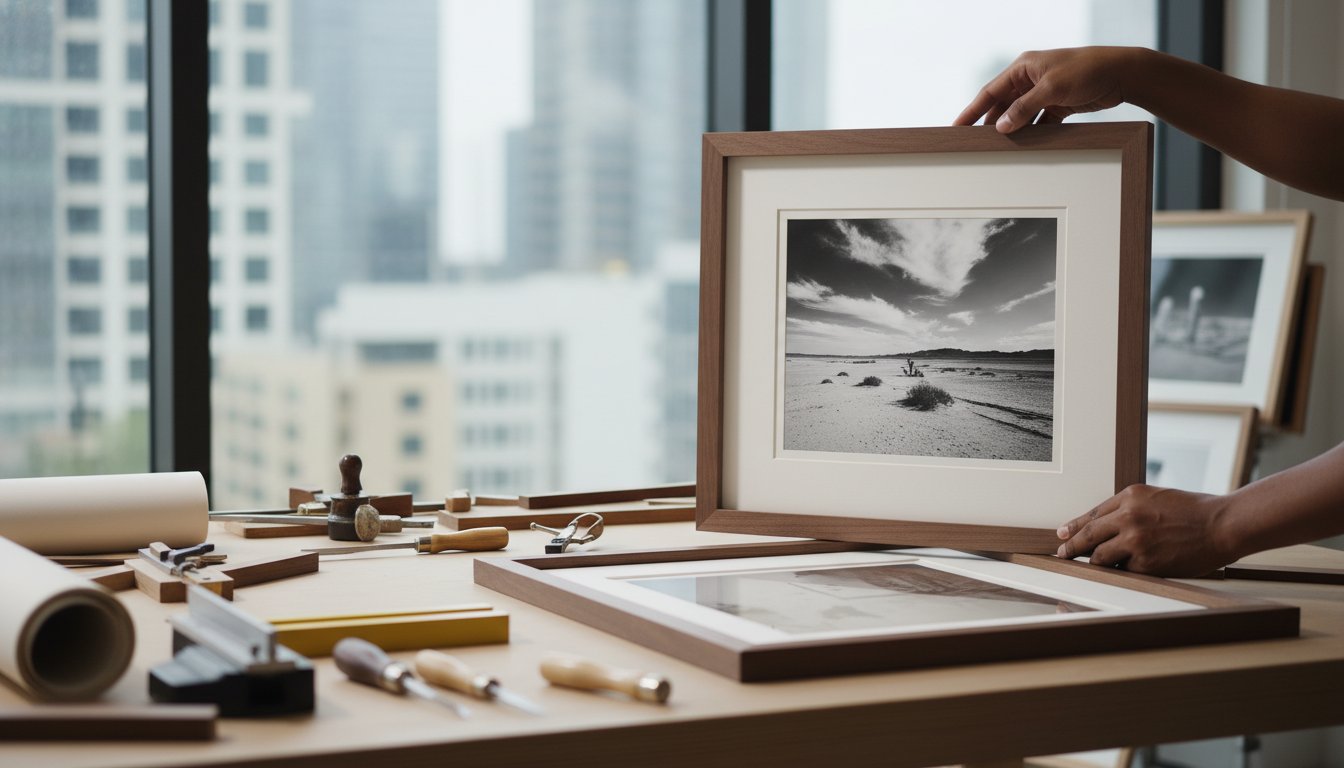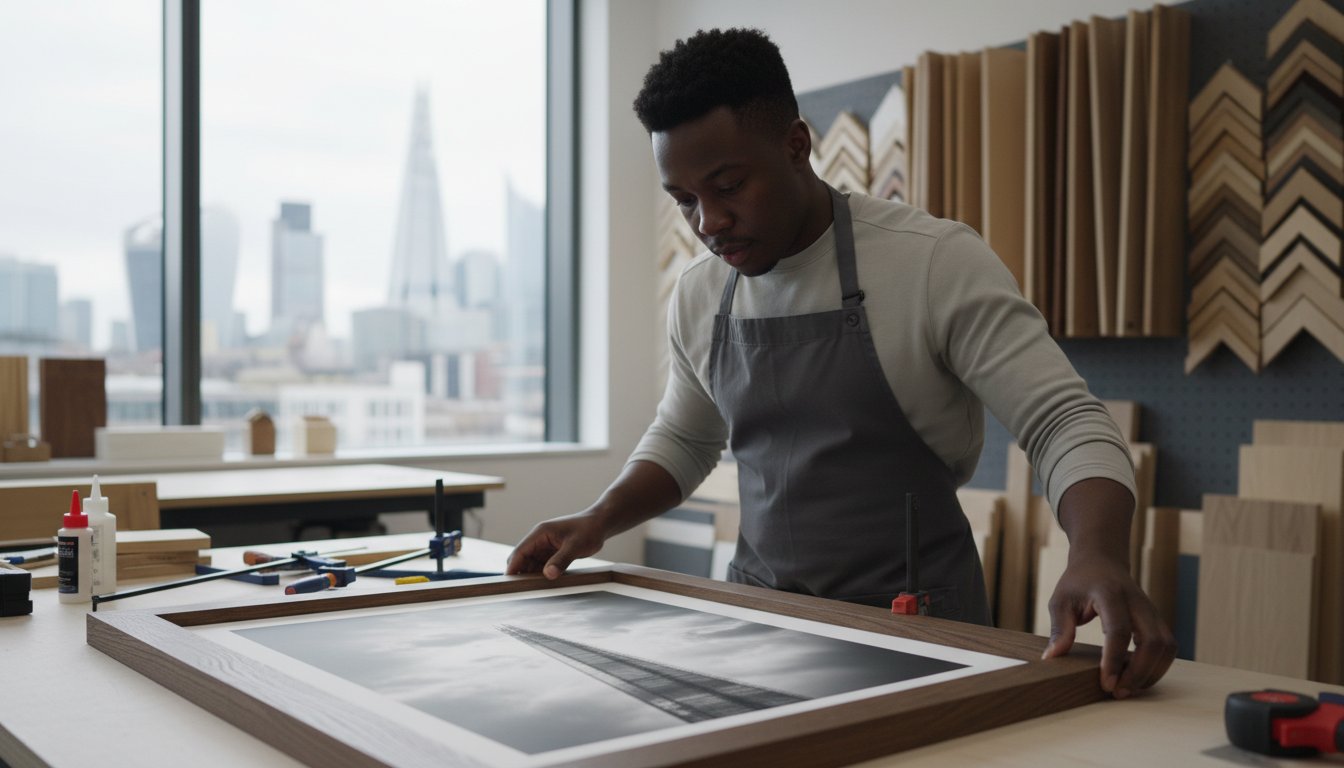

What if the frame that looks cheapest at first becomes more costly after you add an extra tool, wasted material or an afternoon of rework? The hidden costs of diy framing go beyond the items on your shopping list. A frame needs to fit the print, assemble securely and suit the way you want to display it. The wrong mount or glazing choice can also affect how the artwork looks and is cared for. DIY can seem like a way to save money, especially when the frame itself appears straightforward.
A fair comparison includes the time needed to measure, source materials and assemble the finished piece, as well as the chance of wasted supplies or damage that cannot easily be undone. This guide will help you estimate the full scope of a DIY project and weigh framing choices against the needs of your print. We’ll cover tools, materials, common points of uncertainty and the value of a finished, ready-to-hang presentation, so you can decide whether to frame the print yourself or consider professional framing instead.
Key Takeaways
- Count overlooked expenses alongside the frame, including tools, replacement materials, sourcing time and assembly effort.
- The hidden costs of diy framing can include more than extra spending. Material and mounting decisions can also affect a print’s appearance and care.
- Compare DIY and professional framing for control, finish, time and convenience to see which approach fits your priorities.
- Use a project worksheet to list components, tools you already own, shopping time and assembly time before you commit.
- Galerie Prints offers bespoke framing for prints purchased through the gallery, an option if you prefer a finished presentation.
What are the hidden costs of DIY framing beyond the frame?
A frame is only one part of a DIY framing project. The hidden costs of diy framing include overlooked spending, time, effort and risks that arise while measuring, sourcing materials and fitting the print. A project that looks simple on paper can involve several components, specialised tools and careful handling, particularly when the artwork has personal or historical significance.
The frame price is only the visible part of the cost. A fuller estimate includes tools you need, planning and assembly time, wasted materials, possible rework and the care required to protect the finished piece. Before starting, make a list of the frame, mount board, glazing, backing, hanging components and tools. Add the work involved in measuring, cutting and assembling, plus a realistic allowance for mistakes.
Which framing supplies and tools can add to the bill?
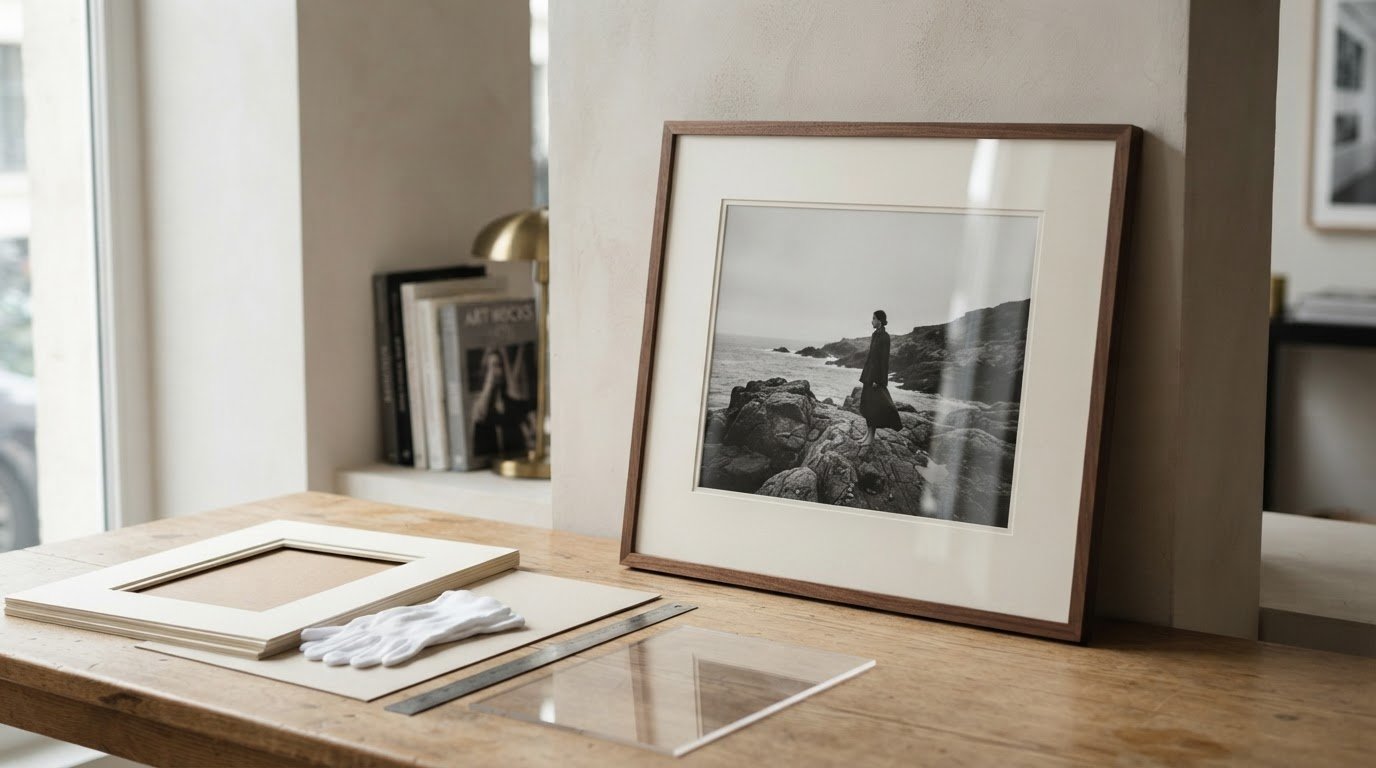
List the components separately instead of treating “the frame” as a single purchase:
- Frame: Check the internal dimensions and whether they accommodate the print and any mount.
- Mount board: Decide whether you want a visible border, then check both the mount’s overall size and the opening for the print.
- Glazing: Choose a material and finish that suit the artwork and display setting. Appearance and preservation are separate considerations.
- Backing: Include a suitable board or other backing to complete the assembly.
- Hanging components: Account for the fittings needed to display the finished frame securely.
The tools depend on the project. You may need measuring equipment, a cutting tool or assembly supplies, but check what you already own before buying anything. Confirm what the frame and materials require. Standard sizes may not match the print or the proportions you want, so the artwork’s dimensions affect the frame, mount and glazing choices.
How can time and mistakes become hidden costs?
DIY takes time at every stage: measuring the print and frame, sourcing components, cutting materials, assembling the frame and fitting the artwork. Record each task, even if you do not assign a monetary value to your time. This gives you a more useful comparison with a finished framing option.
Small errors can mean rework. An incorrect measurement can leave the print poorly positioned or the components unable to fit together. Rushed alignment can make the final presentation look uneven, while dust or careless handling can affect the result. If the print is valuable to you, consider the risk of experimenting in relation to your confidence and experience. The Professional Picture Framers Association offers context on the specialist knowledge involved in picture framing.
How do materials and preservation choices change DIY framing costs?
Once you know the print’s dimensions, your next decisions shape both its appearance and how it is housed. Glazing, mount board, backing and fit each have a different role. Choosing only by the lowest upfront cost may not suit the print or its display conditions. Choose materials for the artwork’s format and significance, the presentation you want and the conditions where it will be displayed, rather than treating the components as interchangeable.
What should you know about glazing, mounts and backing?
Glazing sits in front of the artwork and affects how the image is viewed, including reflections and the overall look of the framed piece. A mount creates a border around the print and establishes visual spacing. Its opening and fit need to suit the artwork. Backing supports the assembly from behind. Each component involves a choice and may add to the cost, but no single material is right for every photograph or poster.
Options can differ in appearance, handling and intended use. Terms such as “archival,” “conservation-grade” or “UV-protective” describe particular material qualities, but their meaning and performance depend on the specific product. Check the manufacturer’s information or seek specialist guidance before relying on these claims. A label alone does not guarantee a particular level of protection for every artwork or display setting.
When does preservation matter more than the lowest material spend?
Start with the print’s significance to you. A poster chosen for a room refresh may call for different priorities than a sentimental photograph, a collectible or a limited-edition print. For an artwork you value, consider how it will sit against the mount or backing, whether it fits securely and how you will handle it during assembly. A poor fit can create pressure or leave the work misaligned, and repeated handling creates more opportunities for accidental marks or damage.
Consider the display conditions too, including light, humidity and how often you may move the piece. These factors can help you identify which material details to investigate, but they do not make a generic framing choice suitable by default. For a delicate, rare or unusually sized work, consult a qualified framing or conservation specialist before cutting, mounting or placing it behind glazing. Check product specifications rather than relying on broad preservation claims.
If you are weighing those material decisions against a finished presentation, Galerie Prints offers bespoke framing for prints purchased through the gallery. It is an alternative if you would prefer framing choices to be part of acquiring the print.
DIY framing vs professional framing: how do the real trade-offs compare?
Neither approach is right for every print. DIY gives you direct control over the materials and appearance, while professional framing can reduce the work of sourcing and assembling each component yourself. Compare more than the price: consider time, tools, finish and how involved you want to be, along with the value of the artwork.
| Consideration | DIY framing | Professional framing |
|---|---|---|
| Materials | You select and source the frame, mount, glazing and backing. | Material choices can be discussed as part of the framing service; confirm current specifications. |
| Tools | You’ll need suitable tools, or must acquire access to them, depending on the project. | You don’t need to assemble a personal toolkit for the job. |
| Time | Allow for planning, sourcing, measuring, fitting and any rework. | Less hands-on assembly for you; check the provider’s current process and timing. |
| Control | You manage the choices and carry out the work yourself. | You explain your preferences and confirm the available options with the framer. |
| Finish | The result depends on your measuring, alignment and assembly. | A finished presentation is the aim, but confirm what the specific service includes. |
| Convenience | Requires planning and careful execution. | May reduce independent sourcing and assembly, depending on the service. |
When can DIY framing be a sensible choice?
DIY is more manageable when the print has standard dimensions, you already have suitable tools and you are confident measuring accurately. It may also appeal if you enjoy hands-on work and want close control over each design choice. Before deciding, list the materials and tools you need, then record sourcing and assembly time. This fuller estimate helps you see whether the project still fits your budget and schedule.
When is professional framing worth considering?
Complex dimensions, valuable artwork, limited time or a preference for a polished, ready-to-hang presentation may make professional framing worth exploring. A service can reduce the need to find compatible components and assemble them yourself, but the result depends on the options and work agreed with the provider. Before ordering, confirm the frame, glazing, mount and paper specifications, as well as delivery, assembly and hanging details.
Galerie Prints offers bespoke framing for prints purchased through the gallery, with framed purchases described as ready to hang. If convenience is a priority, explore bespoke framing for purchased prints and check the details for the specific order. The hidden costs of diy framing are best weighed against the time and involvement you are willing to take on, not an assumption that one approach always produces a better result.
How can you calculate the full cost of a DIY framing project?
Start your estimate with the print, not a shopping list copied from another project. The hidden costs of diy framing depend on the artwork’s dimensions, the presentation you want and what you already have. Use this worksheet to capture your own requirements before buying anything.
What should your DIY framing checklist include?
- Describe the artwork. Record its dimensions, format and condition, then note where you plan to display it. This helps you choose the frame size and identify any special handling or material considerations.
- List the components. Write down the frame, mount, glazing, backing and hanging components you need. Check that their sizes and intended uses suit the print and your preferred presentation.
- Account for tools. Separate tools you already own from those you need to buy or borrow. Include any specialist equipment needed to cut materials accurately.
- Record effort and logistics. Estimate the time for measuring, sourcing, transport, cutting, assembly and fitting. Include the effort of making separate trips or finding components that work together.
- Allow for possible rework. Add a contingency line for replacement materials or mistakes, such as an inaccurate cut or a component that does not fit. Choose an allowance that makes sense for your project rather than relying on a generic figure.
In short, your total includes materials, tools, time and potential rework. If you want to account for your time financially, choose a method and apply it consistently. Otherwise, record the hours separately so you can compare the effort involved.
How do you compare your DIY estimate with a framed print option?
Compare like with like. Use the same print dimensions and consider the framing scope, desired finish and whether the result is ready to hang. A DIY materials list may not include assembly, while a framed option may bundle choices differently. Before treating the options as equivalent, verify the current frame, mount, glazing and paper specifications, along with delivery and hanging details.
Galerie Prints offers print-size, paper-type and professional framing choices, with bespoke framing available for prints purchased through the gallery. Framed purchases are described as ready to hang, but confirm the current details for the specific order. Then weigh your budget, available time and preferred level of involvement.
Explore professional framing options for prints purchased through Galerie Prints.
How can Galerie Prints make framing your art simpler?
After weighing the materials, tools and time involved in framing a print yourself, convenience may be part of the decision. Galerie Prints offers bespoke framing for prints purchased through the gallery, bringing the print and framing choice together rather than leaving you to source every component independently. Framed purchases are described as ready to hang. Check the details for a particular order before buying.
What should you check before choosing a framed print?
Start with the artwork and the room where you plan to display it. Review the print sizes, paper choices and framing options shown with the current product listing. Consider how the selected dimensions and presentation will work in the space. A print intended as a focal point may need a different visual balance from one displayed among other works.
Before deciding, confirm the current details for the frame finish, glazing and mount, if specified, along with delivery and any hanging requirements. These details can vary by order, so do not assume every framed print includes the same components or arrangements. Checking first lets you compare the finished option fairly with your DIY worksheet.
How do you take the next step with confidence?
Decide what matters most for this piece: the control and hands-on involvement of framing it yourself, or the convenience of choosing a print with framing. Compare your complete DIY tally, including tools, sourcing effort, assembly time and possible rework, with the current bespoke framing offer. This grounds the decision in your project rather than a general assumption about which route is better.
The hidden costs of diy framing may be acceptable for a straightforward project you are keen to handle. A framed option may better suit a valued print or a busy schedule. Either way, check the available choices and order details, especially if a particular finish or hanging arrangement matters to you.
If you would like to consider the alternative, explore bespoke framing options for prints purchased through Galerie Prints. Review the current choices and decide whether a framed presentation suits the artwork and your plans for displaying it.
Choose the framing approach that suits your print
The hidden costs of diy framing extend beyond materials. Tools, planning time, careful assembly and possible rework all belong in a fair estimate. Your choices of glazing, mount and backing also shape the print’s presentation, so consider appearance and preservation needs alongside the project’s total effort.
DIY may suit a straightforward piece and someone who enjoys hands-on control. If the print is especially meaningful, has complex dimensions or you would rather avoid sourcing and assembling components, professional framing is another option.
Galerie Prints offers bespoke framing for prints purchased through the gallery, and framed purchases are described as ready to hang. Check the current specifications and order details, including what is included, before deciding. Compare the available choices with your DIY checklist, then choose the route that suits the artwork and the space where you plan to display it.
Explore bespoke framing options at Galerie Prints, and find a presentation that lets your chosen print feel at home on your wall.
Frequently Asked Questions
Is DIY framing cheaper than professional framing?
Not necessarily. DIY may cost less if you already have suitable tools and can use readily available components, but the frame price alone does not show the full picture. Add materials, tools you need, sourcing and assembly time, and possible replacement materials. For a fair comparison, match the print dimensions, mount and glazing choices, finish, and whether the professional option is assembled and ready to hang.
What are the hidden costs of DIY framing?
The hidden costs of DIY framing can include more than supplies. Consider tools you need to buy or borrow, time spent measuring and sourcing components, transport, cutting and fitting, and materials wasted through mistakes. Rework may be needed if parts do not fit or the print is misaligned. Record each input, including your time, before comparing DIY with a finished framing option.
Can DIY framing damage a photograph or print?
Yes. Careless handling or a poor fit can mark, crease or misalign a photograph or print. Dust trapped during assembly may also affect its appearance, while unsuitable materials or display conditions may create preservation concerns. Handle the artwork carefully and check component specifications rather than assuming a label guarantees protection. For a rare, delicate or especially meaningful piece, seek specialist framing or conservation guidance before proceeding.
What materials do I need to frame a print myself?
A typical project may require a frame, glazing, mount board if you want a border, backing and hanging components. The print’s dimensions and your preferred presentation determine which sizes will fit. You may also need measuring and cutting tools or assembly supplies, depending on the frame and materials. Check each component’s intended use and specifications, particularly if the print has collectible or sentimental value.
How do I compare DIY framing with a bespoke framing service?
Compare equivalent options: the same print dimensions, framing scope, finish and preservation considerations. For DIY, include materials, tools, sourcing, assembly time and possible rework. For a service, check what the current offer includes, such as frame, mount, glazing, assembly, delivery and hanging details. Galerie Prints offers bespoke framing for prints purchased through the gallery. Framed purchases are described as ready to hang, but confirm the details for your order.
Is professional framing better for valuable or limited-edition prints?
Professional framing may be worth considering for valuable or limited-edition prints, but it is not automatically right for every piece. A specialist can help you assess suitable materials, fit and handling, while DIY requires you to make those decisions and carry them out carefully. Consider the artwork’s significance and your experience. For a rare, delicate or unusually sized print, seek qualified framing or conservation advice before assembly.
What should I measure before framing a print?
Measure the print itself, not just the area you want visible, and note its width and height accurately. If using a mount, consider both the opening around the artwork and the mount’s overall dimensions, then check that the frame accommodates the complete assembly. Also measure the wall space where you plan to display it. Confirm all measurements against the product specifications before cutting or ordering components.