A Terry O’Neill photograph is far more than a captured moment of celebrity; it’s a portal into a vanished era of elegance where the photographer lived as an equal among the icons he immortalized. Investing in terry o’neill limited edition prints is an act of cultural preservation, a way to anchor your space with a tangible piece of 20th-century history. You likely recognize that true collecting requires a sophisticated eye that looks beyond the image to the archival provenance and the scarcity of the edition itself.
This guide will help you master the intricacies of the photographic market, from distinguishing between lifetime signed and estate-stamped works to selecting bespoke framing that protects your investment. We’ll examine the technical curator language used by elite galleries and review the current landscape for legendary portraits of David Bowie and Brigitte Bardot. You’ll gain the confidence to move past the confusion of varying price points and secure a certified piece of photographic heritage that transforms your interior into a narrative-driven sanctuary.
Key Takeaways
- Understand how restricted edition sizes create long-term value and safeguard your investment in fine art photography.
- Learn to verify archival provenance through the Terry O’Neill and Getty Images archives. It’s the best way to ensure your piece is a certified part of history.
- Master the technical nuances between Silver Gelatin and C-type processes to select the material quality that suits your collection’s needs.
- Discover how to select and preserve terry o’neill limited edition prints using hand-finished bespoke framing that meets museum standards.
- Gain expert insights on scaling works for visual impact and balancing O’Neill’s gritty elegance with other archival styles.
What Defines Terry O’Neill Limited Edition Prints?
A limited edition print represents a finite piece of cultural history. Unlike mass-produced imagery, these physical assets are produced in strictly regulated quantities to ensure their rarity remains immutable. This scarcity is the bedrock of fine art photography. When you acquire terry o’neill limited edition prints, you’re participating in a legacy defined by O’Neill’s unique access to the 20th century’s most guarded personalities. As detailed in Terry O’Neill’s biography, his career spanned over fifty years of intimate celebrity documentation. Restricting these images to small runs ensures that their historical and aesthetic value is preserved for future generations.
The Certificate of Authenticity (COA) serves as the cornerstone of any serious investment. This document acts as a vital bridge between the Terry O’Neill Archive and your private collection. It verifies the specific print process, the edition number, and the official estate approval. A print without a COA is merely a reproduction; with it, the work becomes a verified asset with a traceable lineage.
Edition Numbering and Rarity
The numbering system, typically displayed as a fraction such as 7/50, provides an immediate snapshot of rarity. While the technical quality is identical across the run, collectors often seek out lower numbers for their perceived proximity to the start of the edition. The impact of a “Sold Out” status is significant in the art world. Once the final print in a series is purchased, the image enters the secondary market. This transition often leads to a sharp increase in valuation as demand outstrips the fixed supply. Galerie Prints prioritizes these restricted runs to support collectors who view photography as a lasting legacy.
Limited Edition vs. Open Edition
Discerning collectors must distinguish between gallery-grade works and decorative open editions. Open editions are produced indefinitely. They’re excellent for casual decor but they lack any real investment merit because they’re not scarce. A true limited edition utilizes archival, museum-quality paper and traditional production methods. Since O’Neill’s passing in 2019, the market for terry o’neill limited edition prints has shifted toward estate-stamped versions. These are posthumous editions authorized by his archive. They carry the weight of authenticity and are meticulously documented to ensure they meet the same rigorous standards as the prints O’Neill signed during his lifetime.
The Collector’s Value: Provenance and the O’Neill Archive
Provenance is the lifeblood of high-end collecting. For Terry O’Neill, this isn’t just about a signature; it’s about the direct lineage to the Terry O’Neill and Getty Images archives. Provenance defines the asset. These institutions serve as the vital guardians of his original negatives. When you acquire terry o’neill limited edition prints, you’re securing a work that has been meticulously vetted by the very estates tasked with protecting his legacy. His significant presence in the National Portrait Gallery collection provides the ultimate institutional validation, confirming his status as the gold standard of 20th-century iconography. Collectors value this transparency, as it ensures the long-term integrity of the work’s market value.
The Allure of the Archive
Galerie Prints acts as a curated bridge to these world-renowned estates, selecting images that capture the raw, candid energy of the sixties and seventies. O’Neill’s true gift was his practiced invisibility; he moved among stars like Brigitte Bardot and Elton John not as a voyeur, but as a trusted peer. This unique proximity allowed him to produce black and white pictures that feel raw and contemporary despite their historical weight. These archival works offer more than a visual experience. They provide a tactile, evocative connection to a bygone era of elegance that is increasingly rare. The localized, artisanal craftsmanship of our London-based production ensures that these historical images are presented with the clarity and depth they deserve.
Beyond Celebrity: The Artistic Legacy
O’Neill’s work sits at a unique crossroads where fashion, film, and rock ‘n’ roll collide in a single frame. By humanizing the world’s most famous faces, he transformed celebrity into high art. There is a fascinating synergy between his intimate portraits and the physical history found in cinema lobby cards, as both serve as essential artifacts of Hollywood’s photographic heritage. Owning terry o’neill limited edition prints isn’t just about interior decoration. It’s about possessing a piece of cultural history that resonates with narrative depth and prestige. You might consider exploring our fine art photography collection to find a piece that anchors your home with the weight of a legendary career.
Evaluating Technical Quality: Paper, Process, and Longevity
The allure of terry o’neill limited edition prints extends beyond the iconographic subject matter; it resides in the tangible, chemical reality of the medium itself. Serious collectors distinguish themselves by looking past the image to the technical mastery of the print production. Every piece in a curated collection should be viewed as a physical asset that demands material excellence. True archival quality is the ability of a photographic print to maintain its full tonal range and structural integrity for over 100 years. Achieving this permanence requires a rejection of modern, high-volume inkjet methods in favor of traditional, light-sensitive chemistry. As noted in The Guardian obituary for Terry O’Neill, his work defined the “swinging 60s,” and preserving that specific visual energy requires the same artisanal rigor he applied behind the lens.
- Use of heavy-weight, acid-free fiber-based or resin-coated papers to prevent yellowing.
- Traditional chemical development that embeds the image within the paper’s emulsion.
- Precision-controlled tonality that honors the original negative’s full dynamic range.
- Stabilization processes that ensure long-term UV resistance in high-end interiors.
The Depth of Silver Gelatin Prints
For black and white masterpieces, the silver gelatin process remains the undisputed pinnacle of the photographic craft. This traditional darkroom method involves suspending light-sensitive silver salts in a gelatin layer, which is then coated onto a heavy-weight, acid-free fiber base. The result is a print with silver-rich blacks and a nuanced contrast that digital inkjet processes simply cannot replicate. Collectors prefer these chemical prints because they offer a tactile depth and a luminous quality that honors the physical history of the negative. Every print produced through this method is a testament to localized, artisanal craftsmanship, ensuring that the deep shadows and brilliant highlights characteristic of an O’Neill original are preserved without compromise.
C-Type Prints for Vibrant Color
When capturing the saturated hues of the 1970s, the C-type (Chromogenic) print serves as the industry standard for archival color photography. Unlike digital prints that lay ink on the surface, C-types are developed using a chemical process where the image is embedded within the paper’s emulsion. This ensures incredible color accuracy and the smooth gradations necessary for high-end portraiture. In high-luxury interiors, UV stability is a critical concern for long-term preservation. By utilizing museum-quality, acid-free archival paper and specialized chemical stabilizers, these prints resist the fading that plague lesser reproductions. This meticulous approach ensures that your terry o’neill limited edition prints remain as vivid as the day they were captured, providing a lasting bridge to a bygone era of elegance.
Curating Your Space: Selection and Bespoke Framing
Selecting terry o’neill limited edition prints is only the first step in a larger curatorial journey. When you integrate these works into a private residence, you’re doing more than filling wall space; you’re establishing a narrative of 20th-century prestige. The most successful interiors often rely on a “curated home” aesthetic that balances contrasting energies. For instance, the raw, monochromatic grit of O’Neill’s London portraits creates a sophisticated tension when placed alongside the sun-drenched, aspirational luxury of the Slim Aarons collection. This interplay between grit and glamour defines a worldly, cultured environment that feels both historical and contemporary.
Design Strategies for Iconic Photography
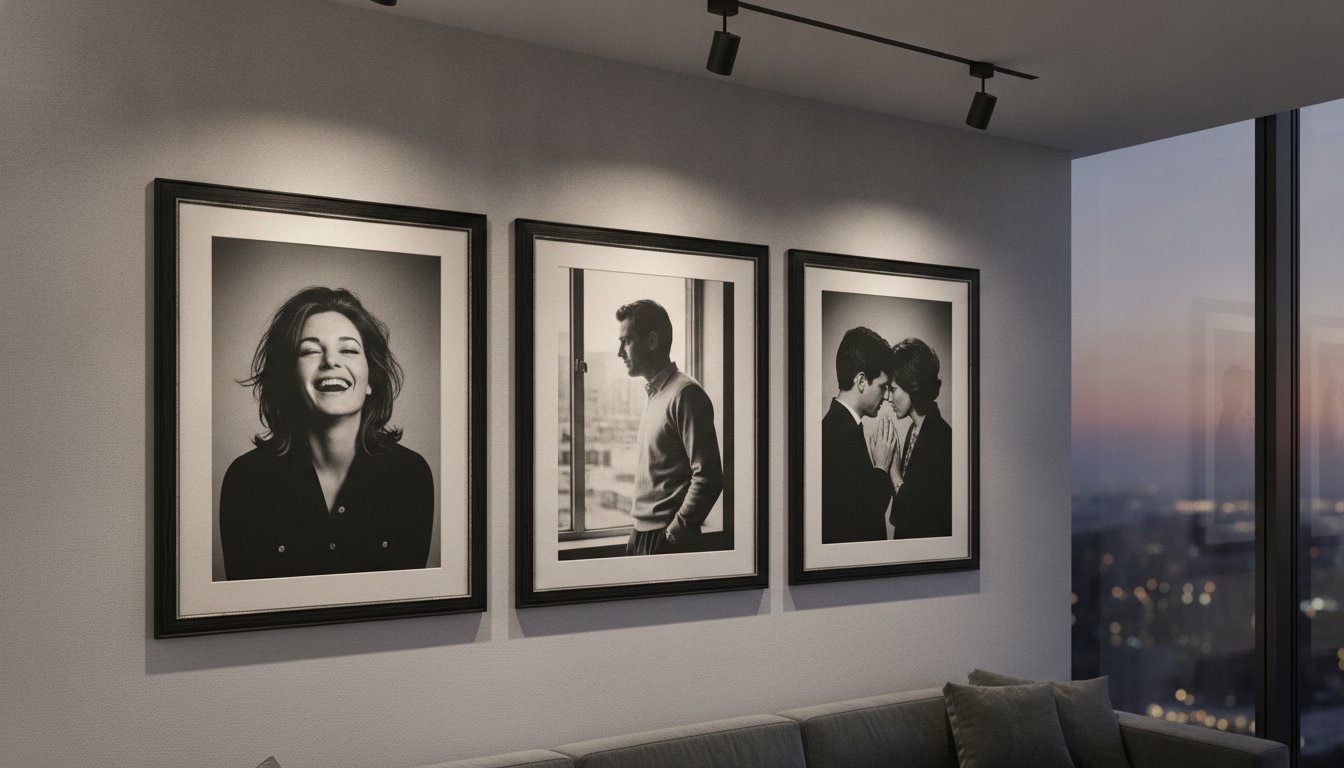
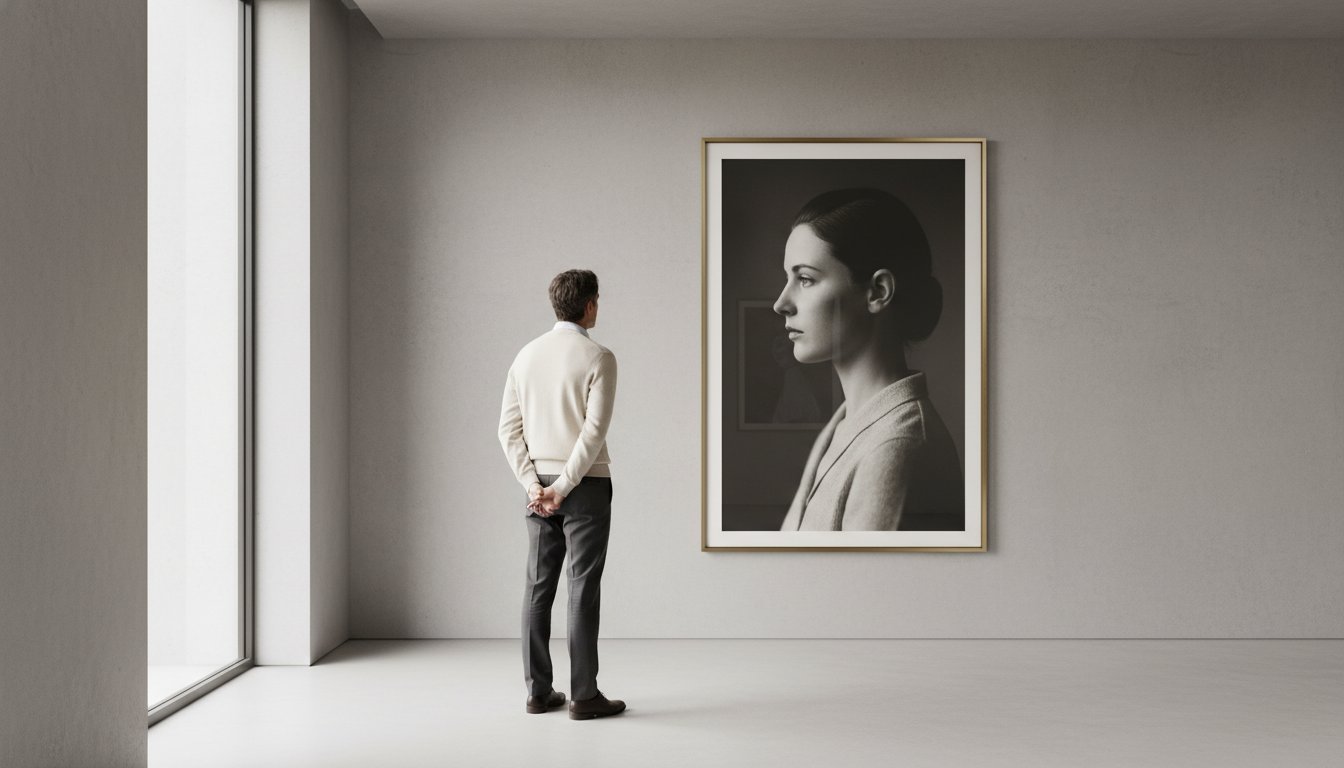
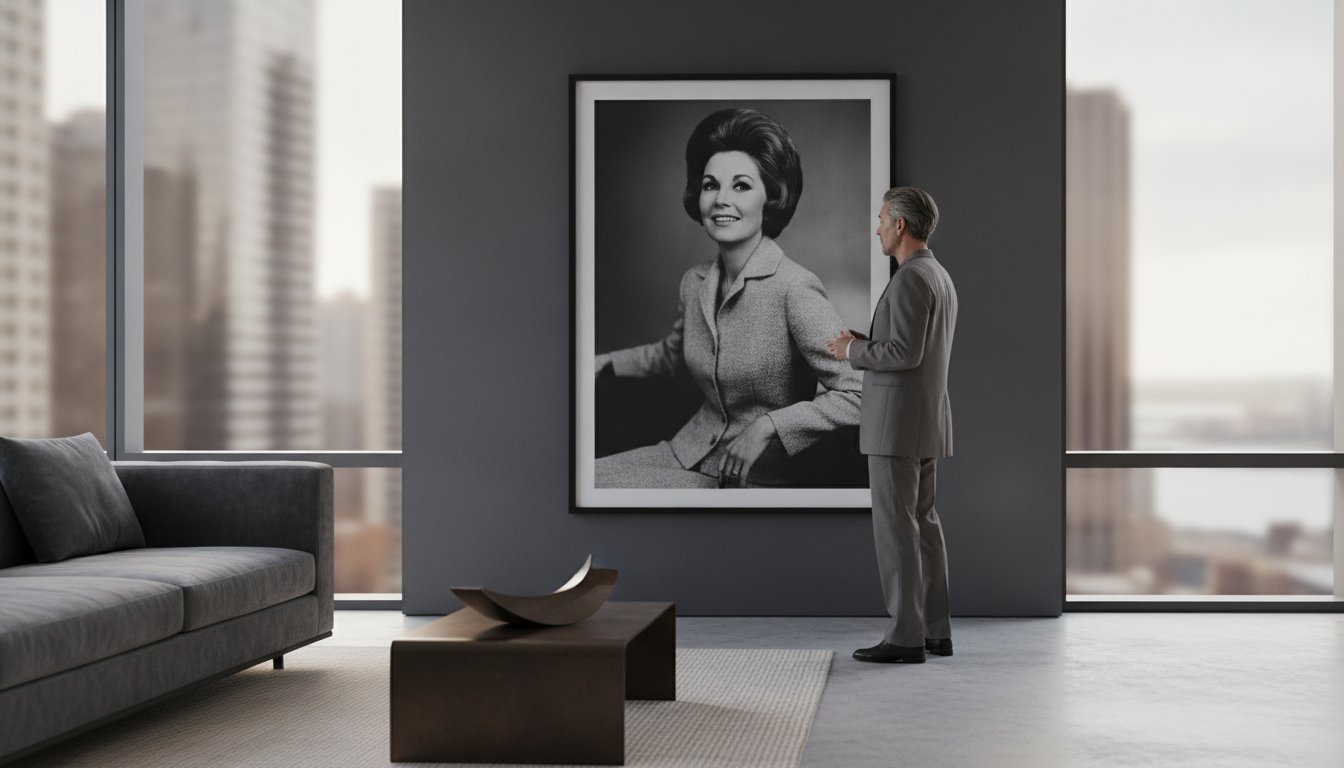
Scaling is your most powerful tool for creating visual impact. An oversized Terry O’Neill print functions as more than decor. It becomes an architectural focal point. Black and white portraits offer a timeless sophistication that anchors modern, minimalist furniture, while color works can inject a vibrant energy into dining or living areas. To create a cohesive gallery wall, look for a thematic thread. You might mix music legends with film icons, using consistent framing to harmonize the different subjects and create a rhythmic flow throughout your space. Smaller dimensions work beautifully in more intimate settings like a study, where the viewer can appreciate the candid, humanizing details of O’Neill’s work up close.
The Artisanal Marker: Bespoke Framing
A museum-quality print deserves a museum-quality environment. Professional bespoke framing is an essential extension of the artwork’s value, not merely an aesthetic choice. Mass-produced, off-the-shelf frames are a significant risk. They often use acidic mounting boards and low-grade adhesives that cause irreversible yellowing and “foxing” on archival paper. At Galerie Prints, we treat framing as an artisanal craft. Our London-based production team utilizes hand-finished frames and museum-grade, acid-free mounting to ensure your investment is protected for decades. This commitment to localized craftsmanship provides a ready-to-hang luxury experience that respects the heritage of the original negative.
Owning a piece of photographic history is a privilege that comes with the responsibility of preservation. You can explore our collection of fine art photography to find the perfect icon to anchor your next interior project.
Why Collect Terry O’Neill with Galerie Prints?
Galerie Prints operates as a dedicated guardian of photographic heritage, positioning itself as a vital bridge to the golden age of fame. Our gallery is more than a retailer; it’s a curated space where history is preserved through the lens of one of the 20th century’s most prolific documentarians. Under the curatorial vision of artist and director Stuart Möller, we select only the most evocative works that resonate with narrative depth and aesthetic power. Our direct partnerships with the Terry O’Neill and Getty Images archives ensure that every piece we offer carries the weight of undisputed authenticity. When you acquire terry o’neill limited edition prints through our gallery, you’re investing in a legacy supported by institutional expertise and a passion for the photographic medium.
The assurance of quality is anchored in our localized, artisanal craftsmanship. Every print is produced in our London-based lab, where traditional methods are favored over mass-production. This commitment to excellence extends to our bespoke framing service, where each frame is hand-finished to museum standards. We understand that a Terry O’Neill original is a lasting asset, and our production processes are designed to honor that permanence. By maintaining a professional, polished distance from the frantic pace of typical e-commerce, we invite you to linger on the visual impact and historical significance of each frame.
A Personalized Journey for Every Collector
We believe that building a collection should be a sophisticated, supported experience. Our team provides expert advice on selecting the perfect paper type, whether the silver-rich blacks of a traditional darkroom print or the vibrant accuracy of a C-type. We also guide you through selecting the frame style that best complements your interior architecture. Global shipping is handled with the precision of a specialist art gallery, ensuring that your investment arrives in pristine condition. There is a distinct prestige in owning a piece from a gallery that understands the intimate story behind the lens and treats every transaction with the reverence it deserves.
Explore the Collection
The O’Neill archive is a vast tapestry of cultural milestones. Our collection spans the full breadth of his career, from the raw energy of the Rolling Stones and the ethereal presence of David Bowie to rare finds like his Star Wars Limited Edition Prints. We also curate vintage memorabilia and cinema lobby cards that provide a broader context to his work; for those who appreciate physical collectibles, Custom Sports Products offers a way to create personalized sports memorabilia with similar archival appeal. With standard edition sizes typically limited to 50 per size, these works represent a finite opportunity to own a piece of the scarcity of fame. We invite you to discover your next investment in our Terry O’Neill limited edition collections and anchor your space with a masterpiece of archival photography.
Building a collection of Terry O’Neill’s work is an act of sophisticated curation that bridges the gap between contemporary design and historical prestige. You now understand that the true value of terry o’neill limited edition prints resides in their impeccable provenance and the technical mastery of their production. By selecting works authorized by the Terry O’Neill Estate and prestigious archival sources, you’re not just purchasing an image; you’re acquiring a certified piece of cultural heritage. These physical assets, produced with museum-quality archival materials, are designed to maintain their tonal depth and structural integrity for a lifetime.
Every print represents a finite moment of 20th-century iconography that demands the protection of artisanal craftsmanship. Our bespoke, hand-finished framing, produced by local artisans in London, ensures that your investment is both preserved and presented with quiet authority. Whether you’re drawn to the raw energy of rock legends or the polished elegance of film icons, your collection serves as a narrative anchor for your home. We invite you to explore our curated archives and find the masterpiece that resonates with your personal aesthetic. Discover Your Next Investment in Our Terry O’Neill Limited Edition Collections and begin your journey into the elite world of photographic history today.
Frequently Asked Questions
What is the difference between a limited edition and an open edition Terry O’Neill print?
Limited editions are restricted to a specific number of prints, usually 50 per size, ensuring scarcity and investment value. In contrast, open editions are produced indefinitely, which makes them suitable for casual decor but strips them of their status as collectable assets. For serious collectors, terry o’neill limited edition prints offer the exclusivity required for long-term appreciation and historical significance within a curated gallery environment.
Do Terry O’Neill limited edition prints increase in value over time?
Many limited edition works by O’Neill have shown significant appreciation, particularly since the artist’s passing in 2019 and the subsequent closure of specific iconic runs. Value is driven by the scarcity principle, where a fixed supply meets growing demand from global art investors. While market fluctuations occur, authenticated prints from prestigious archives remain highly sought-after assets that often command a premium on the secondary fine art market.
How can I verify the authenticity of an O’Neill print bought online?
Authenticity is verified through a Certificate of Authenticity (COA) issued by an authorized gallery with direct access to the Terry O’Neill and Getty Images archives. Every genuine print should feature a specific edition number and, for posthumous releases, an official estate stamp or authorized signature. At Galerie Prints, we provide this rigorous documentation to ensure your acquisition is a certified piece of photographic heritage with a traceable and prestigious provenance.
What does ‘Silver Gelatin’ mean in fine art photography?
Silver Gelatin refers to the traditional darkroom process where light-sensitive silver salts are suspended in a gelatin layer on heavy-weight, fiber-based paper. This chemical method is the undisputed gold standard for black and white masters, offering a tonal range and silver-rich depth that digital processes cannot replicate. It remains the preferred medium for O’Neill’s most famous monochromatic portraits, ensuring museum-quality permanence and visual luminosity for over a century.
Why is bespoke framing recommended for high-value limited editions?
Bespoke framing provides a protective, museum-grade environment that prevents acid damage, yellowing, and environmental degradation of the archival paper. Standard off-the-shelf frames often use acidic materials that off-gas or trap moisture, risking the integrity of the artwork. Our hand-finished, artisanal frames utilize acid-free mounting and specialized UV-glazing to preserve the print’s condition. This protection is a critical factor in maintaining the future market valuation and aesthetic brilliance of your collection.
What are the most common sizes for collectable Terry O’Neill photography?
Collectable sizes typically range from intimate 10×12 inch prints to grand, oversized 48×48 inch statements that anchor a room’s architecture. Standard edition sizes are often limited to 50 prints per dimension, meaning rarity is maintained regardless of the physical scale you choose for your interior. Selecting the right size depends on your space’s focal points and the narrative flow you wish to establish within a professional, gallery-grade environment.
How should I clean and maintain my archival photography prints?
Maintenance should be minimal and non-invasive, focusing on a stable environment away from direct sunlight and extreme humidity. If your print is protected by bespoke framing, simply dust the glazing with a soft, dry microfiber cloth. You should never apply liquid cleaners directly to the frame or the print surface. Proper preservation ensures that the delicate chemical emulsion of your terry o’neill limited edition prints remains pristine for many decades to come.
Can I purchase digital versions of Terry O’Neill’s work?
Galerie Prints does not sell digital image downloads or licenses for Terry O’Neill’s photography. Our mission is the preservation of photographic heritage through the production of physical, museum-quality prints and artisanal framing. This focus ensures the exclusivity of the work, as digital files lack the scarcity and tactile depth required for high-end collecting. By providing only physical assets, we protect the long-term value and prestige of your private collection.