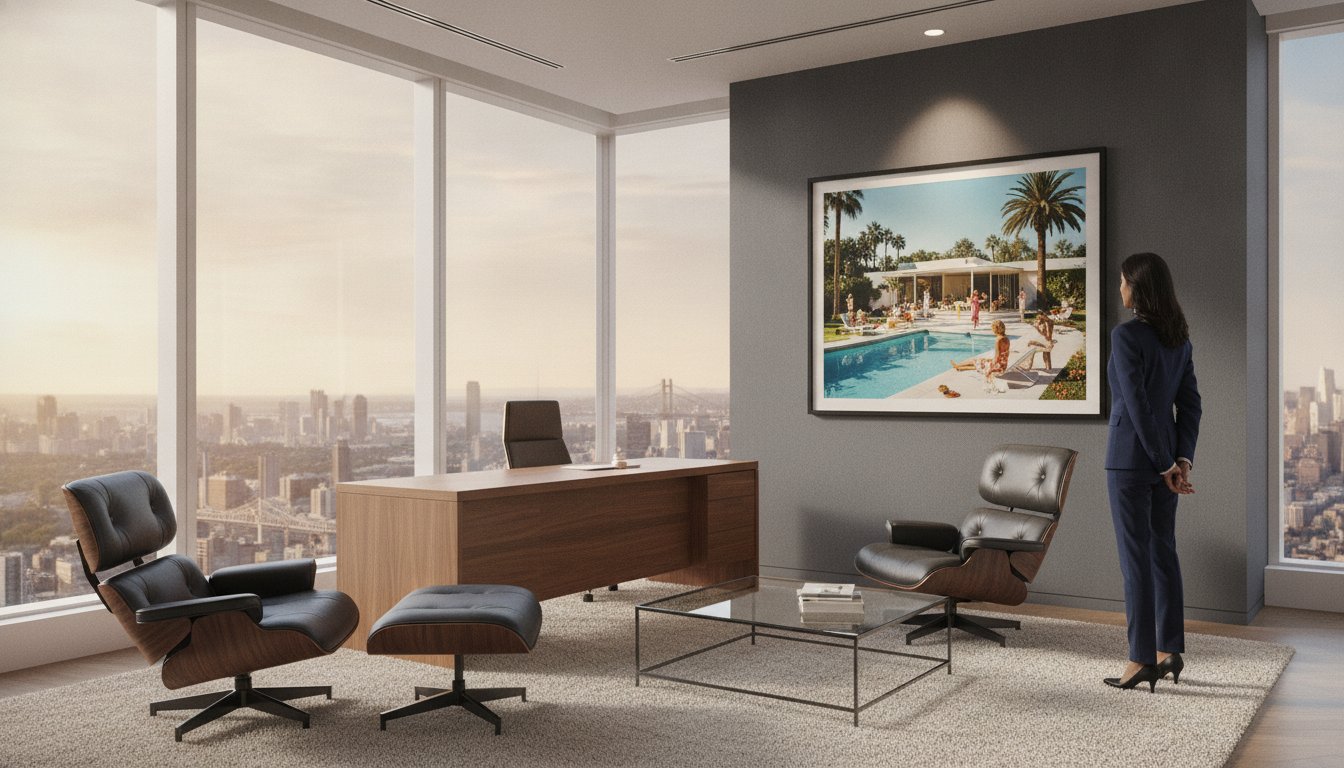
Tag: Office Decor

Curating Authority: The Definitive Guide to Art for a Home Office Background

Your digital presence is no longer a temporary fix; it’s a permanent gallery where your professional authority is judged in high definition. Most professionals understand the frustration of a workspace that feels generic or, worse, cluttered and distracting on camera. Finding the right art for a home office background involves more than just filling a void. It’s about selecting a piece that reflects a sophisticated, worldly perspective while commanding respect during every video call. By investing in archival works with historical significance, you create a bridge to an era of elegance that modern alternatives simply cannot replicate.

You’re likely looking for a way to move beyond soulless corporate decor and into a realm of refined appreciation. This guide will show you how to transform your office into a statement of prestige using world-class fine art photography and iconic cinematic heritage. We’ll examine how to scale these masterpieces for the camera lens and curate a look that feels like a private gallery. You’ll gain the knowledge needed to ensure your backdrop is as impressive and authoritative as your own professional expertise.

Key Takeaways

  • Learn how to use fine art photography as a silent yet powerful communication tool that establishes immediate professional credibility in every digital interaction.
  • Discover how to select a compelling visual narrative by exploring the evocative archives of Slim Aarons or the storytelling heritage of rare cinema lobby cards.
  • Master the technical nuances of scale and composition to ensure your art for a home office background is perfectly positioned within the camera lens.
  • Understand why museum-quality materials and bespoke framing are vital for elevating a photographic print into a sophisticated investment piece.
  • Gain insight into how localized, artisanal craftsmanship and exclusive archive access can help you curate a workspace that feels like a private gallery.

The Psychology of the Professional Backdrop: Why Your Background Matters

Your workspace is no longer a private sanctuary; it is a broadcast studio where your professional identity is under constant scrutiny. In this digital era, the background behind your desk serves as a powerful tool for non-verbal communication. While many professionals view their walls as a technical hurdle to overcome, the most successful leaders recognize them as a prime branding opportunity. Choosing the right art for a home office background allows you to harness the “Curator Effect.” This is a phenomenon where the presence of high-caliber, historical imagery grants the owner immediate intellectual and professional prestige. It tells a story before you even speak.

This shift in perspective moves beyond the tired “bookshelf” cliché. A wall of books can feel performative or cluttered, but a single, large-scale piece of fine art photography suggests a different level of intentionality. It transforms a standard room into a gallery-inspired workspace that commands attention. This approach is deeply rooted in the psychology of interior design, which explores how our physical surroundings influence both our own behavior and the perceptions of those who observe us. When your backdrop features iconic cinematic heritage or archival photography, you are not just decorating; you are signaling a reverence for quality and stability.

The Visual CV: What Your Art Says About Your Career

Every piece of art you display acts as a line on a visual CV. Selecting iconic photography from the Slim Aarons or Terry O’Neill collections suggests a global, cultured perspective that transcends industry boundaries. There is a profound difference between generic “retail decor” found in big-box stores and curated archives that carry historical weight. By opting for minimalist or historically significant pieces, you establish a sense of quiet authority. This aesthetic tells your peers that you don’t need to shout to be heard; your taste and your history speak for themselves. It’s about projecting confidence through curated excellence.

Balancing Personality and Professionalism

The challenge lies in avoiding the “distraction trap.” You want your background to be a conversation starter, not a reason for your audience to lose focus on your message. Fine art photography provides the perfect balance. It offers a distinct visual identity without the chaotic energy of abstract patterns or personal clutter. You can use these pieces to signal specific professional values:

  • Innovation: Rare, limited-edition Star Wars prints or music archives can signal a creative, forward-thinking mind.
  • Heritage: Vintage movie posters and cinema lobby cards reflect an appreciation for storytelling and tradition.
  • Sophistication: Black-and-white portraiture from the Terry O’Neill collection conveys a polished, timeless professional image.

Ultimately, the art for a home office background that you choose influences your own daily focus as much as it does your audience. Surrounding yourself with aspirational imagery fosters a sense of personal ambition. It ensures that you show up to every call with the confidence of a seasoned expert, supported by a workspace that reflects your highest professional standards.

Selecting Your Narrative: Photography vs. Cinematic Heritage

Choosing the specific narrative for your workspace is an exercise in personal branding. While the previous section explored the psychological impact of your environment, the selection process requires a discerning eye for historical resonance. The most effective art for a home office background moves beyond mere aesthetics; it acts as a window into a world of achievement. Whether you lean toward the candid intimacy of the photographic archive or the structured storytelling of cinematic heritage, the goal is to create a backdrop that feels both intentional and timeless.

Recent research on virtual backgrounds suggests that the visual elements behind you significantly influence perceptions of competence and trustworthiness. Fine art photography, particularly works from masters like Terry O’Neill, offers a sense of stability. These images capture the essence of icons in their most authentic moments, providing a sophisticated anchor for your digital presence. Whether you choose a striking monochromatic portrait or a vibrant archival scene, the palette should complement your professional “uniform,” ensuring your background supports rather than competes with your presence.

The Slim Aarons Aesthetic: Success and Sophistication

For those seeking to project an image of effortless prestige, Slim Aarons photography remains the gold standard. His work, famously described as capturing “attractive people doing attractive things in attractive places,” serves as a powerful symbol of the aspirational lifestyle. When selecting a piece, consider the specific energy you wish to project. A vibrant “poolside” shot from the Hotel du Cap-Eden-Roc brings a sense of expansive, sunny optimism to a room. Conversely, a “society” portrait set in a grand library or a mid-century salon offers a more grounded, intellectual atmosphere. These works do more than decorate; they invite the viewer into a legacy of high-end aesthetics that aligns perfectly with a modern corporate context.

Cinematic Lobby Cards: The Intellectual Conversation Starter

If your professional journey is defined by storytelling or technical heritage, rare cinema lobby cards provide a unique alternative to traditional prints. These artifacts offer a layer of historical depth that larger posters often lack. A set of framed lobby cards creates a rhythmic, curated look that encourages closer inspection. They act as intellectual conversation starters, allowing you to subtly signal your personal philosophy or appreciation for cinematic history. Choosing films that resonate with your career path, perhaps a classic noir or a seminal piece of science fiction, adds a narrative texture to your office that is both rare and deeply personal.

You might find that exploring our exclusive cinema collections reveals a piece of heritage that perfectly mirrors your own professional trajectory. By investing in these rare collectibles, you ensure your workspace reflects a level of discernment that generic retail art simply cannot match.

Scale and Composition: Optimizing Art for Video Call Lenses

Mastering the technical placement of your collection is what separates a professional gallery from a standard room. While the narrative of your art is vital, its physical relationship to your webcam lens determines the final impact. Positioning your chosen art for a home office background requires an understanding of digital framing, specifically the Rule of Thirds. To avoid the common mistake of having a frame appear as if it’s growing out of your head, place your artwork slightly off-center. This creates a balanced, asymmetrical composition that feels more natural and less like a staged set. It allows the viewer to appreciate the piece without it competing for the same vertical space as your presence.

Calculating the ideal print size is equally critical. If your desk is positioned three to four feet from the wall, a medium-sized print can easily get lost in the frame or look like an afterthought. Conversely, an oversized piece might be cropped awkwardly by the edges of the camera. Many executives are finding the value of art in the workplace extends to how it fills the peripheral view of a wide-angle lens. For these broader perspectives, a Diptych or Triptych, defined as a series of two or three related frames, is often more effective than a single piece. It populates the background with a rhythmic, curated energy that suggests a larger, more expansive environment.

The Portrait vs. Landscape Debate

The orientation of your art can fundamentally alter the perceived dimensions of your office. A vertical portrait orientation is a sophisticated tool for adding height to smaller rooms, drawing the eye upward and creating a sense of loftiness. In contrast, landscape photography creates a panoramic sense of space on camera, making a narrow room feel significantly wider. If you prefer a more eclectic look, using multiple smaller frames to create a Gallery Wall can work well, provided the arrangement follows a strict grid or a cohesive theme. This approach signals a meticulous, detail-oriented personality that values variety and historical depth.

Lighting Your Art for the Webcam

Even the most stunning archival print can be ruined by poor lighting. Standard glass is the enemy of the digital professional; it acts as a mirror for your ring light or nearby windows, creating a distracting white glare. This makes the use of museum-grade, anti-reflective glass a technical necessity rather than a luxury. Beyond the glass, you must consider the paper itself. Matte archival paper is consistently superior for video call environments because it absorbs light rather than reflecting it. This ensures that the rich blacks of a Terry O’Neill portrait or the vibrant hues of a Slim Aarons scene remain clear and saturated, regardless of your lighting setup.

The Luxury of Detail: Archival Quality and Bespoke Framing

True authority is found in the details that aren’t immediately obvious but are deeply felt. When selecting art for a home office background, the physical quality of the print is as significant as the subject matter itself. High-end fine art photography demands museum-quality materials to ensure it retains its value and visual integrity over time. Unlike mass-produced retail prints, these works utilize Giclée printing on archival photo paper. This professional standard uses pigment-based inks that offer a depth of color and a level of detail that remains sharp even through a high-definition webcam. It’s the difference between a flat, two-dimensional image and a tactile piece of history that commands the room.

The role of bespoke framing is to elevate a print from a mere poster to a genuine investment piece. A custom frame provides more than just a border; it acts as a protective sanctuary for the artwork. The tactile difference of high-end materials is visible even through a digital lens. When a colleague sees the subtle grain of a hand-finished frame or the precise matting of a historical archive, they recognize a commitment to quality that mirrors your own professional standards. It signals that you value craftsmanship and permanence over temporary, disposable decor.

Choosing the Right Frame for a Professional Space

The frame is the bridge between your art and your office architecture. For a modern, minimalist workspace, a classic black frame provides a sharp, authoritative border that anchors the piece. If your office features warmer tones or mid-century furniture, a natural wood frame offers a softer, more integrated aesthetic. For those seeking a contemporary gallery feel, the “floating mount” is an exceptional choice. It creates the illusion that the print is hovering within the frame, adding a layer of sophisticated depth. Off-the-shelf frames often use inferior plastics or thin glass that can warp or yellow, which ultimately undermines the prestige of high-caliber photography.

Longevity and Investment Value

Investing in fine art is an act of preservation. To ensure your office art remains a permanent fixture of your legacy, UV-protective glass is essential. It shields the delicate pigments from sunlight, preserving the clarity of the image for decades. Equally important is the use of acid-free mounting materials. This prevents the chemical degradation that often plagues historical archives, ensuring the paper doesn’t become brittle or discolored. By prioritizing these artisanal standards, you position your workspace decor as a collectible rather than a consumable. It becomes a lasting piece of history that gains emotional and professional value as your career progresses.

You can ensure your collection is protected for a lifetime by utilizing our bespoke framing service, which combines traditional production methods with museum-grade materials.

Curating Your Legacy: Why Galerie Prints is the Discerning Choice

Choosing the right art for a home office background is an investment in your professional narrative. At Galerie Prints, we act as more than just a source for imagery; we are guardians of photographic heritage. Our direct access to world-renowned archives, including the prestigious Getty Images and the complete Slim Aarons Collection, ensures that every piece we offer carries the weight of historical authenticity. This exclusive access allows us to provide works that are not merely decorative but are significant markers of cultural and cinematic history. By selecting from our curated archives, you ensure your workspace reflects a level of discernment that is recognized by peers and clients alike.

Our commitment to excellence extends beyond the image to the physical object itself. We pride ourselves on a foundation of localized, artisanal craftsmanship. Every frame is hand-finished in our dedicated workshop, where we combine traditional production methods with modern technical precision. This meticulous attention to detail ensures that your artwork arrives ready to hang, providing a seamless upgrade to your office without the logistical headache of sourcing external framing services. We handle the complexities of production so you can focus on the impact your new environment will create.

From Archive to Office: The Journey of Your Print

The journey of a Galerie print begins at the very source of the image. We employ a meticulous process of printing from original negatives and high-resolution source materials, preserving the integrity of historical works for modern display. This reverence for the original medium ensures that the grain, contrast, and soul of the photographer’s vision are captured perfectly. Once printed on archival paper, the piece moves to our workshop for the artisanal framing process. Here, experts select the finest materials to complement the work, ensuring the final result is a museum-grade masterpiece. For those seeking this complete finish, our framed prints typically require approximately four working weeks for production, followed by a swift three-day delivery period.

Personalized Curation Services

Finding the piece that perfectly aligns with your professional journey can be a deeply personal endeavor. Our team is available to help you consult on the nuances of our collections, whether you are drawn to the candid elegance of Terry O’Neill or the aspirational sun-drenched scenes of Slim Aarons. We offer custom sizing and bespoke framing options to accommodate unique office layouts, ensuring that your art for a home office background is perfectly scaled to your specific environment. This personalized approach guarantees that your workspace is not just a room, but a curated legacy that inspires wonder and commands respect. It’s a commitment to permanence in a world of temporary digital interactions.

Explore our curated collections for the ultimate home office background and begin the transformation of your professional sanctuary today.

Elevating Your Professional Sanctuary

Transforming your workspace into a gallery of quiet authority is a deliberate act of professional branding. You’ve discovered how to move beyond the mundane by embracing the “Curator Effect,” leveraging historical archives to establish immediate credibility during every digital interaction. Whether you select the sun-drenched allure of a Slim Aarons poolside or the narrative depth of rare cinema lobby cards, the technical nuances of scale and archival quality ensure your presence is felt with absolute clarity. High-definition lenses demand the excellence that only museum-quality Giclée prints and bespoke, artisanal framing can provide.

Selecting the right art for a home office background is no longer a mere design choice; it’s a strategic investment in your personal legacy. As official partners of the Slim Aarons and Getty Images archives, we’re dedicated to helping you find a piece that resonates with your unique career path. We invite you to Browse Our Curated Home Office Collection and begin curating a backdrop that truly commands respect. Your walls are ready to tell a story of success that is as permanent as it is inspiring.

Frequently Asked Questions

What size art is best for a Zoom background?

Selecting a medium to large scale piece, typically ranging from 20×30 to 30×40 inches, ensures your collection is visible without feeling crowded. Smaller frames often appear as cluttered distractions on camera, while a single, architectural statement piece provides a confident anchor for your digital presence. It’s essential to consider the 16:9 aspect ratio of most webcams, choosing a size that fills the peripheral space without being awkwardly cropped during your meetings.

How high should I hang art behind my desk for video calls?

Position your artwork so the center sits slightly above your shoulder line when you’re seated. This typically means hanging the piece lower than the standard gallery height of 57 inches to ensure it remains within the camera’s frame. You want to avoid the “halo effect” where a frame appears to grow directly out of your head; instead, aim for a balanced composition that sits in the upper third of the viewer’s screen.

Is photography or abstract art better for a professional office?

Fine art photography, particularly archival works from the Terry O’Neill or Slim Aarons collections, offers a sense of “quiet authority” that abstract art often lacks. Photography provides a tangible narrative and a connection to cultural heritage, which acts as an immediate intellectual conversation starter. While abstract pieces can be subjective, iconic photography signals a worldly, discerning perspective that resonates deeply in high-stakes professional environments.

How do I prevent glare on my framed art during video meetings?

Managing light reflections is a technical necessity, and positioning your art for a home office background away from direct windows is the first step. To completely eliminate the distracting bounce from ring lights or overhead fixtures, you should invest in museum-grade, anti-reflective glass. Choosing a matte archival paper finish rather than a gloss surface also helps absorb light, ensuring the rich details of your print remain clear and saturated on screen.

Can I use a gallery wall as a home office background?

Utilizing a gallery wall as art for a home office background is a sophisticated choice if you maintain a strict, rhythmic grid. A set of related cinema lobby cards or a curated series of music archives can create a textured, intellectual backdrop that feels like a private library. To avoid a chaotic appearance on camera, ensure each frame shares a consistent style and that the overall arrangement follows a cohesive, professional narrative.

Why should I invest in archival prints for my office?

Archival prints represent a commitment to permanence and technical excellence that is visible even through a digital lens. Using Giclée printing on acid-free paper ensures that your investment won’t yellow or fade, preserving the historical integrity of the work for decades. This level of quality reflects your own professional standards, signaling to clients that you value craftsmanship and the preservation of heritage over disposable, mass-produced decor.

Which Slim Aarons prints are most popular for home offices?

Iconic works such as “Poolside Gossip” and “Kaufmann House” are enduring favorites for those seeking to project an aspirational lifestyle of success. For a more grounded, intellectual atmosphere, society portraits and expansive shots of the Hotel du Cap-Eden-Roc provide a refined, mid-century elegance. These pieces work exceptionally well because they offer a bright, expansive energy that makes even a small home office feel more prestigious and worldly.

How do I choose a frame that looks professional on camera?

Opt for deep-profile frames in classic black or natural wood to provide a strong, authoritative border for your art. A generous mount, or matting, is crucial as it adds a high-end gallery aesthetic that distinguishes your workspace from a casual home environment. Avoid thin, “off-the-shelf” plastic frames; their lack of depth and poor glass quality often appear “cheap” under the unforgiving clarity of modern high-definition webcams.

Fine Art for Corporate Interiors: Curating Prestige and Narrative in the Modern Workspace

Did you know that 78% of employees believe art in the workspace significantly reduces stress, while 64% report a direct boost in creativity and innovation? Despite these compelling figures from Exeter University, many executive suites remain trapped in the cold embrace of sterile, uninspired walls. Choosing the right fine art for corporate interiors often feels like an impossible choice between the generic and the inaccessible. You want a workspace that reflects the quiet authority of your brand, yet the logistics of procurement and framing frequently overshadow the artistic vision. It’s a common frustration to seek prestige but find only catalog placeholders.

We believe your office should act as a bridge to an era of elegance, functioning as a curated gallery that inspires both your team and your clientele. This article will show you how to transform your environment into a sophisticated brand narrative using world-renowned fine art photography and archival prints. You’ll discover how iconic collections from masters like Slim Aarons and Terry O’Neill serve as lasting heritage assets. We will also detail how a bespoke framing service simplifies the procurement process, ensuring your transition to a high-end, narrative-driven workspace is entirely hassle-free.

Key Takeaways

  • Learn why selecting fine art for corporate interiors requires moving beyond generic abstracts toward photography that serves as a profound “realism anchor” for your brand identity.
  • Understand the “Slim Aarons Effect” and how his philosophy of documenting high-society leisure creates an unmatched aspirational backdrop for modern business environments.
  • Discover the scalability of photographic archives, allowing you to maintain a unified, prestigious aesthetic across multiple floors or international office locations.
  • Master the implementation phase through a strategic space audit, identifying high-impact zones like boardrooms and lobbies to maximize your collection’s narrative weight.
  • Explore how a bespoke framing service and access to exclusive archives, such as Terry O’Neill and the music archives, can streamline your procurement into a seamless, gallery-grade experience.

The Strategic ROI of Fine Art for Corporate Interiors

In the modern corporate environment, the walls often speak before the executives do. While many firms settle for generic, mass-produced abstracts, the most discerning organizations understand that fine art for corporate interiors serves as a vital strategic asset. It’s not just about filling empty space; it’s about intentional storytelling. By choosing archival photography over forgettable prints, a brand can signal its stability and global perspective. This visual narrative transforms a sterile office into a curated experience, reflecting a company’s reverence for heritage and its ambition for the future.

High-caliber art acts as a silent recruiter. Top-tier talent increasingly seeks workspaces that reflect a sophisticated company culture and a genuine investment in the employee experience. A workspace filled with world-renowned photography doesn’t just look better; it feels different. It suggests a brand that values excellence and historical context. This signaling extends to clients and partners, where the presence of museum-grade prints communicates a level of permanence and success that digital screens or generic canvases simply cannot replicate.

Beyond internal culture, the choice of art serves as a sophisticated form of brand signaling. In a world of transient digital trends, physical archives represent a commitment to quality and longevity. Integrating pieces from the Music Archives or Star Wars Limited Edition Prints into specific breakout zones can highlight a company’s creative edge or its connection to cultural milestones. These choices are deliberate, showing that the firm doesn’t just exist in the present but respects the icons and movements that shaped the world.

Visual Identity as a Competitive Advantage

Art functions as a non-verbal mission statement for stakeholders. When a client enters a boardroom adorned with a Terry O’Neill masterpiece, the atmosphere shifts toward “Quiet Luxury.” This sophistication is something generic office art cannot achieve. Consider the historical weight of The Fleming Collection, which shows how a corporate entity becomes a guardian of cultural heritage. Curated archives offer a narrative depth that establishes permanence in a fleeting market.

Measuring the Intangible: Productivity and Well-being

The impact of high-caliber art reaches deep into the workforce. Research from Exeter University shows that 78% of employees feel art reduces stress, and 64% say it sparks creativity. Aspirational imagery provides a mental reprieve that generic decor lacks. It’s a space where talent feels truly valued, fostering pride in the physical environment. Corporate Art ROI is the measurable synthesis of enhanced brand equity and the optimization of human capital.

Photography vs. Traditional Media: Why Photography Wins in the Office

While traditional media like sculpture or canvas certainly have their place, photography offers a unique “realism anchor” that is particularly effective in professional environments. When selecting fine art for corporate interiors, the goal is often to ground the workspace in a sense of shared history and human experience. A photograph captures a specific moment in time, providing a tangible connection to the world that abstract media often lacks. This clarity ensures that the brand’s message isn’t lost in translation or subject to the varying interpretations of every visitor, making it a more stable choice for the boardroom.

Scalability and consistency are also paramount in modern office design. For organizations operating across multiple floors or global regions, achieving a unified aesthetic is significantly easier with high-end photographic prints. Unlike original paintings, which are impossible to duplicate, a curated photographic series can be sized and framed to fit diverse spaces while maintaining a consistent narrative thread. This allows a firm to project a cohesive identity from its London headquarters to its New York satellite office without sacrificing the prestige of the work.

The durability of museum-grade photographic prints ensures long-term value. Printed on archival papers with pigments designed to resist fading, these works stand up to the high-traffic conditions of corporate life. They don’t require the complex climate controls or insurance premiums often associated with more fragile media, offering a sophisticated solution that is as practical as it is evocative.

The Power of the Curated Archive

Photography serves as a window into a “Golden Era,” leveraging nostalgia to build modern prestige. Whether it’s the effortless cool of Terry O’Neill or the sun-drenched leisure of the Slim Aarons Collection, these images invite the viewer into a world of elegance. In high-end minimalist interiors, the versatility of black and white photography provides a striking contrast that feels both timeless and contemporary. Our guide on fine art photography explores these nuances in greater detail, highlighting how archival selections can elevate a space beyond mere decoration.

Comparative Analysis: Photography vs. Abstract Paintings

Clarity of message is the primary reason photography often triumphs in the office. Abstract works can sometimes feel exclusionary or difficult to parse, whereas a historic photograph tells an immediate, compelling story. When considering how to build a corporate art collection, the efficiency of photographic procurement becomes a deciding factor. Lead times for high-end prints are predictable, allowing for precise project management that commissioned original works cannot match.

Feature Fine Art Photography Abstract Paintings
Clarity of Message High; provides a direct narrative anchor. Subjective; prone to misinterpretation.
Lead Times Short; precise and predictable. Long; depends on artist availability.
Scalability Excellent; consistent across global sites. Low; every piece is unique and disparate.
Brand Alignment High; leverages historical prestige. Variable; depends on individual taste.

If you’re looking to redefine your workspace with a sense of permanence and style, you might begin your journey by browsing the archival collections at Galerie Prints.

Case Study in Aspiration: The Slim Aarons Effect

Slim Aarons captured a world that many strive to inhabit. His mantra, “attractive people doing attractive things in attractive places,” has become a foundational element for fine art for corporate interiors in the 21st century. By placing these icons in a high-stakes environment, a firm does more than decorate; it aligns itself with a legacy of international prestige and effortless success. This isn’t merely window dressing. It’s a psychological anchor that suggests your brand is already a part of the elite world Aarons documented so meticulously.

The choice of imagery carries significant weight in how a firm is perceived by both clients and talent. As highlighted in the discussion on The Strategic ROI of Fine Art, the physical environment is a direct reflection of corporate values. In private equity boardrooms or the lobbies of international law firms, an Aarons print serves as a visual shorthand for the “good life.” It grounds the intense, often frantic energy of modern business in a sense of established wealth and permanence. This creates an atmosphere where high-stakes decisions feel like a natural extension of a successful, well-ordered world.

Balancing leisure with legacy is a delicate art. While a poolside scene might seem too relaxed for a financial hub, the inherent exclusivity of the subject matter ensures the tone remains elevated. These images function as windows, bringing a sense of outdoor vitality and light into indoor spaces that might otherwise feel sterile. It’s a way to foster a relaxed yet elite atmosphere, where the visual promise of success motivates the work happening within the walls.

Curating the Aspirational Workspace

Selecting specific works from the Slim Aarons collection requires a nuanced understanding of your company’s “zonal” needs. Lobbies benefit from vibrant, wide-angle social scenes that immediately signal an open, worldly perspective. In contrast, executive suites might favor more intimate portraits that speak to individual legacy. Understanding how Aaron Slims became the definitive shorthand for 20th-century elegance allows a curator to use his work as a tool for modern brand building.

Beyond Aarons: Terry O’Neill and Music Archives

Creative agencies often require a different kind of pulse, one that favors energy and iconoclasm over quiet leisure. In these spaces, music photography from the great archives can inject raw cultural relevance and a sense of “now.” Terry O’Neill’s legendary portraits of stars and leaders offer a bridge between celebrity culture and executive authority, communicating a brand that is both daring and established. For media and entertainment firms, archival cinema prints provide a narrative depth that ensures the workspace feels like a living extension of their industry. Integrating these diverse archives is a sophisticated way to utilize fine art for corporate interiors to tell a multifaceted brand story.

Implementation: From Archival Selection to Bespoke Framing

Transitioning from a vision of prestige to a physical reality requires a meticulous, multi-staged approach. When executing a strategy for fine art for corporate interiors, the process begins with a comprehensive space audit. This involves identifying high-impact zones, such as the primary lobby, the executive boardroom, and communal breakout areas, where imagery can exert the most influence. Each zone demands a specific narrative weight; a lobby might require an expansive, welcoming vista, while a boardroom necessitates a piece that commands focus and signals institutional stability.

Once the zones are established, theme selection aligns the photographic archive with the brand’s specific industry and historical trajectory. An established financial firm might lean into the timeless elegance of the Slim Aarons Collection, while a modern tech hub could find synergy with the iconoclastic energy of Terry O’Neill’s portraits. Sizing and scale are equally critical. In vast corporate environments, oversized prints often provide the monumental impact needed to anchor a room. Small pieces can feel lost on expansive walls, whereas a large-scale archival print creates an immediate, undeniable presence. Strategic lighting and professional installation represent the final physical steps. Proper illumination, whether through dedicated art spots or diffused ambient light, ensures the textures and tones of the photographic print are fully realized, maximizing the visual impact of the company’s investment.

The Technical Standard: Archival Quality

In a high-traffic professional setting, the material integrity of the art is as important as the image itself. Museum-grade, acid-free paper is a non-negotiable standard for corporate assets, ensuring that colors remain vibrant and the paper doesn’t degrade over time. Modern offices are often glass-heavy, exposing art to significant natural light. UV-protective glazing is essential here, acting as a shield against the fading effects of sunlight and preserving the long-term value of the investment. Investing in high-margin archival production ensures that these pieces remain permanent fixtures of the company’s heritage rather than temporary decor.

The Art of Professional Framing

The choice of frame serves as the bridge between the artwork and the surrounding architecture. Minimalist, thin-profile frames often complement contemporary, glass-and-steel structures, while classic, hand-finished wood frames may suit more traditional, wood-paneled executive suites. To reduce procurement friction, a “ready-to-hang” delivery model is vital, allowing for immediate installation without the logistical burden of coordinating with secondary contractors. Bespoke framing is the final 10% of corporate art success, as it provides the essential polish and protection that elevates a mere print into a museum-quality installation.

If you’re ready to begin curating a workspace that truly reflects your brand’s narrative, you can explore our comprehensive Bespoke Framing Service to ensure every piece is presented with the excellence it deserves.

Galerie Prints: Your Partner in Corporate Curation

Galerie Prints operates as a bridge to a bygone era of elegance, functioning with the quiet authority of a seasoned curator rather than a mere retailer. We act as a guardian of photographic heritage, providing our clients with exclusive access to world-renowned archives, including the legendary works of Terry O’Neill, the iconic Slim Aarons Collection, and the vast historical depth of Getty Images. For those seeking fine art for corporate interiors, this partnership offers a rare opportunity to ground a workspace in historical significance and prestige. Our role is to guide you through these vast archives, ensuring every selection resonates with your brand’s unique narrative and modern passion for aesthetics.

Our personalized curation services are designed to support both interior designers and corporate leadership in their pursuit of excellence. We understand that a high-end office is more than just a place of work; it’s a statement of permanence and stability. By blending a reverence for the past with a sophisticated understanding of contemporary design, we help you select imagery that inspires wonder and nostalgia while maintaining a professional distance. Every piece we produce carries the “London Gallery” seal of quality, a testament to our localized, artisanal craftsmanship. While our production is deeply rooted in traditional methods, our logistics are handled with a precise, global reach, ensuring your collection arrives in pristine condition, regardless of your location.

Bespoke Solutions for Large-Scale Projects

Managing the aesthetic requirements of multi-site corporate rollouts requires a delicate balance of artistic vision and logistical precision. We provide comprehensive project management and volume discounts for large-scale installations, ensuring a unified brand story across global offices. Our bespoke services include:

  • Custom sizing and framing tailored to specific architectural dimensions.
  • Archival selection of Music Archives and Star Wars Limited Edition Prints for creative zones.
  • Bespoke framing using museum-quality materials to protect your investment.

In a recent high-profile corporate transformation, we successfully transitioned a multi-floor financial headquarters into a narrative-driven environment. By utilizing oversized archival prints and coordinated themes, the workspace was elevated from a standard office into a prestigious gallery that reflects the firm’s global perspective.

The Galerie Prints Difference

We provide direct-to-consumer prices for museum-quality archival work, ensuring that the highest standards of fine art for corporate interiors remain accessible to discerning firms. Led by the expertise of Stuart Möller and our dedicated curatorial team, we offer a level of knowledge that spans from technical production nuances to the historical significance of artistic movements. This expertise ensures you feel both intellectually stimulated by the art and practically supported in your procurement journey. We invite you to invest in a lasting piece of history that will inspire your team and impress your clients for decades to come.

Contact our curatorial team at Galerie Prints today to begin your corporate interior transformation.

Redefining the Corporate Horizon with Archival Heritage

Transforming a professional environment into a curated narrative requires more than just decoration; it demands a commitment to historical authenticity and technical excellence. We’ve explored how fine art for corporate interiors serves as a vital strategic asset, leveraging the “realism anchor” of photography to foster a culture of creativity and quiet authority. By integrating iconic archival selections with museum-quality production, your workspace becomes a bridge to an era of timeless elegance and stability.

Galerie Prints provides direct access to the prestigious Getty Images Gallery archives, ensuring your collection remains exclusive and evocative. Our bespoke framing service, executed by artisanal craftsmen, provides the essential final polish for any high-end installation. With global shipping capabilities tailored for international corporate offices, the journey from archival selection to final installation is handled with reassuring precision. It’s time to move beyond the generic and invest in a visual legacy that resonates with ambition and prestige.

Elevate your workspace with the Slim Aarons Collection and begin your journey toward a more sophisticated interior today.

Frequently Asked Questions

What are the best types of fine art for corporate interiors?

Curated photographic archives and limited edition prints are the premier choices for fine art for corporate interiors due to their narrative clarity and historical weight. Unlike abstract works, photography provides a realism anchor that immediately connects with viewers. Collections like Terry O’Neill or Cinema Lobby Cards offer a sophisticated aesthetic that suggests a company is both culturally literate and grounded in excellence.

How do I choose art that reflects my company’s brand values?

Selecting art requires aligning the historical context and emotional tone of the imagery with your brand’s mission. A financial firm might choose the Slim Aarons Collection to signal international prestige and success, while a tech startup might prefer the iconoclastic energy found in our Music Archives. It’s essential to treat each piece as a non-verbal mission statement that reflects your company’s stability and perspective.

Is fine art photography a good investment for a business?

Fine art photography serves as a durable heritage asset that builds long-term brand equity while improving the daily human experience within the office. Beyond its value as a physical asset, high-caliber art is a proven tool for reducing workplace stress and fostering creativity. Investing in museum-grade prints ensures that your collection remains a permanent, valuable part of your corporate identity rather than a temporary expense.

What is the best way to frame art for a high-traffic office area?

High-traffic environments demand bespoke framing that utilizes UV-protective glazing and museum-quality materials to prevent fading and structural damage. It’s essential to choose frames that complement the building’s architecture while providing long-term protection. Our Bespoke Framing Service ensures that every piece is delivered ready-to-hang, providing a seamless transition from the gallery to your boardroom or lobby.

Can I buy large-scale Slim Aarons prints for a corporate lobby?

Large-scale prints from the Slim Aarons Collection are specifically recommended for high-impact zones like corporate lobbies to create a sense of monumental prestige. These oversized works act as windows into an aspirational world, bringing vitality and light into expansive architectural spaces. We specialize in custom sizing to ensure these iconic images fit the exact scale of your interior, providing an immediate and undeniable presence.

Does corporate art have tax benefits for my company?

Tax regulations regarding the acquisition of fine art for corporate interiors vary significantly depending on your specific jurisdiction and the nature of the artwork. Some regions offer capital allowances or deductions for art displayed in public-facing areas, but these rules are subject to frequent change. You should consult with a qualified tax advisor or financial professional to understand the current benefits available for your business in 2026.

How often should a company update its interior art collection?

A well-curated collection of archival photography should be viewed as a permanent heritage asset rather than a seasonal decoration. While the core narrative of your collection remains stable, you might choose to rotate specific pieces or expand into new zones as your firm grows. This approach maintains a sense of freshness and evolution without sacrificing the established prestige and history that your brand has already built.

What is the difference between museum-quality prints and standard office posters?

The primary difference lies in the material integrity and the preservation of original source materials used in the production process. Museum-quality prints utilize acid-free, archival papers and lightfast pigments designed to last for decades without fading or yellowing. Standard office posters lack this technical superiority and historical authenticity, often resulting in a degraded visual experience that fails to communicate the high-end nature of a professional brand.