
Tag: DIY Framing

The Hidden Costs of DIY Framing: What to Consider Before You Begin

What if the frame that looks cheapest at first becomes more costly after you add an extra tool, wasted material or an afternoon of rework? The hidden costs of diy framing go beyond the items on your shopping list. A frame needs to fit the print, assemble securely and suit the way you want to display it. The wrong mount or glazing choice can also affect how the artwork looks and is cared for. DIY can seem like a way to save money, especially when the frame itself appears straightforward.

A fair comparison includes the time needed to measure, source materials and assemble the finished piece, as well as the chance of wasted supplies or damage that cannot easily be undone. This guide will help you estimate the full scope of a DIY project and weigh framing choices against the needs of your print. We’ll cover tools, materials, common points of uncertainty and the value of a finished, ready-to-hang presentation, so you can decide whether to frame the print yourself or consider professional framing instead.

Key Takeaways

  • Count overlooked expenses alongside the frame, including tools, replacement materials, sourcing time and assembly effort.
  • The hidden costs of diy framing can include more than extra spending. Material and mounting decisions can also affect a print’s appearance and care.
  • Compare DIY and professional framing for control, finish, time and convenience to see which approach fits your priorities.
  • Use a project worksheet to list components, tools you already own, shopping time and assembly time before you commit.
  • Galerie Prints offers bespoke framing for prints purchased through the gallery, an option if you prefer a finished presentation.

What are the hidden costs of DIY framing beyond the frame?

A frame is only one part of a DIY framing project. The hidden costs of diy framing include overlooked spending, time, effort and risks that arise while measuring, sourcing materials and fitting the print. A project that looks simple on paper can involve several components, specialised tools and careful handling, particularly when the artwork has personal or historical significance.

The frame price is only the visible part of the cost. A fuller estimate includes tools you need, planning and assembly time, wasted materials, possible rework and the care required to protect the finished piece. Before starting, make a list of the frame, mount board, glazing, backing, hanging components and tools. Add the work involved in measuring, cutting and assembling, plus a realistic allowance for mistakes.

Which framing supplies and tools can add to the bill?

List the components separately instead of treating “the frame” as a single purchase:

  • Frame: Check the internal dimensions and whether they accommodate the print and any mount.
  • Mount board: Decide whether you want a visible border, then check both the mount’s overall size and the opening for the print.
  • Glazing: Choose a material and finish that suit the artwork and display setting. Appearance and preservation are separate considerations.
  • Backing: Include a suitable board or other backing to complete the assembly.
  • Hanging components: Account for the fittings needed to display the finished frame securely.

The tools depend on the project. You may need measuring equipment, a cutting tool or assembly supplies, but check what you already own before buying anything. Confirm what the frame and materials require. Standard sizes may not match the print or the proportions you want, so the artwork’s dimensions affect the frame, mount and glazing choices.

How can time and mistakes become hidden costs?

DIY takes time at every stage: measuring the print and frame, sourcing components, cutting materials, assembling the frame and fitting the artwork. Record each task, even if you do not assign a monetary value to your time. This gives you a more useful comparison with a finished framing option.

Small errors can mean rework. An incorrect measurement can leave the print poorly positioned or the components unable to fit together. Rushed alignment can make the final presentation look uneven, while dust or careless handling can affect the result. If the print is valuable to you, consider the risk of experimenting in relation to your confidence and experience. The Professional Picture Framers Association offers context on the specialist knowledge involved in picture framing.

How do materials and preservation choices change DIY framing costs?

Once you know the print’s dimensions, your next decisions shape both its appearance and how it is housed. Glazing, mount board, backing and fit each have a different role. Choosing only by the lowest upfront cost may not suit the print or its display conditions. Choose materials for the artwork’s format and significance, the presentation you want and the conditions where it will be displayed, rather than treating the components as interchangeable.

What should you know about glazing, mounts and backing?

Glazing sits in front of the artwork and affects how the image is viewed, including reflections and the overall look of the framed piece. A mount creates a border around the print and establishes visual spacing. Its opening and fit need to suit the artwork. Backing supports the assembly from behind. Each component involves a choice and may add to the cost, but no single material is right for every photograph or poster.

Options can differ in appearance, handling and intended use. Terms such as “archival,” “conservation-grade” or “UV-protective” describe particular material qualities, but their meaning and performance depend on the specific product. Check the manufacturer’s information or seek specialist guidance before relying on these claims. A label alone does not guarantee a particular level of protection for every artwork or display setting.

When does preservation matter more than the lowest material spend?

Start with the print’s significance to you. A poster chosen for a room refresh may call for different priorities than a sentimental photograph, a collectible or a limited-edition print. For an artwork you value, consider how it will sit against the mount or backing, whether it fits securely and how you will handle it during assembly. A poor fit can create pressure or leave the work misaligned, and repeated handling creates more opportunities for accidental marks or damage.

Consider the display conditions too, including light, humidity and how often you may move the piece. These factors can help you identify which material details to investigate, but they do not make a generic framing choice suitable by default. For a delicate, rare or unusually sized work, consult a qualified framing or conservation specialist before cutting, mounting or placing it behind glazing. Check product specifications rather than relying on broad preservation claims.

If you are weighing those material decisions against a finished presentation, Galerie Prints offers bespoke framing for prints purchased through the gallery. It is an alternative if you would prefer framing choices to be part of acquiring the print.

DIY framing vs professional framing: how do the real trade-offs compare?

Neither approach is right for every print. DIY gives you direct control over the materials and appearance, while professional framing can reduce the work of sourcing and assembling each component yourself. Compare more than the price: consider time, tools, finish and how involved you want to be, along with the value of the artwork.

Consideration DIY framing Professional framing
Materials You select and source the frame, mount, glazing and backing. Material choices can be discussed as part of the framing service; confirm current specifications.
Tools You’ll need suitable tools, or must acquire access to them, depending on the project. You don’t need to assemble a personal toolkit for the job.
Time Allow for planning, sourcing, measuring, fitting and any rework. Less hands-on assembly for you; check the provider’s current process and timing.
Control You manage the choices and carry out the work yourself. You explain your preferences and confirm the available options with the framer.
Finish The result depends on your measuring, alignment and assembly. A finished presentation is the aim, but confirm what the specific service includes.
Convenience Requires planning and careful execution. May reduce independent sourcing and assembly, depending on the service.

When can DIY framing be a sensible choice?

DIY is more manageable when the print has standard dimensions, you already have suitable tools and you are confident measuring accurately. It may also appeal if you enjoy hands-on work and want close control over each design choice. Before deciding, list the materials and tools you need, then record sourcing and assembly time. This fuller estimate helps you see whether the project still fits your budget and schedule.

When is professional framing worth considering?

Complex dimensions, valuable artwork, limited time or a preference for a polished, ready-to-hang presentation may make professional framing worth exploring. A service can reduce the need to find compatible components and assemble them yourself, but the result depends on the options and work agreed with the provider. Before ordering, confirm the frame, glazing, mount and paper specifications, as well as delivery, assembly and hanging details.

Galerie Prints offers bespoke framing for prints purchased through the gallery, with framed purchases described as ready to hang. If convenience is a priority, explore bespoke framing for purchased prints and check the details for the specific order. The hidden costs of diy framing are best weighed against the time and involvement you are willing to take on, not an assumption that one approach always produces a better result.

How can you calculate the full cost of a DIY framing project?

Start your estimate with the print, not a shopping list copied from another project. The hidden costs of diy framing depend on the artwork’s dimensions, the presentation you want and what you already have. Use this worksheet to capture your own requirements before buying anything.

What should your DIY framing checklist include?

  1. Describe the artwork. Record its dimensions, format and condition, then note where you plan to display it. This helps you choose the frame size and identify any special handling or material considerations.
  2. List the components. Write down the frame, mount, glazing, backing and hanging components you need. Check that their sizes and intended uses suit the print and your preferred presentation.
  3. Account for tools. Separate tools you already own from those you need to buy or borrow. Include any specialist equipment needed to cut materials accurately.
  4. Record effort and logistics. Estimate the time for measuring, sourcing, transport, cutting, assembly and fitting. Include the effort of making separate trips or finding components that work together.
  5. Allow for possible rework. Add a contingency line for replacement materials or mistakes, such as an inaccurate cut or a component that does not fit. Choose an allowance that makes sense for your project rather than relying on a generic figure.

In short, your total includes materials, tools, time and potential rework. If you want to account for your time financially, choose a method and apply it consistently. Otherwise, record the hours separately so you can compare the effort involved.

How do you compare your DIY estimate with a framed print option?

Compare like with like. Use the same print dimensions and consider the framing scope, desired finish and whether the result is ready to hang. A DIY materials list may not include assembly, while a framed option may bundle choices differently. Before treating the options as equivalent, verify the current frame, mount, glazing and paper specifications, along with delivery and hanging details.

Galerie Prints offers print-size, paper-type and professional framing choices, with bespoke framing available for prints purchased through the gallery. Framed purchases are described as ready to hang, but confirm the current details for the specific order. Then weigh your budget, available time and preferred level of involvement.

Explore professional framing options for prints purchased through Galerie Prints.

How can Galerie Prints make framing your art simpler?

After weighing the materials, tools and time involved in framing a print yourself, convenience may be part of the decision. Galerie Prints offers bespoke framing for prints purchased through the gallery, bringing the print and framing choice together rather than leaving you to source every component independently. Framed purchases are described as ready to hang. Check the details for a particular order before buying.

What should you check before choosing a framed print?

Start with the artwork and the room where you plan to display it. Review the print sizes, paper choices and framing options shown with the current product listing. Consider how the selected dimensions and presentation will work in the space. A print intended as a focal point may need a different visual balance from one displayed among other works.

Before deciding, confirm the current details for the frame finish, glazing and mount, if specified, along with delivery and any hanging requirements. These details can vary by order, so do not assume every framed print includes the same components or arrangements. Checking first lets you compare the finished option fairly with your DIY worksheet.

How do you take the next step with confidence?

Decide what matters most for this piece: the control and hands-on involvement of framing it yourself, or the convenience of choosing a print with framing. Compare your complete DIY tally, including tools, sourcing effort, assembly time and possible rework, with the current bespoke framing offer. This grounds the decision in your project rather than a general assumption about which route is better.

The hidden costs of diy framing may be acceptable for a straightforward project you are keen to handle. A framed option may better suit a valued print or a busy schedule. Either way, check the available choices and order details, especially if a particular finish or hanging arrangement matters to you.

If you would like to consider the alternative, explore bespoke framing options for prints purchased through Galerie Prints. Review the current choices and decide whether a framed presentation suits the artwork and your plans for displaying it.

Choose the framing approach that suits your print

The hidden costs of diy framing extend beyond materials. Tools, planning time, careful assembly and possible rework all belong in a fair estimate. Your choices of glazing, mount and backing also shape the print’s presentation, so consider appearance and preservation needs alongside the project’s total effort.

DIY may suit a straightforward piece and someone who enjoys hands-on control. If the print is especially meaningful, has complex dimensions or you would rather avoid sourcing and assembling components, professional framing is another option.

Galerie Prints offers bespoke framing for prints purchased through the gallery, and framed purchases are described as ready to hang. Check the current specifications and order details, including what is included, before deciding. Compare the available choices with your DIY checklist, then choose the route that suits the artwork and the space where you plan to display it.

Explore bespoke framing options at Galerie Prints, and find a presentation that lets your chosen print feel at home on your wall.

Frequently Asked Questions

Is DIY framing cheaper than professional framing?

Not necessarily. DIY may cost less if you already have suitable tools and can use readily available components, but the frame price alone does not show the full picture. Add materials, tools you need, sourcing and assembly time, and possible replacement materials. For a fair comparison, match the print dimensions, mount and glazing choices, finish, and whether the professional option is assembled and ready to hang.

What are the hidden costs of DIY framing?

The hidden costs of DIY framing can include more than supplies. Consider tools you need to buy or borrow, time spent measuring and sourcing components, transport, cutting and fitting, and materials wasted through mistakes. Rework may be needed if parts do not fit or the print is misaligned. Record each input, including your time, before comparing DIY with a finished framing option.

Can DIY framing damage a photograph or print?

Yes. Careless handling or a poor fit can mark, crease or misalign a photograph or print. Dust trapped during assembly may also affect its appearance, while unsuitable materials or display conditions may create preservation concerns. Handle the artwork carefully and check component specifications rather than assuming a label guarantees protection. For a rare, delicate or especially meaningful piece, seek specialist framing or conservation guidance before proceeding.

What materials do I need to frame a print myself?

A typical project may require a frame, glazing, mount board if you want a border, backing and hanging components. The print’s dimensions and your preferred presentation determine which sizes will fit. You may also need measuring and cutting tools or assembly supplies, depending on the frame and materials. Check each component’s intended use and specifications, particularly if the print has collectible or sentimental value.

How do I compare DIY framing with a bespoke framing service?

Compare equivalent options: the same print dimensions, framing scope, finish and preservation considerations. For DIY, include materials, tools, sourcing, assembly time and possible rework. For a service, check what the current offer includes, such as frame, mount, glazing, assembly, delivery and hanging details. Galerie Prints offers bespoke framing for prints purchased through the gallery. Framed purchases are described as ready to hang, but confirm the details for your order.

Is professional framing better for valuable or limited-edition prints?

Professional framing may be worth considering for valuable or limited-edition prints, but it is not automatically right for every piece. A specialist can help you assess suitable materials, fit and handling, while DIY requires you to make those decisions and carry them out carefully. Consider the artwork’s significance and your experience. For a rare, delicate or unusually sized print, seek qualified framing or conservation advice before assembly.

What should I measure before framing a print?

Measure the print itself, not just the area you want visible, and note its width and height accurately. If using a mount, consider both the opening around the artwork and the mount’s overall dimensions, then check that the frame accommodates the complete assembly. Also measure the wall space where you plan to display it. Confirm all measurements against the product specifications before cutting or ordering components.

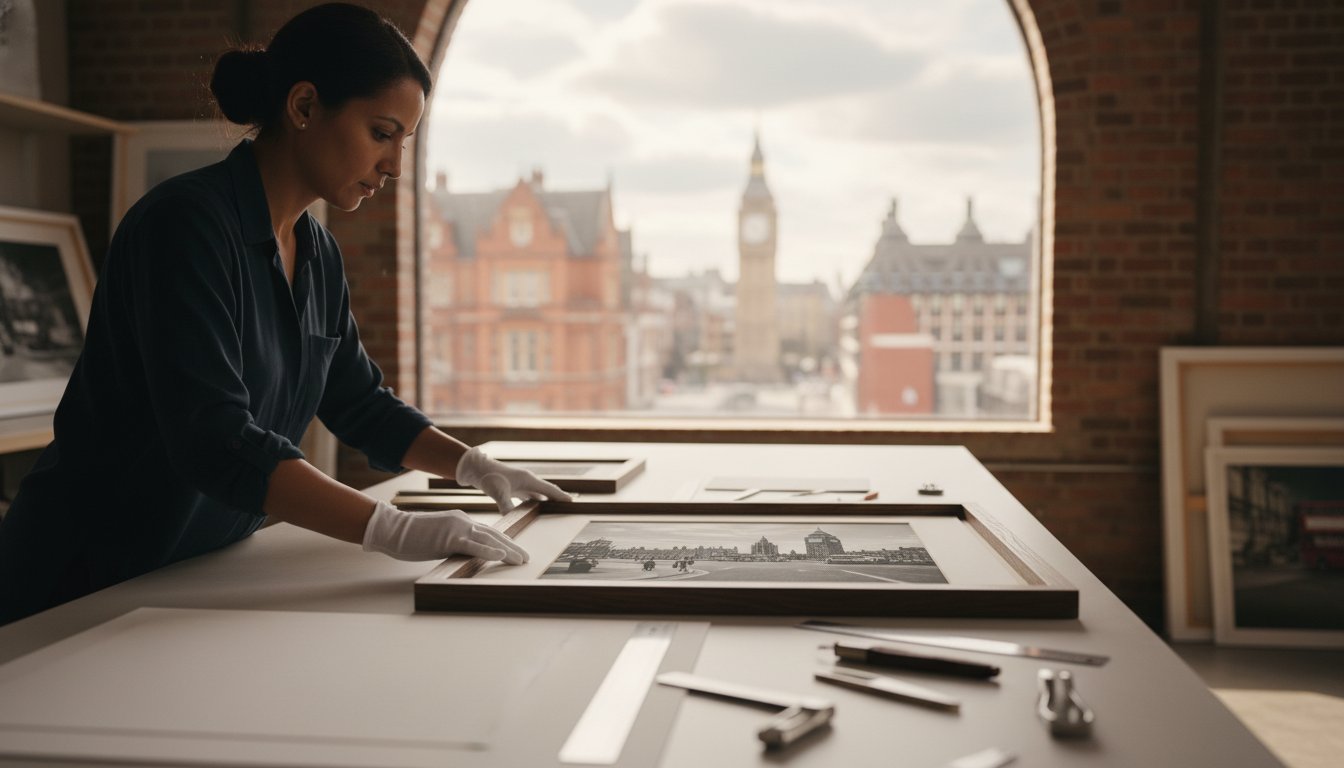
Professional vs DIY Picture Framing: The Collector’s Guide to Preservation

A frame is far more than a decorative border; it is a structural sanctuary that determines whether a masterpiece survives the century or succumbs to the slow decay of acidic materials and sunlight. When you hold a rare Slim Aarons print or a limited edition Terry O’Neill, the impulse to protect it is instinctual. You’ve likely felt that sharp pang of hesitation when considering a standard, store-bought frame, fearing that “cheap” look or, worse, the permanent yellowing caused by inferior backing. It’s a valid concern for any collector who views art as a lasting piece of history rather than a fleeting decoration.

This guide explores the critical nuances of professional vs diy picture framing to ensure your fine art and collectibles are preserved for a lifetime. You’ll discover why the choice between bespoke craftsmanship and a home kit is actually a choice between long-term investment and eventual loss. We will examine the technical superiority of archival glazing, the tactile elegance of natural wood finishes, and the peace of mind that comes from knowing your collection is guarded by museum-grade standards. By the end, you’ll have the confidence to choose a display that truly honors the prestige of your photographic heritage.

Key Takeaways

  • Understand the critical distinction between professional vs diy picture framing and how archival materials act as a sanctuary against the irreversible effects of “acid burn” and UV degradation.
  • Learn to apply the “investment rule” to your collection, identifying when the monetary or sentimental value of a piece necessitates the intervention of a master conservator.
  • Discover the aesthetic secrets of gallery-ready displays, including the use of multi-layered mats and “weighted” bottoms to provide a sophisticated visual balance.
  • Identify why standard store-bought frames often fail to protect high-end photography, leading to the yellowing and decay of original source materials over time.
  • Explore the Galerie Prints artisanal philosophy, where bespoke framing is treated as a final act of curation that transforms a print into a lasting piece of history.

Understanding the Craft: Professional vs DIY Framing Fundamentals

The act of framing a rare print is a delicate dialogue between preservation and presentation. It’s the profound difference between merely placing an image in a container and creating a sealed sanctuary that honors the artist’s original vision. When considering professional vs diy picture framing, one must look beyond the immediate visual impact and consider the chemical stability of the materials involved. A professional framer acts as a seasoned curator, advising on how a specific molding might echo the mid-century elegance of the Slim Aarons Collection or the stark, monochromatic power of a Terry O’Neill archive. This consultation ensures the frame isn’t just an accessory but a bridge to the interior’s aesthetic narrative.

Unlike the modern “upload and print” models that prioritize speed and digital convenience, handling original physical archives requires a reverence for the physical medium. Professional-grade wood and metal moldings offer a tactile weight and grain depth that plastic or composite alternatives simply cannot replicate. This artisanal approach is essential for those looking to invest in bespoke framing that respects the provenance of the work.

The Anatomy of a Professional Frame

A professional picture frame is a complex assembly of specialized layers designed to combat environmental decay. The assembly includes museum-grade glazing to filter light, acid-free mounts to prevent yellowing, and internal spacers that ensure the art never touches the glass. This air gap is critical; it prevents moisture ingress and the risk of the print adhering to the glazing over time. Professional assembly also utilizes reversible mounting techniques, ensuring that the artwork can be removed in its original state decades from now without residue or damage.

The DIY Allure: Convenience vs Quality

DIY kits and ready-made frames offer a certain allure for temporary displays or inexpensive posters where longevity isn’t a priority. They provide a quick solution for standard sizes, yet they often fail to do justice to the unique proportions of fine art photography. The hidden costs of these “cheap” frames are often found in the long-term damage they inflict. Non-archival materials can cause “acid burn” on delicate paper, while standard glass offers no protection against UV degradation. For a Star Wars Limited Edition or a vintage cinema lobby card, the risk of permanent damage far outweighs the initial convenience of a store-bought alternative.

The Hidden Dangers of DIY: Why Your Art Might Be at Risk

The allure of a weekend framing project often masks the silent, chemical clock that begins ticking the moment a print is sealed behind non-archival materials. While the initial visual result might satisfy a casual observer, the debate over professional vs diy picture framing is truly settled by the science of aging. Fine art photography is a living medium, susceptible to the atmosphere it inhabits. When a collector chooses a standard, store-bought frame, they often inadvertently introduce a cocktail of acidic elements that begin to erode the very heritage they intended to preserve.

One of the most frequent casualties of DIY attempts is the “acid burn” effect, where lignins in wood-pulp mats migrate into the paper of the print. This doesn’t just cause aesthetic yellowing; it structurally weakens the fibers, making the art brittle and prone to cracking. Similarly, the use of standard household tapes or permanent adhesives is a cardinal sin in the art world. These substances eventually fail, leaving behind greasy, translucent stains that no restorer can fully erase. Even the environment within the frame poses a risk; thermal expansion and contraction can cause a print to buckle or “wave” if it isn’t mounted with the precision that bespoke framing provides.

The Chemistry of Preservation: Acid-Free vs Archival

True preservation requires a deep understanding of pH neutrality. Lignin-free materials are essential because they don’t break down into acidic byproducts over time, ensuring the mount remains a neutral sanctuary for the artwork. Outgassing is the process where chemical vapors from acidic components are trapped within the frame’s micro-environment, leading to the gradual deterioration of the print’s emulsion. By selecting museum-grade cotton rag mats, professionals eliminate these volatile organic compounds entirely.

Glazing: More Than Just a Clear Cover

Glazing is the primary defense against the invisible enemy of the Slim Aarons aesthetic: ultraviolet light. Standard glass allows UV rays to penetrate, which leaches the vibrant, sun-drenched colors from high-gloss photography and causes irreversible fading. Professional UV-filtering acrylic or museum glass blocks up to 99% of these harmful rays. This protection is vital for maintaining the saturated hues of vintage cinema lobby cards, ensuring that the visual impact remains as potent as the day it was first displayed. Investing in superior glazing is a hallmark of the curatorial approach, transforming a simple cover into a protective shield.

The Professional Advantage: Preservation and Bespoke Aesthetics

Professional framing is the final act of curation. It bridges the gap between a piece of history and a modern interior. When evaluating professional vs diy picture framing, the aesthetic possibilities of bespoke services often outweigh the mere cost savings of a home kit. A master framer doesn’t just select a border; they tailor the entire presentation to the specific era of the artwork. For instance, a Slim Aarons print from the 1960s demands a different profile than a contemporary black-and-white Terry O’Neill archive. This historical sensitivity ensures the frame enhances the art’s narrative rather than competing with it.

The art of the mount is where professional skill becomes most visible. Experts often employ “weighted” bottoms, where the lower margin of the mat is slightly wider than the top and sides. This technique compensates for an optical illusion that makes centered art appear to be sinking. Multi-layered mats add a sense of architectural depth, drawing the eye into the frame. For oversized works, such as large-scale Slim Aarons prints, structural integrity is paramount. Professional frames are engineered with reinforced corners and heavy-duty strainers to prevent the molding from bowing under the weight of the glass. This is paired with professional hanging hardware, such as Z-bars or heavy-duty D-rings, ensuring these gallery pieces remain secure on your walls. While a DIY kit might suffice for a child’s drawing, the choice between professional vs diy picture framing becomes a question of legacy when dealing with high-caliber visual art.

How to Frame a Vintage Silk Scarf: A High-Stakes Example

Textiles present unique challenges that DIY methods cannot safely address. Unlike paper, a vintage silk scarf should never encounter adhesives. Galerie Prints utilizes specialized “pinning” or “stitching” techniques to secure the fabric to an archival board without causing tension or tears. Spacers are strictly necessary here; they create a crucial air gap that prevents the silk from touching the glass, which could otherwise lead to moisture trapping and permanent staining. Our bespoke service respects the unique dimensions of luxury scarves, providing a display that highlights the drape and luster of the material while ensuring it remains a lasting piece of history.

Preserving Cinema History: Framing Lobby Cards and Posters

Vintage cinema lobby cards and posters are often printed on fragile, historical paper stocks that have already survived decades of handling. Professional framing focuses on protecting these delicate edges while creating visual depth. Shadow-box techniques are particularly effective for collectibles, offering a three-dimensional perspective that celebrates the item as an artifact. We also emphasize the importance of archival backing. Many rare posters contain historical markings or studio stamps on the reverse; our preservation methods ensure these details are protected from environmental decay while the front remains a gallery-ready focal point.

Decision Framework: When to Choose Professional Bespoke Framing

The choice of professional vs diy picture framing often hinges on a single, sobering question: is this piece replaceable? A discerning collector views their acquisitions through the lens of longevity. The “investment rule” serves as an essential guide; if the monetary or sentimental value of the artwork exceeds the cost of its housing, professional intervention is the only logical path. While a digital reprint can be replaced with a few clicks, an original physical archive is a finite resource. Its provenance is tied to its condition, and once environmental damage occurs, the loss is often absolute.

Assessing the fragility of the medium is equally vital. Original paper stocks from the mid-century or vintage cinema lobby cards possess a chemical volatility that modern digital papers lack. These artifacts require a controlled micro-environment to prevent decay. Furthermore, you must evaluate the intended display environment. If your gallery wall resides in a room flooded with natural light or subject to humidity fluctuations, the structural and protective limitations of a DIY frame will be exposed within months. Professional framing creates a sealed sanctuary, shielding the work from the invisible forces of atmospheric change.

The DIY Checklist: When It’s Safe to Self-Frame

DIY framing is a perfectly appropriate solution for projects where the goal is temporary decoration rather than historical preservation. If you are displaying family snapshots, replaceable digital prints, or posters for a seasonal refresh, a self-framed approach offers flexibility. To succeed, you must seek out ready-made frames with solid wood moldings and real glass rather than plastic composites. Essential tools for a respectable DIY attempt include:

  • A point driver to secure the backing without damaging the frame.
  • Acid-free mounting corners to avoid using tape on the image.
  • Microfiber cloths and specialized glass cleaner to ensure a lint-free seal.

The Professional Checklist: When to Consult a Curator

Certain items are non-negotiable candidates for bespoke care. This includes Slim Aarons prints, limited edition Star Wars releases, and any vintage memorabilia with historical markings. These pieces demand a level of precision that home kits cannot provide. You should seek professional counsel when dealing with:

  • Large-scale pieces that require reinforced strainers to prevent bowing.
  • Three-dimensional objects or textiles that need shadow-box depth.
  • Environments where museum-grade UV protection, such as Tru Vue glass, is essential to prevent color leaching.

For those looking to elevate their collection into a gallery-ready display, our bespoke framing service ensures every piece is treated with the reverence it deserves, arriving ready to hang and preserved for the next generation.

Elevating Your Collection with Galerie Prints Bespoke Services

At Galerie Prints, we believe that the journey of a photograph doesn’t end at the shutter’s click; it concludes only when the work is safely enshrined within a frame that reflects its prestige. The debate of professional vs diy picture framing is often viewed through a lens of utility, yet for the serious collector, it’s a matter of curatorial integrity. Our philosophy treats each frame as a bridge to historical elegance, ensuring that a Slim Aarons poolside scene or a Terry O’Neill portrait is presented with the quiet authority it deserves. This isn’t merely about aesthetics. It’s about providing a structural sanctuary that honors the artist’s legacy while elevating your interior narrative.

Our artisanal approach to bespoke framing relies on localized craftsmanship and premium materials that far exceed the capabilities of any home kit. By selecting moldings that echo the specific era of the work, we create a curated look for your fine art photography that feels both timeless and sophisticated. This attention to detail extends to the functional aspects of ownership. We handle the complex logistics of global art delivery, providing a ready-to-hang luxury experience that ensures your investment arrives in pristine condition, regardless of its destination.

A Seamless Experience from Archive to Wall

Choosing a pre-framed print directly from our archives is the safest option for maintaining the work’s provenance. When you acquire a piece that’s been professionally mounted and sealed at the source, you eliminate the risks of handling and environmental exposure discussed in previous sections. Our selection of gallery-approved moldings and mount styles is curated to complement our specific collections, from the vibrant saturation of Star Wars Limited Editions to the delicate tones of vintage movie posters. This provides the peace of mind that comes with knowing every component, from the archival backing to the UV-filtering glazing, meets museum standards.

Your Invitation to Historical Ownership

A well-framed piece does more than sit on a wall; it becomes the focal point of the home, inviting conversation and inspiring wonder. The longevity of our materials ensures that your collection isn’t just a contemporary decoration but a legacy for the next generation. By investing in professional craftsmanship, you’re securing a piece of history in a format that will remain stable and evocative for decades. We invite you to explore our bespoke framing options today and discover how our curatorial expertise can transform your space into a private gallery.

Securing the Future of Your Photographic Heritage

The choice between professional vs diy picture framing is ultimately a decision about the legacy you wish to leave. By prioritizing archival materials, you move beyond mere decoration and embrace true custodianship. You ensure that your prints are shielded from the chemical decay of acid migration and the fading touch of ultraviolet light. A professional frame isn’t just a border; it’s a structural sanctuary that honors the provenance of the work, tailoring every mount and molding to the specific historical narrative of the artist.

Galerie Prints specializes in providing the expertise required to protect high-caliber visual art. Our use of bespoke archival materials and our commitment to worldwide secure shipping mean your investment is protected from the moment it leaves our archive to the moment it arrives on your wall. We invite you to browse the Slim Aarons Collection and choose your bespoke frame today. Transform your space into a gallery and enjoy the peace of mind that comes with knowing your collection is preserved for the next generation.

Frequently Asked Questions

Is professional framing really better than store-bought frames?

Professional framing offers significantly better protection than store-bought frames through the use of archival-grade materials that prevent chemical decay. While store-bought options are convenient for temporary displays, they often lack the airtight seals and acid-free components necessary for long-term preservation. A professional approach ensures the structural integrity of the piece, utilizing specialized mounting techniques that prevent the art from touching the glass, thereby avoiding moisture damage and permanent adhesion over time.

What is the most archival way to frame a vintage silk scarf?

The most archival way to frame a vintage silk scarf is through a non-invasive mounting method known as hand-stitching to an archival-grade board. This technique avoids the use of permanent adhesives which would irreversibly stain the delicate silk fibers. Additionally, the inclusion of internal spacers is essential to create a protective air gap between the fabric and the glazing. This prevents humidity trapping and ensures the luster of the silk is maintained without the risk of mold.

How can I tell if a frame uses acid-free materials?

Identifying archival materials often requires looking at the core of the mat board; a standard board will reveal a brown or yellow edge over time, indicating high lignin content. Professional-grade, acid-free mats typically feature a white or colored core that remains bright despite aging. When evaluating professional vs diy picture framing options, look for specific labels such as “100% cotton rag” or “alpha-cellulose,” which signify that the materials are chemically stable and pH-neutral.

Does UV-protective glass actually prevent art from fading?

UV-protective glass effectively blocks up to 99% of harmful ultraviolet rays, providing a critical defense for your collection. This significantly slows the photochemical reaction that causes colors to leach and paper to become brittle. While no glazing can stop fading entirely if a piece is placed in direct, constant sunlight, the protection offered by professional-grade glass is the most reliable method for maintaining the vibrant saturation of high-gloss photography and rare cinema archives for decades.

Why is custom framing so much more expensive than DIY?

Custom framing cost reflects the intersection of artisanal labor and high-performance materials. Unlike mass-produced DIY kits, bespoke framing involves hand-joined moldings, precision-cut archival mats, and specialized glazing sourced from conservation suppliers. The process requires a master framer’s expertise to ensure every component is chemically compatible with the artwork. This attention to detail ensures a perfect fit for unique dimensions, providing a level of security and aesthetic refinement that standard off-the-shelf solutions simply cannot replicate.

Can I frame a Slim Aarons print myself without ruining it?

While it is possible to frame a print yourself, the risk of causing permanent damage to a Slim Aarons print is substantial without specialized equipment. These works are often large-scale and require precise mounting to prevent buckling or “acid burn” from inferior backing. Given that these prints represent a finite photographic heritage, the professional vs diy picture framing debate suggests that the potential loss of value from a DIY error far outweighs the cost of expert assembly.

What is museum-quality framing and do I need it?

Museum-quality framing is the highest standard of preservation, utilizing only chemically inert materials and completely reversible mounting techniques. You need this level of care for rare collectibles, limited editions, or any piece with significant historical value. It ensures the artwork can be removed from the frame decades later in its original condition. This approach is essential for serious collectors who view their acquisitions as lasting pieces of history rather than fleeting contemporary decorations.

Professional Framing vs DIY: A Curator’s Guide to Preserving Fine Art

A frame is far more than a decorative border; it’s a vital life-support system for a piece of photographic history. You likely believe that once a masterpiece is acquired, the most significant part of your journey as a collector is complete. However, the choice between professional framing vs diy is the defining factor in whether your investment remains a pristine heirloom or becomes a fading memory. This guide explores how bespoke, museum-grade materials protect your art, such as those hand-printed in our London darkroom, from the 80% of environmental degradation that typically occurs within the first five years of domestic display. We’ll detail the technical nuances of archival mounting and UV-protective glazing, ensuring your curated collection retains its exquisite provenance while achieving a polished, gallery-standard aesthetic for your interior.

Key Takeaways

  • Understand the meticulous science of archival integrity and how chemically stable, reversible materials safeguard your photographic investment from the hidden acidity of off-the-shelf options.
  • Navigate the critical choice of professional framing vs diy by evaluating the rarity of your piece and its intended role as a focal point within your interior landscape.
  • Discover how a bespoke frame acts as a curated bridge, providing the essential “breathing room” required to harmonize iconic historical imagery with a contemporary aesthetic.
  • Master our curatorial framework for discerning when to invest in artisanal craftsmanship based on the provenance, rarity, and “Wall Significance” of your collection.
  • Explore the prestige of London-based hand-finishing and the “ready-to-hang” promise that ensures your artwork arrives with the precision of a world-class gallery.

The Art of the Reveal: Why the Right Frame is Essential

The acquisition of a fine art print represents a moment of cultural stewardship. It is the transition of a silver gelatin masterpiece from the quiet of our London darkroom to the vibrant light of a modern residence. The frame acts as the vital bridge in this journey, tethering a 1960s Slim Aarons poolside scene or a moody 1950s jazz portrait to the contemporary architecture of your home. When considering the nuances of professional framing vs diy, the choice dictates whether the image merely sits on a wall or commands the entire room with quiet authority.

Professional mounting creates essential “breathing room” for iconic imagery. This isn’t just an aesthetic preference; it’s a psychological necessity. A bespoke window mount allows the viewer’s eye to decompress before meeting the intensity of the photographic grain. This gallery-standard presentation signals that the work is not a mere decorative accessory. Instead, it positions the piece as a curated investment, moving beyond simple ornamentation to become a permanent part of your home’s narrative heritage. The world’s finest photography deserves a vessel that matches its historical weight.

  • Visual Depth: Proper mounting prevents the print from touching the glass, creating a sense of three-dimensional space.
  • Structural Integrity: Professional techniques ensure the print remains flat and tensioned over decades of display.
  • Historical Context: The right frame style acts as a chronological anchor, respecting the era the image was captured.

The Narrative Power of the Frame

A bespoke frame does far more than hold a print in place; it directs the eye toward the technical nuances that define the artist’s work. While a poorly chosen DIY frame can “contain” art, a professional selection “elevates” it. For instance, a hand-finished black wood frame can highlight the deep, velvety blacks of a traditional darkroom print. Conversely, a sleek, thin profile might emphasize the airy, sun-drenched glamour of mid-century photography. Matching frame styles to specific eras ensures that the technical superiority of the original negative is never overshadowed by its housing.

First Impressions and Long-Term Value

The “ready-to-hang” experience is a hallmark of the discerning modern collector. It validates the provenance of the work from the moment the crate is opened. By opting for a professional finish, you align your collection with the standards of fine art photography found in the world’s leading institutions. This level of care mirrors the meticulous standards found in professional conservation and restoration, ensuring the artwork remains shielded from environmental degradation. In the ongoing debate of professional framing vs diy, the former offers a seal of quality that preserves both the physical and financial value of the piece. It transforms a simple purchase into a lasting piece of history.

Preservation Science: Archival Integrity vs. DIY Risks

Archival framing is the meticulous application of chemically stable, reversible materials designed to protect a work of art for 75 years or more. It’s a discipline rooted in chemistry rather than mere decoration. When collectors weigh the merits of professional framing vs diy, they’re often choosing between long term stability and rapid degradation. Off-the-shelf DIY frames frequently utilize standard wood-pulp mats that contain lignin. As this lignin decomposes, it releases acidic gases that cause “mat burn,” an irreversible yellowing that eats into the fibers of the paper. Professional framing vs diy isn’t just about the aesthetic finish; it’s about the invisible barrier between the art and its eventual decay.

The Chemistry of Protection

The difference in lifespan between professional and amateur materials is stark. Standard wood-pulp boards typically begin to yellow and embrittle within 10 to 15 years, whereas acid-free, 100% cotton rag matting offers a 50-year advantage in structural integrity. Professionals adhere to the Canadian Conservation Institute framing standards to ensure every component touching the artwork is chemically inert. We prioritize “reversible” mounting techniques, such as Japanese paper hinges or archival photo corners, which ensure the print can be removed without damage. Archival mounting is the gold standard for museum-grade preservation.

  • Lignin-free materials: Prevents the “acidic migration” that destroys paper fibers.
  • Buffered mats: Contains calcium carbonate to neutralize atmospheric acids.
  • Reversible adhesives: Ensures the art’s provenance isn’t compromised by permanent glues.

Combatting the Elements: Light and Air

Light is a silent thief of color and contrast. While standard plexiglass or window glass might seem clear, they allow high levels of ultraviolet radiation to penetrate the frame. Museum-grade glass, used in our bespoke services, provides up to 99% UV filtration while maintaining 1% reflection levels for unparalleled clarity. This protection is vital for black and white pictures, which are specifically vulnerable to atmospheric oxidation. Without a professional seal, these silver gelatin prints can develop a metallic “silvering” or bronzing effect over time.

A professional frame seal creates a controlled micro-environment. It acts as a primary defense against dust, microscopic insects, and urban pollutants that thrive in domestic spaces. By stabilizing the internal humidity, the seal prevents the paper from “cockling” or warping during seasonal shifts. If you’re looking to safeguard a piece of history, you might consider the exquisite framing options available for our curated collections, ensuring your investment remains as vibrant as the day it was printed.

The Curatorial Edge: Bespoke Design vs. Ready-Made Constraints

Selecting the right surround for a masterpiece involves more than just picking a color. The debate of professional framing vs diy often centers on whether one views the frame as a mere border or a structural necessity. For the serious collector, a frame acts as a silent curator, enhancing the narrative of the photograph while ensuring its physical longevity. Ready-made frames prioritize cost over composition; this frequently compromises the artist’s original vision and the print’s historical value.

Precision and Proportion

Standard frames are manufactured for mass consumption, often forcing unappealing crops on iconic Slim Aarons prints that don’t fit a typical 4:5 ratio. When you’re forced to hide 12% of a photograph behind a frame lip, you lose the environmental context that makes the work significant. Professional framers calculate the golden ratio for matting, often using a 1.618:1 proportion to create a sense of natural balance. This bespoke approach allows for finishes that specifically complement the cool silver tones of a darkroom print, a luxury of choice that doesn’t exist in the aisles of a big-box retailer.

Tactile Quality and Craftsmanship

  • The Floater Frame: This creates a three-dimensional illusion where the artwork appears to be suspended, revealing the raw edges of the archival paper.
  • Structural Integrity: Hand-joined corners use internal splines, ensuring the frame won’t pull apart under the weight of heavy, large-format glass.
  • Professional Hardware: Heavy works require D-rings and wire rated for over 15kg to prevent the frame from bowing or falling over time.

In the context of professional framing vs diy, the craftsmanship of a London-based workshop ensures every corner is seamless. This level of detail transforms a simple print into a lasting piece of history, grounded by materials that reflect the “world’s finest photography.” Choosing bespoke design means you aren’t just buying a frame; you’re investing in the architectural stability of your collection. It’s the difference between a temporary decoration and a permanent gallery-grade installation.

When to Invest: A Collector’s Framework for Framing Decisions

Deciding between professional framing vs diy solutions often hinges on a simple question: is this piece a fleeting decorative whim or a permanent addition to your legacy? For a serious curator, the frame is never an afterthought. It’s the final layer of the artwork’s provenance. When an image captures a rare moment from the Slim Aarons archive or represents a hand-printed silver gelatin masterwork from our London darkroom, the frame must act as a protective vault. The investment reflects the rarity of the object itself.

Evaluate the “Wall Significance” of your acquisition. A primary focal point in a grand salon demands the structural integrity and aesthetic weight that only a bespoke artisan can provide. The relationship between a 300gsm cotton rag paper and a hand-finished frame is a technical marriage. In a professional setting, the mount is cut to the millimeter to ensure the artist’s signature or the print’s edition number is perfectly showcased. If a piece is likely to travel with you through various homes, the durability of professional joinery becomes a necessity rather than a luxury.

Assessing Your Artwork

Limited editions and rare lobby cards demand professional intervention because their value is tied to their pristine condition. Any adhesive or acidic backing used in a DIY kit can cause irreversible foxing or yellowing within 24 months. Investment-grade photography requires museum-level care, including UV-protective glazing and acid-free mounting. Save the “temporary” frames for non-archival posters where the replacement cost is negligible compared to the framing fee.

Interior Design Integration

Professional framing is the most cost-effective way to make a residential space feel curated and expensive. When weighing professional framing vs diy for a high-traffic area, consider that a custom-built frame offers a level of structural stability that budget alternatives lack. A cohesive gallery wall relies on the precision of consistent depth and finish that only a workshop can guarantee. Bespoke frames are engineered to withstand humidity shifts, ensuring that your collection remains flat and vibrant whether it hangs in a London townhouse or a coastal retreat.

Ready to elevate your collection with archival precision? Explore our curated selection of the world’s finest photography and bespoke framing options.

Bespoke Excellence: The Galerie Prints Framing Philosophy

At the heart of Galerie Prints lies our London-based darkroom and workshop, a space where heritage craftsmanship meets the exactitude of modern precision. We don’t merely sell images; we curate legacies. Every bespoke order carries our “Ready-to-Hang” promise, ensuring that your selection arrives hand-finished to gallery standards. Our framing styles aren’t chosen at random. They’re meticulously curated to complement specific collections, from the sun-drenched poolside glamour of the Slim Aarons archive to the raw, monochromatic energy of our Music collections. Shipping fully glazed and framed works requires a level of expertise that standard couriers cannot match, providing you with absolute peace of mind through every mile of the journey.

From Darkroom to Wall

Our intimate knowledge of the printing process informs every framing choice we make. Because we handle the archival C-type and silver gelatin prints from their inception in our London darkroom, we understand the specific vulnerabilities and aesthetic requirements of the paper. Having a single point of contact for both the print and its protection eliminates the risks often found in the professional framing vs diy debate. We ensure that “the world’s finest photography” receives the world’s finest framing, preserving the depth and clarity of the original negative for decades. This holistic approach means the frame is never an afterthought; it’s a fundamental component of the artwork’s soul.

A Seamless Acquisition

Collecting art should be an experience of joy, not a logistical burden. Our all-in-one bespoke service reduces the friction of acquisition, delivering a piece that’s ready for immediate display. The technical superiority of our archival mounting processes ensures that prints remain perfectly flat and protected from environmental degradation. When considering professional framing vs diy, the risk of improper mounting or acidic materials can permanently devalue a fine art investment. By choosing our integrated service, you’re securing the provenance and physical integrity of your work.

  • Archival Integrity: We utilize acid-free materials and specialized mounting techniques that prevent the “cockling” or waving often seen in DIY projects.
  • Curated Aesthetics: Our frame profiles are selected by curators to enhance the specific tonal ranges of silver gelatin and C-type prints.
  • Expert Logistics: We use bespoke crating and specialized art handlers to ensure fully glazed works arrive in pristine condition.

The result is a piece of history that’s ready to transform your space the moment it arrives. Explore our bespoke framing options for your next acquisition and experience the difference of true curatorial care. Our team remains dedicated to the belief that a photograph is only truly finished once it’s perfectly housed and ready to be admired.

Securing the Future of Your Photographic Heritage

Choosing between professional framing vs diy isn’t merely a matter of convenience; it’s a commitment to the longevity of your investment. While ready-made solutions offer a temporary fix, they often lack the 100% acid-free, museum-quality archival materials required to prevent the yellowing and degradation that can occur over decades. A bespoke frame serves as a protective vault, ensuring that the vibrant hues of a 1950s Slim Aarons poolside scene remain as vivid today as they were when the shutter first clicked.

At Galerie Prints, we understand that a photograph is a piece of history. Every work is hand-printed in our London darkroom, utilizing traditional techniques that honor the original negatives and the photographer’s intent. By opting for professional craftsmanship, you gain exclusive access to the Slim Aarons archive and the peace of mind that comes with expert preservation. Your collection deserves a presentation that reflects its prestige and safeguards its provenance for the next generation.

Invest in the world’s finest photography and bespoke framing at Galerie Prints

It’s time to transform your space with art that stands the test of time.

Frequently Asked Questions

Is professional framing really worth the extra cost?

Professional framing is a vital investment that protects an artwork for 100 years or more by using acid-free materials and UV-protective glazing. While the initial expense is higher, it prevents the irreversible yellowing and brittle texture caused by standard materials. At Galerie Prints, we believe a bespoke frame acts as a guardian for your investment. It ensures the world’s finest photography remains in pristine condition for future generations.

Does DIY framing damage the value of a limited edition print?

Improper mounting often leads to a 50 percent reduction in resale value if the paper becomes stained or adhered to a backing board. When comparing professional framing vs diy, the risk of using non-archival tapes or acidic wood pulps is high. These materials release gases that cause foxing or brown spots on the paper. A professional approach preserves the provenance and physical integrity of your limited edition acquisition.

What is the difference between museum glass and regular glass?

Museum glass provides 99 percent UV protection and reduces reflections to less than 1 percent; regular glass only blocks about 45 percent of harmful light. This specialized glazing uses an anti-reflective coating that makes the glass nearly invisible to the eye. It prevents the vibrant tones of a silver gelatin print from fading. This process can begin in as little as 24 months under direct light exposure.

Can I buy a professional frame for a print I already own?

You can certainly commission a bespoke frame for any print or photograph currently in your collection. Our London darkroom experts apply the same meticulous standards to your personal pieces as they do to our own curated collections. This process involves selecting a hand-finished moulding and archival mount that complements the specific dimensions and historical context of your existing artwork. It’s a seamless way to elevate your current collection.

How long does a bespoke framing service typically take?

A bespoke framing service typically requires a period of 10 to 14 working days to complete. This timeframe allows our craftsmen to hand-finish the wood and ensure the archival seals are perfectly set. Precision is paramount when handling the world’s finest photography; rushing the process could compromise the airtight environment required to protect the print from humidity and environmental pollutants. We prioritize quality over speed to ensure lasting results.

What are the risks of using a ready-made frame for an archival print?

Ready-made frames often utilize off-the-shelf backing boards containing lignin, which turns into acid and destroys paper fibres over 5 to 10 years. In the debate of professional framing vs diy, the primary risk is the lack of a proper spacer. Without one, the print touches the glass directly. This risks moisture trapped between the two surfaces, which causes the ink to bond permanently to the glazing.

How do I choose the right frame colour for a black and white photograph?

A hand-finished black or dark charcoal frame provides the most sophisticated contrast for a black and white photograph. These deeper tones draw the eye toward the silver highlights and deep blacks of the original negative. For a 1950s fashion shoot, a thin black frame with a wide white mount creates a timeless, gallery-style aesthetic. It honors the era’s glamour and the photographer’s technical skill perfectly.

Is it safe to ship large, professionally framed photographs?

Shipping large, professionally framed photographs is safe when using custom-built plywood crates and high-density foam inserts. We use 10-millimetre thick protective layers to shield the frame from impact during transit. Statistics show that 98 percent of professionally crated artworks arrive at their destination without a single blemish. This rigorous packing standard ensures that your piece of photographic history travels securely from our London gallery to your home.