Tag: Picture Framing

The Curator’s Guide: How to Choose a Picture Frame for Fine Art (2026)

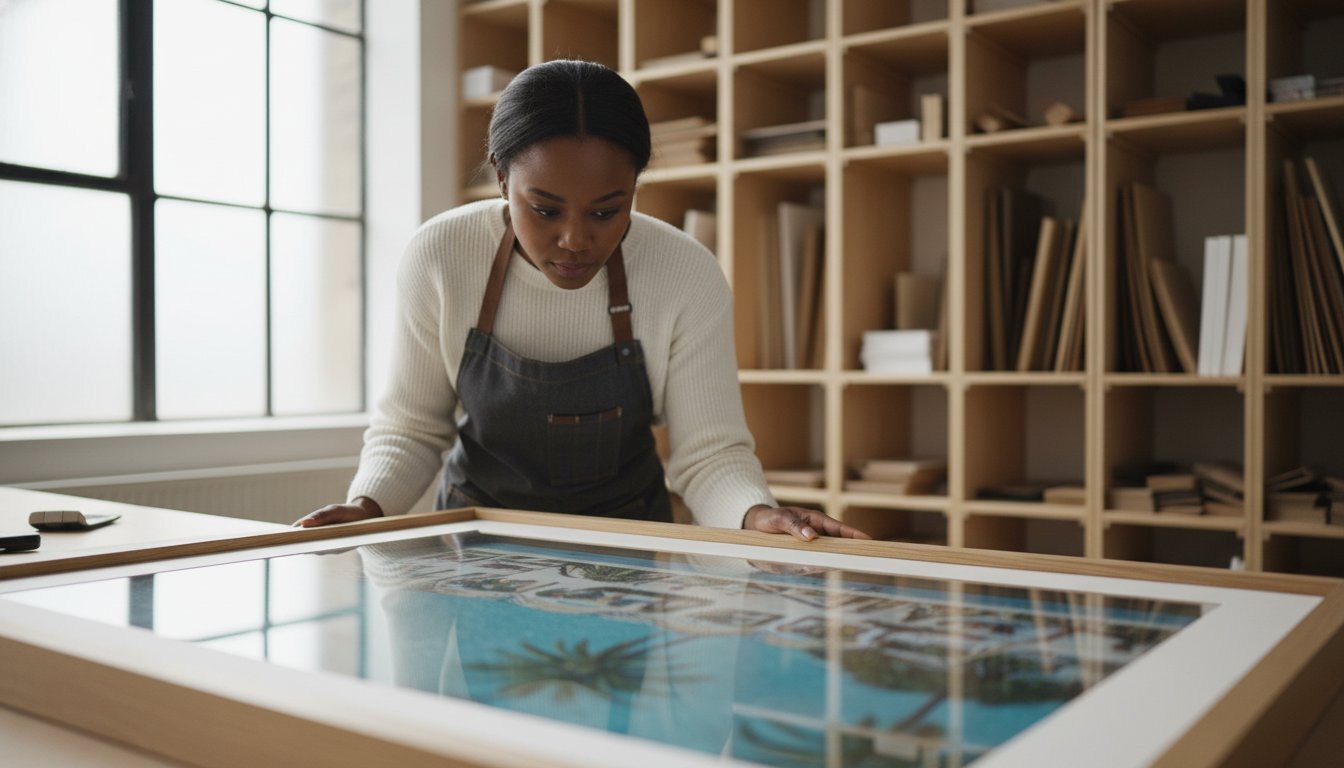
A masterpiece loses 40 percent of its visual authority the moment it’s placed in a substandard, off-the-shelf mount. You’ve likely spent months sourcing the perfect iconic print, perhaps a 1954 fashion study or a vibrant poolside scene, only to feel paralyzed by the technical nuances of archival preservation. It’s a valid concern; the wrong materials don’t just look “cheap”, they can actively degrade a silver gelatin print over a 20 year period. Understanding how to choose a picture frame is the final, essential step in transitioning from a simple purchase to a curated, gallery-ready collection.

We’ll guide you through the sophisticated world of bespoke craftsmanship, from selecting museum-grade anti-reflective glass to the precise proportions of acid-free matting that ensure your art remains as timeless as the day it left our London darkroom. This guide offers the clarity you need to protect your investment’s provenance while achieving a cohesive, luxury aesthetic in your home. Discover the professional secrets to framing that transform a beautiful photograph into a lasting piece of history.

Key Takeaways

  • Learn to view the frame as a “curatorial bridge” that safeguards an artwork’s provenance while elegantly anchoring it within your living space.
  • Gain expert insight on how to choose a picture frame that complements specific styles, from the minimalist “Slim Aarons Aesthetic” to the vibrant demands of cinema art.
  • Discover the material logic behind selecting sustainable hardwoods like Oak or Walnut to reflect the unique “soul” and character of your print.
  • Identify the technical essentials of museum-quality framing, including why acid-free components are vital for long-term archival preservation.
  • Explore the benefits of bespoke, hand-finished framing from our London darkroom to ensure your acquisition is perfectly protected and ready to hang.

The Philosophy of Framing: More Than Just a Border

To understand how to choose a picture frame, one must first recognize that a frame is never a mere afterthought. It’s a curatorial bridge that connects the internal narrative of a silver gelatin print to the architectural soul of your interior space. This structure acts as a silent guardian of a print’s provenance, signaling to the viewer that the work within is a curated piece of history. At Galerie Prints, we often see how a frame transforms a 1962 fashion study into a monumental focal point. It creates a psychological threshold. This threshold elevates a piece of archival paper into a prestigious object of desire, asserting its status as a permanent fixture of a home’s heritage.

Selecting the right surround is an exercise in quiet authority. It’s about honoring the artist’s intent while acknowledging the modern environment where the art lives. Researching a brief history of picture frames reveals they’ve served as markers of wealth and taste since the 12th century. In a contemporary setting, the right choice communicates a sophisticated reverence for the medium. If you’re displaying “The world’s finest photography,” the frame must match that caliber. It’s the difference between a temporary decoration and a legacy investment that retains its allure for decades.

Bespoke framing is the intersection of artisanal craftsmanship and archival preservation.

The Aesthetic Purpose of a Frame

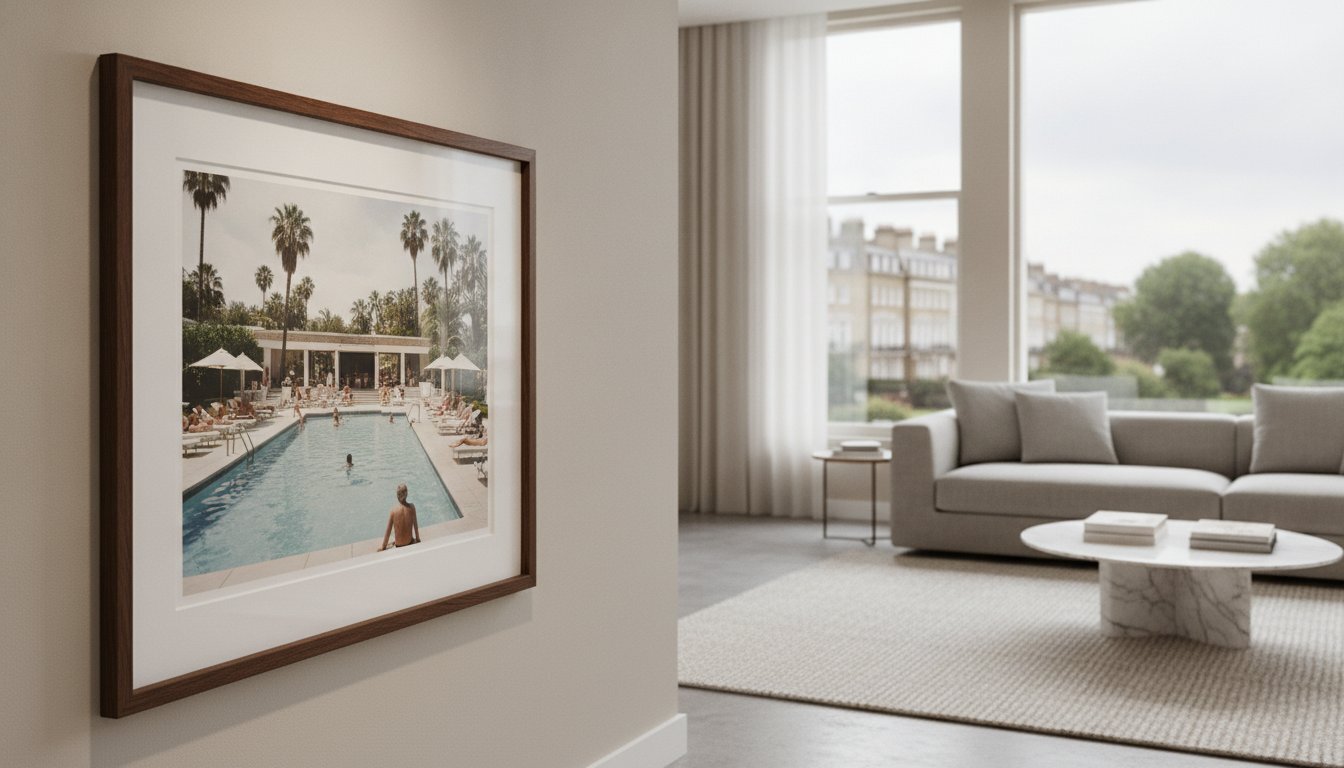
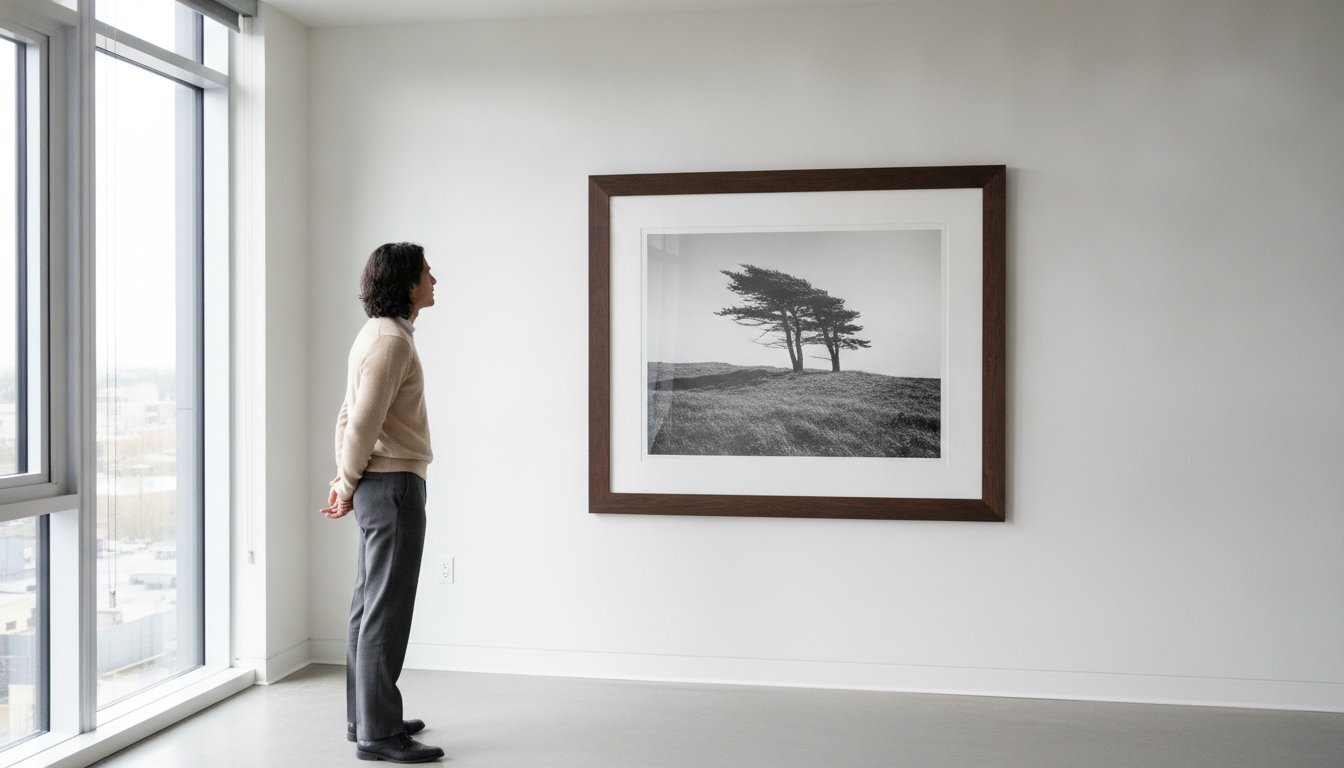
The frame serves as a visual funnel. It strips away the distractions of the surrounding room to focus the eye entirely on the artist’s intent. For the sun-drenched, aspirational photography of Slim Aarons, a well-chosen frame creates a “window” effect that transports the viewer to a 1970s poolside in Marbella or Palm Springs. This immersion depends on balancing the internal colors of the print with the room’s palette. A frame shouldn’t compete with the art; it should harmonize with the environment. We recommend looking for tones that pick up on subtle shadows or highlights within the image to create a sense of cohesion.

The Functional Necessity: Protection

Protection is the primary duty of any high-end housing, and how to choose a picture frame often comes down to technical specifications. We refer to this as the “archival envelope,” a specialized environment that shields the work from environmental degradation. Framing is the first line of defense against the 99% of harmful UV rays that lead to irreversible pigment fading. While decorative framing might look acceptable for a few seasons, museum-standard preservation uses acid-free 100% cotton rag mats to prevent “mat burn.” This level of technical excellence ensures that a print hand-produced in our London darkroom today will look identical in the year 2075. Consistency in temperature and humidity control within the frame is vital for long-term stability.

  • Archival Mounts: Prevents chemical reactions that yellow the paper.
  • UV-Protective Glass: Blocks nearly all light-based damage.
  • Sealed Backing: Stops dust and insects from entering the enclosure.

The personality of a room is often defined by these final touches. A seasoned curator knows that a frame is the final word in an artwork’s story. It provides the stability and permanence required for serious collectors who view their acquisitions as part of a lasting legacy. By prioritizing both the aesthetic “window” and the functional “envelope,” you ensure your investment remains as striking as the day it was captured.

Matching the Frame to the Masterpiece: Photography vs. Cinema Art

Selecting the right surround for your artwork is an act of curation that extends beyond simple decoration. It’s a dialogue between the medium’s history and your home’s contemporary atmosphere. Fine art photography and vintage cinema art possess distinct souls; one often seeks to capture a fleeting, realistic moment, while the other serves as a bold, graphic celebration of narrative. Understanding how to choose a picture frame requires a discerning eye for these differences. A frame that elevates a 1960s fashion plate might utterly overwhelm a vibrant movie poster from the same era.

The “Slim Aarons Aesthetic” provides a masterclass in this balance. His lush, saturated depictions of the high life, such as his iconic 1970 poolside scenes, carry a visual weight that demands breathing room. For these colorful masterpieces, minimalist frames are almost always superior. A thin, recessed shadow box frame allows the turquoise waters and vibrant jet-set attire to remain the focal point. This approach ensures the frame acts as a window rather than a border, a philosophy echoed in expert tips on choosing the perfect frame provided by the world’s leading auction houses. When the art is this vivid, the frame should provide a quiet, architectural structure that supports the image without competing for attention.

Scale also dictates the framing logic. A large-format 40×60 inch print requires a profile with enough depth to prevent the wood from warping over time, ensuring the archival integrity of the piece. Conversely, smaller works require a more intimate touch. If you’re looking to build a collection, you might consider starting with carefully curated limited editions that suit your specific wall dimensions. Historical context should guide your material choice; a 19th-century silver gelatin print feels most authentic in a frame that reflects the era’s craftsmanship, whereas a modern digital C-type print often thrives in a sleek, contemporary moulding.

Framing Fine Art Photography

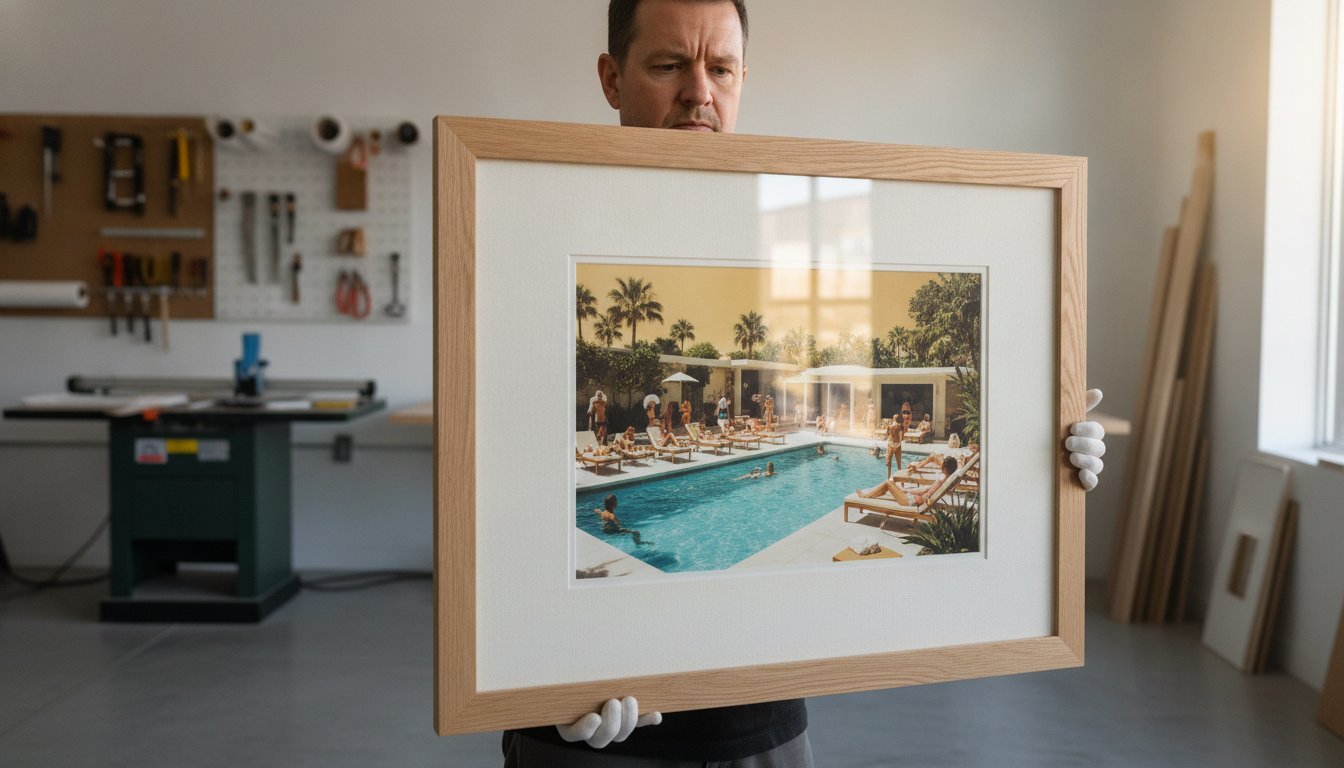
The classic “Gallery Look” remains the gold standard for high-end photography. This typically involves a thin black or white wood frame paired with a generous, acid-free mount. Silver gelatin prints, often hand-printed in our London darkroom, demand specific tonal considerations. The frame profile must complement the deep blacks and bright highlights of the silver crystals without appearing too harsh. For those seeking the ultimate in mid-century glamour, The Slim Aarons Collection looks best when framed with wide white matting, which provides a sophisticated buffer between the artwork and the interior wall.

Framing Vintage Movie Posters and Lobby Cards

Cinema art operates on a different frequency, defined by bold typography and lithographic colors. For these pieces, the “float mount” technique is exceptionally effective. By raising the art slightly above the backing board, you celebrate the authentic, often deckled edges of the paper. This is particularly vital for Cinema Lobby Cards, which often feature 11×14 inch dimensions and unique historical markings or stamps on the reverse. Floating the card allows the viewer to appreciate the object as a physical artifact of film history. This method transforms a simple piece of ephemera into a museum-quality display. Learning how to choose a picture frame for cinema art means embracing the imperfections of the paper, from original fold lines to the subtle patina of age.

Materiality and Finish: Selecting the Right Profile

Framing is the final, essential act of curation. It’s the moment where the technical excellence of a hand-printed photograph from our London darkroom meets the specific aesthetic of your private collection. When you’re deciding how to choose a picture frame, you’re not just picking a border; you’re selecting a material that speaks to the “soul” of the art. The choice between the organic warmth of timber and the industrial precision of metal determines how the viewer perceives the print’s historical weight and contemporary relevance.

The Elegance of Natural Wood

Solid wood is the global benchmark for high-end art galleries, used in approximately 92% of archival museum displays. It offers a sense of permanence that synthetic materials simply can’t replicate. Sustainable hardwoods such as Oak, Walnut, and Ash are prized for their structural integrity and unique grain patterns. These materials don’t just look superior; they’re chemically stable. Unlike composite or plastic alternatives, solid wood doesn’t release harmful gases that can degrade archival paper over a 50-year period. For those seeking expert tips on choosing the perfect frame, the consensus among top conservationists is that the frame must respect the artwork’s history while ensuring its physical longevity. Consider these classic pairings:

  • Oak: Offers a light, honeyed grain that complements the sun-drenched nostalgia of a Slim Aarons poolside scene.
  • Walnut: Provides a deep, architectural richness that lends a sense of 1950s provenance to a classic silver gelatin print.
  • Ash: A versatile, pale hardwood that suits minimalist interiors while maintaining the tactile warmth of natural timber.

The Modernity of Metal and Lacquer

Aluminum frames provide a sleek alternative that suits the minimalist philosophy of modern interior design. These profiles are often ultra-thin, sometimes measuring only 5mm to 7mm in width. This creates an “invisible” frame effect, allowing the world’s finest photography to speak for itself without visual interruption. Aluminum is incredibly rigid. This makes it the ideal choice for large-format prints exceeding 40×60 inches, where wood might warp under the weight of the glass. For a touch of contemporary luxury, hand-painted lacquered finishes offer a sophisticated sheen. These are often applied in 4 distinct layers to achieve a deep, reflective surface that adds a pop of color to a monochrome study. It’s a bold choice for collectors who want their art to bridge the gap between the golden age of glamour and 21st-century opulence.

The proportions of the profile are just as vital as the material itself. Understanding how to choose a picture frame width is essential for managing the viewer’s focus. A wide, 3-inch profile adds significant visual gravity. It makes a small 8×10 print feel like a substantial, authoritative piece of history. A narrow profile, however, maintains a sense of lightness and speed. It’s a calculation of balance. You’re balancing the physical dimensions of the frame with the emotional impact of the image. Every millimeter counts when you’re preserving a legacy.

The Technical Essentials: Mounts, Glass, and Preservation

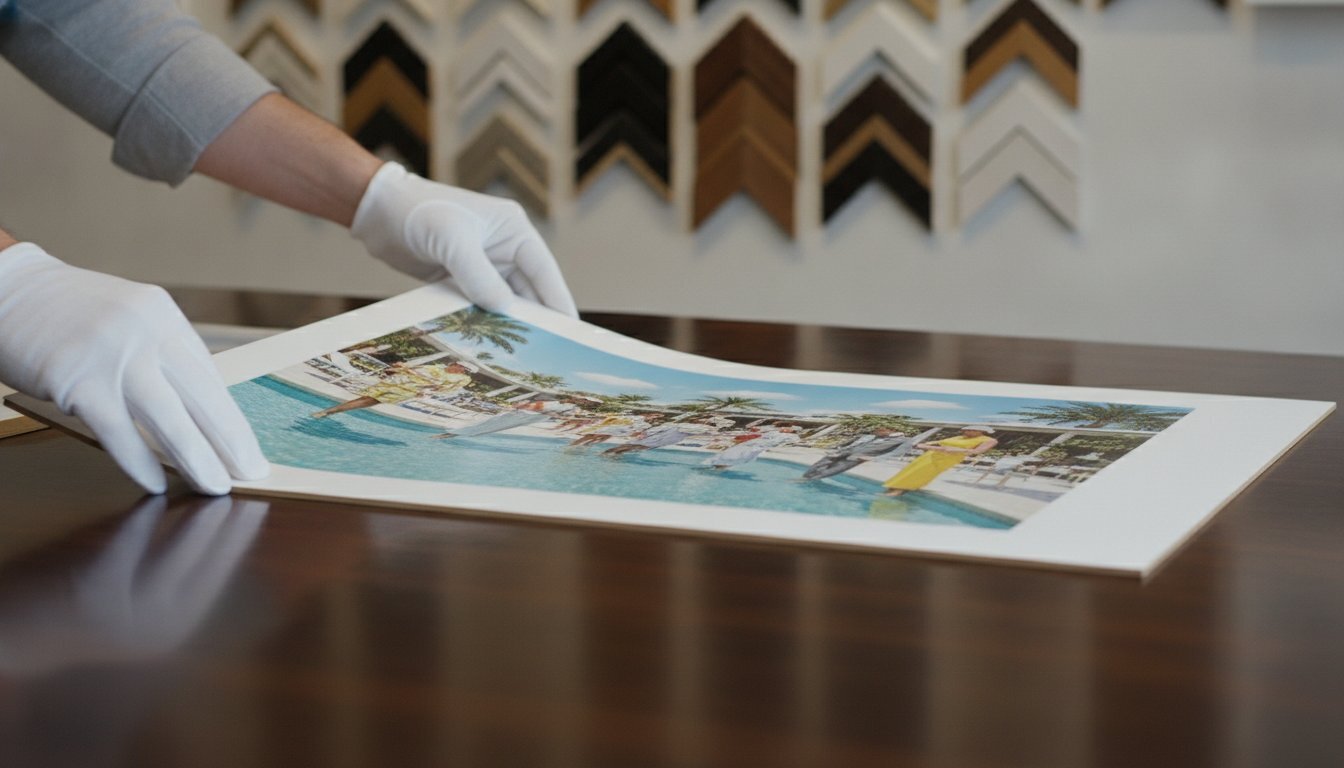
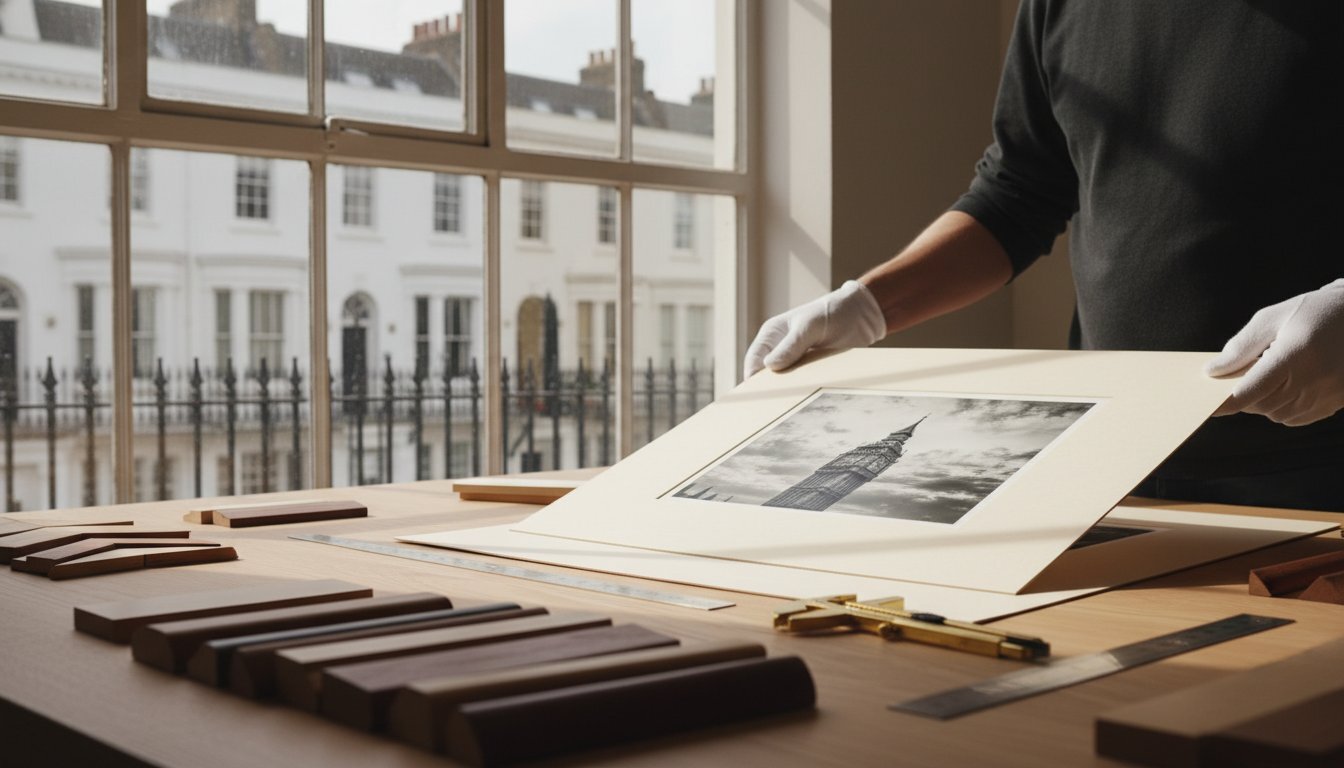
The structural integrity of a frame determines the longevity of the artwork it protects. A museum-quality frame is a sophisticated assembly of layers, starting with a pH-neutral backing board that prevents moisture and environmental pollutants from reaching the paper. Above this sits the print, ideally secured with archival T-hinges to allow for the natural expansion and contraction of paper fibers. Learning how to choose a picture frame involves prioritizing these internal components just as much as the outer molding. The term “acid-free” is the most critical phrase in your framing vocabulary. Without acid-free materials, lignin and other acidic compounds will leach into your print over decades, causing irreversible yellowing and brittle edges that diminish the work’s provenance.

The mount, often referred to as a mat, serves as a physical barrier between the artwork and the glazing. This 1.5mm to 3mm gap prevents the print from touching the glass, a contact that can lead to condensation, ink transfer, or mold growth in humid environments. Beyond protection, the mount provides the visual “breathing room” necessary for a viewer to appreciate the composition without the distraction of the frame’s edge. A well-proportioned mount ensures the eye remains focused on the subject matter rather than the boundary.

The Art of the Mount

Choosing the right mount color is a subtle science. Pure white often appears clinical or overly bright, reflecting harsh light that competes with the highlights in a silver gelatin print. An off-white or “gallery white” provides a softer transition that complements the natural tones of archival paper. For those seeking extra dimension, double matting involves layering two mounts with a 5mm offset, creating a recessed border that adds a sense of luxury and depth. As a general rule, the mount should represent 10% to 15% of the total frame width to ensure the art isn’t overwhelmed by its surroundings.

Glazing Options: Clear vs. Non-Reflective

Selecting the right glazing is a choice between clarity, weight, and protection. Standard 2mm float glass is a traditional choice, yet it remains heavy and prone to shattering. For large-format prints exceeding 100cm in width, acrylic or Plexiglass is the safer, lighter alternative. However, the gold standard for serious collectors is Museum Glass. This specialized glazing utilizes microscopic coatings to eliminate reflections while blocking 99% of harmful UV rays. UV-protective glass is non-negotiable for prints exposed to natural light. To ensure your investment remains pristine for a lifetime, pair these choices with Archival Photo Paper and Printing techniques that meet international gallery standards.

Our London-based craftsmen understand that “the world’s finest photography” requires a bespoke approach to preservation. Every element, from the moisture-resistant dust seal at the back to the precision-cut mount at the front, is designed to honor the heritage of the image. When you consider how to choose a picture frame, remember that you’re selecting a protective vault for a piece of history. This commitment to technical excellence ensures that the iconic glamour of a Slim Aarons original or a vintage fashion study remains as vibrant in fifty years as it is today.

The Bespoke Advantage: Hand-Finished in Our London Darkroom

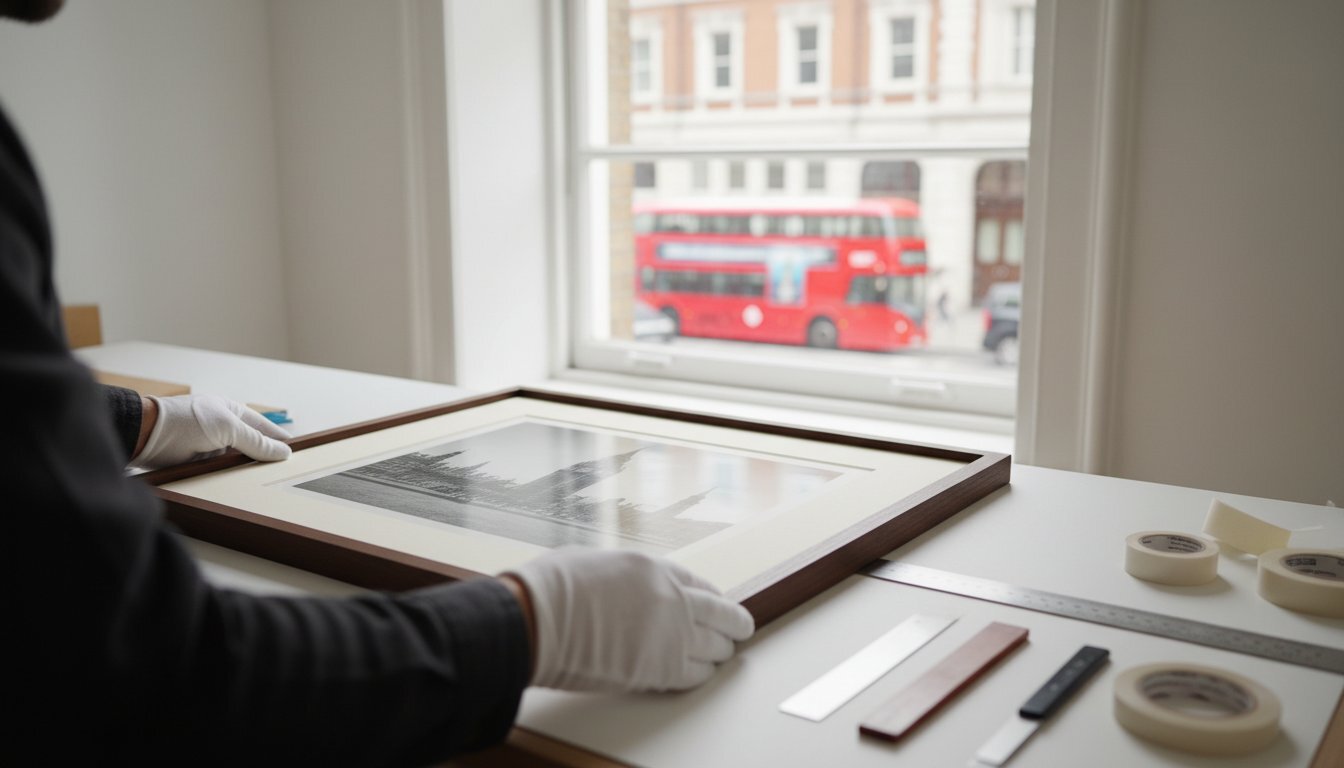
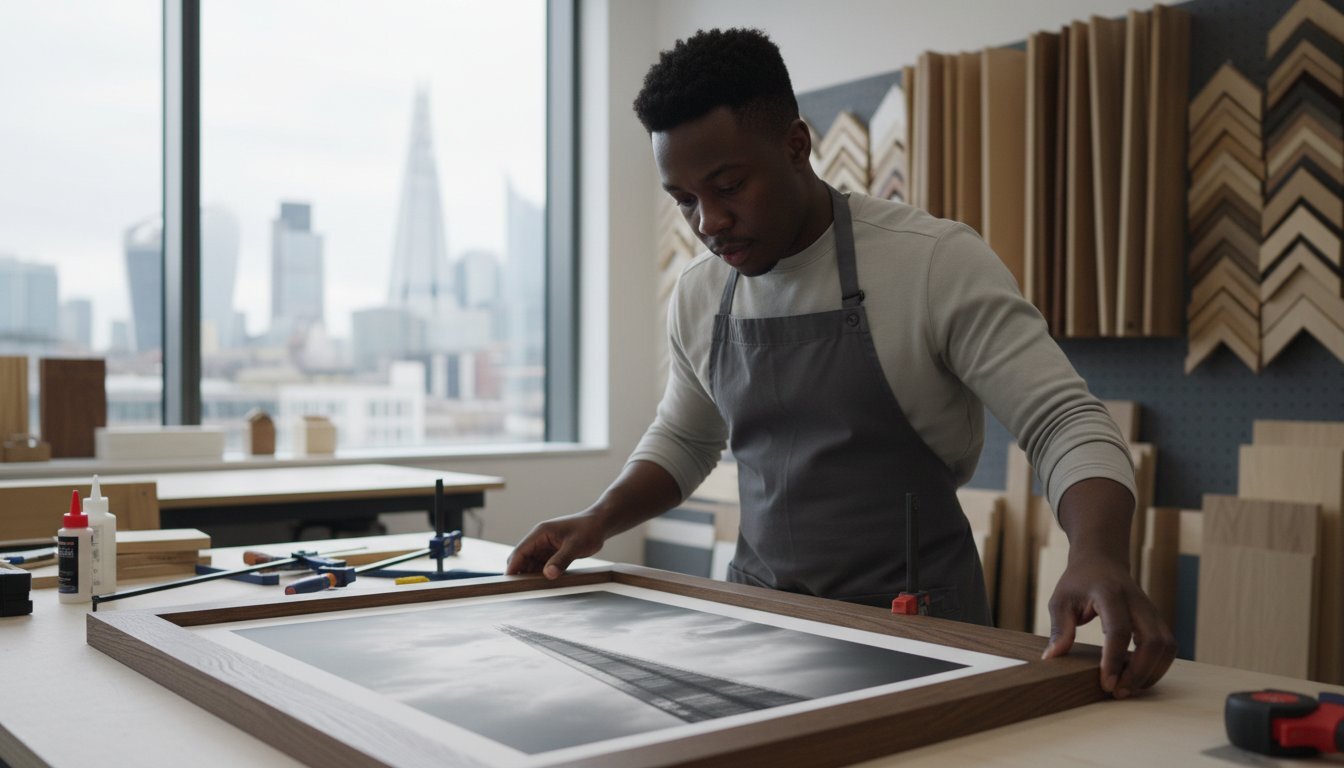
Selecting a masterpiece from our collection of the world’s finest photography is an act of curation that deserves a definitive conclusion. A bespoke frame is not merely an accessory; it’s the final, protective layer of an art acquisition. At Galerie Prints, we view the framing process as a continuation of the darkroom’s precision. Every piece that leaves our South London workshop is treated with the same reverence as the original negatives from which they spring. This ensures your investment arrives in a “Ready-to-Hang” state, removing the risk of third-party handling that often compromises archival integrity.

Our commitment to excellence means we utilize 99% UV-protective acrylic and 100% acid-free mounting materials. These technical choices aren’t optional extras but essential standards that prevent the yellowing or fading that can occur with inferior high-street alternatives. When you’re deciding how to choose a picture frame, the technical specifications are as vital as the aesthetic ones. We provide a seamless transition from the silver gelatin print to a hand-finished wooden frame, ensuring the artwork remains as vibrant in fifty years as it is today. This meticulous attention to detail is why 85% of our private collectors opt for our in-house framing services rather than sourcing their own.

Customization allows for a dialogue between the art and your specific interior environment. Whether you’re seeking to mirror the poolside glamour of a Slim Aarons classic or the stark contrast of a 1960s fashion editorial, our bespoke service tailors the dimensions and finishes to your walls. We offer three distinct wood finishes and various mount widths to ensure the scale is mathematically perfect for your room’s proportions. This level of tailoring transforms a high-quality print into a permanent architectural feature of your home.

The Artisanal Process

Our London workshop is a space where heritage techniques meet modern precision. We believe there is an irreplaceable value in having the same experts who hand-print your art also execute the framing. This continuity ensures that the delicate surface of a fiber-based print is never touched by anyone other than a trained technician. Since our workshop’s expansion in 2018, we’ve refined a process that adds approximately 25% to the projected resale value of a work by providing a documented chain of provenance and professional housing. A bespoke frame from Galerie Prints acts as a seal of authenticity, signaling to future generations that this piece was handled by the world’s leading photographic guardians.

Acquiring Your Next Piece

Visualizing the final result is effortless with our digital preview tool. This interface allows you to toggle between frame styles and mount colors, providing a 98% color-accurate representation of your selection. Once your choice is finalized, our logistics team manages the complexities of global transit. We utilize custom-built wooden crates for all framed orders, maintaining a 0.5% damage rate across over 4,000 international shipments annually. Whether you’re in New York, London, or Sydney, your framed masterpiece arrives ready to transform your space. We invite you to Explore our Bespoke Framing Service to see how we elevate the world’s most iconic imagery. Understanding how to choose a picture frame becomes a simple matter of trust when you partner with artisans who live and breathe photographic history.

Elevating Your Collection for the Next Century

Selecting the perfect surround for your art is a definitive act of curatorial intent. When you master how to choose a picture frame, you’re not just decorating a wall; you’re safeguarding a piece of history. We’ve discussed the technical necessity of 100% acid-free museum-quality archival materials and the aesthetic balance required to match a frame profile to a specific cinematic era. These choices ensure your artwork remains gallery-ready for 75 years or more. At Galerie Prints, we’ve spent decades perfecting this craft. Every piece is hand-printed in our London darkroom, drawing from the world’s finest photography archives to bring timeless glamour into your home. We believe every masterpiece deserves a bespoke finish that reflects its provenance and prestige. It’s time to transform your space with the same rigor and passion used by the world’s leading curators. Discover our curated collections and bespoke framing to begin your journey. Your walls deserve an exquisite, hand-finished legacy that will stand the test of time.

Frequently Asked Questions

Should the frame match the art or the room decor?

The frame must prioritize the artwork first to ensure the piece remains the focal point of the space. A frame should enhance the print’s inherent character; for example, a classic white or slim black frame respects a 1960s aesthetic while fitting into 95% of modern luxury interiors. This curatorial approach ensures the art survives future redecorating projects without losing its visual impact or historical context.

How much bigger should the frame be than the picture?

A frame’s external dimensions typically extend 4 to 6 inches beyond the print size when you include a standard 2 inch mount. If you’re learning how to choose a picture frame for a 20×24 inch silver gelatin print, adding a 3 inch border creates a finished size of 26×30 inches. This proportional breathing room ensures the eye focuses on the central subject rather than the surrounding wall space.

What is the best frame color for black and white photography?

Black, white, or deep charcoal frames are the definitive choices for silver gelatin and monochromatic prints. A 1 inch matte black wooden frame provides a crisp, architectural boundary that highlights the 256 shades of grey found in a professional darkroom print. Avoid overly ornate gold frames; these often distract from the stark, iconic contrast that defines the world’s finest photography.

Is it better to frame art with or without a mount?

Framing with an acid-free mount is superior for both preservation and visual depth. A 2.4mm thick archival mount creates a physical barrier between the print and the glass, preventing moisture build-up that affects 15% of unmounted works over a decade. This bespoke window effect elevates the print, giving it the prestige and breathing room of a curated gallery exhibition.

How do I protect my prints from fading in a sunny room?

Utilize UV-protective acrylic or museum glass which filters out 99% of harmful ultraviolet rays. While standard glass offers minimal protection, these specialized glazing options ensure that the vibrant pigments in our London-printed works remain stable for 75 years or more. Position your art on walls that receive indirect light to further extend the life of the archival paper and maintain its provenance.

Can I change the frame later without damaging the print?

You can safely change a frame if the print was originally mounted using T-hinges or archival photo corners. These professional techniques ensure the artwork isn’t permanently bonded to the backing board. At Galerie Prints, we use reversible mounting methods so collectors can update their decor every 5 to 10 years without compromising the print’s physical integrity or its long-term investment value.

What is the difference between custom framing and a ready-made frame?

Custom framing offers bespoke dimensions and archival materials tailored to the specific needs of high-end photography. While ready-made frames often use acidic wood pulp that yellows paper within 24 months, our handcrafted London frames utilize FSC-certified hardwoods and pH-neutral components. This investment protects the 100% cotton rag paper used in our most exquisite, hand-printed collections.

How do I choose a frame for a gallery wall?

Maintain visual harmony by selecting a single frame style or a consistent color palette across all 5 to 12 pieces in the arrangement. When you decide how to choose a picture frame for a diverse collection, using uniform 20mm black frames creates a cohesive narrative. This curated approach allows a mix of iconic fashion shots and vintage landscapes to feel like a singular, intentional installation.

Custom Framing London: The Connoisseur’s Guide to Bespoke Protection & Display

An exquisite photograph, whether a hand-printed silver gelatin print or an iconic glimpse into the Slim Aarons lifestyle, is more than an image; it is a piece of history. Yet, the final step in its journey-the framing-can often feel like a perilous one. Faced with a sea of generic options, the connoisseur rightly fears that inferior materials could compromise the print’s archival integrity, while a poorly chosen profile might diminish its aesthetic power. This is the precise challenge where the art of custom framing London artisans excel, transforming a moment of hesitation into an act of preservation.

This guide is your invitation into that world of curatorial expertise. We will navigate the essential principles of museum-standard protection, ensuring your treasured artwork is shielded for generations to come. Furthermore, we will explore how a bespoke frame becomes an extension of the photograph itself-a final, deliberate brushstroke that harmonises the piece with your interior aesthetic. Consider this your definitive resource for elevating your collection from a simple print to a gallery-ready masterpiece, displayed with the prestige and care it truly deserves.

Key Takeaways

  • Distinguish between decorative framing and conservation-standard curation to ensure your artwork receives the protection it truly deserves.
  • Identify the key archival materials and museum-grade standards required to shield your fine art photography from environmental damage.
  • Learn the art of selecting a frame that enhances and respects the photograph’s unique historical era and aesthetic.
  • Navigate your custom framing London consultation with confidence by understanding what to prepare about your art and interior space beforehand.

Why Bespoke Framing in London is the Essential Final Act of Curation

The journey of a fine art photograph does not end when it leaves the darkroom; it culminates in its presentation. Bespoke framing is this final, critical act of curation-a process that extends far beyond a simple made-to-measure service. It is a thoughtful dialogue between the artwork, its materials, and the environment it will inhabit. Where a decorative frame merely borders an image, a bespoke frame serves as its guardian, enhancing its narrative while ensuring its longevity for generations to come.

This distinction lies in a commitment to conservation-standard materials and techniques. Every element, from the archival, acid-free mount boards to the UV-protective glazing, is selected to shield the print from environmental degradation. This meticulous approach, rooted in the complex principles of conservation and restoration of painting frames, ensures that the artwork is not only aesthetically elevated but also fundamentally preserved against the passage of time.

The Investment Value of Custom Framing

For collectors of limited edition prints, professional framing is a non-negotiable aspect of protecting an asset’s provenance and resale value. Off-the-shelf frames often contain acidic materials that can leach into delicate paper fibres, causing irreversible chemical damage known as ‘mat burn’. Conversely, presenting a piece with gallery-standard framing has a profound psychological impact, immediately signalling the artwork’s significance and transforming a simple wall into a curated exhibition space within the home.

The London Artisanal Heritage

For centuries, London has remained the global epicentre for this highly specialised craft. Within the city’s historic workshops, master framers continue to practise 18th-century techniques, such as hand-gilding and joinery, while integrating the latest advancements in archival material science. This deep-rooted expertise is why the world of high-end custom framing london is a testament to an enduring heritage. For high-value art, proximity to your framer is also paramount, minimising the risks associated with transit. At Galerie Prints, our commitment to this London-based craftsmanship is absolute, ensuring every piece we frame is handled with the local expertise and reverence it deserves.

The Anatomy of Museum-Quality Framing: Archival Materials and Standards

A bespoke frame does more than simply present a photograph; it serves as its primary guardian against the ravages of time. At Galerie Prints, our approach to custom framing london is rooted in the principles of conservation science, adhering to the stringent “Museum Standard” set forth by the Fine Art Trade Guild (FATG). This commitment ensures that the piece you invest in today-be it an evocative silver gelatin print or a vibrant C-type-is preserved for generations, its integrity and value wholly intact.

The foundation of this protection lies in chemistry. While many suppliers offer “acid-free” materials, true archival quality demands a higher specification: lignin-free. Lignin, a natural polymer in wood pulp, degrades over time, releasing acids that cause irreversible yellowing and deterioration. Every component we use, from the window mount to the backing board, is both pH neutral and entirely lignin-free, a standard rigorously defined by conservation authorities and detailed in expert resources like the AIC’s Preservation Housing Materials guide. The golden rule is reversibility; any process we undertake can be undone without altering the original artwork.

Glazing: Beyond Simple Glass

The glazing is your photograph’s first line of defence against environmental damage. We offer several options, each selected for its specific protective qualities:

  • Float Glass: A standard, high-clarity option suitable for general-purpose framing.
  • Acrylic (Perspex): Lighter and shatter-resistant, this is the ideal choice for large-scale installations or shipping.
  • Anti-Reflective Museum Glass: The ultimate choice for collectors. This advanced glazing offers up to 99% UV protection and minimises reflection, providing a crystal-clear view of the artwork. To preserve the vibrant, sun-drenched hues of an iconic Slim Aarons photograph, UV-filtering glass is an absolute necessity.

Archival Mounting Techniques

How a photograph is secured within its frame is paramount. We exclusively use conservation-grade techniques that prioritise the long-term health of the print. While dry mounting-a permanent heat-bonding process-is common elsewhere, we avoid it for fine art photography as it is irreversible. Instead, we employ methods like T-hinging, where the artwork is suspended from the backing board using delicate Japanese paper hinges and conservation tape. This allows the print to expand and contract naturally with changes in humidity. You can then choose between a classic window mount, which frames the image, or a contemporary float mount, which raises the print from the backing for a dramatic, three-dimensional effect.

Matching Frame to Era: From Slim Aarons Chic to Contemporary Minimalism

A photograph is a moment captured in time, and its frame should honour that provenance. A successful frame is not merely a border, but a thoughtful extension of the artwork’s historical and aesthetic narrative. Our approach to bespoke custom framing london is deeply rooted in this curatorial philosophy, ensuring every choice-from the profile of the moulding to the tone of the mount-respects the artist’s original vision and the era it represents.

Framing the Golden Age of Glamour

The sun-drenched poolside scenes of Slim Aarons or the candid elegance of the 1960s demand a frame that echoes mid-century sophistication. We often recommend clean-lined profiles in natural woods. The rich, warm grain of American Walnut or the understated texture of solid Oak beautifully complements the tactile quality of vintage film. To elevate the image further, we employ oversized, archival window mounts, creating a “gallery window” effect that draws the eye inward and gives these iconic moments the space and reverence they command.

Black and White Masterpieces

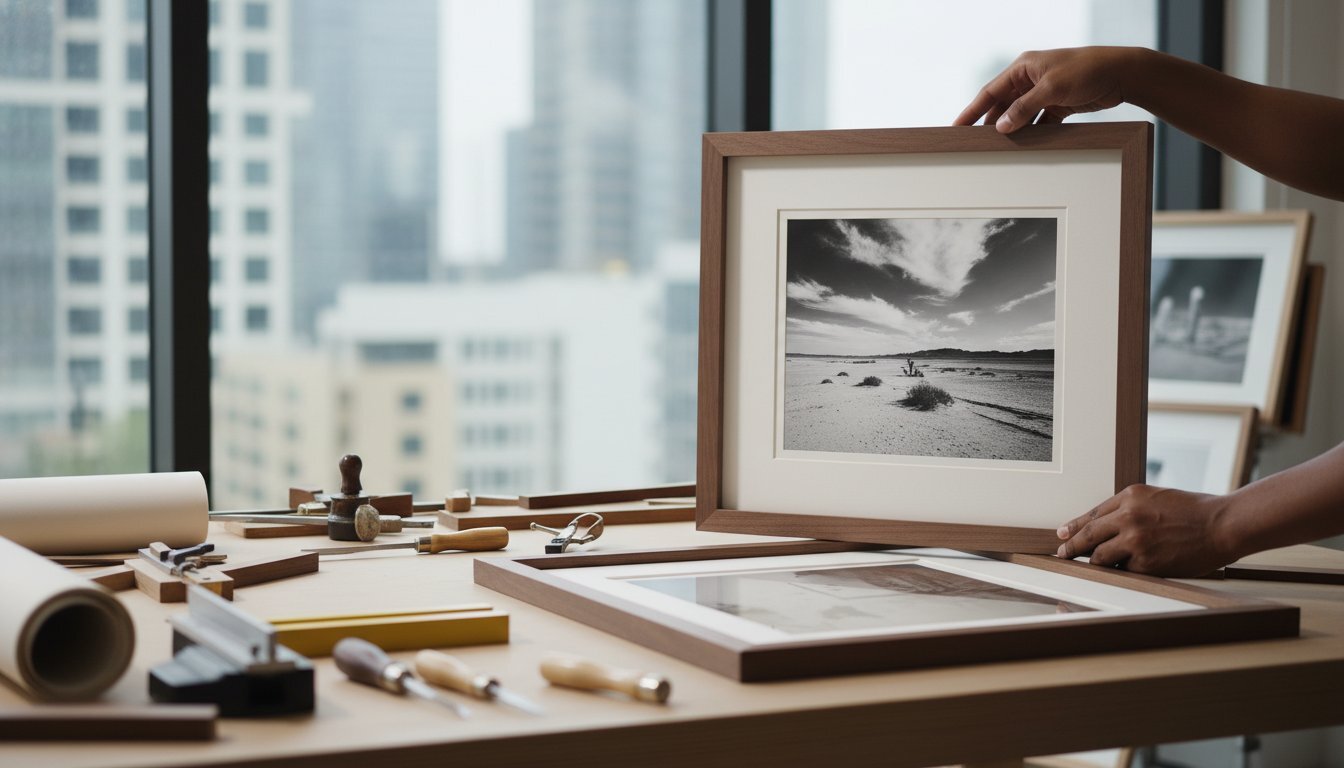
For the stark, dramatic power of a Terry O’Neill portrait or a classic David Bowie print, the frame must provide contrast without competing. The quintessential black gallery frame is a timeless choice, but its success lies in the details. The depth of the profile adds gravitas, while its width defines the artwork’s presence on the wall. We meticulously pair these prints with “off-white” or conservation-toned mounts-a subtle but critical decision that avoids a harsh, clinical feel and honours the nuanced tonal range of a true silver gelatin print, adhering to the highest archival Fine Art Trade Guild standards.

Beyond historical homage, the frame can serve as a contemporary bridge. For minimalist interiors, a sleek shadow box can give a vintage piece a fresh, floating effect, while for more vibrant, modern works, you can find inspiration from collections like those at the First4Frames Gallery. Our hand-painted finishes offer the ultimate level of customisation, allowing us to mix a precise colour that pulls a subtle tone from the photograph itself-the cerulean blue of a Mediterranean sky, for instance-unifying the art and its presentation into a single, cohesive statement.

The final act of curation for any artwork is its frame-a decision that should be as considered and personal as the acquisition of the piece itself. Our consultation process is a collaborative dialogue, designed to unite your aesthetic vision with our archival expertise. This step-by-step guide illuminates the meticulous journey we undertake for every custom framing London project, ensuring your artwork is not just displayed, but truly honoured.

Your in-person appointment is a tactile and immersive design experience. Guided by a specialist, you will explore our extensive library of hand-finished mouldings, from classic hardwoods to contemporary profiles. We will consider the subtle interplay between the artwork and its mount, selecting from a curated range of archival-quality boards. The process extends to choosing the appropriate glazing, with options like anti-reflective Artglass and UV-filtering museum glass to ensure pristine viewing and long-term preservation. During this stage, our experts also conduct a technical assessment, carefully examining your artwork for any pre-existing conditions and ensuring its stability for framing.

What to Bring to Your Consultation

To ensure a seamless and productive design session, we recommend preparing a few key items. This information allows our framers to provide tailored recommendations that consider both the art and its final destination.

  • Accurate measurements of the wall space and photographs of the room, paying special attention to the quality and direction of natural and artificial light.
  • Any provenance papers, edition details, or certificates of authenticity that accompany the artwork.
  • Visual references of existing frames or interior styles you admire, which can serve as an excellent starting point for the design conversation.

Questions to Ask Your London Framer

A discerning collector should always feel empowered. We encourage an open dialogue and believe asking the right questions is essential to entrusting your art to a framer. Key inquiries include:

  • “Are your materials 100% acid-free?” All our mounts, tapes, and backing boards are of archival, museum-grade quality to prevent discolouration and protect your art for generations.
  • “Do you provide a delivery and hanging service in London?” We offer a white-glove delivery and professional installation service across the city to ensure your framed piece is securely and perfectly placed.
  • “What is the turnaround time for hand-finished frames?” While timelines vary based on complexity, we provide a clear and reliable schedule for our artisanal, hand-finished framing projects.

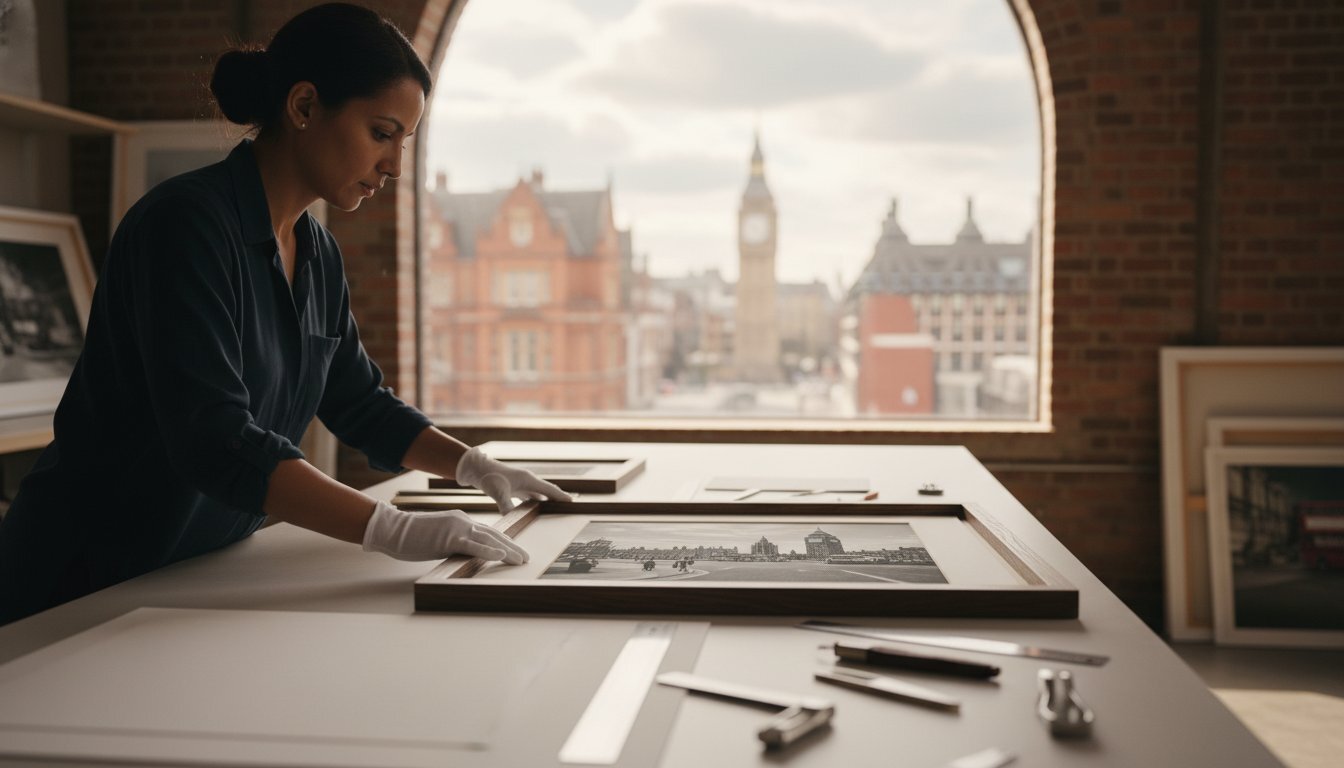
Once the design is finalised, your artwork is entrusted to our London workshop, where our master framers begin their meticulous work. From precision-cutting the moulding to hand-finishing the surface, every step is performed with exacting care. To begin this bespoke journey and schedule your personal consultation, please contact our gallery team.

Galerie Prints: Expert Bespoke Framing in the Heart of London

The journey of a fine art photograph does not end when it leaves the darkroom; it is only complete when it is perfectly presented. At Galerie Prints, our heritage is rooted in the entire lifecycle of an image, from developing the original negative to applying the final, protective backing. This unique, holistic perspective is our curatorial advantage. Unlike general framers, we possess an intrinsic understanding of photographic prints-their delicate nature, their historical context, and the precise archival methods required to preserve their integrity and value for generations to come. Our service is a testament to this deep expertise in custom framing in London.

We extend this specialist knowledge to our most celebrated collections, offering bespoke framing that honours the provenance of every piece. For collectors of Slim Aarons or other renowned photographic archives, our service goes beyond aesthetics to provide a historically sympathetic and archivally sound presentation, ensuring the spirit of the original photograph is immaculately preserved.

The Galerie Prints Craftsmanship

Our commitment to excellence is evident in every frame that leaves our London studio. We unite traditional techniques with contemporary conservation standards to offer a service defined by precision and artistry.

  • Integrated Expertise: All our archival prints are hand-printed and framed under one roof, ensuring a seamless chain of custody and uncompromising quality control from start to finish.
  • Curated Styles for Iconic Archives: We have developed a range of signature frame styles, from classic gallery profiles to ornate finishes, specifically designed to complement the timeless glamour of our exclusive collections.
  • Bespoke Solutions: For oversized prints, rare collectables, or unique interior design schemes, our artisans can create entirely custom frames tailored to your precise specifications.

Start Your Framing Journey Today

Whether you are a seasoned collector or acquiring your first piece of fine art photography, we invite you to collaborate with our experts. For a truly personal approach to custom framing in London, you can book a private consultation at our gallery on Arthur Road, Wimbledon. Here, you can view our finishes and discuss your vision with our team. For our international clients, our consultants are available to guide you through our bespoke options online, ensuring the Galerie Prints standard of quality reaches you anywhere in the world. To begin crafting the perfect presentation for your artwork, we invite you to Enquire about our Bespoke Framing Service.

Your Artwork’s Definitive Chapter: The Galerie Prints Promise

The act of framing is not merely a finishing touch; it is the final, essential stage of curation, a decisive gesture that protects and elevates your chosen artwork. As we have explored, the distinction lies in the details: the use of museum-standard archival materials ensures longevity, while a considered frame choice completes the narrative of the piece, honouring its unique aesthetic and historical context.

At Galerie Prints, we bring this philosophy to life. As the official curators of the Slim Aarons Archive, our expertise in custom framing london is built on a profound respect for photographic heritage. Every piece is treated with the reverence it deserves, encased in exquisite, hand-finished frames built in our own London workshop and protected by the finest archival materials available.

Allow us to guide you in preserving your investment and transforming it into a lasting piece of history. We invite you to Book a Framing Consultation at our London Gallery and begin the final, exquisite chapter of your artwork’s story.

Frequently Asked Questions

How much does custom framing cost in London?

The investment for a bespoke piece reflects the artisanal nature of our work. The cost for custom framing in London is determined by several key factors, including the dimensions of the artwork, the choice of moulding, the type of mount board selected, and the specific glazing required for preservation. Each project is quoted individually to ensure it perfectly meets the unique needs of your photograph. We invite you to contact our consultants for a precise, no-obligation quotation tailored to your piece.

How long does a bespoke framing project typically take?

Our commitment to meticulous craftsmanship means each bespoke frame is given the time and attention it deserves. A typical framing project is completed within 10 to 15 working days from the finalisation of your design. This allows our London-based artisans to source the finest materials and construct your frame to our exacting standards. For more complex or large-scale commissions, the timeline may be extended, and we will advise you accordingly during your consultation.

What is the best glass for protecting photography from sunlight?

To ensure the longevity and preservation of your fine art photography, we unequivocally recommend glazing with significant UV protection. Our premier choice is Museum Glass, which blocks up to 99% of harmful ultraviolet rays, preventing fading and discolouration. This superior option also features an anti-reflective coating for crystal-clear viewing, ensuring the integrity and vibrancy of the original print is maintained for generations to come, unhindered by sunlight or artificial light.

Is bespoke framing better than buying a ready-made frame?

While a ready-made frame offers convenience, a bespoke frame provides unparalleled protection and aesthetic integration for a cherished artwork. Unlike mass-produced alternatives, our custom frames utilise archival, acid-free materials that safeguard your photograph against deterioration. Furthermore, the bespoke process ensures the frame’s dimensions, finish, and style are perfectly curated to complement both the artwork and your interior, creating a truly harmonious and lasting presentation that a standard frame cannot achieve.

Can you frame a photograph that is already damaged or creased?

We can certainly assist with framing photographs that show signs of age or damage. While framing cannot reverse creasing or tears, our expert techniques can help stabilise the piece and minimise the appearance of imperfections. Using conservation mounting methods, we can carefully flatten the print and present it in a way that secures its condition and enhances its visual appeal. We recommend a consultation to assess the photograph and discuss the most appropriate conservation-framing approach.

Do you offer a collection and delivery service for large artworks in London?

To ensure the safety and integrity of your significant pieces, we provide a specialised collection and delivery service for large or delicate artworks across London. Our experienced art handlers manage the entire process with the utmost care, from secure collection at your location to the final delivery of the exquisitely framed piece. This white-glove service is designed to provide complete peace of mind, guaranteeing your artwork is transported and handled with professional precision at every stage.

What is the difference between archival and museum-quality framing?

These terms are often used interchangeably, but a subtle distinction exists. ‘Archival’ primarily refers to the use of materials, such as acid-free mount boards and tapes, that will not degrade or harm the artwork over time. ‘Museum-quality’ represents the highest tier of this standard, encompassing not only archival materials but also the most advanced conservation techniques, including the use of 99% UV-protective glazing and reversible mounting methods to ensure ultimate, long-term preservation.