Author: Stuart

Cult Classic Movie Posters: A Curated Guide to Cinematic Heritage

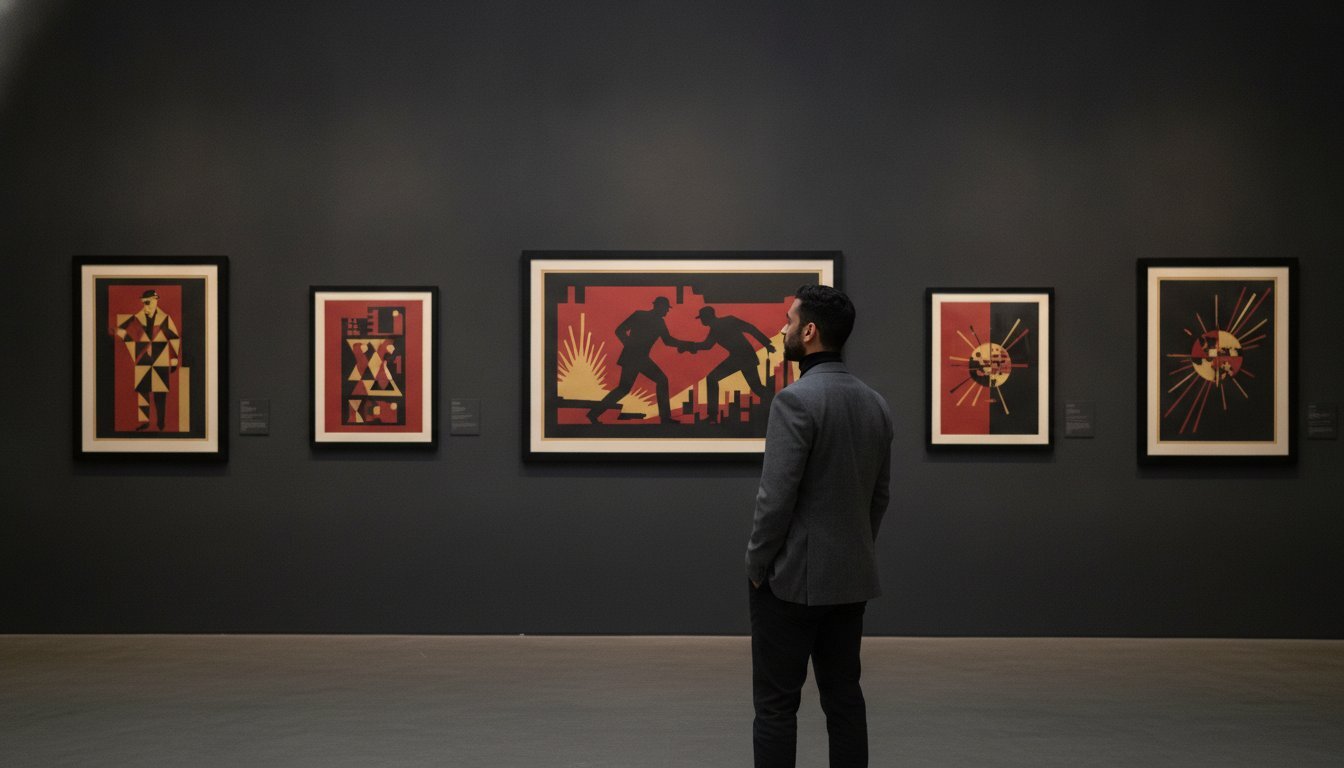
A movie poster was never intended to survive the weekend, let alone grace the walls of a sophisticated residence as a permanent piece of photographic heritage. Most of these ephemeral works were discarded once the projector stopped spinning, yet the few that remain have transcended their marketing origins to become icons of visual culture. You likely recognize the magnetic pull of cult classic movie posters, but you may feel overwhelmed by the flood of low-quality reprints that lack the depth and texture of a true gallery piece. It’s a common challenge for the discerning collector to find works that offer both historical authenticity and the archival longevity required for a luxury interior.

In this curated guide, you’ll discover the rich history and design evolution of these cinematic treasures, learning why they’ve become such essential components of high-end art collections. We’ll explore the transition from the cinema lobby to the fine art gallery, providing you with the knowledge to identify significant provenance and artisanal quality. By the end, you’ll understand how to select and display these rare prints as lasting pieces of history that reflect a refined, worldly aesthetic.

Key Takeaways

  • Understand how cult classic movie posters transitioned from temporary marketing ephemera to significant pieces of photographic heritage for the sophisticated home.
  • Identify the specific design markers of iconic genres, from the moody shadows of Noir to the futuristic optimism found in mid-century Science Fiction.
  • Master the art of the connoisseur by learning to verify provenance and distinguish between mass-produced reprints and rare, investment-grade editions.
  • Discover the necessity of bespoke framing and museum-grade archival materials in transforming a vintage poster into a lasting piece of gallery-quality history.

The Allure of the Cult Classic: Why Movie Posters Transcend Cinema

A cult classic isn’t merely a film with a loyal audience; it’s a cultural phenomenon that develops a devoted, almost ritualistic following over decades. The cult film definition often highlights works that were initially misunderstood or overlooked by the masses, only to be reclaimed by a discerning subculture. This deep reverence naturally extends to the physical artifacts of the era. For the modern collector, cult classic movie posters represent the pinnacle of this devotion, serving as a bridge to a bygone era of cinematic daring. They’ve shifted from promotional ephemera, once destined for the bin after a weekend run, to highly sought-after photographic heritage that commands respect on the gallery wall.

Unlike mainstream blockbusters that often rely on safe, formulaic imagery, cult films frequently utilized daring, avant-garde designs. These posters were the experimental fringe of graphic art, often created by artists who were unburdened by the necessity of broad market appeal. This artistic freedom resulted in visuals that possess a magnetic pull, balancing nostalgia with a sophisticated, luxury interior aesthetic. They don’t just decorate a room; they anchor it with intellectual depth and a sense of permanence.

The Cultural Significance of Film Archives

These posters serve as a potent visual shorthand for the social and political movements of the 20th century. When you look at a vintage print, you aren’t just seeing an advertisement. You’re witnessing the aesthetic zeitgeist of its time. The transition from the dusty cinema lobby to the high-end gallery wall reflects our growing appreciation for these archives as legitimate art. Iconic imagery, such as the primal terror captured in the Jaws poster, has become a pillar of modern graphic art. These works act as guardians of our collective memory, preserving the raw energy of independent and underground cinema in a format that demands archival preservation.

Artistic Value Beyond the Box Office

It’s a curious reality that many cult classic movie posters have outlived the films they were meant to promote. A singular, evocative image can possess a gravity that the moving picture itself lacks. Serious collectors prioritize original design and traditional production methods over modern digital reproductions because they value the tactile connection to history. These pieces preserve the “golden era” of Hollywood elegance and the gritty realism of 70s noir. By utilizing museum-quality materials and bespoke framing, these posters are elevated into “ready-to-hang” history. In 2026, the focus remains on the preservation of original source materials, ensuring that the artisanal craftsmanship of the past remains a stable investment for the future.

Analysing the Cult Aesthetic: Design Heritage and Visual Impact

The visual impact of cult classic movie posters isn’t accidental. It’s a calculated synergy between cinematic photography and bold typography. In the moody shadows of a noir thriller, the palette is often restricted, using high-contrast monochrome to suggest moral ambiguity. Contrast this with the psychedelic 1970s, where vibrant, clashing hues were used to mirror the era’s counter-cultural shift. These posters don’t just sell a film; they distill its spirit into a singular, iconic frame that communicates deep themes through symbolism. A single image of a shark’s fin or a silhouetted figure under a streetlamp tells a complete story before a single word is read.

Tactile authenticity is paramount for the serious collector. Traditional printing methods, such as lithography or early screen printing, imbue the work with a texture that digital reproductions simply cannot mimic. The weight of the paper and the way it holds ink creates a depth of field that honors the original artist’s intent. This material quality is why we treat these works as photographic heritage rather than simple merchandise. In 2026, the appreciation for these physical archives has only deepened as we seek permanence in an increasingly digital world.

The Role of the Photographer in Cinema Art

Cinema art often finds its soul through the lens of masters like Terry O’Neill or Slim Aarons. While Aarons captured the aspirational lifestyle of a bygone era, O’Neill’s work on film sets provided an intimate, raw perspective that defined the “cool” of the 1960s and 1970s. Still photography captures the “soul” of a production in a way that moving images sometimes miss. Using archival photo paper is essential here. It ensures that the subtle nuances of light and shadow remain vibrant for decades, preserving the integrity of the image for future generations.

Typography and Graphic Innovation

The evolution of title design reflects broader artistic movements. In the 1960s, minimalist typography often allowed the imagery to breathe, using clean lines and plenty of negative space. By the 1980s, this shifted toward a maximalist aesthetic, with bold, hand-drawn lettering that felt tactile and artisanal. These hand-rendered elements provide a human touch that modern fonts lack. They remind us that behind every iconic piece of cult classic movie posters history was a craftsman with a pen or a brush. If you’re looking to bring this level of artistic heritage into your home, exploring a curated selection of vintage movie posters is a perfect starting point for any discerning collector.

From Sci-Fi to Noir: Categorising Cult Poster Genres

The landscape of cult classic movie posters is as varied as cinema itself, offering collectors a spectrum of aesthetics that range from the starkly minimalist to the vibrantly surreal. Art house and avant-garde works, such as those promoting the films of Andrei Tarkovsky, Alejandro Jodorowsky, or David Lynch, often function as pure abstract art. These pieces don’t merely represent a film; they translate complex, non-linear narratives into a single visual experience. Similarly, action and adventure genres provide a different energy, featuring iconic hero imagery that defined 20th-century masculinity. These posters capture the raw charisma of the era’s leading men, serving as powerful focal points in a contemporary gallery setting.

The Enduring Appeal of Horror and Noir

Collectors who specialize in cult classic movie posters often find that the moody atmospheres of noir and horror resonate most deeply with the architectural character of their homes. Classic noir posters rely on high-contrast visuals to evoke a sense of mystery and moral ambiguity. This aesthetic is deeply connected to the timeless allure of black and white pictures, where the absence of colour forces the viewer to focus on texture, light, and composition. In contrast, the 1970s horror genre introduced a visceral, often macabre impact that has become a staple of modern interior design. These posters are prized for their ability to provoke an emotional response, grounding a room with their bold, unapologetic presence.

Sci-Fi and the Star Wars Legacy

Science fiction captures a unique duality: the futuristic optimism of the mid-century and the dystopian anxieties that followed. Within this genre, Star Wars limited edition prints hold a position of quiet authority, representing a pinnacle of cinematic heritage by blending epic storytelling with meticulous graphic detail. For the serious connoisseur, the search often extends beyond the standard one-sheet to include rare cinema lobby cards. These smaller, photographic pieces offer an intimate glimpse into the production, providing a narrative depth that complements larger-scale works. By 2026, these space-age aesthetics have fully transitioned into sophisticated “retro-future” decor, and for readers who want to dive deeper into these visionary worlds, Jack to the Future offers an evocative collection of speculative science-fiction e-books that complement the genre’s visual legacy.

Collecting cult classic movie posters requires a shift in perspective from enthusiast to curator. While the visual impact of a print is what first draws the eye, its provenance defines its lasting value. Provenance is the documented history of the piece, serving as its artistic DNA. For the serious collector in 2026, understanding whether a print is a limited edition or an open-run reproduction is vital. Limited editions carry a sense of exclusivity and permanence that mass-produced items lack. This distinction is why we prioritize traditional production methods and museum-quality materials. Archival storage and UV-protective glazing aren’t just options; they’re essential for preserving the tactile integrity of the paper and the depth of the original inks.

A sophisticated interior benefits from a cohesive visual narrative. When selecting pieces, consider how they complement a broader fine art photography collection. A vintage poster shouldn’t exist in isolation. It should echo the tones, textures, and themes of the other works in your home. This curatorial approach ensures that your cinematic archives feel like a deliberate part of your architectural space rather than a mere afterthought.

Building a Curated Gallery Wall

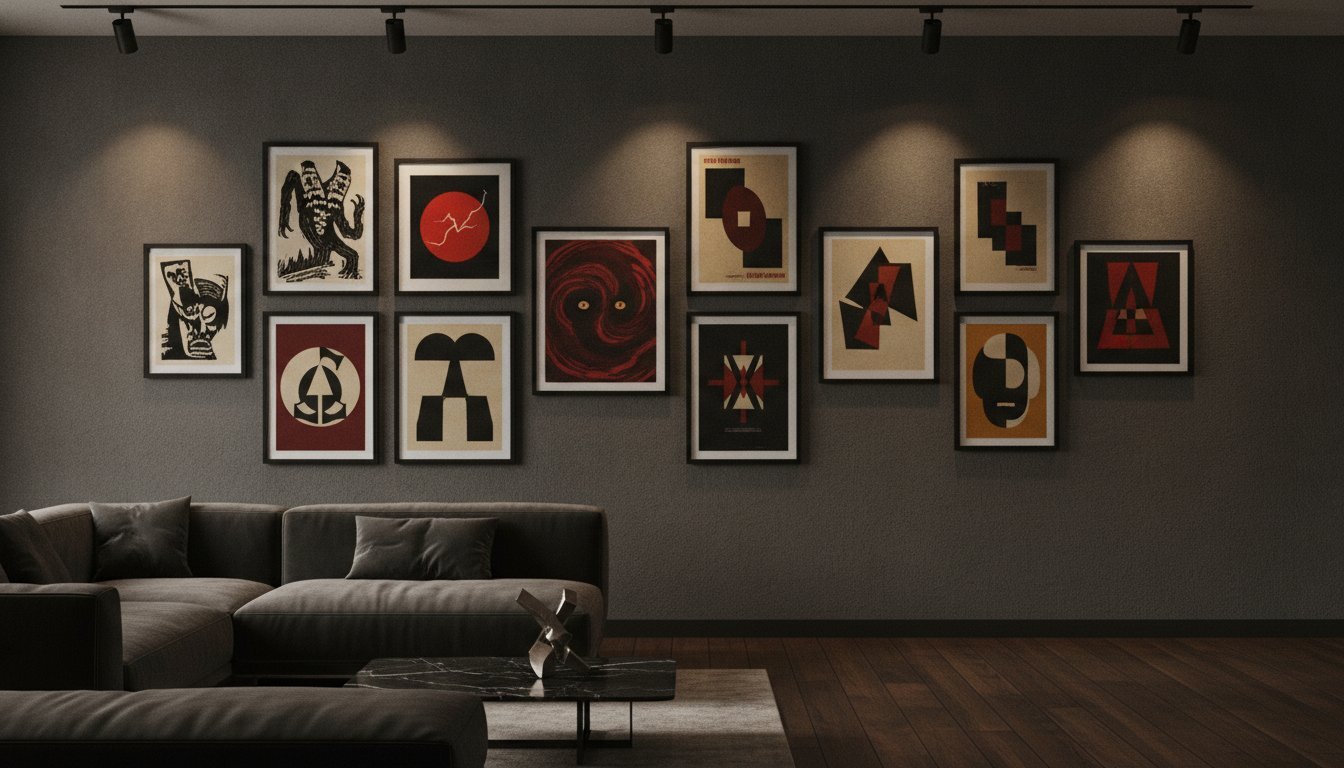
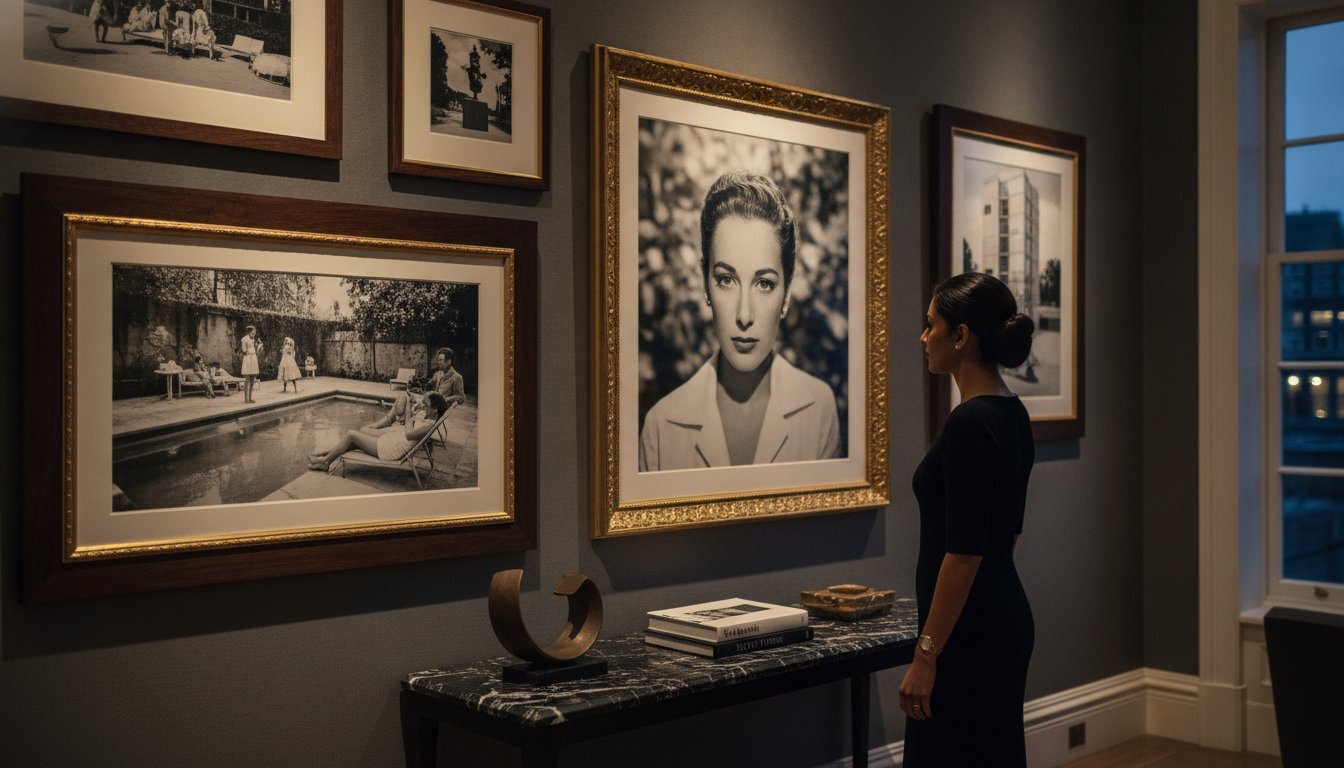
A well-executed gallery wall is an exercise in balance and scale. Don’t be afraid to mix film posters with music photography or celebrity portraits to create a rich, multi-layered story. The key is finding a narrative thread. Perhaps it’s a shared era, such as the gritty elegance of the 1970s, or a consistent colour palette that ties disparate genres together. Scale is equally important. A large-format one-sheet can anchor a room, while smaller pieces or lobby cards work beautifully in more intimate architectural spaces. This variety adds a sense of rhythm and discovery to your walls.

Recognising Quality in Reproduction

In a market flooded with digital downloads, the prestige of a physical archival print is more significant than ever. Digital files lack the soul, texture, and historical weight of a gallery-grade lithograph. They’re fleeting, whereas a physical print is a piece of history you can hold. This search for authenticity extends to identifying masters of the craft. It’s crucial to know how to spot the difference between a low-quality “aaron slims” knockoff and an authentic Slim Aarons print. True quality is found in the weight of the paper and the artisanal precision of the mounting. To begin building your own archive of cinematic history, you can browse our curated vintage movie posters and discover pieces that offer genuine heritage and value.

Elevating the Archive: Galerie Prints and the Bespoke Framing Tradition

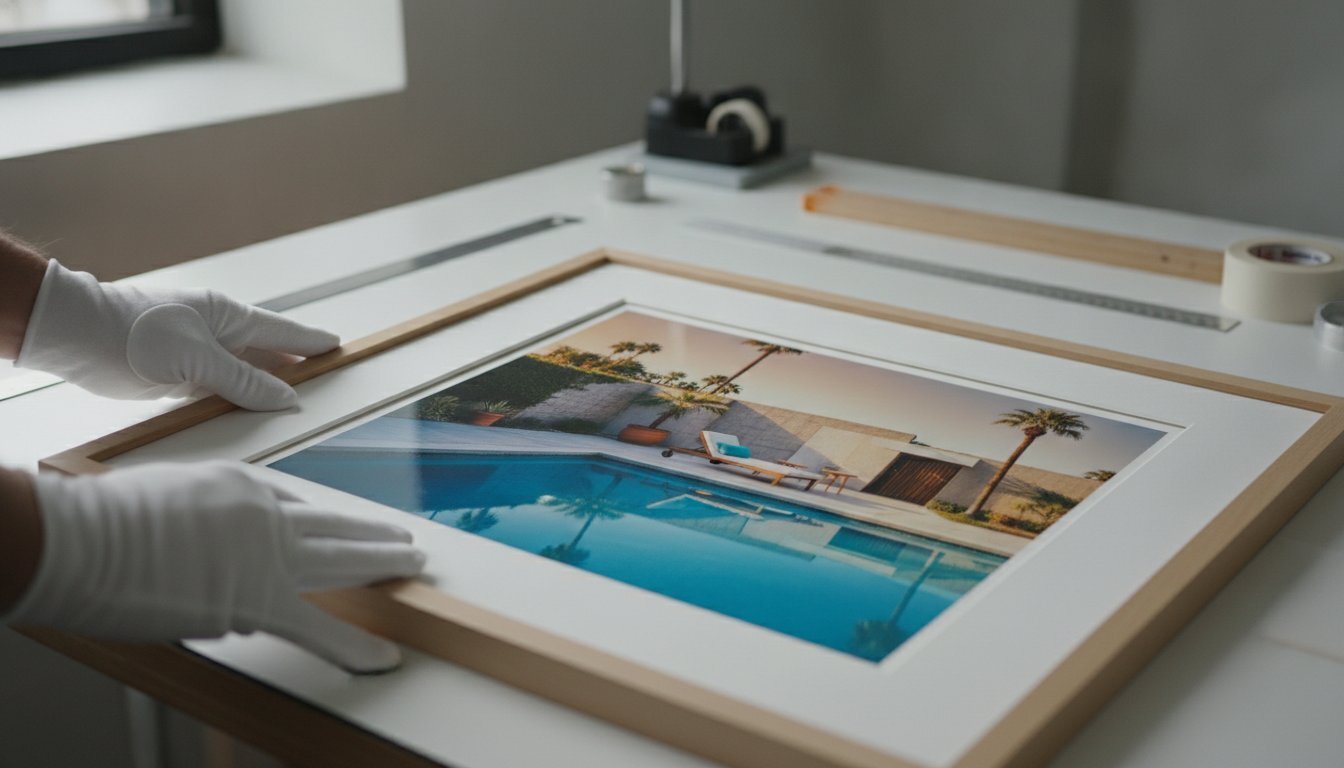
A collection of cult classic movie posters only reaches its full potential when it is presented with the same reverence as a fine art photograph. Professional framing is the final, essential step in the journey from cinema lobby to gallery wall. At Galerie Prints, we operate with a quiet authority, treating every piece as a significant cultural archive rather than mere decoration. By 2026, our commitment to localized, artisanal craftsmanship has become a hallmark of our service, ensuring that each vintage work is transformed into a “ready-to-hang” piece of history that commands attention in any sophisticated architectural space.

The transition from a loose print to a framed masterpiece requires a deep understanding of material science and aesthetic balance. We don’t just provide a border for your art; we provide a sanctuary for it. Our curatorial care ensures that the framing enhances the narrative depth of the imagery without overwhelming its original character. This meticulous approach is what separates a true gallery offering from the mass-produced alternatives found in standard retail environments.

The Importance of Archival Mounting

Mass-market frames often lead to the slow, silent degradation of rare cinema memorabilia. Acidic backings and standard glass cause warping and irreversible fading, stripping the work of its historical and financial value over time. Our bespoke framing service utilizes museum-quality paper and strictly acid-free materials to guarantee longevity. This technical superiority is vital for preserving the delicate inks and paper textures characteristic of original cult classic movie posters. By creating an airtight, archival environment, we ensure the image remains as vibrant and evocative as the day it was first displayed in a mid-century theatre.

A Heritage of Elegance for Modern Interiors

The true power of cinematic art lies in its ability to bridge the gap between 20th-century nostalgia and the clean lines of contemporary aesthetics. A Galerie Prints archive piece serves as a stable anchor in a home, offering a sense of permanence in a world of fleeting digital trends. Investing in our curated collections is an investment in stability; these are not just images, but tactile links to a bygone era of elegance. Whether you’re seeking a bold centerpiece or a subtle addition to a multi-layered gallery wall, our focus on artisanal precision ensures your selection will stand the test of time.

We invite you to explore our extensive archives, where you’ll find everything from Star Wars limited edition prints to rare noir masterpieces. Visit our gallery today to discover how our curatorial expertise can help you build a collection that serves as a lasting piece of history.

Securing Your Piece of Cinematic History

The journey from a dimly lit cinema lobby to a curated gallery wall is one of refined appreciation and historical preservation. We’ve explored how cult classic movie posters serve as significant photographic archives, capturing the avant-garde spirit of 20th-century visual culture. By prioritizing provenance and understanding the nuances of genre aesthetics, you can transform a personal passion into a sophisticated art collection. The final, essential element remains the commitment to archival quality, ensuring that these tactile pieces of history are protected for future generations through artisanal craftsmanship.

At Galerie Prints, we provide exclusive access to the Getty Images and Slim Aarons archives, offering a bridge to a bygone era of elegance. Our bespoke, museum-quality framing is crafted by experts to ensure your collection serves as a lasting piece of history. With worldwide delivery of ready-to-hang cinematic treasures, starting your journey into the world of film art has never been more seamless.

Explore our curated collection of Cult Classic Movie Posters and Bespoke Framing Services and begin curating a home that reflects your unique appreciation for cinematic heritage.

Frequently Asked Questions

What exactly makes a movie poster a “cult classic” in the eyes of a collector?

A poster gains cult status when it represents a film that has developed a passionate, long-term following beyond mainstream success. For collectors, cult classic movie posters often feature avant-garde graphics or photography that was initially too daring for general audiences. These pieces are valued for their ability to distill complex, subcultural themes into a single, magnetic image that transcends the film’s original box office performance and becomes a visual icon.

Are these original vintage posters or high-quality archival reproductions?

We provide a curated selection of both vintage movie posters and museum-quality archival prints. Our collections include rare original cinema memorabilia alongside high-end reproductions sourced from the official Getty Images and Slim Aarons archives. Each piece is treated as a guardian of photographic heritage, ensuring that whether you select a vintage find or a modern archival print, you’re investing in a lasting piece of history for your collection.

How does bespoke framing protect the value of a cult movie poster?

Bespoke framing acts as a protective sanctuary for your investment, utilizing acid-free materials and museum-quality paper to prevent degradation. Standard commercial frames often use acidic backings that cause irreversible warping and yellowing over time. By choosing our professional mounting service, you ensure that the vibrant inks and tactile paper textures are shielded from environmental damage, maintaining the print’s financial and aesthetic value for decades in a luxury interior.

Can I buy cult classic posters as digital downloads?

No, Galerie Prints does not offer digital image downloads for any of our collections. We believe that the prestige and permanence of cult classic movie posters are found in their physical form. A digital file lacks the soul, artisanal craftsmanship, and historical weight of a gallery-grade archival print. Our focus remains on delivering tangible, high-caliber visual art that serves as a permanent and stable fixture in your architectural space.

What is the best way to clean and maintain an archival film print?

The most effective way to maintain an archival film print is to keep it within a professional frame equipped with UV-protective glazing. You should avoid placing the artwork in direct sunlight or areas of high humidity, as these factors lead to fading and paper instability. Dust the exterior of the frame with a soft, dry cloth; never apply cleaning agents or moisture directly to the print or its mounting materials.

How do cinema lobby cards differ from standard cult movie posters?

Cinema lobby cards are distinct from standard posters due to their smaller scale and photographic nature. Typically issued in sets of eight, these cards were designed for display in theatre foyers to provide an intimate glimpse into specific scenes. While a standard poster anchors a room with its scale, lobby cards offer a narrative depth that collectors prize for creating multi-layered gallery walls with a focus on authentic cinematic photography.

Why should I choose archival photo paper over standard poster paper?

Archival photo paper offers a technical superiority that standard poster paper cannot match. It’s designed to preserve the integrity of light and shadow, ensuring that the deep blacks and vibrant hues of cinematic photography remain stable for over a century. Standard paper often contains wood pulp that yellows and becomes brittle, whereas our museum-grade materials provide the permanence and material quality required for serious collectors of high-end visual art.

Does Galerie Prints offer international shipping for framed posters in 2026?

Yes, in 2026, Galerie Prints continues to offer comprehensive worldwide delivery for all our framed and unframed collections. We’ve refined our logistics to ensure that even the most delicate bespoke framed pieces arrive at your global destination in pristine condition. This service allows international collectors to acquire ready-to-hang pieces of cinematic history, supported by the same artisanal craftsmanship and curatorial authority that defines our London-based gallery operations.
Terry O’Neill Limited Edition Prints: The Definitive Collector’s Guide

A Terry O’Neill photograph is far more than a captured moment of celebrity; it’s a portal into a vanished era of elegance where the photographer lived as an equal among the icons he immortalized. Investing in terry o’neill limited edition prints is an act of cultural preservation, a way to anchor your space with a tangible piece of 20th-century history. You likely recognize that true collecting requires a sophisticated eye that looks beyond the image to the archival provenance and the scarcity of the edition itself.

This guide will help you master the intricacies of the photographic market, from distinguishing between lifetime signed and estate-stamped works to selecting bespoke framing that protects your investment. We’ll examine the technical curator language used by elite galleries and review the current landscape for legendary portraits of David Bowie and Brigitte Bardot. You’ll gain the confidence to move past the confusion of varying price points and secure a certified piece of photographic heritage that transforms your interior into a narrative-driven sanctuary.

Key Takeaways

  • Understand how restricted edition sizes create long-term value and safeguard your investment in fine art photography.
  • Learn to verify archival provenance through the Terry O’Neill and Getty Images archives. It’s the best way to ensure your piece is a certified part of history.
  • Master the technical nuances between Silver Gelatin and C-type processes to select the material quality that suits your collection’s needs.
  • Discover how to select and preserve terry o’neill limited edition prints using hand-finished bespoke framing that meets museum standards.
  • Gain expert insights on scaling works for visual impact and balancing O’Neill’s gritty elegance with other archival styles.

What Defines Terry O’Neill Limited Edition Prints?

A limited edition print represents a finite piece of cultural history. Unlike mass-produced imagery, these physical assets are produced in strictly regulated quantities to ensure their rarity remains immutable. This scarcity is the bedrock of fine art photography. When you acquire terry o’neill limited edition prints, you’re participating in a legacy defined by O’Neill’s unique access to the 20th century’s most guarded personalities. As detailed in Terry O’Neill’s biography, his career spanned over fifty years of intimate celebrity documentation. Restricting these images to small runs ensures that their historical and aesthetic value is preserved for future generations.
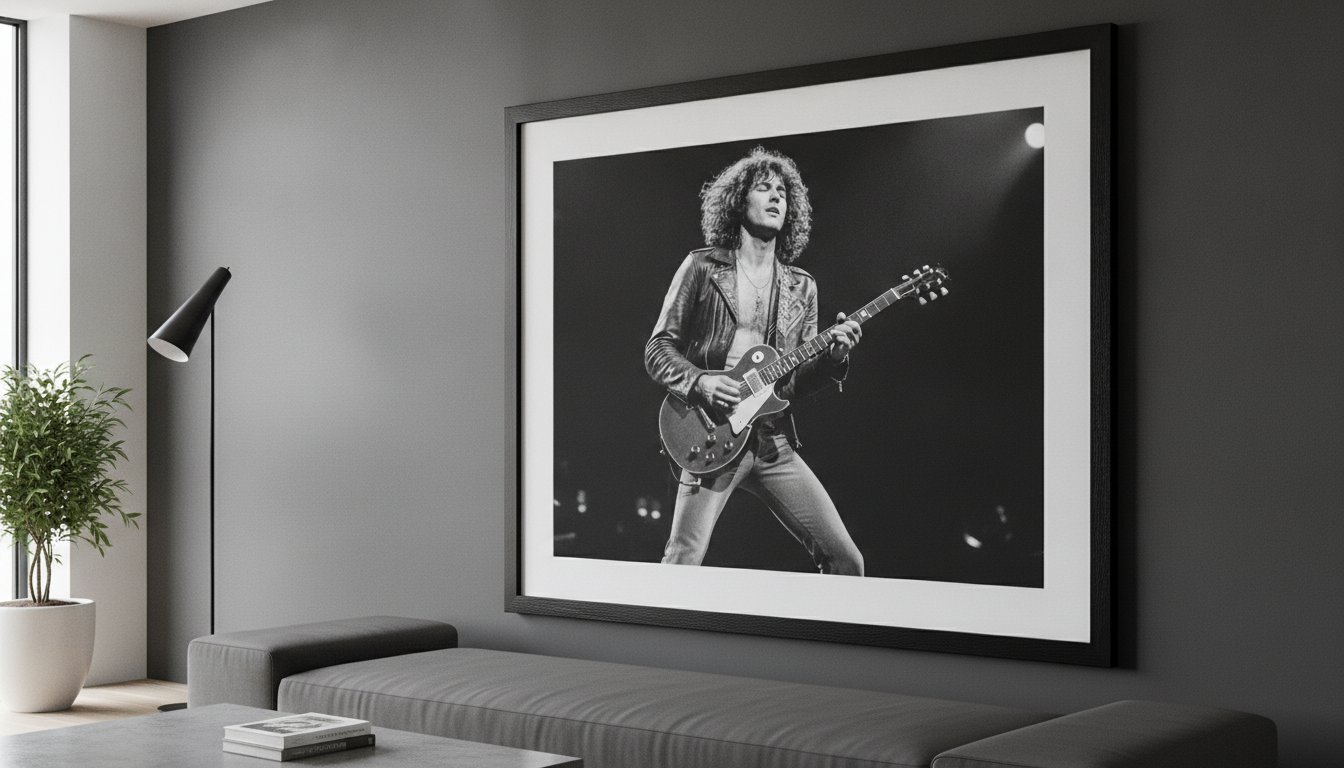
The Certificate of Authenticity (COA) serves as the cornerstone of any serious investment. This document acts as a vital bridge between the Terry O’Neill Archive and your private collection. It verifies the specific print process, the edition number, and the official estate approval. A print without a COA is merely a reproduction; with it, the work becomes a verified asset with a traceable lineage.

Edition Numbering and Rarity

The numbering system, typically displayed as a fraction such as 7/50, provides an immediate snapshot of rarity. While the technical quality is identical across the run, collectors often seek out lower numbers for their perceived proximity to the start of the edition. The impact of a “Sold Out” status is significant in the art world. Once the final print in a series is purchased, the image enters the secondary market. This transition often leads to a sharp increase in valuation as demand outstrips the fixed supply. Galerie Prints prioritizes these restricted runs to support collectors who view photography as a lasting legacy.

Limited Edition vs. Open Edition

Discerning collectors must distinguish between gallery-grade works and decorative open editions. Open editions are produced indefinitely. They’re excellent for casual decor but they lack any real investment merit because they’re not scarce. A true limited edition utilizes archival, museum-quality paper and traditional production methods. Since O’Neill’s passing in 2019, the market for terry o’neill limited edition prints has shifted toward estate-stamped versions. These are posthumous editions authorized by his archive. They carry the weight of authenticity and are meticulously documented to ensure they meet the same rigorous standards as the prints O’Neill signed during his lifetime.

The Collector’s Value: Provenance and the O’Neill Archive

Provenance is the lifeblood of high-end collecting. For Terry O’Neill, this isn’t just about a signature; it’s about the direct lineage to the Terry O’Neill and Getty Images archives. Provenance defines the asset. These institutions serve as the vital guardians of his original negatives. When you acquire terry o’neill limited edition prints, you’re securing a work that has been meticulously vetted by the very estates tasked with protecting his legacy. His significant presence in the National Portrait Gallery collection provides the ultimate institutional validation, confirming his status as the gold standard of 20th-century iconography. Collectors value this transparency, as it ensures the long-term integrity of the work’s market value.

The Allure of the Archive

Galerie Prints acts as a curated bridge to these world-renowned estates, selecting images that capture the raw, candid energy of the sixties and seventies. O’Neill’s true gift was his practiced invisibility; he moved among stars like Brigitte Bardot and Elton John not as a voyeur, but as a trusted peer. This unique proximity allowed him to produce black and white pictures that feel raw and contemporary despite their historical weight. These archival works offer more than a visual experience. They provide a tactile, evocative connection to a bygone era of elegance that is increasingly rare. The localized, artisanal craftsmanship of our London-based production ensures that these historical images are presented with the clarity and depth they deserve.

Beyond Celebrity: The Artistic Legacy

O’Neill’s work sits at a unique crossroads where fashion, film, and rock ‘n’ roll collide in a single frame. By humanizing the world’s most famous faces, he transformed celebrity into high art. There is a fascinating synergy between his intimate portraits and the physical history found in cinema lobby cards, as both serve as essential artifacts of Hollywood’s photographic heritage. Owning terry o’neill limited edition prints isn’t just about interior decoration. It’s about possessing a piece of cultural history that resonates with narrative depth and prestige. You might consider exploring our fine art photography collection to find a piece that anchors your home with the weight of a legendary career.

Evaluating Technical Quality: Paper, Process, and Longevity

The allure of terry o’neill limited edition prints extends beyond the iconographic subject matter; it resides in the tangible, chemical reality of the medium itself. Serious collectors distinguish themselves by looking past the image to the technical mastery of the print production. Every piece in a curated collection should be viewed as a physical asset that demands material excellence. True archival quality is the ability of a photographic print to maintain its full tonal range and structural integrity for over 100 years. Achieving this permanence requires a rejection of modern, high-volume inkjet methods in favor of traditional, light-sensitive chemistry. As noted in The Guardian obituary for Terry O’Neill, his work defined the “swinging 60s,” and preserving that specific visual energy requires the same artisanal rigor he applied behind the lens.

Hallmarks of an archival O’Neill print:

  • Use of heavy-weight, acid-free fiber-based or resin-coated papers to prevent yellowing.
  • Traditional chemical development that embeds the image within the paper’s emulsion.
  • Precision-controlled tonality that honors the original negative’s full dynamic range.
  • Stabilization processes that ensure long-term UV resistance in high-end interiors.

The Depth of Silver Gelatin Prints

For black and white masterpieces, the silver gelatin process remains the undisputed pinnacle of the photographic craft. This traditional darkroom method involves suspending light-sensitive silver salts in a gelatin layer, which is then coated onto a heavy-weight, acid-free fiber base. The result is a print with silver-rich blacks and a nuanced contrast that digital inkjet processes simply cannot replicate. Collectors prefer these chemical prints because they offer a tactile depth and a luminous quality that honors the physical history of the negative. Every print produced through this method is a testament to localized, artisanal craftsmanship, ensuring that the deep shadows and brilliant highlights characteristic of an O’Neill original are preserved without compromise.

C-Type Prints for Vibrant Color

When capturing the saturated hues of the 1970s, the C-type (Chromogenic) print serves as the industry standard for archival color photography. Unlike digital prints that lay ink on the surface, C-types are developed using a chemical process where the image is embedded within the paper’s emulsion. This ensures incredible color accuracy and the smooth gradations necessary for high-end portraiture. In high-luxury interiors, UV stability is a critical concern for long-term preservation. By utilizing museum-quality, acid-free archival paper and specialized chemical stabilizers, these prints resist the fading that plague lesser reproductions. This meticulous approach ensures that your terry o’neill limited edition prints remain as vivid as the day they were captured, providing a lasting bridge to a bygone era of elegance.

Curating Your Space: Selection and Bespoke Framing

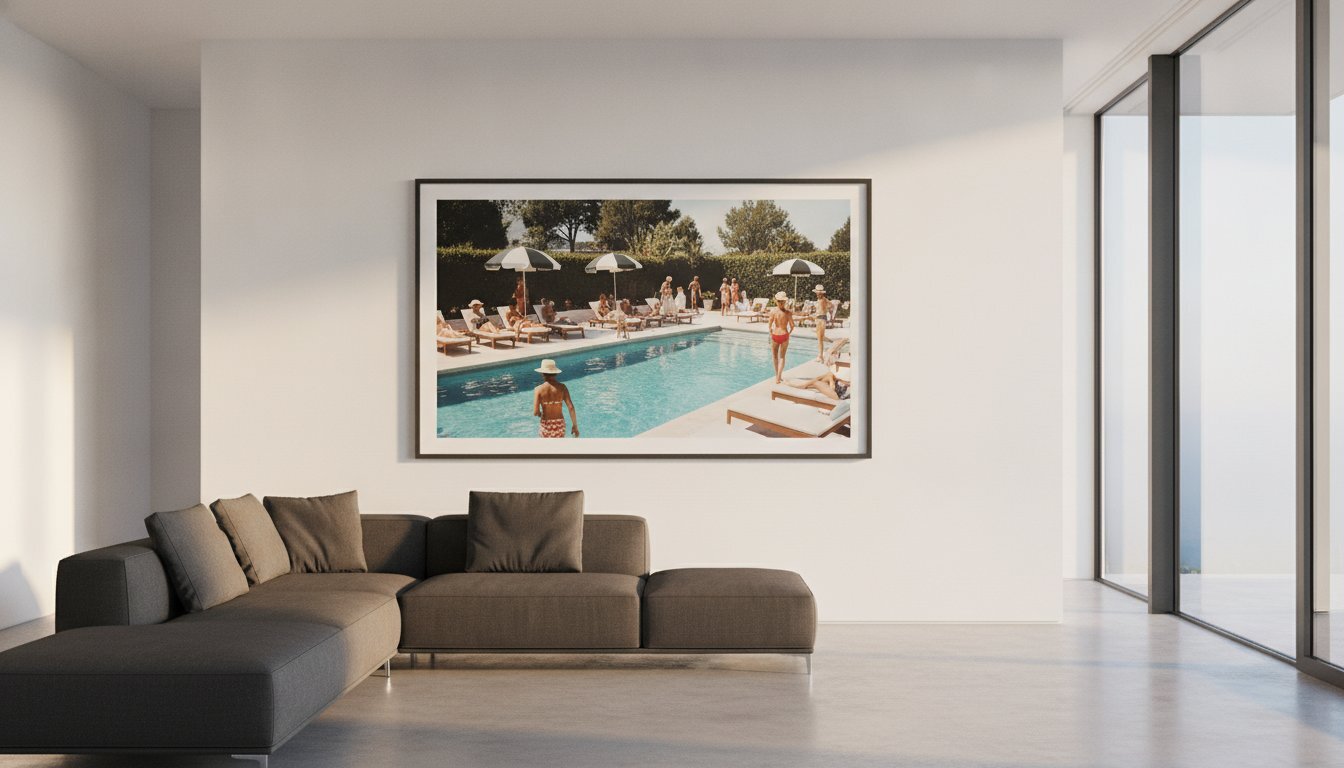
Selecting terry o’neill limited edition prints is only the first step in a larger curatorial journey. When you integrate these works into a private residence, you’re doing more than filling wall space; you’re establishing a narrative of 20th-century prestige. The most successful interiors often rely on a “curated home” aesthetic that balances contrasting energies. For instance, the raw, monochromatic grit of O’Neill’s London portraits creates a sophisticated tension when placed alongside the sun-drenched, aspirational luxury of the Slim Aarons collection. This interplay between grit and glamour defines a worldly, cultured environment that feels both historical and contemporary.

Design Strategies for Iconic Photography

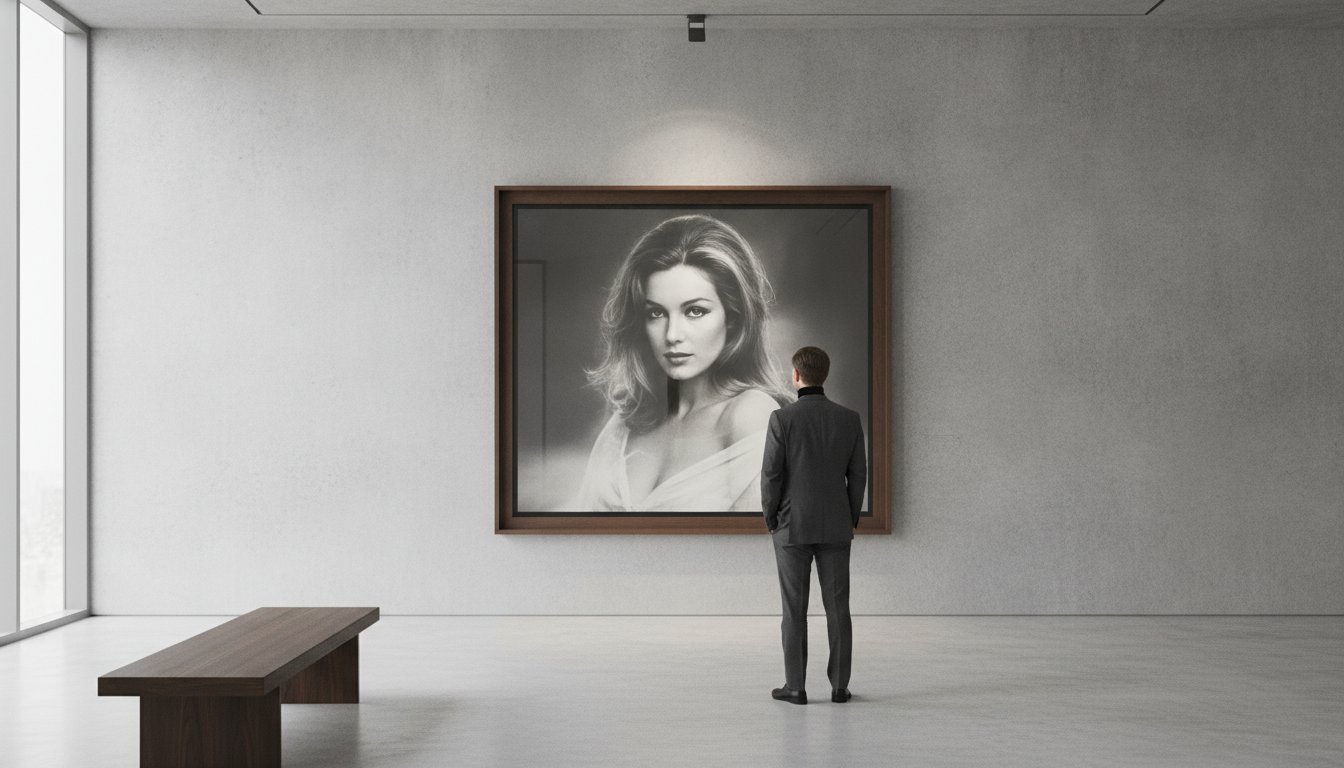
Scaling is your most powerful tool for creating visual impact. An oversized Terry O’Neill print functions as more than decor. It becomes an architectural focal point. Black and white portraits offer a timeless sophistication that anchors modern, minimalist furniture, while color works can inject a vibrant energy into dining or living areas. To create a cohesive gallery wall, look for a thematic thread. You might mix music legends with film icons, using consistent framing to harmonize the different subjects and create a rhythmic flow throughout your space. Smaller dimensions work beautifully in more intimate settings like a study, where the viewer can appreciate the candid, humanizing details of O’Neill’s work up close.

The Artisanal Marker: Bespoke Framing

A museum-quality print deserves a museum-quality environment. Professional bespoke framing is an essential extension of the artwork’s value, not merely an aesthetic choice. Mass-produced, off-the-shelf frames are a significant risk. They often use acidic mounting boards and low-grade adhesives that cause irreversible yellowing and “foxing” on archival paper. At Galerie Prints, we treat framing as an artisanal craft. Our London-based production team utilizes hand-finished frames and museum-grade, acid-free mounting to ensure your investment is protected for decades. This commitment to localized craftsmanship provides a ready-to-hang luxury experience that respects the heritage of the original negative.

Owning a piece of photographic history is a privilege that comes with the responsibility of preservation. You can explore our collection of fine art photography to find the perfect icon to anchor your next interior project.

Why Collect Terry O’Neill with Galerie Prints?

Galerie Prints operates as a dedicated guardian of photographic heritage, positioning itself as a vital bridge to the golden age of fame. Our gallery is more than a retailer; it’s a curated space where history is preserved through the lens of one of the 20th century’s most prolific documentarians. Under the curatorial vision of artist and director Stuart Möller, we select only the most evocative works that resonate with narrative depth and aesthetic power. Our direct partnerships with the Terry O’Neill and Getty Images archives ensure that every piece we offer carries the weight of undisputed authenticity. When you acquire terry o’neill limited edition prints through our gallery, you’re investing in a legacy supported by institutional expertise and a passion for the photographic medium.

The assurance of quality is anchored in our localized, artisanal craftsmanship. Every print is produced in our London-based lab, where traditional methods are favored over mass-production. This commitment to excellence extends to our bespoke framing service, where each frame is hand-finished to museum standards. We understand that a Terry O’Neill original is a lasting asset, and our production processes are designed to honor that permanence. By maintaining a professional, polished distance from the frantic pace of typical e-commerce, we invite you to linger on the visual impact and historical significance of each frame.

A Personalized Journey for Every Collector

We believe that building a collection should be a sophisticated, supported experience. Our team provides expert advice on selecting the perfect paper type, whether the silver-rich blacks of a traditional darkroom print or the vibrant accuracy of a C-type. We also guide you through selecting the frame style that best complements your interior architecture. Global shipping is handled with the precision of a specialist art gallery, ensuring that your investment arrives in pristine condition. There is a distinct prestige in owning a piece from a gallery that understands the intimate story behind the lens and treats every transaction with the reverence it deserves.

Explore the Collection

The O’Neill archive is a vast tapestry of cultural milestones. Our collection spans the full breadth of his career, from the raw energy of the Rolling Stones and the ethereal presence of David Bowie to rare finds like his Star Wars Limited Edition Prints. We also curate vintage memorabilia and cinema lobby cards that provide a broader context to his work; for those who appreciate physical collectibles, Custom Sports Products offers a way to create personalized sports memorabilia with similar archival appeal. With standard edition sizes typically limited to 50 per size, these works represent a finite opportunity to own a piece of the scarcity of fame. We invite you to discover your next investment in our Terry O’Neill limited edition collections and anchor your space with a masterpiece of archival photography.

Building a collection of Terry O’Neill’s work is an act of sophisticated curation that bridges the gap between contemporary design and historical prestige. You now understand that the true value of terry o’neill limited edition prints resides in their impeccable provenance and the technical mastery of their production. By selecting works authorized by the Terry O’Neill Estate and prestigious archival sources, you’re not just purchasing an image; you’re acquiring a certified piece of cultural heritage. These physical assets, produced with museum-quality archival materials, are designed to maintain their tonal depth and structural integrity for a lifetime.

Every print represents a finite moment of 20th-century iconography that demands the protection of artisanal craftsmanship. Our bespoke, hand-finished framing, produced by local artisans in London, ensures that your investment is both preserved and presented with quiet authority. Whether you’re drawn to the raw energy of rock legends or the polished elegance of film icons, your collection serves as a narrative anchor for your home. We invite you to explore our curated archives and find the masterpiece that resonates with your personal aesthetic. Discover Your Next Investment in Our Terry O’Neill Limited Edition Collections and begin your journey into the elite world of photographic history today.

Frequently Asked Questions

What is the difference between a limited edition and an open edition Terry O’Neill print?

Limited editions are restricted to a specific number of prints, usually 50 per size, ensuring scarcity and investment value. In contrast, open editions are produced indefinitely, which makes them suitable for casual decor but strips them of their status as collectable assets. For serious collectors, terry o’neill limited edition prints offer the exclusivity required for long-term appreciation and historical significance within a curated gallery environment.

Do Terry O’Neill limited edition prints increase in value over time?

Many limited edition works by O’Neill have shown significant appreciation, particularly since the artist’s passing in 2019 and the subsequent closure of specific iconic runs. Value is driven by the scarcity principle, where a fixed supply meets growing demand from global art investors. While market fluctuations occur, authenticated prints from prestigious archives remain highly sought-after assets that often command a premium on the secondary fine art market.

How can I verify the authenticity of an O’Neill print bought online?

Authenticity is verified through a Certificate of Authenticity (COA) issued by an authorized gallery with direct access to the Terry O’Neill and Getty Images archives. Every genuine print should feature a specific edition number and, for posthumous releases, an official estate stamp or authorized signature. At Galerie Prints, we provide this rigorous documentation to ensure your acquisition is a certified piece of photographic heritage with a traceable and prestigious provenance.

What does ‘Silver Gelatin’ mean in fine art photography?

Silver Gelatin refers to the traditional darkroom process where light-sensitive silver salts are suspended in a gelatin layer on heavy-weight, fiber-based paper. This chemical method is the undisputed gold standard for black and white masters, offering a tonal range and silver-rich depth that digital processes cannot replicate. It remains the preferred medium for O’Neill’s most famous monochromatic portraits, ensuring museum-quality permanence and visual luminosity for over a century.

Why is bespoke framing recommended for high-value limited editions?

Bespoke framing provides a protective, museum-grade environment that prevents acid damage, yellowing, and environmental degradation of the archival paper. Standard off-the-shelf frames often use acidic materials that off-gas or trap moisture, risking the integrity of the artwork. Our hand-finished, artisanal frames utilize acid-free mounting and specialized UV-glazing to preserve the print’s condition. This protection is a critical factor in maintaining the future market valuation and aesthetic brilliance of your collection.

What are the most common sizes for collectable Terry O’Neill photography?

Collectable sizes typically range from intimate 10×12 inch prints to grand, oversized 48×48 inch statements that anchor a room’s architecture. Standard edition sizes are often limited to 50 prints per dimension, meaning rarity is maintained regardless of the physical scale you choose for your interior. Selecting the right size depends on your space’s focal points and the narrative flow you wish to establish within a professional, gallery-grade environment.

How should I clean and maintain my archival photography prints?

Maintenance should be minimal and non-invasive, focusing on a stable environment away from direct sunlight and extreme humidity. If your print is protected by bespoke framing, simply dust the glazing with a soft, dry microfiber cloth. You should never apply liquid cleaners directly to the frame or the print surface. Proper preservation ensures that the delicate chemical emulsion of your terry o’neill limited edition prints remains pristine for many decades to come.

Can I purchase digital versions of Terry O’Neill’s work?

Galerie Prints does not sell digital image downloads or licenses for Terry O’Neill’s photography. Our mission is the preservation of photographic heritage through the production of physical, museum-quality prints and artisanal framing. This focus ensures the exclusivity of the work, as digital files lack the scarcity and tactile depth required for high-end collecting. By providing only physical assets, we protect the long-term value and prestige of your private collection.

Professional Art Print Framing: A Curatorial Guide to Preservation and Presentation

A fine art print is a silent witness to history, yet without the correct sanctuary, its voice begins to fade the moment it meets the light. Many collectors understandably hesitate to display their most prized acquisitions, fearing that acidic mounts or inferior glazing will slowly erode the vibrant hues of a Slim Aarons poolside or the sharp contrast of a Terry O’Neill original. Choosing professional art print framing is not merely a decorative decision; it’s an act of stewardship. You want to ensure that the elegance of a bygone era survives for future generations while instantly elevating the atmosphere of your home.

Key Takeaways

  • Learn why archival-grade materials, such as acid-free mounting and UV-protective glazing, are essential to prevent the yellowing and fading of valuable photographic works.
  • Discover how professional art print framing bridges the gap between historical significance and modern interior design, specifically tailored to iconic collections like Slim Aarons and Terry O’Neill.
  • Understand the artisanal process of handcrafted bespoke framing, where each piece is treated with the meticulous care and technical precision of a museum artifact.
  • Gain insights into selecting frame profiles that complement specific artistic eras, ensuring your presentation honors the original spirit and prestige of the photography.
  • Explore the seamless transition from gallery to home with ready-to-hang solutions that guarantee safe global transit and immediate aesthetic impact in luxury spaces.

Why Professional Art Print Framing is an Essential Investment for Collectors

For a discerning collector, the acquisition of a work from the Slim Aarons Collection or a Terry O’Neill archive is merely the beginning of a journey. The true fulfillment of that investment lies in its presentation. While a standard retail frame might provide a temporary border, professional art print framing serves as a permanent archival sanctuary. It transitions the piece from a transient image to a legacy asset. Beyond mere decoration, it acts as a guardian of photographic heritage, ensuring that the chemical stability and visual clarity of the work remain uncompromised by the passage of time.

This approach establishes a sense of quiet authority within a room. A bespoke frame doesn’t shout for attention; instead, it commands respect through its precision and material quality. When understanding the basics of picture frames, one realizes that the structural choices made during the assembly process dictate whether a piece will retain its value or slowly deteriorate. For high-value archives, a ready-made solution is often a liability, as it lacks the specialized barriers required to block atmospheric pollutants and acidity.

The Protective Function of Professional Framing

The Aesthetic Value of a Curated Presentation

Archival Excellence: The Technical Anatomy of Museum-Quality Framing

The true longevity of a photographic masterpiece depends on the invisible chemistry occurring behind the glass. Professional art print framing is, at its core, a science of molecular stability. It creates a controlled micro-environment where the artwork is shielded from the volatile organic compounds found in standard, wood-pulp based materials. By utilizing museum-grade components, collectors ensure that the deep blacks and nuanced shadows of a Terry O’Neill portrait or the saturated blues of a Slim Aarons poolside scene remain as vibrant as the day they were captured. This technical precision transforms a simple display into a lasting piece of history, capable of surviving for future generations without the threat of yellowing or chemical degradation.

Glazing and Light Protection

Standard glass acts as a window, while museum-quality glazing functions as a sophisticated filter. Standard glass and basic acrylic often allow harmful ultraviolet rays to penetrate the frame, causing pigments to break down and paper to become brittle. In contrast, premium options like Museum Glass offer 99% UV protection, effectively neutralizing the most destructive spectrums of light. For high-gloss photographic prints, anti-reflective coatings are equally vital, as they remove distracting glints and allow the viewer to appreciate the tactile depth of the archival photo paper. UV-glazing serves as the primary defense against pigment fading and the irreversible loss of detail.

Mounting and Matting Standards

The choice of matting is often where the battle for preservation is won or lost. Standard boards contain lignin, a natural component of wood that turns acidic over time, resulting in the dreaded “mat burn” or yellowing at the edges of the print. Professional standards dictate the use of 100% cotton rag matboards, which are naturally acid-free and lignin-free. These materials provide a stable, alkaline environment that actively protects the paper fibers.

Equally important is the method of attachment. A core principle of conservation is reversibility. All mounting techniques must be completely removable without causing any damage or alteration to the original artwork. This is typically achieved through archival hinges or corners rather than permanent bonding. Beyond protection, the matting serves an aesthetic purpose. Utilizing weighted bottoms, where the lower margin is slightly wider than the top and sides, creates a balanced, gallery-style proportion that grounds the artwork. This level of detail is a hallmark of our bespoke framing service, where every material is selected to honor the integrity of the print.

Aesthetic Harmony: Matching Frame Styles to Iconic Photographic Collections

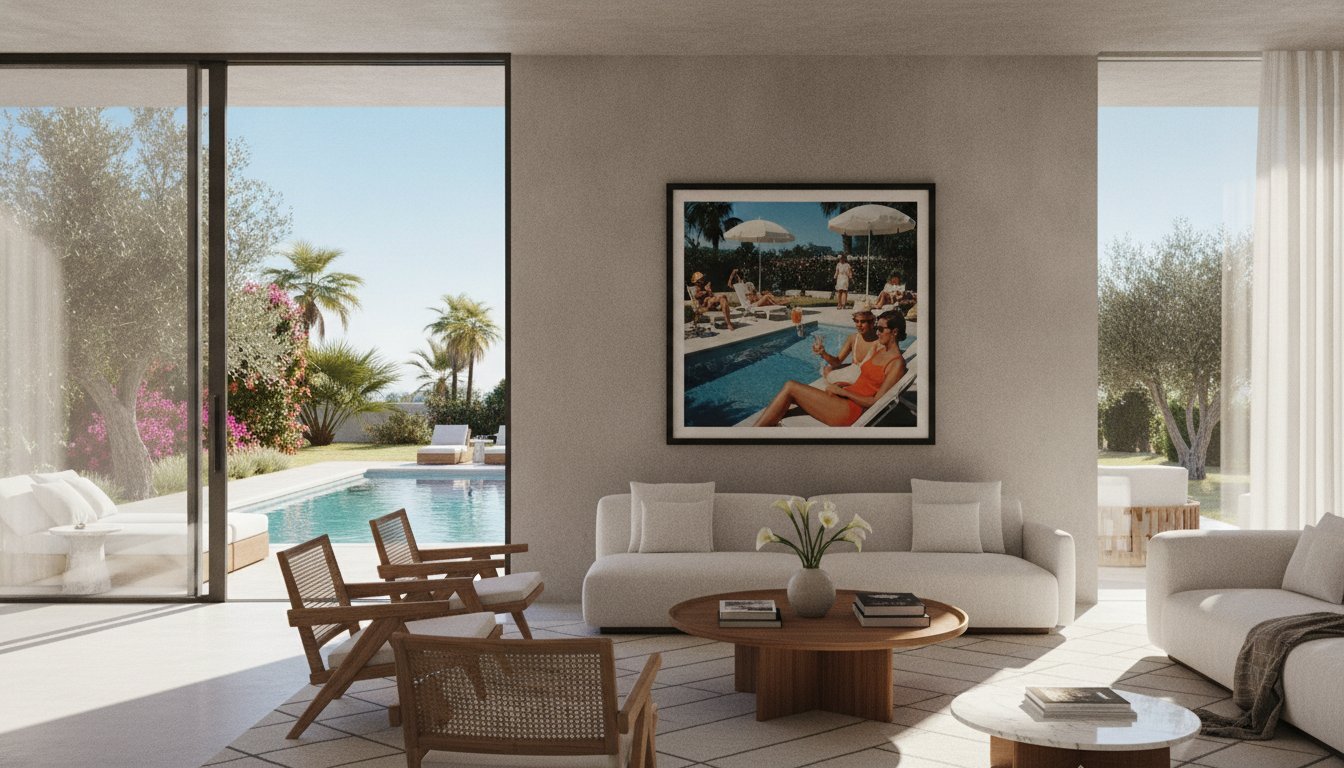
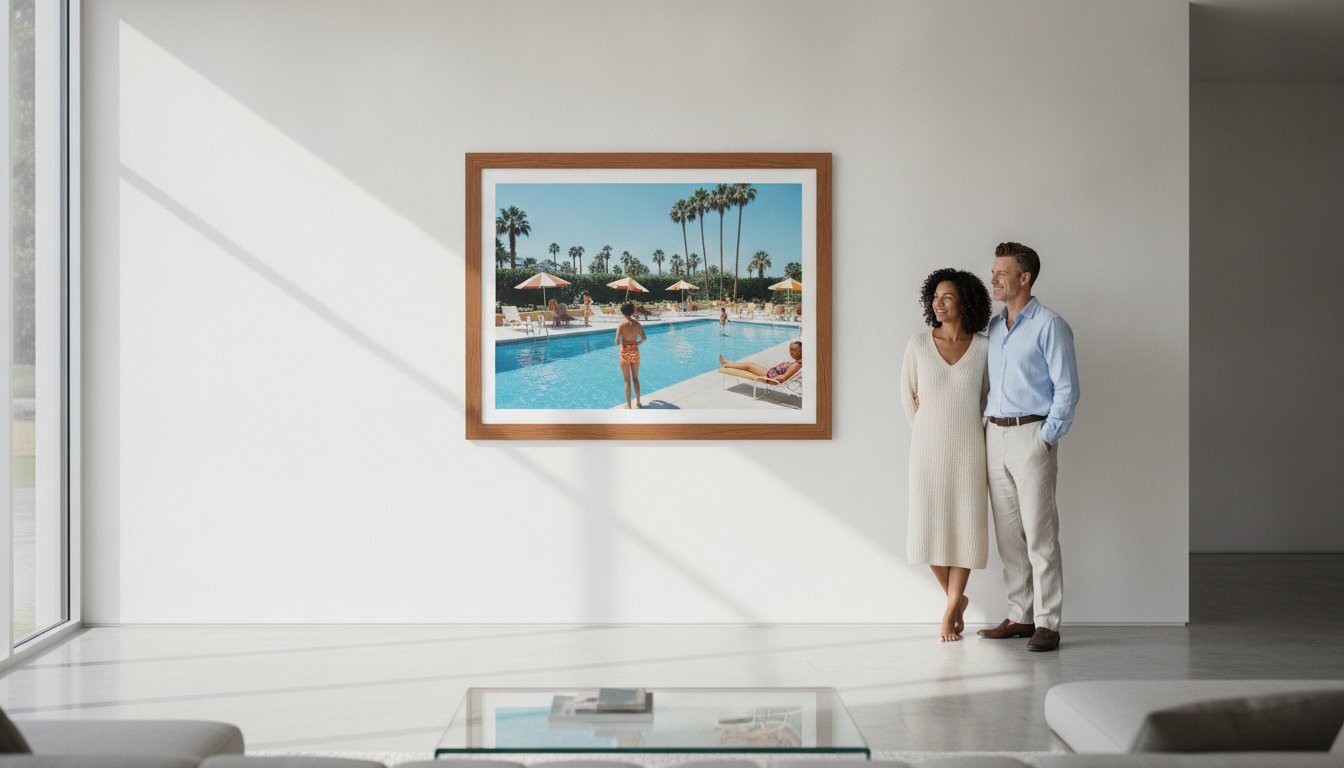
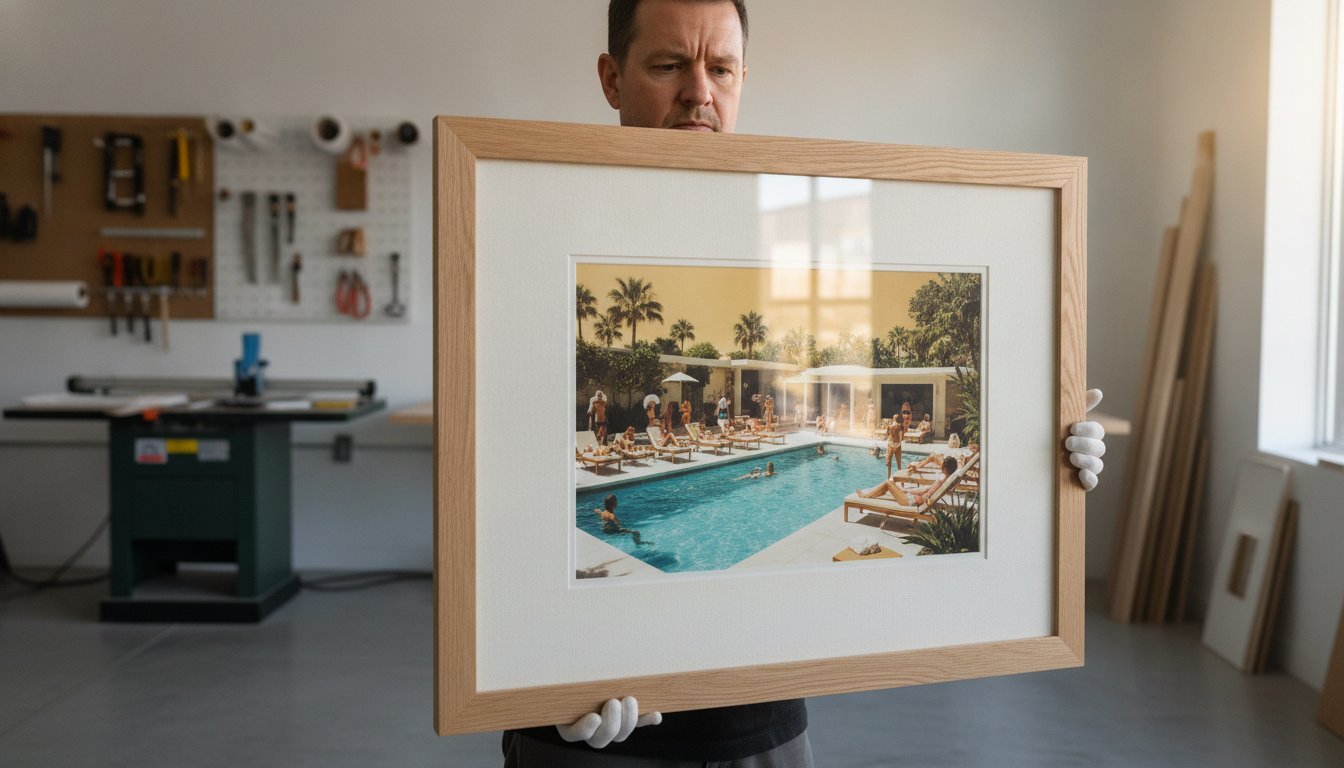
Framing is the final act of curatorial intent, serving as an aesthetic bridge between the artwork’s origin and the modern interior. When considering the works of Slim Aarons, the choice often leans toward mid-century modern aesthetics. These photographs, capturing a world of aspirational leisure, harmonize beautifully with warm, natural wood tones or slim, understated profiles. Such choices evoke the sun-drenched environments of the 1950s and 60s without distracting from the vibrant, often saturated, color palettes that define his career.

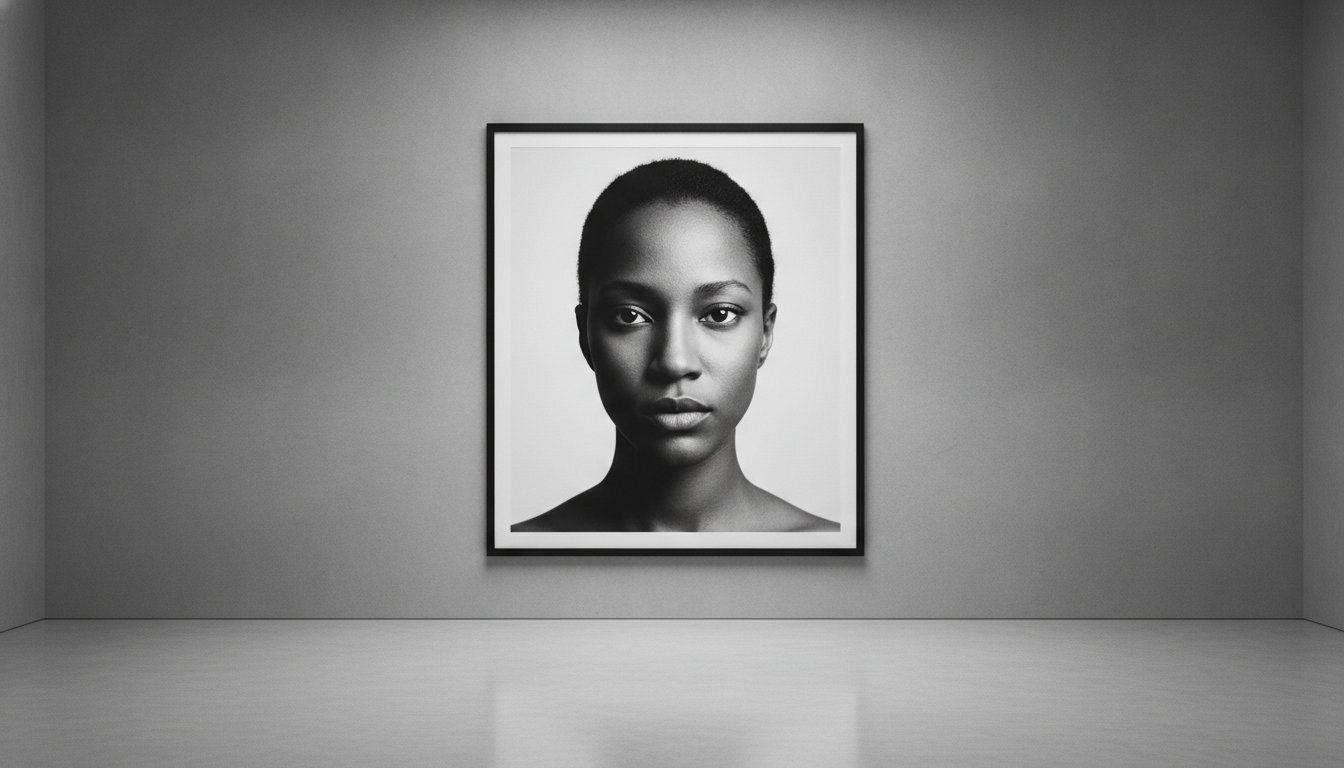
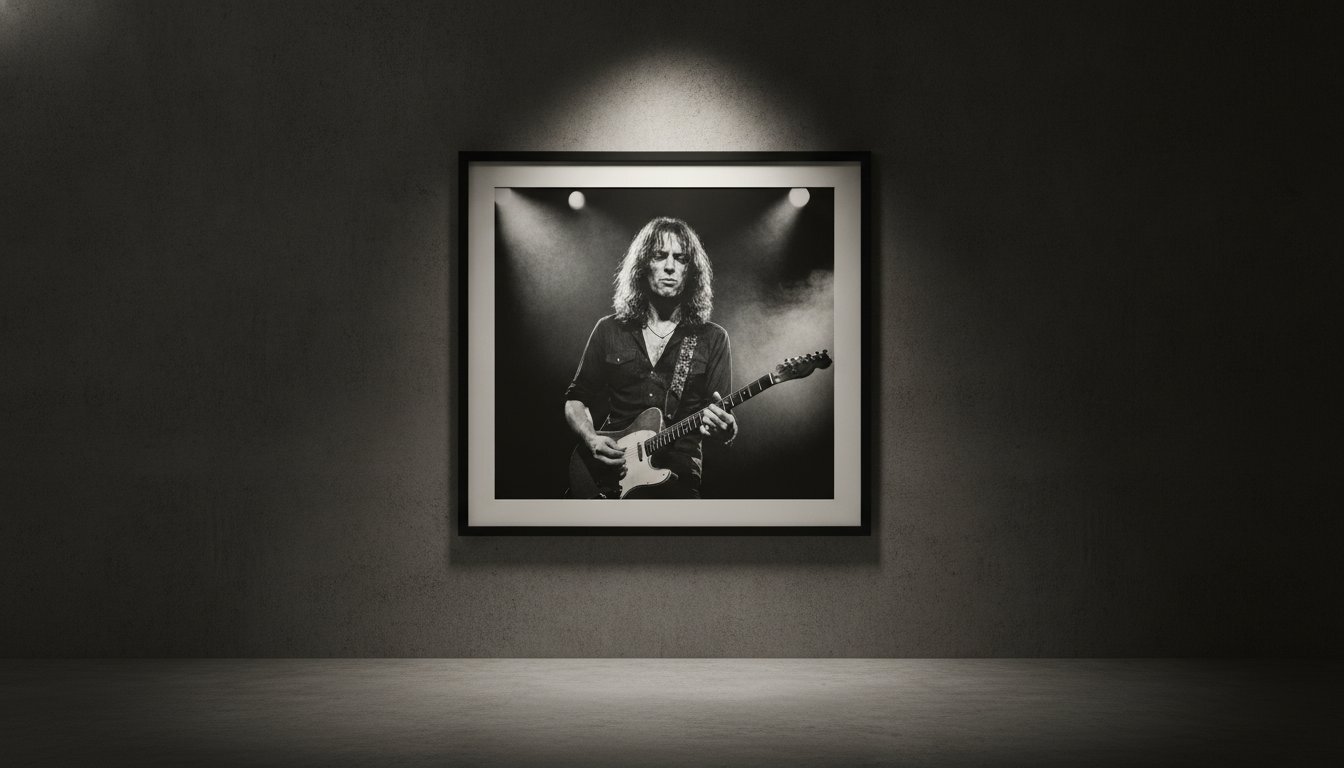
The approach for Terry O’Neill photography often demands a sharper, more contemporary impact. His iconic 1960s celebrity portraits, frequently captured in striking black and white, benefit from a sleek professional art print framing solution. Utilizing the “white cube” gallery aesthetic, such as a minimalist black or white frame, emphasizes the graphic quality of the image. This allows the subject’s personality to dominate the space, ensuring the piece feels as relevant today as it did during the height of the Swinging Sixties.

Material selection also influences the “temperature” of the piece. Natural oak or walnut finishes add a layer of historical authenticity and organic warmth, which is ideal for softening a minimalist room. Conversely, metal or high-gloss finishes cool the presentation, lending a sense of clinical precision to fine art photography in luxury interiors. This choice dictates how the art interacts with existing furniture and architectural details.

Wood vs. Metal: Material Narratives

Executing professional art print framing at this level requires a marriage of traditional production methods and modern interior aesthetics. Our craftsmen operate with a seal of quality that automated labs simply cannot replicate. They understand how light interacts with paper grain and how a frame’s profile influences the viewer’s perception of depth. By positioning ourselves as guardians of photographic heritage, we ensure that the artisanal marker of our work acts as a permanent seal of quality for your collection.

Step-by-Step Artisanal Workflow

The process begins with the selection of museum-quality archival paper, specifically chosen to honor the photographer’s original intent. For a Terry O’Neill portrait, this might mean a paper that preserves the stark, high-contrast grain of the 1960s. Next, expert craftsmen undertake the precision cutting of bespoke frames and acid-free mounts. Every corner is joined with millimetre-perfect accuracy. The final assembly takes place in a controlled environment to ensure a dust-free, perfectly aligned presentation that mirrors the atmosphere of a physical gallery.

Customization Without Compromise

Collectors often require bespoke solutions to fit specific architectural niches or to complement a particular luxury interior. We tailor frame depths and mat colors to these unique requirements without ever compromising archival integrity. Our curators act as trusted guides, helping you navigate the delicate balance between aesthetic impact and preservation. A hand-finished frame possesses a quiet authority that anchors the artwork in its physical space. This bespoke approach ensures that your investment is protected by the highest standards of professional art print framing.

Experience the difference of a museum-grade presentation by exploring our Bespoke Framing Service.

Securing Your Legacy: The Value of Bespoke Framing and Ready-to-Hang Luxury

Ready-to-Hang Convenience

The transition from a shipping crate to a gallery wall should be effortless. We provide professional-grade hanging hardware as standard, ensuring precise alignment and long-term safety. These components are specifically chosen to support the weight of solid wood frames and museum-grade glazing, preventing the structural failures common with generic retail kits. This ready-to-hang approach also significantly mitigates the risk of post-purchase damage. Entrusting a raw print to a local, third-party framer introduces unnecessary variables, such as environmental contaminants or physical mishandling. By receiving a finished work, the unboxing experience becomes a refined extension of the gallery visit. You can enjoy the piece immediately, free from the friction of additional logistics.

International Shipping Excellence

For the global collector, the primary concern is often the safe passage of fragile, glazed works across international borders. We address this through specialized crating and multi-layered protective packaging designed specifically for framed photography. Each shipment is treated with the same meticulous care as the framing process itself. Our commitment to secure delivery ensures that even the most delicate Star Wars Limited Edition Prints or oversized Slim Aarons works arrive in pristine condition. This logistical precision provides peace of mind. It reassures the collector that their piece of history is protected from the moment it leaves our London gallery until it reaches its final destination.

Elevating Your Collection for Generations

Professional art print framing is the final, essential step in a collector’s journey, transforming a vulnerable print into a permanent piece of history. By prioritizing archival-grade materials and artisanal craftsmanship, you don’t just decorate a room; you safeguard the legacy of masters like Slim Aarons and Terry O’Neill. Every selection, from UV-protective glazing to the specific frame profile, ensures your investment remains as vibrant and stable as the day it was captured.

As an Authorized Getty Images Gallery Partner, we understand the technical and aesthetic nuances required to honor these iconic archives. Our commitment to excellence extends from our workshop to your wall through global white-glove delivery, ensuring your ready-to-hang artwork arrives in pristine condition. Whether you’re anchoring a luxury interior or beginning a new archive, our artisanal hand-finished frames provide the quiet authority your collection deserves.

Discover the Bespoke Framing Service at Galerie Prints and elevate your artwork to its full museum-quality potential. Your collection is a window into a bygone era of elegance; let’s help you preserve that view forever.

Frequently Asked Questions

What is the difference between archival framing and standard framing?

Archival framing focuses on long-term preservation using pH-neutral materials and UV-protective glazing to create a stable micro-environment. In contrast, standard framing is purely decorative and often utilizes wood-pulp boards that release harmful gases. Choosing professional art print framing ensures that your artwork is shielded from environmental pollutants. It prevents the irreversible yellowing and fading that typically occurs when using non-archival, retail-grade components that prioritize low costs over historical longevity.

Does professional framing increase the value of my art prints?

While framing itself is a separate asset, its primary contribution to value lies in condition preservation. A print that has been expertly shielded from acid burn and light damage will always command a higher premium on the secondary market. Poorly framed art often suffers from “mat burn” or pigment loss, which significantly reduces its collectability. By investing in high-quality presentation, you signal to future collectors that the work has been treated with professional curatorial care.

What type of glass is best for protecting photography from sunlight?

Museum-quality glazing with 99% UV protection is the most effective choice for protecting photography from solar damage. Standard glass allows a significant portion of the ultraviolet spectrum to pass through, which leads to the rapid degradation of photographic pigments. Additionally, premium glazing often features anti-reflective coatings. These technical layers eliminate distracting glints and shadows, allowing you to appreciate the depth and detail of your archive even in rooms with abundant natural light.

Can I order a framed print for international delivery?

Galerie Prints specializes in the global transit of fragile, handcrafted artworks. We utilize specialized crating and multi-layered protective packaging to ensure that every framed work arrives in pristine condition. Our white-glove delivery service removes the logistical friction for international collectors, providing a seamless journey from our London gallery to your wall. This commitment to secure logistics ensures that your investment is protected during every mile of its journey to its new home.

How do I choose the right frame color for a black and white photograph?

Selecting a frame color for monochrome photography depends on the desired atmosphere of your interior. A sleek black frame provides a strong graphic border that emphasizes the contrast within the image, while a white frame offers a minimalist, gallery-style aesthetic. For those seeking a sense of organic warmth, natural wood finishes like oak or walnut provide an elegant counterpoint to the cool tones of a silver gelatin print. The goal is always to complement rather than compete.

What are acid-free materials and why are they necessary for photography?

Acid-free materials are components, such as 100% cotton rag matboards, that have a neutral or slightly alkaline pH level. Traditional wood-pulp products contain lignin, which breaks down over time and releases acids that cause paper to become brittle and yellowed. For fine art photography, these materials are non-negotiable. They provide a chemically stable environment that prevents the deterioration of the paper fibers, ensuring the artwork remains a lasting piece of history for decades.

How long does the bespoke framing process typically take?

The timeline for our bespoke framing service reflects the artisanal nature of the work. Every frame is precision-cut and hand-finished by expert craftsmen in our London workshop to meet museum-grade standards. Because we treat each print as a unique curatorial project, we prioritize technical excellence over high-speed production. This measured pace allows for a final inspection that ensures a dust-free, perfectly aligned assembly. Choosing professional art print framing is an investment in quality that rewards the collector’s patience.

Is it better to frame a print with or without a mat (mount)?

Framing with a mat, or mount, is generally the superior choice for both aesthetic and archival reasons. A mat creates a vital air gap between the photographic surface and the glazing, which prevents the print from adhering to the glass due to changes in humidity. Visually, a mat provides “breathing space” that separates the art from the frame’s edge. This focus on proportion helps to ground the image and elevate its status within a luxury interior.

James Bond Movie Posters: A Collector’s Guide to Original Cinema Art

While most cinematic memorabilia fades into the background of history, certain “country of origin” James Bond posters have seen a 15% annual appreciation rate over the last decade. To the sophisticated collector, finding james bond movie posters original to the 1960s is no longer just a hobby. It’s a pursuit of a stabilizing alternative asset that captures the essence of mid-century elegance. You likely recognize that owning a piece of the 007 legacy is about more than just wall decor; it’s about preserving a fragment of cultural heritage. However, the market is increasingly crowded with high-quality fakes and confusing international formats that can make even a seasoned enthusiast hesitate.

This expert curatorial guide will provide you with the essential tools to identify, value, and preserve these rare works of cinema art. We’ll clarify the technical distinctions between British Quads and US One-Sheets while highlighting which titles from the Connery and Moore eras currently hold the most significant investment potential. You’ll also discover the precise path to museum-quality preservation, ensuring your collection remains a lasting testament to the golden age of film. From the minimalist lines of Dr. No to the bold designs of the 1980s, we’ll help you build a gallery-grade collection with absolute confidence.

Key Takeaways

  • Master the art of authentication by identifying National Screen Service coding and recognizing the historical significance of machine-folded paper in pre-1980s releases.
  • Navigate the complexities of the market to acquire james bond movie posters original to their theatrical debut, distinguishing these rare artifacts from modern commercial reprints.
  • Explore the aesthetic evolution of the franchise’s most iconic “Holy Grail” designs, including the influential illustrations of Mitchell Hooks and Robert Brownjohn.
  • Understand the critical differences between the landscape British Quad and the portrait US One-Sheet to ensure your collection adheres to international curatorial standards.
  • Learn why bespoke, museum-quality framing is the only professional standard for preserving the vibrant lithography and physical integrity of your cinematic investments.

The Cinematic Legacy of James Bond Movie Posters

The James Bond franchise has defined cinematic cool for over six decades, creating a visual language that transcends the silver screen. For the discerning collector, james bond movie posters original to their theatrical release represent a blue-chip investment, capturing the intersection of mid-century graphic design and global pop culture. An “original” poster is strictly defined as advertising material printed by the film studio for display in a cinema during the movie’s theatrical run. These differ fundamentally from commercial reprints, which are mass-produced for the retail market and lack the historical provenance or tactile quality of their theatrical counterparts.

The evolution of 007’s visual identity began with the 1962 premiere of Dr. No, establishing the iconic “Action Pose” and the presence of the “Bond Girl” as foundational elements of the series’ marketing. These designs weren’t merely promotional tools; they were evocative statements of an aspirational lifestyle. This consistency across twenty-five films has turned Bond memorabilia into a stable alternative asset class, with early pieces from the Sean Connery era consistently outperforming other collectibles in year-over-year growth.

The Golden Age of Bond Graphic Design

The early decades of the franchise saw a transition from lush, hand-painted illustrations to sophisticated photographic composites. Visionary artists like Mitchell Hooks and Robert McGinnis crafted a world of high-stakes intrigue that influenced the wider fine art photography landscape. Their ability to blend technical precision with dramatic narrative depth elevated movie marketing to the status of gallery art. This era solidified the 007 brand’s aesthetic, combining bold typography with meticulously rendered figures that continue to inspire contemporary curators and interior designers.

Why Collectors Prioritize Original Theatrical Issues

Rarity is the primary driver of value in this market. Most posters were intended to be destroyed after a film’s run, making surviving examples exceptionally scarce. Collectors seek out specific formats, such as the landscape British “Quad” or the portrait US “One-Sheet”, each offering a unique window into how Bond was presented to global audiences. By referencing a comprehensive James Bond film poster archive, one can see the sheer variety of regional artwork produced. These original theatrical issues provide a direct connection to the cinematic experience of the time, preserved through high-quality lithography on paper that carries the weight of history. For those looking to secure james bond movie posters original prints, the focus remains on provenance and the specific technical markings of a first-run issue.

Authentication: How to Identify Original James Bond Posters

For the serious collector, identifying james bond movie posters original to their era requires a technical understanding of mid-century printing standards. One of the most reliable markers for US posters is the National Screen Service (NSS) coding system. From the 1930s through the mid-1980s, authentic theatrical issues carried a date code and a production number on the bottom margin. For example, a 1964 release like Goldfinger would typically feature a number starting with “64/” followed by a specific film ID. If these numbers are missing or appear blurry, the poster’s authenticity is immediately in question.

Physical condition also tells a story that digital scans cannot hide. Prior to the 1980s, the vast majority of original posters were machine-folded at the printer before being dispatched to cinemas. While a rolled poster might look more aesthetically pleasing, an “original” 1960s poster found in a rolled state should be scrutinized with extreme caution. Genuine folds show natural aging and slight ink loss along the creases, a tactile detail that is nearly impossible to replicate in modern reprints. Digital pixelation and incorrect sizing are common red flags; an original US One-Sheet must measure exactly 27×41 inches for pre-1985 releases, not the 27×40 inch standard used today.

Original Lithography vs. Modern Digital Reprints

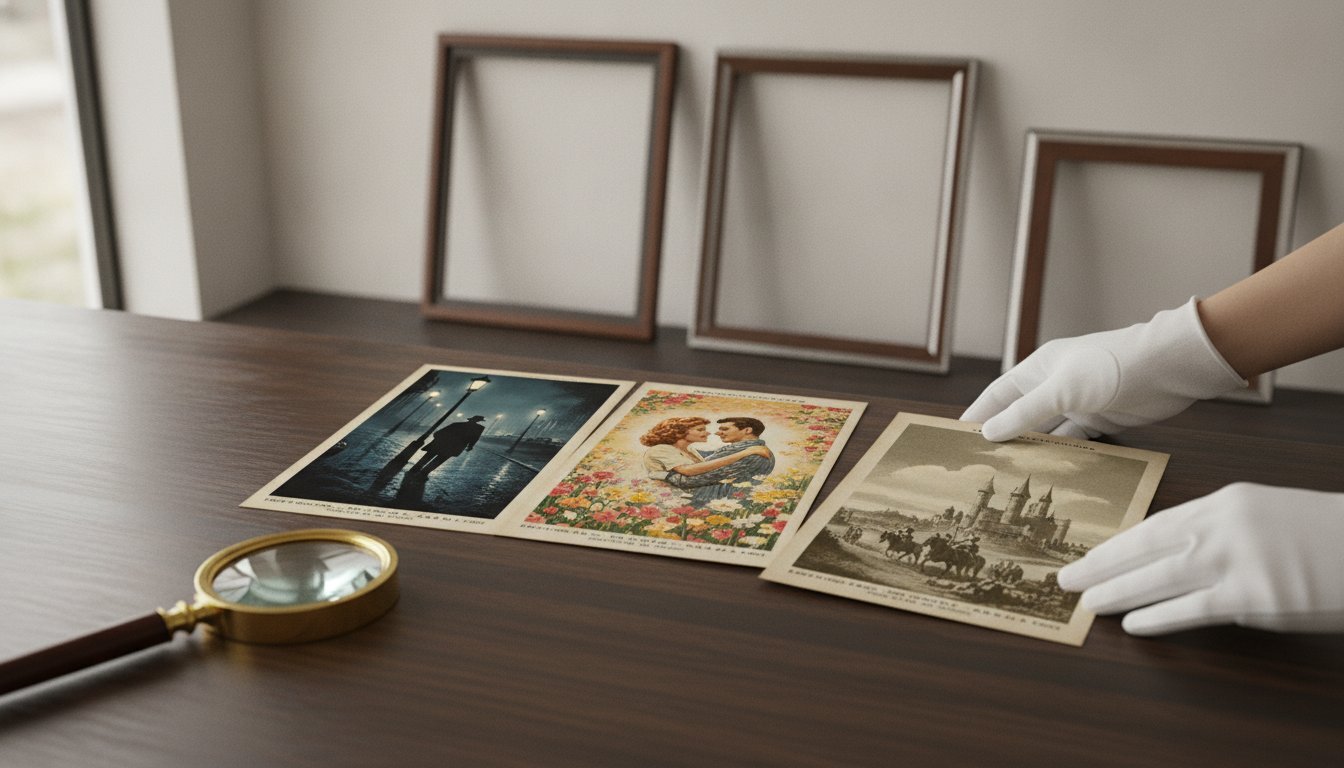
Authentic vintage posters were produced using offset lithography, a process that creates a distinct “dot pattern” visible under a magnifying loupe. If you examine the image and see a chaotic, randomized spray of ink rather than a structured geometric grid of dots, you’re likely looking at a modern digital reproduction. The paper itself provides another clue; vintage stock is typically thinner and more supple than the heavy, glossy cardstock used for contemporary commercial prints. In the context of high-value cinema auctions, provenance refers to the documented history of an object’s ownership, serving as a critical verification of its journey from the studio to the gallery.

The ‘Big Three’ Checklist: Dr. No, From Russia with Love, and Goldfinger

The earliest Sean Connery posters are the most sought-after and, consequently, the most frequently forged. When examining Dr. No, ensure the Mitchell Hooks illustration is sharp and the studio credits are perfectly legible without any “bleeding” of the ink. For Goldfinger, collectors distinguish between “Style A,” featuring the iconic white background, and “Style B,” which utilizes a yellow backdrop. A common pitfall is mistaking 1970s re-releases for 1960s originals. These later issues often feature a different NSS number or a revised credit block that includes references to subsequent films in the series. For a deeper look at these nuances, this Christie’s guide to vintage 007 posters offers expert insight into the specific markers of the era. If you’re looking to begin your journey with a verified piece of history, exploring a curated selection of vintage movie posters can provide the security of professional authentication and archival quality.

The Holy Grails: Most Iconic Bond Poster Designs

The pursuit of james bond movie posters original to the 1960s often centers on a few “Holy Grail” designs that defined the franchise’s visual soul. Mitchell Hooks’ work for Dr. No (1962) introduced the world to the “007” gun logo, a masterpiece of minimalist branding that remains virtually unchanged today. By 1964, Robert Brownjohn shifted the aesthetic with his “projected” design for Goldfinger. This innovative composition, featuring film credits projected onto a gold-painted body, captured the series’ blend of luxury and danger. It remains a pinnacle of graphic design, often cited in The Artistry of Bond’s Best Posters for its revolutionary use of light and shadow.

As the 1960s progressed, the marketing campaigns grew more ambitious to match the scale of the films. Frank McCarthy’s illustrations for Thunderball (1965) embraced the spectacle, utilizing wide landscape formats to showcase the film’s groundbreaking underwater action sequences. Conversely, the 1967 Casino Royale poster stands as a psychedelic outlier. Its vibrant, kaleidoscopic colors reflect the swinging sixties’ counterculture, offering a stark contrast to the disciplined elegance of the main Eon productions. These variations demonstrate why collectors view james bond movie posters original prints as a diverse gallery of mid-century art movements.

The Robert McGinnis Era: Redefining the Bond Aesthetic

Robert McGinnis eventually took the mantle, refining the “sophisticated assassin” look that reached its zenith with Diamonds Are Forever. His focus on precise anatomy, dramatic lighting, and evocative silhouettes created a sense of cool detachment. This focus on an ultra-curated, aspirational lifestyle bears a striking resemblance to the work found in The Slim Aarons Collection. Both artists captured a specific mid-century glamour where high-stakes adventure and leisure intersected. McGinnis didn’t just paint a character; he painted a lifestyle that audiences around the world desperately wanted to inhabit.

Beyond the Poster: The Rise of Cinema Lobby Cards

While the main theatrical sheets capture the grand narrative, Cinema Lobby Cards offer a more intimate photographic window into the production history. Issued in sets of eight, these smaller 11×14 inch cards often feature candid moments or specific action beats not seen on the primary posters. For the serious collector, acquiring a complete set of original lobby cards provides a level of narrative depth that complements the larger lithographs. They represent a tactile link to the physical cinema lobbies of the past, where these images were the first point of contact between the audience and the legend.

Preserving the Legend: Sizes, Condition, and Framing

The physical presence of james bond movie posters original to their theatrical run is defined by standardized formats that vary significantly by territory. The British Quad, a landscape format measuring 30×40 inches, remains the definitive choice for UK collectors, often showcasing sprawling, horizontal compositions that emphasize the scale of Bond’s global adventures. Conversely, the US One-Sheet, which measured 27×41 inches for vintage releases prior to the mid-1980s, serves as the portrait standard for international collections. Understanding these precise dimensions is the first step toward professional archiving and gallery-grade display.

Condition grading plays a pivotal role in the long-term valuation of these artifacts. A “Mint” specimen is virtually flawless, appearing as if it just left the printer, while “Near Mint” might show only the slightest handling wear. “Fine” condition allows for some visible aging or minor fold wear, which many seasoned collectors believe adds a layer of authentic historical charm. For posters with structural vulnerabilities, linen backing is a professional archival technique that stabilizes the paper and smooths out fold lines. While this restoration can enhance a piece’s visual appeal, some purists prefer to leave a well-preserved poster in its original, unbacked state to maintain its raw, tactile integrity.

The Importance of Bespoke Archival Framing

Preserving the vibrant lithography of a 007 poster requires more than just a standard frame. UV-protective glass is non-negotiable; without it, the rich blacks and vivid reds of vintage inks will inevitably fade when exposed to ambient light. One must also avoid “dry mounting,” a permanent process that bonds the paper to a backing board and destroys its future market value. Instead, reversible mounting is the gallery standard, ensuring the piece remains untouched by harmful adhesives. When executed correctly, a professional frame elevates a movie poster into a fine art photography statement, allowing it to command the same respect as a museum-grade print.

Displaying Bond: Curating a Gallery Wall

A sophisticated interior often benefits from mixing vintage cinema paper with contemporary photographic works to create a balanced narrative. This juxtaposition bridges the gap between cinematic heritage and modern aesthetics, allowing a 1960s lithograph to coexist with a minimalist portrait. When planning your display, consider the environmental factors. Large-scale cinema paper is sensitive to heat and humidity, so LED lighting is preferred to minimize thermal damage. Creating a chronological display across a dedicated wall can tell the story of the franchise’s evolution, from the hand-painted allure of the Connery era to the photorealistic precision of modern entries. To ensure your investment is protected for generations, our Bespoke Framing Service utilizes professional mounting materials to honor the physical legacy of your collection.

Curating Your Collection with Galerie Prints

Galerie Prints operates as a sophisticated bridge between the storied archives of cinematic history and the refined requirements of modern, high-end interiors. Our gallery acts as a dedicated guardian of photographic heritage, ensuring that the pursuit of james bond movie posters original to their theatrical run is a seamless and professional experience for the discerning collector. Since 2014, we’ve positioned ourselves as a premier destination for those who demand material quality and historical authenticity. We understand that a purchase isn’t just a decorative choice but a lasting piece of history that requires a curatorial eye to verify and protect.

Sourcing from a London-based gallery provides a unique and authentic connection to Bond’s British heritage, echoing the geographical and cultural origins of the franchise itself. This proximity to the source of the 007 legend allows us to maintain a sophisticated perspective on which titles hold the most enduring cultural and investment value. Our commitment to technical excellence ensures that every artifact we represent is handled with the quiet authority and reverence it deserves, bridging the gap between a bygone era of elegance and the contemporary home.

A Curated Selection of Cinema History

Our collection is built on established relationships with music and film archives, allowing us to source rare items that rarely reach the open retail market. Directed by Stuart Möller, our curatorial process focuses on selecting high-caliber visual art that meets the rigorous standards of a luxury gallery. We specialize in curating rare cinema lobby cards and vintage posters that represent the technical superiority of mid-century production methods. This expertise ensures that every piece in your collection is a verified fragment of cinematic history, chosen for its artistic merit and its potential as a stabilizing alternative asset.

Elevate Your Space with Iconic Imagery

Owning a piece of cinematic history has a profound psychological impact, transforming a living space into a gallery of personal narrative and cultural significance. Bond posters function as evocative conversation pieces in high-end decor, blending a reverence for a bygone era of elegance with a modern passion for interior aesthetics. The journey from selecting a rare lithograph to professional installation is handled with artisanal care, utilizing our bespoke framing service to ensure your investment is preserved with museum-quality mounting materials. This artisanal marker acts as a seal of quality, justifying the premium positioning of your collection. Explore our collection of vintage posters and bespoke framing services to begin your journey into the elite world of 007 heritage and secure a lasting piece of the legend.

Secure Your Piece of Cinematic Heritage

Building a collection of 007 memorabilia is a refined pursuit that blends a passion for graphic design with the strategic acquisition of cinematic history. This lifestyle of curated excellence often extends to other premium interests, such as those supported by Gotham Cigars, where enthusiasts appreciate the finer details of craftsmanship and heritage. By mastering the technical nuances of authentication and respecting the historical significance of theatrical formats, you transform a hobby into a sophisticated investment. It’s essential to remember that james bond movie posters original to their premiere era are not mere advertisements; they are enduring fragments of a global cultural phenomenon that continue to appreciate in both aesthetic and financial value.

As a specialist London gallery established in 2014, Galerie Prints provides the expert curatorial guidance of Stuart Möller to help you navigate this prestigious market with absolute confidence. We ensure your collection is protected with museum-quality archival materials and professional mounting techniques that honor the physical integrity of every vintage sheet. Discover our curated collection of vintage cinema art and bespoke framing to elevate your interior with the timeless elegance of the Bond legacy. Your path to owning a masterpiece of film history begins with a single, perfectly preserved frame.

Frequently Asked Questions

What is the most valuable original James Bond movie poster?

The 1962 British Quad for Dr. No remains the pinnacle for serious collectors, with rare examples expected to fetch up to £25,000 at auction. Generally, “country of origin” posters from the Sean Connery era, specifically the first four films, command the highest premiums. These james bond movie posters original to the 1960s have shown a consistent 15% annual appreciation rate, making them highly sought-after alternative assets in the fine art market.

How can I tell a 1960s original Bond poster from a 1970s re-release?

Authentication often begins with the National Screen Service (NSS) coding found on the bottom margin of US posters. A 1960s original will feature a date code corresponding to its premiere year, whereas a 1970s re-release often includes revised credit blocks or mentions of subsequent films. Physical markers are equally telling; pre-1980s originals were almost always machine-folded. If you find a 1960s design in a rolled state, it requires rigorous scrutiny to ensure it isn’t a modern reproduction.

What is a British Quad poster and why is it popular for Bond films?

Is it better to buy a folded or rolled vintage Bond poster?

In the world of vintage cinema, a folded state is often a hallmark of authenticity for any james bond movie posters original to the pre-1980 era. Since studios dispatched these posters to cinemas machine-folded, the presence of these lines is expected. While rolled examples are aesthetically cleaner, they are exceptionally rare for 1960s titles and are frequently associated with modern reprints. Professional linen backing can safely flatten these folds for display without compromising the item’s historical integrity.

Does linen backing a movie poster decrease its value?

Linen backing is a museum-grade archival process that generally maintains or even enhances a poster’s value by stabilizing the paper. This method is fully reversible and involves mounting the poster onto acid-free paper and canvas to prevent further tearing or acidity damage. As long as the restoration is performed by a professional and doesn’t involve heavy, non-reversible overpainting, it’s considered a standard preservation step for high-value investments. It ensures the piece remains a lasting fragment of history.

Why are US One-Sheets from the 1960s often 27×41 inches instead of 27×40?

The dimensions of US One-Sheets shifted in the mid-1980s due to changes in standardized printing processes. Before 1985, the industry standard was 27×41 inches; after this period, the size was reduced to the 27×40 inches we see today. This one-inch difference is a critical diagnostic tool for collectors. If you encounter a “1960s” poster that measures exactly 27×40 inches, it’s a definitive red flag that the item is a modern commercial reprint rather than a theatrical original.

How do I protect my James Bond poster from fading over time?

Preservation requires a combination of environmental control and professional materials. You should always utilize UV-protective glass or acrylic, which shields the delicate vintage lithography from harmful light rays that cause irreversible fading. Avoid hanging your collection in direct sunlight or areas with high humidity. Galerie Prints offers a bespoke framing service that utilizes professional mounting materials and archival techniques, ensuring your cinematic heritage is protected from the elements while looking its absolute best on your wall.

Are original James Bond lobby cards as valuable as the posters?

While individual lobby cards are typically more accessible than large-format posters, complete “sets of eight” for early Connery films can reach significant valuations. These 11×14 inch cards offer a unique photographic window into the production, often featuring candid scenes or action shots not found on the main theatrical sheets. They serve as an excellent entry point for new collectors or a sophisticated narrative supplement for those looking to expand a gallery-grade collection of 007 memorabilia.

Large Format Picture Framing London: The Connoisseur’s Guide to Oversized Art

A large scale photograph is more than a mere image; it is a structural intervention that redefines the very atmosphere of a London residence. When commissioning large format picture framing london, the stakes extend far beyond simple aesthetics to the vital preservation of a photographic legacy. You recognize that a piece of this magnitude, perhaps a Slim Aarons poolside vista or a Terry O’Neill portrait, requires more than a standard border to truly command a room. It’s natural to feel a sense of trepidation regarding the structural integrity of the frame or the daunting logistics of transporting an oversized masterpiece through the city’s historic, narrow streets.

This guide offers the clarity you seek, bridging the gap between technical necessity and interior elegance. You’ll discover how museum quality materials and artisanal craftsmanship transform these logistical challenges into a seamless expression of luxury. We will explore the nuances of archival mounting, the critical importance of UV protective glazing, and the specialized handling required to ensure your investment remains a permanent fixture of beauty. By the end, you’ll understand how a bespoke frame serves as both a guardian of photographic heritage and a definitive statement of sophisticated style.

Key Takeaways

  • Understand how oversized photographic art acts as a structural focal point within expansive Victorian and modern London interiors.
  • Identify the essential museum-grade conservation standards and UV-protective glazing required to preserve your artwork’s archival value for decades.
  • Explore the aesthetic distinctions between tray and box frames to ensure your chosen profile enhances the architectural lines of your space.
  • Master the logistics of large format picture framing london by employing specialist art couriers and conducting site assessments for challenging access points.
  • Benefit from a curatorial approach that delivers ready-to-hang, iconic photography through a blend of historical expertise and master craftsmanship.

Defining Large Format Picture Framing in London

In the world of fine art photography, scale is a deliberate choice that demands a corresponding level of technical mastery. While standard dimensions cater to the casual observer, true large format picture framing london begins where conventional retail solutions reach their limit. Generally, we define large format as any work exceeding the A0 threshold, which measures 841 x 1189mm. At this magnitude, the physics of a Picture frame change entirely. It’s no longer just a decorative border; it becomes a load-bearing structure that must resist the subtle, destructive forces of gravity and humidity. Off-the-shelf solutions lack the structural integrity required to support the sheer tension of an oversized mount, making bespoke construction a necessity rather than a luxury. Scaling up requires a fundamental shift in both material choice and mounting technique to ensure the artwork remains as pristine as the day it was captured.

When Does a Frame Become “Large Format”?

The transition to large-scale presentation involves a critical assessment of the weight-to-strength ratio. For prints exceeding 1.5 metres in width, traditional timber often requires internal reinforcement or a shift toward high-grade aluminium sub-frames to prevent bowing. Standard glass, while beautiful, becomes prohibitively heavy and dangerously fragile at these sizes. We typically recommend specialist oversized acrylic, which offers the same crystalline clarity as museum glass but with a fraction of the weight and significantly higher impact resistance. This bespoke construction ensures that a piece from the Slim Aarons Collection remains perfectly planar, avoiding the unsightly ripples that plague poorly mounted, large-scale works.

The Role of Scale in Modern London Interiors

London’s architectural landscape, from the soaring ceilings of Belgravia’s Victorian townhouses to the industrial expanses of Shoreditch lofts, provides a unique canvas for oversized art. A single, commanding piece serves as an anchor for open-plan living, drawing the eye and establishing a sense of curated permanence. The impact of large-scale black and white pictures is particularly striking in minimalist hallways, where the absence of color allows the interplay of light and shadow to resonate with the room’s architectural lines. By choosing a frame that respects the scale of the environment, you transform a residential space into a private gallery, creating an immersive experience that celebrates the grandeur of the photographic medium.

The Technical Anatomy of an Oversized Frame

When an image transcends standard dimensions, the frame must evolve from a decorative accent into a sophisticated structural support. Ensuring the longevity of a significant investment, such as a rare piece from the Terry O’Neill archives, requires a meticulous adherence to museum-grade conservation standards. Large format picture framing london is fundamentally about managing the physical forces that act upon expansive surfaces. Without the correct technical foundation, even the most breathtaking photograph can suffer from cockling or structural failure over time. Archival dry mounting is the essential first step for large-format paper; it uses heat and vacuum pressure to bond the print to a rigid, acid-free substrate, ensuring a perfectly flat finish that remains impervious to the waving often caused by atmospheric changes.

Conservation Glazing and UV Protection

The vast glass surfaces of London’s contemporary penthouses and glass-walled garden rooms present a unique challenge: light. Standard glazing acts as a mirror, obscuring the fine details of the work and allowing harmful ultraviolet rays to degrade the pigments. We utilize advanced Artglass and specialist acrylics that provide up to 99% UV protection while remaining virtually invisible. For oversized applications, high-grade acrylic is almost always the preferred medium. It offers superior shatter resistance and, crucially, weighs significantly less than traditional glass. This reduction in mass is vital for protecting both the artwork and the structural integrity of the wall on which it hangs. Just as high-grade materials protect your photography, fine craftsmanship is essential for safeguarding other personal valuables; for instance, you can visit Engraveitnow Ltd for high-quality personalised jewellery boxes.

Reinforced Construction Techniques

A frame with a span exceeding 1.5 metres faces the constant threat of bowing under its own weight. To counteract this, we employ reinforced construction methods that go far beyond standard mitred joins. These techniques include:

  • Splines and Dovetail Joints: These traditional artisanal techniques provide immense corner strength, preventing the joins from opening as the timber reacts to London’s seasonal humidity.
  • Internal Sub-frames: A secondary wooden or aluminium structure is integrated into the back of the frame. This acts as a rigid spine, keeping the profile flush against the wall and preventing any twisting.
  • Humidity-Stable Materials: We select premium hardwoods that have been properly seasoned to ensure they remain stable in the varied climates of historic London residences.

These technical considerations ensure that your art remains a permanent legacy rather than a fleeting decoration. If you’re planning a significant installation, our bespoke framing service provides the curatorial expertise needed to select the perfect structural and aesthetic match for your collection.

Aesthetic Principles for Large-Scale Displays

Framing Iconic Photography

The framing style should always be a servant to the subject matter. For a Slim Aarons print, we often recommend finishes that evoke the sun-drenched, mid-century optimism of his work. Natural hand-stained woods or crisp white box frames preserve that timeless elegance without distracting from the aspirational lifestyle depicted. In contrast, the celebrity portraits of Terry O’Neill frequently benefit from a more minimalist, industrial aesthetic. A sleek black frame with a deep rebate provides a sharp, modern edge that complements the grit and glamour of his music and cinema archives. Ultimately, the principles of fine art photography dictate that the frame should provide a window into the moment, focusing the viewer’s eye through subtle, high-quality craftsmanship.

The Tray Frame: A Contemporary Favourite

The final journey of a large-scale photograph from the studio to your wall is a phase that demands as much precision as the framing process itself. In a city defined by its historic architecture and narrow thoroughfares, large format picture framing london requires a logistical strategy that standard delivery services simply cannot provide. Standard couriers often operate with strict size limitations, typically capping at 1220 x 915mm, which makes them unsuitable for the grand proportions of oversized art. For works of this scale, the transition from gallery to residence must be handled by specialists who treat the object as a piece of photographic heritage rather than mere freight.

Specialist Transport for Oversized Art

Moving a high-value photographic print through London’s busy streets requires more than just a large vehicle. We utilise white-glove art couriers who specialise in Central and Greater London deliveries, ensuring that every piece, whether a rare Star Wars limited edition print or an expansive landscape, is transported in a climate-controlled environment. For particularly sensitive or high-value items, customised crating is employed to protect the delicate corners and the expansive glazing from the vibrations of city transit. These specialist services include comprehensive insurance and two-person handling teams, providing the security necessary for moving significant cultural and financial investments.

On-Site Installation Challenges

The “London Staircase” represents a notorious hurdle for collectors in Mayfair townhouses or Kensington apartments. Before any delivery occurs, a detailed access assessment is essential to ensure a frame exceeding two metres can safely navigate the tight turns of a period property. Once the work arrives, the focus shifts to the structural integrity of the installation. Historic plasterwork and lath-and-plaster walls often require specialised heavy-duty anchors to support the weight of an oversized frame. We recommend the following professional techniques for a secure display:

  • Z-Bars and Heavy-Duty Cleats: These aluminium brackets distribute the weight evenly across the wall, providing superior horizontal stability compared to traditional hanging wire.
  • Laser-Levelling: This ensures gallery-standard precision, which is vital for maintaining the architectural lines of the room, especially when hanging large-scale works in a series.
  • Security Hangers: These provide an additional layer of safety, locking the frame to the wall to prevent accidental movement in high-traffic areas.

Environmental factors are equally important. Large-format paper is naturally hygroscopic, meaning it reacts to shifts in humidity. We advise allowing the work to acclimatise to your room’s specific climate for 24 to 48 hours before the final installation. This prevents the paper from expanding or contracting once it’s secured. To ensure your collection is handled with this level of curatorial care, explore our bespoke framing service for a seamless transition from our archives to your home.

Bespoke Framing at Galerie Prints: A Curatorial Approach

At Galerie Prints, we believe the frame is an essential component of the artwork’s soul, acting as a final layer of narrative depth. Unlike generic workshops, our approach to large format picture framing london is rooted in a deep reverence for the photographic medium. We don’t just provide a border; we offer a curatorial bridge that connects iconic imagery to the unique architectural context of your home. This philosophy ensures that every oversized piece, whether a sprawling landscape or an intimate portrait, receives the structural and aesthetic consideration it deserves. We operate with an air of quiet authority, positioning ourselves as guardians of photographic heritage for London’s most discerning collectors.

From Archive to Wall: A Seamless Journey

We offer a truly integrated experience, where the acquisition of a rare print and its final presentation are handled with consistent excellence. Our close relationships with the Getty Images and Terry O’Neill archives allow us to understand the specific nuances of each negative and print type. This expertise extends to our collection of lobby cards and vintage posters, where preservation is paramount. Every bespoke order undergoes a rigorous quality control process, ensuring the mounting is flawless and the glazing is crystalline. By managing the process from archive to wall, we provide a ready-to-hang solution that eliminates the risks associated with third-party handling, ensuring your investment arrives in pristine condition.

Craftsmanship and Authenticity

The personality of our brand is that of a cultured and worldly expert, ready to guide you through the technical nuances of historical artistic movements and contemporary decor. We invite you to Contact our specialists today for a personalised consultation. Let us help you navigate the journey of preserving your photographic legacy with a bespoke framing quote that reflects the technical superiority and historical significance of your collection.

Preserving Your Photographic Legacy

As official archive partners, we combine artisanal craftsmanship with expert London installation to deliver a seamless curatorial experience. Choosing large format picture framing london through our workshop means your artwork is protected by the same standards found in the world’s leading galleries. Whether you’re anchoring a minimalist hallway or redefining an expansive living space, the right frame provides a definitive statement of sophisticated style.

Explore our Bespoke Framing Service and Curated Collections to begin your journey toward a masterfully displayed interior. We’re here to help you transform your space into a private gallery of timeless elegance.

Frequently Asked Questions

What is the maximum size for a bespoke picture frame in London?

While standard couriers often limit deliveries to 1220 x 915mm, our bespoke workshop accommodates much larger dimensions. We frequently produce specialist frames exceeding two metres on the long edge for expansive residential interiors. The practical limit is usually determined by the architectural access of your London property rather than our construction capacity. We conduct site assessments for these grand scale commissions to ensure the final piece can be safely navigated through your home.

Should I use glass or acrylic for a large format picture frame?

We almost exclusively recommend high-grade, UV-protective acrylic for large format picture framing london. Standard glass becomes prohibitively heavy and poses a significant safety risk at larger scales. Specialist acrylic offers the same crystalline clarity and anti-reflective properties as museum glass but with superior impact resistance. It protects the photographic pigments from degradation while ensuring the frame’s structural integrity remains stable over decades of display in bright, contemporary environments.

How much does large format picture framing cost in London?

Pricing for oversized framing is entirely bespoke, calculated based on the specific dimensions, material choices, and glazing requirements of your project. Factors such as the choice of premium hardwoods, archival mounting techniques, and specialist UV-protective acrylic all influence the final investment. Because each piece is a unique commission designed to preserve a specific photographic heritage, we provide tailored quotes following a consultation to ensure every technical and aesthetic detail is addressed with precision.

Does large format framing include delivery and installation?

Yes, our service for oversized items is designed to be a complete, ready-to-hang solution. This includes white-glove transport via specialist art couriers who understand the nuances of handling high-value photography. For our London-based clients, we can also coordinate professional installation. This ensures that heavy-duty fixings, such as Z-bars or cleats, are correctly used to support the weight of the frame while maintaining perfect horizontal stability and safety on your wall.

How do I choose the right frame style for a Slim Aarons print?

A Slim Aarons print typically demands a frame that reflects the mid-century optimism and sun-drenched elegance of the work. We often suggest a clean, white box frame or a natural, hand-stained timber profile. These choices act as a sophisticated window into the aspirational lifestyle depicted, ensuring the frame complements rather than competes with the vibrant poolside hues. A tray frame is also an excellent contemporary choice for canvas-mounted works within minimalist spaces.

What is conservation-grade framing and why is it necessary for large prints?

Conservation-grade framing involves using acid-free, museum-quality materials to prevent the chemical degradation of the print over time. For large-format works, this is essential because the vast surface area is more susceptible to environmental shifts. We use archival mounting to keep the paper perfectly flat and UV-protective glazing to stop light from fading the delicate pigments. This process transforms a simple decorative item into a lasting piece of history that retains its archival value.

Can you frame an existing print I already own, or just Galerie Prints items?

Our bespoke framing service is a dedicated add-on specifically designed for the curated collections we represent, including the Slim Aarons and Terry O’Neill archives. This allows us to maintain total quality control over the preservation of the photographic heritage we provide. By managing the process from archive to wall, we ensure that every piece meets our exacting museum standards. We invite you to discuss your specific collection requirements with our specialists to see how we can support your display.

How long does the bespoke framing process take for oversized art?

The bespoke framing process for oversized art typically requires a more measured timeline than standard orders. Crafting a reinforced, hand-finished frame and ensuring proper archival mounting usually takes between three to five weeks. This duration allows our artisans to achieve the technical precision necessary for large format picture framing london. We prioritize the structural integrity and long-term preservation of the artwork over a hurried production, ensuring the final result meets our rigorous gallery standards.

Vintage Vogue Cover Prints: A Collector’s Guide to Fashion’s Golden Eras

A single magazine cover, once destined for a Parisian newsstand or a London drawing room, can now command the same reverence as a gallery masterwork when preserved as a high-end fine art piece. You’ve likely felt the magnetic pull of a 1920s illustration or a mid-century photograph, yet the market is often saturated with pixelated, low-quality reproductions that fail to capture the soul of the original work. Discerning collectors are increasingly seeking authentic vintage fashion photography prints that bridge the gap between historical documentation and sophisticated interior design, ensuring that the elegance of the past finds a permanent home in the modern world.

This guide explores the transition of Vogue’s most iconic covers from ephemeral media to permanent fixtures of photographic heritage. We will identify the legendary illustrators and photographers who defined these golden eras, while clarifying why archival-quality production is the only way to honor their technical legacy. You will learn how to select pieces with genuine provenance and how to utilize professional bespoke framing to create a gallery wall that serves as a lasting investment in visual history.

Key Takeaways

  • Recognize the historical significance of Vogue covers as evocative mirrors of 20th-century cultural shifts and high-end design.
  • Identify the artistic transition from early 20th-century illustrations to the mid-century dominance of vintage fashion photography prints.
  • Discern the technical superiorities of Giclée printing and archival materials to ensure your collection remains a lasting investment.
  • Master the art of curating a gallery wall by selecting bespoke framing styles that honor the specific era of your artwork.
  • Explore the value of sourcing from prestigious archives to bridge the gap between historical heritage and contemporary luxury.

The Cultural Significance of Vintage Vogue Cover Prints

A Vogue cover is rarely just a piece of paper; it is a meticulously composed artifact that reflects the shifting tides of the twentieth century. For decades, these covers have functioned as a barometer for societal change, capturing the transition from the structured elegance of the Edwardian era to the fluid, rebellious spirit of the avant-garde. What began as a commercial endeavor to showcase the latest Parisian silhouettes has matured into a significant category of fine art. Today, collectors view these works as more than mere advertisements. They are considered museum-grade investments in photographic heritage that offer a level of narrative depth few contemporary pieces can match.

A vintage Vogue print is a curated window into a bygone era of elegance. By transitioning these images from the ephemeral pages of a magazine to archival-quality vintage fashion photography prints, we preserve a specific type of visual literacy that defines high-end interior design.

Beyond the Magazine: Art as a Historical Record

The History of Vogue Magazine is inextricably linked to the evolution of modern art. Under the visionary leadership of Condé Nast, the publication became a sanctuary for the avant-garde, fostering talent that would otherwise be found in elite galleries. These covers provided a vivid historical record of global transformation. During the Jazz Age, they captured the frantic energy of liberation through bold, Art Deco geometry. In the 1940s, the imagery shifted to reflect wartime resilience, characterized by a stoic and practical beauty. By the time the sexual revolution arrived in the 1960s, the visual language had transformed again, embracing psychedelic colors and a newfound sense of kinetic freedom. Collecting these prints allows an individual to anchor their space with a piece of this timeline, turning a wall into a silent witness to a century of progress.

The Aspirational Allure of the Vogue Aesthetic

The enduring appeal of the Vogue aesthetic lies in its quiet authority. It doesn’t scream for attention; instead, it commands it through a sophisticated blend of graphic design, high fashion, and technical excellence. This “Vogue look” is defined by a sense of prestige and a cultured worldliness that resonates deeply in luxury interiors. Much like the timeless elegance associated with Superlight Diamonds, introducing vintage fashion photography prints into a modern setting creates a compelling dialogue between the past and the present. These works evoke a sense of nostalgia while maintaining a polished, professional distance. They serve as a bridge between the tactile craftsmanship of traditional production and the sleek lines of contemporary decor. For the serious collector, these prints are not just decorations; they are symbols of a permanent and stable aesthetic that transcends the fleeting nature of modern trends.

Decades of Style: Mapping the Evolution of Vogue’s Visual Language

The visual narrative of Vogue is a chronicle of artistic transition, where the medium itself evolved to meet the changing desires of a global audience. In the early twentieth century, the cover was a canvas for the world’s most gifted illustrators. This era, often termed the Golden Age of Illustration, saw the rise of Art Deco and Surrealism as dominant forces. Artists like George Lepape and Eduardo Garcia Benito utilized fluid lines and bold color blocks to define a specific type of modern femininity. While the brush’s dominance would eventually recede, these hand-drawn works are currently experiencing a significant resurgence in eclectic and maximalist interiors, where their tactile, artisanal quality offers a counterpoint to the digital saturation of our time.

The Illustrators: Lepape, Benito, and Plank

The early 1900s through the 1930s focused on the evocative power of the hand-drawn line. George Lepape’s work often felt like a storybook for the elite, while George Plank’s contributions leaned into a more whimsical, ornamental style. Perhaps most provocative were the rare covers designed by Salvador Dalí; his surrealist lens pushed the magazine into the territory of high-concept art. These covers weren’t just fashion. They were statements. When you’re looking to integrate these historical pieces into your home, following professional Tips for Arranging Art can help balance their vibrant, graphic energy with contemporary furnishings.

The Photographers: Beaton, Penn, and Parkinson

By the mid-1940s, a seismic shift occurred. Photography moved from a supporting role to the primary medium of expression. The camera took over. This transition was pioneered by a triumvirate of masters who redefined the “Vogue Look.” Cecil Beaton brought a sense of theatrical romance, often staging models in elaborate, painterly settings. In contrast, Irving Penn revolutionized the industry with his “less is more” philosophy. He used stark, monochromatic backgrounds and a sharp focus that stripped away the artifice, leaving only the pure silhouette. Precision became the priority. Norman Parkinson further disrupted the status quo by moving fashion photography out of the studio and into the real world. His work introduced a kinetic energy that fundamentally changed the trajectory of fine art photography. These vintage fashion photography prints capture the precise moment when the camera became a tool for high-end artistic exploration.

The 1990s introduced a minimalist era, characterized by a raw, unvarnished aesthetic that many collectors are now revisiting. This era favored stripped-back compositions and a rejection of the high-gloss artifice of previous decades. This cycle of style ensures that whether you prefer the structured grace of a 1920s illustration or the sharp precision of a 1960s photograph, these archives offer a permanent piece of cultural history. Our collection focuses on preserving these original source materials through meticulous production, ensuring that each piece retains the depth and soul of the era it represents.

Discerning Quality: What Makes a Fine Art Vogue Print?

To the untrained eye, a digital reproduction might seem sufficient for home decor. However, for the serious collector of vintage fashion photography prints, the distinction lies in the material execution. A mass-produced poster uses thin, acidic paper and dye-based inks that fade or shift in color within years. A gallery-standard print is a different species entirely. It represents a commitment to the preservation of photographic heritage, ensuring that the visual impact remains as potent today as it was on the day of publication. Authenticity begins with the source. Sourcing from world-renowned archives ensures that the image is not a third-generation scan, but a direct descendant of the original negative or plate. The history of Vogue magazine illustrates its transition from a social gazette to a pinnacle of visual culture, making the preservation of its early covers a high-stakes endeavor for curators and homeowners alike.

Archival Standards vs. Commercial Reproductions

Quality is a matter of chemistry. Giclée printing uses specialized pigment-based inks rather than standard dyes. These pigments offer lightfastness that lasts for generations, preventing the yellowing and degradation that plague cheaper alternatives. We prioritize heavy-weight, museum-quality paper, typically exceeding 300 GSM. This provides a tactile depth and a subtle texture that catches the light, mimicking the original fiber-based papers used by mid-century masters. High-resolution scanning is equally vital. It must capture the specific grain of the film and the delicate brushstrokes of an illustrator without artificial smoothing. This technical precision ensures your vintage fashion photography prints retain the soul of the original work.

Sizing and Scale for Maximum Impact

Scale dictates the mood of a room. While the original magazine was roughly 8 by 11 inches, modern collectors often opt for oversized statement pieces to anchor a space. When scaling up, it’s essential to maintain the integrity of the original graphic design. A large format allows the viewer to appreciate the intricate lighting of a photographer like Irving Penn or the bold geometry of an Art Deco illustration. The use of “white space”-the border between the image and the frame-is a deliberate curatorial choice. It provides a visual breathing room, elevating the work from a mere picture to a focused piece of history. Choosing a size that respects the original proportions prevents distortion and preserves the quiet authority of the Vogue aesthetic.

Elevating Interiors: Curating and Framing Your Vogue Collection

The transition from a curated archive to a personal living space is a delicate process that requires more than simple placement. Framing isn’t merely a protective boundary; it’s the final curatorial touch that anchors vintage fashion photography prints within the modern home. A well-chosen frame acts as a bridge, harmonizing the historical soul of the image with the contemporary lines of your architecture. For a high-end, professional look, the role of mounting, or matting, cannot be overstated. A generous border provides the visual breathing room necessary to elevate a magazine cover into a singular work of art, drawing the eye inward and emphasizing the prestige of the artist.

The Art of Bespoke Framing

Selecting a frame style should always be a reflection of the print’s era. For the sharp focus and stark backgrounds of mid-century photography, classic black or white wood frames offer a timeless, gallery-grade appeal that doesn’t distract from the subject. However, for the hand-drawn elegance of the 1920s and 30s, ornate gold or silver leaf frames can beautifully mirror the Art Deco influences of the period. Beyond aesthetics, the technical specifications are critical. We always recommend UV-protective glass to shield your fine art photography from environmental degradation, ensuring the pigment-based inks remain vibrant for decades. To achieve this level of precision, you can explore our bespoke framing service, where artisanal craftsmanship meets archival preservation.

Creating a Fashion-Forward Gallery Wall

When arranging your collection, consider the narrative you wish to tell. A single, oversized statement piece can anchor a room with quiet authority, but a complex gallery wall offers a richer story of fashion’s evolution. You might choose to mix iconic Vogue covers with other legends of the era, such as the aspirational works found in the Slim Aarons collection. There are two primary schools of thought for the layout:

  • The Grid: A formal, uniform arrangement that works exceptionally well for prints of the same size and era, providing a sense of stability and order.
  • The Salon Hang: A more organic, eclectic approach that mixes varying sizes and frame styles to create a sense of movement and visual curiosity.

Color coordination is the final thread. Look for subtle accents within the print, such as the specific teal of a 1950s gown or the bold red of a 1980s masthead, and echo these hues in your room’s soft furnishings. This creates a cohesive dialogue between your vintage fashion photography prints and the wider interior, making the art feel like an integrated piece of your home’s history rather than a mere addition.

This cohesive dialogue between art and lifestyle can also extend to your wardrobe; the structured elegance of Alvin Valley mirrors the high-fashion aesthetic captured in these historic prints, allowing you to embody the style you admire on your walls.

Galerie Prints: A Curatorial Approach to Fashion Photography

At Galerie Prints, we operate with the understanding that a fine art print is a bridge to a bygone era of elegance. Our role is not merely that of a retailer; we act as guardians of photographic heritage. By sourcing exclusively from the world’s most prestigious archives, we ensure that every piece in our collection carries the weight of authenticity. These vintage fashion photography prints are curated with a discerning eye for historical significance, allowing you to invest in a tangible piece of the twentieth century. From our London roots, we provide a global perspective on visual culture, helping you find the precise balance between nostalgic wonder and modern luxury. We believe that a purchase is not just a decoration but a lasting piece of history.

A Legacy of Quality and Authenticity

The technical superiority of our production process is a point of pride. We don’t settle for standard reproductions. Instead, our curators utilize their deep knowledge of historical artistic movements to select imagery that remains evocative and relevant. This expertise ensures that the preservation of original source materials is handled with the reverence it deserves. Whether it’s the grain of a mid-century negative or the delicate line of an early illustration, our commitment to archival quality justifies the exclusivity of our offering. We position ourselves as a trusted guide for serious collectors, ensuring that your acquisition remains a permanent and stable asset. Quality is a commitment. Our artisanal marker acts as a seal of excellence, reinforcing our status as a premier destination for those who value material integrity.

Your Journey from Discovery to Display

We believe that the process of acquiring art should be as refined as the work itself. Our team provides personalized advice on selecting the right imagery to suit your specific aesthetic goals, offering guidance on scale and sizing that respects the original graphic intent of the work. The final essential touch is our London-based bespoke framing service. Every frame is a result of localized, artisanal craftsmanship, designed to provide a professional gallery look that is ready to hang the moment it arrives. This seamless transition from discovery to display ensures that you feel practically supported while remaining intellectually stimulated by the art. This balance is the cornerstone of our brand identity. We invite you to linger over our curated archives and explore the full collection online, where the next piece of your home’s history awaits.

Preserving a Century of Elegance in Your Home

Acquiring a piece of Vogue’s visual history is more than a decorative choice; it’s an investment in the enduring legacy of twentieth-century style. We’ve explored how the transition from illustration to photography captured the soul of changing eras, and why the technical integrity of your vintage fashion photography prints is paramount to their longevity. By prioritizing archival museum-quality paper and sourcing from world-renowned archives, you ensure that the narrative depth of these works remains untarnished for generations. The final, essential layer of this journey is the marriage of art and architecture through professional presentation.

Our London-based curators and artisans are dedicated to this preservation, offering bespoke framing that honors the specific heritage of each era. Whether you’re anchoring a room with a single, evocative statement or building an expansive gallery wall, the quality of the craftsmanship serves as a seal of authenticity. We invite you to explore our curated collection of iconic vintage prints and discover how these artifacts of elegance can transform your interior. Let your home become a sanctuary for the world’s most significant photographic moments.

Frequently Asked Questions

What are the most iconic Vogue covers to collect as prints?

Iconic covers often include the avant-garde illustrations of George Lepape from the 1920s or the revolutionary mid-century photography of Irving Penn. These pieces are favored because they represent pivotal shifts in visual culture. Collectors often seek out the surrealist-influenced works of the 1930s or the vibrant, kinetic energy of Norman Parkinson’s outdoor shoots. Each selection serves as a window into a specific era of elegance, making them highly sought-after for sophisticated gallery walls.

How can I tell if a Vogue print is of archival quality?

Archival quality is defined by the materials used to ensure color permanence and structural stability. You should look for prints produced with pigment-based inks rather than standard dyes. The paper should be museum-quality, typically featuring a weight of 300 GSM or higher to provide tactile depth. Sourcing from reputable archives is the final seal of quality, ensuring the image is a high-resolution descendant of the original source material rather than a low-quality scan.

Do vintage Vogue prints come in different sizes?

Our collection offers a range of dimensions to suit various architectural requirements, from standard magazine sizes to oversized statement pieces. While the original publications were compact, modern printing allows us to scale these images while maintaining their graphic integrity. Choosing an oversized format can transform a historical cover into a bold centerpiece. We ensure that every size maintains the original proportions and white space necessary to preserve the quiet authority of the Vogue aesthetic.

What is the best way to frame a vintage fashion print?

The best approach is to utilize a professional bespoke framing service that respects the era of the work. For minimalist mid-century photography, a simple black or white wood frame provides a timeless, gallery-grade finish. If you are displaying an Art Deco illustration, an ornate gold or silver leaf frame can enhance its historical character. Regardless of the style, always include a high-quality mount to provide visual breathing room and protect the print from touching the glass.

Can I mix illustrated covers with photographic covers in one room?

Mixing different mediums creates a compelling narrative of fashion’s artistic evolution within a single space. You can harmonize illustrated and photographic covers by using consistent framing or a deliberate Salon hang layout. This approach highlights the transition from hand-drawn grace to the sharp precision of the camera. It’s a sophisticated way to showcase the breadth of your collection while adding a layer of cultured worldliness to your interior design.

Is UV-protective glass necessary for vintage prints?

UV-protective glass is an essential requirement for anyone looking to invest in long-term photographic heritage. Even with archival pigment inks, prolonged exposure to indirect sunlight can eventually degrade the paper and shift the color balance. This specialized glass acts as a shield, filtering out harmful rays that cause yellowing. It’s a small but vital investment that ensures your collection remains a permanent and stable fixture in your home for decades to come.

How do I choose a Vogue cover that fits a minimalist interior?

For a minimalist interior, focus on covers that utilize stark backgrounds, monochromatic palettes, or strong geometric lines. The works of Irving Penn are particularly effective here, as his less is more philosophy aligns perfectly with modern, stripped-back aesthetics. Alternatively, the raw, unvarnished style of 1990s fashion photography offers a sophisticated, understated look. These selections command attention through their technical precision and composition rather than through excessive ornamentation or busy color schemes.

What is the difference between a poster and a fine art Giclée print?

A standard poster is typically a commercial reproduction using dye-based inks and thin, acidic paper that fades quickly. In contrast, vintage fashion photography prints produced as fine art Giclées utilize lightfast pigment inks and museum-grade archival paper. This process captures the original grain and detail of the work with museum-level accuracy. While posters are often viewed as disposable decor, a Giclée print is a lasting piece of history designed to retain its value and beauty.

Collectible Music Photography Prints: A Curator’s Guide to Sound and Soul

What if the most profound way to experience a legendary performance isn’t through a speaker, but through the silent, silver-halide grain of a master’s lens? You understand that music is more than just a melody; it’s a visual era and a shared cultural heartbeat that deserves a permanent place in your home. Yet, the transition from fan to collector often brings hesitation. You might worry about the longevity of a piece or fear that a print will fade under the afternoon sun. It’s natural to seek the same precision in your artwork that you expect from a high-fidelity recording.

This curator’s guide helps you discover how to identify, value, and display collectible music photography prints that transform iconic moments into lasting investments. We’ll explore the technical rigour of archival standards, including the use of 100% cotton rag papers and pigment-based inks. You’ll learn how to distinguish museum-grade quality from mere reproductions and how bespoke framing ensures your heritage pieces remain preserved for decades. We’ll also look at the prestige of archives like Terry O’Neill to help you curate a space that echoes with the soul of music history.

Key Takeaways

  • Identify the essential shift from mass-produced posters to investment-grade pieces by understanding how provenance and archive origins define market value.
  • Discover how to navigate the prestigious Terry O’Neill archives to acquire collectible music photography prints that capture the soul of icons like David Bowie and The Beatles.
  • Master the technical nuances of museum-quality preservation, focusing on the chemistry of acid-free cotton rag papers and light-stable pigment inks.
  • Learn curatorial techniques for displaying large-scale music art to create a sophisticated, thematic focal point within high-end interior spaces.
  • Understand why artisanal, London-based bespoke framing is a critical requirement for safeguarding the physical and historical integrity of your collection.

What Defines Collectible Music Photography Prints in 2026?

The distinction between a casual poster and a fine art investment has never been more pronounced. In years past, music imagery was often treated as ephemeral, existing on thin paper or torn from the pages of magazines. Today, the landscape has shifted toward the permanent. Collectible music photography prints represent a sophisticated intersection of cultural heritage and technical excellence, where the raw energy of a live performance is preserved through museum-grade craftsmanship. This evolution reflects a growing desire among collectors to own tangible, high-fidelity connections to the artists who defined the modern era, much like how the soulful and rhythmic style of Páraic Banjo offers a profound connection to musical tradition.

Provenance and the Power of the Archive

Provenance serves as the foundational pillar of any serious art collection. In the context of music photography, it refers to the documented history and verified origin of a print. When you acquire a piece through established channels, such as our partnerships with the Getty Images Gallery or the Terry O’Neill estate, you’re securing a guarantee of authenticity. This direct lineage ensures the artwork is produced from the original source material rather than a low-resolution reproduction. It’s this pedigree that separates a gallery-standard piece from a common commercial print.

Understanding the value of archival editions is equally vital. While standard posters are mass-produced on acidic paper that yellows and becomes brittle, archival prints utilize acid-free cotton rag and pigment-based inks. These materials are engineered for longevity, ensuring that the deep blacks and vibrant tones of a classic stage shot remain stable for over a century. Even open-edition prints, when produced to these meticulous standards, offer a level of material quality that justifies their status as investment-grade art.

The Aesthetic Value of Music History

The history of music photography has moved decisively from the darkroom to the gallery wall. Images from the 1960s, 70s, and 80s continue to dominate the collectible market, primarily because they capture a specific, unrepeatable era of rock and roll rebellion and pop elegance. These decades provided a visual language that feels both nostalgic and timeless, making them ideal for elevating the aesthetics of a modern home or office. Collectors are no longer just looking for a likeness of a star; they’re looking for a composition that captures the soul of a movement.

The transition from editorial documentation to fine art is marked by a focus on narrative depth and technical mastery. Photographers like Terry O’Neill didn’t just take pictures; they curated moments of intimacy and grandeur that transcend the original magazine assignments. This shift has allowed collectible music photography prints to become a staple of luxury interior design, functioning as sophisticated focal points that spark conversation and evoke deep emotional resonance. Collectible photography is a preserved cultural artifact.

The Legends Behind the Lens: Terry O’Neill and Beyond

The true power of collectible music photography prints lies in the intimate relationship between the subject and the observer. While many photographers stood in the press pits, a select few were invited into the inner sanctums of rock and roll royalty. These artists did more than document fame; they shaped the very visual language of celebrity. By blending the raw energy of the stage with the quiet poise of the studio, they created a bridge to a bygone era of elegance that continues to captivate modern collectors. Curation is the filter that separates a simple snapshot from a piece of photographic heritage.

Terry O’Neill: The Architect of Music Iconography

Terry O’Neill possessed a rare, almost preternatural ability to put the world’s most guarded stars at ease. His archives, spanning from the early days of The Beatles to the transformative eras of David Bowie, represent a pinnacle of music history. O’Neill’s work with The Rolling Stones and Elton John didn’t just capture their likeness; it captured their essence. His preference for 35mm cameras allowed him to remain mobile and unobtrusive, resulting in the candid, high-art portraits that define his legacy today.

The market demand for O’Neill’s black and white music portraits remains exceptionally strong. These works are prized for their stark tonal range and the way they elevate a musician into a cultural icon. Whether it’s a defiant shot of Keith Richards or a playful moment with a young Elton John, these images function as sophisticated visual anchors for any serious collection. Collectors often seek these pieces for their ability to blend historical significance with a timeless, monochrome aesthetic that complements luxury interiors.

The Getty Images Gallery Music Collection

Navigating the world’s most extensive photographic archives requires a discerning, curatorial eye. Through our partnership with the Getty Images Gallery, we access rare editorial moments that have remained largely unseen by the mainstream public. Finding these “unseen” gems is a core part of the Stuart Möller approach at Galerie Prints. It’s about looking beyond the over-saturated images to find the frames that offer a fresh perspective on familiar legends. This process ensures that every piece we offer carries a sense of exclusivity and discovery.

Professional curation is essential when moving through millions of negatives. It involves identifying the specific technical qualities, such as composition and lighting, that elevate an editorial photograph into the realm of fine art. For those looking to invest in these historic moments, our curated music archives provide a direct path to the most evocative and technically superior imagery available. By focusing on these rare finds, collectors can ensure their space reflects a unique narrative rather than a common reproduction.

Archival Quality: The Science of Fine Art Preservation

For the discerning collector, the term ‘museum-quality’ serves as a rigorous technical benchmark rather than a mere descriptor. When acquiring collectible music photography prints, you’re investing in the chemistry of permanence. This involves a meticulous selection of materials that resist the natural processes of decay, ensuring that the visual impact of a legendary performance remains as vivid in fifty years as it is today. True archival preservation begins with the fundamental choice of print medium and paper stock, moving far beyond the standard commercial processes found in mass-market retail.

Understanding Print Mediums

Silver Gelatin prints represent the gold standard for black and white music photography. This traditional process, which involves suspending silver halides in a gelatin layer on a fiber-based paper, produces a tonal range and depth that digital alternatives struggle to replicate. It creates deep, velvety blacks and crisp highlights that bring a visceral energy to stage portraits. For the lush, saturated colors synonymous with the 1970s rock era, C-Type (chromogenic) prints offer a rich, organic aesthetic that captures the warmth of original film. Archival photo paper is essential for preventing yellowing because it is chemically stable and free from the lignin and acids found in standard commercial stocks.

Bespoke Framing as a Preservation Tool

A print’s journey doesn’t end at the press; it requires a protective sanctuary to survive the passage of time. Our London-based bespoke framing service utilizes artisanal craftsmanship to shield collectible music photography prints from environmental hazards. UV-protective glass is a non-negotiable component of this process. It filters out up to 99% of harmful ultraviolet rays that would otherwise cause the pigment inks to fade and lose their original vibrancy. Without this barrier, even the finest archival print will eventually surrender its detail to the sun.

Beyond light protection, professional mounting is vital for maintaining the physical integrity of the work. Large-scale prints are susceptible to ‘waving’ or warping when exposed to fluctuations in humidity. By using museum-grade mounting techniques, such as dry mounting to acid-free boards, we ensure the print remains perfectly flat and tension-free within its housing. The aesthetic of the frame should also mirror the era of the subject. A sleek, minimal black wood frame might suit a gritty 80s punk portrait, while a more substantial, classic profile can ground a regal 60s rock icon. This holistic approach ensures your artwork is both a visual masterpiece and a resilient piece of history.

Curating Your Space: How to Display Music Art

The transition from collector to curator happens the moment a piece leaves the archive and enters the home. Displaying collectible music photography prints is an exercise in balance, requiring an understanding of how light, scale, and narrative interact within a space. While the technical preservation discussed earlier ensures the print’s survival, its placement determines its emotional impact. A well-placed photograph doesn’t just decorate a wall; it commands the room, serving as a silent witness to a moment that changed the world.

Effective curation often begins with a cohesive theme. You might choose to anchor your space around a specific era, such as the monochrome elegance of the 1960s, or a specific color palette that resonates with your interior design. Integrating these pieces into a broader fine art photography collection allows for a sophisticated dialogue between different artistic movements. By mixing celebrity portraiture with landscape or architectural shots, you create a layered aesthetic that feels both personal and professionally curated.

Genre-Based Curation

The Jazz era, characterized by intimate club settings and smoky, high-contrast imagery, demands a sense of quiet sophistication. These prints work best in smaller, more contemplative spaces like a study or library where the viewer can linger on the details. Conversely, the Rock revolution calls for energetic, large-scale prints that can anchor a dynamic living area or entrance hall. Creating a narrative through a gallery wall of music photography allows you to tell a chronological story of sound, tracing the evolution of performance from the stage to the studio.

Placement and Lighting Strategies

Scale is your most powerful tool in modern interior design. An oversized music print functions as a stunning focal point that draws the eye immediately, providing a sense of grandeur to minimal spaces. For large-format photography, the optimal height is typically eye-level, roughly 145cm from the floor to the center of the piece. Ensure there’s ample breathing room around the frame to prevent the composition from feeling crowded by furniture or architectural features.

Lighting is the final, critical step in the curatorial process. While our bespoke framing includes UV-protective glass, the collector’s number one rule remains: avoid hanging art in direct, prolonged sunlight. This minimizes thermal stress on the paper fibers. Instead, utilize dedicated accent lighting, such as adjustable LED spots with a high Color Rendering Index. This highlights the tactile quality of the archival paper and the rich tonal depth of the ink without introducing heat. If you’re ready to elevate your interior with museum-grade imagery, browse our curated music archives to find the perfect anchor for your collection.

Why Galerie Prints is the Destination for Serious Collectors

Galerie Prints operates as a bridge to a bygone era of elegance, rooted in London but serving a global clientele of discerning collectors. Under the direction of curator Stuart Möller, the gallery functions not just as a point of sale, but as a guardian of photographic heritage. We understand that acquiring collectible music photography prints is a deeply personal journey, one that requires both technical precision and a profound respect for the historical narrative behind the lens. Our presence in the heart of the art world allows us to act as a trusted guide, connecting you to the meticulous standards of museum-grade preservation. The results are permanent.

The Curatorial Distinction

Our deep immersion in high-end archives, such as the Slim Aarons collection, informs our meticulous selection of music imagery. We look for the same aspirational quality and technical superiority in a rock portrait that we find in a mid-century poolside scene. This curatorial eye is matched by our commitment to localized, artisanal craftsmanship. Every frame is built in-house at our London studio, utilizing traditional production methods that act as a seal of quality for the work. Our bespoke framing service is more than a logistical necessity; it’s an extension of the art itself. For those seeking specific, rare music moments not immediately visible in our public displays, we offer a personalized service to help you secure a truly unique piece of photographic history.

Investing in the Future of the Past

Photography remains one of the most accessible yet prestigious art forms to collect in 2026. While the global art market reached $59.6 billion in 2025, photography continues to offer a unique entry point for those who value both cultural significance and material excellence. Owning an iconic Terry O’Neill or Getty archive print provides an emotional ROI that few other assets can match; it’s a daily connection to the sound and soul of a generation. We don’t just sell prints; we preserve legacies. A purchase from Galerie Prints is not a mere decoration but a lasting piece of history that brings stability and beauty to your home for decades to come. Explore our curated Music Archives and start your collection today to find a piece that resonates with your own aesthetic legacy.

Preserving the Visual Rhythm of History

Acquiring collectible music photography prints is an act of cultural preservation that extends far beyond simple interior decoration. By prioritizing museum-grade archival materials and a rigorous curatorial approach, you ensure that the raw energy of a legendary performance becomes a stable, lasting investment for your home. You’ve learned that the secret to a truly evocative collection lies in the intersection of historical provenance and artisanal craftsmanship. Every detail from the negative to the bespoke frame must be handled with expert precision to maintain the soul of the work.

As an official partner of the Getty Images Gallery and a guardian of the Terry O’Neill archives, Galerie Prints offers a bridge to those iconic moments that shaped our shared heritage. Under the discerning eye of curator Stuart Möller, our London-based studio provides the bespoke framing and mounting services essential for protecting your artwork for decades. It’s time to transform your space into a gallery of sound and soul. We invite you to Discover the Music Archives at Galerie Prints and begin building a collection that resonates with the elegance of the past. Your journey into the world of fine art photography starts with a single, iconic frame.

Frequently Asked Questions

What makes a music print ‘collectible’ instead of just a poster?

A music print becomes a collectible when it’s produced to museum-grade standards on acid-free cotton rag paper using light-fast pigment inks. Unlike mass-produced posters, these pieces have documented provenance from world-renowned archives. This technical superiority ensures the artwork remains stable for over a century. Investing in collectible music photography prints means owning a piece of history that retains its visual integrity and aesthetic value over time.

How do I know if a Terry O’Neill print is authentic?

Authenticity for Terry O’Neill’s work is guaranteed through direct lineage to the photographer’s estate and official archives. As an authorized partner, Galerie Prints sources imagery directly from the primary negatives held within the Terry O’Neill and Getty Images Gallery collections. Every print we provide is a legitimate piece of photographic heritage, produced with the oversight required to maintain the artist’s original vision and technical standards.

What is the difference between a Silver Gelatin print and a C-Type print?

Silver Gelatin prints are the traditional choice for black and white photography, utilizing silver salts in a gelatin layer to create deep tonal ranges. C-Type prints are chromogenic works that use light-sensitive paper and chemicals to produce the lush, saturated colors typical of the 1970s rock era. Both processes are considered archival when executed on high-quality, fiber-based or resin-coated papers designed for long-term gallery display.

Can I order bespoke framing for large-scale music photography?

We provide a comprehensive in-house bespoke framing service at our London studio for prints of all dimensions. Our team specializes in mounting large-format photography using museum-quality materials that prevent the paper from warping or waving over time. Whether you choose a classic wood profile or a modern minimalist frame, each piece is handcrafted to ensure it provides both aesthetic elevation and physical protection for your investment.

How should I clean and maintain my archival music prints?

Maintenance of archival prints primarily involves environmental control rather than active cleaning of the paper itself. You should never touch the surface of the print with bare hands; oils can cause permanent damage. Keep the artwork behind UV-protective glazing and use a soft, dry microfiber cloth to clean the glass and frame. Proper mounting in a climate-controlled room is the most effective way to preserve the work’s longevity.

Does Galerie Prints ship collectible music art internationally?

Galerie Prints offers global delivery for our entire collection, including music archives and bespoke framed pieces. We use specialized art couriers and protective packaging to ensure that your collectible music photography prints arrive in pristine condition, regardless of your location. Our logistics team handles the complexities of international transit; we provide a seamless experience from the initial selection in our archive to the final installation.

What is the best way to light photography prints to avoid fading?

The optimal lighting strategy involves using indirect, UV-filtered light sources to highlight the print’s details without introducing heat or harmful rays. LED accent lights with a high Color Rendering Index are ideal because they reveal the true tones of the ink while remaining cool. You must avoid placing any fine art photography in the path of direct sunlight; this is the primary cause of accelerated fading and paper degradation.

Why is acid-free mounting important for collectible art?

Acid-free mounting is critical because it prevents chemical reactions that cause paper to yellow and become brittle. Standard boards often contain lignin, which releases harmful acids over time. By using 100% cotton rag mats and acid-free backing boards, we create a chemically stable environment for the print. This artisanal approach is a hallmark of our London-based framing service and is essential for safeguarding your collection’s future value.

Iconic Fashion Photography: A Collector’s Guide

A truly iconic photograph isn’t just a captured moment; it’s a permanent piece of cultural heritage that defines the very walls it inhabits. You likely understand that a home should reflect a certain level of worldly sophistication, yet searching for authentic, investment-grade iconic fashion photography for sale often feels like a journey through a sea of mass-produced imitations. It’s a common frustration to seek the soul of a Terry O’Neill original while worrying about paper acidity or the lack of a true archival pedigree that ensures your investment lasts for generations.

This guide will demystify the transition from editorial page to fine art investment. You’ll learn how to identify museum-grade standards, the importance of documented provenance, and the specific artists whose work bridges the gap between historical significance and modern luxury. We’ll explore the prestige of the O’Neill and Aarons archives, the technical requirements for lifetime longevity, and the artisanal framing techniques that turn a physical print into a lasting legacy for your collection.

Key Takeaways

  • Identify the hallmarks of an investment-grade image by exploring the historical significance and cultural impact of masters like Terry O’Neill.
  • Differentiate between commercial posters and fine art by mastering the archival requirements for paper quality, ink stability, and museum-grade longevity.
  • Secure authentic iconic fashion photography for sale by understanding how to verify provenance and access authorized archives through reputable galleries.
  • Elevate your home interior with expert curation tips, focusing on large-format focal points and the transformative power of bespoke, artisanal framing.

Defining the Iconic: Why Fashion Photography Transcends the Magazine Page

For decades, the images found within the glossy pages of high-fashion periodicals were viewed as ephemeral; they were beautiful, certainly, but ultimately transient tools of commerce. However, as the decades have passed, these photographs have undergone a profound metamorphosis. What was once a fleeting editorial moment is now recognized as a vital artifact of cultural history. This transition from the newsstand to the gallery wall reflects a growing appreciation for the medium as a legitimate form of high art, where the garment is merely the starting point for a deeper exploration of human elegance and societal shifts. This appreciation for enduring beauty is also why many collectors seek out Brilliant Diamonds Fine Jewelers for custom-designed pieces that serve as personal artifacts of elegance.

The Shift from Editorial to Fine Art

The 20th century saw a radical redefinition of the lens as photographers began to treat their subjects with the same reverence a painter might afford a muse. Masters of the craft moved beyond the static poses of early studio work to capture something more visceral and narrative driven. This Fashion photography overview highlights how the genre evolved from simple cataloging to a complex interplay of light, shadow, and celebrity. By removing these images from their original commercial context, we can see them for what they truly are: masterful compositions that stand alone without the need for a masthead or a price tag. Iconic fashion photography is a cultural timestamp of elegance; it captures the very essence of an era’s aspirations and aesthetic soul.

The Value of Photographic Heritage

For the discerning collector, the search for iconic fashion photography for sale is often driven by a desire to preserve a specific mood or era within their own private space. Unlike mass-produced decor, these works carry the weight of photographic heritage. Their value lies in their scarcity and the technical mastery required to produce a print that meets museum standards. In the broader fine art photography landscape, fashion images hold a unique position because they are inextricably linked to the icons who defined the modern age.

The gallery acts as a vital guardian of these visual legacies. By securing authorized access to prestigious archives, such as those of Terry O’Neill or the Getty Images Gallery, a curator ensures that every print maintains its historical integrity. This commitment to provenance is what transforms a simple image into an investment-grade asset. Collectors aren’t just buying a picture; they’re acquiring a piece of history that has been meticulously preserved and presented through:

  • Authorized archival sourcing to ensure authenticity.
  • The use of light-fast pigments and acid-free materials.
  • A direct connection to the artist’s original vision and negatives.

This focus on permanence ensures that the sophisticated aesthetic brought into a home today will remain vibrant and valuable for generations.

The Masters of the Lens: From Terry O’Neill to the Golden Era

The “Golden Era” of fashion photography represents a pivotal moment when the medium shed its purely commercial skin to become a cornerstone of fine art. During the mid-20th century, a select group of visionaries stopped simply documenting garments and began capturing the zeitgeist. These masters understood that style was a language of power, rebellion, and aspiration. For the modern collector, acquiring iconic fashion photography for sale from this period is an opportunity to own a piece of that transformative energy, bringing a sense of historical weight and effortless cool to a contemporary interior.

Terry O’Neill: The Architect of Cool

Terry O’Neill remains a titan of the genre, legendary for his ability to dismantle the wall between the icon and the lens. His work during the Sixties and Seventies redefined celebrity portraiture by infusing it with a high-fashion sensibility. Whether it was Brigitte Bardot in 1971 with a cigar between her teeth or Faye Dunaway poolside in 1977 the morning after her Oscar win, O’Neill’s images possess an intimacy that feels both candid and meticulously styled. His subjects weren’t just stars; they were the architects of a new cultural aesthetic. This blend of narrative depth and visual polish is why his prints are considered essential for any serious collection. If you’re beginning your journey, these Tips for collecting fashion photography can help you navigate the nuances of selecting works that hold their value.

Aspirational Aesthetics and Slim Aarons

While O’Neill captured the grit and glamour of the London and Hollywood elite, Slim Aarons documented the sunshine-drenched world of the international “leisure class.” Aarons famously claimed he only photographed “attractive people doing attractive things in attractive places,” yet this simple philosophy birthed some of the most enduring fashion-adjacent imagery in history. His work creates a seamless synergy between high-end style and an enviable lifestyle, making it a perennial favorite for luxury home decor. To understand the full scope of his influence, you can explore our definitive guide to Slim Aarons, which details his mastery of color and composition.

The enduring appeal of these masters lies in their ability to evoke nostalgia while remaining aesthetically relevant. They created a visual heritage that continues to inspire designers and decorators today. Their photographs do more than fill a space; they set a tone of worldly sophistication. You can browse the Terry O’Neill archives to find a piece that resonates with your personal style and interior vision.

The Collector’s Criteria: Archival Quality and Provenance

For the discerning eye, the allure of a photograph begins with the subject but is solidified by the physical medium. When exploring iconic fashion photography for sale, it’s vital to distinguish between a simple decorative image and a true archival asset. A standard poster is a mass-produced commodity designed for the short term; a fine art print is a meticulously crafted artifact intended to endure. The transition from a commercial image to a piece of investment-grade art depends entirely on the technical standards of its production and the documented history of its origin.

Museum-Quality Standards

The technical nuances of archival pigment printing, often referred to as Giclée, are what separate gallery-grade works from high-street reproductions. This process utilizes light-fast, mineral-based pigments that bond deeply with the fibers of the paper rather than sitting on the surface. The choice of substrate is equally critical; museum-grade, acid-free and lignin-free papers, typically 100% cotton rag, prevent the yellowing and brittleness that compromise lesser materials over time. Archival quality ensures the print remains vibrant for decades, preserving the subtle textures of a silk gown or the sharp, analog grain of a film-era portrait. When these prints are paired with professional mounting and bespoke framing, they are shielded from environmental shifts, ensuring the visual impact remains as potent as the day the image was first captured.

The Role of the Curator

At Galerie Prints, the collection isn’t merely assembled; it’s curated with the precision and passion of a seasoned artist. Stuart Möller’s background as a photographer informs every selection, ensuring that each piece possesses the necessary visual gravity and technical excellence to anchor a sophisticated interior. Operating from our London-based gallery, we serve as a specialized bridge to world-renowned archives, providing collectors with authorized prints that carry undeniable provenance. This direct connection to the Terry O’Neill and Getty Images archives ensures that your acquisition is a legitimate part of a photographic legacy rather than a generic reproduction.

Provenance is the lifeblood of serious collecting, acting as a guarantee of authenticity and future value. By acquiring works through a gallery that maintains these rigorous standards, you’re investing in a piece of history that has been handled with the reverence it deserves. For those who find themselves particularly drawn to the high-contrast drama of the monochrome aesthetic, our black and white pictures guide offers deeper insights into the tonal mastery required for high-end collecting and interior styling.

Curation and Display: Styling Iconic Fashion Prints in Your Home

Integrating high-caliber art into a living space requires a shift in perspective from mere decorating to deliberate curation. While we’ve previously established the technical and historical value of these works, their true power is realized when they harmonize with your private environment. Finding iconic fashion photography for sale is only the beginning of the journey; the ultimate goal is ensuring the piece commands the respect it deserves within your home’s architecture. In some cases, collectors choose to complement these images with a custom piece from an architectural illustrator Cheltenham to highlight the unique character of the property itself. These images don’t just fill a void; they serve as sophisticated lifestyle anchors that reflect a deep appreciation for visual heritage.

Large-format prints, those commanding windows into another era, act as visual anchors that dictate the tonal palette and emotional temperature of a room. For displays positioned over a mantel or a primary sofa, scale is the most critical factor, as a piece that is too small feels like an afterthought, whereas one that is correctly proportioned creates an immersive atmosphere. Consider the specific mood you wish to evoke. The high-contrast, monochrome works of Terry O’Neill offer a sharp, graphic sophistication that pairs effortlessly with minimalist, modern furniture. In contrast, the saturated, aspirational hues of a Slim Aarons scene can inject a sense of mid-century optimism into a sun-drenched lounge. To protect the visual depth of the print, lighting should be indirect. Using anti-reflective glass or positioning spotlights to graze the frame ensures that deep blacks and subtle highlights remain visible without distracting glare.

The Art of the Gallery Wall

If you prefer a narrative-driven interior, a curated gallery wall provides a sophisticated window into photographic heritage. This approach allows you to weave together different cultural threads, perhaps mixing high-fashion portraiture with the nostalgic charm of cinema lobby cards. These smaller, vintage artifacts add a layer of tactile history that complements the grandeur of larger, archival prints. You can achieve visual cohesion by maintaining a consistent framing style or a unified color story across the collection. A well-executed gallery wall doesn’t just fill a void; it reflects a discerning, lived-in aesthetic that balances modern sensibilities with vintage icons.

Whether you want to define a room with a single statement or build a multi-layered collection, our curators are ready to assist you in selecting the finest iconic fashion photography for sale today. You can browse our curated archives to begin your next interior transformation.

Acquiring Excellence: The Galerie Prints Bespoke Experience

The journey of a collector culminates in the moment of acquisition, where the ethereal beauty of a captured moment meets the physical reality of museum-grade presentation. We believe that finding iconic fashion photography for sale is merely the beginning of a partnership between the curator and the collector. We don’t just facilitate a transaction; we ensure that the transition from our archives to your walls is handled with the reverence that these visual legacies demand. Our London-based expertise is rooted in a deep respect for the medium, ensuring that every piece remains a stable, lasting piece of history for your home.

Bespoke Framing and Mounting

The final presence of a photograph is defined by its presentation. A handcrafted frame acts as the essential finishing touch, bridging the gap between the artwork and the architecture of your interior. Unlike mass-produced alternatives, our bespoke framing service utilizes premium materials specifically chosen to complement the depth and tone of iconic imagery. Whether you choose a classic dark wood to anchor a high-contrast Terry O’Neill or a clean, modern profile for a vibrant Slim Aarons, the quality is palpable. The weight of the wood and the clarity of the glass are carefully balanced to enhance, rather than distract from, the artist’s vision.

We offer a seamless, ready-to-hang delivery service to simplify the collector’s journey. By handling the mounting and framing in-house, we control the environment and the materials, ensuring that no harmful adhesives or non-archival elements touch the print. This localized, artisanal craftsmanship serves as a seal of quality. It guarantees that your investment is protected from the moment it leaves our gallery, arriving at your door with the professional finish expected of a premier destination for serious collectors.

A Trusted Guide for Collectors

Acquiring fine art shouldn’t be a solitary endeavor. As a specialized gallery owned and curated by artist Stuart Möller, we provide a personalized service that larger, transactional platforms cannot match. We act as a bridge to a bygone era, offering authorized access to the world’s most prestigious archives while providing the practical support needed for global shipping. Our logistics are handled with the same precision as our printing, bringing London gallery quality to a worldwide audience with reassuringly direct and precise communication. This ensures you feel both intellectually stimulated by the art and practically supported in your purchase journey.

Investing in these works is a declaration of taste and a commitment to preserving cultural history. As you begin or expand your collection, you aren’t just purchasing decoration; you are securing a permanent piece of the 20th century’s visual soul. Our curated archives are a testament to human elegance and the enduring power of the lens. We invite you to explore our full collection of iconic fashion photography for sale and discover the piece that will define your space for generations to come.

Cultivating Your Visual Legacy

Building a collection of fine art photography is an act of cultural preservation that elevates the very atmosphere of your home. You’ve seen how the masters of the lens transformed fleeting editorial moments into permanent icons of elegance; a process that relies heavily on the technical integrity of museum-quality materials and documented provenance. By choosing works from authorized world-renowned archives, you’re securing a piece of history that has been meticulously maintained for future generations.

Finding the right iconic fashion photography for sale is a journey of discerning choice, where our London-based artisanal craftsmanship meets your personal aesthetic vision. From the initial curation to the final bespoke museum-quality framing, every detail is handled with the precision that a luxury interior demands. This commitment to excellence ensures that your chosen image doesn’t just hang on a wall; it commands the room with a quiet, authoritative presence. Your home deserves the sophistication of a gallery-grade legacy.

Acquire a piece of photographic history: Explore our Iconic Fashion Collection

Frequently Asked Questions

What defines a photograph as ‘iconic’ in the fashion world?

An iconic photograph is the intersection of a pivotal cultural moment, the subject’s enduring influence, and the photographer’s unique vision. These images transcend their original commercial purpose to become a visual shorthand for an era’s elegance or rebellion. Such works often feature legendary figures captured in a way that feels both intimate and monumental, securing their permanent place within the broader history of fine art and sophisticated interior design.

Are the prints at Galerie Prints authorized by the photographers’ estates?

Yes, all our archival prints are fully authorized and sourced directly from world-renowned archives. We maintain prestigious partnerships with the Getty Images Gallery and the Terry O’Neill archives, ensuring every piece of iconic fashion photography for sale is a legitimate part of the artist’s legacy. This authorization provides collectors with the necessary provenance and peace of mind regarding the authenticity and historical value of their acquisition.

What is the difference between an archival print and a standard poster?

The primary difference lies in the longevity and material quality of the final work. Standard posters are often printed on acidic paper with dye-based inks that fade quickly. In contrast, our archival prints utilize museum-grade, acid-free cotton rag paper and light-fast pigments. This meticulous production process ensures that the image remains vibrant and structurally sound for decades, resisting the yellowing and degradation common in mass-produced alternatives.

Do you offer bespoke framing for all fashion photography prints?

We provide a comprehensive bespoke framing service for every print in our collection. This artisanal process involves handcrafted frames and conservation-grade mounting materials designed to protect and enhance the artwork’s presence. By selecting this option, you ensure your photograph arrives ready to hang, having been professionally finished in our London-based studio using materials that meet the highest gallery standards for protection and aesthetic impact.

How do I choose the right size fashion print for my wall?

Choosing the correct scale depends on the architectural context of your room and the intended visual impact. A large-format print acts as a commanding focal point, ideal for over-mantel or sofa displays where it can dictate the room’s tone. For smaller spaces or corridors, a series of medium-sized prints can create a sophisticated narrative. We recommend measuring your wall space and considering the distance from which the work will be viewed.

Does Galerie Prints ship iconic fashion photography internationally?

We ship our entire collection of iconic fashion photography for sale to a global audience. Whether you’re acquiring a Slim Aarons piece or a Terry O’Neill portrait, our logistics team ensures the work is securely packaged and tracked from our London gallery to your door. We handle the complexities of international transit with professional precision, ensuring that even the most delicate framed prints arrive in pristine, museum-ready condition.

How should I care for and clean my fine art photography print?

Proper care involves protecting the print from direct sunlight and extreme humidity, which can compromise archival materials. To clean the frame or glass, use a soft, lint-free microfiber cloth to gently remove dust. Avoid using liquid cleaners directly on the surface, especially if the frame contains specialized anti-reflective glass. By maintaining a stable environment and avoiding harsh chemicals, you ensure the photograph remains a lasting piece of history for your home.

Can I get advice on creating a gallery wall with fashion imagery?

Our curators are delighted to offer guidance on assembling a cohesive and sophisticated gallery wall. This often involves balancing different scales and subjects, such as mixing large-format fashion portraits with smaller cinema lobby cards or music archives. We can advise on framing styles and thematic connections to ensure the final arrangement feels curated rather than cluttered. This personalized service helps you create a display that reflects a truly worldly aesthetic.

Herb Ritts: The Sculptural Visionary of Modern Fine Art Photography

Herb Ritts didn’t merely photograph the icons of his age; he harnessed the harsh California sun to translate the language of classical Greek sculpture into the permanent medium of film. While much of contemporary fashion photography feels fleeting and derivative, the work of herb ritts possesses a singular, architectural weight that demands a place in the world’s most prestigious collections. You likely recognize the tension between commercial success and artistic depth, often finding it difficult to distinguish a simple celebrity portrait from a museum-grade masterpiece that anchors a room.

This article offers a deep immersion into the Ritts legacy, revealing how he transformed the human physique into a landscape of light and shadow. You’ll discover how he elevated the medium into timeless art and why his prints remain a cornerstone for fine art photography collectors today. We’ll explore the technical mastery behind his iconic gelatin silver prints and provide the curatorial context necessary to understand his enduring market value, evidenced by recent high-profile auction sales. From the sculptural “Wrapped Torso” to his intimate portraiture, you’ll gain the insight needed to curate a home gallery that reflects a sophisticated, worldly perspective on photographic heritage.

Key Takeaways

  • Understand how the legendary “California Aesthetic” redefined monochrome photography by treating the human form as a graceful, sculptural element.
  • Discover why the work of herb ritts remains a blue-chip investment for discerning collectors, especially those seeking to capture the prestige of a pre-digital Hollywood era.
  • Learn how to anchor a minimalist interior using large-scale black and white prints that provide both architectural weight and a sense of timeless elegance.
  • Explore the artist’s transition from commercial heritage to fine art mastery, including his evocative ethnographic studies that expanded his legacy beyond celebrity portraiture.
  • Recognize the technical precision of high-contrast printing and the importance of artisanal framing in preserving the historical authenticity of your photographic collection.

Herb Ritts: The Visionary Who Sculpted with Light and Shadow

Herb Ritts didn’t merely capture images; he carved them out of the intense brightness of the West Coast. As a master of the “California Aesthetic,” he redefined monochrome photography by treating the human form with the same reverence a Renaissance sculptor might show a block of Carrara marble. While his work rose to prominence during the 1980s and 90s, it transcends the neon-soaked artifice of that era. Instead, his photographs possess a timeless, architectural weight that feels as relevant in a contemporary minimalist gallery as it did on the pages of Vogue thirty years ago.

His journey into the pantheon of great artists began quite by accident in 1978. During a casual road trip, a flat tyre forced Ritts and his then-unknown friend, Richard Gere, into a desert gas station. Ritts took a few candid shots of Gere in a simple white vest, leaning against a car with a cigarette between his lips. These images didn’t just launch Gere’s career; they revealed Ritts’s innate ability to find heroic beauty in the mundane. A deeper exploration of Herb Ritts’s life and career reveals how this serendipitous moment evolved into a disciplined pursuit of museum-grade fine art, eventually bridging the gap between high-fashion commerce and the permanent collections of institutions like the Getty Museum.

The California Influence: Light as a Medium

The harsh, unforgiving Los Angeles sun was Ritts’s primary tool. While his contemporaries often relied on the controlled, artificial environments of New York studios, Ritts sought the high-contrast brilliance of the outdoors. He frequently utilised the El Mirage salt flats, where the vast, white expanse served as a minimalist canvas that pushed his subjects into sharp relief. By rejecting the artificiality of the flash in favour of his “natural studio” lighting, Ritts stripped away the artifice of the era to reveal something primal and enduring. This technique created the deep, velvety blacks and brilliant, tactile whites that define the herb ritts aesthetic.

Breaking the Fashion Mould

Ritts was a central figure in the “Supermodel” era, yet his approach differed fundamentally from his peers. He viewed muses like Cindy Crawford, Naomi Campbell, and Stephanie Seymour not merely as clothes horses, but as artistic collaborators. He didn’t shoot dresses; he shot the architecture of the human spine and the rhythmic lines of the body. This distinction is vital for collectors to understand:

  • Focus on Form: He often draped his subjects in simple fabrics or sand, ensuring the garment never distracted from the anatomical silhouette.
  • Artistic Study vs. Fashion Shoot: His images are less about a specific season’s trends and more about the universal language of physical grace.
  • Legacy of the Muse: He transformed the supermodel from a commercial face into a sculptural icon of modern fine art.

The Anatomy of Style: Defining the Ritts Aesthetic

His technique drew heavily from the balanced proportions of Greek and Roman antiquity. Throughout Herb Ritts’s photographic career, he consistently applied classical posing techniques to modern icons. A prime example is the 1990 “Versace Dress, Back View,” where the cascading fabric and the curve of the model’s spine echo the drapery of a Hellenistic marble. This focus on form over fashion is why his work avoids the dated feel of “trendy” photography. It isn’t about the season; it’s about the timeless dialogue between light and anatomy.

The Power of the Monochrome Print

Monochrome was the primary dialect for Ritts. He understood that by removing colour, he could force the viewer to confront the purity of shape and the nuance of texture. His prints are celebrated for their technical mastery of tonal range, featuring deep, velvety blacks and brilliant, crystalline whites. This high-contrast approach creates a palpable sense of depth, highlighting the juxtaposition of varied textures within a single frame:

  • Skin: Captured with a tactile warmth that suggests the radiant heat of the California sun.
  • Water: Often frozen into crystalline droplets that accentuate the muscular curve of a limb.
  • Stone and Sand: Used as rigid, elemental counterpoints to the organic softness of the human form.

For those looking to bring this level of artistic gravity into their own home, exploring archival photography collections can provide the perfect anchor for a sophisticated interior. This technical excellence is what distinguishes the commercial assignments of herb ritts from his fine art legacy, ensuring that each print carries the weight of a curated museum piece rather than a fleeting advertisement.

Beyond the Supermodel: Ritts as a Master of Fine Art

A common misconception in the art world suggests that work commissioned for a magazine or a brand cannot possess the soul of fine art. Ritts dismantled this hierarchy with every shutter click. While his contemporaries often changed their visual language to suit a client’s brief, Ritts remained uncompromising. Whether he was shooting a high-budget campaign for Gap or an editorial for Vanity Fair, his signature sculptural aesthetic remained the dominant force. This consistency transformed him into more than a photographer; he became a singular auteur whose vision was sought after specifically for its artistic weight rather than its mere commercial utility.

His departure from the glitz of Hollywood is perhaps best exemplified by his “Africa” series. In these works, he moved away from the familiar faces of the supermodel era to capture the ethnographic beauty and raw landscapes of East Africa. These images, stripped of celebrity context, highlight his fundamental obsession with form, light, and the human condition. It is this depth of vision that has secured his place in the permanent collections of the world’s most prestigious institutions. For instance, the significant retrospective of Herb Ritts at the Museum of Fine Arts, Boston, solidified his status as a pillar of modern photography, bridging the gap between the newsstand and the gallery wall.

Artistic Intent vs. Commercial Brief

Collectors today don’t just look for the published covers; they seek the outtakes and the personal studies that reveal Ritts’s unedited process. During the late 20th century, he pioneered the concept of the photographer as a brand with a distinct, unshakeable identity. His ability to maintain a museum-grade standard across all mediums means that a print originally intended for a Versace advertisement now commands thousands at auction. Recent market data supports this enduring appeal. In April 2026, a signed print of “Kate Moss 2, Malibu” realized a price of $13,970 at Christie’s, while “Wrapped Torso, Los Angeles” fetched $16,510 at Swann in October 2025. These figures demonstrate that the secondary market views herb ritts not as a fashion photographer, but as a blue-chip artist whose work holds significant historical value.

The Legacy of the Herb Ritts Foundation

The long-term value of any photographic investment relies heavily on provenance and the preservation of the artist’s intent. Established after his passing in 2002, the Herb Ritts Foundation plays a critical role in managing his vast archives and ensuring that every estate-authorized print meets his exacting standards for tonal range and paper quality. The foundation acts as a guardian of his heritage, working with elite institutions and world-renowned archives to maintain a controlled, high-end presence in the art market. The foundation’s rigorous curation and commitment to philanthropic causes maintain his market prestige while ensuring his sculptural vision remains accessible to future generations of collectors. For those looking to invest in this era of elegance, herb ritts remains a cornerstone of any serious photographic collection.

Curating Your Space: The Impact of Large-Scale Monochrome

Integrating a work by herb ritts into a modern interior requires a nuanced understanding of space and light. His high-contrast, sculptural style acts as a powerful anchor for minimalist environments, providing an architectural focal point that grounds the room. Unlike smaller, busy compositions, a large-scale Ritts print possesses the gravity of a physical sculpture, demanding a position of prominence, such as above a fireplace or centered in a grand hallway. This sense of permanence is what distinguishes a curated fine art collection from mere wall decoration.

Designing with High Contrast

The boldness of deep blacks and radiant whites can overwhelm a space if not balanced correctly. Pairing these prints with neutral palettes, such as soft greys, creams, or natural woods, allows the artwork to breathe and maintain its visual impact. Scale is paramount here. Large-format prints emphasize the grain and the anatomical precision of the subject, making the image feel like a permanent fixture rather than a decorative afterthought. Because these are significant investments, protecting them with museum-grade glass and archival mounting is essential to prevent degradation from natural UV light.

The Gallery Wall: A Curated Dialogue

A sophisticated home gallery often thrives on the dialogue between different artists. You might consider pairing the sculptural stillness of herb ritts with the candid, narrative energy found in Terry O’Neill photography. This juxtaposition creates a “90s Icon” wall that captures both the glamour and the humanity of a bygone era. For more detailed advice on arranging your collection, consult our guide on The Timeless Allure of Black and White Pictures, which explores the technical and aesthetic considerations of displaying monochrome art.

The final layer of curation is the choice of frame. A bespoke frame doesn’t just hold the print; it elevates it to museum-grade status. The frame acts as a bridge between the artwork’s historical authenticity and your home’s contemporary aesthetic. Whether you prefer a slim, modern black profile or a more substantial hand-finished wood, the craftsmanship must match the prestige of the artist. To ensure your collection is ready-to-hang and perfectly preserved, take advantage of our bespoke framing service, designed specifically for high-end archival photography.

Investing in Heritage: Why Herb Ritts Remains Essential

The acquisition of a print by herb ritts is an act of preservation. His work represents a definitive, unrepeatable chapter in the history of visual culture, capturing a pre-digital era of Hollywood glamour that relied on physical presence rather than post-production manipulation. In a world saturated with fleeting digital imagery, these photographs offer a tangible connection to a period of high elegance. Collectors view his portfolio as a series of “blue-chip” assets; the market stability is evidenced by a consistent volume of sales, with 26 works changing hands at auction in the last 12 months alone. This sustained demand confirms that Ritts is not merely a figure of nostalgia but a foundational pillar of the modern masters movement.

At Galerie Prints, we position ourselves as the bridge to this bygone era. We don’t view these images as simple decorations. Each piece is a fragment of photographic heritage, requiring a level of curatorial care that honors the artist’s original intent. By sourcing from the most prestigious archives, we ensure that the sculptural weight and tonal depth Ritts worked so hard to achieve are perfectly preserved for the modern home.

The Artisanal Touch in Modern Printing

Completing the Collection

A sophisticated gallery space often finds its voice through the interaction of different perspectives on glamour. While Ritts provides the architectural and sculptural foundation, you might choose to contrast his stark monochrome with the vibrant, aspirational world of Slim Aarons. Alternatively, those captivated by the cinematic roots of Ritts’s style will find a natural companion in our collection of Cinema Lobby Cards, which document the evolution of Hollywood’s photographic identity.

Ultimately, a Ritts print is a statement of permanence. It reflects a discerning eye that values technical mastery and historical authenticity over temporary trends. We invite you to explore the full Galerie Prints collection to find the iconic imagery that will anchor your personal gallery for generations to come.

Securing a Legacy of Sculptural Elegance

Herb Ritts transformed the ephemeral nature of celebrity into the permanence of sculpture. By mastering the interplay of light and shadow, he created a visual language that remains as compelling today as it was in the high-contrast brilliance of the desert decades ago. Whether you are drawn to his architectural nudes or his profound ethnographic studies, a work by herb ritts represents a commitment to technical mastery and historical authenticity—a philosophy of permanent, custom artistry on the human form that is also championed by FMT LONDON. His prints are more than mere images; they are blue-chip assets that anchor a sophisticated home with an air of quiet authority.

Galerie Prints acts as a bridge to this bygone era of elegance, providing access to world-renowned archives like Getty Images and Terry O’Neill. We ensure the integrity of every museum-quality print through our hand-crafted, bespoke framing service, designed to preserve the tonal depth of iconic monochrome works. With our reliable worldwide shipping, you can begin building a gallery that reflects a worldly perspective on photographic heritage and artisanal craftsmanship.

Explore our curated collection of iconic Fine Art Photography and Bespoke Framing to find the piece that will define your space for years to come.

Frequently Asked Questions

What is Herb Ritts’ most famous photograph?

The 1989 photograph titled “Stephanie, Cindy, Christie, Tatjana, Naomi, Hollywood” is arguably the most recognized work by herb ritts. This iconic image, featuring the era’s top supermodels in a sculptural embrace, perfectly encapsulates his ability to blend high fashion with the permanence of classical art. While his early portrait of Richard Gere is legendary for its raw energy, the “Supermodels” shot remains the definitive symbol of his influence on 20th-century visual culture.

Did Herb Ritts only take black and white photos?

Although monochrome was his signature dialect, Ritts did not work exclusively in black and white. He produced a significant body of color work for high-end editorial clients such as Vogue and Vanity Fair throughout the 1980s and 90s. However, his fine art legacy is almost entirely defined by his high-contrast monochrome prints. The removal of color allowed him to emphasize the architectural lines and physical textures that collectors value most today.

Why is Herb Ritts considered a ‘sculptural’ photographer?

Ritts is considered a sculptural photographer because he treated the human body as an architectural silhouette rather than a mere portrait subject. He utilized the intense California sun to create sharp highlights and deep shadows that carved out the physical dimensions of his muses. By posing his subjects in ways that mimicked classical Greek and Roman statuary, he elevated the medium of photography into a permanent study of anatomical grace and structural weight.

How can I tell if a Herb Ritts print is a high-quality reproduction?

Discerning collectors should examine the tonal range and paper quality to distinguish a museum-grade print from a standard reproduction. High-quality prints feature deep, velvety blacks and crisp whites without losing detail in the shadows. It is also essential to verify the source and provenance. Galerie Prints sources from prestigious archives to ensure that every herb ritts print maintains the historical authenticity and technical excellence required for a professional fine art collection.

What celebrities did Herb Ritts work with most frequently?

Ritts maintained long-standing creative partnerships with some of the most significant cultural icons of his time. He worked extensively with Madonna, directing her “Cherish” music video and shooting several of her most famous album covers. Other frequent collaborators included Richard Gere, Naomi Campbell, and Cindy Crawford. His ability to transform these world-famous faces into timeless, sculptural icons is a testament to his unique vision and his status as a trusted guardian of Hollywood’s photographic heritage.

How should I frame a large-scale black and white photography print?

Large-scale monochrome prints require a frame that complements their architectural weight without distracting from the imagery. We recommend using museum-grade glass to protect the archival paper from UV damage and unwanted reflections. A minimalist, hand-crafted wood frame in black or dark charcoal often provides the best anchor for high-contrast photography. Galerie Prints offers a bespoke framing service that ensures your piece is professionally mounted and ready to hang, providing a polished look for any sophisticated interior.

Are Herb Ritts’ music videos considered part of his artistic legacy?

Herb Ritts’ music videos are an integral part of his artistic legacy, as they translated his sculptural still-photography style into moving images. His direction of Madonna’s “Cherish” and Chris Isaak’s “Wicked Game” utilized the same high-contrast, beach-focused aesthetic that defined his fine art prints. These videos are often studied alongside his photography for their innovative use of natural light and their role in shaping the sophisticated visual identity of the late 20th century.

What is the difference between an archival print and a standard poster?

The primary difference lies in the materials and the intended lifespan of the piece. Standard posters are typically printed on thin, acidic paper that yellows and fades over time. In contrast, an archival print uses premium, acid-free paper designed to preserve the integrity of the image for decades. Galerie Prints focuses on museum-quality archival materials, ensuring that the deep blacks and subtle gradients of a master’s work remain as vivid as the day they were produced.

Patrick Lichfield Photography: The Definitive Guide to a British Icon

To the public, he was the 5th Earl of Lichfield; to the lens, he was the visionary who successfully bridged the gap between the rigid British aristocracy and the vibrant cultural revolution of the 1960s. Patrick Lichfield photography doesn’t just capture a moment in time; it preserves an era of “aristo-cool” elegance that feels both historically significant and remarkably modern. Whether you’re drawn to his intimate royal portraits or his sun-drenched Caribbean scenes, his work remains a cornerstone of 20th-century visual heritage that continues to command respect in the world’s most prestigious galleries.

It’s understandable if you’ve struggled to find archival prints that do justice to his technical mastery or felt unsure how to style such prestigious imagery within a contemporary home. This definitive guide explores the life and enduring style of a true British icon. You’ll discover the nuances of his different creative eras, learn how to integrate these timeless pieces into your interior aesthetic, and find a trusted path to acquiring museum-quality, physical prints that serve as lasting pieces of history. From his early Vogue contracts to his legendary status as an official royal photographer, we invite you to explore the legacy of a man who redefined the British image.

Key Takeaways

  • Discover how Thomas Patrick John Anson, the 5th Earl of Lichfield, used his unique royal lineage to humanize the world’s most elusive subjects.
  • Learn to identify the signature “Aristo-cool” aesthetic that blended high-society etiquette with the raw, bohemian energy of the 1960s.
  • Explore the diversity of his portfolio, ranging from intimate royal portraits to the iconic jet-set lifestyle captured on the island of Mustique.
  • Gain expert guidance on selecting and displaying patrick lichfield photography, focusing on the importance of archival paper and bespoke, museum-quality framing.
  • Understand the enduring value and scarcity of officially curated prints, positioning them as a cornerstone of any sophisticated fine art collection.

Who Was Patrick Lichfield? The Photographer Who Redefined British Glamour

Thomas Patrick John Anson, the 5th Earl of Lichfield, wasn’t just a witness to history; he was its most stylish architect. Born into the heart of the British establishment, he transformed his hereditary privilege into a professional lens that captured the very essence of 20th-century allure. While his title granted him entry to the most gilded drawing rooms, it was his technical prowess and modern sensibility that solidified the reputation of patrick lichfield photography as the gold standard of portraiture. His career spanned half a century, evolving from the structured elegance of the post-war era to the high-octane glamour of the digital age.

The 1960s: A Peer Among the Pop Icons

During the mid-1960s, Lichfield famously shed the expectations of his rank to join the creative vanguard of “Swinging London.” He wasn’t merely a peer; he was a contemporary of pioneers like Terry O’Neill Photography, both men working to dismantle the stiff barriers of traditional studio work. After securing a prestigious five-year contract with American Vogue, he began documenting a new class of celebrity where pop stars and aristocrats mingled with effortless grace. Patrick Lichfield’s biography reveals a man who was as comfortable in a nightclub as he was at Shugborough Hall, a duality that allowed him to inject a sense of relaxed, bohemian elegance into every frame. This transition from traditionalism to the avant-garde defined his early portfolio, marking a shift toward the “aristo-cool” aesthetic that remains highly collectible today.

The Royal Connection and the 1981 Wedding

His most enduring cultural contribution arrived in 1981, when he was appointed the official photographer for the wedding of Prince Charles and Lady Diana Spencer. While the world saw the grand ceremony, Lichfield’s lens found the humanity within the spectacle, capturing the informal moments that made the Royal Family feel accessible yet remain aspirational. He possessed the rare ability to navigate the corridors of power with the ease of a relative and the critical eye of an artist. As an insider with an outsider’s creative curiosity, he successfully humanized the monarchy by treating them not as static icons, but as subjects of a modern, living history. This unique perspective ensured that patrick lichfield photography would forever be associated with the most intimate glimpses of British royalty, providing a bridge between ancient tradition and the modern public eye. For those seeking to capture their own milestones with a similar level of emotive, fine-art storytelling, Christopher Western Photography offers luxury wedding coverage that mirrors this sophisticated approach.

To ensure every aspect of your own milestone event matches this level of “aristo-cool” prestige, you can visit Brides in Love to discover luxury wedding gowns from prestigious international designers.

The Lichfield Aesthetic: Capturing the Intersection of Royalty and the Jet Set

Patrick Lichfield photography is defined by a term often called “Aristo-cool.” It represents a rare intersection where the rigid etiquette of the British peerage met the liberated, bohemian energy of the international jet set. While his contemporaries might have sought to shock, Lichfield sought to elevate. He understood that true glamour wasn’t found in a pose, but in the effortless grace of his subjects. This philosophy was deeply influenced by his peer, Slim Aarons, who shared his passion for capturing attractive people in attractive places. However, Lichfield added a layer of British eccentricity and ancestral depth that was entirely his own, making his work a cornerstone of high-end interior aesthetics.

A Master of Composition and Naturalism

Whether working with vibrant colour or timeless black and white pictures, Lichfield maintained a specific tonal range that defined the 1970s. His fashion editorials and the legendary Unipart calendars featured a saturated, sun-drenched glamour that felt both tactile and aspirational. Preserving this specific aesthetic requires the highest standards of museum-grade production. We believe that a photograph is a lasting piece of history, and you can explore our curated collection to see how these archival prints maintain their brilliance over time. This commitment to technical superiority ensures that the subtle nuances of his work, from the grain of the film to the soft shadows of a Caribbean afternoon, remain as evocative today as they were decades ago. This enduring appeal is why patrick lichfield photography continues to be a premier choice for serious collectors looking to invest in a bygone era of elegance.

Beyond the Royal Family: Exploring the Diverse Portfolio of Patrick Lichfield Photography

While his name is inextricably linked with the House of Windsor, the true breadth of patrick lichfield photography reveals a far more eclectic and daring artist. He wasn’t content with the gilded safety of the palace; instead, he sought the raw energy of the recording studio and the uninhibited light of the tropics. His lens acted as a vital historical document of a shifting British social landscape, capturing the moment when traditional class structures dissolved into the kaleidoscopic freedom of the late 20th century. Beyond his famous subjects, his portfolio includes sculptural studies and nudes that showcase a fascination with the human form, proving his technical mastery transcended social status.

The Mustique Years: Sun, Sand, and Society

In the 1970s, Lichfield’s focus expanded toward the Caribbean, specifically the private island of Mustique. His close relationship with Princess Margaret allowed him to document the “unbuttoned” aristocracy in a state of leisure that was previously off-limits to the public eye. There are clear parallels between these sun-drenched compositions and the photography of Slim Aarons, yet Lichfield’s work retains a distinctively British sense of intimacy. These weren’t just attractive people in attractive places; they were his friends and peers, captured with a level of trust that only an insider could command. This era of his work remains a cornerstone of aspirational lifestyle photography, blending tropical vibrant hues with a sophisticated, relaxed elegance.

Portraits of Power and Pop Culture

Beyond the island life, Lichfield’s portraits of 20th-century icons like Mick Jagger and David Bowie remain some of the most evocative images in our Music Archives. He applied a “royal” sense of dignity to the rebels of the music world, treating pop culture’s vanguard with the same reverence he afforded a head of state. This ability to find the poise within the chaos of rock and roll is what makes his music portraiture so enduring. Whether he was shooting for a high-fashion editorial or a candid backstage moment, he possessed a rare gift for elevating his subjects. By documenting the stars of the screen and the legends of the stage, he became a primary chronicler of the icons who defined the modern age, ensuring his work remains as relevant in a contemporary gallery as it was in the pages of Vogue.

A Curator’s Guide to Collecting and Displaying Patrick Lichfield Prints

Integrating patrick lichfield photography into a private collection requires more than just an eye for beauty; it demands a curatorial approach to both selection and presentation. Collectors often find themselves choosing between two distinct worlds: the regal, structured tradition of his royal portraiture or the sun-bleached, informal glamour of his jet-set years. While his royal work offers a sense of historical weight and stability, his lifestyle imagery brings a vibrant, aspirational energy to modern interiors. Regardless of the subject, the tactile quality of the physical work is paramount. Museum-quality archival paper is essential to capture the specific grain and depth of his original negatives, providing a level of detail that digital alternatives simply cannot replicate.

Bespoke Framing for Archival Photography

The frame acts as the final boundary between the artwork and the environment, and for a Lichfield print, the choice of material should reflect the era of the image. Classic black wooden frames provide a sharp, contemporary contrast that emphasizes the rich shadows in his black and white work. Conversely, a hand-finished silver leaf frame can echo the mid-century elegance of his high-fashion editorials. Mount sizes also play a critical role; a generous, deep-bevelled mount provides the necessary breathing room that signals a gallery-style finish. To protect your investment, UV-protective glass is indispensable because it shields the delicate pigments from light-induced fading and ensures the long-term preservation of the archival print. You can view our Bespoke Framing Service to see how we pair traditional craftsmanship with museum-grade materials to protect these historical assets.

Creating a Heritage Gallery Wall

A well-composed gallery wall allows you to build a narrative of 20th-century sophistication. Mixing Lichfield’s intimate black and white portraits with vintage cinema lobby cards creates a dynamic visual dialogue between the worlds of royalty and Hollywood. For larger rooms, his expansive landscape work from the Caribbean can anchor a colour scheme, drawing out turquoise or golden hues from the surrounding decor. Displaying such “aspirational” heritage art does more than decorate a wall; it establishes a psychological sense of permanence within the home. It suggests a life well-travelled and a deep appreciation for the specific historical moments that shaped our modern culture. By choosing a mix of sizes, from intimate hallway portraits to grand statement pieces, you create a layered visual experience that invites viewers to linger and explore the story behind the lens.

Investing in History: Why Patrick Lichfield Photography Endures

Acquiring a piece of patrick lichfield photography is more than a simple decorative choice; it’s an investment in a specific, irreplaceable chapter of the British social narrative. The scarcity of officially curated archival prints ensures that each work retains its value, serving as a tangible link to a world where high-society tradition collided with the avant-garde. This unique position makes Lichfield a vital cornerstone of Fine Art Photography, appealing to collectors who value both aesthetic brilliance and historical authenticity. His work offers an emotional resonance that transcends mere imagery, capturing the soul of an era that redefined the meaning of glamour.

Owning a Lichfield print provides a sense of permanence and stability in an increasingly digital world. While digital files are fleeting, a museum-quality physical print carries the weight of history and the mark of artisanal craftsmanship. It represents a commitment to preserving the tactile beauty of traditional production methods, from the choice of archival paper to the precision of the hand-finished frame. This reverence for the physical medium is what allows his work to endure, standing as a testament to a life spent documenting the most elusive subjects with an unparalleled level of grace and technical mastery.

The Galerie Prints Commitment to Quality

Our partnership with world-renowned archives, including the Getty Images Gallery, allows us to offer exclusive access to some of the most significant works in his portfolio. Every print is produced using museum-quality archival paper, ensuring that the tonal depth and crystalline clarity of the original negative are maintained for generations. The artisanal process behind our bespoke framing service transforms each image into a gallery-ready statement piece, emphasizing the material quality that distinguishes physical fine art. We act as guardians of this photographic heritage, ensuring that every piece we deliver meets the exacting standards required by serious collectors and cultural institutions alike.

Start Your Collection Today

We invite you to discover the world of Patrick Lichfield by exploring our full collection of physical prints and curated historical archives. Whether you’re seeking a specific royal portrait or a candid scene from the Caribbean, our team is available to provide bespoke sizing and framing advice to suit your unique interior. Patrick Lichfield remains a titan in the pantheon of great British photographers, a man who didn’t just take pictures, but rather crafted an enduring visual language of elegance. Contact the gallery today to begin your journey into the legacy of an icon and secure a lasting piece of history for your own collection.

Preserving a Legacy of Aristo-Cool Elegance

Patrick Lichfield didn’t just photograph the elite; he humanized them, creating a visual bridge between ancient lineage and modern celebrity. His mastery of natural light and informal composition redefined British glamour, leaving behind a portfolio that ranges from the intimate corridors of royal life to the sun-drenched shores of Mustique. The enduring allure of patrick lichfield photography lies in its ability to remain timeless while capturing the specific pulse of a shifting culture. By embracing the “aristo-cool” aesthetic, you transform your interior into a space that celebrates both historical significance and contemporary style.

Galerie Prints remains dedicated to maintaining this standard of excellence. Our collections are meticulously curated from the world’s leading archives and produced on museum-quality archival paper to ensure every detail is preserved. Through our bespoke artisanal framing, we guarantee that your investment isn’t just a decoration but a lasting piece of history. We invite you to Browse the Patrick Lichfield Collection and Order Your Bespoke Framed Print Today. Discover a world of elegance and bring the visionary perspective of a British icon into your home.

Frequently Asked Questions

Where can I buy authentic Patrick Lichfield photography prints?

Authentic, museum-quality prints are available through specialized galleries such as Galerie Prints. We curate our collection from world-renowned archives, including the Getty Images Gallery, to ensure every piece is a legitimate, high-fidelity reproduction of the original work. Unlike digital downloads, these physical prints are produced to exacting standards for serious collectors. Each purchase represents a tangible piece of history, delivered as a physical fine art object rather than a fleeting digital file.

Did Patrick Lichfield only take photos of the Royal Family?

While he was the official photographer for the 1981 royal wedding, his portfolio is remarkably diverse. He was a prolific fashion photographer for American Vogue and captured the “Swinging London” scene of the 1960s. His work also includes sun-drenched lifestyle imagery from the island of Mustique and intimate portraits of music icons like Mick Jagger. This breadth makes patrick lichfield photography a comprehensive chronicle of 20th-century British culture, extending far beyond the palace walls.

What is the “Unipart Calendar” and why is it famous?

The Unipart Calendar was a legendary series of annual calendars produced for the automotive parts company, known for its high production values and glamorous aesthetic. Lichfield’s contribution brought a level of “aristo-cool” sophistication to a commercial project, often featuring models in exotic locations. It became famous for blending high-fashion sensibilities with a more accessible, popular format. These images remain highly sought after by collectors who appreciate the saturated, sun-drenched style of his 1970s and 80s work.

How do I choose between a black and white or colour Lichfield print?

What kind of paper is used for Patrick Lichfield fine art prints?

We use museum-quality archival paper for all fine art reproductions to ensure the longevity and tonal depth of the image. This heavy-weight, acid-free medium is designed to preserve the specific grain and crystalline clarity found in the original negatives. Unlike standard photographic paper, archival stock prevents yellowing and degradation over time. This technical superiority ensures that your investment in patrick lichfield photography remains a lasting piece of history, maintaining its brilliance for future generations.

Can I get a Patrick Lichfield print in a bespoke frame?

Yes, Galerie Prints provides a dedicated bespoke framing service for every print in our collection. Our artisanal process involves hand-finishing frames in styles ranging from classic black wood to elegant silver leaf. We also utilize high-quality mounting materials and UV-protective glass to shield the artwork from environmental damage. This service ensures your print arrives ready to hang, with a gallery-standard finish that complements both the historical significance of the work and your modern decor.

Who was Thomas Patrick John Anson?

Thomas Patrick John Anson was the 5th Earl of Lichfield and a cousin to the Royal Family. Despite his aristocratic lineage, he chose to pursue a professional career in photography, becoming one of the most respected figures in the industry. His title granted him unique access to high society, yet his technical skill allowed him to transcend his background. He successfully humanized the elite while elevating the everyday, solidifying his place as a premier chronicler of the British social narrative.

How does Patrick Lichfield’s work compare to Slim Aarons?

Both photographers were masters of the “aspirational lifestyle” aesthetic, capturing attractive people in attractive places. While Slim Aarons focused on the sunny, uninhibited leisure of the American and European elite, Lichfield brought a distinctly British sense of “aristo-cool” to his work. His proximity to the Royal Family provided an intimacy that Aarons’ work often lacked. Both artists are cornerstones of our gallery, offering a sophisticated bridge to a bygone era of effortless elegance and high-society glamour.

Slim Aarons: The Photographer of the World’s Most Attractive People

Slim Aarons didn’t simply take pictures; he constructed a visual manifesto of a world where the sun never set on the elite. As the preeminent slim aarons photographer of the mid-century, he famously claimed to capture “attractive people doing attractive things in attractive places,” yet his work transcends mere social documentation. You likely recognize the sun-drenched poolside at the Kaufmann House or the effortless chic of a C.Z. Guest portrait, and you aren’t alone in feeling that magnetic pull toward his world of timeless leisure. It’s a natural desire to bring that sense of refined, post-war elegance into your own living space, even if the path from admiring an archive to hanging a museum-grade print feels complex.

In this exploration, we’ll demystify the man behind the lens and the enduring legacy he left within the Getty Images archive. You’ll learn to distinguish between modern archival pigment reproductions and the nuanced history of his most iconic works. We’ll also provide a curator’s guide on how to integrate these bold, colorful masterpieces into contemporary interiors, ensuring your selection becomes a lasting piece of history through bespoke, artisanal framing.

Key Takeaways

  • Delve into the “attractive people in attractive places” philosophy that transformed candid high-society moments into a permanent record of mid-century elegance.
  • Trace the remarkable journey of the slim aarons photographer from the front lines of World War II to the sun-drenched front lawns of the international jet set.
  • Gain a collector’s insight into the technical nuances of archival C-type prints and the vital importance of provenance through the Getty Images Gallery archive.
  • Uncover the narrative history behind iconic works such as “Poolside Gossip” and their enduring influence on the Desert Modernism aesthetic.
  • Master the art of curating a personal gallery with expert advice on bespoke framing that protects and elevates these vibrant pieces of photographic heritage.

“Attractive People in Attractive Places”: Defining the Slim Aarons Aesthetic

The career of the slim aarons photographer is often distilled into a single, twelve-word mantra: “Attractive people doing attractive things in attractive places.” While it sounds deceptively simple, this phrase serves as the foundation for an entire genre of aspirational photography—where maintaining a radiant, camera-ready smile with GLI GLI is as essential as the setting itself. Aarons didn’t just document the elite; he curated a vision of the “Golden Era” that remains the definitive record of mid-century high society. Unlike the paparazzi who would later haunt these same social circles, Aarons operated with an air of quiet authority and mutual respect. He was a guest at the villas and a confidant on the yachts, granting him an intimate level of access that transformed private leisure into a timeless, public art form. His lens acted as a bridge, allowing the world to peer into a secluded life of elegance without the intrusion of modern celebrity culture.

The Rejection of the Mundane

His specific focus on beauty was a deliberate choice born from historical trauma. After witnessing the horrors of combat as a combat photographer during World War II, a period detailed in any comprehensive Slim Aarons biography, he resolved to never again photograph misery. This rejection of the mundane led to an intentional pursuit of sunlight, vibrant color, and architectural symmetry. He became the unofficial chronicler of the international Jet Set, capturing a world where the shadows of war were replaced by the brilliant glare of the Mediterranean sun and the crisp lines of modernist estates. His work wasn’t a denial of reality, but rather a stubborn insistence on the existence of grace and tranquility in a post-war landscape.

The Aesthetic of Ease

What distinguishes the work of this slim aarons photographer from his contemporaries is the palpable sense of ease within his subjects. His method, often described as environmental portraiture, placed individuals within their natural habitats, whether that was a Palm Springs pool or a Roman palazzo. The subjects appear unposed, yet the compositions are mathematically perfect. There’s a stillness to these images that suggests a world without worry, where the only duty is the enjoyment of the present moment. By focusing on the tactile details of luxury, the texture of a terry-cloth robe, the shimmer of KaMila Fine Jewellery, or the condensation on a martini glass, Aarons invited the viewer not just to look, but to belong. This aesthetic of ease is what makes his prints feel like a permanent vacation for the eyes, offering a sense of stability and permanence that resonates deeply with modern collectors.

From the Front Lines to the Front Lawns: The Evolution of a Legend

Before he was celebrated as the definitive slim aarons photographer, George Allen Aarons was a young man from New York City forged by the harsh realities of the Second World War. His tenure at Yank magazine took him across the front lines of Europe and North Africa, where he documented the gritty, unvarnished truth of combat. This period was pivotal. It wasn’t just about the images he captured, but the psychological resolution he formed amidst the chaos. By the time he reached the sun-drenched terraces of Capri and the Amalfi Coast, his lens sought a different kind of liberation. His long-standing collaborations with Town & Country and Holiday magazines provided the perfect canvas for this new direction, allowing him to establish himself as the preeminent photographer of the rich and famous during the post-war economic boom.

The Combat Photographer’s Eye

The technical demands of war photography sharpened his sense of composition to a razor’s edge. In the field, there are no second takes. This urgency translated into a masterful understanding of the “decisive moment,” a concept he later applied to the seemingly effortless movements of socialites and royalty. He adopted the moniker “Slim,” a name that, combined with his towering height and tailored suits, allowed him to blend seamlessly into the elite circles he documented. He wasn’t an outsider looking in; he was a trusted participant in the world of high-society leisure. This unique positioning allowed him to capture authentic moments that a typical commercial photographer could never access.

Building the Archive of Cool

The 1950s saw his transition to Hollywood, where he captured the nascent era of celebrity glamour with a sophistication that few could match. His lifelong access to the world’s most exclusive estates wasn’t just a professional advantage; it was a curatorial mission. Today, this immense body of work is meticulously preserved within the Getty Images Gallery archive, ensuring that his vision of a “world without worry” remains accessible to future generations. For those looking to bring this heritage into their own homes, exploring the Slim Aarons Collection offers a direct connection to this storied legacy of elegance. Through his lens, the private front lawns of the world became a shared archive of cool, turning ephemeral moments of leisure into a permanent record of aspirational style.

The Iconic Collections: Poolside Glamour and Palm Springs Modernism

The body of work produced by the slim aarons photographer is best understood through its distinct geographic and thematic chapters. While his archive is vast, certain collections have ascended to a level of cultural permanence that defines the very concept of mid-century glamour. These images aren’t merely photographs; they are architectural and social records that continue to influence interior design and fashion decades after they were first developed. By categorizing his work into these specific series, we can better appreciate the technical mastery required to capture such effortless leisure.

Poolside Gossip and the Kaufmann House

In January 1970, Aarons captured what would become his most enduring masterpiece: “Poolside Gossip.” The image features Nelda Linsk and Helen Dzo Dzo lounging beside the pool at the Kaufmann Desert House in Palm Springs. This wasn’t a chance encounter. It was a meticulously composed scene that utilized Richard Neutra’s 1946 architectural marvel as a geometric anchor. The sharp lines of the steel and glass structure contrast beautifully with the organic silhouette of the San Jacinto Mountains. In the 2026 market, this remains the most requested print for collectors. It represents the pinnacle of Desert Modernism, where the indoor-outdoor lifestyle is elevated to a high art form. The technical brilliance lies in the depth of field, ensuring that the gossip in the foreground and the architecture in the background share equal clarity and importance.

The Jet Set at Sea and on the Slopes

Beyond the arid heat of California, Aarons focused his lens on the “Bikini Revolution” sweeping across the Mediterranean. His summer collections from the Amalfi Coast and the French Riviera capture a shift in social mores, where the traditional aristocracy began to blend with the rising Hollywood elite. These works are characterized by vibrant blues and the stark white of luxury yachts, offering a masterclass in capturing natural light. Conversely, his winter collections provide a more structured, aristocratic elegance. He spent significant time in Gstaad and Verbier, documenting the “Snow Set” with the same reverence he afforded the sun-seekers. Distinguishing between these series is essential for any serious collector looking to invest in the slim aarons photographer legacy.

  • The Alpine Series: Defined by heavy furs, wooden chalets, and the crisp, high-altitude sun of the Swiss Alps.
  • The Italian Series: Noted for its focus on Hotel Il Pellicano and the rugged, colorful cliffs of Positano.
  • The Caribbean Series: Highlighting the exclusive seclusion and tropical palettes of Mustique and Lyford Cay.

Each locale offers a different emotional resonance. While the desert images evoke a sense of mid-century optimism and architectural precision, the Mediterranean and Alpine works lean into a more traditional, inherited luxury. Understanding these nuances allows a collector to choose a piece that doesn’t just fill a space, but tells a specific story of global heritage.

A Collector’s Perspective: Authenticity, Archives, and Artistic Value

Investing in the work of the slim aarons photographer requires a discerning eye for material authenticity and historical provenance. While vintage prints from the era of production exist, they are often subject to the vagaries of time, including fading and physical degradation. Modern collectors typically seek archival C-type prints, which are produced directly from the original negatives held within the Getty Images Gallery archive. This direct lineage ensures that the vibrant, saturated palettes for which Aarons is celebrated are rendered with absolute precision. Because these works are issued with authorized certificates of authenticity, they represent a stable investment in the global art market, maintaining their value through a combination of scarcity and enduring cultural relevance.

The Importance of Archival Quality

The C-type print process used for the Slim Aarons Collection is a traditional chemical method that brings a unique depth and luminosity to the image. Unlike standard digital prints, museum-grade C-type photography utilizes light-sensitive paper and silver halide chemistry to create a rich, tonal range that captures the subtle textures of Mediterranean water or the crisp edges of desert architecture. Technical specifications such as lightfastness are critical; these prints are designed to resist fading for decades. To preserve your investment, we recommend professional mounting and UV-protective glazing, ensuring the work remains as striking as the day it was printed. You can explore the technical superiority of our artisanal production by browsing the Slim Aarons Collection today.

Curating Your Home Gallery

Choosing the right scale is the first step in transforming a room through photography. While a smaller accent print offers a subtle nod to the Jet Set lifestyle, an oversized statement piece can anchor an entire interior design scheme. The bold, primary colors found in Aarons’ work, from the “Aarons Blue” of the swimming pools to the vibrant yellows of sun loungers, provide a ready-made palette for coordinating textiles and furniture. Integration into modern homes requires a balance between the vintage subject matter and contemporary framing. For more detailed advice on selection and placement, consult our Decorating with Slim Aarons: A Style Guide. This resource helps you navigate the transition from admirer to curator, ensuring your chosen piece harmonizes with your personal aesthetic.

Bringing the Jet Set Home: Curating Your Slim Aarons Collection

Galerie Prints operates as more than a gallery; we act as stewards of a specific photographic legacy. By maintaining direct access to the Getty Images Gallery archive, we ensure that every piece within the Slim Aarons Collection meets the exacting standards required by serious collectors. Choosing a specialist gallery isn’t just about the transaction. It’s about the assurance of archival authenticity and the technical support required to preserve these vibrant windows into the past. For those looking to create a broader narrative within their home, these works pair beautifully with the candid celebrity captures of Terry O’Neill Photography or the evocative imagery found in our Music Archives. This curatorial approach allows you to build a visual history that spans the golden age of Hollywood and the heights of rock and roll.

The Galerie Prints Bespoke Framing Service

The transformation of a physical print into a centerpiece depends entirely on the quality of its presentation. Our Bespoke Framing Service is built on a philosophy of “Ready-to-Hang” luxury, removing the logistical burden from the collector. We offer a range of materials, from classic solid woods to sleek, contemporary metals and hand-finished frames that complement the specific era of the photograph. Professional mounting is a non-negotiable step in this process. It protects the integrity of the print by preventing warping and ensuring the paper remains perfectly flat within the frame for decades. This meticulous attention to detail ensures that the work of the slim aarons photographer is presented with the prestige it deserves.

Start Your Collection Today

Beginning your journey as a collector of the slim aarons photographer legacy is a deeply personal endeavor. While “Poolside Gossip” remains a quintessential starting point, the archive contains thousands of less-documented moments that offer a unique perspective on the mid-century lifestyle. Our process emphasizes localized, artisanal craftsmanship, ensuring that every frame is constructed with the same level of care that Aarons applied to his compositions. This dedication to quality ensures that your purchase is not merely a decoration but a lasting piece of art history that will endure for generations.

Whether you are drawn to the arid heat of Palm Springs or the cool sophistication of the Swiss Alps, our collection offers a window into a world of unparalleled grace. Our curators are available to assist you in selecting the perfect scale and frame finish to harmonize with your interior. Explore the Full Slim Aarons Collection at Galerie Prints to find the piece that resonates with your home’s unique aesthetic and begin building your own archive of elegance today.

Preserving a Legacy of Aspirational Elegance

The journey from the front lines of Europe to the sun-soaked poolsides of Palm Springs defines the singular vision of the slim aarons photographer. His work remains more than a simple record of the elite; it’s a testament to the enduring power of beauty and the meticulous preservation of photographic heritage. By understanding the technical nuances of archival C-type prints and the importance of provenance within the Getty Images archive, you move beyond mere decoration into the realm of serious art collection. These vibrant windows into a world of ease offer a sense of stability and optimism that continues to resonate in 2026.

As an official Getty Images Gallery Partner, Galerie Prints is dedicated to bringing this storied history into your home with absolute integrity. We provide direct access to these iconic archives, paired with bespoke museum-quality framing and reliable worldwide shipping of our archival prints. This ensures that your chosen piece arrives ready to hang, serving as a permanent anchor for your interior design. We invite you to Browse the Iconic Slim Aarons Collection at Galerie Prints and select a masterpiece that speaks to your own sense of style. Let these images remind you that a life of grace and tranquility is always within reach.

Frequently Asked Questions

Who was Slim Aarons and why is he famous?

Slim Aarons was an American photographer who became famous for capturing the “Jet Set” lifestyle of the 1950s through the 1980s. He famously stated his goal was to photograph “attractive people doing attractive things in attractive places.” His work is celebrated for its vibrant colors, architectural precision, and intimate access to high society. He transitioned from a World War II combat photographer to the preeminent chronicler of post-war luxury for major publications.

Where can I buy authentic Slim Aarons prints?

You can purchase authentic, archival prints from Galerie Prints, a specialist gallery with direct access to the Getty Images Gallery archive. We provide physical prints sourced from the original negatives to ensure museum-grade quality. All official prints are issued with certificates of authenticity from the Getty Images Archive in London. We don’t offer digital image downloads, as we focus exclusively on the preservation of high-quality physical photographic heritage for serious collectors.

What is the most famous Slim Aarons photograph?

“Poolside Gossip” is widely considered the most iconic work by the slim aarons photographer. Taken in January 1970, it features Nelda Linsk and Helen Dzo Dzo at the Kaufmann Desert House in Palm Springs. The image perfectly encapsulates the Desert Modernism aesthetic through its masterful composition and use of Richard Neutra’s architecture. Other highly sought-after works include “Hotel du Cap Eden-Roc Pool,” which continue to command significant attention at auctions in 2026.

Are Slim Aarons prints a good investment?

Many art market experts consider Slim Aarons prints to be a stable and appreciating investment. As the Getty Images archive continues to release “new discoveries,” interest in his work remains robust among interior designers and private collectors. Auction estimates for popular archival pigment prints in 2026 often range from $600 to $1,800 depending on the subject and size. Purchasing through an authorized gallery ensures your piece has the provenance required to maintain long-term value.

How do I know if a Slim Aarons print is authentic?

Authenticity is verified through a combination of provenance and the specific production methods used by authorized archives. Official prints are issued by the Getty Images Gallery and the Slim Aarons Estate, typically accompanied by a certificate of authenticity or an embossed stamp. Serious collectors should avoid unauthorized digital reproductions and instead focus on physical prints made from original negatives. Galerie Prints handles every item with curatorial care to ensure you’re investing in a genuine piece of history.

What is a C-type print in photography?

A C-type print is a traditional photographic print made using light-sensitive paper and a chemical development process. This method is the gold standard for the slim aarons photographer collection because it captures the rich, saturated colors and subtle tonal graduations of the original film. Unlike standard inkjet prints, archival C-type prints offer a depth and luminosity that bring the Mediterranean sun to life. These museum-quality prints are designed for exceptional longevity in a home gallery.

Can I get my Slim Aarons print framed by Galerie Prints?

Yes, Galerie Prints offers a comprehensive Bespoke Framing Service for all items in our collection. We utilize premium materials and artisanal techniques to provide a ready-to-hang luxury experience. Collectors can choose from classic solid woods, sleek metals, or hand-finished frames tailored to their specific interior aesthetic. Our professional mounting process protects the integrity of the print, ensuring it remains a centerpiece of your home for decades while maintaining its archival, museum-grade quality.

What themes did Slim Aarons typically photograph?

Aarons focused almost exclusively on themes of leisure, glamour, and high society. His portfolio includes sun-drenched poolside scenes in California, aristocratic winter retreats in Gstaad, and summer gatherings along the French Riviera. He had a particular affinity for “environmental portraiture,” where the architectural setting is as important as the subjects themselves. His work also documented the “Bikini Revolution” and the evolution of the international Jet Set, creating a visual manifesto of mid-century elegance and architectural modernism.

Terry O’Neill James Bond Photos: A Collector’s Guide to 007 Iconography

Terry O’Neill did not merely document the 007 franchise; he dismantled the impenetrable armor of the world’s most famous spy to reveal the quiet humanity beneath the tuxedo. While many photographers captured the action, O’Neill captured the aura, transforming candid moments on set into definitive symbols of mid-century elegance. You likely recognize the effortless poise of Sean Connery or the playful sophistication of Roger Moore in these legendary frames, yet owning these images requires a discerning eye for authenticity and craft. If you’re equally discerning about the gear and equipment that defines the spy’s world, you can discover Socom Tactical Airsoft for premium replicas and tactical supplies.

In this guide, we explore the definitive history and aesthetic allure of terry o’neill james bond photos, offering the clarity you need to build a collection that transcends the common movie poster. You’ll learn how to identify the nuances of silver gelatin prints, understand the significance of limited edition provenance, and discover how museum-quality framing preserves these cinematic milestones. We begin by examining the unique perspective O’Neill brought to the Bond legacy and provide a framework for securing these rare, artisanal investments for your own home or office.

Key Takeaways

  • Learn how Terry O’Neill’s unprecedented access to 007 sets transformed standard publicity stills into the intimate, candid terry o’neill james bond photos that define the character’s legacy.
  • Discover the visual evolution of Bond from Sean Connery’s roguish grit to Roger Moore’s sophisticated lifestyle aesthetic through the lens of a master portraitist.
  • Understand why these high-contrast black and white captures serve as essential statement pieces for achieving a refined, mid-century modern aesthetic in contemporary interiors.
  • Master the technical distinctions between Lifetime and Posthumous editions and why Gelatin Silver prints remain the gold standard for archival longevity and investment value.
  • Explore the necessity of bespoke, museum-quality framing to protect your photographic investment and ensure its permanence as a piece of cinematic history.

The Man Who Shot 007: Terry O’Neill’s Legendary Bond Legacy

Terry O’Neill didn’t just walk onto the set of Goldfinger in 1964; he slipped into the shadows, a quiet observer of a cultural revolution. While the studio’s official photographers were preoccupied with arranging stiff, staged publicity shots, O’Neill was capturing the moments in between the action. This fly on the wall access allowed him to document the birth of a global phenomenon with an intimacy that remains unmatched in cinematic history. His unique relationship with the production meant he wasn’t just a visitor but a fixture of the Bond universe. Consequently, Terry O’Neill’s Legendary Bond Legacy is defined by a shift from the plastic perfection of traditional Hollywood marketing to a raw, roguish reality. O’Neill’s Bond style was the ‘humanisation of a cinematic titan’.

The photographer’s friendship with stars like Sean Connery was instrumental in this transition. It provided a level of trust that allowed the actors to drop their guard, revealing the man behind the Walther PPK. When you look at terry o’neill james bond photos, you aren’t just seeing a character; you’re seeing the exhaustion, the focus, and the effortless cool of the performers themselves. This authenticity is what elevates his work from mere film promotion to fine art, making these captures highly coveted by collectors who value the intersection of celebrity culture and photographic excellence.

A Career Built on Candid Moments

Rising to prominence during the vibrant “Swinging Sixties” in London, O’Neill brought the energy of the street and the fashion world to the cinematic landscape. His approach was revolutionary for movie marketing because it sold an aspirational lifestyle rather than just a film title. By focusing on candid portraiture, he invited the audience into an elite world of glamour and intrigue. Today, the preservation of these archives through the Getty Images Gallery ensures that collectors can access authentic prints that maintain their historical integrity. These works represent a bridge to a bygone era of elegance, where the line between the actor and the icon often blurred into a single, perfect frame.

The Enduring Relationship with Eon Productions

His collaboration with Eon Productions spanned several decades, covering pivotal films such as Diamonds Are Forever and Live and Let Die. O’Neill’s lens even captured the eccentricities of Bond “spinoffs,” including the star-studded 1967 Casino Royale. This longevity allowed him to witness the character’s evolution across multiple actors and shifting cultural eras. His contribution to British culture was formally recognized in 2019 when he was awarded a CBE for his services to photography, cementing his status as a national icon. For the modern collector, owning these images is about more than decor; it’s about preserving a piece of photographic heritage that anchors a room with a sense of permanence and world-class prestige.

From Connery to Craig: Capturing the Evolution of Bond

The transition from the roguish intensity of Sean Connery to the polished urbanity of Roger Moore defines the visual history of the franchise. While Connery’s 007 was born of grit and a certain dangerous unpredictability, Moore’s iteration introduced a suave, lifestyle-centric Bond that resonated with the changing tastes of the 1970s. For those interested in Collecting Terry O’Neill, understanding these distinct eras is essential for selecting a piece that aligns with your personal aesthetic. Each actor brought a different energy to the frame, and O’Neill’s genius lay in his ability to adapt his technique to capture those specific temperaments. Even as the series moved toward the modern, physical reimagining of the spy with Daniel Craig, the foundation of Bond’s visual identity remained rooted in these early, definitive captures.

Iconic Shots: The Roger Moore Safari Suit and Connery on the Green

O’Neill’s work on the set of Live and Let Die produced some of the most enduring imagery of the Moore era, specifically the famous shots of the actor in his tailored safari suit. These images feel less like film stills and more like high-fashion editorials. They emphasize the ‘lifestyle’ Bond who was as comfortable in a luxury lounge as he was in a high-speed chase. In contrast, his photos of Sean Connery on the golf green during the filming of Diamonds Are Forever (1971) reveal a relaxed, roguish charm. These moments of leisure humanize the spy, offering a counterpoint to the high-octane action sequences that defined the films. It’s this balance of tension and tranquility that makes terry o’neill james bond photos so compelling for modern interiors. You can explore these contrasts within our curated collection of Terry O’Neill photography.

The Bond Women through O’Neill’s Lens

Drawing from his background in fashion photography, the artist captured Bond women with a level of sophistication that transcended the ‘damsel’ tropes of the time. His portraits of Honor Blackman as Pussy Galore in Goldfinger are studies in power and grace, capturing a character who was truly a match for 007. Similarly, his candid shots of Jane Seymour during the filming of Live and Let Die possess an ethereal, timeless quality. These portraits don’t just document a cast member; they celebrate the strength and elegance of the women who defined the series. By stripping away the cinematic artifice, O’Neill revealed the individual behind the icon. This approach ensured that his terry o’neill james bond photos would remain relevant long after the films left the box office, serving as a permanent record of photographic heritage and cinematic style.

The Aesthetic of Cool: Why O’Neill’s Bond Photography Defines Modern Interiors

Integrating terry o’neill james bond photos into a contemporary living space isn’t just a choice in decor; it’s an investment in a specific, high-end atmosphere. These images serve as the ultimate intersection of cinematic history and interior design, providing a focal point that commands attention without overwhelming the architecture of the room. In a home office or a sophisticated lounge, a large-format Bond print acts as a silent narrator of taste, anchoring the space with a sense of permanence and ‘mid-century cool’. This aesthetic aligns seamlessly with the enduring Mid-Century Modern design movement, where the clean lines of 1960s furniture find their perfect companion in O’Neill’s crisp, archival captures. To understand the deeper psychological impact of these works, one might consider The Timeless Allure of Black and White Pictures, which explores how monochrome imagery brings an unparalleled level of gravitas and sophistication to any high-end interior.

Monochrome vs. Colour: Choosing Your Vibe

The decision between black and white or colour often dictates the entire mood of a room. O’Neill’s black and white gelatin silver prints offer a sense of authority and historical weight, making them ideal for formal studies or minimalist galleries where texture and shadow take center stage. Conversely, his rare colour C-type prints from the 1970s provide a vibrant pop of nostalgia, capturing the saturated hues and flamboyant style of the Roger Moore era. Many collectors choose to balance these cinematic moments with works from the Slim Aarons collection, creating a visual dialogue between the high-stakes world of 007 and the sun-drenched leisure of the jet-set era. While both artists share an aspirational quality, O’Neill’s work adds a sharper, more roguish edge to a curated collection, providing a necessary counterpoint to more serene landscapes.

The Narrative Power of Contact Sheets

A growing trend among serious art investors is the acquisition of O’Neill’s contact sheet prints. These works are particularly fascinating because they reveal the meticulous process behind the icon, showing multiple frames from a single scene often accompanied by the photographer’s original grease pencil markings. They offer a storytelling element that a single image cannot replicate, inviting guests to linger and discuss the sequence of events as they unfolded on set. When displayed as part of a sophisticated gallery wall, contact sheets serve as exceptional conversation starters, offering a rare, behind-the-scenes look at the creation of 007 iconography. They provide a tactile sense of history, allowing the viewer to see the minute adjustments in a roguish expression or the technical lighting on a lavish set, further solidifying the value of terry o’neill james bond photos as museum-quality heritage pieces for the home.

Collecting Terry O’Neill: A Guide to Fine Art Prints and Rarity

Investing in terry o’neill james bond photos requires a discerning eye for the technical nuances that separate a mere reproduction from a museum-quality asset. For the serious collector, the most vital distinction lies between Lifetime and Posthumous editions. Lifetime prints were produced and signed by O’Neill himself before his passing in 2019, carrying a premium due to the direct involvement of the artist. Posthumous editions, while still highly collectable, are authorized by the Terry O’Neill Estate and typically bear an estate stamp rather than a hand-signed signature. Regardless of the edition, the technical superiority of a Gelatin Silver print is paramount. This traditional darkroom process utilizes silver salts suspended in a gelatin layer on fiber-based paper, resulting in a depth of tone and a rich, velvety black that digital methods cannot replicate. Archival quality ensures the print remains a family heirloom for decades.

Authenticity is the cornerstone of any high-end collection. A valid certificate of authenticity for O’Neill’s work must clearly state the edition number, the specific film or year of capture, and the provenance of the archive. At Galerie Prints, we ensure every piece meets these rigorous standards of verification. This transparency protects your investment and ensures the work maintains its value within the global art market.

Print Sizes and Limited Editions

The rarity of O’Neill’s work is often governed by strict edition sizes, frequently limited to 50 or fewer prints for specific formats. While standard gallery sizes offer versatility for smaller studies, large-format statement prints provide a cinematic scale that transforms a room. As the edition number approaches its limit, the market value typically climbs, making earlier acquisitions particularly strategic. We source our collection from the most reputable photography archives, including the Getty Images Gallery, to provide our clients with access to the highest-caliber photographic heritage available. You can view our available Terry O’Neill photography to find the right scale for your space.

Investment Value of Cinematic Photography

While high-end photography is a key focus for many, the world of Bond memorabilia also encompasses detailed physical models; those interested in such collectibles can visit Darlington Diecast Models Limited.

Bond memorabilia has long been a staple of prestige auctions, but the market for original photography has seen a marked shift since 2019. This ‘O’Neill Effect’ refers to the surge in demand and valuation following the photographer’s passing, as the supply of lifetime-signed works became finite. Collectors now view these captures not just as film history, but as blue-chip photographic art. Building a cohesive collection involves looking beyond a single image to create a narrative of 20th-century style. For those looking to expand their portfolio, our resource on Fine Art Photography offers deeper insights into the curation of a world-class home gallery. This strategic approach ensures your collection remains both aesthetically rewarding and financially sound over the long term.

The Galerie Prints Experience: Bespoke Framing for Your Bond Print

Acquiring a piece of cinematic history is a significant milestone, but the journey doesn’t end with the selection of the image. To truly honor the legacy of terry o’neill james bond photos, one must consider the architectural frame that preserves it. We view framing not as an afterthought, but as a critical extension of the artwork itself, acting as both a protective barrier and a visual amplifier. Our bespoke framing service is designed to meet museum standards, ensuring that your investment remains as pristine as the day it left the darkroom. By utilizing acid-free mounting and UV-protective glazing, we safeguard the delicate silver gelatin surface from environmental degradation, allowing the roguish charm of Connery or the suave presence of Moore to endure for generations as a true family heirloom.

Choosing the Right Frame for a 007 Classic

For many collectors, a sleek black wood frame remains the ‘gold standard’ for Bond photography. This choice echoes the high-contrast drama of the monochrome images while providing a contemporary finish that suits any luxury interior. However, we also offer bespoke options in crisp white and natural wood to accommodate more varied decor palettes. Each print is meticulously mounted using archival photo paper and pH-neutral materials to prevent the yellowing or fading that often plagues lesser productions. This artisanal mounting process creates a subtle depth between the glass and the print, elevating the visual impact of a Terry O’Neill portrait and providing the breathing room required for a gallery-quality display.

From London to the World: Global Delivery for Collectors

Operating from our roots in London, a city synonymous with the heritage of the 007 franchise, we’ve developed a global logistics network tailored for high-value art. We understand the anxiety that can accompany the transit of a limited edition print. That’s why each piece is crated in specialized, impact-resistant packaging to ensure safe transit across continents. Our service is comprehensive; we provide a ready-to-hang delivery that removes the logistical burden from the collector. From the moment you browse our exclusive Terry O’Neill James Bond collection to the final installation on your wall, we act as your dedicated curator and guide. This seamless, luxury experience ensures that your focus remains where it should be, on the timeless elegance and historical significance of the work itself.

Securing a Legacy of Cinematic Elegance

Terry O’Neill’s work transcends simple photography, capturing the roguish soul of the 007 mythos through a lens of unprecedented intimacy. By understanding the technical nuances of edition rarity and the archival superiority of gelatin silver prints, you can invest in a piece of history that defines the aesthetic of cool within your own home. These terry o’neill james bond photos aren’t just decorations; they’re permanent records of a cultural era that continues to inspire. To own an O’Neill is to possess a window into a bygone age of elegance, where the line between actor and icon remains forever blurred.

At Galerie Prints, we provide a seamless path to ownership, offering museum-quality archival prints curated by Stuart Möller. Each selection includes expert bespoke framing as part of our dedicated service, ensuring your acquisition is protected and ready for immediate display. We invite you to Explore the Terry O’Neill James Bond Collection at Galerie Prints and begin your journey into the world of elite photographic heritage. It’s a rare opportunity to bring the timeless allure of Bond into your personal space with absolute confidence and style.

Frequently Asked Questions

Are the Terry O’Neill James Bond photos at Galerie Prints original?

Yes, every piece in our collection is an authentic archival print sourced from world-renowned photographic archives. We operate as a guardian of photographic heritage, ensuring that our terry o’neill james bond photos meet the highest standards of provenance. We provide physical prints and bespoke framing rather than digital downloads, maintaining the integrity of the original work. This commitment to quality ensures your purchase is a lasting piece of history.

What is the difference between a Gelatin Silver print and a standard photo?

A Gelatin Silver print represents the pinnacle of traditional darkroom craftsmanship, utilizing silver salts suspended in a gelatin layer on fiber-based paper. Unlike standard digital prints, this method produces a chemical reaction that results in exceptional tonal depth and rich, velvety blacks. These prints are prized for their archival longevity, ensuring they won’t degrade like common photographic papers. This artisanal approach is essential for preserving the roguish detail of O’Neill’s early Bond captures.

How do I know if my Terry O’Neill print is a limited edition?

Every limited edition print is accompanied by a formal Certificate of Authenticity that documents its specific edition number and provenance. This document serves as your guarantee that the work is part of a restricted production run, which is vital for maintaining its future market value. You’ll typically find the edition number, such as 7/50, clearly indicated on the print or the estate stamp. This transparency is a cornerstone of the Galerie Prints experience for serious collectors.

Does Galerie Prints offer framing for all Terry O’Neill James Bond photos?

We provide a dedicated bespoke framing service for all terry o’neill james bond photos in our archive. Our in-house specialists utilize museum-quality materials to create frames in signature styles, including sleek black, crisp white, and natural wood. This service ensures your artwork arrives ready to hang, providing a complete, curated solution for your home or office. Professional mounting is included to elevate the visual impact and protect the print from environmental damage.

Which James Bond actor did Terry O’Neill photograph most often?

While Terry O’Neill captured several iterations of the spy, he photographed Roger Moore most extensively throughout the 1970s. He was a constant presence on sets like Live and Let Die, documenting Moore’s sophisticated lifestyle-centric Bond with unparalleled intimacy. However, O’Neill also produced iconic imagery of Sean Connery during the filming of Goldfinger and Diamonds Are Forever. This breadth of work allows collectors to choose from multiple eras of the franchise’s visual evolution.

Can I request a specific size for a Bond print not listed on the site?

Our online platform offers a selection of premium sizes designed to fit standard gallery formats and large-format statement pieces. If you require a specific dimension that isn’t currently listed, we encourage you to contact our London gallery directly. We strive to accommodate the unique architectural needs of our clients, ensuring that your Bond print serves as a perfect focal point. Each request is handled with the professional, polished distance befitting a luxury art destination.

How should I clean and maintain my framed photography print?

Maintenance requires a gentle approach to preserve the archival quality of the mounting and frame. You should use a soft, dry, lint-free cloth to remove dust from the glass, avoiding any harsh chemical cleaners that might seep behind the glazing. It’s also vital to hang your print away from direct sunlight and areas of high humidity. These simple steps ensure that the hand-framed, artisanal quality of your investment remains stable for decades.

What is a contact sheet print and why is it collectable?

A contact sheet print displays a series of frames from a single roll of film, often featuring the photographer’s original grease pencil markings. These pieces are highly collectable because they provide a narrative behind the final icon, revealing the technical adjustments and candid moments that standard stills omit. They offer a unique storytelling element, acting as an exceptional conversation starter. Seeing the sequence of a roguish expression or a set’s lighting offers a rare, behind-the-scenes perspective.

Weegee: The Master of New York’s Noir Street Photography

While most photographers of the 1940s sought beauty in the light, Arthur Fellig, the man known as Weegee, found his masterpiece in the flash-scorched shadows of a New York crime scene. He didn’t just document the city; he exposed its raw, unscripted theatre through a lens that felt both intrusive and deeply human. Today, the transition from the frantic pace of the daily tabloid to the quiet prestige of collectible photographic prints marks a profound shift in how we value these moments of urban history.

You likely recognize the grit and the high-contrast drama of his work, yet it’s often challenging to distinguish between mere sensationalism and the technical mastery required to capture the night. This article explores the cultural impact of Weegee’s nocturnal world, offering a deep understanding of why his work remains a cornerstone of photographic heritage. We’ll examine the artistry behind his most famous shots, provide inspiration for displaying these historic black and white prints in a modern space, and discuss the enduring investment value of an archive that continues to captivate the global art market in 2026.

Key Takeaways

  • Uncover the myth of Arthur Fellig, the self-taught photographer whose uncanny ability to arrive first at crime scenes earned him the moniker “Weegee” and defined a new era of urban realism.
  • Explore the “Naked City” aesthetic, a high-contrast noir style that elevated the grit of mid-century New York into a sophisticated and evocative form of visual storytelling.
  • Gain insight into the technical precision of the 4×5 Speed Graphic camera and the innovative use of the flashbulb to create a stark, theatrical light in the dead of night.
  • Discover the curatorial process of selecting Getty Images Gallery prints to ensure your collection reflects the authentic heritage of Weegee’s most iconic New York moments.
  • Understand how museum-grade archival paper and bespoke framing serve as the essential bridge between historical tabloid imagery and contemporary fine art.

Who was Weegee? The Legend of Arthur Fellig

Arthur Fellig wasn’t just a photographer; he was a carefully constructed persona that blurred the line between newsman and artist. Born in 1899 in what is now Ukraine, he arrived in New York as a child, eventually finding his calling in the city’s frantic press rooms. By the 1930s, he had carved out a niche that no one else could touch. He was the only freelance press photographer granted permission to install a police radio in his car, essentially turning his Chevrolet into a mobile darkroom and office. This allowed him to arrive at fires, accidents, and crime scenes often before the authorities themselves, capturing the raw, bleeding edges of the city. He didn’t just witness the news; he lived within the heartbeat of the precinct, positioning himself as a guardian of the city’s most visceral moments.

The Origins of a Pseudonym

The name “Weegee” is inseparable from the myth he cultivated throughout his career. It’s widely believed to be a phonetic rendering of “Ouija,” a nod to his seemingly psychic ability to sense a story before it broke. While he leaned into this supernatural reputation, it was also a brilliant exercise in branding. In the cutthroat world of mid-century New York tabloids, he ensured his credit line was as recognizable as the imagery itself. A detailed look at Weegee’s life and career reveals a man who understood that in a city of millions, one had to become a legend to be remembered. His self-stamped “Weegee the Famous” on the back of his work wasn’t just arrogance; it was a declaration of his status as a master of the urban narrative.

The Lower East Side Context

While his crime shots brought him notoriety, his most enduring work often centered on the quiet, desperate humanity of the Lower East Side. The Bowery was his primary canvas. He captured the immigrant experience not with the detached eye of a social scientist, but with the lived empathy of someone who knew those streets intimately. He photographed families sleeping on fire escapes during heatwaves and the weary faces of late-night diners. These images, now available as prestigious Getty Images Gallery prints, serve as a bridge to a vanished era of New York history. They transform the gritty reality of 1940s poverty into a profound artistic statement that resonates with modern collectors. Today, those seeking to invest in photographic heritage often turn to Getty Images Gallery prints of his work to preserve that unpolished energy within a sophisticated, gallery-ready context. This shift from the sidewalk to the gallery wall recognized that Weegee had captured something essential about the human condition that transcended the morning edition.

The ‘Naked City’ Aesthetic: Grit as High Art

Weegee’s visual language was defined by a brutal, high-contrast clarity that transformed the mundane into the monumental. With the 1945 publication of his seminal book, Naked City, he shifted the cultural needle, proving that the flash-blasted reality of a midnight tenement fire could hold the same weight as a classical portrait. His work wasn’t merely reporting; it was a psychological excavation of urban life. By capturing the city in its most vulnerable states, he invited a voyeuristic gaze that forced viewers to confront the raw, unpolished truth of their own environment. This approach raised enduring questions about the ethics of the urban eye, yet it was this very intrusion that allowed him to document the soul of New York with such haunting precision.

The Cinematic Influence of Noir

The interplay of light and shadow in Weegee’s work directly informed the visual vocabulary of 1940s Hollywood. His signature style, characterized by stark white highlights against ink-black backgrounds, mirrored the burgeoning Film Noir genre. Directors and cinematographers looked to his images of wet pavements and rain-slicked alleys to find the authentic “noir” look. This wasn’t a coincidence; the heavy-duty flash bulbs he utilized created a theatrical artificiality that turned every street corner into a stage. Later in his career, he moved to Hollywood, serving as a consultant and even an actor, ensuring that the fictional grit of the silver screen matched the reality he had documented on the streets of New York. Collectors who acquire Getty Images Gallery prints of these works often find they possess a cinematic quality that anchors a room with dramatic, narrative weight.

Beyond the Crime Scene

While the sirens and strobe lights of the precinct were his primary focus, Weegee’s lens was equally fascinated by the “human menagerie” of the city’s private moments. He photographed lovers entwined in the back rows of movie theaters and crowds of thousands at Coney Island, treating each subject with a mixture of curiosity and profound empathy. These images capture the vulnerability of the sleeper and the uninhibited joy of the beachgoer, moving beyond the sensational to the sociological. By turning his camera away from the tragedy to face the onlookers, Weegee effectively immortalized the voyeuristic pulse of the city, documenting the spectator’s face as the true mirror of the event.

If you’re looking to bring this historic intensity into your own collection, exploring our curated selection of Getty Images Gallery prints offers a direct link to this era of unparalleled visual drama.

Technical Mastery: The Speed Graphic and the Flash

Weegee’s haunting aesthetic wasn’t merely a byproduct of chance; it was the result of a deliberate, heavy-duty technical setup that allowed him to conquer the night. His primary instrument was the 4×5 Speed Graphic, a formidable piece of engineering that became the standard for press photographers of the era. This camera was a box of wood and metal, built to withstand the chaotic energy of the New York streets. In the 1930s, capturing sharp motion in low-light conditions was an immense technical challenge, as film speeds were slow and lenses lacked the sophisticated coatings of modern optics. Weegee bypassed these limitations through a masterful, if brutal, use of the flashbulb, creating a signature look that defined an entire era of noir photography.

The ‘F/8 and Be There’ Philosophy

The stark, startling depth found in his work is a direct result of his technical discipline. Weegee famously adhered to the “f/8 and be there” mantra, setting his aperture to a mid-range f/8 and pre-focusing his lens to a fixed distance of ten feet. This approach removed the need for fine adjustments at a crime scene, allowing him to fire his shutter the moment he arrived. The powerful flashbulbs he used acted as a miniature sun, blasting the immediate foreground with light while the background dissolved into an inky, impenetrable black. This created a flat, theatrical perspective that made his subjects pop with an almost three-dimensional intensity, a quality that remains a hallmark of authentic Getty Images Gallery prints today.

The Artisanal Darkroom Process

Speed was Weegee’s primary currency, and to maintain his edge, he transformed the trunk of his Chevrolet into a mobile darkroom. This “trunk-lab” allowed him to develop negatives and produce wet prints while still on the scene, ensuring he was the first to deliver imagery to the tabloid editors. This rushed, artisanal process often introduced a specific chemical grit and texture to the negatives, a tactile history that is meticulously preserved in modern reproductions. When collectors invest in Getty Images Gallery prints, they aren’t just buying an image; they’re acquiring a piece of history that respects the original grain and the volatile conditions of its creation.

  • The 4×5 Speed Graphic provided a large negative size, ensuring high resolution even in grainy conditions.
  • Single-use flashbulbs were essential for freezing action in the dead of night.
  • Mobile development allowed for an immediate bridge between the street and the printing press.

Modern museum-quality archival paper ensures that the raw, unpolished energy of his “trunk-lab” development is translated into a stable, lasting piece of art for the contemporary interior.

Iconic Works: From Tenement Fires to Coney Island

Weegee’s portfolio represents a relentless pursuit of the city’s many faces, moving far beyond the blood-stained sidewalks of the morning edition. His most celebrated work, The Critic (1943), serves as a masterclass in social juxtaposition. In this frame, two socialites, dripping in diamonds and fur, are confronted by a disheveled onlooker outside the Metropolitan Opera House. It’s a biting commentary on the chasm between New York’s elite and its marginalized citizens. Similarly, his 1940 photograph of Coney Island captures a literal sea of humanity, where nearly a million beachgoers merge into a single, pulsating organism of summer relief. These images are now preserved as high-fidelity Getty Images Gallery prints, allowing collectors to own a piece of this vanished social landscape.

Social Commentary through the Lens

Weegee possessed a rare ability to capture raw emotion during moments of extreme duress, particularly in his coverage of tenement fires. Rather than focusing on the flames, he turned his lens toward the faces of the displaced, recording a level of empathy that transcends mere sensationalism. His Opening Night at the Opera series further explored these class tensions, documenting the performative nature of wealth with a discerning, often cynical eye. This focus on the human condition is part of The Timeless Allure of Black and White Pictures, where the absence of color forces the viewer to engage directly with the narrative weight of the scene. He didn’t just take pictures; he curated the soul of the street.

The Architecture of the Night

In Weegee’s world, the city itself became a living character, a labyrinth of shadows and steel. He used his flash to isolate subjects against the vast urban dark, creating a sense of isolation even in a city of millions. Whether it was a lone drunkard on a Bowery stoop or the silhouette of a fire escape against a charcoal sky, his work provides a definitive historical record of mid-century New York. For those building serious Fine Art Photography collections, his architectural studies offer a bridge between street reportage and formalist composition. Every shadow tells a story of a city that was as brutal as it was beautiful.

The enduring power of these Getty Images Gallery prints lies in their ability to make the past feel startlingly present. You can explore our full archive and acquire your own museum-quality Weegee print to anchor your home with a piece of photographic history.

A Collector’s Guide: Displaying Weegee in a Modern Space

Weegee’s photography possesses a rare, raw magnetism that transforms a room. While his subjects were often found in the darkest corners of the city, the resulting Getty Images Gallery prints are now recognized as sophisticated additions to high-end residential and commercial spaces. The transition from a 1940s tabloid “press shot” to a contemporary focal point is achieved through a meticulous curatorial process. By utilizing museum-quality archival paper, these historic archives are elevated into permanent works of art that command attention without overwhelming a modern aesthetic. It’s a deliberate choice for the collector who values narrative depth alongside visual impact.

The Power of Black and White

The inherent versatility of monochrome art allows Weegee’s work to integrate seamlessly into a wide variety of contemporary color palettes. Whether placed within a minimalist setting or a warm mid-century modern environment, the high-contrast drama of his noir style provides a necessary visual anchor. A single, large-scale print can serve as a bold conversation piece, while a curated gallery wall of street photography creates a compelling narrative of urban history. A deep black frame effectively anchors the startlingly high-contrast whites of a Weegee print, providing a sophisticated bridge between the grit of the subject matter and the elegance of a curated interior. This balance ensures the work feels like a timeless heirloom rather than a historical relic.

Investing in Photographic Heritage

Investing in physical Getty Images Gallery prints offers a tactile connection to history that digital imagery simply cannot replicate. There is a palpable sense of permanence in the texture of a premium print, reminding the collector of the artisanal craftsmanship required to preserve these original source materials. As market activity in 2026 demonstrates a continued appreciation for Weegee’s critique of the “spectacle,” owning a piece of his archive is as much a cultural investment as it is an aesthetic one. Our bespoke framing service ensures that every piece is protected and presented with the quiet authority it deserves, bridging the gap between the sidewalk and the gallery. To find your next acquisition, explore our curated Fine Art Photography Gallery London for more iconic masters who defined the visual language of the 20th century.

Preserving the Pulse of the Naked City

Arthur Fellig’s journey from the frantic sidewalks of the Lower East Side to the hallowed walls of international galleries is a testament to the enduring power of raw, unscripted truth. By mastering the stark geometry of the night, he created a visual language that continues to influence the worlds of film and fine art. Today, acquiring Getty Images Gallery prints of his most iconic works allows you to bring that visceral energy into your own home, bridging the gap between historical grit and contemporary elegance. These images don’t just document the past; they invite you to experience the city’s soul in its most vulnerable state.

We invite you to Browse our curated collection of Iconic Fine Art Photography to find the perfect piece for your collection. Every acquisition features museum-quality archival giclée prints, supported by our hand-crafted bespoke framing in London. With worldwide shipping on all fine art photography, you can invest in a lasting piece of history that remains as provocative today as it was in the 1940s. Start your journey into the noir world of Weegee and let his legendary lens define your space.

Frequently Asked Questions

What camera did Weegee use for his famous night shots?

Weegee relied on the 4×5 Speed Graphic, a robust press camera that defined mid-century reportage. Its large negative format allowed for exceptional detail even when pushed in the darkroom. He paired this with a high-intensity flashbulb, creating the stark, high-contrast look that characterizes his archive. This combination was essential for freezing motion on the chaotic streets of New York, ensuring every face in the crowd was rendered with startling clarity.

Why is Weegee’s work considered fine art rather than just news?

While his work began as tabloid reportage, it’s considered fine art because of its profound psychological depth and masterful composition. He didn’t just capture events; he captured the human reaction to them. His use of light and shadow anticipated the Film Noir movement, elevating his imagery into a realm of deliberate artistic expression. Today, collectors value these works as masterpieces of the urban soul, transcending their original purpose as morning news.

Where can I buy authentic Getty Images Gallery prints by Weegee?

You can acquire authentic Weegee works through Galerie Prints, which provides direct access to the prestigious archive of Getty Images Gallery prints. We specialize in transforming these historic negatives into gallery-ready art using museum-quality archival paper. Each piece is treated as a lasting piece of history, ensuring that the raw energy of the original shot is preserved for a sophisticated modern interior. We provide global shipping and a bespoke framing service in London.

What does the name ‘Weegee’ actually mean?

The name’s a phonetic spelling of “Ouija,” referring to the popular board used for summoning spirits. It was a nickname given to him by fellow photographers who were amazed by his uncanny ability to arrive at crime scenes before the police. Arthur Fellig embraced this persona, often stamping his work “Weegee the Famous.” It became a powerful brand that suggested he possessed a supernatural sense for the city’s next big story.

Is Weegee’s photography still relevant to modern street photographers?

Modern street photographers continue to study his work for its unflinching narrative and bold technical execution. His pioneering use of off-camera flash to isolate subjects in the urban dark remains a cornerstone of the genre. He taught photographers that the story’s often found in the reaction of the crowd rather than the event itself. His influence is visible in any contemporary work that prioritizes raw, unscripted human emotion over polished perfection.

How should I frame a high-contrast black and white photography print?

High-contrast black and white photography is best served by a frame that anchors its dramatic tones without distraction. A slim, matte black wooden frame is a classic choice that complements the deep blacks of a Weegee print. We recommend using acid-free mounting and museum-quality archival paper to protect the image over time. Our bespoke framing service in London specializes in creating these elegant borders, ensuring your Getty Images Gallery prints are preserved in a gallery-ready format.

What is the ‘Naked City’ in the context of Weegee’s work?

The “Naked City” refers to the title of Weegee’s landmark 1945 book, which served as a definitive visual survey of New York’s nocturnal life. It stripped away the city’s polished facade to reveal the raw, unvarnished reality of its inhabitants. The term eventually became synonymous with the gritty, noir aesthetic he championed. It remains a vital cultural reference point, describing a city that’s exposed, vulnerable, and endlessly fascinating under the glare of a flashbulb.

Did Weegee really have a police radio in his car?

Yes, he was the first freelance photographer in New York to be granted a permit for a police radio. This allowed him to monitor emergency frequencies directly from his car, which he famously equipped as a mobile office and darkroom. By staying tuned to the city’s heartbeat, he could often beat the authorities to the scene. This technical advantage was the secret behind his prolific output and his reputation for being everywhere at once; today, that same spirit of constant vigilance is maintained through high-definition equipment from CCTVSecurityPros – Professional Security Cameras and Systems.

Vintage Star Wars Posters: A Collector’s Guide to Galactic Art Heritage

The gavel fell in December 2025 on a piece of cinematic history, as Tom Jung’s original 1977 half-sheet artwork for a star wars poster commanded a breathtaking $3.875 million at auction. This record-shattering sale confirmed what serious collectors have long known: these images are no longer mere advertisements; they are the fine art of the modern era. You likely appreciate the cultural weight of these designs, yet finding a piece that fits a sophisticated home decor style can feel daunting. It’s common to feel anxious about the difference between a mass-market reprint and a museum-quality limited edition, or how to protect such an investment from the ravages of light and time.

This guide explores the artistic significance and legendary illustrators behind the most collectable prints in the galaxy. You’ll discover how to identify authentic archival-quality pieces and learn the curation secrets that turn a vintage find into a commanding focal point. We’ll also examine how professional bespoke framing ensures your piece of history remains a protected, permanent fixture in your collection. From the tactile allure of original lobby cards to the prestige of rare Japanese editions, we invite you to discover a world where cinematic nostalgia meets high-end interior aesthetics.

Key Takeaways

  • Trace the evolution of film advertising into high-value collectable art and identify the legendary illustrators who defined the franchise’s visual legacy.
  • Distinguish between various formats, such as the British Quad and the standard star wars poster, to select the perfect cinematic focal point for a curated interior.
  • Understand the vital differences between mass-market reprints and archival-quality limited editions to ensure your collection represents a true piece of history.
  • Learn how to protect your paper art from environmental threats like UV light and acid migration through professional, museum-grade preservation techniques.
  • Transition from a “poster shop” aesthetic to a sophisticated gallery experience by utilizing bespoke, artisanal framing that mirrors the prestige of the artwork.

The Cultural Significance of Star Wars Poster Art

The release of the original Star Wars (1977 film) didn’t just change the landscape of cinema; it fundamentally redefined how we perceive promotional imagery. Before this era, movie advertisements were largely viewed as ephemeral, intended to be discarded once the theater lights went up. Today, a vintage star wars poster is treated with the same reverence as a blue-chip photograph or a gallery-bound lithograph. This shift reflects a broader cultural movement where the commercial art of the 20th century has ascended to the status of high-value collectable art. For the modern collector, these pieces represent a bridge between the classic Hollywood era and the bold sensibilities of contemporary pop art. This passion for cinematic history often extends into other media, where specialized retailers like Koolthings offer diverse movie and TV-themed merchandise that complements a curated collection.

From Cinema Lobby to Fine Art Gallery

The visual journey for a filmgoer used to begin with cinema lobby cards, which were small, photographic previews of the cinematic action. As marketing grew more ambitious, these evolved into the commanding large-format posters we recognize today. Rare prints from the original trilogy have transitioned from the walls of local cinemas to the prestigious catalogs of major auction houses. Collectors now view the classic One-Sheet as a masterpiece of composition, seeing it as a sophisticated focal point for a curated room rather than simple memorabilia. This transformation from promotional tool to archival treasure is driven by a deep appreciation for the technical mastery involved in their creation.

The Evolution of the Space Opera Aesthetic

George Lucas made a deliberate choice to utilize traditional, hand-painted illustration for his marketing materials. He wanted to ground his futuristic world in a sense of history, avoiding the coldness of purely photographic or early digital layouts. By drawing influence from pulp magazines and classic adventure serials, artists created a space opera aesthetic that felt both alien and strangely familiar. The hand-painted star wars poster evokes a sense of artisanal heritage that digital art often fails to replicate. These works capture an aspirational lifestyle, where the walls of a home tell a story of cultural history and artistic excellence. This blend of nostalgia and high-end aesthetic makes these posters essential for those looking to invest in a piece of cinematic history that offers lasting visual impact. For those who appreciate the art of world-building on a smaller, more interactive scale, you can visit KreativeWall.com to discover creative 3D scene stickers and miniature landscapes.

Identifying the Masters Behind the Iconic Imagery

The visual identity of the franchise wasn’t born in a vacuum; it was meticulously crafted by illustrators who understood that a star wars poster needed to convey mythic stakes. Tom Jung created the seminal ‘Style A’ design, establishing a visual foundation that would define the brand’s aesthetic for half a century. While some artists favored a graphic, high-contrast look, others leaned into a painterly approach that evoked the epic scale of historical masterpieces. These creators didn’t just sell tickets. They captured the sound and soul of the films, translating John Williams’ soaring scores and George Lucas’s expansive world-building into a single, static image. This era of illustration represents a peak in commercial art, where the boundaries between advertising and gallery-grade heritage began to blur.

Tom Jung and the Birth of Style A

Jung’s ‘Style A’ is legendary for its iconic pyramid composition. It features Luke Skywalker holding a lightsaber aloft with Princess Leia at his side, a silhouette that has become shorthand for cinematic adventure. By utilizing vast areas of negative space and stark, dramatic lighting, Jung created a sense of mythic scale that felt both ancient and futuristic. This specific design remains the most coveted by serious collectors because it captures the pure, unadulterated wonder of the 1977 debut. The History of Star Wars Movie Posters highlights how this initial spark ignited a global revolution in commercial art. Jung’s work proved that a film’s essence could be distilled into a single, evocative moment of triumph and mystery.

The Struzan Era: The King of Movie Posters

As the franchise evolved, Drew Struzan emerged as the undisputed king of the medium. He brought a return to traditional media during the digital shift of the 1990s and 2000s, handling the Special Editions and Prequel trilogies with artisanal precision. Struzan’s genius lies in his ability to weave dozens of characters into a cohesive narrative without the composition feeling cluttered. His signature “Struzan Glow,” achieved through a masterly blend of airbrush and colored pencil, gives his work a luminous, ethereal quality that feels timeless. The legacy of his style continues to influence how we view cinematic art today, emphasizing the human element within the spectacle. For those looking to bring this level of artistry into their own homes, exploring our curated Star Wars Limited Edition Prints offers a bridge to this rich illustrative heritage. Each print serves as a testament to a bygone era of elegance and craftsmanship.

A Collector’s Framework: Formats, Rarity, and Value

Investing in a star wars poster requires more than an eye for nostalgia; it demands a nuanced understanding of format, rarity, and the technical specifications that separate a temporary decoration from a permanent asset. For the discerning collector, the physical dimensions and geographical origins of a print are as significant as the imagery itself. Each format tells a different story of the film’s global reach, and selecting the right one is a vital step in curating a sophisticated interior. This journey into The Art of Star Wars reveals how these physical objects became the standard-bearers of cinematic heritage. Understanding the market begins with recognizing that provenance and material quality are the true pillars of value.

Understanding International Formats

The geography of cinema marketing created a diverse array of canvases for illustrators, each offering a distinct aesthetic for the home. The US One-Sheet, typically measuring 27 by 41 inches for vintage releases, serves as the traditional standard-bearer for movie poster dimensions. Its vertical orientation is ideal for narrow wall spaces or flanking a grand entryway. Conversely, many collectors gravitate toward the British Quad. Its horizontal, landscape orientation provides a unique cinematic sweep that feels more like a traditional gallery painting. For those seeking an avant-garde edge, Japanese ‘B2’ posters are highly prized for their abstract compositions and unique typography. Choosing between these formats isn’t just about filling a gap on a wall; it’s about how the geometry of the art interacts with your home’s architecture.

Limited Edition Prints vs. Mass-Market Reproductions

The distinction between a high-value collectable and a common reprint often comes down to the tactile quality of the materials. Mass-market copies usually rely on thin, glossy paper that lacks narrative depth and durability. In contrast, archival gallery prints are defined by their substantial paper weight and ‘tooth’, the subtle surface texture that interacts with light and holds pigment with precision. These technical details ensure the work remains a striking focal point for decades. When building a curated collection, consider these essential factors:

  • Rarity and Scarcity: Limited edition runs maintain their value over time because their supply is strictly controlled, unlike infinite mass-prints.
  • Colour Fidelity: Official licensing and professional production ensure that the saturation and hues precisely match the illustrator’s original intent.
  • Material Longevity: High-quality archival reproductions use acid-free papers and lightfast inks to prevent the yellowing and fading common in low-grade copies.

Identifying a true investment-grade star wars poster involves looking past the image to the craftsmanship of the print itself. By prioritizing official limited editions and verified vintage originals, you protect your investment and ensure that the piece retains its prestige. This rigorous approach to curation transforms a simple purchase into the acquisition of a lasting piece of history.

Preserving and Displaying Your Star Wars Collection

Owning an investment-grade star wars poster is a commitment to stewardship. Unlike digital files or modern plastics, vintage paper is a living medium that responds to its surroundings. It’s delicate. The transition from a “dorm room” aesthetic to a sophisticated gallery display hinges on how you respect this fragility. When you integrate a cinematic masterpiece into a broader fine art photography gallery wall, you’re not just hanging a movie advert. You’re positioning a piece of history alongside other high-caliber visual arts. This curated approach prevents the art from feeling like an afterthought and instead elevates it to a commanding focal point.

The Importance of Archival-Quality Materials

Acid-free mounting is the silent guardian of your collection. Standard backing boards often contain lignin, which releases acids that cause yellowing and brittleness over time. Museum-grade cotton rag boards offer a chemically stable environment that preserves the paper’s integrity for decades. Equally vital is the choice of glazing. UV-protective glass is non-negotiable for any room with natural light. It filters out the invisible rays that bleach vibrant pigments, ensuring the dramatic lighting and rich saturation of your star wars poster remain as vivid as the day it was printed. Avoiding cheap, temporary solutions is essential to maintaining the long-term value of your investment.

Bespoke Framing: Elevating Memorabilia to Fine Art

Professional framing acts as a window into the cinematic past, adding layers of depth and prestige to the work. A sleek, minimalist black frame might suit the modern lines of the Prequel era, while a more textured, artisanal profile can complement the gritty, hand-painted heritage of the 1977 originals. This bespoke approach provides a ready-to-hang luxury experience that mass-market frames simply cannot replicate. A well-framed focal point has a profound psychological impact. It commands attention and anchors the room, signaling to every guest that they’re in the presence of a curated archive. The right frame doesn’t just protect the art; it completes the narrative of the piece.

To ensure your collection receives the protection it deserves, explore our Bespoke Framing Service, where museum-quality materials meet expert craftsmanship. We treat every piece as a fragment of photographic heritage, using only the finest archival components to guarantee its permanence.

At Galerie Prints, we don’t view a star wars poster as a transient piece of marketing. We treat it as a vital fragment of photographic heritage. Our philosophy centers on the belief that cinema art deserves the same curatorial rigor as a fine art archive. This commitment to excellence is why discerning collectors around the world turn to Stuart Möller’s hand-picked selection. Every piece in our collection is chosen for its historical weight and aesthetic power, ensuring it serves as more than just decoration. It becomes a bridge to a bygone era of elegance and a testament to the enduring power of visual storytelling. By choosing a piece from our gallery, you aren’t just buying a print; you’re becoming a guardian of a cultural legacy.

The Galerie Prints Experience: Quality and Heritage

Our London-based studio is the heart of our operation. Here, artisanal craftsmanship meets modern preservation techniques to create something truly exceptional. We utilize premium papers that meticulously mimic the tactile texture and weight of original vintage posters, providing a depth of color and detail that mass-produced alternatives simply cannot replicate. Whether you’re drawn to the vibrant, painterly saturation of a 1970s One-Sheet or the timeless allure of black and white photography found in rare behind-the-scenes archives, our gallery provides a secure and sophisticated environment for acquisition. We offer personalized advice to help you build a cinema-themed collection that reflects your personal style and the unique architectural nuances of your home.

Investing in a Piece of History

Choosing a Star Wars Limited Edition Print from our curated archive is an investment in a lasting heirloom. These pieces carry an emotional resonance that transcends the screen, offering a tangible, physical connection to the Lucasfilm legacy. When a print is meticulously mounted and framed within our artisanal studio, it gains a sense of permanence and stability. It’s no longer just a piece of paper; it’s a fragment of history protected by museum-quality materials and professional expertise. Getting started with your first premium cinema print is a journey of discovery. We invite you to linger over our collections, exploring each piece layer by layer until you find the image that speaks to your sense of wonder and nostalgia. Your collection is a reflection of your worldliness, and we’re here to ensure it remains a source of prestige for decades to come.

Securing Your Piece of Cinematic Legacy

Acquiring a vintage star wars poster is more than a purchase; it’s an act of cultural preservation. We’ve explored how these iconic images transitioned from temporary cinema advertisements to high-value archival treasures, defined by the masterful hands of illustrators like Tom Jung and Drew Struzan. You now understand that the longevity of such an investment relies entirely on museum-grade materials and the sophisticated touch of professional framing. By prioritizing authenticity and archival integrity, you ensure that your collection remains a striking focal point for generations to come.

At Galerie Prints, we’re dedicated to helping you build a gallery that reflects your refined appreciation for film history. Our commitment to artisanal craftsmanship means every order features museum-quality archival paper and is eligible for our bespoke framing service, ensuring a luxury, ready-to-hang experience. With worldwide shipping from our expert gallery, your next investment is handled with the precision it deserves. Explore our curated Star Wars Limited Edition Prints today and begin your journey into a world of timeless galactic art. Your walls are ready for their own piece of history.

Frequently Asked Questions

What is the standard size of a Star Wars movie poster?

The standard dimensions for a vintage US One-Sheet star wars poster are 27 by 41 inches, though modern theatrical releases typically measure 27 by 40 inches. International formats vary significantly; the British Quad offers a landscape orientation of 30 by 40 inches, while the Japanese B2 measures approximately 20 by 28.5 inches. Understanding these precise measurements is the first step in identifying authentic theatrical releases versus non-standard commercial reprints.

How can I tell if my Star Wars poster is an original or a reprint?

Authenticating an original requires close inspection of paper quality, printer’s marks, and the presence of National Screen Service (NSS) information. Original theatrical posters from the 1970s often feature a GAU logo and were printed on heavier, more matte paper stock than modern, glossy reproductions. Reprints frequently lack the sharp detail found in the lithography of an original. Verifying the provenance through a reputable gallery ensures you’re investing in a genuine piece of history.

Why are British Quad Star Wars posters so popular with collectors?

British Quad posters are highly coveted for their unique horizontal orientation and distinct landscape artwork that differs from standard US vertical designs. Measuring 30 by 40 inches, they offer a wider cinematic sweep that creates a commanding presence on a gallery wall. Many collectors prefer this format because it allows for a more expansive view of the space opera aesthetic. Their relative rarity outside the United Kingdom adds a layer of exclusivity to any collection.

Does framing a Star Wars poster increase its value?

Professional, bespoke framing doesn’t just display the art; it acts as a critical safeguard that maintains and enhances the piece’s market value. By utilizing acid-free mounting and museum-quality materials, you prevent the irreversible damage caused by yellowing or adhesive migration. A “ready-to-hang” luxury presentation also appeals to high-end collectors who value provenance and condition. Conversely, using tape or low-grade plastic frames will inevitably devalue the artwork by compromising its physical integrity.

What artists are most famous for Star Wars poster illustrations?

The most celebrated artists in the franchise’s history include Tom Jung, Drew Struzan, and the Brothers Hildebrandt. Tom Jung established the mythic “Style A” aesthetic, while Drew Struzan became the definitive voice for the Prequel and Special Edition eras. Other notable contributors include Tom Chantrell, who designed the action-oriented British Quad, and Roger Kastel, the master behind the iconic “Gone with the Wind” style poster for The Empire Strikes Back.

How do I protect my vintage Star Wars poster from sun damage?

Protecting your star wars poster from sun damage requires the use of UV-protective glass or acrylic glazing, which filters out the harmful rays responsible for fading pigments. You should also avoid hanging your collection in areas that receive direct sunlight, even if the glass is rated for protection. Maintaining a stable environment with controlled humidity prevents the paper from warping. Investing in archival-grade materials is the only way to ensure the vibrant saturation remains intact.

What is a ‘Style A’ Star Wars poster?

A “Style A” poster refers to the primary theatrical artwork created by Tom Jung for the 1977 debut film. It features the legendary pyramid composition with Luke Skywalker holding a lightsaber aloft and Princess Leia at his side. This specific design is widely considered the foundation of the franchise’s visual brand. Because it captures the pure wonder of the original release, it remains the most sought-after and valuable design for serious cinematic art collectors.

Are limited edition Star Wars prints a good investment?

Limited edition prints are often considered excellent investments because their strictly controlled supply creates natural scarcity over time. Unlike mass-produced commercial posters, these editions are produced using museum-quality archival paper and lightfast inks, ensuring they retain their aesthetic and physical value. The market for high-end Star Wars collectables has shown remarkable stability, with record-breaking auction results reflecting a growing appreciation for cinematic art as a legitimate asset class for sophisticated investors.

Richard Avedon Photography: A Collector’s Guide to the Master of Minimalism

What if the most profound element of a portrait is not the subject itself, but the stark white “void” that surrounds them? Richard Avedon didn’t just photograph people; he stripped away the artifice of the 20th century to expose a raw, cinematic psychology that remains unmatched in the history of the medium. You’ve likely felt the magnetic pull of his work, where the absence of a background forces an intense, sometimes startling intimacy with figures ranging from high-fashion icons to the weathered faces of the American West.

In this guide, we explore the deep psychological weight of Richard Avedon photography and provide a professional framework for curating these minimalist masterpieces within a private collection. You’ll learn to distinguish between the polished elegance of his editorial archives and the visceral grit of his later portraiture, ensuring your investment carries the permanence of a museum-quality piece. We also address the technical nuances of selecting archival prints and the precise framing methods needed to protect those famous, brilliant whites without losing their impact. By the end, you’ll understand how to bridge the gap between historical heritage and modern interior aesthetics through the lens of a true master.

Key Takeaways

  • Understand how Avedon’s signature use of the “white void” shifts the viewer’s focus from a subject’s social status to their raw, unvarnished psychological state.
  • Discover the technical precision behind his hyper-realistic imagery, achieved through the deliberate use of large-format 8×10 view cameras and high-contrast lighting.
  • Learn to navigate the diverse landscape of richard avedon photography, distinguishing between the kinetic narrative of his fashion archives and the visceral honesty of his later portraiture.
  • Gain expert insights on selecting museum-quality archival prints and bespoke framing solutions to preserve the subtle tonality and commanding presence of minimalist art.
  • Explore how these authoritative portraits serve as sophisticated focal points that anchor a modern interior with a sense of historical permanence and quiet power.

The Avedon Revolution: Redefining Portraiture through Minimalism

Richard Avedon didn’t merely capture faces; he dismantled the traditional artifice of the studio to reveal something far more visceral. Before his rise, the world of fine art photography was often preoccupied with pictorialism, using elaborate sets and soft lighting to create a sense of romantic distance. Avedon rejected these crutches. He pioneered a “confrontational” style where the subject was stripped of their social armor. This shift moved the medium from the purely decorative to the deeply psychological, a transition that is elegantly detailed in Richard Avedon’s biography. From his early assignments in the 1940s to his towering influence in modern galleries, his work remains a masterclass in how much can be said with very little.

The White Background: Creating a Psychological Void

The defining hallmark of richard avedon photography is the white seamless background. This wasn’t just a stylistic preference; it was a deliberate choice to create a “void” where the subject had nowhere to hide. By eliminating the distractions of scenery and natural light, Avedon forced the viewer to engage exclusively with the subject’s form, texture, and expression. This disciplined, minimalist approach was forged during his time in the Merchant Marine, where he spent years taking thousands of identification portraits. That utilitarian rigor eventually became his greatest artistic asset, allowing him to treat every sitter, whether a world leader or a drifter, with the same unflinching clarity.

Breaking the Fourth Wall: The Subject’s Gaze

Avedon possessed a unique ability to capture what he called the “moment between poses.” He’d wait for the subject to drop their guard, catching the flicker of fatigue or the flash of genuine emotion that usually remains hidden. The power of the direct gaze in his work creates an almost uncomfortable intimacy. It’s a stark departure from the work of his contemporaries like Slim Aarons, who focused on the lush, aspirational environments of the social elite. While Aarons invited us to look at a lifestyle, Avedon demanded we look into a person. This focus on the internal rather than the external is what makes richard avedon photography an essential cornerstone for any collector seeking depth over mere decoration.

Decoding the Avedon Aesthetic: Contrast, Detail, and Large Format

Richard Avedon’s visual language is instantly recognizable for its clinical, almost surgical clarity. His preference for high-contrast black and white pictures allowed him to prioritize texture and line over the distractions of color. This wasn’t merely a nostalgic choice. By stripping away the spectrum, he highlighted the architectural qualities of the human face and the silhouettes of high-fashion couture. The resulting images don’t just sit on a wall; they command the space they inhabit, functioning as bold structural elements in a modern interior. The “Avedon look” has become a shorthand for a certain type of sophisticated aesthetic that remains highly sought after by serious art investors.

The Power of High-Contrast Monochrome

Avedon’s prints are defined by their deep blacks and brilliant whites. Maintaining the integrity of richard avedon photography requires an appreciation for these tonal extremes, which demand meticulous archival printing. A signature element is the black film border. This thin frame, created by the edge of the negative, serves as a hallmark of authenticity. It signifies the image hasn’t been cropped, acting as a statement of “truth” in the photographic process.

Large Format Genius: The Detail of a Life

The staggering level of detail in richard avedon photography stems from his commitment to the 8×10 view camera. This massive equipment captures resolution that reveals every pore and fine texture. According to The Richard Avedon Foundation, his mastery included the “Avedon Glow,” a shadowless lighting technique that provided an ethereal quality. These technical choices transform a simple portrait into a definitive architectural statement. You can find similar iconic works in our bespoke collection.

Large-scale Avedon prints act as more than just decoration; they are architectural interventions. Because of the incredible resolution of the 8×10 negative, these pieces can be produced at massive scales without losing their crispness. In a minimalist room, a life-sized Avedon portrait provides an authoritative focal point that anchors the entire design. It offers a sense of permanence and historical weight that smaller, less detailed works cannot replicate. For the discerning collector, investing in such a piece is about more than aesthetics. It’s about bringing a piece of photographic heritage into the home, creating a bridge to a bygone era of elegance and raw human honesty.

Masters of the Lens: From High Fashion to “In the American West”

Richard Avedon’s career was a journey of constant evolution, bridging the gap between the glossy pages of high fashion and the stark reality of social documentary. During his legendary years at Vogue and Harper’s Bazaar, he revolutionized the fashion plate by introducing movement and narrative. Before Avedon, fashion models were often static and mannequin-like; he encouraged them to laugh, leap, and engage with their surroundings. The enduring allure of richard avedon photography lies in this ability to find the extraordinary in both the famous and the forgotten. His influence was so profound that his work is now preserved in institutions like Richard Avedon at MoMA, cementing his place in the pantheon of 20th-century art.

Dovima and the Elephants: A Study in Elegance

Perhaps no single image captures the intersection of fashion and fine art better than “Dovima with Elephants,” taken at the Cirque d’Hiver in Paris in 1955. This piece is a masterclass in juxtaposition. The ethereal Dovima, dressed in a sleek Dior gown designed by a young Yves Saint Laurent, stands gracefully between the massive, wrinkled forms of circus elephants. The contrast between the delicate silk and the rough, prehistoric skin of the animals creates a visual tension that is both startling and deeply poetic. It remains one of the most important fashion photographs ever taken, transforming a commercial assignment into a timeless piece of iconography that collectors still covet for its sheer cinematic scale.

In the American West: The Grit of Reality

In 1979, Avedon began a five-year project that would pivot his legacy from the elite salons of Paris to the heart of rural America. Commissioned by the Amon Carter Museum, he traveled across seventeen states to photograph the “uncelebrated” American. He chose drifters, coal miners, and ranch hands, placing them against his signature white void. By stripping away the mythic Western landscape, he forced viewers to confront the raw humanity of his subjects. This series was controversial at the time because it rejected the romanticized “Marlboro Man” image of the West, opting instead for a visceral, often uncomfortable honesty. Today, these portraits are recognized as a pinnacle of social commentary, proving that richard avedon photography could capture the soul of a nation just as effectively as the face of a celebrity.

The Collector’s Choice: Archival Quality and Bespoke Framing

Acquiring a piece of richard avedon photography is more than a purchase; it’s a commitment to preserving a fragment of cultural history. The physical print must do justice to the master’s vision, particularly his exacting use of light and shadow. For a collector, the bridge between a mere image and a museum-quality asset lies in the technical excellence of the production process. Selecting the right size is the first step in maintaining that cinematic impact we explored in previous sections, ensuring the minimalist composition anchors your space with quiet authority.

Understanding Museum-Quality Archival Prints

The longevity of high-contrast black and white photography depends entirely on the chemistry of the print. Archival-grade paper is essential for maintaining the subtle tonality that defines Avedon’s work. Unlike standard reproductions, gallery-grade prints use acid-free, fiber-based materials that capture deep, velvety blacks without risk of silver mirroring or fading over decades. The tactile quality of these prints is palpable. You can feel the weight of the heritage they represent. When you invest in richard avedon photography, you don’t just buy a visual; you secure a physical object designed to withstand the passage of time while retaining its original brilliance.

Bespoke Framing: Understated Sophistication

Minimalism requires a specific type of protection. A loud or overly decorative frame can easily overwhelm the stark “void” of an Avedon portrait. Our bespoke framing services are designed to provide a protective seal that complements rather than competes with the artwork. We recommend specific styles to enhance the minimalist aesthetic:

  • Sleek Black Wood: Provides a classic, authoritative gallery finish that frames the monochrome tones perfectly.
  • Thin Aluminium: Offers a crisp, contemporary industrial feel that echoes the precision of Avedon’s 8×10 camera.
  • Shadow Boxes: Creates a sense of depth, turning the large-format print into a three-dimensional object of interest.

Beyond aesthetics, the functional role of the frame is critical. Acid-free mounting is a necessity for large-format prints to prevent warping or “cockling” caused by environmental humidity. A professional frame acts as a seal of quality, signaling that the piece is a serious part of a curated collection. If you’re ready to elevate your interior with a lasting investment, explore our full range of archival photography and framing options to ensure your piece is delivered ready to hang.

Acquiring an Icon: The Avedon Collection at Galerie Prints

Galerie Prints serves as a specialized gateway to the world’s most prestigious photographic archives, offering collectors authorized access to the definitive moments of the 20th century. Under the curatorial guidance of gallery director Stuart Möller, we source works that possess both historical significance and profound aesthetic value. Richard avedon photography represents the pinnacle of this collection, providing an authoritative focal point that can anchor even the most expansive modern interior. Our role is to act as a bridge, connecting you to a bygone era of elegance through prints that meet the highest standards of the art world.

Stylism Minimalism: Avedon in the Modern Home

When integrating Avedon into a private residence, the most effective approach often favors scale over quantity. While a gallery wall has its merits, a single, large-scale Avedon portrait commands a room with a cinematic presence that multiple smaller works cannot match. The stark white background and monochrome palette offer incredible versatility. These pieces harmonize with minimalist neutral tones or provide a sophisticated counterpoint to vibrant, modern color schemes. By choosing a life-sized print, you invite a sense of history and presence into your living space, creating a silent, powerful dialogue between the subject and the viewer.

Why Galerie Prints is the Destination for Serious Collectors

Our commitment to the artisanal quality of our physical prints sets us apart from generic marketplaces. Every piece of richard avedon photography we provide is produced with localized, artisanal craftsmanship, ensuring that the tactile and technical superiority of the work is preserved. We handle the functional aspects of your acquisition with precise, direct, and reassuring language, making the journey from selection to installation seamless. Our online platform simplifies the process, allowing you to select archival sizes and bespoke framing options that are delivered ready to hang.

We don’t merely sell decoration; we are guardians of photographic heritage. By focusing on traditional production methods and the preservation of original source materials, we ensure that your purchase is a lasting piece of history. Whether you are a seasoned investor or a first-time collector, our gallery offers the expertise and the exclusive archives needed to transform your environment with the world’s most iconic imagery.

Investing in a Master’s Vision

Richard Avedon’s legacy remains a testament to the power of the “void,” where the absence of artifice reveals the true depth of the human condition. He transformed portraiture into a definitive architectural statement by mastering the technical nuances of large-format detail and the starkness of high-contrast monochrome. As you build your collection, remember that the longevity of these minimalist works depends on museum-quality archival materials and bespoke framing that respects the artist’s original intent. It’s this commitment to quality that ensures a print remains a masterpiece for generations.

At Galerie Prints, we provide authorized access to prestigious archives, ensuring each piece is a lasting investment in photographic heritage. Under the curation of gallery director Stuart Möller, our artisans craft bespoke frames that protect the subtle tonality of your chosen work. Whether you are drawn to the kinetic energy of his fashion plates or the visceral honesty of his Western portraits, richard avedon photography offers a sense of permanence and prestige that anchors any modern space. We invite you to discover the evocative power of these works and find a piece that resonates with your own aesthetic journey.

Explore the Masters of Photography collection at Galerie Prints

Frequently Asked Questions

What is Richard Avedon’s most famous photograph?

“Dovima with Elephants,” taken in 1955 at the Cirque d’Hiver in Paris, is widely considered his most iconic work. It features model Dovima in a Dior gown, creating a poetic contrast between delicate silk and the rough skin of elephants. This image set an auction record in 2020, selling for $1,815,000. It remains a definitive example of how Avedon transformed a fashion assignment into a timeless piece of fine art.

Why did Richard Avedon always use a white background?

Avedon utilized the “white void” to strip away environmental context and social artifice. By removing scenery and natural light, he forced the viewer to confront the subject’s raw psychology and form. This minimalist stage ensures that the focus remains entirely on the sitter’s expression and posture. It’s a technique he honed during his early years taking identification photos for the Merchant Marine, where clarity and discipline were the primary objectives.

Are Richard Avedon prints a good investment for art collectors?

Richard avedon photography has shown consistent strength on the secondary market, with some prints exceeding $1 million at auction. His work is held in major institutions like MoMA and the Metropolitan Museum of Art, which underpins its long-term cultural value. Collectors seek his prints for their historical significance and technical excellence. Investing in museum-quality, archival editions ensures the piece retains its aesthetic and financial worth for the next generation.

What is the difference between an archival print and a standard poster?

Archival prints are produced using acid-free, fiber-based papers and specialized pigments designed to last for over a century without fading. Standard posters are mass-produced on acidic wood-pulp paper that yellows and becomes brittle over time. Archival quality is essential for preserving the deep blacks and subtle tonalities of high-end photography. At Galerie Prints, we focus on these artisanal production methods to ensure every piece is a lasting heritage investment.

How should I frame a minimalist black and white portrait?

Minimalist portraits benefit from understated, sophisticated framing that doesn’t distract from the subject’s gaze. Sleek black wood or thin aluminium frames are excellent choices for maintaining a gallery-style aesthetic. We recommend acid-free mounting and shadow-box arrangements to provide depth and prevent warping in large-format prints. Our bespoke framing service ensures that your artwork is protected while providing a “seal of quality” that matches the prestige of the collection.

What was Richard Avedon’s “In the American West” series about?

This five-year project focused on the “uncelebrated” people of the American West, including miners, drifters, and ranch hands. Avedon rejected the romanticized myths of the frontier, opting instead for stark, honest portraits against his signature white background. The series was commissioned by the Amon Carter Museum in 1979 and remains a landmark of social commentary. It proved that his minimalist style could capture the soul of a nation as effectively as a celebrity.

Can I buy authentic Richard Avedon prints with bespoke framing online?

Galerie Prints offers a curated selection of iconic photographic works through our dedicated online platform. We provide authorized access to world-renowned archives and allow customers to customize their orders with various sizes and professional framing options. Our bespoke framing service is handled by artisans to ensure your print arrives ready to hang. We don’t offer digital downloads, as we prioritize the tactile, artisanal quality of physical fine art photography for serious collectors.

How does Avedon’s work compare to other fashion photographers like Terry O’Neill?

While both are masters of 20th-century imagery, their styles differ significantly. Terry O’Neill often captured the candid, kinetic energy of the “Swinging Sixties” in natural settings. In contrast, richard avedon photography is defined by a controlled, studio-based minimalism that prioritizes psychological depth over environmental context. Avedon’s work often feels more structural and confrontational, whereas O’Neill’s photography provides a more celebratory, intimate glimpse into the lives of the social and cultural elite.

Buying Slim Aarons Prints: The Collector’s Guide to Aspirational Art

A Slim Aarons photograph is far more than a simple visual accent; it is a meticulously preserved portal into a vanished era of effortless glamour. You probably recognize the sun-drenched poolsides of Palm Springs or the crystalline horizons of the French Riviera, and you likely feel the pull of that specific, jet-set elegance. When you begin decorating with slim aarons prints, you aren’t just filling wall space. You are curating an atmosphere of mid-century sophistication that celebrates a life well-lived among beautiful people in beautiful places.

We understand that the journey to owning such a piece can feel clouded by uncertainty, especially when trying to distinguish between disposable posters and authentic, archival works. You want the assurance that your investment carries the weight of history and the technical excellence of a museum-grade production. This guide, brought to you by Galerie Prints, will illuminate the nuances of the Slim Aarons Collection, from understanding how to source authorized prints to selecting the perfect bespoke frame. You will discover how to navigate sizing, understand the value of C-type printing on archival paper, and ultimately secure a lasting piece of photographic heritage for your home.

Key Takeaways

  • Understand why the “attractive people in attractive places” philosophy remains the gold standard for aspirational luxury and historical significance in modern interiors.
  • Learn to distinguish between mass-market posters and authentic, gallery-grade C-type prints sourced directly from the original Getty Images Gallery negatives.
  • Master the art of decorating with slim aarons prints by selecting iconic themes and locations that harmonize with your home’s specific architectural mood.
  • Discover why bespoke framing is a non-negotiable final step for protecting the archival integrity and long-term value of your fine art investment.
  • Identify the hallmarks of a trusted curator to ensure your acquisition is a museum-quality piece of photographic history rather than a simple reproduction.

The Allure of Slim Aarons: Why These Prints Define Aspirational Luxury

Slim Aarons didn’t just take pictures; he captured a lifestyle that remains the pinnacle of mid-century elegance. His work defined a specific visual language: “attractive people in attractive places doing attractive things.” For those interested in decorating with slim aarons prints, this aesthetic offers more than just a splash of color. It provides a sense of arrival. Between the 1950s and the 1980s, Aarons functioned as the unofficial chronicler of the international jet-set, moving through elite social circles with a camera and a keen eye for composition.

His journey to the poolside was unlikely. As detailed in the biography of Slim Aarons, he began his career as a combat photographer during World War II. This proximity to the visceral reality of war fueled his later desire to capture only the beautiful. Over decades, his work transitioned from high-end photojournalism for magazines like Town & Country and Holiday into the category of high-art photography. Today, these images are prized as collectible assets that anchor luxury interiors with a sense of permanence and prestige.

The ‘Attractive People’ Philosophy

Aarons operated with a unique mantra that prioritized naturalism over artifice. He famously refused to use stylists, makeup artists, or artificial lighting. This commitment to “authentic luxury” meant that the elegance on display was genuine, not manufactured. In an age where lifestyle photography is often heavily staged and digitally altered, his prints offer a refreshing, tangible honesty. This authenticity is exactly what makes decorating with slim aarons prints so compelling for modern collectors; it brings a piece of unvarnished history into the home.

A Window to a Vanished World

The archive provides unprecedented access to a world that no longer exists in the same way. We see private villas in Tuscany, secluded yachts in the Mediterranean, and the storied lawns of Palm Beach. There is a profound nostalgia in these scenes, representing a “Golden Era” of travel and leisure. His ability to gain entry into these exclusive enclaves was a result of his charm and discretion, allowing him to document the private lives of the era’s most influential figures. For a deeper exploration of his life and legacy, you can read our comprehensive feature, Slim Aarons: The Definitive Guide to the Master of Aspirational Photography. His work remains the gold standard for mid-century modern design because it embodies the optimism and effortless style of the period.

Owning a piece of the Slim Aarons Collection is a commitment to preserving a specific moment in history. While many retailers offer digital reproductions, there is a vast difference between a mass-produced poster and a gallery-grade archival print. When you are decorating with slim aarons prints, the depth of color and the precision of the grain are what breathe life into your space. A standard poster often lacks the nuanced contrast and longevity required for luxury interiors. The visual impact of a museum-quality print is unmistakable, offering a tactile richness that commands attention in any room.

Understanding C-Type and Archival Printing

Professional collectors favor C-type (chromogenic) prints because they are produced using light-sensitive paper and a traditional chemical development process. This method allows the vibrant, saturated hues of Aarons’ poolside scenes to emerge with a depth that inkjet processes cannot replicate. We utilize premium materials like Fuji Crystal Archive paper to ensure every azure sky and turquoise pool remains vivid. This technical superiority is evident in the way the print interacts with light, revealing subtle details in the architecture and landscape. Archival quality in this context refers to a professional standard where the print is guaranteed to maintain its color-fastness and structural integrity for over 100 years under proper display conditions.

Provenance and the Getty Images Gallery

Authenticity begins with the source. Every print we offer is produced through our official partnership with the Getty Images Gallery in London, utilizing the original negatives and transparencies held in the Hulton Archive. This provenance is critical; it ensures that the artwork you hang in your home is a direct descendant of the artist’s own work. Sourcing from authorized archives protects the long-term value of your collection and guarantees that the technical specifications meet museum standards. You can identify an authentic piece by its specific archival markers and the clear, sharp resolution that only comes from original source material. This connection to the Getty archive serves as a bridge to the past, ensuring the heritage of the work is respected.

Artisanal craftsmanship is the final ingredient in our production process. Each print is handled with meticulous care by experts who understand the historical significance of the imagery. This measured approach ensures the final product reflects the technical superiority of a premier gallery destination. If you are ready to begin your journey as a collector, you can explore our curated selection of authorized Slim Aarons works to find a piece that resonates with your aesthetic. This ensures your purchase is not just a decoration but a lasting piece of history.

Selecting Your Slim Aarons Print: Iconic Locations and Themes

Selecting a piece from the Slim Aarons archive is a curatorial exercise that requires an understanding of how a specific image interacts with the architecture of your home. It isn’t merely about finding a beautiful picture; it’s about matching the intended mood of a room with the historical narrative of the work. Whether you are seeking a serene retreat for a master suite or a vibrant social centerpiece for a dining room, the location in the print dictates the energy of the space. Occasionally, new collectors search for Aaron Slims or Slim Aarons when beginning their journey. Clarifying this identity is the first step toward building a serious collection of high-end photography that carries genuine provenance.

The Poolside Collection: Palm Springs and Desert Modernism

‘Poolside Gossip’ remains the definitive piece for those decorating with slim aarons prints in contemporary homes. Captured at the Kaufmann Desert House in 1970, this image epitomizes the sleek lines and open spaces of Desert Modernism. The appeal of the Kaufmann House lies in its architectural purity, which complements mid-century furniture and minimalist decor. These poolside prints work exceptionally well in sun-drenched living areas, fostering a seamless indoor-outdoor feel. By placing a large-scale Palm Springs print in a room with ample natural light, you create a visual dialogue between the art and your own environment.

Coastal Elegance: The French Riviera and Amalfi Coast

For a Mediterranean-inspired aesthetic, the coastal collections offer a sense of nautical luxury that is difficult to replicate. Prints featuring the Hotel du Cap-Eden-Roc or the sun-bleached cliffs of the Amalfi Coast introduce a palette of deep blues, crisp whites, and vibrant teals. These colors are particularly effective in bedrooms and bathrooms, where they evoke a tranquil, summer-all-year atmosphere. These works celebrate the leisure of the European elite, providing a sophisticated backdrop for rooms that prioritize relaxation. They serve as a window to the turquoise waters of the Mediterranean, bringing a touch of the Riviera to your daily life.

Winter Glamour: Skiing in Gstaad and Aspen

While the summer scenes are iconic, the winter archives provide a refined alternative for more intimate interiors. The “Apres-Ski” aesthetic captures the social energy of Gstaad, Aspen, and Verbier, focusing on the high-society life found off the slopes. These prints often feature a grounded color palette of warm wood tones, vintage winter fashion, and crisp snow. They are perfectly suited for cozy spaces such as libraries, dens, or home offices. Decorating with slim aarons prints from the winter collection allows you to introduce a sense of sophisticated warmth and social history into the more private corners of your home.

Bespoke Framing: The Essential Final Touch for Fine Art

Decorating with slim aarons prints is a process that only truly concludes once the work is encased in a frame that honors its heritage. A standard, off-the-shelf frame is insufficient for a museum-quality C-type print. These mass-produced options often use acidic materials that can degrade the paper over time, stripping the artwork of its long-term value and aesthetic brilliance. By opting for a bespoke solution, you transform a beautiful photograph into a definitive art object, ready to serve as a centerpiece in a luxury interior. Professional framing isn’t merely an aesthetic choice; it’s a protective measure that ensures the archival integrity of your investment.

Our bespoke framing service is designed to bridge the gap between the archive and your home, ensuring every piece meets the rigorous standards of a professional gallery. This artisanal approach allows you to tailor the presentation to your specific interior architecture, creating a sense of permanence and stability that off-the-shelf solutions simply cannot provide.

Choosing the Right Frame Style

The choice of frame style dictates how the artwork interacts with your existing decor. Classic white or black frames are the hallmark of a minimalist, gallery-inspired look. They provide a neutral border that allows the saturated turquoises and vibrant pinks of the Slim Aarons Collection to resonate without distraction. For those seeking a warmer, more integrated feel, natural wood frames like oak or walnut are an excellent choice. These materials complement mid-century modern furniture and organic interior tones, grounding the photograph within the room’s design language. To further elevate the sophistication of your interior, you can learn more about Melody Carpet and how their luxury handmade rugs provide the perfect foundation for fine art photography. When decorating with slim aarons prints, you must also consider the mounting style. A “floating” mount, where the edges of the paper are visible, creates a contemporary, three-dimensional effect. Traditional matting, however, provides a classic sense of proportion and offers the image necessary breathing room.

Preserving the vivid colors of an archival print requires specific technical interventions. UV-protective glazing is a non-negotiable requirement for any serious collector, as modern luxury homes are often flooded with natural light that can cause significant fading over time. Without this shield, the delicate chemical balance of a C-type print is at risk. Furthermore, acid-free mounting materials are essential to prevent yellowing or chemical degradation of the paper. Professional mounting techniques are vital because they prevent “cockling,” the term for the unsightly warping or rippling that occurs when paper reacts to environmental changes. This meticulous attention to technical detail ensures that your piece of history remains as pristine as the day it was printed.

Galerie Prints: The Definitive Destination for Slim Aarons Collectors

Galerie Prints operates as more than a retailer; we are the guardians of a specific photographic legacy. Choosing the right gallery is as critical as choosing the right image, as the quality of the print and the integrity of the provenance define the long-term value of your acquisition. Our official partnership with the Getty Images Gallery ensures that every piece is produced from original negatives, adhering to the highest museum-quality standards. When you are decorating with slim aarons prints, you deserve the assurance that your artwork is a genuine C-type archival piece, handled with the artisanal care that such historical significance demands.

We invite you to explore The Slim Aarons Collection to discover the perfect window into this vanished world. Beyond Aarons, our archives include other masters of the lens, such as Terry O’Neill, allowing you to expand your collection into a broader narrative of 20th-century culture and celebrity. This curatorial breadth ensures that your home reflects a sophisticated appreciation for the history of photography.

A Curated Buying Experience

Our gallery experts provide a personalized service that goes beyond a simple transaction. We assist collectors in determining the ideal dimensions for their specific wall space, ensuring the scale of the print harmonizes with the room’s architecture. Understanding the narrative context of a photograph adds a layer of intellectual depth to your home, and we take pride in sharing the stories behind these iconic moments. To support our global community of collectors, we have developed rigorous secure packaging protocols and offer reliable global shipping. This ensures that even the most delicate, large-scale framed works arrive in pristine condition, ready to be displayed immediately upon arrival.

Building Your Photography Archive

For many, a Slim Aarons piece is the perfect gateway into the world of fine art photography. His work’s accessibility and undeniable beauty make it an ideal starting point for a growing archive. You might begin with a single, commanding statement piece or choose to build a narrative gallery wall using multiple smaller prints that tell a story of travel and leisure. Decorating with slim aarons prints allows you to create a thematic thread through your home, linking different spaces with a shared aesthetic of optimism and elegance. Ultimately, an investment in these prints is an investment in a lasting piece of history. It is a permanent tribute to a golden era, offering a daily reminder of the beauty that exists when the right people find themselves in the right places.

Elevate Your Interior with a Masterpiece of Leisure

A Slim Aarons print is more than a decorative choice; it’s an enduring investment in a specific era of elegance. By prioritizing archival C-type prints and understanding the importance of provenance through our official Getty Images Gallery partnership, you ensure your collection maintains its value and visual brilliance for generations. Decorating with slim aarons prints allows you to bridge the gap between historical significance and modern aesthetic, creating a home that feels both cultured and inviting. This journey into the jet-set world isn’t merely about nostalgia; it is about bringing a sense of permanent optimism into your daily environment.

The final, essential step in this curatorial process is the application of hand-finished bespoke framing. By utilizing museum-quality archival materials, our in-house experts protect the delicate chemistry of your print while transforming it into a definitive art object. We invite you to Explore The Complete Slim Aarons Collection at Galerie Prints and begin curating your own window into a world of timeless glamour. Your home is a reflection of your discernment, and there is no finer way to celebrate a life of beauty than with a meticulously preserved piece of photographic history.

Frequently Asked Questions

Are these prints official Slim Aarons editions?

Yes, every photograph in the Slim Aarons Collection is an official edition produced through our partnership with the Getty Images Gallery in London. These prints are created using the original negatives and transparencies held within the Hulton Archive. This ensures that each piece carries the necessary provenance and technical authenticity required by serious collectors. You are acquiring a museum-quality work that adheres to the strict standards established by the artist’s estate.

What is the difference between a C-type print and a Giclée print?

C-type prints are produced using a traditional chemical development process on light-sensitive paper, resulting in the rich, saturated colors characteristic of mid-century photography. In contrast, Giclée prints use an inkjet process with pigment-based inks. While Giclée is excellent for fine art, C-type remains the preferred medium for the Slim Aarons archive. This method provides superior depth and a specific tonal range that perfectly captures the sun-drenched atmosphere of his most iconic works.

Which Slim Aarons print is the most famous for a living room?

“Poolside Gossip” is arguably the most celebrated choice for living rooms, particularly those embracing a mid-century modern aesthetic. Captured at the Kaufmann House in Palm Springs, it serves as a definitive focal point that anchors a room with a sense of architectural prestige. When decorating with slim aarons prints, many collectors start with this iconic scene because it perfectly embodies the “attractive people in attractive places” philosophy that defined his legendary career.

Can I order a custom size for my Slim Aarons print?

We offer a curated selection of standard gallery dimensions designed to suit various architectural settings, ranging from intimate studies to grand living areas. While the archive dictates specific aspect ratios to maintain the artist’s original composition, our experts can advise on the best scale for your wall. Selecting the right size is a critical part of decorating with slim aarons prints, ensuring the artwork complements your interior proportions without overwhelming the space.

How should I clean and maintain my framed photography?

Maintenance should be handled with a gentle, minimalist approach to protect the archival integrity of the work. Use a clean, dry microfiber cloth to remove dust from the frame and glazing. Avoid using liquid cleaners or sprays directly on the glass, as moisture can seep into the mount. Because we utilize UV-protective glazing, your print is shielded from light damage, but we still recommend avoiding placement in direct, prolonged sunlight to ensure maximum longevity.

Do you ship Slim Aarons prints internationally?

Yes, we provide global shipping for our entire collection, ensuring that serious collectors worldwide can access these historical works. Every piece is encased in secure, professional packaging designed specifically for delicate framed photography. We manage the logistics with a focus on precision and safety, providing tracking and insurance for every journey. This ensures that your investment arrives in pristine condition, regardless of whether it is traveling across the country or across the globe.

Is the framing done in-house at Galerie Prints?

Every frame is hand-finished within our own studio by skilled artisans who specialize in conservation-grade presentation. Our bespoke framing service is an integral part of our commitment to quality, utilizing only acid-free materials and museum-standard glazing. By managing the process in-house, we maintain total control over the technical and aesthetic standards of the final piece. This ensures that your print is not just framed but truly preserved as a lasting piece of history.

Why are some Slim Aarons prints in black and white?

While Aarons is famous for his vibrant color work, his early career and certain high-society assignments were captured in black and white. These monochrome images offer a different kind of sophistication, highlighting the textures and compositions of the mid-century era without the distraction of color. They provide a timeless, classic appeal that works beautifully in more formal interiors. These prints represent a vital part of his legacy as a chronicler of the international elite.

Slim Aarons Art: The Ultimate Collector’s Guide to Aspirational Photography

A Slim Aarons photograph is much more than a piece of decor; it’s a structural element of interior design that anchors a room’s emotional temperature. You’ve likely felt the pull of his “attractive people in attractive places” philosophy, a vision that defined an era of post-war privilege and leisure. However, when you’re looking to bring slim aarons art into your own home, the sheer scale of the Getty Images archive can feel overwhelming. It’s natural to wonder how a 1960s poolside scene fits within a 2026 modern interior or how to ensure you’re investing in a print with true archival integrity rather than a fleeting reproduction.

Quality is paramount for any serious investment. We understand that a collector seeks a piece that serves as a profound conversation starter while maintaining the highest standards of the art world. This guide provides the expert clarity you need to curate your collection with confidence. We’ll demystify the difference between open edition and limited edition C-type prints, explore the necessity of bespoke framing, and share professional styling secrets for achieving a refined gallery look. By the end, you’ll know exactly how to select a work that offers both historical resonance and lasting beauty for your personal sanctuary.

Key Takeaways

  • Understand the “attractive people in attractive places” philosophy and how this unique aesthetic serves as a structural anchor for contemporary interior design.
  • Learn to identify authentic slim aarons art by recognizing authorized Getty Images Gallery certifications and the technical superiority of premium archival photo paper.
  • Discover a thematic framework for selecting imagery based on room function, from the vibrant energy of coastal poolside scenes to the quiet elegance of high-society portraits.
  • Master the professional techniques for scaling and styling your prints, including the strategic use of bespoke framing to create a sophisticated, ready-to-hang gallery look.
  • Gain the confidence to invest in photographic heritage by understanding the curatorial nuances that transform a simple photograph into a lasting piece of history.

The Allure of Slim Aarons Art: More Than Just a Moment

The enduring appeal of George “Slim” Aarons lies in his unwavering commitment to beauty. After serving as a combat photographer during World War II, a period documented in any comprehensive Slim Aarons biography, he chose to turn his lens away from the carnage of the front lines. He sought a different reality altogether. His mantra, “attractive people doing attractive things in attractive places,” became the cornerstone of a new photographic genre. This pivot wasn’t merely about escapism; it was a profound celebration of life, leisure, and the aesthetic possibilities of a world finally at peace.

For the modern collector, slim aarons art represents the gold standard of mid-century modern style. His images don’t just decorate a room; they define its emotional temperature. They act as a bridge to an era of effortless sophistication, where the architecture of a Richard Neutra house or the turquoise waters of the Hotel du Cap-Eden-Roc served as the stage for high society. In 2026, these works provide a necessary “visual escape” from the frantic pace of digital life, offering a sense of stability and historical weight to contemporary interiors.

The Philosophy of the Lens

Aarons pioneered a style known as environmental portraiture, where the subject is inseparable from their meticulously curated surroundings. He possessed a masterly command of natural light, using the harsh sun of Palm Springs or the soft glow of the Mediterranean to saturate his frames with vivid, unyielding color. Unlike contemporary fashion shoots, he famously refused to use stylists or makeup artists. This decision ensured that the glamour captured was authentic. The pearls were real, the tans were earned, and the elegance—often accompanied by a classic timepiece from a source like Luxury Time NYC—was innate rather than manufactured.

Why Slim Aarons Art is Trending in 2026

The current resurgence of “Old Money” and “Quiet Luxury” aesthetics has propelled slim aarons art back into the cultural vanguard. Collectors in 2026 are increasingly drawn to heritage and narrative over transient trends. While these images were once the exclusive domain of elite galleries, the meticulous preservation of digital archives has made these masterpieces accessible to a wider audience of discerning decorators. To understand the man behind the camera more deeply, you can explore the definitive guide to Slim Aarons for further biographical context. His work remains a structural pillar of interior design, bridging the gap between historical significance and modern passion for aesthetics.

Curating the Seasons: Choosing Your Slim Aarons Subject

Selecting a piece of slim aarons art is an exercise in atmospheric curation. The archive is broadly categorized into “seasons,” each dictating the mood of the room it inhabits. Whether you seek the sun-drenched hedonism of a California summer or the crisp, elite seclusion of an Alpine winter, understanding these thematic pillars helps you align the artwork with your home’s architectural spirit. These images aren’t just snapshots; they’re windows into a world of curated elegance that can transform the energy of a living space instantly.

Iconic Poolside Photography

“Poolside Gossip,” captured in 1970 at the Kaufmann House, remains the most coveted masterwork in the collection. It’s a masterclass in composition, featuring Nelda Linsk and Helen Dzo Dzo in a setting that epitomizes desert modernism. The vibrant turquoise of the water and the stark, clean lines of the architecture make it a perfect anchor for bright, airy living spaces. For collectors seeking a more niche European sensibility, “Hotel Il Pellicano” offers a sophisticated alternative. These coastal scenes utilize a palette of azure and citrus, injecting a sense of perpetual summer into neutral rooms.

Winter Glamour and the Alpine Archive

The “Skiing in Verbier” and “St. Moritz” collections offer a stark, elegant contrast to the poolside series. These works focus on the “Ski Set,” capturing the high-altitude social life of the 1960s and 70s. From a design perspective, these prints are exceptionally versatile for minimalist interiors. The monochromatic nature of the snow, punctuated by the bold primary colors of vintage ski gear, creates a crisp visual language. There is a fascinating tension in these images; the “cold” Alpine backdrop serves only to highlight the “warm” social intimacy of the subjects. They’re ideal for libraries, dens, or mountain retreats where a sense of cozy, intellectual prestige is desired.

Beyond the outdoor spectacles, Aarons’ intimate portraits of 20th-century icons in their homes provide a window into a vanished world. These interior shots are often more subdued, focusing on texture, art collections, and heritage. This continued relevance is evidenced by major cultural institutions Investing in History through dedicated exhibitions, ensuring these moments remain part of our shared artistic consciousness. When you’re ready to select a piece that resonates with your personal aesthetic, you can explore the curated works within The Slim Aarons Collection to find your perfect seasonal match.

Decorating with Slim Aarons: A Room-by-Room Style Guide

Integrating slim aarons art into a 2026 home requires a thoughtful approach to scale and spatial narrative. A common dilemma for collectors is choosing between a single “hero piece” or a curated cluster. A large-scale landscape, often spanning 40 to 60 inches, acts as a structural anchor for a room, drawing the eye and establishing a definitive mood. Conversely, a gallery wall allows for a more complex story, mixing various “seasons” of Aarons’ work to create a tapestry of 20th-century leisure. For those unsure of the layout, our guide on how to create a gallery wall offers professional inspiration for balancing these iconic frames.

Consider the sightlines of your home. Large-scale photographic prints demand space to breathe; they should be positioned where they can be appreciated from a distance, such as at the end of a long hallway or centered on a primary living room wall. These works are also exceptional tools for introducing a pop of color into a neutral palette. The turquoise waters and citrus hues typical of his Mediterranean scenes can pull together disparate design elements, providing a focal point that feels both vibrant and historically grounded. The cultural weight of these images is often highlighted in institutional settings, such as the Slim Aarons: Newport Days exhibition, which reminds us that these photographs are significant artifacts of social history.

The Living Room: Making a Statement

The living room is the social heart of the home, making it the ideal stage for Aarons’ most aspirational works. An oversized landscape print positioned above a sofa immediately sets a tone of sophisticated hospitality. These images pair instinctively with mid-century modern furniture, such as Eames lounge chairs or Knoll sofas, reinforcing a cohesive period aesthetic. By displaying slim aarons art in these communal spaces, you aren’t just decorating; you’re inviting guests into a conversation about heritage, travel, and the pursuit of the “good life.” For those looking to mirror this level of refinement in their entertaining, TSARINE Caviar adds an authentic touch of high-society luxury.

The Bedroom and Private Sanctuaries

In more intimate spaces, the goal shifts from social statement to personal escapism. For a bedroom or private study, consider softer compositions, such as serene garden scenes or the quiet elegance of a Roman balcony. Waking up to a sun-drenched view of the Amalfi Coast provides a daily sense of renewal. If a vibrant palette feels too energetic for a rest area, his black and white archives offer a more subdued, classic alternative. These monochromatic prints maintain the prestige of the subject matter while providing a timeless, calming influence on the room’s atmosphere.

The Collector’s Standard: Quality, Paper, and Framing

A common concern for new collectors is whether their chosen slim aarons art will possess the tactile weight of a gallery piece or the flimsy feel of a mass-produced poster. Authenticity is the dividing line. Authorized prints sourced directly from the Getty Images Gallery archives ensure that the work maintains its historical integrity and visual fidelity. By utilizing museum-grade archival photo paper, these prints offer superior UV resistance, preventing the vibrant Ektachrome colors from fading over decades.

Technical Excellence: C-Type vs. Giclée

Choosing the right printing process is essential for capturing the specific luminosity of Aarons’ work. Traditional Silver Halide prints remain the gold standard for photographic collectors, as they use a chemical process to develop the image within the paper itself rather than sitting on the surface. This method is particularly suited to the rich, high-contrast palettes of 1960s poolside scenes, providing a depth of color that inkjet methods struggle to replicate.

Feature C-Type (Chromogenic) Giclée (Inkjet)
Process Traditional chemical development High-precision pigment spraying
Finish High gloss or luster with rich depth Wide range of matte and textured options
Longevity Archival standard (70+ years) Museum standard (100+ years)

The Art of Bespoke Framing

A photograph of this caliber requires more than a standard off-the-shelf frame. A professional bespoke framing service is essential for both aesthetic elevation and long-term protection. The choice of frame should complement the room’s architecture; slim black gallery frames offer a modern, focused look, while natural wood can soften the atmosphere of a coastal scene. The mount, or matting, is equally critical. It provides the visual breathing room necessary to draw the eye into the center of the composition. For prints destined for sun-drenched rooms, we always advise the use of anti-reflective, UV-protective glass to ensure the image remains crisp and clear without the distraction of glare.

Investing in slim aarons art is an investment in a lasting piece of history. To ensure your collection is protected by the highest artisanal standards, explore our Bespoke Framing Service for a ready-to-hang finish that meets museum specifications.

Investing in History: Why Buy Slim Aarons from Galerie Prints?

Galerie Prints serves as a dedicated bridge between the vast historical archives of Getty Images and the discerning interiors of the modern home. We don’t merely facilitate a transaction; we act as guardians of a photographic heritage that demands a specific level of reverence. The selection of slim aarons art within our gallery is personally curated by Stuart Möller, whose expertise ensures that every piece isn’t just an iconic photograph but a decor-friendly masterpiece that enhances the architectural spirit of a room. This human touch distinguishes our collection from generic retailers, as we focus on images that offer the most profound narrative and aesthetic value for a collector.

Our commitment to the physical integrity of the work is absolute. In an age of transient digital media, we strictly provide only tangible, museum-quality art. We don’t offer digital downloads, as the true soul of an Aarons photograph is found in the interplay of archival paper, traditional chemical development, and artisanal framing. When you acquire a print through us, you’re investing in a lasting piece of history that will maintain its brilliance for generations. It is a permanent anchor for your home, not a temporary decoration.

The Galerie Prints Difference

Operating from our London-based studio, we combine localized, artisanal craftsmanship with the ability to ship our collections globally. Our “ready-to-hang” philosophy is designed to remove the friction often associated with high-end art acquisitions. By handling the bespoke framing in-house, we ensure that the technical superiority of the production matches the prestige of the artist. You can begin your exploration of these masterworks by visiting the Slim Aarons collection, where the story of aspirational photography continues to unfold.

Starting Your Collection

Building a personal gallery of slim aarons art should be a deliberate and rewarding process. We suggest a refined three-step approach to help you find the perfect anchor for your space:

  • Choose Your Mood: Determine whether the room requires the vibrant energy of a Mediterranean summer or the quiet, intellectual prestige of the Alpine archive.
  • Measure Your Space: Consider the sightlines of your room to decide between a commanding hero piece or a sophisticated gallery wall layout.
  • Select Your Frame: Work with our curators to choose a bespoke frame that complements both the photograph and your interior architecture.

Our team is always available to provide personalized advice on sizing, curation, and placement. We invite you to Explore the Full Slim Aarons Collection at Galerie Prints and discover a work that speaks to your own pursuit of beauty and elegance.

Transform Your Interior with a Legacy of Elegance

Bringing slim aarons art into your home is a transformative act that bridges the gap between mid-century glamour and modern interior design. Selecting the right subject matter involves more than a simple preference for poolside scenes. It requires a curatorial eye for the specific “season” and mood that best serves your room’s architecture. Whether you anchor a living space with a large-scale landscape or build a narrative through a sophisticated gallery wall, these images act as windows into an era of unparalleled leisure.

Authenticity is the foundation of any serious collection. As an authorized Getty Images Gallery partner, Galerie Prints provides access to the definitive archive using museum-quality archival materials. Our expert bespoke framing is included to ensure a ready-to-hang finish that meets the highest standards of the art world. By choosing a piece that resonates with your personal aesthetic, you’re securing a permanent piece of history. It’s an investment in beauty that will inspire wonder for decades.

Ready to find your perfect focal point? Curate your home with the Slim Aarons Collection and invite a timeless sense of beauty into your sanctuary.

Frequently Asked Questions

Is Slim Aarons art a good investment?

Authentic works by the photographer are widely regarded as sound investments for collectors of 20th-century photography. His images have achieved five-figure prices on the secondary market, reflecting a steady appreciation in value. As the official archive releases “new discoveries,” the cultural relevance of his aesthetic continues to grow. Investing in an authorized print ensures archival integrity, which is essential for maintaining the long-term value of your collection within the high-end art market.

What is the most famous Slim Aarons print?

“Poolside Gossip” remains the most famous and sought-after print in the entire archive. Captured in 1970 at the Kaufmann Desert House in Palm Springs, it perfectly encapsulates the “attractive people in attractive places” philosophy. While this piece is a cornerstone of mid-century design, other works like “Sea Drive” or his vibrant Mediterranean coastal scenes are also highly prized by serious collectors for their unique social narratives and historical significance.

Where are Slim Aarons prints sourced from?

Every authentic print is sourced directly from the Hulton Archive at Getty Images, which has owned the photographer’s entire body of work since 1997. Galerie Prints operates as an authorized Getty Images Gallery partner. This partnership ensures that each piece is produced from the original transparency or negative, maintaining the precise color and detail that defined the photographer’s legendary career and ensuring the highest standards of production.

How can I tell if a Slim Aarons print is authentic?

Authenticity is verified through official certification markers. Open edition prints from the archive feature a Getty Images Archive embossed stamp. Limited edition C-type prints are typically produced in numbered runs of 150 and include a signature stamp alongside a formal Certificate of Authenticity. Purchasing through an authorized partner is the only way to guarantee you aren’t acquiring a low-quality reproduction or a mass-produced poster that lacks archival integrity.

What is the best frame for a Slim Aarons poolside photo?

A slim black gallery frame is the professional standard for a slim aarons art poolside scene. This minimalist approach provides a crisp border that allows the vibrant turquoise water and desert architecture to take center stage. For a softer, more organic feel in coastal interiors, natural wood frames are an excellent alternative. We always recommend using anti-reflective, UV-protective glass to preserve the print’s vivid Ektachrome colors from light damage.

Can I buy Slim Aarons art in large or oversized formats?

Although he is celebrated for his mastery of color, a significant portion of his archive includes black and white photography. These monochromatic works often capture more intimate, candid moments or formal high-society portraits from his early career. They offer a timeless, subdued aesthetic that works beautifully in private sanctuaries like bedrooms or studies, providing a sophisticated alternative to his more famous sun-drenched, color-saturated poolside compositions.

How do I care for and clean my fine art photography print?

Proper care is essential for maintaining the museum quality of your slim aarons art. You should hang your print away from sources of intense heat or humidity and avoid direct, prolonged sunlight. To clean the frame or UV-protective glass, use a dry, lint-free microfiber cloth to gently remove dust. Never spray cleaning liquids directly onto the glass, and ensure that only a professional conservator ever handles the actual print surface.

French Riviera Photography: 2026 Collector’s Buying Guide

Can a single image truly capture the scent of salt air and the effortless glamour of a mid-century summer? You likely understand that your home should be a reflection of your finest experiences, yet finding authentic french riviera photography prints that transcend the cliché of generic stock imagery can feel like an impossible task. It is often frustrating to seek the soul of the Mediterranean only to be met with mass-produced works that lack archival integrity or the historical weight of a true masterpiece. You deserve a piece of photographic history that acts as a permanent window into a bygone era of elegance.

This collector’s guide will show you how to navigate the world of high-end photography to select and curate a collection that brings the timeless sophistication of the Côte d’Azur into your living space. We will explore the enduring legacy of the Slim Aarons Collection, the technical nuances of museum-grade archival materials, and the transformative power of a bespoke framing service. By the end, you’ll have the knowledge to transform your walls into a sophisticated gallery that preserves the prestige of the French Riviera for generations to come.

Key Takeaways

  • Learn why the Slim Aarons Collection and Terry O’Neill archives represent the pinnacle of Mediterranean visual heritage, offering a bridge to an era of unparalleled elegance.
  • Discover how to select french riviera photography prints that align with your interior aesthetic by distinguishing between the vibrant energy of St. Tropez and the secluded luxury of Cap d’Antibes.
  • Understand the technical necessity of museum-grade archival papers and bespoke framing to ensure your artwork maintains its color depth and structural integrity for decades.
  • Master the professional techniques for displaying your collection, whether you’re creating a curated gallery wall or positioning an oversized statement piece as a room’s focal point.

Defining the Allure of French Riviera Fine Art Photography

The French Riviera has long occupied a singular space in the global imagination, serving as the definitive cultural symbol of post-war glamour and leisurely sophistication. It’s a landscape where the azure waters of the Mediterranean meet a rugged coastline, providing a backdrop for a lifestyle that prioritizes beauty, art, and the pursuit of pleasure. Riviera Style is best defined as the seamless intersection of raw natural beauty and high-society elegance. This unique aesthetic has transformed the region from a simple coastline into a legendary stage where every afternoon feels like a scene from a classic film.

While digital snapshots offer a fleeting record of a moment, authentic french riviera photography prints capture the soul of the region through a deliberate, artistic lens. Fine art photography is not merely about documentation; it’s about the evocative power of composition and light. There is a profound distinction between a mass-produced commercial poster and a gallery-grade photographic print. The former is a decorative placeholder often lacking in tonal range, while the latter is a meticulously crafted artifact. Gallery-grade works are produced using archival processes that ensure depth, texture, and a sense of permanence that a standard print simply cannot replicate.

The “Golden Era” Aesthetic

Photography as a Window to Heritage

When you acquire a fine art print, you’re investing in a piece of history rather than a simple decorative object. Archival imagery plays a vital role in preserving the architectural and social heritage of France, documenting the legendary villas and social rituals that defined an epoch. These works serve as a tangible link to a storied past, capturing the evolution of style and the enduring spirit of the Mediterranean. For those looking to build a meaningful collection, exploring a broader fine art photography guide can provide deeper insights into how these historical pieces function within contemporary spaces.

Selecting the Master: Slim Aarons vs. Terry O’Neill and Iconic Archives

The prestige of a private collection often rests on the provenance of the eye behind the lens. While many photographers have attempted to capture the Côte d’Azur, only a few have successfully defined its visual language for future generations. Choosing between these masters requires a deep understanding of their distinct narratives and the specific moods they evoke. The Getty Images Gallery serves as a vital repository for these rare, editorial moments, offering access to archives that were once the exclusive domain of high-end publications. This curated approach ensures that each print carries the weight of genuine history. Even the provocative nature of Helmut Newton’s Riviera photography highlights how the region has long been a playground for the world’s most significant visual artists, each finding a different truth beneath the Mediterranean sun.

The Slim Aarons Signature

Slim Aarons remains the definitive chronicler of mid-century leisure. His philosophy was famously simple: he sought to photograph “attractive people doing attractive things in attractive places.” For the collector seeking the ultimate poolside or yachting aesthetic, his work is entirely unparalleled. He didn’t just document the elite; he elevated their environment into a high-art form that feels both aspirational and timeless. Key works often feature the sun-drenched terraces of the Hotel du Cap or the vibrant, uninhibited social gatherings of St. Tropez. These french riviera photography prints function as portals into an era where glamour was a full-time occupation and style was effortless. You can explore his full legacy in our Slim Aarons definitive guide to understand why his work remains a cornerstone of luxury decor.

Terry O’Neill and the Celebrity Lens

If Aarons captured the environment, Terry O’Neill captured the raw charisma of the icons within it. His work frequently utilizes the stark, timeless allure of black and white photography to create a sense of profound intimacy. O’Neill possessed a unique ability to blend into the background, catching candid moments that felt entirely unscripted despite the high-profile subjects. His portraits of Brigitte Bardot in St. Tropez are legendary, blending the “cool” of the 1960s with the sophisticated backdrop of the South of France. These prints add a narrative depth to a home, suggesting a story that exists beyond the frame. They represent a more personal side of the Riviera, defined by individual spirit and the quiet moments between the flashbulbs.

Evaluating the rarity and collectability of these archives is essential for anyone looking to invest in photographic heritage. The value of a print is anchored in its authenticity and the technical excellence of the production process. We invite you to browse our curated archives to find a piece that resonates with your personal sense of style and history.

Choosing Your Vista: From St. Tropez to Cap d’Antibes

The topography of leisure along the Côte d’Azur is remarkably diverse, with each coastal enclave offering a distinct visual narrative for your collection. Selecting the right french riviera photography prints involves more than just picking a beautiful view; it requires an appreciation of the specific energy each location radiates. St. Tropez remains the epicenter of sun-drenched hedonism, where the vibrant energy of iconic beach clubs and golden sands creates a sense of perpetual summer. In contrast, Cap d’Antibes represents the pinnacle of old-world luxury. Its secluded villas and the legendary Hotel du Cap-Eden-Roc provide a more reserved, aristocratic backdrop that speaks to a heritage of quiet prestige.

Further east, Monte Carlo offers a landscape of high-octane glamour defined by architectural opulence and the sleek lines of world-class yachts. It’s a vista of precision and wealth that contrasts sharply with the cinematic heart of the region: Cannes. For the film enthusiast, Cannes is unparalleled, capturing the intersection of Mediterranean beauty and the magnetic pull of the silver screen. Each of these locations serves a different purpose within a home, allowing a collector to curate an environment that reflects their personal connection to the Mediterranean lifestyle.

Matching Location to Interior Mood

The “Riviera Blue” spectrum is perhaps the most famous element of this aesthetic, using varying sea and sky tones to bring a sense of airy expanse into an interior. However, one shouldn’t overlook the warmth of terracotta and ochre found in village-scene photography, which can add a necessary earthy balance to a minimalist room. While color captures the heat of the sun, there are times when a more formal, classic look is required. In these instances, choosing black and white pictures allows the focus to shift entirely to composition, light, and the timeless silhouettes of the Mediterranean coast.

Technical Excellence: Archival Papers and Bespoke Framing

While photography captures the heat and light of the Mediterranean, you can further enrich your space by incorporating other original art forms. For those looking to complement their collection with contemporary pieces, Wine Art Gallery offers unique paintings and artist-designed decor that bring a modern, sophisticated touch to any room.

Serious collectors understand that the value of french riviera photography prints is as much in the physical artifact as it is in the captured imagery. It’s a commitment to preserving history. Investing in high-caliber art requires an uncompromising focus on technical excellence to ensure the work remains a legacy piece for generations. Museum-quality archival photo paper serves as the foundation for this longevity. These acid-free, cotton-rag materials, such as the industry-standard Hahnemühle Photo Rag, are designed to hold pigment for over a century without yellowing or degradation. This ensures that the crystalline clarity of the Mediterranean coast doesn’t fade with time.

The scale of the print also dictates its psychological impact within a space. Intimate desk pieces offer a personal, tactile connection to a specific moment, while oversized statement works can anchor an entire room’s design. Regardless of the dimensions, professional mounting is essential to prevent warping and “rippling” as environmental humidity shifts. Proper mounting provides a rigid, stable support that keeps the paper perfectly flat, preserving the intended perspective of the master photographer. This technical precision is what separates a true gallery acquisition from a temporary decoration.

The Anatomy of a Premium Print

Giclée printing utilizes sophisticated inkjet technology with pigment-based inks to achieve a depth of color and detail that far surpasses the capabilities of standard digital reproduction. The tactile quality of high-weight art paper, often exceeding 300gsm, adds a physical presence to the work that mass-produced alternatives simply lack. To protect these delicate surfaces, UV-protective glazing is a non-negotiable requirement for serious collectors. It filters out harmful light rays that would otherwise bleach the vibrant blues and golden ochres of the Riviera, keeping the image as vivid as the day it was first developed.

Choosing the Perfect Frame

A frame should act as a sophisticated bridge between the artwork and your interior architecture. For a contemporary, minimalist gallery feel, classic black or white frames with clean, sharp lines allow the focus to remain entirely on the composition. Conversely, natural wood frames often complement the “vintage” Slim Aarons aesthetic, echoing the warmth of mid-century Mediterranean villas. The role of the mount, or mat, is equally critical; it provides essential breathing room for the image and prevents the artwork from feeling crowded by its borders. You can explore our artisanal bespoke framing service to ensure your selection receives the professional finish it requires.

Curating Your Sanctuary: How to Order and Display Your Art

Displaying french riviera photography prints is an exercise in visual storytelling. A “Riviera Gallery Wall” is a sophisticated method for those who wish to evoke the multifaceted spirit of the Mediterranean within a single space. By mixing landscape orientations with portrait studies and blending the vibrant colors of the Slim Aarons Collection with the monochrome depth of Terry O’Neill, you’ve created a narrative of leisure and heritage. This approach allows smaller, intimate works to coexist with medium-format pieces, creating a rhythmic flow that draws the eye across the room. It’s a curated look that suggests a lifetime of discerning travel and artistic appreciation.

Conversely, the “Statement Piece” approach relies on the power of scale. Selecting a single, oversized print to anchor a room transforms the space into a dedicated sanctuary of style. An expansive view of the Hotel du Cap or a sun-drenched St. Tropez beach club becomes a permanent window, dictating the room’s atmosphere through its sheer presence. Galerie Prints provides a comprehensive bespoke service to facilitate this, offering expert curation advice to ensure your chosen vista aligns perfectly with your architectural environment. Our global logistics team ensures that your piece of the Mediterranean arrives safely, utilizing specialized packaging designed to protect high-caliber art during transit to any corner of the globe.

The Collector’s Journey at Galerie Prints

Your journey begins with an exploration of our meticulously organized archives. You can browse by specific collection, whether your interest lies in the golden age of Film, the raw energy of the Music Archives, or the definitive Slim Aarons archive. Once a piece is selected, you’ve the freedom to customize your print size and choose from museum-quality framing options directly online. There’s a profound reassurance in acquiring art from a physical London gallery with a worldwide reputation for excellence. This connection to a physical space ensures that every print is handled with the care and expertise that a digital-only retailer simply cannot provide.

Final Considerations for the Discerning Buyer

Before finalizing a purchase, the discerning collector must verify the provenance of the archive. Authenticity is the cornerstone of value. Iconic french riviera photography prints aren’t merely decorative; they’re investments in cultural history that often maintain their significance as the archives become more exclusive. By choosing works with a documented heritage, you ensure that your gallery remains a source of pride and a lasting piece of history. We invite you to explore our curated French Riviera collection at Galerie Prints and begin the process of transforming your home into a Mediterranean sanctuary.

Securing Your Piece of the Golden Era

Collecting fine art is a journey of preservation. You’ve discovered how the masters of the lens captured the soul of the Côte d’Azur, from the vibrant social energy of St. Tropez to the aristocratic stillness of Cap d’Antibes. By prioritizing museum-grade archival materials and artisanal mounting, you ensure that your investment remains a vibrant window into history. Authentic french riviera photography prints don’t just decorate a room; they anchor it in a legacy of timeless elegance and mid-century glamour.

To complement this elegant decor and fully embrace the Mediterranean lifestyle, Halte Gourmande invites you to explore Vente directe de produits d’épicerie fine et coffrets cadeaux to discover authentic French gourmet products that bring the flavors of the Riviera into your home.

As an official Slim Aarons and Getty Images partner, Galerie Prints is dedicated to maintaining the highest standards of photographic heritage. Every selection is accompanied by our hand-finished bespoke framing in London, ensuring your artwork is gallery-ready upon arrival. We provide worldwide white-glove shipping to ensure your acquisition reaches you in pristine condition, regardless of your location. We invite you to Browse the Iconic French Riviera Collection at Galerie Prints and begin building a collection that will inspire wonder for years to come.

Frequently Asked Questions

What makes Slim Aarons photography so popular for French Riviera prints?

Slim Aarons is celebrated for his ability to document the mid-century social elite with an unrivaled eye for composition and natural light. His work defines the aspirational lifestyle of the 1950s and 60s, transforming private poolside moments into enduring art. Collectors choose his french riviera photography prints because they serve as a definitive visual record of a golden age, blending architectural precision with the effortless glamour of the Mediterranean coast.

How do I know if a French Riviera print is an authentic archival piece?

Authenticity is verified through a combination of provenance and material quality. A true archival piece will be produced on museum-grade, acid-free paper, such as Hahnemühle Photo Rag, which is designed for a lifespan exceeding one hundred years. Serious collectors should look for official estate stamps or certification from recognized partners like the Getty Images Gallery. These markers ensure the work is a faithful reproduction from the original negative, preserving the artist’s intended tonality.

What is the best size for a photography print in a living room?

The ideal size depends on the architectural scale of your space, but a statement piece typically begins at twenty-four by thirty-six inches. Oversized works act as a focal point, creating a virtual window that expands the perceived boundaries of a room. For more intimate arrangements, a series of smaller prints can be curated into a gallery wall. It’s essential to consider the “breathing room” provided by the mount to ensure the image doesn’t feel crowded.

Do you offer international shipping for framed photography prints?

We provide comprehensive worldwide white-glove shipping for all our framed collections. Our logistics team utilizes specialized, reinforced packaging to protect the delicate glazing and bespoke frames during transit. Whether you are located in North America or Asia, your acquisition is handled with the same curatorial care it received in our London gallery. This ensures that your piece of Mediterranean history arrives in pristine, ready-to-hang condition, regardless of the distance it travels.

What is the difference between a C-type print and a Giclée print?

A C-type print is a traditional photographic process where light-sensitive paper is exposed to a negative and developed using chemicals. This method is prized for its continuous tone and depth. In contrast, a Giclée print utilizes high-resolution inkjet technology with pigment-based inks on archival rag paper. While both offer exceptional quality, Giclée is often preferred for french riviera photography prints due to its superior color gamut and the rich, matte texture of the art paper.

Can I choose a custom frame for my French Riviera photography?

Our bespoke framing service allows you to select from a range of museum-quality finishes tailored to your interior aesthetic. You can choose classic black or white frames for a contemporary look, or opt for natural wood to complement a vintage archive. Every frame is hand-finished in our London workshop using archival-grade materials. This personalized approach ensures that the framing doesn’t just protect the print but elevates it to a gallery-standard centerpiece for your home.

How should I clean and maintain my framed photography prints?

Maintaining your print requires a gentle approach to preserve the archival integrity of the materials. You should use a clean, dry microfiber cloth to remove dust from the glazing and frame. Avoid using liquid cleaners or household sprays, as moisture can seep behind the glass and damage the paper. It’s also vital to hang your artwork away from direct sunlight and high-humidity areas to prevent the colors from fading or the paper from warping over time.

Why is the Hotel du Cap-Eden-Roc so prominent in Riviera photography?

The Hotel du Cap-Eden-Roc has served as the unofficial headquarters for high society since the nineteenth century. Its secluded location on the tip of Cap d’Antibes provided the perfect, private stage for photographers like Slim Aarons to capture the elite at play. The hotel’s iconic diving boards and saltwater pool are symbols of a specific, old-world luxury. Its prominence in photography reflects its status as a cultural landmark that remains the beating heart of Riviera glamour.

How to Choose a Picture Frame: A Guide to Curating Art

A frame is never merely a border; it is the final, decisive act of curation that transforms a solitary print into a lasting legacy. When you are deciding how to choose a picture frame, you are not just looking for a decorative edge. You are seeking a vessel that protects the historical significance of a Terry O’Neill or Slim Aarons original. It is natural to worry that a poor choice might look “cheap” or, worse, damage a high-caliber investment through improper mounting. You’ve likely spent hours selecting the perfect image, and the thought of it losing its luster to “mat burn” or fading is a valid concern for any serious collector.

You deserve the confidence that comes with professional-grade archival protection and a sophisticated aesthetic. This guide will teach you to master the art of selection, ensuring your piece meets gallery standards while complementing your home’s unique atmosphere. We will demystify technical terms like UV-glazing and acid-free matting, providing a clear path to a “ready-to-hang” masterpiece. From the prestige of artisanal craftsmanship to the necessity of reversible mounting, you’ll learn how to honor your art for generations to come.

Key Takeaways

  • Learn how to choose a picture frame that serves as a sophisticated bridge between the historical soul of your art and your home’s modern aesthetic.
  • Identify the specific material qualities of natural wood and hand-finished lacquers to ensure your frame’s texture aligns with your interior design.
  • Gain clarity on archival essentials like UV-protective glazing and window mounts to preserve your prints for future generations.
  • Master the stylistic nuances of matching frames to iconic archives, from mid-century modern profiles to the definitive black and white standard.
  • Understand why a professional, bespoke mounting service is the most reliable way to achieve a gallery-standard, ready-to-hang finish.

The Curatorial Eye: Why Framing is the Final Act of Creation

To truly understand how to choose a picture frame, one must look beyond the mere aesthetics of a room. A frame acts as a sophisticated bridge, connecting the historical narrative of a piece, such as a mid-century Slim Aarons or a candid Terry O’Neill, with the contemporary pulse of your living space. It is the final act of creation that dictates how the work is perceived. While a print captures a moment in time, the frame translates that moment for the modern eye. It ensures the art doesn’t just sit on a wall but belongs there.

Professional galleries adhere to what we call the “Gallery Standard.” This philosophy favors restraint over ornamentation. Over-ornate or distracting frames often fight for the viewer’s attention, pulling the eye away from the artist’s intent. The history of picture frames shows a shift from the heavy, gilded borders of the Baroque era toward the clean, purposeful lines of the modern gallery. Today’s curators prefer profiles that offer “visual breathing room.” This space allows the viewer’s mind to settle, focusing entirely on the composition and color of the photograph rather than the frame’s architecture.

Curatorial framing is the precise balance of aesthetic enhancement and archival security, ensuring a print remains as striking in fifty years as it is today.

The Investment Perspective: Protecting Your Art’s Value

Choosing a frame is a defensive strategy as much as a stylistic one. Improper materials are the primary cause of “foxing,” those distinctive brown spots caused by fungal growth and acidic reactions. While decorative framing focuses on the immediate visual impact, archival preservation prioritizes the long-term health of the paper. A high-quality print is a tangible asset; it requires professional-grade housing to maintain its collectible status and prevent irreversible fading or mounting damage. For collectors looking to build a cohesive portfolio, professional Original Art Sales and Art Advisory from Asher Grey Gallery can provide the expert guidance needed to ensure every piece is both a sound investment and a preserved masterpiece.

Your choice between a minimalist profile and a “statement” frame defines the atmosphere of your collection. Consistent framing is a powerful tool for unification, allowing a diverse selection of fine art photography to feel like a single, cohesive narrative. When you learn how to choose a picture frame with intention, you aren’t just decorating a wall. You’re building a private museum. Whether you opt for the warmth of natural wood or the sharp edge of a dark lacquer, the frame should always feel like a natural extension of the art itself.

Selecting Materials: The Distinction Between Wood, Metal, and Hand-Finished Profiles

The choice of material is where the tactile nature of art meets the structural requirements of preservation. When considering how to choose a picture frame, you must evaluate how the grain of the wood or the sheen of a lacquer interacts with the light in your gallery space. For high-end photographic archives, a slim profile with a 20mm or 30mm face is the established industry standard. This width provides sufficient structural integrity to support professional glazing while remaining narrow enough to keep the viewer’s focus on the composition. True bespoke quality is revealed in the precision of the corner joins. In a hand-finished piece, these seams should be virtually invisible, showing a level of craftsmanship that mass-produced alternatives simply cannot replicate.

Consistency in the finish is equally vital. Whether you select a natural grain or a deep pigment, the surface should be smooth and deliberate, free from the pooling or ripples often found in lower-tier production. Our bespoke framing service prioritizes these artisanal markers, ensuring that the housing is as much a masterpiece as the print it protects.

The Case for Solid Wood Frames

Solid wood remains the definitive choice for those seeking warmth and organic texture. Unlike veneers, which are merely thin layers of wood glued to a cheaper core, solid ash, oak, or maple offers superior longevity and a satisfying weight. These materials possess a natural resilience that prevents warping over time. The organic grain of a light oak frame is particularly evocative when paired with the sun-drenched poolside scenes found in the Slim Aarons collection. It mirrors the era’s penchant for natural materials while providing a soft, neutral boundary that allows the vibrant blues and yellows of the photography to radiate.

Contemporary Metal and Lacquer Options

For a more rigorous, architectural aesthetic, metal and hand-finished lacquers offer a sharp, modern edge. A matte black aluminium frame creates a “stark” gallery look that defines the borders of an image with clinical precision. This is often the preferred choice for high-contrast black and white photography. Conversely, white lacquer frames are designed to disappear, blending seamlessly into minimalist walls to create an “unframed” illusion. If you are looking for added narrative depth, consider a “shadow box” profile. By creating a significant gap between the art and the glazing, this style adds a three-dimensional quality to the presentation. Achieving stylistic harmony in framing requires balancing these material choices against the era and mood of the artwork, ensuring the final result feels both intentional and timeless.

Technical Perfection: Glazing, Matting, and Archival Protection

Technical perfection in framing is where the artistry of the image meets the rigor of science. When you’re determining how to choose a picture frame, the components hidden behind the moulding are just as critical as the wood itself. A window mount is essential; it creates a necessary gap between the artwork and the glazing, preventing the print from adhering to the glass. This separation is vital for long-term preservation. Only PH-neutral, acid-free boards should touch your art. These materials prevent the “mat burn” that plagues inferior framing, ensuring the paper remains pristine for decades. UV-protective glazing is the “sunscreen” of the art world, preventing irreversible light damage that can drain the life from a photograph.

The Anatomy of a Professional Mount

Mounting is an exercise in proportions. While equal borders offer a modern symmetry, many collectors prefer “bottom weighting,” where the lower margin is slightly wider to compensate for the optical illusion that art is “falling” in its frame. The color of the mount board subtly shifts the viewer’s experience. A Bright White mount can make contemporary highlights pop, while an Off-White or Cream board offers a softer transition for vintage archives. For pieces with deckled or irregular edges, the “Float Mount” technique is the premier choice. It suspends the art above the backing board, celebrating the tactile quality of the paper. These expert tips on choosing the perfect frame highlight why technical mounting is a non-negotiable step for serious collectors.

Glazing: Clarity vs. Protection

The choice of glazing defines how you interact with the work. Standard glass is heavy and prone to shattering, which is why high-grade UV-protective acrylic has become the gold standard for large-scale photography shipping. It’s lightweight, shatter-resistant, and offers exceptional clarity. In sun-drenched rooms, anti-reflective coatings are transformative. They eliminate the distracting glare of windows and lamps, allowing the depth of the blacks and the richness of the colors to shine through. Museum-grade glazing requires delicate care; always use a microfiber cloth and specialized cleaners to avoid fine scratches. When you understand how to choose a picture frame with the right glazing, you aren’t just displaying art. You’re guarding its future.

Stylistic Harmony: Matching Frames to Iconic Photography and Interior Aesthetics

Achieving stylistic harmony is a delicate negotiation between the artwork’s heritage and your home’s architecture. While generic design advice often suggests matching a frame to your upholstery, a curatorial approach prioritizes the historical era of the print. When you’re deciding how to choose a picture frame for a Terry O’Neill original, you’re looking for profiles that mirror the sleek, mid-century modern elegance of the 1960s. This creates a bridge between the vintage soul of the image and a contemporary interior, ensuring the piece feels integrated rather than merely placed.

For monochromatic works, the industry adheres to the definitive black and white standard. A slender black frame paired with a generous white mount is the most effective way to present black and white pictures. This combination provides a neutral stage that emphasizes the contrast and silver tones of the print. Similarly, when handling large-format movie posters, the frame must provide cinematic scale. A bold, architectural border can transform a vintage poster into a high-impact focal point for a lounge or home theater.

Framing for Specific Genres

Specific photographic genres demand tailored material choices. The sun-drenched, aspirational palette of a Slim Aarons poolside scene is best served by natural wood frames, which enhance the organic warmth of the setting. In contrast, music archives documenting the grit of rock and roll often benefit from dark, industrial frames that reflect the raw energy of the subject. For smaller treasures like Cinema Lobby Cards, a curated gallery wall using uniform, slim frames allows these detailed collectables to tell a collective story without overwhelming the space.

Scaling for the Room

Scale is a powerful curatorial tool. An “oversized” mount can make a relatively small print feel monumental, drawing the eye in and commanding attention on a large wall. To calculate the final footprint of your art, remember the formula: Frame width + Mount width + Print size. When constructing a gallery wall, you can mix frame styles by maintaining a common thread, such as consistent mount colors or similar profile depths. This prevents visual chaos while allowing each piece to retain its individual character. For a truly seamless result, our bespoke framing service offers hand-picked styles designed to complement our world-class archives perfectly.

The Galerie Prints Standard: Our Bespoke Framing and Mounting Service

Understanding how to choose a picture frame is the first step toward building a significant collection, but the final execution requires a level of precision that only a master craftsman can provide. At Galerie Prints, we don’t view framing as a secondary service; it’s the final, essential stage in the preservation of photographic heritage. Our bespoke framing service is an artisanal process conducted within our dedicated London workshop. Here, each frame is handcrafted to museum standards, ensuring that your investment in a Slim Aarons or Terry O’Neill print is honored with the highest level of technical superiority and material quality.

We’ve removed the complexity and risk of the assembly process through our “Ready-to-Hang” promise. By handling the meticulous technical details, from the PH-neutral mounting to the precision-fit glazing, we ensure your artwork arrives in a state of gallery-ready perfection. This isn’t the standard e-commerce model of shipping disparate components. It’s a complete curatorial solution designed for the discerning collector who values both their time and the long-term stability of their visual art. When you learn how to choose a picture frame from our curated selection, you’re choosing a piece of history that’s been prepared for immediate display.

Expertly Curated Pairings

Our team meticulously selects the perfect frame depth to complement our premium paper types, ensuring the structural integrity of every large-format piece. We use professional, archival-grade mounting materials that provide the peace of mind every collector deserves. Your art travels from our gallery to your wall in specialized, fully protected packaging, arriving exactly as the artist intended. This seamless transition from our workshop to your interior is a luxury service that treats every Music Archive print or Star Wars Limited Edition with the reverence it earned.

Consult with a Curator

For those managing large-scale installations or developing corporate collections, we offer personalized advice to ensure every piece aligns with your architectural vision. We provide specialist framing for rare cinema lobby cards and vintage movie posters, where the preservation of original source materials is paramount. If you have unique requirements that extend beyond our standard bespoke finishes, we invite you to contact our team for specialized requests. We’re here to act as your trusted guide, ensuring your collection reflects a sophisticated, worldly aesthetic. Explore our archives today and select the bespoke finish that transforms your chosen print into a lasting masterpiece.

Elevating Your Art into a Lasting Legacy

Mastering the nuances of material selection and technical protection transforms a simple purchase into a deliberate act of curation. You now understand that a frame is more than a decorative border; it is a structural guardian. By prioritizing museum-quality archival materials and acid-free mounting, you ensure your photographic investment remains a pristine window into history. Deciding how to choose a picture frame is ultimately a decision about how you wish to experience your art every day, balancing the weight of the past with the aesthetics of the present.

Whether you select the organic warmth of solid oak or the sharp precision of a hand-finished lacquer, the result should be a seamless marriage of heritage and home. Our bespoke frames are hand-finished by London artisans and designed for ready-to-hang delivery worldwide, ensuring your collection arrives in gallery-standard condition. Explore our Bespoke Framing Service and Curated Print Collections to begin your journey of curation. Your walls deserve nothing less than a masterpiece that is preserved for generations.

Frequently Asked Questions

How do I know what size frame to buy for my print?

The ideal frame size is determined by the sum of your print’s dimensions and the desired width of your mount. If you have a 16×20 inch photograph and wish to add a 2 inch mount on all sides, you will require a frame with internal dimensions of 20×24 inches. Always measure the actual image area rather than the paper size to ensure the mount window sits perfectly. This precision is a vital part of learning how to choose a picture frame for a professional finish.

Is it better to use glass or acrylic for framing photography?

For the serious collector, high-grade UV-protective acrylic is often the superior choice for large-scale photographic works. While traditional glass is a classic material, it’s heavy and prone to shattering during transit. Modern acrylic offers exceptional clarity and is significantly lighter, making it safer for the artwork. It also provides a more stable environment for the print, though it requires a soft microfiber cloth for cleaning to avoid fine surface scratches.

What is an acid-free mount and why is it important?

An acid-free mount is a PH-neutral board crafted from alpha-cellulose or cotton rag, designed to remain chemically stable over time. Inexpensive, non-archival boards contain lignin, which eventually breaks down and releases acidic gases. This leads to “mat burn,” a permanent yellowing or browning of the paper edges. Utilizing acid-free materials is a non-negotiable standard for preserving the integrity and future value of any high-caliber photographic print in your collection.

Should I choose a frame that matches my furniture or the art?

Your primary objective should always be to honor the artwork’s inherent character and historical era rather than matching specific furniture. A frame that complements the art will remain timeless even if you decide to redecorate your room. When you’re considering how to choose a picture frame, look for a style that acts as a bridge between the piece and the wall. A well-chosen frame creates a sense of permanence that transcends fleeting interior design trends.

How much space should be between the art and the frame (mount width)?

A standard mount width typically ranges between 50mm and 100mm, depending on the scale of the photograph. Larger prints generally benefit from wider mounts, which provide the necessary visual breathing room to prevent the image from feeling cramped. For a sophisticated gallery look, many curators prefer “bottom weighting,” where the bottom border is slightly deeper than the top and sides. This subtle adjustment compensates for the optical illusion that art is sagging within its frame.

Can I frame a print myself or should I use a professional service?

While self-framing is possible for casual pieces, investing in a professional service is the only way to guarantee museum-grade archival protection. Professional workshops operate in dust-free environments and utilize specialized tools for precision joins and reversible mounting. A bespoke service ensures that every component, from the PH-neutral backing to the UV-glazing, is handled with expert care. This provides the “ready-to-hang” convenience and security that a high-end photographic archive deserves.

What is UV-protective glazing and do I really need it?

UV-protective glazing is a specialized coating that filters out up to 99% of harmful ultraviolet rays, acting as a safeguard against irreversible fading. Light damage is cumulative and permanent; it can drain the vibrancy from a color print or yellow the highlights of a black and white photograph. If your art will be displayed in a room with any natural light, this protection is essential for maintaining the work’s historical and aesthetic significance for generations.

How do I hang a large framed photography print safely?

To hang a large-scale framed print safely, you must utilize heavy-duty wall anchors and D-rings rather than a single central nail or adhesive strips. Ensure the hardware is rated for the specific weight of the frame and the material of your wall, whether it’s plaster, brick, or drywall. For the most secure installation, we recommend using two hanging points to distribute the weight evenly. This prevents the frame from tilting and ensures it remains a stable, permanent fixture.

Online Framing for Art Prints: A Connoisseur’s Guide

Can a frame truly breathe life into a frozen moment, or is it merely a border between the art and the world? For the discerning collector, the answer is clear; the frame is the final, essential chapter of the artist’s narrative. You understand that a Slim Aarons or a Terry O’Neill deserves more than a standard mount. It requires a vessel that honors its heritage. When you choose to buy framed photography prints online, you’re often met with a choice between convenience and true archival integrity. It’s natural to worry about whether the materials will stand the test of time or if the glass will survive the journey to your door.

This guide will show you how to transform your fine art photography into a gallery-worthy masterpiece through professional, archival-grade online framing. You’ll discover how to select materials that offer 92% UV protection and acid-free stability, ensuring your investment remains a pristine piece of history. We’ll walk through the nuances of aesthetic selection and the technical rigor required to deliver a ready-to-hang legacy directly to your home.

Key Takeaways

  • Understand the vital role of acid-free materials and UV-protective glazing in preventing the yellowing and long-term degradation of your fine art photography.
  • Distinguish between mass-produced composite frames and the prestige of solid wood mouldings that provide both physical weight and an authentic grain.
  • Learn why a curated selection of archival options is superior to an overwhelming catalog of low-quality choices when you buy framed photography prints online.
  • Discover how to pair mid-century styles with the Slim Aarons collection or use sharp monochrome borders to enhance Terry O’Neill portraits.
  • Gain confidence in the logistics of art delivery by understanding the necessity of artisanal crates over standard, thin cardboard packaging.

Beyond Protection: The Role of Online Framing in Art Preservation

A frame is often perceived as a mere aesthetic boundary, a final flourish to match a room’s palette. However, for those who choose to buy framed photography prints online, the choice of materials dictates whether a piece remains a vibrant artifact or fades into a ghost of its former self. True archival framing serves as a protective sanctuary, shielding delicate emulsions from the silent, chemical warfare of the environment. Unlike the ubiquitous “upload-and-print” services that prioritize speed over substance, professional mounting respects the physical integrity of the paper. Understanding The Anatomy of a Picture Frame is the first step in recognizing that every component, from the backing to the glazing, must be chemically inert.

The Chemistry of Longevity

Preservation begins with the invisible. Standard wood pulps contain lignin, an organic polymer that eventually turns acidic, causing the heart-breaking “yellowing” often seen in aged, low-quality prints. To combat this, we utilize lignin-free mount boards that remain stable for generations. Every element of the assembly, including pH-neutral adhesives, ensures that no harmful gases or acids migrate into the artwork. Archival-grade is the industry standard for 100-year preservation.

UV Protection and the Sun’s Impact

Sunlight is the greatest adversary of the vibrant, saturated hues found in the Slim Aarons photography collection. While standard glass offers minimal defense, museum-grade acrylic glazing blocks up to 92% of UV rays, acting as a transparent shield for Giclée prints. This protection is vital for maintaining the deep turquoises of a poolside scene or the rich blacks of a Terry O’Neill portrait. Light exposure affects different photographic paper types in various ways, but UV-protective acrylic significantly slows the inevitable degradation caused by high-energy light waves.

Even with superior glazing, placement matters. To ensure your collection remains pristine, follow these practical steps:

  • Avoid hanging your collection directly opposite south-facing windows where direct sunlight is strongest.
  • Opt for indirect light or UV-filtered artificial lighting to maintain gallery-fresh brilliance.
  • Monitor humidity levels, as excessive moisture can cause the paper to ripple within the frame.

When you buy framed photography prints online from a dedicated gallery, you aren’t just purchasing a product; you’re securing a legacy. The meticulous attention to chemical stability and light filtration ensures that the stories captured by these legendary photographers endure for a century or more.

The Anatomy of Museum-Quality Online Framing

To truly appreciate the value of a professional finish, one must look beneath the surface. A museum-quality frame isn’t just a border. It’s a structural masterpiece. When you decide to buy framed photography prints online, the distinction between a mass-market product and an artisanal one lies in the integrity of its components. Every layer, from the visible moulding to the hidden seal, contributes to the artwork’s gravitas and its physical survival. It’s a delicate balance of engineering and elegance that ensures the piece remains as striking in fifty years as it is the day it arrives at your door.

Premium Moulding and Artisanal Finishes

Solid wood mouldings offer a weight and grain that composite materials simply cannot replicate. The natural textures of ash, oak, or walnut provide a tactile connection to the material world, grounding the ethereal nature of the image. Factory-produced veneers often peel or warp over time, but hand-painted wood endures. Minimalist, high-quality framing is particularly essential for fine art photography, where the frame must support rather than overwhelm the artist’s vision. Whether you choose a classic gallery white or a deep, sophisticated black, the finish should feel like a deliberate extension of the art itself.

The Art of the Mount

The window mount, or matting, serves as a vital visual “breathing space” between the art and the frame. Proportions are everything. While a standard two-inch border is common, a wider, more generous matting often signals a prestigious, gallery-centric aesthetic. It draws the eye inward, creating a sense of depth and focus. For prints with historical value or deckled edges, the ‘float mount’ technique is a superior choice. This method allows the entire sheet to be seen, honoring its physical provenance and paper quality. Color theory is equally critical; a soft off-white or cream mount can warm a monochrome portrait, while a starker white might sharpen a contemporary color piece. Selecting the right mount is a curatorial decision that defines the room’s narrative.

Glazing is the final, essential barrier. While standard acrylic is lightweight and shatterproof, anti-reflective museum glass offers a clarity that makes the barrier nearly invisible. It’s the gold standard for serious collectors. Finally, the backing must be sealed with professional-grade materials to prevent moisture and dust from entering the micro-environment of the frame. This level of detail is what separates a temporary decoration from a lasting piece of history. You can explore these archival standards further through our bespoke framing service, where every component is selected for its longevity and prestige.

Bespoke Online Framing vs. Mass-Market Alternatives

The decision to buy framed photography prints online often brings a collector to a crossroads: the convenience of a mass-market retailer versus the integrity of a bespoke gallery. While the former competes on volume and price, the latter prioritizes the preservation of photographic heritage. This distinction is most visible in the curatorial filter applied to the selection process. A curated gallery doesn’t overwhelm you with hundreds of generic options; instead, it presents a refined palette of styles that have been vetted for their historical and aesthetic compatibility with fine art photography.

Choosing a budget alternative for a premium acquisition is a risk that rarely pays off. Cheap mouldings lack the structural density to support larger works, leading to bowing and instability over time. In contrast, the value of a bespoke service is found in its commitment to material permanence and artisanal execution, ensuring the frame remains as stable as the art it protects. When you buy framed photography prints online from a specialist, you are investing in a partnership between the creator’s vision and the craftsman’s skill.

Curated Quality over Quantity

Galerie Prints simplifies the acquisition process by offering a selection specifically tailored to suit iconic imagery. Our experts have already done the heavy lifting, ensuring that every frame in our collection meets the rigorous standards of a luxury gallery. This bespoke service results in a ready-to-hang masterpiece, delivered with the precision that the modern, time-poor collector demands. While mass-market composite frames often utilize compressed sawdust and synthetic wraps that degrade in varying climates, solid ash or oak mouldings offer a lifetime of stability and a natural grain that radiates prestige. This focus on quality over quantity ensures your investment is protected from the moment it leaves our workshop.

Shipping Fragile Art Globally

The logistics of moving framed art across the globe require more than just a sturdy box. In 2026, the engineering behind secure art packaging has become a hallmark of the premium experience. Galerie Prints employs artisanal crates, constructed from reinforced materials, to shield each piece from the rigors of international transit. Unlike the thin cardboard packaging used by mass-volume sites, our bespoke crating systems are designed to absorb impact and maintain a stable internal environment. Every shipment is fully insured and carries a safety guarantee, removing the anxiety traditionally associated with the online purchase of fragile, high-value art. This meticulous approach to delivery ensures that your piece of history arrives in the same pristine condition it was in when it left the gallery.

Selecting the Perfect Frame Style for Your Photography Collection

Selecting a frame is the final curatorial act in the journey of art acquisition. It’s the bridge that connects the artist’s original intent to the unique narrative of your home. When you buy framed photography prints online, it’s easy to be swayed by generic trends that ignore the historical context of the work. However, a seasoned collector understands that the frame must speak the same language as the photograph. Whether you’re capturing the sun-drenched optimism of the 1960s or the gritty glamour of a London film set, your choice of moulding and matting defines how that story is told to everyone who enters the room.

The Mid-Century Modern Look

Warm wood tones are the quintessential partners for the Slim Aarons photography collection. Materials like natural oak or rich walnut echo the organic textures found in mid-century modern architecture, perfectly complementing the “Poolside” aesthetic. To achieve a true gallery feel, consider the impact of oversized matting. Placing a smaller vintage print within a generous, wide mount creates a sense of importance and “breathing space” that mimics the airy, aspirational atmosphere of Palm Springs. It’s a delicate balance. You want a frame weight that feels substantial enough to ground the piece without stifling the light, effortless charm that makes Aarons’ work so enduring.

Dramatic Contrast for Black and White Art

The timeless allure of black and white pictures requires a more disciplined approach to framing. For Terry O’Neill portraits or rare music archives, the thin black gallery frame remains the gold standard. This minimalist profile provides a sharp, definitive boundary that doesn’t compete with the subject’s gaze. When you buy framed photography prints online featuring high-contrast monochrome subjects, a crisp white mount is essential. It allows the deep blacks and bright highlights to “pop” with cinematic intensity. This sophisticated combination is particularly effective in executive lounges or home theaters, where the art serves as a window into a bygone era of elegance.

In more contemporary spaces, you might opt for thin-profile metal or dark, sleek wood to provide a modern edge. These choices allow the artwork to remain the focal point while providing a subtle, polished finish. Every frame choice is an opportunity to reinforce the artist’s legacy. A rock-and-roll legend from the 1970s deserves a frame that feels as bold and permanent as their music, while a delicate landscape might require something softer and more integrated. By matching the frame to the era, you aren’t just decorating a wall; you’re preserving a piece of history.

Ready to define your narrative? Explore our Bespoke Framing Service to find the perfect match for your collection.

Elevate Your Home with Galerie Prints’ Bespoke Framing

Choosing to buy framed photography prints online shouldn’t feel like a compromise between quality and convenience. At Galerie Prints, we bridge the gap between the meticulous standards of a traditional gallery and the accessibility of the digital age. Our bespoke framing service is designed to be the definitive conclusion to your acquisition journey, ensuring that every Slim Aarons or Terry O’Neill print is housed in a vessel worthy of its heritage. We don’t just sell art; we act as guardians of photographic history, providing the technical expertise required to transform a physical print into a lasting family heirloom.

The standards we’ve established for 2026 represent the pinnacle of art preservation. We utilize museum-quality archival papers and mounting techniques that exceed industry norms, ensuring your investment is protected from the invisible threats of acidity and environmental decay. Our online framing tool is crafted for the discerning collector, simplifying a complex curatorial process into a seamless experience. It allows you to visualize the final masterpiece, ensuring your aesthetic choice is validated by expert design before a single piece of wood is cut.

The Artisanal Process

Every frame that leaves our workshop is a testament to localized, artisanal craftsmanship. We reject the “one-size-fits-all” approach of mass production. Instead, each frame is made-to-order by skilled craftsmen who understand the specific nuances of fine art photography. Our commitment to excellence extends to the materials we select, using only sustainable, high-quality wood sources for our solid ash and oak mouldings. This ensures that the prestige of the grain is matched by an ethical approach to production, creating a product that’s as responsible as it is beautiful.

Before any piece is crated for delivery, it undergoes a rigorous final inspection. Our team ensures the print is perfectly aligned within the mount and that the internal environment is entirely dust-free. This obsessive attention to detail is what allows us to offer a product that exudes permanence and stability. When you buy framed photography prints online from us, you’re receiving a piece that’s been handled with the same reverence a curator would show a museum artifact.

Starting Your Collection Today

Building a world-class photography collection has never been more intuitive. Whether you’re drawn to the sun-soaked vistas of Palm Springs or the intimate portraits of cinema legends, you can add bespoke framing to your selection with a single click. Our ready-to-hang delivery service ensures that your art arrives prepared for immediate display, removing the logistical hurdles that often stall the decorating process. We handle the engineering of the crates and the complexities of global transit, so you can focus on the visual impact of your new acquisition.

We invite you to explore our world-class archives and discover the piece that speaks to your personal narrative. Take the final step in completing your interior vision by selecting a frame that honors the past while elevating the present. Browse our collections today and experience the difference of true artisanal framing.

Preserving Your Photographic Heritage for Generations

A fine art photograph is more than a simple image; it is a window into a specific moment of cultural history. Throughout this guide, we’ve seen that the right frame acts as both a shield and a storyteller. By prioritizing museum-quality archival materials and selecting styles that mirror the era of the creator, you ensure your acquisition remains a pristine heirloom. When you choose to buy framed photography prints online, you’re entrusting a piece of heritage to those who understand its value. It’s the difference between a temporary decoration and a permanent investment in beauty.

Galerie Prints stands as a dedicated guardian of these moments. We curate and preserve iconic photographic archives, pairing them with artisanal craftsmanship and global secure crating to ensure your art arrives in flawless condition. Every piece is handled with the quiet authority and technical rigor that a world-class collection demands. We invite you to find the perfect addition to your walls and complete your interior narrative with a finish that exudes stability and prestige. Browse our iconic photography and bespoke framing options to begin your journey toward a gallery-worthy home. Your walls are ready for their masterpiece.

Frequently Asked Questions

Is online framing as durable as traditional framing from a local shop?

Bespoke online framing is often more durable because it utilizes specialized archival materials that many local shops don’t regularly stock. We use solid wood mouldings and pH-neutral mounting to ensure structural integrity over decades. This professional approach ensures that when you buy framed photography prints online, the piece arrives with a level of craftsmanship that rivals any high-end local gallery. Your art remains protected from environmental shifts for generations.

What is the best frame color for a colorful Slim Aarons print?

Natural wood grains like oak or ash are the most sophisticated choices for the vibrant, sun-drenched palettes of the Slim Aarons collection. These organic tones echo the mid-century modern architecture frequently featured in his work. For a sharper, more contemporary look, a gallery white frame provides a clean boundary. This allows the saturated turquoises and pinks to remain the undisputed focal point of the room without any visual competition.

Does Galerie Prints use real glass or acrylic for online framing?

Galerie Prints utilizes museum-grade acrylic for our online framing to provide superior UV protection and shatterproof security during transit. This high-performance glazing blocks up to 92% of harmful UV rays, which is essential for preserving the delicate emulsions of fine art photography. It offers the absolute clarity of traditional glass without the weight or the risk of breakage that often complicates the international shipping of fragile art pieces.

How do I clean museum-quality acrylic without scratching it?

You should only use a soft, non-abrasive microfiber cloth and a specialized anti-static cleaner designed for acrylic surfaces. Avoid standard glass cleaners containing ammonia or alcohol, as these chemicals can cloud the finish or cause fine crazing over time. Gently wipe in a circular motion without applying heavy pressure. This meticulous care ensures your museum-quality glazing remains invisible and scratch-free, maintaining the visual integrity of your photographic collection for a lifetime.

Can I order a custom frame size for a vintage print I already own?

Our bespoke framing service is exclusively designed to complement the specific collections we curate, including our music archives and cinema lobby cards. We don’t currently offer standalone framing for external vintage prints. This focus allows our craftsmen to maintain a rigorous standard of quality and precision. It ensures that every piece we deliver is a perfectly integrated masterpiece of art and archival protection, tailored specifically to our own world-class archives.

How does Galerie Prints ensure the art print doesn’t shift inside the frame during shipping?

We secure each print using professional-grade T-hinges or a specialized dry-mounting process that anchors the work firmly to the acid-free backing board. This prevents any movement within the frame during the rigors of global transit. When you buy framed photography prints online from our gallery, the work arrives perfectly centered and stable. It’s protected by our reinforced artisanal crating systems, which are engineered to absorb significant impact during their journey to you.

What is the lead time for a bespoke framed art print in 2026?

Lead times for our bespoke framed art prints reflect the artisanal care required for museum-quality assembly. While we strive for efficiency, the hand-finishing of solid wood mouldings and the precision of archival mounting can’t be rushed. You should expect your custom-made piece to be dispatched within a timeframe that ensures every detail meets our curatorial standards. Specific timelines are confirmed at the point of your commission to ensure total transparency and professional service.

Do I need a special hanging kit for large-format framed photography?

Every large-format piece arrives with a professional-grade hanging system, such as heavy-duty D-rings or a robust wire assembly, tailored to the weight of the frame. We recommend using appropriate wall anchors or seeking professional installation for our most substantial works to ensure long-term stability. This ready-to-hang approach simplifies the final stage of your acquisition, allowing you to focus entirely on the aesthetic impact and historical significance of your new photographic collection.

The Art of Black and White Photography: A Collector’s Guide to Timeless Imagery

In an era saturated with high-definition color, the most profound visual statements are often those stripped of it entirely. A masterful piece of black and white photography doesn’t merely capture a moment; it distills an emotion, offering a depth of narrative that color sometimes obscures. You likely recognize that a single, well-placed monochrome print carries more intellectual weight than a dozen vibrant, generic posters. It’s the reason why this medium remains the definitive choice for those seeking to anchor their living spaces in a sense of history and quiet prestige.

This guide helps you move beyond the overwhelming world of low-quality reproductions to curate a collection of museum-quality works that define your home with elegance. We’ll explore the emotional resonance of the medium, the technical nuances of archival prints from the Slim Aarons or Terry O’Neill archives, and the framework for selecting iconic imagery. You’ll gain the confidence to invest in high-end framed pieces, understanding how bespoke craftsmanship and historical provenance transform a simple wall into a gallery of timeless significance. From the tactile quality of estate-approved prints to the art of mixing monochrome with existing decor, we invite you to discover how these archives serve as a bridge to a bygone era of sophistication.

Key Takeaways

  • Learn how monochrome serves as a deliberate artistic choice that distills the texture and soul of a subject rather than acting as a historical limitation.
  • Discover the transition of black and white photography from documentary record to aspirational fine art through the iconic lenses of masters like Terry O’Neill and Slim Aarons.
  • Understand how to utilize monochrome as a sophisticated neutral that anchors modern interiors and adds narrative depth to vibrant color palettes.
  • Master the technical checklist for identifying museum-quality prints, focusing on archival-grade paper and the necessity of bespoke, artisanal framing.
  • Explore how to build a lasting visual legacy in your home by acquiring exclusive, limited-edition pieces from world-renowned photographic archives.

The Enduring Aesthetic of Black and White Photography

To view black and white photography as a mere precursor to color is to fundamentally misunderstand the medium. For the discerning collector, monochrome is a deliberate subtraction that reveals a hidden architecture. By removing the literal information of hue, a photographer forces the eye to engage with the structural soul of the subject. It’s a choice that shifts the viewer’s focus from “what” is being seen to “how” it feels. This sense of permanence is what makes monochrome the pinnacle of fine art. While a color photograph is often anchored to the specific decade of its creation by the palette of the era, a black and white image exists in a state of suspended time. We call this “curatorial silence.” It is the intentional power of what is left out, allowing the viewer’s own perspective to inhabit the shadows.

The aesthetic power of monochrome relies on several key pillars:

  • Structural Integrity: The focus on lines, shapes, and geometry.
  • Tonal Narrative: The story told through the transition from shadow to highlight.
  • Emotional Essentialism: The removal of distractions to reach the heart of the subject.

The Psychology of Monochrome

Visual noise vanishes when the spectrum is reduced to silver and soot. This reduction creates a direct conduit to emotion. Without the distraction of a bright red dress or a piercing blue sky, the viewer is left with the raw intimacy of a gaze or the stark geometry of a landscape. There is a profound psychological link here to the Golden Era of Hollywood, a period where the silver screen defined our collective sense of glamour. It’s why black and white photography remains the undisputed standard for high-end portraiture. It doesn’t just record a face; it documents a legacy. By stripping away the mundane reality of color, the artist elevates the subject into the realm of the archetypal.

Contrast, Texture, and Light

In the world of the serious collector, light is not just a tool; it’s the primary subject. This focus was perfected through the Zone System, a technical framework popularized by Ansel Adams that divided an image into eleven distinct tones from absolute black to pure white. For a gallery-grade print, the mastery of these zones is essential. Deep, velvety blacks provide a foundation of luxury, while brilliant, crisp whites offer a sense of clarity and breath. When light hits a textured surface in a monochrome composition, it creates a tactile quality that color simply cannot replicate. The interplay of shadow and highlights becomes a narrative in itself, inviting the viewer to linger on the subtle gradations of a Terry O’Neill portrait or the architectural precision of a vintage cityscape. This tonal range creates a physical presence on the wall, turning a flat image into a three-dimensional experience. This appreciation for tactile monochrome and organic geometry is also found in botanical printmaking; to explore how the natural world is distilled into similar high-contrast art, you can check out Visibull Art and Design and their celebration of timber heritage.

Masters of the Lens: From Terry O’Neill to the Slim Aarons Collection

The evolution of black and white photography mirrors a broader shift in how we perceive the visual image. Once regarded as a purely documentary tool, monochrome transitioned into a medium for high-end aspirational art during the mid-20th century. This shift was led by photographers who didn’t just record events but curated a specific mood of exclusivity and intimacy. By stripping away the distractions of the literal world, these masters moved the medium from the newsroom to the gallery wall, creating a legacy of imagery that remains the gold standard for serious collectors.

Terry O’Neill: Capturing the Icons

Terry O’Neill was the definitive architect of this transition. His lens provided a bridge to the otherwise inaccessible world of the 1960s elite, capturing the raw charisma of the era’s most guarded figures. O’Neill’s significance lies in his candid approach; his portraits of Frank Sinatra and Brigitte Bardot aren’t staged publicity shots but intimate records of a “Swinging Sixties” reality. These works have become staples in luxury interior design because they offer a sense of historical weight. They don’t just decorate a room; they anchor it in a bygone era of sophistication. His ability to capture a star in a moment of quiet reflection is what separates a mere photograph from a piece of fine art.

The Archive as a Window into History

While many enthusiasts associate the Slim Aarons collection with the vibrant blues of Mediterranean pools, his rare black and white works offer a more nuanced perspective on his “attractive people in attractive places” mantra. These monochrome pieces strip luxury down to its essential geometry, revealing the architectural elegance of mid-century design. The rarity of these specific archival prints increases their value, positioning them as significant assets for any private collection.

Preserving this heritage requires the stewardship of official archives and estates, which act as guardians of our visual history. Beyond traditional prints, cinema lobby cards provide a fascinating sub-genre for collectors, capturing the essence of film history in a format originally designed for public intrigue. The archival value of a print is defined by the integrity of its source material and the pedigree of the estate from which it was struck. As you look to build your own visual legacy, exploring the Terry O’Neill photography archives offers a rare chance to own a piece of this guarded history.

  • Historical Provenance: Direct access to estate-stamped archives ensures authenticity.
  • Aspirational Narrative: Images that tell a story of status, culture, and timeless style.
  • Investment Potential: Limited edition prints from masters like O’Neill often appreciate as the archives become more exclusive.

Decorating with Contrast: B&W Photography in Modern Interiors

In the architectural composition of a room, black and white photography acts as the quiet intellectual. It doesn’t compete with a vibrant velvet sofa or a bold wall color; instead, it provides the necessary visual pause that allows those colors to breathe. This medium serves as a structural neutral, adding a layer of sophisticated depth that color prints can sometimes crowd. When you place a historical archive print within a minimalist space, you create a compelling dialogue between the past and the present. An oversized statement piece commands the room, offering a window into another world that feels both grounded and aspirational. Conversely, a curated set of smaller prints can lead the eye through a space, creating an intimate, rhythmic narrative that invites closer inspection.

Balancing contemporary furniture with vintage imagery requires a discerning eye for friction. A Terry O’Neill portrait of a guarded icon placed above a sleek, low-profile sideboard creates a sophisticated tension. The sharp, modern lines of the furniture ground the image, while the historical weight of the photograph softens the austerity of the design. It’s about moving beyond simply filling a void on a wall; it’s about anchoring the room in a sense of permanence and stability.

Creating a Sophisticated Gallery Wall

The secret to a gallery wall that feels curated rather than cluttered lies in the tension between the subjects. Mixing different eras, perhaps a 1920s architectural study alongside a 1960s celebrity portrait, suggests a collection built with discernment over decades. This approach avoids the “instant decor” feel of mass-produced sets, favoring a more layered, worldly persona. To unify these disparate moments, use a consistent, bespoke framing style. This architectural boundary allows the individual stories within the fine art photography to shine while maintaining a cohesive aesthetic. It’s an opportunity to build a visual autobiography on your walls, where each piece reflects a facet of your own taste and heritage.

Lighting Your Monochrome Collection

Lighting is the final, essential layer of curation. Because black and white photography relies so heavily on tonal range, the way light interacts with the paper is paramount. Directional spotlighting can deepen the velvety blacks of a museum-quality print, lending it a three-dimensional presence that draws the viewer in. However, collectors must be wary of glare. High-gloss finishes require careful placement away from direct window light to prevent the image from washing out. In darker corners of a home, a high-contrast print with dominant white space can actually act as a subtle light source, drawing the eye and lifting the mood of the entire area. The interplay between the light and the depth of the print is where the artisanal craftsmanship of the production process truly becomes visible.

The Collector’s Checklist: Quality, Paper, and Bespoke Framing

A true investment in black and white photography is defined by its physical integrity as much as its visual narrative. While a common poster is a fleeting reproduction on thin, acidic paper, a fine art print is a meticulously crafted artifact designed to endure for generations. The distinction lies in the substrate and the chemistry. Collectors should look for heavyweight, acid-free, museum-quality paper, often made from 100% cotton rag. This material ensures the print doesn’t yellow or become brittle over time, preserving the deep blacks and crisp whites that define the medium’s soul. Providing the artwork with “breathing room” through a professional mount, or matting, is equally vital. This acid-free border prevents the print from touching the glass, protecting the emulsion from moisture and temperature fluctuations while focusing the viewer’s eye on the composition’s heart.

Understanding Archival Standards

The technical pedigree of a print determines its longevity. While traditional silver gelatin processes remain a gold standard for their chemical depth, modern Giclée printing has revolutionized the field. By utilizing high-resolution pigment-based inks rather than fugitive dyes, Giclée prints offer a staggering resistance to fading, even when exposed to ambient light. For the serious collector, archival-quality serves as the ultimate benchmark. It represents a commitment to materials that remain chemically stable and visually unchanged for over a century under museum conditions. This permanence is what transforms a simple image into a lasting piece of history.

The Art of Bespoke Framing

Framing is never a mere afterthought; it’s the final act of curation. A bespoke frame acts as both a protective sanctuary and an aesthetic amplifier. The choice of style can radically alter the mood of a photograph. A sleek, matte black wood frame might emphasize the modernism of a mid-century architectural shot, while a more substantial, hand-finished molding can lend a sense of classical authority to a celebrity portrait. Beyond aesthetics, professional mounting is a technical necessity. It prevents “rippling,” a common issue where large prints sag or wave due to humidity. Every piece we handle is treated with localized, artisanal craftsmanship, ensuring that the work is physically secured against the elements of time. To ensure your collection receives this level of protection, we invite you to explore our bespoke framing service.

Curating Your Legacy with Galerie Prints

Galerie Prints operates as a dedicated guardian of photographic heritage, acting as a bridge between the exclusive archives of the past and the sophisticated interiors of today. We believe that selecting a piece of black and white photography should be an experience that mirrors the prestige of the artwork itself. Our collections are not merely decorative; they are curated selections of cultural significance, ranging from the intimate celebrity portraits of Terry O’Neill to the rare, limited-edition Star Wars prints that capture the cinematic imagination. When you acquire a piece from our gallery, you aren’t just buying a print. You are securing a lasting piece of history that defines your space with an air of quiet authority and historical depth.

A World-Class Curation

The breadth of our archives reflects a deep reverence for the icons of music, film, and fashion. Under the visionary direction of Stuart Möller, who brings his own perspective as both a director and an artist to the gallery’s vision, we have assembled a collection that spans the “Golden Era” to the modern day. This stewardship ensures that every collector, whether beginning their journey with a single print or designing a complete home gallery, has access to works of genuine provenance. Our music archives and vintage movie posters offer a specialized look into the sub-cultures that shaped the 20th century, providing a level of exclusivity that mass-market retailers cannot replicate. We support the collector’s journey by providing the context and narrative depth necessary to build a collection of substance. In an age where digital access has transformed how we acquire specialized tools, enthusiasts can now explore Direct-to-consumer e-commerce product sales to find the high-quality pre-owned cameras that make this level of artistry possible.

We have refined the digital experience to ensure that the transition from our gallery to your wall is seamless and reassuring. Choosing the right size and bespoke framing style is handled with gallery-level expertise, allowing you to select pieces that perfectly complement your architectural environment. Every order arrives ready-to-hang, supported by professional logistics that prioritize the safety of the archival materials. This commitment to localized, artisanal quality ensures that your investment in black and white pictures is protected from the moment it leaves our hands.

Investing in black and white photography is a commitment to a specific, aspirational lifestyle. It’s a choice that favors the permanent over the ephemeral. We invite you to explore our latest arrivals and discover the imagery that resonates with your personal narrative. By choosing a piece that speaks to your own sense of elegance and wonder, you are not just decorating a wall; you are curating a legacy for your home.

Building a Visual Legacy for Your Home

The journey into black and white photography is one of refinement. It’s a path that moves from mere decoration toward the intentional curation of a lasting visual heritage. You’ve seen how monochrome distills the architectural soul of a subject, stripping away the ephemeral to reveal the permanent. By prioritizing archival-grade materials and the precision of bespoke, handcrafted framing, you ensure that these moments of historical significance remain preserved for future generations. This isn’t just about filling a space; it’s about anchoring your home in a sense of stability and prestige.

As official partners of the Slim Aarons and Terry O’Neill archives, we are dedicated to providing access to these guarded windows into history. Every print is produced to museum standards and arrives in secure, art-specialist packaging, ready to redefine your space through our worldwide shipping service. Whether you’re drawn to the candid intimacy of the 1960s or the geometric elegance of mid-century design, your collection acts as a bridge to a bygone era of sophistication. We invite you to Explore the Curated Black and White Collection at Galerie Prints and begin selecting the pieces that will define your home’s narrative with elegance and historical depth.

Frequently Asked Questions

What makes black and white photography different from color photography?

Black and white photography differs from color by stripping away literal information to reveal the underlying architecture of an image. While color records a specific moment in time, monochrome distills the emotion, focusing the viewer on form, light, and shadow. It’s a deliberate artistic choice that invites a more intellectual engagement with the subject. By removing the distraction of hue, the photographer emphasizes the raw soul and timelessness of the composition.

How do I choose the right size black and white print for my room?

Selecting the appropriate scale depends on the architectural intent of your space. A large, statement-sized print acts as a focal point, anchoring a room with a sense of permanence. For more intimate areas, a curated set of smaller prints creates a rhythmic, narrative experience. We recommend measuring the available wall space and considering the viewing distance; a piece should feel grounded by your furniture rather than floating aimlessly in a void.

Is black and white photography more expensive than color?

The value of a photographic print is determined by its archival pedigree and rarity rather than the presence of color. Limited edition works from prestigious estates command a premium due to their historical significance and the exclusivity of the source material. Whether monochrome or color, the investment reflects the technical excellence of the production process and the artisanal craftsmanship of the bespoke framing that protects the work over time.

Can I mix black and white photos with color art in the same room?

You can certainly mix monochrome imagery with color art to create a sophisticated visual dialogue. Black and white photography acts as a structural neutral, providing a necessary pause that allows vibrant colors in other pieces to resonate more deeply. This contrast adds layers of narrative depth to an interior, blending historical weight with modern aesthetics. Consistency in framing can help unify disparate mediums, ensuring the collection feels intentional.

What is the best type of paper for black and white photography prints?

The definitive choice for high-end monochrome prints is heavyweight, acid-free, 100% cotton rag paper. This museum-quality substrate provides the chemical stability required for longevity, ensuring the deep blacks and crisp whites remain unchanged for decades. Unlike standard papers, cotton rag is a tactile material that resists yellowing and brittleness. It’s the essential foundation for any black and white photography work intended to be a lasting piece of history.

How do I care for and clean my framed photography prints?

Proper care involves protecting the print from environmental stressors such as direct sunlight and high humidity. To clean the frame, use a soft, lint-free microfiber cloth to gently remove dust from the glass. Never spray cleaning agents directly onto the frame, as moisture can seep behind the mount and damage the archival paper. Our bespoke framing service includes protective matting to ensure the print never touches the glass, maintaining its integrity.

Why are some black and white prints “limited edition”?

Limited edition prints are restricted to a specific number of copies, which preserves their rarity and investment value. Once the edition is sold out, no further prints are authorized from that specific archive or estate. This scarcity is a hallmark of the fine art world, signifying that the owner possesses a guarded piece of photographic heritage. These editions are often estate-stamped, providing a verified link to the artist’s original vision.

What is the difference between a silver gelatin print and a Giclée print?

A silver gelatin print is a traditional chemical process where light-sensitive silver salts create the image within a gelatin layer. It’s prized for its deep, velvety blacks. A Giclée print utilizes high-resolution, pigment-based inks on archival paper. While silver gelatin offers historical authenticity, modern Giclée printing provides exceptional resistance to fading and a wider tonal range. Both methods meet museum standards when executed with the artisanal craftsmanship we apply to every piece.

Slim Aarons Palm Springs: The Definitive Guide to Desert Modernism

The record auction price of $63,000 for a single photograph confirms that Slim Aarons didn’t just capture moments; he minted the visual currency of the American Dream. His work, particularly the sun-drenched frames of slim aarons palm springs, represents more than mere photography. It’s a preserved portal to a bygone era of elegance where architecture and leisure merged into a singular, aspirational art form. You likely recognize the crystalline blues and the effortless poise of his subjects, yet bringing such a piece into your collection requires a deeper understanding of its historical provenance and the technical excellence of archival production.

In this definitive guide, we’ll reveal the stories behind the iconic Kaufmann Desert House and the architectural legacy of Richard Neutra that defines the desert modern aesthetic. You’ll learn how to distinguish authentic archival prints from mass-market imitations and how to select the perfect scale for these expansive landscapes. We’ll explore the cultural significance of his most famous works and provide a curated roadmap for integrating this high-end mid-century modern style into your own home through meticulous, artisanal framing that honors the artist’s original vision.

Key Takeaways

  • Explore the philosophy of “attractive people doing attractive things” and why mid-century Palm Springs became the ultimate epicentre of aspirational living.
  • Uncover the narrative details within Poolside Gossip while identifying the key socialites who defined the iconic slim aarons palm springs aesthetic.
  • Understand the architectural mastery of Richard Neutra’s Kaufmann Desert House and how its pioneering design served as the perfect stage for Aarons’ work.
  • Master the art of scaling and placement to ensure a large-format desert landscape achieves a high-end mid-century modern look in your home.
  • Discover why investing in archival gallery prints is essential for preserving the tactile quality and historical authenticity of these photographic treasures.

The Allure of Palm Springs Through Slim Aarons’ Lens

In the 1970s, Palm Springs emerged as the geographic heart of the American leisure class. It wasn’t just a vacation spot; it was a curated exhibition of post-war success. Slim Aarons arrived not as a stranger, but as a peer with a camera. After the harrowing realities of WWII, his career pivot was entirely intentional. According to Slim Aarons’ biography, he served as a combat photographer before making the conscious decision to only document “attractive people doing attractive things in attractive places.” This philosophy transformed the arid California landscape into a vibrant, high-contrast dreamscape. The specific quality of slim aarons palm springs photography relies on the relentless, unfiltered desert sun. This natural light provided the intense saturation required for his signature Kodachrome palette, making the blues deeper and the architecture sharper.

The Desert Oasis as a Social Stage

Aarons didn’t just find scenes; he understood the social architecture of the desert. He sought out the “leisure elite,” a mix of socialites and Hollywood royalty who treated the Coachella Valley as a private sanctuary. The post-war era saw a cultural shift toward this “Desert Modern” lifestyle, where the harsh environment was tamed by glass walls and turquoise water. Palm Springs offered the ultimate stage for this narrative. It provided a sense of isolation that felt exclusive yet entirely visible through his lens. His subjects weren’t just posing. They were performing the ultimate version of the American Dream, surrounded by mid-century masterpieces that blurred the lines between indoor comfort and the wild desert landscape.

Capturing the Aspirational Aesthetic

The visual language of these works is defined by an almost casual decadence. We see a world of crisp linen, perfectly chilled martinis, and the architectural geometry of poolside lounging. There’s a stillness in his desert works that suggests time has stopped at the height of a mid-afternoon cocktail party. This “effortless elegance” was never accidental. It was a meticulous capture of a specific social rhythm that prioritized aesthetic beauty above all else. He managed to make the elite feel accessible while maintaining their untouchable prestige. The “Aarons Aesthetic” is a masterful blend of candid observation and staged perfection, where every shadow and socialite serves the greater narrative of a sun-drenched utopia.

To help you achieve this iconic, sun-drenched look in your own life, you can discover THALESTRA.COM for a curated selection of sunglasses and beauty accessories that embody mid-century elegance.

Decoding the Masterpiece: ‘Poolside Gossip’ and Beyond

While the broad strokes of the desert lifestyle are evocative, specific compositions have elevated the slim aarons palm springs portfolio to the status of high art. Among these, ‘Poolside Gossip’ reigns supreme. This 1970 masterwork isn’t merely a photograph; it’s a meticulously balanced tableau that captures the very soul of mid-century aspirations. Its enduring power lies in a “frozen in time” quality that makes the viewer feel like an invited guest to a conversation that never ends. It’s a testament to Aarons’ ability to document a social hierarchy while simultaneously creating a piece of timeless interior decor.

The Story Behind ‘Poolside Gossip’

The scene features socialite Nelda Linsk, dressed in a striking yellow lace outfit, and Helen Dzo Dzo Kaptur lounging by the crystalline waters of a private pool. The intentional coordination of Linsk’s attire with the surrounding decor demonstrates Aarons’ sharp eye for editorial perfection. To truly understand the gravity of this image, one must consider the history of the Kaufmann Desert House, which served as the architectural anchor for the shoot. This residence, a pinnacle of modernism, provided the clean lines and glass expanses that allowed Aarons to frame his subjects within a geometric paradise. It’s frequently described as the “Mona Lisa” of the movement, representing a peak of cultural and aesthetic harmony that continues to influence designers today.

Other Notable Desert Works in the Collection

Beyond this singular masterpiece, the collection includes vibrant social chronicles like ‘Palm Springs Party’ and ‘Desert House Party’. These works shift the focus from intimate conversation to the broader social energy of the era. Aarons frequently employed wide-angle lenses to capture the sheer scale of these desert estates, ensuring the dramatic mountain backdrops and sprawling lawns were as much a part of the story as the guests themselves. This technical choice emphasizes the “indoor-outdoor” flow that defines the region’s architecture. The resulting images are not just portraits but environmental studies of luxury.

These archival prints are prized by collectors for their historical weight and visual brilliance. Because they document a specific, unrepeatable moment in social history, they carry a rarity that mass-produced alternatives simply cannot match. For those looking to anchor a room with a definitive piece of history, you might explore the Slim Aarons Collection to find a work that resonates with your personal aesthetic. Each print serves as a bridge to an era where elegance was the primary pursuit of the afternoon, rendered with the technical precision that only an archival gallery print can provide.

Architecture as the Co-Star: The Kaufmann Desert House

In the visual lexicon of slim aarons palm springs, the architecture is never a passive observer. It functions as a primary protagonist, dictating the rhythm of the social interactions it houses. Richard Neutra’s 1946 masterpiece, the Kaufmann Desert House, stands as the definitive stage for these social chronicles. Built for department store tycoon Edgar J. Kaufmann, the residence was designed to be a “machine in the desert,” a sophisticated structure of steel, glass, and stone that balanced industrial precision with the raw beauty of the Coachella Valley. For Aarons, this wasn’t just a setting; it was a co-star that provided the geometric rigour necessary to elevate a lifestyle photograph into a work of high-modernist art.

Richard Neutra’s Architectural Canvas

The Kaufmann House is often cited as the “holy grail” of mid-century modernism. Its significance lies in its pioneering use of glass walls and cantilevered steel, which effectively dissolved the boundaries between the interior sanctuary and the arid landscape. This specific architectural language facilitated the “indoor-outdoor” flow that became the hallmark of the era. When Aarons framed his subjects against these silver-grey stone walls or beneath the slatted pergolas, he was capturing a revolutionary way of living. The house offered a sense of transparency and lightness that mirrored the carefree, sun-drenched existence of the post-war elite. It remains a featured stop on modern architecture tours today, though its interior remains a private, untouchable sanctuary.

The Synergy of Light and Structure

The desert sun, notorious for its harshness, becomes a tool of refinement when interacting with Neutra’s reflective surfaces. Aarons possessed a singular ability to harness this light, using it to highlight the crisp, horizontal planes of the house. He understood that the transparency of modern architecture allowed for a unique layering of subjects, where people, furniture, and the distant San Jacinto Mountains could all exist within a single, coherent frame. This mastery of composition is explored further in our Slim Aarons: The Definitive Guide, which examines how the artist’s technical choices solidified his legacy. By capturing the interplay of shadow and structure, Aarons ensured that the Kaufmann House would remain an eternal symbol of luxury, perfectly preserved in a state of architectural grace.

Bringing the Desert Home: Styling Palm Springs Photography

Integrating a masterpiece from the slim aarons palm springs collection into a contemporary home requires a curatorial eye that respects both the artist’s vision and the room’s architectural rhythm. These works aren’t merely decorations; they function as windows into an era of unparalleled poise. To achieve a high-end aesthetic, one must consider the sheer scale of the desert landscape. The vast horizons and sprawling poolside vistas captured by Aarons often demand large-format prints. A small frame can’t fully convey the expansive luxury of the Coachella Valley. When a piece is sized correctly, it becomes a chromatic anchor, pulling the room together through its dominant turquoise and sun-drenched yellow hues.

Integrating ‘Desert Chic’ into Modern Interiors

The most successful placements often pair these prints with furniture that shares their mid-century provenance. An Eames lounge chair or a Saarinen tulip table provides the perfect structural dialogue for a work like ‘Poolside Gossip’. In a minimalist living room, a large-scale Aarons piece acts as the primary focal point, injecting warmth and narrative into an otherwise spare environment. Beyond the main living areas, these photographs excel in transitional spaces. A hallway or dining room can be instantly transformed into a curated gallery, evoking a permanent “vacation mood” that invites guests to linger. The goal is to create a space where the photography feels like an extension of the home’s own architecture.

Choosing the Right Frame and Size

Preserving the vivid Kodachrome saturation of these archival works is a technical necessity. At Galerie Prints, we utilize premium archival photo paper that ensures the deep blues of the water and the crisp whites of the architecture remain vibrant for decades. Our Bespoke Framing Service provides the artisanal craftsmanship required to protect such significant pieces of history. For Aarons’ lush compositions, a slim, elegant frame in matte black or natural wood often works best. This minimalist approach allows the complexity of the image to breathe without being overwhelmed by heavy molding. It’s a balance of protection and presentation that befits a luxury gallery offering.

When selecting your size, consider the impact of a “statement” piece. A large-scale desert landscape creates an immediate conversation starter, drawing the viewer into the social nuances of the 1970s. It’s an investment in a specific aspirational lifestyle that transcends temporary trends. By focusing on material quality and historical authenticity, you ensure that your piece of the slim aarons palm springs legacy remains as timeless as the desert itself.

Investing in History: Collecting Slim Aarons Prints

Owning a piece from the slim aarons palm springs collection is an act of cultural stewardship. It represents a definitive shift from the world of ephemeral digital imagery to the realm of physical legacy. While the market is flooded with low-quality digital reproductions and mass-produced posters, the discerning collector understands that true value lies in the tactile authenticity of an archival print. Much like the rare estate pieces curated by Heirloom Jewelers, these works are not merely decorative objects; they are tangible links to a mid-century utopia that no longer exists. Investing in these images means securing a lasting piece of history that retains its visual and cultural potency for generations.

The Value of Archival Quality Prints

The distinction between a standard reproduction and a gallery-grade print is found in the meticulous production process. We utilize traditional methods that honour the artist’s original vision, working with premium archival paper types that are designed to resist the fading effects of time. This technical excellence is only possible through direct access to the original source materials from the Getty Images Gallery. By preserving the fine grain and specific colour balance of the 1970s Kodachrome negatives, we ensure that each work remains a heritage piece. With a record auction price of $63,000 for “Poolside Glamour” in 2024, the market for Aarons’ work continues to demonstrate robust stability. This growth reflects a global appreciation for the material quality and historical weight of physical, high-grade photography.

Why Galerie Prints is the Collector’s Choice

Galerie Prints operates with an air of quiet authority, positioning itself as a bridge to a bygone era of elegance. Under the curatorial expertise of Stuart Möller, the gallery provides a sophisticated environment for serious collectors to navigate the nuances of photographic art. Each order is handled with the precision one would expect from a luxury institution. Our London-based framing studio utilizes localized, artisanal craftsmanship to mount and frame every piece. This bespoke service ensures that the final presentation is as refined as the subject matter itself. We don’t just sell photography; we facilitate an investment in a specific, aspirational lifestyle that has become a cornerstone of high-end interior design.

Preserving the Legacy of Desert Modernism

The sun-drenched poolscapes of slim aarons palm springs continue to serve as the ultimate visual shorthand for mid-century luxury. By exploring the architectural brilliance of the Kaufmann House and the social narratives of the 1970s, we understand why these images remain the cornerstone of high-end interior design. Authenticity is the bridge between a mere decoration and a lasting investment. Selecting an archival print ensures that the vivid Kodachrome saturation and historical nuance of Aarons’ work are preserved for the next generation of collectors.

Every piece we offer is sourced directly from the official Getty Images Gallery archive and produced on museum-quality archival paper. To ensure the highest standard of presentation, each work is meticulously hand-framed in our London studio. Acquire an Iconic Piece of History: Shop the Slim Aarons Palm Springs Collection and transform your living space into a gallery of timeless elegance. We invite you to bring this era of unparalleled poise into your home and experience the enduring allure of the desert.

Frequently Asked Questions

Where was Slim Aarons’ Poolside Gossip taken?

Poolside Gossip was captured at the Kaufmann Desert House, a landmark of mid-century architecture located at 470 West Vista Chino in Palm Springs. Designed by Richard Neutra in 1946, the residence provided the geometric backdrop and glass walls that defined Slim Aarons’ most famous composition. The house remains one of the world’s most significant examples of Desert Modernism, serving as a private sanctuary for the elite subjects featured in his work.

Who are the women in Slim Aarons’ Palm Springs photos?

The primary figures in the iconic 1970 slim aarons palm springs photograph are socialites Nelda Linsk and Helen Dzo Dzo Kaptur. Linsk, the owner of the Kaufmann House at the time, is famously depicted in a vibrant yellow lace outfit, while Kaptur lounges nearby. These women were not models but members of the high-society leisure class that Aarons dedicated his career to documenting in their natural, sophisticated environments.

Is the Kaufmann Desert House open to the public?

The Kaufmann Desert House is a private residence and is not currently open to the public for interior tours. Enthusiasts can view the exterior from the street at 470 West Vista Chino or participate in guided mini-coach tours during Modernism Week. Occasionally, limited tickets are released for landscape tours, which sold out in three minutes in early 2026, highlighting the enduring public fascination with this architectural masterpiece.

What is the best size for a Slim Aarons Palm Springs print?

Large-format prints are generally recommended for desert landscapes to capture the expansive sense of luxury and architectural detail. Given the wide horizons and intricate poolside scenes, a larger scale allows the viewer to appreciate the social nuances and the dramatic mountain backdrops. We suggest measuring your wall space carefully, as these pieces often function as the primary chromatic anchor and focal point in a high-end mid-century modern interior.

Are these prints authentic Slim Aarons works?

Every slim aarons palm springs print we offer is an authentic archival work sourced directly from the official Getty Images Gallery archive. These are physical gallery prints produced using original source materials to ensure historical accuracy and technical excellence. We operate as a guardian of photographic heritage, providing collectors with access to high-caliber visual art that maintains its cultural significance and material quality over decades of display.

How should I frame a Slim Aarons print to preserve its value?

To preserve the long-term value and colour saturation of your print, we recommend professional bespoke framing using museum-quality archival materials. Our London-based studio utilizes artisanal craftsmanship to mount prints securely, often opting for slim, elegant frames that don’t distract from the lush compositions. Using UV-protective glass and acid-free mounts prevents deterioration, ensuring your investment remains a heritage piece that reflects the prestige of the original artist.

What is the difference between a C-type print and a standard poster?

A C-type print is a professional photographic reproduction made on light-sensitive archival paper, offering superior depth, tonal range, and longevity. In contrast, a standard poster is a mass-produced ink-on-paper product that lacks the tactile quality and historical authenticity of a gallery print. Choosing a C-type work ensures that the vivid Kodachrome colours of the 1970s are rendered with the technical precision required for serious art collections.

Does Galerie Prints ship Slim Aarons photography internationally?

We provide worldwide shipping for our entire collection, including all framed and unframed Slim Aarons works. Each piece is meticulously packed to ensure it arrives in pristine condition, regardless of the destination. Our logistics are handled with the same professional distance and care that befits a luxury gallery, ensuring that collectors globally can acquire these lasting pieces of history for their personal archives and private residences.

The Enduring Appeal of Horror Movie Posters: A Collector’s Guide to Cinematic Macabre

In 2017, a rare 1931 “Dracula” poster commanded a staggering $525,800 at auction, a moment that definitively elevated horror movie posters from ephemeral marketing materials to prestigious assets within the global art market. You likely understand that the most enduring cinematic shadows are those that linger long after the credits roll, captured in the ink and paper of a masterfully composed lithograph. This fascination speaks to a deeper appreciation for the macabre as a sophisticated form of visual storytelling that anchors a room with quiet authority.

In this collector’s guide, you’ll discover the historical significance, artistic mastery, and curatorial secrets behind the world’s most iconic horror movie posters. We’ll explore the evolution of the genre’s aesthetic, tracing the path from the lush, hand-painted nightmares of the 1930s to the hauntingly minimalist symbolism of modern classics. Whether you’re seeking to build a curated gallery wall or simply wish to understand the technical nuances of museum-quality prints, this exploration provides the expertise needed to integrate cinematic history into a refined home. We’ll also address the practicalities of discerning original theatrical releases from common reproductions, ensuring your collection maintains both its aesthetic power and its long-term investment value.

Key Takeaways

  • Understand how horror movie posters evolved from literal depictions of monsters into sophisticated psychological tools that use evocative symbolism to unsettle the viewer.
  • Explore the stylistic journey of cinematic macabre, from the shadow-heavy influence of 1930s German Expressionism to the bold, modernist abstraction of the 1960s.
  • Identify the legendary artists, including Saul Bass and Drew Struzan, whose distinct visual signatures defined the aesthetic of the genre for generations of collectors.
  • Learn how to curate a professional gallery wall by selecting a focal cinematic era and determining the ideal dimensions for a balanced, high-end home display.
  • Discover the essential role of museum-quality archival prints and bespoke framing in preserving the historical integrity and long-term value of your cinematic heritage.

The Visual Language of Fear: Why Horror Movie Posters are Fine Art

Horror movie posters function as a masterclass in psychological seduction. They’re designed to bypass the rational mind and speak directly to the primitive subconscious. While their initial purpose was purely commercial, the most iconic examples transcend these origins, operating at the sophisticated intersection of avant-garde graphic design and fine art photography. This visual evolution is deeply tied to a comprehensive history of horror films, where the visual shorthand used to market a film eventually became the very thing that defined its cultural legacy. Unlike other genres that often rely on the recognizable faces of stars, horror utilizes symbolic, often disturbing imagery to evoke a visceral reaction. This unique position makes these works highly desirable for collectors who value art that challenges the viewer.

The Psychology of the Macabre

The power of a horror poster lies in its ability to manipulate the viewer’s pulse through deliberate and calculated aesthetic choices. High-contrast palettes of deep crimson and obsidian black don’t just signal danger. Instead, they trigger primal responses associated with the biological markers of fear and survival. Designers frequently employ expansive negative space to create a suffocating sense of impending dread, forcing the eye to dwell on what is missing as much as what is present. In the context of 20th-century design, the Gothic Aesthetic is defined by a preoccupation with atmospheric decay, architectural shadows, and the romanticization of the supernatural. These elements work in concert to create a visual tension that is both unsettling and undeniably beautiful.

From Promotion to Provenance

What began as ephemeral street-level advertising has undergone a profound transformation into highly sought-after gallery pieces. This shift from promotion to provenance is driven by the rarity of original source materials and the historical context of the era they represent. Collectors today view horror movie posters as a form of “curated cinema” that reflects a sophisticated lifestyle and a reverence for photographic heritage. Investing in these pieces is about more than just decoration. It’s about preserving a moment of cinematic history that was once meant to be discarded.

  • The prestige of the artist: Many posters were created by renowned illustrators who brought a fine-art sensibility to the work.
  • Technical excellence: Traditional production methods like lithography offer a tactile depth that modern digital prints cannot replicate.
  • Historical rarity: Because these items were meant to be discarded, surviving examples in excellent condition are exceptionally rare.

The transition of these works from the lobby to the gallery wall underscores their status as legitimate art. By focusing on the visual impact and the story of the creator, we begin to see these posters not as ads, but as enduring pieces of history. This perspective is essential for anyone looking to build a collection that carries both emotional weight and artisanal quality. The result is a home environment that feels both intellectually stimulated and anchored by the permanence of classic cinema.

From Expressionism to Minimalism: The Aesthetic Evolution

The history of horror movie posters is a fascinating study in how art responds to the collective anxieties of the day. It isn’t merely about selling tickets; it’s about the visual evolution of horror posters as they mirrored broader movements in fine art and graphic design. From the lithographic textures of the early 20th century to the digital precision of today, each era has left a distinct mark on the genre’s aesthetic heritage.

The Golden Era of the 1930s and 40s

The 1930s marked the birth of the Universal Monsters, a period where the painterly style of posters for films like Dracula and Frankenstein drew heavily from the distorted shadows and jagged angles of German Expressionism. These works were often hand-painted, featuring rich, saturated colors and elaborate typography that established a film’s “brand” long before modern marketing existed. The stark, atmospheric contrasts found in classic black and white pictures heavily informed this early horror noir aesthetic. Collectors prize these pieces for their artisanal quality, as they represent a time when movie promotion was an extension of fine art illustration, created by artists who understood the power of a single, haunting image.

The Mid-Century Shift: 1950s-1970s

As the “Creature Feature” era took hold in the 1950s, the aesthetic shifted toward bold, sensationalist graphics designed to grab attention on a crowded street corner. This gave way to the 1960s, where Saul Bass and Alfred Hitchcock introduced a modernist abstraction that used simple shapes and negative space to imply violence rather than show it. This period of horror movie posters culminated in 1975 with the iconic Jaws poster, a masterclass in tension that used scale to create a visceral sense of dread. By the 1970s, the genre moved toward a gritty, photographic realism, reflecting the darker, more cynical tone of films like The Texas Chain Saw Massacre.

The 1980s introduced a golden age of illustrated “Slasher” art, characterized by vibrant maximalism and detailed, hand-painted compositions that captured the visceral nature of the films. This era eventually transitioned into the “Elevated Horror” trend of the 2020s. Modern posters often reject the clutter of the past, returning to minimalist photography and stark, symbolic imagery that prioritizes mood over literal plot points. This cyclical return to simplicity proves that the most effective way to unsettle an audience is often through what is left to the imagination. Those looking to anchor their own space with these historical movements can find a wealth of inspiration in our collection of museum-quality cinema archives.

The Masters Behind the Macabre: Legendary Poster Artists

Behind every iconic image that lingers in the mind long after the theater lights come up is a visionary artist who understood the unique power of the macabre. While the previous sections explored broader aesthetic shifts, it’s the individual mastery of legendary designers that elevated horror movie posters into the prestigious world of fine art. These creators didn’t just sell tickets; they crafted a visual legacy that continues to define the genre’s heritage.

Saul Bass and the Geometry of Fear

Saul Bass famously brought high-art minimalism to the marketing of suspense, forever changing how we perceive cinematic terror. By utilizing jagged lines and disjointed, abstract shapes, Bass didn’t just advertise a film. Instead, he mirrored the psychological fracture of the characters within it. His work for Alfred Hitchcock, particularly for Vertigo and Psycho, remains a definitive study in how simplicity can evoke profound unease. For the fine art photography collector, Bass’s posters are essential acquisitions. They represent a bridge between mid-century modernism and photographic heritage, offering a sophisticated visual language that avoids the literal gore of lesser works.

The Illustrative Genius of Drew Struzan

In contrast to the minimalist restraint of the mid-century, the 1980s heralded a return to lush, tactile illustration. Drew Struzan, often called the king of the illustrated poster, defined this era with his masterful use of airbrushing and hand-painted textures. His work for John Carpenter’s The Thing is perhaps the ultimate example of atmospheric dread. He used cold, blue palettes and a central figure obscured by light to create a sense of isolation and impending doom. Struzan’s ability to blend dark, moody horror palettes with a high-fantasy level of detail created a “cult” aesthetic that remains highly sought after by serious collectors today.

The history of the genre is also shaped by the prolific genius of Bill Gold, the man behind the hauntingly simple image for The Exorcist. Gold understood that the most effective horror is often grounded in reality. His use of a single, evocative photograph of a priest arriving at the MacNeil house suggested the battle between light and shadow without showing a single frame of the film’s more visceral effects. Similarly, Reynold Brown captured the atomic-age terror of the 1950s with his dynamic, larger-than-life illustrations of creatures and monsters. His work for Creature from the Black Lagoon utilized a sense of scale and movement that made the monsters feel truly unstoppable. These individual creators transformed horror movie posters from simple marketing tools into enduring pieces of cinematic history that anchor any sophisticated gallery wall.

Curation is the bridge between a mere enthusiast and a serious collector. When integrating horror movie posters into a living space, the goal is to balance the genre’s inherent intensity with the refined aesthetics of a professional gallery. Start by selecting a focal point that aligns with your interior’s existing narrative; perhaps choosing a specific cinematic era or a cohesive color story that anchors the room. Understanding movie poster sizes is the next critical step. A large-scale one-sheet requires significant wall space to breathe, while smaller formats can be grouped for a more intimate, layered effect. For those looking to replicate the backlit intensity of a classic theater lobby, you can discover Mobile Light Box for modular systems that provide high-impact visual displays.

Integrating a stark, expressionist Nosferatu poster into a contemporary minimalist interior creates a sophisticated point of tension. The high-contrast shadows of the silent era complement clean lines and monochromatic palettes perfectly. To add depth and varied texture, consider mixing large-scale work with cinema lobby cards. These smaller, historically significant pieces allow you to build a narrative-driven gallery wall that tells a chronological story of film history, moving from the atmospheric dread of the 1930s to the gritty realism of the 1970s. This approach transforms a simple collection into a curated visual archive.

The Role of Professional Framing

Preservation is as important as presentation. Archival-quality prints are essential to prevent the degradation of the paper and the fading of those deep, saturated blacks that define the genre. When you invest in a bespoke framing service, you aren’t just buying a border; you’re securing the piece’s future. UV-protective glass is non-negotiable for serious collectors, as it shields the artwork from the damaging effects of natural light. Additionally, choosing frame finishes that complement the dark tones of horror art, such as charcoal oaks or matte obsidians, ensures the frame enhances the mood rather than distracting from it.

Lighting your collection requires a delicate touch. Aim for indirect, low-heat LED sources that highlight the textures of the paper without risking heat damage. This creates an evocative ambiance that mirrors the cinematic experience itself. Professional mounting services further preserve the integrity of large-scale prints, preventing the rippling that often plagues cheaper reproductions. By treating your collection with this level of curatorial respect, you transform a room into a lasting piece of history. To begin your journey into high-end cinematic art, explore our curated collection of vintage movie posters and discover museum-quality prints that stand the test of time.

The Galerie Prints Curation: Investing in Cinematic Heritage

At Galerie Prints, we operate as more than a retailer; we are dedicated guardians of photographic heritage and a bridge to a bygone era of cinematic elegance. Our curation of horror movie posters represents a commitment to the preservation of visual history, ensuring that these masterworks of the macabre are treated with the reverence they deserve. Investing in a piece from our collection isn’t merely a decorative choice. It’s a commitment to owning a lasting piece of history, backed by the authority of a world-class gallery.

A Heritage of Quality

Our commitment to excellence begins with the material integrity of each print. We utilize traditional production methods and premium archival paper types to ensure that every image retains its depth, contrast, and tactile quality for generations. Our London-based gallery team possesses a deep expertise in sourcing rare imagery from world-renowned archives, providing our clients with access to works that are often unavailable to the general public. This artisanal approach acts as a seal of quality, distinguishing our collection from the mass-produced reproductions found elsewhere. We don’t just offer prints; we provide museum-quality artifacts that carry a palpable sense of prestige and permanence.

  • Expert Sourcing: Our curators meticulously vet every image for historical significance and visual impact.
  • Artisanal Production: We favor traditional methods that respect the original source materials.
  • Bespoke Readiness: Every piece is handled with precise care, ensuring it arrives ready to anchor your space.

Beyond the Poster: Lobby Cards and Rare Collectables

For collectors seeking a more intimate connection to film history, our collection of Cinema Lobby Cards offers a unique alternative. These smaller, historically significant pieces were once the primary way audiences engaged with a film’s narrative before entering the theater. They act as a fascinating window into Hollywood’s past, capturing specific scenes with a photographic clarity that complements larger-scale horror movie posters perfectly. By mixing these formats, you can create a layered, textured gallery wall that speaks to the breadth of your cinematic passion.

Our dedication to the arts extends beyond the silver screen. We invite you to explore our full range of music photography and fine art archives to find pieces that resonate with your personal aesthetic. Whether you’re drawn to the visceral energy of a rock archive or the quiet authority of a vintage movie still, our bespoke framing service ensures that your investment is protected and presented with gallery-level sophistication. This holistic approach to collecting ensures that your home reflects a life lived with discernment and a deep appreciation for the world’s most evocative visual heritage.

Preserving the Legacy of Cinematic Macabre

Collecting horror movie posters is far more than an exercise in nostalgia; it’s a deliberate act of cultural preservation. Throughout this guide, we’ve explored how these evocative images transitioned from ephemeral advertisements into prestigious assets that define the visual language of fear. By appreciating the technical mastery of legendary artists and the nuances of professional curation, you don’t just decorate a room. Instead, you build a personal gallery that reflects both intellectual depth and a profound reverence for the history of film.

To anchor your own collection with pieces of unparalleled quality, explore our curated collection of iconic movie posters and cinema art. Each selection from our world-renowned photographic archives is produced as a museum-quality archival print, ensuring the longevity of those deep, evocative tones that define the genre. Our London gallery team provides bespoke hand-crafted framing for every piece, treating each work with the artisanal care required for serious collectors. It’s time to embrace the enduring allure of the macabre and transform your living space into a lasting testament to cinematic heritage.

Frequently Asked Questions

What is the most iconic horror movie poster of all time?

While “iconic” is often subjective, the 1931 Dracula poster is widely considered the pinnacle of the genre, holding the world auction record of $525,800. For modern collectors, the minimalist moth imagery of The Silence of the Lambs remains a masterclass in symbolic design. These pieces aren’t just advertisements; they’re historical markers that define cinematic eras. Choosing a favorite often depends on whether you prioritize the painterly style of the 1930s or the modernist abstraction of the 1960s.

How can I tell if a horror movie poster is a high-quality print or a cheap reproduction?

High-quality horror movie posters are distinguished by their material weight and the depth of their ink saturation. Authentic theatrical releases and museum-quality prints typically utilize heavier archival paper, whereas cheap reproductions often feel thin and glossy. Look for sharp detail in the typography and a lack of pixelation in dark gradients. Standard theatrical one-sheets are traditionally 27 by 41 inches, while many modern commercial reprints use the smaller 24 by 36 inch format.

Are vintage horror posters a good financial investment?

Vintage horror posters have proven to be exceptionally resilient assets for serious collectors. With the global horror film market valued at $128.72 billion in 2026 and growing at a 7.2% CAGR, demand for tangible cinema heritage is rising. Record-breaking sales for titles like London After Midnight demonstrate that rarity and historical provenance drive significant value. Collectors often look for posters with a strong market history and recognizable imagery to ensure long-term stability in their art portfolios.

What is the best way to frame a large horror movie poster?

The best way to frame a large-scale piece is through a bespoke service that prioritizes archival safety and structural integrity. Large prints are prone to rippling, so professional mounting on acid-free backing is essential for maintaining a flat, gallery-standard appearance. You should always opt for a frame that complements the dark, moody tones of the artwork without overpowering it. Using a charcoal or matte black finish provides a sophisticated border that lets the cinematic imagery remain the focal point.

Can horror movie posters work in a sophisticated interior design scheme?

Horror art integrates beautifully into sophisticated homes when treated with curatorial intent rather than as mere merchandise. The “Elevated Horror” trend favors minimalist photography and symbolic imagery, which pairs naturally with contemporary furniture and monochromatic color schemes. A stark, black-and-white still from a classic noir film can act as a powerful anchor in a minimalist living room. By focusing on the artistic merit of the composition, these pieces provide a sense of worldly expertise and historical depth.

What is the difference between a movie poster and a cinema lobby card?

A standard movie poster is a large-scale theatrical one-sheet designed for street-level visibility, while a cinema lobby card is a smaller, photographic print, usually 11 by 14 inches. Lobby cards were typically issued in sets of eight, showcasing specific scenes to entice audiences. Because they utilize photographic processes rather than lithography, they offer a different tactile quality. They’re perfect for smaller spaces or for adding varied texture to a larger gallery wall of curated cinema archives.

How do I protect my horror movie prints from sunlight damage?

Sunlight is the primary enemy of vintage paper and ink, causing irreversible fading and brittleness over time. To protect your collection, you must use UV-filtering glass or acrylic, which blocks up to 99% of harmful rays. Even with protection, it’s wise to avoid hanging your horror movie posters directly opposite large windows. Indirect lighting or low-heat LED spotlights are much safer alternatives that enhance the atmospheric mood of the art without compromising its physical integrity.

What are the most popular horror movie posters for collectors in 2026?

In August 2026, collectors are showing intense interest in “Titans of Terror” titles from the 1950s and 60s. Recent auction estimates highlight The Blob (1958) at $700 to $1,000 and Son of Frankenstein (1965) at $500 to $800 as highly desirable mid-range acquisitions. Other trending titles include The Monolith Monsters and Terror From the Year 5,000. This shift suggests a growing appreciation for the vibrant, sensationalist graphics and the historical nostalgia of the atomic-age creature feature era.

How to Preserve Art Prints: A Collector’s Guide

Did you know that nearly 40% of the irreversible fading found in fine art photography is caused by invisible UV radiation alone? For a collector, witnessing the slow, ghostly dissipation of a vibrant Slim Aarons poolside scene or the yellowing of a rare cinema lobby card is a quiet tragedy. It’s natural to feel a sense of trepidation when handling a significant investment. You likely find yourself lost in the labyrinth of archival terminology, wondering if acid-free is truly enough or if your chosen frame is a sanctuary or a slow-acting catalyst for decay. Understanding how to preserve art prints is not merely a matter of maintenance; it’s an act of curatorship that secures the historical narrative of the work for future generations.

In this guide, you’ll discover the professional curatorial techniques required to protect your fine art photography and posters from fading, foxing, and environmental decay. We’ll demystify the essential science of museum-grade materials, explain why bespoke framing is your primary safeguard, and provide a clear routine for displaying art with confidence. From the chemical stability of 100% cotton rag mats to the latest ISO 9706:2025 standards for paper permanence, we offer the knowledge you need to transform your home into a lasting gallery of photographic heritage.

Key Takeaways

  • Identify the environmental variables—UV light, humidity, and temperature—that form the “unholy trinity” of chemical decay in fine art photography.
  • Adopt professional handling protocols, including the use of lint-free cotton gloves, to prevent acidic skin oils from causing permanent damage to your collection.
  • Learn how to preserve art prints using bespoke framing as a sealed micro-environment, prioritizing reversible mounting techniques over permanent adhesives.
  • Determine the “safe zones” for displaying prestigious works like the Slim Aarons Collection by avoiding external walls, bathrooms, and heat sources.
  • Establish a biannual maintenance routine to inspect your archive and safely clean glazing without risking liquid seepage into the archival mount.

The Science of Decay: Why Art Prints Need Preservation

Preservation is the meticulous management of environmental variables to halt the chemical breakdown of paper and pigment. To master how to preserve art prints, a collector must confront the unholy trinity of art destruction: ultraviolet light, fluctuating humidity, and erratic temperatures. These forces work in tandem to degrade the physical integrity of a work, transforming a vibrant masterpiece into a shadow of its former self. Archival integrity is the specific state where materials remain chemically stable over decades, resisting the natural tendency of organic fibers to deteriorate.

While decay manifests in various forms, collectors must distinguish between fading and foxing to apply the correct remedies. Fading is the gradual loss of pigment density, a visual erasure caused by light exposure. Foxing, however, appears as reddish-brown spots or fungal blooms. This phenomenon is often triggered by metallic impurities in the paper or high acidity levels, both of which are exacerbated by damp environments. Learning how to preserve art prints requires a keen eye for these early warning signs of atmospheric distress.

The Impact of UV Light and Photoxidation

Ultraviolet rays act as a silent, aggressive catalyst for a process known as photoxidation. This chemical reaction breaks the molecular bonds within ink and paper fibers, leading to a brittle, washed-out appearance that robs a photograph of its depth. Research indicates that UV radiation is responsible for approximately 40% of the fading in art prints. Because this damage is cumulative, it cannot be reversed; every hour of exposure adds to the total degradation of the piece. The sun-drenched, saturated palettes found in the Slim Aarons collection are particularly vulnerable to this energy. Without a protective barrier, those iconic Mediterranean blues and crisp poolside whites will eventually lose their evocative power, sacrificing the historical narrative they were meant to carry.

Humidity and Temperature: The Invisible Threats

Atmospheric stability is the curator’s greatest ally. The internationally recognized museum standard for storage and display typically hovers around 20°C with a relative humidity of 50%. When these levels are allowed to fluctuate, paper fibers respond by expanding and contracting. This physical stress results in cockling, a distinctive rippling effect that compromises the flat, pristine surface of the print. Excessive dampness presents an even more dire threat, as high humidity encourages the growth of mould and permanent staining. By maintaining a steady, controlled atmosphere, you protect the structural foundation of your archive and ensure the aesthetic longevity of your most cherished works.

Professional Handling and Storage Protocols

The first commandment of fine art stewardship is the absolute “No-Touch” rule. Human skin naturally produces oils, salts, and perspiration that are mildly acidic; these substances leave permanent, invisible fingerprints that may only manifest as dark, indelible spots years later. To master how to preserve art prints, you must view your hands as potential contaminants. A curator’s toolkit is modest but essential, consisting of lint-free white cotton gloves to prevent oil transfer and bone folders for gentle paper manipulation. Before unboxing a new acquisition, establish a dedicated “clean zone.” This should be a flat, non-porous surface, meticulously cleared of dust, food, or liquids, ensuring the artwork’s first encounter with your home is one of clinical purity.

When moving a print from a shipping tube to a flat-file, the process must be deliberate. First, remove both end caps to allow air to circulate. Carefully slide the print out—never pull it by the edges—and place it onto your clean zone. Allow the paper to breathe and relax naturally for several hours before attempting any manipulation. If the paper remains resistant, you can gently encourage it to lay flat by placing acid-free tissue over the surface and anchoring the corners with smooth, archival weights.

The Flat vs. Rolled Debate

While heavy-weight papers are often shipped in tubes for safety, they shouldn’t remain there indefinitely. Long-term tube storage leads to a “permanent set,” a persistent curling of the paper fibers that makes future framing difficult and increases the risk of creasing during handling. Ideally, a print shouldn’t remain rolled for more than two weeks. For those not yet ready for display, properly storing art prints involves transitioning them to a flat-file or a rigid portfolio where the fibers can remain in a neutral, tension-free state.

Archival Storage Materials

It’s vital to distinguish between “acid-free” and “archival” materials. Many commercial products labeled acid-free are simply wood-pulp papers treated with a base to neutralize acidity, a fix that can fail over time. True archival materials are lignin-free. Lignin is the organic polymer that causes paper to yellow and become brittle with age. For high-value collections, such as rare cinema lobby cards, the use of Mylar sleeves or pH-neutral glassine paper is essential to prevent ink transfer. These items should be housed in archival solander boxes, which provide a sturdy, light-fast environment. While these storage methods offer temporary security, the ultimate protection is found in a bespoke framing service that utilizes museum-grade glazing and mounting.

Bespoke Framing: The Ultimate Preservation Shield

A professional frame is far more than an aesthetic boundary; it’s a meticulously engineered micro-environment designed to isolate the artwork from the volatility of the outside world. When considering how to preserve art prints, the frame acts as the final guardian, providing a sealed sanctuary against dust, pollutants, and physical trauma. At Galerie Prints, we believe that preservation should never compromise elegance. Our bespoke framing service operates on a philosophy that merges artisanal craftsmanship with museum-grade technical rigor, ensuring that your investment remains as pristine as the day it left the darkroom.

The hallmark of professional framing is reversibility. Any mounting method applied to a print must be entirely removable without leaving a trace or altering the original fibers. We strictly avoid permanent adhesives, pressure-sensitive tapes, or spray mounts, which eventually leach chemicals into the paper. Instead, we utilize traditional hinge mounting with Japanese tissue and wheat starch paste. This allows the print to hang naturally within the frame, accommodating the subtle expansion and contraction of the paper while ensuring it can be safely removed for future conservation or re-framing.

Glazing Options: Glass vs. Acrylic

Glazing is your primary defense against the 40% of art damage caused by UV radiation. While standard “float glass” is common in retail frames, it offers negligible protection and should be avoided for any investment-grade work. For the discerning collector, we recommend Museum Glass, which provides 99% UV protection and an anti-reflective coating that makes the barrier virtually invisible. For large-scale fine art photography, high-grade acrylic is often the superior choice. It’s shatterproof and significantly lighter than glass, making it ideal for substantial pieces that require safe transport or hanging in high-traffic areas.

Mounting and Matting

The matboard serves a vital functional role by creating an air gap between the print and the glazing. This gap prevents moisture traps that can lead to mould growth or the print “sticking” to the glass. It’s essential to use 100% cotton rag matboards rather than cheaper wood-pulp alternatives. Wood-pulp boards contain lignin, which creates an acidic environment that causes “mat burn,” a permanent yellowing of the print’s edges. This is particularly critical for sensitive C-type or silver gelatin prints, which are highly reactive to the off-gassing of inferior materials. By insisting on pH-neutral, lignin-free mounts, you ensure the chemical stability of the work for decades to come.

Strategic Display and Lighting Guidance

The transition from storage to display represents the most rewarding moment for any collector. It’s the point where a piece of history becomes a living part of your interior narrative. However, the aesthetic desire to place a work in a specific spot must be balanced against the technical requirements of longevity. When determining how to preserve art prints in a residential setting, you must identify “safe zones” that remain insulated from the home’s most volatile micro-climates. This means resisting the temptation to hang a rare Slim Aarons above a roaring fireplace or within the humid confines of a bathroom, where heat and moisture can breach even the most secure seals.

For highly sensitive works, such as silver gelatin black and white pictures, we recommend a rotation schedule. By resting your most precious acquisitions in dark storage for several months a year, you significantly extend their lifespan. This curatorial discipline ensures that the visual impact of your collection remains undiminished by constant exposure. There’s a profound psychological benefit to a well-lit, protected gallery wall; it transforms a room into a sanctuary of culture and memory, provided the environment is managed with a curator’s precision.

Lighting for Longevity

Lighting is the primary catalyst for pigment degradation, yet it’s essential for appreciation. LED technology has emerged as the gold standard for art illumination because it emits negligible heat and zero UV radiation. To minimize glare and heat buildup on the glazing, follow the “angle of incidence” rule; position your light source at a 30-degree angle from the wall. Sophisticated collectors now use smart home sensors to monitor cumulative light exposure in “lux hours,” allowing for precise control over the environment. This data-driven approach removes the guesswork from display, providing peace of mind that your gallery wall is as protected as it is beautiful.

Placement Pitfalls

One of the most common errors is the “External Wall” trap. During colder months, the temperature difference between the interior and exterior can cause condensation to form on the inside of a frame hung against an uninsulated outer wall. This moisture leads to cockling and mould growth. Similarly, kitchens are hostile environments where airborne grease and steam can settle on frames, eventually penetrating the backing. Ensure all heavy, framed photography is secured at a safe height using professional-grade hanging hardware. If you’re unsure about the optimal placement for a significant piece, our experts can guide you through the process of selecting a bespoke framing solution that accounts for your specific room conditions.

Long-Term Maintenance and Collection Management

Stewardship of a prestigious collection is a rhythmic commitment that extends far beyond the initial acquisition. To truly master how to preserve art prints, you must establish a biannual inspection routine. This scheduled review allows you to detect subtle changes that might otherwise go unnoticed; look for the early signs of foxing or a slight shift in the mount’s alignment. During these sessions, examine the frame’s backing for signs of moisture and ensure the hanging hardware remains tensioned and secure. It’s also the ideal time to update your Art Archive. A meticulous record of provenance, original receipts, and condition reports is as vital to a piece’s heritage as its physical preservation.

While routine dusting is a task you can handle with care, knowing when to call a professional conservator is a hallmark of a discerning collector. If you notice structural issues like paper tears, significant discolouration, or mould growth, don’t attempt a DIY fix. Professional restoration is a specialized field that requires specific chemical knowledge and technical precision. Maintaining the Fair Market Value of your collection depends heavily on these professional interventions, ensuring that your investment retains its prestige for future generations.

Cleaning and Dusting Protocols

The golden rule of cleaning is to prioritize the dry over the damp. Use only high-quality microfiber cloths to gently lift dust from the frame and glazing. Never spray liquid cleaners directly onto the frame; even a fine mist can seep under the lip of the frame and saturate the mount, causing irreversible damage. If the glazing requires a deeper clean, apply a small amount of pH-neutral cleaner to the cloth first. Be particularly cautious with acrylic glazing, as ammonia-based cleaners can cause permanent clouding or crazing. Keep a keen eye out for thunderflies or tiny insects that can occasionally breach the frame’s seal. If found, they must be removed by a professional to avoid permanent staining on the print surface.

Valuation and Insurance

Preservation is the cornerstone of valuation. A well-maintained collection isn’t just an aesthetic triumph; it’s a stable asset. By documenting your efforts on how to preserve art prints, you provide the tangible evidence required by insurers to justify premium coverage. You should discuss specialized art riders with your insurance provider, as standard homeowners policies often fall short for high-value items like the Slim Aarons Collection. Look into Title Insurance and riders that cover Fair Market Value rather than just replacement cost. This financial layer of protection, combined with museum-grade stewardship, ensures your legacy remains intact. Explore our bespoke framing services to secure your collection today and give your archive the protection it deserves.

Securing Your Photographic Legacy for Generations

Mastering how to preserve art prints is a journey of transition from mere ownership to active stewardship. By understanding the chemical volatility of light and humidity, and by implementing the rigorous handling and display protocols discussed, you ensure that the historical narrative of your collection remains vibrant. Whether you are protecting a rare black and white archive or a sun-drenched poolside scene, the key lies in the meticulous management of every environmental variable and the commitment to archival integrity.

The ultimate safeguard for any prestigious work is a bespoke environment built on technical excellence. As trusted curators of the Slim Aarons and Getty archives, we bring this same level of expertise to every piece we handle. Each frame is hand-crafted in our specialized London studio, utilizing museum-grade UV protection as standard to isolate your art from the forces of decay. To give your collection the permanence it deserves, Secure your investment with Galerie Prints Bespoke Framing. Your archive isn’t just a display of beauty; it’s a lasting piece of history that, with the right care, will inspire wonder for decades to come.

Frequently Asked Questions

Can I use regular tape to fix a print in a frame?

Never use standard household tape, as the adhesives are highly acidic and will cause permanent staining and fiber breakdown over time. Professional conservation requires reversible mounting techniques, such as Japanese paper hinges and wheat starch paste. These materials allow for the natural movement of the paper and can be removed without leaving residue. For those learning how to preserve art prints, avoiding pressure-sensitive tapes is the first step in maintaining the work’s integrity.

How often should I rotate my art prints to prevent fading?

We recommend rotating highly sensitive prints every three to four months, or roughly with the changing seasons. This practice limits cumulative light exposure, which is responsible for approximately 40% of fading in fine art photography. By resting your acquisitions in dark, archival storage, you effectively pause the photoxidation process. This curatorial discipline is particularly essential for vibrant colour photography or rare music archives that are susceptible to pigment dissipation over long periods.

Is it safe to store art prints in a basement or attic?

Storing art in a basement or attic is never advisable due to the extreme fluctuations in temperature and humidity found in these spaces. Basements are prone to dampness, which encourages fungal growth and foxing, while attics subject paper to high heat that accelerates chemical decay. Ideally, you should store your collection in a climate-controlled environment that maintains a steady 20°C and 50% relative humidity to ensure long-term stability.

Should I wear gloves every time I touch my art prints?

You should wear lint-free cotton or powder-free nitrile gloves every time you handle an unframed print. Human skin naturally carries oils and salts that are mildly acidic; these leave invisible marks that eventually darken into permanent stains. This “No-Touch” rule is a core tenet of professional curatorship. Using gloves ensures that the tactile connection between the collector and the work doesn’t inadvertently compromise the pristine surface of the photographic paper.

What is the difference between acid-free and museum-grade paper?

The term “acid-free” often refers to wood-pulp paper that’s been chemically treated to neutralize its natural acidity, a process that can fail over time. In contrast, museum-grade materials, such as 100% cotton rag, are naturally pH-neutral and lignin-free. These archival substrates provide superior chemical stability, ensuring the paper doesn’t yellow or become brittle. When considering how to preserve art prints, always prioritize museum-grade matboards and papers for true longevity and historical permanence.

Can a faded art print be restored to its original colour?

Once a print has faded due to UV exposure, it generally cannot be restored to its original colour. Fading is the result of broken molecular bonds within the pigment, a process that’s chemically irreversible. While a professional conservator can sometimes treat surface staining or foxing, they cannot “re-ink” a faded photograph without destroying its archival value. This highlights why preventative care, such as using UV-protective glazing, is the only way to maintain visual depth.

Is acrylic glazing better than glass for protecting art?

Both materials offer high-end protection, but the choice depends on the scale and location of the work. Acrylic is nearly 50% lighter than glass and shatter-resistant, making it the superior choice for large-scale fine art photography or pieces that require shipping. However, standard acrylic can be prone to static and scratching. Glass, specifically anti-reflective Museum Glass, is often preferred for smaller works due to its scratch resistance and ease of cleaning in high-traffic areas.

How long do fine art prints typically last if preserved correctly?

If preserved according to museum standards, a fine art print can easily last for over 100 years without significant degradation. This longevity depends on the use of archival materials, stable environmental conditions, and protection from UV light. By following a professional maintenance routine, you ensure that your collection remains a stable asset and a lasting piece of history, surviving well beyond a single lifetime to inspire wonder in future generations of collectors.

Collectable Cinema Lobby Cards: A Curator’s Guide

The most evocative pieces of Hollywood history aren’t always the largest; often, they’re the ones designed to be admired at eye level. While grand theatrical posters capture the scale of a production, original lobby cards offer an intimate, tactile bridge to the golden age of cinema. You understand that building a private collection is a pursuit of both passion and prestige, yet finding authentic collectable cinema lobby cards for sale is increasingly difficult amidst a sea of modern reproductions. It’s frustrating to seek a piece of history only to find a digital imitation.

With the movie memorabilia market projected to reach $41.05 billion by 2035, these archival pieces represent more than just nostalgia; they’re a significant asset class for the discerning collector. This curator’s guide illuminates the path to acquiring genuine cinema memorabilia, focusing on items that hold true historical significance and investment value. You’ll learn how to distinguish a rare 1930s title card from a standard scene card and why the standard 11×14-inch format remains a favorite for sophisticated interior displays. We’ll also discuss how bespoke framing transforms these survivors into gallery-ready art, ensuring your collection serves as a lasting testament to the craftsmanship of a bygone era.

Key Takeaways

  • Distinguish between functional theatrical marketing and high-value photographic collectibles to better appreciate the historical weight of your acquisitions.
  • Learn how to identify authentic theatrical originals and navigate the nuances of condition grading when evaluating collectable cinema lobby cards for sale.
  • Identify the specific “Blue Chip” titles from the 1960s onwards that offer the most robust potential for long-term appreciation in a growing global market.
  • Explore sophisticated display techniques, including the use of bespoke framing to elevate small-format cards into high-impact gallery installations.
  • Understand the importance of professional provenance and curatorial vetting in building a stable, prestigious collection of cinema heritage.

What are Cinema Lobby Cards and Why Are They So Collectable?

Cinema lobby cards represent a unique intersection of advertising history and fine art photography. Produced primarily between 1913 and the mid-1980s, these 11×14 inch prints were once functional tools of the trade, designed to be displayed in theater foyers to entice passersby. Unlike the sprawling one-sheet posters that loomed over street corners, lobby cards were intimate. They offered a window into the film’s narrative, presenting a sequence of eight images that summarized the cinematic experience. Today, the shift from functional marketing to high-value photographic collectibles is complete. When discerning enthusiasts look for collectable cinema lobby cards for sale, they’re investing in a tangible piece of Hollywood’s vanished elegance.

The Golden Age of Hollywood, spanning the 1930s through the 1960s, marks the zenith of lobby card artistry. During this era, studios utilized sophisticated lithographic processes that produced deep, saturated colors and rich textures that modern digital printing simply can’t replicate. These cards possess a tactile quality, a weight and finish that speaks to artisanal craftsmanship. Understanding the History of Cinema Lobby Cards reveals how these promotional tools evolved into highly sought-after photographic art, far removed from their humble origins as temporary theater decorations.

The Anatomy of a Classic Lobby Card

A standard set typically consisted of eight cards, each serving a specific curatorial purpose. The most coveted is the Title Card, which features the film’s main credits, lead actors, and often the most striking graphic design. This card acts as a miniature poster, anchoring the set’s value and prestige. The remaining seven are Scene Cards, which capture evocative moments from the film’s narrative. These are framed by studio-specific border art, ranging from the deco-inspired flourishes of MGM to the bold, dramatic layouts of Warner Bros., ensuring the central image feels like a completed work of art rather than a loose photograph.

Lobby Cards vs. Movie Posters: The Collector’s Choice

While large-format posters demand significant wall space, the 11×14 inch lobby card offers unparalleled versatility for residential interiors. They’re perfectly scaled for home galleries, allowing for a sophisticated grid display that tells a story across a wall. Beyond size, lobby cards offer a photographic intimacy that posters often lack. Many were created from actual production stills, providing a raw, unedited look at the set and the stars. Because these cards were loaned to theaters and often destroyed after a film’s run, finding complete, original sets is a rare feat, making them a prized choice for the serious curator seeking exclusivity.

Evaluating Quality: How to Spot Authentic Lobby Cards for Sale

Authenticity is the silent foundation of any prestigious collection. For the curator, identifying genuine collectable cinema lobby cards for sale requires a keen eye for historical markers that distinguish theatrical originals from decorative reprints. The most reliable indicator is often the National Screen Service (NSS) number, a coding system used from 1940 through the 1980s. These numbers, usually found in the bottom margin, denote the year of release and the film’s specific production code. A card without these markings, or one featuring modern copyright symbols, often signals a commercial reproduction rather than a piece of cinematic history. A critical distinction also exists between the “title card” and “scene cards.” The title card, which serves as a miniature poster with full credits, is almost always the most valuable piece in a set of eight.

Condition grading also dictates the market’s trajectory. While a “Mint” card is the gold standard, “Fine” or “Very Good” examples often carry the charming patina of theatrical use. Pinholes in the corners or minor edge wear don’t always detract from value; instead, they provide a sense of provenance, proving the card once hung in a theater foyer. As experts at The Walt Disney Family Museum have observed, these cards were specifically designed to highlight the intricate details of film sets and costumes, making their physical history part of their narrative appeal.

The Hierarchy of Value in Film Memorabilia

Not all films are created equal in the eyes of the market. Genre plays a defining role. Horror, Science Fiction, and Film Noir titles consistently command premium prices due to their striking visual aesthetics and dedicated fan bases. For instance, rare cards from the 1931 Universal horror cycle can reach the investment tier, with prices sometimes exceeding $5,000 for top-tier examples. Star power also creates a significant “halo effect.” A card featuring Marilyn Monroe or Audrey Hepburn will often outprice a title card from a more critically acclaimed film that lacks iconic central figures. When you view our curated cinema archives, you’ll see how we prioritize these high-impact, culturally significant pieces.

Identifying Reprints and Reissues

  • Paper Stock: Vintage cards were printed on heavy, matte cardstock. If the paper feels thin, glossy, or overly flexible, it’s likely a modern reproduction.
  • Print Quality: Original cards used high-quality lithography or silver gelatin processes. Use a loupe to check for the “halftone” dot patterns typical of modern inkjet or offset printing; their presence is a red flag.
  • Re-release vs. Original: Studios often re-issued films in the 1950s and 60s. While these are still “vintage,” they generally hold less value than “year-of-release” originals. Check the NSS number carefully; a “R” before the date indicates a re-release.

The Investment Potential of Vintage Cinema Memorabilia

The market for high-caliber cinematic art has matured into a sophisticated alternative investment arena. As of 2026, the TV and Movie Memorabilia Market is valued at USD 33.45 Billion, with a projected climb to USD 41.05 Billion by 2035. This steady appreciation reflects a growing global recognition of lobby cards as tangible assets. While many 1960s scene cards remain accessible, the “Blue Chip” titles from iconic franchises like Star Wars or James Bond have seen significant upward mobility. Discerning investors seeking collectable cinema lobby cards for sale often focus on these culturally resonant milestones, where the combination of nostalgia and historical scarcity creates a robust floor for long-term value.

Scarcity remains the primary driver of the premium tier. Because lobby cards were never intended for public ownership, the vast majority were discarded or destroyed by theater managers once a film’s run concluded. This is particularly true for pre-1950 titles. For example, rare title cards from the 1931 Universal horror cycle, such as Dracula or Frankenstein, now occupy the highest investment bracket, with prices occasionally reaching the $100,000 mark. These pieces are more than decorations. They are portable, liquid assets that bridge the gap between film history and the fine art market, offering a level of exclusivity that standard posters cannot match.

Building a Curated Collection

Success in collecting requires a disciplined, thematic approach. Whether you focus on the moody shadows of 1940s Film Noir or the vibrant lithography of 1950s musicals, consistency enhances the prestige of a portfolio. There is also a distinct “Full Set” advantage. While individual cards are valuable, maintaining a complete set of eight cards dramatically increases the long-term desirability for future buyers. Sourcing these sets from a reputable gallery ensures you avoid the provenance risks inherent in unverified auction sites, where the distinction between a theatrical original and a clever reissue is often blurred.

Preservation as Value Protection

Protecting the material integrity of your collection is paramount to maintaining its market value. Exposure to UV light is a primary threat, making the use of archival-grade glass non-negotiable for any framed piece. Acid-free mounting is equally essential. It prevents the “foxing” or browning that can occur over decades as paper reacts to inferior materials. Our bespoke framing service utilizes these museum-standard techniques to ensure that each card remains in its graded condition. Professional appraisal and archival preservation don’t just display the work; they serve as a guardian for your investment, ensuring the vibrant colors of the Golden Age remain vivid for the next generation of collectors.

Display and Decor: Integrating Lobby Cards into Modern Interiors

Modern interior design often demands a delicate balance between clean architectural lines and rich historical character. While large-format posters can sometimes overwhelm a room, the 11×14 inch lobby card allows for a more nuanced, curatorial approach. Utilizing a geometric “grid” arrangement transforms a series of individual cards into a cohesive, high-impact gallery wall. This structured display mirrors the sequential beauty of the films themselves, turning a private collection into a sophisticated architectural feature. When you are looking for collectable cinema lobby cards for sale, it is vital to consider how the vibrant Technicolor of a 1950s musical or the high-contrast shadows of a Film Noir title card will anchor your existing interior palette.

Elevating these pieces from simple memorabilia to fine art requires a thoughtful approach to scale and light. A bespoke mount can extend the visual weight of a 14-inch card, transforming it into a 20-inch masterpiece that commands the room. Lighting serves as the final, essential layer. We recommend using focused LED spots with high color rendering indexes to highlight the photographic grain and archival textures. This ensures the archive feels alive and present, rather than static. By treating these survivors of the studio system as high-end photographic art, you bridge the gap between cinematic history and contemporary luxury.

The Galerie Prints Bespoke Framing Standard

Our London-based workshop operates with a deep reverence for material integrity and artisanal craftsmanship. We utilize museum-quality archival mounts and UV-protective glazing to shield your investment from environmental degradation and fading. Collectors can choose between the quiet authority of classic black frames, the organic warmth of natural wood, or ornate vintage styles that echo the film’s original era. This hand-finished process is the essential final step for any serious collector, ensuring that every card meets the rigorous standards of a premier gallery destination.

Placement Strategies for Small-Format Art

The inherent versatility of the lobby card makes it ideal for intimate niche spaces where larger art would feel intrusive. Hallways, private studies, and home cinemas benefit immensely from the narrative depth these cards provide. For those cultivating a specific mid-century aesthetic, layering these cinematic snapshots with Slim Aarons prints creates a powerful visual dialogue between Hollywood glamour and aspirational lifestyle photography. While a full set tells a complete story, a single, well-placed “Title Card” can act as a potent focal point, defining a room’s entire aesthetic identity. Explore our collection and find the perfect original lobby cards to elevate your home gallery.

Why Source Your Lobby Cards from Galerie Prints?

Choosing a piece of cinematic history requires a partner who understands the weight of that heritage. At Galerie Prints, we operate as guardians of photographic excellence, ensuring that every item in our archive meets a rigorous aesthetic and historical standard. While other platforms might offer a chaotic volume of stock, our approach is strictly curatorial. We don’t just provide collectable cinema lobby cards for sale; we offer vetted artifacts that have been meticulously inspected for authenticity and provenance. This expert directorship, led by artist Stuart Möller, ensures that your collection is built on a foundation of genuine artistic value.

Our commitment extends beyond the transaction. We believe that cinema memorabilia should be treated with the same reverence as fine art photography, serving as a lasting bridge to a bygone era of elegance. From the moment you discover a rare title in our archives to the day it arrives at your door in our bespoke framing, the journey is seamless and professional. By sourcing from a dedicated gallery, you aren’t just buying a card; you’re supporting the continued preservation of these fragile physical records of film history.

Our Current Featured Collections

  • Classic Hollywood Noir: A selection of high-contrast, moody scene cards that bring a sense of sophisticated drama to any modern interior.
  • Sci-Fi and Cult Classics: Featuring iconic imagery from the Star Wars franchise and other avant-garde milestones that defined the genre’s visual language.
  • The 1960s Revolution: A curated look at the “New Hollywood” era, capturing the raw energy and experimental spirit of a decade that changed cinema forever.

Personalised Curator Services

Building a world-class collection is a deeply personal pursuit. If you’re searching for a specific, elusive title to complete a set or anchor a room, our team offers dedicated sourcing services to find rare collectable cinema lobby cards for sale through our global network of archives. We also provide professional consultation on display strategies for large-scale residential projects, advising on how to integrate cinema art with our other offerings, such as the Terry O’Neill or Slim Aarons collections. With direct access to our specialist knowledge, you’ll feel practically supported and intellectually stimulated at every stage of your collecting journey.

Acquiring original cinema memorabilia is a journey that blends a reverence for history with a discerning eye for fine art. You’ve explored the importance of identifying theatrical originals through historical markers like NSS numbers and the tactile quality of vintage cardstock. We’ve also discussed how these pieces represent a stable asset class, particularly when focusing on iconic “Blue Chip” titles that have shown consistent market appreciation. By treating these survivors of the studio era as high-end photographic art, you ensure your collection is both an intellectual pursuit and a sophisticated addition to your interior landscape.

At Galerie Prints, we provide the expert guidance and artisanal craftsmanship required to transform these small-format treasures into gallery-ready masterpieces. Our London-based workshop specializes in bespoke framing that protects your investment with archival materials; meanwhile, our worldwide secure shipping ensures your rare acquisitions arrive safely. Explore our curated collection of original cinema lobby cards for sale and begin your journey into this exclusive world of photographic heritage. Your next discovery is a lasting piece of history waiting to be admired.

Frequently Asked Questions

What is the standard size of a vintage lobby card?

The industry standard for a vintage cinema lobby card is 11×14 inches. This specific landscape format was adopted across major Hollywood studios to ensure uniformity in theater display cases during the early 20th century. While smaller “mini-lobby cards” measuring 8×10 inches appeared in the 1960s, the 11×14 variant remains the most prestigious for serious collectors. Its dimensions provide an ideal canvas for the detailed lithography and photographic stills that define the Golden Age of film promotion.

Are lobby cards more valuable as a complete set or individual pieces?

Complete sets of eight cards typically command a significantly higher premium than the sum of their individual parts. A full set preserves the narrative sequence intended by the studio and offers a comprehensive visual record of the film’s key moments. While title cards are often sold individually due to their high demand, maintaining the original group of eight ensures the greatest long-term appreciation. Serious curators prioritize sets that have remained together since their initial theatrical release.

How can I tell if a lobby card is an original or a reproduction?

Distinguishing an original theatrical piece from a modern reprint requires close physical inspection of the paper stock and print quality. Original cards were printed on heavy cardstock with a matte or semi-gloss finish, whereas reproductions often feel thin or overly glossy. When browsing collectable cinema lobby cards for sale, look for the National Screen Service numbers and studio stamps. Authentic cards also lack the digital dot patterns seen in modern inkjet or offset reproductions.

Why are some lobby cards hand-coloured while others are in full Technicolor?

Before the widespread adoption of full Technicolor, studios often used hand-tinting or stencil-colouring on black-and-white stills to create a more vibrant theatrical display. This artisanal method gave early cards a dreamlike, painterly quality that is highly prized by collectors of silent and early sound-era films. As production technology evolved, these labour-intensive processes were replaced by multi-colour lithography and photographic colour printing, marking a shift toward the crisp realism of the mid-century era.

Do you offer international shipping for rare collectable lobby cards?

We provide secure, worldwide shipping for all rare items in our archive, ensuring that your acquisitions arrive in pristine condition regardless of your location. Every shipment is handled with the care befitting high-end art, utilizing protective, archival-grade packaging to prevent any environmental damage during transit. This global reach allows us to support international collectors in their pursuit of collectable cinema lobby cards for sale, maintaining a professional and seamless logistics experience from our London gallery.

What does ‘NSS’ stand for on the bottom of a lobby card?

NSS stands for the National Screen Service, an organization established in 1920 to handle the distribution of film trailers, posters, and lobby cards. From 1940 until the 1980s, most original theatrical materials featured an NSS number in the bottom margin. This code typically includes the year of release followed by a chronological production number. Its presence is a vital marker of authenticity, confirming the piece was produced for official theatrical use rather than commercial sale.

Can you frame my lobby card to museum standards?

Our London-based workshop specializes in bespoke framing services that meet the most rigorous museum standards. We exclusively use acid-free mounting materials and UV-protective glazing to prevent the fading and “foxing” that can occur over decades of display. This curatorial approach transforms a 14-inch card into a gallery-ready focal point, ensuring that the material integrity of your cinematic heritage is preserved for future generations. Every frame is hand-finished to complement the artwork’s unique aesthetic.

Are cinema lobby cards a good financial investment?

Vintage lobby cards have demonstrated consistent financial resilience as the global movie memorabilia market continues to expand. With the market projected to reach $41.05 billion by 2035, rare title cards and iconic sets from the 1930s to the 1970s are increasingly viewed as stable alternative assets. Their finite supply and historical significance create a natural scarcity. Like fine art photography, their value is driven by rarity, condition, and the enduring cultural impact of the films they represent.

How to Buy Slim Aarons Prints Online in 2026: The Collector’s Guide

A Slim Aarons photograph is far more than a decorative asset; it’s a curated portal to a vanished world of effortless sophistication and mid-century leisure. You’ve likely felt the pull of those sun-drenched vistas and the quiet poise of his subjects, yet the path to acquiring such a piece can feel fraught with uncertainty. It’s natural to worry about the dilution of quality in a digital age or the complexity of selecting the right archival paper. When you look to buy slim aarons prints online, the distinction between a mass-produced copy and a museum-quality investment lies in the meticulous details of provenance and production.

We understand that a collector’s journey should be as refined as the art itself. This guide promises to demystify the process, offering you the expertise needed to navigate the official archive and verify the authenticity of every frame. You’ll learn how to select between hand-numbered limited editions and archival pigment prints, ensuring your choice reflects your personal aesthetic and the historical significance of the work. We’ll explore the essential criteria for bespoke framing and archival standards, providing a clear roadmap to securing a lasting piece of photographic heritage for your collection.

Key Takeaways

  • Verify provenance via official Getty Images Gallery partnerships to protect the long-term value and historical integrity of your investment.
  • Differentiate between C-Type and archival pigment processes to ensure your prints retain their iconic vibrancy and material quality for decades.
  • Apply a professional curatorial framework to select the ideal scale and anchor colors when you buy slim aarons prints online for your home.
  • Professionalize your collection with bespoke framing options hand-crafted in London to achieve a seamless, museum-quality aesthetic.
  • Navigate the expansive 2026 archive releases to discover rare, newly digitized scenes that offer a fresh perspective on mid-century glamour.

The Allure of Slim Aarons: Why Collect Mid-Century Glamour?

The Slim Aarons aesthetic is most famously distilled into his own mantra: “Attractive people, doing attractive things, in attractive places.” This wasn’t merely a tagline; it was a radical departure from the grit of photojournalism toward a celebratory, sun-drenched idealism. In 2026, as luxury interiors lean toward a “quiet luxury” that prizes heritage and narrative, these works have transitioned from simple decor to profound lifestyle investments. They offer a window into a specific, high-society leisure that feels both aspirational and deeply nostalgic. When you choose to buy slim aarons prints online, you aren’t just purchasing a photograph. You’re acquiring a piece of a meticulously preserved era where style and setting were inextricably linked.

The Historical Context of the Archive

The weight of the archive stems from the unique trajectory of the artist himself. A closer look at Slim Aarons’ life and career reveals a man who began as a combat photographer in World War II, an experience that fueled his desire to focus exclusively on the beautiful side of humanity. This earned him the trust of the era’s most elusive figures. His lens captured the private lives of the Kennedys, the Agnellis, and the Guinness family with an intimacy that remains unparalleled. Whether it’s the manicured lawns of Palm Springs or the rugged cliffs of the Amalfi Coast, his work documents the “Golden Age” of travel with a clarity that modern digital filters simply cannot replicate.

Why Aarons Prints Are Modern Design Staples

Aarons’ work possesses a rare versatility that allows it to anchor a room regardless of the surrounding decor. His palettes are legendary. The specific turquoise of a mid-century pool, the warm ochre of a Tuscan villa, and the crisp whites of a yacht deck provide a sophisticated color foundation for contemporary designers. In 2026, these prints are utilized as “anchor pieces” that can bridge the gap between minimalist, modern lines and more eclectic, maximalist textures. They satisfy a psychological craving for light and space. For those who seek to buy slim aarons prints online, the appeal lies in this ability to transform a modern wall into a timeless vista of elegance.

In the high-stakes world of fine art photography, provenance is the invisible thread that connects a physical print to the artist’s original vision. When you look to buy slim aarons prints online, you’re navigating a marketplace filled with varying degrees of quality and intent. True value lies in the official authorization of the Getty Images Gallery, the sole guardian of the Aarons archive. As an official partner, Galerie Prints acts as a bridge to this prestigious heritage, ensuring that every piece is produced from the master transparency held within the archive vaults. This direct lineage isn’t just a technicality; it’s the only way to guarantee the vibrant, sun-soaked clarity that defines his work.

The Hulton Archive Legacy

The journey of an authentic print begins deep within the Hulton Archive, where the original 8×10 color transparencies are meticulously preserved under archival conditions. These aren’t mere scans of old magazines or secondary sources. They’re the direct descendants of the film that passed through Slim’s camera. The technical team at the archive employs a high-resolution digitization process that captures every nuance of light, grain, and skin tone. This level of institutional care is why world-class institutions like the Redwood Library & Athenæum choose to feature these specific works in curated settings, such as the Slim Aarons: Newport Days exhibition. Without this heritage, a print loses its status as a piece of history and becomes a mere reproduction.

Identifying Genuine Limited Editions

Distinguishing between different tiers of collectibility is essential for any serious investor or interior designer. Open edition prints are authorized with a Getty Images Archive embossed stamp, providing a seal of archival quality for the discerning decorator. However, for those seeking true rarity, limited edition C-type prints are produced in strictly numbered runs, often capped at 150 pieces worldwide. These carry a distinct signature stamp and are accompanied by a formal Certificate of Authenticity. It’s also vital to ensure you’re searching for the correct artist; if you’ve ever found yourself confused between Aaron Slims or Slim Aarons, our guide clarifies the legacy of the master himself. Avoiding the “grey market” of low-resolution digital copies is paramount for those who value longevity. You can explore the full range of certified works within our curated Slim Aarons collection to find a piece that truly resonates with your space.

Technical Excellence: C-Type Prints vs. Archival Photo Paper

The brilliance of a poolside scene at the Kaufmann House isn’t merely a result of Aarons’ eye for composition. It’s a product of the specific chemistry used to render those iconic hues. To buy slim aarons prints online is to invest in a physical object that must withstand the test of time while maintaining the luminosity of the original transparency. While many retailers offer standard digital inkjet reproductions, the discerning collector looks for the depth and nuance only found in museum-grade production. The technical superiority of the medium is what separates a mere poster from a gallery-standard investment.

What is a C-Type Print?

A C-type print is a traditional photographic print made from a digital file using light-sensitive paper and chemical processing. Unlike inkjet prints that spray microscopic dots of ink onto a surface, a C-type print involves a chemical reaction within the paper’s emulsion. This process creates a continuous tone, meaning there are no visible dots, even under close inspection. For the Slim Aarons Collection, this translates into rich saturation and a breathtaking range of blues and greens. It’s the preferred medium for high-end galleries because it replicates the look and feel of a traditional darkroom photograph while utilizing the precision of modern digital files.

Selecting the right finish is a critical curatorial decision that affects how the work interacts with your environment. A gloss finish offers maximum color depth and vibrancy, making it ideal for spaces where you want the image to “pop” with cinematic intensity. Conversely, a matte finish provides a sophisticated, non-reflective surface that excels in rooms with high natural light or complex lighting schemes. Both options utilize the same high-caliber chemical processes, ensuring that skin tones remain warm and natural rather than appearing digitized or flat.

Archival Standards for 2026

Longevity is the cornerstone of any serious art collection. In 2026, the industry standard for preservation relies on museum-grade paper that’s strictly acid-free and lignin-free. These organic compounds are the primary culprits behind the yellowing and brittleness seen in lower-quality prints. By eliminating them, the paper remains stable for decades. When you buy slim aarons prints online through an authorized partner, you’re securing materials designed for permanence.

When these prints are paired with UV-protective glazing, your investment is shielded from the fading effects of sunlight. You can expect a print of this caliber to look as vivid in fifty years as it does the day it arrives at your door. This commitment to technical excellence ensures that your piece of history remains a legacy for the next generation. Our Bespoke Framing Service utilizes these premium materials to ensure that every work is protected and presented with the quiet authority it deserves.

How to Choose Your Print: A Curatorial Framework

Selecting a work from the archive is an exercise in aesthetic intent. It’s about more than filling a void on a wall. When you buy slim aarons prints online, identifying an “anchor colour” is your first strategic move. You might look for the specific turquoise of a mid-century pool or the warm ochre of a desert sandscape to harmonize with your room’s existing palette. Scale follows colour. Aarons often utilized wide-angle lenses to capture vast social landscapes, meaning his work thrives when given significant wall real estate. A cramped corner does a disservice to the expansive “vibe” of his Mediterranean or Palm Springs scenes. Finally, your choice of frame acts as the architectural bridge, connecting photographic history to your home’s modern structure.

Iconic Themes in the Slim Aarons Collection

Poolside scenes remain the quintessential choice for those seeking a bright, airy atmosphere. These works embody the “attractive people” ethos in its most recognizable and celebratory form. Conversely, the skiing and Verbier collections offer a different type of luxury, bringing a sense of “après-ski” warmth to winter retreats or mountain lodges. For a more formal setting, Aarons’ high-society portraits provide a window into the private worlds of the elite. These are ideal for sophisticated dining rooms or private studies where a sense of quiet authority is desired. You can delve deeper into these categories in our Slim Aarons: The Definitive Guide.

Sizing Guide for Fine Art Photography

Measuring your wall space requires a vision for the final impact. A single “statement piece,” such as a 40×60 inch print, can anchor a modern hallway with cinematic authority. Smaller prints are better suited for curated gallery walls where they can interact with other mid-century artifacts. We often recommend including generous white borders; they give the photography room to breathe and maintain the focus on the central narrative. This spacing creates a professional, gallery-style finish that elevates the entire room. Choosing the right size ensures the image’s perspective remains immersive rather than merely decorative.

Ready to find the perfect centerpiece for your interior? Explore the full Slim Aarons Collection at Galerie Prints to discover a work that speaks to your personal style.

The Galerie Prints Experience: Bespoke Framing and Global Delivery

The acquisition of a fine art photograph is only complete when the physical object achieves a state of museum-quality permanence. When you buy slim aarons prints online, the journey from the Hulton Archive to your residence is handled with a level of precision that mirrors the exclusivity of the subjects depicted. We don’t merely ship a product; we deliver a hand-finished heirloom. Our Bespoke Framing Service, located in the heart of London, ensures that each work is presented with the dignity it deserves, bridging the gap between historical photography and contemporary architecture.

Artisanal Craftsmanship in Every Frame

Every frame we produce is an exercise in artisanal dedication. We utilize only sustainably sourced wood and acid-free mounting materials to ensure that the chemical integrity of your C-type print remains uncompromised for generations. These frames aren’t mass-produced. They’re hand-finished to meet rigorous museum display standards, protecting the work from environmental degradation. Collectors can choose between classic black, crisp white, or natural wood finishes, each selected to complement the specific tonality of the Aarons palette. This bespoke approach doesn’t just decorate a room. It preserves the physical life of the artwork.

Global Logistics for the Serious Collector

Transporting high-value art across borders requires a specialized understanding of global logistics. We have an established track record of delivering to sophisticated collectors in international hubs such as New York, Dubai, and Sydney. Each framed work is secured within custom-built crates and museum-grade protection designed to withstand the rigors of international transit. We provide comprehensive insurance and real-time tracking for every shipment, offering total peace of mind for your investment. For further insights into building a lasting collection, you may find our Fine Art Photography: A Curator’s Guide particularly useful.

The hallmark of a truly luxury experience is the absence of effort for the client. Our prints arrive ready-to-hang, allowing you to transform your space immediately upon delivery. There’s no need to source external framers or worry about archival mounting. Every technical and aesthetic detail is resolved before the crate leaves our workshop. By the time you buy slim aarons prints online and the work reaches your door, it’s ready to become a permanent fixture of your home’s narrative. This seamless transition from gallery to wall is the final step in securing your own piece of mid-century glamour.

Curating Your Piece of Photographic History

Acquiring a Slim Aarons work isn’t merely a decorative choice; it’s a commitment to preserving a specific, sun-drenched moment of mid-century elegance. We’ve explored how authenticity is anchored in our official partnership with Getty Images Gallery and why the technical nuances of C-type prints on archival paper are essential for longevity. When you choose to buy slim aarons prints online, you’re securing a legacy that demands both expert curation and artisanal protection. Our bespoke London-based framing ensures that every photograph is presented with the quiet authority of a gallery-standard exhibit.

Galerie Prints serves as your dedicated guide, providing worldwide insured shipping to ensure your investment arrives in pristine condition. From the turquoise waters of the Amalfi Coast to the manicured lawns of Palm Springs, these images offer a permanent window into a world of sophisticated leisure. We invite you to begin your journey and elevate your interior with a piece of photographic heritage that will resonate for generations.

Browse The Full Slim Aarons Collection at Galerie Prints

Frequently Asked Questions

Is Galerie Prints an authorized seller of Slim Aarons prints?

Yes, Galerie Prints operates as an official partner of the Getty Images Gallery. This relationship grants us direct access to the Hulton Archive, where the original Slim Aarons negatives and transparencies are preserved. Every piece we produce is an authorized work that meets strict archival standards. When you buy slim aarons prints online through our gallery, you’re guaranteed a museum-quality piece with verified provenance and institutional backing.

What is the difference between a C-type print and a Giclée print?

A C-type print is a traditional photographic process where light-sensitive paper is exposed and then chemically processed to create a continuous tone image. This method is the gallery standard because it avoids the visible dot patterns found in inkjet processes. While a Giclée print uses high-quality inks sprayed onto paper, the C-type process captures the specific depth, saturation, and chemical vibrancy inherent in Slim Aarons’ original film work.

How long does it take to receive a framed Slim Aarons print internationally?

International delivery typically requires three to five weeks for completion. This timeframe accounts for the artisanal production in our London workshop, where our experts hand-finish each bespoke frame. Once your artwork is secured in a custom-built crate, we utilize professional art couriers for transit. We provide real-time tracking for all shipments to global destinations such as New York, Dubai, or Sydney, ensuring you can monitor your investment’s journey.

Can I customize the size of my Slim Aarons print?

We offer a diverse range of sizes that respect the original composition and aspect ratio of the photograph. While we prioritize the artist’s intended vision, we can often accommodate requests for oversized statement pieces or specific dimensions for unique architectural spaces. If you’re looking to buy slim aarons prints online for a particular project, our curatorial team can advise on the largest possible scale that maintains crisp, museum-standard resolution.

Do the prints come with a certificate of authenticity?

Every authentic print from our collection is accompanied by a formal Certificate of Authenticity or carries an embossed Getty Images Archive stamp. This documentation is a vital component of your collection; it serves as a permanent record of the work’s origin and technical specifications. For limited edition releases, the certificate also confirms the specific edition number, protecting the long-term value and historical significance of your photographic investment.

What happens if my art is damaged during shipping?

All our shipments are fully insured to provide total peace of mind for high-value investments. In the rare event that an item is damaged during transit, we coordinate a comprehensive replacement service at no additional cost to you. We simply require that you document the damage to the packaging and the print upon arrival. Our team will then prioritize the production of a new, pristine piece to be delivered to your residence.

Why are some Slim Aarons prints more expensive than others?

Pricing is primarily determined by the edition type and the physical scale of the work. Limited edition C-type prints are produced in restricted quantities, often limited to 150 pieces worldwide, which naturally increases their rarity. Open edition prints provide a more accessible entry point for collectors. The final cost also reflects the use of premium materials in our Bespoke Framing Service, including acid-free mounting and museum-grade UV-protective glazing.

How should I clean and maintain my framed photographic print?

To preserve the vibrancy of the pigments, you should display your print away from direct sunlight and high humidity. For regular maintenance, use a dry, soft microfiber cloth to gently remove dust from the frame and glazing. Avoid using household chemicals or liquid cleaners directly on the glass, as these can seep into the mount and damage the archival paper. Proper care ensures the photograph remains a lasting piece of history for decades.

Michael Putland: The Definitive Guide to the Master of Music Photography

Michael Putland didn’t just photograph the stars; he curated the visual soul of rock’s most transformative five decades through a lens of unparalleled intimacy. For Michael Putland photographer, the music industry wasn’t a distant subject but a lived experience, ranging from the frantic energy of a Rolling Stones tour to the quiet contemplation of a private studio session. You likely feel a deep reverence for these historical moments, yet identifying which specific images hold the most significant investment potential for a private collection can feel like a daunting task. It’s often a challenge to bridge the gap between a personal love for the music and the sophisticated requirements of high-end art acquisition.

This definitive guide promises to reveal the life, the vast archive, and the profound collecting potential of a man who documented the entire alphabet of music history. You’ll gain a deep understanding of Putland’s career, from his early days in London to his status as a trusted confidant to legends. We will examine his most famous shots and provide the context needed to select a high-quality print that brings a sense of permanence and elegance to your home. This is your invitation into an elite world of beauty, where every frame tells a story of artisanal craftsmanship and historical authenticity.

Key Takeaways

  • Discover the “Abba to Zappa” legacy of a creator who spent 50 years documenting the music industry’s most significant cultural shifts.
  • Learn how Michael Putland photographer transitioned from a dedicated fan to the trusted visual chronicler for legends like The Rolling Stones and John Lennon.
  • Understand the critical distinctions between limited and open edition prints to ensure your collection holds lasting historical and financial value.
  • Explore how archival museum paper and bespoke framing techniques preserve the tactile integrity of music photography for display in sophisticated interiors.
  • Gain expert insights into the curatorial process behind the Michael Putland archive, guided by the seasoned perspective of Galerie Prints.

Michael Putland: The Photographer Who Captured the A-Z of Music History

Born in 1947 in Harrow-on-the-Hill, Michael Putland began his journey with a simple box camera and a relentless curiosity that would eventually define a generation. By the time his career spanned five remarkable decades, he’d amassed an archive that serves as the definitive visual record of the 20th-century music revolution. Known for his legendary “Abba to Zappa” portfolio, Michael Putland photographer earned a reputation for a work ethic that saw him rarely take a day off. This dedication allowed him to capture the industry’s evolution from the intimate clubs of the 1960s to the massive stadium tours that dominated the 1990s. His archive isn’t just a collection of images; it’s a historical tapestry woven with the threads of rock, jazz, and soul.

The 1960s: Finding a Voice in the London Underground

Putland’s first major breakthrough arrived in 1968 when he photographed the incomparable Nina Simone. This session acted as a catalyst, propelling him from local editorial work into the inner circles of international music journalism. During this era, London was a melting pot of creative rebellion, and Putland was there to document the pulse of the underground. He built a foundation of trust with the burgeoning icons of British rock, moving beyond the stage to capture the quiet, unguarded moments that define his early work. It was during these years that he transitioned from a spectator to a participant, earning the proximity required to document the birth of legends.

Contextualizing a Master: Putland Among the Greats

To understand Putland’s significance, one must view him alongside other masters of the lens. While contemporaries like Terry O’Neill often pursued the high-gloss allure of fame and Hollywood prestige, Putland’s style was rooted in a sophisticated, documentary realism. He mastered the role of the official tour photographer long before the digital age made access ubiquitous. In those days, access was a privilege granted only to those who could navigate the egos and energy of rock royalty with quiet authority and discretion.

His images aren’t merely snapshots; they are essential pieces of fine art photography that bridge the gap between historical documentation and luxury interior aesthetic. As noted in Michael Putland’s biography, his ability to remain invisible while capturing the essence of a subject makes his archive a cornerstone for any serious collector. His work remains a testament to a bygone era of elegance, where the proximity between photographer and subject was both physical and emotional, resulting in a depth that remains unmatched in the modern era.

The Golden Era of Rock: Michael Putland’s Iconic 1970s Archive

The 1970s was a decade of profound musical metamorphosis, and Michael Putland photographer stood as the primary witness to this seismic cultural shift. His archive from this era serves as a curated journey through the zenith of rock history, capturing a range of expressions that few others could match. Whether he was documenting the arrival of reggae in the UK through Bob Marley’s 1975 Lyceum performance or the explosive birth of punk with The Clash, Putland’s work maintained a consistent level of technical excellence. His ability to pivot from the high-glamour spectacle of Elton John to the raw rebellion of the London underground is what makes his 1970s archive a cornerstone of photographic heritage and a bridge to a bygone era of elegance.

The Rolling Stones: A Career-Defining Partnership

In 1973, Putland embarked on the Rolling Stones’ European Tour, a partnership that would define his career. He wasn’t merely a hired hand; he became a trusted visual chronicler for the band, navigating their notoriously private circles with grace. His lens captured Mick Jagger’s electric stage presence and Keith Richards’ quiet, introspective moments with equal poise. These 1973 images did more than document a tour; they solidified the band’s aesthetic as the ultimate arbiters of rock ‘n’ roll decadence. The photographs remain iconic because they offer a glimpse into the duality of fame, where the public roar of the crowd is balanced by the private stillness of the dressing room.

The Imagine Sessions: Lennon in the White Room

The 1971 Imagine sessions at Tittenhurst Park represent one of the most intimate chapters in Putland’s career. While John Lennon and Yoko Ono were creating the visual accompaniment to their most famous work, Putland was there, acting as a “fly on the wall” in their Ascot home. These photographs, particularly those taken in the famous White Room, possess a hauntingly beautiful clarity. They strip away the weight of Lennon’s global celebrity to reveal a moment of profound artistic and personal connection. According to Amateur Photographer’s tribute to Michael Putland, his gift for remaining “invisible” was his greatest asset, allowing him to capture history without disturbing it.

For the modern collector, these images offer more than just nostalgia; they are a lasting piece of history that brings an air of quiet authority to any interior. Exploring the Music Archives allows you to discover these rare editions, each one a testament to the master’s craft and a refined appreciation for the historical significance of the medium.

The Putland Aesthetic: Candid Intimacy vs. On-Stage Energy

The mastery of Michael Putland photographer lies in a deliberate duality, a sophisticated balance between the raw adrenaline of the front row and the hushed sanctity of the dressing room. While many of his peers focused solely on the pyrotechnics of performance, Putland sought the person beneath the persona. This approach required a “fly on the wall” methodology, often relying on available natural light to maintain the authenticity of the moment. His early portfolio is particularly noted for its use of black and white pictures, where the absence of color forces the viewer to engage with the grain, the shadows, and the profound emotional weight of the subject.

On-Stage Mastery: Freezing the Rhythm of Rock

Capturing the kinetic energy of a live performance in the 1970s was a feat of technical endurance. Unlike modern digital sensors, the film stocks of the era demanded a deep understanding of light and motion. During the AC/DC ‘Back in Black’ tour, Putland managed to freeze the manic intensity of Angus Young, creating images that feel as though they vibrate with sound. These live shots possess a tactile, immersive quality that digital photography often lacks. He didn’t just record a concert; he translated the physical pressure of the music into a visual medium. This technical prowess is a recurring theme when discussing Michael Putland’s life and career, highlighting his ability to navigate challenging environments with artisanal precision.

The Art of the Candid Portrait

Away from the stage, Putland’s work takes on a more contemplative, environmental tone. His 1976 portraits of David Bowie reveal a vulnerability rarely seen in the Thin White Duke’s carefully constructed public image. Similarly, his shot of Tom Waits leaning against a wall on Portobello Road is a masterclass in composition, using the urban landscape to frame the artist’s rugged charisma. These portraits are where his music photography transcends mere journalism to become high-caliber art. By stripping away the superstar facade, he invites the collector into a private world of historical significance. It’s this bridge between the public icon and the private individual that gives his work a sense of permanence, making each print a lasting piece of history for the discerning home.

A Collector’s Guide: Choosing and Displaying Michael Putland Prints

Investing in the work of Michael Putland photographer requires a discerning eye for both historical weight and material excellence. For the serious collector, the primary consideration is the distinction between limited edition estate-embossed prints and open editions. Limited runs, typically produced in small batches of 15, 20, or 50, carry a significant sense of exclusivity and long-term investment potential. The choice of scale is also vital. While an intimate 12×16 inch print invites close inspection in a private study, a 30×40 inch large-format piece commands the room, serving as a powerful focal point in a high-end interior design project. These works aren’t merely decorations; they are windows into a transformative era of culture.

The longevity of such an investment is inextricably linked to the quality of the medium. Utilizing museum-grade archival photo paper is essential to preserve the crystalline highlights and deep, velvety blacks characteristic of Putland’s negatives. This traditional production method ensures that the physical print retains its tactile integrity for generations. It provides a level of depth and soul that digital files simply can’t replicate, anchoring the artwork as a permanent fixture of photographic heritage within your home.

Curating a Music Gallery Wall

Creating a cohesive narrative on a gallery wall involves a sophisticated dialogue between different photographic styles. One might pair the monochrome grit of Putland’s rock archives with the vibrant, sun-drenched leisure of the Slim Aarons collection. This juxtaposition between the rebellious energy of the stage and the aspirational elegance of the poolside creates a compelling aesthetic tension. You can also curate by era, grouping Sixties icons together, or by genre, perhaps dedicating a space to the legends of Jazz. This thematic approach adds a layer of intellectual stimulation and personal narrative to a modern living space.

The Importance of Bespoke Framing

Large-format prints require more than just a standard frame; they demand the structural support of professional mounting to prevent warping over time. The Galerie Prints approach emphasizes a Bespoke Framing Service where each piece is hand-finished to museum standards. Choosing a frame that complements the “Rock and Roll” aesthetic is a delicate balance. A minimalist black wood frame often provides the necessary “quiet authority” to let the image speak, while a slim aluminium mount can offer a sharper, more contemporary edge. This artisanal craftsmanship acts as a seal of quality, ensuring the artwork is protected while enhancing its visual impact. To discover the perfect piece for your collection, browse our extensive Music Archives today.

Preserving the Legacy: Why Collect Michael Putland Through Galerie Prints?

Galerie Prints operates with an air of quiet authority, positioning itself as a guardian of photographic heritage rather than a mere retailer. Led by the curatorial expertise of Stuart Möller, the gallery provides a sophisticated path for those looking to invest in the legacy of Michael Putland photographer. We offer exclusive access to rare and iconic images, ensuring that each selection reflects the high-caliber visual art Putland was known for throughout his fifty-year career. Our commitment to technical superiority is evident in every step, from the preservation of original source materials to the final hand-finished frame. This meticulous process ensures a seamless journey, transforming a moment of digital discovery into a ready-to-hang masterpiece that enhances any luxury home.

A Bridge to Photographic Heritage

The enduring appeal of physical art remains a cornerstone of our philosophy in an increasingly digital world. Every print we facilitate honors Putland’s original vision, maintaining a reverence for the historical significance of his vast archive. We don’t just reproduce images; we act as a bridge to a bygone era of elegance, utilizing traditional production methods that justify our premium positioning. By focusing on the tactile and historical elements of the work, we ensure that each piece carries a sense of permanence and stability. These aren’t just decorations; they’re lasting pieces of history that invite a sense of wonder and nostalgia into your modern living space. It’s about preserving the “visual soul” of rock history for future generations.

Start Your Collection Today

Exploring the Michael Putland archive through our platform is a measured, luxurious experience designed to encourage you to linger on the page. We’ve structured our online gallery to reveal information in layers, starting with the immediate visual impact of the work and followed by the narrative depth of the artist’s career. For serious collectors and interior designers, we provide personalized consultations to assist in identifying the most investment-worthy images for a specific project. This bespoke support ensures that you’re both intellectually stimulated by the art and practically supported in your acquisition. To begin your journey into this elite world of music history, Explore the Michael Putland Collection at Galerie Prints.

Commemorating the Visual Soul of Music History

The legacy of michael putland photographer remains a cornerstone of the 20th-century music narrative, offering a rare bridge to a bygone era of elegance and raw creative energy. Throughout this guide, we’ve explored how his unique duality, balancing the adrenaline of the stage with the quiet intimacy of the dressing room, created a 50-year archive that is truly definitive. From the iconic 1973 Rolling Stones tour to the hushed sanctity of the Imagine sessions, his work invites us to see the human behind the superstar facade. Investing in these images is not merely an act of decoration; it’s a commitment to preserving a piece of cultural heritage that resonates with both historical significance and modern interior aesthetics.

Galerie Prints is proud to serve as a guardian of this remarkable collection, ensuring every piece meets the highest standards of artisanal craftsmanship. We provide archival museum-quality prints on premium paper, complemented by our signature bespoke framing as standard. With worldwide expert shipping, your chosen masterpiece arrives ready to add narrative depth and soul to your living space. We invite you to linger in our gallery and find the frame that speaks to your personal history. Discover the Michael Putland Archive at Galerie Prints and begin your journey into the elite world of music photography today.

Frequently Asked Questions

Who did Michael Putland photograph?

Michael Putland documented the entire spectrum of music history, famously referred to as the “Abba to Zappa” archive. His subjects included legendary figures such as The Rolling Stones, John Lennon, David Bowie, and Nina Simone. He also captured the energy of Bob Marley and the raw intensity of AC/DC. This breadth makes the archive of michael putland photographer a definitive visual record of the 20th-century music revolution.

Is Michael Putland still alive?

No, Michael Putland passed away on November 19, 2019, at the age of 72. His vast photographic legacy is now carefully managed by his estate, which ensures that new releases of his work maintain the highest standards of authenticity. This posthumous stewardship often increases the rarity and collectibility of his limited edition prints, as no further original negatives will ever be produced by the master himself.

What is Michael Putland’s most famous photograph?

While his portfolio is vast, his most celebrated works include the 1971 “Imagine” sessions with John Lennon at Tittenhurst Park. His 1973 tour photography of The Rolling Stones also stands as a career-defining achievement. These images are particularly prized by collectors for their candid intimacy, capturing the quiet moments of rock royalty in a way that remains evocative and historically significant decades after they were taken.

Where can I buy authentic Michael Putland prints?

Authentic, estate-authenticated prints are available through Galerie Prints. We provide high-end, archival-quality physical prints produced from original files, each accompanied by a Certificate of Authenticity. Unlike digital downloads or mass-produced posters, these are museum-grade items. Our collection is curated to include both rare and iconic imagery, ensuring that every purchase serves as a lasting piece of history for serious art collectors and music enthusiasts.

What makes Michael Putland’s work ‘fine art’?

The transition from journalism to fine art is found in Putland’s “fly on the wall” approach and his mastery of natural light. His work doesn’t just record an event; it captures the emotional soul and human vulnerability of his subjects. When printed on archival museum paper and presented with quiet authority, these photographs transcend their editorial origins to become sophisticated works of art that command respect in any luxury interior.

What kind of camera did Michael Putland use?

Putland began his journey with a simple box camera before graduating to the professional tools of the era, primarily Nikon and Leica film cameras. He was a master of the tactile elements of film photography, often working in challenging stage lighting without the aid of modern digital sensors. This technical excellence is what gives his prints their characteristic grain and depth, qualities that define the prestige of the michael putland photographer archive today.

How should I frame a Michael Putland music print?

We recommend our Bespoke Framing Service to ensure your print is preserved and presented with elegance. Professional mounting is essential for large-format pieces to prevent warping, while archival-quality materials protect the image from environmental damage. A minimalist black wood frame or a sleek aluminium mount often complements the rock and roll aesthetic without overpowering the imagery, allowing the historical narrative of the photograph to remain the focal point.

Are Michael Putland prints a good investment?

Yes, limited edition prints from a master like Putland are considered stable investments in the art world. Following his death in 2019, the managed release of estate-embossed prints has seen continued demand from global collectors. Because these works document a transformative era of culture with such technical superiority, they retain a sense of permanence and value that makes them a cornerstone of any high-caliber photographic collection.

Bespoke Framed Photography Prints in London: A Curator’s Guide to Fine Art

A truly exceptional photograph is never just a decoration; it is a silent witness to a moment in history that deserves more than a standard, off-the-shelf frame. You likely understand that in a city as culturally rich as London, your home’s walls should reflect a similar depth of character and prestige. Yet, the search for authentic framed photography prints london often leads to mass-produced replicas that lack the tactile soul of archival quality work. It’s frustrating to find a stunning image only to have its impact diminished by inferior materials or a lack of technical expertise.

This curator’s guide will show you how to transcend the ordinary by sourcing museum-grade pieces that bridge the gap between historical significance and contemporary luxury. We’ll explore the nuances of selecting iconic imagery, from the candid glamour of Terry O’Neill to the sun-drenched elegance of Slim Aarons. You’ll learn how to identify genuine archival quality and understand the meticulous artisanal craftsmanship required for bespoke framing that complements high-end interiors. This journey provides the knowledge needed to transform your living space into a private gallery that honors the heritage of fine art photography while ensuring every piece remains a lasting investment.

Key Takeaways

  • Learn why iconic photography serves as the cornerstone of sophisticated residential curation and how to use aspirational imagery to define the mood of a room.
  • Gain exclusive insight into sourcing collectable works from the world’s most prestigious archives, including the Slim Aarons Collection and Terry O’Neill’s legendary celebrity photography.
  • Understand the technical requirements of museum-quality framed photography prints london, focusing on the artisanal materials and bespoke techniques that ensure long-term archival preservation.
  • Master the art of professional curation by learning how to assess room lighting, balance color palettes, and determine the perfect scale for large-format statements.
  • Discover why a “ready-to-hang” bespoke service from an artist-led gallery provides the ultimate bridge between historical elegance and effortless modern interior aesthetics.

The Timeless Appeal of Framed Photography Prints in London Interiors

London’s most distinguished residences often share a common thread: the presence of imagery that tells a story far deeper than simple decoration. Fine art photography has evolved from a niche interest into the very cornerstone of modern curation. It offers a bridge between the architectural bones of a property and the personal narrative of the collector. In a city where history and modernity collide, a well chosen photograph provides a sense of permanence and intellectual depth that few other mediums can match.

The psychological impact of aspirational photography in a residential setting is profound. These images don’t just occupy space; they cultivate an atmosphere. Whether it is the sun-drenched poolside glamour of a Mediterranean summer or a candid moment from a legendary film set, these pieces invite the viewer into an elite world of beauty and heritage. This evocative power is precisely why framed photography prints london have become essential for those looking to transform a house into a curated gallery. We move beyond the fleeting nature of the digital screen, opting instead for the tactile soul and enduring presence of a physical, archival print.

The Shift Toward Curated Photographic Heritage

There is a noticeable transition occurring within high-end London properties, moving away from generic, mass-produced decor toward collectable photographic art. Collectors now seek pieces that possess provenance and historical weight. This shift is driven by a desire for authenticity. When you select fine art photography, you are investing in a narrative that defines the room’s character. Iconic imagery acts as a visual anchor, grounding a space in a bygone era of elegance while maintaining a contemporary aesthetic edge. It is about choosing a piece that resonates with your personal history and the architectural spirit of your home.

London as a Global Hub for Art Photography

London maintains a unique and storied relationship with the world’s most prestigious photographic archives. The city is a central artery for the preservation of visual history, housing collections that span from the dawn of photojournalism to the peak of celebrity culture. Local collectors prioritize archival quality and bespoke finishes because they understand that a photograph is a lasting piece of history. To successfully integrate framed photography prints london into a luxury interior, one must consider the following elements:

  • Archival Integrity: Utilizing silver gelatin or C-type prints that ensure the longevity of the image.
  • Artisanal Craftsmanship: Selecting frames that are hand-finished by local experts to match the specific tones of the work.
  • Historical Context: Connecting the “Golden Era” of photography to the modern London lifestyle through careful subject selection.

By prioritizing these standards, a collector ensures their acquisition is not merely a purchase but a preserved moment of cultural significance. This commitment to quality reflects the city’s broader status as a premier destination for serious art enthusiasts and interior connoisseurs alike.

Accessing the World’s Most Prestigious Archives: From Slim Aarons to Terry O’Neill

To acquire an archive print is to secure a fragment of cultural history. The prestige of a collectable piece lies in its provenance and the authenticity of its source. Unlike mass-produced imagery, these works are pulled from venerated collections where the original negatives have been preserved with scientific precision. For those seeking framed photography prints london, the distinction between a standard reproduction and an archive-sourced masterpiece is immediately apparent in the depth of tone and clarity of detail.

Galerie Prints operates as a bridge to these monumental archives, offering collectors access to imagery that was once restricted to private gallery walls or editorial vaults. This curation process involves a deep reverence for the artist’s original vision, ensuring that every print serves as a faithful testament to a bygone era of elegance. You might find yourself drawn to the candid energy of a 1960s film set or the quiet poise of a fashion icon; in either case, the archival stamp provides a seal of permanence and value.

The Slim Aarons Aesthetic: Aspiration and Elegance

The work of Slim Aarons remains the definitive shorthand for high-society luxury. His philosophy of capturing “attractive people doing attractive things in attractive places” created a visual language of effortless sophistication. His celebrated poolside photography is particularly sought after for bright, airy London townhouses, where the vibrant turquoises and crisp whites of the Amalfi Coast or Palm Springs can illuminate a room. The Slim Aarons prints at Galerie Prints are produced as official archive editions from the artist’s authorized estate, ensuring each piece maintains the vibrant saturation and historical integrity intended by the artist.

Iconic Portraits and Music Archives

While Aarons captured the leisure of the elite, Terry O’Neill documented the raw magnetism of the cultural revolution. His portraits of David Bowie, Brigitte Bardot, and The Beatles define the iconography of the 20th century. This lineage of music photography captures the soul of sound, turning fleeting backstage moments into monumental art. For collectors who appreciate Hollywood’s golden age, the transition from vintage cinema lobby cards to large-scale fine art prints allows for a dramatic focal point in any interior. Authentic archive-sourced works are identified by their meticulous production methods, often accompanied by certificates of authenticity that verify their origin from the artist’s estate or other official photographic archives. You can explore our curated archives to find a piece that resonates with your personal sense of heritage.

Bespoke Framing: The Intersection of Artisanal Craft and Archival Preservation

A photograph’s journey from the archive to your wall is only completed through the meticulous application of bespoke framing. This is not merely an aesthetic choice; it is a critical act of preservation. For those sourcing framed photography prints london, the frame must serve as a bridge between the historical moment captured and the contemporary luxury of the interior it inhabits. A museum-quality frame is a complex assembly of specialized materials designed to protect the print from environmental degradation while enhancing its visual impact.

Archival mounting is where science meets art. We utilize acid-free, pH-neutral mount boards to ensure that the paper does not react with the housing over time. Standard commercial framing often relies on acidic adhesives that cause “foxing” or brittle edges, which are particularly damaging to delicate vintage stocks. The choice of glazing is equally vital. While standard acrylic offers basic protection, museum-grade anti-reflective glazing provides a clarity that makes the glass nearly invisible, allowing the depth of the image to shine without the distraction of glare. It also filters out destructive UV rays that would otherwise fade the vibrant saturations of a color print or the subtle gradations of a monochrome work.

Traditional Craftsmanship in a Modern Workshop

Artisanal framing relies on hand-finished hardwoods like solid oak or ash, rather than the hollow MDF common in high-street retailers. At Galerie Prints, we maintain a standard of quiet authority by overseeing every cut and join within our specialized workshop. This commitment to quality ensures that every piece arrives as a “ready-to-hang” masterwork, perfectly suited for the fast-paced London luxury market where convenience must never compromise excellence. Every frame is tailored to the specific tones of the photograph, ensuring a seamless visual transition from the image to its border.

Commercial vs. Bespoke Framing Comparison

The difference between commercial and bespoke framing is often found in the longevity of the materials. Mass-produced frames lack the structural integrity to support large-format works and frequently use non-archival backings that leach chemicals into the art. This is a particular risk for black and white pictures, where the purity of the whites can be easily compromised by poor mounting. Investing in museum-quality framing preserves the financial and aesthetic value of the artwork for generations, effectively acting as an insurance policy for your collection. Choosing framed photography prints london from a specialist gallery guarantees that the artisanal craft matches the technical superiority of the photography itself.

Curator’s Guide: Choosing the Right Photography Print

Selecting the perfect acquisition is an exercise in both intuition and technical assessment. When sourcing framed photography prints london, you must first consider the dialogue between the image and its intended environment. The lighting within a London residence can shift dramatically from the soft, filtered glow of a leafy square to the sharp, direct light of a glass-fronted penthouse. Assessing how these conditions interact with the paper’s finish is essential to ensuring the work maintains its visual integrity throughout the day.

Determining the ideal scale is the next critical phase of curation. A large-format statement piece can anchor a grand reception room, while a carefully arranged gallery wall of smaller, intimate prints can create a sense of discovery in a study or hallway. This selection process should also balance the historical significance of the archive with your personal resonance. A photograph should evoke a sense of wonder or nostalgia, acting as a window into a world that reflects your own aesthetic values. It’s about finding that rare intersection where a piece of history feels like it has always belonged in your home.

Scaling Art for London Residences

The architectural diversity of the city requires a tailored approach to scale. High-ceilinged Victorian terraces offer vast vertical space that can comfortably accommodate towering portraits or oversized landscapes. Conversely, modern apartments often benefit from horizontal arrangements that follow the clean lines of contemporary furniture. To achieve a professional finish, follow the “eye-level” rule: the center of the artwork should typically sit approximately 145cm from the floor. This creates a consistent narrative flow, particularly when hanging multiple pieces through a corridor to guide the viewer’s gaze and create a cohesive gallery experience.

The Role of Colour and Texture

Colour serves as the emotional heartbeat of a room. The vibrant, saturated turquoises synonymous with the Slim Aarons Collection can inject a palpable vitality into a neutral palette, while the dramatic contrast of monochrome portraits provides a timeless, architectural feel. The choice of paper also influences the final aesthetic. Traditional C-type prints offer a continuous tone and deep saturation that suits historical archives, while Giclée prints provide a matte, textured finish ideal for more contemporary works. Finally, ensure the frame texture complements your existing decor; a natural wood frame might echo the warmth of a bespoke library, whereas a classic black finish offers a crisp, gallery-style edge that suits framed photography prints london of any era.

To begin your curation journey, view our full collection of iconic archives and find the piece that defines your space.

Why Galerie Prints is London’s Premier Destination for Photographic Art

Galerie Prints represents a decade of dedication to the preservation of visual history. Directed by Stuart Möller, himself a featured artist and expert curator, the gallery operates with the nuanced understanding of a practitioner rather than a mere merchant. This artist-led approach ensures that every piece of framed photography prints london produced within our workshop meets a standard of excellence that satisfies the most discerning collectors. We don’t simply facilitate transactions; we act as guardians of a photographic heritage that spans the most iconic moments of the 20th century.

Our commitment to localized, artisanal craftsmanship is what truly sets us apart in a market often dominated by impersonal, mass-production models. Every frame is hand-finished in our specialized workshop, where traditional methods are employed to ensure structural integrity and aesthetic harmony. This focus on the tactile and historical elements of the work justifies our position as a premier destination for serious art enthusiasts. The journey from the initial spark of online discovery to the moment of expert home delivery is designed to be seamless, professional, and entirely reassuring.

Beyond Retail: A Curatorial Partnership

We believe that building a photography collection should be a deeply personal and intellectually stimulating experience. We advise our clients on the nuances of rarity and provenance, helping them select limited edition works that will hold their value and significance for decades. Our collections, which include rare music archives and exclusive Star Wars limited edition prints, offer a bridge to a bygone era of elegance that is difficult to find elsewhere. This curatorial partnership extends beyond the purchase; we help you understand the story of the creator and the technical nuances that make an archive print a true collectable. Our goal is to help you cultivate a space that reflects an aspirational lifestyle rooted in beauty and history.

The Galerie Prints Quality Guarantee

Every acquisition undergoes a meticulous multi-stage inspection process to ensure it meets our exacting standards. We verify the clarity of the print, the precision of the mount, and the flawless finish of the bespoke frame before any piece is cleared for delivery. This rigor ensures the preservation of photographic heritage for future generations, treating each work as a lasting piece of history rather than a temporary fixture. Our “ready-to-hang” convenience means that your new acquisition is prepared for immediate display, allowing you to transform your interior with effortless sophistication. By choosing framed photography prints london from Galerie Prints, you are investing in a legacy of artisanal excellence and archival integrity.

Explore our curated collections and bespoke framing options today to find the masterwork that will define your London home.

Your home’s interior is a reflection of your aesthetic and intellectual journey; every piece of art you choose should contribute to that narrative with quiet authority. We’ve explored how archival integrity ensures your investment remains a lasting piece of history, while bespoke framing acts as the essential bridge between a captured moment and your room’s luxury. By selecting the finest framed photography prints london has to offer, you aren’t just decorating a wall. You’re preserving a cultural legacy through museum-quality materials and artisanal expertise.

As an official Getty Images Gallery partner, Galerie Prints takes pride in its role as a guardian of photographic heritage. Our artist-led curation and hand-crafted bespoke framing in London guarantee that every acquisition meets the highest standards of the fine art world. Whether you’re drawn to the sun-soaked elegance of Slim Aarons or the raw magnetism of Terry O’Neill, the right piece is waiting to be discovered within our archives. It’s an invitation to bring the world’s most iconic visual stories into your private collection.

Browse our curated collections and bespoke framing services to find the work that will define your space for generations. We look forward to helping you select a masterpiece that resonates with your personal sense of style and heritage.

Frequently Asked Questions

What is the difference between a standard print and a fine art photography print?

Fine art prints prioritize longevity and technical excellence through the use of archival papers and specialized printing processes. Unlike standard prints that often utilize non-archival inks and thin stock, our fine art photography prints ensure a depth of tone and color saturation that remains stable for decades. This technical superiority, found in silver gelatin and C-type prints, is what distinguishes a collectable work from mere temporary home decoration.

How do I choose the best frame for a Slim Aarons print?

A Slim Aarons print is best complemented by a frame that mirrors the bright, optimistic aesthetic of the mid-century era. Classic white or natural wood frames often enhance the vibrant turquoises and sun-drenched whites characteristic of his poolside photography. These minimalist choices allow the saturated colors of the Mediterranean or Palm Springs to remain the focal point. Our curators often suggest a slim, hand-finished profile to maintain that effortless elegance.

Does Galerie Prints offer bespoke framing for all sizes in London?

Yes, we provide a comprehensive bespoke framing service for all dimensions, from intimate portraits to monumental large-format statements. Our London workshop specializes in creating custom housings that ensure structural stability for even the most ambitious scales. This localized, artisanal approach allows us to tailor every frame to the specific requirements of the photograph and your residence. We ensure that every piece of framed photography prints london arrives ready for immediate display.

How are framed photography prints shipped to ensure they arrive safely?

Every framed work is encased in bespoke, reinforced packaging designed to withstand the rigors of global transit. We utilize specialized art couriers for our “ready-to-hang” deliveries to ensure that the delicate glazing and hand-finished frames remain pristine upon arrival. This meticulous logistics process is handled with the same precision as our curation, providing you with total reassurance. Each shipment is fully tracked and insured, reflecting our commitment to protecting photographic history.

Can I visit the Galerie Prints gallery in London to see the prints in person?

While we primarily operate as an elite online destination for global collectors, we do offer private viewings by appointment at our London location. This allows you to experience the tactile quality and technical brilliance of our archives in a professional gallery setting. Seeing the works in person can be particularly helpful when assessing the subtle nuances of paper texture or the depth of our bespoke framing finishes. Please contact our curatorial team to arrange a visit.

What archival materials are used in your framing process?

We utilize museum-grade materials throughout the entire mounting and framing process to ensure long-term preservation. This includes acid-free, pH-neutral mount boards and archival-quality tapes that prevent chemical degradation or yellowing over time. For glazing, we offer options ranging from high-clarity acrylic to museum-grade anti-reflective glass that filters out 99% of destructive UV rays. These technical choices are essential for maintaining the financial and aesthetic value of your collection for future generations.

Are the photography prints limited editions or open editions?

Our collection features a curated blend of both rare limited editions and high-quality open edition archive prints. Limited editions are typically signed or estate-stamped and produced in strictly controlled numbers, which naturally increases their collectable value over time. Open editions, sourced from prestigious archives like Getty Images Gallery, offer access to iconic imagery with the same level of archival production and bespoke framing excellence. Every print we sell is verified for its historical authenticity and provenance.

How do I care for and clean my framed photography print?

Caring for your framed photography prints london requires a gentle touch and a stable environment. We recommend using a soft, dry microfiber cloth to dust the frame and glazing; never apply liquid cleaners directly to the glass or acrylic. To preserve the archival integrity of the print, avoid hanging the work in direct sunlight or areas with high humidity. These simple precautions ensure that the vibrant saturations and deep blacks of your photograph remain unchanged.

Limited Edition Prints: A Collector’s Guide to Fine Art Photography

Investing in limited edition prints is about more than acquiring a restricted run of paper; it’s about securing a tangible bridge to a specific historical moment, preserved through the meticulous lens of artisanal craftsmanship. You likely appreciate the quiet prestige that a Slim Aarons or Terry O’Neill piece brings to a room, yet the fear of accidentally purchasing a low-quality reproduction can be paralyzing. It’s natural to feel a sense of hesitation when faced with technical art world terminology like Silver Gelatin or Artist’s Proofs. You want your collection to reflect a sophisticated lifestyle, not a lack of discernment.

This guide will empower you to navigate the nuances of fine art photography with the confidence of a seasoned curator. We’ll explore how to identify authentic photographic heritage, understand the critical importance of archival quality, and master the art of preserving your collection through bespoke framing. You’ll learn to distinguish between a simple image and a lasting piece of history, ensuring your home interior remains as authentic as the stories captured within each frame.

Key Takeaways

  • Master the nuanced terminology of the art world, including the distinction between numbered runs and Artist’s Proofs, to understand the true scarcity of your acquisition.
  • Identify collector-grade materials like silver gelatin and museum-quality paper that ensure your limited edition prints maintain their historical integrity and visual depth.
  • Evaluate the enduring market appeal of world-renowned archives, such as the Slim Aarons Collection, to differentiate between simple decoration and long-term photographic heritage.
  • Discover how bespoke framing and professional environmental management protect your investment from degradation while elevating the print to a gallery-standard centerpiece.
  • Connect with a curated legacy of photographic excellence, ranging from Terry O’Neill’s portraits to rare music archives, through the lens of expert curatorial guidance.

The Allure of Scarcity: What Defines Limited Edition Prints?

A limited edition print is far more than a mere reproduction. It represents a definitive, curatorial choice to restrict the number of impressions produced from a single image, ensuring that each piece remains a rare artifact. This scarcity isn’t just a marketing tactic; it’s a foundational principle of the art market that preserves both the financial value and the emotional weight of the work. By transitioning from a historical negative, often housed in renowned historical archives, to a finished print, Galerie Prints transforms a fleeting moment into a tangible piece of history.

Traditional editions also include “Artist Proofs”, or APs. These prints sit outside the regular numbered sequence. Historically, they were the first impressions pulled from the negative, reserved for the artist to inspect the technical quality. Today, they remain highly sought after by serious collectors because of their proximity to the creator’s original vision and their even greater rarity, usually comprising only 10% of the total edition size.

Understanding the Numbering System

When you examine the margin of one of our limited edition prints, you’ll find a fraction, such as 5/50. The first number identifies the specific print in the sequence; the second indicates the total size of the edition. While modern production ensures that the 50th print is as technically perfect as the first, lower numbers often command a higher level of prestige among seasoned aficionados. The most critical aspect of this system is its finality. Once an edition sells out, Galerie Prints will never produce that image in that format again. This closure protects your investment, ensuring the market isn’t flooded with subsequent copies that would dilute the work’s exclusivity.

The Emotional Value of Photographic Heritage

Owning a curated gallery print allows you to possess a physical link to a bygone era of elegance. Unlike a mass-produced poster, which lacks depth and historical soul, these works are produced using archival methods that honor the original source material. Whether it’s the sun-drenched poolside scenes of the Slim Aarons Collection or the intimate celebrity portraits by Terry O’Neill, these images evoke a sense of nostalgia that transforms a home interior.

Authenticity is anchored by the concept of provenance. In the context of photographic archives, provenance is the documented history of a print’s origin and ownership, providing an unbroken chain of custody that verifies its status as a genuine piece of art. This transparency is what gives a collector the confidence to build a legacy, knowing they’re a guardian of a specific moment in time.

The Anatomy of a Collector-Grade Print: Quality and Authenticity

A collector-grade print is a sophisticated marriage of historical narrative and material excellence. While the concept of scarcity defines the market value, the physical reality of limited edition prints is anchored in the technical precision of their production. At Galerie Prints, we treat the transition from original negative to paper with the reverence it deserves, ensuring that the tactile quality of the work matches its visual prestige. Each piece isn’t just an image; it’s a physical artifact built to withstand time through the use of museum-grade materials.

Understanding the medium is essential for any discerning collector. Silver Gelatin prints remain the zenith for black and white photography, utilizing a traditional chemical process where silver salts are suspended in a gelatin layer to create unmatched tonal depth. For the vibrant, sun-drenched hues often found in the Slim Aarons Collection, C-Type (Chromogenic) prints offer a rich, continuous tone that digital alternatives struggle to replicate. Giclée prints, meanwhile, utilize high-end pigment inks to achieve a level of detail and color accuracy that brings contemporary music archives to life with stunning clarity.

Archival Standards and Longevity

Acid-free, 100% cotton rag paper is a non-negotiable requirement for serious collectors. Without this standard, the paper’s internal chemistry will eventually cause yellowing and degradation, destroying the work’s long-term value. You can often identify museum-quality production by the sheer weight and fiber-rich texture of the paper, which provides a physical presence far removed from the thin, glossy surfaces of commercial posters. Modern pigment inks also prevent “bronzing,” a common defect in lower-quality reproductions where ink pools on the surface to create a distracting metallic sheen. You can explore our commitment to these standards by browsing the Terry O’Neill Photography archive.

Verification: The Certificate of Authenticity

Authenticity is the cornerstone of any serious collection. Every piece must be accompanied by a Certificate of Authenticity (COA) that details the edition number, the specific production method, and the archive of origin. For legendary figures such as Terry O’Neill or Slim Aarons, the presence of an estate signature or an embossed stamp acts as an ironclad guarantee of heritage. An estate stamp serves as a definitive seal of approval from the artist’s representatives, confirming that the work meets the rigorous standards established during the creator’s lifetime. This layer of verification ensures that your acquisition is not just a beautiful object, but a legitimate piece of photographic history that will retain its significance for generations.

Investment vs. Decoration: Navigating the Fine Art Market

Distinguishing between a temporary trend and a lasting asset is the hallmark of a discerning collector. While open editions offer an accessible entry point into the visual arts, they lack the finite supply that anchors the long-term value of a true collection. In contrast, limited edition prints represent a strategic commitment to rarity, ensuring that the work you acquire doesn’t become a ubiquitous commodity. This distinction is why heritage photography continues to command such respect in high-end circles; these pieces aren’t just images, but restricted artifacts of a cultural legacy that grows more significant as the physical negatives age.

The “lifestyle” factor plays a critical role in how aspirational photography influences interior value. It’s about more than just matching a color palette; it’s about the psychological weight a piece carries within a room. When you choose a work that evokes a specific era of prestige, you aren’t just decorating a wall. You’re installing a silent ambassador of your own aesthetic standards. This intersection of personal taste and market stability is what separates a curated home from one that simply follows the latest retail trends.

The Slim Aarons Phenomenon

Few photographers have captured the essence of high society with the same effortless grace as Slim Aarons. His philosophy of photographing “attractive people doing attractive things in attractive places” has become the definitive gold standard of aspirational decor. These images serve as a curated window into a golden era of leisure, offering a sense of nostalgia that is both evocative and deeply stylish. Because we maintain official access to world-renowned photographic archives, our collection offers authorized prints that preserve the integrity of the original vision. For a deeper look into why his work remains a cornerstone of the modern gallery, explore our Slim Aarons: The Definitive Guide.

Collecting Niche Icons: Cinema and Music

Beyond the sun-soaked poolsides of the Mediterranean, niche icons offer another compelling avenue for those looking to build a multi-layered collection. Star Wars Limited Edition Prints, for instance, bridge the gap between cinematic history and fine art, appealing to those who value the intersection of pop culture and prestige. Similarly, our Music Archives and the iconic work of Terry O’Neill capture the raw energy of cultural shifts, from the birth of rock and roll to the height of Hollywood’s glamour. These works are essential because they resonate with personal passions while maintaining their status as high-caliber visual art. For those drawn to the stark elegance of monochrome, The Timeless Allure of Black and White Pictures offers further guidance on building a cohesive and evocative collection.

Curating Your Space: A Guide to Displaying Limited Editions

Once you’ve secured a piece of photographic heritage, the challenge shifts from selection to presentation. A limited edition print requires a setting that respects its provenance and ensures its longevity. It’s a delicate balance between visual impact and physical preservation. Improper placement can turn a prized asset into a fading memory; therefore, understanding the environment of your home is just as vital as understanding the art itself. Lighting remains the most critical factor. While it’s tempting to place a vibrant Slim Aarons poolside scene in a sun-drenched lounge, direct UV exposure leads to pigment degradation. We recommend using museum-grade glass to filter out harmful rays. Humidity also matters. Avoid hanging your collection on external walls or near heat sources where fluctuating temperatures can cause the paper to ripple or cockle.

The Importance of Bespoke Framing

Professional framing is far more than a finishing touch; it’s an investment in the print’s future. Off-the-shelf frames often utilize acidic backing boards that slowly burn the paper over time. Our Bespoke Framing Service utilizes acid-free mounts and specialized spacers that prevent the print from touching the glass, allowing the paper to breathe. This artisanal approach, handled by our London-based experts, ensures your artwork arrives in a ready-to-hang state. It provides a polished, gallery-standard finish that commands authority in any room while protecting the material integrity of your limited edition prints.

Designing with Intent: The Gallery Wall

A successful gallery wall tells a cohesive story. You might mix the stark, monochromatic intensity of Terry O’Neill’s portraits with the lush, saturated colors of the Slim Aarons Collection. To maintain a sophisticated narrative, use consistent frame materials or mount colors across the display. Scale is equally important. A single, large-format print often makes a stronger statement than several smaller pieces. Don’t be afraid to integrate rare cinema lobby cards into the mix. Their smaller size and unique graphics add a layer of texture and historical intrigue to a contemporary arrangement.

Planning a layout requires precision to avoid damaging your walls. Follow these steps for a flawless installation:

  • Measure your wall space and mark the boundaries on the floor using masking tape.
  • Arrange your framed prints within this floor boundary until the composition feels balanced.
  • Trace each frame onto brown craft paper and cut out the templates.
  • Tape these templates to the wall to visualize the final layout.
  • Once satisfied, hammer your picture hooks directly through the paper templates for perfect placement.

The Galerie Prints Collection: A Legacy in Ink

Galerie Prints operates with a singular mission: to serve as a bridge between the modern collector and the effortless elegance of the past. We don’t merely sell photography; we curate a legacy in ink. By positioning ourselves as guardians of photographic heritage, we offer more than just wall decor. We provide an entry point into a world of cultural significance. Our curated archives span the breadth of twentieth-century glamour, from the definitive Terry O’Neill Photography collection to our extensive Music Archives. This curatorial authority ensures that every piece selected for our gallery meets the highest standards of historical and technical excellence.

From Hollywood to London: Global Reach, Artisanal Touch

The journey of a print begins in world-renowned archives but finds its physical form in our artisanal London workshop. Here, every image is meticulously handled by experts who understand the nuances of traditional production methods. We take immense pride in our localized, high-end craftsmanship, which serves as a seal of quality for every acquisition. This dedication extends to our sourcing of unique historical items, such as original Cinema Lobby Cards, which offer a tactile connection to the golden age of film. We’ve designed the experience to be seamless, guiding you from the initial online selection through to the delivery of a bespoke framed masterpiece. It’s a professional, polished process that ensures you feel practically supported while remaining intellectually stimulated by the art itself.

Building Your Collection with Galerie Prints

Starting a collection can feel daunting, but we’re here to act as your trusted guide. Whether you’re a first-time buyer or a seasoned aficionado, we provide personalized advice to help you select pieces that resonate with your personal narrative. We believe that a purchase from our gallery shouldn’t be a fleeting decoration. Instead, it should be a lasting piece of history that brings a sense of permanence and stability to your home. By investing in limited edition prints, you’re securing a work that will retain its cultural weight for generations. Each print we produce is a testament to our commitment to material quality and historical authenticity, ensuring your collection reflects a sophisticated, aspirational lifestyle.

Ready to begin your journey into the world of fine art photography? Explore our full collection of Limited Edition Prints and discover the piece that will anchor your home’s aesthetic.

Building Your Legacy in Fine Art

Securing a sophisticated home interior requires a discerning eye for quality and a deep respect for photographic heritage, a principle that ensures every acquisition transcends simple decoration. By mastering the nuances of archival standards and the significance of official provenance, you ensure your collection remains a source of enduring prestige for years to come. It’s about more than just filling wall space; it’s about acting as a guardian for a specific historical moment, preserved through artisanal care. Galerie Prints supports this journey by offering official archive-sourced photography that’s meticulously hand-finished in our London workshop, utilizing only museum-quality archival materials to guarantee that every piece retains its brilliance for generations.

Investing in limited edition prints allows you to own a tangible piece of history that reflects your commitment to technical excellence and timeless elegance. Whether you’re drawn to the sun-soaked poolsides of mid-century leisure or the raw energy of legendary music archives, each acquisition is a step toward a more cultured, aspirational lifestyle. We invite you to discover the perfect anchor for your collection and begin your own curatorial journey today.

Browse our curated collection of Limited Edition Prints

Frequently Asked Questions

What is the difference between a limited edition and an open edition print?

A limited edition print is produced in a strictly fixed quantity, while an open edition can be reproduced indefinitely. This restriction creates a ceiling on supply that directly supports the work’s long-term value. Open editions are typically treated as decorative items rather than collectible assets. By choosing a limited run, you’re investing in a piece of art that maintains its exclusivity and historical integrity within the fine art market.

How do I know if a limited edition print is authentic?

Authenticity is verified through a combination of physical markers and documentation. Look for hand-numbering in the margin, embossed estate stamps, or the artist’s signature. Every piece we offer is sourced directly from official archives, such as the Slim Aarons or Terry O’Neill collections. These physical cues, paired with a formal Certificate of Authenticity, provide the necessary provenance to confirm the print’s status as a genuine gallery-grade artifact.

Why are some limited edition prints more expensive than others?

Several factors influence the pricing of a print, including the artist’s prestige, the size of the edition, and the complexity of the production process. A smaller edition run of 25 will always carry a higher premium than a run of 150. Technical mediums also matter. Traditional silver gelatin prints require more artisanal labor and specialized chemistry than modern digital methods, reflecting the technical superiority and tactile depth that serious collectors demand.

Can a limited edition print be reprinted once it sells out?

No, a true limited edition cannot be reprinted once the numbered set is exhausted. This finality is a core principle of the art world that protects your acquisition. The gallery makes a legal and ethical commitment to never produce that image in that specific format again. This ensures that limited edition prints remain rare assets rather than becoming common, mass-produced commodities over time.

What does “Artist Proof” (AP) mean on a limited edition print?

The “Artist Proof” is a print produced outside the regular numbered sequence, historically reserved for the creator’s personal use or quality inspection. These pieces are often more valuable because they’re even rarer than the standard edition, typically representing only 10% of the total run. Collectors prize APs for their proximity to the artist’s original vision and their status as a unique subset of the photographic heritage.

How should I clean and maintain my limited edition prints?

Maintenance should be minimal and non-invasive. Never apply water or cleaning chemicals directly to the print or the frame. If the glass requires cleaning, use a small amount of specialized glass cleaner on a microfiber cloth, ensuring no liquid seeps under the frame edges. It’s best to keep the work in a climate-controlled room away from extreme humidity or direct UV light to preserve the archival inks.

Does Galerie Prints provide a Certificate of Authenticity?

Every acquisition from Galerie Prints is accompanied by a formal Certificate of Authenticity. This document acts as an essential trust signal, detailing the print’s origin, the edition number, and the specific production technique used. It provides an unbroken chain of provenance that is vital for insurance purposes and future valuations. We take our role as guardians of photographic heritage seriously, ensuring your investment is fully documented.

Is bespoke framing necessary for limited edition photography?

Bespoke framing is vital if you want to protect the material integrity of your investment. Standard, off-the-shelf frames often contain acidic components that lead to yellowing or “burning” of the paper over time. Our bespoke service utilizes museum-grade, acid-free materials and specialized spacers that prevent the print from touching the glass. This artisanal approach ensures your limited edition prints are preserved in a stable, archival environment that prevents degradation for decades.

Bert Stern Marilyn Monroe Prints: The Collector’s Guide to ‘The Last Sitting’

Over a span of just three days in 1962, Bert Stern captured more than 2,500 frames of Marilyn Monroe at the Hotel Bel-Air, creating what would become the most intimate and hauntingly beautiful archive of the twentieth century’s greatest icon. You likely recognize the ethereal glow of these photographs, yet the sheer volume of bert stern marilyn monroe prints available today can leave even the most seasoned collector feeling overwhelmed. It’s natural to worry about the distinction between a mass-produced reproduction and a museum-quality investment that will hold its value for decades.

This guide provides you with the curatorial expertise needed to navigate this vast collection, ensuring you can confidently select an authentic piece that serves as a breathtaking focal point in your home. We’ll explore the nuances of archival standards, the history of “The Last Sitting”, and the bespoke framing techniques required to preserve such a significant piece of photographic heritage. By the end, you’ll understand how to secure a work that isn’t just a decoration, but a lasting piece of history.

Key Takeaways

  • Learn to distinguish between the legendary series, such as the sculptural ‘Roses’ and the evocative ‘Black Veil’, to find the specific aesthetic that resonates with your collection.
  • Understand the non-negotiable archival standards for bert stern marilyn monroe prints to ensure your investment remains a pristine focal point for generations.
  • Discover expert strategies for integrating these high-caliber portraits into modern interiors through thoughtful placement and the strategic use of scale.
  • Recognize the critical role of bespoke, artisanal framing in preserving the historical significance and material integrity of Stern’s final dialogue with Monroe.

The Last Sitting: Understanding the Legacy of Bert Stern’s Marilyn Monroe Collection

In late June 1962, Bert Stern arrived at the Hotel Bel-Air for what was intended to be a routine Vogue editorial. Instead, he orchestrated a three-day marathon that yielded 2,700 images, arguably the most significant photographic archive of the twentieth century. These bert stern marilyn monroe prints occupy a unique space in the history of the medium. They represent a radical departure from the era’s traditional studio portraiture, offering an unvarnished look at a woman who was simultaneously the world’s most famous star and a deeply private individual. This session didn’t just document a celebrity; it captured the final, unfiltered dialogue between Monroe and the lens just six weeks before her passing.

The Hotel Bel-Air Narrative

The suite at the Bel-Air functioned as a high-fashion sanctuary, a space where Stern’s technical mastery met Monroe’s intuitive understanding of the camera. By stripping away the artifice of heavy studio lighting, Stern allowed the natural Californian sun to illuminate his subject, creating a soft-focus aesthetic that has become synonymous with the collection. This approach, often referred to as the ‘Nikon’ aesthetic for his choice of equipment, prioritized the emotional connection over technical perfection. The emotional arc of the session is palpable, moving from the structured elegance of Dior gowns to a raw, stripped-back vulnerability that felt startlingly modern compared to the fine art photography standards of the 1960s.

Vogue vs. The Archive

While Vogue originally published only ten images from the session, the true depth of this collaboration remained hidden for decades. Understanding The Last Sitting involves recognizing the sheer scale of the creative output and the historical weight of the frames that were initially set aside. It wasn’t until the 1982 revitalization of the archive that these ‘outtakes’ were recognized as masterpieces in their own right, revitalizing interest in bert stern marilyn monroe prints among serious collectors. For the modern enthusiast, the archive offers a spectrum of rarity, from the iconic ‘Roses’ series to the more candid, fleeting moments that reveal the woman behind the myth. This vastness allows for a more personalized collection, as each frame offers a different facet of Monroe’s enduring legacy.

Defining the Aesthetic: Key Series Within the Marilyn Prints

To collect bert stern marilyn monroe prints is to engage with a multi-layered narrative of identity and artifice. Stern didn’t simply document; he directed a series of vignettes that range from high-fashion rigor to profound, stripped-back vulnerability. Understanding these thematic groupings is essential for any collector looking to find a piece that resonates with their personal aesthetic and interior vision. The 2,700 images are traditionally categorized into several key series, each offering a distinct mood and historical value.

The Symbolic Power of the Roses

The ‘Roses’ series remains perhaps the most recognizable segment of the entire session. By using silk flowers as sculptural elements, Stern created a soft, almost ethereal barrier between the subject and the viewer. These images, particularly the ‘Pink Roses’ and the ‘Crucifix’ shots, have transcended their original editorial purpose to become modern altars of pop culture. Their graphic impact is reminiscent of vintage cinema lobby cards, where a single, powerful frame must encapsulate the entire allure of a star. Whether presented in vibrant color or stark monochrome, these floral compositions offer a sense of permanence and grace that anchors a room.

The Fashion and Identity Series

In contrast to the raw nudity of certain frames, the fashion studies showcase Monroe at the pinnacle of 1960s elegance. Clad in Haute Couture Dior gowns, she embodies the sophisticated glamour of the era. However, it’s the ‘Jackie Wig’ and ‘Black Veil’ images that offer the most intriguing commentary on celebrity. By donning a wig styled after the First Lady, Monroe and Stern played with the concepts of public persona and political identity. This intersection of Hollywood and politics adds a layer of intellectual depth that many collectors find irresistible. When evaluating the Authenticity and Archival Standards of these prints, one notices how the interplay of light on fabric and skin remains remarkably crisp; it’s a testament to Stern’s technical precision with his equipment.

The collection also includes the controversial nude studies, which represent the most unfiltered moments of the three-day session. These frames strip away the Dior and the wigs, leaving only the woman. They are candid, sometimes startling; they represent a level of access rarely granted to photographers of that period. Choosing between these series often depends on whether a collector seeks the polished icon or the vulnerable individual. If you are beginning your journey into this legendary archive, you can explore a curated selection of Bert Stern’s work at Galerie Prints to find the series that speaks most clearly to your sensibilities.

The Collector’s Checklist: Quality, Authenticity, and Archival Standards

Acquiring bert stern marilyn monroe prints is a journey that extends beyond mere visual appreciation; it’s an investment in a tangible piece of photographic history. For the serious collector, the allure of the image must be matched by the integrity of the physical object. Understanding the technical nuances of print production and the rigors of archival preservation is what separates a decorative poster from a gallery-grade masterpiece that will maintain its brilliance for a century. When you step into the world of high-end art collecting, you aren’t just buying a picture. You’re securing a legacy.

This philosophy of investing in enduring beauty and heritage is shared by other sectors of fine craftsmanship, such as the master goldsmiths at Juwelier Risch, who have preserved their own artistic legacy for six generations.

Museum-Quality Materials

The distinction between a mass-produced reproduction and a professional archival print lies in the chemistry of the materials. To meet true museum standards, a print should utilize acid-free, 100% cotton rag paper with a weight of at least 250 gsm. These substrates provide a tactile, heavy-set quality that resists the yellowing and brittle degradation common in lesser papers. When paired with light-fast, pigment-based inks, these prints are rated to last 100 years or more under standard indoor lighting. Bespoke production ensures a depth of color and a precision of detail-often requiring a resolution of at least 300 DPI-that mass-market alternatives simply cannot replicate. From a distance, a high-fidelity Stern reproduction reveals a richness in the shadows and a luminosity in the highlights that mirrors the original brilliance of the 1962 session.

Provenance and Authenticity

In the art market, the value of a work is often dictated by its trail of evidence. Provenance is the documented history of an artwork’s ownership. For bert stern marilyn monroe prints, this documentation typically begins with the Bert Stern Trust, which oversees the copyright and authentication of officially sanctioned editions. Whether you’re considering a vintage print signed by Stern himself or a posthumous edition released by his estate, the presence of a Certificate of Authenticity (COA) is non-negotiable. A valid COA from a reputable gallery like Galerie Prints should clearly state the edition number, the print type, and the specific archive from which the image originated. Navigating the tiers of value-from rare, hand-signed C-prints to more accessible limited edition pigment prints-requires a trusted guide who understands the nuances of the Stern estate. By focusing on these archival and legal pillars, you ensure that your focal point remains a stable asset and a source of enduring pride.

Curating Your Space: Choosing Size, Style, and Placement

Selecting bert stern marilyn monroe prints is an act of curation that transforms a residence from a living space into a private gallery. These images carry a historical weight that demands a thoughtful integration into your home’s architecture. Unlike standard decor, a Stern portrait acts as a conversational anchor, drawing the eye and setting the emotional tone of the environment. Whether you are designing for a sprawling, light-filled loft or a quiet, wood-paneled study, the print must harmonize with the existing lines and textures of your interior.

Monochrome vs. Technicolor

The decision between a stark black and white portrait and a color-saturated frame dictates the sensory experience of the room. Stern’s high-contrast black and white pictures offer a timeless, cinematic quality that excels in minimalist or mid-century modern environments. These monochrome works highlight the subtle interplay of light on Monroe’s features, providing a sophisticated focal point that doesn’t compete with bold furniture. In contrast, the vibrant ‘Marilyn Pink’ and deep floral reds of the ‘Roses’ series can serve as the primary source of color in a contemporary space. These specific hues exert a psychological effect of warmth and curated modernism. When building a gallery wall, consider placing a Stern print alongside other masters of the era to create a balanced narrative of photographic heritage.

Scale and Proportions

Scale is often the most critical factor in achieving a professional, gallery-standard finish. For many serious collectors, the ‘Statement Piece’ approach is the most effective way to honor the work. One large-scale Marilyn print often possesses more gravitas than a cluster of smaller, disconnected frames. A larger format allows the meticulous details of the archival pigment-such as the grain of the film and the texture of the Dior silk-to become visible to the naked eye. Smaller, intimate prints are better reserved for personal spaces like dressing rooms or library alcoves where the viewer can engage with the image at a closer proximity. Before you commit to a specific edition, we recommend using painter’s tape to mark the dimensions on your wall. This simple exercise helps you visualize the dialogue between the artwork and your furniture.

Preservation must always accompany placement. While the museum-quality materials discussed earlier are designed for longevity, direct sunlight remains a threat to any fine art photograph. Position your print away from harsh UV exposure and ensure it’s protected by archival-grade glazing. This ensures the luminous quality of the 1962 session remains as vivid as the day it was captured. If you are ready to select a centerpiece that bridges the gap between history and design, you can browse our exclusive range of bert stern marilyn monroe prints to find the perfect addition to your collection.

The Galerie Prints Difference: Bespoke Framing and Curatorial Excellence

Acquiring bert stern marilyn monroe prints is an investment in cultural heritage, and the journey of such a masterpiece is only complete when it’s presented with the gravity it deserves. While many retailers are content to ship these delicate works in cardboard tubes, leaving the collector with the daunting task of finding a suitable framer, we believe the presentation is as vital as the photograph itself. At Galerie Prints, our bespoke framing service serves as the final, essential step in preserving Stern’s vision, ensuring that the transition from our archive to your wall is seamless and sophisticated. We don’t just sell art; we provide a fully finished gallery service that respects the artist’s legacy.

The Art of the Frame

A frame shouldn’t merely contain an image; it should elevate it. Our artisans work with a palette of premium materials, from classic hand-painted black wood that complements a minimalist interior to ornate gold leaf that echoes the Hollywood Regency era. For those seeking a contemporary edge, we offer modern acrylic mounts that provide a sleek, frameless aesthetic. A critical, often overlooked detail is the depth of the mount-board. We utilize deep-bevelled mounts to create a subtle three-dimensional effect, giving the print room to breathe and mimicking the immersive experience of a physical gallery. This professional housing acts as a permanent seal of quality, protecting the archival paper from environmental fluctuations and providing a structural integrity that mass-market frames can’t match.

Your Journey with Galerie Prints

The process of selecting the right frame is often as personal as choosing the image itself. Our London-based curators provide personalized consultations to help you navigate the vast archive of “The Last Sitting” and find the specific Marilyn that resonates with your sensibilities. We understand that a purchase of this caliber often involves complex global logistics. Whether your print is destined for a penthouse in New York or a villa in the South of France, our specialized art couriers ensure your heritage piece arrives in pristine, ready-to-hang condition. By combining world-class archives with artisanal craftsmanship, we ensure that your investment in bert stern marilyn monroe prints remains a source of pride and a stable asset within your collection. This commitment to curatorial excellence is what defines the Galerie Prints experience, bridging the gap between historical significance and modern luxury.

Securing a Piece of Photographic History

Owning a piece from the 1962 Hotel Bel-Air session is more than an aesthetic choice; it’s an act of cultural preservation that brings an unparalleled intimacy into your home. We’ve discussed the vital importance of museum-grade archival standards and the necessity of selecting a series, from the sculptural Roses to the stark monochrome studies, that resonates with your specific interior vision. The final presentation is what truly completes the narrative of these bert stern marilyn monroe prints, transforming a photograph into a permanent masterpiece.

Galerie Prints offers you direct access to world-class photographic archives, supported by a bespoke framing service that respects the artisanal heritage of every frame. Our museum-grade protection and global shipping ensure that your acquisition arrives in pristine condition, ready to serve as a stunning focal point. Explore the curated Bert Stern Marilyn Monroe collection at Galerie Prints and find the work that speaks to your own sense of elegance. We look forward to helping you secure a lasting legacy for your collection.

Frequently Asked Questions

What is ‘The Last Sitting’ by Bert Stern?

‘The Last Sitting’ refers to the final professional photographic session of Marilyn Monroe, commissioned by Vogue in late June 1962. Over three legendary days at the Hotel Bel-Air, Stern captured 2,500 images of the star just six weeks before her passing. This archive is celebrated for its unprecedented intimacy, marking a transformative moment where fashion photography ascended into the realm of fine art.

How can I tell if a Bert Stern Marilyn print is authentic?

Authenticity is established through a combination of provenance, edition numbers, and estate stamps. Collectors should prioritize prints that are either hand-signed by Stern or officially sanctioned by the Bert Stern Trust. A Certificate of Authenticity from a reputable gallery like Galerie Prints is essential, providing the documented history of ownership and technical specifications required to verify the work’s origin within the 1962 session.

Are Bert Stern prints a good investment for new collectors?

These works are considered stable assets because of their immense historical significance and the enduring global fascination with Monroe. With record prices for specific portfolios reaching $21,250 at auction, bert stern marilyn monroe prints offer a tangible connection to a vanished era of Hollywood glamour. Investing in archival-grade limited editions ensures that the work maintains its market value as officially sanctioned prints become increasingly rare.

What is the difference between an archival pigment print and a standard poster?

The distinction lies in the material chemistry and intended longevity. Archival pigment prints utilize light-fast, mineral-based inks on acid-free, 100% cotton rag paper, typically weighing at least 250 gsm. Standard posters are mass-produced on thin paper with dye-based inks that fade upon exposure to light. Archival methods are rated to last 100 years or more, preserving the luminous technical precision of Stern’s original 35mm negatives.

Which is the most iconic image from the Bert Stern Marilyn collection?

The ‘Pink Roses’ series is widely regarded as the most recognizable segment of the entire Bel-Air archive. These images, featuring Monroe draped behind sculptural silk flowers, have transcended their editorial origins to become definitive pop culture icons. While the ‘Black Veil’ and Dior fashion studies are highly sought after, the ethereal vulnerability of the Roses series remains the most requested aesthetic for high-end interior collections.

How should I frame my Marilyn Monroe print to protect its value?

Professional framing with UV-protective glazing and acid-free matting is non-negotiable for preserving an art investment. These materials act as a seal against environmental pollutants and light damage, which are the primary causes of photographic degradation. We recommend bespoke framing with deep-bevelled mounts to provide structural support. This ensures the artwork remains a pristine focal point while protecting the delicate surface of the archival pigment.

Can I buy signed Bert Stern prints at Galerie Prints?

We provide a curated selection of bert stern marilyn monroe prints, including rare editions and works officially sanctioned by the artist’s estate. Our inventory focuses on museum-quality archival pieces that meet the rigorous standards of serious collectors. While availability of specific hand-signed vintage prints fluctuates, our curators offer expert guidance on sourcing the most prestigious and historically significant editions currently accessible to the private market.

What sizes are available for the Marilyn Monroe collection?

The collection is offered in a variety of scales, ranging from intimate, smaller editions to large-format statement pieces designed for expansive gallery walls. These dimensions are carefully selected to respect the proportions of Stern’s original compositions while suiting modern residential architecture. Our team assists you in choosing the correct scale to ensure the work creates a balanced dialogue with your furniture and the specific light conditions of your room.

Bespoke Framing Guide for Fine Art Photography

What if the most significant threat to your photographic collection isn’t time, but the very frame intended to protect it? It’s a common anxiety for collectors who’ve acquired a rare Slim Aarons or a limited edition Terry O’Neill print. You understand that these works aren’t merely decorations; they’re historical fragments that require a guardian’s touch. Choosing a professional bespoke framing service is the final act of curation, ensuring that your investment is shielded from the subtle degradations of acidity and light.

You likely recognize that a standard, store-bought frame often fails to respect the provenance of high-caliber art. This guide will show you how artisanal craftsmanship transforms a delicate print into a museum-quality masterpiece that’s ready to hang. We’ll clarify the confusing jargon around UV-filtering glass and 100% cotton rag mats, giving you the confidence that your art won’t yellow or fade over the coming decades. By the end, you’ll know exactly how to select a frame that complements the specific era of your photography while maintaining its pristine condition for a lifetime.

Key Takeaways

  • Discover how a professional bespoke framing service elevates a photographic print into a permanent architectural element that enhances both its market value and visual impact.
  • Master the technical anatomy of gallery-grade protection, including the necessity of UV-filtering glazing and acid-free materials to ensure your collection remains pristine for decades.
  • Learn to harmonize frame aesthetics with specific photographic eras, ensuring your choice complements the mid-century allure of Slim Aarons or the high contrast of monochrome archives.
  • Acquire expert techniques for spatial design, such as the “eye-level” rule and precise scaling, to create a sophisticated and balanced display within your home or office.
  • Understand the prestige of artisanal craftsmanship, where localized production and traditional mounting methods guarantee a ready-to-hang masterpiece of museum quality.

The Distinction of a Bespoke Framing Service for Fine Art

A bespoke framing service isn’t a mere retail transaction; it’s a meticulous architectural undertaking designed to house a piece of history. While a standard frame acts as a simple border, a bespoke solution serves as a tailored environment that respects the specific physical and aesthetic needs of a fine art photograph. This distinction is vital for collectors who view their acquisitions as lifelong investments. When you place a rare print within a professionally crafted frame, you’re signaling its importance to the viewer, creating a psychological focal point that commands attention and respect.

Ready-made frames often rely on standardized sizes and inferior materials that can’t provide the structural integrity required for large-scale or high-value works. In contrast, a bespoke approach ensures that every component is built to the exact millimetre of the print, eliminating the risk of movement or edge damage. Understanding the Picture frame history and materials reveals that the frame has always been a bridge between the artwork and its environment, evolving from ornate gilded wood to the sleek, archival solutions we employ today. This evolution allows us to bridge the gap between historical photography, like vintage music archives, and the clean lines of modern interior design.

Investment Protection vs. Basic Decoration

High-value prints require specific structural support to prevent the subtle but devastating effects of warping over time. Unlike basic decoration, a professional bespoke framing service focuses on the long-term preservation of the art’s market value. The cost-benefit analysis is clear: the initial investment in archival mounting and premium hardwoods prevents the need for expensive restoration later. By ensuring the frame is built with precision, we create a stable micro-environment that shields the paper from the physical stresses of hanging and temperature shifts. It’s the difference between a temporary display and a permanent legacy.

The Galerie Prints Curatorial Approach

We believe in moving beyond the “box” to create a holistic visual experience. Our deep expertise in the Slim Aarons collection informs every choice we make, from the depth of the rebate to the tone of the mount board. It’s about matching the frame’s visual weight to the density of the photograph. A sun-drenched poolside scene requires a different structural “gravity” than a dark, moody monochrome archive. This curatorial eye ensures that the frame doesn’t just hold the art; it completes it, acting as a silent guardian of the artist’s original vision.

The invisible enemies of art, namely UV light, humidity, and acid migration, operate on a timescale of decades. While a standard frame might look adequate on the day of purchase, a professional bespoke framing service acts as a biological shield for your collection. Without archival intervention, the very materials meant to display a print can become the catalysts for its destruction. Acidic wood pulps in cheap mats can “burn” the edges of the paper, while fluctuating humidity causes the fibers to expand and contract, leading to unsightly rippling or “cockling.”

Material integrity begins with the choice of timber. We prioritize premium hardwoods like oak, ash, and walnut because of their natural stability and density. Unlike composite materials or plastic “snap-on” frames, solid wood doesn’t off-gas harmful chemicals or warp under the weight of large-scale glass. Investing in a bespoke framing service ensures every component, right down to the Kraft paper dust cover and stainless steel hanging hardware, meets a gallery standard. This “ready-to-hang” promise isn’t just about convenience; it’s a guarantee that the internal environment of the frame is sealed against pollutants and insects.

Museum-Quality Glass and UV Protection

Standard window glass allows ultraviolet rays to penetrate, which slowly bleaches the vibrant pigments of your artwork. For high-caliber fine art photography, we utilize museum-grade glazing that filters out up to 99% of UV rays. This protection is paired with anti-reflective coatings that eliminate the “mirror effect,” ensuring the clarity of the image remains the focus. When dealing with oversized works, we often recommend high-grade archival acrylic. It’s lighter than glass and shatter-resistant, providing an extra layer of safety for both the art and your home environment. If you’re unsure which glazing suits your lighting, our curators can help you select the ideal finish for your collection.

Acid-Free Mounting and Matting

True archival framing requires 100% cotton rag matboards that are pH neutral and lignin-free. These mats provide essential “breathing room” between the print and the glass, preventing the emulsion from sticking to the glazing during humid spells. We strictly adhere to the principle of reversibility. This means using hinge mounting with Japanese paper and wheat starch paste rather than permanent adhesives or tapes. This method allows the print to be removed in the future without a trace of damage, preserving the provenance and value of your Star Wars limited editions or vintage posters for the next generation.

Aesthetic Curation: Matching Frame Styles to Iconic Collections

Selecting the right profile for a piece of history requires more than an eye for decor; it demands a curatorial understanding of the artist’s original intent. A professional bespoke framing service treats each collection as a unique narrative, ensuring the frame acts as an extension of the era it represents. The frame is the final brushstroke, the definitive border that transitions the artwork from the archive into the living space. It shouldn’t just contain the image; it should amplify the atmosphere the photographer captured.

For the sun-drenched, aspirational world of the Slim Aarons Collection, we often recommend natural wood finishes that mirror the mid-century modern architecture of the scenes themselves. A light oak or warm walnut frame provides a tactile connection to the poolside villas of Palm Springs, grounding the leisure of the imagery without competing with its vibrant palette. When handling black and white pictures, the goal shifts toward monochrome mastery. High-contrast framing, such as a deep black ash with a subtle grain, creates a definitive border that makes the silvery mid-tones of the print pop. Conversely, a Terry O’Neill celebrity portrait often benefits from a sleek, minimalist “Studio” look, using thin, dark mouldings that mimic the professional atmosphere of a high-fashion shoot.

Vintage movie posters and cinema lobby cards allow for more expressive choices. These pieces are artifacts of a bold, graphic era and can support more substantial mouldings that reflect the grandeur of the silver screen. In these cases, the frame serves as a bridge, anchoring the nostalgic energy of the poster within a contemporary interior.

Wood Finishes and Color Theory

The choice between natural oak and black ash sets the emotional temperature of your room. Natural oak exudes warmth and organic stability, while black ash offers a sharp, contemporary edge. The “White Box” gallery look remains a gold standard because it allows the frame to disappear into the wall, a technique that suits minimalist contemporary spaces. Our curators often look for a “hero” tone within the photograph, such as a specific blue in a pool or a gold in a sunset, and select a frame finish that subtly pulls that color forward.

The Impact of Frame Width and Depth

Physical dimensions dictate the presence of the artwork on your wall. A thin profile suggests modernity and agility, while a substantial moulding conveys a sense of classic permanence. For a three-dimensional “shadow box” effect, we use deeper frames that create a visible gap between the glass and the print, casting a soft shadow that adds architectural depth. When you utilize a bespoke framing service for smaller prints, choosing a disproportionately large mount can elevate a modest piece to a position of singular importance, giving it the visual “weight” it deserves.

Designing a space around fine art requires a transition from the artisanal workshop to the specific architecture of your home. When you commission a bespoke framing service, the measurement process must account for the frame’s outer dimensions, not just the print size. A substantial hardwood moulding can add significant width to the overall footprint, which is a critical consideration when planning placement above a mantel or between narrow architectural features. It’s the difference between a piece that feels cramped and one that possesses the necessary “air” to breathe within the room’s proportions.

For residential displays, we adhere to the gallery standard eye-level rule, where the center point of the artwork sits approximately 152 centimeters from the floor. This placement ensures that the viewer’s gaze lands naturally on the subject matter, allowing for an intimate connection with the archival details. Lighting also plays a pivotal role in this final stage. To avoid distracting glare, even with museum-grade glazing, we recommend angled LED spotlights that highlight the texture of the print while preserving the integrity of the colors. It’s this level of environmental planning that transforms a house into a curated gallery.

The Art of the Single Statement Piece

A large-format photograph from our Music Archives or a Star Wars Limited Edition Print demands a robust bespoke frame to provide the structural support necessary for its scale. These “hero” pieces anchor a room, acting as a definitive focal point that dictates the rest of the interior’s aesthetic. When centering a room around a single statement piece, it’s vital to balance the frame’s visual weight with your existing furniture. A thin, modern profile might get lost above a heavy mid-century sideboard, whereas a deeper shadow box frame provides the architectural presence required to hold its own against substantial decor.

Curating a Professional Gallery Wall

Creating a cohesive gallery wall is a sophisticated exercise in unifying disparate collections. You might choose to mix Cinema Lobby Cards with Terry O’Neill celebrity portraits, but the secret to a professional finish lies in a consistent framing language. By utilizing a professional bespoke framing service to apply identical wood finishes across different sizes, you create a visual thread that ties the collection together. Spacing is equally paramount; we suggest maintaining a precise gap of five to eight centimeters between frames to create “white space” that prevents the wall from feeling cluttered. This disciplined approach ensures that each piece remains distinct while contributing to a harmonious whole. If you’re ready to begin your curation, you can view our full collection of framed archives to find your next centerpiece.

The Galerie Prints Signature: Artisanal Craftsmanship for Collectors

Galerie Prints operates as a guardian of photographic heritage, and our commitment to localized, artisanal production methods ensures that every piece of art is treated with the reverence it deserves. Unlike mass-market retailers that favor factory-line speed, our bespoke framing service is an extension of the curatorial process itself. The journey of a print is a deliberate one; it begins in the archives, where we source high-caliber visual art from legends like Terry O’Neill or the Slim Aarons Collection. From there, the print moves directly to our workshop, where master framers align the archival paper with the perfect hardwood moulding. This integrated workflow allows for seamless quality control, as we monitor every detail from the initial ink drop to the final sealed backing.

International white-glove delivery is the final pillar of our signature approach. We understand the anxiety of shipping rare Star Wars Limited Edition Prints or pieces from our Music Archives across the globe. That’s why our logistics are handled with the same precision as our craftsmanship. Each framed piece is secured in specialized packaging designed to withstand the rigors of global transit, ensuring it arrives in pristine condition. Utilizing a professional bespoke framing service that manages the process from archive to wall ensures that your investment is protected by a single set of expert hands.

Ready-to-Hang Convenience

We believe the acquisition of art should be a source of pleasure, not a logistical burden. Our “ready-to-hang” promise means your piece arrives with heavy-duty hanging hardware and a professional protective backing already installed. This “unpack and display” experience removes the friction often associated with art collecting. Professional assembly is always superior to “DIY” framing kits, which frequently lack the structural integrity and archival seals necessary to protect a lifelong investment. When you receive a package from us, you aren’t just getting a frame; you’re getting a fully finished masterpiece that’s been prepared by experts to last for generations.

A Trusted Guide for Serious Investors

Investing in high-end photography requires more than just an appreciation for beauty; it requires a strategy for preservation. Our curatorial team is available to provide personalized framing advice, helping you bridge the gap between historical significance and your modern interior aesthetics. This partnership offers the peace of mind that comes with museum-grade preservation, ensuring your collection remains a stable piece of history. Whether you’re expanding a corporate gallery or curating your first private residence, we act as your trusted guide through the elite world of visual art. Explore our bespoke framing options and complete your collection today.

Elevate Your Collection for Generations to Come

Choosing a professional bespoke framing service is the final, essential step in honoring the heritage of a fine art photograph. Throughout this guide, we’ve explored how the intersection of artisanal craftsmanship and archival science transforms a simple print into a permanent architectural legacy. By prioritizing museum-grade materials like UV-filtering glazing and acid-free mounting, you’re doing more than just decorating a wall; you’re acting as a guardian for a piece of history. These technical choices ensure that the vibrant pigments of a Slim Aarons poolside or the silvery tones of a Terry O’Neill portrait remain as evocative as the day they were captured.

The right frame serves as a vital bridge between the artist’s original vision and your personal interior aesthetic. At Galerie Prints, we specialize in archival preservation, delivering artisanal handcrafted frames that arrive ready-to-hang via our global shipping network. It’s time to move beyond the temporary nature of retail solutions and invest in the permanent beauty your collection deserves. We invite you to Discover the Art of Bespoke Framing at Galerie Prints and complete your journey into the elite world of photographic art. Your investment is a piece of history; let us help you protect it with the prestige it commands.

Frequently Asked Questions

What is the difference between custom framing and a bespoke framing service?

A bespoke framing service is a holistic curatorial approach rather than a simple retail selection of a frame. While standard custom framing often focuses on basic dimensions, our bespoke service integrates the print’s historical context with museum-grade structural support. This ensures the frame acts as a permanent architectural extension of the artwork, tailored specifically to the paper’s weight and the specific era of the photographic collection.

Why should I choose archival mounting for my fine art photography?

Archival mounting is essential because it utilizes pH-neutral and lignin-free materials that prevent chemical degradation over time. Standard adhesives and acidic wood-pulp mats can cause “burn” marks and permanent yellowing of the paper. By using reversible techniques like Japanese paper hinges, we ensure your fine art remains in its original condition, preserving both its visual beauty and its long-term market value for future generations.

Does your bespoke framing service include UV-protective glass?

Yes, our bespoke framing service utilizes museum-quality glazing that filters out up to 99% of harmful ultraviolet rays. This is a critical barrier against the bleaching effect of sunlight, which can quickly fade the vibrant pigments in iconic collections. We also offer anti-reflective coatings to ensure the clarity of the image is never obscured by glare, maintaining a perfect view from every angle in your home.

Can I order a frame for a print I already own, or only for Galerie Prints items?

Our framing expertise is primarily designed as a seamless, integrated add-on for the world-renowned archives we represent, such as the Slim Aarons Collection or Terry O’Neill photography. This ensures the production process is handled entirely in-house, from the initial print to the final artisanal mounting. By managing the journey from the archive to the workshop, we maintain absolute quality control over the materials and the structural integrity.

How do I clean and maintain my bespoke framed art?

Maintaining your framed art requires a gentle, minimalist approach to avoid scratching the high-grade glazing. We recommend using a clean, dry microfiber cloth to remove dust from the frame and glass surface. Don’t spray liquid cleaners directly onto the piece, as moisture can seep behind the glass and damage the archival print. Ensure the artwork is displayed in a stable environment away from direct heat sources or high humidity.

What are the best frame styles for a Slim Aarons poolside print?

The sun-drenched, aspirational scenes of Slim Aarons are best complemented by natural wood finishes that reflect mid-century modern aesthetics. Light oak or warm walnut frames provide a tactile connection to the architecture found within the photographs. These organic tones ground the imagery’s vibrant colors without competing for attention, creating a sophisticated harmony that suits both contemporary and period-accurate interior designs perfectly.

How long does the bespoke framing process take before shipping?

The bespoke framing process is a measured, artisanal journey that prioritizes precision over speed. Once your print is sourced from the archive, it undergoes a meticulous mounting and assembly stage in our workshop. This localized production ensures every detail meets our gallery standards. While the exact timeline varies based on the complexity of the piece, we focus on delivering a masterpiece that’s built to last a lifetime rather than rushing the production.

Is it safe to ship large, framed art internationally?

Shipping large-scale framed art globally is a core part of our service, handled with specialized white-glove logistics and custom packaging. We utilize heavy-duty, reinforced crates that protect the frame and glazing from the stresses of transit. Every piece is insured and tracked, arriving at your door in pristine, ready-to-hang condition. This professional approach removes the friction from art collecting, allowing you to invest in heritage regardless of your location.

Music Photography Prints: A Collector’s Guide to Iconic Soundscapes

A photograph is more than a captured moment; it is a resonant echo of a cultural revolution that still vibrates through our modern lives. You’ve likely felt that magnetic pull when viewing an image of a rock legend, yet the market is often saturated with thin, pixelated reprints that fail to honor the subject’s soul. It’s frustrating to seek a piece of history only to receive a low-quality digital copy that lacks the depth and texture of the original negative. Authentic music photography prints should feel like holding a piece of the stage, offering a tactile connection to the artists who defined generations.

We’ll show you how to source, collect, and display museum-quality works that transform your walls into a curated gallery of cultural heritage. You’ll learn to identify iconic archives, understand the significance of modern archival standards like ISO 18937-3:2026, and appreciate the artisanal framing that ensures your investment lasts for decades. From the legendary lens of Terry O’Neill to the curated selections of esteemed galleries, we’ll guide you through the process of acquiring a sophisticated, ready-to-hang masterpiece that brings the golden age of sound into your private collection.

Key Takeaways

  • Understand the transition of music photography from ephemeral press shots into a prestigious and collectable category of fine art.
  • Discover how to source authentic music photography prints from world-renowned archives to ensure your collection possesses genuine cultural and historical provenance.
  • Learn to select evocative imagery that balances your personal musical passions with the sophisticated aesthetic demands of your interior design.
  • Master the technical distinctions between mass-produced reprints and museum-standard works, prioritizing archival-grade materials and bespoke, artisanal framing.
  • Gain the confidence to build a curated home gallery that serves as a permanent, high-end tribute to the most iconic eras of sound.

The Evolution of Music Photography Prints as Fine Art

For decades, the images captured in the heat of a performance or the quiet of a dressing room were viewed as ephemeral. They were tools of the trade, destined for the coarse newsprint of music weeklies or the glossy but temporary life of a fan magazine. Today, that perspective has shifted entirely. We now recognize music photography prints as a sophisticated category of fine art, standing alongside classical portraiture and landscape photography in prestigious galleries. This evolution marks a transition from “disposable” press photography to “collectable” historical artifacts, where the value lies not just in the subject, but in the artistic eye that captured them.

The distinction between a mass-produced poster and a gallery-grade print is rooted in the concept of provenance. In the art world, provenance provides a documented history of an object’s origins, ensuring that a piece is a true reflection of the artist’s intent. When you acquire a print sourced from a definitive archive, you aren’t just buying an image; you’re securing a physical connection to the original negative and the era it represents. Unlike a digital file, which is infinitely replicable and lacks tactile depth, a physical print possesses a sense of permanence and weight. It is a tangible piece of cultural history that matures alongside your home.

From Backstage Pass to Gallery Wall

The photographers who defined the visual language of music were often silent witnesses to seismic cultural shifts. By cultivating deep intimacy with their subjects, they were able to capture moments that felt remarkably private despite the public stature of the artists involved. This proximity allowed them to move beyond the stage, documenting the vulnerability and quiet charisma of icons before they became legends. Music photography serves as the visual heartbeat of a generation, crystallizing the raw energy of sound into a permanent, silent narrative of human expression.

The Cultural Value of a Frozen Moment

As we trace the history of music photography, we see a transition from functional documentation to poetic expression. Collectors are increasingly turning to curated music archives to anchor their interior spaces, seeking the emotional resonance that only a high-definition, archival print can provide. There is a profound psychological impact in viewing an iconic performer in such detail that you can see the texture of their velvet jacket or the grit on a guitar string. This shift mirrors broader trends in fine art photography, where the focus has moved toward preservation and narrative depth. By choosing a museum-quality work, you ensure that the vibrancy of the “frozen moment” remains as vivid decades from now as it is today.

Sourcing fine art requires a discerning eye for provenance. To ensure that music photography prints retain their value and visual integrity, they must be sourced from reputable, world-renowned archives. These institutions act as the definitive guardians of photographic heritage. Unlike unauthorized reproductions, which often suffer from digital artifacts and poor tonal range, official prints are struck from original negatives or master digital files. This process preserves the artisanal quality of the grain and the specific lighting choices made by the photographer at the moment of capture.

Galerie Prints operates as a bridge to these prestigious collections, positioning itself as a guardian of photographic history. Our partnership with the Getty Images Gallery and our role as curators of the Terry O’Neill collection allow us to offer a breadth of imagery that spans the entire history of modern sound. Whether you’re seeking the high-octane energy of a stadium tour or the quiet intensity of a recording session, these curated archives provide a level of historical accuracy that mass-market retailers simply cannot match.

The Terry O’Neill Legacy: Access All Areas

Terry O’Neill possessed a rare, chameleon-like ability to blend into the background, a talent that allowed him to capture the “Sixties” and the decades that followed with unprecedented intimacy. His work with David Bowie remains a cornerstone of any serious music collection, offering a masterclass in the visual evolution of an icon. By documenting The Beatles in their early spontaneity and Elton John during his most flamboyant stages, O’Neill created a visual vocabulary for fame itself. His prints are more than just decoration; they’re sophisticated investments in the narrative of 20th-century culture.

The Getty Images Archive: A Century of Sound

The Getty Images Gallery offers a scale of historical depth that is truly staggering, reaching far beyond the standard rock aesthetic. While many collections favor the rebellion of the 1970s, this archive provides a vital window into the pioneers of Jazz and Blues. Sourcing rare imagery from these earlier eras requires meticulous preservation of original source materials to maintain maximum print clarity. Much like The V&A’s Harry Hammond Collection, the Getty archive ensures that the technical nuances of early photography are maintained for modern display. This commitment to quality allows collectors to experience the grit and soul of a smoky jazz club or a historic blues festival in breathtaking detail. If you’re ready to define your own space, exploring our curated Music Archives provides an elegant entry into the world of professional collecting.

Selecting Music Art for Your Interior: Genre, Era, and Aesthetic

Selecting the right piece for your home requires a curator’s mindset, balancing the raw energy of a performance with the architectural demands of your living space. When you invest in music photography prints, you are selecting more than a visual; you are choosing a mood that will permeate the room. A photograph of a solitary jazz musician in a dimly lit club evokes a sense of introspection and quiet sophistication, whereas a sprawling stadium shot of a rock icon commands attention and radiates vitality. The room’s purpose should dictate this choice, ensuring the artwork enhances the existing atmosphere rather than competing with it.

The most successful collections strike a delicate balance between iconic status and personal nostalgia. While a globally recognized image of a legend provides immediate prestige, it’s the personal connection to a specific era or genre that gives the artwork its soul. Whether you’re drawn to the polished elegance of Hollywood’s musical golden age or the grit of the 1970s London scene, the print should reflect a chapter of cultural history that resonates with your own journey.

Matching Genre to Room Atmosphere

The psychological impact of music genres extends into their visual representation. For libraries, private studies, or home offices, the subdued elegance of Jazz and Blues prints offers a refined backdrop that encourages focus and calm. These images often capture moments of intense concentration or late-night melancholy, fitting for spaces intended for reflection. Conversely, social hubs like modern living rooms or dining areas benefit from the high-energy pulse of Rock photography. These prints act as conversation starters, injecting a sense of rebellion and cultural dynamism into the environment. To maintain a neutral, sophisticated aesthetic that survives changing decor trends, many collectors opt for black and white pictures. The absence of color highlights the archival grain and the dramatic interplay of light and shadow, allowing the print to bridge the gap between vintage charm and contemporary minimalism.

The Impact of Scale and Orientation

Scale is a critical component in the language of interior design. An oversized, “over-the-sofa” print functions as a definitive statement, anchoring the room and establishing a clear focal point. This approach works best with iconic, high-contrast imagery that can hold its own at a large scale. If you prefer a more narrative approach, creating a curated “gallery wall” using smaller music moments allows for a deeper exploration of a specific era or artist. This technique invites the viewer to linger, discovering the subtle details of a backstage scene or a candid rehearsal. Orientation also plays a pivotal role in visual flow. Portrait-oriented prints can add a sense of height and vertical elegance to a room, while landscape orientations are ideal for following the horizontal lines of furniture, creating a balanced and stable composition. By thoughtfully selecting the scale and genre of your music photography prints, you transform a house into a personal museum of sound.

The Collector’s Standard: Archival Quality and Bespoke Framing

Acquiring high-caliber music photography prints is as much a technical decision as it is an aesthetic one. While mass-market posters are often printed using standard offset lithography on thin, acidic paper, a true fine art print adheres to the rigorous standards of museum preservation. This technical superiority ensures that the tonal depth of the image remains stable for decades rather than fading within a few years of exposure to light. For the serious collector, the material composition of the artwork is the foundation of its long-term value and historical permanence.

At Galerie Prints, we operate as guardians of this photographic heritage. We understand that a print is a physical legacy, intended to be passed down through generations. To maintain this standard, we utilize only the finest production methods, ensuring that every piece that leaves our gallery is a masterclass in artisanal craftsmanship. This commitment to quality justifies the premium positioning of our collections and provides the peace of mind that your investment is protected by science as much as by style.

Archival Pigment Prints vs. Mass-Produced Posters

The industry standard for professional-grade work is the archival pigment print, often created through the sophisticated Giclée process. Unlike traditional dye-based inks that sit on the surface and break down quickly, pigment-based inks are composed of microscopic particles that bond deeply with the paper fibers. This results in superior color depth and a wide tonal range that captures the true grit of a live performance or the soft grain of a studio portrait. To ensure maximum clarity, all prints are produced at a minimum resolution of 300 DPI.

The choice of substrate is equally vital. We use acid-free, lignin-free museum-quality paper, which is essential because it prevents the chemical breakdown that causes yellowing and brittleness over time. Longevity is further reinforced by modern standards; in March 2026, the ISO 18937-3:2026 standard was published to assess print stability under LED lighting. Adhering to these benchmarks ensures your collection remains vibrant even in modern, well-lit environments.

The Role of Bespoke Framing in Preservation

A frame is far more than a decorative border; it is a protective environment designed to shield the artwork from environmental stressors. Professional mounting is a non-negotiable step in the process, as it prevents the print from warping or “cockling” due to changes in humidity. Our bespoke framing service utilizes archival-grade materials, including acid-free mats and UV-protective glass, to create a seal against atmospheric pollutants and harmful light rays.

The aesthetic impact of a hand-finished frame cannot be overstated. By choosing styles that complement the era and genre of the photography, you enhance the visual narrative without distracting from the subject. The result is a luxury, ready-to-hang masterpiece that brings a gallery-level finish into your private space. If you are ready to elevate your interior with a piece of history, you can explore our bespoke framing service to see how we preserve the world’s most iconic soundscapes.

Galerie Prints acts as a curator’s bridge, connecting the modern collector with the vast, silent halls of the world’s most prestigious archives. When you select music photography prints from our collection, you aren’t merely decorating a wall; you are preserving a cultural heartbeat. The ease of our online selection process allows you to explore decades of sound and soul from the comfort of your home, with every image supported by the weight of historical significance. Unlike digital ephemera, which lacks tactile depth and permanence, a physical music photography print is a lasting legacy, a tangible asset that matures in both emotional and cultural value. We handle every step with the precision and reverence these moments deserve, ensuring that global shipping and professional handling maintain the integrity of the work from our gallery to your doorstep.

Finding Rare and Limited Edition Gems

Rare and limited edition pieces often represent the pinnacle of a private collection. Spotting prints that possess the potential to hold or increase in value requires an understanding of rarity, artist prestige, and the preservation of the original source material. The exclusivity of the Terry O’Neill collection, for instance, is anchored by his unparalleled access to the icons of the twentieth century, capturing them in moments that are both vulnerable and legendary. Similarly, for those drawn to the intersection of high-society leisure and musical culture, our Slim Aarons guide offers a deeper look into a world of poolside elegance and refined social circles. These works are not just visual records; they are finite artifacts of a bygone era, often produced in restricted runs that ensure their status as sought-after treasures for serious collectors who value authenticity above all else.

The Galerie Prints Experience: From Archive to Home

The journey from archive to home is one of meticulous transformation. It begins with the visceral impact of an iconic image and culminates in the arrival of a bespoke, framed masterpiece that is ready to hang. This experience is defined by an air of quiet authority, where our role is to facilitate your discovery without the frantic, high-pressure cadence of traditional e-commerce. We provide a steady and composed flow of information, revealing the story behind each creator and the technical nuances of the production process before any mention of a transaction occurs. This deliberate pacing ensures that you feel both intellectually stimulated by the art and practically supported in your purchase journey. We invite you to linger over our archives, layer by layer, until you find the specific moment that speaks to your personal narrative. Starting your collection today is a commitment to beauty and history, a way to anchor your space in the permanence of art and the enduring power of the image.

Preserving the Visual Rhythm of History

Building a collection of music photography prints is an act of cultural preservation that bridges the gap between historical heritage and luxury interior design. We’ve explored how these images transitioned from disposable press shots to prestigious gallery pieces, and why museum-standard archival quality is essential for any serious collector. By prioritizing original source materials and hand-finished artisanal craftsmanship, you ensure that the soul of the performance remains vibrant for decades to come. It’s about more than just decoration; it’s about anchoring your space in the permanence of art.

As an official partner of the Getty Images Gallery archive and curators of the Terry O’Neill collection, we provide a direct bridge to the most iconic soundscapes ever captured. Our bespoke museum-quality framing adds the final layer of protection and elegance, turning a photograph into a lasting piece of history. Whether you’re drawn to the raw energy of rock or the quiet depth of jazz, your journey into professional collecting starts with a single, resonant image. We invite you to step into this elite world of beauty and heritage.

Explore our curated Music Archive and find your iconic print today. Discover the perfect piece to transform your home into a gallery of sound.

Frequently Asked Questions

What is the difference between a music poster and a fine art music print?

The primary difference lies in the material composition and production method. A poster is a mass-produced offset lithograph on thin paper, whereas a fine art music print is a museum-standard work created on heavy, acid-free paper. These high-end music photography prints offer a depth of tone and archival permanence that posters simply cannot match. They’re designed to be lasting investments rather than temporary decorations.

Are these music photography prints limited edition?

Many of the works within our Music Archives are available as limited editions, including specific pieces from the Terry O’Neill collection. These prints are released in restricted runs, often accompanied by a certificate of authenticity to verify their rarity. Owning a limited edition piece ensures your artwork remains a unique and valuable part of your personal gallery, capturing a finite moment of cultural history that few others will possess.

How do I know the photography prints are authentic?

Authenticity is guaranteed through our official partnerships with world-renowned institutions like the Getty Images Gallery. Every print we offer is struck from the original negative or a master digital file, ensuring the historical accuracy of the image. This provenance acts as a seal of quality, distinguishing our curated works from the unauthorized and lower-quality reproductions often found in mass-market retailers.

What is archival pigment printing?

Archival pigment printing, often called the Giclée process, utilizes microscopic pigment particles that bond deeply with the fibers of acid-free paper. Unlike standard dye-based inks, these pigments are highly resistant to fading and provide a much broader tonal range. This technical superiority is why serious collectors insist on archival standards to preserve the visual integrity and clarity of their photography for decades.

Does Galerie Prints offer bespoke framing for all music prints?

We offer a dedicated Bespoke Framing Service for our entire collection of music photography prints. Every frame is hand-finished by skilled artisans using museum-standard materials, such as acid-free mats and professional-grade mounting. This process doesn’t just enhance the aesthetic appeal of your artwork; it provides a protective environment that prevents warping and environmental damage, ensuring your piece arrives ready to hang.

Can I choose the size of my music photography print?

Most of our iconic images are available in a variety of sizes to suit your specific interior design requirements. Whether you’re looking for a large-scale statement piece to anchor a room or a smaller, intimate portrait for a gallery wall, we provide multiple dimensions. Each size is carefully selected to maintain the original clarity and composition of the photographer’s work without compromising quality.

How should I care for my fine art print to ensure it lasts?

To ensure your fine art print lasts for generations, it’s essential to display it away from direct sunlight and areas of high humidity. Utilizing UV-protective glass and professional mounting is the best way to shield the paper from environmental stressors. Regular dusting with a soft, dry cloth is usually all that’s required to maintain the pristine appearance of your hand-finished frame and artwork.

Do you ship music photography prints internationally?

We provide secure global shipping for all our works, ensuring they reach you in perfect condition regardless of your location. Every piece is handled with the utmost care and packaged using professional-grade materials to protect the frame and glass during transit. This reliable service allows collectors worldwide to acquire a piece of photographic heritage and have it delivered safely to their doorstep.