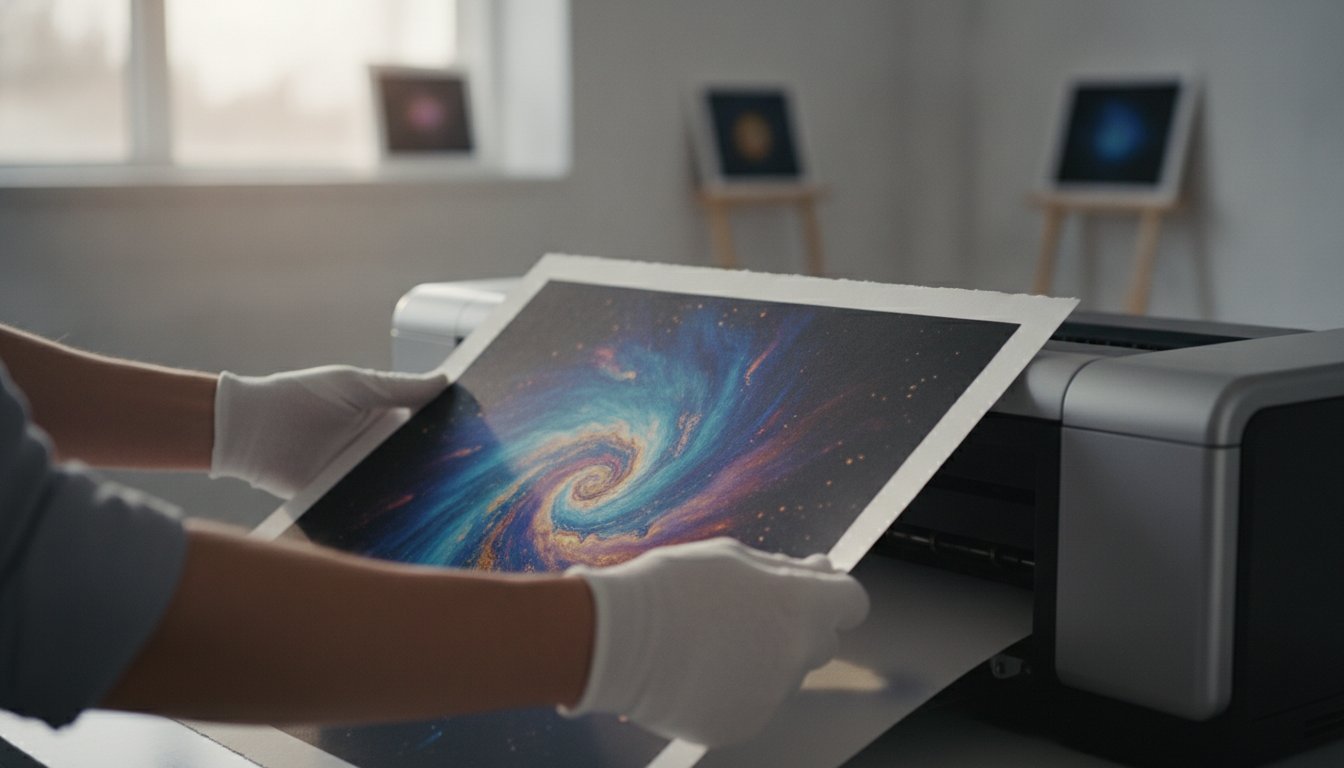
Tag: Museum Quality

Understanding Art Print Quality: A Curator’s Guide to Fine Art Standards

Have you ever wondered why a photograph displayed in a gallery possesses a luminous, almost tactile depth that seems impossible to replicate at home? It’s a common frustration for collectors who fear that a prized acquisition might arrive looking pixelated or, worse, begin to yellow and fade within a few short years. Truly understanding art print quality requires looking beyond the image itself to the invisible alchemy of paper, ink, and artisanal precision.

We recognize that deciphering terms like Giclée, archival pigment, and GSM often feels like learning a hidden language. You deserve the certainty that your investment will remain a vibrant piece of history for decades to come. This guide reveals the technical and artisanal hallmarks that distinguish a museum-grade fine art print from a standard reproduction. We will explore the essential trinity of source integrity, archival chemistry, and professional finishing; this knowledge ensures you can read any product specification with the discerning eye of a seasoned gallery expert.

Key Takeaways

  • Master the distinction between commercial 4-colour printing and the 12-colour Giclée pigment systems that guarantee a lifespan of over 100 years.
  • Learn to identify premium material ingredients, specifically why 300gsm cotton rag paper remains the undisputed benchmark for tactile and visual depth.
  • Refine your approach to understanding art print quality by exploring why source integrity, especially direct access to historical archives, dictates the final visual impact.
  • Understand the vital role of bespoke framing in preserving your collection; learn how UV-protective glass prevents the irreversible bleaching of fine art.
  • Discover the curatorial difference of artisanal production where the human eye, rather than an automated factory, ensures every piece meets museum standards.

The Fundamental Shift: Fine Art Prints vs. Standard Posters

To the untrained eye, a print might seem like a simple reproduction. However, the gulf between a commercial poster and a museum-grade print is vast. It’s the difference between a fleeting decorative item and a legacy piece. When you’re understanding art print quality, you must first recognize that fine art prints are engineered for permanence. While a standard poster may begin to fade or yellow within five short years, a true archival print is designed to remain pristine for over a century. This isn’t just a marketing claim; it’s a result of rigorous material science.

This durability stems from the use of acid-free substrates. Over time, the lignin found in standard, wood-pulp paper reacts with light and oxygen. This reaction causes the “browning” or “foxing” that ruins lesser works. Fine art standards require materials that are chemically stable and PH-neutral. This ensures the paper remains as crisp and white as the day it was struck, providing a stable foundation for the imagery it holds.

What is a Giclée Print?

The term Giclée, derived from the French word gicler meaning “to spray,” represents the pinnacle of digital reproduction. Unlike the basic 4-colour CMYK process used by high-street commercial printers, a Giclée printer utilizes a sophisticated 12-colour pigment system. This allows for a vastly expanded colour gamut and incredibly smooth graduations. By understanding the printmaking process through this lens, collectors can appreciate how archival pigment inks provide a depth of tone that standard dye-based inks cannot match. The “dot gain” is meticulously controlled, preventing the pixelation that often plagues mass-produced prints.

The Aesthetic Impact of Archival Materials

The emotional impact of a fine art print is often found in its relationship with light. Premium papers, often crafted from 100% cotton rag, possess a natural texture that absorbs light rather than reflecting it harshly. This creates a “luminous” quality, which is particularly vital for capturing the subtle silver and charcoal tones in black and white photography. High-quality papers avoid “optical brighteners,” which are chemical additives that can break down and cause the art to shift colour over time. When you’re understanding art print quality, you’ll notice that museum-grade prints have a tactile, three-dimensional presence that makes the image feel alive, unlike the flat, plastic look of a standard poster.

The Materiality of Art: Understanding Paper and Ink Chemistry

The true soul of a museum-grade piece lies in its molecular composition. While the image captures the eye, the physical materials ensure the work endures. Understanding art print quality requires an appreciation for the delicate balance of paper and ink chemistry. Standard prints often rely on dye-based inks, which are essentially liquid stains. These are highly vulnerable to UV degradation, causing vibrant reds and deep blues to vanish within years. In contrast, archival pigment inks are composed of solid particles of mineral or synthetic origin. These particles sit on the surface of the paper rather than soaking in, resisting the “bleaching” effect of sunlight and ensuring the work remains a permanent fixture in your home.

The choice of surface finish further defines the visual narrative. A Lustre finish provides a gentle sheen that enhances contrast and saturation without the harsh reflections of high gloss. Matt surfaces offer a sophisticated, reflection-free viewing experience, ideal for spaces with abundant natural light. For those seeking a classic, historical aesthetic, a Pearl finish mimics the subtle glow of traditional gelatin-silver prints, adding a layer of nostalgic elegance to the imagery.

The Weight of Quality: Why GSM Matters

Weight is a silent indicator of prestige. In the art world, we measure this in Grams per Square Metre (GSM). A 150gsm poster feels fragile, almost disposable. However, the gallery standard is 300gsm or higher. This card-like stability is essential for large-format fine art photography. Heavier paper is not merely about a premium feel; it provides the structural integrity needed to prevent “cockling.” This unsightly rippling occurs when thinner papers expand and contract in response to changes in humidity, a flaw that can ruin the presentation of a framed work.

Cotton Rag: The Gold Standard for Collectors

When curators discuss the “ingredient list” of a print, cotton rag is the undisputed gold standard. Unlike standard papers made from wood pulp, cotton rag is naturally acid-free and pH neutral. It does not contain the lignin that causes cheaper prints to turn brittle and brown. The texture of cotton rag is deeply tactile, possessing a soft, painterly dimension that draws the viewer in. It is this purity that allows museum curators to preserve historical works for centuries. By understanding art print quality through the lens of these premium substrates, you can invest with the confidence that your collection is built on a foundation of permanence. You might find yourself drawn to the tangible excellence of our hand-selected archives, where every piece is struck on these very standards.

Source Integrity: Why Provenance Dictates Visual Quality

The true essence of a masterpiece is often decided long before the printer is ever engaged. While many collectors focus on the technical specs of the output, understanding art print quality requires a deeper investigation into the provenance of the source material. In the curatorial world, we adhere to the “Garbage In, Garbage Out” rule. A high-resolution scan of a poor, third-party copy will never possess the soul of a print struck directly from the original negative. Authentic source integrity ensures that the grain structure, depth of field, and subtle light transitions remain exactly as the artist intended.

Working with official archives, such as Getty Images, provides a significant advantage that mass-market retailers simply cannot replicate. For example, the iconic work of Terry O’Neill or the “Technicolor” vibrancy of the Slim Aarons collection relies on access to the original transparencies. These physical artifacts hold a wealth of visual information that is lost in subsequent generations of copies. When these details are captured correctly, they require an archival-quality fine art paper to translate that inherited brilliance into a physical object that commands attention in a room.

Original Archive Access vs. Third-Party Scans

The process of creating a premium print begins with scanning original 8×10 transparencies at immense resolutions. This method captures microscopic details that third-party scans often miss, resulting in a clarity that feels almost three-dimensional. Unauthorized or “bootleg” prints frequently appear muddy, lacking the critical shadow detail that defines high-end photography. By securing direct access to these historical archives, we ensure that every tonal graduation is preserved, maintaining the prestigious standard that serious collectors expect. This level of integrity is what separates a mere poster from a guardian of photographic heritage.

The Truth About DPI and Large Format Printing

A common myth in the digital age is that 300 DPI is a universal standard for quality. While this may suffice for small prints, large-scale wall art demands a much more sophisticated approach to resolution. Relying on interpolation, or digital upscaling, to enlarge an image can ruin the crispness of a Terry O’Neill portrait, introducing soft edges and digital artifacts. Native resolution is the inherent detail captured by the original camera lens at the moment of exposure. Understanding art print quality means recognizing that no amount of digital manipulation can replace the raw, authentic detail found in the original source material. When an image is printed at its true scale—often requiring the precision and equipment of a large format expert like Banner 4 Sale—the result is a sharp, evocative piece that stands up to the closest inspection.

Preservation and Presentation: The Role of Bespoke Framing

The pursuit of excellence doesn’t end when the pigment hits the paper. In fact, a high-quality print is only as secure as the architecture protecting it. While we’ve discussed the molecular stability of cotton rag and archival inks, these elements remain vulnerable to external stressors if housed in inferior framing. Truly understanding art print quality involves recognizing that the frame is not merely a decorative border but a functional shield. A museum-grade print is a masterpiece in waiting; its final form is dictated by the vessel that holds it.

Standard, off-the-shelf frames often utilize wood-pulp materials that contain lignin and other acidic compounds. Over time, these chemicals migrate into the art, causing irreversible staining and “burn” marks. We treat every piece with a curatorial “Seal of Quality,” utilizing bespoke, hand-finished frames that prioritize preservation alongside aesthetic elegance. This ensures the chemical interaction between the frame and the print remains neutral, protecting the integrity of the work for decades.

UV Protection and Optical Clarity

Light is both the creator and the destroyer of photography. Standard glass offers little resistance to ultraviolet rays, which act as a slow-motion bleach on even the most robust pigment inks. In sunlit rooms, this exposure leads to a loss of tonal range and vibrancy. Museum-grade UV acrylic or specialized anti-reflective glass acts as a high-factor “sunscreen” for your photographic investment. This clarity is especially vital for black and white pictures, where the preservation of deep blacks and subtle grey gradients is essential to maintaining the work’s emotional impact. High-end glazing ensures that the only thing you see is the art itself, free from distracting reflections.

Acid-Free Mounting and Spacers

The “hidden” threat to longevity often lies behind the print. Professional curators insist on acid-free, conservation-grade mounting to prevent the browning associated with cheap materials. We often distinguish between “dry mounting,” which flattens the print for a perfectly smooth finish, and “hinge mounting,” which allows the paper to breathe and move naturally with atmospheric changes. Another critical component is the use of spacers. These small, invisible inserts ensure the print never touches the glass directly. Without spacers, condensation can trap moisture against the ink, causing the paper to stick or “cockle.” Bespoke framing is a structural necessity that ensures your art remains a lasting piece of history. Experience the difference of our Bespoke Framing Service, where artisanal craftsmanship meets museum standards.

The Galerie Prints Standard: Curating Excellence in London

At Galerie Prints, we believe that understanding art print quality is not just a technical exercise; it’s an appreciation of the human touch. While much of the industry leans toward high-volume, automated “print-on-demand” factories, we maintain a steadfast commitment to artisanal production. Every print that leaves our studio is treated as a museum object. This means we don’t just hit a button and hope for the best. We employ a meticulous “Human Eye” check at every stage, ensuring that the tonal balance and detail meet our exacting standards before any work is signed off for delivery.

Our position as a guardian of photographic heritage is built on exclusive access to the world’s most prestigious archives. Whether it’s the sun-drenched poolside scenes of Slim Aarons or the intimate celebrity portraits of Terry O’Neill, these works are struck from the finest source materials available. When you acquire a piece from us, you aren’t just buying a decoration; you’re securing a lasting piece of history that has been handled with the reverence it deserves.

Artisanal Craftsmanship in the Heart of London

Our master printers and framers operate with a localized expertise that only decades of experience can provide. Hand-finishing is a cornerstone of our process. Whether it’s the precise cut of a conservation mount or the careful alignment of a bespoke frame corner, these details can’t be replicated by a machine. Our London gallery heritage informs every choice we make, from the specific texture of our archival papers to the weight of our hand-selected timber frames. This dedication to craft ensures that each piece possesses a tactile quality that commands attention in any room.

Building Your Collection with Confidence

Investing in art should be an act of joy, supported by the knowledge that you’re acquiring something of genuine value. When you look for authentic cinema lobby cards or limited edition prints, you’re looking for a tangible connection to a bygone era. Buying from a gallery that prioritizes source integrity provides long-term security for your collection. Understanding art print quality means knowing that your piece has been crafted to survive the test of time, both physically and aesthetically. We invite you to explore our curated archives and discover a world where historical significance meets modern elegance.

Crafting Your Legacy: The Final Step in Curating Your Collection

True art is an investment in time. By prioritizing archival chemistry and the integrity of the original source, you ensure your collection remains as evocative tomorrow as it is today. Mastering the nuances of understanding art print quality allows you to transform a home into a gallery of enduring significance. You now possess the knowledge to distinguish between a temporary reproduction and a museum-grade masterpiece that will withstand the passing decades.

We invite you to begin this journey with a partner who shares your reverence for photographic heritage. As official partners of the Getty Images Gallery and specialists in the Slim Aarons and Terry O’Neill archives, we apply these rigorous standards to every piece we strike. From our bespoke hand-finished framing in London to our selection of premium cotton rag papers, we ensure every detail is handled with curatorial precision. Explore our curated collections of museum-grade Fine Art Prints and discover the difference that artisanal dedication makes. Your walls deserve nothing less than a lasting piece of history.

Frequently Asked Questions

What is the difference between a Giclée print and a digital C-type print?

A Giclée print utilizes a high-precision inkjet process with archival pigment inks, whereas a digital C-type print is a light-sensitive photographic paper developed through traditional chemical processes. Giclée prints generally offer a superior colour gamut and significantly greater longevity. Collectors often prefer Giclée for its painterly texture on matte papers; conversely, C-type is favoured for its continuous tone and “true photograph” aesthetic on gloss or lustre surfaces.

How can I tell if a print is truly “archival” when shopping online?

Truly archival prints are defined by their ingredients; specifically, the use of 100% cotton rag or alpha-cellulose paper and pigment-based inks. When shopping online, look for explicit mentions of these materials rather than vague terms like “premium paper.” A reputable gallery will provide detailed specifications regarding the paper weight and ink system. Understanding art print quality means identifying these technical hallmarks to ensure your acquisition won’t degrade over time.

Why does the GSM of the paper matter if I am framing the art?

The GSM (Grams per Square Metre) dictates the structural integrity of the paper, which is essential to prevent “cockling” or rippling within the frame. Even when secured behind glass, thinner papers react to atmospheric humidity by expanding and contracting. A heavier weight, such as 300gsm or higher, provides the rigidity required to maintain a perfectly flat presentation. This stability is a key component in understanding art print quality for large-format displays.

Will my fine art print fade if it is placed in a bright room?

While archival pigment inks are exceptionally lightfast, any artwork will eventually suffer from prolonged exposure to direct, intense sunlight. The best defense is museum-grade glazing with UV protection, which acts as a barrier against the rays that cause bleaching. Placing your art on a wall that receives indirect light is always preferable. This curatorial approach preserves the vibrancy of the “Technicolor” tones found in archives like the Slim Aarons Collection.

What is the best way to clean the glass of a framed art print?

You should use a soft, lint-free microfibre cloth and a specialized ammonia-free glass cleaner to maintain the optical clarity of your frame. Never spray the cleaning solution directly onto the glass, as liquid can seep under the rebate and damage the mount or the print itself. Instead, mist the cloth lightly before gently wiping the surface. This careful maintenance ensures that the intricate details of your photographic investment remain visible and pristine.

Are limited edition prints higher quality than open editions?

Limited edition prints are not inherently higher in material quality than open editions, but they often carry a higher curatorial standard. These editions are frequently produced under the artist’s or estate’s supervision, ensuring the colour balance and contrast are perfect. The value lies in their scarcity and documented provenance. At Galerie Prints, we apply the same museum-grade production standards to all our works, from Terry O’Neill portraits to vintage movie posters.

How do I know if the resolution of a print is high enough for a large wall?

High resolution for large-scale art depends on the native resolution of the original source, such as an 8×10 transparency, rather than just the digital DPI. If a print is enlarged beyond its native capacity, you’ll notice soft edges or a “muddy” appearance in the shadows. For a large statement wall, the source must be a high-fidelity scan of an original negative. This ensures the grain structure remains crisp even at significant dimensions.

What does “acid-free” actually mean for the lifespan of my art?

Acid-free refers to materials that are PH-neutral and free from lignin, a natural component of wood pulp that causes paper to turn yellow and brittle. Using acid-free mounts and papers is a non-negotiable requirement for historical preservation. Without this standard, the chemical breakdown of the substrate would eventually destroy the image from the inside out. This commitment to chemical purity is what allows a fine art print to last for over a century.

Choosing the Right Paper for Photography Prints: A Curator’s Guide to Fine Art

The moment a light-captured memory transitions from a negative to a physical object is the most critical stage in the life of an artwork. You might possess a rare Slim Aarons or a Terry O’Neill masterpiece, but without the correct substrate, the soul of the image remains trapped. Choosing the right paper for photography prints is the final, definitive act of curation that separates a temporary decoration from a lasting piece of history. With 70% of professional photographers now insisting on premium archival papers, the distinction between a common print and a museum-quality investment has never been more pronounced.

It’s natural to feel a sense of trepidation when faced with technical terms like giclée or silver gelatin, especially when you fear a finish that looks synthetic or yellows within a decade. You deserve the confidence that your collection will maintain its brilliance for a century. This guide will demystify the latest ISO 11108 standards established in April 2025 and explore the bespoke craftsmanship of our London darkroom. We’ll examine how specific grammages and pH-neutral fibers transform a simple image into the world’s finest photography.

Key Takeaways

  • Understand how the tactile nature of paper transforms a fleeting image into a museum-quality legacy by influencing light absorption and viewer engagement.
  • Learn to navigate the nuances of gloss, matte, and lustre finishes to either maximize color saturation or achieve a soft, painterly aesthetic for your art.
  • Master the art of choosing the right paper for photography prints by distinguishing between the vibrant accuracy of giclée and the timeless depth of silver gelatin.
  • Discover how to align your paper selection with specific subject matter, ensuring iconic lifestyle shots radiate while historical portraits retain their vintage soul.
  • Gain insight into the bespoke standards of a professional London darkroom where hand-printed techniques preserve the heritage of the world’s finest photography.

The Curatorial Perspective: Why Paper Choice Defines Fine Art

A digital file is a transient ghost, existing only in pixels and light. To transform that file into a physical legacy, one must treat the substrate with the same reverence as the subject matter itself. Choosing the right paper for photography prints is not merely a technical decision; it’s the final act of curation that breathes life into photographic heritage. While a standard commercial poster might rely on plastic-coated surfaces that reflect light harshly, a fine art print absorbs and interacts with its environment. This interaction defines how a viewer engages with the piece, whether it’s the sun-drenched poolside of a Slim Aarons original or the moody, high-contrast shadows of a 1960s London portrait.

The distinction between a “poster” and a “fine art” print lies in the chemical and structural integrity of the material. Commercial papers often contain optical brighteners (OBAs) that eventually turn yellow or brittle. In contrast, archival standards, such as those refined in the ISO 11108 ballot of April 2025, require a foundation that resists the ravages of time and environmental shifts. This choice is also the silent partner in professional bespoke framing. A high-quality paper provides the structural stability needed to sit perfectly behind museum glass, ensuring the artwork remains flat and vibrant for decades.

Defining Fine Art Paper

True fine art paper is defined by its composition and longevity. Unlike mass-produced wood pulp papers, these substrates are crafted from cotton rag, alpha-cellulose, or even linen and hemp. The history of photographic paper shows a steady evolution toward these acid-free bases, which prevent the “browning” effect seen in older, cheaper prints. The weight of the paper is measured in GSM (Grams per Square Metre). For a print to possess true “heft” and presence, it typically requires a weight of at least 250 to 310 GSM. Archival paper is a material designed to last over 100 years without degradation.

  • Cotton Rag: The gold standard for texture and durability, often used for the most prestigious gallery collections.
  • Alpha-Cellulose: High-grade wood pulp fibers that have been purified to remove lignin, offering a smooth, professional finish.
  • Acid-Free Bases: Essential for preventing chemical reactions that destroy the image over time.

The Tactile Experience of Art

The world’s finest photography deserves more than a standard commercial finish because art is a sensory experience. Surface texture creates a three-dimensional depth in two-dimensional imagery, allowing light to catch the grain of the paper rather than bouncing off a plastic-like coating. There’s a psychological weight to a heavy, textured print. When a collector holds a bespoke print from our London darkroom, the physical density of the paper immediately communicates value and permanence. It’s a tactile promise that the investment is secure. Choosing the right paper for photography prints ensures that the final object feels as significant as the history it represents.

Decoding Finishes: Gloss, Matte, and the Nuance of Lustre

The surface finish is where the photograph finally meets the light of your home. Choosing the right paper for photography prints requires a sophisticated understanding of how light interacts with different textures. It isn’t just about personal preference; it’s about the specific environment where the art will live. Whether you’re illuminating a hallway with soft ambient light or a grand salon with floor-to-ceiling windows, the finish you select determines whether the image sings or remains hidden behind a veil of reflection.

The Visual Characteristics of Glossy Prints

Glossy papers are celebrated for their ability to achieve a high D-max, a technical term for the deepest, richest blacks possible in printing. This maximum density creates a striking contrast that makes vibrant colors and sharp details pop with an almost three-dimensional intensity. It’s the natural choice for high-fashion imagery and modern architectural photography where precision is paramount. However, this impact comes with a trade-off. Glossy surfaces are notoriously sensitive to fingerprints and can act like a mirror in rooms with heavy natural light. Expert advice on choosing the right paper for photo prints often highlights that while gloss offers the most “punch”, it requires carefully controlled lighting to avoid distracting hot spots.

The Sophistication of Matte and Smooth Finishes

Matte finishes offer a zero-glare experience, which is why they’re the preferred choice for museum displays and elite gallery walls. These papers, particularly those crafted from 100% cotton rag, possess a “velvet” or “toothed” feel that adds a tactile, painterly quality to the work. This texture softens transitions and creates a sense of depth that feels organic rather than synthetic. This finish is especially effective when showcasing the timeless allure of black and white pictures, as the absence of shine allows the viewer to focus entirely on the delicate tonal shifts in the shadows and highlights.

For those seeking a professional middle ground, Lustre or Satin finishes provide the color saturation of gloss without the “plastic” shine. Lustre features a fine, pebbled texture that effectively hides minor handling marks and breaks up direct reflections. If your gallery wall is positioned opposite a south-facing window, a matte or lustre finish is essential to prevent the image from being lost in a wash of white light. Conversely, if you use dedicated gallery spotlights, a lustre finish can catch the light beautifully without creating a blinding glare. Consider how your unique lighting setup will interact with your chosen piece before you browse our curated collections for your next investment.

Archival Integrity: Giclée vs. Silver Gelatin Standards

The permanence of a photograph relies entirely on the chemical marriage between the image-forming substance and its base. When choosing the right paper for photography prints, understanding the distinction between modern digital methods and historical chemical processes is vital for establishing the work’s provenance. A true fine art print must be acid-free and lignin-free; these are non-negotiable standards that prevent the yellowing and structural decay often seen in commercial reproductions. By selecting materials that meet the ISO 9706 standard for permanence, collectors ensure their investment remains a pristine piece of history for a century or more.

What is a Giclée Print?

Giclée printing represents the pinnacle of digital reproduction, transitioning the artistry of the darkroom into a high-fidelity inkjet process. Unlike standard desktop printing, a genuine giclée requires a wide-format printer using at least 8 to 12 pigment-based ink cartridges. These inks are prized for their archival stability and exquisite tonal range, offering a depth of color that dye-based alternatives cannot match. This process has revolutionized the fine art photography market, allowing for breathtaking detail and color accuracy on heavy, archival substrates. For a print to be certified as giclée in 2026, it must utilize a source file of at least 300 DPI and be rendered on acid-free paper, ensuring a lifespan that exceeds 100 years under gallery conditions.

The Heritage of Silver Gelatin

For the serious collector, silver gelatin remains the undisputed gold standard for black and white photography. This is a purely analog, chemical process where light-sensitive silver salts are suspended in a gelatin layer on fibre-based paper. Unlike the layered ink of a giclée, the silver particles are embedded within the paper itself, creating a unique “glow” and a three-dimensional quality that digital methods struggle to replicate. Many of the world’s most iconic images, including the legendary archives of Terry O’Neill, were born from this meticulous darkroom legacy.

At Galerie Prints, we honor this tradition by offering prints that are hand-printed in our London darkroom from original negatives. These silver gelatin works are not just copies; they’re physical artifacts of the photographic process. To maintain their integrity, these prints should be stored in environments that pass the Photographic Activity Test (P.A.T.), ideally at 68°F with 50% relative humidity. This dedication to artisanal quality ensures that when you’re choosing the right paper for photography prints, you’re opting for a medium that carries the weight of photographic heritage in every fibre.

The Subject-Matter Strategy: Matching Paper to the Image

The narrative of a photograph is often told through the texture of its surface. Choosing the right paper for photography prints is a strategic alignment between the artist’s intent and the physical medium. An architectural study demands a different tactile response than a 1950s poolside scene. If you’re displaying a piece from the Slim Aarons collection, the goal is to replicate the aspirational luxury of a bygone era. These vibrant lifestyle images, defined by their vivid cyans and sun-soaked skin tones, thrive on lustre or gloss finishes. Lustre paper effectively balances the sun-drenched saturation of Aarons’ work while maintaining a subtle sheen that mimics the high-end editorial spreads of original 1960s magazines.

The ‘Slim Aarons’ Aesthetic

Capturing the essence of “poolside glamour” requires a substrate that can handle intense color without looking synthetic. A slight sheen is vital here. It catches the light just enough to evoke the shimmering surfaces of water and polished mid-century decor. Lustre paper provides this delicate balance, offering the punch of a glossy finish while avoiding the harsh reflections that can obscure the fine details of a crowded social scene. This choice ensures the aspirational quality of the work remains the focal point of the room.

Vintage and Archival Archives

Historical portraits and mid-century archives require a more nuanced approach. When dealing with original negatives from the golden age of Hollywood, a smooth matte or fibre-based paper is essential to preserve the authentic film grain. Using a standard commercial finish on these works can introduce an “artificial” digital sharpness that feels disconnected from the image’s history. Curators often look at the paper’s “whiteness” as well. While “bright white” papers are popular for modern graphics, they often contain optical brighteners that can look too clinical for a vintage portrait. A natural white or cream-based paper offers a warmer foundation that feels historically accurate.

Monochrome masterpieces benefit from a similar level of scrutiny. To deepen the blacks in black and white pictures, a semi-gloss or pearl finish provides a rich D-max that matte cannot always achieve. This adds a luminous quality to the shadows, creating the three-dimensional depth prized by serious collectors. Cinema heritage, particularly lobby cards and vintage posters, requires a sturdier substrate that reflects the utilitarian yet glamorous nature of movie house memorabilia. By matching the paper to the subject, you aren’t just printing an image; you’re honoring its soul. Explore our curated collections to find the perfect archival pairing for your next acquisition.

The Galerie Prints Standard: Bespoke Craftsmanship

While understanding the technical nuances of substrates is essential, the final result depends entirely on the hand that guides the process. Choosing the right paper for photography prints is only the first step in a much larger journey toward creating a physical legacy. At Galerie Prints, we don’t view paper as a commodity; we treat it as a vital component of the artwork’s soul. Our commitment to excellence is anchored in our London darkroom, where the transition from a historic negative to a gallery-grade masterpiece is handled with an artisanal touch that mass-production facilities cannot replicate. We operate as guardians of photographic heritage, ensuring that every piece we produce meets the most stringent archival standards of 2026.

Our Hand-Printing Process

Every print that leaves our facility is a testament to London-based craftsmanship. We don’t rely on automated, high-volume workflows that sacrifice depth for speed. Instead, our experts curate specific archival papers for each collection, ensuring a bespoke match between the artist’s vision and the final substrate. By maintaining a strict adherence to the ISO 11108 standards balloted in April 2025, we ensure that every fibre-based substrate possesses the folding strength and chemical purity required for a century of display. This meticulous attention to detail provides a level of provenance and quality that makes our offerings the world’s finest photography. It’s a reassuring seal of quality for collectors who demand permanence.

  • Hand-Printed Excellence: Each work is individually crafted in our London darkroom to ensure tonal perfection.
  • Curated Substrates: We select papers that specifically enhance the historical narrative of the photographer, from the glamour of Slim Aarons to the grit of mid-century street scenes.
  • Archival Security: We use only acid-free, lignin-free materials that have passed the Photographic Activity Test (P.A.T.).

The Final Touch: Framing Your Choice

The synergy between paper choice and bespoke framing is what ultimately defines the viewer’s experience. A museum-quality paper requires a protective environment to maintain its integrity over time. Our framing service utilizes museum-grade glass with advanced UV protection, shielding the delicate pigments or silver particles from environmental degradation. This holistic approach ensures that your investment is protected from the moment it’s mounted. Choosing the right paper for photography prints is a decision that our curators are happy to assist with, providing a tactile understanding of how different finishes will look in your unique space.

When you acquire a piece from us, you aren’t just buying a decoration; you’re investing in a ready-to-hang piece of history. Whether it’s a vibrant C-type print or a deep, evocative silver gelatin work, the combination of our hand-printing and bespoke framing creates an object of lasting beauty. We invite you to consult with our experts to ensure your next art acquisition is perfectly tailored to your aesthetic and archival needs. Discover the world’s finest photography and begin your collection with the confidence of museum-quality craftsmanship.

Elevate Your Collection to Museum Standards

Your journey through the nuances of surface finishes and archival standards reveals a fundamental truth: the substrate is the final brushstroke of the artist. By mastering the balance between light-absorbing matte and high-contrast lustre, you ensure that every acquisition reflects its true historical soul. Choosing the right paper for photography prints is the bridge between a simple image and a lasting piece of history that remains vibrant for a century. Whether you’re drawn to the three-dimensional depth of silver gelatin or the exquisite tonal range of giclée, the material you select anchors the work’s place in your legacy.

At Galerie Prints, we honor this heritage by providing exclusive access to the official archives of Slim Aarons and Terry O’Neill. Every piece is hand-printed in our London darkroom and paired with bespoke framing using museum-grade materials to guarantee its permanence. You’re invited to explore our curated collections on museum-quality paper and find a masterpiece that speaks to your unique aesthetic. Transform your space with a curated window into the golden age of glamour, knowing your investment is protected by artisanal excellence and timeless craftsmanship.

Frequently Asked Questions

What is the best paper for black and white photography prints?

Silver gelatin fibre-based paper remains the gold standard for black and white collectors due to its unique chemical depth and three-dimensional quality. For digital giclée reproductions, a heavy 310 GSM cotton rag with a smooth matte finish provides the most authentic tonal transitions. This combination ensures that deep blacks remain rich and velvety without the interference of surface glare or synthetic reflections.

Does the weight (GSM) of the paper affect the quality of the image?

Weight directly influences the physical presence and long-term stability of the artwork. While it doesn’t change the pixel resolution, choosing the right paper for photography prints with a grammage of 250 to 310 GSM prevents the substrate from warping or rippling behind glass. This structural integrity is essential for maintaining the flat, pristine surface required for professional museum-quality framing and a luxury feel in the hand.

What is the difference between acid-free and archival paper?

Archival paper is a more rigorous standard that encompasses acid-free properties while adding requirements for permanence. While acid-free paper simply has a neutral pH, archival substrates must also be lignin-free and meet ISO 9706 standards for durability. This distinction is what guarantees a print will resist yellowing or becoming brittle for over 100 years, making it a secure investment for serious art collectors.

Should I choose glossy or matte for a photo with a lot of detail?

Glossy finishes are superior for maximum sharpness and contrast in high-detail imagery like modern architecture or high-fashion. The smooth surface allows light to reflect directly, making fine lines and intricate patterns appear more defined to the eye. However, if the detail is meant to feel painterly or soft, a smooth matte paper offers an elegant alternative that highlights texture without the distraction of surface hotspots.

Can the wrong paper choice cause my photography print to fade?

Yes, inferior papers containing wood pulp or optical brighteners will inevitably yellow and cause the image to lose its vibrancy. Choosing the right paper for photography prints that is certified acid-free and lignin-free is the only way to ensure the work doesn’t degrade. Archival pigment inks paired with these high-grade substrates are what create the 100-year lifespan expected of the world’s finest photography.

What does ‘cotton rag’ mean in fine art printing?

Cotton rag refers to paper crafted from 100% cotton fibres rather than processed wood pulp. These fibres are naturally stronger and more durable, providing a luxury tactile experience and a “toothed” texture that holds ink beautifully. It’s the preferred medium for our London darkroom when producing the most prestigious editions, as it offers a sense of permanence and prestige that commercial papers lack.

Is lustre paper the same as semi-gloss?

Lustre is a specific type of semi-gloss finish that features a subtle, pebbled texture. While both offer more vibrancy than matte, lustre is specifically designed to hide handling marks and fingerprints while breaking up direct light reflections. This makes it an ideal professional choice for iconic lifestyle shots where color saturation is vital but distracting glare must be minimized for the viewer.

Why do galleries prefer matte finishes for large-scale displays?

Galleries prefer matte finishes to eliminate the distracting reflections caused by powerful overhead spotlights. A matte surface allows a large-scale piece to be viewed clearly from any angle in the room without hotspots of light obscuring the image. This finish encourages the viewer to linger on the photographic narrative rather than battling with the physical shine of the substrate.

Archival Photo Prints for Sale: The Connoisseur’s Guide to Fine Art Photography

A photograph that yellows within a single decade isn’t an heirloom; it’s a decaying memory. When searching for archival photo prints for sale, the discerning collector often faces the unsettling reality that many commercial reproductions fail to meet the ISO 9706 standard for permanence. You likely believe that art should be a lasting fixture of your home’s legacy, yet the distinction between a fleeting digital poster and a genuine investment piece often feels obscured. It’s a valid concern for anyone seeking to capture the golden age of glamour without the fear of environmental degradation.

This guide reveals the rigorous technical standards and curatorial provenance that transform a simple photograph into a museum-quality archival investment. You’ll learn how the meticulous chemistry of our London darkroom and the use of silver gelatin processes ensure your acquisition retains its depth for generations. We will explore the essential specifications of fine art photography and the markers of verified authenticity, empowering you to curate a sophisticated aesthetic with the world’s finest photography.

Key Takeaways

  • Understand the technical evolution of permanence, from the precision of pigment-based Giclee to the timeless prestige of hand-printed Silver Gelatin.
  • Learn to identify authentic archival photo prints for sale by evaluating provenance and the curatorial standards that separate fine art from generic imagery.
  • Discover the essential role of bespoke framing and UV-protective glass in maintaining the museum-quality integrity of your photographic collection.
  • Explore how to build a meaningful investment by sourcing from the world’s finest archives, including iconic works that capture the golden age of glamour.

Understanding Archival Quality: Beyond the Standard Print

Archival quality isn’t merely a marketing term; it represents a rigorous technical commitment to the permanence of visual history. For those seeking archival photo prints for sale, the distinction lies in the sophisticated chemistry and substrate of the work. While standard chromogenic prints often rely on light-sensitive silver halides and organic dyes that inevitably degrade, museum-grade archival media utilize stable pigments and acid-free bases. This technical superiority ensures that the image retains its original depth and tonal range for centuries rather than decades. Serious art collectors and international galleries prioritize these standards because they view photography as a tangible investment. Beyond the financial aspect, there’s a profound emotional weight in preserving a captured moment. It’s about ensuring a 1960s Slim Aarons poolside scene remains as vibrant for your grandchildren as it is today.

The “100-Year” Rule: How Longevity is Measured

Longevity in the fine art world is quantified through accelerated aging tests that measure lightfastness and resistance to atmospheric pollutants like ozone. Archival standards are meticulously designed to prevent the brittle yellowing and color shifting seen in mass-market posters, which often begin to degrade within 60 months. This level of preservation is what separates a disposable image from a legacy piece. The ISO 9706 standard defines archival permanence as the requirement for paper to be acid-free, with a minimum alkali reserve equivalent to 2% calcium carbonate to neutralize environmental acids over time. This scientific benchmark ensures the work survives the passage of time without the structural failure common in lesser materials.

Archival vs. Non-Archival: A Visual Comparison

The primary difference between a fleeting image and a lasting masterpiece lies in the ink system. Dye-based inks, common in standard commercial printing, are molecularly small and highly vulnerable to UV light, causing colors to “bleed” or vanish. In contrast, pigment-based systems use solid particles of color that sit on the surface of the paper, offering unparalleled stability. The paper choice is equally critical for the structural integrity of the piece. High-quality fine art photography uses alpha-cellulose or cotton rag fibers rather than wood pulp, which contains lignin that causes browning. When evaluating various photographic print types, look for markers of excellence such as Giclée or Silver Gelatin processes. These methods, especially when hand-printed in our London darkroom, signify a print’s provenance and its status as a piece of “the world’s finest photography.”

  • Pigment Stability: Resists fading under standard gallery lighting for 100 to 200 years.
  • Acid-Free Substrates: Prevents the “foxing” or brown spotting associated with aging paper.
  • Environmental Resistance: Formulated to withstand fluctuations in humidity and temperature.

Investing in archival photo prints for sale is a decision to own a piece of history that won’t fade into obscurity. By choosing museum-grade materials, you’re securing a visual narrative that maintains its prestige and clarity, serving as a permanent window into the golden age of glamour and beyond.

The Science of Permanence: Giclee, Silver Gelatin, and Acid-Free Media

To own a masterpiece is to hold a fragment of history. When discerning collectors browse archival photo prints for sale, they look beyond the immediate visual impact to the molecular level of the medium. Stability defines true fine art. A photograph should not merely exist; it must endure. This permanence is achieved through a rigorous marriage of 19th-century chemistry and 21st-century precision, ensuring that the “world’s finest photography” remains as vibrant for your grandchildren as it is today.

The Giclee Standard: Pigment vs. Dye

The Giclee process represents the pinnacle of digital reproduction. While standard commercial printers often rely on dye-based inks that fade when exposed to UV light, we utilize 12-color pigment-based systems. These microscopic particles of color sit on the surface of the paper rather than soaking into the fibers, providing a depth and tonal accuracy that remains stable for over 100 years. We select 300gsm cotton rag or alpha-cellulose papers for their tactile, heavy-weight feel. This premium substrate allows for the exquisite reproduction of black and white pictures, capturing every subtle gradient from deep, velvety charcoal to brilliant ivory.

Paper chemistry is the silent guardian of your investment. We ensure every medium is strictly acid-free and lignin-free. Lignin is a natural component in wood pulp that causes paper to yellow and become brittle. By removing it, we guarantee the structural integrity of the print. Following preservation guidelines from the Library of Congress helps maintain these standards, protecting your collection from the environmental degradation that plagues lesser prints.

Traditional Darkroom Craftsmanship

There is a tactile soul in a silver gelatin print that digital methods cannot replicate. For enthusiasts of the golden age of glamour, this traditional process is the ultimate choice for authenticity. Our artisans hand-craft these pieces in our London darkroom, working directly from original negatives. This chemical process involves light-sensitive silver salts suspended in a gelatin layer, creating a physical object where the image is literally part of the paper.

Each silver gelatin print is unique. The subtle signature of the master printer’s hand ensures that no two pieces are identical. This method anchors our collection in a sense of permanence and stability. It’s a bridge to the past, offering a level of provenance that elevates a simple image into a museum-grade artifact. Whether it is a Slim Aarons poolside scene or a gritty street portrait, the artisanal touch of our London-based production acts as a seal of quality. You can explore our curated archives to find a piece that resonates with your personal aesthetic and heritage.

Curation vs. Commodity: Why Provenance Matters in Photography

Provenance serves as the pedigree of a fine art photograph. It’s the documented history that connects a physical print back to the artist’s original vision and the moment of capture. When discerning collectors seek archival photo prints for sale, they’re looking for more than a decorative asset; they’re pursuing a tangible piece of cultural legacy. A generic stock image is a mere commodity, designed for transient use and lacking a narrative pulse. In contrast, a print from a curated archive carries the weight of the original negative and the photographer’s specific intent.

Galerie Prints bridges the gap between these historic archives and modern interiors, ensuring that the world’s finest photography finds its rightful place in contemporary homes. The prestige of owning a work by Terry O’Neill or Slim Aarons can’t be overstated. These masters didn’t just take pictures; they curated the visual language of an entire era. O’Neill’s intimate portraits of 1960s icons and Aarons’ vistas of the international elite offer a level of sophistication that mass-market prints fail to evoke. By sourcing directly from esteemed estates, we ensure every piece retains its soul and its historical integrity.

Investing in Photographic Heritage

Archival prints from established archives hold their value because they’re tethered to significant cultural milestones. The Slim Aarons Collection remains a primary example of this enduring stability. His work isn’t just photography; it’s a blueprint for aspirational luxury. Collectors often start their journey by exploring his sun-drenched poolside scenes and socialite gatherings that defined the 1950s and 60s. To understand the depth of his impact, you can read our Slim Aarons guide, which details how he became the master of the jet-set lifestyle. These prints are assets that endure, much like the meticulous silver gelatin processes used to create them in our London darkroom.

The Curator’s Eye: Selecting Your Piece

Selecting a photograph involves balancing historical weight with your personal aesthetic. It’s a rewarding, deeply personal process. Limited editions are crucial here, as they provide the scarcity necessary for long-term appreciation in the fine art market. While “print-on-demand” sites offer convenience, they lack the soul and technical precision of a gallery-sourced piece. Buying from a dedicated gallery provides a layer of trust and expertise that automated platforms can’t match. We don’t just ship boxes; we provide provenance. Our darkroom specialists treat every negative with reverence, ensuring that your archival photo prints for sale are hand-crafted masterpieces rather than mere digital duplicates. This commitment to the craft is what separates a true collector from a casual buyer.

Preserving Your Investment: Framing and Displaying Archival Art

Securing archival photo prints for sale is an acquisition of a piece of history, but the journey doesn’t end at the point of purchase. To maintain the prestige and physical integrity of a fine art photograph, the collector must transition from buyer to guardian. The framing process is not merely an aesthetic choice. It’s a technical necessity that serves as the final barrier against the slow decay caused by environmental pollutants and light exposure. Without professional intervention, even the most exquisite silver gelatin print can suffer from the elements within a few short years.

Bespoke Framing: The Final Layer of Protection

Professional mounting is vastly superior to DIY solutions because it addresses the hidden threat of “outgassing.” Many commercial frames use acidic backing boards or adhesives that release volatile organic compounds over time. These chemicals cause yellowing and make paper fibers brittle. In contrast, bespoke framing utilizes acid-free, pH-neutral materials and reversible hinging techniques. This ensures the photograph remains untouched by harmful substances. At Galerie Prints, our bespoke framing service provides a ready-to-hang solution that honors the heritage of the work. Whether you choose a sleek, contemporary profile or a classic frame that echoes the 1960s glamour of a Slim Aarons lifestyle shot, our London-based craftsmanship guarantees a museum-standard result.

Glazing is another critical component. Standard glass allows ultraviolet radiation to penetrate, which can cause irreversible fading in as little as 24 months of exposure. We recommend 99% UV-protective glass or museum-grade acrylic. These materials act as a permanent sunscreen for your art, filtering out the spectrum responsible for pigment breakdown while maintaining incredible visual clarity.

Environmental Control for Collectors

The atmosphere of a residence dictates the longevity of a print. Ideally, rooms should stay within a temperature range of 18 to 22 degrees Celsius. Relative humidity is equally vital and should be maintained between 40% and 50% to prevent the expansion and contraction of paper fibers. High-risk zones like kitchens and bathrooms present a dual threat of fluctuating heat and airborne grease or moisture. These conditions encourage mold growth and “cockling,” where the paper develops unsightly waves that are difficult to flatten.

  • Avoid Direct Exposure: Even with high-end UV glass, never hang art where direct shafts of sunlight hit the surface. The concentrated heat can cause localized drying and cracking of the emulsion.
  • Air Circulation: Ensure a small gap exists between the frame and the wall to allow air to flow, preventing moisture traps that lead to foxing.
  • Lighting: Use LED bulbs for gallery lighting. They emit negligible heat and zero UV radiation compared to traditional halogen bulbs.
Protect the world’s finest photography by choosing our professional finishes when you explore archival photo prints for sale today.

Discover the World’s Finest Archival Collections at Galerie Prints

Galerie Prints operates as a dedicated custodian of visual history, bridging the gap between the golden age of glamour and the modern collector’s home. Our curation process is rigorous, ensuring that every piece we offer meets the exacting standards of museum-grade preservation. When you explore our archival photo prints for sale, you aren’t just purchasing a decorative asset; you’re acquiring a piece of cultural heritage. Each work is hand-printed in our London darkroom, a process that preserves the depth, contrast, and soul of the original negative. This commitment to artisanal craftsmanship defines our status as a premier destination for the world’s finest photography.

Our archives span the breadth of the 20th century, capturing the evolution of style, celebrity, and human emotion. From the gritty, high-contrast energy of 1960s London to the sun-drenched vistas of the Mediterranean, our collections provide a comprehensive look at the moments that shaped our visual language. We maintain exclusive relationships with prestigious estates and photographers, ensuring that the provenance of every print is beyond reproach.

The Slim Aarons Lifestyle

The work of Slim Aarons remains a cornerstone of our gallery, embodying a specific brand of aspirational luxury that he famously described as “attractive people doing attractive things in attractive places.” To maintain the luminous quality of his 1950s and 60s poolside scenes, we utilize specific production methods that honor his original vision. Our Aaron Slims reproductions are typically produced as C-Type prints on Fuji Crystal Archive paper. This specific medium is chosen for its ability to render the vibrant turquoise of a Capri swimming pool or the subtle pastels of a Palm Springs estate with breathtaking clarity and longevity.

Rare Collectables and Cinema History

For those whose passions lean toward the silver screen, our cinema and music archives offer unparalleled access to iconic imagery. We feature the legendary work of Terry O’Neill, who captured the raw charisma of stars like David Bowie and Brigitte Bardot throughout his 60-year career. Collectors can also find rare gems from the 1977 Star Wars archives, providing a nostalgic yet sophisticated addition to any interior. Beyond traditional photography, we specialize in the preservation of tactile history. Our Cinema Lobby Cards guide details how these vintage promotional tools have become highly prized archival photo prints for sale among serious investors. Whether you’re drawn to the grain of a silver gelatin print or the lithographic charm of a movie poster, your journey into fine art collecting begins with the expert guidance found at Galerie Prints.

Curating a Legacy of Visual Excellence

Building a collection of fine art photography requires a deep appreciation for the technical mastery found in silver gelatin and giclee processes. True permanence isn’t accidental; it’s the result of rigorous archival standards that protect the integrity of an image for generations. At Galerie Prints, we honor these traditions by hand-printing every piece in our London darkroom. Our status as official partners of the Getty Images Gallery grants us exclusive access to historical archives, ensuring that the provenance of your artwork is as impeccable as its visual impact.

When searching for the finest archival photo prints for sale, the distinction lies in the details of preservation. From the initial selection of acid-free media to our bespoke museum-quality framing, every step is designed to safeguard your investment against the passage of time. You’re choosing more than a decorative element; you’re acquiring a curated piece of history that embodies the sophisticated lifestyle of the 20th century. Explore the world’s finest archival photography at Galerie Prints and find the next iconic addition to your home.

The journey of a collector is one of constant discovery and refined taste. We invite you to step into a world where history and aesthetics converge perfectly.

Frequently Asked Questions

What is the difference between a Giclee print and a regular photo print?

A Giclee print utilizes high-grade pigment inks and acid-free archival papers, whereas a regular photo print often relies on dye-based inks and resin-coated papers that degrade over time. These pigment inks, often applied with 12-color inkjet systems, provide a depth of color and lightfastness that exceeds standard commercial standards. This meticulous process ensures the artwork remains vibrant for generations, making it the preferred choice for those seeking archival photo prints for sale.

How long do archival photo prints actually last before fading?

Archival prints are engineered to last over 100 years under normal indoor lighting conditions before any visible fading occurs. When kept in dark storage or archival portfolios, these prints can maintain their integrity for 200 years or more. This longevity is verified by testing from organizations like Wilhelm Imaging Research, which subjects prints to accelerated light exposure to simulate decades of display.

Does “archival” mean the same thing as “limited edition”?

Archival refers to the physical permanence and quality of the materials, while limited edition signifies the restricted quantity of prints produced from a specific negative or file. A print can be archival without being limited; however, the world’s finest photography typically combines both to ensure lasting value and rarity. For example, a limited edition of 50 ensures your investment remains exclusive while the archival process guarantees its physical survival.

What kind of paper is best for archival black and white photography?

Traditional silver gelatin fiber-based paper remains the gold standard for black and white photography due to its rich d-max levels and deep blacks. For digital archival prints, heavy-weight 300gsm cotton rag papers from mills like Hahnemühle or Canson are ideal. These papers lack optical brightening agents, which prevents the yellowing often seen in cheaper alternatives after 10 to 15 years.

Can I buy archival prints that are already framed and ready to hang?

You can certainly acquire archival prints that arrive bespoke-framed and ready for immediate installation in your home or office. We offer professional framing services in our London workshop, utilizing acid-free mounting boards and UV-protective glass to shield the image. This integrated approach ensures that your archival photo prints for sale are protected from environmental pollutants from the moment they’re delivered.

Why should I buy from a gallery instead of a professional photo lab?

Buying from a gallery provides access to curated collections and a level of quality control that high-street photo labs can’t match. Galleries often hold exclusive rights to original negatives, such as those in the Slim Aarons archive, ensuring every print is an authentic piece of history. While a lab provides a service, a gallery acts as a guardian of the artist’s legacy, offering meticulous hand-printing and verified provenance.

How do I verify the provenance of an archival photo print?

Provenance is verified through a formal Certificate of Authenticity, which includes the photographer’s name, the edition number, and a gallery seal. Many of our prints also feature an embossed stamp or a signature from the estate to confirm their origin. Documentation typically traces the print’s journey from the original negative to our London darkroom, providing a transparent history for collectors and auction houses.

Is it safe to ship large archival prints internationally?

It’s entirely safe to ship large archival prints globally when they’re packaged in heavy-duty, 3mm thick reinforced tubes or custom-built wooden crates. We utilize specialized art couriers who provide door-to-door tracking and insurance for 100% of the artwork’s value. This rigorous protocol prevents damage from moisture or physical impact, ensuring the world’s finest photography arrives in pristine condition regardless of the destination.