Tag: giclee

Understanding Art Print Quality: A Curator’s Guide to Fine Art Standards

Have you ever wondered why a photograph displayed in a gallery possesses a luminous, almost tactile depth that seems impossible to replicate at home? It’s a common frustration for collectors who fear that a prized acquisition might arrive looking pixelated or, worse, begin to yellow and fade within a few short years. Truly understanding art print quality requires looking beyond the image itself to the invisible alchemy of paper, ink, and artisanal precision.

We recognize that deciphering terms like Giclée, archival pigment, and GSM often feels like learning a hidden language. You deserve the certainty that your investment will remain a vibrant piece of history for decades to come. This guide reveals the technical and artisanal hallmarks that distinguish a museum-grade fine art print from a standard reproduction. We will explore the essential trinity of source integrity, archival chemistry, and professional finishing; this knowledge ensures you can read any product specification with the discerning eye of a seasoned gallery expert.

Key Takeaways

  • Master the distinction between commercial 4-colour printing and the 12-colour Giclée pigment systems that guarantee a lifespan of over 100 years.
  • Learn to identify premium material ingredients, specifically why 300gsm cotton rag paper remains the undisputed benchmark for tactile and visual depth.
  • Refine your approach to understanding art print quality by exploring why source integrity, especially direct access to historical archives, dictates the final visual impact.
  • Understand the vital role of bespoke framing in preserving your collection; learn how UV-protective glass prevents the irreversible bleaching of fine art.
  • Discover the curatorial difference of artisanal production where the human eye, rather than an automated factory, ensures every piece meets museum standards.

The Fundamental Shift: Fine Art Prints vs. Standard Posters

To the untrained eye, a print might seem like a simple reproduction. However, the gulf between a commercial poster and a museum-grade print is vast. It’s the difference between a fleeting decorative item and a legacy piece. When you’re understanding art print quality, you must first recognize that fine art prints are engineered for permanence. While a standard poster may begin to fade or yellow within five short years, a true archival print is designed to remain pristine for over a century. This isn’t just a marketing claim; it’s a result of rigorous material science.

This durability stems from the use of acid-free substrates. Over time, the lignin found in standard, wood-pulp paper reacts with light and oxygen. This reaction causes the “browning” or “foxing” that ruins lesser works. Fine art standards require materials that are chemically stable and PH-neutral. This ensures the paper remains as crisp and white as the day it was struck, providing a stable foundation for the imagery it holds.

What is a Giclée Print?

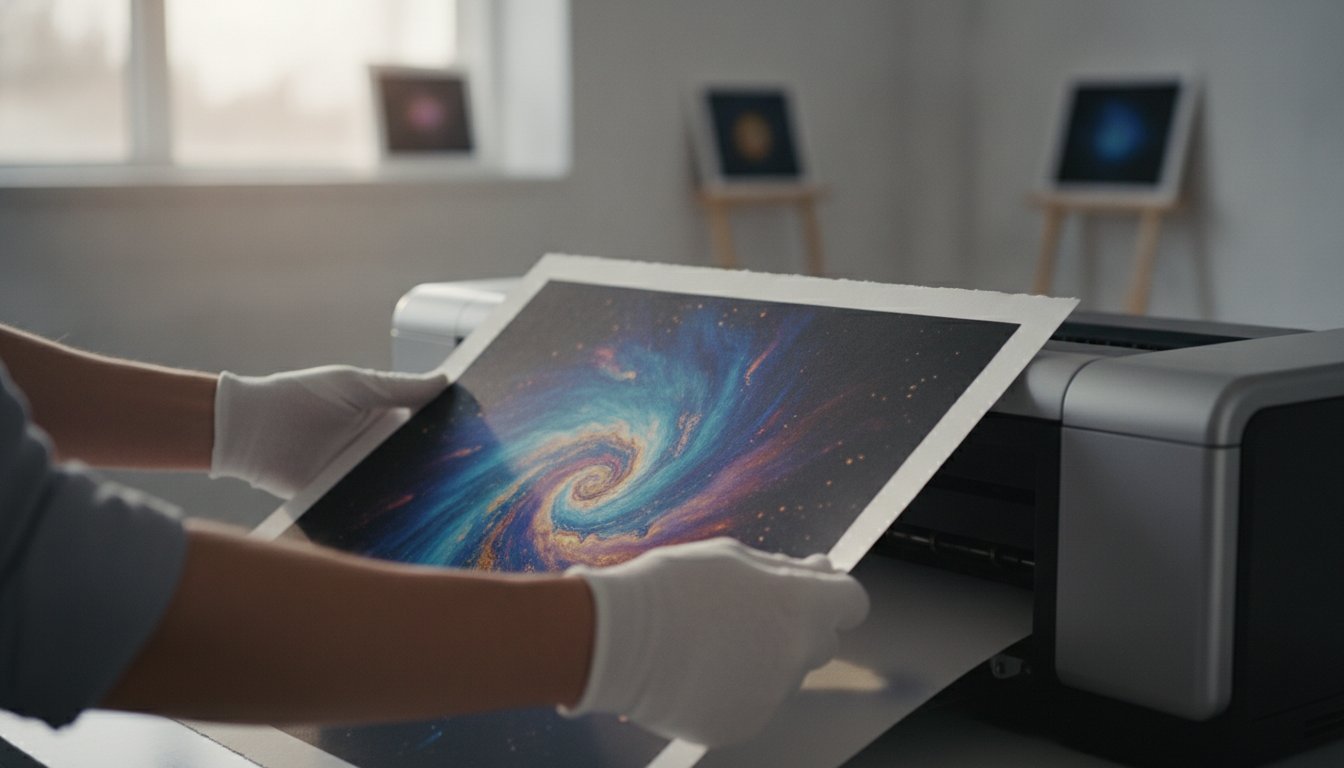
The term Giclée, derived from the French word gicler meaning “to spray,” represents the pinnacle of digital reproduction. Unlike the basic 4-colour CMYK process used by high-street commercial printers, a Giclée printer utilizes a sophisticated 12-colour pigment system. This allows for a vastly expanded colour gamut and incredibly smooth graduations. By understanding the printmaking process through this lens, collectors can appreciate how archival pigment inks provide a depth of tone that standard dye-based inks cannot match. The “dot gain” is meticulously controlled, preventing the pixelation that often plagues mass-produced prints.

The Aesthetic Impact of Archival Materials

The emotional impact of a fine art print is often found in its relationship with light. Premium papers, often crafted from 100% cotton rag, possess a natural texture that absorbs light rather than reflecting it harshly. This creates a “luminous” quality, which is particularly vital for capturing the subtle silver and charcoal tones in black and white photography. High-quality papers avoid “optical brighteners,” which are chemical additives that can break down and cause the art to shift colour over time. When you’re understanding art print quality, you’ll notice that museum-grade prints have a tactile, three-dimensional presence that makes the image feel alive, unlike the flat, plastic look of a standard poster.

The Materiality of Art: Understanding Paper and Ink Chemistry

The true soul of a museum-grade piece lies in its molecular composition. While the image captures the eye, the physical materials ensure the work endures. Understanding art print quality requires an appreciation for the delicate balance of paper and ink chemistry. Standard prints often rely on dye-based inks, which are essentially liquid stains. These are highly vulnerable to UV degradation, causing vibrant reds and deep blues to vanish within years. In contrast, archival pigment inks are composed of solid particles of mineral or synthetic origin. These particles sit on the surface of the paper rather than soaking in, resisting the “bleaching” effect of sunlight and ensuring the work remains a permanent fixture in your home.

The choice of surface finish further defines the visual narrative. A Lustre finish provides a gentle sheen that enhances contrast and saturation without the harsh reflections of high gloss. Matt surfaces offer a sophisticated, reflection-free viewing experience, ideal for spaces with abundant natural light. For those seeking a classic, historical aesthetic, a Pearl finish mimics the subtle glow of traditional gelatin-silver prints, adding a layer of nostalgic elegance to the imagery.

The Weight of Quality: Why GSM Matters

Weight is a silent indicator of prestige. In the art world, we measure this in Grams per Square Metre (GSM). A 150gsm poster feels fragile, almost disposable. However, the gallery standard is 300gsm or higher. This card-like stability is essential for large-format fine art photography. Heavier paper is not merely about a premium feel; it provides the structural integrity needed to prevent “cockling.” This unsightly rippling occurs when thinner papers expand and contract in response to changes in humidity, a flaw that can ruin the presentation of a framed work.

Cotton Rag: The Gold Standard for Collectors

When curators discuss the “ingredient list” of a print, cotton rag is the undisputed gold standard. Unlike standard papers made from wood pulp, cotton rag is naturally acid-free and pH neutral. It does not contain the lignin that causes cheaper prints to turn brittle and brown. The texture of cotton rag is deeply tactile, possessing a soft, painterly dimension that draws the viewer in. It is this purity that allows museum curators to preserve historical works for centuries. By understanding art print quality through the lens of these premium substrates, you can invest with the confidence that your collection is built on a foundation of permanence. You might find yourself drawn to the tangible excellence of our hand-selected archives, where every piece is struck on these very standards.

Source Integrity: Why Provenance Dictates Visual Quality

The true essence of a masterpiece is often decided long before the printer is ever engaged. While many collectors focus on the technical specs of the output, understanding art print quality requires a deeper investigation into the provenance of the source material. In the curatorial world, we adhere to the “Garbage In, Garbage Out” rule. A high-resolution scan of a poor, third-party copy will never possess the soul of a print struck directly from the original negative. Authentic source integrity ensures that the grain structure, depth of field, and subtle light transitions remain exactly as the artist intended.

Working with official archives, such as Getty Images, provides a significant advantage that mass-market retailers simply cannot replicate. For example, the iconic work of Terry O’Neill or the “Technicolor” vibrancy of the Slim Aarons collection relies on access to the original transparencies. These physical artifacts hold a wealth of visual information that is lost in subsequent generations of copies. When these details are captured correctly, they require an archival-quality fine art paper to translate that inherited brilliance into a physical object that commands attention in a room.

Original Archive Access vs. Third-Party Scans

The process of creating a premium print begins with scanning original 8×10 transparencies at immense resolutions. This method captures microscopic details that third-party scans often miss, resulting in a clarity that feels almost three-dimensional. Unauthorized or “bootleg” prints frequently appear muddy, lacking the critical shadow detail that defines high-end photography. By securing direct access to these historical archives, we ensure that every tonal graduation is preserved, maintaining the prestigious standard that serious collectors expect. This level of integrity is what separates a mere poster from a guardian of photographic heritage.

The Truth About DPI and Large Format Printing

A common myth in the digital age is that 300 DPI is a universal standard for quality. While this may suffice for small prints, large-scale wall art demands a much more sophisticated approach to resolution. Relying on interpolation, or digital upscaling, to enlarge an image can ruin the crispness of a Terry O’Neill portrait, introducing soft edges and digital artifacts. Native resolution is the inherent detail captured by the original camera lens at the moment of exposure. Understanding art print quality means recognizing that no amount of digital manipulation can replace the raw, authentic detail found in the original source material. When an image is printed at its true scale—often requiring the precision and equipment of a large format expert like Banner 4 Sale—the result is a sharp, evocative piece that stands up to the closest inspection.

Preservation and Presentation: The Role of Bespoke Framing

The pursuit of excellence doesn’t end when the pigment hits the paper. In fact, a high-quality print is only as secure as the architecture protecting it. While we’ve discussed the molecular stability of cotton rag and archival inks, these elements remain vulnerable to external stressors if housed in inferior framing. Truly understanding art print quality involves recognizing that the frame is not merely a decorative border but a functional shield. A museum-grade print is a masterpiece in waiting; its final form is dictated by the vessel that holds it.

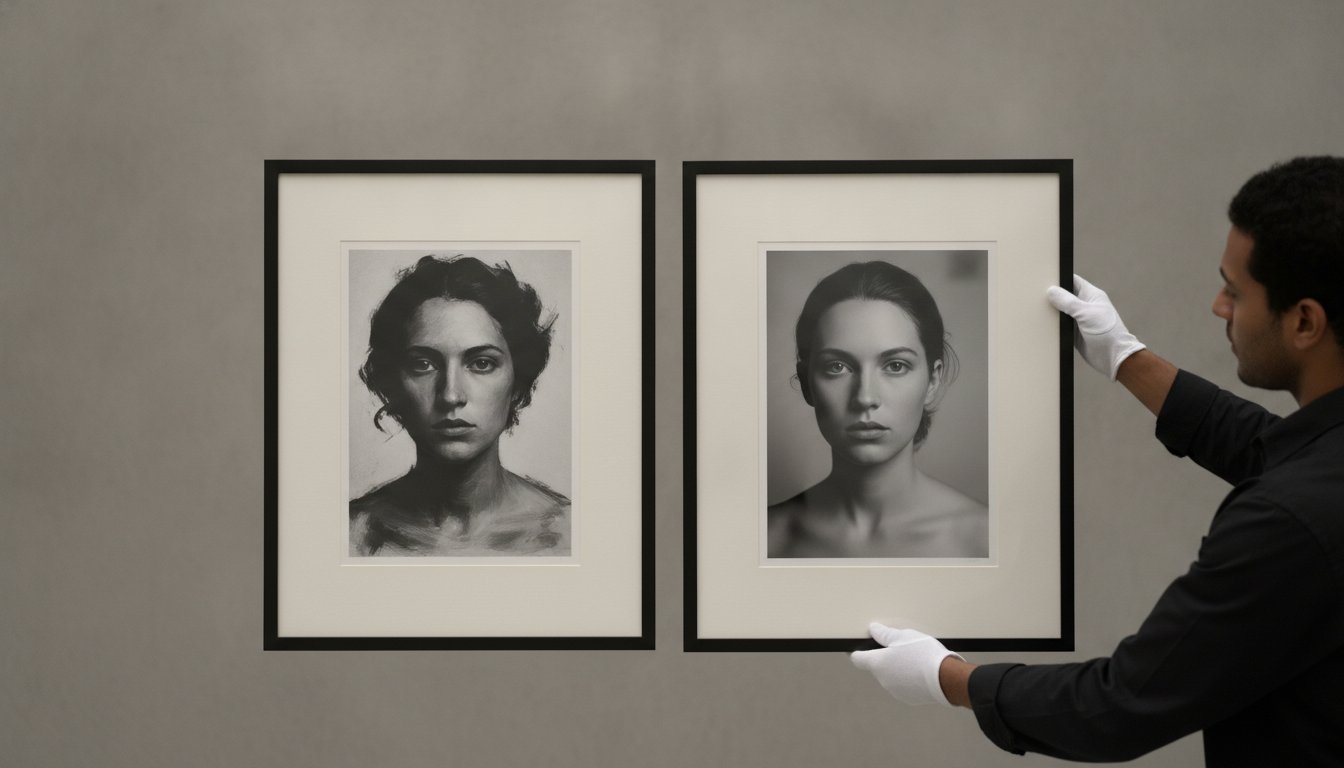
Standard, off-the-shelf frames often utilize wood-pulp materials that contain lignin and other acidic compounds. Over time, these chemicals migrate into the art, causing irreversible staining and “burn” marks. We treat every piece with a curatorial “Seal of Quality,” utilizing bespoke, hand-finished frames that prioritize preservation alongside aesthetic elegance. This ensures the chemical interaction between the frame and the print remains neutral, protecting the integrity of the work for decades.

UV Protection and Optical Clarity

Light is both the creator and the destroyer of photography. Standard glass offers little resistance to ultraviolet rays, which act as a slow-motion bleach on even the most robust pigment inks. In sunlit rooms, this exposure leads to a loss of tonal range and vibrancy. Museum-grade UV acrylic or specialized anti-reflective glass acts as a high-factor “sunscreen” for your photographic investment. This clarity is especially vital for black and white pictures, where the preservation of deep blacks and subtle grey gradients is essential to maintaining the work’s emotional impact. High-end glazing ensures that the only thing you see is the art itself, free from distracting reflections.

Acid-Free Mounting and Spacers

The “hidden” threat to longevity often lies behind the print. Professional curators insist on acid-free, conservation-grade mounting to prevent the browning associated with cheap materials. We often distinguish between “dry mounting,” which flattens the print for a perfectly smooth finish, and “hinge mounting,” which allows the paper to breathe and move naturally with atmospheric changes. Another critical component is the use of spacers. These small, invisible inserts ensure the print never touches the glass directly. Without spacers, condensation can trap moisture against the ink, causing the paper to stick or “cockle.” Bespoke framing is a structural necessity that ensures your art remains a lasting piece of history. Experience the difference of our Bespoke Framing Service, where artisanal craftsmanship meets museum standards.

The Galerie Prints Standard: Curating Excellence in London

At Galerie Prints, we believe that understanding art print quality is not just a technical exercise; it’s an appreciation of the human touch. While much of the industry leans toward high-volume, automated “print-on-demand” factories, we maintain a steadfast commitment to artisanal production. Every print that leaves our studio is treated as a museum object. This means we don’t just hit a button and hope for the best. We employ a meticulous “Human Eye” check at every stage, ensuring that the tonal balance and detail meet our exacting standards before any work is signed off for delivery.

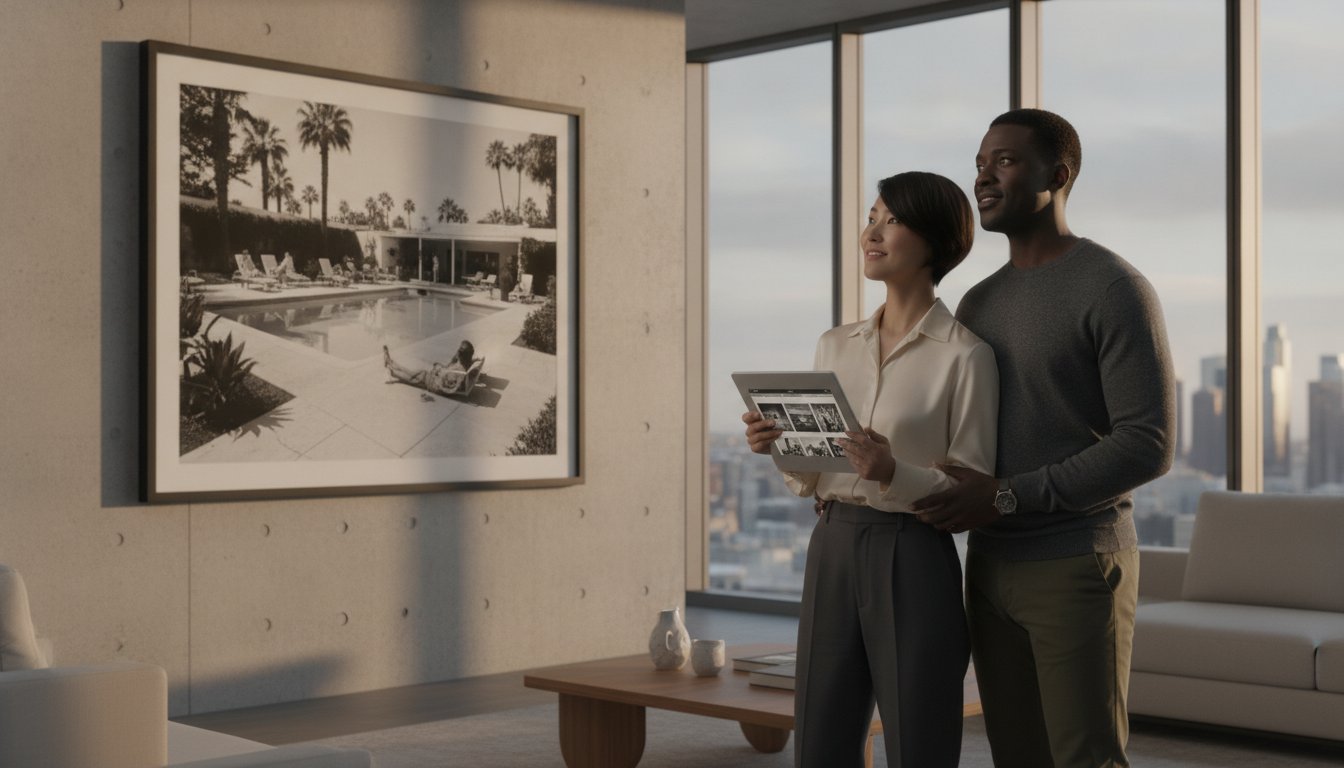
Our position as a guardian of photographic heritage is built on exclusive access to the world’s most prestigious archives. Whether it’s the sun-drenched poolside scenes of Slim Aarons or the intimate celebrity portraits of Terry O’Neill, these works are struck from the finest source materials available. When you acquire a piece from us, you aren’t just buying a decoration; you’re securing a lasting piece of history that has been handled with the reverence it deserves.

Artisanal Craftsmanship in the Heart of London

Our master printers and framers operate with a localized expertise that only decades of experience can provide. Hand-finishing is a cornerstone of our process. Whether it’s the precise cut of a conservation mount or the careful alignment of a bespoke frame corner, these details can’t be replicated by a machine. Our London gallery heritage informs every choice we make, from the specific texture of our archival papers to the weight of our hand-selected timber frames. This dedication to craft ensures that each piece possesses a tactile quality that commands attention in any room.

Building Your Collection with Confidence

Investing in art should be an act of joy, supported by the knowledge that you’re acquiring something of genuine value. When you look for authentic cinema lobby cards or limited edition prints, you’re looking for a tangible connection to a bygone era. Buying from a gallery that prioritizes source integrity provides long-term security for your collection. Understanding art print quality means knowing that your piece has been crafted to survive the test of time, both physically and aesthetically. We invite you to explore our curated archives and discover a world where historical significance meets modern elegance.

Crafting Your Legacy: The Final Step in Curating Your Collection

True art is an investment in time. By prioritizing archival chemistry and the integrity of the original source, you ensure your collection remains as evocative tomorrow as it is today. Mastering the nuances of understanding art print quality allows you to transform a home into a gallery of enduring significance. You now possess the knowledge to distinguish between a temporary reproduction and a museum-grade masterpiece that will withstand the passing decades.

We invite you to begin this journey with a partner who shares your reverence for photographic heritage. As official partners of the Getty Images Gallery and specialists in the Slim Aarons and Terry O’Neill archives, we apply these rigorous standards to every piece we strike. From our bespoke hand-finished framing in London to our selection of premium cotton rag papers, we ensure every detail is handled with curatorial precision. Explore our curated collections of museum-grade Fine Art Prints and discover the difference that artisanal dedication makes. Your walls deserve nothing less than a lasting piece of history.

Frequently Asked Questions

What is the difference between a Giclée print and a digital C-type print?

A Giclée print utilizes a high-precision inkjet process with archival pigment inks, whereas a digital C-type print is a light-sensitive photographic paper developed through traditional chemical processes. Giclée prints generally offer a superior colour gamut and significantly greater longevity. Collectors often prefer Giclée for its painterly texture on matte papers; conversely, C-type is favoured for its continuous tone and “true photograph” aesthetic on gloss or lustre surfaces.

How can I tell if a print is truly “archival” when shopping online?

Truly archival prints are defined by their ingredients; specifically, the use of 100% cotton rag or alpha-cellulose paper and pigment-based inks. When shopping online, look for explicit mentions of these materials rather than vague terms like “premium paper.” A reputable gallery will provide detailed specifications regarding the paper weight and ink system. Understanding art print quality means identifying these technical hallmarks to ensure your acquisition won’t degrade over time.

Why does the GSM of the paper matter if I am framing the art?

The GSM (Grams per Square Metre) dictates the structural integrity of the paper, which is essential to prevent “cockling” or rippling within the frame. Even when secured behind glass, thinner papers react to atmospheric humidity by expanding and contracting. A heavier weight, such as 300gsm or higher, provides the rigidity required to maintain a perfectly flat presentation. This stability is a key component in understanding art print quality for large-format displays.

Will my fine art print fade if it is placed in a bright room?

While archival pigment inks are exceptionally lightfast, any artwork will eventually suffer from prolonged exposure to direct, intense sunlight. The best defense is museum-grade glazing with UV protection, which acts as a barrier against the rays that cause bleaching. Placing your art on a wall that receives indirect light is always preferable. This curatorial approach preserves the vibrancy of the “Technicolor” tones found in archives like the Slim Aarons Collection.

What is the best way to clean the glass of a framed art print?

You should use a soft, lint-free microfibre cloth and a specialized ammonia-free glass cleaner to maintain the optical clarity of your frame. Never spray the cleaning solution directly onto the glass, as liquid can seep under the rebate and damage the mount or the print itself. Instead, mist the cloth lightly before gently wiping the surface. This careful maintenance ensures that the intricate details of your photographic investment remain visible and pristine.

Are limited edition prints higher quality than open editions?

Limited edition prints are not inherently higher in material quality than open editions, but they often carry a higher curatorial standard. These editions are frequently produced under the artist’s or estate’s supervision, ensuring the colour balance and contrast are perfect. The value lies in their scarcity and documented provenance. At Galerie Prints, we apply the same museum-grade production standards to all our works, from Terry O’Neill portraits to vintage movie posters.

How do I know if the resolution of a print is high enough for a large wall?

High resolution for large-scale art depends on the native resolution of the original source, such as an 8×10 transparency, rather than just the digital DPI. If a print is enlarged beyond its native capacity, you’ll notice soft edges or a “muddy” appearance in the shadows. For a large statement wall, the source must be a high-fidelity scan of an original negative. This ensures the grain structure remains crisp even at significant dimensions.

What does “acid-free” actually mean for the lifespan of my art?

Acid-free refers to materials that are PH-neutral and free from lignin, a natural component of wood pulp that causes paper to turn yellow and brittle. Using acid-free mounts and papers is a non-negotiable requirement for historical preservation. Without this standard, the chemical breakdown of the substrate would eventually destroy the image from the inside out. This commitment to chemical purity is what allows a fine art print to last for over a century.

Giclee vs Lithograph for Art Prints: A Curator’s Guide to Fine Art Photography

Is it possible for a modern reproduction to possess the same soul and permanence as an original masterpiece? Many discerning collectors share the quiet fear that an uninformed choice might result in a piece that loses its lustre long before it can be passed to the next generation. Understanding the nuanced distinction of giclee vs lithograph for art prints is essential for anyone looking to invest in the timeless elegance of the Slim Aarons collection or the cinematic intensity of Terry O’Neill’s photography. It’s a decision that defines the longevity and the tactile resonance of your personal gallery.

You’ll gain the clarity needed to distinguish between a museum-grade archival print and a more traditional mechanical reproduction. We’ll explore the technical superiority of pigment-based inks, which offer a verified lifespan of up to 200 years, compared to the 30-year expected life of a standard offset lithograph. This exploration provides a clear framework for selecting works that offer both aesthetic beauty and enduring value. By the end of this guide, you’ll feel entirely confident in your ability to choose a medium that honors the historical significance and the meticulous craftsmanship of your fine art collection.

Key Takeaways

  • Master the technical lexicon by understanding the fundamental difference between the modern precision of the giclee process and the historic, plate-based artistry of traditional lithography.
  • Identify why the choice of giclee vs lithograph for art prints is pivotal when collecting high-fidelity photography, ensuring your investment captures the intricate detail of every frame.
  • Uncover the secret to achieving museum-quality depth in monochromatic works, particularly how 12-colour pigment inks enhance the evocative soul of classic black and white pictures.
  • Establish a clear framework for selecting the appropriate medium based on your subject matter, whether you are curating iconic music archives or vintage movie posters.
  • Learn the essential preservation techniques, including the importance of bespoke framing and specific lighting considerations, to protect the archival integrity of your fine art acquisitions.

Deciphering the Lexicon: What is the Difference Between Giclee and Lithograph?

To the uninitiated, the specialized terminology of the art world can feel like a guarded language. Yet, for those curating a serious collection, these words are the keys to understanding both historical value and aesthetic permanence. The debate surrounding giclee vs lithograph for art prints isn’t merely a technicality. It is a choice between two distinct philosophies of reproduction: the meticulous digital precision of the modern era and the tactile, mechanical tradition of the past. Understanding this lexicon allows a collector to move beyond the surface of an image and appreciate the craftsmanship that grants it a place on a gallery wall.

The term Giclée finds its origins in the French word “gicler,” which translates to “to spray” or “to squirt.” This etymology describes the sophisticated manner in which microscopic droplets of archival pigment are applied to a surface. Unlike standard printing, this method replicates the soul of the original work with startling accuracy. Conversely, a lithograph is a product of a planographic process rooted in the elementary chemical principle that oil and water don’t mix. Traditionally, an artist draws an image onto a flat stone or metal plate using a greasy substance. The surface is then treated so that ink only adheres to the design before it’s pressed onto paper, creating a print with a unique mechanical character.

The Evolution of the Fine Art Reproduction

The journey of the fine art reproduction has moved from the heavy limestone blocks of the 19th century to the silent, high-resolution studios of today. While stone lithography offered a revolutionary way to distribute art to the masses, the modern curator often demands a level of detail that traditional plates struggle to maintain. This shift is particularly evident in fine art photography, where the depth of a shadow or the specific grain of a vintage film stock must be preserved with absolute fidelity. For iconic archives like the Slim Aarons collection, the transition to digital standards has allowed for a vibrancy that honors the original transparency in ways older mechanical methods could not achieve.

Why Naming Conventions Matter for Provenance

In the gallery world, naming conventions serve as a shorthand for quality and intended longevity. A giclee is defined as a 12-colour pigment-based process for archival longevity, a standard that ensures the preservation of tonal nuances for centuries. It’s vital to distinguish between “Original Lithographs,” where the artist was directly involved in the plate creation, and “Offset Lithographic Reproductions,” which are often commercial in nature and lack the same archival weight. Whether you’re acquiring Star Wars limited edition prints or exploring music archives, the printing method acts as a seal of quality that dictates how the work will age within your home.

The Giclee Standard: Why It Dominates Fine Art Photography

When weighing the merits of giclee vs lithograph for art prints, the discerning collector must consider the unique demands of the photographic medium. Fine art photography requires a level of tonal precision that traditional mechanical methods often struggle to replicate. The giclee process, an artisanal marriage of technology and material science, has become the industry benchmark for this very reason. By utilizing high-resolution inkjet systems, this method deploys microscopic droplets of pigment with such accuracy that the resulting print is virtually indistinguishable from the artist’s original vision. It’s this microscopic detail that allows for the preservation of the sharpest lines and the softest gradients alike.

The true power of the giclee standard lies in its expansive colour gamut. While traditional lithography often relies on a four-colour CMYK process, a museum-grade giclee utilizes up to 12 distinct pigment inks. This increased palette allows for a depth and tonal range that is essential for capturing the saturated hues of the Slim Aarons collection or the moody, high-contrast shadows found in Terry O’Neill’s legendary archives. The result is a piece that possesses a luminous quality, drawing the viewer into a world of mid-century elegance and cinematic history.

Beyond the visual impact, the tactile nature of the print defines its prestige. We utilize heavy-weight, acid-free archival papers that provide a substantial, luxurious feel. These papers are specifically designed to absorb the pigment in a way that maintains the integrity of the image while offering a surface texture that feels both timeless and sophisticated. This commitment to material excellence ensures that every acquisition serves as a lasting piece of history for your home gallery.

The Science of Pigment vs. Dye

In the pursuit of archival perfection, the chemistry of the ink is paramount. We exclusively use pigment-based inks rather than the cheaper dye-based alternatives found in commercial printing. Pigment particles are solid and sit on the surface of the paper, providing superior UV resistance and preventing the premature fading that plagues lesser reproductions. This technical choice is why a giclee can maintain its vibrancy for 100 to 200 years, meeting the rigorous standards for museum-grade certification. Furthermore, these solid particles allow for richer, deeper blacks, which are essential for those looking to invest in the timeless allure of black and white photography.

Capturing the Nuance of Historical Film

Historical negatives possess a specific “glow” and grain that define their era. Giclee technology excels at translating these analog characteristics into the digital age without losing the atmospheric soul of the original film. It allows for the production of large-format works that retain every ounce of the negative’s integrity. Unlike traditional lithography, which is inherently constrained by the physical dimensions of fixed metal plates, giclee technology allows for bespoke sizing that adapts to the specific spatial requirements of a collector’s sophisticated interior. This flexibility, combined with uncompromising detail, ensures that your chosen artwork fits perfectly within your architectural vision.

The Mechanical Charm of the Lithograph: Tradition and Technique

While the modern giclee represents the pinnacle of digital fidelity, the lithograph remains a testament to the industrial elegance of a bygone era. It’s a medium rooted in the physical world of plates, rollers, and the rhythmic pulse of the printing press. For the collector, understanding the nuances of giclee vs lithograph for art prints requires an appreciation for this mechanical heritage. The process is planographic, relying on the chemical repulsion between oil and water to transfer an image from a treated surface to a rubber blanket, and finally onto the paper. This journey through the press imbues the work with a flatter, more graphic aesthetic that carries its own unique authority.

The distinction between “Fine Art Lithography” and commercial “Offset Lithography” is critical for those concerned with the provenance of their collection. Offset lithography is a high-volume method that, while capable of producing striking imagery, often lacks the archival weight of its artisanal counterparts. Research indicates that standard offset lithographs have an estimated lifespan of approximately 30 years if not meticulously protected from UV exposure. This stands in contrast to the centuries of permanence offered by pigment-based digital methods. However, the historical significance of the lithograph cannot be overstated. It was the primary medium for cinema lobby cards and vintage movie posters, capturing the vibrant, saturated spirit of Hollywood’s golden age through bold ink layers rather than microscopic dots.

The Tactile Quality of the Press

There’s an evocative, “ink-on-paper” soul to a traditional lithograph that digital processes struggle to replicate. Collectors often find beauty in the slight variations and mechanical textures that arise from the pressure of the rollers. This tactile quality is particularly suited to graphic art and vintage-inspired works where the medium’s inherent flatness complements the composition. It’s a celebration of the printer’s craft, offering a connection to the artisanal heritage of poster art and mid-century graphic design.

Investment and Collectability

In a market increasingly dominated by digital standards, the lithograph maintains its relevance through the principle of scarcity. The “editioning” process for a lithograph is physically finite; the metal or stone plates eventually degrade, naturally capping the number of high-quality impressions that can be made. While a giclee is often printed on demand to ensure bespoke quality, a limited-edition lithograph carries the prestige of a closed run. This inherent rarity ensures that well-preserved lithographs from significant archives continue to command attention at auction, serving as both a decorative centerpiece and a tangible piece of historical media.

Comparing Archival Integrity: Longevity, Texture, and Investment Value

The choice between giclee vs lithograph for art prints ultimately rests on the physical legacy you wish to leave behind. While a lithograph offers a nostalgic connection to the mechanical era of the press, the giclee is the undisputed champion of archival permanence. A giclee print, when produced with the meticulous care we demand, offers an expected longevity between 100 and 200 years. In stark contrast, even high-quality offset lithographs tend to have an estimated lifespan of about 30 years if they aren’t shielded from direct sunlight. This difference in durability defines whether a piece is a fleeting decoration or a permanent fixture of your family’s photographic heritage.

Beyond mere survival, the vibrancy of the image over time is a critical factor for the discerning eye. The superior 12-colour gamut of giclee is particularly vital for those acquiring black and white pictures, where the subtlety of silver-toned highlights and deep, velvet blacks must be absolute. Traditional lithography, while charming in its graphic simplicity, often lacks this tonal range, leading to a flatter appearance that can lose its impact as the inks age. The tactile experience also differs significantly; giclee prints possess a matte, fibrous quality that invites the eye to linger on the paper’s surface, while offset lithography typically presents a smoother, more commercial profile.

The Archival Checklist for Serious Collectors

To ensure a purchase retains its value, you must look beyond the image and examine the materials. A museum-grade print requires a foundation of 100% cotton rag or acid-free alpha-cellulose paper to prevent the yellowing and brittleness caused by wood-pulp alternatives. The ink must be pigment-based rather than solvent-based, as pigments are solid particles that resist the degradative effects of light and humidity. In the world of high-end galleries, these archival standards are non-negotiable markers of quality that justify a premium investment.

The “Poster” vs. “Fine Art Print” Debate

A common misconception is that a giclee is simply an expensive poster. This couldn’t be further from the truth. The distinction lies in the quality of the source file, the precision of the master printer, and the weight of the medium itself. While a poster is a mass-produced commodity, a fine art giclee is a bespoke reproduction that honors the original negative’s integrity. Galerie Prints only utilizes museum-grade production methods to ensure that every work, from Star Wars limited edition prints to our music archives, transcends the category of a mere reproduction. To secure a piece that will stand the test of time, we invite you to browse our curated collection of archival photography.

The final stage of your journey as a collector involves moving from technical theory to spatial application. When deciding between giclee vs lithograph for art prints, you must look closely at the nature of the image itself. Photography, with its complex gradients and atmospheric depth, finds its truest expression in the giclee format. Conversely, graphic art or vintage movie posters, which rely on bold blocks of colour and distinct lines, can thrive within the mechanical constraints of a lithograph. Your choice shouldn’t merely be a matter of preference; it’s an act of curatorial stewardship that ensures the artwork resonates within your specific environment.

Matching the Print to the Interior Aesthetic

The lush, sun-drenched palettes of the Slim Aarons collection demand a medium that can replicate the exact saturation of a mid-century poolside afternoon. Giclee prints provide this necessary depth, allowing the colours to breathe and vibrate against the heavy-weight texture of archival paper. This tactile quality serves to complement the architectural elements of a room, whether it’s the sleek lines of a modernist villa or the warm wood of a traditional study. For those seeking a dramatic focal point, giclee remains the undisputed king of large-format bespoke requests, offering a scale that lithographic plates cannot physically accommodate without compromising the image’s integrity.

The Final Step: Bespoke Framing as Preservation

Acquiring a high-quality print is only half the battle in the pursuit of a lasting collection. A common oversight in the debate over giclee vs lithograph for art prints is the role of the frame as a protective vessel. Without acid-free mounting, even the finest archival paper will eventually succumb to environmental degradation. Similarly, the pigment-based inks of a giclee require UV-protective glass to prevent fading over the decades. This isn’t just about aesthetics; it’s about structural preservation. A bespoke frame acts as a guardian, shielding the work from the invisible threats of light and humidity while elevating it to a true centerpiece. We invite you to explore our curated collections and select your perfect bespoke frame to complete your acquisition.

Our final recommendation for the serious collector is clear: prioritize giclee for photographic archives. While the lithograph offers a charming nod to history, the giclee ensures lifelong fidelity and museum-grade permanence. By choosing the right medium and pairing it with expert preservation, you are not just decorating a wall. You are securing a piece of photographic history that will remain as vibrant and evocative as the day it was captured.

Securing Your Photographic Legacy

Deciding between giclee vs lithograph for art prints is a pivotal choice for the discerning collector. It’s the difference between a fleeting decoration and an enduring heirloom that preserves the soul of a historical moment. We’ve established that the giclee process provides the necessary archival integrity for high-fidelity photography, ensuring your investment remains vibrant for centuries. While the lithograph offers a nostalgic link to mechanical traditions, the modern digital standard remains the guardian of detail and tonal depth.

As an official partner of the Slim Aarons and Getty Images archives, we take our role as protectors of photographic heritage seriously. Every acquisition is complemented by bespoke, hand-crafted framing from our London studio and protected by museum-grade packaging for global delivery. This commitment to craftsmanship ensures that your chosen work arrives with the prestige it deserves. Browse our curated archives and invest in a museum-quality giclee print today to begin or elevate your personal gallery. Your collection is a lasting piece of history, and it’s our privilege to help you preserve it.

Frequently Asked Questions

Are giclee prints more valuable than lithographs?

The value of a piece typically rests on the rarity of the edition and the prestige of the artist rather than the medium alone. However, when comparing giclee vs lithograph for art prints in the context of photography, giclees often command a premium due to their museum-grade archival standards. While a vintage lithograph may hold value as a historical artifact, a modern giclee from a collection like the Slim Aarons archive is valued for its unparalleled tonal accuracy and 200-year longevity.

How can I tell if a print is a giclee or a lithograph?

You can distinguish between the two by examining the surface under a magnifying glass or a jeweler’s loupe. A giclee print will reveal a random, seamless spray of microscopic pigment droplets that mimic the continuous tones of a photograph. In contrast, an offset lithograph will show a structured pattern of tiny dots, often in a “rosette” formation, which is the signature of a traditional mechanical press.

Do giclee prints fade over time?

Giclee prints are engineered for permanence and are highly resistant to fading when produced with pigment-based archival inks. Unlike standard dye-based prints that may lose vibrancy within a decade, a giclee has a verified lifespan of 100 to 200 years. To ensure this stability, it’s vital to display the work behind UV-protective glass and keep it away from direct, harsh sunlight.

Is a giclee print considered an “original” piece of art?

A giclee print is defined as a museum-quality reproduction rather than an original work of art. It’s a high-fidelity physical translation of an artist’s original negative, transparency, or digital file. Despite being reproductions, limited edition giclees from iconic archives like Terry O’Neill photography are esteemed by collectors for their technical excellence and their role in preserving photographic heritage.

Why are giclee prints more expensive than standard digital prints?

The cost of a giclee reflects the superior quality of the materials and the artisanal nature of the process. Standard digital prints often use a simple four-colour process, whereas a giclee utilizes up to 12 archival pigment inks to achieve a vast colour gamut. When paired with heavy-weight, acid-free cotton rag paper, the result is a piece with a depth and tactile richness that commercial prints can’t replicate.

Can a lithograph be archival quality?

A lithograph can reach archival standards if it is printed on acid-free, 100% cotton paper using lightfast, fade-resistant inks. While many commercial lithographs are produced for shorter-term display, fine art versions are crafted with greater care. Even with these precautions, the expected lifespan of a high-quality lithograph is generally around 30 to 50 years, which is significantly shorter than the centuries offered by the giclee standard.

What is the best way to clean and maintain a giclee print?

You should treat a giclee print with the same care as a sensitive museum artifact. Never use water, cleaning sprays, or damp cloths, as moisture can permanently damage the pigment layer. Instead, use a soft, dry ostrich feather duster or a clean microfibre cloth to gently lift dust from the surface. The most effective maintenance strategy is to keep the print protected within a bespoke frame and behind UV-filtered glass.

Which printing method is better for black and white photography?

Giclee is the superior medium for black and white photography because the printers utilize dedicated ink channels for various shades of grey, photo black, and matte black. This allows for a neutral tonal balance and deep, velvety shadows that traditional lithography often fails to capture. This precision ensures that monochromatic works from music archives or cinema lobby cards maintain a luminous, silver-toned quality that honors the original film grain.