
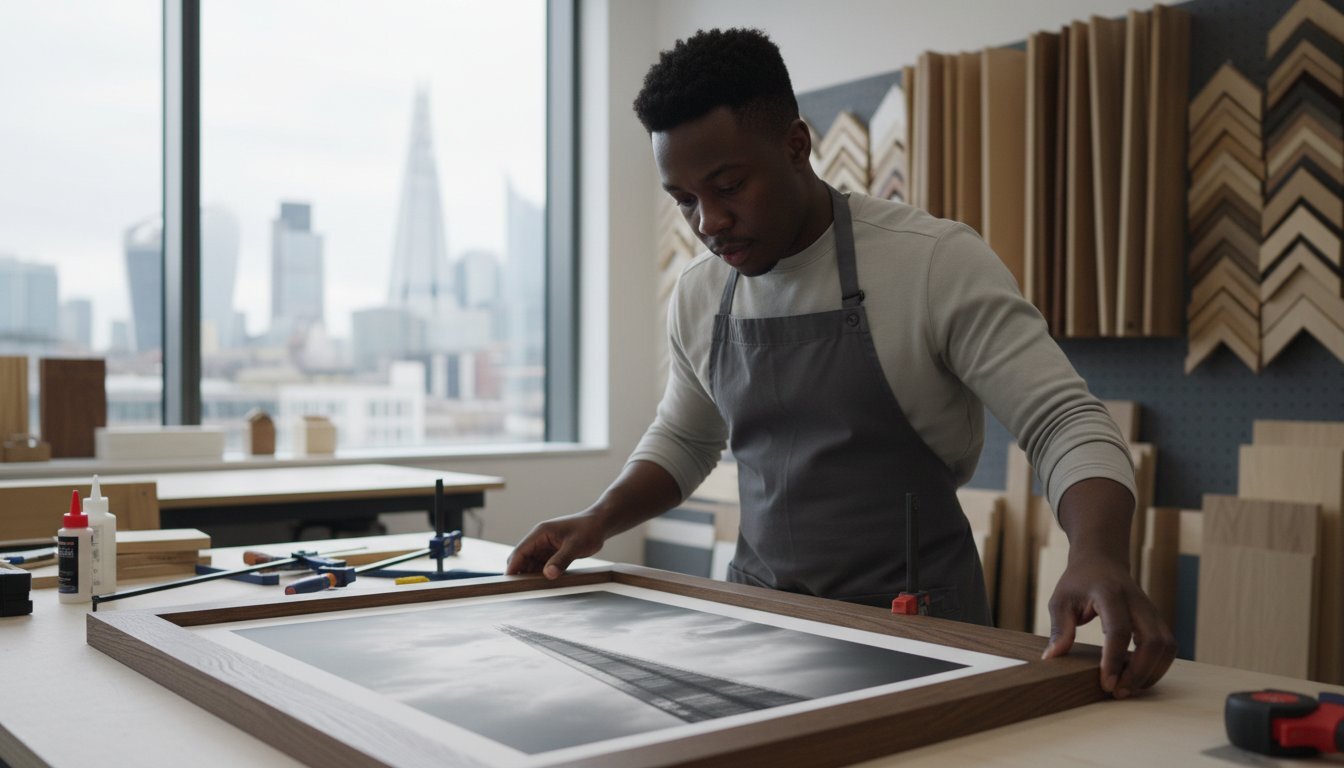
A rare silver gelatin print is a living piece of history, but a poorly chosen frame is often its slow, silent executioner. For the discerning collector, the cost of custom picture framing is not a simple retail transaction; it is a bespoke insurance policy for your photographic heritage. It is natural to feel a sense of trepidation when faced with quotes that fluctuate between $50 for basic online services and upwards of $1,000 for complex, museum-grade commissions. You want to ensure your investment is protected without overpaying for mystery materials or risking the integrity of the work with non-archival mounting.
In this 2026 guide, we promise to peel back the layers of the framing studio to reveal the artisanal variables that dictate these prices. We will explore why a medium 16″x20″ frame might range from $75 to $250 based on material provenance and technical excellence. This analysis provides a clear breakdown of the cost drivers for everything from UV-protective glass to London-crafted mouldings. You will gain the confidence to choose a bespoke service that offers a genuine return on investment through the meticulous preservation of the world’s finest photography.
Key Takeaways
- View bespoke framing as a vital preservation strategy that safeguards the long-term value and historical integrity of your fine art collection.
- Discover how the cost of custom picture framing is defined by material excellence, including the necessity of UV-protective glass and lignin-free mounting.
- Avoid the “false economy” of ready-made frames by understanding how professional structural integrity prevents irreversible damage to delicate prints.
- Learn to navigate pricing thresholds for standard and oversized dimensions to strategically budget for the expansion of your private gallery.
- Gain insight into the London-based artisanal standards that ensure your photography is presented with the sophistication it deserves.
Beyond the Moulding: What Defines the Cost of Custom Picture Framing?
To the uninitiated, a frame is merely a boundary. To the seasoned collector, it’s a sophisticated sanctuary that guards the soul of a photographic masterpiece. When evaluating the cost of custom picture framing, you must look past the visible timber to the invisible expertise of the curator. Bespoke framing isn’t a simple assembly of parts; it’s a multi-layered preservation process. Every choice, from the depth of the rebate to the pH levels of the mount, serves to isolate the artwork from the degradations of time and environment. This level of protection is what separates a temporary decoration from a legacy investment.
The true value proposition lies in the delicate balance between aesthetic impact and archival security. A professional curator doesn’t just select a colour; they select a narrative. They understand how a specific wood grain complements the silver-grey tones of a mid-century gelatin print. This curatorial eye ensures that essential Picture frame components work in harmony to elevate the work while providing a museum-grade insurance policy against humidity and light damage. It’s a meticulous orchestration of materials that justifies the premium over mass-produced alternatives.
The Artisanal Labor Component
Precision is the hallmark of the Galerie Prints standard. In our London darkroom, we treat every print with a reverence that mass-market retailers simply can’t replicate. High-end framing requires a mastery of millimetres. Even a microscopic misalignment in the joining of a hardwood frame can lead to structural failure decades later. Our artisans possess the specialized touch required for handling delicate silver gelatin and C-type prints. These materials are sensitive to oils and pressure. They demand a level of hand-finishing that only comes from years of gallery-level experience. We don’t just assemble; we curate.
The Hidden Costs of Professional Equipment
Behind the elegant facade of a finished frame sits a suite of industrial-grade technology. Achieving a perfectly flat, ripple-free display for a large-scale Slim Aarons print requires a vacuum press and specialized mounting tools. These aren’t standard retail items. Our team maintains a climate-controlled environment for all archival preparation. This prevents moisture from being trapped behind the glass, which is the primary cause of foxing and mould in private collections. The investment in a specialized London darkroom facility ensures that every piece leaves our hands in a state of chemical and physical stability, ready to become a lasting piece of history.
Material Excellence: How Glass, Mounts, and Wood Influence Pricing
The tactile allure of a bespoke frame begins with its skeleton. While a standard retail frame often relies on composite materials or thin veneers, the cost of custom picture framing at the gallery level is driven by the use of solid hardwoods. We select timber like ash, oak, or walnut for their structural density and aesthetic provenance. These woods don’t just look superior; they resist the warping and bowing that plagues cheaper alternatives over time. Hand-painted finishes, applied in multiple layers to achieve a deep, lustrous patina, further elevate the frame from a mere border to a piece of furniture-grade craftsmanship. Adhering to industry standards for picture framing ensures that every material layer contributes to the longevity of the work.
Beyond the wood, the mounting board acts as the silent sentinel of your print. Standard boards contain lignin, which eventually turns acidic and causes the dreaded “yellowing” of paper. In a professional darkroom environment, acid-free and lignin-free cotton rag mats are non-negotiable. These materials are chemically inert, ensuring that the delicate emulsion of a silver gelatin print remains pristine for decades. When assessing the cost of custom picture framing, collectors must also account for the exponential increase in material volume required for larger works. As dimensions grow, the thickness of the glazing and the rigidity of the mounting board must increase to prevent “cockling” or glass flex, which adds both weight and expense to the final commission.
The Glazing Debate: Clarity vs. Protection
Glazing is where the most significant price jumps occur. Standard glass is often too reflective for high-glamour photography, obscuring the depth of the blacks. UV-filtering glass is essential for preventing the fading of iconic Slim Aarons poolside hues, which are notoriously sensitive to light exposure. For large-format works, museum-grade acrylic is the gold standard. It’s lighter than glass, shatter-resistant, and virtually invisible. While it commands a premium, the visual clarity it provides allows the viewer to feel as if they could step directly into the scene. For those seeking to safeguard their investment, exploring a curated selection of archival frames is the first step toward gallery-standard display.
Archival Mounting and Matting
Archival mounting is a form of chemistry. We prefer reversible mounting techniques, such as Japanese paper hinging, which allow the print to be removed in the future without damage. This preserves the print’s provenance and market value. If you desire a “Shadow Box” effect, where the art sits back from the glass, the cost increases due to the additional labor and materials required for the internal spacers. This technique creates a sense of three-dimensional depth, perfect for highlighting the tactile quality of hand-printed photography while keeping the print safely away from the glazing surface.
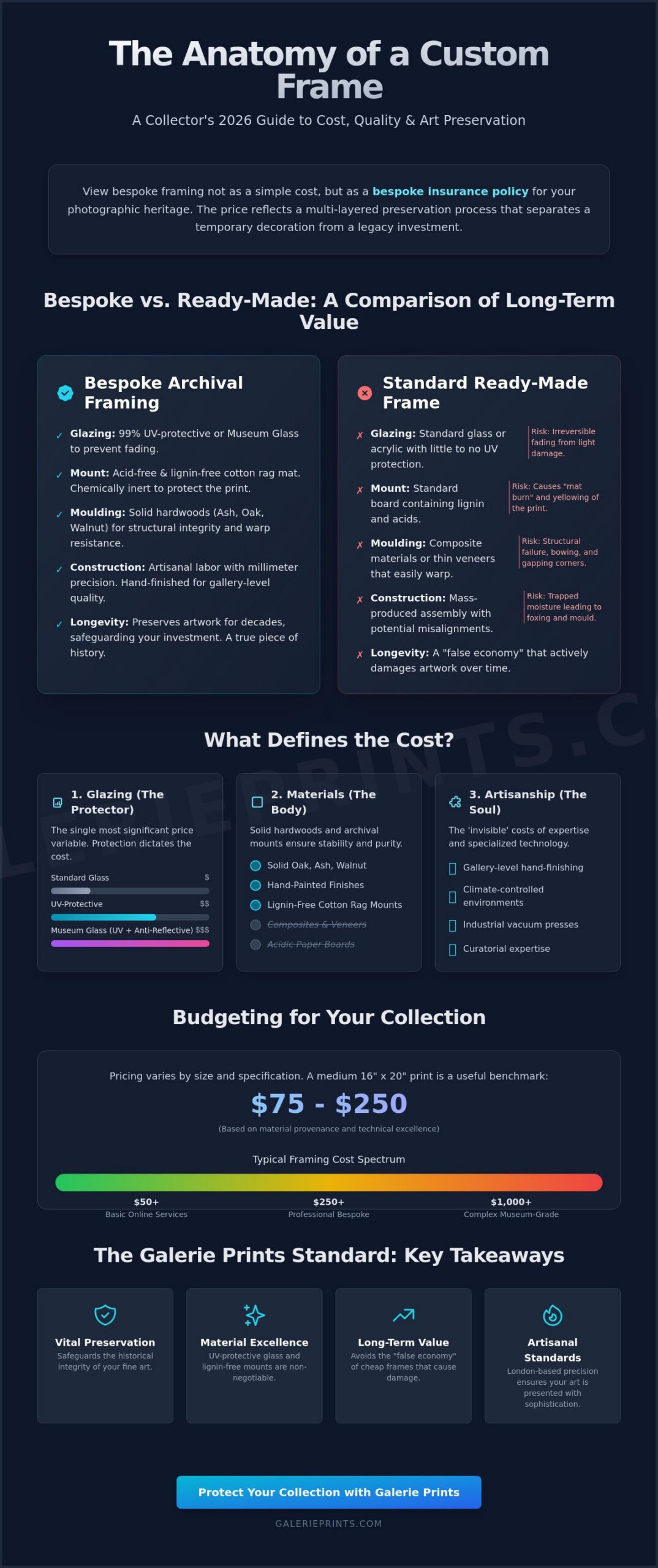
Bespoke vs. Ready-Made: A Comparison of Long-Term Value
Placing a rare silver gelatin print inside a mass-market retail frame is a classic false economy. While a $20 off-the-shelf option seems enticing, it often becomes the very thing that devalues a $1,000 piece of art within a few short years. The cost of custom picture framing reflects a commitment to structural integrity that ready-made products simply can’t match. Cheap frames are prone to warping and bowing, particularly in larger sizes, which can put physical stress on the print or cause the glass to press directly against the emulsion. In contrast, a bespoke frame is engineered to maintain its shape for decades, preserving the flat, crisp presentation required for a gallery-ready aesthetic.
Beyond physical stability, the visual impact of a curated frame elevates a room’s entire atmosphere. A retail frame feels like an afterthought; a bespoke frame feels like a deliberate architectural choice. This distinction is vital for collectors who view their photography as an integral part of their interior design. Professional housing ensures that the frame’s proportions, wood species, and finish are perfectly balanced against the artwork’s scale. This creates a sense of permanence and prestige that mass-produced plastic or thin veneers never achieve. It’s the difference between a temporary decoration and a lasting piece of history.
The Risk of Non-Archival Materials
The most insidious danger of ready-made frames lies in their chemical composition. Acid migration is a silent process where low-grade wood pulp or glues leach acidic vapours into the fine art paper, leading to irreversible yellowing and brittleness. Standard “off-the-shelf” glass also lacks the essential UV protection needed for sunlight-filled rooms, leaving your iconic prints vulnerable to fading. Collectors should also be wary of “outgassing” from cheap plastics and synthetic adhesives, which can create a hazy film on the inside of the glass and chemically alter the print’s surface over time.
Investment ROI: Protecting Your Art Archive
Investing in high-quality housing is an essential step in the transition from owning a print to building a collectable archive. The Professional Picture Framers Association (PPFA) notes that following rigorous standards is what maintains an artwork’s provenance and resale value. When it’s time to appraise or sell a piece, the presence of professional, museum-grade framing serves as proof of the owner’s stewardship. Bespoke framing acts as a sophisticated, archival envelope that shields the artwork from the degradations of the external world. By justifying the initial cost of custom picture framing, you’re effectively extending the physical life of the artwork and ensuring it remains a pristine asset for the next generation.
Budgeting for Your Collection: Sizing and Specification Guidance
The architecture of a frame is dictated by the scale of the vision it contains. When calculating the cost of custom picture framing, collectors often encounter significant price increments at standard gallery thresholds. As of April 2026, the industry distinguishes between small format works, typically up to 9″x12″, and larger investments that exceed the 24″x36″ mark. While a medium 12″x18″ frame might demand a modest investment of approximately $125 to $150, crossing into “Grand” territory (up to 32″x40″) often sees prices rise toward $365 or more. These breaks occur because larger dimensions require thicker glazing and more robust internal support to prevent the frame from flexing under its own weight.
The “Oversize” threshold is perhaps the most critical factor for the serious collector to understand. Once a piece exceeds the standard 32″x40″ limit, shipping and handling become major cost drivers. These works often require specialized art couriers rather than standard parcel services to ensure the safety of the glass and the frame’s corners. Choosing a “ready-to-hang” service from a professional gallery eliminates the high-stakes risk of self-assembly. Entrusting the final mounting to experts ensures that the cost of custom picture framing includes the peace of mind that your artwork arrives in pristine, display-ready condition, rather than as a fragile DIY project.
Sizing Your Slim Aarons or Terry O’Neill Prints
Iconic poolside photography often demands grand proportions to capture the sprawling luxury of the mid-century lifestyle. Large-format prints, such as a 30″x40″ Slim Aarons, require heavy-duty hanging hardware and reinforced corners to maintain their structural integrity on your wall. For those building a collection around these masters, our Slim Aarons: The Definitive Guide offers deeper insights into the specific display requirements of these aspirational works. The larger the scale, the more vital the choice of museum-grade acrylic becomes to manage the weight and safety of the installation.
Framing Rare Collectables and Cinema Memorabilia
Specialized collections, such as vintage cinema lobby cards, introduce the complexity of multi-aperture mounts. Pricing for these items is based on the intricacy of the custom-cut matting, which must precisely house multiple non-standard items within a single frame. Whether you are preserving the historical integrity of Star Wars limited edition prints or a series of Hollywood stills, the labor involved in creating a perfectly spaced, multi-window display is a specialized artisanal task. To ensure your unique items receive the curatorial care they deserve, you can request a bespoke framing consultation with our London-based team.
The Galerie Prints Standard: Artisanal Framing for Fine Art Photography
The journey of a masterpiece does not end at the darkroom door. At Galerie Prints, the distinction between the image and its frame is intentionally blurred. We operate as guardians of photographic heritage, ensuring that every hand-printed silver gelatin work is housed in a structure that matches its technical superiority. When collectors evaluate the cost of custom picture framing, they often overlook the value of a unified production process. By hand-framing our collections in the same London facility where they are printed, we maintain a level of quality control that retail assembly lines cannot hope to replicate. It’s a seamless transition from the chemical bath to the final joining, managed by artisans who understand the soul of the work.
The Galerie Prints aesthetic is one of quiet authority. It’s designed to inspire wonder and nostalgia while providing the permanence required for serious investment. We utilize hand-finished hardwoods and archival mounts that reinforce our status as a premier destination for the world’s finest photography. This commitment to excellence ensures that your purchase is not merely a decoration but a curated piece of history that will remain stable for decades. By choosing a unified service, you eliminate the risks of mismatched materials or improper handling that often occur when art is moved between multiple vendors. We provide a bridge to the golden age of glamour, ensuring each frame is as iconic as the image it protects.
The Convenience of Ready-to-Hang Luxury
Shipping fine art is a delicate science. We eliminate the “framing gap” by providing a ready-to-hang luxury experience that removes the anxiety of local transport and third-party mounting. Our white-glove packaging standards are designed for secure worldwide delivery, ensuring that iconic Slim Aarons poolside scenes or gritty Terry O’Neill portraits arrive ready for immediate installation. This comprehensive approach justifies the cost of custom picture framing by providing a finished product that’s protected from the moment it leaves our darkroom. For a deeper look at integrating these works into your space, consult our Fine Art Photography: A Curator’s Guide.
Custom Requests and Corporate Projects
Beyond individual prints, we provide bespoke solutions for corporate projects and large-scale interior design. Our curators work closely with hospitality partners to create unique archive presentations that reflect a specific brand identity. Whether you’re designing a private gallery or a luxury hotel lobby, we offer consulting on technical nuances and aesthetic harmony. We manage the complexity of oversized works and multi-print installations with the same precision we apply to a single silver gelatin print. We invite you to Explore our Bespoke Framing Service to discuss your specific requirements with our London-based team.
Securing Your Photographic Legacy
The decision to house your collection in museum-grade materials is the final, essential step in the curatorial process. The true cost of custom picture framing represents an investment in the physical longevity of your art; it’s a shield against the chemical and environmental degradations that claim lesser displays. By prioritizing archival mounts and UV-protective glazing, you ensure that the vibrant poolside hues of a Slim Aarons or the deep blacks of a silver gelatin print remain as evocative as the day they were captured. This stewardship preserves the work’s provenance and market value for decades.
Galerie Prints serves as the authoritative bridge between historical archives and your private collection. As official partners of the Slim Aarons and Getty Images archives, we utilize museum-quality archival materials as standard for every commission. Each piece is hand-printed in our London darkroom and hand-finished with the same reverence we hold for the world’s finest photography. This meticulous attention to detail ensures your investment is both physically protected and aesthetically elevated for generations to come. It’s a commitment to permanence that turns a simple print into a lasting piece of history.
Invest in bespoke framing for your collection at Galerie Prints and transform your chosen imagery into a sophisticated heritage of glamour and world-class craftsmanship.
Frequently Asked Questions
How much does custom framing typically cost for a standard 20×24 print?
Custom framing for a 20×24 print typically falls within the $175 to $400 range depending on the chosen materials and the complexity of the mount. For a large-format piece of this scale, the cost of custom picture framing is influenced by the weight of the glazing and the depth of the timber moulding. Professional shops often charge toward the higher end for solid hardwoods and museum-grade acrylic to ensure the structural integrity of the display remains stable for decades.
Is museum glass really worth the extra cost for photography?
Museum glass is absolutely worth the investment for fine art photography because it provides 99% UV protection and near-zero reflectivity. Standard glass often obscures the rich tonal depth of silver gelatin prints with distracting glares that diminish the viewer’s experience. By choosing museum-grade glazing, you protect iconic poolside hues from fading while ensuring the visual clarity of the artist’s original vision remains uncompromised by environmental light.
Why is custom framing so much more expensive than ready-made frames?
Bespoke framing utilizes solid hardwoods and archival components instead of the plastic composites and acidic wood pulp found in mass-market alternatives. Every element is hand-joined in a professional studio to provide a precision fit that ready-made frames cannot achieve. You aren’t just buying a border; you’re investing in a curated environment that shields your print from chemical degradation and physical warping that often occurs with cheaper materials.
What is the most expensive part of a custom frame?
The glazing is typically the most expensive component of a high-end custom frame commission. While standard glass is relatively affordable, museum-grade acrylic or UV-filtering glass can account for 30% to 50% of the total project cost. This premium is justified by the specialized coatings required to block harmful light and the rigorous manufacturing processes that ensure optical perfection for large-scale photographic works.
Can I provide my own frame and just pay for the mounting and glass?
Professional galleries generally prefer to use their own curated mouldings to ensure the structural and aesthetic standards of the final presentation. While some shops may offer fitting services for your existing frames, this often complicates the archival process and limits the protection we can guarantee. We recommend using our London-crafted frames to ensure that every component, from the timber to the mounting board, meets our rigorous darkroom preservation requirements.
How does the size of the frame affect the total price?
Price increases exponentially with size because larger dimensions require significantly more robust materials and specialized labor. As a frame grows beyond the 32″x40″ threshold, the cost of custom picture framing rises to accommodate thicker acrylic and heavy-duty hanging hardware. Additionally, oversized works often necessitate custom-built crates and specialized art couriers, adding logistical expenses that aren’t present with standard gallery sizes.
Does custom framing increase the value of my art?
Professional framing increases the market value of your art by preserving its physical condition and establishing a clear provenance of care. Collectors and appraisers look for signs of archival stewardship, such as the use of acid-free hinges and UV-filtering glass. A piece housed in a bespoke, museum-quality frame is viewed as a pristine asset, whereas a print damaged by non-archival materials will see its resale potential significantly diminished during appraisal.
What is the difference between acid-free and archival framing?
Acid-free refers to materials with a neutral pH, while archival framing encompasses a total system of preservation using lignin-free and chemically inert components. While many retail products claim to be acid-free, they may still contain impurities that turn acidic over time. Archival standards ensure that every layer of the frame is engineered to protect the artwork’s emulsion from long-term environmental damage and chemical migration.