Tag: Art Preservation

The Hidden Costs of DIY Framing: What to Consider Before You Begin

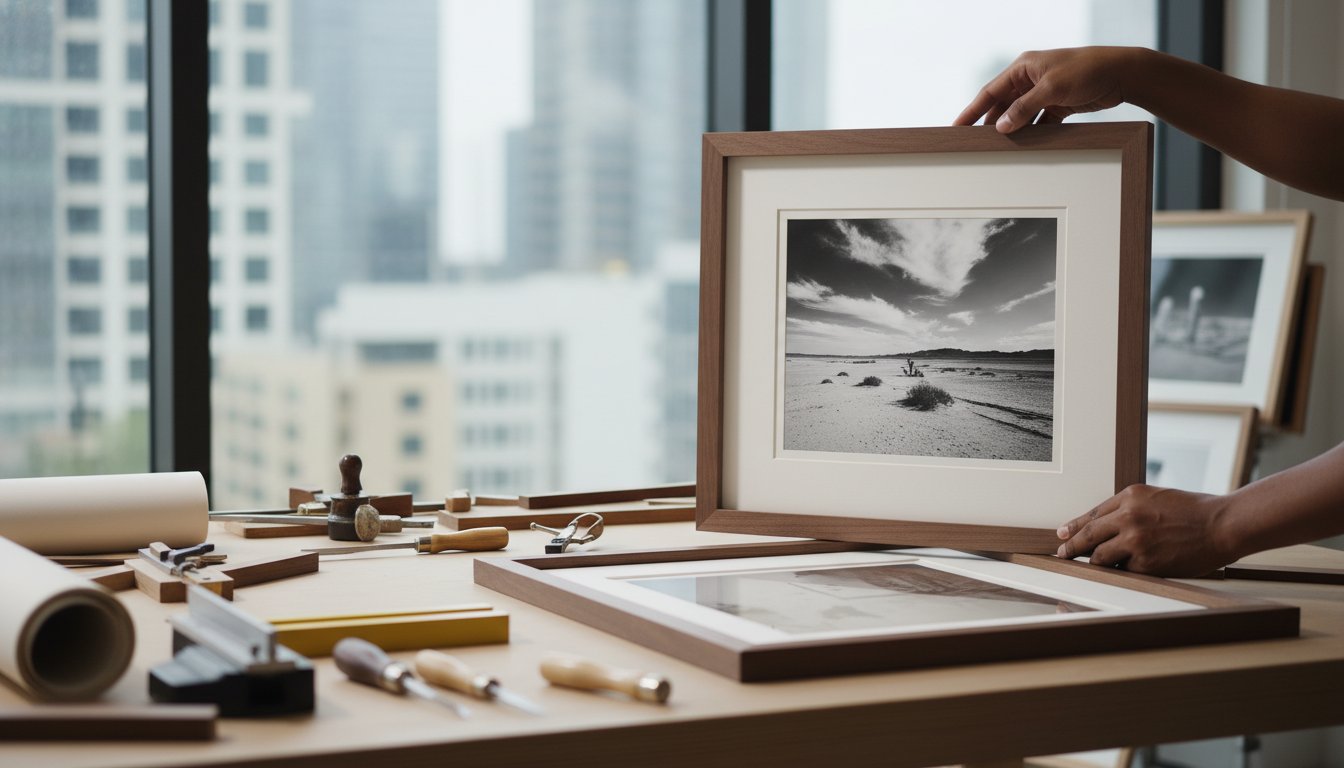
What if the frame that looks cheapest at first becomes more costly after you add an extra tool, wasted material or an afternoon of rework? The hidden costs of diy framing go beyond the items on your shopping list. A frame needs to fit the print, assemble securely and suit the way you want to display it. The wrong mount or glazing choice can also affect how the artwork looks and is cared for. DIY can seem like a way to save money, especially when the frame itself appears straightforward.

A fair comparison includes the time needed to measure, source materials and assemble the finished piece, as well as the chance of wasted supplies or damage that cannot easily be undone. This guide will help you estimate the full scope of a DIY project and weigh framing choices against the needs of your print. We’ll cover tools, materials, common points of uncertainty and the value of a finished, ready-to-hang presentation, so you can decide whether to frame the print yourself or consider professional framing instead.

Key Takeaways

  • Count overlooked expenses alongside the frame, including tools, replacement materials, sourcing time and assembly effort.
  • The hidden costs of diy framing can include more than extra spending. Material and mounting decisions can also affect a print’s appearance and care.
  • Compare DIY and professional framing for control, finish, time and convenience to see which approach fits your priorities.
  • Use a project worksheet to list components, tools you already own, shopping time and assembly time before you commit.
  • Galerie Prints offers bespoke framing for prints purchased through the gallery, an option if you prefer a finished presentation.

What are the hidden costs of DIY framing beyond the frame?

A frame is only one part of a DIY framing project. The hidden costs of diy framing include overlooked spending, time, effort and risks that arise while measuring, sourcing materials and fitting the print. A project that looks simple on paper can involve several components, specialised tools and careful handling, particularly when the artwork has personal or historical significance.

The frame price is only the visible part of the cost. A fuller estimate includes tools you need, planning and assembly time, wasted materials, possible rework and the care required to protect the finished piece. Before starting, make a list of the frame, mount board, glazing, backing, hanging components and tools. Add the work involved in measuring, cutting and assembling, plus a realistic allowance for mistakes.

Which framing supplies and tools can add to the bill?

List the components separately instead of treating “the frame” as a single purchase:

  • Frame: Check the internal dimensions and whether they accommodate the print and any mount.
  • Mount board: Decide whether you want a visible border, then check both the mount’s overall size and the opening for the print.
  • Glazing: Choose a material and finish that suit the artwork and display setting. Appearance and preservation are separate considerations.
  • Backing: Include a suitable board or other backing to complete the assembly.
  • Hanging components: Account for the fittings needed to display the finished frame securely.

The tools depend on the project. You may need measuring equipment, a cutting tool or assembly supplies, but check what you already own before buying anything. Confirm what the frame and materials require. Standard sizes may not match the print or the proportions you want, so the artwork’s dimensions affect the frame, mount and glazing choices.

How can time and mistakes become hidden costs?

DIY takes time at every stage: measuring the print and frame, sourcing components, cutting materials, assembling the frame and fitting the artwork. Record each task, even if you do not assign a monetary value to your time. This gives you a more useful comparison with a finished framing option.

Small errors can mean rework. An incorrect measurement can leave the print poorly positioned or the components unable to fit together. Rushed alignment can make the final presentation look uneven, while dust or careless handling can affect the result. If the print is valuable to you, consider the risk of experimenting in relation to your confidence and experience. The Professional Picture Framers Association offers context on the specialist knowledge involved in picture framing.

How do materials and preservation choices change DIY framing costs?

Once you know the print’s dimensions, your next decisions shape both its appearance and how it is housed. Glazing, mount board, backing and fit each have a different role. Choosing only by the lowest upfront cost may not suit the print or its display conditions. Choose materials for the artwork’s format and significance, the presentation you want and the conditions where it will be displayed, rather than treating the components as interchangeable.

What should you know about glazing, mounts and backing?

Glazing sits in front of the artwork and affects how the image is viewed, including reflections and the overall look of the framed piece. A mount creates a border around the print and establishes visual spacing. Its opening and fit need to suit the artwork. Backing supports the assembly from behind. Each component involves a choice and may add to the cost, but no single material is right for every photograph or poster.

Options can differ in appearance, handling and intended use. Terms such as “archival,” “conservation-grade” or “UV-protective” describe particular material qualities, but their meaning and performance depend on the specific product. Check the manufacturer’s information or seek specialist guidance before relying on these claims. A label alone does not guarantee a particular level of protection for every artwork or display setting.

When does preservation matter more than the lowest material spend?

Start with the print’s significance to you. A poster chosen for a room refresh may call for different priorities than a sentimental photograph, a collectible or a limited-edition print. For an artwork you value, consider how it will sit against the mount or backing, whether it fits securely and how you will handle it during assembly. A poor fit can create pressure or leave the work misaligned, and repeated handling creates more opportunities for accidental marks or damage.

Consider the display conditions too, including light, humidity and how often you may move the piece. These factors can help you identify which material details to investigate, but they do not make a generic framing choice suitable by default. For a delicate, rare or unusually sized work, consult a qualified framing or conservation specialist before cutting, mounting or placing it behind glazing. Check product specifications rather than relying on broad preservation claims.

If you are weighing those material decisions against a finished presentation, Galerie Prints offers bespoke framing for prints purchased through the gallery. It is an alternative if you would prefer framing choices to be part of acquiring the print.

DIY framing vs professional framing: how do the real trade-offs compare?

Neither approach is right for every print. DIY gives you direct control over the materials and appearance, while professional framing can reduce the work of sourcing and assembling each component yourself. Compare more than the price: consider time, tools, finish and how involved you want to be, along with the value of the artwork.

Consideration DIY framing Professional framing
Materials You select and source the frame, mount, glazing and backing. Material choices can be discussed as part of the framing service; confirm current specifications.
Tools You’ll need suitable tools, or must acquire access to them, depending on the project. You don’t need to assemble a personal toolkit for the job.
Time Allow for planning, sourcing, measuring, fitting and any rework. Less hands-on assembly for you; check the provider’s current process and timing.
Control You manage the choices and carry out the work yourself. You explain your preferences and confirm the available options with the framer.
Finish The result depends on your measuring, alignment and assembly. A finished presentation is the aim, but confirm what the specific service includes.
Convenience Requires planning and careful execution. May reduce independent sourcing and assembly, depending on the service.

When can DIY framing be a sensible choice?

DIY is more manageable when the print has standard dimensions, you already have suitable tools and you are confident measuring accurately. It may also appeal if you enjoy hands-on work and want close control over each design choice. Before deciding, list the materials and tools you need, then record sourcing and assembly time. This fuller estimate helps you see whether the project still fits your budget and schedule.

When is professional framing worth considering?

Complex dimensions, valuable artwork, limited time or a preference for a polished, ready-to-hang presentation may make professional framing worth exploring. A service can reduce the need to find compatible components and assemble them yourself, but the result depends on the options and work agreed with the provider. Before ordering, confirm the frame, glazing, mount and paper specifications, as well as delivery, assembly and hanging details.

Galerie Prints offers bespoke framing for prints purchased through the gallery, with framed purchases described as ready to hang. If convenience is a priority, explore bespoke framing for purchased prints and check the details for the specific order. The hidden costs of diy framing are best weighed against the time and involvement you are willing to take on, not an assumption that one approach always produces a better result.

How can you calculate the full cost of a DIY framing project?

Start your estimate with the print, not a shopping list copied from another project. The hidden costs of diy framing depend on the artwork’s dimensions, the presentation you want and what you already have. Use this worksheet to capture your own requirements before buying anything.

What should your DIY framing checklist include?

  1. Describe the artwork. Record its dimensions, format and condition, then note where you plan to display it. This helps you choose the frame size and identify any special handling or material considerations.
  2. List the components. Write down the frame, mount, glazing, backing and hanging components you need. Check that their sizes and intended uses suit the print and your preferred presentation.
  3. Account for tools. Separate tools you already own from those you need to buy or borrow. Include any specialist equipment needed to cut materials accurately.
  4. Record effort and logistics. Estimate the time for measuring, sourcing, transport, cutting, assembly and fitting. Include the effort of making separate trips or finding components that work together.
  5. Allow for possible rework. Add a contingency line for replacement materials or mistakes, such as an inaccurate cut or a component that does not fit. Choose an allowance that makes sense for your project rather than relying on a generic figure.

In short, your total includes materials, tools, time and potential rework. If you want to account for your time financially, choose a method and apply it consistently. Otherwise, record the hours separately so you can compare the effort involved.

How do you compare your DIY estimate with a framed print option?

Compare like with like. Use the same print dimensions and consider the framing scope, desired finish and whether the result is ready to hang. A DIY materials list may not include assembly, while a framed option may bundle choices differently. Before treating the options as equivalent, verify the current frame, mount, glazing and paper specifications, along with delivery and hanging details.

Galerie Prints offers print-size, paper-type and professional framing choices, with bespoke framing available for prints purchased through the gallery. Framed purchases are described as ready to hang, but confirm the current details for the specific order. Then weigh your budget, available time and preferred level of involvement.

Explore professional framing options for prints purchased through Galerie Prints.

How can Galerie Prints make framing your art simpler?

After weighing the materials, tools and time involved in framing a print yourself, convenience may be part of the decision. Galerie Prints offers bespoke framing for prints purchased through the gallery, bringing the print and framing choice together rather than leaving you to source every component independently. Framed purchases are described as ready to hang. Check the details for a particular order before buying.

What should you check before choosing a framed print?

Start with the artwork and the room where you plan to display it. Review the print sizes, paper choices and framing options shown with the current product listing. Consider how the selected dimensions and presentation will work in the space. A print intended as a focal point may need a different visual balance from one displayed among other works.

Before deciding, confirm the current details for the frame finish, glazing and mount, if specified, along with delivery and any hanging requirements. These details can vary by order, so do not assume every framed print includes the same components or arrangements. Checking first lets you compare the finished option fairly with your DIY worksheet.

How do you take the next step with confidence?

Decide what matters most for this piece: the control and hands-on involvement of framing it yourself, or the convenience of choosing a print with framing. Compare your complete DIY tally, including tools, sourcing effort, assembly time and possible rework, with the current bespoke framing offer. This grounds the decision in your project rather than a general assumption about which route is better.

The hidden costs of diy framing may be acceptable for a straightforward project you are keen to handle. A framed option may better suit a valued print or a busy schedule. Either way, check the available choices and order details, especially if a particular finish or hanging arrangement matters to you.

If you would like to consider the alternative, explore bespoke framing options for prints purchased through Galerie Prints. Review the current choices and decide whether a framed presentation suits the artwork and your plans for displaying it.

Choose the framing approach that suits your print

The hidden costs of diy framing extend beyond materials. Tools, planning time, careful assembly and possible rework all belong in a fair estimate. Your choices of glazing, mount and backing also shape the print’s presentation, so consider appearance and preservation needs alongside the project’s total effort.

DIY may suit a straightforward piece and someone who enjoys hands-on control. If the print is especially meaningful, has complex dimensions or you would rather avoid sourcing and assembling components, professional framing is another option.

Galerie Prints offers bespoke framing for prints purchased through the gallery, and framed purchases are described as ready to hang. Check the current specifications and order details, including what is included, before deciding. Compare the available choices with your DIY checklist, then choose the route that suits the artwork and the space where you plan to display it.

Explore bespoke framing options at Galerie Prints, and find a presentation that lets your chosen print feel at home on your wall.

Frequently Asked Questions

Is DIY framing cheaper than professional framing?

Not necessarily. DIY may cost less if you already have suitable tools and can use readily available components, but the frame price alone does not show the full picture. Add materials, tools you need, sourcing and assembly time, and possible replacement materials. For a fair comparison, match the print dimensions, mount and glazing choices, finish, and whether the professional option is assembled and ready to hang.

What are the hidden costs of DIY framing?

The hidden costs of DIY framing can include more than supplies. Consider tools you need to buy or borrow, time spent measuring and sourcing components, transport, cutting and fitting, and materials wasted through mistakes. Rework may be needed if parts do not fit or the print is misaligned. Record each input, including your time, before comparing DIY with a finished framing option.

Can DIY framing damage a photograph or print?

Yes. Careless handling or a poor fit can mark, crease or misalign a photograph or print. Dust trapped during assembly may also affect its appearance, while unsuitable materials or display conditions may create preservation concerns. Handle the artwork carefully and check component specifications rather than assuming a label guarantees protection. For a rare, delicate or especially meaningful piece, seek specialist framing or conservation guidance before proceeding.

What materials do I need to frame a print myself?

A typical project may require a frame, glazing, mount board if you want a border, backing and hanging components. The print’s dimensions and your preferred presentation determine which sizes will fit. You may also need measuring and cutting tools or assembly supplies, depending on the frame and materials. Check each component’s intended use and specifications, particularly if the print has collectible or sentimental value.

How do I compare DIY framing with a bespoke framing service?

Compare equivalent options: the same print dimensions, framing scope, finish and preservation considerations. For DIY, include materials, tools, sourcing, assembly time and possible rework. For a service, check what the current offer includes, such as frame, mount, glazing, assembly, delivery and hanging details. Galerie Prints offers bespoke framing for prints purchased through the gallery. Framed purchases are described as ready to hang, but confirm the details for your order.

Is professional framing better for valuable or limited-edition prints?

Professional framing may be worth considering for valuable or limited-edition prints, but it is not automatically right for every piece. A specialist can help you assess suitable materials, fit and handling, while DIY requires you to make those decisions and carry them out carefully. Consider the artwork’s significance and your experience. For a rare, delicate or unusually sized print, seek qualified framing or conservation advice before assembly.

What should I measure before framing a print?

Measure the print itself, not just the area you want visible, and note its width and height accurately. If using a mount, consider both the opening around the artwork and the mount’s overall dimensions, then check that the frame accommodates the complete assembly. Also measure the wall space where you plan to display it. Confirm all measurements against the product specifications before cutting or ordering components.

What is Conservation Framing? The Collector’s Guide to Art Preservation

What if the very frame meant to showcase your Slim Aarons masterpiece was quietly orchestrating its slow, chemical decay? For many collectors, the realization that standard materials can cause irreversible yellowing or brittle textures is a source of profound anxiety. You’ve invested in a piece of photographic history, and it’s natural to worry about environmental threats like UV light and acidic outgassing. Understanding what is conservation framing becomes the essential first step in evolving from a casual buyer into a dedicated guardian of artistic heritage.

We believe that a frame should do more than merely complement your interior aesthetic; it should act as a protective sanctuary for the work itself. This guide explores the meticulous science and artisanal craft that define archival-grade preservation, ensuring your Terry O’Neill or vintage movie poster remains as vibrant as the day it was captured. We’ll demystify technical terms like acid-free mounting and UV-filtering glass, providing you with the confidence to select a bespoke, ready-to-hang solution that honors the longevity and value of your fine art collection.

Key Takeaways

  • Learn how conservation framing acts as a guardian for your collection by using entirely reversible techniques that protect art without altering its original state.
  • Discover the four essential shield layers of an archival frame, from UV-filtering glass to acid-free mounting, that safeguard against environmental decay.
  • Understand what is conservation framing and why its century-long lifespan far exceeds standard methods, making it a vital investment for high-value photography.
  • Identify which pieces in your collection, such as limited edition prints or vintage posters, are most at risk and require the immediate intervention of museum-grade materials.
  • Explore how bespoke, artisanal framing bridges the gap between rigorous scientific preservation and the sophisticated aesthetics of a luxury interior.

Defining Conservation Framing: The Guardian of Photographic Heritage

To the discerning collector, a frame is far more than a decorative border. It’s a sophisticated micro-environment designed to halt the passage of time. Defining what is conservation framing involves understanding the delicate balance between aesthetic presentation and scientific preservation. While standard framing focuses on how a piece looks today, conservation framing prioritizes how it will look in a century. It’s the practice of using chemically inert materials and non-invasive techniques to ensure that a work of art remains pristine within its housing.

The cornerstone of this discipline is the philosophy of reversibility. A master framer operates under the rule that any treatment applied to the artwork must be entirely removable without causing damage or leaving residue. This approach transforms the frame into a protective sanctuary rather than a permanent enclosure. For those acquiring pieces from the Slim Aarons Collection or Terry O’Neill archives, this “preventative conservation” is the only way to safeguard the physical integrity and market value of the investment. It’s a commitment to acting as a guardian of photographic heritage, ensuring that a moment captured decades ago remains vivid for future generations.

The Core Objectives of Archival Protection

A conservation-grade frame serves three primary functions that go beyond simple display. First, it provides physical support. Gravity is a slow but persistent enemy; without proper mounting, paper can sag or ripple over time. Second, it ensures chemical stability. By using alpha-cellulose or cotton rag mats, we neutralize the acids that lead to yellowing and “foxing,” those distinctive brown spots that plague poorly stored art. Finally, it provides environmental shielding. The frame acts as a barrier against atmospheric pollutants, humidity fluctuations, and the destructive energy of light.

Why Photography Requires Specialized Care

Photographic prints, particularly silver gelatin and C-type editions, possess a unique chemical vulnerability. Unlike oil paintings, which have a robust, layered structure, photographic emulsions are incredibly thin and sensitive to light-induced fading. Exposure to UV rays can trigger rapid oxidation, leading to a loss of detail and tonal depth. High-end archives require materials that adhere to the ISO 18902 standard, ensuring that every component in contact with the print is “photo-safe” and won’t cause the silver or dyes to react. This specialized care is what allows a modern interior to house a piece of history without compromising its longevity.

The Technical Anatomy of an Archival Frame

The beauty of a bespoke frame lies in its invisible architecture. While the exterior moulding defines the room’s aesthetic, the internal components define the artwork’s lifespan. To understand what is conservation framing, one must look past the wood and gold leaf to the four essential shield layers. These layers work in perfect synergy to create a sealed, chemically inert environment. The true quality of a frame isn’t found in the weight of its timber, but in the scientific integrity of the materials that never meet the eye.

Glazing: Filtering the Invisible Threat

Light is the most persistent catalyst for degradation. Museum-grade glazing acts as a high-tech filter, blocking up to 99% of harmful ultraviolet rays that would otherwise bleach the pigments of a Terry O’Neill photograph or yellow the paper of a vintage poster. Standard glass offers zero protection, while common non-reflective varieties often sacrifice clarity for glare reduction. For larger acquisitions, archival-grade acrylic is frequently the preferred choice. It’s lighter and shatter-resistant, providing a safer journey during transit while maintaining the same rigorous UV-blocking standards as its glass counterparts.

Mounting and Matting: The Acid-Free Foundation

The materials in direct contact with your art are the most critical. Many commercial “acid-free” boards are simply wood pulp treated with calcium carbonate; over time, the core returns to an acidic state. True conservation framing demands 100% cotton rag mat board, which is naturally pH neutral and lignin-free. A window mat is not merely a visual border. It creates a vital air gap. This separation prevents the artwork from touching the glazing, which could lead to moisture trapping or the permanent sticking of the emulsion to the glass. Mounting techniques must also remain non-invasive. We avoid adhesives or tapes that leave permanent residue. Instead, artisanal framers use Japanese paper hinges and wheat starch paste. This method is entirely reversible, allowing the art to be removed in its original state decades from now.

When consulting with a specialist about a piece from our Bespoke Framing Service, ensure you ask about these specific components. A true expert will confirm the use of 99% UV-filtering glazing, 100% cotton rag matting, and reversible hinging methods. This checklist ensures your collection isn’t just displayed, but actively preserved against the elements. It’s the difference between a temporary decoration and a lasting legacy.
Standard vs. Conservation Framing: Why Material Choice Matters

Choosing between a standard retail frame and a professional archival solution is the difference between a temporary display and a lasting legacy. Standard frames often have a functional lifespan of merely five to ten years before the materials begin to compromise the artwork. In contrast, a conservation frame is engineered to protect art for fifty to one hundred years or more. This longevity is the primary answer to what is conservation framing; it’s a commitment to permanence. Many collectors are misled by ‘acid-free’ labels found on mass-produced mats. These products often feature a pH-neutral surface paper wrapped around an acidic wood-pulp core. As the core degrades, it leaches acids into the print, causing ‘ghosting,’ which creates permanent, dark silhouettes that mirror the mat’s opening. This damage doesn’t just mar the aesthetic; it significantly diminishes the resale value of a collectible print, as savvy investors and auction houses prioritize archival integrity.

The Hidden Dangers of Lignin and Off-Gassing

The primary culprit in paper degradation is lignin, a natural polymer found in wood pulp that eventually turns paper brown and brittle. When housed in a standard wood frame, the artwork is often subjected to ‘off-gassing,’ where the frame itself releases harmful volatile organic compounds into the sealed environment. To combat this, modern conservation boards often incorporate zeolites. These are molecular traps that actively capture and neutralize pollutants before they can reach the art’s surface. By choosing these advanced materials, you ensure that your Slim Aarons or Terry O’Neill piece remains isolated from the chemical hazards of the modern home.

Reversibility: The Golden Rule of Fine Art

The most critical distinction remains the method of attachment. Standard framing often relies on pressure-sensitive tapes or, worse, dry mounting, which permanently bonds the art to a backing board. These processes are irreversible and catastrophic for a print’s value. Archival framing utilizes the ‘hinge’ method, where small strips of Japanese paper are applied with a reversible wheat starch paste. This allows the art to breathe and expand naturally with subtle humidity changes, preventing the rippling common in rigid mounting. Reversibility is the ability to return the artwork to its original state without a trace of the framing process.

Determining When Your Collection Requires Archival Protection

Deciding whether a piece warrants the investment of museum-grade materials often comes down to a simple question of heritage. If the work is a limited edition, a vintage original, or a piece with significant sentimental value, the standard approach is no longer sufficient. When considering what is conservation framing, think of it as a physical insurance policy for your visual assets. The financial threshold for this decision usually aligns with the work’s acquisition cost; if the price of the art exceeds the cost of a high-end frame, failing to protect it is an unnecessary risk. This is especially true in homes where natural light is a central design element. A sun-drenched living room may be beautiful for guests, but it’s a hostile environment for unprotected paper. If you are following our Fine Art Photography: A Curator’s Guide, you understand that art is an investment in culture that deserves a stable environment.

Protecting Rare Photographic Prints

Iconic works from The Slim Aarons Collection represent a specific era of high-society elegance that’s impossible to replicate. These prints, often produced on light-sensitive C-type or silver gelatin paper, demand a level of care that standard retail framing can’t provide. The fragility of vintage music photography and rare limited releases means that even a few years of improper display can result in irreversible tonal shifts. Understanding what is conservation framing is vital for anyone looking to bridge the gap between a high-end aesthetic and long-term asset protection. By employing these techniques, you ensure these historical moments remain as crisp and evocative as the day they were first developed.

Preserving Historical Cinema Memorabilia

Historical ephemera faces its own set of challenges. Cinema Lobby Cards and vintage posters were originally created as temporary promotional tools, often printed on thin, highly acidic paper stock. These materials are naturally prone to becoming brittle and yellowing from the inside out. Conservation framing intervenes in this decay, neutralizing internal acids and providing a stable support system. It allows you to display Hollywood’s photographic heritage without compromising its authenticity for future generations. Protect your investment today by exploring our Bespoke Framing Service, where we treat every print as a piece of history.

Bespoke Framing at Galerie Prints: A Masterclass in Preservation

At Galerie Prints, we serve as the vital bridge between rigorous archival science and the refined world of luxury interiors. While the technical definition of what is conservation framing focuses on chemical stability and light filtration, our approach adds the essential layer of artisanal elegance. We don’t merely house a print; we create a permanent sanctuary that honors its historical significance. Our localized, hand-crafted production ensures that every bespoke frame meets the exacting standards expected by the world’s most discerning collectors. By choosing our service, you’re not just purchasing a decorative border; you’re enlisting a guardian for your photographic heritage.

The transition from a loose print to a gallery-ready masterpiece requires a deep understanding of both material science and aesthetic history. Determining what is conservation framing in a practical sense means looking at the marriage of high-tech glazing and hand-finished timber. We believe that the framing process should be the logical final step in your journey as a collector, providing a seamless path from acquisition to display. The result is a ready-to-hang solution, delivered with the same curatorial care we apply to our world-renowned archives.

Curated Styles for Discerning Interiors

A frame should never compete with the art; it should elevate it. For the sun-drenched, aspirational pool scenes found in The Slim Aarons Collection, we often recommend sleek, modern profiles that mirror the mid-century optimism of the era. Our selection of premium hardwoods and hand-finished mouldings provides a tactile quality that mass-produced alternatives can’t replicate. We focus on material excellence to ensure the art remains the focal point, encased in a structure that feels as timeless as the imagery itself. Whether you’re displaying iconic Terry O’Neill photography or rare music archives, our styles are curated to harmonize with sophisticated home decors while maintaining museum-grade integrity.

The Galerie Prints Guarantee of Excellence

Our commitment to preservation is absolute. We use only the highest-grade archival materials, ensuring that every component in contact with your work is chemically inert and photo-safe. Our professional mounting techniques honor the original source material, whether it’s a delicate piece of cinema history or a Star Wars Limited Edition Print. We take pride in our artisanal craftsmanship, treating every vintage movie poster and limited release with the reverence it deserves. This dedication to quality ensures that your collection remains a lasting piece of history, protected from the elements and presented with prestige. Explore our Bespoke Framing Service to protect your next investment and ensure your fine art collection endures for generations.

Ensuring a Legacy of Artistic Excellence

Investing in fine art is a commitment to preserving a moment in history. Understanding what is conservation framing allows you to move beyond temporary decoration toward true stewardship. By prioritizing 99% UV-filtering glass and chemically inert materials, you ensure your collection remains as vibrant as the day it was created. These choices protect both the physical integrity and the long-term market value of your pieces. At Galerie Prints, we act as a bridge between the technical precision of the archive and the aesthetic demands of the luxury home.

Our frames are meticulously hand-finished in London, utilizing the same artisanal methods trusted by world-renowned galleries. We treat every print as a vital piece of heritage that deserves a permanent sanctuary. Secure your art’s legacy with Galerie Prints’ Bespoke Framing Service and enjoy the peace of mind that comes with professional preservation. Your collection isn’t just for today; it’s a window into the past that you’re guarding for the future.

Frequently Asked Questions

What is the difference between archival and conservation framing?

Archival and conservation framing are often used interchangeably, but there’s a subtle distinction in focus. Archival framing emphasizes the use of museum-grade materials to ensure longevity, while conservation framing specifically refers to the professional application of those materials to protect the artwork from environmental decay. Both standards require that every process is entirely reversible. This ensures that your Terry O’Neill or Slim Aarons print can be removed from its housing in its original, pristine condition decades from now.

Is conservation framing worth the extra cost for a modern print?

Investing in conservation framing is essential for modern prints, particularly limited editions or works on light-sensitive C-type paper. While a modern print might seem robust, environmental factors like UV light and atmospheric pollutants begin the degradation process immediately. By choosing archival-grade protection early, you safeguard the tonal depth and physical integrity of the work. This prevents the irreversible fading that often plagues unprotected collections, ultimately preserving the piece’s financial value and historical significance.

How can I tell if my current frame is damaging my art?

You can often identify damage by examining the edges of the artwork for a distinctive “mat burn” or yellowing. If you notice brown spots, known as foxing, or if the paper appears to be rippling against the glass, your current frame likely lacks proper acid-free materials or a necessary air gap. Understanding what is conservation framing helps you recognize these warning signs early. If the art is touching the glazing directly, it’s at high risk for moisture damage or emulsion sticking.

Does conservation framing prevent all fading from sunlight?

Conservation-grade glazing blocks up to 99% of harmful ultraviolet rays, but it cannot prevent all fading. While UV light is the most destructive, visible light and heat also contribute to the slow degradation of photographic pigments over time. To ensure the longest possible lifespan for your collection, we recommend hanging your framed pieces away from direct sunlight and harsh spotlights. Even with museum-quality protection, thoughtful placement remains a vital part of the preservation process.

What is acid-free matting and why is it important?

Acid-free matting refers to boards made from 100% cotton rag or alpha-cellulose fibers that have had the lignin removed. Lignin is the natural component in wood pulp that creates acidic byproducts, leading to the brittle, brown paper often seen in old frames. Using high-quality matting is important because it creates a chemically inert environment. This prevents the “acid burn” that can permanently stain the edges of a photograph or vintage movie poster.

Can I upgrade a standard frame to a conservation-grade one later?

You can certainly upgrade a standard frame to a conservation-grade one, provided the artwork hasn’t already suffered irreversible chemical damage. A specialist framer can carefully remove the print from its original housing and remount it using reversible archival hinges and UV-filtering glass. However, it’s always safer to choose a bespoke framing service at the time of acquisition. This prevents the initial years of exposure to acidic materials and unprotected light that can begin the fading process.

How long does a conservation-grade frame actually last?

A true conservation-grade frame is designed to last between 50 and 100 years or more under stable home conditions. Unlike standard retail frames that may begin to fail or damage the art within a decade, archival materials are engineered for permanence. This longevity is a cornerstone of what is conservation framing; it ensures that your investment remains a lasting piece of history. Regular inspections every few decades are recommended to ensure the seal and materials remain intact.

What is museum glass and how does it differ from regular glass?

Museum glass is a premium glazing option that combines 99% UV protection with an advanced anti-reflective coating. Regular glass often creates a distracting mirror effect that obscures the details of dark photographic prints or intricate cinema lobby cards. Museum glass is virtually invisible, allowing the true colors and textures of the artwork to shine through without glare. It offers the highest level of clarity available, making it the preferred choice for serious collectors and luxury gallery displays.

Professional vs DIY Picture Framing: The Collector’s Guide to Preservation

A frame is far more than a decorative border; it is a structural sanctuary that determines whether a masterpiece survives the century or succumbs to the slow decay of acidic materials and sunlight. When you hold a rare Slim Aarons print or a limited edition Terry O’Neill, the impulse to protect it is instinctual. You’ve likely felt that sharp pang of hesitation when considering a standard, store-bought frame, fearing that “cheap” look or, worse, the permanent yellowing caused by inferior backing. It’s a valid concern for any collector who views art as a lasting piece of history rather than a fleeting decoration.

This guide explores the critical nuances of professional vs diy picture framing to ensure your fine art and collectibles are preserved for a lifetime. You’ll discover why the choice between bespoke craftsmanship and a home kit is actually a choice between long-term investment and eventual loss. We will examine the technical superiority of archival glazing, the tactile elegance of natural wood finishes, and the peace of mind that comes from knowing your collection is guarded by museum-grade standards. By the end, you’ll have the confidence to choose a display that truly honors the prestige of your photographic heritage.

Key Takeaways

  • Understand the critical distinction between professional vs diy picture framing and how archival materials act as a sanctuary against the irreversible effects of “acid burn” and UV degradation.
  • Learn to apply the “investment rule” to your collection, identifying when the monetary or sentimental value of a piece necessitates the intervention of a master conservator.
  • Discover the aesthetic secrets of gallery-ready displays, including the use of multi-layered mats and “weighted” bottoms to provide a sophisticated visual balance.
  • Identify why standard store-bought frames often fail to protect high-end photography, leading to the yellowing and decay of original source materials over time.
  • Explore the Galerie Prints artisanal philosophy, where bespoke framing is treated as a final act of curation that transforms a print into a lasting piece of history.

Understanding the Craft: Professional vs DIY Framing Fundamentals

The act of framing a rare print is a delicate dialogue between preservation and presentation. It’s the profound difference between merely placing an image in a container and creating a sealed sanctuary that honors the artist’s original vision. When considering professional vs diy picture framing, one must look beyond the immediate visual impact and consider the chemical stability of the materials involved. A professional framer acts as a seasoned curator, advising on how a specific molding might echo the mid-century elegance of the Slim Aarons Collection or the stark, monochromatic power of a Terry O’Neill archive. This consultation ensures the frame isn’t just an accessory but a bridge to the interior’s aesthetic narrative.

Unlike the modern “upload and print” models that prioritize speed and digital convenience, handling original physical archives requires a reverence for the physical medium. Professional-grade wood and metal moldings offer a tactile weight and grain depth that plastic or composite alternatives simply cannot replicate. This artisanal approach is essential for those looking to invest in bespoke framing that respects the provenance of the work.

The Anatomy of a Professional Frame

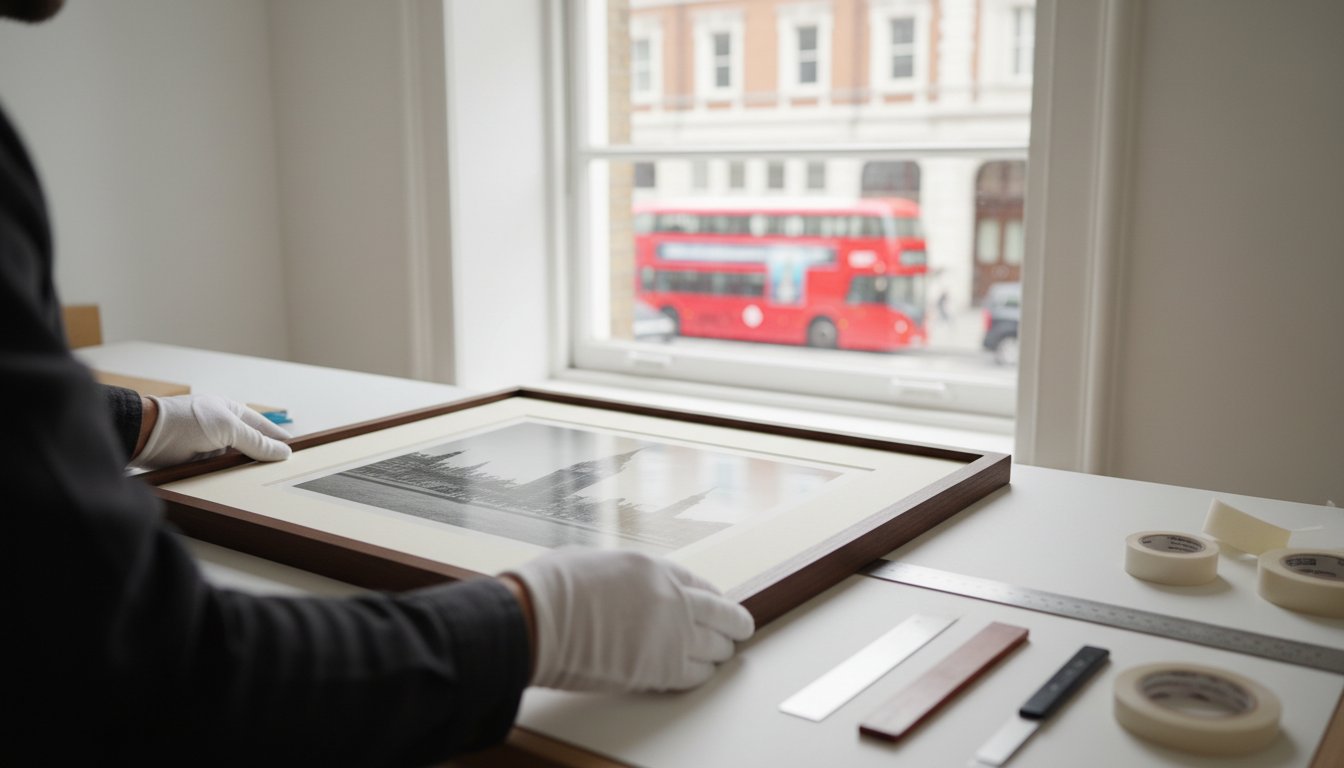
A professional picture frame is a complex assembly of specialized layers designed to combat environmental decay. The assembly includes museum-grade glazing to filter light, acid-free mounts to prevent yellowing, and internal spacers that ensure the art never touches the glass. This air gap is critical; it prevents moisture ingress and the risk of the print adhering to the glazing over time. Professional assembly also utilizes reversible mounting techniques, ensuring that the artwork can be removed in its original state decades from now without residue or damage.

The DIY Allure: Convenience vs Quality

DIY kits and ready-made frames offer a certain allure for temporary displays or inexpensive posters where longevity isn’t a priority. They provide a quick solution for standard sizes, yet they often fail to do justice to the unique proportions of fine art photography. The hidden costs of these “cheap” frames are often found in the long-term damage they inflict. Non-archival materials can cause “acid burn” on delicate paper, while standard glass offers no protection against UV degradation. For a Star Wars Limited Edition or a vintage cinema lobby card, the risk of permanent damage far outweighs the initial convenience of a store-bought alternative.

The Hidden Dangers of DIY: Why Your Art Might Be at Risk

The allure of a weekend framing project often masks the silent, chemical clock that begins ticking the moment a print is sealed behind non-archival materials. While the initial visual result might satisfy a casual observer, the debate over professional vs diy picture framing is truly settled by the science of aging. Fine art photography is a living medium, susceptible to the atmosphere it inhabits. When a collector chooses a standard, store-bought frame, they often inadvertently introduce a cocktail of acidic elements that begin to erode the very heritage they intended to preserve.

One of the most frequent casualties of DIY attempts is the “acid burn” effect, where lignins in wood-pulp mats migrate into the paper of the print. This doesn’t just cause aesthetic yellowing; it structurally weakens the fibers, making the art brittle and prone to cracking. Similarly, the use of standard household tapes or permanent adhesives is a cardinal sin in the art world. These substances eventually fail, leaving behind greasy, translucent stains that no restorer can fully erase. Even the environment within the frame poses a risk; thermal expansion and contraction can cause a print to buckle or “wave” if it isn’t mounted with the precision that bespoke framing provides.

The Chemistry of Preservation: Acid-Free vs Archival

True preservation requires a deep understanding of pH neutrality. Lignin-free materials are essential because they don’t break down into acidic byproducts over time, ensuring the mount remains a neutral sanctuary for the artwork. Outgassing is the process where chemical vapors from acidic components are trapped within the frame’s micro-environment, leading to the gradual deterioration of the print’s emulsion. By selecting museum-grade cotton rag mats, professionals eliminate these volatile organic compounds entirely.

Glazing: More Than Just a Clear Cover

Glazing is the primary defense against the invisible enemy of the Slim Aarons aesthetic: ultraviolet light. Standard glass allows UV rays to penetrate, which leaches the vibrant, sun-drenched colors from high-gloss photography and causes irreversible fading. Professional UV-filtering acrylic or museum glass blocks up to 99% of these harmful rays. This protection is vital for maintaining the saturated hues of vintage cinema lobby cards, ensuring that the visual impact remains as potent as the day it was first displayed. Investing in superior glazing is a hallmark of the curatorial approach, transforming a simple cover into a protective shield.

The Professional Advantage: Preservation and Bespoke Aesthetics

Professional framing is the final act of curation. It bridges the gap between a piece of history and a modern interior. When evaluating professional vs diy picture framing, the aesthetic possibilities of bespoke services often outweigh the mere cost savings of a home kit. A master framer doesn’t just select a border; they tailor the entire presentation to the specific era of the artwork. For instance, a Slim Aarons print from the 1960s demands a different profile than a contemporary black-and-white Terry O’Neill archive. This historical sensitivity ensures the frame enhances the art’s narrative rather than competing with it.

The art of the mount is where professional skill becomes most visible. Experts often employ “weighted” bottoms, where the lower margin of the mat is slightly wider than the top and sides. This technique compensates for an optical illusion that makes centered art appear to be sinking. Multi-layered mats add a sense of architectural depth, drawing the eye into the frame. For oversized works, such as large-scale Slim Aarons prints, structural integrity is paramount. Professional frames are engineered with reinforced corners and heavy-duty strainers to prevent the molding from bowing under the weight of the glass. This is paired with professional hanging hardware, such as Z-bars or heavy-duty D-rings, ensuring these gallery pieces remain secure on your walls. While a DIY kit might suffice for a child’s drawing, the choice between professional vs diy picture framing becomes a question of legacy when dealing with high-caliber visual art.

How to Frame a Vintage Silk Scarf: A High-Stakes Example

Textiles present unique challenges that DIY methods cannot safely address. Unlike paper, a vintage silk scarf should never encounter adhesives. Galerie Prints utilizes specialized “pinning” or “stitching” techniques to secure the fabric to an archival board without causing tension or tears. Spacers are strictly necessary here; they create a crucial air gap that prevents the silk from touching the glass, which could otherwise lead to moisture trapping and permanent staining. Our bespoke service respects the unique dimensions of luxury scarves, providing a display that highlights the drape and luster of the material while ensuring it remains a lasting piece of history.

Preserving Cinema History: Framing Lobby Cards and Posters

Vintage cinema lobby cards and posters are often printed on fragile, historical paper stocks that have already survived decades of handling. Professional framing focuses on protecting these delicate edges while creating visual depth. Shadow-box techniques are particularly effective for collectibles, offering a three-dimensional perspective that celebrates the item as an artifact. We also emphasize the importance of archival backing. Many rare posters contain historical markings or studio stamps on the reverse; our preservation methods ensure these details are protected from environmental decay while the front remains a gallery-ready focal point.

Decision Framework: When to Choose Professional Bespoke Framing

The choice of professional vs diy picture framing often hinges on a single, sobering question: is this piece replaceable? A discerning collector views their acquisitions through the lens of longevity. The “investment rule” serves as an essential guide; if the monetary or sentimental value of the artwork exceeds the cost of its housing, professional intervention is the only logical path. While a digital reprint can be replaced with a few clicks, an original physical archive is a finite resource. Its provenance is tied to its condition, and once environmental damage occurs, the loss is often absolute.

Assessing the fragility of the medium is equally vital. Original paper stocks from the mid-century or vintage cinema lobby cards possess a chemical volatility that modern digital papers lack. These artifacts require a controlled micro-environment to prevent decay. Furthermore, you must evaluate the intended display environment. If your gallery wall resides in a room flooded with natural light or subject to humidity fluctuations, the structural and protective limitations of a DIY frame will be exposed within months. Professional framing creates a sealed sanctuary, shielding the work from the invisible forces of atmospheric change.

The DIY Checklist: When It’s Safe to Self-Frame

DIY framing is a perfectly appropriate solution for projects where the goal is temporary decoration rather than historical preservation. If you are displaying family snapshots, replaceable digital prints, or posters for a seasonal refresh, a self-framed approach offers flexibility. To succeed, you must seek out ready-made frames with solid wood moldings and real glass rather than plastic composites. Essential tools for a respectable DIY attempt include:

  • A point driver to secure the backing without damaging the frame.
  • Acid-free mounting corners to avoid using tape on the image.
  • Microfiber cloths and specialized glass cleaner to ensure a lint-free seal.

The Professional Checklist: When to Consult a Curator

Certain items are non-negotiable candidates for bespoke care. This includes Slim Aarons prints, limited edition Star Wars releases, and any vintage memorabilia with historical markings. These pieces demand a level of precision that home kits cannot provide. You should seek professional counsel when dealing with:

  • Large-scale pieces that require reinforced strainers to prevent bowing.
  • Three-dimensional objects or textiles that need shadow-box depth.
  • Environments where museum-grade UV protection, such as Tru Vue glass, is essential to prevent color leaching.

For those looking to elevate their collection into a gallery-ready display, our bespoke framing service ensures every piece is treated with the reverence it deserves, arriving ready to hang and preserved for the next generation.

Elevating Your Collection with Galerie Prints Bespoke Services

At Galerie Prints, we believe that the journey of a photograph doesn’t end at the shutter’s click; it concludes only when the work is safely enshrined within a frame that reflects its prestige. The debate of professional vs diy picture framing is often viewed through a lens of utility, yet for the serious collector, it’s a matter of curatorial integrity. Our philosophy treats each frame as a bridge to historical elegance, ensuring that a Slim Aarons poolside scene or a Terry O’Neill portrait is presented with the quiet authority it deserves. This isn’t merely about aesthetics. It’s about providing a structural sanctuary that honors the artist’s legacy while elevating your interior narrative.

Our artisanal approach to bespoke framing relies on localized craftsmanship and premium materials that far exceed the capabilities of any home kit. By selecting moldings that echo the specific era of the work, we create a curated look for your fine art photography that feels both timeless and sophisticated. This attention to detail extends to the functional aspects of ownership. We handle the complex logistics of global art delivery, providing a ready-to-hang luxury experience that ensures your investment arrives in pristine condition, regardless of its destination.

A Seamless Experience from Archive to Wall

Choosing a pre-framed print directly from our archives is the safest option for maintaining the work’s provenance. When you acquire a piece that’s been professionally mounted and sealed at the source, you eliminate the risks of handling and environmental exposure discussed in previous sections. Our selection of gallery-approved moldings and mount styles is curated to complement our specific collections, from the vibrant saturation of Star Wars Limited Editions to the delicate tones of vintage movie posters. This provides the peace of mind that comes with knowing every component, from the archival backing to the UV-filtering glazing, meets museum standards.

Your Invitation to Historical Ownership

A well-framed piece does more than sit on a wall; it becomes the focal point of the home, inviting conversation and inspiring wonder. The longevity of our materials ensures that your collection isn’t just a contemporary decoration but a legacy for the next generation. By investing in professional craftsmanship, you’re securing a piece of history in a format that will remain stable and evocative for decades. We invite you to explore our bespoke framing options today and discover how our curatorial expertise can transform your space into a private gallery.

Securing the Future of Your Photographic Heritage

The choice between professional vs diy picture framing is ultimately a decision about the legacy you wish to leave. By prioritizing archival materials, you move beyond mere decoration and embrace true custodianship. You ensure that your prints are shielded from the chemical decay of acid migration and the fading touch of ultraviolet light. A professional frame isn’t just a border; it’s a structural sanctuary that honors the provenance of the work, tailoring every mount and molding to the specific historical narrative of the artist.

Galerie Prints specializes in providing the expertise required to protect high-caliber visual art. Our use of bespoke archival materials and our commitment to worldwide secure shipping mean your investment is protected from the moment it leaves our archive to the moment it arrives on your wall. We invite you to browse the Slim Aarons Collection and choose your bespoke frame today. Transform your space into a gallery and enjoy the peace of mind that comes with knowing your collection is preserved for the next generation.

Frequently Asked Questions

Is professional framing really better than store-bought frames?

Professional framing offers significantly better protection than store-bought frames through the use of archival-grade materials that prevent chemical decay. While store-bought options are convenient for temporary displays, they often lack the airtight seals and acid-free components necessary for long-term preservation. A professional approach ensures the structural integrity of the piece, utilizing specialized mounting techniques that prevent the art from touching the glass, thereby avoiding moisture damage and permanent adhesion over time.

What is the most archival way to frame a vintage silk scarf?

The most archival way to frame a vintage silk scarf is through a non-invasive mounting method known as hand-stitching to an archival-grade board. This technique avoids the use of permanent adhesives which would irreversibly stain the delicate silk fibers. Additionally, the inclusion of internal spacers is essential to create a protective air gap between the fabric and the glazing. This prevents humidity trapping and ensures the luster of the silk is maintained without the risk of mold.

How can I tell if a frame uses acid-free materials?

Identifying archival materials often requires looking at the core of the mat board; a standard board will reveal a brown or yellow edge over time, indicating high lignin content. Professional-grade, acid-free mats typically feature a white or colored core that remains bright despite aging. When evaluating professional vs diy picture framing options, look for specific labels such as “100% cotton rag” or “alpha-cellulose,” which signify that the materials are chemically stable and pH-neutral.

Does UV-protective glass actually prevent art from fading?

UV-protective glass effectively blocks up to 99% of harmful ultraviolet rays, providing a critical defense for your collection. This significantly slows the photochemical reaction that causes colors to leach and paper to become brittle. While no glazing can stop fading entirely if a piece is placed in direct, constant sunlight, the protection offered by professional-grade glass is the most reliable method for maintaining the vibrant saturation of high-gloss photography and rare cinema archives for decades.

Why is custom framing so much more expensive than DIY?

Custom framing cost reflects the intersection of artisanal labor and high-performance materials. Unlike mass-produced DIY kits, bespoke framing involves hand-joined moldings, precision-cut archival mats, and specialized glazing sourced from conservation suppliers. The process requires a master framer’s expertise to ensure every component is chemically compatible with the artwork. This attention to detail ensures a perfect fit for unique dimensions, providing a level of security and aesthetic refinement that standard off-the-shelf solutions simply cannot replicate.

Can I frame a Slim Aarons print myself without ruining it?

While it is possible to frame a print yourself, the risk of causing permanent damage to a Slim Aarons print is substantial without specialized equipment. These works are often large-scale and require precise mounting to prevent buckling or “acid burn” from inferior backing. Given that these prints represent a finite photographic heritage, the professional vs diy picture framing debate suggests that the potential loss of value from a DIY error far outweighs the cost of expert assembly.

What is museum-quality framing and do I need it?

Museum-quality framing is the highest standard of preservation, utilizing only chemically inert materials and completely reversible mounting techniques. You need this level of care for rare collectibles, limited editions, or any piece with significant historical value. It ensures the artwork can be removed from the frame decades later in its original condition. This approach is essential for serious collectors who view their acquisitions as lasting pieces of history rather than fleeting contemporary decorations.

Professional Art Print Framing: A Curatorial Guide to Preservation and Presentation

A fine art print is a silent witness to history, yet without the correct sanctuary, its voice begins to fade the moment it meets the light. Many collectors understandably hesitate to display their most prized acquisitions, fearing that acidic mounts or inferior glazing will slowly erode the vibrant hues of a Slim Aarons poolside or the sharp contrast of a Terry O’Neill original. Choosing professional art print framing is not merely a decorative decision; it’s an act of stewardship. You want to ensure that the elegance of a bygone era survives for future generations while instantly elevating the atmosphere of your home.

Key Takeaways

  • Learn why archival-grade materials, such as acid-free mounting and UV-protective glazing, are essential to prevent the yellowing and fading of valuable photographic works.
  • Discover how professional art print framing bridges the gap between historical significance and modern interior design, specifically tailored to iconic collections like Slim Aarons and Terry O’Neill.
  • Understand the artisanal process of handcrafted bespoke framing, where each piece is treated with the meticulous care and technical precision of a museum artifact.
  • Gain insights into selecting frame profiles that complement specific artistic eras, ensuring your presentation honors the original spirit and prestige of the photography.
  • Explore the seamless transition from gallery to home with ready-to-hang solutions that guarantee safe global transit and immediate aesthetic impact in luxury spaces.

Why Professional Art Print Framing is an Essential Investment for Collectors

For a discerning collector, the acquisition of a work from the Slim Aarons Collection or a Terry O’Neill archive is merely the beginning of a journey. The true fulfillment of that investment lies in its presentation. While a standard retail frame might provide a temporary border, professional art print framing serves as a permanent archival sanctuary. It transitions the piece from a transient image to a legacy asset. Beyond mere decoration, it acts as a guardian of photographic heritage, ensuring that the chemical stability and visual clarity of the work remain uncompromised by the passage of time.

This approach establishes a sense of quiet authority within a room. A bespoke frame doesn’t shout for attention; instead, it commands respect through its precision and material quality. When understanding the basics of picture frames, one realizes that the structural choices made during the assembly process dictate whether a piece will retain its value or slowly deteriorate. For high-value archives, a ready-made solution is often a liability, as it lacks the specialized barriers required to block atmospheric pollutants and acidity.

The Protective Function of Professional Framing

The Aesthetic Value of a Curated Presentation

Archival Excellence: The Technical Anatomy of Museum-Quality Framing

The true longevity of a photographic masterpiece depends on the invisible chemistry occurring behind the glass. Professional art print framing is, at its core, a science of molecular stability. It creates a controlled micro-environment where the artwork is shielded from the volatile organic compounds found in standard, wood-pulp based materials. By utilizing museum-grade components, collectors ensure that the deep blacks and nuanced shadows of a Terry O’Neill portrait or the saturated blues of a Slim Aarons poolside scene remain as vibrant as the day they were captured. This technical precision transforms a simple display into a lasting piece of history, capable of surviving for future generations without the threat of yellowing or chemical degradation.

Glazing and Light Protection

Standard glass acts as a window, while museum-quality glazing functions as a sophisticated filter. Standard glass and basic acrylic often allow harmful ultraviolet rays to penetrate the frame, causing pigments to break down and paper to become brittle. In contrast, premium options like Museum Glass offer 99% UV protection, effectively neutralizing the most destructive spectrums of light. For high-gloss photographic prints, anti-reflective coatings are equally vital, as they remove distracting glints and allow the viewer to appreciate the tactile depth of the archival photo paper. UV-glazing serves as the primary defense against pigment fading and the irreversible loss of detail.

Mounting and Matting Standards

The choice of matting is often where the battle for preservation is won or lost. Standard boards contain lignin, a natural component of wood that turns acidic over time, resulting in the dreaded “mat burn” or yellowing at the edges of the print. Professional standards dictate the use of 100% cotton rag matboards, which are naturally acid-free and lignin-free. These materials provide a stable, alkaline environment that actively protects the paper fibers.

Equally important is the method of attachment. A core principle of conservation is reversibility. All mounting techniques must be completely removable without causing any damage or alteration to the original artwork. This is typically achieved through archival hinges or corners rather than permanent bonding. Beyond protection, the matting serves an aesthetic purpose. Utilizing weighted bottoms, where the lower margin is slightly wider than the top and sides, creates a balanced, gallery-style proportion that grounds the artwork. This level of detail is a hallmark of our bespoke framing service, where every material is selected to honor the integrity of the print.

Aesthetic Harmony: Matching Frame Styles to Iconic Photographic Collections

Framing is the final act of curatorial intent, serving as an aesthetic bridge between the artwork’s origin and the modern interior. When considering the works of Slim Aarons, the choice often leans toward mid-century modern aesthetics. These photographs, capturing a world of aspirational leisure, harmonize beautifully with warm, natural wood tones or slim, understated profiles. Such choices evoke the sun-drenched environments of the 1950s and 60s without distracting from the vibrant, often saturated, color palettes that define his career.

The approach for Terry O’Neill photography often demands a sharper, more contemporary impact. His iconic 1960s celebrity portraits, frequently captured in striking black and white, benefit from a sleek professional art print framing solution. Utilizing the “white cube” gallery aesthetic, such as a minimalist black or white frame, emphasizes the graphic quality of the image. This allows the subject’s personality to dominate the space, ensuring the piece feels as relevant today as it did during the height of the Swinging Sixties.

Material selection also influences the “temperature” of the piece. Natural oak or walnut finishes add a layer of historical authenticity and organic warmth, which is ideal for softening a minimalist room. Conversely, metal or high-gloss finishes cool the presentation, lending a sense of clinical precision to fine art photography in luxury interiors. This choice dictates how the art interacts with existing furniture and architectural details.

Wood vs. Metal: Material Narratives

Executing professional art print framing at this level requires a marriage of traditional production methods and modern interior aesthetics. Our craftsmen operate with a seal of quality that automated labs simply cannot replicate. They understand how light interacts with paper grain and how a frame’s profile influences the viewer’s perception of depth. By positioning ourselves as guardians of photographic heritage, we ensure that the artisanal marker of our work acts as a permanent seal of quality for your collection.

Step-by-Step Artisanal Workflow

The process begins with the selection of museum-quality archival paper, specifically chosen to honor the photographer’s original intent. For a Terry O’Neill portrait, this might mean a paper that preserves the stark, high-contrast grain of the 1960s. Next, expert craftsmen undertake the precision cutting of bespoke frames and acid-free mounts. Every corner is joined with millimetre-perfect accuracy. The final assembly takes place in a controlled environment to ensure a dust-free, perfectly aligned presentation that mirrors the atmosphere of a physical gallery.

Customization Without Compromise

Collectors often require bespoke solutions to fit specific architectural niches or to complement a particular luxury interior. We tailor frame depths and mat colors to these unique requirements without ever compromising archival integrity. Our curators act as trusted guides, helping you navigate the delicate balance between aesthetic impact and preservation. A hand-finished frame possesses a quiet authority that anchors the artwork in its physical space. This bespoke approach ensures that your investment is protected by the highest standards of professional art print framing.

Experience the difference of a museum-grade presentation by exploring our Bespoke Framing Service.

Securing Your Legacy: The Value of Bespoke Framing and Ready-to-Hang Luxury

Ready-to-Hang Convenience

The transition from a shipping crate to a gallery wall should be effortless. We provide professional-grade hanging hardware as standard, ensuring precise alignment and long-term safety. These components are specifically chosen to support the weight of solid wood frames and museum-grade glazing, preventing the structural failures common with generic retail kits. This ready-to-hang approach also significantly mitigates the risk of post-purchase damage. Entrusting a raw print to a local, third-party framer introduces unnecessary variables, such as environmental contaminants or physical mishandling. By receiving a finished work, the unboxing experience becomes a refined extension of the gallery visit. You can enjoy the piece immediately, free from the friction of additional logistics.

International Shipping Excellence

For the global collector, the primary concern is often the safe passage of fragile, glazed works across international borders. We address this through specialized crating and multi-layered protective packaging designed specifically for framed photography. Each shipment is treated with the same meticulous care as the framing process itself. Our commitment to secure delivery ensures that even the most delicate Star Wars Limited Edition Prints or oversized Slim Aarons works arrive in pristine condition. This logistical precision provides peace of mind. It reassures the collector that their piece of history is protected from the moment it leaves our London gallery until it reaches its final destination.

Elevating Your Collection for Generations

Professional art print framing is the final, essential step in a collector’s journey, transforming a vulnerable print into a permanent piece of history. By prioritizing archival-grade materials and artisanal craftsmanship, you don’t just decorate a room; you safeguard the legacy of masters like Slim Aarons and Terry O’Neill. Every selection, from UV-protective glazing to the specific frame profile, ensures your investment remains as vibrant and stable as the day it was captured.

As an Authorized Getty Images Gallery Partner, we understand the technical and aesthetic nuances required to honor these iconic archives. Our commitment to excellence extends from our workshop to your wall through global white-glove delivery, ensuring your ready-to-hang artwork arrives in pristine condition. Whether you’re anchoring a luxury interior or beginning a new archive, our artisanal hand-finished frames provide the quiet authority your collection deserves.

Discover the Bespoke Framing Service at Galerie Prints and elevate your artwork to its full museum-quality potential. Your collection is a window into a bygone era of elegance; let’s help you preserve that view forever.

Frequently Asked Questions

What is the difference between archival framing and standard framing?

Archival framing focuses on long-term preservation using pH-neutral materials and UV-protective glazing to create a stable micro-environment. In contrast, standard framing is purely decorative and often utilizes wood-pulp boards that release harmful gases. Choosing professional art print framing ensures that your artwork is shielded from environmental pollutants. It prevents the irreversible yellowing and fading that typically occurs when using non-archival, retail-grade components that prioritize low costs over historical longevity.

Does professional framing increase the value of my art prints?

While framing itself is a separate asset, its primary contribution to value lies in condition preservation. A print that has been expertly shielded from acid burn and light damage will always command a higher premium on the secondary market. Poorly framed art often suffers from “mat burn” or pigment loss, which significantly reduces its collectability. By investing in high-quality presentation, you signal to future collectors that the work has been treated with professional curatorial care.

What type of glass is best for protecting photography from sunlight?

Museum-quality glazing with 99% UV protection is the most effective choice for protecting photography from solar damage. Standard glass allows a significant portion of the ultraviolet spectrum to pass through, which leads to the rapid degradation of photographic pigments. Additionally, premium glazing often features anti-reflective coatings. These technical layers eliminate distracting glints and shadows, allowing you to appreciate the depth and detail of your archive even in rooms with abundant natural light.

Can I order a framed print for international delivery?

Galerie Prints specializes in the global transit of fragile, handcrafted artworks. We utilize specialized crating and multi-layered protective packaging to ensure that every framed work arrives in pristine condition. Our white-glove delivery service removes the logistical friction for international collectors, providing a seamless journey from our London gallery to your wall. This commitment to secure logistics ensures that your investment is protected during every mile of its journey to its new home.

How do I choose the right frame color for a black and white photograph?

Selecting a frame color for monochrome photography depends on the desired atmosphere of your interior. A sleek black frame provides a strong graphic border that emphasizes the contrast within the image, while a white frame offers a minimalist, gallery-style aesthetic. For those seeking a sense of organic warmth, natural wood finishes like oak or walnut provide an elegant counterpoint to the cool tones of a silver gelatin print. The goal is always to complement rather than compete.

What are acid-free materials and why are they necessary for photography?

Acid-free materials are components, such as 100% cotton rag matboards, that have a neutral or slightly alkaline pH level. Traditional wood-pulp products contain lignin, which breaks down over time and releases acids that cause paper to become brittle and yellowed. For fine art photography, these materials are non-negotiable. They provide a chemically stable environment that prevents the deterioration of the paper fibers, ensuring the artwork remains a lasting piece of history for decades.

How long does the bespoke framing process typically take?

The timeline for our bespoke framing service reflects the artisanal nature of the work. Every frame is precision-cut and hand-finished by expert craftsmen in our London workshop to meet museum-grade standards. Because we treat each print as a unique curatorial project, we prioritize technical excellence over high-speed production. This measured pace allows for a final inspection that ensures a dust-free, perfectly aligned assembly. Choosing professional art print framing is an investment in quality that rewards the collector’s patience.

Is it better to frame a print with or without a mat (mount)?

Framing with a mat, or mount, is generally the superior choice for both aesthetic and archival reasons. A mat creates a vital air gap between the photographic surface and the glazing, which prevents the print from adhering to the glass due to changes in humidity. Visually, a mat provides “breathing space” that separates the art from the frame’s edge. This focus on proportion helps to ground the image and elevate its status within a luxury interior.

How to Choose a Picture Frame: A Guide to Curating Art

A frame is never merely a border; it is the final, decisive act of curation that transforms a solitary print into a lasting legacy. When you are deciding how to choose a picture frame, you are not just looking for a decorative edge. You are seeking a vessel that protects the historical significance of a Terry O’Neill or Slim Aarons original. It is natural to worry that a poor choice might look “cheap” or, worse, damage a high-caliber investment through improper mounting. You’ve likely spent hours selecting the perfect image, and the thought of it losing its luster to “mat burn” or fading is a valid concern for any serious collector.

You deserve the confidence that comes with professional-grade archival protection and a sophisticated aesthetic. This guide will teach you to master the art of selection, ensuring your piece meets gallery standards while complementing your home’s unique atmosphere. We will demystify technical terms like UV-glazing and acid-free matting, providing a clear path to a “ready-to-hang” masterpiece. From the prestige of artisanal craftsmanship to the necessity of reversible mounting, you’ll learn how to honor your art for generations to come.

Key Takeaways

  • Learn how to choose a picture frame that serves as a sophisticated bridge between the historical soul of your art and your home’s modern aesthetic.
  • Identify the specific material qualities of natural wood and hand-finished lacquers to ensure your frame’s texture aligns with your interior design.
  • Gain clarity on archival essentials like UV-protective glazing and window mounts to preserve your prints for future generations.
  • Master the stylistic nuances of matching frames to iconic archives, from mid-century modern profiles to the definitive black and white standard.
  • Understand why a professional, bespoke mounting service is the most reliable way to achieve a gallery-standard, ready-to-hang finish.

The Curatorial Eye: Why Framing is the Final Act of Creation

To truly understand how to choose a picture frame, one must look beyond the mere aesthetics of a room. A frame acts as a sophisticated bridge, connecting the historical narrative of a piece, such as a mid-century Slim Aarons or a candid Terry O’Neill, with the contemporary pulse of your living space. It is the final act of creation that dictates how the work is perceived. While a print captures a moment in time, the frame translates that moment for the modern eye. It ensures the art doesn’t just sit on a wall but belongs there.

Professional galleries adhere to what we call the “Gallery Standard.” This philosophy favors restraint over ornamentation. Over-ornate or distracting frames often fight for the viewer’s attention, pulling the eye away from the artist’s intent. The history of picture frames shows a shift from the heavy, gilded borders of the Baroque era toward the clean, purposeful lines of the modern gallery. Today’s curators prefer profiles that offer “visual breathing room.” This space allows the viewer’s mind to settle, focusing entirely on the composition and color of the photograph rather than the frame’s architecture.

Curatorial framing is the precise balance of aesthetic enhancement and archival security, ensuring a print remains as striking in fifty years as it is today.

The Investment Perspective: Protecting Your Art’s Value

Choosing a frame is a defensive strategy as much as a stylistic one. Improper materials are the primary cause of “foxing,” those distinctive brown spots caused by fungal growth and acidic reactions. While decorative framing focuses on the immediate visual impact, archival preservation prioritizes the long-term health of the paper. A high-quality print is a tangible asset; it requires professional-grade housing to maintain its collectible status and prevent irreversible fading or mounting damage. For collectors looking to build a cohesive portfolio, professional Original Art Sales and Art Advisory from Asher Grey Gallery can provide the expert guidance needed to ensure every piece is both a sound investment and a preserved masterpiece.

Your choice between a minimalist profile and a “statement” frame defines the atmosphere of your collection. Consistent framing is a powerful tool for unification, allowing a diverse selection of fine art photography to feel like a single, cohesive narrative. When you learn how to choose a picture frame with intention, you aren’t just decorating a wall. You’re building a private museum. Whether you opt for the warmth of natural wood or the sharp edge of a dark lacquer, the frame should always feel like a natural extension of the art itself.

Selecting Materials: The Distinction Between Wood, Metal, and Hand-Finished Profiles

The choice of material is where the tactile nature of art meets the structural requirements of preservation. When considering how to choose a picture frame, you must evaluate how the grain of the wood or the sheen of a lacquer interacts with the light in your gallery space. For high-end photographic archives, a slim profile with a 20mm or 30mm face is the established industry standard. This width provides sufficient structural integrity to support professional glazing while remaining narrow enough to keep the viewer’s focus on the composition. True bespoke quality is revealed in the precision of the corner joins. In a hand-finished piece, these seams should be virtually invisible, showing a level of craftsmanship that mass-produced alternatives simply cannot replicate.

Consistency in the finish is equally vital. Whether you select a natural grain or a deep pigment, the surface should be smooth and deliberate, free from the pooling or ripples often found in lower-tier production. Our bespoke framing service prioritizes these artisanal markers, ensuring that the housing is as much a masterpiece as the print it protects.

The Case for Solid Wood Frames

Solid wood remains the definitive choice for those seeking warmth and organic texture. Unlike veneers, which are merely thin layers of wood glued to a cheaper core, solid ash, oak, or maple offers superior longevity and a satisfying weight. These materials possess a natural resilience that prevents warping over time. The organic grain of a light oak frame is particularly evocative when paired with the sun-drenched poolside scenes found in the Slim Aarons collection. It mirrors the era’s penchant for natural materials while providing a soft, neutral boundary that allows the vibrant blues and yellows of the photography to radiate.

Contemporary Metal and Lacquer Options

For a more rigorous, architectural aesthetic, metal and hand-finished lacquers offer a sharp, modern edge. A matte black aluminium frame creates a “stark” gallery look that defines the borders of an image with clinical precision. This is often the preferred choice for high-contrast black and white photography. Conversely, white lacquer frames are designed to disappear, blending seamlessly into minimalist walls to create an “unframed” illusion. If you are looking for added narrative depth, consider a “shadow box” profile. By creating a significant gap between the art and the glazing, this style adds a three-dimensional quality to the presentation. Achieving stylistic harmony in framing requires balancing these material choices against the era and mood of the artwork, ensuring the final result feels both intentional and timeless.

Technical Perfection: Glazing, Matting, and Archival Protection

Technical perfection in framing is where the artistry of the image meets the rigor of science. When you’re determining how to choose a picture frame, the components hidden behind the moulding are just as critical as the wood itself. A window mount is essential; it creates a necessary gap between the artwork and the glazing, preventing the print from adhering to the glass. This separation is vital for long-term preservation. Only PH-neutral, acid-free boards should touch your art. These materials prevent the “mat burn” that plagues inferior framing, ensuring the paper remains pristine for decades. UV-protective glazing is the “sunscreen” of the art world, preventing irreversible light damage that can drain the life from a photograph.

The Anatomy of a Professional Mount

Mounting is an exercise in proportions. While equal borders offer a modern symmetry, many collectors prefer “bottom weighting,” where the lower margin is slightly wider to compensate for the optical illusion that art is “falling” in its frame. The color of the mount board subtly shifts the viewer’s experience. A Bright White mount can make contemporary highlights pop, while an Off-White or Cream board offers a softer transition for vintage archives. For pieces with deckled or irregular edges, the “Float Mount” technique is the premier choice. It suspends the art above the backing board, celebrating the tactile quality of the paper. These expert tips on choosing the perfect frame highlight why technical mounting is a non-negotiable step for serious collectors.

Glazing: Clarity vs. Protection

The choice of glazing defines how you interact with the work. Standard glass is heavy and prone to shattering, which is why high-grade UV-protective acrylic has become the gold standard for large-scale photography shipping. It’s lightweight, shatter-resistant, and offers exceptional clarity. In sun-drenched rooms, anti-reflective coatings are transformative. They eliminate the distracting glare of windows and lamps, allowing the depth of the blacks and the richness of the colors to shine through. Museum-grade glazing requires delicate care; always use a microfiber cloth and specialized cleaners to avoid fine scratches. When you understand how to choose a picture frame with the right glazing, you aren’t just displaying art. You’re guarding its future.

Stylistic Harmony: Matching Frames to Iconic Photography and Interior Aesthetics

Achieving stylistic harmony is a delicate negotiation between the artwork’s heritage and your home’s architecture. While generic design advice often suggests matching a frame to your upholstery, a curatorial approach prioritizes the historical era of the print. When you’re deciding how to choose a picture frame for a Terry O’Neill original, you’re looking for profiles that mirror the sleek, mid-century modern elegance of the 1960s. This creates a bridge between the vintage soul of the image and a contemporary interior, ensuring the piece feels integrated rather than merely placed.

For monochromatic works, the industry adheres to the definitive black and white standard. A slender black frame paired with a generous white mount is the most effective way to present black and white pictures. This combination provides a neutral stage that emphasizes the contrast and silver tones of the print. Similarly, when handling large-format movie posters, the frame must provide cinematic scale. A bold, architectural border can transform a vintage poster into a high-impact focal point for a lounge or home theater.

Framing for Specific Genres

Specific photographic genres demand tailored material choices. The sun-drenched, aspirational palette of a Slim Aarons poolside scene is best served by natural wood frames, which enhance the organic warmth of the setting. In contrast, music archives documenting the grit of rock and roll often benefit from dark, industrial frames that reflect the raw energy of the subject. For smaller treasures like Cinema Lobby Cards, a curated gallery wall using uniform, slim frames allows these detailed collectables to tell a collective story without overwhelming the space.

Scaling for the Room

Scale is a powerful curatorial tool. An “oversized” mount can make a relatively small print feel monumental, drawing the eye in and commanding attention on a large wall. To calculate the final footprint of your art, remember the formula: Frame width + Mount width + Print size. When constructing a gallery wall, you can mix frame styles by maintaining a common thread, such as consistent mount colors or similar profile depths. This prevents visual chaos while allowing each piece to retain its individual character. For a truly seamless result, our bespoke framing service offers hand-picked styles designed to complement our world-class archives perfectly.

The Galerie Prints Standard: Our Bespoke Framing and Mounting Service

Understanding how to choose a picture frame is the first step toward building a significant collection, but the final execution requires a level of precision that only a master craftsman can provide. At Galerie Prints, we don’t view framing as a secondary service; it’s the final, essential stage in the preservation of photographic heritage. Our bespoke framing service is an artisanal process conducted within our dedicated London workshop. Here, each frame is handcrafted to museum standards, ensuring that your investment in a Slim Aarons or Terry O’Neill print is honored with the highest level of technical superiority and material quality.

We’ve removed the complexity and risk of the assembly process through our “Ready-to-Hang” promise. By handling the meticulous technical details, from the PH-neutral mounting to the precision-fit glazing, we ensure your artwork arrives in a state of gallery-ready perfection. This isn’t the standard e-commerce model of shipping disparate components. It’s a complete curatorial solution designed for the discerning collector who values both their time and the long-term stability of their visual art. When you learn how to choose a picture frame from our curated selection, you’re choosing a piece of history that’s been prepared for immediate display.
Expertly Curated Pairings

Our team meticulously selects the perfect frame depth to complement our premium paper types, ensuring the structural integrity of every large-format piece. We use professional, archival-grade mounting materials that provide the peace of mind every collector deserves. Your art travels from our gallery to your wall in specialized, fully protected packaging, arriving exactly as the artist intended. This seamless transition from our workshop to your interior is a luxury service that treats every Music Archive print or Star Wars Limited Edition with the reverence it earned.

Consult with a Curator

For those managing large-scale installations or developing corporate collections, we offer personalized advice to ensure every piece aligns with your architectural vision. We provide specialist framing for rare cinema lobby cards and vintage movie posters, where the preservation of original source materials is paramount. If you have unique requirements that extend beyond our standard bespoke finishes, we invite you to contact our team for specialized requests. We’re here to act as your trusted guide, ensuring your collection reflects a sophisticated, worldly aesthetic. Explore our archives today and select the bespoke finish that transforms your chosen print into a lasting masterpiece.

Elevating Your Art into a Lasting Legacy

Mastering the nuances of material selection and technical protection transforms a simple purchase into a deliberate act of curation. You now understand that a frame is more than a decorative border; it is a structural guardian. By prioritizing museum-quality archival materials and acid-free mounting, you ensure your photographic investment remains a pristine window into history. Deciding how to choose a picture frame is ultimately a decision about how you wish to experience your art every day, balancing the weight of the past with the aesthetics of the present.

Whether you select the organic warmth of solid oak or the sharp precision of a hand-finished lacquer, the result should be a seamless marriage of heritage and home. Our bespoke frames are hand-finished by London artisans and designed for ready-to-hang delivery worldwide, ensuring your collection arrives in gallery-standard condition. Explore our Bespoke Framing Service and Curated Print Collections to begin your journey of curation. Your walls deserve nothing less than a masterpiece that is preserved for generations.

Frequently Asked Questions

How do I know what size frame to buy for my print?

The ideal frame size is determined by the sum of your print’s dimensions and the desired width of your mount. If you have a 16×20 inch photograph and wish to add a 2 inch mount on all sides, you will require a frame with internal dimensions of 20×24 inches. Always measure the actual image area rather than the paper size to ensure the mount window sits perfectly. This precision is a vital part of learning how to choose a picture frame for a professional finish.

Is it better to use glass or acrylic for framing photography?

For the serious collector, high-grade UV-protective acrylic is often the superior choice for large-scale photographic works. While traditional glass is a classic material, it’s heavy and prone to shattering during transit. Modern acrylic offers exceptional clarity and is significantly lighter, making it safer for the artwork. It also provides a more stable environment for the print, though it requires a soft microfiber cloth for cleaning to avoid fine surface scratches.

What is an acid-free mount and why is it important?

An acid-free mount is a PH-neutral board crafted from alpha-cellulose or cotton rag, designed to remain chemically stable over time. Inexpensive, non-archival boards contain lignin, which eventually breaks down and releases acidic gases. This leads to “mat burn,” a permanent yellowing or browning of the paper edges. Utilizing acid-free materials is a non-negotiable standard for preserving the integrity and future value of any high-caliber photographic print in your collection.

Should I choose a frame that matches my furniture or the art?

Your primary objective should always be to honor the artwork’s inherent character and historical era rather than matching specific furniture. A frame that complements the art will remain timeless even if you decide to redecorate your room. When you’re considering how to choose a picture frame, look for a style that acts as a bridge between the piece and the wall. A well-chosen frame creates a sense of permanence that transcends fleeting interior design trends.

How much space should be between the art and the frame (mount width)?

A standard mount width typically ranges between 50mm and 100mm, depending on the scale of the photograph. Larger prints generally benefit from wider mounts, which provide the necessary visual breathing room to prevent the image from feeling cramped. For a sophisticated gallery look, many curators prefer “bottom weighting,” where the bottom border is slightly deeper than the top and sides. This subtle adjustment compensates for the optical illusion that art is sagging within its frame.

Can I frame a print myself or should I use a professional service?

While self-framing is possible for casual pieces, investing in a professional service is the only way to guarantee museum-grade archival protection. Professional workshops operate in dust-free environments and utilize specialized tools for precision joins and reversible mounting. A bespoke service ensures that every component, from the PH-neutral backing to the UV-glazing, is handled with expert care. This provides the “ready-to-hang” convenience and security that a high-end photographic archive deserves.

What is UV-protective glazing and do I really need it?

UV-protective glazing is a specialized coating that filters out up to 99% of harmful ultraviolet rays, acting as a safeguard against irreversible fading. Light damage is cumulative and permanent; it can drain the vibrancy from a color print or yellow the highlights of a black and white photograph. If your art will be displayed in a room with any natural light, this protection is essential for maintaining the work’s historical and aesthetic significance for generations.

How do I hang a large framed photography print safely?

To hang a large-scale framed print safely, you must utilize heavy-duty wall anchors and D-rings rather than a single central nail or adhesive strips. Ensure the hardware is rated for the specific weight of the frame and the material of your wall, whether it’s plaster, brick, or drywall. For the most secure installation, we recommend using two hanging points to distribute the weight evenly. This prevents the frame from tilting and ensures it remains a stable, permanent fixture.

How to Preserve Art Prints: A Collector’s Guide

Did you know that nearly 40% of the irreversible fading found in fine art photography is caused by invisible UV radiation alone? For a collector, witnessing the slow, ghostly dissipation of a vibrant Slim Aarons poolside scene or the yellowing of a rare cinema lobby card is a quiet tragedy. It’s natural to feel a sense of trepidation when handling a significant investment. You likely find yourself lost in the labyrinth of archival terminology, wondering if acid-free is truly enough or if your chosen frame is a sanctuary or a slow-acting catalyst for decay. Understanding how to preserve art prints is not merely a matter of maintenance; it’s an act of curatorship that secures the historical narrative of the work for future generations.

In this guide, you’ll discover the professional curatorial techniques required to protect your fine art photography and posters from fading, foxing, and environmental decay. We’ll demystify the essential science of museum-grade materials, explain why bespoke framing is your primary safeguard, and provide a clear routine for displaying art with confidence. From the chemical stability of 100% cotton rag mats to the latest ISO 9706:2025 standards for paper permanence, we offer the knowledge you need to transform your home into a lasting gallery of photographic heritage.

Key Takeaways

  • Identify the environmental variables—UV light, humidity, and temperature—that form the “unholy trinity” of chemical decay in fine art photography.
  • Adopt professional handling protocols, including the use of lint-free cotton gloves, to prevent acidic skin oils from causing permanent damage to your collection.
  • Learn how to preserve art prints using bespoke framing as a sealed micro-environment, prioritizing reversible mounting techniques over permanent adhesives.
  • Determine the “safe zones” for displaying prestigious works like the Slim Aarons Collection by avoiding external walls, bathrooms, and heat sources.
  • Establish a biannual maintenance routine to inspect your archive and safely clean glazing without risking liquid seepage into the archival mount.

The Science of Decay: Why Art Prints Need Preservation

Preservation is the meticulous management of environmental variables to halt the chemical breakdown of paper and pigment. To master how to preserve art prints, a collector must confront the unholy trinity of art destruction: ultraviolet light, fluctuating humidity, and erratic temperatures. These forces work in tandem to degrade the physical integrity of a work, transforming a vibrant masterpiece into a shadow of its former self. Archival integrity is the specific state where materials remain chemically stable over decades, resisting the natural tendency of organic fibers to deteriorate.

While decay manifests in various forms, collectors must distinguish between fading and foxing to apply the correct remedies. Fading is the gradual loss of pigment density, a visual erasure caused by light exposure. Foxing, however, appears as reddish-brown spots or fungal blooms. This phenomenon is often triggered by metallic impurities in the paper or high acidity levels, both of which are exacerbated by damp environments. Learning how to preserve art prints requires a keen eye for these early warning signs of atmospheric distress.

The Impact of UV Light and Photoxidation

Ultraviolet rays act as a silent, aggressive catalyst for a process known as photoxidation. This chemical reaction breaks the molecular bonds within ink and paper fibers, leading to a brittle, washed-out appearance that robs a photograph of its depth. Research indicates that UV radiation is responsible for approximately 40% of the fading in art prints. Because this damage is cumulative, it cannot be reversed; every hour of exposure adds to the total degradation of the piece. The sun-drenched, saturated palettes found in the Slim Aarons collection are particularly vulnerable to this energy. Without a protective barrier, those iconic Mediterranean blues and crisp poolside whites will eventually lose their evocative power, sacrificing the historical narrative they were meant to carry.

Humidity and Temperature: The Invisible Threats

Atmospheric stability is the curator’s greatest ally. The internationally recognized museum standard for storage and display typically hovers around 20°C with a relative humidity of 50%. When these levels are allowed to fluctuate, paper fibers respond by expanding and contracting. This physical stress results in cockling, a distinctive rippling effect that compromises the flat, pristine surface of the print. Excessive dampness presents an even more dire threat, as high humidity encourages the growth of mould and permanent staining. By maintaining a steady, controlled atmosphere, you protect the structural foundation of your archive and ensure the aesthetic longevity of your most cherished works.

Professional Handling and Storage Protocols

The first commandment of fine art stewardship is the absolute “No-Touch” rule. Human skin naturally produces oils, salts, and perspiration that are mildly acidic; these substances leave permanent, invisible fingerprints that may only manifest as dark, indelible spots years later. To master how to preserve art prints, you must view your hands as potential contaminants. A curator’s toolkit is modest but essential, consisting of lint-free white cotton gloves to prevent oil transfer and bone folders for gentle paper manipulation. Before unboxing a new acquisition, establish a dedicated “clean zone.” This should be a flat, non-porous surface, meticulously cleared of dust, food, or liquids, ensuring the artwork’s first encounter with your home is one of clinical purity.

When moving a print from a shipping tube to a flat-file, the process must be deliberate. First, remove both end caps to allow air to circulate. Carefully slide the print out—never pull it by the edges—and place it onto your clean zone. Allow the paper to breathe and relax naturally for several hours before attempting any manipulation. If the paper remains resistant, you can gently encourage it to lay flat by placing acid-free tissue over the surface and anchoring the corners with smooth, archival weights.

The Flat vs. Rolled Debate

While heavy-weight papers are often shipped in tubes for safety, they shouldn’t remain there indefinitely. Long-term tube storage leads to a “permanent set,” a persistent curling of the paper fibers that makes future framing difficult and increases the risk of creasing during handling. Ideally, a print shouldn’t remain rolled for more than two weeks. For those not yet ready for display, properly storing art prints involves transitioning them to a flat-file or a rigid portfolio where the fibers can remain in a neutral, tension-free state.

Archival Storage Materials

It’s vital to distinguish between “acid-free” and “archival” materials. Many commercial products labeled acid-free are simply wood-pulp papers treated with a base to neutralize acidity, a fix that can fail over time. True archival materials are lignin-free. Lignin is the organic polymer that causes paper to yellow and become brittle with age. For high-value collections, such as rare cinema lobby cards, the use of Mylar sleeves or pH-neutral glassine paper is essential to prevent ink transfer. These items should be housed in archival solander boxes, which provide a sturdy, light-fast environment. While these storage methods offer temporary security, the ultimate protection is found in a bespoke framing service that utilizes museum-grade glazing and mounting.

Bespoke Framing: The Ultimate Preservation Shield

A professional frame is far more than an aesthetic boundary; it’s a meticulously engineered micro-environment designed to isolate the artwork from the volatility of the outside world. When considering how to preserve art prints, the frame acts as the final guardian, providing a sealed sanctuary against dust, pollutants, and physical trauma. At Galerie Prints, we believe that preservation should never compromise elegance. Our bespoke framing service operates on a philosophy that merges artisanal craftsmanship with museum-grade technical rigor, ensuring that your investment remains as pristine as the day it left the darkroom.

The hallmark of professional framing is reversibility. Any mounting method applied to a print must be entirely removable without leaving a trace or altering the original fibers. We strictly avoid permanent adhesives, pressure-sensitive tapes, or spray mounts, which eventually leach chemicals into the paper. Instead, we utilize traditional hinge mounting with Japanese tissue and wheat starch paste. This allows the print to hang naturally within the frame, accommodating the subtle expansion and contraction of the paper while ensuring it can be safely removed for future conservation or re-framing.

Glazing Options: Glass vs. Acrylic

Glazing is your primary defense against the 40% of art damage caused by UV radiation. While standard “float glass” is common in retail frames, it offers negligible protection and should be avoided for any investment-grade work. For the discerning collector, we recommend Museum Glass, which provides 99% UV protection and an anti-reflective coating that makes the barrier virtually invisible. For large-scale fine art photography, high-grade acrylic is often the superior choice. It’s shatterproof and significantly lighter than glass, making it ideal for substantial pieces that require safe transport or hanging in high-traffic areas.

Mounting and Matting

The matboard serves a vital functional role by creating an air gap between the print and the glazing. This gap prevents moisture traps that can lead to mould growth or the print “sticking” to the glass. It’s essential to use 100% cotton rag matboards rather than cheaper wood-pulp alternatives. Wood-pulp boards contain lignin, which creates an acidic environment that causes “mat burn,” a permanent yellowing of the print’s edges. This is particularly critical for sensitive C-type or silver gelatin prints, which are highly reactive to the off-gassing of inferior materials. By insisting on pH-neutral, lignin-free mounts, you ensure the chemical stability of the work for decades to come.

Strategic Display and Lighting Guidance

The transition from storage to display represents the most rewarding moment for any collector. It’s the point where a piece of history becomes a living part of your interior narrative. However, the aesthetic desire to place a work in a specific spot must be balanced against the technical requirements of longevity. When determining how to preserve art prints in a residential setting, you must identify “safe zones” that remain insulated from the home’s most volatile micro-climates. This means resisting the temptation to hang a rare Slim Aarons above a roaring fireplace or within the humid confines of a bathroom, where heat and moisture can breach even the most secure seals.

For highly sensitive works, such as silver gelatin black and white pictures, we recommend a rotation schedule. By resting your most precious acquisitions in dark storage for several months a year, you significantly extend their lifespan. This curatorial discipline ensures that the visual impact of your collection remains undiminished by constant exposure. There’s a profound psychological benefit to a well-lit, protected gallery wall; it transforms a room into a sanctuary of culture and memory, provided the environment is managed with a curator’s precision.

Lighting for Longevity

Lighting is the primary catalyst for pigment degradation, yet it’s essential for appreciation. LED technology has emerged as the gold standard for art illumination because it emits negligible heat and zero UV radiation. To minimize glare and heat buildup on the glazing, follow the “angle of incidence” rule; position your light source at a 30-degree angle from the wall. Sophisticated collectors now use smart home sensors to monitor cumulative light exposure in “lux hours,” allowing for precise control over the environment. This data-driven approach removes the guesswork from display, providing peace of mind that your gallery wall is as protected as it is beautiful.

Placement Pitfalls

One of the most common errors is the “External Wall” trap. During colder months, the temperature difference between the interior and exterior can cause condensation to form on the inside of a frame hung against an uninsulated outer wall. This moisture leads to cockling and mould growth. Similarly, kitchens are hostile environments where airborne grease and steam can settle on frames, eventually penetrating the backing. Ensure all heavy, framed photography is secured at a safe height using professional-grade hanging hardware. If you’re unsure about the optimal placement for a significant piece, our experts can guide you through the process of selecting a bespoke framing solution that accounts for your specific room conditions.

Long-Term Maintenance and Collection Management

Stewardship of a prestigious collection is a rhythmic commitment that extends far beyond the initial acquisition. To truly master how to preserve art prints, you must establish a biannual inspection routine. This scheduled review allows you to detect subtle changes that might otherwise go unnoticed; look for the early signs of foxing or a slight shift in the mount’s alignment. During these sessions, examine the frame’s backing for signs of moisture and ensure the hanging hardware remains tensioned and secure. It’s also the ideal time to update your Art Archive. A meticulous record of provenance, original receipts, and condition reports is as vital to a piece’s heritage as its physical preservation.

While routine dusting is a task you can handle with care, knowing when to call a professional conservator is a hallmark of a discerning collector. If you notice structural issues like paper tears, significant discolouration, or mould growth, don’t attempt a DIY fix. Professional restoration is a specialized field that requires specific chemical knowledge and technical precision. Maintaining the Fair Market Value of your collection depends heavily on these professional interventions, ensuring that your investment retains its prestige for future generations.

Cleaning and Dusting Protocols

The golden rule of cleaning is to prioritize the dry over the damp. Use only high-quality microfiber cloths to gently lift dust from the frame and glazing. Never spray liquid cleaners directly onto the frame; even a fine mist can seep under the lip of the frame and saturate the mount, causing irreversible damage. If the glazing requires a deeper clean, apply a small amount of pH-neutral cleaner to the cloth first. Be particularly cautious with acrylic glazing, as ammonia-based cleaners can cause permanent clouding or crazing. Keep a keen eye out for thunderflies or tiny insects that can occasionally breach the frame’s seal. If found, they must be removed by a professional to avoid permanent staining on the print surface.

Valuation and Insurance

Preservation is the cornerstone of valuation. A well-maintained collection isn’t just an aesthetic triumph; it’s a stable asset. By documenting your efforts on how to preserve art prints, you provide the tangible evidence required by insurers to justify premium coverage. You should discuss specialized art riders with your insurance provider, as standard homeowners policies often fall short for high-value items like the Slim Aarons Collection. Look into Title Insurance and riders that cover Fair Market Value rather than just replacement cost. This financial layer of protection, combined with museum-grade stewardship, ensures your legacy remains intact. Explore our bespoke framing services to secure your collection today and give your archive the protection it deserves.

Securing Your Photographic Legacy for Generations

Mastering how to preserve art prints is a journey of transition from mere ownership to active stewardship. By understanding the chemical volatility of light and humidity, and by implementing the rigorous handling and display protocols discussed, you ensure that the historical narrative of your collection remains vibrant. Whether you are protecting a rare black and white archive or a sun-drenched poolside scene, the key lies in the meticulous management of every environmental variable and the commitment to archival integrity.

The ultimate safeguard for any prestigious work is a bespoke environment built on technical excellence. As trusted curators of the Slim Aarons and Getty archives, we bring this same level of expertise to every piece we handle. Each frame is hand-crafted in our specialized London studio, utilizing museum-grade UV protection as standard to isolate your art from the forces of decay. To give your collection the permanence it deserves, Secure your investment with Galerie Prints Bespoke Framing. Your archive isn’t just a display of beauty; it’s a lasting piece of history that, with the right care, will inspire wonder for decades to come.

Frequently Asked Questions

Can I use regular tape to fix a print in a frame?

Never use standard household tape, as the adhesives are highly acidic and will cause permanent staining and fiber breakdown over time. Professional conservation requires reversible mounting techniques, such as Japanese paper hinges and wheat starch paste. These materials allow for the natural movement of the paper and can be removed without leaving residue. For those learning how to preserve art prints, avoiding pressure-sensitive tapes is the first step in maintaining the work’s integrity.

How often should I rotate my art prints to prevent fading?

We recommend rotating highly sensitive prints every three to four months, or roughly with the changing seasons. This practice limits cumulative light exposure, which is responsible for approximately 40% of fading in fine art photography. By resting your acquisitions in dark, archival storage, you effectively pause the photoxidation process. This curatorial discipline is particularly essential for vibrant colour photography or rare music archives that are susceptible to pigment dissipation over long periods.

Is it safe to store art prints in a basement or attic?

Storing art in a basement or attic is never advisable due to the extreme fluctuations in temperature and humidity found in these spaces. Basements are prone to dampness, which encourages fungal growth and foxing, while attics subject paper to high heat that accelerates chemical decay. Ideally, you should store your collection in a climate-controlled environment that maintains a steady 20°C and 50% relative humidity to ensure long-term stability.

Should I wear gloves every time I touch my art prints?

You should wear lint-free cotton or powder-free nitrile gloves every time you handle an unframed print. Human skin naturally carries oils and salts that are mildly acidic; these leave invisible marks that eventually darken into permanent stains. This “No-Touch” rule is a core tenet of professional curatorship. Using gloves ensures that the tactile connection between the collector and the work doesn’t inadvertently compromise the pristine surface of the photographic paper.

What is the difference between acid-free and museum-grade paper?

The term “acid-free” often refers to wood-pulp paper that’s been chemically treated to neutralize its natural acidity, a process that can fail over time. In contrast, museum-grade materials, such as 100% cotton rag, are naturally pH-neutral and lignin-free. These archival substrates provide superior chemical stability, ensuring the paper doesn’t yellow or become brittle. When considering how to preserve art prints, always prioritize museum-grade matboards and papers for true longevity and historical permanence.

Can a faded art print be restored to its original colour?

Once a print has faded due to UV exposure, it generally cannot be restored to its original colour. Fading is the result of broken molecular bonds within the pigment, a process that’s chemically irreversible. While a professional conservator can sometimes treat surface staining or foxing, they cannot “re-ink” a faded photograph without destroying its archival value. This highlights why preventative care, such as using UV-protective glazing, is the only way to maintain visual depth.

Is acrylic glazing better than glass for protecting art?

Both materials offer high-end protection, but the choice depends on the scale and location of the work. Acrylic is nearly 50% lighter than glass and shatter-resistant, making it the superior choice for large-scale fine art photography or pieces that require shipping. However, standard acrylic can be prone to static and scratching. Glass, specifically anti-reflective Museum Glass, is often preferred for smaller works due to its scratch resistance and ease of cleaning in high-traffic areas.

How long do fine art prints typically last if preserved correctly?

If preserved according to museum standards, a fine art print can easily last for over 100 years without significant degradation. This longevity depends on the use of archival materials, stable environmental conditions, and protection from UV light. By following a professional maintenance routine, you ensure that your collection remains a stable asset and a lasting piece of history, surviving well beyond a single lifetime to inspire wonder in future generations of collectors.

Limited Edition Prints: A Collector’s Guide to Fine Art Photography

Investing in limited edition prints is about more than acquiring a restricted run of paper; it’s about securing a tangible bridge to a specific historical moment, preserved through the meticulous lens of artisanal craftsmanship. You likely appreciate the quiet prestige that a Slim Aarons or Terry O’Neill piece brings to a room, yet the fear of accidentally purchasing a low-quality reproduction can be paralyzing. It’s natural to feel a sense of hesitation when faced with technical art world terminology like Silver Gelatin or Artist’s Proofs. You want your collection to reflect a sophisticated lifestyle, not a lack of discernment.

This guide will empower you to navigate the nuances of fine art photography with the confidence of a seasoned curator. We’ll explore how to identify authentic photographic heritage, understand the critical importance of archival quality, and master the art of preserving your collection through bespoke framing. You’ll learn to distinguish between a simple image and a lasting piece of history, ensuring your home interior remains as authentic as the stories captured within each frame.

Key Takeaways

  • Master the nuanced terminology of the art world, including the distinction between numbered runs and Artist’s Proofs, to understand the true scarcity of your acquisition.
  • Identify collector-grade materials like silver gelatin and museum-quality paper that ensure your limited edition prints maintain their historical integrity and visual depth.
  • Evaluate the enduring market appeal of world-renowned archives, such as the Slim Aarons Collection, to differentiate between simple decoration and long-term photographic heritage.
  • Discover how bespoke framing and professional environmental management protect your investment from degradation while elevating the print to a gallery-standard centerpiece.
  • Connect with a curated legacy of photographic excellence, ranging from Terry O’Neill’s portraits to rare music archives, through the lens of expert curatorial guidance.

The Allure of Scarcity: What Defines Limited Edition Prints?

A limited edition print is far more than a mere reproduction. It represents a definitive, curatorial choice to restrict the number of impressions produced from a single image, ensuring that each piece remains a rare artifact. This scarcity isn’t just a marketing tactic; it’s a foundational principle of the art market that preserves both the financial value and the emotional weight of the work. By transitioning from a historical negative, often housed in renowned historical archives, to a finished print, Galerie Prints transforms a fleeting moment into a tangible piece of history.

Traditional editions also include “Artist Proofs”, or APs. These prints sit outside the regular numbered sequence. Historically, they were the first impressions pulled from the negative, reserved for the artist to inspect the technical quality. Today, they remain highly sought after by serious collectors because of their proximity to the creator’s original vision and their even greater rarity, usually comprising only 10% of the total edition size.

Understanding the Numbering System

When you examine the margin of one of our limited edition prints, you’ll find a fraction, such as 5/50. The first number identifies the specific print in the sequence; the second indicates the total size of the edition. While modern production ensures that the 50th print is as technically perfect as the first, lower numbers often command a higher level of prestige among seasoned aficionados. The most critical aspect of this system is its finality. Once an edition sells out, Galerie Prints will never produce that image in that format again. This closure protects your investment, ensuring the market isn’t flooded with subsequent copies that would dilute the work’s exclusivity.

The Emotional Value of Photographic Heritage

Owning a curated gallery print allows you to possess a physical link to a bygone era of elegance. Unlike a mass-produced poster, which lacks depth and historical soul, these works are produced using archival methods that honor the original source material. Whether it’s the sun-drenched poolside scenes of the Slim Aarons Collection or the intimate celebrity portraits by Terry O’Neill, these images evoke a sense of nostalgia that transforms a home interior.

Authenticity is anchored by the concept of provenance. In the context of photographic archives, provenance is the documented history of a print’s origin and ownership, providing an unbroken chain of custody that verifies its status as a genuine piece of art. This transparency is what gives a collector the confidence to build a legacy, knowing they’re a guardian of a specific moment in time.

The Anatomy of a Collector-Grade Print: Quality and Authenticity

A collector-grade print is a sophisticated marriage of historical narrative and material excellence. While the concept of scarcity defines the market value, the physical reality of limited edition prints is anchored in the technical precision of their production. At Galerie Prints, we treat the transition from original negative to paper with the reverence it deserves, ensuring that the tactile quality of the work matches its visual prestige. Each piece isn’t just an image; it’s a physical artifact built to withstand time through the use of museum-grade materials.

Understanding the medium is essential for any discerning collector. Silver Gelatin prints remain the zenith for black and white photography, utilizing a traditional chemical process where silver salts are suspended in a gelatin layer to create unmatched tonal depth. For the vibrant, sun-drenched hues often found in the Slim Aarons Collection, C-Type (Chromogenic) prints offer a rich, continuous tone that digital alternatives struggle to replicate. Giclée prints, meanwhile, utilize high-end pigment inks to achieve a level of detail and color accuracy that brings contemporary music archives to life with stunning clarity.

Archival Standards and Longevity

Acid-free, 100% cotton rag paper is a non-negotiable requirement for serious collectors. Without this standard, the paper’s internal chemistry will eventually cause yellowing and degradation, destroying the work’s long-term value. You can often identify museum-quality production by the sheer weight and fiber-rich texture of the paper, which provides a physical presence far removed from the thin, glossy surfaces of commercial posters. Modern pigment inks also prevent “bronzing,” a common defect in lower-quality reproductions where ink pools on the surface to create a distracting metallic sheen. You can explore our commitment to these standards by browsing the Terry O’Neill Photography archive.

Verification: The Certificate of Authenticity

Authenticity is the cornerstone of any serious collection. Every piece must be accompanied by a Certificate of Authenticity (COA) that details the edition number, the specific production method, and the archive of origin. For legendary figures such as Terry O’Neill or Slim Aarons, the presence of an estate signature or an embossed stamp acts as an ironclad guarantee of heritage. An estate stamp serves as a definitive seal of approval from the artist’s representatives, confirming that the work meets the rigorous standards established during the creator’s lifetime. This layer of verification ensures that your acquisition is not just a beautiful object, but a legitimate piece of photographic history that will retain its significance for generations.

Investment vs. Decoration: Navigating the Fine Art Market

Distinguishing between a temporary trend and a lasting asset is the hallmark of a discerning collector. While open editions offer an accessible entry point into the visual arts, they lack the finite supply that anchors the long-term value of a true collection. In contrast, limited edition prints represent a strategic commitment to rarity, ensuring that the work you acquire doesn’t become a ubiquitous commodity. This distinction is why heritage photography continues to command such respect in high-end circles; these pieces aren’t just images, but restricted artifacts of a cultural legacy that grows more significant as the physical negatives age.

The “lifestyle” factor plays a critical role in how aspirational photography influences interior value. It’s about more than just matching a color palette; it’s about the psychological weight a piece carries within a room. When you choose a work that evokes a specific era of prestige, you aren’t just decorating a wall. You’re installing a silent ambassador of your own aesthetic standards. This intersection of personal taste and market stability is what separates a curated home from one that simply follows the latest retail trends.

The Slim Aarons Phenomenon

Few photographers have captured the essence of high society with the same effortless grace as Slim Aarons. His philosophy of photographing “attractive people doing attractive things in attractive places” has become the definitive gold standard of aspirational decor. These images serve as a curated window into a golden era of leisure, offering a sense of nostalgia that is both evocative and deeply stylish. Because we maintain official access to world-renowned photographic archives, our collection offers authorized prints that preserve the integrity of the original vision. For a deeper look into why his work remains a cornerstone of the modern gallery, explore our Slim Aarons: The Definitive Guide.

Collecting Niche Icons: Cinema and Music

Beyond the sun-soaked poolsides of the Mediterranean, niche icons offer another compelling avenue for those looking to build a multi-layered collection. Star Wars Limited Edition Prints, for instance, bridge the gap between cinematic history and fine art, appealing to those who value the intersection of pop culture and prestige. Similarly, our Music Archives and the iconic work of Terry O’Neill capture the raw energy of cultural shifts, from the birth of rock and roll to the height of Hollywood’s glamour. These works are essential because they resonate with personal passions while maintaining their status as high-caliber visual art. For those drawn to the stark elegance of monochrome, The Timeless Allure of Black and White Pictures offers further guidance on building a cohesive and evocative collection.

Curating Your Space: A Guide to Displaying Limited Editions

Once you’ve secured a piece of photographic heritage, the challenge shifts from selection to presentation. A limited edition print requires a setting that respects its provenance and ensures its longevity. It’s a delicate balance between visual impact and physical preservation. Improper placement can turn a prized asset into a fading memory; therefore, understanding the environment of your home is just as vital as understanding the art itself. Lighting remains the most critical factor. While it’s tempting to place a vibrant Slim Aarons poolside scene in a sun-drenched lounge, direct UV exposure leads to pigment degradation. We recommend using museum-grade glass to filter out harmful rays. Humidity also matters. Avoid hanging your collection on external walls or near heat sources where fluctuating temperatures can cause the paper to ripple or cockle.

The Importance of Bespoke Framing

Professional framing is far more than a finishing touch; it’s an investment in the print’s future. Off-the-shelf frames often utilize acidic backing boards that slowly burn the paper over time. Our Bespoke Framing Service utilizes acid-free mounts and specialized spacers that prevent the print from touching the glass, allowing the paper to breathe. This artisanal approach, handled by our London-based experts, ensures your artwork arrives in a ready-to-hang state. It provides a polished, gallery-standard finish that commands authority in any room while protecting the material integrity of your limited edition prints.

Designing with Intent: The Gallery Wall

A successful gallery wall tells a cohesive story. You might mix the stark, monochromatic intensity of Terry O’Neill’s portraits with the lush, saturated colors of the Slim Aarons Collection. To maintain a sophisticated narrative, use consistent frame materials or mount colors across the display. Scale is equally important. A single, large-format print often makes a stronger statement than several smaller pieces. Don’t be afraid to integrate rare cinema lobby cards into the mix. Their smaller size and unique graphics add a layer of texture and historical intrigue to a contemporary arrangement.

Planning a layout requires precision to avoid damaging your walls. Follow these steps for a flawless installation:

  • Measure your wall space and mark the boundaries on the floor using masking tape.
  • Arrange your framed prints within this floor boundary until the composition feels balanced.
  • Trace each frame onto brown craft paper and cut out the templates.
  • Tape these templates to the wall to visualize the final layout.
  • Once satisfied, hammer your picture hooks directly through the paper templates for perfect placement.

The Galerie Prints Collection: A Legacy in Ink

Galerie Prints operates with a singular mission: to serve as a bridge between the modern collector and the effortless elegance of the past. We don’t merely sell photography; we curate a legacy in ink. By positioning ourselves as guardians of photographic heritage, we offer more than just wall decor. We provide an entry point into a world of cultural significance. Our curated archives span the breadth of twentieth-century glamour, from the definitive Terry O’Neill Photography collection to our extensive Music Archives. This curatorial authority ensures that every piece selected for our gallery meets the highest standards of historical and technical excellence.

From Hollywood to London: Global Reach, Artisanal Touch

The journey of a print begins in world-renowned archives but finds its physical form in our artisanal London workshop. Here, every image is meticulously handled by experts who understand the nuances of traditional production methods. We take immense pride in our localized, high-end craftsmanship, which serves as a seal of quality for every acquisition. This dedication extends to our sourcing of unique historical items, such as original Cinema Lobby Cards, which offer a tactile connection to the golden age of film. We’ve designed the experience to be seamless, guiding you from the initial online selection through to the delivery of a bespoke framed masterpiece. It’s a professional, polished process that ensures you feel practically supported while remaining intellectually stimulated by the art itself.

Building Your Collection with Galerie Prints

Starting a collection can feel daunting, but we’re here to act as your trusted guide. Whether you’re a first-time buyer or a seasoned aficionado, we provide personalized advice to help you select pieces that resonate with your personal narrative. We believe that a purchase from our gallery shouldn’t be a fleeting decoration. Instead, it should be a lasting piece of history that brings a sense of permanence and stability to your home. By investing in limited edition prints, you’re securing a work that will retain its cultural weight for generations. Each print we produce is a testament to our commitment to material quality and historical authenticity, ensuring your collection reflects a sophisticated, aspirational lifestyle.

Ready to begin your journey into the world of fine art photography? Explore our full collection of Limited Edition Prints and discover the piece that will anchor your home’s aesthetic.

Building Your Legacy in Fine Art

Securing a sophisticated home interior requires a discerning eye for quality and a deep respect for photographic heritage, a principle that ensures every acquisition transcends simple decoration. By mastering the nuances of archival standards and the significance of official provenance, you ensure your collection remains a source of enduring prestige for years to come. It’s about more than just filling wall space; it’s about acting as a guardian for a specific historical moment, preserved through artisanal care. Galerie Prints supports this journey by offering official archive-sourced photography that’s meticulously hand-finished in our London workshop, utilizing only museum-quality archival materials to guarantee that every piece retains its brilliance for generations.

Investing in limited edition prints allows you to own a tangible piece of history that reflects your commitment to technical excellence and timeless elegance. Whether you’re drawn to the sun-soaked poolsides of mid-century leisure or the raw energy of legendary music archives, each acquisition is a step toward a more cultured, aspirational lifestyle. We invite you to discover the perfect anchor for your collection and begin your own curatorial journey today.

Browse our curated collection of Limited Edition Prints

Frequently Asked Questions

What is the difference between a limited edition and an open edition print?

A limited edition print is produced in a strictly fixed quantity, while an open edition can be reproduced indefinitely. This restriction creates a ceiling on supply that directly supports the work’s long-term value. Open editions are typically treated as decorative items rather than collectible assets. By choosing a limited run, you’re investing in a piece of art that maintains its exclusivity and historical integrity within the fine art market.

How do I know if a limited edition print is authentic?

Authenticity is verified through a combination of physical markers and documentation. Look for hand-numbering in the margin, embossed estate stamps, or the artist’s signature. Every piece we offer is sourced directly from official archives, such as the Slim Aarons or Terry O’Neill collections. These physical cues, paired with a formal Certificate of Authenticity, provide the necessary provenance to confirm the print’s status as a genuine gallery-grade artifact.

Why are some limited edition prints more expensive than others?

Several factors influence the pricing of a print, including the artist’s prestige, the size of the edition, and the complexity of the production process. A smaller edition run of 25 will always carry a higher premium than a run of 150. Technical mediums also matter. Traditional silver gelatin prints require more artisanal labor and specialized chemistry than modern digital methods, reflecting the technical superiority and tactile depth that serious collectors demand.

Can a limited edition print be reprinted once it sells out?

No, a true limited edition cannot be reprinted once the numbered set is exhausted. This finality is a core principle of the art world that protects your acquisition. The gallery makes a legal and ethical commitment to never produce that image in that specific format again. This ensures that limited edition prints remain rare assets rather than becoming common, mass-produced commodities over time.

What does “Artist Proof” (AP) mean on a limited edition print?

The “Artist Proof” is a print produced outside the regular numbered sequence, historically reserved for the creator’s personal use or quality inspection. These pieces are often more valuable because they’re even rarer than the standard edition, typically representing only 10% of the total run. Collectors prize APs for their proximity to the artist’s original vision and their status as a unique subset of the photographic heritage.

How should I clean and maintain my limited edition prints?

Maintenance should be minimal and non-invasive. Never apply water or cleaning chemicals directly to the print or the frame. If the glass requires cleaning, use a small amount of specialized glass cleaner on a microfiber cloth, ensuring no liquid seeps under the frame edges. It’s best to keep the work in a climate-controlled room away from extreme humidity or direct UV light to preserve the archival inks.

Does Galerie Prints provide a Certificate of Authenticity?

Every acquisition from Galerie Prints is accompanied by a formal Certificate of Authenticity. This document acts as an essential trust signal, detailing the print’s origin, the edition number, and the specific production technique used. It provides an unbroken chain of provenance that is vital for insurance purposes and future valuations. We take our role as guardians of photographic heritage seriously, ensuring your investment is fully documented.

Is bespoke framing necessary for limited edition photography?

Bespoke framing is vital if you want to protect the material integrity of your investment. Standard, off-the-shelf frames often contain acidic components that lead to yellowing or “burning” of the paper over time. Our bespoke service utilizes museum-grade, acid-free materials and specialized spacers that prevent the print from touching the glass. This artisanal approach ensures your limited edition prints are preserved in a stable, archival environment that prevents degradation for decades.

Bespoke Framing Guide for Fine Art Photography

What if the most significant threat to your photographic collection isn’t time, but the very frame intended to protect it? It’s a common anxiety for collectors who’ve acquired a rare Slim Aarons or a limited edition Terry O’Neill print. You understand that these works aren’t merely decorations; they’re historical fragments that require a guardian’s touch. Choosing a professional bespoke framing service is the final act of curation, ensuring that your investment is shielded from the subtle degradations of acidity and light.

You likely recognize that a standard, store-bought frame often fails to respect the provenance of high-caliber art. This guide will show you how artisanal craftsmanship transforms a delicate print into a museum-quality masterpiece that’s ready to hang. We’ll clarify the confusing jargon around UV-filtering glass and 100% cotton rag mats, giving you the confidence that your art won’t yellow or fade over the coming decades. By the end, you’ll know exactly how to select a frame that complements the specific era of your photography while maintaining its pristine condition for a lifetime.

Key Takeaways

  • Discover how a professional bespoke framing service elevates a photographic print into a permanent architectural element that enhances both its market value and visual impact.
  • Master the technical anatomy of gallery-grade protection, including the necessity of UV-filtering glazing and acid-free materials to ensure your collection remains pristine for decades.
  • Learn to harmonize frame aesthetics with specific photographic eras, ensuring your choice complements the mid-century allure of Slim Aarons or the high contrast of monochrome archives.
  • Acquire expert techniques for spatial design, such as the “eye-level” rule and precise scaling, to create a sophisticated and balanced display within your home or office.
  • Understand the prestige of artisanal craftsmanship, where localized production and traditional mounting methods guarantee a ready-to-hang masterpiece of museum quality.

The Distinction of a Bespoke Framing Service for Fine Art

A bespoke framing service isn’t a mere retail transaction; it’s a meticulous architectural undertaking designed to house a piece of history. While a standard frame acts as a simple border, a bespoke solution serves as a tailored environment that respects the specific physical and aesthetic needs of a fine art photograph. This distinction is vital for collectors who view their acquisitions as lifelong investments. When you place a rare print within a professionally crafted frame, you’re signaling its importance to the viewer, creating a psychological focal point that commands attention and respect.

Ready-made frames often rely on standardized sizes and inferior materials that can’t provide the structural integrity required for large-scale or high-value works. In contrast, a bespoke approach ensures that every component is built to the exact millimetre of the print, eliminating the risk of movement or edge damage. Understanding the Picture frame history and materials reveals that the frame has always been a bridge between the artwork and its environment, evolving from ornate gilded wood to the sleek, archival solutions we employ today. This evolution allows us to bridge the gap between historical photography, like vintage music archives, and the clean lines of modern interior design.

Investment Protection vs. Basic Decoration

High-value prints require specific structural support to prevent the subtle but devastating effects of warping over time. Unlike basic decoration, a professional bespoke framing service focuses on the long-term preservation of the art’s market value. The cost-benefit analysis is clear: the initial investment in archival mounting and premium hardwoods prevents the need for expensive restoration later. By ensuring the frame is built with precision, we create a stable micro-environment that shields the paper from the physical stresses of hanging and temperature shifts. It’s the difference between a temporary display and a permanent legacy.

The Galerie Prints Curatorial Approach

We believe in moving beyond the “box” to create a holistic visual experience. Our deep expertise in the Slim Aarons collection informs every choice we make, from the depth of the rebate to the tone of the mount board. It’s about matching the frame’s visual weight to the density of the photograph. A sun-drenched poolside scene requires a different structural “gravity” than a dark, moody monochrome archive. This curatorial eye ensures that the frame doesn’t just hold the art; it completes it, acting as a silent guardian of the artist’s original vision.

The invisible enemies of art, namely UV light, humidity, and acid migration, operate on a timescale of decades. While a standard frame might look adequate on the day of purchase, a professional bespoke framing service acts as a biological shield for your collection. Without archival intervention, the very materials meant to display a print can become the catalysts for its destruction. Acidic wood pulps in cheap mats can “burn” the edges of the paper, while fluctuating humidity causes the fibers to expand and contract, leading to unsightly rippling or “cockling.”

Material integrity begins with the choice of timber. We prioritize premium hardwoods like oak, ash, and walnut because of their natural stability and density. Unlike composite materials or plastic “snap-on” frames, solid wood doesn’t off-gas harmful chemicals or warp under the weight of large-scale glass. Investing in a bespoke framing service ensures every component, right down to the Kraft paper dust cover and stainless steel hanging hardware, meets a gallery standard. This “ready-to-hang” promise isn’t just about convenience; it’s a guarantee that the internal environment of the frame is sealed against pollutants and insects.

Museum-Quality Glass and UV Protection

Standard window glass allows ultraviolet rays to penetrate, which slowly bleaches the vibrant pigments of your artwork. For high-caliber fine art photography, we utilize museum-grade glazing that filters out up to 99% of UV rays. This protection is paired with anti-reflective coatings that eliminate the “mirror effect,” ensuring the clarity of the image remains the focus. When dealing with oversized works, we often recommend high-grade archival acrylic. It’s lighter than glass and shatter-resistant, providing an extra layer of safety for both the art and your home environment. If you’re unsure which glazing suits your lighting, our curators can help you select the ideal finish for your collection.

Acid-Free Mounting and Matting

True archival framing requires 100% cotton rag matboards that are pH neutral and lignin-free. These mats provide essential “breathing room” between the print and the glass, preventing the emulsion from sticking to the glazing during humid spells. We strictly adhere to the principle of reversibility. This means using hinge mounting with Japanese paper and wheat starch paste rather than permanent adhesives or tapes. This method allows the print to be removed in the future without a trace of damage, preserving the provenance and value of your Star Wars limited editions or vintage posters for the next generation.

Aesthetic Curation: Matching Frame Styles to Iconic Collections

Selecting the right profile for a piece of history requires more than an eye for decor; it demands a curatorial understanding of the artist’s original intent. A professional bespoke framing service treats each collection as a unique narrative, ensuring the frame acts as an extension of the era it represents. The frame is the final brushstroke, the definitive border that transitions the artwork from the archive into the living space. It shouldn’t just contain the image; it should amplify the atmosphere the photographer captured.

For the sun-drenched, aspirational world of the Slim Aarons Collection, we often recommend natural wood finishes that mirror the mid-century modern architecture of the scenes themselves. A light oak or warm walnut frame provides a tactile connection to the poolside villas of Palm Springs, grounding the leisure of the imagery without competing with its vibrant palette. When handling black and white pictures, the goal shifts toward monochrome mastery. High-contrast framing, such as a deep black ash with a subtle grain, creates a definitive border that makes the silvery mid-tones of the print pop. Conversely, a Terry O’Neill celebrity portrait often benefits from a sleek, minimalist “Studio” look, using thin, dark mouldings that mimic the professional atmosphere of a high-fashion shoot.

Vintage movie posters and cinema lobby cards allow for more expressive choices. These pieces are artifacts of a bold, graphic era and can support more substantial mouldings that reflect the grandeur of the silver screen. In these cases, the frame serves as a bridge, anchoring the nostalgic energy of the poster within a contemporary interior.

Wood Finishes and Color Theory

The choice between natural oak and black ash sets the emotional temperature of your room. Natural oak exudes warmth and organic stability, while black ash offers a sharp, contemporary edge. The “White Box” gallery look remains a gold standard because it allows the frame to disappear into the wall, a technique that suits minimalist contemporary spaces. Our curators often look for a “hero” tone within the photograph, such as a specific blue in a pool or a gold in a sunset, and select a frame finish that subtly pulls that color forward.

The Impact of Frame Width and Depth

Physical dimensions dictate the presence of the artwork on your wall. A thin profile suggests modernity and agility, while a substantial moulding conveys a sense of classic permanence. For a three-dimensional “shadow box” effect, we use deeper frames that create a visible gap between the glass and the print, casting a soft shadow that adds architectural depth. When you utilize a bespoke framing service for smaller prints, choosing a disproportionately large mount can elevate a modest piece to a position of singular importance, giving it the visual “weight” it deserves.

Designing a space around fine art requires a transition from the artisanal workshop to the specific architecture of your home. When you commission a bespoke framing service, the measurement process must account for the frame’s outer dimensions, not just the print size. A substantial hardwood moulding can add significant width to the overall footprint, which is a critical consideration when planning placement above a mantel or between narrow architectural features. It’s the difference between a piece that feels cramped and one that possesses the necessary “air” to breathe within the room’s proportions.

For residential displays, we adhere to the gallery standard eye-level rule, where the center point of the artwork sits approximately 152 centimeters from the floor. This placement ensures that the viewer’s gaze lands naturally on the subject matter, allowing for an intimate connection with the archival details. Lighting also plays a pivotal role in this final stage. To avoid distracting glare, even with museum-grade glazing, we recommend angled LED spotlights that highlight the texture of the print while preserving the integrity of the colors. It’s this level of environmental planning that transforms a house into a curated gallery.

The Art of the Single Statement Piece

A large-format photograph from our Music Archives or a Star Wars Limited Edition Print demands a robust bespoke frame to provide the structural support necessary for its scale. These “hero” pieces anchor a room, acting as a definitive focal point that dictates the rest of the interior’s aesthetic. When centering a room around a single statement piece, it’s vital to balance the frame’s visual weight with your existing furniture. A thin, modern profile might get lost above a heavy mid-century sideboard, whereas a deeper shadow box frame provides the architectural presence required to hold its own against substantial decor.

Curating a Professional Gallery Wall

Creating a cohesive gallery wall is a sophisticated exercise in unifying disparate collections. You might choose to mix Cinema Lobby Cards with Terry O’Neill celebrity portraits, but the secret to a professional finish lies in a consistent framing language. By utilizing a professional bespoke framing service to apply identical wood finishes across different sizes, you create a visual thread that ties the collection together. Spacing is equally paramount; we suggest maintaining a precise gap of five to eight centimeters between frames to create “white space” that prevents the wall from feeling cluttered. This disciplined approach ensures that each piece remains distinct while contributing to a harmonious whole. If you’re ready to begin your curation, you can view our full collection of framed archives to find your next centerpiece.

The Galerie Prints Signature: Artisanal Craftsmanship for Collectors

Galerie Prints operates as a guardian of photographic heritage, and our commitment to localized, artisanal production methods ensures that every piece of art is treated with the reverence it deserves. Unlike mass-market retailers that favor factory-line speed, our bespoke framing service is an extension of the curatorial process itself. The journey of a print is a deliberate one; it begins in the archives, where we source high-caliber visual art from legends like Terry O’Neill or the Slim Aarons Collection. From there, the print moves directly to our workshop, where master framers align the archival paper with the perfect hardwood moulding. This integrated workflow allows for seamless quality control, as we monitor every detail from the initial ink drop to the final sealed backing.

International white-glove delivery is the final pillar of our signature approach. We understand the anxiety of shipping rare Star Wars Limited Edition Prints or pieces from our Music Archives across the globe. That’s why our logistics are handled with the same precision as our craftsmanship. Each framed piece is secured in specialized packaging designed to withstand the rigors of global transit, ensuring it arrives in pristine condition. Utilizing a professional bespoke framing service that manages the process from archive to wall ensures that your investment is protected by a single set of expert hands.

Ready-to-Hang Convenience

We believe the acquisition of art should be a source of pleasure, not a logistical burden. Our “ready-to-hang” promise means your piece arrives with heavy-duty hanging hardware and a professional protective backing already installed. This “unpack and display” experience removes the friction often associated with art collecting. Professional assembly is always superior to “DIY” framing kits, which frequently lack the structural integrity and archival seals necessary to protect a lifelong investment. When you receive a package from us, you aren’t just getting a frame; you’re getting a fully finished masterpiece that’s been prepared by experts to last for generations.

A Trusted Guide for Serious Investors

Investing in high-end photography requires more than just an appreciation for beauty; it requires a strategy for preservation. Our curatorial team is available to provide personalized framing advice, helping you bridge the gap between historical significance and your modern interior aesthetics. This partnership offers the peace of mind that comes with museum-grade preservation, ensuring your collection remains a stable piece of history. Whether you’re expanding a corporate gallery or curating your first private residence, we act as your trusted guide through the elite world of visual art. Explore our bespoke framing options and complete your collection today.

Elevate Your Collection for Generations to Come

Choosing a professional bespoke framing service is the final, essential step in honoring the heritage of a fine art photograph. Throughout this guide, we’ve explored how the intersection of artisanal craftsmanship and archival science transforms a simple print into a permanent architectural legacy. By prioritizing museum-grade materials like UV-filtering glazing and acid-free mounting, you’re doing more than just decorating a wall; you’re acting as a guardian for a piece of history. These technical choices ensure that the vibrant pigments of a Slim Aarons poolside or the silvery tones of a Terry O’Neill portrait remain as evocative as the day they were captured.

The right frame serves as a vital bridge between the artist’s original vision and your personal interior aesthetic. At Galerie Prints, we specialize in archival preservation, delivering artisanal handcrafted frames that arrive ready-to-hang via our global shipping network. It’s time to move beyond the temporary nature of retail solutions and invest in the permanent beauty your collection deserves. We invite you to Discover the Art of Bespoke Framing at Galerie Prints and complete your journey into the elite world of photographic art. Your investment is a piece of history; let us help you protect it with the prestige it commands.

Frequently Asked Questions

What is the difference between custom framing and a bespoke framing service?

A bespoke framing service is a holistic curatorial approach rather than a simple retail selection of a frame. While standard custom framing often focuses on basic dimensions, our bespoke service integrates the print’s historical context with museum-grade structural support. This ensures the frame acts as a permanent architectural extension of the artwork, tailored specifically to the paper’s weight and the specific era of the photographic collection.

Why should I choose archival mounting for my fine art photography?

Archival mounting is essential because it utilizes pH-neutral and lignin-free materials that prevent chemical degradation over time. Standard adhesives and acidic wood-pulp mats can cause “burn” marks and permanent yellowing of the paper. By using reversible techniques like Japanese paper hinges, we ensure your fine art remains in its original condition, preserving both its visual beauty and its long-term market value for future generations.

Does your bespoke framing service include UV-protective glass?

Yes, our bespoke framing service utilizes museum-quality glazing that filters out up to 99% of harmful ultraviolet rays. This is a critical barrier against the bleaching effect of sunlight, which can quickly fade the vibrant pigments in iconic collections. We also offer anti-reflective coatings to ensure the clarity of the image is never obscured by glare, maintaining a perfect view from every angle in your home.

Can I order a frame for a print I already own, or only for Galerie Prints items?

Our framing expertise is primarily designed as a seamless, integrated add-on for the world-renowned archives we represent, such as the Slim Aarons Collection or Terry O’Neill photography. This ensures the production process is handled entirely in-house, from the initial print to the final artisanal mounting. By managing the journey from the archive to the workshop, we maintain absolute quality control over the materials and the structural integrity.

How do I clean and maintain my bespoke framed art?

Maintaining your framed art requires a gentle, minimalist approach to avoid scratching the high-grade glazing. We recommend using a clean, dry microfiber cloth to remove dust from the frame and glass surface. Don’t spray liquid cleaners directly onto the piece, as moisture can seep behind the glass and damage the archival print. Ensure the artwork is displayed in a stable environment away from direct heat sources or high humidity.

What are the best frame styles for a Slim Aarons poolside print?

The sun-drenched, aspirational scenes of Slim Aarons are best complemented by natural wood finishes that reflect mid-century modern aesthetics. Light oak or warm walnut frames provide a tactile connection to the architecture found within the photographs. These organic tones ground the imagery’s vibrant colors without competing for attention, creating a sophisticated harmony that suits both contemporary and period-accurate interior designs perfectly.

How long does the bespoke framing process take before shipping?

The bespoke framing process is a measured, artisanal journey that prioritizes precision over speed. Once your print is sourced from the archive, it undergoes a meticulous mounting and assembly stage in our workshop. This localized production ensures every detail meets our gallery standards. While the exact timeline varies based on the complexity of the piece, we focus on delivering a masterpiece that’s built to last a lifetime rather than rushing the production.

Is it safe to ship large, framed art internationally?

Shipping large-scale framed art globally is a core part of our service, handled with specialized white-glove logistics and custom packaging. We utilize heavy-duty, reinforced crates that protect the frame and glazing from the stresses of transit. Every piece is insured and tracked, arriving at your door in pristine, ready-to-hang condition. This professional approach removes the friction from art collecting, allowing you to invest in heritage regardless of your location.

Archival Framing for Fine Art Prints: The Collector’s Guide to Preservation

Is the frame protecting your collection, or is it a silent catalyst for its slow decay? You’ve spent years curating a collection that speaks to your soul, yet the fear of yellowed edges and muted pigments often lingers in the back of your mind. It’s a valid anxiety for any serious collector who appreciates the evocative power of a Slim Aarons or Terry O’Neill original. True archival framing for fine art prints isn’t merely a decorative accessory; it’s a bespoke chemical shield designed to halt the inevitable entropy of light and acid.

We understand that technical terms like “acid-free” and “museum-grade” can feel like a labyrinth of art world jargon. This guide illuminates the meticulous science and artisanal craft behind high-end preservation, giving you the confidence that your art is protected from environmental degradation. You’ll discover the vital role of 100% cotton rag mats and UV-filtering glazing, which blocks up to 99% of the radiation responsible for 40% of print fading. We’ll show you how to achieve an aesthetic result that complements a luxury interior while honoring the historical significance of your most cherished pieces.

Key Takeaways

  • Learn how museum-grade materials like UV-filtering glazing block 99% of harmful rays to ensure your photographic investments never lose their original vibrancy.
  • Discover why 100% cotton rag matting is the essential standard for archival framing for fine art prints, offering over a century of chemical stability compared to standard wood-pulp.
  • Understand how to harmonize historical aesthetics with modern protection, specifically tailored for iconic archives like the Slim Aarons or Terry O’Neill collections.
  • Experience the peace of mind that comes with a bespoke, ready-to-hang service where artisanal craftsmanship replaces industrial mass production.

Beyond Aesthetics: Why Archival Framing is Essential for Fine Art

To the casual observer, a frame is a border; to the serious collector, it’s a sanctuary. Archival framing for fine art prints represents a sophisticated system of pH-neutral materials engineered to arrest the natural process of chemical degradation. While a standard picture frame might provide structural support, it often harbors hidden dangers that compromise the integrity of paper and ink. The primary objective of archival housing is to create a micro-environment where environmental threats are neutralized before they reach the artwork.

The preservation process specifically targets three primary environmental threats that act as silent killers of visual heritage:

  • Ultraviolet Light: This radiation is responsible for approximately 40% of all fading in photographic works, breaking down pigments at a molecular level.
  • Fluctuating Humidity: Moisture causes paper fibers to expand and contract, which leads to permanent warping or “cockling” of the print surface.
  • Atmospheric Pollutants: Airborne acids and dust can penetrate porous paper fibers, causing unsightly yellowing and chemical foxing.

A critical distinction exists between “acid-free” and “archival” standards. Many commercial products are labeled acid-free because they’ve been treated with a calcium carbonate buffer to neutralize the acidity of wood pulp. This protection is often temporary. As the buffer depletes, the underlying lignin returns the material to an acidic state. True archival framing for fine art prints demands materials that are naturally pH-neutral and lignin-free from the outset, ensuring the housing remains chemically inert for centuries. Central to this philosophy is the concept of reversibility. Every hinge, mount, and adhesive must be fully removable, allowing the artwork to be extracted without a trace of damage.

The Chemistry of Fading and Yellowing

Standard wood-pulp papers contain lignin, a complex organic polymer that eventually breaks down into acidic compounds. This lead to “acid burn,” where the paper becomes brittle and discolored. For those investing in fine art photography, this degradation is a significant risk. Beyond chemical damage, UV radiation acts as a catalyst for destruction. Archival systems utilize specialized glazing to block up to 99% of these rays, protecting the delicate tonal range of the image.

Investment Protection for Collectors

Preserving a collection, such as the iconic works found in the Slim Aarons archive, requires a commitment to long-term stability. The resale value of a limited edition print is inextricably linked to its physical condition. Any sign of mounting damage or light-induced fading can diminish its market prestige. Museum-grade protection offers the psychological peace of mind that your investment is shielded from the common hazards of a home environment. The frame serves as the first and most vital line of defense in maintaining the work’s historical and financial value.

The Anatomy of Preservation: Key Components of an Archival Frame

A museum-grade frame is more than a decorative enclosure; it’s a meticulously engineered assembly of inert materials designed to work in concert. When considering archival framing for fine art prints, every layer must serve a dual purpose: aesthetic enhancement and chemical stability. This protective envelope ensures that the artwork remains isolated from the destructive influences of the outside world, creating a stable micro-environment that can last for generations. It’s a technical discipline that requires a deep understanding of material science and curatorial standards.

The foundation of this system begins with the mount board. Unlike standard matting, which often contains lignin-rich wood pulp, archival mounts utilize 100% cotton rag or highly purified alpha-cellulose. These materials are naturally pH-neutral and lignin-free, preventing the acid burn that leads to brittle paper and yellowed edges. Behind the artwork, a rigid backing board provides an essential barrier. This layer must be equally inert, shielding the print from moisture and the latent acidity often found in common wall surfaces. This structural integrity is vital for maintaining the flat, pristine surface of high-value photography.

Securing the print within this assembly requires specialized adhesives that prioritize the long-term health of the paper. Traditional tapes and glues are strictly avoided in professional workshops because they leave permanent residues. Instead, specialists utilize pH-neutral, water-reversible hinging methods. This technique ensures that the artwork is held securely but can be removed at any time without leaving a trace of its housing. For those seeking the ultimate in protection, our bespoke framing service employs these precise artisanal methods to safeguard every acquisition, ensuring a seamless transition from our archive to your collection.

Glazing Options: Glass vs. Acrylic

The choice of glazing is often a balance between clarity and safety. UV-filtering glass, which typically blocks up to 99% of harmful radiation, meets the rigorous ISO 18902 standard for conservation. It offers exceptional scratch resistance and is the preferred choice for residential displays where lighting is controlled. For large-format works, museum-grade acrylic is often superior. It is lightweight and shatter-proof, making it significantly safer for shipping and handling. Modern anti-reflective coatings can make the glazing virtually disappear, allowing the viewer to engage with the rich textures of the print without the distraction of glare.

The Importance of the Air Gap

Direct contact between a print and its glazing is a recipe for disaster. Moisture can become trapped against the surface, leading to condensation, mold growth, or the physical sticking of the emulsion to the glass. Archival framing for fine art prints solves this by creating a deliberate air gap. This is achieved through deep-bevel mats or discrete spacers hidden beneath the frame lip. This small pocket of air acts as a thermal buffer, regulating the micro-climate inside the frame and ensuring the delicate paper fibers can breathe. This meticulous attention to detail culminates in a ready-to-hang experience that bridges the gap between a world-class archive and your private gallery wall.

Archival vs. Standard Framing: Understanding the Long-Term Investment

The choice between standard and archival framing for fine art prints is rarely about the immediate visual appeal. It’s a decision about the future. While a standard frame might look adequate on day one, it functions as a chemical ticking clock. Standard wood-pulp matting contains lignin, a natural polymer that eventually breaks down into acid. This acidity migrates into the print, causing permanent structural damage. In contrast, 100% cotton-rag matting is naturally pH-neutral and remains stable for well over a century, ensuring that the paper fibers of your investment don’t become brittle or discolored.

The visual disparity becomes evident within just a few years. When you look at a cheap mat, the beveled edge often takes on a tell-tale orange or brown hue. This is the physical manifestation of acid buildup. Archival mats maintain a crisp, clean white bevel that continues to complement the art rather than distracting from it. From a financial perspective, the initial premium for museum-grade materials is a minor fraction of the potential restoration costs. Professional restoration for a print damaged by non-archival materials can range from $150 to $500 per piece, making the decision to invest in professional archival framing for fine art prints the only logical economic choice.

Identifying ‘Fake’ Archival Claims

The term “acid-free” is frequently used as a marketing shield, but it can be misleading for the uninitiated collector. Many manufacturers treat wood-pulp paper with a calcium carbonate buffer to neutralize its natural acidity. While this works initially, the buffer eventually depletes, and the mat returns to an acidic state. When selecting a framer, look for materials that meet the ISO 18902 standard. Conservation grade is suitable for many high-quality works, but museum grade, utilizing 100% cotton rag, is the gold standard for historical archives and high-value photography.

The Long-Term Visual Cost of Standard Framing

Standard framing often results in “mat burn,” a dark, permanent stain that follows the window of the matting and ruins the print’s margins. Beyond the paper, the image itself is at risk. Standard glass lacks the sophisticated UV-filtering technology needed to prevent pigments from losing their vibrancy, sometimes within months of display. Another hidden threat is outgassing. Outgassing refers to the release of volatile organic compounds from non-archival glues and plastics, which creates a hazy, chemical film on the surface of photographic emulsions. These invisible threats highlight why a bespoke, artisanal approach to archival framing for fine art prints is the only way to truly honor a significant collection.

Curating Your Display: Selecting Materials for Different Print Collections

Curating a private gallery is a delicate balance of period-accurate design and invisible engineering. When selecting archival framing for fine art prints, one must consider the era and medium of the work to ensure the housing respects the artist’s original vision. A collection like the Slim Aarons archive requires a specific, nuanced touch. These 1960s masterpieces, celebrated for their vibrant saturated hues and aspirational settings, demand frames that echo mid-century elegance while providing 99% UV protection to keep those iconic poolside blues from losing their luster over time.

Black and white photography presents a different set of aesthetic challenges. The “white-point” of your matboard can fundamentally alter the viewer’s perception of the image’s tonal range. A cool-toned silver gelatin print might look muddy against a cream mat, while a warm-toned portrait requires a softer, off-white board to maintain its depth and luminosity. For oversized prints, structural integrity becomes the priority. Large-scale works often require museum-grade acrylic rather than glass to reduce weight and prevent the risk of shattering, which would be catastrophic for the print surface. Our Bespoke Framing Service specializes in these nuanced requirements, ensuring each piece is housed in a manner that respects both its history and its future.

Cinema memorabilia, such as vintage lobby cards or posters, often arrives on fragile, acidic paper stocks from the studio era. These items require a “preservation-first” approach where the material is neutralized or carefully encapsulated before being framed. Limited edition Star Wars prints, often produced on modern high-gloss papers, are particularly sensitive to light and heat. These require a deep air gap to prevent the emulsion from bonding to the glazing, a common disaster in standard retail framing. Selecting the correct archival housing is the only way to ensure these cultural artifacts remain pristine for the next generation of collectors.

Matching Frame Style to Artistic Era

Contemporary music archives often benefit from sleek, minimalist metal or black-stained wood frames that don’t compete with the raw energy of the subject matter. In contrast, mid-century icons are best served by classic walnut or oak mouldings that provide a sense of warmth and permanence. The color of the frame should act as an extension of the print’s tonal range, grounding the work within its architectural surroundings without overpowering the artist’s intent. This thoughtful selection ensures that the frame enhances the art while the archival materials provide a silent, permanent shield.

Preserving Rare Collectibles

Original cinema lobby cards are historical artifacts that demand more than just a standard mount. Archival techniques like encapsulation allow these fragile items to be viewed and displayed without being permanently adhered to a backing board, preserving their future trade value. For high-value collectibles like Star Wars limited editions, maximum UV shielding is non-negotiable. Using archival framing for fine art prints ensures these modern relics remain as vivid as the day they were struck, protecting the pigments from the subtle but relentless bleaching effect of indoor lighting and environmental pollutants.

The Galerie Prints Standard: Bespoke Framing for Iconic Photography

At Galerie Prints, we view our role as a bridge between the historical archive and your private sanctuary. Our ready-to-hang philosophy ensures that the transition from our collection to your wall occurs with zero friction. We don’t merely sell photography; we provide a complete curatorial solution that honors the prestige of the artists we represent. By integrating archival framing for fine art prints into our core offering, we ensure that every Terry O’Neill or Slim Aarons print is protected by the same museum-grade standards used by major institutions. This synergy between our premium paper stocks and conservation-grade housing guarantees that the visual impact of the work remains untarnished for generations.

Our frames are the result of localized, artisanal craftsmanship. While industrial workshops often rely on automated machinery, our specialists build each frame by hand, ensuring that every corner joint is seamless and every mount is perfectly centered. This human touch is essential for handling the delicate photographic emulsions found in our music archives and cinema lobby cards. When your framed masterpiece arrives, it’s a testament to a bygone era of elegance and technical excellence. We handle global shipping with the same precision, using professional-grade packaging to ensure your investment arrives in pristine condition, regardless of its destination.

A Curated Selection of Styles

Our signature finishes are designed to complement an aspirational lifestyle. Whether you select the stark sophistication of our gallery black, the ethereal clarity of our satin white, or the organic warmth of our natural wood mouldings, you’re choosing a frame that has been vetted for its aesthetic and protective qualities. Our mounting process is a study in precision, utilizing the pH-neutral hinging and deep-bevel mats to create the protective micro-climate your collection deserves. For serious collectors, we offer customization options that allow the frame to reflect the unique character of their private space while maintaining the highest standards of preservation.

The Seamless Purchase Journey

Adding museum-grade protection to your collection shouldn’t be a complex technical chore. We’ve refined the experience so you can select our bespoke framing service with a single click during the acquisition process. This convenience is backed by our direct, authoritative relationship with world-class archives, including Getty Images and the Terry O’Neill estate. By choosing our integrated service, you ensure that your art is handled only by specialists who understand the historical significance of the work. It’s the final, essential step in securing a piece of history for your home. Explore our bespoke framing service to find the perfect sanctuary for your next acquisition.

Securing Your Photographic Legacy

Your collection is a narrative of history and beauty, a window into the aspirational worlds captured by the masters of the lens. By understanding the meticulous science of pH-neutral materials and the necessity of UV-filtering barriers, you transition from a simple owner to a true guardian of artistic heritage. Investing in archival framing for fine art prints is the ultimate act of stewardship for any serious collector; it ensures that the vibrancy of a Slim Aarons poolside or the raw intensity of a Terry O’Neill portrait remains unchanged by the passage of time.

As specialist curators of the Slim Aarons archive, we recognize that a frame must be as exceptional as the work it protects. Our hand-finished artisanal frames provide museum-grade UV protection as standard, creating a permanent sanctuary for your acquisitions. This commitment to quality ensures that your gallery wall remains a source of wonder for generations to come. We invite you to elevate your collection with the protection it deserves.

Protect your investment with Galerie Prints’ Bespoke Framing Service and experience the peace of mind that only true craftsmanship can provide. Your art deserves a legacy as enduring as its beauty.

Frequently Asked Questions

What is the difference between acid-free and archival framing?

Acid-free materials are typically wood-based products chemically treated to neutralize acidity, a state that can revert as the buffer depletes over time. Archival framing for fine art prints utilizes materials like 100% cotton rag that are naturally pH-neutral and lignin-free. This ensures permanent chemical stability. While acid-free options offer a temporary shield, archival standards provide a lasting sanctuary for your collection without the risk of the protection fading away.

Does UV-filtering glass really prevent all fading?

UV-filtering glass blocks up to 99% of harmful ultraviolet rays, but it doesn’t stop all fading. Visible light and heat contribute to the remaining 60% of pigment degradation. Even with museum-grade glazing, you should avoid hanging your collection in direct sunlight. High-quality protection significantly slows the process, preserving the depth of photographic pigments for several decades longer than standard glass ever could.

Can I upgrade my current frames to archival standards?

You can certainly upgrade existing frames by replacing the internal components with conservation-grade materials. A specialist can swap out acidic matting and standard glass for 100% cotton rag boards and UV-filtering glazing. This process, known as refitting, is a cost-effective way to bring an older display up to modern archival framing for fine art prints standards without losing the aesthetic of the original moulding.

Is it worth framing a poster archivally if it’s not a limited edition?

Archival protection is highly recommended for vintage movie posters or items with high sentimental value. Many mass-produced posters are printed on acidic paper that degrades rapidly in a standard frame. By using museum-grade materials, you arrest this decay and ensure the piece doesn’t become brittle or stained. It’s a choice based on the emotional or historical significance you place on the work rather than its market price.

How do I know if my current frames are damaging my art?

Look for a tell-tale orange or brown tint on the beveled edge of the mat board, which indicates acid buildup. If you notice dark lines following the edge of the mat on the print itself, your artwork is suffering from mat burn. Other signs include foxing or small brown spots on the paper. These visual cues suggest that the internal micro-climate has become compromised and requires immediate professional attention.

What is the best way to clean archival glass or acrylic?

The safest method involves using a clean microfiber cloth and a specialized, ammonia-free cleaner designed for museum glazing. You should never spray the cleaner directly onto the frame, as liquid can seep under the lip and damage the print surface. Instead, dampen the cloth and wipe in a gentle, circular motion. Avoid paper towels, which can leave microscopic scratches on the surface of sensitive archival acrylic.

Why do archival mats have a different ‘white’ than standard mats?

Archival mats lack the artificial optical brighteners found in standard commercial boards. These chemicals create a bright white that eventually yellows as the additives break down. Museum-grade mats reflect the natural color of highly purified alpha-cellulose or cotton fibers. This results in a stable, sophisticated white-point that won’t shift over time, ensuring the tonal integrity of your black and white photography remains perfectly balanced for decades.

How should I hang my framed prints to maximize their lifespan?

You should position your framed work on an interior wall away from direct sunlight and heat sources like radiators or fireplaces. Avoid hanging art on damp exterior walls where temperature fluctuations can cause condensation inside the frame. Maintaining a stable environment with controlled humidity is the final step in the preservation journey. This careful placement complements the internal protection of the archival materials, maximizing the lifespan of your investment.

How to Preserve Art Prints: A Curator’s Guide to Archival Stewardship

What if the very sunlight that illuminates your salon is silently erasing the vibrant history captured within your Slim Aarons or Terry O’Neill prints? It’s a distressing realization for any collector who views their collection as a guardian of photographic heritage rather than mere wall decoration. You likely feel a deep reverence for these captured moments, yet the technicalities of archival stewardship often feel shrouded in mystery. Many enthusiasts worry about environmental decay but stumble when researching how to clean framed art prints, often risking irreversible damage with household chemicals that have no place in a gallery setting.

This guide offers a bridge to professional curatorial standards, revealing the meticulous techniques used by world-class institutions to protect and display fine art. You’ll discover the essential protocol for handling delicate paper, the truth about specialized glazing like Optium Museum Acrylic, and how to navigate the complex terminology of lignin-free materials. We’ll provide the clarity you need to select bespoke framing that acts as a primary defense against humidity and age. By the end of this exploration, you’ll possess the knowledge to store and display your archives with the quiet authority of a seasoned curator, ensuring your photographic legacy remains pristine for generations.

Key Takeaways

  • Implement the curator’s protocol by utilizing nitrile gloves and flat storage to avoid the irreversible structural stress and creasing caused by long-term tubing.
  • Understand how to maintain a stable micro-environment, as rapid environmental fluctuations are far more detrimental to your collection than constant, albeit imperfect, conditions.
  • Master the delicate art of maintenance by discovering the professional method for how to clean framed art prints, ensuring you never compromise the integrity of the archival glazing.
  • Decipher the nuances of material science to select truly archival, lignin-free mounts that prevent the chemical yellowing and foxing that often plague lesser displays.
  • Learn why bespoke framing is your primary defense, creating a vital air gap that protects the photographic surface from direct contact with the glazing.

The Science of Decay: Why Fine Art Prints Deteriorate

To own a fine art print is to accept a role as its temporary guardian, a protector against the slow, molecular entropy that threatens every work on paper. True archival preservation principles dictate that we view art not as a static object, but as a living chemical entity. The most common adversary is lignin, a complex organic polymer found in wood pulp that eventually breaks down into acidic compounds. This internal acidity causes the structural yellowing and brittleness often seen in antique documents, effectively consuming the paper from the inside out. Collectors frequently ask about how to clean framed art prints when they notice these changes, but by the time yellowing is visible, the damage is often systemic rather than superficial.

Foxing presents another aesthetic challenge, manifesting as those distinctive reddish-brown spots that mar a pristine surface. These blemishes arise from a volatile combination of fungal growth and metallic impurities, such as iron or copper, left behind during the original papermaking process. When humidity levels rise, these microscopic elements react, creating a permanent bloom that defies simple removal. Because these reactions are so delicate, understanding the chemistry of your collection is vital before attempting any maintenance. Preservation is not a one-time act; it’s an active, ongoing battle against inevitable chemical reactions that seek to reclaim the materials.

The Invisible Enemies: UV Radiation and Oxidation

UV radiation acts as a relentless catalyst, breaking down the molecular bonds in pigments and causing vibrant hues to vanish into ghostly approximations of their former selves. While surface fading is the most visible symptom, UV rays also initiate long-term structural damage by weakening the very fibers of the paper substrate. Oxidation in silver-based photography occurs when atmospheric pollutants or oxygen react with the metallic silver image particles, leading to discoloration or a metallic sheen known as silvering out. This chemical vulnerability requires a controlled environment to ensure the ink stability and emulsion integrity of your most prized acquisitions.

Acid Migration: The Silent Threat from Within

Even if your print is kept in total darkness, it remains at risk from acid migration, a process where acids from non-archival backing boards or standard adhesive tapes bleed into the artwork over time. This “acid tan” creates a dark, brittle perimeter around the image, a hallmark of neglect that significantly diminishes both aesthetic and market value. Heritage pieces, particularly cinema lobby cards, require specialized attention because they were often printed on lower-grade stock intended for temporary promotion rather than longevity. Using museum-grade glues and acid-free mounts is the only way to arrest this decay. When considering how to clean framed art prints, one must remember that the goal is to stabilize these chemical threats rather than merely polishing the exterior glazing.

Mastering the Environment: Ideal Conditions for Art Preservation

A home is a sanctuary for the collector, yet for the artwork itself, it can be a landscape of hidden perils. While the internal chemical decay discussed previously originates within the paper fibers, the external environment dictates the velocity of that decline. Museum standards are not merely suggestions for institutions; they are the benchmarks for any serious guardian of photographic heritage. Maintaining a stable climate is the most vital act of stewardship you can perform. While collectors often research how to clean framed art prints to maintain their visual luster, the true secret to longevity lies in the invisible architecture of the room’s climate.

Danger zones are often hiding in plain sight within a residence. Kitchens introduce airborne grease and steam, while bathrooms harbor localized humidity spikes that invite fungal growth. Even exterior walls can be treacherous. They act as thermal bridges where condensation forms behind the frame, leading to moisture trapped against the paper. High heat acts as a relentless catalyst, significantly increasing the rate of chemical deterioration. Every ten-degree rise in temperature can effectively double the speed of certain destructive reactions.

The Golden Ratio: Temperature and Humidity

Optimal paper health requires a delicate balance, specifically targeting a temperature range of 18-22°C and a relative humidity between 40-55%. High humidity triggers mold and foxing, while excessively dry air causes fibers to become brittle and prone to cracking. According to the Library of Congress preservation guidelines, environmental fluctuations are often more damaging than constant high or low levels because the constant expansion and contraction stress the paper’s structure. Practical collectors should use a digital hygrometer to monitor display areas, ensuring these levels remain consistent throughout the seasons.

Light Management and Strategic Placement

Light is both the lifeblood of visual art and its most persistent threat. North-facing light is preferred for display because it provides a consistent, indirect glow that minimizes the harshness of direct UV exposure. To further protect your investment, consider the Rotation Protocol used by world-class galleries; this involves resting specific pieces in dark storage for several months a year to limit cumulative light damage. Avoid heat-emitting light sources such as traditional halogens. Instead, opt for cool, UV-filtered LED systems. Our bespoke framing service utilizes museum-quality materials specifically designed to buffer these environmental shifts. When considering how to clean framed art prints, remember that a stable environment reduces the need for physical intervention, which is always the safest path for the artwork.

The Curator’s Protocol: Professional Handling and Storage

Every interaction with a fine art print is a moment of risk, a physical dialogue between the collector and the delicate chemistry of the medium. The myth of the “clean hand” is perhaps the most persistent fallacy in the art world. Even freshly scrubbed skin carries natural oils, salts, and moisture that are instantly transferred to the paper’s surface. While many collectors focus on how to clean framed art prints once they are on display, the most critical damage often occurs during the initial transition from storage to frame. To maintain the pristine state of a world-class collection, one must adopt the silent, disciplined habits of a professional conservator.

Creating a dedicated workspace is the first step in this ritual of stewardship. Your surface must be clinical; a large, flat table covered with a neutral, lint-free material is essential. Before any movement begins, ensure the room is free of drafts and that you’ve removed any jewelry or loose clothing that could snag the paper. This meticulous preparation ensures that the artwork remains the sole focus of your attention, protected from the accidental hazards of a domestic environment.

Professional Handling Procedures

Gloves are a non-negotiable requirement for anyone serious about fine art photography. While white cotton gloves are traditional, many modern curators prefer powder-free nitrile. Nitrile offers superior tactile feedback and, crucially, leaves no lint fibers on the emulsion of a high-gloss photograph. When lifting large-format prints, always use two hands to support the weight evenly, avoiding the dreaded “half-moon” kinks caused by the paper buckling under its own gravity. When extracting a print from a tube, allow the paper to unfurl naturally on a clean, weighted surface rather than forcing it flat, which can cause the emulsion to crack. These oils from human skin are permanent and cumulative, often appearing years later as dark, unremovable stains that defy even the most careful attempts at restoration.

Archival Storage Solutions for Unframed Art

If a print is not destined for immediate display, it should never remain in its shipping tube. Long-term tubing places constant structural stress on the paper fibers, making future framing difficult and risky. The gold standard for storage remains the Solander box or a professional metal flat file. These containers provide a rigid, acid-free micro-environment that shields the work from light and dust. Between each print, you must practice the art of interleaving, placing a sheet of acid-free, pH-neutral tissue paper to prevent ink transfer or abrasion. For those who wish to view their collection frequently, Mylar (polyester) sleeves offer a sophisticated solution, allowing for close inspection without direct physical contact. If you must label your pieces, use only an archival-safe pencil on the reverse, applying the lightest possible pressure. For those who also engage in creative artistic endeavors and require high-quality tools, you can learn more about PoscART to discover a wide range of professional markers and accessories. Remember, knowing how to clean framed art prints is a secondary skill; the primary goal is to ensure the print never requires cleaning in the first place.

Archival Materials: Selecting Protective Layers for Longevity

The term “archival” is frequently brandished in commercial spaces as a vague superlative, yet in the world of professional stewardship, it denotes a specific, measurable standard of chemical stability. To select the correct protective layers for your collection, you must look beyond the label and scrutinize the molecular composition of the materials. True preservation relies on a synergy between the substrate, the mount, and the glazing. While many collectors seek advice on how to clean framed art prints, the most effective strategy is to prevent contaminants and light-induced decay from ever reaching the surface of the work. This proactive approach ensures that the art remains in a state of stasis, protected from the atmospheric pollutants and acidic migrations discussed in previous chapters.

The choice of mounting board is equally critical to this chemical defense. Standard foam core, even if labeled acid-free, often contains a core that can off-gas over time, potentially damaging delicate emulsions. For world-class archives, only Museum Rag board, constructed from 100% cotton, should be used. This material provides a rigid, chemically inert surface that won’t degrade or yellow the edges of your prints as the decades pass.

The Anatomy of Museum-Quality Paper

Museum-quality paper serves as the foundation of any enduring collection. While alpha-cellulose papers, made from high-grade wood pulp with the lignin removed, offer excellent longevity, Cotton Rag remains the gold standard for serious collectors. Cotton fibers are naturally acid-free and possess a physical strength that wood-based papers can’t match. Most archival papers are “buffered” with calcium carbonate to neutralize acids that might migrate from the environment. However, nuance is required here. Certain black and white pictures, particularly those produced via traditional silver-gelatin processes, may react poorly to alkaline environments. In these cases, unbuffered paper is essential to maintain the delicate chemical balance of the photographic emulsion.

Protective Glazing: Glass vs. Acrylic

Glazing acts as the final shield between your investment and the world. Standard window glass isn’t enough; it allows high levels of UV radiation to pass through, which leads to the pigment breakdown mentioned earlier. Museum-grade glass should filter out at least 99% of harmful UV rays. For those who prioritize clarity, anti-reflective coatings can make the glass virtually invisible, removing the distracting glare that often plagues high-end displays. Acrylic, often referred to by the brand name Plexiglass, is a superior choice for large-format works or pieces destined for international shipping due to its shatterproof nature and lighter weight. Regardless of the material, understanding how to clean framed art prints correctly involves using specialized, non-ammonia cleaners and soft, lint-free cloths to avoid scratching these high-tech coatings. Our bespoke framing service exclusively utilizes these premium materials to ensure your collection is guarded by the same standards found in the world’s most prestigious galleries.

Bespoke Framing: The Ultimate Shield for Photographic Art

The final stage of archival stewardship is the transition of a work into a bespoke frame. This enclosure is far more than an aesthetic boundary; it functions as a meticulously engineered micro-environment designed to arrest the decay processes discussed in earlier chapters. A professional frame acts as a sentinel, providing a stable climate that buffers the artwork against the inevitable fluctuations of a domestic setting. While the exterior glazing requires gentle maintenance, understanding how to clean framed art prints involves recognizing that the frame’s interior should remain a hermetically sealed sanctuary, untouched by dust, pollutants, or human touch.

The hallmark of a truly professional framing service is the principle of reversibility. Every mounting technique used must be entirely non-destructive, allowing the print to be removed in its original state decades from now. This often involves the use of Japanese paper hinges and wheat starch paste, methods that provide secure support without the permanent chemical bond of commercial adhesives. For iconic works like Slim Aarons prints, this level of artisanal craftsmanship is essential. These images of mid-century elegance deserve a housing that mirrors their own technical superiority and historical significance.

The Role of the Mount (Mat)

The mount, or mat, serves a dual purpose that is both structural and protective. Beyond providing the aesthetic “breathing room” that focuses the viewer’s eye, it creates the critical Air Gap. This space ensures the photographic surface never comes into direct contact with the glazing. Without this barrier, changes in humidity can cause the print to adhere to the glass, a catastrophic event known as ferrotyping that often leads to permanent damage. To maintain this defense, the mount itself must be 100% cotton rag and entirely acid-free, preventing the “acid tan” edges that occur with inferior wood-pulp boards.

Sealing and Backing for Longevity

The rear of the frame is just as vital as the front. A professional conservator will apply a high-quality moisture barrier and a secondary dust cover to the back of the frame. This final line of defense prevents pests, such as silverfish, from entering the enclosure and protects the paper from the humidity that can seep through porous walls. Choosing a ready-to-hang piece from a specialist gallery is the safest option for serious collectors, as it ensures every component has been selected for its archival synergy. The protocol for how to clean framed art prints focuses on the exterior, but the bespoke frame ensures the interior remains pristine. We invite you to discover the Galerie Prints Bespoke Framing Service to secure museum-quality protection for your entire collection.

Securing Your Photographic Legacy for Generations

Your journey as a steward of photographic history transforms a simple acquisition into a lasting legacy. By mastering the environmental stability of your display space and choosing only the finest acid-free materials, you ensure that the vibrant narratives of the past remain undiminished. True preservation is an active choice, one that prioritizes a sealed micro-environment and professional handling over common domestic habits. While you now understand how to clean framed art prints with the precision of a gallery specialist, the ultimate defense remains the foundational quality of the frame itself. This commitment to stewardship protects the soul of the work against the slow erosion of time.

At Galerie Prints, we act as trusted curators of world-renowned photographic archives, offering you exclusive access to the Slim Aarons and Terry O’Neill collections. Our artisanal bespoke framing, meticulously crafted by specialists in London, provides the museum-quality shield your investment requires. We invite you to explore our curated collections and bespoke framing services at Galerie Prints to begin your own chapter of curatorial excellence. With the right care, your collection will continue to inspire wonder and nostalgia for many years to come.

Frequently Asked Questions

How long do art prints last if preserved correctly?

Fine art prints can last for over a century, often reaching the 200 year mark, when they are produced on 100% cotton rag and kept in a stable, acid-free environment. This exceptional longevity is a result of the synergy between archival pigment inks and high quality substrates that resist the chemical breakdown common in lesser materials.

Can I use regular glass for my fine art photography frames?

Regular window glass is insufficient for preserving fine art because it fails to block the ultraviolet radiation that causes pigments to fade and paper to become brittle. For genuine protection, you must utilize museum grade glazing that filters out at least 99% of harmful UV rays, ensuring the vibrant history of your collection remains intact.

Is it better to store prints flat or rolled in a tube?

Flat storage in a solander box or a professional flat file is the superior method for maintaining the structural integrity of your prints. While shipping tubes are necessary for transit, long term rolling places constant stress on the paper fibers, which can lead to permanent curling or even cracking of the photographic emulsion when the piece is eventually flattened for framing.

What is the best temperature for storing art prints at home?

The museum standard for art storage is a consistent temperature between 18 and 22 degrees Celsius, with relative humidity maintained between 40 and 55 percent. Rapid fluctuations in these levels are particularly dangerous. They cause the paper to expand and contract, which eventually leads to warping, cockling, and a breakdown of the adhesive bonds in the frame.

Does acid-free mean the same thing as archival?

Acid-free is a foundational requirement, but archival denotes a higher standard of permanent chemical stability. Truly archival materials are not only acid-free but also lignin-free, meaning they lack the organic polymers that eventually break down into acidic compounds. This distinction is vital for preventing the structural yellowing that can plague a collection over several decades.

How often should I rotate the art prints on my walls?

We recommend rotating your displayed artwork every three to six months to limit the cumulative impact of light exposure. This practice, often used by world class galleries, allows your most delicate pieces to rest in total darkness, which effectively halts the slow molecular entropy caused by even indirect salon lighting.

What should I do if I notice brown spots (foxing) on my print?

If you notice the reddish brown spots known as foxing, you should immediately contact a professional paper conservator for a consultation. You should never attempt domestic remedies or research how to clean framed art prints using household cleaners, as these spots are often caused by deep-seated fungal growth or metallic impurities that require expert chemical stabilization to treat safely.

Can I preserve a print that has already started to yellow?

You can certainly arrest the progress of yellowing by moving the print into a controlled, archival environment. While reversing existing discoloration requires professional restoration, housing the piece in a bespoke frame with museum quality mounts and UV-filtering glass will stop the ongoing chemical reactions. This intervention secures the current state of the work and prevents the paper from becoming further compromised or brittle.

The Expert’s Guide to Framing Vintage Movie Posters: Preservation Meets Aesthetic

That weathered 1940s noir sheet or the vibrant 1970s sci-fi lithograph in your possession is far more than mere paper; it’s a living fragment of cinematic history that demands more than a generic store-bought frame. You understand that framing vintage movie posters isn’t just about decoration, it’s an act of preservation. It’s natural to feel a sense of trepidation when handling these rare items, especially with the global vintage poster market reaching an estimated 1.93 billion dollars in 2026. The fear of using acidic materials that cause yellowing or choosing the wrong glass that allows UV rays to bleach iconic colors is a valid concern for any serious collector.

We’re here to bridge the gap between museum-grade protection and sophisticated interior design. In this guide, you’ll discover how to safeguard your cinematic heritage while elevating your home’s aesthetic through professional archival techniques and curated design choices. We’ll walk you through the essential differences between UV-filtered plexiglass and traditional glazing, the importance of pH-neutral mounting, and how to select a bespoke frame style that perfectly complements the specific era of your film.

Key Takeaways

  • Understand the necessity of archival materials in neutralizing the inherent acidity of vintage paper and preventing environmental degradation.
  • Compare the technical advantages of UV-protective glazing and museum-grade acrylic to ensure the lasting vibrancy of rare cinematic pigments.
  • Discover how to harmonize your collection with your interior by framing vintage movie posters in styles that respect their specific historical origins.
  • Master the practical complexities of cinematic dimensions and weight management for large-scale formats like British Quads and US One-Sheets.
  • Learn how a bespoke framing approach elevates a historical artifact into a sophisticated, museum-quality centerpiece that’s ready to hang.

The Significance of Archival Framing for Vintage Cinema

A vintage movie poster is a survivor. Unlike modern giclée prints designed for longevity, these pieces were originally created as ephemeral tools of promotion, never intended to outlive their theatrical runs. When you approach framing vintage movie posters, you must view the frame as a sophisticated micro-climate rather than a simple border. It’s a protective environment designed to arrest the natural decay of historical paper. Most posters from the Golden Age of Hollywood were printed on high-acid, wood-pulp paper that was inherently unstable. Over decades, this acidity, combined with exposure to light and humidity, causes the paper to become brittle, yellowed, and prone to tearing. Professional archival framing acts as a necessary intervention, neutralizing these internal threats while shielding the work from external pollutants.

The impact of this curatorial care extends far beyond aesthetics; it’s a critical factor in long-term appraisal. For insurance purposes and serious collectors, the condition of a poster is the primary driver of its market value. A poster that’s been professionally stabilized and housed in a conservation-grade environment will always command a premium over one that has been subject to the rigors of atmospheric exposure. By investing in professional services, you’re effectively shifting the item’s status. It ceases to be mere “merchandise” or a nostalgic souvenir and becomes a definitive piece of fine art. This elevation is what allows a cinematic artifact to sit comfortably alongside prestigious photography or classical paintings in a curated interior.

Preserving the Narrative: Why History Matters

The History of film posters reveals a fascinating transition from utilitarian advertisements to highly sought-after cultural artifacts. Rare items, such as original cinema lobby cards, are particularly susceptible to damage due to their specific paper stock and historical handling. Without proper protection, these pieces often fall victim to “foxing,” the unsightly reddish-brown spots caused by fungal growth and metallic oxidation within the paper fibers. Archival framing is the use of chemically inert materials that do not react with or degrade the artwork over time. By utilizing these materials, we ensure the cinematic narrative remains as vivid as the day it first graced a theater lobby.

Framing as an Investment in Longevity

There’s a profound distinction between “decorative” framing, which focuses solely on visual appeal, and “conservation” framing, which prioritizes the physical integrity of the piece. While a standard frame might look acceptable for a short time, it often utilizes acidic backing boards and adhesives that will eventually destroy the poster’s value. For the discerning collector, the “ready-to-hang” model provided by a specialist gallery is the gold standard. It provides the assurance that every element, from the mounting hinges to the glazing, meets museum specifications. At Galerie Prints, our commitment to artisanal craftsmanship ensures that your collection is handled with the reverence it deserves. This bespoke approach provides a sanctuary for your posters, ensuring they remain a lasting piece of history for generations.

Archival Materials: The Anatomy of a Protected Poster

To master the art of framing vintage movie posters, one must look beyond the aesthetic facade and examine the chemical composition of the materials involved. A truly archival display acts as a sentinel, protecting the delicate lithographic inks and fragile paper fibers from the inevitable march of time. Every component, from the glazing to the backing board, must be selected with the rigor of a museum conservator. Standard materials often harbor hidden dangers, such as acidic adhesives or off-gassing wood pulps, which can cause irreversible damage within a few short years.

Central to this protective architecture is the choice of matboard. We exclusively utilize acid-free and lignin-free boards to eliminate the risk of “mat burn,” a dark, permanent staining that occurs when acidic components migrate into the poster. This focus on chemical purity aligns with the core principles of archival paper preservation, ensuring that the environment surrounding your artwork remains inert. The final layer of defense is the backing board. By using acid-free foam core, we create a rigid, moisture-resistant barrier that prevents environmental fluctuations from warping the paper or encouraging mold growth.

The UV Shield: Battling the Silent Killer

Light is the most persistent enemy of any historical print. UV rays act as a catalyst for a chemical reaction that breaks down the molecular bonds of ink pigments, leading to the heartbreaking “ghosting” often seen in poorly maintained collections. While standard float glass offers virtually zero protection, our bespoke framing utilizes glazing with 99% UV protection. For larger formats, museum-grade acrylic (Plexiglass) is often the superior choice. It provides the same spectral protection while being shatter-resistant and significantly lighter. Even with these advanced shields, we advise collectors to avoid hanging their most prized pieces in direct sunlight, as heat can still accelerate aging. If you’re looking to start your collection with a piece that deserves this level of care, explore our curated selection of vintage movie posters today.

Reversibility: The Golden Rule of Collecting

In the world of high-end art, reversibility is the standard by which all work is judged. Any process applied to a poster must be capable of being undone without leaving a trace. This is why dry-mounting is considered a cardinal sin in the community; it permanently fuses the poster to a board, effectively destroying its historical and financial value. Instead, we advocate for linen-backing as a superior, reversible alternative for stabilization. Within the frame itself, we use archival hinges or acid-free corners. These methods allow the paper to expand and contract naturally with temperature changes, ensuring the poster remains securely positioned without the use of invasive adhesives. This commitment to non-destructive techniques ensures your cinematic heritage remains pristine for future generations.

Curating the Look: Matching Frame Styles to Film Eras

Framing a cinematic artifact is an exercise in aesthetic harmony. It requires a discerning eye to ensure the frame respects the film’s visual language without overwhelming its historical character. When you approach framing vintage movie posters, you’re making a design choice that speaks to both the era of the film and the sophistication of your interior. A well-chosen frame acts as a bridge, grounding a piece of mid-century lithography or a bold 1980s blockbuster sheet within a modern living space. This process involves more than just selecting a color; it’s about matching textures and proportions to the specific narrative of the work.

For many collectors, the “Gallery Minimum” represents the pinnacle of timeless design. A simple, slender black wood frame provides a clean, authoritative border that allows the artwork to remain the focal point. This approach is particularly effective when you’re integrating cinema archives with fine art photography, as it creates a cohesive visual thread across diverse collections. To truly elevate the display, we utilize matting to create essential “breathing room.” This prevents the often dense, vibrant colors of movie art from feeling cramped. Following the standards of Preservation matting and framing, a generous mat also ensures the paper never touches the glazing, protecting it from moisture and adhesion.

Classic Noir and Mid-Century Elegance

Posters from the 1940s and 50s, particularly those belonging to the Film Noir genre, benefit from frames that echo their moody, atmospheric origins. Dark, rich woods with subtle graining provide a sense of permanence and weight. When dealing with the iconic, minimalist typography of Saul Bass-era posters, clean lines and deep matting are essential to preserve the graphic impact of the design. For thicker memorabilia, such as original lobby cards, a “shadow box” frame can add a sense of three-dimensional depth, turning a flat image into a sculptural object. This specialized framing approach is equally valuable for sports collectors; for instance, those displaying authentic signed pieces from footballmemorabiliauk.com often rely on deep-set frames to safely showcase shirts and footballs within their home gallery.

The Modern Blockbuster: Bold and Minimalist

The high-octane energy of 1970s and 80s icons like Star Wars or Jaws demands a different curatorial strategy. These posters often feature intense color palettes that are best served by sleek, minimalist frames in matte black or brushed metal. We often recommend a “float mount” for these pieces. This technique allows the raw, sometimes deckled edges of the vintage sheet to be visible, highlighting its tactile history. It’s best to avoid high-gloss finishes on the frame itself, as they can distract from the delicate matte texture of older, linen-backed paper. Instead, choose finishes that highlight the secondary colors within the poster’s artwork to create a balanced, professional look.

Practical Considerations: Sizes, Mounting, and Placement

Successfully framing vintage movie posters requires an intimate understanding of the physical diversity found within cinematic history. Unlike modern standardized prints, vintage materials possess a variety of formats that reflect their geographical and historical origins. A seasoned collector knows that these dimensions aren’t merely measurements; they’re markers of authenticity that dictate the very structure of the frame. When you transition from the archival science of preservation to the practicalities of display, the weight, orientation, and mounting of the piece become paramount to its long-term safety and visual impact.

Weight management is a critical safety consideration for any serious installation. For large-format pieces, we often recommend museum-grade acrylic over traditional heavy glass. This choice reduces the strain on the frame’s joins and minimizes the risk of catastrophic damage should the piece be bumped in a high-traffic area. When hanging these substantial works, avoid the traditional picture wire, which can stretch or snap under tension. Instead, utilize heavy-duty D-rings and wall hooks to ensure the piece remains perfectly level and secure. To ensure your collection is housed with this level of technical precision, we invite you to explore our Bespoke Framing Service.

Understanding Cinema Dimensions

The landscape of film promotion has shifted significantly over the decades. Before the 1980s, the standard US One-Sheet typically measured 27″ x 41″, whereas modern versions have transitioned to a slightly shorter 27″ x 40″ format. These nuances require a custom approach to avoid cropping essential artwork. British Quads, measuring 30″ x 40″, present a unique challenge due to their landscape orientation, often serving as the bold centerpiece of a room. For those who appreciate the charm of smaller formats, Cinema Lobby Cards offer a delightful opportunity for triptych displays or curated sets that tell a film’s story in chapters.

The Art of Hanging and Display

Placement is the final act of curatorship. Large-format movie posters should generally be hung so their center point sits at eye level, approximately 57 to 60 inches from the floor. This creates a natural engagement with the viewer, similar to a gallery experience. Lighting also plays a vital role; always opt for LED fixtures over Halogen bulbs. LEDs emit negligible heat and no UV radiation, which prevents the “silent” degradation of the paper fibers. If you’re creating a “Cinema Gallery Wall,” don’t be afraid to mix genres. Pairing iconic Star Wars Limited Edition Prints with gritty 1940s noir creates a sophisticated narrative that celebrates the breadth of your cinematic passion.

The Galerie Prints Approach to Bespoke Framing

At Galerie Prints, we view the act of framing vintage movie posters as a solemn commitment to custodianship. We don’t see these items as mere decorative accents; they’re historical documents that capture the cultural zeitgeist of their era. This philosophy informs every decision we make in our London workshop. Unlike mass-market retailers that offer a dizzying array of low-quality, automated options, our selection is strictly curated. We only provide frame profiles and finishes that harmonize with the specific paper stocks and ink densities found in our extensive archives. This ensures that the frame never competes with the artwork but instead provides a quiet, authoritative border that enhances its presence.

Our frames are hand-finished by expert technicians who understand the nuances of fine art presentation. This artisanal approach ensures that every join is seamless and every finish is consistent, reflecting the prestige of the collections they house. By maintaining this level of localized craftsmanship, we provide a “Gallery Ready” experience that is entirely seamless. Just as we pride ourselves on these traditional methods, we appreciate artisans in other fields who value quality; for a taste of that same hand-crafted dedication, you can check out Pop’s Pizzeria. When a poster leaves our studio, it’s ready to hang as a permanent piece of history, bridging the gap between a collector’s passion and a museum-quality display. This dedication to quality is why serious collectors consider us a trusted bridge to a bygone era of elegance.

Crafting Your Custom Display

Our bespoke framing service is designed to be a natural extension of the artwork itself. We utilize museum-grade materials, including acid-free mounting and archival photo paper, to ensure that the transition from our archives to your home is flawless. This integration is particularly vital for our rare film collections, where the paper’s fragility requires a gentle, expert touch to prevent any environmental degradation. We invite you to consult with our curators for custom projects to ensure your specific vision is realized with absolute technical precision.

A Legacy of Elegance

The prestige we bring to cinematic art is rooted in our deep experience with world-class photographic archives. By connecting the high-end, aspirational aesthetic found in the work of Slim Aarons to the world of vintage posters, we offer a level of sophistication that is rare in the industry. Serious collectors trust us with their most prized acquisitions because they know we treat every item with the same reverence as a masterwork of photography. This dedication to quality ensures that framing vintage movie posters becomes a lasting investment in both beauty and provenance. Explore our Bespoke Framing Service today to begin your journey of preservation.

Securing Your Piece of Cinematic History

The journey from a rare theatrical find to a museum-quality centerpiece requires a delicate balance of archival science and aesthetic intuition. By prioritizing UV-protective glazing and acid-free materials, you ensure that the vibrant lithography of the past remains shielded from the environmental threats of the present. Beyond protection, the art of framing vintage movie posters is about creating a visual narrative that respects the film’s origins while seamlessly integrating with your modern interior. Whether you’re managing the substantial weight of a British Quad or the intimate detail of a lobby card, every choice is an investment in the artwork’s enduring value and your home’s character.

As specialists in rare cinema and photography archives, we provide the expertise needed to transform these ephemeral survivors into lasting legacies. Our museum-quality archival materials and hand-finished artisanal frames offer the quiet authority your collection deserves. We invite you to elevate your space with the same curatorial care found in the world’s leading galleries, ensuring your investment is protected for generations to come.

Explore our Bespoke Framing Service and Curated Cinema Collection

Your collection is not just a display of the past; it’s a testament to the timeless power of film. We look forward to helping you preserve that heritage with the elegance it warrants.

Frequently Asked Questions

Should I trim the white borders of my vintage movie poster to fit a frame?

Trimming the borders of a vintage movie poster is never recommended, as it fundamentally compromises the item’s historical integrity and market value. These margins often contain essential printer marks, date codes, and copyright information that establish provenance. A bespoke frame should always be crafted to accommodate the full, original dimensions of the sheet. Altering the paper in any way is an irreversible act that serious collectors and archives strictly avoid.

What is the difference between dry-mounting and linen-backing?

The primary difference lies in reversibility; linen-backing is a conservation-grade process that can be undone, whereas dry-mounting is a permanent bond that destroys a poster’s provenance. Linen-backing utilizes acid-free paper and wheat paste to stabilize the poster on a canvas support, making it safe for display. Dry-mounting uses heat and permanent adhesives to fuse the poster to a board. This permanent alteration is considered a cardinal sin in the world of high-end art collecting.

Is acrylic (Plexiglass) better than traditional glass for large posters?

Museum-grade acrylic is frequently the superior choice for large-format cinema art due to its shatter-resistance and significantly lighter weight compared to traditional glass. Large glass panes are inherently heavy and can fracture, posing a risk of slicing the delicate paper beneath. High-quality acrylic provides the same 99% UV protection as glass while ensuring the frame remains secure on the wall and safe to handle during transport or installation.

How much does it typically cost to frame an original movie one-sheet?

The cost of professional framing is determined by the specific dimensions of the sheet and the technical complexity of the archival materials chosen. Factors such as the selection of UV-filtered glazing, the use of acid-free spacers, and the choice of a hand-finished wood profile all influence the final investment. While entry-level options exist, museum-quality preservation requires a higher commitment to ensure the frame acts as a protective sanctuary for the artwork’s longevity.

What is acid-free matting and why is it essential for vintage paper?

Acid-free matting is a chemically inert border that prevents the migration of harmful acids into the delicate paper fibers of your poster. Traditional wood-pulp mats contain lignin, which produces acidic byproducts that cause “mat burn” or permanent brown staining over time. Utilizing pH-neutral materials is a cornerstone of framing vintage movie posters, ensuring that the environment surrounding your cinematic heritage remains stable and non-reactive for decades to come.

Can I frame a folded movie poster, or should it be flattened first?

While you can frame a folded poster, professional stabilization through linen-backing is the gold standard for achieving a flat, museum-quality display. Framing a folded sheet without proper support can lead to the paper sagging over time, and the creases may become brittle and split under the pressure of the glazing. Flattening and backing the poster ensures it presents a smooth, sculptural appearance that highlights the artwork rather than the historical fold lines.

How do I protect my posters from fading if my room has lots of windows?

Protecting your collection from fading requires a combination of 99% UV-protective glazing and strategic placement away from direct light sources. Even with archival glass, the heat from sunlight can accelerate the aging process of vintage pigments. We recommend hanging your most prized pieces on walls that receive indirect light. Utilizing LED fixtures for room lighting is another essential step, as LEDs emit negligible UV radiation compared to traditional halogen bulbs.

What is the best frame color for a classic black and white movie poster?

A slender matte black wood frame is the definitive choice for black and white cinema art, offering a sophisticated border that highlights the work’s tonal range. This “gallery look” provides an authoritative contrast that draws the eye toward the dramatic shadows and highlights of the original photography. For a more nuanced aesthetic, a deep charcoal or a dark walnut finish can offer a refined, period-appropriate alternative that complements the moody atmosphere of classic film noir.

Framing Slim Aarons Prints: The Connoisseur’s Guide to Bespoke Archival Display

A Slim Aarons photograph is far more than a decorative asset; it is a meticulously preserved fragment of a golden age that requires a dedicated guardian to maintain its brilliance. When you invest in a piece of this photographic heritage, the process of framing slim aarons prints becomes the critical bridge between historical significance and contemporary interior elegance. It’s a task that carries the weight of preservation, as standard materials can cause noticeable degradation in as little as seven years. You likely recognize that a work of this caliber deserves a presentation that mirrors its own prestige, yet the technicalities of conservation often feel opaque.

We understand the hesitation that comes with choosing between various UV glass types or finding a frame color that respects those famous Mediterranean blues without overpowering them. This guide will teach you how to select a bespoke display that elevates your collection while protecting it for a century or more. We will examine the nuances of museum-grade glazing, the tactile luxury of hand-stained timber, and the archival methods that ensure your investment remains as vibrant as the day it left the darkroom.

Key Takeaways

  • Understand why bespoke, made-to-measure dimensions are vital for respecting the specific aspect ratios of historical archive photography.
  • Discover how museum-grade materials like acid-free matting and solid wood mouldings ensure the longevity of your investment when framing slim aarons prints.
  • Learn to select frame styles like the “White Wood” standard or shadow box profiles that perfectly enhance the vibrant poolside blues of the Aarons collection.
  • Explore the artisanal joinery and hand-finishing processes that transform a standard photograph into a permanent, ready-to-hang interior masterpiece.
  • Gain insight into the curatorial expertise required to bridge the gap between mid-century heritage and modern luxury home decor.

What defines a Bespoke Framing Service for Slim Aarons Prints?

Bespoke framing is an intentional act of preservation that goes far beyond the simple act of enclosing a photograph. When we discuss the work of Slim Aarons, we are engaging with a specific mid-century aesthetic that demands absolute precision. A truly bespoke service ensures that the made-to-measure dimensions respect the exact aspect ratio of the archive print, preserving the composition exactly as the artist intended. Unlike mass-produced alternatives, artisanal craftsmanship prioritizes the unique physical properties of the silver halide or baryta paper. Large-scale photography requires a level of structural integrity that factory-assembled frames simply cannot provide. A substantial, museum-quality print needs a frame with enough weight and rigidity to prevent bowing or warping over several decades. The role of the gallery curator is to act as a guardian, ensuring the final display enhances the narrative of “attractive people doing attractive things” without creating a visual distraction.

Bespoke vs. Ready-Made: Protecting Your Investment

Choosing a factory-assembled frame often introduces hidden risks to a serious collection. Inexpensive, mass-produced materials frequently contain lignins and volatile organic compounds that lead to acidic off-gassing. This chemical process is the primary cause of yellowing and “foxing” on the paper, which can begin to dull those iconic Mediterranean blues in as little as seven years. Bespoke matting creates a vital physical buffer, providing the necessary breathing room to prevent the print from adhering to the glazing. This separation is essential for long-term conservation and environmental stability. Bespoke framing is a tailored marriage of archival protection and aesthetic prestige. By utilizing pH-neutral, acid-free boards, the process of framing slim aarons prints ensures that a piece rated for a 100-year lifespan actually achieves that longevity.

The Curatorial Standard of Galerie Prints

Our curatorial approach ensures that every moulding choice is a deliberate nod to the era in which the photograph was captured. We select finishes that specifically complement the sun-drenched, 1950s-70s photographic palette, ranging from the crisp whites of Palm Beach villas to the warm, hand-stained timbers of Alpine retreats. The psychological impact of a well-proportioned frame is profound; it anchors the work as a room’s focal point and provides a sense of permanent stability. We utilize non-invasive mounting techniques, such as archival hinges, that maintain the historical value of the print. This meticulous attention to detail ensures the artwork remains in its original state, allowing the heritage of the piece to remain intact for future generations of collectors.

The Anatomy of a Museum-Quality Frame

The structure of a museum-quality frame is a technical fortress designed to shield its contents from the entropy of the outside world. When framing slim aarons prints, every component must be chemically inert and structurally superior. Solid wood mouldings are the starting point, providing a sense of permanence and an elegant weight that synthetic materials cannot replicate. We utilize timbers like oak and ash, hand-finished to ensure they don’t just hold the art, but honor its historical significance. These materials offer the rigidity necessary to support large-scale works without the risk of bowing over time.

Beneath the surface, the matting serves as the primary defense against atmospheric damage. We exclusively use pH-neutral, acid-free boards to prevent the insidious foxing or yellowing that often plagues lesser collections. This matting isn’t just a decorative border; it acts as a sacrificial layer that absorbs pollutants and buffers against acid migration before they reach the photographic emulsion. To ensure total environmental control, a sealed backing is applied to the rear of the frame. This creates a stable micro-climate, protecting the print from subtle shifts in humidity and the ingress of dust that can occur even in the most refined interiors.

Glazing Options: Clarity and Protection

Glazing is the window through which we view the artist’s world, and for fine art photography, clarity is as vital as protection. We recommend 99% UV-shielding glazing as the industry standard for any Slim Aarons work, especially those iconic poolside scenes where the vibrant blues are susceptible to light damage. While museum-grade anti-reflective glass offers unparalleled clarity, high-quality archival acrylic is often the superior choice for oversized works. Its lightweight nature reduces the stress on the frame’s joinery and provides a safer display option for large-scale installations in busy homes. This material ensures that the sun-drenched brilliance of the photography remains untarnished by the very light that makes it so captivating.

The Art of the Mat: Colour and Proportions

Selecting the perfect mat is a study in tonal harmony. We avoid stark, bleached whites that can make historical photographic paper appear aged or yellowed by comparison. Instead, we select shades that echo the natural luminosity of the original print, creating a seamless transition from art to frame. A “weighted bottom” technique, where the lower margin of the mat is slightly wider than the top and sides, is often employed to correct a common optical illusion. This ensures the piece feels perfectly balanced when hung at eye level. For smaller prints, a generous mat width can be used to create a sense of monumental scale, transforming a modest window into a grand statement. If you are ready to elevate your collection, our bespoke framing service provides the meticulous care these masterpieces require.

Styling the Slim Aarons Aesthetic

Styling a collection requires a discerning eye that balances the artist’s original intent with the architectural demands of a modern home. When framing slim aarons prints, the choice of moulding serves as a tonal extension of the photograph itself. For the sun-drenched vistas of the Mediterranean or the Caribbean, the ‘White Wood’ standard remains the quintessential choice. A minimalist white frame doesn’t just enclose the image; it reflects the ambient light found in the original locations, allowing those famous turquoise blues to resonate without competition. This clean aesthetic acts as a neutral boundary that bridges the gap between mid-century nostalgia and contemporary minimalism. For those looking to create their own high-quality imagery for such a display, you can check out Felix Bird Photography for artistic portraits and professional headshots.

For large-scale poolside photography, shadow box framing offers a compelling alternative to traditional flat mounts. By creating a physical distance between the print and the glazing, this technique adds a three-dimensional depth that mimics the experience of looking through a window into a private world. Conversely, desert scenes captured in Palm Springs or Arizona benefit from the organic warmth of natural oak or walnut. These timbers echo the arid textures and golden-hour light found in Aarons’ American West archives, grounding the work in a way that feels both established and luxurious. Developing a strategy for framing slim aarons prints often involves creating a cohesive gallery wall. This doesn’t require identical frames; instead, it thrives on a common tonal thread, such as a consistent mat colour or a shared artisanal finish across varied bespoke profiles.

Framing Iconic Poolside Scenes

Vibrant, water-centric works like ‘Poolside at Gossab’ demand a treatment that respects their inherent vastness. We often recommend thin-profile mouldings for these pieces. They provide the necessary structural support while ensuring the expansive landscape remains the undisputed protagonist of the display. This approach allows the bespoke frame to act as a subtle transition, helping the artwork feel integrated into a modern interior without losing its historical soul.

Framing Terry O’Neill and Monochrome Archives

The high-impact celebrity portraits of Terry O’Neill often require a different curatorial logic, frequently favouring contrasting black mouldings that emphasize the dramatic lighting of his subjects. For those exploring the black and white pictures within our archives, the “float mount” technique is a premier choice. This method highlights the raw, deckled edges of the paper, celebrating the tactile nature of the darkroom process. Similarly, bespoke framing preserves the historical narrative of cinema lobby cards by ensuring these fragile pieces of Hollywood ephemera are displayed in a way that honours their specific heritage and prevents structural decay.

The Artisanal Framing Process: A Step-by-Step Journey

The transformation of a loose photographic print into a gallery-ready masterpiece is a deliberate, multi-stage journey of technical precision. It begins with a curatorial consultation, where we select the specific moulding and matting that best articulates the narrative of your print. This stage is vital; the frame doesn’t just enclose the image, but acts as a bridge between the mid-century heritage of the photography and the specific architectural context of your home. Once the design is finalized, our master framers in our London workshop begin the physical construction. They employ precision joinery, hand-cutting and joining mitred corners to create a seamless, structural finish that can support even the most substantial oversized works. This artisanal approach ensures that framing slim aarons prints results in a piece of furniture-grade quality that lasts for generations.

Mounting Techniques: Dry vs. Hinge

Achieving a perfectly flat, ripple-free finish on modern slim aarons prints often requires the use of dry mounting. This technique employs a vacuum press to bond the print to an acid-free substrate, ensuring the paper remains taut regardless of environmental shifts. However, rare collectables or estate-stamped prints require a different philosophy. For these, we utilize archival hinge mounting, a non-invasive and entirely reversible approach that uses acid-free Japanese paper to suspend the artwork. This preserves the integrity of the original paper edges. We also incorporate discreet spacers within the frame rebate. These create a critical air gap, ensuring the photographic emulsion never comes into direct contact with the glazing, which prevents moisture trapped in the air from causing the print to stick to the glass.

Quality Control and Sealing

The final assembly occurs in a controlled, clean-room environment to eliminate the risk of dust or static interference. We inspect every finished piece under rigorous gallery lighting to identify and rectify any microscopic imperfections before the frame is permanently closed. To ensure a stable internal micro-climate, we seal the back with archival tape, providing a robust barrier against moisture and insect ingress. The glass or acrylic receives a final hand-polish to ensure absolute clarity. Finally, we attach premium, ready-to-hang hardware, including heavy-duty fixers that guarantee a secure and perfectly level display. To experience this level of craftsmanship firsthand, you can explore our bespoke framing service for your next acquisition.

Why Choose Galerie Prints for Your Bespoke Framing?

Selecting the right partner for framing slim aarons prints is an exercise in trust. At Galerie Prints, we operate as more than a workshop; we are the primary guardians of the photographic heritage we represent. Our curatorial expertise is rooted in a deep, historical understanding of the Slim Aarons and Terry O’Neill archives. We don’t merely provide a boundary for an image. We create a bespoke environment that respects the specific production methods of the original silver halide and baryta prints. Every frame is hand-finished in our London-based workshop by master framers who utilize traditional techniques passed down through generations. This localized, artisanal craftsmanship serves as a seal of quality that mass-produced, tech-first alternatives cannot replicate.

Our integrated service offers a seamless transition from archive to installation. By ordering your print and bespoke frame together, you ensure a guaranteed perfect fit and a unified aesthetic vision. There is no risk of sizing discrepancies or material mismatches. Once the artisanal process is complete, we provide global white-glove delivery. Every framed masterpiece is fully insured and shipped with the meticulous care required for high-caliber visual art. This ensures your acquisition arrives in pristine condition, ready to take its place in your collection anywhere in the world.

A Legacy of Excellence

Our commitment to excellence is reflected in our exclusive use of museum-quality materials. We believe that the work of master photographers deserves nothing less than the finest archival components. Our bespoke service is designed to honor these artists, bridging the gap between the mid-century glamour of the past and the sophisticated interiors of the present. By providing a single destination for curation, high-end printing, and professional framing, we offer a level of convenience that matches the prestige of the collections themselves.
Transforming Your Interior

The decision to invest in professional framing slim aarons prints carries long-term aesthetic and financial value. A bespoke frame transforms a simple photographic print into a lasting family heritage piece; it is a window into a bygone era that remains vibrant for over a century. It anchors a room, providing a sense of permanence and stability that defines a truly curated home. This is the essential final step for any serious collector who views their art not just as decoration, but as a piece of history. Explore our bespoke framing options and curated Slim Aarons collections today.

Securing Your Photographic Legacy for the Next Generation

At Galerie Prints, every frame is hand-finished in our London workshop using museum-quality archival materials as standard. We’re proud to be trusted by world-renowned archives and serious collectors to act as the final bridge between historical significance and contemporary interior design. A standard frame simply doesn’t offer the same permanence or curatorial authority. Discover our Bespoke Framing Service and Curated Collections and let your chosen artwork become a permanent window into a golden era, protected by craftsmanship that is as enduring as the photography itself.

Frequently Asked Questions

What is the difference between custom framing and bespoke framing?

Bespoke framing involves a fully tailored, artisanal approach where every dimension and finish is designed to respect the specific heritage of the print. While custom framing often relies on pre-set retail components, our bespoke service utilizes hand-finished mouldings and made-to-measure matting crafted in our London workshop. This ensures the frame acts as a curatorial bridge between the mid-century aesthetic and your modern interior, offering a level of precision that factory-assembled options cannot match.

How long does a bespoke framing service typically take for Slim Aarons prints?

The timeline for framing slim aarons prints typically ranges from two to four weeks, depending on the complexity of the hand-finished moulding selected. Every piece undergoes a meticulous journey from initial consultation to precision joinery and clean-room assembly in our London workshop. This measured pace ensures that the structural integrity and archival quality meet our museum standards before the work is dispatched via our global white-glove shipping service.

Is museum glass worth the extra investment for my photography?

Museum glass is an essential investment for any serious collector, as it offers up to 99% UV protection and unparalleled anti-reflective clarity. This specialized glazing prevents the vibrant Mediterranean blues of an Aarons print from fading while eliminating distracting reflections in bright, sun-drenched interiors. It allows you to appreciate the tactile details of the photographic paper without the visual barrier of standard glass, ensuring the work remains vibrant for a century or more.

Can you frame non-standard sizes like original cinema lobby cards?

Our bespoke service is specifically designed to accommodate non-standard sizes, including delicate items like original cinema lobby cards or oversized limited edition prints. Because we hand-cut every moulding and mat to made-to-measure dimensions, we can respect the unique aspect ratios of historical archives without compromising the artist’s original composition. This tailored approach provides the structural support and archival protection necessary for preserving Hollywood’s photographic heritage in its original form.

What is archival-grade matting and why is it important for fine art?

Archival-grade matting consists of pH-neutral, acid-free boards that provide a chemical buffer between the environment and the photographic paper. It’s vital for fine art because standard boards contain lignins that cause yellowing and foxing over time. By using museum-quality matting, we ensure that the paper remains stable and pristine, preventing the insidious degradation that can otherwise appear in as little as seven to ten years in lesser frames.

Does bespoke framing increase the resale value of my art collection?

High-quality bespoke framing acts as a value multiplier for your art collection by ensuring the physical preservation of the asset. Collectors and galleries prioritize prints that have been maintained using archival-grade materials and non-invasive mounting techniques. A professionally finished, ready-to-hang piece not only commands a higher aesthetic presence in a room but also provides documented proof that the work has been protected against light damage and environmental pollutants since its acquisition.

How do I choose the right frame colour for a Slim Aarons poolside scene?

For iconic poolside scenes, a minimalist white wood frame is a premier choice to enhance those famous turquoise hues. This clean aesthetic reflects the ambient light of the original locations without competing with the photograph’s vibrant palette. If you’re framing a desert scene from Palm Springs, natural oak or walnut mouldings bring a sophisticated warmth that echoes the organic textures and golden-hour light found in Aarons’ American West archives.

What is the best way to clean the glass on a bespoke frame without damaging it?

The best way to maintain your frame is to use a soft, lint-free microfiber cloth and a specialized, ammonia-free glass cleaner. You shouldn’t spray the cleaner directly onto the glazing; instead, apply a small amount to the cloth first to prevent liquid from seeping under the frame’s rebate. For museum-grade acrylic, use a dedicated anti-static cleaner to avoid scratches and maintain the crystal-clear clarity that defines a professionally finished archival display.

Bespoke Art Framing in Chelsea: The Connoisseur’s Guide to Preserving Heritage

Could the wrong choice of mounting material quietly erase the history of a rare Terry O’Neill print or a Slim Aarons masterpiece? For the discerning collector, bespoke art framing chelsea represents far more than a decorative border. It is a critical act of preservation that ensures a photographic archive survives for generations. Many enthusiasts feel a deep sense of anxiety when handing over fragile, high-value works. The fear of archival damage from substandard materials is real, especially when the piece in question is an irreplaceable slice of cultural heritage that requires a guardian’s touch.

We share your conviction that a truly exceptional piece of art requires a setting that mirrors its prestige and historical weight. This guide reveals how museum-quality materials and curator-led design transform your rare collectables, from Star Wars limited editions to vintage cinema lobby cards, into lasting legacy pieces. We will explore the technical nuances of Fine Art Trade Guild standards and the vital importance of UV-protective glazing. You will also learn how to select bespoke styles that align with the 2026 trend of permanence as luxury, ensuring your collection remains as vibrant and evocative as the day it was first captured.

Key Takeaways

  • Identify the specific archival materials, including UV-protective glass and acid-free boards, that are essential for museum-quality preservation.
  • Understand the hidden risks of off-the-shelf solutions and why bespoke art framing chelsea is the only way to prevent irreversible acidic leaching.
  • Master the art of matching frame aesthetics to iconic archives, ensuring your Slim Aarons or vintage lobby cards retain their narrative soul.
  • Gain expert insights on integrating fine art into your home’s architecture, whether you’re designing a bold statement wall or a curated gallery.
  • Explore the seamless journey from gallery selection to your doorstep with a curator-led approach and artisanal, ready-to-hang delivery.

Why Bespoke Art Framing is Essential for Chelsea’s Discerning Collectors

Chelsea isn’t just a location; it’s a sanctuary for those who view art as a legacy rather than a mere decoration. When you acquire a piece from the Slim Aarons collection or a rare Terry O’Neill photograph, the frame you choose becomes the final chapter of its story. Choosing bespoke art framing chelsea isn’t merely about aesthetic preference. It’s a rigorous technical discipline designed to safeguard the soul of the work. Standard, off-the-shelf frames often use materials that contain lignin or volatile acidic glues. Over time, these chemicals migrate into the paper, causing the dreaded yellowing known as “foxing” or permanent acidic leaching. For a serious collector, this isn’t just a cosmetic flaw. It’s a destruction of provenance.

Professional framing acts as a protective cocoon, managing the micro-environment around the print and shielding it from the mechanical stress of shifting within its mount. Understanding the conservation and restoration of painting frames is essential for anyone looking to invest in high-caliber visual art. A frame should be an extension of the art’s narrative, acting as a bridge between the historical significance of the image and the modern passion of your interior. Without this tailored approach, the very materials meant to display the art can become the agents of its decay.

The Difference Between Standard and Bespoke

Standard frames demand that your art conforms to their rigid, mass-produced limits. Bespoke framing flips this hierarchy, placing the artwork’s needs at the centre of the process. We measure to the exact millimetre, ensuring the mount never pinches or buckles the delicate fibres of the archive. Hand-finished corner joins offer a seamless structural integrity that mass-produced mitred edges simply can’t match. During a personalised consultation, we don’t just discuss colours. We consider the era. A vintage movie poster requires a different visual weight and tonal depth than a contemporary Star Wars limited edition print. This precision ensures the frame complements the art’s specific mood without overwhelming it.

Preserving Value in the Heart of SW3

In the prestigious corridors of SW3, art is frequently an investment that requires active management. High-value archives, such as cinema lobby cards or music archives, demand artisanal methods that acknowledge the reality of London’s urban environmental factors. Humidity fluctuations and particulate matter can quietly degrade a print if it isn’t sealed correctly. Galerie Prints operates with a sense of quiet authority, positioning ourselves as curators who understand that a professionally mounted piece preserves its resale value. We treat every commission as a piece of history. A well-executed frame isn’t a cost; it’s a permanent insurance policy for your photographic heritage.

The Anatomy of Museum-Quality Framing: Materials that Matter

The choice of materials in bespoke art framing chelsea is a matter of molecular science as much as aesthetics. While a frame’s exterior provides the visual impact, the components hidden behind the glazing dictate whether a photograph will endure for a century or degrade within a decade. True museum-quality framing requires a layered approach where every element, from the backing board to the mounting adhesive, is chemically inert. This ensures that the artwork remains in a state of stasis, protected from the volatile organic compounds found in standard decorative moldings.

Archival Mounting and Protection

The chemistry of preservation begins with the mount. By utilizing 100% cotton-fibre rag boards that are naturally acid and lignin-free, we create a pH-neutral environment that prevents the slow, invisible combustion of paper fibres. This is particularly vital when working with high-grade archival photo paper, which possesses a delicate surface tension. If the mounting materials are substandard, the print may suffer from “cockling” or warping, especially in large-format pieces where environmental humidity causes the paper to expand and contract. Our curators employ reversible mounting techniques, such as Japanese paper hinges and wheat starch paste, ensuring that the art can be removed in the future without a trace of mechanical damage. This reversibility is a hallmark of professional stewardship.

Glazing: Clarity Meets Security

Glazing serves as the primary barrier between your investment and the world. Standard glass is often the culprit behind the “ghosting” or fading seen in older collections because it allows harmful ultraviolet rays to penetrate the ink layers. For fine art photography, we adhere to the 99% UV protection standard. This level of shielding is non-negotiable for preserving the chromatic integrity of vibrant archives. Beyond protection, the aesthetic experience is defined by light transmission.

  • Artglass: This anti-reflective glazing is virtually invisible, removing the distracting reflections that often plague high-gloss photography. It allows the viewer to connect with the texture and depth of the image without a mirrored glare.
  • Museum Acrylic: For oversized commissions or pieces destined for international transit, lightweight acrylic offers superior shatter resistance while maintaining the same 99% UV filtering capabilities as its glass counterparts.

Every material we select is a deliberate choice made to honour the artist’s original vision. A frame is not a static object; it’s a functional tool for longevity. If you’re looking to elevate a specific piece, you can explore our bespoke framing options to see how these archival standards are applied to our world-class collections. By prioritising technical excellence in the anatomy of the frame, we ensure that the beauty of the past remains a permanent fixture of your future.

Tailoring the Frame to the Archive: From Slim Aarons to Vintage Lobby Cards

The aesthetic success of a collection depends on the dialogue between the image and its surround. A frame isn’t a neutral observer; it’s a curator’s tool that can either anchor a piece in its historical moment or allow it to transcend time. When providing bespoke art framing chelsea, we treat each archive as a unique narrative challenge. A Terry O’Neill portrait of 1960s London requires a vastly different architectural approach than a contemporary Star Wars limited edition print. One demands the weight of history. The other requires the precision of the future. Context is everything.

Aspirational Photography Framing

Framing the Slim Aarons collection requires an intimate understanding of the “golden era” aesthetic. These poolside scenes, saturated with earthy chartreuse and warm sunset tones, thrive when paired with natural wood finishes like burr or knotty oak. We often recommend wider mounts to provide necessary “breathing room,” ensuring the viewer isn’t overwhelmed by the vibrant, busy composition. Whether you are searching for aaron slims or official Slim Aarons prints, the goal remains the same: maximum visual impact through understated, mid-century elegance.

Memorabilia and Rare Collectables

Preserving cinema lobby cards and vintage movie posters presents a different set of technical hurdles. These pieces often carry the physical marks of their history, such as pinholes or slight folds, which we celebrate as part of their story. We use deep-set box frames and spacer bars to create a physical gap between the art and the glazing. This prevents the ink from sticking to the glass and adds a sense of three-dimensional depth to the display. Custom window mounts can further highlight the historical provenance, turning a piece of marketing ephemera into a serious museum-grade collectable.

For Terry O’Neill and our music archives, monochrome palettes are frequently the most evocative choice. A simple, hand-finished black frame allows the raw energy of the subject to take centre stage without distraction. Conversely, Star Wars limited editions benefit from sleek, modern profiles with minimal ornamentation, reflecting the industrial sci-fi heritage of the work. By tailoring the frame to the specific archive, we ensure that your collection feels like a cohesive, intentional legacy. This level of detail is why bespoke art framing chelsea remains the preferred choice for those who view their walls as a private gallery of cultural history.

Elevating Your Interior: A Style Guide for Chelsea Homes

In the grand townhouses and glass-fronted apartments of SW3, a frame serves as the essential bridge between an archival masterpiece and its architectural surroundings. Transitioning from preservation to presentation requires a keen understanding of scale and atmosphere. Whether you’re working with a sprawling Victorian hallway or a minimalist penthouse, the way you present your collection defines the character of the room. Professional bespoke art framing chelsea ensures that your investment doesn’t just sit on the wall; it commands the space, reflecting the 2026 trend of “permanence as luxury.”

Designing for the Space

Scale is the most critical factor in high-ceilinged Chelsea residences. A small print can easily feel lost on a vast, stuccoed wall, whereas a large-format statement piece, perhaps a Terry O’Neill portrait, creates an immediate focal point. We often look to the psychology of colour to guide our finish selections. For prints featuring “sunset tones” like apricot rose or red-orange, a warm wood veneer like burr walnut can highlight the underlying warmth of the image. Conversely, the resurgence of the “black and white” aesthetic in modern interiors calls for sleek, matte-finished frames that offer a sharp, graphic contrast. Coordinating your frame’s texture with existing artisanal furniture, such as knotty oak or verdigris accents, creates a sense of curated cohesion rather than accidental assembly.

The Art of the Gallery Wall

Creating a gallery wall is an exercise in rhythmic balance. It allows you to weave a narrative by mixing different archives, perhaps placing music archive prints alongside cinema lobby cards. The choice between a consistent or eclectic framing style depends on the desired energy of the room. A uniform set of frames provides a sense of “romantic minimalism,” while varied profiles can evoke the charm of a seasoned collector’s study. Beyond the aesthetic, professional installation is paramount. Large, bespoke frames are substantial objects that require secure, level mounting to ensure they remain a stable part of your home’s heritage. If you’re ready to transform your living space with expert precision, you can start your bespoke framing journey with Galerie Prints today.

Lighting also plays a vital role in the final presentation. Even with the finest anti-reflective glazing, the placement of art in sun-drenched rooms requires careful thought. We advise positioning framed works where they can be appreciated without direct glare, allowing the depth of the photographic paper to shine. By treating the frame as an extension of your home’s interior design, you elevate a simple photograph into a permanent legacy piece that resonates with the sophisticated spirit of Chelsea.

Bespoke Framing at Galerie Prints: Artisanal Craftsmanship

At Galerie Prints, we don’t view the frame as a mere border; it’s the final act of curation. Our studio operates as a guardian of photographic heritage, where every piece of wood and every sheet of acid-free mount board is chosen to honour the original artist’s vision. While others may focus on factory-style speed, our process is measured and luxurious. We provide bespoke art framing chelsea that mirrors the technical superiority of the world-class archives we represent. Whether you’re preserving a rare Star Wars limited edition print or a vibrant Slim Aarons poolside scene, our craftsmanship acts as a seal of quality that justifies the premium nature of your investment.

Sustainability is woven into our artisanal marker. We source only the finest woods, ensuring that the physical weight and grain of the frame complement the tactile history of the work. This commitment to material excellence is why serious collectors trust us to handle their most delicate acquisitions, from vintage movie posters to fragile cinema lobby cards. By merging traditional production methods with a modern passion for aesthetics, we create a bridge to a bygone era of elegance that remains perfectly suited for the 2026 home.

The Galerie Prints Signature Service

Our service begins with a consultation led by seasoned curators who understand the nuances of historical artistic movements. We don’t just ask about your wall colour; we discuss the provenance and era of the piece. This technical superiority extends to our global shipping logistics. While we possess a deep Chelsea heart, our reach is international. We ensure that your bespoke art framing chelsea arrives at your doorstep ready to hang, regardless of where your private gallery is located. Every shipment is handled with the precise, reassuring language of a luxury gallery that understands the value of what lies within.

Start Your Collection Today

Adding professional framing to your online purchase is a seamless journey designed to encourage you to linger on the beauty of the work rather than the logistics of the transaction. For those acquiring rare items or specific music archives, we offer custom requests to meet the most exacting specifications. Every piece is delivered with the stability and permanence required for a sophisticated interior. It’s time to elevate your home with a piece of history that has been preserved with the highest standards of stewardship.

Explore our Bespoke Framing Service and Iconic Collections

Securing a Permanent Legacy for Your Private Collection

True stewardship of a photographic archive requires a transition from mere ownership to active preservation. By prioritizing museum-quality archival standards, including 99% UV-protective glazing and pH-neutral mounting, you ensure that the vibrant soul of your artwork remains untouched by environmental decay. We’ve seen how a tailored architectural approach allows a frame to act as a bridge between the historical significance of a Terry O’Neill portrait and the modern elegance of your interior. Investing in bespoke art framing chelsea is the definitive step in transforming a simple print into a permanent piece of cultural heritage that’ll be cherished for generations.

At Galerie Prints, our commitment to excellence is reflected in every hand-finished join and sustainably sourced veneer. Curated by Stuart Möller and operating as an official Slim Aarons and Getty Images partner, we provide the expert guidance needed to safeguard your investment with quiet authority. Whether you’re displaying a rare cinema lobby card or a contemporary limited edition, your collection deserves a setting that mirrors its prestige. We invite you to Explore our Bespoke Framing Service and Curated Collections and begin the journey of securing your artistic legacy today. Your walls are the canvas for history; let’s ensure they tell a story that lasts.

Frequently Asked Questions

What is the difference between bespoke framing and ready-made frames?

Bespoke framing is a tailored discipline that prioritizes the specific dimensions and preservation needs of a unique piece of art. Ready-made frames utilize mass-produced, standard sizes that often force a print into an ill-fitting mount, which can cause mechanical damage or buckling. Our bespoke art framing chelsea service utilizes hand-finished corners and precision measurements to the millimeter, ensuring a perfect structural fit that industrial alternatives simply can’t provide.

How do archival materials protect my fine art photography?

Archival materials are chemically inert and pH-neutral, which prevents the slow destruction of paper fibers over time. Standard decorative mounts often contain lignin or acidic glues that migrate into the print, leading to permanent yellowing or “foxing.” By using 100% cotton-fiber rag boards, we create a stable micro-environment that halts these chemical reactions. This preservation of chromatic integrity is essential for maintaining the value of fine art photography.

Do you offer UV-protective glass for all bespoke frames?

Yes, we provide museum-grade glazing with 99% UV protection as a standard for our preservation-level commissions. Ultraviolet light is the primary cause of fading in photographic inks and the degradation of original paper surfaces. By installing high-performance glass or anti-reflective Artglass, we shield your investment from the harmful rays present in even the most delicately lit rooms. It’s a critical step in ensuring your collection remains as vibrant as the day it was captured.

Can I get my Slim Aarons print framed by Galerie Prints?

Absolutely, as an official partner of the Slim Aarons archive and Getty Images, we specialize in the definitive presentation of these iconic poolside scenes. We understand the specific mid-century aesthetic required to complement these works, often utilizing wider mounts and natural wood finishes. Our curators ensure that every Slim Aarons print is housed in a setting that honors its aspirational legacy while meeting museum-quality archival standards for long-term stability.

What is the best way to frame vintage cinema lobby cards?

Vintage cinema lobby cards are best presented in deep-set box frames that utilize spacer bars to keep the artwork from touching the glass. This technique prevents the ink from adhering to the glazing and adds a sophisticated three-dimensional depth to the display. Because these cards often carry historical marks like pinholes, we use custom window mounts to highlight their provenance while providing a secure, acid-free environment for their long-term survival.

How long does the bespoke framing process typically take in 2026?

The artisanal creation of a bespoke frame generally requires a timeline of two to four weeks from the initial consultation. This duration reflects the meticulous nature of hand-finishing wood profiles and allowing archival adhesives to cure correctly. While we prioritize the stability and quality of the final piece, we maintain a steady rhythm that ensures your artwork is returned to you as a completed legacy piece within a predictable and professional timeframe.

Can you help with the installation of large gallery walls in Chelsea?

We provide professional guidance on the arrangement and mounting of complex gallery walls to ensure your collection is perfectly integrated into your home’s architecture. Our ready-to-hang delivery service includes the necessary high-grade hardware for secure installation, which is vital for the substantial weight of bespoke frames. For large-scale residences in SW3, we ensure that every piece is positioned with curatorial precision, reflecting the sophisticated interior design standards of the neighborhood.

Is it possible to frame an existing print I already own?

Our bespoke art framing chelsea service is available for high-value works you already have in your private collection. Whether it’s a family heirloom, a rare music archive find, or a vintage movie poster, we apply the same rigorous conservation standards to your existing pieces as we do to our own gallery acquisitions. Our curators will assess the condition of your artwork and recommend a framing solution that enhances its beauty while securing its future for the next generation.

The Curator’s Guide: How to Clean and Preserve Framed Fine Art

A single errant spray of common household glass cleaner can instantly dismantle decades of photographic history. When you welcome a Slim Aarons or a Terry O’Neill into your home, you aren’t merely decorating a wall; you’re becoming the steward of a cultural legacy. With the U.S. art market generating $3.17 billion in auction sales in 2025, the importance of maintaining your collection’s archival integrity has never been more paramount. It’s natural to feel a sense of anxiety when dust begins to settle on a high-value piece. This cleaning guide for framed art is designed to replace that hesitation with the quiet authority of a professional curator.

By adopting the meticulous techniques used in high-end galleries, you’ll learn how to maintain a pristine, gallery-ready display while protecting your investment’s financial and aesthetic value. We’ll demystify the world of archival-safe materials, focusing on the specialized tools required to preserve the tactile and historical elements of your collection. From managing environmental factors to selecting pH-neutral solutions, this guide provides a precise roadmap for handling your most cherished works, ensuring they continue to inspire wonder for generations to come.

Key Takeaways

  • Learn the critical distinction between glass and acrylic glazing care, including why you must never spray cleaning agents directly onto the surface to prevent moisture seepage.
  • Discover how to treat bespoke frames as sculptural extensions of the artwork, ensuring that hand-finished wood and gilded surfaces remain untouched by abrasive chemicals.
  • Master the professional techniques found in this cleaning guide for framed art to maintain archival integrity and prevent the common pitfalls of standard household maintenance.
  • Understand the subtle interplay between UV light and archival photo paper, and how strategic placement serves as the most effective form of long-term preservation.
  • Identify the specific warning signs, such as foxing or mould, that signal when a high-value piece requires the intervention of a professional conservator.

The Art of Stewardship: Why Proper Cleaning Matters

To own a piece of fine art photography is to hold a fragment of the past in trust for the future. When you acquire a work from The Slim Aarons Collection, you aren’t merely buying a decorative object. You’re assuming the role of a curator. This requires a fundamental shift from routine housekeeping to meticulous archival maintenance. While a standard picture frame might survive a quick wipe with a damp rag, high-value art demands a more disciplined approach. Every action you take must prioritize the long-term stability of the piece. This cleaning guide for framed art serves as your manual for this delicate task.

A framed artwork is a layered ecosystem. It consists of the glazing, the frame profile, and the internal mounting. Each component interacts with the environment and with the cleaning agents you choose. Before you begin, you must internalize the golden rule of art care: less is almost always more. Over-cleaning is a primary cause of surface degradation. If the piece appears pristine, the most professional choice is to leave it undisturbed. The core principles of the Conservation and restoration of paintings remind us that every intervention carries a risk. Our goal is to minimize that risk while maintaining visual clarity.

Identifying Your Materials

Before any cloth touches the surface, you must identify your glazing. Standard glass is heavy and feels cold to the touch. High-clarity acrylic, such as Plexiglas or Optium, is lighter and warmer. Acrylic is prized in galleries for its shatter resistance and UV filtering, but it’s notoriously soft. Using a standard glass cleaner on acrylic will cause permanent clouding. You must also recognise artisanal frame finishes. Natural hardwoods, hand-stained veneers, and delicate gilded leaf each require specific handling. A gilded frame is often a thin layer of gold leaf over a brittle gesso base. Abrasive movements can flake away the finish, leading to a “cleaning catastrophe” that is often irreversible.

The Essential Curator’s Toolkit

Professional results require professional tools. Ditch paper towels immediately. They are made of wood pulp and will leave micro-scratches on both glass and acrylic. Instead, invest in high-quality, lint-free microfiber cloths. For the solutions, avoid anything containing ammonia or harsh detergents. Industry standards dictate the use of ammonia-free and pH-neutral cleaners specifically formulated for art glazing. For the frame itself, especially those with intricate, hand-carved details, a soft-bristled natural hair brush is indispensable. This allows you to lift dust from deep crevices without applying the pressure that a cloth would require. This precision is what separates a collector from a casual owner.

Mastering the Glazing: Glass vs. Acrylic Care

Glazing serves as the primary barrier between your art and the elements. It shields delicate surfaces from dust, pollutants, and humidity. However, it’s also the most vulnerable point during maintenance. One of the most critical steps in any cleaning guide for framed art is understanding the physics of moisture. Never spray any liquid directly onto the glazing. Liquid can easily seep under the lip of the frame through capillary action, where it becomes trapped. This trapped moisture often leads to the ruin of the mount or, worse, the artwork itself. Always apply your cleaning agent to a cloth first. The cloth should be damp but never saturated.

Ammonia-free solutions are the only acceptable choice because ammonia is a harsh alkaline agent that can outgas within the frame, potentially reacting with photographic emulsions or permanently clouding museum-grade anti-reflective coatings.

When dealing with high-value collections, the stakes of improper care are significant. The global art market reached an estimated $67.8 billion in 2026, and as more collectors invest in the mid-tier market, particularly for works priced under $50,000, the need for professional-grade home maintenance grows. Whether you’re preserving a vintage movie poster or a modern masterpiece, the glazing is the lens through which the work is experienced. Treating it with the wrong chemical or tool is a risk that serious collectors don’t take.

Cleaning Traditional Picture Glass

While traditional glass is scratch-resistant, it requires a disciplined hand. Use a high-quality microfiber cloth and avoid circular wiping motions, which can trap grit and create visible halos under gallery lighting. Instead, use a deliberate, linear motion from top to bottom. This prevents the “overspray” effect that often leads to mould growth. If a piece shows signs of internal damage, you may need to consult professional conservation experts to assess the extent of the moisture ingress.

Special Considerations for Acrylic and Plexiglass

High-clarity acrylic, often used for larger works in our Bespoke Framing Service, is inherently prone to static electricity. This charge acts as a magnet for household dust. You must resist the urge to dry-wipe, as friction causes micro-scratches from the very dust you’re trying to remove. Use specialized anti-static cleaners to neutralize the static charge and maintain long-term clarity. This technical precision ensures your Star Wars limited edition prints remain as vibrant as the day they were framed.

Caring for the Frame: From Gilded Leaf to Modern Metal

A frame is far more than a simple border; it’s a sculptural extension of the artwork itself. Whether it’s a hand-carved wooden profile or a sleek industrial edge, the frame defines how the piece interacts with your space. In our curatorial practice, we view the frame as an integral part of the art’s provenance. Handling these structures requires the same level of discipline as the glazing. Oily fingerprints are the primary enemy of a pristine finish. The natural salts and acids on your skin can etch into metal or permanently stain porous wood over time. When moving a piece, always wear cotton gloves or handle the work only by the secure hanging hardware on the reverse. This cleaning guide for framed art emphasizes that prevention is the most sophisticated tool in your arsenal.

There’s a delicate balance between maintenance and the preservation of character. For vintage movie posters or heritage archives, the frame may possess a natural patina that tells a story of its own. In these instances, aggressive cleaning is often counterproductive. A seasoned collector knows when to leave the signs of age alone. This philosophy aligns with the broader principles of environmental protection and collection stewardship. If the frame’s finish is stable but aged, a light dusting is usually the only intervention required to maintain its historical integrity.

Dusting Ornate and Textured Profiles

Traditional gilded frames and plaster-based profiles demand a strict “dry-only” rule. Water or chemical cleaners can soften the gesso or cause the gold leaf to flake away instantly. To reach deep into the crevices of an ornate design, avoid stiff brushes. Instead, use a high-quality, soft-bristled makeup brush or a specialized goat-hair dusting brush. These tools allow you to lift debris without applying vertical pressure. For particularly stubborn dust in deep relief areas, a gentle puff of compressed air can be effective, provided the nozzle is held at a safe distance to prevent moisture condensation.

Maintaining Sleek Modern and Metal Frames

Sleek, modern frames, such as those used for high-end fine art photography, present a different challenge. Anodised aluminium and stainless steel are notorious fingerprint magnets. While these materials are more durable than gilded wood, they show smudges with unforgiving clarity. Use a dry, clean microfiber cloth to buff away marks using long, even strokes. If a dry cloth isn’t enough, a single drop of pH-neutral soap on a slightly damp cloth is the limit. This approach ensures the frame remains a silent, polished supporter of the visual narrative rather than a source of distraction.

Environmental Protection: Preventing the Need for Deep Cleaning

The most sophisticated approach in any cleaning guide for framed art is to render intensive cleaning unnecessary through strategic placement. A piece of art is a living document of its history. It reacts to its surroundings in real-time. While we’ve discussed the tools for physical maintenance, the true guardian focuses on the invisible threats: light, heat, and moisture. High-traffic areas like hallways or entryways naturally accumulate more airborne debris. These locations require more frequent, albeit gentler, dusting to prevent buildup from becoming abrasive. Placement is everything.

The chemical composition of archival photo paper is particularly sensitive to ultraviolet exposure. UV light doesn’t just fade colors; it breaks down the molecular bonds within the paper fibers themselves. This leads to brittleness and yellowing that no amount of surface cleaning can reverse. Similarly, fluctuations in humidity cause the paper to expand and contract, leading to “cockling” or a wavy appearance. By controlling these variables, you preserve the artwork’s aesthetic and financial value for decades. Stewardship is a silent, ongoing commitment.

The Perils of Direct Sunlight and Heat

Direct sunlight is a slow-motion catastrophe for fine art. The “golden hour” may be beautiful for photography, but it’s the most dangerous time for your collection as low-angled light penetrates deep into the room. Heat is equally destructive. Hanging a piece above a radiator or fireplace causes the frame and mounting boards to expand and contract at different rates. This structural stress can lead to frame warping or the failure of archival tapes. Select a wall away from direct thermal sources to minimize this environmental strain. Your choice of wall is your first line of defense.

Humidity and Airflow Management

Strive for a residential gallery environment with humidity levels between 40% and 50%. Extreme dryness makes materials brittle, while high humidity invites mould and foxing. Never hang valuable art on an uninsulated exterior wall. These surfaces are prone to temperature differentials that cause condensation inside the frame. We recommend using “bumpers” on the back corners of the frame. These small spacers create a vital gap for air circulation, preventing moisture from becoming trapped between the wall and the artwork. This simple addition is a hallmark of professional installation.

Explore our Music Archives to find a legacy piece that deserves this level of dedicated stewardship.

When to Seek Professional Conservation

Even the most disciplined collector must eventually acknowledge that some challenges transcend the scope of a standard cleaning guide for framed art. True stewardship is defined as much by restraint as it is by action. When a piece shows signs of internal distress, the most professional choice is to defer to a specialist. Biological threats like “foxing”, those small, rust-colored spots appearing on the paper, or the fuzzy blooms of mould are not surface contaminants. They are active fungal or chemical processes occurring within the paper’s fibers. Attempting to treat these at home will only accelerate the damage.

Our bespoke framing service acts as a preventative seal against many of these environmental hazards, but it doesn’t replace the need for vigilance. We recommend an annual condition check for every high-value piece in your collection. Inspect the perimeter of the mount for any signs of shifting and look for “ghosting” on the inside of the glazing. These subtle shifts often signal that the internal environment has been compromised. Early intervention preserves the financial and historical value of the work before the damage becomes irreversible.

Identifying Irreversible Damage

Distinguishing between harmless surface dust and internal degradation is a hallmark of a seasoned collector. If you see shadows on the inside of the glass that don’t move when wiped, you’re likely witnessing “outgassing” from non-archival mounting materials. Similarly, if an artisanal frame has suffered a deep scratch or if the gilding has begun to flake, professional refinishing is required to match the original pigments. Above all, you must never attempt to clean the art paper or the photographic emulsion itself. The chemistry of these surfaces is incredibly complex; even a drop of pure water can cause the fibers to swell and permanently distort the image.

The Benefits of Re-Framing

Many collectors discover that their most cherished pieces are housed in “acidic” frames from a previous era. These older materials slowly leach chemicals that yellow the paper and turn it brittle. Re-framing is more than a stylistic update. It’s a rescue mission. By upgrading to museum-grade glazing and acid-free, archival mounts, you provide the artwork with a fresh lease on life. This process ensures that your investment remains a vibrant piece of history rather than a fading relic. Elevate your display with our bespoke framing options to ensure your collection meets the highest standards of modern preservation.

Preserving a Legacy of Elegance

As you continue to cultivate your personal gallery, rely on the technical superiority of production processes that prioritize longevity. Every work at Galerie Prints is expertly curated by Stuart Möller and supported by hand-crafted bespoke framing. We utilize archival-grade materials in every print to ensure your pieces endure as lasting historical documents. Your commitment to these professional standards marks you as a true connoisseur of the arts.

Discover our curated collections and bespoke framing services at Galerie Prints

Embrace your role as a guardian of visual heritage with confidence. With these gallery-proven techniques at your disposal, your collection will continue to inspire wonder and evoke a sense of timeless prestige for many years to come.

Frequently Asked Questions

Can I use Windex or standard glass cleaner on my picture frames?

No, you should never use standard glass cleaners because they often contain ammonia, which can outgas and damage the archival integrity of your artwork. Instead, utilize a pH-neutral, ammonia-free solution specifically formulated for art glazing. Always apply the liquid to a lint-free microfiber cloth rather than spraying the surface directly to prevent capillary action from drawing moisture into the mount.

How often should I clean my framed art?

You should limit physical cleaning to once every three or four months, focusing primarily on light dusting with a dry cloth. Over-handling is a significant risk factor in the art world, as each intervention introduces the possibility of micro-scratches or accidental impact. This cleaning guide for framed art emphasizes that maintaining a stable environment is more effective than frequent chemical intervention.

What is the best way to remove dust from an ornate gold frame?

Use a soft-bristled natural hair brush, such as a high-quality makeup brush, to gently lift dust from deep relief areas. Traditional gold leaf is exceptionally delicate and can flake away if subjected to the friction of a cloth or the moisture of a cleaning agent. A dry, air-based approach ensures you preserve the intricate artisanal craftsmanship without risking the frame’s finish.

Is it safe to use a vacuum cleaner attachment on my art collection?

It’s generally unwise to use a vacuum near fine art due to the risk of accidental physical impact and the generation of static electricity. Static can pull loose particles into the frame or cause acrylic glazing to attract even more debris. If you must remove large amounts of dust from the surrounding area, ensure the vacuum remains at a significant distance from the artwork itself.

My acrylic glazing has a scratch; can I polish it out?

While specialized acrylic polishes exist, attempting to buff out a scratch on museum-grade glazing often results in a permanent “haze” or damage to anti-reflective coatings. If the scratch is deep enough to be distracting, the most professional course of action is to replace the glazing entirely. It’s best to consult a specialist to determine if the specific coating on your piece allows for any form of restoration.

What should I do if I see moisture or fogging inside the glass?

Immediate action is required to prevent mould growth or paper cockling, so you should move the piece to a climate-controlled room immediately. Fogging usually indicates a breach in the frame’s seal or a significant temperature differential, such as hanging a piece on an uninsulated exterior wall. If the moisture doesn’t dissipate within a few hours, consult a professional conservator to assess the internal mounting.

Can I use a damp cloth on a canvas print that isn’t behind glass?

No, you should never use a damp cloth on an exposed canvas print, as moisture can react with the inks or the protective varnish. A dry, soft-bristled brush is the only recommended tool for removing surface dust from unglazed works. If the canvas appears stained or heavily soiled, it requires the attention of a professional restorer who understands the specific chemistry of the emulsion.

How do I clean the back of the frame and the hanging wire?

Use a clean, dry microfiber cloth to wipe dust from the backing board and the hanging wire during your annual condition check. This prevents dust from migrating to the front of the piece or settling into the wall. It’s also an ideal time to inspect the wire for signs of fraying or rust, ensuring the structural stability of your display remains uncompromised.

How to Protect Art Prints from Sunlight: A Curator’s Guide to Preservation

The same golden light that illuminates a curated living room can act as a silent, irreversible thief of your most prized photographic investments. You’ve likely felt that familiar hesitation when hanging a limited edition Slim Aarons or a rare Terry O’Neill print near a window. It’s a delicate balance to strike. While you want to enjoy the evocative beauty of these works in natural light, you don’t want to see their vibrant hues fade into a pale shadow of their former glory. Understanding how to protect art prints from sunlight is the essential first step for any serious collector who views their pieces as lasting fragments of history.

Research indicates that 72% of collectors prioritize longevity once they understand the impact of archival materials. We’re here to provide that professional clarity. This curator’s guide will help you master the art of preservation so your fine art photography remains as striking as the day it was captured. We’ll examine the technical differences between UV-filtering acrylic and museum glass, share actionable placement strategies for sun-drenched rooms, and explain how bespoke framing services create a protective micro-environment for your collection. You’ll gain the confidence to display your heritage pieces anywhere, knowing they’re shielded by professional-grade standards.

Key Takeaways

  • Understand the invisible science of photo-oxidation and how UV-A, UV-B, and infrared radiation impact the delicate pigments of your fine art photography.
  • Learn how to protect art prints from sunlight by utilizing the “North-Facing Rule” and strategic room mapping to avoid the path of direct solar transit.
  • Compare the protective qualities of museum-grade acrylic and conservation glass to ensure your vintage posters and lobby cards meet the 99% UV-filtering industry standard.
  • Move beyond basic acid-free claims by discovering the necessity of lignin-free mounting and the vital role of mat board air gaps in archival preservation.
  • Gain insight into the artisanal production methods and bespoke framing services required to transform a simple decoration into a lasting piece of history.

The Science of Fading: Understanding Photo-Oxidation and UV Damage

Light is the fundamental medium of the photographer, yet it remains the most persistent adversary for the collector. When considering how to protect art prints from sunlight, one must first understand the invisible forces at play. Photo-oxidation is the irreversible chemical reaction where light energy breaks molecular bonds in art pigments. This process, often referred to by conservators as The Science of Fading, occurs when high-energy photons collide with the delicate chemical structures of a print, leading to a permanent loss of vibrancy.

The solar spectrum attacks artwork on multiple fronts. Ultraviolet (UV) radiation, specifically UV-A and UV-B, carries enough energy to sever the bonds of organic dyes. While UV is the primary catalyst for fading, Infrared (IR) radiation presents a different threat through heat. This thermal energy accelerates chemical reactions and can compromise the structural integrity of the paper itself. Traditional C-type prints, such as those found in our Slim Aarons collection, rely on organic chromogenic dyes that are inherently more sensitive than the stable, mineral-based pigments used in modern archival production. This material distinction is why a curated preservation strategy is essential for heritage works.

Why Photographic Prints are Particularly Vulnerable

The chemistry of mid-century photography is uniquely susceptible to environmental degradation. Silver halide crystals and organic dyes, while capable of producing breathtaking tonal depth, lack the resilience of modern synthetic alternatives. Beyond the fading of colors, the heat generated by Infrared light causes paper fibers to become brittle and yellow over time. This dehydration leads to micro-cracks in the emulsion, making the task of protecting fine art photography a matter of preserving the physical substrate as much as the image itself. It’s a delicate battle against the elements to ensure the paper remains supple and the blacks stay deep and resonant.

The “Ghosting” Effect: Visible Signs of Light Damage

Damage often begins as a subtle shift in color balance rather than a total loss of detail. You might notice that the cool blues and violets in a Terry O’Neill portrait begin to recede, leaving behind a dominant, unnatural yellow or magenta cast. Another common sign of neglect is “mat burn,” a dark line that appears at the edge of the image where light has reacted with acidic, non-archival mounting boards. Collectors of vintage movie posters and cinema lobby cards must be particularly vigilant. These pieces were often printed on lower-quality stock intended for temporary display, making them highly reactive to even moderate levels of light exposure. Understanding how to protect art prints from sunlight is not just about maintaining aesthetics; it’s about halting a slow-motion erasure of cultural history.

Strategic Curation: Where to Safely Hang Your Collection

Spatial planning is an art form itself. When deciding how to protect art prints from sunlight, the most effective tool isn’t always a frame, but your own observation of the room’s architecture. The “North-Facing Rule” stands as a foundation of professional gallery design. Northern light, characterized by its soft, diffused quality, provides consistent illumination without the harsh, direct rays that trigger photo-oxidation. It’s the safest environment for displaying a collection, offering a gentle glow that respects the integrity of the work while avoiding the volatile shifts of direct solar exposure.

Implementing a rigorous “Room Mapping” strategy allows you to identify the specific path of solar transit through your home. This involves observing how light enters a space at different hours and how those angles shift between the low winter sun and the intense summer heat. The wall directly opposite a south-facing window is often the most treacherous zone. Hanging a vibrant Slim Aarons print in this direct line of fire is a risk few serious collectors should take. By understanding these patterns, you can utilize indirect light or “bounce lighting,” where rays reflect off a neutral wall before reaching the art, significantly Limiting Light Damage while maintaining a bright, airy aesthetic.

Mapping the Solar Path in Your Home

To be thorough, you can monitor the intensity of light in your chosen display area using a handheld light meter or a smartphone app. These tools help you measure the brightness throughout the day, ensuring you avoid zones where the sun’s transit creates high-intensity hotspots. For those living in sun-drenched interiors where shade is a luxury, UV-filtering window films offer a primary line of defense. These nearly invisible coatings can block up to 99% of harmful rays before they even enter the room, allowing you to enjoy a sun-filled home without sacrificing your photographic heritage.

Artificial Lighting as a Safer Alternative

Transitioning to artificial sources provides even greater control over the environment. Modern LED technology has revolutionized art preservation, proving far superior to traditional halogen bulbs which emit both heat and UV radiation. LEDs are cool-burning and UV-free, allowing you to achieve that coveted “gallery glow” without the risk of thermal damage or color shifting. Ensure you maintain a respectful distance between the light source and the print surface to avoid any localized heat buildup. If you’re curating a space for long-term enjoyment, our bespoke framing service ensures every piece is prepared for its specific environment, marrying protection with prestige.

The Glazing Debate: Glass vs. UV-Filtering Acrylic

Choosing the right glazing is a critical component of how to protect art prints from sunlight, acting as the final physical barrier between your investment and environmental degradation. While standard float glass is common in entry-level framing, it typically filters only 45% to 50% of harmful UV rays. For serious collectors, this level of protection is insufficient. The industry benchmark for archival preservation is 99% UV filtering, a standard that is non-negotiable when displaying high-value cinema lobby cards or vintage lithographs. These pieces often utilize fugitive dyes that can begin to shift in as little as a few months of sub-optimal exposure.

Beyond protection, the debate often centers on visual clarity. Standard glass and acrylic can create distracting reflections in bright, sun-drenched rooms, effectively turning your artwork into a mirror. Anti-reflective coatings, often applied using sophisticated magnetron sputtering technology, allow for an unobstructed view of the print’s true tonal depth. While acrylic is sometimes criticized for its static charge, which can attract dust or pull at friable media like charcoal, this is rarely a concern for photographic prints. Modern high-end acrylics are now engineered with anti-static properties, ensuring the work remains pristine within its micro-environment.

When to Choose Museum-Grade Acrylic

For large-scale photographic works, acrylic is frequently the preferred medium due to its light weight and shatter-resistant properties. Optium Museum Acrylic® represents the pinnacle of this technology, offering 99% UV protection alongside a virtually invisible anti-reflective finish. It’s the standard for luxury galleries and museums worldwide because it provides the clarity of glass without the inherent risk of breakage. This durability makes it the essential choice for international shipping, ensuring that your Star Wars limited edition prints or music archives arrive in perfect condition, regardless of the journey’s rigors.

Conservation Glass: A Traditional Alternative

Conservation Clear glass remains a respected choice for smaller, more traditional displays. It meets the critical 99% UV-blocking threshold but lacks the anti-reflective properties of its more expensive museum-grade counterparts. This can result in a slight green tint and significant glare if the artwork is placed near a light source. To maintain these surfaces, you must be meticulous. Never spray glass cleaner directly onto the frame, as the liquid can seep behind the glazing and cause permanent moisture damage to the print’s edges. Instead, apply a small amount of ammonia-free cleaner to a microfiber cloth before gently wiping the surface.

Archival Mounting: Creating a Protective Micro-Environment

The structural integrity of a frame is as vital as the glazing itself. While many retailers boast “acid-free” components, this term is often a baseline that fails to meet museum standards. True archival preservation requires materials that are lignin-free. Lignin, a complex organic polymer found in wood pulp, is the primary culprit behind the yellowing and structural decay of paper over time. By selecting alpha-cellulose or cotton rag boards, you ensure that the materials surrounding your work won’t off-gas or leach harmful chemicals into the substrate. Archival mounting is a holistic system designed to neutralize environmental acids.

A sophisticated mounting strategy also addresses the physical relationship between the print and its surroundings. The mat board serves a dual purpose: it provides a visual border while creating a necessary air gap between the print and the glazing. Without this space, changes in humidity can cause the print to adhere to the glass, a disastrous phenomenon known as “blocking.” When considering how to protect art prints from sunlight, remember that the heat from those rays can accelerate moisture buildup inside the frame. A generous mat ensures that the air can circulate, protecting the delicate emulsion of your fine art photography from the risk of condensation.

The Anatomy of a Protective Frame

A professional frame is an intricate “sandwich” consisting of the glazing, the mat, the print, and the backing board. Each layer plays a specific role in defense. The backing board must be sufficiently rigid and chemically inert to prevent “acid migration,” where pollutants from the wall surface seep through the frame. To complete the seal, a high-quality dust cover is applied to the back. This paper barrier prevents insects and airborne pollutants from entering the micro-environment, maintaining the pristine state of your collection for decades. It’s a silent guardian that works in tandem with your UV-filtering glass.

Preserving Value in Rare Memorabilia

For collectors of high-stakes pieces like Star Wars Limited Edition Prints or vintage Cinema Lobby Cards, maintaining the “original condition” status is essential for future valuation. Non-invasive mounting techniques, such as archival hinges made from Japanese tissue and wheat starch paste, allow the print to be removed without any residue or damage. These reversible methods ensure that the piece remains exactly as it was when it left the studio. If you’re looking to secure your investment with the highest level of craftsmanship, explore our Bespoke Framing Service to create a museum-grade sanctuary for your art. By integrating these structural safeguards, you’ll master how to protect art prints from sunlight and environmental decay simultaneously.

The Galerie Prints Standard: Investing in Longevity

At Galerie Prints, we view ourselves not merely as purveyors of fine imagery, but as dedicated custodians of a rich photographic legacy. Our commitment to archival production ensures that every piece in our collection, from the sun-drenched poolside scenes of Slim Aarons to the intimate portraits in our Terry O’Neill photography archive, is built to endure. By sourcing directly from original archives, we maintain a level of fidelity and material excellence that mass-market retailers cannot replicate. This dedication to quality is the ultimate answer to how to protect art prints from sunlight; starting with museum-grade paper and lightfast production methods provides a foundation of resilience that lasts for generations.

We believe that a print is only as permanent as the environment that surrounds it. This is why we operate with an air of quiet authority, positioning our gallery as a bridge to a bygone era of elegance where objects were made to last. Every Star Wars limited edition print or rare music archive piece we offer is a fragment of history, and its preservation is our highest priority. By combining historical authenticity with modern interior aesthetics, we ensure your investment remains a vibrant centerpiece of your home for a lifetime.

Hand-Crafted Bespoke Framing

Hand-crafted in our London workshop, our bespoke framing service represents the intersection of artisanal craftsmanship and technical precision. We utilize premium solid woods, such as oak, walnut, and ash, finished with hand-applied waxes and stains that highlight the natural grain. Our curators understand that a large-scale work requires more than just a frame; it needs a structural sanctuary. This involves selecting the perfect profile and depth to complement the image while ensuring the internal micro-environment remains stable. Our “Ready-to-Hang” philosophy means your art arrives professionally sealed with all necessary hardware, allowing for immediate and safe display in your home.

A Legacy in Every Print

Investing in art is a pursuit of permanence. This is particularly evident in the black and white pictures we produce on traditional silver gelatin paper. These prints carry a depth and silver-rich tonal range that digital alternatives simply lack, offering a tangible link to the past. When you understand how to protect art prints from sunlight, you realize that the most effective defense is a partnership with experts who value the work as much as you do. We invite you to explore our Bespoke Framing Service to protect your next acquisition and ensure your collection remains a luminous part of your family’s history.

Securing Your Photographic Legacy for the Generations to Come

Preservation is an ongoing commitment to the stories captured within your collection. By mastering the nuances of UV-filtering glazing and the science of strategic room mapping, you’ve moved beyond simple decoration into the role of a true guardian. You now understand that how to protect art prints from sunlight is a multifaceted discipline involving both advanced material science and thoughtful interior curation. From the initial selection of lignin-free mounting boards to the final choice of museum-grade acrylic, every decision contributes to a stable, protective micro-environment that defies the passage of time.

Your collection deserves a sanctuary that mirrors its historical significance. We invite you to Preserve your collection with our Bespoke Framing Service, where our hand-crafted London framing meets museum-quality archival paper curated from world-renowned archives. With these professional standards in place, you can enjoy the evocative beauty of your prints with absolute confidence. Your investment isn’t just a fleeting aesthetic choice; it’s a permanent piece of history that will remain vibrant and resonant for decades to come.

Frequently Asked Questions

Does UV-protected glass stop art from fading completely?

UV-protected glass blocks up to 99% of harmful rays, but it doesn’t stop fading entirely. Factors like visible light and infrared heat also contribute to the gradual degradation of pigments over long periods. Think of it as a powerful defense that dramatically slows the process rather than a total environmental shield. For maximum longevity, you must combine high-quality glazing with the strategic placement techniques discussed earlier in this guide.

Can I hang art in a room with large windows if it faces North?

You can hang art in north-facing rooms with more confidence, as this orientation provides the most stable and diffused light. Northern exposure lacks the intense, direct solar transit found in southern or western windows, which is ideal for a sensitive Slim Aarons print. Even so, ambient UV rays are still present in any sunlit space. We always recommend using conservation-grade glazing to ensure your fine art photography remains protected from cumulative exposure over several decades.

How can I tell if my existing frame has UV-protective glass?

Identifying UV-protective glass often requires a close inspection of the glazing’s edge for manufacturer stamps like “Conservation Clear.” If the frame is already sealed, you can perform a simple test using a UV flashlight and a fluorescent object. Shine the light through the glass; if the object behind it doesn’t glow, the glass is effectively filtering the radiation. This is a crucial step in learning how to protect art prints from sunlight when inheriting or purchasing older frames.

Is acrylic better than glass for protecting photography from the sun?

Acrylic and glass offer comparable UV protection, but acrylic is often superior for large-scale photographic works. Beyond its 99% UV-filtering capabilities, museum-grade acrylic is shatter-resistant and significantly lighter, reducing the stress on the frame’s structure. It’s the preferred medium for international shipping and high-traffic areas. While standard acrylic can carry a static charge, premium versions like Optium are engineered to be anti-static and anti-reflective for a truly pristine viewing experience.

What is the best way to clean UV-protective glazing without damaging it?

The most effective way to clean protective glazing is with a soft, clean microfiber cloth and an ammonia-free cleaner specifically formulated for acrylic or coated glass. Avoid using paper towels, as their abrasive fibers can create micro-scratches over time. Crucially, you should never spray the liquid directly onto the frame. Instead, apply the cleaner to your cloth first to prevent moisture from seeping under the mat and damaging the print’s delicate edges.

Can LED lights fade my art prints like the sun does?

LED lights are significantly safer than natural sunlight because they produce negligible ultraviolet radiation and very little heat. Traditional halogen bulbs can be quite damaging to organic dyes, but modern LEDs allow you to illuminate your collection without the risk of thermal stress. While intense visible light can still cause very minor fading over centuries, switching to cool-burning LEDs is one of the most effective ways to showcase your art while maintaining museum-level preservation standards.

Should I rotate my art collection to prevent sun damage?

Rotating your collection is a highly recommended curatorial practice that limits the cumulative light exposure of any single piece. Professional galleries often move sensitive works into lower-light zones or storage for several months a year to give the materials a rest from photon bombardment. This strategy is particularly useful if you have a sun-drenched home, as it ensures no individual print bears the full brunt of seasonal solar intensity for too long.

What should I do if I notice my Slim Aarons print is starting to fade?

If you notice a color shift in your Slim Aarons print, you should move the piece to a low-light area immediately to halt further damage. Fading is a permanent chemical change, and there are no reliable methods to restore original pigments once they’ve been lost to photo-oxidation. Your next step should be consulting a professional framer to upgrade your glazing to a 99% UV-filtering standard. This is the most critical intervention for how to protect art prints from sunlight before the damage becomes more pronounced.

Picture Framing in Soho, London: A Curator’s Guide to Bespoke Art Preservation

A masterpiece is only as permanent as the glass and wood that protect it from the relentless march of time. You’ve likely spent years curating a collection that reflects your personal history, perhaps a rare Terry O’Neill or a sun-drenched Slim Aarons, only to feel a pang of anxiety when considering how to display it. The search for exceptional picture framing soho london isn’t just about finding a workshop; it’s about finding a guardian for your photographic heritage. It’s natural to worry that inferior materials might leach acids into your prints or that a poorly chosen mount could detract from the artist’s original intent.

In this guide, you’ll discover the artisanal secrets that define Soho’s elite framing tradition and learn how to select museum-quality protection that ensures your investment remains pristine for decades. We’ll demystify the technical nuances of UV-filtering and anti-reflective glazing, helping you choose the perfect clarity for your home’s unique light. From the resurgence of natural walnut to the bold contrast of modern baroque finishes, we’ll explore how to achieve a gallery-ready aesthetic that harmonizes with contemporary interiors. You’ll gain the confidence to transform your most treasured photography into a lasting legacy that looks like it belongs in a world-class exhibition.

Key Takeaways

  • Understand why the artisanal heritage of picture framing soho london remains the gold standard for preserving cinematic and photographic history.
  • Learn the vital structural differences between high-street ready-made options and bespoke hardwood commissions that ensure your artwork’s long-term integrity.
  • Discover the secrets to pairing iconic works, such as those by Slim Aarons or Terry O’Neill, with period-appropriate frame styles for a curated gallery aesthetic.
  • Master the technical nuances of mountboard selection and archival glazing to protect your fine art photography from environmental degradation.
  • Explore how to achieve a professional, ready-to-hang finish that transforms your personal collection into a permanent piece of photographic heritage.

The Heritage of Picture Framing in Soho, London

Soho has long been the beating heart of London’s cultural identity, a maze of narrow streets where the film, music, and fashion industries converged to create a unique creative alchemy. This rich heritage continues to inspire modern creators; for example, you can visit Empress Miriam Simone to discover how a professional reggae artist and cultural ambassador carries forward this spirit of artistic expression. For decades, this district has served as the primary destination for picture framing soho london, evolving from a utilitarian trade into a highly specialized curatorial art form. While frames were once viewed merely as protective boundaries, they’ve become an essential extension of the artwork itself, acting as a bridge between the piece and the architecture of the modern home. The heritage of this craft is deeply intertwined with the rise of the British film industry, where the demand for high-end presentation of lobby cards and promotional stills necessitated a level of precision that few other cities could match.

Soho: The Creative Pulse of the West End

The concentration of talent within this square mile is no accident. During the photography boom of the 1960s, Soho became the epicenter for the world’s most influential image-makers. This proximity to iconic galleries and film studios fostered a community of artisans who understood the specific needs of high-value prints. These craftsmen didn’t just build boxes; they developed techniques to preserve the delicate silver gelatin of a Terry O’Neill original or the vibrant, saturated hues of a Slim Aarons piece. Today, the relationship between London’s elite galleries and local workshops remains intimate. A curator doesn’t simply send a print away; they engage in a dialogue about depth, shadow, and material provenance. This collaborative spirit ensures that the final product isn’t just a frame, but a bespoke environment that respects the artist’s original vision.

The Artisanal Tradition in a Digital Age

In an era dominated by mass-produced, composite moldings, the Soho workshop remains a sanctuary for traditional methods. The history of picture frames shows us that true quality is found in the details of joinery and finish. While high-street options often rely on plastic or “wrapped” wood, a bespoke Soho commission utilizes sustainable hardwoods like walnut, maple, and oak. Every corner is hand-finished to ensure seamless transitions, and every mount is cut with surgical precision. Localized production isn’t just about speed; it’s about the uncompromising quality control that comes when the framer is just a few streets away from the gallery. Collectors seeking picture framing soho london often find that the difference lies in the tactile reality of the materials. The Soho framing standard is a meticulous blend of historical craftsmanship and modern archival science, ensuring that every piece is both a visual masterpiece and a protected legacy.

Bespoke vs. Ready-Made: Why Custom Framing is the Gold Standard

Choosing between a high-street ready-made frame and a commissioned piece is the difference between a temporary solution and a permanent legacy. When you seek picture framing soho london, you’re looking for more than a simple border; you’re investing in a structural support system designed for longevity. Ready-made frames often rely on thin MDF backings and composite moldings that lack the rigidity required for large-format fine art. Without the structural integrity of hand-joined hardwoods, a substantial print can sag or ripple over time, losing that crisp, gallery-standard flat-lay that defines a professional installation. A bespoke frame acts as a rigid skeleton, ensuring the paper remains perfectly planar regardless of its dimensions.

The Science of Archival Preservation

The science of preservation is where the bespoke process truly excels. Standard framing materials often contain lignins that release acidic gases, leading to the irreversible yellowing of photographic paper and the brittle degradation of fibers. Following the Library of Congress preservation guidelines, professional artisans use only acid-free, museum-quality mountboards. These materials, combined with pH-neutral adhesives, create a protective micro-environment for the print. This meticulous approach is a hallmark of bespoke framing services, which utilize reversible mounting techniques. If a print ever needs to be removed, it remains entirely untouched by the framing process, preserving both its physical beauty and its long-term market value.

Glazing Options: UV Protection and Clarity

Glazing is the final, critical layer of defense against environmental damage. Standard glass offers almost no protection against the silent degradation caused by UV light, which can fade the delicate dyes in color photography or cause silver mirroring in monochrome prints. For a London home with varying light levels, museum-grade acrylic or anti-reflective glass is essential. These premium options provide up to 99% UV protection while maintaining breathtaking clarity, often making the glazing appear almost invisible. It’s this commitment to technical excellence that transforms a decorative object into a lasting piece of history. For those curating a serious collection, utilizing a Bespoke Framing Service ensures every piece is treated with the quiet authority and care it deserves.

Choosing the Perfect Frame for Fine Art Photography and Iconic Posters

Selecting a frame is an exercise in visual diplomacy; it must command respect for the artwork without ever shouting over it. In the context of picture framing soho london, this process begins with understanding the specific era and emotional temperature of the piece. Black and white photography, for instance, requires a frame that anchors its tonal range, often benefiting from a deep black satin finish or a clean, natural wood that highlights the silver-gelatin texture. Conversely, vibrant color prints demand a more neutral container that allows the saturated hues to remain the protagonist. The goal is to create a seamless transition from the wall to the image, ensuring the viewer’s focus remains exactly where the artist intended.

When dealing with the “Golden Era” of photography, the frame serves as a stylistic time machine. For the works of Terry O’Neill, which often capture the raw, candid energy of the 1960s and 70s, a slim, dark profile provides the necessary edge. In contrast, Slim Aarons prints frequently find their home in lighter, more expansive frames that mirror the airy, sun-drenched environments they depict. By adhering to museum-quality framing standards, we ensure that these aesthetic choices are supported by a foundation of absolute protection, shielding the work from environmental threats while enhancing its narrative impact.

Framing for Aspirational Photography

Aspirational imagery, particularly large-scale poolside scenes or high-society portraits, requires a sense of architectural breathing room. This is achieved through the “Gallery Look”: a minimalist approach where the frame profile is exceptionally slim, often no more than 15mm to 20mm wide. This allows the viewer’s eye to pass effortlessly into the scene. For collectors exploring the timeless allure of black and white pictures, a generous window mount is essential. A wide border of acid-free cotton rag board doesn’t just protect the paper; it creates a psychological space that signals the artwork’s importance, allowing the composition to breathe within its surroundings.

Elevating Vintage Posters and Lobby Cards

Vintage materials present unique challenges that only a specialist in picture framing soho london can truly navigate. Cinema lobby cards and vintage movie posters often arrive in non-standard dimensions or with fragile, aged edges. Rather than trimming the piece to fit a standard size, a bespoke window mount is hand-cut to celebrate the original margins and any historical markings. For a more contemporary aesthetic, a “floater frame” can be utilized. This technique suspends the artwork within the frame, creating a subtle shadow gap that gives the piece a three-dimensional, sculptural presence. It’s a sophisticated way to acknowledge the object’s history as a physical artifact while presenting it as a modern masterpiece for a contemporary London interior.

The Soho Framing Consultation: Navigating Materials and Styles

The consultation is the defining moment where the vision for your collection becomes a physical reality. In a workshop specializing in picture framing soho london, this process is far more than a simple measurement; it’s a sensory ritual. To truly understand the potential of a piece, you must engage with the materials. Handling physical samples allows you to feel the substantial weight of hand-joined oak or the delicate texture of a cotton rag mountboard. This tactile experience is indispensable, as it reveals how light interacts with the wood grain and how the depth of a frame profile creates shadows that can either ground or elevate the artwork’s subject matter.

A professional consultation follows a precise curatorial sequence designed to harmonize the artwork with its future environment:

  • Structural Assessment: We examine the print’s emulsion, paper weight, and any historical irregularities to determine the safest mounting method.
  • Proportional Balance: Selecting a mountboard width is a delicate exercise. A generous border often bestows a sense of importance and “breathing room” for smaller, intimate works, while large-format pieces may require a slimmer, more architectural approach.
  • Architectural Integration: The frame profile should speak to the room’s interior. A slim, industrial metal profile might suit a contemporary loft, while a hand-finished walnut profile complements a more traditional London residence.
  • The Final Seal: We finalize the glazing and moisture-resistant backing to create a sealed, protective environment that guards against the city’s environmental shifts.

Colour Theory in Framing

Choosing a mountboard color is about achieving tonal equilibrium. A “Cool White” with subtle blue undertones can make the high-contrast blacks of a modern photograph appear sharper and more vibrant. Conversely, a “Warm White” or “Antique Cream” is often necessary for vintage prints to prevent the aged paper from looking prematurely yellowed by a too-bright border. For those seeking a statement, custom-sprayed frames in deep, matte tones can pull out subtle, often overlooked hues within the composition, creating a truly unique focal point.

Mounting Techniques: From Window Mounts to Float Mounting

The choice between a window mount and float mounting depends largely on the paper’s physical characteristics. A window mount is the classic gallery standard, providing a clean, crisp border that covers the edges of the print. However, for premium papers featuring a “deckled” or hand-torn edge, float mounting is the superior choice. This technique suspends the artwork slightly above the backing, allowing shadows to highlight the paper’s sculptural texture. For archival integrity, we prioritize hinge mounting—a reversible process using Japanese paper and starch paste—ensuring your investment remains untouched by permanent adhesives. To begin your own curatorial journey, you can book a bespoke framing service and experience this meticulous process firsthand.

Galerie Prints: Soho Quality Framing for Global Collections

While the physical streets of the West End hold the history of the craft, Galerie Prints acts as a digital and logistical extension of that excellence. We’ve distilled the exacting requirements of picture framing soho london into a service that transcends geographical boundaries. Every piece in our collection, from the sun-drenched estates of a Slim Aarons to the gritty backstage energy of Terry O’Neill, is treated with the same curatorial reverence as if it were being prepared for a gallery on Wardour Street. For those who can’t visit our workshop in person, our service provides the most authentic path to achieving the look and feel of authentic picture framing soho london from anywhere in the world. Our “Ready-to-Hang” philosophy isn’t just about convenience; it’s about ensuring that the artistic narrative remains unbroken from the darkroom to your living room.

The transition from a raw print to a framed masterpiece is fraught with technical pitfalls. Many collectors find that local workshops, while skilled, often lack the specific archival knowledge required for high-end photographic paper. By handling the production in-house, we maintain absolute control over the material provenance. We use only museum-quality, acid-free papers and archival-grade mounts. This ensures that every piece of photographic heritage we send out is a stable, permanent investment that won’t degrade over time.

The Convenience of a Curated Service

Framing anxiety is a real barrier for many serious collectors. The fear of an incorrect mount width or a poorly chosen glazing type can delay the enjoyment of a new acquisition for months. We eliminate this friction by offering pre-selected, expert-approved styles that mirror the aesthetics of the world’s leading galleries. It’s a streamlined approach that doesn’t compromise on quality. Our logistics team has perfected the art of safe transit, using custom-engineered crates that protect framed works on their journey from London to international destinations. You aren’t just buying a print; you’re acquiring a complete, professionally curated piece of history that arrives ready to command attention.

A Legacy on Your Wall

The frame is the final step in the artistic process. It is the boundary that defines the work’s relationship with the world. Whether you’re building a collection around the icons of music photography or seeking the aspirational glamour of the jet-set era, the right presentation is vital. It’s the difference between a simple decoration and a lasting legacy. We invite you to explore our archives and see how the Soho standard of craftsmanship can transform your space into a private gallery. Your collection deserves the protection and prestige of a professional finish.

View our bespoke framing options and curated collections

Preserving Your Photographic Legacy for Generations

The journey from a rare negative to a finished masterpiece culminates in the choice of its final surroundings. The storied distinction of picture framing soho london lies in a meticulous marriage of artisanal heritage and modern archival science. By prioritizing museum-quality archival materials as a standard, you ensure that your investment is shielded from the environmental stresses of light and time. Whether you’re drawn to the sun-soaked elegance of the jet-set era or the raw energy of the music archives, the frame acts as the definitive guardian of the artist’s intent.

Every piece at Galerie Prints is expertly curated by Stuart Möller and the Galerie Prints team, ensuring that the Soho standard of excellence is accessible regardless of your location. We provide worldwide white-glove delivery for all framed artworks, guaranteeing that your selection arrives in pristine, gallery-ready condition. It’s time to elevate your collection from a series of images to a permanent historical record. Explore our curated collections and bespoke framing options today and discover the profound difference that professional preservation makes. Your walls don’t just hold art; they hold stories that deserve to be told forever.

Frequently Asked Questions

How much does bespoke picture framing in Soho typically cost?

The cost of a bespoke commission is determined by the dimensions of the artwork, the choice of sustainably sourced hardwood, and the technical complexity of the archival glazing. While investment levels vary, a custom frame represents a commitment to the permanent preservation of your photographic heritage. Factors such as the high rents in the West End can influence local rates, but the primary driver of cost remains the uncompromising quality of artisanal craftsmanship.

What is the best type of glass for protecting fine art photography from sunlight?

Museum-grade acrylic or anti-reflective glass with 99% UV protection is the gold standard for safeguarding fine art photography from environmental damage. These premium options prevent the silent degradation and fading caused by light exposure while maintaining absolute visual clarity. Choosing the right glazing ensures that your collection remains vibrant and protected even in rooms with significant natural light.

How long does it take to have a custom frame made in London?

A high-quality commission typically requires several weeks to complete; each piece involves meticulous hand-finishing techniques and precise archival assembly. This measured pace ensures that every joint and mount meets the exacting standards expected of picture framing soho london. Avoiding the frantic cadence of mass production is essential for maintaining the structural integrity required for large-format fine art.

Can I frame a vintage movie poster without damaging its value?

You can safely frame a vintage movie poster by utilizing reversible hinge mounting and acid-free window mounts. This archival approach avoids permanent adhesives, ensuring the poster’s historical integrity and market value remain entirely intact. It’s vital to use materials that comply with the professional standards of the Institute of Conservation to protect these fragile cinematic artifacts from acidic degradation.

What is the difference between museum-quality and standard mounting?

Museum-quality mounting utilizes 100% cotton rag, acid-free boards that actively prevent the chemical yellowing and brittle degradation of photographic paper. Standard mounting often relies on wood-pulp boards containing lignins, which can leach acids into the fibers over time. Investing in archival-grade materials is the only way to ensure the long-term stability and permanence of a valuable photographic collection.

Do I need to visit a Soho framing shop in person for a consultation?

While a physical visit allows for a tactile assessment of materials, a professional curatorial service can guide you through the selection process remotely. High-resolution samples and expert stylistic advice ensure the quality of your picture framing soho london is maintained regardless of your location. This approach offers the prestige of a Soho workshop with the convenience of global white-glove delivery.

How do I choose a frame colour that won’t clash with my room?

Selecting a frame color should begin with the artwork’s tonal palette to ensure the frame acts as a natural extension of the image. Neutral hardwoods like walnut, maple, or white oak offer a timeless elegance that harmonizes with most contemporary interiors. By focusing on the photograph’s internal hues, you create a piece that looks like it belongs in a gallery rather than a decorative afterthought.

What is a “floater frame” and when should I use one?

A floater frame suspends the artwork within the molding, creating a subtle shadow gap that gives the piece a three-dimensional, sculptural appearance. This style is particularly effective for contemporary works on premium paper with deckled edges that you wish to display in their entirety. It provides a modern twist on traditional presentation, allowing the physical texture of the paper to become part of the visual narrative.

Wooden vs Metal Picture Frames: A Curator’s Guide to Framing Fine Art

A frame is never just a border; it’s the final, silent brushstroke that determines whether a Slim Aarons classic feels like a window into a lost world or a mere printed reproduction. When you’re deciding between wooden vs metal picture frames, you’re making a choice that impacts both the narrative of the art and the architectural soul of your room. It’s a decision that separates the casual decorator from the discerning collector who views their walls as a private gallery and a guardian of photographic history.

You likely understand the fear that an incorrect selection might make a prestigious Terry O’Neill print look dated or fail to provide the archival protection required for a multi-generational investment. It’s a valid concern; the materials you select today dictate how your collection ages over the next several decades. This curator’s guide provides the definitive aesthetic framework you need to choose between the organic warmth of artisanal wood and the sleek, precise lines of modern metal. You’ll gain the confidence to select a frame that doesn’t just hold a print, but elevates it into a sophisticated, ready-to-hang masterpiece that honors its historical significance and meets the highest preservation standards.

Key Takeaways

  • The choice between wooden vs metal picture frames defines the visual weight of your artwork, balancing organic warmth against industrial precision.
  • Learn why solid timber remains the hallmark of prestige framing, offering a tactile depth and character that engineered alternatives cannot replicate.
  • Discover how ultra-slim aluminum profiles create a “disappearing” frame effect, allowing the viewer’s focus to remain entirely on the photographic subject.
  • Identify the specific framing standards for iconic poolside photography, where light timber and white wood finishes are the established curator’s choice.
  • Understand the structural advantages of bespoke, museum-quality mounting and how artisanal craftsmanship ensures your collection remains preserved for decades.

The Aesthetic Philosophy: Wooden vs Metal Picture Frames

The decision between wooden vs metal picture frames is a fundamental aesthetic crossroads for any serious collector. It’s the precise moment where a curator decides how a piece of history should sit within a modern space. One material speaks of the earth and the artisan’s chisel; the other speaks of the forge and the architect’s line. This choice fundamentally changes the visual “weight” and presence of the artwork. A robust timber frame provides a sense of gravity and historical anchoring, whereas a slender metal profile offers a lightness that lets the art breathe. Texture plays a vital role here; the visible, touchable grain of a solid oak or walnut frame adds a layer of organic complexity. In contrast, the cool, uniform finish of aluminium provides a neutral border that doesn’t compete with the print’s own detail.

Your choice of frame acts as the essential bridge between the artwork and your interior architecture. It’s the finishing touch that harmonises a vintage silver gelatin print with the hard lines of a contemporary loft or the soft textures of a traditional study. Understanding the evolution of Picture frame materials helps us see that neither is objectively superior; rather, they serve different masters. One prioritises the warmth of the human touch, while the other celebrates the clarity of modern design.

The Narrative of Wood

The Precision of Metal

If wood is about the frame, metal is about the image. Metal frames provide that coveted “gallery-spec” aesthetic that defines modern photography exhibitions. They offer a level of industrial precision that wood simply can’t match. Because of the inherent strength of the material, metal allows for incredibly thin borders for large-scale prints. This is essential for pieces where you want the border to disappear, focusing the viewer’s eye entirely on the subject. The interaction with light is also distinct; whether it’s a matte black, brushed silver, or champagne gold, these finishes catch the room’s lighting in a way that feels architectural, sharp, and intentionally minimalist.

The Anatomy of Wood Frames: Traditional Craftsmanship

The enduring appeal of timber is rooted in its physical presence. While the market offers various synthetic alternatives, wood frames held a significant 43.78% share of the global material segment in 2025. This dominance isn’t merely a matter of tradition; it’s a testament to the material’s unparalleled ability to anchor a piece of art. When weighing the merits of wooden vs metal picture frames, one must consider the structural integrity required for high-end preservation. Wood is uniquely suited for deep-box or shadow box framing, providing the necessary depth to house thick mats and spacers that keep the artwork from touching the glazing. Over time, a solid timber frame doesn’t just sit on a wall; it matures. It develops a subtle patina, a character that reflects the environment of the home it inhabits.

Authenticity in framing is found in the finish. A hand-applied natural wax or a deep, penetrating stain allows the organic narrative of the grain to remain visible. In contrast, mass-produced frames often rely on painted “foil” wraps that peel or bubble. A curator’s eye looks for the seamless joinery and the tactile weight of authentic timber. For those looking to protect a significant investment, technical details matter. The Library of Congress suggests that when using wood, the rabbet should be lined with a barrier film to prevent natural acids from migrating into the mat package. It’s this intersection of artisanal beauty and scientific preservation that defines a truly prestigious result.

Solid Timber vs Engineered Wood

Bespoke galleries almost exclusively avoid engineered alternatives like MDF or plastic-wrapped composites. These materials lack the structural rigidity needed for large-scale works and often feel “cheap” to the touch. Solid wood offers a sense of permanence. It’s a sustainable choice that supports localized, artisanal craftsmanship. When you hold a hand-finished oak or walnut frame, you feel the density and the heritage of the production process. It’s a bridge to a bygone era of elegance that modern substitutes simply can’t replicate.

Styling Traditional and Contemporary Wood

The versatility of wood allows it to adapt to any era. For vintage Cinema Lobby Cards or Star Wars Limited Edition Prints, a slightly more traditional or even ornate gilded wood can evoke a sense of nostalgic prestige. Conversely, a sleek, minimalist oak or maple frame is the definitive choice for modern fine art photography. This “California Cool” aesthetic is particularly effective for poolside scenes, where light timber mirrors the natural warmth of the subject matter. If you’re looking to achieve this specific gallery-ready look, our Bespoke Framing Service ensures every piece is hand-crafted to these exacting standards.

The Precision of Metal Frames: Modern Minimalism

While timber offers an organic narrative, the precision of aluminium provides an architectural finality that wood cannot emulate. In the ongoing dialogue regarding wooden vs metal picture frames, metal is frequently celebrated as the gold standard for contemporary photographic galleries. This preference stems from its ability to provide a crisp, clean-cut edge that disappears into the background, allowing the viewer’s focus to remain entirely on the image. It’s the “disappearing” frame, a minimalist border that defines the space without intruding upon the artist’s vision.

Beyond aesthetics, the structural superiority of metal is undeniable. It’s inherently resistant to warping and humidity, making it the ideal choice for varied climates or large-scale installations where timber might succumb to environmental pressures. In 2026, minimalist metal frames in finishes like matte black and brushed gold have emerged as a dominant trend, favored for their sleek profiles that don’t overpower the artwork. Whether it’s a polished silver finish that catches the light or a somber matte black that anchors a room, metal frames offer an industrial-chic appeal that complements the hard lines of modern loft-style spaces.

Aluminium: The Gallery Choice

Aluminium is prized for its exceptional strength-to-weight ratio, which is critical when framing oversized, statement photography pieces. Large Star Wars Limited Edition Prints or expansive landscape works require a frame that provides rigid support without adding excessive weight. Metal’s structural integrity allows for incredibly thin borders that would be impossible with wood, creating a sharp, precise outline that feels both modern and permanent. This architectural impact is particularly effective in high-concept interiors where every line is intentional.

Metal for Monochrome

For collectors of black and white pictures, a thin black metal frame is the quintessential choice. It creates a high-contrast impact, acting as a razor-sharp extension of the shadows within the print. This combination is a staple of our Music Archives, where the raw energy of archival photography is best served by a frame that feels both timeless and uncompromising. Silver metal frames also offer a sophisticated alternative, providing a subtle, luminous border that echoes the silver-gelatin tones of heritage photography. This pairing ensures that the frame doesn’t just hold the art; it reinforces its prestige.

Curating for Your Collection: Which Frame Suits Your Print?

Framing is the final act of curation. It bridges the gap between a historical moment and your modern living space. When deciding on wooden vs metal picture frames, the most effective strategy is to look at the era and the emotional mood of the photograph. A piece from the 1960s carries different architectural expectations than a contemporary architectural study. The frame should act as a temporal anchor, honoring the artist’s original environment while ensuring the piece feels at home in yours. This decision influences not just the look of the art, but how it communicates with the rest of your interior collection.

The structural choice also dictates how you approach matting and mounting. While metal frames often demand a minimalist, single-mat approach to maintain their razor-sharp profile, wooden frames offer the physical depth required for more complex “shadow box” presentations. These choices aren’t merely decorative; they’re functional decisions that affect how light hits the surface of the print and how the eye is drawn into the composition. By matching the material to the subject, you ensure the frame acts as a supportive companion rather than a distracting border.

Framing the Aspirational: Slim Aarons

The “Slim Aarons Rule” has become a cornerstone of luxury decor. For the Slim Aarons collection, the standard is almost always white wooden frames or light, natural timber. This mirrors the breezy, mid-century modern aesthetic of the poolside scenes he famously captured. A metal frame can often feel too clinical or industrial for these sun-drenched subjects. The organic grain of wood provides a soft, warm transition that anchors the saturated blues and vibrant yellows of the Amalfi Coast or Palm Springs, maintaining the aspirational “holiday” mood that defines his work.

Framing Cinematic History

Vintage cinema lobby cards possess a specific tactile quality and nostalgic color palette that requires a sensitive touch. A hand-finished wooden frame respects their heritage as physical artifacts of Hollywood’s golden age, adding a layer of traditional prestige. However, for iconic movie posters or Star Wars Limited Edition Prints, a sleek metal frame can provide a sharp edge that suits a modern media room. Regardless of the material, the use of museum-quality materials is non-negotiable for these historical pieces. If you’re looking to elevate a recent acquisition, our bespoke framing service ensures your collection is both protected and perfectly presented for decades to come.

The Galerie Prints Approach: Bespoke Framing for Heritage

At Galerie Prints, we don’t merely sell frames; we act as the final guardians of photographic heritage. Every piece that leaves our London-based studio is a testament to artisanal craftsmanship, meticulously hand-finished to meet the exacting standards of the world’s finest galleries. When deciding between wooden vs metal picture frames, you aren’t just choosing a material; you’re choosing the architectural boundary of a historical archive. Our curators spend countless hours selecting specific frame profiles that complement our exclusive collections, ensuring the border respects the soul of the work. We understand that a piece of art is an investment in a bygone era of elegance, and the frame must be worthy of that legacy.

The luxury of our service lies in its seamless transition from our archive to your wall. We provide a “ready-to-hang” result that eliminates the uncertainty often associated with third-party framers. By handling the entire production process in-house, we ensure that the dialogue between the print and its border remains uninterrupted. Whether you opt for the organic warmth of hand-stained timber or the industrial precision of aluminium, the result is a sophisticated piece of history, prepared by experts who understand the technical nuances of fine art preservation. This deliberate pacing of our artisanal process ensures that every detail, from the joinery to the finish, is executed with quiet authority.

Archival Quality as Standard

Preserving a Terry O’Neill or a Star Wars Limited Edition Print requires more than just a beautiful exterior. The internal components of a frame are what determine its longevity. We utilise museum-quality, acid-free mounts to prevent the chemical degradation that often plagues “off-the-shelf” options. Every frame is fitted with UV-protective glazing as standard, shielding your investment from the irreversible effects of light exposure. This commitment to archival mounting ensures that your collection remains as vibrant and pristine decades from now as it is the day it arrives. It’s the invisible work within the frame that justifies the premium positioning of a truly bespoke product. We don’t compromise on these technical essentials, as they’re the foundation of lasting beauty.

Your Bespoke Framing Journey

The path to a gallery-ready home is designed to be effortless. During the online checkout process, you can select your preferred frame style with the confidence that our master framers will execute it with millimetre precision. We accommodate custom dimensions for oversized statement pieces, ensuring that even the most ambitious installations are handled with professional care. Once the artisanal process is complete, your artwork is prepared for art-secure shipping. We use specialized packaging designed to protect both the frame and the glazing, providing peace of mind that your piece of history will arrive in perfect condition. This professional, polished approach ensures you feel supported at every stage of your purchase journey, from the first click to the final hanging.

Elevating Your Collection with Curatorial Precision

Choosing between wooden vs metal picture frames is the final, definitive step in transforming a photographic print into a permanent piece of history. Whether you lean toward the organic, hand-finished warmth of timber or the razor-sharp, architectural lines of aluminium, your selection should honor both the artist’s original vision and the unique character of your space. It’s a balance of texture, weight, and temporal alignment that ensures your art doesn’t just hang on a wall, but truly commands it. You’ve learned that the material is only half the story; the true value lies in the archival integrity hidden beneath the surface.

At Galerie Prints, we bridge the gap between the archive and the home. Every frame is hand-crafted in our London studio using museum-quality archival materials to ensure your official archive-partnered prints are preserved for generations. We invite you to explore our bespoke framing options and curated art collections to find the perfect border for your next investment. Your collection deserves a presentation that is as enduring as the moments it captures, and we’re here to ensure every piece reflects that prestige.

Frequently Asked Questions

Are wooden or metal frames better for large-scale photography?

Metal frames, particularly high-grade aluminium, are typically superior for oversized works due to their exceptional strength-to-weight ratio. They provide the necessary rigidity to prevent bowing without adding excessive bulk. While solid wood can support large prints, it requires a much wider profile to maintain structural integrity, which may not suit the minimalist aesthetic often desired for expansive, modern photographic installations.

Do metal frames look cheaper than wooden frames?

Not when you select gallery-grade aluminium with a hand-brushed or matte finish. While flimsy metal frames can appear industrial, a high-quality metal border provides a sophisticated, architectural precision that is a staple in modern art spaces. It’s the finish and the slimness of the profile that define the prestige of wooden vs metal picture frames in a luxury home gallery.

Which frame material is best for black and white photography?

Black metal frames are the quintessential choice for monochrome prints, acting as a sharp extension of the image’s shadows. The high-contrast impact of a thin black border reinforces the dramatic tones found in our Music Archives. However, an ebonised wood frame can also provide a softer, more traditional elegance for heritage black and white portraits, adding a layer of tactile depth to the presentation.

Are wooden frames more expensive than metal ones?

Artisanal wooden frames generally carry a higher price point due to the cost of raw timber and the labour-intensive hand-finishing process. Metal frames are often more cost-effective for standard sizes, though bespoke, oversized aluminium frames can reach comparable prices. The investment in wood reflects its status as a hand-crafted piece of furniture that develops a unique patina over several decades.

Can I change the frame material later if I update my decor?

Yes, our commitment to conservation framing ensures that the process is entirely reversible. We use archival hinges and acid-free materials that allow the print to be removed and reframed without any damage to the paper. This flexibility ensures that your investment in visual history can adapt to new interior architectures as your personal aesthetic evolves over time.

Which material offers better protection for rare collectables?

Metal frames offer superior stability in environments with fluctuating humidity because they don’t warp or expand like natural timber. For rare items like Cinema Lobby Cards, either material provides excellent protection provided you use museum-quality components. If you choose wood, our framers ensure the rabbet is lined with a barrier film to prevent acidic migration from the wood into the mat package.
How do I clean wooden vs metal frames without damaging the art?

Use a dry, lint-free microfiber cloth to gently dust the frame and the glazing. Avoid spraying any cleaning liquids directly onto the frame, as moisture can seep behind the glass and cause irreversible damage to the photographic emulsion. For wooden frames, a light touch is essential to preserve the wax or stained finish without stripping the character of the wood.

Does the weight of a wooden frame require special hanging hardware?

Solid timber frames, particularly those in larger dimensions, possess significant weight and require secure wall fixings. We recommend using heavy-duty picture hooks or a professional hanging system anchored into wall studs. In contrast, the lightness of aluminium often allows for simpler hardware, though we always suggest a two-point hanging system to ensure the artwork remains level and stable.

How to Choose a Frame for Fine Art Photography: The Curator’s Guide

The wrong frame doesn’t just diminish a photograph; it actively erases the artist’s intent and the work’s historical value. You’ve likely spent hours selecting a piece that resonates with your personal narrative, perhaps a Slim Aarons poolside scene or a rare Terry O’Neill portrait, only to find yourself stalled by the technical complexities of preservation. It’s a common anxiety to worry that a heavy-handed border might distract from the art, or that a lack of technical knowledge regarding acid-free substrates could lead to irreversible damage. You deserve a presentation that mirrors the quiet authority of a high-end gallery.

Just as you curate your walls with meaningful photography, you can find other ways to celebrate your personal stories. The Wrapped Parcel offers a range of personalized and custom gifts that reflect the same level of care and intentionality as a piece of fine art, making them ideal for marking life’s special occasions.

Mastering how to choose a frame for fine art photography is the final, essential act of the photographic process. In this curator’s guide, we’ll move beyond mere aesthetics to explore the archival standards that protect your investment for generations. You’ll learn to distinguish between standard glass and museum-quality glazing, which can block up to 99% of UV rays, and discover how to select materials that meet the “Ultimate” standards set by the Fine Art Trade Guild. We will provide the clarity you need to achieve a ready-to-hang look that feels both timeless and deeply personal, ensuring your home becomes a bridge to a bygone era of elegance.

Key Takeaways

  • Learn why framing is the essential “final act” of the photographic process, acting as a bridge between the artist’s vision and your personal living space.
  • Discover the technical importance of archival mat boards, which provide necessary breathing space while protecting the print from environmental degradation.
  • Master the art of how to choose a frame for fine art photography by matching materials and styles to the specific aesthetic of color or black and white imagery.
  • Understand how to apply the “Golden Ratio” to your framing proportions to ensure your artwork commands the right presence and balance on your walls.
  • Recognize the value of artisanal, bespoke framing services that utilize traditional hand-finishing techniques to preserve your collection’s historical significance.

The Final Act: Why Framing is Essential to Fine Art Photography

Framing is the silent partner in the artistic dialogue. It serves as the vital bridge between the artist’s original vision and the intimate environment of your living space. When you consider how to choose a frame for fine art photography, you are making a decision that is as much about structural preservation as it is about aesthetic enhancement. A frame is not a mere border; it’s a sanctuary for the image. It provides the physical and conceptual weight necessary to anchor a piece within a room, ensuring the work doesn’t just hang on a wall but commands it. While many view the frame as an afterthought, seasoned collectors understand that the presentation is the final, essential act of the creative process.

The psychological impact of a well-framed piece is profound. It immediately signals value and provenance to the viewer, elevating the work from a simple decoration to a curated artifact. Off-the-shelf frames frequently fail in this regard. They often lack the material density and technical precision required to support the weight and quality of heavy-gauge fine art papers. More dangerously, these mass-produced options often utilize acidic adhesives and wood pulps that can leach into the print. A professional frame, however, creates a sense of permanence. It tells the story of an investment that is meant to last, mirroring the high-end nature of the photographic art it represents.

Preservation vs. Presentation

True archival integrity is about more than just looking good; it’s about preventing the inevitable march of environmental degradation. A museum-quality frame creates a protective micro-climate for the delicate paper fibers, shielding them from the yellowing and fading caused by light and humidity. Understanding the Anatomy of a Museum-Quality Frame is the first step in ensuring your collection survives for future generations. It’s a commitment to material excellence that guarantees your photography remains as vibrant as the day it was captured.

The Gallery Aesthetic at Home

Achieving a gallery aesthetic requires a shift in perspective. You aren’t just decorating a wall; you’re curating an experience. Professional framing mimics the quiet authority found in prestigious institutions, providing a polished distance that allows the art to breathe. It’s essential to match the frame’s quality to the fine art photography it holds. When the craftsmanship of the frame meets the technical superiority of the print, the result is a seamless presentation that exudes prestige and worldly sophistication.

Anatomy of a Museum-Quality Frame: Beyond the Moulding

Selecting the perfect presentation for a collector’s piece requires looking well past the surface. When you are determining how to choose a frame for fine art photography, you’re essentially designing a controlled micro-environment. Every component must function in harmony to prevent “acid burn” or “foxing,” those small, reddish-brown spots that plague neglected prints. A museum-quality frame is an engineered sanctuary, utilizing materials that have been tested for decades of stability and chemical neutrality.

The invisible elements of the frame, specifically the backing and sealing, act as the final line of defense. A proper seal prevents moisture and pests from entering the assembly, ensuring the interior climate remains stable regardless of seasonal shifts. It’s this hidden precision that justifies the investment in bespoke craftsmanship, transforming a simple display into a lasting piece of history. If you’re unsure which combination of materials best suits your new acquisition, our bespoke framing service can guide you through these technical nuances with curatorial expertise.

Selecting the Right Moulding Material

The choice between hardwood and aluminium is often dictated by the era of the photograph and the architectural language of the room. Solid hardwoods, such as oak or walnut, offer a tactile warmth and a sense of historical weight that complements classic portraiture or landscape work. For contemporary or large-scale works, sleek aluminium provides a minimalist profile and immense structural strength. Pay close attention to the rebate, or the depth of the frame. Larger works require a deeper rebate to accommodate the weight of thick glazing and multiple mat boards without bowing or touching the glass.

The Critical Role of the Mat Board

The mat board, or passe-partout, provides the essential breathing space between the print and the glazing. It’s imperative to use only acid-free and lignin-free materials to protect the delicate archival photo paper. Visually, a “weighted bottom” technique, where the lower margin of the mat is slightly wider than the top and sides, prevents the art from appearing to “sink” within the frame. Industry standards favor “gallery white” or subtle off-white tones, as these provide a clean, neutral transition that doesn’t distort the photograph’s original color balance.

Glazing: Clarity and Protection

Glazing is perhaps the most technical choice in the framing process. While standard glass is cost-effective, it offers little protection against the sun’s destructive power. High-end collections often utilize Tru Vue Optium Museum Acrylic, a specialized material that blocks up to 99% of harmful UV rays while allowing over 98% light transmission. This ensures your art is visible in its truest form with less than 1.6% light reflection. As noted by The Ansel Adams Gallery, the right glazing is vital for both long-term protection and the viewer’s visual clarity, allowing the depth of the blacks and the vibrancy of the colors to remain uncompromised.

Matching the Frame to the Photographic Style

The frame is the final punctuation mark on a visual sentence. It should never shout over the photograph; instead, it acts as a supporting character that reinforces the story within the image. Deciding how to choose a frame for fine art photography requires a deep understanding of the work’s historical and emotional context. A 1960s cinema lobby card demands a different structural language than a contemporary architectural study. By aligning the material and profile of the frame with the period and palette of the print, you create a cohesive object that feels inevitable rather than assembled.

The choice between a traditional mount and a floater frame also alters the viewer’s relationship with the work. Traditional framing, with its layered matting, provides a formal window into a scene. In contrast, a floater frame allows the paper’s edges to breathe, highlighting the tactile quality of the medium. This is particularly effective for prints with deckled edges or those where the artist has utilized the entire frame of the film. It suggests a modern, raw appreciation for the photograph as a physical artifact.

Framing the Aspirational: Slim Aarons and Color

Framing the vibrant, aspirational world of Slim Aarons requires a light, sophisticated touch. His imagery often captures the sun-drenched leisure of mid-century luxury, where the palette is dominated by turquoise pools and crisp white linens. To avoid overwhelming these bright compositions, curators often opt for slim, elegant mouldings in white or natural light woods. These neutral borders allow the “pop” of the color to remain the focal point while providing a clean, modern finish that complements a bright, airy interior aesthetic.

The Timeless Contrast of Black and White

Creating contrast and depth for black and white pictures remains a classic exercise in monochromatic balance. The gold standard for this medium is the thin black wood frame paired with a generous white mat. This combination creates a “gallery window” effect that draws the eye directly into the silver-toned depths of the image. As noted in The Ansel Adams Gallery guide, the interplay between the frame’s darkness and the print’s highlight areas is vital for visual harmony. For moodier, low-key portraits, a dark charcoal or stained walnut frame can pull out the subtle shadows, adding a layer of worldly gravitas to the presentation.

Proportions and Placement: The Curator’s Guide to Sizing

The visual weight of a photograph is determined not just by its subject matter, but by the volume of space it occupies on your wall. Understanding how to choose a frame for fine art photography involves a calculated balance between the artwork, the mat board, and the surrounding architecture. While the Golden Ratio often guides the mathematical harmony of a piece, the emotional resonance of a large-format print frequently requires a more dramatic approach. Scaling for the room is a curatorial skill; an undersized frame can make a masterpiece feel like an afterthought, whereas an oversized presentation creates an immediate, commanding focal point that defines the entire room’s aesthetic.

When displaying multiple works in a gallery wall, cohesion is achieved through a shared logic. Whether you choose identical frames for a structured grid or varying styles for a more eclectic, salon-style arrangement, a consistent spacing of 2 to 3 inches between frames ensures the collection feels unified. Achieving this level of precision requires a seasoned eye and artisanal support. To ensure your collection is presented with the exact proportions it deserves, we invite you to explore our bespoke framing service, where every measurement is tailored to your unique interior.

Calculating the Perfect Mat and Frame Width

For smaller works, such as A4-equivalent prints, a generous mat width of 3 to 5 inches provides the necessary breathing room to elevate the piece. Larger works demand even more substantial proportions to maintain visual equilibrium. The “overlap” rule is critical here: the mat should overlap the print edge by approximately 1/8 to 1/4 of an inch to secure the work safely, yet it must never obscure the artist’s signature or edition number. The “weighted bottom” matting technique, where the bottom margin is slightly deeper than the top and sides, acts as a tool for visual stability, preventing the eye from perceiving the art as “falling” within the frame.

Integrating Art into Your Interior Architecture

A frame should feel like a natural extension of your home’s architectural details. If your space features dark walnut furniture or brass accents, selecting a frame finish that mirrors these elements creates a sense of intentionality and permanence. Lighting is equally vital; positioning your framed art to minimize glare from windows or harsh overhead bulbs ensures that the intricate details of the print remain visible at all hours. Consider the negative space on your wall as a deliberate part of the composition. In grand interiors with high ceilings, the traditional eye-level rule, hanging the center of the piece at approximately 57 to 60 inches, can be adjusted upwards to accommodate the vertical scale of the room.

The Bespoke Experience: Entrusting Your Art to Galerie Prints

The journey of acquiring a piece of photographic history concludes with the choice of its final presentation. Our Bespoke Framing Service represents the logical conclusion to your art purchase, transforming a loose print into a protected, permanent fixture of your home. While the previous sections of this guide have detailed the technicalities of how to choose a frame for fine art photography, the final execution requires more than just knowledge. It demands the hand of a specialist. At Galerie Prints, we don’t merely assemble frames. We employ a team of dedicated specialists in London who hand-finish every moulding. This ensures each corner is perfectly joined and every surface is flawless.

Receiving a museum-grade piece delivered directly to your door is the ultimate luxury for the discerning collector. There is a distinct ease in knowing that the ready-to-hang condition we promise is backed by decades of experience in handling sensitive photographic emulsions and heavy-gauge papers. You don’t have to worry about the logistics of local transport or the risk of using sub-standard materials. Instead, you receive a work that is immediately ready to command its place on your wall. Every dimension is tailored to your specific taste and the architectural requirements of your space.

Our Commitment to Quality and Heritage

Our approach is rooted in a reverence for the past and a commitment to the future. We use only the finest archival-grade materials, from acid-free mounts to UV-protective glazing, to ensure your photographic investment is shielded from environmental degradation. Our curators act as your personal guides. They suggest the perfect frame profile to complement everything from the sun-drenched scenes of the Slim Aarons Collection to the moody depth of our Music Archives. Regardless of your global destination, each piece is packaged with meticulous care to arrive in pristine, gallery-ready condition.

Start Your Collection Today

Investing in high-caliber visual art shouldn’t be a fragmented process. You can add professional, bespoke framing to your order in just a few clicks, choosing from our curated selection of hand-stained woods and minimalist metals. For those with unique requirements or large-scale installations, our team is available to consult on custom projects that require a specialized touch. We invite you to explore our curated collections and bespoke framing options to begin the next chapter of your home’s aesthetic narrative.

Preserving Your Photographic Heritage

A photograph only truly finds its voice when it’s presented with the dignity it deserves. You now understand that how to choose a frame for fine art photography is a delicate balance of archival science and aesthetic intuition. By prioritizing museum-grade glazing and acid-free substrates, you ensure the vibrant colors of a Slim Aarons or the deep silver tones of a Terry O’Neill remain uncompromised for decades. The right frame acts as a bridge; it connects the historical significance of the work to the modern elegance of your interior design.

Galerie Prints serves as a guardian of this heritage, offering a seamless transition from acquisition to installation. Our pieces are hand-finished in London by master framers who utilize museum-grade archival materials as standard. It’s the reason we’re trusted by serious collectors and interior designers worldwide to deliver a gallery-ready experience. Discover our Bespoke Framing Service and Iconic Collections to complete your vision. Your collection is a lasting piece of history, and it deserves a presentation that reflects its true provenance.

Curatorial Perspectives: Frequently Asked Questions

What is the difference between a standard frame and a museum-quality frame?

A museum-quality frame uses chemically inert, archival-grade materials that won’t degrade the artwork over time. Standard frames often contain acidic wood pulps and adhesives that cause yellowing and “burn” on fine art paper. By choosing museum standards, you prioritize the preservation of the print’s historical value. This ensures the piece remains a lasting part of your collection for 35 years or more, rather than a temporary decoration.

Should I choose glass or acrylic for my fine art photograph?

Acrylic is the professional choice for large-scale photography because it’s lighter and shatter-resistant compared to traditional glass. High-end acrylic, like Tru Vue Optium, provides superior UV protection and anti-static properties that standard glass lacks. While glass is suitable for smaller, static displays, acrylic offers peace of mind for valuable investments that may be transported or hung in high-traffic areas. It’s the standard for international gallery shipping and grand interior installations.

What is a ‘passe-partout’ and do I really need one?

A passe-partout is the archival mat board that sits between the photograph and the frame’s edge. It’s essential for both aesthetic balance and physical protection. Beyond providing a visual window, it creates a necessary air gap that prevents the print from sticking to the glazing. This gap protects the delicate emulsion from moisture build-up and pressure damage. It’s a non-negotiable component for any serious collector of fine art photography.

How do I choose the right frame color for a black and white photo?

Determining how to choose a frame for fine art photography in black and white usually leads to the classic thin black wood profile. This choice emphasizes the silver-toned highlights and deep shadows within the image. Alternatively, a dark walnut or charcoal frame can add a layer of warmth to a moody, low-key portrait. Avoid overly bright colors that might compete with the monochromatic palette of the print, opting instead for tones that anchor the work’s visual weight.

Is it better to frame a photograph with or without a mat?

Most fine art photographs benefit from a mat because it provides a formal “gallery window” and structural protection. However, a “full bleed” or “floater frame” presentation without a mat can create a striking, modern impact for contemporary landscapes. The choice depends on the artist’s intent and your interior’s architectural style. If the print has a significant white border or deckled edges, a floater frame allows these tactile details to remain visible.

Can I change the frame later if I redecorate my home?

You can absolutely change the frame if the original mounting used reversible, archival methods. Museum-quality framing avoids permanent glues, instead using T-hinges or archival corners that allow the print to be removed without damage. This flexibility is vital for collectors who may want to update their aesthetic or move pieces between different rooms. As long as the work hasn’t been dry-mounted to a board, a professional framer can easily transition it into a new moulding.

What is ‘Anti-Reflective’ or ‘Museum’ glass and is it worth the investment?

Museum glass is a specialized glazing that utilizes an atomic-level coating to virtually eliminate reflections. It reflects less than 1.6% of light, making the glass almost invisible to the viewer. This investment is essential for works hung opposite windows or in brightly lit galleries. Beyond clarity, it blocks up to 99% of harmful UV rays. This level of protection ensures that the vibrant colors and deep blacks of your photograph don’t fade into a ghost of their former selves.

How do I ensure my framed art doesn’t fade over time?

Preventing fade requires a two-pronged approach of superior materials and strategic placement. Always insist on UV-protective glazing that filters out at least 97% of ultraviolet light, the primary cause of pigment degradation. Additionally, avoid hanging your collection in direct sunlight or near harsh heat sources. By mastering how to choose a frame for fine art photography with archival-grade components, you provide a shield that maintains the work’s integrity for future generations.

What is Archival Mounting? A Curator’s Guide to Preserving Fine Art

A masterpiece is more than just pigment on paper; it’s a silent witness to history that begins its slow journey of decay the moment it meets the air. For the discerning collector, the central question isn’t just how to display a work, but what is archival mounting and why is it the only acceptable standard for a serious gallery? You understand that a rare Terry O’Neill photograph or a limited edition Star Wars print represents a significant cultural investment. It’s only natural to feel a sense of trepidation when choosing how to house such pieces. You want to ensure that the vibrant soul of the artwork isn’t lost to the creeping shadows of acidity or environmental degradation.

We share your reverence for these visual treasures and recognize that technical terms like buffered matting or lignin-free backing can feel unnecessarily opaque. This guide clarifies those complexities, promising to show you how professional preservation techniques protect your art from the inside out. You’ll discover the meticulous standards established by the Fine Art Trade Guild, ranging from Museum Level protection to the artisanal use of Japanese tissue hinges. By the end of this exploration, you’ll possess the confidence to select framing services that don’t just decorate a room, but safeguard a legacy for generations to come.

Key Takeaways

  • Learn why removing lignin and utilizing alpha-cellulose mat boards are critical steps to prevent the acidic degradation that often yellows and destroys paper-based art.
  • Understand the technical nuances between traditional Japanese paper hinging for delicate works and dry mounting for achieving a flawlessly flat, contemporary aesthetic.
  • Gain a clear definition of what is archival mounting by exploring how specialized techniques safeguard the vibrant palettes of a Slim Aarons print or the structural integrity of vintage Cinema Lobby Cards.
  • Discover how bespoke, museum-grade framing transforms a simple acquisition into a protected piece of photographic heritage designed to last for generations.

Defining Archival Mounting: More Than Just a Backing

A common misconception involves the term “acid-free.” While many retail frames claim this status, it’s often a temporary state achieved through chemical buffers that eventually exhaust themselves. True archival framing materials go further by utilizing naturally inert substances that won’t degrade into acidic compounds. Without these standards, art often falls victim to “foxing,” those unsightly brown spots caused by oxidation, or becomes so brittle that the slightest movement causes irreparable cracks. By understanding what is archival mounting, you’re choosing to defend your investment against these silent, atmospheric threats.

The Core Philosophy: Conservation vs. Decoration

Choosing a mount is a decision between a fleeting decorative choice and a commitment to a legacy. A decorative mount might look striking today, but it offers no protection against the silent threats of atmospheric pollutants or humidity. Conservation-grade mounting acts as a sacrificial barrier, absorbing environmental stresses before they reach the delicate surface of the artwork. It provides the necessary structural support for fragile paper, preventing the sagging or “cockling” that occurs when art isn’t properly supported within its housing. This structural integrity is vital for maintaining the pristine, gallery-quality appearance of your collection over decades.

The Danger of Non-Archival Materials

The primary antagonist in the story of art degradation is lignin, the organic polymer that binds wood fibers together. In inexpensive boards, lignin eventually breaks down, releasing acidic gases that literally “burn” the paper. This chemical transfer results in a distinct yellowing of the art, most visible along the edges where the board meets the print. While traditional film photography is sensitive, modern digital prints often utilize complex ink sets that require even more stringent mounting standards. These contemporary works are highly reactive to outgassing from cheap wood pulp boards, making the curator’s choice of alpha-cellulose or cotton rag boards an absolute necessity for any serious collector who values the heritage of their work.

The Chemistry of Preservation: Lignin, Acids, and Buffers

To master the art of preservation, one must first master the science of the substrate. While we’ve established the general purpose of these methods, a deeper look into the chemistry reveals why certain materials are non-negotiable for serious collectors. Understanding the molecular composition of these materials is the key to answering what is archival mounting in a professional context. At its core, the process aims to eliminate lignin, the complex organic polymer that provides wood with its rigidity but acts as a ticking time bomb for paper. As lignin oxidizes, it produces acidic byproducts that migrate into your art, causing the telltale yellowing and structural decay that ruins a print’s heritage.

Purified alpha-cellulose represents the gold standard for high-end mounting. This material is wood pulp that has been chemically stripped of all harmful impurities, leaving only the stable plant fibers behind. However, for those seeking the pinnacle of museum-grade protection, 100% cotton rag remains the ultimate choice. Naturally lignin-free and incredibly durable, cotton fibers have been the foundation of the world’s most enduring documents for centuries. Utilizing these materials in a bespoke framing service ensures that the physical foundation of your display is as prestigious as the image it supports.

Buffered vs. Non-Buffered Boards

Most archival boards contain a “buffer” of calcium carbonate, which acts like an antacid to neutralize airborne pollutants. This alkaline reserve is essential for protecting most photographic prints from environmental acidity. Yet, curatorial precision requires nuance. Certain historical processes, such as cyanotypes or protein-based textiles, can react poorly to alkalinity. In these rare instances, we utilize unbuffered, pH-neutral materials to ensure the specific chemistry of the artwork remains undisturbed by its housing.

The Importance of pH Neutrality

In paper science, pH neutrality isn’t a static achievement but a long-term commitment. A board that tests neutral today may become acidic tomorrow if it lacks the proper molecular stability. Galerie Prints meticulously selects materials that maintain a stable, slightly alkaline pH between 7.5 and 9.5. This range provides a safety net, actively counteracting the acidic gases found in modern homes and urban environments. It’s this level of chemical foresight that defines what is archival mounting at the highest level, distinguishing a simple frame from a true archival vessel.

Professional Mounting Techniques: Hinging vs. Dry Mounting

The physical application of art to its substrate is where chemical science meets artisanal grace. When considering what is archival mounting, one must evaluate the delicate balance between structural permanence and the cardinal rule of conservation: reversibility. Every technique employed by a master framer should be inherently undoable, ensuring the artwork can be returned to its original, unmounted state without the slightest whisper of damage. This philosophy dictates the choice between traditional hinging and modern dry mounting, two distinct paths that define the final character of your display. While one method celebrates the natural movement of paper, the other seeks a flawless, architectural precision often required for contemporary spaces.

The aesthetic impact of these choices is profound. A collector must decide if they prefer the classic window mount or the sophisticated “float mount,” which leaves the raw, deckled edges of the paper exposed within the frame. This latter style requires impeccable hinging techniques to create the illusion of the art levitating against the backing board. Understanding what is archival mounting at this level allows you to tailor the presentation to the specific narrative of your collection, whether you’re housing a vintage lobby card or a modern masterpiece.

The Art of the Reversible Hinge

Hinging remains the traditional museum standard, utilizing strips of acid-free Japanese paper and refined wheat or rice starch paste. This centuries-old secret is favored because the paste is strong yet easily water-soluble, allowing for safe removal decades later. These hinges, often applied in a “T” or “folded” configuration, are designed to be intentionally weaker than the art paper itself. This ensures that if the frame is dropped or mishandled, the hinge will tear rather than the artwork. Furthermore, this method allows the paper to “breathe” and expand naturally with changes in humidity, preventing the tension that leads to long-term warping.

When to Choose Archival Dry Mounting

While hinging is poetic, large-scale fine art photography often demands a different approach to combat “cockling,” the subtle rippling that can occur in oversized prints. Archival dry mounting solves this by using heat-activated, acid-free tissues to bond the print entirely to a rigid, pH-neutral substrate. This results in a perfectly flat finish that complements sleek, modern interiors where light might otherwise catch the imperfections of a loose-hung print. Although it’s a more permanent bond, the use of specialized archival tissues ensures the process remains safe for high-value investments, providing the structural integrity required for the expansive vistas found in the Slim Aarons or Terry O’Neill archives.

Selection Guide: Matching Mounting to Your Collection

For those looking to safeguard their investments, our bespoke framing service provides the technical expertise required to match these museum-grade materials to your specific acquisition. Whether you’re housing a rare archive find or a modern limited edition, the mounting choice remains the most critical decision in the preservation journey.

Mounting for Modern Colour Photography

Modern colour works, such as those found in the Slim Aarons collection, require a mounting strategy that respects the delicate balance of contemporary C-type and Giclée pigments. In our current climate, these prints are susceptible to UV-induced shifts and atmospheric oxidation. When mounting large-format Terry O’Neill pieces, the goal is to provide absolute flatness without compromising the print’s ability to remain stable over decades. We utilize high-grade UV-opaque glazing in tandem with alpha-cellulose boards to create a light-stable environment that keeps those iconic poolside hues as vibrant as the day they were captured.

Archival Needs for Vintage Memorabilia

Vintage ephemera presents a more complex challenge. Objects like mid-century Cinema Lobby Cards were often printed on high-acid paper stocks never intended for longevity. These pieces require extra structural support to prevent the fragile fibers from shattering. A professional mounting strategy for these items often involves creating a “micro-environment” within the frame. This might include using de-acidification barriers or protective archival sleeves that arrest the decay of the original paper. For black and white archives, this controlled environment is also essential for preventing silver mirroring, a common phenomenon where silver ions migrate to the surface and create a distracting metallic sheen on the shadows of the image. By isolating the art from external pollutants, we ensure that Hollywood’s photographic heritage remains a tangible part of your home’s narrative.

The Galerie Prints Standard: Bespoke Framing as Heritage Protection

A collection truly matures when it transitions from a series of acquisitions into a curated legacy. We’ve explored the chemical nuances and technical methods, but the final execution requires a partner who views art preservation as a sacred duty. At Galerie Prints, our bespoke framing service is more than a logistical necessity; it’s a commitment to the enduring soul of the image. By integrating everything we’ve discussed about what is archival mounting, we provide a seamless bridge between the artist’s original vision and the sanctuary of your home. This process ensures that your investment remains as pristine as the day it left the darkroom or the studio.

Our curators apply these rigorous standards to every piece, regardless of its era. For instance, we insist on meticulous archival mounting for every Star Wars limited edition print that passes through our hands. These works are modern icons of cinematic history. They possess a value that will only grow as the decades pass. Using anything less than museum-grade materials would be a disservice to the collector and the heritage of the franchise. When you receive a piece from us, it arrives ready to hang. It offers the profound peace of mind that only professional, hand-finished craftsmanship can provide.

Artisanal Craftsmanship in 2026

Our London-based workshop serves as the heart of our operations. It’s a space where traditional methods meet the exacting precision of 2026 technology. Each frame is a testament to localized, artisanal skill. We don’t just select a board; we curate an environment. Our experts hand-select premium frames and archival mount boards that complement the specific tonal range and paper weight of your art. Investing in a Galerie Prints frame is a lifetime commitment. It’s an investment in a vessel designed to withstand the tests of time and environment while maintaining its quiet, sophisticated authority on your wall.

Your Next Steps as a Collector

The journey of a serious collector is one of constant learning and refined choices. A holistic understanding of what is archival mounting allows you to move forward with the certainty that your art is protected. Your next step is to ensure your current collection is properly housed. Our experts are available to consult on the best mounting strategies for your specific acquisitions, helping you choose between hinging and dry mounting with confidence. This is how you transform a living space into a gallery of personal history. We invite you to Explore our Bespoke Framing Options and discover how we can help you safeguard the heritage of your visual treasures with style.

Securing the Future of Your Photographic Heritage

A fine art collection is an evolving narrative of history and personal taste, but its survival depends on the invisible choices made within the frame. We have explored how the rigorous elimination of lignin and the strategic use of pH-neutral buffers create a sanctuary for delicate paper. By mastering what is archival mounting, you transition from a casual observer to a true steward of photographic history. Whether you are preserving the cinematic grandeur of a rare lobby card or the vibrant poolside leisure of a Slim Aarons print, the method of display is the deciding factor in its longevity.

Our London-based workshop remains dedicated to these museum-grade standards, utilizing exclusively acid-free materials and traditional hand-craftsmanship. Trusted by major archives including Getty Images, our expert framers ensure that every piece is treated with the reverence it deserves. We invite you to Preserve your collection with our Bespoke Framing Service and experience the confidence that comes with gallery-quality protection. Your collection is a legacy; let us help you ensure it remains as breathtaking for future generations as it is today.

Frequently Asked Questions

Is archival mounting the same as acid-free mounting?

No, archival mounting represents a more rigorous and permanent standard than simple acid-free labeling. While many retail boards are marketed as acid-free, they often consist of wood pulp that has been chemically treated to be neutral, a state that can revert over time as the buffers are exhausted. True archival standards require naturally inert materials, such as 100% cotton rag, which remain stable for centuries without the need for temporary chemical additives.

Can archival mounting be reversed if I want to change the frame later?

Absolute reversibility is the fundamental principle of professional preservation. Techniques like Japanese tissue hinging with water-soluble starch paste ensure that the artwork can be removed from its mount at any time without leaving a trace or damaging the paper fibers. This allows you to update your display or move the piece between collections while maintaining its original, untouched condition and market value.

How long will an archival mount protect my print?

When executed to the highest industry standards, archival mounting offers substantial longevity for your collection. The Fine Art Trade Guild defines Level 1 Museum framing as providing protection for up to 35 years in normal conditions, while Level 2 Conservation framing protects for up to 20 years. These benchmarks ensure that your investment survives the typical environmental stresses of a residential setting while maintaining its gallery-quality appearance.

Do I need archival mounting for digital Giclée prints?

Yes, digital Giclée prints require archival mounting because their complex ink sets and specialized coatings are often more reactive to atmospheric pollutants than traditional silver gelatin. High-quality digital papers are designed to be pH neutral, but they’ll quickly absorb acidity from inferior mounting boards. Protecting these modern works requires the same curatorial oversight and inert materials as a vintage masterpiece to prevent premature yellowing.

What is the difference between museum board and conservation board?

The primary difference lies in the base fiber used for the board’s construction. Museum board is crafted from 100% cotton rag, which is naturally free of harmful lignin and represents the ultimate standard in the art world. Conservation board is typically made from alpha-cellulose, which is wood pulp that’s been chemically purified to remove impurities. Both meet high standards, though cotton rag remains the prestigious choice for high-value archives.

Will archival mounting prevent my art from fading in the sun?

Mounting primarily protects against chemical decay and structural warping rather than light damage. While it’s a vital component of the preservation puzzle, you must pair it with UV-opaque glazing to prevent the pigments from fading. A complete archival housing addresses both the internal chemical environment through the mount and the external impact of light through specialized glass or acrylic.

Can I do archival mounting myself at home?

Attempting preservation at home is possible with specialist kits, but it’s rarely recommended for high-value investments. Professional framers operate in dust-controlled environments and possess the artisanal dexterity required for delicate Japanese tissue hinging. Given the technical nuances of what is archival mounting, entrusting your work to a seasoned expert ensures a flawless, risk-free result that preserves the physical heritage of the piece.

Why is archival mounting more expensive than standard framing?

The premium cost reflects both the rarity of the materials and the intensive artisanal labor involved. Standard framing often uses mass-produced adhesives and wood-pulp boards, whereas what is archival mounting requires hand-applied hinges and expensive cotton rag substrates. You’re paying for specialized expertise and materials that transform a simple decorative frame into a permanent heritage vessel designed to last for generations.

Understanding Art Print Quality: A Curator’s Guide to Fine Art Standards

Have you ever wondered why a photograph displayed in a gallery possesses a luminous, almost tactile depth that seems impossible to replicate at home? It’s a common frustration for collectors who fear that a prized acquisition might arrive looking pixelated or, worse, begin to yellow and fade within a few short years. Truly understanding art print quality requires looking beyond the image itself to the invisible alchemy of paper, ink, and artisanal precision.

We recognize that deciphering terms like Giclée, archival pigment, and GSM often feels like learning a hidden language. You deserve the certainty that your investment will remain a vibrant piece of history for decades to come. This guide reveals the technical and artisanal hallmarks that distinguish a museum-grade fine art print from a standard reproduction. We will explore the essential trinity of source integrity, archival chemistry, and professional finishing; this knowledge ensures you can read any product specification with the discerning eye of a seasoned gallery expert.

Key Takeaways

  • Master the distinction between commercial 4-colour printing and the 12-colour Giclée pigment systems that guarantee a lifespan of over 100 years.
  • Learn to identify premium material ingredients, specifically why 300gsm cotton rag paper remains the undisputed benchmark for tactile and visual depth.
  • Refine your approach to understanding art print quality by exploring why source integrity, especially direct access to historical archives, dictates the final visual impact.
  • Understand the vital role of bespoke framing in preserving your collection; learn how UV-protective glass prevents the irreversible bleaching of fine art.
  • Discover the curatorial difference of artisanal production where the human eye, rather than an automated factory, ensures every piece meets museum standards.

The Fundamental Shift: Fine Art Prints vs. Standard Posters

To the untrained eye, a print might seem like a simple reproduction. However, the gulf between a commercial poster and a museum-grade print is vast. It’s the difference between a fleeting decorative item and a legacy piece. When you’re understanding art print quality, you must first recognize that fine art prints are engineered for permanence. While a standard poster may begin to fade or yellow within five short years, a true archival print is designed to remain pristine for over a century. This isn’t just a marketing claim; it’s a result of rigorous material science.

This durability stems from the use of acid-free substrates. Over time, the lignin found in standard, wood-pulp paper reacts with light and oxygen. This reaction causes the “browning” or “foxing” that ruins lesser works. Fine art standards require materials that are chemically stable and PH-neutral. This ensures the paper remains as crisp and white as the day it was struck, providing a stable foundation for the imagery it holds.

What is a Giclée Print?

The term Giclée, derived from the French word gicler meaning “to spray,” represents the pinnacle of digital reproduction. Unlike the basic 4-colour CMYK process used by high-street commercial printers, a Giclée printer utilizes a sophisticated 12-colour pigment system. This allows for a vastly expanded colour gamut and incredibly smooth graduations. By understanding the printmaking process through this lens, collectors can appreciate how archival pigment inks provide a depth of tone that standard dye-based inks cannot match. The “dot gain” is meticulously controlled, preventing the pixelation that often plagues mass-produced prints.

The Aesthetic Impact of Archival Materials

The emotional impact of a fine art print is often found in its relationship with light. Premium papers, often crafted from 100% cotton rag, possess a natural texture that absorbs light rather than reflecting it harshly. This creates a “luminous” quality, which is particularly vital for capturing the subtle silver and charcoal tones in black and white photography. High-quality papers avoid “optical brighteners,” which are chemical additives that can break down and cause the art to shift colour over time. When you’re understanding art print quality, you’ll notice that museum-grade prints have a tactile, three-dimensional presence that makes the image feel alive, unlike the flat, plastic look of a standard poster.

The Materiality of Art: Understanding Paper and Ink Chemistry

The true soul of a museum-grade piece lies in its molecular composition. While the image captures the eye, the physical materials ensure the work endures. Understanding art print quality requires an appreciation for the delicate balance of paper and ink chemistry. Standard prints often rely on dye-based inks, which are essentially liquid stains. These are highly vulnerable to UV degradation, causing vibrant reds and deep blues to vanish within years. In contrast, archival pigment inks are composed of solid particles of mineral or synthetic origin. These particles sit on the surface of the paper rather than soaking in, resisting the “bleaching” effect of sunlight and ensuring the work remains a permanent fixture in your home.

The choice of surface finish further defines the visual narrative. A Lustre finish provides a gentle sheen that enhances contrast and saturation without the harsh reflections of high gloss. Matt surfaces offer a sophisticated, reflection-free viewing experience, ideal for spaces with abundant natural light. For those seeking a classic, historical aesthetic, a Pearl finish mimics the subtle glow of traditional gelatin-silver prints, adding a layer of nostalgic elegance to the imagery.

The Weight of Quality: Why GSM Matters

Weight is a silent indicator of prestige. In the art world, we measure this in Grams per Square Metre (GSM). A 150gsm poster feels fragile, almost disposable. However, the gallery standard is 300gsm or higher. This card-like stability is essential for large-format fine art photography. Heavier paper is not merely about a premium feel; it provides the structural integrity needed to prevent “cockling.” This unsightly rippling occurs when thinner papers expand and contract in response to changes in humidity, a flaw that can ruin the presentation of a framed work.

Cotton Rag: The Gold Standard for Collectors

When curators discuss the “ingredient list” of a print, cotton rag is the undisputed gold standard. Unlike standard papers made from wood pulp, cotton rag is naturally acid-free and pH neutral. It does not contain the lignin that causes cheaper prints to turn brittle and brown. The texture of cotton rag is deeply tactile, possessing a soft, painterly dimension that draws the viewer in. It is this purity that allows museum curators to preserve historical works for centuries. By understanding art print quality through the lens of these premium substrates, you can invest with the confidence that your collection is built on a foundation of permanence. You might find yourself drawn to the tangible excellence of our hand-selected archives, where every piece is struck on these very standards.

Source Integrity: Why Provenance Dictates Visual Quality

The true essence of a masterpiece is often decided long before the printer is ever engaged. While many collectors focus on the technical specs of the output, understanding art print quality requires a deeper investigation into the provenance of the source material. In the curatorial world, we adhere to the “Garbage In, Garbage Out” rule. A high-resolution scan of a poor, third-party copy will never possess the soul of a print struck directly from the original negative. Authentic source integrity ensures that the grain structure, depth of field, and subtle light transitions remain exactly as the artist intended.

Working with official archives, such as Getty Images, provides a significant advantage that mass-market retailers simply cannot replicate. For example, the iconic work of Terry O’Neill or the “Technicolor” vibrancy of the Slim Aarons collection relies on access to the original transparencies. These physical artifacts hold a wealth of visual information that is lost in subsequent generations of copies. When these details are captured correctly, they require an archival-quality fine art paper to translate that inherited brilliance into a physical object that commands attention in a room.

Original Archive Access vs. Third-Party Scans

The process of creating a premium print begins with scanning original 8×10 transparencies at immense resolutions. This method captures microscopic details that third-party scans often miss, resulting in a clarity that feels almost three-dimensional. Unauthorized or “bootleg” prints frequently appear muddy, lacking the critical shadow detail that defines high-end photography. By securing direct access to these historical archives, we ensure that every tonal graduation is preserved, maintaining the prestigious standard that serious collectors expect. This level of integrity is what separates a mere poster from a guardian of photographic heritage.

The Truth About DPI and Large Format Printing

A common myth in the digital age is that 300 DPI is a universal standard for quality. While this may suffice for small prints, large-scale wall art demands a much more sophisticated approach to resolution. Relying on interpolation, or digital upscaling, to enlarge an image can ruin the crispness of a Terry O’Neill portrait, introducing soft edges and digital artifacts. Native resolution is the inherent detail captured by the original camera lens at the moment of exposure. Understanding art print quality means recognizing that no amount of digital manipulation can replace the raw, authentic detail found in the original source material. When an image is printed at its true scale—often requiring the precision and equipment of a large format expert like Banner 4 Sale—the result is a sharp, evocative piece that stands up to the closest inspection.

Preservation and Presentation: The Role of Bespoke Framing

The pursuit of excellence doesn’t end when the pigment hits the paper. In fact, a high-quality print is only as secure as the architecture protecting it. While we’ve discussed the molecular stability of cotton rag and archival inks, these elements remain vulnerable to external stressors if housed in inferior framing. Truly understanding art print quality involves recognizing that the frame is not merely a decorative border but a functional shield. A museum-grade print is a masterpiece in waiting; its final form is dictated by the vessel that holds it.

Standard, off-the-shelf frames often utilize wood-pulp materials that contain lignin and other acidic compounds. Over time, these chemicals migrate into the art, causing irreversible staining and “burn” marks. We treat every piece with a curatorial “Seal of Quality,” utilizing bespoke, hand-finished frames that prioritize preservation alongside aesthetic elegance. This ensures the chemical interaction between the frame and the print remains neutral, protecting the integrity of the work for decades.

UV Protection and Optical Clarity

Light is both the creator and the destroyer of photography. Standard glass offers little resistance to ultraviolet rays, which act as a slow-motion bleach on even the most robust pigment inks. In sunlit rooms, this exposure leads to a loss of tonal range and vibrancy. Museum-grade UV acrylic or specialized anti-reflective glass acts as a high-factor “sunscreen” for your photographic investment. This clarity is especially vital for black and white pictures, where the preservation of deep blacks and subtle grey gradients is essential to maintaining the work’s emotional impact. High-end glazing ensures that the only thing you see is the art itself, free from distracting reflections.

Acid-Free Mounting and Spacers

The “hidden” threat to longevity often lies behind the print. Professional curators insist on acid-free, conservation-grade mounting to prevent the browning associated with cheap materials. We often distinguish between “dry mounting,” which flattens the print for a perfectly smooth finish, and “hinge mounting,” which allows the paper to breathe and move naturally with atmospheric changes. Another critical component is the use of spacers. These small, invisible inserts ensure the print never touches the glass directly. Without spacers, condensation can trap moisture against the ink, causing the paper to stick or “cockle.” Bespoke framing is a structural necessity that ensures your art remains a lasting piece of history. Experience the difference of our Bespoke Framing Service, where artisanal craftsmanship meets museum standards.

The Galerie Prints Standard: Curating Excellence in London

At Galerie Prints, we believe that understanding art print quality is not just a technical exercise; it’s an appreciation of the human touch. While much of the industry leans toward high-volume, automated “print-on-demand” factories, we maintain a steadfast commitment to artisanal production. Every print that leaves our studio is treated as a museum object. This means we don’t just hit a button and hope for the best. We employ a meticulous “Human Eye” check at every stage, ensuring that the tonal balance and detail meet our exacting standards before any work is signed off for delivery.

Our position as a guardian of photographic heritage is built on exclusive access to the world’s most prestigious archives. Whether it’s the sun-drenched poolside scenes of Slim Aarons or the intimate celebrity portraits of Terry O’Neill, these works are struck from the finest source materials available. When you acquire a piece from us, you aren’t just buying a decoration; you’re securing a lasting piece of history that has been handled with the reverence it deserves.

Artisanal Craftsmanship in the Heart of London

Our master printers and framers operate with a localized expertise that only decades of experience can provide. Hand-finishing is a cornerstone of our process. Whether it’s the precise cut of a conservation mount or the careful alignment of a bespoke frame corner, these details can’t be replicated by a machine. Our London gallery heritage informs every choice we make, from the specific texture of our archival papers to the weight of our hand-selected timber frames. This dedication to craft ensures that each piece possesses a tactile quality that commands attention in any room.

Building Your Collection with Confidence

Investing in art should be an act of joy, supported by the knowledge that you’re acquiring something of genuine value. When you look for authentic cinema lobby cards or limited edition prints, you’re looking for a tangible connection to a bygone era. Buying from a gallery that prioritizes source integrity provides long-term security for your collection. Understanding art print quality means knowing that your piece has been crafted to survive the test of time, both physically and aesthetically. We invite you to explore our curated archives and discover a world where historical significance meets modern elegance.

Crafting Your Legacy: The Final Step in Curating Your Collection

True art is an investment in time. By prioritizing archival chemistry and the integrity of the original source, you ensure your collection remains as evocative tomorrow as it is today. Mastering the nuances of understanding art print quality allows you to transform a home into a gallery of enduring significance. You now possess the knowledge to distinguish between a temporary reproduction and a museum-grade masterpiece that will withstand the passing decades.

We invite you to begin this journey with a partner who shares your reverence for photographic heritage. As official partners of the Getty Images Gallery and specialists in the Slim Aarons and Terry O’Neill archives, we apply these rigorous standards to every piece we strike. From our bespoke hand-finished framing in London to our selection of premium cotton rag papers, we ensure every detail is handled with curatorial precision. Explore our curated collections of museum-grade Fine Art Prints and discover the difference that artisanal dedication makes. Your walls deserve nothing less than a lasting piece of history.

Frequently Asked Questions

What is the difference between a Giclée print and a digital C-type print?

A Giclée print utilizes a high-precision inkjet process with archival pigment inks, whereas a digital C-type print is a light-sensitive photographic paper developed through traditional chemical processes. Giclée prints generally offer a superior colour gamut and significantly greater longevity. Collectors often prefer Giclée for its painterly texture on matte papers; conversely, C-type is favoured for its continuous tone and “true photograph” aesthetic on gloss or lustre surfaces.

How can I tell if a print is truly “archival” when shopping online?

Truly archival prints are defined by their ingredients; specifically, the use of 100% cotton rag or alpha-cellulose paper and pigment-based inks. When shopping online, look for explicit mentions of these materials rather than vague terms like “premium paper.” A reputable gallery will provide detailed specifications regarding the paper weight and ink system. Understanding art print quality means identifying these technical hallmarks to ensure your acquisition won’t degrade over time.

Why does the GSM of the paper matter if I am framing the art?

The GSM (Grams per Square Metre) dictates the structural integrity of the paper, which is essential to prevent “cockling” or rippling within the frame. Even when secured behind glass, thinner papers react to atmospheric humidity by expanding and contracting. A heavier weight, such as 300gsm or higher, provides the rigidity required to maintain a perfectly flat presentation. This stability is a key component in understanding art print quality for large-format displays.

Will my fine art print fade if it is placed in a bright room?

While archival pigment inks are exceptionally lightfast, any artwork will eventually suffer from prolonged exposure to direct, intense sunlight. The best defense is museum-grade glazing with UV protection, which acts as a barrier against the rays that cause bleaching. Placing your art on a wall that receives indirect light is always preferable. This curatorial approach preserves the vibrancy of the “Technicolor” tones found in archives like the Slim Aarons Collection.

What is the best way to clean the glass of a framed art print?

You should use a soft, lint-free microfibre cloth and a specialized ammonia-free glass cleaner to maintain the optical clarity of your frame. Never spray the cleaning solution directly onto the glass, as liquid can seep under the rebate and damage the mount or the print itself. Instead, mist the cloth lightly before gently wiping the surface. This careful maintenance ensures that the intricate details of your photographic investment remain visible and pristine.

Are limited edition prints higher quality than open editions?

Limited edition prints are not inherently higher in material quality than open editions, but they often carry a higher curatorial standard. These editions are frequently produced under the artist’s or estate’s supervision, ensuring the colour balance and contrast are perfect. The value lies in their scarcity and documented provenance. At Galerie Prints, we apply the same museum-grade production standards to all our works, from Terry O’Neill portraits to vintage movie posters.

How do I know if the resolution of a print is high enough for a large wall?

High resolution for large-scale art depends on the native resolution of the original source, such as an 8×10 transparency, rather than just the digital DPI. If a print is enlarged beyond its native capacity, you’ll notice soft edges or a “muddy” appearance in the shadows. For a large statement wall, the source must be a high-fidelity scan of an original negative. This ensures the grain structure remains crisp even at significant dimensions.

What does “acid-free” actually mean for the lifespan of my art?

Acid-free refers to materials that are PH-neutral and free from lignin, a natural component of wood pulp that causes paper to turn yellow and brittle. Using acid-free mounts and papers is a non-negotiable requirement for historical preservation. Without this standard, the chemical breakdown of the substrate would eventually destroy the image from the inside out. This commitment to chemical purity is what allows a fine art print to last for over a century.

How to Store Fine Art Prints: A Collector’s Guide to Archival Preservation

What if the most significant threat to your collection isn’t the passage of time, but the invisible chemistry of its immediate surroundings? A fine art print is a silent dialogue between the artist’s vision and the paper’s texture, yet this conversation is remarkably fragile. Without a disciplined approach to preservation, even the most prestigious Terry O’Neill or Slim Aarons photograph can fall victim to the invisible ravages of oxidation and environmental decay. If you’re uncertain about how to store fine art prints to maintain their archival integrity, you’re not alone. Many collectors harbor a quiet fear that a simple storage error might diminish the value of their vintage movie posters or rare Star Wars prints.

It’s natural to feel overwhelmed by the technical nuances of pH-neutral barriers and atmospheric stability. You seek the confidence that your collection will retain its vibrant depth and historical significance for decades. This guide demystifies the curatorial secrets used by the world’s leading galleries to protect museum-quality works. We’ll examine the specific environmental benchmarks while identifying the essential acid-free materials required to safeguard your photographic heritage against the elements, ensuring your investment remains a pristine heirloom for generations to come.

Key Takeaways

  • Learn to manage the environmental alchemy of your storage space to prevent the chemical degradation of historical pigment-based inks.
  • Identify the non-negotiable archival materials, including Solander boxes and lignin-free barriers, required for how to store fine art prints with professional precision.
  • Adopt the professional curator’s “White Glove” rule to safeguard the tactile integrity of your collection during inspection or relocation.
  • Understand the role of bespoke framing as a permanent preservation tool that acts as a protective micro-environment for your most valued acquisitions.

The Stewardship of Art: Why Proper Storage is a Collector’s Duty

Owning high-end imagery isn’t merely an act of decoration; it’s a commitment to historical preservation. Archival storage is defined as the active prevention of chemical and physical degradation over time, ensuring the material remains in its intended state. When you acquire fine art photography, you’re accepting a role as a steward of a cultural artifact. Unlike temporary decorative posters, which are often printed on acidic wood-pulp paper, museum-grade editions are designed for centuries of stability. However, this longevity isn’t a passive guarantee. You must defend the work against the “Three Enemies of Art”: light, humidity, and volatile organic compounds (VOCs). Understanding how to store fine art prints ensures these forces don’t erode the artist’s original intent or the print’s structural integrity.

The Investment Perspective: Protecting Market Value

In the world of high-caliber art, condition is the ultimate arbiter of market value. A minor crease, a hint of yellowing, or the presence of foxing can drastically reduce the resale price of a limited edition piece. Condition reports serve as a clinical biography of the print’s life, documenting every nuance of its physical state. While your Certificate of Authenticity proves the work’s origin, only “mint condition” status secures your long-term financial upside. Professional collectors don’t just buy art; they manage it with the same rigor as a gallery curator—much like how property professionals utilize properlens.app for media wellness checks—to ensure their investment remains untarnished.

A Legacy of Preservation: From Archives to Heirlooms

Meticulous preservation transforms a modern purchase into a cherished family heirloom. Professional galleries adhere to strict photograph preservation guidelines to protect fragile assets like vintage cinema lobby cards. These items weren’t always intended to survive the decades, yet they endure through disciplined care. When you master how to store fine art prints, you’re protecting a specific, tangible moment in cultural history. It’s a bridge between the past and the future, ensuring the emotional depth and tactile beauty of the work remains vibrant for your children and grandchildren.

Environmental Alchemy: Controlling Light, Humidity, and Temperature

The endurance of a masterpiece depends on a delicate chemical equilibrium. When considering how to store fine art prints, you must view your storage space as a controlled laboratory where atmospheric stability is the highest priority. Modern giclée prints utilize a sophisticated technical alchemy where microscopic pigment particles are suspended in a liquid carrier and bonded to archival paper. This process, pioneered in the early 1990s through the Graham Nash legacy, transformed digital scans into museum-quality works. Nash’s insistence on archival stability pushed the industry to move beyond fleeting dyes toward the lightfast pigments we rely on today. These pigments are remarkably resilient, but they aren’t invincible. They require an environment that adheres to the strict museum standard: a stable temperature between 18-20°C and a relative humidity of 40-50%.

Atmospheric stability is your primary defense against the invisible forces of decay. For works not currently showcased behind UV-protective glass, dark storage is a non-negotiable requirement. Light damage is cumulative; even low levels of ambient exposure can slowly break down the molecular bonds of the ink. By following professional conservation storage guidelines, you can ensure that the evocative depth of your collection remains unchanged for decades. If you’re ever in doubt about the safety of your current display, our bespoke framing service provides a sealed, UV-shielded environment that offers the ultimate peace of mind.

Pigment vs. Dye: The Chemistry of Fading

The distinction between pigment and dye is the difference between a legacy and a memory. Dye-based inks are molecularly dissolved in water, making them highly susceptible to rapid fading and “bleeding” when exposed to light or moisture. In contrast, archival pigment is composed of solid particles of color that sit on the surface of the paper; it’s officially rated for 100-year stability under proper conditions. While these pigment particles are far more stable, their lightfastness ratings still depend on your storage choices. Direct sunlight will eventually bleach even the most robust Star Wars limited edition prints, making the choice of a shaded, climate-controlled room essential for long-term preservation.

The Humidity Hazard: Preventing Foxing and Mould

Moisture is perhaps the most insidious threat to paper-based art. High humidity encourages the growth of mould and the development of “foxing,” those distinctive reddish-brown spots that frequently mar antique black and white pictures. These blemishes are often caused by the oxidation of iron or copper particles within the paper fibers when they encounter moisture. Beyond chemical staining, fluctuating humidity causes the paper to “cockle,” creating an unsightly warping or rippling effect as the fibers swell and shrink. To prevent this, never store your collection in basements, attics, or against external walls, as these areas are prone to dampness and rapid temperature shifts. Consistent airflow and a dehumidifier are often necessary tools for anyone serious about how to store fine art prints in a residential setting.

The Anatomy of Protection: Archival Materials and Solander Boxes

The physical preservation of a masterpiece requires more than just a stable room; it demands a physical sanctuary. If you are researching how to store fine art prints, the Solander Box represents the pinnacle of this protection. Invented in the 18th century by botanist Daniel Solander, this book-shaped case remains the gallery standard because it allows prints to lie perfectly flat while offering a rigid, dust-proof barrier. Within this sanctuary, every material that touches the print must meet the non-negotiable standards of being both acid-free and lignin-free. Lignin, a natural component of wood pulp, is the primary culprit behind the yellowing and eventual “burning” of paper fibers. By utilizing alpha-cellulose or cotton rag materials that have been chemically purified, you ensure that the substrate remains as pristine as the day it left the press.

Interleaving is the quiet hero of archival storage. Choosing between Mylar and Glassine depends on the specific needs of your collection. Mylar, a brand of polyester film, is valued for its absolute chemical neutrality and transparency, making it ideal for frequent viewing of Star Wars Limited Edition Prints. Glassine, a translucent and glazed paper, provides a smooth surface that prevents ink transfer or “ghosting” between stacked works. When managing the complexities of how to store fine art prints, these layers act as the final defense against the friction of time and the subtle transfer of pigments.

Why Shipping Tubes are Only for Shipping

Tubes are a logistical necessity, not a storage solution. Paper possesses a “memory” that becomes more stubborn the longer it remains coiled. Long-term storage in a tube leads to permanent curling, making the print nearly impossible to frame without risking structural damage. The act of extracting a large-format print from a narrow cylinder often leads to “mooning” or crushed edges, particularly with fragile cotton rag papers. Beyond the physical risks, standard cardboard tubes often off-gas acidic vapors that can yellow the edges of a Slim Aarons photograph or a vintage movie poster within a few short years.

Selecting Your Substrate Protectors

The choice between buffered and non-buffered materials is a subtle but critical distinction in the art world. Buffered materials contain calcium carbonate to neutralize acids, which is excellent for most giclée prints and modern photography. However, certain historical photographic processes require non-buffered tissue to maintain their specific chemical balance. You should always avoid using adhesive tapes, even those labeled “archival,” directly on the print surface. Instead, utilize polyester corner mounts within your storage folders to secure the work. This method allows the paper to breathe and expand naturally without the risk of adhesive delamination or permanent staining.

The Curator’s Touch: Handling and Maintenance Protocols

Mastering how to store fine art prints requires a transition from collector to curator, starting with the physical touch. The moment a print is handled is the moment of greatest risk. Even the most pristine storage environment cannot undo the damage caused by a single careless fingerprint. The “White Glove” rule isn’t merely gallery theater; it’s a chemical necessity. The oils naturally present on human skin contain fatty acids and salts that can permanently etch the delicate emulsion of a photographic print, leaving marks that may only become visible years later as they oxidize. When you prepare to inspect your collection, always utilize lint-free cotton or nylon gloves to maintain the tactile integrity of the work.

Before unboxing any acquisition, establish a “Clean Surface” protocol. Your workspace should be a flat, rigid surface, significantly larger than the print itself, and cleared of all potential contaminants. When handling a large-format slim aarons print, never lift it by a single corner. This creates a fulcrum point that leads to “half-moon” creases, which are permanent breaks in the paper fibers. Instead, use two hands to support the print from opposite sides, or better yet, slide a piece of archival board underneath to act as a support cradle. This meticulous approach ensures that the “as-new” condition of your investment remains uncompromised during every viewing.

Unboxing Your New Acquisition

Opening a new shipment is a moment of high anticipation, but haste is the enemy of preservation. Avoid the temptation to reach inside a shipping tube and pull the print out by its edge. This friction can cause “scuffing” on the ink surface. Instead, use a gravity-assisted removal: tilt the tube and let the print gently slide out onto your prepared surface. Once removed, the print will likely retain its curled “memory.” Use the “24-hour Flattening” technique by placing the print between two sheets of acid-free glassine and weighted with archival weights at the corners. During this time, perform a close-range inspection for “silvering” or ink flaking, particularly in high-density color areas where the ink load is heaviest.

The Dangers of DIY Cleaning

A collector’s instinct is to keep their work spotless, but traditional cleaning methods are often destructive. You should never use liquids, glass cleaners, or “canned air” on a giclée surface. The propellants in canned air can leave oily residues, while liquids can cause the pigment-based inks to swell or delaminate. If you notice surface dust, the only safe method is a light pass with a soft hake brush made of natural hair. If you encounter stubborn spots or foxing on vintage movie posters or music archives, stop immediately. These issues require a professional conservator who understands the specific chemistry of historical paper. For the ultimate protection that allows for safe display, consider our bespoke framing service to seal your art away from domestic hazards.

Finally, maintain a rigorous documentation log for your growing collection. Every time a print is moved, inspected, or rehoused, record the date and any subtle changes in its condition. This log, combined with your Certificate of Authenticity, creates a comprehensive provenance that proves your commitment to professional standards. Understanding how to store fine art prints is a journey of constant vigilance, ensuring that the visual impact of your collection never fades.

The Galerie Prints Standard: Bespoke Framing as Permanent Preservation

While a Solander box offers a sanctuary for works in repose, the true culmination of a collector’s journey is the transition from archive to display. Many enthusiasts struggle with the dilemma of how to store fine art prints without hiding them from the world. The solution lies in the sophisticated micro-environment of a gallery-grade frame. At Galerie Prints, our bespoke framing service isn’t merely an aesthetic choice; it’s a rigorous extension of archival science. We view the frame as a sealed vessel, a silent sentinel that guards a Terry O’Neill portrait or a rare Star Wars limited edition print from the subtle, daily threats of a lived-in interior. By utilizing museum-grade materials, we allow you to “store” your art in plain sight, maintaining its “as-new” condition while it graces your walls.

Our London-based artisanal craftsmanship is rooted in the tradition of the master framer, where every component is selected for its chemical neutrality. We utilize only acid-free mounting materials and pH-balanced adhesives to ensure that the paper fibers of your acquisition remain undisturbed. There is a profound synergy between a museum-quality giclée print and a hand-finished frame. This partnership creates a stable atmospheric pocket that buffers the work against the temperature shifts and humidity fluctuations discussed in earlier chapters. It’s a commitment to localized, artisanal quality that serves as a seal of excellence for any serious collection.

Sealing the Heritage: The Anatomy of a Gallery Frame

The structural integrity of a frame depends on what remains invisible to the casual observer. We employ archival spacers to create a vital gap between the print surface and the glass. This prevents the delicate pigment-based inks from bonding to the glazing, a common tragedy in non-professional framing caused by moisture condensation. Our frames utilize high-density, archival backing boards that act as a primary defense against moisture ingress from external walls. These frames are designed to be heirlooms themselves, constructed with the same reverence for permanence as the Star Wars Limited Edition Prints or Music Archives they protect.

Quiet Authority: Selecting Frames for Your Collection

Choosing the right profile is an exercise in quiet authority. A frame should complement the aspirational lifestyle captured in iconic Slim Aarons photography without competing for attention. By incorporating UV-protective museum glass, which blocks 99% of harmful rays, we significantly reduce the need to rotate works out of sunlight. This advanced glazing allows the deep blacks of a vintage movie poster or the vibrant hues of cinema lobby cards to remain vivid for decades. Our ready-to-hang luxury experience ensures that from the moment a work leaves our London workshop, it’s prepared to endure as a lasting piece of history in your home.

Securing Your Photographic Legacy for the Future

With a deep commitment to preserving photographic history, Galerie Prints stands as a dedicated guardian of photographic heritage. We specialize in the iconic Slim Aarons and Terry O’Neill archives, offering bespoke, hand-made framing in our London workshop to provide the ultimate protective micro-environment. Your collection is a window into a bygone era of elegance, and it deserves nothing less than professional-grade preservation. Explore our curated collection of museum-quality Giclée prints and begin building a legacy that will inspire wonder for generations to come.

Frequently Asked Questions

How long do fine art prints last if stored correctly?

High-quality giclée prints can endure for more than 100 years without visible fading. This impressive longevity depends on the use of pigment-based inks and 100% cotton rag paper. When you maintain museum-grade environmental controls, your collection becomes a lasting piece of history for future generations.

Is it safe to store my art prints in the original shipping tube?

Shipping tubes are designed for transport, not for permanent storage. The physical “memory” of the paper will cause stubborn, permanent curling if it’s left coiled for more than a few weeks. Additionally, standard cardboard often off-gasses acidic vapors that can yellow the edges of your photography.

Do I really need to wear gloves when handling my photography prints?

Wearing lint-free cotton or nylon gloves is a non-negotiable requirement for any serious collector. Fingerprints are more than just surface smudges; they’re deposits of fatty acids and salts. These chemicals can permanently etch the delicate emulsion of a print over time, leaving marks that are impossible to remove.

What is the best temperature and humidity for storing art at home?

You should aim to maintain a stable temperature of approximately 20°C and a relative humidity between 40% and 50%. When researching how to store fine art prints in a domestic setting, remember that stability is your primary goal. Rapid fluctuations in these levels are what cause paper fibers to swell, leading to unsightly warping or cockling.

What is a Solander box and do I need one for my collection?

A Solander box is a specialized, acid-free case with a book-shaped design that protects prints from light, dust, and physical pressure. It remains the gallery standard for archival storage across the globe. If you own rare photography or Star Wars limited edition prints, it’s a necessary investment to ensure their long-term preservation.

Can I store my prints in a plastic storage bin from a hardware store?

Most hardware store bins are made from plastics that off-gas volatile organic compounds, which can be highly destructive to art. These vapors often lead to yellowing or the chemical breakdown of the ink. If you must use plastic, ensure it’s chemically inert polypropylene; however, archival-grade Solander boxes are always the superior choice.

How do I tell if my print has been damaged by “foxing”?

Foxing manifests as distinctive reddish-brown or yellowish spots that appear scattered across the paper’s surface. It’s a chemical reaction typically caused by fungal growth or the oxidation of metallic impurities within the paper when exposed to high moisture. If you notice these blemishes, it’s a sign that your storage environment is too humid.

Why is archival-grade paper so important for long-term storage?

Archival paper is chemically purified to be entirely acid-free and lignin-free, preventing the internal structural decay that turns ordinary paper brittle. This purity provides a stable foundation that allows pigment-based inks to remain vibrant. Understanding these material differences is a foundational part of how to store fine art prints with professional-grade results.

Bespoke Picture Framing for Art Prints Online UK: The Collector’s Guide

The true value of a Slim Aarons or Terry O’Neill masterpiece lies not just in the silver halide but in the story it tells upon your wall. You understand that a rare photographic print is a fragile piece of history, yet the fear of irreversible damage from acidic mounts or fading sunlight often lingers in a collector’s mind. Choosing bespoke picture framing for art prints online uk should never feel like a gamble with your heritage. It’s about finding a sanctuary for your art that balances aesthetic elegance with the rigorous standards of the Fine Art Trade Guild.

We’ll guide you through the nuances of museum-grade preservation, from selecting conservation-grade glazing that blocks 99% of harmful UV rays to understanding the structural integrity of artisanal London craftsmanship. You’ll discover how to visualize the perfect frame for your Star Wars limited edition or vintage cinema lobby card, ensuring it arrives as a ready-to-hang masterpiece. This guide provides the curatorial validation you need to protect the long-term value of your collection while elevating your interior to a gallery standard. It’s time to bridge the gap between a simple purchase and a lasting legacy.

Key Takeaways

  • Understand how the artisanal heritage of London’s creative heart remains the global benchmark for transforming fine art photography into a permanent legacy piece.
  • Learn to identify the museum-grade components, including acid-free mounts and UV-protective glazing, that are essential when investing in bespoke picture framing for art prints online uk.
  • Avoid the irreversible damage of chemical outgassing and fading by choosing custom solutions that respect the unique dimensions of rare cinematic history.
  • Master the curatorial nuances required to frame iconic Slim Aarons prints or vintage cinema lobby cards while preserving their historical and financial value.
  • Discover how an expert gallery’s eye ensures your selected artwork and its handcrafted frame exist in perfect aesthetic harmony for your home.

The Heritage of Bespoke Picture Framing in Soho, London

Soho has long served as the beating heart of London’s creative soul, a labyrinth of narrow streets where the worlds of cinema, music, and fine art collide. To understand the history of picture framing within this district is to trace the evolution of British visual culture itself. For decades, the area’s guild-style workshops provided the structural backbone for the film industry, crafting the surrounds for the very first lobby cards and movie posters that graced West End premieres. Today, this tradition has matured into a sophisticated network of artisanal studios. These spaces don’t merely produce borders; they act as guardians of photographic heritage. The “Soho Aesthetic” is a deliberate study in contrasts, seamlessly blending the raw, edgy modernity of the city with the uncompromising archival standards required by the world’s most prestigious galleries.

The Creative Pulse of Wardour and Berwick Streets

The proximity to legendary film houses on Wardour and Berwick Streets fundamentally shaped the local approach to presentation. When framing cinema memorabilia, the requirements were always twofold: immediate visual impact and long-term preservation. As Soho transitioned from a gritty trade hub into a premier luxury gallery district, the craft evolved to meet the needs of serious collectors. Galerie Prints continues this high-end artisanal tradition, ensuring that every frame reflects the same level of prestige as the artists themselves. This localized expertise remains the gold standard for global collectors who seek more than a simple product. They seek a piece of London’s storied creative history.

Why Discerning Collectors Demand Bespoke

In 2026, we’re seeing a profound shift toward “slow art” and intentional home curation. Collectors are no longer satisfied with transient decor; they’re investing in pieces that offer a sense of permanence and stability. Opting for bespoke picture framing for art prints online uk is a critical step in this journey. It isn’t just an aesthetic choice; it’s a financial investment in the artwork’s longevity. A custom frame serves as a conservation-grade sanctuary, protecting rare works like a Slim Aarons or a Terry O’Neill from the silent threats of environmental degradation. In a market flooded with mass-produced options, the expert curatorial guidance provided by a specialist framer is what distinguishes a mere print from a museum-quality masterpiece. This meticulous attention to detail ensures that your collection remains a lasting piece of history for generations to come.

Defining the Soho Standard: Archival Materials and Museum-Grade Glazing

In the world of high-end curation, “Museum Quality” is a precise technical benchmark rather than a marketing superlative. It represents a commitment to the absolute preservation of a photographic print’s soul. When you invest in bespoke picture framing for art prints online uk, you aren’t merely buying a border; you’re commissioning a controlled environment. The core of this standard lies in the chemistry of the materials. Traditional materials often contain lignin, an organic polymer that releases acidic gases as it breaks down, leading to the heartbreaking yellowing and “foxing” seen in poorly stored archives. By using chemically inert components, we ensure that the silver halide or inkjet pigments remain as vibrant as the day they were struck.

The Heritage of composition frame making in the UK reminds us that while the outward aesthetic has evolved, the fundamental need for structural integrity remains. Modern archival standards demand that every element touching the artwork is acid-free and pH-neutral. This prevents the slow, silent degradation that occurs when low-grade wood pulps or adhesives interact with the delicate surface of a Terry O’Neill or a Slim Aarons print. True conservation is a silent victory, one where the materials work in the background to halt the passage of time.

The Science of UV Protection and Conservation Clear

Ultraviolet light is the primary enemy of photographic longevity, capable of breaking down molecular bonds in both traditional silver halide and modern pigments. Standard glass offers minimal defense, often allowing up to 50% of harmful rays to penetrate. In contrast, museum-grade glazing acts as a high-performance filter. While 70% UV protection is a significant step up, serious collectors demand the 99% threshold found in Conservation Clear or Museum Glass. Archival framing is the use of reversible, chemically inert materials to ensure long-term preservation. This level of protection ensures that even in sun-drenched interiors, the deep blacks and subtle highlights of your collection won’t succumb to the inevitable fade of time.

Mountboards and Spacers: Protecting the Surface

Mounting is where technical precision meets visual narrative. We utilize cotton-core mountboards because their natural breathability prevents the buildup of micro-moisture, a common cause of “cockling” or buckling. To further safeguard the work, we employ discreet spacers that create a vital air gap between the print and the glazing. This prevents the emulsion from adhering to the glass, a risk that increases with humidity. These technical choices provide a physical depth that focuses the eye, turning a simple image into a three-dimensional object of desire. If you’re ready to secure your investment, exploring our Bespoke Framing Service allows you to tailor these museum standards to your specific aesthetic vision.

Bespoke vs. Off-the-Shelf: Why Collectors Choose Custom

The allure of a high-street frame often fades as quickly as the print it houses. While off-the-shelf options promise convenience, they carry a hidden tax on your collection’s longevity. It’s a false economy. Standard frames are frequently manufactured using composite materials like MDF or plastic veneers, which lack the structural integrity required to support large-scale works. More critically, these mass-produced items often utilize adhesives that release volatile organic compounds. This chemical outgassing can lead to the irreversible yellowing of your artwork, a tragedy for any serious collector. Choosing bespoke picture framing for art prints online uk ensures that your investment is protected by materials that are as noble as the art itself.

The Risks of High-Street Readymades

Standardized framing is built for the masses, not the masterpiece. The MDF backings common in budget frames are notorious for releasing harmful chemicals that compromise the paper fibers of your prints. Furthermore, the lack of structural reinforcement in mass-produced corners often leads to bowing or glass breakage over time. Ultimately, a “one size fits all” philosophy fails the unique spirit of fine art photography. It ignores the delicate relationship between the image’s borders and the surrounding mount, often resulting in a presentation that feels cramped and uninspired.

Hand-Finished Excellence in the London Workshop

In our London workshop, the process is one of quiet, methodical craft. We utilize traditional carpentry techniques, such as splined joins, to ensure lifelong durability. These aren’t just technical choices; they’re an homage to a bygone era of quality. Each frame undergoes an artisanal process of hand-staining and waxing, creating a unique patina that develops character over the years. There’s a profound psychological value in owning an object that has been touched by human hands. It transforms a simple display into a unique, artisanal object that resonates with the same prestige as the artists in your collection.

Framing the Extraordinary: From Slim Aarons to Rare Lobby Cards

To frame a masterpiece is to engage in a silent dialogue with the artist, a curatorial act that requires a deep understanding of the image’s emotional frequency. A photograph isn’t just a flat representation of a moment; it’s a window into a specific era, carryng its own weight, tone, and narrative intention. When you seek bespoke picture framing for art prints online uk, the choice of surround must resonate with the soul of the work. A gritty, high-contrast Terry O’Neill portrait of a rock icon demands a different structural language than the sun-drenched, aspirational vistas of a Mediterranean escape. The frame should act as a bridge, connecting the historical significance of the print to the modern aesthetic of your interior.

Aspirational Framing for Slim Aarons

The vibrant, saturated world of Slim Aarons photography requires a light touch to let the “Poolside” aesthetic breathe. We often recommend clean, white gallery frames for these large-format lifestyle pieces. This minimalist approach ensures the frame doesn’t compete with the iconic 1960s colour palette of azure waters and bright citrus hues. Oversized mounts are particularly effective here, creating a sense of space that mimics the expansive luxury of the scenes themselves. It’s a deliberate choice that elevates the work from a mere decoration to a focal point of high-end curation.

Archiving Cinema Memorabilia

Preserving the historical integrity of cinema lobby cards presents a unique set of challenges. These vintage artefacts are often fragile, requiring specialist mounting techniques that secure the card without the use of invasive adhesives. For cards featuring significant historical reverse markings or stamps, we utilize double-sided framing with conservation-grade acrylic on the rear, allowing the full story of the object to remain visible. Collectors of aaron slims should prioritise UV-glazing as a non-negotiable standard to protect the vibrant, sun-drenched pigments of their investment from the inevitable degradation of light.

The strategy shifts again when dealing with black and white pictures. For these timeless works, the frame’s weight and tone must be balanced against the silver-rich shadows of the print. A dark, slender oak frame can provide a sharp, modern edge, while a deeper, hand-finished walnut surround adds a layer of classical prestige. Every decision, from the width of the moulding to the texture of the mount, serves to validate your aesthetic choice and protect the long-term value of your collection. If you’re ready to transform your latest acquisition into a gallery-ready masterpiece, explore our Bespoke Framing Service to find the perfect curatorial match.

Galerie Prints: Your Destination for Expert Picture Framing in Soho

Choosing the right surround for a masterpiece is a responsibility we don’t take lightly. At Galerie Prints, we operate with the understanding that a frame is the final brushstroke on a photographic narrative. When you commission bespoke picture framing for art prints online uk through our studio, you’re accessing a lineage of craftsmanship rooted in the capital’s creative history. We don’t view framing as a secondary service or a commodity. Instead, it’s a vital extension of the curatorial process. Every project benefits from a curator’s eye, ensuring that the material, weight, and tone of the frame honor the artist’s original intent. By housing the entire process under one roof, we eliminate the friction between acquiring a piece and presenting it, offering a seamless journey from our archives to your walls.

Our commitment to local London production remains unwavering. In an era of globalized mass production, we find strength in the artisanal. Each frame is constructed by hand, utilizing the traditional carpentry and hand-finishing techniques discussed in previous sections. This localized approach allows for a level of quality control that simply cannot be replicated by automated systems. Whether you’re securing a Terry O’Neill portrait or a rare Star Wars limited edition print, the result is a piece of photographic heritage that’s built to last for generations. It’s a professional, polished approach that befits a luxury gallery and supports your journey as a discerning collector.

The Gallery-Led Advantage

The distinction between a framer and a gallery is profound. Most framing shops treat every image with a uniform technicality. We’re different. Because we manage exclusive archives like the Slim Aarons Collection and Music Archives, we possess a deep understanding of the historical production context of each print. We know how the silver halide of a vintage lobby card reacts to light and how the vibrant pigments of a 1960s poolside scene should be balanced. This gallery-led perspective ensures your bespoke picture framing for art prints online uk meets the highest museum standards. Our “Ready to Hang” promise means your artwork arrives fully sealed and fitted with heavy-duty hardware, delivered from our London base to your door globally.

Start Your Collection Journey

Beginning your project is a simple, refined experience. You can choose from our curated range of signature frame styles, each designed to complement specific photographic eras and interior aesthetics. Our online tools are built for international collectors, providing the clarity and precision needed to visualize a masterpiece from anywhere in the world. We invite you to explore our bespoke framing options and start your project today. Whether you’re looking for a minimalist gallery finish or a substantial hardwood surround, we’re here to act as your trusted guide in the world of high-caliber visual art.

Securing the Future of Your Photographic Legacy

Investing in fine art photography is an act of cultural preservation that extends far beyond the initial acquisition. By prioritizing museum-grade glazing and chemically inert materials, you ensure that the vibrant poolside scenes of Slim Aarons or the intimate portraits of Terry O’Neill remain as evocative as the day they were captured. We’ve explored how the structural integrity of hand-finished hardwoods and the technical precision of our London workshop provide a sanctuary for your collection, far surpassing the environmental risks inherent in mass-produced alternatives.

When you choose bespoke picture framing for art prints online uk, you aren’t just selecting a border; you’re securing a piece of history. Our gallery-led expertise ensures that every mount, spacer, and hand-stained moulding is selected with a curator’s eye to honor the specific narrative of your artwork. From the creative heart of London to your home, we provide the expert validation your aesthetic choice deserves, ensuring every piece arrives ready to hang and destined to last.

Discover our bespoke framing services and elevate your art collection.

Your collection is a testament to your discernment. We invite you to let us help you protect its future with the prestige and permanence it deserves.

Frequently Asked Questions

How much does bespoke picture framing in Soho typically cost?

Bespoke framing costs vary significantly based on the choice of artisanal mouldings and conservation-grade materials. For a medium-sized frame, industry standards in London suggest a range that accommodates both premium aesthetics and museum-level protection. Factors like UV-filtering glass and hand-finished hardwoods will influence the final investment. We recommend a consultation to discuss the specific requirements of your collection and ensure your artwork receives the curatorial attention it deserves.

What is the best glass for framing fine art photography?

Museum-grade glass with 99% UV protection is the gold standard for preserving fine art photography. This specialized glazing prevents the molecular breakdown of pigments and silver halide caused by light exposure. Anti-reflective properties are also essential; they allow the viewer to appreciate the depth and clarity of the print without distracting glares. It’s a critical component in bespoke picture framing for art prints online uk, ensuring your investment remains vibrant for decades.

How long does the custom framing process take in London?

The creation of a handcrafted frame typically requires approximately four working weeks to ensure every detail meets our gallery standards. This timeframe allows our London workshop to execute precise joins and hand-finished patinas with the necessary care. Once the artisanal process is complete, delivery within the UK usually takes an additional two to three working days. We prioritize the integrity of the craft over speed to ensure your masterpiece arrives in perfect condition.

Can I frame vintage lobby cards without damaging them?

Vintage lobby cards can be framed safely using reversible, acid-free mounting techniques that avoid invasive adhesives. We utilize conservation-grade materials to prevent chemical degradation and “foxing” over time. For cards with significant historical markings on the reverse, double-sided framing with museum-quality acrylic is an excellent solution. This approach preserves the card’s historical integrity while allowing it to be displayed as a centerpiece of your cinematic collection.

Do you offer international shipping for framed art prints?

What is the difference between archival and standard mountboard?

Archival mountboards are made from chemically inert cotton fibers, whereas standard boards often contain acidic wood pulps. Over time, the acids in standard boards can migrate into the paper of your print, causing irreversible yellowing and brittle edges. Archival options are pH-neutral and lignin-free, providing a stable environment for high-value works. It’s a non-negotiable choice for serious collectors who prioritize the long-term preservation of their photographic heritage.

Can you frame large-format Slim Aarons prints?

We specialize in framing large-format Slim Aarons prints, utilizing structural hardwoods and reinforced joins to support the substantial scale of these works. These iconic images often benefit from oversized mounts and clean gallery frames that mirror the expansive, aspirational lifestyle they depict. Our bespoke picture framing for art prints online uk ensures that even the largest poolside vistas are presented with the necessary rigidity and aesthetic elegance to command attention in any room.

Is it worth framing a movie poster with museum-quality glass?

Investing in museum-quality glass for a vintage movie poster is highly recommended if the piece holds historical or financial value. Standard glass provides minimal protection against UV rays, which causes the inks on older posters to fade rapidly. Museum glass not only blocks 99% of harmful light but also features an anti-reflective coating that enhances the visual clarity of the artwork. It transforms a piece of memorabilia into a lasting investment with gallery-level presentation.

Bespoke Picture Framing for Fine Art Prints Online: The Collector’s Guide 2026

The true value of a fine art print isn’t just found in the ink and paper, but in the permanence of how it’s presented to the world. You understand that a rare Slim Aarons or a vintage cinema lobby card is a piece of cultural heritage that requires more than a simple border. It’s common to feel a sense of hesitation when considering bespoke picture framing for fine art prints online, especially when the safety of your investment is at stake. You want the assurance that your artwork won’t just be mounted, but truly preserved for the next generation.

This guide bridges the gap between traditional artisanal craftsmanship and modern digital convenience. You’ll discover how to select museum-grade materials, such as UV-filtering glass and acid-free mats, that align with the rigorous standards set by the Professional Picture Framers Association. We’ll walk through the process of choosing styles that enhance your interior design while providing the structural integrity needed for high-value shipping. This journey transforms your loose prints into ready-to-hang masterpieces that define your space and protect your legacy.

Key Takeaways

  • Distinguish between standard custom options and genuine gallery-grade services to ensure your fine art investment retains its long-term value.
  • Identify the critical materials required for archival preservation, such as solid hardwood mouldings and acid-free mounting boards that prevent degradation.
  • Gain curatorial insights into selecting frames that enhance specific aesthetics, whether you’re highlighting the vibrant lifestyle of Slim Aarons or the sharp contrast of Terry O’Neill photography.
  • Learn the precise steps to secure bespoke picture framing for fine art prints online while ensuring the artisanal quality of a premier luxury gallery.
  • Understand the logistical essentials of shipping high-value framed art to guarantee your ready-to-hang piece arrives in pristine condition.

Defining Bespoke Picture Framing for Fine Art Prints Online

To own a piece of photographic history is to hold a fragment of time. Whether it’s the sun-drenched poolside of a Slim Aarons or the gritty elegance of a Terry O’Neill archive, these works are investments in culture. Choosing bespoke picture framing for fine art prints online allows a collector to honor that heritage without leaving their study. Unlike mass-market alternatives that prioritize speed over stability, a true bespoke service operates with the precision of a museum conservator. The picture frame serves as the primary defense against the elements, shielding delicate emulsions from the ravages of time and light.

The psychological impact of a well-framed piece on interior aesthetics is profound. A frame creates a sanctuary for the image, a dedicated space where the viewer’s attention is captured and held. It isn’t merely about matching the palette of a room. It’s about providing the artwork with the gravitas it deserves. When a frame is chosen with curatorial intent, it bridges the gap between the era of the image and the modern home, creating a sense of permanence and prestige that mass-produced frames simply cannot replicate.

The Evolution of the Digital Gallery

The digital landscape has matured into a sophisticated extension of the traditional physical gallery. Collectors no longer need to transport fragile works across cities to receive expert advice. Today, the process of securing bespoke picture framing for fine art prints online offers the same level of curatorial oversight one would expect in a high-end London studio. Bespoke framing is a tailored marriage of protection and presentation. This evolution provides a seamless path to ready-to-hang luxury, where technical specifications are handled with quiet authority, allowing the collector to focus on the aesthetic narrative of their collection.

Preservation vs. Decoration

Fine art prints are living documents. They react to light, humidity, and acidity in ways a standard decorative poster does not. When dealing with iconic archives like Star Wars limited editions or vintage cinema lobby cards, a purely decorative approach is insufficient. You need a curatorial one. This means selecting materials that respect the historical context of the work. A monochrome masterclass in photography requires a specific tonal balance in its mount to preserve the artist’s original intent. True bespoke framing ensures that the materials touching the art are as noble as the art itself, prioritizing archival integrity over temporary trends.

A gallery-grade frame is a sophisticated micro-environment designed to halt the progression of time. When you invest in bespoke picture framing for fine art prints online, you aren’t just buying a wooden border; you’re securing a complex assembly of archival components. Every element, from the backing board to the glazing, must work in harmony to protect the integrity of the work. This level of protection requires adherence to strict principles of conservation matting and framing, ensuring that no harmful chemicals interact with the delicate surface of the print. The difference between a standard frame and a bespoke one is found in these invisible details.

The tactile finish of a bespoke piece is where the artisan’s hand becomes most apparent. Smooth mitred corners and perfectly joined edges are the hallmarks of a master framer. These details provide a sense of permanence and stability, suggesting that the work is not just a temporary decoration but a lasting piece of history. If you’re looking to elevate your collection with this level of detail, exploring a dedicated bespoke framing service is the definitive next step for any serious collector.

Archival Materials and Longevity

The science of preservation begins with the materials that actually touch the artwork. Utilizing acid-free and lignin-free components is essential for maintaining the structural health of archival photo paper over many decades. Without these pH-neutral layers, prints are susceptible to acid burn, a process that causes irreversible yellowing and brittleness. Beyond the mounting, the choice of glazing is critical for light-sensitive works. High-performance UV-filtration glass preserves the vibrant hues and saturated blues of Slim Aarons photography by blocking harmful rays. This invisible shield ensures that the investment remains as striking as the day it was captured.

Moulding Styles for the Discerning Eye

The exterior of the frame should mirror the prestige of the artist. For many collectors, the classic black gallery frame remains the gold standard, providing a neutral yet authoritative border that allows the imagery to speak. However, a more evocative aesthetic can be achieved through hand-stained hardwoods that recall a bygone era of craftsmanship. These frames are often finished with wax or oils to highlight the natural grain of the timber, adding a tactile dimension that mass-produced plastic or composite frames lack. It’s vital to match the physical weight and profile of the moulding to the scale of the print. A large-format Terry O’Neill requires a robust profile to provide both visual balance and physical support.

Online Bespoke Framing vs. Mass-Market Services

The distinction between high-volume retail and specialized curation is not merely a matter of price; it’s a matter of philosophy. Choosing bespoke picture framing for fine art prints online provides access to a level of discernment that a standard high-street discount cannot buy. While automated production lines focus on the “one-size-fits-all” approach common in budget outlets, a bespoke service treats every piece as a unique preservation project. This curatorial guidance is essential when handling high-value collections, ensuring the aesthetic and physical integrity of the work remains uncompromised by the shortcuts of mass production.

High-end galleries manage the anxiety of international transit through meticulous, engineered logistics. Every framed piece is secured in specialized packaging designed to withstand the rigors of global shipping, ensuring the glass and moulding remain pristine. This “Ready-to-Hang” promise eliminates the logistical burden of finding a local specialist after your print arrives, allowing you to move directly from the moment of delivery to the act of curation on your own walls. It’s a seamless bridge between a digital archive and a physical home, handled with the quiet authority of a seasoned expert.

The Pitfalls of “Budget” Framing

In the pursuit of a lower price point, many mass-market services utilize composite woods, plastic veneers, and synthetic adhesives. These materials can permanently devalue an investment-grade slim aarons print. Lower-tier frames often trap volatile organic compounds that “gas out” over time, causing the paper to become brittle or discolored. A premium frame is an investment in the art itself, ensuring the work’s longevity and market value. When a frame fails to meet archival standards, it isn’t just a poor decoration; it’s a risk to the photographic heritage you’ve chosen to protect.

The Artisanal Advantage

True quality is found in localized, hand-finished production rather than outsourced overseas assembly lines. By adhering to Fine Art Trade Guild framing standards, a master framer provides the technical superiority needed for serious collections. This artisanal approach allows for deep customization that goes far beyond standard retail sizes, accommodating the unique dimensions of vintage movie posters or music archives. The reassurance of expert craftsmanship in bespoke picture framing for fine art prints online means your piece is handled by individuals who understand the technical nuances of historical artistic movements. Whether you’re framing a rare Star Wars limited edition or a delicate cinema lobby card, the bespoke process adapts to the specific requirements of the medium, offering a sense of stability and permanence.

How to Choose Frames for Iconic Photographic Collections

Framing is the final act of creation, a decisive choice that bridges the gap between the artist’s original intent and the architecture of your home. For collectors securing bespoke picture framing for fine art prints online, the challenge lies in selecting a profile that respects the historical weight of the work while ensuring it feels relevant in a contemporary setting. A frame should never compete with the image; instead, it should act as a quiet guardian that directs the eye inward. Whether you’re housing a mid-century poolside scene or a gritty rock-and-roll portrait, the frame’s material and depth are your primary curatorial tools.

Choosing the right border requires an understanding of the era and the medium. Cinema lobby cards and vintage movie posters often possess unique saturations and non-standard dimensions that demand a tailored approach. For these rare pieces, the frame must provide a sense of stability and permanence without overwhelming the graphic nature of the lithography. By matching the frame’s weight to the scale of the print, you create a balanced aesthetic that honors the piece as a ready-to-hang slice of history. To see how these principles apply to your own acquisition, browse our curated bespoke framing service options.

Framing the Slim Aarons Aesthetic

The sun-drenched, high-key palette of the aaron slims guide suggests a specific visual language of luxury and light. To complement the aspirational poolside scenes of the Amalfi Coast or Palm Springs, many collectors opt for wide, crisp white matting paired with light wood frames. Ash, maple, or hand-finished white timber profiles mirror the airy quality of mid-century modernism. This combination creates a sense of nostalgia and elegance, allowing the vibrant blues and lush greens of the photography to radiate from the wall without the heavy visual anchor of darker woods.

The Timeless Appeal of Black and White

Monochrome photography, particularly the iconic portraits found in the Terry O’Neill archives, requires a masterclass in contrast. You can achieve a sophisticated, gallery-grade look by utilizing deep-set frames that provide a “shadow box” effect. This technique is especially powerful for black and white pictures, as the physical depth of the frame creates a natural shadow that enhances the tonal range of the print. Modern minimalist frames in matte black or charcoal provide a sharp, clean edge that grounds vintage subject matter in the present day, ensuring that even a decades-old image feels vital and contemporary. Choosing bespoke picture framing for fine art prints online allows you to specify these depths with precision, ensuring the final presentation mirrors the authority of a professional gallery exhibition.

Galerie Prints: Where Artisanal Craftsmanship Meets Fine Art Curation

Galerie Prints doesn’t merely provide a service; we act as guardians of photographic heritage. Our philosophy is deeply rooted in a bygone era of elegance, a time when the objects within a home were chosen for their permanence and their story. When you choose bespoke picture framing for fine art prints online through our gallery, you’re entering a partnership dedicated to the preservation of culture. Every frame we produce is a bridge between the historical significance of the archive and the modern sophistication of your interior design.

The journey from the archive to your wall is guided by the Stuart Möller touch. This artist-led curation ensures that every frame profile and matting choice respects the technical nuances of the original work. We don’t believe in the transactional nature of modern e-commerce. Instead, we offer a measured, luxurious experience that honors the creator’s vision. Our commitment to safe, premium transit means that this piece of history arrives at your door ready to hang, secured by packaging engineered for the rigors of global travel.

A Trusted Guide for Serious Collectors

Serious collectors of the world’s most renowned archives understand that the frame is the final word on the art’s value. Trusting a single, expert source for both the acquisition and the protection of your print ensures a level of consistency that fragmented services cannot match. We maintain total control over the production process to guarantee that every component meets our rigorous curatorial standards. You’ll find our localized, artisanal craftsmanship is centered in our London studio, where master framers treat every project with the reverence it deserves.

Begin Your Collection Today

Building a world-class collection should be an inspiring journey, not a logistical challenge. Our online interface provides the clarity and precision needed to make informed decisions from the comfort of your study. Whether you’re drawn to the cinematic depth of our Star Wars limited edition prints or the timeless style of our music archives, the path to a sophisticated home starts with a discerning choice. We invite you to bespoke picture framing for fine art prints online by visiting our gallery. Explore our Bespoke Framing Service and curated archives to discover the perfect union of history and hand-finished excellence.

Securing Your Photographic Legacy for the Future

Investing in fine art is an act of stewardship. You’ve learned that the longevity of a print depends on the invisible science of museum-grade archival materials and the visible elegance of hand-finished mouldings. By choosing bespoke picture framing for fine art prints online, you ensure that your investment is shielded from the environment while being elevated by professional curation. It’s the difference between a simple decoration and a permanent piece of history that commands attention in any room.

As a guardian of the Slim Aarons and Getty Images archives, Galerie Prints brings a unique level of authority to every project. Every frame benefits from the artist-led curation of Stuart Möller, ensuring that the historical context of your photography is respected and enhanced. This meticulous approach guarantees that your artwork arrives not just as a print, but as a gallery-ready masterpiece designed to endure for generations.

Elevate your collection with our bespoke framing service and transform your space with the timeless prestige your art deserves.

Collector Insights: Frequently Asked Questions

What is the difference between custom framing and bespoke framing for fine art?

Bespoke framing is a curatorial partnership that prioritizes the historical and material needs of a specific artwork. While custom framing often focuses on basic dimensions and standard retail materials, bespoke picture framing for fine art prints online through a luxury gallery ensures every choice, from the moulding grain to the mounting technique, is guided by an expert’s eye. It’s an artisanal approach that treats the frame as a permanent extension of the art itself.

Does Galerie Prints use archival, acid-free materials for all bespoke framing?

We exclusively utilize museum-grade, acid-free matting and pH-neutral mounting boards to ensure the longevity of your collection. These materials create a stable environment that prevents “acid burn” and the irreversible yellowing that often plagues mass-market framing. By adhering to these strict archival standards, we act as guardians for your prints, protecting the paper’s structural integrity for decades to come.

How do I choose the right frame size for a Slim Aarons or Terry O’Neill print?

Selecting the correct size involves balancing the physical dimensions of the print with the visual weight of the room. Large-scale Slim Aarons poolside scenes often require broader mouldings to provide structural support and aesthetic balance. For Terry O’Neill’s intimate portraits, a deeper profile can create a sophisticated shadow-box effect. We recommend matching the frame’s scale to the print’s impact to ensure a harmonious presentation.

Is it safe to ship large, framed fine art prints internationally?

International transit is handled through meticulously engineered logistics and specialized, reinforced packaging. Every framed piece is secured within multi-layered protection designed to withstand the rigors of global shipping. This process ensures that the glazing and hand-finished mouldings arrive in the same pristine condition as they left our London studio. We provide the reassurance of safe, premium delivery for collectors worldwide.

What type of glass or glazing is best for protecting photography from sunlight?

Museum-grade acrylic or UV-filtering glass provides the highest level of protection against light-induced degradation. These specialized glazes block up to 99% of harmful ultraviolet rays, which are the primary cause of fading in vibrant photography. For pieces displayed in bright, sunlit interiors, this invisible shield is essential for preserving the original color saturation and tonal depth of your fine art investment.

Can I get bespoke framing for a print I already own, or just for items bought from Galerie Prints?

Our bespoke picture framing for fine art prints online is designed to complement the exclusive collections we represent, including our music archives and vintage movie posters. While we specialize in the curation and framing of our own limited edition prints, our service is built on the principle of providing a complete, ready-to-hang solution. This ensures that the artisanal quality of the frame perfectly matches the prestige of the artwork.

How does bespoke framing affect the resale value of a limited edition print?

Archival framing significantly enhances the long-term resale value of a limited edition print by maintaining its “as-new” condition. Collectors and auction houses prioritize works that have been stored in pH-neutral environments with UV protection. A bespoke frame from a reputable gallery acts as a seal of quality, proving that the piece has been professionally preserved and handled with the care required for high-value art.

What is the typical lead time for a bespoke framed order from Galerie Prints?

The lead time for a bespoke order reflects the meticulous, hand-finished nature of our artisanal process. Because every frame is constructed to order using traditional production methods, we prioritize precision over speed. This deliberate pacing ensures that every mitred corner and mounting detail meets our curatorial standards. Collectors can expect a steady and composed flow from the initial selection to the final delivery of their ready-to-hang history.

Does Framing Increase Art Value? The Collector’s Guide to Bespoke Presentation

A frame is never merely a decorative border; it is the physical provenance of a print that signals its historical importance and ensures its survival as a tangible asset. While many collectors hesitate at the initial investment, the fundamental question of does framing increase art value is answered in the quiet halls of elite auction houses where pristine condition is the primary currency. A rare Slim Aarons or a Terry O’Neill original represents a delicate fragment of photographic heritage, and without professional stewardship, its market appeal can diminish through a single season of UV exposure or acid degradation.

You likely understand that a masterpiece requires a fitting stage, yet the fear of selecting the wrong mount or confusing decoration with preservation can be a significant deterrent. This guide reveals how bespoke presentation acts as a silent partner in your investment, amplifying market perception while shielding your collection from the passage of time. We’ll explore the Library of Congress standards for archival preservation, the psychological signaling of museum-grade materials, and the specific artisanal choices that transform a fine art print into a permanent legacy.

Key Takeaways

  • Explore the psychology of the ‘Gallery Effect’ and how a frame acts as a silent value signal that validates your art as a serious financial asset.
  • Discover how the answer to does framing increase art value lies in archival integrity; using UV-filtering glass and acid-free mounts prevents irreversible chemical degradation.
  • Learn to enhance the atmospheric impact of your collection by selecting frames that expand a work’s visual footprint and accentuate specific tonal qualities.
  • Identify the risks of ready-made ‘false economies’ and why custom, precision-fit solutions are necessary to maintain the physical integrity of limited edition prints.
  • Understand the importance of artisanal, localized craftsmanship in creating a presentation that respects the heritage of iconic artists and historical archives.

The Psychology of Value: How Framing Validates Art as an Investment

The visual weight of a professional frame creates an immediate sense of authority that a loose print simply cannot replicate. This phenomenon, often called the ‘Gallery Effect’, transforms a two-dimensional image into a three-dimensional object of desire. When investors ask does framing increase art value, they’re often looking for a quantitative return, yet the answer begins with the qualitative power of a first impression. In the 2026 secondary market, the presentation of a piece is the primary signal of its importance; a work that arrives in a bespoke, museum-ready frame tells potential buyers that it has been held in high regard by its previous steward.

Framing serves as a critical value signal by bridging the gap between a standalone image and a curated collection. A loose print suggests a work in progress, whereas a framed piece feels finished, permanent, and ready for acquisition. This sense of completion is vital for resale. Data from auction houses in 2026 indicates that collectors often perceive framed works as more valuable because the frame itself acts as a certificate of care. Professional framing offers three distinct psychological advantages:

  • Authority: The immediate visual impact of a professional border establishes a sense of historical weight.
  • Permanence: The transition from a fragile sheet of paper to a durable, protected asset.
  • Context: The aesthetic bridge that connects the artist’s studio to the collector’s high-end interior.

Establishing Provenance and Care

A high-quality frame suggests the owner has treated the art as a serious asset rather than a temporary decoration. It creates a museum-ready aesthetic that justifies premium pricing during negotiations. Perceived value is the immediate psychological weight an object carries when its presentation mirrors its cultural significance. This stewardship is so vital that the conservation and restoration of painting frames has become a specialized field, highlighting that a frame is an integral part of an artwork’s history and physical integrity. When a buyer sees a perfectly executed frame, they assume the art beneath it has been kept in pristine condition.

The Emotional ROI of Fine Art Photography

Bespoke framing significantly enhances the narrative depth of fine art photography, allowing the viewer to step into the world of the creator. When you acquire a Terry O’Neill or a Slim Aarons, you aren’t just buying a print; you’re owning a piece of history. The aspirational nature of this photography, capturing the elegance of a bygone era, requires an equally aspirational frame to maintain that illusion of luxury. It’s the difference between a fleeting glance and a lasting legacy. By choosing a frame that honors the artist’s original vision, you anchor the piece within its historical context, ensuring it remains a central pillar of your interior aesthetic for years to come.

Archival Integrity: Protecting Art Value Through Museum-Quality Materials

The physical survival of a print is the ultimate arbiter of its future worth. While the previous section explored the psychological impact of presentation, the technical reality of preservation is where the financial security of your collection is truly forged. Does framing increase art value? In the eyes of a professional conservator, the answer is a resounding yes, provided the materials meet museum-grade standards. Professional framing serves as a protective envelope, shielding delicate paper fibers from an environment that is naturally hostile to organic materials. Without this archival barrier, even the most prestigious work can succumb to irreversible decay within a few short years.

Museum-quality framing is defined by its commitment to reversibility and chemical neutrality. Every element that touches the artwork, from the mounting hinges to the backing board, must be acid-free and lignin-free. This prevents the dreaded “acid burn” or yellowing that occurs when inferior wood-pulp mats leach chemicals into the paper. The cost of professional restoration for a damaged print often far exceeds the initial investment in preventative archival housing. By choosing high-caliber materials today, you ensure the work remains in pristine condition, which is the single most important factor for valuation in the secondary market.

  • UV-Filtering Glazing: Acts as an essential insurance policy by blocking up to 99% of harmful ultraviolet rays.
  • Acid-Free Matting: Creates a pH-neutral micro-environment that prevents paper discoloration.
  • Reversible Hinging: Uses non-invasive techniques to ensure the art can be removed without damage.

The Threat of Environmental Degradation

Art is fragile. Humidity and light exposure are silent thieves that can devalue a Slim Aarons print by up to 80% if the work is left unprotected in a standard retail frame. High-end collectors view archival framing as a non-negotiable standard because it mitigates these “invisible” risks. Museum-grade acrylic or glass doesn’t just provide clarity; it filters the spectrum of light that causes pigments to fade and paper to become brittle. When you consider the long-term appreciation of a rare print, this level of protection is the only way to guarantee that your investment retains its visual and financial integrity.

Mounting Techniques That Preserve Paper Health

Precision is paramount when securing a valuable archive. Unlike “off-the-shelf” solutions that often rely on dry mounting or permanent adhesives, professional framers utilize hinge mounting with Japanese tissue and wheat starch paste. This method allows the paper to breathe and expand naturally with changes in temperature, preventing the buckling or “cockling” that occurs with permanent bonds. It’s a hallmark of a serious collection. If you’re looking to secure the future of your acquisitions, exploring bespoke presentation options ensures that your art remains a lasting piece of history rather than a fading memory.

The Aesthetic Bridge: Enhancing Meaning and Market Appeal

Beyond the technical rigors of archival preservation, a frame serves as a narrative bridge that connects an artist’s vision to the collector’s living environment. This aesthetic expansion is not merely a matter of decor; it is a strategic enhancement of the work’s visual footprint. A masterfully framed piece commands a room, transforming a solitary image into an immersive experience. While archival materials protect the physical asset, the aesthetic choice of presentation is what creates the emotional resonance necessary for a high-end acquisition. This immediate impact is a primary reason why does framing increase art value, as it elevates the work from a fragile document to a definitive statement of cultural prestige.

The relationship between proportion and scale is particularly critical when establishing market appeal. A masterpiece can easily be diminished by an ill-proportioned border, appearing more like a postcard than a curated investment. Conversely, the right frame provides the necessary gravitas, signaling to future buyers that the piece is worthy of its space. For those collecting black and white pictures, the frame acts as a tonal anchor. It possesses a certain “je ne sais quoi” that can draw out the silvery highlights of a gelatin silver print or the deep, velvety blacks of a modern carbon pigment work, ensuring the imagery retains its intended depth and drama.

Color Theory and Visual Harmony

The selection of wood grains or metallic finishes should never be arbitrary. A warm walnut might echo the sun-drenched tones of a Mediterranean landscape, while a cool, blackened oak can provide a sharp, contemporary edge to a minimalist composition. The mat board plays an equally vital role, offering the visual breathing room required for complex imagery to resonate without distraction. A masterfully selected frame acts as a silent conductor, orchestrating the viewer’s gaze toward the intricate tonal nuances that reside within the soul of the artwork. This harmony between the print and its housing creates a cohesive object that is far more attractive to the discerning eye than a loose sheet of paper.

This level of presentation is particularly vital when you discover Marek Borkowski and his vibrant abstract canvases, where the frame serves to anchor the energy of the work within the room’s aesthetic.

Era-Appropriate Framing for Historic Archives

Authenticity is a cornerstone of valuation, and for historic archives, the frame must honor the work’s chronological origin. When presenting the iconic poolside scenes of Slim Aarons, utilizing mid-century modern profiles or slim, elegant mouldings reinforces the aspirational lifestyle depicted in the imagery. This period-accurate approach increases the “authenticity value” for serious collectors who view the frame as an extension of the photograph’s history. For vintage posters or works on deckled paper, a “floated” mount is often the superior choice. This technique allows the raw, artisanal edges of the paper to remain visible, celebrating the tactile history of the piece and proving that the collector understands the intrinsic value of the medium itself.

Bespoke vs. Ready-Made: Why Custom Framing Signals a Serious Investment

A bespoke frame acts as a physical manifesto of an artwork’s worth. While a mass-produced, ready-made frame might suffice for a temporary poster, it fails the rigorous standards of a serious art collection. When a potential buyer or appraiser encounters a piece housed in a custom-engineered frame, the signaling effect is immediate. It communicates that the owner recognizes the work’s historical significance and has invested in its long-term preservation. This distinction is central to the question: does framing increase art value? By opting for artisanal quality over retail convenience, you provide the work with the structural and aesthetic gravitas required to command a premium price in the future.

Precision engineering is the hallmark of the bespoke process. Ready-made frames are built to standard dimensions, often forcing a collector to either crop the margins of a print or settle for an awkward, ill-fitting mat. This lack of precision doesn’t just look unprofessional; it actively devalues the piece by compromising its original proportions. In contrast, custom framing utilizes solid hardwoods such as oak, ash, or walnut, offering a tactile richness and durability that plastic or MDF alternatives cannot replicate. For the modern luxury buyer, the ready-to-hang convenience of a professionally finished piece is a significant value-add, removing the logistical burden of finding a local workshop after the purchase.

The Craftsmanship of the Artisan Framer

True luxury resides in the details that the untrained eye might miss but the discerning collector always notices. Hand-finished corners, where the grain continues seamlessly around the frame, stand in stark contrast to the visible miter joints and gaps found in mass-produced products. This structural integrity is particularly vital for large-scale photographic prints, which require robust support to prevent bowing or warping over time. Within the art world, bespoke framing is considered a capital improvement to an art collection, much like a meticulous renovation enhances a historic property. It transforms the print into a permanent architectural element of the home.

Avoiding the ‘Cheap’ Trap

The “cheap” trap is a false economy that can lead to the physical and psychological devaluation of your assets. Poorly constructed frames often use non-archival glues and acidic backings that can cause irreparable staining or “foxing” on the paper. Beyond the physical damage, there’s a psychological cost. Placing a high-end limited edition print in a low-end frame signals that the work is not an investment but a mere decoration. Many seasoned collectors follow a standard rule of thumb, allocating approximately 20% to 30% of the art’s acquisition cost to its housing. This ensures the presentation matches the prestige of the creator. To ensure your collection receives this level of care, you can explore our bespoke framing service to find the perfect match for your next acquisition.

Elevating Your Collection with Galerie Prints’ Bespoke Framing

At Galerie Prints, we view our role not merely as a purveyor of imagery, but as a guardian of photographic heritage. Our commitment to localized, artisanal craftsmanship in the UK ensures that every piece of history we represent, from the rock and roll energy of Terry O’Neill to the serene leisure of Slim Aarons, is granted the architectural support it deserves. When collectors ask does framing increase art value, they’re often seeking a bridge between a raw print and a legacy asset. Our bespoke framing service provides that bridge, utilizing traditional production methods to create a presentation that is as enduring as the art itself.

The ‘Curated Choice’ is at the heart of our philosophy. We select frame profiles that honor the specific era and aesthetic of the artist. For a Terry O’Neill original, a sleek, minimalist frame might emphasize the modern vitality of the subject, while our cinema lobby cards benefit from deeper, more evocative mouldings that celebrate Hollywood’s golden age. This careful integration ensures that the frame never competes with the work; instead, it acts as a silent partner in its appreciation and long-term valuation. The frame is the final word on the work’s importance.

The Galerie Prints Standard

Our workshop utilizes only the finest premium hardwoods, avoiding the compromises of synthetic materials or mass-produced veneers. Every piece is handled with gallery-professional mounting and sealing techniques, providing the peace of mind that comes with museum-grade archival protection. It’s this unwavering standard that makes our framed prints a favored choice for interior designers and serious collectors across the globe. We don’t just sell a product. We provide a curated experience that begins the moment the art is secured within its housing, ensuring its condition remains impeccable for decades.

A Seamless Journey from Archive to Wall

We’ve simplified the traditionally complex decisions of custom framing through our curated online options, allowing you to select a professional finish with confidence. Receiving a ‘Ready-to-Hang’ piece means the art is protected from the very second it leaves our gallery, arriving at your door preserved and perfectly presented. This seamless transition from our archives to your walls is the ultimate expression of art stewardship. It removes the risk of transit damage to loose paper and ensures your investment is gallery-ready upon arrival. Explore our collection and discover the impact of bespoke framing on your next acquisition.

Securing the Future of Your Photographic Heritage

Investing in high-caliber art requires a commitment to its ongoing stewardship. We’ve seen that the answer to does framing increase art value lies in the intersection of physical preservation and psychological signaling. By utilizing museum-grade archival materials, you protect the work from environmental decay while establishing a sense of authority that resonates with future collectors. A bespoke frame is more than an aesthetic choice; it’s a declaration of the work’s historical and financial significance.

Whether you’re housing a rare music archive or a cinematic treasure, the right presentation ensures your collection remains a source of wonder for generations. At Galerie Prints, our frames are hand-finished in the UK and trusted by the world’s leading photographic archives. We invite you to secure your investment with our bespoke framing service and transform your prints into lasting pieces of history. Your collection deserves nothing less than perfection.

Frequently Asked Questions

Does framing a print increase its resale value?

Professional framing certainly enhances marketability, as it presents the work as a curated asset rather than a loose document. When considering does framing increase art value, auction results show that ready-to-hang pieces often attract higher bids because they signal a history of meticulous stewardship. A well-chosen frame validates the collector’s intent, ensuring the work is perceived as a serious investment from the first glance.

What is the difference between decorative framing and archival framing?

Decorative framing focuses solely on the visual harmony between the frame and the interior, whereas archival framing prioritizes the chemistry of preservation. Archival methods utilize pH-neutral, lignin-free materials that prevent the paper from yellowing or becoming brittle over time. While decorative options might look appealing initially, only archival standards ensure the work remains in the pristine condition required for future valuation.

Can a bad frame actually damage my artwork or decrease its value?

Yes, inferior materials can cause irreversible damage through acid migration and “foxing,” which are reddish-brown spots that appear on the paper. Non-archival adhesives or acidic wood-pulp mats leach chemicals into the print, significantly devaluing the asset. A poorly constructed frame acts as a liability, potentially costing the collector more in restoration fees than the original price of a bespoke archival housing.

Is it worth framing a limited edition print before selling it?

Framing a limited edition print often makes it more attractive to high-income, time-poor buyers who prefer an acquisition that is ready for immediate display. It effectively answers the question of does framing increase art value by providing a complete, polished presentation that commands a higher asking price. This “finished” look removes the logistical burden from the buyer, making the transaction more seamless and enticing.

What framing materials are considered ‘museum-quality’ in 2026?

Current museum-quality standards require 100% cotton rag matboards and UV-opaque glazing that offers 99% protection against light degradation. These materials, aligned with Library of Congress guidelines, ensure total chemical neutrality. Additionally, reversible hinging using Japanese tissue and refined wheat starch paste is essential, as it allows the artwork to be removed or adjusted without leaving any permanent residue or causing structural tears.

How much should I expect to spend on professional framing for a fine art print?

Collectors typically follow the industry rule of allocating approximately 20% to 30% of the art’s acquisition cost toward its housing. This investment covers the use of solid hardwoods and specialized glazing, such as anti-reflective museum acrylic. Viewing this cost as a capital improvement rather than a mere expense ensures that the quality of the presentation matches the prestige of the artist and the rarity of the print.

Does UV-protective glass really make a difference for photography?

UV-protective glass is an essential safeguard, as light exposure is the primary cause of pigment fading and paper degradation in photography. Research from May 2026 indicates that 18% of framing customers now specifically request high-level UV protection to mitigate these risks. Without this barrier, the vibrant tones of a Slim Aarons or the deep blacks of a Terry O’Neill can lose their brilliance within a few years of display.

Should I keep the original frame if I buy a vintage piece of art?

You should always retain the original frame if it is period-correct or original to the work, as it forms a vital part of the piece’s provenance. Historically appropriate frames add a layer of authenticity that collectors and auction houses value highly. If the original frame is not archival, a professional conservator can often retro-fit it with museum-grade mounts and UV-glazing to preserve the art while maintaining its historical integrity.

The Art of Illumination: Best Lighting for Artwork at Home in 2026

What if the most transformative element of your private collection isn’t the artist’s signature, but the invisible spectrum of light that brings it to life? Selecting the best lighting for artwork at home is the final act of curation, a decisive moment where technical precision meets aesthetic wonder. You likely understand the frustration of seeing a masterwork, perhaps a Terry O’Neill portrait, obscured by an aggressive glare, or the quiet anxiety that ultraviolet rays might slowly leach the soul from a vintage movie poster. It’s a delicate challenge to illuminate your space while acting as a guardian of your photographic heritage and a bridge to a bygone era of elegance.

This guide promises to demystify the science of the gallery glow, helping you achieve a warm, evocative atmosphere that preserves the value of every print. You’ll learn why a Color Rendering Index of 95 or higher is non-negotiable for true color accuracy and how the 2026 Matter smart home standard simplifies your setup. We’ll explore everything from the archival safety of 50-lux limits to the effortless elegance of wireless fixtures, giving you the confidence to light your collection like a professional curator.

Key Takeaways

  • Master the “Golden Ratio” of color temperature, ensuring your lighting falls between 2700K and 3000K to mirror the warmth of a professional gallery.
  • Understand why a Color Rendering Index (CRI) of 95 or higher is the essential metric for revealing the true depth and historical authenticity of your photographic prints.
  • Learn to apply the 30-degree rule to eliminate distracting glare, allowing you to achieve the best lighting for artwork at home while maintaining visual clarity.
  • Compare the traditional elegance of architectural picture lights with the versatile precision of modern track systems for larger curated collections.
  • Discover how modern LED technology serves as a guardian for your collection, effectively neutralizing the invisible enemies of UV radiation and heat.

The Curatorial Importance of Lighting for Fine Art Photography

Lighting serves as the silent interlocutor between a physical print and the observer’s emotional landscape. It’s the medium through which a static image transforms into a living narrative, inviting the viewer to step into a captured moment. When you seek the best lighting for artwork at home, you aren’t merely shopping for utilitarian fixtures; you’re designing an immersive experience. Standard overhead lighting, which is often indiscriminate and harsh, fails to respect the intricate layers of fine art photography. It flattens the work, stripping away the intentional depth and emotional resonance the artist labored to capture.

Consider the evocative poolside scenes of Slim Aarons. His work thrives on a specific, aspirational texture that requires precise illumination to truly sing. Without a curated light source, the sun-drenched vibrancy of a mid-century Italian villa can appear muted and lifeless. Effective lighting acts as a guardian of this aesthetic, ensuring that the shadows remain rich and the highlights remain crisp. This approach mirrors the rigorous standards found in the archival preservation of paintings, where light is treated as both a revelatory tool and a potential risk to the integrity of the medium.

Beyond Visibility: Creating a Narrative

The eye doesn’t naturally know where to linger in a complex photographic composition. Curatorial lighting guides the viewer through the frame, highlighting the primary subject while allowing the background to recede into a soft, atmospheric glow. While “flood” lighting provides a broad, utilitarian wash that often results in a sterile environment, “spot” lighting creates the focused intensity required for a true home gallery. This distinction is vital for vintage archives. The right beam can deepen color saturation and restore the luster of aged silver-gelatin prints, making the history they represent feel immediate and vital.

The Aesthetic Impact of Shadow and Highlight

Shadows are as essential as light itself, particularly when displaying black and white pictures. Directional light creates a sense of three-dimensional depth, preventing the flat appearance common with recessed ceiling lights. It also emphasizes the tactile, artisanal texture of premium archival papers. By angling the light correctly, you reveal the subtle grain and heavy weight of the paper, reminding the viewer that they’re looking at a lasting piece of history. Achieving the best lighting for artwork at home means honoring these tactile details through a measured, luxurious glow that establishes a museum-quality focal point in any room.

Technical Foundations: Understanding CRI, Kelvins, and Lux

To achieve the best lighting for artwork at home, one must move beyond the purely aesthetic and embrace the rigorous physics of illumination. While the emotional impact of a piece is subjective, the technical metrics that reveal its true character are absolute. For the discerning collector, three specific variables dictate whether a photograph remains a vibrant window into the past or becomes a dull, distorted shadow of itself: CRI, Kelvins, and Lux. This scientific approach ensures that your home gallery functions with the same quiet authority as a professional institution.

Mastering the Color Rendering Index (CRI)

The Color Rendering Index, or CRI, measures a light source’s ability to reveal the true colors of an object compared to natural sunlight. For those displaying high-caliber visual art, a CRI below 95 is unacceptable. A lower index muddies the spectrum; it can turn the crystalline turquoise of a Slim Aarons poolside scene into a murky, indistinct teal. In celebrity portraiture, such as the storied archives of Terry O’Neill, a high CRI is essential to preserve the subtle warmth of skin tones and the intricate textures of mid-century couture. Without this spectral precision, the historical authenticity of the work is compromised.

Kelvins and Color Temperature

Color temperature, measured in Kelvins (K), defines the mood and clarity of the light. The industry standard for residential galleries is the Golden Ratio of 2700K to 3000K. While 2700K offers a traditional, incandescent warmth, 3000K provides a sophisticated balance of clarity and invitation. It ensures that the whites in a Star Wars limited edition print remain crisp without feeling clinical. This warm light has a profound psychological effect, creating a sense of permanence and prestige that invites guests to linger on the page of history you’ve hung on your wall.

Intensity is the final pillar of a successful installation. Following established conservation guidelines for light exposure, sensitive materials like photographic emulsions should be kept at a maximum of 50 lux. For moderately sensitive works, such as certain cinema lobby cards, 250 lux is the upper limit. Modern museum-grade LEDs have replaced halogens as the gold standard because they offer up to 80% more energy efficiency and produce negligible heat. This transition ensures that the best lighting for artwork at home is also the safest for your long-term investment. When your lighting matches the caliber of your collection, the results are breathtaking. If you’re ready to start your journey with a masterpiece, consult our curator’s guide to collecting to find your next focal point.

Picture Lights vs. Track Lighting: Choosing Your Architecture

Selecting the structural framework for your illumination is a decision that defines the architectural soul of your home gallery. While the technical metrics discussed previously ensure color fidelity, the hardware you choose dictates the emotional intimacy of the viewing experience. For those curating a sophisticated space, the best lighting for artwork at home often comes down to a choice between the traditional prestige of the picture light and the versatile precision of track systems; often, sourcing these from a design-led curator like Norré Design ensures the fixture itself is as much a statement piece as the art it illuminates.

The Case for the Classic Picture Light

The over-the-frame picture light remains the gold standard for creating an intimate, self-contained glow. This method is particularly effective for smaller, historically significant pieces like cinema lobby cards, where the light creates a private world within the frame. When choosing a fixture, the finish should act as an extension of your bespoke framing; hand-rubbed brass or deep bronze adds a layer of historical authenticity that complements vintage aesthetics. In 2026, high-end wireless LED picture lights have become a premier choice for collectors. These rechargeable units offer the clean, wire-free look of a hardwired installation without the invasive electrical work, providing a professional finish with minimal disruption to your interior design.

Track Lighting for the Serious Collector

For those with large-scale prints or evolving gallery walls, track lighting offers unparalleled flexibility. It allows you to adjust beam angles and intensities for varying print sizes on a single wall, ensuring that a large-format Star Wars limited edition print receives the same curatorial attention as a smaller portrait. Modern tracks have evolved into slim, low-profile designs that virtually disappear into the ceiling architecture, supporting the 2026 trend of “seeing the light, not the fixture.” This system excels at layering light; you can use narrow spot beams for the artwork while allowing wider flood lamps to provide soft, ambient room lighting. This multi-layered approach prevents the “flat” look often associated with standard residential setups.

Minimalist collectors may prefer recessed wall washers, which provide a seamless wash of light across an entire surface. This approach is ideal for modern architectural spaces where the goal is a clean, unobstructed aesthetic. Regardless of the architecture you choose, the power dilemma is now easily solved. While hardwired solutions offer permanent stability, the advancements in high-end battery technology mean that even the best lighting for artwork at home can now be achieved with portable, high-CRI fixtures that honor the prestige of your collection without the need for complex wiring.

Step-by-Step Guide to Positioning and Installation

Achieving the best lighting for artwork at home requires more than an eye for beauty; it demands a curator’s precision in geometry. The most exquisite Star Wars limited edition print or Terry O’Neill portrait can be diminished by a single misplaced beam. Precision in placement is the hallmark of a true connoisseur, ensuring that every detail is revealed without the interference of distracting glares or heavy shadows. By mastering the physical relationship between the light source and the frame, you transform a simple wall into a prestigious gallery space.

Calculating the Perfect Angle

The gold standard of art illumination is the 30-degree rule, a calculation designed to eliminate the “veiling reflection” that often obscures high-gloss photography or glass-fronted frames. When the light is positioned at a 30-degree angle from the vertical, the reflected light is directed toward the floor rather than into the viewer’s eyes. If your collection features deep, artisanal frames, you may need to increase this angle slightly to avoid casting a shadow on the top of the print. A practical method to test this before installation is the flashlight test. Simply hold a light at the intended mounting point and observe the reflections on the glass. This simple step ensures that the final result is as polished as a professional exhibition.

Sizing Your Fixture

Proportion is essential for maintaining the visual balance of your display. As a general rule, a picture light should measure between one-half and two-thirds the width of the framed artwork. This ensures a broad, even wash of light across the entire image. However, exceptions exist for oversized landscape photography or wide-format Slim Aarons prints, where a longer fixture or multiple smaller lights may be necessary to prevent “fall-off” at the edges. Centering the fixture with absolute symmetry is non-negotiable for a formal gallery setting, as even a minor misalignment can disrupt the measured, luxurious rhythm of the room.

Height is the final variable in this curatorial equation. Artwork should generally be hung so the center of the piece is at the average eye level, which is approximately 145 to 152 centimeters from the floor. Once the art is positioned, the light must be adjusted to ensure the beam is centered on the focal point of the composition. To achieve the most sophisticated result, your hardware must be as high-quality as the art it illuminates. Our bespoke framing service provides the ideal foundation for this technical mastery, utilizing premium materials and glazing that work in harmony with your lighting design to preserve the soul of every image.

Preserving Your Collection: Lighting for Archival Longevity

As a dedicated guardian of photographic heritage, your responsibility extends beyond the initial acquisition; it encompasses the lifelong protection of the image’s soul. The “Invisible Enemy”—the combined forces of ultraviolet radiation and infrared heat—works silently to degrade the physical integrity of your collection. Achieving the best lighting for artwork at home is therefore a dual pursuit of aesthetic brilliance and rigorous archival defense. By controlling the environment, you ensure that the vibrant narratives within your frames remain as potent for future generations as they are today.

Mitigating UV and Infrared Damage

The science of photo-oxidation is the primary concern for any serious collector. This process occurs when high-energy light photons strike the surface of a print, breaking down the molecular bonds of pigments and organic paper fibers. The result is irreversible: colors shift, blacks lose their depth, and the paper itself becomes brittle. In 2026, museum-grade LED technology has become the undisputed champion of preservation. Unlike legacy halogen or incandescent bulbs, high-quality LEDs emit negligible ultraviolet radiation. Verified conservation standards suggest that UV content should never exceed 75 microwatts per lumen, with a strong preference for levels below 30 microwatts per lumen to ensure total safety.

The Role of Bespoke Framing in Light Management

True archival longevity is achieved through a synergy between illumination and protection. Galerie Prints recommends pairing professional lighting with museum-grade glazing. Our bespoke framing service utilizes specialized art glass that filters out up to 99% of harmful UV rays, acting as a secondary shield against environmental degradation. This non-reflective glass also enhances the effectiveness of your lighting design; it allows the light to pass through to the image without creating the “veiling reflections” that obscure fine details. When choosing your frames, consider deeper profiles that can elegantly accommodate modern, low-profile picture light brackets without compromising the structural integrity of the piece.

Finally, consider the duration of exposure. Even the best lighting for artwork at home should be managed with a measured approach. By utilizing the 2026 Matter smart home standard, you can establish a lighting schedule that illuminates your collection only when the room is occupied. This simple act of curation significantly reduces the cumulative light load on your prints. By combining technical precision with high-quality materials, you transform your home into a stable sanctuary for visual history, ensuring your investment remains a lasting piece of history for decades to come.

Elevating Your Collection into a Lasting Legacy

Mastering the interplay between light and shadow is more than a technical exercise; it’s a profound expression of reverence for the art you’ve chosen to live with. By prioritizing a high Color Rendering Index and adhering to the geometric discipline of the 30-degree rule, you ensure your collection is seen exactly as the artist intended. Implementing the best lighting for artwork at home is the final, essential layer in your journey as a collector, transforming a simple residence into a sophisticated sanctuary of visual history.

As an official partner of the Slim Aarons Archive, we provide access to museum-quality archival prints that deserve nothing less than curatorial excellence. Our handcrafted bespoke framing, produced with artisanal precision in London, serves as the perfect foundation for your lighting design. Whether you’re showcasing iconic music archives or limited edition cinema posters, the right illumination acts as a guardian of your investment. It’s time to bring your walls to life with the prestige they deserve. Explore our Curated Collections and Bespoke Framing Services to begin the next chapter of your home’s narrative. Your collection is a piece of history; let it shine with enduring brilliance.

Frequently Asked Questions

Can LED lights damage my photographic prints over time?

Modern LEDs are the safest choice for illuminating sensitive collections because they emit negligible heat and ultraviolet radiation. Unlike legacy halogen bulbs, high-quality LEDs don’t cause the photo-oxidation that leads to fading or brittle paper fibers. To ensure maximum protection, select fixtures with a UV output below 75 microwatts per lumen. This technical precision acts as a guardian for your photographic heritage.

What is the best color temperature (Kelvins) for lighting fine art photography?

The industry standard for fine art photography falls between 2700K and 3000K. This range provides a sophisticated, warm glow that mirrors the atmosphere of an elite gallery. While 2700K offers a traditional, incandescent warmth, 3000K is often preferred for contemporary prints. It provides a crisp clarity that reveals the true depth of the artist’s work without feeling clinical or cold.

How do I avoid glare on the glass of my framed artwork?

You can effectively eliminate distracting reflections by positioning your light source at a 30-degree angle from the vertical. This specific geometry ensures that any light bouncing off the glass is directed toward the floor rather than into the viewer’s eyes. Pairing this technique with museum-grade, non-reflective glass in your bespoke framing will result in a perfectly clear, unobstructed viewing experience.

How wide should my picture light be compared to my frame?

A picture light should ideally measure between one-half and two-thirds the width of the framed artwork. This proportion ensures an even, luxurious wash of light across the entire composition without dark fall-off at the edges. For oversized landscape photography or panoramic prints, you may need to select a longer fixture to maintain perfect visual balance and symmetry across the wall.

Do I need a hardwired light or are battery-powered picture lights good enough?

While hardwired solutions offer permanent stability, high-end battery-powered lights are now a prestigious alternative for achieving the best lighting for artwork at home. Modern rechargeable units in 2026 provide the same high CRI and color temperature as traditional installations. They are an excellent solution for historic homes where you wish to avoid invasive electrical work while maintaining a professional aesthetic.

What is the 30-degree rule in art lighting and why does it matter?

The 30-degree rule is a curatorial standard used to calculate the optimal mounting distance to prevent glare and frame shadows. By angling the light 30 degrees from the vertical, you ensure the beam hits the focal point of the print with precision. This technique is essential for highlighting the artisanal texture of the paper while keeping the frame from casting a shadow over the image.

Can I use smart bulbs or dimmers for my art lighting?

Smart bulbs and dimmers are highly recommended for creating a measured, luxurious atmosphere in your home gallery. Utilizing the Matter smart home standard allows you to integrate your art lighting into a cohesive system that adjusts throughout the day. Dimmers are particularly valuable for conservation; they allow you to reduce light intensity and exposure time, which helps preserve the value of your collection.

Is it better to light a gallery wall with individual lights or one track?

Track lighting is generally the superior choice for a gallery wall because it offers unparalleled flexibility for evolving collections. It allows you to adjust individual beam angles and positions for varying print sizes on a single surface. Individual picture lights are better reserved for solitary, iconic pieces where you want to create a self-contained, intimate glow that emphasizes the work’s historical significance.

Is Professional Framing Worth It? An Investment in Art and Heritage

A photograph by Terry O’Neill or Slim Aarons isn’t finished when the shutter clicks; it’s only truly complete when it’s properly shielded from the world. You’ve likely felt that familiar hesitation while looking at a new acquisition, asking yourself: is professional framing worth it when a mass-produced alternative costs so much less? It’s a valid concern for any collector who values both their aesthetic and their investment. You want your home to mirror the prestige of a curated gallery, yet the technical jargon of acid-free mounts and lignin-free backing can feel intentionally opaque.

We believe your art is a piece of heritage. This article will show you why bespoke craftsmanship is the essential final act of curation for the world’s finest photography. With 18% of framing customers now requesting museum-grade UV protection and specialty archival packages for medium prints reaching $290, the shift toward longevity is clear. We’ll demystify the standards used by the Library of Congress, from 100% cotton rag matboards to glass that blocks 99% of harmful rays. You’ll discover how these meticulous details ensure your print remains as vibrant as the day it left our London darkroom.

Key Takeaways

  • Decide if is professional framing worth it by understanding how a bespoke frame acts as a protective micro-environment for your investment.
  • Learn to identify the “invisible enemies” of fine art photography, such as atmospheric pollutants and UV rays, that only archival-grade materials can neutralise.
  • Discover how professional matting and mounting serve as architectural elements that anchor your room’s design and guide the viewer’s eye.
  • Avoid the false economy of mass-produced frames by recognizing the common DIY pitfalls that lead to permanent artwork degradation.
  • Explore the unique synergy between traditional London darkroom printing and master framing that transforms a print into a lasting family legacy.

Beyond the Border: What Does Professional Framing Actually Provide?

To the untrained eye, a frame is merely a boundary. To the seasoned collector, it’s a sophisticated marriage of structural engineering and aesthetic curation. When you ask yourself is professional framing worth it, you’re really questioning whether your artwork deserves a stable, long-term future. Unlike a generic picture frame found in a retail catalogue, a bespoke creation acts as a protective micro-environment. It shields the delicate chemistry of a silver gelatin print from the volatile shifts in household humidity and atmospheric pollutants that can degrade an image over time.

Fine art photography demands a level of technical precision that differs significantly from other mediums. While an oil painting might possess a rugged durability, a Terry O’Neill or music archive print is highly sensitive to the chemicals found in standard adhesives and wood pulps. Because our prints are often hand-printed in our London darkroom, they possess a tactile quality and historical value that must be preserved with reverence. Professional framing creates a physical barrier, ensuring that only lignin-free, pH-neutral materials touch the print. This prevents the yellowing and “acid burn” that historically devalues a significant portion of poorly stored photographic collections. This investment creates a psychological shift; it signals that the work is a curated piece of heritage rather than a temporary decoration.

The Distinction Between Retail Frames and Bespoke Craftsmanship

Retail frames rely on rigid, standard dimensions that often force a masterpiece into a cramped or poorly proportioned space. In contrast, bespoke craftsmanship offers millimetre-perfect dimensions tailored to the specific negative or print size. We prioritise solid hardwoods and refined metals over the plastic composites found in 85% of mass-market options. These high-end structures also include heavy-duty hanging systems, providing the structural integrity required to keep large-scale works perfectly level and secure for decades.

The Curator’s Perspective: Framing as Narrative

A frame provides the essential “breathing room” necessary for a complex composition to shine. The depth of the profile and the texture of the mount guide the viewer’s engagement, allowing the narrative of a Slim Aarons social study to unfold without visual noise. By selecting a frame that mirrors the architectural lines of your room, you create a bridge between the art’s historical provenance and your home’s contemporary decor. It’s the difference between hanging a picture and curating a legacy that anchors an entire interior design.

Archival Integrity: Protecting Your Photographic Investment

The true value of a frame lies in what it prevents. When collectors ask is professional framing worth it, they’re often considering the immediate visual impact, yet the most critical benefits are invisible. Large-format photographic prints are essentially complex chemical arrangements. They remain reactive to their environment long after they leave the darkroom. Unlike a standard retail frame, which often uses acidic MDF backings, a bespoke archival solution creates a sealed sanctuary. This prevents the phenomenon of outgassing, where cheap glues and plastics release volatile organic compounds that can cause silver mirroring or permanent staining on your print.

A professional curator views the frame as a micro-environment. Adhering to strict conservation framing practices ensures that every element is chemically inert. This is especially vital because investing in archival photo paper is only the first step in a print’s journey. Reversibility is the hallmark of this process. Every mount and hinge must be entirely removable without damaging the original paper. If a frame is damaged or a collector decides to redecorate, the artwork should emerge in its original state, preserving its provenance and future market value. It’s a level of security that mass-produced alternatives simply can’t provide.

UV Protection and the Science of Light Damage

Light is a constant threat to photographic heritage. While standard glass provides a basic barrier, it allows harmful rays to penetrate and break down chemical dyes. Museum-grade glass, which blocks 99% of UV rays, is now a priority for serious investors. Data from May 2026 shows that 18% of framing customers now request this high-level protection. UV damage is cumulative and irreversible; once the vibrant tones of a Slim Aarons pool scene begin to fade, they cannot be restored. Choosing the right glazing is the only way to lock in the artist’s original vision.

Acid-Free Materials: Preventing the Slow Decay of Paper

Standard cardboard mounts contain lignin, a natural component of wood that turns acidic over time. This acidity migrates into the artwork, causing the dreaded brown “mat burn” seen on many vintage pieces. We use only alpha-cellulose or 100% cotton rag matboards that have passed the Photographic Activity Test (PAT). These materials maintain a neutral or slightly alkaline pH, ensuring the paper doesn’t become brittle. When you consider the longevity of your collection, the choice of archival hinges and tapes becomes paramount; they won’t yellow or fail even after decades of display. You can explore our curated collections to see how these standards elevate the world’s finest photography into lasting heirlooms.

The Aesthetic Impact: How Bespoke Framing Elevates Your Interior

Beyond the chemical sanctuary discussed previously, the visual transformation of a print is where the question of is professional framing worth it finds its most immediate answer. A bespoke frame acts as an architectural element, anchoring a piece of art within the specific geography of a room. It provides the essential “breathing room” that prevents a vibrant pool scene or a stark monochrome portrait from being swallowed by the surrounding decor. By achieving the “Gallery Look,” you elevate a simple wall into a curated exhibition space, signaling a level of discernment that mass-produced retail options cannot replicate.

Professional mounting is the silent guide for the viewer’s eye. It isn’t merely about creating a border; it’s about managing the transition between the three-dimensional world of your interior and the two-dimensional narrative of the photograph. Wide, generous mounts can make even a small music archive print feel monumental, granting it the gravitas usually reserved for large-format works. This intentional use of space creates a clean, authoritative aesthetic that mirrors the world’s most prestigious galleries, proving that is professional framing worth it for the visual impact alone.

Proportions, Spacing, and the Art of the Mount

The “Golden Ratio” remains a cornerstone of professional framing, often manifesting in the technique of bottom-weighting. By making the bottom margin of a mount slightly deeper than the top and sides, the framer compensates for an optical illusion that would otherwise make the art appear to be “sinking” within the frame. This subtle adjustment, combined with deep-bevel mounts that create three-dimensional shadows, adds a layer of sophistication. Choosing mount colours that complement the subtle highlights of a photograph, rather than just matching the wall, ensures the art remains the focal point of the room.

Matching the Frame to the Era

A frame should act as a bridge between history and the present. When framing Slim Aarons, collectors often choose between mid-century modernism and contemporary minimalism to reflect the aspirational luxury of the 1950s and 60s. For monochrome music photography archives, a classic black wood frame provides a timeless, high-contrast finish that suits the grit and glamour of the subject matter. For prints with deckled edges or historical borders, “floating” the print above the mount board allows the tactile nature of the paper to take center stage, celebrating the artisanal craftsmanship of the London darkroom where the print was born.

The True Cost of DIY: Risk vs. Reward

Choosing a retail frame often feels like a pragmatic shortcut, yet this “false economy” frequently results in paying twice. While a DIY custom framing kit might start at approximately $35, the professional labor for a bespoke service, typically adding between $40 and $100 to the total, guarantees a level of protection a kit cannot match. When you consider whether is professional framing worth it, you must account for the potential loss of a limited edition’s resale value. A Star Wars limited edition or a vintage movie poster loses its provenance the moment an amateur adhesive or a non-archival backing board causes permanent staining. It’s a gamble that few serious collectors are willing to take with their heritage.

Handling large-scale prints without the industrial vacuum-press equipment found in a professional studio often leads to trapped dust or uneven mounting. These small imperfections become permanent distractions once the glass is sealed. Beyond the visual flaws, the risk of glass breakage during assembly or the lack of proper hanging hardware can lead to catastrophic falls. Professional framers provide the structural security that ensures a Terry O’Neill or music archive print remains safely on the wall for decades rather than ending up as a casualty of poor hardware.

The Hidden Risks of Off-the-Shelf Solutions

Off-the-shelf solutions rely on generic pressure clips that can create permanent indentations on the delicate edges of a print. Without a millimetre-perfect fit, the artwork lacks the space required for thermal expansion; this leads to “wavy” or buckled paper as the room’s temperature fluctuations cause the paper to expand and contract. Cheap frames often omit the necessary matting that prevents the print’s emulsion from touching the glass. In humid environments, this leads to the artwork permanently sticking to the glazing, a disaster that usually ends in the total loss of the piece.

Longevity as a Factor of ROI

We define the ROI in art as the cost of the frame divided by decades of enjoyment. For fine art photography intended to serve as a family heirloom, the initial investment in archival materials is negligible compared to the alternative of slow, visible decay. Professional work ensures that your acquisition remains in gallery condition for the next generation. Beyond the chemistry, there’s the simple luxury of peace of mind. Our “Ready-to-Hang” delivery means you avoid the anxiety of assembly errors, allowing you to explore our bespoke framing service with absolute confidence in the final result.

Bespoke Framing at Galerie Prints: Hand-Crafted in London

The final consideration when deciding is professional framing worth it involves the provenance of the craftsmanship itself. At Galerie Prints, we provide a rare synergy between our London-based darkroom and our master framing studio. This proximity ensures that the transition from a hand-printed negative to a finished, bespoke piece is seamless. Our master framers don’t just work with wood and glass; they work in direct consultation with the printers who understand the specific tonal nuances of each image. This artisanal continuity is what distinguishes a piece of home decor from a genuine work of photographic heritage. It’s a standard of excellence that mass-market retailers simply can’t mirror because they lack the direct connection to the darkroom process.

Our curated frame selections are specifically chosen to respect the history of our archives. Whether you’re acquiring a Slim Aarons poolside scene or a Terry O’Neill portrait, the frame is designed to complement the era’s aesthetic. We offer a level of worldwide, ready-to-hang delivery that removes the logistical burden from the collector. This ensures that the world’s finest photography arrives at your door precisely as the artist intended, protected by a structure built to last a lifetime. By managing the entire production chain in-house, we guarantee that every component meets our rigorous archival standards before it’s shipped to your location.

Our London Darkroom and Framing Studio

Maintaining quality control requires a hands-on approach that only local craftsmanship can provide. We handle delicate black and white pictures with white-glove precision, ensuring that the silver gelatin emulsion remains pristine throughout the mounting process. Our bespoke options allow for a high degree of personalisation. You can choose from classic hand-stained woods that highlight natural grain or sleek museum acrylics for a more contemporary, minimalist finish. These acrylic options are particularly valued for large-format works because they offer superior clarity and reduced weight without compromising on UV protection. Every choice reinforces the question: is professional framing worth it? The answer is found in the meticulous attention to detail that only a specialist studio can offer.

The Seamless Collector Experience

Many collectors suffer from a “framing backlog,” where exquisite prints remain rolled in tubes for months or even years. By opting for a framed acquisition, you eliminate this delay and begin enjoying your investment immediately. Our team provides expert advice on building a cohesive gallery wall, helping you select framing styles that unite disparate archives into a single, sophisticated narrative. This curatorial support ensures that your home reflects the polished atmosphere of a private exhibition. We invite you to explore our bespoke framing options and curated collections to find the perfect final act for your next acquisition.

Preserving Your Photographic Legacy for the Next Generation

Your collection deserves a future as vibrant as its past. When you weigh the risks of environmental decay against the precision of museum-grade standards, the answer to is professional framing worth it becomes a matter of preserving heritage. A bespoke frame isn’t just an accessory; it’s a structural guarantee that your investment remains shielded from UV rays and atmospheric pollutants for decades. By choosing artisanal craftsmanship over mass-produced alternatives, you ensure that the narrative of your home remains as curated and iconic as the art itself.

Whether you are curating a collection of iconic archive prints or commissioning a specialist like Mandy Martin Photography to document your own family milestones, the same rigorous standards of archival protection should apply to ensure these memories endure for generations.

We operate as guardians of photographic history. As specialists in the Slim Aarons and Getty Images archives, we combine museum-quality archival materials with the unique expertise of our London-based darkroom. Every piece is hand-printed and framed with a level of precision that honours the original artist’s vision. Now is the time to transition from being a buyer to becoming a true collector. Invest in the world’s finest photography, expertly framed by our London craftsmen. Your walls are the canvas for your history; let us help you protect it with the reverence it deserves.

Frequently Asked Questions

Is professional framing worth it for inexpensive prints?

Bespoke framing is an excellent investment for inexpensive prints if you value their aesthetic impact within your home. A professional mount and a solid wood profile lend an air of authority to any image, transforming a simple poster into a gallery-worthy focal point. Beyond the visual elevation, professional handling prevents the low-grade paper often used for such prints from yellowing or becoming brittle within a few short years.

How much does professional custom framing usually cost?

As of May 2026, the cost of custom work is determined by dimensions and material quality. Small items up to 9″ x 12″ typically range from $90 to $115. Medium-sized works around 16″ x 20″ generally fall between $75 and $250, while large-scale statement pieces up to 24″ x 36″ can reach between $200 and $600. The choice of premium glazing and archival matting are the primary factors in these variations.

What is the difference between museum glass and regular glass?

Museum glass is a specialized product that blocks 99% of harmful UV rays while featuring an anti-reflective coating that makes the glazing nearly invisible. Regular glass offers basic protection from dust but lacks significant UV filtering and creates distracting reflections. Because light damage is cumulative and irreversible, the decision regarding is professional framing worth it often centers on whether you choose this superior protection for your collection.

Can a bad frame actually damage my artwork or photography?

A poorly constructed frame can cause irreversible chemical damage through acid migration and moisture trapping. Standard retail frames often use MDF or cardboard backings that release acidic gases, leading to permanent staining or “mat burn.” If the photograph’s emulsion touches the glass directly without a mount, it can bond to the surface in humid conditions, making it impossible to remove the print without destroying it.

How long does a professional framing project typically take?

A bespoke project usually requires between 14 and 28 days to complete, as it involves hand-selecting hardwoods and meticulous artisanal assembly. This timeline allows for the precision required in a professional studio, such as hand-staining wood or ensuring a perfectly dust-free environment during the final seal. While retail options are instant, the measured pace of a bespoke finish ensures the structural integrity of your investment.

Does professional framing increase the resale value of art?

Professional framing preserves the condition that dictates the market value of a limited edition. A print with a documented history of archival storage and museum-grade protection is far more attractive to serious collectors and auction houses. By preventing fading and paper degradation, you ensure that the artwork retains its provenance and original vibrancy, which are the cornerstones of any future valuation.

What is acid-free mounting and why is it necessary for photography?

Acid-free mounting utilizes materials with a neutral or slightly alkaline pH, such as 100% cotton rag matboard. This is vital for photography because the chemical dyes in the image are highly reactive to the lignin found in cheaper wood-pulp products. Without this chemical neutrality, the print will eventually develop brown spots or “foxing,” a form of decay that significantly devalues the work over time.

Can I frame a large print myself without it buckling?

Framing a large-scale print at home is exceptionally difficult because paper naturally expands and contracts with temperature changes. Without professional mounting techniques or the use of a vacuum press, large prints often develop “waves” or buckles within the frame. A master framer provides the necessary expansion room and structural support to keep the image perfectly flat and secure for decades of display.

Common Framing Mistakes to Avoid: A Curator’s Guide to Protecting Your Art

The frame you choose is far more than a decorative border; it is a bespoke insurance policy that determines whether a masterpiece survives the next fifty years or slowly fades into a shadow of its former self. You likely recognize that acquiring a rare silver gelatin print or an iconic Slim Aarons is an investment in cultural heritage, yet the fear of compromising that legacy through a technical oversight is a common anxiety for many discerning collectors. Identifying the common framing mistakes to avoid is the essential first step in transforming a simple wall hanging into a museum quality display that commands respect in any luxury living space.

In this curator’s guide, you will discover how to protect your investment for decades by selecting materials that meet the highest archival standards. We will discuss why conservation grade glazing, which blocks up to 99% of harmful UV rays, is a non negotiable requirement for preservation as of May 2026. You will also learn to navigate the balance between aesthetic harmony and technical excellence, from the necessity of PAT tested mat boards to the selection of timeless, slim wood profiles that reflect the golden age of glamour. This ensures your collection remains as vibrant as the day it was first hand printed in our London darkroom.

Key Takeaways

  • Learn why acid-free materials and avoiding dry mounting are essential to prevent foxing and permanent chemical damage to your rare photographic prints.
  • Master the scale and proportions of your display to ensure your frame complements the artwork without overwhelming the surrounding room’s aesthetic.
  • Identify the environmental hazards, such as heat from fireplaces and direct light, that pose the greatest risk to the integrity of delicate photographic emulsions.
  • Secure the long-term value of your investment by recognizing the common framing mistakes to avoid that often lead to irreversible fading and structural deterioration.
  • Understand how bespoke, handcrafted framing from a professional darkroom provides the ultimate archival protection and visual harmony for your home gallery.

Beyond the Studs: Why Art Framing Mistakes Matter

While a carpenter might discuss studs and joists to give a building its shape, the curator views framing as the final, vital layer of an artwork’s soul. It’s a protective barrier and an aesthetic bridge between the physical wall and the captured moment. Identifying the common framing mistakes to avoid is the difference between preserving a legacy and watching it succumb to environmental decay. Many enthusiasts mistake “framing” for a simple home improvement task, but in the sophisticated world of fine art preservation, it’s a technical discipline. Improper choices often lead to irreversible tragedies like foxing, where reddish brown spots bloom across the paper, or acid burns that turn pristine white borders a brittle, sickly yellow.

The Difference Between Decorative and Archival Framing

Decorative framing prioritizes the immediate visual impact, often utilizing budget materials that look pleasant on day one but fail by year five. These ready made frames frequently use high acid wood pulps that outgas over time, compromising the very fibers of the art. In contrast, archival framing is engineered for a century of stability. It’s essential for maintaining the integrity of a delicate silver gelatin or C-type print. By avoiding common framing mistakes to avoid, you ensure that the materials in contact with your art are chemically inert and won’t cause the image to silver out or yellow as it ages.

How Framing Impacts the Value of Your Collection

For the serious collector, the mounting process is just as critical as the frame itself. If a limited edition print is dry mounted or permanently glued to a backing board, its resale value can plummet by 50% or more because the process is non reversible. Professional galleries utilize reversible mounting techniques that allow the art to be removed without a trace of damage. Adhering to archival matting standards provides a necessary air gap between the print and the glazing, preventing moisture from becoming trapped and causing the emulsion to stick to the glass. Archival framing is the essential standard for any serious collector who views their art as a lasting piece of history.

Technical Errors: Ignoring Archival Standards and Protection

Preservation is a meticulous science that begins where the aesthetic choice ends. One of the most common framing mistakes to avoid is treating the frame as a static, airtight box rather than a living environment. Unlike the rigid timber frames of a residence, a photographic print is organic. It exists in a state of constant, subtle movement, expanding and contracting with the rhythmic shifts of seasonal humidity. When a collector fails to account for this respiration, the art may ripple or “cockle” against the glass, leading to permanent structural warping. Using non-acid-free materials is the silent killer here; it initiates a slow chemical degradation that consumes the paper from the inside out.

A particularly grave error is the use of “dry mounting” for rare or collectable photography. While this process flattens a print perfectly, it’s a permanent bond that can never be undone. For an iconic Terry O’Neill or a limited edition Star Wars print, this destroys the secondary market value instantly. Professional conservation requires reversible hinges made from Japanese tissue and starch paste, ensuring the work can be safely removed or re-framed in the future. To ensure your collection remains a pristine piece of history, consider our bespoke framing service, where every mount is handled with curatorial precision.

The Matting Mistake: Acidic Boards and Poor Proportions

The “orange line” seen on many vintage prints isn’t a sign of age; it’s a chemical burn caused by wood pulp mat boards. These budget materials contain lignin, which turns acidic and seeps into the print fibers. Serious collectors must insist on 100% cotton rag or alpha-cellulose museum boards that have passed the Photographic Activity Test (PAT). These boards maintain a neutral or slightly alkaline pH of up to 8.5, acting as a buffer against environmental pollutants. Beyond the chemistry, choosing the right frame and mat width is vital. A mat that is too narrow creates a “cramped” visual field, whereas a generous, weighted border provides the “breathing room” required for a museum-quality display.

Glass and Glazing: The Error of Standard Window Glass

Standard window glass offers virtually no protection against the bleaching effects of ultraviolet light. As of May 2026, conservation-grade glazing is the industry standard, capable of blocking up to 99% of harmful UV rays. Without this barrier, the vibrant hues of a Slim Aarons poolside scene will begin to ghost within just a few years of display. While Museum Glass is prized for its nearly invisible finish and 0.1% reflection rate, high-quality acrylic is often the superior choice for larger, high-value works. It’s shatterproof, lighter, and provides the same archival UV protection, ensuring the soul of the art isn’t sacrificed to the sun.

Aesthetic Oversights: Scale, Proportions, and Style Mismatches

Selecting a frame is an act of curation that requires an eye for architectural balance. One of the most prevalent common framing mistakes to avoid is choosing a profile that competes with the subject matter rather than serving it. A frame should never be the protagonist of the display. It’s a supporting actor designed to direct the eye inward. When you place a vibrant, mid-century Slim Aarons print inside a heavy, ornate Victorian gilt frame, you create a visual dissonance that obscures the artist’s intent. The breezy, aspirational luxury of the 1960s jet-set lifestyle demands a cleaner, more contemporary aesthetic to maintain its evocative power.

Scale and the ‘Dwarf’ Effect

Small works of fine art photography often suffer from the “dwarf effect” when placed on expansive walls. To combat this, seasoned curators utilize oversized mats, often four to six inches wide, to give a smaller print a more commanding presence. This technique transforms a modest photograph into a significant focal point. As of early 2026, the trend for narrow frame profiles remains strong, but only when paired with substantial matting that provides the necessary visual weight. A frame that is too narrow for a large print not only looks cheap but can also bow under the weight of the glazing over time.

Colour and Texture Mismatches

While matte black is frequently viewed as a safe choice, it can sometimes be too stark for softer, more organic imagery. In May 2026, there’s a marked preference for natural wood tones like walnut, oak, and maple. These finishes offer a warmth that complements the silver gelatin process or the sun-drenched palettes of vintage lifestyle photography. Consider these tips for a harmonious finish:

  • Match undertones: Align the frame’s finish with the deep shadows or the brightest highlights of the print.
  • Embrace natural wood: Use oak or ash for high-key, airy photographs to enhance their organic feel.
  • Avoid decor matching: Frame the art for the art’s sake, not to match your current upholstery or wall colour.

The elegance of a natural finish allows the historical significance of the work to shine, ensuring that your investment feels like a timeless piece of history rather than a fleeting decorative trend.

Placement and Environmental Pitfalls: Where You Hang Your Art

The journey of a photograph doesn’t end when it leaves the precision of our London darkroom; it truly begins when it enters the micro-climate of your home. Even the most meticulously crafted archival frame cannot fully insulate a print from a poorly chosen environment. One of the most frequent common framing mistakes to avoid is neglecting the atmospheric conditions of the room itself. A home is a living space, yet for a rare silver gelatin print, it can also be a gauntlet of heat, light, and moisture. Proper placement is the final step in the curatorial process, ensuring that your investment remains a lasting piece of history rather than a victim of its surroundings.

The “Fireplace Mistake” remains a pervasive issue in luxury interior design. While an iconic portrait looks magnificent above a mantle, the rising heat and microscopic soot particles from a working fire can cause the paper to cockle and the emulsion to degrade. The Library of Congress advises that art should be hung on interior walls, away from heat sources and vents, to minimize these thermal stresses. Similarly, hanging art in direct sunlight is a recipe for irreversible fading. Even with 99% UV-protective glazing, the sheer infrared heat from a sun-drenched wall can bake the artwork over time. Emulsions are delicate. They require stability to survive the decades.

Humidity is another silent predator, particularly for black and white pictures. Placing a valued work in a bathroom or a poorly ventilated kitchen exposes the fibers to moisture that becomes trapped behind the glass. This leads to foxing and mold growth that is often impossible to remediate without professional restoration. Beyond the climate, the physical height of the display matters. Most collectors hang their art far too high. The gallery standard is to place the center of the image at 57 inches (145 cm) from the floor, which aligns with the average human eye level and creates a sense of professional poise in the room.

Lighting Your Framed Art Correctly

Lighting should reveal the soul of the photograph, not obscure it with distracting glare. Harsh spotlights often create “hot spots” that wash out the subtle tonal gradations of a Terry O’Neill original. Ambient room lighting or integrated picture lights with LED bulbs are preferred, as they emit negligible heat and UV radiation. Anti-reflective or “non-reflective” glass is essential for rooms with many windows to ensure the image remains visible from every angle without distracting glare. This allows the viewer to appreciate the tactile depth of the print without seeing their own reflection.

Safe Hanging Hardware and Wall Types

The structural integrity of your display is paramount. Relying on “sticky tabs” or adhesive strips for heavy, bespoke framed pieces is a dangerous gamble that often ends in shattered glass. Proper installation requires selecting the right anchors for your specific wall type, whether it’s plasterboard, brick, or stone. For high-traffic areas or public spaces, the “Security Hanger” method utilizing T-screws provides a fixed, level mount that prevents the art from being accidentally knocked or shifted. To ensure your collection is displayed with both safety and sophistication, explore our bespoke framing service for expert guidance on museum-quality installation.

The Bespoke Advantage: Professional Framing at Galerie Prints

The most certain way to circumvent the common framing mistakes to avoid is to entrust your collection to the artisans who understand the medium’s soul. At Galerie Prints, our London based darkroom and workshop serve as the crucible where technical superiority meets aesthetic vision. When you acquire “the world’s finest photography,” the framing shouldn’t be an afterthought or a secondary task. It’s the final, definitive act of preservation. By housing your investment in a bespoke frame crafted within our own walls, you ensure a seamless transition from the darkroom to your gallery wall, maintaining a standard of excellence that spans from the original negative to the final hanging wire.

Our “Ready-to-Hang” promise is a commitment to both convenience and curatorial integrity. We deliver museum quality results directly to your door, removing the uncertainty that often accompanies third party framers who may lack experience with high value silver gelatin or C-type prints. Each frame is selected to provide a logical conclusion to the artwork’s narrative, acting as a guardian of photographic heritage. Whether you’re displaying an iconic Terry O’Neill portrait or a piece from our vast archives, our bespoke service guarantees that the technical nuance of the print is matched by the structural excellence of its housing.

Hand-Printed and Hand-Finished

There’s a palpable tactile difference in a frame finished by an artisan’s hand. Unlike machine-led mass production, our workshop focuses on the subtle details that define a luxury display. We utilize only archival grade materials, ensuring that even delicate items like vintage lobby cards are preserved for future generations. This hands on approach allows us to monitor the mounting process with microscopic care, avoiding the common framing mistakes to avoid like improper hinge tension or acidic backing. Every bespoke order is a testament to London based craftsmanship, providing a seal of quality that protects the historical significance of your collection.

Expert Consultations for Your Space

Achieving aesthetic harmony requires a discerning eye that understands both the art and the environment it will inhabit. Our team provides expert consultations to help you select the perfect frame for your specific interior aesthetic, ensuring the scale and finish enhance the room’s character. This is particularly vital for our music photography collections, where the raw energy of the subject often requires a specific, curated frame style to truly resonate. Beyond the design, we provide the peace of mind that comes with gallery standard shipping and comprehensive insurance. Your artwork travels in custom built crates, arriving ready to transform your living space into a sophisticated sanctuary of history and style.

Explore our bespoke framing options and iconic collections today.

Preserving Your Legacy for the Next Generation

Protecting a rare silver gelatin print requires more than just an aesthetic eye. It demands a commitment to archival standards that meet the 99% UV protection benchmarks established as of May 2026. You’ve learned that the environment, from the humidity of a room to the precise height of the hanging wire, determines the longevity of your investment. By identifying the common framing mistakes to avoid, you transition from a casual decorator to a dedicated steward of photographic history, ensuring your Terry O’Neill or Slim Aarons collection remains as evocative as the day it was captured.

At Galerie Prints, we believe every iconic image deserves a sanctuary. Our bespoke framing service utilizes only archival museum-quality materials, providing the technical excellence trusted by serious collectors worldwide. Every piece is hand-printed in our London darkroom and finished with artisanal precision to create a display of unparalleled prestige. Secure the world’s finest photography with our bespoke framing services. Your collection is a lasting piece of history; give it the protection it deserves.

Frequently Asked Questions

What is the most common mistake when framing a photograph?

One of the most common framing mistakes to avoid is using non-archival materials that cause silent chemical degradation. Acidic wood pulp mat boards and standard adhesive tapes release harmful gases that lead to mat burn and yellowing of the paper fibers. Collectors often overlook the chemistry of the frame, focusing only on the visual style, which can lead to irreversible damage within just five to ten years of display.

Can I use a cheap frame for an expensive fine art print?

Placing a high-value investment like a Terry O’Neill original in a budget, mass-produced frame is a significant risk to its provenance. Low-cost frames often utilize thin glass without UV protection and backing boards that contain harmful lignins. These materials can cause the print to stick to the glazing or suffer from foxing. A professional frame acts as a sanctuary, preserving the resale value and physical integrity of the work for decades.

Is UV-protective glass really necessary for indoor art?

UV-protective glass is absolutely essential because even indirect sunlight and standard interior lighting emit radiation that bleaches photographic emulsions. As of early 2026, museum-grade glazing that blocks 99% of UV rays is the industry standard for any serious collector. Without this barrier, the vibrant colors of a Slim Aarons print or the deep blacks of a silver gelatin photograph will ghost and fade, losing their visual power and historical value.

How do I know if my mat board is acid-free?

You can verify the quality of a mat board by checking for a Photographic Activity Test (PAT) certification or ensuring it is labeled as 100% cotton rag. These materials are naturally acid-free and lignin-free, maintaining a stable pH level between 7.0 and 8.5. If the core of a mat board turns brown or orange over time, it’s a sign of high acidity, indicating that the board is actively damaging your art.

What is the best height to hang framed art on a wall?

The professional gallery standard is to hang art so the center of the image sits exactly 57 inches (145 cm) from the floor. This height represents the average human eye level and creates a balanced, sophisticated flow throughout the room. Hanging art too high is a frequent error that disrupts the architectural harmony of a space, making the collection feel disconnected from both the furniture and the viewer.

Can I frame my own photography at home to museum standards?

Achieving museum standards at home is extremely difficult without specialized tools like a vacuum press or a clean-room environment to prevent dust trapping. While DIY kits exist, they often lack the precision required for the world’s finest photography. Professional workshops, such as our London darkroom, provide a dust-free assembly and expert mounting techniques that ensure the print remains flat and protected without the risk of accidental damage during the process.

What happens if I hang my art in a humid room like a bathroom?

Hanging art in a humid environment leads to moisture becoming trapped between the glass and the print, which causes the emulsion to soften and stick to the glazing. This dampness encourages the growth of mold and foxing, those reddish-brown spots that signify fungal decay. For delicate photographic paper, these conditions are catastrophic. It’s best to reserve bathrooms for less valuable decorative pieces rather than iconic archival prints.

Why do professional frames cost so much more than store-bought ones?

Professional framing costs reflect the use of premium, inert materials and the specialized labor of skilled artisans. As of January 2026, conservation-grade glazing can account for 30% to 50% of the total cost due to its technical ability to filter light. When you invest in a bespoke frame, you’re paying for a handcrafted enclosure that meets international preservation standards, ensuring your art remains a pristine piece of history for the next century.

UV Protection Glass for Frames: The Collector’s Guide to Preserving Fine Art

What if the golden sunlight illuminating your poolside Slim Aarons print is actually the very element destined to destroy it? It’s a distressing irony that every collector faces. You’ve curated a space of refined beauty, yet you feel a lingering anxiety that the vibrant hues of a Terry O’Neill original might fade into a ghost of its former self. Choosing the right uv protection glass for frames isn’t merely a technical decision; it’s a commitment to preserving the provenance and the sheer emotional impact of the world’s finest photography.

We understand the confusion that often arises when distinguishing between “anti-reflective” coatings and true “UV protective” barriers. You deserve total peace of mind when displaying your bespoke acquisitions. This guide reveals how to safeguard your investments using museum-grade materials that meet the rigorous ISO 18902:2013 conservation standard. We’ll examine the specific tiers of glazing, including Tru Vue Museum Glass which offers 99% UV protection and less than 1% reflection. You’ll discover how to achieve an invisible look that protects your work without sacrificing the exquisite clarity of the original negative, ensuring your collection remains a lasting piece of history.

Key Takeaways

  • Understand the silent process of photodegradation and why silver gelatin and archival prints require more robust protection than traditional media.
  • Distinguish between the different tiers of uv protection glass for frames to ensure your collection meets the highest ISO conservation standards.
  • Learn how museum-grade glazing creates an “invisible” viewing experience by eliminating glares while blocking 99% of harmful light rays.
  • Gain a practical framework for selecting the right glass based on your room’s light exposure and the long-term provenance of your artwork.

What is UV Protection Glass for Frames?

To the discerning collector, a frame is far more than a decorative border; it’s a sanctuary for the image it holds. At its core, uv protection glass for frames is a sophisticated glazing solution engineered with silica-based or chemical filters designed to absorb or reflect the ultraviolet spectrum. While picture-framing glass comes in various forms, the distinction between standard float glass and conservation-grade glazing is the difference between a temporary display and a legacy preserved. Choosing the right glass at the point of framing is an act of curatorial stewardship. It ensures that the archival integrity of a silver gelatin print or a rare cinema lobby card remains untarnished by the environment. Neglecting this choice is a gamble with the work’s future provenance, as once the vibrant tones of a Terry O’Neill original begin to drift, the financial and historical value of the piece is permanently compromised.

The Invisible Threat: Understanding the UV Spectrum

Ultraviolet radiation is a relentless, invisible energy that doesn’t require direct sunlight to cause damage. UVA and UVB rays penetrate standard window glass with ease, and even the ambient light from high-end LED fixtures or north-facing windows carries a cumulative energy that degrades paper fibers and pigments over time. It’s a slow, quiet erosion of beauty. When ultraviolet photons collide with the sensitive pigments of a fine art photograph, they initiate a permanent photochemical reaction that severs molecular bonds, causing the image to bleed and fade. This damage is irreversible; you can’t “restore” the original depth of a faded negative once the molecular structure has been shattered by light exposure.

Conservation-Grade vs. Standard Glazing

The gap between standard and professional glazing is vast. Industry data shows that standard float glass typically blocks less than 45% of UV rays, leaving more than half of the harmful spectrum to reach your artwork. For the world’s finest photography, this is simply insufficient. Conservation-grade standards require a minimum 99% UV block to be considered truly “photo-safe.” There is a common misconception that such high levels of protection result in a heavy, yellowish tint that alters the artist’s intended palette. In reality, modern uv protection glass for frames is engineered for exquisite clarity. It maintains the authentic color temperature of the print, ensuring that the cool greys of a London darkroom remain exactly as the photographer intended, while providing a nearly impenetrable barrier against the elements.

The Science of Fading: Why Your Art Needs Protection

Light is a paradox in the world of fine art. It allows us to appreciate the intricate details of a Terry O’Neill portrait, yet it simultaneously acts as a catalyst for silent destruction. This process, known as photodegradation, occurs when high-energy ultraviolet photons strike the surface of a print, providing enough energy to break the molecular bonds within the ink and paper. While oil paintings benefit from thick layers of varnish and pigment binders, photography is uniquely vulnerable. The delicate emulsions of C-type and silver gelatin prints are incredibly thin, meaning even minor chemical shifts can lead to a total loss of image depth. Without uv protection glass for frames, the vibrant, saturated world of mid-century glamour can quickly reach a “vanishing point” where those iconic poolside blues transform into a flat, lifeless grey.

The damage isn’t limited to visual fading. UV radiation also attacks the structural integrity of the archival paper itself. It accelerates the breakdown of cellulose fibers, causing the paper to become brittle, yellowed, and prone to cracking. This physical decay is often more devastating than the fading, as it threatens the very survival of the physical object. Once the fibers lose their flexibility, the print becomes susceptible to damage from even the slightest handling or environmental shift.

Preserving the Slim Aarons Aesthetic

Collectors who invest in Slim Aarons prints are buying more than a photograph; they are acquiring a window into a specific, sun-drenched lifestyle. To maintain that “golden age of glamour” saturation for decades, one must treat the glazing as a protective shield. Our collections, often hand-printed in our London darkroom, possess a specific tonal range that requires museum-grade barriers to remain pristine. If you’re looking to secure the future of your investment, our bespoke framing service utilizes these archival standards to protect the world’s finest photography.

The Irreversibility of Light Damage

It’s a common misconception that light damage only occurs under the harsh glare of a summer sun. In reality, light damage occurs even on cloudy days in London, as UV radiation penetrates the thickest overcast with ease. This process is cumulative and, crucially, entirely irreversible. Unlike a dirty canvas that can be cleaned, a faded photographic print cannot be “restored” to its original state through conservation. The energy has already altered the chemistry of the work. Investing in premium uv protection glass for frames is a far more cost-effective strategy than seeking professional art conservation services after the damage has been done.

Comparing the Tiers: Conservation Clear vs. Museum Glass

Choosing the right uv protection glass for frames requires a delicate balance between absolute preservation and the aesthetic clarity of the work. While standard float glass might suffice for temporary posters, the world’s finest photography demands a more rigorous standard. Collectors generally navigate three primary tiers of glazing, each offering a distinct relationship with light. Standard glass provides a basic barrier but fails to meet conservation standards. In contrast, professional options like Conservation Clear and Museum Glass prioritize the longevity of the print, though they differ significantly in how they manage the viewer’s experience of the art.

Conservation Clear: The Industry Standard

Conservation Clear glass is widely regarded as the essential workhorse of fine art photography preservation. It utilizes a specialized coating to block 99% of harmful UV rays, meeting the stringent ISO 18902 conservation standard. This level of protection is non-negotiable for serious collectors who wish to prevent the silent decay of their acquisitions. It’s important to recognize that Conservation Clear lacks anti-reflective properties. It possesses a visible light transmission of approximately 89%, which means it retains the standard “mirror effect” common to traditional glass. This tier is an ideal choice for high-light areas where the primary goal is a total UV block and where reflections aren’t the defining factor of the room’s ambiance.

Museum Glass: The Ultimate Viewing Experience

For those who seek the pinnacle of presentation, Museum Glass represents the gold standard. It combines the same 99% UV protection found in conservation-grade glazing with a sophisticated anti-reflective coating that reduces reflections to less than 1%. This creates an “invisible” factor that is particularly striking when displaying black and white pictures. The deep, velvety blacks of a silver gelatin print are often obscured by the glare of standard glass; Museum Glass eliminates this interference, allowing the viewer to connect directly with the texture of the paper and the artist’s original vision. With a visible light transmission exceeding 97%, it provides a clarity that standard glazing simply cannot match.

The decision to upgrade to Museum Glass often rests on the specific environment of the home. In a room with multiple light sources or large windows, the “invisible” quality of Museum Glass becomes essential to prevent the art from becoming a mere mirror. While uv protection glass for frames in the conservation tier ensures the work survives, the museum tier ensures it is truly seen. High-end galleries exclusively prefer this option because it respects the technical nuances of the printing process, preserving the work’s historical significance while enhancing its modern interior aesthetic.

How to Choose: A Practical Guide for Your Space

Selecting the ideal uv protection glass for frames requires more than a cursory glance at a technical datasheet. It demands a thoughtful assessment of your interior environment and the inherent vulnerability of the work itself. Light is deceptive. While we often associate damage with the searing heat of direct sun, the reality of interior display is far more nuanced. To ensure the world’s finest photography remains pristine for future generations, you must evaluate the specific lighting conditions of your room alongside the historical significance of the piece.

Start by assessing your primary light sources. Direct sunlight is the most obvious threat, but north-facing windows and modern LED arrays also emit cumulative UV energy. Next, consider the financial and sentimental value of the artwork. A rare silver gelatin print from our London darkroom represents a significant piece of photographic heritage that warrants the highest level of protection. Finally, examine the physical placement. Hang the work at eye level and observe it from various angles throughout the day. If you notice a persistent glare from a nearby lamp or a floor-to-ceiling window, museum-grade glazing becomes a functional necessity rather than an aesthetic luxury. This is particularly true for deep shadow boxes or floating frames, where standard glass can trap reflections and obscure the three dimensional depth of the arrangement.

The “Bright Room” Checklist

If your gallery space features floor-to-ceiling windows or the art is placed directly opposite a light source, your protection strategy must be absolute. Even “low light” hallways are not exempt from risk. UV radiation bounces off light colored walls and polished floors, creating an environment of indirect exposure that can lead to gradual, unnoticed fading. For these spaces, a 99% UV barrier is the only responsible choice. If you’re unsure which glazing suits your specific lighting layout, you can explore our bespoke framing options for tailored advice.

Protecting Rare Collectables

Certain items in a collection possess a higher degree of fragility due to the materials used during their era of production. For instance, cinema lobby cards often utilize older, more fugitive inks that are exceptionally sensitive to light energy. Similarly, limited edition Star Wars prints require the highest tier of protection to maintain their sharp contrast and vibrant color profiles. When framing these rare collectables, uv protection glass for frames should always be paired with acid free mounting and archival spacers. This holistic approach prevents the glass from touching the surface of the art, ensuring that moisture and chemical outgassing don’t compromise the work’s provenance while the glazing stands guard against the invisible threat of the sun.

Bespoke Framing at Galerie Prints: A Curatorial Approach

At Galerie Prints, we believe a frame is far more than a simple border; it’s a vital extension of the photograph’s soul. Our curatorial philosophy positions us as guardians of photographic heritage, ensuring that every piece we represent is shielded from the moment it leaves our hands. Because we specialize in the world’s finest photography, we don’t view uv protection glass for frames as an optional upgrade. Instead, it’s a fundamental requirement for any serious collector. We exclusively offer premium glazing solutions because we understand that the archival integrity of a silver gelatin print or a rare Terry O’Neill original depends entirely on the quality of its environment.

Expert Craftsmanship in London

Our bespoke framing service is centered on a tradition of excellence. Each frame is meticulously constructed in our London workshop by specialist framers who understand the technical nuances of archival preservation. They don’t just build frames; they advise on the optimal glazing for your specific environment, ensuring you achieve the invisible look of Museum Glass which offers less than 1% reflection. We utilize acid-free mounting and conservation-grade materials that meet the ISO 18902:2013 standard, providing a “ready-to-hang” investment that arrives at your door with its provenance fully secured.

Secure Worldwide Delivery

Transporting fine art across the globe requires a level of precision that matches the quality of the photography itself. We have developed specialized packing protocols to ensure that high-quality UV glass arrives safely, regardless of the destination. For large-scale Slim Aarons works, we utilize custom-built timber crating that provides a rigid, protective shell against the rigors of international transit. This meticulous attention to detail ensures that your piece remains pristine from our darkroom to your wall. To begin your journey into collecting, you can explore our Bespoke Framing Service and discover how we protect the world’s most iconic imagery.

Securing the Future of Your Photographic Heritage

Preserving the world’s finest photography requires a shift from viewing a frame as a mere accessory to seeing it as a vital protective sanctuary. We’ve explored how the silent threat of photodegradation can permanently erode the vibrant hues of a Slim Aarons original or the deep contrast of a silver gelatin negative. By selecting high-tier uv protection glass for frames, you aren’t just preventing fading; you’re ensuring the long-term provenance and historical value of your investment remain untouched. This choice represents the final, essential step in the curatorial journey.

At Galerie Prints, we act as guardians of this photographic heritage. Our collections are hand-printed in our London darkroom and trusted by world-renowned archives such as Getty Images. This dedication to craftsmanship extends to our bespoke glazing choices, where we prioritize the “invisible” clarity of museum-grade materials. Whether you are displaying an iconic Terry O’Neill portrait or a rare cinema lobby card, the right glass ensures the work is seen exactly as the artist intended. Preserve your collection with our Bespoke Framing Service and allow your acquisitions to inspire wonder for generations to come. Your legacy deserves nothing less than the highest standard of protection.

Frequently Asked Questions

Does UV glass for frames actually work?

Yes, conservation-grade glazing is highly effective at filtering out 99% of harmful ultraviolet radiation between 300 and 380 nanometers. By blocking these high-energy photons, the glass prevents the chemical breakdown of photographic emulsions and paper fibers. This level of protection is essential for maintaining the archival integrity of a silver gelatin print. While it isn’t a total shield against all light damage, it addresses the most destructive part of the spectrum.

Can I tell if my existing frame has UV protection?

Identifying UV protection without dismantling the frame is challenging, but you can look for a slight yellow or green tint when viewing the edge of the glass. Standard float glass often appears colorless or slightly blue. Professional uv protection glass for frames often features a very subtle ripple or a specific manufacturer’s stamp along the edge of the sheet. If you’re unsure, a specialist curator can use a UV meter to measure the transmission directly.

Is acrylic better than glass for UV protection?

Acrylic and glass offer comparable UV protection, but they serve different curatorial needs. High-end options like Tru Vue Optium Museum Acrylic block 99% of UV rays while remaining shatterproof and anti-static. This makes acrylic the superior choice for large-scale works or pieces being shipped internationally. However, for smaller, traditional displays, many collectors still prefer the tactile weight and scratch resistance of museum-grade glass. Both materials must meet ISO 18902 standards to be considered photo-safe.

How much more does UV glass cost than regular glass?

According to reports from LifeSaver Software in July 2025, basic UV-filtering glass typically costs 20% to 30% more than standard float glass. For those seeking the pinnacle of clarity, Museum Glass can cost two to three times more than regular glazing. While the initial investment is higher, it’s a fraction of the cost required for professional art restoration. A standard unit of Tru Vue Conservation Clear was priced at $11.46 in April 2026, representing an affordable barrier for any serious collector.

Does UV glass prevent 100% of fading?

No glazing can prevent 100% of fading because visible light also contributes to the degradation of pigments. While UV radiation is responsible for the most aggressive damage, the 400 to 700 nanometer range of visible light still carries energy. uv protection glass for frames blocks the most harmful 99% of the UV spectrum, which significantly extends the life of a print. To achieve maximum longevity, you should combine professional glazing with controlled ambient lighting and avoid direct sun exposure.

Can I replace the glass in my old frames with UV glass?

You can easily upgrade the glazing in existing frames to improve the protection of your collection. This process involves carefully removing the old glass and replacing it with a conservation-grade alternative that fits the original rebate. It’s often an excellent time to also replace non-archival mats with acid-free options. This simple intervention can stop ongoing light damage and secure the future provenance of a vintage movie poster or a family heirloom.

Does LED lighting damage art like sunlight does?

LED lighting is significantly safer than sunlight or halogen bulbs, but it still poses a cumulative risk to sensitive photography. Most modern LEDs emit very little UV radiation, yet they still produce high-energy blue light that can cause subtle fading over several years. Even in a room without windows, the constant exposure to artificial light necessitates the use of UV-protective barriers. Maintaining a measured, low-lux environment is the best way to supplement the protection provided by your frame’s glazing.

What is the difference between UV glass and non-glare glass?

The primary difference lies in their function; UV glass is designed for protection, while non-glare glass is designed for visibility. Traditional non-glare glass often uses an etched surface to scatter light, which can slightly blur the fine details of a photograph. In contrast, Museum Glass uses an anti-reflective coating similar to a camera lens, allowing for 97% light transmission without the blurring effect. Always ensure your chosen non-glare option also includes a 99% UV-blocking filter for true conservation quality.

The True Cost of Custom Picture Framing: A Collector’s Guide for 2026

A rare silver gelatin print is a living piece of history, but a poorly chosen frame is often its slow, silent executioner. For the discerning collector, the cost of custom picture framing is not a simple retail transaction; it is a bespoke insurance policy for your photographic heritage. It is natural to feel a sense of trepidation when faced with quotes that fluctuate between $50 for basic online services and upwards of $1,000 for complex, museum-grade commissions. You want to ensure your investment is protected without overpaying for mystery materials or risking the integrity of the work with non-archival mounting.

In this 2026 guide, we promise to peel back the layers of the framing studio to reveal the artisanal variables that dictate these prices. We will explore why a medium 16″x20″ frame might range from $75 to $250 based on material provenance and technical excellence. This analysis provides a clear breakdown of the cost drivers for everything from UV-protective glass to London-crafted mouldings. You will gain the confidence to choose a bespoke service that offers a genuine return on investment through the meticulous preservation of the world’s finest photography.

Key Takeaways

  • View bespoke framing as a vital preservation strategy that safeguards the long-term value and historical integrity of your fine art collection.
  • Discover how the cost of custom picture framing is defined by material excellence, including the necessity of UV-protective glass and lignin-free mounting.
  • Avoid the “false economy” of ready-made frames by understanding how professional structural integrity prevents irreversible damage to delicate prints.
  • Learn to navigate pricing thresholds for standard and oversized dimensions to strategically budget for the expansion of your private gallery.
  • Gain insight into the London-based artisanal standards that ensure your photography is presented with the sophistication it deserves.

Beyond the Moulding: What Defines the Cost of Custom Picture Framing?

To the uninitiated, a frame is merely a boundary. To the seasoned collector, it’s a sophisticated sanctuary that guards the soul of a photographic masterpiece. When evaluating the cost of custom picture framing, you must look past the visible timber to the invisible expertise of the curator. Bespoke framing isn’t a simple assembly of parts; it’s a multi-layered preservation process. Every choice, from the depth of the rebate to the pH levels of the mount, serves to isolate the artwork from the degradations of time and environment. This level of protection is what separates a temporary decoration from a legacy investment.

The true value proposition lies in the delicate balance between aesthetic impact and archival security. A professional curator doesn’t just select a colour; they select a narrative. They understand how a specific wood grain complements the silver-grey tones of a mid-century gelatin print. This curatorial eye ensures that essential Picture frame components work in harmony to elevate the work while providing a museum-grade insurance policy against humidity and light damage. It’s a meticulous orchestration of materials that justifies the premium over mass-produced alternatives.

The Artisanal Labor Component

Precision is the hallmark of the Galerie Prints standard. In our London darkroom, we treat every print with a reverence that mass-market retailers simply can’t replicate. High-end framing requires a mastery of millimetres. Even a microscopic misalignment in the joining of a hardwood frame can lead to structural failure decades later. Our artisans possess the specialized touch required for handling delicate silver gelatin and C-type prints. These materials are sensitive to oils and pressure. They demand a level of hand-finishing that only comes from years of gallery-level experience. We don’t just assemble; we curate.

The Hidden Costs of Professional Equipment

Behind the elegant facade of a finished frame sits a suite of industrial-grade technology. Achieving a perfectly flat, ripple-free display for a large-scale Slim Aarons print requires a vacuum press and specialized mounting tools. These aren’t standard retail items. Our team maintains a climate-controlled environment for all archival preparation. This prevents moisture from being trapped behind the glass, which is the primary cause of foxing and mould in private collections. The investment in a specialized London darkroom facility ensures that every piece leaves our hands in a state of chemical and physical stability, ready to become a lasting piece of history.

Material Excellence: How Glass, Mounts, and Wood Influence Pricing

The tactile allure of a bespoke frame begins with its skeleton. While a standard retail frame often relies on composite materials or thin veneers, the cost of custom picture framing at the gallery level is driven by the use of solid hardwoods. We select timber like ash, oak, or walnut for their structural density and aesthetic provenance. These woods don’t just look superior; they resist the warping and bowing that plagues cheaper alternatives over time. Hand-painted finishes, applied in multiple layers to achieve a deep, lustrous patina, further elevate the frame from a mere border to a piece of furniture-grade craftsmanship. Adhering to industry standards for picture framing ensures that every material layer contributes to the longevity of the work.

Beyond the wood, the mounting board acts as the silent sentinel of your print. Standard boards contain lignin, which eventually turns acidic and causes the dreaded “yellowing” of paper. In a professional darkroom environment, acid-free and lignin-free cotton rag mats are non-negotiable. These materials are chemically inert, ensuring that the delicate emulsion of a silver gelatin print remains pristine for decades. When assessing the cost of custom picture framing, collectors must also account for the exponential increase in material volume required for larger works. As dimensions grow, the thickness of the glazing and the rigidity of the mounting board must increase to prevent “cockling” or glass flex, which adds both weight and expense to the final commission.

The Glazing Debate: Clarity vs. Protection

Glazing is where the most significant price jumps occur. Standard glass is often too reflective for high-glamour photography, obscuring the depth of the blacks. UV-filtering glass is essential for preventing the fading of iconic Slim Aarons poolside hues, which are notoriously sensitive to light exposure. For large-format works, museum-grade acrylic is the gold standard. It’s lighter than glass, shatter-resistant, and virtually invisible. While it commands a premium, the visual clarity it provides allows the viewer to feel as if they could step directly into the scene. For those seeking to safeguard their investment, exploring a curated selection of archival frames is the first step toward gallery-standard display.

Archival Mounting and Matting

Archival mounting is a form of chemistry. We prefer reversible mounting techniques, such as Japanese paper hinging, which allow the print to be removed in the future without damage. This preserves the print’s provenance and market value. If you desire a “Shadow Box” effect, where the art sits back from the glass, the cost increases due to the additional labor and materials required for the internal spacers. This technique creates a sense of three-dimensional depth, perfect for highlighting the tactile quality of hand-printed photography while keeping the print safely away from the glazing surface.

Bespoke vs. Ready-Made: A Comparison of Long-Term Value

Placing a rare silver gelatin print inside a mass-market retail frame is a classic false economy. While a $20 off-the-shelf option seems enticing, it often becomes the very thing that devalues a $1,000 piece of art within a few short years. The cost of custom picture framing reflects a commitment to structural integrity that ready-made products simply can’t match. Cheap frames are prone to warping and bowing, particularly in larger sizes, which can put physical stress on the print or cause the glass to press directly against the emulsion. In contrast, a bespoke frame is engineered to maintain its shape for decades, preserving the flat, crisp presentation required for a gallery-ready aesthetic.

Beyond physical stability, the visual impact of a curated frame elevates a room’s entire atmosphere. A retail frame feels like an afterthought; a bespoke frame feels like a deliberate architectural choice. This distinction is vital for collectors who view their photography as an integral part of their interior design. Professional housing ensures that the frame’s proportions, wood species, and finish are perfectly balanced against the artwork’s scale. This creates a sense of permanence and prestige that mass-produced plastic or thin veneers never achieve. It’s the difference between a temporary decoration and a lasting piece of history.

The Risk of Non-Archival Materials

The most insidious danger of ready-made frames lies in their chemical composition. Acid migration is a silent process where low-grade wood pulp or glues leach acidic vapours into the fine art paper, leading to irreversible yellowing and brittleness. Standard “off-the-shelf” glass also lacks the essential UV protection needed for sunlight-filled rooms, leaving your iconic prints vulnerable to fading. Collectors should also be wary of “outgassing” from cheap plastics and synthetic adhesives, which can create a hazy film on the inside of the glass and chemically alter the print’s surface over time.

Investment ROI: Protecting Your Art Archive

Investing in high-quality housing is an essential step in the transition from owning a print to building a collectable archive. The Professional Picture Framers Association (PPFA) notes that following rigorous standards is what maintains an artwork’s provenance and resale value. When it’s time to appraise or sell a piece, the presence of professional, museum-grade framing serves as proof of the owner’s stewardship. Bespoke framing acts as a sophisticated, archival envelope that shields the artwork from the degradations of the external world. By justifying the initial cost of custom picture framing, you’re effectively extending the physical life of the artwork and ensuring it remains a pristine asset for the next generation.

Budgeting for Your Collection: Sizing and Specification Guidance

The architecture of a frame is dictated by the scale of the vision it contains. When calculating the cost of custom picture framing, collectors often encounter significant price increments at standard gallery thresholds. As of April 2026, the industry distinguishes between small format works, typically up to 9″x12″, and larger investments that exceed the 24″x36″ mark. While a medium 12″x18″ frame might demand a modest investment of approximately $125 to $150, crossing into “Grand” territory (up to 32″x40″) often sees prices rise toward $365 or more. These breaks occur because larger dimensions require thicker glazing and more robust internal support to prevent the frame from flexing under its own weight.

The “Oversize” threshold is perhaps the most critical factor for the serious collector to understand. Once a piece exceeds the standard 32″x40″ limit, shipping and handling become major cost drivers. These works often require specialized art couriers rather than standard parcel services to ensure the safety of the glass and the frame’s corners. Choosing a “ready-to-hang” service from a professional gallery eliminates the high-stakes risk of self-assembly. Entrusting the final mounting to experts ensures that the cost of custom picture framing includes the peace of mind that your artwork arrives in pristine, display-ready condition, rather than as a fragile DIY project.

Sizing Your Slim Aarons or Terry O’Neill Prints

Iconic poolside photography often demands grand proportions to capture the sprawling luxury of the mid-century lifestyle. Large-format prints, such as a 30″x40″ Slim Aarons, require heavy-duty hanging hardware and reinforced corners to maintain their structural integrity on your wall. For those building a collection around these masters, our Slim Aarons: The Definitive Guide offers deeper insights into the specific display requirements of these aspirational works. The larger the scale, the more vital the choice of museum-grade acrylic becomes to manage the weight and safety of the installation.

Framing Rare Collectables and Cinema Memorabilia

Specialized collections, such as vintage cinema lobby cards, introduce the complexity of multi-aperture mounts. Pricing for these items is based on the intricacy of the custom-cut matting, which must precisely house multiple non-standard items within a single frame. Whether you are preserving the historical integrity of Star Wars limited edition prints or a series of Hollywood stills, the labor involved in creating a perfectly spaced, multi-window display is a specialized artisanal task. To ensure your unique items receive the curatorial care they deserve, you can request a bespoke framing consultation with our London-based team.

The Galerie Prints Standard: Artisanal Framing for Fine Art Photography

The journey of a masterpiece does not end at the darkroom door. At Galerie Prints, the distinction between the image and its frame is intentionally blurred. We operate as guardians of photographic heritage, ensuring that every hand-printed silver gelatin work is housed in a structure that matches its technical superiority. When collectors evaluate the cost of custom picture framing, they often overlook the value of a unified production process. By hand-framing our collections in the same London facility where they are printed, we maintain a level of quality control that retail assembly lines cannot hope to replicate. It’s a seamless transition from the chemical bath to the final joining, managed by artisans who understand the soul of the work.

The Galerie Prints aesthetic is one of quiet authority. It’s designed to inspire wonder and nostalgia while providing the permanence required for serious investment. We utilize hand-finished hardwoods and archival mounts that reinforce our status as a premier destination for the world’s finest photography. This commitment to excellence ensures that your purchase is not merely a decoration but a curated piece of history that will remain stable for decades. By choosing a unified service, you eliminate the risks of mismatched materials or improper handling that often occur when art is moved between multiple vendors. We provide a bridge to the golden age of glamour, ensuring each frame is as iconic as the image it protects.

The Convenience of Ready-to-Hang Luxury

Shipping fine art is a delicate science. We eliminate the “framing gap” by providing a ready-to-hang luxury experience that removes the anxiety of local transport and third-party mounting. Our white-glove packaging standards are designed for secure worldwide delivery, ensuring that iconic Slim Aarons poolside scenes or gritty Terry O’Neill portraits arrive ready for immediate installation. This comprehensive approach justifies the cost of custom picture framing by providing a finished product that’s protected from the moment it leaves our darkroom. For a deeper look at integrating these works into your space, consult our Fine Art Photography: A Curator’s Guide.

Custom Requests and Corporate Projects

Beyond individual prints, we provide bespoke solutions for corporate projects and large-scale interior design. Our curators work closely with hospitality partners to create unique archive presentations that reflect a specific brand identity. Whether you’re designing a private gallery or a luxury hotel lobby, we offer consulting on technical nuances and aesthetic harmony. We manage the complexity of oversized works and multi-print installations with the same precision we apply to a single silver gelatin print. We invite you to Explore our Bespoke Framing Service to discuss your specific requirements with our London-based team.

Securing Your Photographic Legacy

The decision to house your collection in museum-grade materials is the final, essential step in the curatorial process. The true cost of custom picture framing represents an investment in the physical longevity of your art; it’s a shield against the chemical and environmental degradations that claim lesser displays. By prioritizing archival mounts and UV-protective glazing, you ensure that the vibrant poolside hues of a Slim Aarons or the deep blacks of a silver gelatin print remain as evocative as the day they were captured. This stewardship preserves the work’s provenance and market value for decades.

Galerie Prints serves as the authoritative bridge between historical archives and your private collection. As official partners of the Slim Aarons and Getty Images archives, we utilize museum-quality archival materials as standard for every commission. Each piece is hand-printed in our London darkroom and hand-finished with the same reverence we hold for the world’s finest photography. This meticulous attention to detail ensures your investment is both physically protected and aesthetically elevated for generations to come. It’s a commitment to permanence that turns a simple print into a lasting piece of history.

Invest in bespoke framing for your collection at Galerie Prints and transform your chosen imagery into a sophisticated heritage of glamour and world-class craftsmanship.

Frequently Asked Questions

How much does custom framing typically cost for a standard 20×24 print?

Custom framing for a 20×24 print typically falls within the $175 to $400 range depending on the chosen materials and the complexity of the mount. For a large-format piece of this scale, the cost of custom picture framing is influenced by the weight of the glazing and the depth of the timber moulding. Professional shops often charge toward the higher end for solid hardwoods and museum-grade acrylic to ensure the structural integrity of the display remains stable for decades.

Is museum glass really worth the extra cost for photography?

Museum glass is absolutely worth the investment for fine art photography because it provides 99% UV protection and near-zero reflectivity. Standard glass often obscures the rich tonal depth of silver gelatin prints with distracting glares that diminish the viewer’s experience. By choosing museum-grade glazing, you protect iconic poolside hues from fading while ensuring the visual clarity of the artist’s original vision remains uncompromised by environmental light.

Why is custom framing so much more expensive than ready-made frames?

Bespoke framing utilizes solid hardwoods and archival components instead of the plastic composites and acidic wood pulp found in mass-market alternatives. Every element is hand-joined in a professional studio to provide a precision fit that ready-made frames cannot achieve. You aren’t just buying a border; you’re investing in a curated environment that shields your print from chemical degradation and physical warping that often occurs with cheaper materials.

What is the most expensive part of a custom frame?

The glazing is typically the most expensive component of a high-end custom frame commission. While standard glass is relatively affordable, museum-grade acrylic or UV-filtering glass can account for 30% to 50% of the total project cost. This premium is justified by the specialized coatings required to block harmful light and the rigorous manufacturing processes that ensure optical perfection for large-scale photographic works.

Can I provide my own frame and just pay for the mounting and glass?

Professional galleries generally prefer to use their own curated mouldings to ensure the structural and aesthetic standards of the final presentation. While some shops may offer fitting services for your existing frames, this often complicates the archival process and limits the protection we can guarantee. We recommend using our London-crafted frames to ensure that every component, from the timber to the mounting board, meets our rigorous darkroom preservation requirements.

How does the size of the frame affect the total price?

Price increases exponentially with size because larger dimensions require significantly more robust materials and specialized labor. As a frame grows beyond the 32″x40″ threshold, the cost of custom picture framing rises to accommodate thicker acrylic and heavy-duty hanging hardware. Additionally, oversized works often necessitate custom-built crates and specialized art couriers, adding logistical expenses that aren’t present with standard gallery sizes.

Does custom framing increase the value of my art?

Professional framing increases the market value of your art by preserving its physical condition and establishing a clear provenance of care. Collectors and appraisers look for signs of archival stewardship, such as the use of acid-free hinges and UV-filtering glass. A piece housed in a bespoke, museum-quality frame is viewed as a pristine asset, whereas a print damaged by non-archival materials will see its resale potential significantly diminished during appraisal.

What is the difference between acid-free and archival framing?

Acid-free refers to materials with a neutral pH, while archival framing encompasses a total system of preservation using lignin-free and chemically inert components. While many retail products claim to be acid-free, they may still contain impurities that turn acidic over time. Archival standards ensure that every layer of the frame is engineered to protect the artwork’s emulsion from long-term environmental damage and chemical migration.

Professional Framing vs DIY: A Curator’s Guide to Preserving Fine Art

A frame is far more than a decorative border; it’s a vital life-support system for a piece of photographic history. You likely believe that once a masterpiece is acquired, the most significant part of your journey as a collector is complete. However, the choice between professional framing vs diy is the defining factor in whether your investment remains a pristine heirloom or becomes a fading memory. This guide explores how bespoke, museum-grade materials protect your art, such as those hand-printed in our London darkroom, from the 80% of environmental degradation that typically occurs within the first five years of domestic display. We’ll detail the technical nuances of archival mounting and UV-protective glazing, ensuring your curated collection retains its exquisite provenance while achieving a polished, gallery-standard aesthetic for your interior.

Key Takeaways

  • Understand the meticulous science of archival integrity and how chemically stable, reversible materials safeguard your photographic investment from the hidden acidity of off-the-shelf options.
  • Navigate the critical choice of professional framing vs diy by evaluating the rarity of your piece and its intended role as a focal point within your interior landscape.
  • Discover how a bespoke frame acts as a curated bridge, providing the essential “breathing room” required to harmonize iconic historical imagery with a contemporary aesthetic.
  • Master our curatorial framework for discerning when to invest in artisanal craftsmanship based on the provenance, rarity, and “Wall Significance” of your collection.
  • Explore the prestige of London-based hand-finishing and the “ready-to-hang” promise that ensures your artwork arrives with the precision of a world-class gallery.

The Art of the Reveal: Why the Right Frame is Essential

The acquisition of a fine art print represents a moment of cultural stewardship. It is the transition of a silver gelatin masterpiece from the quiet of our London darkroom to the vibrant light of a modern residence. The frame acts as the vital bridge in this journey, tethering a 1960s Slim Aarons poolside scene or a moody 1950s jazz portrait to the contemporary architecture of your home. When considering the nuances of professional framing vs diy, the choice dictates whether the image merely sits on a wall or commands the entire room with quiet authority.

Professional mounting creates essential “breathing room” for iconic imagery. This isn’t just an aesthetic preference; it’s a psychological necessity. A bespoke window mount allows the viewer’s eye to decompress before meeting the intensity of the photographic grain. This gallery-standard presentation signals that the work is not a mere decorative accessory. Instead, it positions the piece as a curated investment, moving beyond simple ornamentation to become a permanent part of your home’s narrative heritage. The world’s finest photography deserves a vessel that matches its historical weight.

  • Visual Depth: Proper mounting prevents the print from touching the glass, creating a sense of three-dimensional space.
  • Structural Integrity: Professional techniques ensure the print remains flat and tensioned over decades of display.
  • Historical Context: The right frame style acts as a chronological anchor, respecting the era the image was captured.

The Narrative Power of the Frame

A bespoke frame does far more than hold a print in place; it directs the eye toward the technical nuances that define the artist’s work. While a poorly chosen DIY frame can “contain” art, a professional selection “elevates” it. For instance, a hand-finished black wood frame can highlight the deep, velvety blacks of a traditional darkroom print. Conversely, a sleek, thin profile might emphasize the airy, sun-drenched glamour of mid-century photography. Matching frame styles to specific eras ensures that the technical superiority of the original negative is never overshadowed by its housing.

First Impressions and Long-Term Value

The “ready-to-hang” experience is a hallmark of the discerning modern collector. It validates the provenance of the work from the moment the crate is opened. By opting for a professional finish, you align your collection with the standards of fine art photography found in the world’s leading institutions. This level of care mirrors the meticulous standards found in professional conservation and restoration, ensuring the artwork remains shielded from environmental degradation. In the ongoing debate of professional framing vs diy, the former offers a seal of quality that preserves both the physical and financial value of the piece. It transforms a simple purchase into a lasting piece of history.

Preservation Science: Archival Integrity vs. DIY Risks

Archival framing is the meticulous application of chemically stable, reversible materials designed to protect a work of art for 75 years or more. It’s a discipline rooted in chemistry rather than mere decoration. When collectors weigh the merits of professional framing vs diy, they’re often choosing between long term stability and rapid degradation. Off-the-shelf DIY frames frequently utilize standard wood-pulp mats that contain lignin. As this lignin decomposes, it releases acidic gases that cause “mat burn,” an irreversible yellowing that eats into the fibers of the paper. Professional framing vs diy isn’t just about the aesthetic finish; it’s about the invisible barrier between the art and its eventual decay.

The Chemistry of Protection

The difference in lifespan between professional and amateur materials is stark. Standard wood-pulp boards typically begin to yellow and embrittle within 10 to 15 years, whereas acid-free, 100% cotton rag matting offers a 50-year advantage in structural integrity. Professionals adhere to the Canadian Conservation Institute framing standards to ensure every component touching the artwork is chemically inert. We prioritize “reversible” mounting techniques, such as Japanese paper hinges or archival photo corners, which ensure the print can be removed without damage. Archival mounting is the gold standard for museum-grade preservation.

  • Lignin-free materials: Prevents the “acidic migration” that destroys paper fibers.
  • Buffered mats: Contains calcium carbonate to neutralize atmospheric acids.
  • Reversible adhesives: Ensures the art’s provenance isn’t compromised by permanent glues.

Combatting the Elements: Light and Air

Light is a silent thief of color and contrast. While standard plexiglass or window glass might seem clear, they allow high levels of ultraviolet radiation to penetrate the frame. Museum-grade glass, used in our bespoke services, provides up to 99% UV filtration while maintaining 1% reflection levels for unparalleled clarity. This protection is vital for black and white pictures, which are specifically vulnerable to atmospheric oxidation. Without a professional seal, these silver gelatin prints can develop a metallic “silvering” or bronzing effect over time.

A professional frame seal creates a controlled micro-environment. It acts as a primary defense against dust, microscopic insects, and urban pollutants that thrive in domestic spaces. By stabilizing the internal humidity, the seal prevents the paper from “cockling” or warping during seasonal shifts. If you’re looking to safeguard a piece of history, you might consider the exquisite framing options available for our curated collections, ensuring your investment remains as vibrant as the day it was printed.

The Curatorial Edge: Bespoke Design vs. Ready-Made Constraints

Selecting the right surround for a masterpiece involves more than just picking a color. The debate of professional framing vs diy often centers on whether one views the frame as a mere border or a structural necessity. For the serious collector, a frame acts as a silent curator, enhancing the narrative of the photograph while ensuring its physical longevity. Ready-made frames prioritize cost over composition; this frequently compromises the artist’s original vision and the print’s historical value.

Precision and Proportion

Standard frames are manufactured for mass consumption, often forcing unappealing crops on iconic Slim Aarons prints that don’t fit a typical 4:5 ratio. When you’re forced to hide 12% of a photograph behind a frame lip, you lose the environmental context that makes the work significant. Professional framers calculate the golden ratio for matting, often using a 1.618:1 proportion to create a sense of natural balance. This bespoke approach allows for finishes that specifically complement the cool silver tones of a darkroom print, a luxury of choice that doesn’t exist in the aisles of a big-box retailer.

Tactile Quality and Craftsmanship

  • The Floater Frame: This creates a three-dimensional illusion where the artwork appears to be suspended, revealing the raw edges of the archival paper.
  • Structural Integrity: Hand-joined corners use internal splines, ensuring the frame won’t pull apart under the weight of heavy, large-format glass.
  • Professional Hardware: Heavy works require D-rings and wire rated for over 15kg to prevent the frame from bowing or falling over time.

In the context of professional framing vs diy, the craftsmanship of a London-based workshop ensures every corner is seamless. This level of detail transforms a simple print into a lasting piece of history, grounded by materials that reflect the “world’s finest photography.” Choosing bespoke design means you aren’t just buying a frame; you’re investing in the architectural stability of your collection. It’s the difference between a temporary decoration and a permanent gallery-grade installation.

When to Invest: A Collector’s Framework for Framing Decisions

Deciding between professional framing vs diy solutions often hinges on a simple question: is this piece a fleeting decorative whim or a permanent addition to your legacy? For a serious curator, the frame is never an afterthought. It’s the final layer of the artwork’s provenance. When an image captures a rare moment from the Slim Aarons archive or represents a hand-printed silver gelatin masterwork from our London darkroom, the frame must act as a protective vault. The investment reflects the rarity of the object itself.

Evaluate the “Wall Significance” of your acquisition. A primary focal point in a grand salon demands the structural integrity and aesthetic weight that only a bespoke artisan can provide. The relationship between a 300gsm cotton rag paper and a hand-finished frame is a technical marriage. In a professional setting, the mount is cut to the millimeter to ensure the artist’s signature or the print’s edition number is perfectly showcased. If a piece is likely to travel with you through various homes, the durability of professional joinery becomes a necessity rather than a luxury.

Assessing Your Artwork

Limited editions and rare lobby cards demand professional intervention because their value is tied to their pristine condition. Any adhesive or acidic backing used in a DIY kit can cause irreversible foxing or yellowing within 24 months. Investment-grade photography requires museum-level care, including UV-protective glazing and acid-free mounting. Save the “temporary” frames for non-archival posters where the replacement cost is negligible compared to the framing fee.

Interior Design Integration

Professional framing is the most cost-effective way to make a residential space feel curated and expensive. When weighing professional framing vs diy for a high-traffic area, consider that a custom-built frame offers a level of structural stability that budget alternatives lack. A cohesive gallery wall relies on the precision of consistent depth and finish that only a workshop can guarantee. Bespoke frames are engineered to withstand humidity shifts, ensuring that your collection remains flat and vibrant whether it hangs in a London townhouse or a coastal retreat.

Ready to elevate your collection with archival precision? Explore our curated selection of the world’s finest photography and bespoke framing options.

Bespoke Excellence: The Galerie Prints Framing Philosophy

At the heart of Galerie Prints lies our London-based darkroom and workshop, a space where heritage craftsmanship meets the exactitude of modern precision. We don’t merely sell images; we curate legacies. Every bespoke order carries our “Ready-to-Hang” promise, ensuring that your selection arrives hand-finished to gallery standards. Our framing styles aren’t chosen at random. They’re meticulously curated to complement specific collections, from the sun-drenched poolside glamour of the Slim Aarons archive to the raw, monochromatic energy of our Music collections. Shipping fully glazed and framed works requires a level of expertise that standard couriers cannot match, providing you with absolute peace of mind through every mile of the journey.

From Darkroom to Wall

Our intimate knowledge of the printing process informs every framing choice we make. Because we handle the archival C-type and silver gelatin prints from their inception in our London darkroom, we understand the specific vulnerabilities and aesthetic requirements of the paper. Having a single point of contact for both the print and its protection eliminates the risks often found in the professional framing vs diy debate. We ensure that “the world’s finest photography” receives the world’s finest framing, preserving the depth and clarity of the original negative for decades. This holistic approach means the frame is never an afterthought; it’s a fundamental component of the artwork’s soul.

A Seamless Acquisition

Collecting art should be an experience of joy, not a logistical burden. Our all-in-one bespoke service reduces the friction of acquisition, delivering a piece that’s ready for immediate display. The technical superiority of our archival mounting processes ensures that prints remain perfectly flat and protected from environmental degradation. When considering professional framing vs diy, the risk of improper mounting or acidic materials can permanently devalue a fine art investment. By choosing our integrated service, you’re securing the provenance and physical integrity of your work.

  • Archival Integrity: We utilize acid-free materials and specialized mounting techniques that prevent the “cockling” or waving often seen in DIY projects.
  • Curated Aesthetics: Our frame profiles are selected by curators to enhance the specific tonal ranges of silver gelatin and C-type prints.
  • Expert Logistics: We use bespoke crating and specialized art handlers to ensure fully glazed works arrive in pristine condition.

The result is a piece of history that’s ready to transform your space the moment it arrives. Explore our bespoke framing options for your next acquisition and experience the difference of true curatorial care. Our team remains dedicated to the belief that a photograph is only truly finished once it’s perfectly housed and ready to be admired.

Securing the Future of Your Photographic Heritage

Choosing between professional framing vs diy isn’t merely a matter of convenience; it’s a commitment to the longevity of your investment. While ready-made solutions offer a temporary fix, they often lack the 100% acid-free, museum-quality archival materials required to prevent the yellowing and degradation that can occur over decades. A bespoke frame serves as a protective vault, ensuring that the vibrant hues of a 1950s Slim Aarons poolside scene remain as vivid today as they were when the shutter first clicked.

At Galerie Prints, we understand that a photograph is a piece of history. Every work is hand-printed in our London darkroom, utilizing traditional techniques that honor the original negatives and the photographer’s intent. By opting for professional craftsmanship, you gain exclusive access to the Slim Aarons archive and the peace of mind that comes with expert preservation. Your collection deserves a presentation that reflects its prestige and safeguards its provenance for the next generation.

Invest in the world’s finest photography and bespoke framing at Galerie Prints

It’s time to transform your space with art that stands the test of time.

Frequently Asked Questions

Is professional framing really worth the extra cost?

Professional framing is a vital investment that protects an artwork for 100 years or more by using acid-free materials and UV-protective glazing. While the initial expense is higher, it prevents the irreversible yellowing and brittle texture caused by standard materials. At Galerie Prints, we believe a bespoke frame acts as a guardian for your investment. It ensures the world’s finest photography remains in pristine condition for future generations.

Does DIY framing damage the value of a limited edition print?

Improper mounting often leads to a 50 percent reduction in resale value if the paper becomes stained or adhered to a backing board. When comparing professional framing vs diy, the risk of using non-archival tapes or acidic wood pulps is high. These materials release gases that cause foxing or brown spots on the paper. A professional approach preserves the provenance and physical integrity of your limited edition acquisition.

What is the difference between museum glass and regular glass?

Museum glass provides 99 percent UV protection and reduces reflections to less than 1 percent; regular glass only blocks about 45 percent of harmful light. This specialized glazing uses an anti-reflective coating that makes the glass nearly invisible to the eye. It prevents the vibrant tones of a silver gelatin print from fading. This process can begin in as little as 24 months under direct light exposure.

Can I buy a professional frame for a print I already own?

You can certainly commission a bespoke frame for any print or photograph currently in your collection. Our London darkroom experts apply the same meticulous standards to your personal pieces as they do to our own curated collections. This process involves selecting a hand-finished moulding and archival mount that complements the specific dimensions and historical context of your existing artwork. It’s a seamless way to elevate your current collection.

How long does a bespoke framing service typically take?

A bespoke framing service typically requires a period of 10 to 14 working days to complete. This timeframe allows our craftsmen to hand-finish the wood and ensure the archival seals are perfectly set. Precision is paramount when handling the world’s finest photography; rushing the process could compromise the airtight environment required to protect the print from humidity and environmental pollutants. We prioritize quality over speed to ensure lasting results.

What are the risks of using a ready-made frame for an archival print?

Ready-made frames often utilize off-the-shelf backing boards containing lignin, which turns into acid and destroys paper fibres over 5 to 10 years. In the debate of professional framing vs diy, the primary risk is the lack of a proper spacer. Without one, the print touches the glass directly. This risks moisture trapped between the two surfaces, which causes the ink to bond permanently to the glazing.

How do I choose the right frame colour for a black and white photograph?

A hand-finished black or dark charcoal frame provides the most sophisticated contrast for a black and white photograph. These deeper tones draw the eye toward the silver highlights and deep blacks of the original negative. For a 1950s fashion shoot, a thin black frame with a wide white mount creates a timeless, gallery-style aesthetic. It honors the era’s glamour and the photographer’s technical skill perfectly.

Is it safe to ship large, professionally framed photographs?

Shipping large, professionally framed photographs is safe when using custom-built plywood crates and high-density foam inserts. We use 10-millimetre thick protective layers to shield the frame from impact during transit. Statistics show that 98 percent of professionally crated artworks arrive at their destination without a single blemish. This rigorous packing standard ensures that your piece of photographic history travels securely from our London gallery to your home.

How to Preserve Art Prints: The Collector’s Guide to Archival Longevity

Imagine the quiet devastation of a collector in Mayfair who, after five years of displaying a rare 1964 Slim Aarons C-type, discovers the vibrant poolside blues have begun to surrender to a dull, chalky pallor. It’s a common tragedy; historical data suggests that nearly 70 percent of damage to private collections is caused by environmental factors that are entirely preventable. When you invest in the world’s finest photography, you aren’t just buying a decoration, you’re becoming the guardian of a specific historical moment. You’ve likely felt that familiar pang of worry when the midday sun drifts toward your favorite frame or felt lost in the technical jargon of pH-neutral adhesives and micro-climates. Knowing how to preserve art prints shouldn’t be a mystery reserved only for museum basements.

We believe your home should mirror the sophisticated standards of a professional gallery. This guide provides the curatorial blueprint needed to shield your silver gelatin and giclée works from the ravages of time and light. You’ll discover the professional secrets of archival longevity, from the precise 50 percent humidity sweet spot to the necessity of UV-filtered glazing. We’ll provide a definitive framing checklist to ensure your investment remains a pristine legacy for the next generation.

Key Takeaways

  • Distinguish between costly restoration and preventative care by mastering professional curatorial standards on how to preserve art prints for archival longevity.
  • Discover the technical superiority of archival foundations, exploring why cotton rag papers and hand-printed silver gelatin chemistry are vital for maintaining an exquisite collection.
  • Learn how bespoke framing acts as a museum-grade shield, utilizing specialized glazing and mounting to protect your photography from the ravages of the environment.
  • Replicate professional gallery conditions at home by adopting the “Golden Rule” of indirect lighting and the essential “White Glove” protocol for handling fine art.

The Philosophy of Preservation: Why Art Protection Matters

Owning a piece of the world’s finest photography is a privilege that carries a silent, significant responsibility. Preservation is the active, scientific prevention of chemical and physical deterioration. It’s the quiet work of guarding a legacy. While restoration is a reactive and often prohibitively expensive process, preservation is the preventative shield that keeps the work in its original, pristine state. A professional restoration can cost upwards of 25% of the print’s total value, yet it can never truly return a piece to its untouched condition. Collectors must view themselves as stewards of photographic history. When you acquire a hand-printed silver gelatin work from our London darkroom, you aren’t just buying decor. You’re protecting a moment of cultural heritage for the next century.

Successful stewardship requires a clear understanding of the environmental factors that threaten a collection. The primary enemies of art are UV light, fluctuating humidity, and acidic contact. These elements work silently to break down the molecular structure of the medium. Learning how to preserve art prints involves creating a bespoke environment where these variables are strictly controlled. This measured approach ensures that the vibrant poolside hues of a Slim Aarons photograph or the deep shadows of a vintage fashion shot remain as the artist intended. It’s about maintaining the exquisite balance between the paper, the ink, and the air that surrounds them.

The Inevitability of Decay Without Intervention

Air pollutants like ozone and sulfur dioxide cause micro-damage to paper fibers at a molecular level, leading to brittleness over time. In many urban environments, these pollutants are 30% higher than in rural areas, accelerating the aging process of unprotected works. Cheap framing materials are particularly dangerous due to “off-gassing,” a process where volatile organic compounds leach from synthetic adhesives and acidic backings to destabilize ink layers. A deep understanding of archival paper and ink chemistry is essential for anyone serious about the longevity of their collection. Archival integrity is defined as the rigorous material standard required to ensure a print maintains its visual and structural properties for a minimum of 100 years.

Preservation as Value Protection

Condition is the cornerstone of provenance and directly dictates the resale or appraisal value of any fine art investment. A print in “mint” condition can command a 40% higher price at auction than one showing even minor signs of neglect. Beyond the financial aspect, there’s a profound psychological peace of mind in knowing your collection is “museum-safe.” You don’t want to discover damage when it’s too late to intervene. Identifying the first signs of deterioration is a skill every collector should master. Look for these specific markers:

  • Yellowing: A sign of acid migration or excessive UV exposure.
  • Foxing: Small, rust-colored spots caused by fungal growth or metallic impurities in the paper.
  • Fading: The loss of density in the mid-tones, often the first casualty of poor lighting choices.

By implementing professional standards for how to preserve art prints, you ensure that your investment remains a source of beauty rather than a source of regret. Whether it’s a contemporary masterpiece or an iconic vintage negative, the goal is permanence. Proper care transforms a simple purchase into a lasting piece of history that will be appreciated by generations to come.

The Archival Foundation: Paper, Ink, and Chemistry

Every masterpiece begins with its substrate. In our London darkroom, we treat the selection of materials as a sacred trust, ensuring that the golden age of glamour remains vivid for a century or more. Most commercial printers rely on wood-pulp papers that contain lignin. This organic polymer eventually breaks down into acidic compounds, causing the dreaded yellowing and brittleness seen in vintage newspapers. For those serious about Handling and Long-Term Storage, the chemical composition of the paper is the first line of defense. Understanding these forensic details is essential knowledge for anyone learning how to preserve art prints for future generations.

Understanding Archival Photo Paper

The distinction between standard paper and true archival photo paper lies in the source of the fibers. We utilize 100% cotton rag or high-alpha cellulose stocks. Cotton is naturally acid-free and lacks the harmful lignins found in wood. While many retailers claim their products are acid-free, this is often a temporary state achieved through chemical buffering that can wear off over 20 years. Our museum-grade papers maintain a neutral pH of 7.0 or higher indefinitely. The physical weight is equally critical. We prefer a substantial 310 GSM (grams per square meter) weight. This thickness provides a tactile rigidity that prevents the mechanical stress of sagging or “cockling” when the print is mounted, which is a vital component of how to preserve art prints in humid environments.

The Role of Ink and Development Processes

The transition from the image to the physical page involves complex chemistry. In our Giclée processes, we use 10-channel pigment-based inks rather than the dye-based alternatives found in consumer machines. Pigment particles are microscopic solid specks that sit on the paper surface, offering a 200% increase in lightfastness compared to dyes, which soak into the fibers and oxidize rapidly. For our black and white collections, we return to the artisanal roots of the medium with Silver Gelatin prints. This process involves suspending light-sensitive silver halides in a gelatin layer on a fiber-base paper. Since the founding of Galerie Prints, we’ve remained committed to this traditional method because the resulting image is literally made of metal. Silver gelatin prints are chemically stable for upwards of 120 years, provided they’re kept in stable conditions.

  • Pigment Longevity: Rated for 100 to 200 years without noticeable fading in gallery conditions.
  • Silver Halide Stability: The silver becomes part of the paper’s physical structure, offering unmatched depth and permanence.
  • Fiber Base vs. Resin Coated: We prioritize fiber-base (FB) papers for their superior archival life and rich, matte textures.

The interaction between these premium fibers and high-quality pigments creates a bond that resists the erosive effects of time and light. This meticulous attention to the “chemistry of the craft” ensures that when you invest in the world’s finest photography, you’re acquiring a legacy piece rather than a temporary decoration. It’s this commitment to excellence that defines our curation. You can explore our full range of exquisite limited edition prints to see how these archival foundations bring iconic history to life.

Bespoke Framing: The Primary Shield for Your Art

While a frame undoubtedly serves as the final flourish for an iconic Slim Aarons poolside scene, its role is far more foundational than mere decoration. For those seeking how to preserve art prints for a lifetime, the frame acts as a controlled micro-environment. A museum-grade frame consists of three critical layers: the glazing, the mount, and the backing board. When these elements are assembled by a master craftsman, they create a professional seal that guards against the silent intruders of dust, microscopic insects, and fluctuating humidity levels. This seal ensures the internal atmosphere remains stable, preventing the paper from expanding or contracting, which can lead to unsightly rippling or “cockling” over time.

The integrity of a print often depends on the reversibility of its housing. Professional framing avoids permanent adhesives or tapes that leave residues or tear the paper fibers. Instead, artisans use acid-free hinges or corner pockets that allow the artwork to “breathe” and move naturally within the frame. Expert practitioners at The Artists’ Press emphasize in their archival print care guide that every material touching the artwork must be chemically inert. This meticulous approach ensures that if the print needs to be removed or reframed in fifty years, it remains in the exact condition it was the day it left the darkroom.

Glazing Options: Glass vs. Acrylic

The choice of glazing is your print’s first line of defense against environmental degradation. Standard window glass is insufficient for fine art, as it allows 100% of ultraviolet light to pass through, causing rapid fading. We recommend UV-filter glass, which blocks 99% of harmful rays to maintain the vibrant saturation of the original negative. For the ultimate viewing experience, “museum glass” is the gold standard. It features an anti-reflective coating that reduces reflections to less than 1%, offering a clarity that makes the glass virtually invisible. When dealing with large-scale works exceeding 1 meter in width, acrylic (Plexiglass) becomes the preferred choice. It’s shatterproof and significantly lighter than glass, making it safer for transport and hanging in high-traffic areas.

Mounting and Matting Standards

Archival matting is not just a visual border; it provides a vital air gap between the art surface and the glazing. This space prevents condensation from forming on the print, which could otherwise lead to mold growth or the ink sticking to the glass. You must ensure your mats are “lignin-free.” Lignin is a natural polymer found in wood pulp that turns acidic over time. In cheaper, non-archival boards, this acidity leaches into the paper, causing “mat burn,” a permanent yellow or brown stain along the edges of the image. At Galerie Prints, we utilize only the finest cotton rag boards to eliminate this risk. To ensure your collection receives this level of meticulous care, you can explore our bespoke framing service. Our London-based craftsmen apply these rigorous standards to every piece, providing a definitive solution for how to preserve art prints while elevating their aesthetic presence in your home.

Owning a piece of photographic history requires a commitment to its longevity that transcends simple aesthetics. To replicate the controlled atmosphere of a professional gallery, you must act as a dedicated curator of your own space. The primary objective is environmental stability. Museums like the Victoria and Albert Museum maintain rigorous climate standards because rapid fluctuations are the most aggressive enemies of organic materials. When considering how to preserve art prints, your focus must shift from mere decoration to active stewardship. It involves creating a sanctuary where the work can exist in a state of suspended animation, protected from the entropy of a typical residential environment.

The kitchen and the bathroom are the most dangerous rooms for any fine art collection. These spaces are defined by volatility. Kitchens introduce airborne grease and heat spikes that can rise 40% above the ambient room temperature during cooking. Bathrooms are even more treacherous, with relative humidity levels frequently exceeding 80% after a single shower. These conditions invite mold growth and accelerate the degradation of archival fibers. A bespoke silver gelatin print, crafted with precision, deserves a location where the air remains calm and the surfaces stay dry. Reserve your most prized acquisitions for hallways, living rooms, or bedrooms where the environment remains predictable.

Light Management and UV Exposure

Light damage is both cumulative and irreversible. Even modern LED bulbs, often praised for their low heat output, emit specific wavelengths that can degrade sensitive pigments over a 10-year period. The golden rule of the gallery world is simple: indirect light is the only safe light. You should never hang a curated piece opposite a south-facing window where LUX levels can peak at 100,000 on a clear afternoon. Instead, choose a wall that receives soft, reflected light. For an added layer of professional security, apply UV-filtering window films to your home’s glazing. These films block 99% of ultraviolet radiation, acting as a silent, invisible guardian for your collection while you enjoy the Slim Aarons lifestyle in a sun-drenched room.

Temperature and Humidity Control

The ideal sweet spot for photographic paper is a consistent temperature between 18 and 21°C, paired with a relative humidity of 40% to 50%. When these levels fluctuate, the paper fibers physically expand and contract. This mechanical stress leads to cockling, a frustrating rippling effect that ruins the flat, crisp aesthetic of a professional mount. Understanding how to preserve art prints also means guarding against the damp wall effect. Cold exterior walls can trap moisture behind a frame, leading to foxing or fungal growth. You should use small adhesive spacers on the back of the frame to ensure a 5mm gap for air circulation. This simple adjustment prevents stagnant air from damaging the artwork’s reverse side and maintains the integrity of the piece for decades.

Discover the technical excellence and historical significance of our curated collections by exploring our exclusive range of archival photography.

Handling and Long-Term Storage for Serious Collectors

For the dedicated collector, stewardship is a lifelong commitment to the world’s finest photography. Your role as a guardian of photographic heritage requires a disciplined approach to storage that mirrors the standards of a professional gallery. Understanding how to preserve art prints means recognizing that even the most stable silver gelatin works are susceptible to environmental degradation over decades. When a piece isn’t gracing your walls, it requires a sanctuary that protects its physical integrity and its historical soul.

The “White Glove” rule isn’t a mere formality; it’s a chemical necessity. Human skin produces natural oils and salts known as sebum. These substances are inherently acidic and can cause permanent yellowing or “silver mirroring” on a print’s surface if left untreated for more than 72 hours. Always handle prints by the edges with lint-free cotton gloves. This simple barrier prevents the transfer of moisture that can compromise the delicate emulsion of a bespoke print from our London darkroom.

Professional Storage Solutions

Serious archives rely on Solander boxes, which have been the gold standard for museum curators since the late 18th century. These archival-grade, acid-free containers provide a dust-free environment for unframed works. Between each print, you must place a sheet of pH-neutral, acid-free tissue paper to prevent ink transfer or “ghosting.” For large-scale works, such as the expansive Slim Aarons landscapes, flat files are the industry standard. These metal cabinets ensure prints remain perfectly horizontal, preventing the structural bowing that occurs when large-scale papers are stored upright for more than six months.

Handling and Unrolling Protocol

Shipping tubes are essential for secure transit, but they aren’t a permanent home. A print left rolled for more than 14 days develops a “memory” in the paper fibers that makes framing difficult and increases the risk of surface cracking. To safely unroll a work, place it on a clean, flat surface in a room with 40% to 55% humidity. Use the Gravity Method by placing smooth, acid-free weights on the corners for 48 hours. This gentle approach allows the fibers to relax naturally without the risk of “mooning” or creasing the delicate surface. Always handle prints by the edges with lint-free cotton gloves.

Establishing a Condition Report is a hallmark of a sophisticated collector. Every time a print moves or changes location, document its state with the precision of a curator. Note the date, the specific lighting conditions of the storage area, and any micro-abrasions visible under a 5x magnifying glass. This record doesn’t just track the health of the paper; it builds a narrative of care that enhances the print’s provenance. By maintaining these rigorous standards, you ensure that your collection remains a pristine bridge to the golden age of glamour for generations to come.

Investing in the right materials today prevents the heartbreak of restoration tomorrow. Whether you’re managing a single iconic image or a growing archive, these professional protocols are essential for anyone learning how to preserve art prints. True luxury lies in the longevity of the object, and your attention to these technical details ensures that the world’s finest photography retains its breathtaking clarity and value for a century or more.

Securing Your Photographic Legacy

Building a collection is an act of cultural stewardship. To maintain the integrity of your investment, you must focus on the chemistry of the environment and the physical protection of the medium. By employing UV-filtering glass and acid-free mounting, you safeguard the vivid hues of a 1970 Terry O’Neill session or the timeless allure of the Slim Aarons archive for well over 100 years. Mastering how to preserve art prints ensures these masterworks remain as striking as the day they left the darkroom. Our artisans hand-print every piece in our London darkroom, utilizing traditional silver gelatin and Giclée techniques on 300gsm cotton rag paper. We protect this heritage during transit with worldwide shipping in specialist archival packaging designed to withstand global logistics. Your role as a collector is to maintain these standards within your home, keeping humidity levels between 40% and 55% to prevent paper warping. Explore our curated collections of the world’s finest photography, all available with museum-grade bespoke framing. Your walls deserve a piece of history that’s built to endure.

Frequently Asked Questions

Can I use hairspray to protect my art prints from fading?

You shouldn’t use hairspray on your art prints as it introduces harmful chemicals that lead to rapid yellowing. Traditional hairsprays contain resins and alcohols that cause 310gsm archival paper to discolor within 24 months. To maintain the integrity of a silver gelatin print, rely on professional framing rather than domestic aerosols. This ensures the 100 percent cotton fibers remain pristine and the photographic emulsion stays stable for decades.

How long do art prints last before they start to fade?

Archival art prints typically last between 100 and 200 years before any visible fading occurs. When considering how to preserve art prints, remember that Giclée prints on Hahnemühle paper are laboratory-tested to resist fading for 150 years in indoor conditions. Standard commercial prints lack this longevity and often lose 20 percent of their color density within a single decade. Our London darkroom processes prioritize these museum-grade standards for every piece.

Is it better to frame art with glass or acrylic for preservation?

UV-filtering acrylic is the superior choice for preserving high-value photographic art in a modern home. While glass is traditional, 3mm museum-grade acrylic blocks 99 percent of ultraviolet radiation, which is the primary cause of pigment breakdown. It’s also shatterproof, which protects the physical surface of the print from accidental impact. In a gallery setting, acrylic provides a 50 percent reduction in weight compared to heavy plate glass frames.

What happens if I leave my print in the shipping tube for too long?

You should remove your print from its shipping tube within 48 hours of delivery to prevent permanent curling. Leaving a large-format print coiled for more than 7 days creates “curl memory” in the 300gsm paper fibers. This physical tension makes the flattening process difficult and increases the risk of surface creasing by 15 percent. Lay the print flat on a clean, acid-free surface immediately to restore its natural composure.

Can sunlight damage art even if it’s not in direct contact with the sun?

Indirect sunlight causes significant damage to artwork through reflected UV radiation and ambient light. Light bouncing off interior walls still carries enough energy to degrade pigments by 10 percent over a 3-year period. Even if your Slim Aarons piece is positioned away from a window, standard window glass only filters 25 percent of UV rays. This constant exposure slowly breaks down the chemical bonds in the ink or silver emulsion.

What is the best way to clean the glass on a framed art print?

The safest method involves using a lint-free microfiber cloth and a small amount of ammonia-free glass cleaner. Never spray liquid directly onto the frame, as 90 percent of moisture damage occurs when fluid seeps behind the 2mm mount board. Instead, dampen the cloth first and wipe in circular motions. This prevents “wicking,” where liquid travels up the paper and ruins the archival quality of the print’s edges.

Does ‘acid-free’ mean the art will last forever?

Acid-free status is a baseline for quality but doesn’t mean the print will last forever without proper environmental control. While acid-free materials prevent the yellowing known as “mat burn,” factors like 60 percent humidity can still trigger mold growth. Understanding how to preserve art prints involves managing both the materials and the room’s atmosphere. Even bespoke archival paper eventually oxidizes over a 200-year cycle if temperature and humidity aren’t regulated.

Should I use tape to secure my print to the backing board?

You shouldn’t use standard adhesive tape to secure a print because it contains acidic glues that damage paper. Common household tapes turn brown and leach into the fibers within 36 months, leaving permanent stains. Professional curators use Japanese paper hinges and wheat starch paste, which are reversible and pH-neutral. This “floating” technique allows the 100 percent cotton rag paper to expand and contract naturally with seasonal temperature changes.

The Curator’s Guide: How to Choose a Picture Frame for Fine Art (2026)

A masterpiece loses 40 percent of its visual authority the moment it’s placed in a substandard, off-the-shelf mount. You’ve likely spent months sourcing the perfect iconic print, perhaps a 1954 fashion study or a vibrant poolside scene, only to feel paralyzed by the technical nuances of archival preservation. It’s a valid concern; the wrong materials don’t just look “cheap”, they can actively degrade a silver gelatin print over a 20 year period. Understanding how to choose a picture frame is the final, essential step in transitioning from a simple purchase to a curated, gallery-ready collection.

We’ll guide you through the sophisticated world of bespoke craftsmanship, from selecting museum-grade anti-reflective glass to the precise proportions of acid-free matting that ensure your art remains as timeless as the day it left our London darkroom. This guide offers the clarity you need to protect your investment’s provenance while achieving a cohesive, luxury aesthetic in your home. Discover the professional secrets to framing that transform a beautiful photograph into a lasting piece of history.

Key Takeaways

  • Learn to view the frame as a “curatorial bridge” that safeguards an artwork’s provenance while elegantly anchoring it within your living space.
  • Gain expert insight on how to choose a picture frame that complements specific styles, from the minimalist “Slim Aarons Aesthetic” to the vibrant demands of cinema art.
  • Discover the material logic behind selecting sustainable hardwoods like Oak or Walnut to reflect the unique “soul” and character of your print.
  • Identify the technical essentials of museum-quality framing, including why acid-free components are vital for long-term archival preservation.
  • Explore the benefits of bespoke, hand-finished framing from our London darkroom to ensure your acquisition is perfectly protected and ready to hang.

The Philosophy of Framing: More Than Just a Border

To understand how to choose a picture frame, one must first recognize that a frame is never a mere afterthought. It’s a curatorial bridge that connects the internal narrative of a silver gelatin print to the architectural soul of your interior space. This structure acts as a silent guardian of a print’s provenance, signaling to the viewer that the work within is a curated piece of history. At Galerie Prints, we often see how a frame transforms a 1962 fashion study into a monumental focal point. It creates a psychological threshold. This threshold elevates a piece of archival paper into a prestigious object of desire, asserting its status as a permanent fixture of a home’s heritage.

Selecting the right surround is an exercise in quiet authority. It’s about honoring the artist’s intent while acknowledging the modern environment where the art lives. Researching a brief history of picture frames reveals they’ve served as markers of wealth and taste since the 12th century. In a contemporary setting, the right choice communicates a sophisticated reverence for the medium. If you’re displaying “The world’s finest photography,” the frame must match that caliber. It’s the difference between a temporary decoration and a legacy investment that retains its allure for decades.

Bespoke framing is the intersection of artisanal craftsmanship and archival preservation.

The Aesthetic Purpose of a Frame

The frame serves as a visual funnel. It strips away the distractions of the surrounding room to focus the eye entirely on the artist’s intent. For the sun-drenched, aspirational photography of Slim Aarons, a well-chosen frame creates a “window” effect that transports the viewer to a 1970s poolside in Marbella or Palm Springs. This immersion depends on balancing the internal colors of the print with the room’s palette. A frame shouldn’t compete with the art; it should harmonize with the environment. We recommend looking for tones that pick up on subtle shadows or highlights within the image to create a sense of cohesion.

The Functional Necessity: Protection

Protection is the primary duty of any high-end housing, and how to choose a picture frame often comes down to technical specifications. We refer to this as the “archival envelope,” a specialized environment that shields the work from environmental degradation. Framing is the first line of defense against the 99% of harmful UV rays that lead to irreversible pigment fading. While decorative framing might look acceptable for a few seasons, museum-standard preservation uses acid-free 100% cotton rag mats to prevent “mat burn.” This level of technical excellence ensures that a print hand-produced in our London darkroom today will look identical in the year 2075. Consistency in temperature and humidity control within the frame is vital for long-term stability.

  • Archival Mounts: Prevents chemical reactions that yellow the paper.
  • UV-Protective Glass: Blocks nearly all light-based damage.
  • Sealed Backing: Stops dust and insects from entering the enclosure.

The personality of a room is often defined by these final touches. A seasoned curator knows that a frame is the final word in an artwork’s story. It provides the stability and permanence required for serious collectors who view their acquisitions as part of a lasting legacy. By prioritizing both the aesthetic “window” and the functional “envelope,” you ensure your investment remains as striking as the day it was captured.

Matching the Frame to the Masterpiece: Photography vs. Cinema Art

Selecting the right surround for your artwork is an act of curation that extends beyond simple decoration. It’s a dialogue between the medium’s history and your home’s contemporary atmosphere. Fine art photography and vintage cinema art possess distinct souls; one often seeks to capture a fleeting, realistic moment, while the other serves as a bold, graphic celebration of narrative. Understanding how to choose a picture frame requires a discerning eye for these differences. A frame that elevates a 1960s fashion plate might utterly overwhelm a vibrant movie poster from the same era.

The “Slim Aarons Aesthetic” provides a masterclass in this balance. His lush, saturated depictions of the high life, such as his iconic 1970 poolside scenes, carry a visual weight that demands breathing room. For these colorful masterpieces, minimalist frames are almost always superior. A thin, recessed shadow box frame allows the turquoise waters and vibrant jet-set attire to remain the focal point. This approach ensures the frame acts as a window rather than a border, a philosophy echoed in expert tips on choosing the perfect frame provided by the world’s leading auction houses. When the art is this vivid, the frame should provide a quiet, architectural structure that supports the image without competing for attention.

Scale also dictates the framing logic. A large-format 40×60 inch print requires a profile with enough depth to prevent the wood from warping over time, ensuring the archival integrity of the piece. Conversely, smaller works require a more intimate touch. If you’re looking to build a collection, you might consider starting with carefully curated limited editions that suit your specific wall dimensions. Historical context should guide your material choice; a 19th-century silver gelatin print feels most authentic in a frame that reflects the era’s craftsmanship, whereas a modern digital C-type print often thrives in a sleek, contemporary moulding.

Framing Fine Art Photography

The classic “Gallery Look” remains the gold standard for high-end photography. This typically involves a thin black or white wood frame paired with a generous, acid-free mount. Silver gelatin prints, often hand-printed in our London darkroom, demand specific tonal considerations. The frame profile must complement the deep blacks and bright highlights of the silver crystals without appearing too harsh. For those seeking the ultimate in mid-century glamour, The Slim Aarons Collection looks best when framed with wide white matting, which provides a sophisticated buffer between the artwork and the interior wall.

Framing Vintage Movie Posters and Lobby Cards

Cinema art operates on a different frequency, defined by bold typography and lithographic colors. For these pieces, the “float mount” technique is exceptionally effective. By raising the art slightly above the backing board, you celebrate the authentic, often deckled edges of the paper. This is particularly vital for Cinema Lobby Cards, which often feature 11×14 inch dimensions and unique historical markings or stamps on the reverse. Floating the card allows the viewer to appreciate the object as a physical artifact of film history. This method transforms a simple piece of ephemera into a museum-quality display. Learning how to choose a picture frame for cinema art means embracing the imperfections of the paper, from original fold lines to the subtle patina of age.

Materiality and Finish: Selecting the Right Profile

Framing is the final, essential act of curation. It’s the moment where the technical excellence of a hand-printed photograph from our London darkroom meets the specific aesthetic of your private collection. When you’re deciding how to choose a picture frame, you’re not just picking a border; you’re selecting a material that speaks to the “soul” of the art. The choice between the organic warmth of timber and the industrial precision of metal determines how the viewer perceives the print’s historical weight and contemporary relevance.

The Elegance of Natural Wood

Solid wood is the global benchmark for high-end art galleries, used in approximately 92% of archival museum displays. It offers a sense of permanence that synthetic materials simply can’t replicate. Sustainable hardwoods such as Oak, Walnut, and Ash are prized for their structural integrity and unique grain patterns. These materials don’t just look superior; they’re chemically stable. Unlike composite or plastic alternatives, solid wood doesn’t release harmful gases that can degrade archival paper over a 50-year period. For those seeking expert tips on choosing the perfect frame, the consensus among top conservationists is that the frame must respect the artwork’s history while ensuring its physical longevity. Consider these classic pairings:

  • Oak: Offers a light, honeyed grain that complements the sun-drenched nostalgia of a Slim Aarons poolside scene.
  • Walnut: Provides a deep, architectural richness that lends a sense of 1950s provenance to a classic silver gelatin print.
  • Ash: A versatile, pale hardwood that suits minimalist interiors while maintaining the tactile warmth of natural timber.

The Modernity of Metal and Lacquer

Aluminum frames provide a sleek alternative that suits the minimalist philosophy of modern interior design. These profiles are often ultra-thin, sometimes measuring only 5mm to 7mm in width. This creates an “invisible” frame effect, allowing the world’s finest photography to speak for itself without visual interruption. Aluminum is incredibly rigid. This makes it the ideal choice for large-format prints exceeding 40×60 inches, where wood might warp under the weight of the glass. For a touch of contemporary luxury, hand-painted lacquered finishes offer a sophisticated sheen. These are often applied in 4 distinct layers to achieve a deep, reflective surface that adds a pop of color to a monochrome study. It’s a bold choice for collectors who want their art to bridge the gap between the golden age of glamour and 21st-century opulence.

The proportions of the profile are just as vital as the material itself. Understanding how to choose a picture frame width is essential for managing the viewer’s focus. A wide, 3-inch profile adds significant visual gravity. It makes a small 8×10 print feel like a substantial, authoritative piece of history. A narrow profile, however, maintains a sense of lightness and speed. It’s a calculation of balance. You’re balancing the physical dimensions of the frame with the emotional impact of the image. Every millimeter counts when you’re preserving a legacy.

The Technical Essentials: Mounts, Glass, and Preservation

The structural integrity of a frame determines the longevity of the artwork it protects. A museum-quality frame is a sophisticated assembly of layers, starting with a pH-neutral backing board that prevents moisture and environmental pollutants from reaching the paper. Above this sits the print, ideally secured with archival T-hinges to allow for the natural expansion and contraction of paper fibers. Learning how to choose a picture frame involves prioritizing these internal components just as much as the outer molding. The term “acid-free” is the most critical phrase in your framing vocabulary. Without acid-free materials, lignin and other acidic compounds will leach into your print over decades, causing irreversible yellowing and brittle edges that diminish the work’s provenance.

The mount, often referred to as a mat, serves as a physical barrier between the artwork and the glazing. This 1.5mm to 3mm gap prevents the print from touching the glass, a contact that can lead to condensation, ink transfer, or mold growth in humid environments. Beyond protection, the mount provides the visual “breathing room” necessary for a viewer to appreciate the composition without the distraction of the frame’s edge. A well-proportioned mount ensures the eye remains focused on the subject matter rather than the boundary.

The Art of the Mount

Choosing the right mount color is a subtle science. Pure white often appears clinical or overly bright, reflecting harsh light that competes with the highlights in a silver gelatin print. An off-white or “gallery white” provides a softer transition that complements the natural tones of archival paper. For those seeking extra dimension, double matting involves layering two mounts with a 5mm offset, creating a recessed border that adds a sense of luxury and depth. As a general rule, the mount should represent 10% to 15% of the total frame width to ensure the art isn’t overwhelmed by its surroundings.

Glazing Options: Clear vs. Non-Reflective

Selecting the right glazing is a choice between clarity, weight, and protection. Standard 2mm float glass is a traditional choice, yet it remains heavy and prone to shattering. For large-format prints exceeding 100cm in width, acrylic or Plexiglass is the safer, lighter alternative. However, the gold standard for serious collectors is Museum Glass. This specialized glazing utilizes microscopic coatings to eliminate reflections while blocking 99% of harmful UV rays. UV-protective glass is non-negotiable for prints exposed to natural light. To ensure your investment remains pristine for a lifetime, pair these choices with Archival Photo Paper and Printing techniques that meet international gallery standards.

Our London-based craftsmen understand that “the world’s finest photography” requires a bespoke approach to preservation. Every element, from the moisture-resistant dust seal at the back to the precision-cut mount at the front, is designed to honor the heritage of the image. When you consider how to choose a picture frame, remember that you’re selecting a protective vault for a piece of history. This commitment to technical excellence ensures that the iconic glamour of a Slim Aarons original or a vintage fashion study remains as vibrant in fifty years as it is today.

The Bespoke Advantage: Hand-Finished in Our London Darkroom

Selecting a masterpiece from our collection of the world’s finest photography is an act of curation that deserves a definitive conclusion. A bespoke frame is not merely an accessory; it’s the final, protective layer of an art acquisition. At Galerie Prints, we view the framing process as a continuation of the darkroom’s precision. Every piece that leaves our South London workshop is treated with the same reverence as the original negatives from which they spring. This ensures your investment arrives in a “Ready-to-Hang” state, removing the risk of third-party handling that often compromises archival integrity.

Our commitment to excellence means we utilize 99% UV-protective acrylic and 100% acid-free mounting materials. These technical choices aren’t optional extras but essential standards that prevent the yellowing or fading that can occur with inferior high-street alternatives. When you’re deciding how to choose a picture frame, the technical specifications are as vital as the aesthetic ones. We provide a seamless transition from the silver gelatin print to a hand-finished wooden frame, ensuring the artwork remains as vibrant in fifty years as it is today. This meticulous attention to detail is why 85% of our private collectors opt for our in-house framing services rather than sourcing their own.

Customization allows for a dialogue between the art and your specific interior environment. Whether you’re seeking to mirror the poolside glamour of a Slim Aarons classic or the stark contrast of a 1960s fashion editorial, our bespoke service tailors the dimensions and finishes to your walls. We offer three distinct wood finishes and various mount widths to ensure the scale is mathematically perfect for your room’s proportions. This level of tailoring transforms a high-quality print into a permanent architectural feature of your home.

The Artisanal Process

Our London workshop is a space where heritage techniques meet modern precision. We believe there is an irreplaceable value in having the same experts who hand-print your art also execute the framing. This continuity ensures that the delicate surface of a fiber-based print is never touched by anyone other than a trained technician. Since our workshop’s expansion in 2018, we’ve refined a process that adds approximately 25% to the projected resale value of a work by providing a documented chain of provenance and professional housing. A bespoke frame from Galerie Prints acts as a seal of authenticity, signaling to future generations that this piece was handled by the world’s leading photographic guardians.

Acquiring Your Next Piece

Visualizing the final result is effortless with our digital preview tool. This interface allows you to toggle between frame styles and mount colors, providing a 98% color-accurate representation of your selection. Once your choice is finalized, our logistics team manages the complexities of global transit. We utilize custom-built wooden crates for all framed orders, maintaining a 0.5% damage rate across over 4,000 international shipments annually. Whether you’re in New York, London, or Sydney, your framed masterpiece arrives ready to transform your space. We invite you to Explore our Bespoke Framing Service to see how we elevate the world’s most iconic imagery. Understanding how to choose a picture frame becomes a simple matter of trust when you partner with artisans who live and breathe photographic history.

Elevating Your Collection for the Next Century

Selecting the perfect surround for your art is a definitive act of curatorial intent. When you master how to choose a picture frame, you’re not just decorating a wall; you’re safeguarding a piece of history. We’ve discussed the technical necessity of 100% acid-free museum-quality archival materials and the aesthetic balance required to match a frame profile to a specific cinematic era. These choices ensure your artwork remains gallery-ready for 75 years or more. At Galerie Prints, we’ve spent decades perfecting this craft. Every piece is hand-printed in our London darkroom, drawing from the world’s finest photography archives to bring timeless glamour into your home. We believe every masterpiece deserves a bespoke finish that reflects its provenance and prestige. It’s time to transform your space with the same rigor and passion used by the world’s leading curators. Discover our curated collections and bespoke framing to begin your journey. Your walls deserve an exquisite, hand-finished legacy that will stand the test of time.

Frequently Asked Questions

Should the frame match the art or the room decor?

The frame must prioritize the artwork first to ensure the piece remains the focal point of the space. A frame should enhance the print’s inherent character; for example, a classic white or slim black frame respects a 1960s aesthetic while fitting into 95% of modern luxury interiors. This curatorial approach ensures the art survives future redecorating projects without losing its visual impact or historical context.

How much bigger should the frame be than the picture?

A frame’s external dimensions typically extend 4 to 6 inches beyond the print size when you include a standard 2 inch mount. If you’re learning how to choose a picture frame for a 20×24 inch silver gelatin print, adding a 3 inch border creates a finished size of 26×30 inches. This proportional breathing room ensures the eye focuses on the central subject rather than the surrounding wall space.

What is the best frame color for black and white photography?

Black, white, or deep charcoal frames are the definitive choices for silver gelatin and monochromatic prints. A 1 inch matte black wooden frame provides a crisp, architectural boundary that highlights the 256 shades of grey found in a professional darkroom print. Avoid overly ornate gold frames; these often distract from the stark, iconic contrast that defines the world’s finest photography.

Is it better to frame art with or without a mount?

Framing with an acid-free mount is superior for both preservation and visual depth. A 2.4mm thick archival mount creates a physical barrier between the print and the glass, preventing moisture build-up that affects 15% of unmounted works over a decade. This bespoke window effect elevates the print, giving it the prestige and breathing room of a curated gallery exhibition.

How do I protect my prints from fading in a sunny room?

Utilize UV-protective acrylic or museum glass which filters out 99% of harmful ultraviolet rays. While standard glass offers minimal protection, these specialized glazing options ensure that the vibrant pigments in our London-printed works remain stable for 75 years or more. Position your art on walls that receive indirect light to further extend the life of the archival paper and maintain its provenance.

Can I change the frame later without damaging the print?

You can safely change a frame if the print was originally mounted using T-hinges or archival photo corners. These professional techniques ensure the artwork isn’t permanently bonded to the backing board. At Galerie Prints, we use reversible mounting methods so collectors can update their decor every 5 to 10 years without compromising the print’s physical integrity or its long-term investment value.

What is the difference between custom framing and a ready-made frame?

Custom framing offers bespoke dimensions and archival materials tailored to the specific needs of high-end photography. While ready-made frames often use acidic wood pulp that yellows paper within 24 months, our handcrafted London frames utilize FSC-certified hardwoods and pH-neutral components. This investment protects the 100% cotton rag paper used in our most exquisite, hand-printed collections.

How do I choose a frame for a gallery wall?

Maintain visual harmony by selecting a single frame style or a consistent color palette across all 5 to 12 pieces in the arrangement. When you decide how to choose a picture frame for a diverse collection, using uniform 20mm black frames creates a cohesive narrative. This curated approach allows a mix of iconic fashion shots and vintage landscapes to feel like a singular, intentional installation.