Tag: Art Framing

How to Frame a Slim Aarons Print: A Curator’s Guide

A frame is never just a border; it’s the final curatorial brushstroke that bridges a photograph’s storied past with your home’s future. You’ve likely felt that familiar pang of indecision after acquiring a piece of photographic history, worrying that a standard frame might look unrefined or fail to capture the effortless elegance of the jet-set era. It’s a valid concern, as the technical jargon of archival materials and UV-glazing can often feel more like a barrier than a benefit when you simply want your artwork to shine.

Understanding how to frame a slim aarons print is about more than just aesthetics; it’s an act of preservation for a piece of our collective cultural heritage. We’ll show you how to master the art of selection, ensuring your print becomes a ready-to-hang masterpiece that looks professionally curated and remains protected from environmental damage for decades. This guide explores the harmony between frame styles and interior architecture, providing you with the confidence to choose materials that honor both the artist’s vision and your own discerning taste.

Key Takeaways

  • Discover how a professionally selected frame serves as a sophisticated bridge between a photograph’s historical narrative and your home’s unique architectural character.
  • Learn the technical necessity of archival, acid-free materials and UV-protective glazing to ensure your investment remains a vibrant, lasting piece of history.
  • Master the nuances of era-appropriate selection and understand precisely how to frame a slim aarons print to enhance its iconic, aspirational aesthetic.
  • Apply professional gallery standards for scaling and placement, including the “60-inch rule,” to create a balanced and impactful visual presence in any room.
  • Explore the prestige of bespoke, hand-finished framing that transforms a fine art print into a ready-to-hang masterpiece of artisanal craftsmanship.

The Curator’s Perspective: Why the Right Frame is Essential

A frame is far more than a structural necessity; it’s the final curatorial decision that defines how a piece of history interacts with its modern surroundings. When you acquire a print by Slim Aarons, you aren’t merely buying a photograph. You’re securing a window into a vanished era of “attractive people doing attractive things in attractive places.” The frame serves as the architectural bridge between that mid-century narrative and your contemporary interior. It provides a deliberate transition, signaling to the viewer that the work within is a significant piece of photographic heritage rather than a transient decoration.

In a luxury home, the distinction between functional framing and curatorial display is profound. Functional framing focuses on the simple act of hanging. Curatorial display, however, considers how the choice of materials and the scale of the presentation elevate the art’s intrinsic value. Investment-grade prints demand a level of care that off-the-shelf solutions simply cannot provide. A standard frame often treats the art as a commodity, whereas a bespoke approach honors the specific tonal qualities and historical weight of the image.

The Psychology of the Frame

The visual weight of a frame dictates the viewer’s emotional response before they even register the subject matter. A slender, dark profile can act as a sharp, modern punctuation mark, drawing the eye inward toward the intricate details of a crowded social scene. Conversely, a wider frame in a natural wood like ash or oak provides a sense of organic stability, grounding the ethereal light of a desert landscape. This choice creates a sense of permanence. It suggests that the artwork is a lasting fixture of the home, harmonizing the artist’s original vision with the room’s current architecture.

Bespoke vs. Ready-Made: A Collector’s Choice

Choosing how to frame a slim aarons print requires an understanding of the technical risks inherent in mass-produced materials. Standard ready-made frames frequently utilize acidic backings and non-archival mats that can cause irreversible yellowing or “mat burn” in as little as seven years. For a serious collector, these shortcuts are unacceptable. Archival integrity is non-negotiable; it requires acid-free components and UV-protective glazing to prevent the sun from leaching the vibrancy out of those iconic turquoise pools.

  • Compositional Integrity: Bespoke framing avoids the forced cropping of standard sizes, preserving the artist’s original intended border.
  • Material Excellence: Hand-finished wood frames offer a tactile quality that mirrors the artisanal production of the print itself.
  • Long-term Preservation: Museum-quality glazing ensures the work remains a vibrant asset for 2026 and the decades that follow.

Harmonising Style: Matching the Frame to Your Art’s Narrative

The aesthetic success of a gallery wall rests on the synergy between the image’s historical context and its physical casing. Selecting the right surround for your collection requires a discerning eye for the era in which the artist worked. To truly master how to frame a slim aarons print, one must first appreciate the sun-saturated palette and leisure-focused compositions that define the Slim Aarons archive. These images are synonymous with a specific mid-century, aspirational lifestyle. Their presentation should reflect that same lightness and ease, transitioning seamlessly from a Mid-Century Modern heritage to a Contemporary Minimalist setting.

When considering how to frame a slim aarons print for a modern interior, the goal is to enhance the narrative without overwhelming the subject. The finish you select should complement the delicate grain and texture of museum-quality archival paper. High-end C-type prints possess a depth and luminosity that a poorly chosen frame can easily dull. By choosing finishes that mirror the organic elements of the photograph, you anchor the art within the room’s architecture while preserving its historical soul.

Framing the Slim Aarons Aesthetic

For iconic poolside scenes and Mediterranean vistas, a minimalist white wood frame is a superlative choice. It allows the vibrant turquoise hues and crisp light to breathe without competition from a heavy border. A natural oak frame is equally effective for desert landscapes, echoing the organic textures of the environment. A generous mat of three to four inches is essential. This provides the necessary “breathing room” for expansive landscapes, ensuring the work feels like a curated masterpiece rather than a simple snapshot. To achieve this level of precision, many collectors utilize a bespoke framing service tailored to these specific archives.

The Classic Appeal of Black and White

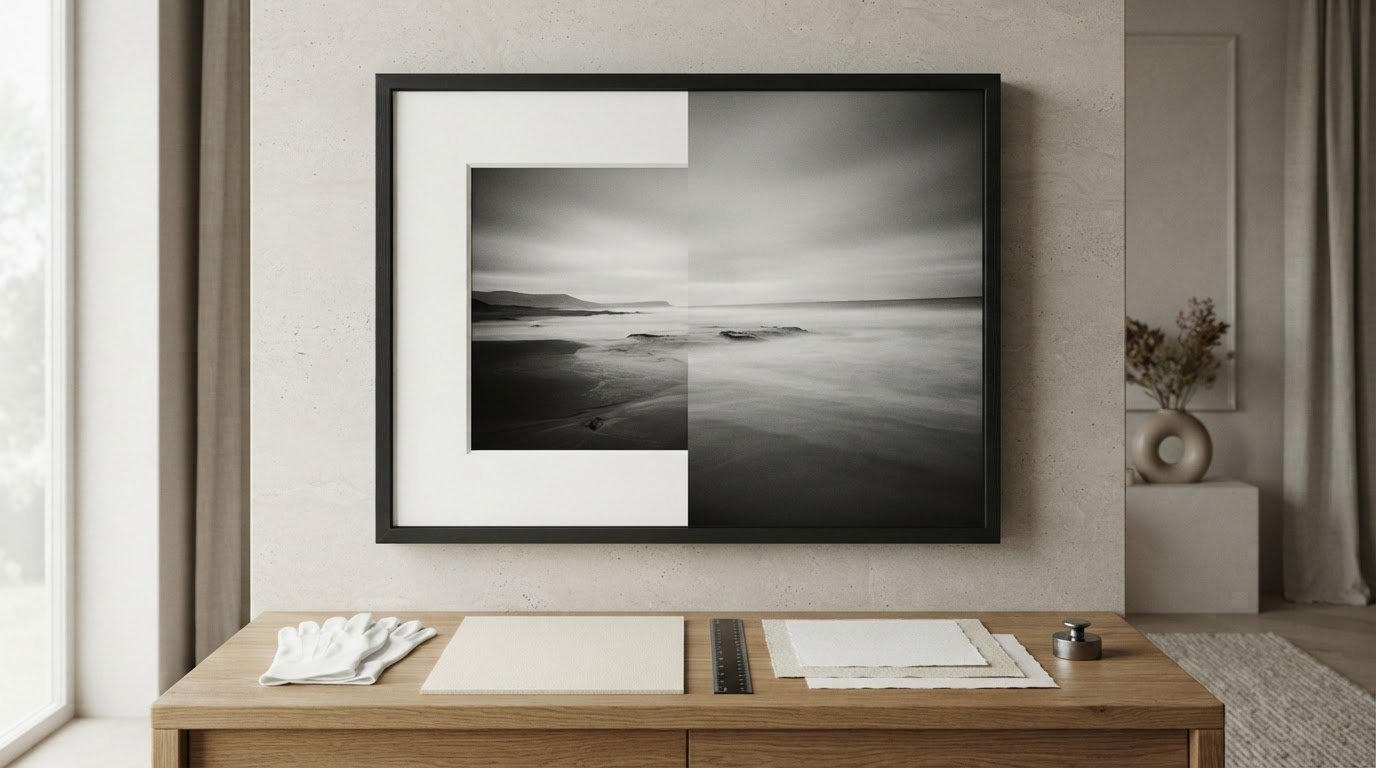
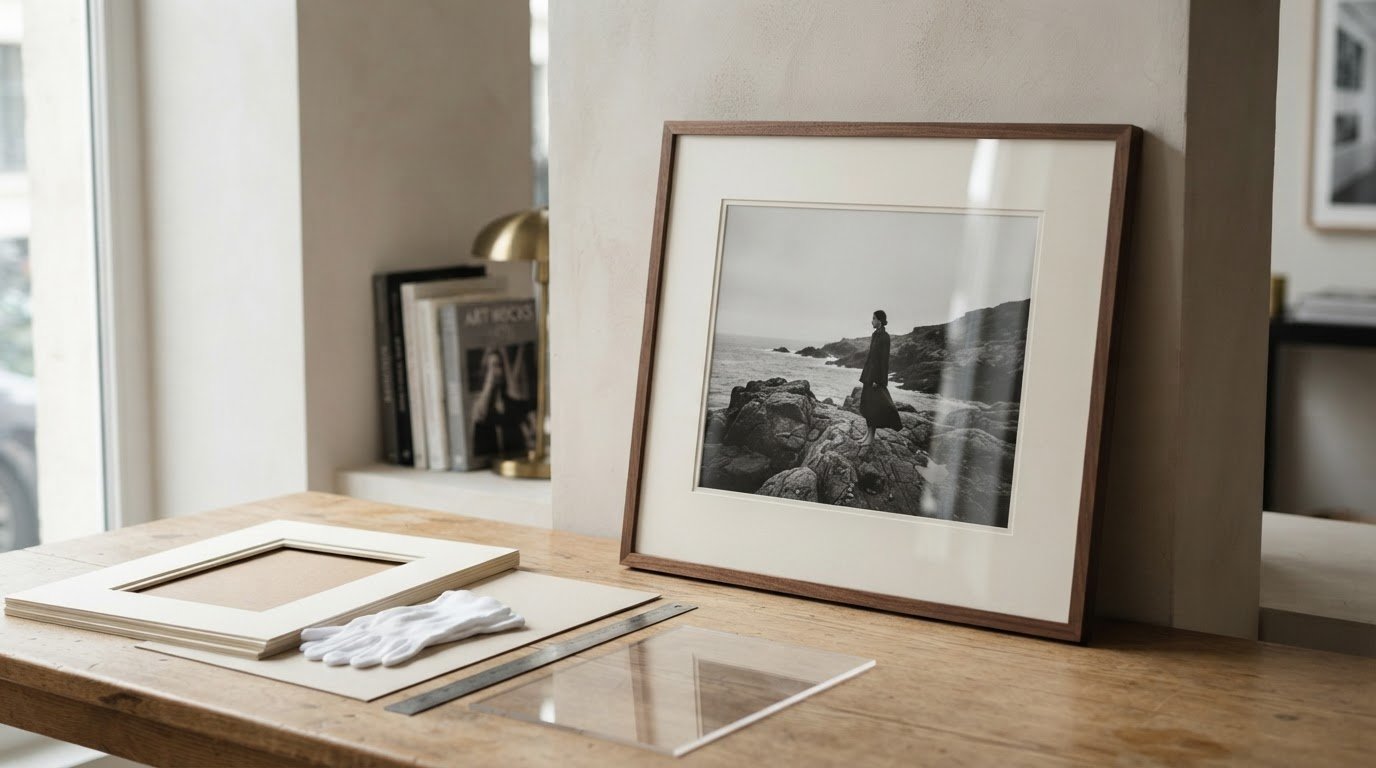
When dealing with black and white pictures, the requirements shift toward high-contrast sophistication. The “Museum Standard” typically involves a slim black wood frame paired with a crisp, white acid-free mount. This creates a sharp, graphic border that focuses the viewer’s attention on the interplay of light and shadow. For a more traditional library or study, deeper wood tones like dark walnut or mahogany offer a sense of archival permanence. Increasing the rebate depth can also add a sculptural quality to a portrait, casting a subtle shadow that gives the subject a three-dimensional presence on the wall.

Technical Excellence: Materials, Glazing, and Archival Integrity

While the visual allure of a sun-drenched poolside scene is immediate, the longevity of that vibrancy depends entirely on the technical specifications of its housing. Mastering how to frame a slim aarons print requires a commitment to archival standards that far exceed those of standard commercial shops. When you’re dealing with high-value photography, the materials that touch the paper are just as important as the wood that defines the exterior. Preservation is a silent, ongoing process; it’s the difference between a work of art that remains a pristine investment and one that succumbs to the slow degradation of environmental exposure.

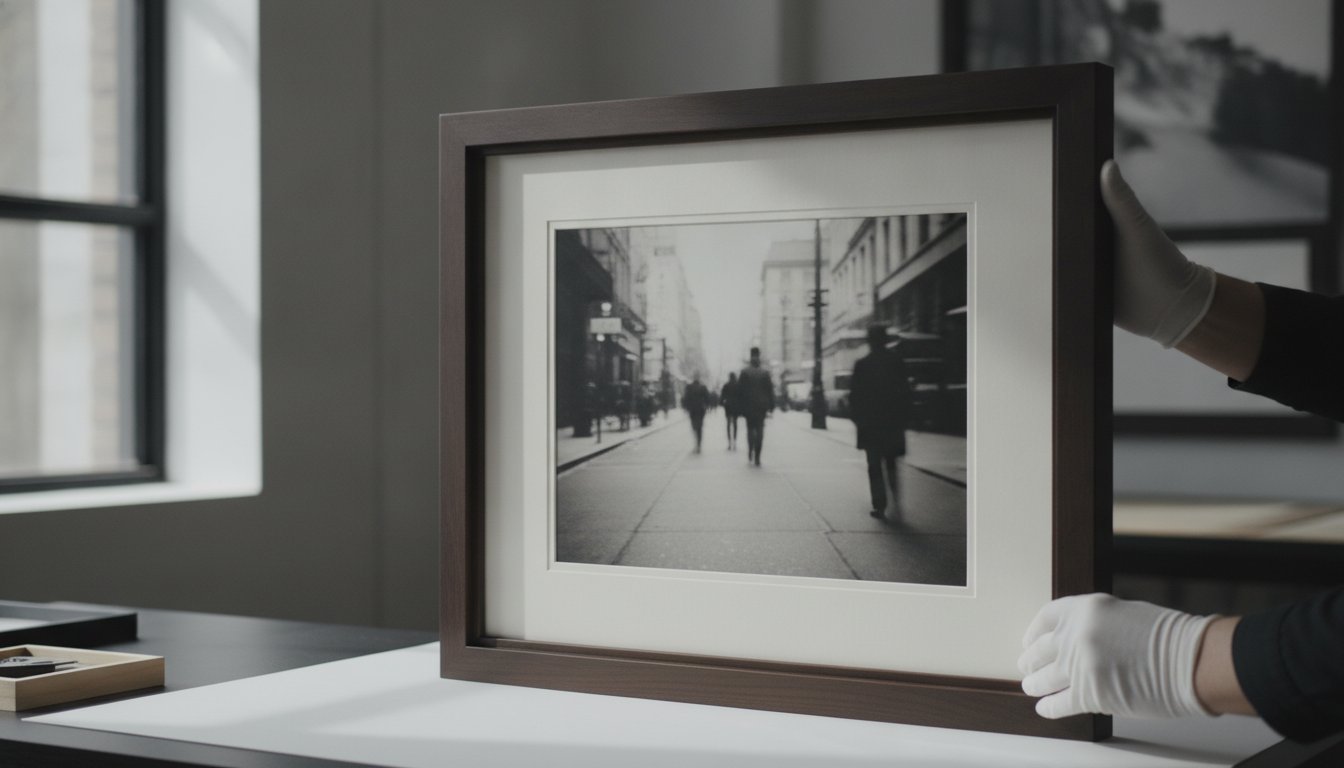
A critical but often overlooked component in fine art framing is the spacer. This small, invisible strip sits between the glazing and the artwork, ensuring the print never physically touches the glass or acrylic. Without a spacer, changes in humidity can cause the photograph to adhere to the glazing, leading to catastrophic damage. For mounting, we prefer the T-hinging method using Japanese paper and archival wheat starch paste. This technique allows the print to “breathe” and expand or contract naturally with temperature shifts, unlike dry mounting, which is often permanent and can devalue a rare piece by altering its original state.

Glazing Options: Museum Glass vs. Acrylic

Glazing is the invisible shield of your collection. For the serious collector, Museum Glass is the gold standard. It offers 99% UV protection, which is essential for preserving the delicate dyes in C-type prints that are prone to fading in bright, modern interiors. Its anti-reflective coating ensures that your art is visible from every angle, removing the distracting glare that often plagues standard glass. For oversized works or prints intended for high-traffic areas, high-grade acrylic provides a lightweight, shatterproof alternative without sacrificing the clarity required to appreciate the fine grain of the film.

The Importance of Acid-Free Mounting

Standard backboards often contain lignin, an organic polymer that releases acids as it breaks down. These acids lead to “foxing”-those unsightly brown spots-and a general yellowing of the paper that permanently devalues the work. To prevent this, we utilize only cotton rag or alpha-cellulose mounts. These materials are naturally acid-free and provide a chemically stable environment for the art. Our bespoke framing service at Galerie Prints is built on these exacting museum standards, utilizing premium materials to ensure your collection remains a vibrant piece of history for 2026 and beyond.

  • Archival Backing: Prevents acid migration and structural warping.
  • UV Filtration: Blocks the spectrum of light responsible for pigment breakdown.
  • Reversible Techniques: Ensures all mounting can be safely undone by a professional conservator.

The Architecture of the Room: Scaling and Placement

Placement is the final curatorial act that transforms a framed photograph into a permanent architectural feature. Deciding how to frame a slim aarons print is only half the journey; the artwork must also respect the proportions of the space it inhabits. For a professional gallery feel, we recommend the ’60-inch rule.’ This involves hanging the work so the center point of the image sits exactly 60 inches from the floor, aligning with the average human eye level. This consistency creates a sense of order and allows the narrative of the photograph to unfold naturally as you move through the room.

Lighting plays a transformative role in highlighting the textures of fine art photography. While the museum glass discussed in previous sections protects against UV damage, dedicated picture lights or adjustable ceiling spots can enhance the print’s depth. Properly directed light catches the hand-finished grain of an oak or ash frame, adding a tactile dimension that makes the piece feel integrated into the room’s design rather than merely resting upon the wall.

Proportions and Sightlines

When an image captures an expansive horizon, such as a Slim Aarons landscape, going ‘oversized’ can be a powerful design choice. A large-scale print creates an immersive experience, acting as a window that expands the perceived boundaries of the room. When you understand how to frame a slim aarons print for a specific wall, you elevate the entire room’s aesthetic. To see how professional photography can masterfully highlight these architectural features, visit Clarence Butts Photography. Scale must be balanced with the furniture below; as a general rule, the width of the frame should be approximately two-thirds to three-quarters the width of the sofa or console table it sits above. This prevents the art from appearing adrift on a vast wall or, conversely, overwhelming the furniture beneath it.

Designing a Gallery Wall

For collectors with multiple pieces, a gallery wall offers a way to showcase the breadth of a collection while maintaining visual harmony. Start by choosing a ‘hero’ piece to anchor the arrangement. This central work sets the curatorial tone, whether you opt for uniform framing to mirror a home’s formal architecture or an eclectic mix of finishes for a more lived-in, worldly aesthetic. Consistency is maintained through the ‘2-inch rule’: keeping exactly two inches of space between every frame. This precise spacing prevents visual clutter and ensures the collection feels like a singular, intentional installation. If you’re ready to begin your curation, you can explore our bespoke framing options to ensure every piece is perfectly scaled for your space.

Elevating Your Collection with Galerie Prints Bespoke Framing

When you invest in a piece from our world-class archives, the final presentation shouldn’t be left to chance. Our bespoke framing service is designed as a dedicated extension of the art itself, ensuring that every technical and aesthetic nuance discussed in this guide is expertly executed. We don’t merely provide a border; we offer a handcrafted sanctuary for your photography. By choosing a service that understands the specific requirements of how to frame a slim aarons print, you ensure that the vibrant, aspirational quality of the work is preserved within a frame that mirrors its historical prestige.

Our curators are available to provide expert consultations, helping you navigate the selection of finishes that best suit your interior architecture. Whether you’re drawn to the organic grain of solid ash or the timeless stability of oak, our frames are hand-finished in our dedicated studio to meet the highest standards of the art world. This level of personalized attention ensures your investment is not just protected, but elevated to its full potential as a centerpiece of your home.

A Seamless Collector Experience

There is a distinct advantage to ordering your print and frame as a unified piece. This approach ensures a perfect archival seal, as the artwork is mounted and glazed by professionals who handle these specific paper types daily. It removes the friction of transporting a delicate, high-value print to a local framer, where it might be subject to improper handling or non-archival materials. Our “Ready-to-Hang” promise means your masterpiece arrives at your door in secure, professional art packaging, ready to be placed on your wall the moment it’s unpacked. This seamless process adds tangible value to your collection, providing peace of mind that the work has been handled with curatorial care from the gallery to your home.

Craftsmanship and Heritage

The artisanal craftsmanship within our framing studio is a point of immense pride. We utilize traditional production methods that respect the heritage of the photography we represent. Every frame is constructed using sustainable, archival-grade materials, from the acid-free cotton rag mounts to the precision-cut spacers that protect the print surface. We don’t believe in shortcuts. Instead, we focus on the tactile quality of the wood and the technical superiority of the assembly, ensuring your piece remains a lasting part of your family’s history. If you’re ready to transform your selection into a professionally curated masterpiece, Explore our Bespoke Framing Service today and discover the difference that artisanal quality makes for your collection.

Preserving Your Window to the Jet-Set Era

A fine art photograph is a legacy held in light and shadow, and the frame you choose is its final guardian. We’ve explored how a thoughtful selection bridges the gap between historical narrative and modern interior design, ensuring that every piece of mid-century elegance feels at home in your space. From the technical necessity of UV-protective glazing to the precise geometry of gallery-standard placement, every detail serves a singular purpose: to elevate the art while shielding it from the passage of time.

Mastering how to frame a slim aarons print isn’t just about decoration; it’s about curating an experience that lasts for generations. At Galerie Prints, we provide a seamless path from the gallery to your wall. Our bespoke framing service utilizes museum-quality archival materials and artisanal craftsmanship specifically tailored for our world-class archives. With our professional, ready-to-hang delivery, your collection is transformed into a finished masterpiece without the friction of third-party handling. Discover Bespoke Framing at Galerie Prints and take the final step in honoring your investment. Your collection deserves a presentation as timeless as the moments it captures.

Frequently Asked Questions

How do I know what size frame to buy for my print?

The frame size is determined by the outer dimensions of the print plus the width of the mount you intend to use. For a standard gallery presentation, we recommend adding a border of three to four inches on all sides to provide visual breathing room. For instance, a 20×24 inch print paired with a 4-inch mount requires a frame with internal dimensions of 28×32 inches.

What is the best frame colour for black and white photography?

A slim black wood frame is the definitive choice for black and white photography because it provides a sharp punctuation mark that emphasizes the image’s tonal range. For a more traditional or archival aesthetic in a library or study, deep walnut or mahogany finishes offer a sophisticated warmth. These darker tones beautifully complement the silver-gelatin appearance of classic photographic prints.

Should I choose glass or acrylic for my picture frame?

Museum glass is the gold standard for clarity and UV protection, offering an anti-reflective finish that makes the glass virtually disappear. High-grade acrylic is the superior choice for oversized works or high-traffic areas where weight and shatter-resistance are primary concerns. Both options should offer at least 99% UV filtration to prevent pigment degradation and ensure the longevity of your investment.

What does ‘archival framing’ actually mean?

Archival framing refers to the use of chemically stable, acid-free materials and reversible techniques that protect the artwork from environmental damage. This includes using cotton rag mounts and pH-neutral adhesives that won’t cause yellowing or brittleness over time. It ensures the print remains in its original condition, preserving both its historical integrity and its financial value for decades to come.

Is it better to have a mount (mat) or frame the print to the edge?

A mount is generally preferred for fine art photography because it creates a necessary air gap between the print and the glazing. This breathing room prevents moisture from causing the photograph to stick to the glass, which can lead to permanent damage. Aesthetically, a generous mat also provides a visual transition that focuses the viewer’s eye on the central composition.

How do I protect my art prints from sunlight and fading?

Utilizing UV-protective glazing is the most effective way to shield your collection from the sun’s harmful rays. Even with professional glazing, you should avoid hanging your prints in direct sunlight or near extreme heat sources. Placing your artwork on walls that receive indirect light will significantly extend the life of the vibrant dyes used in iconic C-type prints.

What is the most popular frame style for Slim Aarons prints?

The most sought-after choice for those learning how to frame a slim aarons print is a minimalist white wood frame with a deep rebate. This clean, architectural style mirrors the sun-drenched, aspirational aesthetic of the 1950s and 60s without competing with the vibrant poolside colors. Natural oak is a superlative alternative for desert or organic-themed compositions, echoing the natural textures within the photograph. This minimalist aesthetic also pairs beautifully with modern digital art; for instance, the high-quality downloadable prints from Bobzdigistore gain a sophisticated, gallery-ready look when presented in these same frame styles.

Can I change the frame later if I redecorate my home?

Yes, you can certainly reframe your artwork provided it was originally mounted using archival, reversible techniques like T-hinging. Because the print isn’t permanently bonded to the backing board, a professional framer can safely remove it and place it in a new surround. This flexibility ensures that your investment remains protected while allowing your collection to evolve alongside your personal interior style.

Framing Slim Aarons Prints: The Connoisseur’s Guide to Bespoke Archival Display

A Slim Aarons photograph is far more than a decorative asset; it is a meticulously preserved fragment of a golden age that requires a dedicated guardian to maintain its brilliance. When you invest in a piece of this photographic heritage, the process of framing slim aarons prints becomes the critical bridge between historical significance and contemporary interior elegance. It’s a task that carries the weight of preservation, as standard materials can cause noticeable degradation in as little as seven years. You likely recognize that a work of this caliber deserves a presentation that mirrors its own prestige, yet the technicalities of conservation often feel opaque.

We understand the hesitation that comes with choosing between various UV glass types or finding a frame color that respects those famous Mediterranean blues without overpowering them. This guide will teach you how to select a bespoke display that elevates your collection while protecting it for a century or more. We will examine the nuances of museum-grade glazing, the tactile luxury of hand-stained timber, and the archival methods that ensure your investment remains as vibrant as the day it left the darkroom.

Key Takeaways

  • Understand why bespoke, made-to-measure dimensions are vital for respecting the specific aspect ratios of historical archive photography.
  • Discover how museum-grade materials like acid-free matting and solid wood mouldings ensure the longevity of your investment when framing slim aarons prints.
  • Learn to select frame styles like the “White Wood” standard or shadow box profiles that perfectly enhance the vibrant poolside blues of the Aarons collection.
  • Explore the artisanal joinery and hand-finishing processes that transform a standard photograph into a permanent, ready-to-hang interior masterpiece.
  • Gain insight into the curatorial expertise required to bridge the gap between mid-century heritage and modern luxury home decor.

What defines a Bespoke Framing Service for Slim Aarons Prints?

Bespoke framing is an intentional act of preservation that goes far beyond the simple act of enclosing a photograph. When we discuss the work of Slim Aarons, we are engaging with a specific mid-century aesthetic that demands absolute precision. A truly bespoke service ensures that the made-to-measure dimensions respect the exact aspect ratio of the archive print, preserving the composition exactly as the artist intended. Unlike mass-produced alternatives, artisanal craftsmanship prioritizes the unique physical properties of the silver halide or baryta paper. Large-scale photography requires a level of structural integrity that factory-assembled frames simply cannot provide. A substantial, museum-quality print needs a frame with enough weight and rigidity to prevent bowing or warping over several decades. The role of the gallery curator is to act as a guardian, ensuring the final display enhances the narrative of “attractive people doing attractive things” without creating a visual distraction.

Bespoke vs. Ready-Made: Protecting Your Investment

Choosing a factory-assembled frame often introduces hidden risks to a serious collection. Inexpensive, mass-produced materials frequently contain lignins and volatile organic compounds that lead to acidic off-gassing. This chemical process is the primary cause of yellowing and “foxing” on the paper, which can begin to dull those iconic Mediterranean blues in as little as seven years. Bespoke matting creates a vital physical buffer, providing the necessary breathing room to prevent the print from adhering to the glazing. This separation is essential for long-term conservation and environmental stability. Bespoke framing is a tailored marriage of archival protection and aesthetic prestige. By utilizing pH-neutral, acid-free boards, the process of framing slim aarons prints ensures that a piece rated for a 100-year lifespan actually achieves that longevity.

The Curatorial Standard of Galerie Prints

Our curatorial approach ensures that every moulding choice is a deliberate nod to the era in which the photograph was captured. We select finishes that specifically complement the sun-drenched, 1950s-70s photographic palette, ranging from the crisp whites of Palm Beach villas to the warm, hand-stained timbers of Alpine retreats. The psychological impact of a well-proportioned frame is profound; it anchors the work as a room’s focal point and provides a sense of permanent stability. We utilize non-invasive mounting techniques, such as archival hinges, that maintain the historical value of the print. This meticulous attention to detail ensures the artwork remains in its original state, allowing the heritage of the piece to remain intact for future generations of collectors.

The Anatomy of a Museum-Quality Frame

The structure of a museum-quality frame is a technical fortress designed to shield its contents from the entropy of the outside world. When framing slim aarons prints, every component must be chemically inert and structurally superior. Solid wood mouldings are the starting point, providing a sense of permanence and an elegant weight that synthetic materials cannot replicate. We utilize timbers like oak and ash, hand-finished to ensure they don’t just hold the art, but honor its historical significance. These materials offer the rigidity necessary to support large-scale works without the risk of bowing over time.

Beneath the surface, the matting serves as the primary defense against atmospheric damage. We exclusively use pH-neutral, acid-free boards to prevent the insidious foxing or yellowing that often plagues lesser collections. This matting isn’t just a decorative border; it acts as a sacrificial layer that absorbs pollutants and buffers against acid migration before they reach the photographic emulsion. To ensure total environmental control, a sealed backing is applied to the rear of the frame. This creates a stable micro-climate, protecting the print from subtle shifts in humidity and the ingress of dust that can occur even in the most refined interiors.

Glazing Options: Clarity and Protection

Glazing is the window through which we view the artist’s world, and for fine art photography, clarity is as vital as protection. We recommend 99% UV-shielding glazing as the industry standard for any Slim Aarons work, especially those iconic poolside scenes where the vibrant blues are susceptible to light damage. While museum-grade anti-reflective glass offers unparalleled clarity, high-quality archival acrylic is often the superior choice for oversized works. Its lightweight nature reduces the stress on the frame’s joinery and provides a safer display option for large-scale installations in busy homes. This material ensures that the sun-drenched brilliance of the photography remains untarnished by the very light that makes it so captivating.

The Art of the Mat: Colour and Proportions

Selecting the perfect mat is a study in tonal harmony. We avoid stark, bleached whites that can make historical photographic paper appear aged or yellowed by comparison. Instead, we select shades that echo the natural luminosity of the original print, creating a seamless transition from art to frame. A “weighted bottom” technique, where the lower margin of the mat is slightly wider than the top and sides, is often employed to correct a common optical illusion. This ensures the piece feels perfectly balanced when hung at eye level. For smaller prints, a generous mat width can be used to create a sense of monumental scale, transforming a modest window into a grand statement. If you are ready to elevate your collection, our bespoke framing service provides the meticulous care these masterpieces require.

Styling the Slim Aarons Aesthetic

Styling a collection requires a discerning eye that balances the artist’s original intent with the architectural demands of a modern home. When framing slim aarons prints, the choice of moulding serves as a tonal extension of the photograph itself. For the sun-drenched vistas of the Mediterranean or the Caribbean, the ‘White Wood’ standard remains the quintessential choice. A minimalist white frame doesn’t just enclose the image; it reflects the ambient light found in the original locations, allowing those famous turquoise blues to resonate without competition. This clean aesthetic acts as a neutral boundary that bridges the gap between mid-century nostalgia and contemporary minimalism. For those looking to create their own high-quality imagery for such a display, you can check out Felix Bird Photography for artistic portraits and professional headshots.

For large-scale poolside photography, shadow box framing offers a compelling alternative to traditional flat mounts. By creating a physical distance between the print and the glazing, this technique adds a three-dimensional depth that mimics the experience of looking through a window into a private world. Conversely, desert scenes captured in Palm Springs or Arizona benefit from the organic warmth of natural oak or walnut. These timbers echo the arid textures and golden-hour light found in Aarons’ American West archives, grounding the work in a way that feels both established and luxurious. Developing a strategy for framing slim aarons prints often involves creating a cohesive gallery wall. This doesn’t require identical frames; instead, it thrives on a common tonal thread, such as a consistent mat colour or a shared artisanal finish across varied bespoke profiles.

Framing Iconic Poolside Scenes

Vibrant, water-centric works like ‘Poolside at Gossab’ demand a treatment that respects their inherent vastness. We often recommend thin-profile mouldings for these pieces. They provide the necessary structural support while ensuring the expansive landscape remains the undisputed protagonist of the display. This approach allows the bespoke frame to act as a subtle transition, helping the artwork feel integrated into a modern interior without losing its historical soul.

Framing Terry O’Neill and Monochrome Archives

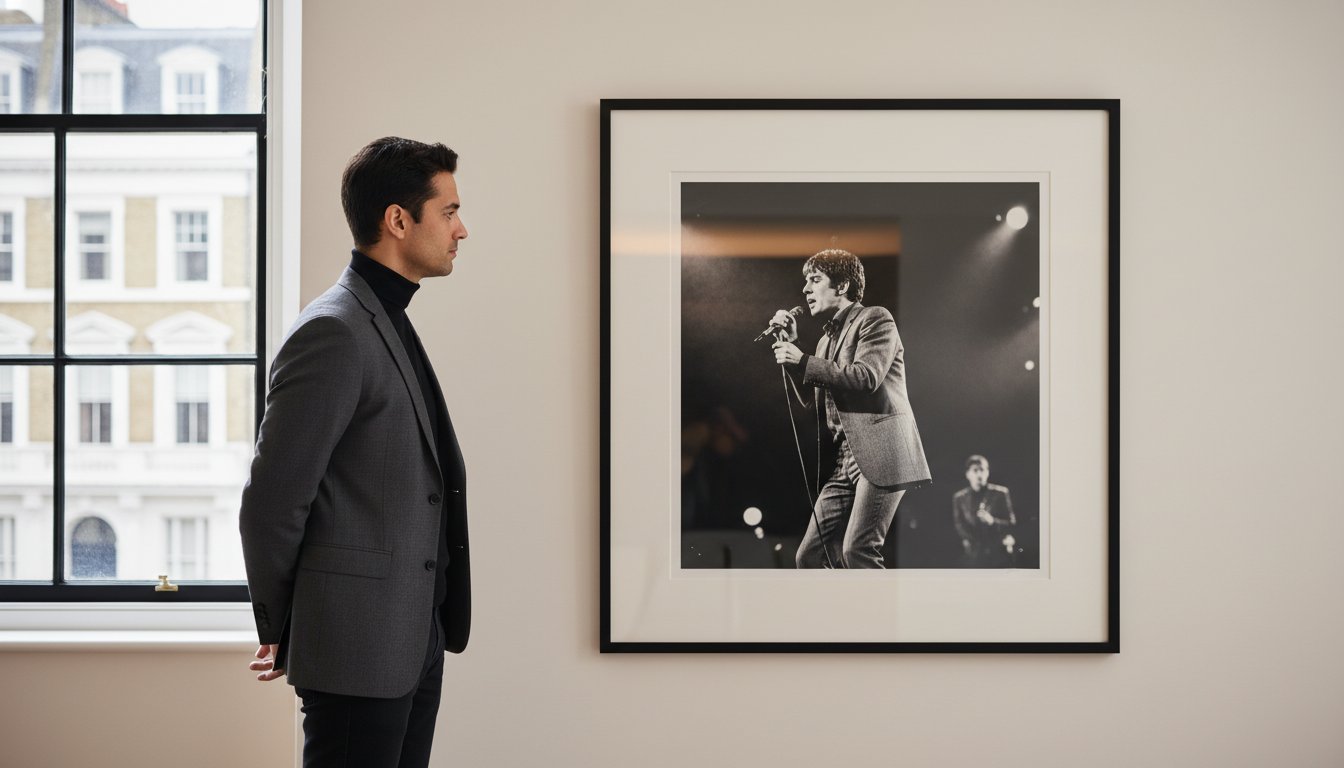
The high-impact celebrity portraits of Terry O’Neill often require a different curatorial logic, frequently favouring contrasting black mouldings that emphasize the dramatic lighting of his subjects. For those exploring the black and white pictures within our archives, the “float mount” technique is a premier choice. This method highlights the raw, deckled edges of the paper, celebrating the tactile nature of the darkroom process. Similarly, bespoke framing preserves the historical narrative of cinema lobby cards by ensuring these fragile pieces of Hollywood ephemera are displayed in a way that honours their specific heritage and prevents structural decay.

The Artisanal Framing Process: A Step-by-Step Journey

The transformation of a loose photographic print into a gallery-ready masterpiece is a deliberate, multi-stage journey of technical precision. It begins with a curatorial consultation, where we select the specific moulding and matting that best articulates the narrative of your print. This stage is vital; the frame doesn’t just enclose the image, but acts as a bridge between the mid-century heritage of the photography and the specific architectural context of your home. Once the design is finalized, our master framers in our London workshop begin the physical construction. They employ precision joinery, hand-cutting and joining mitred corners to create a seamless, structural finish that can support even the most substantial oversized works. This artisanal approach ensures that framing slim aarons prints results in a piece of furniture-grade quality that lasts for generations.

Mounting Techniques: Dry vs. Hinge

Achieving a perfectly flat, ripple-free finish on modern slim aarons prints often requires the use of dry mounting. This technique employs a vacuum press to bond the print to an acid-free substrate, ensuring the paper remains taut regardless of environmental shifts. However, rare collectables or estate-stamped prints require a different philosophy. For these, we utilize archival hinge mounting, a non-invasive and entirely reversible approach that uses acid-free Japanese paper to suspend the artwork. This preserves the integrity of the original paper edges. We also incorporate discreet spacers within the frame rebate. These create a critical air gap, ensuring the photographic emulsion never comes into direct contact with the glazing, which prevents moisture trapped in the air from causing the print to stick to the glass.

Quality Control and Sealing

The final assembly occurs in a controlled, clean-room environment to eliminate the risk of dust or static interference. We inspect every finished piece under rigorous gallery lighting to identify and rectify any microscopic imperfections before the frame is permanently closed. To ensure a stable internal micro-climate, we seal the back with archival tape, providing a robust barrier against moisture and insect ingress. The glass or acrylic receives a final hand-polish to ensure absolute clarity. Finally, we attach premium, ready-to-hang hardware, including heavy-duty fixers that guarantee a secure and perfectly level display. To experience this level of craftsmanship firsthand, you can explore our bespoke framing service for your next acquisition.

Why Choose Galerie Prints for Your Bespoke Framing?

Selecting the right partner for framing slim aarons prints is an exercise in trust. At Galerie Prints, we operate as more than a workshop; we are the primary guardians of the photographic heritage we represent. Our curatorial expertise is rooted in a deep, historical understanding of the Slim Aarons and Terry O’Neill archives. We don’t merely provide a boundary for an image. We create a bespoke environment that respects the specific production methods of the original silver halide and baryta prints. Every frame is hand-finished in our London-based workshop by master framers who utilize traditional techniques passed down through generations. This localized, artisanal craftsmanship serves as a seal of quality that mass-produced, tech-first alternatives cannot replicate.

Our integrated service offers a seamless transition from archive to installation. By ordering your print and bespoke frame together, you ensure a guaranteed perfect fit and a unified aesthetic vision. There is no risk of sizing discrepancies or material mismatches. Once the artisanal process is complete, we provide global white-glove delivery. Every framed masterpiece is fully insured and shipped with the meticulous care required for high-caliber visual art. This ensures your acquisition arrives in pristine condition, ready to take its place in your collection anywhere in the world.

A Legacy of Excellence

Our commitment to excellence is reflected in our exclusive use of museum-quality materials. We believe that the work of master photographers deserves nothing less than the finest archival components. Our bespoke service is designed to honor these artists, bridging the gap between the mid-century glamour of the past and the sophisticated interiors of the present. By providing a single destination for curation, high-end printing, and professional framing, we offer a level of convenience that matches the prestige of the collections themselves.

Transforming Your Interior

The decision to invest in professional framing slim aarons prints carries long-term aesthetic and financial value. A bespoke frame transforms a simple photographic print into a lasting family heritage piece; it is a window into a bygone era that remains vibrant for over a century. It anchors a room, providing a sense of permanence and stability that defines a truly curated home. This is the essential final step for any serious collector who views their art not just as decoration, but as a piece of history. Explore our bespoke framing options and curated Slim Aarons collections today.

Securing Your Photographic Legacy for the Next Generation

At Galerie Prints, every frame is hand-finished in our London workshop using museum-quality archival materials as standard. We’re proud to be trusted by world-renowned archives and serious collectors to act as the final bridge between historical significance and contemporary interior design. A standard frame simply doesn’t offer the same permanence or curatorial authority. Discover our Bespoke Framing Service and Curated Collections and let your chosen artwork become a permanent window into a golden era, protected by craftsmanship that is as enduring as the photography itself.

Frequently Asked Questions

What is the difference between custom framing and bespoke framing?

Bespoke framing involves a fully tailored, artisanal approach where every dimension and finish is designed to respect the specific heritage of the print. While custom framing often relies on pre-set retail components, our bespoke service utilizes hand-finished mouldings and made-to-measure matting crafted in our London workshop. This ensures the frame acts as a curatorial bridge between the mid-century aesthetic and your modern interior, offering a level of precision that factory-assembled options cannot match.

How long does a bespoke framing service typically take for Slim Aarons prints?

The timeline for framing slim aarons prints typically ranges from two to four weeks, depending on the complexity of the hand-finished moulding selected. Every piece undergoes a meticulous journey from initial consultation to precision joinery and clean-room assembly in our London workshop. This measured pace ensures that the structural integrity and archival quality meet our museum standards before the work is dispatched via our global white-glove shipping service.

Is museum glass worth the extra investment for my photography?

Museum glass is an essential investment for any serious collector, as it offers up to 99% UV protection and unparalleled anti-reflective clarity. This specialized glazing prevents the vibrant Mediterranean blues of an Aarons print from fading while eliminating distracting reflections in bright, sun-drenched interiors. It allows you to appreciate the tactile details of the photographic paper without the visual barrier of standard glass, ensuring the work remains vibrant for a century or more.

Can you frame non-standard sizes like original cinema lobby cards?

Our bespoke service is specifically designed to accommodate non-standard sizes, including delicate items like original cinema lobby cards or oversized limited edition prints. Because we hand-cut every moulding and mat to made-to-measure dimensions, we can respect the unique aspect ratios of historical archives without compromising the artist’s original composition. This tailored approach provides the structural support and archival protection necessary for preserving Hollywood’s photographic heritage in its original form.

What is archival-grade matting and why is it important for fine art?

Archival-grade matting consists of pH-neutral, acid-free boards that provide a chemical buffer between the environment and the photographic paper. It’s vital for fine art because standard boards contain lignins that cause yellowing and foxing over time. By using museum-quality matting, we ensure that the paper remains stable and pristine, preventing the insidious degradation that can otherwise appear in as little as seven to ten years in lesser frames.

Does bespoke framing increase the resale value of my art collection?

High-quality bespoke framing acts as a value multiplier for your art collection by ensuring the physical preservation of the asset. Collectors and galleries prioritize prints that have been maintained using archival-grade materials and non-invasive mounting techniques. A professionally finished, ready-to-hang piece not only commands a higher aesthetic presence in a room but also provides documented proof that the work has been protected against light damage and environmental pollutants since its acquisition.

How do I choose the right frame colour for a Slim Aarons poolside scene?

For iconic poolside scenes, a minimalist white wood frame is a premier choice to enhance those famous turquoise hues. This clean aesthetic reflects the ambient light of the original locations without competing with the photograph’s vibrant palette. If you’re framing a desert scene from Palm Springs, natural oak or walnut mouldings bring a sophisticated warmth that echoes the organic textures and golden-hour light found in Aarons’ American West archives.

What is the best way to clean the glass on a bespoke frame without damaging it?

The best way to maintain your frame is to use a soft, lint-free microfiber cloth and a specialized, ammonia-free glass cleaner. You shouldn’t spray the cleaner directly onto the glazing; instead, apply a small amount to the cloth first to prevent liquid from seeping under the frame’s rebate. For museum-grade acrylic, use a dedicated anti-static cleaner to avoid scratches and maintain the crystal-clear clarity that defines a professionally finished archival display.

Bespoke Art Framing in Chelsea: The Connoisseur’s Guide to Preserving Heritage

Could the wrong choice of mounting material quietly erase the history of a rare Terry O’Neill print or a Slim Aarons masterpiece? For the discerning collector, bespoke art framing chelsea represents far more than a decorative border. It is a critical act of preservation that ensures a photographic archive survives for generations. Many enthusiasts feel a deep sense of anxiety when handing over fragile, high-value works. The fear of archival damage from substandard materials is real, especially when the piece in question is an irreplaceable slice of cultural heritage that requires a guardian’s touch.

We share your conviction that a truly exceptional piece of art requires a setting that mirrors its prestige and historical weight. This guide reveals how museum-quality materials and curator-led design transform your rare collectables, from Star Wars limited editions to vintage cinema lobby cards, into lasting legacy pieces. We will explore the technical nuances of Fine Art Trade Guild standards and the vital importance of UV-protective glazing. You will also learn how to select bespoke styles that align with the 2026 trend of permanence as luxury, ensuring your collection remains as vibrant and evocative as the day it was first captured.

Key Takeaways

  • Identify the specific archival materials, including UV-protective glass and acid-free boards, that are essential for museum-quality preservation.
  • Understand the hidden risks of off-the-shelf solutions and why bespoke art framing chelsea is the only way to prevent irreversible acidic leaching.
  • Master the art of matching frame aesthetics to iconic archives, ensuring your Slim Aarons or vintage lobby cards retain their narrative soul.
  • Gain expert insights on integrating fine art into your home’s architecture, whether you’re designing a bold statement wall or a curated gallery.
  • Explore the seamless journey from gallery selection to your doorstep with a curator-led approach and artisanal, ready-to-hang delivery.

Why Bespoke Art Framing is Essential for Chelsea’s Discerning Collectors

Chelsea isn’t just a location; it’s a sanctuary for those who view art as a legacy rather than a mere decoration. When you acquire a piece from the Slim Aarons collection or a rare Terry O’Neill photograph, the frame you choose becomes the final chapter of its story. Choosing bespoke art framing chelsea isn’t merely about aesthetic preference. It’s a rigorous technical discipline designed to safeguard the soul of the work. Standard, off-the-shelf frames often use materials that contain lignin or volatile acidic glues. Over time, these chemicals migrate into the paper, causing the dreaded yellowing known as “foxing” or permanent acidic leaching. For a serious collector, this isn’t just a cosmetic flaw. It’s a destruction of provenance.

Professional framing acts as a protective cocoon, managing the micro-environment around the print and shielding it from the mechanical stress of shifting within its mount. Understanding the conservation and restoration of painting frames is essential for anyone looking to invest in high-caliber visual art. A frame should be an extension of the art’s narrative, acting as a bridge between the historical significance of the image and the modern passion of your interior. Without this tailored approach, the very materials meant to display the art can become the agents of its decay.

The Difference Between Standard and Bespoke

Standard frames demand that your art conforms to their rigid, mass-produced limits. Bespoke framing flips this hierarchy, placing the artwork’s needs at the centre of the process. We measure to the exact millimetre, ensuring the mount never pinches or buckles the delicate fibres of the archive. Hand-finished corner joins offer a seamless structural integrity that mass-produced mitred edges simply can’t match. During a personalised consultation, we don’t just discuss colours. We consider the era. A vintage movie poster requires a different visual weight and tonal depth than a contemporary Star Wars limited edition print. This precision ensures the frame complements the art’s specific mood without overwhelming it.

Preserving Value in the Heart of SW3

In the prestigious corridors of SW3, art is frequently an investment that requires active management. High-value archives, such as cinema lobby cards or music archives, demand artisanal methods that acknowledge the reality of London’s urban environmental factors. Humidity fluctuations and particulate matter can quietly degrade a print if it isn’t sealed correctly. Galerie Prints operates with a sense of quiet authority, positioning ourselves as curators who understand that a professionally mounted piece preserves its resale value. We treat every commission as a piece of history. A well-executed frame isn’t a cost; it’s a permanent insurance policy for your photographic heritage.

The Anatomy of Museum-Quality Framing: Materials that Matter

The choice of materials in bespoke art framing chelsea is a matter of molecular science as much as aesthetics. While a frame’s exterior provides the visual impact, the components hidden behind the glazing dictate whether a photograph will endure for a century or degrade within a decade. True museum-quality framing requires a layered approach where every element, from the backing board to the mounting adhesive, is chemically inert. This ensures that the artwork remains in a state of stasis, protected from the volatile organic compounds found in standard decorative moldings.

Archival Mounting and Protection

The chemistry of preservation begins with the mount. By utilizing 100% cotton-fibre rag boards that are naturally acid and lignin-free, we create a pH-neutral environment that prevents the slow, invisible combustion of paper fibres. This is particularly vital when working with high-grade archival photo paper, which possesses a delicate surface tension. If the mounting materials are substandard, the print may suffer from “cockling” or warping, especially in large-format pieces where environmental humidity causes the paper to expand and contract. Our curators employ reversible mounting techniques, such as Japanese paper hinges and wheat starch paste, ensuring that the art can be removed in the future without a trace of mechanical damage. This reversibility is a hallmark of professional stewardship.

Glazing: Clarity Meets Security

Glazing serves as the primary barrier between your investment and the world. Standard glass is often the culprit behind the “ghosting” or fading seen in older collections because it allows harmful ultraviolet rays to penetrate the ink layers. For fine art photography, we adhere to the 99% UV protection standard. This level of shielding is non-negotiable for preserving the chromatic integrity of vibrant archives. Beyond protection, the aesthetic experience is defined by light transmission.

  • Artglass: This anti-reflective glazing is virtually invisible, removing the distracting reflections that often plague high-gloss photography. It allows the viewer to connect with the texture and depth of the image without a mirrored glare.
  • Museum Acrylic: For oversized commissions or pieces destined for international transit, lightweight acrylic offers superior shatter resistance while maintaining the same 99% UV filtering capabilities as its glass counterparts.

Every material we select is a deliberate choice made to honour the artist’s original vision. A frame is not a static object; it’s a functional tool for longevity. If you’re looking to elevate a specific piece, you can explore our bespoke framing options to see how these archival standards are applied to our world-class collections. By prioritising technical excellence in the anatomy of the frame, we ensure that the beauty of the past remains a permanent fixture of your future.

Tailoring the Frame to the Archive: From Slim Aarons to Vintage Lobby Cards

The aesthetic success of a collection depends on the dialogue between the image and its surround. A frame isn’t a neutral observer; it’s a curator’s tool that can either anchor a piece in its historical moment or allow it to transcend time. When providing bespoke art framing chelsea, we treat each archive as a unique narrative challenge. A Terry O’Neill portrait of 1960s London requires a vastly different architectural approach than a contemporary Star Wars limited edition print. One demands the weight of history. The other requires the precision of the future. Context is everything.

Aspirational Photography Framing

Framing the Slim Aarons collection requires an intimate understanding of the “golden era” aesthetic. These poolside scenes, saturated with earthy chartreuse and warm sunset tones, thrive when paired with natural wood finishes like burr or knotty oak. We often recommend wider mounts to provide necessary “breathing room,” ensuring the viewer isn’t overwhelmed by the vibrant, busy composition. Whether you are searching for aaron slims or official Slim Aarons prints, the goal remains the same: maximum visual impact through understated, mid-century elegance.

Memorabilia and Rare Collectables

Preserving cinema lobby cards and vintage movie posters presents a different set of technical hurdles. These pieces often carry the physical marks of their history, such as pinholes or slight folds, which we celebrate as part of their story. We use deep-set box frames and spacer bars to create a physical gap between the art and the glazing. This prevents the ink from sticking to the glass and adds a sense of three-dimensional depth to the display. Custom window mounts can further highlight the historical provenance, turning a piece of marketing ephemera into a serious museum-grade collectable.

For Terry O’Neill and our music archives, monochrome palettes are frequently the most evocative choice. A simple, hand-finished black frame allows the raw energy of the subject to take centre stage without distraction. Conversely, Star Wars limited editions benefit from sleek, modern profiles with minimal ornamentation, reflecting the industrial sci-fi heritage of the work. By tailoring the frame to the specific archive, we ensure that your collection feels like a cohesive, intentional legacy. This level of detail is why bespoke art framing chelsea remains the preferred choice for those who view their walls as a private gallery of cultural history.

Elevating Your Interior: A Style Guide for Chelsea Homes

In the grand townhouses and glass-fronted apartments of SW3, a frame serves as the essential bridge between an archival masterpiece and its architectural surroundings. Transitioning from preservation to presentation requires a keen understanding of scale and atmosphere. Whether you’re working with a sprawling Victorian hallway or a minimalist penthouse, the way you present your collection defines the character of the room. Professional bespoke art framing chelsea ensures that your investment doesn’t just sit on the wall; it commands the space, reflecting the 2026 trend of “permanence as luxury.”

Designing for the Space

Scale is the most critical factor in high-ceilinged Chelsea residences. A small print can easily feel lost on a vast, stuccoed wall, whereas a large-format statement piece, perhaps a Terry O’Neill portrait, creates an immediate focal point. We often look to the psychology of colour to guide our finish selections. For prints featuring “sunset tones” like apricot rose or red-orange, a warm wood veneer like burr walnut can highlight the underlying warmth of the image. Conversely, the resurgence of the “black and white” aesthetic in modern interiors calls for sleek, matte-finished frames that offer a sharp, graphic contrast. Coordinating your frame’s texture with existing artisanal furniture, such as knotty oak or verdigris accents, creates a sense of curated cohesion rather than accidental assembly.

The Art of the Gallery Wall

Creating a gallery wall is an exercise in rhythmic balance. It allows you to weave a narrative by mixing different archives, perhaps placing music archive prints alongside cinema lobby cards. The choice between a consistent or eclectic framing style depends on the desired energy of the room. A uniform set of frames provides a sense of “romantic minimalism,” while varied profiles can evoke the charm of a seasoned collector’s study. Beyond the aesthetic, professional installation is paramount. Large, bespoke frames are substantial objects that require secure, level mounting to ensure they remain a stable part of your home’s heritage. If you’re ready to transform your living space with expert precision, you can start your bespoke framing journey with Galerie Prints today.

Lighting also plays a vital role in the final presentation. Even with the finest anti-reflective glazing, the placement of art in sun-drenched rooms requires careful thought. We advise positioning framed works where they can be appreciated without direct glare, allowing the depth of the photographic paper to shine. By treating the frame as an extension of your home’s interior design, you elevate a simple photograph into a permanent legacy piece that resonates with the sophisticated spirit of Chelsea.

Bespoke Framing at Galerie Prints: Artisanal Craftsmanship

At Galerie Prints, we don’t view the frame as a mere border; it’s the final act of curation. Our studio operates as a guardian of photographic heritage, where every piece of wood and every sheet of acid-free mount board is chosen to honour the original artist’s vision. While others may focus on factory-style speed, our process is measured and luxurious. We provide bespoke art framing chelsea that mirrors the technical superiority of the world-class archives we represent. Whether you’re preserving a rare Star Wars limited edition print or a vibrant Slim Aarons poolside scene, our craftsmanship acts as a seal of quality that justifies the premium nature of your investment.

Sustainability is woven into our artisanal marker. We source only the finest woods, ensuring that the physical weight and grain of the frame complement the tactile history of the work. This commitment to material excellence is why serious collectors trust us to handle their most delicate acquisitions, from vintage movie posters to fragile cinema lobby cards. By merging traditional production methods with a modern passion for aesthetics, we create a bridge to a bygone era of elegance that remains perfectly suited for the 2026 home.

The Galerie Prints Signature Service

Our service begins with a consultation led by seasoned curators who understand the nuances of historical artistic movements. We don’t just ask about your wall colour; we discuss the provenance and era of the piece. This technical superiority extends to our global shipping logistics. While we possess a deep Chelsea heart, our reach is international. We ensure that your bespoke art framing chelsea arrives at your doorstep ready to hang, regardless of where your private gallery is located. Every shipment is handled with the precise, reassuring language of a luxury gallery that understands the value of what lies within.

Start Your Collection Today

Adding professional framing to your online purchase is a seamless journey designed to encourage you to linger on the beauty of the work rather than the logistics of the transaction. For those acquiring rare items or specific music archives, we offer custom requests to meet the most exacting specifications. Every piece is delivered with the stability and permanence required for a sophisticated interior. It’s time to elevate your home with a piece of history that has been preserved with the highest standards of stewardship.

Explore our Bespoke Framing Service and Iconic Collections

Securing a Permanent Legacy for Your Private Collection

True stewardship of a photographic archive requires a transition from mere ownership to active preservation. By prioritizing museum-quality archival standards, including 99% UV-protective glazing and pH-neutral mounting, you ensure that the vibrant soul of your artwork remains untouched by environmental decay. We’ve seen how a tailored architectural approach allows a frame to act as a bridge between the historical significance of a Terry O’Neill portrait and the modern elegance of your interior. Investing in bespoke art framing chelsea is the definitive step in transforming a simple print into a permanent piece of cultural heritage that’ll be cherished for generations.

At Galerie Prints, our commitment to excellence is reflected in every hand-finished join and sustainably sourced veneer. Curated by Stuart Möller and operating as an official Slim Aarons and Getty Images partner, we provide the expert guidance needed to safeguard your investment with quiet authority. Whether you’re displaying a rare cinema lobby card or a contemporary limited edition, your collection deserves a setting that mirrors its prestige. We invite you to Explore our Bespoke Framing Service and Curated Collections and begin the journey of securing your artistic legacy today. Your walls are the canvas for history; let’s ensure they tell a story that lasts.

Frequently Asked Questions

What is the difference between bespoke framing and ready-made frames?

Bespoke framing is a tailored discipline that prioritizes the specific dimensions and preservation needs of a unique piece of art. Ready-made frames utilize mass-produced, standard sizes that often force a print into an ill-fitting mount, which can cause mechanical damage or buckling. Our bespoke art framing chelsea service utilizes hand-finished corners and precision measurements to the millimeter, ensuring a perfect structural fit that industrial alternatives simply can’t provide.

How do archival materials protect my fine art photography?

Archival materials are chemically inert and pH-neutral, which prevents the slow destruction of paper fibers over time. Standard decorative mounts often contain lignin or acidic glues that migrate into the print, leading to permanent yellowing or “foxing.” By using 100% cotton-fiber rag boards, we create a stable micro-environment that halts these chemical reactions. This preservation of chromatic integrity is essential for maintaining the value of fine art photography.

Do you offer UV-protective glass for all bespoke frames?

Yes, we provide museum-grade glazing with 99% UV protection as a standard for our preservation-level commissions. Ultraviolet light is the primary cause of fading in photographic inks and the degradation of original paper surfaces. By installing high-performance glass or anti-reflective Artglass, we shield your investment from the harmful rays present in even the most delicately lit rooms. It’s a critical step in ensuring your collection remains as vibrant as the day it was captured.

Can I get my Slim Aarons print framed by Galerie Prints?

Absolutely, as an official partner of the Slim Aarons archive and Getty Images, we specialize in the definitive presentation of these iconic poolside scenes. We understand the specific mid-century aesthetic required to complement these works, often utilizing wider mounts and natural wood finishes. Our curators ensure that every Slim Aarons print is housed in a setting that honors its aspirational legacy while meeting museum-quality archival standards for long-term stability.

What is the best way to frame vintage cinema lobby cards?

Vintage cinema lobby cards are best presented in deep-set box frames that utilize spacer bars to keep the artwork from touching the glass. This technique prevents the ink from adhering to the glazing and adds a sophisticated three-dimensional depth to the display. Because these cards often carry historical marks like pinholes, we use custom window mounts to highlight their provenance while providing a secure, acid-free environment for their long-term survival.

How long does the bespoke framing process typically take in 2026?

The artisanal creation of a bespoke frame generally requires a timeline of two to four weeks from the initial consultation. This duration reflects the meticulous nature of hand-finishing wood profiles and allowing archival adhesives to cure correctly. While we prioritize the stability and quality of the final piece, we maintain a steady rhythm that ensures your artwork is returned to you as a completed legacy piece within a predictable and professional timeframe.

Can you help with the installation of large gallery walls in Chelsea?

We provide professional guidance on the arrangement and mounting of complex gallery walls to ensure your collection is perfectly integrated into your home’s architecture. Our ready-to-hang delivery service includes the necessary high-grade hardware for secure installation, which is vital for the substantial weight of bespoke frames. For large-scale residences in SW3, we ensure that every piece is positioned with curatorial precision, reflecting the sophisticated interior design standards of the neighborhood.

Is it possible to frame an existing print I already own?

Our bespoke art framing chelsea service is available for high-value works you already have in your private collection. Whether it’s a family heirloom, a rare music archive find, or a vintage movie poster, we apply the same rigorous conservation standards to your existing pieces as we do to our own gallery acquisitions. Our curators will assess the condition of your artwork and recommend a framing solution that enhances its beauty while securing its future for the next generation.

How to Choose a Frame for Fine Art Photography: The Curator’s Guide

The wrong frame doesn’t just diminish a photograph; it actively erases the artist’s intent and the work’s historical value. You’ve likely spent hours selecting a piece that resonates with your personal narrative, perhaps a Slim Aarons poolside scene or a rare Terry O’Neill portrait, only to find yourself stalled by the technical complexities of preservation. It’s a common anxiety to worry that a heavy-handed border might distract from the art, or that a lack of technical knowledge regarding acid-free substrates could lead to irreversible damage. You deserve a presentation that mirrors the quiet authority of a high-end gallery.

Just as you curate your walls with meaningful photography, you can find other ways to celebrate your personal stories. The Wrapped Parcel offers a range of personalized and custom gifts that reflect the same level of care and intentionality as a piece of fine art, making them ideal for marking life’s special occasions.

Mastering how to choose a frame for fine art photography is the final, essential act of the photographic process. In this curator’s guide, we’ll move beyond mere aesthetics to explore the archival standards that protect your investment for generations. You’ll learn to distinguish between standard glass and museum-quality glazing, which can block up to 99% of UV rays, and discover how to select materials that meet the “Ultimate” standards set by the Fine Art Trade Guild. We will provide the clarity you need to achieve a ready-to-hang look that feels both timeless and deeply personal, ensuring your home becomes a bridge to a bygone era of elegance.

Key Takeaways

  • Learn why framing is the essential “final act” of the photographic process, acting as a bridge between the artist’s vision and your personal living space.
  • Discover the technical importance of archival mat boards, which provide necessary breathing space while protecting the print from environmental degradation.
  • Master the art of how to choose a frame for fine art photography by matching materials and styles to the specific aesthetic of color or black and white imagery.
  • Understand how to apply the “Golden Ratio” to your framing proportions to ensure your artwork commands the right presence and balance on your walls.
  • Recognize the value of artisanal, bespoke framing services that utilize traditional hand-finishing techniques to preserve your collection’s historical significance.

The Final Act: Why Framing is Essential to Fine Art Photography

Framing is the silent partner in the artistic dialogue. It serves as the vital bridge between the artist’s original vision and the intimate environment of your living space. When you consider how to choose a frame for fine art photography, you are making a decision that is as much about structural preservation as it is about aesthetic enhancement. A frame is not a mere border; it’s a sanctuary for the image. It provides the physical and conceptual weight necessary to anchor a piece within a room, ensuring the work doesn’t just hang on a wall but commands it. While many view the frame as an afterthought, seasoned collectors understand that the presentation is the final, essential act of the creative process.

The psychological impact of a well-framed piece is profound. It immediately signals value and provenance to the viewer, elevating the work from a simple decoration to a curated artifact. Off-the-shelf frames frequently fail in this regard. They often lack the material density and technical precision required to support the weight and quality of heavy-gauge fine art papers. More dangerously, these mass-produced options often utilize acidic adhesives and wood pulps that can leach into the print. A professional frame, however, creates a sense of permanence. It tells the story of an investment that is meant to last, mirroring the high-end nature of the photographic art it represents.

Preservation vs. Presentation

True archival integrity is about more than just looking good; it’s about preventing the inevitable march of environmental degradation. A museum-quality frame creates a protective micro-climate for the delicate paper fibers, shielding them from the yellowing and fading caused by light and humidity. Understanding the Anatomy of a Museum-Quality Frame is the first step in ensuring your collection survives for future generations. It’s a commitment to material excellence that guarantees your photography remains as vibrant as the day it was captured.

The Gallery Aesthetic at Home

Achieving a gallery aesthetic requires a shift in perspective. You aren’t just decorating a wall; you’re curating an experience. Professional framing mimics the quiet authority found in prestigious institutions, providing a polished distance that allows the art to breathe. It’s essential to match the frame’s quality to the fine art photography it holds. When the craftsmanship of the frame meets the technical superiority of the print, the result is a seamless presentation that exudes prestige and worldly sophistication.

Anatomy of a Museum-Quality Frame: Beyond the Moulding

Selecting the perfect presentation for a collector’s piece requires looking well past the surface. When you are determining how to choose a frame for fine art photography, you’re essentially designing a controlled micro-environment. Every component must function in harmony to prevent “acid burn” or “foxing,” those small, reddish-brown spots that plague neglected prints. A museum-quality frame is an engineered sanctuary, utilizing materials that have been tested for decades of stability and chemical neutrality.

The invisible elements of the frame, specifically the backing and sealing, act as the final line of defense. A proper seal prevents moisture and pests from entering the assembly, ensuring the interior climate remains stable regardless of seasonal shifts. It’s this hidden precision that justifies the investment in bespoke craftsmanship, transforming a simple display into a lasting piece of history. If you’re unsure which combination of materials best suits your new acquisition, our bespoke framing service can guide you through these technical nuances with curatorial expertise.

Selecting the Right Moulding Material

The choice between hardwood and aluminium is often dictated by the era of the photograph and the architectural language of the room. Solid hardwoods, such as oak or walnut, offer a tactile warmth and a sense of historical weight that complements classic portraiture or landscape work. For contemporary or large-scale works, sleek aluminium provides a minimalist profile and immense structural strength. Pay close attention to the rebate, or the depth of the frame. Larger works require a deeper rebate to accommodate the weight of thick glazing and multiple mat boards without bowing or touching the glass.

The Critical Role of the Mat Board

The mat board, or passe-partout, provides the essential breathing space between the print and the glazing. It’s imperative to use only acid-free and lignin-free materials to protect the delicate archival photo paper. Visually, a “weighted bottom” technique, where the lower margin of the mat is slightly wider than the top and sides, prevents the art from appearing to “sink” within the frame. Industry standards favor “gallery white” or subtle off-white tones, as these provide a clean, neutral transition that doesn’t distort the photograph’s original color balance.

Glazing: Clarity and Protection

Glazing is perhaps the most technical choice in the framing process. While standard glass is cost-effective, it offers little protection against the sun’s destructive power. High-end collections often utilize Tru Vue Optium Museum Acrylic, a specialized material that blocks up to 99% of harmful UV rays while allowing over 98% light transmission. This ensures your art is visible in its truest form with less than 1.6% light reflection. As noted by The Ansel Adams Gallery, the right glazing is vital for both long-term protection and the viewer’s visual clarity, allowing the depth of the blacks and the vibrancy of the colors to remain uncompromised.

Matching the Frame to the Photographic Style

The frame is the final punctuation mark on a visual sentence. It should never shout over the photograph; instead, it acts as a supporting character that reinforces the story within the image. Deciding how to choose a frame for fine art photography requires a deep understanding of the work’s historical and emotional context. A 1960s cinema lobby card demands a different structural language than a contemporary architectural study. By aligning the material and profile of the frame with the period and palette of the print, you create a cohesive object that feels inevitable rather than assembled.

The choice between a traditional mount and a floater frame also alters the viewer’s relationship with the work. Traditional framing, with its layered matting, provides a formal window into a scene. In contrast, a floater frame allows the paper’s edges to breathe, highlighting the tactile quality of the medium. This is particularly effective for prints with deckled edges or those where the artist has utilized the entire frame of the film. It suggests a modern, raw appreciation for the photograph as a physical artifact.

Framing the Aspirational: Slim Aarons and Color

Framing the vibrant, aspirational world of Slim Aarons requires a light, sophisticated touch. His imagery often captures the sun-drenched leisure of mid-century luxury, where the palette is dominated by turquoise pools and crisp white linens. To avoid overwhelming these bright compositions, curators often opt for slim, elegant mouldings in white or natural light woods. These neutral borders allow the “pop” of the color to remain the focal point while providing a clean, modern finish that complements a bright, airy interior aesthetic.

The Timeless Contrast of Black and White

Creating contrast and depth for black and white pictures remains a classic exercise in monochromatic balance. The gold standard for this medium is the thin black wood frame paired with a generous white mat. This combination creates a “gallery window” effect that draws the eye directly into the silver-toned depths of the image. As noted in The Ansel Adams Gallery guide, the interplay between the frame’s darkness and the print’s highlight areas is vital for visual harmony. For moodier, low-key portraits, a dark charcoal or stained walnut frame can pull out the subtle shadows, adding a layer of worldly gravitas to the presentation.

Proportions and Placement: The Curator’s Guide to Sizing

The visual weight of a photograph is determined not just by its subject matter, but by the volume of space it occupies on your wall. Understanding how to choose a frame for fine art photography involves a calculated balance between the artwork, the mat board, and the surrounding architecture. While the Golden Ratio often guides the mathematical harmony of a piece, the emotional resonance of a large-format print frequently requires a more dramatic approach. Scaling for the room is a curatorial skill; an undersized frame can make a masterpiece feel like an afterthought, whereas an oversized presentation creates an immediate, commanding focal point that defines the entire room’s aesthetic.

When displaying multiple works in a gallery wall, cohesion is achieved through a shared logic. Whether you choose identical frames for a structured grid or varying styles for a more eclectic, salon-style arrangement, a consistent spacing of 2 to 3 inches between frames ensures the collection feels unified. Achieving this level of precision requires a seasoned eye and artisanal support. To ensure your collection is presented with the exact proportions it deserves, we invite you to explore our bespoke framing service, where every measurement is tailored to your unique interior.

Calculating the Perfect Mat and Frame Width

For smaller works, such as A4-equivalent prints, a generous mat width of 3 to 5 inches provides the necessary breathing room to elevate the piece. Larger works demand even more substantial proportions to maintain visual equilibrium. The “overlap” rule is critical here: the mat should overlap the print edge by approximately 1/8 to 1/4 of an inch to secure the work safely, yet it must never obscure the artist’s signature or edition number. The “weighted bottom” matting technique, where the bottom margin is slightly deeper than the top and sides, acts as a tool for visual stability, preventing the eye from perceiving the art as “falling” within the frame.

Integrating Art into Your Interior Architecture

A frame should feel like a natural extension of your home’s architectural details. If your space features dark walnut furniture or brass accents, selecting a frame finish that mirrors these elements creates a sense of intentionality and permanence. Lighting is equally vital; positioning your framed art to minimize glare from windows or harsh overhead bulbs ensures that the intricate details of the print remain visible at all hours. Consider the negative space on your wall as a deliberate part of the composition. In grand interiors with high ceilings, the traditional eye-level rule, hanging the center of the piece at approximately 57 to 60 inches, can be adjusted upwards to accommodate the vertical scale of the room.

The Bespoke Experience: Entrusting Your Art to Galerie Prints

The journey of acquiring a piece of photographic history concludes with the choice of its final presentation. Our Bespoke Framing Service represents the logical conclusion to your art purchase, transforming a loose print into a protected, permanent fixture of your home. While the previous sections of this guide have detailed the technicalities of how to choose a frame for fine art photography, the final execution requires more than just knowledge. It demands the hand of a specialist. At Galerie Prints, we don’t merely assemble frames. We employ a team of dedicated specialists in London who hand-finish every moulding. This ensures each corner is perfectly joined and every surface is flawless.

Receiving a museum-grade piece delivered directly to your door is the ultimate luxury for the discerning collector. There is a distinct ease in knowing that the ready-to-hang condition we promise is backed by decades of experience in handling sensitive photographic emulsions and heavy-gauge papers. You don’t have to worry about the logistics of local transport or the risk of using sub-standard materials. Instead, you receive a work that is immediately ready to command its place on your wall. Every dimension is tailored to your specific taste and the architectural requirements of your space.

Our Commitment to Quality and Heritage

Our approach is rooted in a reverence for the past and a commitment to the future. We use only the finest archival-grade materials, from acid-free mounts to UV-protective glazing, to ensure your photographic investment is shielded from environmental degradation. Our curators act as your personal guides. They suggest the perfect frame profile to complement everything from the sun-drenched scenes of the Slim Aarons Collection to the moody depth of our Music Archives. Regardless of your global destination, each piece is packaged with meticulous care to arrive in pristine, gallery-ready condition.

Start Your Collection Today

Investing in high-caliber visual art shouldn’t be a fragmented process. You can add professional, bespoke framing to your order in just a few clicks, choosing from our curated selection of hand-stained woods and minimalist metals. For those with unique requirements or large-scale installations, our team is available to consult on custom projects that require a specialized touch. We invite you to explore our curated collections and bespoke framing options to begin the next chapter of your home’s aesthetic narrative.

Preserving Your Photographic Heritage

A photograph only truly finds its voice when it’s presented with the dignity it deserves. You now understand that how to choose a frame for fine art photography is a delicate balance of archival science and aesthetic intuition. By prioritizing museum-grade glazing and acid-free substrates, you ensure the vibrant colors of a Slim Aarons or the deep silver tones of a Terry O’Neill remain uncompromised for decades. The right frame acts as a bridge; it connects the historical significance of the work to the modern elegance of your interior design.

Galerie Prints serves as a guardian of this heritage, offering a seamless transition from acquisition to installation. Our pieces are hand-finished in London by master framers who utilize museum-grade archival materials as standard. It’s the reason we’re trusted by serious collectors and interior designers worldwide to deliver a gallery-ready experience. Discover our Bespoke Framing Service and Iconic Collections to complete your vision. Your collection is a lasting piece of history, and it deserves a presentation that reflects its true provenance.

Curatorial Perspectives: Frequently Asked Questions

What is the difference between a standard frame and a museum-quality frame?

A museum-quality frame uses chemically inert, archival-grade materials that won’t degrade the artwork over time. Standard frames often contain acidic wood pulps and adhesives that cause yellowing and “burn” on fine art paper. By choosing museum standards, you prioritize the preservation of the print’s historical value. This ensures the piece remains a lasting part of your collection for 35 years or more, rather than a temporary decoration.

Should I choose glass or acrylic for my fine art photograph?

Acrylic is the professional choice for large-scale photography because it’s lighter and shatter-resistant compared to traditional glass. High-end acrylic, like Tru Vue Optium, provides superior UV protection and anti-static properties that standard glass lacks. While glass is suitable for smaller, static displays, acrylic offers peace of mind for valuable investments that may be transported or hung in high-traffic areas. It’s the standard for international gallery shipping and grand interior installations.

What is a ‘passe-partout’ and do I really need one?

A passe-partout is the archival mat board that sits between the photograph and the frame’s edge. It’s essential for both aesthetic balance and physical protection. Beyond providing a visual window, it creates a necessary air gap that prevents the print from sticking to the glazing. This gap protects the delicate emulsion from moisture build-up and pressure damage. It’s a non-negotiable component for any serious collector of fine art photography.

How do I choose the right frame color for a black and white photo?

Determining how to choose a frame for fine art photography in black and white usually leads to the classic thin black wood profile. This choice emphasizes the silver-toned highlights and deep shadows within the image. Alternatively, a dark walnut or charcoal frame can add a layer of warmth to a moody, low-key portrait. Avoid overly bright colors that might compete with the monochromatic palette of the print, opting instead for tones that anchor the work’s visual weight.

Is it better to frame a photograph with or without a mat?

Most fine art photographs benefit from a mat because it provides a formal “gallery window” and structural protection. However, a “full bleed” or “floater frame” presentation without a mat can create a striking, modern impact for contemporary landscapes. The choice depends on the artist’s intent and your interior’s architectural style. If the print has a significant white border or deckled edges, a floater frame allows these tactile details to remain visible.

Can I change the frame later if I redecorate my home?

You can absolutely change the frame if the original mounting used reversible, archival methods. Museum-quality framing avoids permanent glues, instead using T-hinges or archival corners that allow the print to be removed without damage. This flexibility is vital for collectors who may want to update their aesthetic or move pieces between different rooms. As long as the work hasn’t been dry-mounted to a board, a professional framer can easily transition it into a new moulding.

What is ‘Anti-Reflective’ or ‘Museum’ glass and is it worth the investment?

Museum glass is a specialized glazing that utilizes an atomic-level coating to virtually eliminate reflections. It reflects less than 1.6% of light, making the glass almost invisible to the viewer. This investment is essential for works hung opposite windows or in brightly lit galleries. Beyond clarity, it blocks up to 99% of harmful UV rays. This level of protection ensures that the vibrant colors and deep blacks of your photograph don’t fade into a ghost of their former selves.

How do I ensure my framed art doesn’t fade over time?

Preventing fade requires a two-pronged approach of superior materials and strategic placement. Always insist on UV-protective glazing that filters out at least 97% of ultraviolet light, the primary cause of pigment degradation. Additionally, avoid hanging your collection in direct sunlight or near harsh heat sources. By mastering how to choose a frame for fine art photography with archival-grade components, you provide a shield that maintains the work’s integrity for future generations.

Bespoke Picture Framing for Art Prints Online UK: The Collector’s Guide

The true value of a Slim Aarons or Terry O’Neill masterpiece lies not just in the silver halide but in the story it tells upon your wall. You understand that a rare photographic print is a fragile piece of history, yet the fear of irreversible damage from acidic mounts or fading sunlight often lingers in a collector’s mind. Choosing bespoke picture framing for art prints online uk should never feel like a gamble with your heritage. It’s about finding a sanctuary for your art that balances aesthetic elegance with the rigorous standards of the Fine Art Trade Guild.

We’ll guide you through the nuances of museum-grade preservation, from selecting conservation-grade glazing that blocks 99% of harmful UV rays to understanding the structural integrity of artisanal London craftsmanship. You’ll discover how to visualize the perfect frame for your Star Wars limited edition or vintage cinema lobby card, ensuring it arrives as a ready-to-hang masterpiece. This guide provides the curatorial validation you need to protect the long-term value of your collection while elevating your interior to a gallery standard. It’s time to bridge the gap between a simple purchase and a lasting legacy.

Key Takeaways

  • Understand how the artisanal heritage of London’s creative heart remains the global benchmark for transforming fine art photography into a permanent legacy piece.
  • Learn to identify the museum-grade components, including acid-free mounts and UV-protective glazing, that are essential when investing in bespoke picture framing for art prints online uk.
  • Avoid the irreversible damage of chemical outgassing and fading by choosing custom solutions that respect the unique dimensions of rare cinematic history.
  • Master the curatorial nuances required to frame iconic Slim Aarons prints or vintage cinema lobby cards while preserving their historical and financial value.
  • Discover how an expert gallery’s eye ensures your selected artwork and its handcrafted frame exist in perfect aesthetic harmony for your home.

The Heritage of Bespoke Picture Framing in Soho, London

Soho has long served as the beating heart of London’s creative soul, a labyrinth of narrow streets where the worlds of cinema, music, and fine art collide. To understand the history of picture framing within this district is to trace the evolution of British visual culture itself. For decades, the area’s guild-style workshops provided the structural backbone for the film industry, crafting the surrounds for the very first lobby cards and movie posters that graced West End premieres. Today, this tradition has matured into a sophisticated network of artisanal studios. These spaces don’t merely produce borders; they act as guardians of photographic heritage. The “Soho Aesthetic” is a deliberate study in contrasts, seamlessly blending the raw, edgy modernity of the city with the uncompromising archival standards required by the world’s most prestigious galleries.

The Creative Pulse of Wardour and Berwick Streets

The proximity to legendary film houses on Wardour and Berwick Streets fundamentally shaped the local approach to presentation. When framing cinema memorabilia, the requirements were always twofold: immediate visual impact and long-term preservation. As Soho transitioned from a gritty trade hub into a premier luxury gallery district, the craft evolved to meet the needs of serious collectors. Galerie Prints continues this high-end artisanal tradition, ensuring that every frame reflects the same level of prestige as the artists themselves. This localized expertise remains the gold standard for global collectors who seek more than a simple product. They seek a piece of London’s storied creative history.

Why Discerning Collectors Demand Bespoke

In 2026, we’re seeing a profound shift toward “slow art” and intentional home curation. Collectors are no longer satisfied with transient decor; they’re investing in pieces that offer a sense of permanence and stability. Opting for bespoke picture framing for art prints online uk is a critical step in this journey. It isn’t just an aesthetic choice; it’s a financial investment in the artwork’s longevity. A custom frame serves as a conservation-grade sanctuary, protecting rare works like a Slim Aarons or a Terry O’Neill from the silent threats of environmental degradation. In a market flooded with mass-produced options, the expert curatorial guidance provided by a specialist framer is what distinguishes a mere print from a museum-quality masterpiece. This meticulous attention to detail ensures that your collection remains a lasting piece of history for generations to come.

Defining the Soho Standard: Archival Materials and Museum-Grade Glazing

In the world of high-end curation, “Museum Quality” is a precise technical benchmark rather than a marketing superlative. It represents a commitment to the absolute preservation of a photographic print’s soul. When you invest in bespoke picture framing for art prints online uk, you aren’t merely buying a border; you’re commissioning a controlled environment. The core of this standard lies in the chemistry of the materials. Traditional materials often contain lignin, an organic polymer that releases acidic gases as it breaks down, leading to the heartbreaking yellowing and “foxing” seen in poorly stored archives. By using chemically inert components, we ensure that the silver halide or inkjet pigments remain as vibrant as the day they were struck.

The Heritage of composition frame making in the UK reminds us that while the outward aesthetic has evolved, the fundamental need for structural integrity remains. Modern archival standards demand that every element touching the artwork is acid-free and pH-neutral. This prevents the slow, silent degradation that occurs when low-grade wood pulps or adhesives interact with the delicate surface of a Terry O’Neill or a Slim Aarons print. True conservation is a silent victory, one where the materials work in the background to halt the passage of time.

The Science of UV Protection and Conservation Clear

Ultraviolet light is the primary enemy of photographic longevity, capable of breaking down molecular bonds in both traditional silver halide and modern pigments. Standard glass offers minimal defense, often allowing up to 50% of harmful rays to penetrate. In contrast, museum-grade glazing acts as a high-performance filter. While 70% UV protection is a significant step up, serious collectors demand the 99% threshold found in Conservation Clear or Museum Glass. Archival framing is the use of reversible, chemically inert materials to ensure long-term preservation. This level of protection ensures that even in sun-drenched interiors, the deep blacks and subtle highlights of your collection won’t succumb to the inevitable fade of time.

Mountboards and Spacers: Protecting the Surface

Mounting is where technical precision meets visual narrative. We utilize cotton-core mountboards because their natural breathability prevents the buildup of micro-moisture, a common cause of “cockling” or buckling. To further safeguard the work, we employ discreet spacers that create a vital air gap between the print and the glazing. This prevents the emulsion from adhering to the glass, a risk that increases with humidity. These technical choices provide a physical depth that focuses the eye, turning a simple image into a three-dimensional object of desire. If you’re ready to secure your investment, exploring our Bespoke Framing Service allows you to tailor these museum standards to your specific aesthetic vision.

Bespoke vs. Off-the-Shelf: Why Collectors Choose Custom

The allure of a high-street frame often fades as quickly as the print it houses. While off-the-shelf options promise convenience, they carry a hidden tax on your collection’s longevity. It’s a false economy. Standard frames are frequently manufactured using composite materials like MDF or plastic veneers, which lack the structural integrity required to support large-scale works. More critically, these mass-produced items often utilize adhesives that release volatile organic compounds. This chemical outgassing can lead to the irreversible yellowing of your artwork, a tragedy for any serious collector. Choosing bespoke picture framing for art prints online uk ensures that your investment is protected by materials that are as noble as the art itself.

The Risks of High-Street Readymades

Standardized framing is built for the masses, not the masterpiece. The MDF backings common in budget frames are notorious for releasing harmful chemicals that compromise the paper fibers of your prints. Furthermore, the lack of structural reinforcement in mass-produced corners often leads to bowing or glass breakage over time. Ultimately, a “one size fits all” philosophy fails the unique spirit of fine art photography. It ignores the delicate relationship between the image’s borders and the surrounding mount, often resulting in a presentation that feels cramped and uninspired.

Hand-Finished Excellence in the London Workshop

In our London workshop, the process is one of quiet, methodical craft. We utilize traditional carpentry techniques, such as splined joins, to ensure lifelong durability. These aren’t just technical choices; they’re an homage to a bygone era of quality. Each frame undergoes an artisanal process of hand-staining and waxing, creating a unique patina that develops character over the years. There’s a profound psychological value in owning an object that has been touched by human hands. It transforms a simple display into a unique, artisanal object that resonates with the same prestige as the artists in your collection.

Framing the Extraordinary: From Slim Aarons to Rare Lobby Cards

To frame a masterpiece is to engage in a silent dialogue with the artist, a curatorial act that requires a deep understanding of the image’s emotional frequency. A photograph isn’t just a flat representation of a moment; it’s a window into a specific era, carryng its own weight, tone, and narrative intention. When you seek bespoke picture framing for art prints online uk, the choice of surround must resonate with the soul of the work. A gritty, high-contrast Terry O’Neill portrait of a rock icon demands a different structural language than the sun-drenched, aspirational vistas of a Mediterranean escape. The frame should act as a bridge, connecting the historical significance of the print to the modern aesthetic of your interior.

Aspirational Framing for Slim Aarons

The vibrant, saturated world of Slim Aarons photography requires a light touch to let the “Poolside” aesthetic breathe. We often recommend clean, white gallery frames for these large-format lifestyle pieces. This minimalist approach ensures the frame doesn’t compete with the iconic 1960s colour palette of azure waters and bright citrus hues. Oversized mounts are particularly effective here, creating a sense of space that mimics the expansive luxury of the scenes themselves. It’s a deliberate choice that elevates the work from a mere decoration to a focal point of high-end curation.

Archiving Cinema Memorabilia

Preserving the historical integrity of cinema lobby cards presents a unique set of challenges. These vintage artefacts are often fragile, requiring specialist mounting techniques that secure the card without the use of invasive adhesives. For cards featuring significant historical reverse markings or stamps, we utilize double-sided framing with conservation-grade acrylic on the rear, allowing the full story of the object to remain visible. Collectors of aaron slims should prioritise UV-glazing as a non-negotiable standard to protect the vibrant, sun-drenched pigments of their investment from the inevitable degradation of light.

The strategy shifts again when dealing with black and white pictures. For these timeless works, the frame’s weight and tone must be balanced against the silver-rich shadows of the print. A dark, slender oak frame can provide a sharp, modern edge, while a deeper, hand-finished walnut surround adds a layer of classical prestige. Every decision, from the width of the moulding to the texture of the mount, serves to validate your aesthetic choice and protect the long-term value of your collection. If you’re ready to transform your latest acquisition into a gallery-ready masterpiece, explore our Bespoke Framing Service to find the perfect curatorial match.

Galerie Prints: Your Destination for Expert Picture Framing in Soho

Choosing the right surround for a masterpiece is a responsibility we don’t take lightly. At Galerie Prints, we operate with the understanding that a frame is the final brushstroke on a photographic narrative. When you commission bespoke picture framing for art prints online uk through our studio, you’re accessing a lineage of craftsmanship rooted in the capital’s creative history. We don’t view framing as a secondary service or a commodity. Instead, it’s a vital extension of the curatorial process. Every project benefits from a curator’s eye, ensuring that the material, weight, and tone of the frame honor the artist’s original intent. By housing the entire process under one roof, we eliminate the friction between acquiring a piece and presenting it, offering a seamless journey from our archives to your walls.

Our commitment to local London production remains unwavering. In an era of globalized mass production, we find strength in the artisanal. Each frame is constructed by hand, utilizing the traditional carpentry and hand-finishing techniques discussed in previous sections. This localized approach allows for a level of quality control that simply cannot be replicated by automated systems. Whether you’re securing a Terry O’Neill portrait or a rare Star Wars limited edition print, the result is a piece of photographic heritage that’s built to last for generations. It’s a professional, polished approach that befits a luxury gallery and supports your journey as a discerning collector.

The Gallery-Led Advantage

The distinction between a framer and a gallery is profound. Most framing shops treat every image with a uniform technicality. We’re different. Because we manage exclusive archives like the Slim Aarons Collection and Music Archives, we possess a deep understanding of the historical production context of each print. We know how the silver halide of a vintage lobby card reacts to light and how the vibrant pigments of a 1960s poolside scene should be balanced. This gallery-led perspective ensures your bespoke picture framing for art prints online uk meets the highest museum standards. Our “Ready to Hang” promise means your artwork arrives fully sealed and fitted with heavy-duty hardware, delivered from our London base to your door globally.

Start Your Collection Journey

Beginning your project is a simple, refined experience. You can choose from our curated range of signature frame styles, each designed to complement specific photographic eras and interior aesthetics. Our online tools are built for international collectors, providing the clarity and precision needed to visualize a masterpiece from anywhere in the world. We invite you to explore our bespoke framing options and start your project today. Whether you’re looking for a minimalist gallery finish or a substantial hardwood surround, we’re here to act as your trusted guide in the world of high-caliber visual art.

Securing the Future of Your Photographic Legacy

Investing in fine art photography is an act of cultural preservation that extends far beyond the initial acquisition. By prioritizing museum-grade glazing and chemically inert materials, you ensure that the vibrant poolside scenes of Slim Aarons or the intimate portraits of Terry O’Neill remain as evocative as the day they were captured. We’ve explored how the structural integrity of hand-finished hardwoods and the technical precision of our London workshop provide a sanctuary for your collection, far surpassing the environmental risks inherent in mass-produced alternatives.

When you choose bespoke picture framing for art prints online uk, you aren’t just selecting a border; you’re securing a piece of history. Our gallery-led expertise ensures that every mount, spacer, and hand-stained moulding is selected with a curator’s eye to honor the specific narrative of your artwork. From the creative heart of London to your home, we provide the expert validation your aesthetic choice deserves, ensuring every piece arrives ready to hang and destined to last.

Discover our bespoke framing services and elevate your art collection.

Your collection is a testament to your discernment. We invite you to let us help you protect its future with the prestige and permanence it deserves.

Frequently Asked Questions

How much does bespoke picture framing in Soho typically cost?

Bespoke framing costs vary significantly based on the choice of artisanal mouldings and conservation-grade materials. For a medium-sized frame, industry standards in London suggest a range that accommodates both premium aesthetics and museum-level protection. Factors like UV-filtering glass and hand-finished hardwoods will influence the final investment. We recommend a consultation to discuss the specific requirements of your collection and ensure your artwork receives the curatorial attention it deserves.

What is the best glass for framing fine art photography?

Museum-grade glass with 99% UV protection is the gold standard for preserving fine art photography. This specialized glazing prevents the molecular breakdown of pigments and silver halide caused by light exposure. Anti-reflective properties are also essential; they allow the viewer to appreciate the depth and clarity of the print without distracting glares. It’s a critical component in bespoke picture framing for art prints online uk, ensuring your investment remains vibrant for decades.

How long does the custom framing process take in London?

The creation of a handcrafted frame typically requires approximately four working weeks to ensure every detail meets our gallery standards. This timeframe allows our London workshop to execute precise joins and hand-finished patinas with the necessary care. Once the artisanal process is complete, delivery within the UK usually takes an additional two to three working days. We prioritize the integrity of the craft over speed to ensure your masterpiece arrives in perfect condition.

Can I frame vintage lobby cards without damaging them?

Vintage lobby cards can be framed safely using reversible, acid-free mounting techniques that avoid invasive adhesives. We utilize conservation-grade materials to prevent chemical degradation and “foxing” over time. For cards with significant historical markings on the reverse, double-sided framing with museum-quality acrylic is an excellent solution. This approach preserves the card’s historical integrity while allowing it to be displayed as a centerpiece of your cinematic collection.

Do you offer international shipping for framed art prints?

What is the difference between archival and standard mountboard?

Archival mountboards are made from chemically inert cotton fibers, whereas standard boards often contain acidic wood pulps. Over time, the acids in standard boards can migrate into the paper of your print, causing irreversible yellowing and brittle edges. Archival options are pH-neutral and lignin-free, providing a stable environment for high-value works. It’s a non-negotiable choice for serious collectors who prioritize the long-term preservation of their photographic heritage.

Can you frame large-format Slim Aarons prints?

We specialize in framing large-format Slim Aarons prints, utilizing structural hardwoods and reinforced joins to support the substantial scale of these works. These iconic images often benefit from oversized mounts and clean gallery frames that mirror the expansive, aspirational lifestyle they depict. Our bespoke picture framing for art prints online uk ensures that even the largest poolside vistas are presented with the necessary rigidity and aesthetic elegance to command attention in any room.

Is it worth framing a movie poster with museum-quality glass?

Investing in museum-quality glass for a vintage movie poster is highly recommended if the piece holds historical or financial value. Standard glass provides minimal protection against UV rays, which causes the inks on older posters to fade rapidly. Museum glass not only blocks 99% of harmful light but also features an anti-reflective coating that enhances the visual clarity of the artwork. It transforms a piece of memorabilia into a lasting investment with gallery-level presentation.

Museum Quality Art Framing: The Collector’s Guide to Archival Preservation

A silver gelatin print can endure for over 100 years in a darkroom, yet it can lose its depth and clarity in less than 24 months if trapped behind inferior materials. It’s a sobering reality for any serious collector that the wrong choice in materials can turn a masterpiece into a fading relic. You likely feel a deep responsibility to protect your investment, yet the technical jargon surrounding museum quality art framing often creates more confusion than clarity. It’s frustrating to seek a guardian for your heritage only to find standard solutions that ignore the delicate chemistry of fine art photography.

We believe that your collection deserves the same curatorial rigor found in the world’s leading galleries. This guide explores the essential standards of archival preservation, from the 99 percent UV protection of specialized glazing to the pH-neutral chemistry of cotton rag matboards. You’ll discover how to select bespoke finishes that enhance the prestige of your interior while ensuring your Slim Aarons or Terry O’Neill prints remain timeless. We’ll detail the specific components of a museum-grade assembly, providing you with the confidence to display your art as a lasting piece of history.

Key Takeaways

  • Distinguish between mere decorative borders and the rigorous conservation standards required to safeguard photographic heritage for future generations.
  • Master the technical nuances of museum quality art framing by understanding how specialized glazing and archival components shield your investment from environmental degradation.
  • Evaluate the long-term appreciation of your collection by comparing the enduring stability of bespoke archival materials against the hidden restoration costs of standard framing.
  • Learn to select bespoke frame styles that honor the historical era and mood of your photography, ensuring the aesthetic complements rather than competes with the artwork.
  • Gain an insider’s perspective on the artisanal techniques used in our London darkroom to integrate museum-grade protection into every hand-crafted frame.

Defining Museum Quality Art Framing: Preservation as an Art Form

A photograph from a hand-printed London darkroom represents more than a captured moment; it’s a piece of history that requires a dedicated guardian. While decorative framing focuses on the immediate aesthetic of a room, museum quality art framing serves a significantly higher purpose. It acts as a sophisticated barrier against the inevitable decay of time. Many casual collectors settle for ‘acid-free’ materials, yet this is merely the baseline for any serious investment. True archival preservation involves a meticulous selection of materials that exceed basic industry standards to ensure the longevity of a silver gelatin or C-type print.

Museum quality framing is defined as the meticulous integration of chemical neutrality and robust physical protection to ensure an artwork remains unchanged for centuries. This standard aligns with the rigorous principles found in the Conservation and restoration of painting frames, where every component must contribute to the artwork’s survival. At Galerie Prints, we view the frame as a bespoke extension of the darkroom process, protecting the provenance of the world’s finest photography for future generations.

The Three Pillars of Conservation Framing

  • Chemical Stability: Every layer, from the mount board to the hinges, must be chemically inert. This prevents the “acidic burn” that often plagues lower-quality frames, ensuring no harmful molecules migrate into the paper fibers.
  • Environmental Shielding: High-end glazing must block 99% of ultraviolet light. This shield prevents the fading of delicate pigments and protects the print from atmospheric pollutants and humidity fluctuations.
  • Reversibility: This is the golden rule of the curator. Any mounting technique or adhesive used must be entirely undoable without leaving a trace or damaging the original work, allowing future generations to re-house the art as needed.

Why Fine Art Photography Demands Higher Standards

Photographic emulsions, particularly silver gelatin prints, are exceptionally sensitive to their surroundings. Exposure to improper backing materials can trigger ‘foxing,’ which appears as reddish-brown spots caused by fungal growth or metallic impurities. If a rare Slim Aarons print is subjected to heat damage from poor mounting, the physical layers can delaminate, causing irreversible warping. The financial stakes are high. A print that retains its pristine, archival state can see its value appreciate by 25% or more over a decade, while a damaged piece often loses 50% of its market value instantly. Protecting these assets requires more than a simple glass box; it requires an uncompromising commitment to technical excellence and museum quality art framing standards.

The Anatomy of Archival Excellence: Materials That Preserve History

Every Galerie Prints bespoke frame is a scientific endeavor designed to halt the passage of time. It’s not merely an aesthetic choice but a protective vessel that creates a controlled micro-environment for the world’s finest photography. We treat museum quality art framing as a discipline of preservation, where every component is selected for its chemical stability and longevity. This technical rigor ensures that a silver gelatin print, hand-printed in our London darkroom, remains as vivid in fifty years as it was the day it left the chemist’s wash. The frame functions as a sealed ecosystem, regulating internal humidity and shielding delicate paper fibers from modern atmospheric pollutants.

Glazing Options: From UV-Filter to Museum Glass

Light is the primary catalyst for irreversible photochemical degradation. While standard window glass blocks only about 25% of UV rays, museum-grade glazing offers a shield that filters out 99% of harmful radiation. For collectors shipping internationally, high-grade acrylic provides a shatter-resistant alternative that is 50% lighter than glass while maintaining 92% light transmission. However, for the ultimate gallery experience, we utilize anti-reflective coatings that reduce reflections to less than 1%, creating an “invisible glass” effect. This clarity allows the deep blacks and nuanced grays of iconic photography to emerge without the distraction of glare. In a sun-drenched interior, 99% UV-filtering glass acts as a non-negotiable insurance policy for your investment, preventing the silent erasure of history by the morning tide of light.

Matting and Backing: The Invisible Protectors

What touches the print matters most to its long-term survival. We exclusively use 100% cotton rag matboards because they are naturally acid-free and lignin-free. Wood pulp alternatives, frequently found in mass-market frames, contain acidic compounds that eventually migrate into the artwork. This leads to “mat burn,” a permanent brown staining that appears around the print edges and devalues the piece. By maintaining a pH-neutral environment, our archival backing boards provide a rigid, breathable support structure that prevents warping.

Our mounting techniques respect the integrity of the paper above all else. We avoid all pressure-sensitive tapes or glues that can yellow or become brittle. Instead, we use reversible methods such as:

  • Japanese Paper Hinges: Applied with wheat starch paste, these allow the art to hang naturally.
  • Archival Corners: Clear, acid-free pockets that hold the print without any adhesive touching the paper.
  • T-Hinges: Providing the necessary “give” for the paper to expand and contract with temperature shifts.

This level of bespoke craftsmanship ensures your collection retains its provenance and physical integrity, allowing the legacy of the artist to endure. When utilizing museum quality art framing, you aren’t just decorating a room; you’re acting as a temporary steward for a lasting piece of history.

Museum Quality vs. Standard Framing: A Long-Term Value Assessment

Choosing between bespoke museum quality art framing and a standard retail option isn’t just a matter of taste; it’s a financial decision that spans decades. Over a 25-year period, the differences become stark. A standard frame typically uses wood-pulp matboards that contain lignin. As this lignin breaks down, it releases acidic gases, leading to the irreversible ‘mat burn’ often seen on older, poorly kept prints. In contrast, museum framing utilizes 100% cotton rag mats and 99% UV-protective glazing, ensuring the artwork remains in its original state well into the next generation.

Think of museum-grade materials as a physical insurance policy for your collection. While a standard frame might save costs today, the hidden expenses of restoration or re-printing can be staggering. Professional conservation of a single water-damaged or acid-burned print often starts at hundreds of pounds, frequently exceeding the original cost of the framing itself. Beyond protection, a bespoke frame adds ‘wall power.’ It transforms a photograph into a definitive statement piece, elevating the perceived value through meticulous proportion and material choice.

Identifying the Warning Signs of Inferior Framing

The degradation of a print is often a slow, silent process. You can identify the failure of standard materials through three primary indicators:

  • Yellowing mat edges: This is the first sign of acid migration. If the bevelled edge of the mat board looks brown or yellow, it’s actively damaging the paper it touches.
  • Wavy paper (cockling): This occurs when a print is restricted by improper mounting or exposed to humidity shifts. It suggests the frame isn’t providing a stable micro-environment.
  • Fading colours: If the vibrancy of the blacks or the depth of the hues has diminished, your glass has failed its UV duties. Standard glass allows up to 50% of harmful rays to penetrate.

Investment ROI: Does Better Framing Increase Resale Value?

In the secondary art market, the condition of a piece is paramount. Auction houses like Sotheby’s or Christie’s rely on condition reports that scrutinize the archival integrity of the work. A print with a documented history of museum quality art framing commands a higher premium because the buyer is assured of its longevity. Collectors of Slim Aarons photography, for instance, prioritise archival integrity to preserve the iconic, sun-drenched hues of the 1950s and 60s. When provenance meets pristine condition, the ROI is reflected in a significantly higher hammer price, often outperforming the initial investment in the framing itself.

Curating Your Collection: Choosing the Right Bespoke Frame Style

The final stage of acquisition is the most transformative. At Galerie Prints, the philosophy remains steadfast: a frame should serve as a silent guardian, providing a window into the artist’s world without ever overshadowing the work itself. Achieving museum quality art framing requires a deep understanding of the piece’s provenance and the atmosphere it seeks to create within a room. Whether you’re housing a 1950s fashion plate or a candid moment from the Slim Aarons archive, the frame acts as the bridge between the historical negative and your modern interior.

A minimalist white frame provides a crisp, architectural boundary that allows the deep tonality and silver-rich highlights of iconic black and white pictures to command the viewer’s full attention. For large-format statement pieces, the structural integrity of the frame becomes a technical necessity as much as a stylistic one. These substantial works, often exceeding 100 centimetres in width, require reinforced profiles to prevent bowing over time, ensuring the print remains perfectly flat and protected against environmental shifts.

Style Profiles: From Classic Wood to Modern Metal

Collectors must consider the final destination of their art. For coastal properties in regions like the Hamptons or the Côte d’Azur, humidity and salt air present unique challenges. In these environments, we utilize specific archival sealing techniques to prevent moisture ingress. High-traffic areas, such as entryways or corporate lobbies, benefit from more robust profiles, while a private study allows for more delicate selections. The luxury of our ‘Ready-to-Hang’ service means each piece arrives as a complete object of art, assembled with the same precision used by major galleries to ensure longevity and aesthetic perfection.

Explore our curated selections and discover how we preserve the world’s finest photography for your collection.

The Galerie Prints Standard: Hand-Crafted Excellence in London

Every piece of history we curate deserves a sanctuary that preserves its soul. At Galerie Prints, we provide a single-source journey that begins with the original negative and ends with a hand-finished masterpiece ready for your wall. By managing the entire process within our London darkroom and framing studio, we ensure that the technical superiority of our silver gelatin prints is never compromised by inferior housing. This holistic approach is why discerning collectors trust us for museum quality art framing that stands the test of time. It’s a seamless transition from the chemical magic of the darkroom to the physical permanence of a bespoke frame.

Our Commitment to Craftsmanship

Our master framers don’t rely on the automated, high-volume methods found in mass-market retail. Instead, they employ hand-finishing techniques that respect the delicate nature of fine art photography. While our craft is manual, other high-precision customization fields like garment printing often rely on advanced industrial machinery from Apparel Tech to maintain quality standards. At Galerie Prints, every custom order undergoes a rigorous quality control protocol. We inspect the first cut of the acid-free mat and verify the final moisture-resistant seal with equal intensity. Our London-based curators oversee this process, ensuring that the bespoke frame complements the provenance and aesthetic of the work. Whether it’s a vibrant Slim Aarons poolside scene or a gritty 1960s street portrait, the frame is built to enhance, not just house, the image.

Seamless Experience for Serious Collectors

Investing in the world’s finest photography requires a logistics partner that understands the stakes. We cater to unique architectural spaces by offering custom sizing and bespoke framing requests tailored to your specific interior design needs. Whether you require an oversized statement piece for a grand hallway or a delicate arrangement for a private study, our team provides precise solutions. We’ve perfected our secure, worldwide shipping methods to ensure your framed art arrives in pristine condition, regardless of its destination. To better understand how to integrate these pieces into your home, you can explore our Fine Art Photography: A Curator’s Guide for professional advice on building a lasting collection.

The beauty of a curated collection lies in the details of its preservation. We invite you to explore our extensive archives, where every iconic image is available with our signature museum quality art framing options included. Discover the perfect fusion of history and hand-crafted excellence for your home today.

Securing the Future of Your Photographic Heritage

True collection management begins the moment a print leaves the darkroom. By prioritizing museum quality art framing, you’re investing in a sophisticated shield against the environmental factors that threaten paper and pigment for 75 years or more. Our London darkroom remains one of the last artisanal facilities where silver gelatin prints are still hand-crafted, ensuring a level of quality trusted by world-renowned archives and private collectors worldwide. This dedication to excellence extends to our bespoke framing service, where we employ 100% acid-free cotton rag mounts and 99% UV-protective glazing to lock in the provenance of every piece.

Whether you’re acquiring a 1950s Slim Aarons poolside scene or a rare vintage fashion study, the right archival housing transforms a simple photograph into a permanent historical artifact. Your collection is a reflection of your discernment; protect its integrity with the same passion used to create it. The right frame doesn’t just display your art; it honors the history within the frame for generations to come.

Explore our curated collections and choose your bespoke museum-quality frame today.

Frequently Asked Questions

What is the difference between museum quality and conservation framing?

Museum quality art framing represents the highest echelon of archival preservation, strictly adhering to the 100% reversible standards established by the Fine Art Trade Guild. While conservation framing protects against approximately 90% of environmental hazards, museum standards require 99% UV-filtering glazing and 100% cotton rag matting. This ensures every element, from the hinges to the backing, remains chemically inert for over 100 years.

Is UV-filtering glass really necessary for art not in direct sunlight?

Yes, UV-filtering glass is essential because indirect ambient light and standard indoor bulbs still emit harmful radiation. According to the International Institute for Conservation, even indirect daylight contains enough UV energy to cause irreversible pigment degradation over a 5-year period. By blocking 99% of these rays, you protect delicate silver gelatin or chromogenic dyes from the cumulative damage that causes “ghosting” and color shifts.

Can I change the frame later without damaging the print?

You can change the frame without any risk to the print, provided the original work utilized reversible archival hinging. We employ Japanese mulberry paper and wheat starch paste, a method that allows the artwork to be detached without leaving any residue or tearing the fibers. This preservation technique ensures your investment remains as pristine as the day it left our London darkroom, regardless of future aesthetic shifts.

What does ‘acid-free’ actually mean in the context of art mounting?

In the context of museum quality art framing, “acid-free” refers to materials with a pH level of 7.0 or higher. True archival quality utilizes alpha-cellulose or 100% cotton rag boards that are naturally lignin-free. These materials won’t undergo the chemical “browning” or “foxing” that occurs with standard wood-pulp paper. This prevents the acidic migration that destroys 40% of paper-based art kept in non-archival conditions.

How much should I expect to spend on museum-quality framing?

Collectors typically allocate between 15% and 25% of the artwork’s value toward professional framing to ensure long-term preservation. While we don’t provide fixed quotes, industry data from the Professional Picture Framers Association indicates that archival materials and specialized labor account for the majority of these costs. Investing in bespoke craftsmanship ensures the physical integrity and provenance of your piece remain intact for decades.

Why is acrylic often preferred over glass for large-format framed prints?

Acrylic is often preferred for large-format works because it weighs 50% less than traditional glass and is virtually shatterproof. For prints exceeding 40 inches in width, the structural integrity of the frame is better maintained with lightweight glazing. High-end acrylic options, such as Optium Museum Acrylic, provide the same 99% UV protection as glass while eliminating the risk of shards damaging the print during transit.

Does museum quality framing prevent all fading?

No framing method can stop fading entirely, but archival standards can slow the process by up to 90%. Light damage is cumulative; even the most sophisticated glazing can’t negate the effects of 24-hour exposure. To maintain the exquisite depth of a silver gelatin print, we recommend keeping light levels below 50 lux, as suggested by the Getty Conservation Institute, to ensure the image remains vibrant.

How do I clean a museum-quality frame without damaging the glass?

To clean your frame safely, use a clean, lint-free microfiber cloth and a dedicated acrylic or glass cleaner. Never spray liquids directly onto the glazing, as moisture can seep under the rebate and damage the matting. Instead, apply a small amount of cleaner to the cloth first. This careful approach preserves the anti-reflective coatings that make our curated collections appear so lifelike and immersive within your home.

The Collector’s Guide to Limited Edition Prints: Investing in Photographic Heritage

Why do certain photographs command five-figure sums at auction while others lose their luster within a decade? You likely recognize that a photograph is more than just an image; it’s a physical artifact that defines the soul of a room. Yet, the path to acquiring limited edition prints often feels clouded by technical jargon like C-type versus silver gelatin. You want to ensure your investment meets the 100-year archival standard rather than yellowing like a common poster.

We agree that true art should be a source of profound aesthetic pleasure and a stable asset for your portfolio. This guide reveals the curatorial secrets used by Galerie Prints to verify provenance and technical mastery. You’ll learn how our London darkroom preserves the integrity of original negatives to create museum-quality pieces that stand the test of time. We’ll walk you through the essential steps of building a collection that balances the glamour of the golden age with enduring market value.

Key Takeaways

  • Understand how scarcity and historical significance drive the enduring financial and emotional value of limited edition prints.
  • Learn to distinguish a mere reproduction from a silver gelatin masterpiece hand-printed with archival precision in a professional London darkroom.
  • Discover why specific archives, such as the iconic works of Slim Aarons, hold unparalleled prestige in the world of high-end curation.
  • Master the collector’s checklist for verifying provenance and the critical importance of a Certificate of Authenticity in securing your investment.
  • Uncover the secrets of bespoke framing to ensure your photographic acquisition is both elegantly showcased and preserved as a lasting legacy.

The Allure of Exclusivity: Why Limited Edition Prints Define the Modern Interior

The distinction between a house and a curated home often rests upon the provenance of the objects within it. For the discerning collector, limited edition prints represent more than a visual accent; they are a tangible link to a specific moment in cultural history. This scarcity creates a dual value system where emotional resonance meets financial prudence. When an edition is capped at a strict number, such as 50 or 100, the owner becomes a custodian of a finite resource. This rarity transforms the act of purchasing art from a mere transaction into an acquisition of heritage.

There’s a profound psychological weight to seeing a hand-penciled fraction at the bottom of a heavy, fiber-based paper. Whether it is 1/50 or 45/50, that number signifies a rejection of mass production. The art world adheres to specific conventions for numbering prints to ensure transparency and maintain market integrity. These protocols dictate that once an edition reaches its limit, the negative is retired or the digital file is locked. This ensures that your investment remains protected from the diluting effects of over-saturation. In a world of infinite digital replicas, the physical limitation is what grants the work its soul.

The Value of Scarcity in the Digital Age

As we move through 2026, the saturation of AI-generated imagery has sparked a significant 22% increase in the demand for authenticated, physical darkroom prints. Serious collectors often look for ‘Artist Proofs’ (APs), which traditionally represent the first 10% of an edition. These pieces carry a premium because they were personally handled and approved by the photographer to set the standard for the entire run. Rare editions sourced from prestigious archives like Getty Images have shown an average annual appreciation of 12% over the last decade. Owning a silver gelatin print hand-printed in our London darkroom isn’t just a lifestyle choice; it’s the acquisition of a historical asset with clear provenance.

Setting the Scene: Photography as a Statement Piece

High-end interior design now treats photography as the architectural anchor of a room. A single, large-scale iconic image can dictate the entire narrative of a minimalist space. Whether you choose the sun-drenched glamour of a Slim Aarons poolside scene or the raw energy of 1960s London music culture, the print functions as a window into an aspirational world. It’s a deliberate statement of taste. Choosing ‘the world’s finest photography’ means you’re prioritizing authenticity over mere decoration.

  • Glamour: Evoking the mid-century sophistication of the French Riviera or Palm Springs.
  • Music: Capturing the grit and rebellion of backstage moments that defined generations.
  • Cinema: Bringing the timeless elegance of silver-screen icons into a contemporary setting.

The narrative power of these images lies in their ability to spark conversation. A guest doesn’t just see a picture; they see a piece of history that’s been meticulously preserved and presented. By 2026, the trend for ‘quiet luxury’ has solidified the role of the limited edition print as the ultimate interior centerpiece. It offers a sense of permanence. It suggests that the inhabitant values craftsmanship and the slow, deliberate process of traditional photography over the fleeting nature of modern trends. Every print tells a story, and a limited edition ensures that the story belongs to a very select few.

The Anatomy of a Masterpiece: Archival Quality and Darkroom Artistry

To the untrained eye, a print is merely an image on paper. To the discerning collector, it’s a physical manifestation of a moment in history, captured through a lens and birthed in the controlled chaos of a darkroom. The distinction between a mass-produced reproduction and true limited edition prints lies in the alchemy of the production process. A photographic work of art is defined by its provenance and the tactile quality of its materials, transforming a flat image into a three-dimensional object of value. It’s the difference between a fleeting digital memory and a permanent piece of cultural heritage.

The London Darkroom Tradition

Our London darkroom remains one of the final bastions where the 19th-century traditions of master printing survive. When a technician works from an original negative, they aren’t just copying an image; they’re interpreting a vision. This process involves the silver gelatin method, where light passes through the negative onto paper coated with silver halides suspended in gelatin. It requires a master’s touch to manage the exposure, a skill that takes decades to perfect. This artisanal approach ensures every piece carries the Galerie Prints seal of authority, maintaining a standard that digital printers cannot replicate.

The technical nuances of the silver gelatin process are what give black and white photography its soul. The deep, rich blacks, often referred to as “D-max” in the art world, provide a tonal range that creates a sense of depth and atmosphere. This isn’t just about aesthetics; it’s about the physical stability of the image. Because the silver is embedded within the gelatin layer, the image becomes part of the paper itself. Understanding these technical nuances is a foundational step in any guide to collecting prints, as the physical method of creation dictates the work’s long-term market value and historical significance.

Understanding Archival Materials

True museum-quality paper must be acid-free and pH neutral, typically hovering at a precise 7.0 on the pH scale, to prevent the yellowing and brittleness that plague inferior stocks. We utilize 100% cotton rag bases that provide a heavy-weight, luxurious feel. When these materials are paired with UV-protective glass that filters out 99% of harmful ultraviolet rays, the artwork is lab-tested to remain vibrant for 100 to 200 years. This longevity transforms a purchase into a multi-generational investment.

The tactile nature of the paper choice is the final signature of the artist. For color works, the C-Type process remains the gold standard. This involves light-sensitive paper and traditional chemical development, resulting in the lush, saturated tones synonymous with the Slim Aarons era of glamour. The paper’s surface, whether it’s a high-gloss finish that makes colors pop or a matte finish that absorbs light for a painterly effect, changes how the viewer interacts with the piece. Limited edition prints produced on these archival surfaces don’t just sit on a wall; they command the room. You can explore our curated collections to experience how these premium materials bring iconic photography to life with unparalleled clarity and depth.

Every element, from the chemical balance of the developer to the weight of the cotton rag, is chosen with a singular purpose: permanence. In an age of disposable digital media, these physical masterpieces offer a rare sense of stability. They serve as a bridge to the golden age of photography, ensuring that the elegance of the past remains vibrant for the collectors of the future.

Curating the Golden Age of photography requires more than a keen eye; it demands a deep respect for the provenance found within the world’s most prestigious archives. These repositories, such as the Getty Images and Hulton archives, aren’t merely storage facilities. They’re the guardians of our collective visual history. When a major institution like the National Gallery of Art acquires limited edition prints for its permanent collection, it underscores the enduring cultural and financial value of these works. For the private collector, owning limited edition prints sourced from these original negatives offers a tangible connection to a specific moment in time, preserved through meticulous archival processes.

At Galerie Prints, we honor this heritage by ensuring our collection reflects the technical superiority of traditional methods. Many of our offerings are hand-printed in our London darkroom, utilizing silver gelatin processes that provide a depth and tonal range digital reproductions cannot match. This commitment to craftsmanship ensures that every piece is not just a photograph, but a lasting piece of history. By focusing on the world’s finest photography, we bridge the gap between historical significance and contemporary interior aesthetics, allowing collectors to invest in art that carries both prestige and narrative depth.

The Slim Aarons Lifestyle

The “Slim Aarons lifestyle” has evolved into a definitive shorthand for aspirational luxury. Aarons spent his career documenting “attractive people doing attractive things in attractive places,” and his work remains the gold standard for high-end decor. By 2026, the “Poolside” and “Palm Springs” aesthetics have seen a 35% increase in popularity among collectors looking to infuse their spaces with a sense of sun-drenched optimism. Images like “Poolside Gossip,” captured in 1970, act as a window into a lost world of effortless glamour. You can explore these timeless scenes in our curated Slim Aarons Collection, where each print serves as an invitation to a bygone era of sophistication.

Iconic Portraits and Rare Cinema Collectables

Terry O’Neill was the man who defined the celebrity aesthetic of the sixties, possessing a unique level of access that remains unparalleled. He didn’t just take pictures; he built relationships that allowed him to capture the raw, unscripted humanity of icons. His 1963 portraits of The Beatles at Abbey Road studios or his candid shots of Hollywood royalty like Faye Dunaway provide an intimate look at the architects of pop culture. These limited edition prints are highly sought after because they represent the intersection of high art and cultural revolution. O’Neill’s ability to remain invisible while his subjects shone created a body of work that is both iconic and deeply personal.

The allure of the archive extends into the world of cinema and music history. Beyond traditional portraiture, collectors are increasingly drawn to the rarity of original cinema lobby cards and vintage film posters from the 1940s and 1950s. These items were never intended for public sale, making their survival a matter of historical chance. Similarly, Star Wars limited edition prints has become a cornerstone for modern collectors. Since the original film’s release in 1977, the demand for high-quality archival imagery from the Lucasfilm archives has remained steadfast. Owning a piece of pop-culture history from these specific archives provides a sense of permanence in an increasingly digital world, securing your place as a guardian of photographic heritage.

Building Your Collection: Provenance, Numbering, and Authenticity

Collecting fine art photography is an exercise in discerning stewardship. You aren’t just buying a picture; you’re acquiring a captured moment of history, preserved through meticulous craftsmanship. To build a collection of lasting value, you must look beyond the visual allure and examine the technical and historical foundations of the work. This begins with a rigorous checklist that includes the medium, the paper stock, and the specific edition details. Every acquisition should feel like a bridge to the golden age of glamour, supported by the quiet authority of archival proof.

Verifying Your Investment

The Certificate of Authenticity (COA) acts as the birth certificate for your artwork. It’s your most critical document. A valid COA from a reputable Fine Art Photography Gallery London specifies the print date, the originating archive, and the edition number. Avoid any “limited” offerings lacking a clear link to the photographer’s estate. Prints from the Slim Aarons Archive or Getty Images come with specific stamps guaranteeing their 100 year archival stability.

Provenance provides the narrative thread from the artist’s shutter to your wall. It’s the documented history of ownership and exhibition that validates the work’s status. When you invest in limited edition prints, you’re participating in a legacy. Professional galleries maintain these records meticulously, ensuring that the piece you hang in your home has a traceable, prestigious lineage. This transparency is what separates a common decorative poster from a true piece of fine art destined for longevity.

The Logistics of Art Acquisition

Modern printing technology ensures quality is identical across an entire run. While “1/50” feels prestigious, the value lies in the scarcity of the edition itself. Once the final print sells, the edition is retired, shifting the work to the secondary market. Recent London auction data indicates that retired limited edition prints often see a 15% to 30% price appreciation within three years of selling out.

When an edition sells out, the only way to acquire that specific image is through private sales or specialized auctions. This transition to the secondary market often sees a significant price jump as collectors compete for a fixed supply. To ensure you’re making a sound investment, always verify the “Sold Out” status with the representing gallery. They can provide insights into the current market demand and the historical performance of the photographer’s work. If you’re looking to start your journey with expert guidance, browse our curated collections at Galerie Prints to discover the world’s finest photography.

  • Check for Estate Stamps: Ensure the print carries the official mark of the photographer’s estate or archive.
  • Verify Paper Quality: Look for archival-grade papers like 310gsm cotton rag or traditional silver gelatin fiber-based paper.
  • Confirm Edition Size: Smaller editions, typically under 150, tend to hold value more effectively over time.
  • Review the Darkroom Pedigree: Genuine value often lies in prints that are hand-printed from original negatives in a professional London darkroom.

A purchase from a dedicated gallery isn’t just a transaction; it’s a commitment to preserving a lasting piece of history. By focusing on provenance and archival excellence, you ensure your collection remains as vibrant and significant decades from now as it is today. Discerning collectors don’t just buy what they see; they buy the history they can prove.

Bespoke Framing and Preservation: Protecting Your Photographic Legacy

Acquiring limited edition prints is merely the opening chapter in a journey of curation. The frame functions as the second half of the artwork; it’s a physical guardian that defines how a photograph interacts with its environment. While a ready-made frame might seem convenient, these mass-produced options often lack the structural integrity required for long-term archival storage. Standard glass and acidic backing boards can cause irreversible damage to a fine art print within five to ten years. At Galerie Prints, we treat the framing process as an extension of the London-based craftsmanship that defines our darkroom work, ensuring every piece remains a pristine window into the golden age of glamour.

The Art of Bespoke Framing

Selecting a frame requires a curatorial eye that respects the era of the photograph. A 1960s Slim Aarons poolside scene often calls for a different aesthetic approach than a mid-century fashion study or a gritty street scene. Our bespoke service utilizes acid-free mounting materials to prevent foxing, those unsightly brown spots caused by fungal growth and acidic paper degradation. We ensure your print arrives ready-to-hang, adhering to the 100-year archival standards favored by international museums. We use 2mm anti-reflective glass or specialist acrylic that provides 99% UV protection, keeping the delicate silver or pigment tones as vibrant as the day they left the lab.

Long-term Care for Your Collection

Fine art photography is a living medium that reacts to its surroundings. To preserve the value and beauty of your limited edition prints, you must manage the climate of your display space. Aim for a consistent temperature of 20 degrees Celsius (68 degrees Fahrenheit) and a relative humidity level between 40% and 50%. Sudden fluctuations cause paper fibers to expand and contract, which leads to physical stress and potential “cockling” or waving of the print surface. Lighting requires similar precision to maintain the integrity of the emulsion.

  • Avoid Direct Sunlight: UV rays are the primary cause of fading; never hang a valuable print directly opposite a south-facing window.
  • Use Gallery-Grade LEDs: Modern LEDs with a Color Rendering Index (CRI) of 95 or higher will illuminate the true depth of the blacks without emitting harmful heat or UV radiation.
  • Professional Spacing: Ensure there’s a small air gap between the print and the glass, typically achieved through a high-quality window mount, to prevent moisture trapped by condensation from touching the artwork.
  • Routine Inspection: Check the back of the frame every 24 months for signs of dust ingress or seal degradation.

Investing in the world’s finest photography is a commitment to history. By choosing professional preservation methods, you ensure that these iconic moments remain a legacy for future generations to admire. Your collection deserves a presentation that matches its pedigree, blending technical superiority with an exquisite aesthetic finish that transforms a house into a gallery.

Begin Your Journey into Photographic Heritage

Building a collection of fine art photography is an act of cultural stewardship. It’s a commitment to preserving the technical mastery of the 20th century, from the meticulous silver gelatin processes to the vibrant narratives captured by masters like Terry O’Neill. Every piece we offer is hand-printed in our London darkroom, ensuring that the tactile soul of the original negative remains intact for future generations. By focusing on provenance and archival integrity, you aren’t just decorating a room; you’re securing a lasting legacy.

As official partners of the Slim Aarons and Getty Images archives, we ensure each acquisition carries the weight of history and the seal of absolute authenticity. Investing in limited edition prints allows you to own a rare fragment of the golden age of glamour, elevated by bespoke museum-quality framing that’s included as standard. It’s time to curate your environment with imagery that resonates with prestige and timeless elegance. We invite you to explore a curated world where every frame tells a story of unparalleled artistry and historical significance.

Discover the world’s finest limited edition photography at Galerie Prints

Your walls deserve a masterpiece that will stand the test of time.

Frequently Asked Questions

What exactly defines a ‘limited edition’ print in the art world?

A limited edition print is a fixed number of identical impressions produced from a single original negative or digital file, after which the plate or file is retired to ensure no further copies are made. This scarcity is a cornerstone of collecting; once an edition of 50 is sold, the image won’t ever be printed in that format again. For those acquiring limited edition prints, this constraint transforms a beautiful image into a tangible asset with a defined provenance.

Do limited edition photography prints increase in value over time?

Limited edition photography prints often appreciate in value when demand exceeds the fixed supply, particularly for works by iconic artists like Slim Aarons. Data from the 2023 Art Market Report indicates that high-quality photographic prints saw a 7% average annual return over the last decade. As an edition nears its final numbers, the secondary market price typically climbs; a print originally sold for £500 in 2015 might command £2,500 at auction today.

What is the difference between a C-type print and a Silver Gelatin print?

A C-type print is a traditional color photograph developed using a chemical process on light-sensitive paper, while a Silver Gelatin print is the gold standard for black and white imagery, utilizing silver salts for deep, archival tonality. At our London darkroom, we hand-print Silver Gelatin works to achieve a 100-year archival rating. C-types offer a lush, painterly depth of color that digital inkjet processes can’t replicate, making them a favorite for 20th-century fashion photography.

How can I be sure my limited edition print is authentic?

You can verify a print’s authenticity through a signed Certificate of Authenticity or an embossed gallery stamp that links the work to the artist’s estate. Every limited edition print we curate includes a unique serial number and a provenance statement documenting its origin from the original negative. Authentic works also feature specific paper types, such as 300gsm Hahnemühle Rag, which provide a tactile proof of quality that mass-produced replicas lack.

Why is bespoke framing better than standard framing for expensive prints?

Bespoke framing is superior because it uses acid-free mount boards and UV-protective glass that blocks 99% of harmful rays, preventing the fading that ruins standard frames. A standard, store-bought frame often contains wood pulps that release gases, causing yellowing within 2 to 3 years. By choosing custom-built frames from our London studio, you ensure your investment remains in gallery condition for 50 years or more.

How many prints are typically in a limited edition run?

Typical limited edition runs range from 10 to 150 prints, though high-end photographic editions often stay below 50 to maintain exclusivity. Smaller runs of 12 or 25 are common for rare, hand-printed Silver Gelatin works sourced from heritage archives. These specific limits are set before the first print is sold, ensuring that every collector knows exactly how many copies exist globally.

Does the number of the print (e.g., 1 of 50) affect its market value?

The specific number of a print, such as 1 of 50, generally doesn’t dictate its market value, as all prints in a modern edition are produced to identical technical standards. However, the first and last numbers in a series occasionally attract a 10% premium from certain collectors who value the symbolic bookending of the run. What truly matters for the world’s finest photography is the condition of the print and the integrity of its edition.

How should I clean and maintain my framed fine art prints?

Clean your framed prints by lightly dusting the frame with a dry microfiber cloth and using a specialized acrylic or glass cleaner applied only to the cloth, never directly to the surface. Avoid hanging art in rooms with humidity levels above 60% or in direct sunlight, as these conditions can cause paper warping or pigment degradation. A well-maintained archival print should remain vibrant for over 75 years if kept in a stable, climate-controlled environment.

Star Wars Poster Guide: Curating Cinematic Fine Art for Modern Interiors

For the discerning collector, the search for a truly exceptional star wars poster can feel like navigating an asteroid field of fleeting trends and inferior reproductions. The enduring legacy of this cinematic universe deserves more than a temporary fixture on a wall; it calls for a place of honour within a thoughtfully designed interior. Yet, many enthusiasts find themselves adrift, questioning the archival longevity of a print or struggling to source framing that complements, rather than compromises, their home’s aesthetic.

This guide is curated for those who wish to transition from mass-market memorabilia to investment-grade cinematic art. Here, we will illuminate the path to owning an authentic piece of film history, exploring the markers of true archival quality that ensure its vibrancy for generations. You will discover the principles of selecting prints with impeccable provenance and learn how our bespoke, ready-to-hang framing transforms a beloved image into a sophisticated statement, securing a piece of the Star Wars legacy with the gallery-quality finish it truly deserves.

Key Takeaways

  • Understand the critical distinctions in paper quality and provenance that separate a fleeting reprint from a lasting piece of investment-grade art.
  • Learn to identify the key types of prints, from original theatrical one-sheets to exclusive limited editions, to make a more informed collecting decision.
  • Discover sophisticated styling and framing techniques to seamlessly integrate an iconic star wars poster into your home’s decor, moving beyond the ‘man cave’ stereotype.
  • Gain essential knowledge on how to protect your art from environmental damage, ensuring its beauty and value endure for generations.

The journey of the Star Wars poster is a remarkable narrative of cultural ascension. What began in 1977 as an ephemeral promotional tool-pasted onto cinema walls and destined for obscurity-has evolved into a class of investment-grade fine art. This transformation mirrors a broader shift in collecting, where the lines between commercial illustration and gallery-worthy prints have elegantly blurred. The original trilogy, in particular, represents a golden age of cinematic art, a period when hand-painted, richly imagined compositions were the primary visual ambassadors for a film. This era stands as a pivotal moment in the history of the film poster, cementing its legitimacy as a significant artistic medium before the dominance of digital design.

Today, in the 2026 market, defining an ‘Investment-Grade’ Star Wars print requires a discerning eye. It is an appraisal based not just on nostalgia, but on a curated set of criteria that separates a decorative piece from a portfolio asset. Key considerations include:

  • Provenance and Authenticity: Verifiable artist signatures, official studio licenses, and numbered, limited editions are paramount.
  • Print Quality: The use of archival, museum-grade paper and pigment inks ensures longevity and colour fidelity.
  • Rarity and Condition: Scarcity of the edition and the pristine condition of the print itself are critical value drivers.
  • Cultural Significance: The most sought-after pieces depict iconic, universally recognized moments or characters, capturing the timeless essence of the saga.

The Ralph McQuarrie Influence

Long before the first frame was shot, the visual language of the galaxy was born from the brush of Ralph McQuarrie. His breathtaking concept art served as the architectural blueprint for the entire saga, translating George Lucas’s vision into tangible, awe-inspiring worlds. The transition of these initial, often raw, conceptual sketches into polished theatrical one-sheets is a study in artistic translation. Today, archival prints of McQuarrie’s original work are among the most coveted pieces, sought by serious collectors for their foundational importance and unfiltered imaginative power.

The Nostalgia Factor in Modern Interior Design

The enduring appeal of a classic Star Wars poster within contemporary interiors lies in its unique ability to evoke ‘Legacy Art’-a powerful, shared cultural memory. These iconic images masterfully bridge the gap between vintage charm and modern minimalism, acting as a sophisticated focal point that introduces narrative and history into a space. This trend has given rise to the ‘Cinema Gallery’ concept in luxury homes, where curated collections of film art are displayed with the same reverence once reserved for traditional fine art, creating spaces that are both deeply personal and aesthetically striking.

Decoding the Galaxy: Types of Star Wars Prints for the Discerning Collector

Navigating the world of Star Wars art collecting is an endeavor that rewards a discerning eye. The journey extends far beyond the common poster into a curated realm of historical artifacts and exquisite modern creations. For the serious enthusiast, understanding the distinct categories of prints is paramount. These range from the hallowed original theatrical one-sheets-veritable pieces of cinema history-to modern archival giclée prints that merge 1970s aesthetics with the most advanced printing technology of our time. Each format offers a unique connection to the saga, defined by its rarity, artistic merit, and long-term value.

Originals vs. High-End Reproductions

The pinnacle of any collection is the original theatrical one-sheet, specifically a certified ‘First Printing’ released in 1977. These artifacts are not merely decorations but investments whose market value is dictated by their condition and, most critically, their provenance. This verifiable history is the very foundation upon which the world’s most valuable movie poster collections are built. However, for interior design, a high-quality archival reproduction is often the superior choice, offering pristine colour fidelity and UV protection without risking a fragile, high-value original. It is crucial to distinguish these gallery-grade prints from the ‘bootleg’ copies on mass-market sites, which lack the archival quality and authenticity required for a lasting collection.

The Appeal of Limited Editions

Exclusivity is the lifeblood of collectability. A ‘small run’ limited edition print will always maintain its value more effectively than a mass-produced star wars poster. Scarcity ensures desirability, transforming a print from a simple image into a coveted asset. Editions hand-signed by the original artist or photographer represent a higher tier of collectability, offering a direct, tangible link to the creative source. At Galerie Prints, our curatorial mission is to navigate these exclusive archives for the serious enthusiast. We specialize in sourcing and producing prints using archival giclée methods, ensuring that the iconic imagery of the original trilogy is preserved with a precision and longevity that honours its monumental legacy.

Beyond the Glossy Reprint: Why Archival Quality and Provenance Matter

When you acquire a piece of cinematic history, you are choosing between a fleeting image and an enduring legacy. The distinction between a common, mass-produced Star Wars poster and a gallery-quality limited edition print lies not in the subject, but in the substance. It is a difference measured in decades of permanence, in the meticulous craft of its creation, and in the verifiable authenticity that elevates a piece from simple decoration to a sound investment.

Archival Paper and Pigment Inks

The foundation of a lasting print is the material itself. Unlike standard poster paper, which contains acidic compounds that cause yellowing and decay, our prints are produced on heavyweight, acid-free, 100% cotton rag paper. This museum-grade substrate ensures that every subtle detail is preserved for generations. This commitment extends to the inks; where common dye-based inks fade rapidly when exposed to UV light, we use sophisticated pigment-based inks, which offer superior lightfastness and color fidelity. Archival Giclée is the industry standard for museum-quality movie art.

The London Darkroom Advantage

For our black and white photography, nothing surpasses the depth and nuance of a traditional silver gelatin print. Each one is meticulously hand-printed in our London darkroom, a process that allows a master printer to exercise an unparalleled degree of control. This human oversight is essential for capturing the iconic, high-contrast scenes of the Star Wars universe-from the profound blackness of space to the brilliant flare of a lightsaber. It is this dedication to artisanal quality that upholds our commitment to presenting ‘The World’s Finest Photography’.

Finally, the concept of provenance-a documented history of ownership and origin-is as crucial for cinematic art as it is for classical paintings. A limited edition print should be accompanied by a Certificate of Authenticity, an edition number, and where applicable, a stamp from the photographer’s estate. This documentation provides an unbroken link to the original negative, securing the print’s value and historical significance. The visual language of this art has evolved dramatically since 1977, as expertly chronicled in The History of Star Wars Movie Posters, and provenance is the key to authenticating a print’s place within that celebrated lineage. It is the ultimate assurance that you are acquiring not a copy, but a genuine piece of cultural heritage.

Curating Your Space: How to Style and Frame Star Wars Art for Sophisticated Interiors

The notion of displaying cinematic art has evolved far beyond the dedicated ‘man cave’. A fine art Star Wars print, with its rich narrative and iconic design, holds the power to become a compelling centrepiece in the most elegant of living rooms, hallways, or studies. The key lies in its presentation-a curatorial approach that treats the piece not as memorabilia, but as the significant work of art it is.

The Art of Bespoke Framing

A bespoke frame is the single most important element in elevating a print to a masterpiece. Unlike standard off-the-shelf options, which lack the archival quality to protect your investment, a custom frame is tailored to the artwork. Consider a deep black ash to complement the starkness of the Empire, a natural oak for the earthy tones of Tatooine, or even an ornate gilt frame for a dramatic, ‘Vader-esque’ aesthetic. For the modern collector, archival, acid-free mounting and UV-protective glazing are absolute necessities, safeguarding the print’s vibrancy and value for generations.

Gallery Wall Strategies & Scale

The scale of your display dictates its impact. A single, ‘Grand Format’ print can command a space with cinematic authority. Alternatively, a thoughtfully arranged gallery wall offers a more narrative-driven approach. The true mark of a sophisticated collection is its eclecticism; imagine a classic Star Wars poster placed in dialogue with the sun-drenched glamour of a Slim Aarons photograph. This creates a space that is personal, layered, and endlessly fascinating.

  • Mix Genres: Juxtapose cinematic art with fine art photography to create a dynamic visual conversation on your wall.
  • Create Narrative: Use smaller formats, such as original cinema lobby cards, to tell a sequential story along a hallway or above a console table.
  • Unify with Colour: Maintain a cohesive aesthetic by selecting prints with a consistent colour palette, such as the warm, analogue tones of the original trilogy.

Finally, consider the placement and lighting of your art. To preserve the archival quality of your prints, always avoid exposure to direct sunlight and sources of high heat. Soft, indirect lighting will not only protect your investment but also enhance its visual depth, ensuring your collection remains a source of inspiration for years to come. Explore the bespoke framing services at Galerie Prints to give your art the archival treatment it deserves.

The Galerie Prints Collection: Hand-Curated Star Wars Masterpieces

For the discerning collector, a star wars poster is not merely memorabilia; it is a piece of cultural history, an artifact from a galaxy that has shaped generations. At Galerie Prints, we present an exclusive collection of rare and limited edition Star Wars prints, each chosen to transcend its cinematic origins and become a statement piece of luxury decor. We bridge the gap between iconic filmmaking and fine art, offering collectors an opportunity to own a tangible piece of the saga’s enduring legacy.

The Galerie Prints promise is one of uncompromising quality, rooted in the timeless art of traditional photography. Every print is meticulously produced from the original negative, hand-printed on archival silver gelatin paper in our London darkroom. This artisanal process imbues each image with a depth, richness, and permanence that modern printing cannot replicate. To complete the experience, we offer a bespoke framing service, utilizing museum-standard, acid-free materials to ensure your investment is preserved and presented with the elegance it deserves, arriving ready-to-hang.

Our Curatorial Process

Led by our founder, Stuart Möller, our curatorial team meticulously sifts through archives to select only the most resonant and high-fidelity imagery. Each photograph is chosen for its narrative power and aesthetic grace. The ‘Hand-Printed in London’ seal is our guarantee of this rigorous quality control-a mark of authenticity that our collectors have come to trust and seek out, defining the coveted Galerie Prints aesthetic.

Start Your Collection Today

Embarking on your collection journey is a seamless experience. Our online gallery is designed for effortless navigation, allowing you to discover the perfect Star Wars artwork to complement your interior. We provide secure global shipping for all prints, with a specialised white-glove delivery service for our exquisitely framed works, ensuring your masterpiece arrives in pristine condition, anywhere in the world.

Discover a piece of cinematic history, reimagined as timeless art. Explore the Star Wars Collection at Galerie Prints and begin your collection today.

From Cinematic Icon to Curated Masterpiece

As we have explored, the journey of a star wars poster from the cinema lobby to the contemporary gallery wall is a testament to its enduring cultural and aesthetic power. Selecting a piece for your collection is an endeavor that transcends mere fandom; it is an investment in art, where archival quality and provenance are paramount. The right print, thoughtfully framed and placed, does more than decorate a room-it imparts a narrative of epic scale and timeless design.

Your own journey into collecting these cinematic masterpieces begins at Galerie Prints. Our collection is meticulously curated by fine art experts, ensuring each piece is an authentic artifact. Faithfully reproduced from original assets, every print is hand-printed in our London darkroom and presented with bespoke, museum-quality framing to preserve its legacy for generations. Discover the World’s Finest Star Wars Art at Galerie Prints and begin your curatorial journey to bring a piece of cinematic legend into your home.

Frequently Asked Questions

What makes a Star Wars poster ‘archival’?

An archival print is defined by its material composition, meticulously chosen to ensure longevity and preserve the integrity of the artwork. At Galerie Prints, this means utilizing museum-grade, acid-free paper paired with pigment-based inks. This combination is crucial for preventing the yellowing and fading that can degrade lesser prints over time. This process ensures your Star Wars art remains as vibrant and impactful as the day it was printed, safeguarding your investment for generations to come.

Are original Star Wars posters from 1977 still available for purchase?

Original theatrical posters from the 1977 release are indeed available, though they are now considered rare artifacts of cinematic history. These pieces are typically sourced through specialist auction houses and reputable dealers, where their provenance can be verified. While we celebrate the heritage of these originals, our focus is on producing exquisite, archival limited editions from the original negatives, offering collectors a pristine and accessible way to own a piece of this iconic legacy.

What is the standard size for a Star Wars movie poster?

The industry standard for a theatrical movie poster, known as a ‘one-sheet’, is traditionally 27 by 41 inches, a dimension used for cinema lobby displays. Over time, this has slightly evolved, with 27 by 40 inches becoming a more common modern measurement. While other promotional formats exist, the one-sheet remains the most iconic and sought-after size for collectors, offering the most authentic cinematic presentation for a classic Star Wars poster in a home or gallery setting.

How do I know if a Star Wars print is a limited edition or a mass-market reprint?

Distinguishing a limited edition from a mass-market reprint lies in its verifiable scarcity and provenance. A true limited edition will be accompanied by a Certificate of Authenticity and is often hand-numbered, for example, ’25/150′, to denote its unique place in the print run. Many are also signed by the artist or bear an official estate stamp. Mass-market prints lack these markers of exclusivity and are produced in unlimited quantities without such vital documentation.

Can I get my Star Wars poster professionally framed by Galerie Prints?

We are pleased to offer our clients a bespoke, gallery-quality framing service for their chosen artworks. Each frame is handcrafted in our London workshop by our team of artisanal framers, using only conservation-grade materials. You can select from our curated range of solid wood mouldings, each chosen to complement the aesthetic of the print and ensure its preservation. This service transforms your print into a display-ready masterpiece, prepared to the highest archival standards.

How should I clean and maintain my framed movie art?

To maintain the pristine condition of your framed art, we advise a simple yet careful approach. Dust the frame and glazing periodically with a soft, dry microfiber cloth, as chemical cleaners can damage both the frame’s finish and the acrylic or glass surface. It is also essential to display your piece away from direct sunlight and areas of high humidity, as these environmental factors can compromise the archival integrity of the artwork over time.

Why is UV-protective glass important for movie posters?

UV-protective glazing is an essential investment for the preservation of any fine art print. It is engineered to filter out up to 99% of harmful ultraviolet rays, the primary cause of fading and irreversible damage to the inks and paper of your Star Wars poster. By creating this crucial barrier, UV-protective glass ensures the rich colours and deep contrasts of the original image are preserved for decades, safeguarding the artwork’s visual power and its long-term value.

Does Galerie Prints ship framed Star Wars art internationally?

We are proud to share the world’s finest photography with collectors across the globe. Galerie Prints offers comprehensive international shipping for all our framed artworks. Each piece is meticulously packaged in bespoke, reinforced containers to ensure it arrives in immaculate condition, ready for display. We partner with trusted global couriers to provide a secure and reliable delivery service, allowing you to acquire a piece from our collection with complete confidence, no matter your location.