
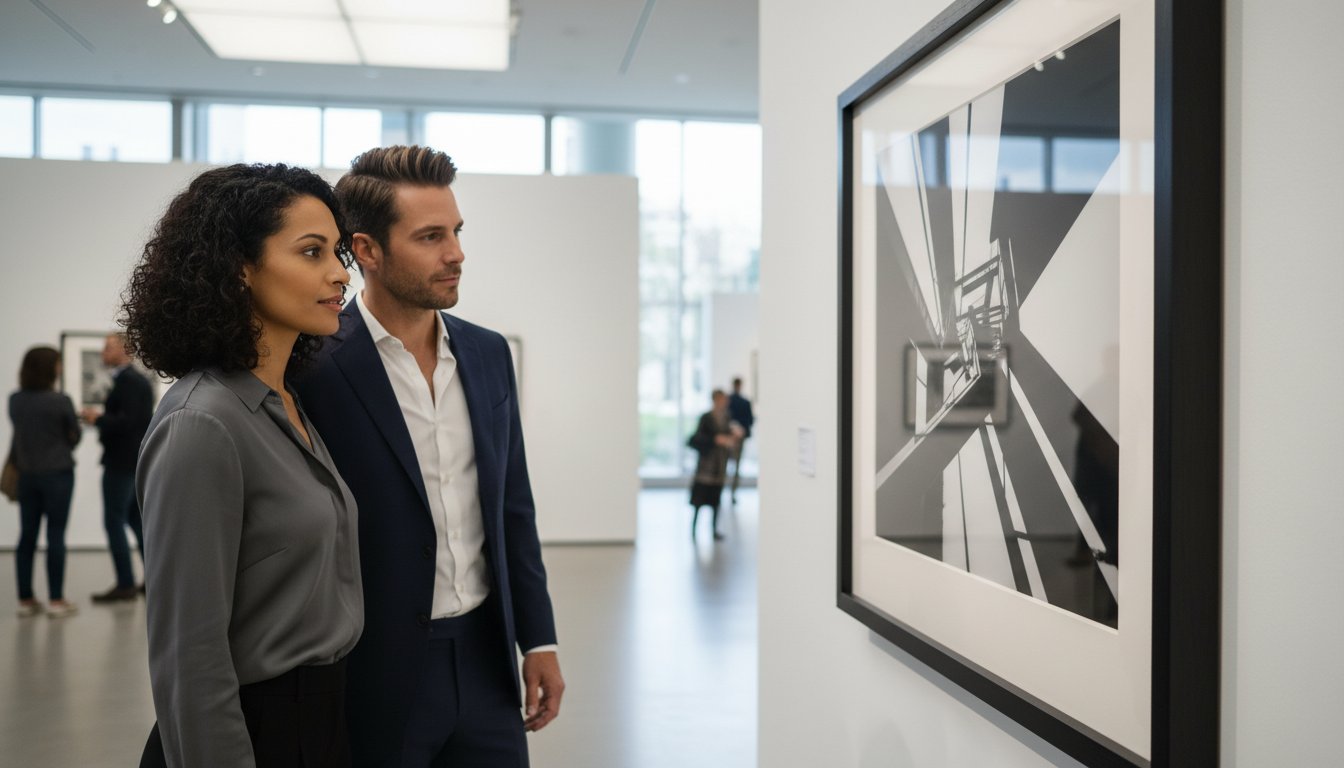
A frame is never merely a decorative border; it is the physical provenance of a print that signals its historical importance and ensures its survival as a tangible asset. While many collectors hesitate at the initial investment, the fundamental question of does framing increase art value is answered in the quiet halls of elite auction houses where pristine condition is the primary currency. A rare Slim Aarons or a Terry O’Neill original represents a delicate fragment of photographic heritage, and without professional stewardship, its market appeal can diminish through a single season of UV exposure or acid degradation.
You likely understand that a masterpiece requires a fitting stage, yet the fear of selecting the wrong mount or confusing decoration with preservation can be a significant deterrent. This guide reveals how bespoke presentation acts as a silent partner in your investment, amplifying market perception while shielding your collection from the passage of time. We’ll explore the Library of Congress standards for archival preservation, the psychological signaling of museum-grade materials, and the specific artisanal choices that transform a fine art print into a permanent legacy.
Key Takeaways
- Explore the psychology of the ‘Gallery Effect’ and how a frame acts as a silent value signal that validates your art as a serious financial asset.
- Discover how the answer to does framing increase art value lies in archival integrity; using UV-filtering glass and acid-free mounts prevents irreversible chemical degradation.
- Learn to enhance the atmospheric impact of your collection by selecting frames that expand a work’s visual footprint and accentuate specific tonal qualities.
- Identify the risks of ready-made ‘false economies’ and why custom, precision-fit solutions are necessary to maintain the physical integrity of limited edition prints.
- Understand the importance of artisanal, localized craftsmanship in creating a presentation that respects the heritage of iconic artists and historical archives.
The Psychology of Value: How Framing Validates Art as an Investment
The visual weight of a professional frame creates an immediate sense of authority that a loose print simply cannot replicate. This phenomenon, often called the ‘Gallery Effect’, transforms a two-dimensional image into a three-dimensional object of desire. When investors ask does framing increase art value, they’re often looking for a quantitative return, yet the answer begins with the qualitative power of a first impression. In the 2026 secondary market, the presentation of a piece is the primary signal of its importance; a work that arrives in a bespoke, museum-ready frame tells potential buyers that it has been held in high regard by its previous steward.
Framing serves as a critical value signal by bridging the gap between a standalone image and a curated collection. A loose print suggests a work in progress, whereas a framed piece feels finished, permanent, and ready for acquisition. This sense of completion is vital for resale. Data from auction houses in 2026 indicates that collectors often perceive framed works as more valuable because the frame itself acts as a certificate of care. Professional framing offers three distinct psychological advantages:
- Authority: The immediate visual impact of a professional border establishes a sense of historical weight.
- Permanence: The transition from a fragile sheet of paper to a durable, protected asset.
- Context: The aesthetic bridge that connects the artist’s studio to the collector’s high-end interior.
When collectors ask does framing increase art value, they’re really asking if the presentation validates the work’s cultural significance. By investing in professional presentation, you aren’t just decorating a wall; you’re formalizing the art’s status as a serious financial asset.
Establishing Provenance and Care
A high-quality frame suggests the owner has treated the art as a serious asset rather than a temporary decoration. It creates a museum-ready aesthetic that justifies premium pricing during negotiations. Perceived value is the immediate psychological weight an object carries when its presentation mirrors its cultural significance. This stewardship is so vital that the conservation and restoration of painting frames has become a specialized field, highlighting that a frame is an integral part of an artwork’s history and physical integrity. When a buyer sees a perfectly executed frame, they assume the art beneath it has been kept in pristine condition.
The Emotional ROI of Fine Art Photography
Bespoke framing significantly enhances the narrative depth of fine art photography, allowing the viewer to step into the world of the creator. When you acquire a Terry O’Neill or a Slim Aarons, you aren’t just buying a print; you’re owning a piece of history. The aspirational nature of this photography, capturing the elegance of a bygone era, requires an equally aspirational frame to maintain that illusion of luxury. It’s the difference between a fleeting glance and a lasting legacy. By choosing a frame that honors the artist’s original vision, you anchor the piece within its historical context, ensuring it remains a central pillar of your interior aesthetic for years to come.
Archival Integrity: Protecting Art Value Through Museum-Quality Materials
The physical survival of a print is the ultimate arbiter of its future worth. While the previous section explored the psychological impact of presentation, the technical reality of preservation is where the financial security of your collection is truly forged. Does framing increase art value? In the eyes of a professional conservator, the answer is a resounding yes, provided the materials meet museum-grade standards. Professional framing serves as a protective envelope, shielding delicate paper fibers from an environment that is naturally hostile to organic materials. Without this archival barrier, even the most prestigious work can succumb to irreversible decay within a few short years.
Museum-quality framing is defined by its commitment to reversibility and chemical neutrality. Every element that touches the artwork, from the mounting hinges to the backing board, must be acid-free and lignin-free. This prevents the dreaded “acid burn” or yellowing that occurs when inferior wood-pulp mats leach chemicals into the paper. The cost of professional restoration for a damaged print often far exceeds the initial investment in preventative archival housing. By choosing high-caliber materials today, you ensure the work remains in pristine condition, which is the single most important factor for valuation in the secondary market.
- UV-Filtering Glazing: Acts as an essential insurance policy by blocking up to 99% of harmful ultraviolet rays.
- Acid-Free Matting: Creates a pH-neutral micro-environment that prevents paper discoloration.
- Reversible Hinging: Uses non-invasive techniques to ensure the art can be removed without damage.
The Threat of Environmental Degradation
Art is fragile. Humidity and light exposure are silent thieves that can devalue a Slim Aarons print by up to 80% if the work is left unprotected in a standard retail frame. High-end collectors view archival framing as a non-negotiable standard because it mitigates these “invisible” risks. Museum-grade acrylic or glass doesn’t just provide clarity; it filters the spectrum of light that causes pigments to fade and paper to become brittle. When you consider the long-term appreciation of a rare print, this level of protection is the only way to guarantee that your investment retains its visual and financial integrity.
Mounting Techniques That Preserve Paper Health
Precision is paramount when securing a valuable archive. Unlike “off-the-shelf” solutions that often rely on dry mounting or permanent adhesives, professional framers utilize hinge mounting with Japanese tissue and wheat starch paste. This method allows the paper to breathe and expand naturally with changes in temperature, preventing the buckling or “cockling” that occurs with permanent bonds. It’s a hallmark of a serious collection. If you’re looking to secure the future of your acquisitions, exploring bespoke presentation options ensures that your art remains a lasting piece of history rather than a fading memory.
The Aesthetic Bridge: Enhancing Meaning and Market Appeal
Beyond the technical rigors of archival preservation, a frame serves as a narrative bridge that connects an artist’s vision to the collector’s living environment. This aesthetic expansion is not merely a matter of decor; it is a strategic enhancement of the work’s visual footprint. A masterfully framed piece commands a room, transforming a solitary image into an immersive experience. While archival materials protect the physical asset, the aesthetic choice of presentation is what creates the emotional resonance necessary for a high-end acquisition. This immediate impact is a primary reason why does framing increase art value, as it elevates the work from a fragile document to a definitive statement of cultural prestige.
The relationship between proportion and scale is particularly critical when establishing market appeal. A masterpiece can easily be diminished by an ill-proportioned border, appearing more like a postcard than a curated investment. Conversely, the right frame provides the necessary gravitas, signaling to future buyers that the piece is worthy of its space. For those collecting black and white pictures, the frame acts as a tonal anchor. It possesses a certain “je ne sais quoi” that can draw out the silvery highlights of a gelatin silver print or the deep, velvety blacks of a modern carbon pigment work, ensuring the imagery retains its intended depth and drama.
Color Theory and Visual Harmony
The selection of wood grains or metallic finishes should never be arbitrary. A warm walnut might echo the sun-drenched tones of a Mediterranean landscape, while a cool, blackened oak can provide a sharp, contemporary edge to a minimalist composition. The mat board plays an equally vital role, offering the visual breathing room required for complex imagery to resonate without distraction. A masterfully selected frame acts as a silent conductor, orchestrating the viewer’s gaze toward the intricate tonal nuances that reside within the soul of the artwork. This harmony between the print and its housing creates a cohesive object that is far more attractive to the discerning eye than a loose sheet of paper.
Era-Appropriate Framing for Historic Archives
Authenticity is a cornerstone of valuation, and for historic archives, the frame must honor the work’s chronological origin. When presenting the iconic poolside scenes of Slim Aarons, utilizing mid-century modern profiles or slim, elegant mouldings reinforces the aspirational lifestyle depicted in the imagery. This period-accurate approach increases the “authenticity value” for serious collectors who view the frame as an extension of the photograph’s history. For vintage posters or works on deckled paper, a “floated” mount is often the superior choice. This technique allows the raw, artisanal edges of the paper to remain visible, celebrating the tactile history of the piece and proving that the collector understands the intrinsic value of the medium itself.
Bespoke vs. Ready-Made: Why Custom Framing Signals a Serious Investment
A bespoke frame acts as a physical manifesto of an artwork’s worth. While a mass-produced, ready-made frame might suffice for a temporary poster, it fails the rigorous standards of a serious art collection. When a potential buyer or appraiser encounters a piece housed in a custom-engineered frame, the signaling effect is immediate. It communicates that the owner recognizes the work’s historical significance and has invested in its long-term preservation. This distinction is central to the question: does framing increase art value? By opting for artisanal quality over retail convenience, you provide the work with the structural and aesthetic gravitas required to command a premium price in the future.
Precision engineering is the hallmark of the bespoke process. Ready-made frames are built to standard dimensions, often forcing a collector to either crop the margins of a print or settle for an awkward, ill-fitting mat. This lack of precision doesn’t just look unprofessional; it actively devalues the piece by compromising its original proportions. In contrast, custom framing utilizes solid hardwoods such as oak, ash, or walnut, offering a tactile richness and durability that plastic or MDF alternatives cannot replicate. For the modern luxury buyer, the ready-to-hang convenience of a professionally finished piece is a significant value-add, removing the logistical burden of finding a local workshop after the purchase.
The Craftsmanship of the Artisan Framer
True luxury resides in the details that the untrained eye might miss but the discerning collector always notices. Hand-finished corners, where the grain continues seamlessly around the frame, stand in stark contrast to the visible miter joints and gaps found in mass-produced products. This structural integrity is particularly vital for large-scale photographic prints, which require robust support to prevent bowing or warping over time. Within the art world, bespoke framing is considered a capital improvement to an art collection, much like a meticulous renovation enhances a historic property. It transforms the print into a permanent architectural element of the home.
Avoiding the ‘Cheap’ Trap
The “cheap” trap is a false economy that can lead to the physical and psychological devaluation of your assets. Poorly constructed frames often use non-archival glues and acidic backings that can cause irreparable staining or “foxing” on the paper. Beyond the physical damage, there’s a psychological cost. Placing a high-end limited edition print in a low-end frame signals that the work is not an investment but a mere decoration. Many seasoned collectors follow a standard rule of thumb, allocating approximately 20% to 30% of the art’s acquisition cost to its housing. This ensures the presentation matches the prestige of the creator. To ensure your collection receives this level of care, you can explore our bespoke framing service to find the perfect match for your next acquisition.
Elevating Your Collection with Galerie Prints’ Bespoke Framing
At Galerie Prints, we view our role not merely as a purveyor of imagery, but as a guardian of photographic heritage. Our commitment to localized, artisanal craftsmanship in the UK ensures that every piece of history we represent, from the rock and roll energy of Terry O’Neill to the serene leisure of Slim Aarons, is granted the architectural support it deserves. When collectors ask does framing increase art value, they’re often seeking a bridge between a raw print and a legacy asset. Our bespoke framing service provides that bridge, utilizing traditional production methods to create a presentation that is as enduring as the art itself.
The ‘Curated Choice’ is at the heart of our philosophy. We select frame profiles that honor the specific era and aesthetic of the artist. For a Terry O’Neill original, a sleek, minimalist frame might emphasize the modern vitality of the subject, while our cinema lobby cards benefit from deeper, more evocative mouldings that celebrate Hollywood’s golden age. This careful integration ensures that the frame never competes with the work; instead, it acts as a silent partner in its appreciation and long-term valuation. The frame is the final word on the work’s importance.
The Galerie Prints Standard
Our workshop utilizes only the finest premium hardwoods, avoiding the compromises of synthetic materials or mass-produced veneers. Every piece is handled with gallery-professional mounting and sealing techniques, providing the peace of mind that comes with museum-grade archival protection. It’s this unwavering standard that makes our framed prints a favored choice for interior designers and serious collectors across the globe. We don’t just sell a product. We provide a curated experience that begins the moment the art is secured within its housing, ensuring its condition remains impeccable for decades.
A Seamless Journey from Archive to Wall
We’ve simplified the traditionally complex decisions of custom framing through our curated online options, allowing you to select a professional finish with confidence. Receiving a ‘Ready-to-Hang’ piece means the art is protected from the very second it leaves our gallery, arriving at your door preserved and perfectly presented. This seamless transition from our archives to your walls is the ultimate expression of art stewardship. It removes the risk of transit damage to loose paper and ensures your investment is gallery-ready upon arrival. Explore our collection and discover the impact of bespoke framing on your next acquisition.
Securing the Future of Your Photographic Heritage
Investing in high-caliber art requires a commitment to its ongoing stewardship. We’ve seen that the answer to does framing increase art value lies in the intersection of physical preservation and psychological signaling. By utilizing museum-grade archival materials, you protect the work from environmental decay while establishing a sense of authority that resonates with future collectors. A bespoke frame is more than an aesthetic choice; it’s a declaration of the work’s historical and financial significance.
Whether you’re housing a rare music archive or a cinematic treasure, the right presentation ensures your collection remains a source of wonder for generations. At Galerie Prints, our frames are hand-finished in the UK and trusted by the world’s leading photographic archives. We invite you to secure your investment with our bespoke framing service and transform your prints into lasting pieces of history. Your collection deserves nothing less than perfection.
Frequently Asked Questions
Does framing a print increase its resale value?
Professional framing certainly enhances marketability, as it presents the work as a curated asset rather than a loose document. When considering does framing increase art value, auction results show that ready-to-hang pieces often attract higher bids because they signal a history of meticulous stewardship. A well-chosen frame validates the collector’s intent, ensuring the work is perceived as a serious investment from the first glance.
What is the difference between decorative framing and archival framing?
Decorative framing focuses solely on the visual harmony between the frame and the interior, whereas archival framing prioritizes the chemistry of preservation. Archival methods utilize pH-neutral, lignin-free materials that prevent the paper from yellowing or becoming brittle over time. While decorative options might look appealing initially, only archival standards ensure the work remains in the pristine condition required for future valuation.
Can a bad frame actually damage my artwork or decrease its value?
Yes, inferior materials can cause irreversible damage through acid migration and “foxing,” which are reddish-brown spots that appear on the paper. Non-archival adhesives or acidic wood-pulp mats leach chemicals into the print, significantly devaluing the asset. A poorly constructed frame acts as a liability, potentially costing the collector more in restoration fees than the original price of a bespoke archival housing.
Is it worth framing a limited edition print before selling it?
Framing a limited edition print often makes it more attractive to high-income, time-poor buyers who prefer an acquisition that is ready for immediate display. It effectively answers the question of does framing increase art value by providing a complete, polished presentation that commands a higher asking price. This “finished” look removes the logistical burden from the buyer, making the transaction more seamless and enticing.
What framing materials are considered ‘museum-quality’ in 2026?
Current museum-quality standards require 100% cotton rag matboards and UV-opaque glazing that offers 99% protection against light degradation. These materials, aligned with Library of Congress guidelines, ensure total chemical neutrality. Additionally, reversible hinging using Japanese tissue and refined wheat starch paste is essential, as it allows the artwork to be removed or adjusted without leaving any permanent residue or causing structural tears.
How much should I expect to spend on professional framing for a fine art print?
Collectors typically follow the industry rule of allocating approximately 20% to 30% of the art’s acquisition cost toward its housing. This investment covers the use of solid hardwoods and specialized glazing, such as anti-reflective museum acrylic. Viewing this cost as a capital improvement rather than a mere expense ensures that the quality of the presentation matches the prestige of the artist and the rarity of the print.
Does UV-protective glass really make a difference for photography?
UV-protective glass is an essential safeguard, as light exposure is the primary cause of pigment fading and paper degradation in photography. Research from May 2026 indicates that 18% of framing customers now specifically request high-level UV protection to mitigate these risks. Without this barrier, the vibrant tones of a Slim Aarons or the deep blacks of a Terry O’Neill can lose their brilliance within a few years of display.
Should I keep the original frame if I buy a vintage piece of art?
You should always retain the original frame if it is period-correct or original to the work, as it forms a vital part of the piece’s provenance. Historically appropriate frames add a layer of authenticity that collectors and auction houses value highly. If the original frame is not archival, a professional conservator can often retro-fit it with museum-grade mounts and UV-glazing to preserve the art while maintaining its historical integrity.
