
Tag: Investment Art

Slim Aarons Art: The Collector’s Guide to Jet Set Elegance

The most enduring luxury isn’t found in a logo, but in the effortless grace of a world that no longer exists. When you invest in slim aarons art, you aren’t just purchasing a photograph; you’re acquiring a piece of social history captured by a man who made a career out of photographing attractive people doing attractive things in attractive places. It’s a sentiment many collectors share, drawn to the sun-drenched poolside scenes and the unapologetic glamour of the mid-century elite. However, with the secondary market for these works reaching five-figure sums in 2026, the challenge lies in distinguishing a true archival treasure from a fleeting, low-quality reproduction.

You understand that a home should reflect a life well-lived, yet finding the right piece to anchor your space can feel overwhelming. This guide promises to demystify the process, offering you the curatorial insight needed to choose works with lasting archival significance and investment value. We’ll examine the narrative depth of the Slim Aarons Collection, discuss the technical superiority of museum-quality mounting, and reveal the interior styling secrets that transform a room into a jet set sanctuary. From the latest Spring 2026 releases to the enduring allure of iconic masterpieces, you’ll learn how to build a collection that serves as a bridge to a golden age of elegance.

Key Takeaways

  • Explore why these sun-drenched scenes serve as the definitive visual shorthand for prestige and continue to shape the modern luxury aesthetic.
  • Learn how to verify provenance through official archives to ensure your investment in slim aarons art remains both authentic and historically significant.
  • Distinguish between standard digital reproductions and the archival pigment prints required for museum-quality longevity and technical excellence.
  • Gain curatorial insight into large-format presentation and bespoke framing to anchor your home with a sense of mid-century elegance.
  • Understand the value of artisanal craftsmanship in preserving photographic heritage as a lasting piece of social history.

The Enduring Allure of Slim Aarons Art: Defining Modern Luxury

Slim Aarons art represents more than a simple window into the past; it serves as the definitive blueprint for 21st-century luxury. While many photographers of his era focused on the grit of reality, Aarons dedicated his lens to a specific, elevated stratum of society. His work has transitioned from the pages of Holiday and Town & Country to the walls of the world’s most prestigious galleries, evolving into a visual shorthand for prestige and leisure. Collectors today aren’t just buying a print. They’re acquiring a social document of a lost era where elegance was effortless and time was the ultimate commodity. He famously summarized his career by stating he photographed “attractive people doing attractive things in attractive places.”

From Combat to Capri: The Evolution of a Visionary

The path to capturing the sun-drenched terraces of the Mediterranean began in the trenches of World War II. After serving as a combat photographer, Aarons famously declared that he had seen enough misery to last a lifetime, leading him to consciously reject the depiction of suffering in favor of the “good life.” This pivotal shift is detailed in Slim Aarons’ biography, which chronicles his rise as the pioneer of the “Environmental Portrait.” By placing his subjects in their natural habitats, whether a sprawling Palm Springs estate or a yacht off the coast of Capri, he created a new genre of photography. His refusal to employ the artifice of stylists or makeup artists preserved a raw, albeit polished, sense of reality. This authenticity is why his images feel lived-in rather than staged.

Why Slim Aarons Dominates Contemporary Interior Design

In the realm of high-end decor, slim aarons art is prized for its ability to transform the psychological temperature of a room. His work taps into a sense of “aspirational nostalgia,” offering a retreat into a world of crystalline pools and endless summers. The vibrant color palettes, particularly the deep turquoises of the Caribbean and the terracotta hues of Italian villas, provide a sophisticated pop of color that brightens modern interiors. His compositions are remarkably versatile. They feel equally at home anchoring a Mid-Century Modern living room or providing a narrative focal point in a contemporary minimalist space. Because his photography often demands large-format presentation, it serves as a powerful architectural element, drawing the eye and inviting the viewer to linger within the frame.

Decoding the Aesthetic: Iconic Themes in Slim Aarons Photography

To truly appreciate slim aarons art, one must view it as a meticulous study of social architecture rather than mere leisure photography. His iconic ‘Poolside’ series, most famously exemplified by ‘Poolside Gossip’ at the Kaufmann House, doesn’t just show a party. It documents the intersection of mid-century design and the social rituals of the American elite. These images position the environment as a co-star, where the clean lines of Richard Neutra’s architecture or the manicured gardens of the Villa d’Este are as vital as the subjects themselves. This synergy creates a composition that is both balanced and deeply evocative.

The narrative extends beyond the water’s edge, following the ‘Jet Set’ as they migrated with the seasons. Whether capturing the crisp, alpine air of Gstaad or the sun-drenched cliffs of the Amalfi Coast, Aarons possessed an uncanny ability to frame the movement of high society. His portraits of women like C.Z. Guest, often seen in the Slim Aarons: Newport Days exhibition, define an era of poise and inherited grace. For those looking to bring this specific narrative into their own interiors, you can view the full Slim Aarons Collection to find a piece that resonates with your personal aesthetic and spatial requirements.

The Architecture of Leisure

Aarons frequently employed wide-angle lenses to integrate his human subjects into the grand scale of their surroundings. This technique allowed him to capture the relationship between a person and their property, a hallmark of his ‘Environmental Portraits’. In settings across Palm Springs and Beverly Hills, the architecture serves as a silent witness to the leisure of the 1950s through the 1970s. This is why his work remains a primary resource for students of 20th-century design, offering a rare, unstylized look at how these iconic spaces were actually inhabited by their owners.

The Vibrant Color Palette of the Golden Era

The secret to his luminous imagery lies in the chemistry of Kodachrome film. This medium allowed him to achieve signature saturated blues and sun-drenched yellows that seem to radiate light from within the paper. When displayed in a gallery-style home setting, these colors interact dynamically with natural light, shifting in depth throughout the day. One must understand that the technical difficulty of reproducing these specific archival tones is immense. Achieving the precise depth of a Mediterranean blue or a California sunset requires a sophisticated, artisanal printing process that honors the original transparency’s integrity without compromise.

Authenticity and Quality: Navigating the World of Slim Aarons Prints

Distinguishing between a mass-produced poster and a true work of slim aarons art requires an eye for technical detail and a deep respect for provenance. Since the Hulton Archive at Getty Images acquired the photographer’s entire body of work in 1997, they’ve served as the ultimate guardian of his legacy. This archive is the only source for authentic, estate-stamped prints that maintain the chromatic depth of the original transparencies. As interest in Slim Aarons’ art and prints continues to surge, with recent auctions in July 2026 showing a 100% sell-through rate, the importance of verifiable origin can’t be overstated. The release of fifteen new open and limited edition prints in Spring 2026 further underscores the sustained demand for his vision, making it essential for collectors to understand what they’re acquiring.

Archival Standards for Fine Art Photography

Galerie Prints adheres to the most rigorous curatorial standards by specializing in archival pigment prints. Unlike standard digital reproductions that rely on dye-based inks, pigment-based processes use mineral particles that offer exceptional resistance to UV light and humidity. This technical superiority is paired with museum-quality, acid-free paper, such as the renowned Hahnemühle range. This heavy-weight, fiber-based paper ensures that the vibrant blues of the Amalfi Coast don’t yellow or degrade over time. By utilizing these artisanal production methods, we ensure that every piece is not just a decoration but a stable, high-caliber investment in visual history that will last for generations.

The Collector’s Checklist for Authenticity

A sophisticated collector should always prioritize prints that carry the official Estate Stamp. This mark acts as a seal of quality, confirming the work was produced directly from the original source material under the supervision of the archive. While lifetime prints signed by Aarons himself represent the pinnacle of the market, posthumous archive editions provide a bridge to his world of elegance for a new generation of enthusiasts. Each acquisition should be accompanied by a formal certificate of authenticity (COA). This document serves as a permanent record of the print’s lineage and technical specifications. For those seeking to master the nuances of his expansive body of work, our definitive guide to Slim Aarons provides the necessary historical context to build a collection with confidence.

Curating Your Space: A Guide to Displaying Slim Aarons Art

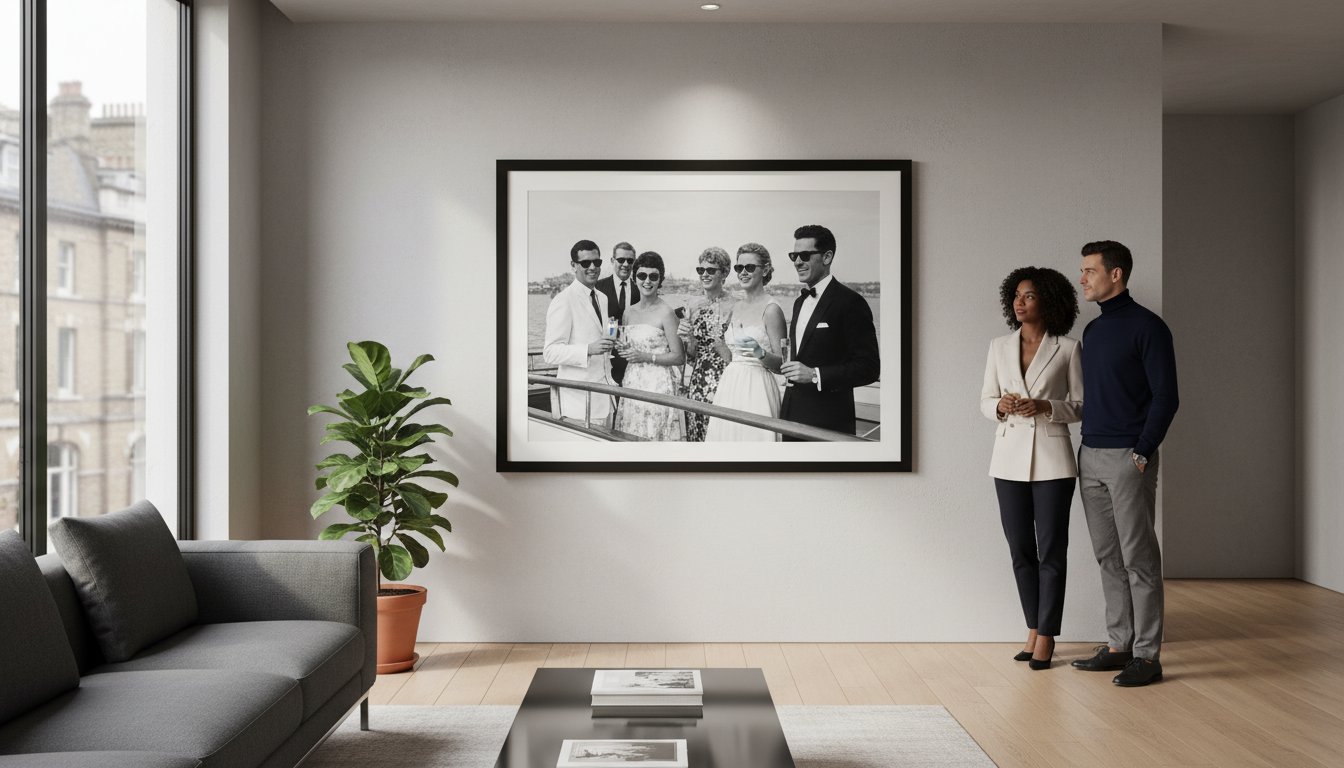
The immersive power of slim aarons art is best realized when the work is given the physical space it deserves. Unlike smaller, intimate portraits, these environmental studies often demand large-format presentation to fully articulate the grandeur of their settings. A forty or sixty-inch print doesn’t just hang on a wall; it acts as an architectural window, pulling the viewer into the sun-drenched terraces of the 1960s. When considering placement, think beyond the traditional living room focal point. A poolside-inspired bathroom or a bright, airy master suite can be transformed by the presence of a Mediterranean vista, creating an atmosphere of permanent vacation.

Mounting choices also play a critical role in how the work interacts with your interior. A ‘Gallery Wrap’, where the image extends around the edges of the frame, offers a sleek and contemporary feel that suits minimalist spaces. Conversely, traditional mounting with a wide, acid-free mount board provides a classic gallery aesthetic that emphasizes the photograph’s status as a historical document. This method creates a visual breathing space between the frame and the image, drawing the eye deeper into the narrative and protecting the edges of the archival paper.

The Art of Bespoke Framing

The frame you choose is the final layer of the storytelling process. For the iconic ‘Poolside’ series, a deep-box frame can add a subtle three-dimensional quality, making the water appear to recede into the wall. Choosing a finish requires a balance between the artwork’s tones and your room’s palette:

  • Natural Wood: Complements the organic, mid-century modern aesthetic often found in Aarons’ California subjects.
  • Classic White: Provides a seamless transition in contemporary minimalist interiors, letting the vibrant blues pop.
  • Sleek Black: Offers a bold, authoritative boundary that grounds the image and adds a sense of formal prestige.

Beyond aesthetics, the technical specifications are paramount. We always recommend UV-protective glass to safeguard those saturated archival colors against sunlight. For a deeper dive into these technical nuances, consult the Galerie Prints bespoke framing service guide.

Creating a Thematic Gallery Wall

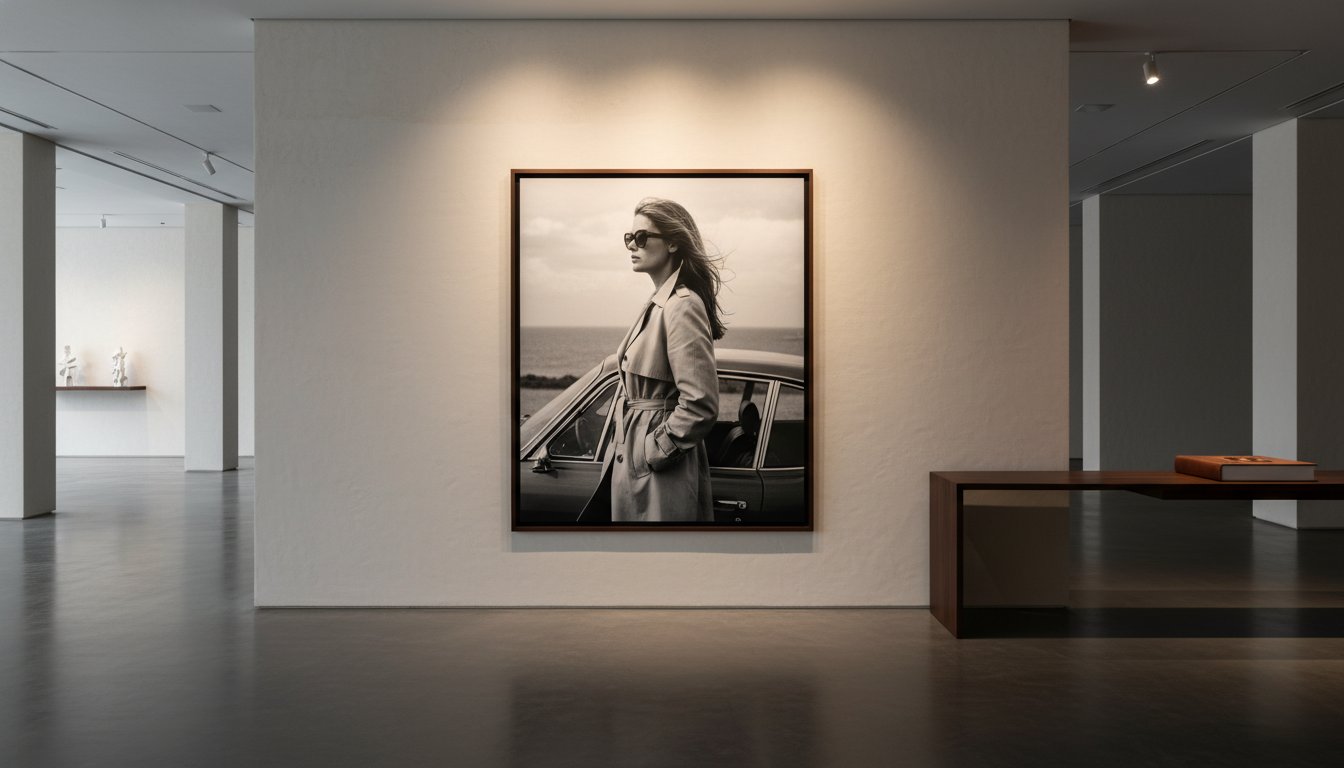
Building a narrative across a wall allows you to place Slim Aarons in conversation with other masters of the era. Pairing his vibrant color photography with the monochromatic intensity of Terry O’Neill Photography creates a sophisticated 1960s dialogue. This contrast highlights the specific brilliance of Aarons’ palette while grounding the collection in a broader historical context. To ensure your collection shines, prioritize lighting. Use angled spotlights with a high Color Rendering Index (CRI) to reveal every detail of the print without creating distracting glare on the glass surface.

To begin curating your own jet-set sanctuary, view our complete collection of authentic archival prints.

Investing in History: Why Galerie Prints is the Definitive Source

Acquiring slim aarons art is a commitment to preserving a specific, vanishing elegance within the sanctuary of your own home. At Galerie Prints, we don’t view ourselves as mere retailers. We are curators and guardians of a photographic heritage that spans decades of high-society leisure. Our direct relationship with the Slim Aarons Collection and the Getty Images Gallery ensures that every print we offer carries the weight of authentic provenance. This access allows us to provide collectors with more than just a decorative object; we provide a stable investment in visual history. While ‘Poolside Gossip’ remains a definitive masterpiece of social documentation, our curated selection invites you to explore the deeper narrative of the archive, from the snow-capped peaks of the Alps to the private villas of the Greek Isles.

The Galerie Prints Difference

We act as a bridge between a bygone era of elegance and the demands of modern interior aesthetics. As a London-based gallery with a global reach, we provide the security and professional distance befitting a luxury institution while maintaining a passionate, artisanal focus on production. Our commitment to localized, artisanal craftsmanship serves as a seal of quality. We utilize traditional production methods to preserve the tactile and historical elements of each work, ensuring the soul of the original transparency is never lost in translation. This dedication to material quality is what distinguishes a Galerie Prints edition from the low-quality reproductions found elsewhere online.

Begin Your Collection Today

Starting your journey into the world of aspirational photography is a seamless experience through our online platform. We’ve designed the process to be as refined as the art itself, allowing you to select from various sizes and bespoke framing options that suit your specific spatial requirements. From the moment of selection to the final ready-to-hang delivery, every step is handled with direct and reassuringly precise care. Your piece of history is meticulously packaged and shipped, ensuring it arrives in gallery condition, ready to transform your space into a jet-set sanctuary.

Take the first step in building a lasting legacy of beauty and prestige. Explore the Slim Aarons Collection at Galerie Prints and discover the piece that speaks to your own sense of elegance.

Secure Your Piece of the Golden Era

Owning a piece of slim aarons art is an invitation to inhabit a world of sun-drenched pools and effortless sophistication. We’ve explored how these images serve as more than mere decoration, acting instead as windows into a mid-century social architecture that continues to define modern luxury. By prioritizing official archive-sourced prints and archival pigment processes, you ensure that your investment maintains its narrative depth and chromatic brilliance for decades. The final step in this journey is the marriage of the image with hand-crafted bespoke framing, a process that grounds the work in your personal space while honoring its historical prestige.

Galerie Prints serves as your trusted guide. We offer global shipping for serious collectors, ensuring that these iconic moments reach your walls in pristine gallery condition. Quality is non-negotiable. Whether you’re drawn to the vibrant blues of the Amalfi Coast or the geometric perfection of a Palm Springs estate, your collection starts with a commitment to provenance. It’s time to bring the jet-set aesthetic home. Discover the official Slim Aarons Collection and bespoke framing at Galerie Prints and begin your legacy today.

Frequently Asked Questions

What makes Slim Aarons art so popular in modern home decor?

The enduring appeal of this work lies in its ability to evoke a sense of aspirational nostalgia through sun-drenched scenes of mid-century glamour. Slim aarons art serves as a visual shorthand for a world of effortless grace, offering a narrative depth that standard decor lacks. Its vibrant color palettes and clean architectural lines complement both contemporary minimalist and mid-century modern interiors perfectly.

Are the Slim Aarons prints sold by Galerie Prints authentic?

Every print we offer is sourced directly from official archives, including the Getty Images Gallery. These are authentic, estate-stamped works produced from the original transparencies to ensure historical integrity. This direct provenance guarantees that you are acquiring a genuine piece of photographic heritage rather than a mass-produced reproduction.

What is the difference between a poster and an archival pigment print?

The primary difference lies in the longevity of the materials and the depth of the color reproduction. Posters typically use dye-based inks on thin, acidic paper that yellows and fades within years. In contrast, an archival pigment print utilizes mineral-based inks on heavy-weight, acid-free fiber paper, designed to resist degradation for over a century while maintaining museum-quality detail.

How should I frame a large Slim Aarons photography print?

Large-format prints require a deep-box frame or museum-quality mounting to provide structural support and prevent the paper from bowing over time. We recommend using a wide mount board to create visual breathing space and always utilizing UV-protective glass. This safeguards the saturated archival colors from light-induced fading while adding a sophisticated, three-dimensional quality to the display.

Can I buy Slim Aarons art in black and white?

Yes, although he is famous for his Kodachrome color work, Aarons produced a significant body of monochromatic photography. These black and white pictures often capture the more intimate, formal side of high society and are highly prized for their timeless, cinematic quality. They offer a sophisticated alternative for collectors looking to build a varied thematic gallery wall.

What are the most iconic Slim Aarons photos to start a collection?

New collectors often begin with definitive masterpieces such as “Poolside Gossip” at the Kaufmann House or the vibrant “Sea Drive” in Portofino. Other essential starting points include his 1970s studies of the Hotel du Cap Eden-Roc. These iconic images represent the pinnacle of his “attractive people in attractive places” philosophy and have shown sustained demand in the secondary market.

How do I protect my Slim Aarons print from fading over time?

Protection starts with the printing process itself, which is why we specialize in archival pigment prints that are inherently more stable than standard digital versions. To ensure long-term preservation, you should hang your artwork away from direct, intense sunlight and use museum-grade UV-protective glazing. These precautions maintain the integrity of the original hues and prevent the paper from becoming brittle.

Why is the work of Slim Aarons considered an investment?

Market data from July 2026 shows a 100% sell-through rate for his work at major auctions, with prices for rare editions reaching five-figure sums. Because the archive is finite and the demand for high-end jet set aesthetics is growing, these prints have become tangible assets with historical value. Investing in slim aarons art is a strategic move, as his photographs have transitioned from magazine assignments to high-caliber gallery pieces with proven secondary market growth.
Terry O’Neill Brigitte Bardot Print: The Definitive Collector’s Guide to an Iconic Moment

The windblown hair and the casual, smoldering cigar were never meant to be a mere photograph; they were a declaration of a new kind of cinematic rebellion. You likely recognize the magnetic pull of this image, a piece that has transcended its 1971 origin on a Spanish film set to become a permanent fixture in the pantheon of fine art. Acquiring a terry o’neill brigitte bardot print is more than an act of decoration. It’s an investment in a specific, fleeting moment of cultural alchemy that defined an era of effortless elegance.

It’s natural to feel a sense of hesitation when choosing such a significant piece, especially when faced with the technical nuances of estate stamps, paper types, and archival preservation. This guide provides the expert clarity you need to understand the nuances of various editions and the long-term value of these works. We’ll examine the narrative depth of O’Neill’s most famous session, the technical superiority of different printing methods, and the essential role of bespoke framing in securing your piece of photographic history for generations to come.

Key Takeaways

  • Uncover the narrative behind the legendary 1971 Spain film set where O’Neill redefined the celebrity portrait through unposed intimacy.
  • Explore the technical mastery of the terry o’neill brigitte bardot print, focusing on the high-contrast aesthetics that drive its enduring investment value.
  • Navigate the critical differences between archival paper types and print methods to ensure your acquisition meets professional gallery standards.
  • Understand how bespoke, archival framing protects the historical integrity of your print while elevating it to a ready-to-hang statement piece.
  • Leverage the expertise of a premier London gallery to bridge the gap between a bygone era of elegance and your modern interior aesthetic.

The Story Behind the Lens: Terry O’Neill and Brigitte Bardot in 1971

In 1971, the rugged, sun-scorched landscapes of Almeria, Spain, served as the primary backdrop for the film ‘Les Pétroleuses’, known to English-speaking audiences as ‘The Legend of Frenchie King’. This was more than a simple movie set; it was the crucible for one of the most significant collaborations in the history of fine art photography. Terry O’Neill arrived with a specific, almost architectural intent. He sought to capture Brigitte Bardot not as a curated studio object, but as a living, breathing force of nature. His approach was famously unobtrusive. By moving quietly among the cast and crew, he managed to dissolve the barrier between the subject and the lens, capturing the ‘unposed’ essence of the world’s most famous woman.

Almeria 1971: The Birth of a Cultural Icon

The Spanish desert provided a stark, cinematic texture that perfectly complemented Bardot’s transition into her ‘Western’ persona. In this environment, O’Neill waited for the moments that existed in the quiet spaces between takes. He understood that the most compelling images are often found in the pauses. The legendary wind-swept look wasn’t a product of a studio fan or a stylist’s intervention. It was a genuine meteorological accident. As the wind caught her hair, O’Neill pressed the shutter, immortalizing a raw, untamed elegance that continues to make a terry o’neill brigitte bardot print a centerpiece for serious collectors today.

The Cigar Shot: A Symbol of Liberation

Central to this series is the image of Bardot with a cigar clamped between her teeth. It’s a defiant subversion of the hyper-feminine tropes that dominated the era. According to Terry O’Neill’s biography, his career was defined by this unique, intimate proximity to his subjects, earning him the title of the man who shot the sixties. This specific shot remains a staple in high-end interior design in 2026 because it captures a seismic shift from “sex symbol” to an “icon of liberation.” It isn’t just a portrait; it’s a narrative of independence and effortless cool.

This series redefined celebrity photography by moving away from the stiff, formal portraiture of the previous decade. O’Neill’s work introduced a sense of reportage and raw honesty into the world of glamour. Every terry o’neill brigitte bardot print from this Almeria collection carries that weight of authenticity. It’s why these images don’t just decorate a room; they anchor it with a sense of history and permanence. The technical precision of his work, combined with Bardot’s magnetic presence, ensures these prints remain the pinnacle of the ‘candid icon’ movement.

Terry O’Neill’s Mastery: Why His Prints are Fine Art Investments

Terry O’Neill’s path to becoming a legendary chronicler of fame began not with a camera, but with a pair of drumsticks. His initial ambition to be a jazz drummer in the United States required a job that would allow him to travel, leading him to take a role at an airline’s photographic unit. This accidental start launched a career spanning six decades. His rhythmic sensibility translated perfectly into his photography, where he captured the syncopated beats of celebrity life with unparalleled timing. When you acquire a terry o’neill brigitte bardot print, you aren’t just buying an image; you’re securing a piece of a legacy that bridges the raw energy of reportage with the polished grace of fine art portraiture.

His work isn’t merely about the fame of the subject; it’s about the “O’Neill Style.” This aesthetic is defined by deep, velvety blacks and high-contrast lighting that gives his subjects a sculptural quality. By maintaining a close, intimate proximity to his subjects, he achieved a level of trust that other photographers couldn’t replicate. This intimacy is why his work is held in such high esteem by major institutions, including the National Portrait Gallery collection, which preserves his significant contribution to the British visual record.

The Man Who Captured the Front Row of History

O’Neill’s unique relationships with his subjects, from Frank Sinatra to the Rolling Stones, allowed him to become a fixture in their private worlds. He famously used small 35mm cameras to maintain a low profile on film sets and in dressing rooms. This technical choice was revolutionary, allowing him to capture the “front row of history” without the intrusion of bulky equipment. Within the broader fine art photography landscape, his work stands out for its ability to make the world’s most famous people feel human and accessible.

Technical Excellence in the O’Neill Archive

The investment value of an O’Neill piece is rooted in the meticulous preservation of the original negatives. Producing high-fidelity prints requires direct access to these source materials, ensuring that every nuance of the 1971 Almeria session is rendered with absolute clarity. Collectors often prioritize his black and white work for its timelessness. The lack of color focuses the eye on the composition and the play of light, elements that make a terry o’neill brigitte bardot print instantly recognizable. If you’re looking to start or expand a collection, you can explore the curated Terry O’Neill photography archives to find pieces that resonate with your personal aesthetic.

The rarity and provenance of prints sourced from the official archive provide a level of security for the collector. Each piece serves as a bridge to a bygone era of elegance, maintaining its value as both a cultural artifact and a masterpiece of technical execution. This combination of historical weight and artisanal quality ensures that his work remains a pillar of the modern art market.

Brigitte Bardot: The Muse of the 20th Century

Beyond the Screen: Bardot as a Symbol

O’Neill’s genius lay in his ability to move past the famous “pout” to find the woman behind the myth. He discovered a sense of liberation in her demeanor that was years ahead of its time. By utilizing black and white pictures, he stripped away the distractions of 1970s Technicolor. This focused the viewer entirely on the psychological weight of her presence. The “Bardot gaze” captured in these sessions possesses a quiet authority that anchors a room. It’s a look of knowing defiance. Collectors can see the institutional and market validation of this gaze when viewing the works of Terry O’Neill on Artsy, where his portraits consistently command respect for their narrative depth.

The 1970s Aesthetic in Modern Interiors

Fast forward to 2026, and the 1970s aesthetic is experiencing a profound revival in premium interior design. The Almeria series, characterized by its rugged textures and high-contrast lighting, fits perfectly into contemporary spaces. Whether you’re furnishing a minimalist penthouse or a more eclectic, maximalist home, these prints provide a necessary focal point. They pair exceptionally well with mid-century modern furniture, where the clean lines of walnut or teak contrast with the raw, wind-swept energy of the photograph. The iconic cigar shot remains the ultimate conversation starter. When hosting, pairing this visual centerpiece with a gourmet selection from Le Coq Gourmet allows you to share the authentic French terroir with guests, while the artwork itself adds a layer of sophisticated grit to the decor.

The enduring appeal of this series lies in Bardot’s transition from “sex symbol” to an “icon of liberation.” Through O’Neill’s eyes, her defiance becomes her most attractive quality. This psychological power is what gives the terry o’neill brigitte bardot print its permanence. It isn’t a transient piece of pop culture; it’s a study of a cultural shift. When placed in a modern home, it acts as a silent guardian of style, reminding the observer that true cool is unposed and entirely authentic.

Choosing Your Print: Sizes, Paper, and Bespoke Framing

Selecting the right medium for your terry o’neill brigitte bardot print is as crucial as the image itself. Collectors often weigh the merits of traditional Silver Gelatin prints against modern Archival Pigment methods. Silver Gelatin, the gold standard of the 20th-century darkroom, offers a unique chemical depth and a rich, fibrous texture that purists adore. Conversely, Archival Pigment prints provide a level of detail and tonal range that captures every nuance of O’Neill’s original negative with breathtaking fidelity. Both options ensure that the raw energy of the Almeria set remains vivid for decades.

Selecting the Perfect Dimensions for Your Space

Dimensions play a pivotal role in how the work interacts with your environment. An A3 format offers an intimate, scholarly feel, perfect for a study or a curated gallery wall alongside other historical artifacts. For those seeking a definitive statement, the ‘Collector’s Large’ format allows Bardot’s presence to command the room. Imagine the iconic cigar shot scaled to fit a grand mantelpiece; it becomes less of a photograph and more of an architectural element. We also offer custom sizing for those unique spaces where standard dimensions simply won’t suffice.

The Art of the Frame: Elevating the Image

The true guardian of your investment is our bespoke framing service. A premium print deserves more than a standard off-the-shelf solution. We utilize acid-free mounting to prevent the chemical ‘burning’ that often plagues lesser frames. By 2030, a print framed with non-archival materials may show signs of yellowing or brittle edges; our process ensures the paper remains pristine. We recommend a classic black wood frame for a sophisticated look that doesn’t distract from the high-contrast mastery of O’Neill’s work.

For a contemporary edge, the ‘Float Mount’ technique creates the illusion that the print is hovering within the frame, adding a subtle depth and modern flair. This is coupled with UV-protective glass, an essential component for any piece exposed to natural light. This museum-grade glazing filters out harmful rays that can cause irreversible fading over time. To begin your journey into serious collecting, you can explore our full range at galerieprints.com and find the perfect configuration for your home.

Why Galerie Prints is the Premier Destination for Terry O’Neill Art

Galerie Prints operates as a vital link between the golden age of photojournalism and the modern collector’s home. Our position as a premier destination is built upon a foundation of quiet authority and a deep reverence for the artists we represent. By maintaining direct access to world-renowned photographic archives, we provide our clients with the absolute certainty that their acquisition is authentic and of the highest pedigree. When you invest in a terry o’neill brigitte bardot print through our gallery, you aren’t simply purchasing a piece of wall art. You’re securing a meticulously produced artifact that has been handled with the same curatorial care as a museum piece, ensuring its status as a lasting piece of history.

Our Commitment to Photographic Heritage

We view ourselves as stewards of a visual legacy. This commitment requires us to preserve the integrity of Terry O’Neill’s original vision without compromise. Our production standards are unyielding; we treat every print as a significant historical document rather than a mere reproduction. This dedication allows us to act as a bridge between the aspirational, sun-drenched lifestyle captured in the Slim Aarons era and the raw, intimate proximity of 1970s celebrity photography. Every piece that leaves our London studio undergoes a rigorous quality control process, ensuring the tonal depth and material quality meet our exacting standards before it enters your collection.

A Seamless Global Acquisition Experience

Acquiring high-caliber art should be an experience marked by ease and professional reassurance. We provide worldwide shipping through specialist art couriers, ensuring your terry o’neill brigitte bardot print arrives in pristine condition regardless of your geographical location. This specialist handling is a cornerstone of our service, providing the peace of mind that comes with buying from an established London gallery with a global reputation for excellence. We understand that a purchase of this magnitude often requires a personal touch and expert validation.

Our curators are available for personalized consultations, offering expert guidance to both seasoned investors and those purchasing their first major piece of photographic history. Whether you need advice on how a specific size will interact with your existing architecture or require details on the technical nuances of the archival process, our team provides clear, direct, and reassuringly precise support. This bespoke service ensures that the functional aspects of your purchase are handled with the same precision and elegance as the art itself, making the journey from our gallery to your mantelpiece entirely seamless.

Secure Your Piece of Cinematic History

Owning a terry o’neill brigitte bardot print is more than an aesthetic choice; it’s a commitment to preserving a pivotal moment of cultural rebellion. As we’ve explored, O’Neill’s ability to capture the unposed essence of the 20th century’s greatest muse has created a body of work that remains a cornerstone of fine art photography. By choosing a piece sourced directly from the iconic Terry O’Neill Archive, you’re investing in a legacy of technical mastery and narrative depth that continues to appreciate in both cultural and material value.

Our London-based curators are dedicated to ensuring your acquisition is handled with the highest standards of professional care. From our use of museum-quality archival paper to our meticulous bespoke framing service, every detail is designed to protect the historical integrity of your print for decades. With worldwide secure shipping and our deep curatorial expertise, the journey to owning a masterpiece of the 1971 Almeria session is entirely seamless. We invite you to Explore the Terry O’Neill Brigitte Bardot Collection at Galerie Prints and find the definitive statement piece for your home. It’s time to bring the effortless cool of a bygone era into your modern space.

Frequently Asked Questions

Is the Terry O’Neill Brigitte Bardot print an original photograph?

Every terry o’neill brigitte bardot print we offer is a genuine fine art photograph produced from the artist’s original negatives. These aren’t mass-produced posters but high-fidelity works of art created using traditional or archival pigment processes. This ensures that the depth and detail of the 1971 Almeria session are preserved with absolute historical integrity, allowing you to own a tangible piece of cinematic heritage.

What is the most popular size for the Bardot cigar print?

The ‘Collector’s Large’ format, often measuring 20×24 inches or 30×40 inches, remains the most popular choice for the iconic cigar portrait. This substantial scale allows the photograph to function as a definitive architectural focal point in a room. While smaller A3 sizes are favored for intimate gallery walls, the larger dimensions truly capture the raw, wind-swept energy that makes this specific series so magnetically powerful.

Does the print come with a certificate of authenticity?

All Terry O’Neill photographs are accompanied by a formal certificate of authenticity, providing essential provenance for your investment. This document verifies the print’s origin from the official archive and confirms its status as a recognized edition. For serious collectors, this certification is a crucial component that anchors the work’s long-term value and ensures its standing within the international fine art market.

How do I care for my fine art photography print to prevent fading?

Preserving your print requires shielding it from direct sunlight and environmental fluctuations. We recommend using museum-grade UV-protective glass, which filters out the rays responsible for tonal degradation over time. Additionally, ensuring your piece is mounted using acid-free materials prevents the chemical yellowing that can occur with standard framing. These archival measures ensure your photographic history remains as vibrant as the day it was produced.

Can I order the Brigitte Bardot print with a custom frame?

We provide a comprehensive bespoke framing service tailored to the specific aesthetic of your terry o’neill brigitte bardot print. You can select from a range of museum-grade materials, including classic black wood and modern float-mounting options. Our curators are available to advise on which frame style best complements your interior decor while ensuring the piece is housed in an archival-safe environment that guarantees its longevity.

What is the difference between an open edition and a limited edition print?

A limited edition print is part of a strictly controlled production run with a fixed number of copies. It’s a structure that often increases its rarity and investment appeal. Once the edition is sold out, no further prints are made. In contrast, open editions are produced without a pre-determined limit. Both versions maintain our rigorous production standards, but limited editions generally command a higher premium due to their finite availability.

How long does shipping take for a framed Terry O’Neill print?

Shipping for a framed fine art piece typically takes between 7 and 14 business days, depending on your global location. Because each frame is handcrafted in our London studio, we allow time for meticulous production and assembly. We utilize specialist art couriers who are trained to handle high-value cargo, ensuring your piece is delivered with the security and care that a museum-quality work of art demands.

Why is black and white photography preferred for this specific Bardot series?

Black and white photography is preferred for the 1971 series because it strips away the noise of Technicolor to focus on texture and form. This monochromatic approach emphasizes the high-contrast lighting and the raw, unposed intimacy that Terry O’Neill mastered. By removing color, the viewer is drawn directly into Bardot’s gaze. It’s a technique that transforms a celebrity portrait into a timeless study of character and liberation.

Buy Fine Art Prints UK: The Connoisseur’s Guide to Collecting Iconic Photography

The era of treating photography as a secondary art form has vanished, replaced by a market where iconic British works are reaching valuations between £8,000 and £25,000. For the discerning individual, the decision to buy fine art prints uk is no longer just about interior styling; it’s a deliberate acquisition of cultural heritage. You likely feel that a home should be a gallery of your own making, yet the fear of overpaying for a low-quality digital reproduction often creates a barrier to entry. It’s a valid concern in a landscape where the distinction between a fleeting image and a lasting investment is found in the microscopic details of the paper and the provenance of the archive.

We’ll provide the clarity you need to distinguish a masterwork from a mere copy. This guide reveals how to identify investment-grade photography from the prestigious Slim Aarons and Terry O’Neill archives while deciphering technical specifications like Giclée versus C-Type printing. You’ll learn the secrets of bespoke framing for archival longevity, ensuring your piece remains a pristine heirloom. From understanding the reduced 5% VAT rate on imported art to mastering the nuances of limited editions, we’re here to help you build a collection that resonates with history and timeless elegance.

Key Takeaways

  • Learn to distinguish between transient digital copies and investment-grade works by mastering the nuances of provenance and limited edition structures.
  • Gain technical insight into the artisanal processes that define quality, from the texture of Hahnemühle papers to the depth of traditional Silver Gelatin printing.
  • Secure an aesthetic legacy by learning how to buy fine art prints uk from the iconic archives of Slim Aarons and Terry O’Neill.
  • Protect your collection’s future value with bespoke framing techniques designed to ensure archival longevity and museum-grade UV protection.
  • Understand why sourcing from a specialist London-based studio guarantees the technical superiority and artisanal craftsmanship your interior deserves.

What Defines a Fine Art Print? Understanding Quality in the UK Market

A true fine art print is a masterwork of technical precision, far removed from the mass-produced posters found in high-street decor shops. At its core, it represents a high-resolution reproduction on an archival-grade substrate, meticulously crafted to preserve the artist’s original vision for generations. Understanding What is Fine Art Photography? requires recognizing that these pieces are heritage assets rather than mere wall coverings. When you choose to buy fine art prints uk, you aren’t just purchasing an image; you’re acquiring a piece of history that has been curated through a rigorous collaboration between a photographer’s estate and a specialized gallery.

The UK market distinguishes itself through a clear hierarchy of editions. Open editions offer a gateway to iconic imagery, while limited editions provide a finite number of prints, often increasing in value as the run nears completion. This scarcity, combined with museum-grade production, ensures that the work remains a stable pillar within a private collection. The photography market share within UK art dealer sales doubled in 2025, rising from 3% to 6%, which reflects a growing confidence in the medium as a serious investment grade asset.

The Difference Between Art Posters and Fine Art Prints

The most immediate distinction lies in the tactile quality of the material. While standard posters utilize thin, acidic paper that yellows over time, fine art prints employ heavy-weight substrates, often exceeding 300 GSM. These papers, frequently sourced from historic mills like Hahnemühle, possess a rich texture that interacts with light in a way digital screens cannot replicate. The ink systems also differ fundamentally. We utilize pigment-based Giclée processes rather than cheap dye-based inks. Pigment inks offer a lifespan of over 100 years, ensuring that the vibrant hues of a Slim Aarons poolside scene or the deep blacks of a Terry O’Neill portrait don’t fade under ambient light.

Provenance and the Role of Official Archives

Provenance serves as the golden thread connecting a print to its historical source. When you buy fine art prints uk from an authorized gallery, you’re guaranteed that the work originates from prestigious archives such as Getty Images or the Slim Aarons Estate. This official sanction is vital. It confirms the print was produced from the original negative or a high-resolution master file, maintaining the integrity of the grain and detail. Every acquisition should be accompanied by a Certificate of Authenticity. This document acts as a seal of quality, detailing the print’s origin, the production method, and its status within a specific archive, providing the UK collector with absolute peace of mind regarding their investment.

The Anatomy of a Premium Print: Paper, Ink, and Process

The physical presence of a fine art print is its most persuasive attribute. It’s a tactile experience where paper, ink, and chemistry converge to create something far more profound than a simple image on a screen. When you seek to buy fine art prints uk, the quality of the substrate is the first indicator of museum-grade status. We exclusively utilize museum-grade papers from historic houses like Hahnemühle. These papers aren’t merely carriers of ink; they are structural elements that possess specific textures and light-absorption qualities, providing a visual depth that invites the eye to linger on every grain and shadow.

For our black and white music archives and celebrity portraits, the Silver Gelatin process remains the pinnacle of artisanal craftsmanship. This traditional method involves a light-sensitive paper coated with silver salts, resulting in a tonal range and “true” black that modern digital processes often struggle to emulate. It’s a chemical dance that captures the soul of the original negative. Conversely, the Giclée method has become the modern standard for high-end reproduction. Utilizing specialized pigment-based inks, Giclée printing offers an unparalleled level of detail and colour accuracy, making it the ideal choice for complex fine art photography.

Archival Standards: Protecting Your Investment

An investment-grade print must be archival, a term that signifies the use of acid-free and lignin-free materials. Lignin, a natural component of wood pulp, causes paper to yellow and become brittle over time. By removing it, we ensure the print maintains its structural integrity and visual clarity. Archival photo paper is a substrate designed to last 100+ years, providing a generational lifespan that standard digital prints simply cannot match. This permanence is why serious collectors prioritise material excellence, ensuring their acquisition remains a pristine piece of history for decades.

C-Type vs Giclée: Which Should You Choose?

Choosing between C-Type and Giclée often depends on the desired aesthetic and the nature of the archive. C-Type, or chromogenic printing, is a chemical process where light-sensitive paper is exposed and then developed. It’s renowned for its vivid, continuous-tone colours, which is why it’s frequently preferred for the lush, saturated palettes of the Slim Aarons collection. Giclée, however, offers superior tonal transitions and a wider colour gamut for intricate, high-contrast works. Both methods are handled with meticulous care in our London-based studios. To find a piece that resonates with your personal aesthetic, you can explore the technical superiority of our curated photographic collections.

Curating Your Collection: From Slim Aarons to Cinema Heritage

A private collection should be more than a series of images; it’s a curated dialogue between different eras of elegance and cultural significance. When you decide to buy fine art prints uk, you’re stepping into the role of a curator, tasked with blending diverse archives into a singular, cohesive aesthetic. This process often begins with the giants of the medium, such as Terry O’Neill, whose lens defined the golden age of British celebrity. His work offers a raw yet polished glimpse into the lives of the 20th century’s most influential figures, providing a grounded, soulful contrast to more stylized photographic movements.

Success in curation lies in the balance of tone and texture. You might pair a high-contrast black and white music archive piece with the vibrant, saturated hues of a mid-century socialite scene. This juxtaposition creates a rhythmic flow across a gallery wall, allowing each piece to retain its individual prestige while contributing to a larger narrative of heritage and style.

The Slim Aarons Collection: A Window into High Society

The work of Slim Aarons remains the ultimate expression of the aspirational lifestyle. His philosophy of capturing “attractive people doing attractive things in attractive places” has made his archive a cornerstone for modern interior aesthetics. For the British home, pieces featuring the sun-drenched motifs of Palm Springs or the crystalline waters of the Amalfi Coast offer a perpetual window into a world of leisure and grace. These images aren’t merely decorative; they’re evocative portals to a bygone era of effortless glamour. To understand the depth of this archive, collectors often consult the Slim Aarons definitive guide to identify the specific motifs that resonate with their space.

Iconic Cinema: Posters and Lobby Cards

Beyond traditional portraiture, cinema heritage is emerging as a sophisticated niche for serious collectors. While vintage movie posters offer bold graphic impact, original cinema lobby cards provide a more intimate, photographic connection to film history. These smaller, high-resolution prints were once displayed in theatre foyers to entice audiences, and today they serve as rare artifacts of Hollywood’s golden age. From the gritty realism of 1970s noir to our Star Wars Limited Edition Prints, these pieces allow you to own a tangible fragment of cinematic lore. For those looking to diversify their portfolio, exploring the history of cinema lobby cards reveals a world where commercial promotion meets fine art photography.

Bespoke Framing: The Final Touch for Fine Art

The journey from a prestigious photographic archive to your private wall concludes with a final, decisive act of curation: the framing. It’s a mistake to view a frame as a mere boundary. Instead, it’s a protective sanctuary that ensures the longevity of your investment. When you choose to buy fine art prints uk, the framing should reflect the same museum-grade standards as the print itself. Professional housing isn’t just an aesthetic choice; it’s a commitment to the preservation of photographic heritage. Without it, even the finest Giclée or Silver Gelatin print remains vulnerable to the environmental factors that degrade quality over time.

Central to this protection is the use of UV-protective glass. While standard glass provides a basic barrier, it fails to filter the harmful ultraviolet rays that cause pigments to fade and papers to discolour. Our bespoke service utilizes high-clarity, anti-reflective glazing that shields the artwork while enhancing visual depth. Complementing this is the use of hand-finished, artisanal British wood frames. Whether you opt for a minimalist black or white finish to suit a contemporary space, or a more classic ornate wood for a traditional interior, the quality of hand-crafted joinery is unmistakable. It provides a structural stability that mass-produced alternatives simply cannot match.

Mounting Techniques: Float Mounting vs Window Mounts

The method of mounting dictates the visual rhythm of the piece. Float mounting is a contemporary favourite, suspending the print away from the backing to create a subtle 3D effect that highlights the deckled edges of premium paper. Conversely, a thick window mount offers a more classical, formal elegance. It provides a generous border that draws the eye inward, focusing attention entirely on the imagery. Crucially, we utilize only acid-free tapes and mount boards. This technical requirement prevents the “yellowing” and chemical leaching that can occur over decades when inferior materials are used.

The Importance of UK Hand-Craftsmanship

Choosing a localized, bespoke service ensures a level of quality control that is impossible with outsourced production. Our London-based studios handle every large-scale piece with the reverence it deserves, so you don’t have to worry about the logistics of assembly. This artisanal approach also allows for precise tonal matching. We can advise on frame colours that either contrast or harmonize with the print’s specific palette, such as the cool blues of a Slim Aarons poolside scene or the rich greys of a music archive portrait. To ensure your collection is housed in museum-quality protection, you can explore our Bespoke Framing Service today.

Why Choose Galerie Prints for Your Fine Art Journey?

Selecting the right partner for your collection is as critical as the selection of the art itself. Galerie Prints operates as more than a retailer; we’re a bridge to a bygone era of elegance and a dedicated guardian of photographic heritage. When you choose to buy fine art prints uk through our gallery, you’re gaining direct access to the world’s most prestigious photographic archives, including the Getty Images Gallery and the Terry O’Neill collection. This relationship ensures that every piece possesses an ironclad provenance, connecting your home to the original moments that defined 20th-century culture.

Our role extends beyond the transaction. We provide expert curatorial advice tailored to both private collectors looking for a single statement piece and interior professionals designing expansive residential projects. We understand that a collection is an evolving narrative. By offering insights into how different archives, such as our Music Archives or Star Wars Limited Edition Prints, can sit alongside one another, we help you build a visual legacy that feels both personal and professionally curated. This high-touch service ensures that your acquisition is intellectually stimulating and aesthetically perfect.

Our London Studio and Artisanal Roots

Every print that leaves our London-based studio is a product of what we call “slow art.” Unlike high-street shops that prioritize mass-market speed, our production process is characterized by meticulous, artisanal attention to detail. We manage every stage of the journey, from the initial high-resolution scan of the archive material to the final hand-finished frame. This localized craftsmanship allows us to maintain absolute quality control, ensuring that the technical superiority we’ve discussed—such as the depth of a Silver Gelatin print or the vibrancy of a Giclée—is realized in every order. Our expertise in historical archives sets us apart, allowing us to treat each image with the reverence a piece of history deserves.

Starting Your Collection Today

The path to owning a piece of photographic history should be as elegant as the art itself. Our online platform is designed to be a digital gallery where you can linger and explore. You’re invited to browse by “Mood” or “Collection,” allowing you to find pieces that resonate with your specific interior vision. Whether you’re drawn to the sun-soaked leisure of the Slim Aarons Collection or the gritty glamour of vintage movie posters and cinema lobby cards, our system makes it simple to customize size and framing to your exact requirements. When you are ready to buy fine art prints uk that offer both archival longevity and timeless beauty, we’re here to guide your selection. Explore our curated Fine Art Collections and discover the piece that will elevate your space for decades to come.

Securing Your Legacy in Fine Art Photography

Acquiring iconic photography is a journey that transcends simple home decoration, evolving into a deliberate act of cultural preservation. You now possess the curatorial knowledge to distinguish museum-grade quality, from the tactile depth of Hahnemühle papers to the structural integrity of bespoke, hand-finished framing. By prioritizing official provenance and artisanal production in our London studios, you ensure that every piece in your collection remains a vibrant heirloom for generations. It’s this commitment to technical excellence and historical authenticity that defines the serious collector.

When you decide to buy fine art prints uk, you aren’t just selecting an image; you’re partnering with a guardian of heritage. As an official partner of the Getty Images Gallery, we provide the assurance that your investment is grounded in authenticity and produced with meticulous care. Whether your aesthetic leans toward the aspirational leisure of Slim Aarons or the cinematic lore of our Star Wars Limited Edition Prints, your home deserves the prestige of world-renowned archives. We invite you to begin your curatorial journey and experience the transformative power of iconic imagery.

Browse our exclusive collections of Fine Art Prints

Frequently Asked Questions

What is the difference between a fine art print and a standard poster?

A fine art print is defined by its archival longevity and material excellence, whereas a standard poster typically uses acidic wood-pulp paper and fugitive dyes. When you choose to buy fine art prints uk, you’re investing in a piece with a lifespan of over 100 years. We utilize heavy-weight, acid-free substrates that maintain structural integrity, ensuring the image doesn’t yellow or degrade over time as a mass-produced poster would.

Are these prints limited edition or open runs?

Our collections feature a sophisticated mix of both limited edition and open edition runs to suit different collecting styles. Limited editions, such as our Star Wars prints, are restricted to a specific number to ensure scarcity and long-term value. Open editions, including many from the Slim Aarons archive, are produced with the same museum-grade materials, offering an accessible gateway to iconic photography without the restricted volume.

How should I protect my fine art prints from fading in a bright room?

Protection begins with the selection of museum-quality glazing and appropriate placement within your home. We recommend our bespoke framing service, which utilizes UV-protective glass to filter out the harmful rays that cause pigment degradation. While our inks are archival, placing art away from direct, harsh sunlight and using acid-free mounting materials will further ensure your collection remains pristine for decades.

What is Giclée printing and why is it used for fine art?

Giclée printing is a high-resolution process utilizing specialized pigment-based inks rather than standard dyes. It’s the industry standard for fine art because it offers a wider colour gamut and superior tonal transitions. This method ensures that the photographic detail remains sharp and the colours stay vibrant for a century or more, matching the rigorous standards of world-class galleries and museums.

Does Galerie Prints offer bespoke framing for all sizes?

We provide a comprehensive bespoke framing service for every piece within our extensive archive. Our London-based craftsmen handle everything from delicate cinema lobby cards to oversized Slim Aarons works with artisanal precision. Each frame is hand-finished to ensure a perfect marriage between the artwork’s tonal palette and its physical housing, providing a ready-to-hang solution that elevates your interior aesthetic.

How are framed prints shipped safely within the UK?

Every framed acquisition is handled with the meticulous precision one expects from a luxury gallery. We utilize custom-built, reinforced packaging designed specifically for the transport of fragile art and large-scale frames. Within the UK, we coordinate with specialized couriers to ensure that your piece arrives in perfect condition, ready to be unveiled and hung in your chosen space immediately upon arrival.

Can I buy Slim Aarons prints in the UK with a certificate of authenticity?

You can acquire authentic Slim Aarons prints through our gallery as we are an official partner of the Slim Aarons Archive. When you buy fine art prints uk from these prestigious collections, we provide a certificate of authenticity to confirm the work’s provenance. This document serves as a vital record, verifying the print’s origin and its status as a genuine reproduction from the original estate source.

What paper types are best for black and white photography?

Traditional Silver Gelatin papers or premium Hahnemühle fiber-based substrates are the preferred choices for black and white photography. These materials are celebrated for their ability to hold deep, rich blacks and a sophisticated range of subtle grey tones. The tactile nature of these papers provides a visual depth that brings our music archives and Terry O’Neill portraits to life with striking clarity and historical soul.

Is Professional Framing Worth It? An Investment in Art and Heritage

A photograph by Terry O’Neill or Slim Aarons isn’t finished when the shutter clicks; it’s only truly complete when it’s properly shielded from the world. You’ve likely felt that familiar hesitation while looking at a new acquisition, asking yourself: is professional framing worth it when a mass-produced alternative costs so much less? It’s a valid concern for any collector who values both their aesthetic and their investment. You want your home to mirror the prestige of a curated gallery, yet the technical jargon of acid-free mounts and lignin-free backing can feel intentionally opaque.

We believe your art is a piece of heritage. This article will show you why bespoke craftsmanship is the essential final act of curation for the world’s finest photography. With 18% of framing customers now requesting museum-grade UV protection and specialty archival packages for medium prints reaching $290, the shift toward longevity is clear. We’ll demystify the standards used by the Library of Congress, from 100% cotton rag matboards to glass that blocks 99% of harmful rays. You’ll discover how these meticulous details ensure your print remains as vibrant as the day it left our London darkroom.

Key Takeaways

  • Decide if is professional framing worth it by understanding how a bespoke frame acts as a protective micro-environment for your investment.
  • Learn to identify the “invisible enemies” of fine art photography, such as atmospheric pollutants and UV rays, that only archival-grade materials can neutralise.
  • Discover how professional matting and mounting serve as architectural elements that anchor your room’s design and guide the viewer’s eye.
  • Avoid the false economy of mass-produced frames by recognizing the common DIY pitfalls that lead to permanent artwork degradation.
  • Explore the unique synergy between traditional London darkroom printing and master framing that transforms a print into a lasting family legacy.

Beyond the Border: What Does Professional Framing Actually Provide?

To the untrained eye, a frame is merely a boundary. To the seasoned collector, it’s a sophisticated marriage of structural engineering and aesthetic curation. When you ask yourself is professional framing worth it, you’re really questioning whether your artwork deserves a stable, long-term future. Unlike a generic picture frame found in a retail catalogue, a bespoke creation acts as a protective micro-environment. It shields the delicate chemistry of a silver gelatin print from the volatile shifts in household humidity and atmospheric pollutants that can degrade an image over time.

Fine art photography demands a level of technical precision that differs significantly from other mediums. While an oil painting might possess a rugged durability, a Terry O’Neill or music archive print is highly sensitive to the chemicals found in standard adhesives and wood pulps. Because our prints are often hand-printed in our London darkroom, they possess a tactile quality and historical value that must be preserved with reverence. Professional framing creates a physical barrier, ensuring that only lignin-free, pH-neutral materials touch the print. This prevents the yellowing and “acid burn” that historically devalues a significant portion of poorly stored photographic collections. This investment creates a psychological shift; it signals that the work is a curated piece of heritage rather than a temporary decoration.

The Distinction Between Retail Frames and Bespoke Craftsmanship

Retail frames rely on rigid, standard dimensions that often force a masterpiece into a cramped or poorly proportioned space. In contrast, bespoke craftsmanship offers millimetre-perfect dimensions tailored to the specific negative or print size. We prioritise solid hardwoods and refined metals over the plastic composites found in 85% of mass-market options. These high-end structures also include heavy-duty hanging systems, providing the structural integrity required to keep large-scale works perfectly level and secure for decades.

The Curator’s Perspective: Framing as Narrative

A frame provides the essential “breathing room” necessary for a complex composition to shine. The depth of the profile and the texture of the mount guide the viewer’s engagement, allowing the narrative of a Slim Aarons social study to unfold without visual noise. By selecting a frame that mirrors the architectural lines of your room, you create a bridge between the art’s historical provenance and your home’s contemporary decor. It’s the difference between hanging a picture and curating a legacy that anchors an entire interior design.

Archival Integrity: Protecting Your Photographic Investment

The true value of a frame lies in what it prevents. When collectors ask is professional framing worth it, they’re often considering the immediate visual impact, yet the most critical benefits are invisible. Large-format photographic prints are essentially complex chemical arrangements. They remain reactive to their environment long after they leave the darkroom. Unlike a standard retail frame, which often uses acidic MDF backings, a bespoke archival solution creates a sealed sanctuary. This prevents the phenomenon of outgassing, where cheap glues and plastics release volatile organic compounds that can cause silver mirroring or permanent staining on your print.

A professional curator views the frame as a micro-environment. Adhering to strict conservation framing practices ensures that every element is chemically inert. This is especially vital because investing in archival photo paper is only the first step in a print’s journey. Reversibility is the hallmark of this process. Every mount and hinge must be entirely removable without damaging the original paper. If a frame is damaged or a collector decides to redecorate, the artwork should emerge in its original state, preserving its provenance and future market value. It’s a level of security that mass-produced alternatives simply can’t provide.

UV Protection and the Science of Light Damage

Light is a constant threat to photographic heritage. While standard glass provides a basic barrier, it allows harmful rays to penetrate and break down chemical dyes. Museum-grade glass, which blocks 99% of UV rays, is now a priority for serious investors. Data from May 2026 shows that 18% of framing customers now request this high-level protection. UV damage is cumulative and irreversible; once the vibrant tones of a Slim Aarons pool scene begin to fade, they cannot be restored. Choosing the right glazing is the only way to lock in the artist’s original vision.

Acid-Free Materials: Preventing the Slow Decay of Paper

Standard cardboard mounts contain lignin, a natural component of wood that turns acidic over time. This acidity migrates into the artwork, causing the dreaded brown “mat burn” seen on many vintage pieces. We use only alpha-cellulose or 100% cotton rag matboards that have passed the Photographic Activity Test (PAT). These materials maintain a neutral or slightly alkaline pH, ensuring the paper doesn’t become brittle. When you consider the longevity of your collection, the choice of archival hinges and tapes becomes paramount; they won’t yellow or fail even after decades of display. You can explore our curated collections to see how these standards elevate the world’s finest photography into lasting heirlooms.

The Aesthetic Impact: How Bespoke Framing Elevates Your Interior

Beyond the chemical sanctuary discussed previously, the visual transformation of a print is where the question of is professional framing worth it finds its most immediate answer. A bespoke frame acts as an architectural element, anchoring a piece of art within the specific geography of a room. It provides the essential “breathing room” that prevents a vibrant pool scene or a stark monochrome portrait from being swallowed by the surrounding decor. By achieving the “Gallery Look,” you elevate a simple wall into a curated exhibition space, signaling a level of discernment that mass-produced retail options cannot replicate.

Professional mounting is the silent guide for the viewer’s eye. It isn’t merely about creating a border; it’s about managing the transition between the three-dimensional world of your interior and the two-dimensional narrative of the photograph. Wide, generous mounts can make even a small music archive print feel monumental, granting it the gravitas usually reserved for large-format works. This intentional use of space creates a clean, authoritative aesthetic that mirrors the world’s most prestigious galleries, proving that is professional framing worth it for the visual impact alone.

Proportions, Spacing, and the Art of the Mount

The “Golden Ratio” remains a cornerstone of professional framing, often manifesting in the technique of bottom-weighting. By making the bottom margin of a mount slightly deeper than the top and sides, the framer compensates for an optical illusion that would otherwise make the art appear to be “sinking” within the frame. This subtle adjustment, combined with deep-bevel mounts that create three-dimensional shadows, adds a layer of sophistication. Choosing mount colours that complement the subtle highlights of a photograph, rather than just matching the wall, ensures the art remains the focal point of the room.

Matching the Frame to the Era

A frame should act as a bridge between history and the present. When framing Slim Aarons, collectors often choose between mid-century modernism and contemporary minimalism to reflect the aspirational luxury of the 1950s and 60s. For monochrome music photography archives, a classic black wood frame provides a timeless, high-contrast finish that suits the grit and glamour of the subject matter. For prints with deckled edges or historical borders, “floating” the print above the mount board allows the tactile nature of the paper to take center stage, celebrating the artisanal craftsmanship of the London darkroom where the print was born.

The True Cost of DIY: Risk vs. Reward

Choosing a retail frame often feels like a pragmatic shortcut, yet this “false economy” frequently results in paying twice. While a DIY custom framing kit might start at approximately $35, the professional labor for a bespoke service, typically adding between $40 and $100 to the total, guarantees a level of protection a kit cannot match. When you consider whether is professional framing worth it, you must account for the potential loss of a limited edition’s resale value. A Star Wars limited edition or a vintage movie poster loses its provenance the moment an amateur adhesive or a non-archival backing board causes permanent staining. It’s a gamble that few serious collectors are willing to take with their heritage.

Handling large-scale prints without the industrial vacuum-press equipment found in a professional studio often leads to trapped dust or uneven mounting. These small imperfections become permanent distractions once the glass is sealed. Beyond the visual flaws, the risk of glass breakage during assembly or the lack of proper hanging hardware can lead to catastrophic falls. Professional framers provide the structural security that ensures a Terry O’Neill or music archive print remains safely on the wall for decades rather than ending up as a casualty of poor hardware.

The Hidden Risks of Off-the-Shelf Solutions

Off-the-shelf solutions rely on generic pressure clips that can create permanent indentations on the delicate edges of a print. Without a millimetre-perfect fit, the artwork lacks the space required for thermal expansion; this leads to “wavy” or buckled paper as the room’s temperature fluctuations cause the paper to expand and contract. Cheap frames often omit the necessary matting that prevents the print’s emulsion from touching the glass. In humid environments, this leads to the artwork permanently sticking to the glazing, a disaster that usually ends in the total loss of the piece.

Longevity as a Factor of ROI

We define the ROI in art as the cost of the frame divided by decades of enjoyment. For fine art photography intended to serve as a family heirloom, the initial investment in archival materials is negligible compared to the alternative of slow, visible decay. Professional work ensures that your acquisition remains in gallery condition for the next generation. Beyond the chemistry, there’s the simple luxury of peace of mind. Our “Ready-to-Hang” delivery means you avoid the anxiety of assembly errors, allowing you to explore our bespoke framing service with absolute confidence in the final result.

Bespoke Framing at Galerie Prints: Hand-Crafted in London

The final consideration when deciding is professional framing worth it involves the provenance of the craftsmanship itself. At Galerie Prints, we provide a rare synergy between our London-based darkroom and our master framing studio. This proximity ensures that the transition from a hand-printed negative to a finished, bespoke piece is seamless. Our master framers don’t just work with wood and glass; they work in direct consultation with the printers who understand the specific tonal nuances of each image. This artisanal continuity is what distinguishes a piece of home decor from a genuine work of photographic heritage. It’s a standard of excellence that mass-market retailers simply can’t mirror because they lack the direct connection to the darkroom process.

Our curated frame selections are specifically chosen to respect the history of our archives. Whether you’re acquiring a Slim Aarons poolside scene or a Terry O’Neill portrait, the frame is designed to complement the era’s aesthetic. We offer a level of worldwide, ready-to-hang delivery that removes the logistical burden from the collector. This ensures that the world’s finest photography arrives at your door precisely as the artist intended, protected by a structure built to last a lifetime. By managing the entire production chain in-house, we guarantee that every component meets our rigorous archival standards before it’s shipped to your location.

Our London Darkroom and Framing Studio

Maintaining quality control requires a hands-on approach that only local craftsmanship can provide. We handle delicate black and white pictures with white-glove precision, ensuring that the silver gelatin emulsion remains pristine throughout the mounting process. Our bespoke options allow for a high degree of personalisation. You can choose from classic hand-stained woods that highlight natural grain or sleek museum acrylics for a more contemporary, minimalist finish. These acrylic options are particularly valued for large-format works because they offer superior clarity and reduced weight without compromising on UV protection. Every choice reinforces the question: is professional framing worth it? The answer is found in the meticulous attention to detail that only a specialist studio can offer.

The Seamless Collector Experience

Many collectors suffer from a “framing backlog,” where exquisite prints remain rolled in tubes for months or even years. By opting for a framed acquisition, you eliminate this delay and begin enjoying your investment immediately. Our team provides expert advice on building a cohesive gallery wall, helping you select framing styles that unite disparate archives into a single, sophisticated narrative. This curatorial support ensures that your home reflects the polished atmosphere of a private exhibition. We invite you to explore our bespoke framing options and curated collections to find the perfect final act for your next acquisition.

Preserving Your Photographic Legacy for the Next Generation

Your collection deserves a future as vibrant as its past. When you weigh the risks of environmental decay against the precision of museum-grade standards, the answer to is professional framing worth it becomes a matter of preserving heritage. A bespoke frame isn’t just an accessory; it’s a structural guarantee that your investment remains shielded from UV rays and atmospheric pollutants for decades. By choosing artisanal craftsmanship over mass-produced alternatives, you ensure that the narrative of your home remains as curated and iconic as the art itself.

Whether you are curating a collection of iconic archive prints or commissioning a specialist like Mandy Martin Photography to document your own family milestones, the same rigorous standards of archival protection should apply to ensure these memories endure for generations.

We operate as guardians of photographic history. As specialists in the Slim Aarons and Getty Images archives, we combine museum-quality archival materials with the unique expertise of our London-based darkroom. Every piece is hand-printed and framed with a level of precision that honours the original artist’s vision. Now is the time to transition from being a buyer to becoming a true collector. Invest in the world’s finest photography, expertly framed by our London craftsmen. Your walls are the canvas for your history; let us help you protect it with the reverence it deserves.

Frequently Asked Questions

Is professional framing worth it for inexpensive prints?

Bespoke framing is an excellent investment for inexpensive prints if you value their aesthetic impact within your home. A professional mount and a solid wood profile lend an air of authority to any image, transforming a simple poster into a gallery-worthy focal point. Beyond the visual elevation, professional handling prevents the low-grade paper often used for such prints from yellowing or becoming brittle within a few short years.

How much does professional custom framing usually cost?

As of May 2026, the cost of custom work is determined by dimensions and material quality. Small items up to 9″ x 12″ typically range from $90 to $115. Medium-sized works around 16″ x 20″ generally fall between $75 and $250, while large-scale statement pieces up to 24″ x 36″ can reach between $200 and $600. The choice of premium glazing and archival matting are the primary factors in these variations.

What is the difference between museum glass and regular glass?

Museum glass is a specialized product that blocks 99% of harmful UV rays while featuring an anti-reflective coating that makes the glazing nearly invisible. Regular glass offers basic protection from dust but lacks significant UV filtering and creates distracting reflections. Because light damage is cumulative and irreversible, the decision regarding is professional framing worth it often centers on whether you choose this superior protection for your collection.

Can a bad frame actually damage my artwork or photography?

A poorly constructed frame can cause irreversible chemical damage through acid migration and moisture trapping. Standard retail frames often use MDF or cardboard backings that release acidic gases, leading to permanent staining or “mat burn.” If the photograph’s emulsion touches the glass directly without a mount, it can bond to the surface in humid conditions, making it impossible to remove the print without destroying it.

How long does a professional framing project typically take?

A bespoke project usually requires between 14 and 28 days to complete, as it involves hand-selecting hardwoods and meticulous artisanal assembly. This timeline allows for the precision required in a professional studio, such as hand-staining wood or ensuring a perfectly dust-free environment during the final seal. While retail options are instant, the measured pace of a bespoke finish ensures the structural integrity of your investment.

Does professional framing increase the resale value of art?

Professional framing preserves the condition that dictates the market value of a limited edition. A print with a documented history of archival storage and museum-grade protection is far more attractive to serious collectors and auction houses. By preventing fading and paper degradation, you ensure that the artwork retains its provenance and original vibrancy, which are the cornerstones of any future valuation.

What is acid-free mounting and why is it necessary for photography?

Acid-free mounting utilizes materials with a neutral or slightly alkaline pH, such as 100% cotton rag matboard. This is vital for photography because the chemical dyes in the image are highly reactive to the lignin found in cheaper wood-pulp products. Without this chemical neutrality, the print will eventually develop brown spots or “foxing,” a form of decay that significantly devalues the work over time.

Can I frame a large print myself without it buckling?

Framing a large-scale print at home is exceptionally difficult because paper naturally expands and contracts with temperature changes. Without professional mounting techniques or the use of a vacuum press, large prints often develop “waves” or buckles within the frame. A master framer provides the necessary expansion room and structural support to keep the image perfectly flat and secure for decades of display.

The Jaws Movie Poster: A Deep Dive into Cinema’s Most Iconic Artwork

Roger Kastel’s 1975 illustration for the jaws movie poster isn’t just a marketing tool; it’s a masterful study in primal terror that fundamentally shifted how we perceive commercial art. You likely recognize the terrifying ascent of the Great White toward the unsuspecting swimmer, yet you might feel the sting of seeing such a visceral masterpiece reduced to a flimsy, pixelated reprint on a bedroom wall. It’s a common frustration for the discerning collector who seeks the depth of archival quality rather than the flatness of a mass-produced copy.

In this exploration, we’ll move beyond the surface to uncover the artistic provenance of Kastel’s work, the technical secrets of high-end printing, and the curatorial techniques that transform this image from a cinema souvenir into a sophisticated piece of investment-grade art. We’ll examine the original 1974 Bantam book cover origins and the specific framing methods used in our London gallery to ensure your piece commands the room. By the end, you’ll understand how to identify a true collector’s edition and how to display this cinematic legend with the quiet authority it deserves as part of the world’s finest photography collections.

Key Takeaways

  • Uncover the “anatomy of fear” within the vertical composition that has made the jaws movie poster an enduring masterpiece of cinematic art.
  • Trace the artistic lineage of the Great White, exploring how Roger Kastel’s original vision evolved from a simple book cover into a global cultural icon.
  • Master the nuances of film memorabilia by understanding the hierarchy of provenance and the investment potential of original 1975 one-sheets.
  • Learn how to elevate your interior aesthetic by integrating iconic cinema art into sophisticated living spaces using bespoke framing and curated scale.
  • Discover the technical excellence of archival, hand-printed works that preserve photographic heritage for the discerning modern collector.

Why the Jaws Movie Poster Remains an Unrivalled Icon of Cinema Art

Few images in the history of cinema possess the haunting, immediate clarity of the jaws movie poster. Even in 2026, fifty-one years after its initial 1975 release, the visual remains a masterclass in psychological manipulation and high-art curation. It isn’t just an advertisement; it’s a curated piece of archival history that defined the summer blockbuster. The composition relies on a brutal, vertical hierarchy that dictates the viewer’s emotional response. At the top, a woman swims in blissful, sun-drenched ignorance. Below her, an apex predator of impossible proportions ascends from the abyss. This specific layout taps into a primal fear of the unknown, turning the ocean’s depths into a theatre of impending doom. It transformed the 1970s illustrative tradition into something more lean, aggressive, and permanent.

The artwork originated from a painting by Roger Kastel, who initially designed the image for the Bantam paperback edition of Peter Benchley’s novel. Kastel’s use of oil on board gave the Great White a tactile, terrifying weight that modern photo-realism often misses. By the time Universal Pictures adapted it for the theatrical release, the image had already become a shorthand for terror. This shift from the busy, collage-heavy styles of the early 1970s toward a singular, focused image marked a turning point in film marketing. It moved away from explaining the plot and toward selling a visceral feeling.

The Power of Minimalism in Horror Design

The jaws movie poster succeeds through what it hides. Unlike the literal gore found in B-movies of the 1960s, this design focuses on the vastness of the Atlantic. The shark’s full body remains obscured, hidden by the bottom frame. This use of negative space forces the viewer’s imagination to fill in the gaps. We see the teeth, but the true size of the beast is left to our nightmares. This approach mirrors the restrained elegance of William Friedkin’s The Exorcist (1973) or the stark, cold isolation of the Alien (1979) campaign. Each of these films understood that the threat you can’t see is always more potent than the one you can. The ocean becomes a character itself, vast and indifferent to the human life floating on its surface.

Cultural Legacy: Beyond the Theatre Lobby

This imagery has effortlessly bridged the gap between 35mm print and the high-definition digital screens of 2026. It survived the transition because its geometry is perfect. Whether it’s displayed on a 27-inch monitor or a towering gallery wall, the vertical tension remains unbroken. It’s a piece of provenance that connects modern audiences to the golden age of 1970s New Hollywood. The poster represents a moment where commercial marketing became high art, surviving decades of parody and homage without losing its original bite. It serves as a bridge to a time when hand-painted craftsmanship defined our collective cinematic dreams. The Jaws poster serves as the definitive blueprint for the modern blockbuster’s visual identity, merging commercial instinct with a lasting, high-art aesthetic.

The Genesis of a Nightmare: Roger Kastel and the Art of the Great White

Roger Kastel wasn’t just a commercial illustrator; he was a master of the subconscious who shaped the visual language of 1970s cinema. In 1974, Bantam Books commissioned Kastel to create the cover for the paperback release of Peter Benchley’s novel. Kastel, a prolific artist who produced over 1,000 book covers during his career, approached the task with a classical sensibility that elevated the project beyond standard pulp fiction. He didn’t just paint a shark. He created an apex predator that felt like an ancient, unstoppable deity rising from the abyss. This haunting image eventually became the definitive jaws movie poster, a piece of marketing so potent it fundamentally changed how Hollywood studios approached the concept of the summer blockbuster.

The Transition from Paperback to Film Poster

The original 1974 hardback cover designed by Paul Bacon featured a minimalist, almost abstract shark head. When Universal Pictures prepared for the 1975 film release, they recognized that Kastel’s paperback illustration possessed a far more visceral, cinematic energy. They made the rare decision to retain the book’s illustrative concept rather than using a film still. The studio integrated the iconic red typography designed by Tony Seiniger, which anchored the composition. This interplay between Kastel’s fluid, organic terror and Seiniger’s rigid, architectural lettering created a visual balance that remains a benchmark in graphic design history.

Roger Kastel’s Illustrative Technique

Kastel sought a level of realism that required rigorous research. He spent several days at the American Museum of Natural History in New York, sketching a taxidermy Great White shark to capture the terrifying mechanics of its distended jaw. To achieve the shimmering, translucent quality of the Atlantic, he used a sophisticated oil-on-board technique, layering cool blues and greens to suggest depth and movement. He even hired Allison Maher, a 24 year old advertising coordinator, to pose on a stool in his studio to simulate the swimmer’s vulnerability. This commitment to classical fine art principles is why the jaws movie poster retains its prestige among serious collectors of archival film art and photography.

The technical brilliance of the piece lies in its perspective. Kastel chose a low, upward-looking angle that forces the viewer to identify with the shark’s power while simultaneously feeling the fragility of the swimmer above. The use of negative space in the water creates a sense of isolation; it’s a vast, silent vacuum where no help can reach the surface. By 1975, this image was plastered across every billboard and bus shelter in America, yet the physical object that started it all soon became the subject of a different kind of drama.

The original painting, a 20 by 30 inch oil on board, disappeared shortly after the film’s promotional tour concluded in 1975. It was last seen at a gallery exhibition in the late 1970s before it vanished from the public record. Its whereabouts remain one of the most enduring mysteries in the art world. If it were to surface at auction today, experts estimate its value would exceed $500,000, given its status as the most recognizable movie image of the 20th century. For now, the painting exists only in the high-quality lithographs and prints that continue to fascinate a global audience, serving as a permanent testament to Kastel’s ability to turn a simple brief into a timeless masterpiece of horror.

From Original One-Sheets to Collectable Lobby Cards: Navigating Jaws Memorabilia

The apex of this hierarchy is occupied by the original 1975 US One-Sheet. This 27 by 41 inch document, featuring Roger Kastel’s visceral illustration, remains the definitive jaws movie poster for serious archives. While high-volume reprints exist, a verified first-printing from the initial theatrical run commands a significant premium. Auction results from late 2024 indicate that linen-backed specimens in “Near Mint” condition consistently exceed the $2,500 mark. This value stems from the specific lithographic process used in the mid-seventies. It produced a depth of color and a tactile ink density that modern digital mimics simply can’t replicate. Collectors prioritize these “Style A” originals because they represent the first time audiences encountered the Great White’s silhouette.

Posters vs. Lobby Cards: A Collector’s Comparison

Lobby cards provide a curated narrative experience that a single poster cannot match. Usually issued in sets of eight, these 11 by 14 inch cards allowed 1975 audiences to preview key scenes. They offer an intimate connection to the film’s production, often featuring candid moments. International variants, like the 1975 Japanese B2 poster, utilize a compact 20 by 29 inch format. Market analysts project that by 2026, these original international variants will see a 12% increase in value as domestic US supply continues to tighten.

The Difference Between Mass-Market Reprints and Archival Prints

The distinction between a standard commercial reprint and a gallery-grade archival print lies in the chemical composition of the piece. Galerie Prints avoids the thin, 100gsm paper found in mass-market shops. Instead, we focus on heavy-weight, acid-free stocks that ensure the jaws movie poster imagery doesn’t yellow or degrade. Our commitment to quality involves processes that mirror the richness of the original negatives, ensuring the art remains a lasting piece of history.

  • Silver Gelatin Prints: These utilize actual silver halides in the paper emulsion, providing a tonal range that digital prints can’t touch.
  • Provenance: Every high-end acquisition must have a clear history. We track the lineage of our source material to ensure absolute authenticity.
  • Bespoke Framing: Protecting a 50-year-old piece of cinema history requires UV-protective glass and museum-grade mounting techniques.

Authentic vintage posters are becoming increasingly rare. Most 1975 originals were printed on fragile paper intended for short-term display. Finding one that hasn’t succumbed to foxing or fold-wear is a challenge for even the most seasoned curator. This rarity is why we offer exquisite, licensed reproductions. Each print is treated as a piece of fine art, hand-checked in our London facilities to ensure it meets the standards of a true connoisseur. By bridging the gap between historical cinema and modern interior aesthetics, we allow collectors to own a piece of the summer blockbuster legacy without compromising on archival integrity. Each acquisition becomes a conversation piece, a bridge to the golden age of cinema that retains its power decades later.

Curating Your Space: How to Frame and Display a Jaws Masterpiece

Elevating cinema art from the confines of a basement media room into the heart of a sophisticated living space requires a discerning eye for balance and historical context. The 1975 Roger Kastel composition is more than a promotional tool. It is a masterclass in negative space and primal tension. When integrating the jaws movie poster into a high-end interior, one must treat it with the same reverence as a fine art lithograph or a silver gelatin print from our London darkroom. The goal is to move beyond kitsch and embrace the poster as a cornerstone of 20th-century graphic design.

Scale dictates the emotional weight of the room. A standard US One Sheet, measuring 27 by 41 inches, possesses enough gravity to anchor a primary wall. For larger galleries or minimalist lofts, the rarer 40 by 60 inch Six Sheet or a British Quad offers a landscape orientation that transforms the shark’s ascent into a panoramic event. Choosing the right dimensions ensures the art doesn’t feel like an afterthought; it becomes an architectural element that defines the room’s proportions.

The Art of Bespoke Framing for Cinema Posters

Authentic preservation is the hallmark of a serious collector. Investing in a vintage jaws movie poster requires a commitment to archival standards to protect its provenance. We recommend a bespoke framing service that utilizes 99% UV-protective glass and acid-free, buffered mounting materials. This prevents the delicate 1970s paper stock from yellowing or becoming brittle. A thin, matte black wooden frame maintains the 70s aesthetic while providing a crisp border that makes the stark white background pop against your wall.

Placement and Context in the Modern Home

Modern curation thrives on unexpected pairings. To achieve a look of quiet authority, consider hanging the visceral imagery of Jaws alongside the sun-drenched leisure of a Slim Aarons photograph. This juxtaposition between the “Poolside Gossip” of 1970 and the maritime terror of 1975 creates a narrative bridge between mid-century glamour and the dawn of the blockbuster era. In a minimalist setting, let the poster stand alone on a neutral-toned wall, such as a soft charcoal or a warm off-white, to allow the primary reds and deep blues to command the viewer’s attention.

Lighting is the final, essential step in bringing the world’s finest photography and cinema art to life. Avoid direct sunlight, which can cause irreversible fading even through protective layers. Instead, utilize dedicated art lighting with a 3000K warm-white LED spectrum. Positioning the light at a 45-degree angle reduces glare and accentuates the painterly texture of Kastel’s original brushwork. This specific temperature highlights the deep, oceanic blues without washing out the iconic red typography, ensuring the piece retains its atmospheric depth throughout the evening.

A purchase from a gallery of this caliber is a lasting piece of history. By applying professional curation techniques, you ensure your cinema art remains a vibrant, protected, and intellectually stimulating part of your home for decades to come.

Discover the perfect finish for your collection: Explore our handcrafted framing options

Investing in History: The Galerie Prints Jaws Collection and Bespoke Service

Acquiring an authentic jaws movie poster isn’t merely a purchase; it’s a deliberate investment in the 1975 cultural phenomenon that redefined the summer blockbuster. At Galerie Prints, we don’t just sell images. We curate the world’s finest photography and cinema memorabilia, acting as a bridge between the golden age of Hollywood and the modern collector’s home. Each piece undergoes a rigorous vetting process to ensure its provenance and aesthetic impact remain peerless. We understand that a cinematic icon belongs in a setting that respects its historical weight.

Our commitment to excellence is anchored in our London facility. Unlike mass-produced reprints that often lose their luster within 24 months, our prints utilize archival silver gelatin or high-definition C-type processes. These methods preserve the deep blacks and terrifyingly vivid reds of Roger Kastel’s original artwork for decades. Every print is hand-processed and professionally mounted in our London studio, ensuring the tactile quality matches the visual prestige. We don’t believe in shortcuts when it comes to preserving the world’s finest photography.

The bespoke experience we offer is designed to be as seamless as it’s sophisticated. From the moment you select your print, our team manages every detail. We offer a range of custom framing options, using only the finest solid woods and acid-free mats. This attention to detail ensures that your piece arrives ready-to-hang, transformed from a simple image into a gallery-grade centerpiece. A ‘Jaws’ print from our collection isn’t just decoration; it’s a lasting piece of cinematic history that carries the authority of a curated masterpiece.

Our London Darkroom and Craftsmanship

Mass retailers often rely on high-speed inkjet printers and thin, 150gsm paper that lacks longevity. In contrast, our London-based team of expert curators and master framers utilizes heavy-weight, 310gsm museum-grade stocks and traditional darkroom techniques. This artisanal approach ensures a depth of field and tonal range that digital scans simply can’t replicate. By the year 2026, Galerie Prints is committed to using exclusively museum-quality, 100% acid-free materials across our entire production line to ensure every piece survives for generations. Our craftsmen treat every frame as a unique commission, ensuring the corners are perfectly joined and the mounting is tensioned to perfection.

Start Your Collection Today

Building a collection of iconic cinema art is a journey of discovery. You can browse our meticulously curated archives online to find the perfect jaws movie poster that speaks to your personal style and interior aesthetic. Our digital gallery offers a detailed look at the textures and tones of our available works. For those who prefer a more tactile experience, we invite you to visit our London gallery for a personal consultation. Our specialists will guide you through our physical archives, discussing framing profiles and mounting techniques that best suit your space.

  • Explore our vast archive of 20th-century cinematic milestones.
  • Consult with experts on archival mounting and bespoke framing.
  • Invest in a piece of history that gains character over time.

Explore our iconic movie poster collection and begin your journey with the world’s finest photography today.

Secure Your Piece of Cinematic History

Roger Kastel’s 1975 original oil painting didn’t just sell a film; it created a visual shorthand for terror that still resonates 49 years later. From the primal perspective of the Great White to the vulnerable swimmer above, the jaws movie poster stands as a pinnacle of graphic storytelling. Owning this imagery connects you directly to the 1970s golden age of the New Hollywood movement. It’s a statement of taste that transcends simple decor.

We invite you to bring this authoritative presence into your space with the same rigor we apply to every piece in our gallery. Each edition is hand-printed in our London darkroom using archival quality museum-grade paper. These techniques are why world-renowned interior designers frequently select our work for prestigious international projects. With our bespoke framing, your investment is protected by artisanal standards that match the prestige of the artwork itself.

Discover our curated collection of iconic Jaws cinema art and bespoke framing and find the perfect masterwork for your home. It’s time to own a definitive slice of the world’s finest photography.

Frequently Asked Questions

What is the difference between an original Jaws one-sheet and a reprint?

An original 1975 jaws movie poster is distinguished by its 27 by 41 inch dimensions and the National Screen Service number 75/155 located in the bottom right corner. Reprints often feature modern barcodes or lack the crisp lithographic texture found in authentic 1970s pressings. Discerning collectors check for the Litho in U.S.A. mark to verify the provenance of their acquisition.

Who is the artist behind the Jaws movie poster?

Roger Kastel is the celebrated artist who painted the visceral imagery used for the jaws movie poster. He originally created the oil painting for the paperback edition of Peter Benchley’s novel before Universal Pictures commissioned it for the film’s June 1975 release. Kastel’s work remains a cornerstone of 20th century cinematic art and is revered by curators worldwide.

What size is a standard Jaws movie poster?

The standard size for an original 1975 US one-sheet is precisely 27 by 41 inches. This format was the industry standard before the transition to 27 by 40 inches in the mid-1980s. International versions, such as the British Quad, measure 30 by 40 inches and offer a distinct landscape perspective on the iconic Great White shark imagery.

Why is the Jaws movie poster considered a masterpiece of design?

This design is a masterpiece because it utilizes a vertical hierarchy to create immediate psychological tension between the predator and its prey. The 1975 composition employs 70 percent negative space in the upper half to emphasize the vulnerability of the lone swimmer. Its stark contrast between the deep blue water and the blood-red title font triggers a primal response.

How much is an original 1975 Jaws movie poster worth in 2026?

Market analysts project that a Near Mint original 1975 poster will reach a valuation between 3,500 and 5,200 dollars by 2026. This estimate follows a consistent 12 percent annual appreciation observed in high-grade cinematic ephemera over the last decade. Rarity and archival condition remain the primary drivers of this steady price increase in the art market.

Can I get my Jaws poster professionally framed by Galerie Prints?

Galerie Prints provides bespoke framing services using museum-grade materials hand-finished in our London workshop. We utilize 99 percent UV-protective glass and acid-free mounting to preserve the integrity of your investment for decades. Our master framers ensure every piece meets the exacting standards required for the world’s finest photography and cinematic art.

What are Jaws lobby cards and are they collectable?

Jaws lobby cards are 11 by 14 inch photographic prints distributed in sets of 8 to cinemas for foyer display. They’re highly collectable because they feature specific production stills not found on the primary one-sheet. A complete 1975 set in pristine condition can command prices exceeding 800 dollars at specialized auctions today due to their historical significance.

How do I ensure my movie poster doesn’t fade over time?

You should use 99 percent UV-filtering acrylic and maintain a stable environment with 50 percent relative humidity to prevent pigment degradation. Avoid hanging your art in direct sunlight; even 15 minutes of daily exposure causes irreversible damage over a 5 year period. Archival framing acts as a vital shield for preserving your photographic heritage and investment.