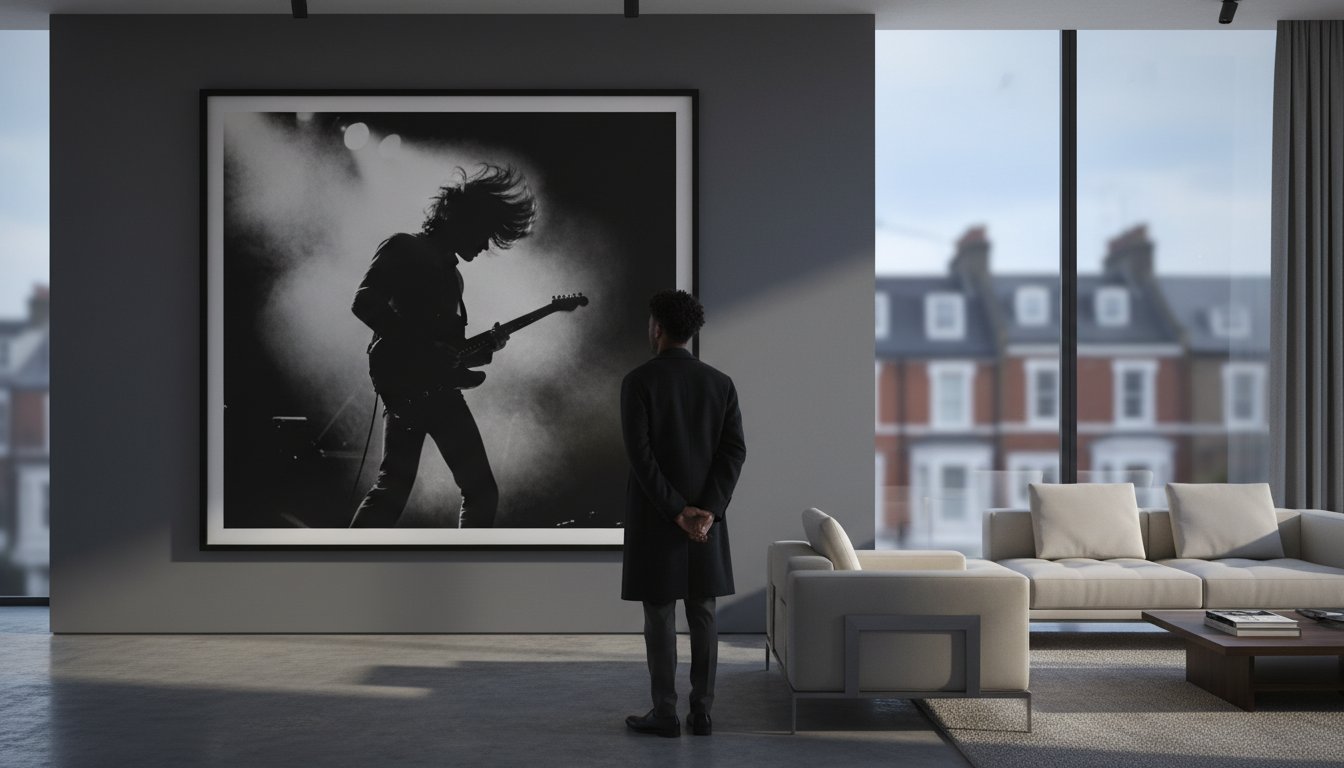
For collectors searching for the Beatles’ rare photographs for sale, the image is only part of the story: provenance, the photographer and the print’s edition all shape how a photograph is understood and valued. Record collectors face a similar challenge, as a familiar album title can conceal important differences between pressings.
An early edition is not simply an older copy. Label details, stamper codes and country of release can tell a more precise story. This guide explains how to read those clues, compare Parlophone first pressings with U.S. Capitol editions and distinguish American releases from their U.K. counterparts.
Along the way, you’ll see why a pressing’s identity matters to collectors, how to assess the details rather than rely on an album title alone, and how photographic Beatles memorabilia offers another way to bring the era into view. This gives you a clearer framework for appreciating both physical editions of the music and the images that preserve its history.
Key Takeaways
- Compare a photograph’s subject, photographer, edition details and provenance to understand what distinguishes one print from another.
- Learn why historical significance, rarity and documented ownership can influence a photograph’s collector appeal.
- Assess marketplace listings by looking beyond the image to the description of the print and the evidence provided.
- Use provenance records and accompanying certificates to build a clearer picture of a photograph’s authenticity.
- Discover how The Slim Aarons Collection offers a distinct avenue for exploring collectible photography and its place in an interior.
Where can I buy rare Beatles photographs for sale?
Rare Beatles photographs appear through several kinds of listings: fine-art galleries, specialist photographic archives, auction catalogues, and private collections. Each channel tends to present a different object. A gallery may offer a later fine-art print, while an auction catalogue can describe a vintage photograph with a documented ownership history. For collectors seeking the Beatles’ rare photographs for sale, identifying the format is a useful first step.
Start by matching the listing to the image and event. Mike Mitchell photographed the Beatles at Washington Coliseum on February 11, 1964, two days after their Ed Sullivan Show debut. A listing that identifies Mitchell, the venue, and date offers a more meaningful starting point than one labelled only “Beatles concert.” Check whether it describes an original photograph, a later print, or a reproduction. Those terms refer to different objects, even when the image is identical.
Photographic galleries and archival collections are often suited to buyers seeking a finished print for display. Auction catalogues and private collection listings may appeal to collectors focused on vintage material, historical context, or a particular photographer. Marc Weinstein, for example, photographed the Beatles at Shea Stadium in August 1965. An image attributed to Weinstein should be considered alongside its subject, event, and edition details.
Before deciding, match the listing to your purpose. A print for a room may call for attention to composition, format and presentation. A historically significant collectible may require closer examination of the photographer, date and supporting records. A famous subject does not prove rarity: the image’s edition and history matter too.
- For a display print: look for clear information about the image, print format, and presentation.
- For a vintage photograph: examine the listing’s account of the photographer, date, and ownership history.
- For a specific moment: search by names and events, such as Mike Mitchell and Washington Coliseum in 1964.
Compare like with like. A photograph of the Beatles at a 1964 concert and a later print of that image aren’t interchangeable collecting objects. The best buying channel depends on whether you value a finished artwork, an original photographic object, or a particular historical moment. A precise listing helps you see which one is being offered.
Print listings can make comparisons more concrete, even when their subjects and settings differ. These are starting prices, not a like-for-like guide. Read each listing for details about the particular image and print.
Other listings pair different subjects and settings with different asking prices. Compare descriptions as well as prices to narrow your search, but remember that price alone does not establish rarity or condition.
What are the most valuable rare Beatles photographs?
A photograph’s value depends on more than the Beatles appearing in the frame. The photographer, image history, rarity, condition and edition can all shape collector interest. Auction results and asking prices are different: a completed sale records a transaction, while a listing shows an offered price.
That result gives a sense of the interest surrounding a significant body of early concert photography. Mitchell photographed the Beatles at Washington Coliseum on February 11, 1964. His images preserve an early American performance, giving the photographs both a named creator and a specific historical setting.
Other documented sales illustrate the interest that collections can attract. These results concern different photographic groups, not identical prints, so they are not direct price comparisons.
Individual listings offer another perspective. Their prices are asking prices, not confirmed sale results.
- Photographer: A clear attribution, such as Mike Mitchell or Marc Weinstein, ties the image to a known body of work.
- Historical moment: A named event, location, and date help distinguish an image from a generic band portrait.
- Format and edition: A contact sheet, vintage photograph, and limited edition print are different objects.
- Evidence: Records supporting attribution, ownership, and print history help explain a work’s significance.
Compare like with like. Condition and documentation also matter: a compelling image with a clear history offers a stronger basis for assessment than a famous subject alone. Collectors exploring music photography and archival imagery can also consider how the photograph’s visual character suits their collection.
Other listings show how much asking prices can vary between images and formats. Offered prices are not evidence of completed sales, and descriptions alone do not show that items share the same print history or condition.
Taken together, the figures show why format, provenance and the difference between an asking price and a completed sale matter when assessing value. They are not a ranked set of confirmed results.
What online marketplaces list Beatles photographs for sale?
Beatles photographs appear online in gallery storefronts, auction catalogues, specialist archive shops and general resale platforms. Each format presents a different kind of offer. A gallery listing may focus on a finished print, while an auction entry may describe a vintage photograph or contact sheet. A platform’s category alone does not establish an image’s age or authenticity.
Search with a person, location, and date to narrow broad results. For example, “John Lennon, New York City, 1974” is more specific than “Beatles photograph.” Listings may include solo portraits taken after the band’s active years, so a Beatles-related search can surface images of individual members. A result’s title should identify the subject clearly, and its description should clarify what physical item is being offered.
Gallery catalogues can help readers compare display prints by image, photographer, and presentation details. Auction marketplaces often arrange entries by sale or collection, making the catalogue context important. A John Lennon and Yoko Ono photograph at Tittenhurst Park, Ascot, presents a different subject and setting from a concert image. A listing for Paul McCartney and George Martin in an Abbey Road Studios editing suite in 1984 documents a later musical collaboration.
Use a consistent comparison when browsing:
- Identify the object: distinguish an original photograph from a later print, poster, or tribute image.
- Read the caption: note the named photographer, subject, location, and date, such as Abbey Road Studios in 1984.
- Review the listing context: determine whether it appears in a gallery catalogue, auction sale, archive shop, or resale listing.
- Compare like formats: don’t treat a contact sheet and a finished photographic print as equivalent objects.
Marketplace wording deserves careful attention. “Vintage,” “limited edition,” and “archival” describe different qualities, and none should be assumed to mean the same thing. A 1996 photograph of graffiti at Abbey Road Studios, for instance, is a Beatles tribute image rather than a photograph made during the band’s recording years. That distinction changes the historical subject, even if the location remains closely associated with the group.
Save useful listings and compare their descriptions before choosing. Search terms such as “John Lennon,” “Tittenhurst Park” and “Abbey Road Studios” can surface different subjects and periods. Assess the specific object, not just the platform or headline. A clear listing identifies the image and format; a vague caption leaves important distinctions unresolved.
How can I verify the authenticity of a Beatles photograph
Start by defining what “authentic” means for the particular Beatles image. An original photographic print, a later print from an original negative and a modern reproduction are different objects. A listing should say which type it offers rather than rely on a Beatles caption alone. The distinction matters because one image can exist in several print forms, each with a different history and collector significance.
Next, compare the photograph with its stated subject and setting. A description naming a Beatles performance, studio or photographer should be clear and consistent. Check faces, clothing, instruments, stage arrangements and surroundings against the caption. If the named event does not match the setting, investigate further rather than assuming the photograph is rare.
Inspect the physical print and any marks described in the catalogue. Paper, surface, cropping, handwritten notes, stamps and annotations may help explain an image’s history, but none proves it on its own. A signature, for example, supports an attribution only when it fits the other evidence. Consider what each mark means, who added it and whether it belongs to the photograph’s original period or later handling.
Use a structured comparison to assess a listing:
- Object type: distinguish an original print from a later print or reproduction.
- Attribution: compare the named photographer with the account of the image’s creation.
- Image details: match the caption’s subject, location, and event to visible evidence.
- Physical evidence: consider inscriptions, stamps, cropping, and print characteristics together.
For a photograph attributed to a known Beatles photographer, the attribution should fit the image’s history and the account accompanying the print. A compelling image of John Lennon, Paul McCartney or the full group does not establish who took it. Nor does a vintage appearance prove an original date. Treat visual appeal, age and authorship as separate questions, then look for evidence connecting them.
Finally, read the catalogue description in full. “Vintage print” and “limited edition” describe different things, so do not use them interchangeably. A clear entry identifies the object, photographer, image and relevant history. Keep the listing and supporting records together to preserve the photograph’s context if it enters another collection. If attribution is incomplete, seek independent photographic expertise focused on the object and its history.
What provenance and certificates should accompany a rare Beatles photo
For a Beatles photograph, provenance should explain the object’s path from creation to its current owner. Useful records connect the image, photographer and physical print rather than simply repeating a famous caption. An auction entry, gallery invoice or collection inventory can help establish that chain. Strong documentation distinguishes recorded details from attributed ones.
Look for records that identify the photograph precisely. Documentation should name the image or subject and photographer, and give any known date or location. For example, a photograph described as John Lennon at Brian Epstein’s London home during the Sgt. Pepper’s Lonely Hearts Club Band launch party should be distinguishable from another Lennon portrait. Specific descriptions reduce the risk of confusing records for related images.
A certificate of authenticity should describe the actual object, not just the Beatles image in general. Check whether it identifies the print as vintage, later or part of an edition. It should also link its description to the photograph through a title, image reference or other identifying detail. A certificate that names a photographer but does not distinguish the print provides less useful documentation.
Keep supporting material with the certificate. Useful records may include an earlier sale description, collection inventory, correspondence about ownership or a photograph of markings on the print’s reverse. Stamps, handwritten notes and labels can add context, but their meaning depends on who made them and when. An annotation naming a venue is a clue to assess alongside other records, not proof on its own.
- Match the records: compare the certificate, invoice, and catalogue entry for consistent image and photographer details.
- Clarify the print: distinguish an original photographic object from a later print or reproduction.
- Preserve the chain: retain prior ownership records and sale documents with the image.
- Record edition terms: keep any statement about edition status with its identifying information.
Take particular care with edition language. A certificate should explain what the edition statement refers to rather than leave “limited edition” unexplained. The print’s title, edition information and certificate should correspond. If the photograph is offered as a vintage object, the records should describe that object directly, not imply that every print of the image has the same history.
Store documentation in a way that keeps it associated with the photograph without placing papers against a delicate print. A clear digital record can also preserve the catalogue description and ownership documents together. To see how edition language appears in another collectible art category, explore limited edition print details.
Galerie Prints: The Slim Aarons Collection
Galerie Prints offers another route for readers whose interest in photographic history extends beyond Beatles memorabilia. The Slim Aarons Collection brings a different era of cultural life into view, while Terry O’Neill Photography features portraits by the photographer. These collections suit readers seeking photographic art for a considered interior, rather than a historical Beatles print or original photograph.
Choosing between archival subject matter and collectible photographic art starts with what you want the image to bring to a space: a specific musical memory, an iconic portrait or an atmosphere that resonates across a room. Galerie Prints also offers Cinema Lobby Cards and Star Wars Limited Edition Prints for collectors drawn to film imagery.
Contact Galerie Prints to explore the collections.
Choose the image that keeps its story alive
A Beatles photograph can be more than a record of a familiar moment. It can express a personal connection to the music, the people behind it or the visual language of an era. As you consider the Beatles’ rare photographs for sale, let the image’s story guide your choice, alongside the qualities that matter to you as a collector or when shaping a room.
For a wider perspective on photographic and film imagery, explore The Slim Aarons Collection, Terry O’Neill Photography and Cinema Lobby Cards at Galerie Prints. Each offers a distinct way to encounter cultural history through images, whether your interest leans toward portraiture, glamour or cinema.
Let your next choice reflect the stories you want to live with. Explore Galerie Prints’ collections and find an image that speaks to your own appreciation of photographic heritage.