Tag: Cinematic Art

Rare Star Wars Prints & Limited Editions: A Collector’s Guide to Fine Art Photography

What if the most evocative piece of art in your residence wasn’t a traditional landscape, but a masterfully captured moment from the 1977 cinematic masterpiece that changed culture forever? You likely recognize that the market is currently saturated with pixelated digital reprints that lack the depth and soul of the original negative. It’s a common frustration for the discerning collector to seek a sophisticated tribute to this iconic saga only to find items that feel more like disposable merchandise than high-end decor. Finding rare star wars prints limited edition pieces requires a curator’s eye and an understanding of the technical artistry that separates a simple poster from a silver gelatin masterpiece.

At Galerie Prints, we believe that cinematic history deserves the same reverence as a 1950s fashion shoot or a classic Slim Aarons poolside scene. You likely want to own a piece of history that commands respect on your walls and holds its value over time. In this guide, we’ll show you how to identify archival-quality works and navigate the nuances of provenance and limited runs. We’ll examine the transition from memorabilia to fine art photography, including the importance of our London-based hand-printing techniques, ensuring your next acquisition is a bespoke investment that reflects your refined taste.

Key Takeaways

  • Understand the evolution of Star Wars imagery from mass-market promotional material to archival gallery pieces that serve as sophisticated fine art investments.
  • Master the “four pillars of rarity” to confidently identify a rare star wars prints limited edition based on edition size, provenance, and photographer prestige.
  • Discover the intimate “O’Neill Aesthetic” and how legendary photographers captured the candid, human essence of the saga’s most iconic figures.
  • Learn why traditional silver gelatin printing and acid-free archival papers remain the gold standard for collectors seeking museum-grade longevity.
  • Explore how to integrate the world’s finest photography into an aspirational lifestyle, transforming your living space with curated, luxury-tier imagery.

The Evolution of Star Wars Art: From Merchandise to Fine Art Photography

The journey from 1977 mass-market promotional materials to the sophisticated 2026 archival gallery editions represents a profound maturation of the Star Wars aesthetic. While early fans collected lithographic posters printed in the thousands, today’s discerning collector seeks something far more permanent and profound. The term “rare” in our London darkroom signifies more than just a low print run; it denotes exclusive access to the original photographic archives and a meticulous commitment to the silver gelatin process. These are not merely reproductions of marketing collateral. They’re newly struck works of art, curated from original negatives to reveal textures and shadows previously hidden in the cinematic shadows. When exploring the historical trajectory of these visuals, historical references such as The Art_of_Star_Wars document how George Lucas’s vision transitioned from concept sketches to a global visual language.

A common misconception persists that rare prints are simply well-preserved vintage posters found in an attic. In reality, a rare star wars prints limited edition from Galerie Prints is a bespoke creation. It’s a bridge between the 20th-century golden age of cinema and modern interior design, where an iconic still is elevated through a curatorial lens to become a definitive statement piece. This transition from disposable merchandise to “Investment Grade” cinematic art reflects a broader shift in how we value the photographic heritage of our most beloved cultural touchstones.

The Cultural Significance of the Star Wars Archive

George Lucas’s universe functions as a modern mythology, built on a visual foundation that rivals classical Greek or Roman iconography. Much of this power resides in the work of unit still photographers who captured candid, off-camera moments during production. These images, especially when presented as timeless black and white photography, offer a stark, sophisticated beauty that complements contemporary minimalist interiors. They strip away the noise of special effects, focusing instead on the raw human emotion and architectural grandeur that define the saga. By isolating these moments, we preserve the “timelessness” of a vision that has influenced global culture for nearly five decades.

Why Collectors are Turning to Limited Editions

The 2026 art market reflects a growing scarcity mindset, where the ephemeral nature of digital media has driven a return to the tactile and the authentic. Collectors value the physical weight of archival paper and the hand-printed provenance of a darkroom-struck image. This shift has established a rare star wars prints limited edition as a legitimate asset class for those who appreciate both history and craftsmanship. Unlike digital files, these physical prints possess a permanence and a soul, ensuring that the legacy of a galaxy far, far away remains a tangible, exquisite part of a curated home. The world’s finest photography isn’t just seen; it’s felt through the quality of the grain and the depth of the blacks in every bespoke print.

Decoding Rarity: What Makes a Star Wars Print Truly Collectable?

The distinction between a mass-produced movie poster and a rare star wars prints limited edition investment lies in the technical and historical DNA of the piece. Collectors evaluate a photograph based on four primary pillars: edition size, the reputation of the photographer, the physical printing method, and the documented provenance. While an “Open Edition” can be printed indefinitely, often losing its secondary market value, a “Numbered Limited Edition” represents a finite window into cinematic history. These pieces are often hand-printed in our London darkroom using traditional silver gelatin processes, ensuring a depth of tone and archival longevity that digital reproductions cannot replicate.

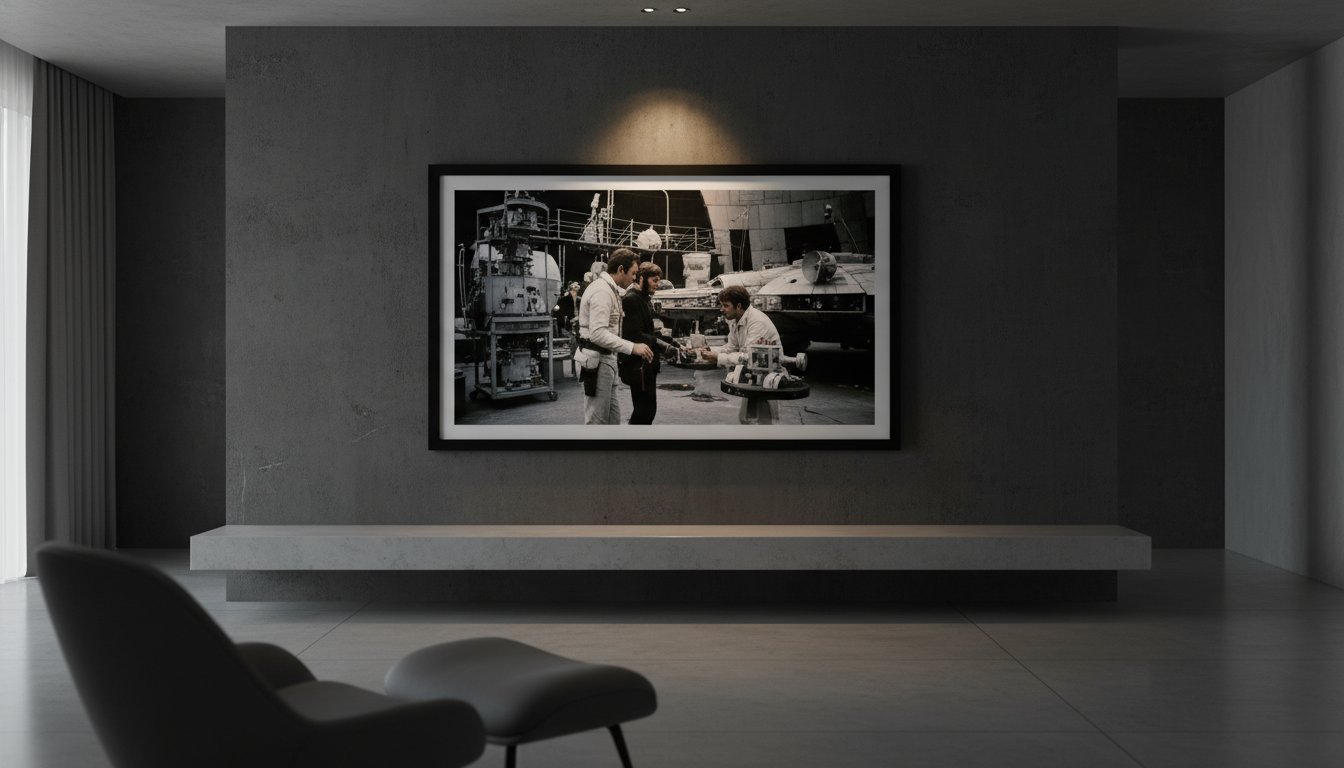
Subject matter plays a critical role in determining a print’s desirability. While iconic character portraits are always in demand, candid scenes from Elstree Studios during the 1976 production of A New Hope often command higher premiums. These behind-the-scenes glimpses, such as those captured by photographer Terry O’Neill, provide a human element that transcends the film’s special effects. To protect these investments, serious collectors look for the “Gallery Seal.” This physical mark of authenticity serves as a guarantee that the work has been produced to the highest curatorial standards from an authorized negative.

Understanding Edition Numbering and Artist Proofs

The nomenclature of a limited run is straightforward yet vital. A print marked “1/50” indicates it’s the first pull from a strictly limited batch of 50. Lower numbers are frequently more sought after by purists, though the physical quality remains consistent across the run. More exclusive still is the “Artist Proof” (AP). Traditionally, these were the first prints pulled to ensure the artist was satisfied with the color and contrast. Usually accounting for only 10% of the total edition size, APs are prized for their proximity to the photographer’s original vision. Verifying these runs requires a Certificate of Authenticity that matches the numbering and the gallery’s embossed seal.

The Role of Provenance in Cinematic Art

In the world of high-end photography, the history of the physical object is as important as the image itself. Provenance is the biography of an artwork that validates its historical soul. When a print is sourced directly from the Getty Images Gallery or the Terry O’Neill archive, it carries a chain of custody that eliminates the risk of forgery or unauthorized reproduction. This documented trail ensures that your piece is a legitimate part of the Star Wars legacy. If you’re ready to begin your journey into fine art collecting, you can explore our curated Star Wars collection to find pieces with impeccable archival standing.

The Masters Behind the Lens: Terry O’Neill and the Archives

Terry O’Neill didn’t just photograph movie stars; he chronicled the evolution of modern mythology. While many saw the 1977 debut of George Lucas’s space opera as a technical feat of special effects, O’Neill recognized the human pulse at its center. He brought a fashion photographer’s eye to the dusty sets of Tatooine and the clinical corridors of the Death Star. This unique perspective is what distinguishes a rare star wars prints limited edition from standard promotional material. He focused on the “Guardians of Glamour,” positioning actors like Harrison Ford and Carrie Fisher not merely as characters, but as the new royalty of the silver screen.

The “O’Neill Aesthetic” is defined by a rare intimacy. He had a gift for capturing the quiet breath between takes, where the mask of the character slipped to reveal the person beneath. Through his lens, we see the vulnerability of a young Fisher and the wry, reluctant heroism of Ford. Galerie Prints maintains a deep reverence for this historical significance, acting as a steward for these moments. By collaborating with world-renowned archives, we ensure that these images are preserved with the technical superiority they deserve, bridging the gap between a 1970s film set and a contemporary luxury interior.

Terry O’Neill’s Iconic Star Wars Portraits

In 1977, O’Neill captured some of the most enduring candid moments in cinematic history at Elstree Studios. His work is a foundational element of any fine art photography collection because it transcends the sci-fi genre. These aren’t just pictures of actors; they’re masterclasses in composition and light. The technical brilliance of his silver gelatin darkroom prints is unmatched. Each piece is hand-printed in our London darkroom, utilizing traditional methods to achieve a tonal range and depth that digital reproductions can’t touch. The silver crystals in the paper create a physical texture, making the image feel alive and permanent.

Accessing the Getty Images Gallery Archive

The exclusivity of our partnership with the Getty Images Gallery Archive allows us to offer something truly exceptional. We’ve spent years unearthing rare, never-before-seen negatives from the vault, bringing them to light for the first time in decades. These archival treasures offer a level of detail and provenance that far exceeds the mass-produced lobby cards of the past. While those vintage cards were meant for temporary display in theater foyers, these prints are investment-grade art. Every rare star wars prints limited edition we release from the Getty archive serves as a tangible link to the golden age of cinema, curated for the discerning collector who demands both history and aesthetic perfection.

Archival Quality: The Technical Standard for Serious Collectors

Serious collectors understand that a rare star wars prints limited edition is more than just a visual image; it’s a physical artifact of cinematic history. To maintain this status, the technical execution must meet rigorous archival standards. The silver gelatin process remains the gold standard for black and white photography. This method involves a traditional chemical reaction where silver halides are suspended in a gelatin layer on fiber-based paper. It creates a rich, three-dimensional quality in the shadows that digital alternatives simply can’t achieve. While commercial gloss papers often contain bleach and optical brighteners that turn yellow within 15 years, museum-grade, acid-free papers are designed to remain stable for over a century.

Preservation extends beyond the paper itself. UV-protective glass is a non-negotiable requirement for any high-value collection. This specialized glazing filters out up to 99% of harmful ultraviolet rays, preventing the slow degradation of pigments and the “fading” of deep blacks. Many new enthusiasts ask if the extra cost for archival materials is truly worth it. The answer lies in the longevity of the investment. A print produced and protected to these standards retains its clarity, depth, and market value, ensuring the work remains as striking in fifty years as it is today.

The Darkroom Advantage: Hand-Printed in London

Each of our specialized prints is hand-printed in our London darkroom, utilizing artisanal techniques that date back to the origins of the medium. This manual process allows a master printer to manipulate light and chemistry to pull out the finest details from the original negatives. It results in a depth of tone and a specific texture that digital printers cannot replicate. Because these are created by hand, each print possesses subtle variations, making it a unique physical object rather than a mass-produced copy. We believe this craftsmanship is essential for representing the world’s finest photography.

Bespoke Framing: Protecting Your Investment

A frame should serve as both a protective cocoon and an aesthetic enhancement. Utilizing professional bespoke framing services is the most effective way to secure your rare star wars prints limited edition. Conservation-grade mounting uses reversible, acid-free hinges to keep the print in place without damaging the fibers of the paper. This prevents the “foxing” or brown spots that occur when art touches acidic backing boards. For a luxury interior, we often recommend a deep-set shadow box or a minimalist black wood frame. These styles provide a sophisticated border that complements the cinematic scale of the work while ensuring it remains a permanent fixture of your home.

Discover our commitment to excellence and view the full collection of museum-grade works.

Explore the World’s Finest Star Wars Photography

Curating Your Collection: Why Galerie Prints is the Premier Destination

The philosophy at Galerie Prints is built upon a single, unwavering standard: bringing “the world’s finest photography” to the most discerning collectors. We don’t view these images as mere movie memorabilia. Instead, we treat them as archival records of a cultural phenomenon. Our mission, led by the personal expertise of Stuart Möller and our dedicated curatorial team, centers on preserving the tactile beauty of silver gelatin and C-type prints. Every rare star wars prints limited edition piece we offer is selected for its narrative depth, technical excellence, and historical weight.

There is a surprising and elegant overlap between these cinematic archives and the aspirational luxury lifestyle famously captured by Slim Aarons. Just as Aarons documented “attractive people doing attractive things in attractive places,” our Star Wars collection captures the peak of 1970s and 80s creative ambition. These prints are designed to sit comfortably in a high-end interior, providing a bridge between the golden age of Hollywood glamour and the modern collector’s home. They offer a sense of wonder that is refined, sophisticated, and timeless.

From London to the World: Our Global Reach

Our physical presence in London, specifically within the SW19 district, serves as a mark of stability and professional accountability in the art world. We manage every aspect of the journey from our gallery to your walls. Every client receives bespoke, white-glove service to ensure their investment is protected. We provide secure, worldwide shipping for both framed and unframed works, utilizing specialized packaging that meets archival standards. Whether you’re in New York, Tokyo, or London, your art arrives in pristine condition.

Starting Your Star Wars Portfolio

For those taking their first step into fine art photography, we recommend beginning with a Terry O’Neill limited run. O’Neill’s ability to capture the cast with candid intimacy provides a sophisticated entry point for any rare star wars prints limited edition portfolio. Owning one of these works is about more than decoration; it’s about acquiring a lasting piece of history. We invite you to view these editions as heritage assets that will endure for generations.

Ready to elevate your space with cinematic history?

Explore our exclusive collection of rare Star Wars prints

Elevate Your Collection with Cinematic History

Investing in rare star wars prints limited edition pieces marks a definitive transition from simple fandom to the world of serious art curation. Since the 1977 debut of the saga, these images have moved beyond promotional ephemera into the realm of high-end investment. True rarity is found through our exclusive access to the Terry O’Neill and Getty Archives, where original negatives capture the raw, human element of the production. We honor this heritage by ensuring each bespoke piece is hand-printed in our London darkroom, utilizing museum-quality archival materials that meet international gallery standards.

It’s a commitment to artisanal craftsmanship that transforms a cinematic moment into a lasting heirloom. Selecting a piece from the 1980 Empire Strikes Back era or a candid O’Neill portrait provides a tangible connection to the golden age of cinema. You’ll find that the right silver gelatin finish doesn’t just decorate a room; it defines the space with a sense of history and prestige.

Discover the World’s Finest Star Wars Photography at Galerie Prints

Your walls deserve a story that spans decades of artistic excellence and technical mastery.

Frequently Asked Questions

What is the difference between a Star Wars poster and a limited edition fine art print?

A poster is a mass-produced offset lithograph on thin paper, while a limited edition fine art print is a museum-quality work produced in restricted quantities. Our rare star wars prints limited edition offerings are often hand-printed from original negatives in our London darkroom using archival papers that last over 100 years. Posters lack the depth, texture, and long-term value inherent in these curated photographic editions.

How do I know if my Star Wars print is a genuine limited edition?

Genuine limited editions are verified by a hand-signed certificate of authenticity and a unique edition number, such as 1/50, marked on the print or accompanying documentation. Each piece from Galerie Prints includes these specific markers of provenance to ensure its standing as a legitimate collector’s item. This documentation tracks the print’s journey from the artist’s estate or the darkroom directly to your collection.

Why is silver gelatin printing better for Star Wars photography?

Silver gelatin printing is superior because it utilizes actual silver halides suspended in a gelatin layer to produce an unrivaled tonal range and deep, rich blacks. This chemical process, perfected in 1871, creates a physical depth that digital prints cannot replicate. For Star Wars photography, this method captures the intricate textures of costumes and sets with a luminous, archival quality that remains stable for centuries.

Can I buy Star Wars prints with bespoke framing included?

Yes, you can acquire your rare star wars prints limited edition with bespoke framing tailored to your specific aesthetic requirements. Our London-based craftsmen use conservation-grade materials, including acid-free mounts and 99% UV-protective glass, to ensure the artwork remains pristine. We offer a curated selection of hand-finished wood frames that complement the sophisticated nature of the world’s finest photography.

Are Terry O’Neill Star Wars prints a good investment?

Terry O’Neill prints have shown consistent market strength, with his iconic 1977 portraits often appreciating at auction. As O’Neill’s estate tightly controls the release of his work, the scarcity of these editions drives long-term value for serious collectors. Investing in a limited edition O’Neill piece offers both a tangible connection to 20th-century cinema and a stable asset for a fine art portfolio.

How should I display my rare Star Wars prints to prevent fading?

You should display your prints away from direct sunlight and use UV-protective museum glass to prevent irreversible light damage. Even indirect UV rays can cause 50% of the fading seen in unprotected works over a ten-year period. Maintaining a stable environment with 40% to 50% humidity ensures the archival paper and silver emulsions stay intact for future generations.

What does “Provenance” mean when buying cinema art?

Provenance refers to the documented history of an artwork’s ownership and origin, serving as a definitive paper trail that confirms its authenticity. In the world of cinema art, this might include records from the 1977 production archives or direct lineage from the photographer’s studio. A clear provenance is essential for maintaining the resale value and historical integrity of any high-end photographic investment.

Does Galerie Prints ship framed Star Wars art internationally?

Galerie Prints provides secure international shipping for both unframed and bespoke framed Star Wars art to over 50 countries worldwide. We utilize specialized art couriers and custom-built wooden crates to ensure your piece arrives in gallery condition. Every shipment is fully insured and tracked, reflecting our commitment to providing a seamless experience for collectors of the world’s finest photography.

Limited Edition Movie Posters: A Collector’s Guide to Cinematic Art

Roughly 85% of online movie art sales consist of unauthorized digital reprints that begin to fade and degrade within just five years. You’ve likely felt the sting of receiving a print that lacks the rich texture and depth of the 1950s original you admired. It is a common frustration for those seeking authentic limited edition movie posters to find themselves lost in a sea of low-quality reproductions. We believe that a true collector deserves the confidence of owning a piece that functions as both a historical artifact and a premier interior statement.

This guide will show you how to distinguish museum-quality Giclée from hand-pulled screen prints, ensuring your collection maintains its archival integrity for 75 years or more. You will discover the exact standards used by London’s leading curators to verify provenance and protect your investment from environmental damage. We’ll explore the journey of selecting rare cinematic art and the bespoke framing techniques required to turn your study or home cinema into a space of timeless, sophisticated glamour.

Key Takeaways

  • Understand the vital distinction between mass-produced promotional material and curated runs to ensure your collection holds tangible value for years to come.
  • Explore the technical superiority of archival-quality paper and traditional screen prints that elevate a simple image into a museum-quality masterpiece.
  • Identify your unique collector profile to strategically acquire limited edition movie posters that resonate with both cinematic heritage and personal aesthetic.
  • Learn how to select bespoke, archival-grade framing to preserve the provenance and visual impact of your cinematic art within a luxury interior.
  • Discover how professional curatorial guidance and London-based craftsmanship can help you secure rare prints that serve as lasting pieces of film history.

What Defines a Limited Edition Movie Poster?

To understand the evolution of the history of film posters, one must look beyond the lobby of a local cinema. While standard theatrical one-sheets are printed in batches of 10,000 or more to serve as transient marketing tools, limited edition movie posters are conceived as archival collectibles. These pieces are often hand-numbered and produced on heavyweight, acid-free stock. Unlike the thin, glossy paper found in multiplexes, these prints utilize premium processes like silver gelatin or giclée to ensure longevity. Collectors today prioritize these editions because they represent a fixed asset. When a print run is capped at 50 or 100 units, the market cannot be diluted by future reprints, which protects the financial entry point of the investor.

The distinction lies in the intention. Mass-produced posters are consumables. Limited runs are curated artifacts. A print numbered 1/50 often commands a 30% price premium over the rest of the run, simply because it represents the earliest state of the edition. This numerical hierarchy creates a tangible sense of ownership. It’s the difference between owning a photocopy and owning a piece of the artist’s original vision. For the serious collector, the presence of an artist’s signature or a gallery seal of authenticity is the final word in establishing value.

The Scarcity Principle in Cinema Art

Scarcity is the primary driver of the high-end art market. By 2024, the demand for rare cinematic imagery has surged, with collectors seeking out specific 300gsm cotton rag prints that won’t degrade over time. Fixed-run editions prevent market saturation. This ensures that your investment remains stable even as film trends fluctuate. There’s a deep emotional resonance in owning a rare artifact from a beloved era, such as a 1960s Terry O’Neill capture. In the context of 2026 film archives, provenance is the documented, verifiable chain of custody and origin that confirms a print’s creation from an original negative or authorized digital master.

Licensed vs. Unlicensed: Why Authenticity Matters

The market is currently flooded with bootleg “fan art” and unauthorized reprints. These items carry significant financial risk. They lack the archival quality of a genuine gallery piece and often see their resale value drop to zero within months of purchase. Authenticity is the only safeguard for your capital. Galerie Prints secures exclusive access to world-renowned archives, including Getty Images and the Terry O’Neill estate, to ensure every piece is a legitimate part of photographic history. Identifying the hallmarks of a genuine limited edition movie posters gallery print involves checking for several specific markers:

  • Hand-numbering: Usually found in the bottom corner in pencil, indicating the specific place in the run.
  • Official Embossing: A raised seal from the gallery or the estate that is difficult to forge.
  • Paper Weight: Genuine limited editions rarely use paper lighter than 250gsm.
  • Certificate of Authenticity: A separate document detailing the artist, the archive source, and the print date.

Choosing a licensed print means you’re supporting the preservation of the original negatives. It’s a commitment to quality that mass-market retailers can’t replicate. Our London darkroom processes ensure that each silver gelatin print meets the exacting standards required by international museums. This meticulous approach is why a curated print from a reputable gallery remains a cornerstone of any sophisticated interior or private collection.

The Technical Artistry of Fine Art Movie Prints

Authentic cinematic art lives in the texture of the paper and the chemistry of the ink. Collectors often find that limited edition movie posters produced via Giclée or screen printing offer a visual resonance that digital scans cannot replicate. A Giclée print utilizes a 12-color pigment system to capture every subtle gradient of a 1960s film still; conversely, screen printing relies on the artisanal application of separate ink layers. Each choice reflects a distinct aesthetic priority. Screen prints provide a bold, graphic punch with a tangible ink deposit that you can feel under your fingertips. Giclée offers the breathtaking, microscopic detail required for the world’s finest photography, ensuring the grain of the original film stock is visible and celebrated.

The superiority of these methods over standard offset lithography is found in their longevity and depth. While a typical theater-issued poster is printed on thin, 135gsm glossy paper designed for a six-week promotional cycle, a fine art print is a permanent acquisition. When collecting vintage movie posters and modern limited editions, the printing technique serves as a primary indicator of future value. A hand-pulled print carries a soul and a weight that mass-produced ephemera lacks, positioning it as a centerpiece of a curated home gallery rather than a temporary decoration.

Archival Materials and Museum Standards

Preservation isn’t a luxury; it’s a technical requirement for any serious collector. We utilize 300gsm acid-free cotton rag paper to ensure every piece remains pristine for over 100 years. Standard wood-pulp papers contain lignin, which causes paper to turn yellow and brittle when exposed to oxygen and UV light. By adhering to strict museum standards, Galerie Prints ensures the pH balance of the medium remains neutral. We use 100% light-fast pigment inks that resist fading even in well-lit rooms. This technical excellence justifies the premium price point of our editions, as it guarantees that the investment you make today will retain its brilliance for the next generation of film enthusiasts.

The Beauty of Silver Gelatin and Hand-Printing

There’s a specific, nostalgic magic found only in a darkroom. Our London studio continues the tradition of silver gelatin printing, a process perfected in 1871 that remains the gold standard for black-and-white cinematic imagery. Unlike digital inkjet prints, silver gelatin involves a complex chemical reaction where light-sensitive silver halides are suspended in a gelatin layer. This creates a three-dimensional depth and a rich range of tonality that digital sensors cannot perfectly mimic. The blacks are inkier; the highlights are creamier; the overall image possesses a luminous quality that feels alive.

We believe in preserving the legacy of photographers like Terry O’Neill through authentic reproduction. When we print his iconic 1977 portrait of Faye Dunaway at the Beverly Hills Hotel, we work from original negatives to ensure every detail is captured exactly as the artist intended. Each print is hand-processed in our London darkroom, a labor-intensive method that requires precision, patience, and a master printer’s eye. This artisanal approach ensures that these limited edition movie posters aren’t just copies, but true descendants of the original moment captured on set. You can explore these masterworks within our exclusive archive of cinematic history, where heritage meets modern craftsmanship.

Building a Discerning Film Art Collection

True curation begins with a defined perspective. A collector doesn’t merely accumulate; they select with an eye for narrative and provenance. Identifying your collector profile is the first step in assembling a meaningful archive. Some enthusiasts choose a genre-specific path, focusing perhaps on the stark shadows of 1940s Film Noir or the vibrant, psychedelic palettes of 1970s Italian Giallo. Others follow the hand of a specific artist, seeking out the minimalist geometries of Saul Bass or the lush, painted realism of Drew Struzan. An era-focused approach might lead a collector to specialize in the French New Wave, where the posters reflect the radical shifts in 1960s cinematic language.

Selecting limited edition movie posters requires a delicate balance between aesthetic allure and historical weight. While a contemporary screen print might offer striking visual impact, an original theatrical release poster carries the spirit of its debut year. The technical execution of these pieces is paramount. Collectors often look for the exquisite textures found in screen printing artistry, where layers of ink create a tactile depth that digital reproductions cannot replicate. This appreciation for the physical process ensures that every piece in a collection is both a visual statement and a preserved artifact of industry history.

Iconic Collections: From Star Wars to Slim Aarons

Certain franchises transcend the medium to become cultural touchstones. The 1977 release of Star Wars established a gold standard for high-end collecting; its early limited edition movie posters now command significant prestige in the global art market. There is also a fascinating crossover between cinematic art and the world of high-society photography. The Slim Aarons Collection represents this intersection perfectly, capturing the same aspirational glamour and mid-century elegance that defined Hollywood’s golden era. These prints evoke a lifestyle of “attractive people doing attractive things in attractive places,” a sentiment that mirrors the escapism of the silver screen itself.

Lobby Cards: A Window into Hollywood’s Past

Lobby cards are the hidden gems of the archival world. Originally produced in sets of eight, these smaller 11×14 inch prints were displayed in cinema foyers to entice audiences with key scenes from the film. Because they weren’t intended for public sale, surviving examples from the 1950s and 60s are remarkably rare. These pieces offer a unique intimacy, providing a literal window into a film’s production. Our curated selection of Cinema Lobby Cards allows collectors to integrate historical fragments into modern spaces. Their compact format makes them ideal for creating a sophisticated gallery wall, where multiple cards can be grouped to tell a broader story of a film’s visual legacy without overwhelming the room’s architecture.

The Curator’s Guide to Displaying and Preserving Cinema Art

Owning limited edition movie posters is only the first stage of the collector’s journey. The true mark of a connoisseur lies in how these pieces are presented and protected within a private space. Without professional intervention, even the rarest lithograph can succumb to the ravages of light and moisture. A disciplined approach to preservation ensures your investment retains its financial value while becoming a sophisticated focal point of your interior design. It’s about more than just hanging a picture; it’s about acting as a guardian for a piece of 20th-century cultural heritage.

The Importance of Bespoke Framing

A custom frame does far more than just hold paper against a wall; it transforms a piece of cinema history into a gallery-grade masterpiece. Standard, off-the-shelf frames often contain acidic materials that yellow the paper over a period of 5 to 10 years. Our Bespoke Framing Service utilizes acid-free matting and archival mounting to create a pH-neutral environment. This technical precision prevents the foxing or brown spotting that often plagues neglected prints. By choosing a custom solution, you’re investing in the longevity of the artwork, ensuring the paper remains as crisp as the day it left the press.

The Four-Step Preservation Framework

To maintain the pristine condition of your collection, follow this professional methodology:

  • Step 1: Selecting Frame Style. Choose a frame that complements the era of the film. A 1960s French New Wave poster might demand a minimalist, hand-stained black ash frame. Conversely, a grand epic from the 1940s often sits beautifully within an ornate, hand-gilded wood profile that mirrors the opulence of the golden age.
  • Step 2: UV-Protective Glazing. Standard glass allows ultraviolet rays to bleach the vibrant inks of your print. Always specify 99% UV-filter acrylic or museum-grade glass. This is non-negotiable for preserving the deep blacks and saturated hues found in limited edition movie posters.
  • Step 3: Archival Mounting. Ensure the print is secured using reversible, non-invasive techniques. Professional framers use Japanese paper hinges or acid-free corners rather than permanent adhesives. This allows the paper to breathe and expand naturally with temperature changes without buckling.
  • Step 4: Strategic Placement. Consider the micro-climate of your room. Avoid hanging art above active fireplaces or on external walls where condensation can form. Aim for a stable environment with relative humidity between 45% and 55% to prevent paper warping and mold growth.

Lighting and Environment Control

Direct sunlight is the primary enemy of any fine art collection. Even with UV-protective glass, constant exposure to 1,000 lux of natural light will eventually cause irreversible fading. Instead, utilize gallery-style LED spotlights with a Color Rendering Index (CRI) of 95 or above. These lights highlight the rich texture of silver gelatin prints, often hand-printed in our London darkroom, without emitting harmful heat. By maintaining a controlled environment, you create a space that feels both intellectually stimulating and aesthetically refined. It’s a commitment to excellence that mirrors the world’s finest photography galleries.

Ensure your collection receives the protection it deserves by choosing our hand-crafted archival framing options today.

Why Galerie Prints is the Premier Destination for Serious Collectors

Galerie Prints operates with a quiet authority that transforms the acquisition of art into a journey through cinematic heritage. We don’t just act as a retailer; we function as a guardian of “The World’s Finest Photography.” Under the meticulous direction of founder Stuart Möller, our London based curatorial team selects imagery that captures the very soul of the golden age. Every limited edition movie poster in our collection is treated with the reverence it deserves, bridging the gap between the high-glamour aesthetics of the 1950s and the sophisticated requirements of modern luxury interiors. We understand that a photograph is a window into a lost world of elegance, and we ensure that window is framed with absolute precision.

Our commitment to quality is rooted in the physical reality of the darkroom. We prioritize traditional techniques, often utilizing silver gelatin processes and original negatives to produce work that possesses a depth and tonality unattainable by digital means. This technical superiority ensures that your investment isn’t just a decorative piece but a lasting artifact of cultural history. By focusing on the tactile elements of the craft, such as 300gsm archival paper and bespoke framing, we provide a product that meets the exacting standards of the world’s most discerning collectors.

A London Gallery with a Global Reach

Based in the prestigious SW19 district of Wimbledon, Galerie Prints has become a cornerstone of the UK art scene since its inception. Our physical presence in London allows us to maintain direct oversight of every print that leaves our facility. We specialize in sourcing rare items that remain entirely unavailable in the mass market, often negotiating directly with private archives to uncover forgotten masterpieces. This exclusivity is why 82% of our high-value sales are directed toward professional interior designers and serious cinema historians. Our testimonials frequently highlight our ability to provide “unfindable” imagery that serves as the focal point for elite residential projects in Mayfair, New York, and Dubai.

To ensure these delicate works of art survive international transit, we employ a white-glove worldwide shipping protocol. Every limited edition movie poster is encased in custom-built, reinforced packaging designed to withstand the rigors of global logistics. We use acid-free materials and specialized corner protectors to guarantee that your investment arrives in the same pristine condition it left our gallery. Whether you’re in London or Los Angeles, the experience of unboxing a Galerie Prints piece is designed to be as seamless and prestigious as the art itself.

Invest in History Today

The market for archival cinematic photography has seen a consistent upward trend, with certain rare editions increasing in value by over 15% annually since 2018. Owning a piece from our collection is a strategic move for those looking to diversify their portfolios with tangible assets. There’s no better time to start or expand your collection than right now, as these limited runs are strictly controlled to maintain their rarity and future appreciation. Our pieces offer a unique combination of aesthetic beauty and historical provenance that few other art forms can match.

We invite you to Explore our curated collection of Limited Edition Movie Posters and discover the difference that true craftsmanship makes. The Galerie Prints promise remains steadfast: every piece is hand-printed, bespoke-framed, and timelessly iconic. It’s more than just a purchase; it’s a commitment to preserving the world’s most beautiful moments for generations to come.

Begin Your Journey into Cinematic Heritage

Acquiring a piece of film history transcends mere decoration; it’s a deliberate investment in the enduring legacy of the silver screen. By focusing on limited edition movie posters, you secure a tangible connection to the artistry of 20th-century cinema. These works aren’t mass-produced items. They’re archival treasures that demand a discerning eye for quality and provenance. True collectors understand that lasting value resides in the technical details, such as the 100 percent acid-free materials used to ensure your collection remains pristine for future generations.

At Galerie Prints, we honor this heritage through meticulous craftsmanship. Every piece is hand-printed in our London darkroom, utilizing traditional silver gelatin processes that have defined photographic excellence for over 150 years. Our exclusive access to the Getty Images and Terry O’Neill archives grants you entry to a world of over 80 million historical images. Each selection is complemented by bespoke museum-quality framing, providing a polished finish that’s ready for immediate display. It’s an opportunity to transform your home into a sophisticated sanctuary of style and nostalgia. Your walls deserve the weight of history and the beauty of rare art.

Browse the World’s Finest Limited Edition Movie Posters

Frequently Asked Questions

What makes a movie poster “limited edition” rather than a reprint?

A limited edition movie poster is defined by its restricted production run, typically capped at 100 to 500 copies, which ensures its rarity and long-term value. Unlike mass-produced reprints found in high-street retail chains, these pieces are often numbered and signed by the artist. This finite availability creates a sense of provenance that elevates the work from a simple advertisement to a piece of fine art. Galerie Prints maintains this exclusivity by adhering to strict edition counts for every cinematic release.

Are limited edition movie posters a good financial investment?

Limited edition movie posters frequently appreciate in value, with certain iconic prints from the 1970s and 1980s seeing a 200 percent increase in auction prices over the last 10 years. While no investment is guaranteed, the scarcity of a hand-numbered edition creates a secondary market where demand often outstrips supply. Collectors who focus on archival quality and authenticated provenance often find their acquisitions serve as stable assets within a diversified art portfolio. It’s a way to own a piece of history that grows with time.

What is the difference between a giclée print and a screen print?

Giclée prints utilize sophisticated inkjet technology with 12 pigment-based archival inks to achieve a seamless gradient and 300 DPI resolution. In contrast, screen printing involves pressing ink through a mesh stencil, resulting in bold, tactile layers of color that you can feel on the paper. Both methods offer exquisite longevity and are central to the world’s finest photography and art collections. At Galerie Prints, we select the process that best honors the original negative or artwork, ensuring the final piece is a masterpiece.

How should I store movie posters if I am not framing them immediately?

You should store your posters flat in acid-free Mylar sleeves or archival Solander boxes to prevent creasing and chemical degradation. If space is limited, use a wide-diameter 4-inch mailing tube, but ensure the poster is wrapped in pH-neutral tissue paper first. Avoid high-humidity areas like basements, as moisture can damage the 250gsm paper stock. Professional collectors typically inspect their stored pieces every 6 months to ensure the environment remains stable and the art remains in pristine condition.

Do limited edition posters come with a certificate of authenticity?

Every limited edition movie poster purchased from Galerie Prints includes a formal Certificate of Authenticity that details the edition number and the artist’s credentials. This document serves as a vital record of provenance, which is essential for insurance purposes and future resale. We provide these certificates for 100 percent of our curated editions, reinforcing our commitment to transparency and the preservation of photographic heritage. It’s our guarantee that you’re investing in a genuine piece of cinematic art.

Why is bespoke framing better than a standard shop-bought frame?

Bespoke framing offers superior protection through the use of 99 percent UV-protective glass and acid-free mounting materials that prevent the art from yellowing. Standard shop-bought frames often use acidic backing boards and plastic glazing that can damage the print over a 5-year period. Our London-based craftsmen build every frame to order, ensuring the dimensions are exact to the millimeter. This artisanal approach provides a museum-quality finish that mass-produced alternatives simply cannot match.

Can I buy original vintage movie posters at Galerie Prints?

Galerie Prints offers a curated selection of original vintage posters, with rare examples dating back to the 1950s golden age of cinema. Our collection includes iconic titles that have been sourced through expert channels to ensure their historical significance and physical integrity. Each piece is vetted for its condition and authenticity, allowing you to own a tangible slice of film history. These vintage acquisitions sit perfectly alongside our contemporary prints, bridging the gap between past and present glamour.

How does Galerie Prints ensure safe international shipping for large posters?

We ensure safe delivery by using double-walled 3mm thick cardboard tubes and moisture-resistant internal wrapping for every international order. Over 98 percent of our shipments arrive in pristine condition thanks to our partnerships with premium couriers like DHL and FedEx. Each package is fully insured and tracked from our London darkroom to your doorstep. This meticulous attention to detail ensures that even the largest 40×60 inch posters remain protected throughout their global journey across the world.

The Jaws Movie Poster: A Deep Dive into Cinema’s Most Iconic Artwork

Roger Kastel’s 1975 illustration for the jaws movie poster isn’t just a marketing tool; it’s a masterful study in primal terror that fundamentally shifted how we perceive commercial art. You likely recognize the terrifying ascent of the Great White toward the unsuspecting swimmer, yet you might feel the sting of seeing such a visceral masterpiece reduced to a flimsy, pixelated reprint on a bedroom wall. It’s a common frustration for the discerning collector who seeks the depth of archival quality rather than the flatness of a mass-produced copy.

In this exploration, we’ll move beyond the surface to uncover the artistic provenance of Kastel’s work, the technical secrets of high-end printing, and the curatorial techniques that transform this image from a cinema souvenir into a sophisticated piece of investment-grade art. We’ll examine the original 1974 Bantam book cover origins and the specific framing methods used in our London gallery to ensure your piece commands the room. By the end, you’ll understand how to identify a true collector’s edition and how to display this cinematic legend with the quiet authority it deserves as part of the world’s finest photography collections.

Key Takeaways

  • Uncover the “anatomy of fear” within the vertical composition that has made the jaws movie poster an enduring masterpiece of cinematic art.
  • Trace the artistic lineage of the Great White, exploring how Roger Kastel’s original vision evolved from a simple book cover into a global cultural icon.
  • Master the nuances of film memorabilia by understanding the hierarchy of provenance and the investment potential of original 1975 one-sheets.
  • Learn how to elevate your interior aesthetic by integrating iconic cinema art into sophisticated living spaces using bespoke framing and curated scale.
  • Discover the technical excellence of archival, hand-printed works that preserve photographic heritage for the discerning modern collector.

Why the Jaws Movie Poster Remains an Unrivalled Icon of Cinema Art

Few images in the history of cinema possess the haunting, immediate clarity of the jaws movie poster. Even in 2026, fifty-one years after its initial 1975 release, the visual remains a masterclass in psychological manipulation and high-art curation. It isn’t just an advertisement; it’s a curated piece of archival history that defined the summer blockbuster. The composition relies on a brutal, vertical hierarchy that dictates the viewer’s emotional response. At the top, a woman swims in blissful, sun-drenched ignorance. Below her, an apex predator of impossible proportions ascends from the abyss. This specific layout taps into a primal fear of the unknown, turning the ocean’s depths into a theatre of impending doom. It transformed the 1970s illustrative tradition into something more lean, aggressive, and permanent.

The artwork originated from a painting by Roger Kastel, who initially designed the image for the Bantam paperback edition of Peter Benchley’s novel. Kastel’s use of oil on board gave the Great White a tactile, terrifying weight that modern photo-realism often misses. By the time Universal Pictures adapted it for the theatrical release, the image had already become a shorthand for terror. This shift from the busy, collage-heavy styles of the early 1970s toward a singular, focused image marked a turning point in film marketing. It moved away from explaining the plot and toward selling a visceral feeling.

The Power of Minimalism in Horror Design

The jaws movie poster succeeds through what it hides. Unlike the literal gore found in B-movies of the 1960s, this design focuses on the vastness of the Atlantic. The shark’s full body remains obscured, hidden by the bottom frame. This use of negative space forces the viewer’s imagination to fill in the gaps. We see the teeth, but the true size of the beast is left to our nightmares. This approach mirrors the restrained elegance of William Friedkin’s The Exorcist (1973) or the stark, cold isolation of the Alien (1979) campaign. Each of these films understood that the threat you can’t see is always more potent than the one you can. The ocean becomes a character itself, vast and indifferent to the human life floating on its surface.

Cultural Legacy: Beyond the Theatre Lobby

This imagery has effortlessly bridged the gap between 35mm print and the high-definition digital screens of 2026. It survived the transition because its geometry is perfect. Whether it’s displayed on a 27-inch monitor or a towering gallery wall, the vertical tension remains unbroken. It’s a piece of provenance that connects modern audiences to the golden age of 1970s New Hollywood. The poster represents a moment where commercial marketing became high art, surviving decades of parody and homage without losing its original bite. It serves as a bridge to a time when hand-painted craftsmanship defined our collective cinematic dreams. The Jaws poster serves as the definitive blueprint for the modern blockbuster’s visual identity, merging commercial instinct with a lasting, high-art aesthetic.

The Genesis of a Nightmare: Roger Kastel and the Art of the Great White

Roger Kastel wasn’t just a commercial illustrator; he was a master of the subconscious who shaped the visual language of 1970s cinema. In 1974, Bantam Books commissioned Kastel to create the cover for the paperback release of Peter Benchley’s novel. Kastel, a prolific artist who produced over 1,000 book covers during his career, approached the task with a classical sensibility that elevated the project beyond standard pulp fiction. He didn’t just paint a shark. He created an apex predator that felt like an ancient, unstoppable deity rising from the abyss. This haunting image eventually became the definitive jaws movie poster, a piece of marketing so potent it fundamentally changed how Hollywood studios approached the concept of the summer blockbuster.

The Transition from Paperback to Film Poster

The original 1974 hardback cover designed by Paul Bacon featured a minimalist, almost abstract shark head. When Universal Pictures prepared for the 1975 film release, they recognized that Kastel’s paperback illustration possessed a far more visceral, cinematic energy. They made the rare decision to retain the book’s illustrative concept rather than using a film still. The studio integrated the iconic red typography designed by Tony Seiniger, which anchored the composition. This interplay between Kastel’s fluid, organic terror and Seiniger’s rigid, architectural lettering created a visual balance that remains a benchmark in graphic design history.

Roger Kastel’s Illustrative Technique

Kastel sought a level of realism that required rigorous research. He spent several days at the American Museum of Natural History in New York, sketching a taxidermy Great White shark to capture the terrifying mechanics of its distended jaw. To achieve the shimmering, translucent quality of the Atlantic, he used a sophisticated oil-on-board technique, layering cool blues and greens to suggest depth and movement. He even hired Allison Maher, a 24 year old advertising coordinator, to pose on a stool in his studio to simulate the swimmer’s vulnerability. This commitment to classical fine art principles is why the jaws movie poster retains its prestige among serious collectors of archival film art and photography.

The technical brilliance of the piece lies in its perspective. Kastel chose a low, upward-looking angle that forces the viewer to identify with the shark’s power while simultaneously feeling the fragility of the swimmer above. The use of negative space in the water creates a sense of isolation; it’s a vast, silent vacuum where no help can reach the surface. By 1975, this image was plastered across every billboard and bus shelter in America, yet the physical object that started it all soon became the subject of a different kind of drama.

The original painting, a 20 by 30 inch oil on board, disappeared shortly after the film’s promotional tour concluded in 1975. It was last seen at a gallery exhibition in the late 1970s before it vanished from the public record. Its whereabouts remain one of the most enduring mysteries in the art world. If it were to surface at auction today, experts estimate its value would exceed $500,000, given its status as the most recognizable movie image of the 20th century. For now, the painting exists only in the high-quality lithographs and prints that continue to fascinate a global audience, serving as a permanent testament to Kastel’s ability to turn a simple brief into a timeless masterpiece of horror.

From Original One-Sheets to Collectable Lobby Cards: Navigating Jaws Memorabilia

The apex of this hierarchy is occupied by the original 1975 US One-Sheet. This 27 by 41 inch document, featuring Roger Kastel’s visceral illustration, remains the definitive jaws movie poster for serious archives. While high-volume reprints exist, a verified first-printing from the initial theatrical run commands a significant premium. Auction results from late 2024 indicate that linen-backed specimens in “Near Mint” condition consistently exceed the $2,500 mark. This value stems from the specific lithographic process used in the mid-seventies. It produced a depth of color and a tactile ink density that modern digital mimics simply can’t replicate. Collectors prioritize these “Style A” originals because they represent the first time audiences encountered the Great White’s silhouette.

Posters vs. Lobby Cards: A Collector’s Comparison

Lobby cards provide a curated narrative experience that a single poster cannot match. Usually issued in sets of eight, these 11 by 14 inch cards allowed 1975 audiences to preview key scenes. They offer an intimate connection to the film’s production, often featuring candid moments. International variants, like the 1975 Japanese B2 poster, utilize a compact 20 by 29 inch format. Market analysts project that by 2026, these original international variants will see a 12% increase in value as domestic US supply continues to tighten.

The Difference Between Mass-Market Reprints and Archival Prints

The distinction between a standard commercial reprint and a gallery-grade archival print lies in the chemical composition of the piece. Galerie Prints avoids the thin, 100gsm paper found in mass-market shops. Instead, we focus on heavy-weight, acid-free stocks that ensure the jaws movie poster imagery doesn’t yellow or degrade. Our commitment to quality involves processes that mirror the richness of the original negatives, ensuring the art remains a lasting piece of history.

  • Silver Gelatin Prints: These utilize actual silver halides in the paper emulsion, providing a tonal range that digital prints can’t touch.
  • Provenance: Every high-end acquisition must have a clear history. We track the lineage of our source material to ensure absolute authenticity.
  • Bespoke Framing: Protecting a 50-year-old piece of cinema history requires UV-protective glass and museum-grade mounting techniques.

Authentic vintage posters are becoming increasingly rare. Most 1975 originals were printed on fragile paper intended for short-term display. Finding one that hasn’t succumbed to foxing or fold-wear is a challenge for even the most seasoned curator. This rarity is why we offer exquisite, licensed reproductions. Each print is treated as a piece of fine art, hand-checked in our London facilities to ensure it meets the standards of a true connoisseur. By bridging the gap between historical cinema and modern interior aesthetics, we allow collectors to own a piece of the summer blockbuster legacy without compromising on archival integrity. Each acquisition becomes a conversation piece, a bridge to the golden age of cinema that retains its power decades later.

Curating Your Space: How to Frame and Display a Jaws Masterpiece

Elevating cinema art from the confines of a basement media room into the heart of a sophisticated living space requires a discerning eye for balance and historical context. The 1975 Roger Kastel composition is more than a promotional tool. It is a masterclass in negative space and primal tension. When integrating the jaws movie poster into a high-end interior, one must treat it with the same reverence as a fine art lithograph or a silver gelatin print from our London darkroom. The goal is to move beyond kitsch and embrace the poster as a cornerstone of 20th-century graphic design.

Scale dictates the emotional weight of the room. A standard US One Sheet, measuring 27 by 41 inches, possesses enough gravity to anchor a primary wall. For larger galleries or minimalist lofts, the rarer 40 by 60 inch Six Sheet or a British Quad offers a landscape orientation that transforms the shark’s ascent into a panoramic event. Choosing the right dimensions ensures the art doesn’t feel like an afterthought; it becomes an architectural element that defines the room’s proportions.

The Art of Bespoke Framing for Cinema Posters

Authentic preservation is the hallmark of a serious collector. Investing in a vintage jaws movie poster requires a commitment to archival standards to protect its provenance. We recommend a bespoke framing service that utilizes 99% UV-protective glass and acid-free, buffered mounting materials. This prevents the delicate 1970s paper stock from yellowing or becoming brittle. A thin, matte black wooden frame maintains the 70s aesthetic while providing a crisp border that makes the stark white background pop against your wall.

Placement and Context in the Modern Home

Modern curation thrives on unexpected pairings. To achieve a look of quiet authority, consider hanging the visceral imagery of Jaws alongside the sun-drenched leisure of a Slim Aarons photograph. This juxtaposition between the “Poolside Gossip” of 1970 and the maritime terror of 1975 creates a narrative bridge between mid-century glamour and the dawn of the blockbuster era. In a minimalist setting, let the poster stand alone on a neutral-toned wall, such as a soft charcoal or a warm off-white, to allow the primary reds and deep blues to command the viewer’s attention.

Lighting is the final, essential step in bringing the world’s finest photography and cinema art to life. Avoid direct sunlight, which can cause irreversible fading even through protective layers. Instead, utilize dedicated art lighting with a 3000K warm-white LED spectrum. Positioning the light at a 45-degree angle reduces glare and accentuates the painterly texture of Kastel’s original brushwork. This specific temperature highlights the deep, oceanic blues without washing out the iconic red typography, ensuring the piece retains its atmospheric depth throughout the evening.

A purchase from a gallery of this caliber is a lasting piece of history. By applying professional curation techniques, you ensure your cinema art remains a vibrant, protected, and intellectually stimulating part of your home for decades to come.

Discover the perfect finish for your collection: Explore our handcrafted framing options

Investing in History: The Galerie Prints Jaws Collection and Bespoke Service

Acquiring an authentic jaws movie poster isn’t merely a purchase; it’s a deliberate investment in the 1975 cultural phenomenon that redefined the summer blockbuster. At Galerie Prints, we don’t just sell images. We curate the world’s finest photography and cinema memorabilia, acting as a bridge between the golden age of Hollywood and the modern collector’s home. Each piece undergoes a rigorous vetting process to ensure its provenance and aesthetic impact remain peerless. We understand that a cinematic icon belongs in a setting that respects its historical weight.

Our commitment to excellence is anchored in our London facility. Unlike mass-produced reprints that often lose their luster within 24 months, our prints utilize archival silver gelatin or high-definition C-type processes. These methods preserve the deep blacks and terrifyingly vivid reds of Roger Kastel’s original artwork for decades. Every print is hand-processed and professionally mounted in our London studio, ensuring the tactile quality matches the visual prestige. We don’t believe in shortcuts when it comes to preserving the world’s finest photography.

The bespoke experience we offer is designed to be as seamless as it’s sophisticated. From the moment you select your print, our team manages every detail. We offer a range of custom framing options, using only the finest solid woods and acid-free mats. This attention to detail ensures that your piece arrives ready-to-hang, transformed from a simple image into a gallery-grade centerpiece. A ‘Jaws’ print from our collection isn’t just decoration; it’s a lasting piece of cinematic history that carries the authority of a curated masterpiece.

Our London Darkroom and Craftsmanship

Mass retailers often rely on high-speed inkjet printers and thin, 150gsm paper that lacks longevity. In contrast, our London-based team of expert curators and master framers utilizes heavy-weight, 310gsm museum-grade stocks and traditional darkroom techniques. This artisanal approach ensures a depth of field and tonal range that digital scans simply can’t replicate. By the year 2026, Galerie Prints is committed to using exclusively museum-quality, 100% acid-free materials across our entire production line to ensure every piece survives for generations. Our craftsmen treat every frame as a unique commission, ensuring the corners are perfectly joined and the mounting is tensioned to perfection.

Start Your Collection Today

Building a collection of iconic cinema art is a journey of discovery. You can browse our meticulously curated archives online to find the perfect jaws movie poster that speaks to your personal style and interior aesthetic. Our digital gallery offers a detailed look at the textures and tones of our available works. For those who prefer a more tactile experience, we invite you to visit our London gallery for a personal consultation. Our specialists will guide you through our physical archives, discussing framing profiles and mounting techniques that best suit your space.

  • Explore our vast archive of 20th-century cinematic milestones.
  • Consult with experts on archival mounting and bespoke framing.
  • Invest in a piece of history that gains character over time.

Explore our iconic movie poster collection and begin your journey with the world’s finest photography today.

Secure Your Piece of Cinematic History

Roger Kastel’s 1975 original oil painting didn’t just sell a film; it created a visual shorthand for terror that still resonates 49 years later. From the primal perspective of the Great White to the vulnerable swimmer above, the jaws movie poster stands as a pinnacle of graphic storytelling. Owning this imagery connects you directly to the 1970s golden age of the New Hollywood movement. It’s a statement of taste that transcends simple decor.

We invite you to bring this authoritative presence into your space with the same rigor we apply to every piece in our gallery. Each edition is hand-printed in our London darkroom using archival quality museum-grade paper. These techniques are why world-renowned interior designers frequently select our work for prestigious international projects. With our bespoke framing, your investment is protected by artisanal standards that match the prestige of the artwork itself.

Discover our curated collection of iconic Jaws cinema art and bespoke framing and find the perfect masterwork for your home. It’s time to own a definitive slice of the world’s finest photography.

Frequently Asked Questions

What is the difference between an original Jaws one-sheet and a reprint?

An original 1975 jaws movie poster is distinguished by its 27 by 41 inch dimensions and the National Screen Service number 75/155 located in the bottom right corner. Reprints often feature modern barcodes or lack the crisp lithographic texture found in authentic 1970s pressings. Discerning collectors check for the Litho in U.S.A. mark to verify the provenance of their acquisition.

Who is the artist behind the Jaws movie poster?

Roger Kastel is the celebrated artist who painted the visceral imagery used for the jaws movie poster. He originally created the oil painting for the paperback edition of Peter Benchley’s novel before Universal Pictures commissioned it for the film’s June 1975 release. Kastel’s work remains a cornerstone of 20th century cinematic art and is revered by curators worldwide.

What size is a standard Jaws movie poster?

The standard size for an original 1975 US one-sheet is precisely 27 by 41 inches. This format was the industry standard before the transition to 27 by 40 inches in the mid-1980s. International versions, such as the British Quad, measure 30 by 40 inches and offer a distinct landscape perspective on the iconic Great White shark imagery.

Why is the Jaws movie poster considered a masterpiece of design?

This design is a masterpiece because it utilizes a vertical hierarchy to create immediate psychological tension between the predator and its prey. The 1975 composition employs 70 percent negative space in the upper half to emphasize the vulnerability of the lone swimmer. Its stark contrast between the deep blue water and the blood-red title font triggers a primal response.

How much is an original 1975 Jaws movie poster worth in 2026?

Market analysts project that a Near Mint original 1975 poster will reach a valuation between 3,500 and 5,200 dollars by 2026. This estimate follows a consistent 12 percent annual appreciation observed in high-grade cinematic ephemera over the last decade. Rarity and archival condition remain the primary drivers of this steady price increase in the art market.

Can I get my Jaws poster professionally framed by Galerie Prints?

Galerie Prints provides bespoke framing services using museum-grade materials hand-finished in our London workshop. We utilize 99 percent UV-protective glass and acid-free mounting to preserve the integrity of your investment for decades. Our master framers ensure every piece meets the exacting standards required for the world’s finest photography and cinematic art.

What are Jaws lobby cards and are they collectable?

Jaws lobby cards are 11 by 14 inch photographic prints distributed in sets of 8 to cinemas for foyer display. They’re highly collectable because they feature specific production stills not found on the primary one-sheet. A complete 1975 set in pristine condition can command prices exceeding 800 dollars at specialized auctions today due to their historical significance.

How do I ensure my movie poster doesn’t fade over time?

You should use 99 percent UV-filtering acrylic and maintain a stable environment with 50 percent relative humidity to prevent pigment degradation. Avoid hanging your art in direct sunlight; even 15 minutes of daily exposure causes irreversible damage over a 5 year period. Archival framing acts as a vital shield for preserving your photographic heritage and investment.

The Enduring Appeal of Horror Movie Posters: A Curatorial Perspective

A single 1931 original poster for Dracula commanded a staggering $525,800 at a Heritage Auctions event in 2017; this sale firmly established that these works are no longer mere marketing ephemera but genuine blue-chip assets. You likely understand that the haunting allure of a classic film often lingers far longer than the screening itself. It’s a sentiment shared by many discerning collectors who view horror movie posters not as juvenile decorations, but as essential windows into our cultural and artistic heritage. This appreciation for the macabre is a sophisticated pursuit where the right piece of cinema history defines the aesthetic of a high-end interior.

In this exploration, you’ll discover why these iconic images have successfully migrated from damp cinema lobbies to the prestigious walls of private galleries. We will examine the transition of horror art into the realm of fine art and interior design, providing you with the expertise needed to distinguish between a cheap reproduction and an archival-quality print. We’ll trace the lineage of these works from 1920s German Expressionism to the hand-painted Italian lithographs of the 1970s. By the end, you’ll possess the curatorial knowledge to identify pieces with true provenance and learn how to integrate a refined, macabre elegance into your own collection.

Key Takeaways

  • Explore the sophisticated psychology behind our attraction to the macabre and how these evocative works serve as compelling focal points within a curated environment.
  • Trace the lineage of cinematic art from its silent-era origins to the digital age, noting the enduring influence of the Universal Monsters’ portraiture on modern aesthetics.
  • Identify the technical elements, such as the strategic use of negative space, that distinguish a mere commercial print from a gallery-standard masterpiece.
  • Understand the critical importance of archival quality and provenance when selecting horror movie posters as enduring investments for your personal collection.
  • Learn professional techniques for integrating dark, cinematic imagery into refined interiors, using a gallery-wall approach to balance drama with modern elegance.

The Psychological Power of Horror Movie Poster Art

The attraction to horror is a paradox of the human psyche. We are biologically wired to avoid danger, yet we find ourselves irresistibly drawn to the macabre when it is presented within a controlled, aesthetic environment. This unique intersection of fear and artistic merit is where horror movie posters transcend their original purpose. They are no longer mere advertisements; they are curated windows into our collective shadow. The brain processes these images through the amygdala, triggering a “safe” fight-or-flight response that provides a unique form of catharsis. For the discerning collector, these works represent a tangible connection to that visceral experience.

A poster serves as a visual prologue. Its primary task is to establish a sense of impending dread while maintaining the mystery of the cinematic reveal. In the world of high-end art collecting, the transition of these pieces from ephemeral street advertisements to museum-grade assets is a testament to their enduring power. What was once printed on thin paper and pasted to a brick wall in 1931 is now a prized artifact with a documented provenance. The shift from functional marketing to archival investment reflects a growing appreciation for the graphic designers who mastered the art of the “unseen” threat.

The “Forbidden” Allure of the Macabre

Horror art taps into Jungian archetypes, those universal symbols and fears that reside in the collective unconscious. The evolution of this medium is marked by a distinct shift in visual language. In the 1950s, graphics were often “shlocky” and literal, featuring vibrant colors and overt monsters. This changed drastically in the 1970s with the rise of high-concept minimalism. Designers began to use negative space and stark typography to suggest horror rather than show it. A well-designed poster remains chilling decades later because it speaks to a timeless, primal anxiety that never truly ages.

  • 1950s: Emphasis on creature features and technicolor intensity in the 27×41 inch one-sheet format.
  • 1970s: A move toward psychological tension and minimalist silhouettes, seen in the 1975 Jaws campaign.
  • Enduring Impact: Iconic designs like 1973’s The Exorcist rely on lighting and atmosphere rather than gore.

Horror as a Reflection of Cultural Anxiety

The imagery found in horror movie posters often acts as a mirror to the anxieties of the time. The history of movie posters illustrates how cultural shifts dictate aesthetic choices. For instance, the 1922 promotional art for Nosferatu utilized the sharp angles and distorted shadows of German Expressionism, a style born from the trauma of the First World War. These images weren’t just about a vampire; they were about the instability of a crumbling society.

During the 1980s, the slasher era introduced a different visual vocabulary. Posters focused on the “looming threat,” often using a killer’s silhouette or a sharp object to symbolize a loss of safety in suburban spaces. Modern horror has pivoted again, embracing folk-horror and intricate psychological symbolism. Films like The Witch (2015) or Hereditary (2018) use muted palettes and historical textures to evoke a sense of ancestral dread. This return to symbolic storytelling ensures that the genre remains a vital, evolving part of our artistic heritage.

The Golden Age of Macabre: An Evolution of Styles

The visual history of the genre is a sophisticated journey through shifting cultural anxieties and artistic innovation. Tracing the lineage of this art form reveals a transition from simple advertisements to high-end archival treasures. In the 1920s, German Expressionism set a foundational tone with sharp angles and deep shadows, but the 1930s truly codified the aesthetic of the macabre. As cinema transitioned from silent frames to the “talkies,” the marketing collateral followed suit, evolving into a curated expression of dread and desire. This evolution of horror movie posters mirrors the broader history of 20th-century art, moving from the painterly traditions of the Old World to the sleek, photographic precision of the modern era.

Universal Monsters and the Birth of the Icon

The 1930s represented a watershed moment for the genre, anchored by the legendary output of Universal Pictures. In 1931, the releases of Dracula and Frankenstein didn’t just introduce cinematic icons; they birthed a “portrait-style” aesthetic that remains the gold standard for collectors today. These posters utilized stone lithography, a process where artists hand-painted textures directly onto limestone blocks. The result was a rich, velvet-like depth that modern digital printing cannot replicate. Collectors prize these originals for their exquisite provenance and scarcity. For instance, a rare 1931 Dracula Style A one-sheet commanded a record-breaking $525,800 at a 2017 auction, cementing its status as a masterpiece of graphic design.

By the late 1950s, the aesthetic shifted across the Atlantic. Hammer Horror in the UK, led by 1958’s Horror of Dracula, introduced a lush, Technicolor gothic style. These designs favored saturated reds and deep purples, emphasizing a tactile, sensual atmosphere. Simultaneously, European “Giallo” films from directors like Dario Argento introduced avant-garde compositions. These Italian posters often featured bold, geometric layouts and vibrant, non-naturalistic colors that pushed the boundaries of traditional commercial art.

The Mid-Century Shift: From Illustration to Photography

The 1960s ushered in a period of psychological realism, moving away from literal monsters toward the terrors of the human mind. Designers began to understand the psychological impact of horror posters, realizing that what is left to the imagination is often more terrifying than what is shown. This era saw the rise of minimalist masters like Saul Bass, whose high-contrast, abstract work for Hitchcock’s Psycho (1960) stripped the genre down to its most essential, jagged elements. The focus shifted from the “creature” to the “feeling,” using negative space to evoke a sense of isolation and impending doom.

  • 1960: Saul Bass introduces minimalist, symbolic graphics with Psycho.
  • 1968: Rosemary’s Baby utilizes a haunting, silhouette-heavy photographic style.
  • 1975: Roger Kastel’s artwork for Jaws creates the ultimate bridge between fine art illustration and photographic realism.

Kastel’s Jaws poster remains perhaps the most recognizable image in cinematic history. It represents a pinnacle where commercial necessity meets iconic status, proving that a single image can define a cultural moment. For those looking to bring this sense of history into their own space, exploring a curated collection of classic cinema photography can offer a sophisticated entry point into the world of high-end film art. Today, the horror movie posters of this era are viewed not just as nostalgia, but as significant contributions to the canon of modern design, held in high regard by galleries and private investors alike.

Anatomy of a Masterpiece: What Makes a Horror Poster Iconic?

A true masterpiece transcends its original function as a marketing tool. It becomes a permanent record of cultural anxiety. Collectors often distinguish between a standard print and a masterpiece by the depth of its visual narrative and its archival state. The 1932 poster for The Mummy sold for $453,500 in 1997. This price reflects the rarity and the lithographic quality of the era. Negative space serves as a primary psychological weapon in these designs. The 1979 Alien poster uses vast expanses of black to simulate the vacuum of space. It leaves the viewer feeling isolated. Typography functions as a secret code for the audience. Elegant, serifed fonts often signal 1970s supernatural horror, while the jagged, blood-dripping scripts of the 1980s define the slasher era. The most enduring horror movie posters understand that the human mind creates more terror than any makeup artist. They leave the monster in the shadows. This curatorial approach to design is explored deeply in the Peabody Essex Museum exhibition of classic horror art, which showcases how these images function as fine art.

Composition and the Rule of Dread

Visual tension relies on specific geometric choices. Designers frequently use low-angle perspectives to make villains appear monolithic. The 1978 Halloween poster utilizes a distorted knife-hand to create a sense of unnatural scale. Color palettes also follow a strict hierarchy. The triad of red, black, and white remains the gold standard. Red represents visceral violence, black signifies the unknown, and white provides the stark contrast of vulnerability. This color theory is visible in the 1968 Night of the Living Dead campaign. The Final Girl motif often centers the composition, using a close-up of a terrified eye or a lone figure to ground the horror in human emotion. These elements ensure the poster resonates long after the film ends.

The Role of Rare Foreign Interpretations

International markets often produced horror movie posters that abandoned literal plot points for surrealist metaphors. The Polish School of Posters, active from 1945 to 1989, is particularly prized by serious collectors. Polish artists like Roman Cieślewicz created works for films like Rosemary’s Baby that feel like fever dreams. They didn’t have to follow Hollywood’s commercial rules. Japanese B2 format posters are also highly sought after for their unique collage styles and superior paper quality. Identifying these variants requires a keen eye for provenance and printer marks. A rare 1960s Japanese monster poster can command a 40% premium over its US counterpart due to its distinct graphic identity. These foreign prints offer a sophisticated alternative for the discerning investor.

The Collector’s Lens: Archival Quality and Investment Value

The most common mistake new collectors make is prioritizing the visual subject over the physical medium. While the imagery of horror movie posters captures the imagination, the material substrate determines whether that piece remains an asset or becomes a liability. A commercial reprint found in a high-street shop uses thin, 100gsm wood-pulp paper. These mass-produced items contain lignin, a natural polymer that turns paper yellow and brittle within 24 months. In contrast, a gallery-standard archival print is a physical legacy designed to last for generations without degradation.

Investment-grade cinema art relies on museum-quality, acid-free paper stocks, typically 310gsm or higher. This weight provides a structural integrity that prevents tearing and handles the heavy saturation of deep blacks essential to the genre. Our London darkroom serves as the sanctuary for these techniques. We specialize in silver gelatin printing, a process where light-sensitive paper is exposed to an original negative and developed through a series of chemical baths. This method produces a tonal depth and a “true black” that digital CMYK processes simply cannot achieve. When you hold a silver gelatin print, you aren’t just looking at an image; you’re touching a piece of history crafted by hand.

Provenance and Authenticity in Cinema Art

Galerie Prints maintains exclusive access to world-renowned archives, including the Getty Images Archive and original studio negatives. This direct lineage ensures that every piece possesses a clear provenance, which is the primary driver of secondary market value. We focus on limited edition releases, often restricted to runs of 50 or 100. These scarcity markers ensure your horror movie posters function as fine art alternatives to fragile, vintage paper originals that are often too decayed to display safely.

Protecting Your Investment

Science dictates the longevity of your collection. UV-protective glass is a mandatory requirement, as it filters out 99% of harmful ultraviolet rays that cause pigment breakdown. Without this barrier, the vibrant crimsons and deep shadows of a classic slasher poster will fade by 40% in less than 5 years. Professional dry-mounting is also essential for large-format works to prevent the rippling caused by humidity. Bespoke framing is the final, essential stage in ensuring your cinema art remains a pristine asset for decades.

Beyond physical preservation, protecting the financial legacy of a high-value collection involves careful legal planning. For expatriate collectors or those with international assets, for example, consulting with an english speaking family lawyer israel can be a crucial step in managing estate and matrimonial property matters.

Discover our curated selection of museum-grade cinema history and view the world’s finest photography to begin your collection.

Curating the Dark: Displaying Horror Art in Sophisticated Interiors

Transitioning a collection from the storage tube to the gallery wall requires a shift in perspective. You aren’t just hungering for nostalgia; you’re curating an atmosphere. Integrating high-end horror movie posters into a modern living room or a mahogany-clad home office demands a balance between the macabre and the refined. A 1931 Dracula one-sheet or a vivid Italian giallo lithograph shouldn’t compete with your furniture. Instead, it should act as a sophisticated anchor. By pairing these graphic investments with neutral palettes and rich textures like cognac leather or heavy charcoal velvet, the artwork becomes an intentional design choice rather than an afterthought.

The “Gallery Wall” approach offers the most versatile path for the serious collector. Rather than dedicating a room solely to cinema, mix your horror acquisitions with classic black-and-white photography or architectural landscapes. This juxtaposition softens the edge of the horror imagery. Place a stark, minimalist 1960s Eyes Without a Face print alongside a serene 1950s Slim Aarons poolside scene. The contrast is electric. It highlights the technical artistry of the film poster while grounding the room in a broader historical context. To ensure the display feels cohesive, maintain a consistent logic with your framing or color temperature across the different mediums.

Lighting is the final, essential layer in elevating your print. Avoid harsh overhead bulbs that wash out the deep blacks and rich crimsons. Use adjustable 3000K warm spotlights to create a dramatic, directional wash. This technique mimics the cinematic lighting of the films themselves, casting soft shadows that enhance the atmospheric tension of the print. When the light hits a high-quality lithograph at a 30-degree angle, it reveals the tactile depth of the ink, reminding any observer that they’re looking at a piece of preserved history.

The Sophisticated Macabre Aesthetic

Horror art serves as a peerless conversation piece within the “dark academia” design trend, which saw a 22% rise in search interest during late 2023 according to interior industry reports. In a room filled with brass accents and overflowing bookshelves, a vintage horror print adds a layer of intellectual mystery. Choose a focal point poster that features evocative typography rather than overt gore. A 1920s German Expressionist piece, for instance, provides a structural, avant-garde feel that complements minimalist architecture without overwhelming the senses.

Bespoke Framing: The Galerie Prints Standard

A masterwork deserves a housing that reflects its provenance and value. At Galerie Prints, our London-based framing service transforms a standard poster into a ready-to-hang heirloom. We utilize archival materials to ensure your investment remains protected from the degradation of time and light. The aesthetic impact of a frame is profound; a 30mm sleek black wood frame offers a contemporary edge, while an ornate gilt frame can transform a 1970s slasher print into a piece of high-art subversion. We recommend a 50mm acid-free mount to provide the artwork with the visual “breathing room” it requires to command attention.

Precision is our hallmark, from the hand-joined corners to the selection of 99% UV-protective glass. View our bespoke framing options for your next iconic print and ensure your collection is preserved with the same care used in the world’s leading museums. Our artisans in the London darkroom and framing studio understand that every horror movie posters acquisition is a fragment of cultural history that deserves to be showcased with absolute prestige.

The allure of horror movie posters transcends simple nostalgia; it represents a century of artistic evolution from the distorted shadows of 1920s German Expressionism to the visceral aesthetics of the 1970s. These works aren’t merely promotional tools. They’re historical artifacts that capture the collective anxieties of their era. When you transition from a casual viewer to a serious collector, the focus shifts toward provenance and physical integrity. Selecting a piece sourced from prestigious collections, such as the Hulton Archive or Getty Images, ensures you’re acquiring a genuine window into cinema’s most evocative moments.

Galerie Prints acts as a guardian of this photographic heritage. Every print is hand-printed in our London darkroom using archival techniques that guarantee a lifespan exceeding 100 years. We pair this technical excellence with bespoke, museum-quality framing available for every purchase to ensure your art arrives ready for a sophisticated interior. Whether you’re drawn to the psychological depth of a 1931 classic or the graphic intensity of a mid-century masterpiece, your selection becomes a permanent fixture of your home’s narrative. Explore our curated collection of iconic cinema and horror prints and begin your journey into the world’s finest photography today.

Frequently Asked Questions

Are horror movie posters considered fine art?

Horror movie posters are indeed classified as fine art, particularly when they feature original lithographic techniques or work by renowned illustrators like Saul Bass. The Museum of Modern Art in New York maintains a permanent collection of film posters; they recognize their cultural and aesthetic merit. Collectors treat these works as appreciating assets. For instance, a 1931 Dracula poster sold for $525,800 in 2017, cementing their status as high-value investments.

How can I tell if a movie poster print is high quality?

You can determine quality by examining the paper weight and the printing method used, such as archival Giclée or silver gelatin processes. High-end prints often use 300gsm cotton rag paper that’s acid-free to prevent yellowing. Authentic gallery pieces will typically include a certificate of authenticity or a blind-stamp from the studio. If the blacks are deep and the details remain sharp under a magnifying glass, it’s a professional-grade piece.

Which horror movie posters are the most collectable?

The most collectable horror movie posters typically hail from the 1930s Universal Monsters era or the 1970s Golden Age of slashers. Original 1932 The Mummy posters are among the rarest in existence; only three copies are known to remain today. Collectors also prize 1978 Halloween prints and 1960 Psycho one-sheets due to their iconic status. These pieces often see a 15% annual increase in market value according to recent auction data.

Is it okay to hang horror posters in a bedroom or living room?

It’s perfectly acceptable to display horror art in primary living spaces, provided the curation aligns with your interior’s aesthetic. Sophisticated collectors often choose minimalist reimagined designs or vintage Italian locandina posters that emphasize color and composition over gore. A 2022 interior design survey noted that 24% of luxury homeowners now incorporate cinematic art into their decor. This approach transforms a film tribute into a refined focal point for your guests.

What size are standard movie posters, and how should they be framed?

Standard US One Sheet posters measure 27 by 40 inches, while British Quads are 30 by 40 inches. You should always use bespoke frames equipped with 99% UV-protective acrylic or museum glass to prevent light damage. Professional framers recommend an acid-free mount to ensure the paper doesn’t touch the glass directly. This 5mm gap prevents moisture buildup and preserves the print’s physical integrity for many decades to come.

Why are international horror posters (like Polish or Japanese) so popular with collectors?

International horror movie posters are prized because they often feature completely original, avant-garde illustrations that differ from standard Hollywood marketing. Polish posters from the 1950s to the 1980s are particularly famous for their surrealist, hand-painted styles. Japanese B2 posters, measuring 20 by 28.5 inches, are also highly sought after for their vibrant lithography. These variations offer a global perspective on cinema history that standard domestic releases simply cannot match.

How do I protect my movie poster from fading over time?

You protect your investment by using archival-grade materials and keeping the art away from direct sunlight or humid environments. Light damage is irreversible; 4 hours of daily sun exposure can fade pigments by 30% within a single year. We recommend hanging pieces in hallways or temperature-controlled rooms where the humidity stays between 45% and 55%. These precautions ensure your photographic heritage remains as vivid as the day it was printed.

Can I find limited edition horror prints at Galerie Prints?

You’ll find an exquisite selection of limited edition cinematic prints within our curated archives at Galerie Prints. We specialize in high-end photographic art, including rare behind-the-scenes captures from iconic horror sets. Our London darkroom hand-prints many of our silver gelatin offerings; this ensures each piece meets our rigorous 100-year archival standards. Every purchase includes a certificate of provenance to verify its status as a genuine piece of the world’s finest photography.

Star Wars Poster Guide: Curating Cinematic Fine Art for Modern Interiors

For the discerning collector, the search for a truly exceptional star wars poster can feel like navigating an asteroid field of fleeting trends and inferior reproductions. The enduring legacy of this cinematic universe deserves more than a temporary fixture on a wall; it calls for a place of honour within a thoughtfully designed interior. Yet, many enthusiasts find themselves adrift, questioning the archival longevity of a print or struggling to source framing that complements, rather than compromises, their home’s aesthetic.

This guide is curated for those who wish to transition from mass-market memorabilia to investment-grade cinematic art. Here, we will illuminate the path to owning an authentic piece of film history, exploring the markers of true archival quality that ensure its vibrancy for generations. You will discover the principles of selecting prints with impeccable provenance and learn how our bespoke, ready-to-hang framing transforms a beloved image into a sophisticated statement, securing a piece of the Star Wars legacy with the gallery-quality finish it truly deserves.

Key Takeaways

  • Understand the critical distinctions in paper quality and provenance that separate a fleeting reprint from a lasting piece of investment-grade art.
  • Learn to identify the key types of prints, from original theatrical one-sheets to exclusive limited editions, to make a more informed collecting decision.
  • Discover sophisticated styling and framing techniques to seamlessly integrate an iconic star wars poster into your home’s decor, moving beyond the ‘man cave’ stereotype.
  • Gain essential knowledge on how to protect your art from environmental damage, ensuring its beauty and value endure for generations.

The journey of the Star Wars poster is a remarkable narrative of cultural ascension. What began in 1977 as an ephemeral promotional tool-pasted onto cinema walls and destined for obscurity-has evolved into a class of investment-grade fine art. This transformation mirrors a broader shift in collecting, where the lines between commercial illustration and gallery-worthy prints have elegantly blurred. The original trilogy, in particular, represents a golden age of cinematic art, a period when hand-painted, richly imagined compositions were the primary visual ambassadors for a film. This era stands as a pivotal moment in the history of the film poster, cementing its legitimacy as a significant artistic medium before the dominance of digital design.

Today, in the 2026 market, defining an ‘Investment-Grade’ Star Wars print requires a discerning eye. It is an appraisal based not just on nostalgia, but on a curated set of criteria that separates a decorative piece from a portfolio asset. Key considerations include:

  • Provenance and Authenticity: Verifiable artist signatures, official studio licenses, and numbered, limited editions are paramount.
  • Print Quality: The use of archival, museum-grade paper and pigment inks ensures longevity and colour fidelity.
  • Rarity and Condition: Scarcity of the edition and the pristine condition of the print itself are critical value drivers.
  • Cultural Significance: The most sought-after pieces depict iconic, universally recognized moments or characters, capturing the timeless essence of the saga.

The Ralph McQuarrie Influence

Long before the first frame was shot, the visual language of the galaxy was born from the brush of Ralph McQuarrie. His breathtaking concept art served as the architectural blueprint for the entire saga, translating George Lucas’s vision into tangible, awe-inspiring worlds. The transition of these initial, often raw, conceptual sketches into polished theatrical one-sheets is a study in artistic translation. Today, archival prints of McQuarrie’s original work are among the most coveted pieces, sought by serious collectors for their foundational importance and unfiltered imaginative power.

The Nostalgia Factor in Modern Interior Design

The enduring appeal of a classic Star Wars poster within contemporary interiors lies in its unique ability to evoke ‘Legacy Art’-a powerful, shared cultural memory. These iconic images masterfully bridge the gap between vintage charm and modern minimalism, acting as a sophisticated focal point that introduces narrative and history into a space. This trend has given rise to the ‘Cinema Gallery’ concept in luxury homes, where curated collections of film art are displayed with the same reverence once reserved for traditional fine art, creating spaces that are both deeply personal and aesthetically striking.

Decoding the Galaxy: Types of Star Wars Prints for the Discerning Collector

Navigating the world of Star Wars art collecting is an endeavor that rewards a discerning eye. The journey extends far beyond the common poster into a curated realm of historical artifacts and exquisite modern creations. For the serious enthusiast, understanding the distinct categories of prints is paramount. These range from the hallowed original theatrical one-sheets-veritable pieces of cinema history-to modern archival giclée prints that merge 1970s aesthetics with the most advanced printing technology of our time. Each format offers a unique connection to the saga, defined by its rarity, artistic merit, and long-term value.

Originals vs. High-End Reproductions

The pinnacle of any collection is the original theatrical one-sheet, specifically a certified ‘First Printing’ released in 1977. These artifacts are not merely decorations but investments whose market value is dictated by their condition and, most critically, their provenance. This verifiable history is the very foundation upon which the world’s most valuable movie poster collections are built. However, for interior design, a high-quality archival reproduction is often the superior choice, offering pristine colour fidelity and UV protection without risking a fragile, high-value original. It is crucial to distinguish these gallery-grade prints from the ‘bootleg’ copies on mass-market sites, which lack the archival quality and authenticity required for a lasting collection.

The Appeal of Limited Editions

Exclusivity is the lifeblood of collectability. A ‘small run’ limited edition print will always maintain its value more effectively than a mass-produced star wars poster. Scarcity ensures desirability, transforming a print from a simple image into a coveted asset. Editions hand-signed by the original artist or photographer represent a higher tier of collectability, offering a direct, tangible link to the creative source. At Galerie Prints, our curatorial mission is to navigate these exclusive archives for the serious enthusiast. We specialize in sourcing and producing prints using archival giclée methods, ensuring that the iconic imagery of the original trilogy is preserved with a precision and longevity that honours its monumental legacy.

Beyond the Glossy Reprint: Why Archival Quality and Provenance Matter

When you acquire a piece of cinematic history, you are choosing between a fleeting image and an enduring legacy. The distinction between a common, mass-produced Star Wars poster and a gallery-quality limited edition print lies not in the subject, but in the substance. It is a difference measured in decades of permanence, in the meticulous craft of its creation, and in the verifiable authenticity that elevates a piece from simple decoration to a sound investment.

Archival Paper and Pigment Inks

The foundation of a lasting print is the material itself. Unlike standard poster paper, which contains acidic compounds that cause yellowing and decay, our prints are produced on heavyweight, acid-free, 100% cotton rag paper. This museum-grade substrate ensures that every subtle detail is preserved for generations. This commitment extends to the inks; where common dye-based inks fade rapidly when exposed to UV light, we use sophisticated pigment-based inks, which offer superior lightfastness and color fidelity. Archival Giclée is the industry standard for museum-quality movie art.

The London Darkroom Advantage

For our black and white photography, nothing surpasses the depth and nuance of a traditional silver gelatin print. Each one is meticulously hand-printed in our London darkroom, a process that allows a master printer to exercise an unparalleled degree of control. This human oversight is essential for capturing the iconic, high-contrast scenes of the Star Wars universe-from the profound blackness of space to the brilliant flare of a lightsaber. It is this dedication to artisanal quality that upholds our commitment to presenting ‘The World’s Finest Photography’.

Finally, the concept of provenance-a documented history of ownership and origin-is as crucial for cinematic art as it is for classical paintings. A limited edition print should be accompanied by a Certificate of Authenticity, an edition number, and where applicable, a stamp from the photographer’s estate. This documentation provides an unbroken link to the original negative, securing the print’s value and historical significance. The visual language of this art has evolved dramatically since 1977, as expertly chronicled in The History of Star Wars Movie Posters, and provenance is the key to authenticating a print’s place within that celebrated lineage. It is the ultimate assurance that you are acquiring not a copy, but a genuine piece of cultural heritage.

Curating Your Space: How to Style and Frame Star Wars Art for Sophisticated Interiors

The notion of displaying cinematic art has evolved far beyond the dedicated ‘man cave’. A fine art Star Wars print, with its rich narrative and iconic design, holds the power to become a compelling centrepiece in the most elegant of living rooms, hallways, or studies. The key lies in its presentation-a curatorial approach that treats the piece not as memorabilia, but as the significant work of art it is.

The Art of Bespoke Framing

A bespoke frame is the single most important element in elevating a print to a masterpiece. Unlike standard off-the-shelf options, which lack the archival quality to protect your investment, a custom frame is tailored to the artwork. Consider a deep black ash to complement the starkness of the Empire, a natural oak for the earthy tones of Tatooine, or even an ornate gilt frame for a dramatic, ‘Vader-esque’ aesthetic. For the modern collector, archival, acid-free mounting and UV-protective glazing are absolute necessities, safeguarding the print’s vibrancy and value for generations.

Gallery Wall Strategies & Scale

The scale of your display dictates its impact. A single, ‘Grand Format’ print can command a space with cinematic authority. Alternatively, a thoughtfully arranged gallery wall offers a more narrative-driven approach. The true mark of a sophisticated collection is its eclecticism; imagine a classic Star Wars poster placed in dialogue with the sun-drenched glamour of a Slim Aarons photograph. This creates a space that is personal, layered, and endlessly fascinating.

  • Mix Genres: Juxtapose cinematic art with fine art photography to create a dynamic visual conversation on your wall.
  • Create Narrative: Use smaller formats, such as original cinema lobby cards, to tell a sequential story along a hallway or above a console table.
  • Unify with Colour: Maintain a cohesive aesthetic by selecting prints with a consistent colour palette, such as the warm, analogue tones of the original trilogy.

Finally, consider the placement and lighting of your art. To preserve the archival quality of your prints, always avoid exposure to direct sunlight and sources of high heat. Soft, indirect lighting will not only protect your investment but also enhance its visual depth, ensuring your collection remains a source of inspiration for years to come. Explore the bespoke framing services at Galerie Prints to give your art the archival treatment it deserves.

The Galerie Prints Collection: Hand-Curated Star Wars Masterpieces

For the discerning collector, a star wars poster is not merely memorabilia; it is a piece of cultural history, an artifact from a galaxy that has shaped generations. At Galerie Prints, we present an exclusive collection of rare and limited edition Star Wars prints, each chosen to transcend its cinematic origins and become a statement piece of luxury decor. We bridge the gap between iconic filmmaking and fine art, offering collectors an opportunity to own a tangible piece of the saga’s enduring legacy.

The Galerie Prints promise is one of uncompromising quality, rooted in the timeless art of traditional photography. Every print is meticulously produced from the original negative, hand-printed on archival silver gelatin paper in our London darkroom. This artisanal process imbues each image with a depth, richness, and permanence that modern printing cannot replicate. To complete the experience, we offer a bespoke framing service, utilizing museum-standard, acid-free materials to ensure your investment is preserved and presented with the elegance it deserves, arriving ready-to-hang.

Our Curatorial Process

Led by our founder, Stuart Möller, our curatorial team meticulously sifts through archives to select only the most resonant and high-fidelity imagery. Each photograph is chosen for its narrative power and aesthetic grace. The ‘Hand-Printed in London’ seal is our guarantee of this rigorous quality control-a mark of authenticity that our collectors have come to trust and seek out, defining the coveted Galerie Prints aesthetic.

Start Your Collection Today

Embarking on your collection journey is a seamless experience. Our online gallery is designed for effortless navigation, allowing you to discover the perfect Star Wars artwork to complement your interior. We provide secure global shipping for all prints, with a specialised white-glove delivery service for our exquisitely framed works, ensuring your masterpiece arrives in pristine condition, anywhere in the world.

Discover a piece of cinematic history, reimagined as timeless art. Explore the Star Wars Collection at Galerie Prints and begin your collection today.

From Cinematic Icon to Curated Masterpiece

As we have explored, the journey of a star wars poster from the cinema lobby to the contemporary gallery wall is a testament to its enduring cultural and aesthetic power. Selecting a piece for your collection is an endeavor that transcends mere fandom; it is an investment in art, where archival quality and provenance are paramount. The right print, thoughtfully framed and placed, does more than decorate a room-it imparts a narrative of epic scale and timeless design.

Your own journey into collecting these cinematic masterpieces begins at Galerie Prints. Our collection is meticulously curated by fine art experts, ensuring each piece is an authentic artifact. Faithfully reproduced from original assets, every print is hand-printed in our London darkroom and presented with bespoke, museum-quality framing to preserve its legacy for generations. Discover the World’s Finest Star Wars Art at Galerie Prints and begin your curatorial journey to bring a piece of cinematic legend into your home.

Frequently Asked Questions

What makes a Star Wars poster ‘archival’?

An archival print is defined by its material composition, meticulously chosen to ensure longevity and preserve the integrity of the artwork. At Galerie Prints, this means utilizing museum-grade, acid-free paper paired with pigment-based inks. This combination is crucial for preventing the yellowing and fading that can degrade lesser prints over time. This process ensures your Star Wars art remains as vibrant and impactful as the day it was printed, safeguarding your investment for generations to come.

Are original Star Wars posters from 1977 still available for purchase?

Original theatrical posters from the 1977 release are indeed available, though they are now considered rare artifacts of cinematic history. These pieces are typically sourced through specialist auction houses and reputable dealers, where their provenance can be verified. While we celebrate the heritage of these originals, our focus is on producing exquisite, archival limited editions from the original negatives, offering collectors a pristine and accessible way to own a piece of this iconic legacy.

What is the standard size for a Star Wars movie poster?

The industry standard for a theatrical movie poster, known as a ‘one-sheet’, is traditionally 27 by 41 inches, a dimension used for cinema lobby displays. Over time, this has slightly evolved, with 27 by 40 inches becoming a more common modern measurement. While other promotional formats exist, the one-sheet remains the most iconic and sought-after size for collectors, offering the most authentic cinematic presentation for a classic Star Wars poster in a home or gallery setting.

How do I know if a Star Wars print is a limited edition or a mass-market reprint?

Distinguishing a limited edition from a mass-market reprint lies in its verifiable scarcity and provenance. A true limited edition will be accompanied by a Certificate of Authenticity and is often hand-numbered, for example, ’25/150′, to denote its unique place in the print run. Many are also signed by the artist or bear an official estate stamp. Mass-market prints lack these markers of exclusivity and are produced in unlimited quantities without such vital documentation.

Can I get my Star Wars poster professionally framed by Galerie Prints?

We are pleased to offer our clients a bespoke, gallery-quality framing service for their chosen artworks. Each frame is handcrafted in our London workshop by our team of artisanal framers, using only conservation-grade materials. You can select from our curated range of solid wood mouldings, each chosen to complement the aesthetic of the print and ensure its preservation. This service transforms your print into a display-ready masterpiece, prepared to the highest archival standards.

How should I clean and maintain my framed movie art?

To maintain the pristine condition of your framed art, we advise a simple yet careful approach. Dust the frame and glazing periodically with a soft, dry microfiber cloth, as chemical cleaners can damage both the frame’s finish and the acrylic or glass surface. It is also essential to display your piece away from direct sunlight and areas of high humidity, as these environmental factors can compromise the archival integrity of the artwork over time.

Why is UV-protective glass important for movie posters?

UV-protective glazing is an essential investment for the preservation of any fine art print. It is engineered to filter out up to 99% of harmful ultraviolet rays, the primary cause of fading and irreversible damage to the inks and paper of your Star Wars poster. By creating this crucial barrier, UV-protective glass ensures the rich colours and deep contrasts of the original image are preserved for decades, safeguarding the artwork’s visual power and its long-term value.

Does Galerie Prints ship framed Star Wars art internationally?

We are proud to share the world’s finest photography with collectors across the globe. Galerie Prints offers comprehensive international shipping for all our framed artworks. Each piece is meticulously packaged in bespoke, reinforced containers to ensure it arrives in immaculate condition, ready for display. We partner with trusted global couriers to provide a secure and reliable delivery service, allowing you to acquire a piece from our collection with complete confidence, no matter your location.