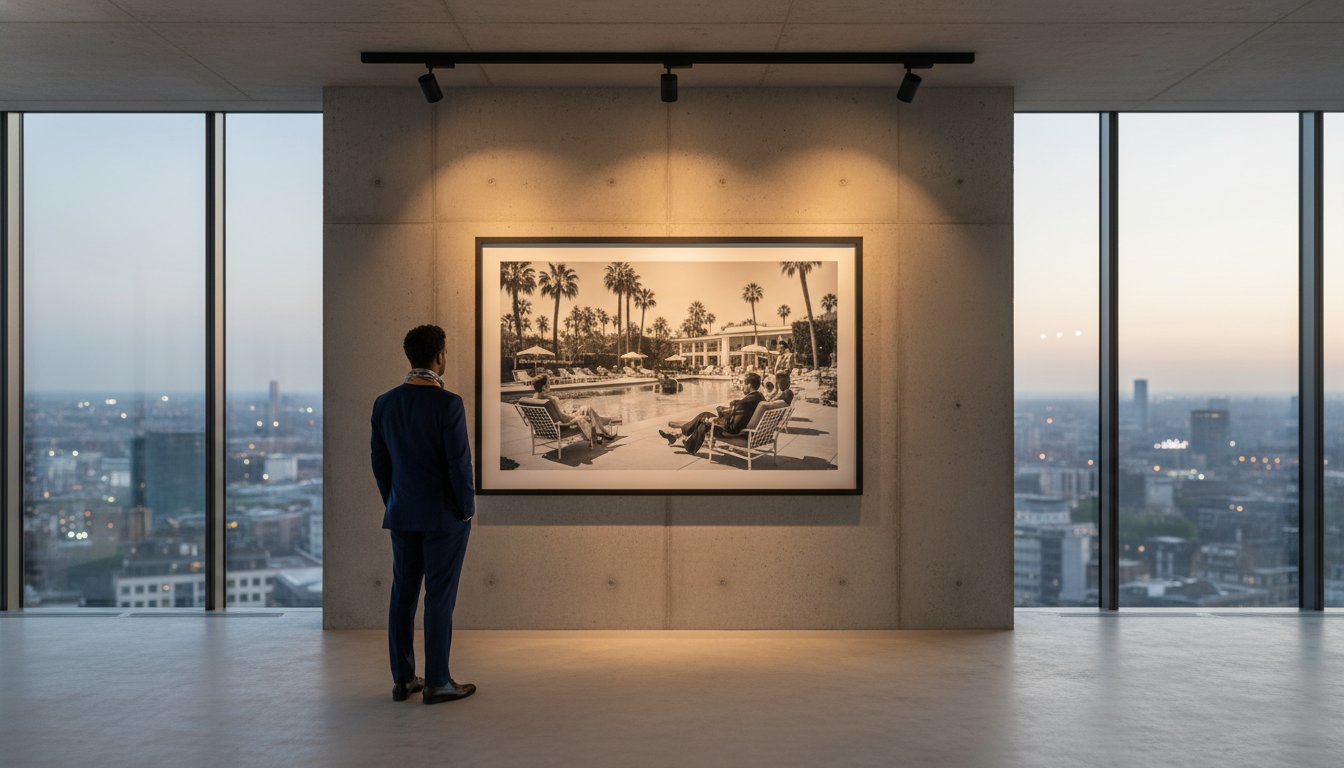
Tag: Art Provenance

15 Essential Questions to Ask When Buying Fine Art: A Collector’s Guide

What if the piece hanging in your gallery is not the timeless heirloom you imagined, but a fading echo of the original work? It’s a silent anxiety that many collectors carry when they step into the world of high-end acquisitions. You want more than just a beautiful image; you want a connection to a bygone era of elegance and a guarantee of technical excellence. Understanding the right questions to ask when buying fine art is the only way to transform that uncertainty into the quiet confidence of a seasoned curator.

You deserve to know that your investment will endure, standing as a testament to both your taste and the artist’s historical importance. Whether you’re drawn to the sun-drenched leisure of the Slim Aarons Collection or the raw energy of Terry O’Neill’s archives, the details of production matter immensely. This expert-led guide provides a masterclass in acquisition, ensuring your next purchase is a sound investment and a visual joy. We’ll explore the nuances of limited editions, the tactile superiority of archival papers, and how bespoke framing serves as a guardian for your piece’s longevity.

Key Takeaways

  • Deepen your connection to the work by uncovering the historical narrative and artist intent that underpin a piece’s long-term significance.
  • Navigate technical specifications with ease by learning the critical questions to ask when buying fine art to ensure museum-grade archival quality.
  • Decipher the complexities of rarity and provenance to confidently distinguish between mass-market reproductions and prestigious limited-edition releases.
  • Protect your investment through an understanding of how bespoke, artisanal framing and acid-free materials prevent long-term environmental degradation.
  • Streamline the acquisition process with a comprehensive checklist of necessary documentation, from archive sourcing to final delivery logistics.

Uncovering the Narrative: Questions About the Artist and Subject

A fine art photograph is rarely just a captured moment of light; it is a frozen narrative, a window into a specific cultural zeitgeist that resonates across generations. When you acquire a piece, you are not merely purchasing paper and ink, but a slice of history. Among the essential questions to ask when buying fine art, those concerning the artist’s intent and the subject’s story are perhaps the most vital for long-term appreciation. Understanding the “why” behind an image transforms it from a decorative object into a significant cultural artifact, directly influencing its enduring value and the prestige it brings to your collection.

Who is the photographer and what is their legacy?

The stature of the artist serves as the foundation of a piece’s historical weight. Before committing to a purchase, inquire about the photographer’s presence in major museum collections and their standing within the art world. A photographer like Terry O’Neill, known for his uniquely candid celebrity portraits, carries a legacy built on intimacy and trust with his subjects. You should also determine the status of the print itself. Is the artist still actively oversighted by the creator, or is this an estate-authorised edition? This distinction is crucial for establishing the provenance and chain of custody, ensuring the work’s authenticity is beyond reproach. A seasoned curator will look for artists who have defined a specific aesthetic, such as the glamorous, mid-century leisure captured in the Slim Aarons: The Definitive Guide to the Master of Aspirational Photography.

What is the specific story behind this image?

Every masterpiece possesses a narrative that adds “conversational value” when shared with guests in your home. Ask about the precise location, the identity of the subjects, and the circumstances of the shoot. Knowledge of these details creates a deeper emotional bond between the collector and the work. Consider the following points when researching the narrative:

  • The Archive Source: Is the work sourced from a prestigious institution like the Getty Images Gallery or the Music Archives?
  • Historical Context: What was happening in the world when this shutter clicked? Does the image represent a turning point in fashion, cinema, or social history?
  • Aspirational Lifestyle: Does the image evoke a specific era of elegance, such as the “attractive people doing attractive things” philosophy of Slim Aarons?

Refining your list of questions to ask when buying fine art to include these narrative elements ensures that your collection is intellectually stimulating. By digging into the story, you move beyond the visual surface and become a true guardian of photographic heritage.

Technical Integrity: Asking About Archival Materials and Longevity

An Archival Fine Art Print is a museum-grade production designed to resist fading for 75+ years. While a casual observer might focus solely on the aesthetic impact of a photograph, a serious collector understands that technical composition determines a work’s permanence. One of the most critical questions to ask when buying fine art involves the chemical stability and material quality of the piece. Student-grade prints, often produced with dye-based inks on acidic paper, can begin to yellow or shift in colour within a single decade. In contrast, professional archives use pigment-based inks that offer superior lightfastness and a depth of tone that remains stable for generations.

What type of paper and ink were used?

Discerning collectors must distinguish between traditional C-type prints, which use a chemical light-sensitive process, and Giclée prints, which utilize high-resolution inkjet technology. Both have merits, but their longevity depends heavily on the substrate. High-quality productions require acid-free, 100% cotton rag or alpha-cellulose papers to prevent the structural breakdown known as yellowing. This commitment to material excellence is a hallmark of Fine Art Photography: A Curator’s Guide to Collecting and Decorating. Authenticating these technical details often goes hand-in-hand with provenance research and ownership history, as a well-documented print usually comes with a clear record of its production standards and technical pedigree.

How should the work be handled before framing?

The tactile experience of a heavy, textured paper signals artisanal quality, yet it also demands meticulous management. High-gloss photographic surfaces are particularly vulnerable to the natural oils on human skin, which can cause permanent staining or “silvering” over time. Collectors should also inquire about “inherent vice,” a term used by conservators to describe the internal degradation of materials. When you’re considering a piece from the Slim Aarons Collection, ensure the gallery uses protective, acid-free sleeves and rigid, reinforced shipping containers to maintain the work’s pristine condition during transit. When you’re evaluating a potential acquisition, these are the technical questions to ask when buying fine art that separate a temporary decoration from a lasting piece of history. These logistical details are just as important as the artistic merit of the photograph itself, ensuring your investment arrives ready for its final presentation.

The allure of a fine art collection lies in its exclusivity and the tangible connection it provides to a specific historical moment. One of the most nuanced questions to ask when buying fine art involves the rarity of the specific print. Whether you’re acquiring a sun-drenched poolside scene or a grit-laden musical portrait, the edition type dictates both the initial price point and the future investment potential. True rarity is often found in the provenance, the documented history that traces a work back to its original negative or a prestigious archive. This chain of custody ensures that the piece you hold is a faithful, authorised representation of the artist’s vision.

For those drawn to the golden age of film, the value of cinema memorabilia presents a unique opportunity. Unlike modern reprints, vintage items like Cinema Lobby Cards: A Collector’s Guide to Hollywood’s Photographic Heritage are finite assets. These cards weren’t just promotional tools; they were artisanal objects produced in limited quantities for theatrical display. Because they were never intended for public sale, their survival today makes them highly sought-after relics of a bygone era. When you’re evaluating such pieces, understanding archival materials and preservation standards is essential to ensure the paper’s integrity hasn’t been compromised by decades of storage.

Is this an open or limited edition?

Collectors must distinguish between the accessibility of open editions and the strictly controlled nature of limited releases. A limited edition print is finite; once the final numbered piece is sold, the edition is closed forever. This scarcity often drives value as demand increases over time. If you’re considering a limited piece, always ask for your specific number, such as 5/50, to confirm its place within the sequence.

Edition Type Characteristics Investment Value
Open Edition Produced without a set limit. High-quality production that remains accessible to new collectors. Primarily decorative with stable value.
Limited Edition Strictly numbered and finite. Often accompanied by higher production oversight. Higher potential for appreciation and resale.

How is the work authenticated?

Authenticity is the cornerstone of any serious acquisition. When refining your questions to ask when buying fine art, focus on the physical markers of validation. A Certificate of Authenticity (COA) should accompany every high-end print, acting as a formal pedigree. For estate-managed collections, look for estate stamps or embossed gallery seals that signify official approval. Sourcing directly from world-class archives, such as Getty Images, provides an additional layer of security. These institutions act as guardians of photographic heritage, ensuring that every print is produced from the original source material rather than a secondary reproduction.

The Final Presentation: Questions on Framing and Conservation

Acquiring a masterpiece is merely the beginning of the collector’s journey. The true longevity of your piece depends heavily on its final presentation. One of the most overlooked questions to ask when buying fine art is how the work will be protected from environmental degradation. Bespoke framing acts as a protective envelope for your investment, shielding the delicate photographic surface from dust, moisture, and physical damage. While off-the-shelf frames might seem convenient, they often contain acidic materials that can cause irreversible harm to high-end prints over time.

Modern conservation relies on advanced glass technology to maintain the visual clarity of the work while preventing damage. UV-protective glass is essential, as it filters out the harmful rays that cause pigment to fade and paper to become brittle. Anti-reflective options further enhance the viewing experience, allowing the deep blacks and intricate details of the image to shine without the distraction of glare. When you’re investing in a piece of photographic heritage, the quality of the housing must match the prestige of the artwork itself.

Is the framing museum-quality and acid-free?

Standard backing boards and mats often contain lignin, which releases acids that lead to “acid burn,” a visible yellowing or browning of the paper edges. Galerie Prints avoids these risks by using professional-grade, acid-free mounting materials that ensure the print remains chemically stable. It’s also vital to ask about reversible mounting techniques. A museum-quality approach ensures that the art can be removed from its frame in the future without any residue or damage to the original paper, preserving its value for the next generation of collectors.

What are the best display conditions for this piece?

Even with superior framing, where you hang your art matters. You should ask about light exposure and humidity control specific to your home’s environment. For instance, The Timeless Allure of Black and White Pictures: A Collector’s Guide highlights how monochromatic tones can be particularly sensitive to direct sunlight. Choosing a frame style that complements both the art and your interior aesthetics is a delicate balance. A well-chosen frame doesn’t just protect; it elevates the narrative of the photograph. To ensure your collection is preserved with artisanal precision, consider utilizing a Bespoke Framing Service that understands the technical demands of fine art photography.

Finalising Your Acquisition: Logistics, Documentation, and Support

The moment of acquisition represents a shift from appreciation to stewardship. This transition requires a meticulous approach to the operational details that underpin a high-end art transaction. Among the final questions to ask when buying fine art, you must address the transparency of the total investment. This includes not just the print itself, but the artisanal framing, international shipping, and any applicable taxes. A specialist gallery provides a level of precision and future valuation support that general marketplaces simply cannot match. By choosing a dedicated institution, you gain a partner who understands the historical weight of the work and remains available for consultation as your collection matures.

What documentation will I receive with the purchase?

Authenticity is verified through a rigorous paper trail. Every acquisition should include a detailed invoice, which serves as a vital record for insurance purposes and future appraisals. Equally essential is the Certificate of Authenticity (COA). This document acts as the piece’s official pedigree, confirming its origin, edition number, and technical specifications. You should store these documents in a secure, acid-free environment separate from the artwork itself. Having this documentation readily available is crucial for future resale or gifting, as it provides the ultimate proof of the work’s legitimacy and provenance.

How is the work insured and shipped?

Transporting a “piece of history” requires more than standard courier services. When you’re finalizing your questions to ask when buying fine art, inquire about the specifics of the crating and insurance. Framed works, especially those with specialized glass, require bespoke wooden crating or reinforced packaging to withstand the rigours of transit. Professional galleries provide comprehensive insurance that covers the work from the moment it leaves the archive until it reaches your door. Real-time tracking allows you to monitor the journey of your new acquisition with peace of mind. This level of care ensures that the technical integrity remains uncompromised until the work is hung in its final location. Explore our curated collections and bespoke framing services at Galerie Prints to begin your journey with a trusted guardian of photographic heritage.

Elevating Your Collection with Curatorial Precision

Mastering the technical and narrative nuances of an acquisition ensures that your chosen work remains a source of visual joy and historical value for generations to come. From verifying archival standards to securing proper provenance, the questions to ask when buying fine art act as your essential roadmap through the elite world of high-end photography. By prioritising material integrity and the historical weight of the archive, you move beyond simple decoration into the realm of true stewardship. It’s a process that rewards the discerning eye with a sense of permanence and prestige.

As official archive partners, we provide a bridge to these legendary moments with the assurance of museum-quality production and technical excellence. Every piece is supported by our expert bespoke framing and worldwide secure shipping, ensuring your investment arrives in pristine condition; it’s ready to transform your interior landscape immediately. Begin your collection with our curated Slim Aarons and Terry O’Neill archives. Your journey into the preservation of photographic heritage is a rewarding pursuit that celebrates both history and timeless elegance.

Frequently Asked Questions

What is the most important question to ask when buying art for the first time?

The most vital inquiry for any nascent collector concerns the archival longevity and the technical pedigree of the work. You should ask about the specific paper and ink used, as these factors determine if the piece will endure for decades or degrade within years. Understanding the archive source, such as the Slim Aarons Collection, provides immediate context regarding the work’s historical significance and future prestige within your personal gallery.

How do I know if a fine art print is worth the investment?

A print’s investment value is dictated by its rarity, the artist’s historical standing, and its documented provenance. Limited edition releases from renowned archives like Terry O’Neill or Getty Images carry more weight than open editions. When considering questions to ask when buying fine art, always inquire about the edition size and the presence of a Certificate of Authenticity. These markers of exclusivity ensure the work remains a finite asset with potential for appreciation.

What is the difference between a Giclée print and a standard poster?

The distinction lies in the technical superiority of the materials and the precision of the production process. A Giclée print utilizes high-resolution inkjet technology and pigment-based inks on acid-free, 100% cotton rag paper. This creates a museum-grade object designed to last 75 years or more. Standard posters are typically mass-produced on thin, acidic paper with dye-based inks, leading to rapid fading and structural yellowing that compromises the visual narrative.

Does the artist’s signature significantly increase the value of a print?

A hand-signed signature from the artist serves as a definitive seal of approval and can substantially elevate a work’s market value. It creates a direct, tactile link between the creator and the piece. For artists who are no longer printing, an estate-authorised stamp or an embossed gallery seal from a trusted archive serves a similar purpose. These markers provide the essential verification that the print meets the rigorous standards set by the artist’s legacy.

How can I verify the provenance of a Slim Aarons print?

Verifying provenance requires tracing the print back to an official source like the Getty Images Gallery archive. As an official partner of the Slim Aarons Collection, we ensure each piece is accompanied by a Certificate of Authenticity or bears the necessary estate markings. You should always look for a clear chain of custody that connects the physical print to the original negative, ensuring you’re acquiring a legitimate piece of photographic history rather than an unauthorized reproduction.

What should I do if I notice damage or fading on my art years later?

If you observe signs of degradation, you should immediately consult a professional conservator who specializes in photographic archives. Fading is often the result of prolonged UV exposure, while yellowing typically indicates the use of non-archival mounting materials. To prevent such issues, we recommend utilizing a bespoke framing service that employs UV-protective glass and acid-free matting. These artisanal methods act as a guardian for your investment, ensuring the work’s permanence in your collection.

Is it better to buy art framed or unframed?

Buying art framed is generally superior for both preservation and immediate aesthetic impact. A professional, bespoke framing service provides a protective envelope that shields the print from environmental hazards during transit and display. While purchasing unframed allows for personal customization, it leaves the delicate surface vulnerable to oils and physical damage. Opting for a ready-to-hang piece ensures that the work is mounted using museum-quality, acid-free materials from the moment it leaves the gallery.

How many prints are typically in a limited edition?

Edition sizes vary significantly depending on the archive and the artist’s intent. Some strictly limited releases might consist of only 10 or 25 prints, while others may extend to 150 or 300. The smaller the edition, the higher the rarity and potential investment value of each individual piece. When refining your questions to ask when buying fine art, always confirm the total edition size and your specific number to understand the work’s place in the market.
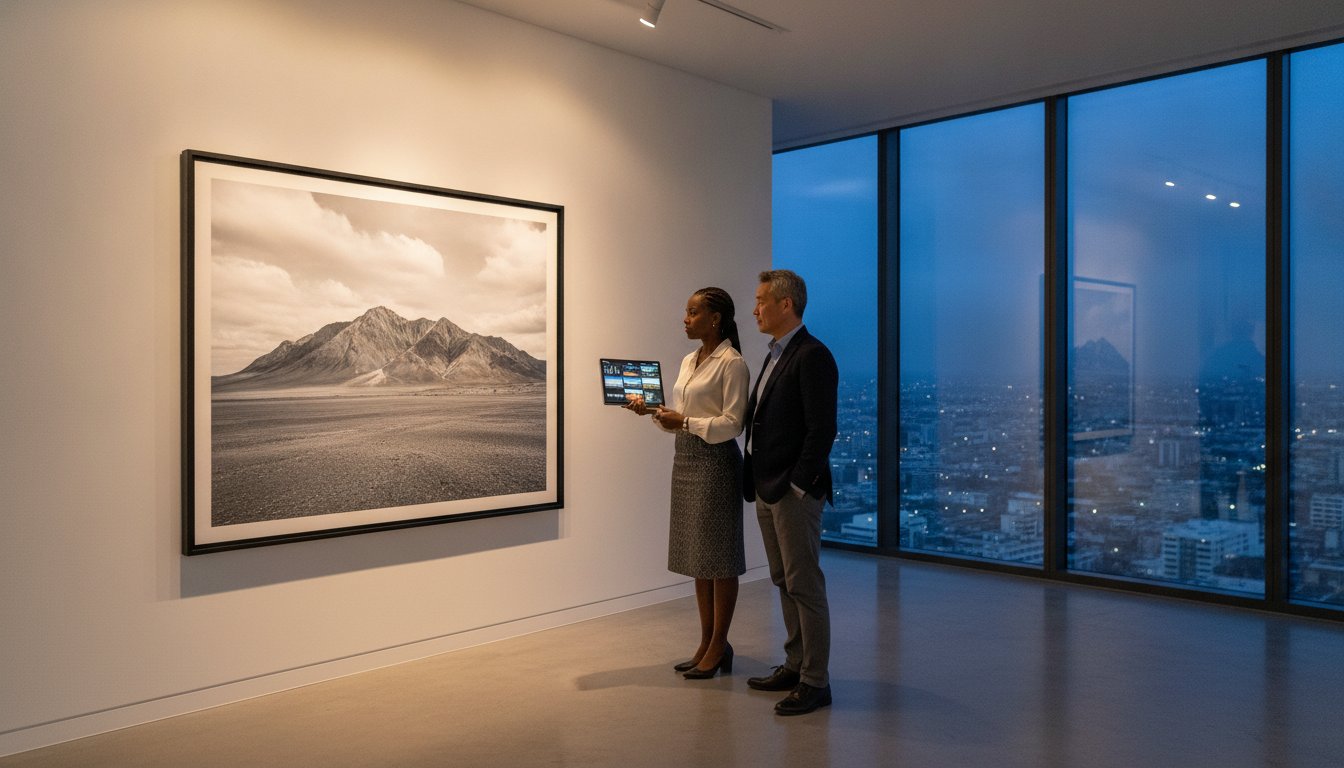
The Connoisseur’s Guide to Insuring Your Fine Art Collection in 2026

The most significant risk to your photographic legacy isn’t a catastrophic event; it’s the quiet erosion of value that occurs when a masterpiece lacks the protection of a specialist policy. For the discerning collector, the process of authenticating fine art photography is only the first step in a stewardship that requires both aesthetic passion and rigorous financial foresight. While many assume a standard homeowner’s policy offers sufficient coverage, these generic agreements often fail to account for the nuanced realities of the art world. They rarely cover the delicate precision required for hanging a large-format Slim Aarons print or the irreplaceable nature of a Terry O’Neill original.

It’s natural to feel a sense of hesitation when navigating the complexities of replacement costs versus market valuations, especially as the global art insurance market is projected to reach nearly 800 billion dollars by 2033. You deserve the absolute peace of mind that comes from knowing your investment is secure against everything from accidental damage to the loss of vital provenance documentation. This guide offers a sophisticated approach to safeguarding your collection in 2026. We’ll provide a clear checklist for documenting your gallery-bought pieces and explain how to integrate specialist insurance into your lifestyle with the same care you’d use to select a bespoke frame.

Key Takeaways

  • Understand why standard property insurance often fails to protect photographic masterpieces and how to identify the sub-limit traps that threaten your investment.
  • Master the meticulous process of authenticating fine art photography to build a robust archive of provenance that satisfies the most rigorous insurance adjusters.
  • Distinguish between scheduled and blanket coverage to create a tailored insurance architecture that reflects the true replacement cost of your collection.
  • Implement preventative stewardship through bespoke framing and archival materials to mitigate physical damage and avoid the complexities of inherent vice exclusions.
  • Leverage the expertise of a professional gallery to ensure your collection’s production methods and historical significance are documented for long-term value retention.

Beyond the Standard Policy: Why Authenticating Fine Art Photography is Essential

The act of authenticating fine art photography is far more than a bureaucratic necessity; it’s the forensic and historical verification of a print’s very origin. It serves as the definitive bridge between a mere image and a piece of photographic heritage. Without this rigorous process of fine art authentication, a collector possesses only a visual record rather than a tangible asset with a verifiable lineage. This verification ensures that every nuance of the artist’s intent, from the specific paper stock to the chemistry of the darkroom, is documented and preserved.

Standard homeowners insurance policies often contain what experts call the sub-limit trap. While your policy might claim to cover personal property up to a high ceiling, it frequently caps “fine arts” at a much lower figure, sometimes as little as $2,500. For a collection featuring limited edition prints from the Slim Aarons Collection or rare Terry O’Neill photography, these limits are woefully inadequate. Unlike mass-produced posters that can be easily replaced, fine art prints require individual scheduling based on their verified status. This ensures that the specific market value of your unique piece is recognized by the insurer before a loss occurs.

A sophisticated policy should also include a Pairs and Sets clause. This is vital for collectors of photographic series or portfolios. If one print in a curated series of three is damaged, the value of the remaining two often plummets because the set’s integrity is broken. A specialist clause ensures the insurer compensates you for the loss of value to the entire set, not just the single damaged item. It’s this level of detail that separates a casual hobbyist from a serious connoisseur.

The Limitations of General Home Insurance

General policies are designed for the replaceable, not the unique. They often exclude specific perils like accidental tearing during hanging or damage caused by environmental fluctuations. Most critically, they operate on Actual Cash Value (ACV), which factors in depreciation. In the art world, you require Agreed Value, a fixed amount determined at the time of the policy’s inception. Imagine a scenario where a burst pipe damages a rare Star Wars Limited Edition Print. A standard policy might offer the price of a modern reprint, ignoring the historical premium of the original edition because the owner neglected the step of authenticating fine art photography during the appraisal process.

Defining Your Collection’s Scope

Distinguishing between simple decorative prints and fine art photography is the first step in professional stewardship. Your scope may include vintage archives, Cinema Lobby Cards, or Music Archives. Each category carries its own risks and valuation nuances. Once a collection reaches a certain financial or historical density, a standalone specialist policy becomes a necessity rather than an option. This transition marks your evolution from a buyer to a true guardian of history, ensuring that your Music Archives or vintage movie posters are protected by a policy that understands their cultural weight.

The Architecture of Valuation: Authenticating Fine Art Photography Through Provenance

Valuation isn’t a static figure; it’s a living narrative built upon the strength of a print’s history. For the collector, the process of authenticating fine art photography begins the moment a piece is acquired, requiring a meticulous assembly of evidence that satisfies both the aesthetic and the legal. A valid insurance claim relies on a robust paper trail, including original gallery invoices and Certificates of Authenticity (COA). These documents serve as the primary defense against the complexities of authenticity and risk management, ensuring that your insurer recognizes the work’s true pedigree rather than viewing it as a generic reproduction.

While a gallery valuation provides an essential baseline of current retail prices, a professional appraiser offers an independent, forensic audit of value. In the fluctuating 2026 market, where luxury sales at houses like Sotheby’s have seen increases of up to 22%, relying on an outdated valuation is a significant risk. We recommend a formal re-valuation every three to five years to account for the 7.022% compound annual growth rate currently seen in the global fine art insurance sector. Acquiring pieces from a reputable source like Galerie Prints simplifies this underwriting process, as our dedication to authenticating fine art photography provides insurers with immediate confidence in the work’s origin.

Establishing Provenance for Photographic Prints

The archive source is the heartbeat of a print’s value. For instance, understanding the lineage of a piece from the Slim Aarons collection is vital, as the connection to original negatives and authorized estates dictates its market standing. You should store physical COAs in a fireproof safe, while maintaining high-resolution digital backups in a secure cloud environment. The presence of an artist’s signature or a low limited edition number acts as a value multiplier, often necessitating a higher premium to reflect the piece’s rarity and increased desirability among global collectors.

Replacement Cost vs. Fair Market Value

Choosing the right valuation method is a strategic decision. Replacement Cost Value (RCV) is typically the preferred choice for contemporary photography, as it covers the cost of acquiring a similar work at current retail prices. Conversely, Fair Market Value (FMV) is used primarily for tax and estate planning, reflecting what a willing buyer would pay a willing seller in an open market. Agreed Value remains the gold standard for high-end collectors, as it guarantees a pre-determined payout that bypasses the friction of depreciation at the time of loss. If you’re looking to expand your holdings with pieces of verified lineage, explore our curated collections of photographic history.

Selecting the appropriate policy structure is a decision as critical as the acquisition itself. Blanket coverage serves as a broad umbrella for collections of moderate value, often setting a total limit for a group of items like vintage movie posters or secondary market finds. While convenient, this approach often lacks the precision required for high-value masterpieces. For the serious connoisseur, scheduled coverage is the only appropriate path. By listing each piece individually, you ensure that the specific nuances of your investment are recognized and protected. This is where the rigor of authenticating fine art photography pays dividends; insurers require verified proof before they’ll commit to an Agreed Value for a specific print.

Active collectors should look for a Newly Acquired Items provision within their policy. This provides a vital grace period, typically 30 to 90 days, where new acquisitions are automatically covered before you formally update your schedule. For high-stakes acquisitions where historical gaps might exist, Title Insurance offers an additional layer of protection against ownership disputes or claims of restitution. These sophisticated policies rely heavily on documentation standards for insurers, which include forensic certificates and detailed purchase histories that confirm the work’s legal standing.

Perhaps the most vital yet overlooked component is the Loss in Value clause. If a piece is damaged and subsequently restored, its market desirability often diminishes despite a perfect physical repair. This clause compensates you for that invisible financial loss, paying the difference between the print’s value before the incident and its value after restoration. It ensures that the financial integrity of your collection remains intact, even when the physical work has been compromised.

Scheduled Personal Property Endorsements

Adding a specific Terry O’Neill or Slim Aarons print to your policy requires more than just a receipt. Specialist underwriters often ask for high-resolution photography of the item in situ to verify its condition and the security of its display. One of the primary benefits of scheduling is the removal of deductibles. If a loss occurs, you receive the full agreed amount without out-of-pocket friction. This clear, direct arrangement provides the total peace of mind that a standard policy simply cannot match.

Understanding the Exclusions

Even the most comprehensive policy has boundaries you must understand. Inherent vice, which refers to the natural degradation of materials over time, is a standard exclusion. Similarly, environmental damage from UV exposure or humidity isn’t covered if it’s deemed a result of poor stewardship rather than a sudden accident. This makes the Transit clause essential. It extends protection while your work is moving between residences or visiting a specialist for a Bespoke Framing Service, ensuring that the process of authenticating fine art photography is matched by equally rigorous physical protection during every stage of its journey.

Stewardship Through Display: How Bespoke Framing Mitigates Physical and Financial Risk

The most effective insurance strategy is the one that prevents a claim from ever being filed. In the sophisticated world of art ownership, stewardship is a physical responsibility that directly impacts your financial standing. Insurers frequently include an Inherent Vice exclusion in their contracts, which means they won’t pay for damage caused by the natural qualities of the materials themselves or their gradual deterioration. By utilizing archival preservation techniques, you effectively remove the insurer’s ability to cite neglect as a reason for a denied claim. While authenticating fine art photography establishes the work’s historical value, bespoke framing secures its physical future against the invisible threats of the domestic environment.

Collectors who demonstrate a commitment to high-security and climate-controlled environments often find themselves in a stronger position when negotiating specialist insurance premiums. Underwriters view professional installation and museum-grade housing as evidence of a lower risk profile. A print that’s secured with security fittings and protected by archival barriers is less likely to suffer the accidental fall or environmental shock that leads to a complex loss in value claim. This proactive approach transforms your home from a simple living space into a private gallery that meets the rigorous standards of global insurers.

The Role of Bespoke Framing in Risk Mitigation

Bespoke framing is the first line of defense for delicate emulsions. UV-protective glass is essential to prevent the irreversible fading that can haunt black and white pictures, where the depth of the blacks is central to the work’s value. Archival mounting ensures that the print isn’t in direct contact with acidic materials that cause yellowing or “foxing” over time. Our Bespoke Framing Service at Galerie Prints is designed to meet these exact curatorial requirements, providing a level of protection that satisfies even the most discerning specialist underwriters. Choosing professional mounting over a DIY solution isn’t just an aesthetic choice; it’s a vital step in authenticating fine art photography as a permanent asset in your collection.

Climate Control and Lighting Standards

Light is a constant threat to photographic heritage. To prevent gradual fading, delicate photographic emulsions should ideally be exposed to no more than 50 lux in display areas. Humidity is another critical factor; fluctuations can lead to cockling, a wavy distortion of the paper that insurers may classify as a maintenance issue rather than a covered loss. Maintaining a stable relative humidity between 40% and 50% is the industry standard for preserving the structural integrity of your prints. The ideal temperature range for preserving archival photographic prints is consistently between 18 and 20 degrees Celsius. To ensure your collection remains in pristine, insurable condition, consider our Bespoke Framing Service for your next acquisition.

A Legacy Preserved: How Galerie Prints Supports Your Curatorial Journey

Galerie Prints operates with the understanding that we aren’t merely providing decor; we’re acting as guardians of a shared photographic heritage. Our relationship with a collector doesn’t end when a piece leaves the gallery. Instead, we view ourselves as partners in a lifelong journey of stewardship. By employing meticulous archival production methods, we ensure that the physical integrity of your collection remains as steadfast as its historical significance. This commitment to technical excellence is what allows your investment to retain and grow its value over decades, providing the necessary material proof that underwriters require when authenticating fine art photography for a premium policy.

From Acquisition to Protection

The foundation of any robust insurance schedule is the quality of the documentation provided at the point of sale. Our detailed invoicing and provenance records provide an immediate, authoritative basis for authenticating fine art photography within your broader portfolio. Buying from an established gallery ensures you possess a marketable title, a critical factor in 2026 as regulatory scrutiny around art market integrity increases. With luxury auction sales showing significant upward trends, it’s a prudent time to review your current collection’s values against the latest market data to ensure your coverage hasn’t been outpaced by appreciation. This proactive review is a hallmark of the discerning collector.

Curating with Confidence

Explore our curated collections and bespoke framing services to build a protected legacy.

Securing Your Photographic Heritage for the Next Generation

The transition from acquiring a masterpiece to truly safeguarding its history requires a shift in perspective. You’ve seen that standard homeowners policies often fall short of protecting high-value works and that the meticulous process of authenticating fine art photography is your strongest defense against future market volatility. By prioritizing scheduled coverage and curatorial stewardship, you ensure that your collection remains a stable, protected legacy rather than a vulnerable asset. This journey of ownership is defined by the care you take in the present to preserve the stories of the past.

As specialists in high-end photographic archives, we’re dedicated to providing the foundational provenance and technical excellence that discerning collectors require. Our professional bespoke framing service adheres to the most rigorous archival standards, while our global shipping utilizes secure transit protocols to ensure your investment arrives in pristine condition. We invite you to continue your curatorial journey with the confidence that comes from expert support and a shared reverence for the art.

Explore our curated collections and bespoke framing services to build a protected legacy.

Frequently Asked Questions

Does my homeowner’s insurance cover my art collection if I move house?

Standard homeowners policies rarely provide adequate coverage during a move. Most generic agreements exclude damage sustained during transit or when the work is away from the primary residence. A specialist policy includes a specific Transit clause, ensuring your Slim Aarons prints or Star Wars Limited Edition Prints are protected from the moment they leave the wall until they are professionally reinstalled in your new home.

How often should I have my fine art photography collection appraised?

You should have your collection appraised every three to five years to reflect current market dynamics. With the global fine art insurance market projected to grow at a compound annual rate of 7.022% through 2033, stagnant valuations leave you dangerously underinsured. Regular updates ensure your coverage keeps pace with the rising prestige of artists in the Music Archives or the Terry O’Neill Photography collection.

What is a Loss in Value clause and why is it important for art?

A Loss in Value clause compensates you for the diminished market desirability of a piece after it’s been professionally restored. Even a perfect physical repair can reduce a print’s resale price compared to its original, pristine state. This clause is essential for high-caliber investments, as it pays the difference between the pre-damage valuation and the post-restoration market value.

Are limited edition prints insured for their purchase price or current market value?

High-end collectors should insure limited edition prints for their current market value through an Agreed Value policy. While purchase price reflects the initial transaction, the process of authenticating fine art photography often reveals a significant appreciation in value over time. Agreed Value bypasses the friction of depreciation, ensuring you receive a pre-determined payout that reflects the work’s contemporary retail replacement cost.

Can I insure my art against damage caused by sunlight or humidity?

Most insurers exclude damage caused by gradual environmental exposure, classifying it as a maintenance issue or inherent vice. While a sudden accident like a burst pipe might be covered, fading from sunlight or cockling from humidity is typically not. This highlights the importance of preventative stewardship through archival mounting and UV-protective glass provided by a professional Bespoke Framing Service.

Do I need a separate policy for my cinema lobby cards and vintage posters?

While they don’t necessarily require a separate policy, items like cinema lobby cards and vintage movie posters should be individually scheduled on your fine art endorsement. Grouping them under a general blanket limit often results in insufficient payouts if the entire collection is lost. Scheduling ensures that the unique historical significance and rarity of each piece are recognized by the underwriter.

What documentation do I need to file a successful art insurance claim?

A successful claim requires a comprehensive archive of provenance, including original gallery invoices and Certificates of Authenticity. You must also provide high-resolution photography of the items in situ and evidence of authenticating fine art photography through professional channels. This documentation serves as forensic proof of the work’s condition and origin, leaving no room for dispute during the adjustment process.

Is it cheaper to insure art through a specialized provider or a rider on my home policy?

While a home policy rider may appear more cost-effective, a specialized provider often offers superior value through broader coverage and zero deductibles. Specialized policies are designed for the unique risks of the art world, such as title disputes or restoration costs. They provide a level of expertise and financial stability that generic insurance companies simply cannot match for a high-end collection.

Certificate of Authenticity in Photography: The Collector’s Definitive Guide

An exquisite silver gelatin print holds its value not just through the light captured on the paper, but through the paper that follows it. In the discerning world of fine art collecting, a certificate of authenticity photography is the only definitive barrier between a lasting investment-grade asset and a mere decorative reproduction. Sotheby’s 2023 photography sales data confirms this reality, where works with impeccable provenance and verified documentation consistently commanded premiums of 25 percent or more over those with incomplete histories. You understand that true luxury lies in the archival details that ensure permanence.

It’s natural to feel a sense of trepidation when distinguishing between a rare limited edition and an unauthorized copy, especially when the visual differences are nearly imperceptible. This guide provides you with the curatorial expertise needed to identify a valid certificate of authenticity photography, ensuring your collection remains a verifiable piece of history. We’ll explore the legal weight of these documents, the nuances of editioning, and the precise archival methods required to preserve your artwork’s provenance for generations to come.

Key Takeaways

  • Understand why a certificate of authenticity photography is the essential legal anchor that transforms a reproducible print into a secure, investment-grade asset.
  • Identify the critical technical specifications and archival data points required to ensure your artwork maintains its prestige and value for future appraisals.
  • Learn how to establish a clear line of provenance, tracking the “biography” of your print from its origins in the darkroom to its place in your collection.
  • Master the professional protocol for performing due diligence, ensuring your documentation perfectly aligns with the physical markings on the artwork.
  • Discover how world-class curation and hand-printing traditions preserve the historical legacy and tactile excellence of the world’s finest photography.

The Silent Guarantor: What is a Certificate of Authenticity in Photography?

A photograph begins its life as a fleeting moment of light captured on film, but it becomes a lasting legacy through the rigour of its documentation. A Certificate of Authenticity (COA) acts as the formal bridge between an artist’s creative intent and a collector’s tangible investment. It’s a definitive declaration that the work is exactly what it claims to be, signed by the hand that created it or the estate that protects it. In a medium that’s inherently reproducible, a certificate of authenticity photography document is the only thing that separates a masterpiece from a mere copy.

The Role of Documentation in the Fine Art Market

Since the market shift in the late 1970s, photography has evolved from a disposable press image into a prestigious, investment-grade asset. This evolution was made possible by a verifiable paper trail. Rigorous documentation prevents the global art market from being flooded with unauthorized “estate” copies that lack the artist’s original vision. At Galerie Prints, we understand that the world’s finest photography relies on this provenance. Whether it’s an iconic Slim Aarons scene or a silver gelatin print hand-printed in our London darkroom, the certificate ensures the work remains a protected piece of photographic history.

Limited Edition vs. Open Edition Certificates

The distinction between edition types is a fundamental aspect of a print’s value. A limited edition certificate acts as a “contract of scarcity,” legally guaranteeing that only a set number of prints, perhaps 25 or 50, will ever be produced from that negative. This rarity is what auction houses like Christie’s demand when assessing long-term resale value. Open edition certificates, while not claiming rarity, are equally vital. They verify the bespoke quality of the production and the archival integrity of the materials used. Both documents serve as a seal of quality, ensuring the collector that their investment meets the exacting standards of a professional gallery.

The Anatomy of Authority: What a Valid COA Must Include

A valid certificate of authenticity photography document functions as a legal anchor, securing the artwork’s provenance and long-term market value. It isn’t merely a receipt; it’s a technical dossier that survives the artist. For a print to hold its prestige over decades, the document must detail the exact chemistry of its creation. Appraisers in 2024 look for specific archival markers, such as the use of silver gelatin processes or specific 300gsm cotton rag papers, as these details determine how a piece will age and its eventual restoration needs.

Security features provide the first line of defense against the proliferation of unauthorized reproductions. High-end certificates often utilize deckle-edged archival paper, embossed gallery seals, or serialized holographic stickers that link the document directly to the back of the frame. According to a complete guide to Certificates of Authenticity, including a high-resolution thumbnail of the image on the COA itself prevents the document from being separated from the specific print it validates. These tamper-resistant elements ensure the artwork’s story remains intact as it moves through private collections.

Essential Information for Every Photography Certificate

Precision is the hallmark of a professional gallery. Every certificate must clearly state the artist’s full name and the work’s title to avoid any ambiguity in the secondary market. A critical distinction often overlooked by novice collectors is the date of the original negative compared to the date the specific print was struck. A Slim Aarons negative from 1955 printed in 2023 carries different historical weight than a vintage print from the mid-century. A valid document will list:

  • The edition number (e.g., 7/50) and the total count of Artist Proofs (APs) in existence, which typically shouldn’t exceed 10% of the main edition.
  • Detailed physical dimensions of the image area and the specific paper size.
  • A description of the archival medium, such as hand-printed silver gelatin from a London darkroom or a bespoke C-type print.

The Legal and Ethical Weight of a Signature

The “wet signature” remains the gold standard in the art world. When an artist signs a COA, they’re personally vouching for the quality and exclusivity of the work. For deceased photographers, an estate-authorized stamp or the signature of a family member provides the necessary continuity of heritage. An authorized representative is the legal entity permitted to vouch for a deceased photographer’s archive.

The reputation of the issuing gallery serves as a secondary layer of trust, acting as a guardian of the artist’s legacy. Collectors look for established names that have curated the world’s finest photography for years, as the gallery’s brand adds a layer of institutional validation. If you’re looking to acquire a piece of history, you can explore certified limited editions that adhere to these rigorous archival standards. This professional oversight ensures that the investment you make today remains a stable asset for future generations.

Provenance: The Pedigree of Archival Photography

Provenance acts as the definitive biography of a photographic print, tracing its journey from the silver gelatin chemistry of the darkroom to the curated walls of a private collection. It’s the historical thread that binds an image to its creator. In the world of high-end collecting, a certificate of authenticity photography serves as the birth certificate of the artwork. This document is the first and most critical entry in a work’s ownership history, establishing a chain of custody that ensures the piece is a genuine artifact rather than a modern reproduction.

For prestigious archival collections, such as the Slim Aarons archive, value is inextricably linked to central registries and official documentation. When a print enters the secondary market, the absence of this paperwork is catastrophic for its valuation. Market data from major auction houses indicates that losing a certificate can diminish an artwork’s value by 30% to 50%. Collectors don’t just pay for the image; they invest in the verified legacy that the documentation protects.

Tracing the Heritage of Iconic Archives

Prints originating from the Getty Images Gallery or the Terry O’Neill archives are tracked with clinical precision. These works often feature an “Archive Stamp” on the reverse, which acts as a physical seal of quality that corresponds directly to the COA. This meticulous tracking links the physical object to the historical narrative of fine art photography. It proves the print was produced from the original negative under authorized supervision, maintaining the integrity of the artist’s vision and the technical superiority of the printing process.

Why Provenance Matters for Resale and Insurance

Establishing a “clean title” is a prerequisite for any serious art transaction. Auction houses and elite galleries won’t touch a work that lacks a clear line of descent. The certificate of authenticity photography provides the foundational proof needed to satisfy these rigorous vetting processes. Beyond resale, documentation is vital for art insurance. Insurers require precise records to verify the replacement value of high-end collections. Collectors should follow these best practices to maintain their investment:

  • Store the original COA in a fireproof safe, separate from the artwork itself.
  • Keep a digital log of all previous owners and gallery exhibition history.
  • Retain original purchase invoices from authorized dealers like Galerie Prints.
  • Ensure any archive stamps on the back of the frame remain visible or are photographed before final mounting.

By maintaining these records, a collector transforms a beautiful image into a documented asset. This level of detail provides the peace of mind that comes with owning a true piece of photographic history, hand-printed and officially sanctioned.

A Collector’s Protocol: How to Verify and Protect Your Documentation

Owning a piece of photographic history requires more than aesthetic appreciation; it demands a disciplined approach to due diligence. When a new acquisition arrives from a London darkroom or a prestigious gallery, the certificate of authenticity photography serves as the legal and historical anchor of your investment. Verifying this document immediately ensures its provenance remains untarnished for decades to come. It’s the first step in transitioning from a casual buyer to a serious steward of art.

Verification Steps for New Acquisitions

The process begins with a tactile and visual inspection of the print. You should look for an embossed gallery seal or a pencil-signed edition number on the lower border or verso; these physical marks must align perfectly with the details stated on your certificate. High-end prints often feature specific metadata, such as the exact paper type—perhaps a heavy-weight silver gelatin or a specific Hahnemühle stock—and the date of the print’s creation. Cross-reference these details with the gallery’s published archive records to confirm consistency. For absolute certainty, contact the issuing gallery to verify the certificate’s unique serial number against their master ledger. This simple act of confirmation protects you against the risk of sophisticated reproductions that lack official sanction.

Preserving the Paperwork for Posterity

The physical health of your documentation is as vital as the print’s condition. You must store original certificates in acid-free, archival-quality sleeves to prevent yellowing or chemical migration over time. A frequent mistake is taping a COA directly to the back of a print or its mounting board. This causes permanent archival damage through adhesive staining and off-gassing. Instead, a bespoke framing service can create a dedicated ‘certificate pocket’ on the dust cover at the back of the frame. This keeps the paperwork with the art without risking direct contact with the print itself.

Collectors often debate whether to keep the COA in a fireproof safe or attached to the frame. While a safe offers maximum protection against environmental disasters, keeping it in a frame pocket ensures the document isn’t separated from the artwork during a future sale or estate transfer. Many modern collectors now supplement their physical paper with digital registries or blockchain-based records. These provide a permanent, tamper-proof digital twin of your certificate of authenticity photography, acting as a secondary layer of security should the physical document ever be misplaced. This hybrid approach of physical and digital records represents the gold standard in contemporary art collection management.

Ensure your collection is preserved with the highest archival standards.

Discover our bespoke framing and curation services

The Galerie Prints Standard: Ensuring the Legacy of the World’s Finest Photography

Galerie Prints operates as more than a premier retailer; we’re custodians of photographic history. Our curation process is rigorous, selecting only the most evocative imagery from world-renowned archives to ensure every piece resonates with historical significance and aesthetic brilliance. Central to this mission is our London-based darkroom. In this space, hand-printing traditions remain a priority, allowing us to produce works that maintain the absolute integrity of original negatives. Whether it’s a silver gelatin masterpiece or a vibrant C-type print, the craftsmanship is palpable in every grain.

Acquiring a certificate of authenticity photography collectors can trust is the final, vital step in securing a legacy piece. We don’t just ship art; we deliver a documented history. This commitment extends to every corner of our collection, ensuring that the glamour of the past is preserved with the technical precision of the present.

Craftsmanship and Curation in our London Gallery

The moment you handle a Galerie Prints document, the quality is evident. Each certificate is printed on premium, heavy-weight stock that mirrors the archival nature of the art itself. It’s a tactile experience designed to match the prestige of the photograph it accompanies. By maintaining direct, long-standing relationships with the world’s most prestigious archives, we ensure the provenance of every Slim Aarons and estate-stamped work is beyond reproach. Our certificates are issued as a permanent record of the print’s archival production.

Investing with Confidence at Galerie Prints

Purchasing from a leading London gallery provides the peace of mind that comes from a silent guarantor. This quiet authority acts as a safeguard, ensuring your investment remains protected for decades to come. We believe the journey of a photograph doesn’t end when the shutter clicks or the print dries. It ends when the piece is safely displayed in its new home.

Our bespoke framing options are engineered to seal the deal for both protection and authenticity. We use museum-grade materials that shield the print from environmental degradation while providing a secure way to house the accompanying certificate of authenticity photography. By integrating the documentation with the final presentation, we ensure that the story of the print stays with the print. This holistic approach is why we’re trusted by discerning collectors worldwide to provide the world’s finest photography.

Securing Your Legacy in Light and Paper

Investing in fine art photography is more than an aesthetic choice; it’s an act of cultural preservation. A rigorous certificate of authenticity photography serves as the definitive bridge between a physical print and its historical origin, transforming a beautiful image into a documented asset with verified provenance. By insisting on detailed documentation and archival standards, you ensure that the narrative of your collection remains intact for decades to come.

At Galerie Prints, we honor this commitment to excellence as official partners of the Slim Aarons and Getty Images archives. Every piece we offer is hand-printed in our London darkroom using traditional techniques that respect the artist’s original vision. To further protect your investment, we include bespoke museum-quality framing with each acquisition, ensuring your piece arrives ready to be showcased. You’re not just buying a print; you’re becoming a custodian of a timeless moment. Start your journey into the world of high-end collecting with confidence and grace.

Discover the World’s Finest Photography and Secure Your Collection Today

Frequently Asked Questions

Is a Certificate of Authenticity legally binding?

A Certificate of Authenticity serves as a legally binding document in 50 US states, functioning as a warranty of the work’s origin under the Uniform Commercial Code. In the United Kingdom, it falls under the Sale of Goods Act 1979 as a formal declaration of a product’s description. It represents a professional commitment from the gallery that the print is a genuine article. If a work is later proven to be a forgery, this document provides the essential legal basis for a claim of misrepresentation.

What should I do if I lose my Certificate of Authenticity?

You should immediately contact the issuing gallery or the artist’s estate to request a replacement if your document is misplaced. Most reputable institutions, including those managing the Slim Aarons archive, maintain meticulous digital records of every transaction and edition number. While a replacement may be issued, it’s often marked as a duplicate to maintain the integrity of the original provenance chain. Keeping a digital scan in a secure cloud storage remains a prudent secondary measure for any collector.

Does a COA guarantee that a photograph will increase in value?

A certificate of authenticity photography does not guarantee a financial return, but it’s vital for maintaining the work’s marketability. According to the Artnet 2023 Intelligence Report, documented provenance is a primary driver of confidence in the secondary market. While the COA protects the print’s status as a genuine archival silver gelatin work, the actual appreciation depends on the artist’s reputation and broader market trends. Without it, a print’s valuation can drop by 50% or more at auction.

Can a gallery issue a COA for a print they didn’t originally sell?

A gallery typically can’t issue a new COA for a work they didn’t produce unless they’ve been appointed as the official representative of the artist’s estate. For instance, the Getty Images Gallery acts as the authoritative source for specific historical archives. If you possess a print without documentation, you must seek a professional appraisal or authentication from a recognized expert like Barbara Cianelli. These specialists evaluate the technical nuances of the 20th-century printing process to verify the work’s origins.

Is a digital COA or blockchain record better than a paper one?

Digital records offer a superior level of security against tampering, especially since the 2014 emergence of art-specific blockchain ledgers. However, in the realm of fine art photography, many collectors still prefer a physical, hand-signed document that accompanies the archival print. A dual approach is often best. The physical document provides a tactile connection to the work, while a digital record ensures the provenance remains intact even if the paper is destroyed by fire or flood.

What is the difference between an artist’s signature and a COA?

An artist’s signature is a direct mark of hand on the print, whereas a COA is a comprehensive secondary document detailing the edition size and paper type. While a signature on a bespoke silver gelatin print is highly desirable, the COA provides the technical metadata required by insurers and auction houses. Since the 1970s, the inclusion of both has become the gold standard for collectors. It ensures that the specific history of the piece is preserved alongside the artist’s personal touch.

Do all fine art photographs come with a certificate?

Not every fine art photograph includes a COA, particularly those produced before the formalization of the photography market in the late 20th century. Vintage prints from the 1950s often rely on studio stamps or signatures for authentication instead. However, for 95% of contemporary acquisitions of the world’s finest photography, a certificate is a standard expectation. It confirms the work was hand-printed from the original negative and meets the rigorous standards of modern archival preservation.

Can I get a COA for a vintage movie poster or lobby card?

You can obtain a COA for vintage cinema ephemera through specialized third-party authentication services like James Spence Authentication (JSA). These organizations evaluate the paper stock, printing methods, and ink degradation to verify a poster’s 1940s or 1950s origin. While different from a gallery-issued certificate for a fine art print, these documents are vital for establishing the authenticity of iconic Hollywood memorabilia. They provide the necessary confidence for collectors looking to invest in these rare pieces of cinematic history.

Investing in Fine Art Photography 2026: The Collector’s Guide to Timeless Assets

A digital file can be duplicated a million times in a second, yet a single silver gelatin print hand-stamped in a London darkroom remains a finite, physical anchor in an increasingly volatile market. You likely recognize that while the allure of contemporary imagery is vast, the risk of acquiring overproduced, ephemeral works has never been higher for the discerning collector. In an era where high-end photography sales have shown remarkable resilience through the 2024 fiscal year, your focus must remain on authenticity. This guide ensures your journey into investing in fine art photography 2026 results in a collection that balances the sun-drenched nostalgia of a Slim Aarons poolside with the rigorous archival standards required for long-term capital growth.

We’ll examine the critical distinctions between artisan darkroom craftsmanship and modern digital output, the essential role of verified provenance, and how to identify the blue-chip assets that define the world’s finest photography. You’ll gain the expert-level knowledge needed to distinguish a mass-market reproduction from a bespoke, museum-quality asset. By the end of this exploration, you’ll possess a clear roadmap for curating a portfolio that offers both profound aesthetic pleasure and enduring value for your home and your legacy.

Key Takeaways

  • Gain a strategic advantage by understanding why photography is outpacing traditional mediums and how to navigate the nuances of investing in fine art photography 2026.
  • Learn to identify the “Darkroom Premium” and why hand-printed silver gelatin works from prestigious archives command superior long-term value.
  • Discover how to select blue-chip artists like Slim Aarons and Terry O’Neill to anchor a portfolio that balances historical provenance with modern luxury.
  • Explore the “Living Collection” philosophy to build a diversified archive that offers both profound aesthetic pleasure and enduring capital appreciation.
  • Understand the critical importance of provenance and how sourcing through curated gallery relationships protects the integrity of your photographic legacy.

The State of Fine Art Photography Investment in 2026

The art market has shifted decisively as we enter 2026. While traditional oils once dominated mid-market portfolios, high-end photographic prints have claimed center stage, frequently outperforming paintings in the $10,000 to $50,000 bracket. This trend reflects a broader cultural pivot toward “Tangible Heritage.” In an era defined by ephemeral digital assets, collectors are seeking the undeniable weight of physical history. They crave pieces born from a darkroom rather than a server.

When we consider What is Fine Art Photography? in the context of a 2026 portfolio, we define “Investment Grade” through scarcity, sustained demand, and cultural relevance. Investing in fine art photography 2026 requires an eye for the “Curated Archive,” where private collectors prioritize works with impeccable provenance and technical excellence. At Galerie Prints, we see this manifest in the enduring allure of the silver gelatin process, where light and chemistry create a permanence that pixels cannot replicate. It’s about owning a bridge to the golden age of glamour, a tactile piece of the past that remains vibrant and relevant.

The 2026 Market Shift: From Speculation to Stability

Photography has emerged as a robust hedge against inflation; 20th-century masters have shown a consistent 7 percent annual appreciation over the last decade. A new wave of Millennial and Gen Z collectors, representing 42 percent of high-end buyers in 2025, has revitalized the market. These investors favor the Slim Aarons lifestyle, seeking iconic imagery that captures a lost world of leisure. The gold standard remains the 20th-century archive, where limited editions from original negatives provide a finite supply that resists market volatility. This stability is the result of a move away from speculative “hype” toward established historical significance.

Photography vs. Other Asset Classes

Comparing asset classes reveals that photography offers superior liquidity compared to original paintings, primarily due to a more active secondary market for established editions. It serves as an accessible luxury, allowing entry into the world’s finest photography at a fraction of the cost of a museum-grade oil painting. Beyond the financial metrics, these works provide a daily aesthetic dividend. Living with a bespoke print, hand-printed in our London darkroom, offers a tactile connection to history that stocks or bonds lack. This fusion of financial prudence and visual prestige makes investing in fine art photography 2026 a cornerstone of a sophisticated collection.

Provenance and Production: What Drives Value in a Photographic Print?

The market for investing in fine art photography 2026 rests on the tangible physical history of the print itself. A photograph’s value isn’t merely found in the image, but in its “objecthood.” Collectors categorize works into a strict hierarchy that dictates long-term appreciation. Vintage prints, those created by the photographer or under their direct supervision within roughly five years of the original negative, sit at the apex. Modern prints follow, produced during the artist’s lifetime but perhaps decades after the image was captured. Finally, Estate editions, authorized by the artist’s heirs and marked with an official Estate Stamp or authorized archive signature, provide a vital entry point for those seeking iconic imagery with a verified pedigree.

Authenticity is the currency of the art world. When you’re evaluating a potential acquisition, the presence of a hand-signed signature or a blind-stamped seal from a prestigious archive acts as a legal and aesthetic anchor. These markers ensure that the work adheres to the artist’s original vision and production standards. Without this documented provenance, even the most striking image loses its status as a financial asset.

The Science of the Silver Gelatin Print

At the heart of high-value collecting is the silver gelatin process. This traditional method, which rose to prominence in 1871, involves coating fiber-based paper with an emulsion of light-sensitive silver salts. Unlike digital inkjet prints that sit on the surface, silver gelatin images are embedded within the paper fibers. This creates a three-dimensional depth in the blacks and a luminous quality in the highlights that digital alternatives struggle to replicate.

Collectors are increasingly prioritizing these darkroom works because of their extraordinary archival lifespan, often exceeding 100 years when stored correctly. To identify a hand-printed work, look for the subtle texture of the fiber-based paper and the rich, neutral tonality that defines the “Darkroom Premium.” This artisanal approach ensures that each print is a unique artifact rather than a mass-produced copy.

The Role of Bespoke Framing in Preservation

Preservation is an active component of investing in fine art photography 2026. A print’s condition is a primary driver of its resale price; even minor foxing or light-staining can devalue a work by 30% or more. This is why bespoke, museum-grade framing is non-negotiable. Off-the-shelf frames often utilize acidic backing boards and standard glass that allow 100% of harmful UV rays to penetrate the print, leading to irreversible fading and brittleness.

We emphasize London-based craftsmanship to ensure every investment piece is protected by acid-free mounting and 99% UV-protective glass. This meticulous attention to detail shields the silver emulsion from environmental degradation. For those looking to build a resilient portfolio, selecting works that have been handled with this level of curatorial care is essential. You can explore our curated guide to collecting to understand how these production standards safeguard the world’s finest photography.

From Slim Aarons to Terry O’Neill: Identifying Blue-Chip Photography

Blue-chip photography represents the gold standard of the art market. It’s defined by a consistent track record of auction success and a permanent presence in prestigious museum collections. When you’re investing in fine art photography 2026, these established names provide the security of a tangible asset with proven longevity. Their work transcends mere decoration; it acts as a store of value that has historically shown resilience against market volatility. A blue-chip acquisition is a commitment to a legacy, a piece of history that continues to speak to new generations of collectors.

The Slim Aarons Phenomenon

Slim Aarons remains the ultimate investment in aspirational art. His “attractive people doing attractive things in attractive places” mantra resonates more deeply than ever in the luxury interiors of 2026. The scarcity of authorized Getty Images Gallery prints ensures that supply remains controlled while demand from global collectors continues to climb. Iconic works like “Poolside Gossip,” captured in 1970, have seen a steady appreciation in value over the last decade. Owning an archival print from the original negative isn’t just a design choice. It’s a stake in a specific, sun-drenched heritage that won’t ever go out of style. The world’s finest photography often finds its peak in these moments of captured leisure.

Masters of the Monochrome: Black and White Icons

The investment stability of black and white pictures offers a different kind of prestige. Terry O’Neill’s portraits of the “Swinging Sixties” are essential for serious portfolios because they capture the precise moment when celebrity culture was born. His 1977 portrait of Faye Dunaway at the Beverly Hills Hotel remains one of the most sought-after silver gelatin prints in the secondary market. These works possess a sculptural value, where the play of light and shadow creates a timeless aesthetic. When investing in fine art photography 2026, collectors often look for these monochrome anchors. They provide a sophisticated foundation for any collection, especially when hand-printed in our London darkroom to ensure the highest archival quality.

Identifying the blue-chips of tomorrow requires a discerning eye for cultural shifts. To find future icons, look for these key indicators:

  • Museum Acquisitions: Artists whose work has been purchased by institutions like the Tate or MoMA in the last 24 months.
  • Limited Edition Integrity: Photographers who maintain strict edition sizes, preventing market saturation.
  • Technique and Craftsmanship: A return to traditional processes, such as platinum-palladium or bespoke silver gelatin printing, which adds intrinsic value.
  • Historical Context: Images that define a specific era or social movement, much like O’Neill did for the 1960s.

The transition from a contemporary artist to a blue-chip staple is often marked by a solo exhibition at a major international gallery. As we look toward the 2026 market, the focus remains on provenance and the physical quality of the print. A work that was meticulously crafted and carries a clear lineage of authenticity will always be the safest harbor for capital.

Building Your Portfolio: Balancing Aesthetic Joy with Financial Appreciation

Successful investing in fine art photography 2026 requires a “Living Collection” mindset. This philosophy suggests you should acquire pieces that resonate emotionally while meeting strict archival standards. A collection isn’t a static hoard; it’s a dynamic assembly of history. Most experts, including those tracking the 2025 Deloitte Art & Finance Report, suggest a holding period of 7 to 10 years to see meaningful appreciation. During this time, your role is that of a steward. You must ensure prints are kept in stable environments, ideally 18 to 21 degrees Celsius with 50 percent humidity, and protected by UV-filtering glass to prevent silver oxidation. Professional insurance appraisals should be updated every 36 months to reflect the shifting market value of rare archives.

Diversification is the cornerstone of a resilient portfolio. Don’t limit your acquisitions to a single genre. A robust collection might mix the sun-drenched glamour of travel archives with 1960s fashion photography and rare music negatives. This spread mitigates risk if one specific market niche cools. By blending different eras and subjects, you create a portfolio that’s both a personal sanctuary and a diversified financial asset.

Creating a Narrative-Driven Gallery Wall

A gallery wall shouldn’t feel like a random assortment. You can anchor a collection with a large-scale statement piece, perhaps a bespoke silver gelatin print, then surround it with smaller, rare finds. For those entering the market, lobby cards represent high-growth entry points. These artifacts combine cinematic history with photographic rarity, providing a textured narrative to your walls without the initial cost of a massive mural-sized work. This approach allows you to build depth and historical context within your home gallery while maintaining investment diversity.

The 2026 Checklist for New Investors

When you’re ready to commit to investing in fine art photography 2026, use this rigorous three-step verification process to ensure your capital is protected:

  • Step 1: Verify Provenance. Confirm the print comes from a verified archive or was hand-printed in a reputable London darkroom from the original negative. Documentation should be clear and immutable.
  • Step 2: Assess Physical Condition. Inspect for archival mounting and acid-free matting. Poor mounting can lead to chemical “foxing,” which often devalues a print by 20 to 40 percent over a decade.
  • Step 3: Evaluate Market Trajectory. Research the artist’s recent museum exhibition history. If a photographer’s work was added to a major institution like the V&A or MoMA in the last 24 months, their secondary market value typically follows an upward trend.

Begin your journey with a curated selection of the world’s most iconic imagery. Explore our curated collections of the world’s finest photography.

Curating a Legacy: Why Galerie Prints is the Destination for Serious Collectors

At Galerie Prints, we don’t just sell images; we steward history. Our philosophy centers on a singular, unwavering pursuit: providing access to “The World’s Finest Photography.” For those investing in fine art photography 2026, the distinction between a decorative print and a curated asset lies in provenance. We bridge the gap between the golden age of glamour and the modern collector’s home, ensuring every piece tells a story that resonates across generations. Our role is that of a guardian, preserving the heritage of the lens while helping you build a portfolio that reflects both prestige and personal taste.

Unrivalled Access to Iconic Archives

Our gallery maintains deep, long-standing partnerships with the most prestigious institutions in the world, including the Getty Images Archive and the Terry O’Neill Estate. These relationships allow us to secure authorized editions that remain inaccessible to the general market. Every print we offer is a testament to technical mastery and historical significance. The process begins in our dedicated London darkroom, where master artisans utilize traditional silver gelatin and archival pigment methods to produce works of staggering depth. These aren’t mass-produced items; they’re handcrafted treasures. A Galerie Prints certificate of authenticity accompanies every purchase, serving as a definitive mark of investment quality. This document guarantees:

  • Direct provenance from authorized negatives and digital archives.
  • Technical excellence verified by our London-based master printers.
  • Long-term archival stability for future generations.

Start Your 2026 Collection Today

Building a portfolio requires more than a keen eye; it demands a strategic partner. Our curators offer personalized advisory services to help you navigate the nuances of investing in fine art photography 2026. Whether you’re drawn to the sun-drenched leisure of a Slim Aarons original or the raw energy of 1960s fashion photography, we provide the expertise to ensure your collection is both personally meaningful and financially sound. We manage every detail of the acquisition journey. This includes:

  • Bespoke framing solutions tailored to your specific interior aesthetics.
  • Worldwide white-glove delivery to ensure your investment arrives in pristine condition.
  • Tailored investment plans based on your specific space and budget requirements.

The permanence of photography as a cultural legacy cannot be overstated. By choosing a piece from our collection, you aren’t simply buying art; you’re securing a fragment of time. As the market evolves, the value of authentic, hand-printed imagery continues to rise, making today the perfect moment to begin your journey with Galerie Prints. Photography is the most intimate of mediums, capturing the ephemeral beauty of the human experience and turning it into a lasting asset for your home and your legacy.

Securing Your Legacy Through the Lens

The landscape of investing in fine art photography 2026 demands a fusion of aesthetic intuition and rigorous attention to provenance. By focusing on blue-chip icons like Terry O’Neill or the aspirational lifestyle captured by Slim Aarons, collectors anchor their portfolios in works with proven historical significance. Value remains tethered to the physical object; a print’s worth is defined by its journey from the original negative to the final frame. As official partners of the Getty Images Gallery, we ensure every piece maintains the highest standards of authenticity. Each archival work is hand-printed in our specialist London darkroom, preserving the silver gelatin depth that digital processes can’t replicate. When you choose a piece finished with bespoke museum-quality framing as standard, you’re not just buying a decoration. You’re acquiring a stable asset designed to endure for generations. The 2026 market rewards those who prioritize technical excellence and verified history over fleeting trends. Your collection is a reflection of your discernment and a bridge to the golden age of glamour.

Explore the curated collections and start your investment journey at Galerie Prints

We invite you to discover a world where history and beauty converge perfectly.

Frequently Asked Questions

Is photography a better investment than traditional paintings in 2026?

Photography offers a more accessible entry point with high growth potential, as the global art market’s photographic segment has seen a 15% increase in volume since 2023. While blue-chip paintings hold value, photography provides superior liquidity and lower insurance costs. Investing in fine art photography 2026 allows collectors to acquire works by established masters like Terry O’Neill at a fraction of the cost of an oil painting.

What makes a Slim Aarons print a good investment?

A Slim Aarons print is a blue-chip photographic asset because his work represents the definitive archive of 20th-century jet-set society. His estate, managed by Getty Images, ensures that prints are produced from the original color transparencies to maintain exquisite quality. Since 2010, the demand for his C-type prints has grown steadily; specific iconic works like “Poolside Gossip” have become central pillars of modern interior design and high-end collections.

How do I know if a photographic print is “archival”?

An archival print is defined by its use of acid-free materials and pigment-based inks or traditional chemical processes that prevent degradation for over 100 years. You should look for Silver Gelatin or Giclée prints on 300gsm cotton rag paper. These standards, verified by the Fine Art Trade Guild, ensure the artwork won’t yellow or fade, preserving the asset’s physical integrity and market value for decades.

Does the size of the print affect its future resale value?

The physical dimensions of a print directly impact its secondary market desirability and rarity. Smaller 10×12 inch prints often have larger edition runs, while oversize 40×60 inch prints are typically produced in smaller batches of 10 or 25. Data from 2024 auction results shows that large-scale works frequently command a 40% premium due to their visual impact and scarcity in the marketplace.

What is the difference between an open edition and a limited edition in 2026?

A limited edition has a fixed number of copies, such as 50 or 100, which creates inherent scarcity once the run sells out. Open editions are printed indefinitely, making them decorative rather than investment-grade. When you’re investing in fine art photography 2026, prioritize limited editions that come with a signed certificate of authenticity to ensure the work’s provenance and future appreciation.

How should I store or display my photography to protect its value?

You must display your photography behind UV-protective glass, such as Tru Vue Optium Museum Acrylic, which filters out 99% of harmful rays. Avoid hanging works in direct sunlight or humid environments like bathrooms. For storage, use acid-free Solander boxes and archival tissue paper. These measures prevent foxing and light damage, which can reduce an artwork’s valuation by 50% at auction.

Why is darkroom printing more valuable than digital printing?

Darkroom prints, particularly silver gelatin works hand-printed in our London darkroom, possess a tactile depth and silver-rich tonal range that digital printers can’t replicate. This artisanal process involves exposing light through the original negative onto light-sensitive paper. Collectors value the physical connection to the photographer’s original moment of capture; this makes these analog prints highly sought after in the 2026 market.

Can I invest in photography with a smaller budget using lobby cards?

Lobby cards represent an excellent entry-level investment for collectors focusing on cinematic history and vintage ephemera. These 8×10 or 11×14 inch cards were produced by film studios between 1910 and 1980 for theater displays. Because they were often discarded after a film’s run, surviving cards from iconic 1950s films have seen a steady 10% annual increase in collector interest over the last five years.