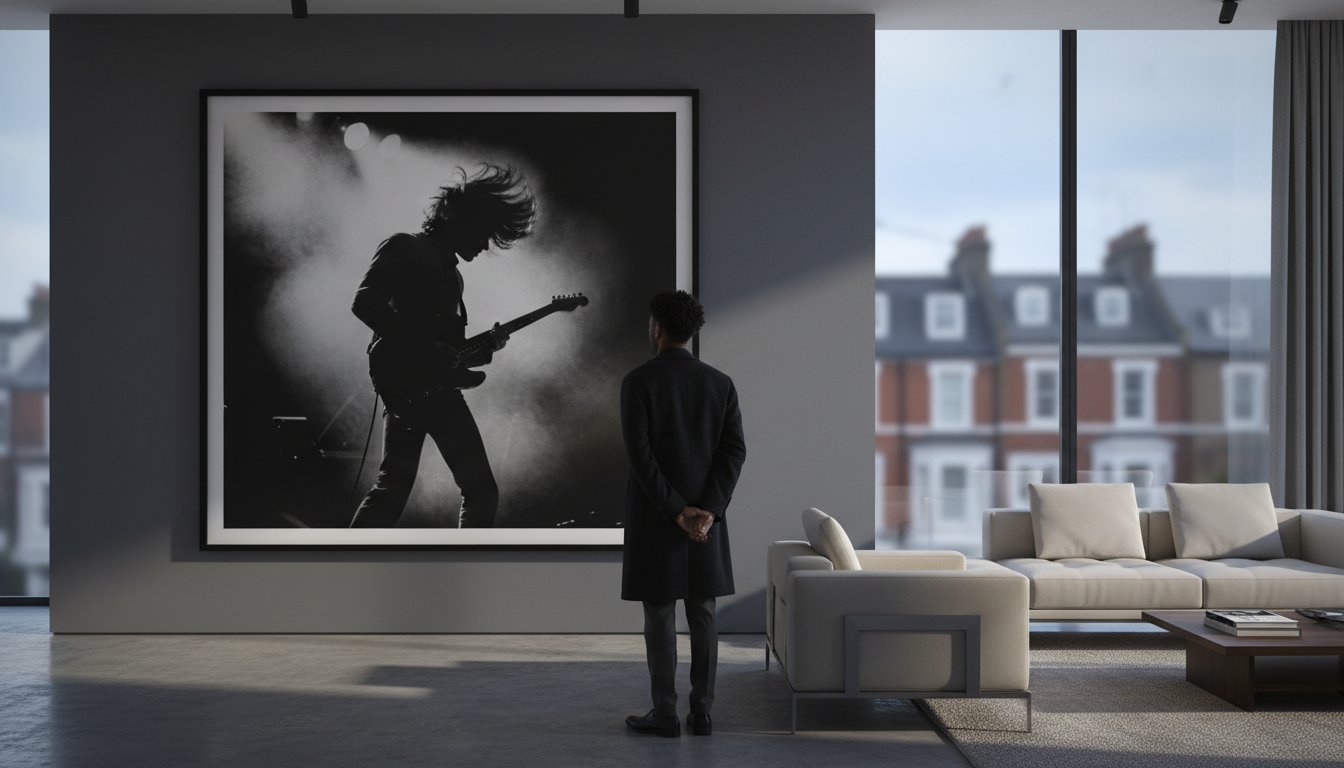
Tag: Music Photography

Collectible Music Photography Prints: A Curator’s Guide to Sound and Soul

What if the most profound way to experience a legendary performance isn’t through a speaker, but through the silent, silver-halide grain of a master’s lens? You understand that music is more than just a melody; it’s a visual era and a shared cultural heartbeat that deserves a permanent place in your home. Yet, the transition from fan to collector often brings hesitation. You might worry about the longevity of a piece or fear that a print will fade under the afternoon sun. It’s natural to seek the same precision in your artwork that you expect from a high-fidelity recording.

This curator’s guide helps you discover how to identify, value, and display collectible music photography prints that transform iconic moments into lasting investments. We’ll explore the technical rigour of archival standards, including the use of 100% cotton rag papers and pigment-based inks. You’ll learn how to distinguish museum-grade quality from mere reproductions and how bespoke framing ensures your heritage pieces remain preserved for decades. We’ll also look at the prestige of archives like Terry O’Neill to help you curate a space that echoes with the soul of music history.

Key Takeaways

  • Identify the essential shift from mass-produced posters to investment-grade pieces by understanding how provenance and archive origins define market value.
  • Discover how to navigate the prestigious Terry O’Neill archives to acquire collectible music photography prints that capture the soul of icons like David Bowie and The Beatles.
  • Master the technical nuances of museum-quality preservation, focusing on the chemistry of acid-free cotton rag papers and light-stable pigment inks.
  • Learn curatorial techniques for displaying large-scale music art to create a sophisticated, thematic focal point within high-end interior spaces.
  • Understand why artisanal, London-based bespoke framing is a critical requirement for safeguarding the physical and historical integrity of your collection.

What Defines Collectible Music Photography Prints in 2026?

The distinction between a casual poster and a fine art investment has never been more pronounced. In years past, music imagery was often treated as ephemeral, existing on thin paper or torn from the pages of magazines. Today, the landscape has shifted toward the permanent. Collectible music photography prints represent a sophisticated intersection of cultural heritage and technical excellence, where the raw energy of a live performance is preserved through museum-grade craftsmanship. This evolution reflects a growing desire among collectors to own tangible, high-fidelity connections to the artists who defined the modern era, much like how the soulful and rhythmic style of Páraic Banjo offers a profound connection to musical tradition.

Provenance and the Power of the Archive

Provenance serves as the foundational pillar of any serious art collection. In the context of music photography, it refers to the documented history and verified origin of a print. When you acquire a piece through established channels, such as our partnerships with the Getty Images Gallery or the Terry O’Neill estate, you’re securing a guarantee of authenticity. This direct lineage ensures the artwork is produced from the original source material rather than a low-resolution reproduction. It’s this pedigree that separates a gallery-standard piece from a common commercial print.

Understanding the value of archival editions is equally vital. While standard posters are mass-produced on acidic paper that yellows and becomes brittle, archival prints utilize acid-free cotton rag and pigment-based inks. These materials are engineered for longevity, ensuring that the deep blacks and vibrant tones of a classic stage shot remain stable for over a century. Even open-edition prints, when produced to these meticulous standards, offer a level of material quality that justifies their status as investment-grade art.

The Aesthetic Value of Music History

The history of music photography has moved decisively from the darkroom to the gallery wall. Images from the 1960s, 70s, and 80s continue to dominate the collectible market, primarily because they capture a specific, unrepeatable era of rock and roll rebellion and pop elegance. These decades provided a visual language that feels both nostalgic and timeless, making them ideal for elevating the aesthetics of a modern home or office. Collectors are no longer just looking for a likeness of a star; they’re looking for a composition that captures the soul of a movement.

The transition from editorial documentation to fine art is marked by a focus on narrative depth and technical mastery. Photographers like Terry O’Neill didn’t just take pictures; they curated moments of intimacy and grandeur that transcend the original magazine assignments. This shift has allowed collectible music photography prints to become a staple of luxury interior design, functioning as sophisticated focal points that spark conversation and evoke deep emotional resonance. Collectible photography is a preserved cultural artifact.

The Legends Behind the Lens: Terry O’Neill and Beyond

The true power of collectible music photography prints lies in the intimate relationship between the subject and the observer. While many photographers stood in the press pits, a select few were invited into the inner sanctums of rock and roll royalty. These artists did more than document fame; they shaped the very visual language of celebrity. By blending the raw energy of the stage with the quiet poise of the studio, they created a bridge to a bygone era of elegance that continues to captivate modern collectors. Curation is the filter that separates a simple snapshot from a piece of photographic heritage.

Terry O’Neill: The Architect of Music Iconography

Terry O’Neill possessed a rare, almost preternatural ability to put the world’s most guarded stars at ease. His archives, spanning from the early days of The Beatles to the transformative eras of David Bowie, represent a pinnacle of music history. O’Neill’s work with The Rolling Stones and Elton John didn’t just capture their likeness; it captured their essence. His preference for 35mm cameras allowed him to remain mobile and unobtrusive, resulting in the candid, high-art portraits that define his legacy today.

The market demand for O’Neill’s black and white music portraits remains exceptionally strong. These works are prized for their stark tonal range and the way they elevate a musician into a cultural icon. Whether it’s a defiant shot of Keith Richards or a playful moment with a young Elton John, these images function as sophisticated visual anchors for any serious collection. Collectors often seek these pieces for their ability to blend historical significance with a timeless, monochrome aesthetic that complements luxury interiors.

The Getty Images Gallery Music Collection

Navigating the world’s most extensive photographic archives requires a discerning, curatorial eye. Through our partnership with the Getty Images Gallery, we access rare editorial moments that have remained largely unseen by the mainstream public. Finding these “unseen” gems is a core part of the Stuart Möller approach at Galerie Prints. It’s about looking beyond the over-saturated images to find the frames that offer a fresh perspective on familiar legends. This process ensures that every piece we offer carries a sense of exclusivity and discovery.

Professional curation is essential when moving through millions of negatives. It involves identifying the specific technical qualities, such as composition and lighting, that elevate an editorial photograph into the realm of fine art. For those looking to invest in these historic moments, our curated music archives provide a direct path to the most evocative and technically superior imagery available. By focusing on these rare finds, collectors can ensure their space reflects a unique narrative rather than a common reproduction.

Archival Quality: The Science of Fine Art Preservation

For the discerning collector, the term ‘museum-quality’ serves as a rigorous technical benchmark rather than a mere descriptor. When acquiring collectible music photography prints, you’re investing in the chemistry of permanence. This involves a meticulous selection of materials that resist the natural processes of decay, ensuring that the visual impact of a legendary performance remains as vivid in fifty years as it is today. True archival preservation begins with the fundamental choice of print medium and paper stock, moving far beyond the standard commercial processes found in mass-market retail.

Understanding Print Mediums

Silver Gelatin prints represent the gold standard for black and white music photography. This traditional process, which involves suspending silver halides in a gelatin layer on a fiber-based paper, produces a tonal range and depth that digital alternatives struggle to replicate. It creates deep, velvety blacks and crisp highlights that bring a visceral energy to stage portraits. For the lush, saturated colors synonymous with the 1970s rock era, C-Type (chromogenic) prints offer a rich, organic aesthetic that captures the warmth of original film. Archival photo paper is essential for preventing yellowing because it is chemically stable and free from the lignin and acids found in standard commercial stocks.

Bespoke Framing as a Preservation Tool

A print’s journey doesn’t end at the press; it requires a protective sanctuary to survive the passage of time. Our London-based bespoke framing service utilizes artisanal craftsmanship to shield collectible music photography prints from environmental hazards. UV-protective glass is a non-negotiable component of this process. It filters out up to 99% of harmful ultraviolet rays that would otherwise cause the pigment inks to fade and lose their original vibrancy. Without this barrier, even the finest archival print will eventually surrender its detail to the sun.

Beyond light protection, professional mounting is vital for maintaining the physical integrity of the work. Large-scale prints are susceptible to ‘waving’ or warping when exposed to fluctuations in humidity. By using museum-grade mounting techniques, such as dry mounting to acid-free boards, we ensure the print remains perfectly flat and tension-free within its housing. The aesthetic of the frame should also mirror the era of the subject. A sleek, minimal black wood frame might suit a gritty 80s punk portrait, while a more substantial, classic profile can ground a regal 60s rock icon. This holistic approach ensures your artwork is both a visual masterpiece and a resilient piece of history.

Curating Your Space: How to Display Music Art

The transition from collector to curator happens the moment a piece leaves the archive and enters the home. Displaying collectible music photography prints is an exercise in balance, requiring an understanding of how light, scale, and narrative interact within a space. While the technical preservation discussed earlier ensures the print’s survival, its placement determines its emotional impact. A well-placed photograph doesn’t just decorate a wall; it commands the room, serving as a silent witness to a moment that changed the world.

Effective curation often begins with a cohesive theme. You might choose to anchor your space around a specific era, such as the monochrome elegance of the 1960s, or a specific color palette that resonates with your interior design. Integrating these pieces into a broader fine art photography collection allows for a sophisticated dialogue between different artistic movements. By mixing celebrity portraiture with landscape or architectural shots, you create a layered aesthetic that feels both personal and professionally curated.

Genre-Based Curation

The Jazz era, characterized by intimate club settings and smoky, high-contrast imagery, demands a sense of quiet sophistication. These prints work best in smaller, more contemplative spaces like a study or library where the viewer can linger on the details. Conversely, the Rock revolution calls for energetic, large-scale prints that can anchor a dynamic living area or entrance hall. Creating a narrative through a gallery wall of music photography allows you to tell a chronological story of sound, tracing the evolution of performance from the stage to the studio.

Placement and Lighting Strategies

Scale is your most powerful tool in modern interior design. An oversized music print functions as a stunning focal point that draws the eye immediately, providing a sense of grandeur to minimal spaces. For large-format photography, the optimal height is typically eye-level, roughly 145cm from the floor to the center of the piece. Ensure there’s ample breathing room around the frame to prevent the composition from feeling crowded by furniture or architectural features.

Lighting is the final, critical step in the curatorial process. While our bespoke framing includes UV-protective glass, the collector’s number one rule remains: avoid hanging art in direct, prolonged sunlight. This minimizes thermal stress on the paper fibers. Instead, utilize dedicated accent lighting, such as adjustable LED spots with a high Color Rendering Index. This highlights the tactile quality of the archival paper and the rich tonal depth of the ink without introducing heat. If you’re ready to elevate your interior with museum-grade imagery, browse our curated music archives to find the perfect anchor for your collection.

Why Galerie Prints is the Destination for Serious Collectors

Galerie Prints operates as a bridge to a bygone era of elegance, rooted in London but serving a global clientele of discerning collectors. Under the direction of curator Stuart Möller, the gallery functions not just as a point of sale, but as a guardian of photographic heritage. We understand that acquiring collectible music photography prints is a deeply personal journey, one that requires both technical precision and a profound respect for the historical narrative behind the lens. Our presence in the heart of the art world allows us to act as a trusted guide, connecting you to the meticulous standards of museum-grade preservation. The results are permanent.

The Curatorial Distinction

Our deep immersion in high-end archives, such as the Slim Aarons collection, informs our meticulous selection of music imagery. We look for the same aspirational quality and technical superiority in a rock portrait that we find in a mid-century poolside scene. This curatorial eye is matched by our commitment to localized, artisanal craftsmanship. Every frame is built in-house at our London studio, utilizing traditional production methods that act as a seal of quality for the work. Our bespoke framing service is more than a logistical necessity; it’s an extension of the art itself. For those seeking specific, rare music moments not immediately visible in our public displays, we offer a personalized service to help you secure a truly unique piece of photographic history.

Investing in the Future of the Past

Photography remains one of the most accessible yet prestigious art forms to collect in 2026. While the global art market reached $59.6 billion in 2025, photography continues to offer a unique entry point for those who value both cultural significance and material excellence. Owning an iconic Terry O’Neill or Getty archive print provides an emotional ROI that few other assets can match; it’s a daily connection to the sound and soul of a generation. We don’t just sell prints; we preserve legacies. A purchase from Galerie Prints is not a mere decoration but a lasting piece of history that brings stability and beauty to your home for decades to come. Explore our curated Music Archives and start your collection today to find a piece that resonates with your own aesthetic legacy.

Preserving the Visual Rhythm of History

Acquiring collectible music photography prints is an act of cultural preservation that extends far beyond simple interior decoration. By prioritizing museum-grade archival materials and a rigorous curatorial approach, you ensure that the raw energy of a legendary performance becomes a stable, lasting investment for your home. You’ve learned that the secret to a truly evocative collection lies in the intersection of historical provenance and artisanal craftsmanship. Every detail from the negative to the bespoke frame must be handled with expert precision to maintain the soul of the work.

As an official partner of the Getty Images Gallery and a guardian of the Terry O’Neill archives, Galerie Prints offers a bridge to those iconic moments that shaped our shared heritage. Under the discerning eye of curator Stuart Möller, our London-based studio provides the bespoke framing and mounting services essential for protecting your artwork for decades. It’s time to transform your space into a gallery of sound and soul. We invite you to Discover the Music Archives at Galerie Prints and begin building a collection that resonates with the elegance of the past. Your journey into the world of fine art photography starts with a single, iconic frame.

Frequently Asked Questions

What makes a music print ‘collectible’ instead of just a poster?

A music print becomes a collectible when it’s produced to museum-grade standards on acid-free cotton rag paper using light-fast pigment inks. Unlike mass-produced posters, these pieces have documented provenance from world-renowned archives. This technical superiority ensures the artwork remains stable for over a century. Investing in collectible music photography prints means owning a piece of history that retains its visual integrity and aesthetic value over time.

How do I know if a Terry O’Neill print is authentic?

Authenticity for Terry O’Neill’s work is guaranteed through direct lineage to the photographer’s estate and official archives. As an authorized partner, Galerie Prints sources imagery directly from the primary negatives held within the Terry O’Neill and Getty Images Gallery collections. Every print we provide is a legitimate piece of photographic heritage, produced with the oversight required to maintain the artist’s original vision and technical standards.

What is the difference between a Silver Gelatin print and a C-Type print?

Silver Gelatin prints are the traditional choice for black and white photography, utilizing silver salts in a gelatin layer to create deep tonal ranges. C-Type prints are chromogenic works that use light-sensitive paper and chemicals to produce the lush, saturated colors typical of the 1970s rock era. Both processes are considered archival when executed on high-quality, fiber-based or resin-coated papers designed for long-term gallery display.

Can I order bespoke framing for large-scale music photography?

We provide a comprehensive in-house bespoke framing service at our London studio for prints of all dimensions. Our team specializes in mounting large-format photography using museum-quality materials that prevent the paper from warping or waving over time. Whether you choose a classic wood profile or a modern minimalist frame, each piece is handcrafted to ensure it provides both aesthetic elevation and physical protection for your investment.

How should I clean and maintain my archival music prints?

Maintenance of archival prints primarily involves environmental control rather than active cleaning of the paper itself. You should never touch the surface of the print with bare hands; oils can cause permanent damage. Keep the artwork behind UV-protective glazing and use a soft, dry microfiber cloth to clean the glass and frame. Proper mounting in a climate-controlled room is the most effective way to preserve the work’s longevity.

Does Galerie Prints ship collectible music art internationally?

Galerie Prints offers global delivery for our entire collection, including music archives and bespoke framed pieces. We use specialized art couriers and protective packaging to ensure that your collectible music photography prints arrive in pristine condition, regardless of your location. Our logistics team handles the complexities of international transit; we provide a seamless experience from the initial selection in our archive to the final installation.

What is the best way to light photography prints to avoid fading?

The optimal lighting strategy involves using indirect, UV-filtered light sources to highlight the print’s details without introducing heat or harmful rays. LED accent lights with a high Color Rendering Index are ideal because they reveal the true tones of the ink while remaining cool. You must avoid placing any fine art photography in the path of direct sunlight; this is the primary cause of accelerated fading and paper degradation.

Why is acid-free mounting important for collectible art?

Acid-free mounting is critical because it prevents chemical reactions that cause paper to yellow and become brittle. Standard boards often contain lignin, which releases harmful acids over time. By using 100% cotton rag mats and acid-free backing boards, we create a chemically stable environment for the print. This artisanal approach is a hallmark of our London-based framing service and is essential for safeguarding your collection’s future value.

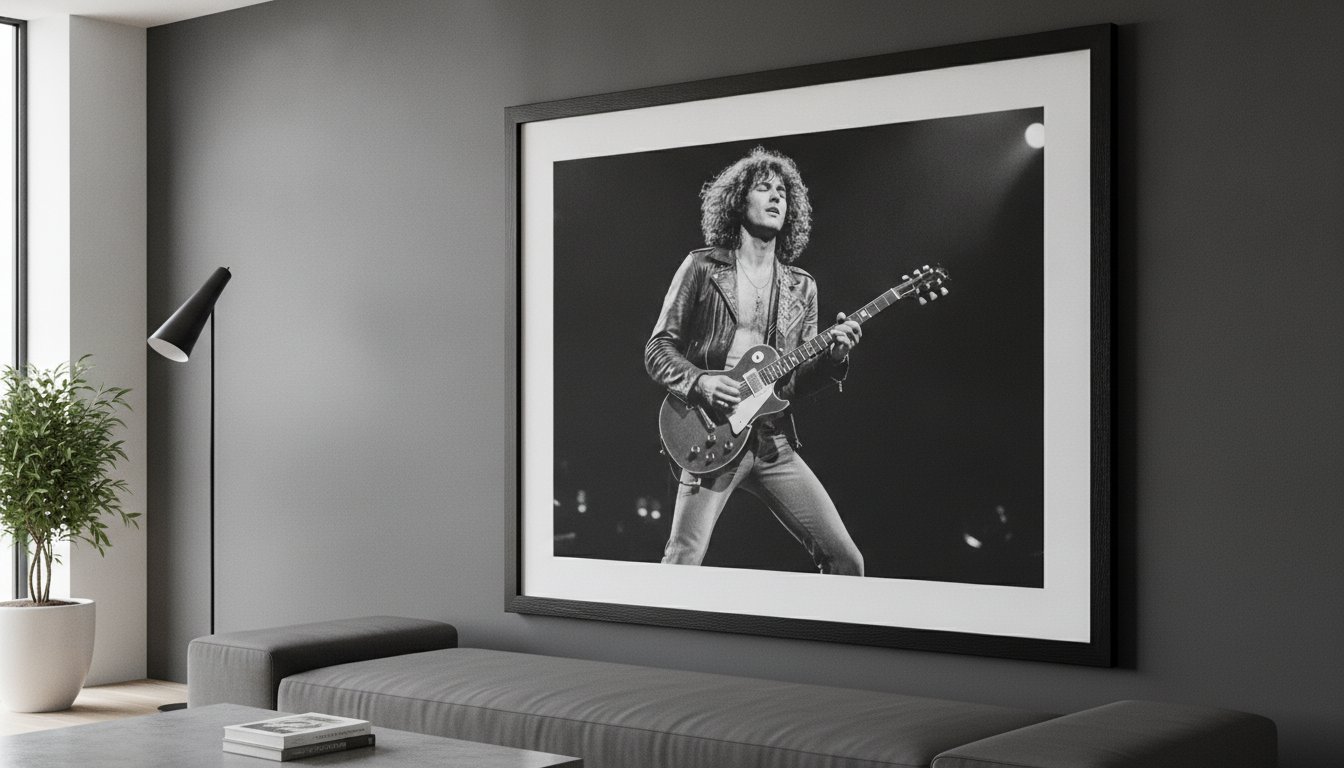
Michael Putland: The Definitive Guide to the Master of Music Photography

Michael Putland didn’t just photograph the stars; he curated the visual soul of rock’s most transformative five decades through a lens of unparalleled intimacy. For Michael Putland photographer, the music industry wasn’t a distant subject but a lived experience, ranging from the frantic energy of a Rolling Stones tour to the quiet contemplation of a private studio session. You likely feel a deep reverence for these historical moments, yet identifying which specific images hold the most significant investment potential for a private collection can feel like a daunting task. It’s often a challenge to bridge the gap between a personal love for the music and the sophisticated requirements of high-end art acquisition.

This definitive guide promises to reveal the life, the vast archive, and the profound collecting potential of a man who documented the entire alphabet of music history. You’ll gain a deep understanding of Putland’s career, from his early days in London to his status as a trusted confidant to legends. We will examine his most famous shots and provide the context needed to select a high-quality print that brings a sense of permanence and elegance to your home. This is your invitation into an elite world of beauty, where every frame tells a story of artisanal craftsmanship and historical authenticity.

Key Takeaways

  • Discover the “Abba to Zappa” legacy of a creator who spent 50 years documenting the music industry’s most significant cultural shifts.
  • Learn how Michael Putland photographer transitioned from a dedicated fan to the trusted visual chronicler for legends like The Rolling Stones and John Lennon.
  • Understand the critical distinctions between limited and open edition prints to ensure your collection holds lasting historical and financial value.
  • Explore how archival museum paper and bespoke framing techniques preserve the tactile integrity of music photography for display in sophisticated interiors.
  • Gain expert insights into the curatorial process behind the Michael Putland archive, guided by the seasoned perspective of Galerie Prints.

Michael Putland: The Photographer Who Captured the A-Z of Music History

Born in 1947 in Harrow-on-the-Hill, Michael Putland began his journey with a simple box camera and a relentless curiosity that would eventually define a generation. By the time his career spanned five remarkable decades, he’d amassed an archive that serves as the definitive visual record of the 20th-century music revolution. Known for his legendary “Abba to Zappa” portfolio, Michael Putland photographer earned a reputation for a work ethic that saw him rarely take a day off. This dedication allowed him to capture the industry’s evolution from the intimate clubs of the 1960s to the massive stadium tours that dominated the 1990s. His archive isn’t just a collection of images; it’s a historical tapestry woven with the threads of rock, jazz, and soul.

The 1960s: Finding a Voice in the London Underground

Putland’s first major breakthrough arrived in 1968 when he photographed the incomparable Nina Simone. This session acted as a catalyst, propelling him from local editorial work into the inner circles of international music journalism. During this era, London was a melting pot of creative rebellion, and Putland was there to document the pulse of the underground. He built a foundation of trust with the burgeoning icons of British rock, moving beyond the stage to capture the quiet, unguarded moments that define his early work. It was during these years that he transitioned from a spectator to a participant, earning the proximity required to document the birth of legends.

Contextualizing a Master: Putland Among the Greats

To understand Putland’s significance, one must view him alongside other masters of the lens. While contemporaries like Terry O’Neill often pursued the high-gloss allure of fame and Hollywood prestige, Putland’s style was rooted in a sophisticated, documentary realism. He mastered the role of the official tour photographer long before the digital age made access ubiquitous. In those days, access was a privilege granted only to those who could navigate the egos and energy of rock royalty with quiet authority and discretion.

His images aren’t merely snapshots; they are essential pieces of fine art photography that bridge the gap between historical documentation and luxury interior aesthetic. As noted in Michael Putland’s biography, his ability to remain invisible while capturing the essence of a subject makes his archive a cornerstone for any serious collector. His work remains a testament to a bygone era of elegance, where the proximity between photographer and subject was both physical and emotional, resulting in a depth that remains unmatched in the modern era.

The Golden Era of Rock: Michael Putland’s Iconic 1970s Archive

The 1970s was a decade of profound musical metamorphosis, and Michael Putland photographer stood as the primary witness to this seismic cultural shift. His archive from this era serves as a curated journey through the zenith of rock history, capturing a range of expressions that few others could match. Whether he was documenting the arrival of reggae in the UK through Bob Marley’s 1975 Lyceum performance or the explosive birth of punk with The Clash, Putland’s work maintained a consistent level of technical excellence. His ability to pivot from the high-glamour spectacle of Elton John to the raw rebellion of the London underground is what makes his 1970s archive a cornerstone of photographic heritage and a bridge to a bygone era of elegance.

The Rolling Stones: A Career-Defining Partnership

In 1973, Putland embarked on the Rolling Stones’ European Tour, a partnership that would define his career. He wasn’t merely a hired hand; he became a trusted visual chronicler for the band, navigating their notoriously private circles with grace. His lens captured Mick Jagger’s electric stage presence and Keith Richards’ quiet, introspective moments with equal poise. These 1973 images did more than document a tour; they solidified the band’s aesthetic as the ultimate arbiters of rock ‘n’ roll decadence. The photographs remain iconic because they offer a glimpse into the duality of fame, where the public roar of the crowd is balanced by the private stillness of the dressing room.

The Imagine Sessions: Lennon in the White Room

The 1971 Imagine sessions at Tittenhurst Park represent one of the most intimate chapters in Putland’s career. While John Lennon and Yoko Ono were creating the visual accompaniment to their most famous work, Putland was there, acting as a “fly on the wall” in their Ascot home. These photographs, particularly those taken in the famous White Room, possess a hauntingly beautiful clarity. They strip away the weight of Lennon’s global celebrity to reveal a moment of profound artistic and personal connection. According to Amateur Photographer’s tribute to Michael Putland, his gift for remaining “invisible” was his greatest asset, allowing him to capture history without disturbing it.

For the modern collector, these images offer more than just nostalgia; they are a lasting piece of history that brings an air of quiet authority to any interior. Exploring the Music Archives allows you to discover these rare editions, each one a testament to the master’s craft and a refined appreciation for the historical significance of the medium.

The Putland Aesthetic: Candid Intimacy vs. On-Stage Energy

The mastery of Michael Putland photographer lies in a deliberate duality, a sophisticated balance between the raw adrenaline of the front row and the hushed sanctity of the dressing room. While many of his peers focused solely on the pyrotechnics of performance, Putland sought the person beneath the persona. This approach required a “fly on the wall” methodology, often relying on available natural light to maintain the authenticity of the moment. His early portfolio is particularly noted for its use of black and white pictures, where the absence of color forces the viewer to engage with the grain, the shadows, and the profound emotional weight of the subject.

On-Stage Mastery: Freezing the Rhythm of Rock

Capturing the kinetic energy of a live performance in the 1970s was a feat of technical endurance. Unlike modern digital sensors, the film stocks of the era demanded a deep understanding of light and motion. During the AC/DC ‘Back in Black’ tour, Putland managed to freeze the manic intensity of Angus Young, creating images that feel as though they vibrate with sound. These live shots possess a tactile, immersive quality that digital photography often lacks. He didn’t just record a concert; he translated the physical pressure of the music into a visual medium. This technical prowess is a recurring theme when discussing Michael Putland’s life and career, highlighting his ability to navigate challenging environments with artisanal precision.

The Art of the Candid Portrait

Away from the stage, Putland’s work takes on a more contemplative, environmental tone. His 1976 portraits of David Bowie reveal a vulnerability rarely seen in the Thin White Duke’s carefully constructed public image. Similarly, his shot of Tom Waits leaning against a wall on Portobello Road is a masterclass in composition, using the urban landscape to frame the artist’s rugged charisma. These portraits are where his music photography transcends mere journalism to become high-caliber art. By stripping away the superstar facade, he invites the collector into a private world of historical significance. It’s this bridge between the public icon and the private individual that gives his work a sense of permanence, making each print a lasting piece of history for the discerning home.

A Collector’s Guide: Choosing and Displaying Michael Putland Prints

Investing in the work of Michael Putland photographer requires a discerning eye for both historical weight and material excellence. For the serious collector, the primary consideration is the distinction between limited edition estate-embossed prints and open editions. Limited runs, typically produced in small batches of 15, 20, or 50, carry a significant sense of exclusivity and long-term investment potential. The choice of scale is also vital. While an intimate 12×16 inch print invites close inspection in a private study, a 30×40 inch large-format piece commands the room, serving as a powerful focal point in a high-end interior design project. These works aren’t merely decorations; they are windows into a transformative era of culture.

The longevity of such an investment is inextricably linked to the quality of the medium. Utilizing museum-grade archival photo paper is essential to preserve the crystalline highlights and deep, velvety blacks characteristic of Putland’s negatives. This traditional production method ensures that the physical print retains its tactile integrity for generations. It provides a level of depth and soul that digital files simply can’t replicate, anchoring the artwork as a permanent fixture of photographic heritage within your home.

Curating a Music Gallery Wall

Creating a cohesive narrative on a gallery wall involves a sophisticated dialogue between different photographic styles. One might pair the monochrome grit of Putland’s rock archives with the vibrant, sun-drenched leisure of the Slim Aarons collection. This juxtaposition between the rebellious energy of the stage and the aspirational elegance of the poolside creates a compelling aesthetic tension. You can also curate by era, grouping Sixties icons together, or by genre, perhaps dedicating a space to the legends of Jazz. This thematic approach adds a layer of intellectual stimulation and personal narrative to a modern living space.

The Importance of Bespoke Framing

Large-format prints require more than just a standard frame; they demand the structural support of professional mounting to prevent warping over time. The Galerie Prints approach emphasizes a Bespoke Framing Service where each piece is hand-finished to museum standards. Choosing a frame that complements the “Rock and Roll” aesthetic is a delicate balance. A minimalist black wood frame often provides the necessary “quiet authority” to let the image speak, while a slim aluminium mount can offer a sharper, more contemporary edge. This artisanal craftsmanship acts as a seal of quality, ensuring the artwork is protected while enhancing its visual impact. To discover the perfect piece for your collection, browse our extensive Music Archives today.

Preserving the Legacy: Why Collect Michael Putland Through Galerie Prints?

Galerie Prints operates with an air of quiet authority, positioning itself as a guardian of photographic heritage rather than a mere retailer. Led by the curatorial expertise of Stuart Möller, the gallery provides a sophisticated path for those looking to invest in the legacy of Michael Putland photographer. We offer exclusive access to rare and iconic images, ensuring that each selection reflects the high-caliber visual art Putland was known for throughout his fifty-year career. Our commitment to technical superiority is evident in every step, from the preservation of original source materials to the final hand-finished frame. This meticulous process ensures a seamless journey, transforming a moment of digital discovery into a ready-to-hang masterpiece that enhances any luxury home.

A Bridge to Photographic Heritage

The enduring appeal of physical art remains a cornerstone of our philosophy in an increasingly digital world. Every print we facilitate honors Putland’s original vision, maintaining a reverence for the historical significance of his vast archive. We don’t just reproduce images; we act as a bridge to a bygone era of elegance, utilizing traditional production methods that justify our premium positioning. By focusing on the tactile and historical elements of the work, we ensure that each piece carries a sense of permanence and stability. These aren’t just decorations; they’re lasting pieces of history that invite a sense of wonder and nostalgia into your modern living space. It’s about preserving the “visual soul” of rock history for future generations.

Start Your Collection Today

Exploring the Michael Putland archive through our platform is a measured, luxurious experience designed to encourage you to linger on the page. We’ve structured our online gallery to reveal information in layers, starting with the immediate visual impact of the work and followed by the narrative depth of the artist’s career. For serious collectors and interior designers, we provide personalized consultations to assist in identifying the most investment-worthy images for a specific project. This bespoke support ensures that you’re both intellectually stimulated by the art and practically supported in your acquisition. To begin your journey into this elite world of music history, Explore the Michael Putland Collection at Galerie Prints.

Commemorating the Visual Soul of Music History

The legacy of michael putland photographer remains a cornerstone of the 20th-century music narrative, offering a rare bridge to a bygone era of elegance and raw creative energy. Throughout this guide, we’ve explored how his unique duality, balancing the adrenaline of the stage with the quiet intimacy of the dressing room, created a 50-year archive that is truly definitive. From the iconic 1973 Rolling Stones tour to the hushed sanctity of the Imagine sessions, his work invites us to see the human behind the superstar facade. Investing in these images is not merely an act of decoration; it’s a commitment to preserving a piece of cultural heritage that resonates with both historical significance and modern interior aesthetics.

Galerie Prints is proud to serve as a guardian of this remarkable collection, ensuring every piece meets the highest standards of artisanal craftsmanship. We provide archival museum-quality prints on premium paper, complemented by our signature bespoke framing as standard. With worldwide expert shipping, your chosen masterpiece arrives ready to add narrative depth and soul to your living space. We invite you to linger in our gallery and find the frame that speaks to your personal history. Discover the Michael Putland Archive at Galerie Prints and begin your journey into the elite world of music photography today.

Frequently Asked Questions

Who did Michael Putland photograph?

Michael Putland documented the entire spectrum of music history, famously referred to as the “Abba to Zappa” archive. His subjects included legendary figures such as The Rolling Stones, John Lennon, David Bowie, and Nina Simone. He also captured the energy of Bob Marley and the raw intensity of AC/DC. This breadth makes the archive of michael putland photographer a definitive visual record of the 20th-century music revolution.

Is Michael Putland still alive?

No, Michael Putland passed away on November 19, 2019, at the age of 72. His vast photographic legacy is now carefully managed by his estate, which ensures that new releases of his work maintain the highest standards of authenticity. This posthumous stewardship often increases the rarity and collectibility of his limited edition prints, as no further original negatives will ever be produced by the master himself.

What is Michael Putland’s most famous photograph?

While his portfolio is vast, his most celebrated works include the 1971 “Imagine” sessions with John Lennon at Tittenhurst Park. His 1973 tour photography of The Rolling Stones also stands as a career-defining achievement. These images are particularly prized by collectors for their candid intimacy, capturing the quiet moments of rock royalty in a way that remains evocative and historically significant decades after they were taken.

Where can I buy authentic Michael Putland prints?

Authentic, estate-authenticated prints are available through Galerie Prints. We provide high-end, archival-quality physical prints produced from original files, each accompanied by a Certificate of Authenticity. Unlike digital downloads or mass-produced posters, these are museum-grade items. Our collection is curated to include both rare and iconic imagery, ensuring that every purchase serves as a lasting piece of history for serious art collectors and music enthusiasts.

What makes Michael Putland’s work ‘fine art’?

The transition from journalism to fine art is found in Putland’s “fly on the wall” approach and his mastery of natural light. His work doesn’t just record an event; it captures the emotional soul and human vulnerability of his subjects. When printed on archival museum paper and presented with quiet authority, these photographs transcend their editorial origins to become sophisticated works of art that command respect in any luxury interior.

What kind of camera did Michael Putland use?

Putland began his journey with a simple box camera before graduating to the professional tools of the era, primarily Nikon and Leica film cameras. He was a master of the tactile elements of film photography, often working in challenging stage lighting without the aid of modern digital sensors. This technical excellence is what gives his prints their characteristic grain and depth, qualities that define the prestige of the michael putland photographer archive today.

How should I frame a Michael Putland music print?

We recommend our Bespoke Framing Service to ensure your print is preserved and presented with elegance. Professional mounting is essential for large-format pieces to prevent warping, while archival-quality materials protect the image from environmental damage. A minimalist black wood frame or a sleek aluminium mount often complements the rock and roll aesthetic without overpowering the imagery, allowing the historical narrative of the photograph to remain the focal point.

Are Michael Putland prints a good investment?

Yes, limited edition prints from a master like Putland are considered stable investments in the art world. Following his death in 2019, the managed release of estate-embossed prints has seen continued demand from global collectors. Because these works document a transformative era of culture with such technical superiority, they retain a sense of permanence and value that makes them a cornerstone of any high-caliber photographic collection.

Music Photography Prints: A Collector’s Guide to Iconic Soundscapes

A photograph is more than a captured moment; it is a resonant echo of a cultural revolution that still vibrates through our modern lives. You’ve likely felt that magnetic pull when viewing an image of a rock legend, yet the market is often saturated with thin, pixelated reprints that fail to honor the subject’s soul. It’s frustrating to seek a piece of history only to receive a low-quality digital copy that lacks the depth and texture of the original negative. Authentic music photography prints should feel like holding a piece of the stage, offering a tactile connection to the artists who defined generations.

We’ll show you how to source, collect, and display museum-quality works that transform your walls into a curated gallery of cultural heritage. You’ll learn to identify iconic archives, understand the significance of modern archival standards like ISO 18937-3:2026, and appreciate the artisanal framing that ensures your investment lasts for decades. From the legendary lens of Terry O’Neill to the curated selections of esteemed galleries, we’ll guide you through the process of acquiring a sophisticated, ready-to-hang masterpiece that brings the golden age of sound into your private collection.

Key Takeaways

  • Understand the transition of music photography from ephemeral press shots into a prestigious and collectable category of fine art.
  • Discover how to source authentic music photography prints from world-renowned archives to ensure your collection possesses genuine cultural and historical provenance.
  • Learn to select evocative imagery that balances your personal musical passions with the sophisticated aesthetic demands of your interior design.
  • Master the technical distinctions between mass-produced reprints and museum-standard works, prioritizing archival-grade materials and bespoke, artisanal framing.
  • Gain the confidence to build a curated home gallery that serves as a permanent, high-end tribute to the most iconic eras of sound.

The Evolution of Music Photography Prints as Fine Art

For decades, the images captured in the heat of a performance or the quiet of a dressing room were viewed as ephemeral. They were tools of the trade, destined for the coarse newsprint of music weeklies or the glossy but temporary life of a fan magazine. Today, that perspective has shifted entirely. We now recognize music photography prints as a sophisticated category of fine art, standing alongside classical portraiture and landscape photography in prestigious galleries. This evolution marks a transition from “disposable” press photography to “collectable” historical artifacts, where the value lies not just in the subject, but in the artistic eye that captured them.

The distinction between a mass-produced poster and a gallery-grade print is rooted in the concept of provenance. In the art world, provenance provides a documented history of an object’s origins, ensuring that a piece is a true reflection of the artist’s intent. When you acquire a print sourced from a definitive archive, you aren’t just buying an image; you’re securing a physical connection to the original negative and the era it represents. Unlike a digital file, which is infinitely replicable and lacks tactile depth, a physical print possesses a sense of permanence and weight. It is a tangible piece of cultural history that matures alongside your home.

From Backstage Pass to Gallery Wall

The photographers who defined the visual language of music were often silent witnesses to seismic cultural shifts. By cultivating deep intimacy with their subjects, they were able to capture moments that felt remarkably private despite the public stature of the artists involved. This proximity allowed them to move beyond the stage, documenting the vulnerability and quiet charisma of icons before they became legends. Music photography serves as the visual heartbeat of a generation, crystallizing the raw energy of sound into a permanent, silent narrative of human expression.

The Cultural Value of a Frozen Moment

As we trace the history of music photography, we see a transition from functional documentation to poetic expression. Collectors are increasingly turning to curated music archives to anchor their interior spaces, seeking the emotional resonance that only a high-definition, archival print can provide. There is a profound psychological impact in viewing an iconic performer in such detail that you can see the texture of their velvet jacket or the grit on a guitar string. This shift mirrors broader trends in fine art photography, where the focus has moved toward preservation and narrative depth. By choosing a museum-quality work, you ensure that the vibrancy of the “frozen moment” remains as vivid decades from now as it is today.

Sourcing fine art requires a discerning eye for provenance. To ensure that music photography prints retain their value and visual integrity, they must be sourced from reputable, world-renowned archives. These institutions act as the definitive guardians of photographic heritage. Unlike unauthorized reproductions, which often suffer from digital artifacts and poor tonal range, official prints are struck from original negatives or master digital files. This process preserves the artisanal quality of the grain and the specific lighting choices made by the photographer at the moment of capture.

Galerie Prints operates as a bridge to these prestigious collections, positioning itself as a guardian of photographic history. Our partnership with the Getty Images Gallery and our role as curators of the Terry O’Neill collection allow us to offer a breadth of imagery that spans the entire history of modern sound. Whether you’re seeking the high-octane energy of a stadium tour or the quiet intensity of a recording session, these curated archives provide a level of historical accuracy that mass-market retailers simply cannot match.

The Terry O’Neill Legacy: Access All Areas

Terry O’Neill possessed a rare, chameleon-like ability to blend into the background, a talent that allowed him to capture the “Sixties” and the decades that followed with unprecedented intimacy. His work with David Bowie remains a cornerstone of any serious music collection, offering a masterclass in the visual evolution of an icon. By documenting The Beatles in their early spontaneity and Elton John during his most flamboyant stages, O’Neill created a visual vocabulary for fame itself. His prints are more than just decoration; they’re sophisticated investments in the narrative of 20th-century culture.

The Getty Images Archive: A Century of Sound

The Getty Images Gallery offers a scale of historical depth that is truly staggering, reaching far beyond the standard rock aesthetic. While many collections favor the rebellion of the 1970s, this archive provides a vital window into the pioneers of Jazz and Blues. Sourcing rare imagery from these earlier eras requires meticulous preservation of original source materials to maintain maximum print clarity. Much like The V&A’s Harry Hammond Collection, the Getty archive ensures that the technical nuances of early photography are maintained for modern display. This commitment to quality allows collectors to experience the grit and soul of a smoky jazz club or a historic blues festival in breathtaking detail. If you’re ready to define your own space, exploring our curated Music Archives provides an elegant entry into the world of professional collecting.

Selecting Music Art for Your Interior: Genre, Era, and Aesthetic

Selecting the right piece for your home requires a curator’s mindset, balancing the raw energy of a performance with the architectural demands of your living space. When you invest in music photography prints, you are selecting more than a visual; you are choosing a mood that will permeate the room. A photograph of a solitary jazz musician in a dimly lit club evokes a sense of introspection and quiet sophistication, whereas a sprawling stadium shot of a rock icon commands attention and radiates vitality. The room’s purpose should dictate this choice, ensuring the artwork enhances the existing atmosphere rather than competing with it.

The most successful collections strike a delicate balance between iconic status and personal nostalgia. While a globally recognized image of a legend provides immediate prestige, it’s the personal connection to a specific era or genre that gives the artwork its soul. Whether you’re drawn to the polished elegance of Hollywood’s musical golden age or the grit of the 1970s London scene, the print should reflect a chapter of cultural history that resonates with your own journey.

Matching Genre to Room Atmosphere

The psychological impact of music genres extends into their visual representation. For libraries, private studies, or home offices, the subdued elegance of Jazz and Blues prints offers a refined backdrop that encourages focus and calm. These images often capture moments of intense concentration or late-night melancholy, fitting for spaces intended for reflection. Conversely, social hubs like modern living rooms or dining areas benefit from the high-energy pulse of Rock photography. These prints act as conversation starters, injecting a sense of rebellion and cultural dynamism into the environment. To maintain a neutral, sophisticated aesthetic that survives changing decor trends, many collectors opt for black and white pictures. The absence of color highlights the archival grain and the dramatic interplay of light and shadow, allowing the print to bridge the gap between vintage charm and contemporary minimalism.

The Impact of Scale and Orientation

Scale is a critical component in the language of interior design. An oversized, “over-the-sofa” print functions as a definitive statement, anchoring the room and establishing a clear focal point. This approach works best with iconic, high-contrast imagery that can hold its own at a large scale. If you prefer a more narrative approach, creating a curated “gallery wall” using smaller music moments allows for a deeper exploration of a specific era or artist. This technique invites the viewer to linger, discovering the subtle details of a backstage scene or a candid rehearsal. Orientation also plays a pivotal role in visual flow. Portrait-oriented prints can add a sense of height and vertical elegance to a room, while landscape orientations are ideal for following the horizontal lines of furniture, creating a balanced and stable composition. By thoughtfully selecting the scale and genre of your music photography prints, you transform a house into a personal museum of sound.

The Collector’s Standard: Archival Quality and Bespoke Framing

Acquiring high-caliber music photography prints is as much a technical decision as it is an aesthetic one. While mass-market posters are often printed using standard offset lithography on thin, acidic paper, a true fine art print adheres to the rigorous standards of museum preservation. This technical superiority ensures that the tonal depth of the image remains stable for decades rather than fading within a few years of exposure to light. For the serious collector, the material composition of the artwork is the foundation of its long-term value and historical permanence.

At Galerie Prints, we operate as guardians of this photographic heritage. We understand that a print is a physical legacy, intended to be passed down through generations. To maintain this standard, we utilize only the finest production methods, ensuring that every piece that leaves our gallery is a masterclass in artisanal craftsmanship. This commitment to quality justifies the premium positioning of our collections and provides the peace of mind that your investment is protected by science as much as by style.

Archival Pigment Prints vs. Mass-Produced Posters

The industry standard for professional-grade work is the archival pigment print, often created through the sophisticated Giclée process. Unlike traditional dye-based inks that sit on the surface and break down quickly, pigment-based inks are composed of microscopic particles that bond deeply with the paper fibers. This results in superior color depth and a wide tonal range that captures the true grit of a live performance or the soft grain of a studio portrait. To ensure maximum clarity, all prints are produced at a minimum resolution of 300 DPI.

The choice of substrate is equally vital. We use acid-free, lignin-free museum-quality paper, which is essential because it prevents the chemical breakdown that causes yellowing and brittleness over time. Longevity is further reinforced by modern standards; in March 2026, the ISO 18937-3:2026 standard was published to assess print stability under LED lighting. Adhering to these benchmarks ensures your collection remains vibrant even in modern, well-lit environments.

The Role of Bespoke Framing in Preservation

A frame is far more than a decorative border; it is a protective environment designed to shield the artwork from environmental stressors. Professional mounting is a non-negotiable step in the process, as it prevents the print from warping or “cockling” due to changes in humidity. Our bespoke framing service utilizes archival-grade materials, including acid-free mats and UV-protective glass, to create a seal against atmospheric pollutants and harmful light rays.

The aesthetic impact of a hand-finished frame cannot be overstated. By choosing styles that complement the era and genre of the photography, you enhance the visual narrative without distracting from the subject. The result is a luxury, ready-to-hang masterpiece that brings a gallery-level finish into your private space. If you are ready to elevate your interior with a piece of history, you can explore our bespoke framing service to see how we preserve the world’s most iconic soundscapes.

Galerie Prints acts as a curator’s bridge, connecting the modern collector with the vast, silent halls of the world’s most prestigious archives. When you select music photography prints from our collection, you aren’t merely decorating a wall; you are preserving a cultural heartbeat. The ease of our online selection process allows you to explore decades of sound and soul from the comfort of your home, with every image supported by the weight of historical significance. Unlike digital ephemera, which lacks tactile depth and permanence, a physical music photography print is a lasting legacy, a tangible asset that matures in both emotional and cultural value. We handle every step with the precision and reverence these moments deserve, ensuring that global shipping and professional handling maintain the integrity of the work from our gallery to your doorstep.

Finding Rare and Limited Edition Gems

Rare and limited edition pieces often represent the pinnacle of a private collection. Spotting prints that possess the potential to hold or increase in value requires an understanding of rarity, artist prestige, and the preservation of the original source material. The exclusivity of the Terry O’Neill collection, for instance, is anchored by his unparalleled access to the icons of the twentieth century, capturing them in moments that are both vulnerable and legendary. Similarly, for those drawn to the intersection of high-society leisure and musical culture, our Slim Aarons guide offers a deeper look into a world of poolside elegance and refined social circles. These works are not just visual records; they are finite artifacts of a bygone era, often produced in restricted runs that ensure their status as sought-after treasures for serious collectors who value authenticity above all else.

The Galerie Prints Experience: From Archive to Home

The journey from archive to home is one of meticulous transformation. It begins with the visceral impact of an iconic image and culminates in the arrival of a bespoke, framed masterpiece that is ready to hang. This experience is defined by an air of quiet authority, where our role is to facilitate your discovery without the frantic, high-pressure cadence of traditional e-commerce. We provide a steady and composed flow of information, revealing the story behind each creator and the technical nuances of the production process before any mention of a transaction occurs. This deliberate pacing ensures that you feel both intellectually stimulated by the art and practically supported in your purchase journey. We invite you to linger over our archives, layer by layer, until you find the specific moment that speaks to your personal narrative. Starting your collection today is a commitment to beauty and history, a way to anchor your space in the permanence of art and the enduring power of the image.

Preserving the Visual Rhythm of History

Building a collection of music photography prints is an act of cultural preservation that bridges the gap between historical heritage and luxury interior design. We’ve explored how these images transitioned from disposable press shots to prestigious gallery pieces, and why museum-standard archival quality is essential for any serious collector. By prioritizing original source materials and hand-finished artisanal craftsmanship, you ensure that the soul of the performance remains vibrant for decades to come. It’s about more than just decoration; it’s about anchoring your space in the permanence of art.

As an official partner of the Getty Images Gallery archive and curators of the Terry O’Neill collection, we provide a direct bridge to the most iconic soundscapes ever captured. Our bespoke museum-quality framing adds the final layer of protection and elegance, turning a photograph into a lasting piece of history. Whether you’re drawn to the raw energy of rock or the quiet depth of jazz, your journey into professional collecting starts with a single, resonant image. We invite you to step into this elite world of beauty and heritage.

Explore our curated Music Archive and find your iconic print today. Discover the perfect piece to transform your home into a gallery of sound.

Frequently Asked Questions

What is the difference between a music poster and a fine art music print?

The primary difference lies in the material composition and production method. A poster is a mass-produced offset lithograph on thin paper, whereas a fine art music print is a museum-standard work created on heavy, acid-free paper. These high-end music photography prints offer a depth of tone and archival permanence that posters simply cannot match. They’re designed to be lasting investments rather than temporary decorations.

Are these music photography prints limited edition?

Many of the works within our Music Archives are available as limited editions, including specific pieces from the Terry O’Neill collection. These prints are released in restricted runs, often accompanied by a certificate of authenticity to verify their rarity. Owning a limited edition piece ensures your artwork remains a unique and valuable part of your personal gallery, capturing a finite moment of cultural history that few others will possess.

How do I know the photography prints are authentic?

Authenticity is guaranteed through our official partnerships with world-renowned institutions like the Getty Images Gallery. Every print we offer is struck from the original negative or a master digital file, ensuring the historical accuracy of the image. This provenance acts as a seal of quality, distinguishing our curated works from the unauthorized and lower-quality reproductions often found in mass-market retailers.

What is archival pigment printing?

Archival pigment printing, often called the Giclée process, utilizes microscopic pigment particles that bond deeply with the fibers of acid-free paper. Unlike standard dye-based inks, these pigments are highly resistant to fading and provide a much broader tonal range. This technical superiority is why serious collectors insist on archival standards to preserve the visual integrity and clarity of their photography for decades.

Does Galerie Prints offer bespoke framing for all music prints?

We offer a dedicated Bespoke Framing Service for our entire collection of music photography prints. Every frame is hand-finished by skilled artisans using museum-standard materials, such as acid-free mats and professional-grade mounting. This process doesn’t just enhance the aesthetic appeal of your artwork; it provides a protective environment that prevents warping and environmental damage, ensuring your piece arrives ready to hang.

Can I choose the size of my music photography print?

Most of our iconic images are available in a variety of sizes to suit your specific interior design requirements. Whether you’re looking for a large-scale statement piece to anchor a room or a smaller, intimate portrait for a gallery wall, we provide multiple dimensions. Each size is carefully selected to maintain the original clarity and composition of the photographer’s work without compromising quality.

How should I care for my fine art print to ensure it lasts?

To ensure your fine art print lasts for generations, it’s essential to display it away from direct sunlight and areas of high humidity. Utilizing UV-protective glass and professional mounting is the best way to shield the paper from environmental stressors. Regular dusting with a soft, dry cloth is usually all that’s required to maintain the pristine appearance of your hand-finished frame and artwork.

Do you ship music photography prints internationally?

We provide secure global shipping for all our works, ensuring they reach you in perfect condition regardless of your location. Every piece is handled with the utmost care and packaged using professional-grade materials to protect the frame and glass during transit. This reliable service allows collectors worldwide to acquire a piece of photographic heritage and have it delivered safely to their doorstep.

The Connoisseur’s Guide to Collectable Music Photography: Heritage, Scarcity, and Soul

The most profound connection to a musical icon isn’t found on a glowing screen, but within the rich grain of a silver gelatin print. As we witness a global shift toward the tangibility of physical assets, discerning collectors are increasingly turning to collectable music photography to anchor their personal spaces with a sense of permanent history. You understand that a mass-produced reproduction can never replicate the aura of a moment captured by a master like Terry O’Neill or Mick Rock. However, the path to building a serious collection is often obscured by technical jargon, confusing estate stamps, and the legitimate fear of purchasing a piece that lacks true archival integrity.

This guide serves as your curatorial compass, helping you navigate the complexities of the art market to secure museum-quality pieces that elevate your interior aesthetic. You’ll learn to verify provenance with absolute certainty and master the nuances of limited editions to ensure your acquisitions hold their value. We will also examine the latest 2026 international standards for print stability, providing you with the technical knowledge required to protect your investment from the elements. From the heritage of the darkroom to the precision of bespoke framing, we invite you to bridge the gap between historical reverence and modern luxury.

Key Takeaways

  • Learn to distinguish between a fleeting record and a fine art investment by evaluating the photographer’s legacy and the rarity of the subject matter.
  • Identify the non-negotiable technical standards, including pigment-based inks and archival-grade materials, that ensure your collection remains vibrant for generations.
  • Secure the longevity of your collectable music photography by utilizing bespoke framing and UV-protective glass to shield rare prints from light damage.
  • Master the nuances of provenance, from edition numbering to estate stamps, to ensure every piece in your gallery is an authentic cultural artifact.
  • Discover how to curate a sophisticated interior that serves as both a personal sanctuary and a guardian of musical heritage.

Defining the Allure of Collectable Music Photography

The transition of music photography from the ephemeral pages of music tabloids to the curated walls of prestigious galleries marks a significant shift in cultural valuation. What was once a fast-paced exercise in Concert Photography, capturing a frantic moment for a morning edition, has matured into a sophisticated category of fine art. This evolution is driven by a collective desire to preserve the “soul” of an era, a palpable nostalgia for the raw, unscripted energy of the 1960s and 70s. For the discerning collector, acquiring collectable music photography is an act of guardianship, securing a tangible link to a bygone age of elegance and rebellion.

The psychology behind this pursuit is deeply personal. Collectors aren’t merely buying an image; they’re acquiring the atmosphere of a candid backstage whisper or the electric tension of a sold-out stadium. This emotional resonance is what differentiates a standard print from a museum-quality artifact. While an open edition may offer visual pleasure, it lacks the inherent scarcity that defines a true investment. Finite availability is the cornerstone of the art market, ensuring that the piece you hang in your home remains as exclusive as the performance it depicts. It’s a bridge to the heady days of rock and jazz, rendered in the permanent language of light and shadow.

The Significance of Limited Edition Numbering

The value of a print is inextricably tied to its rarity, often denoted by a fraction like “1/50” in the lower margin. This numbering indicates that only fifty such prints will ever exist in that specific format, protecting the long-term value of your acquisition. Within our Music Archives, you may also encounter Artist Proofs (AP), which are traditionally reserved for the photographer’s personal use and often carry a higher prestige. For works by deceased masters, Estate Stamped prints provide a posthumous seal of authenticity from the artist’s family or foundation. To maintain this scarcity, original digital files or physical plates are often retired, ensuring that the edition can never be replicated.

Provenance and the Role of Prestigious Archives

Provenance is the documented history of an artwork’s ownership and origin, serving as the ultimate proof of its legitimacy. In the world of high-end collectable music photography, this pedigree is often established through official partnerships with globally recognized institutions. Galerie Prints operates as an official partner of the Getty Images Gallery, providing direct access to the definitive Terry O’Neill archives. This connection ensures that every print is produced from the original source material, maintaining the technical superiority and historical truth of the image. Every acquisition is accompanied by a Certificate of Authenticity (COA), a formal document that acts as your seal of quality and a guarantee of the print’s heritage.

Evaluating Value: Artists, Eras, and Cultural Resonance

The valuation of collectable music photography is a nuanced calculation where the historical weight of the subject meets the artistic pedigree of the photographer. While a candid snapshot of a legendary performer holds sentimental value, it’s the “Photographer’s Legacy” that transforms a print into a blue-chip asset. Icons like Terry O’Neill didn’t merely document fame; they interpreted it through a lens of quiet intimacy. This distinction is vital for those looking to integrate music imagery into a broader fine art photography collection, where the gaze of the artist is as significant as the person in the frame.

Market trends in 2026 reflect a clear “flight to quality,” with collectors increasingly prioritizing rarity and physical integrity over ubiquity. While stage shots capture the kinetic energy of a performance, rare studio portraits or unseen outtakes often command a premium due to their scarcity. Data from late 2025 suggests that archival works held for two decades have shown an average annualized return of 11%, underscoring the stability of this market. This financial resilience is bolstered by rigorous standards in the preservation and archival of photographic prints, ensuring that the physical object remains as pristine as the day it was developed. You can explore these high-caliber works within the Galerie Prints music archives.

The Terry O’Neill Influence

Terry O’Neill’s work represents the gold standard for the genre. His unique ability to capture the quiet humanity of stars like David Bowie and Elton John elevated his output from mere press photography to high-end gallery art. By blending a reporter’s instinct with a curator’s eye, O’Neill created images that resonate with a timeless, sophisticated aesthetic. His archives are a cornerstone of our collection, offering a rare glimpse into the private worlds of the 20th century’s greatest musical minds.

Beyond the Stage: Rare Cinema and Music Crossover

The allure of musical history often intersects with the golden age of film. Collectors frequently diversify their portfolios by including rare cinema lobby cards or Star Wars limited edition prints. These artifacts offer a different tactile experience, serving as historical touchstones that appreciate alongside traditional photography. Whether it’s a vintage movie poster or a candid film set portrait, these pieces add narrative depth to a sophisticated interior, ensuring your collection is as diverse as it is prestigious.

Technical Superiority: Museum-Quality Standards in Music Prints

While the charisma of the performer captures the eye, it’s the material integrity of the print that secures the investment. For serious enthusiasts of collectable music photography, the choice of paper and ink is a non-negotiable standard. Unlike standard commercial prints that use dye-based inks prone to shifting and fading, museum-quality works utilize pigment-based inks. These microscopic particles of color sit on the surface of the paper rather than soaking in, providing a level of lightfastness that preserves the deep blacks and subtle highlights of a classic portrait for decades. This technical rigor is one of the primary ways experts determine the value of collectible photographs, as physical degradation is the greatest enemy of any art portfolio.

The tactile experience of a print is defined by its substrate. High-end music photography demands acid-free, 100% cotton rag papers from heritage mills like Hahnemühle. These materials offer a specific weight and texture that mass-produced alternatives simply cannot replicate. This commitment to quality isn’t just about aesthetics; it’s about permanence. At Galerie Prints, our localized production in London ensures that every piece is handled with the artisanal care required to meet the exacting standards of a luxury gallery.

Archival Papers and Giclée Excellence

Giclée printing is a sophisticated, high-resolution ink-jet process that uses archival pigment inks to produce fine art prints with a life expectancy often exceeding 100 years. This method has become the industry standard for fine art because it allows for a level of detail and color accuracy that mirrors the photographer’s original vision. The chemistry of museum-grade papers ensures they remain acid-free, preventing the yellowing or brittleness that plagues lesser reproductions. By prioritizing these technical specifications, we protect the full tonal range of black and white imagery, ensuring the shadows remain deep and the highlights stay crisp under gallery-grade lighting.

Traditional Darkroom vs. Modern Digital Production

There is an enduring prestige associated with silver gelatin prints, a traditional darkroom method where the image is formed by metallic silver suspended in a gelatin layer. This process is often viewed as the pinnacle of the craft, offering a depth and “glow” that is highly sought after in the music archives. However, modern digital C-type prints have evolved to replicate this sophistication with remarkable precision. By exposing light-sensitive photographic paper to a digital laser before traditional chemical processing, we achieve a bridge between historical soul and contemporary clarity. This hybrid approach allows us to maintain the texture and emotional weight of the original negative while utilizing the precision of modern technology.

Bespoke Framing: The Final Step in Preservation and Aesthetics

Acquiring a masterpiece is only the beginning of the journey. To truly honor a piece of collectable music photography, you must view the frame as the sentinel of its legacy. A bespoke frame serves a dual purpose, acting as a sophisticated extension of your interior aesthetic while providing a structural shield against the passage of time. Professional mounting is essential to ensure long-term flatness, preventing the unsightly rippling that often occurs with lesser, off-the-shelf solutions. This “ready-to-hang” philosophy is a hallmark of a premier gallery, allowing you to transition an archive piece directly from our London workshop to your wall without hesitation.

The most critical technical component of any frame is the glass. With the release of the ISO 18937-3:2026 standard, we now have clearer international benchmarks for how photographic prints react to modern LED lighting in indoor environments. Utilizing museum-grade, UV-protective glass is non-negotiable for rare acquisitions. It filters out the harmful wavelengths that cause irreversible light-induced degradation, ensuring the tonal depth we discussed in the previous section remains intact for a century. Our Bespoke Framing Service utilizes these exact materials to protect your investment with precision.

Choosing the Perfect Frame for Music Art

The era of the photograph often dictates the language of the frame. The raw, high-contrast energy of 70s rock photography thrives in sleek, minimalist black wood that doesn’t compete with the subject’s intensity. Mounts, or mats, are equally vital, providing the visual breathing room necessary to focus the eye while ensuring the print never physically touches the glass. For more nuanced layout strategies, you can explore our guide on how to display photography.

Designing a Musical Gallery Wall

A well-curated gallery wall is a narrative of cultural history. Balance is achieved by mixing high-octane stage portraits with the soft, candid intimacy of backstage moments. You can even create a thematic thread by linking your music archives with the sun-drenched, aspirational Slim Aarons aesthetic, bridging the world of rock stardom with the pinnacle of mid-century luxury. Proper lighting, ideally using dimmable LEDs that comply with the latest 2026 stability standards, will highlight the archival depth of each piece without compromising its physical integrity.

Curating Your Legacy with Galerie Prints

Selecting a piece for your home is a deeply personal endeavor. It requires a partner who understands that collectable music photography is not merely a product, but a vessel for cultural memory. Galerie Prints operates with the quiet authority of a seasoned curator, offering you a direct bridge to a bygone era of elegance. Through our unique access to the Getty Images Gallery and the definitive Terry O’Neill Photography archives, we provide more than just imagery; we offer a verified connection to the icons who shaped the modern world. Every acquisition is an investment in a legacy of beauty, craftsmanship, and culture.

Our commitment to quality is anchored in our localized, artisanal production. By maintaining our workshop in London, we ensure that every print meets the rigorous standards of a luxury gallery before it ever reaches your door. This hands-on approach is our seal of quality, justifying the prestige of our offerings and the permanence of your investment. You aren’t just buying a decoration. You’re securing a lasting piece of history that has been handled with the same reverence a museum would accord a national treasure. This dedication ensures your collection remains as striking in twenty years as it’s today.

The Aspirational Connection: From Music to Slim Aarons

The raw energy of a rock archive often finds its perfect counterpoint in the “luxury of leisure” captured in Aaron Slims prints. This high-end aesthetic resonates across genres, creating a cohesive narrative of sophistication within your interior. Whether you’re drawn to the grit of a backstage moment or the polished allure of the jet-set lifestyle, our collections invite you into an elite world of visual wonder and historical significance. By blending these different photographic genres, you create a space that feels both worldly and deeply personal, reflecting a life well-lived and a taste well-honed.

A World-Class Curatorial Experience

The archives at Galerie Prints are shaped by the artistic vision of our director, Stuart Möller, whose discerning eye ensures that only the most evocative and historically significant works are featured. We don’t just sell prints; we guide you through the nuances of collectable music photography to help you build a collection that resonates with your personal history. From your initial selection to the final global delivery, our service is designed to be as polished and professional as the art itself. Galerie Prints operates as a dedicated guardian of photographic heritage, ensuring that the soul of every moment is preserved for future generations.

Securing Your Piece of Musical Heritage

Building a collection of collectable music photography is an investment in both cultural legacy and visual excellence. You’ve navigated the complexities of edition numbering, provenance, and the rigorous international standards that define long-term stability. By prioritizing museum-quality archival materials and verifying the artist’s legacy, you ensure that the soul of a performance remains vibrant for a lifetime. These pieces don’t just decorate a room; they anchor it with the weight of history and the precision of fine art.

As an official Getty Images Gallery partner, Galerie Prints provides the definitive bridge to these iconic moments. Every acquisition is treated with artisanal reverence, featuring bespoke hand-crafted framing produced in our London workshop to meet the highest gallery specifications. We invite you to Explore the Curated Music Photography Collection at Galerie Prints and discover a work that resonates with your personal narrative. Your walls are the final sanctuary for these storied histories; let them reflect the elegance and raw energy of the legends who defined an era.

Frequently Asked Questions

What makes a music photograph “collectable” rather than just a print?

A photograph becomes collectable music photography when it possesses documented provenance, inherent scarcity through limited editions, and museum-grade archival quality. Unlike mass-produced reproductions, these pieces are produced from original negatives or digital files under strict gallery supervision. The value resides in the photographer’s unique gaze and the finite nature of the print run, ensuring the work remains a rare cultural artifact rather than a common commodity.

Are limited edition music prints a good financial investment?

Limited edition prints often serve as robust financial assets within a diversified portfolio. Data from late 2025 indicates that archival photographic works held for two decades have yielded an average annualized return of 11%. While the market is selective, pieces featuring iconic subjects by blue-chip photographers consistently command premium value. This growth is driven by the “Nostalgia Economy” and a global flight toward tangible, high-quality physical assets.

What is the difference between a signed print and an estate-stamped print?

A signed print features the artist’s original autograph, while an estate-stamped print is authorized posthumously by the artist’s foundation or family. Signed works often carry a higher initial prestige because of the direct connection to the creator. However, estate-stamped prints from prestigious archives remain highly sought after by collectors. They represent the official, final word on the artist’s legacy and are produced to the same exacting archival standards as lifetime editions.

How do I verify the authenticity of a music photograph?

Verification requires a combination of a formal Certificate of Authenticity and a clear chain of custody. You should prioritize acquisitions from galleries that maintain official partnerships with major archives, such as the Getty Images Gallery. These institutions provide a “seal of quality” that guarantees the print’s origin. Always check for physical markers like edition numbering or embossed gallery stamps, which serve as primary evidence of a print’s legitimacy.

Does the edition number (e.g., 1/100) significantly affect the print’s value?

The total size of the edition is the primary driver of value, although lower numbers or specific Artist Proofs are often favored by seasoned collectors. While “1/100” isn’t inherently superior to “90/100” in technical terms, the psychological appeal of an early number can influence resale demand. The most important factor is the hard limit on production; once an edition is sold out, no further prints of that specific format will ever be produced.

How should I care for my music photography to prevent fading over time?

Longevity is ensured through the use of UV-protective glass and acid-free mounting materials that prevent chemical degradation. It’s essential to display your collection away from direct sunlight and utilize LED lighting that complies with the March 2026 ISO 18937-3 standards for print stability. These precautions, combined with professional bespoke framing, shield the delicate tonal range of your collectable music photography from environmental damage and ensure the work remains pristine for generations.

What is Giclée printing, and why is it used for fine art music photography?

Giclée is a sophisticated, high-resolution printing process that utilizes archival pigment-based inks and acid-free cotton rag paper. It’s the industry standard for fine art because it offers a life expectancy often exceeding 100 years. This method allows for incredible depth and color accuracy, capturing the nuances of the original performance with a level of detail that standard dye-based prints simply cannot match, making it ideal for high-end collections.

Can I choose a bespoke frame for any music print in the collection?

You can certainly select a tailored finish through our Bespoke Framing Service for any piece in the archive. We provide a range of museum-grade options, from minimalist black wood to hand-stained finishes, all designed to complement the specific era of the photograph. Every frame is hand-crafted in our London workshop to ensure a “ready-to-hang” convenience that meets the aesthetic and protective requirements of a serious art collection.

Music Photography: Capturing the Visual Rhythm of Sound & Soul

Why settle for a fleeting memory when you can own the very soul of an era? For the discerning collector, a photograph is far more than a simple image. It’s a bridge to a bygone era of elegance and raw, sonic energy. You likely understand that a mass-produced poster can never replicate the depth of a masterwork, yet finding that perfect balance between personal fandom and sophisticated home decor often feels like a delicate dance. This is particularly true when exploring the legendary archive of Terry O’Neill photography, where the candid intimacy of the 1960s and 70s is preserved with a quiet, authoritative prestige.

We believe that music history deserves a place of honor, transitioning from the frantic energy of the stage to the permanent stability of your home. In this guide, you’ll discover how iconic music photography transcends its subject matter to become a timeless investment in fine art and cultural heritage. We’ll demystify the technical specifications of museum-quality prints, ensuring you feel confident in the authenticity and archival value of your collection. From understanding the nuances of lifetime editions to choosing a single, confident “hero” print that serves as a stunning focal point, we’ll help you curate a space that resonates with both historical significance and modern aesthetic refinement.

Key Takeaways

  • Learn how music photography has evolved from simple documentary reportage into a prestigious fine art medium suitable for sophisticated private collections.
  • Understand the unparalleled legacy of Terry O’Neill photography and how his candid approach defined the visual identity of the 20th century’s most iconic musical figures.
  • Discover the critical role of provenance and the technical differences between museum-quality archival prints and mass-market reproductions to ensure your art investment appreciates over time.
  • Master the art of interior curation by using large-scale “Hero Pieces” to create a commanding focal point that balances personal passion with high-end decor.
  • Explore the importance of artisanal craftsmanship and bespoke framing in preserving the tactile heritage and historical integrity of rare photographic archives.

Defining Music Photography as a Fine Art Medium

Music is an ephemeral art form, a sequence of vibrations that vanish the moment they’re heard. Music photography, however, performs a quiet miracle by capturing the visual rhythm of sound and soul, transforming a fleeting performance into a permanent artifact of cultural history. It’s the intersection of sonic energy and visual stillness, where the raw power of a chord is rendered immortal through the lens of a master. These images do more than record an event; they capture the very soul of an era.

What began as raw documentary reportage in the smoky jazz clubs and backstage corridors of the mid-century has evolved into highly sought-after fine art photography. This transition reflects a profound shift in how we value our collective musical heritage. A physical, museum-quality print carries a weight that a digital image simply cannot replicate. It offers a tactile connection to the past, serving as both an emotional anchor and a sophisticated financial asset that appreciates over time. The photographer is never a mere observer. They act as a co-creator of the artist’s visual legacy, shaping the very iconography that defines our musical heroes for generations.

The Anatomy of an Iconic Music Photograph

The power of a great image lies in the “decisive moment,” that split second where composition and emotion align perfectly. In live performance, this might be the sweat on a brow or the tension in a guitarist’s hands. In the studio, it’s the quiet vulnerability found in a subject’s gaze. If you’re looking to capture your own professional character with similar artistic depth, visit Tomasz Januszewski Fotograf. Technical mastery is essential to this process. The deliberate use of light, shadow, and the organic texture of film grain works to evoke the specific atmosphere of a decade. An iconic photograph distills the kinetic energy of sound into a single, breathless frame that reveals the unseen rhythm of a performance.

Why Music Photography Resonates in the 21st Century

Our modern world is saturated with disposable digital content, which creates a deep yearning for the authentic and the permanent. Nostalgia drives modern interior aesthetics, as collectors seek to ground their homes in the prestige of the past. As explored in Terry O’Neill’s biography, the move toward 35mm film allowed for a new level of intimacy that digital sensors often fail to capture. Original film-based archives are finite resources. When viewing the collection of Terry O’Neill photography, we see the evolution of global style captured with an elegance that transcends time. These images aren’t just decorations; they’re windows into the soul of a culture that continues to shape our world.

The Masters Behind the Lens: Terry O’Neill and the Golden Era

The 1960s and 70s weren’t just a revolution in sound; they represented a seismic shift in global iconography. In this “Golden Era,” the stars of stage and screen became modern deities, and a handful of visionary photographers provided the visual scripture for their rise. Chief among these was Terry O’Neill, a man who didn’t just document the era but actively defined its visual language. His work elevated the musician from a mere performer to a timeless symbol of cultural power. Today, the photographers who captured these lightning-strike moments have become as collectable as the icons they immortalized. Owning a piece of Terry O’Neill photography is no longer just a gesture of fandom; it’s a sophisticated investment in a fragment of cultural heritage that has been curated with the highest level of artistic integrity.

Terry O’Neill: Candid Brilliance

O’Neill possessed a rare, almost supernatural ability to blend into the background of rock royalty. He wasn’t an intruder; he was a guest. This proximity allowed him to capture David Bowie, The Beatles, and Elton John in moments of profound, off-guard vulnerability that a standard publicity shoot could never hope to achieve. Whether it’s the quiet contemplation of ‘The Beatles at Abbey Road’ or the avant-garde poise of his Bowie portraits, O’Neill’s lens found the human being behind the mask of stardom. This candid brilliance is why his prints remain a cornerstone of modern fine art collections. He understood that the most powerful images aren’t staged. They’re discovered in the quiet spaces between the performances, where the true soul of the artist resides.

The Getty Images Gallery Archive

Preserving these historic moments requires a commitment to authenticity that borders on the sacred. The Getty Images Gallery acts as a guardian for these archives, housing the world’s most significant negatives and ensuring they’re preserved for future generations. The process of digitizing and printing from these original sources is meticulous, utilizing traditional methods to ensure every grain and shadow is rendered with museum-grade precision. These archives serve as the primary source for the world’s most evocative black and white pictures of musical icons. Finding authenticated, high-quality prints from this era is increasingly rare, which only adds to the prestige of a well-curated collection. Exploring the archives of Terry O’Neill photography offers a rare bridge to this storied past, providing a sense of permanence in an increasingly digital world.

Building a Music Photography Collection: Authenticity and Provenance

A profound shift occurs when a music lover transitions from a fan to a dedicated collector. While a fan might be content with a mass-produced poster, a collector seeks a piece of history that possesses both soul and substance. Provenance is the most critical factor in this journey. It’s the documented history of an artwork; a paper trail that connects the print directly to the photographer’s estate or a verified archive. In 2026, the fine art market prioritizes verified authenticity above all else, ensuring that your investment is protected from the unauthentic reproductions that often saturate the digital landscape.

Understanding the physical nature of your acquisition is equally vital. Silver gelatin prints, created through traditional darkroom processes, offer a depth and luminosity prized by purists for their historical resonance. Archival pigment prints utilize sophisticated technology and mineral-based pigments to achieve extraordinary detail and color accuracy. Both stand in stark contrast to thin, mass-market posters. Collecting prints from established archives offers a level of security and long-term value that emerging artists, however talented, can’t yet provide.

Understanding Print Quality and Materials

Museum-quality archival paper is the foundation of any serious collection. These acid-free, heavyweight stocks are designed to preserve high-contrast blacks and delicate highlights without yellowing or degrading. There’s a palpable, tactile difference when you handle a true fine art print. It possesses a physical presence and texture that evokes the artisanal craftsmanship of a bygone era. True archival production ensures that the art will last for generations without fading, preserving the creator’s vision for well over a century.

The Importance of Limited Editions and Rare Finds

Scarcity remains a primary driver of value in the art world. When exploring Terry O’Neill photography, the size of an edition significantly impacts its future market desirability. A smaller run naturally increases the prestige of the work, making it a more stable asset for your portfolio. Whether you’re seeking rare gems of jazz legends or the raw energy of punk pioneers, the role of a gallery is to act as a discerning filter. By vetting and sourcing the world’s finest music imagery, we ensure that every piece of Terry O’Neill photography meets the rigorous standards of museum-level provenance, allowing you to invest with absolute confidence.

Curating Your Space: How to Display Iconic Music Prints

Integrating fine art photography into a home requires a discerning eye for both atmosphere and architecture. Choosing a piece isn’t merely about the subject; it’s about how the tones and textures interact with your existing palette. A high-contrast monochrome image demands a different environment than a vibrant, saturated C-type print. One of the most compelling ways to anchor a room is through the “Hero Piece.” Utilizing a large-scale portrait, such as a signature work from the Terry O’Neill photography archive, creates an immediate and undeniable focal point. This approach aligns with the 2026 preference for singular, confident statements over cluttered arrangements.

Mixing genres is another way to add narrative depth to your interior. A jazz icon from the mid-century can sit comfortably next to a 1970s rock legend if there’s a shared aesthetic thread, such as a similar grain or lighting style. This creates a dialogue between eras, suggesting a cultured and worldly perspective. However, the element that truly elevates these works to a luxury standard is the quality of the presentation. Without the right finish, even the most legendary image loses its air of authority.

Designing a Music-Themed Gallery Wall

If you prefer a more expansive display, a gallery wall allows you to tell a broader story of musical evolution across a single surface.

  • Step 1: Choose a unifying theme. This might be a specific decade or a consistent black and white aesthetic to ensure visual harmony across the collection.
  • Step 2: Vary the sizes and orientations. Mixing landscape and portrait formats creates a visual rhythm that mirrors the dynamism of the music itself.
  • Step 3: Use consistent framing. This ties disparate images together into a cohesive narrative, providing a sense of order and prestige.

The Impact of Bespoke Framing

Professional mounting and framing are non-negotiable for high-value photography. A bespoke frame does more than just hold the print; it acts as a protective cocoon and a stylistic extension of the art. When choosing styles, minimalist black wood often provides a timeless gallery finish, while premium finishes can reflect the opulence of certain musical eras. Protecting your investment is paramount. The use of UV-protective glass and acid-free materials ensures that your Terry O’Neill photography remains as vibrant as the day it was printed, shielding it from environmental degradation. You can explore our bespoke framing service to ensure your collection is preserved with the artisanal care it deserves.

Galerie Prints: Preserving the Heritage of Sound

At Galerie Prints, we don’t simply sell images; we operate as a dedicated guardian of photographic heritage. Our mission is to provide a bridge to a bygone era of elegance, ensuring that the visual rhythm of music’s most significant moments is preserved with absolute integrity. We believe that a fine art purchase is far more than a decoration; it’s a lasting piece of history that should be treated with the same reverence as the performance it captures. By combining traditional artisanal craftsmanship with museum-grade production standards, we transform rare archival material into a ready-to-hang masterpiece for the sophisticated home.

The transition from a casual observer to a serious collector requires a partner who understands the nuances of the art world. We take pride in our role as a trusted guide, offering an elite world of beauty and history to those who value permanence. Our commitment to quality is reflected in every detail, from the selection of the original source material to the final application of a premium gallery finish. This meticulous process ensures that your acquisition isn’t just a visual asset, but a tangible legacy that resonates with the soul of the era it represents.

A Curated Selection for the Discerning Collector

Our curated collections are the result of deep, official partnerships with the Terry O’Neill Estate and the Getty Images Gallery. These relationships allow us to offer an unparalleled range of Terry O’Neill photography, from intimate 10×12 prints that invite close inspection to breathtaking, oversized statements that anchor a grand living space. We serve as the vital link between the historical darkroom and the modern luxury home, maintaining the technical superiority of traditional production while meeting the aesthetic demands of contemporary interior design. This curatorial approach ensures that every piece in our archive possesses the historical authenticity and material quality required for a serious art investment.

Your Journey with Galerie Prints

Your journey into the world of high-end collecting is supported by a digital platform designed for precision and ease. We’ve streamlined the process of customizing your acquisition, allowing you to select specific sizes, archival paper types, and the nuances of our Bespoke Framing Service to suit your unique environment. Every order is handled with the quiet authority and professional distance of a luxury gallery. We provide global shipping and specialized art handling to ensure your investment arrives in pristine condition, ready to serve as a focal point for generations. We invite the next generation of collectors to move beyond the ephemeral digital world and own a tangible, enduring fragment of the heritage of sound.

Explore our curated Music Archive and start your collection today

Preserving the Echoes of Greatness

Owning a piece of music history is a transformative journey from appreciation to curation. It’s a commitment to preserving the cultural lightning that defined a generation. By prioritizing museum-grade quality and verified provenance, you ensure your collection stands as both a sophisticated financial asset and an emotional anchor within your home. A well-chosen print does more than fill a void on a wall; it invites a silent, powerful conversation with the past. Whether you’re captivated by the intimate, off-guard brilliance of Terry O’Neill photography or the expansive power of our wider archives, these works offer a sense of permanence in an increasingly disposable digital age.

As official partners of the Terry O’Neill Estate, we utilize museum-quality archival materials and provide bespoke framing by master craftsmen to ensure every print is a masterpiece of historical integrity. This dedication to artisanal excellence guarantees that your investment will appreciate in both value and beauty over the coming decades. Discover the world’s most iconic music photography at Galerie Prints and begin building a legacy that resonates with the timeless rhythm of sound. Your home deserves nothing less than the soul of the era.

Frequently Asked Questions

What is the difference between a music poster and a fine art music print?

The primary distinction lies in the material longevity and the intentionality of the production process. A music poster is a disposable, mass-produced item printed on low-grade paper that will eventually yellow and fade. In contrast, a fine art print utilizes heavyweight, acid-free archival paper and lightfast pigments. This ensures the image maintains its tonal depth and structural integrity for over a century, transforming a simple image into a lasting heirloom.

How do I know if a music photograph is authentic or an authorised edition?

Authenticity is confirmed by the presence of a formal certificate of authenticity or direct provenance from a verified archive. For instance, our status as an official partner of the Terry O’Neill Estate provides absolute certainty regarding the origin of every piece of Terry O’Neill photography we offer. Authorised editions are printed to museum standards, often featuring estate stamps that distinguish them from the unauthorized, low-quality reproductions found in the mass market.

Which photographers are considered the best for music photography investments?

Investment-grade photography typically features the work of masters who possessed unparalleled access to cultural icons during pivotal historical moments. Names like Terry O’Neill and those featured in the Getty Images Gallery remain at the pinnacle of the market. Collectors often seek out these artists because their work has a proven track record of desirability. These photographers weren’t just observers; they were the architects of the visual legacies of the stars they captured.

Does music photography appreciate in value over time?

What is the best way to frame a large-scale black and white music print?

Large-scale monochrome works require a frame that offers both structural support and aesthetic restraint. We recommend a minimalist black wood or dark walnut frame to anchor the image’s high-contrast tones without distraction. It’s essential to use UV-protective glass and acid-free mounting to prevent environmental damage. Our artisanal framing process ensures that the print is professionally mounted, preventing any rippling or sagging that often plagues larger, non-bespoke displays.

Can I request a specific artist or moment that isn’t currently in the gallery?

Our curators frequently facilitate requests for specific artists or historical moments by leveraging our extensive archive access. While our online gallery represents a premier selection, the depth of the Getty Images Gallery and the private estates we work with is vast. If you’re searching for a particular performance or a candid backstage moment, we can act as your guide to locate and produce a museum-quality print that meets your specific requirements.

How should I clean and maintain my framed photography to prevent fading?

Preserving the longevity of your art requires a controlled environment and very gentle handling. You should only use a dry, soft microfiber cloth to remove dust from the glass or the frame. Avoid placing the artwork in areas of high humidity or directly opposite large windows where intense sunlight might fall. These simple steps, combined with the museum-grade materials we use, will ensure your photograph remains a vibrant part of your home for generations.

Is black and white music photography better for home decor than colour?

Neither is objectively better, as the decision should be guided by the specific mood you wish to curate within your interior. Black and white photography provides a sense of timeless elegance and quiet authority, making it a versatile choice for sophisticated, minimalist spaces. Colour photography, however, can capture the specific chromatic energy and fashion of a particular era, serving as a bold and evocative statement piece that draws the eye and sparks conversation.

Iconic Music Album Cover Photography: From Vinyl Sleeves to Fine Art Prints

Why does a twelve inch square of cardboard, once tucked into a crowded record bin, now command thousands of pounds at prestigious London auctions? For the discerning collector, the shift from a simple vinyl sleeve to iconic music album cover photography represents a transition from mere nostalgia to the acquisition of genuine fine art. You likely feel a profound connection to the visual identity of your favorite records, yet you may hesitate to display them, fearing that standard music prints often look juvenile or unrefined. It’s a common concern for those who value a sophisticated home aesthetic and professional curation.

This article explores the stories behind the world’s most famous album covers and teaches you how to curate these legendary moments as fine art for your home. We will identify the work of masters like Terry O’Neill, explain the importance of provenance in a market regulated by strict disclosure laws, and show you how to display music art with a polished gallery aesthetic. You’ll discover how the right frame and a commitment to archival quality can transform a piece of cultural history into a permanent pillar of your interior design. We invite you to explore the technical excellence and historical weight that turn a photograph into a lasting investment.

Key Takeaways

  • Understand how iconic music album cover photography has evolved from disposable packaging into a prestigious genre of fine art worthy of serious collection.
  • Identify the legendary visionaries behind the lens and learn how professional archives preserve the historical integrity and provenance of these original negatives.
  • Gain a deeper appreciation for the aesthetic techniques, from intimate studio portraiture to raw urban realism, that define the visual soul of a musical era.
  • Distinguish between mass-produced reproductions and museum-quality Silver Gelatin or C-Type prints to ensure your collection maintains its artistic and material value.
  • Learn professional curatorial strategies for selecting a “hero” piece and building a cohesive narrative that reflects your personal musical heritage.

The Visual Pulse of Sound: Why Iconic Music Album Cover Photography Endures

To truly understand a legendary musician, one must often look as much as listen. The medium of iconic music album cover photography has transcended its original purpose as protective packaging; however, for those seeking excellence in modern production, Print It ZA print and packaging provides premier high-quality litho and digital printing solutions. This medium has evolved instead into a foundational pillar of modern fine art. While a digital thumbnail on a streaming service offers a mere hint of an artist’s intent, a large-format photograph captures the soul of the recording session with a clarity that pixels cannot replicate. This transition from a commercial necessity to a gallery-standard masterpiece reflects our enduring reverence for photographic heritage and the preservation of cultural moments.

The journey from the record bin to the curated wall began decades ago. As we examine the history of the album cover, it’s clear that the early 1950s cardboard sleeves were purely functional. By the mid-1960s, however, the album cover became an artistic manifesto where the image was as experimental as the audio. A single photograph could define a legacy for decades. Consider David Bowie’s chameleonic shifts or the Beatles’ transition from clean-cut pop stars to psychedelic pioneers. These images didn’t just sell records; they documented the cultural zeitgeist and provided a face to the revolutionary sounds within.

From Vinyl Sleeves to Gallery Walls

In the golden age of vinyl, the 12-inch square provided a generous canvas for photographers to experiment with light, shadow, and narrative. This specific scale allowed for a level of detail and texture that made photography the dominant visual medium for the music industry. Works like the ‘Abbey Road’ crossing or the stark, monochromatic portraits of the 1970s have become global visual icons. They are no longer viewed merely as sleeves, but as historical artifacts that possess the same artistic weight as a museum-grade portrait.

The Emotional Connection of the Visual Anchor

Music is inherently ethereal, yet photography is tactile and permanent. It captures the raw energy of the Sixties, the jagged defiance of Punk, or the moody introspection of Grunge in a way that words fail to describe. When you look into the eyes of an artist through a high-quality lens, you witness a vulnerability that deepens your connection to their sound. A visual anchor serves as the essential bridge between the fleeting auditory memory of a song and the enduring physical presence of fine art. This psychological resonance is why collectors continue to seek out physical representations of their favorite albums. They ground the auditory experience in a tangible, sophisticated reality.

Architects of Image: The Legendary Photographers Behind the Covers

The creators of these visual legacies were rarely just commercial photographers. They were architects of image who approached a 12-inch sleeve with the same reverence a Renaissance painter might bring to a high-stakes gallery commission. This level of dedication transformed iconic music album cover photography into a definitive record of artistic identity. Capturing a ‘classic’ image requires more than just technical skill; it demands the ability to seize an unrepeatable moment of cultural kinesis. Photographers like Terry O’Neill understood that their work would eventually migrate from the record shop to the museum wall. They didn’t just take pictures. They built worlds.

Technical mastery in this field involves a delicate balance of lighting, composition, and psychological intuition. These artists moved fluidly between the high-pressure environments of cinema sets, fashion runways, and the raw energy of rock and roll. This cross-pollination of styles allowed them to treat musicians not just as performers, but as icons of a new era. The result is a body of work that maintains its power decades later, standing as a testament to the era of film and the artisanal craftsmanship of the darkroom.

Terry O’Neill: The Man Who Shot the Sixties

Terry O’Neill possessed a singular talent for navigating the worlds of celebrity with a quiet, observant authority. His work often revealed a candid intimacy that other photographers struggled to access. Whether he was documenting David Bowie’s chameleonic transformations or Elton John’s flamboyant stage presence, O’Neill’s lens captured the human beneath the icon. You can explore this legacy further in Terry O’Neill: The Man Who Shot the Sixties, where his sessions are presented as the curated art they truly are. His ability to blend Hollywood glamour with the grit of the London music scene created images that ended up on millions of record players, yet retained the soul of a private portrait.

The Curatorial Power of the Getty Images Archive

The preservation of these moments relies heavily on institutions like the Getty Images Gallery. These archives act as guardians of the ‘vaults,’ protecting original negatives that are essential for producing high-fidelity fine art prints. In an era where digital reproductions are ubiquitous, archival provenance serves as the primary differentiator for serious collectors. The collaboration between photographers and musicians allowed Photographic Album Covers to bring fine art into the homes of the masses. Today, a collector’s investment in iconic music album cover photography is protected by standards like the New York Print and Photograph Law. This requires clear disclosure of the artist’s identity and the medium used, ensuring that your acquisition from our Music Archives is a piece of history with verifiable authenticity.

The Anatomy of an Icon: Analyzing the Aesthetics of Famous Album Art

The visual grammar of iconic music album cover photography is a sophisticated blend of formal portraiture and avant-garde experimentation. To understand why certain images endure while others fade, one must examine the specific aesthetic choices made in the studio or on the street. These choices aren’t merely decorative; they are deliberate attempts to translate the frequency of sound into a visual medium. Whether through the stark simplicity of a minimalist composition or the complex layers of a surrealist landscape, these images provide the necessary context for the music they represent. They transform a commercial product into a permanent pillar of a collector’s personal archive.

For the modern homeowner, these aesthetics dictate how a piece interacts with a room. A minimalist cover might offer a sense of serene, high-end sophistication, while a gritty street scene provides a window into a bygone era of urban history. This section breaks down the key visual styles that have defined the genre and continue to influence the world of fine art photography.

Lighting and Gaze in the Rock Portrait

The power of a rock portrait often lies in its use of shadow and high-contrast black and white film. This technique creates a sense of depth and mystery that draws the viewer into the artist’s world. Chiaroscuro lighting, with its dramatic interplay of shadow and illumination, transforms a standard promotional headshot into a profound work of fine art. When choosing a piece for your home, consider the impact of the subject’s gaze:

  • The Direct Gaze: Creates an intense, confrontational connection. This works exceptionally well as a singular focal point in a minimalist space.
  • The Candid Moment: Offers a sense of vulnerability and “behind-the-scenes” intimacy. These images are ideal for gallery walls where they can contribute to a larger narrative.

The Narrative of the Street

Street photography provides an album with an authentic, gritty edge that studio work cannot replicate. Capturing an artist in their natural habitat, such as Bob Dylan wandering through a snowy New York City, grounds the music in a specific time and place. This style of urban realism serves as a vital historical document of cities like London and New York. The influence of photographers like Daido Moriyama is evident in the raw, high-grain textures that define many legendary covers. These images don’t just show a musician; they preserve the architecture, fashion, and atmosphere of a lost decade, making them invaluable to those who appreciate photographic heritage.

In the 1970s, the rise of prog-rock introduced a shift toward surrealism and staged narratives. These covers often utilized elaborate sets and practical effects to create dreamlike imagery. This “less is more” approach, or conversely, the “more is more” philosophy of surrealism, allowed musicians to express complex conceptual themes. Today, these works are prized for their ability to spark conversation and provide a sophisticated, intellectual layer to any interior design.

Transitioning from a dedicated listener to a serious collector requires a fundamental shift in perspective. It’s the move from the ephemeral world of mass-produced merchandise toward the lasting permanence of the darkroom. While a standard music poster is typically printed on thin stock using offset lithography, a museum-quality print of iconic music album cover photography is a physical manifestation of cultural history. These works are crafted using archival methods that ensure the tonal depth and clarity of the original negative are preserved for decades. For the discerning individual, the goal isn’t merely to fill a space on a wall, but to acquire a piece of the Music Archives that functions as a stable, historical investment.

Verifying the authenticity of such an investment is paramount. In a market where high-fidelity reproductions are common, serious collectors rely on a Certificate of Authenticity (COA) to validate their purchase. This document should detail the edition size, the specific print number, and the medium used. As established in the New York Print and Photograph Law, sellers must provide written disclosure regarding the artist’s identity and the production date. This legal framework ensures that your collection of iconic music album cover photography maintains its value, distinguishing it from the “cheap” or “juvenile” aesthetic of standard reproductions.

Defining Fine Art Quality

The gold standard for music photography remains the Silver Gelatin print for black and white imagery and the C-Type print for color. These traditional processes offer a level of material quality that digital inkjet prints struggle to match. Archival-grade materials are essential for longevity, preventing the fading and yellowing that plague lower-end prints. To truly understand the nuances of these production methods, you may wish to consult our Fine Art Photography: A Curator’s Guide. This guide explains why prints sourced directly from original negatives possess a tactile richness that brings the artist’s soul into your living space.

The Art of the Bespoke Frame

A fine art print is only as good as the vessel that holds it. Choosing the right frame style is a curatorial decision that significantly alters the mood of the piece. A minimalist black frame offers a sharp, contemporary edge, while classic wood can provide a warmer, more nostalgic tone. Beyond aesthetics, our Bespoke Framing Service prioritizes the preservation of the work. This includes the technical necessity of UV-protective glass to shield the imagery from harmful light and professional mounting to ensure the print remains perfectly flat. Without these artisanal safeguards, even the most legendary photograph can succumb to environmental damage over time.

Curating Your Personal Archive: How to Display Music Photography at Home

Transforming a living space into a private gallery requires a discerning eye for both sentiment and structure. When integrating iconic music album cover photography into your home, the first step is identifying your “Hero” piece. This is the singular image that defines your musical soul, serving as a commanding focal point that dictates the room’s energy. From there, you can build a narrative by grouping prints by era, genre, or even a specific photographer’s style. This approach ensures that your collection feels like a curated archive rather than a random assortment of memorabilia.

Scale plays a pivotal role in this transformation. While a small print offers intimacy, a large-format photograph can redefine the architecture of a room, providing a sense of grandeur and historical weight. Lighting these pieces requires a delicate touch; you’ll want to highlight the intricate details of the grain without creating distracting glare. By utilizing the UV-protective glass mentioned in our earlier discussion on framing, you can position your art with confidence, knowing the pigments are shielded from environmental degradation. Mixing genres is another hallmark of a sophisticated interior. Music photography pairs beautifully with other high-end collections. You might find that the raw energy of a rock portrait is balanced perfectly by the sun-drenched elegance found in the Slim Aarons: The Definitive Guide. This juxtaposition of lifestyles creates a dynamic visual dialogue that reflects a well-traveled and cultured perspective.

Creating a Themed Gallery Wall

A dynamic display often relies on rhythm and contrast. Try mixing stark black and white portraits with vibrant color street scenes to create a visual pulse on your wall. Varying the frame sizes adds a layer of complexity, allowing the eye to wander through the collection just as one might linger in a professional gallery. This method prevents the display from feeling static, turning your wall into a living history of sound and vision. It’s about creating a conversation between the images rather than just lining them up.

The Sophisticated Music Room

The goal of a sophisticated music room is to celebrate heritage without descending into the cluttered aesthetic of a “fan cave.” The power of a single, oversized iconic portrait cannot be overstated; it acts as a permanent conversation starter that exudes quiet authority. This space should be a sanctuary of both auditory and visual beauty, where the tactile quality of the prints mirrors the richness of the music. Explore our curated Music Archives and start your collection today to find the iconic music album cover photography that will anchor your home’s aesthetic for years to come.

Elevate Your Interior with Sound and Vision

The journey from a crowded record bin to a sophisticated gallery wall is a testament to the enduring power of the image. You’ve seen how the work of legendary photographers transforms a simple vinyl sleeve into a masterpiece of fine art. By prioritizing archival materials like Silver Gelatin and C-Type prints, you ensure that your collection remains a permanent pillar of your home rather than a fleeting decoration. This evolution highlights why iconic music album cover photography is now recognized as a premier genre for serious collectors worldwide. It’s a bridge to a bygone era of elegance that grounds your auditory memories in a tangible, high-end aesthetic.

We invite you to begin your journey as a guardian of this photographic heritage. Every piece in our collection is hand-printed from original negatives, offering a level of historical authenticity that mass-produced reproductions can’t match. Our authorized access to the world’s most prestigious archives ensures you’re investing in a genuine piece of culture, protected and elevated by bespoke framing by master craftsmen. Browse the Galerie Prints Music Archive for Iconic Limited Edition Prints and discover the visual anchor that defines your musical soul. We look forward to helping you curate a legacy that resonates for generations.

Frequently Asked Questions

What is the most iconic album cover photograph of all time?

Iain Macmillan’s photograph of the Beatles crossing Abbey Road remains the most globally recognized image in the genre. Its enduring appeal lies in its geometric simplicity and the myriad of cultural myths it inspired. In February 2026, a signed outtake print from this specific session sold for £4,725 at a London auction, proving that iconic music album cover photography continues to command significant prestige in the high-end art market.

Who are the most famous photographers in music history?

Legendary figures such as Terry O’Neill, Iain Macmillan, David Montgomery, and Kevin Cummins defined the visual language of rock and roll. Terry O’Neill, in particular, was a master of capturing candid intimacy with stars like David Bowie and Elton John. These architects of image moved fluidly between fashion and music, treating every session as a high-stakes commission. Their work transformed the record sleeve into a permanent pillar of photographic heritage.

Can I buy original album cover photos as fine art prints?

Collectors can acquire museum-quality prints of legendary covers through our authorized Music Archives. These are not mere digital reproductions but are often hand-printed from the original negatives to ensure the highest possible fidelity and tonal depth. By sourcing iconic music album cover photography from a reputable gallery, you secure a piece of history that adheres to strict disclosure laws, ensuring the artist’s identity and provenance are fully verified.

What is the difference between a music poster and a fine art music print?

The primary distinction lies in the material longevity and the artisanal production processes utilized during creation. Posters are typically mass-produced using offset lithography on thin, standard paper that degrades over time. In contrast, fine art prints utilize Silver Gelatin or C-Type processes on heavy, archival-grade stock. This ensures the visual soul of the original work is preserved for decades, meeting the standards required for a sophisticated gallery aesthetic.

How do I choose a frame for an iconic music photograph?

Select a frame that complements the era of the image while prioritizing the long-term preservation of the print. A minimalist black frame offers a sharp, contemporary edge for rock photography, while classic wood provides warmth for vintage jazz portraits. It’s essential to utilize our Bespoke Framing Service, which includes UV-protective glass and professional mounting. These artisanal safeguards protect your investment from environmental damage while elevating its presence in a room.

Are music photography prints a good investment for art collectors?

Limited edition music prints are increasingly viewed as stable investments due to their cultural significance and the finite nature of original negatives. The value of a photograph is tied to the artist’s reputation and the verifiable provenance of the specific edition. As shown by 2026 auction trends, signed works by masters continue to appreciate. A Certificate of Authenticity is a crucial document that validates the print’s status within a limited run.

How do I clean and maintain my fine art music prints?

Maintenance should be minimal and focused entirely on the external framing materials to avoid surface damage. Use a soft, dry microfiber cloth to gently remove dust from the glass and frame. You should never apply liquids or cleaning agents directly to the print itself. Ensuring your work is sealed behind UV-protective glass within a professional frame is the most effective way to preserve the material quality and historical authenticity.

What is the best way to display multiple album cover prints together?

Creating a rhythmic gallery wall is the most effective method for displaying a personal music archive. Group your prints by a cohesive narrative, such as a specific era, genre, or a single photographer like Terry O’Neill. Using varied frame sizes creates a dynamic visual pulse that prevents the display from feeling static. This curatorial approach turns a collection into a sophisticated conversation between different moments in musical and photographic history.

Rock and Roll Photography Legends: Capturing the Soul of a Revolution

A single frame captured by Terry O’Neill or Gered Mankowitz does more than record a performance; it freezes the exact second a subculture became a global revolution. You recognize that the visceral energy of the 1960s and 70s deserves a tribute more enduring than a flimsy, mass-produced poster. To truly honor this legacy, one must look to the rock and roll photography legends who stood in the eye of the cultural hurricane, documenting the sweat on a headliner’s brow and the quiet, cigarette-smoke-filled moments backstage. These images aren’t just memories. They’re historical documents that, when produced with the precision of a master artisan, transform a living space into a private gallery of rebellion and grace.

In this article, you’ll discover the essential photographers whose work forms the foundation of any serious collection, from the 1963 portraits of The Beatles to the 1972 grit of The Rolling Stones. We’ll explain why the technical superiority of a hand-printed silver gelatin work is the only way to truly experience these moments. You’ll also gain curatorial inspiration for displaying large-scale, archival photography to create a sophisticated focal point in your home. We’re here to help you move beyond the ephemeral and invest in the world’s finest photography, ensuring these iconic stories remain preserved for a lifetime.

Key Takeaways

  • Trace the transition of music photography from promotional ephemera to high-value fine art, preserving the irreplaceable spirit of the “Golden Age of Access.”
  • Discover the master photographers and rock and roll photography legends whose fly-on-the-wall perspectives defined the visual identity of music’s greatest icons.
  • Master the technical nuances of art investment, focusing on the provenance and superior craftsmanship of hand-printed silver gelatin archives.
  • Learn how to curate a sophisticated music archive at home, elegantly pairing monochrome rock heritage with the sun-drenched luxury of Slim Aarons.

The Architects of the Rock Aesthetic: Why Photography Legends Matter

The transformation of music photography from a disposable promotional tool into a high-value fine art form marks a significant evolution in the global art market. During the 1960s and 1970s, a select group of visionaries did more than document performances; they built the visual mythology of modern rebellion. These rock and roll photography legends acted as silent partners in the creative process, translating the sonic energy of the stage into enduring silver gelatin prints. Today, these works aren’t merely nostalgia. They are blue-chip investments, curated with the same reverence as classical portraiture and sought after by collectors for their historical provenance and technical excellence.

This “Golden Age of Access” provided a level of intimacy that’s impossible to replicate in the modern era of controlled PR and digital immediacy. Photographers like Terry O’Neill or Gered Mankowitz weren’t just observers; they were part of the inner circle. They captured the quiet, vulnerable moments between the stadium anthems, defining the visual identity of icons like David Bowie and Mick Jagger. By crafting these personas, they ensured that the “Rock God” became a permanent fixture of our collective consciousness. The archives resulting from this era are irreplaceable, representing a unique intersection of cultural revolution and artisanal craftsmanship.

The Cultural Shift: From Magazines to Museum Walls

The 1960s created a unique vacuum for intimate celebrity documentation, where photographers enjoyed unrestricted backstage passes and shared hotel suites with the world’s biggest stars. This proximity allowed for the creation of raw, unvarnished imagery that originally lived on ephemeral newsprint like NME or Rolling Stone. However, the narrative shifted significantly as these images moved into the gallery space. A landmark exhibition on rock and roll photography at the Brooklyn Museum in 2009 served as a catalyst, proving that these works possessed the narrative depth required for permanent museum installations. In modern interior design, the raw, monochromatic aesthetic of these prints offers a sophisticated counterpoint to minimalist decor, providing a sense of history and edge that contemporary digital art often lacks.

Recognising a Legend: The Hallmarks of Iconic Music Photography

Discerning collectors look for specific hallmarks when identifying the work of true rock and roll photography legends. It’s a balance between narrative depth and stylistic artifice; the ability to tell a story while maintaining a high level of aesthetic polish. The concept of the “decisive moment” is vital here, especially in the high-energy, unpredictable environment of a live concert where lighting and movement are in constant flux. True “legend” status is defined as a rare combination of unfettered access, impeccable timing, and a technical mastery of the medium. These photographers understood how to use grain, shadow, and composition to elevate a musician into a symbol. Whether it’s a hand-printed shot from a London darkroom or an original negative from a tour bus, these works represent the pinnacle of 20th-century photographic heritage.

Terry O’Neill: The Man Who Defined the Sixties and Beyond

Terry O’Neill didn’t just photograph the 1960s; he lived them from the inner circle. His career began by chance at an airport in 1958, but he quickly became the premier chronicler of London’s cultural explosion. As a pioneer among rock and roll photography legends, O’Neill’s work is defined by a calculated invisibility that allowed his subjects to remain entirely themselves. He was present when The Beatles gathered for their first professional photo session in 1963, and he remained a trusted confidant to David Bowie during the experimental Diamond Dogs era in 1974. This level of access was unprecedented, transforming the photographer from a mere observer into a vital participant in the myth-making process.

Perhaps his most enduring masterpiece is the 1977 portrait of Faye Dunaway at the Beverly Hills Hotel. Captured at 6:30 AM the morning after she won the Academy Award for Network, the image serves as a pinnacle of the genre. It captures the exhaustion and surreal isolation of stardom. The composition, featuring newspapers scattered around a pool and the Oscar statuette sitting precariously on a breakfast table, tells a complete narrative of success and its subsequent comedown. This shot, along with his candid captures of iconic moments in rock and roll photography, ensures O’Neill’s place as a cornerstone of any serious music photography collection.

The O’Neill Method: Intimacy Through Trust

O’Neill’s technique relied on a quiet Leica camera and a refusal to use intrusive flash bulbs. This allowed him to blend into the background of dressing rooms and private estates. His 40 year collaboration with Elton John resulted in some of the most candid glimpses of the performer, including the legendary 1975 Dodger Stadium performances. His black and white portraits utilize a masterful balance of negative space and silver gelatin depth, capturing the vulnerability of superstars who usually lived behind a mask of public persona.

Collecting Terry O’Neill: Rarity and Provenance

The market for O’Neill’s work remains exceptionally strong, particularly for estate-stamped and signed limited editions. His archive continues to dictate the visual language of modern fashion editorials, with contemporary artists frequently referencing his 1960s aesthetics. In terms of investment value, O’Neill’s prints have seen consistent appreciation. For instance, a large-scale print of “Faye Dunaway, Hollywood” achieved a sale price of £47,500 at a Phillips auction in 2017, underscoring the enduring prestige of his work. Collectors looking to acquire such pieces can explore the curated Terry O’Neill collection to find works hand-printed with archival precision in our London darkroom.

Beyond the Stage: Candid Moments and Backstage Lore

The true legacy of the era’s most significant rock and roll photography legends isn’t found solely in the center-stage spotlight. It lives in the unscripted, quiet intervals between sets. These photographers didn’t just stand in the press pit; they lived the lifestyle alongside their subjects, earning a level of trust that allowed them to witness the human reality behind the rock-and-roll myth. These candid images hold a profound archival value, often surpassing performance shots because they strip away the performance mask to reveal the person beneath.

  • Access: Being part of the inner circle allowed for a narrative depth that outsiders couldn’t achieve.
  • Authenticity: Backstage shots capture the exhaustion and camaraderie that define the touring life.
  • Technicality: Mastering low-light environments without the aid of modern digital sensors required immense skill and intuition.

The allure of the candid shot lies in its honesty. While a stage performance is a curated spectacle designed for the masses, a photograph taken in a dressing room or on a tour bus captures the vulnerability of the artist. This transition from the polished to the raw became particularly evident as the 1960s gave way to the 1970s, as photographers began to document the grit and rebellion that would eventually pave the way for the punk movement.

Mick Rock: The Man Who Shot the 70s

Mick Rock didn’t just document the 1970s; he defined its visual language through a lens of glamor and decadence. His 1972 work with David Bowie during the rise of Ziggy Stardust remains a cornerstone of photographic history. By utilizing a palette of high-contrast shadows and saturated, psychedelic colors, he mirrored the glam rock revolution’s intensity. His portraits of Lou Reed and Iggy Pop are more than just pictures; they’re a Music Photography: The Curated Art of Capturing Sound and Soul that bridges the gap between music and fine art, often hand-printed to ensure the highest archival quality.

Gered Mankowitz and the Early Stones

Gered Mankowitz captured the raw, unpolished energy of the 1960s London scene with a discerning eye for detail. Starting his work with The Rolling Stones in 1965, he documented their transition into global icons with an intimacy that felt both immediate and timeless. Shooting in high-smoke, low-light backstage environments required a mastery of silver gelatin printing and precise exposure. His work represents the British Invasion aesthetic perfectly, offering a gritty contrast to the era’s more commercial pop photography. These images, often sourced from original negatives, preserve a sense of permanence and historical provenance that serious collectors value.

The Collector’s Eye: Investing in Rock and Roll Heritage

To own a work by one of the rock and roll photography legends is to hold a physical fragment of cultural history. For the discerning collector, the journey begins with understanding the distinction between open editions and limited edition archival prints. While open editions offer accessibility, limited editions are restricted to a specific number of impressions, such as a run of 25 or 50. This scarcity is a primary driver of long-term value. Authenticity is anchored in provenance; every acquisition must be accompanied by a signed certificate of authenticity or a blind stamp from the photographer’s estate to verify its origin.

Preservation is just as critical as the acquisition itself. Investing in bespoke, archival framing is the only way to protect these assets from environmental degradation. Standard glass and acidic mounting boards can cause “foxing” or irreversible fading within fewer than 10 years. Utilizing acid-free mats and UV-protective museum glass ensures the image remains as vivid as the day it left the darkroom. These technical safeguards transform a simple photograph into a lasting legacy.

The Artisanal Process: Hand-Printed in the London Darkroom

The technical superiority of a silver gelatin print lies in its chemistry. Unlike modern digital inkjet reproductions, which sit on the surface of the paper, silver gelatin prints involve a light-sensitive emulsion of silver halides suspended in gelatin. When exposed to a negative and developed, the image becomes part of the paper fibers. This creates a depth of tone and a tactile, pearlescent quality that is impossible to replicate digitally. Galerie Prints maintains these traditional darkroom standards, ensuring each piece is a masterpiece of chemical craftsmanship. Hand-printing on heavy, archival fiber-based paper provides the structural integrity required for a print to last well over a century.

Building a Cohesive Music Archive

A sophisticated collection requires a narrative thread. Rather than simply gathering isolated images, a true curator looks for pieces that create a dialogue across different eras. You might pair a high-contrast, gritty stage shot from the 1970s with a rare, candid 1960s portrait to show the evolution of a performer’s persona. Balancing world-famous “hits” with lesser-known, intimate moments adds layers of intellectual interest to your walls. For those seeking to refine their aesthetic, this Fine Art Photography: A Curator’s Guide provides a framework for selecting works by rock and roll photography legends that complement a modern interior.

Discover the world’s finest photography and start your collection today.

Browse our exclusive archival collections

Curating Your Own Music Archive at Home

Transforming a private residence into a sanctuary of musical history requires a transition from fan to curator. Large-scale prints of rock and roll photography legends act as more than mere decoration; they serve as the soul of a room. When you display a 1.5-meter wide silver gelatin print of David Bowie or Jimi Hendrix, you aren’t just filling wall space. You’re establishing a focal point that dictates the room’s entire aesthetic. To build a narrative gallery wall, arrange your collection chronologically or by movement, perhaps starting with the raw 1950s rockabilly era and transitioning into the psychedelic 1960s. This creates a visual biography of your personal taste.

A sophisticated interior often thrives on contrast. Don’t hesitate to pair the visceral, sweat-soaked energy of a backstage concert shot with the serene, aspirational luxury of a Slim Aarons poolside scene. This juxtaposition of “the grit and the glamour” creates a compelling dialogue between different facets of 20th-century culture. To protect your investment, consider these technical requirements for your home gallery:

  • UV Protection: Always utilize museum-grade acrylic or glass that filters out 99% of ultraviolet rays to prevent fading.
  • Lighting: Use dedicated LED art lighting with a high Color Rendering Index (CRI) of 95 or above to ensure colors and shadows appear exactly as the photographer intended.
  • Placement: Avoid hanging archival prints directly opposite large south-facing windows, even with UV glass.

The Monochrome Edge: Black and White in Modern Interiors

Black and white photography remains the definitive choice for the serious collector. Its ability to strip away the distractions of color allows the raw emotion and composition of rock and roll photography legends to take center stage. High-contrast monochrome prints provide a sharp, architectural quality that complements minimalist furniture and neutral color palettes. You can learn more about why these images hold such enduring power in our guide on The Timeless Allure of Black and White Pictures. It’s a medium that suggests permanence and historical weight.

Bespoke Framing: The Final Touch

The frame is the bridge between the artwork and the architecture of your home. While a classic black gallery frame offers a sleek, industrial look, bespoke hand-finished wood frames can add warmth and texture. The choice of mount, or matting, is equally vital. A wide, acid-free museum mount provides the photograph with “breathing room,” elevating a simple print into a masterpiece of archival presentation. We invite you to explore the curated music archives at Galerie Prints to find the next cornerstone of your home collection.

Preserving the Visual Rhythm of Music History

The architects of the rock aesthetic, led by visionaries like Terry O’Neill, didn’t just document the music; they defined the very spirit of the 1960s and 70s. These rock and roll photography legends captured the raw, unscripted energy of a revolution, transforming backstage whispers and stadium roars into timeless art. Owning these works means preserving a piece of the 20th century’s most vital cultural shift, ensuring that the rebellion and glamour of the era remain vivid for generations. At Galerie Prints, we act as guardians of this heritage. Each piece is hand-printed in our London darkroom using traditional techniques that respect the original negative’s integrity. By sourcing from the official archives of Terry O’Neill and Getty Images, we provide collectors with museum-quality archival paper and bespoke framing that meets the highest gallery standards. It’s more than a decorative choice; it’s an investment in the world’s finest photography and a bridge to a golden age. We invite you to find the image that speaks to your own musical soul.

Explore our curated archive of Rock and Roll Photography Legends

Frequently Asked Questions

What makes a rock and roll photographer a legend in the art world?

A photographer achieves legendary status through their unique access to cultural icons and their ability to define a generation’s visual identity. Figures like Mick Rock, often called the man who shot the seventies, earned this title by capturing over 100 album covers including David Bowie’s Pin Ups. These rock and roll photography legends don’t just document events; they create the definitive imagery that survives for decades in the public consciousness.

Is rock photography a good financial investment compared to other art forms?

Fine art photography has shown substantial market resilience, with vintage music prints often appreciating as historical artifacts. According to Artnet’s 2023 reports, photography sales at major auction houses have maintained a steady trajectory over the last 10 years. Collectors view these pieces as blue-chip assets. A rare print from a 1960s session isn’t just decor; it’s a tangible piece of cultural history that often outpaces traditional equity markets in long-term value.

What is the difference between a silver gelatin print and a C-type print?

Silver gelatin prints are black and white images created using light-sensitive silver salts, while C-type prints are professional color photographs made from negatives or digital files. Our London darkroom produces silver gelatin prints by hand, a method used since the 1870s for its archival depth and exquisite tonal range. C-type prints utilize a chromogenic process, offering the rich, saturated tones seen in 1970s rock imagery. Both methods ensure museum-grade longevity for serious collectors.

How do I know if a music photography print is authentic?

Authenticity is confirmed via a signed Certificate of Authenticity and, frequently, the photographer’s own signature or an estate stamp. At Galerie Prints, we trace every piece back to the original negative or the artist’s personal archive to ensure perfect provenance. Genuine prints will often feature specific edition numbers, such as 1/50, embossed directly onto the paper. This rigorous verification process ensures your investment is a legitimate work of art rather than a mass-produced reproduction.

Why should I choose a limited edition print over an open edition?

Limited edition prints offer guaranteed exclusivity because only a fixed number, such as 25 or 50, will ever be produced. This scarcity is a primary driver of value in the global art market. While open editions are produced indefinitely, limited runs of rock and roll photography legends preserve the artist’s intent and the work’s rarity. Once an edition sells out, the secondary market value typically increases, which directly benefits the early collector.

Can I hang rock and roll photography in a formal dining or living room?

Rock photography serves as a striking focal point in formal spaces, blending raw energy with refined interior aesthetics. Large-scale black and white portraits provide a timeless, cinematic quality that complements mid-century modern or contemporary furniture. Designers often use these images to break the rigidity of traditional rooms. A curated 40×60 inch print creates an immediate conversation piece, bridging the gap between high-end glamour and rebellious history.

Who are the best photographers for David Bowie and The Rolling Stones?

Mick Rock is the preeminent chronicler of David Bowie, having captured the Ziggy Stardust era with unparalleled intimacy. For The Rolling Stones, Terry O’Neill and Gered Mankowitz provided the most iconic imagery. Mankowitz shot the famous Between the Buttons cover in 1966; meanwhile, O’Neill documented the band’s rise throughout the 1960s and 70s. Their archives represent the gold standard for collectors seeking to own a piece of these bands’ visual legacies.

How does Galerie Prints ensure the quality of their music archives?

We maintain the highest standards by hand-printing our collections in our London darkroom using traditional, time-honored methods. Every print undergoes a meticulous inspection to ensure it meets our world’s finest photography benchmark. We use heavy-weight archival papers and chemical processes designed to last over 100 years without fading. This commitment to craftsmanship ensures that the historical significance of the original negative is perfectly preserved for future generations.

Music Photography: The Curated Art of Capturing Sound and Soul

A single frame captured by a master during a 1964 world tour is far more than a souvenir; it’s a silent, enduring witness to a cultural revolution. You understand that music is the heartbeat of our history, yet finding a way to preserve that fleeting energy within your home often feels like a choice between flimsy posters and unverified reprints. True music photography demands a higher standard of excellence. It requires the same reverence for craft that the artists themselves brought to the recording studio, moving beyond the digital screen to become a tactile piece of fine art.

In this exploration, we invite you to discover the archival craftsmanship that distinguishes the world’s finest photography from the ephemeral. You’ll learn about the legendary photographers, including the incomparable Terry O’Neill, whose work defined an era of unprecedented access and elegance. We provide the essential knowledge to identify gallery-grade prints, explaining why bespoke silver gelatin processes are the gold standard for longevity. By the end, you’ll know how to curate a collection that honors musical heritage while elevating your personal space with the sophisticated authority of a professional gallery.

Key Takeaways

  • Understand the evolution of music photography from promotional imagery into a high-value fine art collective that captures the raw energy of the 1960s and 70s.
  • Explore how the intimate, trusted relationships between legendary photographers and their subjects resulted in the creation of truly iconic music photography.
  • Discover the technical superiority of traditional darkroom processes and why archival silver gelatin prints offer a tactile luxury that digital alternatives cannot replicate.
  • Learn how to masterfully curate your living space by selecting the appropriate scale and placement for statement prints within a sophisticated interior design scheme.
  • Uncover the meticulous standards of British craftsmanship and provenance that ensure every piece in our archive remains a lasting investment in photographic heritage.

Defining Music Photography as a Fine Art Collective

To understand music photography is to witness the elevation of a fleeting, sonic moment into a permanent, physical artifact. Historically, these images served as ephemeral promotional tools for record labels and weekly music rags. Today, they command five-figure sums at prestigious auction houses like Sotheby’s and Christie’s. This transition from the back pages of magazines to the pristine white walls of international galleries reflects a growing recognition that the lens does more than document; it interprets the soul of a cultural movement. At Galerie Prints, we view these works as the world’s finest photography, where the provenance of a negative is as vital as the melody it represents.

The twenty year window spanning the 1960s and 1970s remains the undisputed zenith of the genre. During this era, photographers enjoyed unprecedented, backstage access that’s entirely vanished in our current age of tightly controlled public relations. This “Golden Age” produced a raw intimacy that defines our collective memory of rock and roll. Unlike the polished, digital perfection of 2024, the film photography of 1969 or 1972 captured the grain of the voice and the sweat of the performance. Concert photography from this period isn’t just a record of a show; it’s a study of power and vulnerability. It captures the performer in a state of total abandon, caught between the roar of the crowd and the internal demands of their craft.

Distinguishing between a standard “concert snap” and a “fine art music portrait” requires a discerning eye for intent and execution. A snap merely records a presence. A fine art portrait, often hand-printed in our London darkroom using traditional silver gelatin processes, captures an essence. It’s the difference between a functional record and a bespoke piece of history. These portraits possess a weight and a depth that invite the viewer to linger, much like one would in a physical gallery. They don’t just show us what a musician looked like; they show us how their music felt.

The Cultural Significance of the Musical Archive

The archive serves as the guardian of our shared heritage, preserving the ephemeral nature of live performance for future generations. When we look at a photograph of the 1977 punk scene or the 1967 Summer of Love, we’re viewing a historical record of rebellion and societal shifts. These images document the evolution of fashion and the changing tides of youth culture with more accuracy than any textbook. By maintaining these archives, we ensure the legacy of iconic artists remains vibrant and tactile, rather than fading into digital obscurity.

The Anatomy of an Iconic Music Photograph

Legendary images are born from the “Decisive Moment,” a concept pioneered by Henri Cartier-Bresson but perfected in the pits of music venues. It’s the split second where composition, lighting, and the perfect beat align. Think of David Bowie in 1973 or Mick Jagger in 1969; these aren’t just photos, they’re universal visual shorthand. The technical superiority of a well-composed shot, featuring balanced negative space and dramatic chiaroscuro, separates a timeless masterpiece from a mundane press shot. These images become the definitive visual identity of the legends they portray.

The Legendary Eyes Behind the Lens: Masters of the Music Archive

The history of music photography is far more than a simple record of performances; it is a sophisticated chronicle of cultural shifts and the humanization of idols. During the mid-20th century, the role of the photographer underwent a radical transformation. Specialist music photographers moved from the functional sidelines of journalism into the intimate inner circles of global fame. This transition from documentation to fine art was fueled by a unique currency: trust. Without the deep, often years-long bonds between the lens and the lyricist, the world would lack the definitive archives that now grace the walls of the most prestigious galleries.

This evolution turned staff photographers into world-renowned fine artists. They weren’t merely capturing a moment; they were crafting a visual identity. By the 1970s, the “access-all-areas” pass became a passport to a hidden world. Photographers were present in the dressing rooms, on the private jets, and in the quiet, exhausted hours after the encore. These off-stage masterpieces offer a glimpse into the vulnerability of superstardom, stripping away the stage lights to reveal the person beneath the persona. At Galerie Prints, we honor this heritage by ensuring every piece is handled with curatorial precision, often hand-printing from original negatives to preserve the soul of the shot.

Terry O’Neill: The Man Who Shot the Sixties

Terry O’Neill redefined the visual language of celebrity starting in 1963. He was the first to photograph The Beatles at Abbey Road, capturing a group of young men on the precipice of changing the world. O’Neill’s genius lay in his ability to make the extraordinary feel relatable. He didn’t want the stiff, staged portraits that defined the 1950s; he sought the candid, the unpolished, and the profoundly human. His 1974 sessions with David Bowie and his 1975 documentation of Elton John at Dodger Stadium remain benchmarks of the genre. These images don’t just show a performance; they tell a story of an era. O’Neill’s polished yet spontaneous style continues to influence modern photographers who strive to balance technical excellence with emotional honesty.

Archival Excellence and the Slim Aarons Aesthetic

The synergy between premier photographic archives and fine art photography is crucial for preserving visual history. These archives serve as guardians of photographic heritage, ensuring the provenance and authenticity of every print. There is a fascinating overlap between the “jet-set” lifestyle captured by Slim Aarons and the world of musical royalty. While Aarons famously photographed “attractive people doing attractive things in attractive places,” his aesthetic of aspirational luxury naturally bled into the world of rock and pop. This shared language of glamour and leisure defines the high-end nature of the works we curate. For those seeking to understand the master behind this influential style, our comprehensive guide to Slim Aarons and his aspirational photography provides essential insights into his legendary career.

  • Archival Integrity: Every print is a testament to the technical superiority of traditional methods.
  • Provenance: Heritage archives provide a clear lineage for every iconic moment captured.
  • Bespoke Craftsmanship: Many of our selections are hand-printed in our London darkroom, utilizing silver gelatin processes that offer a depth and texture digital prints cannot replicate.

Collectors seeking to invest in the world’s finest photography recognize that these archives represent a stable, lasting piece of history. The transition from a grainy 1960s negative to a large-scale, archival gallery print is a meticulous journey. It requires a seasoned curator’s eye to identify which rare, unseen moments possess the timeless quality necessary for a modern interior. By bridging the gap between historical significance and contemporary aesthetics, these masters of the archive ensure that the golden age of music remains eternally present.

A photograph begins as a captured pulse of light, but its life as a serious investment starts in the darkroom. For the discerning collector, the distinction between a mass-produced digital print and a hand-crafted archival work is absolute. The method of production dictates not just the visual depth of the piece, but its ability to endure through generations. While a standard inkjet print might begin to fade or shift in color within 25 years, our archival processes are designed to maintain their integrity for well over a century. This permanence transforms music photography from a mere decorative item into a tangible piece of cultural history.

The tactile luxury of traditional darkroom processes offers a sensory experience that digital alternatives simply cannot replicate. There’s a specific weight to the paper and a unique chemical luster that speaks of artisanal heritage. Our commitment to excellence is anchored in our London darkroom, where master printers use techniques perfected over decades. This geographical and artisanal marker serves as a seal of quality, ensuring every work meets the rigorous standards of the international fine art market. We don’t just sell images; we provide a bridge to the golden age of glamour through physical artifacts that feel as prestigious as they look.

Silver Gelatin and C-Type Prints Explained

Silver gelatin printing remains the zenith of black and white photography. This process, which became the industry standard around 1880, involves paper coated with light-sensitive silver halides suspended in a gelatin layer. When exposed and chemically developed, it produces a three-dimensional depth and a tonal range that digital sensors struggle to mimic. Collectors seek these prints for their “true” blacks and the way they hold light within the fibers of the paper. Exploring Bob Gruen’s Iconic Music Photography Archive reveals how these traditional methods preserve the raw energy of 1970s New York rock scenes with a clarity that feels both contemporary and timeless.

C-Type prints represent the gold standard for color works. Unlike inkjet prints that spray pigments onto a surface, C-Type prints are exposed using lasers or traditional enlargers onto light-sensitive paper, which is then processed through silver-based chemistry. This results in vibrant, continuous-tone images where the color is embedded deep within the emulsion. This chemical stability is the primary reason the world’s most prestigious galleries insist on C-Type for archival color collections, as it prevents the “dot” pattern visible in lesser digital reproductions.

Provenance and Authenticity in Music Art

The value of a photograph is inextricably linked to its provenance. A print’s journey from the original negative to the gallery wall must be documented and verified to ensure its status as a collectable. At Galerie Prints, we uphold the integrity of every archival work through several key markers:

  • Limited Editions: We strictly control the number of prints produced, often limiting runs to editions of 25, 50, or 100 to maintain long-term exclusivity and value.
  • Estate Stamps and Signatures: Authenticity is guaranteed by the photographer’s hand-signed pencil mark or an official embossed stamp from their estate.
  • Original Negatives: Every print originates from the master negative or a high-resolution scan of the original transparency, preserving the artist’s initial vision.

Acquiring music photography is an act of preservation. By choosing prints that follow these rigorous archival standards, you aren’t just buying a picture; you’re securing a fragment of history. We act as guardians of this heritage, ensuring the legacy of the artist is respected in every bespoke frame we deliver. This meticulous approach ensures that your collection remains as vibrant and valuable in fifty years as it is on the day it’s first hung.

Curating Your Space: How to Display Iconic Music Prints

To live with a piece of music photography is to invite the raw energy of a specific moment into your private sanctuary. It’s an exercise in sophisticated interior design that requires a discerning eye for both history and aesthetics. Integrating these works into a modern home moves beyond mere decoration. It represents a commitment to preserving cultural heritage. When you select a print, you’re not just buying an image; you’re acquiring a hand-printed artifact that carries the weight of its era.

Choosing the right scale is the first step in establishing a room’s hierarchy. A statement oversized print, measuring 40×60 inches or larger, creates an immediate architectural anchor. For example, a massive silver gelatin print of a 1972 stadium performance doesn’t just fill space. It commands it. These large-scale works function best in rooms with high ceilings where the viewer can step back at least 3 meters to appreciate the full composition. Smaller, intimate portraits work better in corridors or reading nooks where the viewer’s proximity allows for a personal connection with the subject’s gaze.

The chromatic profile of your chosen art significantly alters the atmospheric mood. Black and white photography offers a timeless, sculptural quality. It emphasizes contrast and texture, making it ideal for sleek, minimalist environments. On the other hand, a saturated colour print from the late 1960s can inject a room with a specific, period-accurate warmth. A 1969 photograph of a festival crowd provides a palette of earth tones and vibrant hues that can inform the textile choices for the entire space.

The Art of Bespoke Framing

Bespoke framing is non-negotiable for anyone serious about archival longevity. Every print from our London darkroom deserves a housing that reflects its prestige. We recommend using 99% UV-protective glass to prevent fading from sunlight exposure. Acid-free mounting ensures the paper doesn’t yellow or degrade over a 50-year period. A heavy, hand-finished wooden frame provides the structural integrity needed for large-format works while complementing the architectural lines of your home.

Thematic Curation: Genre, Era, or Artist

Building a collection around a specific movement, such as the London mod scene of 1966, creates a powerful visual narrative. You can mix music photography with other fine art mediums to add layers of texture to your walls. A well-curated gallery wall acts as a conversation piece in social spaces, sparking debates about legacy and sound. By grouping 5 to 7 prints of varying sizes, you tell a story that transcends the individual frames. It becomes a curated history of a decade or a genre.

Explore our exclusive collection of archival works and bring the world’s finest photography into your home today.

The Galerie Prints Collection: A Legacy in Every Frame

We invite you to immerse yourself in a curated archive that houses the world’s finest photography. At Galerie Prints, we see ourselves as more than a gallery; we are the custodians of a visual heritage that spans the most influential decades of the 20th century. Our ethos is built upon the pillars of authenticity, historical provenance, and unparalleled British craftsmanship. We believe that a photograph should be more than a decorative element. It should be a conversation piece that carries the weight of history within its frame.

Our commitment to preserving this heritage ensures that the work of legendary photographers remains accessible to the next generation of collectors. We don’t settle for mass-produced reproductions. Instead, we focus on the tactile beauty of the medium. Many of our pieces are hand-printed in our London darkroom, utilizing original negatives to maintain the integrity of the artist’s vision. This dedication to traditional methods, such as silver gelatin printing, provides a depth of field and a richness of tone that defines the high-end nature of music photography as an investment-grade asset.

Bespoke Service and Global Delivery

Our London-based team of experts brings over 25 years of collective experience to every project. We understand that every collector has specific needs, which is why we offer a bespoke service that extends from the initial selection to the final framing. You can choose from a variety of archival finishes and custom frame styles designed to complement both classic and contemporary interiors. We use 100% acid-free mounts and museum-quality glass to ensure your investment remains pristine for decades.

The journey from our gallery to your wall is handled with meticulous care. We provide safe, museum-grade transit to collectors in more than 65 countries. Every shipment is tracked and insured, utilizing reinforced packaging specifically engineered for fine art. Whether you are acquiring a single 12×16 print or a large-scale statement piece for a corporate space, our logistical precision ensures your artwork arrives in perfect condition. We take the stress out of international art acquisition, allowing you to focus on the beauty of the image itself.

Start Your Collection Today

Building a collection is an evocative journey into the past. Our current featured archives include rare 1960s session shots and iconic stage performances that defined entire genres. Investing in a piece of history is a way to anchor your home in the timeless allure of the Slim Aarons lifestyle, where elegance and cultural significance meet. We regularly update our archives with new arrivals, sourcing rare finds from estate sales and private collections to keep our offering fresh and exclusive. You can Explore the Music Archive at Galerie Prints to find the piece that resonates with your personal narrative.

Owning a piece of music photography from our collection is about more than just aesthetics. It’s about capturing a moment of cultural transformation. Each print comes with a certificate of authenticity or a gallery stamp, providing the peace of mind that comes with professional provenance. The value of these works has shown steady appreciation over the last 15 years, making them a sophisticated choice for those looking to diversify their portfolios with tangible assets. Start your journey with us today and bring the world’s finest photography into your private space.

Invite the Spirit of the Stage into Your Home

Owning a piece of history transcends mere decoration; it’s a commitment to preserving the raw energy of a performance forever. By sourcing from official archives like Getty Images and the Slim Aarons estate, you ensure your collection carries genuine provenance and historical weight. These aren’t mass-produced posters. Each image represents a meticulous journey from the original negative to a physical masterpiece. Our artisans hand-print every silver gelatin piece in our London darkroom, utilizing traditional techniques that honor the photographer’s initial vision. When you choose bespoke museum-quality framing, you’re not just hanging a picture. You’re installing a permanent window into the golden age of sound. This curated approach elevates music photography from a hobbyist’s pursuit into a sophisticated investment in fine art. Whether it’s a 1965 portrait or a candid backstage moment, these works bridge the gap between the auditory and the visual. It’s time to transform your space with a legacy that resonates as loudly as the records themselves.

Discover the world’s finest music photography at Galerie Prints

Your walls deserve a story that never fades.

Frequently Asked Questions

What is music photography in a fine art context?

Music photography in a fine art context transforms a fleeting performance into a permanent historical artifact produced with museum-grade materials. At Galerie Prints, we curate images from the 1960s and 1970s that capture the raw essence of icons like David Bowie or Jimi Hendrix. These aren’t just snapshots; they’re curated pieces of history. We treat every negative as a primary source, ensuring the final print reflects the artistic intent of the original photographer.

Why are archival prints more expensive than standard posters?

Archival prints command a higher price because they utilize acid-free fiber papers and pigment inks designed to resist degradation for over 100 years. While a mass-produced poster might fade within 24 months, our prints are hand-printed in our London darkroom to ensure lifelong stability. This meticulous process involves 12 distinct quality checks to guarantee that every piece meets the standards of the world’s finest photography.

How do I know if a music print is a good investment?

A music print is a viable investment when it’s part of a limited edition run, often restricted to 25 or 50 copies worldwide. Provenance and rarity drive value; for instance, certain iconic prints have seen a 12% increase in auction value since 2018. We provide certificates of authenticity for our collections, ensuring your acquisition remains a tangible asset within the prestigious world of fine art collecting.

What is the difference between a silver gelatin print and a digital print?

Silver gelatin prints rely on a chemical process first perfected in 1871, where light-sensitive paper is exposed to a negative and developed in a darkroom. This creates a rich, monochromatic depth that digital inkjet prints cannot replicate. Our artisans spend up to 5 hours on a single silver gelatin print, manually adjusting the exposure to highlight the exquisite textures of the original film.

Can I get my music photography print custom framed at Galerie Prints?

We provide bespoke framing services for every piece, utilizing sustainably sourced hardwoods like Black Ash, White Maple, or Natural Oak. Our master framers use 99% UV-protective glass to shield the delicate emulsions from sunlight damage. This ensures your artwork arrives ready for immediate display, reflecting the sophisticated aesthetic of the Slim Aarons lifestyle that defines our curated collections.

How should I care for my archival music prints to prevent fading?

You should display your prints in a climate-controlled environment with humidity levels maintained between 40% and 50% to prevent paper warping. Avoid hanging artwork directly opposite south-facing windows where UV exposure is highest. Even with archival inks, keeping the room temperature between 18 and 22 degrees Celsius ensures the longevity of the paper fibers, preserving the world’s finest photography for future generations.

What is ‘provenance’ and why is it important for music photography?

Provenance is the documented history of an artwork’s ownership and origin, tracking a photograph from the artist’s original 1970s negative to your home. It’s essential for music photography because it confirms the print’s authenticity and its status as an official release from a specific estate or archive. Without this 100% verified history, a print lacks the professional standing required for high-end art valuation and long-term investment.

Do you offer international shipping for framed photography?

We offer secure international shipping to over 50 countries, utilizing custom-built wooden crates for all framed orders. Our logistics partners specialize in fine art transport, ensuring your piece arrives within 5 to 7 business days regardless of your location. Every shipment is fully insured for its total value, providing peace of mind as we deliver the world’s finest photography to your doorstep.