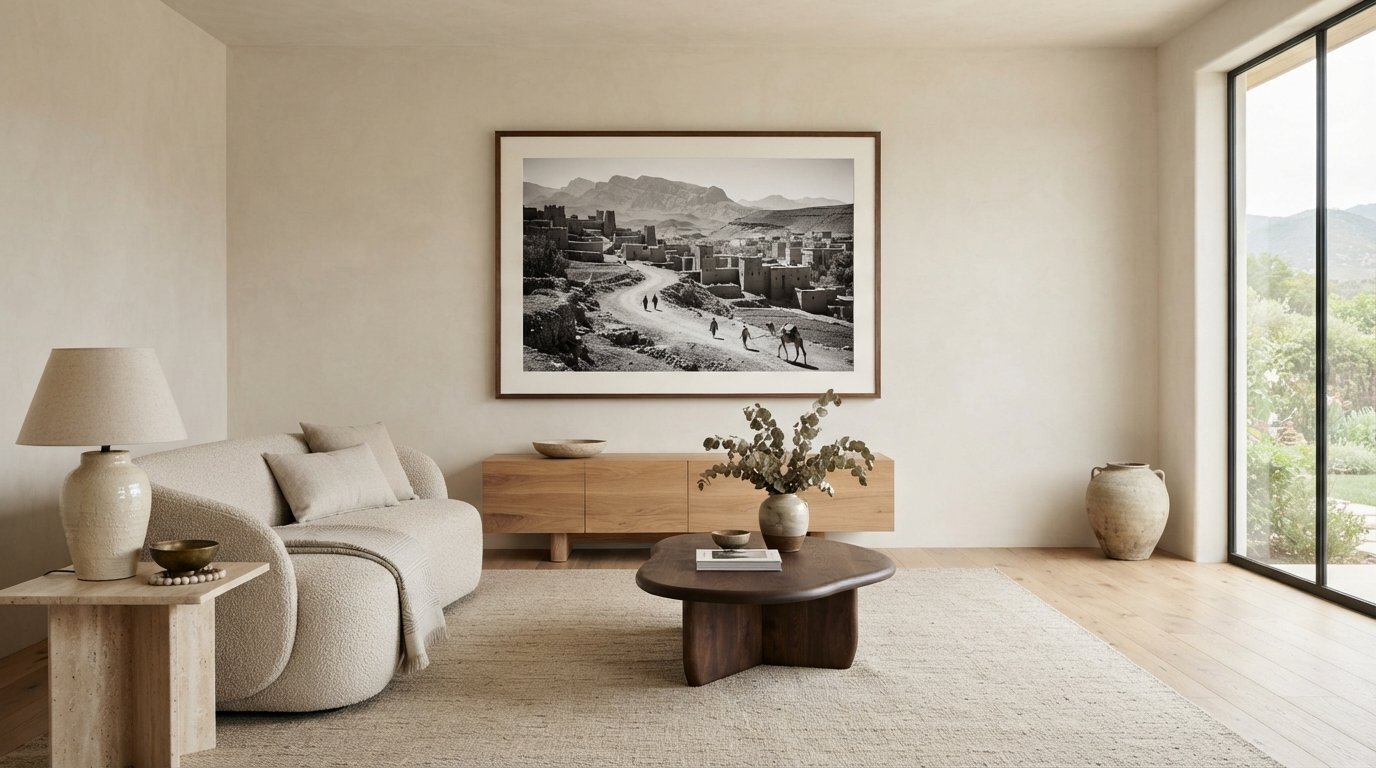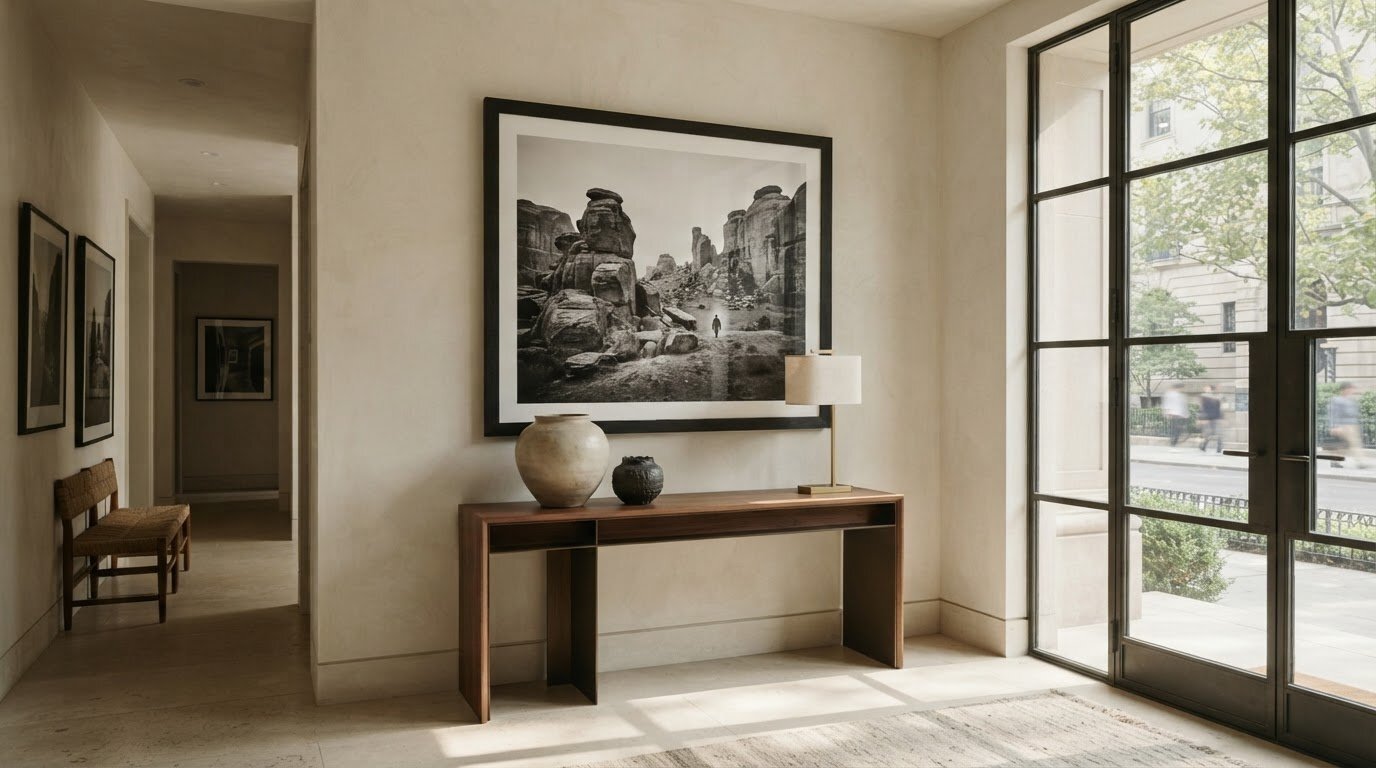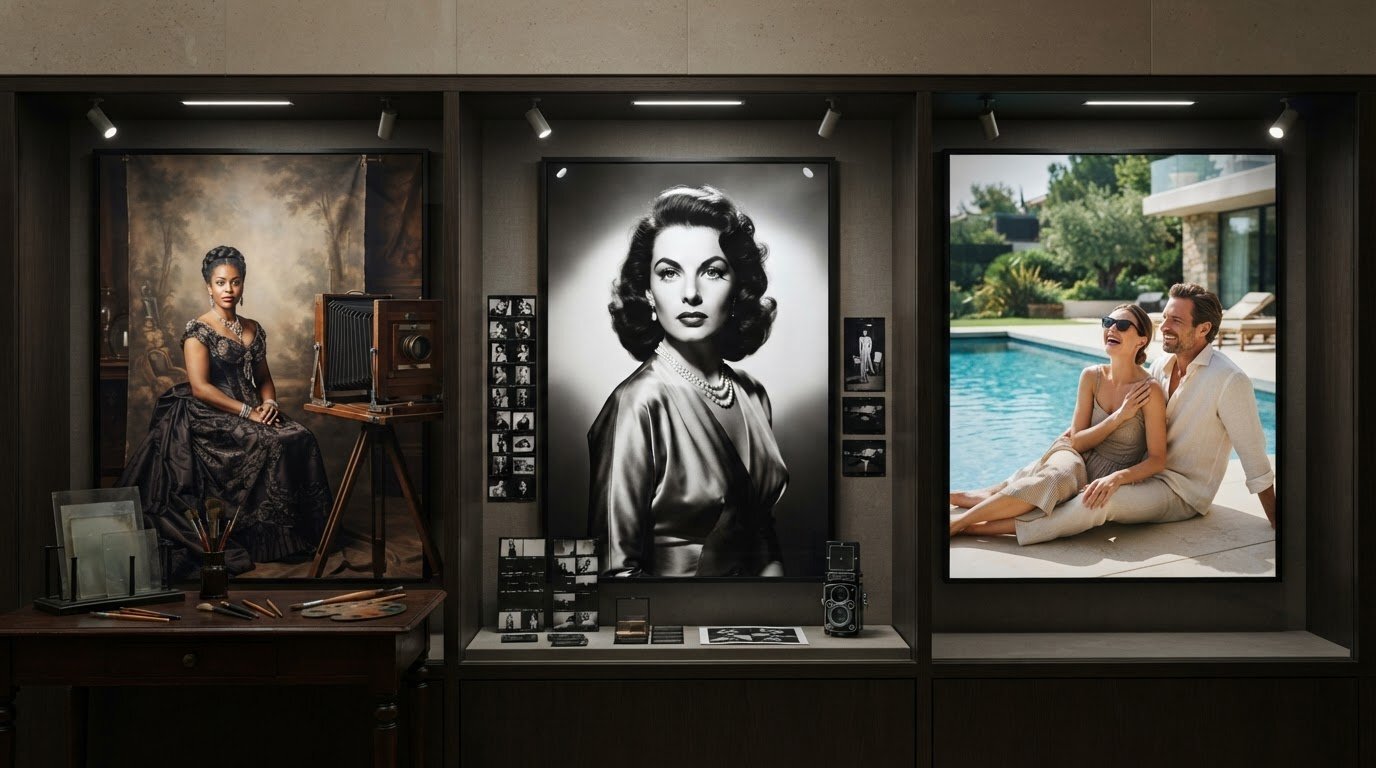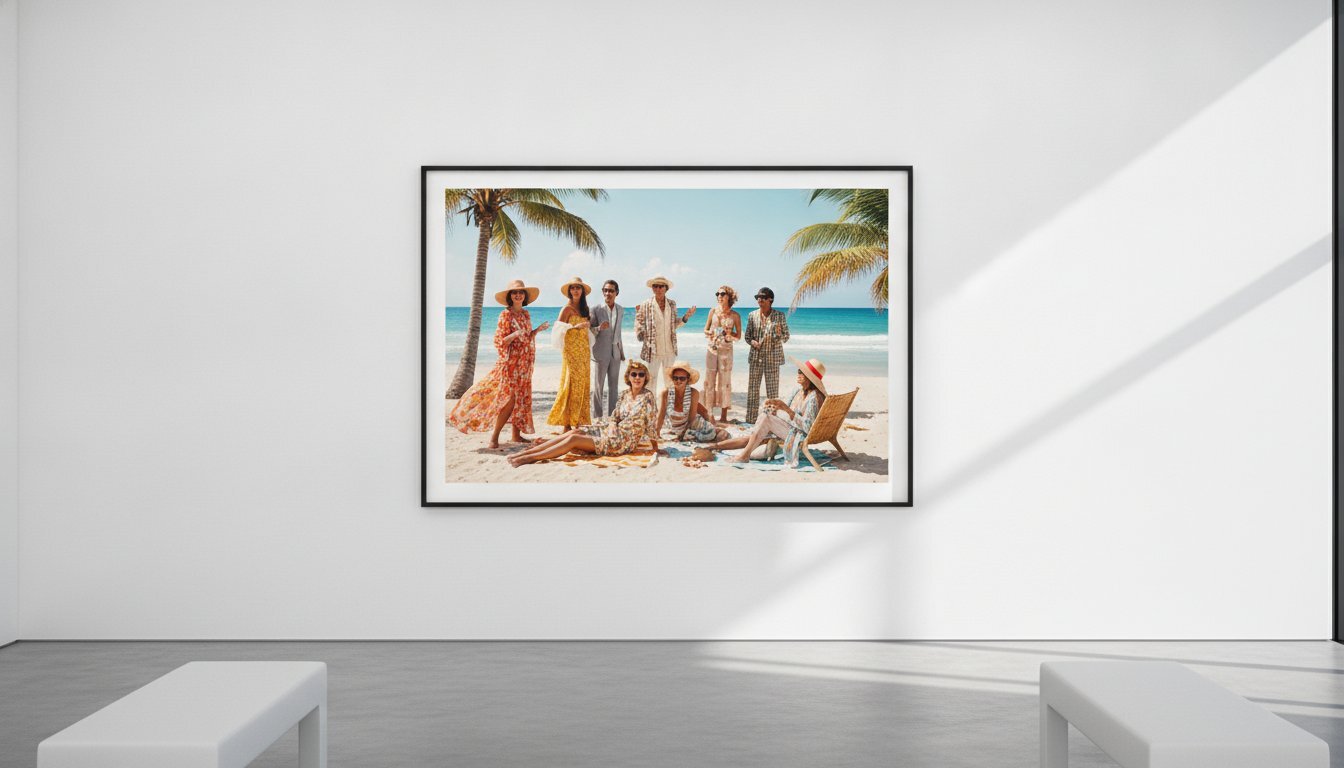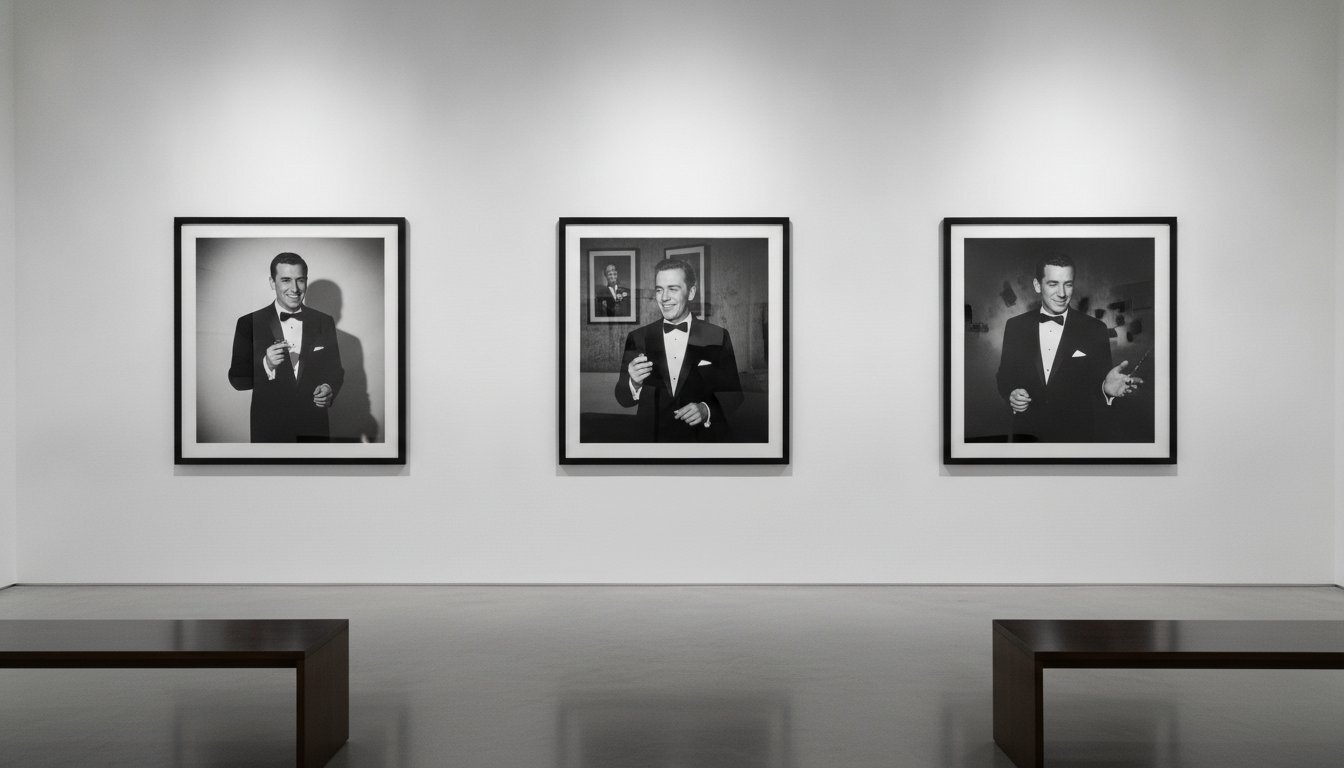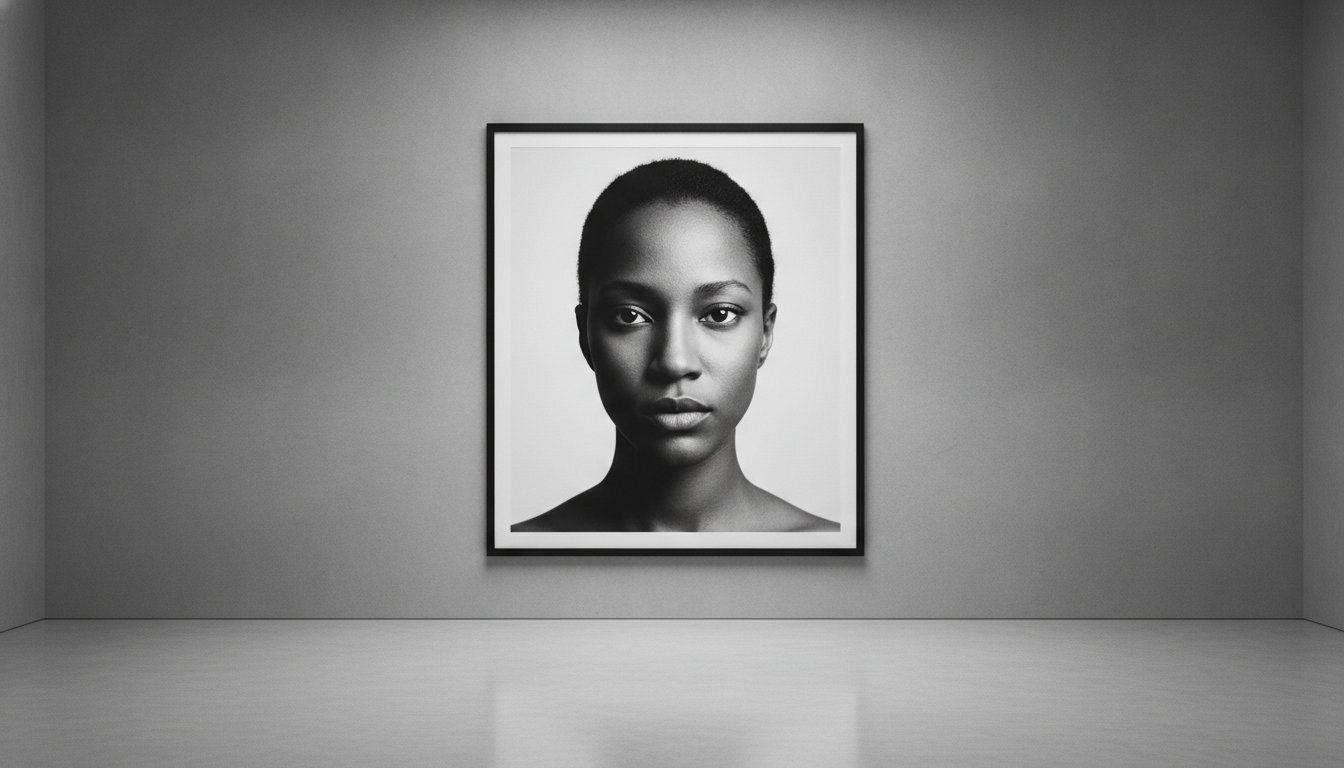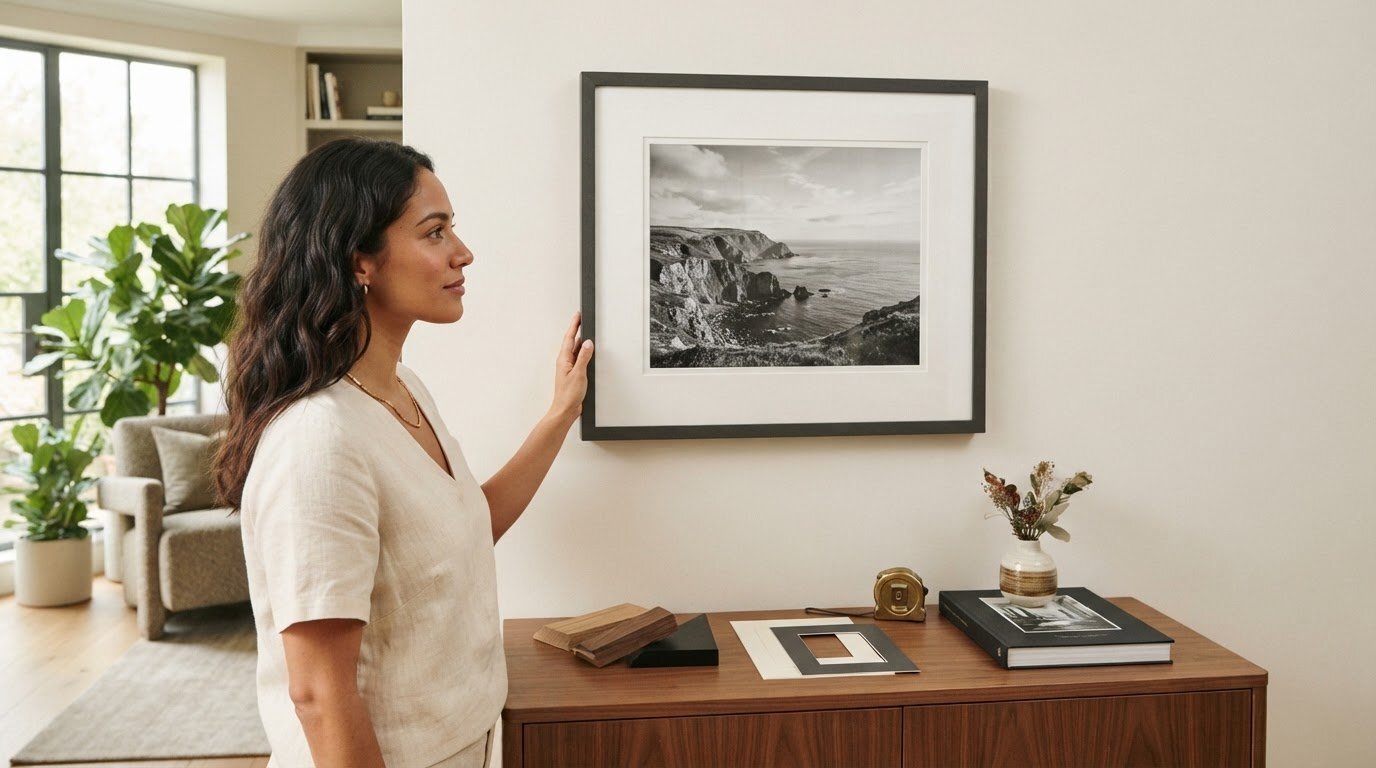
What if the print that looks perfect on screen feels different once it’s framed and on your wall? Choosing framed fine art prints uk involves more than selecting an image: paper, print method, mount, glazing and frame all affect how the work looks. When you’re buying online, it can be difficult to judge these details, along with a retailer’s service, before you order. They matter as much as the image when you want a considered addition to your home.
This guide explains how to assess the artwork and framing as one complete purchase. Compare the paper and production details, check how the frame and glazing affect the presentation, and confirm the product, delivery and returns information before ordering. We’ll also cover how to assess a gallery’s curation and the information it provides about an artwork’s provenance. Galerie Prints, a specialist online gallery featuring photography archives and photographers including The Slim Aarons Collection and Terry O’Neill Photography, offers print and bespoke framing choices to consider together. The goal is a confident purchase, not simply a frame that looks right online.
Key Takeaways
- Assess the artwork, print production, paper and framing as separate parts of the finished piece, rather than relying on the image alone.
- Compare the paper and print details stated on each listing, then picture the available dimensions on your wall before choosing.
- Check the specific frame, mount and glazing options for the artwork you’re considering; choices can vary by listing.
- When comparing framed fine art prints uk retailers, confirm provenance, specifications, support and the practical details of delivery, packaging and returns.
- Decide whether a ready-framed option suits your room or whether selecting a print for separate framing gives you the finish you want.
Framed fine art prints in the UK: what are you choosing?
A framed fine art print brings together the photographic image, its reproduction, the paper and the frame, with a mount if selected. Each element contributes to the finished piece. The image carries the photographer’s vision; production and paper affect how it appears; framing gives it a visual boundary and helps it sit within a room.
This distinction matters when shopping online. A screen preview cannot show exactly how a physical print will look or how a frame and mount will change its scale. Treat the listing as a description of a complete object, not just a photograph. Check which details are specified and which you may need to confirm. When comparing framed fine art prints uk buyers should look at both the artwork and the retailer’s service, including delivery and returns information.
What makes a photographic print fine art?
Fine art photography is shaped by more than its subject. The photographer’s authorship, the image’s history and the context in which it is presented all contribute to its meaning. A curated archive can help buyers understand a work’s origin, but provenance alone is not a promise of future investment value. Galerie Prints offers physical photographic prints, including works associated with Slim Aarons and Terry O’Neill; availability varies by listing. If a product description uses the term Giclée printing, the link explains its use for fine art digital prints made on inkjet printers.
What does a framing service add?
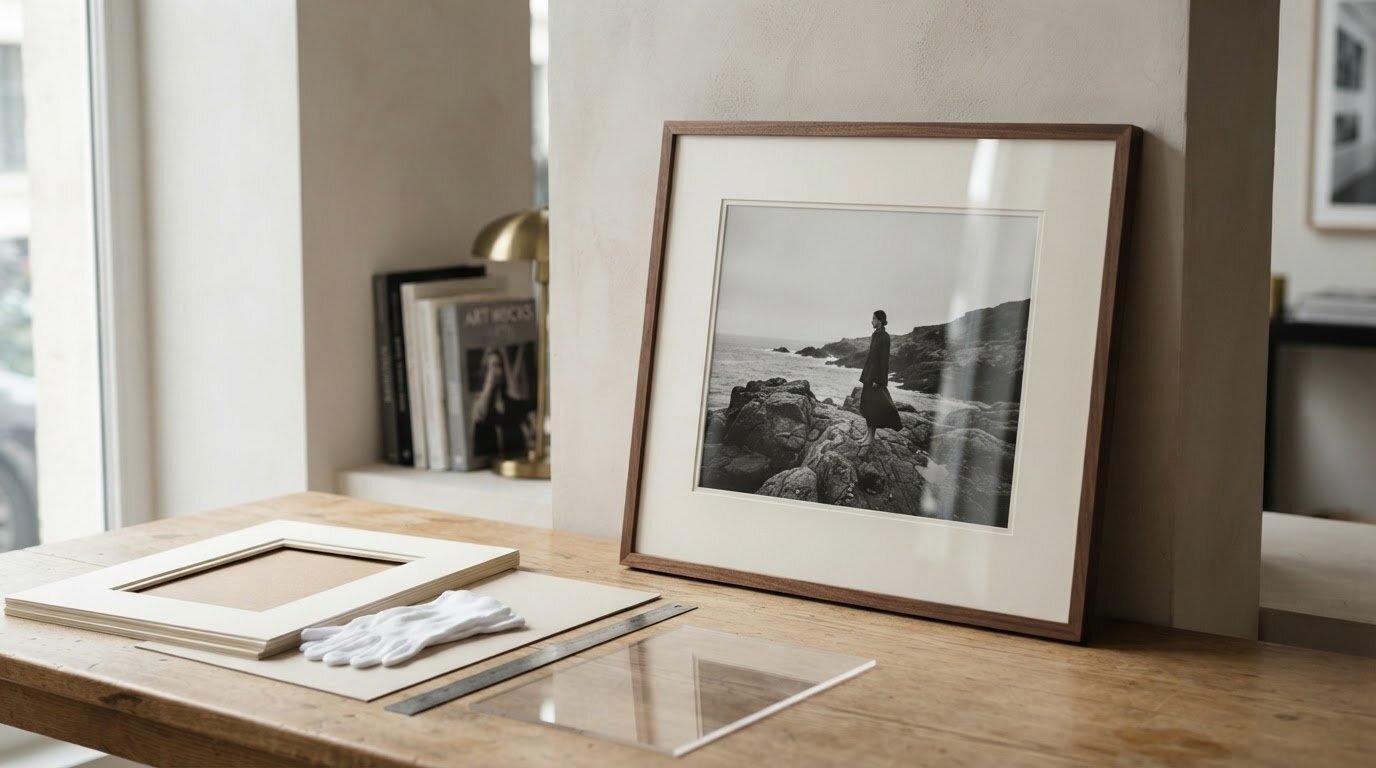
A frame can echo a photograph’s period, soften its presence or create a sharper contrast with the image. A mount adds space around the print, changing its proportions and giving the composition room to breathe. Together, these choices affect how large the piece appears on a wall. Check the frame’s outer dimensions as well as the print size.
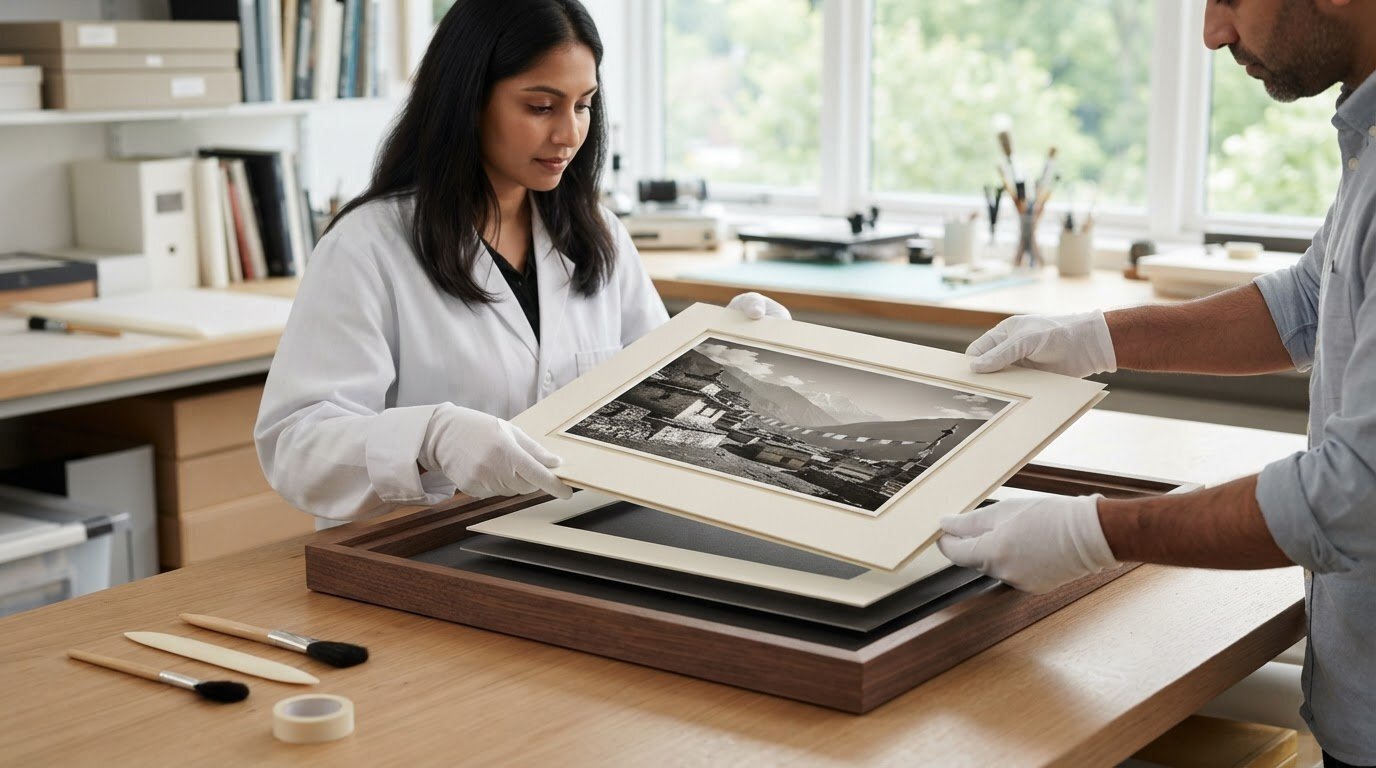
Bespoke framing means framing arranged to suit a selected artwork and the buyer’s chosen options. It doesn’t mean every component or choice is custom-made. Glazing, mounting and frame specifications can vary, so read the details for the individual work rather than assuming a particular material or finish. Galerie Prints offers bespoke framing alongside print choices, so buyers can consider the artwork and its presentation together. Before ordering, check the listing and retailer information for current framing details, delivery arrangements and returns terms.
Print quality, paper and image size: what should UK buyers check?
A photograph’s appearance depends on more than the image itself. Paper influences its surface and finish, while the production method affects how detail, tone and colour are rendered. Product listings don’t always provide the same level of technical information, so compare the stated details rather than assuming every print uses identical materials or processes.
How do paper type and printing affect the finished image?
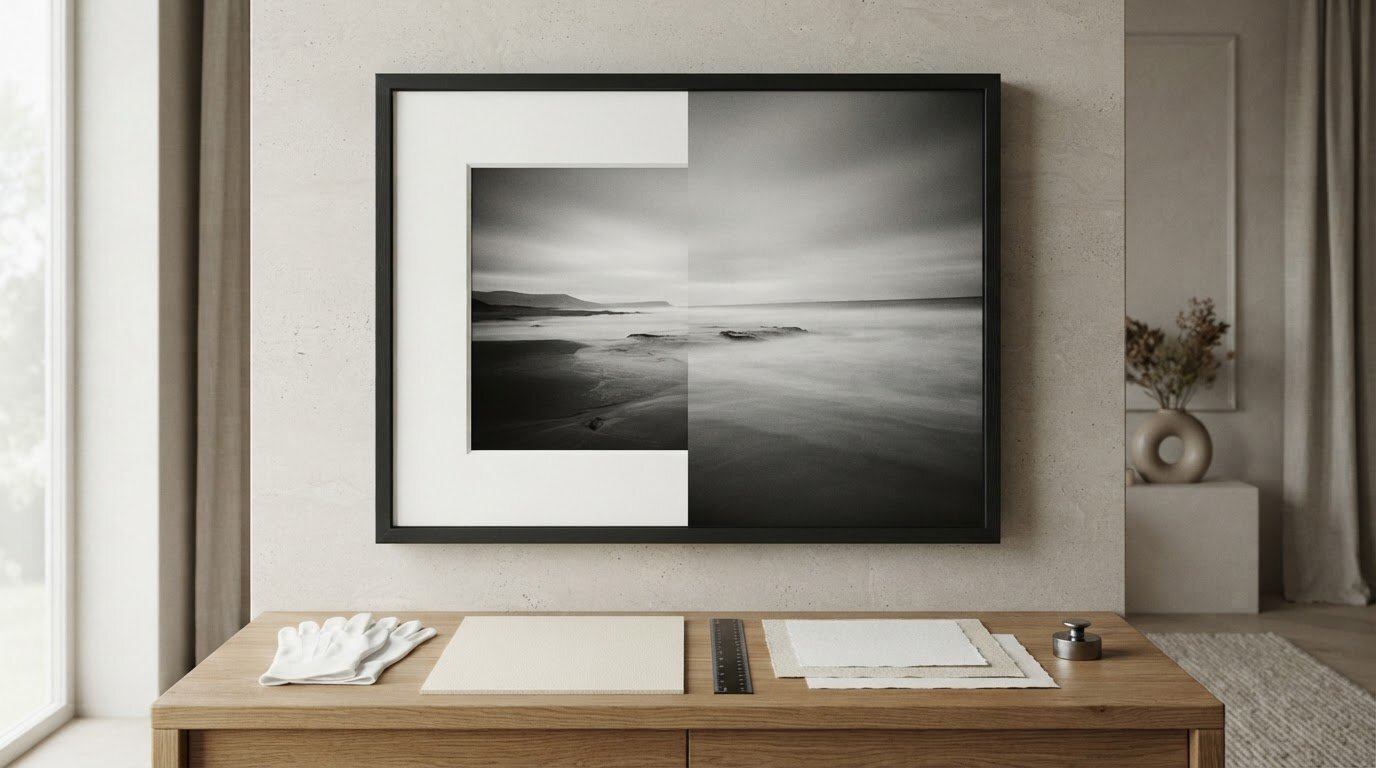
Look for the paper type and any details about its weight or finish. Weight, often expressed in gsm, describes how heavy the paper is; surface and finish help indicate whether it is smooth, textured, matte or glossy. These terms help you compare listings, but rely only on qualities confirmed for the specific print. Don’t assume paper is archival, acid-free or museum-grade unless the listing says so.
Study the available product images for fine detail, tonal range and colour, while remembering that screens can display an image differently from a physical print. If a listing names a production process, check what it means for that work. For example, don’t infer that a print is Giclée simply because it is described as fine art. Tate’s overview of how the Tate produces its prints offers an example of the kind of information about materials and production a retailer may provide.
Stated paper and production specifications give you a clearer basis for comparing prints than an image preview alone.
How do you choose a print size for your wall?
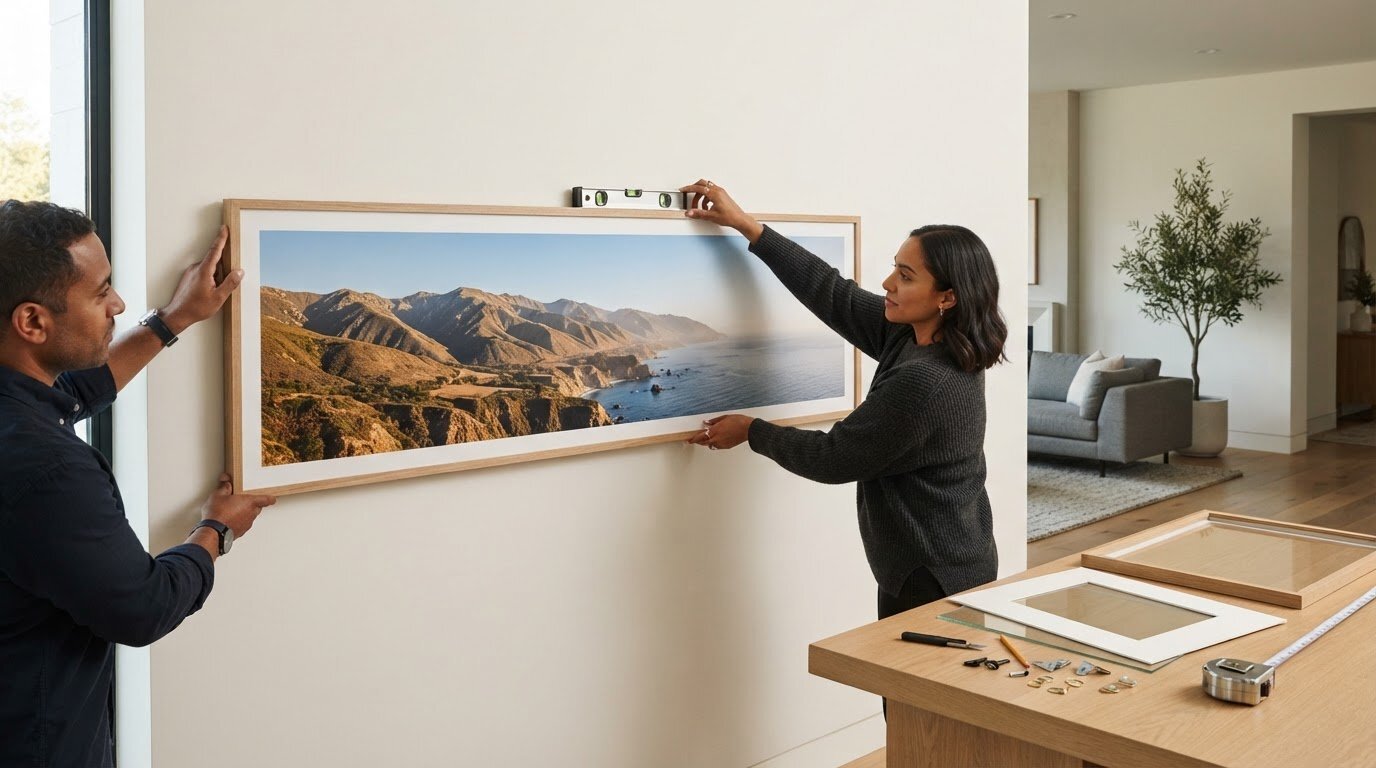
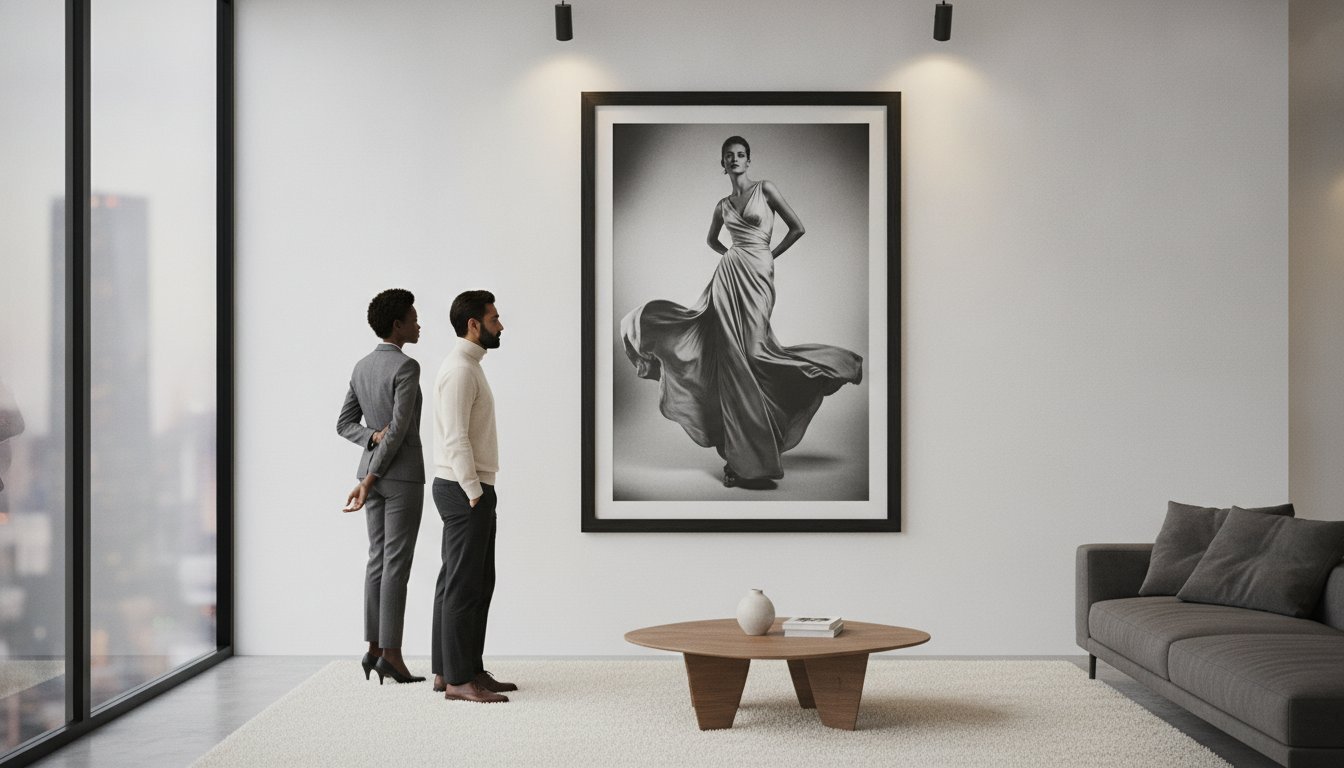
Measure the available wall space and the furniture beneath it before comparing listed print dimensions. A size that feels intimate beside a reading chair may look underscaled above a broad sofa. If possible, mark the print’s dimensions on the wall with removable tape, then view the outline from where you usually sit or stand.
Remember that listed dimensions may describe the print, not the finished framed piece. A mount and frame add to its overall width and height, so check whether the retailer provides separate measurements for the artwork and completed frame. Galerie Prints allows customers to select print dimensions, paper types and framing options; check the individual listing for available choices and measurements.
For a broader perspective on choosing photographic art for a space, read this guide to fine art photography and collecting. Exploring Galerie Prints’ curated photographic prints can also help you consider subject, size and presentation together.
Frame, mount and glazing: compare the details before you order
Framing changes how a photograph meets the room. A mount creates space around the image, while the frame gives it a defined edge. Glazing affects the surface you see and how you care for the finished piece. For framed fine art prints uk buyers should compare the details on each product listing, since available choices can vary by artwork.
Should you choose a mount with a fine art print?
A mount creates visual separation between the photograph and its frame. It can give an image more breathing space, draw attention to a border or help a smaller print hold its own on a larger wall. A print without a mount may feel more immediate, particularly if the image extends close to its edges. Neither approach is always better. Consider the photograph’s composition, the room’s palette and how the piece will relate to nearby artworks.
Check whether the dimensions shown refer to the print or the complete framed piece. A mount and frame increase the overall footprint, which can affect how the artwork sits above furniture or alongside other works.
What should you check about frame and glazing options?
Product photography can suggest a finish, but it doesn’t replace specifications. Look for the stated frame material and finish, whether a mount is included or optional, and the type of glazing used. Don’t assume glazing offers UV protection unless the listing specifically confirms it. Review any care guidance, too, and ask the retailer if a material or instruction isn’t clear.
| Detail | What to compare | What to confirm |
|---|---|---|
| Frame finish | The material and finish stated for each option | Whether the chosen finish is available for this artwork |
| Mount | Whether one is included or offered as a choice | How it changes the finished dimensions |
| Glazing | The glazing type named in the listing | Whether any UV protection is explicitly specified |
| Care guidance | Instructions supplied for the finished piece | How to clean and handle the frame and glazing |
Before ordering, compare the complete framed dimensions with the wall space you have available, not just the print size. This is especially useful when planning an arrangement, since one frame’s proportions can affect the balance of the display. Galerie Prints offers bespoke framing, but check the individual listing for the available choices and specifications. For an example of curated photographic art, explore this guide to Slim Aarons photography.
How to assess online framing services in the UK
A polished product page is a useful start, but confidence comes from checking what the retailer states about the artwork, finished piece and service. Use this checklist to compare providers of framed fine art prints uk, and verify details that could affect your order directly with the retailer.
Which retailer details deserve a closer look?
- Artwork and provenance: Check who represents or supplies the work, and whether the photographer, archive or other source is identified. If edition information matters to you, look for a clear statement rather than assuming the print is limited or numbered.
- Print specifications: Review the listed dimensions, paper type and production details. Note what is stated and what remains unclear; don’t infer a material or process from the image preview alone.
- Framing details: Confirm which frame and mount choices apply to the artwork, what glazing is specified and whether dimensions describe the print or finished frame. Look for care guidance if provided.
- Order support and policies: Check current delivery terms, packaging information, returns conditions and the process for reporting damage. Find out how to contact the retailer if you need clarification before ordering.
These checks are useful when a gallery presents curated work from named photographers or archives. Galerie Prints offers photographic prints alongside choices of print dimensions, paper and framing. Check the individual listing and current retailer information for the details that apply to a particular piece; don’t assume every work has the same options or terms.
How can reviews help you compare framing services?
Customer reviews can offer clues about receiving and displaying a framed piece, but they don’t replace product details or retailer policies. Look for recent, specific accounts that describe the frame’s finish, packaging, communication or how an issue was handled. Repeated themes across detailed reviews are more informative than a single glowing comment or complaint.
Keep each source in perspective. A review describes one customer’s experience; the product listing states specifications, and the retailer’s terms explain its current policies. Third-party reviews don’t establish Galerie Prints’ delivery, returns or damage procedures. Confirm those directly before you buy.
Rather than relying on an unsupported “best” ranking, compare retailers against the same checklist and the artwork you’re considering. For a closer look at curated photography and available framing choices, explore Galerie Prints’ photographic prints.
Choose a framed fine art print that feels right for your home
The right print should feel at home in the room and remain compelling to you over time. Consider the subject, palette and scale alongside the room’s existing character. A photograph with lively detail may bring energy to a quiet wall, while a more restrained image may sit comfortably among patterned furnishings. These are possibilities, not guaranteed effects; your response to the artwork matters most.
Which framed print suits your room and collecting style?
Start with practical conditions. Measure the wall and nearby furniture, note the natural light at different times of day, and consider the colours and materials already in the space. Then decide whether you want the print to harmonise with its surroundings or provide contrast. For a sense of the mood and visual world associated with the photographer, the Slim Aarons guide offers context on his photography, rather than a formula for decorating.
A ready-framed purchase can simplify planning by bringing the print and its presentation together. Choosing a print for separate framing gives you the opportunity to select a frame and mount independently, but means you’ll need to coordinate those decisions yourself. Neither route is automatically better. Galerie Prints offers curated photographic works and a bespoke framing service, which may suit buyers who want to consider artwork and framing together. Check each listing for available options.
What should you do before placing an order?
Before you reach the basket, confirm the details of the exact piece. A final review can catch a size or framing choice that doesn’t match your plan.
- Check that you’ve selected the intended image and print dimensions.
- Review the stated paper details and confirm the framing configuration, including any mount choice.
- Make sure the finished framed dimensions fit your room measurements.
- Review the retailer’s current delivery, returns and care information before confirming the order.
For framed fine art prints uk shoppers, a considered choice balances personal taste with clear, product-specific information. Explore fine art prints at Galerie Prints at your own pace, and check the current specifications and terms for any work that catches your eye.
Make your next print a considered choice
Choosing framed fine art prints uk buyers can feel confident about means looking beyond the image. Compare the stated paper and print details, account for the complete framed dimensions, and check the retailer’s current delivery and returns terms. The right subject and presentation should suit your room and your own taste.
Galerie Prints brings together curated photography, including works from The Slim Aarons Collection. You can review listed print sizes and paper types, with bespoke framing available as an add-on. Check each artwork’s current specifications and options before ordering.
Explore curated fine art photography prints, find a work that speaks to you and choose its presentation with care. Browse the available print and framing options to start planning a considered addition to your space.
Frequently Asked Questions
What is the difference between a fine art print and a poster?
A fine art print is generally presented as a photographic or artistic work for close appreciation, while a poster is often made for display or promotion. Production methods and materials can differ, but the labels alone don’t confirm paper, printing process or finish. Check the specifications for each artwork rather than assuming every fine art print uses the same materials or every poster is produced in the same way.
Are framed fine art prints worth buying online in the UK?
Buying online can be convenient and give you access to curated photography. A search for framed fine art prints uk retailers can help you compare artwork and presentation, but assess each listing carefully. Check the print and paper details, print size, full framed dimensions and framing specifications. Before ordering, confirm current delivery arrangements and returns terms directly with the retailer.
How do I choose the right frame for a fine art print?
Choose a frame that complements both the image and the room, considering its colours, furnishings and available wall space. Think about whether a mount would give the photograph more breathing room, and check the specified glazing. Measure for the complete framed dimensions, not only the print. Frame, mount and glazing choices vary by retailer and product, so confirm the available options for the specific artwork.
Can I buy fine art photography prints already framed?
Some galleries offer framed configurations or provide framing as an add-on. Galerie Prints offers a bespoke framing service alongside its physical photographic prints, though options depend on the individual artwork. Check the product listing to see what you can select and whether the print is sold framed or unframed. Confirm whether the stated dimensions refer to the print alone or include the mount and finished frame.
What should I look for in online framing service reviews in the UK?
Prioritise recent, detailed reviews that describe the finished frame, packaging, communication and how the retailer responded to any problem. Look for recurring themes across multiple reviews rather than relying on a single enthusiastic comment or complaint. Reviews offer context, but they don’t confirm a retailer’s current policies. Verify delivery, returns and damage procedures directly with the retailer before placing your order.
How can I tell whether a fine art print uses archival paper?
Look for an explicit, item-specific statement about the paper, including whether the retailer describes it as archival. If the wording is unclear, ask the seller what the claim means and which material applies to that print. Don’t infer archival quality from a high price, the print’s appearance or broad marketing language. Clear specifications help you distinguish confirmed material details from assumptions and make a more informed comparison.
Do framed fine art prints arrive ready to hang?
Not necessarily. Hanging hardware and preparation can vary by artwork, framing configuration and retailer, so don’t assume a framed print is ready to hang. Check the product listing for details about what is included, or contact customer support before purchase if the information isn’t clear. Galerie Prints offers bespoke framing as an add-on; confirm the selected item’s current framing and hanging details before ordering.