A photograph is more than a captured moment; it is a resonant echo of a cultural revolution that still vibrates through our modern lives. You’ve likely felt that magnetic pull when viewing an image of a rock legend, yet the market is often saturated with thin, pixelated reprints that fail to honor the subject’s soul. It’s frustrating to seek a piece of history only to receive a low-quality digital copy that lacks the depth and texture of the original negative. Authentic music photography prints should feel like holding a piece of the stage, offering a tactile connection to the artists who defined generations.
We’ll show you how to source, collect, and display museum-quality works that transform your walls into a curated gallery of cultural heritage. You’ll learn to identify iconic archives, understand the significance of modern archival standards like ISO 18937-3:2026, and appreciate the artisanal framing that ensures your investment lasts for decades. From the legendary lens of Terry O’Neill to the curated selections of esteemed galleries, we’ll guide you through the process of acquiring a sophisticated, ready-to-hang masterpiece that brings the golden age of sound into your private collection.
Key Takeaways
- Understand the transition of music photography from ephemeral press shots into a prestigious and collectable category of fine art.
- Discover how to source authentic music photography prints from world-renowned archives to ensure your collection possesses genuine cultural and historical provenance.
- Learn to select evocative imagery that balances your personal musical passions with the sophisticated aesthetic demands of your interior design.
- Master the technical distinctions between mass-produced reprints and museum-standard works, prioritizing archival-grade materials and bespoke, artisanal framing.
- Gain the confidence to build a curated home gallery that serves as a permanent, high-end tribute to the most iconic eras of sound.
The Evolution of Music Photography Prints as Fine Art
For decades, the images captured in the heat of a performance or the quiet of a dressing room were viewed as ephemeral. They were tools of the trade, destined for the coarse newsprint of music weeklies or the glossy but temporary life of a fan magazine. Today, that perspective has shifted entirely. We now recognize music photography prints as a sophisticated category of fine art, standing alongside classical portraiture and landscape photography in prestigious galleries. This evolution marks a transition from “disposable” press photography to “collectable” historical artifacts, where the value lies not just in the subject, but in the artistic eye that captured them.
The distinction between a mass-produced poster and a gallery-grade print is rooted in the concept of provenance. In the art world, provenance provides a documented history of an object’s origins, ensuring that a piece is a true reflection of the artist’s intent. When you acquire a print sourced from a definitive archive, you aren’t just buying an image; you’re securing a physical connection to the original negative and the era it represents. Unlike a digital file, which is infinitely replicable and lacks tactile depth, a physical print possesses a sense of permanence and weight. It is a tangible piece of cultural history that matures alongside your home.
From Backstage Pass to Gallery Wall
The photographers who defined the visual language of music were often silent witnesses to seismic cultural shifts. By cultivating deep intimacy with their subjects, they were able to capture moments that felt remarkably private despite the public stature of the artists involved. This proximity allowed them to move beyond the stage, documenting the vulnerability and quiet charisma of icons before they became legends. Music photography serves as the visual heartbeat of a generation, crystallizing the raw energy of sound into a permanent, silent narrative of human expression.
The Cultural Value of a Frozen Moment
As we trace the history of music photography, we see a transition from functional documentation to poetic expression. Collectors are increasingly turning to curated music archives to anchor their interior spaces, seeking the emotional resonance that only a high-definition, archival print can provide. There is a profound psychological impact in viewing an iconic performer in such detail that you can see the texture of their velvet jacket or the grit on a guitar string. This shift mirrors broader trends in fine art photography, where the focus has moved toward preservation and narrative depth. By choosing a museum-quality work, you ensure that the vibrancy of the “frozen moment” remains as vivid decades from now as it is today.
Iconic Archives: From Terry O’Neill to the Getty Images Gallery
Sourcing fine art requires a discerning eye for provenance. To ensure that music photography prints retain their value and visual integrity, they must be sourced from reputable, world-renowned archives. These institutions act as the definitive guardians of photographic heritage. Unlike unauthorized reproductions, which often suffer from digital artifacts and poor tonal range, official prints are struck from original negatives or master digital files. This process preserves the artisanal quality of the grain and the specific lighting choices made by the photographer at the moment of capture.
Galerie Prints operates as a bridge to these prestigious collections, positioning itself as a guardian of photographic history. Our partnership with the Getty Images Gallery and our role as curators of the Terry O’Neill collection allow us to offer a breadth of imagery that spans the entire history of modern sound. Whether you’re seeking the high-octane energy of a stadium tour or the quiet intensity of a recording session, these curated archives provide a level of historical accuracy that mass-market retailers simply cannot match.
The Terry O’Neill Legacy: Access All Areas
Terry O’Neill possessed a rare, chameleon-like ability to blend into the background, a talent that allowed him to capture the “Sixties” and the decades that followed with unprecedented intimacy. His work with David Bowie remains a cornerstone of any serious music collection, offering a masterclass in the visual evolution of an icon. By documenting The Beatles in their early spontaneity and Elton John during his most flamboyant stages, O’Neill created a visual vocabulary for fame itself. His prints are more than just decoration; they’re sophisticated investments in the narrative of 20th-century culture.
The Getty Images Archive: A Century of Sound
The Getty Images Gallery offers a scale of historical depth that is truly staggering, reaching far beyond the standard rock aesthetic. While many collections favor the rebellion of the 1970s, this archive provides a vital window into the pioneers of Jazz and Blues. Sourcing rare imagery from these earlier eras requires meticulous preservation of original source materials to maintain maximum print clarity. Much like The V&A’s Harry Hammond Collection, the Getty archive ensures that the technical nuances of early photography are maintained for modern display. This commitment to quality allows collectors to experience the grit and soul of a smoky jazz club or a historic blues festival in breathtaking detail. If you’re ready to define your own space, exploring our curated Music Archives provides an elegant entry into the world of professional collecting.
Selecting Music Art for Your Interior: Genre, Era, and Aesthetic
Selecting the right piece for your home requires a curator’s mindset, balancing the raw energy of a performance with the architectural demands of your living space. When you invest in music photography prints, you are selecting more than a visual; you are choosing a mood that will permeate the room. A photograph of a solitary jazz musician in a dimly lit club evokes a sense of introspection and quiet sophistication, whereas a sprawling stadium shot of a rock icon commands attention and radiates vitality. The room’s purpose should dictate this choice, ensuring the artwork enhances the existing atmosphere rather than competing with it.
The most successful collections strike a delicate balance between iconic status and personal nostalgia. While a globally recognized image of a legend provides immediate prestige, it’s the personal connection to a specific era or genre that gives the artwork its soul. Whether you’re drawn to the polished elegance of Hollywood’s musical golden age or the grit of the 1970s London scene, the print should reflect a chapter of cultural history that resonates with your own journey.
Matching Genre to Room Atmosphere
The psychological impact of music genres extends into their visual representation. For libraries, private studies, or home offices, the subdued elegance of Jazz and Blues prints offers a refined backdrop that encourages focus and calm. These images often capture moments of intense concentration or late-night melancholy, fitting for spaces intended for reflection. Conversely, social hubs like modern living rooms or dining areas benefit from the high-energy pulse of Rock photography. These prints act as conversation starters, injecting a sense of rebellion and cultural dynamism into the environment. To maintain a neutral, sophisticated aesthetic that survives changing decor trends, many collectors opt for black and white pictures. The absence of color highlights the archival grain and the dramatic interplay of light and shadow, allowing the print to bridge the gap between vintage charm and contemporary minimalism.
The Impact of Scale and Orientation
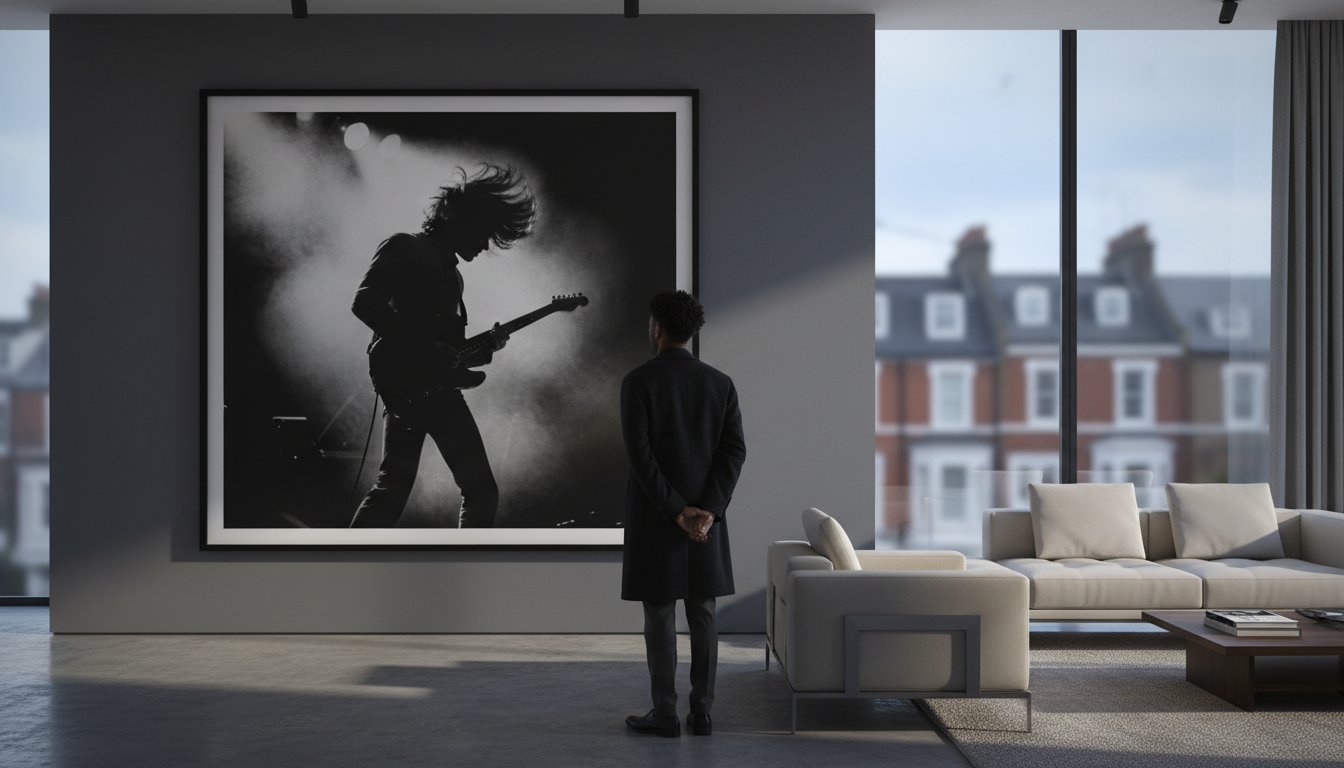
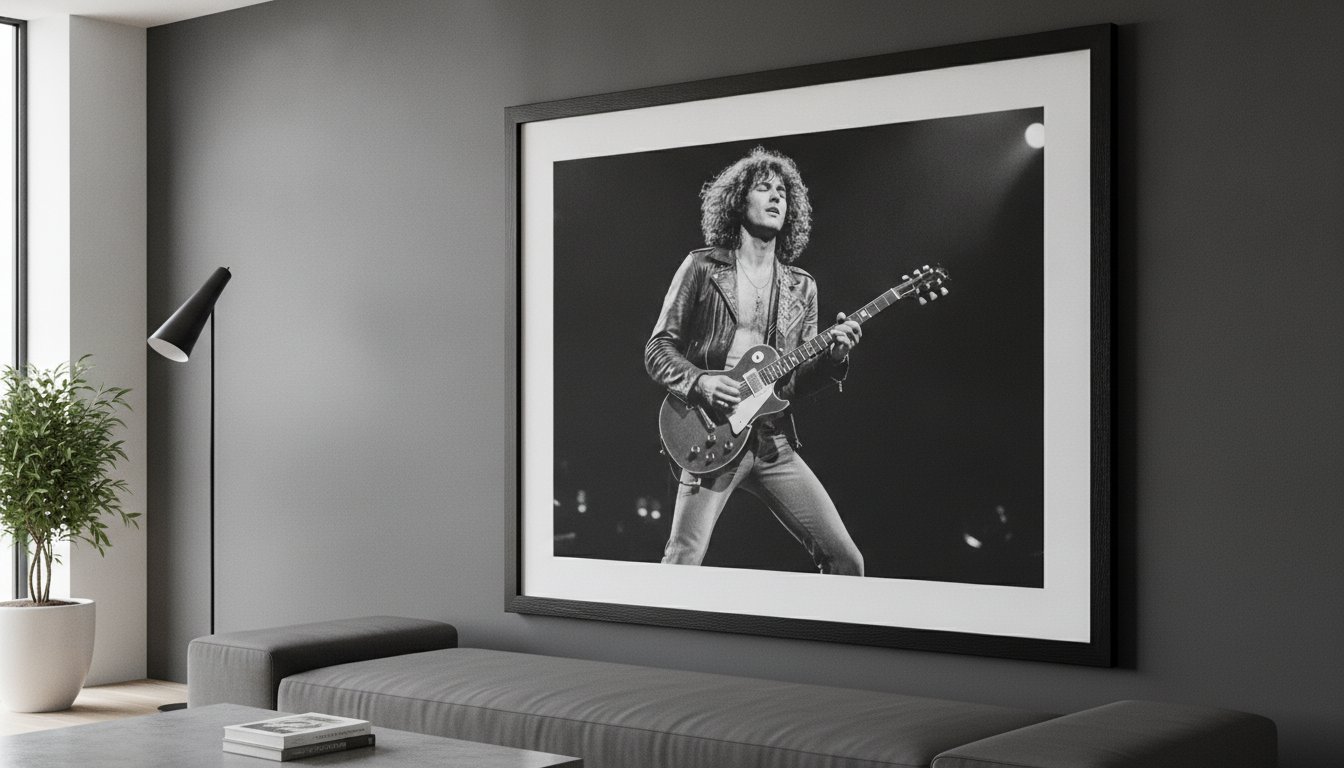
Scale is a critical component in the language of interior design. An oversized, “over-the-sofa” print functions as a definitive statement, anchoring the room and establishing a clear focal point. This approach works best with iconic, high-contrast imagery that can hold its own at a large scale. If you prefer a more narrative approach, creating a curated “gallery wall” using smaller music moments allows for a deeper exploration of a specific era or artist. This technique invites the viewer to linger, discovering the subtle details of a backstage scene or a candid rehearsal. Orientation also plays a pivotal role in visual flow. Portrait-oriented prints can add a sense of height and vertical elegance to a room, while landscape orientations are ideal for following the horizontal lines of furniture, creating a balanced and stable composition. By thoughtfully selecting the scale and genre of your music photography prints, you transform a house into a personal museum of sound.
The Collector’s Standard: Archival Quality and Bespoke Framing
Acquiring high-caliber music photography prints is as much a technical decision as it is an aesthetic one. While mass-market posters are often printed using standard offset lithography on thin, acidic paper, a true fine art print adheres to the rigorous standards of museum preservation. This technical superiority ensures that the tonal depth of the image remains stable for decades rather than fading within a few years of exposure to light. For the serious collector, the material composition of the artwork is the foundation of its long-term value and historical permanence.
At Galerie Prints, we operate as guardians of this photographic heritage. We understand that a print is a physical legacy, intended to be passed down through generations. To maintain this standard, we utilize only the finest production methods, ensuring that every piece that leaves our gallery is a masterclass in artisanal craftsmanship. This commitment to quality justifies the premium positioning of our collections and provides the peace of mind that your investment is protected by science as much as by style.
Archival Pigment Prints vs. Mass-Produced Posters
The industry standard for professional-grade work is the archival pigment print, often created through the sophisticated Giclée process. Unlike traditional dye-based inks that sit on the surface and break down quickly, pigment-based inks are composed of microscopic particles that bond deeply with the paper fibers. This results in superior color depth and a wide tonal range that captures the true grit of a live performance or the soft grain of a studio portrait. To ensure maximum clarity, all prints are produced at a minimum resolution of 300 DPI.
The choice of substrate is equally vital. We use acid-free, lignin-free museum-quality paper, which is essential because it prevents the chemical breakdown that causes yellowing and brittleness over time. Longevity is further reinforced by modern standards; in March 2026, the ISO 18937-3:2026 standard was published to assess print stability under LED lighting. Adhering to these benchmarks ensures your collection remains vibrant even in modern, well-lit environments.
The Role of Bespoke Framing in Preservation
A frame is far more than a decorative border; it is a protective environment designed to shield the artwork from environmental stressors. Professional mounting is a non-negotiable step in the process, as it prevents the print from warping or “cockling” due to changes in humidity. Our bespoke framing service utilizes archival-grade materials, including acid-free mats and UV-protective glass, to create a seal against atmospheric pollutants and harmful light rays.
The aesthetic impact of a hand-finished frame cannot be overstated. By choosing styles that complement the era and genre of the photography, you enhance the visual narrative without distracting from the subject. The result is a luxury, ready-to-hang masterpiece that brings a gallery-level finish into your private space. If you are ready to elevate your interior with a piece of history, you can explore our bespoke framing service to see how we preserve the world’s most iconic soundscapes.
Curating Your Personal Gallery with Galerie Prints
Galerie Prints acts as a curator’s bridge, connecting the modern collector with the vast, silent halls of the world’s most prestigious archives. When you select music photography prints from our collection, you aren’t merely decorating a wall; you are preserving a cultural heartbeat. The ease of our online selection process allows you to explore decades of sound and soul from the comfort of your home, with every image supported by the weight of historical significance. Unlike digital ephemera, which lacks tactile depth and permanence, a physical music photography print is a lasting legacy, a tangible asset that matures in both emotional and cultural value. We handle every step with the precision and reverence these moments deserve, ensuring that global shipping and professional handling maintain the integrity of the work from our gallery to your doorstep.
Finding Rare and Limited Edition Gems
Rare and limited edition pieces often represent the pinnacle of a private collection. Spotting prints that possess the potential to hold or increase in value requires an understanding of rarity, artist prestige, and the preservation of the original source material. The exclusivity of the Terry O’Neill collection, for instance, is anchored by his unparalleled access to the icons of the twentieth century, capturing them in moments that are both vulnerable and legendary. Similarly, for those drawn to the intersection of high-society leisure and musical culture, our Slim Aarons guide offers a deeper look into a world of poolside elegance and refined social circles. These works are not just visual records; they are finite artifacts of a bygone era, often produced in restricted runs that ensure their status as sought-after treasures for serious collectors who value authenticity above all else.
The Galerie Prints Experience: From Archive to Home
The journey from archive to home is one of meticulous transformation. It begins with the visceral impact of an iconic image and culminates in the arrival of a bespoke, framed masterpiece that is ready to hang. This experience is defined by an air of quiet authority, where our role is to facilitate your discovery without the frantic, high-pressure cadence of traditional e-commerce. We provide a steady and composed flow of information, revealing the story behind each creator and the technical nuances of the production process before any mention of a transaction occurs. This deliberate pacing ensures that you feel both intellectually stimulated by the art and practically supported in your purchase journey. We invite you to linger over our archives, layer by layer, until you find the specific moment that speaks to your personal narrative. Starting your collection today is a commitment to beauty and history, a way to anchor your space in the permanence of art and the enduring power of the image.
Preserving the Visual Rhythm of History
Building a collection of music photography prints is an act of cultural preservation that bridges the gap between historical heritage and luxury interior design. We’ve explored how these images transitioned from disposable press shots to prestigious gallery pieces, and why museum-standard archival quality is essential for any serious collector. By prioritizing original source materials and hand-finished artisanal craftsmanship, you ensure that the soul of the performance remains vibrant for decades to come. It’s about more than just decoration; it’s about anchoring your space in the permanence of art.
As an official partner of the Getty Images Gallery archive and curators of the Terry O’Neill collection, we provide a direct bridge to the most iconic soundscapes ever captured. Our bespoke museum-quality framing adds the final layer of protection and elegance, turning a photograph into a lasting piece of history. Whether you’re drawn to the raw energy of rock or the quiet depth of jazz, your journey into professional collecting starts with a single, resonant image. We invite you to step into this elite world of beauty and heritage.
Explore our curated Music Archive and find your iconic print today. Discover the perfect piece to transform your home into a gallery of sound.
Frequently Asked Questions
What is the difference between a music poster and a fine art music print?
The primary difference lies in the material composition and production method. A poster is a mass-produced offset lithograph on thin paper, whereas a fine art music print is a museum-standard work created on heavy, acid-free paper. These high-end music photography prints offer a depth of tone and archival permanence that posters simply cannot match. They’re designed to be lasting investments rather than temporary decorations.
Are these music photography prints limited edition?
Many of the works within our Music Archives are available as limited editions, including specific pieces from the Terry O’Neill collection. These prints are released in restricted runs, often accompanied by a certificate of authenticity to verify their rarity. Owning a limited edition piece ensures your artwork remains a unique and valuable part of your personal gallery, capturing a finite moment of cultural history that few others will possess.
How do I know the photography prints are authentic?
Authenticity is guaranteed through our official partnerships with world-renowned institutions like the Getty Images Gallery. Every print we offer is struck from the original negative or a master digital file, ensuring the historical accuracy of the image. This provenance acts as a seal of quality, distinguishing our curated works from the unauthorized and lower-quality reproductions often found in mass-market retailers.
What is archival pigment printing?
Archival pigment printing, often called the Giclée process, utilizes microscopic pigment particles that bond deeply with the fibers of acid-free paper. Unlike standard dye-based inks, these pigments are highly resistant to fading and provide a much broader tonal range. This technical superiority is why serious collectors insist on archival standards to preserve the visual integrity and clarity of their photography for decades.
Does Galerie Prints offer bespoke framing for all music prints?
We offer a dedicated Bespoke Framing Service for our entire collection of music photography prints. Every frame is hand-finished by skilled artisans using museum-standard materials, such as acid-free mats and professional-grade mounting. This process doesn’t just enhance the aesthetic appeal of your artwork; it provides a protective environment that prevents warping and environmental damage, ensuring your piece arrives ready to hang.
Can I choose the size of my music photography print?
Most of our iconic images are available in a variety of sizes to suit your specific interior design requirements. Whether you’re looking for a large-scale statement piece to anchor a room or a smaller, intimate portrait for a gallery wall, we provide multiple dimensions. Each size is carefully selected to maintain the original clarity and composition of the photographer’s work without compromising quality.
How should I care for my fine art print to ensure it lasts?
To ensure your fine art print lasts for generations, it’s essential to display it away from direct sunlight and areas of high humidity. Utilizing UV-protective glass and professional mounting is the best way to shield the paper from environmental stressors. Regular dusting with a soft, dry cloth is usually all that’s required to maintain the pristine appearance of your hand-finished frame and artwork.
Do you ship music photography prints internationally?
We provide secure global shipping for all our works, ensuring they reach you in perfect condition regardless of your location. Every piece is handled with the utmost care and packaged using professional-grade materials to protect the frame and glass during transit. This reliable service allows collectors worldwide to acquire a piece of photographic heritage and have it delivered safely to their doorstep.