
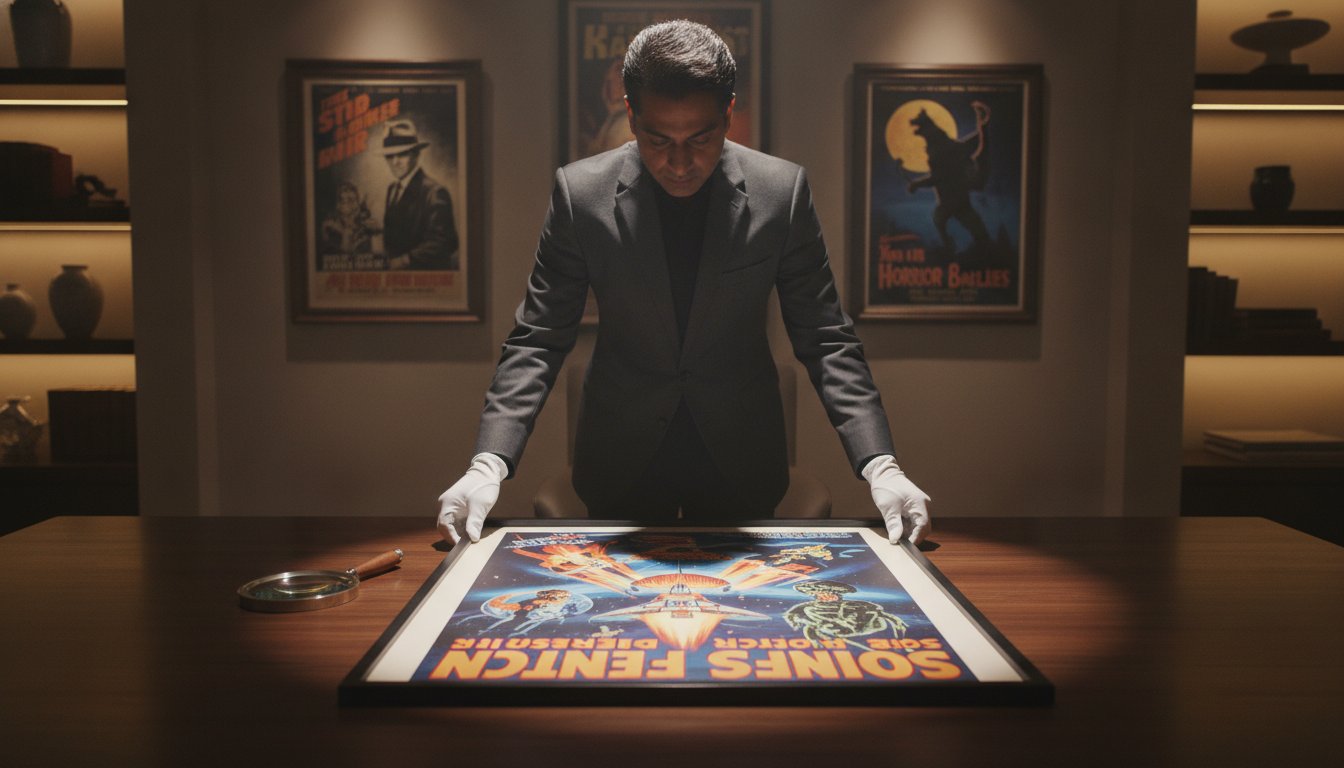
Tag: poster preservation

Buy Vintage Movie Posters Online: A Curator’s Guide to Collectable Cinema Memorabilia

Did you know that the global market for vintage posters is projected to reach 1.93 billion dollars this year, with premier pieces appreciating by as much as 15 percent annually? For the discerning collector, these are not merely decorations but tangible assets that bridge the gap between historical significance and modern interior aesthetics. You likely recognize that owning a piece of cinematic history is a profound privilege, yet the decision to buy vintage movie posters online can often be clouded by the fear of acquiring a common reproduction rather than a museum quality artifact.

This curator’s guide is designed to act as your expert guardian, providing the clarity you need to distinguish between various formats like one sheets and intimate cinema lobby cards. We will show you how to identify authentic works, value your collection with confidence, and utilize bespoke framing to preserve these relics for generations. By the end of this journey, you will possess the knowledge to curate a gallery wall that reflects both your personal taste and a sophisticated reverence for the silver screen’s enduring legacy.

Key Takeaways

  • Master the art of authentication by learning to identify National Screen Service (NSS) numbers and original studio stamps that distinguish genuine artifacts from modern reprints.
  • Understand how to buy vintage movie posters online with a strategic focus on high-demand genres like Horror, Sci-Fi, and Noir to secure investment-grade pieces.
  • Discover why the 11×14 cinema lobby card is often the superior format for residential gallery walls, offering a balance of photographic realism and versatile display sizing.
  • Ensure the longevity of your collection by implementing museum-standard preservation, specifically utilizing archival-quality mounting and UV-protective glass to prevent acid burn and ink fading.
  • Elevate your interior aesthetic by transitioning from casual memorabilia to a curated fine art collection featuring rare photographic archives and limited edition prints.

The Allure of Cinema Art: Why Discerning Collectors Buy Vintage Movie Posters Online

Original theatrical posters and lobby cards are much more than promotional tools; they are physical artifacts of a vanished era. When you buy vintage movie posters online, you’re acquiring a piece of history that wasn’t meant for the public to keep. These items were printed for specific theatrical runs and usually destroyed afterward. The survivors represent the history of cinema art, possessing a soul that modern reprints can’t replicate. They exist as a bridge to a bygone era of elegance, where the image was the primary gatekeeper of the audience’s imagination.

The “Golden Age” of Hollywood, spanning from the 1930s to the 1960s, remains the peak of collectability in 2026. This era relied on stone lithographic printing, which offered a depth of color and texture that digital methods fail to mirror. The rich, saturated hues of period-accurate Technicolor on a 1950s one-sheet provide a sensory experience that anchors a room. Collectors have shifted their perspective. They don’t see these as simple souvenirs anymore. Instead, they view them as high-caliber investments that offer both aesthetic beauty and historical permanence. For those looking to buy vintage movie posters online, the focus is often on finding that perfect blend of historical weight and visual harmony.

A Window into a Bygone Era of Elegance

Vintage posters captured the meticulously crafted glamour of the old studio system. This transition from the theater lobby to the luxury gallery reflects a deep appreciation for mid-century design. There’s a clear stylistic bridge between the cinematic art of this period and the Slim Aarons aesthetic. Both celebrate a lifestyle defined by elegance and poise. Whether it’s a moody noir or a vibrant musical, these pieces bring prestige to any curated space, acting as a window into a world of curated beauty.

The Narrative Intimacy of the Still

Discerning buyers are increasingly turning to the narrative intimacy of photographic lobby cards. While large posters offer graphic impact, these smaller formats often use early color processes to capture specific moments of performance. They provide a closer look at set design and subtle emotion. By choosing these pieces, you’re embracing the principles of fine art photography. A single frame from a classic film can evoke nostalgia while serving as a sophisticated focal point in a modern residential interior.

Determining Rarity and Value: A Framework for Buying Vintage Film Art

A sophisticated framework for buying vintage film art requires an eye for genre hierarchy and historical scarcity. While every film has its devoted fans, the market consistently prioritizes ‘Holy Grail’ genres like Horror, Science Fiction, and Film Noir. These posters often featured the most striking graphic design and were produced in smaller quantities than mainstream romances or comedies. For those who seek to buy vintage movie posters online, these genres offer the most robust appreciation potential. A 1931 poster for Dracula, for instance, remains a benchmark of value, having set world records at auction for its rarity and lithographic brilliance.

Authentication begins with a close examination of the National Screen Service (NSS) markings. When you buy vintage movie posters online, you must look for specific codes used between 1940 and 1980. Most theatrical posters featured a code, usually in the bottom right corner, indicating the year of release and a sequence number. A 53/123 mark denotes the 123rd film processed by the NSS in 1953. Studio stamps from Warner Bros or MGM provide additional layers of provenance. While pristine condition is often sought, ‘theatrical wear’ like pinholes or fold lines can actually enhance the historical story. These marks prove the piece actually hung in a theater lobby, serving its original purpose before becoming a museum-quality artifact.

Decoding Studio Markings and Provenance

Understanding the difference between a first release and a theatrical re-issue is vital for any serious collector. Re-issues often carry the same NSS year but include a ‘R’ prefix, such as R58/45. While these re-releases are still authentic vintage items, they typically command lower prices than the original debut printing. Design languages also varied significantly by studio; MGM often favored lush, painterly portraits, while Warner Bros leaned into the starker, high-contrast imagery of the Noir era. The presence of ‘Border Art’ and the quality of the lithographic ink can also signal a poster’s premium status.

Investment Trends for 2026

As we move through 2026, the market is seeing a surge in demand for cult classics from the 1970s and 80s. Scarcity remains the primary driver of value, especially for iconic franchises like Star Wars. Collectors now recognize that a complete set of eight lobby cards commands a significant premium over individual stills. These sets offer a comprehensive visual narrative of the film, making them highly desirable for investment-grade collections. If you are starting your journey, exploring a curated selection of rare archives is the best way to ensure your acquisition holds its value over time.

Lobby Cards vs. One-Sheets: Choosing the Right Format for Your Interior

When you decide to buy vintage movie posters online, the first practical dilemma is scale. The choice between a traditional one-sheet and a set of cinema lobby cards often dictates the entire atmosphere of a room. One-sheets act as bold, symbolic declarations. They utilize expansive graphic design to sell the “idea” of a film, often relying on stylized illustrations that capture the essence of a story rather than its literal reality. These large format pieces, typically measuring 27 by 41 inches, require significant wall space to breathe. They’re designed for impact, serving as the definitive face of a cinematic masterpiece.

Lobby cards offer a different level of intimacy. These 11 by 14 inch artifacts were produced in sets of eight, each providing a photographic window into a specific scene. While posters sell the dream, lobby cards show the performance. They capture the texture of the costumes, the nuances of set design, and the raw emotion of the actors. This format allows you to buy vintage movie posters online that function as a narrative sequence. You aren’t just displaying a title; you’re preserving a curated story. Their smaller footprint makes them far easier to preserve and frame, allowing collectors to build extensive archives without the logistical burden of oversized storage.

The Aesthetic Advantage of the 11×14 Format

The standard lobby card format is exceptionally versatile for modern residential gallery walls. These pieces integrate seamlessly into collections of black and white pictures, adding a layer of historical depth to a sophisticated interior. Instead of relying on a single large focal point, you can create a rhythmic display using a full set of eight cards. This arrangement works beautifully in home offices or private libraries, where the viewer can appreciate the fine details from a closer distance. It’s a more measured, scholarly approach to decor that prioritizes narrative intimacy over sheer size.

Graphic Impact vs. Photographic Realism

One-sheets are masterpieces of symbolic graphic art, often featuring hand-painted illustrations that define a film’s legacy. In contrast, lobby cards are prized for their photographic realism. Many vintage cards from the mid-century utilized high-quality Technicolor lithography, resulting in a unique color palette that modern digital prints cannot replicate. These stills offer a truthful record of film history, functioning as authentic photographic art. Whether you prefer the bold lines of a poster or the rich detail of a still, both formats serve as essential pillars of a high-caliber cinema collection, often beautifully complemented by contemporary original pop art for sale from Fringe.

Display and Preservation: Transitioning from Memorabilia to Fine Art

The moment you buy vintage movie posters online, your role shifts from consumer to custodian. These artifacts were never intended for longevity; they were temporary promotional tools printed on high-acid paper. Without intervention, the very materials that carry the image will eventually succumb to ‘acid burn,’ a slow degradation that yellows the paper and makes it brittle. Transitioning these pieces from mere memorabilia to investment-grade fine art requires a commitment to museum-standard preservation. This process begins with archival-quality mounting and the non-negotiable addition of UV-protective glass to shield fugitive inks from light damage.

Modern collectors often find that a single poster gains even more prestige when it’s part of a broader cultural narrative. Designing a ‘Cinema Wall’ allows you to balance the graphic energy of film art with the raw, atmospheric power of music photography. This juxtaposition creates a sophisticated dialogue between different facets of 20th-century heritage. It turns a living space into a private gallery that honors the history of both sight and sound. When you choose to buy vintage movie posters online for a long-term collection, the presentation must match the caliber of the work itself.

The Art of Bespoke Framing

Professional framing is much more than an aesthetic choice; it’s a structural necessity. Choosing a frame style that complements the era of the piece, such as a sleek Art Deco profile for a 1940s noir or a warm wood for a Mid-Century Modern classic, anchors the work in its historical context. Matting also plays a vital role by providing a visual buffer that draws the eye toward the central photographic still. Our bespoke framing service utilizes strictly acid-free materials to ensure your collection remains as vibrant as the day it was printed.

Preserving the History of the Still

The tactile nature of vintage lithographs is part of their charm, but the oils from your skin can cause permanent damage. You should never touch the surface of a vintage print directly. Maintaining a stable environment is equally critical. Fluctuations in humidity can cause the paper to ripple, while excessive light exposure will bleach the original pigments. We always recommend ‘reversible’ mounting techniques. This ensures the poster remains in its original state, allowing future curators to appreciate the same cinematic history you enjoy today.

The Galerie Prints Collection: Curated Excellence for the Discerning Buyer

Choosing to buy vintage movie posters online should feel as deliberate and rewarding as stepping into a physical gallery on a quiet afternoon. At Galerie Prints, we operate as more than a retailer; we are a guardian of photographic heritage. Our collection is built upon the same rigorous standards we apply to the Slim Aarons archive, ensuring that every piece of cinema art meets the criteria for museum-quality display. We don’t merely stock inventory. We curate artifacts that possess a rare combination of historical weight, aesthetic brilliance, and investment-grade provenance.

Our unique position in the art world provides us with exclusive access to world-renowned photographic archives, featuring legendary works from acclaimed artists like Terry O’Neill. This allows us to source cinema lobby cards and posters that are often unavailable to the general public. When you buy vintage movie posters online through our gallery, you’re benefiting from a curatorial eye that understands the nuances of the market. Every item is a guaranteed original, selected for its ability to serve as a bridge to a bygone era of cinematic elegance.

A Curated Selection of Cinematic History

The Galerie Prints Experience

The journey from digital browsing to a physical masterpiece on your wall is handled with meticulous care. Our London-based studio utilizes localized, artisanal craftsmanship to provide a bespoke framing service that is second to none. We believe that a purchase is an investment in history, which is why we offer ready-to-hang solutions that ensure a seamless transition into your interior. Our experts are always available to provide advice on building a collection that reflects your personal narrative. We invite you to explore our current collectable cinema lobby cards for sale and discover a lasting piece of Hollywood’s photographic heritage. It’s a promise of permanence in an age of the ephemeral.

Building a Legacy of Cinematic Heritage

Owning a piece of film history is a journey that begins with a single, evocative frame. We have explored how the transition from theatrical promotion to investment-grade fine art relies on a deep understanding of rarity, from identifying ‘Holy Grail’ genres to decoding the intricate language of studio markings. By prioritizing the narrative intimacy of lobby cards and the structural integrity of archival mounting, you ensure that your collection remains a vibrant focal point for years to come. When you choose to buy vintage movie posters online, you are not merely decorating a room; you are investing in a tangible link to Hollywood’s most evocative eras.

Our gallery serves as a guardian of this photographic heritage, offering you a bridge to the past through meticulously preserved artifacts. We invite you to Browse Our Curated Collection of Rare Cinema Lobby Cards. Our expertly curated archival collections are complemented by bespoke museum-quality framing and global shipping with archival protection. This ensures your piece arrives ready to transform your space into a private gallery of cinematic wonder. Let your walls tell the story of a bygone era of elegance, preserved with the precision and reverence it deserves.

Frequently Asked Questions

What is the standard size of a vintage cinema lobby card?

The standard size for a vintage cinema lobby card is 11 by 14 inches. These were specifically designed to fit into standardized display frames within theater lobbies, providing a compact window into the film’s narrative. This specific dimension makes them exceptionally versatile for modern residential gallery walls, as they offer a photographic intimacy that larger one-sheets often lack.

How can I tell if a movie poster is an original or a reproduction?

Authenticating a piece requires a meticulous examination of National Screen Service (NSS) numbers and original studio stamps. Authentic items from the mid-20th century were printed on high-acid paper that develops a specific texture and scent over time. Reproductions often lack the depth of color found in traditional stone lithography and the precise numbering that identifies a first-theatrical release.

Are vintage movie posters a good financial investment in 2026?

Vintage movie posters remain a robust financial asset in 2026, with the global market estimated at 1.93 billion dollars. Serious collectors who buy vintage movie posters online often see annual appreciation rates between 10 and 15 percent. Iconic titles, particularly from the horror and sci-fi genres, continue to set records at major auction houses, reflecting their status as tangible historical assets.

What is a ‘Title Card’ and why does it often cost more than scene cards?

A Title Card is the primary card in a set of eight, featuring the film’s full credits and main artwork. It’s often the most valuable piece because it serves as a miniature version of the one-sheet poster. Because of their visual appeal, Title Cards were frequently stolen from theaters or kept as souvenirs, making them significantly rarer than the subsequent scene cards.

How should I frame my vintage posters to prevent them from fading?

To prevent fading, you must utilize UV-protective glass and archival-quality, acid-free mounting. This protects the fugitive inks from light damage and prevents the paper from developing yellow acid burn. Our bespoke framing service provides museum-standard protection, ensuring that your investment-grade memorabilia remains in pristine condition while transitioning into a permanent piece of fine art.

What film genres are currently most in demand for high-end collectors?

High-end collectors currently prioritize Horror, Science Fiction, and Film Noir classics. These genres often featured the most striking graphic design and were produced in more limited quantities than mainstream dramas. Additionally, limited edition prints from franchises like Star Wars have seen a significant surge in demand as they bridge the gap between contemporary cinema and historical photographic archives.

Do you provide a certificate of authenticity with your posters and cards?

Yes, we provide full documentation for every piece in our collection to confirm its authenticity and historical significance. As guardians of photographic heritage, we ensure that every item has been meticulously vetted for its provenance and studio markings. This gives you the confidence to buy vintage movie posters online knowing that you are acquiring a genuine piece of cinematic history.

Why are lobby cards often sold in sets of eight?

Studios traditionally distributed lobby cards in sets of eight to provide a comprehensive visual summary of the film for theatergoers. This number allowed theater owners to fill a standard display case with a narrative sequence of scenes. Collecting a full set is highly prized by connoisseurs, as it offers a complete photographic record of the production’s set design and performances.
Preserving Vintage Movie Posters: A Curator’s Guide to Archival Care

Vintage movie posters were never meant to survive the weekend, let alone a century. These vibrant sheets of “accidental art” were printed on low-quality, acidic paper for short-term promotion, with early print runs before the 1960s often limited to just 3,000 to 5,000 copies. Today, they represent a significant investment, yet they face a constant battle against their own chemical composition. If you feel a sense of urgency about preserving vintage movie posters, you aren’t alone. You recognize that without intervention, sunlight and moisture will inevitably reclaim these pieces of cinematic history.

We understand the anxiety that comes with seeing a beloved 1950s one-sheet begin to yellow or brittle edges start to flake. This guide provides the professional secrets to protecting your collection, from mastering the nuances of ISO 16245:2023 storage standards to understanding why a 150-gram bottle of deacidification spray costs $68.86. You’ll discover how to choose between archival storage and bespoke framing, ensuring your investment achieves the 10% to 15% annual appreciation seen in the current market. We’ll explore the ROI of professional linen-backing and the technical superiority of UV-protective materials to keep your heritage intact for generations.

Key Takeaways

  • Understand why preserving vintage movie posters is an urgent race against the “inherent vice” of the acidic, promotional-grade newsprint used in early cinema history.
  • Identify the primary environmental threats, specifically UV pigment bleaching and humidity-induced cockling, that compromise the structural integrity of your collection.
  • Master the principle of “reversible intervention” to ensure that any preservation step, whether for dark storage or curated display, can be safely undone by future conservators.
  • Evaluate the stabilizing benefits of professional restoration techniques, such as linen-backing and deacidification baths, to neutralize chemical decay and reinforce fragile fibers.
  • Discover how to bridge the gap between historic archives and modern luxury through bespoke archival framing and London-based artisanal craftsmanship.

The Ephemeral Art: Why Preserving Vintage Movie Posters is a Race Against Time

Vintage movie posters occupy a unique space in the art world. We often refer to them as “accidental art,” a term that honors their aesthetic brilliance while acknowledging their humble origins. These vibrant lithographs weren’t created for the hallowed halls of a gallery; they were temporary advertisements, printed on low-grade, acidic newsprint and intended for a brief, two-week theatrical run. Once the film left the cinema, the posters were usually discarded or pasted over, making those that survived rare relics of a vanished era. For the modern connoisseur, preserving vintage movie posters is more than a hobby. It is the active arrest of chemical and physical decay, a process that requires both technical precision and a deep reverence for history.

The primary challenge lies in the “inherent vice” of 20th-century lithography. Because these items were never meant to last, the materials used in their production are often their own worst enemies. As a collector, you serve as a guardian of photographic and cinematic heritage, standing between these exquisite designs and the inevitable march of time. Your role is to stabilize these fragile artifacts, ensuring that the visual narrative of the golden age remains vivid for future generations.

The Chemistry of Decay: Acid, Lignin, and Oxidation

To understand the urgency of preservation, one must look at the molecular level. Most posters from the 1930s through the 1950s were printed on paper containing high levels of lignin, a natural polymer found in wood pulp. Over time, lignin breaks down and creates sulfuric acid, which eats away at the cellulose fibers. This chemical reaction leads to “acid tan,” the characteristic yellowing or browning that can dull the impact of an iconic design. This acidity doesn’t just change the color; it makes the paper incredibly brittle, eventually causing it to crumble at the slightest touch. Posters from this era are significantly more at risk than modern reprints, as they face compounding environmental threats to paper that accelerate this internal oxidation process.

The Impact of Rarity on Preservation Priority

The scarcity of original theatrical posters dictates the level of archival intervention required. When a poster is one of only a handful known to exist, the pressure to stabilize its condition becomes paramount. This rarity is often shared by other ephemeral items, such as Cinema Lobby Cards, which were printed in similarly small quantities and faced the same environmental hazards. In the context of 2026 auction standards, archival integrity is defined as the measurable stabilization of the paper’s pH levels alongside the absolute absence of non-reversible adhesive residues. Maintaining this integrity ensures that the piece retains its historical provenance and its value as a tangible slice of cinematic history.

The Four Great Enemies: Environmental Threats to Your Collection

The survival of a rare lithograph depends entirely on the environment it inhabits. While we admire the vibrant hues of a mid-century classic, invisible forces are constantly working to dismantle its structural and aesthetic integrity. Understanding the four great enemies of paper is essential for anyone committed to preserving vintage movie posters. These threats often operate in silence, making their discovery a matter of “when,” not “if,” unless proactive measures are taken. A gallery-standard approach requires a fortress-like defense against light, moisture, and chemical migration.

Light damage remains the most aggressive of these threats. UV radiation triggers a photochemical reaction that permanently bleaches organic pigments, turning a deep noir shadow into a ghostly grey. This degradation isn’t limited to the sun’s direct rays; indirect ambient light and certain LED spectrums can be just as destructive over time. To combat this, serious collectors rely on bespoke framing services that utilize 99% UV-protective glass. A simple but effective curatorial practice is to rotate your display every six months. This strategy minimizes cumulative exposure and ensures no single piece bears the brunt of a room’s natural light cycle.

Humidity and Temperature: The Micro-Climate

Atmospheric fluctuations present a different kind of danger. When humidity levels rise, paper fibers expand, leading to a wavy distortion known as cockling. Conversely, excessive dryness makes the paper brittle. Professional institutions aim for a “museum standard” micro-climate, typically maintained at 18-20°C with 45-50% relative humidity. Rooms with high moisture volatility, such as bathrooms or kitchens, are absolute no-go zones for cinematic art. High humidity also invites foxing, those unsightly brown spots caused by fungal growth that thrives in damp, stagnant air. Maintaining a stable environment is a non-negotiable pillar of preserving vintage movie posters for the long term.

The Silent Killers: Chemicals and Adhesives

The final enemies are chemical in nature. Off-gassing occurs when non-archival materials, like PVC sleeves or standard cardboard backings, release volatile organic compounds that discolor the paper. Perhaps the most heartbreaking damage comes from improper adhesive tape and acidic mounting boards. These materials migrate into the paper fibers, leaving permanent oily stains and structural weakness. For a deeper dive into professional stabilization techniques, FIAF’s guide to poster preservation offers rigorous standards for handling these sensitive materials. By eliminating these environmental hazards, you ensure your collection remains a pristine bridge to the golden age of glamour.

Archival Storage vs. Bespoke Framing: Choosing Your Preservation Path

The decision between the quiet safety of a flat-file and the radiant presence of a framed masterpiece is one of the most critical steps in preserving vintage movie posters. Central to this choice is the principle of “reversible intervention.” This curatorial standard dictates that any preservation step must be entirely undoable, ensuring the artifact’s future provenance remains untarnished by permanent alterations. Whether you choose the archival portfolio or the bespoke frame, the goal is to arrest decay while honoring the poster’s historical significance.

Flat-File Storage: The Purist’s Choice

For the purist, flat-file storage represents the ultimate commitment to longevity. Utilizing acid-free portfolios and 4 mil Mylar sleeves creates a controlled environment that mimics the archives of the world’s great museums. It’s vital to follow preventive conservation guidelines by storing posters horizontally. Stacking them vertically or leaning them against walls can lead to pressure damage and structural warping over time. When dealing with acidic vintage stocks, interleaving with “buffered” tissue paper provides an essential alkaline reserve to neutralize migrating acids and prevent cross-contamination within a collection.

Museum-Grade Framing: Preservation as Interior Aesthetic

While dark storage offers maximum protection, bringing your collection into the living space adds a layer of sophisticated narrative to your home. Much like collecting fine art photography, displaying vintage cinema art is about celebrating a specific type of aspirational luxury. However, “ready-to-hang” should never be confused with a standard retail frame. Retail frames often use acidic wood-pulp backings and standard glass that offers zero UV protection, essentially accelerating the “acid tan” we discussed in the previous section.

The anatomy of an archival frame is a deliberate engineering feat. It includes spacers, acid-free mats, and UV-glazing. Spacers are non-negotiable; they ensure the paper never touches the glass, preventing “glazing transfer,” a tragic event where the ink physically bonds to the glass surface under fluctuating humidity. Galerie Prints positions its bespoke framing service as the gold standard for London collectors. Our artisans understand that a frame isn’t just a decoration; it’s a stable micro-environment designed for preserving vintage movie posters in style. By utilizing technical superiority in mounting, we bridge the gap between historic archives and modern luxury interiors.

Professional Restoration: When to Linen-Back or Deacidify

There comes a moment for every collector when simple storage is no longer enough to halt the march of time. When a fragile sheet begins to show the structural fatigue of its “accidental art” origins, professional restoration becomes the preferred path for preserving vintage movie posters. The most recognized method is linen-backing, a conservation process where a poster is meticulously mounted onto a layer of acid-free paper and then onto a heavy cotton canvas. This treatment provides a stable, flat surface that reinforces the paper fibers and allows for safe handling and framing without the risk of further tearing. For a standard American one-sheet, measuring 27″ x 41″, this stabilizing process typically starts at approximately $130, representing a vital investment in the artifact’s longevity.

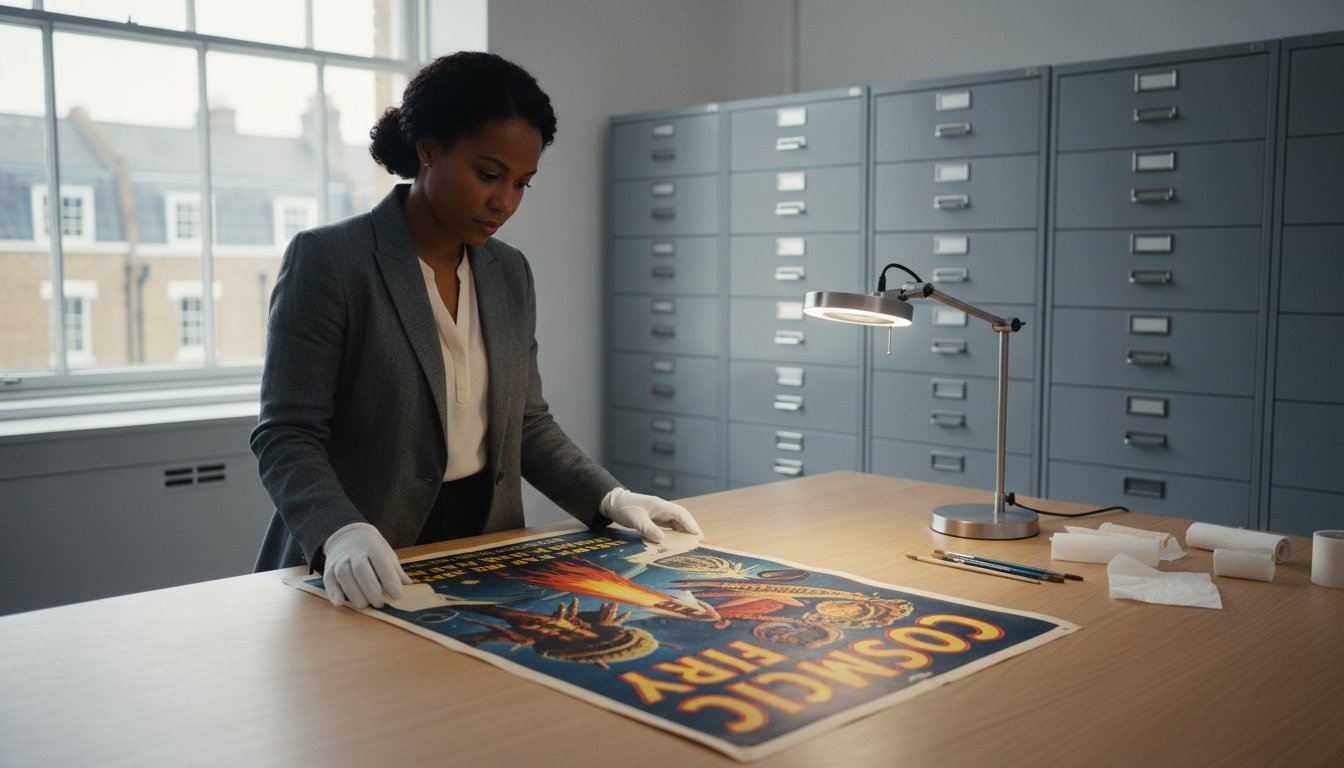
To address the internal chemical decay, conservators may employ deacidification baths. These treatments neutralize the sulfuric acid that builds up in wood-pulp paper, effectively arresting the brittleness that leads to crumbling edges. While specialized products like “Bookkeeper” deacidification spray are available for smaller interventions at around $68.86 for a 150-gram bottle, a professional bath offers a more comprehensive solution for high-value pieces. It’s essential to remember that even during the evaluation phase, you should always wear white cotton gloves. Skin oils, known as sebum, are naturally acidic and can leave permanent, oxidizing fingerprints that diminish the visual impact of a pristine design.

Identifying “Grade-A” Restoration Candidates

Distinguishing between “character” and “cancer” is the hallmark of a discerning curator. Fold lines, for instance, are often viewed as character flaws, they tell the story of a poster’s journey from the studio to the local cinema. In contrast, active mold, foxing, or the oily stains left by yellowed cellotape are cancerous flaws that require immediate professional intervention. In the 2026 market, the transparency of the restoration process is paramount to maintaining provenance. The Rule of Reversibility dictates that every professional intervention, from the wheat starch paste used in lining to the aqueous deacidification bath, must be entirely removable by future conservators without altering the original artifact.

Restoring Cinema Lobby Cards and Small Format Prints

Smaller format items require a different tactical approach due to their heavier card-stock composition. When restoring items like black and white pictures or early silver gelatin stills, the focus shifts to preserving the “ink-rich” texture and the specific tactile quality of the card. Edge wear and corner pinholes can often be stabilized without a full linen-backing, allowing the piece to retain its original weight while preventing further fraying. If you’re looking to elevate your collection with museum-grade protection, explore our bespoke archival services to ensure your cinematic heritage is curated with the technical excellence it deserves.

Galerie Prints: A Legacy of Archival Excellence and London Craftsmanship

Galerie Prints operates as the definitive bridge between the fragile history of the cinematic archive and the refined aesthetics of the modern luxury home. We don’t merely offer prints; we act as guardians of photographic and cinematic heritage. Our commitment to preserving vintage movie posters is rooted in our London darkroom heritage, where technical precision meets artisanal perfection. This dedication ensures that every piece of “accidental art” we curate is treated with the reverence it deserves, transforming a temporary advertisement into a permanent masterpiece for your interior.

By merging the technical nuances of darkroom chemistry with a modern passion for décor, we provide a stable future for these ephemeral works. Whether you are acquiring a classic lithograph or a piece of iconic Slim Aarons photography, you’re investing in a legacy that has been meticulously protected against the environmental threats discussed throughout this guide.

The Galerie Prints Bespoke Framing Process

Our bespoke framing service is engineered as a preventative masterpiece. While many retail solutions prioritize speed, our London-based artisan framers focus on museum-quality longevity. We utilize acid-free mounting and 99% UV-filtering glass to create a sealed micro-environment that halts the oxidation and pigment bleaching common in older paper stocks. Every frame is a bespoke creation, designed to ensure the poster never makes contact with the glazing, thus eliminating the risk of ink transfer.

This “ready-to-hang” philosophy offers luxury convenience without compromising archival safety. We handle the complex requirements of preserving vintage movie posters so that you can simply enjoy the visual impact. Our craftsmen treat every poster as a unique piece of history, applying the same rigorous standards to a 1970s Star Wars limited edition as they would to a rare 1930s noir one-sheet.

Investing in the World’s Finest Photography

Acquiring art from a curated gallery is the only way to ensure the long-term provenance and physical stability of your collection. At Galerie Prints, we provide expert consultation for serious collectors, helping you navigate the choice between flat-file storage and high-end display. Our worldwide shipping ensures that these preserved pieces of history arrive in pristine condition, regardless of your location. Don’t just buy a print; invest in a piece of preserved history that will continue to inspire wonder for generations. Explore our archives today and discover why we are the premier destination for “the world’s finest photography.”

A Lasting Legacy for Your Cinematic Heritage

The journey of an original theatrical poster, from a temporary advertisement to a piece of high-end art, is a testament to the enduring power of film. By mastering the nuances of environmental control and understanding the chemical vulnerabilities of mid-century paper, you transition from a casual owner to a dedicated guardian. Whether you opt for the purist safety of flat-file storage or the evocative presence of museum-grade framing, your commitment to preserving vintage movie posters ensures these cultural artifacts remain vibrant for the 10% to 15% annual market appreciation seen in recent decades.

At Galerie Prints, we honor this dedication through technical superiority and artisanal craftsmanship. Our collections are trusted by international archives and discerning private collectors who seek more than just a decoration. Every frame we produce is a hand-crafted masterpiece from our London darkroom, utilizing only museum-grade archival materials to halt the “inherent vice” of aging paper. We invite you to Explore our Curated Collection of Vintage Cinema Art & Bespoke Framing and invest in a piece of history that has been secured for the future. Your collection is a bridge to the golden age of glamour; it’s time to ensure it never fades.

Frequently Asked Questions

Can I use regular glass for my vintage movie poster?

Regular glass is insufficient for protecting your investment because it offers no defense against ultraviolet radiation. UV light triggers a photochemical reaction that causes irreversible pigment bleaching, turning vibrant cinematic hues into ghostly shades. For any bespoke framing project, we insist on 99% UV-protective glass. This museum-grade glazing acts as a vital shield, ensuring the visual narrative of your poster remains as striking as the day it was printed.

What is linen-backing and is it necessary for all posters?

Is it better to store posters rolled or flat?

Storing posters flat is the superior choice for long-term archival care and structural integrity. Rolling puts constant tension on the paper fibers and can lead to permanent creasing or “crushing” if the tube is stored vertically. Flat-file storage in acid-free Mylar sleeves remains the gold standard for serious curators. This method eliminates mechanical stress and ensures the paper remains relaxed, preventing the wavy distortions often seen in poorly stored collections.

How do I tell if my movie poster is printed on acidic paper?

Visual cues such as “acid tan,” a distinct yellowing or browning of the paper, are primary indicators of high acidity. Most theatrical posters produced before the 1960s were printed on low-grade newsprint containing lignin, which creates sulfuric acid as it ages. If the paper feels brittle or the edges flake away at the slightest touch, your poster is likely suffering from the “inherent vice” of acidic chemical decay.

Can a damaged or torn movie poster be fully restored?

Professional conservators can achieve near-invisible results even on posters with severe structural damage. Using non-invasive materials like Japanese tissue and reversible wheat starch paste, experts can bridge tears and reinforce weak areas without compromising the original artifact. This process adheres to the curatorial “Rule of Reversibility,” ensuring that any intervention can be safely undone by future generations of conservators to protect the item’s historical provenance.

Does framing a vintage poster decrease its resale value?

Proper archival framing actually protects and enhances the resale value by stabilizing the poster’s physical condition. Value only diminishes if you use non-archival materials, such as acidic mounting boards or standard adhesives that leave permanent oily stains. By utilizing bespoke spacers to prevent the paper from touching the glass, you avoid “glazing transfer” and ensure your cinematic heritage remains a pristine, market-ready investment for years to come.

What is the best temperature and humidity for a poster collection?

The ideal museum-standard environment is a stable 18-20°C with a relative humidity of 45-50%. These specific conditions are critical for preserving vintage movie posters because they prevent “cockling,” a rippling effect caused by paper fibers expanding in moist air. Maintaining a consistent micro-climate is the best defense against foxing, those unsightly brown spots caused by fungal growth that thrives in damp, stagnant environments.

How often should I check my stored posters for damage?

We recommend a thorough inspection of your stored collection every six months to ensure no environmental shifts have occurred. This semi-annual review allows you to detect early signs of chemical off-gassing or moisture ingress before the damage becomes irreversible. It’s also a perfect opportunity to rotate your displayed items, a strategy that minimizes the cumulative light exposure that even the best UV-protective glass cannot entirely eliminate.