Tag: Art Investing

Investing in Fine Art Photography: How to Appraise a Collection

What if the most useful appraisal of a photograph isn’t a forecast of what it will earn, but a clearer understanding of what you own? Investing in fine art photography can be compelling for its market possibilities, yet a photograph’s significance also lies in its maker, history and place within a collection.

If editions, provenance and condition records feel difficult to interpret, or online asking prices seem to tell only part of the story, look for stronger evidence. Asking prices aren’t the same as realised values, and a valuation captures a particular market context, not a promise of future returns.

This guide shows you how to create a clear inventory, assess the details that shape a photograph’s collectibility and interpret its current market context with care. You’ll learn what to record about editions, ownership history and condition, and how to distinguish useful pricing evidence from speculation.

Whether your collection includes works from archives such as Slim Aarons or Terry O’Neill Photography, the aim is considered stewardship: understand the images you live with, make informed collecting decisions and appreciate photographic heritage without treating art as a guaranteed financial asset.

Key Takeaways

  • Start with a structured inventory of each photograph, recording identifying details and the documentation that accompanies it.
  • Assess authorship, edition, provenance, condition and production together to build a more complete picture of a work’s collectibility.
  • When researching comparables, distinguish completed sales from asking prices and note the date, source and relevance of each example.
  • Approach investing in fine art photography as a considered collecting decision, not a guarantee of future appreciation or an easy-to-sell asset.
  • Group works by artist, subject or collecting purpose, then record any supported value range alongside its evidence and confidence level.

What Does Investing in Fine Art Photography Actually Mean?

To appraise a photography collection is to assemble and interpret evidence about the works, then state an opinion of value for a particular purpose and point in time. It is not a guarantee of a future sale price or a prediction that a photograph will appreciate. The distinction matters: a collection can hold deep personal and historical significance even when its future market value is uncertain.

For some collectors, a photograph earns its place through memory, atmosphere or an enduring connection to the artist. Others also consider resale prospects. These aims can coexist, but they are not interchangeable. An appraisal is a time-specific estimate based on available evidence, not a forecast of investment returns. Responsible investing in fine art photography means weighing a work’s cultural and artistic importance alongside the facts that may shape its current market context.

What makes a photograph a fine art collectible?

Fine art photography is distinguished by artistic intention: the photograph is made or presented as an artwork, rather than solely as a record or illustration. Authorship, historical context and the image’s place within an artist’s wider practice help explain its significance. For an introduction to fine art photography’s history and defining ideas, consider how the medium developed as an expressive art form.

A collectible photograph also needs to be understood as a specific object. The image, the individual print, its production details and its accompanying documentation all matter. An authorised art print is not automatically rare, and a familiar image is not necessarily collectible simply because it is visually striking. Galerie Prints’ curated archives, including the Slim Aarons Collection and Terry O’Neill Photography, let collectors explore works through their photographers, images and historical contexts. The prints within a collection may still differ in edition status and market profile.

Appraisal, asking price and investment value are not the same

An appraisal expresses an opinion of value for a stated purpose, such as reviewing a collection or considering a sale. Its usefulness depends on evidence about the particular photograph: authorship, edition information, provenance, condition, print characteristics and relevant market comparisons. If key details are missing, record that uncertainty rather than disguising it with a precise-looking figure.

An asking price shows what a seller hopes to receive; it does not prove a buyer paid that amount. Completed sales can offer stronger context, but still need to be compared carefully with the work in question. Resale demand and future prices remain uncertain, even for established photographers. Treat a valuation as a reasoned snapshot, then make collecting decisions with both market evidence and your own relationship to the image in view.

How to Appraise a Photography Collection Step by Step

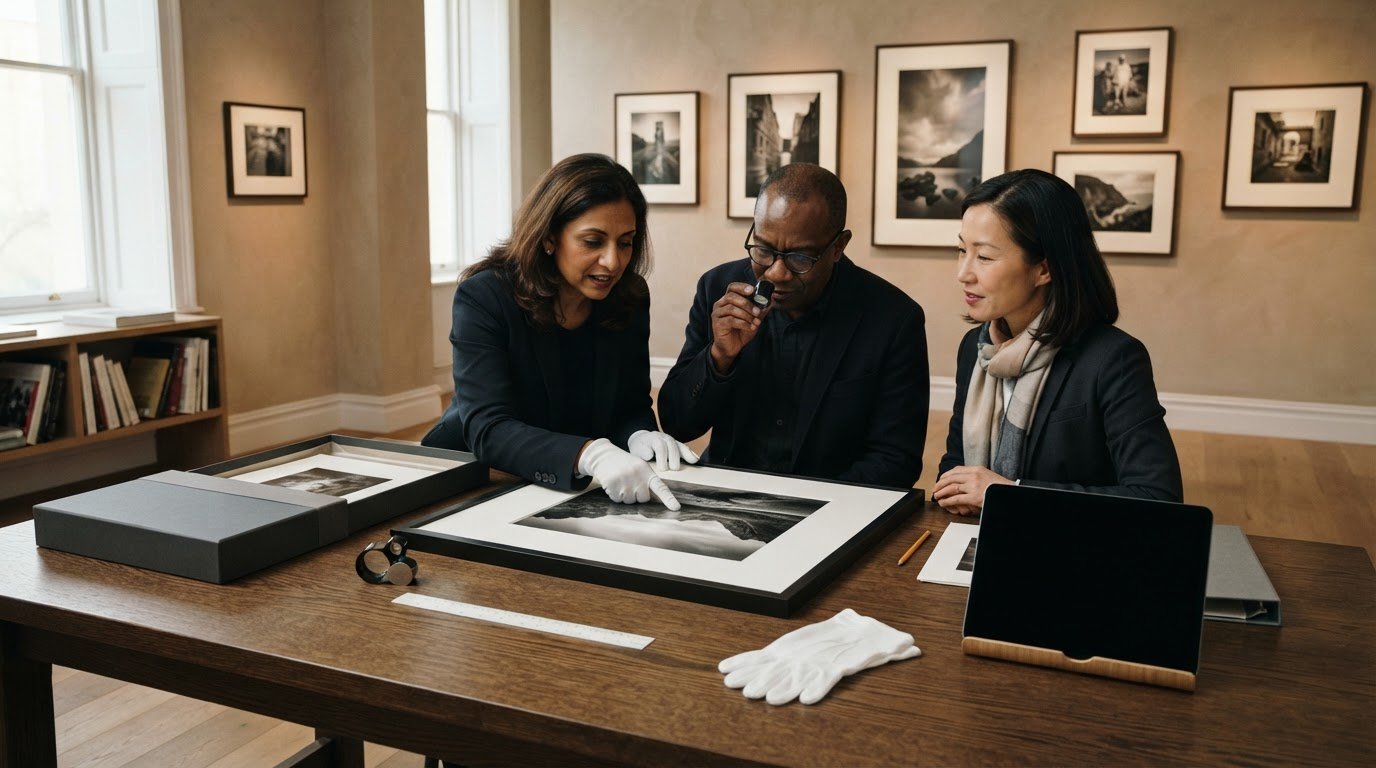
A reliable appraisal begins with a consistent record, not a guess at what each photograph might sell for. Work through the collection one piece at a time, keeping observed details distinct from information supplied by documents or inferred from research. For formal valuation contexts, the IRS guidance on art appraisal services offers a useful reference point.

  • Step 1: Identify each work. Record the artist, title or descriptive identification, image details and any known image or print date. If a detail is uncertain, mark it as such instead of filling the gap with an assumption.
  • Step 2: Create the inventory record. Note dimensions, medium, documented edition details, and how and when you acquired the work. Attach purchase records and related correspondence.
  • Step 3: Assess visible condition. Describe what you can observe, such as fading, creases, handling marks, mounting or frame condition. Don’t clean, unmount or otherwise alter the photograph to inspect it.
  • Step 4: Research relevant comparisons. Look for completed sales of sufficiently similar works, and distinguish them from unsold listings and asking prices.
  • Step 5: Record uncertainty. Label each entry as directly observed, documented by a source, estimated or still requiring verification. Note the source and date for research findings.

A useful inventory records each photograph’s artist, title or description, image details, dimensions, medium and acquisition documentation.

Build a reliable record for every photograph

Photograph the front and reverse, along with any visible signature, label or accompanying paperwork, and store these reference images with the inventory entry. Record the image date and print date separately if both are known; they describe different points in a work’s history. Keep invoices, certificates and correspondence together, but assess each as evidence rather than treating any single item as conclusive proof.

Assess condition, edition details and provenance

Use precise, neutral descriptions: “crease visible near lower edge” is more useful than “poor condition.” Record an edition number, edition size, signature or print process only when it’s legible or supported by documentation. For provenance, trace ownership or exhibition history through available records, noting gaps clearly. Don’t infer a complete history from a single document.

Once the records are assembled, they can help you compare works consistently and identify where more information is needed. To explore photographs to live with and appreciate, browse curated fine art photography prints with their artistic and historical context in mind. Print dimensions, paper options and framing can shape how a work is displayed and enjoyed, but they don’t establish its investment return.

Which Evidence Matters Most When Assessing Photography’s Value?

Not all evidence carries equal weight. A documented detail about the specific print usually tells you more than a broad claim about an artist’s popularity, and an unsold listing is not proof of what a buyer will pay. For a balanced view, examine the work’s history and physical qualities alongside relevant completed sales.

Evidence What it can show How to weigh it
Authorship Who made the image and how it relates to their wider practice. Give more weight to reliable, work-specific documentation than general claims of recognition.
Edition Edition number, size and any documented distinctions between printings. Use confirmed details as context, not as a direct measure of demand.
Provenance Recorded ownership, exhibition or other history of the individual print. Separate traceable records from stories that lack supporting evidence.
Condition The print’s visible state, including fading, creases or handling marks. Assess the specific object; avoid assuming that similar images have similar condition.
Production Documented print process, materials and other physical characteristics. Rely on records or observable features, not unsupported descriptions.
Completed sales Evidence of transactions involving comparable works. Compare closely related works and distinguish sale results from estimates and asking prices.

How artist, edition and provenance affect the assessment

An artist’s established practice and historical significance may shape collector interest, but reputation alone cannot establish the value of a particular print. Edition size is one factor in an appraisal, not a stand-alone measure of value or demand. Edition and print details can differ between works, so confirm what applies to the photograph being assessed. Provenance can enrich its story when supported by records; label an unverified account clearly. Christie’s guide to collecting photography offers further context for collectors.

How condition and comparable sales shape the estimate

A useful comparison is specific: look for the same artist and image, with a meaningfully similar print type, dimensions, edition context and condition. Differences in any of these details may limit how closely one sale can inform another. Record the sale date and source, and identify whether the figure reflects a completed transaction, an auction estimate, a gallery listing or an asking price. These are different kinds of evidence, not interchangeable values.

For anyone investing in fine art photography, documented, work-specific evidence should lead the assessment. Market narratives can provide context, but they cannot promise future returns.

How to Turn Your Appraisal Research into a Useful Collection Review

Research becomes more useful when it is organised around the questions you want to answer. Group photographs by artist, subject, period, completeness of documentation or collecting purpose. This can reveal patterns across a collection: perhaps several works share a subject, while others have gaps in their ownership records or condition notes.

Keep a consistent register for every work, then add review fields such as evidence source, date checked, confidence level and next step. If the available comparisons support a value range, record it with its source and date rather than presenting a single figure as exact. If evidence is thin or not closely comparable, leave the value open and explain why. A review is useful even when it identifies uncertainty rather than resolving it.

Create a collection register and prioritise missing information

Use the same fields throughout so you can compare records without suggesting greater precision than the evidence allows. Flag missing edition, provenance or condition details for further research. Prioritise works that are fragile, poorly documented or especially significant to you, and keep their records and reference photographs carefully organised. Revisit the register periodically to add new documentation or note a change in observed condition. This helps maintain an accurate record, but doesn’t predict market movements.

Keep the purpose of each review clear. An insurance question may focus on replacement considerations, while estate, tax or resale planning may call for different evidence and a different valuation basis. A personal collection review, by contrast, can help you understand what you own, what matters to you and where your records need attention. These purposes shouldn’t be treated as interchangeable.

When a collection may need a formal appraisal

If you need a formal opinion for insurance, estate, tax or sale purposes, the appropriate appraisal approach depends on that specific use. A formal appraisal is a purpose-specific opinion based on the required valuation basis and the evidence available; photography expertise is relevant to assessing the work. An online estimate, gallery asking price or personal spreadsheet can help organise research, but shouldn’t be presented as a formal valuation.

For collectors investing in fine art photography, a thoughtful review joins market research with the quieter reasons a work belongs in the collection: its image, history and connection to the artist. Explore photographs through curated archives and their historical context at Galerie Prints. Print dimensions, paper choices and framing can shape how a work is displayed and enjoyed, while remaining separate from evidence of financial return.

Collect Fine Art Photography with Knowledge, Context and Care

A thoughtful collection review brings together what the records can establish and what draws you to each image. Market evidence helps clarify a work’s present context, but it cannot guarantee a future result. Collect for considered reasons: the artist’s practice, the image’s history and the place it holds in your collection can matter alongside any financial questions.

Explore photographic work through its artist and archive

Looking at a photograph within an artist’s wider practice can deepen your understanding of its subject and historical setting. Galerie Prints’ The Slim Aarons Collection and Terry O’Neill Photography offer two distinct archives to explore, each inviting attention to the images and the stories associated with their makers. An archive is a starting point for research and appreciation, not evidence that every print is rare or will rise in value.

Choose a print to live with, then document the decision

Once an image resonates, consider how its scale, paper and intended display setting will shape your experience of it. Record the details of the print you select and keep its acquisition documentation with your collection register. Galerie Prints’ bespoke framing service offers a considered way to present a work, but the choice of frame is not evidence of investment value.

Investing in fine art photography calls for clear-eyed research and a personal sense of purpose. Appraise the evidence carefully, acknowledge what remains uncertain, and leave room for the pleasure of living with the image. Explore fine art photography at Galerie Prints.

Build a Collection with Clarity and Confidence

A considered appraisal begins with a reliable record and gives each photograph its own context. Document what you can verify, distinguish completed sales from asking prices, and treat any valuation as a snapshot rather than a promise of future returns. This approach lets you make informed decisions while preserving space for the personal meaning that first drew you to the image.

For those investing in fine art photography, strong collection decisions balance evidence with an understanding of the artist, the work’s history and your reasons for living with it. Galerie Prints brings together curated photographic archives, including the Slim Aarons Collection and iconic works by Terry O’Neill. Print dimensions, paper options and bespoke framing help shape how a selected work is presented, not its guaranteed financial outcome.

Explore these images through their artistic and historical context, and let careful research guide your next step. Explore Galerie Prints’ curated fine art photography, and continue building a collection with knowledge, care and lasting personal resonance.

Frequently Asked Questions

How do you appraise a photography collection?

Appraise a photography collection by documenting each work and assessing its evidence individually. Record the artist, title or image description, dimensions, medium, edition details, provenance and condition, noting which details are documented and which remain uncertain. Then research relevant completed sales, comparing works with similar characteristics rather than relying on broad popularity claims or asking prices. If you record a value range, include its date, sources and confidence level.

What makes a fine art photograph valuable?

A fine art photograph’s value can reflect its authorship, artistic and historical context, edition details, provenance, condition, production and relevant market evidence. These factors apply to the specific print, not just the image or the photographer’s reputation. A documented history or strong condition may help inform an assessment, but neither guarantees a particular price. Collectibility also depends on whether buyers want that work in the market at the time of sale.

Do limited-edition photographs increase in value?

A limited edition doesn’t automatically increase in value. A documented edition can help establish how a print relates to other versions of the image, but edition size alone doesn’t show whether collectors will want it or what they may pay. Consider authorship, print details, provenance, condition and comparable completed sales together. Treat claims about future appreciation cautiously, even when a photograph is signed or belongs to a small edition.

Is fine art photography a good investment?

Fine art photography may interest collectors for both its artistic meaning and its possible market value, but it isn’t a guaranteed investment. Resale demand and future prices are uncertain, and selling a work at a desired price may take time. Before investing in fine art photography, consider your collecting purpose, the evidence for the specific print and whether you can hold it without relying on a quick sale. Personal connection can remain central.

How can I tell whether a photograph is an original print?

Start with records that identify the specific print, such as acquisition paperwork, edition information, certificates or other documentation from a relevant source. Compare those details with reliable information about the artist’s work and the print’s production. A signature or label can be useful evidence, but shouldn’t be treated as conclusive proof on its own. If authenticity remains uncertain, record the unanswered questions and avoid assigning a value that assumes the details are settled.

Does provenance affect the value of a photograph?

Provenance can inform a photograph’s assessment by documenting its ownership or exhibition history and connecting the print to its past. Its strength depends on the quality and continuity of the records. Keep invoices, correspondence, labels and certificates together, and distinguish documented facts from an unverified story. Missing links don’t automatically determine a work’s value, but they should be noted as uncertainty rather than filled in with assumptions.

When should I get a professional appraisal for photography?

A formal appraisal may be appropriate when you need an opinion for a specific purpose, such as insurance, estate planning, tax matters or a sale. Requirements can differ, so the intended use should be clear, and relevant photography expertise matters. A personal inventory, online estimate or gallery asking price can help with research, but it isn’t automatically a formal valuation. Keep the appraisal’s purpose, date and supporting evidence with your records.
Investing in Fine Art Photography 2026: The Collector’s Guide to Timeless Assets

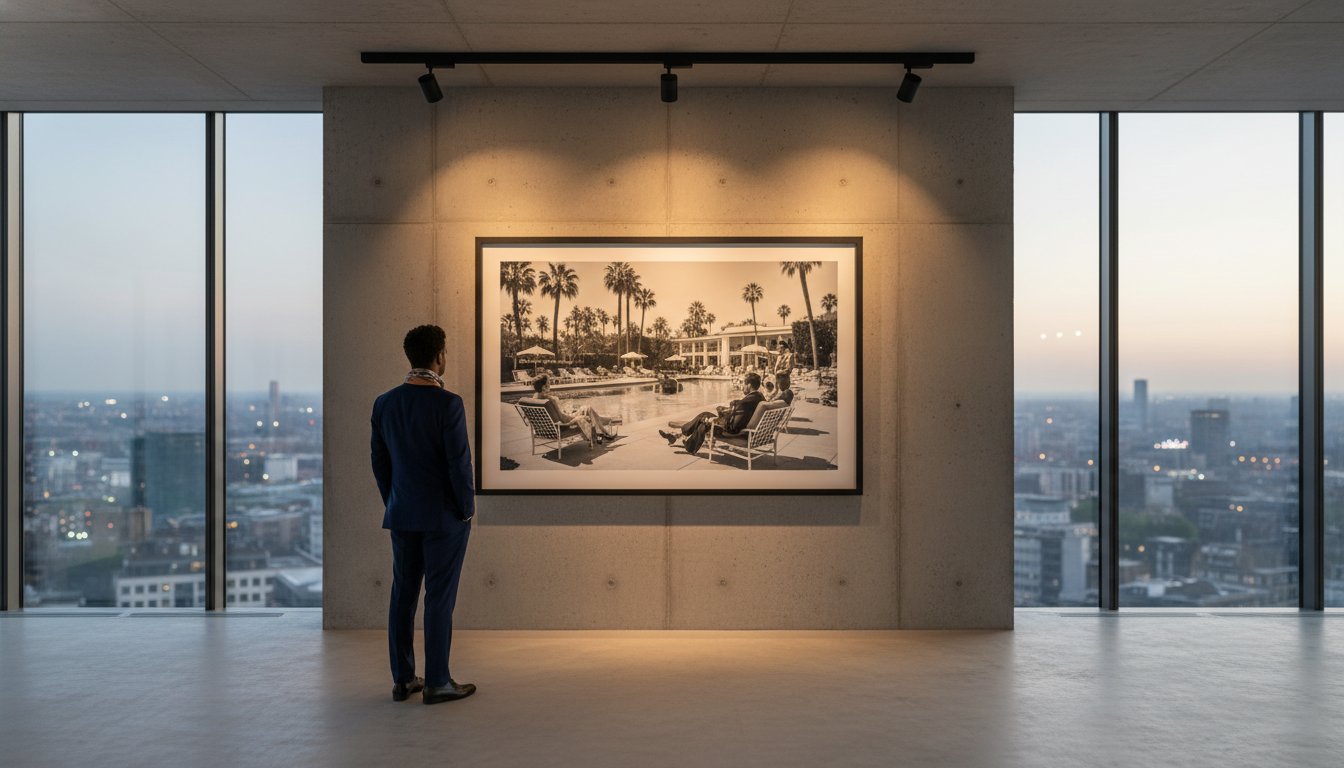
A digital file can be duplicated a million times in a second, yet a single silver gelatin print hand-stamped in a London darkroom remains a finite, physical anchor in an increasingly volatile market. You likely recognize that while the allure of contemporary imagery is vast, the risk of acquiring overproduced, ephemeral works has never been higher for the discerning collector. In an era where high-end photography sales have shown remarkable resilience through the 2024 fiscal year, your focus must remain on authenticity. This guide ensures your journey into investing in fine art photography 2026 results in a collection that balances the sun-drenched nostalgia of a Slim Aarons poolside with the rigorous archival standards required for long-term capital growth.

We’ll examine the critical distinctions between artisan darkroom craftsmanship and modern digital output, the essential role of verified provenance, and how to identify the blue-chip assets that define the world’s finest photography. You’ll gain the expert-level knowledge needed to distinguish a mass-market reproduction from a bespoke, museum-quality asset. By the end of this exploration, you’ll possess a clear roadmap for curating a portfolio that offers both profound aesthetic pleasure and enduring value for your home and your legacy.

Key Takeaways

  • Gain a strategic advantage by understanding why photography is outpacing traditional mediums and how to navigate the nuances of investing in fine art photography 2026.
  • Learn to identify the “Darkroom Premium” and why hand-printed silver gelatin works from prestigious archives command superior long-term value.
  • Discover how to select blue-chip artists like Slim Aarons and Terry O’Neill to anchor a portfolio that balances historical provenance with modern luxury.
  • Explore the “Living Collection” philosophy to build a diversified archive that offers both profound aesthetic pleasure and enduring capital appreciation.
  • Understand the critical importance of provenance and how sourcing through curated gallery relationships protects the integrity of your photographic legacy.

The State of Fine Art Photography Investment in 2026

The art market has shifted decisively as we enter 2026. While traditional oils once dominated mid-market portfolios, high-end photographic prints have claimed center stage, frequently outperforming paintings in the $10,000 to $50,000 bracket. This trend reflects a broader cultural pivot toward “Tangible Heritage.” In an era defined by ephemeral digital assets, collectors are seeking the undeniable weight of physical history. They crave pieces born from a darkroom rather than a server.

When we consider What is Fine Art Photography? in the context of a 2026 portfolio, we define “Investment Grade” through scarcity, sustained demand, and cultural relevance. Investing in fine art photography 2026 requires an eye for the “Curated Archive,” where private collectors prioritize works with impeccable provenance and technical excellence. At Galerie Prints, we see this manifest in the enduring allure of the silver gelatin process, where light and chemistry create a permanence that pixels cannot replicate. It’s about owning a bridge to the golden age of glamour, a tactile piece of the past that remains vibrant and relevant.

The 2026 Market Shift: From Speculation to Stability

Photography has emerged as a robust hedge against inflation; 20th-century masters have shown a consistent 7 percent annual appreciation over the last decade. A new wave of Millennial and Gen Z collectors, representing 42 percent of high-end buyers in 2025, has revitalized the market. These investors favor the Slim Aarons lifestyle, seeking iconic imagery that captures a lost world of leisure. The gold standard remains the 20th-century archive, where limited editions from original negatives provide a finite supply that resists market volatility. This stability is the result of a move away from speculative “hype” toward established historical significance.

Photography vs. Other Asset Classes

Comparing asset classes reveals that photography offers superior liquidity compared to original paintings, primarily due to a more active secondary market for established editions. It serves as an accessible luxury, allowing entry into the world’s finest photography at a fraction of the cost of a museum-grade oil painting. Beyond the financial metrics, these works provide a daily aesthetic dividend. Living with a bespoke print, hand-printed in our London darkroom, offers a tactile connection to history that stocks or bonds lack. This fusion of financial prudence and visual prestige makes investing in fine art photography 2026 a cornerstone of a sophisticated collection.

Provenance and Production: What Drives Value in a Photographic Print?

The market for investing in fine art photography 2026 rests on the tangible physical history of the print itself. A photograph’s value isn’t merely found in the image, but in its “objecthood.” Collectors categorize works into a strict hierarchy that dictates long-term appreciation. Vintage prints, those created by the photographer or under their direct supervision within roughly five years of the original negative, sit at the apex. Modern prints follow, produced during the artist’s lifetime but perhaps decades after the image was captured. Finally, Estate editions, authorized by the artist’s heirs and marked with an official Estate Stamp or authorized archive signature, provide a vital entry point for those seeking iconic imagery with a verified pedigree.

Authenticity is the currency of the art world. When you’re evaluating a potential acquisition, the presence of a hand-signed signature or a blind-stamped seal from a prestigious archive acts as a legal and aesthetic anchor. These markers ensure that the work adheres to the artist’s original vision and production standards. Without this documented provenance, even the most striking image loses its status as a financial asset.

The Science of the Silver Gelatin Print

At the heart of high-value collecting is the silver gelatin process. This traditional method, which rose to prominence in 1871, involves coating fiber-based paper with an emulsion of light-sensitive silver salts. Unlike digital inkjet prints that sit on the surface, silver gelatin images are embedded within the paper fibers. This creates a three-dimensional depth in the blacks and a luminous quality in the highlights that digital alternatives struggle to replicate.

Collectors are increasingly prioritizing these darkroom works because of their extraordinary archival lifespan, often exceeding 100 years when stored correctly. To identify a hand-printed work, look for the subtle texture of the fiber-based paper and the rich, neutral tonality that defines the “Darkroom Premium.” This artisanal approach ensures that each print is a unique artifact rather than a mass-produced copy.

The Role of Bespoke Framing in Preservation

Preservation is an active component of investing in fine art photography 2026. A print’s condition is a primary driver of its resale price; even minor foxing or light-staining can devalue a work by 30% or more. This is why bespoke, museum-grade framing is non-negotiable. Off-the-shelf frames often utilize acidic backing boards and standard glass that allow 100% of harmful UV rays to penetrate the print, leading to irreversible fading and brittleness.

We emphasize London-based craftsmanship to ensure every investment piece is protected by acid-free mounting and 99% UV-protective glass. This meticulous attention to detail shields the silver emulsion from environmental degradation. For those looking to build a resilient portfolio, selecting works that have been handled with this level of curatorial care is essential. You can explore our curated guide to collecting to understand how these production standards safeguard the world’s finest photography.

From Slim Aarons to Terry O’Neill: Identifying Blue-Chip Photography

Blue-chip photography represents the gold standard of the art market. It’s defined by a consistent track record of auction success and a permanent presence in prestigious museum collections. When you’re investing in fine art photography 2026, these established names provide the security of a tangible asset with proven longevity. Their work transcends mere decoration; it acts as a store of value that has historically shown resilience against market volatility. A blue-chip acquisition is a commitment to a legacy, a piece of history that continues to speak to new generations of collectors.

The Slim Aarons Phenomenon

Slim Aarons remains the ultimate investment in aspirational art. His “attractive people doing attractive things in attractive places” mantra resonates more deeply than ever in the luxury interiors of 2026. The scarcity of authorized Getty Images Gallery prints ensures that supply remains controlled while demand from global collectors continues to climb. Iconic works like “Poolside Gossip,” captured in 1970, have seen a steady appreciation in value over the last decade. Owning an archival print from the original negative isn’t just a design choice. It’s a stake in a specific, sun-drenched heritage that won’t ever go out of style. The world’s finest photography often finds its peak in these moments of captured leisure.

Masters of the Monochrome: Black and White Icons

The investment stability of black and white pictures offers a different kind of prestige. Terry O’Neill’s portraits of the “Swinging Sixties” are essential for serious portfolios because they capture the precise moment when celebrity culture was born. His 1977 portrait of Faye Dunaway at the Beverly Hills Hotel remains one of the most sought-after silver gelatin prints in the secondary market. These works possess a sculptural value, where the play of light and shadow creates a timeless aesthetic. When investing in fine art photography 2026, collectors often look for these monochrome anchors. They provide a sophisticated foundation for any collection, especially when hand-printed in our London darkroom to ensure the highest archival quality.

Identifying the blue-chips of tomorrow requires a discerning eye for cultural shifts. To find future icons, look for these key indicators:

  • Museum Acquisitions: Artists whose work has been purchased by institutions like the Tate or MoMA in the last 24 months.
  • Limited Edition Integrity: Photographers who maintain strict edition sizes, preventing market saturation.
  • Technique and Craftsmanship: A return to traditional processes, such as platinum-palladium or bespoke silver gelatin printing, which adds intrinsic value.
  • Historical Context: Images that define a specific era or social movement, much like O’Neill did for the 1960s.

The transition from a contemporary artist to a blue-chip staple is often marked by a solo exhibition at a major international gallery. As we look toward the 2026 market, the focus remains on provenance and the physical quality of the print. A work that was meticulously crafted and carries a clear lineage of authenticity will always be the safest harbor for capital.

Building Your Portfolio: Balancing Aesthetic Joy with Financial Appreciation

Successful investing in fine art photography 2026 requires a “Living Collection” mindset. This philosophy suggests you should acquire pieces that resonate emotionally while meeting strict archival standards. A collection isn’t a static hoard; it’s a dynamic assembly of history. Most experts, including those tracking the 2025 Deloitte Art & Finance Report, suggest a holding period of 7 to 10 years to see meaningful appreciation. During this time, your role is that of a steward. You must ensure prints are kept in stable environments, ideally 18 to 21 degrees Celsius with 50 percent humidity, and protected by UV-filtering glass to prevent silver oxidation. Professional insurance appraisals should be updated every 36 months to reflect the shifting market value of rare archives.

Diversification is the cornerstone of a resilient portfolio. Don’t limit your acquisitions to a single genre. A robust collection might mix the sun-drenched glamour of travel archives with 1960s fashion photography and rare music negatives. This spread mitigates risk if one specific market niche cools. By blending different eras and subjects, you create a portfolio that’s both a personal sanctuary and a diversified financial asset.

Creating a Narrative-Driven Gallery Wall

A gallery wall shouldn’t feel like a random assortment. You can anchor a collection with a large-scale statement piece, perhaps a bespoke silver gelatin print, then surround it with smaller, rare finds. For those entering the market, lobby cards represent high-growth entry points. These artifacts combine cinematic history with photographic rarity, providing a textured narrative to your walls without the initial cost of a massive mural-sized work. This approach allows you to build depth and historical context within your home gallery while maintaining investment diversity.

The 2026 Checklist for New Investors

When you’re ready to commit to investing in fine art photography 2026, use this rigorous three-step verification process to ensure your capital is protected:

  • Step 1: Verify Provenance. Confirm the print comes from a verified archive or was hand-printed in a reputable London darkroom from the original negative. Documentation should be clear and immutable.
  • Step 2: Assess Physical Condition. Inspect for archival mounting and acid-free matting. Poor mounting can lead to chemical “foxing,” which often devalues a print by 20 to 40 percent over a decade.
  • Step 3: Evaluate Market Trajectory. Research the artist’s recent museum exhibition history. If a photographer’s work was added to a major institution like the V&A or MoMA in the last 24 months, their secondary market value typically follows an upward trend.

Begin your journey with a curated selection of the world’s most iconic imagery. Explore our curated collections of the world’s finest photography.

Curating a Legacy: Why Galerie Prints is the Destination for Serious Collectors

At Galerie Prints, we don’t just sell images; we steward history. Our philosophy centers on a singular, unwavering pursuit: providing access to “The World’s Finest Photography.” For those investing in fine art photography 2026, the distinction between a decorative print and a curated asset lies in provenance. We bridge the gap between the golden age of glamour and the modern collector’s home, ensuring every piece tells a story that resonates across generations. Our role is that of a guardian, preserving the heritage of the lens while helping you build a portfolio that reflects both prestige and personal taste.

Unrivalled Access to Iconic Archives

Our gallery maintains deep, long-standing partnerships with the most prestigious institutions in the world, including the Getty Images Archive and the Terry O’Neill Estate. These relationships allow us to secure authorized editions that remain inaccessible to the general market. Every print we offer is a testament to technical mastery and historical significance. The process begins in our dedicated London darkroom, where master artisans utilize traditional silver gelatin and archival pigment methods to produce works of staggering depth. These aren’t mass-produced items; they’re handcrafted treasures. A Galerie Prints certificate of authenticity accompanies every purchase, serving as a definitive mark of investment quality. This document guarantees:

  • Direct provenance from authorized negatives and digital archives.
  • Technical excellence verified by our London-based master printers.
  • Long-term archival stability for future generations.

Start Your 2026 Collection Today

Building a portfolio requires more than a keen eye; it demands a strategic partner. Our curators offer personalized advisory services to help you navigate the nuances of investing in fine art photography 2026. Whether you’re drawn to the sun-drenched leisure of a Slim Aarons original or the raw energy of 1960s fashion photography, we provide the expertise to ensure your collection is both personally meaningful and financially sound. We manage every detail of the acquisition journey. This includes:

  • Bespoke framing solutions tailored to your specific interior aesthetics.
  • Worldwide white-glove delivery to ensure your investment arrives in pristine condition.
  • Tailored investment plans based on your specific space and budget requirements.

The permanence of photography as a cultural legacy cannot be overstated. By choosing a piece from our collection, you aren’t simply buying art; you’re securing a fragment of time. As the market evolves, the value of authentic, hand-printed imagery continues to rise, making today the perfect moment to begin your journey with Galerie Prints. Photography is the most intimate of mediums, capturing the ephemeral beauty of the human experience and turning it into a lasting asset for your home and your legacy.

Securing Your Legacy Through the Lens

The landscape of investing in fine art photography 2026 demands a fusion of aesthetic intuition and rigorous attention to provenance. By focusing on blue-chip icons like Terry O’Neill or the aspirational lifestyle captured by Slim Aarons, collectors anchor their portfolios in works with proven historical significance. Value remains tethered to the physical object; a print’s worth is defined by its journey from the original negative to the final frame. As official partners of the Getty Images Gallery, we ensure every piece maintains the highest standards of authenticity. Each archival work is hand-printed in our specialist London darkroom, preserving the silver gelatin depth that digital processes can’t replicate. When you choose a piece finished with bespoke museum-quality framing as standard, you’re not just buying a decoration. You’re acquiring a stable asset designed to endure for generations. The 2026 market rewards those who prioritize technical excellence and verified history over fleeting trends. Your collection is a reflection of your discernment and a bridge to the golden age of glamour.

Explore the curated collections and start your investment journey at Galerie Prints

We invite you to discover a world where history and beauty converge perfectly.

Frequently Asked Questions

Is photography a better investment than traditional paintings in 2026?

Photography offers a more accessible entry point with high growth potential, as the global art market’s photographic segment has seen a 15% increase in volume since 2023. While blue-chip paintings hold value, photography provides superior liquidity and lower insurance costs. Investing in fine art photography 2026 allows collectors to acquire works by established masters like Terry O’Neill at a fraction of the cost of an oil painting.

What makes a Slim Aarons print a good investment?

A Slim Aarons print is a blue-chip photographic asset because his work represents the definitive archive of 20th-century jet-set society. His estate, managed by Getty Images, ensures that prints are produced from the original color transparencies to maintain exquisite quality. Since 2010, the demand for his C-type prints has grown steadily; specific iconic works like “Poolside Gossip” have become central pillars of modern interior design and high-end collections.

How do I know if a photographic print is “archival”?

An archival print is defined by its use of acid-free materials and pigment-based inks or traditional chemical processes that prevent degradation for over 100 years. You should look for Silver Gelatin or Giclée prints on 300gsm cotton rag paper. These standards, verified by the Fine Art Trade Guild, ensure the artwork won’t yellow or fade, preserving the asset’s physical integrity and market value for decades.

Does the size of the print affect its future resale value?

The physical dimensions of a print directly impact its secondary market desirability and rarity. Smaller 10×12 inch prints often have larger edition runs, while oversize 40×60 inch prints are typically produced in smaller batches of 10 or 25. Data from 2024 auction results shows that large-scale works frequently command a 40% premium due to their visual impact and scarcity in the marketplace.

What is the difference between an open edition and a limited edition in 2026?

A limited edition has a fixed number of copies, such as 50 or 100, which creates inherent scarcity once the run sells out. Open editions are printed indefinitely, making them decorative rather than investment-grade. When you’re investing in fine art photography 2026, prioritize limited editions that come with a signed certificate of authenticity to ensure the work’s provenance and future appreciation.

How should I store or display my photography to protect its value?

You must display your photography behind UV-protective glass, such as Tru Vue Optium Museum Acrylic, which filters out 99% of harmful rays. Avoid hanging works in direct sunlight or humid environments like bathrooms. For storage, use acid-free Solander boxes and archival tissue paper. These measures prevent foxing and light damage, which can reduce an artwork’s valuation by 50% at auction.

Why is darkroom printing more valuable than digital printing?

Darkroom prints, particularly silver gelatin works hand-printed in our London darkroom, possess a tactile depth and silver-rich tonal range that digital printers can’t replicate. This artisanal process involves exposing light through the original negative onto light-sensitive paper. Collectors value the physical connection to the photographer’s original moment of capture; this makes these analog prints highly sought after in the 2026 market.

Can I invest in photography with a smaller budget using lobby cards?

Lobby cards represent an excellent entry-level investment for collectors focusing on cinematic history and vintage ephemera. These 8×10 or 11×14 inch cards were produced by film studios between 1910 and 1980 for theater displays. Because they were often discarded after a film’s run, surviving cards from iconic 1950s films have seen a steady 10% annual increase in collector interest over the last five years.