
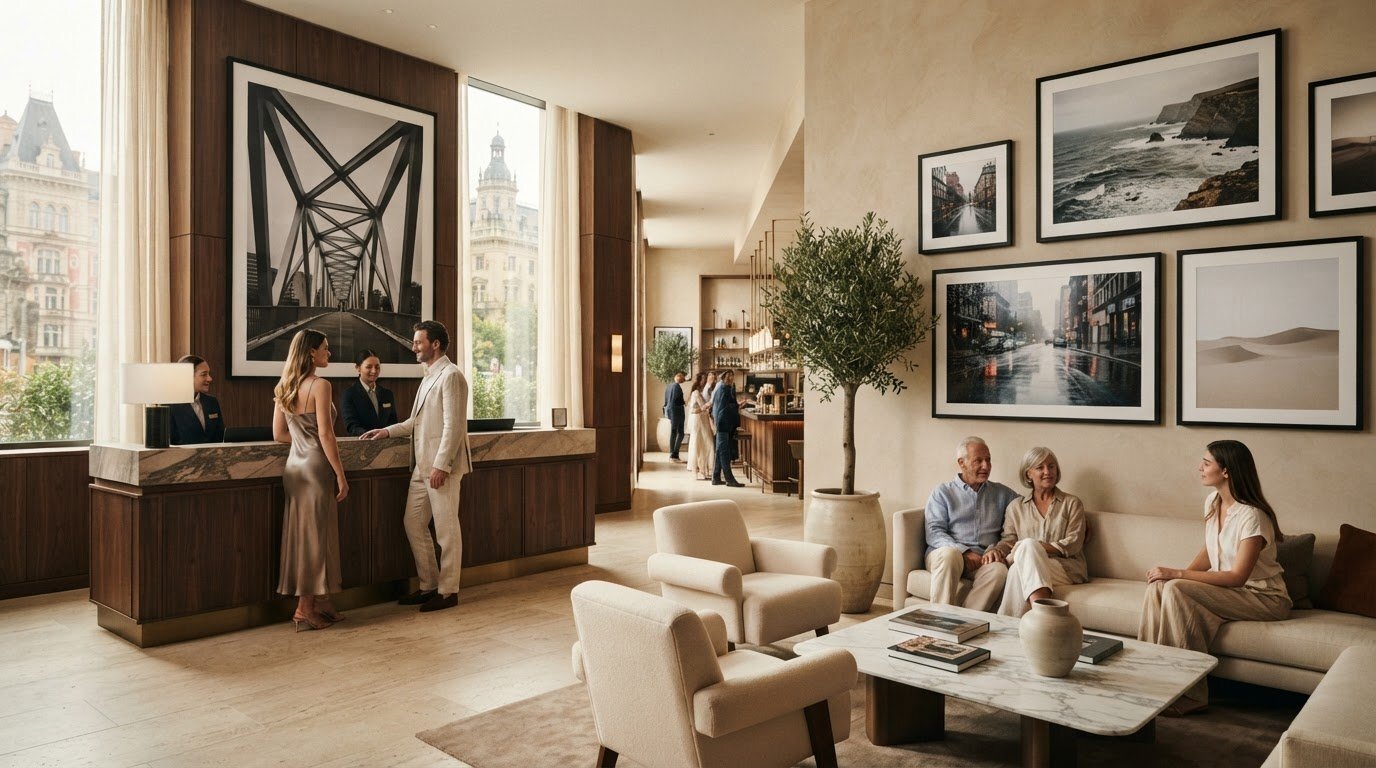
What if a hotel’s most memorable spaces are defined not by a single grand statement, but by photographs that quietly tell a story? The right art for luxury hotel decor can express a property’s sense of place, welcome guests into a distinctive atmosphere and create continuity across shared spaces without making every room feel the same.
Choosing that art takes more than matching colours to an interior. A striking image in a lobby may feel too imposing in a guest room, while repeating the same visual idea can build coherence or become impersonal if it lacks nuance. Subject, scale and presentation all shape how photography is experienced, from the first impression at reception to the quieter mood of a corridor or suite.
This guide explains how to select photographic prints for different hotel spaces, develop a visual identity that allows for varied moods, and compare sizing, cropping, framing and substrate options. Use the practical prompts to build a scheme that balances atmosphere, photographic perspective and a lasting sense of welcome.
Key Takeaways
- Shape art for luxury hotel decor around the atmosphere and identity you want guests to experience, rather than choosing images by trend alone.
- Give reception, dining areas, guest rooms and corridors distinct moods, balancing focal-point works with quieter pieces where guests come to rest.
- Consider the photographer’s perspective and the image’s provenance to bring depth and context to your visual direction.
- Build a practical art brief by recording each space’s purpose, intended atmosphere, shortlisted images and placement plans.
- Explore exhibition-quality photographic prints and bespoke framing from Galerie Prints when developing a considered scheme.
How art for luxury hotel decor shapes a guest’s first impression
Art for luxury hotel decor is photography and other artwork selected as an integral part of a hotel’s guest-facing interior, with each work chosen to suit its setting, atmosphere and wider visual identity. Rather than filling empty walls at the end of a project, a considered art plan helps establish a space’s character from the moment a guest arrives.
A first impression forms through many details working together: architecture, light, furnishings and the images guests encounter. Artwork can add a point of focus, introduce calm or lend a room a sense of history. The effect needn’t be theatrical. A carefully placed photograph can draw the eye and invite a closer look, while a quieter image can let the interior breathe. For context, the role of hotels in hospitality spans different kinds of stays and guest experiences, making the property’s purpose and character a useful starting point.
What makes hotel artwork feel considered rather than purely decorative?
Look at the relationship between subject, scale, placement and function. A large, visually assured photograph might anchor a prominent reception wall; a more contemplative image may better suit a guest room intended for rest. A work seen from across a lounge has a different presence from one viewed at close range along a corridor. Let the room’s use and viewing distance guide the image’s energy and position.
Colour coordination matters, but it isn’t the whole composition. Art that simply repeats the interior palette can feel like another furnishing choice. Consider what the photograph adds: its subject, point of view, composition and emotional register. The aim is harmony with a little resonance, not a perfect match that leaves the space without distinction.
How can art express a hotel’s sense of place?
Begin with the building and its setting, then consider the experience the hotel intends to offer. Is the interior formal or relaxed, intimate or expansive, steeped in history or guided by a contemporary sensibility? These questions can shape an art direction without dictating a particular subject. The most fitting choice depends on the property, not on a formula for luxury.
Photography can suggest a narrative through what it shows and how it sees. A landscape may evoke openness; an architectural study can draw attention to structure and form; a candid portrait may bring human warmth. These are possibilities, not fixed meanings. Light, framing and the photographer’s perspective all influence how an image reads. Choose work that feels connected to the hotel’s character, whether that connection is direct or atmospheric.
A coherent visual identity doesn’t require identical pictures throughout the property. Think of it as a shared sensibility: a consistent level of quality, a considered approach to subject matter or a recurring visual mood. Individual spaces can still have their own character, with focal works where guests gather and more restrained choices where they pause or rest. This balance gives the hotel a recognisable point of view without making every wall tell the same story.
Plan luxury hotel art room by room without losing visual coherence
A successful art scheme responds to the way guests move through a property. Reception may call for a confident focal point, while a bedroom benefits from a gentler visual rhythm. Give each area a distinct role while retaining a shared sensibility, so the experience feels curated rather than assembled room by room.
What kind of artwork suits a hotel lobby or reception?
Reception is often a natural place for a defining work: a photograph or other artwork that gives the arrival space a clear centre of attention. Judge its scale against the wall, sightlines and surrounding furnishings. A large image can anchor an expansive surface, while a more intimate work may suit a smaller reception. For vast public zones where scale is paramount, techniques such as grand format banner printing illustrate how oversized visual displays can effectively command attention across open architecture. Photographic prints offer one considered option, but the right choice depends on the interior and the mood the hotel wants to establish.
How should guest rooms, dining spaces, and corridors differ?
In guest rooms, favour images that support rest rather than compete with the room’s primary purpose. Dining and lounge areas invite closer looking, so artwork with detail or a human presence can reward guests who linger. In corridors, a sequence can create a sense of progression: connect works through subject, palette or photographic character, while varying the images to avoid repetition.
Choose a visual thread that can travel between spaces without dictating identical choices. It might be a consistent approach to composition, a recurring tonal range or a preference for photographs with a particular sense of intimacy or movement. Apply that thread with different intensity: a strong statement at reception, considered pauses in public areas, and quieter works in private rooms. This allows art for luxury hotel decor to feel recognisable throughout the property while giving each space its own voice.
Use this checklist to turn the idea into a room-by-room plan:
- Reception: Identify the main viewing wall and choose a focal work whose scale feels proportionate to the space.
- Guest rooms: Prioritise a restful mood and consider how the artwork reads from the bed and seating areas.
- Dining spaces: Look for images that invite a closer view and complement the pace and character of the room.
- Lounges: Place artwork around seating to create moments of interest, balancing focal pieces with works that reward lingering.
- Corridors: Plan a connected sequence, varying subjects and compositions while maintaining a shared visual thread.
Before selecting individual works, note each room’s purpose, principal viewing points and desired mood. Then review the choices together, not just as separate purchases. A photographic print that works beautifully in isolation may feel out of place beside its neighbours. Viewed as a sequence, each image can contribute to a more composed guest experience. Browse exhibition-quality photographic prints for examples of imagery to consider within your scheme.
Choose luxury hotel photography by mood, provenance, and presentation
A photograph can alter the feeling of an interior before a guest has consciously taken in its subject. Rather than selecting images by trend label, start by describing the atmosphere the room should hold: relaxed, cinematic, contemplative or timeless. Then consider which subjects, compositions and tonal qualities might evoke that feeling while remaining true to the interior concept.
How do you match photographic subject matter to a hotel’s atmosphere?
Translate mood into visual qualities before shortlisting images. A relaxed space might call for an open composition and a sense of ease; a cinematic mood may come from dramatic light, gesture or framing; a timeless character could be suggested by enduring subject matter and a strong point of view. These are prompts, not prescriptions. A landscape, portrait or architectural photograph can each feel very different depending on how it is made and presented.
Assess an image in the room, not only on a screen. Consider how it reads from the entrance, from a seat and at closer range. Ask whether its visual energy supports the intended experience or competes with it. In art for luxury hotel decor, the best choice is not automatically the boldest or most fashionable. It is the work that belongs in the space and rewards the way guests encounter it.
Why consider photographic provenance and print presentation?
Provenance gives a photograph context: who made it, the source or archive it comes from, and the perspective that shaped the image. Knowing something about the photographer’s approach can deepen a viewer’s engagement, allowing a print to carry a story as well as a mood. The fine art photography collecting and decorating guide offers further perspective on considering photographic work as both art and part of an interior.
Presentation matters, too. Exhibition-quality printing is relevant to a hotel scheme, where tonal nuance, detail and the image’s overall presence contribute to how it sits within a room. Consider the relationship between the photograph, its scale and its framing rather than treating the image as separate from its finished display.
A statement work and a quieter companion can share a visual language without competing for attention:
| Consideration | Statement image | Quieter complementary work |
|---|---|---|
| Visual presence | Distinct subject or composition that draws the eye | More restrained detail or a gentler composition |
| Role in the interior | Sets a focal point or defines the room’s character | Supports the atmosphere without dominating it |
Use the contrast as a guide, not a fixed formula. A photograph that feels commanding in one interior may seem subdued in another. Let the architecture, furnishings, light and intended viewing experience determine the balance, so each work feels thoughtfully chosen within the whole.
Specify hotel artwork with a practical selection and presentation plan
A clear art brief turns an interior vision into choices that can be reviewed across the property. It also keeps image selection and presentation connected, so decisions about a photograph’s crop, scale or finish support the space rather than being made in isolation.
What should a hotel art brief include?
For each space, record its purpose, where guests will encounter the artwork, the atmosphere you want to create and how the room relates to nearby interiors. Note whether the wall needs a focal work or a sequence of images. Replace broad labels such as “modern” with visual cues: subdued tones, a strong sense of movement or a composition that feels intimate at close range.
Work through the choices in order:
- Review the spaces. Note the wall areas, sightlines, lighting conditions and furnishings that will shape how each work is seen.
- Define the atmosphere. Describe the mood and the role art should play, from a distinctive focal point to a quieter visual note.
- Shortlist images. Compare subject, composition and photographic character against the room’s purpose and the wider art direction.
- Plan the presentation. Consider sizing, crop, framing and substrate together, then record the intended placement for each selected image.
Keep the brief visual and practical. Reference specific walls or viewing positions and describe what the image should contribute. A project team can then compare shortlisted works against the same intent, rather than relying on personal impressions of whether an image simply “fits.”
How can bespoke presentation adapt photography to an interior?
Presentation can help a chosen photograph sit naturally within its setting. Custom sizing can tailor its overall scale to a project, while cropping can adjust the composition to suit the intended placement. Framing offers another way to relate the finished work to the interior. These decisions should preserve the image’s visual character while responding to the wall and surrounding design.
Galerie Prints’ Bespoke Services include custom sizing and cropping, and printing on any substrate, including aluminium, wood and glass. Murals and wallpapers are also bespoke options, giving projects ways to use photographic imagery beyond a conventional framed print. The right approach depends on the image, the room and the effect called for in the brief. These formats needn’t be treated as a fixed menu or applied uniformly throughout the property.
Galerie Prints offers exhibition-quality photographic prints and bespoke framing to help bring an interior scheme together. For examples of prints and framing, visit Galerie Prints.
Bring art for luxury hotel decor to life with Galerie Prints
Once a hotel’s art direction and project brief are in place, the next step is to find photographs and presentation choices that bring the vision into focus. Galerie Prints offers exhibition-quality photographic prints alongside bespoke framing, with imagery from distinctive photographic archives and photographers.
How can photographic archives support a hotel’s visual story?
A photograph can do more than complement a room’s palette. Its subject, composition and perspective can introduce a narrative, lending a space a sense of ease, glamour, intimacy or cultural character. Galerie Prints offers photography from archives and photographers including Slim Aarons and Terry O’Neill. Their work brings a range of photographic perspectives to consider as part of a wider visual story.
A hotel developing an atmosphere of relaxed sophistication might explore images with open, unforced compositions, while another property may prefer a more dramatic or intimate photographic character. The aim is not to impose one mood across every space, but to select images whose qualities belong in the rooms they’ll inhabit. To explore the world behind one distinctive photographic perspective, discover this Slim Aarons guide to aspirational photography.
What can bespoke framing and services contribute to a project?
Presentation is part of an artwork’s relationship with an interior. Galerie Prints’ bespoke framing service provides a considered way to present purchased prints, while custom sizing and cropping can be tailored to the intended placement and visual requirements. These choices help a photograph relate to its surroundings, whether it is meant to command attention or contribute to a quieter arrangement.
For a different treatment, Galerie Prints’ Bespoke Services include printing on any substrate, including aluminium, wood and glass. Murals and wallpapers offer further ways to incorporate photographic imagery into an interior. The most suitable approach depends on the image, the character of the space and the presentation set out in the project brief.
Keep the image and its presentation in view together as you refine the scheme. A carefully selected photograph can take on a different presence depending on its scale, crop and framing. That attention to detail helps carry an art direction through guest-facing spaces without requiring every room to feel alike.
Explore Galerie Prints’ exhibition-quality photographic prints and presentation options as you develop your hotel’s art direction.
Give your hotel’s visual story room to unfold
A considered art plan can become a more vivid guest experience when you view it as a journey through the property. Before finalising selections, follow the route a guest might take, from arrival to room, and notice where the eye naturally pauses. This can reveal whether a work feels purposeful in its setting, whether transitions between spaces feel fluid, and where a quieter moment might offer welcome contrast.
Keep the project brief as a reference while decisions take shape. It can preserve the character you set out to create while leaving room for each interior to express its own mood. That balance is at the heart of art for luxury hotel decor: a distinct point of view, thoughtfully carried through the property rather than imposed on every wall.
Ready to develop your hotel’s art scheme? Explore exhibition-quality photographic prints from Galerie Prints and choose imagery and presentation options that bring your visual story into focus.