
Tag: Fine Art Framing

Double Mount Framing for Fine Art: A Practical Guide

What if an extra border made a photograph feel more complete, rather than more elaborate? That’s the promise of double mount framing for fine art: a narrow line of colour and a subtle shift in depth can draw the eye into an image. But if the layers are too strong or too wide, they can compete with the photograph instead of supporting it.

The right choice depends on the artwork’s palette, scale and character, as well as the atmosphere you want the finished piece to create. A double mount isn’t automatically more refined than a single mount. Its success depends on proportion and restraint. This guide explains how the layers are constructed, what the visible inner reveal contributes, and how to compare colours and proportions while keeping the image at the centre.

You’ll also learn how a mount separates a print from the glazing and why considered materials matter when presenting fine art. With these principles in mind, framing becomes part of the photograph’s visual composition, not just a finishing touch.

Key Takeaways

  • Understand how the top mount and lower-colour reveal work together, and how they differ from the frame and glazing.
  • Learn when an inner reveal can complement a photograph’s tones, and when a simpler single mount may be the better choice.
  • Compare image character, visual effect and potential drawbacks to decide whether double mount framing for fine art suits your print.
  • Follow a considered selection process, from reading the image’s palette to assessing proportions and viewing mount samples in the room’s usual light.
  • See how bespoke framing can bring the print, mount and frame together as a composed presentation.

What Is Double Mount Framing for Fine Art?

Double mount framing for fine art uses two layers of mat board around a print. The larger top mount forms the main border, while a second, slightly smaller mount sits beneath it. The lower layer’s edge remains visible through the top mount’s aperture, creating a narrow inner line known as the reveal.

A double mount is two layers of mat board arranged so the lower layer shows as a slim border around the artwork. That line creates a measured transition to the wider mount, adding definition without placing another image or border over the photograph.

How a double mount is constructed

The opening in the top mount is cut slightly larger than the opening in the lower layer. Because the lower aperture is smaller, a fine strip of its surface shows along the inside edge. The reveal is commonly around 3-6 mm wide, though its appearance depends on the proportions and the print. A standard mat-board layer is 1.4 mm thick, so the second layer also adds a little physical depth.

Each framing component has a distinct role. The artwork is the photograph or print. The mount is the board border around it, with an aperture framing the image. The glazing, usually glass or acrylic, sits in front of the artwork, while the frame surrounds and holds the complete assembly. A picture frame overview also describes these familiar components.

The two mount layers are not two photographs, and “double” doesn’t mean the artwork is stacked. The print remains a single image; the layered effect comes from the boards around it. The reveal is a framing detail, not part of the photograph.

Why collectors choose two mount layers

A second layer can create a subtle sense of depth, guiding the eye from the broad outer border towards the image. The reveal acts as a visual threshold: it separates the photograph from the surrounding mount, while echoing a colour or tonal detail within the picture. A restrained accent can bring coherence to the presentation; a pronounced contrast gives the border more emphasis.

Consider a monochrome portrait with a small warm highlight. A subtle, warm-toned reveal could pick up that detail without changing the photograph’s quiet character. In a colourful image, a carefully chosen inner line might echo one hue and give the arrangement a more deliberate finish. The effect depends on the image, the mount’s proportions and the relationship between tones.

Two layers aren’t automatically better than one. Some photographs benefit from a clean, uninterrupted border, while others welcome extra definition. The aim is not to make the mount the centre of attention, but to give the artwork a considered space in which to be seen.

How Double Mounting Changes a Fine-Art Photograph’s Presentation

A mount shapes the space around a photograph, influencing how the image meets the frame and the room. With a single mount, that transition is quiet and continuous. A double mount introduces a fine inner line, adding visual punctuation that can draw the eye inward and give the composition a more defined boundary.

The reveal can also connect the photograph to its surroundings. A tone drawn from the image may relate to the frame, while a soft neutral can sit comfortably against a wall without matching it exactly. The connection needn’t be literal. A carefully chosen colour can simply help the framed work feel considered in its setting.

Keep the reveal restrained, and the mount supports the photograph. Let its contrast dominate, and the eye may settle on the border instead. That balance is central to double mount framing for fine art. A second layer can add presence, but it isn’t automatically an improvement. The photograph should remain the focal point.

Choosing colours that support the image

Start with the photograph, not a decorating trend. Look for tones already present, including small accents that might be easy to overlook. A closely matched reveal creates a subtle, almost continuous transition. A deliberate accent gives the border more definition, but works best when it feels connected to the image rather than introduced for its own sake.

Bright photographs may suit a quiet reveal that lets their colour and light remain prominent. Dark or richly toned images can benefit from a lighter inner edge that clarifies the boundary, though a deep reveal may create a more intimate, dramatic effect. For monochrome work, consider whether a tonal shift between whites, greys and blacks adds distinction or interrupts the photograph’s atmosphere. No single palette suits every image.

Balancing artwork scale and mount proportions

The border’s width and the reveal’s visibility affect how the print relates to its frame. Generous surrounding space can help a small photograph feel composed, while a narrow mount can keep a larger, expansive image visually close to its subject. These are starting points, not fixed rules. The image’s composition, frame profile and intended display all affect the balance.

Judge the complete arrangement, not a loose mount sample. Place the sample beside the print, then consider the frame and wall colour together. A reveal that looks striking on a small swatch may become more pronounced at full scale; one that seems subtle alone may be just right around the image. Viewing framing choices alongside fine-art photography prints can help you consider the artwork and its surrounding details as a single composition.

Double Mount vs Single Mount: Which Suits Your Fine Art?

A single mount and a double mount can both present a photograph beautifully; they create different relationships between image and frame. A single mount gives the print one uninterrupted border. A double mount adds a visible inner reveal, creating another point of definition. Let the photograph’s tonal range, composition and intended presence in the room guide your choice.

Approach Visual effect Image character it may suit Possible drawback
Single mount Quiet, continuous border Restrained compositions or images rich in fine detail May offer less separation if the image and mount have similar tones
Double mount Added definition from a narrow inner reveal Prints that benefit from a subtle accent or clearer boundary A strong or poorly balanced contrast can distract from the image

This comparison is a starting point, not a ranking. Neither option is universally superior, and additional layers don’t make a photograph more important. With double mount framing for fine art, the aim is to give the image a considered border, not to add decoration for its own sake.

When a single mount may feel more considered

Choose a single mount when visual quiet serves the photograph. A restrained portrait, an image with delicate tonal shifts or a composition full of small details may benefit from one uninterrupted border. Without an inner accent to catch the eye, attention moves directly from the mount to the image. Simplicity is a deliberate aesthetic choice, not a claim that one mount is inherently more protective.

Imagine a softly lit street scene where subtle reflections and shadows carry the mood. A single, considered border could preserve that sense of continuity, letting the viewer explore the photograph without a contrasting line interrupting its edge.

When a double mount can add useful definition

A second layer may help distinguish the print from an outer mount in a similar tone. Picture a pale, misty landscape presented against a warm, light-coloured border: a fine reveal in a slightly deeper shade could clarify where the image ends. A monochrome photograph might gain a precise edge from a tonal accent. These examples illustrate design possibilities, not rules. Contrast is a matter of presentation, never a measure of artistic quality.

Before deciding, consider how the photograph reads at a glance and on closer inspection. Does its edge already feel clear? Would a reveal echo a detail, or introduce a competing line? A double mount can give a composition extra punctuation, while a single mount can leave the image’s own structure undisturbed. Let the photograph guide you, then judge the full arrangement at the scale and in the setting where it will be seen.

How to Choose a Double Mount for a Fine-Art Print

A successful double mount begins with the photograph, not a colour chart. Consider what the image needs, then build the border around it. This step-by-step approach helps you weigh colour, mood and proportion while keeping the finished presentation coherent.

A step-by-step colour and reveal selection

  • Study the image. Notice its dominant tones, then look for quieter secondary details that might inform the reveal. A small highlight or shadow can be a more delicate cue than the most obvious colour.
  • Set the mood. Decide whether the photograph should feel calm, dramatic, formal or relaxed. This gives you a direction before comparing samples.
  • Compare colours. Test a reveal close to the image’s existing tones, then compare it with a more deliberate accent. Neither needs to match exactly. Consider whether it belongs in the composition.
  • Assess the proportions. Consider how much of the inner layer will show and how the border relates to the print’s scale. A reveal that looks balanced close up may read differently from across the room.
  • Review the whole frame. View mount samples beside the print, with the frame choice and wall colour in mind. Check them in the room’s typical lighting, since daylight and artificial light can alter how colours appear.

A full-size mock-up or sample arrangement can make the decision clearer than isolated swatches. Step back to the distance from which the work will usually be viewed, then look closely again. The reveal should define the photograph without pulling attention away from it.

Questions to consider for careful artwork presentation

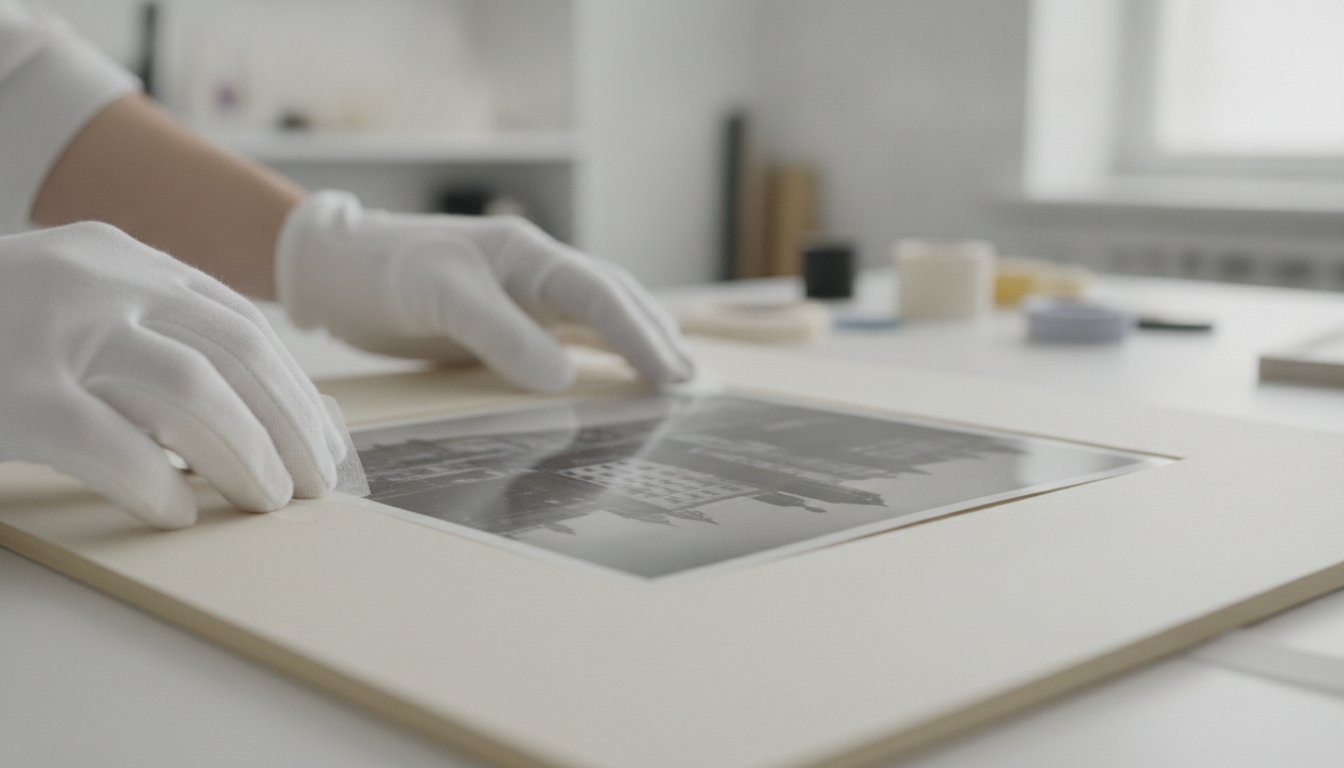
Fine-art prints deserve thoughtful handling during framing. Keep hands clean and dry, avoid touching the image surface, and make sure the artwork is supported as it’s positioned. The mount should also provide clearance between the print and glazing, rather than allowing the surface to rest against it. The mount opening should frame the image without obscuring important details.

Ask about conservation-minded materials, including acid-free and lignin-free mount boards, which are intended to reduce the risk of material-related discolouration over time. This is about careful presentation, not a guarantee against every source of change or damage. For broader context on displaying and living with photographic art, explore this fine art photography collecting and decorating guide.

  • Does the reveal echo a tone in the photograph?
  • Does its contrast remain subtle at the intended viewing distance?
  • Do the mount, frame and wall feel balanced together?
  • Are the artwork’s handling, glazing clearance and materials considered?

Once the visual and practical choices feel aligned, explore fine-art prints with framing options and consider how the finished frame can complete the photograph’s presentation.

Complete the Presentation with Bespoke Fine-Art Framing

The most considered frame begins with the photograph. Let its tonal range, composition and atmosphere guide the mount’s colour, contrast and proportions. A double mount can add a quiet line of definition; a simpler treatment may better suit an image whose own edges and details already hold the eye. The goal is a complete presentation in which every element supports the work.

Bring the print and framing choices together

Think of the chosen image, print dimensions, paper and mount concept as parts of one composition. A broader border can give a small print more room to breathe, while a restrained reveal may bring definition without changing the image’s mood. The frame completes this relationship, connecting the photograph to its display setting while leaving its story in the foreground.

Galerie Prints offers bespoke framing as an add-on for purchased prints. Customers can customise print dimensions, paper types and professional framing options, allowing the presentation to be considered alongside the photograph rather than as an afterthought. The right combination depends on the individual work and the effect you want in the room.

For further perspective on placing photographic art within a home, the guide to displaying fine-art photography explores how artwork can become part of a considered interior. Use that wider setting as a reference, but let the print itself lead the final choices.

Explore prints with bespoke framing

Galerie Prints brings together curated photography, including the Slim Aarons Collection and Terry O’Neill Photography. Professional framing offers a considered way to bring a selected image and its surrounding details into harmony. Make the choices in relation to the artwork, so the framing complements its character without suggesting that every photograph calls for the same treatment.

Whether you favour the subtle punctuation of double mount framing for fine art or a quieter border, picture the complete work in its intended setting. The mount, frame and print should feel composed together, with the photograph at the heart of the presentation.

If you’re ready to find an image for your space, explore fine-art photography at Galerie Prints and consider its framing as part of the artwork’s final composition.

Let the Photograph Find Its Place

Choosing a frame is also a way of deciding how a photograph will live with you. Before settling on a reveal, consider where the image will hang and the feeling you want it to bring to that space. A quiet border can let the photograph speak in its own terms; a carefully judged accent can give it a more defined presence. In either case, successful double mount framing for fine art keeps the image at the heart of the composition.

Let your eye return to the photograph after each framing choice. If the mount draws attention away from its subject or atmosphere, simplify. If it lends the image clarity and poise, you may have found the right balance.

Explore curated photography at Galerie Prints and consider the presentation as part of choosing a work for your home. Explore fine-art photography with bespoke framing, and find a composition that feels distinctly your own.

Frequently Asked Questions

Is double mounting a picture frame suitable for every fine-art photograph?

No, a double mount won’t suit every photograph. A tightly cropped image, a delicate composition or a print with a visually active edge may feel more coherent with a simpler surround. Consider how the image reads at its intended display size, rather than choosing extra layers by default. Double mount framing for fine art works best when its added line clarifies the presentation without becoming a feature in its own right.

Can a double mount make a small photograph appear larger?

It can give a small photograph greater presence, but it doesn’t enlarge the printed image. The surrounding board increases the overall framed area, giving the print more visual space on a wall. This can be especially effective for a compact image displayed alone, though a very broad surround may make the photograph feel smaller by comparison. Keep the visible image and the overall frame in view as you assess the balance.

What happens if the inner mount colour competes with the artwork?

If the reveal catches your eye before the photograph does, it may be too vivid, too dark or unrelated to the image’s atmosphere. Try a quieter shade, or choose a colour that echoes a less prominent tone already present in the print. Compare options beside the actual artwork, not from memory. A reveal should help the viewer enter the image, rather than announce itself as a separate design feature.

Can a signed fine-art print be double mounted?

Yes, provided the mount opening is planned to leave the signature visible and unobstructed. First identify whether the signature sits within the image area or in the paper margin, then ensure the aperture accommodates both the artwork and the mark. Don’t trim or cover a signed margin to achieve a particular border. For a print with a distinctive or unusually placed signature, plan the layout before the mount is cut.

Is double mounting reversible if I change my framing later?

The mount layers can generally be changed as part of reframing, but whether the artwork itself can be safely released depends on how it was attached. Adhesives, pressure-sensitive tapes or other mounting choices may affect the print and its reversibility. If you may reframe the piece later, choose an attachment method with that intention in mind before mounting. Avoid pulling a mounted print free yourself, particularly if it’s valuable or delicate.

How do you prevent a fine-art print from touching the glazing?

Use a properly designed mount or another suitable spacer to keep the glazing from resting against the print’s surface. Position the opening accurately so the board doesn’t overlap important image details, while the assembly provides separation in front. The print’s dimensions and the chosen glazing both affect the construction. This is particularly worth considering for textured, curled or otherwise delicate prints.

Does a double mount make a framed print heavier or deeper?

Usually, yes, though the change depends on the board, frame and glazing selected. An additional mount layer adds material and a little depth, so the completed piece may weigh more than the same frame with one mount. For a large print or a frame going on a lightweight wall, consider the finished dimensions and hanging support together. The added depth is often modest, but the full assembly determines what the wall must hold.

Wooden vs Metal Picture Frames: A Curator’s Guide to Framing Fine Art

A frame is never just a border; it’s the final, silent brushstroke that determines whether a Slim Aarons classic feels like a window into a lost world or a mere printed reproduction. When you’re deciding between wooden vs metal picture frames, you’re making a choice that impacts both the narrative of the art and the architectural soul of your room. It’s a decision that separates the casual decorator from the discerning collector who views their walls as a private gallery and a guardian of photographic history.

You likely understand the fear that an incorrect selection might make a prestigious Terry O’Neill print look dated or fail to provide the archival protection required for a multi-generational investment. It’s a valid concern; the materials you select today dictate how your collection ages over the next several decades. This curator’s guide provides the definitive aesthetic framework you need to choose between the organic warmth of artisanal wood and the sleek, precise lines of modern metal. You’ll gain the confidence to select a frame that doesn’t just hold a print, but elevates it into a sophisticated, ready-to-hang masterpiece that honors its historical significance and meets the highest preservation standards.

Key Takeaways

  • The choice between wooden vs metal picture frames defines the visual weight of your artwork, balancing organic warmth against industrial precision.
  • Learn why solid timber remains the hallmark of prestige framing, offering a tactile depth and character that engineered alternatives cannot replicate.
  • Discover how ultra-slim aluminum profiles create a “disappearing” frame effect, allowing the viewer’s focus to remain entirely on the photographic subject.
  • Identify the specific framing standards for iconic poolside photography, where light timber and white wood finishes are the established curator’s choice.
  • Understand the structural advantages of bespoke, museum-quality mounting and how artisanal craftsmanship ensures your collection remains preserved for decades.

The Aesthetic Philosophy: Wooden vs Metal Picture Frames

The decision between wooden vs metal picture frames is a fundamental aesthetic crossroads for any serious collector. It’s the precise moment where a curator decides how a piece of history should sit within a modern space. One material speaks of the earth and the artisan’s chisel; the other speaks of the forge and the architect’s line. This choice fundamentally changes the visual “weight” and presence of the artwork. A robust timber frame provides a sense of gravity and historical anchoring, whereas a slender metal profile offers a lightness that lets the art breathe. Texture plays a vital role here; the visible, touchable grain of a solid oak or walnut frame adds a layer of organic complexity. In contrast, the cool, uniform finish of aluminium provides a neutral border that doesn’t compete with the print’s own detail.

Your choice of frame acts as the essential bridge between the artwork and your interior architecture. It’s the finishing touch that harmonises a vintage silver gelatin print with the hard lines of a contemporary loft or the soft textures of a traditional study. Understanding the evolution of Picture frame materials helps us see that neither is objectively superior; rather, they serve different masters. One prioritises the warmth of the human touch, while the other celebrates the clarity of modern design.

The Narrative of Wood

The Precision of Metal

If wood is about the frame, metal is about the image. Metal frames provide that coveted “gallery-spec” aesthetic that defines modern photography exhibitions. They offer a level of industrial precision that wood simply can’t match. Because of the inherent strength of the material, metal allows for incredibly thin borders for large-scale prints. This is essential for pieces where you want the border to disappear, focusing the viewer’s eye entirely on the subject. The interaction with light is also distinct; whether it’s a matte black, brushed silver, or champagne gold, these finishes catch the room’s lighting in a way that feels architectural, sharp, and intentionally minimalist.

The Anatomy of Wood Frames: Traditional Craftsmanship

The enduring appeal of timber is rooted in its physical presence. While the market offers various synthetic alternatives, wood frames held a significant 43.78% share of the global material segment in 2025. This dominance isn’t merely a matter of tradition; it’s a testament to the material’s unparalleled ability to anchor a piece of art. When weighing the merits of wooden vs metal picture frames, one must consider the structural integrity required for high-end preservation. Wood is uniquely suited for deep-box or shadow box framing, providing the necessary depth to house thick mats and spacers that keep the artwork from touching the glazing. Over time, a solid timber frame doesn’t just sit on a wall; it matures. It develops a subtle patina, a character that reflects the environment of the home it inhabits.

Authenticity in framing is found in the finish. A hand-applied natural wax or a deep, penetrating stain allows the organic narrative of the grain to remain visible. In contrast, mass-produced frames often rely on painted “foil” wraps that peel or bubble. A curator’s eye looks for the seamless joinery and the tactile weight of authentic timber. For those looking to protect a significant investment, technical details matter. The Library of Congress suggests that when using wood, the rabbet should be lined with a barrier film to prevent natural acids from migrating into the mat package. It’s this intersection of artisanal beauty and scientific preservation that defines a truly prestigious result.

Solid Timber vs Engineered Wood

Bespoke galleries almost exclusively avoid engineered alternatives like MDF or plastic-wrapped composites. These materials lack the structural rigidity needed for large-scale works and often feel “cheap” to the touch. Solid wood offers a sense of permanence. It’s a sustainable choice that supports localized, artisanal craftsmanship. When you hold a hand-finished oak or walnut frame, you feel the density and the heritage of the production process. It’s a bridge to a bygone era of elegance that modern substitutes simply can’t replicate.

Styling Traditional and Contemporary Wood

The versatility of wood allows it to adapt to any era. For vintage Cinema Lobby Cards or Star Wars Limited Edition Prints, a slightly more traditional or even ornate gilded wood can evoke a sense of nostalgic prestige. Conversely, a sleek, minimalist oak or maple frame is the definitive choice for modern fine art photography. This “California Cool” aesthetic is particularly effective for poolside scenes, where light timber mirrors the natural warmth of the subject matter. If you’re looking to achieve this specific gallery-ready look, our Bespoke Framing Service ensures every piece is hand-crafted to these exacting standards.

The Precision of Metal Frames: Modern Minimalism

While timber offers an organic narrative, the precision of aluminium provides an architectural finality that wood cannot emulate. In the ongoing dialogue regarding wooden vs metal picture frames, metal is frequently celebrated as the gold standard for contemporary photographic galleries. This preference stems from its ability to provide a crisp, clean-cut edge that disappears into the background, allowing the viewer’s focus to remain entirely on the image. It’s the “disappearing” frame, a minimalist border that defines the space without intruding upon the artist’s vision.

Beyond aesthetics, the structural superiority of metal is undeniable. It’s inherently resistant to warping and humidity, making it the ideal choice for varied climates or large-scale installations where timber might succumb to environmental pressures. In 2026, minimalist metal frames in finishes like matte black and brushed gold have emerged as a dominant trend, favored for their sleek profiles that don’t overpower the artwork. Whether it’s a polished silver finish that catches the light or a somber matte black that anchors a room, metal frames offer an industrial-chic appeal that complements the hard lines of modern loft-style spaces.

Aluminium: The Gallery Choice

Aluminium is prized for its exceptional strength-to-weight ratio, which is critical when framing oversized, statement photography pieces. Large Star Wars Limited Edition Prints or expansive landscape works require a frame that provides rigid support without adding excessive weight. Metal’s structural integrity allows for incredibly thin borders that would be impossible with wood, creating a sharp, precise outline that feels both modern and permanent. This architectural impact is particularly effective in high-concept interiors where every line is intentional.

Metal for Monochrome

For collectors of black and white pictures, a thin black metal frame is the quintessential choice. It creates a high-contrast impact, acting as a razor-sharp extension of the shadows within the print. This combination is a staple of our Music Archives, where the raw energy of archival photography is best served by a frame that feels both timeless and uncompromising. Silver metal frames also offer a sophisticated alternative, providing a subtle, luminous border that echoes the silver-gelatin tones of heritage photography. This pairing ensures that the frame doesn’t just hold the art; it reinforces its prestige.

Curating for Your Collection: Which Frame Suits Your Print?

Framing is the final act of curation. It bridges the gap between a historical moment and your modern living space. When deciding on wooden vs metal picture frames, the most effective strategy is to look at the era and the emotional mood of the photograph. A piece from the 1960s carries different architectural expectations than a contemporary architectural study. The frame should act as a temporal anchor, honoring the artist’s original environment while ensuring the piece feels at home in yours. This decision influences not just the look of the art, but how it communicates with the rest of your interior collection.

The structural choice also dictates how you approach matting and mounting. While metal frames often demand a minimalist, single-mat approach to maintain their razor-sharp profile, wooden frames offer the physical depth required for more complex “shadow box” presentations. These choices aren’t merely decorative; they’re functional decisions that affect how light hits the surface of the print and how the eye is drawn into the composition. By matching the material to the subject, you ensure the frame acts as a supportive companion rather than a distracting border.

Framing the Aspirational: Slim Aarons

The “Slim Aarons Rule” has become a cornerstone of luxury decor. For the Slim Aarons collection, the standard is almost always white wooden frames or light, natural timber. This mirrors the breezy, mid-century modern aesthetic of the poolside scenes he famously captured. A metal frame can often feel too clinical or industrial for these sun-drenched subjects. The organic grain of wood provides a soft, warm transition that anchors the saturated blues and vibrant yellows of the Amalfi Coast or Palm Springs, maintaining the aspirational “holiday” mood that defines his work.

Framing Cinematic History

Vintage cinema lobby cards possess a specific tactile quality and nostalgic color palette that requires a sensitive touch. A hand-finished wooden frame respects their heritage as physical artifacts of Hollywood’s golden age, adding a layer of traditional prestige. However, for iconic movie posters or Star Wars Limited Edition Prints, a sleek metal frame can provide a sharp edge that suits a modern media room. Regardless of the material, the use of museum-quality materials is non-negotiable for these historical pieces. If you’re looking to elevate a recent acquisition, our bespoke framing service ensures your collection is both protected and perfectly presented for decades to come.

The Galerie Prints Approach: Bespoke Framing for Heritage

At Galerie Prints, we don’t merely sell frames; we act as the final guardians of photographic heritage. Every piece that leaves our London-based studio is a testament to artisanal craftsmanship, meticulously hand-finished to meet the exacting standards of the world’s finest galleries. When deciding between wooden vs metal picture frames, you aren’t just choosing a material; you’re choosing the architectural boundary of a historical archive. Our curators spend countless hours selecting specific frame profiles that complement our exclusive collections, ensuring the border respects the soul of the work. We understand that a piece of art is an investment in a bygone era of elegance, and the frame must be worthy of that legacy.

The luxury of our service lies in its seamless transition from our archive to your wall. We provide a “ready-to-hang” result that eliminates the uncertainty often associated with third-party framers. By handling the entire production process in-house, we ensure that the dialogue between the print and its border remains uninterrupted. Whether you opt for the organic warmth of hand-stained timber or the industrial precision of aluminium, the result is a sophisticated piece of history, prepared by experts who understand the technical nuances of fine art preservation. This deliberate pacing of our artisanal process ensures that every detail, from the joinery to the finish, is executed with quiet authority.

Archival Quality as Standard

Preserving a Terry O’Neill or a Star Wars Limited Edition Print requires more than just a beautiful exterior. The internal components of a frame are what determine its longevity. We utilise museum-quality, acid-free mounts to prevent the chemical degradation that often plagues “off-the-shelf” options. Every frame is fitted with UV-protective glazing as standard, shielding your investment from the irreversible effects of light exposure. This commitment to archival mounting ensures that your collection remains as vibrant and pristine decades from now as it is the day it arrives. It’s the invisible work within the frame that justifies the premium positioning of a truly bespoke product. We don’t compromise on these technical essentials, as they’re the foundation of lasting beauty.

Your Bespoke Framing Journey

The path to a gallery-ready home is designed to be effortless. During the online checkout process, you can select your preferred frame style with the confidence that our master framers will execute it with millimetre precision. We accommodate custom dimensions for oversized statement pieces, ensuring that even the most ambitious installations are handled with professional care. Once the artisanal process is complete, your artwork is prepared for art-secure shipping. We use specialized packaging designed to protect both the frame and the glazing, providing peace of mind that your piece of history will arrive in perfect condition. This professional, polished approach ensures you feel supported at every stage of your purchase journey, from the first click to the final hanging.

Elevating Your Collection with Curatorial Precision

Choosing between wooden vs metal picture frames is the final, definitive step in transforming a photographic print into a permanent piece of history. Whether you lean toward the organic, hand-finished warmth of timber or the razor-sharp, architectural lines of aluminium, your selection should honor both the artist’s original vision and the unique character of your space. It’s a balance of texture, weight, and temporal alignment that ensures your art doesn’t just hang on a wall, but truly commands it. You’ve learned that the material is only half the story; the true value lies in the archival integrity hidden beneath the surface.

At Galerie Prints, we bridge the gap between the archive and the home. Every frame is hand-crafted in our London studio using museum-quality archival materials to ensure your official archive-partnered prints are preserved for generations. We invite you to explore our bespoke framing options and curated art collections to find the perfect border for your next investment. Your collection deserves a presentation that is as enduring as the moments it captures, and we’re here to ensure every piece reflects that prestige.

Frequently Asked Questions

Are wooden or metal frames better for large-scale photography?

Metal frames, particularly high-grade aluminium, are typically superior for oversized works due to their exceptional strength-to-weight ratio. They provide the necessary rigidity to prevent bowing without adding excessive bulk. While solid wood can support large prints, it requires a much wider profile to maintain structural integrity, which may not suit the minimalist aesthetic often desired for expansive, modern photographic installations.

Do metal frames look cheaper than wooden frames?

Not when you select gallery-grade aluminium with a hand-brushed or matte finish. While flimsy metal frames can appear industrial, a high-quality metal border provides a sophisticated, architectural precision that is a staple in modern art spaces. It’s the finish and the slimness of the profile that define the prestige of wooden vs metal picture frames in a luxury home gallery.

Which frame material is best for black and white photography?

Black metal frames are the quintessential choice for monochrome prints, acting as a sharp extension of the image’s shadows. The high-contrast impact of a thin black border reinforces the dramatic tones found in our Music Archives. However, an ebonised wood frame can also provide a softer, more traditional elegance for heritage black and white portraits, adding a layer of tactile depth to the presentation.

Are wooden frames more expensive than metal ones?

Artisanal wooden frames generally carry a higher price point due to the cost of raw timber and the labour-intensive hand-finishing process. Metal frames are often more cost-effective for standard sizes, though bespoke, oversized aluminium frames can reach comparable prices. The investment in wood reflects its status as a hand-crafted piece of furniture that develops a unique patina over several decades.

Can I change the frame material later if I update my decor?

Yes, our commitment to conservation framing ensures that the process is entirely reversible. We use archival hinges and acid-free materials that allow the print to be removed and reframed without any damage to the paper. This flexibility ensures that your investment in visual history can adapt to new interior architectures as your personal aesthetic evolves over time.

Which material offers better protection for rare collectables?

Metal frames offer superior stability in environments with fluctuating humidity because they don’t warp or expand like natural timber. For rare items like Cinema Lobby Cards, either material provides excellent protection provided you use museum-quality components. If you choose wood, our framers ensure the rabbet is lined with a barrier film to prevent acidic migration from the wood into the mat package.

How do I clean wooden vs metal frames without damaging the art?

Use a dry, lint-free microfiber cloth to gently dust the frame and the glazing. Avoid spraying any cleaning liquids directly onto the frame, as moisture can seep behind the glass and cause irreversible damage to the photographic emulsion. For wooden frames, a light touch is essential to preserve the wax or stained finish without stripping the character of the wood.

Does the weight of a wooden frame require special hanging hardware?

Solid timber frames, particularly those in larger dimensions, possess significant weight and require secure wall fixings. We recommend using heavy-duty picture hooks or a professional hanging system anchored into wall studs. In contrast, the lightness of aluminium often allows for simpler hardware, though we always suggest a two-point hanging system to ensure the artwork remains level and stable.

What is Archival Mounting? A Curator’s Guide to Preserving Fine Art

A masterpiece is more than just pigment on paper; it’s a silent witness to history that begins its slow journey of decay the moment it meets the air. For the discerning collector, the central question isn’t just how to display a work, but what is archival mounting and why is it the only acceptable standard for a serious gallery? You understand that a rare Terry O’Neill photograph or a limited edition Star Wars print represents a significant cultural investment. It’s only natural to feel a sense of trepidation when choosing how to house such pieces. You want to ensure that the vibrant soul of the artwork isn’t lost to the creeping shadows of acidity or environmental degradation.

We share your reverence for these visual treasures and recognize that technical terms like buffered matting or lignin-free backing can feel unnecessarily opaque. This guide clarifies those complexities, promising to show you how professional preservation techniques protect your art from the inside out. You’ll discover the meticulous standards established by the Fine Art Trade Guild, ranging from Museum Level protection to the artisanal use of Japanese tissue hinges. By the end of this exploration, you’ll possess the confidence to select framing services that don’t just decorate a room, but safeguard a legacy for generations to come.

Key Takeaways

  • Learn why removing lignin and utilizing alpha-cellulose mat boards are critical steps to prevent the acidic degradation that often yellows and destroys paper-based art.
  • Understand the technical nuances between traditional Japanese paper hinging for delicate works and dry mounting for achieving a flawlessly flat, contemporary aesthetic.
  • Gain a clear definition of what is archival mounting by exploring how specialized techniques safeguard the vibrant palettes of a Slim Aarons print or the structural integrity of vintage Cinema Lobby Cards.
  • Discover how bespoke, museum-grade framing transforms a simple acquisition into a protected piece of photographic heritage designed to last for generations.

Defining Archival Mounting: More Than Just a Backing

A common misconception involves the term “acid-free.” While many retail frames claim this status, it’s often a temporary state achieved through chemical buffers that eventually exhaust themselves. True archival framing materials go further by utilizing naturally inert substances that won’t degrade into acidic compounds. Without these standards, art often falls victim to “foxing,” those unsightly brown spots caused by oxidation, or becomes so brittle that the slightest movement causes irreparable cracks. By understanding what is archival mounting, you’re choosing to defend your investment against these silent, atmospheric threats.

The Core Philosophy: Conservation vs. Decoration

Choosing a mount is a decision between a fleeting decorative choice and a commitment to a legacy. A decorative mount might look striking today, but it offers no protection against the silent threats of atmospheric pollutants or humidity. Conservation-grade mounting acts as a sacrificial barrier, absorbing environmental stresses before they reach the delicate surface of the artwork. It provides the necessary structural support for fragile paper, preventing the sagging or “cockling” that occurs when art isn’t properly supported within its housing. This structural integrity is vital for maintaining the pristine, gallery-quality appearance of your collection over decades.

The Danger of Non-Archival Materials

The primary antagonist in the story of art degradation is lignin, the organic polymer that binds wood fibers together. In inexpensive boards, lignin eventually breaks down, releasing acidic gases that literally “burn” the paper. This chemical transfer results in a distinct yellowing of the art, most visible along the edges where the board meets the print. While traditional film photography is sensitive, modern digital prints often utilize complex ink sets that require even more stringent mounting standards. These contemporary works are highly reactive to outgassing from cheap wood pulp boards, making the curator’s choice of alpha-cellulose or cotton rag boards an absolute necessity for any serious collector who values the heritage of their work.

The Chemistry of Preservation: Lignin, Acids, and Buffers

To master the art of preservation, one must first master the science of the substrate. While we’ve established the general purpose of these methods, a deeper look into the chemistry reveals why certain materials are non-negotiable for serious collectors. Understanding the molecular composition of these materials is the key to answering what is archival mounting in a professional context. At its core, the process aims to eliminate lignin, the complex organic polymer that provides wood with its rigidity but acts as a ticking time bomb for paper. As lignin oxidizes, it produces acidic byproducts that migrate into your art, causing the telltale yellowing and structural decay that ruins a print’s heritage.

Purified alpha-cellulose represents the gold standard for high-end mounting. This material is wood pulp that has been chemically stripped of all harmful impurities, leaving only the stable plant fibers behind. However, for those seeking the pinnacle of museum-grade protection, 100% cotton rag remains the ultimate choice. Naturally lignin-free and incredibly durable, cotton fibers have been the foundation of the world’s most enduring documents for centuries. Utilizing these materials in a bespoke framing service ensures that the physical foundation of your display is as prestigious as the image it supports.

Buffered vs. Non-Buffered Boards

Most archival boards contain a “buffer” of calcium carbonate, which acts like an antacid to neutralize airborne pollutants. This alkaline reserve is essential for protecting most photographic prints from environmental acidity. Yet, curatorial precision requires nuance. Certain historical processes, such as cyanotypes or protein-based textiles, can react poorly to alkalinity. In these rare instances, we utilize unbuffered, pH-neutral materials to ensure the specific chemistry of the artwork remains undisturbed by its housing.

The Importance of pH Neutrality

In paper science, pH neutrality isn’t a static achievement but a long-term commitment. A board that tests neutral today may become acidic tomorrow if it lacks the proper molecular stability. Galerie Prints meticulously selects materials that maintain a stable, slightly alkaline pH between 7.5 and 9.5. This range provides a safety net, actively counteracting the acidic gases found in modern homes and urban environments. It’s this level of chemical foresight that defines what is archival mounting at the highest level, distinguishing a simple frame from a true archival vessel.

Professional Mounting Techniques: Hinging vs. Dry Mounting

The physical application of art to its substrate is where chemical science meets artisanal grace. When considering what is archival mounting, one must evaluate the delicate balance between structural permanence and the cardinal rule of conservation: reversibility. Every technique employed by a master framer should be inherently undoable, ensuring the artwork can be returned to its original, unmounted state without the slightest whisper of damage. This philosophy dictates the choice between traditional hinging and modern dry mounting, two distinct paths that define the final character of your display. While one method celebrates the natural movement of paper, the other seeks a flawless, architectural precision often required for contemporary spaces.

The aesthetic impact of these choices is profound. A collector must decide if they prefer the classic window mount or the sophisticated “float mount,” which leaves the raw, deckled edges of the paper exposed within the frame. This latter style requires impeccable hinging techniques to create the illusion of the art levitating against the backing board. Understanding what is archival mounting at this level allows you to tailor the presentation to the specific narrative of your collection, whether you’re housing a vintage lobby card or a modern masterpiece.

The Art of the Reversible Hinge

Hinging remains the traditional museum standard, utilizing strips of acid-free Japanese paper and refined wheat or rice starch paste. This centuries-old secret is favored because the paste is strong yet easily water-soluble, allowing for safe removal decades later. These hinges, often applied in a “T” or “folded” configuration, are designed to be intentionally weaker than the art paper itself. This ensures that if the frame is dropped or mishandled, the hinge will tear rather than the artwork. Furthermore, this method allows the paper to “breathe” and expand naturally with changes in humidity, preventing the tension that leads to long-term warping.

When to Choose Archival Dry Mounting

While hinging is poetic, large-scale fine art photography often demands a different approach to combat “cockling,” the subtle rippling that can occur in oversized prints. Archival dry mounting solves this by using heat-activated, acid-free tissues to bond the print entirely to a rigid, pH-neutral substrate. This results in a perfectly flat finish that complements sleek, modern interiors where light might otherwise catch the imperfections of a loose-hung print. Although it’s a more permanent bond, the use of specialized archival tissues ensures the process remains safe for high-value investments, providing the structural integrity required for the expansive vistas found in the Slim Aarons or Terry O’Neill archives.

Selection Guide: Matching Mounting to Your Collection

For those looking to safeguard their investments, our bespoke framing service provides the technical expertise required to match these museum-grade materials to your specific acquisition. Whether you’re housing a rare archive find or a modern limited edition, the mounting choice remains the most critical decision in the preservation journey.

Mounting for Modern Colour Photography

Modern colour works, such as those found in the Slim Aarons collection, require a mounting strategy that respects the delicate balance of contemporary C-type and Giclée pigments. In our current climate, these prints are susceptible to UV-induced shifts and atmospheric oxidation. When mounting large-format Terry O’Neill pieces, the goal is to provide absolute flatness without compromising the print’s ability to remain stable over decades. We utilize high-grade UV-opaque glazing in tandem with alpha-cellulose boards to create a light-stable environment that keeps those iconic poolside hues as vibrant as the day they were captured.

Archival Needs for Vintage Memorabilia

Vintage ephemera presents a more complex challenge. Objects like mid-century Cinema Lobby Cards were often printed on high-acid paper stocks never intended for longevity. These pieces require extra structural support to prevent the fragile fibers from shattering. A professional mounting strategy for these items often involves creating a “micro-environment” within the frame. This might include using de-acidification barriers or protective archival sleeves that arrest the decay of the original paper. For black and white archives, this controlled environment is also essential for preventing silver mirroring, a common phenomenon where silver ions migrate to the surface and create a distracting metallic sheen on the shadows of the image. By isolating the art from external pollutants, we ensure that Hollywood’s photographic heritage remains a tangible part of your home’s narrative.

The Galerie Prints Standard: Bespoke Framing as Heritage Protection

A collection truly matures when it transitions from a series of acquisitions into a curated legacy. We’ve explored the chemical nuances and technical methods, but the final execution requires a partner who views art preservation as a sacred duty. At Galerie Prints, our bespoke framing service is more than a logistical necessity; it’s a commitment to the enduring soul of the image. By integrating everything we’ve discussed about what is archival mounting, we provide a seamless bridge between the artist’s original vision and the sanctuary of your home. This process ensures that your investment remains as pristine as the day it left the darkroom or the studio.

Our curators apply these rigorous standards to every piece, regardless of its era. For instance, we insist on meticulous archival mounting for every Star Wars limited edition print that passes through our hands. These works are modern icons of cinematic history. They possess a value that will only grow as the decades pass. Using anything less than museum-grade materials would be a disservice to the collector and the heritage of the franchise. When you receive a piece from us, it arrives ready to hang. It offers the profound peace of mind that only professional, hand-finished craftsmanship can provide.

Artisanal Craftsmanship in 2026

Our London-based workshop serves as the heart of our operations. It’s a space where traditional methods meet the exacting precision of 2026 technology. Each frame is a testament to localized, artisanal skill. We don’t just select a board; we curate an environment. Our experts hand-select premium frames and archival mount boards that complement the specific tonal range and paper weight of your art. Investing in a Galerie Prints frame is a lifetime commitment. It’s an investment in a vessel designed to withstand the tests of time and environment while maintaining its quiet, sophisticated authority on your wall.

Your Next Steps as a Collector

The journey of a serious collector is one of constant learning and refined choices. A holistic understanding of what is archival mounting allows you to move forward with the certainty that your art is protected. Your next step is to ensure your current collection is properly housed. Our experts are available to consult on the best mounting strategies for your specific acquisitions, helping you choose between hinging and dry mounting with confidence. This is how you transform a living space into a gallery of personal history. We invite you to Explore our Bespoke Framing Options and discover how we can help you safeguard the heritage of your visual treasures with style.

Securing the Future of Your Photographic Heritage

A fine art collection is an evolving narrative of history and personal taste, but its survival depends on the invisible choices made within the frame. We have explored how the rigorous elimination of lignin and the strategic use of pH-neutral buffers create a sanctuary for delicate paper. By mastering what is archival mounting, you transition from a casual observer to a true steward of photographic history. Whether you are preserving the cinematic grandeur of a rare lobby card or the vibrant poolside leisure of a Slim Aarons print, the method of display is the deciding factor in its longevity.

Our London-based workshop remains dedicated to these museum-grade standards, utilizing exclusively acid-free materials and traditional hand-craftsmanship. Trusted by major archives including Getty Images, our expert framers ensure that every piece is treated with the reverence it deserves. We invite you to Preserve your collection with our Bespoke Framing Service and experience the confidence that comes with gallery-quality protection. Your collection is a legacy; let us help you ensure it remains as breathtaking for future generations as it is today.

Frequently Asked Questions

Is archival mounting the same as acid-free mounting?

No, archival mounting represents a more rigorous and permanent standard than simple acid-free labeling. While many retail boards are marketed as acid-free, they often consist of wood pulp that has been chemically treated to be neutral, a state that can revert over time as the buffers are exhausted. True archival standards require naturally inert materials, such as 100% cotton rag, which remain stable for centuries without the need for temporary chemical additives.

Can archival mounting be reversed if I want to change the frame later?

Absolute reversibility is the fundamental principle of professional preservation. Techniques like Japanese tissue hinging with water-soluble starch paste ensure that the artwork can be removed from its mount at any time without leaving a trace or damaging the paper fibers. This allows you to update your display or move the piece between collections while maintaining its original, untouched condition and market value.

How long will an archival mount protect my print?

When executed to the highest industry standards, archival mounting offers substantial longevity for your collection. The Fine Art Trade Guild defines Level 1 Museum framing as providing protection for up to 35 years in normal conditions, while Level 2 Conservation framing protects for up to 20 years. These benchmarks ensure that your investment survives the typical environmental stresses of a residential setting while maintaining its gallery-quality appearance.

Do I need archival mounting for digital Giclée prints?

Yes, digital Giclée prints require archival mounting because their complex ink sets and specialized coatings are often more reactive to atmospheric pollutants than traditional silver gelatin. High-quality digital papers are designed to be pH neutral, but they’ll quickly absorb acidity from inferior mounting boards. Protecting these modern works requires the same curatorial oversight and inert materials as a vintage masterpiece to prevent premature yellowing.

What is the difference between museum board and conservation board?

The primary difference lies in the base fiber used for the board’s construction. Museum board is crafted from 100% cotton rag, which is naturally free of harmful lignin and represents the ultimate standard in the art world. Conservation board is typically made from alpha-cellulose, which is wood pulp that’s been chemically purified to remove impurities. Both meet high standards, though cotton rag remains the prestigious choice for high-value archives.

Will archival mounting prevent my art from fading in the sun?

Mounting primarily protects against chemical decay and structural warping rather than light damage. While it’s a vital component of the preservation puzzle, you must pair it with UV-opaque glazing to prevent the pigments from fading. A complete archival housing addresses both the internal chemical environment through the mount and the external impact of light through specialized glass or acrylic.

Can I do archival mounting myself at home?

Attempting preservation at home is possible with specialist kits, but it’s rarely recommended for high-value investments. Professional framers operate in dust-controlled environments and possess the artisanal dexterity required for delicate Japanese tissue hinging. Given the technical nuances of what is archival mounting, entrusting your work to a seasoned expert ensures a flawless, risk-free result that preserves the physical heritage of the piece.

Why is archival mounting more expensive than standard framing?

The premium cost reflects both the rarity of the materials and the intensive artisanal labor involved. Standard framing often uses mass-produced adhesives and wood-pulp boards, whereas what is archival mounting requires hand-applied hinges and expensive cotton rag substrates. You’re paying for specialized expertise and materials that transform a simple decorative frame into a permanent heritage vessel designed to last for generations.