
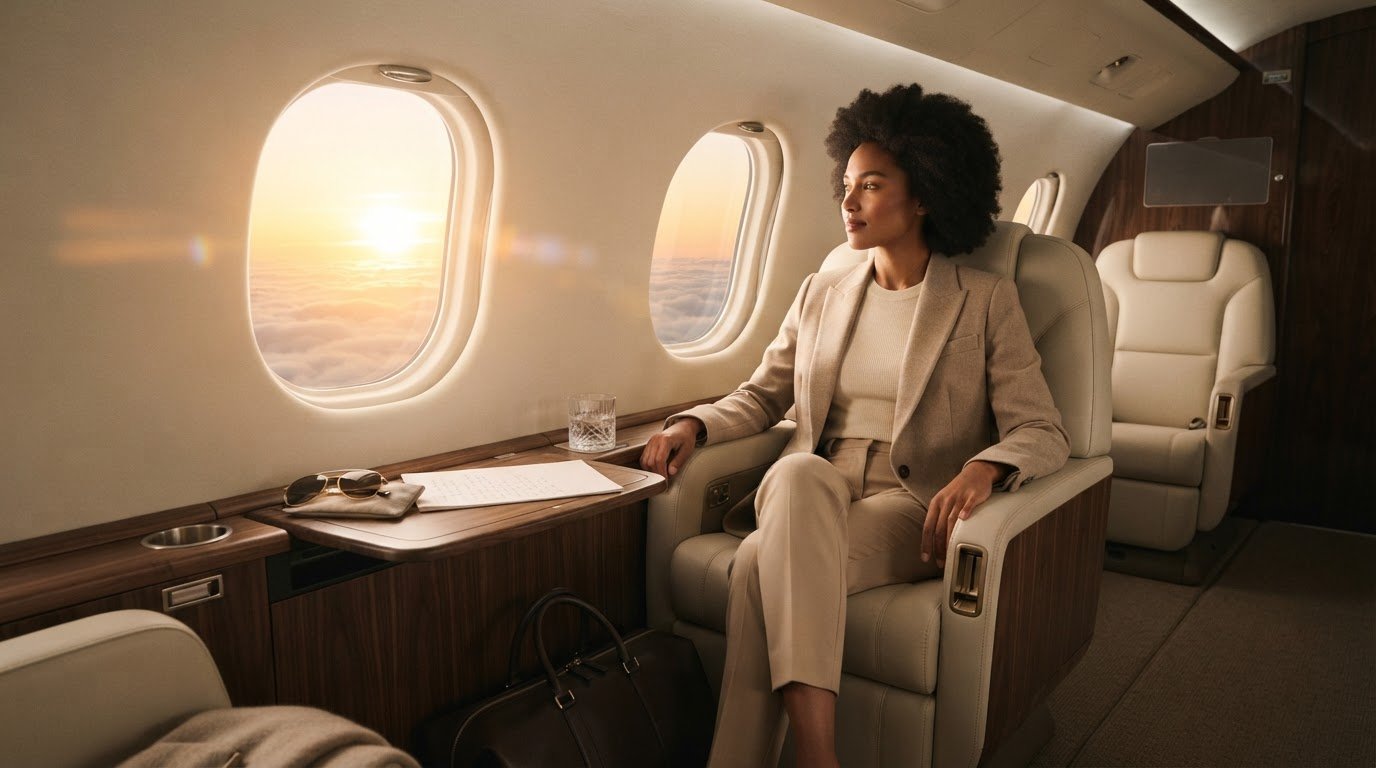
A convincing private jet set is built from the details that make the cabin feel lived in: considered seating, polished surfaces, carefully styled travel accessories, and light that suggests a journey in progress. For jet set lifestyle photography, shape the scene around a clear concept, then coordinate the set, wardrobe, props, and camera angles to support it. Private jet photo sessions typically last 2 to 4 hours, so a focused shot list helps make the most of the time.
The appeal is about more than the aircraft. A composed portrait, a quiet moment by the window or a departure-day vignette can each suggest a different travel story, as long as the setting feels coherent rather than crowded. Learn how to create a private-jet scene, choose details that read convincingly on camera and develop a concept with a distinct mood. This guide covers set design, styling, lighting, shot planning and creative direction to help you build an elegant scene with a clear point of view.
Key Takeaways
- Build a convincing private-jet scene by choosing a clear visual mood and keeping wardrobe, props, and cabin details in harmony.
- Select camera equipment and settings around the cabin’s light, reflective surfaces, and limited space rather than relying on one fixed setup.
- Plan a focused shot list and sequence portraits, environmental frames, and detail shots to make efficient use of the session.
- Distinguish jet-set imagery from luxury travel and editorial photography by clarifying the story, subject, and intended audience for each frame.
- Explore The Slim Aarons Collection for a curated reference to the poised, sunlit leisure aesthetic associated with classic jet-set imagery.
What are the defining visual features of jet set lifestyle photography?
- Build the frame around a travel story. Choose one scene, such as a quiet arrival, an in-flight pause, or a departure. Give the subject a clear action: reading a map, looking through a window, or settling into a seat. Each prop should support that moment. A passport beside untouched champagne can feel staged if neither belongs to the story.
- Make the aircraft part of the composition. Use the cabin’s windows, seat lines, and doorway to guide the eye. A Houston jet-set photo set measures 20 feet long and has 14 windows, offering clear repeating lines for framing. Place a subject near one window, then photograph through another to create depth instead of showing every cabin detail at once.
- Balance polish with signs of human presence. Keep upholstery, tables, and luggage composed, but avoid making the cabin feel unused. A folded magazine, a loosened scarf, or a hand resting on an armrest adds a trace of movement. A caption describing a 15-year-old border collie asleep aboard a private jet suggests another route: a personal detail can soften formal surroundings.
- Use window light as a visual anchor. Position the subject so daylight shapes the face without overpowering the cabin. Watch for bright window highlights beside darker seats, then adjust the composition or exposure to preserve both. Large-cabin jets are described with a height of 6’2″ and a width of 7’4″. Those proportions can help explain the intimate, enclosed feeling within a wide frame.
- Choose a restrained palette and repeat it. Coordinate clothing and props with the cabin rather than introducing competing colors. Cream, navy, charcoal, and warm leather tones can create a cohesive visual sequence. Repeat one accent, such as a red scarf or polished silver case, across several frames. This small echo helps separate images while keeping the overall story visually unified.
- Give poses a believable purpose. Direct the subject to interact with the setting, not simply face the camera. A hand reaching for a coat, a glance toward the runway, or a relaxed posture beside the window suggests a moment in progress. A black-and-white photograph of a woman seated in a plane from the 1960s offers a useful reference for composed, unhurried posing.
- Vary distance to shape the visual rhythm. Begin with a wide frame that establishes the cabin, then move closer for portraits and tactile details. Include a hand on a leather seat, a glass on a side table, or luggage near the doorway. Three distinct distances create an editorial sequence, while repeating the same framing can make the final set feel static.
- Keep the luxury understated. Let precision, space, and composure suggest exclusivity instead of relying on conspicuous labels. Remove clutter from tabletops and align objects with the cabin’s geometry. An Instagram pilot sharing her jet-setting lifestyle with 750K followers illustrates how the setting can frame a person’s story. The aircraft should support the subject, not eclipse them.
What equipment and camera settings work best for jet set lifestyle photography?
- Choose a versatile camera and lens. A mirrorless or DSLR camera gives direct control over exposure, focus, and file format. Pair it with a standard zoom for cabin views and portraits. A wide-angle lens can show a compact interior, but keep people away from the frame edges. Faces and bodies can appear stretched there.
- Pack a fast prime for dim interiors. A fast prime lens gathers more available light, which helps when cabin lighting is subdued. Use it for a seated portrait or a close detail, such as a hand on an armrest. Its shallower depth of field can separate the subject from busy cabin details.
- Set image quality before boarding. Choose RAW capture when you plan to refine white balance, highlights, and shadow detail later. JPEG can suit a quick delivery workflow, but it offers less latitude for edits. For a polished sequence, capture consistent files and avoid switching formats mid-session.
- Choose exposure mode for the scene. Aperture priority lets you control background softness while the camera meters exposure. Use a wider aperture for a single subject, then stop down when several people need sharp focus. In manual mode, adjust shutter speed and ISO as cabin light changes. Review the exposure after each lighting shift.
- Protect sharpness with shutter control. A seated portrait allows a slower shutter than a walking subject. Watch for movement in hands, hair, or clothing, even when the cabin feels still. Raise shutter speed when the subject turns toward a window or reaches for luggage. Stabilization helps, but it cannot freeze subject movement.
- Manage mixed cabin light. Aircraft interiors can combine window daylight with warm overhead lamps. Set a consistent white balance for a sequence, then refine it during editing. If skin appears too orange, reduce the warm cast. If daylight turns faces blue, adjust toward a neutral tone using a reference frame.
- Use focus deliberately. Select a single autofocus point over the nearer eye for portraits. Switch to continuous autofocus when the subject moves through the aisle. For a still cabin detail, use single autofocus and inspect the result. A crisp passport, for example, can anchor a close composition beside a softly focused seat.
- Shape light with compact tools. A small reflector can return window light onto shadowed faces without adding a harsh source. A portable LED can add gentle fill when daylight falls away. Keep equipment close to the subject and outside reflective surfaces. Check glasses, polished tables, and windows for distracting reflections.
- Keep the kit controlled and ready. Prepare charged batteries, formatted memory cards, a lens cloth, and a secure camera strap. Clean glass before shooting through a window, since fingerprints can soften distant detail. Test exposure, focus, and white balance with one frame before directing the subject into position.
How do you plan and shoot a jet set lifestyle photo session?
- Write the story before arranging the cabin. Define the intended moment, audience, and final use. A departure story might follow a traveler from the aircraft steps to a quiet seat. An editorial portrait may instead center on a single gesture. Use that decision to guide wardrobe, props, locations, and the shot list. Give every frame a purpose, so the session feels like one narrative.
- Choose the aircraft and location around the visual plan. Decide whether the story needs an interior, exterior, or both. Access, available light, and the intended composition shape the choice. A photographer’s second body of work for Syberjet, a private aircraft manufacturer, included Nevada locations and Utah airports. The photographer and crew flew in the jet to reach photography locations, linking travel logistics with the visual brief.
- Build a realistic schedule around the session. Private jet photo sessions typically last between 2 to 4 hours. Assign each setup a place in the schedule, including preparation, portraits, cabin details, and exterior frames. Allow time for moving between scenes and adjusting the set. A planned sequence helps protect the essential images if access or light changes during the shoot.
- Research the cabin lighting before arriving. Study how window light enters the aircraft and where overhead fixtures create color shifts. One photographer researched lighting an aircraft interior before the shoot. Use that preparation to identify likely portrait positions and shadowed areas. During the session, make a test frame at each setup, then adjust the subject’s position or fill light before directing further poses.
- Settle permissions and logistics early. Ask the production team to identify airport access rules, aircraft access windows, and movement restrictions. Some airports require commercial filming permits to be filed 10 business days in advance. Build that lead time into the production calendar. Confirm the shoot’s permitted areas and keep crew movement aligned with the agreed plan.
- Coordinate people and equipment as one unit. Share the call sheet, visual references, and shot order with the photographer, talent, stylist, and aircraft team. In-flight aircraft photography requires specific expertise, and flight operations add fuel considerations. Treat the aircraft’s movement and operating needs as part of the production plan. Keep equipment organized, with only the tools needed for each setup in the cabin.
- Shoot in a sequence that preserves continuity. Begin with establishing frames, then capture portraits, interactions, and detail images. Photograph wardrobe and prop changes as they happen, so later frames remain consistent. For a travel narrative, the same carry-on can appear first beside the doorway, then near the subject’s seat. Record useful notes about pose, light, and set placement between setups.
- Review the story before the final setup ends. Check focus, exposure, expressions, and background details on the camera display. Compare exterior, interior, and lifestyle frames for a consistent visual treatment. A Syberjet photographer aimed to match style across two shoots and all three image types. Use that review to identify missing angles while the aircraft and talent remain available.
How does jet set lifestyle photography compare with luxury travel and editorial photography
- Define the subject before choosing a style. Jet-set imagery centers on the traveler and the identity suggested by private aviation. Luxury travel photography gives equal weight to the destination, service, and experience. Editorial photography follows a commissioned story or visual argument. For a cabin portrait, decide whether the aircraft frames a person, a journey, or an article’s central idea.
- Let the setting serve a distinct purpose. In jet set lifestyle photography, the aircraft helps establish the traveler’s world. Luxury travel images may use a plane as one transition among hotels, landscapes, and experiences. Editorial work can treat the cabin as evidence, atmosphere, or contrast. Choose a location because it advances the story, not simply because it looks exclusive.
- Separate aspiration from destination coverage. A private-jet portrait might convey composure through a traveler’s gesture and surroundings. A luxury travel frame could instead emphasize a resort arrival or a carefully prepared table. Editorial storytelling may combine polished scenes with less formal moments, creating context or tension. Write one sentence describing the intended viewer response, then assess each planned frame against it.
- Choose wardrobe and props according to the brief. Jet-set styling often relies on a coherent silhouette and purposeful travel objects. Luxury travel photography adapts clothing and details to the destination’s character. Editorial styling may be more interpretive, using contrast to express an idea. A structured coat beside cabin upholstery feels different from relaxed resort wear. Choose the option that supports the narrative.
- Control how much polish the image carries. A jet-set frame can feel aspirational while retaining human gestures, such as a traveler looking away from the camera. Luxury travel work often balances polished scenes with descriptive views of place. Editorial photography may preserve imperfections when they strengthen the story. A black-and-white plane portrait dating from the 1960s can suggest elegance without contemporary spectacle.
- Plan the sequence for its intended use. A jet-set series can move from arrival to cabin portrait to departure detail. Luxury travel coverage may follow a broader itinerary, connecting transport with destination experiences. Editorial photography needs a sequence supporting its written or visual argument. Before shooting, list the opening frame, essential transition, and closing image for the final presentation.
- Evaluate each frame by its audience. A brand-led travel image needs clear visual cues supporting its intended identity. A destination feature benefits from details that locate the experience. An editorial portrait should reveal something about its subject or theme. Review a contact sheet and ask what each image communicates without its caption. Remove frames that repeat the same message.
- Blend genres with a deliberate lead. A private aircraft can introduce a destination, while a traveler’s portrait supplies the human story. Decide which visual language leads, then borrow selectively from the others. In jet set lifestyle photography, destination detail can add context without displacing the traveler. Editorial contrast can deepen character while preserving the travel narrative. To study established photographic references, explore curated photographic works.
Galerie Prints: The Slim Aarons Collection
Galerie Prints offers The Slim Aarons Collection, a natural reference for the sunlit leisure aesthetic explored in this guide. The photographs offer examples of how setting, gesture and composition can evoke travel and elegance. For a different sensibility, Terry O’Neill Photography brings another perspective on iconic subjects and closely observed moments. Explore these works for visual inspiration or to choose photography for an interior. Galerie Prints also offers bespoke framing to complement a selected piece. Explore the collections and find a photograph that speaks to your creative vision.
Shape Your Next Image with a Distinct Point of View
Begin your next shoot with a visual reference, not a checklist of luxury signals. Decide what the viewer should feel, then make each creative choice support that response. In jet set lifestyle photography, a restrained detail can have more character than an entire cabin staged as a spectacle. Studying established photographic work can help you refine the balance of atmosphere, gesture and setting before shaping your own direction.
The Slim Aarons Collection offers a lens on leisurely, sunlit elegance. Terry O’Neill Photography brings another perspective on character and presence, while Cinema Lobby Cards show how composed images can suggest a larger story. These works can inform your visual research without dictating your final frame. If you’re developing a shoot, references from jet set lifestyle photography can help you shape a distinctive point of view. Contact Galerie Prints about your shoot, and carry one strong idea into your planning.
Frequently Asked Questions
How would you describe this style of travel photography?
Jet set lifestyle photography presents travel as an expression of taste, movement and personal style, often with private aviation as part of the setting. Rather than documenting an aircraft alone, the image suggests a story about the traveler and their world. A portrait framed by an open hangar doorway, for example, can evoke the anticipation of departure. The atmosphere feels intentional when the setting supports the person’s story.
Who are influential jet-set photographers, and what defines their styles?
Slim Aarons is associated with images of leisure, social life and elegant destinations, often composed with sunlit clarity. Terry O’Neill is known for portraits of prominent cultural figures, capturing their presence in settings from formal to candid. Studying their work can inform jet set lifestyle photography through distinct approaches: composed social scenes or personality-led portraits. Notice how each photographer directs attention through setting and gesture.
Which locations and props help establish a jet-set travel scene?
Aircraft hangars, private terminals, resort entrances and scenic overlooks can each establish the context of a journey. Choose a location for the story it tells, not its prestige alone. In jet set lifestyle photography, a travel journal, leather weekender, gloves, sunglasses or folded route map can add character. Choose props that feel natural in the scene. A journal beside a window, for instance, may suggest a pause between destinations.