
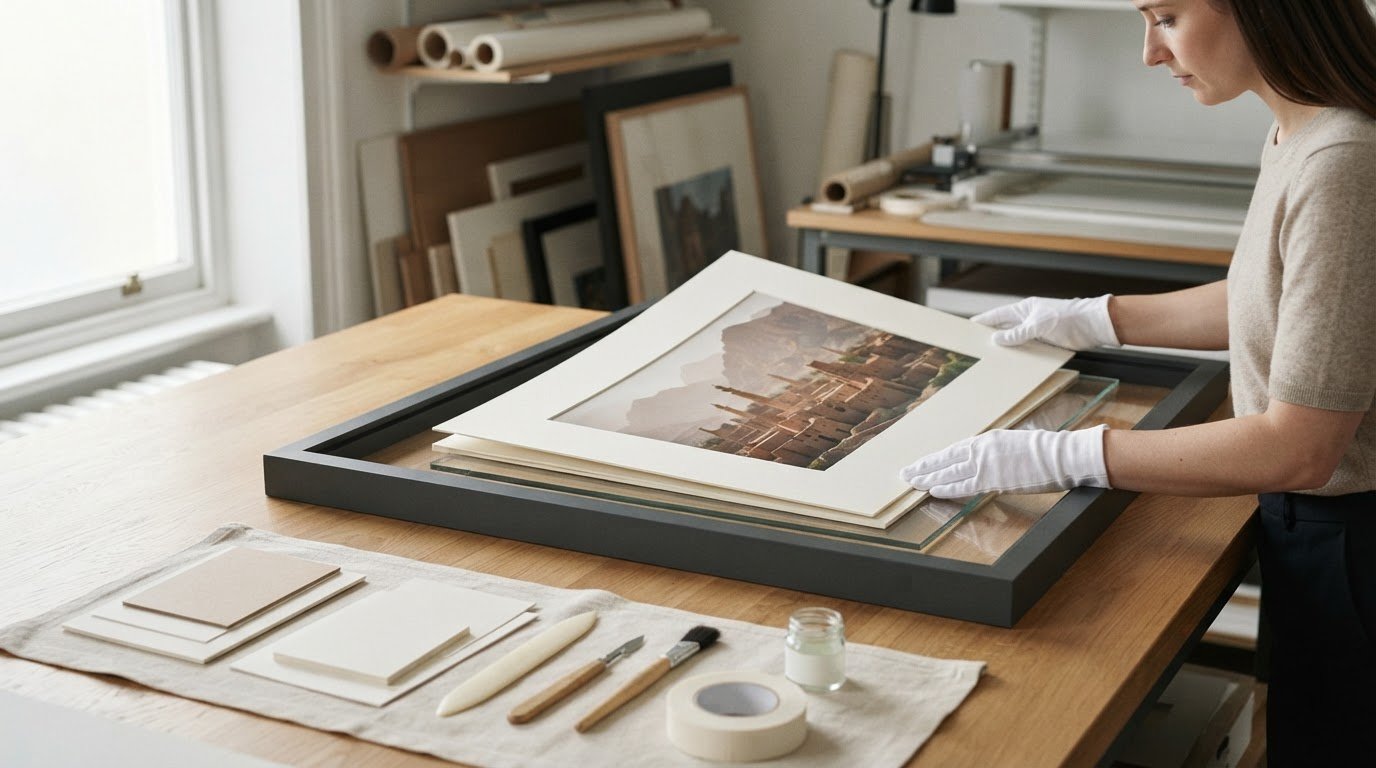
A beautifully framed photograph can still be vulnerable behind the glass. Conservation framing for photography is not about choosing a prestigious-sounding material. It means making considered choices that help reduce avoidable risks to the print.
If you’re unsure whether a mat is necessary, what “archival” really means, or whether framing might harm a photograph you value, those are sensible questions. Suitable materials and construction can help protect a print, but no frame can shield it from every threat, particularly unsuitable display conditions.
This guide explains what conservation framing can and can’t do, how glazing, mats, backing, and mounting methods affect a photograph, and what to ask before approving a frame. You’ll also learn why clear, verifiable material specifications matter more than vague marketing language, and how to display a print with care while preserving its visual presence. With a little knowledge, you can make the frame a considered part of the photograph’s presentation, not a source of uncertainty.
Key Takeaways
- Conservation framing for photography can reduce avoidable risks to a print, but it can’t prevent every kind of deterioration.
- Glazing, mats, spacers, mounting, and backing work together. The photograph’s process can affect which materials are suitable.
- UV-filtering glazing helps, but it isn’t a substitute for physical separation, compatible materials, and thoughtful display conditions.
- Before commissioning a frame, identify the print and its condition, explain where it will hang, and ask specific questions about materials and construction.
- Careful placement and handling remain important after framing, especially away from direct sunlight, persistent heat, and damp.
What Is Conservation Framing for Photography, and What Can It Protect?
Conservation framing for photography means choosing materials and construction methods intended to reduce avoidable risks to a photographic print. A suitable frame can help limit contact with the print’s surface and reduce unnecessary handling, as well as moderate exposure to some environmental hazards. It can’t prevent every kind of deterioration. Light, fluctuating conditions, and the natural ageing of photographic materials may still affect an image over time.
Conservation framing helps reduce preventable risks to a photograph; it cannot promise that the print will remain unchanged forever. The frame itself can also age or be affected by its surroundings. For a broader perspective on why frames need care, see Conservation and restoration of painting frames, which discusses deterioration factors such as humidity, pests, and adhesives. Caring for the frame, however, is distinct from protecting the photograph inside it.
Framing is preventive, not restorative. If a print is already faded, stained, creased, or otherwise damaged, a new frame won’t reverse its condition. Treatment may require examination by a qualified photograph conservator, who can assess the image and recommend appropriate next steps. Don’t attempt repairs or remove adhered materials without expert guidance.
Which photographic prints may need extra care?
A contemporary print in good condition may call for different decisions from a historic, rare, irreplaceable, or visibly fragile photograph. With an older print, both its photographic process and its present condition can affect which materials are suitable. Yellowing, flaking, tears, or evidence of previous repairs are reasons to seek specialist advice before framing. If a photograph is valuable or historically significant, consult a photograph conservator or a framer experienced with photographs before making changes.
Does every photograph need conservation framing?
No single framing approach suits every print. The right choices depend on the photograph’s process and condition, its personal or financial importance, where it will be displayed, and the conditions around it. A print intended for a bright room may raise different concerns from one kept in a quieter, more stable setting. The aim is informed care, not alarm or unnecessary expense.
Think of framing as part of the photograph’s presentation. It can support the image visually while helping you make thoughtful decisions about its care. For ideas on bringing photographic art into a home, explore fine art photography collecting and decorating. Next, consider how each component of the frame interacts with the print.
How Conservation Framing Materials Interact with a Photographic Print
A framed photograph is a small, interconnected system. Glazing faces the image; a window mat or spacers create distance; the mount supports the print; backing sits behind it; and the frame holds the assembly together. Each part can affect the print through contact, pressure, or the environment inside the frame. Every layer that touches or encloses a print can affect how it’s cared for.
Choose materials for the photograph’s process, not just a label on the board. “Acid-free” describes a useful property, but on its own it doesn’t identify the material’s composition, test results, or suitability for a particular print. Ask what the mat, mount, and backing are made from, and whether their suitability for photographs can be documented. For prints within its scope, the Photographic Activity Test (PAT) is associated with ISO 18916; ISO 18902 sets requirements for materials used in framing and storing photographs. The Caring for Photographs guide from the American Institute for Conservation offers further guidance on handling and care.
Some photographic processes need particular consideration. Buffered boards, for example, aren’t suitable for every process; cyanotypes can be damaged by buffered materials. If the process is unknown, or the print is sensitive or historic, ask a qualified framer to assess which materials are appropriate. Don’t assume one board works for every photograph.
What should you ask about mats, mounts, and backing?
Start with the points of contact: what materials touch the print, and how is it held in place? Ask whether the mounting method is reversible, meaning the photograph can be removed later without damage. Non-adhesive supports may be appropriate, but the method should suit the print’s condition and format. A properly designed window mat or spacers can keep the image surface from resting directly against the glazing, helping reduce the risk of sticking or moisture-related contact.
Ask for specific material descriptions rather than relying on terms such as “museum quality.” For a delicate or historically important photograph, a qualified framer or photograph conservator can help assess the print and advise on the assembly.
What does UV-filtering glazing do, and not do?
UV-filtering glazing can reduce some ultraviolet exposure, but the degree of protection depends on the product and its stated specification. Ask which wavelengths it filters and request the manufacturer’s information. It won’t remove all fading risks: visible light, display conditions, and handling still matter. UV protection is one element of the framing system, not a substitute for suitable materials, separation from the glass, or thoughtful placement.
If you’re considering framing a purchased print, Galerie Prints offers a bespoke framing service. You can explore framing options and confirm the glazing, mounting, and backing specifications before choosing.
Conservation Framing Misconceptions: Is UV Glass Enough?
No. UV-filtering glazing can reduce some ultraviolet exposure, but it doesn’t make a photograph invulnerable. It can’t control every source of light or prevent heat and moisture from affecting the print. Nor can it compensate for unsuitable materials inside the frame. A more complete approach considers the whole assembly, the print’s condition, and where it will be displayed.
Think of each measure as addressing a different risk. The details below are a starting point, not a specification for every photograph. Confirm exact materials and performance claims with the framer or manufacturer, especially for a sensitive or historic print.
- UV-filtering glazing: Reduces some ultraviolet exposure. Performance varies by product, and it doesn’t block all potentially damaging light.
- A mat or spacers: Helps keep the print’s surface from touching the glazing. It doesn’t prevent fading or make unsuitable materials safe.
- Compatible mount and backing: Helps avoid harmful contact and supports the print. Suitability depends on the photograph and its process.
- Careful handling: Reduces risks from fingerprints, pressure, and accidental damage. It can’t reverse existing deterioration.
- Thoughtful placement: Limits exposure to direct light, heat, moisture, and pollutants. Conditions can still change over time.
Can conservation framing prevent fading?
It may reduce some risks, but no framing choice can guarantee that a photographic print won’t change. Light exposure can affect colour stability, while the print’s materials and process also influence how it ages. Even glazing that filters ultraviolet light doesn’t eliminate exposure to visible light. Avoid direct sun and consider the room’s heat and moisture conditions. For advice tailored to a particular process, ask a photograph conservator rather than relying on a general lifespan estimate.
When is professional conservation advice worthwhile?
Routine framing of a replaceable contemporary print is different from making treatment decisions about a unique original. If a photograph is fragile, damaged, historically significant, or irreplaceable, seek specialist assessment before framing or attempting repairs. Ask a framer about their experience with photographic materials specifically; expertise with frames or other kinds of artwork doesn’t automatically mean familiarity with photographs. A conservator can assess the print and identify risks that may not be visible at a glance.
The aim of conservation framing for photography isn’t to promise permanence. It’s to make considered choices that reduce avoidable risks. A well-chosen frame is one part of that care, alongside appropriate handling and a suitable display location.
How to Commission Conservation Framing for a Photograph
A useful framing conversation begins with the photograph, not a frame sample. Share what you know about the print and where you plan to display it, then ask the framer to explain how the proposed construction addresses those circumstances. This checklist can help you compare options without relying on broad labels such as “archival” alone.
- Identify the print and its importance. Note its dimensions, any known photographic process or provenance, and visible concerns such as fading, tears, or surface damage. Explain whether it’s a replaceable print, a limited print, a historic photograph, or otherwise especially meaningful to you.
- Describe the intended location. Tell the framer which room you have in mind and whether the photograph may face direct sunlight or be near a heat source, damp area, or changing conditions. The display environment can help shape practical choices.
- Ask for the material details. What are the glazing, mat, mount, and backing made from? Which materials will touch the print, and how will the glazing be kept from contacting its surface? Ask for specific product or material information where available.
- Clarify how the print is held. Ask whether the attachment method is reversible and whether the photograph can be removed later without damage. If the process or condition is uncertain, ask what the framer can verify and what remains unknown.
- Record the agreed specifications. Keep a written note of the chosen materials, glazing description, mounting method, and any care advice. For a fragile, damaged, unique, or historically significant photograph, consult a qualified photograph conservator before proceeding.
What information should you bring to a framer?
Bring the print’s dimensions, known process or provenance, condition concerns, and intended display location. Share what you know about the photograph’s history, but don’t guess at details you can’t confirm. Tell the framer why the print matters to you, then ask for material choices to be explained in plain language. If a specification can’t be verified, ask that this uncertainty be made clear before you approve the design.
How should you assess the finished frame and its placement?
Before hanging the work, check the frame for signs of pressure, damage, or movement. Ask the framer to confirm that the print is securely supported and separated from the glazing. Choose a position away from direct sunlight and locations exposed to persistent heat or moisture changes. If you’re considering a monochrome work, black-and-white photography collecting offers further inspiration for displaying it thoughtfully.
Galerie Prints offers bespoke framing as an add-on for purchased prints. To explore the option, view the bespoke framing service, and confirm the materials and construction details that matter for your photograph.
Displaying and Caring for a Conserved Photograph Over Time
Conservation framing for photography works best alongside thoughtful display and careful handling. A well-considered frame can help reduce certain risks, but the photograph’s surroundings still matter. Choose a stable interior location away from direct sunlight, persistent heat, damp, and rapid changes in room conditions.
How can you reduce avoidable display risks?
Check the room throughout the day and across seasons. A wall that seems shaded in winter may receive strong sunlight later in the year. Bathrooms and kitchens can have fluctuating moisture, while radiators and fireplaces create heat. Keep framed photographs away from these conditions where possible, and avoid leaning objects against the glazing or stacking frames where pressure could affect the print.
For routine dusting, use a soft, dry cloth on the frame’s exterior. Don’t spray cleaner onto the glazing, where liquid could run into the edges, and don’t open the frame to clean or adjust the photograph. If the glazing needs more than light dusting, follow the framer’s care guidance for that specific frame and surface.
Once you’ve chosen a suitable place and established a gentle care routine, explore Galerie Prints bespoke framing as an option for a purchased print. Confirm the materials and construction details before selecting a framing option; conservation specifications shouldn’t be assumed.
When should a framed photograph be inspected?
Make occasional visual checks without taking the frame apart. Look for condensation, mould-like growth, new discolouration, loose hanging hardware, or signs that the print has shifted. Changes in a room’s light or moisture conditions may also make a previously suitable location less appropriate, so reassess placement if the environment changes.
If you notice an unusual change, don’t try to clean or repair the photograph yourself. Seek advice promptly from a qualified photograph conservator, particularly if the print is fragile, historic, or irreplaceable. A calm, regular check helps you notice concerns early while leaving the framed work undisturbed.
Choose a Frame That Lets the Photograph Endure
Good conservation framing for photography balances materials and construction suited to the print, protection that addresses real risks, and a display position that avoids unnecessary exposure. UV-filtering glazing can help, but it isn’t a guarantee against fading or change. The photograph’s process and condition matter, too, so seek a photograph conservator’s advice when a print is fragile, historic, or irreplaceable.
Ask clear questions about what touches the image, how it’s mounted, and which specifications can be verified. Keep the frame away from direct sunlight, persistent heat, and damp, then inspect it occasionally for changes. These practical steps make caring for a photograph less uncertain while allowing its image to remain at the heart of the room.
Galerie Prints offers bespoke framing as an add-on for purchased prints. Explore available framing and print options, and confirm current materials and specifications before deciding: Explore Galerie Prints bespoke framing. Choose a print and explore the framing options, then confirm the construction details that suit its display.
Frequently Asked Questions
Is conservation framing worth it for a photographic print?
It can be worthwhile if a photograph is important to you, difficult to replace, or intended for long-term display. The value is in making informed choices about materials, mounting, glazing, and placement, not in a promise that deterioration can be prevented. For an ordinary, replaceable print, ask a framer about proportionate options. You may not need every premium feature; the right approach depends on the print and where you plan to display it.
Does UV-protective glass stop photographs from fading?
No. UV-filtering glazing can reduce some ultraviolet exposure, but it can’t guarantee that a photograph will never fade. Light, the print’s materials, and display conditions all influence how it changes over time. Ask the framer for the glazing specification and what exposure it addresses. Even with protective glazing, avoid direct sunlight. For a historic or irreplaceable photograph, seek advice from a qualified photograph conservator before choosing materials or a display location.
What materials should conservation framing use for photographs?
Suitable materials depend on the photograph’s process, condition, and intended display. Ask what the mat and backing are made from, which materials touch the print, how it’s mounted, and whether that method is reversible. “Acid-free” alone doesn’t explain every aspect of a material’s suitability. If the photograph is fragile, historic, or especially valuable, ask a qualified framer or photograph conservator to recommend materials for that specific print.
Can a photograph touch the glass in its frame?
It’s generally preferable to keep a photograph’s surface from touching the glazing. Changes in conditions can contribute to sticking or other damage, and direct contact may complicate future care. A properly designed mat or spacers can create separation, but the appropriate construction depends on the photograph and frame. Ask how the print is held, whether it contacts any framing materials, and whether the assembly can be accessed later without harming the image.
How should I display a framed photograph to protect it?
Choose a stable indoor location away from direct sunlight, persistent heat, damp, and marked environmental changes. Protective glazing doesn’t replace thoughtful placement. Check the frame occasionally for condensation, visible changes, or movement, and dust its surface gently without spraying liquid near the edges. Don’t open the frame to clean the print. If you notice damage or an unusual change, don’t attempt a repair; consult a qualified photograph conservator.
Should I use conservation framing for an old or valuable photograph?
Seek professional advice before framing a photograph that’s historic, fragile, damaged, unique, or especially valuable. Its process and present condition can affect which materials and mounting methods are suitable. A qualified photograph conservator can assess the print and advise on treatment needs, while a framer can explain construction options. Ask specifically about experience with photographic materials. Don’t assume standard framing or UV-filtering glazing alone is appropriate for an important original.
Is conservation framing the same as restoring a photograph?
No. Conservation framing concerns the materials and construction used to support and display a photograph while reducing avoidable risks. Restoration involves assessing or treating the photograph itself and should be undertaken by an appropriately qualified specialist. If a print is torn, stained, brittle, or otherwise damaged, seek conservation advice before framing it. This helps ensure framing decisions take the photograph’s condition into account rather than complicating its care.