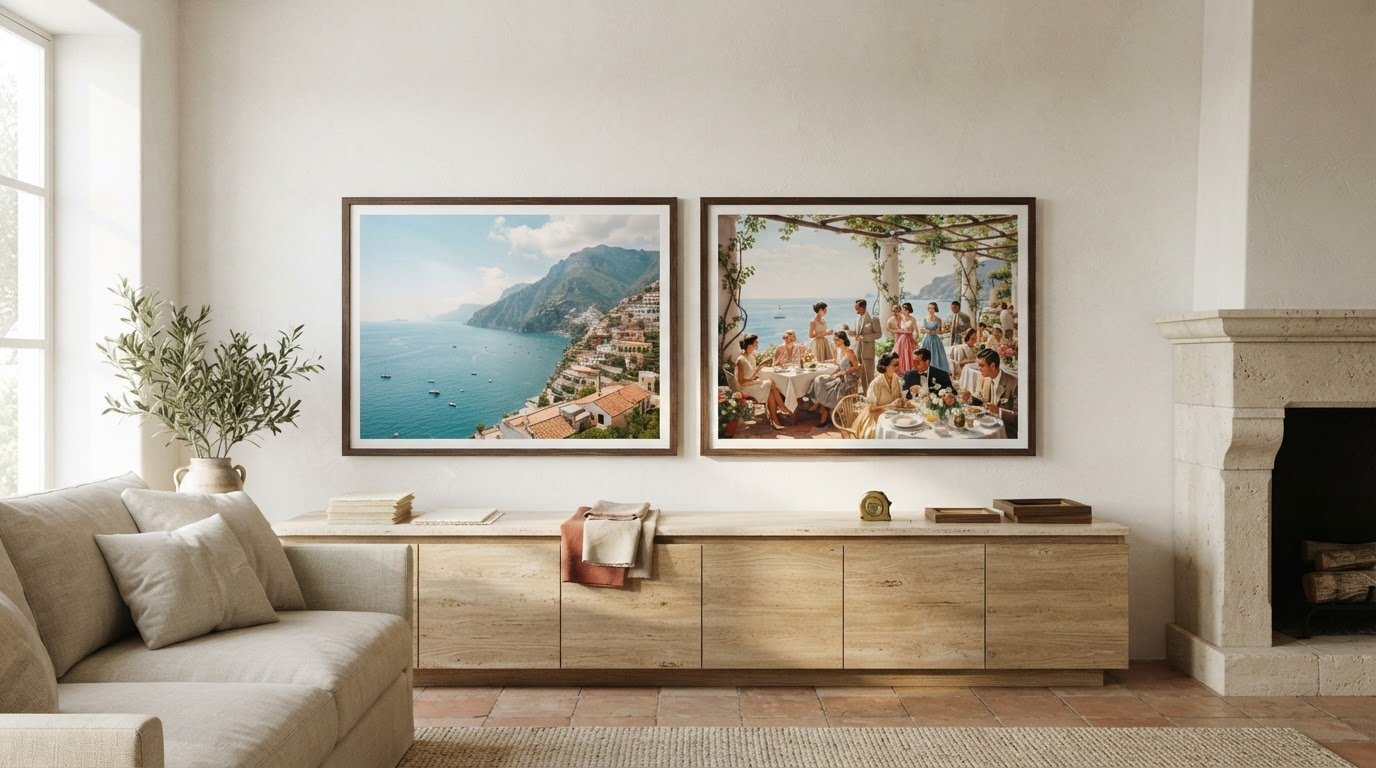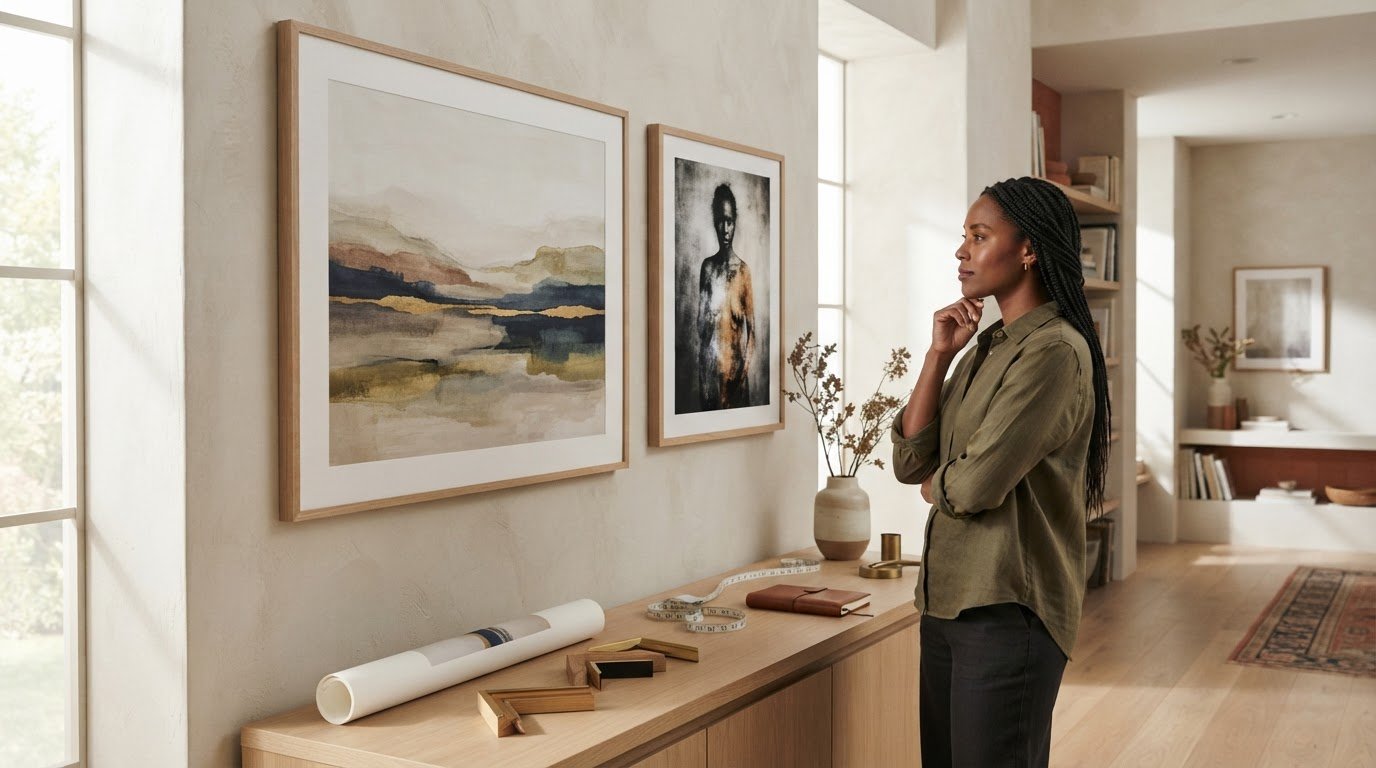
What if the best way to choose art you’ll still love isn’t to predict its future value, but to understand why it speaks to you now? It’s natural to wonder whether the appeal will last, whether a print will feel at home in your space, or whether you’re buying on impulse. Avoiding buyers remorse with art starts with slowing down and looking beyond the first spark.
A meaningful print can hold your attention for many reasons: its subject, atmosphere, photographic history or the feeling it brings to a room. That personal connection matters, but so do practical details such as scale, cropping and presentation. This guide will help you weigh both, so you can make a considered choice without treating resale value as the measure of success. You’ll learn how to test your lasting interest, picture a work in its intended setting and consider details that shape the finished piece, including framing and bespoke options. The aim isn’t to guarantee you’ll never change your mind. It’s to help you buy with clarity and enjoy the art you choose.
Key Takeaways
- Post-purchase doubt doesn’t automatically mean an artwork was the wrong choice. Consider what the feeling is telling you before judging the decision.
- Notice which qualities hold your attention, from the subject and mood to the memories or ideas the image evokes.
- Compare the print’s emotional appeal with its intended space, size, crop, presentation and purpose before committing.
- Use a calm checklist to clarify your reasons for choosing a piece, review its practical details and give yourself room to reflect.
- For avoiding buyers remorse with art, focus on an informed choice that feels meaningful to you rather than expecting a print to deliver future resale value.
Why Does Art Buyer’s Remorse Happen, and What Does It Really Mean?
After choosing a print, you might wonder whether you paid too much, whether another image would have suited the room better, or whether the appeal will last beyond the excitement of buying. That unease is buyer’s remorse: doubt that arises after a decision. It can reflect the tension of weighing a meaningful choice, a reaction explored through the idea of cognitive dissonance in understanding buyer’s remorse. The feeling deserves attention, but it isn’t a verdict.
Post-purchase doubt alone cannot determine whether an artwork was the right choice. Its meaning depends on what the doubt is responding to. Sometimes the artwork itself feels wrong. At other times, the concern is about making any consequential purchase, especially one that carries personal or financial weight. Separating those possibilities is a useful first step in avoiding buyers remorse with art.
Is second-guessing an art purchase always a warning sign?
Not necessarily. Choosing one photograph means leaving others unchosen, and it’s easy to revisit those alternatives after making a decision. Briefly wondering whether a different subject, composition or mood might have worked is not the same as discovering that the print you chose no longer speaks to you.
Look for a specific concern beneath the comparison. Does the work feel poorly suited to the room, or are you simply imagining another option? Persistent unease about the artwork’s condition, fit or purpose deserves more careful attention than a passing “what if.” Don’t dismiss a concern simply because doubt can be normal.
Which questions help reveal the source of the doubt?
Name the concern plainly rather than treating regret as one indistinct feeling. Is it about cost, whether you needed another piece, how the work fits your space, or an alternative you didn’t choose? Then recall what first drew you in. Was it the subject, the atmosphere, a memory it stirred, or a detail that held your gaze?
- Cost: Is the concern about the amount spent, or about whether the print feels worth owning to you?
- Need: Did you have a place or purpose in mind, or did the decision feel unplanned?
- Fit: Does the image still feel right for the intended setting?
- Alternatives: Are you responding to a genuine mismatch or comparing your choice with every unchosen possibility?
Be honest about what you expected, too. Counting on future resale value is different from wanting to live with and enjoy an image. Art can be personally rewarding without serving as a financial investment, and the two measures shouldn’t be confused. Understanding your original reasons helps you assess the choice on its own terms, rather than against an imagined guarantee of lasting satisfaction.
How Personal Connection, Expectations, and Choice Shape Art-Buying Confidence
An image can draw you in through its subject, but the connection often has more than one layer. Perhaps a photograph’s atmosphere recalls a place you love, its composition rewards a closer look, or its mood brings a particular memory to mind. These responses don’t need to sound grand or intellectual to matter. A print can feel meaningful because you enjoy returning to it, even if you can’t explain every reason it holds your attention.
Personal connection gives a choice its meaning, while realistic expectations let that meaning unfold without demanding that the artwork transform a room or prove its financial worth. That balance is central to avoiding buyers remorse with art: choose for reasons you recognise, and let enjoyment stand on its own.
How can you tell whether you genuinely connect with a work?
Look beyond the first impression or a style that happens to be popular in interiors. Revisit the image and notice what continues to draw your eye: a gesture, expression, arrangement of light, or the feeling created by the scene. Then describe the appeal in your own words. “It reminds me of a summer evening” or “I like the quiet energy” can be more revealing than trying to justify the choice in art-world language.
Ask whether the image offers something beyond its immediate decorative effect. Imagine encountering it on an ordinary day, not just while picturing a newly styled room. Does it still invite a second look? Does its subject or mood connect with your tastes, experiences or curiosity? The answer needn’t be an intense emotional response. A steady sense of interest can be a genuine connection, too.
Why can comparison and investment expectations create doubt?
Once you’ve chosen, it’s easy to imagine every alternative: another photograph, a different subject, or a piece that might have suited the room in a different way. But an artwork can’t be compared fairly with an imagined perfect option that has no real compromises. Return instead to the purpose you had in mind, whether that was enjoying a favourite image, marking a personal interest, or bringing a particular atmosphere into your home.
Keep appreciation distinct from speculation. An artwork may have personal, historical or aesthetic significance without any promise of future financial appreciation. If resale value was part of your expectation, recognise it as a separate consideration rather than using it as the sole measure of whether the work matters to you. A grounded choice rests on what you value in the print itself. If you’re still considering which images resonate with you, explore photographic prints with that personal purpose in mind.
How to Assess an Art Print Before You Commit
A print’s appeal is only one part of the decision. Its scale, crop and presentation shape how the image reads in a particular setting, while the item description helps distinguish what’s included from what you may be assuming. Reviewing these details can make avoiding buyers remorse with art a more considered process.
Use this comparison as a prompt, not a scorecard. A strong choice doesn’t need to satisfy every point equally; it should make sense for your purpose.
| Consideration | Questions to ask |
|---|---|
| Emotional fit | What draws you back to the image, and does that appeal feel personal rather than dependent on a passing trend? |
| Intended space | Where will it be displayed? Should it command attention or sit comfortably among existing furnishings? |
| Size and crop | Will the chosen dimensions suit the wall and viewing distance? Does the crop preserve the details you value? |
| Presentation | What does the item description specify, and would professional framing support how you want to display it? |
| Purchase purpose | Are you choosing the work to enjoy, to mark an interest, or for another clear reason? Avoid treating future value as a promised outcome. |
Will the artwork suit the space and scale you have in mind?
Measure the intended wall or display area before settling on a size. Use masking tape to mark the print’s approximate dimensions, or cut a paper template and place it where the artwork will hang. Consider how far away you’ll usually view it, what furniture or architectural details surround it, and whether you want the image to become a focal point or complement the room. A print that feels striking on a screen may have a different presence at its final scale.
Size and crop work together. A particular crop can change the balance of an image, so consider whether it retains the subject or detail that first caught your eye. Galerie Prints offers custom sizing and cropping to help tailor a print to a specific display intention. For further perspective on placing photographic works at home, explore this fine art photography collecting and decorating guide.
Do the print and presentation details match your expectations?
Read the specific item description closely. Distinguish stated details, such as whether an item is a photographic print, vintage movie poster or cinema lobby card, from assumptions about its materials, finish or display requirements. Don’t infer a feature simply because it’s common in another format. If an edition or signature is mentioned in the description, consider that detail as part of the item’s stated character.
Presentation matters, but professional framing isn’t essential for every work. Galerie Prints offers professional framing as an add-on for purchased prints, and an unframed print may better match your plans. The gallery describes its prints as exhibition quality and offers bespoke options to help you consider how a work will be displayed. Weigh these choices in relation to the piece and its setting, rather than expecting a presentation decision to guarantee satisfaction.
A Calm Pre-Purchase Checklist for Choosing Art You’ll Live With
A considered purchase doesn’t require perfect certainty. It helps to have clear reasons for choosing the work and a realistic sense of where and how you’ll live with it. This simple process keeps your attention on what matters, rather than sending you into an endless search for an imagined perfect option.
A sound pre-purchase rule: choose art that connects with you, suits its intended purpose and fits the practical realities of displaying it.
- Name the attraction. Write down what first held your attention: the subject, mood, composition, a particular detail, or a memory it evokes. Keep the note in your own words. It gives you a personal reference point before comparisons begin.
- Define the purpose. Decide what you want the artwork to bring to your home or collection. It might mark an interest, add a certain atmosphere to a room, or simply be an image you enjoy seeing. You can also set a personal budget that feels comfortable for your circumstances, without treating an arbitrary threshold as a measure of good taste.
- Check the practical fit. Identify the intended setting and measure the available wall or display area. Consider how the image will relate to surrounding furnishings and whether its size and crop suit the effect you want. Note any presentation preferences, such as whether you’d like professional framing.
- Review the details. Read the product description and compare its stated information with what you expect to receive. Review the selected size, crop and presentation options. Keep confirmed details separate from assumptions about materials, finish or how the print will look in your particular space.
- Pause and return. Step away from the decision for as long as feels useful, then revisit the artwork and the reasons you recorded. There’s no universal waiting period. Ask whether the original attraction remains and whether any important question is still unresolved.
What should you decide before browsing more options?
Give yourself a brief before opening more tabs. Describe the feeling, subject or visual quality you hope to bring into your space, then identify the room or display area and any size or presentation needs. A clear purpose can narrow your search without making it rigid. Keep the note nearby so you judge new possibilities against your intentions, not just their novelty.
What should you review before placing an order?
Return to your original note and check the specific work against it. Do the image, practical dimensions and chosen presentation support your purpose? If an expectation is unclear, pause rather than filling the gap with an assumption. Galerie Prints offers custom sizing and cropping, as well as professional framing as an add-on, so you can make presentation part of the decision. A thoughtful checklist supports avoiding buyers remorse with art, but it can’t promise you’ll never reconsider.
Ready to put your criteria into practice? Explore exhibition-quality photographic prints and consider which images suit your purpose and space.
Choosing Exhibition-Quality Prints with Galerie Prints
A considered choice brings together the image that holds your attention and the way you want to experience it in your space. Galerie Prints is passionate about photographic art and offers exhibition-quality prints, with care given to the printing and framing process. Use the practical framework you’ve built to guide your search: consider which image speaks to you, what setting you have in mind, and which format and presentation choices support that intention.
Customisation can help make those decisions more specific. It gives you a way to think through how the work will meet its intended setting. As you explore, read each item’s details closely and distinguish the stated options from assumptions about what a particular artwork or format includes.
How can customisation support a more considered choice?
Size and cropping influence how an image sits within a room and which details draw the eye. Galerie Prints offers custom sizing and cropping, allowing you to consider dimensions and composition in relation to your display plans. Bespoke Services offer printing on any substrate, including aluminium, wood and glass, as well as options such as murals and wallpapers. Consider how these formats might suit the space and the image you’ve chosen.
What can help a print feel ready for its intended setting?
Think about presentation as part of the overall choice. Galerie Prints offers professional framing as an add-on for purchased prints, with ready-to-hang delivery. Framing isn’t required for every work or every display plan; the right decision depends on how you want to present the image. Consider whether you want a framed piece or prefer to arrange presentation separately. These practical choices can support a considered purchase without promising how you’ll feel about it over time.
Explore photographic prints at Galerie Prints
Take your time with the images. Notice the photographs that continue to interest you, then weigh that connection alongside your purpose, space and preferred presentation. Galerie Prints brings together exhibition-quality photographic prints for people drawn to the history and character of the medium. Exploring the collection can help you refine what you value in a print, whether you’re ready to choose or still considering your options. That balance of personal interest and practical thought is at the heart of avoiding buyers remorse with art.
If you’d like to continue exploring at your own pace, explore exhibition-quality prints and consider which works feel right for your interests and setting.
Let Your Next Art Choice Begin With Curiosity
A print doesn’t need to answer every question about your taste or your home. It can mark what draws your attention at this moment, becoming part of the rooms and routines that shape your life. As your surroundings change, the way you experience an image may change too. That’s part of living with art, not proof that the original choice was mistaken.
For avoiding buyers remorse with art, base your decision on reasons that feel true to you, not pressure to make a perfect or financially assured choice. Browse with care, follow the images that hold your interest and decide in your own time.
When you’re ready, explore exhibition-quality prints and find a photograph that feels right for your home or collection. Let curiosity lead, and enjoy choosing a work with thought and confidence.
Frequently Asked Questions
Can I customise the size or cropping of a Galerie Prints artwork?
Yes, customers can customise the size and cropping of Galerie Prints artworks. These choices help you consider how an image will fit a display area and which parts of its composition you want to emphasise. Connect each selection to your intended setting rather than choosing dimensions on impulse, a useful step in avoiding buyers remorse with art.
Can Galerie Prints print on aluminium, wood, or glass?
Yes. Galerie Prints’ Bespoke Services offer printing on any substrate, including aluminium, wood and glass. These examples aren’t an exhaustive list. If you’re considering a material for a particular display or interior, think about how it supports your purpose for the work. The substrate is a presentation decision, not a promise of a particular visual effect.
What framing service does Galerie Prints offer?
Galerie Prints offers professional framing as an add-on service for purchased prints, with ready-to-hang delivery. Framing is one way to prepare a print for display, rather than a requirement for every artwork or interior. Consider whether you want a framed piece or prefer to arrange presentation separately.
Are signed and limited-edition photographic prints available?
Yes. Galerie Prints offers signed and limited editions across photographic movements and periods. These editions can appeal to collectors drawn to a particular photographer, era or visual tradition. Edition and signature details are specific to each work, so consider the stated information when choosing a piece for its documented qualities and the meaning it holds for you.
What delivery options are available for Galerie Prints Gift Vouchers?
Galerie Prints Gift Vouchers are available by E-card, Card & Envelope, and Luxury Gift Box. Choose the listed method that suits the occasion and recipient. The delivery method is separate from the voucher’s monetary value, which is selected separately.
What is the listed size and condition of the Harry Potter 2001 Vintage Lobby Card?
The Harry Potter 2001 Vintage Lobby Card is listed as Large, measuring 14 × 11 in (36 × 28 cm), and its condition is Excellent. These are the item’s stated specifications, useful when assessing how the card may suit a display space or collection. As a vintage cinema lobby card, it’s a collectible item, so consider the listed condition and dimensions as you decide whether it fits your interests.
What is the listed size and condition of the Rocky 1976 Vintage Lobby Card #2?
The Rocky 1976 Vintage Lobby Card #2 is listed as Extra Large, measuring 11 × 14 in (28 × 36 cm), and its condition is Very Good. Its stated size and condition provide practical points of comparison if you’re considering it alongside other cinema memorabilia. Review these details in relation to your display plans and collecting interests, rather than assuming vintage lobby cards share identical dimensions or condition descriptions.