Tag: Marilyn Monroe

The Iconic Actors in How to Marry a Millionaire: A Study in Mid-Century Glamour

Could a single 1953 production truly define the visual soul of an entire decade? The legendary actors in how to marry a millionaire did exactly that, serving as the definitive ambassadors for an era of unmatched cinematic prestige. You likely recognize the magnetic presence of Marilyn Monroe, Betty Grable, and Lauren Bacall, yet their contribution to the heritage of glamour is far more profound than any standard film index suggests. They weren’t merely performers; they were the living subjects of a grand, curated aesthetic that still influences the world of high-end interior design and photographic art today.

At Galerie Prints, we believe these icons deserve a tribute that matches their own sophistication. This study moves past the surface to offer a deep understanding of the cast’s roles and the film’s lasting visual legacy, from the bespoke costume designs of Charles LeMaire to the technical brilliance of early CinemaScope. You’ll discover how to transition from a casual admirer to a discerning collector of the world’s finest photography. We’ll guide you through the history of these archival images and show you how a hand-printed silver gelatin piece from our London darkroom can bring the timeless spirit of 1953 into your own curated space.

Key Takeaways

  • Revisit the unparalleled synergy of the actors in how to marry a millionaire, exploring how Monroe, Bacall, and Grable defined a new era of mid-century elegance.
  • Understand the technical revolution of CinemaScope and how it transformed cinematic staging into a series of expansive, fashion-forward tableaus.
  • Discover the historical significance of the supporting cast, including William Powell’s poignant final performance that anchored the film’s sophisticated narrative.
  • Learn why these specific portrayals have transcended the screen to become essential icons of mid-century modernism in archival photography and curated interiors.
  • Gain expert insights into identifying authentic 1953 lobby cards and the critical role of provenance when collecting cinematic fine art.

The Iconic Trio: Exploring the Lead Actors in How to Marry a Millionaire

In 1953, 20th Century Fox unveiled a cinematic spectacle that would define an era of aesthetic ambition. The actors in how to marry a millionaire were not merely performers; they were the architects of a new visual language for mid-century glamour. By pairing Marilyn Monroe, Lauren Bacall, and Betty Grable, the studio created a curated blend of Hollywood royalty that transcended the screen. As detailed in the historical overview of How to Marry a Millionaire on Wikipedia, the film was a pioneer in the expansive CinemaScope process, providing a panoramic stage for its legendary leads. The narrative follows three models who lease a lavish Sutton Place penthouse to ensnare wealthy suitors, a premise that allowed the cast to showcase a rare blend of comedic timing and high-fashion poise. Their collective chemistry established a foundational template for the modern “buddy film,” proving that the power of an ensemble could be as magnetic as any solo star. The film stands as the definitive 1950s exploration of aspirational luxury and romantic pragmatism.

Marilyn Monroe as Pola Debevoise

Monroe’s portrayal of the “near-sighted” Pola Debevoise remains one of the most luminous performances in her expansive archive. Her comedic instincts are exquisite, particularly in scenes where her character’s refusal to wear glasses leads to charmingly clumsy encounters. This 1953 release marked a critical shift in Monroe’s career trajectory, transitioning her from a rising starlet into a global icon of prestige. The film’s lighting and composition helped cement her status as the ultimate subject for black and white pictures and vibrant Technicolor portraits alike, capturing a vulnerability that remains timeless to collectors and historians today.

Lauren Bacall as Schatze Page

As the pragmatic and sharp-witted leader of the group, Lauren Bacall brought a sense of quiet authority to her role as Schatze Page. This performance signaled a sophisticated departure from her sultry roots in film noir, moving her from the shadows of 1940s cinema into a world of vibrant, high-society elegance. Bacall’s character exudes a curated poise that continues to influence modern interior aesthetics and fashion photography. Her commanding presence and the architectural lines of her wardrobe reflect the same bespoke quality found in the world’s finest photography, anchoring the film with a sense of stability and intellectual wit.

Betty Grable as Loco Dempsey

Betty Grable served as the vital bridge between the pin-up culture of the 1940s and the refined glamour of the new decade. Known for her “Million Dollar Legs,” which were famously insured for that exact sum by the studio, Grable was the seasoned veteran on the set. Her role as Loco Dempsey provided the essential physical comedy and grounded energy that balanced the trio’s dynamic. Grable’s performance reminds us of the provenance of Hollywood stardom, where athletic grace and comedic talent were combined to create a lasting piece of history. Her character’s warmth and relatability ensured that the film’s pursuit of fortune remained lighthearted and accessible.

Behind the Glamour: The Supporting Cast and Creative Visionaries

While the central trio commands the frame, the male actors in How to Marry a Millionaire serve as essential foils, grounding the film’s aspirational fantasy in a complex post-war reality. These men represent the different facets of the 1953 American dream, from the established old guard to the emerging middle class. Their presence allows the film to move beyond a simple comedy, reflecting the genuine social anxieties of a nation navigating newfound wealth and shifting class boundaries.

The Millionaires: William Powell, David Wayne, and Rory Calhoun

William Powell delivers a masterclass in quiet restraint as J.D. Hanley. This performance marked his final major screen appearance before his retirement in 1955, and he brings a weary, silver-screen dignity to the role. Powell’s Hanley isn’t just a target for Lauren Bacall’s Schatze; he’s a symbol of a fading era of gentlemanly wealth. His presence provides a necessary weight to the narrative, acting as a moral compass among the more frantic social climbing of the younger characters.

The dynamic between the other actors in how to marry a millionaire highlights the film’s obsession with authenticity. David Wayne and Rory Calhoun provide the romantic tension that disrupts the girls’ cold-blooded plans. While Wayne’s Freddie represents the tax-troubled reality of the upper class, Calhoun’s Eben offers a rugged, sincere alternative to the Manhattan high life. The script cleverly pits these “real” men against the “fake” millionaires, a narrative choice that mirrored the era’s preoccupation with status and the fear of the “imposter” in the burgeoning suburbs.

  • William Powell: The elder statesman, bringing 1930s sophistication to a 1950s landscape.
  • David Wayne: A comedic anchor whose character’s financial woes drive the plot’s central conflict.
  • Rory Calhoun: The quintessential mid-century leading man, representing the triumph of love over material gain.

Jean Negulesco’s Curatorial Direction

Director Jean Negulesco approached the film with the precision of a gallery curator. His background as a painter informed every composition, ensuring that the wide frames never felt empty. This was particularly vital as it was the first feature film actually released in the revolutionary CinemaScope format, a detail highlighted in the AFI Catalog entry for How to Marry a Millionaire. The technical challenge was immense; the wide 2.55:1 aspect ratio required a new visual language that Negulesco mastered through careful blocking and set design.

Negulesco treated the New York skyline as a living character. He utilized the panoramic lens to capture the city’s architectural grandeur, making every wide shot feel like a fine art photography piece. This aesthetic choice elevated the film from a standard romantic comedy to a visual study of mid-century glamour. If you find yourself drawn to this specific era of high-society aesthetics, you might enjoy exploring our curated collections of vintage photography that capture the same spirit of aspirational luxury. By blending the technical innovation of CinemaScope with a painterly eye, Negulesco created a film that remains a benchmark for cinematic elegance.

A Milestone in Visual Art: The Significance of CinemaScope and Fashion

The introduction of CinemaScope in 1953 wasn’t merely a technical update; it was an aesthetic rebellion against the rising dominance of television. As home screens threatened the silver screen, 20th Century Fox pivoted to the 2.55:1 aspect ratio to offer an experience that felt truly monumental. This shift meant the actors in how to marry a millionaire could no longer hide behind the safety of tight, centered close-ups. Instead, the frame demanded an expansive, tableau-style staging where three icons could occupy the screen simultaneously without crowding. CinemaScope forced actors to perform with the spatial awareness of stage performers, requiring them to use their entire bodies to command the horizontal space and maintain the film’s visual rhythm.

The technical shift from intimate framing to wide, architectural compositions was a calculated risk that saved the studio from financial obsolescence. By 1953, theater attendance had dropped by nearly 20% from its post-war peak, and the immersive depth of the widescreen format provided a luxury experience that the small, boxy television sets of the era couldn’t replicate. The film became a testament to the power of the theatrical experience, blending high-end fashion with cutting-edge optics to create a curated world of prestige.

The First Film in True CinemaScope

History often remembers The Robe as the first CinemaScope release, but How to Marry a Millionaire was actually the first production to be completed in the format. While the former focused on biblical grandeur, this film used wide-angle lenses to capture the 1953 Manhattan skyline with a crispness that felt revolutionary. This panoramic perspective fundamentally altered the marketing of the era, influencing the composition and aesthetic value of movie posters and lobby cards that collectors now prize for their archival depth and historical provenance.

William Travilla’s Costume Design as Fine Art

The collaboration between William Travilla and Marilyn Monroe reached a zenith here, creating a visual language of luxury that still defines mid-century glamour. From the vibrant red swimsuit to the sculptural evening gowns, every stitch was designed to pop against the wide-angle backdrop. As discussed by TCM on How to Marry a Millionaire’s costume design, the film earned a well-deserved Academy Award nomination for its wardrobe, proving that the actors in how to marry a millionaire were framed as much by their clothing as by the lens. This saturated, high-society palette and the film’s focus on leisure and luxury laid the groundwork for the aspirational style later perfected by slim aarons, where the environment and the attire exist in perfect, curated harmony.

The Enduring Iconography: Why This Cast Still Defines Hollywood Elegance

The cultural footprint of the 1953 classic extends far beyond its box office success. Over the decades, the leading ladies have transitioned from mere film stars into permanent symbols of mid-century modernism. They represent an era where glamour was a disciplined art form. The actors in How to Marry a Millionaire didn’t just play characters. They established the visual vocabulary for an entire decade of aspirational living. This film serves as a visual encyclopedia for 1950s high-society decor, showcasing the sleek lines and opulent textures that define the period’s aesthetic.

Collectors and interior designers frequently return to this film for inspiration. The sets, characterized by their penthouse views and “Schiaparelli pink” accents, mirror the “good life” later immortalized by photographers like Terry O’Neill. While O’Neill captured the candid reality of fame in the 1960s and 70s, the 1953 production of this film laid the groundwork for that specific brand of celebrity worship. It presented a world where every cocktail hour was a curated event and every wardrobe choice was a statement of intent.

From Silver Screen to Gallery Wall

The process of transforming original film stills into museum-quality archival prints is a meticulous craft. Collectors gravitate toward behind-the-scenes photography because it strips away the studio artifice. These candid moments offer a glimpse into the genuine camaraderie between Monroe, Bacall, and Grable. The timelessness of the silver gelatin aesthetic remains unmatched for capturing the nuanced lighting of the 1950s. Each hand-printed photograph serves as a bridge to a vanished world of sophistication. It’s why images of the actors in How to Marry a Millionaire remain the most requested subjects in archival galleries today.

The Intersection of Celebrity and High-Society Photography

The film’s characters, particularly Betty Grable’s “Loco Dempsey,” mirrored the real-life socialites who frequented the Stork Club or the Waldorf-Astoria. This cast embodied the “jet set” lifestyle years before the term entered common parlance. Their influence on the visual language of fashion photography is profound. By the mid-1960s, photographers were still using the poses and lighting techniques perfected during this production. The film didn’t just reflect society; it dictated the standards of elegance for the next twenty years.

Every print curated from this era tells a story of craftsmanship and heritage. Whether it is a study of Bacall’s sharp profile or Monroe’s luminous presence, these images bring a sense of permanence to any space. They aren’t just decorations. They are historical documents of a golden age.

Explore our exclusive collection of the world’s finest photography and bring home a piece of Hollywood history.

Preserving the Golden Age: Collecting Cinema Memorabilia and Lobby Cards

To own a piece of 1953 cinema history is to hold a physical fragment of Hollywood’s most vibrant decade. Collecting memorabilia from the era of CinemaScope requires a discerning eye and a commitment to preservation. Authentic artifacts serve as a tangible connection to the legendary actors in how to marry a millionaire, capturing the precise moment when the film industry transitioned into a world of widescreen glamour and saturated color.

The Rarity of Original Cinema Lobby Cards

Lobby cards occupy a unique space in the world of fine art collecting. They are a hybrid of the movie poster and the photographic print, originally displayed in cinema foyers to entice audiences with glimpses of a film’s key scenes. The set produced for the 1953 release of How to Marry a Millionaire is particularly prized by collectors for its exceptional color saturation. Because this film was a pioneer in the CinemaScope format, the accompanying lobby cards often feature compositions that feel more expansive and cinematic than those of earlier decades.

Identifying authentic 1953 originals involves checking for specific markers of provenance. Most genuine cards from this set measure exactly 11 by 14 inches and are printed on a heavy, non-glossy card stock that has a distinct tactile quality. Collectors should look for the 20th Century Fox studio stamps and the production code 53/492, which is typically found in the lower margin. These cards weren’t meant to survive 71 years; their existence today is a testament to the enduring appeal of the actors in how to marry a millionaire and the archival care of previous owners.

Curating Your Own Private Gallery of Film History

Integrating vintage cinema aesthetics into a modern home requires a balanced, curatorial approach. A cohesive wall display often works best when it follows a specific theme, such as the evolution of mid-century fashion or the iconic trio of Monroe, Bacall, and Grable. By grouping these images, you create a narrative that honors the heritage of the Golden Age while maintaining a sophisticated interior style. This method of display reflects the “Slim Aarons” lifestyle, where art and luxury living are inextricably linked.

  • Archival Mounting: Always use pH-neutral, acid-free materials to prevent the paper from yellowing or becoming brittle over time.
  • Bespoke Framing: Protect your investment with UV-filtering museum glass to block 99% of harmful light rays that cause Technicolor hues to fade.
  • Provenance: Keep detailed records of where each piece was acquired to maintain its historical and financial value.

At Galerie Prints, we view the acquisition of such pieces as a commitment to heritage. Whether it’s a rare lobby card or a silver gelatin print hand-printed in our London darkroom, the focus remains on quality and technical excellence. Investing in the world’s finest photography is about more than decoration; it’s about preserving a standard of beauty that defined an entire century. By choosing bespoke framing and archival standards, you ensure these exquisite glimpses of the past remain vibrant for future generations.

Bringing the Golden Age into the Modern Home

The visual impact of the 1953 release remains a definitive study in mid-century sophistication. By uniting Lauren Bacall, Betty Grable, and Marilyn Monroe, the production established a standard of elegance that continues to influence contemporary interior aesthetics. These actors in how to marry a millionaire weren’t just performers; they served as the faces of a technological revolution when 20th Century Fox introduced the panoramic depth of CinemaScope. This era represents a peak in Hollywood history, where the creative synergy between director Jean Negulesco and cinematographer Leon Shamroy produced a visual language that remains timeless.

Galerie Prints serves as a guardian of this photographic heritage. We provide exclusive access to the Getty Images and Slim Aarons archives to bring the world’s finest photography into your private collection. Each piece is hand-printed in our London darkroom to ensure archival quality and technical excellence. Our master craftsmen provide bespoke framing to preserve the integrity of every image for generations to come. Explore our curated collection of Cinema Lobby Cards and Iconic Photography and discover a window into the golden age of glamour.

Frequently Asked Questions

Who are the three main actresses in How to Marry a Millionaire?

Marilyn Monroe, Betty Grable, and Lauren Bacall star as the central trio in this 1953 masterpiece. These three actors in how to marry a millionaire represent a pinnacle of Hollywood’s Golden Age, each bringing a distinct persona to the screen. Monroe plays the nearsighted Pola, Grable portrays the energetic Loco, and Bacall commands the screen as the pragmatic Schatze. Their collective presence solidified the film as a definitive study in mid-century elegance and cinematic charisma.

Was How to Marry a Millionaire the first movie in CinemaScope?

While it was the first production to begin filming in the 2.55:1 CinemaScope aspect ratio, it was the second to reach theaters. 20th Century Fox released the biblical epic The Robe on September 16, 1953, several weeks before this film’s debut on November 4, 1953. This technological shift allowed the studio to showcase the sprawling New York skyline and lavish interiors with a panoramic depth that remains breathtaking in archival prints today.

What is the plot of How to Marry a Millionaire?

The narrative follows three fashion models who lease a 1,000 dollar per month Manhattan penthouse with the calculated intent of ensnaring wealthy husbands. Throughout the 95 minute runtime, the women navigate the complexities of high society while balancing their romantic aspirations against genuine emotional connections. It’s a witty exploration of 1950s social climbing that eventually concludes with the trio prioritizing love over financial gain, all set against a backdrop of impeccable luxury.

For modern content creators who wish to feature clips or soundtracks from this 95-minute masterpiece in their own videos, navigating copyright laws is essential; legismusic.com offers a clear guide on the legalities of using copyrighted media fragments.

Where was How to Marry a Millionaire filmed?

Principal photography took place at the 20th Century Fox studios in Los Angeles, though the film features extensive location footage from New York City. Iconic landmarks like the Rockefeller Center, the George Washington Bridge, and the luxury boutiques of 5th Avenue appear in the sweeping CinemaScope sequences. These authentic exterior shots provide a curated glimpse into the architectural grandeur of 1953 Manhattan, grounding the stylized studio sets in a tangible, historical reality.

Who designed the costumes for the actors in How to Marry a Millionaire?

The legendary William Travilla designed the exquisite wardrobe for the actors in how to marry a millionaire, creating some of the most recognizable silhouettes in film history. Travilla, who worked on 8 of Marilyn Monroe’s films, utilized vibrant colors and architectural tailoring to define each character’s status. From the hand stitched evening gowns to the structured day suits, his work serves as a primary reference point for the era’s high fashion aesthetic.

Are there original lobby cards available for How to Marry a Millionaire?

Original lobby cards and promotional lithographs from the 1953 release are highly sought after by collectors of fine photographic art. These archival pieces were typically issued in sets of 8 and featured vivid Technicolor stills designed to entice theatergoers. At Galerie Prints, we celebrate this heritage by offering curated selections that capture the same timeless allure, ensuring the provenance and technical quality of every piece meets the standards of a professional gallery.

Did Marilyn Monroe and Lauren Bacall get along during filming?

Despite media speculation regarding a rivalry between the three leads, Lauren Bacall and Marilyn Monroe maintained a supportive professional relationship on set. Bacall later noted in her 1978 autobiography that she felt a protective instinct toward Monroe, who often struggled with nerves during her takes. This camaraderie between the legendary performers contributed to the natural chemistry seen on screen, helping the production finish its 40 day shooting schedule with remarkable cohesion.

Why is this film considered a landmark in fashion history?

The film serves as a definitive visual record of 1953 couture, captured through the rich saturation of Three-Strip Technicolor. It was one of the first productions to use the wide CinemaScope lens to treat fashion as a landscape, emphasizing the movement and texture of the fabrics. The wardrobe includes 30 distinct costume changes for the lead trio, establishing a standard for cinematic glamour that continues to inspire interior designers and fashion historians globally.

Marilyn Monroe Pictures: A Curatorial Guide to the World’s Most Iconic Portraits

Fewer than 5% of the Monroe images circulating today meet the archival standards required for a true fine art investment. You likely understand that her presence is more than just a 1950s film credit; she is a cultural anchor whose image defines an entire era of cinematic elegance. It’s often difficult to distinguish between a grainy, mass-produced reprint and the exquisite depth found in authentic marilyn monroe pictures that have been hand-printed from original negatives.

This curatorial guide will teach you how to identify museum-quality provenance and discover the intimate stories behind the lenses of masters like Bert Stern and Milton Greene. We’ll provide the knowledge you need to select a timeless black and white portrait that serves as a lasting piece of history. From the technical nuances of silver gelatin prints to the bespoke craftsmanship of our London darkroom, we invite you to explore the world’s finest photography and find a piece that truly transcends the screen.

Key Takeaways

  • Understand the evolution from Norma Jeane to the iconic Marilyn to better appreciate the layered narrative and historical depth within each portrait.
  • Discover the master photographers behind the lens and learn why established provenance is the essential cornerstone of a serious photographic collection.
  • Learn how to navigate the emotional distinction between monochrome and color when selecting marilyn monroe pictures to suit your specific interior atmosphere.
  • Acquire a professional framework for choosing the correct scale and placement to ensure your fine art prints harmonise with high-end interior design.
  • Explore the meticulous hand-printing craftsmanship of our London darkroom that elevates archival photography into a tangible, lifelong investment.

The Evolution of an Icon: From Norma Jeane to Marilyn Monroe

The metamorphosis from Norma Jeane Mortenson to the singular entity of Marilyn Monroe represents the most successful aesthetic evolution in 20th-century art. While Norma Jeane possessed a natural, sun-drenched radiance, the Marilyn persona was a deliberate, curated construction, a masterpiece of artifice that continues to captivate collectors. People seek out marilyn monroe pictures not merely for their aesthetic appeal, but for the fascinating narrative of this metamorphosis. By 1953, she’d moved away from the flat, commercial lighting of early pin-up work toward the sophisticated, high-contrast glamour of the 1950s studio system. This transition turned a model into a goddess, yet the rarity of candid, unposed moments in her later years, specifically between 1960 and 1962, makes those few glimpses of the woman behind the mask the most sought-after assets in any fine art collection.

The Early Pin-up Years: 1946–1949

In 1946, a nineteen-year-old Norma Jeane began working with photographers like André de Dienes and Joseph Jasgur. These sessions, often shot on California beaches or in simple studios, captured a girl with chestnut hair and an unstudied smile. These early marilyn monroe pictures are prized for their youthful innocence, recorded before the Hollywood machine dictated her every move. The archival negatives from these years provide a foundational record of Marilyn Monroe’s life and career. They represent a rare moment of authenticity before the platinum blonde transformation of 1948, offering a provenance that is both historically significant and deeply personal.

The Hollywood Ascent and Method Acting

Her 1955 enrollment at the Actors Studio in New York fundamentally changed her presence in front of the lens. She stopped merely posing and began “inhabiting” the frame, a shift that gave her portraits a soulful, often vulnerable depth that remains unmatched in photographic history. She became a meticulous technician of her own image, controlling lighting angles and camera heights with professional precision. The 1954 subway grate session for The Seven Year Itch stands as the definitive turning point. It wasn’t just a movie promotion; it was a cultural explosion that proved her mastery over the medium. Through these works, she transitioned from a starlet into a permanent fixture of the fine art world.

  • 1946: The first professional sessions with Blue Book Model Agency.
  • 1953: The height of the Technicolor glamour era.
  • 1954: The iconic subway grate shoot by Sam Shaw.
  • 1962: The “Last Sitting” with Bert Stern, featuring rare, unposed vulnerability.

Behind the Lens: The Master Photographers Who Captured Marilyn

To understand the enduring power of the Master Photographers Who Captured Marilyn, one must view each image as a sophisticated, collaborative performance. It isn’t merely a snapshot of a celebrity; it’s a deliberate dialogue between the world’s most photographed woman and the artists who understood her light. We source our collection from the prestigious Getty Images Gallery and the private Terry O’Neill archives to ensure every piece carries an impeccable provenance. For the serious collector, the photographer’s name is the primary indicator of value. It transforms a simple image into a documented piece of art history.

Capturing the specific marilyn monroe pictures that define her legacy required immense technical mastery. She possessed a rare, translucent skin tone that seemed to absorb and then radiate light. This luminescence presented a unique challenge for mid-century artists. They spent countless hours in the darkroom, utilizing bespoke silver gelatin processes to preserve her ethereal glow. The result is a body of work where the technical execution is as breathtaking as the subject herself.

Terry O’Neill and the Candid Moments

Terry O’Neill had a singular gift for finding the human vulnerability behind the global icon. His work reveals a Marilyn who is soft, pensive, and occasionally off-guard, away from the rigid requirements of studio contracts. You can explore these intimate, rare frames in our Terry O’Neill collection. O’Neill’s style served as the definitive bridge between gritty reportage and high-fashion glamour. His ability to blend into the background allowed him to capture 1950s and 60s royalty in their most authentic states.

Milton Greene and the “Black Sitting”

The “Black Sitting” of 1954 remains a pinnacle of fine art composition. Milton Greene moved away from the flat, bright lighting typical of Hollywood publicity stills, opting instead for deep shadows and sculptural poses. These 1954 marilyn monroe pictures are prized by serious art collectors because they treat the subject as a form rather than just a celebrity. The contrast of black silk and tulle against her pale skin creates a graphic, timeless aesthetic. It’s a series that feels remarkably modern, making it a favorite for those looking to invest in the world’s finest photography for contemporary interiors.

By focusing on the artist’s intent and the technical precision of the print, collectors can acquire a piece of the Monroe legend that transcends mere nostalgia. Each frame represents a moment where technical skill and iconic beauty aligned perfectly.

The Aesthetic of Marilyn: Black and White vs. Color

The visual legacy of Marilyn Monroe is defined by a striking duality between the stark intimacy of monochrome and the saturated fantasy of Technicolor. Choosing between these mediums isn’t merely a matter of palette; it’s a decision that alters the emotional temperature of a space. While her black and white portraits offer a window into the soul of the woman behind the mask, her color work celebrates the constructed perfection of the Hollywood icon. At Galerie Prints, we curate both styles to ensure collectors find the exact narrative they wish to project within their homes.

The Timelessness of Monochrome Portraits

Black and white photography remains the gold standard for luxury home decor because it distills the subject to its purest form. In our London darkroom, we observe how silver gelatin prints preserve the exquisite detail of her features, from the fine texture of her skin to the precise arch of her brow. High-contrast lighting was a hallmark of 1950s studio work, using deep shadows to create a sculptural, three-dimensional quality. This technique, often seen in marilyn monroe pictures from her early career, strips away the “celebrity” distractions. It allows the viewer to connect with the human subject. For those looking to understand why this medium holds such power, our guide on the timeless allure of black and white pictures provides deeper insight into its enduring prestige.

Technicolor Glamour and the 1950s Palette

The introduction of vibrant color in the 1950s signaled a shift toward a more commercial and modern aesthetic. The 1953 “Gold Dress” session and the “Red Brocade” portraits are prime examples of how color was used to manufacture a sense of untouchable glamour. These prints act as bold focal points in contemporary rooms, providing a pop of historical vibrance that monochrome cannot replicate. By the time of her final sittings in 1962, color photography had abandoned the rigid studio lights for a more naturalistic, modernist feel. This transition is a key theme in the upcoming National Portrait Gallery exhibition, which highlights her role as a pioneer of the photographic image. Preserving these marilyn monroe pictures requires immense technical skill, as vintage color negatives from the 1954 era are notoriously fragile. Our archival printing processes ensure that these iconic hues remain as vivid today as they were seventy years ago.

  • Silver Gelatin: Provides unmatched tonal depth and archival longevity.
  • High-Contrast Lighting: Defines the 1950s studio aesthetic.
  • Technicolor Suration: Ideal for creating a dramatic focal point in modern interiors.
  • Modernist Shift: The 1960s move toward candid, naturalistic color.

Collecting and Decorating with Marilyn Monroe Fine Art Prints

Acquiring marilyn monroe pictures represents a commitment to the preservation of 20th-century glamour. The right portrait transforms a room’s energy instantly, acting as a structural anchor for the entire interior design scheme. Curating these images requires a discerning eye for both the subject’s mood and the technical specifications of the print itself. A large-scale portrait in a grand entryway creates a sense of arrival, while smaller, more intimate frames suit private quarters where the viewer can appreciate the fine grain and subtle tonality of the work.

Choosing the Right Subject for Your Interior

The atmosphere of a space dictates the choice of imagery. Candid shots, such as those captured during moments of repose between film takes, offer a sense of quietude and vulnerability perfect for bedrooms or dressing rooms. These frames invite a personal connection that feels earned rather than performed. In contrast, the high-contrast “Film Star” aesthetic, characterized by dramatic studio lighting and sharp focus, suits formal living areas. Collectors often choose between the playful, pin-up heritage of her 1953 debut and the sophisticated, high-fashion allure of her later career. Balancing these works with other fine art photography creates a layered narrative. You might pair a monochrome Marilyn with the sun-drenched leisure of a Slim Aarons piece to create a dialogue between different expressions of luxury.

Similarly, pairing historical photography with vibrant contemporary paintings can create a powerful dialogue between past and present. For those exploring modern works, the collections from Art by Kouratoras offer a striking example of contemporary Māori art that brings a unique cultural narrative to a high-end space.

Archival Quality and Framing Considerations

Investing in museum-quality archival paper ensures your print remains vibrant for over 100 years. We utilize 310gsm acid-free cotton rag or traditional silver gelatin processes to prevent the yellowing and degradation associated with mass-produced posters. A bespoke frame does more than hold the paper; it elevates the piece into a family heirloom. Professional framing provides a controlled environment that protects the delicate emulsion of the photograph. Utilizing UV-protective glass is a non-negotiable requirement for high-value marilyn monroe pictures, as it filters out 99% of harmful rays that cause irreversible fading over time. This technical rigor ensures that the prestige of the image is matched by the permanence of its physical form.

Whether you are starting a new collection or looking for a singular statement piece, the provenance and production quality of the print are what define its lasting value in your home.

The Galerie Prints Collection: Exquisite Marilyn Monroe Photography

Galerie Prints serves as a dedicated guardian of photographic heritage, offering a bridge to the golden age of Hollywood through an exclusive partnership with the Getty Images Archive and other private estates. Our collection represents a meticulous curation of the world’s finest photography, ensuring that each piece transcends the status of a mere image to become a lasting piece of history. When you acquire marilyn monroe pictures from our archive, you’re investing in an authentic connection to the 1950s and 60s, preserved through rigorous archival standards. We invite you to experience these works through our bespoke online portal or in person at our gallery space to appreciate the depth of the original negatives.

Hand-Printed in Our London Darkroom

The soul of our gallery resides in our London darkroom, where craftsmen with over 25 years of individual experience transform original negatives into tangible art. We utilize traditional silver gelatin and C-type processes to create prints that possess a depth and tonal range unattainable by mass-market digital methods. Each print undergoes a hand-finishing stage, receiving a specific “seal of quality” that guarantees its provenance and gallery-standard finish. This artisanal approach ensures the tactile richness of the paper and the precision of the grain meet the expectations of serious collectors. It’s a commitment to quality that defines our reputation as a premier destination for fine art.

Bespoke Framing for a Timeless Investment

A photograph of this caliber requires a presentation that protects its longevity while enhancing its visual impact. Our bespoke framing service uses acid-free mounting materials and museum-grade glass to safeguard your investment against UV degradation and environmental shifts. We offer a selection of handcrafted frames designed to complement the specific aesthetic of marilyn monroe pictures, whether you prefer a classic black gallery profile or a more ornate finish. Every frame is custom-built to the millimetre to ensure a perfect fit. We invite you to browse the full Marilyn Monroe collection to find a piece that resonates with your personal space and aesthetic vision.

Bringing the Golden Age of Glamour Into Your Home

The journey from the 1946 discovery of Norma Jeane to the global stardom of the 1950s remains one of the most compelling narratives in art history. By understanding the technical nuances behind these marilyn monroe pictures, collectors can appreciate the true depth of Milton Greene’s artistry and the vulnerability captured in every frame. These portraits aren’t merely decorative; they’re historical documents that define an era of unmatched elegance. Selecting the right piece involves recognizing the value of silver gelatin prints and the enduring power of a curated archive.

We invite you to experience the world’s finest photography through our meticulous production process. Every selection is hand-printed in our London darkroom to ensure the highest fidelity to the original negative. We utilize a bespoke framing service with museum-quality materials to provide a finish that meets the standards of the world’s most prestigious galleries. It’s an investment in a legacy that will continue to inspire for decades. Explore our curated collection of Marilyn Monroe Fine Art Prints and find a timeless masterpiece that speaks to your personal aesthetic.

Frequently Asked Questions

What are the most famous Marilyn Monroe pictures ever taken?

The most famous Marilyn Monroe pictures include Sam Shaw’s 1954 “Flying Skirt” image from The Seven Year Itch and Bert Stern’s 1962 “The Last Sitting” for Vogue. These portraits define her cultural legacy through their blend of vulnerability and cinematic glamour. We offer these as part of our curated collection, ensuring each print captures the luminous quality of the original film. Whether it’s the 1953 Niagara promotional shots or the 1955 Ambassador Hotel series, these works remain the world’s finest photography.

How can I tell if a Marilyn Monroe print is of archival quality?

You’ll identify archival quality by verifying the paper’s weight, which should be 300 GSM or higher, and ensuring it’s 100 percent cotton rag or acid-free alpha-cellulose. True fine art prints utilize pigment-based inks or traditional silver gelatin processes rather than standard dye-based methods. At Galerie Prints, we provide detailed technical specifications for every piece. This ensures your investment remains vibrant for 100 years or more under proper gallery conditions, preserving the exquisite detail of the original negative.

Who were the most prominent photographers to work with Marilyn Monroe?

Milton Greene, Bert Stern, and Eve Arnold stand as the three most influential photographers to capture Marilyn Monroe’s essence. Greene produced over 5,000 images during their 1953 to 1957 partnership; Stern captured 2,571 frames during their final 1962 session just weeks before her passing. Other masters like Douglas Kirkland and Baron also contributed to this legendary archive. Our London darkroom experts work directly with these historic estates to produce museum-grade reproductions for discerning collectors who value authenticity.

Is it better to buy black and white or color Marilyn Monroe pictures for home decor?

Choosing between black and white or color marilyn monroe pictures depends on your interior’s desired emotional temperature and existing palette. Black and white prints, like those from the 1956 “Black Sitting,” offer a timeless, sophisticated aesthetic that suits minimalist or classical decors. Conversely, the saturated Technicolor hues of the 1950s bring a vibrant, nostalgic energy to modern spaces. Both options serve as a bridge to the golden age of glamour when curated with professional intention.

What is the difference between a silver gelatin print and a standard digital print?

A silver gelatin print is a handcrafted piece of history created through a chemical reaction in a darkroom, whereas a digital print uses inkjet technology. Our silver gelatin works are hand-printed in our London darkroom on fiber-based paper, a traditional method used since 1871. This process creates a depth of tone and a physical silver layer that digital alternatives can’t replicate. It’s the gold standard for those seeking the world’s finest photography and a tactile connection to the past.

Can I buy framed Marilyn Monroe pictures online with international shipping?

You can purchase bespoke framed marilyn monroe pictures through our online gallery with secure international shipping to over 50 countries. We utilize specialist art couriers like DHL or FedEx to ensure your piece arrives in pristine condition. Each frame is handcrafted using museum-grade acrylic and sustainably sourced wood. We provide real-time tracking and comprehensive insurance for every shipment, making the acquisition of high-end art a seamless, professional experience for collectors worldwide.

What should I look for in terms of provenance when buying celebrity photography?

Provenance requires a clear chain of ownership and verification from the photographer’s estate or a recognized gallery. When purchasing celebrity photography, look for a signed Certificate of Authenticity or an official estate stamp on the reverse of the print. These documents confirm the work’s origin and its status within a limited edition. We provide these essential credentials with every purchase to guarantee the historical significance and long-term value of your investment in photographic heritage.

How do I care for a fine art photography print to prevent fading?

To prevent fading, display your fine art print behind UV-protective glass and away from direct sunlight. Maintain a stable environment with 40 to 50 percent humidity and temperatures below 21 degrees Celsius. Avoid hanging artwork in bathrooms or kitchens where moisture levels fluctuate. By following these professional conservation standards, you’ll preserve the exquisite detail and tonal range of your print for future generations to admire. Proper framing is the first step in protecting your artistic legacy.

Exhibition News : ‘A Week With Marilyn’ – February 15th to April 20th **EXTENDED**


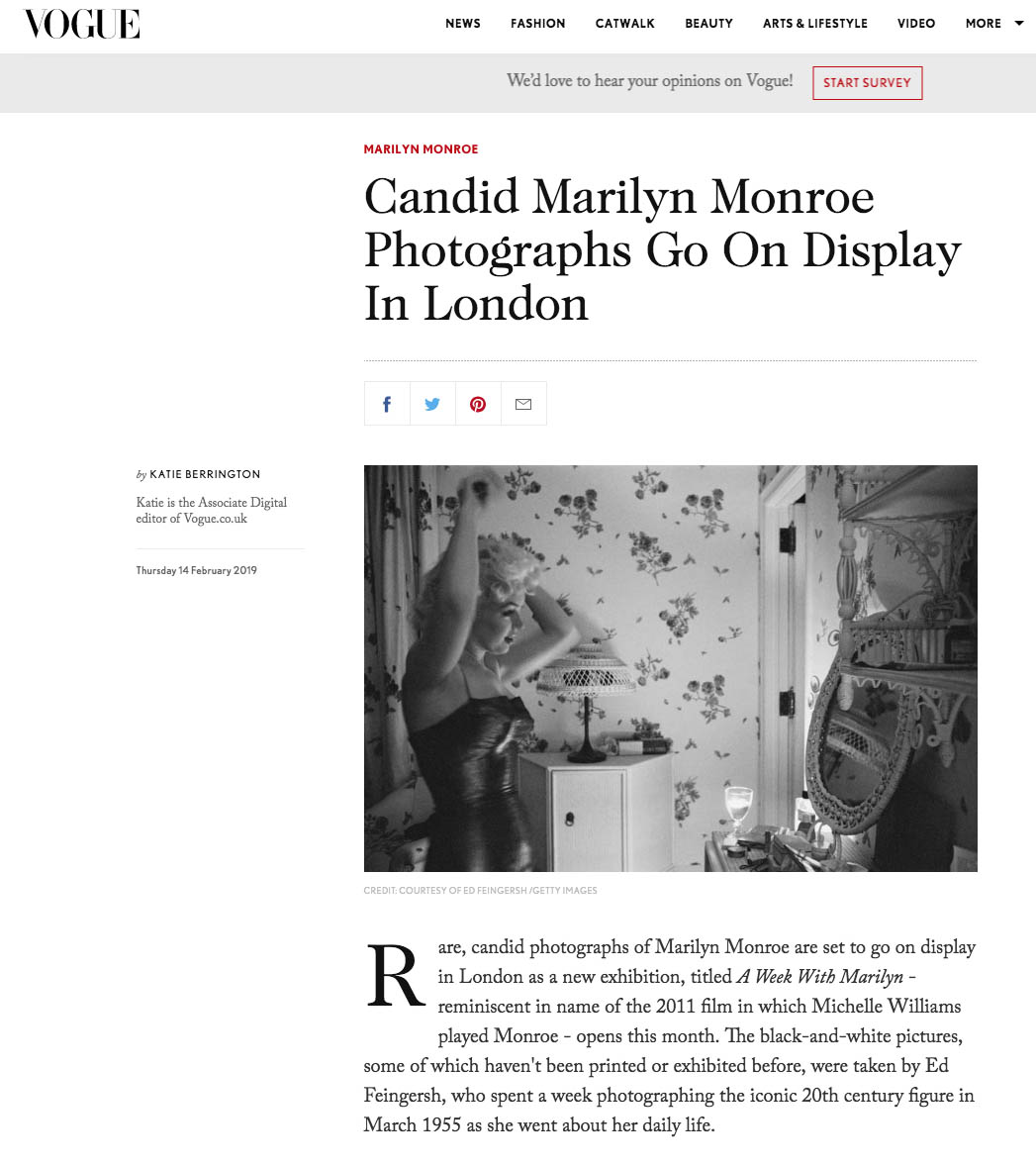
GALERIE PRINTS in close and unique collaboration with the prestigious Getty Images Archive, are proud to present an exquisite selection of candid photographs of Marilyn Monroe taken by then young assignment photographer Ed Feingersh in 1955.

This exhibition will include very rarely seen, possibly never before printed or exhibited images of Marilyn as she went about her daily routine during a week in March in 1955 in New York City.


Note this is a non-ticketed exhibition and entry is FREE –

no bookings necessary.

Children welcome | Wheelchair access |

Well behaved dogs allowed |

For more information please contact us at info@galerienew.carciofinocds.co.uk 


For all press enquiries regarding the Marilyn Monroe Photographic Exhibition from the 15th Feb until 30th March please contact

richardleonpr@btconnect.com