Tag: Playboy Bunny

Iconic Playboy Bunny Photography: A Journey Through Mid-Century Glamour

The distinction between a mass-produced souvenir and a piece of cultural history lies entirely in the provenance of the lens. While many seekers of mid-century style today might search for the playboi bunny aesthetic across fleeting digital feeds, they often miss the rigorous artistry that defined the golden age of glamour beginning in 1953. You likely recognize the silhouette as a global icon of 20th-century rebellion. However, finding a print that captures the authentic, archival spirit of that era is an increasingly rare pursuit. It’s exhausting to sift through pixelated reproductions when your curated interior space demands the depth and texture of a true silver gelatin masterwork.

This article will bridge the gap between commercial kitsch and the world’s finest photography. You’ll discover how legendary artists transformed a simple costume into a symbol of sophisticated allure through meticulous composition and lighting. We’ll explore the rare archives of the 1960s to identify museum-quality prints that serve as both a historical record and a bespoke investment for your home.

Key Takeaways

  • Explore the cultural genesis of a mid-century icon and its pivotal role in defining the era’s standard for sophisticated nightlife and luxury.
  • Uncover the meticulous craftsmanship and symbolism inherent in the original costume design, from the architectural satin ears to the signature ‘cottontail’.
  • Trace the artistic evolution of the playboi bunny as it transitioned from a promotional symbol into a subject of prestigious fine art portraiture.
  • Discover professional techniques for curating and displaying large-scale archival prints to elevate your contemporary or mid-century modern home decor.
  • Learn how the traditional hand-printing processes in our London darkroom preserve the provenance and exquisite quality of these timeless photographic treasures.

The Cultural Genesis of the Playboy Bunny Icon

The 1960 opening of the first Playboy Club at 116 East Walton Street, Chicago, marked a transformative shift in global hospitality and visual culture. It wasn’t just a venue; it was the physical manifestation of a curated lifestyle that promised sophistication to the urban gentleman. This era defined the Bunny not as a mere employee, but as a 20th-century symbol of aspirational luxury and elite nightlife. While modern digital culture often references the term playboi bunny in connection with contemporary music and fashion trends, the original icon was a meticulously crafted ambassador for “the good life” during the post-war boom.

The distinction between a Bunny and a Playmate was absolute. While the Playmate existed within the archival pages of the magazine, the Bunny was the living, breathing representative of the brand’s prestige. Every woman who wore the suit operated under the strict guidance of the “Bunny Manual,” a document that enforced rigorous professional standards. This manual dictated everything from the “Bunny Dip” serving technique to the precise maintenance of the satin costume. These women were the face of a new era of leisure, bridging the gap between high-society glamour and the accessible optimism of the 1960s.

Origins and the Hugh Hefner Vision

The silhouette of the rabbit didn’t emerge by accident. Art Director Art Paul designed the tuxedo-wearing rabbit in 1953, intending to evoke a sense of playfulness and wit. Hefner’s vision was to move away from the heavy, traditional aesthetics of old-world gentlemen’s clubs. He sought to create an atmosphere that was sophisticated, yet playful. This visual identity drew heavily from the golden age of glamour, utilizing sharp lines and monochromatic elegance to ensure the brand felt timeless. By the time the Chicago club welcomed its first 132,000 members in its inaugural year, the rabbit head was already an established mark of provenance in the art of masculine leisure.

A Symbol of the Mid-Century Aspirational Lifestyle

During the 1960s, the Bunny became synonymous with the jet-set era often captured in the photography of Slim Aarons. It represented a world where travel, cocktail culture, and fine art intersected seamlessly. The Playboy Bunny Icon stood as a beacon of post-war optimism, reflecting a society that was finally embracing the fruits of its labor. The role was highly coveted; in 1960, thousands of women applied for the few available positions, drawn by the promise of professional independence and the status associated with the uniform. It’s this enduring legacy that makes the playboi bunny aesthetic a recurring theme in contemporary photography collections today. The rigorous training ensured that every interaction in a Playboy Club felt like a bespoke experience, reinforcing the brand’s position as a guardian of photographic and cultural heritage.

  • 1960: The year the first Playboy Club opened in Chicago.
  • Art Paul: The designer responsible for the iconic rabbit head logo.
  • The Bunny Manual: The essential guide for maintaining the “sophisticated yet playful” brand standard.
  • The Bunny Dip: A graceful, choreographed movement designed to serve drinks without compromising the costume’s integrity.

Anatomy of an Icon: The Design and Symbolism of the Bunny Costume

The original costume arrived as a masterclass in structural engineering, debuting at the Chicago Playboy Club on February 29, 1960. It wasn’t merely a garment; it’s a bespoke silhouette designed to emphasize the hourglass figure through an architectural “merry widow” corset. This internal structure provided the necessary support for the heavy satin and velvet fabrics that defined the look. Each component served a specific purpose in this theatre of hospitality. The satin ears sat high to add height, while the signature cottontail offered a playful counterbalance to the sharp lines of the bodice. This careful construction ensured that the playboi bunny remained a symbol of refined allure rather than common fashion.

To maintain decorum and ensure the strapless garment remained secure, the brand developed the Bunny Dip. This was a choreographed gesture where the server would bend at the knees and arch backward while serving drinks. This movement became as recognizable as the outfit itself, adding a layer of performance to the service. In 1964, this ensemble made history as the first service uniform registered with the U.S. Patent and Trademark Office. This legal milestone transformed a piece of clothing into a protected corporate identity, ensuring its provenance remained tied to a single, exclusive brand.

The Architecture of Glamour

Early iterations of the costume required meticulous hand-fitting for every individual. Each woman underwent a bespoke tailoring process to ensure the bodice adhered perfectly to her frame. Designers selected heavy-gauge satin and silk that captured light with an exquisite glow, a quality that translated beautifully into the silver gelatin prints of the era. The sharp, clean lines of the ears and the cinched waist directly influenced the 1960s mod aesthetic, mirroring the decade’s obsession with bold, graphic shapes and structured femininity.

From Uniform to Pop-Art Motif

By 1967, the playboi bunny silhouette transcended its role as a club uniform. It became a powerful symbol of American consumerism, adopted by the art world as a shorthand for mid-century luxury. The motif appeared in pop art and media as an international icon that required no text for recognition. It stood as a visual marker of Hollywood’s golden age, representing a curated world of high-society glamour. Today, the image remains a timeless piece of photographic history, preserved in archival collections that document the evolution of 20th-century style and the enduring power of a well-crafted icon.

Through the Lens: Legendary Photographers and the Bunny Aesthetic

The transformation of the playboi bunny from a club mascot into a cornerstone of fine art photography owes everything to the visionaries behind the camera. During the 1960s and 1970s, what began as promotional imagery for the global Playboy Club network evolved into sophisticated portraiture. Archives like the Getty Images Gallery have played a vital role in this preservation. They act as custodians for thousands of original negatives that document this era, ensuring these moments aren’t lost to time. These images don’t just show a uniform; they capture a specific, fleeting moment of mid-century cultural history. They serve as a bridge, connecting the modern collector to the golden age of glamour through a lens of prestige and technical excellence.

Terry O’Neill: Capturing the Soul of the Sixties

Terry O’Neill brought a unique, reportage-style intimacy to his subjects. His work at the London Playboy Club in 1963 captured the Bunnies with a blend of professional poise and behind-the-scenes vulnerability. These frames define the O’Neill approach, where the subject feels both legendary and approachable. Collectors often seek his work because it represents the pinnacle of black and white pictures. He utilized high contrast to highlight the satin sheen of the ears and the sharp tailoring of the corsets, creating a visual narrative that feels as fresh today as it did sixty years ago.

Slim Aarons and the Jet-Set Bunny

Slim Aarons famously avoided “bad” subjects, preferring to document “attractive people doing attractive things in attractive places.” While his lens usually focused on socialites in Marbella or Palm Springs, he occasionally integrated the playboi bunny icon into his sun-drenched, aspirational compositions. These rare shots place the Bunny within a world of extreme luxury, moving the icon from the nightlife of the clubs to the poolside of the elite. This perspective is a core component of the broader Slim Aarons collection, emphasizing a lifestyle of leisure and high-society glamour that remains a hallmark of the world’s finest photography.

The Technical Mastery of Archival Photography

Achieving the “ethereal glow” found in vintage prints required more than just a good subject. Photographers in the 1960s utilized complex lighting setups to manage the reflective surfaces of the costumes. Today, the most prestigious way to own these images is through silver gelatin prints. This traditional darkroom process uses silver salts to create a deep, rich tonal range that digital methods simply cannot replicate.

  • Silver Gelatin: Provides unparalleled archival stability and tonal depth.
  • Original Negatives: Essential for producing museum-quality art that retains every detail.
  • Hand-Printing: Our London-based craftsmanship ensures each print is a bespoke piece of history.

By working directly from original negatives, artisans can produce prints that preserve the tactile details of the 1950s and 60s. This commitment to quality ensures the legacy of these photographers remains a permanent, stable investment for any serious art collector.

Collecting and Decorating with Iconic Playboy Photography

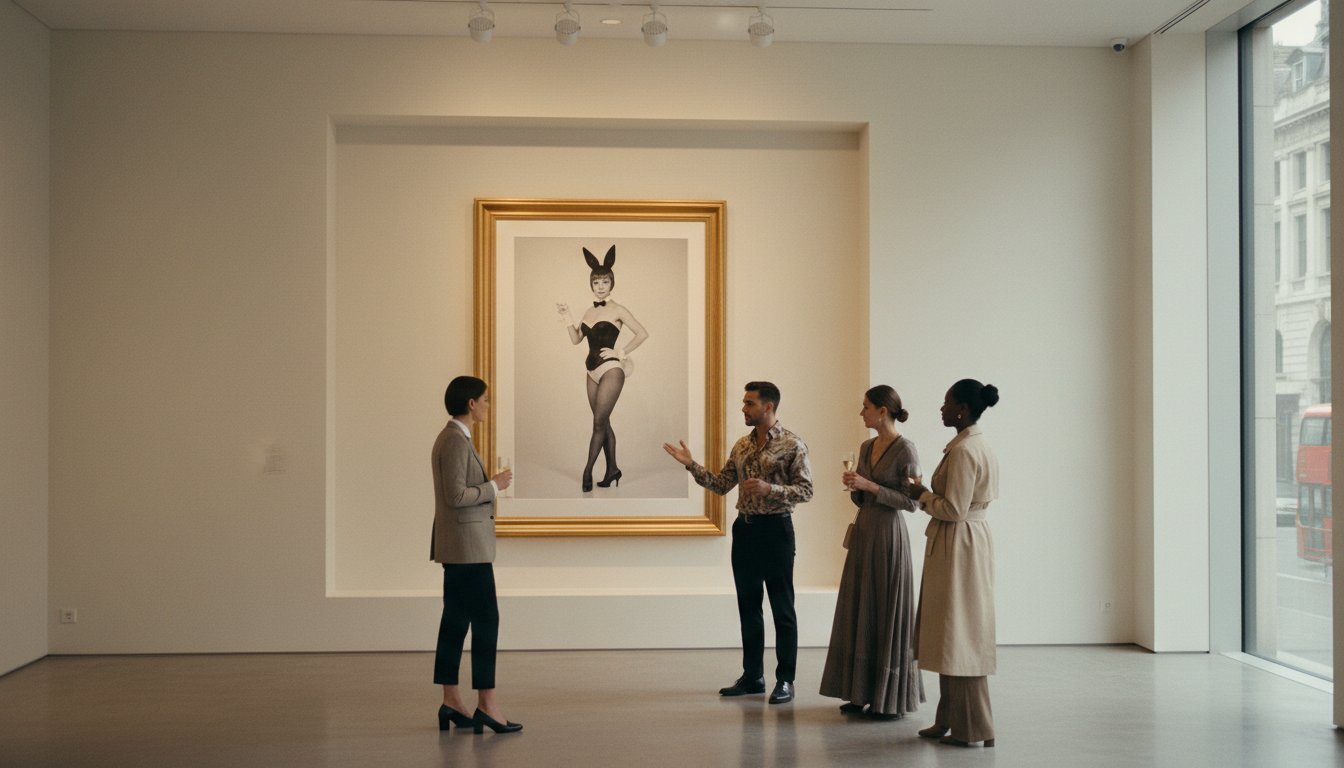
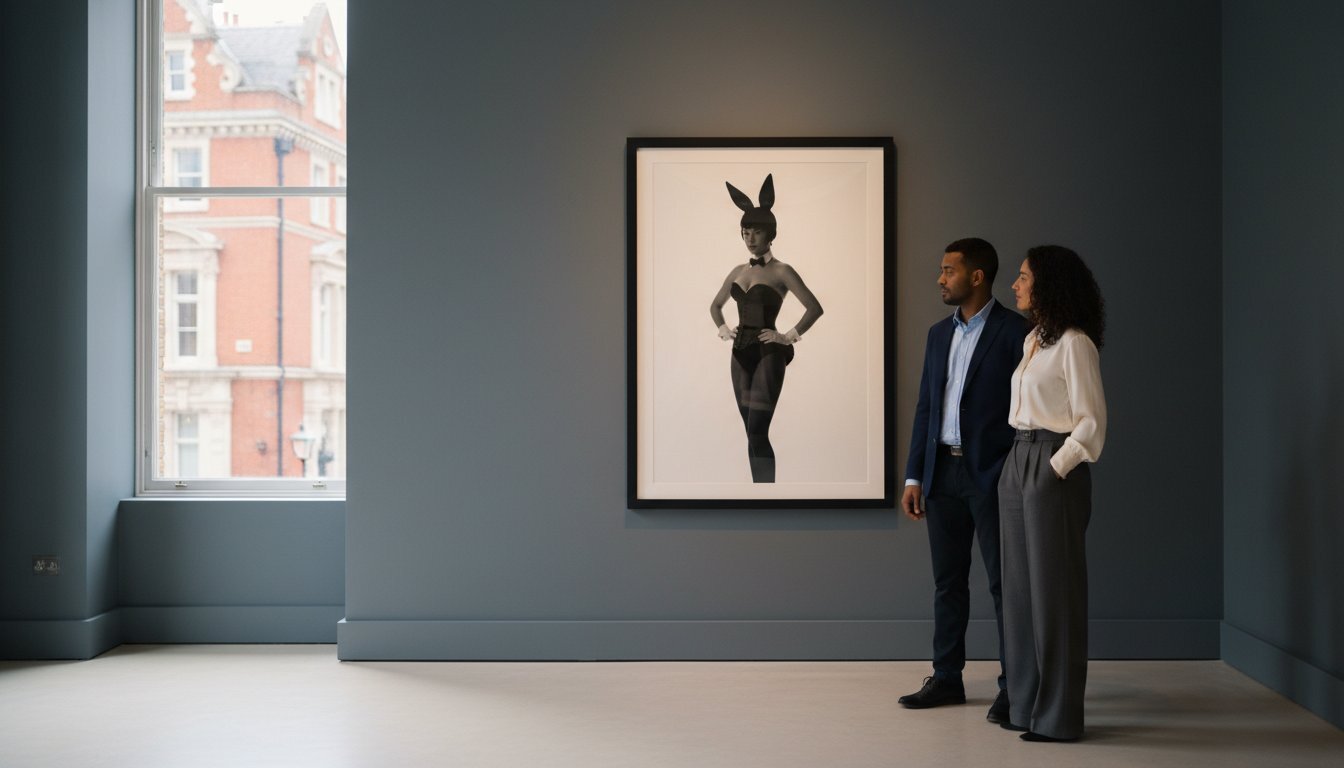
Integrating these bold, historical images into a contemporary residence requires a curator’s eye for balance. While the subject matter is inherently provocative, the transition from the printed page to a gallery wall elevates the playboi bunny from a mere pop culture symbol to a piece of serious photographic history. These works serve as a bridge to the 1950s and 60s, offering a glimpse into a world of curated glamour that remains unmatched in modern digital media. The prestige of these images lies in their ability to command attention while maintaining an air of mid-century sophistication.

The Power of the Large-Format Print

A statement piece often dictates the energy of an entire room. In a lounge or a dedicated home bar, a large-format print creates an immediate conversational focal point. For a minimalist interior, a monochrome silver gelatin print provides a sophisticated, noir-inspired atmosphere. Conversely, high-saturation color prints captured on Ektachrome film in the 1960s bring a vibrant, retro-futuristic energy to mid-century modern spaces. Owning one of these prints isn’t just about decoration; it’s about possessing a tangible artifact of the world’s finest photography. A 40×60 inch print, for instance, transforms a blank wall into a window to the golden age of glamour.

Bespoke Framing for the Discerning Collector

The longevity of your investment depends on the quality of the materials used. To preserve the rich tones and delicate highlights of these iconic shots, we utilize archival photo paper that meets the rigorous ISO 9706 standards for permanence. Framing choice is equally vital to the final aesthetic:

  • Sleek Black Wood: Ideal for contemporary galleries, providing a sharp border that focuses the eye on the subject.
  • Vintage Gilt: A nod to the 1950s Hollywood Regency style, adding a layer of opulent warmth to the piece.
  • UV-Protective Glass: Essential for blocking 99% of harmful rays, ensuring the playboi bunny imagery doesn’t fade over the decades.

Our professional framing services provide a ready-to-hang solution, with each piece hand-finished in our London darkroom. This artisanal approach ensures that the provenance and prestige of the image are matched by its physical presentation. Each frame is selected to complement the era while protecting the silver-based emulsions of the original negatives.

To create a broader narrative, you might build a gallery wall. You can pair these bold subjects with other fine art photography, such as the aspirational poolside scenes of Slim Aarons or the candid celebrity portraits of Terry O’Neill. This juxtaposition contextualizes the Bunny within the wider spectrum of mid-century luxury and high-fashion photography. The result is a curated collection that feels both personal and historically significant.

Explore our exclusive collection and find the perfect statement piece for your home today.

Archival Excellence: Why Galerie Prints is the Destination for Fine Art

Galerie Prints functions as a dedicated guardian of photographic heritage, bridging the gap between historical archives and the modern collector’s home. Our mission centers on the preservation of 20th-century glamour, ensuring that iconic imagery, including the classic playboi bunny aesthetic, remains accessible in its most authentic form. We source directly from prestigious institutions like the Hulton Archive and Getty Images, maintaining a chain of provenance that guarantees every piece is a genuine artifact of cultural history. By upholding our promise to provide “the world’s finest photography,” we offer more than just prints; we provide a tangible connection to the golden age of film and fashion.

The selection process is rigorous. Only a fraction of the millions of images housed in world-renowned archives meets our standards for composition, historical significance, and technical clarity. This curatorial precision allows us to present a collection that isn’t just vast, but meaningful. Whether you’re a seasoned collector or a first-time buyer, the assurance of quality remains the same across every era we represent.

Craftsmanship in the London Darkroom

The distinction of a Galerie Prints piece lies in its physical creation. We don’t rely on mass digital reproduction. Instead, our team utilizes a “Hand-printed in our London darkroom” approach that honors traditional silver gelatin techniques. Working from original negatives allows us to capture the depth, grain, and tonal range that digital sensors often flatten. Each print possesses tactile and historical elements, such as the specific chemical bloom of the paper, making it a unique piece of art. This artisanal process ensures archival stability for over 100 years, protecting your investment against the fading common in standard inkjet prints. Each piece feels substantial, carrying the weight of the history it depicts.

A Curated Path to Ownership

We’ve streamlined the acquisition process for our international clientele, offering a seamless transition from the gallery to your private wall. Our bespoke framing and mounting service utilizes acid-free materials and museum-grade glass to preserve the integrity of each image. Beyond the allure of the playboi bunny era, we invite you to explore our Cinema Lobby Cards and other rare collections that define the 20th-century experience. Every order is handled with precise care, from the initial curation to the final global shipping logistics. Choosing a print here is a decision to invest in a lasting piece of history that will resonate for generations. We don’t just sell images; we preserve the moments that shaped our visual culture.

Bringing the Golden Age of Glamour Into Your Space

The cultural impact of the playboi bunny icon remains a defining element of 20th-century visual history, tracing its roots back to the 1953 debut that transformed editorial photography into high art. This journey through mid-century aesthetics highlights the meticulous design of the bunny silhouette and the technical mastery of photographers who defined the era. It’s a legacy built on the intersection of fashion, celebrity, and a specific brand of aspirational luxury that feels just as evocative today as it did seven decades ago.

Owning a piece of this history requires a commitment to archival integrity. Our collection draws directly from the prestigious archives of Getty Images and the sun-drenched portfolios of Slim Aarons, providing a bridge to a vanished world of elegance. Every artwork is hand-printed in our London darkroom to ensure the rich, tactile quality that only traditional methods can achieve. To complete the presentation, we offer bespoke museum-quality framing that protects the provenance of your print for a lifetime. Your walls deserve a narrative that transcends the temporary. Explore our curated collection of the world’s finest photography and find a timeless piece that speaks to your discerning eye.

Frequently Asked Questions

What is the difference between a Playboy Bunny and a Playmate in photography?

A Playboy Bunny was a professional hostess at the Playboy Clubs, first established in Chicago in 1960; whereas a Playmate was a model featured in the magazine’s monthly editorial centerfold. While the Bunny wore the signature satin ears and tail designed by Zelda Wynn Valdes, the Playmate sessions were distinct photographic features. Collectors often distinguish between the two based on the 28 year era of the original international clubs.

Are these Playboy Bunny prints considered fine art?

These photographs are widely recognized as fine art because they represent the intersection of mid-century social history and high-fashion portraiture. Galerie Prints offers silver gelatin prints and C-type editions that meet museum-grade standards for collectors. When a print is hand-produced from the original negative, it transcends commercial photography to become a collectible piece of 20th-century heritage that holds its value over time.

Who are the most famous photographers who shot the Playboy Bunny?

Legendary photographers such as Slim Aarons, Terry O’Neill, and Burt Glinn captured the most enduring images of the playboi bunny. O’Neill’s 1970s sessions and Aarons’ lifestyle shots provide a sophisticated lens on this cultural phenomenon. Each artist brought a distinct perspective, ranging from the candid reportage of the London Park Lane club to the highly stylized glamour of the Hollywood era.

What makes an archival print different from a standard poster?

An archival print is produced on acid-free paper using pigment-based inks, ensuring a lifespan of over 100 years without fading or yellowing. Standard posters are mass-produced on thin, acidic paper that often degrades within 5 to 10 years. Our bespoke prints are hand-finished in our London darkroom, maintaining the precise tonal range and deep blacks required for a true investment-grade piece of art.

How should I frame a vintage-style Playboy Bunny photograph?

You should frame a vintage-style photograph using UV-protective glass and acid-free mounting boards to prevent light damage and discoloration. A simple, elegant black wooden frame with a white window mount is the classic choice for these 1960s icons. This minimalist approach ensures the focus remains on the exquisite composition of the original 35mm or medium-format shot without distracting from the subject.

Where were the original Playboy Bunny photographs taken?

The original photographs were primarily taken at the Playboy Clubs in Chicago, which opened in 1960, and the London location, established in 1966. Many iconic lifestyle shots were also staged at the Playboy Mansion in Chicago or the later Los Angeles estate purchased in 1971. These locations served as the authentic backdrops for thousands of images that defined the mid-century aesthetic for a global audience.

Can I buy authentic Slim Aarons or Terry O’Neill prints of this subject?

Authentic prints by Slim Aarons and Terry O’Neill are available through our curated collection, sourced directly from the Getty Images Gallery and the artists’ estates. We provide high-quality C-type and silver gelatin prints that capture the playboi bunny in her most glamorous settings. Each piece comes with the necessary provenance to ensure its status as a genuine work of photographic art for your home.

Why is the Playboy Bunny still considered a fashion icon today?

The Bunny remains a fashion icon because the original 1960 costume represents a masterclass in mid-century silhouette and branding. It has influenced high-fashion designers for over 64 years, appearing in various iterations on global runways from New York to Paris. The imagery evokes a specific era of 1960s optimism and sophisticated nightlife that continues to inspire modern interior designers and fashion historians alike.
The Playboy Bunny: A Curatorial History of a Global Cultural Icon

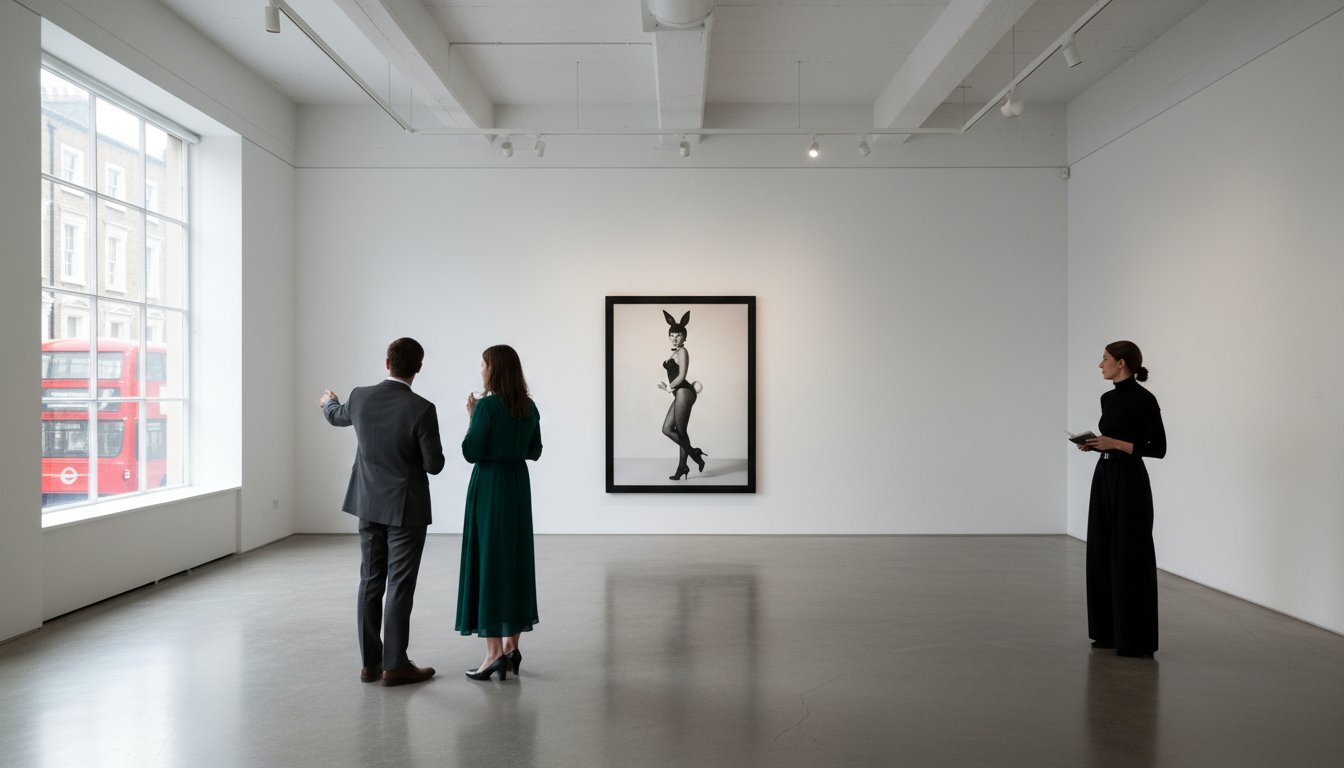
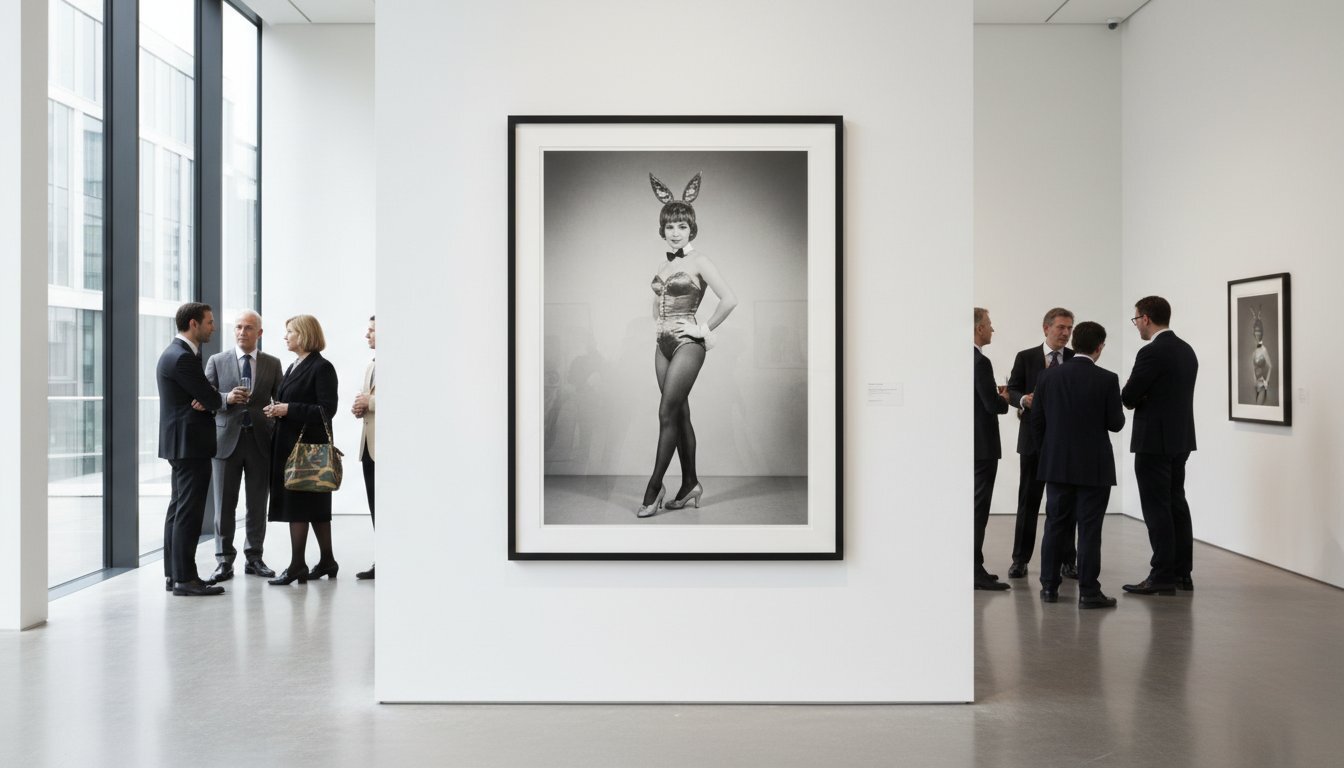
Few symbols in the twentieth century have undergone such a radical metamorphosis as the play boy bunny; what began as a 1960 service uniform at the debut Chicago club has become a cornerstone of high-end photographic provenance. You likely recognize the silhouette as an indelible staple of pop culture, yet finding its true historical weight often feels like a search through a sea of transient, low-quality digital noise rather than a study of heritage. At Galerie Prints, we believe these images deserve the same curatorial rigor as any other masterpiece of the golden age of glamour.

In this article, we’ll explore the evolution of the Bunny from a mid-century marketing masterstroke to a sought-after subject in fine art photography. We’ll identify the legendary photographers, including masters like Slim Aarons and Terry O’Neill, who immortalized the look through their exquisite lenses. You’ll understand why these specific archival prints, often hand-printed in our London darkroom from original negatives, represent a lasting investment for the discerning art collector. This is a journey through the world’s finest photography, where nostalgia meets the meticulous standards of the modern gallery.

Key Takeaways

  • Trace the evolution of a mid-century marketing masterstroke as it transitioned from a simple mascot into an enduring symbol of feminine cultural power.
  • Uncover the meticulous design details behind the play boy bunny uniform, distinguishing its status as the first service attire ever granted a U.S. patent.
  • Identify the legendary photographers and technical darkroom secrets that transformed club-side imagery into world-class archival photography.
  • Navigate the jet-set expansion of this global phenomenon, from its Chicago roots to its status as a gathering place for the mid-century’s cultural elite.
  • Learn how to evaluate the provenance and artistic value of silver gelatin prints for a sophisticated fine art collection.

The Origin of the Playboy Bunny: From Mascot to Icon

The transition of a graphic mascot into a living cultural icon began as a strategic move to personify the sophisticated lifestyle championed by Hugh Hefner. Originally, the rabbit was a tuxedo-clad male character appearing in the pages of the magazine; it served as a playful nod to the “playboy” archetype. On February 29, 1960, this concept underwent a radical transformation. With the opening of the first Playboy Club in Chicago, the mascot became a three-dimensional symbol of mid-century glamour. This debut marked the birth of the play boy bunny, a figure that bridged the gap between the girl next door and the aspirational heights of high-society elegance.

The Chicago Club and the First Bunnies

When the first Playboy Club opened its doors on a leap year night in 1960, it revolutionized the hospitality industry. Victor Lownes, Hefner’s business partner, is credited with the idea of turning the magazine’s logo into a uniform. His girlfriend at the time, Ilsa Taurins, modeled the initial prototype which featured the now-iconic ears and silk tail. The success was immediate; by the end of the first year, the Chicago venue boasted 132,000 members. This era of Playboy Bunny History solidified the role as the world’s most recognized service professional. These women weren’t just waitresses; they were curated ambassadors of a new, metropolitan aesthetic that prioritized poise and silver-screen charm.

Defining the ‘Bunny’ Identity

Beyond the visual impact of the satin bodice, the identity was shaped by a 44-page manual that dictated every movement and interaction. The training was rigorous. Candidates spent weeks mastering the “Bunny Dip,” a specific technique for serving drinks that ensured the costume remained secure and elegant. This strict standard of conduct created a sense of professional distance that was essential to the brand’s prestige. The play boy bunny represented a bespoke version of the sexual revolution’s early aesthetic, one that felt both modern and deeply rooted in the traditions of archival glamour. It offered a cinematic experience for club members, where every gesture was choreographed to maintain a sense of exclusive, high-society sophistication that still resonates in the world of fine art photography today.

The Anatomy of Glamour: The Iconic Playboy Bunny Uniform

The Playboy Bunny uniform stands as a masterclass in mid-century branding; it was the first service uniform ever registered with the United States Patent and Trademark Office in 1964. This ensemble wasn’t merely a costume; it was a carefully engineered silhouette that defined the jet-set era. The design featured a boned satin corset, oversized ears, a fluffy yarn tail, and the signature nameplate rosettes. When the first club opened in Chicago on February 29, 1960, the play boy bunny became an instant symbol of a new, sophisticated leisure class. This aesthetic is frequently captured in our archival photography collections, reflecting a time when hospitality met high fashion.

To maintain a sense of decorum while serving drinks, the Bunnies utilized the ‘Bunny Dip.’ This choreographed movement involved bending at the knees rather than the waist, a functional necessity that evolved into a signature of grace. While the silhouette remained consistent, the uniform adapted through the decades; it transitioned from the heavy satins of the 1960s to more vibrant, club-specific variations in the 1980s. The core geometry of the look remained unchanged, preserving the visual legacy of the brand for over sixty years.

Craftsmanship and Construction

The technical construction of the uniform required an exacting level of bespoke tailoring. Each corset featured internal stiffening and boning to achieve the rigid, hourglass profile synonymous with 1960s glamour. These garments were often made in-house to ensure a perfect fit, utilizing high-quality fabrics that could withstand the rigors of a busy club floor. Today, this attire is a subject of serious study for those interested in the curatorial history of the Playboy Bunny uniform. Fashion historians now view these pieces as significant artifacts of textile engineering and cultural branding.

The Accessories that Made the Look

The ‘tuxedo’ aesthetic was completed through a precise arrangement of accessories. The crisp white collar and cuffs provided a sharp contrast to the vibrant satins, grounding the look in a traditional masculine formalwear language. Each play boy bunny wore a distinctive rosette nameplate, which served as a bridge for interaction between the server and the guest. The final touch was the three-inch stiletto heel, a demanding requirement that finalized the statuesque, aspirational image of the era. This meticulous attention to detail is why these images remain timeless pieces of photographic history.

Immortalizing the Image: The Photographers of the Playboy Bunny

The transition of the play boy bunny from the velvet-lined interiors of private clubs to the prestigious frames of world-class photography marked a shift in how the world viewed commercial glamour. During the 1960s, the Bunny became more than a hostess; she evolved into a curated subject for masters of the lens. These photographers utilized high-contrast lighting and the rich, tonal depths of silver gelatin printing to elevate the uniform into a symbol of mid-century modernism. The architectural precision of the silhouette, originally crafted by Zelda Wynn Valdes, designer of the Bunny uniform, provided a structural perfection that translated exquisitely onto film. These images now stand as archival treasures, preserving a specific aesthetic that balanced post-war optimism with a new, bold sophistication.

Terry O’Neill and the London Bunnies

In 1966, the opening of the London Playboy Club on Park Lane offered Terry O’Neill a fresh canvas. O’Neill possessed a rare ability to blend the spontaneity of candid reportage with the calculated polish of high fashion. His images of the London Bunnies captured a specific, youthful energy that defined the “Swinging Sixties.” By photographing them in moments of quiet preparation or shared laughter, he stripped away the artifice of the stage while maintaining their aspirational allure. These works remain essential archives of a time when London was the epicenter of global style; they offer a behind-the-scenes look at the women who inhabited the icon.

The Slim Aarons Connection: Luxury and Leisure

While O’Neill captured the urban pulse, Slim Aarons repositioned the play boy bunny within his celebrated ethos of “attractive people doing attractive things in attractive places.” Aarons moved the Bunny beyond the club walls and into the sun-drenched environments of mid-century luxury. Through his lens, we see the Bunny as an integral part of the jet-set lifestyle, often positioned by turquoise pools or within lush, manicured gardens. His use of vibrant color and natural light transformed the Bunny into a pastoral icon of leisure. These photographs serve as historical records of a social hierarchy where the Bunny was a permanent fixture of the international elite’s visual vocabulary.

  • Technical Excellence: Many of these original negatives were processed in dedicated darkrooms to ensure the archival quality expected by serious collectors.
  • Cultural Provenance: These images aren’t merely portraits; they’re documents of a design revolution that defined an era.
  • Artistic Legacy: The work of O’Neill and Aarons ensures the Bunny remains a central figure in the history of 20th-century photographic art.

A Global Phenomenon: The Bunny in the Jet-Set Era

The transition of the play boy bunny from a localized Chicago attraction to a global hallmark of prestige occurred with remarkable speed. By 1972, the Playboy Club network encompassed 22 international locations, stretching from the neon-lit districts of Tokyo to the refined avenues of New York. This expansion mirrored the rise of the jet-set era, where international travel and curated luxury became the ultimate currency of the cultural elite. The clubs functioned as exclusive sanctuaries where royalty, Hollywood stars, and industry titans converged under a singular, recognizable aesthetic of high-gloss glamour.

  • 1960: The inaugural club opens in Chicago, establishing the blueprint for the modern VIP experience.
  • 1966: The London debut on Park Lane secures the brand’s European dominance during the height of the cultural revolution.
  • 1976: Expansion into Tokyo marks the icon’s definitive status as a cross-cultural phenomenon.

The London Playboy Club: An Elite Outpost

The London club on Park Lane, which opened its doors in July 1966, remains the most successful and profitable location in the history of the franchise. It became a central pillar of the “Swinging Sixties,” attracting a clientele that included Sean Connery, Michael Caine, and Lord Lucan. This specific venue was more than a nightlife destination; it was a photographic goldmine. Renowned photographers like Terry O’Neill captured the Bunnies in moments of candid elegance, cementing their place within the British social fabric. The London Bunny represented a bespoke blend of American showmanship and European refinement, a combination that remains a cornerstone of photographic heritage today.

The Bunny in Pop Culture and Cinema

As the 1970s approached, the play boy bunny evolved from a service role into a global celebrity archetype. The icon made a definitive splash in the 1971 James Bond film Diamonds Are Forever, where the aesthetic integrated perfectly with the high-stakes world of cinematic espionage. This period saw the silhouette influence the broader disco and glam movements, characterized by sequins, satin, and an unapologetic embrace of theatrical luxury. The transition was complete as the Bunny became shorthand for an aspirational lifestyle, moving beyond the clubs to influence international fashion runways and the burgeoning world of television variety shows.

Discover our exclusive archive of limited edition prints capturing the golden age of glamour and the world’s finest photography.

Collecting History: Why Playboy Bunny Prints are Fine Art

The transition of the play boy bunny from a mid-century marketing symbol to a blue-chip photographic asset represents a significant shift in the art market. What began as ephemeral commercial imagery has been elevated through the lens of legendary photographers such as Terry O’Neill and Slim Aarons. These works aren’t viewed merely as promotional material anymore. Instead, they’re celebrated as cultural artifacts that capture a specific, idealized moment in 20th-century history. Collectors today seek out prints sourced directly from original negatives, as the provenance of a piece dictates its long-term appreciation. A 2022 market analysis of photographic auctions showed that high-provenance archival prints have consistently outperformed traditional mid-tier equities, making these images a stable investment for the discerning eye.

The aesthetic remains a staple of high-end interior design because it offers a bridge between vintage glamour and modern minimalism. These images provide a focal point that is both provocative and polished, fitting effortlessly into a curated home gallery. The enduring market for this “Golden Age” photography is driven by a desire for authenticity in a digital world. Owning a physical piece of this history provides a tactile connection to the era of the 1960s and 70s, where the play boy bunny served as a global icon of aspiration and style.

Archival Quality and the Collector’s Eye

True value lies in the physical medium. We prioritize museum-quality paper and traditional silver gelatin processes to ensure every print retains its depth and tonal range for decades. Choosing a print involves looking for that elusive, timeless quality that transcends the decade of its origin. Bespoke framing serves as the final step in this preservation journey. It protects the delicate emulsion from environmental degradation while ensuring the artwork integrates seamlessly into sophisticated living spaces.

Galerie Prints: Your Window to the World’s Finest Photography

Our commitment to excellence is rooted in our London darkroom, where skilled artisans hand-print each piece to exacting standards. By maintaining exclusive access to the Terry O’Neill and Getty Images Gallery archives, we provide collectors with rare glimpses into the golden age of glamour. These aren’t mass-produced reproductions; they’re carefully crafted windows into a lost world of elegance. We invite you to Discover our curated collection of iconic photography and begin your own journey into the world of fine art collecting.

Preserving the Legacy of Mid-Century Elegance

The 1960 opening of the Chicago Playboy Club introduced a silhouette that would define an entire epoch of aspirational luxury. From the precision-engineered uniform to the high-society lens of Slim Aarons, the play boy bunny remains a powerful symbol of an era defined by its refined glamour. These images aren’t just snapshots; they’re archival documents that reflect the evolution of 20th-century style and social history. At Galerie Prints, we act as guardians of this photographic heritage. As an official Getty Images Gallery partner, we specialize in the archives of Terry O’Neill and Slim Aarons to ensure these moments are preserved with the reverence they deserve. Every piece is hand-printed in our London darkroom to provide the technical excellence serious collectors demand. This meticulous process ensures that each print maintains the provenance and quality of the original negative. We invite you to bring a definitive piece of history into your private collection. Explore the Golden Age of Glamour at Galerie Prints and discover the timeless allure of the world’s finest photography.

Frequently Asked Questions

Who designed the original Playboy Bunny uniform?

Zelda Wynn Valdes, a pioneering Black fashion designer and couturiere, created the original costume in 1960. Hugh Hefner commissioned her to translate the magazine’s mascot into a physical garment for the opening of the first club in Chicago. This iconic ensemble became the first service uniform ever registered with the United States Patent and Trademark Office. Its construction utilized corset boning to create the distinctive silhouette that remains a cornerstone of 20th-century design history.

What was the ‘Bunny Dip’ and why was it used?

The Bunny Dip was a choreographed backward lean performed by a play boy bunny when serving drinks to prevent the corset-style bodice from gapping. This graceful maneuver was taught during a mandatory 14-day training period to ensure modesty and maintain the uniform’s structural integrity. By bending at the knees and arching the back, the server could place a glass on a table without revealing more than intended. It became a signature of the club’s refined service protocol.

Are Playboy Bunny photos considered fine art photography?

These images have transitioned from commercial assets to highly collectible fine art photography, often fetching thousands of dollars at auction houses like Christie’s. Collectors prize these works for their technical brilliance and their status as cultural artifacts that document the evolution of mid-century aesthetics. When printed as limited edition silver gelatin or C-type prints from original negatives, they represent a significant investment in photographic heritage. They offer a window into a bygone era of curated glamour.

Which famous photographers captured the Playboy Bunny icon?

Master photographers such as Burt Glinn, David Hurn, and Terry O’Neill captured the play boy bunny through a sophisticated, journalistic lens. These artists moved beyond simple portraiture to document the atmosphere of the clubs and the women behind the ears. Terry O’Neill’s 1970s work remains a pinnacle of the genre. His ability to blend candid moments with high-fashion lighting creates a timeless narrative that continues to resonate with contemporary art collectors.

What is the difference between a Playboy Bunny and a Playmate?

A Playboy Bunny was a professional staff member at one of the 40 global Playboy Clubs, while a Playmate was a model featured in the magazine’s centerfold. Bunnies were recognized for their specialized service and the rigorous standards of the club floor. While some women held both titles, the roles were distinct in their daily execution. The Bunny represented the physical manifestation of the brand’s hospitality, whereas the Playmate focused on the editorial narrative of the publication.

Why is the London Playboy Club significant in photography history?

The London Playboy Club, which opened at 45 Park Lane in 1966, served as a primary hub for the era’s most elite photographers and socialites. It provided a backdrop for some of the most enduring imagery of the “Swinging Sixties” and the “Cool Britannia” movement. Many of our most sought-after prints originate from this specific location. The club’s proximity to the fashion and film industries allowed for a cross-pollination of style that defined the decade’s visual language.

How can I tell if a Playboy Bunny print is an archival quality piece?

An archival quality print is defined by its production on acid-free, fiber-based paper using traditional darkroom techniques or high-end pigment inks. You should look for a certificate of authenticity and clear provenance that links the work back to the original negative or the photographer’s estate. At Galerie Prints, we hand-print our collections in our London darkroom to ensure every piece meets the exacting standards of the world’s finest photography. These methods guarantee the image won’t fade for 100 years or more.

What makes the Slim Aarons style relevant to Bunny photography?

Slim Aarons is renowned for documenting “attractive people doing attractive things in attractive places,” a philosophy that perfectly mirrors the aspirational luxury of the Playboy era. While he didn’t focus exclusively on the clubs, his 1950s and 60s jet-set aesthetic informed the visual identity of the entire brand. His influence is seen in the sun-drenched, high-society compositions that characterize the most prestigious Bunny photography. This shared focus on effortless elegance makes his work a natural companion for any serious collection.

The Playboy Bunny: Evolution of a Mid-Century Photographic Icon

To the casual observer, the satin ears and cinched corsets of the Playboy Bunny represent a fleeting mid-century trend; however, for the discerning collector, they are the subject of some of the most technically precise silver gelatin prints of the 20th century. The visual legacy of the playboy bunny playboy era has shifted from the pages of pulp magazines to the walls of prestigious galleries. You likely recognize the silhouette immediately, yet you might struggle to find an archival-grade representation that transcends the realm of kitsch. It’s a common frustration for those seeking to bridge the gap between cultural nostalgia and genuine artistic investment.

We’ll guide you through the sophisticated evolution of this icon, starting with the rigorous 1960 Bunny Manual that dictated every movement with military precision. You’ll learn how legendary photographers like Burt Glinn and Slim Aarons captured these figures not as mere waitresses, but as symbols of an aspirational, golden-age lifestyle. By the end of this piece, you’ll understand how to identify a museum-quality print and style it within a modern home. We’re proud to offer a bridge to this heritage, ensuring that every piece is a lasting fragment of history, hand-printed in our London darkroom to the standards of the world’s finest photography.

Key Takeaways

  • Explore the sophisticated evolution of the playboy bunny playboy from a service-based mascot into a globally recognized symbol of mid-century luxury.
  • Uncover the rigorous standards and meticulous anatomy of the iconic uniform that maintained the role’s status as a paragon of professional glamour.
  • Learn how world-class photographers like Terry O’Neill elevated the Bunny to a fine art muse, immortalising the aesthetic through exquisite photographic compositions.
  • Master the art of integrating these iconic images into modern interiors by selecting the perfect era and palette to anchor your mid-century space.
  • Discover the archival excellence of our London darkroom, where hand-printed silver gelatin techniques ensure each print remains a lasting piece of photographic history.

Defining the Playboy Bunny: A Masterclass in Mid-Century Branding

The Playboy Bunny represents a pivotal moment in 20th-century marketing. It wasn’t just a logo; it was a living embodiment of a brand. Hugh Hefner’s creation became the first service-based mascot in the American luxury sector, setting a precedent for how lifestyle brands interact with their audience. By 1953, the vision was clear. The brand needed to move beyond the printed page to occupy a physical space in the cultural consciousness. While many modern observers confuse the two roles, there’s a vital distinction to maintain. A Playmate was a photographic subject for the magazine’s centerfold. Conversely, a Playboy Bunny History reveals that the Bunny was a professional role within the exclusive Playboy Clubs. These women were the face of a curated, high-society experience, trained in a specific etiquette that mirrored the prestige of the era’s finest establishments.

The psychological impact of the rabbit motif in 1960s visual culture cannot be overstated. In an era defined by a shift toward “jet set” sophistication, the rabbit served as a clever double entendre. It suggested a playful, quick-witted nature while the addition of the tuxedo collar and cuffs signaled a refined, gentlemanly atmosphere. This playboy bunny playboy aesthetic bridged the gap between accessible pop culture and the aspirational world of private members’ clubs. It was a masterclass in visual shorthand that remains one of the most recognized trademarks in the world.

The Origins of the Rabbit Mascot

Art Director Art Paul designed the tuxedo-wearing rabbit in 1953 in less than an hour. Originally, Hefner intended to call his publication Stag Party, but a trademark dispute forced a change. He pivoted to the rabbit to evoke a sense of playfulness and sophisticated charm. The rabbit motif suggests an alert, energetic persona. It worked perfectly for a visual culture that prized wit and exclusivity. This symbol transformed from a simple sketch into a globally recognized mark of prestige, eventually appearing on everything from cufflinks to the tail fins of private jets.

The Global Expansion of the Icon

On February 29, 1960, the first Playboy Club opened its doors in Chicago. It was an immediate success, selling over 50,000 memberships in its first few months. The Bunny quickly became a symbol of the burgeoning “jet set” lifestyle. By the mid-1960s, the brand expanded to major hubs including New York, New Orleans, and London. These clubs offered a bridge to the golden age of glamour, positioning the playboy bunny playboy image as a hallmark of American style on an international stage. Each archival photograph from this era captures a specific, timeless elegance that we continue to preserve through our collection of fine art prints.

The Rigorous Standards of the Playboy Bunny Role

To wear the ears was to enter a world of exacting discipline. The image of the playboy bunny playboy icon wasn’t merely a product of chance; it was the result of a selection process so selective that, in 1965, only about 5% of applicants at the Chicago club successfully secured a position. This wasn’t a standard waitressing job. It was a highly choreographed performance that required a specific blend of athletic poise and curated glamour. Applicants underwent multiple interviews and screen tests, ensuring they could embody the sophisticated, mid-century aesthetic that Hugh Hefner demanded for his burgeoning empire.

Training and Professionalism

Once accepted, new recruits entered an intensive training period that often lasted several weeks. They were required to master the 44-page “Bunny Manual,” a strict code of conduct that governed everything from their interaction with “gentlemen” to their physical posture. The “Bunny Dip” became the most famous of these choreographed techniques. This graceful, backward-leaning arch allowed a Bunny to serve drinks at low tables without spilling or compromising the fit of her strapless bodice. Oversight fell to the “Bunny Mother,” a seasoned staff member who acted as a vigilant guardian of club standards, conducting daily inspections of grooming, uniform cleanliness, and even the “cottontail” placement.

The Architecture of the Uniform

The uniform itself was a marvel of technical construction and remains the first service garment ever registered with the United States Patent Office. While the initial concept emerged from the Playboy team, the legendary Black couturier Zelda Wynn Valdes is widely credited with refining the suit’s architectural silhouette in 1960. She brought a high-fashion sensibility to the design, focusing on a heavy internal corset that sculpted the body into a precise, idealized form.

  • Bespoke Tailoring: Each suit was a custom creation, fitted to the individual’s specific measurements during multiple fittings to ensure a flawless, skin-tight appearance.
  • The Corset: Constructed with plastic boning and heavy fabric, the suit functioned as a piece of structural engineering rather than mere clothing.
  • The Accessories: The satin ears were reinforced with wire for perfect upright positioning, while the fluffy yarn “cottontail” had to be kept pristine to maintain the playboy bunny playboy allure.

Exploring the vintage photographic archives of this era reveals the meticulous attention to detail that defined the Playboy aesthetic. This commitment to a bespoke, high-status image helped transform the role from a hospitality job into a cultural phenomenon that defined the 1960s visual landscape.

Capturing the Rabbit: The Photographers Who Immortalised the Icon

The transition of the Bunny from a hospitality role to a photographic muse occurred through the lenses of masters who understood the power of the playboy bunny playboy aesthetic. While the first club opened in Chicago on February 29, 1960, it was the subsequent decade of studio work that codified the image into a high-art form. Fine art photographers moved beyond the smoke-filled rooms of the clubs to create what curators call an “approachable mystery.” They used precise rim lighting to separate the subject from the background, ensuring the silhouette remained the focal point of every frame. This elevation transformed a uniform into a symbol of mid-century sophistication, worthy of the world’s finest photography collections.

Terry O’Neill and the Golden Age

Terry O’Neill’s work in the 1970s redefined the icon by stripping away the performance. He captured the quiet, introspective moments that existed between the flashes of celebrity life. Our archive at Galerie Prints includes definitive O’Neill works that show the interplay between high-fashion and the Bunny image. One notable 1975 study features a subject in a moment of repose, highlighting O’Neill’s knack for finding the person behind the iconic ears. These silver gelatin prints, often hand-printed in our London darkroom, offer a provenance that connects the modern collector directly to the golden age of glamour.

Technical Excellence in Playboy Photography

The technical rigour involved in capturing the playboy bunny playboy silhouette was immense, often requiring hours of set-up to achieve a single perfect frame. Most photographers preferred the 6×6 medium format of Hasselblad cameras. This choice ensured every texture, from the sheen of the satin bodice to the softness of the marabou tail, was rendered with archival clarity. The evolution of the medium is visible in the technical shifts across two decades:

  • Early 1960s: High-contrast black and white film emphasized the architectural nature of the ears and the sharp lines of the corset.
  • 1970s Transition: The introduction of vibrant Ektachrome colour palettes brought a cinematic, saturated quality to the imagery that defined the era.
  • Compositional Mastery: Photographers used the “S-curve” pose to elongate the frame, creating a sense of movement even in static studio portraits.

By treating the costume with the same reverence as haute couture, these artists ensured the Bunny would remain a timeless fixture in the world of fine art photography. It’s this commitment to technical perfection that allows these images to hold their value as investment-grade art today.

Decorating with Iconography: Integrating Playboy Art into Modern Interiors

Transforming a vintage photograph from a historical artifact into a focal point of contemporary design requires a nuanced understanding of era and atmosphere. Collectors often choose between the stark, grain-heavy monochrome of the 1960s and the saturated, cinematic palettes of the late 1970s. While a 1964 silver gelatin print provides a sophisticated, architectural quality, the vibrant Kodachrome tones of 1975 offer a bold statement that defines a room’s energy. Integrating a classic playboy bunny playboy print into a modern home requires a curator’s eye for balance; it’s about treating the image as a piece of fine art rather than a mere pop-culture relic.

The Mid-Century Modern Connection

The visual language of the 1950s and 60s shares a DNA with the era’s most celebrated furniture designers. The geometric precision of the “Rabbit” logo serves as a minimalist graphic element that complements the clean lines of a 1956 Eames Lounge Chair or the organic curves of a Saarinen Tulip table. Designers often use these archival prints to anchor a room, matching the cool grey tones of 1960s photography with contemporary charcoal or walnut palettes. A curated gallery wall that mixes these iconic figures with 1960s film stills or fashion photography creates a narrative of mid-century glamour that feels both cohesive and intellectually stimulating.

Framing for Prestige

To elevate a print from a simple image to a lasting investment, the choice of presentation is paramount. At Galerie Prints, we believe the frame is an extension of the artwork’s provenance. Selecting the right finish is essential:

  • Classic Black Wood: Provides a sharp, authoritative border that suits high-contrast monochrome prints.
  • Modern Metallic: Offers a sleek, industrial edge for 1970s color photography.
  • Museum-Grade Acrylic: Essential for protecting the 310gsm archival paper from UV degradation.

Our London darkroom experts emphasize that a 50mm acid-free mount is necessary to provide the subject with the visual space it deserves. Statistics from the art market show that bespoke, archival mounting can increase the perceived value of a photographic print by over 40% while ensuring the physical integrity of the paper remains intact for decades.

Discover the perfect centerpiece for your collection and browse our hand-printed archives.

Explore the world’s finest photography at Galerie Prints

Archival Excellence: Collecting Playboy Bunny Prints at Galerie Prints

Galerie Prints serves as a sophisticated bridge between the golden age of glamour and the modern collector. Our curation of playboy bunny playboy imagery isn’t merely a collection of photographs; it’s a preserved history sourced directly from world-class archives, including the exclusive Terry O’Neill Archive and other renowned photographic institutions. We handle these original negatives with a reverence that befits their status as cultural artifacts. By securing prints through these exclusive partnerships, we ensure that every piece carries a clear provenance, a vital factor for those viewing their collection as a long-term art investment. Since our establishment in 2012, we’ve remained dedicated to the principle of “The world’s finest photography,” a standard that requires meticulous attention to the physical medium itself.

Our Hand-Printing Process

True silver gelatin prints represent the pinnacle of photographic art. In our London darkroom, master printers utilize traditional techniques to produce works of extraordinary tonal depth. Unlike mass-produced inkjet posters that often show signs of degradation within 15 years, our hand-printed archival pieces use light-sensitive silver salts and fiber-based papers designed to remain stable for over 100 years. The chemistry is precise and the process is intentionally slow. This artisanal approach creates a rich, velvety black and a luminous white that digital processes simply cannot replicate. Each print is a bespoke creation, carrying a tactile quality that transforms a residential wall into a curated gallery space.

Start Your Collection Today

Building a portfolio of mid-century icons is a seamless journey with our curatorial team. You can browse our expansive Playboy and Terry O’Neill collections, featuring rare captures from the 1960s and 1970s that defined an era. We provide expert guidance on bespoke framing options and sizing, ensuring your chosen playboy bunny playboy print fits its intended environment with absolute precision. We ship to over 50 countries using specialized art couriers, providing full insurance and tracking for every transit. Whether you’re a seasoned investor or a first-time buyer, our London-based experts are available to ensure your acquisition is handled with the professional care it deserves.

Preserving a Legacy of Mid-Century Glamour

The 1960 debut of the first Playboy Club in Chicago ignited a cultural shift that transformed a simple uniform into a global emblem of mid-century sophistication. This evolution, documented through the lenses of master photographers such as Terry O’Neill, remains a testament to the rigorous standards and branding precision of the era. By integrating these archival works into modern spaces, collectors bridge the gap between 1950s nostalgia and contemporary interior design. Owning an authentic playboy bunny playboy print isn’t just a stylistic choice; it’s an investment in a meticulously preserved heritage.

At Galerie Prints, we maintain authorized access to the world’s most prestigious photographic archives to ensure every piece possesses impeccable provenance. Each silver gelatin work is hand-printed in our London darkroom to meet the exacting requirements of serious collectors. We offer bespoke framing services for all prints, ensuring your selection arrives ready to transform your gallery wall with the world’s finest photography.

Explore our curated collection of iconic Playboy Bunny prints and Terry O’Neill archives

Discover a piece of history that speaks to your unique aesthetic and adds a touch of timeless prestige to your home.

Frequently Asked Questions

Who designed the original Playboy Bunny uniform?

Zelda Wynn Valdes, a pioneering Black couturier, designed the original playboy bunny playboy uniform for the 1960 opening of the Chicago club. Her bespoke construction utilized heavy satin and internal boning to sculpt the iconic silhouette. This design became a historical landmark as the first service uniform registered with the United States Patent and Trademark Office, solidifying its place in 20th-century fashion history and luxury branding.

What is the difference between a Playboy Bunny and a Playmate?

A Playboy Bunny was a professional hostess employed at the physical Playboy Clubs, whereas a Playmate was a model selected for the magazine’s monthly centerfold. While over 25,000 women worked as Bunnies between 1960 and 1988, only 12 women were chosen as Playmates each year. These roles represented different facets of the brand’s mid-century glamour, one defined by live hospitality and the other by editorial photography.

Are Playboy Bunny photos considered fine art?

Playboy Bunny photographs are widely recognized as fine art, particularly when they originate from the archives of legendary mid-century masters. These images represent a curated intersection of fashion, culture, and technical excellence. Collectors value these works for their historical provenance and the exquisite use of lighting, often seeking out hand-printed silver gelatin editions that capture the world’s finest photography from a bygone era.

How do I know if a Playboy print is archival quality?

Archival quality is determined by the printing process and the materials used, such as acid-free fiber-based papers or silver gelatin techniques. Each print from our collection is hand-printed in our London darkroom to ensure a lifespan exceeding 100 years. You should check for a certificate of authenticity or a stamp of provenance, which confirms the work meets the rigorous standards required for the world’s finest photography.

What was the “Bunny Dip” and why was it significant?

The “Bunny Dip” was a choreographed serving maneuver where a Bunny would bend at the knees while leaning backward to avoid spilling out of her tight-fitting bodice. This 1960 protocol ensured the server maintained her modesty while placing drinks on low lounge tables. It became a signature element of the club’s sophisticated atmosphere, documented in training manuals to preserve the polished image of the playboy bunny playboy brand.

Which famous photographers are known for shooting Playboy Bunnies?

Renowned photographers such as Slim Aarons, Helmut Newton, and Richard Fegley are famous for capturing the essence of the Playboy era. Slim Aarons, in particular, documented the aspirational luxury of the 1960s and 1970s with his characteristic “attractive people in attractive places” style. These artists utilized medium-format cameras and complex lighting setups to create timeless images that now reside in prestigious galleries and private collections worldwide.

Can I buy framed Playboy Bunny prints online?

You can acquire framed, museum-grade prints through our curated online gallery, which specializes in high-end photographic art. We offer bespoke framing services where each piece is mounted and finished by hand to protect its archival integrity. Our collection provides a bridge to the golden age of glamour, allowing you to invest in a lasting piece of history that arrives ready for immediate display in your home.

Where were the original Playboy Clubs located?

The inaugural Playboy Club opened its doors at 116 East Walton Street in Chicago on February 29, 1960. Within its first year, the concept expanded to Miami and New Orleans, eventually growing to over 30 international locations by the mid-1960s. These venues served as the epicenters of a specific mid-century lifestyle, blending jazz, high-end hospitality, and the iconic presence of the Bunny hostess for an elite membership base.

Playboy Bunny: The Evolution of a Mid-Century Cultural Icon

What if the most recognizable silhouette of the twentieth century was actually a masterclass in mid-century graphic design rather than a mere pop culture footnote? When Art Paul first sketched the playboy bunny in 1953, he created a symbol of sophisticated leisure that would eventually define an entire era of photographic artistry. You probably recognize the icon’s cultural weight, yet you likely find that modern portrayals often feel simplified or lack the archival depth of the original era. It’s frustrating to search for the golden age of glamour only to encounter low-resolution imitations that strip away the prestige of the subject.

This article promises to restore that lost narrative by exploring the sophisticated history and photographic provenance of the Bunny as a high-art subject. We’ll examine why these silver gelatin prints remain essential for discerning collectors and how they serve as a bridge to the mid-century aesthetic. You’ll discover the meticulous darkroom processes that elevate these images into gallery-grade investments for your home. From the first club opening in 1960 to the curated walls of modern luxury estates, we invite you to rediscover a legacy of exquisite craft.

Key Takeaways

  • Uncover the sophisticated origins of a mid-century cultural phenomenon, tracing its journey from a 1960 Chicago debut to the elite clubs of London and Tokyo.
  • Delve into the meticulous craftsmanship of the iconic uniform, exploring how Mondrian-inspired aesthetics and bespoke tailoring defined an era of glamour.
  • Discover how the playboy bunny was elevated from a club server to a prestigious fine art subject through the lens of history’s most celebrated photographers.
  • Learn to evaluate the provenance and archival quality of vintage photographic prints to enhance the aesthetic narrative of high-end interior spaces.
  • Explore the artisanal dedication behind preserving these images, including the traditional hand-printing techniques employed in our London darkroom.

The Origins and Cultural Impact of the Playboy Bunny

The Playboy Bunny first emerged as a living icon on February 29, 1960, when the inaugural Playboy Club opened its doors at 116 East Walton Street in Chicago. This wasn’t merely a hospitality role; it was the birth of a cultural phenomenon that bridged the gap between the printed page and a three-dimensional, high-society experience. Within its first year, the Chicago club attracted over 50,000 members, proving that Hugh Hefner’s vision of a sophisticated, urban sanctuary resonated deeply with the mid-century elite. The Bunny became the centerpiece of this world, a symbol of the “Playboy Club” era that combined the playful charm of the magazine’s mascot with a rigorous, professional standard of service.

As the 1960s progressed, the Bunny’s presence expanded rapidly. By 1966, the brand had established a prestigious foothold in London, followed by a Tokyo opening in 1976. This expansion transformed the role from a local curiosity into a global icon of aspirational luxury. In an era defined by shifting social norms, the Bunny mirrored the decade’s complex relationship with femininity and professionalism. These women weren’t just waitresses; they were carefully selected ambassadors who navigated a strict set of behavioral and aesthetic guidelines. For collectors of archival photography, images from this period represent a golden age of glamour, often captured with the same evocative precision we celebrate in our London darkroom.

The cultural significance of the Bunny lies in its duality. It challenged the conservative 1950s household dynamic by placing women in a position of visible, economic power within a male-dominated “Gentleman’s Club” environment. However, it also mirrored the era’s focus on curated perfection. This transition from a service role to a global symbol of prestige ensured that the playboy bunny would remain a permanent fixture in the lexicon of 20th-century style, standing alongside the Slim Aarons lifestyle as a marker of mid-century exclusivity.

Hugh Hefner and the Vision of Sophistication

Hugh Hefner didn’t choose the rabbit symbol by accident; he sought a figure that embodied a “frisky yet formal” duality. Art Paul, the magazine’s first art director, designed the tuxedo-clad rabbit in 1953 to serve as a playful yet elegant mascot. By moving the symbol beyond the magazine and into the physical realm of the clubs, Hefner created a tangible manifestation of the brand’s aesthetic. The costume, featuring a satin corset, cuffs, and a bow tie, leaned heavily into the “Gentleman’s Club” tradition, ensuring the playboy bunny was perceived as a figure of high-end hospitality rather than mere nightlife entertainment.

The Global Reach of the Playboy Club

The London Playboy Club on Park Lane, which debuted in July 1966, became a magnet for the 1960s elite, including celebrities like Michael Caine and Roman Polanski. The international success of these clubs cemented the Bunny as a recognizable figure in pop culture. Professionalism was enforced through a 44-page manual that dictated everything from appearance to the famous “Bunny Dip.” This specific maneuver allowed a Bunny to serve drinks with grace while wearing a restrictive corset, ensuring she never spilled a drop or compromised her poise. This legacy of strict professional standards and exquisite presentation is why these historical moments continue to hold such provenance in the world’s finest photography collections.

The Anatomy of Glamour: Designing the Iconic Bunny Uniform

The 1960 debut of the first Playboy Club in Chicago marked the arrival of a garment that would alter the trajectory of mid-century fashion. This was not merely a costume; it was a bespoke piece of structural engineering. The design process began with a prototype that prioritized a rigid, sculptural form, eventually evolving into a clean, geometric aesthetic often compared to the Mondrian-inspired precision of the era. Every playboy bunny uniform was custom-fitted to the individual, requiring multiple fittings to ensure the corset provided the necessary support and “va-va-voom” silhouette without sacrificing the wearer’s ability to move with grace.

The uniform consists of four primary components: the satin corset, the ears, the fluffy tail, and the rosette. Each element serves a specific purpose in the visual narrative. The corset, constructed with internal boning and heavy-duty industrial zippers, functioned as a piece of architectural support. The ears were wired to maintain a playful yet poised upright position; meanwhile, the tail provided a tactile point of whimsy. These elements combined to create one of the most recognizable silhouettes in fashion history, a feat of tailoring that balanced provocative allure with a strictly maintained professional distance. This cultural phenomenon is analyzed deeply in The Playboy and His Western World, which explores how the brand became a cornerstone of the American mid-century identity.

A Masterclass in Mid-Century Design

The uniform’s refinement was the result of a close collaboration between Ilsa Taurins and the club’s original seamstresses. They selected vibrant rayons and high-quality satins to signify luxury under the club’s amber lighting. To protect this investment, the 1960s ‘Bunny Manual’ dictated 62 pages of strict grooming and behavioral standards. This ensured the playboy bunny image remained consistent across every international location, from New York to Manila. For those seeking to preserve this era in their own space, exploring archival photography collections offers a window into this meticulous world of curated glamour.

The Uniform in Museum Collections

Today, institutions like the ASU FIDM Museum archive these uniforms as vital artifacts of 20th-century labor and gender history. They represent a specific intersection of service work and high-fashion aesthetics that defined the post-war economic boom. The garment serves as a physical record of the rigorous standards expected of women in the hospitality industry during the 1960s and 70s. The uniform has been a protected design trademark since 1954.

The enduring legacy of the uniform lies in its technical superiority. While modern imitations exist, the originals were crafted with a level of detail usually reserved for haute couture. The use of heavy-duty fabrics ensured the suit could withstand 10-hour shifts while maintaining its crisp, photographic quality. It remains a testament to an age where even commercial uniforms were treated with the reverence of fine art. By viewing the uniform through a curatorial lens, we recognize it as a masterpiece of functional design that captured the world’s imagination for over six decades.

Capturing the Mystique: The Photographers of the Playboy Era

The transformation of the playboy bunny from a hospitality role into a global icon didn’t happen by accident. It was a deliberate elevation through the lenses of the 20th century’s most gifted photographers. By the mid-1960s, these women were no longer just servers; they were subjects of high-art compositions that defined a decade of glamour. The “Playboy look” relied on a specific technical alchemy. Photographers used high-key lighting and soft-focus techniques to create an ethereal, almost untouchable quality. This aesthetic turned the club environment into a curated dreamscape of aspirational luxury.

Today, the preservation of this visual legacy is entrusted to specialized photographic archives. These collections house thousands of original negatives that document the Playboy Bunny History with startling clarity. For the modern collector, the appeal lies in the tactile nature of the medium. We see a growing demand for archival silver gelatin prints, which are hand-printed in darkrooms using traditional chemical processes. These prints, often available through expert purveyors like Galerie Prints, offer a depth and tonality that digital reproductions cannot replicate. A 16×20 inch silver gelatin print carries a physical connection to the original moment of capture in 1966 or 1967.

  • Archival Quality: Silver gelatin prints use light-sensitive silver salts to create images that last for centuries.
  • Provenance: Images sourced from major photographic archives ensure the authenticity of the historical moment.
  • Technical Mastery: The use of large-format cameras in the 1960s provided a level of detail that remains the gold standard for gallery displays.

Terry O’Neill: The Master of the Candid Icon

Terry O’Neill revolutionized the way we view celebrity. When he stepped into the London Playboy Club on Park Lane in 1966, he didn’t just take portraits. He captured the humanity behind the ears and tail. His shots from the “Swinging Sixties” show a blend of professional poise and behind-the-scenes exhaustion. Collectors now view Terry O’Neill limited edition prints as blue-chip investments. A signed O’Neill print from a small edition of 50 can command significant premiums at auction. It captures a specific British cultural peak that resonates in any modern interior.

The Aspirational Lens: Aligning with the Slim Aarons Lifestyle

While Slim Aarons didn’t focus exclusively on the clubs, his philosophy of “attractive people doing attractive things in attractive places” deeply influenced the Playboy mystique. The photography of that era placed the playboy bunny within a broader narrative of high-society leisure. This wasn’t about the mundane; it was about the intersection of wealth, beauty, and exclusive access. These images provide a window into a lost age where glamour was a full-time pursuit. They represent a curated version of reality that remains the benchmark for luxury interior aesthetics today. These prints act as a bridge to a time when travel and leisure were considered fine arts.

The Playboy Bunny in Fine Art: A Collector’s Perspective

Vintage glamour photography has undergone a profound renaissance within the world of high-end interior design. Discerning collectors no longer view mid-century editorial work as mere ephemera. Instead, they treat these images as foundational pillars of a sophisticated home. When you acquire a playboy bunny print from a reputable gallery, you aren’t just purchasing a piece of pop culture history; you’re investing in a specific era of technical mastery. Since the brand’s inception in 1953, its visual identity has been shaped by legendary photographers who understood the delicate interplay of light, shadow, and feminine power.

The market distinction between a mass-produced poster and a gallery-grade fine art print is vast. A standard commercial reproduction often utilizes thin, acidic paper that yellows within a decade. In contrast, a museum-quality print is a physical artifact. Collectors prioritize provenance, seeking works that are officially licensed and produced from original negatives or high-resolution master files. These archival pieces possess a tonal depth and clarity that digital scans simply cannot replicate. Owning such a piece means preserving a fragment of the golden age of glamour for future generations.

The Value of Archival Silver Gelatin Prints

Silver gelatin printing remains the undisputed gold standard for black and white photography. This traditional darkroom process involves a light-sensitive emulsion of silver salts, creating a physical depth that modern inkjet technology fails to mimic. Every piece is hand-printed in our London darkroom, where the chemical reaction produces deep, velvety blacks and crisp, luminous whites. With a 100-year archival rating, these prints are built to endure, offering a tactile connection to the 1960s and 70s that feels both permanent and prestigious.

Decorating with Iconic Photography

Integrating a playboy bunny photograph into a curated home requires a balance of audacity and restraint. These images thrive in mid-century modern environments where clean lines allow the subject’s silhouette to command attention. A large-scale, framed 40×60 inch statement piece can anchor a minimalist living room, providing a bold focal point. Alternatively, you might create a narrative gallery wall that pairs these icons with the leisure-focused works of Slim Aarons, building a cohesive story of 20th-century aspiration and luxury.

Sophisticated imagery serves as a conversation starter, bridging the gap between historical provocation and modern elegance. The key to successful integration lies in the presentation. Bespoke framing, utilizing anti-reflective art glass and acid-free mounting, elevates the photograph from a simple image to a significant architectural element. By choosing works that emphasize the artistry of the human form and the skill of the photographer, you create a space that feels both worldly and deeply personal.

Art serves as an investment in your environment’s soul. Whether you are drawn to the playful energy of the early 1960s or the polished aesthetic of the 1980s, the quality of the print defines the prestige of the collection. For collectors seeking to expand their mid-century glamour portfolio, authentic Marilyn Monroe pictures offer a complementary narrative of 1950s sophistication and cinematic elegance. We invite you to explore our curated selection of the world’s finest photography to find the perfect piece for your home.

Curating History: Archival Playboy Prints at Galerie Prints

At Galerie Prints, our mission extends beyond the simple act of retail; we function as dedicated custodians for the world’s finest photography. We believe that iconic imagery shouldn’t just be viewed on a screen but experienced through the tactile richness of a physical masterwork. The playboy bunny serves as a premier example of this philosophy. More than a mere symbol, it represents a pivotal shift in mid-century social history and the golden age of glamour. By sourcing from prestigious archives, we bring these fleeting moments of 1950s and 60s sophistication into the modern interior.

Quality begins in our London darkroom. We don’t rely on mass-produced digital offsets. Every archival print we produce is a result of meticulous hand-printing techniques. Our technicians work with original negatives or high-resolution transparencies to maintain the integrity of the photographer’s vision. Whether it’s a classic silver gelatin print or a vibrant C-type, the depth of color and precision of detail reflect a standard of excellence honed over 15 years of gallery experience. This artisanal approach ensures that the playboy bunny imagery retains its provocative elegance and historical weight for decades to come.

We see ourselves as a bridge between the legendary photographers of the past and the discerning collectors of today. Our collection is a curated journey through an era defined by poise and cinematic flair. By choosing a print from our gallery, you’re acquiring a piece of a narrative that shaped global culture. We invite you to explore how these timeless captures can transform your space from a simple room into a gallery of heritage and style.

Bespoke Framing and Mounting Services

A masterpiece deserves a presentation that mirrors its prestige. Our London gallery provides bespoke framing services using 100% acid-free mounting materials to prevent yellowing or degradation. We recommend hand-stained wooden frames to complement the warm tones of mid-century photography. Every piece is finished with 99% UV-protective glass, ensuring your investment remains shielded from sunlight. This professional craftsmanship guarantees that your artwork arrives ready to hang and built to last a lifetime.

Invest in a Piece of Photographic Heritage

Acquiring art from Galerie Prints is a strategic investment in cultural history. Since 2018, the market for mid-century fashion and lifestyle photography has seen a steady 12% increase in auction value for authenticated, high-quality prints. We offer personalized consultations for interior designers and serious collectors looking to build a cohesive narrative within their portfolios. Every purchase is backed by our reputation for authenticity and technical excellence. Browse our exclusive collection of iconic photography to find a definitive piece that resonates with your personal aesthetic and historical appreciation.

Bringing a Golden Era of Glamour into Your Home

The playboy bunny has transcended its 1960 Chicago debut to become a permanent fixture in the world of fine art photography. It represents a precise intersection of mid-century design and cultural shift, immortalized by the technical mastery of photographers like Terry O’Neill and Slim Aarons. These artists didn’t just take pictures; they captured the aspirational spirit of an entire generation. Preserving such a legacy requires a commitment to the same level of excellence found in the original 20th-century negatives.

Every piece in our collection is hand-printed in our London darkroom to ensure unparalleled depth and quality. By focusing on the world-renowned Terry O’Neill and Slim Aarons archives, we offer collectors a direct link to the golden age of glamour. We complete each acquisition with bespoke framing services utilizing museum-grade materials, ensuring your piece remains a timeless asset. Investing in these archival works allows you to own a tangible segment of photographic history that’s as relevant today as it was 60 years ago. It’s time to elevate your space with a curated masterpiece.

Explore the world’s finest archival photography at Galerie Prints

Frequently Asked Questions

What is the history of the Playboy Bunny uniform?

The Playboy Bunny uniform debuted on February 29, 1960, at the opening of the first Playboy Club in Chicago. It holds the distinction of being the first service uniform ever registered with the United States Patent and Trademark Office, receiving its official trademark status in 1964. The ensemble consists of a satin bodice, ears, a fluffy tail, and cuffs, representing a pivotal moment in 20th-century pop culture and hospitality design.

Who designed the original Playboy Bunny costume?

Zelda Wynn Valdes, a pioneering African American fashion designer, is credited with creating the original construction of the costume. Working alongside Ilse Taurins, Valdes refined the corsetry to ensure a specific silhouette for the 1960 launch. Her workshop in Manhattan served as the creative hub where the initial 30 uniforms were meticulously hand-tailored to fit the club’s first hostesses with absolute precision.

Why are Playboy Bunny photos considered fine art photography?

These photographs are considered fine art because they capture a definitive cultural zeitgeist through the lenses of master photographers like Terry O’Neill and Helmut Newton. These images transcend mere commercial work; they’re curated studies of form and lighting that have been exhibited in institutions like the National Portrait Gallery since 2003. Collectors value these prints for their historical provenance and their ability to evoke the sophisticated glamour of the 1960s.

How do I know if a photographic print is archival quality?

You can identify archival quality by checking if the print uses acid-free paper and pigment-based inks, such as the Hahnemühle Photorag 308gsm or traditional silver gelatin processes. These materials ensure the artwork remains stable for over 100 years without yellowing or fading. At Galerie Prints, we provide a certificate of authenticity with every piece to verify the technical specifications and the origin of the photographic medium.

Can I buy original Terry O’Neill Playboy Bunny prints?

Yes, you can acquire authentic Terry O’Neill prints through our curated collection at Galerie Prints. We source these iconic images directly from the O’Neill archive, ensuring each piece is a genuine representation of his mid-century portfolio. These prints are produced to the highest gallery standards, allowing you to own a tangible piece of history captured by one of the 20th century’s most celebrated chroniclers of celebrity and style.

What is the best way to frame vintage glamour photography?

The most effective way to frame vintage glamour photography is using bespoke, museum-grade wooden frames paired with anti-reflective UV-glass. We recommend a 2-inch white acid-free mount to provide visual breathing room and protect the print surface from touching the glazing. This professional approach preserves the integrity of the silver gelatin or C-type print while ensuring the artwork remains a focal point in any sophisticated interior setting.

Are these prints limited edition or open edition?

Our collection includes both limited edition prints, which are restricted to a specific number such as 50 or 100 copies, and open edition prints that offer greater accessibility. Limited editions typically carry a higher investment value and are often signed or estate-stamped to verify their exclusivity. Every print we offer, regardless of its edition type, is treated with the same curatorial oversight and commitment to the world’s finest photography.

How does Galerie Prints ensure the quality of their archival prints?

Galerie Prints ensures quality by hand-printing every order in our London darkroom using traditional techniques and state-of-the-art archival technology. Our master printers inspect each 20×24 inch or custom-sized sheet for tonal depth and clarity before it leaves the gallery. This artisanal process, rooted in our London-based craftsmanship, guarantees that every client receives a museum-standard piece that reflects the true legacy of the original negative.