
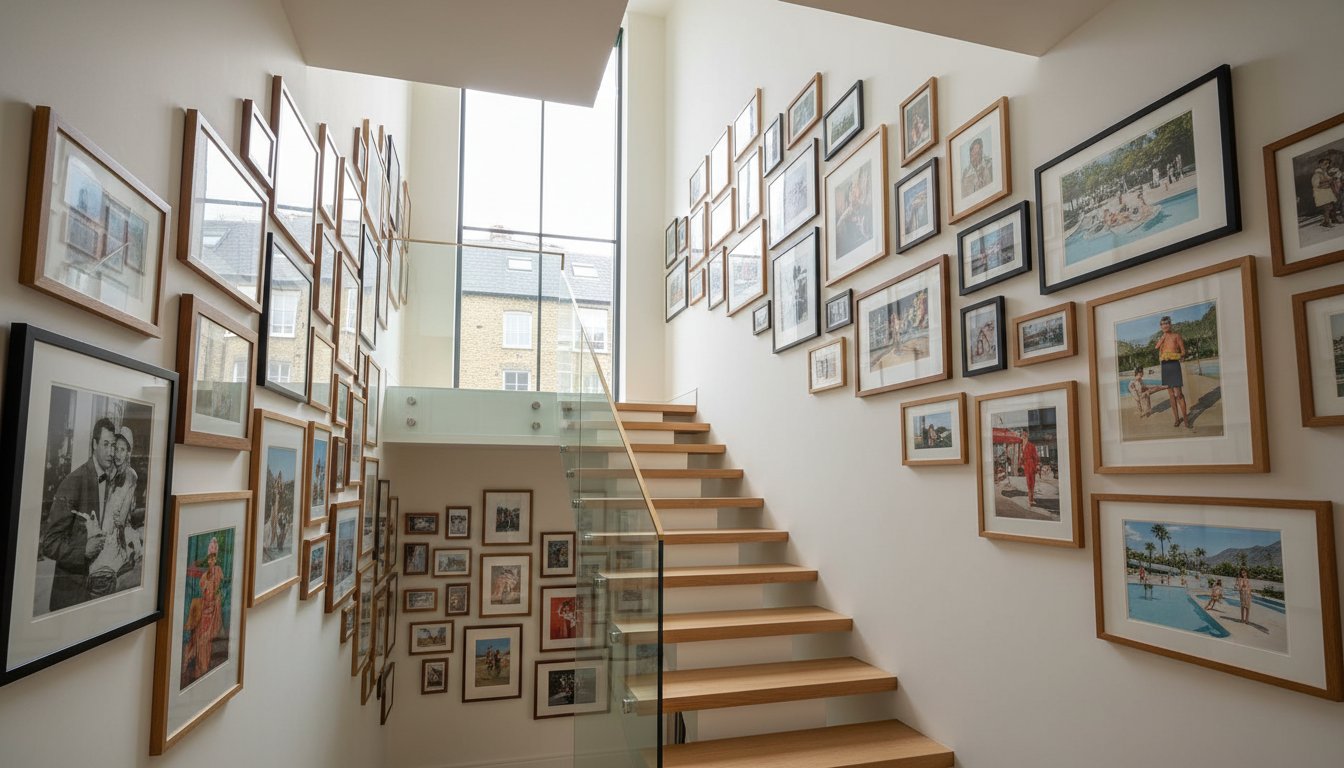
What if the ascent to your upper floors was not merely a transition, but a curated journey through the golden age of glamour? For many homeowners, the vertical expanse of a stairwell remains an intimidating canvas, often left bare due to the fear of damaging plaster with trial and error holes or the struggle to apply gallery wall ideas for staircase design against a shifting 45 degree incline. You likely recognize that a staircase possesses the unique potential to become a private museum; yet, the technical precision required to balance diverse art styles often feels out of reach.
Salon arrangements offer a more evocative, narrative-driven experience. This style allows you to mix various sizes and orientations, creating a visual weight that feels balanced yet dynamic. Start with a large anchor piece, perhaps a 30×40 inch Slim Aarons landscape, positioned at the landing or the first major turn of the stairs. This grounds the collection and provides a focal point for the viewer. From there, use the organic growth method to expand the collection upward and downward. It’s a strategy favored by those who view their walls as a living archive, adding new acquisitions over many years. By keeping the 2 inch spacing rule consistent, even the most diverse gallery wall ideas for staircase remain sophisticated. This method celebrates the history of each piece, allowing a vintage print to sit comfortably beside a contemporary bespoke work hand-printed in a London darkroom. To complement such a collection of archival prints, you can explore Original Abstract Paintings options to add vibrant, hand-painted textures that bring a unique energy to your vertical gallery.
This guide will transform those anxieties into a masterclass in curation, offering a definitive roadmap to create a sophisticated home gallery in 2026. You’ll learn to select investment-grade, archival prints that harmonize across diverse frames while preserving the integrity of your walls. We will examine the exact measurements for sloped displays, the art of mixing iconic photographers, and the secrets to creating a vertical narrative that feels both timeless and intentional. From the hand-printed depth of a silver gelatin photograph to the measured spacing of a tiered layout, this journey reveals how to build a collection that tells a compelling story with every step.
Key Takeaways
- Discover how to transform your staircase into a curated vertical narrative that guides the eye through a cohesive story as you ascend.
- Explore sophisticated gallery wall ideas for staircase design by anchoring your collection around an evocative theme, such as iconic cinema or the aspirational world of Slim Aarons.
- Master the “Sloping Horizon” rule to achieve perfect visual balance, whether you prefer the structured precision of a symmetrical layout or the artistic flow of a salon-style arrangement.
- Learn professional secrets for technical execution, including the “Paper Template” method and the 57-inch rule for maintaining ideal eye-level placement on an incline.
- Understand the enduring value of archival-quality silver gelatin prints, hand-crafted in our London darkroom, to ensure your home gallery remains a lasting piece of photographic history.
The Art of the Vertical Narrative: Why the Staircase is Your Most Important Gallery
The staircase is often the most neglected architectural feature of a home, yet it provides the most compelling canvas for visual storytelling. It’s a vertical journey. By 2026, homeowners have shifted away from haphazard arrangements toward a more deliberate, curatorial approach. A well-executed staircase gallery wall functions as a vertical axis, guiding the viewer through a narrative that transcends mere transit. This is where a functional passage transforms into a high-impact interior design focal point.
When planning these spaces, designers lean on fundamental design principles to ensure the rhythm of the art matches the rhythm of the architecture. This involves moving beyond temporary decor toward investment-grade displays that retain their allure for decades. Choosing archival pieces, such as silver gelatin prints hand-printed in a London darkroom, ensures that your gallery wall ideas for staircase aren’t just decorative but are legacy pieces. These displays create a sense of permanence and stability that standard retail frames cannot replicate.
The Psychology of the Ascent
The human eye behaves differently when we’re in motion. As you move upward, your gaze naturally tracks along a diagonal path, making the 25-to-45-degree incline of a staircase a unique psychological opportunity. Unlike a static gallery in a living room, a staircase allows for a sense of discovery with every step taken. Alignment is critical; art should follow the eye-level of the viewer as they climb. This creates a cinematic experience where each frame reveals a new chapter of the home’s narrative. It’s a rhythmic progression that rewards the viewer for their movement.
Moving Beyond the “Family Photo” Cliche
While personal snapshots have their place, a sophisticated home in 2026 demands a more elevated aesthetic. Integrating fine art photography into your staircase gallery establishes a sense of timelessness and quiet authority. It’s about balancing personal memories with iconic cultural heritage. Consider the impact of a curated collection that includes:
- Iconic Photography: Works that capture the golden age of glamour or historic moments.
- Aspirational Lifestyle: The sun-drenched, sophisticated world of Slim Aarons.
- Textural Depth: Bespoke framing that complements the architectural materials of the home.
Fine art photography serves as a bridge between the past and the present. It creates a home’s personality by showcasing a discerning eye for the world’s finest photography. This approach avoids the cluttered look of small, mismatched frames. Instead, it favors a professional, polished distance that befits a luxury gallery. You’re not just hanging pictures; you’re acting as a guardian of photographic heritage within your own walls.
Curating Your Theme: From Slim Aarons to Iconic Cinema
A successful staircase installation requires more than just hanging frames at eye level. It demands a cohesive anchor theme to prevent the transition between floors from feeling like an afterthought. Without a central narrative, the vertical climb can quickly become a cluttered visual experience. By implementing effective design strategies that prioritize thematic consistency, you transform a functional thoroughfare into a private gallery. Selecting a specific era or a single photographer’s body of work provides the architectural discipline needed for these often narrow, high-traffic spaces.
The Aspirational Luxury of Slim Aarons
Bringing the “poolside glamour” of Slim Aarons to an interior staircase offers an immediate injection of light and leisure. His work, which famously captured “attractive people doing attractive things in attractive places,” utilizes a vibrant color palette from the 1950s and 60s. These saturated hues of Mediterranean blues and Palm Springs pinks are particularly effective for brightening enclosed stairwells that lack natural light. Pairing these large-scale scenes of the jet-set lifestyle with minimalist, modern frames ensures the focus remains on the narrative of mid-century prestige. It’s a sophisticated way to execute gallery wall ideas for staircase projects that aim for an airy, expansive feel.
Cinema Heritage: Lobby Cards and Vintage Posters
For collectors with a passion for the silver screen, incorporating cinema lobby cards creates a nostalgic, cinematic climb. These cards, typically measuring 11×14 inches, offer a uniform size that’s ideal for negotiating tight corners or awkward landings where larger frames won’t fit. Mixing these smaller, detailed pieces with bold, graphic vintage film posters creates a dynamic rhythm. This approach allows you to weave a story of Hollywood’s photographic heritage, using the staircase as a chronological timeline of cinematic history. The repetition of the lobby card format provides a sense of order that grounds the more eclectic, larger posters.
Timeless Monochrome: The Black and White Aesthetic
If you’re looking for the most forgiving layout, black and white pictures offer a masterclass in architectural consistency. A monochrome palette hides inconsistencies in frame spacing and allows for a diverse mix of subjects, from 1960s fashion archives to gritty street photography. The impact of silver gelatin prints on a staircase is profound; the depth of the blacks and the crispness of the whites provide a museum-quality finish. These prints, often hand-printed in our London darkroom, bring a tactile sense of history to the home. This aesthetic is one of the most enduring gallery wall ideas for staircase designs, as it remains unaffected by changing interior trends. Explore our curated collections at Galerie Prints to find the archival pieces that will define your home’s vertical narrative.
Staircase Layout Strategies: Symmetrical vs. Salon Style
The ascent of a staircase presents a unique architectural canvas for the discerning collector. To master gallery wall ideas for staircase design, you must choose between two distinct philosophies: the disciplined grid or the fluid salon. Regardless of the chosen aesthetic, success relies on the Sloping Horizon rule. This principle dictates that the art maintains a consistent distance from the stair treads, typically 57 to 60 inches from the floor to the center of the frame. This height mirrors the eye level of a person standing mid-ascent, ensuring the work remains intimate and engaging.
To calculate the center line, measure upward from every third step to establish a diagonal path that mirrors the staircase angle, which usually sits between 30 and 35 degrees. Precision is the hallmark of a luxury display. Maintaining a 2 or 3 inch gap between frames is the golden rule for high-end installations. This specific spacing prevents the collection from feeling crowded while ensuring the individual provenance of each print is respected. It’s a technical detail that separates a professional gallery installation from a casual home display.
The Symmetrical Grid: Order and Precision
This approach favors collectors who appreciate the rhythmic stability of uniform print sizes and identical bespoke frames. It creates a clean, architectural silhouette that complements modern or minimalist interiors. The technical execution is demanding; you’ll need to calculate precise vertical offsets for every frame to ensure the grid follows the stairs’ incline perfectly. This method works best with a series of silver gelatin prints from a single photographer. The repetition of form enhances the archival quality of the work, turning a functional transit space into a structured exhibition of the world’s finest photography.
The Salon Style: Curated Eclecticism
Salon arrangements offer a more evocative, narrative-driven experience. This style allows you to mix various sizes and orientations, creating a visual weight that feels balanced yet dynamic. Start with a large anchor piece, perhaps a 30×40 inch Slim Aarons landscape, positioned at the landing or the first major turn of the stairs. This grounds the collection and provides a focal point for the viewer. From there, use the organic growth method to expand the collection upward and downward. It’s a strategy favored by those who view their walls as a living archive, adding new acquisitions over many years. By keeping the 2 inch spacing rule consistent, even the most diverse gallery wall ideas for staircase remain sophisticated. This method celebrates the history of each piece, allowing a vintage print to sit comfortably beside a contemporary bespoke work hand-printed in a London darkroom.
Technical Execution: Measuring, Spacing, and Bespoke Framing
Transforming a staircase into a curated corridor requires more than just an eye for beauty; it demands the precision of a master technician. When implementing gallery wall ideas for staircase projects, the physical execution must match the caliber of the photography itself. The process begins with the “Paper Template” method. Trace each frame onto kraft paper and secure these mockups to the wall using low-tack tape. This allows you to visualize the vertical narrative and adjust the flow without committing to a single nail hole. It’s a vital step for maintaining the rhythm of the collection as it ascends.
The core of a successful installation lies in the 57-inch rule, a gallery standard that places the center of the artwork at the average human eye level. On a staircase, this measurement must be taken vertically from each individual tread to ensure the diagonal axis remains fluid. For instance, a 2024 study on gallery ergonomics suggests that maintaining this 145 cm height creates a more immersive experience for the viewer. To protect your investment, especially in stairwells flooded with natural light, specify anti-reflective museum glass. High-quality glazing provides up to 99% UV protection, preventing the degradation of silver gelatin prints while eliminating the glare that often obscures art in bright transitions.
Step-by-Step Hanging Guide
- Find the Anchor: Start at the midpoint of the staircase. Hang your primary, largest piece here and work outward toward the upper and lower landings to maintain balance.
- Maintain the Axis: Use a laser level or a taut string line to define the diagonal slope. This ensures your gallery wall ideas for staircase don’t feel disjointed or haphazard.
- Prioritize Safety: Never balance a standard ladder on steps. Use a specialized multi-position ladder or a stair-platform system to ensure a stable base while reaching higher points of the wall.
The Importance of Bespoke Framing
Retail frames often lack the structural integrity and chemical purity required to protect high-end photographic art in high-traffic areas. Bespoke framing offers a marriage of aesthetic harmony and archival security. When selecting finishes, consider how a deep black ash or a warm natural oak might echo the texture of your banister or the grain of the floorboards. A gilt frame can add a touch of 1950s glamour, reminiscent of the Slim Aarons lifestyle, while a minimalist white frame allows the subject matter to breathe.
Archival mounting is the standard for preserving print provenance, utilizing pH-neutral adhesives and acid-free mounting boards to prevent the chemical yellowing that destroys paper fibers over time. Every print we offer is a piece of history, often hand-printed in our London darkroom, and deserves a housing that reflects that heritage. Choosing bespoke materials ensures your collection remains as vibrant in 2046 as it is today.
Discover how our curated collections can elevate your home by exploring the world’s finest photography at Galerie Prints.
The Galerie Prints Standard: Crafting Your Museum-Quality Staircase
Selecting the right gallery wall ideas for staircase projects requires more than just an eye for design; it demands access to the world’s finest photography. At Galerie Prints, we serve as a bridge to the golden age of glamour, sourcing imagery from prestigious archives like Getty Images and the estate of Terry O’Neill. Our commitment to authenticity begins in our London darkroom. Here, we produce silver gelatin prints from original negatives, a process that captures a depth of tone and level of detail that digital alternatives simply cannot replicate. These aren’t mere decorative items. They’re archival treasures designed to last for generations, ensuring your investment remains as vibrant in fifty years as it is today.
Our bespoke framing service arrives ready to hang, removing the guesswork from your installation. By choosing museum-quality materials, we protect the art from environmental factors; this makes it a permanent fixture of your home’s architectural narrative. We don’t just sell prints; we provide the components for a legacy.
Curatorial Assistance for Your Project
Our experts understand that every vertical space presents unique challenges. We provide tailored advice to help you select a cohesive set of prints that respect your home’s specific dimensions. Whether you’re filling a vast three-story void or a small architectural niche, we offer custom sizing to ensure a perfect fit. Every piece comes with a documented history. This provenance ensures that your gallery wall ideas for staircase aren’t just visually stunning but also intellectually rich, telling the story of photographic heritage with every step you take.
From Darkroom to Destination
The journey of your print is one of meticulous London-based craftsmanship. From the initial chemical bath in the darkroom to the final join of the bespoke frame, every step is handled by artisans. There’s a distinct sensory experience in unboxing a Galerie Prints delivery. The weight of the solid wood frame and the crisp clarity of the archival glass signal a standard of quality found in the world’s leading institutions. Your home deserves nothing less than this level of prestige.
Mastering the Art of the Curated Ascent
Transforming a transitional space into a meaningful journey requires more than just hanging frames; it demands a vision for storytelling. By 2026, the most compelling interiors will prioritize the vertical narrative, using the staircase to bridge the gap between architectural function and artistic expression. Whether you opt for the rigid discipline of a symmetrical grid or the storied charm of a salon-style arrangement, your choices should reflect a commitment to archival quality. These gallery wall ideas for staircase designs succeed when they pair iconic imagery from the Getty Images archives with the precision of museum-standard craft.
Every piece we produce is hand-crafted in our London darkroom, ensuring that the silver gelatin prints you hang today remain legacies for the next generation. We provide exclusive access to the Slim Aarons collection, offering a window into a world of mid-century glamour that’s preserved through our bespoke framing process. It’s about investing in a piece of photographic history that resonates every time you move between floors.
Begin your curated ascent with the world’s finest photography at Galerie Prints
Your walls are a canvas for your most sophisticated stories; let them speak with authority.
Frequently Asked Questions
How high should art be hung on a staircase wall?
Aim for a center point approximately 145 centimeters above each stair tread to mirror the natural eye level of an ascending viewer. This measurement ensures your collection maintains a rhythmic flow as one climbs the stairs. If you’re curating a bespoke arrangement of silver gelatin prints, this 145 centimeter baseline provides the structural integrity needed to anchor more expansive, floor to ceiling compositions.
Can I mix black and white photos with color prints on a staircase?
You can absolutely blend monochrome photography with vibrant color prints to create a layered, editorial aesthetic. A successful ratio often involves 70 percent black and white imagery punctuated by 30 percent color accents to maintain visual cohesion. This technique allows iconic archival shots to sit comfortably alongside contemporary Slim Aarons poolside scenes, bridging the gap between historical provenance and modern interior design.
What is the best way to plan a staircase gallery wall without making extra holes?
The most effective method involves cutting paper templates to the exact dimensions of your frames and securing them with low tack painter’s tape. This allows you to visualize your gallery wall ideas for staircase without committing to a single nail. By mapping out the 5 centimeter gaps between each piece on the wall first, you ensure the final installation of your hand printed collection is precise and balanced.
Should all frames on a staircase gallery wall be the same color?
Frames don’t need to be identical, though a unified material palette often enhances the prestige of the collection. Mixing three distinct finishes, such as hand stained oak, matte black, and antique gold, adds a curated depth that feels like a professional gallery. Using bespoke framing for every piece ensures that even if the colors vary, the quality of the craftsmanship remains a consistent thread throughout the vertical journey.
How many pictures do I need for a standard staircase gallery wall?
A standard residential staircase typically requires between 7 and 12 pieces to feel fully realized. For a 13 step flight, a curated grouping of 9 prints provides enough visual interest without overwhelming the architectural space. Smaller landings might only need 3 larger, high impact archival prints to establish a sense of permanence and luxury without cluttering the narrow passage during your gallery wall ideas for staircase project.
How do I handle lighting for a staircase gallery wall?
Install directional LED spotlights with a 30 degree beam angle to illuminate each print without creating harsh glare on the glass. Proper lighting is essential for showcasing the silver gelatin textures and fine details of your photography. Position the fixtures 45 to 60 centimeters away from the wall to ensure the light washes evenly over the frames, highlighting the provenance of each individual work.
Is it better to use large prints or several small ones on a stairs?
A combination of one large anchor piece and several smaller supporting prints creates the most compelling narrative. Using a single 70 by 100 centimeter statement print at the turn of the stairs provides a focal point that grounds the entire installation. Surrounding this with smaller 20 by 30 centimeter frames allows for a nuanced exploration that invites closer inspection from guests as they move through the home.
What is the most common mistake when hanging art on stairs?
The most frequent error is ignoring the 5 centimeter spacing rule, which results in a disjointed and chaotic appearance. Many homeowners hang their art based on the ceiling line rather than the staircase incline, creating a visual disconnect. Maintaining a consistent distance from the stair treads ensures the collection feels like an intentional, permanent installation rather than an afterthought in a high traffic area.