
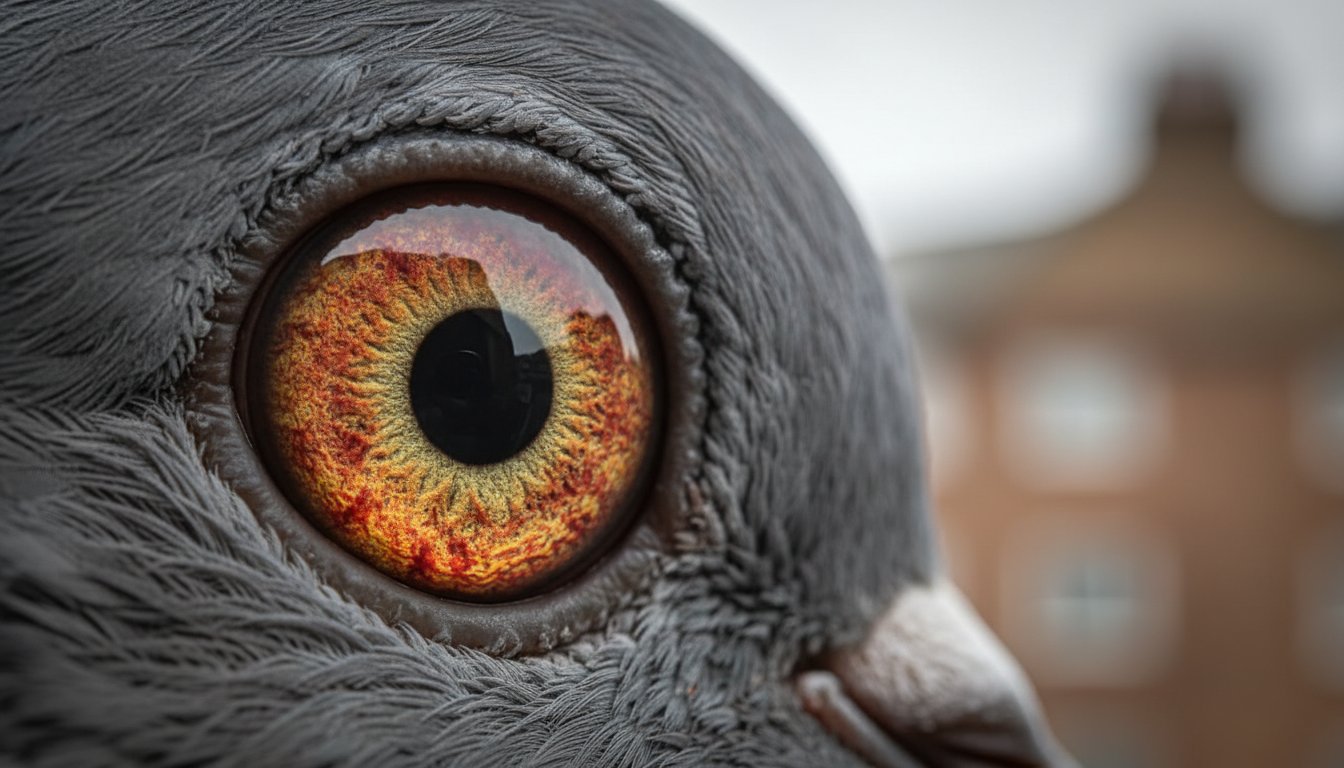
What if the creature we dismiss as a mere urban nuisance actually carries a celestial masterpiece within its gaze? For decades, the common pigeon has been relegated to the status of a pest, yet a closer inspection reveals that pigeon eyes are among the most intricate biological structures in the avian world. These ocular landscapes, often overlooked in the rush of city life, contain a spectrum of fiery oranges and deep metallic golds that rival the most precious gemstones. It’s a hidden reality that transforms a common bird into a subject worthy of the world’s finest photography.
You’ve likely viewed these birds as a mundane fixture of the street, a perspective shared by many until they encounter the startling clarity of a macro lens. We’ll show you how to appreciate the biological design of these urban survivors through the lens of archival fine art. You’ll learn how to curate and display these sophisticated wildlife prints, which are hand-printed in our London darkroom to ensure a bespoke quality. This study offers a refined take on nature, bridging the gap between the grit of the city and the prestige of a professional gallery.
Key Takeaways
- Uncover the vivid iridescent pigments and complex anatomical structures that define the columbid eye as a masterpiece of evolutionary design.
- Learn the sophisticated macro techniques essential for capturing high-resolution, jewel-like details within the fleeting gaze of a living subject.
- Shift your perspective on urban wildlife by discovering why pigeon eyes have become a compelling muse for the world’s most discerning fine art photographers.
- Discover how bespoke framing and archival mounting can contain and elevate the intense visual narrative of large-scale macro photography.
- Explore the artisanal heritage of our London darkroom, where meticulous hand-printing transforms a fleeting moment into a timeless piece of photographic history.
The Visual Complexity of Pigeon Eyes: An Evolutionary Masterpiece
The columbid eye is a marvel of evolutionary engineering, presenting a complex interplay of biology and aesthetic brilliance. For the discerning eye of a fine art photographer, these avian orbs represent more than just sensory organs; they are miniature galleries of texture and light. Scientists categorize the pigeon eye by its distinct ringed structure, where the iris acts as a vibrant frame for the pupil. This anatomical arrangement grants the bird superior visual acuity, a trait that has allowed the species to thrive in both wild and urban environments for over 10,000 years. The jewel-like quality of the eye, often shimmering with intense reds and oranges, is a result of structural coloration and specific pigments that reflect light with an almost metallic luster.
This visual system is a focal point for researchers and artists alike. While the scientist seeks to understand the neural pathways of the 340-degree field of vision, the photographer seeks to immortalize the fleeting reflection within the cornea. Form follows function in the urban survival of the species, yet the byproduct is an exquisite specimen of natural art. Capturing pigeon eyes in a macro format reveals a landscape of color that is often overlooked in the bustle of city life.
The Spectrum of Color: From Orange to Pearl
Within the iris of a pigeon, one finds a rich palette dictated by fluorescing pigments like pteridines. These pigments create the iconic fire eye seen in many racing breeds, though the rare bull eye, a dark, nearly black iris, appears in specific white-feathered varieties. In the controlled environment of a studio or the shifting light of a London afternoon, the perceived depth of the eye changes. Light penetrates the transparent layers to illuminate the underlying vascularity, creating a three-dimensional effect that photographers strive to capture on archival paper. The interaction of light and pigment ensures that no two irises are identical, offering a bespoke quality to every macro study.
Lateral Vision and Artistic Perspective
Pigeons possess a wide field of vision, a biological necessity for a prey species. Their eyes are side-mounted, creating a unique profile that challenges the traditional rules of portraiture. While they lack the forward-facing gaze of a raptor, there is a narrow 20-to-30-degree overlap where binocular vision occurs. Capturing this specific angle in a print requires immense patience. It results in a watchful presence, an evocative stare that suggests the bird is observing the viewer as much as it’s being observed. This lateral perspective provides a sense of quiet authority, making pigeon eyes a compelling subject for large-scale, high-definition gallery works that command attention in any curated space.
The Art of Macro Photography: Capturing the Jewel-Like Detail
To capture the kaleidoscopic depth of pigeon eyes, the photographer must abandon the casual observer’s stance. It’s a technical ballet. You need a lens capable of 1:1 magnification, often a 100mm or 105mm macro, to resolve the granular textures of the iris. Depth of field is the primary adversary here. At such close range, the focal plane is thinner than a single millimeter. If the focus slips even slightly to the beak or the cere, the image loses its soul. The iris must be the sharpest point of interest, rendered with such clarity that the viewer can see the individual vessels and pigment clusters. Using natural light is essential for this level of detail. A bright, overcast day reveals the microscopic ridges of the surrounding feathers without the harsh shadows that obscure form. This meticulous approach transforms a standard bird portrait into fine art photography that commands attention in any gallery setting.
Equipment and Precision in the Field
Achieving life-size magnification requires specialized optics and immense stability. A macro lens with a fixed focal length ensures edge-to-edge sharpness, which is vital for archival-quality prints. Shutter speeds must remain high, ideally above 1/1000th of a second, to counteract the pigeon’s erratic head movements. It’s a game of patience. A photographer might wait hours for the sun to hit the eye at a 45-degree angle. This creates the ‘catchlight,’ a tiny spark of light that grants the subject life. When mastering urban wildlife photography techniques, as highlighted by BBC Wildlife Magazine, one learns that the bird’s familiarity with humans is a distinct advantage for close-range work. This proximity allows for a level of precision that would be impossible with more timid species.
Compositional Choices for Impact
Composition dictates the emotional weight of the final print. Centering the eye within the frame creates a confrontational, modern aesthetic that feels both intimate and bold. Alternatively, applying the rule of thirds in avian portraiture creates a narrative flow, suggesting the bird’s gaze into the distance. Macro crops are particularly powerful because they strip away the grit of the city. By removing the urban context, pigeon eyes become a study in pure geometry and vibrant color. This curated focus is what distinguishes a simple snapshot from a piece worthy of the world’s finest photography collections.
- Magnification: 1:1 ratio for life-size detail.
- Shutter Speed: 1/1000s minimum to freeze movement.
- Lighting: Soft, natural light to emphasize texture.
- Focus: Pin-sharp iris as the central anchor.
This transition from documentation to art requires a discerning eye and a reverence for the subject. By isolating the eye, we invite the viewer to linger on a level of beauty that is usually hidden in plain sight. It’s a testament to the power of the macro lens to elevate the mundane into the extraordinary.
Urban Wildlife as Fine Art: Why Pigeons are a Photographer’s Muse
The city pigeon often survives under the unfair label of “pest,” but high-end visual storytelling reclaims its status as a creature of immense beauty. We look past the sidewalk scuffle to find a subject rich with historical weight. These birds were the original messengers of the ancient world, carrying vital intelligence across empires and serving as universal symbols of peace in classical art. Master photographers often return to such common subjects to prove their technical skill. It’s a challenge to make the familiar feel new. The contrast between the gritty pavement and the timeless allure of black and white pictures creates a sophisticated narrative. By stripping away the distractions of the modern cityscape, the viewer finally notices the complex geometry of the feathers and the fiery intensity of pigeon eyes.
Finding Glamour in the Everyday
The Slim Aarons approach to photography focuses on an unwavering pursuit of glamour, a philosophy we apply to the natural inhabitants of our cities. We treat the pigeon as a subject of high-fashion, highlighting the iridescent plumage that serves as a radiant halo for the central eye portrait. This isn’t mere documentation; it’s an elevation of the subject through meticulous craft. Each print is treated with the reverence of a masterpiece, hand-printed in our London darkroom using archival silver gelatin processes. This museum-grade presentation ensures that the subtle gradients of light and shadow are preserved, turning a bird of the street into a permanent icon of the gallery wall.
The Collector’s Perspective on Nature
Macro wildlife prints are no longer relegated to scientific journals; they’ve secured a definitive place in the most prestigious contemporary collections. A large-scale study of pigeon eyes functions as a powerful conversation piece in a modern interior, inviting a sense of wonder at the extraordinary details hidden in plain sight. It’s about the thrill of discovery. These prints bridge the gap between the precision of science and the evocative power of fine art. For the discerning collector, investing in such work is an act of curation that celebrates the overlooked. It builds a narrative of worldly expertise, suggesting that beauty isn’t found only in the exotic, but in the masterful observation of the everyday.
Framing the Extraordinary: How to Display Macro Photography
Displaying macro photography requires a discerning eye for detail that matches the precision of the lens itself. When dealing with the intricate textures of pigeon eyes, the choice of presentation dictates whether the piece is viewed as a biological study or a work of high-end fine art. A bespoke approach ensures that the intense, concentric patterns of the iris aren’t lost to the room’s ambient reflections. It’s about creating a dedicated space where the viewer can appreciate the complexity of a subject often overlooked in the rush of urban life.
Bespoke Framing for Macro Works
For prints featuring the deep, obsidian pupils found in pigeon eyes, anti-reflective glass is a non-negotiable requirement. Standard glazing often creates a mirror effect that obscures the very detail you’ve sought to capture. We recommend museum-grade glass with less than 1% light reflection to maintain the integrity of the print’s contrast. Deep-box frames provide a 3D perspective that draws the viewer into the iris, creating a “window” into another world. This effect works best when paired with organic frame materials like charred oak or hand-finished walnut, which echo the gritty, urban textures of the bird’s natural habitat. Using archival, acid-free mounts ensures the longevity of the piece, preventing the yellowing that can occur over a 25-year period in lesser quality materials.
Creating a Gallery Wall of Urban Nature
A successful residential gallery balances the hyper-focused with the expansive. Pairing a macro eye shot with wide-angle architectural photography creates a narrative of the city inhabitant versus the cityscape. Scale plays a vital role here. You might anchor a wall with an oversized 40×60 inch macro print, then surround it with smaller, historically rich pieces. Integrating cinema lobby cards adds a layer of vintage texture and varied scale that softens the intensity of the macro work. This juxtaposition of Hollywood’s photographic heritage with raw, natural detail creates a sophisticated, curated atmosphere.
Color-matched matting is a sophisticated technique to highlight the specific fiery oranges or deep vermilions of the iris. A triple-mount system using a sliver of color that matches the eye’s inner rim can make the image pop against a neutral wall. Finally, consider the lighting. Directional LED spotlights with a high Color Rendering Index (CRI) of 95 or above will ensure the colors remain true to the original darkroom print. When lit correctly, the spherical nature of the eye creates a mesmerizing effect where the gaze seems to follow the viewer across the room, mimicking the “Mona Lisa” effect in a contemporary, photographic medium.
Discover your next investment in the world’s finest photography and elevate your interior with our bespoke collection.
Galerie Prints: Discovering Beauty in the Unseen
At Galerie Prints, we believe that the world’s finest photography resides in both the legendary and the overlooked. While our archives celebrate the sun-drenched luxury of the Slim Aarons era and the grit of 1960s rock and roll, we also champion the startling beauty found in nature’s smallest details. The macro exploration of pigeon eyes serves as a perfect example of this curatorial philosophy. It challenges the viewer to look closer at a subject often dismissed, revealing a cosmos of color and texture that rivals any abstract masterpiece. We operate as a guardian of photographic heritage, ensuring that these moments of unexpected brilliance are preserved with the same reverence as an iconic Hollywood portrait.
Our commitment to quality is rooted in a deep respect for the medium. We don’t just sell images; we provide a bridge to the golden age of craftsmanship. By inviting collectors to see the world through a more discerning, artistic lens, we transform the way they interact with their surroundings. Every piece in our collection is selected for its ability to inspire wonder, whether it’s a wide-angle vista or a tight macro study of pigeon eyes that reveals the hidden complexity of the urban wild. This dedication to the “unseen” is what sets our gallery apart in a world of fleeting, digital imagery.
The Archival Difference
The technical superiority of our work begins in our London darkroom. We specialize in hand-printing techniques that ensure archival longevity, a process that separates a true fine art investment from a standard commercial print. Our silver gelatin prints are created using traditional chemical processes that have remained virtually unchanged for over 150 years. This method produces a depth of tone and a physical provenance that digital alternatives simply cannot replicate. When you touch the heavy weight of our 100% cotton rag paper, you feel the tactile quality of a lasting piece of history.
- Unmatched Depth: Our pigment prints utilize high-saturation inks that capture every microscopic detail of the subject.
- Bespoke Quality: Each order is handled by expert printers who balance contrast and tone by hand.
- Heritage Status: A purchase from us is designed to last for generations, maintaining its clarity and value over time.
Start Your Curated Collection Today
Building a collection is a personal journey, and we’ve designed our digital and physical spaces to be a source of constant inspiration. You can browse our expansive archives of music, film, and nature photography to find subjects that speak to your unique interests. For those seeking a more tailored experience, we offer personalized curation services. Our experts help you navigate our holdings to find pieces that complement your interior aesthetics while maintaining their status as serious art investments.
We invite you to visit our London gallery to experience the scale and impact of our prints in person. If you’re exploring from afar, our digital archives provide a window into thousands of rare and iconic negatives. Whether you’re drawn to the glamour of the past or the intricate patterns of the natural world, we’re here to help you secure a piece of photographic excellence for your home.
Elevating the Urban Gaze into Timeless Art
Capturing the intricate iris patterns of pigeon eyes transforms a common city dweller into a captivating subject of high-end macro photography. This study demonstrates how 5:1 magnification ratios reveal a hidden world of amber and crimson hues that mirror the depth of precious gemstones. By bridging the gap between urban wildlife and the golden age of glamour, these images prove that extraordinary beauty exists in the most overlooked corners of our environment. It’s a reminder that even the most familiar sights possess a technical complexity that rivals the finest masterpieces.
At Galerie Prints, we honor this photographic heritage through meticulous craftsmanship. Our experts, who possess over 30 years of experience in curation, ensure every image meets the highest standards. We produce each work on museum-quality archival paper, hand-printed in our London darkroom to guarantee detail that remains vibrant for generations. With bespoke framing options, your chosen piece becomes a lasting legacy of artistic discovery. We invite you to explore our curated collection of the world’s finest photography and find a work that resonates with your passion for the exquisite. Let these hidden details inspire a new perspective on the world around you.
Frequently Asked Questions
Why are pigeon eyes usually orange or red?
The vibrant orange or red hue of pigeon eyes stems from the presence of pteridine pigments within the iris. These chemical compounds create a brilliant spectrum that ranges from deep amber to fiery crimson. Scientific studies indicate that these specific pigments are prevalent in 90 percent of domestic pigeon breeds. This biological trait provides a striking contrast against their plumage, making them a captivating subject for macro photography.
Can pigeons see color better than humans?
Pigeons possess pentachromatic vision, allowing them to perceive five spectral bands of light compared to the three seen by humans. This means they can detect ultraviolet light, which is invisible to our eyes. Their retinas contain six distinct types of photoreceptor cells, including double cones that enhance motion detection. When capturing pigeon eyes through a lens, you’re looking at an organ capable of seeing a world far more saturated than our own.
What is the best lens for photographing pigeon eyes?
A 100mm f/2.8 macro lens is the gold standard for capturing the intricate textures of bird irises with professional clarity. This focal length provides a 1:1 magnification ratio, ensuring every crystalline detail is rendered sharply. Photographers often use a minimum shutter speed of 1/250th of a second to counteract bird movement. This specific equipment allows for the intimate, high-resolution detail required for large-scale archival prints that mirror the quality of a fine art gallery.
Are macro prints of bird eyes suitable for modern interior design?
Macro prints of avian eyes serve as sophisticated abstract focal points in contemporary minimalist interiors. Their organic patterns and vivid colors mimic the aesthetic of 20th-century glass art or celestial photography. A 40×40 inch print can anchor a room, providing a conversation piece that blends natural history with high-end curation. Collectors often place these pieces in gallery-style settings where the fine details can be appreciated under 3000K museum lighting.
How do I care for an archival macro photography print?
Protecting an archival print requires maintaining a consistent environment with humidity levels between 35 and 50 percent. You should avoid hanging your artwork in direct sunlight, as UV rays can degrade even the highest quality pigments over a 10-year period. Using anti-reflective, UV-protective glass provides a 99 percent barrier against light damage. This ensures the deep blacks and vibrant iris tones remain as vivid as the day they were hand-printed in our London darkroom.
Is it possible to capture a pigeon eye in black and white and keep the detail?
You can absolutely capture a pigeon eye in black and white by focusing on the structural topography of the iris. Removing color emphasizes the radial patterns and the 3D texture of the eye’s surface. When printed as a silver gelatin photograph, the silver halides create a rich tonal range that highlights the liquid-like quality of the pupil. This monochrome approach transforms a biological study into a timeless piece of fine art that fits any curated collection.
Why do some pigeons have different colored eyes, like pearl or bull eyes?
Variations like pearl or bull eyes result from specific genetic mutations that alter or eliminate pteridine pigments. Pearl eyes appear white or pale gray because they lack the standard red pigments found in most birds. Bull eyes, which appear solid black, occur when the iris is completely devoid of pigment, revealing the dark underlying tissue. These rare traits appear in approximately 5 to 10 percent of specific racing and show breeds, offering unique opportunities for specialized photographic studies.
What does ‘archival quality’ mean for a wildlife photograph?
Archival quality refers to materials and processes that ensure a photograph lasts for over 100 years without fading or yellowing. This involves using acid-free, 100 percent cotton rag papers and pigment-based inks rather than standard dyes. Every print is produced to meet museum standards, ensuring the provenance and value of the artwork remain intact for future generations. It’s a hallmark of excellence that distinguishes a temporary poster from a permanent piece of the world’s finest photography.