
Tag: home styling

Curating Art for a Minimalist Home: Intentional Walls

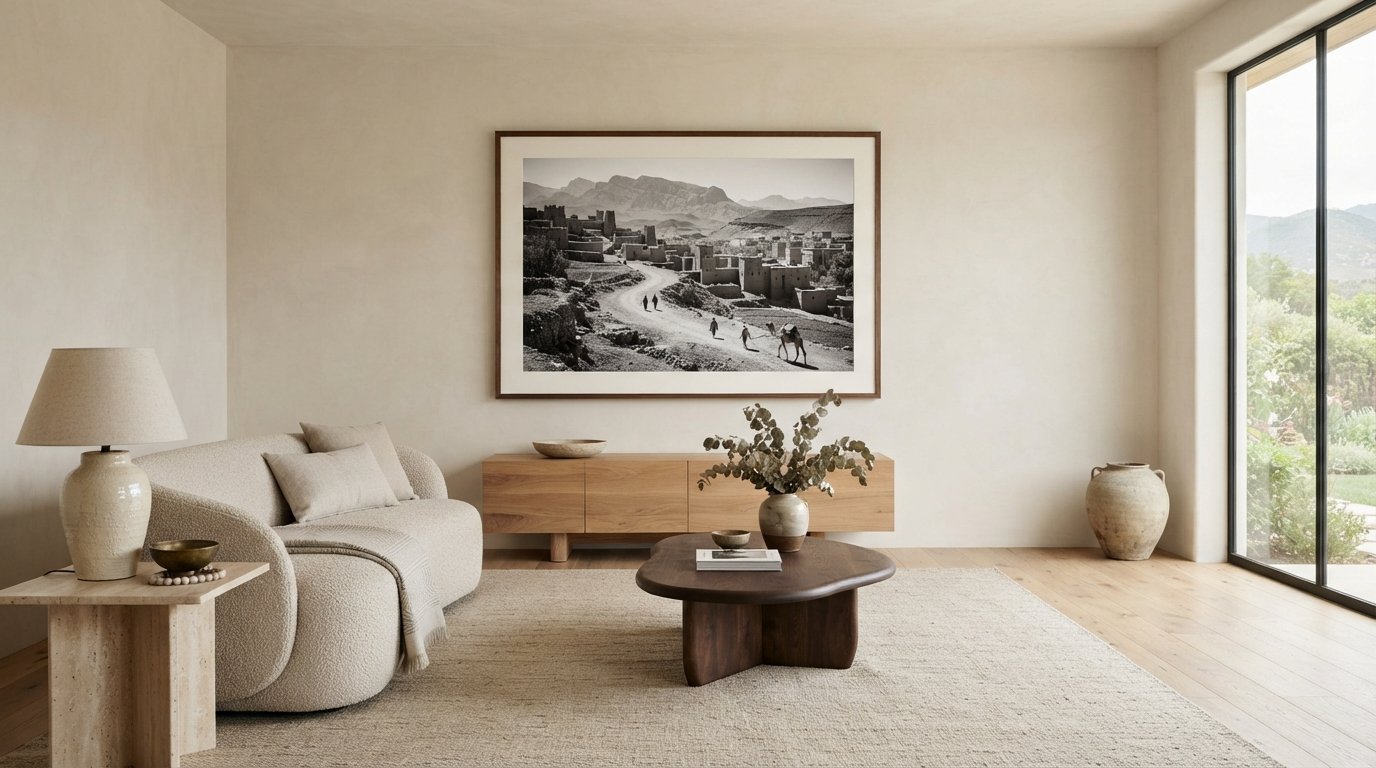
True minimalism is never achieved by leaving your walls entirely barren, as a sterile white expanse often reflects hesitation rather than quiet sophistication. When curating art for a minimalist home, the objective isn’t to fill negative space out of obligation; it’s to anchor an interior with a singular, evocative visual voice that honors the room’s architectural calm.

You’ve likely felt the delicate tension between protecting a serene sanctuary and dreading the soulless, impersonal nature of mass-produced wall art. Balancing a warm cultural narrative with crisp spatial discipline isn’t simple, particularly when an improper print proportion or chaotic arrangement risks cluttering the very peace you worked to design.

In this guide, you’ll discover how to select, scale, and frame archival photography to build striking, intentional minimalist interiors. We’ll explore exact architectural hanging ratios, the power of generous matting, and the bespoke framing standards needed to turn legendary photographic archives into lasting, heirloom anchors for your home.

Key Takeaways

  • Master the philosophy of visual restraint by treating negative space as an active architectural element rather than empty wall area.
  • Discover the definitive spatial proportions and golden ratio formulas that prevent undersized prints from cluttering clean interior lines.
  • Learn how curating art for a minimalist home relies on selecting singular, storied archives rather than impersonal, mass-market decor.
  • Explore how bespoke framing materials, from natural hardwood profiles to museum-grade glazing, bridge the artwork with your living environment.
  • Build an enduring, iterative art collection guided by authentic provenance and certified archival darkroom print quality.

The Philosophy of Minimalist Art: Choosing Impact Over Abundance

Minimalism is frequently misunderstood as an exercise in sheer erasure. In interior architecture, stripped-back rooms often fall into sterile emptiness when bare walls are treated as an aesthetic virtue rather than a missed opportunity. True intentionality operates on restraint, not deprivation. In the practice of curating art for a minimalist home, the objective isn’t to cover every surface, nor is it to leave walls hollow; it’s about choosing singular, narrative-rich works that command attention through quiet authority.

A solitary, museum-grade photographic print introduces emotional tranquility that scattered decor cannot replicate. By presenting an authentic narrative, whether captured in the sun-drenched leisure of Slim Aarons or the candid intimacy of legendary music archives, the wall transforms from an unoccupied barrier into an intentional architectural anchor.

Rethinking Negative Space on Modern Walls

Negative space isn’t blank void; it’s an active structural design element. Much like the pauses between musical notes, unadorned expanses of vertical plaster give an artwork room to breathe, elevating the piece from casual decoration to an intentional installation. In movements such as minimalist photography, sparse composition and expansive margins direct visual energy toward subtle variations in light and form.

To successfully integrate negative space into your environment, consider how surrounding physical elements interact:

  • Clear visual boundaries: Ensure at least two to three feet of uninterrupted wall surface surrounds the frame to prevent sightline friction.
  • Architectural alignment: Balance low-slung credenzas or linen sofas against open vertical planes to emphasize ceiling height.
  • Breathing room: Avoid competing sconces or adjacent shelving that dilute the impact of the primary print.

The Power of the Singular Focal Point

Eclectic gallery clusters often fracture a room’s composure. When you distribute attention across a dozen mismatched frames, visual clutter naturally follows. Curating art for a minimalist home requires replacing that chaotic visual noise with one decisive, large-format statement work that anchors the entire room’s layout.

A monumental, darkroom-grade print immediately establishes spatial hierarchy. Rather than allowing eyes to dart aimlessly across disparate frames, an oversized archival work pulls the gaze inward, setting the emotional temperature of the living space. By investing in museum-quality fine art photography, you introduce genuine cultural provenance and technical mastery, grounding modern architectural discipline with profound human history.

How to Select the Perfect Photographic Art for Minimalist Spaces

Minimalist interior design relies on raw, honest surfaces. Poured concrete, lime-washed plaster, honed limestone, and white oak create an architectural canvas that rejects decorative superficiality. When curating art for a minimalist home, the artwork shouldn’t sit as an alien layer atop these materials; it must harmonize with their inherent weight and grain. Medium-format and large-format photographic prints achieve this seamlessly because their physical medium possesses depth, texture, and technical provenance.

Silver halide prints on fiber-based archival paper respond dynamically to daylight, shifting their tonal presence as shadows cross the room. To ensure these tactile heirlooms endure, collectors adhere to strict preservation matting and framing standards, utilizing acid-free cotton rag boards that protect delicate emulsions while providing essential visual containment.

Tonal Restraint: The Case for Monochromatic Imagery

Monochrome imagery provides immediate architectural grounding. A deep black-and-white print establishes a strong graphic contrast against pale, neutral wall finishes, anchoring an open floor plan without introducing chromatic discord. The quiet depth found in historical black and white pictures, whether documenting brutalist facades or intimate portraits by masters like Terry O’Neill, brings human narrative into stark living spaces without competing against organic interior finishes.

Consider these key pairings when integrating black-and-white prints:

  • Charcoal and warm taupe: Softens the stark contrast against unsealed concrete and pale linen upholstery.
  • Deep pitch black: Aligns with blackened steel fixtures, minimal joinery, and architectural window mullions.
  • High-key silvers: Harmonizes with pale ash, light travertine, and brushed aluminum accents.

Aspirational Color: Curating Saturated Heritage Photography

Color in a minimalist residence must feel deliberate, never accidental. Instead of scattering decorative accents across cushions and accessories, introduce focused, saturated heritage works. The mid-century archives of Slim Aarons serve as an extraordinary tool for this approach. His depictions of poolside leisure and modernist architecture juxtapose azure waters and terracotta roofs directly against neutral interior textiles.

A single, expansive Aarons print breathes warm, golden-era vitality into disciplined rooms, delivering an effortless narrative bridge between modern restraint and storied European or desert modernism. To discover pieces that elevate your space through verifiable historical significance, explore the curated editions available at galerieprints.com.

Proportion, Scale, and Placement: The Architectural Formula

Minimalist architecture exposes spatial errors without mercy. While traditional interiors can disguise improper sizing amid layered furnishings, an uncluttered room highlights every proportional mismatch. An undersized frame adrift on a wide expanse of drywall doesn’t read as delicate; it appears hesitant, fracturing the room’s sightlines and generating visual clutter through awkward emptiness. Successful wall curation requires mathematical discipline to ensure the artwork functions as a natural structural extension of the space.

Mastering this balance is essential when curating art for a minimalist home. When an archival print commands the correct physical volume, the surrounding wall transitions from blank drywall into intentional, calming negative space.

Calculating the Two-Thirds Furniture Proportion Rule

Placing art above primary furniture anchors, such as low-profile credenzas, linen sofas, or platform headboards, requires strict adherence to spatial ratios. The total width of the framed artwork should span approximately 60% to 75% (roughly two-thirds to three-quarters) of the furniture piece beneath it. For an 84-inch sofa, the ideal frame width falls between 56 and 63 inches.

To preserve structural balance between the artwork and the furniture foundation, apply these clear guidelines:

  • The vertical gap: Hang the bottom edge of the frame 6 to 8 inches above the back of a sofa or the surface of a console to maintain a unified visual unit.
  • The Mantel clearance: Position the frame 4 to 8 inches above a fireplace mantel to prevent the art from floating away from the hearth.
  • Prevent visual tipping: Avoid frames narrower than 50% of the furniture width, which look stranded and disrupt horizontal balance.

Gallery Sightlines and Spatial Breathing Room

Residential art placement frequently suffers from being mounted too high. Gallery and museum standards dictate that the vertical center of an artwork should sit at eye level, precisely 57 to 60 inches from the finished floor. In rooms with standard eight-foot ceilings or seated gathering areas, 57 inches provides an intimate resting point. In hallways or open spaces featuring nine- to ten-foot ceilings, lifting the center line to 60 inches preserves vertical harmony.

When curating art for a minimalist home, calculate fastener placement using this museum formula: add half the total frame height to 57 inches, then subtract the distance from the top edge of the frame to the hanging hardware. This prevents measuring to the top rim and guarantees exact eye-level centering. Finally, preserve at least 12 to 18 inches of clearance between the outer frame and adjacent door casings, architectural corners, or light sconces, ensuring natural light washes across the glazing without visual interruption.

The Art of Bespoke Framing: Enhancing Without Overwhelming

A frame should never compete with the artwork it encloses, nor should it feel like an afterthought. In modern interiors, bespoke framing acts as a structural bridge, linking the artwork to the room’s materials, millwork, and light quality. When curating art for a minimalist home, the moulding profile, mat margin, and glazing specifications define the piece’s physical presence on the wall. Mass-market frames flex, cast distracting reflections, and rely on acidic backing boards that degrade paper over time. Artisanal framing, by contrast, transforms an archival print into an enduring architectural fixture.

Selecting Frame Profiles for Minimalist Architecture

Disciplined spaces demand restrained frame profiles that emphasize geometric precision. Deep-set box mouldings with ultra-narrow faces, measuring between one-quarter and one-half inch, create subtle shadow lines without cluttering clean wall planes.

  • Raw White Oak and Maple: Introduces organic grain and warmth, softening austere concrete, limestone, or Scandinavian palettes.
  • Satin Black and Powder-Coated Aluminium: Provides a razor-sharp graphic perimeter, perfect for delineating high-contrast black-and-white photography.
  • Deep-Set Spacers: Suspends the print away from the glazing, letting the paper’s natural texture and darkroom luster sit undisturbed.

Matting Margins and Glazing Precision

Matting establishes vital breathing room between the subject and its perimeter. Standard narrow mats often look cramped in minimalist rooms. Specifying generous mat borders, where the mat width is at least twice the moulding face (typically 3 to 4.5 inches of unblemished white space), amplifies negative space and intensifies visual focus. For full-bleed images, float mounting with internal spacers allows the entire physical sheet to sit celebrated as an authentic artifact.

Archival preservation is equally paramount. To safeguard rare photographic emulsions from irreversible light degradation, specify museum-grade glazing that blocks 99% of UV rays while suppressing surface reflection to under 1%. Combined with acid-free, 100% cotton rag mat boards that pass ISO 18916 Photographic Activity tests, your collection retains its darkroom clarity across generations. To ensure your artwork is tailored to your exact architectural dimensions, specify museum-grade finishes through the artisanal bespoke framing service at Galerie Prints.

Building a Cohesive Art Collection Over Time

Minimalist curation rejects the impulse to fill every room immediately. The most striking architectural homes embrace the slow art philosophy, where an intentional wall remains unadorned until an authentic, resonant work is acquired. When curating art for a minimalist home, acquiring pieces iteratively ensures your collection reflects genuine cultural stewardship rather than hasty interior decorating. A disciplined collection develops through patience, guided by a clear aesthetic thesis rather than fleeting design trends.

Developing a Personal Curatorial Narrative

A cohesive home doesn’t demand identical themes in every room. Instead, visual continuity emerges from subtle connective threads across adjacent living areas. You might link spaces through shared historical eras, photographic printing techniques, or disciplined tonal palettes. For instance, pairing high-contrast silver halide music archives in an entryway with dramatic Terry O’Neill portraits in a formal study establishes a sophisticated rhythm across rooms.

To build an enduring narrative across your interior, prioritize works with distinct historical authenticity:

  • Thematic resonance: Unify separate rooms through consistent subject matter, such as mid-century architecture, classic cinema, or candid performance imagery.
  • Documented provenance: Select prints sourced directly from authorized negative archives, accompanied by gallery certification.
  • Tonal continuity: Match black-and-white tonal depth across hallways to maintain unbroken sightlines between doorways.

Acquiring Masterworks for Your Home

Living with intention means allowing your collection to evolve without accumulating visual clutter. Rotating signature prints seasonally between rooms refreshes your living environment while honoring your home’s spatial restraint. A large-format Slim Aarons print that enlivens a bright summer living room can easily make way for a moody, contemplative darkroom study during winter months, altering the space’s energy without adding a single extra frame.

Mastering this approach is the cornerstone of curating art for a minimalist home. When every acquisition represents museum-grade darkroom craftsmanship and historic provenance, each piece commands permanent respect within your private sanctuary. To begin building an intentional collection of heirloom photography, explore ready-to-hang collections at Galerie Prints.

Transforming Minimalist Walls into Architectural Statements

Intentional interiors require a confident dialogue between architectural space and cultural narrative. When curating art for a minimalist home, true sophistication isn’t found in sterile emptiness or rushed decoration. It reveals itself when you honor negative space, observe precise spatial proportions, and anchor your environment with an authentic masterwork that speaks with quiet authority.

Selecting the right photographic print gives your walls permanent gravity. Whether you are drawn to the sun-soaked elegance of the Slim Aarons archive or dramatic monochrome portraiture from storied music archives, your private collection deserves museum-level preservation. Handcrafted bespoke framing, museum-grade glazing, and darkroom-grade silver halide papers ensure each ready-to-hang piece endures across generations without losing its visual luster.

Take your time building an intentional environment that allows your living space to breathe. Explore the curated archives at Galerie Prints to discover fine art photography that brings timeless elegance and cultural resonance to your home.

Frequently Asked Questions

Can you have vibrant, colorful art in a minimalist home?

Yes, vibrant artwork functions beautifully in minimalist spaces when it serves as the singular chromatic anchor. Rather than scattering competing accent colors across pillows and accessories, concentrate color within one commanding archival print. Works from the Slim Aarons Collection, with their vivid pool blues and sun-drenched architectural settings, inject warmth and narrative energy while preserving clean spatial serenity.

What size print should I choose for an expansive living room wall?

Choose a print that commands significant physical volume rather than defaulting to smaller, standard sizes. An ideal statement frame spans 60% to 75% of the width of adjacent furniture, such as a credenza or sofa. In large rooms without anchoring furniture, an oversized print measuring at least 40 by 60 inches preserves scale and prevents blank walls from feeling cavernous or abandoned.

Is black and white photography better suited for minimalism than color?

Monochrome photography isn’t inherently better, but it offers immediate architectural discipline. Black-and-white silver gelatin prints emphasize contrast, graphic structure, and texture without introducing chromatic tension. When curating art for a minimalist home, high-contrast monochrome portraits by photographers like Terry O’Neill provide dramatic human depth while seamlessly honoring neutral palettes of raw timber, stone, and plaster.

Should minimalist art always be framed with a wide white mat board?

Wide matting isn’t mandatory, but it significantly elevates focus and provides breathing room. A generous mat border, typically measuring three to four inches, creates intentional negative space within the frame itself. Alternatively, full-bleed float mounting inside a deep spacer box offers an equally refined look, letting the physical edges and natural paper texture of an archival print take center stage.

How do I choose art if my furniture features diverse natural materials?

Select art that complements the underlying tonal undertones and grain of your materials rather than trying to match them identically. If your interior combines travertine, blackened steel, and white oak, archival photography works exceptionally well because darkroom prints offer organic paper luster. A bespoke natural oak or slender black frame effortlessly ties these contrasting interior textures into a unified visual statement.

Can I curate a gallery wall while maintaining a minimalist aesthetic?

You can curate multi-print displays while preserving minimalism by replacing chaotic salon arrangements with strict geometric symmetry. Instead of varied frame profiles and eclectic layouts, choose a disciplined diptych or triptych of matching dimensions. Curating art for a minimalist home requires consistent spacing, identical bespoke mouldings, and a cohesive subject theme to maintain a calm architectural rhythm.

What makes archival fine art prints superior to standard poster prints?

Archival fine art prints are exposed onto darkroom-grade silver halide or cotton rag papers rather than mass-produced ink-jet paper. These museum-quality substrates resist yellowing and fading across decades, preserving deep tonal graduations and rich shadow details. When paired with conservation glazing and acid-free mounting, archival prints retain genuine physical value and historical authenticity that disposable commercial posters lack.
Large-Scale Photography for Your Living Room: A Curator’s Guide

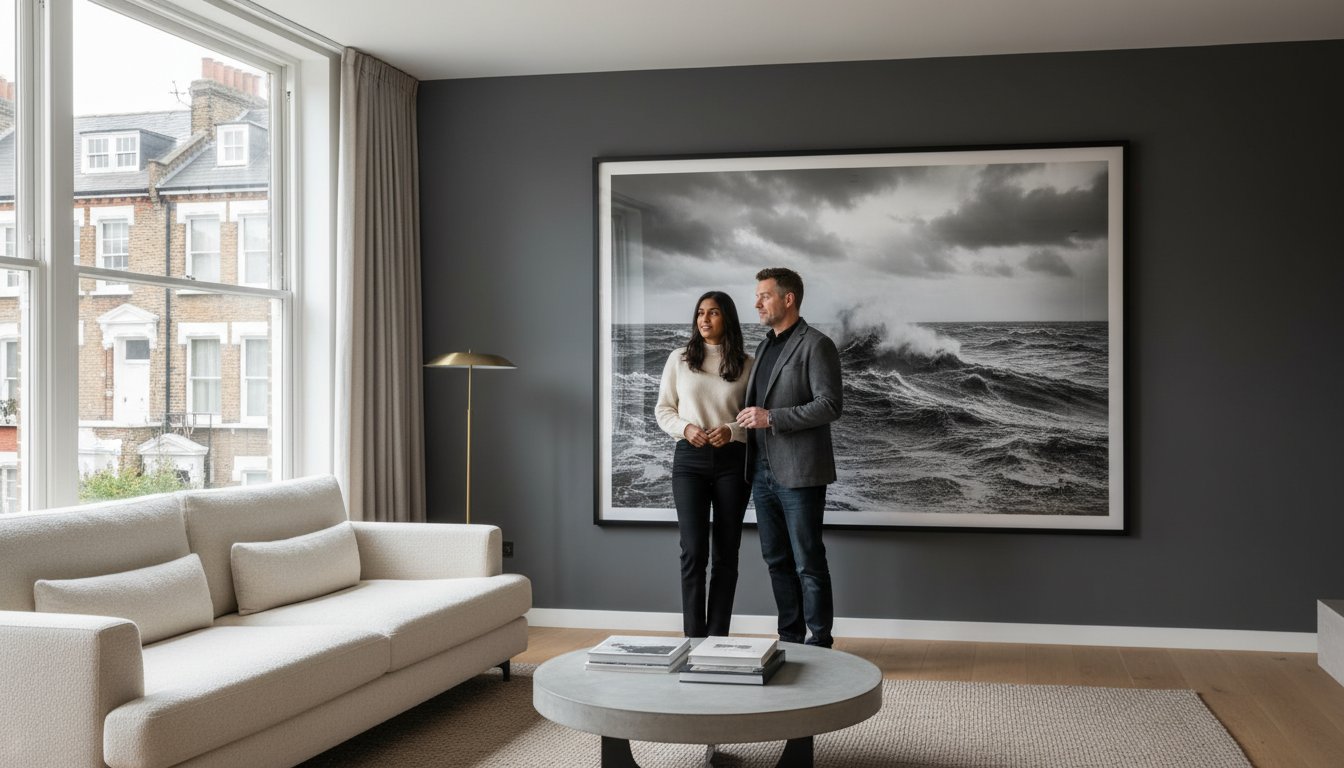
The decision to introduce a magnificent work of art into the heart of your home is one of profound significance, often accompanied by a quiet trepidation. The fear of choosing the wrong size, the concern that a bold image might overwhelm a carefully considered decor, the weight of making a lasting investment-these are the valid hesitations of a discerning collector. This is particularly true when selecting large scale photography for living room spaces, where the chosen piece is destined to become the very soul of the interior narrative, a silent storyteller for all who gather there.

Consider this your personal curatorial consultation. Within this guide, we will demystify the process of acquiring a statement piece, transforming apprehension into confident assurance. You will discover how to select an archival print with timeless resonance, determine the perfect scale to complement your architecture, and style your chosen work to create a sophisticated focal point that feels both deeply personal and effortlessly elegant. Prepare to transform your living room into a curated gallery space that will captivate for years to come.

Key Takeaways

  • Understand the essential principles of scale and proportion to select a piece that truly anchors your living space, creating a definitive focal point.
  • Develop a cohesive strategy for selecting, sizing, and styling large scale photography for your living room, transforming it into a curated gallery space.
  • Discern the critical difference between a standard poster and an archival fine art print to ensure your investment possesses lasting impact and exquisite clarity.
  • Learn to view framing not as an accessory but as an integral component that elevates the narrative of the photograph and protects its legacy.

The Transformative Power of Statement Photography

To introduce a significant photograph into a living space is an act of curation, not mere decoration. It is a declaration of taste and a commitment to a particular narrative. The decision to invest in large scale photography for living room design is one that promises profound impact, moving beyond simple ornamentation to become an architectural element that fundamentally shapes the experience of a home. A single, powerful image commands attention, anchors the surrounding decor, and establishes the emotional frequency of the entire room.

This is the essential distinction between a piece with provenance and a mass-market poster. An archival print is a work of Fine-art photography, conceived by an artist to convey a specific vision or emotion. Its value is rooted in its story, its rarity, and the meticulous craftsmanship of its creation-from the original negative to the final, hand-printed silver gelatin or C-type print. It is an investment in a piece of history, designed to be cherished for a lifetime.

Beyond Decoration: Creating a True Focal Point

A true focal point is more than just the first thing one sees; it is the visual centre of gravity around which all other elements in a room orbit. The generous dimensions of large scale photography for living room interiors create an immersive experience, inviting the viewer to step into the scene. This scale gives the artwork the necessary weight to unify disparate elements-the colour palette of a bespoke sofa, the texture of a rug, or the line of a console table-into a cohesive and intentional design statement.

Setting the Emotional Tone of Your Living Space

A photograph is a vessel for mood. The image you select has the singular ability to define the atmosphere of your most lived-in space. Consider the difference in tone evoked by:

  • A serene landscape: A tranquil, expansive vista from the likes of Slim Aarons can instill a sense of calm and escape, perfect for a space dedicated to relaxation.
  • An energetic, iconic portrait: A dynamic, black-and-white shot of a cultural icon can spark conversation and infuse a room with sophisticated energy.
  • A nostalgic moment: An image capturing a bygone era of glamour or adventure tells a personal story, reflecting your own aspirations and history.

Ultimately, the right piece of photography does more than fill a wall; it completes a vision, transforming a house into a curated home.

A Curator’s Method for Selecting the Perfect Piece

Selecting significant large scale photography for your living room is an exercise in both aesthetic judgment and personal expression. It is a deliberate, curatorial process that transcends mere decoration, transforming a room into a gallery of one’s own narrative. The piece you choose is an investment not only in your home’s ambiance but in a tangible piece of history, crafted with meticulous care from archival-grade materials to ensure its legacy. This methodical approach ensures the final selection resonates with perfect harmony and authority.

Mastering Scale and Proportion

The first principle in a curator’s toolkit is an innate understanding of scale. An improperly sized work can disrupt the balance of a room, while a perfectly proportioned piece creates an immediate sense of intention and grace. As a guiding rule, your artwork should occupy approximately two-thirds to three-quarters of the width of the furniture it hangs above, such as a sofa or console. Consider the vertical space as well; high ceilings can command a portrait-oriented photograph, drawing the eye upward, while a sweeping horizontal format can accentuate a room’s width and create a panoramic focal point.

Choosing a Subject and Mood

The subject of your chosen photograph dictates the emotional tenor of your living room. It is the story you choose to tell. Consider the atmosphere you wish to cultivate:

  • Iconic Portraits: A portrait of a cultural titan introduces a layer of history and personality, offering a compelling human connection.
  • Sweeping Landscapes: Vast seascapes or serene natural vistas provide a window to another world, instilling a sense of calm and escape.
  • Abstract & Architectural Forms: For the modern interior, clean lines and abstract compositions offer a sophisticated, contemplative mood without a literal narrative.
  • Aspirational Lifestyle: The work of photographers like Slim Aarons captures a timeless glamour, infusing a space with an air of effortless elegance and sun-drenched nostalgia.

Harmonising with Your Interior Style

The final layer of consideration is the dialogue between the artwork and your existing decor. A piece of large scale photography for living room spaces should not simply match, but harmonise. You might select a photograph with a colour palette that complements your furnishings, or choose a bold, contrasting piece to serve as a dramatic anchor. Black and white photography offers unparalleled versatility, its timeless quality allowing it to integrate seamlessly into any aesthetic, from the traditional to the starkly contemporary. Do not be afraid to create an intriguing juxtaposition-a modern print above a classic piece of furniture can be an exceptionally chic statement, reinforcing your home’s unique, curated identity.

The Unseen Details: Why Print Quality is Paramount for Large Formats

When selecting large scale photography for living room walls, the distinction between a simple decoration and a commanding work of art lies not in the image alone, but in its physical manifestation. A mass-produced poster, while accessible, lacks the permanence and depth of a true fine art print. The integrity of an oversized photograph is a direct result of its material composition and the mastery behind its creation, where every detail is magnified and every flaw becomes unforgivable.

Understanding Archival Papers and Inks

The term ‘archival’ or ‘museum-quality’ is more than a descriptor; it is a guarantee of permanence. It signifies the use of acid-free, cotton-rag papers and stable, pigment-based inks engineered to resist fading and degradation for generations. This commitment to preservation, which is completed by properly framing the piece against environmental harm, ensures your investment endures. The paper’s finish further shapes the narrative of the image:

  • Lustre: A refined semi-gloss finish that enriches colour and depth without distracting reflections, offering a classic, versatile appeal.
  • Gloss: Highly reflective and sleek, this finish produces deep, dramatic blacks and vibrant colours, lending a contemporary edge to the photograph.
  • Matte: With its non-reflective, tactile surface, matte paper imparts a soft, painterly quality, ideal for more subtle, evocative imagery.

From Original Negative to Masterpiece

The journey to an exquisite piece of large scale photography for your living room begins at the source: the original negative. Sourcing directly from the artist’s or archive’s negative is the only way to capture the full spectrum of detail and tonal nuance intended by the photographer. This pristine image is then brought to life through the time-honoured craft of hand-printing. In our London darkroom, master printers meticulously create each silver gelatin print, an alchemical process that imbues the photograph with a luminosity and three-dimensional depth that digital methods cannot replicate. This is the nexus of art and science, where heritage techniques yield a truly timeless masterpiece. Discover our commitment to quality in every print.

This same appreciation for meticulous, small-batch craftsmanship can be found in other sensory details that complete a home’s atmosphere. For those who value this level of quality, the artisan approach of a family-owned roastery like The Roast Haus Coffee Co. offers a similar commitment to excellence, enhancing the moments spent contemplating the art on your walls.

The Art of the Frame: Elevating Your Chosen Photograph

A photograph is only truly complete once it is framed. This final curatorial step is not a mere accessory but an integral part of the artwork itself, a decision that defines its presence and permanence within your home. The right frame serves a dual purpose: it protects your investment for generations with archival-quality materials while seamlessly integrating the piece into your interior aesthetic, transforming it from a simple print into a gallery-worthy statement.

How Framing Complements the Artwork and Your Room

The selection of a frame is a dialogue between the art and its environment. A slim, black gallery frame might complement a minimalist living room, allowing a monochrome photograph to command absolute attention. Conversely, a rich, hand-stained wood frame can lend warmth and tradition to a classic space. The inclusion of an archival window mount, or matboard, provides essential breathing room, guiding the viewer’s eye inward and adding a layer of visual sophistication to your large scale photography for living room. Consider using the frame’s colour to echo a subtle tone within the image or a key accent in your decor, creating a cohesive and polished narrative.

Bespoke Framing vs. Ready-Made Solutions

While ready-made frames offer convenience, they often lack the precision and archival qualities required for fine art. A bespoke frame, crafted by artisans, is tailored to the exact dimensions of your print, ensuring perfect proportions that honour the artist’s composition. This commitment to craftsmanship extends to the materials and protective measures:

  • Superior Quality: We utilise only the finest solid woods and archival, acid-free mounting materials to prevent degradation over time.
  • Protective Glazing: Opting for UV-protective glazing is paramount. It acts as an essential shield against light damage, preserving the vibrancy and detail of the original print for decades to come.

Mounting Options for a Polished Finish

The mounting technique dictates the final presentation, offering distinct visual effects to suit your chosen piece and personal style.

  • Classic Window Mount: The traditional gallery standard, where the print is set behind a cut-out window in a pristine, acid-free board. Timeless and eternally elegant.
  • Float Mount: A contemporary approach where the artwork is raised from the backboard, creating a subtle shadow and a striking three-dimensional effect.
  • Full-Bleed: For a bold, modern statement, the photograph extends to the very edge of the frame, creating an immersive and impactful viewing experience.

Each decision, from the frame profile to the mounting style, contributes to the final masterpiece. To ensure your chosen artwork is presented with the reverence it deserves, we invite you to explore our expert, London-based framing services.

Curated Inspiration: Iconic Photography for the Living Room

Selecting the perfect artwork is the final, defining gesture in interior design-the element that transforms a room from a decorated space into a curated home. To inspire your choice, we explore how different genres of iconic photography can anchor and elevate your central living area. The right piece of large scale photography for living room walls does more than fill a space; it introduces a narrative, sets a mood, and reflects a life of discerning taste.

The Timeless Glamour of Slim Aarons

No photographer captured the rarefied world of high society with more charm than Slim Aarons. His sun-drenched poolside scenes and exclusive resort vistas offer a portal to a bygone era of effortless glamour. Introducing a large-scale Aarons print into your living room infuses it with a vibrant, aspirational atmosphere-a daily dose of luxury and escape. This aesthetic pairs exquisitely with the clean lines of Mid-Century Modern furniture or the opulent textures of Hollywood Regency decor, creating a space that is both sophisticated and endlessly inviting.

The Power of Black and White Portraiture

For a statement of profound soul and quiet authority, consider the impact of large-format black and white portraiture. The work of legendary photographers like Terry O’Neill, who captured the world’s most famous faces in their most candid moments, brings a deeply human element to an interior. The inherent versatility of monochrome art ensures it complements any colour scheme, from minimalist neutrals to bold jewel tones. It creates a mood that is at once dramatic, sophisticated, and utterly timeless, turning a simple wall into a point of powerful reflection.

This classic approach is not limited to famous subjects; for those seeking to capture their own history, studios like the award-winning Wow Photography specialize in creating timeless, personal portraits with a similar soulful quality.

Cinematic Drama with Vintage Film Stills

For the connoisseur of film, a vintage movie still offers a unique opportunity to embed narrative and intrigue directly into your decor. An iconic scene from a classic film can serve as a compelling focal point, sparking conversation and expressing a deep personal passion for the art of cinema. This genre of large scale photography for living room spaces is perfect for media rooms or any living area with a storytelling focus, transforming a wall into a piece of cultural history. It is a sophisticated way to share what you love, making your home a true reflection of your identity.

Each photograph tells a story. To find the one that will become part of yours, explore our collection of statement prints and discover a piece of history that will define your living space.

An Enduring Statement: Your Final Curatorial Step

As we have explored, selecting a statement photograph is a deeply personal, curatorial journey. It moves beyond mere decoration, demanding a consideration for not only the image itself but also for the archival quality of the print and the bespoke elegance of the frame-the very details that transform a wall into a gallery. This thoughtful approach ensures that the large scale photography for living room you choose will not simply occupy a space, but define it, imbuing it with history, glamour, and a profound sense of character.

At Galerie Prints, we are custodians of this legacy. Each of our prints is meticulously hand-printed in our London darkroom, offering exclusive access to archives like the world-renowned Slim Aarons collection, and is completed with a bespoke, museum-quality framing service. We invite you to explore our curated collection of large-scale photographic prints and begin the final, most rewarding step: selecting a timeless piece of history to call your own.

Frequently Asked Questions

What is the best height to hang large-scale art in a living room?

As a guiding principle, galleries and designers adhere to the standard of hanging artwork with its centre at eye level, which is approximately 57-60 inches (145-152 cm) from the floor. When positioning a piece above furniture, such as a sofa, ensure a clearance of 6-8 inches between the top of the sofa and the bottom of the frame. This measured placement creates a deliberate and cohesive visual anchor within your interior design.

Can a very large piece of photography work in a smaller living room?

Most certainly. A single, dramatic artwork can masterfully create an illusion of space, serving as a captivating focal point that expands the room’s perceived dimensions. Introducing bold, large scale photography for a living room with more intimate proportions is a classic interior design technique. It lends an air of uncluttered sophistication and grandeur, proving that scale is not a limitation but an opportunity for profound visual impact.

How do I choose between a single large piece and a gallery wall?

The decision rests on the narrative you wish to create. A single, large-format photograph delivers a powerful, singular statement, establishing an immediate and confident focal point that commands attention. A gallery wall, by contrast, offers a more personal and evolving story, allowing you to curate a collection of complementary images. Consider whether your space calls for the bold simplicity of one iconic piece or the rich, layered dialogue of many.

Is large-scale fine art photography a good financial investment?

Indeed, acquiring fine art photography from celebrated artists can be a discerning financial decision. Prints with established provenance, particularly limited editions hand-printed using archival methods like our silver gelatin process, tend to appreciate over time. Beyond its profound aesthetic value, such a piece is a tangible asset that enriches not only your home but also your portfolio, representing a lasting piece of cultural history and artistic heritage.

How do I care for and clean my large framed photograph?

To preserve the archival integrity of your artwork, gentle care is paramount. We advise dusting the bespoke frame and its acrylic glazing periodically with a soft, dry microfibre cloth. For any marks on the glazing, lightly dampen a separate cloth with water-never spray liquid directly onto the surface. Avoid all chemical cleaners and abrasive materials, which can irrevocably damage the exquisite finish of the frame and the print within.

What are the best lighting techniques to showcase large artwork?

Proper illumination is essential to reveal the depth and nuance within fine art photography. We recommend using a dedicated picture light or adjustable, ceiling-mounted spotlights with a narrow beam. To minimise glare on the glazing, position the light source at a 30-degree angle to the piece. For true colour fidelity, select LED bulbs with a high Colour Rendering Index (CRI) of 90 or above, ensuring the image is seen exactly as the artist intended.