Tag: Arthur Fellig

Weegee: The Master of New York’s Noir Street Photography

While most photographers of the 1940s sought beauty in the light, Arthur Fellig, the man known as Weegee, found his masterpiece in the flash-scorched shadows of a New York crime scene. He didn’t just document the city; he exposed its raw, unscripted theatre through a lens that felt both intrusive and deeply human. Today, the transition from the frantic pace of the daily tabloid to the quiet prestige of collectible photographic prints marks a profound shift in how we value these moments of urban history.

You likely recognize the grit and the high-contrast drama of his work, yet it’s often challenging to distinguish between mere sensationalism and the technical mastery required to capture the night. This article explores the cultural impact of Weegee’s nocturnal world, offering a deep understanding of why his work remains a cornerstone of photographic heritage. We’ll examine the artistry behind his most famous shots, provide inspiration for displaying these historic black and white prints in a modern space, and discuss the enduring investment value of an archive that continues to captivate the global art market in 2026.

Key Takeaways

  • Uncover the myth of Arthur Fellig, the self-taught photographer whose uncanny ability to arrive first at crime scenes earned him the moniker “Weegee” and defined a new era of urban realism.
  • Explore the “Naked City” aesthetic, a high-contrast noir style that elevated the grit of mid-century New York into a sophisticated and evocative form of visual storytelling.
  • Gain insight into the technical precision of the 4×5 Speed Graphic camera and the innovative use of the flashbulb to create a stark, theatrical light in the dead of night.
  • Discover the curatorial process of selecting Getty Images Gallery prints to ensure your collection reflects the authentic heritage of Weegee’s most iconic New York moments.
  • Understand how museum-grade archival paper and bespoke framing serve as the essential bridge between historical tabloid imagery and contemporary fine art.

Who was Weegee? The Legend of Arthur Fellig

Arthur Fellig wasn’t just a photographer; he was a carefully constructed persona that blurred the line between newsman and artist. Born in 1899 in what is now Ukraine, he arrived in New York as a child, eventually finding his calling in the city’s frantic press rooms. By the 1930s, he had carved out a niche that no one else could touch. He was the only freelance press photographer granted permission to install a police radio in his car, essentially turning his Chevrolet into a mobile darkroom and office. This allowed him to arrive at fires, accidents, and crime scenes often before the authorities themselves, capturing the raw, bleeding edges of the city. He didn’t just witness the news; he lived within the heartbeat of the precinct, positioning himself as a guardian of the city’s most visceral moments.

The Origins of a Pseudonym

The name “Weegee” is inseparable from the myth he cultivated throughout his career. It’s widely believed to be a phonetic rendering of “Ouija,” a nod to his seemingly psychic ability to sense a story before it broke. While he leaned into this supernatural reputation, it was also a brilliant exercise in branding. In the cutthroat world of mid-century New York tabloids, he ensured his credit line was as recognizable as the imagery itself. A detailed look at Weegee’s life and career reveals a man who understood that in a city of millions, one had to become a legend to be remembered. His self-stamped “Weegee the Famous” on the back of his work wasn’t just arrogance; it was a declaration of his status as a master of the urban narrative.

The Lower East Side Context

While his crime shots brought him notoriety, his most enduring work often centered on the quiet, desperate humanity of the Lower East Side. The Bowery was his primary canvas. He captured the immigrant experience not with the detached eye of a social scientist, but with the lived empathy of someone who knew those streets intimately. He photographed families sleeping on fire escapes during heatwaves and the weary faces of late-night diners. These images, now available as prestigious Getty Images Gallery prints, serve as a bridge to a vanished era of New York history. They transform the gritty reality of 1940s poverty into a profound artistic statement that resonates with modern collectors. Today, those seeking to invest in photographic heritage often turn to Getty Images Gallery prints of his work to preserve that unpolished energy within a sophisticated, gallery-ready context. This shift from the sidewalk to the gallery wall recognized that Weegee had captured something essential about the human condition that transcended the morning edition.

The ‘Naked City’ Aesthetic: Grit as High Art

Weegee’s visual language was defined by a brutal, high-contrast clarity that transformed the mundane into the monumental. With the 1945 publication of his seminal book, Naked City, he shifted the cultural needle, proving that the flash-blasted reality of a midnight tenement fire could hold the same weight as a classical portrait. His work wasn’t merely reporting; it was a psychological excavation of urban life. By capturing the city in its most vulnerable states, he invited a voyeuristic gaze that forced viewers to confront the raw, unpolished truth of their own environment. This approach raised enduring questions about the ethics of the urban eye, yet it was this very intrusion that allowed him to document the soul of New York with such haunting precision.

The Cinematic Influence of Noir

The interplay of light and shadow in Weegee’s work directly informed the visual vocabulary of 1940s Hollywood. His signature style, characterized by stark white highlights against ink-black backgrounds, mirrored the burgeoning Film Noir genre. Directors and cinematographers looked to his images of wet pavements and rain-slicked alleys to find the authentic “noir” look. This wasn’t a coincidence; the heavy-duty flash bulbs he utilized created a theatrical artificiality that turned every street corner into a stage. Later in his career, he moved to Hollywood, serving as a consultant and even an actor, ensuring that the fictional grit of the silver screen matched the reality he had documented on the streets of New York. Collectors who acquire Getty Images Gallery prints of these works often find they possess a cinematic quality that anchors a room with dramatic, narrative weight.

Beyond the Crime Scene

While the sirens and strobe lights of the precinct were his primary focus, Weegee’s lens was equally fascinated by the “human menagerie” of the city’s private moments. He photographed lovers entwined in the back rows of movie theaters and crowds of thousands at Coney Island, treating each subject with a mixture of curiosity and profound empathy. These images capture the vulnerability of the sleeper and the uninhibited joy of the beachgoer, moving beyond the sensational to the sociological. By turning his camera away from the tragedy to face the onlookers, Weegee effectively immortalized the voyeuristic pulse of the city, documenting the spectator’s face as the true mirror of the event.

If you’re looking to bring this historic intensity into your own collection, exploring our curated selection of Getty Images Gallery prints offers a direct link to this era of unparalleled visual drama.

Technical Mastery: The Speed Graphic and the Flash

Weegee’s haunting aesthetic wasn’t merely a byproduct of chance; it was the result of a deliberate, heavy-duty technical setup that allowed him to conquer the night. His primary instrument was the 4×5 Speed Graphic, a formidable piece of engineering that became the standard for press photographers of the era. This camera was a box of wood and metal, built to withstand the chaotic energy of the New York streets. In the 1930s, capturing sharp motion in low-light conditions was an immense technical challenge, as film speeds were slow and lenses lacked the sophisticated coatings of modern optics. Weegee bypassed these limitations through a masterful, if brutal, use of the flashbulb, creating a signature look that defined an entire era of noir photography.

The ‘F/8 and Be There’ Philosophy

The stark, startling depth found in his work is a direct result of his technical discipline. Weegee famously adhered to the “f/8 and be there” mantra, setting his aperture to a mid-range f/8 and pre-focusing his lens to a fixed distance of ten feet. This approach removed the need for fine adjustments at a crime scene, allowing him to fire his shutter the moment he arrived. The powerful flashbulbs he used acted as a miniature sun, blasting the immediate foreground with light while the background dissolved into an inky, impenetrable black. This created a flat, theatrical perspective that made his subjects pop with an almost three-dimensional intensity, a quality that remains a hallmark of authentic Getty Images Gallery prints today.

The Artisanal Darkroom Process

Speed was Weegee’s primary currency, and to maintain his edge, he transformed the trunk of his Chevrolet into a mobile darkroom. This “trunk-lab” allowed him to develop negatives and produce wet prints while still on the scene, ensuring he was the first to deliver imagery to the tabloid editors. This rushed, artisanal process often introduced a specific chemical grit and texture to the negatives, a tactile history that is meticulously preserved in modern reproductions. When collectors invest in Getty Images Gallery prints, they aren’t just buying an image; they’re acquiring a piece of history that respects the original grain and the volatile conditions of its creation.

  • The 4×5 Speed Graphic provided a large negative size, ensuring high resolution even in grainy conditions.
  • Single-use flashbulbs were essential for freezing action in the dead of night.
  • Mobile development allowed for an immediate bridge between the street and the printing press.

Modern museum-quality archival paper ensures that the raw, unpolished energy of his “trunk-lab” development is translated into a stable, lasting piece of art for the contemporary interior.

Iconic Works: From Tenement Fires to Coney Island

Weegee’s portfolio represents a relentless pursuit of the city’s many faces, moving far beyond the blood-stained sidewalks of the morning edition. His most celebrated work, The Critic (1943), serves as a masterclass in social juxtaposition. In this frame, two socialites, dripping in diamonds and fur, are confronted by a disheveled onlooker outside the Metropolitan Opera House. It’s a biting commentary on the chasm between New York’s elite and its marginalized citizens. Similarly, his 1940 photograph of Coney Island captures a literal sea of humanity, where nearly a million beachgoers merge into a single, pulsating organism of summer relief. These images are now preserved as high-fidelity Getty Images Gallery prints, allowing collectors to own a piece of this vanished social landscape.

Social Commentary through the Lens

Weegee possessed a rare ability to capture raw emotion during moments of extreme duress, particularly in his coverage of tenement fires. Rather than focusing on the flames, he turned his lens toward the faces of the displaced, recording a level of empathy that transcends mere sensationalism. His Opening Night at the Opera series further explored these class tensions, documenting the performative nature of wealth with a discerning, often cynical eye. This focus on the human condition is part of The Timeless Allure of Black and White Pictures, where the absence of color forces the viewer to engage directly with the narrative weight of the scene. He didn’t just take pictures; he curated the soul of the street.

The Architecture of the Night

In Weegee’s world, the city itself became a living character, a labyrinth of shadows and steel. He used his flash to isolate subjects against the vast urban dark, creating a sense of isolation even in a city of millions. Whether it was a lone drunkard on a Bowery stoop or the silhouette of a fire escape against a charcoal sky, his work provides a definitive historical record of mid-century New York. For those building serious Fine Art Photography collections, his architectural studies offer a bridge between street reportage and formalist composition. Every shadow tells a story of a city that was as brutal as it was beautiful.

The enduring power of these Getty Images Gallery prints lies in their ability to make the past feel startlingly present. You can explore our full archive and acquire your own museum-quality Weegee print to anchor your home with a piece of photographic history.

A Collector’s Guide: Displaying Weegee in a Modern Space

Weegee’s photography possesses a rare, raw magnetism that transforms a room. While his subjects were often found in the darkest corners of the city, the resulting Getty Images Gallery prints are now recognized as sophisticated additions to high-end residential and commercial spaces. The transition from a 1940s tabloid “press shot” to a contemporary focal point is achieved through a meticulous curatorial process. By utilizing museum-quality archival paper, these historic archives are elevated into permanent works of art that command attention without overwhelming a modern aesthetic. It’s a deliberate choice for the collector who values narrative depth alongside visual impact.

The Power of Black and White

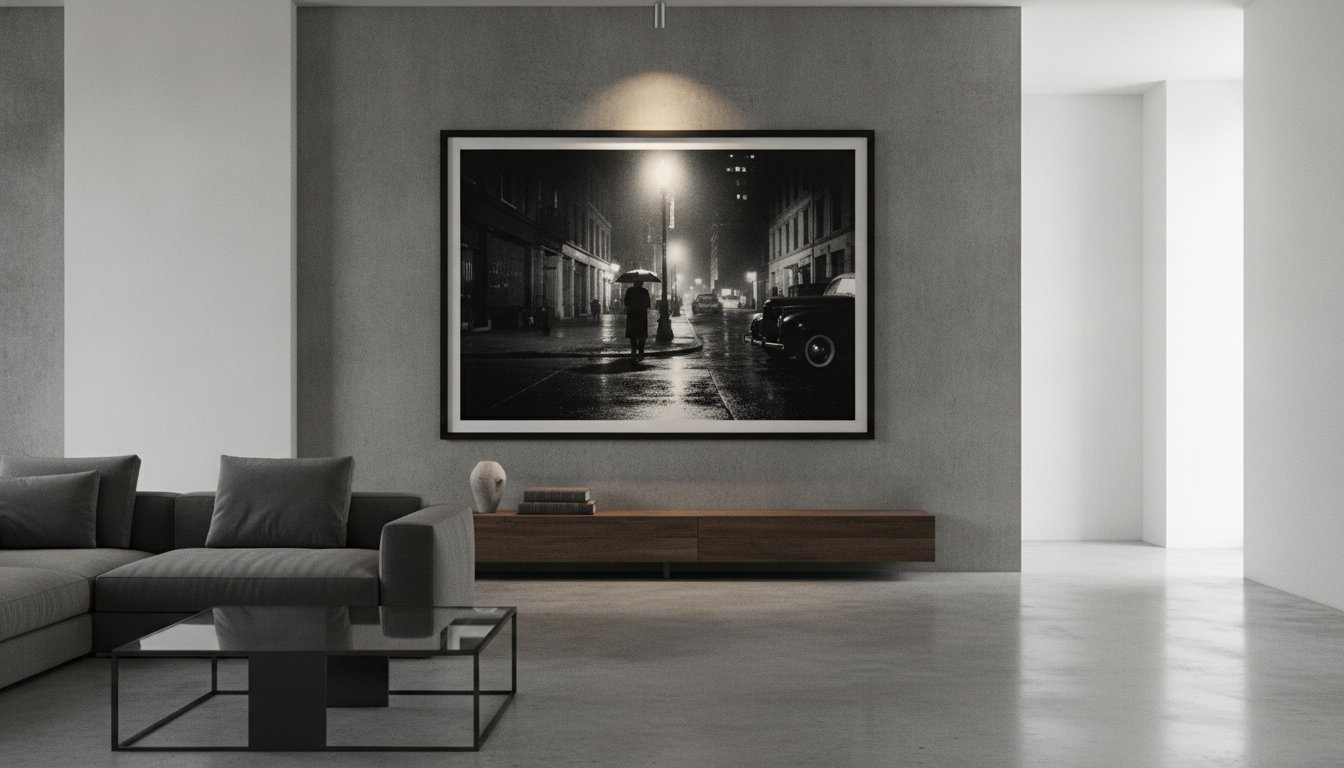
The inherent versatility of monochrome art allows Weegee’s work to integrate seamlessly into a wide variety of contemporary color palettes. Whether placed within a minimalist setting or a warm mid-century modern environment, the high-contrast drama of his noir style provides a necessary visual anchor. A single, large-scale print can serve as a bold conversation piece, while a curated gallery wall of street photography creates a compelling narrative of urban history. A deep black frame effectively anchors the startlingly high-contrast whites of a Weegee print, providing a sophisticated bridge between the grit of the subject matter and the elegance of a curated interior. This balance ensures the work feels like a timeless heirloom rather than a historical relic.

Investing in Photographic Heritage

Investing in physical Getty Images Gallery prints offers a tactile connection to history that digital imagery simply cannot replicate. There is a palpable sense of permanence in the texture of a premium print, reminding the collector of the artisanal craftsmanship required to preserve these original source materials. As market activity in 2026 demonstrates a continued appreciation for Weegee’s critique of the “spectacle,” owning a piece of his archive is as much a cultural investment as it is an aesthetic one. Our bespoke framing service ensures that every piece is protected and presented with the quiet authority it deserves, bridging the gap between the sidewalk and the gallery. To find your next acquisition, explore our curated Fine Art Photography Gallery London for more iconic masters who defined the visual language of the 20th century.

Preserving the Pulse of the Naked City

Arthur Fellig’s journey from the frantic sidewalks of the Lower East Side to the hallowed walls of international galleries is a testament to the enduring power of raw, unscripted truth. By mastering the stark geometry of the night, he created a visual language that continues to influence the worlds of film and fine art. Today, acquiring Getty Images Gallery prints of his most iconic works allows you to bring that visceral energy into your own home, bridging the gap between historical grit and contemporary elegance. These images don’t just document the past; they invite you to experience the city’s soul in its most vulnerable state.

We invite you to Browse our curated collection of Iconic Fine Art Photography to find the perfect piece for your collection. Every acquisition features museum-quality archival giclée prints, supported by our hand-crafted bespoke framing in London. With worldwide shipping on all fine art photography, you can invest in a lasting piece of history that remains as provocative today as it was in the 1940s. Start your journey into the noir world of Weegee and let his legendary lens define your space.

Frequently Asked Questions

What camera did Weegee use for his famous night shots?

Weegee relied on the 4×5 Speed Graphic, a robust press camera that defined mid-century reportage. Its large negative format allowed for exceptional detail even when pushed in the darkroom. He paired this with a high-intensity flashbulb, creating the stark, high-contrast look that characterizes his archive. This combination was essential for freezing motion on the chaotic streets of New York, ensuring every face in the crowd was rendered with startling clarity.

Why is Weegee’s work considered fine art rather than just news?

While his work began as tabloid reportage, it’s considered fine art because of its profound psychological depth and masterful composition. He didn’t just capture events; he captured the human reaction to them. His use of light and shadow anticipated the Film Noir movement, elevating his imagery into a realm of deliberate artistic expression. Today, collectors value these works as masterpieces of the urban soul, transcending their original purpose as morning news.

Where can I buy authentic Getty Images Gallery prints by Weegee?

You can acquire authentic Weegee works through Galerie Prints, which provides direct access to the prestigious archive of Getty Images Gallery prints. We specialize in transforming these historic negatives into gallery-ready art using museum-quality archival paper. Each piece is treated as a lasting piece of history, ensuring that the raw energy of the original shot is preserved for a sophisticated modern interior. We provide global shipping and a bespoke framing service in London.

What does the name ‘Weegee’ actually mean?

The name’s a phonetic spelling of “Ouija,” referring to the popular board used for summoning spirits. It was a nickname given to him by fellow photographers who were amazed by his uncanny ability to arrive at crime scenes before the police. Arthur Fellig embraced this persona, often stamping his work “Weegee the Famous.” It became a powerful brand that suggested he possessed a supernatural sense for the city’s next big story.

Is Weegee’s photography still relevant to modern street photographers?

Modern street photographers continue to study his work for its unflinching narrative and bold technical execution. His pioneering use of off-camera flash to isolate subjects in the urban dark remains a cornerstone of the genre. He taught photographers that the story’s often found in the reaction of the crowd rather than the event itself. His influence is visible in any contemporary work that prioritizes raw, unscripted human emotion over polished perfection.

How should I frame a high-contrast black and white photography print?

High-contrast black and white photography is best served by a frame that anchors its dramatic tones without distraction. A slim, matte black wooden frame is a classic choice that complements the deep blacks of a Weegee print. We recommend using acid-free mounting and museum-quality archival paper to protect the image over time. Our bespoke framing service in London specializes in creating these elegant borders, ensuring your Getty Images Gallery prints are preserved in a gallery-ready format.

What is the ‘Naked City’ in the context of Weegee’s work?

The “Naked City” refers to the title of Weegee’s landmark 1945 book, which served as a definitive visual survey of New York’s nocturnal life. It stripped away the city’s polished facade to reveal the raw, unvarnished reality of its inhabitants. The term eventually became synonymous with the gritty, noir aesthetic he championed. It remains a vital cultural reference point, describing a city that’s exposed, vulnerable, and endlessly fascinating under the glare of a flashbulb.

Did Weegee really have a police radio in his car?

Yes, he was the first freelance photographer in New York to be granted a permit for a police radio. This allowed him to monitor emergency frequencies directly from his car, which he famously equipped as a mobile office and darkroom. By staying tuned to the city’s heartbeat, he could often beat the authorities to the scene. This technical advantage was the secret behind his prolific output and his reputation for being everywhere at once; today, that same spirit of constant vigilance is maintained through high-definition equipment from CCTVSecurityPros – Professional Security Cameras and Systems.
Weegee: The Cinematic Grit and Noir Soul of New York’s Greatest Press Photographer

Long before film noir became a Hollywood staple, Arthur Fellig was already capturing its dark, rain-slicked soul on the midnight streets of Manhattan. You likely recognize the high-contrast drama of his work, that stark interplay of shadow and flash that defines an era of urban mystery. It’s a style that feels both timeless and dangerously immediate, yet many collectors find it difficult to source authentic Galerie Prints that preserve this raw, mid-century energy while meeting the rigorous archival standards required for a private collection.

We understand that the challenge lies not just in finding the image, but in visualizing how such gritty, visceral photography fits within the refined atmosphere of a luxury home. This article explores how the man known as Weegee transformed the stark reality of New York into a definitive cinematic aesthetic that remains the gold standard for historical photography today. We’ll provide a curated framework for decorating with high-contrast noir art and explain how bespoke framing ensures these museum-quality pieces become lasting heirlooms. By the end, you’ll possess the expert knowledge needed to select and display a piece of New York’s photographic heritage with confidence and poise.

Key Takeaways

  • Understand how Arthur Fellig evolved from a freelance night owl into Weegee, the definitive chronicler of mid-century New York’s cinematic soul.
  • Discover the visual hallmarks of the “Naked City” aesthetic, where harsh flash and deep shadows focus as much on the emotional reactions of the crowd as on the events themselves.
  • Learn how the technical limitations of the Speed Graphic camera created the signature high-contrast look now meticulously preserved in museum-grade getty images gallery prints.
  • Master the art of integrating gritty noir photography into sophisticated interiors by using statement pieces to anchor industrial or minimalist rooms.
  • Recognize the importance of archival paper and bespoke framing in preserving the deep tonal range and historical integrity of these iconic photographic works.

New York in the 1930s was a city of stark contrasts, a place where the glittering lights of Broadway sat just blocks away from the shadow-drenched alleys of the Lower East Side. Arthur Fellig, the man who’d eventually become Weegee, didn’t just inhabit this world; he owned its darkest hours. As a freelance night owl, he spent his nights in a Chevrolet Coupe equipped with a police radio and a portable darkroom. This relentless pursuit of the city’s pulse transformed him into a cultural icon. His work eventually transcended the ephemeral nature of the daily newspaper, culminating in the landmark 1943 exhibition at the Museum of Modern Art. This event was pivotal. It validated raw, gritty press photography as a legitimate form of high art. Today, getty images gallery prints of his work serve as the definitive visual record of this tumultuous, cinematic era.

The Birth of a Pseudonym

The transition from Usher Fellig to the moniker “Weegee” is steeped in both practical necessity and clever self-promotion. While some suggest the name originated from his early days as a “squeegee boy” in a darkroom, Fellig preferred the more mystical explanation. He claimed it was a phonetic play on “Ouija,” a nod to his seemingly psychic ability to arrive at crime scenes before the authorities. You can explore his full biographical timeline via Weegee’s official Wikipedia entry. To cement his legacy, he began marking his work with a bold, proprietary stamp: “Weegee the Famous.” This wasn’t just a signature; it was a brand that signaled a unique perspective on the human condition, one that collectors still seek out in authentic getty images gallery prints.

A Bridge Between Two Worlds

Weegee navigated the delicate boundary between raw tabloid reportage and fine art photography with unparalleled finesse. His 1945 book, Naked City, stripped away the artifice of the metropolis, revealing a world of sleeping children on fire escapes and bewildered socialites. This publication had an enduring cultural impact, influencing the visual language of film noir for decades. Modern collectors often view his work with the same reverence reserved for masters like Terry O’Neill, recognizing that both photographers shared a rare ability to capture the essence of their subjects with unflinching honesty. His images don’t just document events. They curate a specific, haunting atmosphere that remains as potent today as it was eighty years ago.

Naked City: Defining the Film Noir Aesthetic

Weegee’s lens didn’t just record events; it sculpted them into a visual grammar that we now define as film noir. His signature style, characterized by the blinding pop of a flashbulb against the impenetrable New York night, created a world of high-contrast drama. These shadows weren’t just absences of light; they were active participants in the narrative, suggesting secrets lurking just beyond the frame. This aesthetic provided a blueprint for the classic Hollywood crime films of the 1940s, where directors sought to replicate the raw, claustrophobic energy found in his photographs. This was a world of stark urban isolation, where every figure seemed to be operating under a lonely, unforgiving spotlight. For the modern collector, getty images gallery prints of these works offer more than a historical record. They provide a window into a stylized reality where the city itself becomes a brooding, breathing character.

The Psychology of the Crowd

While his peers focused on the grisly details of a crime scene, Weegee often turned his back to the action. He was fascinated by the “Bystander Effect,” capturing the raw, unvarnished reactions of those watching from the sidelines. In his frames, you see a spectrum of human emotion: the ghoulish glee of a child, the stoic indifference of a beat cop, or the shattered grief of a relative. This voyeuristic quality gives his work a profound psychological depth, capturing the social hierarchy and grit of the era with startling clarity. As documented in the International Center of Photography’s Weegee archive, his ability to humanize the urban spectacle was unparalleled. Authentic getty images gallery prints allow the collector to appreciate the minute details of these expressions, from the sweat on a brow to the texture of a wool coat, making the viewer a silent participant in the scene.

Mastering the Black and White Aesthetic

The power of Weegee’s work lies in the timeless allure of black and white pictures. Without the distraction of color, the viewer is forced to confront the structural elements of the composition: the grit of the pavement, the glint of a badge, and the deep, velvety blacks that define his tonal range. This monochromatic focus enhances the dramatic narrative, stripping the city down to its essential truths. Preserving this tonal range is vital, as the subtle gradations of grey are what prevent the image from feeling flat or clinical. When integrated into a home, these prints provide a sense of permanence and architectural stability. They anchor a room, offering a sophisticated counterpoint to modern minimalist decor or industrial textures. If you’re looking to start your own collection of historical masterworks, you might consider exploring the curated selections at Galerie Prints to find a piece that resonates with your personal aesthetic.

The Technique Behind the Grit: Speed Graphics and Police Radios

Weegee’s creative process was as much about logistics as it was about aesthetics. His 1938 Chevrolet Coupe served as a mobile command center, uniquely equipped with a police radio that was the first of its kind authorized for a civilian. This wasn’t merely a convenience; it was a radical technological edge that allowed him to arrive at scenes before the sirens had even faded. Inside the trunk, a portable darkroom allowed him to develop film on the fly, ensuring his visceral records of the night reached the morning editions with startling speed. This relentless, mechanical approach to photography is explored in detail within this Weegee biography, which highlights how his technical setup birthed a new genre of urban reportage. His ability to illuminate the city’s hidden corners relied on a combination of brute force technology and a pioneer’s intuition.

Chasing the Siren

The life of a mid-century “night owl” was one of constant adrenaline and ethical complexity. By monitoring police frequencies, Weegee circumvented the traditional news cycle, often reaching a fire or a crime scene while the embers were still hot. This competitive edge didn’t just serve the tabloids; it allowed him to capture the city in its most unguarded states. He operated within a press circuit that valued the “scoop” above all else, yet he managed to infuse these fleeting moments with a sense of permanence that moved his work from the newsstand to the gallery wall.

The Signature High-Contrast Look

Technically, Weegee adhered to the “f/8 and be there” philosophy, a shorthand for prioritizing presence and focus over complex adjustments. This approach, combined with the intense pop of his flashbulbs, resulted in a stark, monochromatic palette where the subjects are thrust forward against a void of deep, velvety black. The preservation of these getty images gallery prints depends heavily on the use of premium archival photo paper. This material is essential for maintaining the extreme tonal range of his exposures, ensuring that the dramatic shadows remain rich and the highlights stay crisp. This artisanal attention to the printing process is what allows a press photograph from 1940 to function as a sophisticated piece of contemporary art.

A large-scale Weegee print possesses a monolithic quality that can transform the architecture of a room. In industrial lofts or minimalist apartments, these images act as visual anchors, their stark blacks and brilliant whites providing a structural weight that softer artworks often lack. While the subject matter is undeniably gritty, the execution is purely cinematic. This makes them a sophisticated choice for spaces that value clean lines and raw materials. By introducing getty images gallery prints of mid-century New York into a modern setting, you create a dialogue between the historical and the contemporary, elevating a simple wall into a narrative focal point.

Designing with such visceral imagery requires a keen eye for contrast. One of the most compelling ways to display Weegee’s work is to pair it with its aesthetic opposite. For instance, creating a gallery wall that mixes these dark urban scenes with iconic Slim Aarons prints offers a fascinating study in “Sun and Shadow.” This juxtaposition between the gritty streets of the Lower East Side and the sun-drenched pools of the jet set creates a rich, conversational atmosphere in home offices or libraries. It suggests a collector who is as comfortable with the raw truth of the street as they are with the polished elegance of high society.

Framing the Grit

The transition from a press photograph to a piece of fine art is often determined by the presentation. Utilizing a bespoke framing service is vital to ensure the historical integrity of the piece remains intact. For Weegee’s noir aesthetic, a classic black wood frame with a generous white mount is often the gold standard, as it echoes the monochromatic nature of the work. Alternatively, modern floating mounts can lend a more contemporary, “gallery-style” feel to the print. Regardless of the style, museum-grade glass is an essential investment. It protects the deep tonal range of these high-contrast getty images gallery prints from UV damage while minimizing reflections that could obscure the intricate details of the shadows.

Mood and Atmosphere

Integrating noir photography is about more than just placement; it’s about evoking the “Old New York” spirit. To balance the darker subject matter, consider using warm, sophisticated lighting that grazes the texture of the print rather than washing it out. In transition spaces like hallways, a series of smaller Weegee prints can create a narrative flow, leading the eye through a sequence of urban moments. This curatorial approach ensures the photography feels like a permanent part of the home’s history rather than a temporary decoration. To begin curating your own cinematic interior, browse the curated archives at Galerie Prints today.

Acquiring a Masterpiece: Why Galerie Prints is the Destination for Weegee Collectors

Selecting a Weegee print is a deliberate choice to welcome the raw, unvarnished history of New York into your private space. While the digital age makes images ubiquitous, the physical print remains the only way to truly experience the depth and grit of Arthur Fellig’s vision. We operate with a curatorial mindset, acting as a bridge between vast historical archives and the discerning collector. We don’t just facilitate a transaction; we ensure that every piece meets a standard of excellence that honors the artist’s legacy. By offering a definitive selection of getty images gallery prints, we provide collectors with a gateway to museum-quality art that has been meticulously vetted for its historical and aesthetic significance.

The investment value of a master like Weegee lies in his permanence. Unlike contemporary trends that fade with the season, his work has already survived eighty years of critical scrutiny and cultural shifts. It’s a lasting piece of history. When you acquire one of these works, you’re investing in a legacy that continues to influence modern cinema and visual culture. Our curators are available to assist with bespoke sizing and selection, ensuring your chosen piece fits perfectly within your architectural environment. Securing authentic getty images gallery prints from a trusted gallery ensures the provenance and material quality of your investment for generations to come.

Our Commitment to Quality

The technical superiority of our production process is what distinguishes a fine art acquisition from a mere decoration. We utilize premium archival photo paper, a material specifically chosen for its ability to hold the deep, velvety blacks and crisp, theatrical highlights that define Weegee’s noir style. This tonal range is often lost in mass-produced posters, which lack the detail and archival longevity required for serious collections. Our printing process utilizes high-resolution source materials to ensure every grain of the original 4×5 negative is preserved. This commitment to quality extends to our localized, artisanal craftsmanship, where each frame is constructed with the precision that only a seasoned specialist can provide.

Start Your Collection Today

Building a collection is a personal journey, and we’re here to act as your trusted guide. You can explore our curated selection of historical photography online or consult with our experts for personalized art advice. Whether you’re looking for a singular statement piece or a series of smaller narratives, we offer a level of bespoke service that larger, impersonal platforms cannot match. Our approach ensures that your acquisition is supported by expert knowledge and technical excellence.

  • Access to rare imagery from world-renowned archives and iconic masters of photography.
  • Expert guidance on our bespoke framing service to ensure archival preservation.
  • Museum-grade production standards that prioritize tonal depth and material longevity.

We invite you to bring a piece of cinematic history home. You can consult with our London gallery experts to discuss your specific requirements or explore our digital archives for inspiration. Browse the collection today and discover the enduring power of New York’s most legendary press photographer. You might also visit Awful Art Store to discover how other independent creatives in London and Tallinn are blending artistic heritage with modern design.

Preserving the Cinematic Soul of New York

Arthur Fellig’s lens didn’t just document the night; it defined a visual language that continues to haunt and inspire the modern collector. By bridging the gap between raw tabloid reportage and high art, Weegee created a body of work that serves as a powerful architectural anchor for the contemporary home. His mastery of the Speed Graphic camera and the high-contrast flash produced a tonal range that demands the highest level of preservation. Our collection of getty images gallery prints ensures that this visceral history is captured on museum-quality archival paper, maintaining the deep, velvety blacks and razor-sharp highlights of the original negatives.

Every acquisition is an investment in a lasting piece of history, further elevated by our artisanal, bespoke professional framing. Whether you are looking to create a cinematic focal point in a library or a narrative sequence in a minimalist gallery, these works offer a sense of permanence and prestige. We invite you to explore our expertly curated archives and discover how the grit of mid-century New York can bring a sophisticated, noir soul to your interior.

Browse the Masters of Photography Collection and buy Weegee prints at Galerie Prints and begin your journey into the elite world of photographic heritage today.

Frequently Asked Questions

Why was Arthur Fellig called Weegee?

Arthur Fellig adopted the pseudonym “Weegee” as a phonetic play on the Ouija board, a clever nod to his seemingly psychic ability to arrive at crime scenes before the authorities. While some historians suggest the name originated from his early days as a darkroom “squeegee boy,” Fellig preferred the mystical branding. He utilized this persona to cultivate his status as “Weegee the Famous,” the definitive chronicler of the New York night.

What camera did Weegee use for his famous New York photos?

Weegee primarily utilized the Speed Graphic 4×5 press camera, a robust and demanding instrument that produced large, high-resolution negatives. This equipment, coupled with a powerful flashbulb, created the stark, high-contrast aesthetic that characterizes his most iconic works. The camera’s large format allowed for a level of detail and tonal depth that remains striking in contemporary prints, capturing every texture of the city’s grit.

Is Weegee’s photography considered fine art or journalism?

Weegee’s body of work occupies a unique space where raw tabloid journalism meets sophisticated fine art. Although his images began as ephemeral records for the daily press, their inclusion in a landmark 1943 Museum of Modern Art exhibition solidified their status as high art. Collectors today value his work for its unflinching human truth and its profound influence on the visual language of the film noir movement.

How did Weegee get to crime scenes so quickly?

His uncanny speed was the result of a 1938 Chevrolet Coupe equipped with the first civilian-authorized police radio in New York City. By monitoring emergency frequencies, he was often able to reach a scene while the events were still unfolding. This technological edge allowed him to capture the immediate, visceral energy that defines the most sought-after getty images gallery prints.

What is the ‘Naked City’ in photography?

“Naked City” refers to Weegee’s seminal 1945 photography book, which stripped away the city’s glamorous facade to reveal its raw, unvarnished reality. The term has since become synonymous with a specific style of urban photography that prioritizes stark realism and psychological depth. It suggests a metropolis caught in its most unguarded, often haunting, moments of isolation, joy, and drama.

How should I frame a black and white Weegee print?

Framing a black and white Weegee print requires a sophisticated approach that respects its high-contrast nature. A classic black wood frame paired with a generous white acid-free mount is the preferred choice for many curators, as it anchors the image without competing with its dramatic shadows. Utilizing our bespoke framing service ensures that museum-grade glass is used to protect the print’s delicate tonal range from environmental damage.

Are Getty Images Gallery prints archival quality?

Yes, all getty images gallery prints provided through our gallery are of museum-grade archival quality. We utilize premium, heavy-weight paper types that are specifically engineered for longevity and the preservation of deep tonal values. This ensures that the intricate details and velvety blacks of the original negatives remain vibrant and stable, allowing the work to be passed down through generations.

What makes a museum-quality photography print?

A museum-quality print is defined by its material longevity, technical precision, and historical authenticity. This involves printing from high-resolution original sources onto acid-free archival paper using processes that resist fading over time. The process requires artisanal craftsmanship to ensure the artist’s original vision is translated with absolute fidelity, providing a sense of permanence and stability that befits a serious art collection.

Weegee: The Nocturnal Prophet of New York’s Golden Age of Photojournalism

The transition of a stark, flash-lit crime scene from the ephemeral pages of a tabloid to the hallowed walls of a gallery is a journey few photographs ever make. Yet, it is precisely this remarkable ascent that defines the legacy of Arthur Fellig, the self-proclaimed nocturnal prophet of New York City better known as Weegee. His lens captured the city’s raw, unguarded soul with an unflinching honesty that was, at the time, simply news. Today, however, these same images are regarded as masterworks of 20th-century photojournalism, their gritty provenance adding to their profound allure for the discerning collector.

For those whose tastes lean toward more contemporary or abstract visuals, modern printing techniques offer a compelling alternative. The vibrant, textured surfaces of large-scale canvas, for example, can bring a completely different energy to a room. Collections of Limited Edition Prints – Canvas showcase how new technologies like drone photography are used to transform natural landscapes into powerful statements for today’s interiors.

Join us as we venture into the visceral, high-contrast world of this iconic photographer. In this curated exploration, we will not only uncover the stories behind his most celebrated works but also demystify the very qualities that elevate his photography from historical document to exquisite fine art. Discover the technical superiority of an archival silver gelatin print and gain the confidence to select a timeless piece that brings a powerful, narrative depth to your interior space.

Key Takeaways

  • Learn the technical mastery behind the iconic film noir aesthetic, from the choice of camera to the pioneering use of the flashbulb.
  • Uncover the profound social commentary by looking beyond the crime scene to the captivated, and often revealing, faces of the spectators.
  • Receive curatorial advice on how to seamlessly incorporate the raw, dramatic energy of a Weegee photograph into a sophisticated and modern interior.
  • Understand what distinguishes a collectible, archival-quality print and why the artisanal hand-printing process is essential for preserving photographic legacy.

Who was Weegee? The Myth of the Nocturnal Speed Graphic

Before the legend, there was Usher Fellig, an Austrian-American immigrant who would become the definitive chronicler of New York City’s nocturnal soul. He adopted the moniker Arthur Fellig, but the name that entered the annals of photographic history was far more evocative: Weegee. A phonetic play on the Ouija board, the name was a nod to his seemingly psychic ability to appear at the scene of a crime or catastrophe moments after it occurred, his enormous Speed Graphic camera and flashbulb at the ready. As detailed in Weegee’s biography, this uncanny prescience was less supernatural and more a masterstroke of ingenuity and grit that would forever alter the course of photojournalism.

The Man with the Police Radio

The secret to his spectral speed was a 1938 permit-the only one of its kind issued to a civilian-allowing him to install a police-band shortwave radio in his car. This unprecedented access, combined with a mobile darkroom ingeniously fitted into the trunk of his Chevrolet coupe, allowed him to deliver startlingly immediate silver gelatin prints to the news desks while the story was still breaking. For the voracious tabloid media of the 1940s, this was revolutionary. Weegee lived his work, often sleeping in his clothes with his camera by his side, a lifestyle that immersed him completely in the city’s underbelly and infused his photographs with an unvarnished, visceral authenticity that could not be feigned.

From Tabloid Grit to Gallery Walls

For years, his work was the lifeblood of the Daily News, yet its raw power caught the eye of New York’s art establishment. The Photo League, a cooperative of photographers dedicated to social realism, championed his unique vision, recognizing that his lens captured more than mere events; it captured the human condition. This culminated in a pivotal 1943 exhibition at the Museum of Modern Art (MoMA), which firmly transitioned his work from the ephemeral pages of the newspaper to the permanent collection of a world-class institution. His photographs transcended reportage because they possessed a stark, compositional drama and an unflinching empathy for their subjects, whether they were murder victims or society doyennes, forever cementing Weegee as an artist of profound significance.

The “Naked City” Aesthetic: Mastering the Flash

To comprehend the visceral power of a Weegee photograph is to first understand the deliberate, almost confrontational, technique behind it. His iconic “Naked City” aesthetic was not a product of happenstance but of a masterful command over the crude tools of his trade. In the nocturnal theatre of 1940s New York, his camera and flash were not merely instruments of documentation; they were narrative devices, transforming grim reality into a stark, unforgettable vision that would define the visual language of film noir and street photography for decades to come.

The Speed Graphic and the 4×5 Negative

The cumbersome Graflex Speed Graphic press camera was Weegee’s chosen instrument. Its considerable weight and slow operation demanded a direct, intentional approach, forcing him to get close to his subjects. The camera’s greatest asset was its large 4×5-inch negative, which captured an extraordinary level of detail, ensuring that his prints possessed a startling clarity and depth that remains potent in archival reproductions today. This combination of unwieldy equipment and a high-fidelity format produced an unflinching, head-on perspective that became his artistic signature.

Chiaroscuro of the Streets

More than any other element, it was Weegee’s revolutionary use of the flashbulb that separated him from his contemporaries. He wielded its harsh, instantaneous glare to create a dramatic chiaroscuro, carving his subjects out from the impenetrable blackness of the city night. This signature lighting, a stark contrast that sliced through the darkness, is central to his enduring legacy, a technique now studied in the archives of institutions like the International Center of Photography. The psychological effect of this “sudden white glare” is profound; it freezes his subjects in moments of unguarded shock, vulnerability, or grief, presenting a raw, unfiltered humanity.

His aggressive, on-camera flash technique, born of nocturnal necessity, would become the foundational grammar for generations of street photographers to follow.

The resulting images are often filled with what might be considered technical imperfections-motion blur, harsh shadows, and flattened perspectives. Yet, these are not flaws. They are the very essence of his authenticity, the visual evidence of a photographer working under immense pressure, capturing the chaotic pulse of the city in real-time. These imperfections are the provenance of the moment, cementing the raw, immediate power that makes his work timeless.

Beyond the Crime Scene: The Spectators of the Night

While the stark brutality of his crime photography secured his legend, the true genius of Weegee often resided in the periphery. His lens, frequently turned away from the central tragedy, found its true subject in the sea of faces that gathered in the shadows. It was here, amongst the onlookers and the gawkers, that he composed his most profound social commentary, capturing the raw, unguarded humanity of a city that never truly slept. From the poignant desperation of the Lower East Side to the stark class divisions laid bare at a society gala, he documented the full, unvarnished spectrum of New York life.

The Art of the Reaction

In what is arguably his most iconic work, The Critic (1943), Weegee stages a masterful confrontation between the city’s elite and its forgotten. The sneer on the face of an impoverished woman as she glares at two opulent society doyennes is more damning than any headline. This image exemplifies his unique focus: the reaction is the event. His spectator photographs are a study in voyeurism, capturing the morbid curiosity, profound grief, and detached amusement of crowds drawn to disaster. He understood that the faces of bystanders-from solemn police officers to wailing relatives-held a more universal and emotionally resonant truth.

Naked Hollywood and the Distortion Series

In the late 1940s, Weegee traded the grit of New York for the manufactured glamour of Hollywood, a transition that prompted a radical evolution in his style. His book Naked Hollywood offered a cynical, behind-the-scenes look at the film industry, but it was his experimental “Distortions” project that marked his most significant artistic departure. Using trick lenses and darkroom manipulation, he transformed portraits of celebrities like Marilyn Monroe and Vincent Price into grotesque, surreal caricatures. This avant-garde phase, well-documented by collecting institutions like the Museum of Modern Art, revealed a desire to deconstruct fame, moving from documenting reality to artistically warping it.

Decorating with Drama: Bringing Weegee into Modern Interiors

The enduring allure of black and white photography lies in its ability to transcend time, distilling a scene to its essential emotional and compositional elements. While often associated with serene landscapes or poised portraiture, the raw, high-contrast world of Arthur Fellig-the inimitable Weegee-offers a surprisingly potent tool for the modern interior designer. The key is in the curation: balancing the visceral grit of his street-level chronicles with the refined lines of sophisticated furnishings. A Weegee print is not merely decoration; it is a piece of narrative history, a jolt of authentic drama that can anchor an entire design scheme.

The Sophisticated Noir Palette

The deep, velvety blacks of a hand-printed silver gelatin print provide a powerful graphic anchor, particularly in minimalist or industrial spaces. Paired with the clean lines of mid-century modern furniture or the raw textures of a converted loft, the photograph introduces a cinematic, film noir quality. The stark monochrome palette strips away distraction, focusing the eye on the human story and emotional weight within the frame, infusing the room with a profound sense of mood and history.

Curating a Narrative Gallery Wall

Creating a collection that tells a story is the essence of a successful gallery wall. For a truly dynamic display, consider juxtaposing Weegee’s unflinching realism with the polished glamour of other masters. Pairing his work with the celebrity cool of Terry O’Neill or the sun-drenched leisure of Slim Aarons creates a compelling dialogue between different facets of the 20th century. Elevate these tabloid-born images with bespoke, archival framing to transition them from historical documents to exquisite fine art pieces. For more guidance, explore our guide on how to create a gallery wall.

Beyond the gallery wall, consider the commanding presence of a single, large-format print. An oversized photograph, such as The Critic, becomes more than an image; it is an immersive portal to another era. Its scale demands attention, transforming a passive wall into a dynamic focal point and a subject of endless fascination. By investing in such an iconic piece, you are not just acquiring art-you are bringing a fragment of New York’s untamed soul into your home. Explore the world’s finest photography at galerieprints.com to find your own piece of history.

Collecting Weegee: The Galerie Prints Standard

The raw, ephemeral moments captured by Weegee-once destined for the fleeting pages of the daily news-transcend their origins to become enduring works of twentieth-century art. To own such a piece is to hold a fragment of history, but its longevity and value are entirely dependent on the quality of its production and presentation. At Galerie Prints, we believe that collecting fine art photography is an investment in permanence. Our curatorial standard ensures that each photograph, from the starkest crime scene to the most candid society portrait, is preserved with the archival excellence it deserves, transforming it into an heirloom for generations to come.

The Archival Silver Gelatin Process

We honour the historical weight and unique aesthetic of Weegee’s work by employing the archival silver gelatin process-the undisputed gold standard for black and white fine art photography. Hand-printed with meticulous care in our London darkroom, this traditional technique imbues each image with an unparalleled depth of tone, rich blacks, and luminous highlights that digital methods simply cannot replicate. The inherent stability of silver within the fibre-based paper guarantees exceptional longevity, protecting the image from fading and degradation. Sourced directly from the world-renowned Getty Images Archive, the provenance of each print is impeccable, ensuring its authenticity and historical significance.

Bespoke Framing and Curation

A masterwork of photography demands a presentation that both protects and elevates it. Our expert bespoke framing service, offered through our London gallery, uses only museum-grade, acid-free materials to create a sealed, protected environment for your artwork. This crucial step safeguards your investment against environmental damage and the effects of time. Professional mounting is essential, particularly for large-scale photographic works, as it prevents warping and ensures the print remains perfectly flat, allowing the image to command its space with the intended gravitas. This meticulous curation transforms a photograph into a definitive statement piece for any sophisticated interior.

A physical print from a curated archive is more than a decoration; it is a tangible connection to the past, a lasting piece of history captured by a master of the medium. The visceral energy of a Weegee photograph, rendered through an artisanal process and protected by expert framing, offers an enduring source of fascination and a prestigious addition to any collection. It is an affirmation of the power of a single, perfectly captured moment.

Explore the Weegee Collection and find your next iconic piece.

The Enduring Flash: Weegee’s Unflinching Legacy

Arthur Fellig, the self-styled nocturnal poet of New York, did more than merely document the city’s midnight dramas; he immortalized them. Through the stark, revealing burst of his flashbulb, he captured a raw, unfiltered humanity, transforming the grim realities of the street into compelling works of art. His “Naked City” aesthetic, once the pulse of daily newspapers, now stands as a timeless testament to an era of grit and glamour, proving that true photographic genius is found in an unflinching gaze upon the truth of a moment.

Today, the power of these images resonates more deeply than ever, offering a dramatic and sophisticated edge to the most discerning modern interiors. To own a print by weegee is to possess not just a photograph, but a piece of social history-a narrative fragment from the golden age of photojournalism, curated for the contemporary connoisseur.

At Galerie Prints, we honour this profound legacy. Each iconic image is meticulously hand-printed in our London darkroom from negatives sourced from the world’s most prestigious photographic archives, ensuring unparalleled depth and authenticity. Presented with expert bespoke framing trusted by top interior designers, these prints become lasting statements of artistic heritage. We invite you to experience this history for yourself. Browse the Iconic Weegee Collection at Galerie Prints and bring a piece of New York’s indelible story into your home.

Frequently Asked Questions About Weegee

What is the most famous photograph by Weegee?

While many of his images are iconic, “The Critic” (1943) is arguably Weegee’s most celebrated photograph. The image masterfully captures two society women, adorned in jewels and furs, being confronted by a dishevelled onlooker. This single, flash-illuminated frame is a powerful and unflinching piece of social commentary, embodying the stark contrasts of New York City that defined the photographer’s legendary career and unique artistic vision.

Why did Arthur Fellig call himself Weegee?

Arthur Fellig adopted the pseudonym “Weegee” as a phonetic spelling of “Ouija,” as in the Ouija board. This name was a clever piece of self-branding that alluded to his seemingly supernatural ability to arrive at the scene of a crime or emergency, often even before the police. This moniker became synonymous with his uncanny instinct for capturing the city’s most dramatic and fleeting moments, cementing his almost mythical status as a news photographer.

What camera did Weegee use for his New York street photography?

Weegee’s signature style was achieved with a 4×5 Speed Graphic press camera, a robust and standard piece of equipment for photojournalists of his era. He typically set the camera to a fixed aperture and shutter speed and used a powerful flashbulb, which created the harsh, high-contrast lighting that defines his work. This specific technique allowed him to capture his subjects with stark, unsparing clarity, freezing moments of raw human drama with startling immediacy.

Are Weegee prints considered a good investment for art collectors?

Authentic Weegee prints are indeed considered a significant investment for discerning art collectors. As a pivotal figure in 20th-century photography, his work holds immense historical and artistic value. When acquiring a piece, collectors should consider its provenance, condition, and whether it is a vintage print-made by the photographer himself-or a later estate print. Owning a work by this master offers a tangible connection to the gritty soul of mid-century New York.

What is the “Naked City” in the context of Weegee’s work?

“Naked City,” published in 1945, is Weegee’s seminal and most famous photobook. It is a profound and unflinching visual chronicle of New York City life, primarily after dark, presenting a world of crime, tragedy, and candid street scenes. The book’s raw, voyeuristic style was revolutionary, solidifying his reputation as a master documentarian. It later inspired a 1948 film noir and a television series, cementing its place in the cultural lexicon.

How did Weegee get a police radio in his car?

In 1938, after years of cultivating relationships and proving his unparalleled speed, Weegee was granted official permission to install a police-band shortwave radio in his Chevrolet. He was the only civilian photographer with this privilege. This unique access was the secret to his method, allowing him to monitor emergency calls and race to incidents across the city, transforming his car into a mobile darkroom and command center for his nocturnal pursuits.

Is Weegee’s photography too dark for home decoration?

While Weegee’s subjects are often raw and gritty, his work possesses a profound narrative depth and historical gravitas that can anchor a sophisticated interior. For the discerning collector, his photographs are not mere decoration but compelling pieces of art history. A thoughtfully chosen and exquisitely framed Weegee print can serve as a powerful focal point, introducing a timeless, cinematic quality and a compelling story into the curated modern home.

What is the difference between a silver gelatin print and a digital print?

A silver gelatin print is the traditional, archival photographic medium, created by hand in a darkroom by exposing light-sensitive paper containing silver halides. This classic process is renowned for its rich tonal range, deep blacks, and exceptional longevity. In contrast, a digital or Giclée print is a modern reproduction made with an inkjet printer. While capable of high fidelity, it lacks the unique tactile quality and historical authenticity of a silver gelatin print.