Category: Uncategorized

Curating Excellence: The Definitive Guide to Fine Art Photography for Office Walls

Most executive boardrooms are decorated with the visual equivalent of white noise, featuring forgettable prints that serve only to occupy the silence of a blank wall. You likely recognize the frustration of searching for fine art photography for office walls only to be met with generic landscapes that fail to reflect the prestige of your brand. It’s a common challenge to source pieces that carry genuine historical weight while also commanding the necessary scale for a premier professional environment.

With the global art market reaching $59.6 billion in 2025, the strategic acquisition of high-caliber visual assets has become a hallmark of the world’s most sophisticated firms. We believe your workspace should act as a guardian of heritage and a source of daily inspiration for both your team and your guests. In this guide, you’ll discover how to transform your professional surroundings into an evocative gallery through the selection of world-class photographic archives and artisanal bespoke framing. We’ll examine the process of curating a collection that aligns with a premium identity, ensuring every piece offers a sense of permanence and prestige.

Key Takeaways

  • Understand how to elevate your corporate environment by moving beyond generic decor to establish a workspace that reflects historical heritage and professional stability.
  • Learn to align your brand identity with prestigious imagery, discovering how the right fine art photography for office walls can act as a sophisticated visual signature for your firm.
  • Explore the technical requirements of high-end art, from the necessity of archival-grade paper to the precision of a bespoke framing service that protects your investment.
  • Master the strategy of spatial curation, using the “Reception Reveal” and intentional placement to guide visitors through an evocative narrative of your company’s values.
  • Discover the path to acquiring rare, limited-edition pieces from world-class archives that offer both aesthetic beauty and genuine artistic provenance.

The Transformative Power of Fine Art Photography for Office Walls

The selection of fine art photography for office walls represents far more than a simple exercise in interior styling. It’s a deliberate declaration of a firm’s cultural depth and a strategic investment in visual heritage. While “office decor” often relies on ephemeral trends or mass-produced prints that lack soul, a curated collection prioritizes pieces with genuine historical value and artistic provenance. This distinction is vital for businesses looking to project stability in a rapidly shifting market. A photograph sourced from a world-class archive suggests a company that values longevity, excellence, and the preservation of beauty. By understanding fine art photography as a medium of creative intent, leaders can move away from the generic and toward the iconic.

Photography holds a unique position in the corporate environment because it’s inherently more relatable than abstract art. While an abstract painting might invite conflicting interpretations, a masterfully captured photograph provides a tangible connection to a moment, a person, or a place. This clarity is essential for brand storytelling. It allows a business to anchor its identity in reality while still reaching for an aspirational aesthetic. Whether it’s the grit of a vintage music archive or the polished elegance of a mid-century social study, photography provides a narrative bridge that abstract forms simply cannot replicate.

Beyond Decor: Building a Corporate Narrative

Every wall in a professional space tells a story. When a client enters a reception area, the imagery they encounter acts as a silent ambassador, setting the tone for the entire relationship before a word is spoken. High-end photography allows a brand to communicate its core values through a powerful visual shorthand. You can use these visual anchors to create distinct zones of inspiration throughout your premises. In an open-plan office, a large-scale print can serve as a focal point that grounds the room, providing a sense of place and purpose in an otherwise fluid environment. This “Reception Reveal” is a critical opportunity to make an immediate cultural statement that resonates with both visitors and stakeholders.

The Psychology of Aspirational Imagery

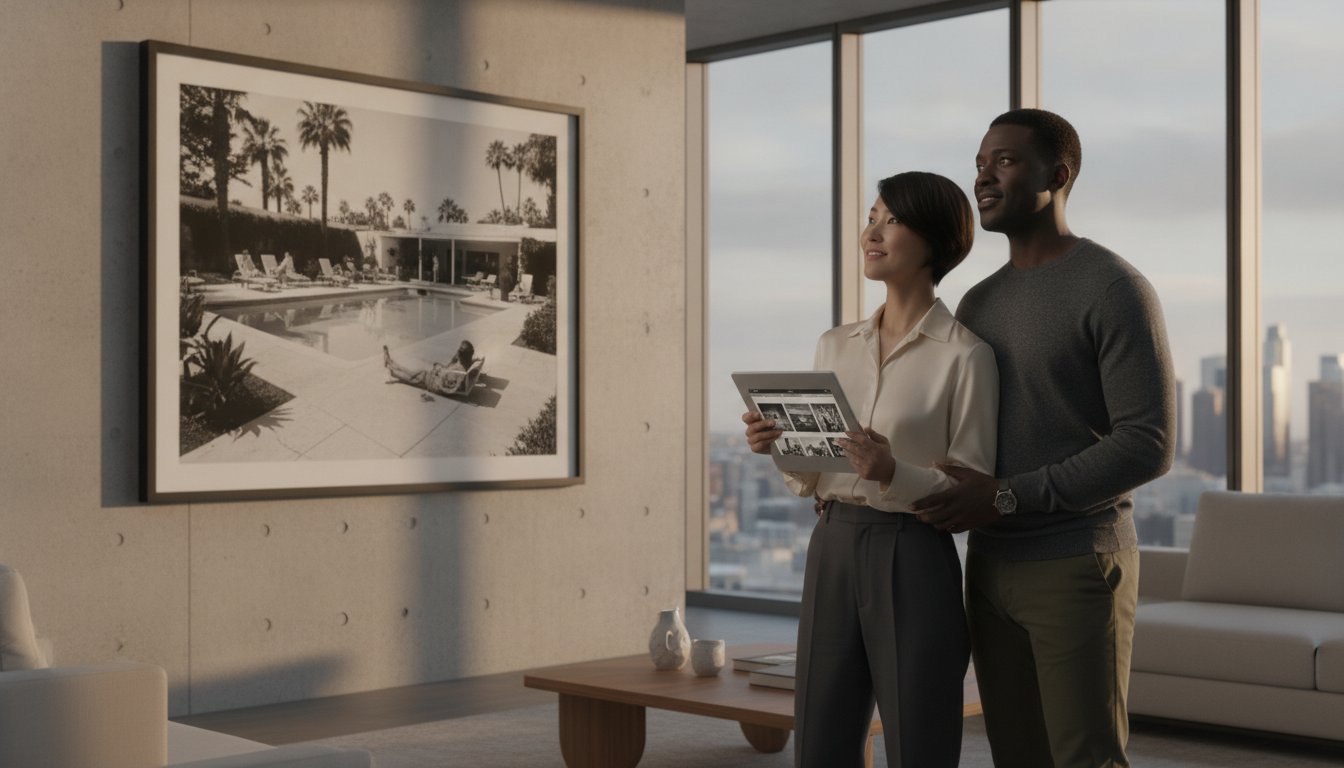
The emotional impact of a workplace environment is often underestimated by those focused solely on utility. Aspirational imagery, particularly from the “Golden Era” of the mid-20th century, has a unique ability to elevate employee morale by connecting them to a legacy of elegance and leisure. The Slim Aarons Collection is a masterclass in this effect. His poolside scenes and sun-drenched landscapes offer a psychological reprieve in high-stress settings, providing a visual window into a world of refined appreciation. This balance of professional distance and visual intrigue ensures that the art remains a point of interest for years. It’s about creating a space where history and modern ambition coexist, fostering an atmosphere that is both calming and deeply motivating.

Selecting the Right Collection for Your Professional Identity

Selection is an act of curation. When you choose fine art photography for office walls, you’re selecting the lens through which the world views your company. A technology firm might lean into the avant-garde or candid innovation, while a wealth management office often seeks the quiet permanence and stability found in historical archives. Research highlighted by Forbes has explored the impact of art in professional settings, revealing that it can significantly reduce stress and enhance creative problem-solving. It’s not just about aesthetics; it’s about the psychological architecture of your business. With the global art market showing a steady growth of 4% in 2025, the acquisition of rare photographic prints is increasingly viewed as a mark of a stable, forward-thinking firm.

The Aspirational World of Slim Aarons

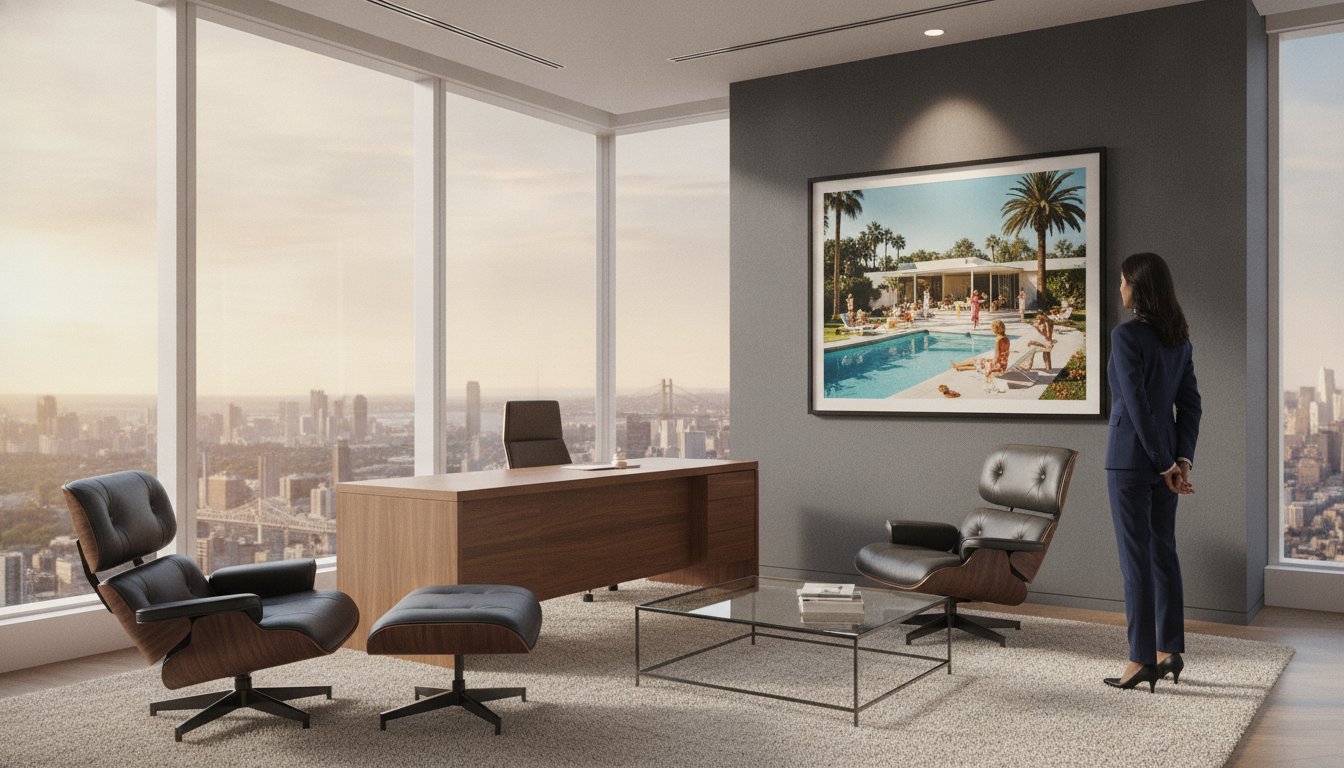
The Slim Aarons collection offers an unparalleled sense of aspirational leisure that is particularly effective in executive suites. His work, which famously captured “attractive people doing attractive things in attractive places”, provides a sophisticated backdrop that suggests a lifestyle of effortless success. These iconic pieces act as immediate conversation starters in boardrooms, bridging the gap between mid-century glamour and contemporary design. In a 2026 office environment, these images provide a refreshing contrast to the digital world, grounding a space in a bygone era of elegance and social grace.

Terry O’Neill and the Power of Personality

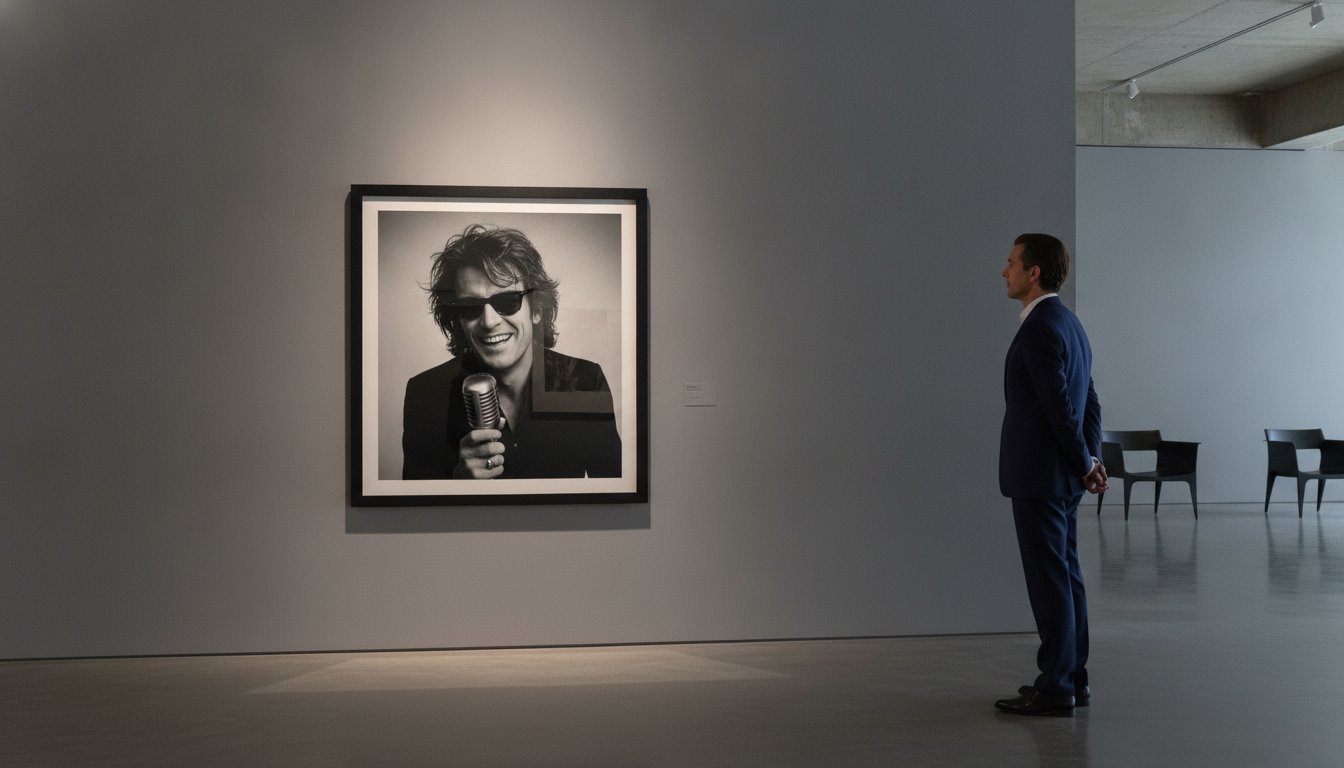
Terry O’Neill’s photography projects a different kind of power, one rooted in the raw confidence of the “Spirit of the Sixties.” His candid portraiture of cinematic icons and music legends captures a sense of fearlessness that suits modern innovation hubs and creative agencies perfectly. These aren’t just photos; they’re personality studies that project authenticity and drive. Placing a high-fashion O’Neill print in a reception area signals that your firm values boldness and legacy. It’s a way to use cinematic heritage to bolster your own corporate narrative, ensuring your walls speak to your brand’s unique energy.

The choice between monochrome and colour sets the room’s emotional temperature. Black and white archives offer a formal, timeless gravity that works well in traditional sectors where trust and history are paramount. Colour photography, especially when printed on high-end archival papers, brings a vibrant energy that can turn a sterile hallway into a corridor of inspiration. Choosing the right fine art photography for office walls is a journey of discovery that defines the very soul of your professional environment. You might explore our music archives to find a piece that resonates with your team’s creative spirit.

Technical Excellence: Scale, Paper, and Bespoke Framing

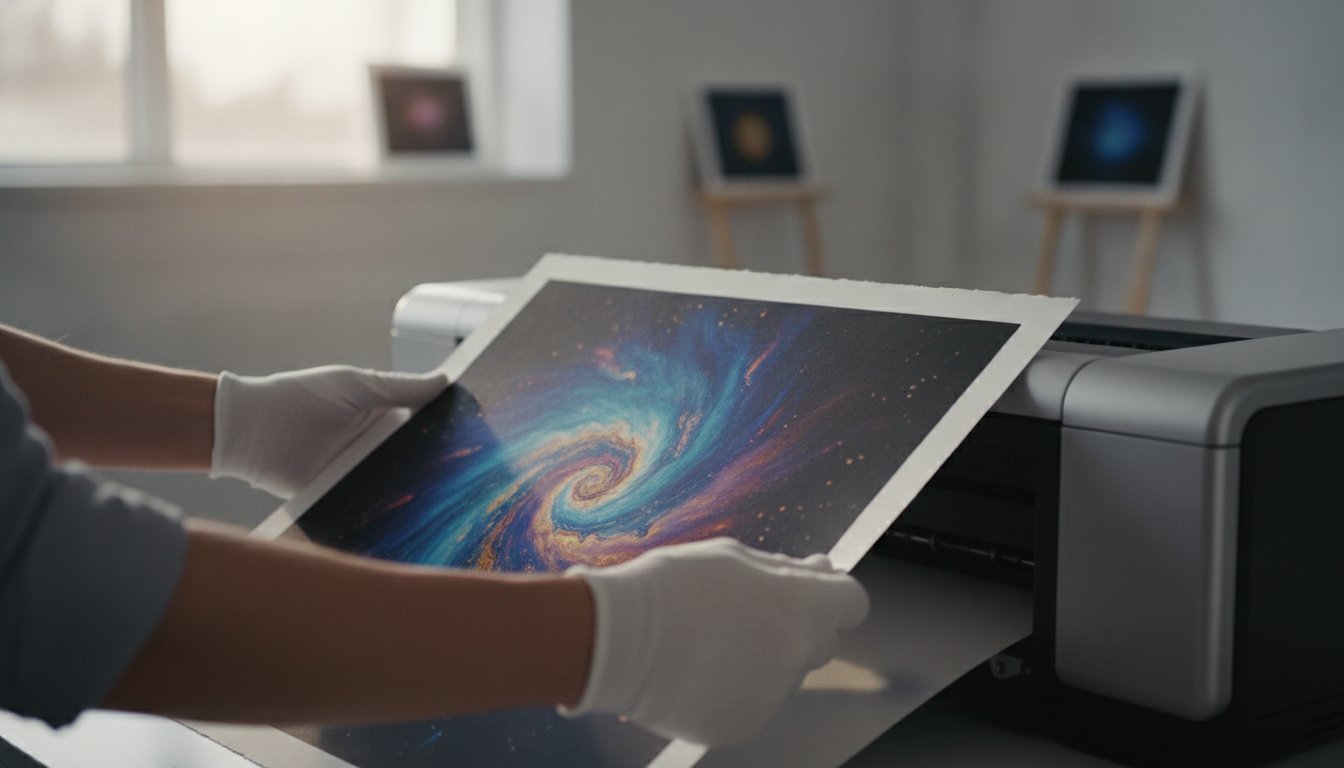
The endurance of a visual collection depends entirely on the technical integrity of its production. In the bright, often sun-drenched environments of modern executive suites, standard prints quickly succumb to UV degradation and chromatic shifts. Choosing fine art photography for office walls requires a commitment to archival standards that go beyond mere aesthetics. Museum-grade papers, such as heavy-weight cotton rag or traditional silver gelatin for monochrome archives, ensure that every highlight and shadow retains its depth for decades. This structural permanence is what transforms a simple image into a lasting piece of history, justifying its place in a premier professional setting.

Achieving a gallery-standard finish requires more than just high-quality paper; it demands a professional bespoke framing service to provide both protection and visual gravity. While contemporary mounting offers a sleek, minimalist look suitable for tech hubs, classic hand-stained wood frames offer a sense of tradition and stability that resonates in finance or legal sectors. The frame acts as a boundary between the bustling office and the world within the photograph, focusing the viewer’s attention and elevating the work’s perceived value.

Determining the Correct Scale for Large Spaces

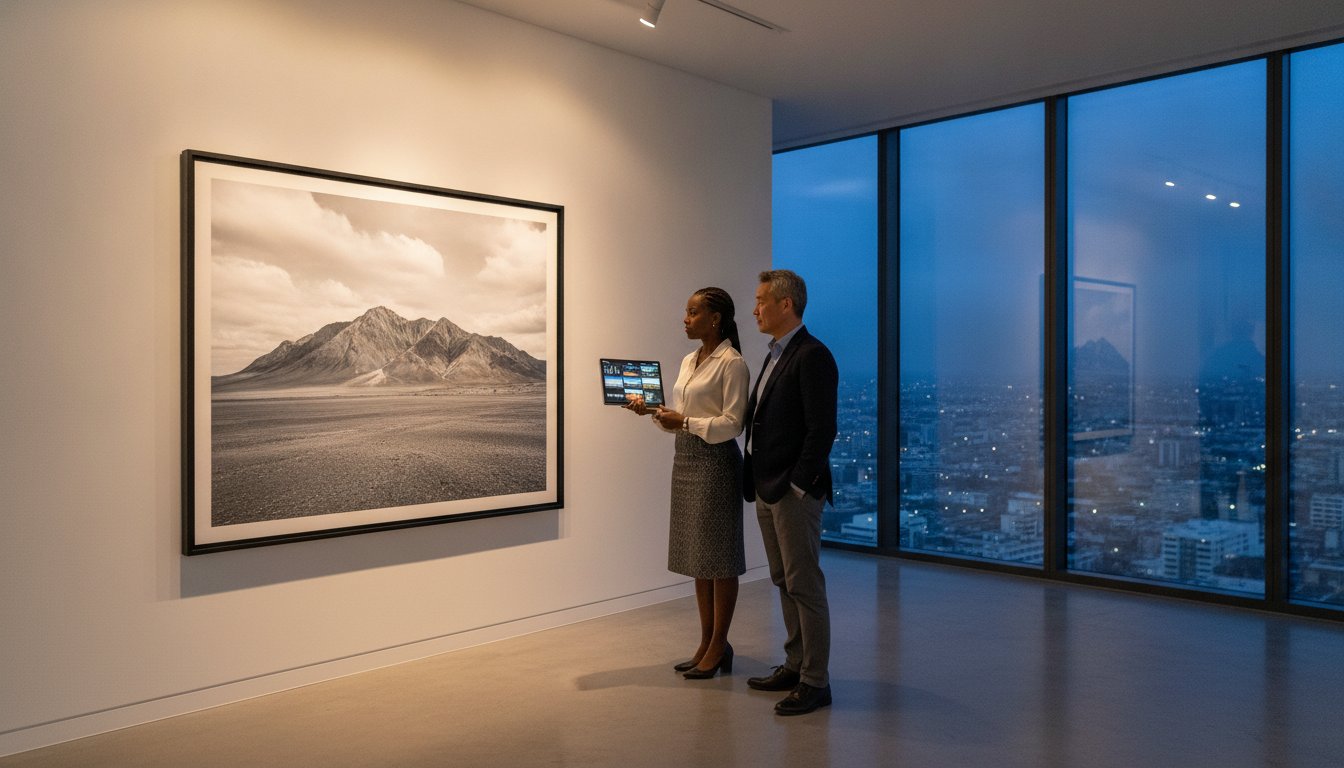
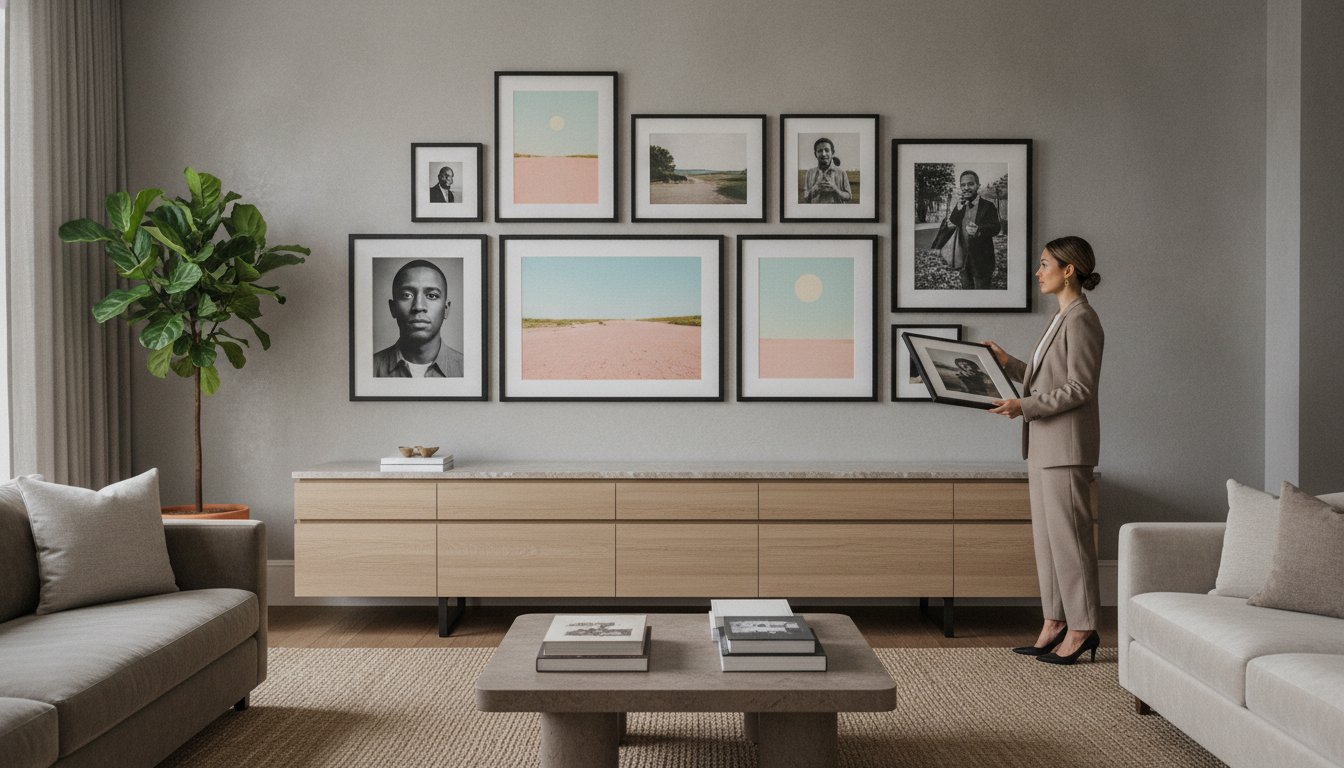
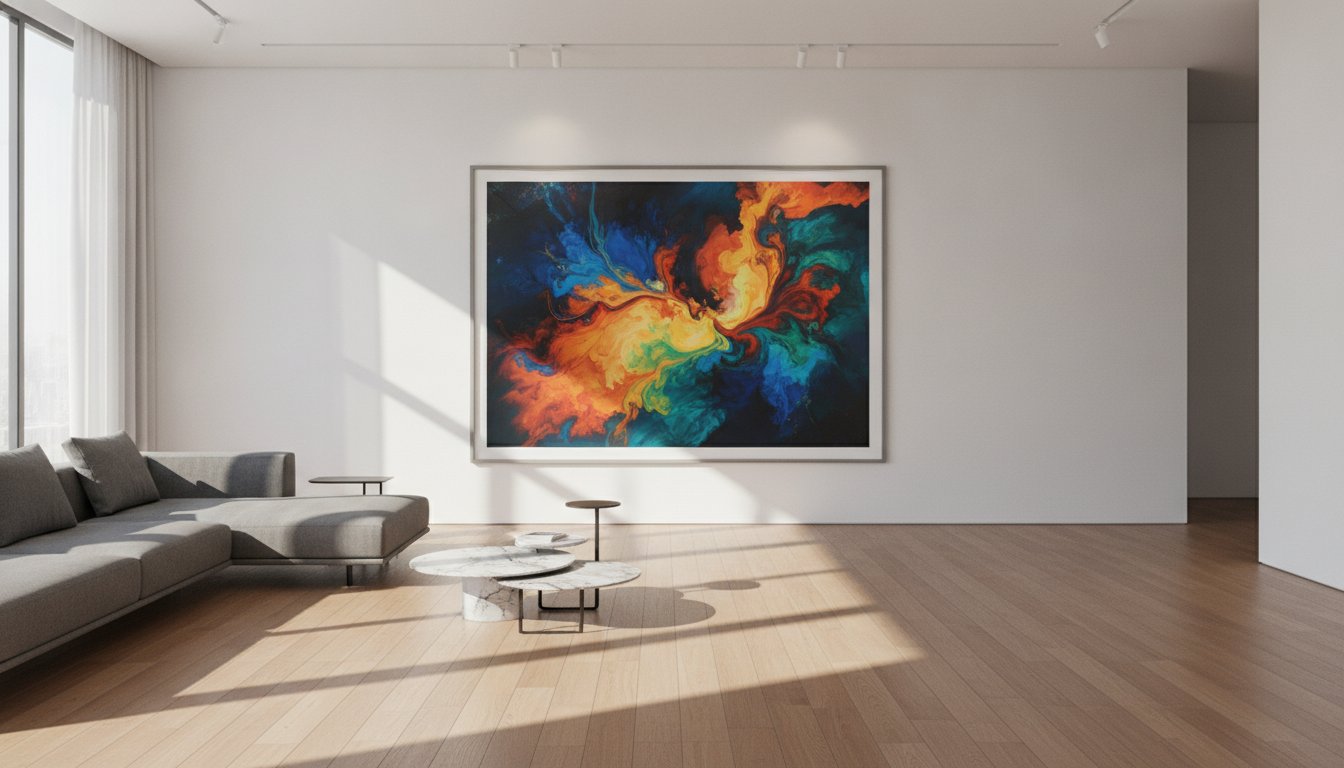
Scale is the most common pitfall in corporate curation. A small print, no matter how iconic, will feel lost on a vast boardroom wall, losing its narrative power and looking like an afterthought. For these expansive areas, a “Statement Piece” approach is essential. Large-format photography creates a singular, immersive focal point that commands the room. Conversely, long hallways or creative breakout zones often benefit from a “Gallery Wall” strategy. This method allows you to group related images from our music archives or film collections, leading the eye on a journey through your company’s cultural interests. Precision in measurement is vital; the art should feel integrated into the architecture, not floating within it.

The Art of Professional Framing

Professional framing is a nuanced craft that balances branding with interior harmony. The choice of frame colour should subtly complement your office furniture and architectural finishes without competing for attention. Mount boards are equally critical. They provide necessary breathing room for the imagery and ensure the eye is drawn immediately to the artist’s work. To maintain efficiency in a busy workplace, we ensure every piece is delivered in a “ready-to-hang” state. This precision allows for a seamless installation process, ensuring that your new fine art photography for office walls is perfectly level and securely positioned from the moment it arrives. It’s this attention to artisanal detail that separates a truly curated space from a standard office environment.

Strategic Placement: Curating Your Office Narrative

Placement is the final, most critical act of curation, acting as the silent choreographer of the professional experience. The “Reception Reveal” serves as your brand’s visual handshake, offering the first opportunity to make an immediate cultural statement. It’s the moment where fine art photography for office walls makes its most potent impact, establishing a standard of excellence before the first greeting. By positioning a high-prestige archive here, you signal that your firm is a guardian of heritage and a leader in its field. This initial anchor sets the tone for every subsequent interaction within the building.

Meeting rooms require a different psychological energy. Here, clarity and focus are paramount to productive outcomes. Curating black and white pictures in these spaces reduces visual noise, allowing for deep concentration while maintaining a sophisticated atmosphere. This monochrome palette provides a formal gravity that encourages precision and calm during critical negotiations. It’s a way to lead a visitor through your space using visual anchors that suggest both intellectual depth and professional distance.

The Boardroom: A Space for Legacy

The boardroom is where the most significant decisions are made, and the art should reflect that weight. Historical archives provide a sense of long-term perspective that grounds current challenges in a broader context. The anchor piece in a boardroom should be a singular, large-scale work of historical significance that commands the room’s respect and acts as a silent witness to the firm’s evolving legacy. This piece isn’t just a decoration; it’s a visual manifestation of your company’s enduring values. It suggests that your business is built on a foundation of permanence and stability.

Communal Areas: Fostering Inspiration

In breakout zones and communal spaces, the tone can shift toward the evocative and the playful. This is the ideal environment for Terry O’Neill’s candid personality studies or the vibrant charm of cinema lobby cards. These pieces spark conversation and creativity, providing a visual reprieve from digital screens. Rotating these collections every few years can keep the environment fresh, ensuring that the workspace remains a dynamic source of inspiration for the team. It’s about building a space where fine art photography for office walls acts as a permanent bridge to elegance.

Creating a cohesive flow between departments ensures that the office doesn’t feel like a series of disconnected rooms. You can use recurring visual themes, such as a specific photographic era or a consistent framing style, to tie the narrative together. This strategic approach ensures that every hallway and individual office contributes to a larger story of success and aspiration.

Transform your professional environment by selecting your next statement piece from our Slim Aarons Collection.

Galerie Prints: Your Partner in Professional Curation

Galerie Prints operates as a dedicated guardian of photographic heritage, offering a bridge between the world’s most prestigious archives and the modern corporate environment. We recognize that the search for fine art photography for office walls is often motivated by a desire to project authority and stability. By providing exclusive access to collections like Getty Images and the Slim Aarons archive, we ensure that your workspace reflects a standard of excellence that is both rare and evocative. Our role is to act as your seasoned guide, helping you navigate the technical and artistic nuances of high-end acquisition with absolute confidence.

The hallmark of our service is a steadfast commitment to localized, artisanal craftsmanship. Every piece we represent is handled with a level of care that befits its historical significance, utilizing traditional production methods to maintain the integrity of the original source material. We simplify the corporate procurement process by handling the intricate details of logistics and specifications with reassuring precision. Whether you’re outfitting a single executive suite or a multi-floor headquarters, our global shipping and professional mounting services ensure your collection arrives ready to inspire.

A Curated Selection of the World’s Finest Archives

Our unique relationship with the Slim Aarons archive allows us to offer an unparalleled selection of his most aspirational works. Every print undergoes a rigorous selection process, where we evaluate technical superiority and narrative depth to ensure only the most impactful pieces reach your walls. We prioritize authenticity and provenance above all else. This meticulous vetting process guarantees that every professional purchase represents a genuine piece of photographic history, providing a lasting sense of prestige that elevates the surrounding architecture.

Start Your Office Transformation Today

Transforming a professional space into an inspired gallery requires a strategic approach to scale and subject matter. For large-scale projects, our curators are available to provide expert consultations, ensuring your chosen fine art photography for office walls aligns perfectly with your brand’s heritage. Our online platform allows you to specify custom sizes and bespoke finishes, providing the flexibility needed for unique architectural requirements. We invite you to begin this journey of curation and discover how a single iconic image can redefine your corporate identity.

Explore our curated collections for professional spaces and secure a piece of history for your firm today.

Elevating the Professional Landscape

Your workspace acts as a silent testament to your firm’s ambition and its respect for enduring excellence. Moving beyond generic decor to embrace fine art photography for office walls transforms a functional environment into a sophisticated narrative of success. We’ve examined how the strategic selection of iconic archives, coupled with the precision of museum-grade technical production, creates a palpable sense of permanence that resonates with both clients and employees. Every wall provides an opportunity to ground your brand in a legacy of elegance and stability.

Galerie Prints serves as a trusted bridge to this elite world of beauty and history. As official curators of the Slim Aarons Archive, we provide exclusive access to imagery that defines an aspirational lifestyle. Our commitment to bespoke, museum-quality framing ensures that every piece is protected against the rigors of a professional setting, while our worldwide shipping facilitates seamless delivery to premium corporate clients across the globe. We handle the technical complexities so you can focus on the vision of your space.

The journey toward a more inspired workplace begins with a single, decisive choice. We invite you to Browse our Curated Office Photography Collections and discover the transformative power of world-class visual heritage. It’s time to let your walls reflect the true caliber of your legacy.

Frequently Asked Questions

What is the best type of photography for a corporate office?

The best photography for a corporate office is that which balances historical significance with your brand’s unique identity. Many firms prefer the aspirational elegance of the Slim Aarons Collection to project success, while others lean toward the raw confidence of Terry O’Neill’s portraiture. Selecting fine art photography for office walls that carries genuine provenance ensures your space feels like a curated gallery rather than a mere place of business.

How do I choose the right size of art for a large boardroom wall?

For a large boardroom wall, you should prioritize a singular statement piece that occupies approximately two-thirds to three-quarters of the available wall space above the table. This prevents the art from appearing lost or insignificant within the room’s architecture. A large-format print commands immediate respect and provides a visual anchor that encourages deep thinking during critical executive discussions.

Should I use colour or black and white photography for my office?

Your choice between colour and monochrome should depend on the desired psychological atmosphere of the room. Black and white photography offers a timeless gravity and clarity that is ideal for high-focus areas like meeting rooms or legal suites. Conversely, vibrant colour photography from our music archives or travel collections can inject energy and a sense of modern aspiration into communal breakout zones.

How does Galerie Prints ensure the archival quality of its office prints?

We preserve the integrity of our prints by utilizing museum-grade materials such as heavy-weight cotton rag paper and traditional silver gelatin processes. Every piece of fine art photography for office walls is produced to resist UV degradation, ensuring that highlights and shadows remain crisp even in bright environments. This commitment to technical excellence guarantees that your investment remains a lasting piece of history for decades.

Can I get custom framing to match my office’s interior design?

Yes, our Bespoke Framing Service allows you to select finishes that harmonize perfectly with your office’s specific architectural details and furniture. You can choose from a variety of hand-stained wood frames for a traditional look or opt for contemporary mounting for a more minimalist aesthetic. Every frame is crafted to provide both structural protection and a polished, professional finish.

Is it better to have one large piece or a gallery wall in a reception area?

A single, large-scale piece is generally more effective in a reception area because it creates an immediate and powerful cultural statement. This “Reception Reveal” acts as a visual handshake for your brand, offering a clear focal point for visitors. While gallery walls are excellent for storytelling in corridors, a solitary masterwork in the entrance projects a sense of confidence and singular purpose.

Does Galerie Prints offer international shipping for corporate orders?

Galerie Prints provides secure worldwide shipping to our premium corporate clients, ensuring that international offices receive the same high standard of curation. We manage the logistics with precise care, ensuring that every framed work arrives in pristine, ready-to-hang condition. This streamlined process allows global firms to maintain a consistent aesthetic identity across all their geographical locations.

How do I maintain and clean fine art photography in a workplace?

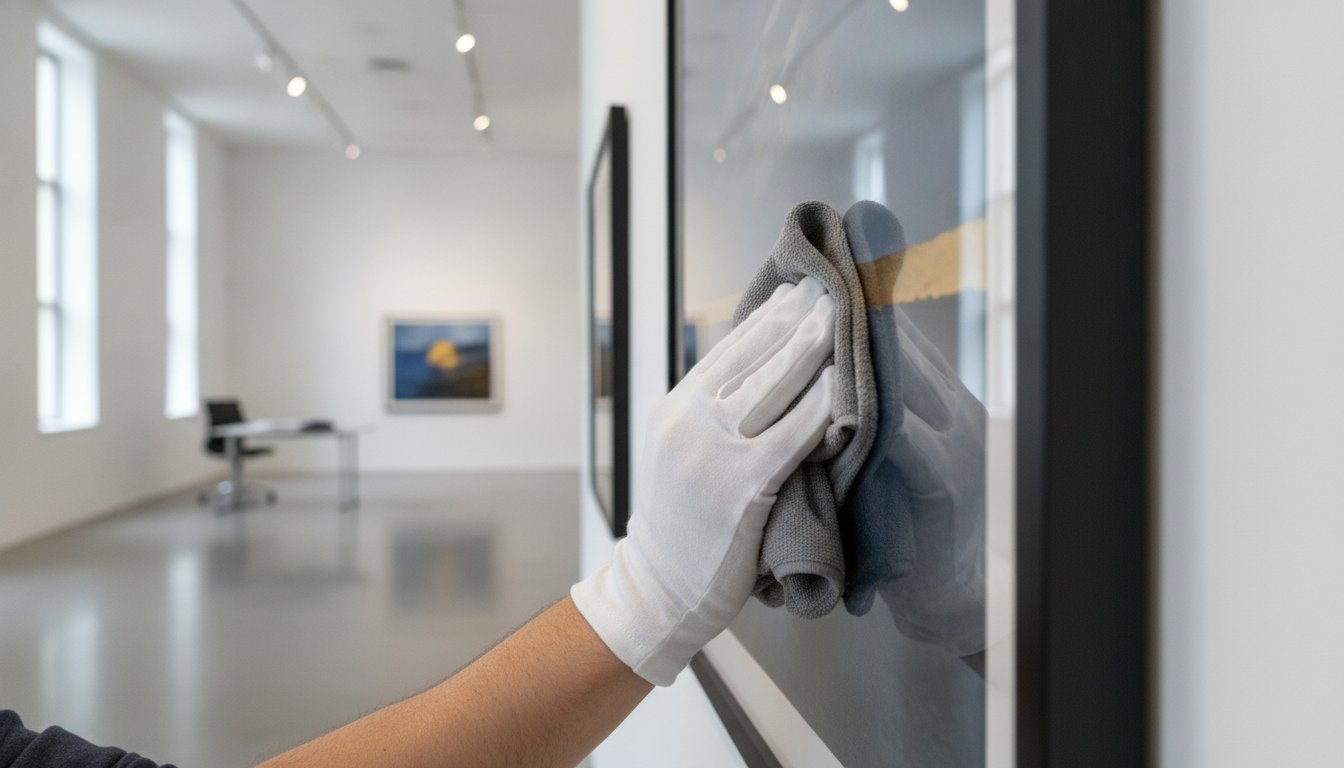
Maintaining your collection requires minimal effort if the pieces are correctly installed away from direct moisture or heat sources. Use a clean, dry microfiber cloth to gently remove dust from the frame and glazing. Avoid using chemical cleaners or water, as these can damage the artisanal finishes or the archival paper. Professional handling is always recommended if you need to relocate or re-hang your collection.

How to Convince Your Partner on an Art Purchase: A Curator’s Guide to Shared Collecting

What if the most significant investment in your home isn’t the architecture, but the silent stories hanging upon its walls? You likely understand the delicate tension that arises when your passion for a Slim Aarons poolside scene or a legendary Terry O’Neill portrait meets your partner’s hesitation over the investment or the intricacies of bespoke framing. The process of convincing your partner on art purchase decisions often feels like navigating a complex gallery negotiation rather than a simple home decor choice. It’s common to feel a sense of anxiety when trying to explain why a specific silver gelatin print is a lasting legacy rather than a fleeting household expense. Art should unite a home, not divide it.

This guide offers the sophisticated strategies you need to align your aesthetic visions and justify the investment in world-class fine art photography. We’ll examine how to articulate the technical superiority of archival production, the historical significance of our music archives, and the transformative impact of professional curation on your environment. By the end of this exploration, you’ll possess the vocabulary of a seasoned collector to transform a point of contention into a shared journey of discovery. Together, you can curate a collection that reflects your collective identity and honors the heritage of the medium.

Key Takeaways

  • Understand how to navigate differing tastes by utilizing “bridge pieces” that connect personal nostalgia with contemporary aesthetics.
  • Master the strategy of convincing your partner on art purchase by reframing high-end photography as a multi-decade investment in your home’s soul.
  • Discover how to justify the premium of museum-quality archival prints and bespoke framing using the long-term “Cost Per Year” framework.
  • Utilize practical visualization tools and the “Tape Method” to provide a concrete sense of scale and presence before committing to a significant piece.
  • Explore how iconic imagery from music archives or the Slim Aarons collection can act as a sophisticated neutral ground for shared collecting.

The Psychology of Shared Curation: Why Art Disagreements Happen

Art represents the most intimate layer of a residence, acting as a silent narrator of the inhabitants’ values, memories, and aspirations. Unlike selecting a functional piece of furniture, choosing a fine art photograph is an emotional endeavor that reveals one’s internal world. When you find yourself convincing your partner on art purchase decisions, you aren’t just discussing a budget or a wall space; you’re inviting them to share in a specific vision of beauty. This high level of personal investment is exactly why friction occurs. One person’s evocative masterpiece can feel like an aesthetic intrusion to another.

Disagreements typically arise when two distinct visual languages collide. You might be drawn to the sun-drenched, aspirational nostalgia found in the Slim Aarons Collection, while your partner prefers the grit and raw energy of our music archives. These preferences are rarely arbitrary. As explored in the Psychology of Collecting, our aesthetic choices are deeply rooted in our desire to preserve history or project a specific identity. To build a collection that lasts, you must respect the “visual veto.” Forcing a piece into a shared living space often leads to resentment, whereas validating your partner’s hesitation builds the trust necessary for future acquisitions. Frame the conversation around building a shared legacy, ensuring the art serves as an anchor for the home’s soul rather than a point of contention.

Understanding Your Partner’s Aesthetic Blueprint

Before presenting a new piece, take a moment to decode your partner’s aesthetic blueprint. Do they value the historical significance of a Terry O’Neill portrait, or are they more moved by a specific color palette that provides visual comfort? Often, resistance stems from a “fear of the unknown” regarding how a large-scale work will dominate a room. By identifying whether they prioritize the narrative story of the artist or the technical perfection of bespoke framing, you can tailor your approach to meet their specific needs for environmental harmony.

Moving from “My Choice” to “Our Collection”

The transition from individual desire to collective curation requires a subtle but powerful shift in language. Stop approaching the acquisition as a personal whim. When convincing your partner on art purchase opportunities, use “we” and “our home” to reduce natural defensiveness. It’s helpful to establish a mutual curatorial goal for the room, such as “honoring the golden age of cinema.” You might also suggest creating a shared digital mood board. This collaborative process allows overlapping interests to surface, turning the act of buying art into a sophisticated journey you take together to define your shared domestic heritage.

Finding Common Ground: Navigating Disparate Tastes

Finding common ground requires more than just compromise; it demands a curatorial eye for the “Bridge Piece.” This is an artwork that possesses enough versatility to satisfy disparate aesthetics, acting as a visual mediator between a lover of mid-century minimalism and a devotee of classic Hollywood glamour. Research into collaborative decision-making suggests that successful outcomes in shared spaces often stem from identifying shared experiences rather than forcing a blend of styles. When convincing your partner on art purchase selections, look for subjects that transcend individual preference. Iconic photography, rooted in music and film history, provides this neutral ground by tapping into a collective cultural memory that feels both personal and prestigious.

Nostalgia is a powerful tool in the curator’s arsenal. It bypasses the analytical critique of color and composition, reaching instead for the emotional resonance of a shared past. Whether it’s the sun-drenched allure of a Mediterranean coast or the electric atmosphere of a historic jazz club, these images evoke a lifestyle you both admire. By focusing on the narrative behind the lens, the art becomes a celebration of history rather than a point of decorative friction. It’s about finding that singular image that speaks to both of your souls with equal clarity.

The Universal Appeal of Iconic Photography

A Terry O’Neill portrait of a shared idol does more than decorate a wall. It anchors the room with a story everyone knows. These images serve as sophisticated conversation starters, moving the discussion away from “do I like this color?” toward “do we value this moment in history?” Integrating music photography into your home bridges the gap between mere decor and a tangible piece of your personal history. It’s much easier to justify a purchase when the subject matter evokes a sense of wonder you both share.

Neutralizing the Style Conflict

If color clashing is the primary hurdle in convincing your partner on art purchase agreements, consider the timeless elegance of black and white pictures. Monochrome photography possesses a unique ability to complement any existing palette, providing a sense of permanence and stability that color often lacks. The role of scale is equally vital. A large-format print can define the character of a room without clashing with smaller, more eclectic elements. By selecting subjects that evoke a shared aspirational lifestyle, you create an environment that feels curated rather than cluttered. You might find that a single, well-chosen piece from our Music Archives provides the exact harmony your living space requires.

Beyond Aesthetics: Framing Art as a Lasting Investment

When the conversation shifts from personal taste to financial stewardship, convincing your partner on art purchase decisions becomes a matter of logic rather than emotion. It’s essential to distinguish between disposable decor, which loses value the moment it leaves the store, and archival fine art. A high-end photograph is a durable asset. While a mass-produced print may yellow or warp within a few years, a gallery-grade piece is designed to endure for generations. By reframing the acquisition as a long-term investment, you move the dialogue away from an immediate “cost” and toward a “cost per year” perspective. Viewed over a twenty-year horizon, the price of a world-class print becomes a modest annual commitment to the soul of your home.

Serious collectors understand that the value of art lies in its permanence and its provenance. We don’t merely sell pictures; we provide access to meticulously preserved archives that capture the essence of twentieth-century elegance. This sense of stability is often what a hesitant partner needs to feel secure. Investing in a piece from a renowned archive ensures that you’re not just filling a gap on a wall, but rather anchoring your domestic space with a work of historical significance that will remain relevant as trends fade.

The Heritage Value of Iconic Archives

Owning a Slim Aarons print is more than an aesthetic choice. It’s an acquisition of a piece of cultural history. These works, along with our Getty and music archives, represent limited editions and rare collections that carry a sense of exclusivity. You aren’t just buying a photograph; you’re bringing a museum-at-home experience into your living room. This rarity acts as a safeguard for the investment, ensuring the work maintains its prestige and narrative power long after contemporary furniture has been replaced.

The Technical Superiority of Fine Art Prints

The longevity of our collection is rooted in technical excellence. We utilize archival photo paper specifically engineered for its resistance to fading and chemical stability. This artisanal approach ensures that the deep blacks and vibrant hues of a Terry O’Neill portrait remain as striking in thirty years as they are today. Furthermore, our Bespoke Framing Service isn’t just about presentation. It’s a critical preservation tool. Professional mounting and museum-quality glazing protect the print from UV damage and environmental fluctuations, effectively sealing the asset against the passage of time. This level of craftsmanship is what separates a true gallery print from a standard poster.

Visual Proof: How to Present the Vision to Your Partner

Abstract ideas rarely inspire confidence in high-stakes decorating. When you are convincing your partner on art purchase decisions, the most effective tool in your arsenal is clarity. It’s one thing to describe the allure of a poolside Slim Aarons scene; it’s quite another to demonstrate exactly how that vibrant turquoise will interact with your mid-century sideboard. Shifting the conversation from the theoretical to the tangible reduces the perceived risk and allows your partner to inhabit the vision alongside you.

Physicality matters. Utilize the “Tape Method” by marking the exact dimensions of the intended print on your wall with low-tack masking tape. This simple act demystifies the scale, proving that a large-format work won’t overwhelm the space but will instead provide a necessary focal point. It’s also the perfect moment to discuss our Bespoke Framing Service, showing how a hand-finished wood or sleek aluminum frame can harmonize with your existing furniture, turning the art into a seamless extension of the room’s architecture.

The Power of the Mock-up

Digital visualization is perhaps the most persuasive method for convincing your partner on art purchase commitments. Most of the battle is won when art is seen in context. You can follow these simple steps to create a compelling presentation:

  • Take a clear, straight-on photograph of your empty wall in natural daylight.
  • Use a simple photo editing app to overlay the desired artwork, ensuring the proportions match your tape markings.
  • Adjust the brightness to mimic the room’s lighting, showing how the piece transforms the atmosphere from morning to evening.

This visual proof removes the guesswork, replacing hesitation with the excitement of a completed room. It allows your partner to see the art not as a detached expense, but as the final, missing piece of your home’s aesthetic puzzle.

Narrative Selling: The Story of the Artist

Beyond the visual impact, every iconic photograph carries a narrative that adds emotional weight to the acquisition. Research the specific moment the image was captured. Perhaps it’s a candid shot from our Music Archives taken during a legendary world tour, or a Terry O’Neill portrait that captured a rare moment of vulnerability in a global icon. Sharing these curatorial insights transforms the piece from an object into a story. Connect the art to a shared memory, such as a holiday destination you both loved or a film that defined your early years together. When a partner understands the artist’s triumph or the historical weight of the moment, the price tag becomes secondary to the cultural value. To begin building your shared vision, you can explore our curated collections and find the story that speaks to both of you.

Curating Your Legacy with Galerie Prints

The final stage of convincing your partner on art purchase often rests on the assurance of quality and the absence of logistical friction. It isn’t enough to agree on the image; you must also trust the vessel that carries it into your home. At Galerie Prints, we operate as more than a gallery. We are guardians of photographic heritage. Our commitment to museum-quality production and artisanal craftsmanship ensures that the piece you choose today becomes a permanent fixture of your family’s history. By handling the complexities of production and preservation with quiet authority, we allow you to focus on the joy of the collection itself.

Many potential collectors hesitate because of the perceived “hassle” of post-purchase logistics. Finding a framer, transporting a large-format print, and ensuring the mounting is archival can be daunting. Our bespoke framing service removes these obstacles entirely. We provide a seamless, end-to-end experience where the technical superiority of the production is matched by the elegance of the final presentation. With global shipping handled by specialists in fine art transport, the reassurance of professional handling is built into every acquisition.

The Galerie Prints Difference

We provide exclusive access to some of the world’s most prestigious photographic archives, including the definitive works of Slim Aarons and the legendary Terry O’Neill. This isn’t merely about decoration. It’s about possessing a piece of a bygone era. Our role is to act as a trusted guide, offering customization options that allow you to find the exact dimensions and frame styles to suit your shared environment. Whether you’re looking for a statement piece for a grand foyer or a subtle addition to a private study, our collections offer the flexibility needed to align two different aesthetic visions.

Final Steps to Your First Shared Purchase

To finalize the process of convincing your partner on art purchase, turn the selection into a shared ritual. Invite them to browse our “New Arrivals” together, allowing the imagery to spark conversation and nostalgia. This collaborative approach transforms the transaction into a shared memory. Our “Ready-to-Hang” promise ensures that when the crate arrives, the art is a finished masterpiece, ready to anchor your home’s soul immediately. There is no need for further appointments or additional costs; the journey from gallery to wall is direct and distinguished.

Explore our curated collections and find your shared masterpiece today.

The Beginning of Your Shared Collection

Transforming your residence into a sanctuary of photographic heritage requires more than just a keen eye; it demands a collaborative spirit. By identifying bridge pieces that resonate with both of your histories and reframing the acquisition as a multi-decade investment, the path to a shared vision becomes clear. The process of convincing your partner on art purchase decisions is ultimately about inviting them into a world of elegance and permanence. You aren’t merely buying a picture. You’re securing a legacy that anchors the home’s soul.

As an official partner of the Getty Images Gallery, we provide the security and prestige that serious collectors expect. Every selection includes our bespoke museum-quality framing, ensuring your new masterpiece arrives ready to define your space. With worldwide white-glove shipping, the logistics are as refined as the imagery itself. It’s time to move beyond the hesitation and embrace the beauty of a curated lifestyle.

Browse our iconic Slim Aarons and Terry O’Neill collections to find a piece you both love.

Your walls are waiting to tell a story that belongs to both of you. Take that first step toward a lasting legacy together.

Frequently Asked Questions

How do I handle it if my partner hates the art I love?

Respecting a partner’s visual veto is the first step toward a successful shared collection. If a specific piece causes genuine friction, it’s better to pivot toward a subject that evokes a shared memory or an aspirational lifestyle. Look for a bridge piece from our music archives or cinema lobby cards that connects your disparate tastes. This collaborative approach ensures that the art serves as a source of joy rather than a point of domestic tension.

Is fine art photography a good financial investment?

Fine art photography serves as a durable asset when it possesses verified provenance and archival integrity. Prints from prestigious collections, such as the Slim Aarons Collection, maintain their cultural relevance and prestige over decades. Unlike mass-produced decor, these works are historical documents produced with artisanal precision. Viewing the acquisition as a long-term investment helps in justifying the initial cost as a commitment to your home’s enduring heritage and soul.

What is the best way to choose an art frame that matches our home?

Selecting a frame should be an exercise in architectural harmony rather than just matching colors. Our Bespoke Framing Service offers hand-finished woods and museum-quality materials that bridge the gap between the artwork and your existing furniture. Neutral, high-quality finishes often provide the necessary stability to integrate a bold photograph into a refined living space. The goal is to make the art feel like a permanent, seamless extension of the room’s design.

How do I explain the price difference between a gallery print and a store-bought poster?

The price difference reflects the chasm between disposable posters and museum-grade heritage pieces. When convincing your partner on art purchase decisions, highlight the technical superiority of archival photo paper and artisanal production methods. A gallery print is designed to resist fading for generations, whereas store-bought alternatives degrade quickly. You’re investing in a lasting piece of history that won’t require replacement, ultimately offering superior value over a twenty-year horizon.

Should we buy one large piece or a gallery wall of smaller prints?

A single, large-format photograph often provides a more sophisticated focal point than a cluttered gallery wall. Large pieces have the power to define a room’s character and provide a sense of calm authority. While gallery walls allow for eclectic storytelling, they can sometimes feel visually fragmented in a shared space. Choosing one significant work from our Terry O’Neill photography collection creates a clear curatorial statement that anchors the entire environment with ease.

What if the art we like doesn’t match our current interior design style?

Art doesn’t always need to match your furniture; it should provide a soulful counterpoint to your environment. A vintage movie poster or a classic black and white portrait can add a layer of historical depth to a contemporary room. This aesthetic tension often creates a more curated and worldly atmosphere than a perfectly matched palette. Focus on the emotional resonance of the work rather than strict color coordination to find a piece that truly belongs.

Archival Picture Framing London: The Connoisseur’s Guide to Conservation and Curation

A frame is far more than a decorative border; it’s the final curatorial act that defines whether a masterpiece survives the decades or slowly fades into obscurity. The standards of archival picture framing london represent more than a simple service; they are a commitment to the longevity of your visual heritage. It’s natural to feel trepidation regarding the technicalities of preservation. The fear that acidic mounts might yellow a rare print or that light will steal the vibrancy of a Slim Aarons original is a concern shared by every serious collector. In a UK art market valued at $10.5 billion in 2025, the stakes for protecting your investment have never been higher.

This guide shows you how to bridge the gap between historical reverence and modern interior design. You’ll learn to navigate the technicalities of 99% UV-protective glazing and museum-grade cotton rag mounts without compromising on aesthetic impact. We’ll preview the artisanal traditions of London’s master framers, ensuring your journey from purchase to hanging is effortless and sophisticated. Discover how the right conservation standards don’t just protect a print; they elevate its presence as a lasting piece of history.

Key Takeaways

  • Distinguish between conservation and museum-grade standards to ensure your rare prints are shielded from the irreversible effects of foxing and chemical degradation.
  • Master the art of aesthetic curation by selecting timber and finishes that complement iconic eras, such as the vibrant Mid-Century Modern aesthetic of the Slim Aarons Collection.
  • Learn why investing in archival picture framing london provides the necessary UV-protective glazing and pH-neutral environments required to preserve a photograph’s long-term market value.
  • Gain insight into the London artisan tradition, where hand-finished hardwoods and local expertise meet the rigorous display demands of world-class art institutions.
  • Discover the effortless elegance of a ready-to-hang service that bridges the gap between a curated gallery acquisition and a perfectly installed home display.

Defining the London Standard: Conservation vs. Museum Fine Art Framing

In the quiet workshops of London’s premier art districts, a frame is viewed as a guardian rather than a mere ornament. High-street framing often relies on wood pulps and adhesives that release harmful acidic gases over time. These volatile compounds lead to foxing, those unsightly brown spots that mar the surface of a pristine photograph, and permanent chemical degradation. Professional archival picture framing london eliminates these risks by creating a strictly pH-neutral environment. By choosing materials that don’t off-gas or migrate acids, collectors ensure their investment remains as vibrant as the day it was captured.

Preservation is a financial strategy as much as an aesthetic choice. A damaged print can lose a significant portion of its market value if the paper becomes brittle or discoloured. In a market where UK art sales reached approximately $10.5 billion in 2025, maintaining the physical integrity of a piece is paramount. Leading galleries treat the frame as the final curatorial act, a protective seal that signals to future buyers that the work has been handled with the utmost reverence. Understanding The Anatomy of a Bespoke Frame is the first step in appreciating how these technical layers contribute to long-term stability and prestige.

What is Conservation Level Framing?

Conservation framing is built upon the foundational principle of reversibility. Every element touching the artwork must be removable without leaving a trace. This level utilizes acid-free barrier boards and cotton-rag hinges, which are far superior to standard adhesive tapes. It’s the essential benchmark for private collectors in 2026 who want to enjoy their art while keeping their options open for future conservation. It creates a sanctuary for the paper, shielding it from the atmospheric fluctuations common in historical London homes.

The Museum Standard: When Only the Best Suffices

The museum standard represents the pinnacle of the craft, adhering to the rigorous guidelines that define the highest tier of the Fine Art Trade Guild. This level is non-negotiable for rare archives, such as those found in the Slim Aarons collection, where the preservation of specific colour dyes is critical. For light-sensitive historical prints and rare silver gelatin works, museum-grade framing employs 99% UV-protective glazing and the highest purity of cotton-rag mounts. It’s an uncompromising approach designed to ensure that even the most delicate photographic heritage remains unchanged for over a century.

The Anatomy of a Bespoke Frame: Premium Materials for 2026

The foundation of a superior frame lies in the timber. While mass-produced alternatives often rely on composite materials that degrade, the connoisseur’s choice remains sustainable hardwoods like ash, oak, and walnut. These woods provide a structural permanence that resists warping, ensuring the artwork remains perfectly flat and secure over decades. In the pursuit of archival picture framing london, the discernment of the collector often begins with the tactile quality of hand-finished veneers. These finishes are applied with a reverence for the wood’s natural grain, creating a housing that is as much a piece of furniture as it is a protective vessel.

An archival mount is a chemically inert, acid-free barrier board with a minimum thickness of 1.4mm, typically crafted from cotton linters or purified alpha-cellulose to ensure it remains pH-neutral for the life of the print. This component is the silent guardian of the photograph. It prevents the migration of acids from the frame’s backboard or the external environment, which would otherwise lead to the brittle yellowing of the paper. Choosing the right mounting materials is a technical necessity that underpins the longevity of any serious collection.

Glazing Options: Anti-Reflective and UV Protection

Glazing is the primary defense against the invisible threat of light. Adhering to the Fine Art Trade Guild framing standards ensures that glazing provides more than just a physical barrier. Standard glass often acts as a mirror, obscuring the delicate grain of a silver gelatin print; however, specialist Artglass or Museum Acrylic provides a clarity that makes the glazing virtually invisible. More importantly, these materials filter out 99% of UV rays. This protection is non-negotiable for colour photography, where light exposure causes irreversible fading and shifts in tonal balance. For those seeking a seamless transition from selection to display, exploring a bespoke framing service ensures every material choice is guided by archival expertise.

Mounting Techniques for Photographic Depth

The way a print is positioned within the frame dictates its visual impact and physical safety. A deep-bevel window mount creates a dramatic gallery-style focus, drawing the eye into the image while providing a necessary air gap between the print and the glass. This gap is vital; it prevents moisture from becoming trapped against the emulsion, which can cause the print to stick to the glazing. For works on deckled-edge papers, float mounting allows the artisanal quality of the paper to remain visible, making the artwork appear as if it’s suspended within the frame. Spacers are used in these instances to maintain that crucial protective distance, blending technical safety with a sophisticated, three-dimensional aesthetic.

Aesthetic Curation: Matching Frames to Iconic Photographic Eras

Selecting a frame is a deliberate act of translation. It requires an intimate understanding of the artist’s intent and the historical context of the work. Some collectors hesitate, viewing the frame as a secondary concern to the print itself. However, a bespoke frame is an essential extension of the art; it provides the structural and visual context that allows an image to breathe. In the sophisticated world of archival picture framing london, this curation ensures that the aesthetic of a mid-century poolside, a gritty rock-and-roll portrait, or even the vibrant contemporary African artworks found at Artgal.Online is both preserved and properly articulated within a modern home.

For those focused on black and white pictures, the goal is often monochrome mastery. Enhancing the deep blacks of a silver gelatin print requires a frame that doesn’t compete for attention. Conversely, contemporary minimalism demands sleek, thin profiles. Large-scale modern photography and digital prints often benefit from these narrow, unadorned frames, which allow the sheer scale of the work to dominate the space. This approach prioritizes the image, using the frame as a subtle, protective boundary that disappears into the architecture of the room.

Framing the Jet-Set Era

The vibrant, aspirational world of Slim Aarons demands a specific palette to maintain its sun-drenched allure. To anchor these 1960s scenes in a contemporary London interior, curators often look to natural wood or pristine white frames. These lighter tones complement the turquoise waters and citrus hues characteristic of the era without overwhelming them. The “gallery white” standard remains a favourite for high-end residential displays in Chelsea and Mayfair, providing a clean, crisp finish that feels both historical and refreshingly modern. It creates a seamless transition between the leisure of a bygone era and the refined aesthetics of today.

The Terry O’Neill Aesthetic: Rock and Roll Sophistication

Iconic celebrity portraiture and music photography often require a more substantial presence. To capture the raw energy of a Terry O’Neill archive, black stained ash or oak provides a dramatic weight that mirrors the intensity of the subject. The width of the frame moulding significantly influences the mood; a wider, hand-finished black frame can turn a single portrait into a powerful focal point. For collectors building an extensive gallery wall, using uniform archival framing creates a cohesive narrative across diverse images. This consistency allows the individual stories of the artists to shine while maintaining a disciplined, curatorial rhythm throughout the collection.

The London Artisan Tradition: Why Local Bespoke Craftsmanship Wins

London has long been a sanctuary for master craftsmen; workshops stretch from the historic ateliers of Chelsea to the vibrant, industrial studios of Shoreditch. This geographical concentration of talent ensures that archival picture framing london remains at the forefront of global conservation standards. Local artisans possess an intimate understanding of the security and display demands required by major art institutions, providing a level of oversight that distant factories simply cannot replicate. Every frame produced in these workshops is a testament to a lineage of skill, where the focus remains on the preservation of history through meticulous manual labour.

The distinction between a factory-joined frame and a hand-finished piece is immediately apparent to the discerning eye. Factory frames are often joined from pre-finished lengths of moulding, leaving visible seams at the corners. In contrast, a bespoke London frame is joined in its raw state before being sanded, stained, and finished as a single unit. This process creates the “closed-corner” look, a hallmark of luxury that ensures the frame appears as a seamless, solid object. In 2026, this tradition is bolstered by a commitment to sustainability, with workshops sourcing FSC-certified timbers to ensure that every commission respects both the artwork and the environment.

Hand-Finished Excellence

Artisanal excellence is defined by the subtle nuances of hand-staining and waxing. Unlike the flat, uniform colours of mass-produced frames, hand-finishing allows for a unique patina that develops depth and character over time. This level of customization is essential for high-end interior design projects, where custom colour matching ensures total harmony between the artwork and its architectural surroundings. Whether it’s a soft, muted grey to match a specific silk wallpaper or a rich, dark oak to ground a library, the artisan’s touch provides a bespoke finish that anchors the piece in its environment.

The Logistics of London Art Handling

The journey from the workshop to the gallery wall requires more than just a delivery van. Specialist art handlers manage the safe transport of large-format works across the city, utilizing climate-controlled vehicles to protect sensitive paper archives from London’s unpredictable humidity. For those looking to move collections abroad, professional crating is a necessity. These custom-built wooden cases provide a protective micro-environment, ensuring that even the most delicate prints survive international shipping without incident. To ensure your collection receives this level of dedicated care, explore our bespoke framing service for a truly comprehensive preservation solution.

Galerie Prints: A Seamless Integration of Fine Art and Framing

The journey from a legendary negative to a finished masterpiece requires a steady hand and a curator’s eye. At Galerie Prints, we don’t just sell imagery; we act as a bridge to a bygone era of elegance. By operating as a premier fine art photography gallery London, we offer an integrated service that removes the friction between acquisition and installation. This seamless approach ensures that the technical rigour of archival picture framing london is applied at the very moment the print is born. It’s a commitment to the integrity of the work, ensuring every piece leaves our care with the protection it deserves.

Our consultations are designed to bridge the gap between art selection and the nuances of luxury home display. We understand that a large-format print, whether it is a unique gallery acquisition or a professional digital production from Colour Graphics, requires more than just wall space; it needs a frame that respects the architecture of the room. Our experts provide guidance on profile selection and material finishes, ensuring that the final presentation is both historically accurate and aesthetically resonant. This level of personalized service is what distinguishes a true gallery experience from a standard retail transaction, positioning us as guardians of your collection’s provenance.

The Galerie Prints Bespoke Experience

The lifecycle of a print in our London workshop is a meticulous process. Whether you’re selecting a piece from the Slim Aarons Collection or the Terry O’Neill Photography archives, the customization options are exhaustive. We help you navigate the delicate balance between frame depth and mount width, ensuring the dimensions are tailored to your specific interior. This bespoke attention ensures that the finished work isn’t just a decoration but a permanent fixture of your home’s heritage, supported by the highest standards of archival picture framing london.

Ready-to-Hang Luxury

There’s a profound reassurance in knowing your artwork has been professionally mounted and sealed before it ever reaches your door. This ready-to-hang philosophy extends to our more specialized offerings, such as cinema lobby cards and rare memorabilia. These items often require unique archival displays that highlight their vintage charm while providing a museum-grade seal against the elements. Every frame undergoes a final, rigorous quality check, receiving the Galerie Prints seal of excellence as a guarantee of its artisanal origin and archival stability.

Securing Your Photographic Legacy for the Next Century

The decision to invest in archival picture framing london is a commitment to the permanence of your collection. By choosing museum-grade materials and pH-neutral environments, you don’t just display a print; you preserve a piece of history against the inevitable passage of time. We’ve explored how the synergy between hand-finished hardwoods and UV-protective glazing creates a sanctuary for your art, ensuring that the vibrant hues of the jet-set era or the deep contrasts of monochrome portraiture remain untarnished for future generations. A frame isn’t merely an accessory. It’s the final, essential chapter in the story of the image.

As an official partner of the Slim Aarons archives and other esteemed photographic collections, Galerie Prints operates with a deep reverence for the works we house. Our handcrafted bespoke framing is trusted by international collectors and London’s leading interior designers to deliver a finish that’s as technically superior as it is aesthetically profound. Whether you’re anchoring a single iconic image or curating an expansive gallery wall, we invite you to explore our curated collections and bespoke framing options. Begin the journey of elevating your home with world-class photographic heritage; your collection deserves a guardian that understands its true value.

Frequently Asked Questions

What is the difference between conservation and museum-quality framing?

Conservation framing is the standard for high-value collections, while museum-quality framing represents the absolute pinnacle of preservation. Conservation level uses acid-free materials and reversible techniques to protect against environmental damage. Museum framing elevates this by employing the highest-grade UV glazing and cotton rag mounts. It’s the definitive choice for those seeking the most rigorous archival picture framing london standards for their sensitive historical archives.

How much does bespoke fine art framing cost in London?

The cost of bespoke fine art framing in London depends on the dimensions of the work and the technical complexity of the materials selected. Factors such as the choice between sustainable hardwoods and hand-finished veneers, as well as the level of UV protection in the glazing, will influence the final investment. Collectors typically find that the cost reflects the artisanal labour and the long-term protection provided to the artwork.

Why is UV-protective glass essential for fine art photography?

UV-protective glass is essential because it filters out up to 99% of harmful ultraviolet rays that cause irreversible fading and tonal shifts. Fine art photography, particularly colour work from the mid-century, is highly susceptible to light damage. Without this barrier, exposure to natural or artificial light will eventually degrade the emulsion, permanently diminishing both the visual impact and the market value of the piece.

Can you frame rare items like cinema lobby cards or vintage posters?

Yes, rare items like cinema lobby cards and vintage movie posters require specialized archival picture framing london to prevent the delicate paper from becoming brittle. These historical artifacts often feature unstable inks or acidic paper stocks that need pH-neutral environments to survive. Our workshop utilizes custom mounting techniques that secure these items without the use of permanent adhesives, ensuring their cinematic heritage is preserved.

How long does a bespoke framing project typically take in London?

A bespoke framing project typically requires between two to four weeks from the initial consultation to final completion. This timeline allows for the meticulous hand-finishing of timber and the precision cutting of museum-grade mounts. While standard options may be faster, the artisanal process of crafting a custom housing for fine art photography cannot be rushed if one wishes to meet the highest curatorial standards.

What is the best frame style for a Slim Aarons poolside print?

The most effective frame style for a Slim Aarons poolside print is a slim, hand-finished white or natural wood profile. These lighter tones complement the vibrant turquoise and citrus palettes of the jet-set era without distracting from the aspirational narrative. A deep-bevel window mount is often recommended to add a sense of gallery-style depth, perfectly anchoring the sun-drenched scene within a sophisticated modern interior.

Do you offer delivery and installation for large framed artworks in London?

We facilitate the safe transport and professional installation of large-format framed works through a network of specialist art handlers in London. Managing the logistics of substantial pieces requires climate-controlled vehicles and expert knowledge of secure hanging systems. This ensures that your investment is moved with the utmost care and installed with the precision required for high-end residential or gallery displays.

Is it better to buy a print pre-framed or frame it myself later?

Buying a print pre-framed from a reputable gallery is generally superior as it ensures the artwork is never exposed to improper handling or acidic environments. Professional mounting and sealing occur in a controlled workshop, providing an immediate archival seal. Framing it yourself later carries the risk of accidental damage or the use of sub-standard materials that could compromise the print’s integrity and long-term value.

Oversized Art Prints London: Curating Statement Pieces for Luxury Interiors

A single, vast photograph has the power to redefine a room’s entire architectural narrative, yet many homeowners settle for safe, small-scale frames that simply disappear into the background. When you begin the search for oversized art prints london, the challenge isn’t just finding a large image; it’s finding one that maintains its soul and crystalline detail at a grand scale. It’s a common frustration to find an evocative scene only to realize it lacks the technical provenance to avoid pixelation, or to worry about the logistical complexity of framing and delivering a massive, glass-fronted piece.

You deserve a focal point that commands the room, blending the glamour of a bygone era with the precision of modern artisanal craftsmanship. This guide shows you how to transform your space with gallery-grade, large-scale photography and bespoke framing tailored for London’s most discerning homes. We’ll explore the enduring allure of iconic archives from photographers like Slim Aarons and Terry O’Neill, while detailing the meticulous production processes that ensure your investment arrives ready to hang and impossible to ignore.

Key Takeaways

  • Understand how a single large-scale work creates a more sophisticated architectural anchor than a cluttered gallery wall in high-end interiors.
  • Discover how to source certified, estate-stamped imagery from legendary archives like Slim Aarons and Terry O’Neill to elevate your home’s aesthetic heritage.
  • Learn the technical requirements for oversized art prints london to ensure your statement piece remains sharp and vibrant at scales exceeding one meter.
  • Explore the necessity of bespoke, structurally reinforced framing handcrafted by London artisans to safely support and present massive glass-fronted works.
  • Gain insight into the professional curation and secure, ready-to-hang delivery services that simplify the process of acquiring high-caliber visual art.

The Architectural Power of Oversized Art Prints in London Homes

In the context of high-end interior design, oversized art prints london serve as much more than mere wall coverings; they are foundational elements that define the spatial rhythm of a home. Oversized art is a curated architectural element that dictates the scale and gravitas of its surroundings. Whether it is a sprawling Victorian townhouse in Kensington or a minimalist penthouse in Chelsea, the sheer volume of a large-scale photograph creates a singular focal point that a cluttered gallery wall often fails to achieve. While multiple small frames can feel fragmented, one expansive piece offers a sense of calm and intentionality, grounding the room and drawing the eye with quiet authority.

The psychological impact of these pieces is profound. Large-scale photography can visually expand a room, pushing back the walls and creating a window into another era or landscape. In London’s period properties, where high ceilings often dwarf standard artwork, an oversized print fills the vertical void, harmonizing the room’s proportions. It’s an exercise in confidence. By choosing a single, powerful narrative over multiple smaller stories, you establish a clear aesthetic hierarchy that feels both modern and timeless.

Choosing Your Focal Point

When positioning oversized art prints london, selecting the right scale requires a discerning eye for proportion. A common designer’s guideline is the 75% rule: your artwork should ideally span roughly three-quarters of the width of the furniture it sits above, such as a sofa or sideboard. For the soaring, narrow stairwells of London townhouses, vertical orientations create a sense of height and drama. Conversely, horizontal pieces excel in open-plan living areas, guiding the gaze across the room. Consider the emotional weight of large-scale black and white photography; the absence of color often heightens the texture and contrast, lending a cinematic quality to the space that is both evocative and sophisticated.

Beyond Decoration: Art as an Investment

Investing in heritage photography is a commitment to preserving cultural history. Unlike mass-produced posters, certified prints from the archives of masters like Slim Aarons or Terry O’Neill maintain their prestige and value over time. The longevity of these hero pieces depends heavily on archival standards. Utilizing The Technical Mastery of Giclée Printing ensures that the rich pigments and fine details remain vibrant for decades, protecting the work from fading. When you acquire a piece of this caliber, you aren’t just decorating a wall; you are curating a legacy that bridges the gap between historical significance and contemporary luxury.

Curating Iconic Imagery: From Slim Aarons to Terry O’Neill

The transition from a mere decorative element to a true statement piece begins with the selection of the image itself. For collectors seeking oversized art prints london, the choice often gravitates toward the legendary archives of the 20th century, where photography first achieved its status as a high art form. Working with official archive partnerships allows for the production of works that aren’t just larger in size, but larger in cultural significance. Certain images, particularly cinematic vistas and sprawling social landscapes, possess a narrative depth that only reveals itself fully when printed at a grand scale, inviting the viewer to step into the scene rather than simply observe it from a distance. As you explore these options, you can discover more about E-commerce sales of physical wall art prints to see how curated themed collections are becoming increasingly popular in the digital marketplace.

The Slim Aarons Aesthetic

Slim Aarons famously dedicated his career to “photographing attractive people doing attractive things in attractive places.” This ethos is perfectly encapsulated in the Slim Aarons collection, which brings a sun-drenched, aspirational atmosphere to even the most traditional London interiors. Mid-century modern glamour possesses a timeless quality that feels remarkably contemporary when presented at a grand scale. In large formats, the intricate details of a Palm Springs poolside or a Mediterranean villa become immersive architectural features. Three prints that particularly command attention in oversized formats include:

  • Poolside Gossip: Perhaps the most iconic representation of 1970s desert chic, where the scale emphasizes the architectural lines of the Kaufmann House.
  • Sea Drive: A vibrant capture of coastal elegance that adds a sense of light and movement to a room.
  • Kings of Hollywood: A rare gathering of cinematic royalty that serves as a powerful conversation piece in a formal study or lounge.

Cinematic and Music Archives

While Aarons captured the leisure of the elite, Terry O’Neill’s lens focused on the raw energy of the 60s and 70s. His portraits of icons like Brigitte Bardot, David Bowie, and Elton John aren’t just pictures; they’re historical artifacts. When rendered as life-sized wall art, these portraits possess an almost physical presence, bringing the grit and glamour of “Swinging London” into a modern context. For those who prefer the narrative depth of film, transforming rare cinema lobby cards into large-scale works offers a unique bridge between vintage ephemera and fine art. The nostalgic charm of these cards, originally meant for theatre foyers, gains a new, sophisticated life when meticulously enlarged and framed. You might find inspiration by exploring our curated archives to see how these legendary figures can anchor your own interior narrative.

The Technical Mastery of Large-Scale Fine Art Printing

When an image is scaled to proportions exceeding one meter, the margin for technical error effectively disappears. For collectors of oversized art prints london, the primary concern is often the fear of pixelation or a loss of tonal depth that can occur when a standard file is pushed beyond its limits. Achieving a gallery-grade result requires a departure from commercial printing methods in favor of rigorous fine art photography standards. This process begins with high-resolution drum scans of original negatives or master digital files, ensuring that every grain and nuance is preserved even at grand scales. It’s this attention to the microscopic that allows a large-scale piece to maintain its soul.

The Giclée process remains the only viable choice for oversized fine art because it utilizes twelve-color pigment-based inks rather than the limited four-color dyes found in standard production. Giclée printing is essential for large-scale detail, providing a depth of color and a precision of line that mimics the richness of the original work. While traditional silver halide prints offer a nostalgic chemical aesthetic, modern Hahnemühle papers provide a tactile, heavy-weight surface that supports the ink without warping. This structural integrity is a critical factor when dealing with massive dimensions that will eventually be tensioned within a frame.

Archival Standards for Longevity

In the art world, “museum-grade” isn’t merely a marketing term; it’s a technical specification. For the discerning buyer, this means your investment is protected by acid-free materials that prevent the paper from yellowing or becoming brittle over time. While London’s light can be famously temperamental, the UV resistance of pigment-based inks is vital. These inks are designed to withstand the occasional bright sunlight of a south-facing room without fading, ensuring the “Poolside Gossip” blue or the deep blacks of a Terry O’Neill portrait remain as vivid in twenty years as they are on the day of delivery.

The Matte vs. Gloss Debate

The choice of finish significantly alters how a large-scale piece interacts with your home’s lighting. Matte finishes are often the preferred choice for oversized pieces because they virtually eliminate glare. In a large London drawing room with multiple windows, a high-gloss print can become a mirror, obscuring the image behind distracting reflections. For high-contrast black and white imagery, satin or pearl finishes offer a middle ground. These options provide a subtle sheen that enhances the “pop” of the highlights without the harsh bounce-back of a full gloss. By selecting a finish that complements your room’s light profile, you ensure the artwork remains the focal point from every angle.

Bespoke Framing: Elevating Your Statement Print in London

The transition from a fine art print to a finished masterpiece relies entirely on the quality of its housing. For oversized art prints london, framing is not merely a decorative choice; it is a critical structural requirement. A large-scale work on paper is naturally susceptible to environmental fluctuations, which can cause the material to ripple or sag if not properly supported. Local, artisanal craftsmanship ensures that every joint is precisely engineered to bear the significant weight of the piece while maintaining perfect aesthetic harmony with your interior. Unlike mass-produced alternatives, bespoke framing provides the necessary reinforcement to preserve the work’s flat, pristine appearance for decades.

Achieving a perfectly flat finish on a print exceeding one meter requires specialized mounting techniques. Dry mounting is the gold standard for oversized works, as it bonds the print to a rigid, acid-free substrate using a vacuum press. This process eliminates the risk of “cockling” or waving, which is often visible in lower-quality large prints. Once mounted, the choice of profile defines the artwork’s relationship with the room. Slim gallery frames in oak, walnut, or black aluminum offer a minimalist border that allows the imagery to breathe, making them ideal for modern London penthouses. Conversely, more substantial, ornate borders can provide a sense of historical weight, grounding the piece within the high ceilings of a traditional Victorian residence.

The Galerie Prints Framing Service

Our Bespoke Framing Service is designed to act as a curatorial partner to your chosen imagery. We don’t believe in a one-size-fits-all approach; instead, we offer tailored solutions that reflect your specific interior palette and the tonal qualities of the photograph. Every frame is hand-crafted in our London workshop, utilizing traditional joinery methods that ensure longevity. We prioritize the use of museum-grade acrylic for all our oversized deliveries, providing a finish that is indistinguishable from glass but offers vastly superior safety and clarity. This meticulous preparation ensures that your artwork arrives ready-to-hang, bypassing the logistical headaches often associated with installing massive, fragile pieces.

Glazing and Safety

When dealing with statement art of this scale, safety and weight become paramount considerations. A framed work exceeding 1.5 meters can easily weigh 15kg or more, making traditional glass a hazardous and impractical choice. We prefer high-end, gallery-grade acrylic because it is shatter-resistant and significantly lighter, reducing the strain on your walls. To ensure the best possible viewing experience, we utilize anti-reflective coatings that are particularly effective for pieces placed opposite large windows or under direct spotlights. These coatings minimize distracting glints, allowing the depth of a Terry O’Neill portrait or the vibrant hues of a Slim Aarons scene to remain the sole focus of the viewer’s attention.

Acquiring Your Masterpiece: The Galerie Prints Experience

The journey of acquiring a statement piece concludes not with a mere shipment, but with the installation of a legacy. When you choose oversized art prints london through Galerie Prints, you’re engaging with a brand that acts as a guardian of photographic heritage. Every production carries a tactile difference that mass-market retailers cannot replicate. From the weight of the archival paper to the precision of the hand-joined frame, the result is a physical bridge to a bygone era of elegance. Our process is designed to be as refined as the art itself, ensuring that the transition from our archives to your walls is handled with quiet authority and meticulous care.

While our collections are rooted in history, they’re designed for the modern connoisseur. We understand that a luxury interior requires more than just a standard product; it requires a piece that feels inevitable within its architectural context. Whether you’re seeking to anchor a minimalist loft or add a cinematic layer to a traditional residence, the experience is defined by a sense of permanence. We don’t just sell images; we provide the focal point around which your room’s entire narrative will revolve. This commitment to quality ensures that your investment remains a source of wonder and nostalgia for decades to come.

Consultation and Customisation

Selecting the right image for a vast space can be a daunting prospect, which is why our approach is deeply advisory. We offer bespoke sizing options that extend well beyond the standard catalogue, allowing you to commission a piece that fits your specific wall dimensions to the millimeter. Our team helps you visualise how a particular work will interact with your existing decor, considering everything from the room’s light profile to the surrounding furniture. This journey from archive to wall is a collaborative one, where technical expertise meets your personal aesthetic vision. We treat every inquiry with the same reverence a curator would show a gallery exhibition, ensuring the final selection feels perfectly tailored to your lifestyle.

Finalising Your Selection

The logistics of delivering massive, glass-fronted art in a city as complex as London require a specialist touch. We don’t rely on standard parcel services for our most significant works. Instead, we utilise specialist art couriers who understand the fragility and value of oversized productions, particularly for London postcodes where narrow entryways or high-floor installations demand precision. Every piece is accompanied by the Galerie Prints guarantee of authenticity and quality, providing you with the peace of mind that your print is a certified part of photographic history. We invite you to Explore our oversized collection and bespoke framing services to begin the process of transforming your home into a gallery of timeless sophistication.

Defining the Soul of Your Interior Through Scale

Choosing a statement piece is an act of curation that transcends simple decoration. It’s about establishing an architectural anchor that reflects a deep appreciation for photographic history. By integrating oversized art prints london into your home, you transform a living space into a private gallery of cultural significance. We’ve explored how the technical precision of museum-grade Giclée printing and the structural integrity of bespoke, London-based framing ensure your investment remains flawless for generations.

Whether you’re drawn to the sun-drenched leisure of Slim Aarons or the electric energy of Terry O’Neill, our position as official archive partners guarantees that every print carries the weight of authenticity. Your choice of a hero piece is a lasting declaration of style, bridging the gap between a golden age of glamour and the contemporary luxury of your home. Browse our curated collection of oversized fine art prints and discover how our bespoke framing studio can bring a sense of permanent elegance to your walls.

Frequently Asked Questions

What is considered an “oversized” art print?

An oversized art print is typically defined as any work exceeding 100cm, or approximately 40 inches, on its shortest side. In the context of luxury London interiors, these pieces are designed to act as architectural anchors, filling expansive wall spaces with a single, powerful narrative. These large-scale formats are often referred to as “Giant” or “Collector” editions within high-end photographic archives.

How do you ensure a large print doesn’t look blurry or pixelated?

We maintain absolute clarity by utilizing high-resolution drum scans of original negatives or master digital files. This ensures that every grain and detail is preserved even at grand scales. By employing museum-grade Giclée printing with twelve-color pigment inks, we achieve a precision that prevents pixelation. This allows the image to remain crisp and evocative even when viewed from a distance.

Can I get my oversized print framed and delivered within London?

Yes, we provide a comprehensive service for oversized art prints london that includes bespoke framing and white-glove delivery. Our London-based artisanal studio hand-crafts each frame to your exact specifications. Because these pieces are often heavy and fragile, we utilize specialist art couriers rather than standard parcel services to ensure secure, ready-to-hang delivery directly to your residence.

What is the best way to hang a very large, heavy art print?

Large, heavy prints should always be secured using heavy-duty wall fixings like Z-bars or French cleats, which distribute weight evenly across the wall. For pieces weighing over 15kg, it’s essential to ensure the fixings are anchored into wall studs or solid masonry. We recommend professional installation for our largest formats to guarantee the safety and perfect alignment of your statement piece.

Do you offer custom sizes for specific wall dimensions in London homes?

We offer bespoke sizing options tailored to the unique architectural dimensions of your home. While we have standard “Giant” formats, we can often adjust dimensions to suit specific high ceilings or expansive open-plan walls. Our curatorial team can advise on the ideal scale to ensure your chosen imagery harmonizes perfectly with the proportions of your interior.

What is the difference between a poster and a fine art oversized print?

The difference lies in the material quality and archival longevity. A poster is typically a mass-produced item using thin paper and standard dyes that fade quickly. In contrast, a fine art print uses heavy-weight, acid-free archival papers like Hahnemühle and pigment-based Giclée inks. These museum-grade materials ensure the work retains its value and vibrancy for decades rather than months.

How should I clean and maintain a large-scale framed photography print?

Maintenance requires a gentle touch to protect both the frame and the protective glazing. Use a clean, dry microfiber cloth to remove dust from the frame and the acrylic surface. For more thorough cleaning of museum-grade acrylic, use a specialized anti-static cleaner rather than standard glass sprays, which can cause scratching or clouding. It’s also wise to avoid placing the work in direct, prolonged sunlight.

Is acrylic better than glass for oversized art?

Acrylic is generally superior for oversized works due to its lighter weight and shatter-resistant properties. Large sheets of traditional glass are incredibly heavy and pose a significant risk during transit and installation. We utilize high-end, gallery-grade acrylic that offers excellent UV protection and clarity. This ensures your artwork is both safely housed and visually stunning without the logistical hazards of glass.

London Art Print Delivery: A Curator’s Guide to Fine Art Photography in 2026

A photograph is far more than a captured moment; it’s a tangible piece of heritage that demands a level of care often absent in modern logistics. Why would you entrust a Terry O’Neill original or a Slim Aarons masterpiece to a standard courier when it represents a definitive window into a lost era of elegance? Many collectors share a deep-seated anxiety regarding the journey of these delicate works, fearing that transit might mar the archival quality of a hard-won acquisition. Our bespoke london art print delivery service addresses these concerns directly, providing a bridge between the world’s most prestigious archives and your own private gallery.

You’ll discover how to acquire and display world-class photographic archives with seamless, white-glove delivery that ensures your investment arrives in pristine condition. We provide the professional guidance necessary to navigate the complexities of sourcing authentic limited editions and selecting the perfect bespoke frame for your interior. This guide explores the meticulous details of our production process and explains why the physical permanence of a fine art print is the essential antidote to digital fatigue in 2026. By the end, you’ll understand how to secure a ready-to-hang piece of history with absolute confidence in its safety and provenance.

Key Takeaways

  • Learn how to access world-renowned archives, including the definitive Slim Aarons Collection and Terry O’Neill photography, to secure authentic pieces of visual history.
  • Discover the meticulous standards of our london art print delivery, a white-glove service designed to ensure your framed investment arrives with its integrity perfectly preserved.
  • Understand the vital role of artisanal bespoke framing in protecting your photography from environmental degradation while elevating its aesthetic impact within your home.
  • Gain expert insights on curating photography that complements London’s unique architectural heritage, from period townhouses to contemporary open-plan spaces.
  • Explore the value of localized, artisanal craftsmanship and the curatorial vision that transforms a simple purchase into a lasting legacy for your collection.

The Art of Acquisition: Navigating London Art Print Delivery in 2026

The act of acquiring a legendary image is a profound journey that begins with a spark of digital discovery but must culminate in the arrival of a physical masterpiece. In the heart of the capital, the process of london art print delivery has been elevated to a curated experience that mirrors the prestige of the work itself. It’s not merely a logistical exercise; it’s a commitment to maintaining a strict chain of custody. From the moment a negative is meticulously printed to the second the final piece is secured on your wall, every touchpoint is managed with reverence. This ensures that the delicate archival paper and hand-crafted frames remain undisturbed by the often unpredictable pace of standard shipping.

To appreciate the necessity of such care, one must reflect on the history of fine art photography and the technical mastery required to produce these works. These prints represent a tangible connection to a bygone era, often sourced from original negatives that have been preserved for decades. When you choose a gallery that oversees every step, you’re not simply purchasing decor; you’re securing a piece of cultural heritage. The transition from a high-resolution screen to a gallery-quality presence in your living space is the ultimate fulfillment of the collector’s ambition, turning a house into a home with a story.

Why Proximity Matters for London Collectors

Securing a reliable london art print delivery is about more than speed; it’s about the safety afforded by local expertise. London’s distinct atmosphere and historic architecture require a localized, artisanal touch. By conducting our framing and finishing within the city, we significantly reduce the duration a piece spends in transit. This proximity is vital for minimizing exposure to humidity and temperature shifts that can compromise archival materials. For those managing extensive residential refurbishments in neighborhoods like Belgravia or Marylebone, our local presence facilitates bespoke consultations. This allows for a precise dialogue regarding scale and finish, ensuring each piece integrates flawlessly with your interior design.

The 2026 Standard for Fine Art Logistics

The benchmark for fine art logistics in 2026 is defined by a blend of high-tech precision and old-world service. White-glove delivery is the cornerstone of our promise, involving specialized handlers who understand the weight and fragility of museum-grade glazing. We’ve embraced sustainable, pH-neutral packaging that offers superior shock absorption without the environmental toll of traditional materials. Busy London professionals benefit from precise, scheduled arrival windows and real-time tracking, ensuring that the final step of the acquisition is as seamless and sophisticated as the art itself.

Curating a collection requires a discerning eye for both subject and substance. We act as a bridge to the Getty Images Gallery and other world-renowned archives, ensuring that every image tells a story of cultural significance. This stewardship is vital in an era where digital copies are ubiquitous; we focus instead on the object quality of the print itself. A physical photograph carries the weight of its history, especially when it arrives via a dedicated london art print delivery service that understands the value of what it carries. Collectors are increasingly returning to this permanence. Industry data shows that prints and multiples increased to 12% of dealer sales in 2025, reflecting a renewed commitment to physical assets over fleeting digital files.

Terry O’Neill captured the raw, electric spirit of the Sixties with an intimacy that few could replicate. His work remains a cornerstone for modern interiors, offering a window into the lives of the era’s most iconic figures. Whether it’s a candid shot of David Bowie or a poised portrait of Faye Dunaway, these images provide a sophisticated narrative depth to any room. By acting as a guardian of this photographic heritage, we ensure these moments aren’t lost to time but are preserved in museum-grade quality for the next generation of connoisseurs.

The Slim Aarons Collection: A Window into Elegance

Few photographers have defined an aesthetic as completely as Slim Aarons. His “Poolside” series is a permanent fixture in London’s high-end interior design scene, representing the pinnacle of the “aspirational lifestyle.” Authenticity is paramount here. We ensure each piece is an archival pigment print, produced with technical superiority to guarantee long-term investment value. When managing international acquisitions, we strictly adhere to UK import regulations for art, ensuring that every addition to your collection has a clear and legal provenance. It’s a meticulous process, but it’s necessary to maintain the integrity of such iconic works.

Cinema Memorabilia and Rare Collectables

For collectors seeking something beyond traditional portraiture, the rise of lobby cards offers a sophisticated and compact alternative. These vintage pieces were once the pulse of Hollywood’s marketing, now serving as rare windows into cinematic history. Our music archives bring the kinetic energy of rock’s golden eras into the home, while Star Wars Limited Edition prints bridge the gap between pop culture and fine art. Our specialized london art print delivery ensures these delicate music and cinema archives reach you in pristine condition. Each piece is handled with the same curatorial rigour as a traditional masterpiece, allowing you to build a narrative that is both personal and historically significant.

If you’re looking to refine your space, you might find inspiration in our guide to collecting and decorating with fine art photography.

Bespoke Framing: Elevating Your Investment Beyond the Print

The transition from a loose archival print to a framed masterpiece represents the final, vital metamorphosis in a collector’s journey. While a photograph captures a singular moment in history, it’s the frame that ensures this moment remains vivid and undisturbed for decades. High-street alternatives often lack the archival sanctuary required for high-value photography, frequently utilizing acidic materials that can lead to yellowing or irreversible degradation. Our Bespoke Framing Service prioritizes both the chemical stability and the aesthetic soul of the artwork, ensuring that every Terry O’Neill or Slim Aarons piece is treated with the reverence it deserves. By utilizing a specialized london art print delivery service that manages the piece from the workshop to your wall, you eliminate the risks associated with third-party handling of fragile glazing.

Choosing the right frame transforms a simple print into a “ready-to-hang” statement of intent. It provides the necessary structure to bridge the gap between the historical narrative of the image and the contemporary atmosphere of your home. Material choices are critical in this regard; we offer everything from classic, sustainably sourced hardwoods to contemporary museum-grade finishes. These selections aren’t merely decorative but are chosen to complement the specific tonal qualities of the silver gelatin or archival pigment prints they house, grounding the work within its new architectural context.

The Anatomy of a Museum-Quality Frame

A museum-quality frame is a sophisticated assembly of protective layers. We utilize acid-free mounting and alpha-cellulose mats to prevent “foxing” and other forms of chemical damage. UV-protective glass is an essential inclusion, shielding the delicate emulsions from the persistent, though often overlooked, ultraviolet rays of London light. Every frame is hand-finished by UK artisans, ensuring a level of craftsmanship that mass-produced options can’t replicate. Whether you opt for a minimalist modern profile that lets the image breathe or an ornate traditional style for a period residence, the artisanal touch acts as a seal of quality and permanence.

Sizing and Proportions for Impact

Achieving the perfect visual impact requires a meticulous understanding of scale and proportion. Calculating the ideal frame-to-wall ratio is a curatorial skill that ensures the art doesn’t overwhelm the space or, conversely, get lost within it. For grander London residences, a “Statement Piece” approach utilizing custom, large-format dimensions can anchor an entire room. Alternatively, a “Gallery Wall” approach allows for a more rhythmic, narrative-driven display of smaller music archives or cinema lobby cards. Our london art print delivery ensures these custom-sized, often heavy pieces are transported and positioned with the technical precision required for high-end interiors.

Curating Your Capital Residence: Interior Styling with Fine Art Photography

London’s architectural tapestry requires a nuanced approach to curation that respects the history of a building while reflecting the modern sensibilities of its inhabitants. A Georgian townhouse in Marylebone demands a different visual language than a glass-fronted penthouse in Canary Wharf. Using fine art photography allows you to create sophisticated focal points within these varied spaces, bridging the gap between structure and soul. In expansive, open-plan living areas, a large-scale archival print serves as an anchor, establishing a sense of permanence in a world often dominated by digital fatigue. Our specialized london art print delivery service ensures that even the most substantial museum-grade pieces are handled with the white-glove care necessary for high-end residential installations.

For the minimalist aesthetic frequently found in Chelsea or Knightsbridge apartments, black and white pictures provide a timeless, graphic contrast that complements clean lines and neutral palettes. Conversely, period properties benefit from the warmth of nostalgia. Integrating music archives or vintage movie posters can evoke a sense of travel and heritage, grounding the home in a narrative that feels both personal and culturally significant. This curatorial balance ensures that your collection doesn’t just decorate a room but defines its atmosphere.

The Gallery Wall: A Step-by-Step for Londoners

Creating a gallery wall is an exercise in rhythmic storytelling. By mixing sizes and subjects, such as a Terry O’Neill portrait alongside rare cinema lobby cards, you build a layered narrative that invites the viewer to linger. Technical considerations are paramount in the capital; hanging art safely in older London brickwork requires specialized fixtures to support the weight of bespoke frames. We recommend using directed, low-heat lighting to enhance the depth and tonal range of your photographic prints, ensuring the silver gelatin or archival pigment details remain the focus of the room.

The Psychology of Aspirational Art

The art you choose dictates the emotional climate of your home. Slim Aarons’ imagery, for instance, offers an “eternal summer” that provides a psychological reprieve from the grey British winter, infusing a space with light and leisure. Rare cinema lobby cards act as conversational catalysts in social spaces, sparking dialogue about Hollywood’s golden age and the technical nuances of film history. Curating a collection is a deeply personal endeavor that reflects your own history. If you’re ready to define your space with world-class imagery, browse our archives and arrange your bespoke london art print delivery today.

The Galerie Prints Standard: Seamless Delivery for the Discerning Collector

At the heart of our operation lies an unwavering dedication to localized, artisanal craftsmanship. Stuart Möller’s founding vision was never merely to provide a retail platform for imagery; it was to establish a sanctuary for collectors where the acquisition process mirrors the prestige of the art itself. We operate as custodians of photographic history, ensuring that the transition from our London workshop to your private collection is handled with quiet authority. This commitment to excellence means we oversee every detail of the production, from the initial archival print to the final hand-finished frame. By maintaining this total chain of custody, we guarantee that the integrity of your Terry O’Neill or Slim Aarons piece remains uncompromised.

The journey of a fine art photograph doesn’t end when the ink dries. It requires a sophisticated logistical framework to ensure its safe arrival. Our london art print delivery service is designed for the discerning collector who values precision and discretion. Whether you’re securing a large-scale Star Wars Limited Edition print for a local residence or a series of music archives for a coastal retreat, our approach remains the same. We treat every shipment as a mission to preserve heritage, utilizing white-glove installation services that remove the burden of handling from the collector. This seamless experience allows you to focus on the emotional and aesthetic impact of the work rather than the complexities of its transport.

Our Global Reach, Local Touch

While our roots are firmly planted in the UK, our reach is truly international. We ship our bespoke framed pieces worldwide, employing professional art crating techniques that have been refined over years of global transit. These custom-built crates provide a climate-controlled, shock-absorbent environment, protecting delicate museum-grade glazing from the rigours of long-distance travel. Our post-purchase support ensures you’re never left without guidance; we provide expert advice on caring for your fine art photography over time, ensuring your investment retains its archival vibrancy for future generations. This blend of local artisanal skill and global logistical capability is what defines the Galerie Prints standard.

Your Next Step in Art Collecting

Starting or expanding a collection should be an intellectually stimulating and deeply rewarding endeavour. Our curators are available for bespoke consultations, helping you navigate the technical nuances of sizing and framing to ensure your chosen piece fits your architectural space perfectly. Our dedicated online platform has been meticulously designed to make london art print delivery as effortless as possible, providing a steady and composed flow of information from selection to arrival. We invite you to step away from the ephemeral nature of the digital world and join an elite circle of beauty and history. With Galerie Prints, you aren’t just buying a decoration; you’re acquiring a lasting piece of the world’s photographic legacy.

Securing Your Piece of Photographic History

Acquiring a masterpiece from the Official Slim Aarons Collection or a Terry O’Neill archive is an investment in a tangible legacy. It’s a process that requires a logistical partner who views the final handover with the same reverence as the initial shutter click. We’ve explored how artisanal bespoke framing and expert curation transform these archival prints into definitive interior statements. By managing every stage of the process, we eliminate the anxieties of transit and ensure your work arrives ready to anchor your space. Our specialized london art print delivery serves as the final, essential link in this curatorial chain, providing the white-glove handling that high-value photography demands.

Whether you’re refining a minimalist apartment or a classic period residence, the right image brings a sense of permanence and world-class elegance to your walls. It’s time to transition from digital browsing to the physical reality of a gallery-quality presence in your home. Explore our curated collections and book your London delivery today to begin your journey into the elite world of photographic heritage. Your collection isn’t just a display; it’s a lasting narrative of beauty and history that will endure for generations.

Frequently Asked Questions

Do you offer same-day art print delivery within London?

We don’t typically offer same-day delivery because the archival preparation and bespoke framing of each piece require a meticulous, time-intensive process. Every acquisition is handled with a level of care that prioritises the safety of the work over the speed of standard logistics. For those with specific timeline requirements, we recommend discussing your project with our curators to find the most efficient schedule for your collection.

How are framed art prints protected during delivery in the UK?

Framed prints are protected using a combination of pH-neutral archival materials and specialized shock-absorbent packaging. For high-value pieces, we utilize custom crating to shield museum-grade glazing and delicate frames from physical impact. Our london art print delivery involves dedicated handlers who understand the fragility of fine art photography, ensuring that every piece remains in a stable environment from our workshop to your wall.

Can I choose a custom frame for a Slim Aarons print?

Yes, you can select from a variety of custom frames for any piece within the Slim Aarons Collection. Our bespoke framing service offers a range of materials, from sustainably sourced hardwoods to contemporary museum-grade finishes. Our curators are available to advise on which frame profiles best complement the vibrant, aspirational tones of Aarons’ work while ensuring the piece integrates seamlessly with your existing interior design.

What is the typical lead time for bespoke framing and delivery in London?

The lead time for bespoke framing and delivery depends on the complexity of the frame and the specific archival requirements of the print. Generally, the process involves meticulous hand-finishing by UK artisans followed by our white-glove logistics. We encourage collectors to consult with us directly for a precise estimate, as we prioritize the technical superiority of the production process to ensure your investment is perfectly preserved.

Is the delivery service insured for high-value photographic prints?

Every delivery is fully insured to provide complete peace of mind for high-value photographic prints. We manage the entire chain of custody, ensuring that your investment is covered from the moment it leaves our London base until it’s safely installed in your residence. This comprehensive protection is a cornerstone of our service, reflecting our role as guardians of photographic heritage and your partner in building a lasting collection.

Do you provide installation services for large gallery walls in London residences?

We provide professional installation services as part of our white-glove delivery experience for London residences. Our team is experienced in the technicalities of hanging art safely, particularly when dealing with the heavy bespoke frames often used for large-scale works or complex gallery walls. This ensures that your collection is displayed with the rhythmic storytelling and structural integrity it deserves, regardless of the architectural era of your home.

Are your prints authenticated by the original archives?

All prints are sourced directly from world-renowned archives, ensuring their authenticity and provenance. We work with institutions like the Getty Images Gallery to provide archival pigment prints that meet the highest technical standards of the art world. Each acquisition is a verified piece of photographic history, allowing collectors to invest with confidence in the material quality and historical significance of their chosen work.

How can I track my London art print delivery?

You can monitor your london art print delivery through our dedicated tracking system, which provides real-time updates on the status of your acquisition. We also coordinate with you to schedule a precise arrival window that fits the schedule of a busy London professional. This ensures a seamless transition from our workshop to your residence, allowing you to prepare for the arrival and installation of your new artwork.

Bespoke Art Framing in Chelsea: The Connoisseur’s Guide to Preserving Heritage

Could the wrong choice of mounting material quietly erase the history of a rare Terry O’Neill print or a Slim Aarons masterpiece? For the discerning collector, bespoke art framing chelsea represents far more than a decorative border. It is a critical act of preservation that ensures a photographic archive survives for generations. Many enthusiasts feel a deep sense of anxiety when handing over fragile, high-value works. The fear of archival damage from substandard materials is real, especially when the piece in question is an irreplaceable slice of cultural heritage that requires a guardian’s touch.

We share your conviction that a truly exceptional piece of art requires a setting that mirrors its prestige and historical weight. This guide reveals how museum-quality materials and curator-led design transform your rare collectables, from Star Wars limited editions to vintage cinema lobby cards, into lasting legacy pieces. We will explore the technical nuances of Fine Art Trade Guild standards and the vital importance of UV-protective glazing. You will also learn how to select bespoke styles that align with the 2026 trend of permanence as luxury, ensuring your collection remains as vibrant and evocative as the day it was first captured.

Key Takeaways

  • Identify the specific archival materials, including UV-protective glass and acid-free boards, that are essential for museum-quality preservation.
  • Understand the hidden risks of off-the-shelf solutions and why bespoke art framing chelsea is the only way to prevent irreversible acidic leaching.
  • Master the art of matching frame aesthetics to iconic archives, ensuring your Slim Aarons or vintage lobby cards retain their narrative soul.
  • Gain expert insights on integrating fine art into your home’s architecture, whether you’re designing a bold statement wall or a curated gallery.
  • Explore the seamless journey from gallery selection to your doorstep with a curator-led approach and artisanal, ready-to-hang delivery.

Why Bespoke Art Framing is Essential for Chelsea’s Discerning Collectors

Chelsea isn’t just a location; it’s a sanctuary for those who view art as a legacy rather than a mere decoration. When you acquire a piece from the Slim Aarons collection or a rare Terry O’Neill photograph, the frame you choose becomes the final chapter of its story. Choosing bespoke art framing chelsea isn’t merely about aesthetic preference. It’s a rigorous technical discipline designed to safeguard the soul of the work. Standard, off-the-shelf frames often use materials that contain lignin or volatile acidic glues. Over time, these chemicals migrate into the paper, causing the dreaded yellowing known as “foxing” or permanent acidic leaching. For a serious collector, this isn’t just a cosmetic flaw. It’s a destruction of provenance.

Professional framing acts as a protective cocoon, managing the micro-environment around the print and shielding it from the mechanical stress of shifting within its mount. Understanding the conservation and restoration of painting frames is essential for anyone looking to invest in high-caliber visual art. A frame should be an extension of the art’s narrative, acting as a bridge between the historical significance of the image and the modern passion of your interior. Without this tailored approach, the very materials meant to display the art can become the agents of its decay.

The Difference Between Standard and Bespoke

Standard frames demand that your art conforms to their rigid, mass-produced limits. Bespoke framing flips this hierarchy, placing the artwork’s needs at the centre of the process. We measure to the exact millimetre, ensuring the mount never pinches or buckles the delicate fibres of the archive. Hand-finished corner joins offer a seamless structural integrity that mass-produced mitred edges simply can’t match. During a personalised consultation, we don’t just discuss colours. We consider the era. A vintage movie poster requires a different visual weight and tonal depth than a contemporary Star Wars limited edition print. This precision ensures the frame complements the art’s specific mood without overwhelming it.

Preserving Value in the Heart of SW3

In the prestigious corridors of SW3, art is frequently an investment that requires active management. High-value archives, such as cinema lobby cards or music archives, demand artisanal methods that acknowledge the reality of London’s urban environmental factors. Humidity fluctuations and particulate matter can quietly degrade a print if it isn’t sealed correctly. Galerie Prints operates with a sense of quiet authority, positioning ourselves as curators who understand that a professionally mounted piece preserves its resale value. We treat every commission as a piece of history. A well-executed frame isn’t a cost; it’s a permanent insurance policy for your photographic heritage.

The Anatomy of Museum-Quality Framing: Materials that Matter

The choice of materials in bespoke art framing chelsea is a matter of molecular science as much as aesthetics. While a frame’s exterior provides the visual impact, the components hidden behind the glazing dictate whether a photograph will endure for a century or degrade within a decade. True museum-quality framing requires a layered approach where every element, from the backing board to the mounting adhesive, is chemically inert. This ensures that the artwork remains in a state of stasis, protected from the volatile organic compounds found in standard decorative moldings.

Archival Mounting and Protection

The chemistry of preservation begins with the mount. By utilizing 100% cotton-fibre rag boards that are naturally acid and lignin-free, we create a pH-neutral environment that prevents the slow, invisible combustion of paper fibres. This is particularly vital when working with high-grade archival photo paper, which possesses a delicate surface tension. If the mounting materials are substandard, the print may suffer from “cockling” or warping, especially in large-format pieces where environmental humidity causes the paper to expand and contract. Our curators employ reversible mounting techniques, such as Japanese paper hinges and wheat starch paste, ensuring that the art can be removed in the future without a trace of mechanical damage. This reversibility is a hallmark of professional stewardship.

Glazing: Clarity Meets Security

Glazing serves as the primary barrier between your investment and the world. Standard glass is often the culprit behind the “ghosting” or fading seen in older collections because it allows harmful ultraviolet rays to penetrate the ink layers. For fine art photography, we adhere to the 99% UV protection standard. This level of shielding is non-negotiable for preserving the chromatic integrity of vibrant archives. Beyond protection, the aesthetic experience is defined by light transmission.

  • Artglass: This anti-reflective glazing is virtually invisible, removing the distracting reflections that often plague high-gloss photography. It allows the viewer to connect with the texture and depth of the image without a mirrored glare.
  • Museum Acrylic: For oversized commissions or pieces destined for international transit, lightweight acrylic offers superior shatter resistance while maintaining the same 99% UV filtering capabilities as its glass counterparts.

Every material we select is a deliberate choice made to honour the artist’s original vision. A frame is not a static object; it’s a functional tool for longevity. If you’re looking to elevate a specific piece, you can explore our bespoke framing options to see how these archival standards are applied to our world-class collections. By prioritising technical excellence in the anatomy of the frame, we ensure that the beauty of the past remains a permanent fixture of your future.

Tailoring the Frame to the Archive: From Slim Aarons to Vintage Lobby Cards

The aesthetic success of a collection depends on the dialogue between the image and its surround. A frame isn’t a neutral observer; it’s a curator’s tool that can either anchor a piece in its historical moment or allow it to transcend time. When providing bespoke art framing chelsea, we treat each archive as a unique narrative challenge. A Terry O’Neill portrait of 1960s London requires a vastly different architectural approach than a contemporary Star Wars limited edition print. One demands the weight of history. The other requires the precision of the future. Context is everything.

Aspirational Photography Framing

Framing the Slim Aarons collection requires an intimate understanding of the “golden era” aesthetic. These poolside scenes, saturated with earthy chartreuse and warm sunset tones, thrive when paired with natural wood finishes like burr or knotty oak. We often recommend wider mounts to provide necessary “breathing room,” ensuring the viewer isn’t overwhelmed by the vibrant, busy composition. Whether you are searching for aaron slims or official Slim Aarons prints, the goal remains the same: maximum visual impact through understated, mid-century elegance.

Memorabilia and Rare Collectables

Preserving cinema lobby cards and vintage movie posters presents a different set of technical hurdles. These pieces often carry the physical marks of their history, such as pinholes or slight folds, which we celebrate as part of their story. We use deep-set box frames and spacer bars to create a physical gap between the art and the glazing. This prevents the ink from sticking to the glass and adds a sense of three-dimensional depth to the display. Custom window mounts can further highlight the historical provenance, turning a piece of marketing ephemera into a serious museum-grade collectable.

For Terry O’Neill and our music archives, monochrome palettes are frequently the most evocative choice. A simple, hand-finished black frame allows the raw energy of the subject to take centre stage without distraction. Conversely, Star Wars limited editions benefit from sleek, modern profiles with minimal ornamentation, reflecting the industrial sci-fi heritage of the work. By tailoring the frame to the specific archive, we ensure that your collection feels like a cohesive, intentional legacy. This level of detail is why bespoke art framing chelsea remains the preferred choice for those who view their walls as a private gallery of cultural history.

Elevating Your Interior: A Style Guide for Chelsea Homes

In the grand townhouses and glass-fronted apartments of SW3, a frame serves as the essential bridge between an archival masterpiece and its architectural surroundings. Transitioning from preservation to presentation requires a keen understanding of scale and atmosphere. Whether you’re working with a sprawling Victorian hallway or a minimalist penthouse, the way you present your collection defines the character of the room. Professional bespoke art framing chelsea ensures that your investment doesn’t just sit on the wall; it commands the space, reflecting the 2026 trend of “permanence as luxury.”

Designing for the Space

Scale is the most critical factor in high-ceilinged Chelsea residences. A small print can easily feel lost on a vast, stuccoed wall, whereas a large-format statement piece, perhaps a Terry O’Neill portrait, creates an immediate focal point. We often look to the psychology of colour to guide our finish selections. For prints featuring “sunset tones” like apricot rose or red-orange, a warm wood veneer like burr walnut can highlight the underlying warmth of the image. Conversely, the resurgence of the “black and white” aesthetic in modern interiors calls for sleek, matte-finished frames that offer a sharp, graphic contrast. Coordinating your frame’s texture with existing artisanal furniture, such as knotty oak or verdigris accents, creates a sense of curated cohesion rather than accidental assembly.

The Art of the Gallery Wall

Creating a gallery wall is an exercise in rhythmic balance. It allows you to weave a narrative by mixing different archives, perhaps placing music archive prints alongside cinema lobby cards. The choice between a consistent or eclectic framing style depends on the desired energy of the room. A uniform set of frames provides a sense of “romantic minimalism,” while varied profiles can evoke the charm of a seasoned collector’s study. Beyond the aesthetic, professional installation is paramount. Large, bespoke frames are substantial objects that require secure, level mounting to ensure they remain a stable part of your home’s heritage. If you’re ready to transform your living space with expert precision, you can start your bespoke framing journey with Galerie Prints today.

Lighting also plays a vital role in the final presentation. Even with the finest anti-reflective glazing, the placement of art in sun-drenched rooms requires careful thought. We advise positioning framed works where they can be appreciated without direct glare, allowing the depth of the photographic paper to shine. By treating the frame as an extension of your home’s interior design, you elevate a simple photograph into a permanent legacy piece that resonates with the sophisticated spirit of Chelsea.

Bespoke Framing at Galerie Prints: Artisanal Craftsmanship

At Galerie Prints, we don’t view the frame as a mere border; it’s the final act of curation. Our studio operates as a guardian of photographic heritage, where every piece of wood and every sheet of acid-free mount board is chosen to honour the original artist’s vision. While others may focus on factory-style speed, our process is measured and luxurious. We provide bespoke art framing chelsea that mirrors the technical superiority of the world-class archives we represent. Whether you’re preserving a rare Star Wars limited edition print or a vibrant Slim Aarons poolside scene, our craftsmanship acts as a seal of quality that justifies the premium nature of your investment.

Sustainability is woven into our artisanal marker. We source only the finest woods, ensuring that the physical weight and grain of the frame complement the tactile history of the work. This commitment to material excellence is why serious collectors trust us to handle their most delicate acquisitions, from vintage movie posters to fragile cinema lobby cards. By merging traditional production methods with a modern passion for aesthetics, we create a bridge to a bygone era of elegance that remains perfectly suited for the 2026 home.

The Galerie Prints Signature Service

Our service begins with a consultation led by seasoned curators who understand the nuances of historical artistic movements. We don’t just ask about your wall colour; we discuss the provenance and era of the piece. This technical superiority extends to our global shipping logistics. While we possess a deep Chelsea heart, our reach is international. We ensure that your bespoke art framing chelsea arrives at your doorstep ready to hang, regardless of where your private gallery is located. Every shipment is handled with the precise, reassuring language of a luxury gallery that understands the value of what lies within.

Start Your Collection Today

Adding professional framing to your online purchase is a seamless journey designed to encourage you to linger on the beauty of the work rather than the logistics of the transaction. For those acquiring rare items or specific music archives, we offer custom requests to meet the most exacting specifications. Every piece is delivered with the stability and permanence required for a sophisticated interior. It’s time to elevate your home with a piece of history that has been preserved with the highest standards of stewardship.

Explore our Bespoke Framing Service and Iconic Collections

Securing a Permanent Legacy for Your Private Collection

True stewardship of a photographic archive requires a transition from mere ownership to active preservation. By prioritizing museum-quality archival standards, including 99% UV-protective glazing and pH-neutral mounting, you ensure that the vibrant soul of your artwork remains untouched by environmental decay. We’ve seen how a tailored architectural approach allows a frame to act as a bridge between the historical significance of a Terry O’Neill portrait and the modern elegance of your interior. Investing in bespoke art framing chelsea is the definitive step in transforming a simple print into a permanent piece of cultural heritage that’ll be cherished for generations.

At Galerie Prints, our commitment to excellence is reflected in every hand-finished join and sustainably sourced veneer. Curated by Stuart Möller and operating as an official Slim Aarons and Getty Images partner, we provide the expert guidance needed to safeguard your investment with quiet authority. Whether you’re displaying a rare cinema lobby card or a contemporary limited edition, your collection deserves a setting that mirrors its prestige. We invite you to Explore our Bespoke Framing Service and Curated Collections and begin the journey of securing your artistic legacy today. Your walls are the canvas for history; let’s ensure they tell a story that lasts.

Frequently Asked Questions

What is the difference between bespoke framing and ready-made frames?

Bespoke framing is a tailored discipline that prioritizes the specific dimensions and preservation needs of a unique piece of art. Ready-made frames utilize mass-produced, standard sizes that often force a print into an ill-fitting mount, which can cause mechanical damage or buckling. Our bespoke art framing chelsea service utilizes hand-finished corners and precision measurements to the millimeter, ensuring a perfect structural fit that industrial alternatives simply can’t provide.

How do archival materials protect my fine art photography?

Archival materials are chemically inert and pH-neutral, which prevents the slow destruction of paper fibers over time. Standard decorative mounts often contain lignin or acidic glues that migrate into the print, leading to permanent yellowing or “foxing.” By using 100% cotton-fiber rag boards, we create a stable micro-environment that halts these chemical reactions. This preservation of chromatic integrity is essential for maintaining the value of fine art photography.

Do you offer UV-protective glass for all bespoke frames?

Yes, we provide museum-grade glazing with 99% UV protection as a standard for our preservation-level commissions. Ultraviolet light is the primary cause of fading in photographic inks and the degradation of original paper surfaces. By installing high-performance glass or anti-reflective Artglass, we shield your investment from the harmful rays present in even the most delicately lit rooms. It’s a critical step in ensuring your collection remains as vibrant as the day it was captured.

Can I get my Slim Aarons print framed by Galerie Prints?

Absolutely, as an official partner of the Slim Aarons archive and Getty Images, we specialize in the definitive presentation of these iconic poolside scenes. We understand the specific mid-century aesthetic required to complement these works, often utilizing wider mounts and natural wood finishes. Our curators ensure that every Slim Aarons print is housed in a setting that honors its aspirational legacy while meeting museum-quality archival standards for long-term stability.

What is the best way to frame vintage cinema lobby cards?

Vintage cinema lobby cards are best presented in deep-set box frames that utilize spacer bars to keep the artwork from touching the glass. This technique prevents the ink from adhering to the glazing and adds a sophisticated three-dimensional depth to the display. Because these cards often carry historical marks like pinholes, we use custom window mounts to highlight their provenance while providing a secure, acid-free environment for their long-term survival.

How long does the bespoke framing process typically take in 2026?

The artisanal creation of a bespoke frame generally requires a timeline of two to four weeks from the initial consultation. This duration reflects the meticulous nature of hand-finishing wood profiles and allowing archival adhesives to cure correctly. While we prioritize the stability and quality of the final piece, we maintain a steady rhythm that ensures your artwork is returned to you as a completed legacy piece within a predictable and professional timeframe.

Can you help with the installation of large gallery walls in Chelsea?

We provide professional guidance on the arrangement and mounting of complex gallery walls to ensure your collection is perfectly integrated into your home’s architecture. Our ready-to-hang delivery service includes the necessary high-grade hardware for secure installation, which is vital for the substantial weight of bespoke frames. For large-scale residences in SW3, we ensure that every piece is positioned with curatorial precision, reflecting the sophisticated interior design standards of the neighborhood.

Is it possible to frame an existing print I already own?

Our bespoke art framing chelsea service is available for high-value works you already have in your private collection. Whether it’s a family heirloom, a rare music archive find, or a vintage movie poster, we apply the same rigorous conservation standards to your existing pieces as we do to our own gallery acquisitions. Our curators will assess the condition of your artwork and recommend a framing solution that enhances its beauty while securing its future for the next generation.

Photography Collecting Trends 2026: The Return to Heritage and Tangibility

In a world saturated by the ephemeral glow of the infinite scroll, the most sophisticated investment for your home in 2026 isn’t digital at all. As we examine the photography collecting trends 2026 has ushered in, it’s clear that the vanguard of the art world is reclaiming the tangible, shifting away from the fleeting nature of screen-based assets toward the permanence of the physical archive. You’ve likely felt the fatigue of a digital-first market, where distinguishing a mere poster from a museum-grade fine art print feels like a daunting task. It’s natural to hesitate when the fear of acquiring something that quickly loses its cultural relevance looms over your collection.
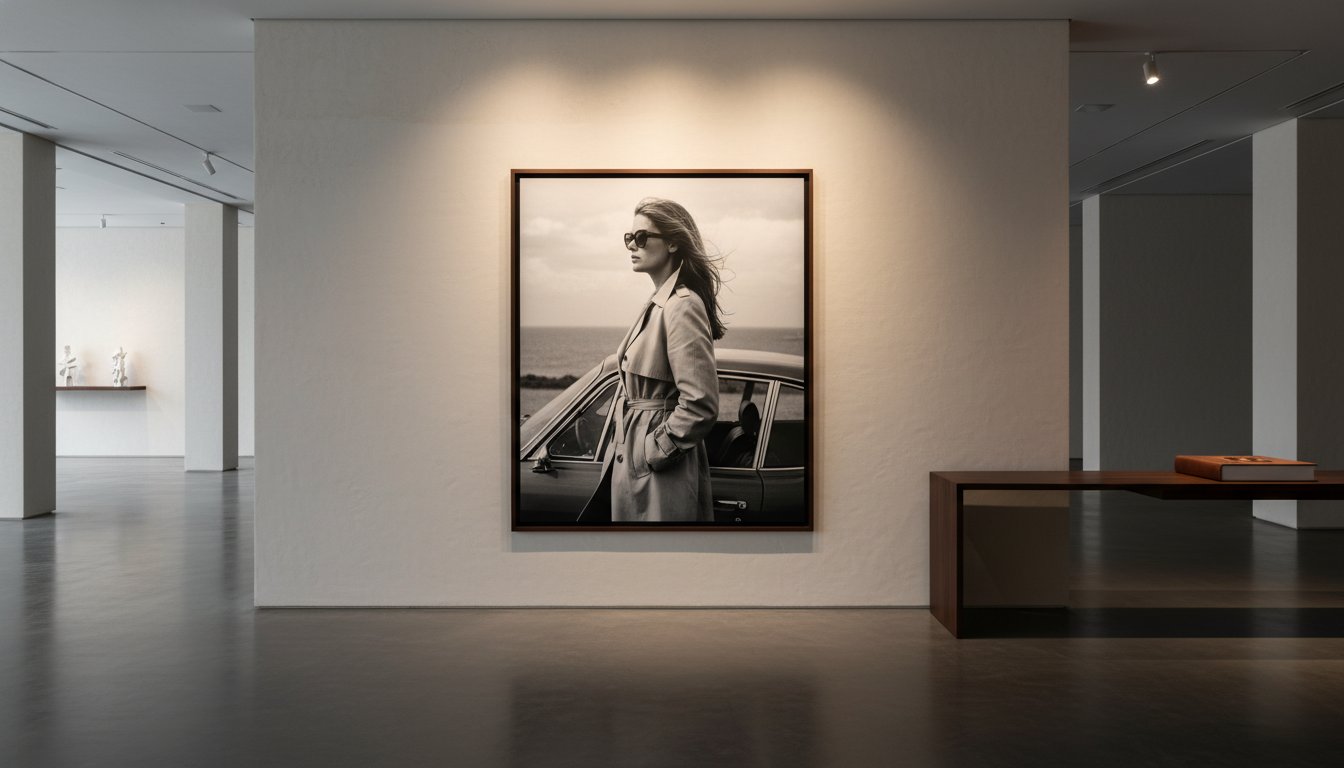
This guide illuminates a profound return to heritage and the evocative power of aspirational lifestyle imagery. You’ll discover how the current market prioritizes historical authenticity and artisanal craftsmanship, moving beyond the temporary to embrace works with genuine provenance. We’ll explore identifying artists with lasting value, from the sun-drenched narratives of Slim Aarons to the cinematic depth of vintage lobby cards. You’ll also learn the technical nuances of professional display, ensuring your collection serves as a bridge to a bygone era of elegance while maintaining its prestige for generations to come.

Key Takeaways

  • Understand the transition from conspicuous consumption to narrative-led collecting, where each piece serves as an experiential window into travel, legacy, and luxury.
  • Discover why the timeless elegance of the Slim Aarons Collection remains the definitive choice for those seeking to infuse their spaces with the vibrant energy of the golden age of travel.
  • Learn why photography collecting trends 2026 favor physical, museum-quality prints over digital assets as a response to the growing desire for archival permanence and tactile authenticity.
  • Explore the burgeoning nostalgia economy and how rare archives, such as Cinema Lobby Cards, offer a unique entry point for collectors seeking high-growth cultural milestones.
  • Master the art of the curatorial mix by learning how to seamlessly blend different eras and formats into a sophisticated home gallery that tells a unified, personal story.

The Evolution of Photography Collecting in 2026

The landscape of art acquisition has undergone a quiet but profound metamorphosis. As we observe the photography collecting trends 2026 has brought to the forefront, the era of conspicuous consumption has surrendered to a more thoughtful, narrative-led approach. Collectors are no longer seeking to simply fill wall space with recognizable trophies. Instead, they are building personal archives that speak to their individual histories and aesthetic aspirations. This shift has birthed the rise of “Experiential Art,” where imagery acts as a portal, evoking the sensory memories of high-end travel and the hushed luxury of a private estate.

New collectors are increasingly bypassing the sterile, high-pressure environments of global auction houses. They find more value in the intimate expertise of boutique galleries, where the relationship between curator and collector is one of shared passion. This preference for private sales stems from a desire for a guided journey, ensuring every acquisition fits within a broader domestic narrative. Curated Heritage represents the definitive collecting philosophy of 2026, characterized by the deliberate selection of archival works that bridge the gap between historical significance and contemporary interior elegance.

From Ownership to Stewardship

In 2026, the act of buying a fine art print is viewed as an act of stewardship. The disposable, “fast-art” aesthetic of previous years has lost its luster, replaced by a reverence for the permanent collection. Collectors now demand archival integrity and verified provenance, seeking pieces that have a soul. By anchoring a collection in the history of fine-art photography, modern investors ensure their acquisitions transcend temporary fashion. The market now rewards authenticity above all else, favoring works that come from established, protected archives over mass-produced alternatives.

The Influence of Global Luxury Travel

There is a striking correlation between the world of high-end hospitality and contemporary interior choices. As luxury travel becomes more about seclusion and “slow living,” homeowners are seeking to recreate that sense of sanctuary within their own four walls. View-centric photography, which captures expansive horizons or the intimate architectural details of iconic destinations, has become the dominant choice for interior designers. These works don’t just decorate a room; they transform it into a retreat. It’s about creating a home that feels like a destination, utilizing photography to provide a constant, visual connection to the world’s most elegant locales.

Dominant Visual Aesthetics: Minimalism vs. Aspirational Luxury

The visual landscape of the coming year is defined by a fascinating tension between two opposing poles. On one hand, the quietude of minimalism continues to offer a palate cleanser for the modern home, emphasizing negative space and skeletal compositions. On the other, we’re witnessing a vibrant hunger for the “jet-set” energy of the mid-century, a movement defined by “Aspirational Maximalism.” This aesthetic divide is a cornerstone of the photography collecting trends 2026 collectors are currently navigating. While some seek the meditative calm of a desert horizon, others are drawn to “heritage hues.” These are colors that feel lived-in and historically grounded, such as sun-bleached terracotta, deep ochre, and the saturated teals of a Mediterranean cove.

Beyond these primary movements, there’s a significant resurgence of urban motifs. Street photography, once viewed as purely documentary, is now being collected as a vital window into the past. These images capture the raw, unposed elegance of city life from decades prior, offering a gritty but sophisticated counterpoint to the polished nature of studio work. In a recent analysis of photography market trends, industry experts noted that the demand for historical context and portraiture is surging, as collectors look for art that tells a definitive story about the human experience.

To understand how contemporary studio portraiture continues this tradition of storytelling through the lens, you can read more about the work of Juraj Rašla Photography.

The Slim Aarons Effect: A 2026 Renaissance

The work of Slim Aarons remains the undisputed gold standard for those looking to infuse their interiors with a sense of prestige. His famous mantra of photographing “attractive people doing attractive things” resonates more than ever in 2026, serving as an antidote to the frantic pace of modern life. Integrating these iconic prints into high-end interiors isn’t just about decoration; it’s about adopting a lifestyle of unhurried elegance. Whether it’s a sprawling poolside scene in Palm Springs or a winter gathering in Gstaad, these works represent a stable investment in cultural capital. If you’re looking to anchor your living space with a piece that exudes effortless grace, you might consider how The Slim Aarons Collection can transform a room’s narrative.

Black and White: The Timeless Monochrome Revival

While color palettes shift with the seasons, black and white pictures remain the ultimate hedge against the volatility of decor trends. In 2026, the monochrome revival is driven by a deep appreciation for technical superiority. Without the distraction of color, the viewer is forced to engage with the structural elements of the image: the play of light, the sharpness of the grain, and the richness of the shadows. Monochrome photography creates powerful focal points in minimalist rooms, providing a sense of gravity that color often lacks. It’s a choice that reflects a discerning eye, prioritizing the foundational beauty of the photographic medium over fleeting trends.

The Tangibility Trend: Why Physical Prints Outperform Digital in 2026

The digital revolution, while expansive, has left a profound void that only the physical object can fill. As we observe the photography collecting trends 2026 has solidified, it’s evident that “digital fatigue” has become a powerful driving force in the high-end market. Although some industry voices once argued that digital art would dominate, the most discerning collectors have returned to the permanence of the physical print. A physical photograph offers a sense of provenance that a digital file simply cannot replicate. It’s a singular, archival object that exists in space, gaining character and history as it lives within your home. While a mass-produced poster is a temporary decorative placeholder, a museum-quality archival print is a lasting legacy piece that retains its technical integrity and cultural value over generations.

Archival Integrity vs. Digital Decay

In the curatorial world of 2026, technical superiority is the benchmark of a serious collection. Collectors are increasingly focused on the nuanced depth offered by C-type and Giclée processes, which represent the pinnacle of photographic production. The tactile nature of premium, acid-free paper is more than just a material choice; it’s a luxury marker that signifies an appreciation for the artisanal. Our commitment to localized, artisanal craftsmanship ensures that every print meets the rigorous 100-year archival standards. This permanence stands in sharp contrast to the ephemeral nature of digital assets. Files are subject to corruption, platform shifts, and the cold obsolescence of technology, whereas a physical print remains a stable, unchanging bridge to the past.

The Art of Bespoke Framing as a Value Multiplier

A print only reaches its full potential as a collectable object when it’s presented with the quiet authority it deserves. Professional framing has evolved into a sophisticated craft that acts as a premier value multiplier for any serious archive. In 2026, we see a distinct preference for “shadow box” frames and “hand-stained” finishes that emphasize the material quality of the wood. These deliberate choices do more than protect the work; they elevate it into a three-dimensional statement of intent. Investing in professional presentation is essential for preserving the long-term value of fine art photography. This process anchors the artwork within the architecture of your room, ensuring it serves as a sophisticated focal point that commands attention and inspires wonder in every observer.

Investing in Nostalgia: Cinema Lobby Cards and Rare Archives

The “Nostalgia Economy” has emerged as a significant force within the photography collecting trends 2026 has brought to light. Modern collectors are increasingly drawn to cultural milestones that offer a sense of continuity and shared history. This movement represents a fascinating crossover where film history meets fine art photography, transforming promotional materials into prized archival assets. By acquiring pieces that capture “cultural lightning,” investors are doing more than decorating; they are preserving the visual DNA of the twentieth century.

Personality-driven walls have become a hallmark of the 2026 interior, with a shift toward imagery that feels intimate rather than manufactured. This is why the work of Terry O’Neill and extensive music archives are currently in such high demand. These collections offer a window into the private worlds of icons, providing a level of “behind-the-scenes” access that staged studio portraits simply cannot match. If you are ready to begin your journey into this high-growth niche, you can explore our curated collection of Cinema Lobby Cards to find a piece of Hollywood history that resonates with your personal narrative.

Cinema Lobby Cards: The Compact Collectable

For the emerging collector, Cinema Lobby Cards represent one of the most accessible yet high-potential niches in the current market. What makes a lobby card truly rare is its provenance, often verified by original studio stamps and specific set numbers found on the reverse or in the margins. These pieces showcase the vibrant, often hand-tinted graphic design of mid-century Hollywood, offering a burst of color and narrative in a compact format. To achieve maximum impact, these small-format treasures are best displayed in tight, symmetrical groupings, allowing the viewer to follow the storyboard of a classic film across a single wall.

Music and Film Archives: Capturing Cultural Lightning

The enduring appeal of the 1960s and 70s remains a cornerstone of the 2026 market. Collectors are moving away from the “glossy” celebrity culture of the present, seeking instead the raw, unvarnished energy of the rock-and-roll era. Iconic photographers like Terry O’Neill were instrumental in defining this celebrity culture, often spending days or weeks with their subjects to capture moments of genuine vulnerability. This intimacy is exactly what 2026 collectors prize. These archives serve as a bridge to a bygone era of elegance and rebellion, ensuring that the spirit of the world’s most influential artists remains alive within the modern home.

Building a collection in the current climate requires a blend of emotional intuition and technical rigor. As we have explored, the photography collecting trends 2026 has solidified favor the “lived-in” gallery wall over the sterile museum look. Moving from a single acquisition to a cohesive personal gallery is a journey of refinement. It’s about creating a visual dialogue between different eras and scales without losing the thread of your personal narrative. The “Golden Rule” for the modern collector remains constant: buy what you love, but verify the source with unwavering discipline. In a market that prizes tangibility and heritage, partnering with a specialist gallery is the most secure way to ensure that your investment possesses the archival integrity required to last a century.

To begin your 2026 collecting journey, consider these five foundational steps:

  • Define the Narrative: Identify a core theme, whether it’s the sun-drenched hedonism of the mid-century or the raw energy of the music archives.
  • Select an Anchor: Invest in one large-format, museum-quality print to serve as the room’s visual gravity point.
  • Diversify the Scale: Mix large-scale works with smaller artifacts, such as Cinema Lobby Cards, to add layers of visual interest.
  • Verify the Provenance: Only acquire works from galleries that provide clear, documented links to original archives.
  • Unify Through Framing: Use bespoke framing to create a consistent aesthetic language across disparate pieces.

Curating a Narrative-Driven Gallery Wall

A successful gallery wall in 2026 moves beyond a random assortment of images to tell a deliberate story. You must decide between the “grid” hang, which offers a formal and minimalist structure, and the “salon” hang, which allows for a more dynamic, historical feel. Using a central “anchor” print, perhaps a sprawling landscape from the Slim Aarons Collection, provides a focal point that grounds the space. From there, you can orbit smaller, intimate works that echo the colors or themes of the central piece. This layered approach ensures that your collection feels like a curated heritage rather than a temporary decoration.

The Galerie Prints Curation Advantage

We operate as guardians of photographic heritage, sourcing our collections from world-renowned archives, including Getty and the private archives of Terry O’Neill. Our bespoke process is designed to support you from the initial selection to the final, professional framing. We believe that a photograph is only truly complete when it is presented with the precision it deserves, using localized, artisanal craftsmanship that meets the highest archival standards. By choosing works with verified provenance, you aren’t just buying art; you’re securing a piece of history. Explore our curated collections and start your 2026 collection today.

The Future of Your Private Archive

The landscape of photography collecting trends 2026 has revealed a definitive pivot toward the physical, where the weight of a museum-grade print far outweighs the flicker of a digital screen. By prioritizing archival integrity and narrative depth, you’re curating a bridge to a more elegant era. Whether you’re drawn to the sun-soaked narratives of the mid-century or the intimate grit of rare music archives, the path forward is one of intentional stewardship. You’re building a legacy that transcends temporary fashion and honors the technical mastery of the medium.

As an official Getty Images Gallery partner, we ensure that every acquisition possesses the historical authenticity and technical excellence required for serious collectors. Our commitment to artisanal craftsmanship, paired with bespoke museum-quality framing and reliable global shipping on archival-grade prints, guarantees that your chosen works arrive as lasting cultural milestones. It’s an invitation to transform your home into a sanctuary of storied beauty and quiet prestige, anchored by the permanence of the physical object.

Browse the Slim Aarons Collection at Galerie Prints and begin building a collection that will inspire wonder for generations to come.

Frequently Asked Questions

What is the most popular style of photography to collect in 2026?

The most sought-after style in 2026 is aspirational lifestyle photography, specifically imagery that evokes the “jet-set” era and the golden age of luxury travel. Collectors are increasingly drawn to works that function as windows into exclusive locales, favoring “heritage hues” like deep ochre and sun-bleached terracotta. This trend reflects a broader desire for “Experiential Art” that transforms a living space into a personal sanctuary of worldly elegance.

Is photography a good investment compared to traditional paintings?

Photography has solidified its status as a robust investment, with archival works held for 20 to 25 years showing an average annualized return of 11 percent as of late 2025. Unlike traditional paintings, photography offers a unique entry point into the blue-chip market through limited edition prints. As photography collecting trends 2026 continue to favor physical archives, the market value for verified, museum-quality works remains remarkably stable compared to more volatile art forms.

How can I tell if a photography print is “fine art” or just a poster?

You can distinguish a fine art print from a poster by examining the paper quality and the specific printing method employed. Fine art photography is produced on heavy, acid-free archival paper using sophisticated C-type or Giclée processes that ensure narrative depth and color longevity. In contrast, posters are typically mass-produced on thin, non-archival stock and lack the technical superiority and verified provenance found in a gallery-grade archive.

What is the best way to protect my photography prints from fading?

Protecting your collection requires a combination of UV-protective glazing and archival-grade mounting materials. It’s essential to house your prints behind museum-quality glass that filters out harmful light rays, which are the primary cause of chromatic degradation. Additionally, maintaining a stable, humidity-controlled environment and avoiding direct sunlight will ensure your investment meets 100-year archival standards and retains its material integrity.

Why are Slim Aarons prints so popular for modern interior design?

Slim Aarons remains a cornerstone of modern interior design because his work perfectly captures a sense of unhurried, aspirational elegance that is rare in the digital age. His “attractive people doing attractive things” mantra provides a visual antidote to the frantic pace of contemporary life. These prints act as sophisticated anchors in a room, offering a timeless aesthetic that bridges the gap between mid-century nostalgia and modern luxury.

What are cinema lobby cards and are they worth collecting?

Cinema lobby cards are small-format promotional storyboard stills once used by theaters to entice audiences, and they’ve become a high-growth niche for collectors today. Their value lies in their rarity, often marked by original studio stamps and their role as cultural milestones. In the current nostalgia economy, these cards offer an accessible yet prestigious way to own a tangible piece of Hollywood’s photographic heritage.

How do I choose the right frame for a large-format photograph?

For large-format photographs, you should opt for a frame that provides both structural support and visual gravity, such as a hand-stained shadow box. A deep profile frame creates a three-dimensional presence that elevates the print into a collectable object. This bespoke approach ensures the frame acts as a sophisticated border that complements the architecture of your space without distracting from the visual impact of the artwork.

Where can I buy authentic Slim Aarons and Terry O’Neill prints online?

You can acquire authentic, museum-quality prints from world-renowned photographers through Galerie Prints, an official Getty Images Gallery partner. Our collections include the definitive Slim Aarons Collection and iconic Terry O’Neill photography, all produced to rigorous archival standards. By sourcing directly from these protected archives, you ensure that every piece in your collection possesses the historical authenticity and technical excellence required for a serious and lasting investment.

Bold and Vibrant Movie Posters: A Collector’s Guide to Chromatic Cinema Art

According to the Pantone Color Institute, 87% of consumers globally cite color as the single most decisive factor in their initial selection of an object. This visceral response is exactly why bold and vibrant movie posters serve as such powerful chromatic anchors within a sophisticated interior. While you likely appreciate the kinetic energy these masterpieces bring to a room, the fear of acquiring a pixelated, low-quality reprint often hinders the pursuit of a truly curated collection. It’s a valid concern for any serious collector who understands that a mint condition print can be valued 40% higher than one showing signs of neglect.

We understand the hesitation that comes with integrating high-saturation palettes into an existing decor scheme, as well as the technical concerns regarding the archival preservation of delicate inks. This guide offers a deep dive into the history and psychology of cinematic color, revealing how legendary designers utilized specific hues to command attention. You’ll discover how to identify iconic, high-impact posters and learn the curatorial secrets to styling them with the same elegance found in a premier gallery. From exploring the “why” behind a director’s palette to sourcing museum-quality, framed cinema art, we’ll ensure your collection remains a lasting piece of cinematic history.

Key Takeaways

  • Master the visceral language of color theory in cinema, recognizing how strategic palettes like “Orange and Teal” create immediate visual hierarchy and emotional resonance.
  • Apply the “Anchor Principle” to integrate bold and vibrant movie posters into your living space, transforming a singular chromatic masterpiece into the definitive core of your room’s aesthetic.
  • Examine the design heritage of cinematic icons like Jaws and Star Wars to understand why certain high-saturation layouts remain timeless collector favorites.
  • Identify the technical distinctions between fugitive mass-market inks and museum-grade archival Giclée to preserve the chromatic integrity and long-term value of your investment.
  • Elevate your collection from mere decoration to fine art by understanding the role of bespoke framing in protecting against environmental damage and “mat burn.”

The Psychology of Saturated Cinema: Why Bold Movie Posters Endure

To define bold and vibrant movie posters is to understand the deliberate manipulation of saturation, contrast, and visual hierarchy to command a viewer’s gaze. These works aren’t merely advertisements; they’re chromatic anchors that utilize primary colors to bypass the intellect and speak directly to the subconscious. Red, for instance, is the most visceral signal in the designer’s arsenal, used to instill a sense of urgency or impending danger. Conversely, yellow is employed to radiate a kinetic energy, suggesting the optimism of a musical or the manic pace of a comedy. In a world increasingly defined by minimalist, neutral interiors, these high-impact pieces serve as essential statement pieces that provide a room with its pulse and personality.

The medium’s evolution reflects a journey from the tactile, pigment-heavy lithographs of the early studio era to the sophisticated precision of modern Giclée prints. While the technology has shifted toward high-definition clarity, the human attraction to vivid, saturated imagery remains constant. This enduring appeal is rooted in the history of film posters, where the primary objective was to cut through the visual noise of a bustling city street. Today, that same vibrancy allows a print to hold its own against contemporary architectural elements, ensuring the artwork remains the focal point of any collection.

The Technicolor Legacy and the Birth of Vibrancy

Early 20th-century printing limitations actually birthed the bold aesthetic we crave today. Because lithographic processes favored dense, opaque pigments, artists were forced to rely on high-saturation colors to ensure the imagery wouldn’t fade into the background. This “illustrated era” established the archetypes of cinematic color, moving from heavy-handed ink applications toward a more refined photographic realism. It’s a legacy of artisanal craftsmanship where the necessity for bold visibility transformed into a high-art form that still defines our expectations of bold and vibrant movie posters.

Color as Narrative: Setting the Tone Before the First Frame

Vibrancy acts as a silent narrator, signaling a film’s genre before a single frame is projected. Musicals and lighthearted comedies often employ a “high-key” palette of luminous pastels and bright primaries to suggest levity. In contrast, action and science fiction titles rely on high-contrast saturation to heighten the sense of drama and scale. Chromatic storytelling is the use of intense palettes to bypass logic and trigger emotion. By utilizing these visceral signals, poster artists create a lasting psychological imprint that defines the cinematic experience long after the credits roll.

The Chromatic Spectrum of Film: Decoding the MVP Hues of Poster Design

The visual language of cinema is built upon a foundation of deliberate, often mathematically precise color choices. While the previous discussion established the psychological impact of saturation, a deeper analysis reveals that specific hues dominate the collector’s landscape for their ability to command a room’s atmosphere. These palettes aren’t accidental; they’re calculated attempts to create a visual hierarchy that guides the eye through complex narratives. When we curate bold and vibrant movie posters, we’re essentially selecting the chromatic key for an entire living space. From the ubiquitous contrast of the modern blockbuster to the rare, “rebel” hues of independent cinema, understanding this spectrum is vital for any serious investor in photographic art.

True boldness doesn’t always require neon intensities. Often, the most striking impact comes from the interplay between deep, velvety blacks and razor-sharp highlights. This high-contrast approach creates a sense of three-dimensional depth, allowing a flat print to feel like a window into another world. Whether you’re drawn to the warmth of primary reds or the cool sophistication of deep blues, the way these colors interact with your home’s lighting will ultimately determine the work’s longevity as a focal point.

Orange and Teal: The Complementary King

There’s a biological reason why the “Orange and Teal” palette dominates the blockbuster era. This specific complementary contrast pits warm skin tones against cool, atmospheric backgrounds, making the human element pop with startling clarity. It’s a masterclass in visual balance that you’ll frequently see in our Star Wars Limited Edition Prints, where cosmic blues meet the fiery glow of lightsabers. In a home environment, these posters bridge the gap between warm incandescent lighting and cool natural daylight, making them remarkably versatile for various wall colors.

Red: The Signal of Danger and Desire

Red remains the loudest signal in the designer’s toolkit, used to instill an immediate sense of suspense or passion. From the iconic, sharp typography of the Jaws title card to the brooding, Hitchcockian depths of a classic thriller, red-dominant posters demand a viewer’s full attention. Because red is such a high-energy hue, these pieces act as perfect anchors in neutral or monochromatic rooms. However, the intensity of these pigments requires careful consideration; we often recommend a bespoke framing service to provide a sophisticated buffer between the artwork’s heat and your wall’s texture, ensuring the color doesn’t “bleed” visually into the surrounding decor.

While orange, teal, and red are the heavy hitters of the industry, rare hues like deep violet or acid green offer a unique opportunity for collectors looking for something unconventional. These “rebel” colors often signal cult classics or avant-garde masterpieces, providing a distinct visual interest that breaks away from standard marketing tropes. By diversifying the chromatic range of your collection, you ensure that your bold and vibrant movie posters reflect a broad and sophisticated appreciation for cinematic history. To explore other ways of bringing intense color into your home through hands-on creative projects that complement your collection, you can learn more about unique kits designed for high visual impact.

Iconic Landmarks in Vibrant Design: From Star Wars to Jaws

Historical milestones in poster design often serve as the definitive blueprints for modern collecting. To understand the enduring power of bold and vibrant movie posters, one must look to the mid-century revolution led by Saul Bass. Bass redefined the medium by stripping away narrative clutter, favoring minimalist shapes and uncompromising palettes that created timeless icons. His work for films like Vertigo or Anatomy of a Murder proved that a singular, high-saturation hue could communicate more than a thousand words. This philosophy of “visual punch” laid the groundwork for the blockbuster era, where color became as much a part of the film’s identity as the lead actors themselves.

Collectors often find that the bold energy of these posters is perfectly complemented by the work of legendary artists like Terry O’Neill. While O’Neill’s work is celebrated in the context of fine art photography, his ability to capture the high-contrast, vibrant essence of cinematic icons mirrors the aesthetic goals of the great poster designers. This synergy between the promotional art and the photographic record creates a layered, sophisticated narrative on any gallery wall. Whether it’s the stark, predatory contrast of Roger Kastel’s Jaws design or the brooding intensity of an O’Neill portrait, the focus remains on the evocative power of light and shadow.

The Star Wars Aesthetic: A Galaxy of Color

The Star Wars Limited Edition Prints represent the gold standard for space-opera vibrancy. Analyzing the “Style A” posters by the Hildebrandts or the “Style B” by Tom Jung reveals a masterclass in cosmic blues and luminous light-saber glows. These bold and vibrant movie posters utilize high-key highlights to create a sense of three-dimensional depth against the infinite black of space. For the serious collector, these prints are more than nostalgia; they’re meticulously crafted examples of how color can define an entire mythological universe.

Lobby Cards: The Vibrant Miniature

For those seeking a condensed dose of cinematic history, cinema lobby cards provide a fascinating alternative. Historically, these smaller 10×8 cards often featured hand-tinted vibrancy designed to lure audiences into the theater from the lobby. Despite their smaller stature, they offer a color-dense visual experience that can rival a full-sized one-sheet. They’re particularly effective when grouped in a series, allowing the collector to showcase a spectrum of hues and narrative moments in a more intimate, curatorial arrangement.

Curating the Vibrant Wall: Styling High-Impact Posters in Modern Interiors

Integrating bold and vibrant movie posters into a sophisticated interior requires a departure from the casual displays of one’s youth. The transition from a mere fan to a serious collector is most evident in the application of the Anchor Principle. This curatorial strategy involves selecting a single, high-impact work to serve as the definitive chromatic source for an entire room. Rather than competing with existing decor, a strategically placed poster dictates the secondary accents in the space, such as the hue of a velvet armchair or the subtle tint of a glass vase. By allowing the artwork to lead the narrative, you transform a living area into a cohesive, gallery-like environment.

To avoid the common “dorm room” trap, the presentation must match the prestige of the print itself. High-saturation cinema art demands the structure and weight of professional framing to elevate it from a temporary advertisement to a permanent fixture of photographic heritage. A thin, plastic frame will often bow or reflect light in a way that obscures the ink’s depth. Instead, look toward artisanal craftsmanship that provides a physical presence, ensuring the work commands the respect it deserves within your architectural setting.

Balancing Boldness with Neutrality

In the world of interior design, the 60-30-10 rule provides a reliable framework for managing intensity. Ideally, 60% of the room remains neutral, 30% carries a secondary color, and the final 10% is reserved for the boldest accent, provided by your cinema art. These bold and vibrant movie posters require significant breathing room, or negative space, on the wall to prevent visual fatigue. Choosing matting colors is equally critical; a neutral, acid-free mount in a soft white or deep charcoal can enhance the primary hues of the poster without competing for dominance.

The Gallery Wall: A Visual Dialogue

Creating a gallery wall allows for a sophisticated dialogue between different artistic mediums. You might pair a high-saturation Star Wars print with a series of black and white pictures to create a curated, timeless look. This contrast allows the vibrant colors to feel even more intentional while the monochromatic photography provides a grounding, elegant counterpoint. To achieve a professional finish, always use museum-grade mounting techniques to ensure your posters sit perfectly flat, avoiding the unsightly ripples that often plague lesser displays.

Proper lighting is the final step in maximizing the “pop” of your collection. While you want to illuminate the vibrant inks, protection against UV damage is paramount to prevent the fugitive pigments from fading over time. Utilizing specialized art lighting with UV-filtering glass ensures that the colors remain as striking as the day they were printed. To begin building your own curated display, explore our full range of vintage movie posters and bespoke framing services.

Preservation and Presentation: The Galerie Prints Approach to Cinema Art

The pursuit of bold and vibrant movie posters is ultimately an act of cultural stewardship. While a mass-market reprint might offer a temporary visual thrill, it lacks the material integrity required for a lasting collection. Most “off-the-shelf” posters are produced using fugitive inks on acidic paper, leading to inevitable fading and brittleness within just a few years. At Galerie Prints, we counter this ephemeral approach with archival Giclée printing on museum-grade cotton rag paper. This method ensures that the intense reds and deep cosmic blues of your favorite cinema art remain as vivid for future generations as they are today.

Our Bespoke Framing Service is the final, essential step in this preservation journey. Choosing the right wood and finish is a nuanced process that should complement, not overshadow, the artwork’s energy. For a high-contrast action piece, a sleek, hand-finished black frame often provides the necessary architectural boundary. For more nostalgic, hand-tinted works, a natural dark oak can add a layer of warmth and historical weight. This artisanal attention to detail ensures that every piece from our curated collection, whether it’s a rare Star Wars edition or a Terry O’Neill photograph from a legendary film set, is presented with the prestige it deserves.

The Science of Archival Vibrancy

True archival quality is found in the microscopic details of production. By utilizing acid-free paper, we eliminate the risk of “mat burn” and the yellowing that plagues lesser prints over the decades. Our use of anti-reflective glass is another significant advantage; it allows the viewer to experience the full depth of the color palette without the distraction of room glare. Because our production is localized in London, we maintain a rigorous standard of quality control that simply cannot be replicated by mass-production facilities. This ensures your bold and vibrant movie posters retain their visual punch indefinitely.

Investing in Cinema Heritage

Collectors recognize that limited editions and rare vintage finds hold their value far better than generic, mass-produced imagery. Investing in these pieces is a commitment to a bygone era of elegance and a celebration of cinematic history. The Galerie Prints guarantee represents a bridge between that historical significance and modern interior aesthetics, ensuring your purchase is a stable, lasting asset. To begin your journey into high-end cinema art, explore our curated collection of vintage movie posters and limited editions.

Elevating Your Space with Cinematic Heritage

Collecting cinema art is far more than a nod to nostalgia; it’s a strategic investment in visual storytelling. By understanding the psychological weight of specific hues and the historical significance of designers like Saul Bass, you can transform any room into a curated experience. Whether you’re utilizing the “Anchor Principle” to define a room’s palette or creating a sophisticated dialogue with monochromatic photography, the impact of bold and vibrant movie posters lies in their unique ability to bridge the gap between historical heritage and contemporary interior aesthetics.

True stewardship of these masterpieces requires a commitment to material excellence. Galerie Prints operates as a specialist in high-end photographic archives, ensuring that every piece, from the Terry O’Neill photography collection to our Star Wars Limited Edition Prints, is preserved using museum-quality materials. Our bespoke framing service provides the final, essential layer of protection and prestige, utilizing artisanal methods to safeguard your investment. We invite you to discover our hand-curated collection of iconic movie posters and bespoke framing. Begin your journey as a guardian of photographic history and bring the enduring energy of the silver screen into your home today.

Frequently Asked Questions

What makes a movie poster ‘bold and vibrant’ rather than just colorful?

A bold poster is defined by its strategic use of saturation and high-contrast tonal ranges to command a clear visual hierarchy. While a colorful design may simply utilize a broad palette, bold and vibrant movie posters employ color as a narrative tool to direct the viewer’s eye with precision. This intentionality creates a visceral impact that transcends mere decoration, turning the print into a definitive chromatic anchor for a room.

How can I tell if a movie poster is a high-quality archival print or a cheap reproduction?

High-quality archival prints are typically produced on heavy, acid-free cotton rag paper using Giclée pigment inks rather than the thin, fugitive dyes found in mass-market reproductions. You can often identify a cheap reprint by its smooth, glossy sheen and lack of textural depth. In contrast, museum-quality cinema art possesses a tactile, matte finish and a depth of color that remains stable for decades.

Will the vibrant colors in my movie poster fade if I hang it in a sunny room?

Fugitive pigments will inevitably fade if exposed to direct sunlight without the protection of UV-filtering glass. To preserve the intensity of your collection, we recommend hanging pieces away from direct light sources and utilizing museum-grade glazing. This specialized glass blocks up to 99% of harmful ultraviolet rays, ensuring the ink’s vibrancy remains uncompromised by environmental exposure.

What is the best frame style for a bold, high-contrast movie poster?

A sophisticated, minimalist frame in a substantial material like hand-finished black wood or dark oak is often the superior choice for high-contrast art. The frame should act as a quiet boundary that focuses the eye inward rather than competing with the artwork’s energy. Avoid overly ornate moldings, as they can clutter the visual field and diminish the impact of the poster’s primary color palette.

Can I mix vibrant movie posters with traditional fine art photography in the same room?

Mixing high-saturation cinema art with traditional black and white photography creates a compelling visual dialogue that adds depth to a curated interior. The monochromatic tones of a Terry O’Neill portrait provide a grounding counterpoint to the kinetic energy of bold and vibrant movie posters. This juxtaposition allows each medium to breathe, ensuring the room feels like an intentional gallery rather than a cluttered exhibition.

Why are limited edition Star Wars prints considered more ‘vibrant’ than standard posters?

Star Wars Limited Edition Prints are often considered more vibrant because they’re produced using high-definition Giclée processes that capture a wider color gamut than standard offset theatrical posters. These editions are meticulously color-corrected to preserve the luminous glow of lightsabers and the deep, atmospheric blues of space. This technical superiority results in a level of chromatic density that standard theatrical releases simply can’t match.

What is the difference between a movie poster and a cinema lobby card in terms of color?

Cinema lobby cards differ from posters in their production history, often featuring hand-tinted colors or photographic stills that offer a more intimate, saturated aesthetic. While a full-sized one-sheet relies on large-scale visual punch, a lobby card provides a condensed dose of vibrancy in a smaller format. Their photographic origins often lend them a richer, more nuanced color palette than the illustrative style found in many theatrical posters.

How do I choose the right size for a bold poster to avoid overwhelming a small space?

Selecting the right size requires a careful balance between the artwork’s intensity and the room’s negative space. A large, bold poster can easily overwhelm a small room if it isn’t balanced by neutral surroundings and sufficient wall space. We suggest measuring your wall and ensuring the frame has enough breathing room to prevent the high-saturation colors from making the architecture feel claustrophobic.

How to Value Fine Art Photography Prints: A Collector’s Guide for 2026

Did you know that Gen Z and Millennial collectors are now allocating up to 26% of their entire portfolios to art, signaling a profound shift toward the tangible in our increasingly digital age? You likely feel the magnetic pull of a perfectly captured moment, yet you might worry about the risk of overpaying for what is essentially a glorified poster. It’s a natural hesitation for those who seek to bridge the gap between a beautiful interior and a meaningful investment. Learning how to value fine art photography prints requires you to look past the surface of the image to find the archival soul of the work itself.

This guide will help you master the nuances of photographic valuation, from the scarcity of limited editions to the tactile excellence of museum-grade materials. You’ll gain the confidence to acquire works from high-end galleries with a clear understanding of what creates lasting worth. We’ll explore the essential triad of artist legacy, provenance, and artisanal integrity, ensuring your next acquisition is a piece of history that resonates for generations.

Key Takeaways

  • Master how to value fine art photography prints by evaluating the critical triad of artist legacy, archival provenance, and the technical superiority of the physical object.
  • Learn to identify the hallmarks of material excellence, specifically the role of museum-grade papers and pigment-based inks in ensuring long-term value.
  • Navigate the distinct market tiers, from emerging talent to iconic heritage archives, and understand why cultural nostalgia drives demand in niches like music photography.
  • Recognize the necessity of bespoke framing as a protective architectural extension that uses museum-grade glass to preserve clarity and historical authenticity.
  • Develop a sophisticated strategy for building a thematic collection that prioritizes narrative depth and archival integrity over mere decoration.

The Fundamentals of Valuation: Provenance and Artist Reputation

To truly grasp how to value fine art photography prints, you must first appreciate the concept of provenance. This term refers to the documented lineage and origin of a specific physical work. It’s the pedigree that separates a collectible asset from a simple reproduction. While the modern world is flooded with ephemeral digital imagery, iconic film photography offers a permanent historical record. This focus on history aligns with fundamental art valuation principles, which dictate that a work’s journey from the artist to the current owner is a primary driver of its worth.

When a collection is affiliated with prestigious archives like the Getty Images Gallery, the market value naturally ascends. This is the “curator effect” in action. A gallery’s discerning selection acts as a powerful seal of quality, assuring the collector that the work holds both artistic and historical weight. The curation process filters out the temporary and highlights the timeless, providing a sense of security for those looking to invest in high-caliber visual art.

The Prestige of the Name: Slim Aarons and Terry O’Neill

Specific artists have become synonymous with value. Slim Aarons remains a cornerstone of any serious collection, representing the pinnacle of aspirational lifestyle photography. His ability to capture a world of leisure and high society makes his work a perennial favorite for luxury interiors. Meanwhile, Terry O’Neill photography is prized for its candid intimacy. His portraits of cultural icons are more than just pictures; they are historical records of 20th-century celebrity. Market demand for these masters is further solidified when their work is featured in museum retrospectives or definitive monographs, which signals to the secondary market that the artist’s legacy is secure.

Verifying Authenticity through Heritage Archives

The technical source of a print is a non-negotiable factor in its valuation. You should always look for prints sourced from original negatives or transparencies, as these retain the artist’s intended detail and tonal range. Official estate stamps and gallery certificates of authenticity are the keys to verifying this link. Heritage archives offer a stable valuation that is often missing with independent, unrepresented artists. It’s this archival connection that transforms a beautiful image into a lasting piece of history. By acquiring works that have been preserved through professional archives, you are investing in a piece that has been guarded with the same meticulous care you will provide in your own home.

Technical Integrity: How Material Excellence Dictates Price

The physical manifestation of a photograph is where the ethereal meets the tangible. When considering how to value fine art photography prints, the choice of substrate is paramount. Standard photographic papers, while suitable for family albums, lack the structural integrity required for a serious collection. Museum-grade archival papers, often crafted from 100% cotton rag or alpha-cellulose, offer a weight and texture that standard lustre or pearl finishes simply cannot match. This material excellence isn’t just about aesthetics; it’s about the permanence of the object as a historical artifact.

Understanding how to value fine art photography prints also involves recognizing that premium production is a science of preservation. Pigment-based inks represent the gold standard in contemporary photography. Unlike dye-based alternatives that may shift or fade within a short decade, archival pigments are designed to resist the ultraviolet assault of natural light. This technical superiority ensures that the deep charcoals and subtle highlights of a masterwork remain unchanged for generations. While the physical production costs represent a necessary investment in quality, they are only a fraction of the final valuation. The price reflects the artist’s vision, the archive’s prestige, and the rarity of the physical artifact.

Limited Editions vs. Open Editions

Scarcity is a potent driver of market value. A print numbered “1 of 50” commands a significant premium because its existence is strictly capped, creating a finite supply that can appreciate as the artist’s reputation grows. Artist Proofs, or APs, sit even higher in the collector’s hierarchy. Originally intended for the artist’s personal use to check color and detail, these rare specimens are often the most coveted by serious connoisseurs. For those beginning their journey, open editions from prestigious archives provide an accessible entry-point into fine art photography without sacrificing the technical integrity of the print itself.

The Science of Archival Longevity

Archival quality is a professional standard that guarantees a print will remain chemically stable and visually vibrant for over 100 years. This longevity depends on a holistic approach to production where every element is acid-free. From the mounting boards to the adhesives used in the framing process, the absence of acidic compounds prevents the “yellowing” or “brittleness” that plagues lesser works. This technical rigor acts as a protective shield for your investment. By prioritizing these artisanal standards, you ensure that environmental degradation doesn’t erode the beauty or the worth of your collection over time. You might explore our Music Archives to see how these archival standards preserve the raw energy of rock history in stunning detail.

The Market Context: Understanding Price Segments

The photographic art market operates within a sophisticated hierarchy that dictates the financial trajectory of a print. Understanding how to value fine art photography prints requires a clear view of these distinct tiers. At the foundation, we find emerging artists who offer a fresh perspective and high potential for future appreciation. Above them sit mid-career photographers, those with a consistent history of exhibitions and a growing collector base. Finally, the iconic heritage tier consists of the masters whose works have become part of the collective consciousness. Their prints aren’t just images; they are cultural assets with a proven track record of stability. To capitalize on the financial potential of such assets, Artsy Traders specializes in managing and disposing of direct investments in Blue-Chip art, offering a strategic approach to high-end collecting. The value here is anchored in historical significance, ensuring these works remain coveted regardless of shifting trends.

Cultural relevance often acts as a catalyst for sudden appreciation. A specific aesthetic might align with the current zeitgeist, driving demand for styles that were once overlooked. This is particularly evident in music photography, where cultural nostalgia elevates a candid backstage moment into a high-demand masterwork. These pieces capture the raw energy of a bygone era, appealing to both the heart and the investment portfolio. Benchmarks for these valuations are frequently set at international art fairs and prestigious auctions. Public sales data from these events provides a transparent baseline for gallery pricing, helping collectors understand where a specific print sits within the broader market landscape.

Primary vs. Secondary Art Markets

The journey of a print begins in the primary market. This is the first time a work is sold, typically through an authorized gallery like Galerie Prints. This initial transaction establishes the artist’s retail value and supports their ongoing career. Over time, the secondary market or resale market validates this price. When a print reappears at auction and sells for a higher amount, it confirms the initial investment’s worth. Buying from established galleries is essential because it ensures the provenance necessary for future liquidity. It’s the difference between owning a beautiful object and holding a verifiable piece of history that other collectors will recognize and value.

Why Niche Collections Carry Premium Value

Certain segments of the market carry a unique “collector’s premium” due to their historical crossover appeal. For instance, the specific allure of cinema lobby cards lies in their rarity and their role as physical artifacts of Hollywood’s golden age. Similarly, limited edition Star Wars prints or music archive collections bridge the gap between traditional memorabilia and fine art. These niche acquisitions often command higher prices because they tap into deeply held passions while maintaining the archival integrity of a gallery-grade print. They offer a rare opportunity to own a tangible fragment of a cultural phenomenon, combining cinematic history with the technical excellence of archival production.

Presentation as Valuation: The Role of Bespoke Framing

A masterwork’s journey does not end at the edge of the paper. When determining how to value fine art photography prints, the presentation is often the silent partner that dictates the final worth. A professional frame is far more than a decorative border; it is an architectural extension of the art itself. It provides the structural sanctuary required to preserve the print’s integrity while elevating its presence within a space. Without this protective layer, even the most prestigious archival print remains vulnerable to the elements. High-end collectors recognize that a “Ready-to-Hang” piece carries a luxury premium, offering the convenience of immediate installation without the risk of improper handling by a third party.

Technical superiority in framing involves the use of museum-grade glass, which serves two critical functions: clarity and protection. This specialized glazing is nearly invisible, reducing reflections to ensure the viewer connects directly with the image’s depth. More importantly, it provides a robust barrier against ultraviolet light, preventing the gradual solar degradation that can erode a print’s market value. Choosing an “off-the-shelf” frame is a gamble few serious collectors are willing to take. Inexpensive materials often lead to wood outgassing or acid migration, chemical processes that can permanently stain the substrate and destroy the very asset you seek to protect.

Archival Mounting and Protection

The internal mechanics of a frame are as vital as its exterior. Professional curators utilize “hinge mounting” with acid-free Japanese paper and wheat starch paste. This method is vastly superior to permanent adhesives because it allows the print to expand and contract with changes in humidity, preventing the “buckling” that devalues a work. Furthermore, the use of spacers and deep mounts ensures the delicate surface of the photograph never touches the glass. This physical gap prevents moisture traps and ensures the “Certificate of Authenticity” can be safely preserved within the framing package, keeping the print’s provenance physically bonded to the work.

Aesthetic Elevation for Interior Design

The right frame scale can transform a modest print into a significant focal point, creating a psychological sense of “finished” luxury. To maximize value, the frame style should reflect the era of the imagery. For example, a piece from the Slim Aarons collection finds its natural home in a sleek, mid-century modern frame that mirrors the glamour of the subject matter. This aesthetic alignment does more than please the eye; it reinforces the historical context of the photograph. When a piece is presented with such meticulous attention to detail, it instills a sense of pride in the collector and signals to any future buyer that the work has been treated with the reverence it deserves. To preserve the lasting worth of your collection, always entrust your acquisitions to a bespoke framing service that prioritizes archival integrity.

Building a Collection with Galerie Prints

Building a collection is an intimate act of storytelling. It’s a transition from simply decorating a room to curating a legacy. To begin this journey, many collectors find success by focusing on a specific theme that resonates with their personal history or aesthetic preferences. For instance, black and white pictures offer a monochromatic elegance that serves as a sophisticated anchor for any interior. By mastering how to value fine art photography prints, you move from being a passive observer to an active guardian of photographic heritage. Galerie Prints facilitates this transition by offering end-to-end curation, ensuring that the narrative of history and elegance is never interrupted by subpar production or mismatched presentation.

Our commitment to artisanal craftsmanship is more than a promise; it is a guarantee of archival integrity. Every print we produce is a tangible piece of history, handled with the reverence it deserves. We bridge the gap between the legendary archives of the past and the modern passion for interior aesthetics. This holistic approach means that the technical superiority we discuss is embedded in every fiber of the paper and every joint of the bespoke frame. When you acquire a piece through our gallery, you aren’t just buying an image. You are investing in a curated experience that transforms your living space into a private gallery of timeless moments.

Identifying Your Personal Aesthetic Investment

The first rule of collecting is to buy what you love. However, a discerning collector also keeps a steady eye on an artist’s staying power. Utilizing a gallery’s expertise allows you to navigate the vast archives of masters like Terry O’Neill or Slim Aarons with confidence. You might choose to build a gallery wall that blends iconic celebrity portraits with more personal, atmospheric landscapes. This blend of established market value and personal style creates a collection that is both a financial asset and a reflection of your worldly perspective. Our curators are here to help you identify those pieces that offer both emotional resonance and long-term stability.

The Journey from Archive to Wall

The process of selecting your next masterwork is a measured and luxurious experience. Our platform allows you to meticulously choose the paper type, the exact dimensions, and the bespoke framing that best suits your environment. When your print arrives, the unboxing is a significant moment; it’s the physical arrival of a piece of history. To ensure your investment maintains its worth, consider the final placement with care. Avoid hanging your photography in direct sunlight. Instead, utilize directional LED gallery lighting to highlight the archival depth of the print. This final step preserves the clarity and tonal range, ensuring your collection remains as vibrant in several decades as it is on the day it arrives.

Securing Your Legacy in Light and Shadow

Acquiring a masterwork is more than an aesthetic choice; it’s a commitment to preserving a fragment of our shared cultural history. You’ve now explored the essential triad of valuation: the weight of provenance, the precision of archival materials, and the transformative power of bespoke presentation. By focusing on verified heritage and technical integrity, you ensure that your collection remains a stable asset in an ever-shifting market. Understanding how to value fine art photography prints empowers you to transition from a casual observer to a discerning connoisseur who recognizes the enduring worth of a perfectly captured moment.

As an official Getty Images Gallery partner, we offer access to the world’s most iconic archives, each piece meticulously curated by Stuart Möller and our team of world-class experts. Every acquisition includes museum-grade, bespoke framing to ensure your investment is protected from the moment it arrives. We invite you to explore our curated collections of iconic fine art photography and begin your journey toward a private gallery that reflects your unique perspective on elegance. The world of high-caliber art is open to those with the vision to claim it.

Frequently Asked Questions

How do I know if a photographic print is “fine art” or just a poster?

Fine art prints are distinguished by their archival integrity and the artist’s intent to create a lasting object. Unlike posters, which are mass-produced on standard paper, these works utilize museum-grade substrates and pigment-based inks. The presence of an official stamp or a signature further solidifies its status. Learning how to value fine art photography prints begins with recognizing this difference between a temporary decoration and a permanent historical record.

Does the size of the print significantly affect its future resale value?

Size impacts the initial cost, but scarcity remains the primary driver of future resale value. While oversized “hero” prints often command higher prices in a gallery setting, smaller prints from a strictly limited edition can hold superior investment potential. The market rewards rarity and the artist’s specific vision for the scale of the work. You should prioritize the edition size and the quality of the archive over physical dimensions.

What is the difference between a “Limited Edition” and an “Open Edition”?

A Limited Edition print is restricted to a pre-determined number of copies, after which the negative or digital file is retired. This creates a finite supply that can drive significant appreciation. Conversely, an Open Edition can be produced as long as demand exists. While open editions from prestigious archives are beautiful entry points for home decor, limited editions are the preferred choice for those focused on long-term investment and scarcity.

Can I value a print myself, or do I need a professional appraisal?

You can develop a strong baseline by analyzing recent auction data and gallery price lists for similar works. Understanding how to value fine art photography prints involves monitoring the artist’s career trajectory and exhibition history. However, for legal or insurance purposes, a certified appraiser is necessary. They provide a formal document that accounts for the print’s condition, provenance, and the current state of the global art market.

Why are prints from archives like Slim Aarons more expensive than other photographers?

Prices for the Slim Aarons Collection reflect his unique status as the definitive chronicler of 20th-century aspirational lifestyle. His work is protected by the Getty Images Gallery, ensuring that every print meets rigorous archival standards. The high price reflects the exclusivity of the access and the artist’s unparalleled legacy in documenting a bygone era of leisure. It’s an investment in a specific, culturally significant narrative that remains in constant demand.

How does UV-protected glass help maintain the value of my photography collection?

UV-protected glass acts as a chemical shield that prevents light from breaking down the pigments in the print. Sunlight contains ultraviolet rays that can cause colors to shift and highlights to yellow over time. By utilizing museum-grade glazing, you shield the work from these environmental stressors. This protection is essential for maintaining the work’s “as-new” condition, which is a primary factor in sustaining its financial worth for future generations.

Should I keep the receipt and Certificate of Authenticity (COA) for valuation?

You must retain these documents as they form the backbone of the print’s provenance. A missing COA can make it nearly impossible to verify authenticity in the secondary market, leading to a sharp decline in potential resale value. These papers are the physical proof that links the work directly to the artist’s estate or an authorized archive. In high-end collecting, provenance is as valuable as the physical image itself.

Is black and white photography more valuable than colour photography?

Neither medium is inherently more valuable; the worth is dictated by the artist’s reputation and the scarcity of the print. Black and white imagery often carries a sense of permanence and classic elegance that appeals to traditional collectors. However, vivid color prints from masters like Slim Aarons are equally coveted in the modern market. Your focus should remain on the archival quality and the historical significance of the specific image rather than the palette.

Are Fine Art Photography Prints a Good Investment? A Curator’s Guide to Collecting

Since 1995, the global contemporary art market has appreciated by an average of 11.4% per year, a compelling figure that suggests your walls could be working harder than your stock portfolio. For the sophisticated collector, asking are fine art photography prints a good investment is the first step toward building a legacy that transcends mere decoration. You likely appreciate the evocative power of a Slim Aarons masterpiece or the raw energy found within Terry O’Neill’s archives, yet the fear of overpaying for a non-rare item often stalls the hand of even the most passionate enthusiast.

It’s a valid concern; the nuances of limited edition sizes, archival stamping, and paper quality require a curator’s eye to navigate successfully. This guide promises to demystify the acquisition process, offering a clear framework for identifying investment-grade photography that balances aesthetic joy with long-term capital preservation. You’ll discover how to choose between iconic historical archives and the rising stars of the contemporary scene. We’ll also examine the “dual-yield” of fine art, where the daily pleasure of a beautiful home is matched by the quiet stability of a tangible, historical asset.

Key Takeaways

  • Identify the unique characteristics that allow high-end photography to function as a tangible asset, balancing immediate visual appeal with historical significance.
  • Learn to evaluate the “scarcity mechanism” of limited editions to confidently determine when are fine art photography prints a good investment for your private portfolio.
  • Gain a strategic framework for choosing between “Blue-Chip” archives, such as the Slim Aarons Collection, and the high-potential world of emerging contemporary talent.
  • Recognize how professional bespoke framing and archival mounting techniques prevent physical degradation to secure the long-term resale value of your pieces.
  • Discover the essential role of authorized editioning and museum-quality craftsmanship in verifying the provenance and prestige of a photographic work.

The Case for Fine Art Photography as a Tangible Asset

Unlike commercial photography, which serves a specific client’s brief or marketing objective, fine art photography is born from the singular vision of the artist. It’s an intentional act of creation, where the medium is used to express a narrative, a mood, or a moment in time that possesses inherent cultural weight. Viewing fine-art photography as a tangible asset involves recognizing this distinction; you aren’t merely buying a picture, you’re acquiring a piece of an artist’s intellectual and emotional legacy. In a digital-first economy where wealth is often intangible, the physical presence of a museum-quality print offers a reassuring sense of permanence and stability.

The financial data supports this shift toward physical collectibles. Recent reports from 2025 indicate that the global contemporary art market has appreciated by 11.4% per year since 1995, a rate that has historically outpaced the S&P 500. This brings us to the central question: are fine art photography prints a good investment in a fluctuating financial climate? While traditional stocks sit silently in a digital ledger, fine art provides what we call an “aesthetic dividend.” This is the value of daily enjoyment; you receive the intellectual stimulation and visual pleasure of living with a masterpiece while the underlying capital matures over time.

Photography vs. Traditional Art Mediums

Photography serves as a remarkably sophisticated entry point for collectors who find original oil paintings or monumental sculptures cost-prohibitive. It offers a lower barrier to entry without sacrificing prestige. The secondary market has matured significantly over the last two decades. In 2025, sales in the prints and multiples segment grew 11% year-on-year, reaching record levels. This increased liquidity and market volume make photography a versatile and accessible component of a modern, diversified portfolio.

The Psychology of the Modern Collector

Today’s discerning collector views their home as a curated sanctuary rather than just a living space. There’s a profound shift toward investing in a lifestyle defined by heritage and taste. Iconic imagery acts as a cultural anchor, providing a sense of historical reverence that modern digital media lacks. Owning a physical piece of history, whether it’s a Terry O’Neill portrait or a Slim Aarons landscape, provides an emotional security. It’s the confidence that comes from possessing a lasting artifact of human achievement that will endure for generations.

The Anatomy of an Investment-Grade Print

Determining whether are fine art photography prints a good investment requires a meticulous look at the physical and legal structure of the work itself. Not every photograph captured by a master is destined for the secondary market; the distinction lies in the scarcity mechanism established at the moment of production. For a print to appreciate, it must exist within a strictly controlled ecosystem of limited availability and verifiable origin. Collectors must look beyond the image to the underlying framework of editioning, provenance, and material excellence that ensures a piece remains a liquid asset rather than a fading decoration.

Editioning and the Scarcity Scale

The primary driver of value in the photographic market is the limited edition. Unlike an open edition, which can be printed indefinitely and holds little resale value, a limited edition is capped at a specific number, such as 25 or 50. As these editions approach exhaustion, the price typically escalates on the secondary market. The most discerning collectors often seek out Artist Proofs (APs). These are the initial prints set aside for the artist’s personal use, often representing the most prestigious tier of a collection due to their extreme rarity and direct connection to the creator’s final approval process.

The Role of Provenance and Authenticity

Provenance is the documented history of an artwork’s ownership and origin. It’s the paper trail that transforms a beautiful image into a secure financial instrument. Citing The Case for Fine Art Photography, market confidence is built upon the transparency of these records. When acquiring works from authorized estate collections, the inclusion of an official estate stamp or a hand-signed Certificate of Authenticity (COA) is non-negotiable. These documents act as a certificate of value, ensuring that your investment is recognized by auction houses and future buyers globally. When browsing the authorized collections at Galerie Prints, you’ll find that every piece is supported by this rigorous level of documentation.

Material Excellence: Archival Pigment Prints

A print’s physical longevity is just as vital as its rarity. Investment-grade photography utilizes archival pigment prints, often referred to as Giclée, which employ lightfast pigments on acid-free, museum-quality paper. This technical superiority prevents the “fading asset” syndrome common in mass-market inkjet prints. While traditional C-Type prints offer a nostalgic chemical depth, modern archival pigments are engineered to last for over a century without significant degradation. Choosing the right materials ensures that the physical value of the print remains intact, protecting your capital from environmental wear and preserving the aesthetic dividend for decades to come.

Blue-Chip Archives vs. Emerging Talent: Where to Invest?

When determining if are fine art photography prints a good investment, the discerning collector must choose between the established stability of blue-chip archives and the speculative allure of emerging talent. Blue-chip photography refers to works by artists whose market presence is cemented by decades of auction history, museum acquisitions, and cultural reverence. These pieces act as a financial sanctuary during periods of economic volatility; their value is anchored not just in the paper and ink, but in their status as definitive visual records of the 20th century. While the contemporary market offers the thrill of discovery, historical archives provide a proven floor price that protects your capital.

The Slim Aarons Effect: Investing in Aspirational History

The work of Slim Aarons has become the gold standard for lifestyle photography, representing a vanished world of jet-set elegance. The Slim Aarons Collection has undergone a profound transformation, evolving from high-end editorial assignments into a prestigious art class. Pieces like “Poolside Gossips” or his Palm Springs vignettes aren’t merely decorative; they’re cultural touchstones that maintain a consistent demand in the global secondary market. As these authorized editions become rarer, their position as a “safe haven” asset only strengthens.

Terry O’Neill and the Celebrity Premium

Terry O’Neill’s photography offers a different type of investment yield: the celebrity premium. By capturing the “Golden Era” of Hollywood and Rock with unprecedented intimacy, O’Neill created a series of icons that possess a built-in market floor. Portraits of David Bowie, Audrey Hepburn, or Brigitte Bardot carry an inherent value that transcends the art world, appealing to a broad base of international collectors. The scarcity of authorized, estate-stamped prints from the O’Neill archive ensures that these works remain highly liquid assets with a history of robust capital preservation.

Diversifying Your Art Portfolio

A sophisticated collection should balance “Anchor Prints” with “Growth Prints.” Anchor prints are the iconic, blue-chip works that provide stability and prestige. In contrast, growth prints from emerging artists offer a higher risk-reward profile. When spotting emerging talent, look for “archival potential,” which is the likelihood that an artist’s current vision will eventually be viewed as a historical milestone. Maintaining a curated theme, whether it’s mid-century modernism or cinematic portraiture, adds a layer of intellectual coherence that can further enhance the collective value of your portfolio over time.

Preserving Your Investment: The Role of Bespoke Framing

Acquiring a masterpiece is only the first step in the journey of a serious collector. The physical preservation of the work is what ultimately determines its long-term financial viability. If you’re asking yourself are fine art photography prints a good investment, you must view the frame not as a mere decorative border, but as a critical piece of insurance for your capital. Cheap, mass-produced framing is the fastest way to destroy the value of a fine art print. It introduces harmful chemicals and environmental stressors that can lead to irreversible damage, turning a prestigious asset into a compromised artifact.

A professional frame creates a controlled “micro-environment” for the artwork. This sealed chamber protects the delicate emulsion and paper from fluctuating humidity and airborne pollutants. At Galerie Prints, we meld artisanal craftsmanship with rigorous archival science to ensure that every print remains in museum condition for decades. By investing in high-quality presentation, you increase both the perceived and actual resale value of the piece, signaling to future buyers that the work has been treated with the reverence it deserves.

UV Protection and Museum Glass

Sunlight is the invisible enemy of the photographic medium. Over time, ultraviolet rays break down the pigments in even the highest quality archival prints, causing colors to shift and highlights to yellow. Standard glass or basic acrylic offers little protection against this degradation. For serious collectors, “Museum Glass” is the only acceptable choice. This specialized glazing blocks up to 99% of UV rays while remaining virtually invisible, allowing the depth and detail of the work to shine through without the distraction of reflections. It’s an essential component for anyone looking to maintain the “aesthetic dividend” of a clear and vibrant image.

Acid-Free Mounting and Reversibility

The internal components of a frame are just as vital as the glass. Traditional adhesives and wood-pulp matboards contain lignins that produce acid, leading to “paper burn” and unsightly yellowing. Every material that touches the print must be acid-free and pH-neutral. Crucially, the mounting process must be entirely reversible. A print should never be permanently bonded to a backing board; instead, it should be secured with archival hinges that allow for safe removal or re-framing in the future. Utilizing professional bespoke framing services ensures that these technical standards are met, extending the life of your investment. To protect your collection with museum-grade precision, explore our bespoke framing options today.

Starting Your Collection with Galerie Prints

Galerie Prints operates as a dedicated bridge between the world’s most prestigious archives and the private collector. We understand that the core question of are fine art photography prints a good investment often hinges on the integrity of the source and the physical quality of the object itself. By maintaining strict adherence to authorized editioning and museum-quality production, we provide our clients with more than just imagery; we offer a secure entry point into the art market. Our “Gallery to Home” experience ensures that the meticulous standards of our London-based production house are preserved through global delivery, supported by a Bespoke Framing Service that treats every print as a legacy asset. Each piece is produced using archival methods that meet the rigorous demands of international museums, ensuring the material value of your acquisition remains uncompromised by time or environment.

Curating for Longevity

Selecting the right piece for a private collection requires a balance between personal resonance and long-term market stability. Our curatorial team assists collectors in identifying images that possess an enduring quality, moving beyond what is merely “trendy” to find works that will remain relevant for generations. While contemporary trends may fluctuate, fine art photography that captures iconic cultural moments remains a steadfast choice for defining a room’s character. Many serious collectors find that black and white pictures often offer the most stable investment value. Their monochromatic depth possesses a timeless quality that transcends changing interior palettes and avoids the color-shift risks associated with some older printing technologies. Our curators help you navigate these choices, ensuring your portfolio reflects both your aesthetic taste and your financial objectives.

The Transactional Security of a Premium Gallery

Acquiring high-value art requires absolute peace of mind regarding authenticity and logistics. As an established London gallery, we manage the complexities of provenance, authorized stamping, and shipping with clinical precision. Every transaction is supported by comprehensive insurance protocols and specialized packaging designed for international transit, ensuring that your investment arrives in pristine condition. When you consider if are fine art photography prints a good investment, remember that the reputation and security of the gallery are as important as the artist’s name on the print. We act as the guardians of photographic heritage, providing you with the documentation and physical security necessary for a confident purchase. You’re invited to begin your journey by browsing the Slim Aarons Collection or our Terry O’Neill Photography archives today, where history and value converge in every frame.

Building Your Photographic Legacy

Building a collection of museum-quality photography is a journey that rewards the patient and the discerning. By selecting works with impeccable provenance and ensuring their physical preservation through archival framing, you secure a legacy that grows alongside your personal aesthetic. The question of are fine art photography prints a good investment is answered through the lens of history; iconic archives offer a stability that digital assets simply cannot replicate. You’re not just purchasing a print; you’re acquiring a cultural anchor that provides an enduring aesthetic dividend while acting as a robust tangible asset.

As a premier authorized archive partner, we provide the transactional security and technical excellence required for serious collecting. From our bespoke museum-grade framing to our global white-glove shipping, every detail is handled with the meticulous care your investment deserves. Begin your collection with our curated Slim Aarons prints and discover the profound pleasure of living with a masterpiece. It’s time to transform your sanctuary into a gallery of history and elegance.

Frequently Asked Questions

Is photography a better investment than traditional paintings?

Photography isn’t necessarily better, but it offers a more accessible entry point into the high-end art market. Contemporary photography has seen an average annual appreciation of 11.4% since 1995, providing a robust performance that rivals traditional mediums. It allows collectors to diversify their portfolios with iconic names at a more accessible price point than original oil paintings while maintaining significant prestige and liquidity.

What makes a photograph “fine art” rather than just a print?

The distinction lies in the artist’s intentional vision and the technical superiority of the production process. Fine art photography is produced using lightfast pigments on acid-free, museum-quality paper, ensuring the work lasts for generations. Unlike mass-market prints, these works are part of a curated body of work, often authorized by an estate or the artist, and produced with a level of craftsmanship that elevates the medium to a tangible asset.

How do I know if a print will appreciate in value?

Appreciation is largely determined by the artist’s historical significance and the scarcity of the edition. When evaluating if are fine art photography prints a good investment, you should look for “blue-chip” names with established auction records and cultural longevity. As a limited edition nears exhaustion, the secondary market demand typically drives the price upward, making the initial acquisition a potentially lucrative move for the long-term collector.

Do I need to buy the largest size for the best investment return?

No, the physical dimensions of a print aren’t the primary driver of its financial return. While large-scale works make a bold statement in a room, smaller editions often have a lower entry cost and a more active resale market. The most critical factors for investment are the rarity of the edition and the archival quality of the production rather than the sheer size of the paper.

Why does an estate stamp matter if the artist is no longer alive?

An estate stamp acts as the definitive seal of authenticity and authorized origin for posthumous prints. It confirms that the work was produced from the original source materials under the strict supervision of the artist’s legal guardians. This documentation is vital for resale at major auction houses, as it guarantees the print’s place within the artist’s official legacy and protects your capital from the risks of unauthorized reproductions.

Can I resell my fine art prints at auction later?

Yes, fine art photography is a highly liquid asset class with a global secondary market that saw nearly 200,000 lots sold in 2025 alone. Major auction houses frequently feature works from prestigious archives like the Slim Aarons Collection. To ensure a successful resale, it’s essential to maintain the print in museum condition and preserve all original provenance documents, including gallery receipts and certificates of authenticity.
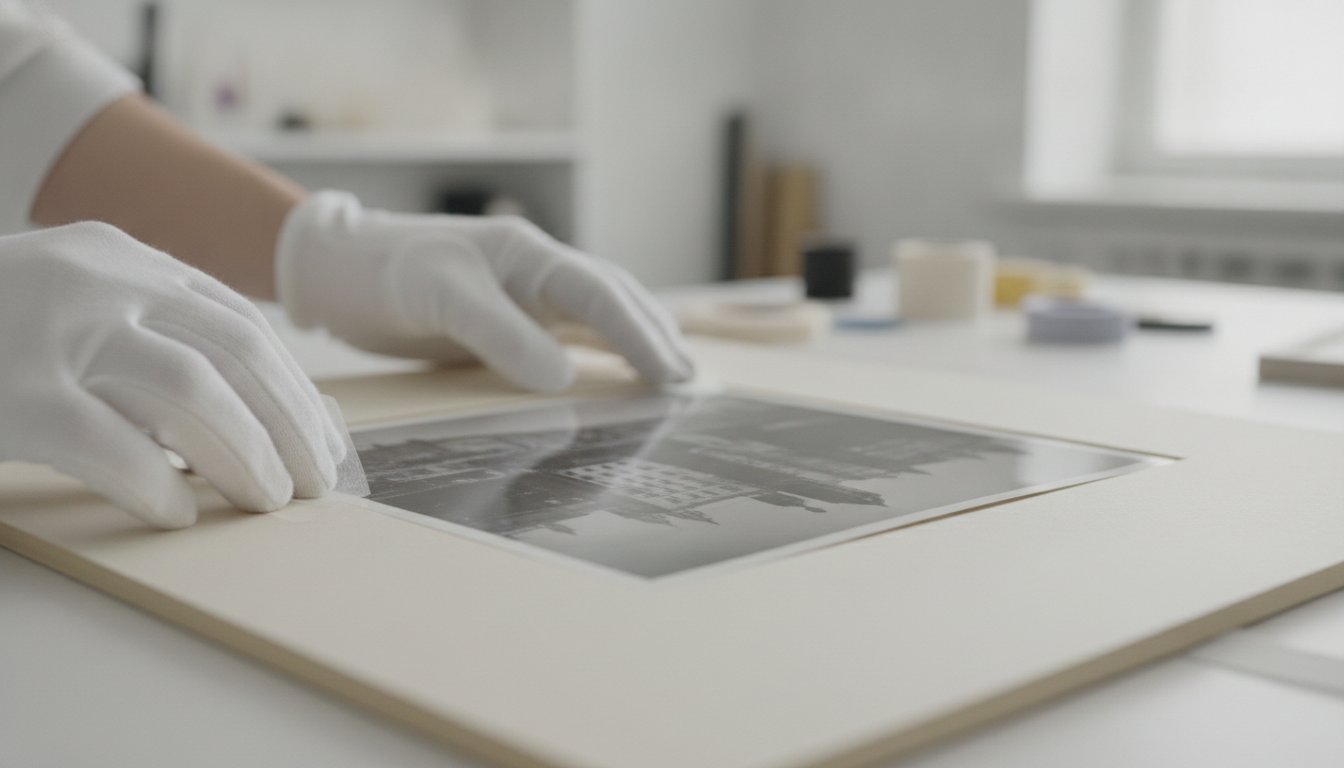
How should I display my art to ensure it doesn’t lose value?

You must display your prints in a stable environment away from direct sunlight and moisture. Utilizing museum-grade glass is essential, as it blocks 99% of UV rays that would otherwise degrade the pigments over time. Proper archival mounting with acid-free materials ensures the physical integrity of the print remains intact, preventing “paper burn” or yellowing that would significantly decrease the work’s market value.

Are limited edition prints better than open editions for collectors?

Limited editions are the only choice for those considering if are fine art photography prints a good investment because they possess a built-in scarcity mechanism. Open editions can be printed indefinitely, which prevents them from ever functioning as a truly rare asset. Limited editions create a capped supply, ensuring that as demand for an artist’s work grows, the value of your specific print has the potential to appreciate accordingly.

The Connoisseur’s Guide to Insuring Your Fine Art Collection in 2026

The most significant risk to your photographic legacy isn’t a catastrophic event; it’s the quiet erosion of value that occurs when a masterpiece lacks the protection of a specialist policy. For the discerning collector, the process of authenticating fine art photography is only the first step in a stewardship that requires both aesthetic passion and rigorous financial foresight. While many assume a standard homeowner’s policy offers sufficient coverage, these generic agreements often fail to account for the nuanced realities of the art world. They rarely cover the delicate precision required for hanging a large-format Slim Aarons print or the irreplaceable nature of a Terry O’Neill original.

It’s natural to feel a sense of hesitation when navigating the complexities of replacement costs versus market valuations, especially as the global art insurance market is projected to reach nearly 800 billion dollars by 2033. You deserve the absolute peace of mind that comes from knowing your investment is secure against everything from accidental damage to the loss of vital provenance documentation. This guide offers a sophisticated approach to safeguarding your collection in 2026. We’ll provide a clear checklist for documenting your gallery-bought pieces and explain how to integrate specialist insurance into your lifestyle with the same care you’d use to select a bespoke frame.

Key Takeaways

  • Understand why standard property insurance often fails to protect photographic masterpieces and how to identify the sub-limit traps that threaten your investment.
  • Master the meticulous process of authenticating fine art photography to build a robust archive of provenance that satisfies the most rigorous insurance adjusters.
  • Distinguish between scheduled and blanket coverage to create a tailored insurance architecture that reflects the true replacement cost of your collection.
  • Implement preventative stewardship through bespoke framing and archival materials to mitigate physical damage and avoid the complexities of inherent vice exclusions.
  • Leverage the expertise of a professional gallery to ensure your collection’s production methods and historical significance are documented for long-term value retention.

Beyond the Standard Policy: Why Authenticating Fine Art Photography is Essential

The act of authenticating fine art photography is far more than a bureaucratic necessity; it’s the forensic and historical verification of a print’s very origin. It serves as the definitive bridge between a mere image and a piece of photographic heritage. Without this rigorous process of fine art authentication, a collector possesses only a visual record rather than a tangible asset with a verifiable lineage. This verification ensures that every nuance of the artist’s intent, from the specific paper stock to the chemistry of the darkroom, is documented and preserved.

Standard homeowners insurance policies often contain what experts call the sub-limit trap. While your policy might claim to cover personal property up to a high ceiling, it frequently caps “fine arts” at a much lower figure, sometimes as little as $2,500. For a collection featuring limited edition prints from the Slim Aarons Collection or rare Terry O’Neill photography, these limits are woefully inadequate. Unlike mass-produced posters that can be easily replaced, fine art prints require individual scheduling based on their verified status. This ensures that the specific market value of your unique piece is recognized by the insurer before a loss occurs.

A sophisticated policy should also include a Pairs and Sets clause. This is vital for collectors of photographic series or portfolios. If one print in a curated series of three is damaged, the value of the remaining two often plummets because the set’s integrity is broken. A specialist clause ensures the insurer compensates you for the loss of value to the entire set, not just the single damaged item. It’s this level of detail that separates a casual hobbyist from a serious connoisseur.

The Limitations of General Home Insurance

General policies are designed for the replaceable, not the unique. They often exclude specific perils like accidental tearing during hanging or damage caused by environmental fluctuations. Most critically, they operate on Actual Cash Value (ACV), which factors in depreciation. In the art world, you require Agreed Value, a fixed amount determined at the time of the policy’s inception. Imagine a scenario where a burst pipe damages a rare Star Wars Limited Edition Print. A standard policy might offer the price of a modern reprint, ignoring the historical premium of the original edition because the owner neglected the step of authenticating fine art photography during the appraisal process.

Defining Your Collection’s Scope

Distinguishing between simple decorative prints and fine art photography is the first step in professional stewardship. Your scope may include vintage archives, Cinema Lobby Cards, or Music Archives. Each category carries its own risks and valuation nuances. Once a collection reaches a certain financial or historical density, a standalone specialist policy becomes a necessity rather than an option. This transition marks your evolution from a buyer to a true guardian of history, ensuring that your Music Archives or vintage movie posters are protected by a policy that understands their cultural weight.

The Architecture of Valuation: Authenticating Fine Art Photography Through Provenance

Valuation isn’t a static figure; it’s a living narrative built upon the strength of a print’s history. For the collector, the process of authenticating fine art photography begins the moment a piece is acquired, requiring a meticulous assembly of evidence that satisfies both the aesthetic and the legal. A valid insurance claim relies on a robust paper trail, including original gallery invoices and Certificates of Authenticity (COA). These documents serve as the primary defense against the complexities of authenticity and risk management, ensuring that your insurer recognizes the work’s true pedigree rather than viewing it as a generic reproduction.

While a gallery valuation provides an essential baseline of current retail prices, a professional appraiser offers an independent, forensic audit of value. In the fluctuating 2026 market, where luxury sales at houses like Sotheby’s have seen increases of up to 22%, relying on an outdated valuation is a significant risk. We recommend a formal re-valuation every three to five years to account for the 7.022% compound annual growth rate currently seen in the global fine art insurance sector. Acquiring pieces from a reputable source like Galerie Prints simplifies this underwriting process, as our dedication to authenticating fine art photography provides insurers with immediate confidence in the work’s origin.

Establishing Provenance for Photographic Prints

The archive source is the heartbeat of a print’s value. For instance, understanding the lineage of a piece from the Slim Aarons collection is vital, as the connection to original negatives and authorized estates dictates its market standing. You should store physical COAs in a fireproof safe, while maintaining high-resolution digital backups in a secure cloud environment. The presence of an artist’s signature or a low limited edition number acts as a value multiplier, often necessitating a higher premium to reflect the piece’s rarity and increased desirability among global collectors.

Replacement Cost vs. Fair Market Value

Choosing the right valuation method is a strategic decision. Replacement Cost Value (RCV) is typically the preferred choice for contemporary photography, as it covers the cost of acquiring a similar work at current retail prices. Conversely, Fair Market Value (FMV) is used primarily for tax and estate planning, reflecting what a willing buyer would pay a willing seller in an open market. Agreed Value remains the gold standard for high-end collectors, as it guarantees a pre-determined payout that bypasses the friction of depreciation at the time of loss. If you’re looking to expand your holdings with pieces of verified lineage, explore our curated collections of photographic history.

Selecting the appropriate policy structure is a decision as critical as the acquisition itself. Blanket coverage serves as a broad umbrella for collections of moderate value, often setting a total limit for a group of items like vintage movie posters or secondary market finds. While convenient, this approach often lacks the precision required for high-value masterpieces. For the serious connoisseur, scheduled coverage is the only appropriate path. By listing each piece individually, you ensure that the specific nuances of your investment are recognized and protected. This is where the rigor of authenticating fine art photography pays dividends; insurers require verified proof before they’ll commit to an Agreed Value for a specific print.

Active collectors should look for a Newly Acquired Items provision within their policy. This provides a vital grace period, typically 30 to 90 days, where new acquisitions are automatically covered before you formally update your schedule. For high-stakes acquisitions where historical gaps might exist, Title Insurance offers an additional layer of protection against ownership disputes or claims of restitution. These sophisticated policies rely heavily on documentation standards for insurers, which include forensic certificates and detailed purchase histories that confirm the work’s legal standing.

Perhaps the most vital yet overlooked component is the Loss in Value clause. If a piece is damaged and subsequently restored, its market desirability often diminishes despite a perfect physical repair. This clause compensates you for that invisible financial loss, paying the difference between the print’s value before the incident and its value after restoration. It ensures that the financial integrity of your collection remains intact, even when the physical work has been compromised.

Scheduled Personal Property Endorsements

Adding a specific Terry O’Neill or Slim Aarons print to your policy requires more than just a receipt. Specialist underwriters often ask for high-resolution photography of the item in situ to verify its condition and the security of its display. One of the primary benefits of scheduling is the removal of deductibles. If a loss occurs, you receive the full agreed amount without out-of-pocket friction. This clear, direct arrangement provides the total peace of mind that a standard policy simply cannot match.

Understanding the Exclusions

Even the most comprehensive policy has boundaries you must understand. Inherent vice, which refers to the natural degradation of materials over time, is a standard exclusion. Similarly, environmental damage from UV exposure or humidity isn’t covered if it’s deemed a result of poor stewardship rather than a sudden accident. This makes the Transit clause essential. It extends protection while your work is moving between residences or visiting a specialist for a Bespoke Framing Service, ensuring that the process of authenticating fine art photography is matched by equally rigorous physical protection during every stage of its journey.

Stewardship Through Display: How Bespoke Framing Mitigates Physical and Financial Risk

The most effective insurance strategy is the one that prevents a claim from ever being filed. In the sophisticated world of art ownership, stewardship is a physical responsibility that directly impacts your financial standing. Insurers frequently include an Inherent Vice exclusion in their contracts, which means they won’t pay for damage caused by the natural qualities of the materials themselves or their gradual deterioration. By utilizing archival preservation techniques, you effectively remove the insurer’s ability to cite neglect as a reason for a denied claim. While authenticating fine art photography establishes the work’s historical value, bespoke framing secures its physical future against the invisible threats of the domestic environment.

Collectors who demonstrate a commitment to high-security and climate-controlled environments often find themselves in a stronger position when negotiating specialist insurance premiums. Underwriters view professional installation and museum-grade housing as evidence of a lower risk profile. A print that’s secured with security fittings and protected by archival barriers is less likely to suffer the accidental fall or environmental shock that leads to a complex loss in value claim. This proactive approach transforms your home from a simple living space into a private gallery that meets the rigorous standards of global insurers.

The Role of Bespoke Framing in Risk Mitigation

Bespoke framing is the first line of defense for delicate emulsions. UV-protective glass is essential to prevent the irreversible fading that can haunt black and white pictures, where the depth of the blacks is central to the work’s value. Archival mounting ensures that the print isn’t in direct contact with acidic materials that cause yellowing or “foxing” over time. Our Bespoke Framing Service at Galerie Prints is designed to meet these exact curatorial requirements, providing a level of protection that satisfies even the most discerning specialist underwriters. Choosing professional mounting over a DIY solution isn’t just an aesthetic choice; it’s a vital step in authenticating fine art photography as a permanent asset in your collection.

Climate Control and Lighting Standards

Light is a constant threat to photographic heritage. To prevent gradual fading, delicate photographic emulsions should ideally be exposed to no more than 50 lux in display areas. Humidity is another critical factor; fluctuations can lead to cockling, a wavy distortion of the paper that insurers may classify as a maintenance issue rather than a covered loss. Maintaining a stable relative humidity between 40% and 50% is the industry standard for preserving the structural integrity of your prints. The ideal temperature range for preserving archival photographic prints is consistently between 18 and 20 degrees Celsius. To ensure your collection remains in pristine, insurable condition, consider our Bespoke Framing Service for your next acquisition.

A Legacy Preserved: How Galerie Prints Supports Your Curatorial Journey

Galerie Prints operates with the understanding that we aren’t merely providing decor; we’re acting as guardians of a shared photographic heritage. Our relationship with a collector doesn’t end when a piece leaves the gallery. Instead, we view ourselves as partners in a lifelong journey of stewardship. By employing meticulous archival production methods, we ensure that the physical integrity of your collection remains as steadfast as its historical significance. This commitment to technical excellence is what allows your investment to retain and grow its value over decades, providing the necessary material proof that underwriters require when authenticating fine art photography for a premium policy.

From Acquisition to Protection

The foundation of any robust insurance schedule is the quality of the documentation provided at the point of sale. Our detailed invoicing and provenance records provide an immediate, authoritative basis for authenticating fine art photography within your broader portfolio. Buying from an established gallery ensures you possess a marketable title, a critical factor in 2026 as regulatory scrutiny around art market integrity increases. With luxury auction sales showing significant upward trends, it’s a prudent time to review your current collection’s values against the latest market data to ensure your coverage hasn’t been outpaced by appreciation. This proactive review is a hallmark of the discerning collector.

Curating with Confidence

Explore our curated collections and bespoke framing services to build a protected legacy.

Securing Your Photographic Heritage for the Next Generation

The transition from acquiring a masterpiece to truly safeguarding its history requires a shift in perspective. You’ve seen that standard homeowners policies often fall short of protecting high-value works and that the meticulous process of authenticating fine art photography is your strongest defense against future market volatility. By prioritizing scheduled coverage and curatorial stewardship, you ensure that your collection remains a stable, protected legacy rather than a vulnerable asset. This journey of ownership is defined by the care you take in the present to preserve the stories of the past.

As specialists in high-end photographic archives, we’re dedicated to providing the foundational provenance and technical excellence that discerning collectors require. Our professional bespoke framing service adheres to the most rigorous archival standards, while our global shipping utilizes secure transit protocols to ensure your investment arrives in pristine condition. We invite you to continue your curatorial journey with the confidence that comes from expert support and a shared reverence for the art.

Explore our curated collections and bespoke framing services to build a protected legacy.

Frequently Asked Questions

Does my homeowner’s insurance cover my art collection if I move house?

Standard homeowners policies rarely provide adequate coverage during a move. Most generic agreements exclude damage sustained during transit or when the work is away from the primary residence. A specialist policy includes a specific Transit clause, ensuring your Slim Aarons prints or Star Wars Limited Edition Prints are protected from the moment they leave the wall until they are professionally reinstalled in your new home.

How often should I have my fine art photography collection appraised?

You should have your collection appraised every three to five years to reflect current market dynamics. With the global fine art insurance market projected to grow at a compound annual rate of 7.022% through 2033, stagnant valuations leave you dangerously underinsured. Regular updates ensure your coverage keeps pace with the rising prestige of artists in the Music Archives or the Terry O’Neill Photography collection.

What is a Loss in Value clause and why is it important for art?

A Loss in Value clause compensates you for the diminished market desirability of a piece after it’s been professionally restored. Even a perfect physical repair can reduce a print’s resale price compared to its original, pristine state. This clause is essential for high-caliber investments, as it pays the difference between the pre-damage valuation and the post-restoration market value.

Are limited edition prints insured for their purchase price or current market value?

High-end collectors should insure limited edition prints for their current market value through an Agreed Value policy. While purchase price reflects the initial transaction, the process of authenticating fine art photography often reveals a significant appreciation in value over time. Agreed Value bypasses the friction of depreciation, ensuring you receive a pre-determined payout that reflects the work’s contemporary retail replacement cost.

Can I insure my art against damage caused by sunlight or humidity?

Most insurers exclude damage caused by gradual environmental exposure, classifying it as a maintenance issue or inherent vice. While a sudden accident like a burst pipe might be covered, fading from sunlight or cockling from humidity is typically not. This highlights the importance of preventative stewardship through archival mounting and UV-protective glass provided by a professional Bespoke Framing Service.

Do I need a separate policy for my cinema lobby cards and vintage posters?

While they don’t necessarily require a separate policy, items like cinema lobby cards and vintage movie posters should be individually scheduled on your fine art endorsement. Grouping them under a general blanket limit often results in insufficient payouts if the entire collection is lost. Scheduling ensures that the unique historical significance and rarity of each piece are recognized by the underwriter.

What documentation do I need to file a successful art insurance claim?

A successful claim requires a comprehensive archive of provenance, including original gallery invoices and Certificates of Authenticity. You must also provide high-resolution photography of the items in situ and evidence of authenticating fine art photography through professional channels. This documentation serves as forensic proof of the work’s condition and origin, leaving no room for dispute during the adjustment process.

Is it cheaper to insure art through a specialized provider or a rider on my home policy?

While a home policy rider may appear more cost-effective, a specialized provider often offers superior value through broader coverage and zero deductibles. Specialized policies are designed for the unique risks of the art world, such as title disputes or restoration costs. They provide a level of expertise and financial stability that generic insurance companies simply cannot match for a high-end collection.

The Art of Curating a Photography Collection at Home: A Collector’s Guide

A truly sophisticated home is not merely a residence; it’s a living dialogue between the inhabitant and the history they choose to preserve. While many approach the task of curating a photography collection at home as a simple exercise in interior design, the most discerning collectors understand that it’s an act of guardianship and storytelling. You want your living space to reflect a refined, personal narrative, but the uncertainty of mixing different eras or the fear of a cluttered, unpolished aesthetic can be paralyzing. It’s a common hesitation for those who value the quiet authority of a well-composed room.

We believe that your walls should serve as a private gallery that honors the heritage of the lens. This guide provides the practical knowledge you need to invest in premium prints with confidence, focusing on the technical superiority of archival standards and the art of narrative display. You’ll discover how to blend the timeless elegance of a Slim Aarons poolside scene with the raw energy of Terry O’Neill’s portraits, ensuring every piece meets the 600 DPI resolution and 100-year archival guarantees that define museum-grade quality. We’ll show you how to move beyond mere decoration to build a lasting visual legacy.

Key Takeaways

  • Learn to distinguish between mere decoration and the intentional act of curation to create a home that speaks with quiet authority.
  • Discover how curating a photography collection at home allows you to weave a cohesive narrative through the lens of historical prestige and thematic selection.
  • Understand the technical standards of museum-quality prints, including the importance of Giclée processes and archival materials for long-term preservation.
  • Master spatial arrangement techniques that transform your living area into a private gallery by using focal points and careful layout planning.
  • Gain access to the world’s most iconic archives, from the sun-drenched elegance of Slim Aarons to the legendary portraiture of Terry O’Neill.

What Does It Mean to Curate a Photography Collection at Home?

To curate is to choose with profound purpose. It’s the essential difference between a house that’s merely furnished and a home that’s thoughtfully composed. When you begin curating a photography collection at home, you step away from the transient nature of modern “decor” and move toward the creation of a personal legacy. Decoration often seeks only to fill a void on a wall or match a specific textile pattern. Curation, however, is the intentional assembly of images that speak to one another, creating a silent but powerful dialogue within your living space. It’s an intellectual and aesthetic pursuit that transforms a room into a narrative experience.

By assembling a private collection, you act as a guardian of photographic history. You aren’t just buying a print; you’re preserving a specific cultural heartbeat. Living with iconic imagery from world-renowned archives offers an emotional resonance that mass-produced art cannot replicate. This role requires a discerning eye and a respect for the technical craftsmanship involved in the original capture. Whether you’re drawn to the cinematic depth of Star Wars Limited Edition Prints or the rhythmic energy of Music Archives, you’re celebrating the artistry of the archive. The collector becomes a bridge between a bygone era and the modern interior.

The Shift from Personal Snapshots to Fine Art

We live in an age of digital surplus where most images are ephemeral, trapped behind glass screens and lost to endless scrolling. Fine art photography offers a deliberate return to a bygone era of elegance. Investing in prints from established archives like Getty Images ensures that the work possesses a pedigree of authenticity. These aren’t just pictures; they’re historical documents captured by masters of the craft. A curated collection acts as a physical anchor in a modern home, offering a sense of permanence. It’s a lasting piece of history that gains character and significance as the years pass.

Defining Your Personal Curatorial Vision

Every great collection starts with an emotional anchor. You must identify the mood you wish to evoke, whether it’s the sun-drenched nostalgia of the Mediterranean or the gritty, high-contrast energy of 1970s London. Your vision doesn’t require every photo to feature the same subject. Instead, look for consistency in tone and spirit. A Slim Aarons poolside scene can live beautifully alongside a minimalist architectural study if they share a certain aspirational rhythm. Start with a single “hero” piece. This large-scale, evocative work sets the tempo for the entire room, serving as the standard for all future acquisitions. Mastering this vision is the first step in successfully curating a photography collection at home that feels both professional and deeply personal.

Developing a Thematic Strategy for Your Collection

A collection without a theme is merely a gallery of isolated moments. When you begin curating a photography collection at home, your strategy should transcend literal subject matter. Instead of grouping images by category, consider the emotional temperature they radiate. Aspirational photography serves as a powerful tool for setting a room’s atmosphere. It invites the viewer into a world of leisure and sophistication, acting as a window to a more refined reality. By selecting prints that share a common spirit, you create a cohesive environment where different artists and eras can coexist in harmony.

Mixing black and white photography with vibrant color prints adds layers of visual depth to your walls. Monochromatic works provide a sense of timelessness and structural clarity, while color photography can inject warmth and modern vitality. This interplay prevents the collection from feeling static or one-dimensional. Historical context also plays a vital role. A piece that captures a pivotal cultural moment becomes an immediate conversation starter. As noted in this guide to Art Collecting 101, understanding the narrative behind a print is as important as its visual appeal. It allows you to speak with authority about the provenance and significance of each acquisition.

The Slim Aarons Aesthetic: A Case Study in Glamour

Few photographers have captured the essence of high society as effectively as Slim Aarons. This Slim Aarons photography guide illustrates how his work defines the “Poolside Gossip” and “Palm Springs” lifestyles. His mantra of “attractive people doing attractive things in attractive places” provides a perfect thematic anchor for luxury interiors. Curating around this theme allows you to bring a sense of effortless glamour into mid-century modern or contemporary spaces. His saturated blues and crisp whites create a rhythmic vitality that feels both vintage and eternally fresh.

Iconic Portraits and Music Archives

For a collection with a more rebellious or soulful edge, building around cultural icons is an evocative choice. Works by Terry O’Neill, featuring legends like David Bowie or Brigitte Bardot, offer a proximity to fame that feels intimate and rare. Similarly, exploring music photography adds a layer of “soul and sound” to your home. These archives capture the raw energy of performance and the quiet moments of the creative process. You might also consider the unique charm of Cinema Lobby Cards, which offer a nostalgic, niche entry point for film enthusiasts. If you’re ready to find your next anchor piece, you can explore our curated archives to see these stories come to life.

Ensuring Technical Excellence: Prints, Paper, and Framing

The transition from digital appreciation to physical ownership is marked by a commitment to material excellence. When curating a photography collection at home, the quality of the print serves as the ultimate seal of authenticity. It’s the difference between a temporary decoration and a gallery-grade investment. Professional collectors prioritize the physical medium because the tactile nature of a print conveys the soul of the original work. High-end curation requires a shift in perspective, moving away from the “disposable” culture of standard commercial prints toward the permanence of artisanal craftsmanship.

Museum-quality reproduction relies heavily on the Giclée printing process. Unlike standard inkjets, Giclée utilizes specialized pigment-based inks that offer a depth and tonal range unattainable by common commercial methods. Modern professional standards have shifted to a 600 DPI resolution, which is a significant leap from the previous 300 DPI benchmark. This technical superiority ensures that every nuance of the original negative, from the grain of a vintage film to the sharpest edge of a modern digital capture, is preserved. The choice of paper is equally vital. Archival fiber-based papers possess a weight and texture that standard photo paper lacks, providing a matte finish that absorbs light and invites the viewer to linger on the details.

The Importance of Archival Standards

Longevity is the cornerstone of any serious collection. The term “archival” represents a technical promise that the work will endure without fading or yellowing. Many professional labs now offer 100-year archival guarantees on their prints, a standard that protects the historical integrity of your investment. This preservation is achieved through a combination of acid-free mounting and UV-protective glass. These elements act as a shield against environmental degradation, ensuring that the vibrant blues of a Slim Aarons scene or the deep blacks of a Terry O’Neill portrait remain unchanged for decades. Traditional production methods are essential for maintaining this photographic heritage.

Bespoke Framing as a Curatorial Tool

A frame is much more than a protective border; it’s a curatorial statement that completes the narrative of the work. Utilizing a bespoke framing service ensures that the presentation respects the specific era and style of the photograph. A Star Wars Limited Edition Print might demand a sleek, contemporary profile, while a vintage movie poster feels most at home in a more classic arrangement. Professional framing provides the “ready-to-hang” precision required for a sophisticated gallery look. Subtle choices, such as the width of the mount or the specific hue of the matboard, can dramatically alter how a viewer perceives the focal point of the image.

Designing the Display: Layout and Spatial Narrative

Designing the spatial narrative of your home requires more than a hammer and a steady hand. When curating a photography collection at home, you must treat your walls as a dynamic stage where each print plays a specific role. The process begins with meticulous planning. Before a single nail touches the plaster, map your wall space using paper templates. This allows you to visualize the cadence of the collection without the risk of unnecessary damage. Once the boundaries are defined, establish a focal point. This should be your most evocative or largest piece, positioned to anchor the room’s energy and dictate the placement of surrounding works.

Visual weight is the secret to a professional display. Balance is achieved by mixing different print sizes and frame thicknesses. A heavy, dark frame can be offset by a cluster of smaller, lighter pieces, creating a sense of equilibrium that feels organic rather than rigid. Lighting is your final curatorial tool. As we noted regarding archival standards, direct sunlight is the enemy of preservation. Instead, utilize dedicated picture lights to create a warm, focused glow that highlights the texture of the fiber-based paper. Always leave sufficient breathing room between frames. This negative space is essential; it allows the viewer’s eye to rest and ensures each piece can speak with its own voice.

Creating a Dynamic Gallery Wall

A gallery wall offers two distinct paths: the formal precision of a grid or the eclectic charm of a salon hang. A grid layout suggests order and quiet authority, ideal for a series of related architectural studies or portraits. Conversely, a salon hang allows for a more personal, evolving narrative. The secret to a cohesive salon wall lies in its anchors. Using black and white pictures provides a neutral structural foundation that allows more vibrant color works to shine without creating visual chaos. This approach maintains a sophisticated rhythm across disparate subjects.

The Power of the Solo Statement

Sometimes, silence is the most powerful statement. A single, large-format print can dominate a room with unparalleled grace. This approach is most effective when the piece is placed for maximum reveal impact, such as the wall directly opposite a room’s entrance. Dedicated lighting transforms a solo piece from a static image into a living presence, pulling the viewer into the historical narrative of the creator. If you’re ready to begin your spatial transformation, you can view our exclusive collections to find your next statement piece and elevate your home’s aesthetic.

Building Your Legacy with Galerie Prints

The journey of curating a photography collection at home reaches its most rewarding phase when you select a partner capable of translating your vision into a physical reality. At Galerie Prints, we don’t merely provide images; we offer a gateway to the world’s most prestigious archives. Our deep relationships with the Slim Aarons Collection, the Terry O’Neill Photography archive, and the Getty Images Gallery allow us to bring museum-grade masterworks directly to your walls. Each piece is treated with a sense of measured luxury, ensuring that the transition from the archive to your home preserves the historical integrity of the original capture.

Our commitment to artisanal craftsmanship is reflected in every stage of the production process. We understand that a collector’s needs are as unique as their narrative, which is why we provide bespoke options that go beyond the standard. Whether you require custom dimensions to fit a specific spatial requirement or professional framing tailored to a particular interior aesthetic, our team operates with the precision of a seasoned curator. We position ourselves as your trusted partner, offering the expert guidance necessary to navigate the nuances of high-caliber art with confidence and discernment.

A Bridge to a Bygone Era

Our curated collections invite you into an elite world of beauty and history, offering a tangible connection to moments that shaped our cultural consciousness. While digital trends are often fleeting and ephemeral, the stability of a physical print provides a lasting anchor. We believe that a purchase should be more than a decoration; it’s a lasting piece of history. By investing in archival-quality works from our Music Archives or Cinema Lobby Cards, you’re ensuring that your collection remains a source of wonder and nostalgia for generations to come.

Starting Your Collection Today

Building a legacy begins with a single, decisive choice. We encourage you to browse our most iconic collections to find the anchor piece that will set the rhythm for your entire home. Our team is available to consult on everything from spatial planning to the technical specifications of our Bespoke Framing Service, ensuring your journey is as seamless as it is intellectually stimulating. The art of curation is a lifelong pursuit, and there’s no better moment to begin than now. Explore the Slim Aarons Collection and begin your curatorial journey today.

The journey from a blank wall to a professional collection is defined by a commitment to both thematic vision and technical excellence. We’ve explored how intentional selection creates a dialogue between eras and why museum-grade archival standards are non-negotiable for the serious collector. By focusing on the spatial narrative of your home, you ensure that every piece, whether it’s a vibrant Slim Aarons poolside scene or a soulful Music Archive print, commands the attention it deserves. Mastering the nuances of curating a photography collection at home is not just an aesthetic choice; it’s a way to preserve a cultural heartbeat within your own four walls.

As an official Getty Images Gallery partner, we offer exclusive access to the legendary archives of Slim Aarons and Terry O’Neill. Every acquisition is supported by our Red Dot-level artisanal framing, ensuring your investment is protected by the highest standards of the art world. You’re now equipped with the knowledge to build a legacy that reflects your personal journey and refined taste. It’s time to transform your environment into a sanctuary of historical prestige and timeless elegance.

Discover our curated collections and begin your private gallery today

Frequently Asked Questions

How do I start a photography collection on a budget?

You can begin your journey by focusing on smaller, high-quality entries such as Cinema Lobby Cards or vintage movie posters. While high-end masterworks are a significant investment, the growing market for authentic art priced under $2,000 makes it possible to begin curating a photography collection at home with focused, smaller acquisitions. This approach allows you to build narrative depth and value without the immediate pressure of acquiring large-format pieces.

What is the best way to arrange a gallery wall without it looking cluttered?

The secret to a sophisticated gallery wall lies in the disciplined use of “breathing room” and a singular central anchor piece. By maintaining a consistent distance of approximately two to three inches between frames and using paper templates to plan the layout, you avoid the trap of visual chaos. A structured grid offers a sense of formal authority, while a more eclectic salon hang requires a shared tonal element to ensure the arrangement feels intentional rather than random.

Does the frame matter as much as the photograph itself?

A frame is much more than a protective border; it’s a curatorial tool that bridges the gap between the artwork and your home’s architecture. Utilizing a bespoke framing service provides the professional precision required to elevate a print from a simple image to a gallery-grade investment. It ensures the materials used, including acid-free matting and specialized glass, protect the work while the aesthetic choice of the frame respects the historical era of the image.

How can I tell if a photography print is “archival quality”?

True archival quality is defined by the use of pigment-based inks and acid-free, fiber-based papers that offer 100-year fade resistance. You should look for Giclée prints produced at a 600 DPI resolution, which is the current professional standard for museum-quality reproduction. These technical specifications ensure that the tactile and visual integrity of the work remains unchanged by environmental factors, providing the permanence that defines a serious collection.

Can I mix black and white photography with colour prints in the same room?

Mixing monochromatic and color works is an excellent way to add visual depth and prevents your collection from feeling static. When curating a photography collection at home, use black and white pieces as structural anchors to provide a timeless, graphic clarity. This foundation allows vibrant color prints, such as a sun-drenched Slim Aarons scene, to shine with modern vitality without overwhelming the room’s sophisticated rhythm.

What are the most collectable photography archives to invest in for 2026?

The archives of Slim Aarons and Terry O’Neill remain the premier choices for collectors seeking historical prestige and a connection to a bygone era of elegance. Additionally, the Music Archives and Star Wars Limited Edition Prints are seeing increased demand as high-net-worth collectors seek authentic, human-made works as an alternative to AI-generated imagery. These collections offer a sense of permanence and cultural significance that outlasts fleeting digital trends.

How do I protect my photography collection from fading over time?

Protection begins with the use of UV-protective glass and careful spatial placement to avoid the reach of direct sunlight. High-quality framing must utilize acid-free mounting and matboard to prevent chemical degradation of the paper over decades. By insisting on museum-standard materials and avoiding harsh environmental exposure, you act as a guardian of the work, ensuring the vibrant soul of the photograph remains preserved for future generations.

How to Buy Fine Art Photography Online: A Collector’s Guide to Archival Excellence

A photograph is not merely a captured moment; it is a tactile window into a vanished world of glamour that requires a guardian’s care to survive the century. You likely recognize that true elegance isn’t found in mass-produced decor, yet the decision to buy fine art photography online often brings a valid sense of hesitation. It’s natural to feel uncertain about the distinction between a fleeting digital reprint and a museum-quality investment that honors the legacy of masters such as Slim Aarons or Terry O’Neill.

We believe that acquiring art should be as refined an experience as the work itself. This guide will empower you to evaluate archival terminology with the confidence of a seasoned curator, ensuring your collection reflects both historical significance and technical excellence. We’ll explore the nuances of Giclée and C-type processes, the importance of localized artisanal craftsmanship in framing, and the specific steps required to transform your home into a sophisticated gallery of cultural history.

Key Takeaways

  • Distinguish between ephemeral mass-market posters and museum-quality limited editions that serve as lasting cultural investments.
  • Navigate the technical landscape to buy fine art photography online with confidence by identifying archival markers like acid-free cotton rag and traditional Giclée processes.
  • Uncover the historical significance of the Slim Aarons and Terry O’Neill archives to bring a sense of mid-century elegance into your home.
  • Learn to curate your environment by identifying a hero wall and selecting themes that reflect your unique appreciation for photographic heritage.
  • Understand the meticulous standards of archival production that preserve the tactile and visual integrity of your collection for generations.

What Defines Fine Art Photography in the Digital Age?

Fine art photography is far more than a simple visual record; it’s a deliberate, calculated expression of an artist’s vision. In an age where billions of images are uploaded daily to the digital ether, the distinction between a casual snapshot and a curated masterpiece has never been more significant. When you choose to buy fine art photography online, you aren’t just purchasing a decorative object. You’re acquiring a piece of cultural history that has been carefully shepherded from a negative or digital master to a physical, archival form. This transition from light to paper requires a level of intentionality that separates true art from mere illustration.

A critical distinction exists between a mass-market poster and an archival gallery print. Posters are often printed on thin, acidic paper that will eventually yellow and degrade under the touch of time. In contrast, a gallery-grade print is a legacy piece. It represents a commitment to material excellence, using acid-free papers and stable pigments designed to last for generations. The gallery, acting as a steadfast guardian of the original negative or digital master, ensures that each impression remains faithful to the creator’s intent. This careful preservation of the artist’s aesthetic ensures that the work maintains its depth, contrast, and soul long after it leaves the darkroom or the studio.

To find pieces that embody this standard of craftsmanship, collectors often turn to specialized sources like Dale Arts, which offers a diverse collection of high-quality photographic prints in both framed and unframed formats.

The Anatomy of a Gallery-Grade Print

A true collector’s piece begins with the integrity of the source. Whether it’s a vintage negative from the Music Archives or a master file from the Star Wars Limited Edition Prints, the quality of the original material dictates the final result. To understand What is Fine Art Photography?, one must appreciate how authorized archives maintain the artist’s legacy through technical superiority. This documented history protects your investment, ensuring the work remains a valuable asset within your collection. Provenance is the documented lineage of an artwork’s history, verifying its authenticity and connection to the artist’s original vision.

Limited Editions vs. Open Runs

Scarcity is a primary driver of value in the art world. Limited editions ensure that only a specific number of prints will ever exist, making each one a rare artifact of a specific moment in time. This rarity is formalized through signatures and numbering, which act as the cornerstones of photographic value. When you buy fine art photography online, it’s essential to look for a Certificate of Authenticity (COA). This document confirms the print’s place within the edition and guarantees its archival standards. There’s a profound emotional weight in owning a rare piece of history, knowing that your print is one of only a few in existence. It transforms your space from a simple room into a curated environment of prestige and narrative depth.

The Value of Provenance: From Slim Aarons to Terry O’Neill

The 20th century represents a pinnacle of photographic artistry, a period often referred to as the Golden Era. During these decades, photographers didn’t just document reality; they crafted a narrative of elegance that continues to define luxury today. When you choose to buy fine art photography online, the value of your acquisition rests heavily on provenance. This documented history ensures that a print sourced from a prestigious archive is a legitimate piece of cultural history rather than a modern imitation. Galerie Prints acts as a bridge to these world-renowned archives, maintaining rigorous museum-quality standards that honor the original vision of the artist. History deserves a guardian.

Curating these archives involves more than just selection. It requires a deep understanding of archival handling and storage to ensure that the physical print retains the same brilliance it possessed decades ago. By adhering to these exacting standards, we provide collectors with the assurance that their investment is protected against the environmental stressors that often degrade lesser works. This meticulous attention to technical detail is what allows us to offer pieces that don’t just decorate a room but elevate it to a curated space of historical significance.

Slim Aarons: The Master of Aspirational Style

Slim Aarons famously stated he was capturing “attractive people doing attractive things in attractive places.” His work has become the ultimate symbol of sophisticated interior design, particularly his poolside imagery of Palm Springs and the Amalfi Coast. These prints offer more than a visual; they provide an entry into a world of mid-century leisure and sun-drenched glamour. For those looking to understand his enduring impact, our resource on Slim Aarons: The Definitive Guide to the Master of Aspirational Photography offers deeper context into his life and methods. His work remains a cornerstone for anyone seeking to buy fine art photography online that embodies a specific, high-end lifestyle.

Icons of Music and Cinema

While Aarons captured the elite at play, Terry O’Neill focused his lens on the raw, magnetic energy of the 1960s and 70s. His celebrity portraits remain timeless because they reveal the human soul behind the icon, whether it’s David Bowie or Brigitte Bardot. The collectability of these images is matched only by the historical charm of Cinema Lobby Cards and vintage movie posters. These artifacts represent Hollywood’s photographic heritage, serving as tactile remnants of a bygone cinematic age. You might consider exploring our Music Archives to find a piece that resonates with your personal history. Each print is a testament to the enduring power of the celebrity image in modern culture.

Archival Quality: Why the Paper and Process Matter

The physical presence of a fine art print possesses a weight and depth that no digital screen can replicate. While a monitor emits light, a gallery print reflects it, creating a tactile experience where the texture of the paper and the richness of the pigment become part of the art itself. When you choose to buy fine art photography online, you’re investing in this material integrity. The difference between a lasting heirloom and a fading image lies in the meticulous combination of printing chemistry and archival substrates. It’s a science of preservation that ensures the visual impact remains unchanged for decades.

Two primary methods dominate the world of high-end photographic production: Silver Halide and Giclée. Silver Halide, often called a C-type print, is a traditional chemical process where light-sensitive paper is exposed to a master image and then processed through a developer. It’s prized for its continuous tones and deep, luscious blacks. Giclée printing, however, utilizes sophisticated inkjet technology with mineral-based pigment inks. This method offers an incredible color gamut and exceptional longevity. Each process has its merits; the choice depends on whether the subject matter demands the classic feel of a darkroom or the vibrant, high-definition precision of modern pigments.

Museum-Quality Materials

Collectors should prioritize papers from prestigious mills like Hahnemühle. These 100% cotton rag papers are the industry standard because they provide a stable, luxurious base that won’t degrade over time. Combined with archival inks, these materials maintain color accuracy for 75 years or more under standard lighting. Acid-free materials are non-negotiable for collectors because they prevent the chemical self-destruction and yellowing that inevitably occur when paper contains lignin or other acidic impurities. To protect this investment, UV-protective glazing is essential. It acts as a shield, filtering out the harmful rays that cause colors to shift and whites to dull.

The Digital-to-Physical Translation

Bridging the gap between a historical negative and a modern archival print requires a curator’s eye and a technician’s precision. Professional curators don’t simply “print” a file; they manage a complex translation of light and shadow. This often involves digital retouching that honors the original darkroom intent, ensuring that the final physical piece remains a faithful guardian of the artist’s legacy. For a deeper understanding of how these elements come together in a curated space, explore our guide on Fine Art Photography: A Curator’s Guide to Collecting and Decorating. The goal is always the same: to buy fine art photography online that feels as though it was pulled directly from a gallery’s private vault.

Curating Your Space: Selection and Framing Guide

Selecting a masterpiece is only the first movement in a larger symphony of interior curation. The placement of a print defines the dialogue between the artwork and your architectural environment. When you choose to buy fine art photography online, the digital preview is merely a prelude to the physical presence the work will command. To ensure your acquisition achieves its full potential, you must approach the installation with the eye of a seasoned curator, considering scale, theme, and the protective elements that surround the image.

Your first step is identifying the “Hero” wall. This is the primary focal point of the room, an architectural anchor that dictates the appropriate dimensions for your print. A common mistake is selecting a piece that’s too small for the volume of the space. For a grand living area, a print measuring 40×60 inches creates a commanding presence, while smaller corridors may benefit from a series of intimate, related works. Once the scale is set, choose a theme that reflects your personal narrative. Whether you’re drawn to the raw energy of the Music Archives or the sun-drenched leisure of the Slim Aarons Collection, the subject should feel like a natural extension of your personality.

Color palette plays a vital role in this cohesion. While vibrant lifestyle photography can energize a room, there’s a profound, quiet power in monochrome. For those seeking a more classic aesthetic, explore our guide on The Timeless Allure of Black and White Pictures to understand how tonal depth can anchor a modern interior. Finally, consider the height and lighting. Aim for a gallery-standard height, with the center of the print sitting approximately 57 to 60 inches from the floor, and utilize directional LED lighting to highlight the archival details without introducing heat.

The Art of Bespoke Framing

In the world of high-end art, the frame is far more than a decorative border. It’s a protective envelope designed to maintain the print’s archival integrity. Our approach to framing utilizes premium materials like lignin-free mount boards and specialized glazing to shield your investment. Whether you select a classic Black, a crisp White, or a warm Oak finish, the frame should complement the art’s era. A Slim Aarons print often finds its home in a clean, white frame that emphasizes its airy, aspirational quality. Explore our Bespoke Framing Service to ensure your piece is delivered ready to hang and preserved for the century.

Building a Gallery Wall

Creating a gallery wall requires a balance of variety and cohesion. We recommend the “Anchor” method: start with one large, iconic print as your centerpiece and build outward with smaller works. This allows you to mix different subjects, such as Terry O’Neill portraits and Cinema Lobby Cards, while maintaining a unified story. Using Slim Aarons prints within these arrangements is particularly effective for creating a sense of light and space in smaller rooms, acting as a visual window that expands the boundaries of your home.

Galerie Prints isn’t merely a digital storefront; it’s a sophisticated extension of our London heritage, designed to provide a seamless bridge between a physical gallery and the discerning global collector. Under the meticulous curatorial direction of Stuart Möller, we’ve secured access to the world’s most prestigious photographic archives, ensuring that every piece we offer meets the highest standards of historical authenticity. When you choose to buy fine art photography online through our platform, you’re engaging with a team that views itself as a guardian of the 20th century’s visual legacy. This commitment to technical excellence is matched by our dedication to localized, artisanal craftsmanship, ensuring that each print is produced with the same care and precision as those hanging in our physical gallery space.

Serious collectors choose our platform because we prioritize the integrity of the artist’s original vision above all else. We don’t just facilitate transactions; we cultivate a sense of permanence and stability in every acquisition. By combining traditional production methods with modern accessibility, we ensure that the prestige of the art world is available to those who value quality over convenience. Our role is to act as a trusted guide, helping you find pieces that don’t just fill a space but elevate your entire home aesthetic to a level of curated elegance.

From London to Your Living Room

The journey from our archives to your walls is handled with a level of precision that matches the art itself. We understand that purchasing high-end art requires absolute trust, which is why every shipment utilizes museum-grade packaging and fully insured global delivery. This “white-glove” experience ensures that your investment arrives in pristine condition, supported by direct expert advice at every stage of the process. Whether you’re in New York, Tokyo, or London, the experience remains intimate, professional, and reassuringly precise. It’s about more than just logistics; it’s about providing the peace of mind that comes with boutique gallery service. Browse our curated collections and start your collection today.

Investing in Photographic Heritage

A purchase from our collection is a lasting piece of history, far removed from the temporary nature of mass-market decor. By specializing in authorized prints from the Getty Images Gallery and the Terry O’Neill archives, we provide collectors with works that possess enduring cultural value and proven provenance. These images don’t just decorate a space; they anchor it in a narrative of elegance and historical significance. Choosing to buy fine art photography online from a dedicated archive ensures that your collection remains a source of wonder and nostalgia for generations to come. Explore the Slim Aarons Collection at Galerie Prints and discover how these iconic works can transform your environment into a curated sanctuary of aspirational style.

Securing Your Piece of Photographic History

Acquiring a masterpiece is a profound act of cultural stewardship. You’ve discovered that the decision to buy fine art photography online is anchored in a commitment to archival excellence, ranging from the meticulous selection of acid-free cotton rag papers to the verification of authorized provenance. By mastering the technical nuances of Giclée and Silver Halide processes, you ensure that your curated collection remains a vibrant, tactile testament to an artist’s original vision for generations. True elegance, after all, is measured by its permanence.

As an official Getty Images Gallery partner, we take pride in bridging the gap between world-renowned archives and your private environment. Every acquisition is handled with the quiet authority of a boutique gallery, featuring bespoke framing by master craftsmen and the absolute security of global insured shipping from our London-based gallery. We invite you to move beyond temporary decoration and invest in a lasting legacy of sophistication and historical significance. Discover the world’s most iconic fine art photography at Galerie Prints and begin transforming your space into a sanctuary of mid-century glamour today.

Frequently Asked Questions

What is the difference between a fine art print and a poster?

A fine art print is a deliberate, high-fidelity expression of an artist’s vision, crafted using museum-grade materials. In contrast, a poster is a mass-produced reproduction on thin, acidic paper that lacks the longevity required for a serious collection. When you buy fine art photography online, you’re choosing a piece that utilizes acid-free substrates and stable pigments. These archival elements ensure the image remains a lasting part of your home’s cultural narrative.

How do I know if a photography print is a good investment?

Evaluating a photographic investment involves assessing its provenance, the historical significance of the artist, and the scarcity of the edition. Limited edition prints from prestigious archives, such as the Music Archives or Star Wars Limited Edition Prints, tend to hold their value more reliably than open runs. A Certificate of Authenticity acts as your primary safeguard. It confirms the print’s origin and ensures it was produced to exacting archival standards.

What does “archival quality” actually mean for photography?

Archival quality refers to the scientific combination of chemically inert materials designed to preserve an image for 75 years or more. This process requires 100% cotton rag papers and mineral-based pigment inks that won’t react with the environment. These materials prevent the yellowing and fading that occur with standard commercial printing. It’s the gold standard for collectors who view their art as a permanent piece of history.

Are the Slim Aarons prints sold online authorized by the estate?

Yes, every piece within The Slim Aarons Collection at Galerie Prints is fully authorized and sourced through our official partnership with the Getty Images Gallery. These prints are produced from the original negatives housed in the Hulton Archive, ensuring the highest level of historical authenticity. This partnership allows us to act as a bridge to a bygone era of elegance while maintaining the technical excellence collectors expect.

How should I clean and maintain my fine art photography prints?

Maintaining your prints requires a gentle touch and a stable environment. Use a clean, dry microfiber cloth to remove dust from the glazing, but never apply liquid cleaners or chemicals directly to the surface. It’s best to display your art in a climate-controlled room away from direct sunlight or extreme humidity. These simple steps protect the tactile integrity of the paper and the vibrancy of the pigments for decades.

What is the best way to frame a large-scale photographic print?

Large-scale prints require a bespoke framing approach to provide necessary structural support and aesthetic balance. We recommend using a heavy-duty frame with a deep profile to prevent bowing, combined with high-quality UV-protective glazing to shield the expansive surface. Our Bespoke Framing Service ensures that even the most commanding works are mounted securely and delivered ready to hang, preserving the art’s prestige within your interior architecture.

Does Galerie Prints ship framed photography internationally?

We provide global insured shipping for our entire collection, including professionally framed photography. Our team utilizes custom-built, museum-grade packaging to protect the frame and glazing during the journey from our London gallery to your residence. This white-glove approach ensures your acquisition arrives ready for immediate display. It’s the most secure way to buy fine art photography online while maintaining the highest standards of physical protection.

Can I request a custom size for a specific Terry O’Neill print?

Custom sizing for Terry O’Neill Photography is often possible, provided the dimensions respect the original composition and the standards of the archive. While we offer a range of traditional gallery sizes, our curators can advise on bespoke requests that suit your specific architectural needs. Each request is handled with the same dedication to technical superiority that defines our entire collection, ensuring your piece fits your space perfectly.

How to Build an Art Collection on a Budget: A Curator’s Guide to Accessible Elegance

The most evocative art collections aren’t defined by the staggering prices paid at auction; they’re defined by the cultural weight and historical narrative of the pieces within them. You might feel that the world of high-end galleries is an exclusive club reserved for the elite, yet understanding how to build an art collection on a budget is actually about strategic curation rather than compromise. It’s a common frustration to feel trapped between the intimidating “white cube” scene and the fear of buying “cheap” art that lacks soul or lasting value.

We’re here to bridge that gap by showing you how to secure accessible elegance through archival photography and limited editions. You’ll discover how to distinguish a high-quality fine art print from a mere poster, ensuring your home is filled with iconic imagery that sparks conversation and carries genuine prestige. By focusing on technical excellence and provenance, you can own a piece of photographic heritage that feels both timeless and deeply personal. We’ll guide you through selecting investment-worthy works, from the Slim Aarons collection to rare music archives, that offer a sophisticated aesthetic without the blue-chip price tag.

Key Takeaways

  • Embrace a curator’s mindset by prioritizing narrative and historical significance over simply filling empty wall space.
  • Master how to build an art collection on a budget by leveraging limited editions and archival photography to secure iconic imagery.
  • Uncover high-character entry points such as Cinema Lobby Cards and music archives that add a unique, soulful layer to your personal space.
  • Learn why bespoke framing is the essential final step to elevate a modest print into a gallery-worthy centerpiece.
  • Gain confidence in the technical quality and provenance of your acquisitions by sourcing from established guardians of photographic heritage.

The Philosophy of Budget Art Collecting: Curation Over Consumption

To the uninitiated, the term “budget” might suggest a sacrifice in quality or a settling for the mundane. In the context of a sophisticated interior, however, learning how to build an art collection on a budget is an exercise in intentionality. It’s the art of selecting works that possess enduring historical or aesthetic significance within a defined financial framework. This isn’t about filling empty wall space with transient trends. It’s about the deliberate acquisition of pieces that resonate with a specific narrative and carry the weight of a bygone era.

Adopting a “Curator’s Mindset” transforms a simple purchase into a meaningful investment. Instead of looking for something that merely matches the upholstery, a true collector searches for provenance and a story that transcends the frame. The Philosophy of Art Collecting teaches us that the value of a collection lies in its cohesion and the dialogue between individual pieces. By viewing your home as a private gallery, you shift from being a consumer of decor to a guardian of culture. You’re no longer just buying; you’re building a legacy.

There is a sharp distinction between disposable decor and collectable assets, even when the price point is accessible. A mass-produced print from a high-street retailer is a temporary solution; a limited edition archival photograph or an artist book from Gallery Har-El is a legacy. Focusing on technical excellence ensures your collection maintains its integrity over time. Building a thematic collection, perhaps centered around a specific era or a particular photographic style, provides a professional, unified feel that commands respect and sparks deeper conversation among guests.

Quality Over Quantity: The Collector’s Golden Rule

When you understand how to build an art collection on a budget, you realize that a single, high-quality archival print carries more weight than a dozen mass-produced posters. The psychological satisfaction of owning a work with a documented heritage is profound. It’s better to save for one exceptional piece than to clutter your environment with items that lack soul. Setting a realistic starting budget allows you to approach your first acquisition with confidence, knowing you’re investing in material quality that will last for generations without fading into obscurity.

Defining Your Personal Aesthetic Heritage

Finding your voice as a collector requires exploration. You might find yourself drawn to the aspirational luxury found in the Slim Aarons collection or perhaps the raw, intimate celebrity portraits captured in Terry O’Neill photography. Digital galleries and social media serve as a risk-free classroom, allowing you to refine your eye before committing. However, nothing replaces the tactile experience of visiting a fine art photography gallery in London or your local city. Seeing the depth of tone and the texture of the paper in person is essential for understanding the true value of fine art and the prestige of the artists involved.

Strategic Entry Points: Limited Editions and Archival Photography

Photography serves as the ultimate equalizer for those discovering how to build an art collection on a budget. While an original oil painting by a historical master remains locked behind the vault of a billionaire, a fine art photograph offers a direct, tangible connection to that same level of cultural prestige. It allows you to step away from the mass-produced and into the realm of the curated. By utilizing photographic archives, such as those maintained by Getty Images, professional galleries can provide access to iconic moments in history, printed from original negatives with a level of detail that a digital download simply cannot replicate.

Understanding the distinction between edition types is vital for your collection’s future. Limited editions are the cornerstone of the market; the scarcity created by a fixed number of prints inherently protects the value of your acquisition. However, you shouldn’t overlook “Open Editions” if they’re produced to the same exacting standards. When an open edition is sourced from a reputable archive and printed with artisanal care, it remains a high-caliber asset that tells a powerful story on your walls. It’s about the quality of the production rather than just the number on the corner.

The Allure of the Masters: Slim Aarons and Terry O’Neill

For many, the journey begins with Slim Aarons. His work, famously described as “attractive people doing attractive things in attractive places,” remains the ultimate entry point for the aspirational collector seeking a slice of mid-century elegance. Similarly, Terry O’Neill photography captures the 20th century’s most iconic faces, from Hollywood royalty to rock legends, offering an investment in cultural history that only grows more poignant with time. These archive-backed prints ensure you’re buying a piece of the original legacy, preserved with the same reverence as the day the shutter clicked. You might explore the Terry O’Neill collection to find a piece that resonates with your personal narrative.

Archival Standards: The Technical Side of Value

A collector must look beyond the image to the material itself. Traditional silver gelatin prints, known for their deep blacks and silvery highlights, offer a classic aesthetic, while modern C-types provide vibrant, lush color depth. The role of museum-quality paper is paramount in preventing the fading and degradation that plagues standard posters. Archival photo paper is a 100-year commitment to visual integrity. By choosing these materials, you ensure that your collection doesn’t just decorate a room but endures as a lasting piece of history. This technical superiority is what distinguishes a genuine collector’s piece from mere home decor.

Hidden Gems: Cinema Lobby Cards and Music Memorabilia

While large-scale archival prints offer a sweeping visual statement, the discerning collector knows that smaller, niche categories often provide the most intimate connection to cultural history. Developing a strategy for how to build an art collection on a budget often involves looking where others don’t, specifically toward the world of collectable ephemera. These pieces aren’t merely decorations. They’re artifacts that bridge the gap between fan appreciation and serious curatorial investment. By integrating cinema and music history into your home, you create a space that feels both intellectually stimulating and deeply personal.

The crossover appeal of these items lies in their dual nature as visual assets and historical documents. A vintage lobby card or a candid shot from a music archive carries a sense of “lived-in” history that a modern reproduction simply cannot mirror. Spotting rare collectables in these archives requires an eye for detail and an appreciation for the “unseen” moment. Whether it’s a behind-the-scenes glimpse of a legendary film set or a quiet moment before a sold-out concert, these pieces offer a unique perspective that adds significant weight to a growing collection.

Lobby Cards: Small Scale, Large Impact

Originally produced in sets of eight to entice theatergoers, lobby cards have transitioned from promotional tools to highly sought-after artifacts. Their smaller dimensions make them a high-character, low-cost entry point for those learning how to build an art collection on a budget. While a full-sized vintage movie poster might command a premium, a well-preserved lobby card offers the same cinematic prestige at a fraction of the cost. Framing these small-scale works with generous mounts can transform them into sophisticated centerpieces for a study or a curated gallery wall. Their rarity, compared to mass-market posters, ensures they remain a distinctive addition to any home.

Music Photography: Capturing Sound and Soul

Music photography represents a powerful intersection of sound and soul, allowing you to build a collection around the cultural icons who shaped your world. From the rebellious energy of the Beatles to the chameleonic presence of Bowie, these images capture the essence of an era. Professional music photography bridges the gap between fan memorabilia and fine art, elevating the subject matter through technical excellence and historical context. Look for “unseen” or candid moments within the Music Archives. These intimate perspectives provide a more nuanced narrative than standard publicity shots, ensuring your collection remains a true reflection of your personal aesthetic heritage.

Maximizing Value Through Preservation and Bespoke Framing

The most common error in learning how to build an art collection on a budget is treating the frame as an afterthought. You’ve spent time researching the Slim Aarons collection or Terry O’Neill photography, only to place that archival print in a generic, off-the-shelf frame. This is a critical mistake. A professional frame doesn’t just hold the art; it elevates a modest print into a gallery-worthy centerpiece. It provides the necessary gravitas and presence, ensuring the work commands the room’s attention while bridging the gap between a simple image and a curated asset.

Preservation is a meticulous science. Without UV-protective glass, the vibrant hues of a C-type print or the rich tonal range of a silver gelatin print will inevitably fade when exposed to natural light. Acid-free mounting is equally vital. Standard adhesives can leach chemicals into the paper, causing irreversible yellowing or brittle edges. By choosing museum-grade materials, you’re protecting the historical authenticity and material quality of your purchase. A bespoke frame acts as a tailored suit for your art, enhancing its aesthetic presence and ensuring it sits with quiet authority on your wall.

The Anatomy of a Professional Frame

Material choice is paramount for longevity. Natural wood offers a stability and timeless feel that synthetic alternatives simply cannot mirror. Beyond the exterior, a curator focuses on “breathing room.” Using high-quality mounts keeps the print’s surface from touching the glass, preventing moisture damage or “cockling” over time. A bespoke frame is an insurance policy for your art’s physical and financial value. Investing in professional craftsmanship ensures that the technical superiority of the print is matched by its presentation. To ensure your new acquisitions receive this level of care, consider utilizing a Bespoke Framing Service that understands the nuances of archival preservation.

Creating the Gallery Wall on a Budget

This is where the strategic nature of how to build an art collection on a budget truly shines. You don’t need a wall of massive, expensive prints to make an impact. Instead, use a “hero piece”—perhaps a larger iconic image from the music archives—to anchor the space. Surround it with smaller, more accessible works like cinema lobby cards or limited edition Star Wars prints. This mix of sizes and mediums creates visual interest and narrative depth. Remember, a collection is a marathon, not a sprint. A “rotation” strategy allows you to build your gallery over years, replacing entry-level pieces as your discerning eye matures and your collection grows in prestige.

Galerie Prints operates as a vital bridge to a bygone era, offering a sanctuary for those seeking to master how to build an art collection on a budget without sacrificing the prestige of historical authenticity. While digital marketplaces are often flooded with reproductions of dubious origin and inconsistent quality, our gallery functions as a trusted guardian of photographic heritage. We meticulously curate the world’s most iconic archives, ensuring that every piece within our collection meets the rigorous standards expected by serious collectors and connoisseurs alike. Buying from a specialist gallery offers a level of security and documented provenance that generic, high-volume retailers simply cannot match. It’s the difference between a fleeting purchase and a permanent investment in visual history.

From Archive to Your Wall

The journey of a single print is one of meticulous care and technical reverence. We source directly from the most prestigious repositories, including the expansive Getty Images archives and the intimate Terry O’Neill archives, to bring you imagery that has shaped the global cultural consciousness. Once an image is selected, it undergoes an artisanal production process that prioritizes material quality and historical accuracy above all else. By combining these archive-quality prints with our bespoke framing service, we offer a seamless “ready-to-hang” advantage. This ensures that the technical superiority of the print is immediately protected by gallery-standard presentation. Our curators are also available to provide personalized advice, helping you select your first piece with the confidence of a seasoned expert.

The Legacy of Your Collection

As you refine your approach to how to build an art collection on a budget, you’ll realize that each acquisition is far more than a decorative choice; it’s a lasting piece of history that will endure for generations. By choosing works that carry the profound weight of the past, you join an elite community of discerning collectors who value authenticity over the ephemeral nature of mass-market trends. Your home becomes a testament to your personal taste and a sophisticated spark for conversation, reflecting a world of elegance, stability, and heritage. This is the moment to transition from an admirer of beauty to a custodian of it. Explore our curated collections and start your journey today.

Cultivating Your Legacy of Elegance

True collection building is an intentional journey that transcends mere decoration. By shifting your focus from volume to value, you’ve learned that how to build an art collection on a budget is essentially a study in discerning curation. Whether you’re drawn to the cinematic charm of vintage lobby cards or the cultural resonance of the music archives, the key lies in selecting pieces with documented heritage and material integrity. As official partners of the Getty Images Gallery and the Terry O’Neill archives, we provide the security of provenance that every serious collector requires.

Your journey doesn’t end with the selection of an image; it’s solidified through our commitment to artisanal craftsmanship. Every ready-to-hang order includes bespoke, museum-grade framing, ensuring your durable, archival-quality prints are preserved for generations. This technical excellence transforms a simple photograph into a lasting piece of history. We invite you to begin your collection with our curated Slim Aarons archives and discover the profound satisfaction of owning a masterpiece. Your home is a canvas for your personal narrative, and the first iconic chapter is waiting to be told.

Frequently Asked Questions

Is photography considered “real” art for a collection?

Photography is absolutely recognized as a premier fine art medium, held in the permanent collections of prestigious institutions like the Victoria and Albert Museum and MoMA. For those learning how to build an art collection on a budget, it offers a sophisticated way to own iconic cultural moments. Unlike unique paintings, photography’s reproducibility through authorized archives allows for a more accessible entry into high-end collecting while maintaining technical and historical prestige.

What is the difference between an open edition and a limited edition print?

A limited edition print is produced in a strictly fixed quantity, which naturally creates scarcity and protects future value. Once the edition sells out, no further prints are ever made. In contrast, an open edition has no set limit on the number of prints produced. While limited editions are the gold standard for long-term investment, high-quality open editions from reputable archives still offer immense aesthetic and curatorial value for a growing collection.

How much should I expect to spend on my first collectable print?

Your initial investment depends on the rarity of the artist, the physical size of the work, and the edition type. Generally, entry-level archival prints or vintage ephemera allow you to start a meaningful collection without a massive financial hurdle. It’s best to prioritize a single piece of documented quality over several lower-grade items. This strategic approach ensures every acquisition contributes to the overall prestige of your home gallery.

Does framing really affect the value of my art collection?

Professional framing is essential for both the aesthetic impact and the long-term physical integrity of your art. Poor framing with acidic materials or standard glass can lead to irreversible fading and degradation, effectively devaluing your investment over time. A bespoke, museum-grade frame acts as a protective seal, ensuring the work remains in pristine condition while enhancing its presence as a centerpiece in your room.

Can I build an art collection entirely online?

You can certainly build a sophisticated art collection entirely through digital platforms, provided you source from established specialist galleries. Online access allows you to research archives and compare movements with ease. When buying online, look for detailed information regarding production methods, paper types, and provenance. This transparency is crucial for anyone discovering how to build an art collection on a budget while seeking the security of a professional gallery.

What are the best artists to look for when starting on a budget?

Focus on artists whose work is preserved in major archives, such as the legendary Slim Aarons or the iconic Terry O’Neill. These photographers captured a bygone era of elegance that remains timelessly aspirational. Additionally, exploring music archives for candid shots of cultural icons or Star Wars limited edition prints can provide high-character entry points. These names carry established market recognition, making them safer choices for new collectors.

How do I know if a print is “archival quality”?

Archival quality is defined by the use of acid-free, museum-grade papers and specialized printing processes like silver gelatin or high-end C-types. These materials are specifically designed to resist fading and degradation for over a century. You should look for galleries that explicitly state their production standards and use of original source materials. This technical excellence is what distinguishes a lasting collectable from a disposable commercial poster.

What is a lobby card and why is it collectable?

A lobby card is a small, photographic promotional piece originally displayed in cinema foyers to highlight scenes from a film. Because they were produced in limited sets and often feature iconic actors or pivotal moments, they’ve become highly sought-after historical artifacts. Their compact scale makes them an exquisite choice for creating detailed gallery walls or intimate displays, offering a slice of Hollywood heritage at an accessible price point.

Shipping Large Framed Art Safely: The Collector’s Guide to Global Art Logistics

True art preservation doesn’t end at the gallery wall; it’s a disciplined exercise in structural engineering and environmental control that begins the moment a masterwork is moved. For the discerning collector, the anxiety of watching a definitive Slim Aarons or a rare Terry O’Neill photograph leave in a crate is palpable. You understand that a single hairline fracture in the glazing or a warped frame doesn’t just damage an object, it diminishes a piece of history. Mastering the nuances of shipping large framed art safely is the only way to protect your investment from the unpredictable rigors of global logistics.

We’ll guide you through the sophisticated techniques that international galleries use to ensure pristine arrivals across borders. You’ll gain a clear understanding of professional packing standards, from the necessity of custom-built crates to navigating the complexities of “ugly freight” surcharges and the 5.9% rate increases implemented by major carriers for 2026. We’ll demystify insurance jargon and international requirements like CITES certificates, giving you the confidence to select a courier who respects the prestige of your collection as much as you do.

Key Takeaways

  • Discover how to counteract the “Trampoline Effect,” a phenomenon where vibration and lateral shifts can compromise the integrity of oversized glazing and canvases during transit.
  • Identify the museum-standard materials essential for preservation, including acid-free Glassine paper for emulsion protection and glass-skin tape to safeguard the print surface.
  • Master the criteria for selecting between heavy-duty cartons and ISPM 15 certified timber crates to ensure compliance with international biosecurity and structural standards.
  • Implement a meticulous, multi-step packing sequence for shipping large framed art safely, utilizing professional moisture barriers and archival face-protection.
  • Gain an expert understanding of white-glove logistics, ensuring your fine art acquisition maintains its pristine, gallery-standard condition throughout its journey to your collection.

The Physics of Fragility: Why Large Framed Art Requires Specialist Handling

Large-scale photographic art is a marvel of presence, yet its physical scale introduces a complex set of structural liabilities. When you’re shipping large framed art safely, you’re managing a delicate distribution of weight and tension that smaller works simply don’t possess. Oversized frames act as long levers; even a minor lateral shift during transit can exert massive torque on the mitered corners. This structural vulnerability is why professional art handlers treat every shipment as a unique engineering challenge. Without rigid external support, a bespoke frame can easily twist, leading to popped joints or compromised mounting.

The “Trampoline Effect” represents one of the most significant hidden dangers for collectors. In large glazing or expansive canvases, the center of the material acts like a drum skin. Continuous road vibration or air turbulence causes these surfaces to oscillate at high frequencies. Over a long-haul journey, this vibration can fatigue the internal supports. In the most severe cases, the glazing can actually flex enough to tap against the photographic emulsion, causing irreversible scuffing or “ghosting” on the print. A standard “Fragile” sticker is a polite suggestion, but it offers no defense against these internal physical forces or the extreme humidity fluctuations found in unpressurized cargo holds that can cause paper fibers to swell and ripple.

Since the durability of a piece begins with its production, those seeking high-quality results for large-scale displays can discover MegaGrafix for professional large-format printing and custom signage.

The Glazing Dilemma: Glass vs. Acrylic in Transit

Traditional glass provides exceptional clarity and scratch resistance, but its sheer weight adds significant stress to the frame’s structure. More importantly, glass carries the risk of catastrophic shattering, where a single impact can send shards through a priceless photographic archive. Acrylic is often the preferred choice for international transit due to its impact resistance and lighter profile. However, it presents its own challenges, specifically the generation of static electricity that can attract micro-particulates to the print. Glazing stress is the primary cause of transit cracks.

Frame Integrity and Corner Stress

Gravity is a constant adversary for large-scale bespoke framing. When a piece is stored or transported horizontally, the weight of the glazing and the frame itself pulls downward on the center, often leading to bowed wood or structural failure. It’s essential to maintain a vertical orientation throughout the shipping journey to ensure the weight remains evenly distributed across the bottom rail. Ornate or heavy wooden frames are particularly prone to weak points at the corners. These joints must be reinforced with specialized padding to prevent the frame’s own mass from pulling it apart during a sudden stop or shift in the crate.

Crates vs. Heavy-Duty Cartons: Selecting the Right Protective Vessel

The distinction between a “large” shipment and an “oversized” one is a critical threshold in the art world. Generally, once a framed work exceeds 100cm in any dimension, it moves beyond the safety profile of standard packaging. At this scale, the structural integrity of double-wall corrugated cardboard begins to falter under the pressure of stacking or lateral impact. While high-grade cardboard is suitable for smaller works, shipping large framed art safely at these dimensions requires a more robust architectural solution. The choice of vessel isn’t just about cushioning; it’s about creating a rigid exoskeleton that can withstand the rigors of global transit.

For international journeys, the material itself must meet strict regulatory standards. ISPM 15 certified timber is the global benchmark for wood packaging. Such heat-treated wood is required by customs authorities worldwide to prevent the spread of invasive species. Using non-certified timber can lead to your shipment being impounded or even destroyed by border agents. Beyond legal compliance, timber provides the puncture resistance and compression strength that cardboard simply cannot match, especially in shared shipping containers where heavy items may be placed nearby.

When to Choose Bespoke Wooden Crating

Bespoke wooden crates are the gold standard for high-value fine art photography. These crates often feature internal “travel frames” that suspend the artwork, ensuring the frame’s edges never touch the outer walls. Such a configuration is paramount for air freight and sea transit, where mechanical handling and turbulence are common. If you’re investing in a significant acquisition, the peace of mind offered by a custom-built crate far outweighs the initial logistics cost.

The Art of the Double-Box Method

If a crate isn’t required, the double-box method offers a sophisticated alternative. This involves placing an inner protective box inside a larger, heavy-duty outer carton, leaving at least 5cm of space on all sides. This protective gap must be filled with high-density foam inserts rather than loose-fill peanuts. Peanuts tend to settle during transit, leaving the artwork vulnerable to shifting. Foam provides consistent shock absorption and structural reinforcement for the outer carton edges, which are the most common points of failure in standard courier networks.

Selecting between a white-glove art handler and a specialized courier often depends on the complexity of the route. With FedEx and UPS implementing a 5.9% average General Rate Increase for 2026, the efficiency of your packaging impacts more than just safety. Bulky, poorly designed cartons often trigger “Additional Handling” surcharges based on cubic volume. White-glove services offer climate-controlled environments and manual handling, which is ideal for the most sensitive archives. Regardless of the carrier, the vessel you select is the primary guardian of your investment. You can explore our full collection at Galerie Prints to see the scale of works that benefit from these rigorous standards.

Essential Materials for Museum-Standard Art Packaging

The transition from a simple transport to a successful archival journey depends entirely on the chemical and physical properties of the materials used. When shipping large framed art safely, the objective is to create a multi-layered sanctuary that shields the work from both mechanical impact and atmospheric degradation. Standard household packing supplies, such as acidic brown paper or recycled blankets, are the antithesis of professional care. These materials can off-gas or trap moisture, leading to the rapid deterioration of delicate photographic emulsions and the yellowing of archival mounts.

One of the most critical, yet often overlooked, components is glass-skin tape. This specialized, low-tack adhesive is applied in a grid pattern across the glazing. Its purpose is not to prevent the glass from breaking, but to maintain surface tension. In the rare event of a fracture, the tape holds the shards in place, preventing them from falling inward and lacerating the print surface. This is particularly vital for oversized pieces where the volume of glass represents a significant weight and potential for catastrophic damage.

  • Acid-free Glassine paper: This pH-neutral, air-permeable material is the gold standard for protecting the face of a photograph. It provides a non-reactive barrier that prevents the glazing from sticking to the emulsion during temperature spikes.
  • High-density polyethylene (HDPE) foam: Unlike standard bubble wrap, which can deflate under the weight of a heavy frame, HDPE foam (often branded as Ethafoam) offers consistent, closed-cell protection that does not compress over time.
  • Corner protectors: While plastic variants offer rigid impact defense, multi-layered cardboard configurations provide superior shock distribution for bespoke wooden frames, absorbing the energy of a drop rather than transferring it to the joint.

Archival Protection Layers

Maintaining the pristine condition of a collection requires a deep understanding of archival integrity. For iconic works like those in the Slim Aarons archive, preserving the vibrant lustre and clarity of the original print is paramount. We utilize pH-neutral barriers to prevent “ghosting,” a phenomenon where a faint image of the print becomes etched onto the inside of the glass. By ensuring the wrap is breathable yet secure, we mitigate the risk of condensation that can occur when moving between climate-controlled galleries and humid cargo holds.

Shock Absorption and Vibration Dampening

The science of G-force mitigation is what separates a standard courier from an elite art handler. We utilize Ethafoam planks as base cushioning within crates to create a “floating” environment. This setup ensures that road or air vibrations are absorbed by the foam before they reach the artwork. Over-tight wrapping can be as dangerous as under-wrapping by transferring every external vibration directly into the frame’s structure. By allowing for a precise degree of internal movement within the protective layers, we ensure the work remains insulated from the physical shocks of global transit.

The Professional Packing Sequence: Securing Your Investment for Transit

Executing the sequence of shipping large framed art safely requires a disciplined, almost ritualistic attention to detail. It’s a process where the order of operations is as critical as the materials themselves. By following a museum-standard protocol, you transform a vulnerable object into a secure, transportable unit capable of traversing continents without compromise. Each step builds upon the last, creating a comprehensive system of protection that addresses the structural and environmental risks identified in previous chapters.

  • Step 1: Applying the glass-skin and archival face-protection. This initial layer secures the glazing and provides a pH-neutral barrier for the print.
  • Step 2: Constructing the primary moisture barrier. Utilizing professional-grade stretch wrap creates a sealed environment, protecting against humidity shifts in cargo holds.
  • Step 3: Fitting high-impact corner guards. These guards provide essential edge reinforcement and shock distribution for the frame’s most vulnerable points.
  • Step 4: Suspending the art. The work is placed within an inner box or travel frame, ensuring it “floats” and never makes direct contact with the outer walls.
  • Step 5: Final sealing and mandatory labelling. The package is closed with water-resistant tape and marked with clear orientation and “Glass” warnings.

Securing the Glazing and Face

The application of glass-skin tape is a nuanced task. While a simple “X” pattern provides basic tension, full-surface coverage is the preferred method for oversized works where the risk of shattering is higher. It’s imperative that no adhesive touches the bespoke framing or the photographic surface. We recommend creating a “pull tab” by folding the end of each tape strip over itself. This small gesture allows the recipient to unpack the work safely without needing a blade near the frame’s finish.

The Outer Shell and Labelling

Once the internal architecture is secure, the outer shell must be rendered impenetrable. All external seams should be sealed with water-resistant tape to prevent moisture ingress. To monitor the journey, we utilize “Tip-N-Tell” sensors. These devices provide an immediate visual record if the package was tilted or stored horizontally against the “This Way Up” instructions. Shipping documents should be placed in a clear pouch on the exterior, ensuring they are accessible to customs agents without requiring the structural compromise of the box itself. If you are adding to your collection, ensure your logistics partner adheres to these elite standards. You can view our professionally handled photography archives to see the level of care we bring to every acquisition.

Galerie Prints: White-Glove Logistics for the World’s Finest Photography

At Galerie Prints, we view the journey of an artwork as a vital extension of its provenance. Our meticulous approach to shipping the Slim Aarons collection worldwide involves more than just transit; it’s a curated logistical operation designed to preserve the crystalline clarity of these iconic moments. Every acquisition, whether a sun-drenched poolside scene or a rare archival print, is treated as an irreplaceable piece of cultural history. We don’t rely on standard courier services for our most significant works. Instead, we’ve cultivated a global network of delivery partners who specialize exclusively in fine art and cinema memorabilia. This ensures that the sophisticated techniques for shipping large framed art safely discussed throughout this guide are executed with absolute precision.

We provide bespoke crating services tailored to the specific dimensions of your acquisition, ensuring that the structural engineering of the protection matches the grandeur of the piece. This artisanal approach is coupled with comprehensive insurance coverage that provides absolute peace of mind from the moment the work leaves our gallery until it’s secured on your wall. By managing every variable, from humidity control to G-force mitigation, we act as the guardians of your investment, bridging the gap between our archives and your private collection.

The Galerie Prints Guarantee

Our commitment to preservation extends to every item in our archives, including the delicate logistics required for rare cinema lobby cards and vintage posters. While we prioritize security, we also remain dedicated to utilizing sustainable, yet ultra-secure, packaging materials that meet the highest archival standards. You’ll never be left in the dark regarding your investment. We provide direct communication and real-time tracking for every international shipment, ensuring you’re practically supported while we maintain the professional, polished distance befitting a luxury gallery.

Receiving and Unpacking Your Art

The final stage of shipping large framed art safely occurs within your own space. When your art arrives, we advise a professional, calm inspection before the courier departs. It’s vital to allow the work to acclimatise to its new environment for twenty-four to forty-eight hours before hanging, especially if it has traveled through varying climates. This deliberate pacing prevents sudden expansion or contraction of the frame and paper fibers. Our curators remain available to provide bespoke installation and display guidance, ensuring your lasting piece of history is showcased with the elegance and permanence it deserves.

Securing the Future of Your Photographic Archive

Protecting a significant photographic acquisition requires a transition from mere transport to a disciplined architectural protocol. You now understand that the structural vulnerability of oversized frames and the chemical reactivity of non-archival materials demand more than just standard care. By prioritizing museum-standard materials like acid-free Glassine and employing a rigorous, multi-layered packing sequence, you ensure the integrity of the work remains uncompromised across every border. Mastering the nuances of shipping large framed art safely is, ultimately, an investment in the permanence of the piece itself.

At Galerie Prints, we act as the bridge between history and your home, specializing in the meticulous preservation of the Slim Aarons and Terry O’Neill archives. Our global white-glove delivery network and commitment to bespoke framing ensure that every acquisition arrives in pristine, gallery-ready condition. Whether you’re adding a rare limited edition or a vintage cinema poster to your walls, we provide the technical expertise and curatorial oversight your collection deserves. We invite you to explore our world of timeless elegance and heritage.

Discover our curated collections and bespoke framing services and begin your journey toward an elevated interior aesthetic today.

Frequently Asked Questions

Is it better to ship art with glass or acrylic?

Acrylic is the preferred medium for international transit due to its exceptional impact resistance and lighter weight. While traditional glass offers superb clarity, its tendency to shatter into sharp fragments poses a catastrophic risk to the underlying photographic emulsion. Acrylic effectively mitigates this danger, though it requires anti-static archival barriers to prevent dust attraction during its journey.

How much does it cost to ship a large framed painting internationally?

International shipping costs for significant works typically begin with a minimum charge of $100, though final figures depend on dimensions, weight, and the destination’s customs requirements. Collectors should account for the 5.9% average General Rate Increase implemented by major carriers like FedEx and UPS for 2026. Large pieces often incur additional surcharges based on cubic volume and the specialized handling required for “ugly freight.”

What is the “double-box” method in art shipping?

The double-box method involves nesting a secured inner box containing the artwork inside a larger, heavy-duty outer carton. A critical buffer zone of at least 5cm must be maintained between these two layers, filled with high-density foam inserts rather than loose-fill peanuts. This architecture ensures that external impacts are absorbed by the outer shell and cushioning before they reach the primary archival housing.

Does standard courier insurance cover fine art photography?

Standard courier insurance often provides limited coverage that may not reflect the true market value of a rare photographic archive. We recommend specialized “Ad Valorem” insurance, which is typically calculated at approximately 1% of the artwork’s declared value. This ensures comprehensive protection that respects the historical and aesthetic significance of your investment, moving beyond the restrictive liability caps of general logistics providers.

How do I protect the corners of a heavy frame during a move?

Protecting the corners requires high-impact guards made of multi-layered cardboard or rigid plastic to distribute energy away from the mitered joints. These protectors should be used in tandem with Ethafoam planks to suspend the frame within its crate. This prevents the frame’s own mass from exerting destructive pressure on its corners during the lateral shifts common in air and sea transit.

What should I do if my art arrives with broken glass?

Document the condition immediately by taking detailed photographs of the packaging and the damage before the courier leaves your premises. If the work was prepared with professional glass-skin tape, the shards should remain held in place, preventing further laceration of the print. Do not attempt to remove the work; instead, contact your gallery curator and the carrier’s claims department to initiate a formal inspection.

Can I ship large framed art in a regular cardboard box?

Regular single-wall cardboard boxes lack the structural rigidity necessary for shipping large framed art safely, particularly when dimensions exceed 100cm. At this scale, the risk of the box buckling under stacking pressure is too great. Only double-wall corrugated cartons or bespoke timber crates provide the exoskeleton required to shield oversized glazing and frames from the rigors of a global logistics network.

Why is a wooden crate necessary for international shipping?

Wooden crates provide the highest level of puncture resistance and compression strength for high-value acquisitions. Beyond physical safety, international biosecurity regulations often mandate the use of ISPM 15 certified, heat-treated timber for all wood packaging. Utilizing non-compliant materials can result in your shipment being impounded or destroyed by customs authorities, making certified crating a legal and practical necessity.

What is a Giclée Print? A Curator’s Guide to Fine Art Reproductions

The difference between a common poster and a museum-grade reproduction isn’t just a matter of price; it’s the difference between a fleeting image and a legacy that lasts a century. If you’ve ever wondered exactly what is a giclee print, you’re likely seeking the assurance that your art will endure. It’s natural to feel overwhelmed by technical jargon like archival substrates or pigment-based inks, especially when you’re investing in a piece intended to anchor a room for decades. You want to know that the deep blacks and vibrant hues of a Slim Aarons or Terry O’Neill photograph won’t succumb to the passage of time.

In this curator’s guide, you’ll discover the technical precision and archival excellence that define giclée printing as the gold standard for luxury art collections. We’ll demystify the standards of 300 DPI resolutions and acid-free papers that allow these works to last for 80 to 100 years. By the end, you’ll have the confidence to select high-quality art that serves as a permanent window into a bygone era of elegance. We will explore the meticulous details of the production process and the essential care needed to preserve your fine art photography for generations.

Key Takeaways

  • Discover why the French term for “to spray” signifies a shift from mere decoration to a sophisticated, museum-standard art form.
  • Understand exactly what is a giclee print by exploring the specific technical benchmarks, such as the 300 DPI rule, that separate luxury reproductions from standard posters.
  • Compare the longevity of pigment-based inks against traditional methods to see why modern curators prioritize digital pigment for high-end collections.
  • Learn how archival-grade materials safeguard the heritage of prestigious artists, allowing you to build a collection with the permanence of a gallery.
  • Find out how to complete your presentation with bespoke framing and UV-protective glass to ensure your investment remains shielded from the elements.

What is a Giclée Print? Defining the Gold Standard of Art

To understand what is a giclee print, one must look beyond the surface of the paper and into the very mechanics of the ink’s journey onto the substrate. The term Giclée, derived from the French word gicler meaning “to spray,” describes the precise application of millions of microscopic ink droplets. This isn’t a mere mechanical output; it’s a digital translation of light and texture that rivals the original work. In the early 1990s, the landscape of art changed when musician Graham Nash began experimenting with large-format digital printers to reproduce his photography. His pursuit of perfection paved the way for a revolution, turning a technical process into a respected medium for fine art.

Galleries like Galerie Prints exclusively utilize this method because it represents the absolute threshold of archival quality. When you acquire a piece from the Slim Aarons Collection or a Terry O’Neill portrait, you aren’t just buying a copy. You’re securing a museum-grade artifact. This method ensures that the depth of color and the sharpness of the grain remain as evocative today as they will be in a century. It’s the silent guardian of photographic heritage, bridging the gap between historical negatives and modern interior aesthetics.

The Origins of the Giclée Name

Jack Duganne, a master printmaker at Nash Editions, coined the term in 1991 to elevate the conversation around digital art. At the time, the term “inkjet” carried connotations of low-quality office documents. Duganne wanted a word that reflected the prestige of the Iris printers he used, which were capable of producing continuous-tone images. By borrowing from the French language, he successfully repositioned the technology. The name evolved quickly, moving from a niche technical descriptor used by early digital pioneers to a global mark of curatorial prestige.

Giclée vs. Standard Digital Printing

The primary difference between a standard print and a giclée lies in the intent and the materials. A commercial printer prioritizes speed, often using dye-based inks that fade within a few years. A giclée print, however, demands an artisanal approach. It requires a minimum resolution of 300 DPI and the use of specialized, pigment-based inks that resist UV degradation. Your home printer lacks the sophisticated color management and the ability to handle heavy, acid-free cotton rag papers. Beyond the hardware, the “curatorial eye” of the master printer ensures that every tonal shift is captured with absolute fidelity, a level of oversight that machines alone cannot provide.

The Technical Anatomy: What Makes a Print ‘Giclée’?

To truly grasp what is a giclee print, one must examine the alchemy of its components. A standard digital print is often a product of convenience, but a giclée is a product of technical rigor. The process begins with the 300 DPI rule. This isn’t a mere suggestion; it’s a technical mandate. Dots per inch (DPI) determine the density of the information transferred to the page. High-resolution source files provide the microscopic detail necessary to prevent the pixelation that plagues standard commercial prints. Without this foundation of data, the final image lacks the crispness required for gallery display.

Modern giclée printing relies on aqueous pigmented inkjet systems, often utilizing 12 distinct ink colors. This complexity allows for a “continuous tone” effect, where transitions between shadows and highlights appear seamless. It captures the subtle gradations of a silver gelatin print or the vibrant saturation of a Kodachrome slide with startling fidelity. When you choose to invest in a piece from our curated archives, you’re securing a work that adheres to these exacting standards.

Archival Pigment Inks Explained

The secret to 100-year longevity lies in the molecular structure of the ink. Unlike dye-based inks, which are liquid-based and prone to spreading or fading, pigment-based inks consist of solid particles suspended in a carrier liquid. These particles are naturally resistant to UV degradation. This chemistry ensures “lightfastness,” meaning the colors won’t shift or dim when exposed to ambient light. This stability is essential for reproducing the intricate color gamuts found in high-end fine art photography, where every hue must remain true to the artist’s original vision.

The Importance of Museum-Quality Paper

The substrate is just as vital as the ink. A giclée print requires acid-free, 100% cotton rag paper, often sourced from legendary mills like Hahnemühle. These papers are free of lignin, the organic polymer that causes standard wood-pulp paper to yellow and become brittle over time. We also consider the tactile weight, measured in GSM (grams per square meter). A minimum weight of 250gsm provides a luxurious, heavy feel that signifies quality. This combination of artisanal paper and archival ink creates a synergy that protects your investment, ensuring the work remains a vibrant piece of history for generations.

Giclée vs. Traditional Methods: A Collector’s Comparison

Choosing between reproduction methods requires an understanding of how light and texture interact with the medium. While traditional lithography relies on physical plates and mechanical pressure to transfer ink, it often lacks the microscopic fidelity found in digital processes. A lithograph possesses a certain tactile soul, yet it cannot match the “continuous tone” of a giclée. When collectors ask what is a giclee print in the context of investment, they’re often seeking a balance between modern clarity and the artisanal feel of heavy, textured paper. This method allows for a depth of field that traditional offset printing simply cannot replicate.

The decline of the C-print, or chromogenic print, marks another shift in the art world. For decades, C-prints were the standard for color photography, but they rely on light-sensitive papers and chemical development. These prints are notoriously fragile, often showing signs of color shift or fading within twenty years. Digital pigment printing has superseded this method by offering superior lightfastness and a broader color gamut. It’s why giclée is the preferred medium for reproducing the Slim Aarons collection. His vivid poolside scenes and sun-drenched landscapes require the stability of pigment to maintain their iconic, saturated hues without the risk of chemical degradation.

The Superiority of Digital Pigment for Photography

Capturing the nuanced gradients of black and white pictures presents a unique challenge for digital printers. Lesser methods often suffer from “bronzing,” where dark areas take on an unwanted metallic sheen. Giclée avoids this by using multiple shades of black and grey inks to achieve true neutrality. This allows for the reproduction of original negatives with a level of clarity that honors the photographer’s intent. Giclée is the definitive archival standard for the digital era, ensuring that the visual integrity of a masterwork remains uncompromised for a century.

Investment Value and Rarity

A giclée print offers a compelling cost-to-value ratio for those entering the world of serious art collecting. While it’s more accessible than a vintage original, it carries a prestige that a standard digital poster never will. This value is reinforced through the creation of limited editions, where each piece is numbered and accompanied by a Certificate of Authenticity. This document acts as a provenance for the digital age, verifying the print’s origins and the quality of its production. Because a giclée uses museum-grade materials, it holds its value as a tangible asset, standing as a permanent piece of cultural history rather than a temporary decoration.

Why Giclée Prints are the Choice of Luxury Galleries

Luxury galleries don’t view art as mere inventory; they see themselves as guardians of a cultural legacy. For those who understand what is a giclee print, the appeal lies in the medium’s ability to protect the heritage of legendary photographers like Terry O’Neill. His intimate portraits of cinematic icons require a level of colour accuracy that only museum-grade pigment can provide. Standard prints often lose the “soul” of the original shot when scaled to gallery sizes. Giclée, however, maintains remarkable consistency, ensuring that a life-size reproduction carries the same sharp detail as an 8×10 proof. This fidelity creates an emotional impact, allowing the viewer to feel the texture of a velvet suit or the grain of a vintage film stock with startling proximity.

While the technical specs are impressive, the true power of these works lies in their ability to define an environment. High-end interior design relies on the “aspirational lifestyle” factor, where art serves as a window into a world of glamour and leisure. You can explore our full collection to see how these masterpieces transform a space from a simple room into a curated experience. It’s this intersection of historical significance and modern aesthetics that makes giclée the undisputed choice for serious collectors.

Curating the Aspirational Home

A premium print acts as the anchor for a room’s aesthetic. Whether it’s the high-octane energy of our music archives or the classic allure of cinema lobby cards, giclée offers a versatility that matches any sophisticated decor. One often overlooked benefit is the matte finish of archival paper. Unlike glossy commercial posters that catch every reflection, these prints reduce glare in sun-drenched living spaces. This allows the art to be seen clearly from every angle, maintaining a polished, gallery-like atmosphere that feels both permanent and inviting.

The Role of the Master Printer

The transition from a raw digital file to a finished work of art requires the human element. At Galerie Prints, the master printer’s role is essential to achieving true giclée status. This involves a meticulous process of colour grading and proofing to ensure the final output matches the artist’s original vision. When we prepare a piece for our aaron slims collection, we don’t just hit print. We scrutinize every tonal shift and contrast level to meet archival standards. This artisanal oversight ensures that your purchase isn’t just a decoration; it’s a lasting piece of history preserved with the utmost care.

Preservation and Presentation: Framing Your Giclée Print

The journey of a fine art reproduction doesn’t end at the printer’s exit tray. While you now understand what is a giclee print and the technical mastery required to produce one, the physical presentation is what truly anchors it within a luxury interior. A giclée print is a delicate archival object. It requires a bespoke frame to act as both a stylistic extension and a protective vault. Without the correct housing, even the finest pigment-based inks on cotton rag paper can be vulnerable to environmental shifts. The frame is the bridge between the art’s historical significance and your home’s modern aesthetic.

One of the most critical components of this vault is UV-protective glass. It serves as the final shield for your investment, filtering out the harmful rays that can cause even archival pigments to shift over decades. At Galerie Prints, we emphasize the synergy between the artwork and its enclosure. We use mounting techniques specifically designed to prevent “cockling,” which is the unsightly warping or rippling that occurs when paper reacts to changes in humidity. By securing the print with professional precision, we ensure it remains perfectly flat and visually striking for its entire lifespan. This ready-to-hang approach ensures your art arrives with the same museum-grade quality found in the world’s most prestigious galleries.

Bespoke Framing as an Art Form

Choosing a frame is an act of curation. It shouldn’t just match the room; it should honor the era of the photography. A sleek, minimal wood frame might suit the raw energy of a music archive piece, while a more traditional profile could complement the timeless allure of the Slim Aarons collection. Beyond aesthetics, the internal materials are paramount. We use only acid-free mounting boards to prevent chemical damage. These archival boards ensure that no pollutants leach into the paper, a process that would otherwise undermine the very definition of what is a giclee print.

Caring for Your Collection

Preserving a high-caliber collection requires a mindful approach to the environment. Ideally, your art should hang in a space with stable temperature and humidity, away from direct heat sources or damp walls. When it comes to maintenance, less is always more. Avoid harsh chemical sprays or glass cleaners that contain ammonia, as these can damage the specialized coatings on museum glass. Instead, a light dusting with a microfiber cloth is all that’s needed to maintain the clarity of the presentation.

Explore our bespoke framing service to complete your collection with museum-grade craftsmanship and give your art the protection it deserves.

Building Your Archival Legacy

Investing in fine art is a profound act of preservation. By understanding what is a giclee print, you’ve moved beyond the realm of temporary decor and into the world of serious collecting. You now recognize that the combination of high-resolution source files, archival pigment inks, and acid-free cotton rag paper ensures your collection will remain vibrant for up to 100 years. Whether you’re drawn to the sun-soaked poolsides of the Slim Aarons Collection or the iconic grit of Terry O’Neill’s photography, the giclée process guarantees that every tonal nuance is captured with absolute fidelity.

At Galerie Prints, we serve as the guardian of this photographic heritage. As specialists in the Slim Aarons and Getty Images archives, we produce museum-grade archival pigment prints that are delivered worldwide. Each piece is finished with hand-crafted bespoke framing in our London studio, providing the final shield of protection for your investment. It’s time to transform your living space with a piece of history that’s built to endure.

Discover our curated collections of archival giclée prints and begin curating a legacy of beauty and prestige today.

Frequently Asked Questions

Are giclée prints worth the investment?

Giclée prints represent a significant investment in quality and longevity, far exceeding the value of standard commercial posters. Because they utilize archival pigments and acid-free substrates, these pieces maintain their visual integrity and market appeal for decades. For collectors of the Slim Aarons Collection or Terry O’Neill photography, these prints serve as a tangible asset that preserves the cultural significance of the original work with museum-grade precision.

How long do giclée prints last before fading?

When produced to strict archival standards, a giclée print is designed to last between 80 and 100 years without any noticeable fading. This remarkable lifespan is achieved through the use of pigment-based inks, which are far more lightfast than the dye-based inks used in traditional printing. When shielded by UV-protective glass and kept in stable environmental conditions, your art will remain a vibrant, unfaded centerpiece for generations to come.

Can I tell the difference between a giclée and a regular print?

You can distinguish a giclée by its incredible depth of color and the tactile quality of its heavy substrate. Unlike regular prints that may show pixelation or a slight sheen, a giclée offers a continuous tone that mimics the original artwork’s nuance. The detail remains sharp even in the deepest shadows, and the heavy, 250gsm cotton rag paper provides a luxurious weight that standard paper simply cannot match.

Do giclée prints come with a certificate of authenticity?

Most high-end giclée prints, particularly those within our limited editions, are accompanied by a Certificate of Authenticity. This document serves as the essential provenance for your piece, verifying the artist’s name, the edition number, and the technical specifications of the production. It’s a crucial element for any serious collector, providing the absolute confidence that your investment is a genuine, museum-quality reproduction of a historical moment.

What is the best way to clean a giclée print?

The best way to maintain your print is through a gentle, dry approach that avoids all liquid cleaners or harsh chemicals. Use a soft microfiber cloth or a specialized anti-static brush to remove dust from the frame’s glass. If the print is unframed, you should never touch the surface with bare hands, as skin oils can damage the delicate pigment layers. Proper care ensures the work’s permanence remains undisturbed.

Is giclée printing only for photography or can it be used for paintings?

Giclée printing is an exceptionally versatile medium used for reproducing both fine art paintings and high-end photography. The process excels at capturing the thick textures of oil paints or the delicate washes of watercolors with startling fidelity. To see this in practice with contemporary works, you can explore Sale of original fine art and limited-edition prints options for high-quality archival reproductions. This versatility is why understanding what is a giclee print is essential for any art enthusiast, as it remains the gold standard for reproducing any high-resolution visual medium in the modern era.

Why do galleries prefer giclée over other reproduction methods?

Galleries favor this method because it offers unparalleled color accuracy and a commitment to archival permanence that other methods lack. Traditional lithography or C-prints often cannot match the wide color gamut provided by a 12-color pigment inkjet system. For a luxury gallery, the ability to offer a client a piece that won’t yellow or fade is vital to maintaining their reputation as a guardian of photographic heritage.

What should I look for on the back of a giclée print?

You should look for a gallery label or a stamp that specifies the archival materials used, such as the paper manufacturer or the ink type. In many cases, the back of the frame or the print itself will feature an edition number that matches your Certificate of Authenticity. These markers act as a seal of quality, confirming that the what is a giclee print standards have been met by a professional curatorial house.

The Curator’s Guide: How to Clean and Preserve Framed Fine Art

A single errant spray of common household glass cleaner can instantly dismantle decades of photographic history. When you welcome a Slim Aarons or a Terry O’Neill into your home, you aren’t merely decorating a wall; you’re becoming the steward of a cultural legacy. With the U.S. art market generating $3.17 billion in auction sales in 2025, the importance of maintaining your collection’s archival integrity has never been more paramount. It’s natural to feel a sense of anxiety when dust begins to settle on a high-value piece. This cleaning guide for framed art is designed to replace that hesitation with the quiet authority of a professional curator.

By adopting the meticulous techniques used in high-end galleries, you’ll learn how to maintain a pristine, gallery-ready display while protecting your investment’s financial and aesthetic value. We’ll demystify the world of archival-safe materials, focusing on the specialized tools required to preserve the tactile and historical elements of your collection. From managing environmental factors to selecting pH-neutral solutions, this guide provides a precise roadmap for handling your most cherished works, ensuring they continue to inspire wonder for generations to come.

Key Takeaways

  • Learn the critical distinction between glass and acrylic glazing care, including why you must never spray cleaning agents directly onto the surface to prevent moisture seepage.
  • Discover how to treat bespoke frames as sculptural extensions of the artwork, ensuring that hand-finished wood and gilded surfaces remain untouched by abrasive chemicals.
  • Master the professional techniques found in this cleaning guide for framed art to maintain archival integrity and prevent the common pitfalls of standard household maintenance.
  • Understand the subtle interplay between UV light and archival photo paper, and how strategic placement serves as the most effective form of long-term preservation.
  • Identify the specific warning signs, such as foxing or mould, that signal when a high-value piece requires the intervention of a professional conservator.

The Art of Stewardship: Why Proper Cleaning Matters

To own a piece of fine art photography is to hold a fragment of the past in trust for the future. When you acquire a work from The Slim Aarons Collection, you aren’t merely buying a decorative object. You’re assuming the role of a curator. This requires a fundamental shift from routine housekeeping to meticulous archival maintenance. While a standard picture frame might survive a quick wipe with a damp rag, high-value art demands a more disciplined approach. Every action you take must prioritize the long-term stability of the piece. This cleaning guide for framed art serves as your manual for this delicate task.

A framed artwork is a layered ecosystem. It consists of the glazing, the frame profile, and the internal mounting. Each component interacts with the environment and with the cleaning agents you choose. Before you begin, you must internalize the golden rule of art care: less is almost always more. Over-cleaning is a primary cause of surface degradation. If the piece appears pristine, the most professional choice is to leave it undisturbed. The core principles of the Conservation and restoration of paintings remind us that every intervention carries a risk. Our goal is to minimize that risk while maintaining visual clarity.

Identifying Your Materials

Before any cloth touches the surface, you must identify your glazing. Standard glass is heavy and feels cold to the touch. High-clarity acrylic, such as Plexiglas or Optium, is lighter and warmer. Acrylic is prized in galleries for its shatter resistance and UV filtering, but it’s notoriously soft. Using a standard glass cleaner on acrylic will cause permanent clouding. You must also recognise artisanal frame finishes. Natural hardwoods, hand-stained veneers, and delicate gilded leaf each require specific handling. A gilded frame is often a thin layer of gold leaf over a brittle gesso base. Abrasive movements can flake away the finish, leading to a “cleaning catastrophe” that is often irreversible.

The Essential Curator’s Toolkit

Professional results require professional tools. Ditch paper towels immediately. They are made of wood pulp and will leave micro-scratches on both glass and acrylic. Instead, invest in high-quality, lint-free microfiber cloths. For the solutions, avoid anything containing ammonia or harsh detergents. Industry standards dictate the use of ammonia-free and pH-neutral cleaners specifically formulated for art glazing. For the frame itself, especially those with intricate, hand-carved details, a soft-bristled natural hair brush is indispensable. This allows you to lift dust from deep crevices without applying the pressure that a cloth would require. This precision is what separates a collector from a casual owner.

Mastering the Glazing: Glass vs. Acrylic Care

Glazing serves as the primary barrier between your art and the elements. It shields delicate surfaces from dust, pollutants, and humidity. However, it’s also the most vulnerable point during maintenance. One of the most critical steps in any cleaning guide for framed art is understanding the physics of moisture. Never spray any liquid directly onto the glazing. Liquid can easily seep under the lip of the frame through capillary action, where it becomes trapped. This trapped moisture often leads to the ruin of the mount or, worse, the artwork itself. Always apply your cleaning agent to a cloth first. The cloth should be damp but never saturated.

Ammonia-free solutions are the only acceptable choice because ammonia is a harsh alkaline agent that can outgas within the frame, potentially reacting with photographic emulsions or permanently clouding museum-grade anti-reflective coatings.

When dealing with high-value collections, the stakes of improper care are significant. The global art market reached an estimated $67.8 billion in 2026, and as more collectors invest in the mid-tier market, particularly for works priced under $50,000, the need for professional-grade home maintenance grows. Whether you’re preserving a vintage movie poster or a modern masterpiece, the glazing is the lens through which the work is experienced. Treating it with the wrong chemical or tool is a risk that serious collectors don’t take.

Cleaning Traditional Picture Glass

While traditional glass is scratch-resistant, it requires a disciplined hand. Use a high-quality microfiber cloth and avoid circular wiping motions, which can trap grit and create visible halos under gallery lighting. Instead, use a deliberate, linear motion from top to bottom. This prevents the “overspray” effect that often leads to mould growth. If a piece shows signs of internal damage, you may need to consult professional conservation experts to assess the extent of the moisture ingress.

Special Considerations for Acrylic and Plexiglass

High-clarity acrylic, often used for larger works in our Bespoke Framing Service, is inherently prone to static electricity. This charge acts as a magnet for household dust. You must resist the urge to dry-wipe, as friction causes micro-scratches from the very dust you’re trying to remove. Use specialized anti-static cleaners to neutralize the static charge and maintain long-term clarity. This technical precision ensures your Star Wars limited edition prints remain as vibrant as the day they were framed.

Caring for the Frame: From Gilded Leaf to Modern Metal

A frame is far more than a simple border; it’s a sculptural extension of the artwork itself. Whether it’s a hand-carved wooden profile or a sleek industrial edge, the frame defines how the piece interacts with your space. In our curatorial practice, we view the frame as an integral part of the art’s provenance. Handling these structures requires the same level of discipline as the glazing. Oily fingerprints are the primary enemy of a pristine finish. The natural salts and acids on your skin can etch into metal or permanently stain porous wood over time. When moving a piece, always wear cotton gloves or handle the work only by the secure hanging hardware on the reverse. This cleaning guide for framed art emphasizes that prevention is the most sophisticated tool in your arsenal.

There’s a delicate balance between maintenance and the preservation of character. For vintage movie posters or heritage archives, the frame may possess a natural patina that tells a story of its own. In these instances, aggressive cleaning is often counterproductive. A seasoned collector knows when to leave the signs of age alone. This philosophy aligns with the broader principles of environmental protection and collection stewardship. If the frame’s finish is stable but aged, a light dusting is usually the only intervention required to maintain its historical integrity.

Dusting Ornate and Textured Profiles

Traditional gilded frames and plaster-based profiles demand a strict “dry-only” rule. Water or chemical cleaners can soften the gesso or cause the gold leaf to flake away instantly. To reach deep into the crevices of an ornate design, avoid stiff brushes. Instead, use a high-quality, soft-bristled makeup brush or a specialized goat-hair dusting brush. These tools allow you to lift debris without applying vertical pressure. For particularly stubborn dust in deep relief areas, a gentle puff of compressed air can be effective, provided the nozzle is held at a safe distance to prevent moisture condensation.

Maintaining Sleek Modern and Metal Frames

Sleek, modern frames, such as those used for high-end fine art photography, present a different challenge. Anodised aluminium and stainless steel are notorious fingerprint magnets. While these materials are more durable than gilded wood, they show smudges with unforgiving clarity. Use a dry, clean microfiber cloth to buff away marks using long, even strokes. If a dry cloth isn’t enough, a single drop of pH-neutral soap on a slightly damp cloth is the limit. This approach ensures the frame remains a silent, polished supporter of the visual narrative rather than a source of distraction.

Environmental Protection: Preventing the Need for Deep Cleaning

The most sophisticated approach in any cleaning guide for framed art is to render intensive cleaning unnecessary through strategic placement. A piece of art is a living document of its history. It reacts to its surroundings in real-time. While we’ve discussed the tools for physical maintenance, the true guardian focuses on the invisible threats: light, heat, and moisture. High-traffic areas like hallways or entryways naturally accumulate more airborne debris. These locations require more frequent, albeit gentler, dusting to prevent buildup from becoming abrasive. Placement is everything.

The chemical composition of archival photo paper is particularly sensitive to ultraviolet exposure. UV light doesn’t just fade colors; it breaks down the molecular bonds within the paper fibers themselves. This leads to brittleness and yellowing that no amount of surface cleaning can reverse. Similarly, fluctuations in humidity cause the paper to expand and contract, leading to “cockling” or a wavy appearance. By controlling these variables, you preserve the artwork’s aesthetic and financial value for decades. Stewardship is a silent, ongoing commitment.

The Perils of Direct Sunlight and Heat

Direct sunlight is a slow-motion catastrophe for fine art. The “golden hour” may be beautiful for photography, but it’s the most dangerous time for your collection as low-angled light penetrates deep into the room. Heat is equally destructive. Hanging a piece above a radiator or fireplace causes the frame and mounting boards to expand and contract at different rates. This structural stress can lead to frame warping or the failure of archival tapes. Select a wall away from direct thermal sources to minimize this environmental strain. Your choice of wall is your first line of defense.

Humidity and Airflow Management

Strive for a residential gallery environment with humidity levels between 40% and 50%. Extreme dryness makes materials brittle, while high humidity invites mould and foxing. Never hang valuable art on an uninsulated exterior wall. These surfaces are prone to temperature differentials that cause condensation inside the frame. We recommend using “bumpers” on the back corners of the frame. These small spacers create a vital gap for air circulation, preventing moisture from becoming trapped between the wall and the artwork. This simple addition is a hallmark of professional installation.

Explore our Music Archives to find a legacy piece that deserves this level of dedicated stewardship.

When to Seek Professional Conservation

Even the most disciplined collector must eventually acknowledge that some challenges transcend the scope of a standard cleaning guide for framed art. True stewardship is defined as much by restraint as it is by action. When a piece shows signs of internal distress, the most professional choice is to defer to a specialist. Biological threats like “foxing”, those small, rust-colored spots appearing on the paper, or the fuzzy blooms of mould are not surface contaminants. They are active fungal or chemical processes occurring within the paper’s fibers. Attempting to treat these at home will only accelerate the damage.

Our bespoke framing service acts as a preventative seal against many of these environmental hazards, but it doesn’t replace the need for vigilance. We recommend an annual condition check for every high-value piece in your collection. Inspect the perimeter of the mount for any signs of shifting and look for “ghosting” on the inside of the glazing. These subtle shifts often signal that the internal environment has been compromised. Early intervention preserves the financial and historical value of the work before the damage becomes irreversible.

Identifying Irreversible Damage

Distinguishing between harmless surface dust and internal degradation is a hallmark of a seasoned collector. If you see shadows on the inside of the glass that don’t move when wiped, you’re likely witnessing “outgassing” from non-archival mounting materials. Similarly, if an artisanal frame has suffered a deep scratch or if the gilding has begun to flake, professional refinishing is required to match the original pigments. Above all, you must never attempt to clean the art paper or the photographic emulsion itself. The chemistry of these surfaces is incredibly complex; even a drop of pure water can cause the fibers to swell and permanently distort the image.

The Benefits of Re-Framing

Many collectors discover that their most cherished pieces are housed in “acidic” frames from a previous era. These older materials slowly leach chemicals that yellow the paper and turn it brittle. Re-framing is more than a stylistic update. It’s a rescue mission. By upgrading to museum-grade glazing and acid-free, archival mounts, you provide the artwork with a fresh lease on life. This process ensures that your investment remains a vibrant piece of history rather than a fading relic. Elevate your display with our bespoke framing options to ensure your collection meets the highest standards of modern preservation.

Preserving a Legacy of Elegance

As you continue to cultivate your personal gallery, rely on the technical superiority of production processes that prioritize longevity. Every work at Galerie Prints is expertly curated by Stuart Möller and supported by hand-crafted bespoke framing. We utilize archival-grade materials in every print to ensure your pieces endure as lasting historical documents. Your commitment to these professional standards marks you as a true connoisseur of the arts.

Discover our curated collections and bespoke framing services at Galerie Prints

Embrace your role as a guardian of visual heritage with confidence. With these gallery-proven techniques at your disposal, your collection will continue to inspire wonder and evoke a sense of timeless prestige for many years to come.

Frequently Asked Questions

Can I use Windex or standard glass cleaner on my picture frames?

No, you should never use standard glass cleaners because they often contain ammonia, which can outgas and damage the archival integrity of your artwork. Instead, utilize a pH-neutral, ammonia-free solution specifically formulated for art glazing. Always apply the liquid to a lint-free microfiber cloth rather than spraying the surface directly to prevent capillary action from drawing moisture into the mount.

How often should I clean my framed art?

You should limit physical cleaning to once every three or four months, focusing primarily on light dusting with a dry cloth. Over-handling is a significant risk factor in the art world, as each intervention introduces the possibility of micro-scratches or accidental impact. This cleaning guide for framed art emphasizes that maintaining a stable environment is more effective than frequent chemical intervention.

What is the best way to remove dust from an ornate gold frame?

Use a soft-bristled natural hair brush, such as a high-quality makeup brush, to gently lift dust from deep relief areas. Traditional gold leaf is exceptionally delicate and can flake away if subjected to the friction of a cloth or the moisture of a cleaning agent. A dry, air-based approach ensures you preserve the intricate artisanal craftsmanship without risking the frame’s finish.

Is it safe to use a vacuum cleaner attachment on my art collection?

It’s generally unwise to use a vacuum near fine art due to the risk of accidental physical impact and the generation of static electricity. Static can pull loose particles into the frame or cause acrylic glazing to attract even more debris. If you must remove large amounts of dust from the surrounding area, ensure the vacuum remains at a significant distance from the artwork itself.

My acrylic glazing has a scratch; can I polish it out?

While specialized acrylic polishes exist, attempting to buff out a scratch on museum-grade glazing often results in a permanent “haze” or damage to anti-reflective coatings. If the scratch is deep enough to be distracting, the most professional course of action is to replace the glazing entirely. It’s best to consult a specialist to determine if the specific coating on your piece allows for any form of restoration.

What should I do if I see moisture or fogging inside the glass?

Immediate action is required to prevent mould growth or paper cockling, so you should move the piece to a climate-controlled room immediately. Fogging usually indicates a breach in the frame’s seal or a significant temperature differential, such as hanging a piece on an uninsulated exterior wall. If the moisture doesn’t dissipate within a few hours, consult a professional conservator to assess the internal mounting.

Can I use a damp cloth on a canvas print that isn’t behind glass?

No, you should never use a damp cloth on an exposed canvas print, as moisture can react with the inks or the protective varnish. A dry, soft-bristled brush is the only recommended tool for removing surface dust from unglazed works. If the canvas appears stained or heavily soiled, it requires the attention of a professional restorer who understands the specific chemistry of the emulsion.

How do I clean the back of the frame and the hanging wire?

Use a clean, dry microfiber cloth to wipe dust from the backing board and the hanging wire during your annual condition check. This prevents dust from migrating to the front of the piece or settling into the wall. It’s also an ideal time to inspect the wire for signs of fraying or rust, ensuring the structural stability of your display remains uncompromised.

How to Protect Art Prints from Sunlight: A Curator’s Guide to Preservation

The same golden light that illuminates a curated living room can act as a silent, irreversible thief of your most prized photographic investments. You’ve likely felt that familiar hesitation when hanging a limited edition Slim Aarons or a rare Terry O’Neill print near a window. It’s a delicate balance to strike. While you want to enjoy the evocative beauty of these works in natural light, you don’t want to see their vibrant hues fade into a pale shadow of their former glory. Understanding how to protect art prints from sunlight is the essential first step for any serious collector who views their pieces as lasting fragments of history.

Research indicates that 72% of collectors prioritize longevity once they understand the impact of archival materials. We’re here to provide that professional clarity. This curator’s guide will help you master the art of preservation so your fine art photography remains as striking as the day it was captured. We’ll examine the technical differences between UV-filtering acrylic and museum glass, share actionable placement strategies for sun-drenched rooms, and explain how bespoke framing services create a protective micro-environment for your collection. You’ll gain the confidence to display your heritage pieces anywhere, knowing they’re shielded by professional-grade standards.

Key Takeaways

  • Understand the invisible science of photo-oxidation and how UV-A, UV-B, and infrared radiation impact the delicate pigments of your fine art photography.
  • Learn how to protect art prints from sunlight by utilizing the “North-Facing Rule” and strategic room mapping to avoid the path of direct solar transit.
  • Compare the protective qualities of museum-grade acrylic and conservation glass to ensure your vintage posters and lobby cards meet the 99% UV-filtering industry standard.
  • Move beyond basic acid-free claims by discovering the necessity of lignin-free mounting and the vital role of mat board air gaps in archival preservation.
  • Gain insight into the artisanal production methods and bespoke framing services required to transform a simple decoration into a lasting piece of history.

The Science of Fading: Understanding Photo-Oxidation and UV Damage

Light is the fundamental medium of the photographer, yet it remains the most persistent adversary for the collector. When considering how to protect art prints from sunlight, one must first understand the invisible forces at play. Photo-oxidation is the irreversible chemical reaction where light energy breaks molecular bonds in art pigments. This process, often referred to by conservators as The Science of Fading, occurs when high-energy photons collide with the delicate chemical structures of a print, leading to a permanent loss of vibrancy.

The solar spectrum attacks artwork on multiple fronts. Ultraviolet (UV) radiation, specifically UV-A and UV-B, carries enough energy to sever the bonds of organic dyes. While UV is the primary catalyst for fading, Infrared (IR) radiation presents a different threat through heat. This thermal energy accelerates chemical reactions and can compromise the structural integrity of the paper itself. Traditional C-type prints, such as those found in our Slim Aarons collection, rely on organic chromogenic dyes that are inherently more sensitive than the stable, mineral-based pigments used in modern archival production. This material distinction is why a curated preservation strategy is essential for heritage works.

Why Photographic Prints are Particularly Vulnerable

The chemistry of mid-century photography is uniquely susceptible to environmental degradation. Silver halide crystals and organic dyes, while capable of producing breathtaking tonal depth, lack the resilience of modern synthetic alternatives. Beyond the fading of colors, the heat generated by Infrared light causes paper fibers to become brittle and yellow over time. This dehydration leads to micro-cracks in the emulsion, making the task of protecting fine art photography a matter of preserving the physical substrate as much as the image itself. It’s a delicate battle against the elements to ensure the paper remains supple and the blacks stay deep and resonant.

The “Ghosting” Effect: Visible Signs of Light Damage

Damage often begins as a subtle shift in color balance rather than a total loss of detail. You might notice that the cool blues and violets in a Terry O’Neill portrait begin to recede, leaving behind a dominant, unnatural yellow or magenta cast. Another common sign of neglect is “mat burn,” a dark line that appears at the edge of the image where light has reacted with acidic, non-archival mounting boards. Collectors of vintage movie posters and cinema lobby cards must be particularly vigilant. These pieces were often printed on lower-quality stock intended for temporary display, making them highly reactive to even moderate levels of light exposure. Understanding how to protect art prints from sunlight is not just about maintaining aesthetics; it’s about halting a slow-motion erasure of cultural history.

Strategic Curation: Where to Safely Hang Your Collection

Spatial planning is an art form itself. When deciding how to protect art prints from sunlight, the most effective tool isn’t always a frame, but your own observation of the room’s architecture. The “North-Facing Rule” stands as a foundation of professional gallery design. Northern light, characterized by its soft, diffused quality, provides consistent illumination without the harsh, direct rays that trigger photo-oxidation. It’s the safest environment for displaying a collection, offering a gentle glow that respects the integrity of the work while avoiding the volatile shifts of direct solar exposure.

Implementing a rigorous “Room Mapping” strategy allows you to identify the specific path of solar transit through your home. This involves observing how light enters a space at different hours and how those angles shift between the low winter sun and the intense summer heat. The wall directly opposite a south-facing window is often the most treacherous zone. Hanging a vibrant Slim Aarons print in this direct line of fire is a risk few serious collectors should take. By understanding these patterns, you can utilize indirect light or “bounce lighting,” where rays reflect off a neutral wall before reaching the art, significantly Limiting Light Damage while maintaining a bright, airy aesthetic.

Mapping the Solar Path in Your Home

To be thorough, you can monitor the intensity of light in your chosen display area using a handheld light meter or a smartphone app. These tools help you measure the brightness throughout the day, ensuring you avoid zones where the sun’s transit creates high-intensity hotspots. For those living in sun-drenched interiors where shade is a luxury, UV-filtering window films offer a primary line of defense. These nearly invisible coatings can block up to 99% of harmful rays before they even enter the room, allowing you to enjoy a sun-filled home without sacrificing your photographic heritage.

Artificial Lighting as a Safer Alternative

Transitioning to artificial sources provides even greater control over the environment. Modern LED technology has revolutionized art preservation, proving far superior to traditional halogen bulbs which emit both heat and UV radiation. LEDs are cool-burning and UV-free, allowing you to achieve that coveted “gallery glow” without the risk of thermal damage or color shifting. Ensure you maintain a respectful distance between the light source and the print surface to avoid any localized heat buildup. If you’re curating a space for long-term enjoyment, our bespoke framing service ensures every piece is prepared for its specific environment, marrying protection with prestige.

The Glazing Debate: Glass vs. UV-Filtering Acrylic

Choosing the right glazing is a critical component of how to protect art prints from sunlight, acting as the final physical barrier between your investment and environmental degradation. While standard float glass is common in entry-level framing, it typically filters only 45% to 50% of harmful UV rays. For serious collectors, this level of protection is insufficient. The industry benchmark for archival preservation is 99% UV filtering, a standard that is non-negotiable when displaying high-value cinema lobby cards or vintage lithographs. These pieces often utilize fugitive dyes that can begin to shift in as little as a few months of sub-optimal exposure.

Beyond protection, the debate often centers on visual clarity. Standard glass and acrylic can create distracting reflections in bright, sun-drenched rooms, effectively turning your artwork into a mirror. Anti-reflective coatings, often applied using sophisticated magnetron sputtering technology, allow for an unobstructed view of the print’s true tonal depth. While acrylic is sometimes criticized for its static charge, which can attract dust or pull at friable media like charcoal, this is rarely a concern for photographic prints. Modern high-end acrylics are now engineered with anti-static properties, ensuring the work remains pristine within its micro-environment.

When to Choose Museum-Grade Acrylic

For large-scale photographic works, acrylic is frequently the preferred medium due to its light weight and shatter-resistant properties. Optium Museum Acrylic® represents the pinnacle of this technology, offering 99% UV protection alongside a virtually invisible anti-reflective finish. It’s the standard for luxury galleries and museums worldwide because it provides the clarity of glass without the inherent risk of breakage. This durability makes it the essential choice for international shipping, ensuring that your Star Wars limited edition prints or music archives arrive in perfect condition, regardless of the journey’s rigors.

Conservation Glass: A Traditional Alternative

Conservation Clear glass remains a respected choice for smaller, more traditional displays. It meets the critical 99% UV-blocking threshold but lacks the anti-reflective properties of its more expensive museum-grade counterparts. This can result in a slight green tint and significant glare if the artwork is placed near a light source. To maintain these surfaces, you must be meticulous. Never spray glass cleaner directly onto the frame, as the liquid can seep behind the glazing and cause permanent moisture damage to the print’s edges. Instead, apply a small amount of ammonia-free cleaner to a microfiber cloth before gently wiping the surface.

Archival Mounting: Creating a Protective Micro-Environment

The structural integrity of a frame is as vital as the glazing itself. While many retailers boast “acid-free” components, this term is often a baseline that fails to meet museum standards. True archival preservation requires materials that are lignin-free. Lignin, a complex organic polymer found in wood pulp, is the primary culprit behind the yellowing and structural decay of paper over time. By selecting alpha-cellulose or cotton rag boards, you ensure that the materials surrounding your work won’t off-gas or leach harmful chemicals into the substrate. Archival mounting is a holistic system designed to neutralize environmental acids.

A sophisticated mounting strategy also addresses the physical relationship between the print and its surroundings. The mat board serves a dual purpose: it provides a visual border while creating a necessary air gap between the print and the glazing. Without this space, changes in humidity can cause the print to adhere to the glass, a disastrous phenomenon known as “blocking.” When considering how to protect art prints from sunlight, remember that the heat from those rays can accelerate moisture buildup inside the frame. A generous mat ensures that the air can circulate, protecting the delicate emulsion of your fine art photography from the risk of condensation.

The Anatomy of a Protective Frame

A professional frame is an intricate “sandwich” consisting of the glazing, the mat, the print, and the backing board. Each layer plays a specific role in defense. The backing board must be sufficiently rigid and chemically inert to prevent “acid migration,” where pollutants from the wall surface seep through the frame. To complete the seal, a high-quality dust cover is applied to the back. This paper barrier prevents insects and airborne pollutants from entering the micro-environment, maintaining the pristine state of your collection for decades. It’s a silent guardian that works in tandem with your UV-filtering glass.

Preserving Value in Rare Memorabilia

For collectors of high-stakes pieces like Star Wars Limited Edition Prints or vintage Cinema Lobby Cards, maintaining the “original condition” status is essential for future valuation. Non-invasive mounting techniques, such as archival hinges made from Japanese tissue and wheat starch paste, allow the print to be removed without any residue or damage. These reversible methods ensure that the piece remains exactly as it was when it left the studio. If you’re looking to secure your investment with the highest level of craftsmanship, explore our Bespoke Framing Service to create a museum-grade sanctuary for your art. By integrating these structural safeguards, you’ll master how to protect art prints from sunlight and environmental decay simultaneously.

The Galerie Prints Standard: Investing in Longevity

At Galerie Prints, we view ourselves not merely as purveyors of fine imagery, but as dedicated custodians of a rich photographic legacy. Our commitment to archival production ensures that every piece in our collection, from the sun-drenched poolside scenes of Slim Aarons to the intimate portraits in our Terry O’Neill photography archive, is built to endure. By sourcing directly from original archives, we maintain a level of fidelity and material excellence that mass-market retailers cannot replicate. This dedication to quality is the ultimate answer to how to protect art prints from sunlight; starting with museum-grade paper and lightfast production methods provides a foundation of resilience that lasts for generations.

We believe that a print is only as permanent as the environment that surrounds it. This is why we operate with an air of quiet authority, positioning our gallery as a bridge to a bygone era of elegance where objects were made to last. Every Star Wars limited edition print or rare music archive piece we offer is a fragment of history, and its preservation is our highest priority. By combining historical authenticity with modern interior aesthetics, we ensure your investment remains a vibrant centerpiece of your home for a lifetime.

Hand-Crafted Bespoke Framing

Hand-crafted in our London workshop, our bespoke framing service represents the intersection of artisanal craftsmanship and technical precision. We utilize premium solid woods, such as oak, walnut, and ash, finished with hand-applied waxes and stains that highlight the natural grain. Our curators understand that a large-scale work requires more than just a frame; it needs a structural sanctuary. This involves selecting the perfect profile and depth to complement the image while ensuring the internal micro-environment remains stable. Our “Ready-to-Hang” philosophy means your art arrives professionally sealed with all necessary hardware, allowing for immediate and safe display in your home.

A Legacy in Every Print

Investing in art is a pursuit of permanence. This is particularly evident in the black and white pictures we produce on traditional silver gelatin paper. These prints carry a depth and silver-rich tonal range that digital alternatives simply lack, offering a tangible link to the past. When you understand how to protect art prints from sunlight, you realize that the most effective defense is a partnership with experts who value the work as much as you do. We invite you to explore our Bespoke Framing Service to protect your next acquisition and ensure your collection remains a luminous part of your family’s history.

Securing Your Photographic Legacy for the Generations to Come

Preservation is an ongoing commitment to the stories captured within your collection. By mastering the nuances of UV-filtering glazing and the science of strategic room mapping, you’ve moved beyond simple decoration into the role of a true guardian. You now understand that how to protect art prints from sunlight is a multifaceted discipline involving both advanced material science and thoughtful interior curation. From the initial selection of lignin-free mounting boards to the final choice of museum-grade acrylic, every decision contributes to a stable, protective micro-environment that defies the passage of time.

Your collection deserves a sanctuary that mirrors its historical significance. We invite you to Preserve your collection with our Bespoke Framing Service, where our hand-crafted London framing meets museum-quality archival paper curated from world-renowned archives. With these professional standards in place, you can enjoy the evocative beauty of your prints with absolute confidence. Your investment isn’t just a fleeting aesthetic choice; it’s a permanent piece of history that will remain vibrant and resonant for decades to come.

Frequently Asked Questions

Does UV-protected glass stop art from fading completely?

UV-protected glass blocks up to 99% of harmful rays, but it doesn’t stop fading entirely. Factors like visible light and infrared heat also contribute to the gradual degradation of pigments over long periods. Think of it as a powerful defense that dramatically slows the process rather than a total environmental shield. For maximum longevity, you must combine high-quality glazing with the strategic placement techniques discussed earlier in this guide.

Can I hang art in a room with large windows if it faces North?

You can hang art in north-facing rooms with more confidence, as this orientation provides the most stable and diffused light. Northern exposure lacks the intense, direct solar transit found in southern or western windows, which is ideal for a sensitive Slim Aarons print. Even so, ambient UV rays are still present in any sunlit space. We always recommend using conservation-grade glazing to ensure your fine art photography remains protected from cumulative exposure over several decades.

How can I tell if my existing frame has UV-protective glass?

Identifying UV-protective glass often requires a close inspection of the glazing’s edge for manufacturer stamps like “Conservation Clear.” If the frame is already sealed, you can perform a simple test using a UV flashlight and a fluorescent object. Shine the light through the glass; if the object behind it doesn’t glow, the glass is effectively filtering the radiation. This is a crucial step in learning how to protect art prints from sunlight when inheriting or purchasing older frames.

Is acrylic better than glass for protecting photography from the sun?

Acrylic and glass offer comparable UV protection, but acrylic is often superior for large-scale photographic works. Beyond its 99% UV-filtering capabilities, museum-grade acrylic is shatter-resistant and significantly lighter, reducing the stress on the frame’s structure. It’s the preferred medium for international shipping and high-traffic areas. While standard acrylic can carry a static charge, premium versions like Optium are engineered to be anti-static and anti-reflective for a truly pristine viewing experience.

What is the best way to clean UV-protective glazing without damaging it?

The most effective way to clean protective glazing is with a soft, clean microfiber cloth and an ammonia-free cleaner specifically formulated for acrylic or coated glass. Avoid using paper towels, as their abrasive fibers can create micro-scratches over time. Crucially, you should never spray the liquid directly onto the frame. Instead, apply the cleaner to your cloth first to prevent moisture from seeping under the mat and damaging the print’s delicate edges.

Can LED lights fade my art prints like the sun does?

LED lights are significantly safer than natural sunlight because they produce negligible ultraviolet radiation and very little heat. Traditional halogen bulbs can be quite damaging to organic dyes, but modern LEDs allow you to illuminate your collection without the risk of thermal stress. While intense visible light can still cause very minor fading over centuries, switching to cool-burning LEDs is one of the most effective ways to showcase your art while maintaining museum-level preservation standards.

Should I rotate my art collection to prevent sun damage?

Rotating your collection is a highly recommended curatorial practice that limits the cumulative light exposure of any single piece. Professional galleries often move sensitive works into lower-light zones or storage for several months a year to give the materials a rest from photon bombardment. This strategy is particularly useful if you have a sun-drenched home, as it ensures no individual print bears the full brunt of seasonal solar intensity for too long.

What should I do if I notice my Slim Aarons print is starting to fade?

If you notice a color shift in your Slim Aarons print, you should move the piece to a low-light area immediately to halt further damage. Fading is a permanent chemical change, and there are no reliable methods to restore original pigments once they’ve been lost to photo-oxidation. Your next step should be consulting a professional framer to upgrade your glazing to a 99% UV-filtering standard. This is the most critical intervention for how to protect art prints from sunlight before the damage becomes more pronounced.

Slim Aarons for Office Decor: A Curatorial Guide to Professional Elegance

A study by Exeter University found that employees are 32% more productive when working in an environment enriched by art and nature. You likely recognize that a sterile, uninspired workspace does little to foster the creative clarity or quiet authority required at the highest professional levels. It’s a common frustration to feel trapped between the coldness of corporate minimalism and the risk of choosing “bad hotel art” that lacks soul. Selecting Slim Aarons for office decor offers a sophisticated solution, allowing you to infuse your surroundings with a sense of heritage and an evocative, aspirational lifestyle.

This guide serves as your curatorial roadmap to transforming a standard office into a gallery of professional elegance. We’ll show you how to move beyond simple decoration to create a space that commands respect and serves as a genuine conversation starter for clients and colleagues alike. You’ll learn the essential framework for archival quality, from estate-stamped collectors prints to museum-grade framing techniques. By the end, you’ll have the tools to build a visual environment that supports well-being, which 69% of participants in a 2022 Brookfield Properties study identified as a key benefit of visually striking workplace art.

Key Takeaways

  • Learn how to utilize Slim Aarons for office decor as a visual shorthand for professional authority and a signal of your worldly perspective.
  • Understand the hierarchy of authenticity by distinguishing between mass-market reproductions and museum-quality archival prints sourced from official negatives.
  • Master the technical principles of scaling and placement, including the Rule of Thirds, to ensure your artwork commands the room with balanced precision.
  • Discover why a curated workspace is a strategic investment that reduces decision fatigue and fosters an atmosphere of high-level creative clarity.

Defining the Curated Workspace: Why Office Art is a Strategic Investment

In the modern executive suite, art is no longer a peripheral afterthought. It acts as a visual shorthand, communicating a profound sense of professional authority and intellectual curiosity before a single word is exchanged. By integrating Slim Aarons for office decor, you’re not simply filling wall space; you’re establishing a narrative of heritage and worldly success. This intentional selection signals to clients and colleagues that your workspace is a site of strategic thought rather than accidental arrangement.

The transition from generic corporate decor to a private gallery aesthetic reflects a deeper understanding of brand identity. High-caliber photography serves as a bridge to a bygone era of elegance, building immediate client trust through the display of cultural capital. Beyond the external impression, the return on investment manifests in employee retention and personal branding. A 2022 study by Brookfield Properties found that 69% of participants felt striking art at work contributes to their well-being. A workspace that feels like a curated sanctuary reduces decision fatigue, allowing the mind to pivot from the mundane to the visionary.

The Psychology of Professional Imagery

Visual stimuli directly influence cognitive performance in high-pressure environments. Strategic imagery can modulate the room’s energy. Calming, expansive landscapes are often ideal for areas dedicated to deep work and focused analysis. Conversely, vibrant social scenes can spark the kinetic energy needed for collaborative boardrooms. Within this framework, a curatorial approach is a method of preserving historical significance while enhancing the modern aesthetic.

Moving Beyond the ‘Hotel Art’ Trap

Mass-produced, anonymous prints often lack the soul required for a serious professional setting. They feel disposable, which can inadvertently undermine a brand’s perceived authenticity. The human element in photography is what separates a generic pattern from a masterpiece. The work of Slim Aarons captures genuine moments in time, offering a window into an aspirational lifestyle that feels lived-in rather than staged. This creates a sense of “quiet authority.” It doesn’t need to be loud or garish to be noticed. It commands the room through its inherent quality, artisanal craftsmanship, and historical weight. Consider these factors when selecting your pieces:

  • Narrative Depth: Does the image tell a story of success, travel, or heritage?
  • Material Excellence: Is the print produced using archival methods that ensure longevity?
  • Emotional Resonance: Does the piece inspire a sense of wonder or nostalgia in the viewer?

Choosing art that reflects these values ensures your office remains a place of inspiration rather than just a place of work. It’s about building a legacy, one frame at a time.

The Slim Aarons Aesthetic: Balancing Leisure with Professional Rigor

Aspirational photography serves as a primary narrative for the modern executive office. It moves beyond the clinical and the abstract, offering instead a window into a world defined by success and a sophisticated, worldly perspective. When you integrate Slim Aarons for office decor, you aren’t merely selecting a visual accent. You are adopting a shorthand for achievement. These images act as sophisticated icebreakers in a boardroom setting, inviting dialogue about travel, heritage, and the pursuit of excellence. They suggest a leader who values both the rigor of the climb and the rewards of the summit.

Aligning the era of the photography with your office architecture is essential for a cohesive visual field. A mid-century modern suite naturally complements the sun-drenched, geometric precision of Aarons’ 1950s and 60s work. However, placing these vintage scenes within a contemporary glass tower provides a necessary warmth, grounding a high-tech environment with a sense of permanence and history. This balance ensures the workspace feels established rather than transient.

Why Slim Aarons is the Gold Standard for Office Decor

Slim Aarons famously dedicated his career to capturing “attractive people doing attractive things in attractive places.” For a comprehensive look at his legacy, consult Slim Aarons: The Definitive Guide to the Master of Aspirational Photography. Using his “Poolside” or “High Society” imagery in a professional context creates a paradox that inspires. While the subject is leisure, the subtext is accomplishment. It communicates a sense of arrival, suggesting that the drive for professional excellence is what grants access to such a refined lifestyle. This subtle psychological cue can be more motivating than any traditional corporate slogan.

Iconic Portraits and Cultural Heritage

The impact of Fine Art Photography lies in its ability to create an immediate sense of heritage. Portraits of cultural legends and leaders from the Aarons archive inspire resilience. They remind the viewer that today’s business challenges are part of a longer historical arc of innovation and class. This iconic imagery bridges the gap between a bygone era of elegance and the demands of contemporary business, providing a stable foundation of style. To begin curating your own professional sanctuary, you might explore the archival selections within The Slim Aarons Collection.

  • Visual Storytelling: Move from generic patterns to narrative-driven art.
  • Conversation Starters: Use heritage imagery to build rapport with clients.
  • Architectural Harmony: Match the photographic era to your building’s design for maximum impact.

By treating your office as a private gallery, you elevate the daily experience of work into something more profound. It’s an investment in your personal brand that pays dividends in both mood and perception.

The Hierarchy of Authenticity: Prints, Posters, and Archival Standards

In the hierarchy of professional aesthetics, the material quality of your art is just as communicative as the subject matter itself. While mass-market posters might offer a temporary visual fix, they often lack the depth, tonal range, and physical gravitas required to command a boardroom. When selecting Slim Aarons for office decor, the distinction lies in the archival process. Authentic prints are produced from the original negatives and transparencies housed within the Getty Images Archive, ensuring that every sun-drenched terrace and alpine vista is rendered with the precision the artist intended. This connection to the source material transforms a simple image into a piece of photographic heritage.

The collectability of these works is intrinsically tied to their production standards. In high-pressure environments, where offices are often flooded with natural light, the longevity of the medium becomes a practical concern. Standard commercial inks can fade within years when exposed to UV rays, but museum-quality archival prints are designed for permanence. Utilizing acid-free papers and lightfast pigments ensures that the “quiet authority” of your workspace remains untarnished by time. This commitment to quality reflects a broader corporate philosophy of stability and long-term vision.

Fine Art Photography vs. Commercial Prints

The technical superiority of Fine Art Photography is found in the meticulous methods of production. Estate-stamped collectors prints often utilize original Colour C-type processes on Silver Halide Crystal paper, which produces a lush, painterly depth that digital alternatives cannot replicate. For monochrome selections, Black and White Silver Gelatin photographs on Ilford warm tone fibre darkroom paper offer a silver-rich texture that feels tactile and historic. Choosing archival pigment prints on Fine Art Hahnemühle Baryta paper (325 gsm) provides a promise of permanence, ensuring your investment retains its visual and financial value in a transient corporate world.

The Appeal of Rare Collectables

For those looking to add a layer of curated personality to a professional alcove, small-scale artifacts offer a unique solution. Integrating cinema lobby cards allows you to display rare, historic fragments of film culture that serve as intimate conversation pieces. These artifacts carry a prestige that standard retail catalogues can’t match, as they represent a tangible link to the golden age of Hollywood. Similarly, selections from music archives can signal a sophisticated cultural awareness, bridging the gap between professional rigor and personal passion. These rare finds ensure that your office feels less like a workspace and more like a private, highly specialized gallery.

Proportion and Presentation: Scaling Slim Aarons for Maximum Impact

The visual impact of Slim Aarons for office decor depends heavily on the precise relationship between the print’s dimensions and the room’s architecture. In a sprawling reception area, a singular, large-scale work acts as a definitive anchor, establishing the company’s aesthetic identity immediately upon entry. A print that is too small for a vast boardroom wall can feel hesitant, inadvertently undermining the prestige you wish to project. Conversely, the space above an executive desk requires a more intimate scale. A medium-sized print allows for closer inspection, inviting the viewer to linger on the meticulous details of the composition without overwhelming the primary workspace.

Strategic placement follows the Rule of Thirds, a principle that ensures a balanced visual field by dividing the wall into a grid of nine equal parts. Rather than centering every piece with mathematical rigidity, consider the surrounding furniture and negative space. Aligning the artwork’s focal point with the eye level of a seated guest creates a natural, unforced connection that encourages conversation. To combat the harsh glare of modern office lighting, the use of Museum Glass is indispensable. This specialized glazing features non-reflective coatings that virtually disappear, allowing the rich colors and textures of the archival print to remain visible from every angle in the room while providing essential UV protection for the longevity of the ink.

Bespoke Framing as a Professional Statement

The frame is not merely a border; it is a piece of furniture that must harmonize with your interior design. Hand-stained woods offer a warmth that complements traditional executive suites, while sleek, hand-finished aluminium provides a sharp, contemporary edge for modern glass-walled environments. Professional mounting is equally critical. It prevents “cockling,” the unsightly rippling of paper caused by changes in humidity. A perfectly flat, expertly mounted print signals a commitment to excellence and long-term preservation. You can elevate your collection through our Bespoke Framing Service to ensure every piece meets these exacting standards.

Creating a Gallery Wall in a Professional Context

While a home gallery might embrace a maximalist spirit, a professional arrangement requires a more structured approach. Consistency is the unifying thread. By using identical framing and matting, you can successfully hang disparate subjects, such as music archives and landscapes, side-by-side. For inspiration on tonal harmony, explore The Timeless Allure of Black and White Pictures. This curated method allows you to build a narrative of cultural awareness that feels intentional and composed. A well-executed gallery wall in a boardroom communicates a breadth of interest and a sophisticated, multi-layered professional legacy.

Curating Your Professional Legacy with Galerie Prints

Choosing the right pieces for a workspace is an act of legacy building. Galerie Prints operates as a seasoned curator for your professional journey, offering more than just imagery; we provide a gateway to a bygone era of elegance. When you integrate Slim Aarons for office decor through our gallery, you’re securing a piece of photographic heritage that’s been meticulously preserved. Our direct access to world-renowned official archives ensures that every print carries the weight of historical authenticity and technical superiority.

A purchase from our collection isn’t a transient decorative choice. It’s a permanent addition to your professional environment. We understand that the transition from selection to installation must be seamless. Our bespoke framing services ensure that your artwork arrives ready-to-hang, meeting museum-level standards that reflect your own commitment to quality. This isn’t just art; it’s a communication of quiet authority that grows in value as it anchors your office’s aesthetic identity. It tells a story of success that transcends the temporary trends of modern design.

The Galerie Prints Difference: From Archive to Wall

Our commitment to artisanal craftsmanship is evident in every stage of production. We rely on traditional methods and localized expertise to produce prints that meet the exacting demands of serious collectors. The Galerie Prints platform is designed for the modern executive, offering an intuitive way to customize sizes and frames to fit any office scale. We act as a vital bridge between you and the most prestigious photographic masters of the twentieth century, ensuring that the visual impact of the work is matched by the integrity of its creation. Every piece is a testament to our role as guardians of photographic history.

Next Steps for the Discerning Collector

Building a gallery-grade workspace doesn’t require an immediate, large-scale overhaul. Many of our clients begin their journey with a single, powerful “anchor” piece. Whether it’s an iconic Slim Aarons poolside scene or a striking portrait from our Terry O’Neill Photography archive, a lone masterpiece can redefine the energy of a room. For those planning extensive corporate installations or a complete home office refresh, our experts are available to provide curatorial guidance. We invite you to explore our curated collections and select your next professional masterpiece to begin your own legacy of style.

Establishing Your Professional Sanctuary

As official curators of the Slim Aarons and Getty Images Archives, we’re dedicated to preserving this photographic heritage for the modern collector. Every order is paired with hand-crafted bespoke framing and museum-quality archival prints, delivered with care to professional suites worldwide. This is your invitation to move beyond the transient and embrace a visual narrative of permanence and prestige. A well-chosen piece doesn’t just decorate a room; it anchors a career.

Curate your workspace with our exclusive Fine Art Collections and transform your office into a gallery that inspires both productivity and wonder. Your sanctuary of professional elegance is just one masterwork away.

Frequently Asked Questions

Is it better to have one large piece of art or a gallery wall in an office?

The choice depends entirely on the room’s architectural function and the volume of the wall. A singular, large-scale work acts as a definitive anchor for reception areas, establishing an immediate sense of prestige and focus. Structured gallery walls are often more effective in collaborative spaces or corridors, where they invite viewers to engage with a multifaceted narrative of heritage and success.

How do I choose art that is professional but still shows my personality?

Focus on the intersection of personal interest and museum-quality presentation. By selecting subjects that resonate with your worldly perspective, such as travel or history, and rendering them in archival formats, you communicate intellectual curiosity without sacrificing rigor. This curatorial approach ensures your personal tastes are perceived as a sophisticated collection rather than a casual decorative choice.

What is the best height to hang art in a commercial or home office?

Standard practice dictates centering the piece at eye level, which typically sits between 57 and 60 inches from the floor. In a boardroom or private office where guests are primarily seated, you might consider lowering the placement by two or three inches. This adjustment maintains a comfortable visual connection and ensures the artwork remains a natural part of the conversational field.

Should I choose black and white or colour photography for a boardroom?

Colour photography, especially when utilizing Slim Aarons for office decor, provides a vibrant, aspirational energy that suits modern, forward-thinking firms. Black and white imagery offers a timeless, formal rigor that communicates a sense of permanent stability and classic elegance. Your choice should align with the specific “quiet authority” you wish to project within that high-stakes environment.

How do I ensure my office art does not distract clients during meetings?

Strategic placement is the most effective way to manage visual attention during critical discussions. Positioning art on the wall behind the client or to the side allows the work to serve as a sophisticated icebreaker before the meeting begins. Avoid placing large, high-contrast pieces directly behind your head, as this can create a competing focal point that pulls attention away from your presentation.

What are the benefits of archival paper and bespoke framing for office art?

These elements are essential for preserving the physical integrity and investment value of your collection. Archival paper prevents the yellowing and degradation often caused by the harsh UV exposure found in window-heavy offices. Our Bespoke Framing Service provides a structural seal that protects the print from humidity shifts, ensuring your Slim Aarons for office decor remains as crisp and evocative as the day it was installed.

Can I mix different styles of photography, such as music and film, in the same office?

You can certainly mix disparate subjects provided you maintain a unifying aesthetic thread. Utilizing consistent materials and hand-finished frames across different collections, such as music archives and cinema lobby cards, creates a cohesive visual language. This layered approach signals a broad cultural intelligence and a sophisticated, worldly personality that transcends a single interest or era.

Does office art need to match the company’s brand colours?

Art should complement the company’s spirit rather than mimic its literal branding. A strict colour match can often feel forced or overly corporate, which undermines the authenticity of a curated workspace. Instead, look for tonal relationships that harmonize with your interior design and furniture. This creates a more organic, private gallery atmosphere that feels both established and intellectually stimulating.

How to Spot a Fake Movie Poster: The Collector’s Guide to Authenticity

That pristine, mint-condition one-sheet you found for a bargain price is likely a ghost. In a market where counterfeit goods account for over 3% of global trade, the line between a cinematic relic and a high-resolution lie has never been thinner. You understand that a true theatrical poster is more than just marketing; it’s a preserved moment of cultural history. Still, the fear of overpaying for a digital reproduction means you must learn how to spot a fake movie poster before the ink even dries on the transaction.

This guide will help you master the art of poster forensics, allowing you to distinguish genuine cinematic heritage from modern imitations with absolute confidence. We’ll examine the tactile differences in paper stock, the evolution of international size standards, and the specific markers of authenticity that define a museum-quality artifact. By the end, you’ll understand how to decode industry jargon like NSS and GAU while finding the trusted sources your collection deserves. It’s time to move beyond the uncertainty of the marketplace and embrace the discerning eye of a true curator.

Key Takeaways

  • Distinguish between theatrical originals, commercial reprints, and late-date restrikes to ensure your collection holds genuine historical value.
  • Master the art of physical forensics, learning how to spot a fake movie poster by examining the specific texture, ink absorption, and distinct aroma of vintage paper stocks.
  • Decode the authoritative markers of the past, such as National Screen Service (NSS) codes and GAU logos, which serve as the DNA of a true cinematic relic.
  • Navigate the complexities of online acquisitions by identifying red flags like “too good to be true” price points and the absence of high-resolution material evidence.
  • Protect the integrity of your photographic heritage with bespoke framing techniques designed to mitigate the environmental threats of acidity and light exposure.

Defining the Original: Heritage vs. Modern Reproductions

An authentic movie poster is a survivor of a bygone industrial process. It was never intended for the public to own; it was a transient tool of the cinema trade, printed to be displayed briefly and then discarded. This ephemeral nature is precisely what grants a theatrical original its soul and its market value. Mastering the nuances of paper weight and ink saturation is the first step in learning how to spot a fake movie poster. While a modern reprint might capture the image, it fails to capture the history. Don’t let the glossy finish of a modern reproduction fool you; the truth is almost always written in the texture of the paper and the depth of the lithography.

The “restrike” occupies a complex middle ground in the world of collecting. These are posters printed from the original studio plates but at a significantly later date, often years after the film’s premiere. While they possess a certain technical lineage, they lack the “first-breath” historical weight of a contemporaneous release. In 2026, the market has seen an influx of “vintage style” posters that use sophisticated digital aging techniques to mimic the look of a genuine artifact. These deceptive fakes are designed to exploit the nostalgia of new collectors, making a foundational understanding of Film poster history and collecting more vital than ever.

The Three Pillars of an Original Poster

  • Theatrical Releases: These are the gold standard, issued by the National Screen Service (NSS) or the studios themselves specifically for use in cinema lobbies.
  • Advertising Posters: This category includes wilding and transit posters, which were designed for high-impact public display on city streets or in subway stations.
  • Studio-Issued Exclusives: These are rare, limited runs produced for industry insiders, premiere events, or specific promotional campaigns.

Reproduction vs. Counterfeit: Knowing the Intent

It’s vital to distinguish between a licensed commercial reproduction and a deliberate counterfeit. Commercial reprints are often sold openly as home decor; they are honest about their nature and usually include a small copyright line or a “printed by” credit in the fine print at the bottom. A counterfeit, however, is a deceptive attempt to mimic the weight, fold lines, and specific paper aroma of a vintage piece, making it difficult for the untrained eye to know how to spot a fake movie poster without professional guidance. Contextualizing your find within a broader collection of cinema lobby cards can help you develop a sharper eye for the specific printing techniques used by studios during different eras. Owning a piece of genuine cinematic heritage is a bridge to the past, offering both an emotional connection to the film and a stable investment in the history of art.

Physical Forensics: The Texture and Ink of History

To hold a vintage theatrical release is to touch the industrial history of cinema. Collectors often focus on the image, but the material composition of the paper tells the true story of its origin. Before the mid-1980s, posters weren’t printed on the thin, glossy, acid-heavy stocks common in today’s retail shops. Instead, they were rendered on heavier, more porous paper that possessed a specific “tooth” or texture. When you’re learning how to spot a fake movie poster, your fingertips are often as reliable as your eyes. Genuine vintage paper has a matte quality that absorbs light rather than reflecting it harshly, a characteristic that defines the art of the movie poster as a physical artifact.

There is also the matter of the “scent of age.” Authentic wood-pulp paper from the mid-20th century undergoes a slow chemical breakdown that releases a faint, sweet, vanillin aroma. Modern digital reproductions, by contrast, often smell of chemical solvents or nothing at all. Another counterintuitive marker is the fold. Until the early 1980s, the National Screen Service sent posters to theaters machine-folded. While a pristine, rolled poster might seem more desirable, a set of crisp, authentic machine folds is often a badge of legitimacy that a modern forgery cannot easily replicate without looking forced.

The Halftone Pattern Investigation

A simple magnifying glass reveals the secrets of the printer’s plate. Modern fakes are almost universally created using digital inkjet or laser processes, which leave a telltale “matrix” of uniform, circular dots. In contrast, vintage lithography displays a more organic, randomized grain. In early stone lithography, you might even see the subtle “bleeding” of ink where colors meet, a beautiful imperfection that signals artisanal production. Understanding these microscopic details is essential for anyone serious about how to spot a fake movie poster in an increasingly digital marketplace.

Standard Dimensions and the British Quad Factor

Size is the most common stumbling block for the novice collector. For decades, the standard US One-Sheet measured 27×41 inches, only shifting to the modern 27×40 standard in the mid-1980s. If you encounter a “vintage” 1970s poster measuring exactly 27×40, it’s a definitive red flag. Similarly, the British Quad, a landscape-format 30×40 inch gem, is frequently targeted by counterfeiters who produce slightly off-size versions. Much like the precision required in fine art photography, the exactness of these dimensions serves as a seal of quality. Be wary of trimmed edges; while common in older pieces to fit specific frames, they can also be used to hide the absence of printer credits or date stamps. For those looking to build a collection with absolute certainty, exploring a curated selection of vintage movie posters from a trusted gallery ensures that the material integrity of your investment is never in question.

The Marks of Authority: NSS Numbers and GAU Logos

Authenticity in cinema art often hides in the smallest bureaucratic details. Beyond the tactile allure of vintage paper, a collector must scrutinize the “bureaucratic DNA” printed along the bottom borders of a sheet. These markings were never intended for the eyes of the casual viewer; they were the logistical fingerprints of a global distribution machine. Understanding these codes is a vital skill when learning how to spot a fake movie poster, as forgers frequently stumble when replicating the specific fonts and technical sequences of the mid-20th century. While a high-resolution scan can mimic an image, it rarely captures the sharp, distinct character of a genuine National Screen Service stamp or a microscopic union bug.

The National Screen Service (NSS) Legacy

From the 1940s through the mid-1980s, the National Screen Service served as the primary engine for movie poster distribution. Their stamp is widely considered the “Gold Standard” of authenticity. Typically, an NSS code follows a Year/Film sequence. For example, a code like “77/21” indicates a film released in 1977, with that specific title being the 21st assigned code of that year. It’s a common misconception that every original must possess an NSS number. While most theatrical releases do, studio-issued exclusives and certain international versions might legitimately lack these marks. A sophisticated forgery, however, might include a forged NSS number that uses a modern, digitally rendered font rather than the specific, slightly imperfect typeface of the original printing plates.

Union Bugs and Studio Logos

The Graphic Arts Union (GAU) logo, often referred to as a “union bug,” is a tiny stamp with massive implications for the serious collector. This microscopic detail is a signature of the artisanal labor involved in traditional lithography. Because fakers often rely on digital scans of original posters, these tiny logos frequently appear “muddy” or blurry on a reproduction. In contrast, on a genuine artifact, the GAU bug remains crisp and legible under a magnifying glass. Studio-specific markings also offer clues. MGM, Paramount, and Warner Bros. each maintained their own idiosyncrasies regarding copyright placement and logo design. Modern decorative reprints often omit these fine-print details entirely or place them in the wrong position relative to the artwork. This contrast is even more evident when examining cinema lobby cards, which utilized their own unique numbering systems and border designs. By cross-referencing these authoritative marks, you can move beyond guesswork and develop the discerning eye required to know how to spot a fake movie poster with absolute certainty.

The Marketplace Trap: Red Flags in Online Auctions

The digital marketplace is a landscape of beautifully rendered deceptions where the allure of a bargain often masks a modern reproduction. While global trade in counterfeit goods reached an estimated 3.3% in 2023, the niche world of cinema memorabilia is particularly vulnerable to sophisticated forgeries. Understanding how to spot a fake movie poster in this environment requires a healthy dose of skepticism regarding price and provenance. Rare titles from the golden age of Hollywood don’t appear at bargain-basement prices without a significant, often hidden, reason. If the cost feels like a fraction of the established market value, you aren’t looking at a lucky find; you’re likely looking at a digital lie.

Common Scams on eBay and Flea Markets

The “found in an attic” narrative is the oldest trope in the collector’s world. It serves as a convenient fiction to explain away the lack of provenance or the presence of suspicious wear. Be particularly wary of items listed in “mint condition” if they claim to be 50 years old. A theatrical poster was a working tool, and even those that were never displayed usually show some degree of handling wear or minor edge fraying. Furthermore, many sellers misrepresent “video posters” as theatrical originals. These were printed in large quantities for rental shops in the 1980s and 1990s; while they are technically vintage, they lack the rarity and investment value of a true cinema release.

Buying with Confidence: The Gallery Advantage

The role of a curator is to act as a guardian of photographic and cinematic heritage. In a high-end gallery setting, every item undergoes a rigorous verification process that goes far beyond a cursory glance. Certificates of authenticity are a common industry standard, but they are only as reliable as the reputation of the issuing institution. A robust return policy is also essential, providing the peace of mind necessary when investing in high-caliber visual art. For those seeking the security of expert verification, our collection of vintage movie posters offers a sanctuary of authenticated history. By choosing a trusted source, you ensure that your investment is not just a decoration but a lasting piece of cinema’s grand narrative.

Preserving the Icon: Framing and Long-Term Curation

Confirming the authenticity of a cinematic relic is merely the first chapter of the collector’s journey. Once you have mastered how to spot a fake movie poster and secured a genuine piece of history, your role shifts from detective to guardian. The ephemeral nature of vintage paper, originally intended for a few weeks of lobby display, makes it susceptible to the silent ravages of the environment. Without proper intervention, the very elements that grant an original its soul, such as the organic wood-pulp paper and traditional lithographic inks, can degrade into a shadow of their former glory. Preservation is the final, essential step in honoring the heritage of the silver screen.

The transition from a “poster on a wall” to “art in a frame” is a profound aesthetic and functional shift. A professional Bespoke Framing Service acts as a protective seal, creating a controlled micro-environment that shields the work from fluctuating humidity and pollutants. This elevation of the medium reinforces the prestige of your collection, transforming a promotional artifact into a centerpiece of high-end interior decor. By investing in museum-grade presentation, you ensure that the vibrant surrealism or bold typography of your original release remains as evocative as the day it was first printed.

Archival Mounting and Framing

The primary enemies of vintage paper are acid and light. Over decades, standard cardboard backings leach acid into the poster, causing the dreaded “yellowing” and brittleness that can decimate market value. Utilizing strictly acid-free, archival materials is non-negotiable for serious preservation. Similarly, UV-protective glazing is mandatory. Even indirect sunlight can cause light-sensitive lithographic colors to fade, a process that is unfortunately irreversible. It’s also vital to avoid dry-mounting; while it smooths out wrinkles, this permanent adhesion destroys the poster’s integrity and historical value. Reversible archival hinges are the only acceptable method for mounting a rare theatrical original.

Curating Your Own Cinema Gallery

A sophisticated collection is more than a series of individual acquisitions; it’s a narrative of personal taste and cultural history. To create a truly curated aesthetic, consider mixing your vintage finds with high-caliber black and white pictures. This juxtaposition of cinematic art and classic photography adds layers of texture and narrative depth to a room. You might also create a focused visual story by integrating smaller, detailed lobby cards alongside your larger one-sheets. These smaller artifacts often feature unique photographic stills that complement the broader graphic impact of the posters. Even after you’ve learned how to spot a fake movie poster and navigated the complexities of the marketplace, the greatest reward remains the daily, tactile joy of living among authentic pieces of film history. Each frame becomes a window into a bygone era, preserved with the respect and precision that true art deserves.

Securing Your Piece of Cinematic History

True peace of mind comes from partnering with a dedicated guardian of photographic and cinematic excellence. Galerie Prints, under the expert guidance of gallery director Stuart Möller, offers a sanctuary for those who value historical integrity. As specialists in high-end photographic archives and rare memorabilia, we provide a bridge to a bygone era of elegance. Explore our curated collection of authentic vintage movie posters and lobby cards to find your next masterpiece, supported by our worldwide bespoke framing and artisanal delivery. Your collection is a testament to your discernment; let us help you protect and celebrate its future.

Collecting Wisdom: Frequently Asked Questions

Do all original movie posters have a National Screen Service number?

No, not every theatrical original carries a National Screen Service number. While these codes were the hallmark of US distribution from 1940 to the mid-1980s, studio-issued exclusives, premiere-only prints, and international versions frequently bypassed the NSS system. Identifying these exceptions is a key part of learning how to spot a fake movie poster, as the absence of a number doesn’t automatically signal a forgery.

What is the difference between a reproduction and a restrike?

A reproduction is a modern commercial print intended for home decor, whereas a restrike is printed from original studio plates at a later date. Reproductions lack any historical lineage or investment value. Restrikes occupy a curious middle ground; they possess technical authenticity but lack the prestige of a first-release theatrical artifact. Most serious collectors prioritize the contemporaneous release for its cultural significance.

How can I tell if a poster has been artificially aged or tea-stained?

Artificially aged posters often exhibit uneven, blotchy staining that ignores the natural browning patterns of vintage wood-pulp. Scammers using tea-staining or coffee washes often fail to replicate the sweet, vanillin aroma of naturally aged paper. You should also check if the staining appears on both sides; natural aging typically permeates the entire sheet, while artificial washes can leave a telltale clean back.

Why are some original posters folded while others are rolled?

Machine folding was the industry standard for shipping posters to theaters until the early 1980s. A set of authentic, crisp folds is often a badge of legitimacy for mid-century pieces. Rolled posters became the norm as studios transitioned to double-sided printing for lightboxes. Understanding this shift in logistics is essential for anyone researching how to spot a fake movie poster in different era-specific categories.

Are Double Sided posters always original?

No, double-sided printing is not a definitive guarantee of authenticity. While this method became standard for theatrical lightboxes in the early 1990s, counterfeiters have adapted by producing high-quality double-sided fakes. You must still verify the paper weight, ink saturation, and exact dimensions to ensure the piece isn’t a sophisticated modern forgery designed to mimic studio-issued standards.

What are the standard sizes for authentic vintage movie posters?

Standard sizes have evolved, with the US One-Sheet measuring 27×41 inches before 1985 and 27×40 inches thereafter. The British Quad remains a consistent 30×40 inches in landscape format. If you encounter a supposedly vintage 1970s one-sheet that measures 27×40 exactly, it’s a significant red flag. Always use a precision tape measure to verify these historical specifications against the era the poster claims to represent.

Is a movie poster reprint worth any money to a serious collector?

A reprint typically holds no material value for a serious collector. These items are produced in unlimited quantities for the mass market and lack the historical soul of a theatrical original. While they serve as affordable decor, they don’t appreciate in value. Collectors view movie posters as preserved fragments of cinematic heritage, a quality that a modern digital reprint simply cannot replicate.

How does professional bespoke framing affect the long-term value of a poster?

Professional bespoke framing protects the long-term value of a poster by creating a barrier against UV light and acid migration. Using museum-grade glazing and acid-free mounting prevents the irreversible fading and yellowing that destroys paper integrity. It transforms a fragile artifact into a stable, archival piece of art. This conservation ensures your investment remains a pristine legacy for future generations.

The Value of Vintage Lobby Cards: A Collector’s Guide to Cinema Heritage

Since early 2020, the market for these evocative pieces of cinema ephemera has witnessed a remarkable 37% surge in realized prices. You likely recognize that the true value of vintage lobby cards lies in their unique ability to bridge the gap between historical narrative and tactile art. It’s a passion shared by those who view film not just as entertainment, but as a cornerstone of our shared cultural heritage. Yet, for the discerning collector, the challenge often remains in separating true archival treasures from the sea of modern reproductions that lack the soul and texture of an original lithograph.

It’s natural to feel a sense of hesitation when evaluating the delicate interplay between a card’s physical condition and its ultimate provenance. This guide provides the clarity you need to curate a collection of lasting cinematic significance. You’ll discover the specific 2026 market drivers for high-demand genres like horror and science fiction, learn why the elusive “Title Card” commands such a significant premium, and understand how professional framing preserves the investment value of your photographic heritage for decades to come.

Key Takeaways

  • Learn to identify authentic 11″x14″ landscape prints on heavy cardstock, distinguishing these historical promotional tools from modern, low-value reproductions.
  • Discern how the “Star Power” of legendary icons and specific genre demands, such as Film Noir, dictate the market value of vintage lobby cards.
  • Master the art of collection building by prioritizing Title Cards, which feature the production’s primary artwork and serve as the definitive anchor for any curated set.
  • Secure the longevity of your archive by investing in bespoke framing, an essential measure to prevent the irreversible damage and fading caused by UV light exposure.
  • Recognize the vital importance of provenance and authenticity guarantees when curating cinema history through a specialist, reputable gallery.

Understanding the Market Value of Vintage Lobby Cards

The 11″x14″ landscape print on heavy cardstock was once a mere utilitarian tool for cinema owners. Today, it stands as a prestigious artifact of a bygone era. To understand the value of vintage lobby cards, one must look beyond their original purpose as promotional ephemera. These cards were designed to be viewed at eye level, offering a tactile connection to the history of film promotion that larger posters could never replicate. Between the 1910s and the 1980s, the “Golden Era” of production, these pieces transitioned from simple advertisements into sought-after cinematic art. This evolution is rooted in “photographic provenance,” a concept where the physical card serves as a primary source of a film’s visual legacy.

The Historical Significance of the 11×14 Format

Theatre lobbies required a specific aesthetic to entice patrons. The landscape orientation was a deliberate choice, designed to fit within the architectural frames of grand movie palaces. Early examples featured muted duo-tone images, but as the industry matured, studios turned to lush, hand-coloured lithography. This artisanal process gave the cards a rich, painterly quality that modern digital prints cannot mimic. When US production largely ceased in the late 20th century, it created a finite supply of these artifacts. This scarcity is a primary driver behind the rising value of vintage lobby cards in today’s sophisticated art market.

Lobby Cards vs. One-Sheet Posters

While a one-sheet poster captures a film’s scale, a lobby card offers a quiet, narrative intimacy. Collectors often prefer the “stills” approach of lobby cards because they provide a sequence of moments, capturing the atmosphere of a scene with photographic precision. For a private home gallery, the 11″x14″ format is far more versatile than the imposing dimensions of a poster. It allows for a curated arrangement that tells a story across a wall. If you’re beginning your journey into this world, our Cinema Lobby Cards: A Collector’s Guide provides deeper insights into these distinctions. Unlike the mass-produced posters of later years, these vintage cards retain the soul of the original studio production.

Key Drivers: What Determines the Price of a Lobby Card?

Valuation in the high-end memorabilia market is rarely a linear calculation. While a card’s physical state matters, the true value of vintage lobby cards is often dictated by the cultural weight of the stars and the enduring legacy of the genre. Icons like Marilyn Monroe or James Dean act as significant value multipliers; a single card featuring their likeness can command a premium that transcends the film’s actual quality. This demand is mirrored in specific genres. Since 2020, the Horror and Science Fiction sectors have generated over $6.1 million in sales, proving that collectors are increasingly drawn to the dark, evocative imagery of mid-century classics.

Rarity often stems from survival rates rather than initial production numbers. Silent era cards are particularly prized because so few survived the transition to “talkies” and the subsequent decades of neglect. For the serious investor, these pieces represent a finite link to the history of lobby cards and early cinematic technique. We often see a “crossover” effect where these items attract fine art photography collectors who value the composition and the specific lithographic texture over the film itself.

The Impact of Film Title and Cult Status

Market dynamics show that a mediocre, scene-heavy card for a cinematic “Masterpiece” will consistently outvalue a visually stunning card from a forgotten B-movie. The “Universal Monsters” series remains a pinnacle of the market, with a 1931 Frankenstein card famously realizing $40,630 at auction. Similarly, the vibrant, often garish artwork of 1950s Sci-Fi “B-movies” has found a dedicated following among those who appreciate the era’s unique aesthetic. For 2026 investors, original cards for Metropolis or Casablanca remain the gold standard of cinematic heritage, representing the absolute ceiling of market desirability.

Condition and Grading Standards

The physical state of a card tells the story of its life in the theatre. While pinholes from lobby displays or minor border chips were once viewed as flaws, the 2026 market shows a growing appreciation for “honest wear” that proves a card’s authenticity. There’s a sophisticated debate between maintaining a card in its “Original State” versus undergoing “Professional Restoration.” While a pristine card naturally commands a higher price, a sympathetically restored piece can often bridge the gap for collectors seeking visual perfection. When browsing our collection of Cinema Lobby Cards, you’ll find that each piece is selected for its balance of historical integrity and visual impact. Understanding these nuances is essential for anyone looking to accurately assess the value of vintage lobby cards before adding them to a private archive.

The “Title Card” Premium vs. Scene Cards

Every set of eight tells a story, yet one card consistently emerges as the definitive centerpiece. In the traditional studio system, a lobby card set featured a single “Title Card” and seven “Scene Cards.” The Title Card acts as the collection’s herald, displaying the film’s title, key production credits, and often a vibrant collage of the lead actors. This card is the anchor of any serious archive, serving as a condensed version of the film’s theatrical poster. While the scene cards offer a window into the narrative, the Title Card establishes the value of vintage lobby cards within a set, often commanding a price 50% to 100% higher than its counterparts.

The remaining seven cards in a standard set are designed to highlight the film’s most visually arresting moments. Occasionally, a collector may encounter what’s known as a “Dead Card.” These are rare artifacts featuring scenes or characters that were ultimately cut from the final theatrical release. These pieces offer a phantom history of the production, making them highly desirable for scholars and completists. As curated in the Academy of Motion Picture Arts and Sciences library, these variations demonstrate how lobby cards served as both a marketing tool and a historical record of a film’s evolution.

Why the Title Card Commands the Highest Value

Collectors view the Title Card as a “mini-poster” that fits comfortably in standard 11″x14″ framing, making it an ideal choice for sophisticated interior displays. Historical auction data reinforces this premium; for instance, a Metropolis (1927) color lobby card realized $40,000 in June 2015, driven largely by its iconic graphic design. Beyond the Title Card, “Key Scenes” also drive valuation. A card featuring the monster in a horror classic or the lead couple in a celebrated romance will always outpace a generic wide shot. These specific compositions capture the soul of the film, ensuring their enduring market appeal.

The Value of a “Complete Set of Eight”

Finding an intact set from the pre-1950s era is an increasingly rare achievement. Most sets were broken up by theatre owners or separated by collectors over the decades. When a complete set is found, it benefits from a “completeness premium,” where the cumulative value of vintage lobby cards as a group exceeds the sum of the individual pieces. For those looking to build an investment-grade archive, the process often involves “marrying” individual cards over time. This patient pursuit of matching cards from the same original print run requires a discerning eye for color consistency and paper texture, but the result is a lasting piece of cinema history that retains its prestige for generations.

Preserving Value through Professional Presentation

Acquiring a piece of cinema history is only the first step; true stewardship lies in its long-term preservation. UV light is a silent thief in the world of paper ephemera. The delicate lithographic inks used during the Golden Era are particularly susceptible to solar degradation, which can leach the vibrancy from a Title Card in a matter of months. This loss of color is irreversible and directly impacts the value of vintage lobby cards. Understanding how environmental factors influence the value of vintage lobby cards is paramount for any collector who views their archive as a serious investment. To treat these artifacts as mere decorations is to ignore their status as fine art photography, requiring the same level of care as a museum-grade print.

Bespoke framing isn’t a secondary expense; it’s a vital investment in the asset’s longevity. Standard, off-the-shelf frames often use acidic materials that cause “mat burn” or foxing; these are unsightly brown spots that bloom across the cardstock over time. By choosing archival-grade materials, you ensure the card remains in its original state for future generations. This meticulous approach to presentation transforms a fragile piece of paper into a durable work of art that can be safely enjoyed in any light-filled room.

The Essentials of Archival Framing

Effective preservation begins with museum-grade UV-protective glass. This barrier shields the card from 99% of harmful rays while maintaining exceptional visual clarity. Equally important are reversible mounting techniques. A card should never be permanently adhered to a backing board; instead, it should be secured with archival corners or hinges that allow for safe removal. Our bespoke framing service is designed with these rigorous standards in mind, providing a sanctuary for your collection that balances aesthetic elegance with technical precision.

Displaying Lobby Cards in the Modern Home

The 11×14 format is perfectly scaled for contemporary interior niches, offering a sophisticated alternative to larger theatrical posters. A “Cinema Gallery Wall” allows you to display an entire set of eight, creating a rhythmic narrative that flows across a room. These pieces also pair beautifully with iconic mid-century works, such as those found in the Slim Aarons collection, where the shared era of production creates a cohesive visual language. This layering of history and art elevates a home from a living space to a private gallery, showcasing a discerning appreciation for both heritage and design.

Protect the integrity of your archive today by exploring our Bespoke Framing Service to ensure your collection retains its prestige for decades to come.

Curating Your Collection with Galerie Prints

At Galerie Prints, we operate with the understanding that we’re more than a gallery; we’re custodians of a fading era. Curating cinema history requires a discerning eye that balances aesthetic impact with historical provenance. In a marketplace often saturated with modern reproductions, the value of vintage lobby cards is anchored by an absolute guarantee of authenticity. Choosing to acquire through a reputable gallery isn’t just a purchase. It’s a strategic move to protect the long-term appreciation of your collection. We bridge the gap between the silver screen and the stage, offering a sophisticated crossover into our archives of music photography for collectors who wish to capture the broader cultural soul of the 20th century.

History is not a static concept. It’s a living narrative that we invite you to own. Our philosophy is rooted in the belief that art should inspire wonder while maintaining its status as a stable, tangible asset. By sourcing only the most significant pieces of photographic heritage, we ensure that your archive remains a source of both intellectual stimulation and financial security. We curate for the eye that seeks more than a mere image; we curate for those who seek a lasting connection to the elegance of the past.

Our Curated Selection of Cinema Memorabilia

Our archive highlights rare finds from the Golden Age of Hollywood, where each piece is vetted for its technical and historical significance. We look for items that tell a complete story, whether it’s a hand-colored lithograph from the 1930s or the graphic precision found in our Star Wars Limited Edition Prints. This synergy between vintage ephemera and modern limited editions allows for a collection that feels both timeless and contemporary. Every item we source must meet our rigorous standards for paper quality and visual clarity, ensuring that your investment remains as striking on your wall as it is on your balance sheet.

Investing in Photographic Heritage

The digital age has only heightened the allure of physical art. There’s a profound sense of permanence in owning a lobby card that once sat in a theatre foyer in 1940. As a tangible asset, cinema lobby cards represent a growing global market that has seen a 37% increase in realized prices since early 2020. This upward trend reflects a broader shift toward collecting items with genuine historical weight and artisanal craftsmanship. As you look toward 2026, expanding your portfolio with pieces of high cinematic significance offers a hedge against the ephemeral nature of modern media. Explore our current collection of collectable cinema lobby cards and begin your journey into the prestigious world of film heritage today.

Securing Your Piece of Cinematic History

Collecting these artifacts is a journey of refined appreciation, blending a deep reverence for the past with a modern eye for aesthetic excellence. You now understand that the true value of vintage lobby cards is found at the intersection of historical rarity, star-driven demand, and meticulous physical preservation. Whether you’re drawn to the haunting allure of 1930s horror or the graphic precision of the mid-century avant-garde, each card serves as a permanent bridge to a vanished world of elegance. By prioritizing archival-grade presentation and sourcing from expertly curated archives, you ensure your collection remains a lasting legacy rather than a fleeting decoration.

Our gallery stands as a guardian of this photographic heritage, offering professional bespoke framing and worldwide shipping to support your path as a serious collector. We invite you to browse our curated collection of rare cinema lobby cards and discover the next anchor for your private archive. The world of cinema art is waiting for its next great steward; it’s time to begin your own narrative of preservation.

Frequently Asked Questions

What is the difference between an original lobby card and a reprint?

Original lobby cards are printed on substantial, heavy cardstock using traditional lithographic or offset methods, while modern reprints often utilize digital processes on thinner paper. You’ll typically find specific studio copyright information and National Screen Service (NSS) numbers on the bottom margin of an authentic piece. The tactile quality of the ink and the natural aging of the cardstock are hallmarks of a true vintage artifact.

How much does condition affect the value of vintage lobby cards?

Physical condition is a significant driver of market desirability, as a pristine card can realize a much higher price than one with severe degradation. Collectors look for vibrant, unfaded colors and the absence of non-archival tape or heavy staining. While minor pinholes from theatre displays are often accepted as “honest wear,” significant tears or moisture damage will always diminish the final valuation of the work.

Are lobby cards from the 1970s and 80s worth collecting?

Yes, these decades are increasingly popular, especially for iconic franchises and cult classics that defined the era. While the 1930s and 40s represent the pinnacle of scarcity, the value of vintage lobby cards from the late 20th century is rising as a new generation of collectors seeks out the films of their youth. These pieces offer a more accessible entry point into the world of cinema heritage, a sentiment shared by those who use Custom Entertainment On Disc to find rare and unreleased media that isn’t available on standard platforms.

What is a “Title Card” and why is it more valuable?

The Title Card is the definitive piece of a set, featuring the film’s full credits and the primary theatrical artwork. Unlike scene cards, which depict specific moments, the Title Card acts as a condensed poster for the entire production. This “mini-poster” aesthetic makes it the most prized acquisition for those who wish to represent a cinematic masterpiece with a single, visually comprehensive image.

Should I have my lobby cards linen-backed to increase their value?

Linen-backing is generally unnecessary for lobby cards because they are printed on heavy cardstock rather than thin poster paper. This process can sometimes even obscure the original texture of the card. Instead, we recommend professional archival framing using acid-free materials and UV-protective glass. This approach preserves the card’s integrity and investment potential without the invasive nature of a permanent backing.

Where can I find the most valuable vintage lobby cards for sale?

The most significant pieces are found through specialist galleries that provide a bridge to cinematic history with verified authenticity. Galerie Prints curates an archive of rare finds from the Golden Age of Hollywood, ensuring each piece meets rigorous aesthetic and historical standards. Sourcing through a reputable gallery protects your investment and ensures the piece has been handled with the care it deserves.

How do I know if my lobby card is an original theatre-used print?

Authentic theatre-used prints almost always adhere to the standard 11×14 inch dimensions and exhibit specific printing markers from the era. You should check for the presence of studio-mandated “National Screen Service” codes, which were used to track promotional materials. The paper should feel heavy and may show subtle signs of historical use, such as soft corners or pinholes, which serve as evidence of its provenance.

Why is the 11×14 format so popular among cinema art collectors?

This specific landscape format is popular because it offers a sense of narrative intimacy that larger theatrical posters lack. The 11×14 size is perfectly scaled for contemporary home galleries, allowing for sophisticated wall arrangements that don’t overwhelm a room. For many, the value of vintage lobby cards lies in this versatility, as it provides a window into a film’s soul through a sequence of beautifully composed stills.

Picture Framing in Soho, London: A Curator’s Guide to Bespoke Art Preservation

A masterpiece is only as permanent as the glass and wood that protect it from the relentless march of time. You’ve likely spent years curating a collection that reflects your personal history, perhaps a rare Terry O’Neill or a sun-drenched Slim Aarons, only to feel a pang of anxiety when considering how to display it. The search for exceptional picture framing soho london isn’t just about finding a workshop; it’s about finding a guardian for your photographic heritage. It’s natural to worry that inferior materials might leach acids into your prints or that a poorly chosen mount could detract from the artist’s original intent.

In this guide, you’ll discover the artisanal secrets that define Soho’s elite framing tradition and learn how to select museum-quality protection that ensures your investment remains pristine for decades. We’ll demystify the technical nuances of UV-filtering and anti-reflective glazing, helping you choose the perfect clarity for your home’s unique light. From the resurgence of natural walnut to the bold contrast of modern baroque finishes, we’ll explore how to achieve a gallery-ready aesthetic that harmonizes with contemporary interiors. You’ll gain the confidence to transform your most treasured photography into a lasting legacy that looks like it belongs in a world-class exhibition.

Key Takeaways

  • Understand why the artisanal heritage of picture framing soho london remains the gold standard for preserving cinematic and photographic history.
  • Learn the vital structural differences between high-street ready-made options and bespoke hardwood commissions that ensure your artwork’s long-term integrity.
  • Discover the secrets to pairing iconic works, such as those by Slim Aarons or Terry O’Neill, with period-appropriate frame styles for a curated gallery aesthetic.
  • Master the technical nuances of mountboard selection and archival glazing to protect your fine art photography from environmental degradation.
  • Explore how to achieve a professional, ready-to-hang finish that transforms your personal collection into a permanent piece of photographic heritage.

The Heritage of Picture Framing in Soho, London

Soho has long been the beating heart of London’s cultural identity, a maze of narrow streets where the film, music, and fashion industries converged to create a unique creative alchemy. This rich heritage continues to inspire modern creators; for example, you can visit Empress Miriam Simone to discover how a professional reggae artist and cultural ambassador carries forward this spirit of artistic expression. For decades, this district has served as the primary destination for picture framing soho london, evolving from a utilitarian trade into a highly specialized curatorial art form. While frames were once viewed merely as protective boundaries, they’ve become an essential extension of the artwork itself, acting as a bridge between the piece and the architecture of the modern home. The heritage of this craft is deeply intertwined with the rise of the British film industry, where the demand for high-end presentation of lobby cards and promotional stills necessitated a level of precision that few other cities could match.

Soho: The Creative Pulse of the West End

The concentration of talent within this square mile is no accident. During the photography boom of the 1960s, Soho became the epicenter for the world’s most influential image-makers. This proximity to iconic galleries and film studios fostered a community of artisans who understood the specific needs of high-value prints. These craftsmen didn’t just build boxes; they developed techniques to preserve the delicate silver gelatin of a Terry O’Neill original or the vibrant, saturated hues of a Slim Aarons piece. Today, the relationship between London’s elite galleries and local workshops remains intimate. A curator doesn’t simply send a print away; they engage in a dialogue about depth, shadow, and material provenance. This collaborative spirit ensures that the final product isn’t just a frame, but a bespoke environment that respects the artist’s original vision.

The Artisanal Tradition in a Digital Age

In an era dominated by mass-produced, composite moldings, the Soho workshop remains a sanctuary for traditional methods. The history of picture frames shows us that true quality is found in the details of joinery and finish. While high-street options often rely on plastic or “wrapped” wood, a bespoke Soho commission utilizes sustainable hardwoods like walnut, maple, and oak. Every corner is hand-finished to ensure seamless transitions, and every mount is cut with surgical precision. Localized production isn’t just about speed; it’s about the uncompromising quality control that comes when the framer is just a few streets away from the gallery. Collectors seeking picture framing soho london often find that the difference lies in the tactile reality of the materials. The Soho framing standard is a meticulous blend of historical craftsmanship and modern archival science, ensuring that every piece is both a visual masterpiece and a protected legacy.

Bespoke vs. Ready-Made: Why Custom Framing is the Gold Standard

Choosing between a high-street ready-made frame and a commissioned piece is the difference between a temporary solution and a permanent legacy. When you seek picture framing soho london, you’re looking for more than a simple border; you’re investing in a structural support system designed for longevity. Ready-made frames often rely on thin MDF backings and composite moldings that lack the rigidity required for large-format fine art. Without the structural integrity of hand-joined hardwoods, a substantial print can sag or ripple over time, losing that crisp, gallery-standard flat-lay that defines a professional installation. A bespoke frame acts as a rigid skeleton, ensuring the paper remains perfectly planar regardless of its dimensions.

The Science of Archival Preservation

The science of preservation is where the bespoke process truly excels. Standard framing materials often contain lignins that release acidic gases, leading to the irreversible yellowing of photographic paper and the brittle degradation of fibers. Following the Library of Congress preservation guidelines, professional artisans use only acid-free, museum-quality mountboards. These materials, combined with pH-neutral adhesives, create a protective micro-environment for the print. This meticulous approach is a hallmark of bespoke framing services, which utilize reversible mounting techniques. If a print ever needs to be removed, it remains entirely untouched by the framing process, preserving both its physical beauty and its long-term market value.

Glazing Options: UV Protection and Clarity

Glazing is the final, critical layer of defense against environmental damage. Standard glass offers almost no protection against the silent degradation caused by UV light, which can fade the delicate dyes in color photography or cause silver mirroring in monochrome prints. For a London home with varying light levels, museum-grade acrylic or anti-reflective glass is essential. These premium options provide up to 99% UV protection while maintaining breathtaking clarity, often making the glazing appear almost invisible. It’s this commitment to technical excellence that transforms a decorative object into a lasting piece of history. For those curating a serious collection, utilizing a Bespoke Framing Service ensures every piece is treated with the quiet authority and care it deserves.

Choosing the Perfect Frame for Fine Art Photography and Iconic Posters

Selecting a frame is an exercise in visual diplomacy; it must command respect for the artwork without ever shouting over it. In the context of picture framing soho london, this process begins with understanding the specific era and emotional temperature of the piece. Black and white photography, for instance, requires a frame that anchors its tonal range, often benefiting from a deep black satin finish or a clean, natural wood that highlights the silver-gelatin texture. Conversely, vibrant color prints demand a more neutral container that allows the saturated hues to remain the protagonist. The goal is to create a seamless transition from the wall to the image, ensuring the viewer’s focus remains exactly where the artist intended.

When dealing with the “Golden Era” of photography, the frame serves as a stylistic time machine. For the works of Terry O’Neill, which often capture the raw, candid energy of the 1960s and 70s, a slim, dark profile provides the necessary edge. In contrast, Slim Aarons prints frequently find their home in lighter, more expansive frames that mirror the airy, sun-drenched environments they depict. By adhering to museum-quality framing standards, we ensure that these aesthetic choices are supported by a foundation of absolute protection, shielding the work from environmental threats while enhancing its narrative impact.

Framing for Aspirational Photography

Aspirational imagery, particularly large-scale poolside scenes or high-society portraits, requires a sense of architectural breathing room. This is achieved through the “Gallery Look”: a minimalist approach where the frame profile is exceptionally slim, often no more than 15mm to 20mm wide. This allows the viewer’s eye to pass effortlessly into the scene. For collectors exploring the timeless allure of black and white pictures, a generous window mount is essential. A wide border of acid-free cotton rag board doesn’t just protect the paper; it creates a psychological space that signals the artwork’s importance, allowing the composition to breathe within its surroundings.

Elevating Vintage Posters and Lobby Cards

Vintage materials present unique challenges that only a specialist in picture framing soho london can truly navigate. Cinema lobby cards and vintage movie posters often arrive in non-standard dimensions or with fragile, aged edges. Rather than trimming the piece to fit a standard size, a bespoke window mount is hand-cut to celebrate the original margins and any historical markings. For a more contemporary aesthetic, a “floater frame” can be utilized. This technique suspends the artwork within the frame, creating a subtle shadow gap that gives the piece a three-dimensional, sculptural presence. It’s a sophisticated way to acknowledge the object’s history as a physical artifact while presenting it as a modern masterpiece for a contemporary London interior.

The Soho Framing Consultation: Navigating Materials and Styles

The consultation is the defining moment where the vision for your collection becomes a physical reality. In a workshop specializing in picture framing soho london, this process is far more than a simple measurement; it’s a sensory ritual. To truly understand the potential of a piece, you must engage with the materials. Handling physical samples allows you to feel the substantial weight of hand-joined oak or the delicate texture of a cotton rag mountboard. This tactile experience is indispensable, as it reveals how light interacts with the wood grain and how the depth of a frame profile creates shadows that can either ground or elevate the artwork’s subject matter.

A professional consultation follows a precise curatorial sequence designed to harmonize the artwork with its future environment:

  • Structural Assessment: We examine the print’s emulsion, paper weight, and any historical irregularities to determine the safest mounting method.
  • Proportional Balance: Selecting a mountboard width is a delicate exercise. A generous border often bestows a sense of importance and “breathing room” for smaller, intimate works, while large-format pieces may require a slimmer, more architectural approach.
  • Architectural Integration: The frame profile should speak to the room’s interior. A slim, industrial metal profile might suit a contemporary loft, while a hand-finished walnut profile complements a more traditional London residence.
  • The Final Seal: We finalize the glazing and moisture-resistant backing to create a sealed, protective environment that guards against the city’s environmental shifts.

Colour Theory in Framing

Choosing a mountboard color is about achieving tonal equilibrium. A “Cool White” with subtle blue undertones can make the high-contrast blacks of a modern photograph appear sharper and more vibrant. Conversely, a “Warm White” or “Antique Cream” is often necessary for vintage prints to prevent the aged paper from looking prematurely yellowed by a too-bright border. For those seeking a statement, custom-sprayed frames in deep, matte tones can pull out subtle, often overlooked hues within the composition, creating a truly unique focal point.

Mounting Techniques: From Window Mounts to Float Mounting

The choice between a window mount and float mounting depends largely on the paper’s physical characteristics. A window mount is the classic gallery standard, providing a clean, crisp border that covers the edges of the print. However, for premium papers featuring a “deckled” or hand-torn edge, float mounting is the superior choice. This technique suspends the artwork slightly above the backing, allowing shadows to highlight the paper’s sculptural texture. For archival integrity, we prioritize hinge mounting—a reversible process using Japanese paper and starch paste—ensuring your investment remains untouched by permanent adhesives. To begin your own curatorial journey, you can book a bespoke framing service and experience this meticulous process firsthand.

Galerie Prints: Soho Quality Framing for Global Collections

While the physical streets of the West End hold the history of the craft, Galerie Prints acts as a digital and logistical extension of that excellence. We’ve distilled the exacting requirements of picture framing soho london into a service that transcends geographical boundaries. Every piece in our collection, from the sun-drenched estates of a Slim Aarons to the gritty backstage energy of Terry O’Neill, is treated with the same curatorial reverence as if it were being prepared for a gallery on Wardour Street. For those who can’t visit our workshop in person, our service provides the most authentic path to achieving the look and feel of authentic picture framing soho london from anywhere in the world. Our “Ready-to-Hang” philosophy isn’t just about convenience; it’s about ensuring that the artistic narrative remains unbroken from the darkroom to your living room.

The transition from a raw print to a framed masterpiece is fraught with technical pitfalls. Many collectors find that local workshops, while skilled, often lack the specific archival knowledge required for high-end photographic paper. By handling the production in-house, we maintain absolute control over the material provenance. We use only museum-quality, acid-free papers and archival-grade mounts. This ensures that every piece of photographic heritage we send out is a stable, permanent investment that won’t degrade over time.

The Convenience of a Curated Service

Framing anxiety is a real barrier for many serious collectors. The fear of an incorrect mount width or a poorly chosen glazing type can delay the enjoyment of a new acquisition for months. We eliminate this friction by offering pre-selected, expert-approved styles that mirror the aesthetics of the world’s leading galleries. It’s a streamlined approach that doesn’t compromise on quality. Our logistics team has perfected the art of safe transit, using custom-engineered crates that protect framed works on their journey from London to international destinations. You aren’t just buying a print; you’re acquiring a complete, professionally curated piece of history that arrives ready to command attention.

A Legacy on Your Wall

The frame is the final step in the artistic process. It is the boundary that defines the work’s relationship with the world. Whether you’re building a collection around the icons of music photography or seeking the aspirational glamour of the jet-set era, the right presentation is vital. It’s the difference between a simple decoration and a lasting legacy. We invite you to explore our archives and see how the Soho standard of craftsmanship can transform your space into a private gallery. Your collection deserves the protection and prestige of a professional finish.

View our bespoke framing options and curated collections

Preserving Your Photographic Legacy for Generations

The journey from a rare negative to a finished masterpiece culminates in the choice of its final surroundings. The storied distinction of picture framing soho london lies in a meticulous marriage of artisanal heritage and modern archival science. By prioritizing museum-quality archival materials as a standard, you ensure that your investment is shielded from the environmental stresses of light and time. Whether you’re drawn to the sun-soaked elegance of the jet-set era or the raw energy of the music archives, the frame acts as the definitive guardian of the artist’s intent.

Every piece at Galerie Prints is expertly curated by Stuart Möller and the Galerie Prints team, ensuring that the Soho standard of excellence is accessible regardless of your location. We provide worldwide white-glove delivery for all framed artworks, guaranteeing that your selection arrives in pristine, gallery-ready condition. It’s time to elevate your collection from a series of images to a permanent historical record. Explore our curated collections and bespoke framing options today and discover the profound difference that professional preservation makes. Your walls don’t just hold art; they hold stories that deserve to be told forever.

Frequently Asked Questions

How much does bespoke picture framing in Soho typically cost?

The cost of a bespoke commission is determined by the dimensions of the artwork, the choice of sustainably sourced hardwood, and the technical complexity of the archival glazing. While investment levels vary, a custom frame represents a commitment to the permanent preservation of your photographic heritage. Factors such as the high rents in the West End can influence local rates, but the primary driver of cost remains the uncompromising quality of artisanal craftsmanship.

What is the best type of glass for protecting fine art photography from sunlight?

Museum-grade acrylic or anti-reflective glass with 99% UV protection is the gold standard for safeguarding fine art photography from environmental damage. These premium options prevent the silent degradation and fading caused by light exposure while maintaining absolute visual clarity. Choosing the right glazing ensures that your collection remains vibrant and protected even in rooms with significant natural light.

How long does it take to have a custom frame made in London?

A high-quality commission typically requires several weeks to complete; each piece involves meticulous hand-finishing techniques and precise archival assembly. This measured pace ensures that every joint and mount meets the exacting standards expected of picture framing soho london. Avoiding the frantic cadence of mass production is essential for maintaining the structural integrity required for large-format fine art.

Can I frame a vintage movie poster without damaging its value?

You can safely frame a vintage movie poster by utilizing reversible hinge mounting and acid-free window mounts. This archival approach avoids permanent adhesives, ensuring the poster’s historical integrity and market value remain entirely intact. It’s vital to use materials that comply with the professional standards of the Institute of Conservation to protect these fragile cinematic artifacts from acidic degradation.

What is the difference between museum-quality and standard mounting?

Museum-quality mounting utilizes 100% cotton rag, acid-free boards that actively prevent the chemical yellowing and brittle degradation of photographic paper. Standard mounting often relies on wood-pulp boards containing lignins, which can leach acids into the fibers over time. Investing in archival-grade materials is the only way to ensure the long-term stability and permanence of a valuable photographic collection.

Do I need to visit a Soho framing shop in person for a consultation?

While a physical visit allows for a tactile assessment of materials, a professional curatorial service can guide you through the selection process remotely. High-resolution samples and expert stylistic advice ensure the quality of your picture framing soho london is maintained regardless of your location. This approach offers the prestige of a Soho workshop with the convenience of global white-glove delivery.

How do I choose a frame colour that won’t clash with my room?

Selecting a frame color should begin with the artwork’s tonal palette to ensure the frame acts as a natural extension of the image. Neutral hardwoods like walnut, maple, or white oak offer a timeless elegance that harmonizes with most contemporary interiors. By focusing on the photograph’s internal hues, you create a piece that looks like it belongs in a gallery rather than a decorative afterthought.

What is a “floater frame” and when should I use one?

A floater frame suspends the artwork within the molding, creating a subtle shadow gap that gives the piece a three-dimensional, sculptural appearance. This style is particularly effective for contemporary works on premium paper with deckled edges that you wish to display in their entirety. It provides a modern twist on traditional presentation, allowing the physical texture of the paper to become part of the visual narrative.

Bespoke Framers in Mayfair: The Connoisseur’s Guide to Fine Art Presentation

Does a frame merely house a photograph, or does it serve as the final, silent guardian of a legacy? For the discerning collector, the boundary between an image and its presentation is where true preservation begins. You likely understand the quiet anxiety of placing a rare Terry O’Neill or a limited edition Slim Aarons print behind glass, fearing that non-archival materials or inadequate UV protection might slowly erode its historical soul. Finding the bespoke framers mayfair connoisseurs trust involves seeking a partner who treats every piece as a ready-to-hang fragment of history rather than a mere decorative object.

In this guide, you’ll discover the meticulous standards that define Mayfair’s artisanal craftsmanship and learn how to secure museum-grade protection for your collection. We’ll examine the technical requirements of the Fine Art Trade Guild’s highest standards, from acid-free mountboards to specialized glazing that filters damaging light. We also provide expert aesthetic guidance to ensure your contemporary photography harmonizes perfectly with a luxury interior, transforming your investment into a lasting piece of history that commands the room with quiet authority.

Key Takeaways

  • Understand the distinction between standard retail services and the elite craftsmanship of bespoke framers mayfair, ensuring your artwork receives a museum-grade presentation.
  • Explore the aesthetic benefits of contemporary floater frames and hand-finished hardwoods, which provide a seamless harmony between rare photography and luxury interiors.
  • Learn the essential technical requirements for archival integrity, including the use of UV-protective glass and acid-free materials to safeguard your investment against environmental decay.
  • Discover how specialized framing approaches for the Slim Aarons and Terry O’Neill collections can enhance the narrative depth and historical significance of your prints.
  • Master the consultation process to confidently collaborate with gallery curators on digital previews and material selections for a ready-to-hang masterpiece.

The Mayfair Standard: Defining Bespoke Framing in London’s Art District

In the heart of W1, the act of framing is never a mere afterthought. It is a rigorous discipline. To engage with bespoke framers mayfair is to enter a world where the presentation of a piece is treated with the same reverence as the artwork itself. While high-street “custom” framing typically involves selecting pre-fabricated mouldings from a limited catalogue, the Mayfair bespoke standard is an entirely different pursuit. It is a process of total architectural construction, where every dimension, material, and finish is engineered to complement the specific tonality and historical weight of the print.

The local context of the Mayfair art scene dictates this level of precision. Surrounded by blue-chip galleries and auction houses, the expectations for archival integrity are non-negotiable. Collectors in this district aren’t simply looking for a border; they require a sanctuary for their investments. A bespoke framer here operates as a curatorial consultant, bridging the gap between the technical requirements of preservation and the aesthetic demands of a luxury interior. They understand that a Terry O’Neill or a Slim Aarons print requires more than just a mounting; it needs a presentation that reflects its iconic status.

The Aesthetic of the London Gallery

London’s luxury residences often demand a specific visual language known as “quiet authority.” This aesthetic shuns the gaudy in favour of refined, structural elegance. Whether your interior leans toward the minimalist lines of a contemporary penthouse or the historic grandeur of a Georgian townhouse, the frame must act as a sophisticated bridge. In Mayfair, this often manifests as slim, hand-finished timber frames that provide a sense of permanence without overwhelming the image. The goal is to create a window into the past that feels entirely at home in a modern setting.

Why Bespoke is an Investment, Not an Expense

Choosing professional framing is a strategic decision to protect the provenance and future resale value of your collection. Rare prints are susceptible to environmental degradation, and the wrong materials can cause irreversible damage. High-end framing practitioners often look to the rigorous standards found in the conservation and restoration of painting frames to guide their choice of materials. From acid-free mountboards to reversible mounting techniques, every element is chosen to ensure the work remains in its original state. Whether you’re displaying Star Wars Limited Edition Prints or selections from our Music Archives, these standards ensure the piece remains a pristine asset. Bespoke framing is the sophisticated fusion of structural protection and aesthetic presentation that transforms a photographic print into a permanent legacy.

Selecting the Perfect Frame: Materiality, Style, and Aesthetic Harmony

The selection of a frame is a tactile dialogue between the artwork and its environment. For the discerning collector, the quality of materials isn’t a luxury; it’s a fundamental requirement. Hand-finished timber remains the enduring choice for those seeking the standards of bespoke framers mayfair, offering a warmth and structural integrity that synthetic alternatives cannot replicate. Sustainable hardwoods such as walnut, maple, and oak provide a natural grain that grounds the image, ensuring the frame feels like an organic extension of the piece rather than a restrictive border.

In contemporary photography, the “floater” or “tray” frame has emerged as the preferred choice for a gallery-quality finish. By creating a subtle gap between the edge of the print and the frame, this style allows the artwork to appear as if it’s suspended in mid-air. It provides a three-dimensional depth that invites the viewer to linger. This technique is particularly effective for larger works where the absence of a mount emphasizes the raw power of the composition. When matching a frame to the tonality of a print, one must consider colour theory carefully. A frame shouldn’t compete with the image; it should draw the eye inward. You can find expert tips on frame selection from the world’s leading auction houses to understand how historical context and material choice create a harmonious whole.

The Classic Gallery Box Frame

The box frame offers a deep-set mounting that creates a profound sense of perspective. This architectural approach provides a protective space between the glazing and the print, which is essential for preserving the delicate surface of the work. This style is particularly evocative when framing black and white pictures, where a dark, hand-painted finish can heighten the contrast and drama of the original silver gelatin tones. Whether you opt for a natural wood grain or a matte black finish, the box frame delivers a presence of quiet authority.

Mounting Techniques and Window Mounts

A secret often employed by premier galleries is the “weighted” bottom mount. By making the bottom margin slightly wider than the top and sides, the framer compensates for an optical illusion that makes a perfectly centered print appear to be “dropping” within the frame. This subtle adjustment provides a sense of visual stability. When considering our bespoke framing service, we always prioritize archival mountboards over standard acidic alternatives. These museum-grade materials are lignin-free and pH neutral, preventing the yellowing and “mount burn” that often plagues lesser-quality presentations. Using multiple mounts can also add a sophisticated layer of depth, drawing the viewer deeper into the narrative of the photograph.

Archival Integrity: Protecting Your Investment for Generations

The true value of a frame lies in what remains invisible to the casual observer. While the aesthetic choice defines the atmosphere of a room, the archival construction determines the very survival of the artwork. When you engage with bespoke framers mayfair, the dialogue shifts from mere decoration to the “framing sandwich”—a precise layering of protective elements designed to arrest the natural process of decay. Environmental threats like humidity, airborne pollutants, and fluctuating temperatures are constant. High-end framing acts as a controlled micro-environment, ensuring that the passage of time does not diminish the vibrancy of the original print.

The science of conservation is governed by rigorous benchmarks. In the United Kingdom, the Fine Art Trade Guild sets the definitive standards for these practices. Their Conservation Level framing is engineered to protect artwork for approximately 20 years, while the prestigious Museum Level targets a lifespan of 35 years or more. Achieving this requires a commitment to specific materials, such as mountboards that are at least 1100 microns thick and entirely free of lignin and acids. Without these barriers, acidic migration can cause “mount burn,” a permanent yellowing that destroys both the aesthetic and the financial value of a rare photograph.

Glazing is the final, critical line of defence. Sunlight is the silent thief of colour, particularly for delicate silver gelatin or chromogenic prints. Modern archival framing utilizes specialized glass that filters out 99% of harmful ultraviolet radiation. Beyond protection, the use of anti-reflective coatings is essential for the discerning collector. These coatings allow the glass to virtually disappear, ensuring the art is visible from every angle without the interference of glare, even in the brightly lit galleries of W1.

Museum-Quality Glass Options

Collectors must choose between three primary glazing tiers. Standard glass offers basic protection but lacks UV filtering. Conservation Clear glass provides the necessary 99% UV block but can still produce reflections. For the ultimate presentation, Museum Glass combines maximum UV protection with an nearly invisible finish. For oversized installations, premium acrylic is often the preferred choice. It’s lighter and shatterproof, offering the same archival standards as glass while providing extra security for large-scale works.

The Role of Archival Paper

The frame works in a vital synergy with the fine art photography paper itself. Whether the work is printed on cotton rag or alpha-cellulose, these porous materials are sensitive to the air trapped within the frame. A museum-quality paper requires a museum-quality seal to prevent the slow migration of acids from the environment into the delicate fibres of the print. By ensuring that every element—from the mounting hinges to the backboard—is pH-neutral, we create a sanctuary that preserves the artist’s original vision for future generations.

The Galerie Prints Approach: Curated Framing for Iconic Photography

At Galerie Prints, we believe the frame is the final brushstroke of the curator. It’s not enough to use high-quality materials; the presentation must resonate with the soul of the subject matter. When you work with bespoke framers mayfair connoisseurs rely on, you’re seeking a partner who understands the subtle difference between a high-energy rock portrait and a serene poolside scene. Our approach is deeply localized and artisanal, ensuring that every piece we touch reflects a commitment to craftsmanship that starts and ends in the hands of experts who respect the photographic medium.

For the Slim Aarons Collection, we focus on capturing the “Good Life” aesthetic. These images represent a bygone era of elegance, and they demand a frame that doesn’t compete with their sun-drenched vibrancy. Conversely, our bespoke solutions for Terry O’Neill Photography often lean into more classic, structural profiles. These frames ground the raw charisma of the sixties icons he captured, providing a sense of permanence and gravitas. This localized expertise is what distinguishes our role as bespoke framers mayfair galleries respect.

Our curated music photography archives often benefit from a more industrial-chic approach. We often pair these high-contrast images with hand-finished dark timbers or slim black metals that mirror the grit and soul of the original performance. By treating each photograph as a unique narrative, we ensure the final presentation is as evocative as the moment it captured.

Framing for Aspirational Lifestyles

Framing for an aspirational lifestyle requires creating a window into another world. For a Slim Aarons poolside shot, we often recommend crisp, white gallery frames with a deep-set box profile. This creates a clean, expansive feeling that mirrors the open-air luxury of the subject matter. Large-format framing is a particular specialty of ours. In the expansive spaces of Mayfair residences, a piece must possess enough physical presence to anchor the room. We provide the structural integrity needed for these statement installations, ensuring they remain secure and visually striking for decades.

Preserving Cinema History

Preserving cinema history involves unique technical challenges. Rare cinema lobby cards and vintage movie posters are often printed on fragile, historical stock that requires expert handling. We often utilize tray frames to display these items as sculptural objects, giving them a three-dimensional weight that elevates them from flat ephemera to architectural features. Crucially, we employ reversible mounting techniques. For high-value collectables, the ability to remove the art without a trace is vital for maintaining market value and provenance.

Discover how our bespoke framing service can transform your collection into a gallery-ready masterpiece.

Commissioning Your Bespoke Frame: From Consultation to Installation

The journey from acquiring a rare print to its final installation is a collaborative evolution that requires both technical precision and creative vision. When you engage with bespoke framers mayfair specialists, you aren’t simply purchasing a product; you’re commissioning a bespoke architectural structure for your art. This process begins with an initial consultation where the specific needs of the work are balanced against the aesthetic requirements of your home. We treat this stage as a curatorial partnership, ensuring that the final result reflects the prestige of the artists in our collection and the historical weight of the imagery.

Visualising the final result is essential for the discerning collector. We provide digital previews and physical samples of hand-finished timbers and archival mounts to bridge the gap between concept and reality. This allows you to see how a specific walnut grain or a weighted mount will interact with the tonality of your print before the first cut is made. Lead times for these commissions reflect our commitment to artisanal excellence. Unlike mass-produced alternatives, a bespoke frame is crafted with a steady, composed flow. This deliberate pacing allows for the meticulous application of hand-painted finishes and the careful assembly of the archival sandwich, ensuring the piece meets the 20 to 35 year protection standards set by the Fine Art Trade Guild.

The Gallery Consultation Experience

Personalised advice on sizing and proportions is a cornerstone of our service. A frame that is too narrow can diminish a powerful image, while one that is too heavy can overwhelm a delicate composition. We help you define the ideal “quiet authority” for each piece, whether you’re looking for a single statement installation or coordinating a cohesive gallery wall. For our international collectors, we offer remote consultations that provide the same level of expertise and visual detail as an in-person gallery visit, maintaining our standards of excellence regardless of geography.

Ready-to-Hang Excellence

The final step in the collector’s journey is the seamless transition from the workshop to your walls. We ensure every piece arrives in pristine condition through secure, global shipping protocols designed specifically for high-value art. For large-scale works, we provide integrated, heavy-duty hanging systems that offer both safety and ease of installation. This ensures your investment is ready to hang and immediately becomes a permanent piece of your home’s history. Enquire about our bespoke framing service for your collection to begin your curatorial journey with the leading bespoke framers mayfair has to offer.

Investing in fine art photography is an act of cultural preservation that extends far beyond the print itself. As we’ve explored, the distinction of bespoke framers mayfair connoisseurs trust lies in the delicate balance between structural archival science and aesthetic prestige. By prioritising museum-grade materials and UV-filtering glazing, you don’t just display an image; you secure its future for generations. Whether you’re housing the sun-soaked poolsides of Slim Aarons or the gritty soul of our music archives, every piece deserves a presentation that reflects its unique narrative and historical significance.

As curators of the Slim Aarons and Getty Images archives, we bring a deep reverence for photographic heritage to every project. Our London-based artisanal craftsmanship ensures that every frame is a testament to quality, utilising exclusively museum-standard materials to safeguard your investment. We invite you to Explore our Bespoke Framing Service and Iconic Collections to discover how we can transform your prints into ready-to-hang pieces of history. Your collection is a reflection of your discernment. Let its presentation be the final, perfect signature of your home’s elegance.

Frequently Asked Questions

What is the difference between custom framing and bespoke framing?

Bespoke framing is a total architectural construction where every dimension and finish is engineered for the specific piece, distinguishing it from the pre-fabricated components of standard custom services. As leading bespoke framers mayfair collectors rely on, we ensure that every element, from the hand-finished timber to the pH-neutral mounting, is tailored to the artwork’s unique requirements. This curatorial approach transforms a simple border into a protective sanctuary for your most valued prints.

How long does a bespoke framing commission usually take in Mayfair?

A typical commission generally requires between two and four weeks to complete. This duration reflects the artisanal nature of the work, allowing for the meticulous hand-finishing of timbers and the precise assembly of the archival sandwich. Every stage of the production process is handled with a measured rhythm to ensure that the final presentation meets our rigorous standards of craftsmanship and durability before it reaches your home.

Why is UV-protective glass necessary for fine art photography?

UV-protective glass is essential because it blocks up to 99% of harmful ultraviolet radiation that causes irreversible fading in photographic emulsions. Without this barrier, sunlight and even indoor lighting can slowly erode the vibrancy and detail of your rare prints. By utilising conservation-grade glazing, we provide a permanent shield against environmental degradation, ensuring that the visual integrity of your investment remains intact for decades to come.

Can I choose a frame that matches my existing interior decor?

You can certainly choose a frame that aligns with your specific interior aesthetic through our personalised consultation process. We provide expert guidance on coordinating frame profiles and finishes with your home’s decor, whether you seek a minimalist contemporary look or a more traditional grandeur. Our goal is to create a seamless harmony between the artwork and its environment, ensuring the piece acts as a sophisticated architectural feature in your space.

Do you provide bespoke framing for items not purchased from Galerie Prints?

Our bespoke framers mayfair service is available for all high-caliber visual art, including pieces not originally purchased from our collections. We apply the same museum-grade standards and artisanal craftsmanship to every project, regardless of its origin. Whether you are framing a family heirloom or a rare gallery find, our curators provide the technical expertise and aesthetic discernment needed to preserve your private collection for future generations.

What are the best frame styles for black and white photography?

Deep-set box frames or slim, hand-painted matte black timber frames are the most evocative choices for black and white photography. These styles accentuate the dramatic contrast and tonal depth found in silver gelatin prints without distracting from the subject matter. By providing a sense of three-dimensional perspective, these frames enhance the quiet authority of monochrome works, making them ideal for both modern penthouses and historic London residences.

Is it possible to ship large, bespoke-framed artworks internationally?

We facilitate secure international delivery for large-scale, bespoke-framed works using specialised crating and heavy-duty protective materials. Every shipment is managed with precise logistical care to ensure that your artwork arrives in pristine condition, regardless of its destination. Our integrated hanging systems are also included for oversized pieces, providing a ready-to-hang solution that meets the structural requirements of expansive luxury interiors across the globe.

How do I care for and clean my bespoke-framed art?

To maintain your artwork, gently dust the frame and glazing with a soft, dry, lint-free microfibre cloth. It is vital to avoid liquid cleaners, glass sprays, or abrasive materials, as moisture can seep behind the glazing and compromise the archival seal. By following these simple preservation steps, you ensure that the delicate timber finishes and the internal micro-environment of the frame remain undisturbed and effective for many years.

Collecting Original Film Posters: A Curator’s Guide to Cinematic Heritage

Could a single sheet of lithographic paper truly command a price exceeding $1.2 million? While the 1927 Metropolis poster represents the zenith of the market, the art of collecting original film posters is defined by more than just record breaking auctions. It’s a pursuit that bridges the gap between cinematic nostalgia and sophisticated interior design. You likely recognize the magnetic pull of a classic lobby card or a rare one sheet, yet the fear of inadvertently acquiring a high priced reproduction often keeps enthusiasts from making their first serious investment.

I understand that the world of archival art can feel impenetrable when you’re faced with specialized terminology like linen backing or country of origin. You deserve to feel confident that your collection serves as both a personal sanctuary and a stable asset that may see an annualized value increase of 10 to 15 percent. This guide provides the curatorial expertise needed to distinguish authentic, studio issued pieces from common reprints. We’ll explore the nuances of provenance and the technical excellence of archival preservation. You’ll learn how to transform these historical artifacts into gallery grade displays that preserve their heritage for generations.

Key Takeaways

  • Learn to distinguish studio-issued originals from commercial reprints to ensure every acquisition maintains its historical and financial pedigree.
  • Discover why first theatrical runs often command premiums and how specific country-of-origin variations can significantly impact the rarity of a piece.
  • Master the strategic nuances of collecting original film posters by understanding how release timing and artistic variations drive market appreciation.
  • Explore the essential science of archival preservation, from the delicate process of linen-backing to the necessity of UV-protective glazing.
  • Gain the confidence to curate a sophisticated home gallery using bespoke framing techniques that protect your investment while elevating your interior aesthetic.

The Allure of the Archive: Why Collect Original Film Posters?

The transformation of the movie poster from a transient promotional tool to a prestigious archival asset is a remarkable chapter in the history of visual culture. Initially printed on fragile paper and intended for a short, functional life outside a cinema, these pieces have evolved into “blue-chip” collectables that command the attention of serious art investors. For those dedicated to collecting original film posters, the appeal lies in the intersection of cultural significance and tactile artistry. Unlike modern digital prints, vintage posters from a bygone era possess a unique physical presence. The depth of color in traditional lithography and the specific texture of mid-century offset printing offer a sensory experience that digital reproductions simply cannot replicate. These artifacts, once destined for the bin after a film’s theatrical run, are now revered as guardians of cinematic heritage.

Posters as a Window to Cinematic History

A collection of vintage posters serves as a tangible timeline of the 20th century, capturing the visual zeitgeist of every decade. By examining the history of film posters, we see the evolution of marketing from the hand-drawn elegance of the Silent Era to the bold, graphic sensibilities of the 1960s. Certain artists have transcended the films they promoted; the minimalist precision of Saul Bass or the romantic, illustrative power of Drew Struzan has made their work as coveted as the celluloid itself. Rarity also plays a vital role in this pursuit. Limited print runs intended for specific international territories often result in high-value finds, where a Japanese B2 or an Italian Foglio might offer a completely different artistic interpretation than its domestic counterpart, creating a specialized niche for the discerning collector.

The Aesthetic Shift: From Cinema Lobby to Gallery Wall

Modern curation has elevated these works far beyond the casual “dorm room” aesthetic of the past. Today, a vintage one-sheet for Jaws or a limited edition Star Wars print is treated with the same reverence as a masterpiece of photography. Integrating these cinematic treasures alongside iconic works, such as the aspirational imagery of Slim Aarons, creates a layered and sophisticated interior narrative. This blend of media reflects a worldly perspective, where the high-octane drama of cinema meets the quiet elegance of fine art. For many, collecting original film posters acts as a gateway to a broader interest in fine art photography. Displaying a piece of our shared cultural history in a private living space doesn’t just decorate a wall. It invites a sense of wonder and nostalgia, anchoring a room with a permanent, physical connection to the stories that shaped our world.

Defining Authenticity: What Makes a Poster ‘Original’?

An original film poster is a piece of advertising material printed by or for a film studio for use in a cinema. This fundamental definition is the cornerstone of collecting original film posters, serving as the line of demarcation between a historical artifact and a mere decorative reprint. While a commercial reproduction might offer a clean image, it lacks the soul and the documented pedigree of a piece that was actually intended for a theater lobby. Authenticity is often verified through provenance, which is the traceable history of an item from its theatrical release to the present day. Major institutions, such as the Harry Ransom Center, maintain extensive archival collections of these materials, treating them as vital primary sources for cultural and cinematic history.

The Anatomy of an Original

To the untrained eye, a modern reprint might appear identical to a vintage piece, yet the physical anatomy of an original reveals its secrets. Most US posters printed between the 1940s and the mid-1980s feature National Screen Service (NSS) numbers, which were used by studios to track promotional stock. Sizes are also strictly standardized. The “One Sheet” is the most recognizable US format, typically measuring 27×41 inches, while the “British Quad” offers a 30×40 inch landscape alternative. Larger formats, such as the “Six Sheet,” were often printed in sections for outdoor display. Beyond dimensions, the tactile cues of aged paper and the subtle scent of vintage ink are nearly impossible to forge. It’s also important to remember that most posters from the pre-digital era were shipped to cinemas folded, meaning that authentic pieces from these decades should typically display historical fold lines.

The Role of Cinema Lobby Cards

For collectors who appreciate photographic detail or have limited wall space, cinema lobby cards provide a sophisticated alternative. These sets, usually consisting of eight 11×14 inch cards, were displayed in theater foyers to highlight specific scenes. The “Title Card” is the most coveted in any set, as it features the film’s main credits and primary artwork. Many enthusiasts find that pairing a full-size poster with its corresponding lobby cards creates a more comprehensive and visually rich archival display. This layered approach to collecting original film posters captures both the grand scale of cinematic marketing and the intimate artistry of the production itself. If you’re ready to begin your own journey into cinematic history, exploring our curated selection of vintage movie posters is an excellent place to start.

Strategic Curation: First Runs, Re-releases, and Country of Origin

Successful curation requires an eye for historical timing and geographic pedigree. When you’re collecting original film posters, the most significant factor in long term value is the release window. The “First Run” or First Release poster, printed for a film’s initial theatrical debut, is the gold standard for most investors. These pieces represent the very first time the public encountered the film’s visual identity. While subsequent re-releases often feature updated artwork or corrected credits, they rarely command the same premiums as a true first printing. However, exceptions exist. In certain cases, a re-release from a decade later might feature a more celebrated artist or a more iconic design, making it a desirable addition for those who prioritize aesthetic impact over chronological priority.

Evaluating the Factors of Value

Value is determined by a delicate balance of condition and cultural resonance. We utilize a strict grading spectrum, ranging from “Near Mint” to “Fair,” to assess the physical integrity of the paper. Beyond condition, the subject matter plays a decisive role in market appreciation. Genre films, particularly science fiction, horror, and cult classics, tend to appreciate faster than standard dramas. For instance, posters for the Star Wars franchise or early James Bond films consistently see high demand. Artistic rarity also drives value; posters with withdrawn designs, such as the famous “Lucky Strike” version of the Pulp Fiction advance one sheet, can fetch between $3,000 and $5,000 at auction due to their limited survival rate.

The “Style” Variation

Studios often produced multiple designs to test different marketing angles, resulting in “Style A” and “Style B” variations. These different artistic directions allow a collector to choose the imagery that best fits their personal gallery.

  • Teaser Posters: Often released months before the film, these utilize minimalist, iconic imagery and “Coming Soon” text. They are highly coveted for their clean design.
  • Advance Posters: These are the very first prints to leave the studio, intended to build early momentum.
  • Style Variations: Choosing between a photographic Style A and an illustrative Style B allows for a more personalized approach to collecting original film posters.

By understanding these nuances, you transition from a casual buyer to a discerning guardian of cinematic history.

The Science of Preservation: Archival Care and Bespoke Framing

Safeguarding a collection is a responsibility that begins the moment an acquisition is made. Vintage movie posters were never intended for longevity; they were printed on thin, often acidic paper designed for a few weeks of theatrical display. Over decades, this material becomes exceptionally vulnerable to environmental stressors. Ultraviolet light is perhaps the most silent thief, capable of bleaching fugitive inks and turning vibrant lithographs into pale shadows of their former selves. Humidity and fluctuating temperatures are equally destructive, leading to the development of “foxing,” those distinctive brown age spots caused by fungal growth and metallic oxidation within the paper fibers. For those dedicated to collecting original film posters, professional preservation is the only way to arrest this natural decay and stabilize the asset for the future.

Linen-backing has emerged as the gold standard for restoring and protecting large-format posters. This conservation process involves mounting the paper onto a layer of acid-free Japanese tissue, which is then adhered to a heavy-duty linen canvas. This method provides vital structural support, flattens historical fold lines, and allows for discrete restoration of any surface loss. While some purists prefer their posters in an “unrestored” state, linen-backing is widely accepted in the archival community as it is entirely reversible and significantly improves the physical handling of the piece. It transforms a fragile sheet of paper into a durable work of art that can be safely framed and displayed.

The Galerie Prints Approach to Bespoke Framing

Our curatorial philosophy extends to the final presentation of your collection. We utilize museum-grade UV-protective glass or acrylic, which filters out up to 99 percent of harmful rays, ensuring that the deep blacks and vivid reds of your vintage posters remain saturated. A critical detail often overlooked by amateur framers is the necessity of “breathing room.” We ensure that the poster never touches the glazing directly by using archival spacers. This prevents the ink from bonding to the glass over time, a common cause of irreparable damage. We also offer a bespoke framing service that carefully selects profiles to complement the film’s era, whether it’s a sleek, minimalist frame for a 1960s French New Wave piece or a more substantial, classic design for a Golden Age epic.

Displaying Large Format Art

Integrating large-scale cinematic art into a home requires both structural and aesthetic consideration. British Quads, with their unique landscape orientation, require specialized framing that prevents the paper from sagging under its own weight. When lighting your collection, we recommend indirect LED sources that highlight the texture of the paper without introducing heat. For a truly sophisticated interior, many collectors adopt the “Gallery Wall” concept, mixing their film archives with iconic black and white pictures. This juxtaposition of cinematic drama and photographic elegance creates a curated narrative that feels both historical and contemporary. By investing in these archival methods, you ensure that collecting original film posters remains a rewarding pursuit that preserves history for the next generation of enthusiasts.

Cultivating Your Collection with Galerie Prints

Galerie Prints operates as more than a gallery; it is a dedicated bridge between world-renowned archives and the private sanctuaries of discerning collectors. We understand that collecting original film posters is an act of cultural preservation. Every piece we offer is selected for its historical significance and its capacity to command a room with aesthetic prestige. Our commitment to artisanal craftsmanship ensures that the tactile quality of a mid-century lithograph is matched by the technical excellence of its presentation. Whether you engage with our collections through our tailored online platform or visit us in person, you’ll find an environment that respects the quiet authority of photographic and cinematic heritage.

Beyond the Poster: A Multi-Archive Collection

A truly sophisticated domestic gallery often extends its narrative beyond the silver screen. While a vintage one-sheet provides a bold focal point, the most compelling collections are those that weave together disparate threads of 20th-century history. You might choose to anchor a room with a rare cinematic find, then complement it with the candid, high-fashion elegance of Terry O’Neill Photography or the evocative energy found within our Music Archives. For those seeking a more focused archival experience, the exclusivity of our Star Wars Limited Edition Prints and rare cinema lobby cards offers a way to explore specific franchises with curatorial depth. Our experts are always available to advise on building a cohesive visual story that reflects your personal journey and the timeless allure of the arts.

Start Your Journey Today

Beginning a collection of this caliber requires more than just a transaction; it requires a partnership with a trusted guide. We offer personalized consultations for new collectors to help you navigate the nuances of the market and identify pieces that align with your long-term goals. Once you’ve made your selection, our professional, ready-to-hang delivery services ensure that your investment arrives in pristine condition, prepared to take its place on your wall immediately. This seamless transition from gallery to home is part of our commitment to your journey. We invite you to explore our curated collection of vintage movie posters and cinema memorabilia and discover the piece of history that speaks to you. At Galerie Prints, we don’t just sell art. We provide a bridge to a bygone era of elegance, ensuring that your collection remains a lasting testament to cinematic heritage.

Preserving the Legacy of the Silver Screen

The journey into collecting original film posters is an invitation to secure a tangible piece of our shared cultural memory. By mastering the nuances of studio authenticity and the rigorous standards of archival preservation, you transition from an enthusiast to a true guardian of cinematic heritage. You now understand that the lasting value of these artifacts lies not just in their rarity, but in the meticulous care used to display them as sophisticated, gallery-grade art.

As an official Getty Images Gallery partner, we operate with a steadfast commitment to Red Dot Design quality standards. Every acquisition from our archive arrives with the stability of bespoke, museum-grade framing already included, ensuring your investment is protected from the moment it reaches your wall. This professional foundation allows you to focus on the narrative depth of your home gallery while we handle the technical precision of its longevity. We invite you to explore our curated collection of cinema memorabilia and film posters to find the next cornerstone of your personal archive. Your bridge to a bygone era of elegance is only a selection away.

Frequently Asked Questions

What is the difference between an original movie poster and a reprint?

An original movie poster was printed by or for the film studio for promotional use in theaters, while a reprint is a commercial reproduction intended for retail sale. Originals carry the historical pedigree of the theatrical release and often feature specific printer marks or National Screen Service identifiers. Reprints lack these archival markers and are generally produced on modern paper stocks with digital techniques that fail to capture the tactile depth of vintage lithography.

How can I tell if a movie poster is an original from the studio?

Identifying a studio-issued original involves examining physical markers such as National Screen Service (NSS) numbers, studio copyright dates, and standardized dimensions. For posters printed before the mid-1980s, the presence of historical fold lines is often a primary indicator of authenticity, as these pieces were shipped to cinemas folded. You should also verify the paper texture and ink quality, as fakes often use glossy, modern paper that lacks the weight and scent of archival materials.

Does linen-backing a movie poster decrease its value?

Linen-backing generally maintains or increases the value of a poster by stabilizing the paper and arresting further decay. This archival process is widely accepted by serious collectors because it is entirely reversible and provides structural support for fragile or damaged pieces. While some purists prefer unrestored examples, most find that the aesthetic improvement and physical protection offered by professional linen-backing make the poster more desirable for long-term display and investment.

What is a “British Quad” movie poster?

A “British Quad” is the standard landscape-format poster used in United Kingdom cinemas, typically measuring 30 by 40 inches. Unlike the vertical US One Sheet, the Quad offers a wider canvas that often features unique, territory-specific artwork. This format is highly coveted by those collecting original film posters due to its distinctive proportions and the high-quality lithographic printing often found in mid-century British releases.

Why are posters from the “Country of Origin” more valuable?

“Country of Origin” posters are considered the primary version of a film’s promotional history because they were produced in the same nation as the film’s production. For a classic American film, the US One Sheet is the true original, representing the studio’s initial visual intent. These pieces often command higher premiums because they’re viewed as the most authentic link to the film’s creative roots, though artistic variations from other territories also hold significant appeal.

How should I store movie posters that are not yet framed?

Unframed posters should be stored flat in acid-free portfolios or archival sleeves to prevent yellowing and physical damage. It is vital to keep them in a climate-controlled environment with low humidity and no direct exposure to light. If flat storage isn’t possible, posters can be loosely rolled in large-diameter, acid-free tubes, though this is less ideal for long-term preservation as it can cause the paper to retain a curl or stress historical fold lines.

Are folded movie posters less valuable than rolled ones?

Folded posters aren’t inherently less valuable, as almost all original movie posters printed before the 1980s were shipped to theaters folded by the studio. In the world of collecting original film posters, these folds are actually considered a marker of authenticity. While a rolled example of a vintage poster is rare and may command a premium, the presence of factory folds is a standard and accepted condition for most investment-grade pieces from the mid-century era.

What makes Star Wars posters so highly collectable?

Star Wars posters are highly collectable due to the franchise’s immense cultural impact and the legendary artists who created the imagery. The market for these pieces is driven by the rarity of specific Style variations and advance teasers that were printed in limited quantities. Because the series redefined the modern blockbuster, its promotional materials have become blue-chip assets that consistently appreciate as foundational pieces of cinematic history.

Iconic Behind the Scenes Movie Photos: A Collector’s Guide to Cinematic History

The most profound moments in cinema history often occur in the quiet intervals when the cameras stop rolling. While the finished film provides the illusion, it is the raw, unscripted sub-genre of iconic behind the scenes movie photos that captures the true tension between human vulnerability and the grand architecture of Hollywood. You likely feel a deep reverence for these glimpses into the past, yet finding museum-quality prints that honor the original source material is often a frustrating journey through low-quality digital archives and superficial lists.

This guide promises to bridge that gap. You will discover the artistry and historical depth of these images, learning how to distinguish between a mere marketing still and a piece of legitimate fine art. With film photography sales having surged by 127 percent since 2020, the world is witnessing a profound return to the authenticity of the grain and the silver halide process. We will explore the evolution of this medium, identify the legendary photographers who defined it, and offer expert advice on how to display these pieces of cinematic history within a sophisticated home environment.

Key Takeaways

  • Uncover why breaking the ‘fourth wall’ creates a unique emotional connection with legendary stars like Marilyn Monroe and Audrey Hepburn.
  • Discover the critical role of the unit photographer and the legendary artists who captured the unscripted reality of high-pressure film sets.
  • Master the nuances of cinematic aesthetics, from the stark timelessness of black-and-white film to the surreal spectacle of practical effects.
  • Learn how to curate and style iconic behind the scenes movie photos to transform your living space into a gallery-inspired reflection of cinematic history.
  • Gain insight into the technical superiority of museum-quality Giclée prints and the enduring value of preserving original photographic archives.

Beyond the Silver Screen: Why We Are Captivated by Iconic Behind the Scenes Movie Photos

There is an undeniable magnetism in the moment the architectural illusion of cinema falters. While a motion picture is a meticulously crafted dream, the images captured in the quiet intervals between “action” and “cut” offer something far more substantial: the unvarnished truth. For the discerning collector, acquiring iconic behind the scenes movie photos is not merely an act of nostalgia. It is a pursuit of the human element that exists behind the mask of celebrity. When we see Marilyn Monroe adjusting her costume in a quiet corner or Audrey Hepburn sharing a candid laugh with a stagehand, the “fourth wall” doesn’t just break; it dissolves, revealing the vulnerability of these seemingly untouchable icons.

The transition in how these moments were recorded marks a significant cultural shift. During the Golden Age of the 1950s, on-set photography was a highly controlled extension of the studio’s publicity machine. Every frame was curated to preserve the star’s mystique. However, the 1970s ushered in a New Hollywood era defined by raw photojournalism and a desire for authenticity. To understand the history of behind-the-scenes documentation is to witness this evolution from studio-sanctioned artifice to the gritty, unscripted reality of the set. An image achieves “iconic” status when it transcends the film it documents, standing alone as a masterpiece of composition and emotional depth that requires no cinematic context to justify its beauty.

The Evolution of On-Set Photography

In the early decades, photography was a rigid requirement for marketing, often resulting in stiff, posed stills. This changed with the rise of the independent unit photographer, a specialist tasked with capturing the atmospheric “soul” of a production. These artists operated on the periphery, documenting the tension and exhaustion of the creative process. The shift from physical film to digital formats has only increased the prestige of these original archives. Physical negatives from legendary sets represent a finite, tactile history of an artisanal era that digital files simply cannot replicate.

From Publicity Stills to Museum-Grade Art

What elevates a candid snapshot into a fine art print? It’s a combination of narrative depth, masterful lighting, and the preservation of original source materials. Collectors today look for iconic behind the scenes movie photos that exhibit the same technical excellence as traditional portraiture or street photography. These pieces serve as sophisticated conversational anchors in a home, offering a bridge between the grand spectacle of cinema and the intimate reality of the artistic journey. They are no longer seen as marketing ephemera, but as lasting investments in photographic heritage.

The Masters Behind the Lens: Legendary Photographers Who Captured Hollywood’s Rawest Moments

Behind every legendary film is a photographer who navigated the chaos of a set to capture the fleeting reality of creation. These unit photographers were more than mere observers; they were the guardians of a film’s lasting legacy. Establishing a deep sense of trust with stars was paramount. Without this intimacy, we would lack the iconic behind the scenes movie photos that now define our collective memory of cinema. These artists worked under immense pressure, often in cramped or dangerous conditions, to find the one frame that tells the story of the production’s soul. Their signature styles often mirrored the films they documented, using the same lighting palettes or compositional tensions to create a parallel narrative that exists outside the movie’s runtime.

Terry O’Neill: The Intimate Observer of Stars

Terry O’Neill possessed a singular gift for invisibility. In the 1960s and 70s, he moved through high-pressure sets with a quiet grace that allowed stars to drop their guards. Consider his portrait of Faye Dunaway at the Beverly Hills Hotel pool the morning after her Oscar win, or Brigitte Bardot caught in a moment of quiet repose. These aren’t just snapshots; they are masterclasses in fine art photography. O’Neill’s work remains a cornerstone for serious collectors who value the intersection of celebrity and vulnerability. He didn’t just take pictures; he curated a lifestyle that felt both aspirational and deeply grounded. You can explore the depth of his legacy through our curated collection of Terry O’Neill Photography.

The Power of the Archive: Preserving the Golden Age

The preservation of these moments relies heavily on the meticulous work of world-renowned archives. Organizations like The Society of Motion Picture Still Photographers champion the recognition of these artists, ensuring their work isn’t lost to time. Curated archives like Getty Images or the Hulton Archive serve as a vital reservoir for previously unseen negatives that were once destined for the cutting room floor. The process of digitising and restoring vintage film is an artisanal craft in itself. It requires a delicate touch to balance the original grain and tactile history of the film with the clarity required for modern large-format printing. For the collector, limited edition releases from these archives offer a rare opportunity to own a tangible piece of history. These prints aren’t mere reproductions. They are meticulously restored artifacts that justify their premium positioning through technical excellence and historical authenticity.

Defining the Aesthetic: Candid Portraits vs. the Spectacle of Practical Effects

The allure of iconic behind the scenes movie photos often lies in the jarring juxtaposition of the fantastic and the mundane. There is a profound visual tension when we see a terrifying entity, such as the animatronic shark from Jaws or the biomechanical terror of the Alien, resting amidst the utilitarian clutter of a film set. These frames strip away the carefully constructed terror, replacing it with a deep appreciation for the mechanical ingenuity and physical labor required to manifest such nightmares. Unlike the sterile wireframes of modern CGI breakdowns, photos of practical effects capture a tangible, three-dimensional reality. They document a lost era of miniatures and matte paintings, where the “magic” was a result of artisanal craftsmanship rather than digital rendering. This “workmanlike” beauty extends to the crew themselves. Seeing the focused faces of technicians and artists at work elevates the production from a product to a process, celebrating the unsung heroes who operate just out of the frame.

The Human Element: Stars in Repose

Actors exist in a state of quiet transition between high-drama sequences. Capturing this exhaustion, focus, or even a shared joke provides a narrative depth that scripted stills simply can’t reach. The aesthetic of black and white pictures is particularly effective in these instances. The monochromatic palette strips away the distractions of modern set equipment, emphasizing the “noir” soul of the performer and the timeless quality of their craft. These quiet moments often resonate more deeply than high-action shots because they offer a glimpse into the person behind the persona, grounding the legend in a recognizable human reality.

The Architecture of Illusion: Capturing the Craft

Beyond the performers, the set itself serves as a temporary, monumental sculpture. The intricate scaffolding of a Star Wars hangar or the dusty, physical depth of an Indiana Jones temple site offers a glimpse into the grand architecture of illusion. These images document a period when world-building was a tactile, physical endeavor. Lighting rigs, painted backdrops, and massive practical builds are preserved as historical artifacts through the lens of the unit photographer. For the collector, these photos are a testament to the preservation of original source materials, capturing a specific moment in time when cinema was as much about engineering as it was about storytelling. They represent a bridge to a bygone era of elegance and technical excellence that defines the heritage of the silver screen, a sentiment echoed in the masterful craftsmanship found at Art Of Guitar.

Curation and Display: How to Style Behind the Scenes Art in Your Home

The transition from a cinema enthusiast to a serious curator requires a shift in perspective. You aren’t merely purchasing a photograph; you’re acquiring a narrative that must harmonize with the architectural soul of your living space. Curating iconic behind the scenes movie photos involves more than just selecting a favorite film or a beloved star. It demands a discerning eye for theme, whether you choose to focus on the visionary output of a specific director, a particular genre, or the distinct visual language of a bygone era. These pieces serve as the ultimate conversational anchors in social spaces, sparking deep dialogue about the technical mastery and human vulnerability of the past. To ensure these investments retain their historical and financial value, the use of archival materials is non-negotiable. Museum-quality matting and UV-protective glass are essential to prevent the inevitable fading that plagues lesser prints, preserving the integrity of the work for decades.

Choosing the Right Era for Your Interior

Your existing interior design should dictate the era and aesthetic of your collection. If your home leans toward bright, airy rooms and a sense of effortless elegance, the aspirational luxury of the Slim Aarons era provides a perfect match. His work captures a world of prestige that complements mid-century modern furniture beautifully. Conversely, the gritty, unvarnished cool of 1970s New Hollywood—the shadowy, high-tension sets of Coppola or Scorsese—is better suited for the intellectual atmosphere of a library or a private study. For those seeking a more textured, nostalgic aesthetic, integrating vintage lobby cards into a gallery wall adds a layer of historical depth and tactile charm that larger formats might lack.

The Impact of Scale: Large Format vs. Gallery Walls

Scale is your most powerful tool when displaying iconic behind the scenes movie photos. A single, oversized statement print of a legendary moment can anchor an entire room, providing a sense of permanence and quiet authority. On the other hand, a meticulously planned gallery wall can tell the intricate story of a film’s production through a series of smaller, candid frames. Pay close attention to the role of negative space. Generous matting doesn’t just protect the physical print; it elevates the photograph to the status of a fine art piece, allowing the viewer to focus on the raw, unscripted details of the set. To ensure your collection is presented with the technical excellence it deserves, we invite you to explore our Bespoke Framing Service for a tailored finish.

Investing in History: Collecting Fine Art Movie Prints with Galerie Prints

Investing in iconic behind the scenes movie photos is a commitment to the preservation of a physical, tactile history. In an era where digital saturation is the norm, the market for authentic film photography has seen a remarkable resurgence. Wholesale demand for film photography increased by 127 percent between 2020 and 2026, reflecting a global desire for the authenticity of the grain over the sterile perfection of AI-generated imagery. At Galerie Prints, we position ourselves as more than a gallery; we are curators of provenance. Our collections are sourced directly from the world’s most prestigious archives, ensuring that every print carries the weight of historical authenticity. We don’t just offer images. We provide a bridge to a bygone era of elegance, where the technical mastery of the unit photographer was as vital as the director’s vision.

We utilize museum-quality Giclée printing processes on heavyweight archival paper to ensure that the depth of the original negative is honored. This technical precision is what distinguishes a fine art investment from a standard commercial poster. A professional print isn’t just about the visual impact; it’s about the longevity of the materials and the preservation of the artist’s original intent. By focusing on traditional production methods and the preservation of original source materials, we justify the premium positioning and exclusivity of our offerings for serious collectors.

Authenticity and Archival Quality

For the discerning collector, the choice of substrate and pigment is paramount. We use acid-free, heavyweight papers that resist yellowing and degradation over time. Our commitment to using original source materials means we don’t rely on third-party digital scans. Instead, we work with high-resolution captures of original negatives. This ensures that the silver halide texture, so characteristic of the 20th-century film sets we document, is reproduced with absolute fidelity. While standard commercial prints may fade within a few years, our archival-grade productions are designed to remain vibrant for generations, acting as a lasting piece of history in your home.

Bespoke Framing: The Final Touch of Elegance

The final step in your journey is our Bespoke Framing Service. A frame should never be an afterthought; it must act as an extension of both the artwork and your home’s unique architecture. We offer a range of premium moldings and museum-grade glazing options that protect your iconic behind the scenes movie photos from environmental damage. For our international collectors, we provide a seamless, ready-to-hang delivery service. This ensures that your chosen piece arrives in pristine condition, ready to be unveiled in your private gallery. Explore our curated collection of iconic movie photography and start building a legacy that celebrates the raw, unscripted beauty of cinematic history today.

Preserve the Legacy of Cinema in Your Private Collection

The transition to becoming a serious curator hinges on recognizing that the most profound cinematic stories often exist outside the frame. By choosing to collect iconic behind the scenes movie photos, you’re preserving the raw, unscripted reality that defined an era of unparalleled artistry. These images bridge the gap between the grand spectacle of Hollywood and the intimate focus of the creative process; they offer a sense of permanence and historical depth that modern digital media simply cannot replicate.

Galerie Prints grants you exclusive access to the prestigious Getty Images Gallery archive, ensuring every piece is grounded in verified historical provenance. Our bespoke framing service, executed by master craftsmen, provides the final touch of sophistication required for museum-grade display in a refined home. With our reliable worldwide shipping, these lasting artifacts of film history are available to enhance your collection, no matter where you reside. Each print is a testament to the technical excellence and human vulnerability that make cinema the world’s most captivating art form.

Browse the Curated Cinema Collection at Galerie Prints

Take the first step in building a legacy that celebrates the enduring soul of the silver screen and the masters who captured it.

Frequently Asked Questions

What is the difference between a movie still and a behind-the-scenes photo?

A movie still is a captured frame from the finished film or a staged recreation for marketing, while a behind-the-scenes photo documents the actual production process. While stills preserve the illusion of the story, behind-the-scenes images capture the reality of the set, including cameras, crew, and unscripted moments. This distinction is vital for collectors who value the raw, historical documentation of cinematic craftsmanship over promotional imagery.

Why are many iconic behind-the-scenes photos shot in black and white?

Many iconic behind the scenes movie photos were shot in black and white because it was the professional standard for press and archival documentation during the mid-20th century. Beyond technical necessity, the monochromatic palette emphasizes texture, lighting, and raw emotion without the distraction of modern set colors. This aesthetic choice creates a timeless quality that allows the human element of the production to take center stage.

Are behind-the-scenes prints considered a good investment for art collectors?

Fine art behind-the-scenes prints are increasingly regarded as stable investments due to their rarity and historical significance. As the global market for analog photography grows, limited edition prints from prestigious archives tend to appreciate in value. Collectors often prioritize works by legendary unit photographers because they represent a finite record of a bygone era of physical filmmaking, making them highly sought after in the art world.

How do I know if a movie print is of archival quality?

You can identify archival quality by looking for specific materials such as acid-free heavyweight paper and pigment-based inks. Museum-grade prints, often produced using the Giclée process, are designed to resist yellowing and fading for over a century. Always verify that the print is produced on archival-certified paper, which ensures the preservation of the original source material’s depth and clarity for long-term collection.

Can I find behind-the-scenes photos from modern movies as fine art prints?

While many fine art prints focus on the Golden Age and New Hollywood, high-quality behind-the-scenes photos from modern productions are available through specialized collections. These often highlight the spectacle of practical effects or intimate portraits of contemporary icons. However, the rarity of physical film archives from the digital era means that modern prints are often released in strictly limited editions to maintain their exclusivity and value.

What are the best movies for behind-the-scenes photography collectors?

Films with complex productions or legendary stars, such as The Godfather, 2001: A Space Odyssey, or Goldfinger, are perennial favorites for collectors. These sets offered rich visual environments where unit photographers could capture the tension of high-stakes filmmaking. Collectors also gravitate toward movies with significant practical effects, as these photos document the intricate craftsmanship that defined the pre-CGI era of cinema history.

How should I frame a large-format cinematic print?

Large-format prints should be framed using museum-quality materials, including UV-protective glass and acid-free mounting boards. A deep box frame or a classic wooden molding can provide the structural stability needed for oversized works while complementing the architectural style of your home. Proper matting is equally important, as it prevents the print from touching the glass and creates a sophisticated visual border that elevates the photograph.

Are these photos licensed from the original film studios?

Authentic iconic behind the scenes movie photos are typically licensed through the original film studios or the prestigious archives that hold the rights to the negatives. This ensures that the photographer’s estate and the copyright holders are respected, providing you with a legitimate piece of cinematic heritage. Purchasing licensed work guarantees the provenance of your print, which is essential for maintaining its long-term value as a fine art asset.

Iconic Music Album Cover Photography: From Vinyl Sleeves to Fine Art Prints

Why does a twelve inch square of cardboard, once tucked into a crowded record bin, now command thousands of pounds at prestigious London auctions? For the discerning collector, the shift from a simple vinyl sleeve to iconic music album cover photography represents a transition from mere nostalgia to the acquisition of genuine fine art. You likely feel a profound connection to the visual identity of your favorite records, yet you may hesitate to display them, fearing that standard music prints often look juvenile or unrefined. It’s a common concern for those who value a sophisticated home aesthetic and professional curation.

This article explores the stories behind the world’s most famous album covers and teaches you how to curate these legendary moments as fine art for your home. We will identify the work of masters like Terry O’Neill, explain the importance of provenance in a market regulated by strict disclosure laws, and show you how to display music art with a polished gallery aesthetic. You’ll discover how the right frame and a commitment to archival quality can transform a piece of cultural history into a permanent pillar of your interior design. We invite you to explore the technical excellence and historical weight that turn a photograph into a lasting investment.

Key Takeaways

  • Understand how iconic music album cover photography has evolved from disposable packaging into a prestigious genre of fine art worthy of serious collection.
  • Identify the legendary visionaries behind the lens and learn how professional archives preserve the historical integrity and provenance of these original negatives.
  • Gain a deeper appreciation for the aesthetic techniques, from intimate studio portraiture to raw urban realism, that define the visual soul of a musical era.
  • Distinguish between mass-produced reproductions and museum-quality Silver Gelatin or C-Type prints to ensure your collection maintains its artistic and material value.
  • Learn professional curatorial strategies for selecting a “hero” piece and building a cohesive narrative that reflects your personal musical heritage.

The Visual Pulse of Sound: Why Iconic Music Album Cover Photography Endures

To truly understand a legendary musician, one must often look as much as listen. The medium of iconic music album cover photography has transcended its original purpose as protective packaging; however, for those seeking excellence in modern production, Print It ZA print and packaging provides premier high-quality litho and digital printing solutions. This medium has evolved instead into a foundational pillar of modern fine art. While a digital thumbnail on a streaming service offers a mere hint of an artist’s intent, a large-format photograph captures the soul of the recording session with a clarity that pixels cannot replicate. This transition from a commercial necessity to a gallery-standard masterpiece reflects our enduring reverence for photographic heritage and the preservation of cultural moments.

The journey from the record bin to the curated wall began decades ago. As we examine the history of the album cover, it’s clear that the early 1950s cardboard sleeves were purely functional. By the mid-1960s, however, the album cover became an artistic manifesto where the image was as experimental as the audio. A single photograph could define a legacy for decades. Consider David Bowie’s chameleonic shifts or the Beatles’ transition from clean-cut pop stars to psychedelic pioneers. These images didn’t just sell records; they documented the cultural zeitgeist and provided a face to the revolutionary sounds within.

From Vinyl Sleeves to Gallery Walls

In the golden age of vinyl, the 12-inch square provided a generous canvas for photographers to experiment with light, shadow, and narrative. This specific scale allowed for a level of detail and texture that made photography the dominant visual medium for the music industry. Works like the ‘Abbey Road’ crossing or the stark, monochromatic portraits of the 1970s have become global visual icons. They are no longer viewed merely as sleeves, but as historical artifacts that possess the same artistic weight as a museum-grade portrait.

The Emotional Connection of the Visual Anchor

Music is inherently ethereal, yet photography is tactile and permanent. It captures the raw energy of the Sixties, the jagged defiance of Punk, or the moody introspection of Grunge in a way that words fail to describe. When you look into the eyes of an artist through a high-quality lens, you witness a vulnerability that deepens your connection to their sound. A visual anchor serves as the essential bridge between the fleeting auditory memory of a song and the enduring physical presence of fine art. This psychological resonance is why collectors continue to seek out physical representations of their favorite albums. They ground the auditory experience in a tangible, sophisticated reality.

Architects of Image: The Legendary Photographers Behind the Covers

The creators of these visual legacies were rarely just commercial photographers. They were architects of image who approached a 12-inch sleeve with the same reverence a Renaissance painter might bring to a high-stakes gallery commission. This level of dedication transformed iconic music album cover photography into a definitive record of artistic identity. Capturing a ‘classic’ image requires more than just technical skill; it demands the ability to seize an unrepeatable moment of cultural kinesis. Photographers like Terry O’Neill understood that their work would eventually migrate from the record shop to the museum wall. They didn’t just take pictures. They built worlds.

Technical mastery in this field involves a delicate balance of lighting, composition, and psychological intuition. These artists moved fluidly between the high-pressure environments of cinema sets, fashion runways, and the raw energy of rock and roll. This cross-pollination of styles allowed them to treat musicians not just as performers, but as icons of a new era. The result is a body of work that maintains its power decades later, standing as a testament to the era of film and the artisanal craftsmanship of the darkroom.

Terry O’Neill: The Man Who Shot the Sixties

Terry O’Neill possessed a singular talent for navigating the worlds of celebrity with a quiet, observant authority. His work often revealed a candid intimacy that other photographers struggled to access. Whether he was documenting David Bowie’s chameleonic transformations or Elton John’s flamboyant stage presence, O’Neill’s lens captured the human beneath the icon. You can explore this legacy further in Terry O’Neill: The Man Who Shot the Sixties, where his sessions are presented as the curated art they truly are. His ability to blend Hollywood glamour with the grit of the London music scene created images that ended up on millions of record players, yet retained the soul of a private portrait.

The Curatorial Power of the Getty Images Archive

The preservation of these moments relies heavily on institutions like the Getty Images Gallery. These archives act as guardians of the ‘vaults,’ protecting original negatives that are essential for producing high-fidelity fine art prints. In an era where digital reproductions are ubiquitous, archival provenance serves as the primary differentiator for serious collectors. The collaboration between photographers and musicians allowed Photographic Album Covers to bring fine art into the homes of the masses. Today, a collector’s investment in iconic music album cover photography is protected by standards like the New York Print and Photograph Law. This requires clear disclosure of the artist’s identity and the medium used, ensuring that your acquisition from our Music Archives is a piece of history with verifiable authenticity.

The Anatomy of an Icon: Analyzing the Aesthetics of Famous Album Art

The visual grammar of iconic music album cover photography is a sophisticated blend of formal portraiture and avant-garde experimentation. To understand why certain images endure while others fade, one must examine the specific aesthetic choices made in the studio or on the street. These choices aren’t merely decorative; they are deliberate attempts to translate the frequency of sound into a visual medium. Whether through the stark simplicity of a minimalist composition or the complex layers of a surrealist landscape, these images provide the necessary context for the music they represent. They transform a commercial product into a permanent pillar of a collector’s personal archive.

For the modern homeowner, these aesthetics dictate how a piece interacts with a room. A minimalist cover might offer a sense of serene, high-end sophistication, while a gritty street scene provides a window into a bygone era of urban history. This section breaks down the key visual styles that have defined the genre and continue to influence the world of fine art photography.

Lighting and Gaze in the Rock Portrait

The power of a rock portrait often lies in its use of shadow and high-contrast black and white film. This technique creates a sense of depth and mystery that draws the viewer into the artist’s world. Chiaroscuro lighting, with its dramatic interplay of shadow and illumination, transforms a standard promotional headshot into a profound work of fine art. When choosing a piece for your home, consider the impact of the subject’s gaze:

  • The Direct Gaze: Creates an intense, confrontational connection. This works exceptionally well as a singular focal point in a minimalist space.
  • The Candid Moment: Offers a sense of vulnerability and “behind-the-scenes” intimacy. These images are ideal for gallery walls where they can contribute to a larger narrative.

The Narrative of the Street

Street photography provides an album with an authentic, gritty edge that studio work cannot replicate. Capturing an artist in their natural habitat, such as Bob Dylan wandering through a snowy New York City, grounds the music in a specific time and place. This style of urban realism serves as a vital historical document of cities like London and New York. The influence of photographers like Daido Moriyama is evident in the raw, high-grain textures that define many legendary covers. These images don’t just show a musician; they preserve the architecture, fashion, and atmosphere of a lost decade, making them invaluable to those who appreciate photographic heritage.

In the 1970s, the rise of prog-rock introduced a shift toward surrealism and staged narratives. These covers often utilized elaborate sets and practical effects to create dreamlike imagery. This “less is more” approach, or conversely, the “more is more” philosophy of surrealism, allowed musicians to express complex conceptual themes. Today, these works are prized for their ability to spark conversation and provide a sophisticated, intellectual layer to any interior design.

Transitioning from a dedicated listener to a serious collector requires a fundamental shift in perspective. It’s the move from the ephemeral world of mass-produced merchandise toward the lasting permanence of the darkroom. While a standard music poster is typically printed on thin stock using offset lithography, a museum-quality print of iconic music album cover photography is a physical manifestation of cultural history. These works are crafted using archival methods that ensure the tonal depth and clarity of the original negative are preserved for decades. For the discerning individual, the goal isn’t merely to fill a space on a wall, but to acquire a piece of the Music Archives that functions as a stable, historical investment.

Verifying the authenticity of such an investment is paramount. In a market where high-fidelity reproductions are common, serious collectors rely on a Certificate of Authenticity (COA) to validate their purchase. This document should detail the edition size, the specific print number, and the medium used. As established in the New York Print and Photograph Law, sellers must provide written disclosure regarding the artist’s identity and the production date. This legal framework ensures that your collection of iconic music album cover photography maintains its value, distinguishing it from the “cheap” or “juvenile” aesthetic of standard reproductions.

Defining Fine Art Quality

The gold standard for music photography remains the Silver Gelatin print for black and white imagery and the C-Type print for color. These traditional processes offer a level of material quality that digital inkjet prints struggle to match. Archival-grade materials are essential for longevity, preventing the fading and yellowing that plague lower-end prints. To truly understand the nuances of these production methods, you may wish to consult our Fine Art Photography: A Curator’s Guide. This guide explains why prints sourced directly from original negatives possess a tactile richness that brings the artist’s soul into your living space.

The Art of the Bespoke Frame

A fine art print is only as good as the vessel that holds it. Choosing the right frame style is a curatorial decision that significantly alters the mood of the piece. A minimalist black frame offers a sharp, contemporary edge, while classic wood can provide a warmer, more nostalgic tone. Beyond aesthetics, our Bespoke Framing Service prioritizes the preservation of the work. This includes the technical necessity of UV-protective glass to shield the imagery from harmful light and professional mounting to ensure the print remains perfectly flat. Without these artisanal safeguards, even the most legendary photograph can succumb to environmental damage over time.

Curating Your Personal Archive: How to Display Music Photography at Home

Transforming a living space into a private gallery requires a discerning eye for both sentiment and structure. When integrating iconic music album cover photography into your home, the first step is identifying your “Hero” piece. This is the singular image that defines your musical soul, serving as a commanding focal point that dictates the room’s energy. From there, you can build a narrative by grouping prints by era, genre, or even a specific photographer’s style. This approach ensures that your collection feels like a curated archive rather than a random assortment of memorabilia.

Scale plays a pivotal role in this transformation. While a small print offers intimacy, a large-format photograph can redefine the architecture of a room, providing a sense of grandeur and historical weight. Lighting these pieces requires a delicate touch; you’ll want to highlight the intricate details of the grain without creating distracting glare. By utilizing the UV-protective glass mentioned in our earlier discussion on framing, you can position your art with confidence, knowing the pigments are shielded from environmental degradation. Mixing genres is another hallmark of a sophisticated interior. Music photography pairs beautifully with other high-end collections. You might find that the raw energy of a rock portrait is balanced perfectly by the sun-drenched elegance found in the Slim Aarons: The Definitive Guide. This juxtaposition of lifestyles creates a dynamic visual dialogue that reflects a well-traveled and cultured perspective.

Creating a Themed Gallery Wall

A dynamic display often relies on rhythm and contrast. Try mixing stark black and white portraits with vibrant color street scenes to create a visual pulse on your wall. Varying the frame sizes adds a layer of complexity, allowing the eye to wander through the collection just as one might linger in a professional gallery. This method prevents the display from feeling static, turning your wall into a living history of sound and vision. It’s about creating a conversation between the images rather than just lining them up.

The Sophisticated Music Room

The goal of a sophisticated music room is to celebrate heritage without descending into the cluttered aesthetic of a “fan cave.” The power of a single, oversized iconic portrait cannot be overstated; it acts as a permanent conversation starter that exudes quiet authority. This space should be a sanctuary of both auditory and visual beauty, where the tactile quality of the prints mirrors the richness of the music. Explore our curated Music Archives and start your collection today to find the iconic music album cover photography that will anchor your home’s aesthetic for years to come.

Elevate Your Interior with Sound and Vision

The journey from a crowded record bin to a sophisticated gallery wall is a testament to the enduring power of the image. You’ve seen how the work of legendary photographers transforms a simple vinyl sleeve into a masterpiece of fine art. By prioritizing archival materials like Silver Gelatin and C-Type prints, you ensure that your collection remains a permanent pillar of your home rather than a fleeting decoration. This evolution highlights why iconic music album cover photography is now recognized as a premier genre for serious collectors worldwide. It’s a bridge to a bygone era of elegance that grounds your auditory memories in a tangible, high-end aesthetic.

We invite you to begin your journey as a guardian of this photographic heritage. Every piece in our collection is hand-printed from original negatives, offering a level of historical authenticity that mass-produced reproductions can’t match. Our authorized access to the world’s most prestigious archives ensures you’re investing in a genuine piece of culture, protected and elevated by bespoke framing by master craftsmen. Browse the Galerie Prints Music Archive for Iconic Limited Edition Prints and discover the visual anchor that defines your musical soul. We look forward to helping you curate a legacy that resonates for generations.

Frequently Asked Questions

What is the most iconic album cover photograph of all time?

Iain Macmillan’s photograph of the Beatles crossing Abbey Road remains the most globally recognized image in the genre. Its enduring appeal lies in its geometric simplicity and the myriad of cultural myths it inspired. In February 2026, a signed outtake print from this specific session sold for £4,725 at a London auction, proving that iconic music album cover photography continues to command significant prestige in the high-end art market.

Who are the most famous photographers in music history?

Legendary figures such as Terry O’Neill, Iain Macmillan, David Montgomery, and Kevin Cummins defined the visual language of rock and roll. Terry O’Neill, in particular, was a master of capturing candid intimacy with stars like David Bowie and Elton John. These architects of image moved fluidly between fashion and music, treating every session as a high-stakes commission. Their work transformed the record sleeve into a permanent pillar of photographic heritage.

Can I buy original album cover photos as fine art prints?

Collectors can acquire museum-quality prints of legendary covers through our authorized Music Archives. These are not mere digital reproductions but are often hand-printed from the original negatives to ensure the highest possible fidelity and tonal depth. By sourcing iconic music album cover photography from a reputable gallery, you secure a piece of history that adheres to strict disclosure laws, ensuring the artist’s identity and provenance are fully verified.

What is the difference between a music poster and a fine art music print?

The primary distinction lies in the material longevity and the artisanal production processes utilized during creation. Posters are typically mass-produced using offset lithography on thin, standard paper that degrades over time. In contrast, fine art prints utilize Silver Gelatin or C-Type processes on heavy, archival-grade stock. This ensures the visual soul of the original work is preserved for decades, meeting the standards required for a sophisticated gallery aesthetic.

How do I choose a frame for an iconic music photograph?

Select a frame that complements the era of the image while prioritizing the long-term preservation of the print. A minimalist black frame offers a sharp, contemporary edge for rock photography, while classic wood provides warmth for vintage jazz portraits. It’s essential to utilize our Bespoke Framing Service, which includes UV-protective glass and professional mounting. These artisanal safeguards protect your investment from environmental damage while elevating its presence in a room.

Are music photography prints a good investment for art collectors?

Limited edition music prints are increasingly viewed as stable investments due to their cultural significance and the finite nature of original negatives. The value of a photograph is tied to the artist’s reputation and the verifiable provenance of the specific edition. As shown by 2026 auction trends, signed works by masters continue to appreciate. A Certificate of Authenticity is a crucial document that validates the print’s status within a limited run.

How do I clean and maintain my fine art music prints?

Maintenance should be minimal and focused entirely on the external framing materials to avoid surface damage. Use a soft, dry microfiber cloth to gently remove dust from the glass and frame. You should never apply liquids or cleaning agents directly to the print itself. Ensuring your work is sealed behind UV-protective glass within a professional frame is the most effective way to preserve the material quality and historical authenticity.

What is the best way to display multiple album cover prints together?

Creating a rhythmic gallery wall is the most effective method for displaying a personal music archive. Group your prints by a cohesive narrative, such as a specific era, genre, or a single photographer like Terry O’Neill. Using varied frame sizes creates a dynamic visual pulse that prevents the display from feeling static. This curatorial approach turns a collection into a sophisticated conversation between different moments in musical and photographic history.

Terry O’Neill Brigitte Bardot Print: The Definitive Collector’s Guide to an Iconic Moment

The windblown hair and the casual, smoldering cigar were never meant to be a mere photograph; they were a declaration of a new kind of cinematic rebellion. You likely recognize the magnetic pull of this image, a piece that has transcended its 1971 origin on a Spanish film set to become a permanent fixture in the pantheon of fine art. Acquiring a terry o’neill brigitte bardot print is more than an act of decoration. It’s an investment in a specific, fleeting moment of cultural alchemy that defined an era of effortless elegance.

It’s natural to feel a sense of hesitation when choosing such a significant piece, especially when faced with the technical nuances of estate stamps, paper types, and archival preservation. This guide provides the expert clarity you need to understand the nuances of various editions and the long-term value of these works. We’ll examine the narrative depth of O’Neill’s most famous session, the technical superiority of different printing methods, and the essential role of bespoke framing in securing your piece of photographic history for generations to come.

Key Takeaways

  • Uncover the narrative behind the legendary 1971 Spain film set where O’Neill redefined the celebrity portrait through unposed intimacy.
  • Explore the technical mastery of the terry o’neill brigitte bardot print, focusing on the high-contrast aesthetics that drive its enduring investment value.
  • Navigate the critical differences between archival paper types and print methods to ensure your acquisition meets professional gallery standards.
  • Understand how bespoke, archival framing protects the historical integrity of your print while elevating it to a ready-to-hang statement piece.
  • Leverage the expertise of a premier London gallery to bridge the gap between a bygone era of elegance and your modern interior aesthetic.

The Story Behind the Lens: Terry O’Neill and Brigitte Bardot in 1971

In 1971, the rugged, sun-scorched landscapes of Almeria, Spain, served as the primary backdrop for the film ‘Les Pétroleuses’, known to English-speaking audiences as ‘The Legend of Frenchie King’. This was more than a simple movie set; it was the crucible for one of the most significant collaborations in the history of fine art photography. Terry O’Neill arrived with a specific, almost architectural intent. He sought to capture Brigitte Bardot not as a curated studio object, but as a living, breathing force of nature. His approach was famously unobtrusive. By moving quietly among the cast and crew, he managed to dissolve the barrier between the subject and the lens, capturing the ‘unposed’ essence of the world’s most famous woman.

Almeria 1971: The Birth of a Cultural Icon

The Spanish desert provided a stark, cinematic texture that perfectly complemented Bardot’s transition into her ‘Western’ persona. In this environment, O’Neill waited for the moments that existed in the quiet spaces between takes. He understood that the most compelling images are often found in the pauses. The legendary wind-swept look wasn’t a product of a studio fan or a stylist’s intervention. It was a genuine meteorological accident. As the wind caught her hair, O’Neill pressed the shutter, immortalizing a raw, untamed elegance that continues to make a terry o’neill brigitte bardot print a centerpiece for serious collectors today.

The Cigar Shot: A Symbol of Liberation

Central to this series is the image of Bardot with a cigar clamped between her teeth. It’s a defiant subversion of the hyper-feminine tropes that dominated the era. According to Terry O’Neill’s biography, his career was defined by this unique, intimate proximity to his subjects, earning him the title of the man who shot the sixties. This specific shot remains a staple in high-end interior design in 2026 because it captures a seismic shift from “sex symbol” to an “icon of liberation.” It isn’t just a portrait; it’s a narrative of independence and effortless cool.

This series redefined celebrity photography by moving away from the stiff, formal portraiture of the previous decade. O’Neill’s work introduced a sense of reportage and raw honesty into the world of glamour. Every terry o’neill brigitte bardot print from this Almeria collection carries that weight of authenticity. It’s why these images don’t just decorate a room; they anchor it with a sense of history and permanence. The technical precision of his work, combined with Bardot’s magnetic presence, ensures these prints remain the pinnacle of the ‘candid icon’ movement.

Terry O’Neill’s Mastery: Why His Prints are Fine Art Investments

Terry O’Neill’s path to becoming a legendary chronicler of fame began not with a camera, but with a pair of drumsticks. His initial ambition to be a jazz drummer in the United States required a job that would allow him to travel, leading him to take a role at an airline’s photographic unit. This accidental start launched a career spanning six decades. His rhythmic sensibility translated perfectly into his photography, where he captured the syncopated beats of celebrity life with unparalleled timing. When you acquire a terry o’neill brigitte bardot print, you aren’t just buying an image; you’re securing a piece of a legacy that bridges the raw energy of reportage with the polished grace of fine art portraiture.

His work isn’t merely about the fame of the subject; it’s about the “O’Neill Style.” This aesthetic is defined by deep, velvety blacks and high-contrast lighting that gives his subjects a sculptural quality. By maintaining a close, intimate proximity to his subjects, he achieved a level of trust that other photographers couldn’t replicate. This intimacy is why his work is held in such high esteem by major institutions, including the National Portrait Gallery collection, which preserves his significant contribution to the British visual record.

The Man Who Captured the Front Row of History

O’Neill’s unique relationships with his subjects, from Frank Sinatra to the Rolling Stones, allowed him to become a fixture in their private worlds. He famously used small 35mm cameras to maintain a low profile on film sets and in dressing rooms. This technical choice was revolutionary, allowing him to capture the “front row of history” without the intrusion of bulky equipment. Within the broader fine art photography landscape, his work stands out for its ability to make the world’s most famous people feel human and accessible.

Technical Excellence in the O’Neill Archive

The investment value of an O’Neill piece is rooted in the meticulous preservation of the original negatives. Producing high-fidelity prints requires direct access to these source materials, ensuring that every nuance of the 1971 Almeria session is rendered with absolute clarity. Collectors often prioritize his black and white work for its timelessness. The lack of color focuses the eye on the composition and the play of light, elements that make a terry o’neill brigitte bardot print instantly recognizable. If you’re looking to start or expand a collection, you can explore the curated Terry O’Neill photography archives to find pieces that resonate with your personal aesthetic.

The rarity and provenance of prints sourced from the official archive provide a level of security for the collector. Each piece serves as a bridge to a bygone era of elegance, maintaining its value as both a cultural artifact and a masterpiece of technical execution. This combination of historical weight and artisanal quality ensures that his work remains a pillar of the modern art market.

Brigitte Bardot: The Muse of the 20th Century

Beyond the Screen: Bardot as a Symbol

O’Neill’s genius lay in his ability to move past the famous “pout” to find the woman behind the myth. He discovered a sense of liberation in her demeanor that was years ahead of its time. By utilizing black and white pictures, he stripped away the distractions of 1970s Technicolor. This focused the viewer entirely on the psychological weight of her presence. The “Bardot gaze” captured in these sessions possesses a quiet authority that anchors a room. It’s a look of knowing defiance. Collectors can see the institutional and market validation of this gaze when viewing the works of Terry O’Neill on Artsy, where his portraits consistently command respect for their narrative depth.

The 1970s Aesthetic in Modern Interiors

Fast forward to 2026, and the 1970s aesthetic is experiencing a profound revival in premium interior design. The Almeria series, characterized by its rugged textures and high-contrast lighting, fits perfectly into contemporary spaces. Whether you’re furnishing a minimalist penthouse or a more eclectic, maximalist home, these prints provide a necessary focal point. They pair exceptionally well with mid-century modern furniture, where the clean lines of walnut or teak contrast with the raw, wind-swept energy of the photograph. The iconic cigar shot remains the ultimate conversation starter. When hosting, pairing this visual centerpiece with a gourmet selection from Le Coq Gourmet allows you to share the authentic French terroir with guests, while the artwork itself adds a layer of sophisticated grit to the decor.

The enduring appeal of this series lies in Bardot’s transition from “sex symbol” to an “icon of liberation.” Through O’Neill’s eyes, her defiance becomes her most attractive quality. This psychological power is what gives the terry o’neill brigitte bardot print its permanence. It isn’t a transient piece of pop culture; it’s a study of a cultural shift. When placed in a modern home, it acts as a silent guardian of style, reminding the observer that true cool is unposed and entirely authentic.

Choosing Your Print: Sizes, Paper, and Bespoke Framing

Selecting the right medium for your terry o’neill brigitte bardot print is as crucial as the image itself. Collectors often weigh the merits of traditional Silver Gelatin prints against modern Archival Pigment methods. Silver Gelatin, the gold standard of the 20th-century darkroom, offers a unique chemical depth and a rich, fibrous texture that purists adore. Conversely, Archival Pigment prints provide a level of detail and tonal range that captures every nuance of O’Neill’s original negative with breathtaking fidelity. Both options ensure that the raw energy of the Almeria set remains vivid for decades.

Selecting the Perfect Dimensions for Your Space

Dimensions play a pivotal role in how the work interacts with your environment. An A3 format offers an intimate, scholarly feel, perfect for a study or a curated gallery wall alongside other historical artifacts. For those seeking a definitive statement, the ‘Collector’s Large’ format allows Bardot’s presence to command the room. Imagine the iconic cigar shot scaled to fit a grand mantelpiece; it becomes less of a photograph and more of an architectural element. We also offer custom sizing for those unique spaces where standard dimensions simply won’t suffice.

The Art of the Frame: Elevating the Image

The true guardian of your investment is our bespoke framing service. A premium print deserves more than a standard off-the-shelf solution. We utilize acid-free mounting to prevent the chemical ‘burning’ that often plagues lesser frames. By 2030, a print framed with non-archival materials may show signs of yellowing or brittle edges; our process ensures the paper remains pristine. We recommend a classic black wood frame for a sophisticated look that doesn’t distract from the high-contrast mastery of O’Neill’s work.

For a contemporary edge, the ‘Float Mount’ technique creates the illusion that the print is hovering within the frame, adding a subtle depth and modern flair. This is coupled with UV-protective glass, an essential component for any piece exposed to natural light. This museum-grade glazing filters out harmful rays that can cause irreversible fading over time. To begin your journey into serious collecting, you can explore our full range at galerieprints.com and find the perfect configuration for your home.

Why Galerie Prints is the Premier Destination for Terry O’Neill Art

Galerie Prints operates as a vital link between the golden age of photojournalism and the modern collector’s home. Our position as a premier destination is built upon a foundation of quiet authority and a deep reverence for the artists we represent. By maintaining direct access to world-renowned photographic archives, we provide our clients with the absolute certainty that their acquisition is authentic and of the highest pedigree. When you invest in a terry o’neill brigitte bardot print through our gallery, you aren’t simply purchasing a piece of wall art. You’re securing a meticulously produced artifact that has been handled with the same curatorial care as a museum piece, ensuring its status as a lasting piece of history.

Our Commitment to Photographic Heritage

We view ourselves as stewards of a visual legacy. This commitment requires us to preserve the integrity of Terry O’Neill’s original vision without compromise. Our production standards are unyielding; we treat every print as a significant historical document rather than a mere reproduction. This dedication allows us to act as a bridge between the aspirational, sun-drenched lifestyle captured in the Slim Aarons era and the raw, intimate proximity of 1970s celebrity photography. Every piece that leaves our London studio undergoes a rigorous quality control process, ensuring the tonal depth and material quality meet our exacting standards before it enters your collection.

A Seamless Global Acquisition Experience

Acquiring high-caliber art should be an experience marked by ease and professional reassurance. We provide worldwide shipping through specialist art couriers, ensuring your terry o’neill brigitte bardot print arrives in pristine condition regardless of your geographical location. This specialist handling is a cornerstone of our service, providing the peace of mind that comes with buying from an established London gallery with a global reputation for excellence. We understand that a purchase of this magnitude often requires a personal touch and expert validation.

Our curators are available for personalized consultations, offering expert guidance to both seasoned investors and those purchasing their first major piece of photographic history. Whether you need advice on how a specific size will interact with your existing architecture or require details on the technical nuances of the archival process, our team provides clear, direct, and reassuringly precise support. This bespoke service ensures that the functional aspects of your purchase are handled with the same precision and elegance as the art itself, making the journey from our gallery to your mantelpiece entirely seamless.

Secure Your Piece of Cinematic History

Owning a terry o’neill brigitte bardot print is more than an aesthetic choice; it’s a commitment to preserving a pivotal moment of cultural rebellion. As we’ve explored, O’Neill’s ability to capture the unposed essence of the 20th century’s greatest muse has created a body of work that remains a cornerstone of fine art photography. By choosing a piece sourced directly from the iconic Terry O’Neill Archive, you’re investing in a legacy of technical mastery and narrative depth that continues to appreciate in both cultural and material value.

Our London-based curators are dedicated to ensuring your acquisition is handled with the highest standards of professional care. From our use of museum-quality archival paper to our meticulous bespoke framing service, every detail is designed to protect the historical integrity of your print for decades. With worldwide secure shipping and our deep curatorial expertise, the journey to owning a masterpiece of the 1971 Almeria session is entirely seamless. We invite you to Explore the Terry O’Neill Brigitte Bardot Collection at Galerie Prints and find the definitive statement piece for your home. It’s time to bring the effortless cool of a bygone era into your modern space.

Frequently Asked Questions

Is the Terry O’Neill Brigitte Bardot print an original photograph?

Every terry o’neill brigitte bardot print we offer is a genuine fine art photograph produced from the artist’s original negatives. These aren’t mass-produced posters but high-fidelity works of art created using traditional or archival pigment processes. This ensures that the depth and detail of the 1971 Almeria session are preserved with absolute historical integrity, allowing you to own a tangible piece of cinematic heritage.

What is the most popular size for the Bardot cigar print?

The ‘Collector’s Large’ format, often measuring 20×24 inches or 30×40 inches, remains the most popular choice for the iconic cigar portrait. This substantial scale allows the photograph to function as a definitive architectural focal point in a room. While smaller A3 sizes are favored for intimate gallery walls, the larger dimensions truly capture the raw, wind-swept energy that makes this specific series so magnetically powerful.

Does the print come with a certificate of authenticity?

All Terry O’Neill photographs are accompanied by a formal certificate of authenticity, providing essential provenance for your investment. This document verifies the print’s origin from the official archive and confirms its status as a recognized edition. For serious collectors, this certification is a crucial component that anchors the work’s long-term value and ensures its standing within the international fine art market.

How do I care for my fine art photography print to prevent fading?

Preserving your print requires shielding it from direct sunlight and environmental fluctuations. We recommend using museum-grade UV-protective glass, which filters out the rays responsible for tonal degradation over time. Additionally, ensuring your piece is mounted using acid-free materials prevents the chemical yellowing that can occur with standard framing. These archival measures ensure your photographic history remains as vibrant as the day it was produced.

Can I order the Brigitte Bardot print with a custom frame?

We provide a comprehensive bespoke framing service tailored to the specific aesthetic of your terry o’neill brigitte bardot print. You can select from a range of museum-grade materials, including classic black wood and modern float-mounting options. Our curators are available to advise on which frame style best complements your interior decor while ensuring the piece is housed in an archival-safe environment that guarantees its longevity.

What is the difference between an open edition and a limited edition print?

A limited edition print is part of a strictly controlled production run with a fixed number of copies. It’s a structure that often increases its rarity and investment appeal. Once the edition is sold out, no further prints are made. In contrast, open editions are produced without a pre-determined limit. Both versions maintain our rigorous production standards, but limited editions generally command a higher premium due to their finite availability.

How long does shipping take for a framed Terry O’Neill print?

Shipping for a framed fine art piece typically takes between 7 and 14 business days, depending on your global location. Because each frame is handcrafted in our London studio, we allow time for meticulous production and assembly. We utilize specialist art couriers who are trained to handle high-value cargo, ensuring your piece is delivered with the security and care that a museum-quality work of art demands.

Why is black and white photography preferred for this specific Bardot series?

Black and white photography is preferred for the 1971 series because it strips away the noise of Technicolor to focus on texture and form. This monochromatic approach emphasizes the high-contrast lighting and the raw, unposed intimacy that Terry O’Neill mastered. By removing color, the viewer is drawn directly into Bardot’s gaze. It’s a technique that transforms a celebrity portrait into a timeless study of character and liberation.

The Slim Aarons Palm Springs Collection: A Curated Guide to Desert Modernism

A Slim Aarons photograph is not merely a piece of decor; it is a meticulously preserved portal to a golden age of leisure that can never be recreated. You likely recognize the shimmering turquoise waters and the sharp, geometric shadows of the Kaufmann House, yet building a personal gallery from the slim aarons palm springs collection requires more than just an eye for beauty. It’s natural to feel a sense of hesitation when choosing between sizes or wondering how a specific frame might alter the soul of a desert modern interior.

This curated guide will illuminate the architectural significance of these legendary locations and provide the technical insight needed to distinguish a true archival treasure from a common reproduction. We’ll explore the elite social circles captured by Aarons’ lens and share the essential secrets for investing in a print that retains its prestige and value for decades to come. By the end of this journey, you’ll possess the knowledge to select a piece of photographic history that transforms your home into a sophisticated sanctuary of mid-century elegance.

Article Highlights

  • Explore the 1970s time capsule of high society within the slim aarons palm springs collection, where the Coachella Valley serves as a sun-drenched playground for the world’s most glamorous figures.
  • Understand the architectural genius of Richard Neutra and how the Kaufmann Desert House, a masterpiece that once commanded a $19.1 million auction price, acted as the definitive stage for Aarons’ most celebrated compositions.
  • Discover how the vibrant turquoise hues and clean lines of desert modernism provide a transformative pop of color, making these prints essential for a sophisticated contemporary interior.
  • Learn the essential distinctions between open editions and limited archival releases to ensure your art investment carries the weight of true historical heritage.
  • Gain insight into the meticulous curation process and our partnership with the Getty Images Archive, which holds over 80 million images, guaranteeing the absolute authenticity of every archival print.

Beyond ‘Poolside Gossip’: The Essence of the Slim Aarons Palm Springs Collection

While “Poolside Gossip” remains the most recognizable entry point into the slim aarons palm springs collection, it represents only a single frame in a sprawling, sun-drenched narrative. To understand the true essence of this archive, one must view it as a meticulous 1970s time capsule. Aarons famously described his work as capturing “attractive people doing attractive things,” a philosophy that found its ultimate expression in the Coachella Valley. This desert oasis offered a unique geographical allure, providing a secluded stage where high society could indulge in a life of unhurried elegance, far from the prying eyes of the urban press. The resulting imagery is more than a social record; it is an enduring testament to a specific, unrepeatable moment in American leisure.

The shift in Aarons’ perspective was profound. Before he became the premier chronicler of the jet set, he served as a combat photographer during World War II, witnessing the visceral realities of the front lines. This experience fundamentally altered his creative drive. He made a conscious decision to dedicate his lens to the pursuit of beauty and tranquility, effectively turning his back on the darkness of conflict. You can explore the details of Slim Aarons’s life and career to see how this dramatic pivot shaped his artistic identity. In Palm Springs, this pursuit culminated in the “Desert House” series, a cornerstone of the collection that treats mid-century architecture and human presence as equal partners in a grand visual symphony.

The Social Landscape of 1970s Palm Springs

Aarons didn’t merely observe the desert elite; he was an invited guest in their world. This insider status allowed him to document a “desert jet set” culture that was otherwise inaccessible to the public. Figures like Nelda Linsk and Helen Dzo Dzo Kaptur weren’t just subjects; they were his friends and hosts. Because of this trust, his portrayals possess a rare quality. They are candid yet impeccably polished, capturing the authentic rhythms of a social circle that viewed leisure as a serious pursuit. He wasn’t a voyeur, but a curator of his friends’ most elegant moments.

Defining the ‘Aspirational’ Aesthetic

The visual language of the slim aarons palm springs collection essentially pioneered the concept of modern aspirational photography. His work relies on a specific, high-key lighting that emphasizes the vibrant turquoise of swimming pools against the muted ochre of the desert mountains and the crisp whites of the architecture. These color palettes, combined with sharp, geometric shadows, create a sense of order and serenity that feels both vintage and remarkably contemporary. Through his lens, Aarons successfully redefined leisure as an art form, creating a template for luxury that continues to influence modern interior design and marketing.

The Architectural Muse: Richard Neutra and the Kaufmann Desert House

The architectural silhouette of the Kaufmann Desert House serves as the definitive spine of the slim aarons palm springs collection. Designed by Richard Neutra in 1946, this structure was never merely a background; it was a carefully constructed stage that dictated the movement and mood of Aarons’ subjects. The house itself is a masterpiece of modernism, once commanding a $19.1 million price at a Christie’s auction. Its cultural gravity is so immense that when garden tours were briefly offered in early 2026, tickets vanished in a mere three minutes. This level of prestige is precisely what Aarons captured, translating Neutra’s physical steel and glass into a permanent visual legacy.

Desert Modernism: A Photographic Backdrop

Mid-century architecture provides the perfect aesthetic foil for the vibrant socialites Aarons documented. The floor-to-ceiling glass walls characteristic of the era allowed Aarons to play with reflections and transparency, often blurring the line between interior luxury and the rugged Coachella Valley. When you’re selecting a print, look for these strong architectural lines. A composition that emphasizes the geometric precision of a Neutra or Lautner design often serves as a grounding element in a contemporary room, providing a structured contrast to softer furnishings. This harmony between structure and environment is a hallmark of great landscape architecture; you can learn more about idg to see how these principles of masterplanning continue to shape luxury spaces today.

The Kaufmann House Series: A Collector’s Dream

While many are drawn to the pool, seasoned collectors look for the deeper narrative found in the 1970 “Wonderful Time” session. This specific shoot produced some of the most enduring images in the slim aarons palm springs collection, characterized by a mature, saturated color palette that feels incredibly rich on archival paper. These prints are considered blue-chip investments, as they represent the pinnacle of Aarons’ career and the height of Palm Springs’ social relevance. For those looking to bring this architectural heritage into their own spaces, exploring the full Slim Aarons Collection reveals the breadth of Neutra’s influence.

The collection also ventures beyond the Kaufmann gates to other landmarks like John Lautner’s Elrod House, famous for its massive concrete dome, and the natural majesty of Andreas Canyon. Each location was chosen for its ability to frame the “attractive people” in a way that felt both effortless and deeply intentional. These sites remain the pillars of the desert modern aesthetic, ensuring that every print remains a timeless piece of history rather than a fleeting trend.

Why Palm Springs Photography Defines the Modern Interior

The enduring appeal of the slim aarons palm springs collection in contemporary design lies in its ability to serve as a sophisticated visual bridge between historical prestige and modern minimalism. These photographs don’t merely sit on a wall; they function as expansive windows into a world defined by unhurried elegance and architectural purity. In a high-end interior, where clean lines can sometimes feel clinical, an Aarons print introduces a necessary layer of human narrative and aspirational warmth. The emotional resonance of nostalgia acts as a powerful anchor, grounding a modern room in a legacy of timeless style that feels both lived-in and impeccably curated.

The vibrant turquoise of the swimming pools and the deep, shifting gradients of the desert skies provide a transformative “pop of color” that few other photographic archives can match. This isn’t just about brightness; it’s about the specific, saturated quality of mid-century film that feels organic and luxurious. By introducing these specific hues, a designer can instantly shift the energy of a space from purely functional to evocative and relaxed. It’s a visual shorthand for a lifestyle where leisure is treated with the same reverence as art, making these prints a favorite for those who wish to cultivate an atmosphere of quiet, confident success.

The Palette of the Desert

The core colors of the Palm Springs works—Aqua, Gold, and Bone—create a versatile foundation for any curated space. These tones harmonize beautifully with natural materials, allowing a print to feel integrated into the room’s architecture rather than imposed upon it. For instance, the gold of the desert sand complements rich teak furniture or brushed brass accents, while the bone-white architectural elements echo the cool surfaces of honed travertine or light leather upholstery. Understanding the timeless allure of photography helps in recognizing how these specific palettes can unify a room’s disparate textures into a single, cohesive statement of elegance.

Creating a Focal Point with Scale

Because these compositions were designed with such geometric precision and vast environmental context, they often demand a significant physical presence to be fully appreciated. A large-scale 40×60 inch print can act as the primary architectural anchor in a minimalist room, commanding the viewer’s attention and setting the tone for the entire floor plan. Smaller prints, however, find their strength when organized within a curated gallery wall. When using the slim aarons palm springs collection in this manner, it’s best to maintain a consistent, high-end framing style to ensure the collective impact remains as polished and prestigious as the subject matter itself.

Collector’s Guide: Selecting and Framing Your Palm Springs Prints

Acquiring a piece from the slim aarons palm springs collection is a gesture of preservation as much as it is an aesthetic choice. To ensure you’re investing in a genuine artifact of photographic history, you must verify the print’s provenance. Authentic prints are produced from the original negatives housed in the Getty Images Archive, which contains over 80 million images, and should be accompanied by a formal certificate of authenticity. While open editions provide a stunning entry point for interior decoration, serious collectors often seek out limited archival releases that possess a higher degree of scarcity. Regardless of the edition, the tactile quality of the paper and the precision of the color reproduction are the true hallmarks of a gallery-standard piece.

The C-Type Print: Why Quality Matters

The specific visual allure of Aarons’ work, often referred to as the “Aarons’ glow,” is a direct result of the C-Type (chromogenic) printing process. Unlike standard digital inkjet prints, C-Type prints involve a traditional chemical development of light-sensitive paper, resulting in extraordinary color depth and a seamless tonal range. This process captures the nuanced turquoise of a 1970s pool with a richness that modern alternatives simply cannot replicate. Galerie Prints utilizes original negatives for maximum clarity, ensuring that every architectural detail and socialite’s expression is rendered with the same precision Aarons saw through his viewfinder.

Bespoke Framing Styles for Palm Springs Art

A high-caliber print requires a presentation that honors its heritage. For the classic desert modern look, we recommend “Slim White” or “Natural Oak” frame styles. These finishes mirror the architectural materials found in the Coachella Valley, allowing the photograph to feel like an extension of the room’s design rather than a separate addition. For a more contemporary, high-end gallery feel, a “Shadow Box” mount provides a sense of three-dimensional depth, making the image appear as if it’s floating within the frame. It’s essential to utilize a wide mount, or mat, to give the photography “room to breathe,” which prevents the composition from feeling cramped and draws the eye directly into the narrative.

Considering that Palm Springs imagery is often destined for sun-drenched rooms, the choice of glass is a critical technical decision. Standard glass can obscure the finer details with glare and allow UV rays to fade the delicate chromogenic dyes over time. We advise using UV-protective, non-reflective glass to maintain the print’s integrity and long-term value. Protecting your investment starts with professional care, which is why we offer a comprehensive Bespoke Framing Service to ensure your piece arrives ready for a lifetime of display in any lighting condition.

Investing in History: The Galerie Prints Curation of Slim Aarons

Galerie Prints occupies a distinctive position as a premier destination for those seeking the authentic slim aarons palm springs collection. Our authority is rooted in a profound partnership with the Getty Images Gallery, which grants us access to the world’s largest commercial photography archive. By sourcing directly from these historic vaults, which house over 80 million images, we ensure that every piece we offer is a faithful continuation of Aarons’ original artistic intent. Owning one of these prints is not merely a decorative choice; it is the acquisition of a lasting piece of history and a physical connection to the mid-century socialites and architectural pioneers who defined the Coachella Valley’s golden age.

Operating as a bridge to a bygone era of elegance, we provide an air of quiet authority that befits a luxury gallery. We don’t simply sell photographs; we act as guardians of a photographic heritage that captures a rare intersection of celebrity, leisure, and design. Our curators are seasoned experts, comfortable discussing the technical nuances of historical movements and advising on how these prestigious works can anchor a contemporary home. This deliberate, layers-of-value approach ensures that you feel intellectually stimulated by the art and practically supported throughout your purchase journey.

From Archive to Wall: The Journey of a Print

The transition from a scanned negative to a gallery-ready masterpiece involves a series of highly technical, artisanal steps that prioritize historical authenticity. We begin with the high-resolution digitization of the original source materials, preserving the subtle grain and atmospheric light of the 1970s film. This is followed by the technical precision of our bespoke framing service, where each frame is hand-crafted to the exacting standards of the art world. This artisanal marker acts as a seal of quality, justifying the premium nature of the work and ensuring that the final product possesses the permanence and stability required for a serious collection.

Start Your Collection Today

Our worldly expertise guides you through every step of the selection process, from choosing the correct size for your wall to managing the complexities of global shipping. We understand that every interior is unique, and our team is dedicated to providing the precise technical and aesthetic advice needed to achieve the perfect desert modern look. Beyond the most celebrated compositions, our archives contain rare and less-seen images from the desert social scene, offering a fresh perspective for the discerning collector. We invite you to linger over these works and discover the piece that speaks to your personal sense of style. Explore the Slim Aarons Palm Springs Collection at Galerie Prints and begin your journey into the elite world of aspirational photography today.

Preserving the Legacy of Desert Modernism

The slim aarons palm springs collection represents a rare intersection where architectural genius and social grace were captured in a single, unrepeatable era. By understanding the biorealism of Richard Neutra and the meticulous technical standards of C-Type printing, you’re no longer just a decorator; you’re a steward of photographic heritage. These images do more than introduce a vibrant pop of turquoise to a room. They anchor a contemporary space in a permanent narrative of leisure and sophistication that continues to define high-end design.

Galerie Prints provides direct access to the Getty Images Gallery archives, ensuring your print is produced from original source materials for unparalleled clarity. Every piece is hand-crafted with our bespoke framing service in London and delivered via worldwide white-glove shipping to preserve its prestige. We invite you to acquire a piece of the Slim Aarons Palm Springs Collection and bring a lasting fragment of history into your private sanctuary. Your journey into the sun-drenched world of the desert elite is just beginning.

Frequently Asked Questions

What is the most famous Slim Aarons Palm Springs photo?

“Poolside Gossip” is the undisputed centerpiece of the slim aarons palm springs collection. Taken in January 1970, it captures the quintessence of desert modernism through its perfect geometric composition and saturated turquoise palette. This single frame has become a global shorthand for mid-century luxury and remains the most sought-after work for contemporary collectors looking to anchor a room with iconic imagery.

Where exactly was the ‘Poolside Gossip’ photograph taken?

The iconic “Poolside Gossip” was staged at the Kaufmann Desert House, located at 445 West Via Preciosa in Palm Springs. Designed by Richard Neutra in 1946 for Edgar J. Kaufmann, the residence is a masterclass in modern architecture. It served as the perfect structural foil for Aarons’ socialite subjects, offering clean lines and expansive glass walls that blurred the boundary between the living room and the rugged desert landscape.

Are Slim Aarons prints a good investment for collectors?

Archival prints from the slim aarons palm springs collection are considered blue-chip investments in the world of photographic art. Because these pieces are sourced from the Getty Images Archive and carry verified certificates of authenticity, they tend to retain or increase in value over time. As the cultural significance of desert modernism grows, owning a true archival print is seen as a stable acquisition for a serious fine art portfolio.

What is the difference between an archival print and a poster?

An archival print is a high-fidelity C-Type photograph developed using traditional chemical processes on light-sensitive paper, whereas a poster is a mass-produced offset lithograph. Archival prints offer a depth of color and a physical longevity that can last for over a century without fading. Posters lack the material quality and the official provenance required to be considered a piece of fine art or a lasting investment.

Who are the women in the Slim Aarons Palm Springs photos?

The two central figures in the “Poolside Gossip” photograph are Nelda Linsk, the homeowner’s wife dressed in yellow, and her friend Helen Dzo Dzo Kaptur, seen in white. These women weren’t professional models but actual members of the desert jet set that Aarons documented. Their presence adds a layer of authentic social history to the image, reflecting the genuine “attractive people” lifestyle Aarons famously pursued throughout his career.

How do I know if my Slim Aarons print is authentic?

Verification of a Slim Aarons print relies on the presence of an official stamp from the Getty Images Archive or an accompanying Certificate of Authenticity from an authorized gallery. Every authentic work is produced from the original negatives, ensuring the clarity and tonal range meet the artist’s standards. Buyers should always confirm the source of their print to avoid low-quality digital reproductions that lack historical and market value.

What is the best frame for a Slim Aarons Palm Springs print?

A slim white or natural oak frame is the most evocative choice for a Palm Springs print, as these styles mirror the architectural materials of the desert modern era. Utilizing a shadow box mount with a wide mat allows the photography room to breathe and creates a sophisticated gallery feel. This presentation ensures the focus remains on the vibrant turquoise hues and the sharp geometric lines of the composition without distraction.

Can I order a custom size for a Slim Aarons print?

We offer a range of traditional and contemporary sizes to suit various interior requirements, and custom dimensions can often be accommodated through our bespoke services. Whether you require a modest piece for a curated gallery wall or a large-scale 40×60 inch focal point, our team provides guidance on the best proportions for your space. This ensures the visual impact of the photograph is maintained regardless of the physical scale of the room.

Wooden vs Metal Picture Frames: A Curator’s Guide to Framing Fine Art

A frame is never just a border; it’s the final, silent brushstroke that determines whether a Slim Aarons classic feels like a window into a lost world or a mere printed reproduction. When you’re deciding between wooden vs metal picture frames, you’re making a choice that impacts both the narrative of the art and the architectural soul of your room. It’s a decision that separates the casual decorator from the discerning collector who views their walls as a private gallery and a guardian of photographic history.

You likely understand the fear that an incorrect selection might make a prestigious Terry O’Neill print look dated or fail to provide the archival protection required for a multi-generational investment. It’s a valid concern; the materials you select today dictate how your collection ages over the next several decades. This curator’s guide provides the definitive aesthetic framework you need to choose between the organic warmth of artisanal wood and the sleek, precise lines of modern metal. You’ll gain the confidence to select a frame that doesn’t just hold a print, but elevates it into a sophisticated, ready-to-hang masterpiece that honors its historical significance and meets the highest preservation standards.

Key Takeaways

  • The choice between wooden vs metal picture frames defines the visual weight of your artwork, balancing organic warmth against industrial precision.
  • Learn why solid timber remains the hallmark of prestige framing, offering a tactile depth and character that engineered alternatives cannot replicate.
  • Discover how ultra-slim aluminum profiles create a “disappearing” frame effect, allowing the viewer’s focus to remain entirely on the photographic subject.
  • Identify the specific framing standards for iconic poolside photography, where light timber and white wood finishes are the established curator’s choice.
  • Understand the structural advantages of bespoke, museum-quality mounting and how artisanal craftsmanship ensures your collection remains preserved for decades.

The Aesthetic Philosophy: Wooden vs Metal Picture Frames

The decision between wooden vs metal picture frames is a fundamental aesthetic crossroads for any serious collector. It’s the precise moment where a curator decides how a piece of history should sit within a modern space. One material speaks of the earth and the artisan’s chisel; the other speaks of the forge and the architect’s line. This choice fundamentally changes the visual “weight” and presence of the artwork. A robust timber frame provides a sense of gravity and historical anchoring, whereas a slender metal profile offers a lightness that lets the art breathe. Texture plays a vital role here; the visible, touchable grain of a solid oak or walnut frame adds a layer of organic complexity. In contrast, the cool, uniform finish of aluminium provides a neutral border that doesn’t compete with the print’s own detail.

Your choice of frame acts as the essential bridge between the artwork and your interior architecture. It’s the finishing touch that harmonises a vintage silver gelatin print with the hard lines of a contemporary loft or the soft textures of a traditional study. Understanding the evolution of Picture frame materials helps us see that neither is objectively superior; rather, they serve different masters. One prioritises the warmth of the human touch, while the other celebrates the clarity of modern design.

The Narrative of Wood

The Precision of Metal

If wood is about the frame, metal is about the image. Metal frames provide that coveted “gallery-spec” aesthetic that defines modern photography exhibitions. They offer a level of industrial precision that wood simply can’t match. Because of the inherent strength of the material, metal allows for incredibly thin borders for large-scale prints. This is essential for pieces where you want the border to disappear, focusing the viewer’s eye entirely on the subject. The interaction with light is also distinct; whether it’s a matte black, brushed silver, or champagne gold, these finishes catch the room’s lighting in a way that feels architectural, sharp, and intentionally minimalist.

The Anatomy of Wood Frames: Traditional Craftsmanship

The enduring appeal of timber is rooted in its physical presence. While the market offers various synthetic alternatives, wood frames held a significant 43.78% share of the global material segment in 2025. This dominance isn’t merely a matter of tradition; it’s a testament to the material’s unparalleled ability to anchor a piece of art. When weighing the merits of wooden vs metal picture frames, one must consider the structural integrity required for high-end preservation. Wood is uniquely suited for deep-box or shadow box framing, providing the necessary depth to house thick mats and spacers that keep the artwork from touching the glazing. Over time, a solid timber frame doesn’t just sit on a wall; it matures. It develops a subtle patina, a character that reflects the environment of the home it inhabits.

Authenticity in framing is found in the finish. A hand-applied natural wax or a deep, penetrating stain allows the organic narrative of the grain to remain visible. In contrast, mass-produced frames often rely on painted “foil” wraps that peel or bubble. A curator’s eye looks for the seamless joinery and the tactile weight of authentic timber. For those looking to protect a significant investment, technical details matter. The Library of Congress suggests that when using wood, the rabbet should be lined with a barrier film to prevent natural acids from migrating into the mat package. It’s this intersection of artisanal beauty and scientific preservation that defines a truly prestigious result.

Solid Timber vs Engineered Wood

Bespoke galleries almost exclusively avoid engineered alternatives like MDF or plastic-wrapped composites. These materials lack the structural rigidity needed for large-scale works and often feel “cheap” to the touch. Solid wood offers a sense of permanence. It’s a sustainable choice that supports localized, artisanal craftsmanship. When you hold a hand-finished oak or walnut frame, you feel the density and the heritage of the production process. It’s a bridge to a bygone era of elegance that modern substitutes simply can’t replicate.

Styling Traditional and Contemporary Wood

The versatility of wood allows it to adapt to any era. For vintage Cinema Lobby Cards or Star Wars Limited Edition Prints, a slightly more traditional or even ornate gilded wood can evoke a sense of nostalgic prestige. Conversely, a sleek, minimalist oak or maple frame is the definitive choice for modern fine art photography. This “California Cool” aesthetic is particularly effective for poolside scenes, where light timber mirrors the natural warmth of the subject matter. If you’re looking to achieve this specific gallery-ready look, our Bespoke Framing Service ensures every piece is hand-crafted to these exacting standards.

The Precision of Metal Frames: Modern Minimalism

While timber offers an organic narrative, the precision of aluminium provides an architectural finality that wood cannot emulate. In the ongoing dialogue regarding wooden vs metal picture frames, metal is frequently celebrated as the gold standard for contemporary photographic galleries. This preference stems from its ability to provide a crisp, clean-cut edge that disappears into the background, allowing the viewer’s focus to remain entirely on the image. It’s the “disappearing” frame, a minimalist border that defines the space without intruding upon the artist’s vision.

Beyond aesthetics, the structural superiority of metal is undeniable. It’s inherently resistant to warping and humidity, making it the ideal choice for varied climates or large-scale installations where timber might succumb to environmental pressures. In 2026, minimalist metal frames in finishes like matte black and brushed gold have emerged as a dominant trend, favored for their sleek profiles that don’t overpower the artwork. Whether it’s a polished silver finish that catches the light or a somber matte black that anchors a room, metal frames offer an industrial-chic appeal that complements the hard lines of modern loft-style spaces.

Aluminium: The Gallery Choice

Aluminium is prized for its exceptional strength-to-weight ratio, which is critical when framing oversized, statement photography pieces. Large Star Wars Limited Edition Prints or expansive landscape works require a frame that provides rigid support without adding excessive weight. Metal’s structural integrity allows for incredibly thin borders that would be impossible with wood, creating a sharp, precise outline that feels both modern and permanent. This architectural impact is particularly effective in high-concept interiors where every line is intentional.

Metal for Monochrome

For collectors of black and white pictures, a thin black metal frame is the quintessential choice. It creates a high-contrast impact, acting as a razor-sharp extension of the shadows within the print. This combination is a staple of our Music Archives, where the raw energy of archival photography is best served by a frame that feels both timeless and uncompromising. Silver metal frames also offer a sophisticated alternative, providing a subtle, luminous border that echoes the silver-gelatin tones of heritage photography. This pairing ensures that the frame doesn’t just hold the art; it reinforces its prestige.

Curating for Your Collection: Which Frame Suits Your Print?

Framing is the final act of curation. It bridges the gap between a historical moment and your modern living space. When deciding on wooden vs metal picture frames, the most effective strategy is to look at the era and the emotional mood of the photograph. A piece from the 1960s carries different architectural expectations than a contemporary architectural study. The frame should act as a temporal anchor, honoring the artist’s original environment while ensuring the piece feels at home in yours. This decision influences not just the look of the art, but how it communicates with the rest of your interior collection.

The structural choice also dictates how you approach matting and mounting. While metal frames often demand a minimalist, single-mat approach to maintain their razor-sharp profile, wooden frames offer the physical depth required for more complex “shadow box” presentations. These choices aren’t merely decorative; they’re functional decisions that affect how light hits the surface of the print and how the eye is drawn into the composition. By matching the material to the subject, you ensure the frame acts as a supportive companion rather than a distracting border.

Framing the Aspirational: Slim Aarons

The “Slim Aarons Rule” has become a cornerstone of luxury decor. For the Slim Aarons collection, the standard is almost always white wooden frames or light, natural timber. This mirrors the breezy, mid-century modern aesthetic of the poolside scenes he famously captured. A metal frame can often feel too clinical or industrial for these sun-drenched subjects. The organic grain of wood provides a soft, warm transition that anchors the saturated blues and vibrant yellows of the Amalfi Coast or Palm Springs, maintaining the aspirational “holiday” mood that defines his work.

Framing Cinematic History

Vintage cinema lobby cards possess a specific tactile quality and nostalgic color palette that requires a sensitive touch. A hand-finished wooden frame respects their heritage as physical artifacts of Hollywood’s golden age, adding a layer of traditional prestige. However, for iconic movie posters or Star Wars Limited Edition Prints, a sleek metal frame can provide a sharp edge that suits a modern media room. Regardless of the material, the use of museum-quality materials is non-negotiable for these historical pieces. If you’re looking to elevate a recent acquisition, our bespoke framing service ensures your collection is both protected and perfectly presented for decades to come.

The Galerie Prints Approach: Bespoke Framing for Heritage

At Galerie Prints, we don’t merely sell frames; we act as the final guardians of photographic heritage. Every piece that leaves our London-based studio is a testament to artisanal craftsmanship, meticulously hand-finished to meet the exacting standards of the world’s finest galleries. When deciding between wooden vs metal picture frames, you aren’t just choosing a material; you’re choosing the architectural boundary of a historical archive. Our curators spend countless hours selecting specific frame profiles that complement our exclusive collections, ensuring the border respects the soul of the work. We understand that a piece of art is an investment in a bygone era of elegance, and the frame must be worthy of that legacy.

The luxury of our service lies in its seamless transition from our archive to your wall. We provide a “ready-to-hang” result that eliminates the uncertainty often associated with third-party framers. By handling the entire production process in-house, we ensure that the dialogue between the print and its border remains uninterrupted. Whether you opt for the organic warmth of hand-stained timber or the industrial precision of aluminium, the result is a sophisticated piece of history, prepared by experts who understand the technical nuances of fine art preservation. This deliberate pacing of our artisanal process ensures that every detail, from the joinery to the finish, is executed with quiet authority.

Archival Quality as Standard

Preserving a Terry O’Neill or a Star Wars Limited Edition Print requires more than just a beautiful exterior. The internal components of a frame are what determine its longevity. We utilise museum-quality, acid-free mounts to prevent the chemical degradation that often plagues “off-the-shelf” options. Every frame is fitted with UV-protective glazing as standard, shielding your investment from the irreversible effects of light exposure. This commitment to archival mounting ensures that your collection remains as vibrant and pristine decades from now as it is the day it arrives. It’s the invisible work within the frame that justifies the premium positioning of a truly bespoke product. We don’t compromise on these technical essentials, as they’re the foundation of lasting beauty.

Your Bespoke Framing Journey

The path to a gallery-ready home is designed to be effortless. During the online checkout process, you can select your preferred frame style with the confidence that our master framers will execute it with millimetre precision. We accommodate custom dimensions for oversized statement pieces, ensuring that even the most ambitious installations are handled with professional care. Once the artisanal process is complete, your artwork is prepared for art-secure shipping. We use specialized packaging designed to protect both the frame and the glazing, providing peace of mind that your piece of history will arrive in perfect condition. This professional, polished approach ensures you feel supported at every stage of your purchase journey, from the first click to the final hanging.

Elevating Your Collection with Curatorial Precision

Choosing between wooden vs metal picture frames is the final, definitive step in transforming a photographic print into a permanent piece of history. Whether you lean toward the organic, hand-finished warmth of timber or the razor-sharp, architectural lines of aluminium, your selection should honor both the artist’s original vision and the unique character of your space. It’s a balance of texture, weight, and temporal alignment that ensures your art doesn’t just hang on a wall, but truly commands it. You’ve learned that the material is only half the story; the true value lies in the archival integrity hidden beneath the surface.

At Galerie Prints, we bridge the gap between the archive and the home. Every frame is hand-crafted in our London studio using museum-quality archival materials to ensure your official archive-partnered prints are preserved for generations. We invite you to explore our bespoke framing options and curated art collections to find the perfect border for your next investment. Your collection deserves a presentation that is as enduring as the moments it captures, and we’re here to ensure every piece reflects that prestige.

Frequently Asked Questions

Are wooden or metal frames better for large-scale photography?

Metal frames, particularly high-grade aluminium, are typically superior for oversized works due to their exceptional strength-to-weight ratio. They provide the necessary rigidity to prevent bowing without adding excessive bulk. While solid wood can support large prints, it requires a much wider profile to maintain structural integrity, which may not suit the minimalist aesthetic often desired for expansive, modern photographic installations.

Do metal frames look cheaper than wooden frames?

Not when you select gallery-grade aluminium with a hand-brushed or matte finish. While flimsy metal frames can appear industrial, a high-quality metal border provides a sophisticated, architectural precision that is a staple in modern art spaces. It’s the finish and the slimness of the profile that define the prestige of wooden vs metal picture frames in a luxury home gallery.

Which frame material is best for black and white photography?

Black metal frames are the quintessential choice for monochrome prints, acting as a sharp extension of the image’s shadows. The high-contrast impact of a thin black border reinforces the dramatic tones found in our Music Archives. However, an ebonised wood frame can also provide a softer, more traditional elegance for heritage black and white portraits, adding a layer of tactile depth to the presentation.

Are wooden frames more expensive than metal ones?

Artisanal wooden frames generally carry a higher price point due to the cost of raw timber and the labour-intensive hand-finishing process. Metal frames are often more cost-effective for standard sizes, though bespoke, oversized aluminium frames can reach comparable prices. The investment in wood reflects its status as a hand-crafted piece of furniture that develops a unique patina over several decades.

Can I change the frame material later if I update my decor?

Yes, our commitment to conservation framing ensures that the process is entirely reversible. We use archival hinges and acid-free materials that allow the print to be removed and reframed without any damage to the paper. This flexibility ensures that your investment in visual history can adapt to new interior architectures as your personal aesthetic evolves over time.

Which material offers better protection for rare collectables?

Metal frames offer superior stability in environments with fluctuating humidity because they don’t warp or expand like natural timber. For rare items like Cinema Lobby Cards, either material provides excellent protection provided you use museum-quality components. If you choose wood, our framers ensure the rabbet is lined with a barrier film to prevent acidic migration from the wood into the mat package.

How do I clean wooden vs metal frames without damaging the art?

Use a dry, lint-free microfiber cloth to gently dust the frame and the glazing. Avoid spraying any cleaning liquids directly onto the frame, as moisture can seep behind the glass and cause irreversible damage to the photographic emulsion. For wooden frames, a light touch is essential to preserve the wax or stained finish without stripping the character of the wood.

Does the weight of a wooden frame require special hanging hardware?

Solid timber frames, particularly those in larger dimensions, possess significant weight and require secure wall fixings. We recommend using heavy-duty picture hooks or a professional hanging system anchored into wall studs. In contrast, the lightness of aluminium often allows for simpler hardware, though we always suggest a two-point hanging system to ensure the artwork remains level and stable.

How to Choose a Frame for Fine Art Photography: The Curator’s Guide

The wrong frame doesn’t just diminish a photograph; it actively erases the artist’s intent and the work’s historical value. You’ve likely spent hours selecting a piece that resonates with your personal narrative, perhaps a Slim Aarons poolside scene or a rare Terry O’Neill portrait, only to find yourself stalled by the technical complexities of preservation. It’s a common anxiety to worry that a heavy-handed border might distract from the art, or that a lack of technical knowledge regarding acid-free substrates could lead to irreversible damage. You deserve a presentation that mirrors the quiet authority of a high-end gallery.

Just as you curate your walls with meaningful photography, you can find other ways to celebrate your personal stories. The Wrapped Parcel offers a range of personalized and custom gifts that reflect the same level of care and intentionality as a piece of fine art, making them ideal for marking life’s special occasions.

Mastering how to choose a frame for fine art photography is the final, essential act of the photographic process. In this curator’s guide, we’ll move beyond mere aesthetics to explore the archival standards that protect your investment for generations. You’ll learn to distinguish between standard glass and museum-quality glazing, which can block up to 99% of UV rays, and discover how to select materials that meet the “Ultimate” standards set by the Fine Art Trade Guild. We will provide the clarity you need to achieve a ready-to-hang look that feels both timeless and deeply personal, ensuring your home becomes a bridge to a bygone era of elegance.

Key Takeaways

  • Learn why framing is the essential “final act” of the photographic process, acting as a bridge between the artist’s vision and your personal living space.
  • Discover the technical importance of archival mat boards, which provide necessary breathing space while protecting the print from environmental degradation.
  • Master the art of how to choose a frame for fine art photography by matching materials and styles to the specific aesthetic of color or black and white imagery.
  • Understand how to apply the “Golden Ratio” to your framing proportions to ensure your artwork commands the right presence and balance on your walls.
  • Recognize the value of artisanal, bespoke framing services that utilize traditional hand-finishing techniques to preserve your collection’s historical significance.

The Final Act: Why Framing is Essential to Fine Art Photography

Framing is the silent partner in the artistic dialogue. It serves as the vital bridge between the artist’s original vision and the intimate environment of your living space. When you consider how to choose a frame for fine art photography, you are making a decision that is as much about structural preservation as it is about aesthetic enhancement. A frame is not a mere border; it’s a sanctuary for the image. It provides the physical and conceptual weight necessary to anchor a piece within a room, ensuring the work doesn’t just hang on a wall but commands it. While many view the frame as an afterthought, seasoned collectors understand that the presentation is the final, essential act of the creative process.

The psychological impact of a well-framed piece is profound. It immediately signals value and provenance to the viewer, elevating the work from a simple decoration to a curated artifact. Off-the-shelf frames frequently fail in this regard. They often lack the material density and technical precision required to support the weight and quality of heavy-gauge fine art papers. More dangerously, these mass-produced options often utilize acidic adhesives and wood pulps that can leach into the print. A professional frame, however, creates a sense of permanence. It tells the story of an investment that is meant to last, mirroring the high-end nature of the photographic art it represents.

Preservation vs. Presentation

True archival integrity is about more than just looking good; it’s about preventing the inevitable march of environmental degradation. A museum-quality frame creates a protective micro-climate for the delicate paper fibers, shielding them from the yellowing and fading caused by light and humidity. Understanding the Anatomy of a Museum-Quality Frame is the first step in ensuring your collection survives for future generations. It’s a commitment to material excellence that guarantees your photography remains as vibrant as the day it was captured.

The Gallery Aesthetic at Home

Achieving a gallery aesthetic requires a shift in perspective. You aren’t just decorating a wall; you’re curating an experience. Professional framing mimics the quiet authority found in prestigious institutions, providing a polished distance that allows the art to breathe. It’s essential to match the frame’s quality to the fine art photography it holds. When the craftsmanship of the frame meets the technical superiority of the print, the result is a seamless presentation that exudes prestige and worldly sophistication.

Anatomy of a Museum-Quality Frame: Beyond the Moulding

Selecting the perfect presentation for a collector’s piece requires looking well past the surface. When you are determining how to choose a frame for fine art photography, you’re essentially designing a controlled micro-environment. Every component must function in harmony to prevent “acid burn” or “foxing,” those small, reddish-brown spots that plague neglected prints. A museum-quality frame is an engineered sanctuary, utilizing materials that have been tested for decades of stability and chemical neutrality.

The invisible elements of the frame, specifically the backing and sealing, act as the final line of defense. A proper seal prevents moisture and pests from entering the assembly, ensuring the interior climate remains stable regardless of seasonal shifts. It’s this hidden precision that justifies the investment in bespoke craftsmanship, transforming a simple display into a lasting piece of history. If you’re unsure which combination of materials best suits your new acquisition, our bespoke framing service can guide you through these technical nuances with curatorial expertise.

Selecting the Right Moulding Material

The choice between hardwood and aluminium is often dictated by the era of the photograph and the architectural language of the room. Solid hardwoods, such as oak or walnut, offer a tactile warmth and a sense of historical weight that complements classic portraiture or landscape work. For contemporary or large-scale works, sleek aluminium provides a minimalist profile and immense structural strength. Pay close attention to the rebate, or the depth of the frame. Larger works require a deeper rebate to accommodate the weight of thick glazing and multiple mat boards without bowing or touching the glass.

The Critical Role of the Mat Board

The mat board, or passe-partout, provides the essential breathing space between the print and the glazing. It’s imperative to use only acid-free and lignin-free materials to protect the delicate archival photo paper. Visually, a “weighted bottom” technique, where the lower margin of the mat is slightly wider than the top and sides, prevents the art from appearing to “sink” within the frame. Industry standards favor “gallery white” or subtle off-white tones, as these provide a clean, neutral transition that doesn’t distort the photograph’s original color balance.

Glazing: Clarity and Protection

Glazing is perhaps the most technical choice in the framing process. While standard glass is cost-effective, it offers little protection against the sun’s destructive power. High-end collections often utilize Tru Vue Optium Museum Acrylic, a specialized material that blocks up to 99% of harmful UV rays while allowing over 98% light transmission. This ensures your art is visible in its truest form with less than 1.6% light reflection. As noted by The Ansel Adams Gallery, the right glazing is vital for both long-term protection and the viewer’s visual clarity, allowing the depth of the blacks and the vibrancy of the colors to remain uncompromised.

Matching the Frame to the Photographic Style

The frame is the final punctuation mark on a visual sentence. It should never shout over the photograph; instead, it acts as a supporting character that reinforces the story within the image. Deciding how to choose a frame for fine art photography requires a deep understanding of the work’s historical and emotional context. A 1960s cinema lobby card demands a different structural language than a contemporary architectural study. By aligning the material and profile of the frame with the period and palette of the print, you create a cohesive object that feels inevitable rather than assembled.

The choice between a traditional mount and a floater frame also alters the viewer’s relationship with the work. Traditional framing, with its layered matting, provides a formal window into a scene. In contrast, a floater frame allows the paper’s edges to breathe, highlighting the tactile quality of the medium. This is particularly effective for prints with deckled edges or those where the artist has utilized the entire frame of the film. It suggests a modern, raw appreciation for the photograph as a physical artifact.

Framing the Aspirational: Slim Aarons and Color

Framing the vibrant, aspirational world of Slim Aarons requires a light, sophisticated touch. His imagery often captures the sun-drenched leisure of mid-century luxury, where the palette is dominated by turquoise pools and crisp white linens. To avoid overwhelming these bright compositions, curators often opt for slim, elegant mouldings in white or natural light woods. These neutral borders allow the “pop” of the color to remain the focal point while providing a clean, modern finish that complements a bright, airy interior aesthetic.

The Timeless Contrast of Black and White

Creating contrast and depth for black and white pictures remains a classic exercise in monochromatic balance. The gold standard for this medium is the thin black wood frame paired with a generous white mat. This combination creates a “gallery window” effect that draws the eye directly into the silver-toned depths of the image. As noted in The Ansel Adams Gallery guide, the interplay between the frame’s darkness and the print’s highlight areas is vital for visual harmony. For moodier, low-key portraits, a dark charcoal or stained walnut frame can pull out the subtle shadows, adding a layer of worldly gravitas to the presentation.

Proportions and Placement: The Curator’s Guide to Sizing

The visual weight of a photograph is determined not just by its subject matter, but by the volume of space it occupies on your wall. Understanding how to choose a frame for fine art photography involves a calculated balance between the artwork, the mat board, and the surrounding architecture. While the Golden Ratio often guides the mathematical harmony of a piece, the emotional resonance of a large-format print frequently requires a more dramatic approach. Scaling for the room is a curatorial skill; an undersized frame can make a masterpiece feel like an afterthought, whereas an oversized presentation creates an immediate, commanding focal point that defines the entire room’s aesthetic.

When displaying multiple works in a gallery wall, cohesion is achieved through a shared logic. Whether you choose identical frames for a structured grid or varying styles for a more eclectic, salon-style arrangement, a consistent spacing of 2 to 3 inches between frames ensures the collection feels unified. Achieving this level of precision requires a seasoned eye and artisanal support. To ensure your collection is presented with the exact proportions it deserves, we invite you to explore our bespoke framing service, where every measurement is tailored to your unique interior.

Calculating the Perfect Mat and Frame Width

For smaller works, such as A4-equivalent prints, a generous mat width of 3 to 5 inches provides the necessary breathing room to elevate the piece. Larger works demand even more substantial proportions to maintain visual equilibrium. The “overlap” rule is critical here: the mat should overlap the print edge by approximately 1/8 to 1/4 of an inch to secure the work safely, yet it must never obscure the artist’s signature or edition number. The “weighted bottom” matting technique, where the bottom margin is slightly deeper than the top and sides, acts as a tool for visual stability, preventing the eye from perceiving the art as “falling” within the frame.

Integrating Art into Your Interior Architecture

A frame should feel like a natural extension of your home’s architectural details. If your space features dark walnut furniture or brass accents, selecting a frame finish that mirrors these elements creates a sense of intentionality and permanence. Lighting is equally vital; positioning your framed art to minimize glare from windows or harsh overhead bulbs ensures that the intricate details of the print remain visible at all hours. Consider the negative space on your wall as a deliberate part of the composition. In grand interiors with high ceilings, the traditional eye-level rule, hanging the center of the piece at approximately 57 to 60 inches, can be adjusted upwards to accommodate the vertical scale of the room.

The Bespoke Experience: Entrusting Your Art to Galerie Prints

The journey of acquiring a piece of photographic history concludes with the choice of its final presentation. Our Bespoke Framing Service represents the logical conclusion to your art purchase, transforming a loose print into a protected, permanent fixture of your home. While the previous sections of this guide have detailed the technicalities of how to choose a frame for fine art photography, the final execution requires more than just knowledge. It demands the hand of a specialist. At Galerie Prints, we don’t merely assemble frames. We employ a team of dedicated specialists in London who hand-finish every moulding. This ensures each corner is perfectly joined and every surface is flawless.

Receiving a museum-grade piece delivered directly to your door is the ultimate luxury for the discerning collector. There is a distinct ease in knowing that the ready-to-hang condition we promise is backed by decades of experience in handling sensitive photographic emulsions and heavy-gauge papers. You don’t have to worry about the logistics of local transport or the risk of using sub-standard materials. Instead, you receive a work that is immediately ready to command its place on your wall. Every dimension is tailored to your specific taste and the architectural requirements of your space.

Our Commitment to Quality and Heritage

Our approach is rooted in a reverence for the past and a commitment to the future. We use only the finest archival-grade materials, from acid-free mounts to UV-protective glazing, to ensure your photographic investment is shielded from environmental degradation. Our curators act as your personal guides. They suggest the perfect frame profile to complement everything from the sun-drenched scenes of the Slim Aarons Collection to the moody depth of our Music Archives. Regardless of your global destination, each piece is packaged with meticulous care to arrive in pristine, gallery-ready condition.

Start Your Collection Today

Investing in high-caliber visual art shouldn’t be a fragmented process. You can add professional, bespoke framing to your order in just a few clicks, choosing from our curated selection of hand-stained woods and minimalist metals. For those with unique requirements or large-scale installations, our team is available to consult on custom projects that require a specialized touch. We invite you to explore our curated collections and bespoke framing options to begin the next chapter of your home’s aesthetic narrative.

Preserving Your Photographic Heritage

A photograph only truly finds its voice when it’s presented with the dignity it deserves. You now understand that how to choose a frame for fine art photography is a delicate balance of archival science and aesthetic intuition. By prioritizing museum-grade glazing and acid-free substrates, you ensure the vibrant colors of a Slim Aarons or the deep silver tones of a Terry O’Neill remain uncompromised for decades. The right frame acts as a bridge; it connects the historical significance of the work to the modern elegance of your interior design.

Galerie Prints serves as a guardian of this heritage, offering a seamless transition from acquisition to installation. Our pieces are hand-finished in London by master framers who utilize museum-grade archival materials as standard. It’s the reason we’re trusted by serious collectors and interior designers worldwide to deliver a gallery-ready experience. Discover our Bespoke Framing Service and Iconic Collections to complete your vision. Your collection is a lasting piece of history, and it deserves a presentation that reflects its true provenance.

Curatorial Perspectives: Frequently Asked Questions

What is the difference between a standard frame and a museum-quality frame?

A museum-quality frame uses chemically inert, archival-grade materials that won’t degrade the artwork over time. Standard frames often contain acidic wood pulps and adhesives that cause yellowing and “burn” on fine art paper. By choosing museum standards, you prioritize the preservation of the print’s historical value. This ensures the piece remains a lasting part of your collection for 35 years or more, rather than a temporary decoration.

Should I choose glass or acrylic for my fine art photograph?

Acrylic is the professional choice for large-scale photography because it’s lighter and shatter-resistant compared to traditional glass. High-end acrylic, like Tru Vue Optium, provides superior UV protection and anti-static properties that standard glass lacks. While glass is suitable for smaller, static displays, acrylic offers peace of mind for valuable investments that may be transported or hung in high-traffic areas. It’s the standard for international gallery shipping and grand interior installations.

What is a ‘passe-partout’ and do I really need one?

A passe-partout is the archival mat board that sits between the photograph and the frame’s edge. It’s essential for both aesthetic balance and physical protection. Beyond providing a visual window, it creates a necessary air gap that prevents the print from sticking to the glazing. This gap protects the delicate emulsion from moisture build-up and pressure damage. It’s a non-negotiable component for any serious collector of fine art photography.

How do I choose the right frame color for a black and white photo?

Determining how to choose a frame for fine art photography in black and white usually leads to the classic thin black wood profile. This choice emphasizes the silver-toned highlights and deep shadows within the image. Alternatively, a dark walnut or charcoal frame can add a layer of warmth to a moody, low-key portrait. Avoid overly bright colors that might compete with the monochromatic palette of the print, opting instead for tones that anchor the work’s visual weight.

Is it better to frame a photograph with or without a mat?

Most fine art photographs benefit from a mat because it provides a formal “gallery window” and structural protection. However, a “full bleed” or “floater frame” presentation without a mat can create a striking, modern impact for contemporary landscapes. The choice depends on the artist’s intent and your interior’s architectural style. If the print has a significant white border or deckled edges, a floater frame allows these tactile details to remain visible.

Can I change the frame later if I redecorate my home?

You can absolutely change the frame if the original mounting used reversible, archival methods. Museum-quality framing avoids permanent glues, instead using T-hinges or archival corners that allow the print to be removed without damage. This flexibility is vital for collectors who may want to update their aesthetic or move pieces between different rooms. As long as the work hasn’t been dry-mounted to a board, a professional framer can easily transition it into a new moulding.

What is ‘Anti-Reflective’ or ‘Museum’ glass and is it worth the investment?

Museum glass is a specialized glazing that utilizes an atomic-level coating to virtually eliminate reflections. It reflects less than 1.6% of light, making the glass almost invisible to the viewer. This investment is essential for works hung opposite windows or in brightly lit galleries. Beyond clarity, it blocks up to 99% of harmful UV rays. This level of protection ensures that the vibrant colors and deep blacks of your photograph don’t fade into a ghost of their former selves.

How do I ensure my framed art doesn’t fade over time?

Preventing fade requires a two-pronged approach of superior materials and strategic placement. Always insist on UV-protective glazing that filters out at least 97% of ultraviolet light, the primary cause of pigment degradation. Additionally, avoid hanging your collection in direct sunlight or near harsh heat sources. By mastering how to choose a frame for fine art photography with archival-grade components, you provide a shield that maintains the work’s integrity for future generations.

What is Archival Mounting? A Curator’s Guide to Preserving Fine Art

A masterpiece is more than just pigment on paper; it’s a silent witness to history that begins its slow journey of decay the moment it meets the air. For the discerning collector, the central question isn’t just how to display a work, but what is archival mounting and why is it the only acceptable standard for a serious gallery? You understand that a rare Terry O’Neill photograph or a limited edition Star Wars print represents a significant cultural investment. It’s only natural to feel a sense of trepidation when choosing how to house such pieces. You want to ensure that the vibrant soul of the artwork isn’t lost to the creeping shadows of acidity or environmental degradation.

We share your reverence for these visual treasures and recognize that technical terms like buffered matting or lignin-free backing can feel unnecessarily opaque. This guide clarifies those complexities, promising to show you how professional preservation techniques protect your art from the inside out. You’ll discover the meticulous standards established by the Fine Art Trade Guild, ranging from Museum Level protection to the artisanal use of Japanese tissue hinges. By the end of this exploration, you’ll possess the confidence to select framing services that don’t just decorate a room, but safeguard a legacy for generations to come.

Key Takeaways

  • Learn why removing lignin and utilizing alpha-cellulose mat boards are critical steps to prevent the acidic degradation that often yellows and destroys paper-based art.
  • Understand the technical nuances between traditional Japanese paper hinging for delicate works and dry mounting for achieving a flawlessly flat, contemporary aesthetic.
  • Gain a clear definition of what is archival mounting by exploring how specialized techniques safeguard the vibrant palettes of a Slim Aarons print or the structural integrity of vintage Cinema Lobby Cards.
  • Discover how bespoke, museum-grade framing transforms a simple acquisition into a protected piece of photographic heritage designed to last for generations.

Defining Archival Mounting: More Than Just a Backing

A common misconception involves the term “acid-free.” While many retail frames claim this status, it’s often a temporary state achieved through chemical buffers that eventually exhaust themselves. True archival framing materials go further by utilizing naturally inert substances that won’t degrade into acidic compounds. Without these standards, art often falls victim to “foxing,” those unsightly brown spots caused by oxidation, or becomes so brittle that the slightest movement causes irreparable cracks. By understanding what is archival mounting, you’re choosing to defend your investment against these silent, atmospheric threats.

The Core Philosophy: Conservation vs. Decoration

Choosing a mount is a decision between a fleeting decorative choice and a commitment to a legacy. A decorative mount might look striking today, but it offers no protection against the silent threats of atmospheric pollutants or humidity. Conservation-grade mounting acts as a sacrificial barrier, absorbing environmental stresses before they reach the delicate surface of the artwork. It provides the necessary structural support for fragile paper, preventing the sagging or “cockling” that occurs when art isn’t properly supported within its housing. This structural integrity is vital for maintaining the pristine, gallery-quality appearance of your collection over decades.

The Danger of Non-Archival Materials

The primary antagonist in the story of art degradation is lignin, the organic polymer that binds wood fibers together. In inexpensive boards, lignin eventually breaks down, releasing acidic gases that literally “burn” the paper. This chemical transfer results in a distinct yellowing of the art, most visible along the edges where the board meets the print. While traditional film photography is sensitive, modern digital prints often utilize complex ink sets that require even more stringent mounting standards. These contemporary works are highly reactive to outgassing from cheap wood pulp boards, making the curator’s choice of alpha-cellulose or cotton rag boards an absolute necessity for any serious collector who values the heritage of their work.

The Chemistry of Preservation: Lignin, Acids, and Buffers

To master the art of preservation, one must first master the science of the substrate. While we’ve established the general purpose of these methods, a deeper look into the chemistry reveals why certain materials are non-negotiable for serious collectors. Understanding the molecular composition of these materials is the key to answering what is archival mounting in a professional context. At its core, the process aims to eliminate lignin, the complex organic polymer that provides wood with its rigidity but acts as a ticking time bomb for paper. As lignin oxidizes, it produces acidic byproducts that migrate into your art, causing the telltale yellowing and structural decay that ruins a print’s heritage.

Purified alpha-cellulose represents the gold standard for high-end mounting. This material is wood pulp that has been chemically stripped of all harmful impurities, leaving only the stable plant fibers behind. However, for those seeking the pinnacle of museum-grade protection, 100% cotton rag remains the ultimate choice. Naturally lignin-free and incredibly durable, cotton fibers have been the foundation of the world’s most enduring documents for centuries. Utilizing these materials in a bespoke framing service ensures that the physical foundation of your display is as prestigious as the image it supports.

Buffered vs. Non-Buffered Boards

Most archival boards contain a “buffer” of calcium carbonate, which acts like an antacid to neutralize airborne pollutants. This alkaline reserve is essential for protecting most photographic prints from environmental acidity. Yet, curatorial precision requires nuance. Certain historical processes, such as cyanotypes or protein-based textiles, can react poorly to alkalinity. In these rare instances, we utilize unbuffered, pH-neutral materials to ensure the specific chemistry of the artwork remains undisturbed by its housing.

The Importance of pH Neutrality

In paper science, pH neutrality isn’t a static achievement but a long-term commitment. A board that tests neutral today may become acidic tomorrow if it lacks the proper molecular stability. Galerie Prints meticulously selects materials that maintain a stable, slightly alkaline pH between 7.5 and 9.5. This range provides a safety net, actively counteracting the acidic gases found in modern homes and urban environments. It’s this level of chemical foresight that defines what is archival mounting at the highest level, distinguishing a simple frame from a true archival vessel.

Professional Mounting Techniques: Hinging vs. Dry Mounting

The physical application of art to its substrate is where chemical science meets artisanal grace. When considering what is archival mounting, one must evaluate the delicate balance between structural permanence and the cardinal rule of conservation: reversibility. Every technique employed by a master framer should be inherently undoable, ensuring the artwork can be returned to its original, unmounted state without the slightest whisper of damage. This philosophy dictates the choice between traditional hinging and modern dry mounting, two distinct paths that define the final character of your display. While one method celebrates the natural movement of paper, the other seeks a flawless, architectural precision often required for contemporary spaces.

The aesthetic impact of these choices is profound. A collector must decide if they prefer the classic window mount or the sophisticated “float mount,” which leaves the raw, deckled edges of the paper exposed within the frame. This latter style requires impeccable hinging techniques to create the illusion of the art levitating against the backing board. Understanding what is archival mounting at this level allows you to tailor the presentation to the specific narrative of your collection, whether you’re housing a vintage lobby card or a modern masterpiece.

The Art of the Reversible Hinge

Hinging remains the traditional museum standard, utilizing strips of acid-free Japanese paper and refined wheat or rice starch paste. This centuries-old secret is favored because the paste is strong yet easily water-soluble, allowing for safe removal decades later. These hinges, often applied in a “T” or “folded” configuration, are designed to be intentionally weaker than the art paper itself. This ensures that if the frame is dropped or mishandled, the hinge will tear rather than the artwork. Furthermore, this method allows the paper to “breathe” and expand naturally with changes in humidity, preventing the tension that leads to long-term warping.

When to Choose Archival Dry Mounting

While hinging is poetic, large-scale fine art photography often demands a different approach to combat “cockling,” the subtle rippling that can occur in oversized prints. Archival dry mounting solves this by using heat-activated, acid-free tissues to bond the print entirely to a rigid, pH-neutral substrate. This results in a perfectly flat finish that complements sleek, modern interiors where light might otherwise catch the imperfections of a loose-hung print. Although it’s a more permanent bond, the use of specialized archival tissues ensures the process remains safe for high-value investments, providing the structural integrity required for the expansive vistas found in the Slim Aarons or Terry O’Neill archives.

Selection Guide: Matching Mounting to Your Collection

For those looking to safeguard their investments, our bespoke framing service provides the technical expertise required to match these museum-grade materials to your specific acquisition. Whether you’re housing a rare archive find or a modern limited edition, the mounting choice remains the most critical decision in the preservation journey.

Mounting for Modern Colour Photography

Modern colour works, such as those found in the Slim Aarons collection, require a mounting strategy that respects the delicate balance of contemporary C-type and Giclée pigments. In our current climate, these prints are susceptible to UV-induced shifts and atmospheric oxidation. When mounting large-format Terry O’Neill pieces, the goal is to provide absolute flatness without compromising the print’s ability to remain stable over decades. We utilize high-grade UV-opaque glazing in tandem with alpha-cellulose boards to create a light-stable environment that keeps those iconic poolside hues as vibrant as the day they were captured.

Archival Needs for Vintage Memorabilia

Vintage ephemera presents a more complex challenge. Objects like mid-century Cinema Lobby Cards were often printed on high-acid paper stocks never intended for longevity. These pieces require extra structural support to prevent the fragile fibers from shattering. A professional mounting strategy for these items often involves creating a “micro-environment” within the frame. This might include using de-acidification barriers or protective archival sleeves that arrest the decay of the original paper. For black and white archives, this controlled environment is also essential for preventing silver mirroring, a common phenomenon where silver ions migrate to the surface and create a distracting metallic sheen on the shadows of the image. By isolating the art from external pollutants, we ensure that Hollywood’s photographic heritage remains a tangible part of your home’s narrative.

The Galerie Prints Standard: Bespoke Framing as Heritage Protection

A collection truly matures when it transitions from a series of acquisitions into a curated legacy. We’ve explored the chemical nuances and technical methods, but the final execution requires a partner who views art preservation as a sacred duty. At Galerie Prints, our bespoke framing service is more than a logistical necessity; it’s a commitment to the enduring soul of the image. By integrating everything we’ve discussed about what is archival mounting, we provide a seamless bridge between the artist’s original vision and the sanctuary of your home. This process ensures that your investment remains as pristine as the day it left the darkroom or the studio.

Our curators apply these rigorous standards to every piece, regardless of its era. For instance, we insist on meticulous archival mounting for every Star Wars limited edition print that passes through our hands. These works are modern icons of cinematic history. They possess a value that will only grow as the decades pass. Using anything less than museum-grade materials would be a disservice to the collector and the heritage of the franchise. When you receive a piece from us, it arrives ready to hang. It offers the profound peace of mind that only professional, hand-finished craftsmanship can provide.

Artisanal Craftsmanship in 2026

Our London-based workshop serves as the heart of our operations. It’s a space where traditional methods meet the exacting precision of 2026 technology. Each frame is a testament to localized, artisanal skill. We don’t just select a board; we curate an environment. Our experts hand-select premium frames and archival mount boards that complement the specific tonal range and paper weight of your art. Investing in a Galerie Prints frame is a lifetime commitment. It’s an investment in a vessel designed to withstand the tests of time and environment while maintaining its quiet, sophisticated authority on your wall.

Your Next Steps as a Collector

The journey of a serious collector is one of constant learning and refined choices. A holistic understanding of what is archival mounting allows you to move forward with the certainty that your art is protected. Your next step is to ensure your current collection is properly housed. Our experts are available to consult on the best mounting strategies for your specific acquisitions, helping you choose between hinging and dry mounting with confidence. This is how you transform a living space into a gallery of personal history. We invite you to Explore our Bespoke Framing Options and discover how we can help you safeguard the heritage of your visual treasures with style.

Securing the Future of Your Photographic Heritage

A fine art collection is an evolving narrative of history and personal taste, but its survival depends on the invisible choices made within the frame. We have explored how the rigorous elimination of lignin and the strategic use of pH-neutral buffers create a sanctuary for delicate paper. By mastering what is archival mounting, you transition from a casual observer to a true steward of photographic history. Whether you are preserving the cinematic grandeur of a rare lobby card or the vibrant poolside leisure of a Slim Aarons print, the method of display is the deciding factor in its longevity.

Our London-based workshop remains dedicated to these museum-grade standards, utilizing exclusively acid-free materials and traditional hand-craftsmanship. Trusted by major archives including Getty Images, our expert framers ensure that every piece is treated with the reverence it deserves. We invite you to Preserve your collection with our Bespoke Framing Service and experience the confidence that comes with gallery-quality protection. Your collection is a legacy; let us help you ensure it remains as breathtaking for future generations as it is today.

Frequently Asked Questions

Is archival mounting the same as acid-free mounting?

No, archival mounting represents a more rigorous and permanent standard than simple acid-free labeling. While many retail boards are marketed as acid-free, they often consist of wood pulp that has been chemically treated to be neutral, a state that can revert over time as the buffers are exhausted. True archival standards require naturally inert materials, such as 100% cotton rag, which remain stable for centuries without the need for temporary chemical additives.

Can archival mounting be reversed if I want to change the frame later?

Absolute reversibility is the fundamental principle of professional preservation. Techniques like Japanese tissue hinging with water-soluble starch paste ensure that the artwork can be removed from its mount at any time without leaving a trace or damaging the paper fibers. This allows you to update your display or move the piece between collections while maintaining its original, untouched condition and market value.

How long will an archival mount protect my print?

When executed to the highest industry standards, archival mounting offers substantial longevity for your collection. The Fine Art Trade Guild defines Level 1 Museum framing as providing protection for up to 35 years in normal conditions, while Level 2 Conservation framing protects for up to 20 years. These benchmarks ensure that your investment survives the typical environmental stresses of a residential setting while maintaining its gallery-quality appearance.

Do I need archival mounting for digital Giclée prints?

Yes, digital Giclée prints require archival mounting because their complex ink sets and specialized coatings are often more reactive to atmospheric pollutants than traditional silver gelatin. High-quality digital papers are designed to be pH neutral, but they’ll quickly absorb acidity from inferior mounting boards. Protecting these modern works requires the same curatorial oversight and inert materials as a vintage masterpiece to prevent premature yellowing.

What is the difference between museum board and conservation board?

The primary difference lies in the base fiber used for the board’s construction. Museum board is crafted from 100% cotton rag, which is naturally free of harmful lignin and represents the ultimate standard in the art world. Conservation board is typically made from alpha-cellulose, which is wood pulp that’s been chemically purified to remove impurities. Both meet high standards, though cotton rag remains the prestigious choice for high-value archives.

Will archival mounting prevent my art from fading in the sun?

Mounting primarily protects against chemical decay and structural warping rather than light damage. While it’s a vital component of the preservation puzzle, you must pair it with UV-opaque glazing to prevent the pigments from fading. A complete archival housing addresses both the internal chemical environment through the mount and the external impact of light through specialized glass or acrylic.

Can I do archival mounting myself at home?

Attempting preservation at home is possible with specialist kits, but it’s rarely recommended for high-value investments. Professional framers operate in dust-controlled environments and possess the artisanal dexterity required for delicate Japanese tissue hinging. Given the technical nuances of what is archival mounting, entrusting your work to a seasoned expert ensures a flawless, risk-free result that preserves the physical heritage of the piece.

Why is archival mounting more expensive than standard framing?

The premium cost reflects both the rarity of the materials and the intensive artisanal labor involved. Standard framing often uses mass-produced adhesives and wood-pulp boards, whereas what is archival mounting requires hand-applied hinges and expensive cotton rag substrates. You’re paying for specialized expertise and materials that transform a simple decorative frame into a permanent heritage vessel designed to last for generations.

Understanding Art Print Quality: A Curator’s Guide to Fine Art Standards

Have you ever wondered why a photograph displayed in a gallery possesses a luminous, almost tactile depth that seems impossible to replicate at home? It’s a common frustration for collectors who fear that a prized acquisition might arrive looking pixelated or, worse, begin to yellow and fade within a few short years. Truly understanding art print quality requires looking beyond the image itself to the invisible alchemy of paper, ink, and artisanal precision.

We recognize that deciphering terms like Giclée, archival pigment, and GSM often feels like learning a hidden language. You deserve the certainty that your investment will remain a vibrant piece of history for decades to come. This guide reveals the technical and artisanal hallmarks that distinguish a museum-grade fine art print from a standard reproduction. We will explore the essential trinity of source integrity, archival chemistry, and professional finishing; this knowledge ensures you can read any product specification with the discerning eye of a seasoned gallery expert.

Key Takeaways

  • Master the distinction between commercial 4-colour printing and the 12-colour Giclée pigment systems that guarantee a lifespan of over 100 years.
  • Learn to identify premium material ingredients, specifically why 300gsm cotton rag paper remains the undisputed benchmark for tactile and visual depth.
  • Refine your approach to understanding art print quality by exploring why source integrity, especially direct access to historical archives, dictates the final visual impact.
  • Understand the vital role of bespoke framing in preserving your collection; learn how UV-protective glass prevents the irreversible bleaching of fine art.
  • Discover the curatorial difference of artisanal production where the human eye, rather than an automated factory, ensures every piece meets museum standards.

The Fundamental Shift: Fine Art Prints vs. Standard Posters

To the untrained eye, a print might seem like a simple reproduction. However, the gulf between a commercial poster and a museum-grade print is vast. It’s the difference between a fleeting decorative item and a legacy piece. When you’re understanding art print quality, you must first recognize that fine art prints are engineered for permanence. While a standard poster may begin to fade or yellow within five short years, a true archival print is designed to remain pristine for over a century. This isn’t just a marketing claim; it’s a result of rigorous material science.

This durability stems from the use of acid-free substrates. Over time, the lignin found in standard, wood-pulp paper reacts with light and oxygen. This reaction causes the “browning” or “foxing” that ruins lesser works. Fine art standards require materials that are chemically stable and PH-neutral. This ensures the paper remains as crisp and white as the day it was struck, providing a stable foundation for the imagery it holds.

What is a Giclée Print?

The term Giclée, derived from the French word gicler meaning “to spray,” represents the pinnacle of digital reproduction. Unlike the basic 4-colour CMYK process used by high-street commercial printers, a Giclée printer utilizes a sophisticated 12-colour pigment system. This allows for a vastly expanded colour gamut and incredibly smooth graduations. By understanding the printmaking process through this lens, collectors can appreciate how archival pigment inks provide a depth of tone that standard dye-based inks cannot match. The “dot gain” is meticulously controlled, preventing the pixelation that often plagues mass-produced prints.

The Aesthetic Impact of Archival Materials

The emotional impact of a fine art print is often found in its relationship with light. Premium papers, often crafted from 100% cotton rag, possess a natural texture that absorbs light rather than reflecting it harshly. This creates a “luminous” quality, which is particularly vital for capturing the subtle silver and charcoal tones in black and white photography. High-quality papers avoid “optical brighteners,” which are chemical additives that can break down and cause the art to shift colour over time. When you’re understanding art print quality, you’ll notice that museum-grade prints have a tactile, three-dimensional presence that makes the image feel alive, unlike the flat, plastic look of a standard poster.

The Materiality of Art: Understanding Paper and Ink Chemistry

The true soul of a museum-grade piece lies in its molecular composition. While the image captures the eye, the physical materials ensure the work endures. Understanding art print quality requires an appreciation for the delicate balance of paper and ink chemistry. Standard prints often rely on dye-based inks, which are essentially liquid stains. These are highly vulnerable to UV degradation, causing vibrant reds and deep blues to vanish within years. In contrast, archival pigment inks are composed of solid particles of mineral or synthetic origin. These particles sit on the surface of the paper rather than soaking in, resisting the “bleaching” effect of sunlight and ensuring the work remains a permanent fixture in your home.

The choice of surface finish further defines the visual narrative. A Lustre finish provides a gentle sheen that enhances contrast and saturation without the harsh reflections of high gloss. Matt surfaces offer a sophisticated, reflection-free viewing experience, ideal for spaces with abundant natural light. For those seeking a classic, historical aesthetic, a Pearl finish mimics the subtle glow of traditional gelatin-silver prints, adding a layer of nostalgic elegance to the imagery.

The Weight of Quality: Why GSM Matters

Weight is a silent indicator of prestige. In the art world, we measure this in Grams per Square Metre (GSM). A 150gsm poster feels fragile, almost disposable. However, the gallery standard is 300gsm or higher. This card-like stability is essential for large-format fine art photography. Heavier paper is not merely about a premium feel; it provides the structural integrity needed to prevent “cockling.” This unsightly rippling occurs when thinner papers expand and contract in response to changes in humidity, a flaw that can ruin the presentation of a framed work.

Cotton Rag: The Gold Standard for Collectors

When curators discuss the “ingredient list” of a print, cotton rag is the undisputed gold standard. Unlike standard papers made from wood pulp, cotton rag is naturally acid-free and pH neutral. It does not contain the lignin that causes cheaper prints to turn brittle and brown. The texture of cotton rag is deeply tactile, possessing a soft, painterly dimension that draws the viewer in. It is this purity that allows museum curators to preserve historical works for centuries. By understanding art print quality through the lens of these premium substrates, you can invest with the confidence that your collection is built on a foundation of permanence. You might find yourself drawn to the tangible excellence of our hand-selected archives, where every piece is struck on these very standards.

Source Integrity: Why Provenance Dictates Visual Quality

The true essence of a masterpiece is often decided long before the printer is ever engaged. While many collectors focus on the technical specs of the output, understanding art print quality requires a deeper investigation into the provenance of the source material. In the curatorial world, we adhere to the “Garbage In, Garbage Out” rule. A high-resolution scan of a poor, third-party copy will never possess the soul of a print struck directly from the original negative. Authentic source integrity ensures that the grain structure, depth of field, and subtle light transitions remain exactly as the artist intended.

Working with official archives, such as Getty Images, provides a significant advantage that mass-market retailers simply cannot replicate. For example, the iconic work of Terry O’Neill or the “Technicolor” vibrancy of the Slim Aarons collection relies on access to the original transparencies. These physical artifacts hold a wealth of visual information that is lost in subsequent generations of copies. When these details are captured correctly, they require an archival-quality fine art paper to translate that inherited brilliance into a physical object that commands attention in a room.

Original Archive Access vs. Third-Party Scans

The process of creating a premium print begins with scanning original 8×10 transparencies at immense resolutions. This method captures microscopic details that third-party scans often miss, resulting in a clarity that feels almost three-dimensional. Unauthorized or “bootleg” prints frequently appear muddy, lacking the critical shadow detail that defines high-end photography. By securing direct access to these historical archives, we ensure that every tonal graduation is preserved, maintaining the prestigious standard that serious collectors expect. This level of integrity is what separates a mere poster from a guardian of photographic heritage.

The Truth About DPI and Large Format Printing

A common myth in the digital age is that 300 DPI is a universal standard for quality. While this may suffice for small prints, large-scale wall art demands a much more sophisticated approach to resolution. Relying on interpolation, or digital upscaling, to enlarge an image can ruin the crispness of a Terry O’Neill portrait, introducing soft edges and digital artifacts. Native resolution is the inherent detail captured by the original camera lens at the moment of exposure. Understanding art print quality means recognizing that no amount of digital manipulation can replace the raw, authentic detail found in the original source material. When an image is printed at its true scale—often requiring the precision and equipment of a large format expert like Banner 4 Sale—the result is a sharp, evocative piece that stands up to the closest inspection.

Preservation and Presentation: The Role of Bespoke Framing

The pursuit of excellence doesn’t end when the pigment hits the paper. In fact, a high-quality print is only as secure as the architecture protecting it. While we’ve discussed the molecular stability of cotton rag and archival inks, these elements remain vulnerable to external stressors if housed in inferior framing. Truly understanding art print quality involves recognizing that the frame is not merely a decorative border but a functional shield. A museum-grade print is a masterpiece in waiting; its final form is dictated by the vessel that holds it.

Standard, off-the-shelf frames often utilize wood-pulp materials that contain lignin and other acidic compounds. Over time, these chemicals migrate into the art, causing irreversible staining and “burn” marks. We treat every piece with a curatorial “Seal of Quality,” utilizing bespoke, hand-finished frames that prioritize preservation alongside aesthetic elegance. This ensures the chemical interaction between the frame and the print remains neutral, protecting the integrity of the work for decades.

UV Protection and Optical Clarity

Light is both the creator and the destroyer of photography. Standard glass offers little resistance to ultraviolet rays, which act as a slow-motion bleach on even the most robust pigment inks. In sunlit rooms, this exposure leads to a loss of tonal range and vibrancy. Museum-grade UV acrylic or specialized anti-reflective glass acts as a high-factor “sunscreen” for your photographic investment. This clarity is especially vital for black and white pictures, where the preservation of deep blacks and subtle grey gradients is essential to maintaining the work’s emotional impact. High-end glazing ensures that the only thing you see is the art itself, free from distracting reflections.

Acid-Free Mounting and Spacers

The “hidden” threat to longevity often lies behind the print. Professional curators insist on acid-free, conservation-grade mounting to prevent the browning associated with cheap materials. We often distinguish between “dry mounting,” which flattens the print for a perfectly smooth finish, and “hinge mounting,” which allows the paper to breathe and move naturally with atmospheric changes. Another critical component is the use of spacers. These small, invisible inserts ensure the print never touches the glass directly. Without spacers, condensation can trap moisture against the ink, causing the paper to stick or “cockle.” Bespoke framing is a structural necessity that ensures your art remains a lasting piece of history. Experience the difference of our Bespoke Framing Service, where artisanal craftsmanship meets museum standards.

The Galerie Prints Standard: Curating Excellence in London

At Galerie Prints, we believe that understanding art print quality is not just a technical exercise; it’s an appreciation of the human touch. While much of the industry leans toward high-volume, automated “print-on-demand” factories, we maintain a steadfast commitment to artisanal production. Every print that leaves our studio is treated as a museum object. This means we don’t just hit a button and hope for the best. We employ a meticulous “Human Eye” check at every stage, ensuring that the tonal balance and detail meet our exacting standards before any work is signed off for delivery.

Our position as a guardian of photographic heritage is built on exclusive access to the world’s most prestigious archives. Whether it’s the sun-drenched poolside scenes of Slim Aarons or the intimate celebrity portraits of Terry O’Neill, these works are struck from the finest source materials available. When you acquire a piece from us, you aren’t just buying a decoration; you’re securing a lasting piece of history that has been handled with the reverence it deserves.

Artisanal Craftsmanship in the Heart of London

Our master printers and framers operate with a localized expertise that only decades of experience can provide. Hand-finishing is a cornerstone of our process. Whether it’s the precise cut of a conservation mount or the careful alignment of a bespoke frame corner, these details can’t be replicated by a machine. Our London gallery heritage informs every choice we make, from the specific texture of our archival papers to the weight of our hand-selected timber frames. This dedication to craft ensures that each piece possesses a tactile quality that commands attention in any room.

Building Your Collection with Confidence

Investing in art should be an act of joy, supported by the knowledge that you’re acquiring something of genuine value. When you look for authentic cinema lobby cards or limited edition prints, you’re looking for a tangible connection to a bygone era. Buying from a gallery that prioritizes source integrity provides long-term security for your collection. Understanding art print quality means knowing that your piece has been crafted to survive the test of time, both physically and aesthetically. We invite you to explore our curated archives and discover a world where historical significance meets modern elegance.

Crafting Your Legacy: The Final Step in Curating Your Collection

We invite you to begin this journey with a partner who shares your reverence for photographic heritage. As official partners of the Getty Images Gallery and specialists in the Slim Aarons and Terry O’Neill archives, we apply these rigorous standards to every piece we strike. From our bespoke hand-finished framing in London to our selection of premium cotton rag papers, we ensure every detail is handled with curatorial precision. Explore our curated collections of museum-grade Fine Art Prints and discover the difference that artisanal dedication makes. Your walls deserve nothing less than a lasting piece of history.

Frequently Asked Questions

What is the difference between a Giclée print and a digital C-type print?

A Giclée print utilizes a high-precision inkjet process with archival pigment inks, whereas a digital C-type print is a light-sensitive photographic paper developed through traditional chemical processes. Giclée prints generally offer a superior colour gamut and significantly greater longevity. Collectors often prefer Giclée for its painterly texture on matte papers; conversely, C-type is favoured for its continuous tone and “true photograph” aesthetic on gloss or lustre surfaces.

How can I tell if a print is truly “archival” when shopping online?

Truly archival prints are defined by their ingredients; specifically, the use of 100% cotton rag or alpha-cellulose paper and pigment-based inks. When shopping online, look for explicit mentions of these materials rather than vague terms like “premium paper.” A reputable gallery will provide detailed specifications regarding the paper weight and ink system. Understanding art print quality means identifying these technical hallmarks to ensure your acquisition won’t degrade over time.

Why does the GSM of the paper matter if I am framing the art?

The GSM (Grams per Square Metre) dictates the structural integrity of the paper, which is essential to prevent “cockling” or rippling within the frame. Even when secured behind glass, thinner papers react to atmospheric humidity by expanding and contracting. A heavier weight, such as 300gsm or higher, provides the rigidity required to maintain a perfectly flat presentation. This stability is a key component in understanding art print quality for large-format displays.

Will my fine art print fade if it is placed in a bright room?

While archival pigment inks are exceptionally lightfast, any artwork will eventually suffer from prolonged exposure to direct, intense sunlight. The best defense is museum-grade glazing with UV protection, which acts as a barrier against the rays that cause bleaching. Placing your art on a wall that receives indirect light is always preferable. This curatorial approach preserves the vibrancy of the “Technicolor” tones found in archives like the Slim Aarons Collection.

What is the best way to clean the glass of a framed art print?

You should use a soft, lint-free microfibre cloth and a specialized ammonia-free glass cleaner to maintain the optical clarity of your frame. Never spray the cleaning solution directly onto the glass, as liquid can seep under the rebate and damage the mount or the print itself. Instead, mist the cloth lightly before gently wiping the surface. This careful maintenance ensures that the intricate details of your photographic investment remain visible and pristine.

Are limited edition prints higher quality than open editions?

Limited edition prints are not inherently higher in material quality than open editions, but they often carry a higher curatorial standard. These editions are frequently produced under the artist’s or estate’s supervision, ensuring the colour balance and contrast are perfect. The value lies in their scarcity and documented provenance. At Galerie Prints, we apply the same museum-grade production standards to all our works, from Terry O’Neill portraits to vintage movie posters.

How do I know if the resolution of a print is high enough for a large wall?

High resolution for large-scale art depends on the native resolution of the original source, such as an 8×10 transparency, rather than just the digital DPI. If a print is enlarged beyond its native capacity, you’ll notice soft edges or a “muddy” appearance in the shadows. For a large statement wall, the source must be a high-fidelity scan of an original negative. This ensures the grain structure remains crisp even at significant dimensions.

What does “acid-free” actually mean for the lifespan of my art?

Acid-free refers to materials that are PH-neutral and free from lignin, a natural component of wood pulp that causes paper to turn yellow and brittle. Using acid-free mounts and papers is a non-negotiable requirement for historical preservation. Without this standard, the chemical breakdown of the substrate would eventually destroy the image from the inside out. This commitment to chemical purity is what allows a fine art print to last for over a century.