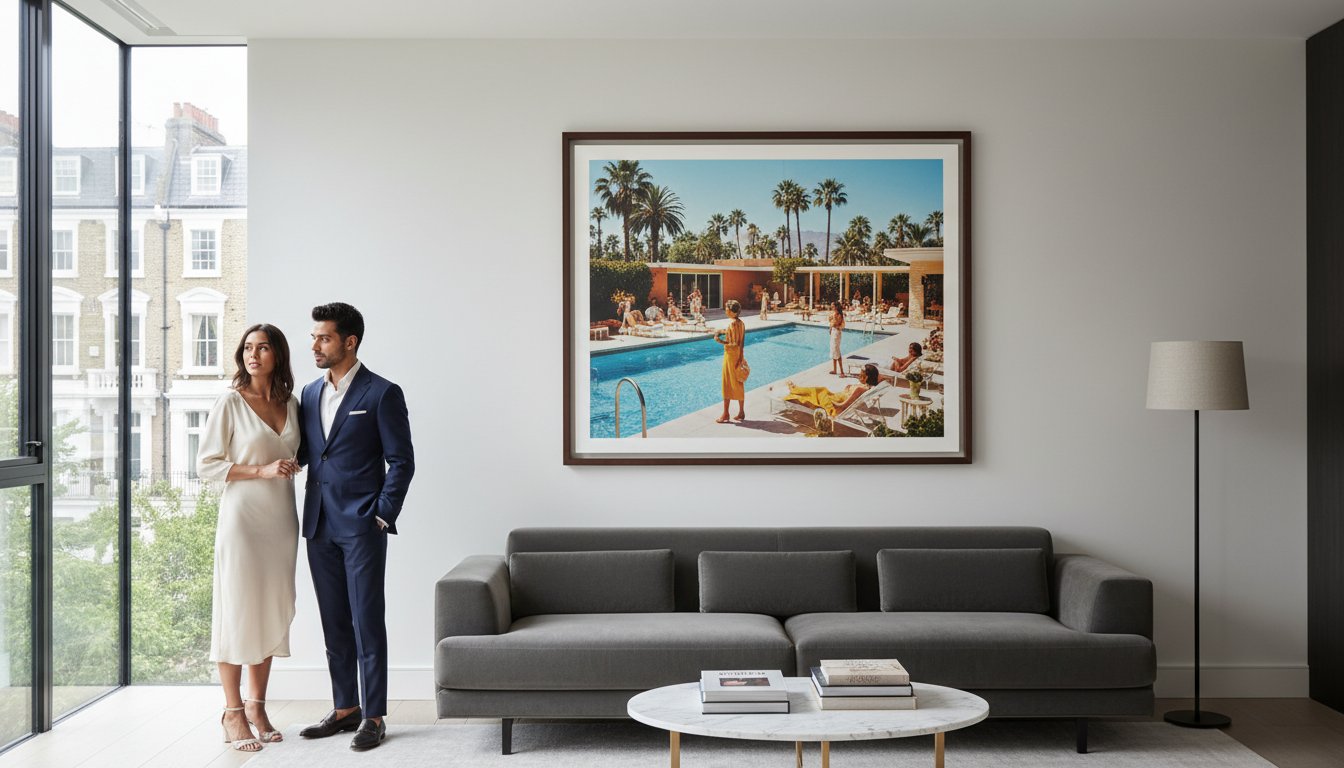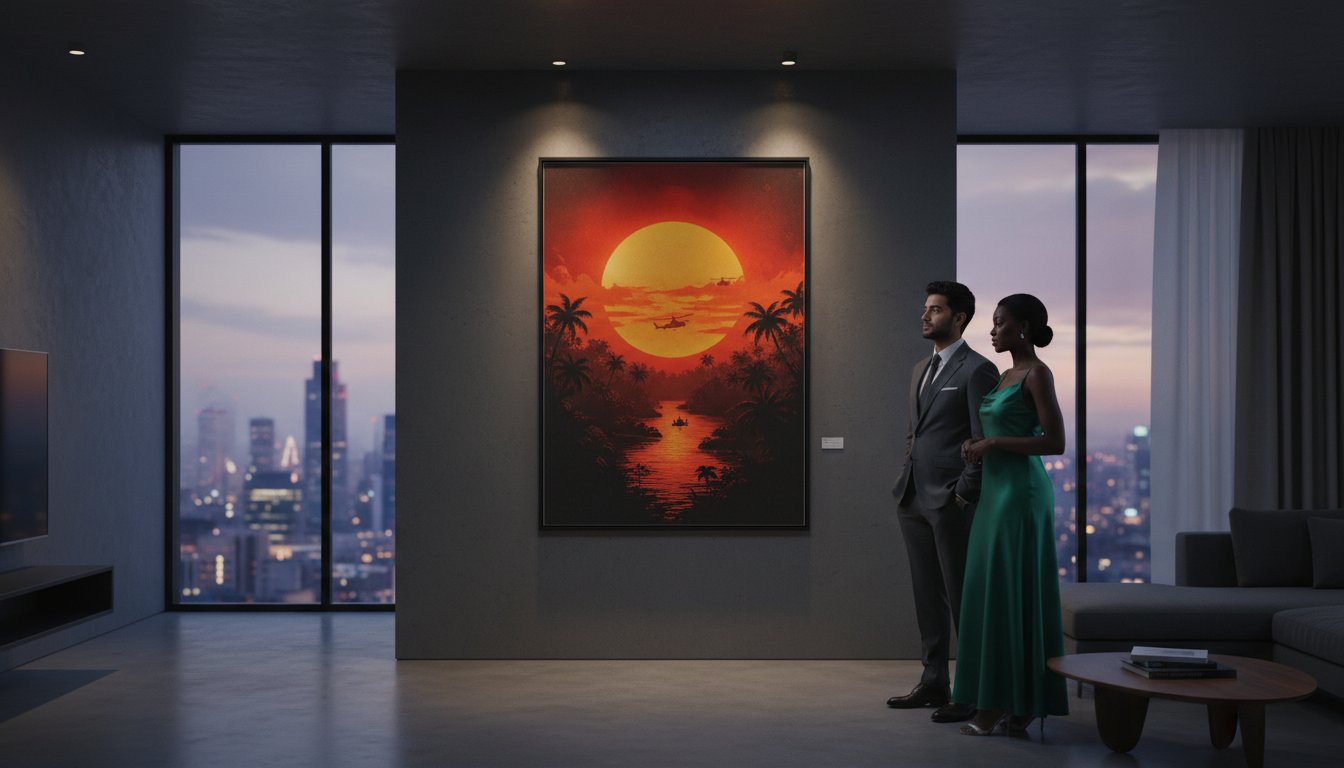

The most evocative homes don’t simply display images; they preserve moments of cultural heritage that define a legacy. Curating a personal art collection is far more than a series of disconnected purchases. It’s a deliberate act of storytelling that bridges the gap between a casual appreciation for beauty and the discerning eye of a true connoisseur. You might feel overwhelmed by the sheer volume of available prints or fear investing in a piece that lacks the archival integrity to endure. These hesitations are natural for any collector who values substance over mere decoration.
You understand that a home should reflect a sophisticated lifestyle, yet finding the balance between disparate eras and styles can feel like an impossible puzzle. This guide will help you master the transition to sophisticated collecting by focusing on narrative depth, archival standards like ISO 11108 for cotton-based papers, and the nuances of artisanal preservation. We’ll explore how to identify high-quality photography, from the sun-drenched leisure of Slim Aarons to the cinematic grit of Terry O’Neill. By the end, you’ll have the confidence to select works that offer both aesthetic cohesion and lasting historical value.
Key Takeaways
- Learn to distinguish between simple home decoration and the deliberate act of curating a personal art collection that reflects your unique cultural legacy.
- Discover how to establish a visual anchor for your space by integrating iconic music archives and aspirational cinema lobby cards.
- Master the technical requirements of archival-grade prints, ensuring your acquisitions are produced from original source materials rather than mass-market reproductions.
- Understand why bespoke framing is essential for both the long-term preservation of the artwork and its seamless integration into your home’s architectural aesthetic.
- Access a curated bridge to the world’s most prestigious photographic archives to ensure every piece you acquire holds lasting prestige and historical value.
The Philosophy of Curation: Defining Your Personal Artistic Legacy
To begin the journey of curating a personal art collection is to step into the role of both historian and storyteller. It’s a transition from merely filling wall space to building a visual biography that will endure for generations. While interior design often focuses on the immediate aesthetic of a room, true curation looks toward the horizon of a lasting legacy. Historically, the assembly of a private art collection was a pursuit reserved for those who viewed art as an extension of their intellectual and cultural identity. Today, this philosophy remains the cornerstone of a sophisticated home. It’s about more than just a purchase; it’s about the emotional resonance of owning a piece of photographic history, such as a rare Terry O’Neill portrait or an authentic Star Wars limited edition print.
Curation vs. Decoration: A Professional Distinction
Decoration is often static, serving the trends of the current year or the specific palette of a sofa. Curation, however, is a deliberate and evolving selection process based on a central theme or narrative. As a collector, you act as a guardian of artistic heritage. You aren’t just buying a print; you’re preserving a specific moment in time captured through a lens. This distinction is vital because a curated collection has the power to evolve over decades. It doesn’t become obsolete when you change your furniture. Instead, the art remains the constant, providing a sense of permanence and stability in a world of fleeting digital imagery.
Finding Your Curatorial Voice
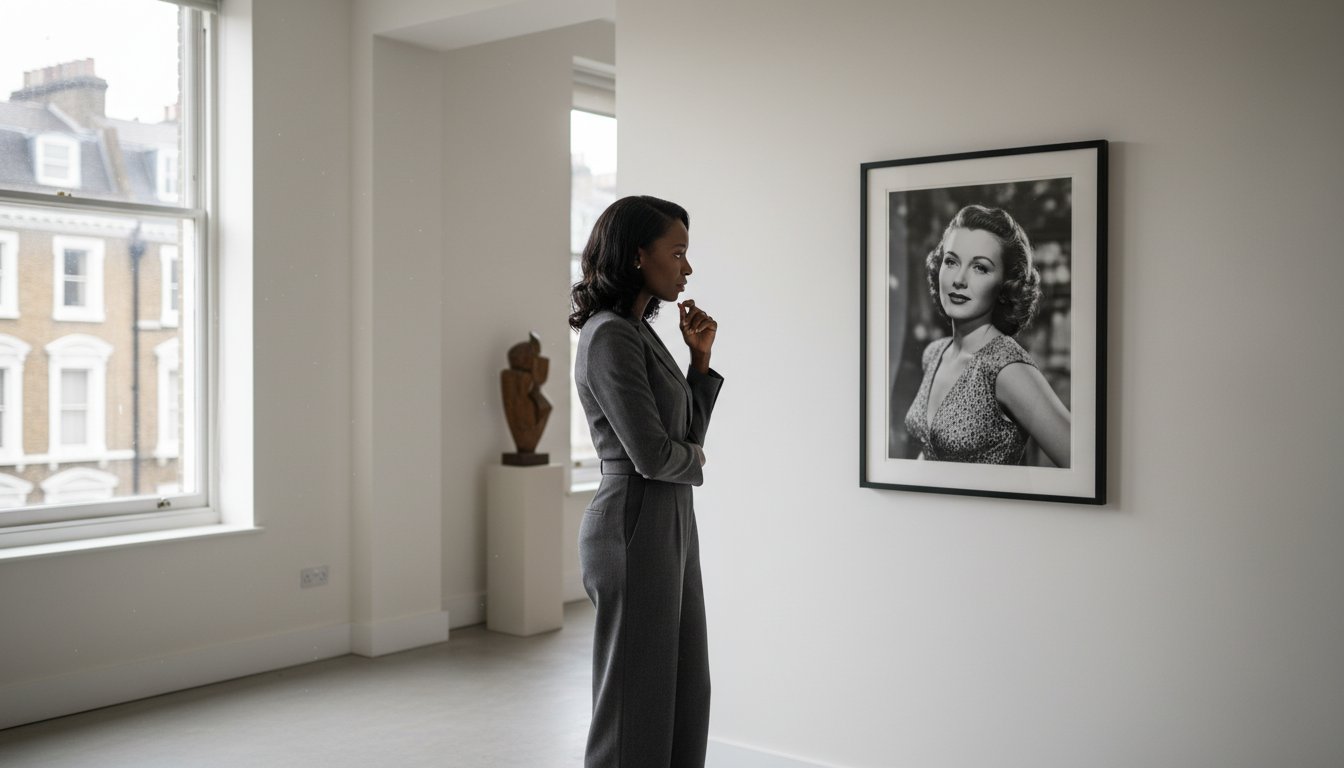
When you begin curating a personal art collection, identifying the moods or eras that resonate with your personal history is the essential first step. You might find yourself drawn to the mid-century glamour of the Slim Aarons Collection, or perhaps the raw, backstage energy found within deep music archives. A single hero piece often dictates the energy of an entire room. A large-scale cinema lobby card can serve as a bold anchor, while a series of smaller, consistent vintage movie posters creates a rhythmic narrative along a corridor. Consistency in the medium, such as focusing strictly on fine art photography, allows for a diverse range of subjects while maintaining a cohesive aesthetic. By balancing nostalgia with modern presentation, you ensure your collection feels both timeless and relevant for 2026 and beyond.
Establishing a Visual Anchor: Themes in Fine Art Photography
Every serious collection requires a visual anchor to provide a sense of purpose. When curating a personal art collection, thematic consistency acts as the refined thread that binds different rooms into a singular narrative. While some collectors might explore collecting work from emerging artists to inject a sense of the contemporary, there’s an undeniable stability in acquiring established archival works that have already secured their place in history. These anchors don’t just occupy space; they dictate the room’s entire emotional frequency and set the stage for all subsequent acquisitions.
The Allure of Aspirational Heritage
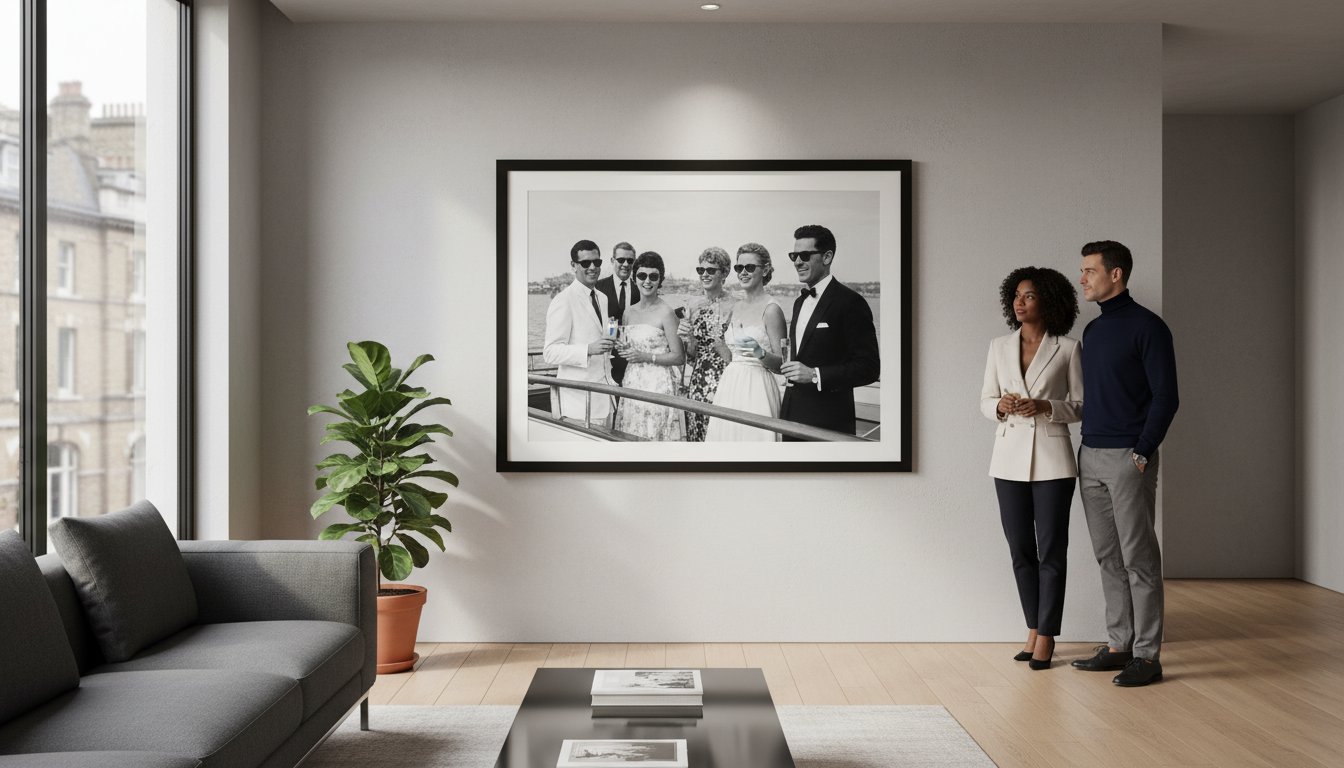
Slim Aarons remains the ultimate reference for those seeking a perennial mood of luxury. His work, famously described as capturing “attractive people doing attractive things in attractive places,” serves as the definitive guide to the Golden Era aesthetic. Slim Aarons captures a world of effortless elegance that pairs perfectly with mid-century modern interiors. These poolside scenes do more than decorate. They transport the viewer to a sun-drenched era of prestige, making them ideal for spaces designed for relaxation and conversation.
Cultural Icons: Music and Cinema Archives
Integrating film and music history adds a layer of intellectual depth to your home. Cinema lobby cards are particularly prized for their rarity and narrative charm, acting as unique conversation pieces that bridge the gap between graphic art and photography. Legendary figures like Marilyn Monroe or the candid grit of Terry O’Neill’s portraits provide a human connection to the glamour of the past. Similarly, music photography captures the soul of a room, immortalizing the raw energy of a performance or the quiet intimacy of a recording session.
The use of black and white photography remains a hallmark of the sophisticated collector. It strips away the distraction of color to reveal the raw texture and emotion of a moment. Mixing these high-contrast portraits with candid, lifestyle-driven imagery creates a dynamic yet balanced atmosphere that feels curated rather than staged. This interplay between the legendary and the everyday is what gives a private collection its unique character and enduring appeal. To find the perfect anchor for your space, consider exploring the curated selections at Galerie Prints, where history and aesthetics meet.
Evaluating Quality: The Technical Nuances of Archival Prints
The discerning eye distinguishes between a fleeting image and a lasting artifact. When curating a personal art collection, the technical specifications of a print determine its future value and physical survival. A common pitfall for new collectors is mistaking a high-quality poster for a fine art print. While posters are often mass-produced on thin, unstable paper using standard offset lithography, a fine art print is a meticulously crafted object of desire. It relies on original source materials, such as the master negatives from the Slim Aarons or Terry O’Neill archives, ensuring that every detail intended by the artist is preserved with clarity. As highlighted in A Guide to Buying Art, understanding these production nuances is essential for anyone looking to build a collection with true market authority.
In 2026, sophisticated collectors prioritize materials that resist environmental degradation. This means insisting on UV-resistant inks and acid-free substrates that won’t yellow or become brittle over time. Provenance remains the ultimate seal of quality; knowing exactly where a print was produced and who authorized its creation is the only way to safeguard your investment. You aren’t just buying an image; you’re acquiring a physical piece of history that requires the highest standards of artisanal production to maintain its prestige.
Archival Standards: Museum-Quality Explained
The choice between C-type and Giclée prints often depends on the desired depth and color profile of the photograph. C-type prints, created through a traditional chemical process, offer a rich, continuous tone that’s synonymous with classic gallery photography. Conversely, Giclée prints utilize advanced pigment-based inks to achieve a wide color gamut and exceptional detail. Both methods must utilize heavy-weight, acid-free archival paper, often meeting ISO 11108 standards for both permanence and durability. Archival quality is defined as a 100-year preservation standard, ensuring the work remains untarnished by time or environment. This level of craftsmanship transforms a simple image into a heritage piece that retains its vibrancy for a century.
The Value of Authenticity and Provenance
True connoisseurship involves verifying that a print originates from an authorized negative or a high-resolution digital file overseen by the artist’s estate. The prestige of estate-stamped or limited edition collections can’t be overstated; these markers provide the legal and artistic weight necessary for a collection to hold its value. You should avoid the pitfalls of mass-produced, low-resolution digital reproductions that lack the tactile richness of an artisanal print. By focusing on verified provenance, you ensure that your journey in curating a personal art collection is built on a foundation of authenticity rather than ephemeral trends.
The Final Touch: Bespoke Framing and Spatial Curation
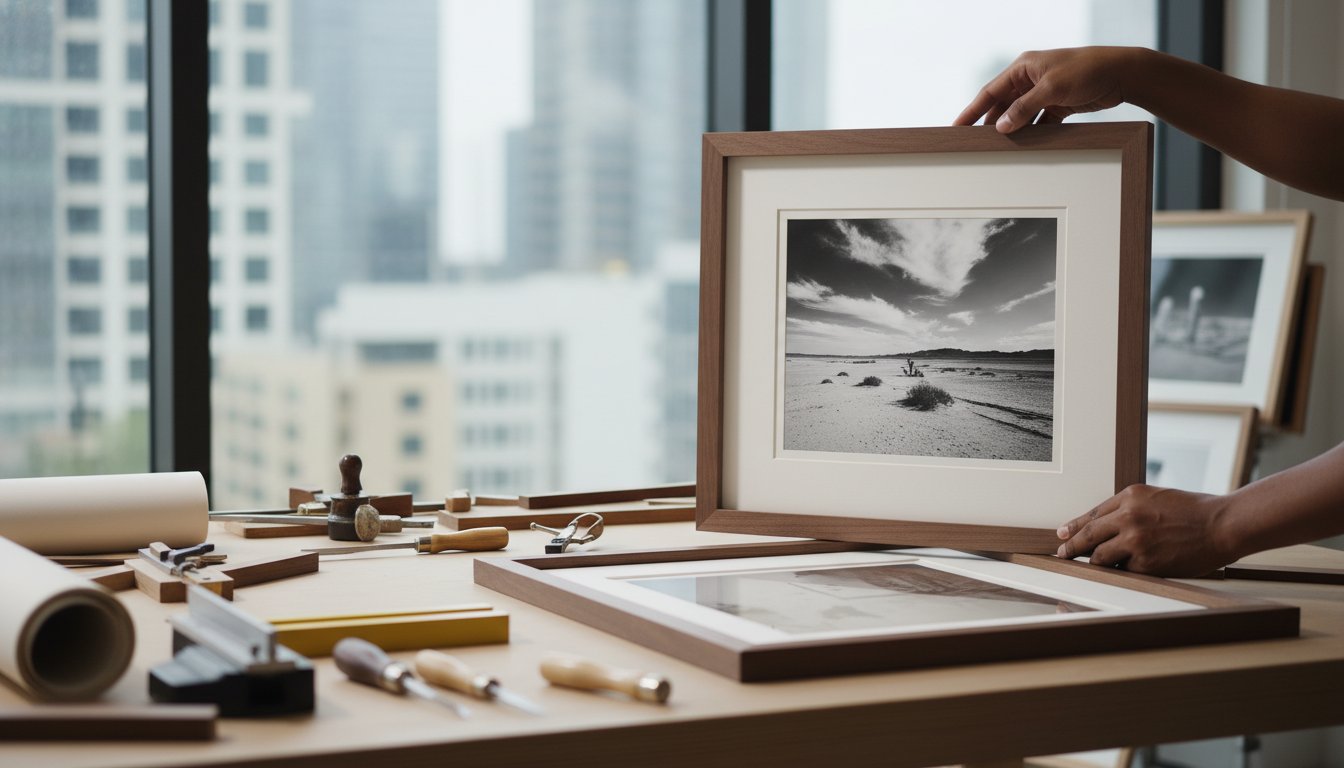
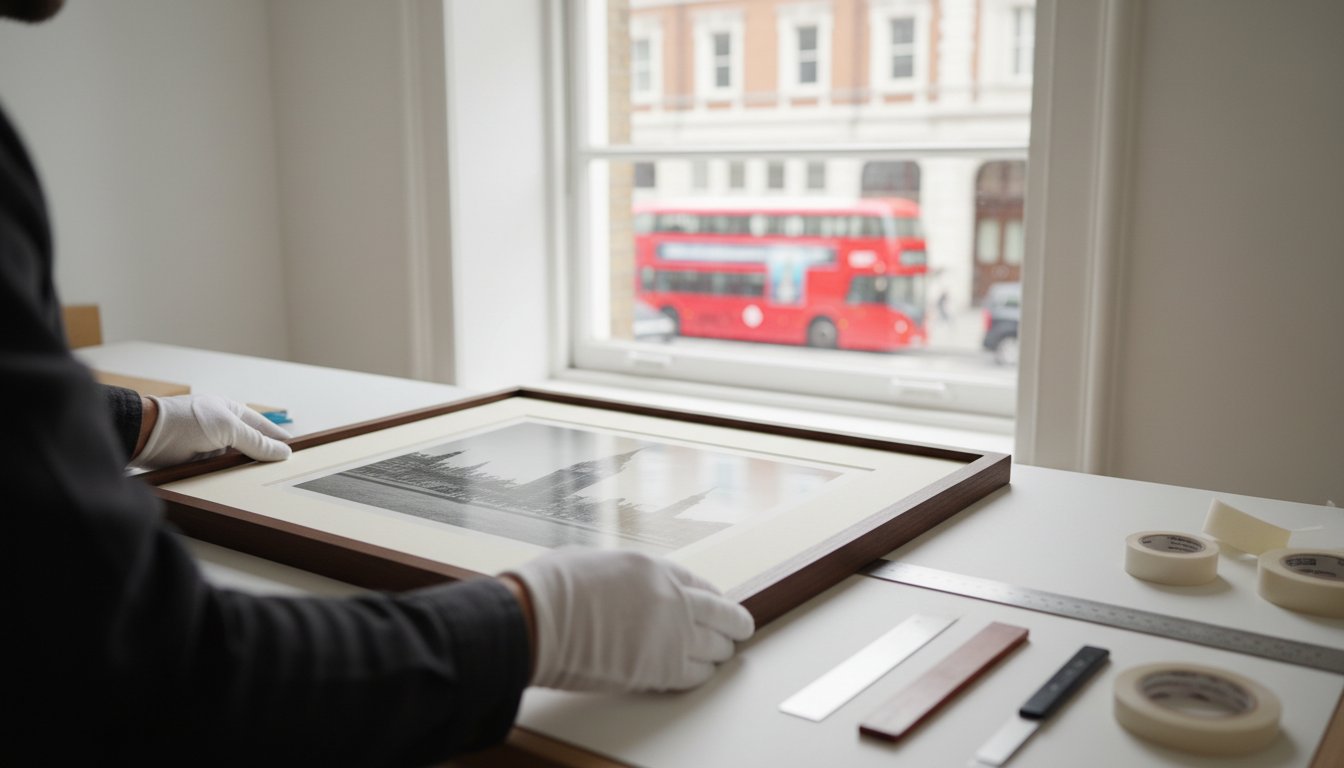
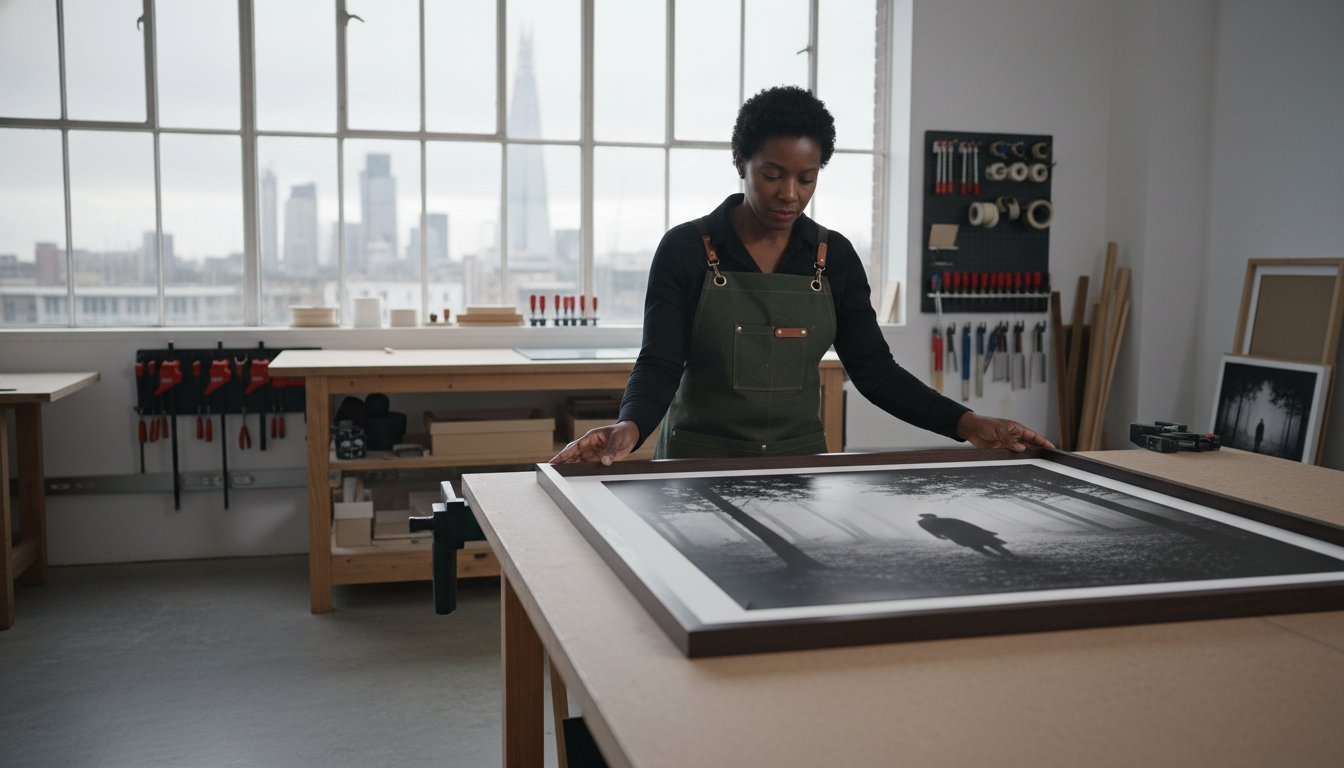
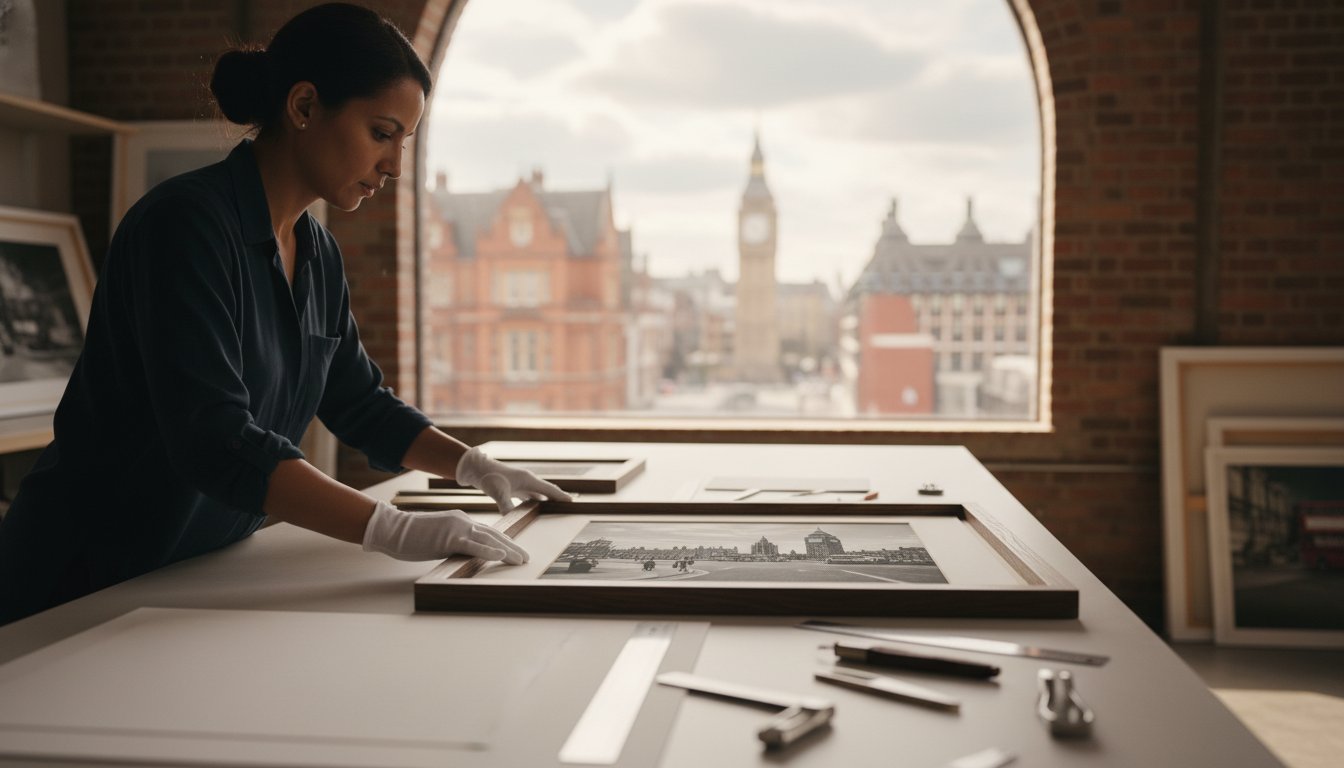
A masterpiece is only as impactful as its presentation. In the meticulous process of curating a personal art collection, the frame serves as the essential bridge between the narrative depth of the photograph and the architectural language of your home. It’s the “suit” that defines the character of the piece, transforming a loose archival print into a commanding object of heritage. Beyond aesthetics, bespoke framing is a technical necessity for long-term preservation. Without professional mounting and acid-free matting, even the finest photographic paper remains vulnerable to environmental shifts. Correct matting provides a vital air gap between the print and the glass, preventing moisture build-up and ensuring the work doesn’t warp or degrade over the coming decades.
Selecting the Perfect Frame
Choosing the right frame requires a sophisticated balance between the era of the photograph and the contemporary needs of your interior. Traditional dark wood frames, such as deep walnut or stained oak, lend a sense of historical gravity to vintage movie posters or early cinema lobby cards. These materials anchor the work within a classic, established aesthetic. Conversely, contemporary slim black or white frames often suit the high-contrast grit of Terry O’Neill’s portraits or the vibrant, sun-drenched hues of the Slim Aarons Collection. For those seeking a more dramatic, three-dimensional effect, gallery-style deep box frames create a shadow-box feel that draws the eye inward and adds a layer of prestige. The width of the frame also dictates the perceived scale of the work; a wider mount can give a smaller, intimate print a more commanding presence on a large wall.
Spatial Curation: Placement and Lighting
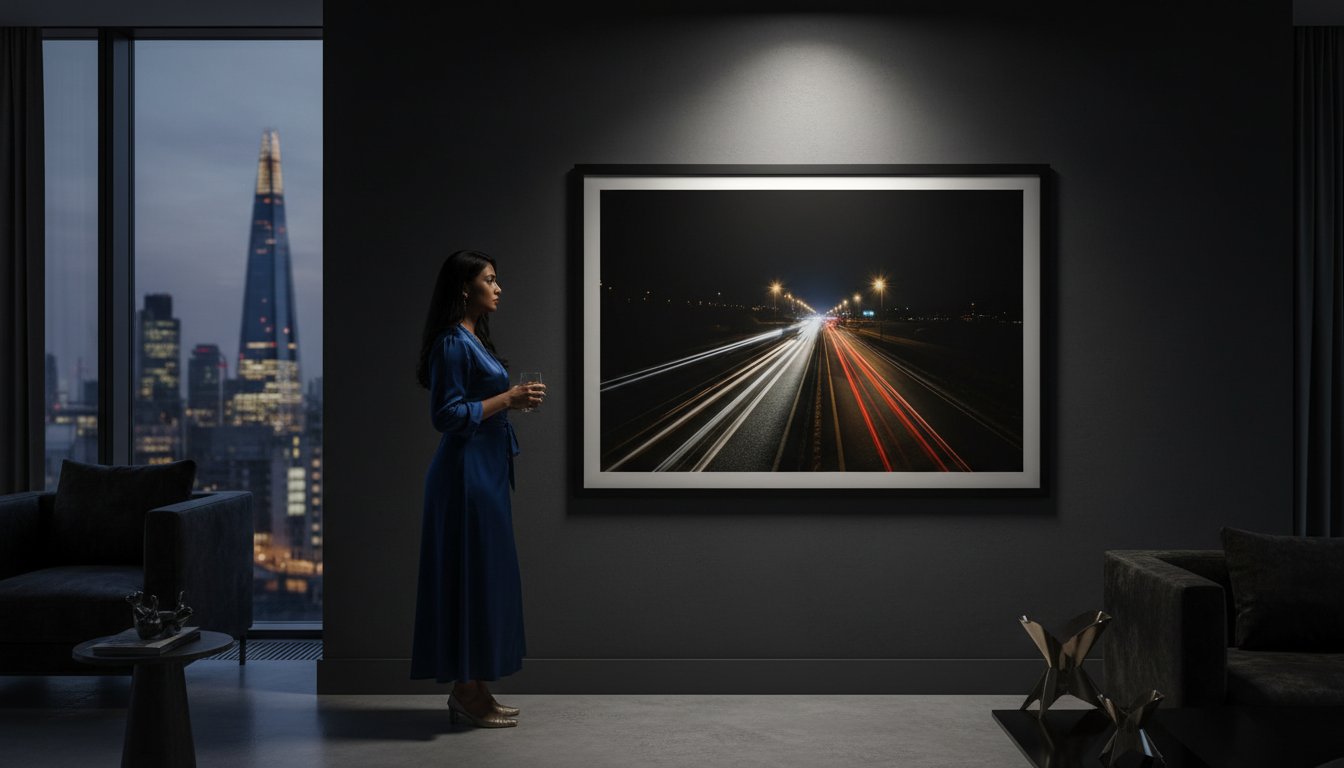
Successful spatial curation is the art of managing negative space to allow each piece its own “breathing room.” A gallery wall should feel like a deliberate, intellectual conversation between images rather than a cluttered assembly of frames. You can group disparate subjects, such as Star Wars limited edition prints alongside deep music archives, by utilizing a consistent framing language that ties the collection together. This visual harmony allows the eye to travel across the wall with ease. Lighting is equally critical to the curatorial process. While you want to highlight the artisanal craftsmanship of each print, you must protect the work from the invisible threat of direct sunlight. Utilizing UV-protective glass within your bespoke framing is the only way to ensure that the vibrant colors and deep blacks of your collection don’t fade into a pale memory of their former selves. When curating a personal art collection, the environment you create is just as important as the art itself.
To ensure your acquisitions receive the artisanal finish they deserve, explore the bespoke framing options available to complete your collection with museum-quality precision.
Starting Your Journey: Curating with Galerie Prints
Galerie Prints serves as a dedicated bridge to the world’s most prestigious photographic archives, offering you a direct path to the masters of the lens. When you begin curating a personal art collection, the transition from observer to collector requires a partner who understands the weight of cultural heritage. We provide an expert-led approach to fine art photography, ensuring that every acquisition is both an aesthetic triumph and a sound investment in history. Our role is to guide you through the nuances of selection, helping you discover pieces that resonate with your personal narrative while maintaining the highest gallery standards. From the initial spark of interest in a specific era to the final delivery of a bespoke framed masterpiece, we offer the personalized support necessary for a sophisticated collecting experience.
A World-Class Curation at Your Fingertips
The prestige of our collection is anchored by exclusive access to the Getty Images Gallery and the Slim Aarons Estate. This partnership allows us to offer authentic, authorized prints that capture the very essence of 20th-century glamour and grit. We’ve integrated this historical depth with high-resolution online preview and customization tools, allowing you to tailor the scale and finish of your chosen work from the comfort of your home. You can experiment with different dimensions for a Terry O’Neill portrait or see how a Star Wars limited edition print might command a specific wall. While the technology is modern, the production remains traditional. We take immense pride in our localized, artisanal craftsmanship. Every frame is constructed with the precision that only a seasoned specialist can provide, ensuring your artwork is ready to hang as a permanent fixture of your legacy.
Your Next Step as a Collector
Building a collection is a rhythmic process that evolves as your tastes mature. We invite you to browse our curated archives by mood, era, or artist to find the piece that speaks to your current vision. Whether you’re drawn to the raw energy of our music archives or the cinematic allure of vintage movie posters and cinema lobby cards, each selection is handled with the utmost care. Our curators are available to help you mix different styles, ensuring that a candid lifestyle shot feels at home next to a legendary celebrity portrait. We manage every detail of the journey, including secure, worldwide shipping for fragile fine art. This ensures that your chosen heritage piece arrives in perfect condition, no matter where your private gallery resides. Begin your personal collection today with a signature piece that will define your home for decades to come.
Building a Legacy Through the Lens
True connoisseurship is found in the quiet details of a collection that speaks to both history and personal identity. You’ve explored the essential shift from mere decoration to the deliberate act of curating a personal art collection, where every piece serves as a meaningful chapter in your visual biography. By prioritizing museum-quality archival paper and verified provenance from authorized archives, you ensure that your investments remain as vibrant in a century as they are today. The final layer of sophistication lies in bespoke, artisanal framing, which provides both the technical protection and the aesthetic gravity required for a high-end interior.
The journey from a casual admirer to a serious collector is one of refined discovery. Through our partnership with the Getty Images Gallery and our commitment to traditional production methods, we provide the stability and expertise needed to ground your vision in authentic heritage. It’s time to transform your space into a sanctuary of photographic excellence. Begin your curatorial journey with the Slim Aarons Collection and discover the enduring power of a perfectly captured moment. Your legacy starts with a single, extraordinary frame.
Frequently Asked Questions
How do I know if an art print is a good investment?
An art print’s investment potential is primarily determined by its scarcity, provenance, and the prestige of the artist’s estate. When curating a personal art collection, you should prioritize works sourced from authorized archives, such as the Getty Images Gallery, which ensure the piece originates from the master negative. Limited edition prints, which are restricted to a specific number of copies, inherently hold more market value than mass-produced open editions because they maintain a measurable level of rarity.
What is the difference between a limited edition and an open edition print?
Limited edition prints are produced in a strictly defined quantity, after which the negative or digital file is retired to ensure no further copies are made. Each piece is typically numbered and accompanied by a certificate of authenticity to verify its place within the series. Open edition prints, conversely, can be produced indefinitely. While open editions offer an accessible entry point for decorative purposes, limited editions are preferred by serious collectors for their long-term value and exclusivity.
How should I choose the first piece for my art collection?
Your first acquisition should serve as a visual anchor that reflects your personal aesthetic and intellectual interests. Choose a piece that evokes a strong emotional response or a sense of nostalgia, whether it’s a candid moment from the music archives or a glamorous Slim Aarons poolside scene. This initial selection often dictates the tonal direction for the rest of your collection, so it’s wise to invest in a subject matter that you’ll find compelling for decades to come.
Can I mix black and white photography with colour prints in one room?
Mixing black and white photography with color prints is an excellent way to add dynamic contrast and depth to a space. The key to successful integration lies in using a consistent framing language to provide a sense of visual harmony. For instance, a monochrome Terry O’Neill portrait can sit comfortably alongside a vibrant Slim Aarons print if both are presented in similar bespoke frames. This approach allows the disparate styles to feel like a deliberate, curated choice rather than a random assembly.
What does ‘archival quality’ actually mean for a home collector?
For a home collector, archival quality refers to the use of materials and processes designed to preserve the artwork for at least 100 years. This involves printing on heavy-weight, acid-free paper that meets ISO 11108 standards, which prevents the yellowing and brittleness seen in standard prints. When curating a personal art collection, ensuring your pieces are archival grade means they’ll retain their original depth and color without deteriorating, effectively protecting your cultural and financial investment for future generations.
How do I protect my art collection from fading over time?
Protection begins with the use of UV-protective glass in your bespoke framing, which filters out the harmful rays that cause pigments to break down. You should also be mindful of placement, avoiding areas of the home that receive direct, intense sunlight for extended periods. Additionally, maintaining a stable environment with consistent humidity levels prevents the paper from warping. These preventative steps are essential for safeguarding the vibrancy and technical integrity of your fine art photography.
Is it better to buy one large statement piece or several smaller ones?
The choice depends on the architectural demands of your space and the narrative you wish to create. A single, large statement piece, such as a grand-scale Slim Aarons landscape, creates an immediate sense of luxury and focus. Several smaller works, like a series of cinema lobby cards, allow for a more complex, rhythmic storytelling experience along a corridor or gallery wall. Both approaches are valid, provided they’re executed with a clear curatorial vision and high-quality presentation.