
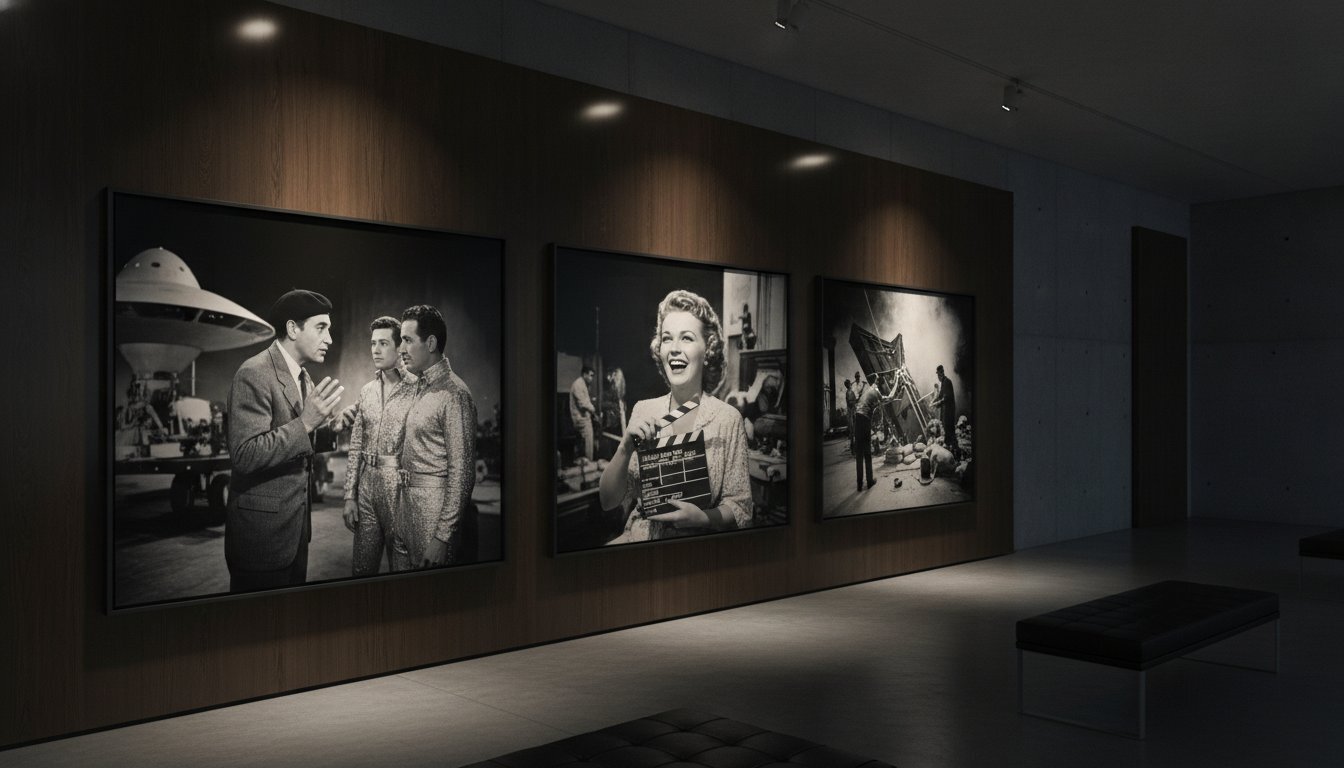
The most profound moments in cinema history often occur in the quiet intervals when the cameras stop rolling. While the finished film provides the illusion, it is the raw, unscripted sub-genre of iconic behind the scenes movie photos that captures the true tension between human vulnerability and the grand architecture of Hollywood. You likely feel a deep reverence for these glimpses into the past, yet finding museum-quality prints that honor the original source material is often a frustrating journey through low-quality digital archives and superficial lists.
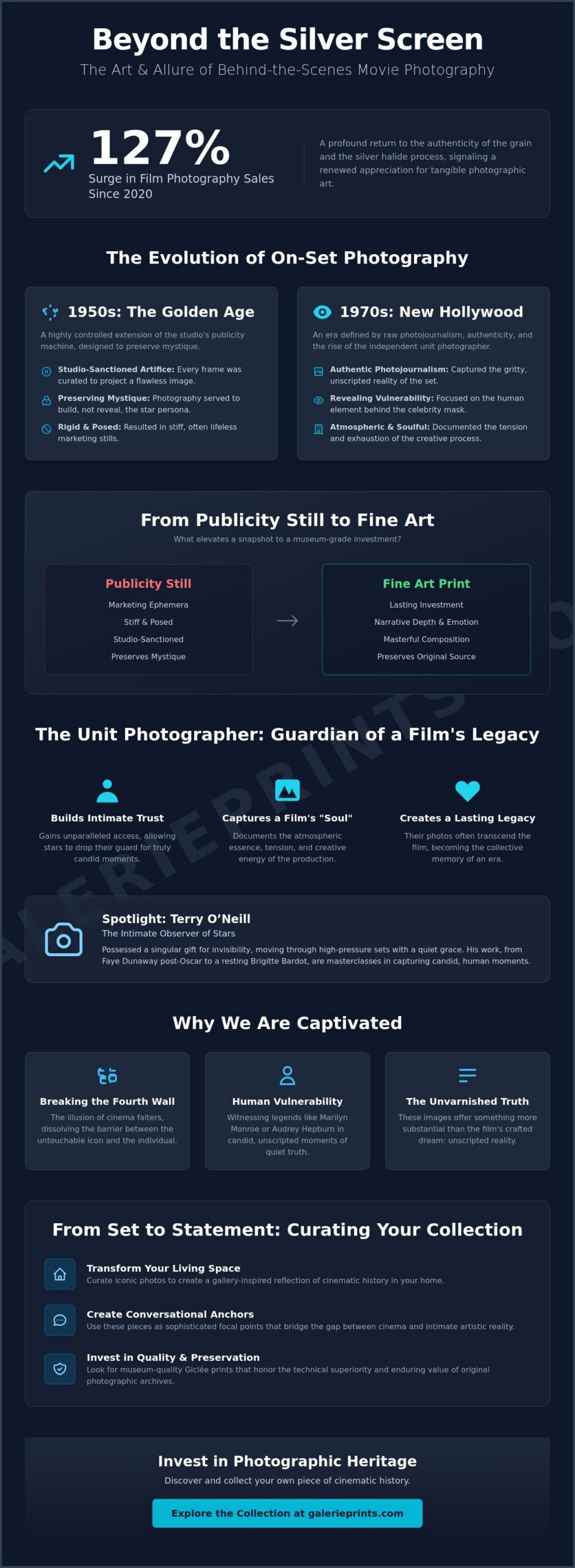
This guide promises to bridge that gap. You will discover the artistry and historical depth of these images, learning how to distinguish between a mere marketing still and a piece of legitimate fine art. With film photography sales having surged by 127 percent since 2020, the world is witnessing a profound return to the authenticity of the grain and the silver halide process. We will explore the evolution of this medium, identify the legendary photographers who defined it, and offer expert advice on how to display these pieces of cinematic history within a sophisticated home environment.
Key Takeaways
- Uncover why breaking the ‘fourth wall’ creates a unique emotional connection with legendary stars like Marilyn Monroe and Audrey Hepburn.
- Discover the critical role of the unit photographer and the legendary artists who captured the unscripted reality of high-pressure film sets.
- Master the nuances of cinematic aesthetics, from the stark timelessness of black-and-white film to the surreal spectacle of practical effects.
- Learn how to curate and style iconic behind the scenes movie photos to transform your living space into a gallery-inspired reflection of cinematic history.
- Gain insight into the technical superiority of museum-quality Giclée prints and the enduring value of preserving original photographic archives.
Beyond the Silver Screen: Why We Are Captivated by Iconic Behind the Scenes Movie Photos
There is an undeniable magnetism in the moment the architectural illusion of cinema falters. While a motion picture is a meticulously crafted dream, the images captured in the quiet intervals between “action” and “cut” offer something far more substantial: the unvarnished truth. For the discerning collector, acquiring iconic behind the scenes movie photos is not merely an act of nostalgia. It is a pursuit of the human element that exists behind the mask of celebrity. When we see Marilyn Monroe adjusting her costume in a quiet corner or Audrey Hepburn sharing a candid laugh with a stagehand, the “fourth wall” doesn’t just break; it dissolves, revealing the vulnerability of these seemingly untouchable icons.
The transition in how these moments were recorded marks a significant cultural shift. During the Golden Age of the 1950s, on-set photography was a highly controlled extension of the studio’s publicity machine. Every frame was curated to preserve the star’s mystique. However, the 1970s ushered in a New Hollywood era defined by raw photojournalism and a desire for authenticity. To understand the history of behind-the-scenes documentation is to witness this evolution from studio-sanctioned artifice to the gritty, unscripted reality of the set. An image achieves “iconic” status when it transcends the film it documents, standing alone as a masterpiece of composition and emotional depth that requires no cinematic context to justify its beauty.
The Evolution of On-Set Photography
In the early decades, photography was a rigid requirement for marketing, often resulting in stiff, posed stills. This changed with the rise of the independent unit photographer, a specialist tasked with capturing the atmospheric “soul” of a production. These artists operated on the periphery, documenting the tension and exhaustion of the creative process. The shift from physical film to digital formats has only increased the prestige of these original archives. Physical negatives from legendary sets represent a finite, tactile history of an artisanal era that digital files simply cannot replicate.
From Publicity Stills to Museum-Grade Art
What elevates a candid snapshot into a fine art print? It’s a combination of narrative depth, masterful lighting, and the preservation of original source materials. Collectors today look for iconic behind the scenes movie photos that exhibit the same technical excellence as traditional portraiture or street photography. These pieces serve as sophisticated conversational anchors in a home, offering a bridge between the grand spectacle of cinema and the intimate reality of the artistic journey. They are no longer seen as marketing ephemera, but as lasting investments in photographic heritage.
The Masters Behind the Lens: Legendary Photographers Who Captured Hollywood’s Rawest Moments
Behind every legendary film is a photographer who navigated the chaos of a set to capture the fleeting reality of creation. These unit photographers were more than mere observers; they were the guardians of a film’s lasting legacy. Establishing a deep sense of trust with stars was paramount. Without this intimacy, we would lack the iconic behind the scenes movie photos that now define our collective memory of cinema. These artists worked under immense pressure, often in cramped or dangerous conditions, to find the one frame that tells the story of the production’s soul. Their signature styles often mirrored the films they documented, using the same lighting palettes or compositional tensions to create a parallel narrative that exists outside the movie’s runtime.
Terry O’Neill: The Intimate Observer of Stars
Terry O’Neill possessed a singular gift for invisibility. In the 1960s and 70s, he moved through high-pressure sets with a quiet grace that allowed stars to drop their guards. Consider his portrait of Faye Dunaway at the Beverly Hills Hotel pool the morning after her Oscar win, or Brigitte Bardot caught in a moment of quiet repose. These aren’t just snapshots; they are masterclasses in fine art photography. O’Neill’s work remains a cornerstone for serious collectors who value the intersection of celebrity and vulnerability. He didn’t just take pictures; he curated a lifestyle that felt both aspirational and deeply grounded. You can explore the depth of his legacy through our curated collection of Terry O’Neill Photography.
The Power of the Archive: Preserving the Golden Age
The preservation of these moments relies heavily on the meticulous work of world-renowned archives. Organizations like The Society of Motion Picture Still Photographers champion the recognition of these artists, ensuring their work isn’t lost to time. Curated archives like Getty Images or the Hulton Archive serve as a vital reservoir for previously unseen negatives that were once destined for the cutting room floor. The process of digitising and restoring vintage film is an artisanal craft in itself. It requires a delicate touch to balance the original grain and tactile history of the film with the clarity required for modern large-format printing. For the collector, limited edition releases from these archives offer a rare opportunity to own a tangible piece of history. These prints aren’t mere reproductions. They are meticulously restored artifacts that justify their premium positioning through technical excellence and historical authenticity.
Defining the Aesthetic: Candid Portraits vs. the Spectacle of Practical Effects
The allure of iconic behind the scenes movie photos often lies in the jarring juxtaposition of the fantastic and the mundane. There is a profound visual tension when we see a terrifying entity, such as the animatronic shark from Jaws or the biomechanical terror of the Alien, resting amidst the utilitarian clutter of a film set. These frames strip away the carefully constructed terror, replacing it with a deep appreciation for the mechanical ingenuity and physical labor required to manifest such nightmares. Unlike the sterile wireframes of modern CGI breakdowns, photos of practical effects capture a tangible, three-dimensional reality. They document a lost era of miniatures and matte paintings, where the “magic” was a result of artisanal craftsmanship rather than digital rendering. This “workmanlike” beauty extends to the crew themselves. Seeing the focused faces of technicians and artists at work elevates the production from a product to a process, celebrating the unsung heroes who operate just out of the frame.
The Human Element: Stars in Repose
Actors exist in a state of quiet transition between high-drama sequences. Capturing this exhaustion, focus, or even a shared joke provides a narrative depth that scripted stills simply can’t reach. The aesthetic of black and white pictures is particularly effective in these instances. The monochromatic palette strips away the distractions of modern set equipment, emphasizing the “noir” soul of the performer and the timeless quality of their craft. These quiet moments often resonate more deeply than high-action shots because they offer a glimpse into the person behind the persona, grounding the legend in a recognizable human reality.
The Architecture of Illusion: Capturing the Craft
Beyond the performers, the set itself serves as a temporary, monumental sculpture. The intricate scaffolding of a Star Wars hangar or the dusty, physical depth of an Indiana Jones temple site offers a glimpse into the grand architecture of illusion. These images document a period when world-building was a tactile, physical endeavor. Lighting rigs, painted backdrops, and massive practical builds are preserved as historical artifacts through the lens of the unit photographer. For the collector, these photos are a testament to the preservation of original source materials, capturing a specific moment in time when cinema was as much about engineering as it was about storytelling. They represent a bridge to a bygone era of elegance and technical excellence that defines the heritage of the silver screen, a sentiment echoed in the masterful craftsmanship found at Art Of Guitar.
Curation and Display: How to Style Behind the Scenes Art in Your Home
The transition from a cinema enthusiast to a serious curator requires a shift in perspective. You aren’t merely purchasing a photograph; you’re acquiring a narrative that must harmonize with the architectural soul of your living space. Curating iconic behind the scenes movie photos involves more than just selecting a favorite film or a beloved star. It demands a discerning eye for theme, whether you choose to focus on the visionary output of a specific director, a particular genre, or the distinct visual language of a bygone era. These pieces serve as the ultimate conversational anchors in social spaces, sparking deep dialogue about the technical mastery and human vulnerability of the past. To ensure these investments retain their historical and financial value, the use of archival materials is non-negotiable. Museum-quality matting and UV-protective glass are essential to prevent the inevitable fading that plagues lesser prints, preserving the integrity of the work for decades.
Choosing the Right Era for Your Interior
Your existing interior design should dictate the era and aesthetic of your collection. If your home leans toward bright, airy rooms and a sense of effortless elegance, the aspirational luxury of the Slim Aarons era provides a perfect match. His work captures a world of prestige that complements mid-century modern furniture beautifully. Conversely, the gritty, unvarnished cool of 1970s New Hollywood—the shadowy, high-tension sets of Coppola or Scorsese—is better suited for the intellectual atmosphere of a library or a private study. For those seeking a more textured, nostalgic aesthetic, integrating vintage lobby cards into a gallery wall adds a layer of historical depth and tactile charm that larger formats might lack.
The Impact of Scale: Large Format vs. Gallery Walls
Scale is your most powerful tool when displaying iconic behind the scenes movie photos. A single, oversized statement print of a legendary moment can anchor an entire room, providing a sense of permanence and quiet authority. On the other hand, a meticulously planned gallery wall can tell the intricate story of a film’s production through a series of smaller, candid frames. Pay close attention to the role of negative space. Generous matting doesn’t just protect the physical print; it elevates the photograph to the status of a fine art piece, allowing the viewer to focus on the raw, unscripted details of the set. To ensure your collection is presented with the technical excellence it deserves, we invite you to explore our Bespoke Framing Service for a tailored finish.
Investing in History: Collecting Fine Art Movie Prints with Galerie Prints
Investing in iconic behind the scenes movie photos is a commitment to the preservation of a physical, tactile history. In an era where digital saturation is the norm, the market for authentic film photography has seen a remarkable resurgence. Wholesale demand for film photography increased by 127 percent between 2020 and 2026, reflecting a global desire for the authenticity of the grain over the sterile perfection of AI-generated imagery. At Galerie Prints, we position ourselves as more than a gallery; we are curators of provenance. Our collections are sourced directly from the world’s most prestigious archives, ensuring that every print carries the weight of historical authenticity. We don’t just offer images. We provide a bridge to a bygone era of elegance, where the technical mastery of the unit photographer was as vital as the director’s vision.
We utilize museum-quality Giclée printing processes on heavyweight archival paper to ensure that the depth of the original negative is honored. This technical precision is what distinguishes a fine art investment from a standard commercial poster. A professional print isn’t just about the visual impact; it’s about the longevity of the materials and the preservation of the artist’s original intent. By focusing on traditional production methods and the preservation of original source materials, we justify the premium positioning and exclusivity of our offerings for serious collectors.
Authenticity and Archival Quality
For the discerning collector, the choice of substrate and pigment is paramount. We use acid-free, heavyweight papers that resist yellowing and degradation over time. Our commitment to using original source materials means we don’t rely on third-party digital scans. Instead, we work with high-resolution captures of original negatives. This ensures that the silver halide texture, so characteristic of the 20th-century film sets we document, is reproduced with absolute fidelity. While standard commercial prints may fade within a few years, our archival-grade productions are designed to remain vibrant for generations, acting as a lasting piece of history in your home.
Bespoke Framing: The Final Touch of Elegance
The final step in your journey is our Bespoke Framing Service. A frame should never be an afterthought; it must act as an extension of both the artwork and your home’s unique architecture. We offer a range of premium moldings and museum-grade glazing options that protect your iconic behind the scenes movie photos from environmental damage. For our international collectors, we provide a seamless, ready-to-hang delivery service. This ensures that your chosen piece arrives in pristine condition, ready to be unveiled in your private gallery. Explore our curated collection of iconic movie photography and start building a legacy that celebrates the raw, unscripted beauty of cinematic history today.
Preserve the Legacy of Cinema in Your Private Collection
The transition to becoming a serious curator hinges on recognizing that the most profound cinematic stories often exist outside the frame. By choosing to collect iconic behind the scenes movie photos, you’re preserving the raw, unscripted reality that defined an era of unparalleled artistry. These images bridge the gap between the grand spectacle of Hollywood and the intimate focus of the creative process; they offer a sense of permanence and historical depth that modern digital media simply cannot replicate.
Galerie Prints grants you exclusive access to the prestigious Getty Images Gallery archive, ensuring every piece is grounded in verified historical provenance. Our bespoke framing service, executed by master craftsmen, provides the final touch of sophistication required for museum-grade display in a refined home. With our reliable worldwide shipping, these lasting artifacts of film history are available to enhance your collection, no matter where you reside. Each print is a testament to the technical excellence and human vulnerability that make cinema the world’s most captivating art form.
Browse the Curated Cinema Collection at Galerie Prints
Take the first step in building a legacy that celebrates the enduring soul of the silver screen and the masters who captured it.
Frequently Asked Questions
What is the difference between a movie still and a behind-the-scenes photo?
A movie still is a captured frame from the finished film or a staged recreation for marketing, while a behind-the-scenes photo documents the actual production process. While stills preserve the illusion of the story, behind-the-scenes images capture the reality of the set, including cameras, crew, and unscripted moments. This distinction is vital for collectors who value the raw, historical documentation of cinematic craftsmanship over promotional imagery.
Why are many iconic behind-the-scenes photos shot in black and white?
Many iconic behind the scenes movie photos were shot in black and white because it was the professional standard for press and archival documentation during the mid-20th century. Beyond technical necessity, the monochromatic palette emphasizes texture, lighting, and raw emotion without the distraction of modern set colors. This aesthetic choice creates a timeless quality that allows the human element of the production to take center stage.
Are behind-the-scenes prints considered a good investment for art collectors?
Fine art behind-the-scenes prints are increasingly regarded as stable investments due to their rarity and historical significance. As the global market for analog photography grows, limited edition prints from prestigious archives tend to appreciate in value. Collectors often prioritize works by legendary unit photographers because they represent a finite record of a bygone era of physical filmmaking, making them highly sought after in the art world.
How do I know if a movie print is of archival quality?
You can identify archival quality by looking for specific materials such as acid-free heavyweight paper and pigment-based inks. Museum-grade prints, often produced using the Giclée process, are designed to resist yellowing and fading for over a century. Always verify that the print is produced on archival-certified paper, which ensures the preservation of the original source material’s depth and clarity for long-term collection.
Can I find behind-the-scenes photos from modern movies as fine art prints?
While many fine art prints focus on the Golden Age and New Hollywood, high-quality behind-the-scenes photos from modern productions are available through specialized collections. These often highlight the spectacle of practical effects or intimate portraits of contemporary icons. However, the rarity of physical film archives from the digital era means that modern prints are often released in strictly limited editions to maintain their exclusivity and value.
What are the best movies for behind-the-scenes photography collectors?
Films with complex productions or legendary stars, such as The Godfather, 2001: A Space Odyssey, or Goldfinger, are perennial favorites for collectors. These sets offered rich visual environments where unit photographers could capture the tension of high-stakes filmmaking. Collectors also gravitate toward movies with significant practical effects, as these photos document the intricate craftsmanship that defined the pre-CGI era of cinema history.
How should I frame a large-format cinematic print?
Large-format prints should be framed using museum-quality materials, including UV-protective glass and acid-free mounting boards. A deep box frame or a classic wooden molding can provide the structural stability needed for oversized works while complementing the architectural style of your home. Proper matting is equally important, as it prevents the print from touching the glass and creates a sophisticated visual border that elevates the photograph.
Are these photos licensed from the original film studios?
Authentic iconic behind the scenes movie photos are typically licensed through the original film studios or the prestigious archives that hold the rights to the negatives. This ensures that the photographer’s estate and the copyright holders are respected, providing you with a legitimate piece of cinematic heritage. Purchasing licensed work guarantees the provenance of your print, which is essential for maintaining its long-term value as a fine art asset.