
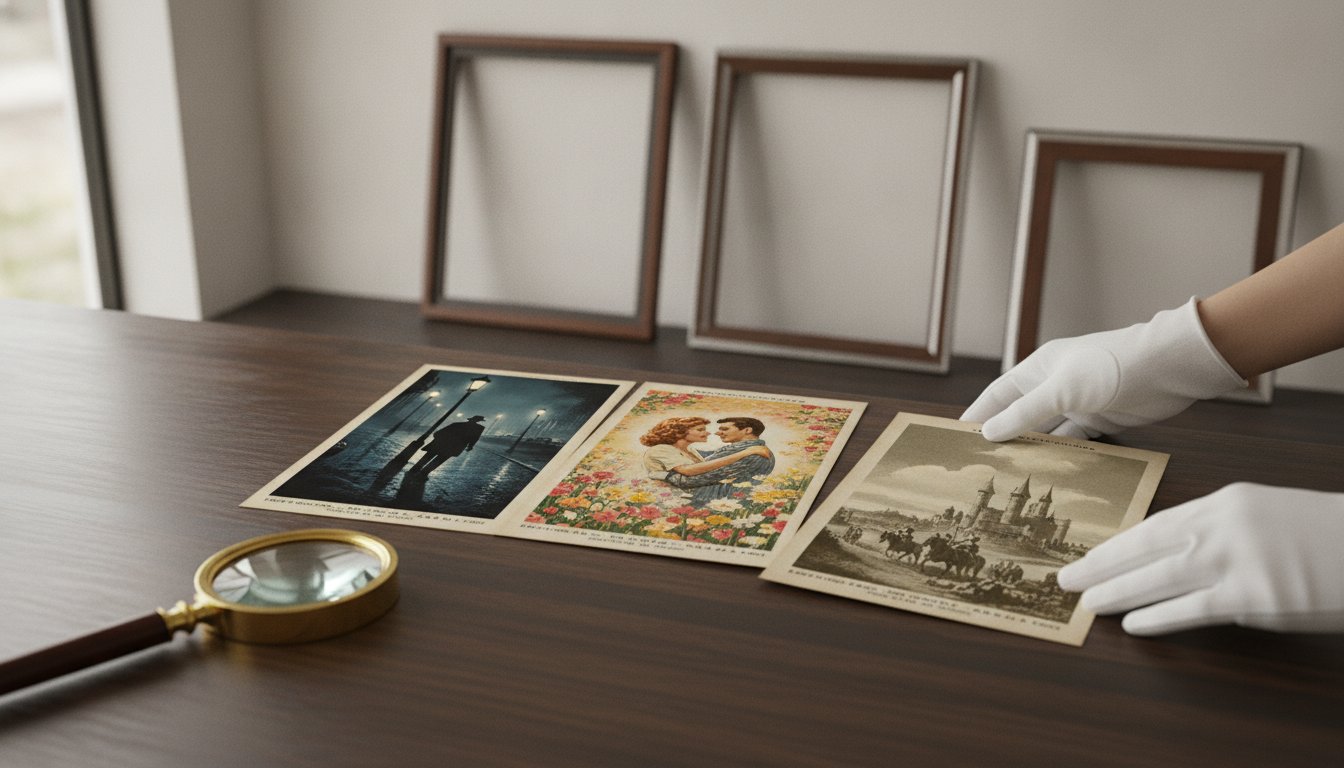
The most evocative pieces of Hollywood history aren’t always the largest; often, they’re the ones designed to be admired at eye level. While grand theatrical posters capture the scale of a production, original lobby cards offer an intimate, tactile bridge to the golden age of cinema. You understand that building a private collection is a pursuit of both passion and prestige, yet finding authentic collectable cinema lobby cards for sale is increasingly difficult amidst a sea of modern reproductions. It’s frustrating to seek a piece of history only to find a digital imitation.
With the movie memorabilia market projected to reach $41.05 billion by 2035, these archival pieces represent more than just nostalgia; they’re a significant asset class for the discerning collector. This curator’s guide illuminates the path to acquiring genuine cinema memorabilia, focusing on items that hold true historical significance and investment value. You’ll learn how to distinguish a rare 1930s title card from a standard scene card and why the standard 11×14-inch format remains a favorite for sophisticated interior displays. We’ll also discuss how bespoke framing transforms these survivors into gallery-ready art, ensuring your collection serves as a lasting testament to the craftsmanship of a bygone era.
Key Takeaways
- Distinguish between functional theatrical marketing and high-value photographic collectibles to better appreciate the historical weight of your acquisitions.
- Learn how to identify authentic theatrical originals and navigate the nuances of condition grading when evaluating collectable cinema lobby cards for sale.
- Identify the specific “Blue Chip” titles from the 1960s onwards that offer the most robust potential for long-term appreciation in a growing global market.
- Explore sophisticated display techniques, including the use of bespoke framing to elevate small-format cards into high-impact gallery installations.
- Understand the importance of professional provenance and curatorial vetting in building a stable, prestigious collection of cinema heritage.
What are Cinema Lobby Cards and Why Are They So Collectable?
Cinema lobby cards represent a unique intersection of advertising history and fine art photography. Produced primarily between 1913 and the mid-1980s, these 11×14 inch prints were once functional tools of the trade, designed to be displayed in theater foyers to entice passersby. Unlike the sprawling one-sheet posters that loomed over street corners, lobby cards were intimate. They offered a window into the film’s narrative, presenting a sequence of eight images that summarized the cinematic experience. Today, the shift from functional marketing to high-value photographic collectibles is complete. When discerning enthusiasts look for collectable cinema lobby cards for sale, they’re investing in a tangible piece of Hollywood’s vanished elegance.
The Golden Age of Hollywood, spanning the 1930s through the 1960s, marks the zenith of lobby card artistry. During this era, studios utilized sophisticated lithographic processes that produced deep, saturated colors and rich textures that modern digital printing simply can’t replicate. These cards possess a tactile quality, a weight and finish that speaks to artisanal craftsmanship. Understanding the History of Cinema Lobby Cards reveals how these promotional tools evolved into highly sought-after photographic art, far removed from their humble origins as temporary theater decorations.
The Anatomy of a Classic Lobby Card
A standard set typically consisted of eight cards, each serving a specific curatorial purpose. The most coveted is the Title Card, which features the film’s main credits, lead actors, and often the most striking graphic design. This card acts as a miniature poster, anchoring the set’s value and prestige. The remaining seven are Scene Cards, which capture evocative moments from the film’s narrative. These are framed by studio-specific border art, ranging from the deco-inspired flourishes of MGM to the bold, dramatic layouts of Warner Bros., ensuring the central image feels like a completed work of art rather than a loose photograph.
Lobby Cards vs. Movie Posters: The Collector’s Choice
While large-format posters demand significant wall space, the 11×14 inch lobby card offers unparalleled versatility for residential interiors. They’re perfectly scaled for home galleries, allowing for a sophisticated grid display that tells a story across a wall. Beyond size, lobby cards offer a photographic intimacy that posters often lack. Many were created from actual production stills, providing a raw, unedited look at the set and the stars. Because these cards were loaned to theaters and often destroyed after a film’s run, finding complete, original sets is a rare feat, making them a prized choice for the serious curator seeking exclusivity.
Evaluating Quality: How to Spot Authentic Lobby Cards for Sale
Authenticity is the silent foundation of any prestigious collection. For the curator, identifying genuine collectable cinema lobby cards for sale requires a keen eye for historical markers that distinguish theatrical originals from decorative reprints. The most reliable indicator is often the National Screen Service (NSS) number, a coding system used from 1940 through the 1980s. These numbers, usually found in the bottom margin, denote the year of release and the film’s specific production code. A card without these markings, or one featuring modern copyright symbols, often signals a commercial reproduction rather than a piece of cinematic history. A critical distinction also exists between the “title card” and “scene cards.” The title card, which serves as a miniature poster with full credits, is almost always the most valuable piece in a set of eight.
Condition grading also dictates the market’s trajectory. While a “Mint” card is the gold standard, “Fine” or “Very Good” examples often carry the charming patina of theatrical use. Pinholes in the corners or minor edge wear don’t always detract from value; instead, they provide a sense of provenance, proving the card once hung in a theater foyer. As experts at The Walt Disney Family Museum have observed, these cards were specifically designed to highlight the intricate details of film sets and costumes, making their physical history part of their narrative appeal.
The Hierarchy of Value in Film Memorabilia
Not all films are created equal in the eyes of the market. Genre plays a defining role. Horror, Science Fiction, and Film Noir titles consistently command premium prices due to their striking visual aesthetics and dedicated fan bases. For instance, rare cards from the 1931 Universal horror cycle can reach the investment tier, with prices sometimes exceeding $5,000 for top-tier examples. Star power also creates a significant “halo effect.” A card featuring Marilyn Monroe or Audrey Hepburn will often outprice a title card from a more critically acclaimed film that lacks iconic central figures. When you view our curated cinema archives, you’ll see how we prioritize these high-impact, culturally significant pieces.
Identifying Reprints and Reissues
- Paper Stock: Vintage cards were printed on heavy, matte cardstock. If the paper feels thin, glossy, or overly flexible, it’s likely a modern reproduction.
- Print Quality: Original cards used high-quality lithography or silver gelatin processes. Use a loupe to check for the “halftone” dot patterns typical of modern inkjet or offset printing; their presence is a red flag.
- Re-release vs. Original: Studios often re-issued films in the 1950s and 60s. While these are still “vintage,” they generally hold less value than “year-of-release” originals. Check the NSS number carefully; a “R” before the date indicates a re-release.
The Investment Potential of Vintage Cinema Memorabilia
The market for high-caliber cinematic art has matured into a sophisticated alternative investment arena. As of 2026, the TV and Movie Memorabilia Market is valued at USD 33.45 Billion, with a projected climb to USD 41.05 Billion by 2035. This steady appreciation reflects a growing global recognition of lobby cards as tangible assets. While many 1960s scene cards remain accessible, the “Blue Chip” titles from iconic franchises like Star Wars or James Bond have seen significant upward mobility. Discerning investors seeking collectable cinema lobby cards for sale often focus on these culturally resonant milestones, where the combination of nostalgia and historical scarcity creates a robust floor for long-term value.
Scarcity remains the primary driver of the premium tier. Because lobby cards were never intended for public ownership, the vast majority were discarded or destroyed by theater managers once a film’s run concluded. This is particularly true for pre-1950 titles. For example, rare title cards from the 1931 Universal horror cycle, such as Dracula or Frankenstein, now occupy the highest investment bracket, with prices occasionally reaching the $100,000 mark. These pieces are more than decorations. They are portable, liquid assets that bridge the gap between film history and the fine art market, offering a level of exclusivity that standard posters cannot match.
Building a Curated Collection
Success in collecting requires a disciplined, thematic approach. Whether you focus on the moody shadows of 1940s Film Noir or the vibrant lithography of 1950s musicals, consistency enhances the prestige of a portfolio. There is also a distinct “Full Set” advantage. While individual cards are valuable, maintaining a complete set of eight cards dramatically increases the long-term desirability for future buyers. Sourcing these sets from a reputable gallery ensures you avoid the provenance risks inherent in unverified auction sites, where the distinction between a theatrical original and a clever reissue is often blurred.
Preservation as Value Protection
Protecting the material integrity of your collection is paramount to maintaining its market value. Exposure to UV light is a primary threat, making the use of archival-grade glass non-negotiable for any framed piece. Acid-free mounting is equally essential. It prevents the “foxing” or browning that can occur over decades as paper reacts to inferior materials. Our bespoke framing service utilizes these museum-standard techniques to ensure that each card remains in its graded condition. Professional appraisal and archival preservation don’t just display the work; they serve as a guardian for your investment, ensuring the vibrant colors of the Golden Age remain vivid for the next generation of collectors.
Display and Decor: Integrating Lobby Cards into Modern Interiors
Modern interior design often demands a delicate balance between clean architectural lines and rich historical character. While large-format posters can sometimes overwhelm a room, the 11×14 inch lobby card allows for a more nuanced, curatorial approach. Utilizing a geometric “grid” arrangement transforms a series of individual cards into a cohesive, high-impact gallery wall. This structured display mirrors the sequential beauty of the films themselves, turning a private collection into a sophisticated architectural feature. When you are looking for collectable cinema lobby cards for sale, it is vital to consider how the vibrant Technicolor of a 1950s musical or the high-contrast shadows of a Film Noir title card will anchor your existing interior palette.
Elevating these pieces from simple memorabilia to fine art requires a thoughtful approach to scale and light. A bespoke mount can extend the visual weight of a 14-inch card, transforming it into a 20-inch masterpiece that commands the room. Lighting serves as the final, essential layer. We recommend using focused LED spots with high color rendering indexes to highlight the photographic grain and archival textures. This ensures the archive feels alive and present, rather than static. By treating these survivors of the studio system as high-end photographic art, you bridge the gap between cinematic history and contemporary luxury.
The Galerie Prints Bespoke Framing Standard
Our London-based workshop operates with a deep reverence for material integrity and artisanal craftsmanship. We utilize museum-quality archival mounts and UV-protective glazing to shield your investment from environmental degradation and fading. Collectors can choose between the quiet authority of classic black frames, the organic warmth of natural wood, or ornate vintage styles that echo the film’s original era. This hand-finished process is the essential final step for any serious collector, ensuring that every card meets the rigorous standards of a premier gallery destination.
Placement Strategies for Small-Format Art
The inherent versatility of the lobby card makes it ideal for intimate niche spaces where larger art would feel intrusive. Hallways, private studies, and home cinemas benefit immensely from the narrative depth these cards provide. For those cultivating a specific mid-century aesthetic, layering these cinematic snapshots with Slim Aarons prints creates a powerful visual dialogue between Hollywood glamour and aspirational lifestyle photography. While a full set tells a complete story, a single, well-placed “Title Card” can act as a potent focal point, defining a room’s entire aesthetic identity. Explore our collection and find the perfect original lobby cards to elevate your home gallery.
Why Source Your Lobby Cards from Galerie Prints?
Choosing a piece of cinematic history requires a partner who understands the weight of that heritage. At Galerie Prints, we operate as guardians of photographic excellence, ensuring that every item in our archive meets a rigorous aesthetic and historical standard. While other platforms might offer a chaotic volume of stock, our approach is strictly curatorial. We don’t just provide collectable cinema lobby cards for sale; we offer vetted artifacts that have been meticulously inspected for authenticity and provenance. This expert directorship, led by artist Stuart Möller, ensures that your collection is built on a foundation of genuine artistic value.
Our commitment extends beyond the transaction. We believe that cinema memorabilia should be treated with the same reverence as fine art photography, serving as a lasting bridge to a bygone era of elegance. From the moment you discover a rare title in our archives to the day it arrives at your door in our bespoke framing, the journey is seamless and professional. By sourcing from a dedicated gallery, you aren’t just buying a card; you’re supporting the continued preservation of these fragile physical records of film history.
Our Current Featured Collections
- Classic Hollywood Noir: A selection of high-contrast, moody scene cards that bring a sense of sophisticated drama to any modern interior.
- Sci-Fi and Cult Classics: Featuring iconic imagery from the Star Wars franchise and other avant-garde milestones that defined the genre’s visual language.
- The 1960s Revolution: A curated look at the “New Hollywood” era, capturing the raw energy and experimental spirit of a decade that changed cinema forever.
Personalised Curator Services
Building a world-class collection is a deeply personal pursuit. If you’re searching for a specific, elusive title to complete a set or anchor a room, our team offers dedicated sourcing services to find rare collectable cinema lobby cards for sale through our global network of archives. We also provide professional consultation on display strategies for large-scale residential projects, advising on how to integrate cinema art with our other offerings, such as the Terry O’Neill or Slim Aarons collections. With direct access to our specialist knowledge, you’ll feel practically supported and intellectually stimulated at every stage of your collecting journey.
Preserving the Cinematic Legacy in Your Private Gallery
Acquiring original cinema memorabilia is a journey that blends a reverence for history with a discerning eye for fine art. You’ve explored the importance of identifying theatrical originals through historical markers like NSS numbers and the tactile quality of vintage cardstock. We’ve also discussed how these pieces represent a stable asset class, particularly when focusing on iconic “Blue Chip” titles that have shown consistent market appreciation. By treating these survivors of the studio era as high-end photographic art, you ensure your collection is both an intellectual pursuit and a sophisticated addition to your interior landscape.
At Galerie Prints, we provide the expert guidance and artisanal craftsmanship required to transform these small-format treasures into gallery-ready masterpieces. Our London-based workshop specializes in bespoke framing that protects your investment with archival materials; meanwhile, our worldwide secure shipping ensures your rare acquisitions arrive safely. Explore our curated collection of original cinema lobby cards for sale and begin your journey into this exclusive world of photographic heritage. Your next discovery is a lasting piece of history waiting to be admired.
Frequently Asked Questions
What is the standard size of a vintage lobby card?
The industry standard for a vintage cinema lobby card is 11×14 inches. This specific landscape format was adopted across major Hollywood studios to ensure uniformity in theater display cases during the early 20th century. While smaller “mini-lobby cards” measuring 8×10 inches appeared in the 1960s, the 11×14 variant remains the most prestigious for serious collectors. Its dimensions provide an ideal canvas for the detailed lithography and photographic stills that define the Golden Age of film promotion.
Are lobby cards more valuable as a complete set or individual pieces?
Complete sets of eight cards typically command a significantly higher premium than the sum of their individual parts. A full set preserves the narrative sequence intended by the studio and offers a comprehensive visual record of the film’s key moments. While title cards are often sold individually due to their high demand, maintaining the original group of eight ensures the greatest long-term appreciation. Serious curators prioritize sets that have remained together since their initial theatrical release.
How can I tell if a lobby card is an original or a reproduction?
Distinguishing an original theatrical piece from a modern reprint requires close physical inspection of the paper stock and print quality. Original cards were printed on heavy cardstock with a matte or semi-gloss finish, whereas reproductions often feel thin or overly glossy. When browsing collectable cinema lobby cards for sale, look for the National Screen Service numbers and studio stamps. Authentic cards also lack the digital dot patterns seen in modern inkjet or offset reproductions.
Why are some lobby cards hand-coloured while others are in full Technicolor?
Before the widespread adoption of full Technicolor, studios often used hand-tinting or stencil-colouring on black-and-white stills to create a more vibrant theatrical display. This artisanal method gave early cards a dreamlike, painterly quality that is highly prized by collectors of silent and early sound-era films. As production technology evolved, these labour-intensive processes were replaced by multi-colour lithography and photographic colour printing, marking a shift toward the crisp realism of the mid-century era.
Do you offer international shipping for rare collectable lobby cards?
We provide secure, worldwide shipping for all rare items in our archive, ensuring that your acquisitions arrive in pristine condition regardless of your location. Every shipment is handled with the care befitting high-end art, utilizing protective, archival-grade packaging to prevent any environmental damage during transit. This global reach allows us to support international collectors in their pursuit of collectable cinema lobby cards for sale, maintaining a professional and seamless logistics experience from our London gallery.
What does ‘NSS’ stand for on the bottom of a lobby card?
NSS stands for the National Screen Service, an organization established in 1920 to handle the distribution of film trailers, posters, and lobby cards. From 1940 until the 1980s, most original theatrical materials featured an NSS number in the bottom margin. This code typically includes the year of release followed by a chronological production number. Its presence is a vital marker of authenticity, confirming the piece was produced for official theatrical use rather than commercial sale.
Can you frame my lobby card to museum standards?
Our London-based workshop specializes in bespoke framing services that meet the most rigorous museum standards. We exclusively use acid-free mounting materials and UV-protective glazing to prevent the fading and “foxing” that can occur over decades of display. This curatorial approach transforms a 14-inch card into a gallery-ready focal point, ensuring that the material integrity of your cinematic heritage is preserved for future generations. Every frame is hand-finished to complement the artwork’s unique aesthetic.
Are cinema lobby cards a good financial investment?
Vintage lobby cards have demonstrated consistent financial resilience as the global movie memorabilia market continues to expand. With the market projected to reach $41.05 billion by 2035, rare title cards and iconic sets from the 1930s to the 1970s are increasingly viewed as stable alternative assets. Their finite supply and historical significance create a natural scarcity. Like fine art photography, their value is driven by rarity, condition, and the enduring cultural impact of the films they represent.
