What if the missing element in your interior design isn’t a designer sofa, but a sense of documented history? Most homeowners recognize that a single, poorly chosen print can instantly undermine a room’s entire aesthetic. Finding the right art to make your home look expensive is less about a flashy price tag and more about the narrative of provenance and the technical soul of the medium. You’ve likely felt the frustration of seeing the same pixelated, mass-market posters in every shop window, knowing your space deserves a more sophisticated, curated presence.
What if the missing element in your interior design isn’t a designer sofa, but a sense of documented history? Most homeowners recognize that a single, poorly chosen print can instantly undermine a room’s entire aesthetic, whereas selecting high-quality Art Prints can set a sophisticated tone from the start. Finding the right art to make your home look expensive is less about a flashy price tag and more about the narrative of provenance and the technical soul of the medium. You’ve likely felt the frustration of seeing the same pixelated, mass-market posters in every shop window, knowing your space deserves a more sophisticated, curated presence.
We’ll help you bridge the gap between mere decoration and the world’s finest photography. You’ll discover how to master the aspirational lifestyle aesthetic that Slim Aarons immortalized during the 1970s; you’ll also learn why archival quality, such as the ISO 18902 standard for photographic permanence, is non-negotiable for serious collectors. This guide explores the art of scaling works for expansive walls and the meticulous precision of our London-based darkroom craftsmanship. By the end, you’ll possess the curatorial knowledge to transform your living space into a gallery that whispers of quiet luxury and timeless glamour.
Key Takeaways
- Learn how the philosophy of “Quiet Luxury” prioritizes intentional curation over price tags to create a space that feels inherently prestigious.
- Discover why technical excellence and archival provenance are the essential markers that distinguish art to make your home look expensive from temporary decor.
- Understand how to select evocative subjects, such as the aspirational “Slim Aarons” aesthetic, to weave a narrative of timeless glamour throughout your home.
- Master the “Go Large” rule and the transformative power of bespoke framing to achieve a professional gallery aesthetic in any room.
- Explore the value of hand-printed works from world-class archives and how a London-based darkroom heritage ensures your art is a lasting legacy.
The Architecture of ‘Quiet Luxury’: What Makes Art Look Expensive?
Quiet luxury in interior design is the art of saying more with less. It’s an aesthetic defined by restraint, quality, and an avoidance of overt branding. When you’re seeking art to make your home look expensive, the secret lies in intentionality rather than just the price tag. A room feels elevated when the art appears to have been collected over a lifetime, suggesting a discerning eye and a deep appreciation for culture. This approach moves away from the clutter of “fast-decor” and toward the permanence of fine art photography.
Psychologically, art that carries a narrative creates a sense of lived-in prestige. It stops being a mere object and becomes a window into a different time or place. A home filled with such pieces feels grounded. It suggests the owner values substance over trends. While mass-market items are designed for the current season, fine art photography represents a legacy. It’s a choice that prioritizes the soul of a piece over its ability to match a specific shade of paint.
The Difference Between Decor and Fine Art
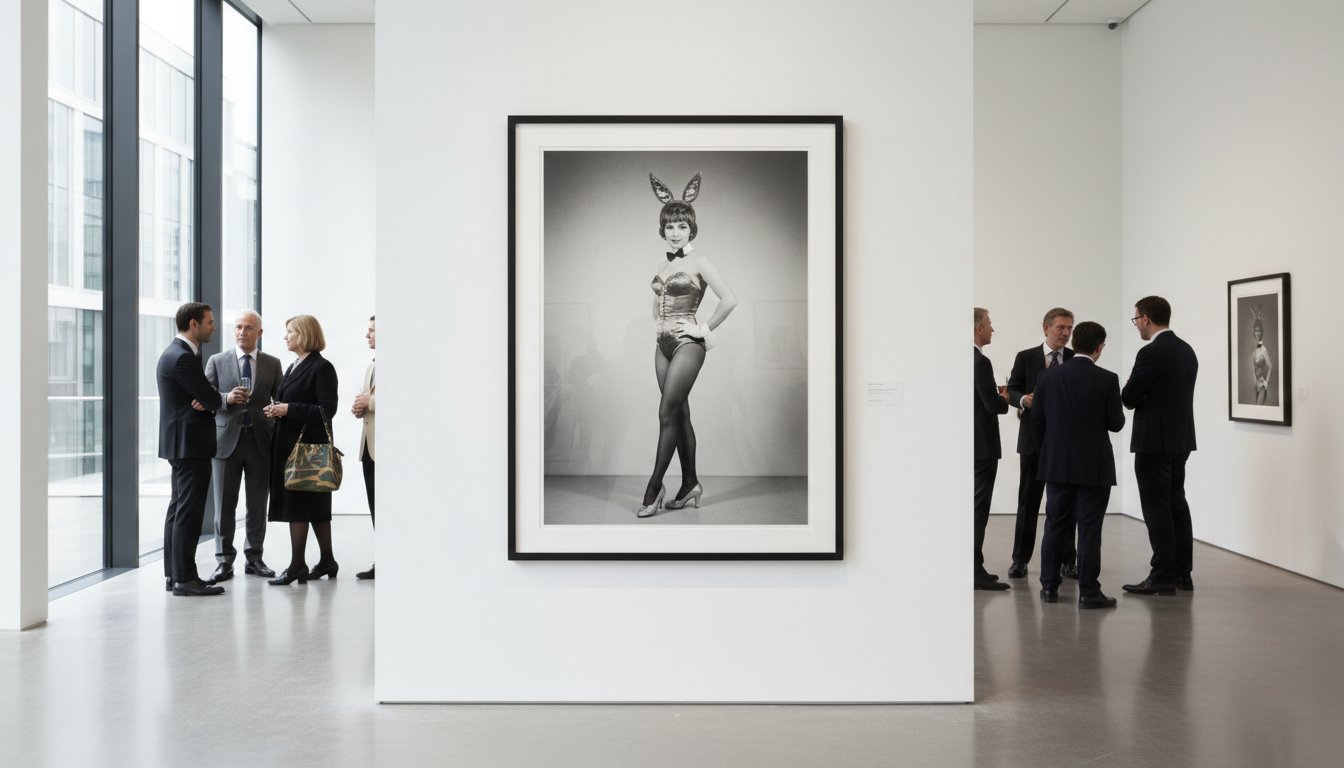
Mass-produced decor often lacks the soul found in an artist’s original vision. These pieces are created to fill voids, not to inspire. Fine art, however, possesses a distinct “visual weight” that anchors a room. It draws the eye and holds it. Understanding The Value of Archival Provenance is essential here; knowing a print comes from an original negative hand-printed in a London darkroom adds a layer of authenticity that a retail chain print can’t match. True art should be a conversation starter, inviting guests to ask about the photographer or the moment captured, rather than blending into the background.
The Role of Curation in Modern Interiors
Curation is the hallmark of a worldly, well-traveled homeowner. It’s about creating a cohesive “vibe,” such as the sun-drenched mid-century glamour of a Slim Aarons collection. A curated gallery wall suggests a life of experiences and a refined taste. Choosing art to make your home look expensive often involves selecting “the world’s finest photography” as a status symbol. These images don’t just decorate; they signify an appreciation for photographic heritage and technical excellence. Whether it’s a silver gelatin print or a bespoke archival piece, curation ensures your home tells a story of timeless elegance.
Beyond the Poster: The Value of Archival Provenance and Craftsmanship
True luxury isn’t found in the mass-produced. To acquire art to make your home look expensive, you must look beyond the glossy surfaces of retail posters and into the soul of the medium. The distinction lies in the marriage of provenance and technical mastery. Provenance, the documented history and origin of an image, transforms a simple photograph into a historical artifact. When you own a print produced from the original negative, you possess a direct link to the photographer’s vision, captured at the very moment the shutter clicked. This connection creates an aura of authenticity that guests can sense immediately.
At Galerie Prints, we believe the physical creation of the work is as vital as the image itself. Our pieces are often hand-printed in our London darkroom, a process that honors the heritage of the craft. This tactile connection to the past is what separates a curated collection from a decorated room. To create quiet luxury, one must prioritize the intangible value of craftsmanship over the convenience of digital mass-production. It’s about the weight of the paper, the depth of the chemistry, and the story behind the frame.
The Allure of the Silver Gelatin Print
The silver gelatin process, perfected since its introduction in 1871, remains the pinnacle of black and white photography. Unlike digital inkjet prints that lay ink on top of paper, silver gelatin prints involve a chemical reaction where silver halides are suspended in a gelatin layer. This creates a breathtaking tonal range and deep, velvet blacks that digital methods struggle to replicate. The result is a three-dimensional quality that draws the eye, offering a richness that signals prestige. It’s the difference between a mere reproduction and a handcrafted masterpiece.
Why Archival Quality is a Luxury Standard
Investment-grade art requires a commitment to longevity. Standard paper degrades, yellows, and fades within years, but archival photo paper is designed to last for 100 years or more. Museum-grade materials are acid-free and pH-neutral, ensuring the image remains as vibrant as the day it was printed. Serious collectors view these production standards as a guarantee of value. By selecting art to make your home look expensive, you’re investing in a piece that won’t just decorate a wall, but will endure as a family heirloom. You might consider exploring our curated collections to find a piece that resonates with your own sense of history and permanence.
The Curated Narrative: Selecting Subjects That Evoke Prestige
To cultivate a space that feels truly elevated, you must look beyond mere aesthetics and consider the narrative weight of the subject matter. Selecting the right art to make your home look expensive requires an understanding of cultural prestige. Images that capture vintage glamour or high-society rituals don’t just decorate a wall; they anchor the room in a legacy of sophistication. By choosing works from recognized Masters, you bypass the generic and invest in a piece of history that commands immediate respect from any observer. This visual shorthand for wealth relies on the provenance of the image and the technical mastery of the person behind the lens.
Aspirational Photography: The Slim Aarons Lifestyle
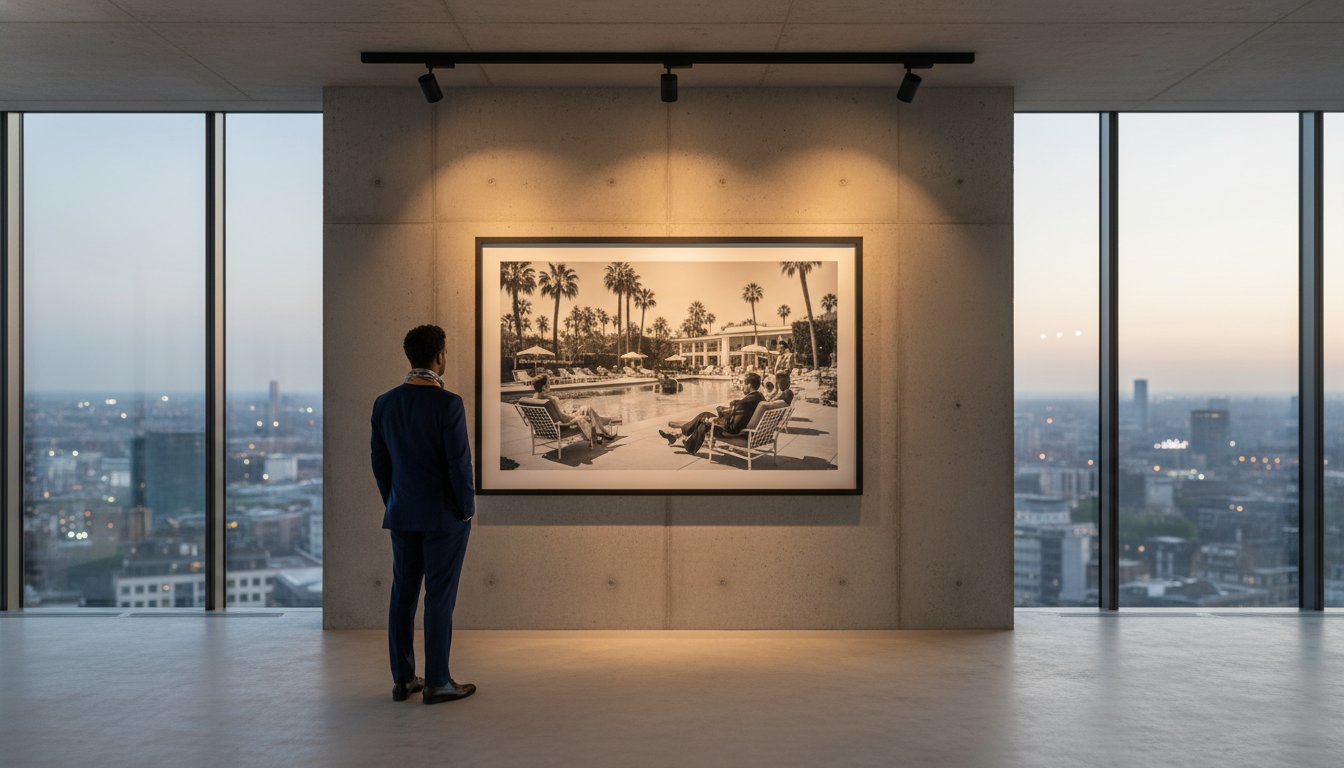
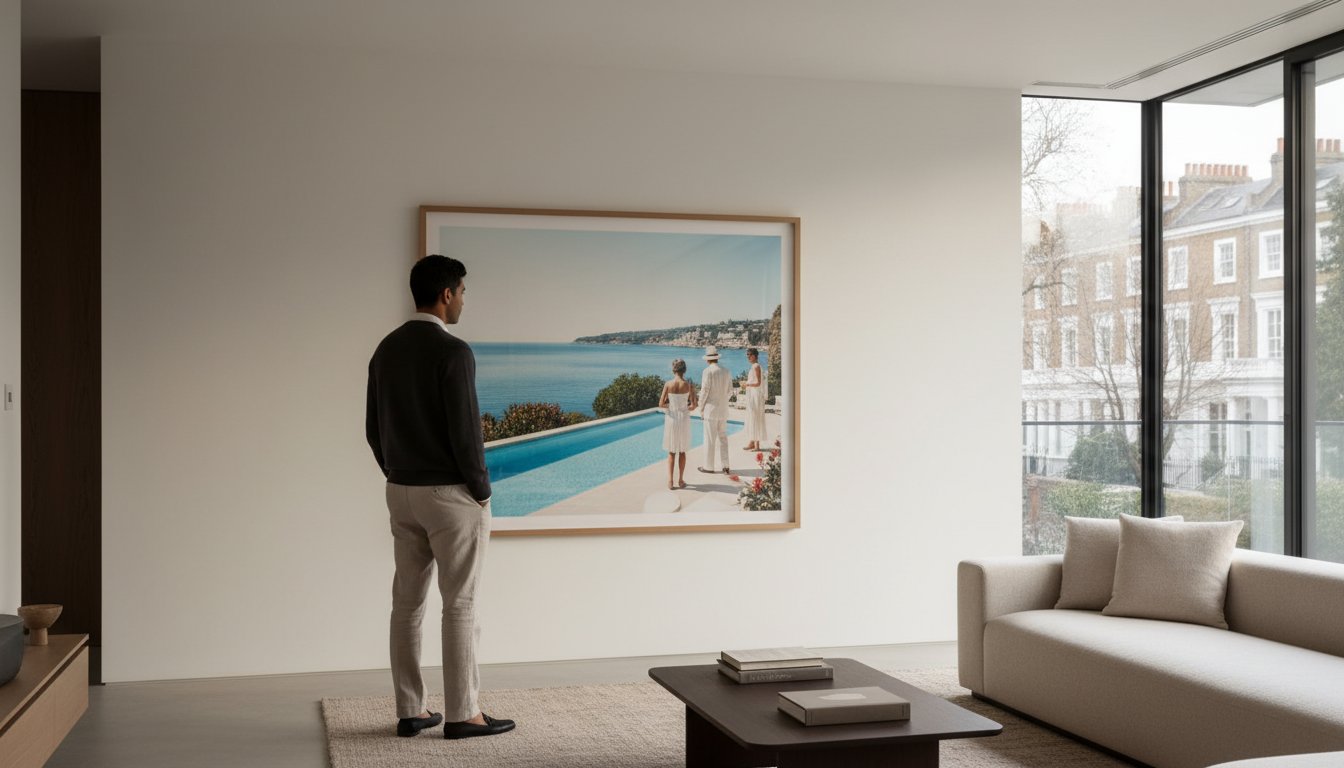
The work of slim aarons remains the gold standard for aspirational luxury. His philosophy focused on documenting “attractive people doing attractive things in attractive places,” a mantra that redefined how we perceive high-end photography. These images are not mere snapshots. They are meticulous captures of a sun-drenched era of leisure. Poolside scenes at the Kaufmann House or gatherings amidst mid-century architecture feel inherently expensive because they represent a world of architectural perfection and social grace. Hanging a large-scale Aarons print in a modern living room introduces a sense of escapism that’s both nostalgic and deeply prestigious.
Iconic Portraits and the Terry O’Neill Aesthetic
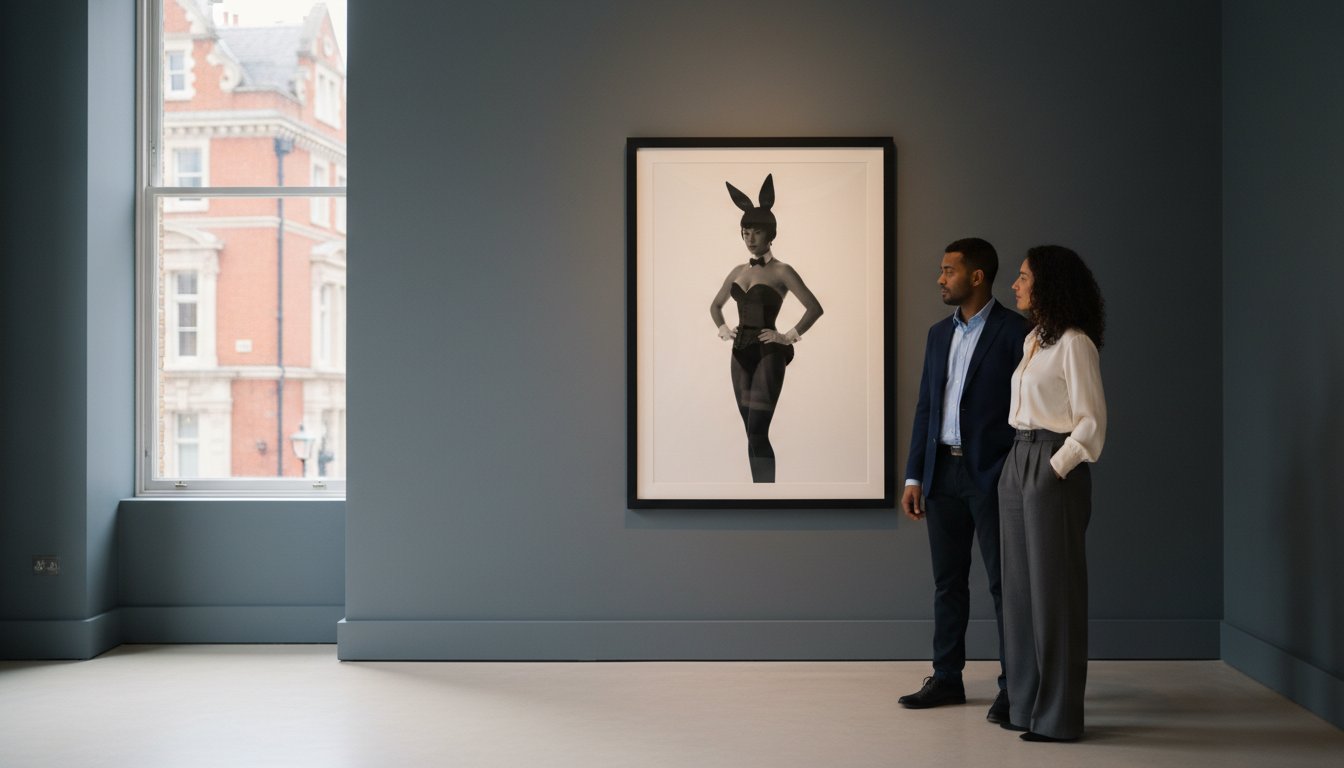
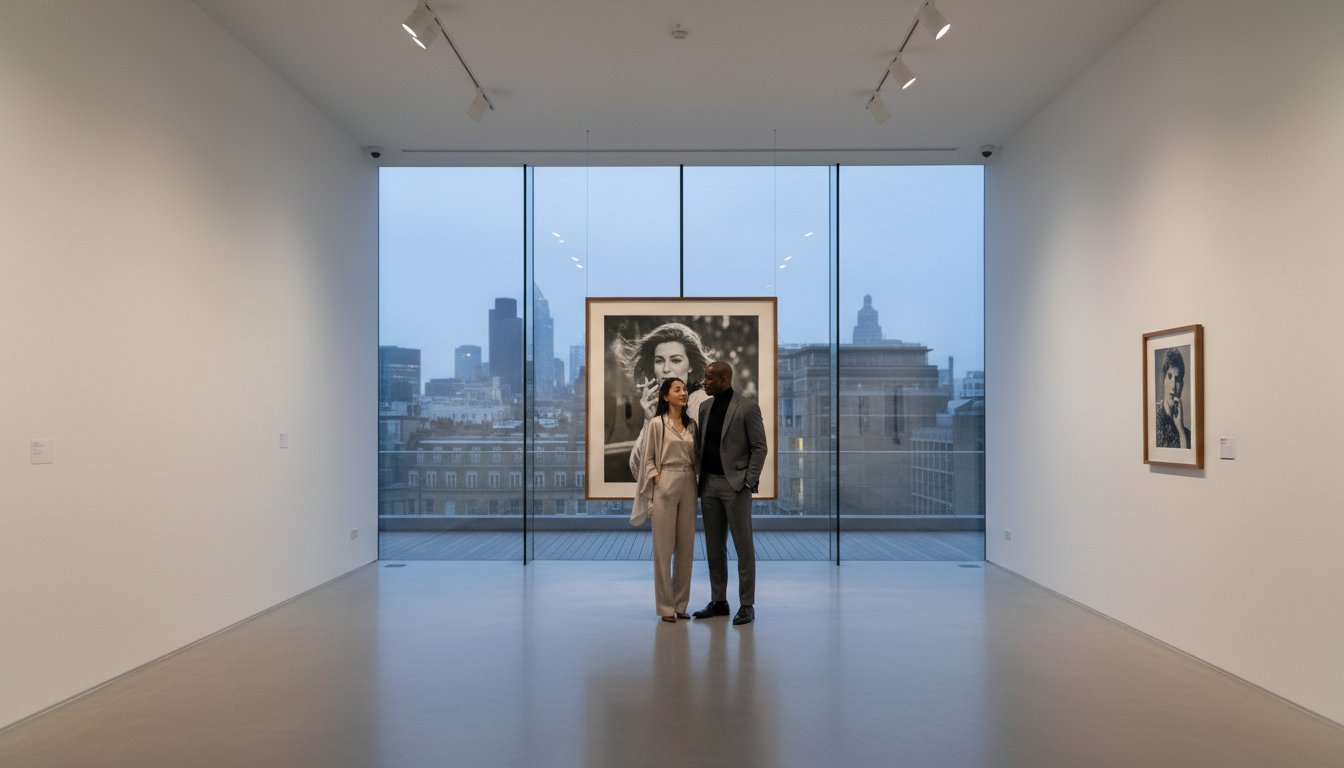
While color captures a moment, black and white pictures capture an essence. This is particularly evident when viewing iconic portraits by photographers like Terry O’Neill. Owning a shot of Faye Dunaway by the Beverly Hills Hotel pool after her 1977 Oscar win or a candid David Bowie moment elevates your decor from simple memorabilia to a serious collection. The photographer’s eye transforms a celebrity into a fine art subject through composition and lighting; it’s this transformation that defines art to make your home look expensive. These silver gelatin prints carry an air of authority, signaling that the homeowner values craftsmanship and the archival preservation of cultural history.
- Authority: Master photographers lend instant credibility to a room’s design.
- Timelessness: Monochrome palettes ensure the artwork never feels dated or out of fashion.
- Narrative: Subjects with historical weight provide a conversation piece for guests.
- Quality: Hand-printed works from original negatives provide a depth that digital reproductions cannot match.
Choosing a subject is an act of curation that reflects your personal worldliness. Whether it’s the jet-set glamour of the Mediterranean or the gritty elegance of a 1960s London film set, the subject matter should evoke a sense of permanence. When you invest in the world’s finest photography, you aren’t just buying a picture; you’re acquiring a curated slice of the golden age of glamour that will maintain its allure for generations.
Scale and Presentation: Mastering the ‘Gallery Look’ at Home
The difference between a house that feels decorated and one that feels curated lies in the execution of scale. When you’re selecting art to make your home look expensive, the size of the piece is just as critical as the subject matter itself. A common error in interior design is choosing a print that’s too small for the wall, which makes even the most iconic photograph look like an afterthought.
The Power of Oversized Art
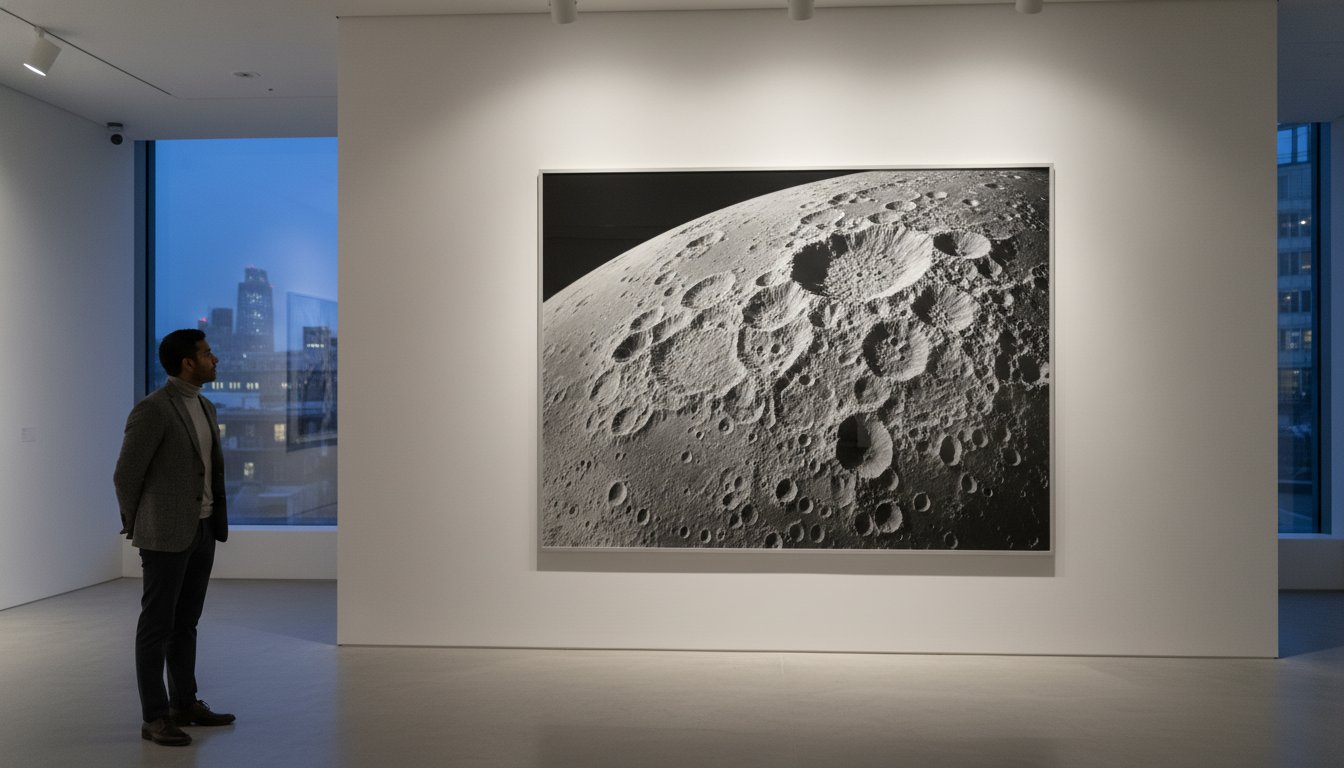
Adopting the ‘Go Large’ rule is the most effective way to elevate a room’s status. A single, massive print creates a sense of architectural permanence that smaller clusters can’t replicate. For a standard 2.5-meter sofa, a print should ideally measure between 1.5 and 1.8 meters in width. This follows the 60% to 75% rule of thumb that professional curators use to ensure art doesn’t float awkwardly on the wall. Large-scale photography, particularly works with expansive horizons or architectural depth, dictates the room’s color palette and establishes a clear visual hierarchy. It’s a bold move that signals confidence and discernment.
Bespoke Framing: The Silent Luxury
Bespoke framing is the invisible hallmark of a high-end collection. While store-bought frames are convenient, they often lack the structural integrity and material quality required for true art preservation. Professional framing isn’t just about aesthetics; it’s about longevity. High-quality museum glass reduces reflections by approximately 99% and protects the delicate silver gelatin or archival pigments from UV damage.
The frame style should complement the work’s provenance. A classic black wood frame with a deep profile offers a timeless, gallery-like feel. For a more modern aesthetic, minimalist thin-edge frames provide a sleek finish. The use of a generous mount, or matting, is another essential technique. By providing 5 to 10 centimeters of negative space around the image, the mount focuses the viewer’s attention and creates the breathing room found in the world’s most prestigious galleries.
Choosing between a single focal point and a curated gallery wall depends on the room’s purpose. A singular statement piece exudes quiet luxury and calm. Conversely, a gallery wall tells a complex narrative, provided the frames are uniform to maintain a sense of order. When you invest in art to make your home look expensive, the final presentation acts as the ultimate seal of quality. Whether you’re showcasing an original negative or a modern masterpiece, the presentation is what confirms its value.
Acquiring a Legacy: The Galerie Prints Curation
Selecting art to make your home look expensive requires a shift in perspective. It’s a move away from the mass-produced and toward the authentic. Galerie Prints serves as the definitive bridge to the world’s most prestigious archives, offering access to imagery that was once the exclusive domain of high-end editorial houses and private estates. By sourcing directly from original negatives, we ensure that the “expensive” look is rooted in genuine historical significance rather than fleeting decor trends. This is the essence of quiet luxury; it’s a confidence that comes from owning a piece of the world’s cultural heritage.
From the Darkroom to Your Door
The journey of a print is a meticulous process of artisanal craftsmanship. Each piece begins its life as a master negative before entering our London-based darkroom. Here, the “hand-printed” seal of quality is applied through traditional techniques that have remained unchanged for decades. Choosing a specialist gallery ensures technical perfection that digital printers simply cannot replicate. When you acquire fine art photography through our curation, you’re securing a work with verifiable provenance. From the initial silver gelatin process to the final bespoke frame, every step is handled with the reverence that archival art demands. We don’t just ship boxes; we deliver a legacy of technical excellence.
Building Your Investment-Grade Collection
Your first “hero” piece should be a statement of intent. Whether it’s the sun-drenched aspirational luxury of a Slim Aarons poolside scene or the gritty glamour of a 1960s fashion icon, this central work sets the tone for your entire interior. Galerie Prints supports collectors by providing a roadmap to a more beautiful, sophisticated home. We offer pieces that grow in sentimental and historical value as they age, ensuring your investment remains relevant for generations. A well-chosen photograph is a legacy that remains timeless, anchoring your space in an era of elegance. It’s about the quiet authority of a discerning eye. Your collection reflects a life well-lived, and we are here to guide that vision.
Ready to transform your living space into a gallery of quiet luxury? Explore our curated collections of the world’s finest photography and discover the art to make your home look expensive today.
Begin Your Journey as a Private Collector
Transforming a residence into a sanctuary of quiet luxury depends on more than just aesthetics; it requires an investment in heritage. You’ve discovered that the right scale and the meticulous details of archival provenance are essential. Selecting art to make your home look expensive isn’t about mere decoration. It’s about securing a piece of history, such as a silver gelatin print from the 1950s or a rare Slim Aarons perspective on high society. Each piece serves as a narrative anchor for your room, telling a story of craftsmanship that mass-produced alternatives cannot replicate.
At Galerie Prints, we honor these traditions through our exclusive access to the Getty Images and Slim Aarons archives. Every selection is hand-printed in our London darkroom to ensure the highest technical standards. We complete this process with bespoke museum-quality framing services designed to preserve your investment for decades. By choosing works with true artistic pedigree, you’re not just styling a wall; you’re building a legacy that reflects a cultured and worldly perspective. Your walls are a canvas for the extraordinary. Discover the World’s Finest Photography at Galerie Prints and find the piece that resonates with your unique vision of elegance.
Frequently Asked Questions
What type of art makes a living room look most expensive?
Large-scale photography with a clear historical provenance makes a living room look most expensive. When you choose art to make your home look expensive, focus on pieces that tell a narrative, such as silver gelatin prints from the 1950s. These archival works offer a depth of tone that mass-produced items lack. Investing in a piece with a documented history provides an air of quiet luxury that instantly elevates a residential space.
Is photography considered fine art for home decor?
Photography is absolutely considered fine art, particularly when it’s produced using traditional methods like silver gelatin or C-type printing. Institutions like the Victoria and Albert Museum have curated photographic collections since 1852, cementing the medium’s status. High-end home decor relies on the authenticity of the print. A hand-printed photograph from an original negative carries a level of craftsmanship that rivals any oil painting, ensuring your collection holds its value over time.
How big should art be to look professional on a wall?
Professional art placement generally requires the piece to occupy 60% to 75% of the available wall space not covered by furniture. For a balanced look, the center of the image should sit at the standard gallery height of 57 inches from the floor. Small pieces often disappear on large walls, which diminishes their impact. A single, oversized statement piece creates a focal point that suggests a deliberate, curated approach to interior design.
Does black and white or color art look more expensive?
Black and white photography often conveys a sense of timeless prestige, though vibrant color prints from the 1970s color revolution also command high value. Monochrome images focus on texture and composition, which lends a sophisticated, archival feel to a room. Color works, particularly those using the C-type process, offer a lushness that feels contemporary and bold. The choice depends on the specific mood you want to evoke in your personal collection.
What is the “Slim Aarons” style in interior design?
The Slim Aarons style is defined by his mantra of “attractive people doing attractive things in attractive places,” capturing the jet-set lifestyle of the 1950s through the 1980s. This aesthetic focuses on sun-drenched poolsides, mid-century architecture, and effortless glamour. It’s a cornerstone of quiet luxury that brings a sense of aspirational history into a home. These images act as windows into an elite world of leisure and high society that remains incredibly popular today.
How can I tell if a print is high quality or just a poster?
High-quality prints are distinguished by their archival paper weight, often exceeding 300 gsm, and the presence of a gallery’s embossed seal. Unlike standard posters, fine art prints use pigment-based inks or traditional chemical processes that ensure a 100-year lifespan without fading. You should look for crispness in the details and a rich, matte finish. A genuine archival print feels substantial and lacks the flimsy, glossy texture of mass-market reproductions found in retail chains.
Is it better to have one large piece of art or a gallery wall?
A single large-scale piece is usually the superior choice when selecting art to make your home look expensive. While gallery walls are popular, they can sometimes feel cluttered if not executed with absolute precision. An oversized photograph creates a sense of museum-quality grandeur and simplifies the visual narrative of the room. It shows a confident, singular vision that defines the luxury aesthetic of a well-curated and sophisticated living space.
Why is professional framing so important for expensive-looking art?
Professional framing provides essential protection through acid-free mount boards and glass that offers 99% UV protection. It’s not just about the look; it’s about preserving the provenance and physical integrity of the artwork. A bespoke frame made from solid wood adds a tactile element of quality that pre-made frames can’t match. This final touch ensures the piece sits perfectly on the wall while maintaining its historical and financial value for decades to come.