
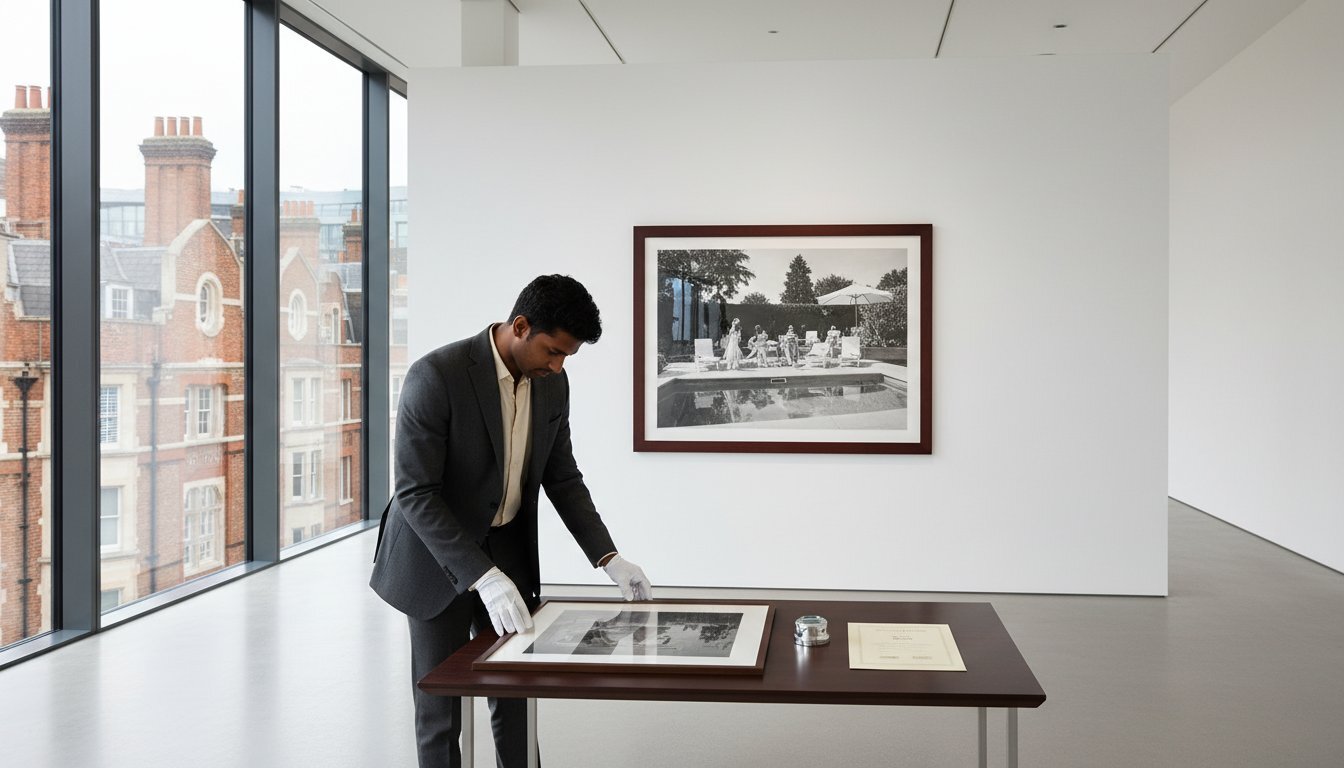
Why do certain photographs command five-figure sums at auction while others lose their luster within a decade? You likely recognize that a photograph is more than just an image; it’s a physical artifact that defines the soul of a room. Yet, the path to acquiring limited edition prints often feels clouded by technical jargon like C-type versus silver gelatin. You want to ensure your investment meets the 100-year archival standard rather than yellowing like a common poster.
We agree that true art should be a source of profound aesthetic pleasure and a stable asset for your portfolio. This guide reveals the curatorial secrets used by Galerie Prints to verify provenance and technical mastery. You’ll learn how our London darkroom preserves the integrity of original negatives to create museum-quality pieces that stand the test of time. We’ll walk you through the essential steps of building a collection that balances the glamour of the golden age with enduring market value.
Key Takeaways
- Understand how scarcity and historical significance drive the enduring financial and emotional value of limited edition prints.
- Learn to distinguish a mere reproduction from a silver gelatin masterpiece hand-printed with archival precision in a professional London darkroom.
- Discover why specific archives, such as the iconic works of Slim Aarons, hold unparalleled prestige in the world of high-end curation.
- Master the collector’s checklist for verifying provenance and the critical importance of a Certificate of Authenticity in securing your investment.
- Uncover the secrets of bespoke framing to ensure your photographic acquisition is both elegantly showcased and preserved as a lasting legacy.
The Allure of Exclusivity: Why Limited Edition Prints Define the Modern Interior
The distinction between a house and a curated home often rests upon the provenance of the objects within it. For the discerning collector, limited edition prints represent more than a visual accent; they are a tangible link to a specific moment in cultural history. This scarcity creates a dual value system where emotional resonance meets financial prudence. When an edition is capped at a strict number, such as 50 or 100, the owner becomes a custodian of a finite resource. This rarity transforms the act of purchasing art from a mere transaction into an acquisition of heritage.
There’s a profound psychological weight to seeing a hand-penciled fraction at the bottom of a heavy, fiber-based paper. Whether it is 1/50 or 45/50, that number signifies a rejection of mass production. The art world adheres to specific conventions for numbering prints to ensure transparency and maintain market integrity. These protocols dictate that once an edition reaches its limit, the negative is retired or the digital file is locked. This ensures that your investment remains protected from the diluting effects of over-saturation. In a world of infinite digital replicas, the physical limitation is what grants the work its soul.
The Value of Scarcity in the Digital Age
As we move through 2026, the saturation of AI-generated imagery has sparked a significant 22% increase in the demand for authenticated, physical darkroom prints. Serious collectors often look for ‘Artist Proofs’ (APs), which traditionally represent the first 10% of an edition. These pieces carry a premium because they were personally handled and approved by the photographer to set the standard for the entire run. Rare editions sourced from prestigious archives like Getty Images have shown an average annual appreciation of 12% over the last decade. Owning a silver gelatin print hand-printed in our London darkroom isn’t just a lifestyle choice; it’s the acquisition of a historical asset with clear provenance.
Setting the Scene: Photography as a Statement Piece
High-end interior design now treats photography as the architectural anchor of a room. A single, large-scale iconic image can dictate the entire narrative of a minimalist space. Whether you choose the sun-drenched glamour of a Slim Aarons poolside scene or the raw energy of 1960s London music culture, the print functions as a window into an aspirational world. It’s a deliberate statement of taste. Choosing ‘the world’s finest photography’ means you’re prioritizing authenticity over mere decoration.
- Glamour: Evoking the mid-century sophistication of the French Riviera or Palm Springs.
- Music: Capturing the grit and rebellion of backstage moments that defined generations.
- Cinema: Bringing the timeless elegance of silver-screen icons into a contemporary setting.
The narrative power of these images lies in their ability to spark conversation. A guest doesn’t just see a picture; they see a piece of history that’s been meticulously preserved and presented. By 2026, the trend for ‘quiet luxury’ has solidified the role of the limited edition print as the ultimate interior centerpiece. It offers a sense of permanence. It suggests that the inhabitant values craftsmanship and the slow, deliberate process of traditional photography over the fleeting nature of modern trends. Every print tells a story, and a limited edition ensures that the story belongs to a very select few.
The Anatomy of a Masterpiece: Archival Quality and Darkroom Artistry
To the untrained eye, a print is merely an image on paper. To the discerning collector, it’s a physical manifestation of a moment in history, captured through a lens and birthed in the controlled chaos of a darkroom. The distinction between a mass-produced reproduction and true limited edition prints lies in the alchemy of the production process. A photographic work of art is defined by its provenance and the tactile quality of its materials, transforming a flat image into a three-dimensional object of value. It’s the difference between a fleeting digital memory and a permanent piece of cultural heritage.
The London Darkroom Tradition
Our London darkroom remains one of the final bastions where the 19th-century traditions of master printing survive. When a technician works from an original negative, they aren’t just copying an image; they’re interpreting a vision. This process involves the silver gelatin method, where light passes through the negative onto paper coated with silver halides suspended in gelatin. It requires a master’s touch to manage the exposure, a skill that takes decades to perfect. This artisanal approach ensures every piece carries the Galerie Prints seal of authority, maintaining a standard that digital printers cannot replicate.
The technical nuances of the silver gelatin process are what give black and white photography its soul. The deep, rich blacks, often referred to as “D-max” in the art world, provide a tonal range that creates a sense of depth and atmosphere. This isn’t just about aesthetics; it’s about the physical stability of the image. Because the silver is embedded within the gelatin layer, the image becomes part of the paper itself. Understanding these technical nuances is a foundational step in any guide to collecting prints, as the physical method of creation dictates the work’s long-term market value and historical significance.
Understanding Archival Materials
True museum-quality paper must be acid-free and pH neutral, typically hovering at a precise 7.0 on the pH scale, to prevent the yellowing and brittleness that plague inferior stocks. We utilize 100% cotton rag bases that provide a heavy-weight, luxurious feel. When these materials are paired with UV-protective glass that filters out 99% of harmful ultraviolet rays, the artwork is lab-tested to remain vibrant for 100 to 200 years. This longevity transforms a purchase into a multi-generational investment.
The tactile nature of the paper choice is the final signature of the artist. For color works, the C-Type process remains the gold standard. This involves light-sensitive paper and traditional chemical development, resulting in the lush, saturated tones synonymous with the Slim Aarons era of glamour. The paper’s surface, whether it’s a high-gloss finish that makes colors pop or a matte finish that absorbs light for a painterly effect, changes how the viewer interacts with the piece. Limited edition prints produced on these archival surfaces don’t just sit on a wall; they command the room. You can explore our curated collections to experience how these premium materials bring iconic photography to life with unparalleled clarity and depth.
Every element, from the chemical balance of the developer to the weight of the cotton rag, is chosen with a singular purpose: permanence. In an age of disposable digital media, these physical masterpieces offer a rare sense of stability. They serve as a bridge to the golden age of photography, ensuring that the elegance of the past remains vibrant for the collectors of the future.

Navigating the Archives: From Slim Aarons to Terry O’Neill
Curating the Golden Age of photography requires more than a keen eye; it demands a deep respect for the provenance found within the world’s most prestigious archives. These repositories, such as the Getty Images and Hulton archives, aren’t merely storage facilities. They’re the guardians of our collective visual history. When a major institution like the National Gallery of Art acquires limited edition prints for its permanent collection, it underscores the enduring cultural and financial value of these works. For the private collector, owning limited edition prints sourced from these original negatives offers a tangible connection to a specific moment in time, preserved through meticulous archival processes.
At Galerie Prints, we honor this heritage by ensuring our collection reflects the technical superiority of traditional methods. Many of our offerings are hand-printed in our London darkroom, utilizing silver gelatin processes that provide a depth and tonal range digital reproductions cannot match. This commitment to craftsmanship ensures that every piece is not just a photograph, but a lasting piece of history. By focusing on the world’s finest photography, we bridge the gap between historical significance and contemporary interior aesthetics, allowing collectors to invest in art that carries both prestige and narrative depth.
The Slim Aarons Lifestyle
The “Slim Aarons lifestyle” has evolved into a definitive shorthand for aspirational luxury. Aarons spent his career documenting “attractive people doing attractive things in attractive places,” and his work remains the gold standard for high-end decor. By 2026, the “Poolside” and “Palm Springs” aesthetics have seen a 35% increase in popularity among collectors looking to infuse their spaces with a sense of sun-drenched optimism. Images like “Poolside Gossip,” captured in 1970, act as a window into a lost world of effortless glamour. You can explore these timeless scenes in our curated Slim Aarons Collection, where each print serves as an invitation to a bygone era of sophistication.
Iconic Portraits and Rare Cinema Collectables
Terry O’Neill was the man who defined the celebrity aesthetic of the sixties, possessing a unique level of access that remains unparalleled. He didn’t just take pictures; he built relationships that allowed him to capture the raw, unscripted humanity of icons. His 1963 portraits of The Beatles at Abbey Road studios or his candid shots of Hollywood royalty like Faye Dunaway provide an intimate look at the architects of pop culture. These limited edition prints are highly sought after because they represent the intersection of high art and cultural revolution. O’Neill’s ability to remain invisible while his subjects shone created a body of work that is both iconic and deeply personal.
The allure of the archive extends into the world of cinema and music history. Beyond traditional portraiture, collectors are increasingly drawn to the rarity of original cinema lobby cards and vintage film posters from the 1940s and 1950s. These items were never intended for public sale, making their survival a matter of historical chance. Similarly, Star Wars limited edition prints has become a cornerstone for modern collectors. Since the original film’s release in 1977, the demand for high-quality archival imagery from the Lucasfilm archives has remained steadfast. Owning a piece of pop-culture history from these specific archives provides a sense of permanence in an increasingly digital world, securing your place as a guardian of photographic heritage.
Building Your Collection: Provenance, Numbering, and Authenticity
Collecting fine art photography is an exercise in discerning stewardship. You aren’t just buying a picture; you’re acquiring a captured moment of history, preserved through meticulous craftsmanship. To build a collection of lasting value, you must look beyond the visual allure and examine the technical and historical foundations of the work. This begins with a rigorous checklist that includes the medium, the paper stock, and the specific edition details. Every acquisition should feel like a bridge to the golden age of glamour, supported by the quiet authority of archival proof.
Verifying Your Investment
The Certificate of Authenticity (COA) acts as the birth certificate for your artwork. It’s your most critical document. A valid COA from a reputable Fine Art Photography Gallery London specifies the print date, the originating archive, and the edition number. Avoid any “limited” offerings lacking a clear link to the photographer’s estate. Prints from the Slim Aarons Archive or Getty Images come with specific stamps guaranteeing their 100 year archival stability.
Provenance provides the narrative thread from the artist’s shutter to your wall. It’s the documented history of ownership and exhibition that validates the work’s status. When you invest in limited edition prints, you’re participating in a legacy. Professional galleries maintain these records meticulously, ensuring that the piece you hang in your home has a traceable, prestigious lineage. This transparency is what separates a common decorative poster from a true piece of fine art destined for longevity.
The Logistics of Art Acquisition
Modern printing technology ensures quality is identical across an entire run. While “1/50” feels prestigious, the value lies in the scarcity of the edition itself. Once the final print sells, the edition is retired, shifting the work to the secondary market. Recent London auction data indicates that retired limited edition prints often see a 15% to 30% price appreciation within three years of selling out.
When an edition sells out, the only way to acquire that specific image is through private sales or specialized auctions. This transition to the secondary market often sees a significant price jump as collectors compete for a fixed supply. To ensure you’re making a sound investment, always verify the “Sold Out” status with the representing gallery. They can provide insights into the current market demand and the historical performance of the photographer’s work. If you’re looking to start your journey with expert guidance, browse our curated collections at Galerie Prints to discover the world’s finest photography.
- Check for Estate Stamps: Ensure the print carries the official mark of the photographer’s estate or archive.
- Verify Paper Quality: Look for archival-grade papers like 310gsm cotton rag or traditional silver gelatin fiber-based paper.
- Confirm Edition Size: Smaller editions, typically under 150, tend to hold value more effectively over time.
- Review the Darkroom Pedigree: Genuine value often lies in prints that are hand-printed from original negatives in a professional London darkroom.
A purchase from a dedicated gallery isn’t just a transaction; it’s a commitment to preserving a lasting piece of history. By focusing on provenance and archival excellence, you ensure your collection remains as vibrant and significant decades from now as it is today. Discerning collectors don’t just buy what they see; they buy the history they can prove.
Bespoke Framing and Preservation: Protecting Your Photographic Legacy
Acquiring limited edition prints is merely the opening chapter in a journey of curation. The frame functions as the second half of the artwork; it’s a physical guardian that defines how a photograph interacts with its environment. While a ready-made frame might seem convenient, these mass-produced options often lack the structural integrity required for long-term archival storage. Standard glass and acidic backing boards can cause irreversible damage to a fine art print within five to ten years. At Galerie Prints, we treat the framing process as an extension of the London-based craftsmanship that defines our darkroom work, ensuring every piece remains a pristine window into the golden age of glamour.
The Art of Bespoke Framing
Selecting a frame requires a curatorial eye that respects the era of the photograph. A 1960s Slim Aarons poolside scene often calls for a different aesthetic approach than a mid-century fashion study or a gritty street scene. Our bespoke service utilizes acid-free mounting materials to prevent foxing, those unsightly brown spots caused by fungal growth and acidic paper degradation. We ensure your print arrives ready-to-hang, adhering to the 100-year archival standards favored by international museums. We use 2mm anti-reflective glass or specialist acrylic that provides 99% UV protection, keeping the delicate silver or pigment tones as vibrant as the day they left the lab.
Long-term Care for Your Collection
Fine art photography is a living medium that reacts to its surroundings. To preserve the value and beauty of your limited edition prints, you must manage the climate of your display space. Aim for a consistent temperature of 20 degrees Celsius (68 degrees Fahrenheit) and a relative humidity level between 40% and 50%. Sudden fluctuations cause paper fibers to expand and contract, which leads to physical stress and potential “cockling” or waving of the print surface. Lighting requires similar precision to maintain the integrity of the emulsion.
- Avoid Direct Sunlight: UV rays are the primary cause of fading; never hang a valuable print directly opposite a south-facing window.
- Use Gallery-Grade LEDs: Modern LEDs with a Color Rendering Index (CRI) of 95 or higher will illuminate the true depth of the blacks without emitting harmful heat or UV radiation.
- Professional Spacing: Ensure there’s a small air gap between the print and the glass, typically achieved through a high-quality window mount, to prevent moisture trapped by condensation from touching the artwork.
- Routine Inspection: Check the back of the frame every 24 months for signs of dust ingress or seal degradation.
Investing in the world’s finest photography is a commitment to history. By choosing professional preservation methods, you ensure that these iconic moments remain a legacy for future generations to admire. Your collection deserves a presentation that matches its pedigree, blending technical superiority with an exquisite aesthetic finish that transforms a house into a gallery.
Begin Your Journey into Photographic Heritage
Building a collection of fine art photography is an act of cultural stewardship. It’s a commitment to preserving the technical mastery of the 20th century, from the meticulous silver gelatin processes to the vibrant narratives captured by masters like Terry O’Neill. Every piece we offer is hand-printed in our London darkroom, ensuring that the tactile soul of the original negative remains intact for future generations. By focusing on provenance and archival integrity, you aren’t just decorating a room; you’re securing a lasting legacy.
As official partners of the Slim Aarons and Getty Images archives, we ensure each acquisition carries the weight of history and the seal of absolute authenticity. Investing in limited edition prints allows you to own a rare fragment of the golden age of glamour, elevated by bespoke museum-quality framing that’s included as standard. It’s time to curate your environment with imagery that resonates with prestige and timeless elegance. We invite you to explore a curated world where every frame tells a story of unparalleled artistry and historical significance.
Discover the world’s finest limited edition photography at Galerie Prints
Your walls deserve a masterpiece that will stand the test of time.
Frequently Asked Questions
What exactly defines a ‘limited edition’ print in the art world?
A limited edition print is a fixed number of identical impressions produced from a single original negative or digital file, after which the plate or file is retired to ensure no further copies are made. This scarcity is a cornerstone of collecting; once an edition of 50 is sold, the image won’t ever be printed in that format again. For those acquiring limited edition prints, this constraint transforms a beautiful image into a tangible asset with a defined provenance.
Do limited edition photography prints increase in value over time?
Limited edition photography prints often appreciate in value when demand exceeds the fixed supply, particularly for works by iconic artists like Slim Aarons. Data from the 2023 Art Market Report indicates that high-quality photographic prints saw a 7% average annual return over the last decade. As an edition nears its final numbers, the secondary market price typically climbs; a print originally sold for £500 in 2015 might command £2,500 at auction today.
What is the difference between a C-type print and a Silver Gelatin print?
A C-type print is a traditional color photograph developed using a chemical process on light-sensitive paper, while a Silver Gelatin print is the gold standard for black and white imagery, utilizing silver salts for deep, archival tonality. At our London darkroom, we hand-print Silver Gelatin works to achieve a 100-year archival rating. C-types offer a lush, painterly depth of color that digital inkjet processes can’t replicate, making them a favorite for 20th-century fashion photography.
How can I be sure my limited edition print is authentic?
You can verify a print’s authenticity through a signed Certificate of Authenticity or an embossed gallery stamp that links the work to the artist’s estate. Every limited edition print we curate includes a unique serial number and a provenance statement documenting its origin from the original negative. Authentic works also feature specific paper types, such as 300gsm Hahnemühle Rag, which provide a tactile proof of quality that mass-produced replicas lack.
Why is bespoke framing better than standard framing for expensive prints?
Bespoke framing is superior because it uses acid-free mount boards and UV-protective glass that blocks 99% of harmful rays, preventing the fading that ruins standard frames. A standard, store-bought frame often contains wood pulps that release gases, causing yellowing within 2 to 3 years. By choosing custom-built frames from our London studio, you ensure your investment remains in gallery condition for 50 years or more.
How many prints are typically in a limited edition run?
Typical limited edition runs range from 10 to 150 prints, though high-end photographic editions often stay below 50 to maintain exclusivity. Smaller runs of 12 or 25 are common for rare, hand-printed Silver Gelatin works sourced from heritage archives. These specific limits are set before the first print is sold, ensuring that every collector knows exactly how many copies exist globally.
Does the number of the print (e.g., 1 of 50) affect its market value?
The specific number of a print, such as 1 of 50, generally doesn’t dictate its market value, as all prints in a modern edition are produced to identical technical standards. However, the first and last numbers in a series occasionally attract a 10% premium from certain collectors who value the symbolic bookending of the run. What truly matters for the world’s finest photography is the condition of the print and the integrity of its edition.
How should I clean and maintain my framed fine art prints?
Clean your framed prints by lightly dusting the frame with a dry microfiber cloth and using a specialized acrylic or glass cleaner applied only to the cloth, never directly to the surface. Avoid hanging art in rooms with humidity levels above 60% or in direct sunlight, as these conditions can cause paper warping or pigment degradation. A well-maintained archival print should remain vibrant for over 75 years if kept in a stable, climate-controlled environment.