
Sunlight can alter an artwork long before the change is obvious. Protecting art from sunlight damage begins with limiting direct exposure: place works away from bright windows, soften daylight with blinds or window film, and choose protective glazing where appropriate. For 19th-century prints and 20th-century photographs on printing-out paper, Denver Art Museum targets three to five foot-candles, a reminder that sensitive works call for carefully controlled light.
It’s natural to want a piece to feel luminous in a room, but prolonged daylight can gradually fade colours and weaken delicate image materials. Protecting art from sunlight damage means balancing display with preservation and adapting safeguards to the artwork, its position and the light it receives throughout the day.
Learn how UV and visible light affect art, why placement matters, and how protective glazing, blinds, window film and considered artificial lighting can reduce exposure. These choices help you enjoy photographs and prints while taking practical steps to care for them over time.
Key Takeaways
- Match protective glazing and window coverings to the artwork and the light conditions in its room.
- Use the changing path of daylight to guide placement, and avoid spots where direct sun falls across the work.
- Light-sensitive photographs may need especially low display levels; museum practices show how carefully exposure can be managed.
- UV is only part of the picture: visible light can also fade vulnerable materials, while heat adds another preservation concern.
UV-protective glass, blinds, and window film
UV-filtering glazing, window film and blinds can all help manage daylight around displayed art. Which is most useful depends on the work’s position and the light reaching it.
UV-Protective Glazing and Film
UV-protective glazing and window film are barriers designed to reduce ultraviolet exposure reaching artwork through windows. This matters because prolonged exposure can fade vulnerable image materials, even when a room feels comfortable. Glazing protects a framed piece at its surface, while film treats the window admitting daylight. UV-absorbing acrylic needs replacement every two years because its protective dye fades over time.
For photographs, framing choices also support careful display: use 4-ply or thicker museum board as a mat. This creates separation between the image and glazing, while the UV-filtering layer addresses light entering from outside. Film can cover a window without changing the artwork’s frame, making it useful when several pieces share the same sunlit room.
Costs of Art-Protection Options
The cost of UV window film, museum glass and other art-protection options varies with the size of the window or frame, the materials selected and the work involved. There is no single useful figure for every installation: a large window and a small framed print require different amounts of material. Blinds also vary in dimensions and construction.
Compare options by what they protect: glazing is fitted to an individual framed artwork, while film and blinds address light entering through a window. Existing frames may affect whether protective glazing fits without alteration. For a collection across several rooms, treating windows can address shared exposure. For one prized print, frame glazing may be the more direct measure.
Balancing Artwork Protection and Room Light
Protecting art doesn’t mean keeping every room dark. Adjust blinds to soften direct sun during the hours it reaches a particular window, then open them when that exposure passes. Window film offers another way to manage incoming light while preserving a naturally lit, usable room. The right choice depends on the window’s position and the artwork’s location.
For example, place a print away from the sunlit area and use blinds to temper the window rather than blocking every source of daylight. UV-filtering glazing adds protection at the frame, while ambient room light remains available. Combining a window treatment with thoughtful placement helps you enjoy both the room and the artwork.
Avoiding direct sunlight and UV exposure
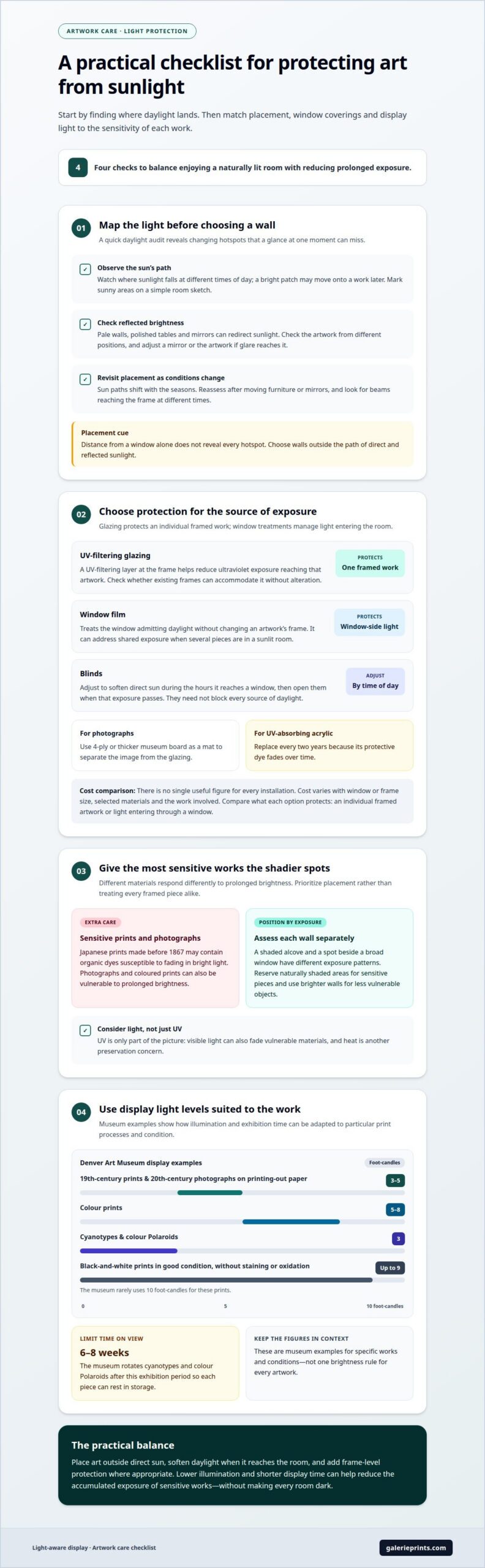
Start with a daylight audit. Observe where sunlight falls on the walls as it moves across the sky, rather than judging exposure at just one moment. A bright patch beside a framed photograph in the morning may reach it later. Mark sunny areas on a simple room sketch, then choose walls outside their path. Distance from a window alone won’t reveal every hotspot.
Pay attention to reflected sunlight, too. A pale wall, polished table or mirror can redirect brightness towards a print across the room. If a framed image catches glare from a mirror opposite a window, for example, adjust the mirror or artwork’s position. This reduces concentrated exposure without removing all natural light. Check the image from different positions, not only from the doorway.
Sun paths shift with the seasons, so a placement that seems safe now may receive direct light later. Protecting art from sunlight damage means revisiting the wall as daylight changes. Look for moving beams across the frame at different times. If a work hangs near a window, observe the area throughout the day and note when exposure occurs.
Consider the artwork’s materials when choosing its position. Japanese prints made before 1867 may contain organic dyes susceptible to fading in bright light. Keep such a print away from a sunlit wall and avoid placing it where reflected glare lands. Photographs and coloured prints can also be vulnerable to prolonged brightness. This helps prioritize sensitive works instead of treating every framed piece alike.
In a room with several artworks, protecting art from sunlight damage means assessing each wall separately. A shaded alcove has a different exposure pattern from a spot beside a broad window. Use naturally shaded areas for sensitive pieces and brighter walls for less vulnerable objects. Reassess after moving furniture or mirrors, since those changes can redirect daylight onto a previously shaded surface.
Preventing sunlight damage to artwork
Light exposure accumulates, so both brightness and display duration matter. Lowering the illumination and limiting exhibition time can reduce the dose received by sensitive works. Museum practice offers a useful example: the Denver Art Museum targets three to five foot-candles for 19th-century prints and 20th-century photographs on printing-out paper. These restrained levels reflect the vulnerability of particular photographic and print processes, rather than a single brightness rule for every artwork.
Work type and condition also shape display decisions. The Denver Art Museum targets five to eight foot-candles for colour prints, and displays cyanotypes and colour Polaroids at three foot-candles. It rotates cyanotypes and colour Polaroids after six to eight weeks of exhibition, limiting each piece’s time on view. Rotation is a practical preservation measure: works can rest in storage while another piece takes their place.
Condition matters alongside process. For black-and-white prints in good condition, without staining or oxidation, the museum may use up to nine foot-candles, and rarely 10. Those higher levels are tied to the stated condition criteria; they aren’t a general target for every monochrome image. When assessing a print, look for visible staining or oxidation and consider whether its process is especially light-sensitive.
The key is to manage both light level and exposure time, tailoring display plans to the work. A rotating display can preserve variety without leaving one delicate image on view continuously. At home, apply the same principle: reduce illumination for vulnerable pieces, shorten their display periods, or alternate them with less sensitive works. The Library of Congress notes that, in most cases, conservation treatment cannot reverse light damage. Prevention matters before fading becomes visible, not after colours have shifted.
What types of light cause the most damage to art: UV, visible light, or infrared?
There is no single answer for every artwork: ultraviolet, visible light and infrared affect materials differently. UV can contribute to fading, but visible light matters too, because pigments and dyes respond to prolonged illumination. Infrared is associated with radiant heat, which can add stress when a work sits near a heat-producing light source. For a framed print, reducing UV alone does not eliminate exposure to visible light.
Visible light is the part that lets you see colour and detail, yet that same exposure can gradually alter sensitive materials. The risk depends on the image’s pigments, dyes, and process, as well as how long it remains illuminated. Japanese prints made before 1867 may use organic dyes susceptible to fading in bright light. A print’s age and materials therefore matter when choosing where and how long to display it.
UV-filtering glass or window film can reduce ultraviolet exposure, while blinds can temper incoming daylight. These measures address the light source, but the artwork still receives visible illumination from ordinary room lighting. Consider the whole display: a sunlit window, a nearby lamp and the work’s daily exposure all contribute. Moving a delicate image away from a bright beam can complement glazing, rather than relying on one protective layer.
Treat infrared as a heat factor, not as another term for UV. A lamp close to a frame may warm the surrounding area, so choose lighting that doesn’t place a heat source against the artwork. Assess the material first, then control direct daylight and avoid unnecessary illumination. This layered approach is more useful than treating UV protection as a complete solution.
For a considered display, explore limited-edition art prints and plan their placement around the room’s light.
Galerie Prints: The Slim Aarons Collection
Galerie Prints offers The Slim Aarons Collection for readers considering photographic art for a thoughtfully planned display. Once you’ve identified a suitable wall and considered its daylight, choosing a work can bring distinctive visual character to the room. The collection sits alongside Terry O’Neill Photography, Cinema Lobby Cards and Star Wars Limited Edition Prints, offering different subjects for a considered interior.
Placement and framing are part of enjoying a print over time. Consider the room’s changing light when deciding where a work will hang, and choose protective measures suited to that setting. Galerie Prints also offers a Bespoke Framing Service for artwork that calls for a tailored frame. To explore the collection or discuss your interests, visit galerieprints.com.
Choose artwork with its future setting in mind
A print’s place in a room shapes how it’s experienced, so consider the setting alongside the image itself. Protecting art from sunlight damage can begin before a work is hung: imagine how its colours, subject and scale will suit the room over time. This brings preservation into the pleasure of choosing art, rather than leaving it as an afterthought.
Galerie Prints offers The Slim Aarons Collection, Terry O’Neill Photography, and Cinema Lobby Cards, each with a distinct visual character. As you consider what belongs in your space, let your own interests guide the selection, then give the chosen work a setting suited to its care. For a personal next step, contact Galerie Prints for artwork advice. A considered choice can make your collection feel truly at home.
Frequently Asked Questions
How does sunlight damage paintings, photographs, and other artwork?
Sunlight can fade pigments and dyes, shifting an image’s original colours and reducing contrast. Photographs and prints made with light-sensitive processes may show changes sooner than more stable materials. Paintings can also be affected as their pigments respond to prolonged exposure. Since damage builds gradually, compare the artwork with a reference image or earlier photographs; subtle colour shifts can be easier to spot side by side.
What light levels are safe for displaying artwork, measured in lux?
There is no single safe lux level for every artwork: sensitivity depends on materials, condition and display duration. Lux measures the light falling on a surface, so take readings at the artwork rather than elsewhere in the room. A display plan should account for the image’s process and colourants. Delicate photographs and prints call for lower illumination than works that tolerate brighter viewing conditions.
How many hours of light exposure can artwork safely receive?
No single number of hours suits every artwork, because exposure depends on both brightness and material sensitivity. Even a low-lit work displayed for long periods receives cumulative exposure. For a fragile photograph, consider whether it needs to remain on view continuously or can alternate with another piece. Keeping a record of display periods can help you make consistent decisions about works rotated through a home or exhibition.
What UV-filtering window films and glazing protect art most effectively?
Choose film or glazing intended to reduce UV reaching the artwork, and compare the product’s stated UV performance before selecting it. Film treats light entering through a window, while glazing protects a framed piece. For work on a wall beside a large window, these measures address different parts of the display. Neither eliminates visible-light exposure, so placement and illumination still matter.
How should artwork be positioned and displayed to avoid direct sunlight?
Place sensitive work on an interior wall that doesn’t receive a moving beam of direct sun. Observe the room at different times, including as seasonal daylight changes, and look for reflected light from mirrors or polished surfaces. A print opposite a bright window, for example, may catch glare without facing the glass. Reassess its placement after rearranging furniture or reflective objects.
What archival materials and framing methods help protect art from light damage?
For a photograph, use 4-ply or thicker museum board as a mat, and select protective glazing suited to the framed work. Keep the image separated from glazing and avoid materials that could press against its surface. Framing is only one part of care: a well-prepared mount won’t prevent fading if the piece hangs in persistent bright light. Pair appropriate materials with a considered display location.