
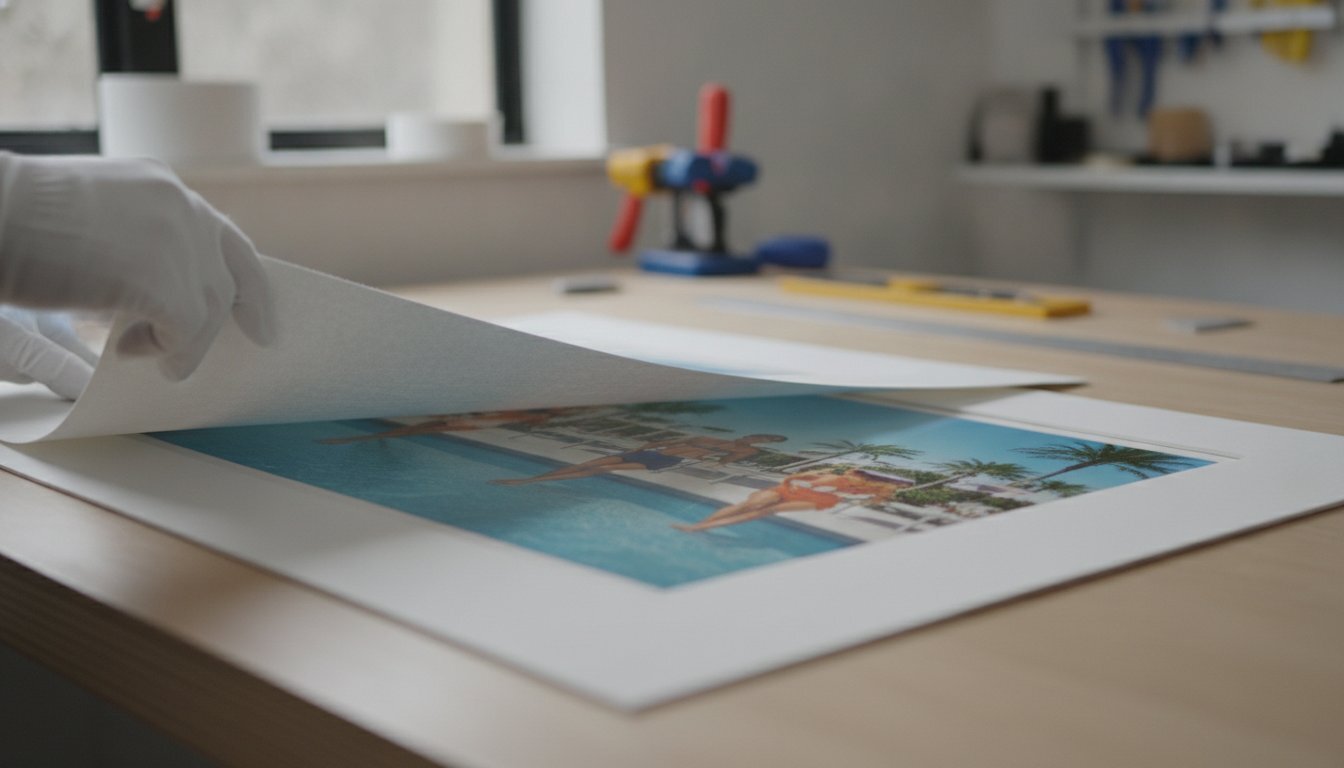
Is the frame protecting your collection, or is it a silent catalyst for its slow decay? You’ve spent years curating a collection that speaks to your soul, yet the fear of yellowed edges and muted pigments often lingers in the back of your mind. It’s a valid anxiety for any serious collector who appreciates the evocative power of a Slim Aarons or Terry O’Neill original. True archival framing for fine art prints isn’t merely a decorative accessory; it’s a bespoke chemical shield designed to halt the inevitable entropy of light and acid.
We understand that technical terms like “acid-free” and “museum-grade” can feel like a labyrinth of art world jargon. This guide illuminates the meticulous science and artisanal craft behind high-end preservation, giving you the confidence that your art is protected from environmental degradation. You’ll discover the vital role of 100% cotton rag mats and UV-filtering glazing, which blocks up to 99% of the radiation responsible for 40% of print fading. We’ll show you how to achieve an aesthetic result that complements a luxury interior while honoring the historical significance of your most cherished pieces.
Key Takeaways
- Learn how museum-grade materials like UV-filtering glazing block 99% of harmful rays to ensure your photographic investments never lose their original vibrancy.
- Discover why 100% cotton rag matting is the essential standard for archival framing for fine art prints, offering over a century of chemical stability compared to standard wood-pulp.
- Understand how to harmonize historical aesthetics with modern protection, specifically tailored for iconic archives like the Slim Aarons or Terry O’Neill collections.
- Experience the peace of mind that comes with a bespoke, ready-to-hang service where artisanal craftsmanship replaces industrial mass production.
Beyond Aesthetics: Why Archival Framing is Essential for Fine Art
To the casual observer, a frame is a border; to the serious collector, it’s a sanctuary. Archival framing for fine art prints represents a sophisticated system of pH-neutral materials engineered to arrest the natural process of chemical degradation. While a standard picture frame might provide structural support, it often harbors hidden dangers that compromise the integrity of paper and ink. The primary objective of archival housing is to create a micro-environment where environmental threats are neutralized before they reach the artwork.
The preservation process specifically targets three primary environmental threats that act as silent killers of visual heritage:
- Ultraviolet Light: This radiation is responsible for approximately 40% of all fading in photographic works, breaking down pigments at a molecular level.
- Fluctuating Humidity: Moisture causes paper fibers to expand and contract, which leads to permanent warping or “cockling” of the print surface.
- Atmospheric Pollutants: Airborne acids and dust can penetrate porous paper fibers, causing unsightly yellowing and chemical foxing.
A critical distinction exists between “acid-free” and “archival” standards. Many commercial products are labeled acid-free because they’ve been treated with a calcium carbonate buffer to neutralize the acidity of wood pulp. This protection is often temporary. As the buffer depletes, the underlying lignin returns the material to an acidic state. True archival framing for fine art prints demands materials that are naturally pH-neutral and lignin-free from the outset, ensuring the housing remains chemically inert for centuries. Central to this philosophy is the concept of reversibility. Every hinge, mount, and adhesive must be fully removable, allowing the artwork to be extracted without a trace of damage.
The Chemistry of Fading and Yellowing
Standard wood-pulp papers contain lignin, a complex organic polymer that eventually breaks down into acidic compounds. This lead to “acid burn,” where the paper becomes brittle and discolored. For those investing in fine art photography, this degradation is a significant risk. Beyond chemical damage, UV radiation acts as a catalyst for destruction. Archival systems utilize specialized glazing to block up to 99% of these rays, protecting the delicate tonal range of the image.
Investment Protection for Collectors
Preserving a collection, such as the iconic works found in the Slim Aarons archive, requires a commitment to long-term stability. The resale value of a limited edition print is inextricably linked to its physical condition. Any sign of mounting damage or light-induced fading can diminish its market prestige. Museum-grade protection offers the psychological peace of mind that your investment is shielded from the common hazards of a home environment. The frame serves as the first and most vital line of defense in maintaining the work’s historical and financial value.
The Anatomy of Preservation: Key Components of an Archival Frame
A museum-grade frame is more than a decorative enclosure; it’s a meticulously engineered assembly of inert materials designed to work in concert. When considering archival framing for fine art prints, every layer must serve a dual purpose: aesthetic enhancement and chemical stability. This protective envelope ensures that the artwork remains isolated from the destructive influences of the outside world, creating a stable micro-environment that can last for generations. It’s a technical discipline that requires a deep understanding of material science and curatorial standards.
The foundation of this system begins with the mount board. Unlike standard matting, which often contains lignin-rich wood pulp, archival mounts utilize 100% cotton rag or highly purified alpha-cellulose. These materials are naturally pH-neutral and lignin-free, preventing the acid burn that leads to brittle paper and yellowed edges. Behind the artwork, a rigid backing board provides an essential barrier. This layer must be equally inert, shielding the print from moisture and the latent acidity often found in common wall surfaces. This structural integrity is vital for maintaining the flat, pristine surface of high-value photography.
Securing the print within this assembly requires specialized adhesives that prioritize the long-term health of the paper. Traditional tapes and glues are strictly avoided in professional workshops because they leave permanent residues. Instead, specialists utilize pH-neutral, water-reversible hinging methods. This technique ensures that the artwork is held securely but can be removed at any time without leaving a trace of its housing. For those seeking the ultimate in protection, our bespoke framing service employs these precise artisanal methods to safeguard every acquisition, ensuring a seamless transition from our archive to your collection.
Glazing Options: Glass vs. Acrylic
The choice of glazing is often a balance between clarity and safety. UV-filtering glass, which typically blocks up to 99% of harmful radiation, meets the rigorous ISO 18902 standard for conservation. It offers exceptional scratch resistance and is the preferred choice for residential displays where lighting is controlled. For large-format works, museum-grade acrylic is often superior. It is lightweight and shatter-proof, making it significantly safer for shipping and handling. Modern anti-reflective coatings can make the glazing virtually disappear, allowing the viewer to engage with the rich textures of the print without the distraction of glare.
The Importance of the Air Gap
Direct contact between a print and its glazing is a recipe for disaster. Moisture can become trapped against the surface, leading to condensation, mold growth, or the physical sticking of the emulsion to the glass. Archival framing for fine art prints solves this by creating a deliberate air gap. This is achieved through deep-bevel mats or discrete spacers hidden beneath the frame lip. This small pocket of air acts as a thermal buffer, regulating the micro-climate inside the frame and ensuring the delicate paper fibers can breathe. This meticulous attention to detail culminates in a ready-to-hang experience that bridges the gap between a world-class archive and your private gallery wall.

Archival vs. Standard Framing: Understanding the Long-Term Investment
The choice between standard and archival framing for fine art prints is rarely about the immediate visual appeal. It’s a decision about the future. While a standard frame might look adequate on day one, it functions as a chemical ticking clock. Standard wood-pulp matting contains lignin, a natural polymer that eventually breaks down into acid. This acidity migrates into the print, causing permanent structural damage. In contrast, 100% cotton-rag matting is naturally pH-neutral and remains stable for well over a century, ensuring that the paper fibers of your investment don’t become brittle or discolored.
The visual disparity becomes evident within just a few years. When you look at a cheap mat, the beveled edge often takes on a tell-tale orange or brown hue. This is the physical manifestation of acid buildup. Archival mats maintain a crisp, clean white bevel that continues to complement the art rather than distracting from it. From a financial perspective, the initial premium for museum-grade materials is a minor fraction of the potential restoration costs. Professional restoration for a print damaged by non-archival materials can range from $150 to $500 per piece, making the decision to invest in professional archival framing for fine art prints the only logical economic choice.
Identifying ‘Fake’ Archival Claims
The term “acid-free” is frequently used as a marketing shield, but it can be misleading for the uninitiated collector. Many manufacturers treat wood-pulp paper with a calcium carbonate buffer to neutralize its natural acidity. While this works initially, the buffer eventually depletes, and the mat returns to an acidic state. When selecting a framer, look for materials that meet the ISO 18902 standard. Conservation grade is suitable for many high-quality works, but museum grade, utilizing 100% cotton rag, is the gold standard for historical archives and high-value photography.
The Long-Term Visual Cost of Standard Framing
Standard framing often results in “mat burn,” a dark, permanent stain that follows the window of the matting and ruins the print’s margins. Beyond the paper, the image itself is at risk. Standard glass lacks the sophisticated UV-filtering technology needed to prevent pigments from losing their vibrancy, sometimes within months of display. Another hidden threat is outgassing. Outgassing refers to the release of volatile organic compounds from non-archival glues and plastics, which creates a hazy, chemical film on the surface of photographic emulsions. These invisible threats highlight why a bespoke, artisanal approach to archival framing for fine art prints is the only way to truly honor a significant collection.
Curating Your Display: Selecting Materials for Different Print Collections
Curating a private gallery is a delicate balance of period-accurate design and invisible engineering. When selecting archival framing for fine art prints, one must consider the era and medium of the work to ensure the housing respects the artist’s original vision. A collection like the Slim Aarons archive requires a specific, nuanced touch. These 1960s masterpieces, celebrated for their vibrant saturated hues and aspirational settings, demand frames that echo mid-century elegance while providing 99% UV protection to keep those iconic poolside blues from losing their luster over time.
Black and white photography presents a different set of aesthetic challenges. The “white-point” of your matboard can fundamentally alter the viewer’s perception of the image’s tonal range. A cool-toned silver gelatin print might look muddy against a cream mat, while a warm-toned portrait requires a softer, off-white board to maintain its depth and luminosity. For oversized prints, structural integrity becomes the priority. Large-scale works often require museum-grade acrylic rather than glass to reduce weight and prevent the risk of shattering, which would be catastrophic for the print surface. Our Bespoke Framing Service specializes in these nuanced requirements, ensuring each piece is housed in a manner that respects both its history and its future.
Cinema memorabilia, such as vintage lobby cards or posters, often arrives on fragile, acidic paper stocks from the studio era. These items require a “preservation-first” approach where the material is neutralized or carefully encapsulated before being framed. Limited edition Star Wars prints, often produced on modern high-gloss papers, are particularly sensitive to light and heat. These require a deep air gap to prevent the emulsion from bonding to the glazing, a common disaster in standard retail framing. Selecting the correct archival housing is the only way to ensure these cultural artifacts remain pristine for the next generation of collectors.
Matching Frame Style to Artistic Era
Contemporary music archives often benefit from sleek, minimalist metal or black-stained wood frames that don’t compete with the raw energy of the subject matter. In contrast, mid-century icons are best served by classic walnut or oak mouldings that provide a sense of warmth and permanence. The color of the frame should act as an extension of the print’s tonal range, grounding the work within its architectural surroundings without overpowering the artist’s intent. This thoughtful selection ensures that the frame enhances the art while the archival materials provide a silent, permanent shield.
Preserving Rare Collectibles
Original cinema lobby cards are historical artifacts that demand more than just a standard mount. Archival techniques like encapsulation allow these fragile items to be viewed and displayed without being permanently adhered to a backing board, preserving their future trade value. For high-value collectibles like Star Wars limited editions, maximum UV shielding is non-negotiable. Using archival framing for fine art prints ensures these modern relics remain as vivid as the day they were struck, protecting the pigments from the subtle but relentless bleaching effect of indoor lighting and environmental pollutants.
The Galerie Prints Standard: Bespoke Framing for Iconic Photography
At Galerie Prints, we view our role as a bridge between the historical archive and your private sanctuary. Our ready-to-hang philosophy ensures that the transition from our collection to your wall occurs with zero friction. We don’t merely sell photography; we provide a complete curatorial solution that honors the prestige of the artists we represent. By integrating archival framing for fine art prints into our core offering, we ensure that every Terry O’Neill or Slim Aarons print is protected by the same museum-grade standards used by major institutions. This synergy between our premium paper stocks and conservation-grade housing guarantees that the visual impact of the work remains untarnished for generations.
Our frames are the result of localized, artisanal craftsmanship. While industrial workshops often rely on automated machinery, our specialists build each frame by hand, ensuring that every corner joint is seamless and every mount is perfectly centered. This human touch is essential for handling the delicate photographic emulsions found in our music archives and cinema lobby cards. When your framed masterpiece arrives, it’s a testament to a bygone era of elegance and technical excellence. We handle global shipping with the same precision, using professional-grade packaging to ensure your investment arrives in pristine condition, regardless of its destination.
A Curated Selection of Styles
Our signature finishes are designed to complement an aspirational lifestyle. Whether you select the stark sophistication of our gallery black, the ethereal clarity of our satin white, or the organic warmth of our natural wood mouldings, you’re choosing a frame that has been vetted for its aesthetic and protective qualities. Our mounting process is a study in precision, utilizing the pH-neutral hinging and deep-bevel mats to create the protective micro-climate your collection deserves. For serious collectors, we offer customization options that allow the frame to reflect the unique character of their private space while maintaining the highest standards of preservation.
The Seamless Purchase Journey
Adding museum-grade protection to your collection shouldn’t be a complex technical chore. We’ve refined the experience so you can select our bespoke framing service with a single click during the acquisition process. This convenience is backed by our direct, authoritative relationship with world-class archives, including Getty Images and the Terry O’Neill estate. By choosing our integrated service, you ensure that your art is handled only by specialists who understand the historical significance of the work. It’s the final, essential step in securing a piece of history for your home. Explore our bespoke framing service to find the perfect sanctuary for your next acquisition.
Securing Your Photographic Legacy
Your collection is a narrative of history and beauty, a window into the aspirational worlds captured by the masters of the lens. By understanding the meticulous science of pH-neutral materials and the necessity of UV-filtering barriers, you transition from a simple owner to a true guardian of artistic heritage. Investing in archival framing for fine art prints is the ultimate act of stewardship for any serious collector; it ensures that the vibrancy of a Slim Aarons poolside or the raw intensity of a Terry O’Neill portrait remains unchanged by the passage of time.
As specialist curators of the Slim Aarons archive, we recognize that a frame must be as exceptional as the work it protects. Our hand-finished artisanal frames provide museum-grade UV protection as standard, creating a permanent sanctuary for your acquisitions. This commitment to quality ensures that your gallery wall remains a source of wonder for generations to come. We invite you to elevate your collection with the protection it deserves.
Protect your investment with Galerie Prints’ Bespoke Framing Service and experience the peace of mind that only true craftsmanship can provide. Your art deserves a legacy as enduring as its beauty.
Frequently Asked Questions
What is the difference between acid-free and archival framing?
Acid-free materials are typically wood-based products chemically treated to neutralize acidity, a state that can revert as the buffer depletes over time. Archival framing for fine art prints utilizes materials like 100% cotton rag that are naturally pH-neutral and lignin-free. This ensures permanent chemical stability. While acid-free options offer a temporary shield, archival standards provide a lasting sanctuary for your collection without the risk of the protection fading away.
Does UV-filtering glass really prevent all fading?
UV-filtering glass blocks up to 99% of harmful ultraviolet rays, but it doesn’t stop all fading. Visible light and heat contribute to the remaining 60% of pigment degradation. Even with museum-grade glazing, you should avoid hanging your collection in direct sunlight. High-quality protection significantly slows the process, preserving the depth of photographic pigments for several decades longer than standard glass ever could.
Can I upgrade my current frames to archival standards?
You can certainly upgrade existing frames by replacing the internal components with conservation-grade materials. A specialist can swap out acidic matting and standard glass for 100% cotton rag boards and UV-filtering glazing. This process, known as refitting, is a cost-effective way to bring an older display up to modern archival framing for fine art prints standards without losing the aesthetic of the original moulding.
Is it worth framing a poster archivally if it’s not a limited edition?
Archival protection is highly recommended for vintage movie posters or items with high sentimental value. Many mass-produced posters are printed on acidic paper that degrades rapidly in a standard frame. By using museum-grade materials, you arrest this decay and ensure the piece doesn’t become brittle or stained. It’s a choice based on the emotional or historical significance you place on the work rather than its market price.
How do I know if my current frames are damaging my art?
Look for a tell-tale orange or brown tint on the beveled edge of the mat board, which indicates acid buildup. If you notice dark lines following the edge of the mat on the print itself, your artwork is suffering from mat burn. Other signs include foxing or small brown spots on the paper. These visual cues suggest that the internal micro-climate has become compromised and requires immediate professional attention.
What is the best way to clean archival glass or acrylic?
The safest method involves using a clean microfiber cloth and a specialized, ammonia-free cleaner designed for museum glazing. You should never spray the cleaner directly onto the frame, as liquid can seep under the lip and damage the print surface. Instead, dampen the cloth and wipe in a gentle, circular motion. Avoid paper towels, which can leave microscopic scratches on the surface of sensitive archival acrylic.
Why do archival mats have a different ‘white’ than standard mats?
Archival mats lack the artificial optical brighteners found in standard commercial boards. These chemicals create a bright white that eventually yellows as the additives break down. Museum-grade mats reflect the natural color of highly purified alpha-cellulose or cotton fibers. This results in a stable, sophisticated white-point that won’t shift over time, ensuring the tonal integrity of your black and white photography remains perfectly balanced for decades.
How should I hang my framed prints to maximize their lifespan?
You should position your framed work on an interior wall away from direct sunlight and heat sources like radiators or fireplaces. Avoid hanging art on damp exterior walls where temperature fluctuations can cause condensation inside the frame. Maintaining a stable environment with controlled humidity is the final step in the preservation journey. This careful placement complements the internal protection of the archival materials, maximizing the lifespan of your investment.