
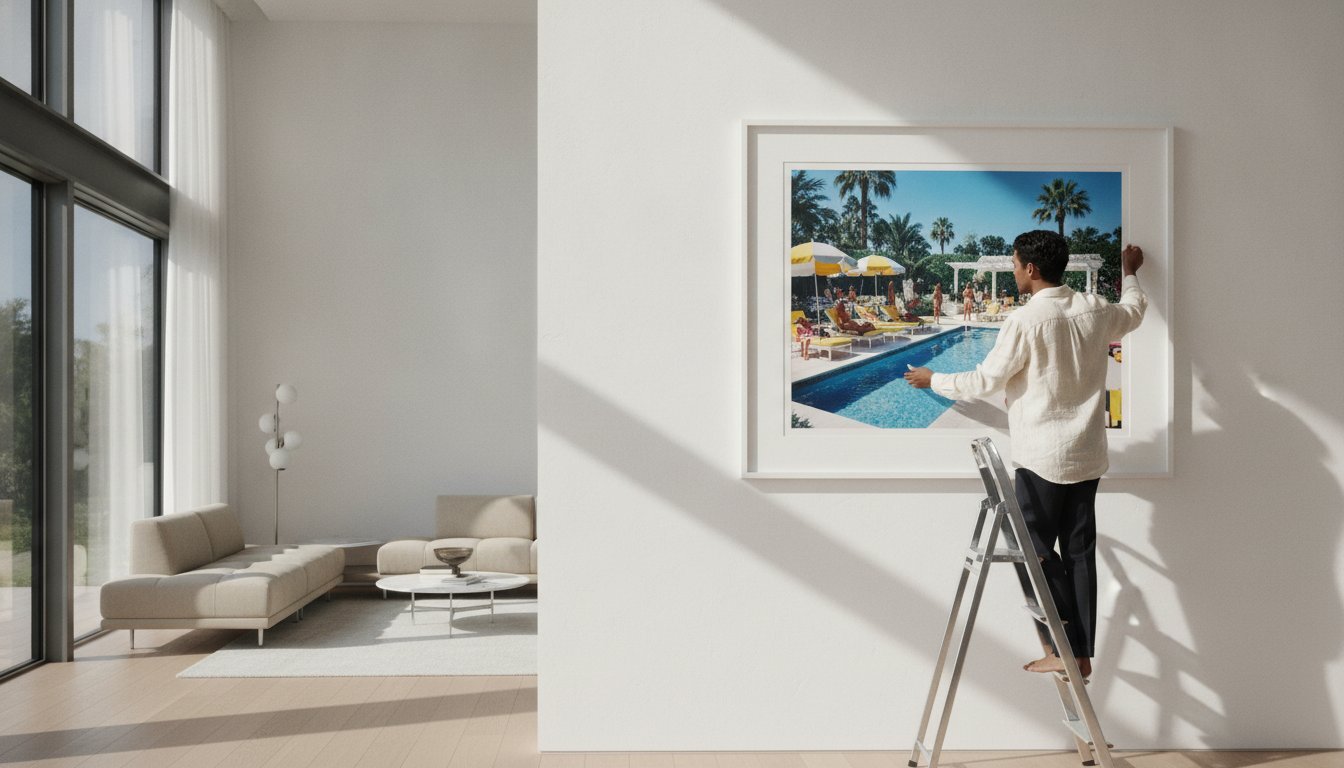
A frame is never just a border; it’s the final curatorial brushstroke that bridges a photograph’s storied past with your home’s future. You’ve likely felt that familiar pang of indecision after acquiring a piece of photographic history, worrying that a standard frame might look unrefined or fail to capture the effortless elegance of the jet-set era. It’s a valid concern, as the technical jargon of archival materials and UV-glazing can often feel more like a barrier than a benefit when you simply want your artwork to shine.
Understanding how to frame a slim aarons print is about more than just aesthetics; it’s an act of preservation for a piece of our collective cultural heritage. We’ll show you how to master the art of selection, ensuring your print becomes a ready-to-hang masterpiece that looks professionally curated and remains protected from environmental damage for decades. This guide explores the harmony between frame styles and interior architecture, providing you with the confidence to choose materials that honor both the artist’s vision and your own discerning taste.
Key Takeaways
- Discover how a professionally selected frame serves as a sophisticated bridge between a photograph’s historical narrative and your home’s unique architectural character.
- Learn the technical necessity of archival, acid-free materials and UV-protective glazing to ensure your investment remains a vibrant, lasting piece of history.
- Master the nuances of era-appropriate selection and understand precisely how to frame a slim aarons print to enhance its iconic, aspirational aesthetic.
- Apply professional gallery standards for scaling and placement, including the “60-inch rule,” to create a balanced and impactful visual presence in any room.
- Explore the prestige of bespoke, hand-finished framing that transforms a fine art print into a ready-to-hang masterpiece of artisanal craftsmanship.
The Curator’s Perspective: Why the Right Frame is Essential
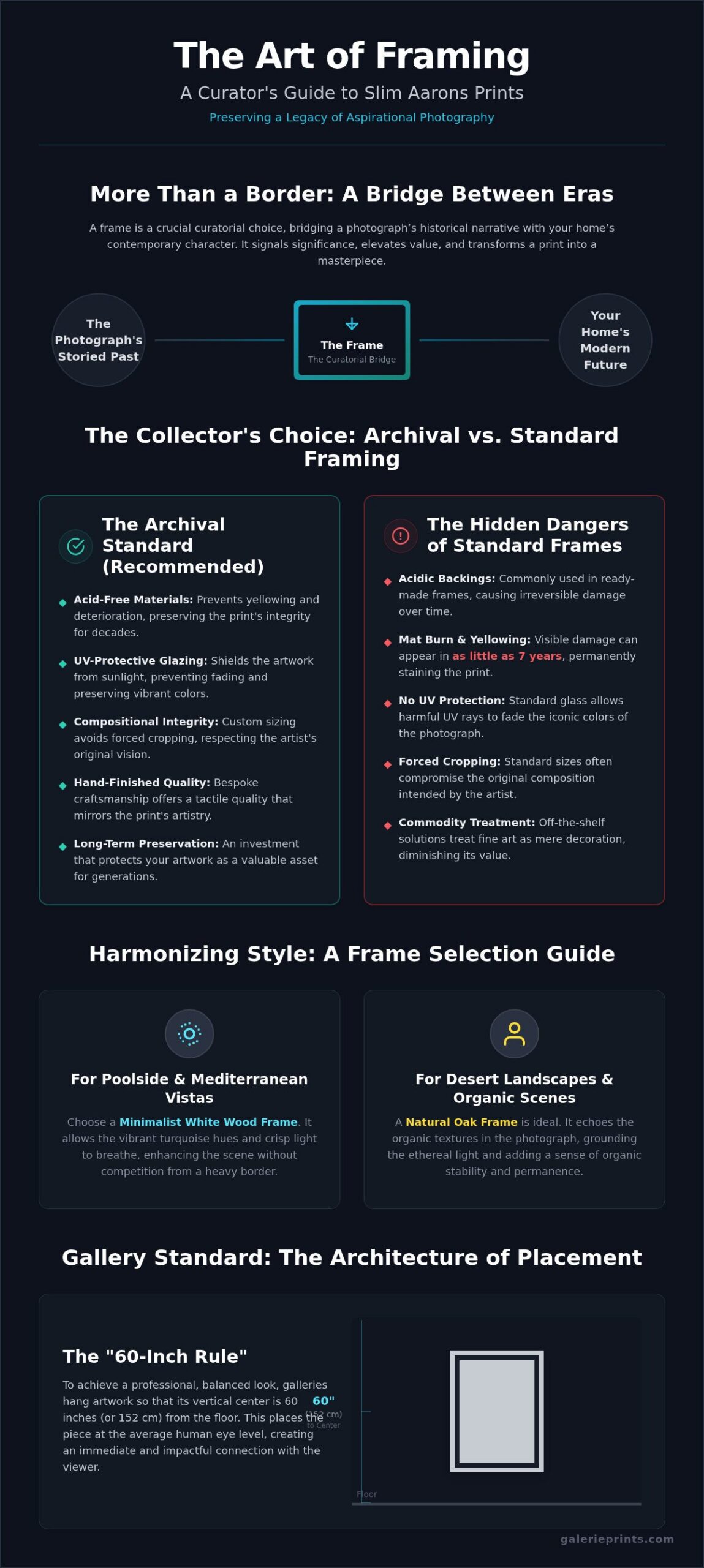
A frame is far more than a structural necessity; it’s the final curatorial decision that defines how a piece of history interacts with its modern surroundings. When you acquire a print by Slim Aarons, you aren’t merely buying a photograph. You’re securing a window into a vanished era of “attractive people doing attractive things in attractive places.” The frame serves as the architectural bridge between that mid-century narrative and your contemporary interior. It provides a deliberate transition, signaling to the viewer that the work within is a significant piece of photographic heritage rather than a transient decoration.
In a luxury home, the distinction between functional framing and curatorial display is profound. Functional framing focuses on the simple act of hanging. Curatorial display, however, considers how the choice of materials and the scale of the presentation elevate the art’s intrinsic value. Investment-grade prints demand a level of care that off-the-shelf solutions simply cannot provide. A standard frame often treats the art as a commodity, whereas a bespoke approach honors the specific tonal qualities and historical weight of the image.
The Psychology of the Frame
The visual weight of a frame dictates the viewer’s emotional response before they even register the subject matter. A slender, dark profile can act as a sharp, modern punctuation mark, drawing the eye inward toward the intricate details of a crowded social scene. Conversely, a wider frame in a natural wood like ash or oak provides a sense of organic stability, grounding the ethereal light of a desert landscape. This choice creates a sense of permanence. It suggests that the artwork is a lasting fixture of the home, harmonizing the artist’s original vision with the room’s current architecture.
Bespoke vs. Ready-Made: A Collector’s Choice
Choosing how to frame a slim aarons print requires an understanding of the technical risks inherent in mass-produced materials. Standard ready-made frames frequently utilize acidic backings and non-archival mats that can cause irreversible yellowing or “mat burn” in as little as seven years. For a serious collector, these shortcuts are unacceptable. Archival integrity is non-negotiable; it requires acid-free components and UV-protective glazing to prevent the sun from leaching the vibrancy out of those iconic turquoise pools.
- Compositional Integrity: Bespoke framing avoids the forced cropping of standard sizes, preserving the artist’s original intended border.
- Material Excellence: Hand-finished wood frames offer a tactile quality that mirrors the artisanal production of the print itself.
- Long-term Preservation: Museum-quality glazing ensures the work remains a vibrant asset for 2026 and the decades that follow.
Harmonising Style: Matching the Frame to Your Art’s Narrative
The aesthetic success of a gallery wall rests on the synergy between the image’s historical context and its physical casing. Selecting the right surround for your collection requires a discerning eye for the era in which the artist worked. To truly master how to frame a slim aarons print, one must first appreciate the sun-saturated palette and leisure-focused compositions that define the Slim Aarons archive. These images are synonymous with a specific mid-century, aspirational lifestyle. Their presentation should reflect that same lightness and ease, transitioning seamlessly from a Mid-Century Modern heritage to a Contemporary Minimalist setting.
When considering how to frame a slim aarons print for a modern interior, the goal is to enhance the narrative without overwhelming the subject. The finish you select should complement the delicate grain and texture of museum-quality archival paper. High-end C-type prints possess a depth and luminosity that a poorly chosen frame can easily dull. By choosing finishes that mirror the organic elements of the photograph, you anchor the art within the room’s architecture while preserving its historical soul.
Framing the Slim Aarons Aesthetic
For iconic poolside scenes and Mediterranean vistas, a minimalist white wood frame is a superlative choice. It allows the vibrant turquoise hues and crisp light to breathe without competition from a heavy border. A natural oak frame is equally effective for desert landscapes, echoing the organic textures of the environment. A generous mat of three to four inches is essential. This provides the necessary “breathing room” for expansive landscapes, ensuring the work feels like a curated masterpiece rather than a simple snapshot. To achieve this level of precision, many collectors utilize a bespoke framing service tailored to these specific archives.
The Classic Appeal of Black and White
When dealing with black and white pictures, the requirements shift toward high-contrast sophistication. The “Museum Standard” typically involves a slim black wood frame paired with a crisp, white acid-free mount. This creates a sharp, graphic border that focuses the viewer’s attention on the interplay of light and shadow. For a more traditional library or study, deeper wood tones like dark walnut or mahogany offer a sense of archival permanence. Increasing the rebate depth can also add a sculptural quality to a portrait, casting a subtle shadow that gives the subject a three-dimensional presence on the wall.
Technical Excellence: Materials, Glazing, and Archival Integrity
While the visual allure of a sun-drenched poolside scene is immediate, the longevity of that vibrancy depends entirely on the technical specifications of its housing. Mastering how to frame a slim aarons print requires a commitment to archival standards that far exceed those of standard commercial shops. When you’re dealing with high-value photography, the materials that touch the paper are just as important as the wood that defines the exterior. Preservation is a silent, ongoing process; it’s the difference between a work of art that remains a pristine investment and one that succumbs to the slow degradation of environmental exposure.
A critical but often overlooked component in fine art framing is the spacer. This small, invisible strip sits between the glazing and the artwork, ensuring the print never physically touches the glass or acrylic. Without a spacer, changes in humidity can cause the photograph to adhere to the glazing, leading to catastrophic damage. For mounting, we prefer the T-hinging method using Japanese paper and archival wheat starch paste. This technique allows the print to “breathe” and expand or contract naturally with temperature shifts, unlike dry mounting, which is often permanent and can devalue a rare piece by altering its original state.
Glazing Options: Museum Glass vs. Acrylic
Glazing is the invisible shield of your collection. For the serious collector, Museum Glass is the gold standard. It offers 99% UV protection, which is essential for preserving the delicate dyes in C-type prints that are prone to fading in bright, modern interiors. Its anti-reflective coating ensures that your art is visible from every angle, removing the distracting glare that often plagues standard glass. For oversized works or prints intended for high-traffic areas, high-grade acrylic provides a lightweight, shatterproof alternative without sacrificing the clarity required to appreciate the fine grain of the film.
The Importance of Acid-Free Mounting
Standard backboards often contain lignin, an organic polymer that releases acids as it breaks down. These acids lead to “foxing”-those unsightly brown spots-and a general yellowing of the paper that permanently devalues the work. To prevent this, we utilize only cotton rag or alpha-cellulose mounts. These materials are naturally acid-free and provide a chemically stable environment for the art. Our bespoke framing service at Galerie Prints is built on these exacting museum standards, utilizing premium materials to ensure your collection remains a vibrant piece of history for 2026 and beyond.
- Archival Backing: Prevents acid migration and structural warping.
- UV Filtration: Blocks the spectrum of light responsible for pigment breakdown.
- Reversible Techniques: Ensures all mounting can be safely undone by a professional conservator.
The Architecture of the Room: Scaling and Placement
Placement is the final curatorial act that transforms a framed photograph into a permanent architectural feature. Deciding how to frame a slim aarons print is only half the journey; the artwork must also respect the proportions of the space it inhabits. For a professional gallery feel, we recommend the ’60-inch rule.’ This involves hanging the work so the center point of the image sits exactly 60 inches from the floor, aligning with the average human eye level. This consistency creates a sense of order and allows the narrative of the photograph to unfold naturally as you move through the room.
Lighting plays a transformative role in highlighting the textures of fine art photography. While the museum glass discussed in previous sections protects against UV damage, dedicated picture lights or adjustable ceiling spots can enhance the print’s depth. Properly directed light catches the hand-finished grain of an oak or ash frame, adding a tactile dimension that makes the piece feel integrated into the room’s design rather than merely resting upon the wall.
Proportions and Sightlines
When an image captures an expansive horizon, such as a Slim Aarons landscape, going ‘oversized’ can be a powerful design choice. A large-scale print creates an immersive experience, acting as a window that expands the perceived boundaries of the room. When you understand how to frame a slim aarons print for a specific wall, you elevate the entire room’s aesthetic. To see how professional photography can masterfully highlight these architectural features, visit Clarence Butts Photography. Scale must be balanced with the furniture below; as a general rule, the width of the frame should be approximately two-thirds to three-quarters the width of the sofa or console table it sits above. This prevents the art from appearing adrift on a vast wall or, conversely, overwhelming the furniture beneath it.
Designing a Gallery Wall
For collectors with multiple pieces, a gallery wall offers a way to showcase the breadth of a collection while maintaining visual harmony. Start by choosing a ‘hero’ piece to anchor the arrangement. This central work sets the curatorial tone, whether you opt for uniform framing to mirror a home’s formal architecture or an eclectic mix of finishes for a more lived-in, worldly aesthetic. Consistency is maintained through the ‘2-inch rule’: keeping exactly two inches of space between every frame. This precise spacing prevents visual clutter and ensures the collection feels like a singular, intentional installation. If you’re ready to begin your curation, you can explore our bespoke framing options to ensure every piece is perfectly scaled for your space.
Elevating Your Collection with Galerie Prints Bespoke Framing
When you invest in a piece from our world-class archives, the final presentation shouldn’t be left to chance. Our bespoke framing service is designed as a dedicated extension of the art itself, ensuring that every technical and aesthetic nuance discussed in this guide is expertly executed. We don’t merely provide a border; we offer a handcrafted sanctuary for your photography. By choosing a service that understands the specific requirements of how to frame a slim aarons print, you ensure that the vibrant, aspirational quality of the work is preserved within a frame that mirrors its historical prestige.
Our curators are available to provide expert consultations, helping you navigate the selection of finishes that best suit your interior architecture. Whether you’re drawn to the organic grain of solid ash or the timeless stability of oak, our frames are hand-finished in our dedicated studio to meet the highest standards of the art world. This level of personalized attention ensures your investment is not just protected, but elevated to its full potential as a centerpiece of your home.
A Seamless Collector Experience
There is a distinct advantage to ordering your print and frame as a unified piece. This approach ensures a perfect archival seal, as the artwork is mounted and glazed by professionals who handle these specific paper types daily. It removes the friction of transporting a delicate, high-value print to a local framer, where it might be subject to improper handling or non-archival materials. Our “Ready-to-Hang” promise means your masterpiece arrives at your door in secure, professional art packaging, ready to be placed on your wall the moment it’s unpacked. This seamless process adds tangible value to your collection, providing peace of mind that the work has been handled with curatorial care from the gallery to your home.
Craftsmanship and Heritage
The artisanal craftsmanship within our framing studio is a point of immense pride. We utilize traditional production methods that respect the heritage of the photography we represent. Every frame is constructed using sustainable, archival-grade materials, from the acid-free cotton rag mounts to the precision-cut spacers that protect the print surface. We don’t believe in shortcuts. Instead, we focus on the tactile quality of the wood and the technical superiority of the assembly, ensuring your piece remains a lasting part of your family’s history. If you’re ready to transform your selection into a professionally curated masterpiece, Explore our Bespoke Framing Service today and discover the difference that artisanal quality makes for your collection.
Preserving Your Window to the Jet-Set Era
A fine art photograph is a legacy held in light and shadow, and the frame you choose is its final guardian. We’ve explored how a thoughtful selection bridges the gap between historical narrative and modern interior design, ensuring that every piece of mid-century elegance feels at home in your space. From the technical necessity of UV-protective glazing to the precise geometry of gallery-standard placement, every detail serves a singular purpose: to elevate the art while shielding it from the passage of time.
Mastering how to frame a slim aarons print isn’t just about decoration; it’s about curating an experience that lasts for generations. At Galerie Prints, we provide a seamless path from the gallery to your wall. Our bespoke framing service utilizes museum-quality archival materials and artisanal craftsmanship specifically tailored for our world-class archives. With our professional, ready-to-hang delivery, your collection is transformed into a finished masterpiece without the friction of third-party handling. Discover Bespoke Framing at Galerie Prints and take the final step in honoring your investment. Your collection deserves a presentation as timeless as the moments it captures.
Frequently Asked Questions
How do I know what size frame to buy for my print?
The frame size is determined by the outer dimensions of the print plus the width of the mount you intend to use. For a standard gallery presentation, we recommend adding a border of three to four inches on all sides to provide visual breathing room. For instance, a 20×24 inch print paired with a 4-inch mount requires a frame with internal dimensions of 28×32 inches.
What is the best frame colour for black and white photography?
A slim black wood frame is the definitive choice for black and white photography because it provides a sharp punctuation mark that emphasizes the image’s tonal range. For a more traditional or archival aesthetic in a library or study, deep walnut or mahogany finishes offer a sophisticated warmth. These darker tones beautifully complement the silver-gelatin appearance of classic photographic prints.
Should I choose glass or acrylic for my picture frame?
Museum glass is the gold standard for clarity and UV protection, offering an anti-reflective finish that makes the glass virtually disappear. High-grade acrylic is the superior choice for oversized works or high-traffic areas where weight and shatter-resistance are primary concerns. Both options should offer at least 99% UV filtration to prevent pigment degradation and ensure the longevity of your investment.
What does ‘archival framing’ actually mean?
Archival framing refers to the use of chemically stable, acid-free materials and reversible techniques that protect the artwork from environmental damage. This includes using cotton rag mounts and pH-neutral adhesives that won’t cause yellowing or brittleness over time. It ensures the print remains in its original condition, preserving both its historical integrity and its financial value for decades to come.
Is it better to have a mount (mat) or frame the print to the edge?
A mount is generally preferred for fine art photography because it creates a necessary air gap between the print and the glazing. This breathing room prevents moisture from causing the photograph to stick to the glass, which can lead to permanent damage. Aesthetically, a generous mat also provides a visual transition that focuses the viewer’s eye on the central composition.
How do I protect my art prints from sunlight and fading?
Utilizing UV-protective glazing is the most effective way to shield your collection from the sun’s harmful rays. Even with professional glazing, you should avoid hanging your prints in direct sunlight or near extreme heat sources. Placing your artwork on walls that receive indirect light will significantly extend the life of the vibrant dyes used in iconic C-type prints.
What is the most popular frame style for Slim Aarons prints?
The most sought-after choice for those learning how to frame a slim aarons print is a minimalist white wood frame with a deep rebate. This clean, architectural style mirrors the sun-drenched, aspirational aesthetic of the 1950s and 60s without competing with the vibrant poolside colors. Natural oak is a superlative alternative for desert or organic-themed compositions, echoing the natural textures within the photograph. This minimalist aesthetic also pairs beautifully with modern digital art; for instance, the high-quality downloadable prints from Bobzdigistore gain a sophisticated, gallery-ready look when presented in these same frame styles.
Can I change the frame later if I redecorate my home?
Yes, you can certainly reframe your artwork provided it was originally mounted using archival, reversible techniques like T-hinging. Because the print isn’t permanently bonded to the backing board, a professional framer can safely remove it and place it in a new surround. This flexibility ensures that your investment remains protected while allowing your collection to evolve alongside your personal interior style.