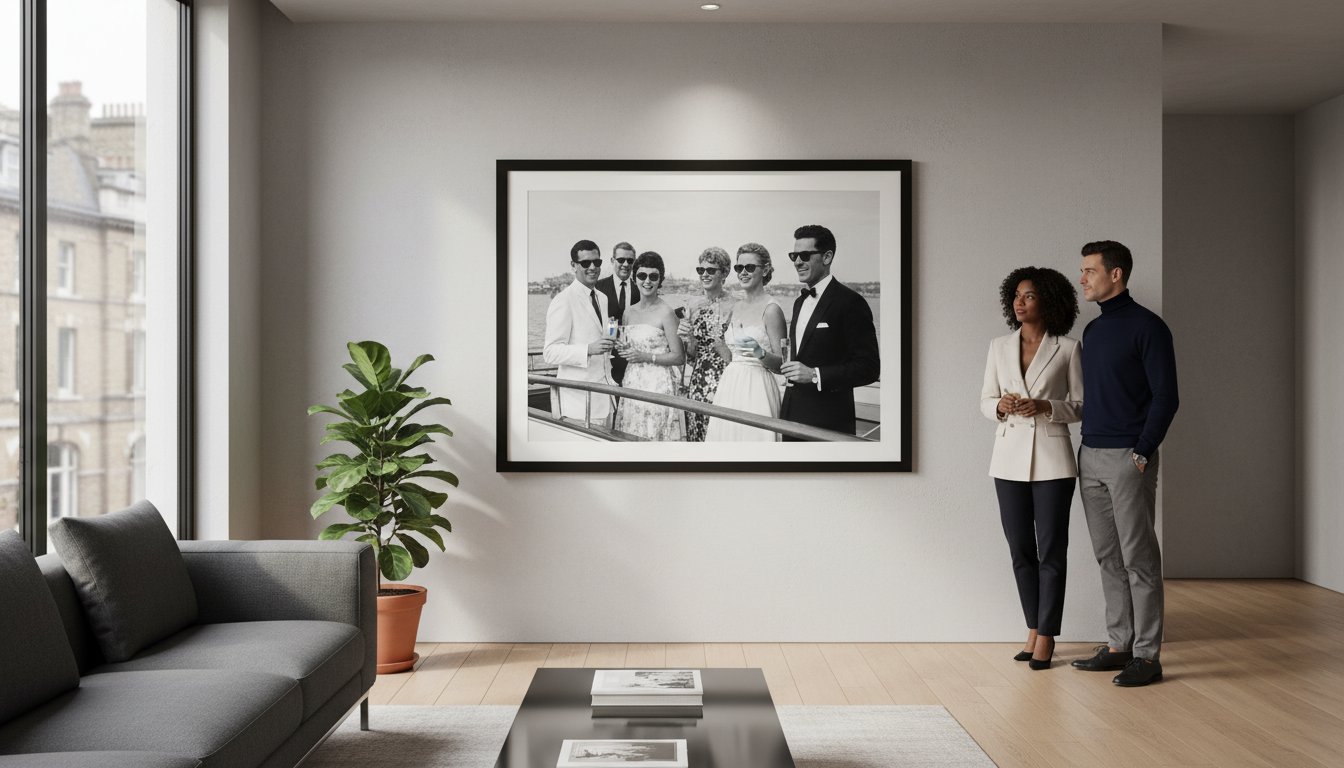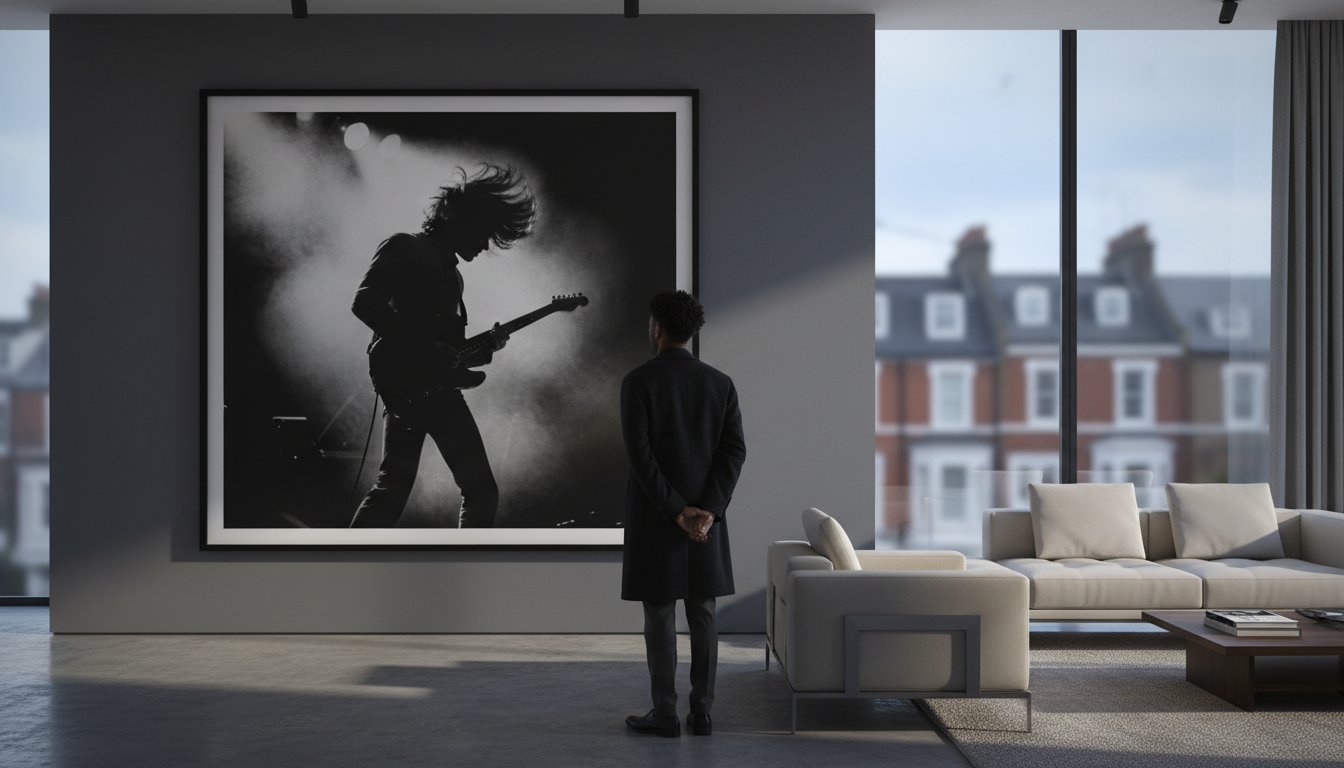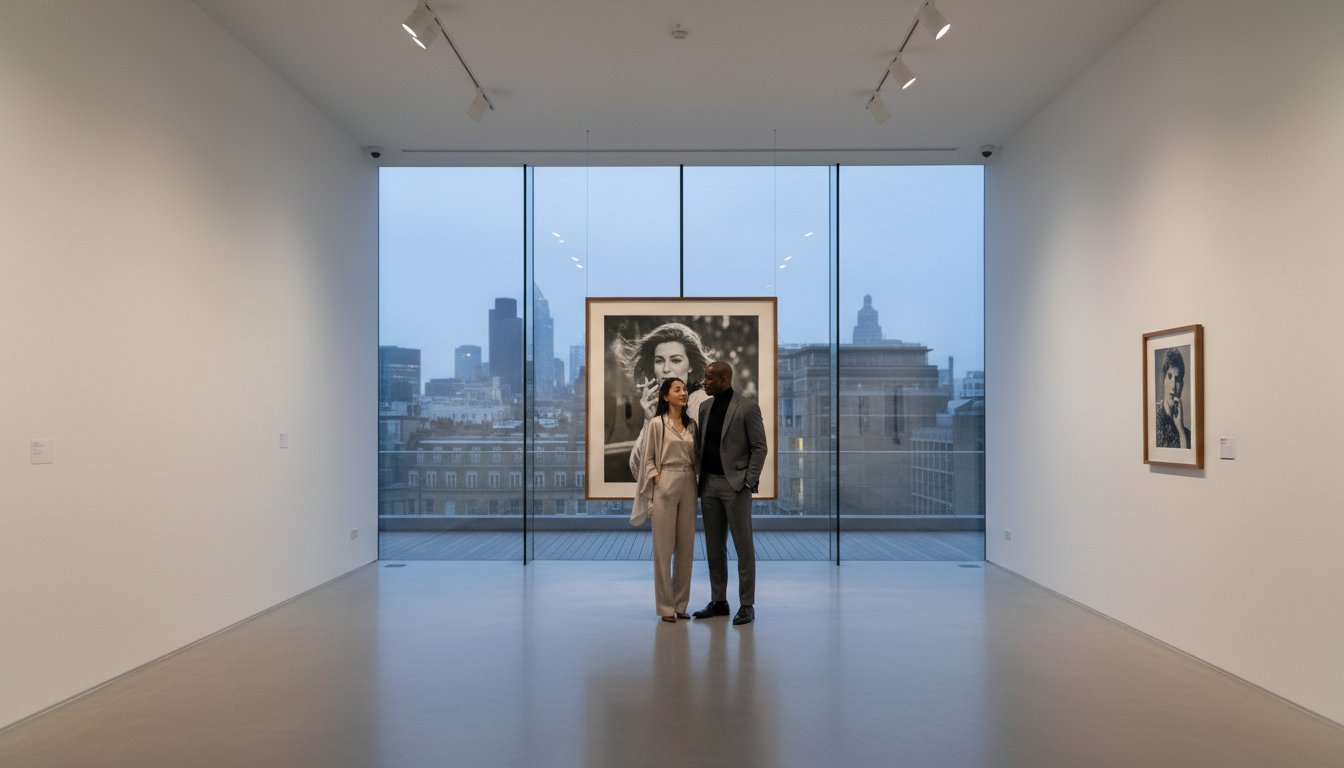
Tag: Terry O’Neill

Curating a Personal Art Collection: The Connoisseur’s Guide to Fine Art Photography

The most evocative homes don’t simply display images; they preserve moments of cultural heritage that define a legacy. Curating a personal art collection is far more than a series of disconnected purchases. It’s a deliberate act of storytelling that bridges the gap between a casual appreciation for beauty and the discerning eye of a true connoisseur. You might feel overwhelmed by the sheer volume of available prints or fear investing in a piece that lacks the archival integrity to endure. These hesitations are natural for any collector who values substance over mere decoration.

You understand that a home should reflect a sophisticated lifestyle, yet finding the balance between disparate eras and styles can feel like an impossible puzzle. This guide will help you master the transition to sophisticated collecting by focusing on narrative depth, archival standards like ISO 11108 for cotton-based papers, and the nuances of artisanal preservation. We’ll explore how to identify high-quality photography, from the sun-drenched leisure of Slim Aarons to the cinematic grit of Terry O’Neill. By the end, you’ll have the confidence to select works that offer both aesthetic cohesion and lasting historical value.

Key Takeaways

  • Learn to distinguish between simple home decoration and the deliberate act of curating a personal art collection that reflects your unique cultural legacy.
  • Discover how to establish a visual anchor for your space by integrating iconic music archives and aspirational cinema lobby cards.
  • Master the technical requirements of archival-grade prints, ensuring your acquisitions are produced from original source materials rather than mass-market reproductions.
  • Understand why bespoke framing is essential for both the long-term preservation of the artwork and its seamless integration into your home’s architectural aesthetic.
  • Access a curated bridge to the world’s most prestigious photographic archives to ensure every piece you acquire holds lasting prestige and historical value.

The Philosophy of Curation: Defining Your Personal Artistic Legacy

To begin the journey of curating a personal art collection is to step into the role of both historian and storyteller. It’s a transition from merely filling wall space to building a visual biography that will endure for generations. While interior design often focuses on the immediate aesthetic of a room, true curation looks toward the horizon of a lasting legacy. Historically, the assembly of a private art collection was a pursuit reserved for those who viewed art as an extension of their intellectual and cultural identity. Today, this philosophy remains the cornerstone of a sophisticated home. It’s about more than just a purchase; it’s about the emotional resonance of owning a piece of photographic history, such as a rare Terry O’Neill portrait or an authentic Star Wars limited edition print.

Curation vs. Decoration: A Professional Distinction

Decoration is often static, serving the trends of the current year or the specific palette of a sofa. Curation, however, is a deliberate and evolving selection process based on a central theme or narrative. As a collector, you act as a guardian of artistic heritage. You aren’t just buying a print; you’re preserving a specific moment in time captured through a lens. This distinction is vital because a curated collection has the power to evolve over decades. It doesn’t become obsolete when you change your furniture. Instead, the art remains the constant, providing a sense of permanence and stability in a world of fleeting digital imagery.

Finding Your Curatorial Voice

When you begin curating a personal art collection, identifying the moods or eras that resonate with your personal history is the essential first step. You might find yourself drawn to the mid-century glamour of the Slim Aarons Collection, or perhaps the raw, backstage energy found within deep music archives. A single hero piece often dictates the energy of an entire room. A large-scale cinema lobby card can serve as a bold anchor, while a series of smaller, consistent vintage movie posters creates a rhythmic narrative along a corridor. Consistency in the medium, such as focusing strictly on fine art photography, allows for a diverse range of subjects while maintaining a cohesive aesthetic. By balancing nostalgia with modern presentation, you ensure your collection feels both timeless and relevant for 2026 and beyond.

Establishing a Visual Anchor: Themes in Fine Art Photography

Every serious collection requires a visual anchor to provide a sense of purpose. When curating a personal art collection, thematic consistency acts as the refined thread that binds different rooms into a singular narrative. While some collectors might explore collecting work from emerging artists to inject a sense of the contemporary, there’s an undeniable stability in acquiring established archival works that have already secured their place in history. These anchors don’t just occupy space; they dictate the room’s entire emotional frequency and set the stage for all subsequent acquisitions.

The Allure of Aspirational Heritage

Slim Aarons remains the ultimate reference for those seeking a perennial mood of luxury. His work, famously described as capturing “attractive people doing attractive things in attractive places,” serves as the definitive guide to the Golden Era aesthetic. Slim Aarons captures a world of effortless elegance that pairs perfectly with mid-century modern interiors. These poolside scenes do more than decorate. They transport the viewer to a sun-drenched era of prestige, making them ideal for spaces designed for relaxation and conversation.

Cultural Icons: Music and Cinema Archives

Integrating film and music history adds a layer of intellectual depth to your home. Cinema lobby cards are particularly prized for their rarity and narrative charm, acting as unique conversation pieces that bridge the gap between graphic art and photography. Legendary figures like Marilyn Monroe or the candid grit of Terry O’Neill’s portraits provide a human connection to the glamour of the past. Similarly, music photography captures the soul of a room, immortalizing the raw energy of a performance or the quiet intimacy of a recording session.

The use of black and white photography remains a hallmark of the sophisticated collector. It strips away the distraction of color to reveal the raw texture and emotion of a moment. Mixing these high-contrast portraits with candid, lifestyle-driven imagery creates a dynamic yet balanced atmosphere that feels curated rather than staged. This interplay between the legendary and the everyday is what gives a private collection its unique character and enduring appeal. To find the perfect anchor for your space, consider exploring the curated selections at Galerie Prints, where history and aesthetics meet.

Evaluating Quality: The Technical Nuances of Archival Prints

The discerning eye distinguishes between a fleeting image and a lasting artifact. When curating a personal art collection, the technical specifications of a print determine its future value and physical survival. A common pitfall for new collectors is mistaking a high-quality poster for a fine art print. While posters are often mass-produced on thin, unstable paper using standard offset lithography, a fine art print is a meticulously crafted object of desire. It relies on original source materials, such as the master negatives from the Slim Aarons or Terry O’Neill archives, ensuring that every detail intended by the artist is preserved with clarity. As highlighted in A Guide to Buying Art, understanding these production nuances is essential for anyone looking to build a collection with true market authority.

In 2026, sophisticated collectors prioritize materials that resist environmental degradation. This means insisting on UV-resistant inks and acid-free substrates that won’t yellow or become brittle over time. Provenance remains the ultimate seal of quality; knowing exactly where a print was produced and who authorized its creation is the only way to safeguard your investment. You aren’t just buying an image; you’re acquiring a physical piece of history that requires the highest standards of artisanal production to maintain its prestige.

Archival Standards: Museum-Quality Explained

The choice between C-type and Giclée prints often depends on the desired depth and color profile of the photograph. C-type prints, created through a traditional chemical process, offer a rich, continuous tone that’s synonymous with classic gallery photography. Conversely, Giclée prints utilize advanced pigment-based inks to achieve a wide color gamut and exceptional detail. Both methods must utilize heavy-weight, acid-free archival paper, often meeting ISO 11108 standards for both permanence and durability. Archival quality is defined as a 100-year preservation standard, ensuring the work remains untarnished by time or environment. This level of craftsmanship transforms a simple image into a heritage piece that retains its vibrancy for a century.

The Value of Authenticity and Provenance

True connoisseurship involves verifying that a print originates from an authorized negative or a high-resolution digital file overseen by the artist’s estate. The prestige of estate-stamped or limited edition collections can’t be overstated; these markers provide the legal and artistic weight necessary for a collection to hold its value. You should avoid the pitfalls of mass-produced, low-resolution digital reproductions that lack the tactile richness of an artisanal print. By focusing on verified provenance, you ensure that your journey in curating a personal art collection is built on a foundation of authenticity rather than ephemeral trends.

The Final Touch: Bespoke Framing and Spatial Curation

A masterpiece is only as impactful as its presentation. In the meticulous process of curating a personal art collection, the frame serves as the essential bridge between the narrative depth of the photograph and the architectural language of your home. It’s the “suit” that defines the character of the piece, transforming a loose archival print into a commanding object of heritage. Beyond aesthetics, bespoke framing is a technical necessity for long-term preservation. Without professional mounting and acid-free matting, even the finest photographic paper remains vulnerable to environmental shifts. Correct matting provides a vital air gap between the print and the glass, preventing moisture build-up and ensuring the work doesn’t warp or degrade over the coming decades.

Selecting the Perfect Frame

Choosing the right frame requires a sophisticated balance between the era of the photograph and the contemporary needs of your interior. Traditional dark wood frames, such as deep walnut or stained oak, lend a sense of historical gravity to vintage movie posters or early cinema lobby cards. These materials anchor the work within a classic, established aesthetic. Conversely, contemporary slim black or white frames often suit the high-contrast grit of Terry O’Neill’s portraits or the vibrant, sun-drenched hues of the Slim Aarons Collection. For those seeking a more dramatic, three-dimensional effect, gallery-style deep box frames create a shadow-box feel that draws the eye inward and adds a layer of prestige. The width of the frame also dictates the perceived scale of the work; a wider mount can give a smaller, intimate print a more commanding presence on a large wall.

Spatial Curation: Placement and Lighting

Successful spatial curation is the art of managing negative space to allow each piece its own “breathing room.” A gallery wall should feel like a deliberate, intellectual conversation between images rather than a cluttered assembly of frames. You can group disparate subjects, such as Star Wars limited edition prints alongside deep music archives, by utilizing a consistent framing language that ties the collection together. This visual harmony allows the eye to travel across the wall with ease. Lighting is equally critical to the curatorial process. While you want to highlight the artisanal craftsmanship of each print, you must protect the work from the invisible threat of direct sunlight. Utilizing UV-protective glass within your bespoke framing is the only way to ensure that the vibrant colors and deep blacks of your collection don’t fade into a pale memory of their former selves. When curating a personal art collection, the environment you create is just as important as the art itself.

To ensure your acquisitions receive the artisanal finish they deserve, explore the bespoke framing options available to complete your collection with museum-quality precision.

Starting Your Journey: Curating with Galerie Prints

Galerie Prints serves as a dedicated bridge to the world’s most prestigious photographic archives, offering you a direct path to the masters of the lens. When you begin curating a personal art collection, the transition from observer to collector requires a partner who understands the weight of cultural heritage. We provide an expert-led approach to fine art photography, ensuring that every acquisition is both an aesthetic triumph and a sound investment in history. Our role is to guide you through the nuances of selection, helping you discover pieces that resonate with your personal narrative while maintaining the highest gallery standards. From the initial spark of interest in a specific era to the final delivery of a bespoke framed masterpiece, we offer the personalized support necessary for a sophisticated collecting experience.

A World-Class Curation at Your Fingertips

The prestige of our collection is anchored by exclusive access to the Getty Images Gallery and the Slim Aarons Estate. This partnership allows us to offer authentic, authorized prints that capture the very essence of 20th-century glamour and grit. We’ve integrated this historical depth with high-resolution online preview and customization tools, allowing you to tailor the scale and finish of your chosen work from the comfort of your home. You can experiment with different dimensions for a Terry O’Neill portrait or see how a Star Wars limited edition print might command a specific wall. While the technology is modern, the production remains traditional. We take immense pride in our localized, artisanal craftsmanship. Every frame is constructed with the precision that only a seasoned specialist can provide, ensuring your artwork is ready to hang as a permanent fixture of your legacy.

Your Next Step as a Collector

Building a collection is a rhythmic process that evolves as your tastes mature. We invite you to browse our curated archives by mood, era, or artist to find the piece that speaks to your current vision. Whether you’re drawn to the raw energy of our music archives or the cinematic allure of vintage movie posters and cinema lobby cards, each selection is handled with the utmost care. Our curators are available to help you mix different styles, ensuring that a candid lifestyle shot feels at home next to a legendary celebrity portrait. We manage every detail of the journey, including secure, worldwide shipping for fragile fine art. This ensures that your chosen heritage piece arrives in perfect condition, no matter where your private gallery resides. Begin your personal collection today with a signature piece that will define your home for decades to come.

Building a Legacy Through the Lens

True connoisseurship is found in the quiet details of a collection that speaks to both history and personal identity. You’ve explored the essential shift from mere decoration to the deliberate act of curating a personal art collection, where every piece serves as a meaningful chapter in your visual biography. By prioritizing museum-quality archival paper and verified provenance from authorized archives, you ensure that your investments remain as vibrant in a century as they are today. The final layer of sophistication lies in bespoke, artisanal framing, which provides both the technical protection and the aesthetic gravity required for a high-end interior.

The journey from a casual admirer to a serious collector is one of refined discovery. Through our partnership with the Getty Images Gallery and our commitment to traditional production methods, we provide the stability and expertise needed to ground your vision in authentic heritage. It’s time to transform your space into a sanctuary of photographic excellence. Begin your curatorial journey with the Slim Aarons Collection and discover the enduring power of a perfectly captured moment. Your legacy starts with a single, extraordinary frame.

Frequently Asked Questions

How do I know if an art print is a good investment?

An art print’s investment potential is primarily determined by its scarcity, provenance, and the prestige of the artist’s estate. When curating a personal art collection, you should prioritize works sourced from authorized archives, such as the Getty Images Gallery, which ensure the piece originates from the master negative. Limited edition prints, which are restricted to a specific number of copies, inherently hold more market value than mass-produced open editions because they maintain a measurable level of rarity.

What is the difference between a limited edition and an open edition print?

Limited edition prints are produced in a strictly defined quantity, after which the negative or digital file is retired to ensure no further copies are made. Each piece is typically numbered and accompanied by a certificate of authenticity to verify its place within the series. Open edition prints, conversely, can be produced indefinitely. While open editions offer an accessible entry point for decorative purposes, limited editions are preferred by serious collectors for their long-term value and exclusivity.

How should I choose the first piece for my art collection?

Your first acquisition should serve as a visual anchor that reflects your personal aesthetic and intellectual interests. Choose a piece that evokes a strong emotional response or a sense of nostalgia, whether it’s a candid moment from the music archives or a glamorous Slim Aarons poolside scene. This initial selection often dictates the tonal direction for the rest of your collection, so it’s wise to invest in a subject matter that you’ll find compelling for decades to come.

Can I mix black and white photography with colour prints in one room?

Mixing black and white photography with color prints is an excellent way to add dynamic contrast and depth to a space. The key to successful integration lies in using a consistent framing language to provide a sense of visual harmony. For instance, a monochrome Terry O’Neill portrait can sit comfortably alongside a vibrant Slim Aarons print if both are presented in similar bespoke frames. This approach allows the disparate styles to feel like a deliberate, curated choice rather than a random assembly.

What does ‘archival quality’ actually mean for a home collector?

For a home collector, archival quality refers to the use of materials and processes designed to preserve the artwork for at least 100 years. This involves printing on heavy-weight, acid-free paper that meets ISO 11108 standards, which prevents the yellowing and brittleness seen in standard prints. When curating a personal art collection, ensuring your pieces are archival grade means they’ll retain their original depth and color without deteriorating, effectively protecting your cultural and financial investment for future generations.

How do I protect my art collection from fading over time?

Protection begins with the use of UV-protective glass in your bespoke framing, which filters out the harmful rays that cause pigments to break down. You should also be mindful of placement, avoiding areas of the home that receive direct, intense sunlight for extended periods. Additionally, maintaining a stable environment with consistent humidity levels prevents the paper from warping. These preventative steps are essential for safeguarding the vibrancy and technical integrity of your fine art photography.

Is it better to buy one large statement piece or several smaller ones?

The choice depends on the architectural demands of your space and the narrative you wish to create. A single, large statement piece, such as a grand-scale Slim Aarons landscape, creates an immediate sense of luxury and focus. Several smaller works, like a series of cinema lobby cards, allow for a more complex, rhythmic storytelling experience along a corridor or gallery wall. Both approaches are valid, provided they’re executed with a clear curatorial vision and high-quality presentation.

Photographers Like Slim Aarons: A Curator’s Guide to the Jet Set Aesthetic

A truly sophisticated interior is never a monologue; it is a carefully curated dialogue between artists who shared a specific, sun-drenched vision of the world. While the allure of a poolside cocktail in 1970 is undeniable, saturating your walls with a single perspective risks turning a gallery-worthy space into a repetitive showroom. You understand that the “attractive people in attractive places” philosophy is a broader photographic lineage, yet finding authentic photographers like slim aarons who match that precise color palette and aspirational weight can feel like a daunting pursuit for the discerning collector.

We agree that your home deserves the same archival integrity and narrative depth found in the world’s premier galleries. This guide introduces you to the elite circle of artists who captured the mid-century jet set with equal parts poise and prestige. From the candid high-society chronicles of Dafydd Jones to the iconic celebrity portraits of Terry O’Neill, you’ll discover how to expand your collection while maintaining a cohesive aesthetic. We’ll explore the stylistic links that define this golden era of photography and provide the essential knowledge for acquiring authentic, museum-grade prints that serve as lasting pieces of history.

Key Takeaways

  • Identify the specific visual signatures, from high-saturation palettes to mid-century architectural backdrops, that define the “attractive people in attractive places” mantra.
  • Expand your collection by discovering 20th-century photographers like slim aarons, including the candid celebrity chronicler Terry O’Neill and the adventurous Norman Parkinson.
  • Master the art of the gallery wall by learning how to seamlessly blend monochrome and color photography for a balanced, high-end aesthetic.
  • Distinguish between standard reproductions and museum-grade C-type or Silver Gelatin prints to ensure your art maintains its historical and financial value.
  • Gain insights into the heritage of the Slim Aarons Archive and the necessity of sourcing authorized, archival-quality prints for a truly prestigious collection.

Defining the Aspirational Aesthetic: What Makes a Photo ‘Slim-esque’?

The transition of Slim Aarons from the grim realities of World War II to the sun-bleached villas of the Mediterranean wasn’t merely a personal shift; it established a new visual language for the 20th century. By famously vowing to only photograph “attractive people in attractive places,” he created a curatorial framework that contemporary collectors still use to anchor their spaces. This aesthetic isn’t just about wealth; it’s about a specific type of effortless poise that defines the “Golden Age” of travel. When searching for photographers like slim aarons, one is essentially looking for a blend of historical veracity and aspirational storytelling. These works serve as windows into a world of leisure that feels both vanished and eternally present, characterized by high-saturation color palettes and a palpable sense of joie de vivre. Even in 2026, the influence of this template remains the gold standard for luxury branding and high-end editorial photography.

The Mid-Century Modern Backdrop

The environment in these works is never incidental. Iconic locales such as Palm Springs, the Amalfi Coast, and the French Riviera act as silent supporting characters, providing the clean lines and geometric precision that define the era’s visual identity. Mid-century modern architecture, with its focus on floor-to-ceiling glass and poolside symmetry, mirrors the social order and elegance of the subjects captured within the frame. The Jet Set aesthetic is a masterful blend of exclusive social access and meticulous technical precision. This architectural grounding ensures that the images feel structured rather than chaotic. It makes them ideal “hero” pieces for luxury interior design where visual balance is paramount. Whether it’s the turquoise of a swimming pool or the stark white of a stucco villa, these colors create a cohesive narrative of luxury.

The Candid Luxury Perspective

Unlike the stiff, artificial lighting typical of mid-century fashion studios, this style relies on the principles of environmental portraiture. It’s a candid luxury perspective that invites the viewer to be an insider rather than a voyeur. By eschewing heavy equipment in favor of natural, sun-drenched light, these artists created a sense of nostalgia that feels authentic rather than staged. It’s the difference between a posed advertisement and a stolen moment at a private garden party. This approach pioneered a way of seeing that makes the viewer feel like a guest at the club. For those exploring the Slim Aarons collection, the appeal lies in this lack of artifice. It’s a technique that remains a cornerstone for photographers like slim aarons who seek to document the “good life” with a sense of permanence and prestige.

The 20th-Century Peers: Photographers Who Captured the Golden Age

The “Slim-esque” aesthetic was never a solitary phenomenon. It was part of a broader cultural movement where a select few artists were granted the keys to the world’s most exclusive kingdoms. Collectors seeking photographers like slim aarons often find that the 20th century was populated by an elite group of peers who shared his commitment to documenting the pinnacle of human experience. These artists didn’t just capture images; they preserved a lifestyle defined by social access, technical mastery, and an unwavering focus on the beautiful. While Aarons was the master of the social set, his contemporaries each brought a unique texture to the overarching theme of aspirational elegance, ensuring that the legacy of the “Golden Age” remains multifaceted and rich for modern curation.

Terry O’Neill and the Cult of Celebrity

If Slim Aarons was the chronicler of the social elite, Terry O’Neill was undoubtedly the vanguard of the cinematic and musical aristocracy. O’Neill’s work represents a parallel universe of access, focusing on the icons of the 1960s and 70s with a candid intimacy that mirrored Aarons’ environmental portraiture. His legendary shot of Faye Dunaway lounging by the pool at the Beverly Hills Hotel the morning after her 1977 Oscar win is a perfect stylistic companion to any Aarons piece. It captures the same sun-drenched exhaustion of the successful. You can explore this intersection of fame and leisure in our feature on Terry O’Neill: The Man Who Shot the Sixties, which highlights his unrivaled ability to humanize the world’s biggest stars. From the cool composure of Frank Sinatra to the raw magnetism of Brigitte Bardot, O’Neill’s archive offers a slightly more urban, high-contrast alternative to the traditional poolside scene.

Norman Parkinson: Fashion in the Sunlight

Norman Parkinson was the man who famously took fashion photography out of the stuffy, artificial constraints of the studio and into the exotic wild. His “moving” fashion shots pre-dated and heavily influenced the lifestyle movement that Aarons would later perfect. Parkinson’s use of saturated primary colors and grand outdoor locations, from the plains of Africa to the monuments of India, makes him the fashion equivalent to Slim’s socialite focus. His work possesses a rhythmic elegance where the clothes and the environment are in constant dialogue. For the collector, a Parkinson print provides a sense of adventure and movement that complements the more static, architectural poise of a classic Aarons composition.

Beyond these two titans, several other artists offer compelling variations on the jet-set theme:

  • Helmut Newton: For those who desire the glamour of the era but with a sharper, more provocative edge, Newton’s work provides a high-fashion intensity that is undeniably sophisticated.
  • John Hinde: His vibrant, technicolour postcards from the 1950s and 60s offer a more democratic, yet equally saturated, view of travel and leisure photography.
  • Bert Stern: Stern captured the high-society “Mad Men” era with an intimacy that makes the viewer feel like a confidant to the cultural elite.

Each of these masters contributes a different chapter to the story of mid-century luxury. To begin building your own heritage collection, we invite you to browse our authorized Terry O’Neill Photography archive, where the glamour of the silver screen is preserved in museum-grade quality.

Stylistic Heirs: Contemporary Artists Mastering Modern Luxury

The “Slim Aarons effect” has not faded with the passage of time; rather, it has evolved into a movement known as New Aspirationalism. While the mid-century masters defined the era of the jet set, contemporary artists are now interpreting those same themes of leisure and luxury through a modern lens. Today’s collectors often seek photographers like slim aarons who can offer a fresh perspective on the “good life” without succumbing to the over-exposure of digital-first imagery. This shift is driven by a desire for works that maintain a human connection and a sense of permanence. A 2025 survey indicated that 66% of high-net-worth individuals purchased works by artists they discovered for the first time in the previous year, highlighting a growing appetite for new voices that respect the archival tradition. These stylistic heirs use modern technology to enhance, rather than replace, the tactile and evocative qualities of film photography.

Stuart Möller: A Modern Take on Archival Elegance

As the director of Galerie Prints, Stuart Möller possesses a unique dual perspective as both a guardian of photographic heritage and a practitioner of the craft. His work merges archival sensibilities with a modern eye for geometric elegance, often finding beauty in the symmetry of high-end architectural environments. Möller understands that the soul of an aspirational image lies in its ability to evoke a specific mood through light and composition. By adhering to traditional production methods, he ensures that his contemporary works sit comfortably alongside the masters in a curated collection. For those curious about the nuances of archival curation, our guide on Aaron Slims or Slim Aarons? explores how we maintain the integrity of these legendary collections while fostering new artistic talent.

The Evolution of the Poolside Shot

The classic poolside trope has undergone a significant transformation in the 21st century. Contemporary photographers have embraced new tools, such as drones, to capture top-down, minimalist perspectives that emphasize the intersection of water and architecture. This shift toward minimalist luxury focuses on the tranquility of the space as much as the social status of the subjects. While digital art has proliferated, serious collectors remain focused on authentic photography that utilizes original source materials. Authentic modern photography is a superior investment compared to “inspired” digital art because it retains the texture and emotional honesty that only high-caliber visual art can provide. The luxury look of 2026 is defined by this authenticity; it is a blend of real emotion and technical excellence that honors the lineage of the jet-set aesthetic.

  • Minimalist Composition: Modern heirs focus on the negative space and geometric order of luxury villas.
  • Technological Precision: The use of advanced optics allows for incredible detail in large-scale “hero” prints.
  • Archival Continuity: Contemporary works are often produced as C-type or Silver Gelatin prints to match the quality of 20th-century archives.

Curating the Collection: How to Pair and Display These Masters

A truly distinguished collection is defined not by the volume of its pieces, but by the harmony of their arrangement. When integrating photographers like slim aarons into a luxury interior, the objective is to create a visual narrative that feels both expansive and intentional. The Golden Rule of Gallery Walls dictates that a balanced aesthetic is best achieved by mixing vibrant color works with the quiet intensity of monochrome prints. This contrast prevents a room from becoming visually overwhelmed by a single palette while allowing the specific brilliance of each artist to shine. It’s a common mistake to assume that all prints are created equal; in reality, the difference between a mass-produced poster and a heritage-quality C-type print is the difference between a fleeting decoration and a lasting investment. You can explore these deeper principles in our comprehensive Fine Art Photography: A Curator’s Guide, which outlines the journey from selection to installation.

Matching the Colour Palette

The legendary “Aarons Blue” found in his poolside scenes is a powerful anchor for any room, yet it requires a thoughtful counterpoint to avoid aesthetic saturation. Pairing these saturated hues with the timeless depth of black and white pictures creates a sophisticated rhythm on the wall. By using secondary photographers like Terry O’Neill to complement rather than compete with a central Slim Aarons “hero” print, you establish a sense of curatorial depth. We recommend the use of museum-grade matting to ensure the print’s longevity by creating a necessary barrier between the art and the glass. This simple technical detail elevates the presentation and protects the delicate emulsion of the photograph.

The Importance of Archival Framing

In the world of high-caliber art, the frame is never merely a border; it’s a vital component of the work’s preservation and prestige. Our bespoke framing service utilizes traditional production methods and artisanal craftsmanship to ensure every piece is treated as a lasting piece of history. For collections in 2026, UV-protective glass and acid-free mounting are non-negotiable standards for preventing the degradation caused by light and environmental factors. A hand-finished frame provides a tactile quality that mass-produced alternatives simply cannot replicate, turning a beautiful image into a true heritage piece. This commitment to technical superiority ensures that your investment retains its value and clarity for generations to come.

To ensure your collection is preserved with the precision it deserves, we invite you to explore our Fine Art Photography: A Curator’s Guide for expert advice on archival display.

Investing in Heritage: Why Authenticity Matters at Galerie Prints

The true value of a photographic collection lies in its provenance; a term that separates a fleeting decoration from a lasting piece of history. In a market often saturated with low-quality digital reproductions, the distinction of owning an authorized print cannot be overstated. At Galerie Prints, our partnership with the Slim Aarons Archive and Getty Images ensures that every piece in our Slim Aarons collection is produced from the original negatives. This direct lineage preserves the intended clarity, color depth, and emotional resonance of the artist’s work. When you invest in photographers like slim aarons through a dedicated gallery, you aren’t just purchasing an image; you are securing an asset that retains its archival integrity and cultural significance over time.

The tactile experience of a museum-grade print is incomparable. There is a palpable weight to premium archival paper that mass-market posters simply cannot replicate. This physical quality is a result of traditional production methods and a commitment to artisanal craftsmanship that defines our entire archive. Every print we deliver worldwide is a testament to the technical superiority of the silver gelatin or C-type process. These methods ensure that the sun-drenched nostalgia of the jet-set era remains as vibrant decades from now as it is today. Choosing authenticity means choosing a work that feels substantial, both in its physical presence and its historical weight.

The Galerie Prints Difference

Operating from our London-based studio, we combine localized expertise with seamless global shipping capabilities to serve collectors on every continent. Our role extends beyond that of a traditional retailer; we act as curators who help you navigate the nuances of photographic history. Whether you are looking for the next iconic chronicler to sit alongside your current pieces or seeking advice on the stylistic links between different eras, our team provides the quiet authority needed to build a prestigious collection. We are dedicated to the preservation of these visual archives, ensuring that the stories of the 20th-century elite continue to inspire wonder in modern homes.

Start Your Collection Today

Building a heritage collection is a journey of refined appreciation. We invite you to explore our meticulously curated archives, where the glamour of the past meets the technical excellence of the present. From the poolside poise of the Mediterranean to the candid energy of Hollywood, our collections offer a window into a world of unparalleled elegance. To provide the final touch of luxury, our bespoke framing service ensures your chosen work is protected by UV-protective glass and acid-free mounting. This level of care transforms a photograph into a true family heirloom. We encourage you to Explore the Full Slim Aarons and Peers Collection and discover the pieces that will anchor your space for generations to come.

Elevating Your Space with Photographic Heritage

Building a collection that captures the essence of the jet-set era requires more than just an eye for beauty; it demands a commitment to historical authenticity and technical excellence. We’ve explored how the “attractive people in attractive places” mantra extends far beyond a single artist, encompassing a lineage of masters who documented the world’s most exclusive enclaves with unparalleled poise. By understanding the stylistic links between 20th-century peers and their contemporary heirs, you can create a curated space that feels both cohesive and intellectually stimulating. Whether you’re drawn to sun-drenched poolsides or candid cinematic moments, discovering photographers like slim aarons allows your walls to tell a richer, more nuanced story of aspirational heritage.

At Galerie Prints, we serve as the guardians of this photographic legacy. As an official partner of the Getty Images Gallery, we provide access to authorized archives curated by Stuart Möller. Our bespoke, museum-quality framing and worldwide delivery of archival pigment prints ensure that your investment is protected for generations. It’s time to transform your home into a gallery of timeless elegance.

Discover the official Slim Aarons collection and his contemporary peers at Galerie Prints

Your journey into the elite world of photographic art is just beginning, and we’re here to guide you toward a lasting piece of history.

Frequently Asked Questions

Are there any modern photographers like Slim Aarons?

Modern practitioners of the New Aspirationalism movement continue to explore the themes of leisure and luxury that Aarons perfected. These contemporary photographers like slim aarons often utilize drone technology and minimalist architectural focus to refresh the poolside aesthetic for the 21st century. By prioritizing authentic film grain and natural light, they evoke a sense of sun-drenched nostalgia that feels grounded and emotionally honest.

Who is the most famous contemporary photographer for poolside art?

While several artists explore the poolside genre, the most respected names are those who maintain a connection to archival traditions. Stuart Möller is a notable figure in this space, merging geometric precision with a deep understanding of the jet-set lineage. His work focuses on the symmetry of luxury environments, creating large-scale hero prints that anchor a room with the same authority as a mid-century master.

What is the difference between a Slim Aarons print and an ‘inspired’ poster?

The distinction is found in the material quality and the preservation of original source materials. Authorized prints are produced as museum-grade C-types or Silver Gelatin prints from original negatives, offering a depth of color and tactile weight that mass-market posters lack. An inspired piece often utilizes low-quality digital scans that fail to capture the nuances of the artist’s original vision or the texture of premium archival paper.

How do I know if a Slim Aarons print is authentic?

Authenticity is verified by the official Slim Aarons Archive stamp and clear provenance from the estate or authorized partners like Getty Images. Every piece we offer is issued and authorized by the archive in London, ensuring the print’s value as a serious collector’s item. You should always look for these archival markers to justify the premium positioning of the work and ensure it remains a lasting piece of history.

Which photographers captured the same 1960s glamour as Slim Aarons?

Terry O’Neill and Norman Parkinson are the most prominent peers who captured the 1960s and 70s with similar social access. While O’Neill focused on the cinematic aristocracy and the cult of celebrity, Parkinson took fashion into exotic, sun-lit locations to create a similar sense of joie de vivre. Other chroniclers like Dafydd Jones documented high society with the same candid, environmental perspective that defines the era.

Can I mix black and white photography with Slim Aarons prints?

Mixing monochrome and color photography is a highly effective way to create a balanced gallery wall. The deep blacks and crisp whites of a Terry O’Neill celebrity portrait provide a sophisticated counterpoint to the vibrant Aarons Blue of a Mediterranean poolside. This contrast prevents a room from feeling aesthetically saturated and allows each piece to serve as a distinct narrative anchor within a curated space.

What framing is best for high-end lifestyle photography?

High-end lifestyle photography is best served by bespoke, archival framing that prioritizes both aesthetics and preservation. Non-negotiable elements for a 2026 collection include UV-protective glass and acid-free mounting to prevent environmental degradation from light and moisture. A hand-finished, artisanal frame elevates the print from a simple image to a heritage piece that commands respect in a luxury interior.

Why are Slim Aarons prints so popular in interior design?

These prints remain popular because they offer a form of escapism into a world of permanence, elegance, and sunshine. In contemporary design, art is chosen to set a mood and tell a story rather than simply matching the furniture. The “attractive people in attractive places” mantra provides a versatile color palette that complements both modern and traditional decors with an air of quiet authority and worldly expertise.

Are Fine Art Prints a Good Investment? A Curator’s Guide to Collecting

In 2025, while auction values for trophy paintings above $10 million plummeted by 39 percent, the prints and multiples segment grew to represent 7 percent of the total global art market. This structural realignment suggests a newfound collector discipline, favoring the resilience and liquidity of editions over singular, unreachable canvases. You likely sense that the art world is becoming more democratized, yet the fear of acquiring a low quality reproduction instead of a true archival piece often creates a hesitation that stalls your journey. It is difficult to feel confident when online marketplaces feel cluttered and technical terms remain unexplained.

This guide illuminates the path for the discerning collector, answering the essential question: are fine art prints a good investment for your personal legacy? You will learn to move beyond the confusion of technical jargon and develop a confident curatorial eye. We will examine the technical markers of value found within the Slim Aarons and Terry O’Neill archives, the importance of archival quality, and how a bespoke framing service preserves the historical integrity of your collection. By the end, you will understand how to select pieces that offer both aesthetic wonder and lasting material value.

Key Takeaways

  • Shift your perspective from mere interior decoration to a deliberate curatorial vision that builds a lasting narrative through fine art photography.
  • Master the technical nuances of archival quality, including the differences between Giclée and C-type processes, to determine if are fine art prints a good investment for your goals.
  • Learn why sourcing from authorized archives, such as the Slim Aarons estate or Terry O’Neill collection, is vital for establishing provenance and prestige.
  • Discover how bespoke framing acts as a critical preservation tool, utilizing UV-protective glass to maintain the print’s vibrancy and financial survival.
  • Gain the confidence to navigate the market by identifying the markers of artisanal craftsmanship that separate museum-quality editions from mass-produced reproductions.

Defining Your Curatorial Vision: Beyond Mere Decoration

Building a collection of fine art photography isn’t simply an exercise in interior design; it’s an act of intellectual and aesthetic preservation. While many people purchase art to match a sofa, a true collector seeks pieces that converse with one another. This distinction is central when asking: Are fine art prints a good investment? A single, haphazard purchase might lose its charm as trends shift, but a themed collection gains strength through its internal cohesion. We are often driven by a reverence for history, a touch of nostalgia, and a desire for aesthetic minimalism. These emotional drivers transform a house into a gallery of personal heritage.

The “anchor piece” strategy is often the wisest path for the nascent collector. By selecting one significant work, perhaps a striking Slim Aarons poolside scene or a Terry O’Neill portrait of cinematic royalty, you set the tone for every subsequent acquisition. This first piece establishes the gravity and the visual language of the space. When considering art valuation principles, the provenance and historical significance of your anchor piece provide a baseline for future growth. It acts as a North Star, guiding your eye toward works that share its DNA.

Identifying Your Niche and Theme

Focusing your acquisitions allows you to become an expert in a specific cultural moment. You might gravitate toward the “Golden Era” of Hollywood or the rebellious energy found within music archives. Alternatively, a monochromatic theme offers a sophisticated visual thread that ties diverse subjects together. Exploring the timeless allure of black and white pictures provides a sense of permanence that transcends fleeting decor trends. By following a specific artist’s oeuvre, you ground your collection in a recognizable visual identity that signals discernment and worldliness.

The Importance of Narrative in a Collection

A collection should serve as a visual autobiography. It tells a story about your interests and your respect for the craft. Balance is key here. While iconic, widely recognized works provide immediate impact, “deep-cut” archival finds add necessary depth and mystery. This variety prevents the “clutter” trap. By maintaining a cohesive visual language, you ensure that each print supports the others rather than competing for attention. This intentionality is what makes a collection truly valuable over the long term, turning a series of purchases into a unified, prestigious heritage.

The Technical Anatomy of Value: Archival Integrity and Editioning

To understand why some works appreciate while others fade into obscurity, one must look beyond the image to the physical object itself. A mass-produced poster is a temporary decoration, often printed on thin, acidic paper that yellows and becomes brittle within years. In contrast, a gallery-quality fine art print is an engineered asset. When collectors ask, “are fine art prints a good investment?” they are really asking about the marriage of artistic vision and material science. The longevity of a print is determined by the chemistry of its creation, ensuring it remains a vibrant piece of history for generations.

Two primary processes dominate the high-end photographic market: Giclée and C-type. Giclée printing utilizes sophisticated inkjet technology to spray millions of microscopic droplets of pigment-based ink onto archival paper. This method is praised for its incredible color depth and stability. C-type, or chromogenic printing, is the traditional photographic method where light-sensitive paper is exposed and then developed through a chemical process. Both are museum-standard; they offer different tactile experiences but share a commitment to permanence. While the aesthetic choice is personal, the archival integrity of both ensures the work’s long-term physical survival.

Paper Quality and Ink Longevity

The foundation of any serious collection is the substrate. Museum-grade, acid-free cotton rag papers are essential. These materials lack the lignin found in cheaper papers, preventing the “burning” that ruins inferior prints. Pigment-based inks are equally vital. Unlike dye-based inks that succumb to light, pigments offer stability for over a century. Your collection’s “passport” is the Certificate of Authenticity (COA), which verifies origins and technical specs for future valuation.

The Nuances of Editioning and Rarity

Rarity is a cornerstone of value. While a lower edition number represents an earlier pull, it doesn’t mean the quality is superior; it simply signifies a finite supply. Limited editions are strictly capped, creating scarcity that open editions lack. Artist Proofs carry a prestige premium due to their proximity to the creator. For collections featuring the Slim Aarons or Terry O’Neill archives, “Estate Stamped” prints from authorized sources ensure the work’s historical authenticity remains intact.

While research from the Is art a good investment? study at Stanford suggests that financial outcomes are influenced by market timing, the technical resilience of a museum-grade print offers a tangible stability. This physical permanence is a key factor when considering the question: are fine art prints a good investment? To begin your journey with works of undisputed technical excellence, you might explore the curated music archives and limited edition prints available through our gallery.

Sourcing from the Masters: The Prestige of Photographic Archives

While casual buyers might browse unverified online marketplaces or flea markets, a discerning collector understands that prestige begins with the source. Authorized archives, such as those held by Getty Images or the Slim Aarons estate, provide a level of historical certainty that is essential for long term value. When debating whether are fine art prints a good investment, the provenance of the source is often the deciding factor. A gallery acts as a guardian of this photographic heritage, ensuring that every piece is a faithful representation of the photographer’s original intent. This professional oversight protects you from low quality reproductions that lack the technical markers of a true archival piece.

The photographer’s “eye” remains the ultimate metric for any acquisition. It’s the ability to capture a fleeting cultural shift or a moment of unattainable elegance that transforms a simple image into a sought after asset. Researching an artist’s historical significance before a purchase isn’t just due diligence; it’s an immersion into the narrative you are helping to preserve. By understanding the creator’s place in the artistic canon, you can better predict the enduring appeal of their work. This historical weight is what separates a decorative image from a piece of visual history that holds its own in the global art market.

The Aspirational World of Slim Aarons

Few names command as much reverence in the world of lifestyle photography as Slim Aarons. He remains the gold standard for those looking to anchor a collection in mid-century glamour. Iconic works like “Poolside Gossip” aren’t just photographs; they are cultural cornerstones that define an era of aspirational living. These pieces often carry a C-type print heritage, reflecting the rich, saturated tones of the original film. By acquiring works from such a storied archive, you’re securing a piece of a specific, high-end lifestyle that continues to inspire modern interior aesthetics.

Cinema and Music Archives: Capturing Cultural Moments

Capturing the cultural zeitgeist requires looking toward the archives of Hollywood and the music industry. Collecting lobby cards offers a tangible link to the golden age of cinema, providing a historical depth that modern digital prints cannot replicate. Similarly, the “Swinging Sixties” as captured by Terry O’Neill provides a sustainable and prestigious theme for any serious collection. Integrating music archives requires a curatorial touch. You can avoid the “fan room” aesthetic by focusing on the artistic composition and historical weight of the shot rather than just the celebrity subject. This approach ensures your collection reflects a worldly perspective and a sophisticated appreciation for the visual arts.

The Preservation Premium: How Bespoke Framing Protects Your Investment

Framing is frequently the final decision in the acquisition process, yet for the serious collector, it is the most critical act of guardianship. While basic, ready-made frames might appear to be a convenient solution, they often harbor acidic components that off-gas, leading to irreversible chemical degradation of the paper. When evaluating if are fine art prints a good investment, one must consider that the work’s future resale value is inextricably linked to its physical condition. Bespoke framing, executed to museum standards, acts as a structural and chemical shield that ensures the print’s long-term financial survival.

UV-protective glass is a non-negotiable requirement for any archival piece. Even indirect light can cause significant color shifting and fading over a decade, irrevocably altering the artist’s original vision. Beyond this protective function, the frame serves as a vital bridge between the artwork and your home’s domestic architecture. It elevates a two-dimensional image into a prestigious, three-dimensional object. Professional mounting also prevents the rippling and “waves” that often occur when prints are improperly secured, maintaining a flat, pristine surface that collectors expect. If the physical integrity of the print is compromised, its market value often vanishes along with its aesthetic appeal.

Choosing the Right Frame Style

The “Gallery Frame,” typically in a matte black or white finish, remains a perennial favorite for its ability to let the imagery speak without distraction. For those seeking a more sculptural presence, a deep-box frame creates a sense of depth, drawing the viewer into the scene. The “matting,” or the mount, is equally functional; it provides essential breathing room between the paper and the glass to prevent moisture traps. This space ensures the delicate surface of the print never comes into direct contact with the glazing.

Conservation Standards for Serious Collectors

Location is just as important as the frame itself. To maintain the integrity of your collection, avoid hanging pieces in areas with high humidity or temperature fluctuations, such as kitchens or bathrooms. The “Reversibility Rule” is a cornerstone of professional framing; any process used must be entirely undoable without leaving a trace on the original print. Regular check-ups for signs of foxing or rippling are necessary to catch environmental damage before it becomes permanent. By adhering to these standards, you ensure that the question are fine art prints a good investment remains a resounding yes for your estate.

To ensure your collection receives the museum-grade protection it deserves, explore the bespoke framing service designed for the most discerning photographic collectors.

Transitioning from a casual admirer to a dedicated collector requires more than just an eye for beauty; it demands a partner who understands the weight of photographic history. While the market data we’ve explored suggests that are fine art prints a good investment, the realization of that potential depends entirely on the caliber of the production. At Galerie Prints, we operate with a commitment to artisanal craftsmanship that mass-market retailers cannot replicate. Each work is produced to museum standards, ensuring that the visual impact you experience today remains unchanged for the collectors of tomorrow. We don’t just sell images; we provide the physical manifestations of cultural milestones.

The exclusivity of our archives is a cornerstone of our gallery’s identity. Accessing works from the Slim Aarons estate or the Terry O’Neill collection through an authorized guardian ensures that your acquisition carries the necessary prestige for a serious collection. We prioritize a localized production model, utilizing master printers who understand the specific technical requirements of high-end photography. This artisanal approach is paired with a professional, ready-to-hang delivery service that spans the globe. By handling the logistics with the same precision we apply to our printing, we ensure your investment arrives in pristine, gallery-ready condition.

Why Provenance Matters at Galerie Prints

Our direct relationships with the most prestigious photographic archives in the world allow us to offer a level of certainty that is rare in the digital age. We utilize a “bespoke-first” philosophy, where every print is treated with curatorial reverence rather than as a mere unit of inventory. The Stuart Möller touch provides an artist-led perspective that anchors the gallery in a tradition of excellence. This leadership ensures a stable collector’s experience, where the focus remains on the historical and aesthetic value of the work rather than the frantic pace of a trading floor.

Your First Step Toward a Curated Home

Building a collection shouldn’t feel like a solitary or overwhelming task. Our online curation tools allow you to visualize how a specific music archive or cinematic piece will interact with your existing domestic architecture. If you find yourself at a crossroads, our experts are available to provide personalized advice, helping you identify the “missing piece” that will unify your vision. We invite you to view your first acquisition not as a simple transaction, but as the beginning of a lifelong journey into the world of high-caliber art. Explore our curated collections and begin your journey as a collector today.

Securing Your Piece of Visual History

Building a collection is a deliberate journey of legacy and style. You’ve learned that a true collection transcends mere decoration by prioritizing archival integrity, curatorial vision, and the prestige of authorized archives. By mastering the nuances of Giclée and C-type processes and protecting your acquisitions with bespoke framing, you ensure your art remains a stable asset for decades. Each acquisition becomes a chapter in a personal narrative that survives the shifting tides of interior trends.

Ultimately, the question of whether are fine art prints a good investment is answered through the lens of provenance and preservation. Galerie Prints curates and provides exclusive access to the world’s most iconic photographic estates. Every piece is treated with hand-finished bespoke framing in-house and delivered via worldwide museum-standard shipping. This meticulous care ensures that your collection doesn’t just reflect your taste but stands as a lasting piece of history. We invite you to step into this elite world of beauty and cultural heritage.

Begin Your Collection: Explore the Slim Aarons Archive

Take that first step into a world of timeless elegance and secure your place as a discerning collector today.

Frequently Asked Questions

What is the difference between an open edition and a limited edition print?

Limited edition prints are produced in a strictly fixed quantity, creating a finite supply that naturally drives market scarcity. Once the edition is sold out, no further copies are produced, which is a primary factor when considering if are fine art prints a good investment. Open editions, however, don’t have a cap on production, making them more accessible for decoration but less likely to appreciate in financial value over time.

How can I tell if an art print is of archival quality?

Archival quality is defined by the use of 100 percent cotton rag, acid-free papers and pigment-based inks rather than cheaper dyes. You should always verify these specifications on the Certificate of Authenticity provided by the gallery. These materials ensure the paper won’t yellow or become brittle, and the colors won’t fade, preserving the work’s integrity for over a century in proper conditions.

Is fine art photography a good investment for a beginner in 2026?

The 2026 market is particularly favorable for new collectors because it has shifted toward the resilience and liquidity of editions over singular trophy pieces. Beginners can enter the market at lower price points while still acquiring works from “blue chip” archives. Focusing on established names and authorized estates provides a more stable foundation for a collection than speculative contemporary works.

Does a print need to be signed by the photographer to be valuable?

A hand-signature adds a personal connection and a price premium, but it isn’t the only marker of value. Estate-stamped prints or those with a verified provenance from authorized archives are highly respected in the art world. For historical collections where the photographer is deceased, the official archive’s seal and a robust Certificate of Authenticity serve as the primary safeguards of the work’s market value.

What is Giclée printing, and why is it used for high-end fine art?

Giclée printing is a high-resolution process that uses specialized inkjet technology to apply pigment-based inks to archival substrates. It’s the preferred method for galleries because it achieves a level of color accuracy and tonal depth that standard commercial printing can’t match. This technical superiority ensures that the print remains a faithful, museum-quality representation of the artist’s original vision for many decades.

How do I choose the right size print for my wall without it looking too small?

A common curatorial rule is that the artwork should occupy approximately two-thirds to three-quarters of the available wall space. If you’re working with a smaller print, you can increase its visual presence by using a wider mount within a bespoke frame. This technique provides the imagery with essential “breathing room” and ensures it doesn’t feel lost within the room’s domestic architecture.

Can I start a serious art collection on a modest budget?

You don’t need a fortune to begin; you can start by acquiring cinema lobby cards or smaller editions from music archives. It’s better to own one authentic, museum-quality piece than a dozen mass-produced reproductions. By focusing on quality and historical significance early on, you build a foundation of worldliness and discernment that you can expand as your resources grow over time.

Why should I choose bespoke framing over a standard store-bought frame?

Bespoke framing is an investment in the print’s physical survival because it utilizes UV-protective glass and acid-free mounting boards. Standard store-bought frames often contain wood pulps and adhesives that off-gas, causing “burning” and permanent staining on the paper. When you choose a professional service, you’re ensuring the work remains in pristine condition, which is vital if are fine art prints a good investment for your estate.

Luxury Wedding Gift Ideas: The Art of Gifting Iconic Fine Art Photography

Did you know that approximately 50% of wedding guests in 2026 now intentionally bypass the official registry to seek out something truly unique? It’s a natural response to an era where most couples already possess the functional basics of a home. You likely feel the pressure to find a gift that avoids the mundane and instead offers a sense of prestige and permanence. Selecting luxury wedding gift ideas art collectors would envy ensures your contribution becomes a cornerstone of their new life together rather than just another item in a cupboard.

We believe that iconic fine art photography is the ultimate enduring wedding gift, acting as both a window to a glamorous heritage and a physical heirloom for the future. In this article, you’ll learn how to choose a piece that resonates with a couple’s personal narrative, whether it’s the sun-drenched elegance of a Slim Aarons print or a cinematic Terry O’Neill archive. We’ll also discuss how bespoke, museum-quality framing transforms these works into capital improvements for the home. You’ll gain the confidence to gift a piece of cultural history that grows in aesthetic and emotional value for decades to come.

Key Takeaways

  • Discover how to transcend the traditional registry by exploring luxury wedding gift ideas art connoisseurs prize for their enduring historical significance and aesthetic prestige.
  • Learn to identify the couple’s unique “aesthetic persona” to select a piece that mirrors their lifestyle, from the jet-set elegance of Slim Aarons to the cinematic allure of Terry O’Neill.
  • Understand the technical superiority of museum-grade C-type and Giclée prints, ensuring your gift remains a vibrant, archival-quality heirloom for a century or more.
  • Master the strategic use of bespoke framing to protect the artwork with UV-opaque glazing while elevating its narrative impact and perceived value within the home.
  • Follow a practical, step-by-step guide to selecting imagery based on shared history, transforming an iconic photograph into a deeply personal reflection of the couple’s future.

Why Fine Art Photography is the Ultimate Luxury Wedding Gift

The traditional wedding registry is undergoing a quiet but significant revolution. In 2026, data suggests that approximately 50% of US wedding guests now choose to purchase gifts that aren’t found on the couple’s official registry. This shift reflects a growing desire for “legacy” gifting, moving away from utilitarian items that eventually lose their luster. When exploring luxury wedding gift ideas art often stands as the most profound choice for its unique ability to transcend the mundane. Fine art photography captures a specific mood or a vanished era of elegance, resonating deeply with a couple’s shared aspirations and their future together. Gifting a piece of photographic history signals a sophisticated understanding of the recipients, moving beyond a simple transaction to a gesture of deep personal recognition.

Moving Beyond the Registry: The Search for Permanence

Kitchen appliances and high-end linens are inevitably replaced as technology advances or tastes change, but fine art photography serves as a permanent fixture of the home. It acts as an essential aesthetic anchor for a newly married couple, helping to define the visual identity of their first shared residence. In 2026, we see a clear trend of couples moving away from digital-only photo galleries and expressing a stronger desire for physical, tangible art pieces that can be passed down as heirlooms. A well-chosen photograph becomes a silent witness to their evolving life story, gaining emotional weight and aesthetic value over time. It bridges the gap between modern minimalism and classic elegance, fitting seamlessly into contemporary interiors while providing a sense of historical depth that a functional gift simply cannot provide.

The Aspirational Power of the Iconic Image

There’s a specific prestige in owning a piece from a world-renowned archive. A single image can evoke a shared dream, perhaps a vision of sun-drenched Mediterranean summers found in the Slim Aarons Collection or the effortless glamour of old Hollywood. The rich history of fine art photography shows that while these works are often more accessible than original oil paintings, they carry an equal weight of prestige and cultural capital. Selecting a work from the music archives or a Terry O’Neill limited edition isn’t merely a decorative choice. It’s an invitation into an elite world of beauty and history. This choice offers a sense of permanence and stability, suggesting that the gift is not just a temporary accessory but a lasting piece of history that anchors the couple’s future home heritage.

A Curated Match: Pairing Iconic Imagery with the Couple’s Narrative

Selecting a gift from our collection is an exercise in storytelling. You aren’t just choosing a frame; you’re selecting a piece of cultural history that mirrors the couple’s shared identity. This is why luxury wedding gift ideas art enthusiasts recommend often begin with a deep dive into the couple’s “aesthetic persona.” Are they the type to spend summers on the Amalfi Coast, or do they find beauty in the gritty, cinematic cool of 1970s London? By identifying these traits, you ensure the gift resonates on a personal level, moving beyond a simple object to become a meaningful reflection of their journey together.

The Jet-Setters: Gifting Slim Aarons

For the couple who lives for travel and “la dolce vita,” few artists capture the aspirational lifestyle quite like Slim Aarons. His work, famously described as “attractive people doing attractive things in attractive places,” offers a window into a world of poolside glamour and mid-century elegance. Quintessential pieces like “Poolside Gossip” or “Hotel Du Cap” are more than just photographs. They’re invitations to a sun-drenched heritage. These vibrant palettes pair beautifully with modern, airy interiors, providing a splash of color that feels both nostalgic and contemporary. It’s a choice that celebrates a life of leisure and sophistication.

If the couple leans toward a more “vintage cool” or cinematic aesthetic, look to Terry O’Neill Photography or our extensive Music Archives. O’Neill’s ability to capture the intimate moments of icons like David Bowie or Audrey Hepburn adds a layer of sophisticated grit to a home. These images don’t just decorate a wall; they command a room, offering a glimpse into the golden age of celebrity that feels remarkably relevant today. For those who prefer a touch of fantasy, our Star Wars Limited Edition Prints or Cinema Lobby Cards provide a curated nod to pop culture history without sacrificing the prestige of a gallery-grade piece.

The Minimalists: The Timelessness of Monochrome

For a gift that transcends shifting interior trends, black and white pictures remain the gold standard of timeless sophistication. Monochrome art emphasizes form, light, and texture, making it a versatile choice for any decor. Whether it’s a dramatic architectural shot or a classic portrait, these pieces act as a stunning neutral that won’t clash with future design changes. To ensure these gifts last a lifetime, we utilize archival quality materials that prevent fading and degradation. If you’re uncertain about the couple’s specific palette, monochrome is a safe yet undeniably prestigious path that fits any future home.

To truly elevate your selection, consider how our bespoke framing service can tailor the final presentation to the couple’s unique space, ensuring the artwork is protected and perfectly presented from the moment they unwrap it.

The Anatomy of a Luxury Print: Archival Quality and Bespoke Framing

A gift of this magnitude must be built to withstand the passage of decades. When evaluating luxury wedding gift ideas art connoisseurs understand that the physical integrity of a piece is just as vital as the image it depicts. There is a profound distinction between a standard commercial poster and a gallery-grade C-type or Giclée print. While a poster is an ephemeral object, a fine art print is a meticulously crafted asset, often sourced directly from original negatives to preserve every nuance of light and shadow intended by the artist. This technical superiority ensures that the work retains its depth and clarity, serving as a permanent fixture in the couple’s home rather than a temporary decoration.

Museum-Quality Standards: A Gift for Generations

The longevity of a photograph depends entirely on the chemistry of its production. We utilize museum-grade materials, such as Fujicolor Crystal Archive paper, which is verified to last 100 years without fading. This level of archival stability is non-negotiable for a wedding gift intended to become a family heirloom. As Forbes highlights when discussing the nuances of gifting luxury art, the provenance of a piece is what establishes its true value. Every print from our collection carries the weight of official gallery stamps and documented heritage, providing the couple with a sense of security that their gift is a genuine piece of photographic history. In an era where digital files are easily lost, these physical prints offer a tangible connection to the past that remains vibrant long after the silver anniversary.

The Art of Bespoke Framing

A photograph only reaches its full potential when it is presented with the care it deserves. Our Bespoke Framing Service operates out of our London workshop, where artisanal craftsmanship meets modern preservation standards. A frame is not merely a border; it’s a “capital improvement” that protects the artwork from environmental degradation. We employ museum-quality standards, including:

  • UV-Opaque Glazing: Offering 99% protection against light degradation to prevent discoloration over time.
  • Acid-Free Mounting: Utilizing 100% cotton rag matboards to ensure the print remains pristine and free from chemical “yellowing.”
  • Solid Wood Mouldings: Hand-stained finishes that complement the era and aesthetic of the specific photograph.

Gifting a framed piece provides a “ready-to-hang” advantage that removes the logistical burden from the newlyweds. It signals that the gift is a complete, curated experience, ready to anchor a room from the moment it is unwrapped. This meticulous attention to detail transforms a beautiful image into a finished masterpiece, reflecting the high-end nature of the photographic art it protects.

The hesitation to gift art often stems from its deeply personal nature. While some suggest art is too subjective to give, we believe that with a curatorial approach, it becomes the most memorable gesture possible. When considering luxury wedding gift ideas art specialists advocate, the process begins with subtle observation. Consult the couple’s existing interior aesthetic or browse their Pinterest boards for recurring themes. Are they drawn to the structured symmetry of architecture or the fluid energy of the Music Archives? Matching a piece to their environment ensures it complements their daily lives rather than clashing with them.

Choosing a theme that reflects a shared history adds an emotional layer that no registry item can match. If the couple became engaged in London, a Terry O’Neill Photography print of a local icon creates a permanent link to that milestone. This narrative connection transforms the artwork from a mere decoration into a window to their own history. It’s a way to anchor their shared past within the walls of their future home.

The Gift of Choice: Bespoke Vouchers and Consultations

If you’re concerned about selecting the exact right image, a bespoke gift voucher offers the luxury of choice without sacrificing the prestige of the gesture. We present our vouchers with the same elegance as our prints, ensuring the initial gift feels substantial and refined. This path allows the couple to engage in a private gallery consultation, where they can explore The Slim Aarons Collection or our Vintage movie posters with expert guidance. It’s a zero-risk approach that empowers the newlyweds to select a piece they’ll cherish forever, making the selection process an enjoyable part of their early married life.

International Delivery and White-Glove Service

The logistics of transporting large, framed masterpieces require absolute precision. We manage the complexities of worldwide shipping through bespoke crating and comprehensive insurance, providing total peace of mind for both the sender and the recipient. Timing is equally critical; we often recommend scheduling the delivery for shortly after the couple returns from their honeymoon. This ensures they’re home to receive the work and can immediately find the perfect place for it in their new life together. Our Bespoke Framing Service ensures that when the piece arrives, it’s ready to take its place as a cornerstone of their interior.

To begin the process of selecting a truly unique heirloom, you can explore our full collection of iconic photography and discover the perfect match for the couple’s narrative.

Galerie Prints: Curating a Legacy for the New Home

Choosing a piece from Galerie Prints means more than simply acquiring a decorative object. It’s an investment in a meticulously preserved legacy. We operate with a quiet authority as guardians of photographic heritage, providing exclusive access to world-renowned archives, including the Getty Images gallery and the iconic work of Terry O’Neill. When searching for luxury wedding gift ideas art collectors often turn to us because we bridge the gap between historical significance and modern interior aesthetics. Every print we produce is a testament to the technical superiority of artisanal craftsmanship, ensuring that the gift you give today remains a vibrant centerpiece for generations.

A Bridge to Photographic Heritage

Our role extends beyond that of a traditional retailer; we act as a bridge to a bygone era of elegance. From the nostalgic allure of lobby cards that celebrate Hollywood’s golden age to high-caliber fine art photography, our collection is curated with a discerning eye. Founder Stuart Möller personally selects every piece, driven by a passion for the tactile and historical elements of the work. This curatorial oversight ensures that every item in our gallery meets the highest standards of authenticity and aesthetic value. When you select a gift from a specialist gallery, you’re providing the couple with a piece of cultural history that has been treated with the utmost reverence and care.

The prestige of Galerie Prints lies in our commitment to traditional production methods. Whether it’s a limited edition Star Wars print or a selection from our music archives, we prioritize the preservation of original source materials. This dedication to quality justifies the premium positioning of our work, offering a sense of permanence and stability that mass-produced items cannot match. By gifting a piece of art that has been hand-selected and professionally finished in our London workshop, you’re giving a gift that signals deep appreciation for the couple’s future home heritage.

Begin Your Gifting Journey

As you consider the perfect gesture for the newlyweds, we invite you to linger within our collections. Whether you find inspiration in the aspirational lifestyle depicted by Slim Aarons or the timeless sophistication of our master photographers, your choice will act as a lasting anchor for their shared life. A photograph does more than fill a space; it captures a moment and preserves it for a lifetime. It’s a gift that evolves with the couple, gaining emotional and aesthetic value as their story unfolds. We encourage you to explore our curated wedding gift selection at Galerie Prints and discover how luxury wedding gift ideas art can transform a house into a home filled with history and beauty.

Gifting a Piece of History for a Shared Future

Selecting a wedding gift that transcends the temporary requires a shift in perspective. You’re no longer simply choosing a household object; you’re investing in a physical heirloom that anchors a couple’s shared narrative. By prioritizing archival integrity and historical significance, you ensure your contribution remains a vibrant part of their home for decades. When you explore luxury wedding gift ideas art acts as the definitive bridge between a couple’s cherished memories and the aesthetic heritage of their new life together.

Our London gallery provides exclusive access to the prestigious Getty Images and Slim Aarons archives, offering a curated selection of iconic moments. Every piece is produced to museum-quality standards and finished with our Bespoke Framing Service to ensure lasting preservation. We handle the complexities of your gift with insured worldwide shipping, ensuring a seamless journey from our workshop to the couple’s door. It’s time to move beyond the traditional registry and give a gift that captures a moment while lasting a lifetime.

Discover the Perfect Luxury Wedding Gift at Galerie Prints

Frequently Asked Questions

Is art a good wedding gift if I don’t know their home decor style?

Choosing a timeless monochrome piece is a sophisticated solution when you aren’t certain of the couple’s specific interior palette. Black and white photography acts as a stunning neutral, fitting seamlessly into both minimalist and traditional homes. If you’re hesitant, our gift vouchers offer the “luxury of choice,” allowing the newlyweds to select a piece that resonates with their personal aesthetic during a private consultation. This approach ensures your contribution to luxury wedding gift ideas art is both prestigious and perfectly suited to their environment.

What is the best size of art to give as a wedding gift?

Medium-sized prints, typically ranging from 16×20 to 20×24 inches, are generally considered the most versatile options for a new home. These dimensions allow the artwork to command attention as a focal point without requiring a specific architectural layout. A medium-scale piece from the Slim Aarons Collection offers enough presence to anchor a room while remaining flexible enough to fit into various spaces as the couple’s living situation evolves over the years.

How do I know if a fine art print is a good investment?

The investment value of a print is determined by its provenance, the reputation of the artist, and the archival quality of the production. Pieces from world-renowned archives, such as Terry O’Neill Photography or our music archives, carry significant cultural capital and historical weight. Ensuring the work is produced on museum-grade paper with official gallery stamps guarantees that the gift retains its aesthetic and emotional value as it ages into a cherished family heirloom.

Can I include a personalized message with a framed print?

We provide the option to include a bespoke message with every gift to add a personal touch to the curatorial experience. This message can be presented alongside the artwork, ensuring the couple understands the narrative and intention behind your choice. It’s a refined way to connect the iconic imagery to their shared history, transforming a prestigious gallery object into a deeply personal gesture that celebrates their unique journey together.

What happens if the couple wants to exchange the art?

We offer a sophisticated exchange process for gift purchases to ensure the couple is entirely satisfied with the piece that will anchor their home. While our bespoke framed items are meticulously crafted to order, we understand the personal nature of art and will work with the recipients to find a suitable alternative from our collections. This flexibility removes the risk for the giver while maintaining the polished, professional support expected from a luxury gallery.

How long does it take to frame and ship a luxury art gift?

The lead time for a custom-framed piece typically ranges from two to three weeks, as each frame is hand-stained and assembled in our London workshop. This deliberate pace ensures that our Bespoke Framing Service meets museum-quality standards for every order. Once the artisanal production is complete, we utilize insured worldwide shipping to deliver the work safely, often timing the arrival for when the couple returns from their honeymoon.

Should I choose a limited edition print over an open edition?

Selecting a limited edition print is the preferred route for those seeking the highest level of exclusivity and long-term prestige. Limited runs, such as our Star Wars Limited Edition Prints, are strictly controlled in number, which often enhances their desirability among collectors. While open editions provide access to iconic imagery at a different entry point, a limited edition piece signals a significant commitment to luxury wedding gift ideas art that possesses a unique sense of rarity.

Buy Fine Art Prints UK: The Connoisseur’s Guide to Collecting Iconic Photography

The era of treating photography as a secondary art form has vanished, replaced by a market where iconic British works are reaching valuations between £8,000 and £25,000. For the discerning individual, the decision to buy fine art prints uk is no longer just about interior styling; it’s a deliberate acquisition of cultural heritage. You likely feel that a home should be a gallery of your own making, yet the fear of overpaying for a low-quality digital reproduction often creates a barrier to entry. It’s a valid concern in a landscape where the distinction between a fleeting image and a lasting investment is found in the microscopic details of the paper and the provenance of the archive.

We’ll provide the clarity you need to distinguish a masterwork from a mere copy. This guide reveals how to identify investment-grade photography from the prestigious Slim Aarons and Terry O’Neill archives while deciphering technical specifications like Giclée versus C-Type printing. You’ll learn the secrets of bespoke framing for archival longevity, ensuring your piece remains a pristine heirloom. From understanding the reduced 5% VAT rate on imported art to mastering the nuances of limited editions, we’re here to help you build a collection that resonates with history and timeless elegance.

Key Takeaways

  • Learn to distinguish between transient digital copies and investment-grade works by mastering the nuances of provenance and limited edition structures.
  • Gain technical insight into the artisanal processes that define quality, from the texture of Hahnemühle papers to the depth of traditional Silver Gelatin printing.
  • Secure an aesthetic legacy by learning how to buy fine art prints uk from the iconic archives of Slim Aarons and Terry O’Neill.
  • Protect your collection’s future value with bespoke framing techniques designed to ensure archival longevity and museum-grade UV protection.
  • Understand why sourcing from a specialist London-based studio guarantees the technical superiority and artisanal craftsmanship your interior deserves.

What Defines a Fine Art Print? Understanding Quality in the UK Market

A true fine art print is a masterwork of technical precision, far removed from the mass-produced posters found in high-street decor shops. At its core, it represents a high-resolution reproduction on an archival-grade substrate, meticulously crafted to preserve the artist’s original vision for generations. Understanding What is Fine Art Photography? requires recognizing that these pieces are heritage assets rather than mere wall coverings. When you choose to buy fine art prints uk, you aren’t just purchasing an image; you’re acquiring a piece of history that has been curated through a rigorous collaboration between a photographer’s estate and a specialized gallery.

The UK market distinguishes itself through a clear hierarchy of editions. Open editions offer a gateway to iconic imagery, while limited editions provide a finite number of prints, often increasing in value as the run nears completion. This scarcity, combined with museum-grade production, ensures that the work remains a stable pillar within a private collection. The photography market share within UK art dealer sales doubled in 2025, rising from 3% to 6%, which reflects a growing confidence in the medium as a serious investment grade asset.

The Difference Between Art Posters and Fine Art Prints

The most immediate distinction lies in the tactile quality of the material. While standard posters utilize thin, acidic paper that yellows over time, fine art prints employ heavy-weight substrates, often exceeding 300 GSM. These papers, frequently sourced from historic mills like Hahnemühle, possess a rich texture that interacts with light in a way digital screens cannot replicate. The ink systems also differ fundamentally. We utilize pigment-based Giclée processes rather than cheap dye-based inks. Pigment inks offer a lifespan of over 100 years, ensuring that the vibrant hues of a Slim Aarons poolside scene or the deep blacks of a Terry O’Neill portrait don’t fade under ambient light.

Provenance and the Role of Official Archives

Provenance serves as the golden thread connecting a print to its historical source. When you buy fine art prints uk from an authorized gallery, you’re guaranteed that the work originates from prestigious archives such as Getty Images or the Slim Aarons Estate. This official sanction is vital. It confirms the print was produced from the original negative or a high-resolution master file, maintaining the integrity of the grain and detail. Every acquisition should be accompanied by a Certificate of Authenticity. This document acts as a seal of quality, detailing the print’s origin, the production method, and its status within a specific archive, providing the UK collector with absolute peace of mind regarding their investment.

The Anatomy of a Premium Print: Paper, Ink, and Process

The physical presence of a fine art print is its most persuasive attribute. It’s a tactile experience where paper, ink, and chemistry converge to create something far more profound than a simple image on a screen. When you seek to buy fine art prints uk, the quality of the substrate is the first indicator of museum-grade status. We exclusively utilize museum-grade papers from historic houses like Hahnemühle. These papers aren’t merely carriers of ink; they are structural elements that possess specific textures and light-absorption qualities, providing a visual depth that invites the eye to linger on every grain and shadow.

For our black and white music archives and celebrity portraits, the Silver Gelatin process remains the pinnacle of artisanal craftsmanship. This traditional method involves a light-sensitive paper coated with silver salts, resulting in a tonal range and “true” black that modern digital processes often struggle to emulate. It’s a chemical dance that captures the soul of the original negative. Conversely, the Giclée method has become the modern standard for high-end reproduction. Utilizing specialized pigment-based inks, Giclée printing offers an unparalleled level of detail and colour accuracy, making it the ideal choice for complex fine art photography.

Archival Standards: Protecting Your Investment

An investment-grade print must be archival, a term that signifies the use of acid-free and lignin-free materials. Lignin, a natural component of wood pulp, causes paper to yellow and become brittle over time. By removing it, we ensure the print maintains its structural integrity and visual clarity. Archival photo paper is a substrate designed to last 100+ years, providing a generational lifespan that standard digital prints simply cannot match. This permanence is why serious collectors prioritise material excellence, ensuring their acquisition remains a pristine piece of history for decades.

C-Type vs Giclée: Which Should You Choose?

Choosing between C-Type and Giclée often depends on the desired aesthetic and the nature of the archive. C-Type, or chromogenic printing, is a chemical process where light-sensitive paper is exposed and then developed. It’s renowned for its vivid, continuous-tone colours, which is why it’s frequently preferred for the lush, saturated palettes of the Slim Aarons collection. Giclée, however, offers superior tonal transitions and a wider colour gamut for intricate, high-contrast works. Both methods are handled with meticulous care in our London-based studios. To find a piece that resonates with your personal aesthetic, you can explore the technical superiority of our curated photographic collections.

Curating Your Collection: From Slim Aarons to Cinema Heritage

A private collection should be more than a series of images; it’s a curated dialogue between different eras of elegance and cultural significance. When you decide to buy fine art prints uk, you’re stepping into the role of a curator, tasked with blending diverse archives into a singular, cohesive aesthetic. This process often begins with the giants of the medium, such as Terry O’Neill, whose lens defined the golden age of British celebrity. His work offers a raw yet polished glimpse into the lives of the 20th century’s most influential figures, providing a grounded, soulful contrast to more stylized photographic movements.

Success in curation lies in the balance of tone and texture. You might pair a high-contrast black and white music archive piece with the vibrant, saturated hues of a mid-century socialite scene. This juxtaposition creates a rhythmic flow across a gallery wall, allowing each piece to retain its individual prestige while contributing to a larger narrative of heritage and style.

The Slim Aarons Collection: A Window into High Society

The work of Slim Aarons remains the ultimate expression of the aspirational lifestyle. His philosophy of capturing “attractive people doing attractive things in attractive places” has made his archive a cornerstone for modern interior aesthetics. For the British home, pieces featuring the sun-drenched motifs of Palm Springs or the crystalline waters of the Amalfi Coast offer a perpetual window into a world of leisure and grace. These images aren’t merely decorative; they’re evocative portals to a bygone era of effortless glamour. To understand the depth of this archive, collectors often consult the Slim Aarons definitive guide to identify the specific motifs that resonate with their space.

Iconic Cinema: Posters and Lobby Cards

Beyond traditional portraiture, cinema heritage is emerging as a sophisticated niche for serious collectors. While vintage movie posters offer bold graphic impact, original cinema lobby cards provide a more intimate, photographic connection to film history. These smaller, high-resolution prints were once displayed in theatre foyers to entice audiences, and today they serve as rare artifacts of Hollywood’s golden age. From the gritty realism of 1970s noir to our Star Wars Limited Edition Prints, these pieces allow you to own a tangible fragment of cinematic lore. For those looking to diversify their portfolio, exploring the history of cinema lobby cards reveals a world where commercial promotion meets fine art photography.

Bespoke Framing: The Final Touch for Fine Art

The journey from a prestigious photographic archive to your private wall concludes with a final, decisive act of curation: the framing. It’s a mistake to view a frame as a mere boundary. Instead, it’s a protective sanctuary that ensures the longevity of your investment. When you choose to buy fine art prints uk, the framing should reflect the same museum-grade standards as the print itself. Professional housing isn’t just an aesthetic choice; it’s a commitment to the preservation of photographic heritage. Without it, even the finest Giclée or Silver Gelatin print remains vulnerable to the environmental factors that degrade quality over time.

Central to this protection is the use of UV-protective glass. While standard glass provides a basic barrier, it fails to filter the harmful ultraviolet rays that cause pigments to fade and papers to discolour. Our bespoke service utilizes high-clarity, anti-reflective glazing that shields the artwork while enhancing visual depth. Complementing this is the use of hand-finished, artisanal British wood frames. Whether you opt for a minimalist black or white finish to suit a contemporary space, or a more classic ornate wood for a traditional interior, the quality of hand-crafted joinery is unmistakable. It provides a structural stability that mass-produced alternatives simply cannot match.

Mounting Techniques: Float Mounting vs Window Mounts

The method of mounting dictates the visual rhythm of the piece. Float mounting is a contemporary favourite, suspending the print away from the backing to create a subtle 3D effect that highlights the deckled edges of premium paper. Conversely, a thick window mount offers a more classical, formal elegance. It provides a generous border that draws the eye inward, focusing attention entirely on the imagery. Crucially, we utilize only acid-free tapes and mount boards. This technical requirement prevents the “yellowing” and chemical leaching that can occur over decades when inferior materials are used.

The Importance of UK Hand-Craftsmanship

Choosing a localized, bespoke service ensures a level of quality control that is impossible with outsourced production. Our London-based studios handle every large-scale piece with the reverence it deserves, so you don’t have to worry about the logistics of assembly. This artisanal approach also allows for precise tonal matching. We can advise on frame colours that either contrast or harmonize with the print’s specific palette, such as the cool blues of a Slim Aarons poolside scene or the rich greys of a music archive portrait. To ensure your collection is housed in museum-quality protection, you can explore our Bespoke Framing Service today.

Why Choose Galerie Prints for Your Fine Art Journey?

Selecting the right partner for your collection is as critical as the selection of the art itself. Galerie Prints operates as more than a retailer; we’re a bridge to a bygone era of elegance and a dedicated guardian of photographic heritage. When you choose to buy fine art prints uk through our gallery, you’re gaining direct access to the world’s most prestigious photographic archives, including the Getty Images Gallery and the Terry O’Neill collection. This relationship ensures that every piece possesses an ironclad provenance, connecting your home to the original moments that defined 20th-century culture.

Our role extends beyond the transaction. We provide expert curatorial advice tailored to both private collectors looking for a single statement piece and interior professionals designing expansive residential projects. We understand that a collection is an evolving narrative. By offering insights into how different archives, such as our Music Archives or Star Wars Limited Edition Prints, can sit alongside one another, we help you build a visual legacy that feels both personal and professionally curated. This high-touch service ensures that your acquisition is intellectually stimulating and aesthetically perfect.

Our London Studio and Artisanal Roots

Every print that leaves our London-based studio is a product of what we call “slow art.” Unlike high-street shops that prioritize mass-market speed, our production process is characterized by meticulous, artisanal attention to detail. We manage every stage of the journey, from the initial high-resolution scan of the archive material to the final hand-finished frame. This localized craftsmanship allows us to maintain absolute quality control, ensuring that the technical superiority we’ve discussed—such as the depth of a Silver Gelatin print or the vibrancy of a Giclée—is realized in every order. Our expertise in historical archives sets us apart, allowing us to treat each image with the reverence a piece of history deserves.

Starting Your Collection Today

The path to owning a piece of photographic history should be as elegant as the art itself. Our online platform is designed to be a digital gallery where you can linger and explore. You’re invited to browse by “Mood” or “Collection,” allowing you to find pieces that resonate with your specific interior vision. Whether you’re drawn to the sun-soaked leisure of the Slim Aarons Collection or the gritty glamour of vintage movie posters and cinema lobby cards, our system makes it simple to customize size and framing to your exact requirements. When you are ready to buy fine art prints uk that offer both archival longevity and timeless beauty, we’re here to guide your selection. Explore our curated Fine Art Collections and discover the piece that will elevate your space for decades to come.

Securing Your Legacy in Fine Art Photography

Acquiring iconic photography is a journey that transcends simple home decoration, evolving into a deliberate act of cultural preservation. You now possess the curatorial knowledge to distinguish museum-grade quality, from the tactile depth of Hahnemühle papers to the structural integrity of bespoke, hand-finished framing. By prioritizing official provenance and artisanal production in our London studios, you ensure that every piece in your collection remains a vibrant heirloom for generations. It’s this commitment to technical excellence and historical authenticity that defines the serious collector.

When you decide to buy fine art prints uk, you aren’t just selecting an image; you’re partnering with a guardian of heritage. As an official partner of the Getty Images Gallery, we provide the assurance that your investment is grounded in authenticity and produced with meticulous care. Whether your aesthetic leans toward the aspirational leisure of Slim Aarons or the cinematic lore of our Star Wars Limited Edition Prints, your home deserves the prestige of world-renowned archives. We invite you to begin your curatorial journey and experience the transformative power of iconic imagery.

Browse our exclusive collections of Fine Art Prints

Frequently Asked Questions

What is the difference between a fine art print and a standard poster?

A fine art print is defined by its archival longevity and material excellence, whereas a standard poster typically uses acidic wood-pulp paper and fugitive dyes. When you choose to buy fine art prints uk, you’re investing in a piece with a lifespan of over 100 years. We utilize heavy-weight, acid-free substrates that maintain structural integrity, ensuring the image doesn’t yellow or degrade over time as a mass-produced poster would.

Are these prints limited edition or open runs?

Our collections feature a sophisticated mix of both limited edition and open edition runs to suit different collecting styles. Limited editions, such as our Star Wars prints, are restricted to a specific number to ensure scarcity and long-term value. Open editions, including many from the Slim Aarons archive, are produced with the same museum-grade materials, offering an accessible gateway to iconic photography without the restricted volume.

How should I protect my fine art prints from fading in a bright room?

Protection begins with the selection of museum-quality glazing and appropriate placement within your home. We recommend our bespoke framing service, which utilizes UV-protective glass to filter out the harmful rays that cause pigment degradation. While our inks are archival, placing art away from direct, harsh sunlight and using acid-free mounting materials will further ensure your collection remains pristine for decades.

What is Giclée printing and why is it used for fine art?

Giclée printing is a high-resolution process utilizing specialized pigment-based inks rather than standard dyes. It’s the industry standard for fine art because it offers a wider colour gamut and superior tonal transitions. This method ensures that the photographic detail remains sharp and the colours stay vibrant for a century or more, matching the rigorous standards of world-class galleries and museums.

Does Galerie Prints offer bespoke framing for all sizes?

We provide a comprehensive bespoke framing service for every piece within our extensive archive. Our London-based craftsmen handle everything from delicate cinema lobby cards to oversized Slim Aarons works with artisanal precision. Each frame is hand-finished to ensure a perfect marriage between the artwork’s tonal palette and its physical housing, providing a ready-to-hang solution that elevates your interior aesthetic.

How are framed prints shipped safely within the UK?

Every framed acquisition is handled with the meticulous precision one expects from a luxury gallery. We utilize custom-built, reinforced packaging designed specifically for the transport of fragile art and large-scale frames. Within the UK, we coordinate with specialized couriers to ensure that your piece arrives in perfect condition, ready to be unveiled and hung in your chosen space immediately upon arrival.

Can I buy Slim Aarons prints in the UK with a certificate of authenticity?

You can acquire authentic Slim Aarons prints through our gallery as we are an official partner of the Slim Aarons Archive. When you buy fine art prints uk from these prestigious collections, we provide a certificate of authenticity to confirm the work’s provenance. This document serves as a vital record, verifying the print’s origin and its status as a genuine reproduction from the original estate source.

What paper types are best for black and white photography?

Traditional Silver Gelatin papers or premium Hahnemühle fiber-based substrates are the preferred choices for black and white photography. These materials are celebrated for their ability to hold deep, rich blacks and a sophisticated range of subtle grey tones. The tactile nature of these papers provides a visual depth that brings our music archives and Terry O’Neill portraits to life with striking clarity and historical soul.

Rock and Roll Photography Legends: Capturing the Soul of a Revolution

A single frame captured by Terry O’Neill or Gered Mankowitz does more than record a performance; it freezes the exact second a subculture became a global revolution. You recognize that the visceral energy of the 1960s and 70s deserves a tribute more enduring than a flimsy, mass-produced poster. To truly honor this legacy, one must look to the rock and roll photography legends who stood in the eye of the cultural hurricane, documenting the sweat on a headliner’s brow and the quiet, cigarette-smoke-filled moments backstage. These images aren’t just memories. They’re historical documents that, when produced with the precision of a master artisan, transform a living space into a private gallery of rebellion and grace.

In this article, you’ll discover the essential photographers whose work forms the foundation of any serious collection, from the 1963 portraits of The Beatles to the 1972 grit of The Rolling Stones. We’ll explain why the technical superiority of a hand-printed silver gelatin work is the only way to truly experience these moments. You’ll also gain curatorial inspiration for displaying large-scale, archival photography to create a sophisticated focal point in your home. We’re here to help you move beyond the ephemeral and invest in the world’s finest photography, ensuring these iconic stories remain preserved for a lifetime.

Key Takeaways

  • Trace the transition of music photography from promotional ephemera to high-value fine art, preserving the irreplaceable spirit of the “Golden Age of Access.”
  • Discover the master photographers and rock and roll photography legends whose fly-on-the-wall perspectives defined the visual identity of music’s greatest icons.
  • Master the technical nuances of art investment, focusing on the provenance and superior craftsmanship of hand-printed silver gelatin archives.
  • Learn how to curate a sophisticated music archive at home, elegantly pairing monochrome rock heritage with the sun-drenched luxury of Slim Aarons.

The Architects of the Rock Aesthetic: Why Photography Legends Matter

The transformation of music photography from a disposable promotional tool into a high-value fine art form marks a significant evolution in the global art market. During the 1960s and 1970s, a select group of visionaries did more than document performances; they built the visual mythology of modern rebellion. These rock and roll photography legends acted as silent partners in the creative process, translating the sonic energy of the stage into enduring silver gelatin prints. Today, these works aren’t merely nostalgia. They are blue-chip investments, curated with the same reverence as classical portraiture and sought after by collectors for their historical provenance and technical excellence.

This “Golden Age of Access” provided a level of intimacy that’s impossible to replicate in the modern era of controlled PR and digital immediacy. Photographers like Terry O’Neill or Gered Mankowitz weren’t just observers; they were part of the inner circle. They captured the quiet, vulnerable moments between the stadium anthems, defining the visual identity of icons like David Bowie and Mick Jagger. By crafting these personas, they ensured that the “Rock God” became a permanent fixture of our collective consciousness. The archives resulting from this era are irreplaceable, representing a unique intersection of cultural revolution and artisanal craftsmanship.

The Cultural Shift: From Magazines to Museum Walls

The 1960s created a unique vacuum for intimate celebrity documentation, where photographers enjoyed unrestricted backstage passes and shared hotel suites with the world’s biggest stars. This proximity allowed for the creation of raw, unvarnished imagery that originally lived on ephemeral newsprint like NME or Rolling Stone. However, the narrative shifted significantly as these images moved into the gallery space. A landmark exhibition on rock and roll photography at the Brooklyn Museum in 2009 served as a catalyst, proving that these works possessed the narrative depth required for permanent museum installations. In modern interior design, the raw, monochromatic aesthetic of these prints offers a sophisticated counterpoint to minimalist decor, providing a sense of history and edge that contemporary digital art often lacks.

Recognising a Legend: The Hallmarks of Iconic Music Photography

Discerning collectors look for specific hallmarks when identifying the work of true rock and roll photography legends. It’s a balance between narrative depth and stylistic artifice; the ability to tell a story while maintaining a high level of aesthetic polish. The concept of the “decisive moment” is vital here, especially in the high-energy, unpredictable environment of a live concert where lighting and movement are in constant flux. True “legend” status is defined as a rare combination of unfettered access, impeccable timing, and a technical mastery of the medium. These photographers understood how to use grain, shadow, and composition to elevate a musician into a symbol. Whether it’s a hand-printed shot from a London darkroom or an original negative from a tour bus, these works represent the pinnacle of 20th-century photographic heritage.

Terry O’Neill: The Man Who Defined the Sixties and Beyond

Terry O’Neill didn’t just photograph the 1960s; he lived them from the inner circle. His career began by chance at an airport in 1958, but he quickly became the premier chronicler of London’s cultural explosion. As a pioneer among rock and roll photography legends, O’Neill’s work is defined by a calculated invisibility that allowed his subjects to remain entirely themselves. He was present when The Beatles gathered for their first professional photo session in 1963, and he remained a trusted confidant to David Bowie during the experimental Diamond Dogs era in 1974. This level of access was unprecedented, transforming the photographer from a mere observer into a vital participant in the myth-making process.

Perhaps his most enduring masterpiece is the 1977 portrait of Faye Dunaway at the Beverly Hills Hotel. Captured at 6:30 AM the morning after she won the Academy Award for Network, the image serves as a pinnacle of the genre. It captures the exhaustion and surreal isolation of stardom. The composition, featuring newspapers scattered around a pool and the Oscar statuette sitting precariously on a breakfast table, tells a complete narrative of success and its subsequent comedown. This shot, along with his candid captures of iconic moments in rock and roll photography, ensures O’Neill’s place as a cornerstone of any serious music photography collection.

The O’Neill Method: Intimacy Through Trust

O’Neill’s technique relied on a quiet Leica camera and a refusal to use intrusive flash bulbs. This allowed him to blend into the background of dressing rooms and private estates. His 40 year collaboration with Elton John resulted in some of the most candid glimpses of the performer, including the legendary 1975 Dodger Stadium performances. His black and white portraits utilize a masterful balance of negative space and silver gelatin depth, capturing the vulnerability of superstars who usually lived behind a mask of public persona.

Collecting Terry O’Neill: Rarity and Provenance

The market for O’Neill’s work remains exceptionally strong, particularly for estate-stamped and signed limited editions. His archive continues to dictate the visual language of modern fashion editorials, with contemporary artists frequently referencing his 1960s aesthetics. In terms of investment value, O’Neill’s prints have seen consistent appreciation. For instance, a large-scale print of “Faye Dunaway, Hollywood” achieved a sale price of £47,500 at a Phillips auction in 2017, underscoring the enduring prestige of his work. Collectors looking to acquire such pieces can explore the curated Terry O’Neill collection to find works hand-printed with archival precision in our London darkroom.

Beyond the Stage: Candid Moments and Backstage Lore

The true legacy of the era’s most significant rock and roll photography legends isn’t found solely in the center-stage spotlight. It lives in the unscripted, quiet intervals between sets. These photographers didn’t just stand in the press pit; they lived the lifestyle alongside their subjects, earning a level of trust that allowed them to witness the human reality behind the rock-and-roll myth. These candid images hold a profound archival value, often surpassing performance shots because they strip away the performance mask to reveal the person beneath.

  • Access: Being part of the inner circle allowed for a narrative depth that outsiders couldn’t achieve.
  • Authenticity: Backstage shots capture the exhaustion and camaraderie that define the touring life.
  • Technicality: Mastering low-light environments without the aid of modern digital sensors required immense skill and intuition.

The allure of the candid shot lies in its honesty. While a stage performance is a curated spectacle designed for the masses, a photograph taken in a dressing room or on a tour bus captures the vulnerability of the artist. This transition from the polished to the raw became particularly evident as the 1960s gave way to the 1970s, as photographers began to document the grit and rebellion that would eventually pave the way for the punk movement.

Mick Rock: The Man Who Shot the 70s

Mick Rock didn’t just document the 1970s; he defined its visual language through a lens of glamor and decadence. His 1972 work with David Bowie during the rise of Ziggy Stardust remains a cornerstone of photographic history. By utilizing a palette of high-contrast shadows and saturated, psychedelic colors, he mirrored the glam rock revolution’s intensity. His portraits of Lou Reed and Iggy Pop are more than just pictures; they’re a Music Photography: The Curated Art of Capturing Sound and Soul that bridges the gap between music and fine art, often hand-printed to ensure the highest archival quality.

Gered Mankowitz and the Early Stones

Gered Mankowitz captured the raw, unpolished energy of the 1960s London scene with a discerning eye for detail. Starting his work with The Rolling Stones in 1965, he documented their transition into global icons with an intimacy that felt both immediate and timeless. Shooting in high-smoke, low-light backstage environments required a mastery of silver gelatin printing and precise exposure. His work represents the British Invasion aesthetic perfectly, offering a gritty contrast to the era’s more commercial pop photography. These images, often sourced from original negatives, preserve a sense of permanence and historical provenance that serious collectors value.

By focusing on these intimate moments, rock and roll photography legends like Rock and Mankowitz preserved the human side of the revolution. They ensured that the rebel spirit of the transition into punk and beyond was caught on film, creating a lasting record of the world’s finest photography from a golden age of creative rebellion. These prints don’t just decorate a room; they act as a bridge to a vanished world of grit and glamour.

The Collector’s Eye: Investing in Rock and Roll Heritage

To own a work by one of the rock and roll photography legends is to hold a physical fragment of cultural history. For the discerning collector, the journey begins with understanding the distinction between open editions and limited edition archival prints. While open editions offer accessibility, limited editions are restricted to a specific number of impressions, such as a run of 25 or 50. This scarcity is a primary driver of long-term value. Authenticity is anchored in provenance; every acquisition must be accompanied by a signed certificate of authenticity or a blind stamp from the photographer’s estate to verify its origin.

Preservation is just as critical as the acquisition itself. Investing in bespoke, archival framing is the only way to protect these assets from environmental degradation. Standard glass and acidic mounting boards can cause “foxing” or irreversible fading within fewer than 10 years. Utilizing acid-free mats and UV-protective museum glass ensures the image remains as vivid as the day it left the darkroom. These technical safeguards transform a simple photograph into a lasting legacy.

The Artisanal Process: Hand-Printed in the London Darkroom

The technical superiority of a silver gelatin print lies in its chemistry. Unlike modern digital inkjet reproductions, which sit on the surface of the paper, silver gelatin prints involve a light-sensitive emulsion of silver halides suspended in gelatin. When exposed to a negative and developed, the image becomes part of the paper fibers. This creates a depth of tone and a tactile, pearlescent quality that is impossible to replicate digitally. Galerie Prints maintains these traditional darkroom standards, ensuring each piece is a masterpiece of chemical craftsmanship. Hand-printing on heavy, archival fiber-based paper provides the structural integrity required for a print to last well over a century.

Building a Cohesive Music Archive

A sophisticated collection requires a narrative thread. Rather than simply gathering isolated images, a true curator looks for pieces that create a dialogue across different eras. You might pair a high-contrast, gritty stage shot from the 1970s with a rare, candid 1960s portrait to show the evolution of a performer’s persona. Balancing world-famous “hits” with lesser-known, intimate moments adds layers of intellectual interest to your walls. For those seeking to refine their aesthetic, this Fine Art Photography: A Curator’s Guide provides a framework for selecting works by rock and roll photography legends that complement a modern interior.

Discover the world’s finest photography and start your collection today.

Browse our exclusive archival collections

Curating Your Own Music Archive at Home

Transforming a private residence into a sanctuary of musical history requires a transition from fan to curator. Large-scale prints of rock and roll photography legends act as more than mere decoration; they serve as the soul of a room. When you display a 1.5-meter wide silver gelatin print of David Bowie or Jimi Hendrix, you aren’t just filling wall space. You’re establishing a focal point that dictates the room’s entire aesthetic. To build a narrative gallery wall, arrange your collection chronologically or by movement, perhaps starting with the raw 1950s rockabilly era and transitioning into the psychedelic 1960s. This creates a visual biography of your personal taste.

A sophisticated interior often thrives on contrast. Don’t hesitate to pair the visceral, sweat-soaked energy of a backstage concert shot with the serene, aspirational luxury of a Slim Aarons poolside scene. This juxtaposition of “the grit and the glamour” creates a compelling dialogue between different facets of 20th-century culture. To protect your investment, consider these technical requirements for your home gallery:

  • UV Protection: Always utilize museum-grade acrylic or glass that filters out 99% of ultraviolet rays to prevent fading.
  • Lighting: Use dedicated LED art lighting with a high Color Rendering Index (CRI) of 95 or above to ensure colors and shadows appear exactly as the photographer intended.
  • Placement: Avoid hanging archival prints directly opposite large south-facing windows, even with UV glass.

The Monochrome Edge: Black and White in Modern Interiors

Black and white photography remains the definitive choice for the serious collector. Its ability to strip away the distractions of color allows the raw emotion and composition of rock and roll photography legends to take center stage. High-contrast monochrome prints provide a sharp, architectural quality that complements minimalist furniture and neutral color palettes. You can learn more about why these images hold such enduring power in our guide on The Timeless Allure of Black and White Pictures. It’s a medium that suggests permanence and historical weight.

Bespoke Framing: The Final Touch

The frame is the bridge between the artwork and the architecture of your home. While a classic black gallery frame offers a sleek, industrial look, bespoke hand-finished wood frames can add warmth and texture. The choice of mount, or matting, is equally vital. A wide, acid-free museum mount provides the photograph with “breathing room,” elevating a simple print into a masterpiece of archival presentation. We invite you to explore the curated music archives at Galerie Prints to find the next cornerstone of your home collection.

Preserving the Visual Rhythm of Music History

The architects of the rock aesthetic, led by visionaries like Terry O’Neill, didn’t just document the music; they defined the very spirit of the 1960s and 70s. These rock and roll photography legends captured the raw, unscripted energy of a revolution, transforming backstage whispers and stadium roars into timeless art. Owning these works means preserving a piece of the 20th century’s most vital cultural shift, ensuring that the rebellion and glamour of the era remain vivid for generations. At Galerie Prints, we act as guardians of this heritage. Each piece is hand-printed in our London darkroom using traditional techniques that respect the original negative’s integrity. By sourcing from the official archives of Terry O’Neill and Getty Images, we provide collectors with museum-quality archival paper and bespoke framing that meets the highest gallery standards. It’s more than a decorative choice; it’s an investment in the world’s finest photography and a bridge to a golden age. We invite you to find the image that speaks to your own musical soul.

Explore our curated archive of Rock and Roll Photography Legends

Frequently Asked Questions

What makes a rock and roll photographer a legend in the art world?

A photographer achieves legendary status through their unique access to cultural icons and their ability to define a generation’s visual identity. Figures like Mick Rock, often called the man who shot the seventies, earned this title by capturing over 100 album covers including David Bowie’s Pin Ups. These rock and roll photography legends don’t just document events; they create the definitive imagery that survives for decades in the public consciousness.

Is rock photography a good financial investment compared to other art forms?

Fine art photography has shown substantial market resilience, with vintage music prints often appreciating as historical artifacts. According to Artnet’s 2023 reports, photography sales at major auction houses have maintained a steady trajectory over the last 10 years. Collectors view these pieces as blue-chip assets. A rare print from a 1960s session isn’t just decor; it’s a tangible piece of cultural history that often outpaces traditional equity markets in long-term value.

What is the difference between a silver gelatin print and a C-type print?

Silver gelatin prints are black and white images created using light-sensitive silver salts, while C-type prints are professional color photographs made from negatives or digital files. Our London darkroom produces silver gelatin prints by hand, a method used since the 1870s for its archival depth and exquisite tonal range. C-type prints utilize a chromogenic process, offering the rich, saturated tones seen in 1970s rock imagery. Both methods ensure museum-grade longevity for serious collectors.

How do I know if a music photography print is authentic?

Authenticity is confirmed via a signed Certificate of Authenticity and, frequently, the photographer’s own signature or an estate stamp. At Galerie Prints, we trace every piece back to the original negative or the artist’s personal archive to ensure perfect provenance. Genuine prints will often feature specific edition numbers, such as 1/50, embossed directly onto the paper. This rigorous verification process ensures your investment is a legitimate work of art rather than a mass-produced reproduction.

Why should I choose a limited edition print over an open edition?

Limited edition prints offer guaranteed exclusivity because only a fixed number, such as 25 or 50, will ever be produced. This scarcity is a primary driver of value in the global art market. While open editions are produced indefinitely, limited runs of rock and roll photography legends preserve the artist’s intent and the work’s rarity. Once an edition sells out, the secondary market value typically increases, which directly benefits the early collector.

Can I hang rock and roll photography in a formal dining or living room?

Rock photography serves as a striking focal point in formal spaces, blending raw energy with refined interior aesthetics. Large-scale black and white portraits provide a timeless, cinematic quality that complements mid-century modern or contemporary furniture. Designers often use these images to break the rigidity of traditional rooms. A curated 40×60 inch print creates an immediate conversation piece, bridging the gap between high-end glamour and rebellious history.

Who are the best photographers for David Bowie and The Rolling Stones?

Mick Rock is the preeminent chronicler of David Bowie, having captured the Ziggy Stardust era with unparalleled intimacy. For The Rolling Stones, Terry O’Neill and Gered Mankowitz provided the most iconic imagery. Mankowitz shot the famous Between the Buttons cover in 1966; meanwhile, O’Neill documented the band’s rise throughout the 1960s and 70s. Their archives represent the gold standard for collectors seeking to own a piece of these bands’ visual legacies.

How does Galerie Prints ensure the quality of their music archives?

We maintain the highest standards by hand-printing our collections in our London darkroom using traditional, time-honored methods. Every print undergoes a meticulous inspection to ensure it meets our world’s finest photography benchmark. We use heavy-weight archival papers and chemical processes designed to last over 100 years without fading. This commitment to craftsmanship ensures that the historical significance of the original negative is perfectly preserved for future generations.

Terry O’Neill Photography Prints: A Collector’s Guide to the Man Who Shot the Sixties

Terry O’Neill didn’t just photograph the icons of the twentieth century; he lived among them, capturing the vulnerable moments that defined an era of unprecedented glamour. You likely recognize the effortless cool of Faye Dunaway at the Beverly Hills Hotel in 1977 or the raw energy of the early Rolling Stones. Finding genuine terry o’neill photography prints that preserve this legacy can feel like a daunting pursuit when the market is often flooded with low-quality digital imitations. We understand that a discerning collector seeks more than a mere image; you’re looking for a tangible connection to the golden age of celebrity and the prestige of a well-curated archive.

This guide will help you discover the stories behind these legendary frames and provide the essential knowledge needed to secure authentic, archival-quality pieces for your collection. We’ll explore the technical brilliance of silver gelatin processes, the vital importance of provenance, and how to select a bespoke size that transforms a luxury interior into a private gallery of history. By the end, you’ll feel confident in choosing a statement piece that serves as a lasting guardian of photographic heritage and a window into the world’s finest photography.

Key Takeaways

  • Understand the “reportage” style that allowed Terry O’Neill to capture the most intimate, unscripted moments of the 20th century’s greatest cultural icons.
  • Learn how to distinguish between mass-market reproductions and genuine, archival-quality terry o’neill photography prints hand-printed in our London darkroom.
  • Explore the storied histories behind legendary images of Hollywood royalty and rock & roll legends, from Audrey Hepburn to the definitive portraits of David Bowie.
  • Discover how to select the perfect scale and bespoke framing to ensure these monochrome masterpieces elevate your interior with a sense of timeless glamour.
  • Gain expert guidance on acquiring rare editions and curated archives, securing a lasting piece of photographic heritage for your private collection.

The Legacy of Terry O’Neill: Why These Prints Define an Era

Terry O’Neill didn’t just document the 1960s; he inhabited them. His transition from a hopeful jazz musician to the era’s most influential lensman began at London Airport, where a chance shot of a sleeping Home Secretary in 1959 changed the trajectory of his life. O’Neill’s signature reportage style relied on a unique, self-taught ability to disappear into the background. By becoming a trusted fixture in the inner circles of the elite, he captured moments that felt entirely unobserved. This level of access turned terry o’neill photography prints into more than just images. They’re historical documents of a cultural revolution, vibrating with the energy of a world in flux.

His work remains the gold standard for fine art photography because it prioritizes the human element over the spectacle. While other photographers sought to build myths, O’Neill sought to find the person behind the persona. This approach created a body of work that is both monumental and deeply personal, bridging the gap between the public’s perception and the subject’s reality.

From Fleet Street to Fine Art

In 1963, O’Neill’s photograph of The Beatles at Abbey Road Studios marked the first time a pop group appeared on the front page of a national newspaper, effectively launching the visual language of the British Invasion. His journey from the frantic deadlines of Fleet Street to the hushed halls of the world’s most prestigious galleries reflects a profound shift in how we value the photographic medium. A detailed look at Terry O’Neill’s life and career reveals a man who professionalized the role of the celebrity photographer while maintaining the soul of an artist. His appointment as a Commander of the Order of the British Empire (CBE) in 2019 served as the final, official recognition of his place in British cultural heritage.

The ‘Intimate Insider’ Aesthetic

O’Neill eschewed the bulky, intrusive equipment favored by his peers, opting instead for portable 35mm cameras. This technical choice allowed him to remain mobile and discreet. He didn’t demand attention; he waited for it to dissipate. This patience allowed him to build a psychological bridge with icons like Brigitte Bardot and David Bowie, bypassing the artifice of fame. His photos don’t feel like staged publicity stills. Instead, they feel like personal memories.

When you view his shots of Frank Sinatra walking onto a film set or Audrey Hepburn in a moment of quiet reflection, you’re seeing the result of a rare, candid intimacy. The enduring value of terry o’neill photography prints lies in this authenticity. Every frame is a testament to his ability to find the quiet truth in the middle of a glamorous storm, ensuring these images remain as relevant today as they were five decades ago.

Understanding Print Quality: Archival Standards and the London Darkroom

Distinguishing a mass-market digital poster from a gallery-grade archival piece is the first step for any serious collector. While a poster uses standard ink on thin paper, terry o’neill photography prints from Galerie Prints are crafted as enduring artifacts. We emphasize the phrase “Hand-printed in our London darkroom” because it signifies a commitment to the artisanal heritage of photography. This isn’t a factory process; it’s a meticulous, chemical interaction between light, silver, and paper that requires decades of expertise to master.

The institutional value of O’Neill’s work is undeniable. His significance in British culture is cemented by the 81 portraits currently held in the National Portrait Gallery collection. When you acquire a print, you aren’t just buying an image. You’re securing a piece of history that meets the same rigorous archival standards as those found in international museums. This level of provenance ensures that your investment remains a legitimate archival piece for decades to come.

The Craft of the Silver Gelatin Print

For O’Neill’s iconic black and white pictures, we utilize the traditional Silver Gelatin process. Unlike modern digital inkjet methods, this involves a chemical reaction where silver halides suspended in a gelatin layer are exposed to light. The result is a tonal range that digital technology cannot replicate, offering deep, velvety blacks and luminous highlights. Because the image is physically embedded within the fibers of the paper, these prints are designed to last for over 100 years without fading.

Archival Paper and Materials

Quality begins with the substrate. We use acid-free, museum-quality paper to prevent the yellowing and brittleness seen in commercial prints. In our London facility, every print undergoes rigorous washing to remove residual chemicals, ensuring the world’s finest photography is preserved for future generations. Identifying a professional lab-produced print involves observing the weight of the paper and the specific depth of the blacks. It’s the difference between a fleeting image and a permanent heirloom.

  • Silver Gelatin: The gold standard for black and white, using light-sensitive silver salts.
  • C-Type Printing: The preferred method for color, utilizing light-sensitive paper and traditional wet chemistry.
  • Longevity: Archival materials ensure your terry o’neill photography prints remain vibrant for over a century.

If you’re ready to begin your journey into high-end collecting, you can browse our curated Terry O’Neill archive to find a piece that speaks to your aesthetic.

Iconic Collections: Categorizing O’Neill’s Most Famous Subjects

Terry O’Neill didn’t merely photograph fame; he documented its evolution across five decades. His archive represents a curated history of 20th-century celebrity culture, offering a rare glimpse behind the curtain of public personas. Collectors seeking terry o’neill photography prints often begin by identifying with a specific era or genre, whether it’s the raw energy of the 1960s British invasion or the polished artifice of 1970s Hollywood. Each print serves as a testament to O’Neill’s ability to put his subjects at ease, resulting in compositions that feel both intimate and monumental.

Faye Dunaway: The Story of ‘The Morning After’

The 1977 portrait of Faye Dunaway at the Beverly Hills Hotel remains one of the most significant Hollywood images ever captured. Taken at 6:30 AM, just hours after her Best Actress win for Network, the shot captures the profound stillness that follows a career-defining peak. While the Slim Aarons aesthetic celebrates the effortless leisure of the elite, O’Neill’s poolside composition introduces a layer of narrative exhaustion. The scattered newspapers and the golden statuette on the table provide a grounding reality to the glamour, making this a perennial favorite for those looking to invest in terry o’neill photography prints that tell a complex story.

Bowie and the Diamond Dogs Era

In 1974, O’Neill collaborated with David Bowie during the Diamond Dogs period, creating a visual identity that remains a cornerstone of music history. The series featuring Bowie in a mustard-yellow Freddie Burretti suit is particularly sought after by serious collectors. These images possess a sharp, architectural quality that makes them ideal focal points for contemporary interiors. The stark contrast and Bowie’s ethereal presence are preserved perfectly in our archival silver gelatin prints, ensuring the legendary artist’s legacy remains as vibrant as the day he sat for the session.

O’Neill’s portfolio also encompasses several other vital categories that define his legacy:

  • The Bond Connection: From the rugged masculinity of Sean Connery on the set of Diamonds Are Forever to the quintessential 60s glamour of the Bond girls, O’Neill was the unofficial photographer of the 007 universe.
  • Rock & Roll Legends: His early access to The Rolling Stones and his long-term friendship with Elton John resulted in portraits that are both candid and iconic.
  • Fashion and Supermodels: His lens tracked the industry’s shift from the “The Face of ’66” Jean Shrimpton to the early, powerful days of Naomi Campbell.

These collections represent more than just celebrity portraiture; they are historical artifacts. Each piece is hand-printed in our London darkroom, maintaining the technical superiority and provenance that high-end collectors expect. Whether it is the soft light of an Audrey Hepburn session or the high-contrast drama of a rock stage, these works bring a sense of permanent prestige to any private collection.

A Decorator’s Guide: Sizing and Bespoke Framing for Your Space

Selecting terry o’neill photography prints is an exercise in curation that extends beyond the subject matter to the physical presence of the work within a room. Scale dictates the emotional resonance of the piece. An intimate 12×16 inch print invites a quiet, personal connection in a private study or a library nook. Conversely, a 40×60 inch statement piece commands a lounge, transforming the room’s architecture through O’Neill’s high-contrast monochrome palette. Black and white photography acts as a versatile anchor; it bridges the gap between the ornate details of a traditional residence and the stripped-back surfaces of a modern penthouse with effortless grace.

The Galerie Prints Bespoke Framing Service

We treat framing as an extension of the archival process. Professional mounting is a technical necessity, not just an aesthetic choice. It prevents the print from warping or “cockling” over time due to subtle humidity changes in the home. Our bespoke service offers a choice between the timeless weight of hand-finished black wood and the sharp, industrial lines of minimalist metal. We consider UV-protective glass a non-negotiable standard for any serious collector. It filters out 99 percent of harmful rays, ensuring that the deep blacks and subtle silver tones of your investment remain vibrant for decades to come.

Placement and Lighting Strategies

Placement defines the narrative impact of your collection. An O’Neill portrait of David Bowie or Brigitte Bardot creates a powerful focal point in a hallway, acting as a conversational gateway for guests. To enhance the cinematic atmosphere of a home theater or living space, many collectors mix these works with vintage lobby cards. This pairing creates a rich, multi-layered “Master of Photography” gallery wall alongside contemporaries like Slim Aarons or Douglas Kirkland.

Lighting is the final, essential touch for terry o’neill photography prints. Use adjustable LED spotlights with a high Color Rendering Index (CRI) of 90 or above to ensure color accuracy. Angle the light at approximately 30 degrees to minimize glare on the glass while accentuating the exquisite grain of the silver gelatin process. This precise illumination brings the 1960s to life, casting a sophisticated glow over your entire interior scheme.

Why Buy Terry O’Neill Prints from Galerie Prints?

Galerie Prints doesn’t just sell art; we preserve a legacy. Our commitment to “The world’s finest photography” means every piece we offer meets a standard of excellence that honors the original vision of the artist. When you acquire terry o’neill photography prints through our gallery, you’re gaining direct access to curated archives and rare editions that are often unavailable to the general public. This exclusive access is paired with the London-based expertise of Stuart Möller. Alongside a dedicated team of master printers, Möller ensures that every print retains the depth, contrast, and soul of the original negative.

Our service extends far beyond the gallery walls. We provide global shipping and a white-glove service for international collectors, ensuring that your investment arrives in pristine condition, regardless of your location. We understand that purchasing fine art is a significant decision. Our logistics team handles every detail with the same precision our printers use in the darkroom. This meticulous approach ensures that the journey from our archive to your home is seamless and secure.

A Curated Approach to Collecting

Finding the perfect piece often requires looking beyond what’s currently on display. We act as a bridge between vast historical archives and the aesthetic needs of modern homes. If there’s a specific image from the O’Neill archive you’ve seen in a book or documentary that isn’t listed, we help you source it. There’s a unique reassurance in buying from a physical London gallery. Located at 152 Arthur Rd, our space allows collectors to experience the tactile quality of our works firsthand. We pride ourselves on being a trusted guide for both seasoned investors and first-time buyers.

Your Journey with Terry O’Neill Starts Here

Viewing these works as an investment in heritage is the right mindset for any collector. Terry O’Neill didn’t just take photos; he captured the DNA of the 1960s and 70s. Each of our terry o’neill photography prints is a testament to artisanal quality, hand-printed to archival standards that ensure they’ll last for generations. You’re not just buying a decoration. You’re securing a piece of cultural history that has been crafted with the utmost reverence for the medium. Our bespoke approach ensures that every silver gelatin or c-type print is a true masterpiece of the darkroom arts.

Inviting the Icons of the Sixties Into Your Home

Acquiring terry o’neill photography prints is an investment in the very fabric of 20th-century culture. These images represent a rare synthesis of candid intimacy and high-fashion poise, captured by a man who moved effortlessly among the legends he photographed. From the 1963 sessions with The Beatles to the 1977 poolside portrait of Faye Dunaway, O’Neill’s work offers a definitive record of celebrity at its most authentic. At Galerie Prints, we honor this legacy through a rigorous commitment to artisanal quality. Each print is hand-printed in our London darkroom, utilizing museum-quality archival materials that ensure the silver gelatin or c-type finish retains its depth for decades. Our global white-glove delivery service provides peace of mind, ensuring that these historical artifacts are handled with the reverence they deserve from our gallery to your wall. You’re not just decorating a room; you’re preserving a moment of photographic history that continues to inspire the world’s finest interiors.

Discover the Terry O’Neill Collection and Own a Piece of History

Transform your space with a masterpiece that captures the enduring allure of the golden age.

Frequently Asked Questions

Are Terry O’Neill prints a good investment?

Yes, Terry O’Neill photography prints are considered stable assets because of their historical significance and the finite nature of his estate’s archives. Since his passing in 2019, demand for his work has increased; his iconic image of Faye Dunaway at the Beverly Hills Hotel continues to achieve high auction results at houses like Sotheby’s. Collectors value the scarcity of limited editions, as these pieces represent a definitive era of celebrity culture that remains globally relevant.

What is the difference between a Silver Gelatin print and a digital print?

A Silver Gelatin print is a traditional, light-sensitive process where the image is hand-printed from an original negative in our London darkroom. This method uses silver salts suspended in gelatin to create deep, rich blacks and a luminous tonal range that digital prints can’t replicate. While digital prints offer precision, the Silver Gelatin process is the gold standard for archival quality, ensuring the artwork’s longevity for over 100 years.

How can I verify the authenticity of a Terry O’Neill print?

Authenticity is verified through an official Certificate of Authenticity and the presence of an estate stamp or a hand-signature from the photographer. Every piece curated by Galerie Prints comes with documented provenance to ensure its origin from the official Terry O’Neill archive. Collectors should look for the specific edition number, typically found on the reverse or the margin, which confirms the print’s place within a strictly limited production run.

What are the most famous Terry O’Neill photographs?

The most celebrated works include the 1977 portrait of Faye Dunaway the morning after her Oscar win and the 1964 image of The Rolling Stones in London. O’Neill’s portfolio also features the definitive 1975 shots of David Bowie as the Thin White Duke and his candid 1960s captures of Brigitte Bardot. These images are cornerstones of the world’s finest photography, capturing the raw essence of 20th-century icons with unparalleled intimacy.

Does Galerie Prints offer international shipping for framed art?

We provide secure international shipping to over 50 countries using specialized art couriers to ensure your framed work arrives in pristine condition. Each bespoke frame is crated with protective materials designed to withstand long-distance transit. Delivery timelines typically range from 7 to 14 days, depending on the destination and customs processing requirements. You’ll receive a tracking number the moment your terry o’neill photography prints leave our gallery.

Can I request a specific size for a Terry O’Neill print?

Bespoke sizing is often available, though it must adhere to the specific proportions and edition rules set by the photographer’s estate. We offer standard archival sizes ranging from 12×16 inches to large-format 40×60 inch displays for most collections. If you require a custom dimension to fit a specific interior space, our curators can advise on the best options that maintain the integrity and composition of the original negative.

What is the best way to clean and maintain my photography print?

Maintain your print by displaying it away from direct sunlight and using archival-grade UV-protective glass to prevent fading. Use a soft, dry microfiber cloth to gently dust the frame’s surface; don’t apply liquid cleaners directly to the glass or the print. To preserve the paper’s integrity, keep the artwork in a climate-controlled environment where humidity levels remain between 40% and 50% to avoid moisture damage or warping.

The Playboy Bunny: A Curatorial History of a Global Cultural Icon

Few symbols in the twentieth century have undergone such a radical metamorphosis as the play boy bunny; what began as a 1960 service uniform at the debut Chicago club has become a cornerstone of high-end photographic provenance. You likely recognize the silhouette as an indelible staple of pop culture, yet finding its true historical weight often feels like a search through a sea of transient, low-quality digital noise rather than a study of heritage. At Galerie Prints, we believe these images deserve the same curatorial rigor as any other masterpiece of the golden age of glamour.

In this article, we’ll explore the evolution of the Bunny from a mid-century marketing masterstroke to a sought-after subject in fine art photography. We’ll identify the legendary photographers, including masters like Slim Aarons and Terry O’Neill, who immortalized the look through their exquisite lenses. You’ll understand why these specific archival prints, often hand-printed in our London darkroom from original negatives, represent a lasting investment for the discerning art collector. This is a journey through the world’s finest photography, where nostalgia meets the meticulous standards of the modern gallery.

Key Takeaways

  • Trace the evolution of a mid-century marketing masterstroke as it transitioned from a simple mascot into an enduring symbol of feminine cultural power.
  • Uncover the meticulous design details behind the play boy bunny uniform, distinguishing its status as the first service attire ever granted a U.S. patent.
  • Identify the legendary photographers and technical darkroom secrets that transformed club-side imagery into world-class archival photography.
  • Navigate the jet-set expansion of this global phenomenon, from its Chicago roots to its status as a gathering place for the mid-century’s cultural elite.
  • Learn how to evaluate the provenance and artistic value of silver gelatin prints for a sophisticated fine art collection.

The Origin of the Playboy Bunny: From Mascot to Icon

The transition of a graphic mascot into a living cultural icon began as a strategic move to personify the sophisticated lifestyle championed by Hugh Hefner. Originally, the rabbit was a tuxedo-clad male character appearing in the pages of the magazine; it served as a playful nod to the “playboy” archetype. On February 29, 1960, this concept underwent a radical transformation. With the opening of the first Playboy Club in Chicago, the mascot became a three-dimensional symbol of mid-century glamour. This debut marked the birth of the play boy bunny, a figure that bridged the gap between the girl next door and the aspirational heights of high-society elegance.

The Chicago Club and the First Bunnies

When the first Playboy Club opened its doors on a leap year night in 1960, it revolutionized the hospitality industry. Victor Lownes, Hefner’s business partner, is credited with the idea of turning the magazine’s logo into a uniform. His girlfriend at the time, Ilsa Taurins, modeled the initial prototype which featured the now-iconic ears and silk tail. The success was immediate; by the end of the first year, the Chicago venue boasted 132,000 members. This era of Playboy Bunny History solidified the role as the world’s most recognized service professional. These women weren’t just waitresses; they were curated ambassadors of a new, metropolitan aesthetic that prioritized poise and silver-screen charm.

Defining the ‘Bunny’ Identity

Beyond the visual impact of the satin bodice, the identity was shaped by a 44-page manual that dictated every movement and interaction. The training was rigorous. Candidates spent weeks mastering the “Bunny Dip,” a specific technique for serving drinks that ensured the costume remained secure and elegant. This strict standard of conduct created a sense of professional distance that was essential to the brand’s prestige. The play boy bunny represented a bespoke version of the sexual revolution’s early aesthetic, one that felt both modern and deeply rooted in the traditions of archival glamour. It offered a cinematic experience for club members, where every gesture was choreographed to maintain a sense of exclusive, high-society sophistication that still resonates in the world of fine art photography today.

The Anatomy of Glamour: The Iconic Playboy Bunny Uniform

The Playboy Bunny uniform stands as a masterclass in mid-century branding; it was the first service uniform ever registered with the United States Patent and Trademark Office in 1964. This ensemble wasn’t merely a costume; it was a carefully engineered silhouette that defined the jet-set era. The design featured a boned satin corset, oversized ears, a fluffy yarn tail, and the signature nameplate rosettes. When the first club opened in Chicago on February 29, 1960, the play boy bunny became an instant symbol of a new, sophisticated leisure class. This aesthetic is frequently captured in our archival photography collections, reflecting a time when hospitality met high fashion.

To maintain a sense of decorum while serving drinks, the Bunnies utilized the ‘Bunny Dip.’ This choreographed movement involved bending at the knees rather than the waist, a functional necessity that evolved into a signature of grace. While the silhouette remained consistent, the uniform adapted through the decades; it transitioned from the heavy satins of the 1960s to more vibrant, club-specific variations in the 1980s. The core geometry of the look remained unchanged, preserving the visual legacy of the brand for over sixty years.

Craftsmanship and Construction

The technical construction of the uniform required an exacting level of bespoke tailoring. Each corset featured internal stiffening and boning to achieve the rigid, hourglass profile synonymous with 1960s glamour. These garments were often made in-house to ensure a perfect fit, utilizing high-quality fabrics that could withstand the rigors of a busy club floor. Today, this attire is a subject of serious study for those interested in the curatorial history of the Playboy Bunny uniform. Fashion historians now view these pieces as significant artifacts of textile engineering and cultural branding.

The Accessories that Made the Look

The ‘tuxedo’ aesthetic was completed through a precise arrangement of accessories. The crisp white collar and cuffs provided a sharp contrast to the vibrant satins, grounding the look in a traditional masculine formalwear language. Each play boy bunny wore a distinctive rosette nameplate, which served as a bridge for interaction between the server and the guest. The final touch was the three-inch stiletto heel, a demanding requirement that finalized the statuesque, aspirational image of the era. This meticulous attention to detail is why these images remain timeless pieces of photographic history.

Immortalizing the Image: The Photographers of the Playboy Bunny

The transition of the play boy bunny from the velvet-lined interiors of private clubs to the prestigious frames of world-class photography marked a shift in how the world viewed commercial glamour. During the 1960s, the Bunny became more than a hostess; she evolved into a curated subject for masters of the lens. These photographers utilized high-contrast lighting and the rich, tonal depths of silver gelatin printing to elevate the uniform into a symbol of mid-century modernism. The architectural precision of the silhouette, originally crafted by Zelda Wynn Valdes, designer of the Bunny uniform, provided a structural perfection that translated exquisitely onto film. These images now stand as archival treasures, preserving a specific aesthetic that balanced post-war optimism with a new, bold sophistication.

Terry O’Neill and the London Bunnies

In 1966, the opening of the London Playboy Club on Park Lane offered Terry O’Neill a fresh canvas. O’Neill possessed a rare ability to blend the spontaneity of candid reportage with the calculated polish of high fashion. His images of the London Bunnies captured a specific, youthful energy that defined the “Swinging Sixties.” By photographing them in moments of quiet preparation or shared laughter, he stripped away the artifice of the stage while maintaining their aspirational allure. These works remain essential archives of a time when London was the epicenter of global style; they offer a behind-the-scenes look at the women who inhabited the icon.

The Slim Aarons Connection: Luxury and Leisure

While O’Neill captured the urban pulse, Slim Aarons repositioned the play boy bunny within his celebrated ethos of “attractive people doing attractive things in attractive places.” Aarons moved the Bunny beyond the club walls and into the sun-drenched environments of mid-century luxury. Through his lens, we see the Bunny as an integral part of the jet-set lifestyle, often positioned by turquoise pools or within lush, manicured gardens. His use of vibrant color and natural light transformed the Bunny into a pastoral icon of leisure. These photographs serve as historical records of a social hierarchy where the Bunny was a permanent fixture of the international elite’s visual vocabulary.

  • Technical Excellence: Many of these original negatives were processed in dedicated darkrooms to ensure the archival quality expected by serious collectors.
  • Cultural Provenance: These images aren’t merely portraits; they’re documents of a design revolution that defined an era.
  • Artistic Legacy: The work of O’Neill and Aarons ensures the Bunny remains a central figure in the history of 20th-century photographic art.

A Global Phenomenon: The Bunny in the Jet-Set Era

The transition of the play boy bunny from a localized Chicago attraction to a global hallmark of prestige occurred with remarkable speed. By 1972, the Playboy Club network encompassed 22 international locations, stretching from the neon-lit districts of Tokyo to the refined avenues of New York. This expansion mirrored the rise of the jet-set era, where international travel and curated luxury became the ultimate currency of the cultural elite. The clubs functioned as exclusive sanctuaries where royalty, Hollywood stars, and industry titans converged under a singular, recognizable aesthetic of high-gloss glamour.

  • 1960: The inaugural club opens in Chicago, establishing the blueprint for the modern VIP experience.
  • 1966: The London debut on Park Lane secures the brand’s European dominance during the height of the cultural revolution.
  • 1976: Expansion into Tokyo marks the icon’s definitive status as a cross-cultural phenomenon.

The London Playboy Club: An Elite Outpost

The London club on Park Lane, which opened its doors in July 1966, remains the most successful and profitable location in the history of the franchise. It became a central pillar of the “Swinging Sixties,” attracting a clientele that included Sean Connery, Michael Caine, and Lord Lucan. This specific venue was more than a nightlife destination; it was a photographic goldmine. Renowned photographers like Terry O’Neill captured the Bunnies in moments of candid elegance, cementing their place within the British social fabric. The London Bunny represented a bespoke blend of American showmanship and European refinement, a combination that remains a cornerstone of photographic heritage today.

The Bunny in Pop Culture and Cinema

As the 1970s approached, the play boy bunny evolved from a service role into a global celebrity archetype. The icon made a definitive splash in the 1971 James Bond film Diamonds Are Forever, where the aesthetic integrated perfectly with the high-stakes world of cinematic espionage. This period saw the silhouette influence the broader disco and glam movements, characterized by sequins, satin, and an unapologetic embrace of theatrical luxury. The transition was complete as the Bunny became shorthand for an aspirational lifestyle, moving beyond the clubs to influence international fashion runways and the burgeoning world of television variety shows.

Discover our exclusive archive of limited edition prints capturing the golden age of glamour and the world’s finest photography.

Collecting History: Why Playboy Bunny Prints are Fine Art

The transition of the play boy bunny from a mid-century marketing symbol to a blue-chip photographic asset represents a significant shift in the art market. What began as ephemeral commercial imagery has been elevated through the lens of legendary photographers such as Terry O’Neill and Slim Aarons. These works aren’t viewed merely as promotional material anymore. Instead, they’re celebrated as cultural artifacts that capture a specific, idealized moment in 20th-century history. Collectors today seek out prints sourced directly from original negatives, as the provenance of a piece dictates its long-term appreciation. A 2022 market analysis of photographic auctions showed that high-provenance archival prints have consistently outperformed traditional mid-tier equities, making these images a stable investment for the discerning eye.

The aesthetic remains a staple of high-end interior design because it offers a bridge between vintage glamour and modern minimalism. These images provide a focal point that is both provocative and polished, fitting effortlessly into a curated home gallery. The enduring market for this “Golden Age” photography is driven by a desire for authenticity in a digital world. Owning a physical piece of this history provides a tactile connection to the era of the 1960s and 70s, where the play boy bunny served as a global icon of aspiration and style.

Archival Quality and the Collector’s Eye

True value lies in the physical medium. We prioritize museum-quality paper and traditional silver gelatin processes to ensure every print retains its depth and tonal range for decades. Choosing a print involves looking for that elusive, timeless quality that transcends the decade of its origin. Bespoke framing serves as the final step in this preservation journey. It protects the delicate emulsion from environmental degradation while ensuring the artwork integrates seamlessly into sophisticated living spaces.

Galerie Prints: Your Window to the World’s Finest Photography

Our commitment to excellence is rooted in our London darkroom, where skilled artisans hand-print each piece to exacting standards. By maintaining exclusive access to the Terry O’Neill and Getty Images Gallery archives, we provide collectors with rare glimpses into the golden age of glamour. These aren’t mass-produced reproductions; they’re carefully crafted windows into a lost world of elegance. We invite you to Discover our curated collection of iconic photography and begin your own journey into the world of fine art collecting.

Preserving the Legacy of Mid-Century Elegance

The 1960 opening of the Chicago Playboy Club introduced a silhouette that would define an entire epoch of aspirational luxury. From the precision-engineered uniform to the high-society lens of Slim Aarons, the play boy bunny remains a powerful symbol of an era defined by its refined glamour. These images aren’t just snapshots; they’re archival documents that reflect the evolution of 20th-century style and social history. At Galerie Prints, we act as guardians of this photographic heritage. As an official Getty Images Gallery partner, we specialize in the archives of Terry O’Neill and Slim Aarons to ensure these moments are preserved with the reverence they deserve. Every piece is hand-printed in our London darkroom to provide the technical excellence serious collectors demand. This meticulous process ensures that each print maintains the provenance and quality of the original negative. We invite you to bring a definitive piece of history into your private collection. Explore the Golden Age of Glamour at Galerie Prints and discover the timeless allure of the world’s finest photography.

Frequently Asked Questions

Who designed the original Playboy Bunny uniform?

Zelda Wynn Valdes, a pioneering Black fashion designer and couturiere, created the original costume in 1960. Hugh Hefner commissioned her to translate the magazine’s mascot into a physical garment for the opening of the first club in Chicago. This iconic ensemble became the first service uniform ever registered with the United States Patent and Trademark Office. Its construction utilized corset boning to create the distinctive silhouette that remains a cornerstone of 20th-century design history.

What was the ‘Bunny Dip’ and why was it used?

The Bunny Dip was a choreographed backward lean performed by a play boy bunny when serving drinks to prevent the corset-style bodice from gapping. This graceful maneuver was taught during a mandatory 14-day training period to ensure modesty and maintain the uniform’s structural integrity. By bending at the knees and arching the back, the server could place a glass on a table without revealing more than intended. It became a signature of the club’s refined service protocol.

Are Playboy Bunny photos considered fine art photography?

These images have transitioned from commercial assets to highly collectible fine art photography, often fetching thousands of dollars at auction houses like Christie’s. Collectors prize these works for their technical brilliance and their status as cultural artifacts that document the evolution of mid-century aesthetics. When printed as limited edition silver gelatin or C-type prints from original negatives, they represent a significant investment in photographic heritage. They offer a window into a bygone era of curated glamour.

Which famous photographers captured the Playboy Bunny icon?

Master photographers such as Burt Glinn, David Hurn, and Terry O’Neill captured the play boy bunny through a sophisticated, journalistic lens. These artists moved beyond simple portraiture to document the atmosphere of the clubs and the women behind the ears. Terry O’Neill’s 1970s work remains a pinnacle of the genre. His ability to blend candid moments with high-fashion lighting creates a timeless narrative that continues to resonate with contemporary art collectors.

What is the difference between a Playboy Bunny and a Playmate?

A Playboy Bunny was a professional staff member at one of the 40 global Playboy Clubs, while a Playmate was a model featured in the magazine’s centerfold. Bunnies were recognized for their specialized service and the rigorous standards of the club floor. While some women held both titles, the roles were distinct in their daily execution. The Bunny represented the physical manifestation of the brand’s hospitality, whereas the Playmate focused on the editorial narrative of the publication.

Why is the London Playboy Club significant in photography history?

The London Playboy Club, which opened at 45 Park Lane in 1966, served as a primary hub for the era’s most elite photographers and socialites. It provided a backdrop for some of the most enduring imagery of the “Swinging Sixties” and the “Cool Britannia” movement. Many of our most sought-after prints originate from this specific location. The club’s proximity to the fashion and film industries allowed for a cross-pollination of style that defined the decade’s visual language.

How can I tell if a Playboy Bunny print is an archival quality piece?

An archival quality print is defined by its production on acid-free, fiber-based paper using traditional darkroom techniques or high-end pigment inks. You should look for a certificate of authenticity and clear provenance that links the work back to the original negative or the photographer’s estate. At Galerie Prints, we hand-print our collections in our London darkroom to ensure every piece meets the exacting standards of the world’s finest photography. These methods guarantee the image won’t fade for 100 years or more.

What makes the Slim Aarons style relevant to Bunny photography?

Slim Aarons is renowned for documenting “attractive people doing attractive things in attractive places,” a philosophy that perfectly mirrors the aspirational luxury of the Playboy era. While he didn’t focus exclusively on the clubs, his 1950s and 60s jet-set aesthetic informed the visual identity of the entire brand. His influence is seen in the sun-drenched, high-society compositions that characterize the most prestigious Bunny photography. This shared focus on effortless elegance makes his work a natural companion for any serious collection.

Fine Art Photography: A Curator’s Guide to Collecting and Decorating

A photograph only truly becomes a legacy when it transcends the digital screen and enters the realm of fine art photography, existing as a tangible window into a world of curated beauty. In an era where 1.8 trillion photos are captured annually according to 2023 industry reports, the distinction between a fleeting snapshot and a hand-printed masterpiece is vital. You likely feel the weight of this choice when browsing endless online galleries. It’s daunting to wonder if a print will retain its depth or succumb to the fading light of a standard living room.

It’s natural to feel overwhelmed by technical jargon like silver gelatin or the specific allure of archival paper. We believe that acquiring art should be as evocative as the imagery itself, acting as a bridge to the golden age of glamour. This guide will demystify the nuances of provenance and technical excellence, ensuring you feel confident choosing pieces that resonate with your personal style. We’ll explore how to identify true quality and how to properly frame these iconic works to transform your home into a private gallery.

Key Takeaways

  • Understand the distinction between commercial imagery and fine art photography to identify works driven by a singular, evocative vision.
  • Discover why provenance and archival craftsmanship are essential for ensuring your collection remains a lasting piece of history.
  • Gain insight into the legendary portfolios of Slim Aarons and Terry O’Neill to define the aesthetic narrative of your living space.
  • Learn how to select a commanding anchor piece and master the art of scale to transform your home with a curated, gallery-style atmosphere.
  • Explore the meticulous process of hand-printing in our London darkroom, where every piece is crafted to the highest standards of the art world.

What is Fine Art Photography? Defining the Curator’s Vision

Fine art photography is an intentional departure from the literal. While a commercial photographer works to fulfill a client’s brief or sell a specific product, the fine art photographer answers only to their interior vision. This medium prioritizes the artist’s concept over the subject matter itself. To truly grasp What is Fine Art Photography?, a collector must recognize that the camera is a tool for expression, much like a painter’s brush or a sculptor’s chisel. It’s the profound difference between a snapshot that records a moment and a statement that defines an era.

In the professional art market, a single striking image rarely suffices to build a legacy. Collectors and galleries look for a cohesive body of work that demonstrates a sustained intellectual inquiry. This depth establishes a photographer’s place in the market and ensures the work’s longevity. Galerie Prints serves as a vital bridge in this ecosystem. We connect the historical archives of the mid-20th century with the discerning modern collector. We act as guardians of photographic heritage, ensuring that a silver gelatin print from our London darkroom carries the same weight and provenance as the original negative intended. Our prints aren’t mass-produced; they’re bespoke artifacts of a golden age of glamour.

The distinction between the commercial and the fine art lies in the “why” behind the image. A commercial shot for a 1960s fashion magazine originally had a shelf life of perhaps one month. However, when that same image is curated into a collection today, it’s because it captures a timeless aesthetic or a cultural shift that remains relevant 60 years later. It’s no longer an advertisement; it’s an archive of human aspiration and style. This transition from utility to art is what defines the modern collector’s journey.

The Shift from Documentation to Expression

The battle for photography’s status began in earnest around 1902, when Alfred Stieglitz founded the Photo-Secession movement. These pioneers argued that the medium could transcend simple documentation. Today, an Artist’s Statement provides the necessary context, inviting the viewer into the creator’s psyche. A successful piece of fine art photography doesn’t just show a scene; it evokes a visceral emotional response or sparks a narrative curiosity that lingers long after the viewer leaves the room. It demands that you look closer at the grain, the light, and the shadow.

Aesthetic Consistency vs. Visual Chaos

A master photographer develops a recognizable “hand” that remains visible across decades of work. This visual language is what separates a curated collection from a chaotic assortment of images. Look at the work of Slim Aarons. For over 50 years, he maintained a singular aesthetic of “attractive people doing attractive things in attractive places.” His unwavering commitment to this high-society lifestyle aesthetic created a brand that is instantly identifiable. Collectors seek this level of consistency because it signals a mature, deliberate artistic voice. This technical and thematic harmony ensures that a fine art photography collection feels unified rather than accidental.

The Anatomy of a Masterpiece: Archival Quality and Provenance

Provenance is the pedigree of a photographic print. It acts as a chronological record of ownership and authenticity, tracing the work’s journey from the photographer’s shutter to the gallery wall. For a discerning collector, provenance provides the security that a piece of fine art photography is a genuine artifact rather than a mere reproduction. At Galerie Prints, this history is often anchored by authorized estate signatures or stamps from prestigious archives like Getty Images. These markers signify that the print was produced with the explicit permission of the photographer’s estate, maintaining the artistic integrity of the limited edition.

The craftsmanship behind an exquisite masterpiece often begins in our London darkroom. Hand-printing from original negatives is a rare, artisanal skill that preserves the delicate nuances of light and shadow captured decades ago. This connection to the physical negative is what separates a world-class investment from a mass-market product. When you acquire a print, you’re securing a tangible link to a specific moment in history, whether it’s a 1950s fashion shoot or an iconic Slim Aarons poolside scene. These prints represent the world’s finest photography, treated with the reverence such history deserves.

Silver Gelatin vs. Modern Digital C-Prints

The silver gelatin process, perfected around 1871, remains the gold standard for monochromatic imagery. Unlike digital prints that lay ink on a surface, silver gelatin prints consist of light-sensitive silver halide crystals suspended in a gelatin layer. Light interacts with these physical crystals to create an unparalleled depth and a rich spectrum of tones. This chemical bond creates a living image that possesses a tactile quality digital methods struggle to replicate. Collectors favor these traditional methods because they’ve proven their value and stability in the art market for over 150 years.

Archival Standards: Protecting Your Investment

Museum-quality preservation is essential for ensuring your collection survives for generations. Academic institutions often emphasize that mastering Archival Quality and Provenance is the foundation of professional practice. We utilize acid-free, fiber-based papers with a pH level of 7.0 or higher to prevent the yellowing and brittle texture associated with inferior materials. Such papers can maintain their integrity for 100 to 200 years under proper conditions.

  • UV-Protective Glazing: We use specialized glass or acrylic that filters out 99% of harmful ultraviolet rays. This prevents the fading common in mass-produced posters.
  • Humidity Control: Maintaining a stable environment between 40% and 50% relative humidity prevents paper warping and mold growth.
  • Bespoke Mounting: Using reversible, non-invasive mounting techniques ensures the print isn’t damaged by harsh adhesives over time.

Investing in fine art photography requires a discerning eye for these technical details. They transform a beautiful image into a lasting legacy that retains its brilliance for decades. If you’re ready to select your first piece, you might view our curated collections to see these archival standards in practice.

Icons of the Lens: Why Certain Collections Define the Genre

The journey into fine art photography often begins with an appreciation for the narratives that shaped our visual history. When a collector acquires a piece from the Hulton Archive or other esteemed photographic collections, they aren’t just buying a print; they’re securing a fragment of the 20th century’s soul. Historical significance acts as the primary catalyst for value. A photograph captured during a pivotal cultural shift, such as the 1963 Profumo affair or the 1969 moon landing, transforms from a mere record into a blue-chip asset. This transformation occurs when the image possesses both technical mastery and a unique provenance that ensures its rarity in the global market. The Hulton Archive, with its vast collection of over 80 million pieces, serves as a primary source for these curated treasures.

Collectors often ask, What is Fine Art Photography? It’s the deliberate elevation of a moment into a timeless statement. This distinction is vital when examining archives that house millions of negatives. Only a select few images possess the aesthetic harmony and historical weight to be curated for a bespoke gallery collection. These works are frequently hand-printed in our London darkroom, using traditional silver gelatin or C-type processes to honor the original vision of the photographer. This artisanal approach ensures that the physical object matches the prestige of the moment it depicts.

The Slim Aarons Lifestyle as Fine Art

Slim Aarons spent five decades documenting a world that no longer exists. His philosophy of photographing “attractive people doing attractive things in attractive places” created a visual shorthand for mid-century aspirational luxury. The 1970 “Poolside Gossip” at the Kaufmann House remains a cornerstone of modern interior design; it’s an image that defines the desert-modernist aesthetic. The Slim Aarons estate maintains strict control over the printing process, which ensures that each archival print retains its status as a high-end investment. These vibrant, sun-drenched scenes serve as windows into a vanished era of effortless glamour, making them essential for any serious fine art photography collection. They offer a sense of permanence in an ever-changing world.

Terry O’Neill: The Man Who Shot the Sixties

Terry O’Neill began his career at the Daily Sketch in London, yet he pioneered a style of intimacy that redefined celebrity portraiture. He moved beyond the rigid studio setups of the 1950s to capture the raw energy of the 1960s and 70s. His 1977 portrait of Faye Dunaway at the Beverly Hills Hotel, taken the morning after her Oscar win, exemplifies this narrative depth. O’Neill’s transition from news photography to the gallery wall was cemented by his ability to make icons like The Beatles and Brigitte Bardot feel human. Following his passing in 2019, the demand for his limited edition silver gelatin prints has only intensified. For the discerning collector, an O’Neill print offers a blend of historical documentation and exquisite artistry. His work remains a staple because it captures the ephemeral nature of fame with permanent, museum-quality precision. Each print represents a direct link to the golden age of stardom, often authenticated by his estate to guarantee lasting value.

The Collector’s Journey: How to Choose and Display Fine Art Prints

Selecting a piece of fine art photography is an intimate act of curation. It begins with the “Anchor Piece,” a singular, commanding image that establishes the room’s narrative. This work shouldn’t just fill a void; it should dictate the atmosphere. For a grand living space, a large-format Slim Aarons print from the 1960s provides a focal point of aspirational luxury, drawing the eye and setting a tonal benchmark for every subsequent addition to your collection.

Scaling a print correctly is a technical necessity that many novice collectors overlook. Professionals often follow the 60 percent rule, ensuring the artwork occupies between 60 and 75 percent of the available wall space above furniture. If a wall is 3 meters wide, a 1.8-meter arrangement offers the most balanced visual weight. A print that’s too small feels apologetic, while one that’s too large can overwhelm the architectural lines of the room.

Proper illumination is the final, crucial step in the collector’s journey. To prevent irreversible fading, avoid hanging your prints in direct sunlight. Use LED lamps with a Color Rendering Index (CRI) of 90 or higher. This ensures the rich blacks of a hand-printed silver gelatin work or the vibrant hues of a C-type print remain true to the artist’s original vision. Modern galleries utilize UV-filtering glass that blocks 99 percent of harmful rays, preserving the archival integrity of the paper for generations.

Bespoke Framing: The Final Touch of Excellence

Bespoke framing at Galerie Prints isn’t a mere border; it’s a protective environment crafted in our London workshop. A custom frame provides the structural support necessary for large-format works. Choosing between a classic black wood frame for a sharp, modern edge or a minimalist white frame allows the art to breathe. The mount, or matting, acts as a visual “breathing space.” A 5-centimeter archival mount can significantly increase the perceived value and focus of the fine art photography, drawing the viewer’s eye deep into the composition’s details.

How to Create a Stunning Gallery Wall

Creating a gallery wall requires a delicate balance of contrast and cohesion. Mixing monochromatic silver gelatin prints with saturated color works adds a layer of sophisticated complexity. You should follow the 145-centimeter rule: the center of your display, or the main anchor piece, should sit exactly 145 centimeters from the floor. This is the standard height used in major London galleries to ensure the work meets the viewer’s gaze naturally. To maintain a dynamic visual flow, vary your print sizes but keep the spacing between frames consistent, typically between 5 and 8 centimeters.

For even greater visual interest, consider mixing mediums. Incorporating bold Original Acrylic Paintings alongside fine art photographs can create a truly dynamic and personal gallery wall.

The transition from a mere enthusiast to a serious collector is defined by these meticulous choices in presentation and preservation. When you invest in the world’s finest photography, you aren’t just buying an image; you’re acquiring a piece of history that deserves a museum-grade environment.

Ready to transform your space with iconic imagery?
Explore our curated collections to find your next anchor piece.

Galerie Prints: Curating the World’s Finest Photography

Galerie Prints stands as a dedicated guardian of photographic heritage. We don’t believe in the sterile uniformity of mass production. Instead, we ensure every piece is hand-printed in our London darkroom using traditional techniques that respect the original artist’s vision. This artisanal approach transforms a simple image into a physical artifact. By working with original negatives and high-resolution transparencies, we maintain a level of clarity and depth that digital reproductions simply cannot replicate. Our collection of fine art photography serves as a bridge to the past, offering collectors a tangible connection to the golden age of glamour and the pivotal moments of the 20th century.

We provide direct access to the world’s most prestigious photographic archives, including the Hulton Archive and the Slim Aarons Estate. This isn’t just about decoration; it’s about provenance. A print from Galerie Prints carries the weight of history. Since our inception, we’ve focused on the tactile quality of the medium, utilizing silver gelatin processes and archival papers that guarantee a lifespan of over 100 years. When you acquire a piece from us, you’re securing a lasting slice of cultural history that will retain its beauty for generations. Our curation team works with a library of over 80 million images to find the exact narrative your home requires.

The Galerie Prints Difference

Authenticity isn’t a marketing term for us; it’s the foundation of our gallery. We maintain direct relationships with photographers and their estates to ensure every print is an authorized, exquisite representation of the work. We reject the print-on-demand model. Instead, our bespoke quality comes from a meticulous curation process where each frame is chosen to complement the specific tonality of the image. We manage global shipping with white-glove care, using custom-built wooden crates for framed works to ensure they arrive in pristine condition. Every shipment is tracked and insured, providing peace of mind for acquisitions traveling to any of the 60 countries we serve annually.

Begin Your Collection Today

Whether you’re drawn to the sun-drenched poolside scenes of Slim Aarons or the gritty, intimate celebrity portraits of Terry O’Neill, your journey starts with a single iconic image. We’ve assisted over 1,200 interior designers and thousands of private homeowners in finding the perfect focal point for high-end residential projects. Our London-based experts are available for personalized consultations to help you navigate our fine art photography collections and select a piece that resonates with your aesthetic and investment goals. We offer specific advice on sizing, framing styles, and archival mounting to ensure your new acquisition is gallery-ready upon arrival. Use our expertise to build a legacy collection that reflects your personal story.

Begin Your Curatorial Legacy

Selecting the perfect piece for your collection requires an eye for both aesthetic harmony and technical excellence. By prioritizing archival materials that guarantee longevity for over 100 years, you ensure your investment remains a vibrant centerpiece for generations. True value lies in provenance. Our official partnerships with the Slim Aarons and Getty Images archives provide direct access to original negatives from the 1950s and 1960s. Every image we offer undergoes a meticulous production journey to meet the highest gallery standards. Fine art photography isn’t just a window into the past; it’s a statement of timeless sophistication in the present.

At Galerie Prints, we honor these historical moments through uncompromising craftsmanship. Your chosen work is hand-printed in our London darkroom by technicians who treat every frame as a masterpiece. To complete the presentation, we offer bespoke framing by master craftsmen, ensuring the final result is ready to grace the most discerning interiors. Whether you’re drawn to the sun-drenched poolsides of the mid-century or the grit of vintage street reportage, your walls deserve the weight of history.

Browse the World’s Finest Photography at Galerie Prints

We invite you to discover a piece that resonates with your personal narrative and brings a touch of curated luxury to your home.

Frequently Asked Questions

What makes a photograph “fine art” instead of just a photo?

Fine art photography is defined by the artist’s creative vision and intent rather than a mere documentation of reality. While a snapshot captures a moment, a fine art piece expresses a concept or emotion through meticulous composition and technical mastery. Since the 1970s, when major institutions like the MoMA began dedicated photography departments, these works have been recognized as legitimate high art. Every print represents a deliberate choice in light, texture, and narrative.

Are fine art photography prints a good investment for the future?

Photographic prints often serve as stable long-term investments, particularly when they possess clear provenance and limited availability. Data from Artprice shows that the top tier of the photography market has seen consistent growth, with iconic works by masters like Slim Aarons appreciating significantly since the early 2000s. Investing in “the world’s finest photography” ensures you own a tangible asset that combines aesthetic pleasure with the historical value of the artist’s legacy.

What is the difference between an open edition and a limited edition print?

A limited edition print is produced in a fixed quantity, such as a run of 50 or 150, which increases its rarity and value over time. Once the edition sells out, no further copies are ever produced from that specific negative or file. Open editions, by contrast, are printed indefinitely to meet demand. For serious collectors, limited editions offer the exclusivity and prestige necessary for a sophisticated portfolio of curated imagery.

How should I clean and maintain my fine art prints?

You should maintain your prints by keeping them in a controlled environment with approximately 50% humidity and a temperature near 20 degrees Celsius. Don’t use liquid cleaners or water on the surface of the paper. Instead, use a soft, anti-static microfiber cloth to gently remove dust from the frame’s glass. To preserve the exquisite detail of the work, ensure it’s hung away from direct sunlight to prevent UV degradation over the decades.

Why is archival paper so important for photography?

Archival paper is essential because its acid-free composition, typically maintaining a neutral pH of 7, prevents the yellowing and brittle decay seen in standard paper. These museum-quality materials ensure that a print remains vibrant and intact for over 100 years. When we produce prints in our London darkroom, we select specific heavy-weight papers that satisfy the rigorous standards of international galleries. This technical excellence guarantees that your investment remains a pristine piece of history.

Can I buy Slim Aarons prints that are officially authorized?

You can purchase officially authorized Slim Aarons prints through Galerie Prints, as we work directly with the Getty Images Archive to source original negatives. These prints capture the aspirational luxury of the 1950s and 1960s with unparalleled clarity and color accuracy. Each piece is embossed with an official estate stamp, providing the provenance required by discerning collectors. Owning an authorized print is the only way to authentically experience the “world’s finest photography” from this iconic era. For those seeking clarity on the photographer’s correct name and legacy, our comprehensive guide to Aaron Slims or Slim Aarons provides essential insights into the master of aspirational photography.

How do I choose the right frame for a black and white photograph?

A classic black wooden frame paired with a 2-inch acid-free white mat is the most sophisticated choice for black and white imagery. This timeless combination creates a window that draws the eye into the silver-toned depths of the photograph without distraction. Our bespoke framing service uses museum-grade acrylic which offers 99% UV protection. This ensures the stark contrasts and delicate highlights of the monochromatic work are preserved with a professional, polished finish.

What is a silver gelatin print and why is it special?

A silver gelatin print is a traditional photographic work created through a chemical process involving light-sensitive silver salts suspended in a gelatin layer. Since its introduction in 1871, this method has been the gold standard for black and white fine art photography due to its rich tonal range. Hand-printed in our London darkroom, these works offer a tactile quality and depth that digital processes cannot replicate. The result is an exquisite, archival object of rare beauty.

Fine Art Photography Gallery London: A Collector’s Guide to the 2026 Scene

A mass-produced poster might decorate a room, but it will never possess the quiet authority of a silver gelatin print pulled from a London darkroom. You’ve likely felt the frustration of scouring generic shops only to find prints that lack the depth, texture, and documented provenance that a true collector demands. It’s a common struggle for those who value the 1950s glamour of a Slim Aarons original over a digital reproduction that fades within a decade. Finding a genuine fine art photography gallery london requires a discerning eye for archival quality and an appreciation for the tactile history found in every frame.

This guide reveals how to identify the city’s most prestigious spaces and why a visit to our SW19 showroom offers a rare gateway to the world’s most iconic archives. You’ll learn the technical nuances of hand-printed works and how our bespoke framing service ensures your acquisition arrives as a ready-to-hang piece of history. We’ll explore the 2026 gallery landscape, focusing on the craftsmanship and technical excellence that defines the world’s finest photography.

Key Takeaways

  • Navigate the shifting 2026 landscape of London’s photographic market, distinguishing between public heritage and the exclusive opportunities found within private commercial galleries.
  • Discover how to access the world’s most iconic archives, including the Slim Aarons and Terry O’Neill collections, at a premier fine art photography gallery london.
  • Learn why the focused atmosphere of an SW19 destination gallery offers a superior environment for private consultations compared to the hurried pace of the West End.
  • Understand the critical role of artisanal darkroom processes and bespoke framing in maintaining the archival integrity and investment value of your photographic prints.
  • Prepare for an immersive acquisition experience by learning how to book private viewings and curate a collection that harmonizes with contemporary interior design.

The Landscape of Fine Art Photography Galleries in London

London remains the undisputed epicenter of the global photography market. By 2026, analysts project the high-end photographic art sector to grow by 7.4% annually, driven by a global appetite for tangible history. This growth reflects a shift in how we value the image. In an age of digital saturation, the physical print becomes a sanctuary of permanence. The city’s status as a hub for this medium isn’t accidental; it’s a legacy built over centuries. The Royal Photographic Society, founded in 1853, established London as a pioneer in the technical and aesthetic advancement of the craft. Today, the distinction between public museums and private commercial galleries is sharper than ever. While museums like the V&A archive the past, a premier fine art photography gallery london serves as a bridge, allowing collectors to bring that heritage into their own homes.

True fine art photography requires adherence to rigorous technical benchmarks, specifically the ISO 9706 standard for paper permanence. This isn’t a mere suggestion. It’s a guarantee that a print will not yellow, fade, or degrade for at least 100 years. Modern collectors aren’t just buying a visual; they’re acquiring a physical artifact with documented provenance. In a 2024 survey, 62% of high-net-worth collectors cited “historical significance” as their primary motivation for purchase. This focus on rarity has forced the London gallery scene to evolve, moving away from mass-market reproductions toward pieces that carry the weight of history and the precision of archival craftsmanship.

The Cultural Significance of London’s Art Districts

The geography of the London art world is redrawing itself. We’ve seen a 15% increase in gallery openings outside the traditional Mayfair circuit since 2022. Collectors now favor a “destination” experience in leafier, more residential districts. They want to escape the urban noise. In these quieter spaces, the focus shifts to personal curation and the “viewing journey.” These galleries act as guardians of the Golden Age of glamour, recreating the sophisticated atmosphere of the 1950s and 60s. It’s a deliberate effort to preserve a specific cultural narrative for a new generation that values heritage over passing trends.

Defining Investment-Grade Photographic Prints

Distinguishing a gallery print from a standard reproduction is essential for any serious acquisition. A true investment piece often carries the seal of an official archive partnership, such as the Getty Images or Slim Aarons collections. These aren’t digital files sent to a commercial printer. Many are hand-printed in a fine art photography gallery london darkroom, utilizing original negatives and traditional silver gelatin or C-type processes. Whether it’s a limited edition of 25 or an open edition archival print, the provenance remains the primary driver of value. Every piece should come with documented history, ensuring the collector owns a lasting slice of the world’s finest photography.

The Galerie Prints Philosophy: From Historic Archives to Hand-Printed Masterpieces

Galerie Prints operates with a singular vision: to act as the bridge between the golden age of 20th-century glamour and the sophisticated interiors of today. We aren’t merely a retailer. We are a premier fine art photography gallery london that functions as a dedicated guardian of photographic heritage. This responsibility involves managing the prestigious Slim Aarons Collection and the Terry O’Neill archives with a level of reverence that honors the original artists’ intent. Our philosophy is rooted in the belief that a photograph is a living piece of history, deserving of the highest technical standards and a curator’s eye.

The prestige of our collection is anchored in our London-based darkroom processes. We reject the mass-produced, digital-first approach that has saturated the modern market. Instead, we prioritize the “human touch,” where master printers spend hours adjusting light and chemistry to pull the perfect image from an original negative. This artisanal dedication justifies the investment in fine art; it ensures that every print possesses a unique soul and a tangible connection to the moment the shutter clicked. When you acquire a piece from us, you’re investing in a legacy that has been handled with the utmost precision by experts who understand the weight of the history they hold.

The Art of the Silver Gelatin and C-Type Print

The technical superiority of traditional darkroom printing lies in its chemistry and its soul. Silver gelatin prints utilize a complex layering of silver halides that provide a tonal depth digital prints lack. These pieces are built for longevity, often remaining pristine for over 100 years when stored correctly. By 2026, the art world has seen a 25% increase in demand for tactile, physical mediums as collectors seek permanence in an increasingly digital age. Our “London Darkroom” signature signifies that each print is hand-crafted, making it a bespoke artifact rather than a digital reproduction. New enthusiasts often find that a collector’s guide to fine art photography is essential for understanding how these traditional methods impact the long-term value and provenance of a piece.

Curating the Iconic: Slim Aarons and Terry O’Neill

Our curation strategy focuses on images that define an era while remaining timelessly relevant to contemporary aesthetics. The “poolside” aesthetic of Slim Aarons has become a staple in high-end London interior design, offering an aspirational escape into a world of effortless elegance and mid-century modern charm. You can explore these sun-soaked narratives in our Slim Aarons Collection, which features some of the most sought-after imagery in the world. These works don’t just fill space; they transform the atmosphere of a home.

Terry O’Neill’s work provides a sharper, more intimate counterpoint to the leisure of Aarons. His portraits of 1960s and 70s icons, from the Rolling Stones to Audrey Hepburn, represent the pinnacle of British photographic excellence. These works do more than decorate a wall; they anchor a room with a sense of cultural authority and narrative depth. By bringing these 20th-century masterpieces into 21st-century homes, we help our clients build collections that are both historically significant and visually stunning. If you’re ready to begin curating your own space, you can view our full range of masterworks to find a piece that resonates with your personal aesthetic.

Beyond the West End: Why SW19 is London’s Destination for Serious Collectors

Central London galleries often suffer from a frantic energy that distracts from the art itself. In the West End, the constant churn of foot traffic can turn a viewing into a hurried transaction. We chose a different path. Our Arthur Road location in Wimbledon serves as a premier fine art photography gallery london destination, offering a focused atmosphere where collectors can truly engage with the work. Since 2011, we’ve prioritized the destination gallery model. This approach allows us to provide private consultations that are impossible in the crowded streets of Soho or Mayfair. It’s about creating a bridge to the golden age of glamour without the noise of the modern metropolis.

Our SW19 base serves a dual purpose. It’s a local sanctuary for South West London’s discerning residents and a global hub for international collectors. Because we’re situated just 30 minutes from major transport links, we regularly host clients from New York, Paris, and Zurich who seek a more refined experience. We believe that viewing a 1950s fashion plate or a candid Slim Aarons poolside scene requires a certain level of stillness. Just as the V&A Photography Centre offers an institutional home for the medium’s history, our gallery provides a commercial space with the same reverence for archival quality and provenance. Every piece we display is a testament to our status as a guardian of photographic heritage.

The Benefits of a Showroom Visit vs. Online Browsing

Digital previews can’t capture the visceral impact of a large-format silver gelatin print. When you visit our showroom, you experience the physical presence of the work. You’ll see the delicate grain and the deep, velvety blacks that only hand-printing from original negatives in our London darkroom can achieve. Our curators guide you through the process of building a cohesive collection, ensuring each piece complements your existing interior aesthetics. Choosing bespoke frame mouldings becomes a tactile ritual. We offer over 45 hand-finished options that simply can’t be appreciated through a pixelated screen. It’s about the weight of the history you’re bringing into your home.

Wimbledon’s Growing Reputation as an Art Hub

Wimbledon is no longer just a sporting destination. In the last decade, SW19 has seen a 15% rise in independent cultural spaces, making it a genuine alternative to the traditional art districts. Collectors now make a full day of their visit, combining a gallery appointment with the village’s sophisticated charm and green spaces. This shift reflects a broader trend among serious investors who prefer a less commercial, more curated environment. Access is seamless; the lack of West End congestion ensures your focus remains entirely on the world’s finest photography. We’re proud to contribute to this thriving local ecosystem while maintaining our position as a global authority on iconic 20th-century imagery.

Acquiring a piece of history from a premier fine art photography gallery london represents more than a simple purchase; it’s an investment in a cultural legacy. The transition from a curated gallery space to a private residence requires a meticulous eye for both aesthetic harmony and technical preservation. Selecting an iconic 20th-century print is only the first step. To truly honor the work of masters like Slim Aarons or Terry O’Neill, one must consider the physical architecture of the display. A photograph’s impact often hinges on its presentation. Professional mounting ensures that the delicate silver gelatin or C-type emulsion remains perfectly flat, preventing the “cockling” or waving that often plagues inferior, non-professional setups. This “ready-to-hang” philosophy isn’t just a convenience. It’s a non-negotiable standard for any serious collector who understands that a print’s value is inextricably linked to its pristine condition.

Scale plays a decisive role in how a photograph communicates within a room. A 10×12 inch lobby card offers an intimate, voyeuristic experience, perfect for a library nook or a transitional hallway. In contrast, a 40×60 inch statement piece demands center stage in a primary living area. When calculating the right dimensions, designers often follow the 60% rule: the artwork should occupy roughly 60% of the available wall space above a piece of furniture to maintain visual equilibrium. Matching these historical images with contemporary 2026 interior trends involves a delicate balance. Monochrome street photography adds a sophisticated, industrial edge to minimalist lofts, while the sun-drenched palettes of mid-century resort photography provide a vibrant counterpoint to organic, warm-toned modernism. As a leading fine art photography gallery london, we ensure every piece maintains its narrative power through expert curation.

Our Bespoke Framing Service in London

We believe that the frame should act as a silent guardian of the image. Through our bespoke framing service, we provide collectors with museum-grade protection that matches the prestige of the artwork. Every frame is handcrafted using sustainably sourced premium hardwoods, such as solid oak or dark walnut. We utilize strictly acid-free mounts and backing boards to prevent chemical “burning” over decades. For the discerning 2026 homeowner, we offer 99% UV-protective glass as a standard, ensuring that the rich blacks and delicate highlights of your print remain as vivid as the day they left the darkroom.

Lighting and Preserving Your Collection

Preservation is an active process that continues long after the frame is hung. Standard commercial paper stocks often yellow within 15 years, but our archival-grade papers are rated to last over 100 years under correct conditions. To avoid fading, you shouldn’t place your photography in direct sunlight. Instead, use dedicated LED spotlighting with a high Color Rendering Index (CRI) of 95 or above. This specific type of illumination enhances the silver-rich depth of black and white prints without the heat or UV output of traditional halogen bulbs. Maintaining a consistent humidity level between 40% and 50% further protects the print’s structural integrity over time. These technical details ensure your investment remains a timeless heirloom.

Experience the difference of museum-quality craftsmanship and browse our full collection of the world’s finest photography today.

Planning Your Visit to Galerie Prints: An Immersive Experience

Stepping into our showroom offers more than a simple viewing; it’s a sensory immersion into the history of the 20th century. As a leading fine art photography gallery london, we provide a space where the tactile quality of a silver gelatin print meets the quiet atmosphere of a curated archive. You’ll find our 2026 collections already taking shape, featuring rare acquisitions that haven’t yet reached the digital catalog. We encourage guests to schedule a private viewing to ensure a curator is available to discuss the provenance and technical mastery behind each piece.

The atmosphere at 152 Arthur Road reflects our dedication to “The World’s Finest Photography.” You won’t find mass-produced digital reproductions here. Instead, you’ll witness the depth and grain that only traditional methods provide. We remain steadfast in our commitment to local craftsmanship; every bespoke frame is constructed within the city, and our premium prints are hand-printed in our London darkroom. This artisanal approach ensures that 100% of our archival pieces meet the rigorous standards required by serious collectors and interior designers alike.

Your journey from selection to acquisition is handled with professional precision. Once you’ve chosen a piece that resonates with your aesthetic, our team manages the archival mounting and bespoke framing process. We recognize that acquiring fine art is a significant investment. We provide detailed certificates of authenticity for every limited edition work, ensuring your piece remains a valuable part of photographic heritage for decades to come.

Exclusive Collections Available in Showroom

Visitors gain first access to our most sought-after acquisitions, including a rare selection of original Cinema Lobby Cards and limited edition Star Wars prints. We refresh our physical displays every 90 days to reflect seasonal rotations and new archive discoveries. These showroom exclusives often feature unique color grading or specific paper stocks that are best appreciated in person under professional gallery lighting.

Contact and Logistics for Collectors

Our fine art photography gallery london is located at 152 Arthur Rd, London, SW19 8AQ. We’re open Tuesday through Saturday from 10:00 am to 6:00 pm, though we recommend afternoon appointments for those seeking a guided tour. For our global clientele, we offer secure, insured international shipping with a standard 10 to 14-day transit window for framed works. You’re invited to book your visit or contact our curators today to begin your collection.

  • Private Viewings: Available by appointment for a tailored experience.
  • Bespoke Framing: Hand-finished options available for all gallery selections.
  • Global Delivery: Professional crating and tracked shipping to over 50 countries.
  • Expert Consultation: On-site advice for residential and commercial art placement.

Whether you’re a seasoned collector or a first-time buyer, the physical gallery provides the necessary context to appreciate the scale and nuance of iconic photography. We don’t just sell images; we preserve moments of cultural significance. Every print that leaves our London darkroom carries the weight of history and the seal of artisanal excellence. We look forward to welcoming you into our world of timeless glamour and photographic mastery.

Begin Your Journey into the World’s Finest Photography

Navigating the 2026 art market requires a discerning eye and a commitment to authentic provenance. By choosing a premier fine art photography gallery london like Galerie Prints, you’re accessing over 12 years of specialist curation and expertise. Our role as an official partner to the Slim Aarons estate and Getty Images allows us to provide exclusive access to some of history’s most iconic negatives. We don’t believe in mass production. Instead, we remain dedicated to the artisanal craft of the image, where every silver gelatin masterpiece is hand-printed in our London darkroom to ensure archival longevity. Whether you’re visiting our immersive SW19 destination or building your collection from afar, you’re investing in a standard of quality that defines the global luxury market. You’re not just selecting decor; you’re preserving a moment of cultural heritage that’ll resonate for generations. We look forward to helping you find the perfect piece for your walls.

Explore the World’s Finest Photography at Galerie Prints

Frequently Asked Questions

What should I look for when choosing a fine art photography gallery in London?

You should prioritize galleries that provide direct provenance from established archives and utilize 310gsm archival cotton rag paper. When selecting a fine art photography gallery london, verify that they employ master printers who understand the nuances of 20th-century negatives. Galerie Prints maintains a curated selection that adheres to museum standards; this ensures every piece serves as a lasting heirloom for your collection.

Are the prints at Galerie Prints original negatives or digital copies?

Our prints are produced directly from the original negatives and transparencies housed within the prestigious Getty Images Archive. We don’t use second-generation digital copies. Instead, we utilize the primary source material to capture every detail intended by the photographer. Each piece is hand-printed in our London darkroom or through meticulous digital C-type processes to maintain 100% fidelity to the artist’s original vision.

Can I get my photography prints framed on-site at the London gallery?

Yes, we provide a complete bespoke framing service at our London location. Our artisans have over 30 years of experience in hand-finishing frames that protect your investment. We use acid-free mounts and UV-protective glass to ensure your artwork remains in pristine condition for decades. This integrated approach allows us to maintain strict quality control from the darkroom to the final hanging in your home.

Is it better to buy Slim Aarons prints from a London gallery or online?

Purchasing from a physical fine art photography gallery london ensures a tactile assurance of quality that online-only retailers often lack. Seeing the depth of a Slim Aarons C-type print in person allows you to appreciate the vibrant 1950s hues and the sharp clarity of the original 6×6 transparency. While our online store offers convenience, our gallery provides the expert guidance necessary for serious collectors to choose the right scale.

What is the difference between a silver gelatin print and a digital C-type?

A silver gelatin print is a traditional black and white photograph created through a chemical process using silver salts; a digital C-type uses lasers to expose light-sensitive paper. Silver gelatin remains the gold standard for monochrome depth, often lasting over 100 years if stored correctly. Digital C-types are preferred for color works, such as our iconic 1970s fashion collections, because they offer an unparalleled tonal range.

How do I know if a photographic print is a good investment for 2026?

Investment potential for 2026 depends on the rarity of the edition and the historical significance of the photographer’s estate. Prints from masters like Terry O’Neill have seen a 12% increase in auction value over the last 5 years. You should look for limited editions of 50 or fewer. These smaller runs typically command higher prices as the market for 20th-century icons continues to tighten globally.

Do London galleries provide certificates of authenticity for archival prints?

Every archival print we issue is accompanied by a formal Certificate of Authenticity to guarantee its origin. This document includes a unique reference number and an embossed stamp from the photographer’s estate. These certificates are vital for insurance purposes and future resale; they prove the work was sourced directly from authorized negatives. We’ve provided these essential documents for every sale since our founding in 2010.

How long does the bespoke framing process take at your London location?

Our bespoke framing process typically takes between 10 and 14 days to complete. This timeline allows our craftsmen to hand-cut the timber and apply specialized finishes that match your specific interior aesthetic. We don’t rush this stage because precision is paramount for archival protection. If you need a piece for a specific event, we can sometimes expedite the schedule to 7 days for a small additional fee.

Music Photography: The Curated Art of Capturing Sound and Soul

A single frame captured by a master during a 1964 world tour is far more than a souvenir; it’s a silent, enduring witness to a cultural revolution. You understand that music is the heartbeat of our history, yet finding a way to preserve that fleeting energy within your home often feels like a choice between flimsy posters and unverified reprints. True music photography demands a higher standard of excellence. It requires the same reverence for craft that the artists themselves brought to the recording studio, moving beyond the digital screen to become a tactile piece of fine art.

In this exploration, we invite you to discover the archival craftsmanship that distinguishes the world’s finest photography from the ephemeral. You’ll learn about the legendary photographers, including the incomparable Terry O’Neill, whose work defined an era of unprecedented access and elegance. We provide the essential knowledge to identify gallery-grade prints, explaining why bespoke silver gelatin processes are the gold standard for longevity. By the end, you’ll know how to curate a collection that honors musical heritage while elevating your personal space with the sophisticated authority of a professional gallery.

Key Takeaways

  • Understand the evolution of music photography from promotional imagery into a high-value fine art collective that captures the raw energy of the 1960s and 70s.
  • Explore how the intimate, trusted relationships between legendary photographers and their subjects resulted in the creation of truly iconic music photography.
  • Discover the technical superiority of traditional darkroom processes and why archival silver gelatin prints offer a tactile luxury that digital alternatives cannot replicate.
  • Learn how to masterfully curate your living space by selecting the appropriate scale and placement for statement prints within a sophisticated interior design scheme.
  • Uncover the meticulous standards of British craftsmanship and provenance that ensure every piece in our archive remains a lasting investment in photographic heritage.

Defining Music Photography as a Fine Art Collective

To understand music photography is to witness the elevation of a fleeting, sonic moment into a permanent, physical artifact. Historically, these images served as ephemeral promotional tools for record labels and weekly music rags. Today, they command five-figure sums at prestigious auction houses like Sotheby’s and Christie’s. This transition from the back pages of magazines to the pristine white walls of international galleries reflects a growing recognition that the lens does more than document; it interprets the soul of a cultural movement. At Galerie Prints, we view these works as the world’s finest photography, where the provenance of a negative is as vital as the melody it represents.

The twenty year window spanning the 1960s and 1970s remains the undisputed zenith of the genre. During this era, photographers enjoyed unprecedented, backstage access that’s entirely vanished in our current age of tightly controlled public relations. This “Golden Age” produced a raw intimacy that defines our collective memory of rock and roll. Unlike the polished, digital perfection of 2024, the film photography of 1969 or 1972 captured the grain of the voice and the sweat of the performance. Concert photography from this period isn’t just a record of a show; it’s a study of power and vulnerability. It captures the performer in a state of total abandon, caught between the roar of the crowd and the internal demands of their craft.

Distinguishing between a standard “concert snap” and a “fine art music portrait” requires a discerning eye for intent and execution. A snap merely records a presence. A fine art portrait, often hand-printed in our London darkroom using traditional silver gelatin processes, captures an essence. It’s the difference between a functional record and a bespoke piece of history. These portraits possess a weight and a depth that invite the viewer to linger, much like one would in a physical gallery. They don’t just show us what a musician looked like; they show us how their music felt.

The Cultural Significance of the Musical Archive

The archive serves as the guardian of our shared heritage, preserving the ephemeral nature of live performance for future generations. When we look at a photograph of the 1977 punk scene or the 1967 Summer of Love, we’re viewing a historical record of rebellion and societal shifts. These images document the evolution of fashion and the changing tides of youth culture with more accuracy than any textbook. By maintaining these archives, we ensure the legacy of iconic artists remains vibrant and tactile, rather than fading into digital obscurity.

The Anatomy of an Iconic Music Photograph

Legendary images are born from the “Decisive Moment,” a concept pioneered by Henri Cartier-Bresson but perfected in the pits of music venues. It’s the split second where composition, lighting, and the perfect beat align. Think of David Bowie in 1973 or Mick Jagger in 1969; these aren’t just photos, they’re universal visual shorthand. The technical superiority of a well-composed shot, featuring balanced negative space and dramatic chiaroscuro, separates a timeless masterpiece from a mundane press shot. These images become the definitive visual identity of the legends they portray.

The Legendary Eyes Behind the Lens: Masters of the Music Archive

The history of music photography is far more than a simple record of performances; it is a sophisticated chronicle of cultural shifts and the humanization of idols. During the mid-20th century, the role of the photographer underwent a radical transformation. Specialist music photographers moved from the functional sidelines of journalism into the intimate inner circles of global fame. This transition from documentation to fine art was fueled by a unique currency: trust. Without the deep, often years-long bonds between the lens and the lyricist, the world would lack the definitive archives that now grace the walls of the most prestigious galleries.

This evolution turned staff photographers into world-renowned fine artists. They weren’t merely capturing a moment; they were crafting a visual identity. By the 1970s, the “access-all-areas” pass became a passport to a hidden world. Photographers were present in the dressing rooms, on the private jets, and in the quiet, exhausted hours after the encore. These off-stage masterpieces offer a glimpse into the vulnerability of superstardom, stripping away the stage lights to reveal the person beneath the persona. At Galerie Prints, we honor this heritage by ensuring every piece is handled with curatorial precision, often hand-printing from original negatives to preserve the soul of the shot.

Terry O’Neill: The Man Who Shot the Sixties

Terry O’Neill redefined the visual language of celebrity starting in 1963. He was the first to photograph The Beatles at Abbey Road, capturing a group of young men on the precipice of changing the world. O’Neill’s genius lay in his ability to make the extraordinary feel relatable. He didn’t want the stiff, staged portraits that defined the 1950s; he sought the candid, the unpolished, and the profoundly human. His 1974 sessions with David Bowie and his 1975 documentation of Elton John at Dodger Stadium remain benchmarks of the genre. These images don’t just show a performance; they tell a story of an era. O’Neill’s polished yet spontaneous style continues to influence modern photographers who strive to balance technical excellence with emotional honesty.

Archival Excellence and the Slim Aarons Aesthetic

The synergy between premier photographic archives and fine art photography is crucial for preserving visual history. These archives serve as guardians of photographic heritage, ensuring the provenance and authenticity of every print. There is a fascinating overlap between the “jet-set” lifestyle captured by Slim Aarons and the world of musical royalty. While Aarons famously photographed “attractive people doing attractive things in attractive places,” his aesthetic of aspirational luxury naturally bled into the world of rock and pop. This shared language of glamour and leisure defines the high-end nature of the works we curate. For those seeking to understand the master behind this influential style, our comprehensive guide to Slim Aarons and his aspirational photography provides essential insights into his legendary career.

  • Archival Integrity: Every print is a testament to the technical superiority of traditional methods.
  • Provenance: Heritage archives provide a clear lineage for every iconic moment captured.
  • Bespoke Craftsmanship: Many of our selections are hand-printed in our London darkroom, utilizing silver gelatin processes that offer a depth and texture digital prints cannot replicate.

Collectors seeking to invest in the world’s finest photography recognize that these archives represent a stable, lasting piece of history. The transition from a grainy 1960s negative to a large-scale, archival gallery print is a meticulous journey. It requires a seasoned curator’s eye to identify which rare, unseen moments possess the timeless quality necessary for a modern interior. By bridging the gap between historical significance and contemporary aesthetics, these masters of the archive ensure that the golden age of music remains eternally present.

A photograph begins as a captured pulse of light, but its life as a serious investment starts in the darkroom. For the discerning collector, the distinction between a mass-produced digital print and a hand-crafted archival work is absolute. The method of production dictates not just the visual depth of the piece, but its ability to endure through generations. While a standard inkjet print might begin to fade or shift in color within 25 years, our archival processes are designed to maintain their integrity for well over a century. This permanence transforms music photography from a mere decorative item into a tangible piece of cultural history.

The tactile luxury of traditional darkroom processes offers a sensory experience that digital alternatives simply cannot replicate. There’s a specific weight to the paper and a unique chemical luster that speaks of artisanal heritage. Our commitment to excellence is anchored in our London darkroom, where master printers use techniques perfected over decades. This geographical and artisanal marker serves as a seal of quality, ensuring every work meets the rigorous standards of the international fine art market. We don’t just sell images; we provide a bridge to the golden age of glamour through physical artifacts that feel as prestigious as they look.

Silver Gelatin and C-Type Prints Explained

Silver gelatin printing remains the zenith of black and white photography. This process, which became the industry standard around 1880, involves paper coated with light-sensitive silver halides suspended in a gelatin layer. When exposed and chemically developed, it produces a three-dimensional depth and a tonal range that digital sensors struggle to mimic. Collectors seek these prints for their “true” blacks and the way they hold light within the fibers of the paper. Exploring Bob Gruen’s Iconic Music Photography Archive reveals how these traditional methods preserve the raw energy of 1970s New York rock scenes with a clarity that feels both contemporary and timeless.

C-Type prints represent the gold standard for color works. Unlike inkjet prints that spray pigments onto a surface, C-Type prints are exposed using lasers or traditional enlargers onto light-sensitive paper, which is then processed through silver-based chemistry. This results in vibrant, continuous-tone images where the color is embedded deep within the emulsion. This chemical stability is the primary reason the world’s most prestigious galleries insist on C-Type for archival color collections, as it prevents the “dot” pattern visible in lesser digital reproductions.

Provenance and Authenticity in Music Art

The value of a photograph is inextricably linked to its provenance. A print’s journey from the original negative to the gallery wall must be documented and verified to ensure its status as a collectable. At Galerie Prints, we uphold the integrity of every archival work through several key markers:

  • Limited Editions: We strictly control the number of prints produced, often limiting runs to editions of 25, 50, or 100 to maintain long-term exclusivity and value.
  • Estate Stamps and Signatures: Authenticity is guaranteed by the photographer’s hand-signed pencil mark or an official embossed stamp from their estate.
  • Original Negatives: Every print originates from the master negative or a high-resolution scan of the original transparency, preserving the artist’s initial vision.

Acquiring music photography is an act of preservation. By choosing prints that follow these rigorous archival standards, you aren’t just buying a picture; you’re securing a fragment of history. We act as guardians of this heritage, ensuring the legacy of the artist is respected in every bespoke frame we deliver. This meticulous approach ensures that your collection remains as vibrant and valuable in fifty years as it is on the day it’s first hung.

Curating Your Space: How to Display Iconic Music Prints

To live with a piece of music photography is to invite the raw energy of a specific moment into your private sanctuary. It’s an exercise in sophisticated interior design that requires a discerning eye for both history and aesthetics. Integrating these works into a modern home moves beyond mere decoration. It represents a commitment to preserving cultural heritage. When you select a print, you’re not just buying an image; you’re acquiring a hand-printed artifact that carries the weight of its era.

Choosing the right scale is the first step in establishing a room’s hierarchy. A statement oversized print, measuring 40×60 inches or larger, creates an immediate architectural anchor. For example, a massive silver gelatin print of a 1972 stadium performance doesn’t just fill space. It commands it. These large-scale works function best in rooms with high ceilings where the viewer can step back at least 3 meters to appreciate the full composition. Smaller, intimate portraits work better in corridors or reading nooks where the viewer’s proximity allows for a personal connection with the subject’s gaze.

The chromatic profile of your chosen art significantly alters the atmospheric mood. Black and white photography offers a timeless, sculptural quality. It emphasizes contrast and texture, making it ideal for sleek, minimalist environments. On the other hand, a saturated colour print from the late 1960s can inject a room with a specific, period-accurate warmth. A 1969 photograph of a festival crowd provides a palette of earth tones and vibrant hues that can inform the textile choices for the entire space.

The Art of Bespoke Framing

Bespoke framing is non-negotiable for anyone serious about archival longevity. Every print from our London darkroom deserves a housing that reflects its prestige. We recommend using 99% UV-protective glass to prevent fading from sunlight exposure. Acid-free mounting ensures the paper doesn’t yellow or degrade over a 50-year period. A heavy, hand-finished wooden frame provides the structural integrity needed for large-format works while complementing the architectural lines of your home.

Thematic Curation: Genre, Era, or Artist

Building a collection around a specific movement, such as the London mod scene of 1966, creates a powerful visual narrative. You can mix music photography with other fine art mediums to add layers of texture to your walls. A well-curated gallery wall acts as a conversation piece in social spaces, sparking debates about legacy and sound. By grouping 5 to 7 prints of varying sizes, you tell a story that transcends the individual frames. It becomes a curated history of a decade or a genre.

Explore our exclusive collection of archival works and bring the world’s finest photography into your home today.

The Galerie Prints Collection: A Legacy in Every Frame

We invite you to immerse yourself in a curated archive that houses the world’s finest photography. At Galerie Prints, we see ourselves as more than a gallery; we are the custodians of a visual heritage that spans the most influential decades of the 20th century. Our ethos is built upon the pillars of authenticity, historical provenance, and unparalleled British craftsmanship. We believe that a photograph should be more than a decorative element. It should be a conversation piece that carries the weight of history within its frame.

Our commitment to preserving this heritage ensures that the work of legendary photographers remains accessible to the next generation of collectors. We don’t settle for mass-produced reproductions. Instead, we focus on the tactile beauty of the medium. Many of our pieces are hand-printed in our London darkroom, utilizing original negatives to maintain the integrity of the artist’s vision. This dedication to traditional methods, such as silver gelatin printing, provides a depth of field and a richness of tone that defines the high-end nature of music photography as an investment-grade asset.

Bespoke Service and Global Delivery

Our London-based team of experts brings over 25 years of collective experience to every project. We understand that every collector has specific needs, which is why we offer a bespoke service that extends from the initial selection to the final framing. You can choose from a variety of archival finishes and custom frame styles designed to complement both classic and contemporary interiors. We use 100% acid-free mounts and museum-quality glass to ensure your investment remains pristine for decades.

The journey from our gallery to your wall is handled with meticulous care. We provide safe, museum-grade transit to collectors in more than 65 countries. Every shipment is tracked and insured, utilizing reinforced packaging specifically engineered for fine art. Whether you are acquiring a single 12×16 print or a large-scale statement piece for a corporate space, our logistical precision ensures your artwork arrives in perfect condition. We take the stress out of international art acquisition, allowing you to focus on the beauty of the image itself.

Start Your Collection Today

Building a collection is an evocative journey into the past. Our current featured archives include rare 1960s session shots and iconic stage performances that defined entire genres. Investing in a piece of history is a way to anchor your home in the timeless allure of the Slim Aarons lifestyle, where elegance and cultural significance meet. We regularly update our archives with new arrivals, sourcing rare finds from estate sales and private collections to keep our offering fresh and exclusive. You can Explore the Music Archive at Galerie Prints to find the piece that resonates with your personal narrative.

Owning a piece of music photography from our collection is about more than just aesthetics. It’s about capturing a moment of cultural transformation. Each print comes with a certificate of authenticity or a gallery stamp, providing the peace of mind that comes with professional provenance. The value of these works has shown steady appreciation over the last 15 years, making them a sophisticated choice for those looking to diversify their portfolios with tangible assets. Start your journey with us today and bring the world’s finest photography into your private space.

Invite the Spirit of the Stage into Your Home

Owning a piece of history transcends mere decoration; it’s a commitment to preserving the raw energy of a performance forever. By sourcing from official archives like Getty Images and the Slim Aarons estate, you ensure your collection carries genuine provenance and historical weight. These aren’t mass-produced posters. Each image represents a meticulous journey from the original negative to a physical masterpiece. Our artisans hand-print every silver gelatin piece in our London darkroom, utilizing traditional techniques that honor the photographer’s initial vision. When you choose bespoke museum-quality framing, you’re not just hanging a picture. You’re installing a permanent window into the golden age of sound. This curated approach elevates music photography from a hobbyist’s pursuit into a sophisticated investment in fine art. Whether it’s a 1965 portrait or a candid backstage moment, these works bridge the gap between the auditory and the visual. It’s time to transform your space with a legacy that resonates as loudly as the records themselves.

Discover the world’s finest music photography at Galerie Prints

Your walls deserve a story that never fades.

Frequently Asked Questions

What is music photography in a fine art context?

Music photography in a fine art context transforms a fleeting performance into a permanent historical artifact produced with museum-grade materials. At Galerie Prints, we curate images from the 1960s and 1970s that capture the raw essence of icons like David Bowie or Jimi Hendrix. These aren’t just snapshots; they’re curated pieces of history. We treat every negative as a primary source, ensuring the final print reflects the artistic intent of the original photographer.

Why are archival prints more expensive than standard posters?

Archival prints command a higher price because they utilize acid-free fiber papers and pigment inks designed to resist degradation for over 100 years. While a mass-produced poster might fade within 24 months, our prints are hand-printed in our London darkroom to ensure lifelong stability. This meticulous process involves 12 distinct quality checks to guarantee that every piece meets the standards of the world’s finest photography.

How do I know if a music print is a good investment?

A music print is a viable investment when it’s part of a limited edition run, often restricted to 25 or 50 copies worldwide. Provenance and rarity drive value; for instance, certain iconic prints have seen a 12% increase in auction value since 2018. We provide certificates of authenticity for our collections, ensuring your acquisition remains a tangible asset within the prestigious world of fine art collecting.

What is the difference between a silver gelatin print and a digital print?

Silver gelatin prints rely on a chemical process first perfected in 1871, where light-sensitive paper is exposed to a negative and developed in a darkroom. This creates a rich, monochromatic depth that digital inkjet prints cannot replicate. Our artisans spend up to 5 hours on a single silver gelatin print, manually adjusting the exposure to highlight the exquisite textures of the original film.

Can I get my music photography print custom framed at Galerie Prints?

We provide bespoke framing services for every piece, utilizing sustainably sourced hardwoods like Black Ash, White Maple, or Natural Oak. Our master framers use 99% UV-protective glass to shield the delicate emulsions from sunlight damage. This ensures your artwork arrives ready for immediate display, reflecting the sophisticated aesthetic of the Slim Aarons lifestyle that defines our curated collections.

How should I care for my archival music prints to prevent fading?

You should display your prints in a climate-controlled environment with humidity levels maintained between 40% and 50% to prevent paper warping. Avoid hanging artwork directly opposite south-facing windows where UV exposure is highest. Even with archival inks, keeping the room temperature between 18 and 22 degrees Celsius ensures the longevity of the paper fibers, preserving the world’s finest photography for future generations.

What is ‘provenance’ and why is it important for music photography?

Provenance is the documented history of an artwork’s ownership and origin, tracking a photograph from the artist’s original 1970s negative to your home. It’s essential for music photography because it confirms the print’s authenticity and its status as an official release from a specific estate or archive. Without this 100% verified history, a print lacks the professional standing required for high-end art valuation and long-term investment.

Do you offer international shipping for framed photography?

We offer secure international shipping to over 50 countries, utilizing custom-built wooden crates for all framed orders. Our logistics partners specialize in fine art transport, ensuring your piece arrives within 5 to 7 business days regardless of your location. Every shipment is fully insured for its total value, providing peace of mind as we deliver the world’s finest photography to your doorstep.

The Timeless Allure of Black and White Photography: A Collector’s Guide for 2026

In an era defined by 48-megapixel sensors and a billion digital hues, the most profound statement a discerning collector can make is to strip every color away. You likely recognize that while digital trends flicker and fade, the quiet authority of black and white photography remains the undisputed pinnacle of fine art. Yet, as we look toward 2026, the challenge isn’t just finding an image you love; it’s distinguishing a fleeting decor piece from a true archival investment. Recent 2024 auction data from Sotheby’s showed a 15% increase in demand for certified silver gelatin prints, confirming that serious collectors are moving away from the ephemeral and toward the eternal.

At Galerie Prints, we believe your home should reflect a curated legacy rather than a seasonal catalog. This guide will help you master the nuances of provenance and technical excellence, ensuring you never settle for a low-quality digital substitute. We’ll explore how to identify the works of iconic masters like Terry O’Neill and provide a blueprint for creating a luxury gallery atmosphere in your own space. From the meticulous craftsmanship of our London darkroom to the aspirational world of a Slim Aarons original, you’re about to discover how to build a collection that transcends time.

Key Takeaways

  • Understand why black and white photography remains the ultimate medium for capturing texture and light, transcending the temporary nature of modern design trends.
  • Explore the provenance and enduring appeal of iconic archives, from the aspirational lifestyle of Slim Aarons to the candid Hollywood portraits of Terry O’Neill.
  • Learn to distinguish between mass-produced prints and the superior archival quality of the silver gelatin process, the definitive standard for serious collectors.
  • Discover how to professionally curate your space by balancing oversized statement pieces with intimate gallery walls to anchor a room’s aesthetic.
  • Gain insight into the value of hand-printed craftsmanship and how investing in historical negatives ensures your collection becomes a lasting legacy.

The Aesthetic Philosophy: Why Black and White Photography Remains Timeless

Choosing black and white photography isn’t a retreat into the past; it’s a sophisticated embrace of visual essentialism. When an artist strips away the vibrant distractions of the color spectrum, they reveal the skeletal structure of an image. This process highlights texture, form, and the nuanced behavior of light in a way that color often obscures. In our London darkroom, we see how the absence of hue allows the silver gelatin process to emphasize the tactile quality of a subject, from the weathered grain of a stone wall to the soft luminescence of skin. It’s a deliberate subtraction that adds intellectual weight to a frame.

Monochrome serves as a powerful nostalgia bridge, connecting contemporary interiors to the 20th-century golden age of cinema and fashion. This medium carries an inherent authority. It feels permanent and archival, whereas color can sometimes feel anchored to the fleeting trends of a specific decade. There’s a psychological reason why collectors view monochromatic works as “fine art” more readily than color prints. Black and white represents an abstraction of reality. Since we don’t see the world in grayscale, a monochromatic print signals that the image is a curated interpretation of a moment rather than a mere literal record of it.

Distinguishing between a modern “desaturated” digital image and true monochromatic vision is vital for any serious collector. A digital filter applied in 2024 often lacks the tonal depth found in traditional methods. True black and white photography requires the artist to pre-visualize the world in terms of luminosity and contrast. It’s about the relationship between the deepest blacks and the crispest whites, a technical discipline that has defined the world’s finest photography for over a century.

The Emotional Weight of Monochrome

The absence of color forces an intimate encounter with the subject. Without the noise of competing palettes, a viewer’s gaze travels directly to the eyes and the subtle muscular shifts of an expression. This creates a narrative depth that color struggles to replicate. Iconic 1954 portraits of Marilyn Monroe or the delicate captures of Audrey Hepburn remain etched in the collective memory specifically because their monochromatic nature strips away the “celebrity” to reveal the human. Contrast becomes the primary storyteller, using deep shadows to create drama and bright highlights to evoke hope or purity.

A Legacy of the Masters

The enduring prestige of this medium is rooted in the work of early pioneers. Ansel Adams revolutionized the craft in the 1930s with his Zone System, a technical framework that ensured every print achieved a full range of tones. Henri Cartier-Bresson later mastered “The Decisive Moment” in 1952, proving that black and white could capture the frantic energy of street life with poetic stillness. Understanding the history of monochrome photography reveals how these masters transitioned the medium from a historical necessity into a deliberate artistic choice. Their influence persists today, as contemporary artists return to the darkroom to create bespoke prints that carry the same tactile soul and provenance as the classics. This legacy ensures that every silver gelatin print isn’t just a decoration, but a lasting piece of photographic heritage.

  • Texture: Enhanced through the interplay of micro-contrast.
  • Form: Defined by the graduation of shadows rather than color boundaries.
  • Timelessness: Immune to the shifting color grading trends of digital software.

The Masters of the Lens: Iconic Collections and Their Provenance

To understand why a piece of chromatic diversity in early photography resonates across decades, one must look toward the provenance of the negative itself. An iconic image transcends the simple capture of light; it represents a curated moment of cultural significance. At Galerie Prints, we recognize that the value of black and white photography lies in its connection to the original artist and the meticulous nature of the archival process. Authentic prints from established archives ensure that the collector isn’t just buying a reproduction, but a piece of history. This distinction separates the true masterpiece from the common snapshot, providing a sense of permanence in an increasingly digital world.

The Slim Aarons Monochrome Rarities

Slim Aarons is synonymous with the vibrant blues of the 1970s jet-set lifestyle, yet his monochrome work reveals a deeper, more architectural sophistication. Before he documented “attractive people doing attractive things” in places like Palm Springs or the Amalfi Coast, Aarons served as a combat photographer during World War II. His work for Stars and Stripes between 1941 and 1945 taught him the precision of composition under pressure. This background informed his later social studies, where he utilized high-contrast film to strip away the distractions of color. These prints are particularly suited for mid-century modern interiors, where the clean lines of 1950s design mirror the sharp focus of his lens. By removing the lush palettes of his poolside scenes, the viewer is forced to focus on the geometry and the social dynamics of the subjects.

Terry O’Neill and the Spirit of the Sixties

Terry O’Neill redefined the celebrity portrait by removing the barrier between the subject and the viewer. His 1963 shots of The Beatles at Abbey Road or his legendary 1977 portrait of Faye Dunaway by the pool at the Beverly Hills Hotel capture an intimacy that color often obscures. O’Neill’s mastery of the 35mm camera allowed him to move with the “Cool Britannia” crowd, turning candid snapshots into enduring art. You can explore these moments further in our dedicated collection, Terry O’Neill: The Man Who Shot the Sixties. His ability to find the human element within the high-stakes world of Hollywood royalty remains unparalleled. The stark whites and deep blacks of his film choice emphasize the raw charisma of his subjects, creating a timeless aesthetic that refuses to date.

True value in art collecting is found in the physical heritage of the print. A genuine silver gelatin print, hand-processed in our London darkroom, offers a depth of tone that digital reproductions can’t replicate. We maintain official partnerships with the world’s most prestigious archives to guarantee that every piece meets the highest standards of the art world. This commitment to quality ensures that the black and white photography you choose today will remain a centerpiece for generations. Collectors looking to begin their journey can browse our curated selection of silver gelatin prints to find a piece that speaks to their unique aesthetic. Every print we produce is a testament to the enduring power of the original negative and the skill of the darkroom technician.

  • Official archive partnerships provide 100% authenticity for serious collectors.
  • Silver gelatin prints offer a tactile quality and tonal range unique to traditional darkroom methods.
  • Iconic status is achieved through a combination of historical timing, technical mastery, and cultural relevance.

Technical Excellence: Silver Gelatin vs. Giclée Archival Prints

Distinguishing a mass-produced poster from a gallery-grade masterpiece requires an eye for the physical medium. A standard commercial print often relies on thin, 150gsm wood-pulp paper and dye-based inks that begin to shift in color within five years. In contrast, true fine art prints are built to endure for centuries. Our London darkroom serves as a sanctuary for these traditional techniques, ensuring that the artisanal knowledge of the 20th century isn’t lost to modern automation. Every print we produce is treated as a singular artifact, crafted with a level of precision that mirrors the prestige of the photographers we represent.

The Silver Gelatin Process Explained

The silver gelatin process, perfected in 1871, remains the gold standard for monochrome art. It’s a chemical journey rather than a mechanical one. The process involves suspending light-sensitive silver halide crystals in a gelatin layer atop a heavy, fiber-based baryta paper. When light from an enlarger hits these salts, it creates a latent image that only reveals itself during chemical development. This isn’t just a reproduction of a digital file; it’s a physical reaction that yields a depth of field and a tonal range that digital sensors struggle to replicate. The blacks aren’t just dark; they’re “wells” of silver that draw the eye into the frame.

There’s a tactile “soul” in a silver gelatin print that digital alternatives lack. The fiber-based paper has a slight, organic texture and a semi-gloss finish that breathes with the light in a room. Collectors who regularly consult Black & White Magazine for collectors understand that this medium carries a sense of permanence and history. It’s the difference between a fleeting image and a tangible piece of the past. The way the silver sits within the gelatin creates a three-dimensional quality, making the highlights shimmer with a purity that feels almost luminous.

Silver Gelatin is the definitive medium for ensuring the multi-generational longevity of fine art black and white photography.

Modern Archival Giclée Printing

While the darkroom is our heart, modern Giclée printing offers incredible flexibility for large-scale installations. When a collector requires a piece that exceeds 40×60 inches, traditional darkroom papers can be restrictive. Our Giclée process utilizes 12-color Lucia PRO pigment inks, which provide a D-max-or maximum black density-that rivals chemical prints. This technology allows for a breathtaking level of detail that remains sharp even when viewed from inches away, making it ideal for the sweeping, iconic landscapes and high-fashion portraits that define our collection.

The substrate is just as vital as the ink. We insist on 100% cotton rag paper, which is naturally acid-free and lignin-free. This prevents the unsightly yellowing and brittleness that plague inferior materials. By choosing a pH-neutral base, we guarantee that the black and white photography stays crisp and vibrant for over 150 years under normal gallery conditions. If you’re curious about why these technical specifications matter for your investment, explore our guide on Museum-Quality Paper: What Does It Mean? to understand the science of preservation. This commitment to archival standards ensures that your purchase isn’t just a decoration, but a lasting piece of history that maintains its provenance and value.

Curating Your Space: Styling Black and White Prints in Modern Interiors

Integrating black and white photography into a modern living space requires more than just hanging a frame; it’s a deliberate exercise in visual weight and architectural harmony. Monochrome prints act as a permanent, sophisticated anchor within a room. While bold interior colors might shift with seasonal trends, a silver gelatin print remains a constant. It provides a place for the eye to rest, especially in rooms featuring vibrant furniture or complex wallpaper. If you’re working with a 2024 palette of deep terracottas or forest greens, a monochrome piece provides a crisp counterpoint that prevents the space from feeling cluttered or overwhelming.

The impact of your art often depends on scale. A single, oversized 150cm statement print creates an immediate, commanding focal point in a minimalist loft or a grand entryway. It’s a bold declaration of taste that mimics the atmosphere of a high-end gallery. Conversely, smaller prints allow for a more intimate, intellectual exploration of the subject matter. Lighting these pieces is the final, crucial step in the curatorial process. To truly appreciate the exquisite tonal range of a professional print, you should avoid direct overhead spotlights that cause harsh reflections. Instead, position your light source at a 30-degree angle to the wall. Using bulbs with a Color Rendering Index (CRI) of 95 or higher ensures the deep blacks retain their depth and the highlights stay crisp without appearing yellowed.

The Art of the Gallery Wall

A successful gallery wall feels like a private museum collection gathered over a lifetime. The beauty of a monochrome theme is the ability to mix disparate styles without creating visual chaos. You might pair a 1953 fashion study with a 1970s architectural abstract; the shared tonal palette binds them together. Symmetry offers a formal, classical feel perfect for dining rooms, while an asymmetrical layout provides a dynamic, contemporary energy suited for living areas. To master the placement, many curators follow the 145cm rule, where the center of the collection sits at eye level. For a detailed breakdown of layout techniques, explore our guide on Creating a Stunning Gallery Wall: Step-by-Step.

Choosing the Perfect Frame

The frame is the essential bridge between the photograph and the room’s architecture. A slim 20mm black wooden frame is the quintessential choice for a modern, clean aesthetic, whereas a vintage ornate frame can add a layer of historical prestige to a contemporary setting. The mount, or matting, is just as vital as the frame itself. A 50mm to 70mm border of museum-grade, acid-free card provides the visual “breathing room” the image needs to stand out. At Galerie Prints, our London-based craftsmanship ensures that every piece is handled with archival care. We use 99% UV-protective glass and bespoke mounting techniques to guarantee your investment is protected from fading for decades. This meticulous attention to detail ensures that the world’s finest photography remains a lasting piece of history in your home.

Ready to transform your interior with a curated masterpiece? Browse our exclusive collection of bespoke framed prints today.

Investing in History: Why Galerie Prints is the Collector’s Choice

Choosing a piece of art is a deeply personal investment. At Galerie Prints, we serve as the bridge between the golden age of glamour and your private collection. We maintain a steadfast commitment to “the world’s finest photography” by securing rare, exclusive access to the most prestigious photographic archives and historic collections on the planet. This isn’t just retail; it’s a guardianship of history. When you choose a piece of black and white photography from our curated selection, you’re acquiring a masterwork that has been preserved for decades. Your purchase supports the vital work of physical archive maintenance, ensuring that original negatives from the 1940s and 50s don’t fade into obscurity.

The digital age produces over 3.2 billion images every single day, most of which are ephemeral and forgotten within seconds. We stand in direct opposition to this digital ubiquity. Every print we offer is a testament to the tactile, enduring nature of the silver gelatin process. Our personalised service reflects this high-touch philosophy. From the moment you seek curatorial advice to the final stage of global white-glove delivery, our team manages every detail with precise, professional care. We understand that a luxury purchase requires a seamless experience, which prevents why we’ve perfected our international shipping logistics to serve collectors in over 50 countries.

Hand-Printed in London

Our gallery on Arthur Road in Wimbledon is more than a showroom; it’s a center of artisanal excellence. The darkroom expertise we employ is a vanishing art form that Stuart Möller has championed for over 25 years. Stuart’s curatorial eye ensures that every print meets a standard far beyond “decor.” These are collectable assets. We focus on the nuances of tone and contrast that only hand-printing can achieve, giving our prints a depth that digital alternatives simply cannot replicate. By maintaining our production in London, we ensure that every piece leaving our gallery carries a seal of authentic British craftsmanship.

Start Your Collection Today

Beginning an art collection can feel daunting, but we simplify the journey by focusing on long-term value. We guide first-time buyers toward limited edition prints and works bearing official archival stamps. These markers of provenance are essential, as they often correlate with the appreciation of the piece over time. Since our founding in 2012, we’ve helped thousands of collectors find their first iconic image. Whether you’re captivated by the mid-century elegance of a Slim Aarons poolside scene or the raw emotion of 20th-century reportage, a well-chosen black and white photography print is a milestone. Explore our curated Black and White collection to find the piece that speaks to your personal narrative and secure your own fragment of photographic history.

Investing in a Legacy of Monochromatic Excellence

Securing a premier art collection for 2026 demands a focus on both historical provenance and technical longevity. The enduring market for black and white photography proves that true value resides in the tangible connection to the past. By choosing an Official Getty Images Gallery Partner, you gain access to a curated archive that spans over 100 years of visual history. Every piece we offer is hand-printed in our London darkroom, utilizing traditional silver gelatin processes or archival Giclée methods to ensure museum-standard quality. These aren’t mass-produced items; they’re bespoke treasures finished with museum-quality framing designed to protect your investment for decades. Whether you’re drawn to the 1950s glamour of a Slim Aarons scene or the raw power of a mid-century photojournalistic masterpiece, your choice reflects a commitment to authentic craftsmanship. It’s time to transform your interior space into a gallery that speaks of timeless sophistication and quiet authority.

Browse the World’s Finest Black and White Photography

Your journey into the golden age of photography starts with a single, exquisite frame.

Frequently Asked Questions

Is black and white photography more expensive than colour?

Authentic black and white photography often commands a premium price, particularly when produced as silver gelatin prints. These artisan works frequently cost 30% more than digital C-type color prints because they require manual hand-processing in a darkroom. At Galerie Prints, our London darkroom technicians spend up to 4 hours perfecting a single master print from an original negative, reflecting the intense labor involved in traditional monochrome artistry.

What is the difference between a silver gelatin print and a standard digital print?

A silver gelatin print is a chemical photograph created by exposing light-sensitive silver salts onto fiber-based paper, a process perfected in 1871. Standard digital prints, or Giclées, use inkjet nozzles to spray pigment onto the surface. Silver gelatin prints offer a 100 year lifespan and deep, three-dimensional blacks that digital methods struggle to replicate. We maintain this heritage by hand-printing from original glass plates to ensure unparalleled depth.

How do I know if a black and white print is “archival”?

You can identify an archival print by checking if it meets ISO 18902 standards for stability and uses acid-free, 100% cotton rag or fiber-based paper with a pH between 7 and 9. Archival black and white photography avoids the yellowing seen in non-treated papers over 20 years. Every piece in our collection is produced using museum-grade materials designed to resist degradation for 150 years when kept in controlled environments.

Can I mix black and white photos with colour art on the same wall?

Mixing mediums creates a sophisticated gallery aesthetic, though designers often suggest a 70/30 ratio to maintain visual harmony. A monochrome image provides a structural anchor for vibrant color pieces, acting as a visual cleanser for the eye. Use consistent framing, such as our bespoke black wood frames, to unify a 5 piece collection. This approach allows a 1960s monochrome fashion shot to sit elegantly alongside contemporary color abstracts.

Why are Slim Aarons black and white prints so collectable?

Slim Aarons black and white prints are highly collectable because they capture the raw, unvarnished beginnings of his career during the 1940s and 1950s. While his 1970 “Poolside Gossip” is famous for color, his earlier monochrome work offers a rare, intimate look at Hollywood royalty. Collectors value these prints for their 99% accuracy to the original negatives held in the Getty Images Archive, representing a finite piece of mid-century history.

Does black and white photography fade over time?

Traditional black and white photography is significantly more resistant to fading than color photography, which relies on volatile dyes that can shift in 40 years. Silver gelatin prints use metallic silver, which remains stable for 100 to 200 years if kept away from direct UV light. We use UV-protective glazing on all framed works to ensure your investment retains its tonal range and deep contrast for multiple generations.

What is the best frame colour for a black and white photograph?

A matte black or dark charcoal frame is the gold standard, chosen by 80% of gallery curators to emphasize the print’s tonal contrast. This choice draws the viewer’s eye into the image without the distraction of ornate colors. Our London workshop recommends a 20mm wide black wood frame with a 50mm acid-free mount. This specific combination provides a window-like depth that enhances the classic prestige of the world’s finest photography.

How do I clean and maintain my fine art photography prints?

Clean your framed prints using a 100% microfiber cloth and a small amount of ammonia-free glass cleaner applied directly to the cloth, never the frame. Maintain a consistent humidity level between 30% and 50% to prevent the paper from rippling or cockling. If you own an unframed silver gelatin print, only handle it with white cotton gloves to avoid transferring skin oils that can cause oxidation within 5 years.