Tag: Conservation Framing

Conservation Framing for Photography: How to Protect and Display Prints

A beautifully framed photograph can still be vulnerable behind the glass. Conservation framing for photography is not about choosing a prestigious-sounding material. It means making considered choices that help reduce avoidable risks to the print.

If you’re unsure whether a mat is necessary, what “archival” really means, or whether framing might harm a photograph you value, those are sensible questions. Suitable materials and construction can help protect a print, but no frame can shield it from every threat, particularly unsuitable display conditions.

This guide explains what conservation framing can and can’t do, how glazing, mats, backing, and mounting methods affect a photograph, and what to ask before approving a frame. You’ll also learn why clear, verifiable material specifications matter more than vague marketing language, and how to display a print with care while preserving its visual presence. With a little knowledge, you can make the frame a considered part of the photograph’s presentation, not a source of uncertainty.

Key Takeaways

  • Conservation framing for photography can reduce avoidable risks to a print, but it can’t prevent every kind of deterioration.
  • Glazing, mats, spacers, mounting, and backing work together. The photograph’s process can affect which materials are suitable.
  • UV-filtering glazing helps, but it isn’t a substitute for physical separation, compatible materials, and thoughtful display conditions.
  • Before commissioning a frame, identify the print and its condition, explain where it will hang, and ask specific questions about materials and construction.
  • Careful placement and handling remain important after framing, especially away from direct sunlight, persistent heat, and damp.

What Is Conservation Framing for Photography, and What Can It Protect?

Conservation framing for photography means choosing materials and construction methods intended to reduce avoidable risks to a photographic print. A suitable frame can help limit contact with the print’s surface and reduce unnecessary handling, as well as moderate exposure to some environmental hazards. It can’t prevent every kind of deterioration. Light, fluctuating conditions, and the natural ageing of photographic materials may still affect an image over time.

Conservation framing helps reduce preventable risks to a photograph; it cannot promise that the print will remain unchanged forever. The frame itself can also age or be affected by its surroundings. For a broader perspective on why frames need care, see Conservation and restoration of painting frames, which discusses deterioration factors such as humidity, pests, and adhesives. Caring for the frame, however, is distinct from protecting the photograph inside it.

Framing is preventive, not restorative. If a print is already faded, stained, creased, or otherwise damaged, a new frame won’t reverse its condition. Treatment may require examination by a qualified photograph conservator, who can assess the image and recommend appropriate next steps. Don’t attempt repairs or remove adhered materials without expert guidance.

Which photographic prints may need extra care?

A contemporary print in good condition may call for different decisions from a historic, rare, irreplaceable, or visibly fragile photograph. With an older print, both its photographic process and its present condition can affect which materials are suitable. Yellowing, flaking, tears, or evidence of previous repairs are reasons to seek specialist advice before framing. If a photograph is valuable or historically significant, consult a photograph conservator or a framer experienced with photographs before making changes.

Does every photograph need conservation framing?

No single framing approach suits every print. The right choices depend on the photograph’s process and condition, its personal or financial importance, where it will be displayed, and the conditions around it. A print intended for a bright room may raise different concerns from one kept in a quieter, more stable setting. The aim is informed care, not alarm or unnecessary expense.

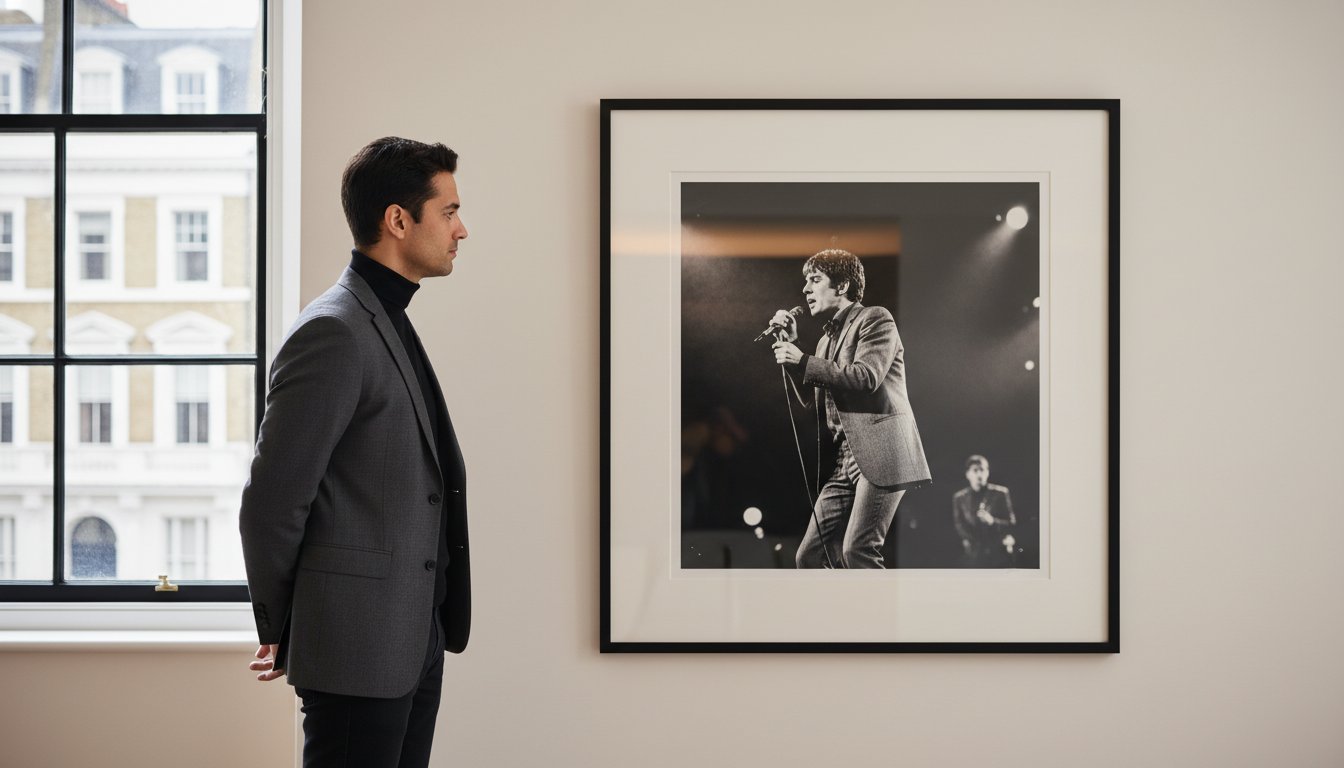
Think of framing as part of the photograph’s presentation. It can support the image visually while helping you make thoughtful decisions about its care. For ideas on bringing photographic art into a home, explore fine art photography collecting and decorating. Next, consider how each component of the frame interacts with the print.

How Conservation Framing Materials Interact with a Photographic Print

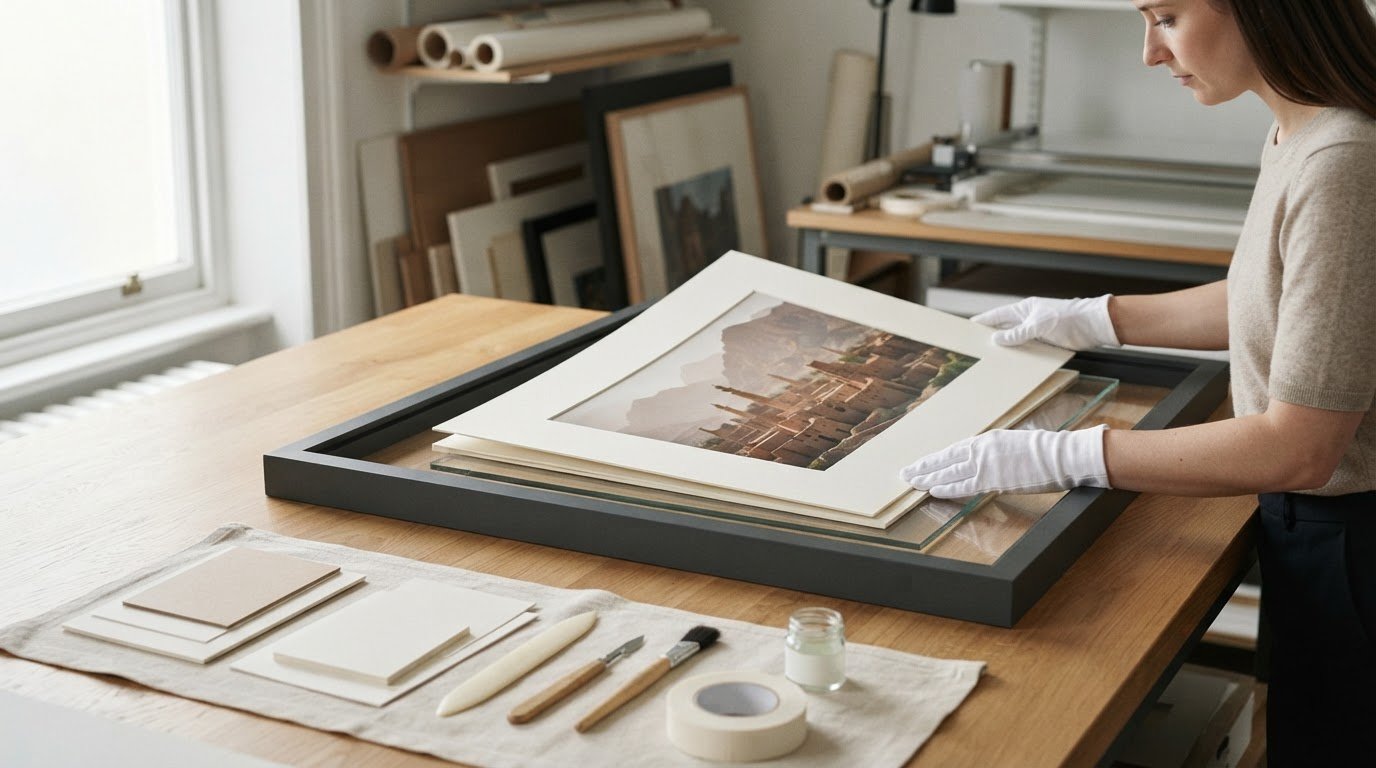
A framed photograph is a small, interconnected system. Glazing faces the image; a window mat or spacers create distance; the mount supports the print; backing sits behind it; and the frame holds the assembly together. Each part can affect the print through contact, pressure, or the environment inside the frame. Every layer that touches or encloses a print can affect how it’s cared for.

Choose materials for the photograph’s process, not just a label on the board. “Acid-free” describes a useful property, but on its own it doesn’t identify the material’s composition, test results, or suitability for a particular print. Ask what the mat, mount, and backing are made from, and whether their suitability for photographs can be documented. For prints within its scope, the Photographic Activity Test (PAT) is associated with ISO 18916; ISO 18902 sets requirements for materials used in framing and storing photographs. The Caring for Photographs guide from the American Institute for Conservation offers further guidance on handling and care.

Some photographic processes need particular consideration. Buffered boards, for example, aren’t suitable for every process; cyanotypes can be damaged by buffered materials. If the process is unknown, or the print is sensitive or historic, ask a qualified framer to assess which materials are appropriate. Don’t assume one board works for every photograph.

What should you ask about mats, mounts, and backing?

Start with the points of contact: what materials touch the print, and how is it held in place? Ask whether the mounting method is reversible, meaning the photograph can be removed later without damage. Non-adhesive supports may be appropriate, but the method should suit the print’s condition and format. A properly designed window mat or spacers can keep the image surface from resting directly against the glazing, helping reduce the risk of sticking or moisture-related contact.

Ask for specific material descriptions rather than relying on terms such as “museum quality.” For a delicate or historically important photograph, a qualified framer or photograph conservator can help assess the print and advise on the assembly.

What does UV-filtering glazing do, and not do?

UV-filtering glazing can reduce some ultraviolet exposure, but the degree of protection depends on the product and its stated specification. Ask which wavelengths it filters and request the manufacturer’s information. It won’t remove all fading risks: visible light, display conditions, and handling still matter. UV protection is one element of the framing system, not a substitute for suitable materials, separation from the glass, or thoughtful placement.

If you’re considering framing a purchased print, Galerie Prints offers a bespoke framing service. You can explore framing options and confirm the glazing, mounting, and backing specifications before choosing.

Conservation Framing Misconceptions: Is UV Glass Enough?

No. UV-filtering glazing can reduce some ultraviolet exposure, but it doesn’t make a photograph invulnerable. It can’t control every source of light or prevent heat and moisture from affecting the print. Nor can it compensate for unsuitable materials inside the frame. A more complete approach considers the whole assembly, the print’s condition, and where it will be displayed.

Think of each measure as addressing a different risk. The details below are a starting point, not a specification for every photograph. Confirm exact materials and performance claims with the framer or manufacturer, especially for a sensitive or historic print.

  • UV-filtering glazing: Reduces some ultraviolet exposure. Performance varies by product, and it doesn’t block all potentially damaging light.
  • A mat or spacers: Helps keep the print’s surface from touching the glazing. It doesn’t prevent fading or make unsuitable materials safe.
  • Compatible mount and backing: Helps avoid harmful contact and supports the print. Suitability depends on the photograph and its process.
  • Careful handling: Reduces risks from fingerprints, pressure, and accidental damage. It can’t reverse existing deterioration.
  • Thoughtful placement: Limits exposure to direct light, heat, moisture, and pollutants. Conditions can still change over time.

Can conservation framing prevent fading?

It may reduce some risks, but no framing choice can guarantee that a photographic print won’t change. Light exposure can affect colour stability, while the print’s materials and process also influence how it ages. Even glazing that filters ultraviolet light doesn’t eliminate exposure to visible light. Avoid direct sun and consider the room’s heat and moisture conditions. For advice tailored to a particular process, ask a photograph conservator rather than relying on a general lifespan estimate.

When is professional conservation advice worthwhile?

Routine framing of a replaceable contemporary print is different from making treatment decisions about a unique original. If a photograph is fragile, damaged, historically significant, or irreplaceable, seek specialist assessment before framing or attempting repairs. Ask a framer about their experience with photographic materials specifically; expertise with frames or other kinds of artwork doesn’t automatically mean familiarity with photographs. A conservator can assess the print and identify risks that may not be visible at a glance.

The aim of conservation framing for photography isn’t to promise permanence. It’s to make considered choices that reduce avoidable risks. A well-chosen frame is one part of that care, alongside appropriate handling and a suitable display location.

How to Commission Conservation Framing for a Photograph

A useful framing conversation begins with the photograph, not a frame sample. Share what you know about the print and where you plan to display it, then ask the framer to explain how the proposed construction addresses those circumstances. This checklist can help you compare options without relying on broad labels such as “archival” alone.

  1. Identify the print and its importance. Note its dimensions, any known photographic process or provenance, and visible concerns such as fading, tears, or surface damage. Explain whether it’s a replaceable print, a limited print, a historic photograph, or otherwise especially meaningful to you.
  2. Describe the intended location. Tell the framer which room you have in mind and whether the photograph may face direct sunlight or be near a heat source, damp area, or changing conditions. The display environment can help shape practical choices.
  3. Ask for the material details. What are the glazing, mat, mount, and backing made from? Which materials will touch the print, and how will the glazing be kept from contacting its surface? Ask for specific product or material information where available.
  4. Clarify how the print is held. Ask whether the attachment method is reversible and whether the photograph can be removed later without damage. If the process or condition is uncertain, ask what the framer can verify and what remains unknown.
  5. Record the agreed specifications. Keep a written note of the chosen materials, glazing description, mounting method, and any care advice. For a fragile, damaged, unique, or historically significant photograph, consult a qualified photograph conservator before proceeding.

What information should you bring to a framer?

Bring the print’s dimensions, known process or provenance, condition concerns, and intended display location. Share what you know about the photograph’s history, but don’t guess at details you can’t confirm. Tell the framer why the print matters to you, then ask for material choices to be explained in plain language. If a specification can’t be verified, ask that this uncertainty be made clear before you approve the design.

How should you assess the finished frame and its placement?

Before hanging the work, check the frame for signs of pressure, damage, or movement. Ask the framer to confirm that the print is securely supported and separated from the glazing. Choose a position away from direct sunlight and locations exposed to persistent heat or moisture changes. If you’re considering a monochrome work, black-and-white photography collecting offers further inspiration for displaying it thoughtfully.

Galerie Prints offers bespoke framing as an add-on for purchased prints. To explore the option, view the bespoke framing service, and confirm the materials and construction details that matter for your photograph.

Displaying and Caring for a Conserved Photograph Over Time

Conservation framing for photography works best alongside thoughtful display and careful handling. A well-considered frame can help reduce certain risks, but the photograph’s surroundings still matter. Choose a stable interior location away from direct sunlight, persistent heat, damp, and rapid changes in room conditions.

How can you reduce avoidable display risks?

Check the room throughout the day and across seasons. A wall that seems shaded in winter may receive strong sunlight later in the year. Bathrooms and kitchens can have fluctuating moisture, while radiators and fireplaces create heat. Keep framed photographs away from these conditions where possible, and avoid leaning objects against the glazing or stacking frames where pressure could affect the print.

For routine dusting, use a soft, dry cloth on the frame’s exterior. Don’t spray cleaner onto the glazing, where liquid could run into the edges, and don’t open the frame to clean or adjust the photograph. If the glazing needs more than light dusting, follow the framer’s care guidance for that specific frame and surface.

Once you’ve chosen a suitable place and established a gentle care routine, explore Galerie Prints bespoke framing as an option for a purchased print. Confirm the materials and construction details before selecting a framing option; conservation specifications shouldn’t be assumed.

When should a framed photograph be inspected?

Make occasional visual checks without taking the frame apart. Look for condensation, mould-like growth, new discolouration, loose hanging hardware, or signs that the print has shifted. Changes in a room’s light or moisture conditions may also make a previously suitable location less appropriate, so reassess placement if the environment changes.

If you notice an unusual change, don’t try to clean or repair the photograph yourself. Seek advice promptly from a qualified photograph conservator, particularly if the print is fragile, historic, or irreplaceable. A calm, regular check helps you notice concerns early while leaving the framed work undisturbed.

Choose a Frame That Lets the Photograph Endure

Good conservation framing for photography balances materials and construction suited to the print, protection that addresses real risks, and a display position that avoids unnecessary exposure. UV-filtering glazing can help, but it isn’t a guarantee against fading or change. The photograph’s process and condition matter, too, so seek a photograph conservator’s advice when a print is fragile, historic, or irreplaceable.

Ask clear questions about what touches the image, how it’s mounted, and which specifications can be verified. Keep the frame away from direct sunlight, persistent heat, and damp, then inspect it occasionally for changes. These practical steps make caring for a photograph less uncertain while allowing its image to remain at the heart of the room.

Galerie Prints offers bespoke framing as an add-on for purchased prints. Explore available framing and print options, and confirm current materials and specifications before deciding: Explore Galerie Prints bespoke framing. Choose a print and explore the framing options, then confirm the construction details that suit its display.

Frequently Asked Questions

Is conservation framing worth it for a photographic print?

It can be worthwhile if a photograph is important to you, difficult to replace, or intended for long-term display. The value is in making informed choices about materials, mounting, glazing, and placement, not in a promise that deterioration can be prevented. For an ordinary, replaceable print, ask a framer about proportionate options. You may not need every premium feature; the right approach depends on the print and where you plan to display it.

Does UV-protective glass stop photographs from fading?

No. UV-filtering glazing can reduce some ultraviolet exposure, but it can’t guarantee that a photograph will never fade. Light, the print’s materials, and display conditions all influence how it changes over time. Ask the framer for the glazing specification and what exposure it addresses. Even with protective glazing, avoid direct sunlight. For a historic or irreplaceable photograph, seek advice from a qualified photograph conservator before choosing materials or a display location.

What materials should conservation framing use for photographs?

Suitable materials depend on the photograph’s process, condition, and intended display. Ask what the mat and backing are made from, which materials touch the print, how it’s mounted, and whether that method is reversible. “Acid-free” alone doesn’t explain every aspect of a material’s suitability. If the photograph is fragile, historic, or especially valuable, ask a qualified framer or photograph conservator to recommend materials for that specific print.

Can a photograph touch the glass in its frame?

It’s generally preferable to keep a photograph’s surface from touching the glazing. Changes in conditions can contribute to sticking or other damage, and direct contact may complicate future care. A properly designed mat or spacers can create separation, but the appropriate construction depends on the photograph and frame. Ask how the print is held, whether it contacts any framing materials, and whether the assembly can be accessed later without harming the image.

How should I display a framed photograph to protect it?

Choose a stable indoor location away from direct sunlight, persistent heat, damp, and marked environmental changes. Protective glazing doesn’t replace thoughtful placement. Check the frame occasionally for condensation, visible changes, or movement, and dust its surface gently without spraying liquid near the edges. Don’t open the frame to clean the print. If you notice damage or an unusual change, don’t attempt a repair; consult a qualified photograph conservator.

Should I use conservation framing for an old or valuable photograph?

Seek professional advice before framing a photograph that’s historic, fragile, damaged, unique, or especially valuable. Its process and present condition can affect which materials and mounting methods are suitable. A qualified photograph conservator can assess the print and advise on treatment needs, while a framer can explain construction options. Ask specifically about experience with photographic materials. Don’t assume standard framing or UV-filtering glazing alone is appropriate for an important original.

Is conservation framing the same as restoring a photograph?

No. Conservation framing concerns the materials and construction used to support and display a photograph while reducing avoidable risks. Restoration involves assessing or treating the photograph itself and should be undertaken by an appropriately qualified specialist. If a print is torn, stained, brittle, or otherwise damaged, seek conservation advice before framing it. This helps ensure framing decisions take the photograph’s condition into account rather than complicating its care.

What is Conservation Framing? The Collector’s Guide to Art Preservation

What if the very frame meant to showcase your Slim Aarons masterpiece was quietly orchestrating its slow, chemical decay? For many collectors, the realization that standard materials can cause irreversible yellowing or brittle textures is a source of profound anxiety. You’ve invested in a piece of photographic history, and it’s natural to worry about environmental threats like UV light and acidic outgassing. Understanding what is conservation framing becomes the essential first step in evolving from a casual buyer into a dedicated guardian of artistic heritage.

We believe that a frame should do more than merely complement your interior aesthetic; it should act as a protective sanctuary for the work itself. This guide explores the meticulous science and artisanal craft that define archival-grade preservation, ensuring your Terry O’Neill or vintage movie poster remains as vibrant as the day it was captured. We’ll demystify technical terms like acid-free mounting and UV-filtering glass, providing you with the confidence to select a bespoke, ready-to-hang solution that honors the longevity and value of your fine art collection.

Key Takeaways

  • Learn how conservation framing acts as a guardian for your collection by using entirely reversible techniques that protect art without altering its original state.
  • Discover the four essential shield layers of an archival frame, from UV-filtering glass to acid-free mounting, that safeguard against environmental decay.
  • Understand what is conservation framing and why its century-long lifespan far exceeds standard methods, making it a vital investment for high-value photography.
  • Identify which pieces in your collection, such as limited edition prints or vintage posters, are most at risk and require the immediate intervention of museum-grade materials.
  • Explore how bespoke, artisanal framing bridges the gap between rigorous scientific preservation and the sophisticated aesthetics of a luxury interior.

Defining Conservation Framing: The Guardian of Photographic Heritage

To the discerning collector, a frame is far more than a decorative border. It’s a sophisticated micro-environment designed to halt the passage of time. Defining what is conservation framing involves understanding the delicate balance between aesthetic presentation and scientific preservation. While standard framing focuses on how a piece looks today, conservation framing prioritizes how it will look in a century. It’s the practice of using chemically inert materials and non-invasive techniques to ensure that a work of art remains pristine within its housing.

The cornerstone of this discipline is the philosophy of reversibility. A master framer operates under the rule that any treatment applied to the artwork must be entirely removable without causing damage or leaving residue. This approach transforms the frame into a protective sanctuary rather than a permanent enclosure. For those acquiring pieces from the Slim Aarons Collection or Terry O’Neill archives, this “preventative conservation” is the only way to safeguard the physical integrity and market value of the investment. It’s a commitment to acting as a guardian of photographic heritage, ensuring that a moment captured decades ago remains vivid for future generations.

The Core Objectives of Archival Protection

A conservation-grade frame serves three primary functions that go beyond simple display. First, it provides physical support. Gravity is a slow but persistent enemy; without proper mounting, paper can sag or ripple over time. Second, it ensures chemical stability. By using alpha-cellulose or cotton rag mats, we neutralize the acids that lead to yellowing and “foxing,” those distinctive brown spots that plague poorly stored art. Finally, it provides environmental shielding. The frame acts as a barrier against atmospheric pollutants, humidity fluctuations, and the destructive energy of light.

Why Photography Requires Specialized Care

Photographic prints, particularly silver gelatin and C-type editions, possess a unique chemical vulnerability. Unlike oil paintings, which have a robust, layered structure, photographic emulsions are incredibly thin and sensitive to light-induced fading. Exposure to UV rays can trigger rapid oxidation, leading to a loss of detail and tonal depth. High-end archives require materials that adhere to the ISO 18902 standard, ensuring that every component in contact with the print is “photo-safe” and won’t cause the silver or dyes to react. This specialized care is what allows a modern interior to house a piece of history without compromising its longevity.

The Technical Anatomy of an Archival Frame

The beauty of a bespoke frame lies in its invisible architecture. While the exterior moulding defines the room’s aesthetic, the internal components define the artwork’s lifespan. To understand what is conservation framing, one must look past the wood and gold leaf to the four essential shield layers. These layers work in perfect synergy to create a sealed, chemically inert environment. The true quality of a frame isn’t found in the weight of its timber, but in the scientific integrity of the materials that never meet the eye.

Glazing: Filtering the Invisible Threat

Light is the most persistent catalyst for degradation. Museum-grade glazing acts as a high-tech filter, blocking up to 99% of harmful ultraviolet rays that would otherwise bleach the pigments of a Terry O’Neill photograph or yellow the paper of a vintage poster. Standard glass offers zero protection, while common non-reflective varieties often sacrifice clarity for glare reduction. For larger acquisitions, archival-grade acrylic is frequently the preferred choice. It’s lighter and shatter-resistant, providing a safer journey during transit while maintaining the same rigorous UV-blocking standards as its glass counterparts.

Mounting and Matting: The Acid-Free Foundation

The materials in direct contact with your art are the most critical. Many commercial “acid-free” boards are simply wood pulp treated with calcium carbonate; over time, the core returns to an acidic state. True conservation framing demands 100% cotton rag mat board, which is naturally pH neutral and lignin-free. A window mat is not merely a visual border. It creates a vital air gap. This separation prevents the artwork from touching the glazing, which could lead to moisture trapping or the permanent sticking of the emulsion to the glass. Mounting techniques must also remain non-invasive. We avoid adhesives or tapes that leave permanent residue. Instead, artisanal framers use Japanese paper hinges and wheat starch paste. This method is entirely reversible, allowing the art to be removed in its original state decades from now.

When consulting with a specialist about a piece from our Bespoke Framing Service, ensure you ask about these specific components. A true expert will confirm the use of 99% UV-filtering glazing, 100% cotton rag matting, and reversible hinging methods. This checklist ensures your collection isn’t just displayed, but actively preserved against the elements. It’s the difference between a temporary decoration and a lasting legacy.

Standard vs. Conservation Framing: Why Material Choice Matters

Choosing between a standard retail frame and a professional archival solution is the difference between a temporary display and a lasting legacy. Standard frames often have a functional lifespan of merely five to ten years before the materials begin to compromise the artwork. In contrast, a conservation frame is engineered to protect art for fifty to one hundred years or more. This longevity is the primary answer to what is conservation framing; it’s a commitment to permanence. Many collectors are misled by ‘acid-free’ labels found on mass-produced mats. These products often feature a pH-neutral surface paper wrapped around an acidic wood-pulp core. As the core degrades, it leaches acids into the print, causing ‘ghosting,’ which creates permanent, dark silhouettes that mirror the mat’s opening. This damage doesn’t just mar the aesthetic; it significantly diminishes the resale value of a collectible print, as savvy investors and auction houses prioritize archival integrity.

The Hidden Dangers of Lignin and Off-Gassing

The primary culprit in paper degradation is lignin, a natural polymer found in wood pulp that eventually turns paper brown and brittle. When housed in a standard wood frame, the artwork is often subjected to ‘off-gassing,’ where the frame itself releases harmful volatile organic compounds into the sealed environment. To combat this, modern conservation boards often incorporate zeolites. These are molecular traps that actively capture and neutralize pollutants before they can reach the art’s surface. By choosing these advanced materials, you ensure that your Slim Aarons or Terry O’Neill piece remains isolated from the chemical hazards of the modern home.

Reversibility: The Golden Rule of Fine Art

The most critical distinction remains the method of attachment. Standard framing often relies on pressure-sensitive tapes or, worse, dry mounting, which permanently bonds the art to a backing board. These processes are irreversible and catastrophic for a print’s value. Archival framing utilizes the ‘hinge’ method, where small strips of Japanese paper are applied with a reversible wheat starch paste. This allows the art to breathe and expand naturally with subtle humidity changes, preventing the rippling common in rigid mounting. Reversibility is the ability to return the artwork to its original state without a trace of the framing process.

Determining When Your Collection Requires Archival Protection

Deciding whether a piece warrants the investment of museum-grade materials often comes down to a simple question of heritage. If the work is a limited edition, a vintage original, or a piece with significant sentimental value, the standard approach is no longer sufficient. When considering what is conservation framing, think of it as a physical insurance policy for your visual assets. The financial threshold for this decision usually aligns with the work’s acquisition cost; if the price of the art exceeds the cost of a high-end frame, failing to protect it is an unnecessary risk. This is especially true in homes where natural light is a central design element. A sun-drenched living room may be beautiful for guests, but it’s a hostile environment for unprotected paper. If you are following our Fine Art Photography: A Curator’s Guide, you understand that art is an investment in culture that deserves a stable environment.

Protecting Rare Photographic Prints

Iconic works from The Slim Aarons Collection represent a specific era of high-society elegance that’s impossible to replicate. These prints, often produced on light-sensitive C-type or silver gelatin paper, demand a level of care that standard retail framing can’t provide. The fragility of vintage music photography and rare limited releases means that even a few years of improper display can result in irreversible tonal shifts. Understanding what is conservation framing is vital for anyone looking to bridge the gap between a high-end aesthetic and long-term asset protection. By employing these techniques, you ensure these historical moments remain as crisp and evocative as the day they were first developed.

Preserving Historical Cinema Memorabilia

Historical ephemera faces its own set of challenges. Cinema Lobby Cards and vintage posters were originally created as temporary promotional tools, often printed on thin, highly acidic paper stock. These materials are naturally prone to becoming brittle and yellowing from the inside out. Conservation framing intervenes in this decay, neutralizing internal acids and providing a stable support system. It allows you to display Hollywood’s photographic heritage without compromising its authenticity for future generations. Protect your investment today by exploring our Bespoke Framing Service, where we treat every print as a piece of history.

Bespoke Framing at Galerie Prints: A Masterclass in Preservation

At Galerie Prints, we serve as the vital bridge between rigorous archival science and the refined world of luxury interiors. While the technical definition of what is conservation framing focuses on chemical stability and light filtration, our approach adds the essential layer of artisanal elegance. We don’t merely house a print; we create a permanent sanctuary that honors its historical significance. Our localized, hand-crafted production ensures that every bespoke frame meets the exacting standards expected by the world’s most discerning collectors. By choosing our service, you’re not just purchasing a decorative border; you’re enlisting a guardian for your photographic heritage.

The transition from a loose print to a gallery-ready masterpiece requires a deep understanding of both material science and aesthetic history. Determining what is conservation framing in a practical sense means looking at the marriage of high-tech glazing and hand-finished timber. We believe that the framing process should be the logical final step in your journey as a collector, providing a seamless path from acquisition to display. The result is a ready-to-hang solution, delivered with the same curatorial care we apply to our world-renowned archives.

Curated Styles for Discerning Interiors

A frame should never compete with the art; it should elevate it. For the sun-drenched, aspirational pool scenes found in The Slim Aarons Collection, we often recommend sleek, modern profiles that mirror the mid-century optimism of the era. Our selection of premium hardwoods and hand-finished mouldings provides a tactile quality that mass-produced alternatives can’t replicate. We focus on material excellence to ensure the art remains the focal point, encased in a structure that feels as timeless as the imagery itself. Whether you’re displaying iconic Terry O’Neill photography or rare music archives, our styles are curated to harmonize with sophisticated home decors while maintaining museum-grade integrity.

The Galerie Prints Guarantee of Excellence

Our commitment to preservation is absolute. We use only the highest-grade archival materials, ensuring that every component in contact with your work is chemically inert and photo-safe. Our professional mounting techniques honor the original source material, whether it’s a delicate piece of cinema history or a Star Wars Limited Edition Print. We take pride in our artisanal craftsmanship, treating every vintage movie poster and limited release with the reverence it deserves. This dedication to quality ensures that your collection remains a lasting piece of history, protected from the elements and presented with prestige. Explore our Bespoke Framing Service to protect your next investment and ensure your fine art collection endures for generations.

Ensuring a Legacy of Artistic Excellence

Investing in fine art is a commitment to preserving a moment in history. Understanding what is conservation framing allows you to move beyond temporary decoration toward true stewardship. By prioritizing 99% UV-filtering glass and chemically inert materials, you ensure your collection remains as vibrant as the day it was created. These choices protect both the physical integrity and the long-term market value of your pieces. At Galerie Prints, we act as a bridge between the technical precision of the archive and the aesthetic demands of the luxury home.

Our frames are meticulously hand-finished in London, utilizing the same artisanal methods trusted by world-renowned galleries. We treat every print as a vital piece of heritage that deserves a permanent sanctuary. Secure your art’s legacy with Galerie Prints’ Bespoke Framing Service and enjoy the peace of mind that comes with professional preservation. Your collection isn’t just for today; it’s a window into the past that you’re guarding for the future.

Frequently Asked Questions

What is the difference between archival and conservation framing?

Archival and conservation framing are often used interchangeably, but there’s a subtle distinction in focus. Archival framing emphasizes the use of museum-grade materials to ensure longevity, while conservation framing specifically refers to the professional application of those materials to protect the artwork from environmental decay. Both standards require that every process is entirely reversible. This ensures that your Terry O’Neill or Slim Aarons print can be removed from its housing in its original, pristine condition decades from now.

Is conservation framing worth the extra cost for a modern print?

Investing in conservation framing is essential for modern prints, particularly limited editions or works on light-sensitive C-type paper. While a modern print might seem robust, environmental factors like UV light and atmospheric pollutants begin the degradation process immediately. By choosing archival-grade protection early, you safeguard the tonal depth and physical integrity of the work. This prevents the irreversible fading that often plagues unprotected collections, ultimately preserving the piece’s financial value and historical significance.

How can I tell if my current frame is damaging my art?

You can often identify damage by examining the edges of the artwork for a distinctive “mat burn” or yellowing. If you notice brown spots, known as foxing, or if the paper appears to be rippling against the glass, your current frame likely lacks proper acid-free materials or a necessary air gap. Understanding what is conservation framing helps you recognize these warning signs early. If the art is touching the glazing directly, it’s at high risk for moisture damage or emulsion sticking.

Does conservation framing prevent all fading from sunlight?

Conservation-grade glazing blocks up to 99% of harmful ultraviolet rays, but it cannot prevent all fading. While UV light is the most destructive, visible light and heat also contribute to the slow degradation of photographic pigments over time. To ensure the longest possible lifespan for your collection, we recommend hanging your framed pieces away from direct sunlight and harsh spotlights. Even with museum-quality protection, thoughtful placement remains a vital part of the preservation process.

What is acid-free matting and why is it important?

Acid-free matting refers to boards made from 100% cotton rag or alpha-cellulose fibers that have had the lignin removed. Lignin is the natural component in wood pulp that creates acidic byproducts, leading to the brittle, brown paper often seen in old frames. Using high-quality matting is important because it creates a chemically inert environment. This prevents the “acid burn” that can permanently stain the edges of a photograph or vintage movie poster.

Can I upgrade a standard frame to a conservation-grade one later?

You can certainly upgrade a standard frame to a conservation-grade one, provided the artwork hasn’t already suffered irreversible chemical damage. A specialist framer can carefully remove the print from its original housing and remount it using reversible archival hinges and UV-filtering glass. However, it’s always safer to choose a bespoke framing service at the time of acquisition. This prevents the initial years of exposure to acidic materials and unprotected light that can begin the fading process.

How long does a conservation-grade frame actually last?

A true conservation-grade frame is designed to last between 50 and 100 years or more under stable home conditions. Unlike standard retail frames that may begin to fail or damage the art within a decade, archival materials are engineered for permanence. This longevity is a cornerstone of what is conservation framing; it ensures that your investment remains a lasting piece of history. Regular inspections every few decades are recommended to ensure the seal and materials remain intact.

What is museum glass and how does it differ from regular glass?

Museum glass is a premium glazing option that combines 99% UV protection with an advanced anti-reflective coating. Regular glass often creates a distracting mirror effect that obscures the details of dark photographic prints or intricate cinema lobby cards. Museum glass is virtually invisible, allowing the true colors and textures of the artwork to shine through without glare. It offers the highest level of clarity available, making it the preferred choice for serious collectors and luxury gallery displays.

Professional vs DIY Picture Framing: The Collector’s Guide to Preservation

A frame is far more than a decorative border; it is a structural sanctuary that determines whether a masterpiece survives the century or succumbs to the slow decay of acidic materials and sunlight. When you hold a rare Slim Aarons print or a limited edition Terry O’Neill, the impulse to protect it is instinctual. You’ve likely felt that sharp pang of hesitation when considering a standard, store-bought frame, fearing that “cheap” look or, worse, the permanent yellowing caused by inferior backing. It’s a valid concern for any collector who views art as a lasting piece of history rather than a fleeting decoration.

This guide explores the critical nuances of professional vs diy picture framing to ensure your fine art and collectibles are preserved for a lifetime. You’ll discover why the choice between bespoke craftsmanship and a home kit is actually a choice between long-term investment and eventual loss. We will examine the technical superiority of archival glazing, the tactile elegance of natural wood finishes, and the peace of mind that comes from knowing your collection is guarded by museum-grade standards. By the end, you’ll have the confidence to choose a display that truly honors the prestige of your photographic heritage.

Key Takeaways

  • Understand the critical distinction between professional vs diy picture framing and how archival materials act as a sanctuary against the irreversible effects of “acid burn” and UV degradation.
  • Learn to apply the “investment rule” to your collection, identifying when the monetary or sentimental value of a piece necessitates the intervention of a master conservator.
  • Discover the aesthetic secrets of gallery-ready displays, including the use of multi-layered mats and “weighted” bottoms to provide a sophisticated visual balance.
  • Identify why standard store-bought frames often fail to protect high-end photography, leading to the yellowing and decay of original source materials over time.
  • Explore the Galerie Prints artisanal philosophy, where bespoke framing is treated as a final act of curation that transforms a print into a lasting piece of history.

Understanding the Craft: Professional vs DIY Framing Fundamentals

The act of framing a rare print is a delicate dialogue between preservation and presentation. It’s the profound difference between merely placing an image in a container and creating a sealed sanctuary that honors the artist’s original vision. When considering professional vs diy picture framing, one must look beyond the immediate visual impact and consider the chemical stability of the materials involved. A professional framer acts as a seasoned curator, advising on how a specific molding might echo the mid-century elegance of the Slim Aarons Collection or the stark, monochromatic power of a Terry O’Neill archive. This consultation ensures the frame isn’t just an accessory but a bridge to the interior’s aesthetic narrative.

Unlike the modern “upload and print” models that prioritize speed and digital convenience, handling original physical archives requires a reverence for the physical medium. Professional-grade wood and metal moldings offer a tactile weight and grain depth that plastic or composite alternatives simply cannot replicate. This artisanal approach is essential for those looking to invest in bespoke framing that respects the provenance of the work.

The Anatomy of a Professional Frame

A professional picture frame is a complex assembly of specialized layers designed to combat environmental decay. The assembly includes museum-grade glazing to filter light, acid-free mounts to prevent yellowing, and internal spacers that ensure the art never touches the glass. This air gap is critical; it prevents moisture ingress and the risk of the print adhering to the glazing over time. Professional assembly also utilizes reversible mounting techniques, ensuring that the artwork can be removed in its original state decades from now without residue or damage.

The DIY Allure: Convenience vs Quality

DIY kits and ready-made frames offer a certain allure for temporary displays or inexpensive posters where longevity isn’t a priority. They provide a quick solution for standard sizes, yet they often fail to do justice to the unique proportions of fine art photography. The hidden costs of these “cheap” frames are often found in the long-term damage they inflict. Non-archival materials can cause “acid burn” on delicate paper, while standard glass offers no protection against UV degradation. For a Star Wars Limited Edition or a vintage cinema lobby card, the risk of permanent damage far outweighs the initial convenience of a store-bought alternative.

The Hidden Dangers of DIY: Why Your Art Might Be at Risk

The allure of a weekend framing project often masks the silent, chemical clock that begins ticking the moment a print is sealed behind non-archival materials. While the initial visual result might satisfy a casual observer, the debate over professional vs diy picture framing is truly settled by the science of aging. Fine art photography is a living medium, susceptible to the atmosphere it inhabits. When a collector chooses a standard, store-bought frame, they often inadvertently introduce a cocktail of acidic elements that begin to erode the very heritage they intended to preserve.

One of the most frequent casualties of DIY attempts is the “acid burn” effect, where lignins in wood-pulp mats migrate into the paper of the print. This doesn’t just cause aesthetic yellowing; it structurally weakens the fibers, making the art brittle and prone to cracking. Similarly, the use of standard household tapes or permanent adhesives is a cardinal sin in the art world. These substances eventually fail, leaving behind greasy, translucent stains that no restorer can fully erase. Even the environment within the frame poses a risk; thermal expansion and contraction can cause a print to buckle or “wave” if it isn’t mounted with the precision that bespoke framing provides.

The Chemistry of Preservation: Acid-Free vs Archival

True preservation requires a deep understanding of pH neutrality. Lignin-free materials are essential because they don’t break down into acidic byproducts over time, ensuring the mount remains a neutral sanctuary for the artwork. Outgassing is the process where chemical vapors from acidic components are trapped within the frame’s micro-environment, leading to the gradual deterioration of the print’s emulsion. By selecting museum-grade cotton rag mats, professionals eliminate these volatile organic compounds entirely.

Glazing: More Than Just a Clear Cover

Glazing is the primary defense against the invisible enemy of the Slim Aarons aesthetic: ultraviolet light. Standard glass allows UV rays to penetrate, which leaches the vibrant, sun-drenched colors from high-gloss photography and causes irreversible fading. Professional UV-filtering acrylic or museum glass blocks up to 99% of these harmful rays. This protection is vital for maintaining the saturated hues of vintage cinema lobby cards, ensuring that the visual impact remains as potent as the day it was first displayed. Investing in superior glazing is a hallmark of the curatorial approach, transforming a simple cover into a protective shield.

The Professional Advantage: Preservation and Bespoke Aesthetics

Professional framing is the final act of curation. It bridges the gap between a piece of history and a modern interior. When evaluating professional vs diy picture framing, the aesthetic possibilities of bespoke services often outweigh the mere cost savings of a home kit. A master framer doesn’t just select a border; they tailor the entire presentation to the specific era of the artwork. For instance, a Slim Aarons print from the 1960s demands a different profile than a contemporary black-and-white Terry O’Neill archive. This historical sensitivity ensures the frame enhances the art’s narrative rather than competing with it.

The art of the mount is where professional skill becomes most visible. Experts often employ “weighted” bottoms, where the lower margin of the mat is slightly wider than the top and sides. This technique compensates for an optical illusion that makes centered art appear to be sinking. Multi-layered mats add a sense of architectural depth, drawing the eye into the frame. For oversized works, such as large-scale Slim Aarons prints, structural integrity is paramount. Professional frames are engineered with reinforced corners and heavy-duty strainers to prevent the molding from bowing under the weight of the glass. This is paired with professional hanging hardware, such as Z-bars or heavy-duty D-rings, ensuring these gallery pieces remain secure on your walls. While a DIY kit might suffice for a child’s drawing, the choice between professional vs diy picture framing becomes a question of legacy when dealing with high-caliber visual art.

How to Frame a Vintage Silk Scarf: A High-Stakes Example

Textiles present unique challenges that DIY methods cannot safely address. Unlike paper, a vintage silk scarf should never encounter adhesives. Galerie Prints utilizes specialized “pinning” or “stitching” techniques to secure the fabric to an archival board without causing tension or tears. Spacers are strictly necessary here; they create a crucial air gap that prevents the silk from touching the glass, which could otherwise lead to moisture trapping and permanent staining. Our bespoke service respects the unique dimensions of luxury scarves, providing a display that highlights the drape and luster of the material while ensuring it remains a lasting piece of history.

Preserving Cinema History: Framing Lobby Cards and Posters

Vintage cinema lobby cards and posters are often printed on fragile, historical paper stocks that have already survived decades of handling. Professional framing focuses on protecting these delicate edges while creating visual depth. Shadow-box techniques are particularly effective for collectibles, offering a three-dimensional perspective that celebrates the item as an artifact. We also emphasize the importance of archival backing. Many rare posters contain historical markings or studio stamps on the reverse; our preservation methods ensure these details are protected from environmental decay while the front remains a gallery-ready focal point.

Decision Framework: When to Choose Professional Bespoke Framing

The choice of professional vs diy picture framing often hinges on a single, sobering question: is this piece replaceable? A discerning collector views their acquisitions through the lens of longevity. The “investment rule” serves as an essential guide; if the monetary or sentimental value of the artwork exceeds the cost of its housing, professional intervention is the only logical path. While a digital reprint can be replaced with a few clicks, an original physical archive is a finite resource. Its provenance is tied to its condition, and once environmental damage occurs, the loss is often absolute.

Assessing the fragility of the medium is equally vital. Original paper stocks from the mid-century or vintage cinema lobby cards possess a chemical volatility that modern digital papers lack. These artifacts require a controlled micro-environment to prevent decay. Furthermore, you must evaluate the intended display environment. If your gallery wall resides in a room flooded with natural light or subject to humidity fluctuations, the structural and protective limitations of a DIY frame will be exposed within months. Professional framing creates a sealed sanctuary, shielding the work from the invisible forces of atmospheric change.

The DIY Checklist: When It’s Safe to Self-Frame

DIY framing is a perfectly appropriate solution for projects where the goal is temporary decoration rather than historical preservation. If you are displaying family snapshots, replaceable digital prints, or posters for a seasonal refresh, a self-framed approach offers flexibility. To succeed, you must seek out ready-made frames with solid wood moldings and real glass rather than plastic composites. Essential tools for a respectable DIY attempt include:

  • A point driver to secure the backing without damaging the frame.
  • Acid-free mounting corners to avoid using tape on the image.
  • Microfiber cloths and specialized glass cleaner to ensure a lint-free seal.

The Professional Checklist: When to Consult a Curator

Certain items are non-negotiable candidates for bespoke care. This includes Slim Aarons prints, limited edition Star Wars releases, and any vintage memorabilia with historical markings. These pieces demand a level of precision that home kits cannot provide. You should seek professional counsel when dealing with:

  • Large-scale pieces that require reinforced strainers to prevent bowing.
  • Three-dimensional objects or textiles that need shadow-box depth.
  • Environments where museum-grade UV protection, such as Tru Vue glass, is essential to prevent color leaching.

For those looking to elevate their collection into a gallery-ready display, our bespoke framing service ensures every piece is treated with the reverence it deserves, arriving ready to hang and preserved for the next generation.

Elevating Your Collection with Galerie Prints Bespoke Services

At Galerie Prints, we believe that the journey of a photograph doesn’t end at the shutter’s click; it concludes only when the work is safely enshrined within a frame that reflects its prestige. The debate of professional vs diy picture framing is often viewed through a lens of utility, yet for the serious collector, it’s a matter of curatorial integrity. Our philosophy treats each frame as a bridge to historical elegance, ensuring that a Slim Aarons poolside scene or a Terry O’Neill portrait is presented with the quiet authority it deserves. This isn’t merely about aesthetics. It’s about providing a structural sanctuary that honors the artist’s legacy while elevating your interior narrative.

Our artisanal approach to bespoke framing relies on localized craftsmanship and premium materials that far exceed the capabilities of any home kit. By selecting moldings that echo the specific era of the work, we create a curated look for your fine art photography that feels both timeless and sophisticated. This attention to detail extends to the functional aspects of ownership. We handle the complex logistics of global art delivery, providing a ready-to-hang luxury experience that ensures your investment arrives in pristine condition, regardless of its destination.

A Seamless Experience from Archive to Wall

Choosing a pre-framed print directly from our archives is the safest option for maintaining the work’s provenance. When you acquire a piece that’s been professionally mounted and sealed at the source, you eliminate the risks of handling and environmental exposure discussed in previous sections. Our selection of gallery-approved moldings and mount styles is curated to complement our specific collections, from the vibrant saturation of Star Wars Limited Editions to the delicate tones of vintage movie posters. This provides the peace of mind that comes with knowing every component, from the archival backing to the UV-filtering glazing, meets museum standards.

Your Invitation to Historical Ownership

A well-framed piece does more than sit on a wall; it becomes the focal point of the home, inviting conversation and inspiring wonder. The longevity of our materials ensures that your collection isn’t just a contemporary decoration but a legacy for the next generation. By investing in professional craftsmanship, you’re securing a piece of history in a format that will remain stable and evocative for decades. We invite you to explore our bespoke framing options today and discover how our curatorial expertise can transform your space into a private gallery.

Securing the Future of Your Photographic Heritage

The choice between professional vs diy picture framing is ultimately a decision about the legacy you wish to leave. By prioritizing archival materials, you move beyond mere decoration and embrace true custodianship. You ensure that your prints are shielded from the chemical decay of acid migration and the fading touch of ultraviolet light. A professional frame isn’t just a border; it’s a structural sanctuary that honors the provenance of the work, tailoring every mount and molding to the specific historical narrative of the artist.

Galerie Prints specializes in providing the expertise required to protect high-caliber visual art. Our use of bespoke archival materials and our commitment to worldwide secure shipping mean your investment is protected from the moment it leaves our archive to the moment it arrives on your wall. We invite you to browse the Slim Aarons Collection and choose your bespoke frame today. Transform your space into a gallery and enjoy the peace of mind that comes with knowing your collection is preserved for the next generation.

Frequently Asked Questions

Is professional framing really better than store-bought frames?

Professional framing offers significantly better protection than store-bought frames through the use of archival-grade materials that prevent chemical decay. While store-bought options are convenient for temporary displays, they often lack the airtight seals and acid-free components necessary for long-term preservation. A professional approach ensures the structural integrity of the piece, utilizing specialized mounting techniques that prevent the art from touching the glass, thereby avoiding moisture damage and permanent adhesion over time.

What is the most archival way to frame a vintage silk scarf?

The most archival way to frame a vintage silk scarf is through a non-invasive mounting method known as hand-stitching to an archival-grade board. This technique avoids the use of permanent adhesives which would irreversibly stain the delicate silk fibers. Additionally, the inclusion of internal spacers is essential to create a protective air gap between the fabric and the glazing. This prevents humidity trapping and ensures the luster of the silk is maintained without the risk of mold.

How can I tell if a frame uses acid-free materials?

Identifying archival materials often requires looking at the core of the mat board; a standard board will reveal a brown or yellow edge over time, indicating high lignin content. Professional-grade, acid-free mats typically feature a white or colored core that remains bright despite aging. When evaluating professional vs diy picture framing options, look for specific labels such as “100% cotton rag” or “alpha-cellulose,” which signify that the materials are chemically stable and pH-neutral.

Does UV-protective glass actually prevent art from fading?

UV-protective glass effectively blocks up to 99% of harmful ultraviolet rays, providing a critical defense for your collection. This significantly slows the photochemical reaction that causes colors to leach and paper to become brittle. While no glazing can stop fading entirely if a piece is placed in direct, constant sunlight, the protection offered by professional-grade glass is the most reliable method for maintaining the vibrant saturation of high-gloss photography and rare cinema archives for decades.

Why is custom framing so much more expensive than DIY?

Custom framing cost reflects the intersection of artisanal labor and high-performance materials. Unlike mass-produced DIY kits, bespoke framing involves hand-joined moldings, precision-cut archival mats, and specialized glazing sourced from conservation suppliers. The process requires a master framer’s expertise to ensure every component is chemically compatible with the artwork. This attention to detail ensures a perfect fit for unique dimensions, providing a level of security and aesthetic refinement that standard off-the-shelf solutions simply cannot replicate.

Can I frame a Slim Aarons print myself without ruining it?

While it is possible to frame a print yourself, the risk of causing permanent damage to a Slim Aarons print is substantial without specialized equipment. These works are often large-scale and require precise mounting to prevent buckling or “acid burn” from inferior backing. Given that these prints represent a finite photographic heritage, the professional vs diy picture framing debate suggests that the potential loss of value from a DIY error far outweighs the cost of expert assembly.

What is museum-quality framing and do I need it?

Museum-quality framing is the highest standard of preservation, utilizing only chemically inert materials and completely reversible mounting techniques. You need this level of care for rare collectibles, limited editions, or any piece with significant historical value. It ensures the artwork can be removed from the frame decades later in its original condition. This approach is essential for serious collectors who view their acquisitions as lasting pieces of history rather than fleeting contemporary decorations.

Bespoke Picture Framing for Art Prints Online UK: The Collector’s Guide

The true value of a Slim Aarons or Terry O’Neill masterpiece lies not just in the silver halide but in the story it tells upon your wall. You understand that a rare photographic print is a fragile piece of history, yet the fear of irreversible damage from acidic mounts or fading sunlight often lingers in a collector’s mind. Choosing bespoke picture framing for art prints online uk should never feel like a gamble with your heritage. It’s about finding a sanctuary for your art that balances aesthetic elegance with the rigorous standards of the Fine Art Trade Guild.

We’ll guide you through the nuances of museum-grade preservation, from selecting conservation-grade glazing that blocks 99% of harmful UV rays to understanding the structural integrity of artisanal London craftsmanship. You’ll discover how to visualize the perfect frame for your Star Wars limited edition or vintage cinema lobby card, ensuring it arrives as a ready-to-hang masterpiece. This guide provides the curatorial validation you need to protect the long-term value of your collection while elevating your interior to a gallery standard. It’s time to bridge the gap between a simple purchase and a lasting legacy.

Key Takeaways

  • Understand how the artisanal heritage of London’s creative heart remains the global benchmark for transforming fine art photography into a permanent legacy piece.
  • Learn to identify the museum-grade components, including acid-free mounts and UV-protective glazing, that are essential when investing in bespoke picture framing for art prints online uk.
  • Avoid the irreversible damage of chemical outgassing and fading by choosing custom solutions that respect the unique dimensions of rare cinematic history.
  • Master the curatorial nuances required to frame iconic Slim Aarons prints or vintage cinema lobby cards while preserving their historical and financial value.
  • Discover how an expert gallery’s eye ensures your selected artwork and its handcrafted frame exist in perfect aesthetic harmony for your home.

The Heritage of Bespoke Picture Framing in Soho, London

Soho has long served as the beating heart of London’s creative soul, a labyrinth of narrow streets where the worlds of cinema, music, and fine art collide. To understand the history of picture framing within this district is to trace the evolution of British visual culture itself. For decades, the area’s guild-style workshops provided the structural backbone for the film industry, crafting the surrounds for the very first lobby cards and movie posters that graced West End premieres. Today, this tradition has matured into a sophisticated network of artisanal studios. These spaces don’t merely produce borders; they act as guardians of photographic heritage. The “Soho Aesthetic” is a deliberate study in contrasts, seamlessly blending the raw, edgy modernity of the city with the uncompromising archival standards required by the world’s most prestigious galleries.

The Creative Pulse of Wardour and Berwick Streets

The proximity to legendary film houses on Wardour and Berwick Streets fundamentally shaped the local approach to presentation. When framing cinema memorabilia, the requirements were always twofold: immediate visual impact and long-term preservation. As Soho transitioned from a gritty trade hub into a premier luxury gallery district, the craft evolved to meet the needs of serious collectors. Galerie Prints continues this high-end artisanal tradition, ensuring that every frame reflects the same level of prestige as the artists themselves. This localized expertise remains the gold standard for global collectors who seek more than a simple product. They seek a piece of London’s storied creative history.

Why Discerning Collectors Demand Bespoke

In 2026, we’re seeing a profound shift toward “slow art” and intentional home curation. Collectors are no longer satisfied with transient decor; they’re investing in pieces that offer a sense of permanence and stability. Opting for bespoke picture framing for art prints online uk is a critical step in this journey. It isn’t just an aesthetic choice; it’s a financial investment in the artwork’s longevity. A custom frame serves as a conservation-grade sanctuary, protecting rare works like a Slim Aarons or a Terry O’Neill from the silent threats of environmental degradation. In a market flooded with mass-produced options, the expert curatorial guidance provided by a specialist framer is what distinguishes a mere print from a museum-quality masterpiece. This meticulous attention to detail ensures that your collection remains a lasting piece of history for generations to come.

Defining the Soho Standard: Archival Materials and Museum-Grade Glazing

In the world of high-end curation, “Museum Quality” is a precise technical benchmark rather than a marketing superlative. It represents a commitment to the absolute preservation of a photographic print’s soul. When you invest in bespoke picture framing for art prints online uk, you aren’t merely buying a border; you’re commissioning a controlled environment. The core of this standard lies in the chemistry of the materials. Traditional materials often contain lignin, an organic polymer that releases acidic gases as it breaks down, leading to the heartbreaking yellowing and “foxing” seen in poorly stored archives. By using chemically inert components, we ensure that the silver halide or inkjet pigments remain as vibrant as the day they were struck.

The Heritage of composition frame making in the UK reminds us that while the outward aesthetic has evolved, the fundamental need for structural integrity remains. Modern archival standards demand that every element touching the artwork is acid-free and pH-neutral. This prevents the slow, silent degradation that occurs when low-grade wood pulps or adhesives interact with the delicate surface of a Terry O’Neill or a Slim Aarons print. True conservation is a silent victory, one where the materials work in the background to halt the passage of time.

The Science of UV Protection and Conservation Clear

Ultraviolet light is the primary enemy of photographic longevity, capable of breaking down molecular bonds in both traditional silver halide and modern pigments. Standard glass offers minimal defense, often allowing up to 50% of harmful rays to penetrate. In contrast, museum-grade glazing acts as a high-performance filter. While 70% UV protection is a significant step up, serious collectors demand the 99% threshold found in Conservation Clear or Museum Glass. Archival framing is the use of reversible, chemically inert materials to ensure long-term preservation. This level of protection ensures that even in sun-drenched interiors, the deep blacks and subtle highlights of your collection won’t succumb to the inevitable fade of time.

Mountboards and Spacers: Protecting the Surface

Mounting is where technical precision meets visual narrative. We utilize cotton-core mountboards because their natural breathability prevents the buildup of micro-moisture, a common cause of “cockling” or buckling. To further safeguard the work, we employ discreet spacers that create a vital air gap between the print and the glazing. This prevents the emulsion from adhering to the glass, a risk that increases with humidity. These technical choices provide a physical depth that focuses the eye, turning a simple image into a three-dimensional object of desire. If you’re ready to secure your investment, exploring our Bespoke Framing Service allows you to tailor these museum standards to your specific aesthetic vision.

Bespoke vs. Off-the-Shelf: Why Collectors Choose Custom

The allure of a high-street frame often fades as quickly as the print it houses. While off-the-shelf options promise convenience, they carry a hidden tax on your collection’s longevity. It’s a false economy. Standard frames are frequently manufactured using composite materials like MDF or plastic veneers, which lack the structural integrity required to support large-scale works. More critically, these mass-produced items often utilize adhesives that release volatile organic compounds. This chemical outgassing can lead to the irreversible yellowing of your artwork, a tragedy for any serious collector. Choosing bespoke picture framing for art prints online uk ensures that your investment is protected by materials that are as noble as the art itself.

The Risks of High-Street Readymades

Standardized framing is built for the masses, not the masterpiece. The MDF backings common in budget frames are notorious for releasing harmful chemicals that compromise the paper fibers of your prints. Furthermore, the lack of structural reinforcement in mass-produced corners often leads to bowing or glass breakage over time. Ultimately, a “one size fits all” philosophy fails the unique spirit of fine art photography. It ignores the delicate relationship between the image’s borders and the surrounding mount, often resulting in a presentation that feels cramped and uninspired.

Hand-Finished Excellence in the London Workshop

In our London workshop, the process is one of quiet, methodical craft. We utilize traditional carpentry techniques, such as splined joins, to ensure lifelong durability. These aren’t just technical choices; they’re an homage to a bygone era of quality. Each frame undergoes an artisanal process of hand-staining and waxing, creating a unique patina that develops character over the years. There’s a profound psychological value in owning an object that has been touched by human hands. It transforms a simple display into a unique, artisanal object that resonates with the same prestige as the artists in your collection.

Framing the Extraordinary: From Slim Aarons to Rare Lobby Cards

To frame a masterpiece is to engage in a silent dialogue with the artist, a curatorial act that requires a deep understanding of the image’s emotional frequency. A photograph isn’t just a flat representation of a moment; it’s a window into a specific era, carryng its own weight, tone, and narrative intention. When you seek bespoke picture framing for art prints online uk, the choice of surround must resonate with the soul of the work. A gritty, high-contrast Terry O’Neill portrait of a rock icon demands a different structural language than the sun-drenched, aspirational vistas of a Mediterranean escape. The frame should act as a bridge, connecting the historical significance of the print to the modern aesthetic of your interior.

Aspirational Framing for Slim Aarons

The vibrant, saturated world of Slim Aarons photography requires a light touch to let the “Poolside” aesthetic breathe. We often recommend clean, white gallery frames for these large-format lifestyle pieces. This minimalist approach ensures the frame doesn’t compete with the iconic 1960s colour palette of azure waters and bright citrus hues. Oversized mounts are particularly effective here, creating a sense of space that mimics the expansive luxury of the scenes themselves. It’s a deliberate choice that elevates the work from a mere decoration to a focal point of high-end curation.

Archiving Cinema Memorabilia

Preserving the historical integrity of cinema lobby cards presents a unique set of challenges. These vintage artefacts are often fragile, requiring specialist mounting techniques that secure the card without the use of invasive adhesives. For cards featuring significant historical reverse markings or stamps, we utilize double-sided framing with conservation-grade acrylic on the rear, allowing the full story of the object to remain visible. Collectors of aaron slims should prioritise UV-glazing as a non-negotiable standard to protect the vibrant, sun-drenched pigments of their investment from the inevitable degradation of light.

The strategy shifts again when dealing with black and white pictures. For these timeless works, the frame’s weight and tone must be balanced against the silver-rich shadows of the print. A dark, slender oak frame can provide a sharp, modern edge, while a deeper, hand-finished walnut surround adds a layer of classical prestige. Every decision, from the width of the moulding to the texture of the mount, serves to validate your aesthetic choice and protect the long-term value of your collection. If you’re ready to transform your latest acquisition into a gallery-ready masterpiece, explore our Bespoke Framing Service to find the perfect curatorial match.

Galerie Prints: Your Destination for Expert Picture Framing in Soho

Choosing the right surround for a masterpiece is a responsibility we don’t take lightly. At Galerie Prints, we operate with the understanding that a frame is the final brushstroke on a photographic narrative. When you commission bespoke picture framing for art prints online uk through our studio, you’re accessing a lineage of craftsmanship rooted in the capital’s creative history. We don’t view framing as a secondary service or a commodity. Instead, it’s a vital extension of the curatorial process. Every project benefits from a curator’s eye, ensuring that the material, weight, and tone of the frame honor the artist’s original intent. By housing the entire process under one roof, we eliminate the friction between acquiring a piece and presenting it, offering a seamless journey from our archives to your walls.

Our commitment to local London production remains unwavering. In an era of globalized mass production, we find strength in the artisanal. Each frame is constructed by hand, utilizing the traditional carpentry and hand-finishing techniques discussed in previous sections. This localized approach allows for a level of quality control that simply cannot be replicated by automated systems. Whether you’re securing a Terry O’Neill portrait or a rare Star Wars limited edition print, the result is a piece of photographic heritage that’s built to last for generations. It’s a professional, polished approach that befits a luxury gallery and supports your journey as a discerning collector.

The Gallery-Led Advantage

The distinction between a framer and a gallery is profound. Most framing shops treat every image with a uniform technicality. We’re different. Because we manage exclusive archives like the Slim Aarons Collection and Music Archives, we possess a deep understanding of the historical production context of each print. We know how the silver halide of a vintage lobby card reacts to light and how the vibrant pigments of a 1960s poolside scene should be balanced. This gallery-led perspective ensures your bespoke picture framing for art prints online uk meets the highest museum standards. Our “Ready to Hang” promise means your artwork arrives fully sealed and fitted with heavy-duty hardware, delivered from our London base to your door globally.

Start Your Collection Journey

Beginning your project is a simple, refined experience. You can choose from our curated range of signature frame styles, each designed to complement specific photographic eras and interior aesthetics. Our online tools are built for international collectors, providing the clarity and precision needed to visualize a masterpiece from anywhere in the world. We invite you to explore our bespoke framing options and start your project today. Whether you’re looking for a minimalist gallery finish or a substantial hardwood surround, we’re here to act as your trusted guide in the world of high-caliber visual art.

Securing the Future of Your Photographic Legacy

Investing in fine art photography is an act of cultural preservation that extends far beyond the initial acquisition. By prioritizing museum-grade glazing and chemically inert materials, you ensure that the vibrant poolside scenes of Slim Aarons or the intimate portraits of Terry O’Neill remain as evocative as the day they were captured. We’ve explored how the structural integrity of hand-finished hardwoods and the technical precision of our London workshop provide a sanctuary for your collection, far surpassing the environmental risks inherent in mass-produced alternatives.

When you choose bespoke picture framing for art prints online uk, you aren’t just selecting a border; you’re securing a piece of history. Our gallery-led expertise ensures that every mount, spacer, and hand-stained moulding is selected with a curator’s eye to honor the specific narrative of your artwork. From the creative heart of London to your home, we provide the expert validation your aesthetic choice deserves, ensuring every piece arrives ready to hang and destined to last.

Discover our bespoke framing services and elevate your art collection.

Your collection is a testament to your discernment. We invite you to let us help you protect its future with the prestige and permanence it deserves.

Frequently Asked Questions

How much does bespoke picture framing in Soho typically cost?

Bespoke framing costs vary significantly based on the choice of artisanal mouldings and conservation-grade materials. For a medium-sized frame, industry standards in London suggest a range that accommodates both premium aesthetics and museum-level protection. Factors like UV-filtering glass and hand-finished hardwoods will influence the final investment. We recommend a consultation to discuss the specific requirements of your collection and ensure your artwork receives the curatorial attention it deserves.

What is the best glass for framing fine art photography?

Museum-grade glass with 99% UV protection is the gold standard for preserving fine art photography. This specialized glazing prevents the molecular breakdown of pigments and silver halide caused by light exposure. Anti-reflective properties are also essential; they allow the viewer to appreciate the depth and clarity of the print without distracting glares. It’s a critical component in bespoke picture framing for art prints online uk, ensuring your investment remains vibrant for decades.

How long does the custom framing process take in London?

The creation of a handcrafted frame typically requires approximately four working weeks to ensure every detail meets our gallery standards. This timeframe allows our London workshop to execute precise joins and hand-finished patinas with the necessary care. Once the artisanal process is complete, delivery within the UK usually takes an additional two to three working days. We prioritize the integrity of the craft over speed to ensure your masterpiece arrives in perfect condition.

Can I frame vintage lobby cards without damaging them?

Vintage lobby cards can be framed safely using reversible, acid-free mounting techniques that avoid invasive adhesives. We utilize conservation-grade materials to prevent chemical degradation and “foxing” over time. For cards with significant historical markings on the reverse, double-sided framing with museum-quality acrylic is an excellent solution. This approach preserves the card’s historical integrity while allowing it to be displayed as a centerpiece of your cinematic collection.

Do you offer international shipping for framed art prints?

What is the difference between archival and standard mountboard?

Archival mountboards are made from chemically inert cotton fibers, whereas standard boards often contain acidic wood pulps. Over time, the acids in standard boards can migrate into the paper of your print, causing irreversible yellowing and brittle edges. Archival options are pH-neutral and lignin-free, providing a stable environment for high-value works. It’s a non-negotiable choice for serious collectors who prioritize the long-term preservation of their photographic heritage.

Can you frame large-format Slim Aarons prints?

We specialize in framing large-format Slim Aarons prints, utilizing structural hardwoods and reinforced joins to support the substantial scale of these works. These iconic images often benefit from oversized mounts and clean gallery frames that mirror the expansive, aspirational lifestyle they depict. Our bespoke picture framing for art prints online uk ensures that even the largest poolside vistas are presented with the necessary rigidity and aesthetic elegance to command attention in any room.

Is it worth framing a movie poster with museum-quality glass?

Investing in museum-quality glass for a vintage movie poster is highly recommended if the piece holds historical or financial value. Standard glass provides minimal protection against UV rays, which causes the inks on older posters to fade rapidly. Museum glass not only blocks 99% of harmful light but also features an anti-reflective coating that enhances the visual clarity of the artwork. It transforms a piece of memorabilia into a lasting investment with gallery-level presentation.

UV Protection Glass for Frames: The Collector’s Guide to Preserving Fine Art

What if the golden sunlight illuminating your poolside Slim Aarons print is actually the very element destined to destroy it? It’s a distressing irony that every collector faces. You’ve curated a space of refined beauty, yet you feel a lingering anxiety that the vibrant hues of a Terry O’Neill original might fade into a ghost of its former self. Choosing the right uv protection glass for frames isn’t merely a technical decision; it’s a commitment to preserving the provenance and the sheer emotional impact of the world’s finest photography.

We understand the confusion that often arises when distinguishing between “anti-reflective” coatings and true “UV protective” barriers. You deserve total peace of mind when displaying your bespoke acquisitions. This guide reveals how to safeguard your investments using museum-grade materials that meet the rigorous ISO 18902:2013 conservation standard. We’ll examine the specific tiers of glazing, including Tru Vue Museum Glass which offers 99% UV protection and less than 1% reflection. You’ll discover how to achieve an invisible look that protects your work without sacrificing the exquisite clarity of the original negative, ensuring your collection remains a lasting piece of history.

Key Takeaways

  • Understand the silent process of photodegradation and why silver gelatin and archival prints require more robust protection than traditional media.
  • Distinguish between the different tiers of uv protection glass for frames to ensure your collection meets the highest ISO conservation standards.
  • Learn how museum-grade glazing creates an “invisible” viewing experience by eliminating glares while blocking 99% of harmful light rays.
  • Gain a practical framework for selecting the right glass based on your room’s light exposure and the long-term provenance of your artwork.

What is UV Protection Glass for Frames?

To the discerning collector, a frame is far more than a decorative border; it’s a sanctuary for the image it holds. At its core, uv protection glass for frames is a sophisticated glazing solution engineered with silica-based or chemical filters designed to absorb or reflect the ultraviolet spectrum. While picture-framing glass comes in various forms, the distinction between standard float glass and conservation-grade glazing is the difference between a temporary display and a legacy preserved. Choosing the right glass at the point of framing is an act of curatorial stewardship. It ensures that the archival integrity of a silver gelatin print or a rare cinema lobby card remains untarnished by the environment. Neglecting this choice is a gamble with the work’s future provenance, as once the vibrant tones of a Terry O’Neill original begin to drift, the financial and historical value of the piece is permanently compromised.

The Invisible Threat: Understanding the UV Spectrum

Ultraviolet radiation is a relentless, invisible energy that doesn’t require direct sunlight to cause damage. UVA and UVB rays penetrate standard window glass with ease, and even the ambient light from high-end LED fixtures or north-facing windows carries a cumulative energy that degrades paper fibers and pigments over time. It’s a slow, quiet erosion of beauty. When ultraviolet photons collide with the sensitive pigments of a fine art photograph, they initiate a permanent photochemical reaction that severs molecular bonds, causing the image to bleed and fade. This damage is irreversible; you can’t “restore” the original depth of a faded negative once the molecular structure has been shattered by light exposure.

Conservation-Grade vs. Standard Glazing

The gap between standard and professional glazing is vast. Industry data shows that standard float glass typically blocks less than 45% of UV rays, leaving more than half of the harmful spectrum to reach your artwork. For the world’s finest photography, this is simply insufficient. Conservation-grade standards require a minimum 99% UV block to be considered truly “photo-safe.” There is a common misconception that such high levels of protection result in a heavy, yellowish tint that alters the artist’s intended palette. In reality, modern uv protection glass for frames is engineered for exquisite clarity. It maintains the authentic color temperature of the print, ensuring that the cool greys of a London darkroom remain exactly as the photographer intended, while providing a nearly impenetrable barrier against the elements.

The Science of Fading: Why Your Art Needs Protection

Light is a paradox in the world of fine art. It allows us to appreciate the intricate details of a Terry O’Neill portrait, yet it simultaneously acts as a catalyst for silent destruction. This process, known as photodegradation, occurs when high-energy ultraviolet photons strike the surface of a print, providing enough energy to break the molecular bonds within the ink and paper. While oil paintings benefit from thick layers of varnish and pigment binders, photography is uniquely vulnerable. The delicate emulsions of C-type and silver gelatin prints are incredibly thin, meaning even minor chemical shifts can lead to a total loss of image depth. Without uv protection glass for frames, the vibrant, saturated world of mid-century glamour can quickly reach a “vanishing point” where those iconic poolside blues transform into a flat, lifeless grey.

The damage isn’t limited to visual fading. UV radiation also attacks the structural integrity of the archival paper itself. It accelerates the breakdown of cellulose fibers, causing the paper to become brittle, yellowed, and prone to cracking. This physical decay is often more devastating than the fading, as it threatens the very survival of the physical object. Once the fibers lose their flexibility, the print becomes susceptible to damage from even the slightest handling or environmental shift.

Preserving the Slim Aarons Aesthetic

Collectors who invest in Slim Aarons prints are buying more than a photograph; they are acquiring a window into a specific, sun-drenched lifestyle. To maintain that “golden age of glamour” saturation for decades, one must treat the glazing as a protective shield. Our collections, often hand-printed in our London darkroom, possess a specific tonal range that requires museum-grade barriers to remain pristine. If you’re looking to secure the future of your investment, our bespoke framing service utilizes these archival standards to protect the world’s finest photography.

The Irreversibility of Light Damage

It’s a common misconception that light damage only occurs under the harsh glare of a summer sun. In reality, light damage occurs even on cloudy days in London, as UV radiation penetrates the thickest overcast with ease. This process is cumulative and, crucially, entirely irreversible. Unlike a dirty canvas that can be cleaned, a faded photographic print cannot be “restored” to its original state through conservation. The energy has already altered the chemistry of the work. Investing in premium uv protection glass for frames is a far more cost-effective strategy than seeking professional art conservation services after the damage has been done.

Comparing the Tiers: Conservation Clear vs. Museum Glass

Choosing the right uv protection glass for frames requires a delicate balance between absolute preservation and the aesthetic clarity of the work. While standard float glass might suffice for temporary posters, the world’s finest photography demands a more rigorous standard. Collectors generally navigate three primary tiers of glazing, each offering a distinct relationship with light. Standard glass provides a basic barrier but fails to meet conservation standards. In contrast, professional options like Conservation Clear and Museum Glass prioritize the longevity of the print, though they differ significantly in how they manage the viewer’s experience of the art.

Conservation Clear: The Industry Standard

Conservation Clear glass is widely regarded as the essential workhorse of fine art photography preservation. It utilizes a specialized coating to block 99% of harmful UV rays, meeting the stringent ISO 18902 conservation standard. This level of protection is non-negotiable for serious collectors who wish to prevent the silent decay of their acquisitions. It’s important to recognize that Conservation Clear lacks anti-reflective properties. It possesses a visible light transmission of approximately 89%, which means it retains the standard “mirror effect” common to traditional glass. This tier is an ideal choice for high-light areas where the primary goal is a total UV block and where reflections aren’t the defining factor of the room’s ambiance.

Museum Glass: The Ultimate Viewing Experience

For those who seek the pinnacle of presentation, Museum Glass represents the gold standard. It combines the same 99% UV protection found in conservation-grade glazing with a sophisticated anti-reflective coating that reduces reflections to less than 1%. This creates an “invisible” factor that is particularly striking when displaying black and white pictures. The deep, velvety blacks of a silver gelatin print are often obscured by the glare of standard glass; Museum Glass eliminates this interference, allowing the viewer to connect directly with the texture of the paper and the artist’s original vision. With a visible light transmission exceeding 97%, it provides a clarity that standard glazing simply cannot match.

The decision to upgrade to Museum Glass often rests on the specific environment of the home. In a room with multiple light sources or large windows, the “invisible” quality of Museum Glass becomes essential to prevent the art from becoming a mere mirror. While uv protection glass for frames in the conservation tier ensures the work survives, the museum tier ensures it is truly seen. High-end galleries exclusively prefer this option because it respects the technical nuances of the printing process, preserving the work’s historical significance while enhancing its modern interior aesthetic.

How to Choose: A Practical Guide for Your Space

Selecting the ideal uv protection glass for frames requires more than a cursory glance at a technical datasheet. It demands a thoughtful assessment of your interior environment and the inherent vulnerability of the work itself. Light is deceptive. While we often associate damage with the searing heat of direct sun, the reality of interior display is far more nuanced. To ensure the world’s finest photography remains pristine for future generations, you must evaluate the specific lighting conditions of your room alongside the historical significance of the piece.

Start by assessing your primary light sources. Direct sunlight is the most obvious threat, but north-facing windows and modern LED arrays also emit cumulative UV energy. Next, consider the financial and sentimental value of the artwork. A rare silver gelatin print from our London darkroom represents a significant piece of photographic heritage that warrants the highest level of protection. Finally, examine the physical placement. Hang the work at eye level and observe it from various angles throughout the day. If you notice a persistent glare from a nearby lamp or a floor-to-ceiling window, museum-grade glazing becomes a functional necessity rather than an aesthetic luxury. This is particularly true for deep shadow boxes or floating frames, where standard glass can trap reflections and obscure the three dimensional depth of the arrangement.

The “Bright Room” Checklist

If your gallery space features floor-to-ceiling windows or the art is placed directly opposite a light source, your protection strategy must be absolute. Even “low light” hallways are not exempt from risk. UV radiation bounces off light colored walls and polished floors, creating an environment of indirect exposure that can lead to gradual, unnoticed fading. For these spaces, a 99% UV barrier is the only responsible choice. If you’re unsure which glazing suits your specific lighting layout, you can explore our bespoke framing options for tailored advice.

Protecting Rare Collectables

Certain items in a collection possess a higher degree of fragility due to the materials used during their era of production. For instance, cinema lobby cards often utilize older, more fugitive inks that are exceptionally sensitive to light energy. Similarly, limited edition Star Wars prints require the highest tier of protection to maintain their sharp contrast and vibrant color profiles. When framing these rare collectables, uv protection glass for frames should always be paired with acid free mounting and archival spacers. This holistic approach prevents the glass from touching the surface of the art, ensuring that moisture and chemical outgassing don’t compromise the work’s provenance while the glazing stands guard against the invisible threat of the sun.

Bespoke Framing at Galerie Prints: A Curatorial Approach

At Galerie Prints, we believe a frame is far more than a simple border; it’s a vital extension of the photograph’s soul. Our curatorial philosophy positions us as guardians of photographic heritage, ensuring that every piece we represent is shielded from the moment it leaves our hands. Because we specialize in the world’s finest photography, we don’t view uv protection glass for frames as an optional upgrade. Instead, it’s a fundamental requirement for any serious collector. We exclusively offer premium glazing solutions because we understand that the archival integrity of a silver gelatin print or a rare Terry O’Neill original depends entirely on the quality of its environment.

Expert Craftsmanship in London

Our bespoke framing service is centered on a tradition of excellence. Each frame is meticulously constructed in our London workshop by specialist framers who understand the technical nuances of archival preservation. They don’t just build frames; they advise on the optimal glazing for your specific environment, ensuring you achieve the invisible look of Museum Glass which offers less than 1% reflection. We utilize acid-free mounting and conservation-grade materials that meet the ISO 18902:2013 standard, providing a “ready-to-hang” investment that arrives at your door with its provenance fully secured.

Secure Worldwide Delivery

Transporting fine art across the globe requires a level of precision that matches the quality of the photography itself. We have developed specialized packing protocols to ensure that high-quality UV glass arrives safely, regardless of the destination. For large-scale Slim Aarons works, we utilize custom-built timber crating that provides a rigid, protective shell against the rigors of international transit. This meticulous attention to detail ensures that your piece remains pristine from our darkroom to your wall. To begin your journey into collecting, you can explore our Bespoke Framing Service and discover how we protect the world’s most iconic imagery.

Securing the Future of Your Photographic Heritage

Preserving the world’s finest photography requires a shift from viewing a frame as a mere accessory to seeing it as a vital protective sanctuary. We’ve explored how the silent threat of photodegradation can permanently erode the vibrant hues of a Slim Aarons original or the deep contrast of a silver gelatin negative. By selecting high-tier uv protection glass for frames, you aren’t just preventing fading; you’re ensuring the long-term provenance and historical value of your investment remain untouched. This choice represents the final, essential step in the curatorial journey.

At Galerie Prints, we act as guardians of this photographic heritage. Our collections are hand-printed in our London darkroom and trusted by world-renowned archives such as Getty Images. This dedication to craftsmanship extends to our bespoke glazing choices, where we prioritize the “invisible” clarity of museum-grade materials. Whether you are displaying an iconic Terry O’Neill portrait or a rare cinema lobby card, the right glass ensures the work is seen exactly as the artist intended. Preserve your collection with our Bespoke Framing Service and allow your acquisitions to inspire wonder for generations to come. Your legacy deserves nothing less than the highest standard of protection.

Frequently Asked Questions

Does UV glass for frames actually work?

Yes, conservation-grade glazing is highly effective at filtering out 99% of harmful ultraviolet radiation between 300 and 380 nanometers. By blocking these high-energy photons, the glass prevents the chemical breakdown of photographic emulsions and paper fibers. This level of protection is essential for maintaining the archival integrity of a silver gelatin print. While it isn’t a total shield against all light damage, it addresses the most destructive part of the spectrum.

Can I tell if my existing frame has UV protection?

Identifying UV protection without dismantling the frame is challenging, but you can look for a slight yellow or green tint when viewing the edge of the glass. Standard float glass often appears colorless or slightly blue. Professional uv protection glass for frames often features a very subtle ripple or a specific manufacturer’s stamp along the edge of the sheet. If you’re unsure, a specialist curator can use a UV meter to measure the transmission directly.

Is acrylic better than glass for UV protection?

Acrylic and glass offer comparable UV protection, but they serve different curatorial needs. High-end options like Tru Vue Optium Museum Acrylic block 99% of UV rays while remaining shatterproof and anti-static. This makes acrylic the superior choice for large-scale works or pieces being shipped internationally. However, for smaller, traditional displays, many collectors still prefer the tactile weight and scratch resistance of museum-grade glass. Both materials must meet ISO 18902 standards to be considered photo-safe.

How much more does UV glass cost than regular glass?

According to reports from LifeSaver Software in July 2025, basic UV-filtering glass typically costs 20% to 30% more than standard float glass. For those seeking the pinnacle of clarity, Museum Glass can cost two to three times more than regular glazing. While the initial investment is higher, it’s a fraction of the cost required for professional art restoration. A standard unit of Tru Vue Conservation Clear was priced at $11.46 in April 2026, representing an affordable barrier for any serious collector.

Does UV glass prevent 100% of fading?

No glazing can prevent 100% of fading because visible light also contributes to the degradation of pigments. While UV radiation is responsible for the most aggressive damage, the 400 to 700 nanometer range of visible light still carries energy. uv protection glass for frames blocks the most harmful 99% of the UV spectrum, which significantly extends the life of a print. To achieve maximum longevity, you should combine professional glazing with controlled ambient lighting and avoid direct sun exposure.

Can I replace the glass in my old frames with UV glass?

You can easily upgrade the glazing in existing frames to improve the protection of your collection. This process involves carefully removing the old glass and replacing it with a conservation-grade alternative that fits the original rebate. It’s often an excellent time to also replace non-archival mats with acid-free options. This simple intervention can stop ongoing light damage and secure the future provenance of a vintage movie poster or a family heirloom.

Does LED lighting damage art like sunlight does?

LED lighting is significantly safer than sunlight or halogen bulbs, but it still poses a cumulative risk to sensitive photography. Most modern LEDs emit very little UV radiation, yet they still produce high-energy blue light that can cause subtle fading over several years. Even in a room without windows, the constant exposure to artificial light necessitates the use of UV-protective barriers. Maintaining a measured, low-lux environment is the best way to supplement the protection provided by your frame’s glazing.

What is the difference between UV glass and non-glare glass?

The primary difference lies in their function; UV glass is designed for protection, while non-glare glass is designed for visibility. Traditional non-glare glass often uses an etched surface to scatter light, which can slightly blur the fine details of a photograph. In contrast, Museum Glass uses an anti-reflective coating similar to a camera lens, allowing for 97% light transmission without the blurring effect. Always ensure your chosen non-glare option also includes a 99% UV-blocking filter for true conservation quality.

Museum Quality Art Framing: The Collector’s Guide to Archival Preservation

A silver gelatin print can endure for over 100 years in a darkroom, yet it can lose its depth and clarity in less than 24 months if trapped behind inferior materials. It’s a sobering reality for any serious collector that the wrong choice in materials can turn a masterpiece into a fading relic. You likely feel a deep responsibility to protect your investment, yet the technical jargon surrounding museum quality art framing often creates more confusion than clarity. It’s frustrating to seek a guardian for your heritage only to find standard solutions that ignore the delicate chemistry of fine art photography.

We believe that your collection deserves the same curatorial rigor found in the world’s leading galleries. This guide explores the essential standards of archival preservation, from the 99 percent UV protection of specialized glazing to the pH-neutral chemistry of cotton rag matboards. You’ll discover how to select bespoke finishes that enhance the prestige of your interior while ensuring your Slim Aarons or Terry O’Neill prints remain timeless. We’ll detail the specific components of a museum-grade assembly, providing you with the confidence to display your art as a lasting piece of history.

Key Takeaways

  • Distinguish between mere decorative borders and the rigorous conservation standards required to safeguard photographic heritage for future generations.
  • Master the technical nuances of museum quality art framing by understanding how specialized glazing and archival components shield your investment from environmental degradation.
  • Evaluate the long-term appreciation of your collection by comparing the enduring stability of bespoke archival materials against the hidden restoration costs of standard framing.
  • Learn to select bespoke frame styles that honor the historical era and mood of your photography, ensuring the aesthetic complements rather than competes with the artwork.
  • Gain an insider’s perspective on the artisanal techniques used in our London darkroom to integrate museum-grade protection into every hand-crafted frame.

Defining Museum Quality Art Framing: Preservation as an Art Form

A photograph from a hand-printed London darkroom represents more than a captured moment; it’s a piece of history that requires a dedicated guardian. While decorative framing focuses on the immediate aesthetic of a room, museum quality art framing serves a significantly higher purpose. It acts as a sophisticated barrier against the inevitable decay of time. Many casual collectors settle for ‘acid-free’ materials, yet this is merely the baseline for any serious investment. True archival preservation involves a meticulous selection of materials that exceed basic industry standards to ensure the longevity of a silver gelatin or C-type print.

Museum quality framing is defined as the meticulous integration of chemical neutrality and robust physical protection to ensure an artwork remains unchanged for centuries. This standard aligns with the rigorous principles found in the Conservation and restoration of painting frames, where every component must contribute to the artwork’s survival. At Galerie Prints, we view the frame as a bespoke extension of the darkroom process, protecting the provenance of the world’s finest photography for future generations.

The Three Pillars of Conservation Framing

  • Chemical Stability: Every layer, from the mount board to the hinges, must be chemically inert. This prevents the “acidic burn” that often plagues lower-quality frames, ensuring no harmful molecules migrate into the paper fibers.
  • Environmental Shielding: High-end glazing must block 99% of ultraviolet light. This shield prevents the fading of delicate pigments and protects the print from atmospheric pollutants and humidity fluctuations.
  • Reversibility: This is the golden rule of the curator. Any mounting technique or adhesive used must be entirely undoable without leaving a trace or damaging the original work, allowing future generations to re-house the art as needed.

Why Fine Art Photography Demands Higher Standards

Photographic emulsions, particularly silver gelatin prints, are exceptionally sensitive to their surroundings. Exposure to improper backing materials can trigger ‘foxing,’ which appears as reddish-brown spots caused by fungal growth or metallic impurities. If a rare Slim Aarons print is subjected to heat damage from poor mounting, the physical layers can delaminate, causing irreversible warping. The financial stakes are high. A print that retains its pristine, archival state can see its value appreciate by 25% or more over a decade, while a damaged piece often loses 50% of its market value instantly. Protecting these assets requires more than a simple glass box; it requires an uncompromising commitment to technical excellence and museum quality art framing standards.

The Anatomy of Archival Excellence: Materials That Preserve History

Every Galerie Prints bespoke frame is a scientific endeavor designed to halt the passage of time. It’s not merely an aesthetic choice but a protective vessel that creates a controlled micro-environment for the world’s finest photography. We treat museum quality art framing as a discipline of preservation, where every component is selected for its chemical stability and longevity. This technical rigor ensures that a silver gelatin print, hand-printed in our London darkroom, remains as vivid in fifty years as it was the day it left the chemist’s wash. The frame functions as a sealed ecosystem, regulating internal humidity and shielding delicate paper fibers from modern atmospheric pollutants.

Glazing Options: From UV-Filter to Museum Glass

Light is the primary catalyst for irreversible photochemical degradation. While standard window glass blocks only about 25% of UV rays, museum-grade glazing offers a shield that filters out 99% of harmful radiation. For collectors shipping internationally, high-grade acrylic provides a shatter-resistant alternative that is 50% lighter than glass while maintaining 92% light transmission. However, for the ultimate gallery experience, we utilize anti-reflective coatings that reduce reflections to less than 1%, creating an “invisible glass” effect. This clarity allows the deep blacks and nuanced grays of iconic photography to emerge without the distraction of glare. In a sun-drenched interior, 99% UV-filtering glass acts as a non-negotiable insurance policy for your investment, preventing the silent erasure of history by the morning tide of light.

Matting and Backing: The Invisible Protectors

What touches the print matters most to its long-term survival. We exclusively use 100% cotton rag matboards because they are naturally acid-free and lignin-free. Wood pulp alternatives, frequently found in mass-market frames, contain acidic compounds that eventually migrate into the artwork. This leads to “mat burn,” a permanent brown staining that appears around the print edges and devalues the piece. By maintaining a pH-neutral environment, our archival backing boards provide a rigid, breathable support structure that prevents warping.

Our mounting techniques respect the integrity of the paper above all else. We avoid all pressure-sensitive tapes or glues that can yellow or become brittle. Instead, we use reversible methods such as:

  • Japanese Paper Hinges: Applied with wheat starch paste, these allow the art to hang naturally.
  • Archival Corners: Clear, acid-free pockets that hold the print without any adhesive touching the paper.
  • T-Hinges: Providing the necessary “give” for the paper to expand and contract with temperature shifts.

This level of bespoke craftsmanship ensures your collection retains its provenance and physical integrity, allowing the legacy of the artist to endure. When utilizing museum quality art framing, you aren’t just decorating a room; you’re acting as a temporary steward for a lasting piece of history.

Museum Quality vs. Standard Framing: A Long-Term Value Assessment

Choosing between bespoke museum quality art framing and a standard retail option isn’t just a matter of taste; it’s a financial decision that spans decades. Over a 25-year period, the differences become stark. A standard frame typically uses wood-pulp matboards that contain lignin. As this lignin breaks down, it releases acidic gases, leading to the irreversible ‘mat burn’ often seen on older, poorly kept prints. In contrast, museum framing utilizes 100% cotton rag mats and 99% UV-protective glazing, ensuring the artwork remains in its original state well into the next generation.

Think of museum-grade materials as a physical insurance policy for your collection. While a standard frame might save costs today, the hidden expenses of restoration or re-printing can be staggering. Professional conservation of a single water-damaged or acid-burned print often starts at hundreds of pounds, frequently exceeding the original cost of the framing itself. Beyond protection, a bespoke frame adds ‘wall power.’ It transforms a photograph into a definitive statement piece, elevating the perceived value through meticulous proportion and material choice.

Identifying the Warning Signs of Inferior Framing

The degradation of a print is often a slow, silent process. You can identify the failure of standard materials through three primary indicators:

  • Yellowing mat edges: This is the first sign of acid migration. If the bevelled edge of the mat board looks brown or yellow, it’s actively damaging the paper it touches.
  • Wavy paper (cockling): This occurs when a print is restricted by improper mounting or exposed to humidity shifts. It suggests the frame isn’t providing a stable micro-environment.
  • Fading colours: If the vibrancy of the blacks or the depth of the hues has diminished, your glass has failed its UV duties. Standard glass allows up to 50% of harmful rays to penetrate.

Investment ROI: Does Better Framing Increase Resale Value?

In the secondary art market, the condition of a piece is paramount. Auction houses like Sotheby’s or Christie’s rely on condition reports that scrutinize the archival integrity of the work. A print with a documented history of museum quality art framing commands a higher premium because the buyer is assured of its longevity. Collectors of Slim Aarons photography, for instance, prioritise archival integrity to preserve the iconic, sun-drenched hues of the 1950s and 60s. When provenance meets pristine condition, the ROI is reflected in a significantly higher hammer price, often outperforming the initial investment in the framing itself.

Curating Your Collection: Choosing the Right Bespoke Frame Style

The final stage of acquisition is the most transformative. At Galerie Prints, the philosophy remains steadfast: a frame should serve as a silent guardian, providing a window into the artist’s world without ever overshadowing the work itself. Achieving museum quality art framing requires a deep understanding of the piece’s provenance and the atmosphere it seeks to create within a room. Whether you’re housing a 1950s fashion plate or a candid moment from the Slim Aarons archive, the frame acts as the bridge between the historical negative and your modern interior.

A minimalist white frame provides a crisp, architectural boundary that allows the deep tonality and silver-rich highlights of iconic black and white pictures to command the viewer’s full attention. For large-format statement pieces, the structural integrity of the frame becomes a technical necessity as much as a stylistic one. These substantial works, often exceeding 100 centimetres in width, require reinforced profiles to prevent bowing over time, ensuring the print remains perfectly flat and protected against environmental shifts.

Style Profiles: From Classic Wood to Modern Metal

Collectors must consider the final destination of their art. For coastal properties in regions like the Hamptons or the Côte d’Azur, humidity and salt air present unique challenges. In these environments, we utilize specific archival sealing techniques to prevent moisture ingress. High-traffic areas, such as entryways or corporate lobbies, benefit from more robust profiles, while a private study allows for more delicate selections. The luxury of our ‘Ready-to-Hang’ service means each piece arrives as a complete object of art, assembled with the same precision used by major galleries to ensure longevity and aesthetic perfection.

Explore our curated selections and discover how we preserve the world’s finest photography for your collection.

The Galerie Prints Standard: Hand-Crafted Excellence in London

Every piece of history we curate deserves a sanctuary that preserves its soul. At Galerie Prints, we provide a single-source journey that begins with the original negative and ends with a hand-finished masterpiece ready for your wall. By managing the entire process within our London darkroom and framing studio, we ensure that the technical superiority of our silver gelatin prints is never compromised by inferior housing. This holistic approach is why discerning collectors trust us for museum quality art framing that stands the test of time. It’s a seamless transition from the chemical magic of the darkroom to the physical permanence of a bespoke frame.

Our Commitment to Craftsmanship

Our master framers don’t rely on the automated, high-volume methods found in mass-market retail. Instead, they employ hand-finishing techniques that respect the delicate nature of fine art photography. While our craft is manual, other high-precision customization fields like garment printing often rely on advanced industrial machinery from Apparel Tech to maintain quality standards. At Galerie Prints, every custom order undergoes a rigorous quality control protocol. We inspect the first cut of the acid-free mat and verify the final moisture-resistant seal with equal intensity. Our London-based curators oversee this process, ensuring that the bespoke frame complements the provenance and aesthetic of the work. Whether it’s a vibrant Slim Aarons poolside scene or a gritty 1960s street portrait, the frame is built to enhance, not just house, the image.

Seamless Experience for Serious Collectors

Investing in the world’s finest photography requires a logistics partner that understands the stakes. We cater to unique architectural spaces by offering custom sizing and bespoke framing requests tailored to your specific interior design needs. Whether you require an oversized statement piece for a grand hallway or a delicate arrangement for a private study, our team provides precise solutions. We’ve perfected our secure, worldwide shipping methods to ensure your framed art arrives in pristine condition, regardless of its destination. To better understand how to integrate these pieces into your home, you can explore our Fine Art Photography: A Curator’s Guide for professional advice on building a lasting collection.

The beauty of a curated collection lies in the details of its preservation. We invite you to explore our extensive archives, where every iconic image is available with our signature museum quality art framing options included. Discover the perfect fusion of history and hand-crafted excellence for your home today.

Securing the Future of Your Photographic Heritage

True collection management begins the moment a print leaves the darkroom. By prioritizing museum quality art framing, you’re investing in a sophisticated shield against the environmental factors that threaten paper and pigment for 75 years or more. Our London darkroom remains one of the last artisanal facilities where silver gelatin prints are still hand-crafted, ensuring a level of quality trusted by world-renowned archives and private collectors worldwide. This dedication to excellence extends to our bespoke framing service, where we employ 100% acid-free cotton rag mounts and 99% UV-protective glazing to lock in the provenance of every piece.

Whether you’re acquiring a 1950s Slim Aarons poolside scene or a rare vintage fashion study, the right archival housing transforms a simple photograph into a permanent historical artifact. Your collection is a reflection of your discernment; protect its integrity with the same passion used to create it. The right frame doesn’t just display your art; it honors the history within the frame for generations to come.

Explore our curated collections and choose your bespoke museum-quality frame today.

Frequently Asked Questions

What is the difference between museum quality and conservation framing?

Museum quality art framing represents the highest echelon of archival preservation, strictly adhering to the 100% reversible standards established by the Fine Art Trade Guild. While conservation framing protects against approximately 90% of environmental hazards, museum standards require 99% UV-filtering glazing and 100% cotton rag matting. This ensures every element, from the hinges to the backing, remains chemically inert for over 100 years.

Is UV-filtering glass really necessary for art not in direct sunlight?

Yes, UV-filtering glass is essential because indirect ambient light and standard indoor bulbs still emit harmful radiation. According to the International Institute for Conservation, even indirect daylight contains enough UV energy to cause irreversible pigment degradation over a 5-year period. By blocking 99% of these rays, you protect delicate silver gelatin or chromogenic dyes from the cumulative damage that causes “ghosting” and color shifts.

Can I change the frame later without damaging the print?

You can change the frame without any risk to the print, provided the original work utilized reversible archival hinging. We employ Japanese mulberry paper and wheat starch paste, a method that allows the artwork to be detached without leaving any residue or tearing the fibers. This preservation technique ensures your investment remains as pristine as the day it left our London darkroom, regardless of future aesthetic shifts.

What does ‘acid-free’ actually mean in the context of art mounting?

In the context of museum quality art framing, “acid-free” refers to materials with a pH level of 7.0 or higher. True archival quality utilizes alpha-cellulose or 100% cotton rag boards that are naturally lignin-free. These materials won’t undergo the chemical “browning” or “foxing” that occurs with standard wood-pulp paper. This prevents the acidic migration that destroys 40% of paper-based art kept in non-archival conditions.

How much should I expect to spend on museum-quality framing?

Collectors typically allocate between 15% and 25% of the artwork’s value toward professional framing to ensure long-term preservation. While we don’t provide fixed quotes, industry data from the Professional Picture Framers Association indicates that archival materials and specialized labor account for the majority of these costs. Investing in bespoke craftsmanship ensures the physical integrity and provenance of your piece remain intact for decades.

Why is acrylic often preferred over glass for large-format framed prints?

Acrylic is often preferred for large-format works because it weighs 50% less than traditional glass and is virtually shatterproof. For prints exceeding 40 inches in width, the structural integrity of the frame is better maintained with lightweight glazing. High-end acrylic options, such as Optium Museum Acrylic, provide the same 99% UV protection as glass while eliminating the risk of shards damaging the print during transit.

Does museum quality framing prevent all fading?

No framing method can stop fading entirely, but archival standards can slow the process by up to 90%. Light damage is cumulative; even the most sophisticated glazing can’t negate the effects of 24-hour exposure. To maintain the exquisite depth of a silver gelatin print, we recommend keeping light levels below 50 lux, as suggested by the Getty Conservation Institute, to ensure the image remains vibrant.

How do I clean a museum-quality frame without damaging the glass?

To clean your frame safely, use a clean, lint-free microfiber cloth and a dedicated acrylic or glass cleaner. Never spray liquids directly onto the glazing, as moisture can seep under the rebate and damage the matting. Instead, apply a small amount of cleaner to the cloth first. This careful approach preserves the anti-reflective coatings that make our curated collections appear so lifelike and immersive within your home.

Custom Framing London: The Connoisseur’s Guide to Bespoke Protection & Display

An exquisite photograph, whether a hand-printed silver gelatin print or an iconic glimpse into the Slim Aarons lifestyle, is more than an image; it is a piece of history. Yet, the final step in its journey-the framing-can often feel like a perilous one. Faced with a sea of generic options, the connoisseur rightly fears that inferior materials could compromise the print’s archival integrity, while a poorly chosen profile might diminish its aesthetic power. This is the precise challenge where the art of custom framing London artisans excel, transforming a moment of hesitation into an act of preservation.

This guide is your invitation into that world of curatorial expertise. We will navigate the essential principles of museum-standard protection, ensuring your treasured artwork is shielded for generations to come. Furthermore, we will explore how a bespoke frame becomes an extension of the photograph itself-a final, deliberate brushstroke that harmonises the piece with your interior aesthetic. Consider this your definitive resource for elevating your collection from a simple print to a gallery-ready masterpiece, displayed with the prestige and care it truly deserves.

Key Takeaways

  • Distinguish between decorative framing and conservation-standard curation to ensure your artwork receives the protection it truly deserves.
  • Identify the key archival materials and museum-grade standards required to shield your fine art photography from environmental damage.
  • Learn the art of selecting a frame that enhances and respects the photograph’s unique historical era and aesthetic.
  • Navigate your custom framing London consultation with confidence by understanding what to prepare about your art and interior space beforehand.

Why Bespoke Framing in London is the Essential Final Act of Curation

The journey of a fine art photograph does not end when it leaves the darkroom; it culminates in its presentation. Bespoke framing is this final, critical act of curation-a process that extends far beyond a simple made-to-measure service. It is a thoughtful dialogue between the artwork, its materials, and the environment it will inhabit. Where a decorative frame merely borders an image, a bespoke frame serves as its guardian, enhancing its narrative while ensuring its longevity for generations to come.

This distinction lies in a commitment to conservation-standard materials and techniques. Every element, from the archival, acid-free mount boards to the UV-protective glazing, is selected to shield the print from environmental degradation. This meticulous approach, rooted in the complex principles of conservation and restoration of painting frames, ensures that the artwork is not only aesthetically elevated but also fundamentally preserved against the passage of time.

The Investment Value of Custom Framing

For collectors of limited edition prints, professional framing is a non-negotiable aspect of protecting an asset’s provenance and resale value. Off-the-shelf frames often contain acidic materials that can leach into delicate paper fibres, causing irreversible chemical damage known as ‘mat burn’. Conversely, presenting a piece with gallery-standard framing has a profound psychological impact, immediately signalling the artwork’s significance and transforming a simple wall into a curated exhibition space within the home.

The London Artisanal Heritage

For centuries, London has remained the global epicentre for this highly specialised craft. Within the city’s historic workshops, master framers continue to practise 18th-century techniques, such as hand-gilding and joinery, while integrating the latest advancements in archival material science. This deep-rooted expertise is why the world of high-end custom framing london is a testament to an enduring heritage. For high-value art, proximity to your framer is also paramount, minimising the risks associated with transit. At Galerie Prints, our commitment to this London-based craftsmanship is absolute, ensuring every piece we frame is handled with the local expertise and reverence it deserves.

The Anatomy of Museum-Quality Framing: Archival Materials and Standards

A bespoke frame does more than simply present a photograph; it serves as its primary guardian against the ravages of time. At Galerie Prints, our approach to custom framing london is rooted in the principles of conservation science, adhering to the stringent “Museum Standard” set forth by the Fine Art Trade Guild (FATG). This commitment ensures that the piece you invest in today-be it an evocative silver gelatin print or a vibrant C-type-is preserved for generations, its integrity and value wholly intact.

The foundation of this protection lies in chemistry. While many suppliers offer “acid-free” materials, true archival quality demands a higher specification: lignin-free. Lignin, a natural polymer in wood pulp, degrades over time, releasing acids that cause irreversible yellowing and deterioration. Every component we use, from the window mount to the backing board, is both pH neutral and entirely lignin-free, a standard rigorously defined by conservation authorities and detailed in expert resources like the AIC’s Preservation Housing Materials guide. The golden rule is reversibility; any process we undertake can be undone without altering the original artwork.

Glazing: Beyond Simple Glass

The glazing is your photograph’s first line of defence against environmental damage. We offer several options, each selected for its specific protective qualities:

  • Float Glass: A standard, high-clarity option suitable for general-purpose framing.
  • Acrylic (Perspex): Lighter and shatter-resistant, this is the ideal choice for large-scale installations or shipping.
  • Anti-Reflective Museum Glass: The ultimate choice for collectors. This advanced glazing offers up to 99% UV protection and minimises reflection, providing a crystal-clear view of the artwork. To preserve the vibrant, sun-drenched hues of an iconic Slim Aarons photograph, UV-filtering glass is an absolute necessity.

Archival Mounting Techniques

How a photograph is secured within its frame is paramount. We exclusively use conservation-grade techniques that prioritise the long-term health of the print. While dry mounting-a permanent heat-bonding process-is common elsewhere, we avoid it for fine art photography as it is irreversible. Instead, we employ methods like T-hinging, where the artwork is suspended from the backing board using delicate Japanese paper hinges and conservation tape. This allows the print to expand and contract naturally with changes in humidity. You can then choose between a classic window mount, which frames the image, or a contemporary float mount, which raises the print from the backing for a dramatic, three-dimensional effect.

Matching Frame to Era: From Slim Aarons Chic to Contemporary Minimalism

A photograph is a moment captured in time, and its frame should honour that provenance. A successful frame is not merely a border, but a thoughtful extension of the artwork’s historical and aesthetic narrative. Our approach to bespoke custom framing london is deeply rooted in this curatorial philosophy, ensuring every choice-from the profile of the moulding to the tone of the mount-respects the artist’s original vision and the era it represents.

Framing the Golden Age of Glamour

The sun-drenched poolside scenes of Slim Aarons or the candid elegance of the 1960s demand a frame that echoes mid-century sophistication. We often recommend clean-lined profiles in natural woods. The rich, warm grain of American Walnut or the understated texture of solid Oak beautifully complements the tactile quality of vintage film. To elevate the image further, we employ oversized, archival window mounts, creating a “gallery window” effect that draws the eye inward and gives these iconic moments the space and reverence they command.

Black and White Masterpieces

For the stark, dramatic power of a Terry O’Neill portrait or a classic David Bowie print, the frame must provide contrast without competing. The quintessential black gallery frame is a timeless choice, but its success lies in the details. The depth of the profile adds gravitas, while its width defines the artwork’s presence on the wall. We meticulously pair these prints with “off-white” or conservation-toned mounts-a subtle but critical decision that avoids a harsh, clinical feel and honours the nuanced tonal range of a true silver gelatin print, adhering to the highest archival Fine Art Trade Guild standards.

Beyond historical homage, the frame can serve as a contemporary bridge. For minimalist interiors, a sleek shadow box can give a vintage piece a fresh, floating effect, while for more vibrant, modern works, you can find inspiration from collections like those at the First4Frames Gallery. Our hand-painted finishes offer the ultimate level of customisation, allowing us to mix a precise colour that pulls a subtle tone from the photograph itself-the cerulean blue of a Mediterranean sky, for instance-unifying the art and its presentation into a single, cohesive statement.

The final act of curation for any artwork is its frame-a decision that should be as considered and personal as the acquisition of the piece itself. Our consultation process is a collaborative dialogue, designed to unite your aesthetic vision with our archival expertise. This step-by-step guide illuminates the meticulous journey we undertake for every custom framing London project, ensuring your artwork is not just displayed, but truly honoured.

Your in-person appointment is a tactile and immersive design experience. Guided by a specialist, you will explore our extensive library of hand-finished mouldings, from classic hardwoods to contemporary profiles. We will consider the subtle interplay between the artwork and its mount, selecting from a curated range of archival-quality boards. The process extends to choosing the appropriate glazing, with options like anti-reflective Artglass and UV-filtering museum glass to ensure pristine viewing and long-term preservation. During this stage, our experts also conduct a technical assessment, carefully examining your artwork for any pre-existing conditions and ensuring its stability for framing.

What to Bring to Your Consultation

To ensure a seamless and productive design session, we recommend preparing a few key items. This information allows our framers to provide tailored recommendations that consider both the art and its final destination.

  • Accurate measurements of the wall space and photographs of the room, paying special attention to the quality and direction of natural and artificial light.
  • Any provenance papers, edition details, or certificates of authenticity that accompany the artwork.
  • Visual references of existing frames or interior styles you admire, which can serve as an excellent starting point for the design conversation.

Questions to Ask Your London Framer

A discerning collector should always feel empowered. We encourage an open dialogue and believe asking the right questions is essential to entrusting your art to a framer. Key inquiries include:

  • “Are your materials 100% acid-free?” All our mounts, tapes, and backing boards are of archival, museum-grade quality to prevent discolouration and protect your art for generations.
  • “Do you provide a delivery and hanging service in London?” We offer a white-glove delivery and professional installation service across the city to ensure your framed piece is securely and perfectly placed.
  • “What is the turnaround time for hand-finished frames?” While timelines vary based on complexity, we provide a clear and reliable schedule for our artisanal, hand-finished framing projects.

Once the design is finalised, your artwork is entrusted to our London workshop, where our master framers begin their meticulous work. From precision-cutting the moulding to hand-finishing the surface, every step is performed with exacting care. To begin this bespoke journey and schedule your personal consultation, please contact our gallery team.

Galerie Prints: Expert Bespoke Framing in the Heart of London

The journey of a fine art photograph does not end when it leaves the darkroom; it is only complete when it is perfectly presented. At Galerie Prints, our heritage is rooted in the entire lifecycle of an image, from developing the original negative to applying the final, protective backing. This unique, holistic perspective is our curatorial advantage. Unlike general framers, we possess an intrinsic understanding of photographic prints-their delicate nature, their historical context, and the precise archival methods required to preserve their integrity and value for generations to come. Our service is a testament to this deep expertise in custom framing in London.

We extend this specialist knowledge to our most celebrated collections, offering bespoke framing that honours the provenance of every piece. For collectors of Slim Aarons or other renowned photographic archives, our service goes beyond aesthetics to provide a historically sympathetic and archivally sound presentation, ensuring the spirit of the original photograph is immaculately preserved.

The Galerie Prints Craftsmanship

Our commitment to excellence is evident in every frame that leaves our London studio. We unite traditional techniques with contemporary conservation standards to offer a service defined by precision and artistry.

  • Integrated Expertise: All our archival prints are hand-printed and framed under one roof, ensuring a seamless chain of custody and uncompromising quality control from start to finish.
  • Curated Styles for Iconic Archives: We have developed a range of signature frame styles, from classic gallery profiles to ornate finishes, specifically designed to complement the timeless glamour of our exclusive collections.
  • Bespoke Solutions: For oversized prints, rare collectables, or unique interior design schemes, our artisans can create entirely custom frames tailored to your precise specifications.

Start Your Framing Journey Today

Whether you are a seasoned collector or acquiring your first piece of fine art photography, we invite you to collaborate with our experts. For a truly personal approach to custom framing in London, you can book a private consultation at our gallery on Arthur Road, Wimbledon. Here, you can view our finishes and discuss your vision with our team. For our international clients, our consultants are available to guide you through our bespoke options online, ensuring the Galerie Prints standard of quality reaches you anywhere in the world. To begin crafting the perfect presentation for your artwork, we invite you to Enquire about our Bespoke Framing Service.

Your Artwork’s Definitive Chapter: The Galerie Prints Promise

The act of framing is not merely a finishing touch; it is the final, essential stage of curation, a decisive gesture that protects and elevates your chosen artwork. As we have explored, the distinction lies in the details: the use of museum-standard archival materials ensures longevity, while a considered frame choice completes the narrative of the piece, honouring its unique aesthetic and historical context.

At Galerie Prints, we bring this philosophy to life. As the official curators of the Slim Aarons Archive, our expertise in custom framing london is built on a profound respect for photographic heritage. Every piece is treated with the reverence it deserves, encased in exquisite, hand-finished frames built in our own London workshop and protected by the finest archival materials available.

Allow us to guide you in preserving your investment and transforming it into a lasting piece of history. We invite you to Book a Framing Consultation at our London Gallery and begin the final, exquisite chapter of your artwork’s story.

Frequently Asked Questions

How much does custom framing cost in London?

The investment for a bespoke piece reflects the artisanal nature of our work. The cost for custom framing in London is determined by several key factors, including the dimensions of the artwork, the choice of moulding, the type of mount board selected, and the specific glazing required for preservation. Each project is quoted individually to ensure it perfectly meets the unique needs of your photograph. We invite you to contact our consultants for a precise, no-obligation quotation tailored to your piece.

How long does a bespoke framing project typically take?

Our commitment to meticulous craftsmanship means each bespoke frame is given the time and attention it deserves. A typical framing project is completed within 10 to 15 working days from the finalisation of your design. This allows our London-based artisans to source the finest materials and construct your frame to our exacting standards. For more complex or large-scale commissions, the timeline may be extended, and we will advise you accordingly during your consultation.

What is the best glass for protecting photography from sunlight?

To ensure the longevity and preservation of your fine art photography, we unequivocally recommend glazing with significant UV protection. Our premier choice is Museum Glass, which blocks up to 99% of harmful ultraviolet rays, preventing fading and discolouration. This superior option also features an anti-reflective coating for crystal-clear viewing, ensuring the integrity and vibrancy of the original print is maintained for generations to come, unhindered by sunlight or artificial light.

Is bespoke framing better than buying a ready-made frame?

While a ready-made frame offers convenience, a bespoke frame provides unparalleled protection and aesthetic integration for a cherished artwork. Unlike mass-produced alternatives, our custom frames utilise archival, acid-free materials that safeguard your photograph against deterioration. Furthermore, the bespoke process ensures the frame’s dimensions, finish, and style are perfectly curated to complement both the artwork and your interior, creating a truly harmonious and lasting presentation that a standard frame cannot achieve.

Can you frame a photograph that is already damaged or creased?

We can certainly assist with framing photographs that show signs of age or damage. While framing cannot reverse creasing or tears, our expert techniques can help stabilise the piece and minimise the appearance of imperfections. Using conservation mounting methods, we can carefully flatten the print and present it in a way that secures its condition and enhances its visual appeal. We recommend a consultation to assess the photograph and discuss the most appropriate conservation-framing approach.

Do you offer a collection and delivery service for large artworks in London?

To ensure the safety and integrity of your significant pieces, we provide a specialised collection and delivery service for large or delicate artworks across London. Our experienced art handlers manage the entire process with the utmost care, from secure collection at your location to the final delivery of the exquisitely framed piece. This white-glove service is designed to provide complete peace of mind, guaranteeing your artwork is transported and handled with professional precision at every stage.

What is the difference between archival and museum-quality framing?

These terms are often used interchangeably, but a subtle distinction exists. ‘Archival’ primarily refers to the use of materials, such as acid-free mount boards and tapes, that will not degrade or harm the artwork over time. ‘Museum-quality’ represents the highest tier of this standard, encompassing not only archival materials but also the most advanced conservation techniques, including the use of 99% UV-protective glazing and reversible mounting methods to ensure ultimate, long-term preservation.