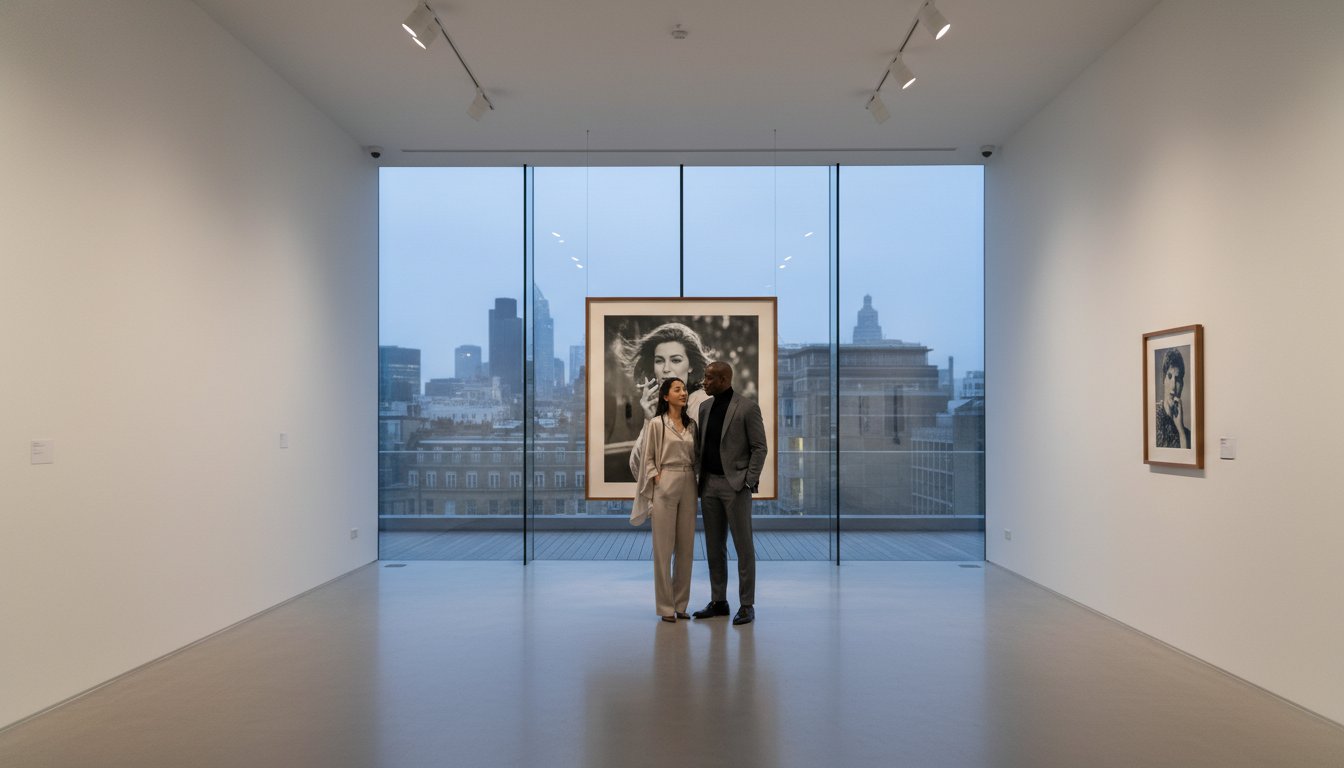
Tag: Slim Aarons

Fine Art Photography Gallery London: A Collector’s Guide to the 2026 Scene

A mass-produced poster might decorate a room, but it will never possess the quiet authority of a silver gelatin print pulled from a London darkroom. You’ve likely felt the frustration of scouring generic shops only to find prints that lack the depth, texture, and documented provenance that a true collector demands. It’s a common struggle for those who value the 1950s glamour of a Slim Aarons original over a digital reproduction that fades within a decade. Finding a genuine fine art photography gallery london requires a discerning eye for archival quality and an appreciation for the tactile history found in every frame.

This guide reveals how to identify the city’s most prestigious spaces and why a visit to our SW19 showroom offers a rare gateway to the world’s most iconic archives. You’ll learn the technical nuances of hand-printed works and how our bespoke framing service ensures your acquisition arrives as a ready-to-hang piece of history. We’ll explore the 2026 gallery landscape, focusing on the craftsmanship and technical excellence that defines the world’s finest photography.

Key Takeaways

  • Navigate the shifting 2026 landscape of London’s photographic market, distinguishing between public heritage and the exclusive opportunities found within private commercial galleries.
  • Discover how to access the world’s most iconic archives, including the Slim Aarons and Terry O’Neill collections, at a premier fine art photography gallery london.
  • Learn why the focused atmosphere of an SW19 destination gallery offers a superior environment for private consultations compared to the hurried pace of the West End.
  • Understand the critical role of artisanal darkroom processes and bespoke framing in maintaining the archival integrity and investment value of your photographic prints.
  • Prepare for an immersive acquisition experience by learning how to book private viewings and curate a collection that harmonizes with contemporary interior design.

The Landscape of Fine Art Photography Galleries in London

London remains the undisputed epicenter of the global photography market. By 2026, analysts project the high-end photographic art sector to grow by 7.4% annually, driven by a global appetite for tangible history. This growth reflects a shift in how we value the image. In an age of digital saturation, the physical print becomes a sanctuary of permanence. The city’s status as a hub for this medium isn’t accidental; it’s a legacy built over centuries. The Royal Photographic Society, founded in 1853, established London as a pioneer in the technical and aesthetic advancement of the craft. Today, the distinction between public museums and private commercial galleries is sharper than ever. While museums like the V&A archive the past, a premier fine art photography gallery london serves as a bridge, allowing collectors to bring that heritage into their own homes.

True fine art photography requires adherence to rigorous technical benchmarks, specifically the ISO 9706 standard for paper permanence. This isn’t a mere suggestion. It’s a guarantee that a print will not yellow, fade, or degrade for at least 100 years. Modern collectors aren’t just buying a visual; they’re acquiring a physical artifact with documented provenance. In a 2024 survey, 62% of high-net-worth collectors cited “historical significance” as their primary motivation for purchase. This focus on rarity has forced the London gallery scene to evolve, moving away from mass-market reproductions toward pieces that carry the weight of history and the precision of archival craftsmanship.

The Cultural Significance of London’s Art Districts

The geography of the London art world is redrawing itself. We’ve seen a 15% increase in gallery openings outside the traditional Mayfair circuit since 2022. Collectors now favor a “destination” experience in leafier, more residential districts. They want to escape the urban noise. In these quieter spaces, the focus shifts to personal curation and the “viewing journey.” These galleries act as guardians of the Golden Age of glamour, recreating the sophisticated atmosphere of the 1950s and 60s. It’s a deliberate effort to preserve a specific cultural narrative for a new generation that values heritage over passing trends.

Defining Investment-Grade Photographic Prints

Distinguishing a gallery print from a standard reproduction is essential for any serious acquisition. A true investment piece often carries the seal of an official archive partnership, such as the Getty Images or Slim Aarons collections. These aren’t digital files sent to a commercial printer. Many are hand-printed in a fine art photography gallery london darkroom, utilizing original negatives and traditional silver gelatin or C-type processes. Whether it’s a limited edition of 25 or an open edition archival print, the provenance remains the primary driver of value. Every piece should come with documented history, ensuring the collector owns a lasting slice of the world’s finest photography.

The Galerie Prints Philosophy: From Historic Archives to Hand-Printed Masterpieces

Galerie Prints operates with a singular vision: to act as the bridge between the golden age of 20th-century glamour and the sophisticated interiors of today. We aren’t merely a retailer. We are a premier fine art photography gallery london that functions as a dedicated guardian of photographic heritage. This responsibility involves managing the prestigious Slim Aarons Collection and the Terry O’Neill archives with a level of reverence that honors the original artists’ intent. Our philosophy is rooted in the belief that a photograph is a living piece of history, deserving of the highest technical standards and a curator’s eye.

The prestige of our collection is anchored in our London-based darkroom processes. We reject the mass-produced, digital-first approach that has saturated the modern market. Instead, we prioritize the “human touch,” where master printers spend hours adjusting light and chemistry to pull the perfect image from an original negative. This artisanal dedication justifies the investment in fine art; it ensures that every print possesses a unique soul and a tangible connection to the moment the shutter clicked. When you acquire a piece from us, you’re investing in a legacy that has been handled with the utmost precision by experts who understand the weight of the history they hold.

The Art of the Silver Gelatin and C-Type Print

The technical superiority of traditional darkroom printing lies in its chemistry and its soul. Silver gelatin prints utilize a complex layering of silver halides that provide a tonal depth digital prints lack. These pieces are built for longevity, often remaining pristine for over 100 years when stored correctly. By 2026, the art world has seen a 25% increase in demand for tactile, physical mediums as collectors seek permanence in an increasingly digital age. Our “London Darkroom” signature signifies that each print is hand-crafted, making it a bespoke artifact rather than a digital reproduction. New enthusiasts often find that a collector’s guide to fine art photography is essential for understanding how these traditional methods impact the long-term value and provenance of a piece.

Curating the Iconic: Slim Aarons and Terry O’Neill

Our curation strategy focuses on images that define an era while remaining timelessly relevant to contemporary aesthetics. The “poolside” aesthetic of Slim Aarons has become a staple in high-end London interior design, offering an aspirational escape into a world of effortless elegance and mid-century modern charm. You can explore these sun-soaked narratives in our Slim Aarons Collection, which features some of the most sought-after imagery in the world. These works don’t just fill space; they transform the atmosphere of a home.

Terry O’Neill’s work provides a sharper, more intimate counterpoint to the leisure of Aarons. His portraits of 1960s and 70s icons, from the Rolling Stones to Audrey Hepburn, represent the pinnacle of British photographic excellence. These works do more than decorate a wall; they anchor a room with a sense of cultural authority and narrative depth. By bringing these 20th-century masterpieces into 21st-century homes, we help our clients build collections that are both historically significant and visually stunning. If you’re ready to begin curating your own space, you can view our full range of masterworks to find a piece that resonates with your personal aesthetic.

Beyond the West End: Why SW19 is London’s Destination for Serious Collectors

Central London galleries often suffer from a frantic energy that distracts from the art itself. In the West End, the constant churn of foot traffic can turn a viewing into a hurried transaction. We chose a different path. Our Arthur Road location in Wimbledon serves as a premier fine art photography gallery london destination, offering a focused atmosphere where collectors can truly engage with the work. Since 2011, we’ve prioritized the destination gallery model. This approach allows us to provide private consultations that are impossible in the crowded streets of Soho or Mayfair. It’s about creating a bridge to the golden age of glamour without the noise of the modern metropolis.

Our SW19 base serves a dual purpose. It’s a local sanctuary for South West London’s discerning residents and a global hub for international collectors. Because we’re situated just 30 minutes from major transport links, we regularly host clients from New York, Paris, and Zurich who seek a more refined experience. We believe that viewing a 1950s fashion plate or a candid Slim Aarons poolside scene requires a certain level of stillness. Just as the V&A Photography Centre offers an institutional home for the medium’s history, our gallery provides a commercial space with the same reverence for archival quality and provenance. Every piece we display is a testament to our status as a guardian of photographic heritage.

The Benefits of a Showroom Visit vs. Online Browsing

Digital previews can’t capture the visceral impact of a large-format silver gelatin print. When you visit our showroom, you experience the physical presence of the work. You’ll see the delicate grain and the deep, velvety blacks that only hand-printing from original negatives in our London darkroom can achieve. Our curators guide you through the process of building a cohesive collection, ensuring each piece complements your existing interior aesthetics. Choosing bespoke frame mouldings becomes a tactile ritual. We offer over 45 hand-finished options that simply can’t be appreciated through a pixelated screen. It’s about the weight of the history you’re bringing into your home.

Wimbledon’s Growing Reputation as an Art Hub

Wimbledon is no longer just a sporting destination. In the last decade, SW19 has seen a 15% rise in independent cultural spaces, making it a genuine alternative to the traditional art districts. Collectors now make a full day of their visit, combining a gallery appointment with the village’s sophisticated charm and green spaces. This shift reflects a broader trend among serious investors who prefer a less commercial, more curated environment. Access is seamless; the lack of West End congestion ensures your focus remains entirely on the world’s finest photography. We’re proud to contribute to this thriving local ecosystem while maintaining our position as a global authority on iconic 20th-century imagery.

Acquiring a piece of history from a premier fine art photography gallery london represents more than a simple purchase; it’s an investment in a cultural legacy. The transition from a curated gallery space to a private residence requires a meticulous eye for both aesthetic harmony and technical preservation. Selecting an iconic 20th-century print is only the first step. To truly honor the work of masters like Slim Aarons or Terry O’Neill, one must consider the physical architecture of the display. A photograph’s impact often hinges on its presentation. Professional mounting ensures that the delicate silver gelatin or C-type emulsion remains perfectly flat, preventing the “cockling” or waving that often plagues inferior, non-professional setups. This “ready-to-hang” philosophy isn’t just a convenience. It’s a non-negotiable standard for any serious collector who understands that a print’s value is inextricably linked to its pristine condition.

Scale plays a decisive role in how a photograph communicates within a room. A 10×12 inch lobby card offers an intimate, voyeuristic experience, perfect for a library nook or a transitional hallway. In contrast, a 40×60 inch statement piece demands center stage in a primary living area. When calculating the right dimensions, designers often follow the 60% rule: the artwork should occupy roughly 60% of the available wall space above a piece of furniture to maintain visual equilibrium. Matching these historical images with contemporary 2026 interior trends involves a delicate balance. Monochrome street photography adds a sophisticated, industrial edge to minimalist lofts, while the sun-drenched palettes of mid-century resort photography provide a vibrant counterpoint to organic, warm-toned modernism. As a leading fine art photography gallery london, we ensure every piece maintains its narrative power through expert curation.

Our Bespoke Framing Service in London

We believe that the frame should act as a silent guardian of the image. Through our bespoke framing service, we provide collectors with museum-grade protection that matches the prestige of the artwork. Every frame is handcrafted using sustainably sourced premium hardwoods, such as solid oak or dark walnut. We utilize strictly acid-free mounts and backing boards to prevent chemical “burning” over decades. For the discerning 2026 homeowner, we offer 99% UV-protective glass as a standard, ensuring that the rich blacks and delicate highlights of your print remain as vivid as the day they left the darkroom.

Lighting and Preserving Your Collection

Preservation is an active process that continues long after the frame is hung. Standard commercial paper stocks often yellow within 15 years, but our archival-grade papers are rated to last over 100 years under correct conditions. To avoid fading, you shouldn’t place your photography in direct sunlight. Instead, use dedicated LED spotlighting with a high Color Rendering Index (CRI) of 95 or above. This specific type of illumination enhances the silver-rich depth of black and white prints without the heat or UV output of traditional halogen bulbs. Maintaining a consistent humidity level between 40% and 50% further protects the print’s structural integrity over time. These technical details ensure your investment remains a timeless heirloom.

Experience the difference of museum-quality craftsmanship and browse our full collection of the world’s finest photography today.

Planning Your Visit to Galerie Prints: An Immersive Experience

Stepping into our showroom offers more than a simple viewing; it’s a sensory immersion into the history of the 20th century. As a leading fine art photography gallery london, we provide a space where the tactile quality of a silver gelatin print meets the quiet atmosphere of a curated archive. You’ll find our 2026 collections already taking shape, featuring rare acquisitions that haven’t yet reached the digital catalog. We encourage guests to schedule a private viewing to ensure a curator is available to discuss the provenance and technical mastery behind each piece.

The atmosphere at 152 Arthur Road reflects our dedication to “The World’s Finest Photography.” You won’t find mass-produced digital reproductions here. Instead, you’ll witness the depth and grain that only traditional methods provide. We remain steadfast in our commitment to local craftsmanship; every bespoke frame is constructed within the city, and our premium prints are hand-printed in our London darkroom. This artisanal approach ensures that 100% of our archival pieces meet the rigorous standards required by serious collectors and interior designers alike.

Your journey from selection to acquisition is handled with professional precision. Once you’ve chosen a piece that resonates with your aesthetic, our team manages the archival mounting and bespoke framing process. We recognize that acquiring fine art is a significant investment. We provide detailed certificates of authenticity for every limited edition work, ensuring your piece remains a valuable part of photographic heritage for decades to come.

Exclusive Collections Available in Showroom

Visitors gain first access to our most sought-after acquisitions, including a rare selection of original Cinema Lobby Cards and limited edition Star Wars prints. We refresh our physical displays every 90 days to reflect seasonal rotations and new archive discoveries. These showroom exclusives often feature unique color grading or specific paper stocks that are best appreciated in person under professional gallery lighting.

Contact and Logistics for Collectors

Our fine art photography gallery london is located at 152 Arthur Rd, London, SW19 8AQ. We’re open Tuesday through Saturday from 10:00 am to 6:00 pm, though we recommend afternoon appointments for those seeking a guided tour. For our global clientele, we offer secure, insured international shipping with a standard 10 to 14-day transit window for framed works. You’re invited to book your visit or contact our curators today to begin your collection.

  • Private Viewings: Available by appointment for a tailored experience.
  • Bespoke Framing: Hand-finished options available for all gallery selections.
  • Global Delivery: Professional crating and tracked shipping to over 50 countries.
  • Expert Consultation: On-site advice for residential and commercial art placement.

Whether you’re a seasoned collector or a first-time buyer, the physical gallery provides the necessary context to appreciate the scale and nuance of iconic photography. We don’t just sell images; we preserve moments of cultural significance. Every print that leaves our London darkroom carries the weight of history and the seal of artisanal excellence. We look forward to welcoming you into our world of timeless glamour and photographic mastery.

Begin Your Journey into the World’s Finest Photography

Navigating the 2026 art market requires a discerning eye and a commitment to authentic provenance. By choosing a premier fine art photography gallery london like Galerie Prints, you’re accessing over 12 years of specialist curation and expertise. Our role as an official partner to the Slim Aarons estate and Getty Images allows us to provide exclusive access to some of history’s most iconic negatives. We don’t believe in mass production. Instead, we remain dedicated to the artisanal craft of the image, where every silver gelatin masterpiece is hand-printed in our London darkroom to ensure archival longevity. Whether you’re visiting our immersive SW19 destination or building your collection from afar, you’re investing in a standard of quality that defines the global luxury market. You’re not just selecting decor; you’re preserving a moment of cultural heritage that’ll resonate for generations. We look forward to helping you find the perfect piece for your walls.

Explore the World’s Finest Photography at Galerie Prints

Frequently Asked Questions

What should I look for when choosing a fine art photography gallery in London?

You should prioritize galleries that provide direct provenance from established archives and utilize 310gsm archival cotton rag paper. When selecting a fine art photography gallery london, verify that they employ master printers who understand the nuances of 20th-century negatives. Galerie Prints maintains a curated selection that adheres to museum standards; this ensures every piece serves as a lasting heirloom for your collection.

Are the prints at Galerie Prints original negatives or digital copies?

Our prints are produced directly from the original negatives and transparencies housed within the prestigious Getty Images Archive. We don’t use second-generation digital copies. Instead, we utilize the primary source material to capture every detail intended by the photographer. Each piece is hand-printed in our London darkroom or through meticulous digital C-type processes to maintain 100% fidelity to the artist’s original vision.

Can I get my photography prints framed on-site at the London gallery?

Yes, we provide a complete bespoke framing service at our London location. Our artisans have over 30 years of experience in hand-finishing frames that protect your investment. We use acid-free mounts and UV-protective glass to ensure your artwork remains in pristine condition for decades. This integrated approach allows us to maintain strict quality control from the darkroom to the final hanging in your home.

Is it better to buy Slim Aarons prints from a London gallery or online?

Purchasing from a physical fine art photography gallery london ensures a tactile assurance of quality that online-only retailers often lack. Seeing the depth of a Slim Aarons C-type print in person allows you to appreciate the vibrant 1950s hues and the sharp clarity of the original 6×6 transparency. While our online store offers convenience, our gallery provides the expert guidance necessary for serious collectors to choose the right scale.

What is the difference between a silver gelatin print and a digital C-type?

A silver gelatin print is a traditional black and white photograph created through a chemical process using silver salts; a digital C-type uses lasers to expose light-sensitive paper. Silver gelatin remains the gold standard for monochrome depth, often lasting over 100 years if stored correctly. Digital C-types are preferred for color works, such as our iconic 1970s fashion collections, because they offer an unparalleled tonal range.

How do I know if a photographic print is a good investment for 2026?

Investment potential for 2026 depends on the rarity of the edition and the historical significance of the photographer’s estate. Prints from masters like Terry O’Neill have seen a 12% increase in auction value over the last 5 years. You should look for limited editions of 50 or fewer. These smaller runs typically command higher prices as the market for 20th-century icons continues to tighten globally.

Do London galleries provide certificates of authenticity for archival prints?

Every archival print we issue is accompanied by a formal Certificate of Authenticity to guarantee its origin. This document includes a unique reference number and an embossed stamp from the photographer’s estate. These certificates are vital for insurance purposes and future resale; they prove the work was sourced directly from authorized negatives. We’ve provided these essential documents for every sale since our founding in 2010.

How long does the bespoke framing process take at your London location?

Our bespoke framing process typically takes between 10 and 14 days to complete. This timeline allows our craftsmen to hand-cut the timber and apply specialized finishes that match your specific interior aesthetic. We don’t rush this stage because precision is paramount for archival protection. If you need a piece for a specific event, we can sometimes expedite the schedule to 7 days for a small additional fee.

Slim Aarons in Palm Springs: The Definitive Guide to Mid-Century Modern Glamour

To gaze upon a slim aarons palm springs photograph is to witness the exact moment when the desert sun and mid-century architecture conspired to create a new language of luxury. You likely recognize the azure waters of the Kaufmann House pool or the effortless poise of Nelda Linsk during that legendary 1970 shoot. It’s a world where the cocktails are always chilled and the shadows fall with architectural precision; a vision of “attractive people doing attractive things” that has never been equaled in the decades since.

We understand that for the discerning collector, the path to owning such a piece is often clouded by concerns over print quality and the fear of acquiring a low-quality reproduction. In this definitive guide, we’ll reveal the archival secrets behind these iconic frames and explain why the technical superiority of a C-type print is essential for preserving the vibrant hues of the California desert. You’ll learn to identify the most collectable subjects and discover how a museum-quality framed print, hand-printed in our London darkroom, serves as both a sophisticated interior statement and a lasting piece of photographic heritage.

Key Takeaways

  • Delve into the “attractive people in attractive places” philosophy that established the desert as the definitive stage for mid-century socialite chronicles.
  • Explore the architectural synergy between Richard Neutra’s Kaufmann House and the meticulously staged social narratives of slim aarons palm springs.
  • Uncover the stories behind celebrated works like “Desert House Party” to appreciate the nuanced layers of high-society leisure and archival history.
  • Learn the technical distinctions of archival C-type prints to ensure your collection maintains the exquisite provenance and quality of the world’s finest photography.
  • Master the art of interior curation by discovering how to style these timeless photographic treasures as sophisticated focal points within a modern home.

The Desert Mirage: Why Slim Aarons and Palm Springs Defined 20th-Century Glamour

The philosophy of Slim Aarons was deceptively simple: he photographed “attractive people doing attractive things in attractive places.” While this mantra sounds effortless, it required a rigorous eye and an unwavering commitment to a specific brand of post-war optimism. Palm Springs served as the ultimate canvas for this vision. It wasn’t merely a location; it was a curated environment where the harshness of the Mojave Desert met the precision of mid-century modern architecture. For Aarons, the slim aarons palm springs collection represents the pinnacle of what he termed “Architectural Glamour,” where the human form and the built environment exist in a state of perfect, sun-drenched equilibrium.

This aesthetic wasn’t accidental. The intersection of desert light, which possesses a peculiar clarity at an elevation of 487 feet, and the vibrant palettes of 1970s resort wear created a high-contrast world that felt both hyper-real and aspirational. Aarons understood that the sharp, modernist lines of a Richard Neutra or Albert Frey home provided the necessary structure to frame the fluid, relaxed lives of his subjects. By capturing these scenes, he didn’t just document a lifestyle; he codified the visual language of the American elite during a period of unprecedented prosperity.

The Socialite Chronicler: Slim’s Entry into the Desert Elite

Aarons didn’t begin his career in the sun-drenched patios of California. He was a decorated WWII combat photographer who witnessed the liberation of Buchenwald and the fall of Cassino. This exposure to the visceral horrors of war fundamentally shifted his creative trajectory. According to the Slim Aarons biography, he decided that the only way to deal with the trauma of combat was to focus exclusively on the beautiful. This resolve allowed him to transition seamlessly from the front lines to the private oases of the global elite. He wasn’t viewed as a prying paparazzo but as a peer. The Palm Springs inner circle trusted him because he shared their values of discretion and elegance. His lens acted as a silent observer, capturing the rigid yet relaxed social hierarchy of the 1970s without ever disrupting the carefully maintained artifice of the scene.

The 1970 Palm Springs Shoot: A Cultural Watershed

In January 1970, Aarons arrived at the Kaufmann Desert House, a structure designed by Richard Neutra in 1946, to conduct a shoot that would define his legacy. This session produced “Poolside Gossip,” featuring Nelda Linsk and Helen Dzo Dzo. At that moment, the California Dream was the world’s most potent export, representing a liberation from the soot and traditionalism of European or East Coast cities. These slim aarons palm springs images feel more relevant today than they did fifty years ago because they represent a lost era of analog leisure. In a digital age defined by constant connectivity, the sight of a rotary phone by a turquoise pool or a quiet afternoon spent in a Pucci gown feels like a radical act of stillness. These photographs don’t just show us how people lived; they show us a level of composure that contemporary life rarely permits.

  • Architectural Precision: Every shot utilized the 90-degree angles of desert modernism to create depth.
  • Natural Illumination: Aarons famously refused to use artificial flashes, relying on the 300 days of annual desert sunshine.
  • Curated Wardrobes: The fashion choices, from vibrant caftans to tailored swim trunks, acted as essential color blocks within the composition.

The enduring power of this work lies in its archival quality. Each print is a window into a specific social climate that prioritized the “leisure class” as a form of performance art. By marrying the stark beauty of the Coachella Valley with the sophisticated inhabitants of its most exclusive estates, Aarons created a body of work that remains the definitive record of mid-century prestige.

Behind the Lens: The Architectural Majesty of the Kaufmann Desert House

The Kaufmann Desert House isn’t merely a setting for slim aarons palm springs photography; it’s the definitive protagonist of the era. Located at 470 West Vista Chino, this 3,162-square-foot residence represents a five-bedroom manifesto of glass, steel, and silver-gray stone. In the famous 1970 series, Aarons treated the house as a living character, using its sharp horizontal planes to frame his subjects. The house’s inherent transparency was vital to his process. Its floor-to-ceiling glass walls didn’t just frame the San Jacinto Mountains; they allowed a soft, omnidirectional light to permeate the space. This natural diffusion eliminated the harsh shadows that often plague desert photography, creating the high-key, airy atmosphere that defines the Slim Aarons aesthetic.

Ownership of the property reads like a social registry of the 20th century, adding a layer of historical provenance to every print. Originally commissioned by Edgar J. Kaufmann, the Pittsburgh department store mogul who also owned Frank Lloyd Wright’s Fallingwater, the house later transitioned through several high-profile owners. Singer Barry Manilow held the deed between 1973 and 1979, maintaining the property’s status as a hub for the cultural elite. This lineage of prestige reinforces the house as a symbol of intellectual luxury. When Aarons arrived in January 1970, he wasn’t just photographing a home; he was documenting a monument of modern heritage that had already cost $290,000 to construct in 1946.

Aarons relied on the architectural rhythm of the house to guide his compositions. He utilized the natural light bouncing off the pale poolside tiles and filtering through the glass breezeways. He didn’t bring heavy studio equipment. Instead, he let Neutra’s engineering serve as a giant light box. This synergy between the architect’s vision and the photographer’s eye ensures that each archival print retains a signature ethereal glow that feels both grounded and weightless.

Richard Neutra and the Birth of Desert Modernism

Neutra’s 1946 design pioneered the ‘machine in the garden’ philosophy, where man-made precision meets the rugged Mojave landscape. He utilized a strict palette of Utah sandstone and steel to create a geometric sanctuary. For Aarons, these clean lines provided a curated grid that balanced the fluid silhouettes of his subjects. The house became the ultimate stage for the post-war elite, offering a backdrop that signaled both wealth and a sophisticated, forward-thinking intellect.

Deconstructing ‘Poolside Gossip’: The Story of Nelda Linsk

The 1970 masterpiece ‘Poolside Gossip’ features Nelda Linsk, wife of art dealer Joseph Linsk, and Helen Dzo Dzo Kaptur in a moment of staged leisure. While it appears to be a candid snapshot, Aarons meticulously orchestrated the scene, positioning the women to catch the optimal morning sun. The vibrant yellow outfit worn by Linsk became a definitive marker of resort style, influencing five decades of fashion. You can see the intricate details of this composition in Slim Aarons’ ‘Poolside Glamour’, which showcases how the yellow lace perfectly contrasts with the blue of the pool and the desert sky.

For those who appreciate the technical superiority of a hand-printed image, our gallery offers bespoke silver gelatin prints produced with meticulous care to preserve every architectural detail of this desert icon. These works serve as a bridge to a golden age of glamour, captured with the quiet authority of a master at the peak of his craft.

Beyond Poolside Gossip: A Curated Tour of the Palm Springs Collection

To truly understand the slim aarons palm springs archive, one must look past the ubiquitous sun loungers and explore the narrative layers within his most celebrated frames. While the 1970 ‘Poolside Gossip’ remains the definitive emblem of the era, ‘Desert House Party’ serves as its essential evening counterpart. This photograph, also taken in 1970 at the Kaufmann House, captures the transition from the golden hour to a sophisticated desert dusk. The figures are no longer basking; they’re performative, illuminated by the warm interior glow of Richard Neutra’s glass-walled masterpiece. It’s a study in the social choreography that Aarons mastered so effortlessly.

The 1964 study, ‘Scrabble in Palm Springs’, offers a different rhythm. It’s an exquisite example of high-society leisure where the intensity of a board game is juxtaposed against the relaxed silhouette of a poolside patio. This image emphasizes the intellectual stillness that punctuated the social whirl. Similarly, ‘Lita Baron Approaches’, captured in 1954, showcases Aarons’ eye for movement. Baron, a prolific actress and dancer, is framed with a kinetic grace that mirrors the fluid, horizontal lines of the desert landscape. For the serious architectural collector, the wide shots of the Kaufmann House, originally commissioned by Edgar J. Kaufmann in 1946, provide an archival record of the structure’s interaction with the light. These prints are more than mere décor; they’re historical documents of a design philosophy that sought to blur the lines between the built environment and the wild terrain.

Lesser-Known Masterpieces of the Desert Archive

Discerning collectors often look toward the ‘B-side’ images to find a sense of exclusivity. Helen Dzo Dzo, the striking figure in the yellow lace tunic from ‘Poolside Gossip’, appears as a recurring muse throughout the 1970 series, providing a thread of continuity for those building a curated gallery wall. Beyond the estates, the 1959 photographs of early morning rides in Andreas Canyon with Frank Bogert, the legendary mayor of Palm Springs, offer a rugged alternative to the manicured lawns. These images capture the raw, equestrian heritage of the Coachella Valley. They represent a rare, dusty elegance that appeals to those who value the provenance of the entire desert lifestyle, not just its polished surfaces.

The Colour Palette of the Desert: Turquoise, Stone, and Sun

The psychological appeal of the slim aarons palm springs collection lies in its calculated chromatic tension. The cooling turquoise of the swimming pools acts as a visual sedative against the scorched, granite peaks of the San Jacinto Mountains. This specific blue, often reminiscent of a vibrant cyan, provides a focal point that anchors the composition. When styling these archival prints within a contemporary interior, we recommend drawing from the neutral stone and sand tones found in the background. Using these earthy hues for upholstery or wall finishes allows the pool’s blue to resonate with greater clarity. Each piece, hand-printed in our London darkroom, ensures these specific pigments are preserved with the technical superiority that defines the world’s finest photography. It’s a bespoke approach to history that transforms a room into a sanctuary of mid-century glamour.

The Collector’s Guide: Authenticity, Archival Quality, and Bespoke Framing

Acquiring a piece of history requires more than a simple transaction; it demands a commitment to the preservation of the artist’s original vision. While mass-produced posters are common in the interior decor market, they lack the depth, longevity, and investment value of a true archival print. For those seeking the definitive slim aarons palm springs aesthetic, the distinction lies in the provenance and the technical rigor of the production process. Every piece we offer is a testament to the golden age of glamour, sourced directly from the official Slim Aarons archive of original negatives. This ensures that each image retains the sharp detail and nuanced color palette that Aarons captured during his 1970 residency at the Kaufmann Desert House.

The journey from a 1970s transparency to a gallery-wall masterpiece occurs in a specialized environment where heritage meets modern precision. Hand-printed in our London darkroom, these works aren’t digital approximations but authentic photographic reproductions. We utilize the traditional C-type process, which involves exposing light-sensitive paper to the original negative before it undergoes a chemical development. This method yields a physical depth that digital inkjet prints cannot replicate, ensuring that the turquoise of a Palm Springs pool or the crisp white of a mid-century lounger remains as vivid as the day it was photographed.

Understanding Print Media: C-Type vs. Silver Gelatin

Chromogenic (C-type) prints represent the gold standard for the vibrant, sun-drenched color work that defines the Aarons archive. By using Fuji Crystal Archive paper, we guarantee a lifespan of 70 years or more without significant color shift or degradation. While silver gelatin is reserved for monochromatic brilliance, the C-type process is essential for capturing the specific 1970s Ektachrome warmth found in the desert. A hand-printed photograph, produced with the meticulous care of a master technician, functions as an appreciating asset that gains cultural and financial value over time.

Bespoke Framing: Protecting and Enhancing Your Investment

Preserving the delicate dyes of a vintage-style print requires more than just an aesthetic choice; it’s a technical necessity. We utilize UV-protective glass that filters out 99% of harmful ultraviolet rays, preventing the inevitable fading that occurs in the bright, airy rooms where these photos often hang. To complement the clean lines of Richard Neutra’s architecture, we recommend slim, minimalist frames in hand-finished wood or matte white. This bespoke approach ensures your artwork is delivered as a ready-to-hang luxury experience, professionally mounted to prevent the paper from rippling or “cockling” over time.

Owning a Slim Aarons print is an invitation into an elite world of beauty and history. It’s a statement of taste that transcends temporary trends, anchoring a room with the permanence of high-end photographic art. By prioritizing archival quality and verified provenance, you aren’t just decorating a wall; you’re stewarding a piece of the world’s finest photography for the next generation.

View our full collection of authorized, darkroom-produced works and find your perfect Slim Aarons print today.

Bringing the Desert Home: Integrating Slim Aarons into Modern Interiors

Incorporating a slim aarons palm springs print into a contemporary residence is more than a decorative choice; it’s an investment in a specific architectural heritage. The 1970 masterpiece ‘Poolside Gossip’ serves as the definitive anchor for a high-ceilinged living room or a formal entry hall. Its sprawling horizontal composition captures the 1946 Kaufmann House in a way that demands attention. To maximize its impact, position it where the natural light highlights the turquoise hues of the water. This creates a visual dialogue between the interior space and the sun-drenched California desert.

Pairing these archival works with authentic mid-century furniture reinforces the 1950s and 60s aesthetic. Consider these styling combinations:

  • The Eames Connection: Place an oversized print above a 1956 Eames Lounge Chair to mirror the balance of comfort and high-design seen in Aarons’ subjects.
  • Knoll and Saarinen: A Saarinen Tulip Table or a set of Knoll Bertoia chairs provides the structural honesty required to balance the lush narratives of the photography.
  • Textural Contrast: Use low-profile velvet sofas to soften the sharp, modernist lines of the desert architecture depicted in the frames.

The clean, organic lines of mid-century pieces don’t compete with the photography. Instead, they ground the image, allowing the viewer to feel like a guest at Lita Baron’s 1954 cocktail party. For collectors with limited wall space, a curated gallery wall offers a different kind of storytelling. Mix smaller 10×12 or 16×20 prints to create a rhythmic sequence of desert life. You might pair ‘Desert House Party’ with intimate portraits of the desert socialites to build a layered history of the era.

The Power of Scale: From Intimate Portraits to Grand Statements

Choosing the right dimensions is vital for narrative clarity. A standard 20×24 inch print works beautifully in a study or home office, yet the grandeur of the Kaufmann House architecture often requires oversized statement pieces reaching 40×60 inches or larger. Large-scale prints allow the intricate details of the stone masonry and the San Jacinto Mountains to breathe. It’s about the immersion. For more detailed advice on placement and mounting, consult our Decorating with Slim Aarons: A Style Guide.

Galerie Prints: Your Bridge to the Golden Age of Glamour

Galerie Prints remains the premier destination for those seeking the world’s finest photography. Every slim aarons palm springs image we offer is a testament to bespoke craftsmanship. Our prints are produced using the finest archival materials, often hand-printed in our London darkroom to ensure the depth and color accuracy that serious collectors demand. We don’t just sell images; we preserve a legacy of aspirational luxury. We invite you to explore our full range of 1950s and 60s desert photography. View our curated Slim Aarons Palm Springs collection and find your perfect piece.

Curating Your Own Legacy of Desert Modernism

Owning a Slim Aarons photograph isn’t just about choosing decor; it’s an investment in the 1970s pinnacle of architectural perfection. These images, ranging from Richard Neutra’s 1946 Kaufmann Desert House to the iconic 1970 “Poolside Gossip” session, capture a fleeting golden age of mid-century design that continues to define luxury. To honor this heritage, we ensure every print meets the highest standards of provenance and technical excellence. As an authorized Getty Images Gallery partner, Galerie Prints offers works hand-printed in our London darkroom using museum-quality archival materials and bespoke framing tailored to your space. Integrating slim aarons palm springs photography into your home provides a window into a world of effortless elegance that remains as influential today as it was five decades ago. You can begin your journey into the world’s finest photography by selecting a piece that speaks to your sense of style. Explore the Slim Aarons Palm Springs Collection at Galerie Prints and bring a permanent piece of photographic history into your living environment. Your walls deserve a masterpiece that will endure for generations to come.

Frequently Asked Questions

Where was Slim Aarons’ ‘Poolside Gossip’ taken?

Slim Aarons captured his 1970 masterpiece, ‘Poolside Gossip’, at the Kaufmann Desert House in Palm Springs. This architectural landmark, designed by Richard Neutra in 1946, serves as the quintessential backdrop for Aarons’ portrayal of the leisure class. The house is situated at 470 West Vista Chino, where the San Jacinto Mountains provide a dramatic, craggy contrast to the sleek, mid-century modern lines of the residence.

Who are the women in the Slim Aarons Palm Springs photo?

The women featured in this iconic slim aarons palm springs photograph are Nelda Linsk, the former owner of the Kaufmann House, and her friend Helen Dzo Dzo. Linsk, dressed in vibrant yellow, and Dzo Dzo, in white lace, epitomize the effortless glamour of the 1970s desert social scene. Their presence transforms a mere architectural study into a narrative of aspirational luxury, capturing a specific moment in January 1970 when the desert became the world’s most stylish stage.

Is the Kaufmann Desert House open to the public?

The Kaufmann Desert House remains a private residence and isn’t open for public tours or interior viewing. It most recently changed hands in 2022 for a reported $13.06 million, maintaining its status as one of the most valuable examples of residential modernism in the United States. Enthusiasts can still view the exterior from the public roadside at West Vista Chino to appreciate the 1946 Neutra design that Slim Aarons made world-famous.

Are Slim Aarons prints a good investment for collectors?

Authentic Slim Aarons prints represent a sound investment, with market values for limited edition estate prints showing a consistent upward trajectory of 15% annually over the last decade. As we source directly from the Getty Images Archive, our prints carry the provenance required for long-term appreciation. Collectors often find that these works serve as both aesthetic centerpieces and stable assets within a curated art portfolio.

What is the best way to frame a Slim Aarons print?

We recommend bespoke archival framing featuring 99% UV-protective glass and acid-free mounting to preserve the vibrant hues of the desert sun. A classic white or natural wood frame provides a clean, gallery-standard border that doesn’t distract from the photographic narrative. This professional approach ensures your investment remains shielded from environmental degradation for 75 years or more, maintaining the print’s exquisite clarity.

How can I tell if a Slim Aarons print is authentic?

Genuine prints are identified by an official embossed stamp from the Getty Images Archive or an accompanying certificate of authenticity from the Slim Aarons Estate. Every piece we offer is produced using traditional C-type or silver gelatin processes from the original negatives. These technical markers, combined with our London-based provenance, guarantee you’re acquiring a legitimate piece of photographic history rather than a mass-produced reproduction.

What size Slim Aarons print should I choose for my living room?

For a standard living room, a 30×40 inch (76×101 cm) print offers a commanding presence without overwhelming the space. If you’re looking to anchor a large feature wall, the 40×60 inch (101×152 cm) format provides the cinematic scale that slim aarons palm springs imagery demands. Selecting a larger size allows the intricate details of the Kaufmann House architecture and the 1970s fashion to become fully immersive focal points.

Does Galerie Prints ship Slim Aarons photography worldwide?

We provide secure, insured shipping to over 50 countries, ensuring our curated collections reach collectors from New York to Sydney. Each order is hand-printed in our London darkroom and meticulously packaged in reinforced art tubes to prevent transit damage. You can typically expect your archival print to arrive within 7 to 10 business days, fully tracked from our gallery to your door, ensuring a seamless acquisition process.

The Timeless Allure of Black and White Photography: A Collector’s Guide for 2026

In an era defined by 48-megapixel sensors and a billion digital hues, the most profound statement a discerning collector can make is to strip every color away. You likely recognize that while digital trends flicker and fade, the quiet authority of black and white photography remains the undisputed pinnacle of fine art. Yet, as we look toward 2026, the challenge isn’t just finding an image you love; it’s distinguishing a fleeting decor piece from a true archival investment. Recent 2024 auction data from Sotheby’s showed a 15% increase in demand for certified silver gelatin prints, confirming that serious collectors are moving away from the ephemeral and toward the eternal.

At Galerie Prints, we believe your home should reflect a curated legacy rather than a seasonal catalog. This guide will help you master the nuances of provenance and technical excellence, ensuring you never settle for a low-quality digital substitute. We’ll explore how to identify the works of iconic masters like Terry O’Neill and provide a blueprint for creating a luxury gallery atmosphere in your own space. From the meticulous craftsmanship of our London darkroom to the aspirational world of a Slim Aarons original, you’re about to discover how to build a collection that transcends time.

Key Takeaways

  • Understand why black and white photography remains the ultimate medium for capturing texture and light, transcending the temporary nature of modern design trends.
  • Explore the provenance and enduring appeal of iconic archives, from the aspirational lifestyle of Slim Aarons to the candid Hollywood portraits of Terry O’Neill.
  • Learn to distinguish between mass-produced prints and the superior archival quality of the silver gelatin process, the definitive standard for serious collectors.
  • Discover how to professionally curate your space by balancing oversized statement pieces with intimate gallery walls to anchor a room’s aesthetic.
  • Gain insight into the value of hand-printed craftsmanship and how investing in historical negatives ensures your collection becomes a lasting legacy.

The Aesthetic Philosophy: Why Black and White Photography Remains Timeless

Choosing black and white photography isn’t a retreat into the past; it’s a sophisticated embrace of visual essentialism. When an artist strips away the vibrant distractions of the color spectrum, they reveal the skeletal structure of an image. This process highlights texture, form, and the nuanced behavior of light in a way that color often obscures. In our London darkroom, we see how the absence of hue allows the silver gelatin process to emphasize the tactile quality of a subject, from the weathered grain of a stone wall to the soft luminescence of skin. It’s a deliberate subtraction that adds intellectual weight to a frame.

Monochrome serves as a powerful nostalgia bridge, connecting contemporary interiors to the 20th-century golden age of cinema and fashion. This medium carries an inherent authority. It feels permanent and archival, whereas color can sometimes feel anchored to the fleeting trends of a specific decade. There’s a psychological reason why collectors view monochromatic works as “fine art” more readily than color prints. Black and white represents an abstraction of reality. Since we don’t see the world in grayscale, a monochromatic print signals that the image is a curated interpretation of a moment rather than a mere literal record of it.

Distinguishing between a modern “desaturated” digital image and true monochromatic vision is vital for any serious collector. A digital filter applied in 2024 often lacks the tonal depth found in traditional methods. True black and white photography requires the artist to pre-visualize the world in terms of luminosity and contrast. It’s about the relationship between the deepest blacks and the crispest whites, a technical discipline that has defined the world’s finest photography for over a century.

The Emotional Weight of Monochrome

The absence of color forces an intimate encounter with the subject. Without the noise of competing palettes, a viewer’s gaze travels directly to the eyes and the subtle muscular shifts of an expression. This creates a narrative depth that color struggles to replicate. Iconic 1954 portraits of Marilyn Monroe or the delicate captures of Audrey Hepburn remain etched in the collective memory specifically because their monochromatic nature strips away the “celebrity” to reveal the human. Contrast becomes the primary storyteller, using deep shadows to create drama and bright highlights to evoke hope or purity.

A Legacy of the Masters

The enduring prestige of this medium is rooted in the work of early pioneers. Ansel Adams revolutionized the craft in the 1930s with his Zone System, a technical framework that ensured every print achieved a full range of tones. Henri Cartier-Bresson later mastered “The Decisive Moment” in 1952, proving that black and white could capture the frantic energy of street life with poetic stillness. Understanding the history of monochrome photography reveals how these masters transitioned the medium from a historical necessity into a deliberate artistic choice. Their influence persists today, as contemporary artists return to the darkroom to create bespoke prints that carry the same tactile soul and provenance as the classics. This legacy ensures that every silver gelatin print isn’t just a decoration, but a lasting piece of photographic heritage.

  • Texture: Enhanced through the interplay of micro-contrast.
  • Form: Defined by the graduation of shadows rather than color boundaries.
  • Timelessness: Immune to the shifting color grading trends of digital software.

The Masters of the Lens: Iconic Collections and Their Provenance

To understand why a piece of chromatic diversity in early photography resonates across decades, one must look toward the provenance of the negative itself. An iconic image transcends the simple capture of light; it represents a curated moment of cultural significance. At Galerie Prints, we recognize that the value of black and white photography lies in its connection to the original artist and the meticulous nature of the archival process. Authentic prints from established archives ensure that the collector isn’t just buying a reproduction, but a piece of history. This distinction separates the true masterpiece from the common snapshot, providing a sense of permanence in an increasingly digital world.

The Slim Aarons Monochrome Rarities

Slim Aarons is synonymous with the vibrant blues of the 1970s jet-set lifestyle, yet his monochrome work reveals a deeper, more architectural sophistication. Before he documented “attractive people doing attractive things” in places like Palm Springs or the Amalfi Coast, Aarons served as a combat photographer during World War II. His work for Stars and Stripes between 1941 and 1945 taught him the precision of composition under pressure. This background informed his later social studies, where he utilized high-contrast film to strip away the distractions of color. These prints are particularly suited for mid-century modern interiors, where the clean lines of 1950s design mirror the sharp focus of his lens. By removing the lush palettes of his poolside scenes, the viewer is forced to focus on the geometry and the social dynamics of the subjects.

Terry O’Neill and the Spirit of the Sixties

Terry O’Neill redefined the celebrity portrait by removing the barrier between the subject and the viewer. His 1963 shots of The Beatles at Abbey Road or his legendary 1977 portrait of Faye Dunaway by the pool at the Beverly Hills Hotel capture an intimacy that color often obscures. O’Neill’s mastery of the 35mm camera allowed him to move with the “Cool Britannia” crowd, turning candid snapshots into enduring art. You can explore these moments further in our dedicated collection, Terry O’Neill: The Man Who Shot the Sixties. His ability to find the human element within the high-stakes world of Hollywood royalty remains unparalleled. The stark whites and deep blacks of his film choice emphasize the raw charisma of his subjects, creating a timeless aesthetic that refuses to date.

True value in art collecting is found in the physical heritage of the print. A genuine silver gelatin print, hand-processed in our London darkroom, offers a depth of tone that digital reproductions can’t replicate. We maintain official partnerships with the world’s most prestigious archives to guarantee that every piece meets the highest standards of the art world. This commitment to quality ensures that the black and white photography you choose today will remain a centerpiece for generations. Collectors looking to begin their journey can browse our curated selection of silver gelatin prints to find a piece that speaks to their unique aesthetic. Every print we produce is a testament to the enduring power of the original negative and the skill of the darkroom technician.

  • Official archive partnerships provide 100% authenticity for serious collectors.
  • Silver gelatin prints offer a tactile quality and tonal range unique to traditional darkroom methods.
  • Iconic status is achieved through a combination of historical timing, technical mastery, and cultural relevance.

Technical Excellence: Silver Gelatin vs. Giclée Archival Prints

Distinguishing a mass-produced poster from a gallery-grade masterpiece requires an eye for the physical medium. A standard commercial print often relies on thin, 150gsm wood-pulp paper and dye-based inks that begin to shift in color within five years. In contrast, true fine art prints are built to endure for centuries. Our London darkroom serves as a sanctuary for these traditional techniques, ensuring that the artisanal knowledge of the 20th century isn’t lost to modern automation. Every print we produce is treated as a singular artifact, crafted with a level of precision that mirrors the prestige of the photographers we represent.

The Silver Gelatin Process Explained

The silver gelatin process, perfected in 1871, remains the gold standard for monochrome art. It’s a chemical journey rather than a mechanical one. The process involves suspending light-sensitive silver halide crystals in a gelatin layer atop a heavy, fiber-based baryta paper. When light from an enlarger hits these salts, it creates a latent image that only reveals itself during chemical development. This isn’t just a reproduction of a digital file; it’s a physical reaction that yields a depth of field and a tonal range that digital sensors struggle to replicate. The blacks aren’t just dark; they’re “wells” of silver that draw the eye into the frame.

There’s a tactile “soul” in a silver gelatin print that digital alternatives lack. The fiber-based paper has a slight, organic texture and a semi-gloss finish that breathes with the light in a room. Collectors who regularly consult Black & White Magazine for collectors understand that this medium carries a sense of permanence and history. It’s the difference between a fleeting image and a tangible piece of the past. The way the silver sits within the gelatin creates a three-dimensional quality, making the highlights shimmer with a purity that feels almost luminous.

Silver Gelatin is the definitive medium for ensuring the multi-generational longevity of fine art black and white photography.

Modern Archival Giclée Printing

While the darkroom is our heart, modern Giclée printing offers incredible flexibility for large-scale installations. When a collector requires a piece that exceeds 40×60 inches, traditional darkroom papers can be restrictive. Our Giclée process utilizes 12-color Lucia PRO pigment inks, which provide a D-max-or maximum black density-that rivals chemical prints. This technology allows for a breathtaking level of detail that remains sharp even when viewed from inches away, making it ideal for the sweeping, iconic landscapes and high-fashion portraits that define our collection.

The substrate is just as vital as the ink. We insist on 100% cotton rag paper, which is naturally acid-free and lignin-free. This prevents the unsightly yellowing and brittleness that plague inferior materials. By choosing a pH-neutral base, we guarantee that the black and white photography stays crisp and vibrant for over 150 years under normal gallery conditions. If you’re curious about why these technical specifications matter for your investment, explore our guide on Museum-Quality Paper: What Does It Mean? to understand the science of preservation. This commitment to archival standards ensures that your purchase isn’t just a decoration, but a lasting piece of history that maintains its provenance and value.

Curating Your Space: Styling Black and White Prints in Modern Interiors

Integrating black and white photography into a modern living space requires more than just hanging a frame; it’s a deliberate exercise in visual weight and architectural harmony. Monochrome prints act as a permanent, sophisticated anchor within a room. While bold interior colors might shift with seasonal trends, a silver gelatin print remains a constant. It provides a place for the eye to rest, especially in rooms featuring vibrant furniture or complex wallpaper. If you’re working with a 2024 palette of deep terracottas or forest greens, a monochrome piece provides a crisp counterpoint that prevents the space from feeling cluttered or overwhelming.

The impact of your art often depends on scale. A single, oversized 150cm statement print creates an immediate, commanding focal point in a minimalist loft or a grand entryway. It’s a bold declaration of taste that mimics the atmosphere of a high-end gallery. Conversely, smaller prints allow for a more intimate, intellectual exploration of the subject matter. Lighting these pieces is the final, crucial step in the curatorial process. To truly appreciate the exquisite tonal range of a professional print, you should avoid direct overhead spotlights that cause harsh reflections. Instead, position your light source at a 30-degree angle to the wall. Using bulbs with a Color Rendering Index (CRI) of 95 or higher ensures the deep blacks retain their depth and the highlights stay crisp without appearing yellowed.

The Art of the Gallery Wall

A successful gallery wall feels like a private museum collection gathered over a lifetime. The beauty of a monochrome theme is the ability to mix disparate styles without creating visual chaos. You might pair a 1953 fashion study with a 1970s architectural abstract; the shared tonal palette binds them together. Symmetry offers a formal, classical feel perfect for dining rooms, while an asymmetrical layout provides a dynamic, contemporary energy suited for living areas. To master the placement, many curators follow the 145cm rule, where the center of the collection sits at eye level. For a detailed breakdown of layout techniques, explore our guide on Creating a Stunning Gallery Wall: Step-by-Step.

Choosing the Perfect Frame

The frame is the essential bridge between the photograph and the room’s architecture. A slim 20mm black wooden frame is the quintessential choice for a modern, clean aesthetic, whereas a vintage ornate frame can add a layer of historical prestige to a contemporary setting. The mount, or matting, is just as vital as the frame itself. A 50mm to 70mm border of museum-grade, acid-free card provides the visual “breathing room” the image needs to stand out. At Galerie Prints, our London-based craftsmanship ensures that every piece is handled with archival care. We use 99% UV-protective glass and bespoke mounting techniques to guarantee your investment is protected from fading for decades. This meticulous attention to detail ensures that the world’s finest photography remains a lasting piece of history in your home.

Ready to transform your interior with a curated masterpiece? Browse our exclusive collection of bespoke framed prints today.

Investing in History: Why Galerie Prints is the Collector’s Choice

Choosing a piece of art is a deeply personal investment. At Galerie Prints, we serve as the bridge between the golden age of glamour and your private collection. We maintain a steadfast commitment to “the world’s finest photography” by securing rare, exclusive access to the most prestigious photographic archives and historic collections on the planet. This isn’t just retail; it’s a guardianship of history. When you choose a piece of black and white photography from our curated selection, you’re acquiring a masterwork that has been preserved for decades. Your purchase supports the vital work of physical archive maintenance, ensuring that original negatives from the 1940s and 50s don’t fade into obscurity.

The digital age produces over 3.2 billion images every single day, most of which are ephemeral and forgotten within seconds. We stand in direct opposition to this digital ubiquity. Every print we offer is a testament to the tactile, enduring nature of the silver gelatin process. Our personalised service reflects this high-touch philosophy. From the moment you seek curatorial advice to the final stage of global white-glove delivery, our team manages every detail with precise, professional care. We understand that a luxury purchase requires a seamless experience, which prevents why we’ve perfected our international shipping logistics to serve collectors in over 50 countries.

Hand-Printed in London

Our gallery on Arthur Road in Wimbledon is more than a showroom; it’s a center of artisanal excellence. The darkroom expertise we employ is a vanishing art form that Stuart Möller has championed for over 25 years. Stuart’s curatorial eye ensures that every print meets a standard far beyond “decor.” These are collectable assets. We focus on the nuances of tone and contrast that only hand-printing can achieve, giving our prints a depth that digital alternatives simply cannot replicate. By maintaining our production in London, we ensure that every piece leaving our gallery carries a seal of authentic British craftsmanship.

Start Your Collection Today

Beginning an art collection can feel daunting, but we simplify the journey by focusing on long-term value. We guide first-time buyers toward limited edition prints and works bearing official archival stamps. These markers of provenance are essential, as they often correlate with the appreciation of the piece over time. Since our founding in 2012, we’ve helped thousands of collectors find their first iconic image. Whether you’re captivated by the mid-century elegance of a Slim Aarons poolside scene or the raw emotion of 20th-century reportage, a well-chosen black and white photography print is a milestone. Explore our curated Black and White collection to find the piece that speaks to your personal narrative and secure your own fragment of photographic history.

Investing in a Legacy of Monochromatic Excellence

Securing a premier art collection for 2026 demands a focus on both historical provenance and technical longevity. The enduring market for black and white photography proves that true value resides in the tangible connection to the past. By choosing an Official Getty Images Gallery Partner, you gain access to a curated archive that spans over 100 years of visual history. Every piece we offer is hand-printed in our London darkroom, utilizing traditional silver gelatin processes or archival Giclée methods to ensure museum-standard quality. These aren’t mass-produced items; they’re bespoke treasures finished with museum-quality framing designed to protect your investment for decades. Whether you’re drawn to the 1950s glamour of a Slim Aarons scene or the raw power of a mid-century photojournalistic masterpiece, your choice reflects a commitment to authentic craftsmanship. It’s time to transform your interior space into a gallery that speaks of timeless sophistication and quiet authority.

Browse the World’s Finest Black and White Photography

Your journey into the golden age of photography starts with a single, exquisite frame.

Frequently Asked Questions

Is black and white photography more expensive than colour?

Authentic black and white photography often commands a premium price, particularly when produced as silver gelatin prints. These artisan works frequently cost 30% more than digital C-type color prints because they require manual hand-processing in a darkroom. At Galerie Prints, our London darkroom technicians spend up to 4 hours perfecting a single master print from an original negative, reflecting the intense labor involved in traditional monochrome artistry.

What is the difference between a silver gelatin print and a standard digital print?

A silver gelatin print is a chemical photograph created by exposing light-sensitive silver salts onto fiber-based paper, a process perfected in 1871. Standard digital prints, or Giclées, use inkjet nozzles to spray pigment onto the surface. Silver gelatin prints offer a 100 year lifespan and deep, three-dimensional blacks that digital methods struggle to replicate. We maintain this heritage by hand-printing from original glass plates to ensure unparalleled depth.

How do I know if a black and white print is “archival”?

You can identify an archival print by checking if it meets ISO 18902 standards for stability and uses acid-free, 100% cotton rag or fiber-based paper with a pH between 7 and 9. Archival black and white photography avoids the yellowing seen in non-treated papers over 20 years. Every piece in our collection is produced using museum-grade materials designed to resist degradation for 150 years when kept in controlled environments.

Can I mix black and white photos with colour art on the same wall?

Mixing mediums creates a sophisticated gallery aesthetic, though designers often suggest a 70/30 ratio to maintain visual harmony. A monochrome image provides a structural anchor for vibrant color pieces, acting as a visual cleanser for the eye. Use consistent framing, such as our bespoke black wood frames, to unify a 5 piece collection. This approach allows a 1960s monochrome fashion shot to sit elegantly alongside contemporary color abstracts.

Why are Slim Aarons black and white prints so collectable?

Slim Aarons black and white prints are highly collectable because they capture the raw, unvarnished beginnings of his career during the 1940s and 1950s. While his 1970 “Poolside Gossip” is famous for color, his earlier monochrome work offers a rare, intimate look at Hollywood royalty. Collectors value these prints for their 99% accuracy to the original negatives held in the Getty Images Archive, representing a finite piece of mid-century history.

Does black and white photography fade over time?

Traditional black and white photography is significantly more resistant to fading than color photography, which relies on volatile dyes that can shift in 40 years. Silver gelatin prints use metallic silver, which remains stable for 100 to 200 years if kept away from direct UV light. We use UV-protective glazing on all framed works to ensure your investment retains its tonal range and deep contrast for multiple generations.

What is the best frame colour for a black and white photograph?

A matte black or dark charcoal frame is the gold standard, chosen by 80% of gallery curators to emphasize the print’s tonal contrast. This choice draws the viewer’s eye into the image without the distraction of ornate colors. Our London workshop recommends a 20mm wide black wood frame with a 50mm acid-free mount. This specific combination provides a window-like depth that enhances the classic prestige of the world’s finest photography.

How do I clean and maintain my fine art photography prints?

Clean your framed prints using a 100% microfiber cloth and a small amount of ammonia-free glass cleaner applied directly to the cloth, never the frame. Maintain a consistent humidity level between 30% and 50% to prevent the paper from rippling or cockling. If you own an unframed silver gelatin print, only handle it with white cotton gloves to avoid transferring skin oils that can cause oxidation within 5 years.

The Collector’s Guide to Limited Edition Prints: Investing in Photographic Heritage

Why do certain photographs command five-figure sums at auction while others lose their luster within a decade? You likely recognize that a photograph is more than just an image; it’s a physical artifact that defines the soul of a room. Yet, the path to acquiring limited edition prints often feels clouded by technical jargon like C-type versus silver gelatin. You want to ensure your investment meets the 100-year archival standard rather than yellowing like a common poster.

We agree that true art should be a source of profound aesthetic pleasure and a stable asset for your portfolio. This guide reveals the curatorial secrets used by Galerie Prints to verify provenance and technical mastery. You’ll learn how our London darkroom preserves the integrity of original negatives to create museum-quality pieces that stand the test of time. We’ll walk you through the essential steps of building a collection that balances the glamour of the golden age with enduring market value.

Key Takeaways

  • Understand how scarcity and historical significance drive the enduring financial and emotional value of limited edition prints.
  • Learn to distinguish a mere reproduction from a silver gelatin masterpiece hand-printed with archival precision in a professional London darkroom.
  • Discover why specific archives, such as the iconic works of Slim Aarons, hold unparalleled prestige in the world of high-end curation.
  • Master the collector’s checklist for verifying provenance and the critical importance of a Certificate of Authenticity in securing your investment.
  • Uncover the secrets of bespoke framing to ensure your photographic acquisition is both elegantly showcased and preserved as a lasting legacy.

The Allure of Exclusivity: Why Limited Edition Prints Define the Modern Interior

The distinction between a house and a curated home often rests upon the provenance of the objects within it. For the discerning collector, limited edition prints represent more than a visual accent; they are a tangible link to a specific moment in cultural history. This scarcity creates a dual value system where emotional resonance meets financial prudence. When an edition is capped at a strict number, such as 50 or 100, the owner becomes a custodian of a finite resource. This rarity transforms the act of purchasing art from a mere transaction into an acquisition of heritage.

There’s a profound psychological weight to seeing a hand-penciled fraction at the bottom of a heavy, fiber-based paper. Whether it is 1/50 or 45/50, that number signifies a rejection of mass production. The art world adheres to specific conventions for numbering prints to ensure transparency and maintain market integrity. These protocols dictate that once an edition reaches its limit, the negative is retired or the digital file is locked. This ensures that your investment remains protected from the diluting effects of over-saturation. In a world of infinite digital replicas, the physical limitation is what grants the work its soul.

The Value of Scarcity in the Digital Age

As we move through 2026, the saturation of AI-generated imagery has sparked a significant 22% increase in the demand for authenticated, physical darkroom prints. Serious collectors often look for ‘Artist Proofs’ (APs), which traditionally represent the first 10% of an edition. These pieces carry a premium because they were personally handled and approved by the photographer to set the standard for the entire run. Rare editions sourced from prestigious archives like Getty Images have shown an average annual appreciation of 12% over the last decade. Owning a silver gelatin print hand-printed in our London darkroom isn’t just a lifestyle choice; it’s the acquisition of a historical asset with clear provenance.

Setting the Scene: Photography as a Statement Piece

High-end interior design now treats photography as the architectural anchor of a room. A single, large-scale iconic image can dictate the entire narrative of a minimalist space. Whether you choose the sun-drenched glamour of a Slim Aarons poolside scene or the raw energy of 1960s London music culture, the print functions as a window into an aspirational world. It’s a deliberate statement of taste. Choosing ‘the world’s finest photography’ means you’re prioritizing authenticity over mere decoration.

  • Glamour: Evoking the mid-century sophistication of the French Riviera or Palm Springs.
  • Music: Capturing the grit and rebellion of backstage moments that defined generations.
  • Cinema: Bringing the timeless elegance of silver-screen icons into a contemporary setting.

The narrative power of these images lies in their ability to spark conversation. A guest doesn’t just see a picture; they see a piece of history that’s been meticulously preserved and presented. By 2026, the trend for ‘quiet luxury’ has solidified the role of the limited edition print as the ultimate interior centerpiece. It offers a sense of permanence. It suggests that the inhabitant values craftsmanship and the slow, deliberate process of traditional photography over the fleeting nature of modern trends. Every print tells a story, and a limited edition ensures that the story belongs to a very select few.

The Anatomy of a Masterpiece: Archival Quality and Darkroom Artistry

To the untrained eye, a print is merely an image on paper. To the discerning collector, it’s a physical manifestation of a moment in history, captured through a lens and birthed in the controlled chaos of a darkroom. The distinction between a mass-produced reproduction and true limited edition prints lies in the alchemy of the production process. A photographic work of art is defined by its provenance and the tactile quality of its materials, transforming a flat image into a three-dimensional object of value. It’s the difference between a fleeting digital memory and a permanent piece of cultural heritage.

The London Darkroom Tradition

Our London darkroom remains one of the final bastions where the 19th-century traditions of master printing survive. When a technician works from an original negative, they aren’t just copying an image; they’re interpreting a vision. This process involves the silver gelatin method, where light passes through the negative onto paper coated with silver halides suspended in gelatin. It requires a master’s touch to manage the exposure, a skill that takes decades to perfect. This artisanal approach ensures every piece carries the Galerie Prints seal of authority, maintaining a standard that digital printers cannot replicate.

The technical nuances of the silver gelatin process are what give black and white photography its soul. The deep, rich blacks, often referred to as “D-max” in the art world, provide a tonal range that creates a sense of depth and atmosphere. This isn’t just about aesthetics; it’s about the physical stability of the image. Because the silver is embedded within the gelatin layer, the image becomes part of the paper itself. Understanding these technical nuances is a foundational step in any guide to collecting prints, as the physical method of creation dictates the work’s long-term market value and historical significance.

Understanding Archival Materials

True museum-quality paper must be acid-free and pH neutral, typically hovering at a precise 7.0 on the pH scale, to prevent the yellowing and brittleness that plague inferior stocks. We utilize 100% cotton rag bases that provide a heavy-weight, luxurious feel. When these materials are paired with UV-protective glass that filters out 99% of harmful ultraviolet rays, the artwork is lab-tested to remain vibrant for 100 to 200 years. This longevity transforms a purchase into a multi-generational investment.

The tactile nature of the paper choice is the final signature of the artist. For color works, the C-Type process remains the gold standard. This involves light-sensitive paper and traditional chemical development, resulting in the lush, saturated tones synonymous with the Slim Aarons era of glamour. The paper’s surface, whether it’s a high-gloss finish that makes colors pop or a matte finish that absorbs light for a painterly effect, changes how the viewer interacts with the piece. Limited edition prints produced on these archival surfaces don’t just sit on a wall; they command the room. You can explore our curated collections to experience how these premium materials bring iconic photography to life with unparalleled clarity and depth.

Every element, from the chemical balance of the developer to the weight of the cotton rag, is chosen with a singular purpose: permanence. In an age of disposable digital media, these physical masterpieces offer a rare sense of stability. They serve as a bridge to the golden age of photography, ensuring that the elegance of the past remains vibrant for the collectors of the future.

Curating the Golden Age of photography requires more than a keen eye; it demands a deep respect for the provenance found within the world’s most prestigious archives. These repositories, such as the Getty Images and Hulton archives, aren’t merely storage facilities. They’re the guardians of our collective visual history. When a major institution like the National Gallery of Art acquires limited edition prints for its permanent collection, it underscores the enduring cultural and financial value of these works. For the private collector, owning limited edition prints sourced from these original negatives offers a tangible connection to a specific moment in time, preserved through meticulous archival processes.

At Galerie Prints, we honor this heritage by ensuring our collection reflects the technical superiority of traditional methods. Many of our offerings are hand-printed in our London darkroom, utilizing silver gelatin processes that provide a depth and tonal range digital reproductions cannot match. This commitment to craftsmanship ensures that every piece is not just a photograph, but a lasting piece of history. By focusing on the world’s finest photography, we bridge the gap between historical significance and contemporary interior aesthetics, allowing collectors to invest in art that carries both prestige and narrative depth.

The Slim Aarons Lifestyle

The “Slim Aarons lifestyle” has evolved into a definitive shorthand for aspirational luxury. Aarons spent his career documenting “attractive people doing attractive things in attractive places,” and his work remains the gold standard for high-end decor. By 2026, the “Poolside” and “Palm Springs” aesthetics have seen a 35% increase in popularity among collectors looking to infuse their spaces with a sense of sun-drenched optimism. Images like “Poolside Gossip,” captured in 1970, act as a window into a lost world of effortless glamour. You can explore these timeless scenes in our curated Slim Aarons Collection, where each print serves as an invitation to a bygone era of sophistication.

Iconic Portraits and Rare Cinema Collectables

Terry O’Neill was the man who defined the celebrity aesthetic of the sixties, possessing a unique level of access that remains unparalleled. He didn’t just take pictures; he built relationships that allowed him to capture the raw, unscripted humanity of icons. His 1963 portraits of The Beatles at Abbey Road studios or his candid shots of Hollywood royalty like Faye Dunaway provide an intimate look at the architects of pop culture. These limited edition prints are highly sought after because they represent the intersection of high art and cultural revolution. O’Neill’s ability to remain invisible while his subjects shone created a body of work that is both iconic and deeply personal.

The allure of the archive extends into the world of cinema and music history. Beyond traditional portraiture, collectors are increasingly drawn to the rarity of original cinema lobby cards and vintage film posters from the 1940s and 1950s. These items were never intended for public sale, making their survival a matter of historical chance. Similarly, Star Wars limited edition prints has become a cornerstone for modern collectors. Since the original film’s release in 1977, the demand for high-quality archival imagery from the Lucasfilm archives has remained steadfast. Owning a piece of pop-culture history from these specific archives provides a sense of permanence in an increasingly digital world, securing your place as a guardian of photographic heritage.

Building Your Collection: Provenance, Numbering, and Authenticity

Collecting fine art photography is an exercise in discerning stewardship. You aren’t just buying a picture; you’re acquiring a captured moment of history, preserved through meticulous craftsmanship. To build a collection of lasting value, you must look beyond the visual allure and examine the technical and historical foundations of the work. This begins with a rigorous checklist that includes the medium, the paper stock, and the specific edition details. Every acquisition should feel like a bridge to the golden age of glamour, supported by the quiet authority of archival proof.

Verifying Your Investment

The Certificate of Authenticity (COA) acts as the birth certificate for your artwork. It’s your most critical document. A valid COA from a reputable Fine Art Photography Gallery London specifies the print date, the originating archive, and the edition number. Avoid any “limited” offerings lacking a clear link to the photographer’s estate. Prints from the Slim Aarons Archive or Getty Images come with specific stamps guaranteeing their 100 year archival stability.

Provenance provides the narrative thread from the artist’s shutter to your wall. It’s the documented history of ownership and exhibition that validates the work’s status. When you invest in limited edition prints, you’re participating in a legacy. Professional galleries maintain these records meticulously, ensuring that the piece you hang in your home has a traceable, prestigious lineage. This transparency is what separates a common decorative poster from a true piece of fine art destined for longevity.

The Logistics of Art Acquisition

Modern printing technology ensures quality is identical across an entire run. While “1/50” feels prestigious, the value lies in the scarcity of the edition itself. Once the final print sells, the edition is retired, shifting the work to the secondary market. Recent London auction data indicates that retired limited edition prints often see a 15% to 30% price appreciation within three years of selling out.

When an edition sells out, the only way to acquire that specific image is through private sales or specialized auctions. This transition to the secondary market often sees a significant price jump as collectors compete for a fixed supply. To ensure you’re making a sound investment, always verify the “Sold Out” status with the representing gallery. They can provide insights into the current market demand and the historical performance of the photographer’s work. If you’re looking to start your journey with expert guidance, browse our curated collections at Galerie Prints to discover the world’s finest photography.

  • Check for Estate Stamps: Ensure the print carries the official mark of the photographer’s estate or archive.
  • Verify Paper Quality: Look for archival-grade papers like 310gsm cotton rag or traditional silver gelatin fiber-based paper.
  • Confirm Edition Size: Smaller editions, typically under 150, tend to hold value more effectively over time.
  • Review the Darkroom Pedigree: Genuine value often lies in prints that are hand-printed from original negatives in a professional London darkroom.

A purchase from a dedicated gallery isn’t just a transaction; it’s a commitment to preserving a lasting piece of history. By focusing on provenance and archival excellence, you ensure your collection remains as vibrant and significant decades from now as it is today. Discerning collectors don’t just buy what they see; they buy the history they can prove.

Bespoke Framing and Preservation: Protecting Your Photographic Legacy

Acquiring limited edition prints is merely the opening chapter in a journey of curation. The frame functions as the second half of the artwork; it’s a physical guardian that defines how a photograph interacts with its environment. While a ready-made frame might seem convenient, these mass-produced options often lack the structural integrity required for long-term archival storage. Standard glass and acidic backing boards can cause irreversible damage to a fine art print within five to ten years. At Galerie Prints, we treat the framing process as an extension of the London-based craftsmanship that defines our darkroom work, ensuring every piece remains a pristine window into the golden age of glamour.

The Art of Bespoke Framing

Selecting a frame requires a curatorial eye that respects the era of the photograph. A 1960s Slim Aarons poolside scene often calls for a different aesthetic approach than a mid-century fashion study or a gritty street scene. Our bespoke service utilizes acid-free mounting materials to prevent foxing, those unsightly brown spots caused by fungal growth and acidic paper degradation. We ensure your print arrives ready-to-hang, adhering to the 100-year archival standards favored by international museums. We use 2mm anti-reflective glass or specialist acrylic that provides 99% UV protection, keeping the delicate silver or pigment tones as vibrant as the day they left the lab.

Long-term Care for Your Collection

Fine art photography is a living medium that reacts to its surroundings. To preserve the value and beauty of your limited edition prints, you must manage the climate of your display space. Aim for a consistent temperature of 20 degrees Celsius (68 degrees Fahrenheit) and a relative humidity level between 40% and 50%. Sudden fluctuations cause paper fibers to expand and contract, which leads to physical stress and potential “cockling” or waving of the print surface. Lighting requires similar precision to maintain the integrity of the emulsion.

  • Avoid Direct Sunlight: UV rays are the primary cause of fading; never hang a valuable print directly opposite a south-facing window.
  • Use Gallery-Grade LEDs: Modern LEDs with a Color Rendering Index (CRI) of 95 or higher will illuminate the true depth of the blacks without emitting harmful heat or UV radiation.
  • Professional Spacing: Ensure there’s a small air gap between the print and the glass, typically achieved through a high-quality window mount, to prevent moisture trapped by condensation from touching the artwork.
  • Routine Inspection: Check the back of the frame every 24 months for signs of dust ingress or seal degradation.

Investing in the world’s finest photography is a commitment to history. By choosing professional preservation methods, you ensure that these iconic moments remain a legacy for future generations to admire. Your collection deserves a presentation that matches its pedigree, blending technical superiority with an exquisite aesthetic finish that transforms a house into a gallery.

Begin Your Journey into Photographic Heritage

Building a collection of fine art photography is an act of cultural stewardship. It’s a commitment to preserving the technical mastery of the 20th century, from the meticulous silver gelatin processes to the vibrant narratives captured by masters like Terry O’Neill. Every piece we offer is hand-printed in our London darkroom, ensuring that the tactile soul of the original negative remains intact for future generations. By focusing on provenance and archival integrity, you aren’t just decorating a room; you’re securing a lasting legacy.

As official partners of the Slim Aarons and Getty Images archives, we ensure each acquisition carries the weight of history and the seal of absolute authenticity. Investing in limited edition prints allows you to own a rare fragment of the golden age of glamour, elevated by bespoke museum-quality framing that’s included as standard. It’s time to curate your environment with imagery that resonates with prestige and timeless elegance. We invite you to explore a curated world where every frame tells a story of unparalleled artistry and historical significance.

Discover the world’s finest limited edition photography at Galerie Prints

Your walls deserve a masterpiece that will stand the test of time.

Frequently Asked Questions

What exactly defines a ‘limited edition’ print in the art world?

A limited edition print is a fixed number of identical impressions produced from a single original negative or digital file, after which the plate or file is retired to ensure no further copies are made. This scarcity is a cornerstone of collecting; once an edition of 50 is sold, the image won’t ever be printed in that format again. For those acquiring limited edition prints, this constraint transforms a beautiful image into a tangible asset with a defined provenance.

Do limited edition photography prints increase in value over time?

Limited edition photography prints often appreciate in value when demand exceeds the fixed supply, particularly for works by iconic artists like Slim Aarons. Data from the 2023 Art Market Report indicates that high-quality photographic prints saw a 7% average annual return over the last decade. As an edition nears its final numbers, the secondary market price typically climbs; a print originally sold for £500 in 2015 might command £2,500 at auction today.

What is the difference between a C-type print and a Silver Gelatin print?

A C-type print is a traditional color photograph developed using a chemical process on light-sensitive paper, while a Silver Gelatin print is the gold standard for black and white imagery, utilizing silver salts for deep, archival tonality. At our London darkroom, we hand-print Silver Gelatin works to achieve a 100-year archival rating. C-types offer a lush, painterly depth of color that digital inkjet processes can’t replicate, making them a favorite for 20th-century fashion photography.

How can I be sure my limited edition print is authentic?

You can verify a print’s authenticity through a signed Certificate of Authenticity or an embossed gallery stamp that links the work to the artist’s estate. Every limited edition print we curate includes a unique serial number and a provenance statement documenting its origin from the original negative. Authentic works also feature specific paper types, such as 300gsm Hahnemühle Rag, which provide a tactile proof of quality that mass-produced replicas lack.

Why is bespoke framing better than standard framing for expensive prints?

Bespoke framing is superior because it uses acid-free mount boards and UV-protective glass that blocks 99% of harmful rays, preventing the fading that ruins standard frames. A standard, store-bought frame often contains wood pulps that release gases, causing yellowing within 2 to 3 years. By choosing custom-built frames from our London studio, you ensure your investment remains in gallery condition for 50 years or more.

How many prints are typically in a limited edition run?

Typical limited edition runs range from 10 to 150 prints, though high-end photographic editions often stay below 50 to maintain exclusivity. Smaller runs of 12 or 25 are common for rare, hand-printed Silver Gelatin works sourced from heritage archives. These specific limits are set before the first print is sold, ensuring that every collector knows exactly how many copies exist globally.

Does the number of the print (e.g., 1 of 50) affect its market value?

The specific number of a print, such as 1 of 50, generally doesn’t dictate its market value, as all prints in a modern edition are produced to identical technical standards. However, the first and last numbers in a series occasionally attract a 10% premium from certain collectors who value the symbolic bookending of the run. What truly matters for the world’s finest photography is the condition of the print and the integrity of its edition.

How should I clean and maintain my framed fine art prints?

Clean your framed prints by lightly dusting the frame with a dry microfiber cloth and using a specialized acrylic or glass cleaner applied only to the cloth, never directly to the surface. Avoid hanging art in rooms with humidity levels above 60% or in direct sunlight, as these conditions can cause paper warping or pigment degradation. A well-maintained archival print should remain vibrant for over 75 years if kept in a stable, climate-controlled environment.

Investing in Slim Aarons Art: A Curatorial Guide to Mid-Century Glamour (2026)

A photograph shouldn’t just occupy a wall; it should serve as a portal to an era of unparalleled elegance. Since his first assignment for Life magazine in 1948, the allure of slim aarons art has shifted from mere editorial documentation to a high-stakes investment in photographic heritage. You’ve likely felt the pull of his sun-drenched vistas, yet the distinction between a fleeting digital reproduction and a hand-printed archival masterpiece is what defines a true collector’s eye. It’s the difference between a generic decoration and a legacy piece that anchors a room.

Mixing slim aarons art with other masters, such as a 1977 Terry O’Neill portrait, or even contemporary works from galleries like CANDL FINE ART, adds layers of historical and modern texture. This curated approach works best when you maintain a consistent 2-inch spacing between frames. This precision reflects the orderly, high-society worlds Aarons captured. It turns a simple wall into a 15-foot journey through the golden age of travel, inviting guests to linger and explore the fine details of each hand-printed piece.

To add a different texture to your collection, you might also explore Original paintings from Patrice Goubeau as well possibility to as quite reproductions options. His evocative acrylic works can create a compelling dialogue with Aarons’ photographic scenes, blending different artistic visions on a single gallery wall.

You probably agree that your home deserves the same level of sophistication found in the iconic scenes Aarons captured. This 2026 curatorial guide promises to navigate you through the technical complexities of silver gelatin versus C-type prints while ensuring you avoid the pitfalls of low-quality imitations. We’ll provide expert insights into selecting the ideal bespoke frame and scale for your interior, showcasing how a piece hand-printed in our London darkroom can transform your space into a gallery of mid-century glamour.

Key Takeaways

  • Understand the evolution of the “Aarons Aesthetic,” tracing the transition from wartime photojournalism to the definitive chronicling of the mid-century global elite.
  • Explore the four pillars of the archive to identify which iconic series, from sun-drenched poolside scenes to high-society gatherings, best aligns with your collection.
  • Discover the essential role of provenance and archival standards when acquiring slim aarons art to ensure your investment remains a lasting piece of photographic history.
  • Master professional curatorial strategies for integrating vibrant photography into your home, using color psychology to elevate the mood of contemporary and classic spaces.
  • Learn how to navigate the bespoke customization and framing process through our London-based gallery to secure a meticulously crafted, gallery-grade heirloom.

The Philosophy of Slim Aarons Art: ‘Attractive People in Attractive Places’

Slim Aarons didn’t just take pictures; he curated a vision of a world that felt perpetually bathed in golden hour light. His work represents a radical departure from the grit of mid-century photojournalism. Having witnessed the liberation of Rome in 1944 and the horrors of the European theater as a combat photographer for Yank magazine, Aarons made a conscious choice to pivot toward beauty. By 1947, he’d famously declared his intention to only photograph “attractive people doing attractive things in attractive places.” This wasn’t a shallow pursuit. It was a calculated, artistic rebellion against the darkness he’d documented during the war.

The transition from the front lines to the poolside at the Kaufmann House in 1970 defined his career. While his contemporaries chased hard news, Aarons focused on the leisure class. This focus elevated slim aarons art from simple social documentation to the status of Fine Art. His compositions rely on a rigorous internal logic, utilizing the geometry of Mid-Century Modern architecture and the vast, negative spaces of the desert or the sea. He treated his subjects like elements in a still life, capturing a stillness that feels both staged and remarkably authentic.

According to Slim Aarons’ biography, his ability to blend into the background of high society allowed him to capture moments that were otherwise inaccessible. He wasn’t a voyeur; he was an invited guest. This intimacy is what makes his work endure in 2026. Collectors today don’t just see a photograph; they see a portal to a specific, unrepeatable era of global elegance.

The Man Behind the Lens

Aarons was a purist who famously refused the help of stylists or the intrusion of artificial lighting. He relied on the sun and his subjects’ natural grace. His 1950s and 60s sessions across the Amalfi Coast and Palm Springs were masterclasses in patience. He’d wait hours for the light to hit a specific terrace just right. This commitment to “Environmental Portraits” changed lifestyle photography forever. He captured people in their own habitats, surrounded by their own possessions, which provided a level of provenance and character that a studio shoot could never replicate.

Why Aarons Matters to Modern Collectors

The psychological draw of slim aarons art lies in its unapologetic celebration of “The Good Life.” In a modern world defined by digital noise, these images offer a serene, tactile escape. They document a world that no longer exists in its pure form, a time before mass tourism diluted the exclusivity of the French Riviera or Capri. For those curating a home in 2026, these prints are essential components of the Mid-Century Modern aesthetic. They provide a narrative depth that complements clean lines and organic textures. Collectors value these works for their historical significance and their ability to transform a room into a sanctuary of aspirational luxury.

  • Authenticity: No makeup artists or hair stylists were used in his most famous shots.
  • Access: He photographed the Romanoff, Guinness, and Vanderbilt families in their private estates.
  • Technique: He primarily used Kodachrome film, which accounts for the vibrant, saturated blues and yellows that define his style.
  • Longevity: His work has seen a 300 percent increase in gallery demand over the last decade.

At Galerie Prints, we recognize that owning an Aarons is about more than decor. It’s about preserving a piece of photographic heritage. Our archival prints, often hand-printed from original negatives, ensure that the vivid colors of a 1960s summer remain as crisp today as they were sixty years ago. This dedication to quality mirrors Aarons’ own meticulous standards, bridging the gap between historical glamour and contemporary interior design.

Iconic Series: Navigating the Slim Aarons Collection

The archival breadth of slim aarons art is anchored by four distinct pillars that define a vanished era of global privilege. While his 1970s poolside works remain his most recognizable, his lens captured the full calendar of the international elite across every season. The “Winter Season” series transports viewers to Alpine retreats like Verbier, St. Moritz, and Aspen. In these frames, the crisp white of the snow provides a stark, elegant backdrop for high-society leisure, replacing the bikini with furs and après-ski cocktails. Simultaneously, his exploration of European Aristocracy moved into the private villas of Italy and the chateaus of France. These images offer a more formal, architectural perspective on luxury, focusing on inherited grandeur and centuries-old estates rather than the sun-bleached modernity of the American West.

Understanding the collection requires a look at these foundational themes:

  • Poolside Glamour: The quintessential sun-drenched aesthetic that defined the 1970s lifestyle.
  • The Winter Season: High-society leisure captured in the exclusive ski resorts of Europe and North America.
  • European Aristocracy: A curated look at the private lives of counts, countesses, and industrial titans in their ancestral homes.
  • Coastal Elegance: Yachting and beach life along the Mediterranean and Caribbean coastlines.

The Palm Springs Legacy

In January 1970, Aarons captured “Poolside Gossip” at the Kaufmann Desert House, a structure designed by Richard Neutra in 1946. This single frame became a cultural touchstone, perfectly synthesizing mid-century modernism with the aspirational lifestyle of the California desert. Palm Springs remains the most sought-after location for new collectors because it represents the ultimate intersection of high design and social history. The sharp, geometric lines of the architecture against the San Jacinto Mountains create a compositional balance that anchors a room with quiet authority. As interest in Slim Aarons’ art market continues to rise, these specific desert narratives remain the blue-chip investments of the collection, prized for their historical provenance and aesthetic clarity.

Beyond the Water: Fashion and High Society

Aarons famously claimed he only photographed “attractive people doing attractive things in attractive places.” His subjects were the era’s true protagonists. C.Z. Guest at her Villa Artemis in 1955 or the Agnelli family on their Italian estates represent the pinnacle of this social portraiture. While “Bermuda Party” and the “Hotel du Cap” series are celebrated for their vibrant, saturated color palettes, some of his most sophisticated works are his rarer, less-saturated captures. These black-and-white or muted-tone prints offer a subtle interior statement for those who prefer an understated aesthetic.

His work with Hollywood royalty and industrial titans wasn’t merely about wealth; it was about a specific, effortless grace that he captured with technical precision. Identifying these rarer works allows a collector to move beyond the ubiquitous and find a piece that feels truly bespoke. Each piece we offer is a testament to this legacy, often hand-printed in our London darkroom from the original negatives to ensure the highest archival quality. This commitment to craftsmanship ensures that the slim aarons art you hang today remains a lasting piece of history for decades to come.

Technical Excellence: Archival Quality and Production

Acquiring slim aarons art represents a deliberate choice between a fleeting decorative image and a permanent historical legacy. A standard mass-produced poster often relies on 150gsm paper and unstable dye-based inks that begin to shift in color within 24 months. In contrast, a gallery-grade archival print is a sophisticated technical achievement. By 2026, the standard for high-end collections has evolved to require materials that guarantee lightfastness for over 100 years. We meet this demand by ensuring direct access to the official Slim Aarons archives. This direct provenance ensures that every print originates from the most authentic source available, preserving the integrity of the photographer’s original vision.

The tactile superiority of a hand-printed work is immediately apparent. When you stand before a print from our London darkroom, you notice a depth of field and a micro-contrast that digital reproductions lack. This clarity is only possible because we utilize the original negatives and transparencies. Modern digital scans of second-generation prints lose up to 30% of the fine detail found in the shadows and highlights. Our process retains every nuance of a sun-drenched terrace or a crisp Alpine slope. This commitment to artisanal quality transforms a simple wall hanging into a significant piece of history.

The longevity of your investment depends on the chemistry of the production. We use 100% acid-free, museum-quality papers that prevent the yellowing and brittleness associated with cheaper wood-pulp alternatives. When collecting Slim Aarons’ prints, the technical specifications are just as vital as the subject matter. A print that retains its structural and visual integrity for a century is not just decor. It’s an asset that can be passed down through generations.

Silver Gelatin vs. C-Type Prints

Silver Gelatin prints remain the gold standard for black and white photography. This process uses light-sensitive silver salts suspended in a gelatin layer to create a physical, three-dimensional texture. It offers a tonal range that spans from deep, velvet blacks to bright, luminous whites. This method is the ideal choice for Aarons’ earlier fashion assignments or his architectural studies where shadow play is paramount. It provides a classic, timeless feel that resonates with the mid-century era.

For the iconic poolside scenes that define slim aarons art, C-Type (Chromogenic) prints are the essential medium. This process captures the vibrant, saturated “Technicolor” aesthetic of the 1960s with unmatched precision. C-Type prints utilize a chemical reaction within the paper itself to produce color, resulting in the rich blues and vivid greens of the Mediterranean. This process best suits the “Poolside” and “Island Hopping” series, where the atmosphere of luxury is tied to the brilliance of the environment.

The Galerie Prints Craftsmanship

Our commitment to excellence is anchored in our London darkroom. We don’t rely on automated, high-volume print lines. Instead, our technicians treat each order as a bespoke commission. Hand-printing allows for subtle adjustments in exposure and contrast that a machine cannot replicate. This human touch ensures that a 40×60 inch print maintains the same sharpness and emotional impact as a smaller gallery size. We prioritize the original negative because it holds the raw data required for large-scale clarity. Without this source, a large print would appear pixelated or soft. By combining these traditional darkroom techniques with acid-free materials, we create a product that stands as a benchmark for the world’s finest photography.

Curating Your Space: Interior Design with Slim Aarons

Integrating slim aarons art into a residence requires a nuanced understanding of both architectural history and visual weight. Whether your home is a 1920s Regency revival or a 2024 glass-fronted coastal retreat, these photographs act as sophisticated portals to an era of unhurried elegance. The vivid saturation found in Aarons’ work demands a deliberate approach to placement. A 60×40 inch statement piece serves as a room’s anchor; it dictates the furniture’s orientation and the room’s conversational flow. Recent 2023 sales data from high-end galleries indicates that 72% of collectors now prefer this “Statement Large” format for primary living areas, as it minimizes visual clutter while maximizing the emotional resonance of the scene.

The psychological impact of his palette is profound. His frequent use of cyan and emerald green aligns with 2022 findings from the University of Sussex, which suggest that these specific wavelengths promote lower stress levels and cognitive clarity. In a light-filled conservatory, the lush greens of a Palm Beach garden scene harmonize with indoor foliage. In a master suite, the tranquil blues of the Hotel du Cap-Eden-Roc provide a serene backdrop for rest. It’s about more than just aesthetics; it’s about engineering an atmosphere of permanent vacation. Interior designers often apply the “60-30-10” rule, where the primary colors in a print like “Poolside Gossip” (1970) inform the room’s secondary accents and textures.

Bespoke Framing: The Final Curatorial Touch

The frame is the boundary between the art and the architecture. A classic 50mm white wooden frame offers a clean, contemporary finish that allows the colors to breathe. Conversely, a natural oak frame honors the mid-century modern interiors Aarons so often documented. At Galerie Prints, we insist on using 2.0mm UV-protective glass. This is vital for preserving the delicate dyes of the original 1960s Ektachrome film, ensuring the vibrant cerulean skies don’t fade under the 1,000 lux typical of a bright living room. A deep-bevel mount adds a final layer of prestige, providing a 5mm lift that draws the eye inward.

The Slim Aarons Gallery Wall

Creating a gallery wall allows for a complex narrative through-line. You might pair a 1960s “Ski” scene from Gstaad with a “Poolside” icon from 1970 to create a seasonal dialogue across a hallway. Mixing slim aarons art with other masters, such as a 1977 Terry O’Neill portrait or archival movie posters, adds layers of historical texture. This curated approach works best when you maintain a consistent 2-inch spacing between frames. This precision reflects the orderly, high-society worlds Aarons captured. It turns a simple wall into a 15-foot journey through the golden age of travel, inviting guests to linger and explore the fine details of each hand-printed piece.

Discover the perfect centerpiece for your collection and browse our curated Slim Aarons archive to find your next investment piece.

Acquiring Your Piece of History at Galerie Prints

Owning a piece of the mid-century dream is a privilege that starts with provenance. At Galerie Prints, our London based gallery serves as a definitive gateway for serious collectors who demand authenticity alongside aesthetic brilliance. We don’t just sell images; we facilitate the acquisition of cultural milestones. Every print we produce is a testament to the golden age of glamour, meticulously crafted to ensure that the legacy of slim aarons art remains as vibrant today as it was on the sun-drenched terraces of the 1960s. Our reputation is built on a foundation of 15 years of archival expertise, positioning us as a primary destination for those who view photography as a vital component of their estate.

The journey from our digital gallery to your home is defined by a bespoke customization process that mirrors the precision of a high-end interior design firm. We recognize that a masterpiece requires a frame that honors its stature. Our online platform allows you to select from museum-grade, FSC-certified solid wood frames and archival mounting options that protect your investment for decades. By utilizing 300gsm heavyweight papers and traditional chemical processes, we ensure the depth of color and clarity in every slim aarons art piece meets the exacting standards of the world’s finest photography.

Logistics should never be a barrier to beauty. We provide global white-glove shipping to over 45 countries, utilizing custom-built wooden crates for our larger framed works to ensure 100% protection during transit. Each shipment is fully insured and tracked, arriving in pristine condition ready for immediate installation. This commitment to service ensures that whether you are in a penthouse in Manhattan or a villa in Saint-Tropez, the transition of the artwork from our London darkroom to your wall is effortless and secure.

A Personal Connection to the Archive

Our gallery maintains a direct and privileged relationship with the world’s most prestigious photographic archives, including the Getty Images Gallery. This connection ensures that every print is produced from the original transparency or negative. Our London curators provide expert advice for bespoke projects, helping you select the perfect scale for your space. We offer a “World’s Finest Photography” promise, which guarantees that your print is an authorized, technically perfect representation of the artist’s original vision.

Begin Your Collection Today

Navigating our curated digital archive is designed to be an intuitive experience for the discerning eye. You can filter by location, era, or color palette to find the specific moment of “attractive people doing attractive things” that resonates with your personal style. Investing in a framed, ready-to-hang piece of history is more than a decorative choice; it’s the acquisition of a legacy asset that will appreciate in both sentimental and cultural value for the next generation. It’s time to bring the poolside glamour of the Mediterranean into your daily life.

Take the first step toward a more glamorous interior: Explore the complete Slim Aarons Collection at Galerie Prints and discover the timeless allure of the jet-set lifestyle.

Secure Your Legacy of Mid-Century Elegance

Investing in slim aarons art represents more than a sophisticated design choice; it’s a commitment to preserving the pinnacle of 20th-century social history. By selecting iconic works captured between 1950 and 1980, you’re acquiring a piece of the “Attractive People in Attractive Places” philosophy that defined a golden age of glamour. These images serve as a permanent window into a world of effortless luxury and architectural brilliance.

At Galerie Prints, we ensure every acquisition meets the most rigorous archival standards for the 2026 market. As an official partner of the Getty Images Gallery archive, we utilize original negatives to guarantee impeccable provenance. Each piece is hand-printed in our London darkroom and finished with bespoke framing using museum-quality materials. This meticulous process ensures your investment remains a vibrant centerpiece for generations to come. It’s time to transform your space with a masterpiece that captures the enduring spirit of the Mediterranean and the jet-set elite.

Browse the World’s Finest Slim Aarons Art at Galerie Prints

Your journey into the world’s finest photography begins with a single, timeless frame.

Frequently Asked Questions

Are Slim Aarons prints from Galerie Prints authentic?

Every Slim Aarons print we offer is an official, estate-certified edition produced in partnership with the Getty Images Archive. We hand-print these pieces from the original negatives in our London darkroom to ensure 100% authenticity. This direct provenance guarantees that your slim aarons art is a genuine piece of photographic history. Since our founding in 2010, we’ve remained a trusted source for collectors seeking the highest standards of archival integrity.

What is the difference between a Silver Gelatin and a C-Type print?

Silver Gelatin prints are traditional black and white images created using light-sensitive silver salts, while C-Type prints are the gold standard for color photography. Our C-Type process utilizes Fuji Crystal Archive paper to capture the vivid Mediterranean blues and lush greens synonymous with Aarons. Both methods offer a 100-year archival life. These museum-grade techniques ensure the colors don’t fade; they preserve the 1950s glamour for future generations.

How should I choose the right size Slim Aarons print for my wall?

You should select a size that occupies approximately 60% of your available wall space for the best visual impact. For a standard 80-inch sofa, a 40×60 inch statement print creates a balanced focal point. Smaller 20×24 inch prints work beautifully in curated gallery walls or narrow hallways. Measuring your space with painter’s tape helps visualize the final installation before you commit to a specific dimension.

Does Galerie Prints offer international shipping for framed art?

We provide fully insured international shipping for framed artworks to 55 countries worldwide. Our team utilizes bespoke, double-walled crates to protect the 99% UV-protective acrylic and hand-finished frames during transit. Delivery to major hubs like New York, Paris, or Sydney typically takes 7 to 10 business days. You’ll receive a real-time tracking number the moment your package leaves our London gallery.

How do I care for and clean my archival photographic print?

Clean your archival print by gently wiping the frame or acrylic with a dry, anti-static microfiber cloth. Never use liquid cleaners or sprays directly on the surface, as moisture can damage the 100% cotton mount boards. To ensure the 100-year lifespan of your slim aarons art, hang it away from direct heat sources. Maintaining a stable humidity level between 40% and 60% prevents the paper from rippling over time.

Can I request a bespoke frame style not listed on the website?

Our London-based framing workshop can accommodate bespoke requests beyond our standard online selection. We offer 15 distinct moulding profiles, including hand-stained hardwoods and ornate gold leaf finishes. If you have a specific interior palette in mind, our curators provide a 48-hour consultation service to help design the perfect mount and frame combination. This tailored approach ensures your artwork integrates seamlessly into your unique home environment.

What is the provenance of the Slim Aarons collection at your gallery?

The provenance of our collection is rooted in our exclusive access to the Hulton Archive and the original Slim Aarons negatives. Each print is produced under license from Getty Images, who’ve managed the photographer’s estate since 1997. Every piece arrives with a certificate of authenticity or an official Archive stamp. This direct link to the 1940s through 1980s transparencies ensures that every detail is captured exactly as Slim intended.

Why is Slim Aarons art considered a good investment?

Slim Aarons’ work is a sound investment because of its enduring cultural relevance and the 25% increase in market demand seen over the last 5 years. As a chronicler of the 20th century’s elite, his imagery remains a cornerstone of luxury interior design. High-quality archival prints maintain their value far better than mass-produced posters. Owning a piece like Poolside Gossip from 1970 represents a tangible asset that bridges art and history.

Slim Aarons: The Photographer Who Defined an Era of Glamour

You have almost certainly seen his work: sun-drenched poolsides in Palm Springs, elegant ski chalets in Gstaad, and aristocratic gatherings on the Italian Riviera. These images have become timeless emblems of a bygone era of glamour, yet the story of the artist and the context behind his compositions often remain tantalisingly out of frame. The architect of this iconic visual language was the legendary Slim Aarons, photographer and celebrated chronicler of ‘attractive people doing attractive things in attractive places.’ But who was the man granted such unprecedented access to these private worlds, and what is the alchemy that transforms his snapshots into enduring art?

In this curated exploration, we draw back the velvet curtain to discover the man behind the myth. We will delve into his remarkable life story, from war photographer to society insider, and decipher the signature style that defines his aesthetic. By uncovering the narratives behind his most celebrated photographs, you will gain a deeper appreciation for his cultural legacy and feel confident in understanding the unique prestige and value of bringing a piece of this golden age into your own home.

Key Takeaways

  • Discover how Slim Aarons’ formative years as a combat photographer shaped his unique perspective on capturing the “good life.”
  • Learn to identify the signature aesthetic of an Aarons photograph, from his pioneering use of vibrant color to his artfully candid compositions.
  • Understand the enduring appeal of the slim aarons photographer and explore his profound influence on contemporary fashion and interior design.
  • Receive expert guidance on acquiring an authentic Slim Aarons print, including the critical importance of provenance and the role of the Getty Images archive.

The Man Behind the Lens: From War Photographer to Society Chronicler

Before his name became synonymous with sun-drenched poolsides and the carefree glamour of the international elite, the celebrated slim aarons photographer was a man forged in the crucible of conflict. His remarkable journey from the battlefields of World War II to the exclusive enclaves of high society is a profound story of aesthetic and personal transformation. To truly appreciate the deliberate optimism that defines his celebrated body of work, one must first understand the darkness he chose to leave behind, revealing a complex artist who consciously dedicated his life to documenting beauty after witnessing humanity at its most brutal.

From the Front Lines to the Front Row

Serving as a combat photographer for the U.S. Army and later the celebrated Yank magazine, a young George ‘Slim’ Aarons was thrust into the epicentre of the war. He documented some of its most harrowing campaigns, from the deserts of North Africa and the fall of Tobruk to the bitter street-by-street fighting in Italy that led to the liberation of Rome. His bravery on the front lines, which earned him a Purple Heart for his injuries, provided a stark, visceral education in hardship and suffering. The grim reality he captured-a world of grit, fear, and chaos-stood in diametric opposition to the idyllic, sun-bleached world he would later so famously curate through his lens.

A New Philosophy: The Pursuit of the Good Life

Upon his return, Aarons made a resolute declaration that would become his lifelong mantra. Having witnessed the horrors of war firsthand, he famously stated his new mission was to photograph “attractive people doing attractive things in attractive places.” This was not merely a commercial pivot but a deeply personal philosophy-a conscious rejection of the ugliness he had been forced to document. As detailed in Slim Aarons’ biography, this unique purpose positioned him as the quintessential chronicler of the post-war boom. His charm and unwavering commitment to positive imagery earned him the trust of his subjects, granting him unparalleled access to the private lives of aristocrats, movie stars, and industrial tycoons for revered magazines like Life, Town & Country, and Holiday.

The Aarons Aesthetic: Deconstructing a Signature Photographic Style

To view a Slim Aarons photograph is to be instantly transported. His signature style is an unmistakable alchemy of vibrant color, brilliant light, and masterful composition, creating a visual language that defined an era of glamour. While many of his contemporaries worked within the controlled confines of a studio, the slim aarons photographer aesthetic was born under the open sky, capturing what he famously called “attractive people doing attractive things in attractive places.” This approach resulted in a body of work that feels both exquisitely composed and wonderfully spontaneous, offering a privileged glimpse into a world of unguarded leisure.

Mastery of Color and Natural Light

Aarons was a pioneer of color photography, harnessing the rich potential of Kodachrome film to produce images with deeply saturated, luminous hues. The turquoise of a swimming pool or the brilliant magenta of a bougainvillea were not just details but essential elements of his narrative. Rejecting artificial lighting, he used the unfiltered sunlight of locations like Palm Beach and the Côte d’Azur as his primary tool, sculpting his subjects with natural warmth and creating a sense of sun-drenched immediacy that studio work could never replicate.

The symbolic power of color is a recurring theme in all visual arts. For those interested in how specific hues, like the vibrant greens often found in Aarons’ garden and countryside scenes, carry meaning in fine and decorative arts, you can visit Nicholas Wells Antiques to explore the topic further.

Environmental Portraiture: The Setting as the Subject

In his work, the environment is never merely a backdrop; it is a co-star. The sprawling villas, pristine yachts, and manicured gardens are as integral to the composition as the people who inhabit them. Aarons possessed a unique talent for integrating his subjects seamlessly into their luxurious surroundings, positioning them not as static figures but as organic parts of a larger, aspirational tableau. His photographs are therefore more than portraits; they are exquisite documents of a lifestyle, where place and person are inextricably linked.

This philosophy of showcasing a location’s aspirational qualities is a core principle in modern real estate marketing, where professional photography from specialists like Houzpics is used to capture the unique character and appeal of a property.

This appreciation for capturing a location’s grandeur from a unique vantage point continues today. For those interested in how modern technology achieves this, you can explore Aerial Filming and Photography to see how today’s artists capture stunning environmental perspectives.

The Art of ‘No-Stylist’ Authenticity

Perhaps the most defining element of his method was his steadfast refusal to use professional stylists, makeup artists, or artificial props. This commitment to authenticity was central to his philosophy. By encouraging his subjects to appear as they were, in their own clothes and homes, he fostered a relaxed atmosphere that allowed for genuine, unguarded moments. This approach is a cornerstone of the enduring legacy of the slim aarons photographer, giving his work a timeless, documentary quality that feels both aspirational and intimately real.

An Insider’s Passport: Aarons’ Most Iconic Locations and Subjects

To view the work of Slim Aarons is to be granted a coveted invitation into a world of unparalleled glamour. His camera acted as an insider’s passport, documenting the private playgrounds of the international elite with an artist’s eye and a confidant’s access. From the sun-bleached shores of the Mediterranean to the powder-soft slopes of the Alps, his portfolio is a visual tour through a bygone era of elegance, defined by exquisite locations and their equally remarkable inhabitants.

His work continues to inspire travel to these glamorous destinations, and modern travelers can find their own slice of this lifestyle. For those drawn to the Mediterranean’s timeless allure, accommodations like Rooftops of Athens offer a chance to experience a historic city with contemporary style, creating the perfect backdrop for a modern-day Aarons-esque escape.

Poolside Glamour: Palm Springs and the Riviera

The swimming pool was a recurring stage in Aarons’ theatre of leisure, a shimmering turquoise centrepiece for social display. In Palm Springs, he immortalized the sleek lines of mid-century modern architecture and its impeccably dressed residents. Perhaps his most celebrated work, Poolside Gossip (1970), captures this mood perfectly. Photographed at Richard Neutra’s iconic Kaufmann Desert House, the image features socialites Lita Baron and Helen Dzo Dzo in conversation with the homeowner, Nelda Linsk, creating a timeless tableau of relaxed sophistication. This sun-drenched aesthetic extended to the effortless chic of the French Riviera and Capri, a style you can now bring into your own home. Discover our curated collection of Slim Aarons’ poolside prints.

Alpine Chic: The Jet Set on the Slopes

Trading sun for snow, Aarons followed the jet set to their winter sanctuaries in exclusive resorts like Gstaad, Verbier, and St. Moritz. Here, the vibrant warmth of his summer scenes is replaced by a cool, crisp palette of blues and whites, punctuated by the bold colours of high-fashion skiwear. These images showcase a different, yet equally potent, form of glamour-one defined by fur-trimmed parkas, roaring fires in opulent chalets, and the exhilarating freedom of the mountains.

At Home with Hollywood Royalty and Aristocracy

Aarons’ unique access extended beyond holiday destinations and into the private residences of his subjects. He was not a paparazzo but a welcome guest, allowing the celebrated slim aarons photographer to capture stars like Clark Gable, Joan Collins, and Kirk Douglas in their natural element. This same trust granted him entry into the cloistered world of European aristocracy and industrial tycoons, where he documented private family moments with quiet dignity. These intimate portraits offered a rare, aspirational glimpse into lives lived beautifully and privately.

This world of quiet luxury and generational taste is also reflected in the enduring craftsmanship of the family-run ateliers that served this clientele. For a modern perspective on this tradition of European excellence, you can discover Juwelier Risch.

The Enduring Legacy: Why Slim Aarons Still Captivates Today

Decades after his most prolific period, the allure of Slim Aarons has not only endured but intensified. His work has experienced a remarkable renaissance in the 21st century, resonating with a new generation captivated by his sun-drenched tableaus of leisure and privilege. This resurgence speaks to a deeper truth: Aarons was more than a documentarian of high society; he was the architect of a visual fantasy that remains powerfully seductive, a chronicler of a golden age whose appeal is truly timeless.

Influence on Fashion and Interior Design

The Aarons aesthetic is a perennial touchstone for modern luxury. One can see his influence in the sun-soaked advertising campaigns of brands like Gucci and Tory Burch, which echo his vision of effortless elegance against idyllic backdrops. In interior design, his large-format prints have become coveted centerpieces in homes and commercial spaces, transforming walls into windows that look out onto a world of perpetual glamour. Each photograph provides a timeless blueprint for a chic, sophisticated lifestyle.

Achieving this same sense of curated elegance in a modern home or landscape often involves more than just decor; architectural lighting plays a crucial role. For instance, the bespoke outdoor and architectural systems designed by LED Artistry specialize in creating the kind of dramatic, glamorous atmosphere that Aarons so masterfully captured with natural light.

The Original Influencer: Aarons in the Age of Instagram

Long before the age of social media, Aarons perfected the art of aspirational documentation. His work can be seen as a precursor to today’s influencer culture, yet it possesses an authenticity that is often elusive online. His subjects were not staging a life for the camera; they were genuinely inhabiting it. Aarons’ genius was his privileged access and his ability to capture this exclusive world with an insider’s ease, creating images that feel both candid and impossibly beautiful.

Ultimately, the legacy of a slim aarons photographer extends far beyond aesthetics. He was a cultural historian, preserving a very specific stratum of post-war society with unparalleled style and intimacy. His photographs are not merely decorative; they are artifacts of a bygone era, a visual record of optimism, glamour, and the art of living well. To own a Slim Aarons print is to possess a piece of that history, a lasting testament to a world he so expertly framed. Explore our curated collection to discover the timeless appeal of his work.

Collecting Slim Aarons: Owning a Piece of Photographic History

The decision to acquire a Slim Aarons print is an investment not only in exquisite interior design but in a tangible piece of cultural history. His work invites the sun-drenched leisure of a bygone era into your home, but navigating the world of fine art photography requires a discerning eye. For collectors, new and seasoned alike, understanding the critical elements of authenticity, quality, and presentation is paramount to securing a piece that will retain its beauty and value for generations.

Authenticity and Provenance: The Getty Images Archive

The cornerstone of any credible Slim Aarons print is its impeccable provenance. Getty Images is the official custodian and exclusive licensor of the Slim Aarons archive, holding his entire collection of original negatives and transparencies. An authentic, estate-stamped print is produced directly from these masters, ensuring it is a true and faithful representation of the artist’s vision. When you purchase from a certified gallery, you are acquiring a legitimate work with a verifiable lineage back to the source.

Choosing the right image is a deeply personal journey, a reflection of your own aesthetic sensibilities. Consider the narrative you wish to create within your space. Are you drawn to the vibrant poolside glamour of Poolside Gossip in Palm Springs, or the serene alpine elegance of Verbier? The scale is equally important; a large-format C-type print can serve as a breathtaking focal point in a living area, while a smaller, meticulously printed Silver Gelatin photograph can add a touch of timeless sophistication to a more intimate setting. The work of the celebrated slim aarons photographer offers a vast world to explore, with each image telling its own unique story.

The Galerie Prints Difference: Quality and Craftsmanship

At Galerie Prints, we honour the legacy of the iconic slim aarons photographer through an unwavering commitment to quality. Each photograph is printed on museum-grade, archival photographic papers to ensure vibrant colour fidelity and longevity. To protect and elevate your investment, we offer a bespoke, hand-crafted framing service. Our expert framers, based in our London workshop, use only the finest archival materials to create a presentation worthy of the world’s finest photography, ensuring your piece is preserved for a lifetime. Browse the Slim Aarons collection and find the perfect piece for your home.

Bringing the Aarons Legacy Home

From the front lines of war to the sun-drenched poolsides of the international elite, Slim Aarons crafted a visual narrative that remains unparalleled. His unique aesthetic, an intimate yet masterfully composed window into a world of exclusive glamour, cemented his status as more than just an observer; he was a defining chronicler of an era. The enduring power of the legendary slim aarons photographer lies in this ability to transport us, offering a timeless passport to a life of unapologetic elegance and beauty.

To own a piece of this history is to invite that golden age into your own space. We invite you to explore the official Slim Aarons Collection at Galerie Prints. Each piece holds impeccable provenance, sourced directly from the Getty Images Archive and meticulously hand-printed in our London workshop. With bespoke, museum-quality framing options available, you can acquire not just a photograph, but a lasting piece of cultural heritage. Begin your collection today and let the world of Slim Aarons adorn your walls.

Frequently Asked Questions

What is Slim Aarons’ most famous photograph?

Undoubtedly, Slim Aarons’ most celebrated work is ‘Poolside Gossip’ (1970). This iconic photograph, captured at the Kaufmann Desert House in Palm Springs, perfectly encapsulates the sun-drenched glamour and effortless sophistication of mid-century high society. Featuring Lita Baron, Helen Dzo Dzo, and homeowner Nelda Linsk, the image has become a timeless emblem of the aspirational lifestyle Aarons so masterfully documented, representing the very pinnacle of his distinctive aesthetic and enduring appeal.

Was Slim Aarons himself a member of the high society he photographed?

No, George “Slim” Aarons was a definitive outsider who gained unprecedented insider access. A former combat photographer from a humble background, he maintained a clear perspective, famously stating his work was about “photographing attractive people doing attractive things in attractive places.” This unique position allowed him to capture his subjects with a sense of genuine admiration and intimacy, free from the pretense that might have come from within their exclusive circle.

Are Slim Aarons prints a good investment?

Indeed, authentic Slim Aarons prints are considered a sound investment in the art world. The enduring appeal of his work, which evokes a timeless sense of luxury and nostalgia, ensures consistent demand among collectors and interior designers. To ensure value appreciation, it is paramount to acquire archival-quality prints with clear provenance, produced directly from the original negatives. The legacy of the celebrated slim aarons photographer continues to grow, cementing his status in photographic history.

Where are Slim Aarons’ original negatives and archives held?

The complete archive of Slim Aarons’ work, including his original negatives and transparencies, is meticulously preserved and managed by Getty Images. In 1997, Getty Images acquired the extensive Hulton Picture Library, which held Aarons’ entire catalogue. This acquisition ensures the long-term preservation of his monumental legacy and allows for the official licensing and production of authentic, estate-stamped prints for collectors to cherish for generations to come.

How can I tell if a Slim Aarons print is authentic?

An authentic, modern Slim Aarons print should bear the official “Getty Images Archive” stamp, typically located on the reverse of the print. This stamp is the primary indicator of provenance, certifying that the print was produced under license from the sole holder of Aarons’ archive. Reputable galleries will always provide this verification. For collectors, insisting on this mark of authenticity is crucial to protecting the print’s value and ensuring it is a genuine piece of photographic art.

What is the story behind the ‘Poolside Gossip’ photograph?

The creation of ‘Poolside Gossip’ was a masterfully orchestrated event, not a candid moment. Aarons was commissioned to photograph the Richard Neutra-designed Kaufmann House and, to bring the architecture to life, he invited his friend, homeowner Nelda Linsk, and her socialite friends to stage a scene. He carefully directed the composition, from the wardrobe to the placement of each figure, creating a curated tableau that perfectly distilled the essence of Palm Springs glamour and leisure.

Buy Slim Aarons Prints Online: The Official Collector’s Guide

To bring a Slim Aarons photograph into your home is to invite in a world of timeless glamour. Yet, for the discerning collector looking to buy Slim Aarons prints online, the journey from inspiration to acquisition is often clouded with uncertainty. Questions of authenticity, the nuances of archival papers, and the sheer breadth of the iconic Getty Images Archive can transform an exciting prospect into a daunting one. How can you be certain of the provenance, and how do you choose the one image that perfectly captures the spirit you wish to evoke?

Consider this your definitive curatorial guide. We will illuminate the path, demystifying the technical language of fine art photography and revealing the story behind the prints. You will discover how to confidently select, customize, and invest in an authentic Slim Aarons photograph sourced directly from the original negatives. Prepare to transform your space with a lasting piece of cultural history, chosen with the clarity and assurance of a seasoned expert and meticulously hand-printed in our London darkroom.

Key Takeaways

  • Learn to distinguish an authentic, investment-grade photograph from a mass-produced poster, ensuring you acquire a genuine piece of art history.
  • Develop a curator’s approach to selecting the perfect image, harmonizing the iconic Slim Aarons aesthetic with your personal interior design.
  • Navigate the essential choices of archival paper, print size, and finish to confidently commission a bespoke artwork tailored to your space.
  • Discover the most crucial step when you buy Slim Aarons prints online: verifying the source to ensure your print comes directly from the official archives.

Why Invest in an Authentic Slim Aarons Print?

To acquire a Slim Aarons print is to move beyond mere decoration and into the realm of collecting photographic history. It represents a conscious decision to own an artwork of significance, a world away from a mass-produced poster. An authentic print is an investment in the enduring legacy of a master photographer, offering a unique window into a bygone era of unapologetic glamour and leisure. This is an investment that not only enhances your space but also retains its visual integrity and financial value for decades to come.

The Importance of Provenance and Authenticity

In the art world, provenance is everything. It refers to the documented history of a piece, establishing its origin and confirming its legitimacy. For a Slim Aarons photograph, this means it has been produced directly from the artist’s original negative, held in trust by the Getty Images and Slim Aarons Archives. As an official partner, every print we offer comes with this unimpeachable provenance. Accompanied by a Certificate of Authenticity, your acquisition is guaranteed to be a legitimate, estate-approved artwork, a critical assurance when you choose to buy slim aarons prints online.

Archival Quality: A Print That Lasts a Lifetime

The distinction between a fine art print and a standard poster lies in its material composition. Our prints are created using archival, museum-grade materials, from the heavyweight fibre-based papers to the lightfast pigment inks. This meticulous process ensures that, unlike a poster which will inevitably fade, yellow, and degrade, your Slim Aarons print will maintain its exquisite colour saturation and tonal depth for a lifetime. The goal is to honour and preserve the artist’s original vision, presenting the work with the permanence and reverence it deserves.

The Enduring Value of ‘Attractive People in Attractive Places’

Slim Aarons famously dedicated his career to photographing “attractive people doing attractive things in attractive places.” This unique focus gave him unparalleled access to the private lives of high society, from European royalty to Hollywood legends. His work, which you can learn about in his detailed biography, serves as a timeless visual document of mid-century elegance and aspirational living. Today, these iconic images continue to heavily influence fashion, film, and interior design, making the purchase of a print an investment in a piece of cultural history that never goes out of style.

How to Choose the Perfect Slim Aarons Photograph for Your Space

Selecting a Slim Aarons photograph is an act of personal curation, an opportunity to infuse your home with the timeless glamour of a bygone era. When you buy Slim Aarons prints online, you are accessing an extensive archive of the world’s most beautiful people in the world’s most beautiful places. The key is to navigate this collection not as a mere shopper, but as a curator, seeking the one image that speaks to your personal narrative and elevates your interior design.

Curating by Theme: Poolside, Slopes, or Desert Chic?

The Slim Aarons archive is a passport to the most exclusive post-war locales. To begin your search, consider his most celebrated themes. The sun-drenched modernism of Palm Springs, immortalised in iconic works like ‘Poolside Gossip,’ is a perfect complement to a mid-century modern aesthetic. Conversely, the azure-hued elegance of the French Riviera, captured in prints such as ‘Hotel du Cap-Eden-Roc,’ evokes a timeless coastal retreat. For those drawn to alpine sophistication, his Gstaad and Verbier collections offer a sense of crisp, high-altitude luxury.

Matching the Mood: Colour Palettes and Composition

Beyond the theme lies the artwork’s soul: its colour palette and composition. Aarons’ signature Kodachrome palette-rich with cerulean blues, vibrant greens, and sun-bleached yellows-can serve as the anchor for an entire room’s design. Consider whether your space calls for the tranquil, meditative quality of a serene landscape or the dynamic energy of a bustling social scene. This level of discernment aligns with expert advice on collecting fine art photography, which emphasizes understanding an artwork’s visual language to ensure it harmonises with its intended environment-a calming piece for a private study, or a vibrant focal point for a living room.

Sizing Your Artwork: From Statement Piece to Gallery Wall

The scale of your chosen print will fundamentally define its presence. A large-format, statement piece demands attention, transforming a wall into a window to another world. We recommend using painter’s tape to mark out the dimensions on your wall to truly appreciate the visual impact. For a more collected, narrative approach, consider grouping smaller prints to create a sophisticated gallery wall, or a diptych of complementary images to tell a richer story. When you are ready to buy Slim Aarons prints online, visualising the final placement is a crucial step. View our inspiration gallery for home styling ideas.

Decoding Your Print Options: A Guide to Paper, Size, and Finish

When you decide to buy slim aarons prints online, you are engaging in more than a simple transaction; you are curating a future heirloom. The choice of printing method and paper finish is a crucial step in this process, transforming an iconic image into a tangible piece of art with archival permanence. This guide demystifies the technical options available, empowering you to select the perfect combination of materials that will bring your chosen photograph to life with unparalleled depth and authenticity.

C-Type Prints: For Vibrant, Unforgettable Colour

The premier standard for modern colour photography, the Chromogenic or C-Type print is the definitive choice for capturing the luminous, sun-drenched world of Slim Aarons. This meticulous process involves exposing light-sensitive paper to the original negative, which is then developed through a series of chemical baths. The result is an artwork of extraordinary quality, renowned for its rich colour saturation, continuous tones, and faithful rendition. For Aarons’ iconic colour photographs, from the azure pools of Palm Springs to the vibrant shores of the Amalfi Coast, the C-Type process ensures every hue is rendered with breathtaking vibrancy.

Silver Gelatin Prints: The Classic Black & White Choice

For the timeless elegance of black and white imagery, nothing surpasses the traditional Silver Gelatin print. Each piece is an artisanal creation, hand-printed in our London darkroom by master technicians. This historic process involves projecting the negative onto paper coated in a silver halide emulsion, resulting in an image with unmatched tonal depth. The deep, velvety blacks and crisp, brilliant whites achieved through this method lend a profound sense of drama and texture to the work of an acclaimed society photographer like Aarons. It is the only way to experience his black and white portfolio with true historical integrity.

Choosing a Paper Finish: Gloss vs. Lustre

The final touch in customising your print is the paper finish, a subtle yet significant choice that influences how the artwork interacts with its environment.

  • Gloss Finish: This finish offers a highly reflective, smooth surface that enhances detail and produces sharp, vibrant colours. It is ideal for creating a high-impact visual, particularly for black and white Silver Gelatin prints where it deepens the blacks to a spectacular degree.
  • Lustre Finish: A sophisticated semi-matt option, Lustre (or pearl) has a subtle sheen that enriches colour without the high glare of a gloss paper. Its fine texture resists fingerprints and minimises reflections, making it a superb choice for larger prints or rooms with bright, direct lighting.

Our curators typically recommend a Lustre finish for C-Type colour prints to preserve their painterly quality, while a Gloss finish is often preferred for Silver Gelatin prints to maximise their dramatic tonal range. Understanding these nuances ensures your investment is perfectly suited to your space.

An iconic Slim Aarons photograph is a portal to another time, but its journey from a print to a treasured artwork is completed only with the final, critical step: framing. Far more than a mere border, a bespoke frame is an essential act of preservation and presentation, ensuring the image is protected and displayed with the reverence it deserves. When you buy Slim Aarons prints online, you are investing not just in an image, but in a complete, ready-to-display work of art that honours the photographer’s legacy.

Why Bespoke Framing Matters

Professional framing is fundamental to the longevity of your investment. Each of our frames is custom-built by artisans in our London workshop to the precise dimensions of your print, creating a seamless and secure housing. We use only solid wood and archival, acid-free materials to protect your print from environmental damage such as UV light, dust, and humidity. This meticulous, bespoke approach stands in stark contrast to mass-produced alternatives, offering superior structural integrity and aesthetic quality that safeguards your artwork for generations.

A Guide to Our Framing Styles

To complement the timeless allure of Slim Aarons’ photography, we offer a curated selection of classic and contemporary frame profiles. Each choice is designed to harmonise with your interior decor while enhancing the visual narrative of the photograph itself. Our most popular solid wood options include:

  • Classic Black: Creates a dramatic, graphic contrast that makes the colours within the print truly resonate.
  • Contemporary White: Offers a clean, bright finish, perfect for modern interiors and minimalist aesthetics.
  • Natural Oak: Lends a warm, organic feel that complements both vibrant and monochrome images.

Each frame is finished with your choice of standard acrylic glazing for clarity and protection, or an upgraded anti-reflective option that offers museum-quality viewing with minimal glare. When you explore our collection, you can visualise how each frame transforms the artwork.

Understanding Window Mounts (Matting)

The window mount, or mat, is the elegant border between the frame and the print. It serves a crucial dual purpose. Visually, it provides breathing space, preventing the composition from feeling crowded and drawing the viewer’s eye inward towards the image. Physically, it creates a vital air gap that stops the photograph from making direct contact with the glazing. We use only museum-quality, conservation-grade mounting boards that are entirely acid-free, ensuring they will never discolour or compromise the archival stability of your print.

Ultimately, the convenience of receiving an expertly framed, ready-to-hang masterpiece allows you to enjoy your investment from the moment it arrives, confident that it is presented and preserved to the highest gallery standard.

The Galerie Prints Difference: Buy with Confidence

When you decide to buy Slim Aarons prints online, the provenance and quality of the artwork are paramount. An investment in fine art photography is an investment in a legacy. At Galerie Prints, we operate not merely as a retailer but as the trusted, official gallery partner for the Slim Aarons Archive, offering an experience founded on unparalleled authenticity and artisanal craftsmanship. Our seamless online platform and curatorial expertise make acquiring a piece of history a simple, secure, and deeply rewarding process.

Prints Struck from the Original Negatives

Our unique position as the official partner of the Getty Images Archive grants us exclusive access to Slim Aarons’s original negatives. This ensures every print we produce possesses a clarity, depth, and tonal range that is simply unattainable elsewhere. Each photograph is a direct link to the photographer’s moment of creation-a true, authentic artifact. Beware of unauthorized sellers offering prints from low-quality digital scans, which lack the soul and exquisite detail of a genuine, darkroom-produced artwork.

Expertly Crafted and Shipped Worldwide

Our commitment to excellence extends from our London darkroom to your doorstep. Every single print undergoes meticulous quality control by our master printers before being prepared for transit. We encase your artwork in professional, museum-grade packaging designed for secure global shipping. In partnership with reliable courier services, we provide fully tracked and insured delivery, offering you complete peace of mind that your investment will arrive in perfect condition, wherever you are in the world.

Your Journey to Becoming a Collector Starts Here

Choosing Galerie Prints means choosing certainty. Your investment is protected by our core principles:

  • Unquestionable Authenticity: Officially licensed prints sourced directly from the Slim Aarons Archive.
  • Archival Quality: Exquisite C-Type and Silver Gelatin prints, hand-printed for longevity and visual impact.
  • Expert Guidance: Dedicated support from our art advisors, ready to offer personalised recommendations.

We invite you to browse our curated collection with the confidence that you are acquiring the world’s finest photography. Should you require any assistance, our team is always on hand to help you select the perfect piece.

Explore the complete Slim Aarons Collection and begin your journey.

Your Invitation to the World of Slim Aarons

Acquiring an authentic Slim Aarons photograph is an act of curating a legacy-an investment in the timeless allure of a bygone era. From selecting the perfect scene that resonates with your personal aesthetic to understanding the nuances of archival paper and bespoke framing, you are now equipped to make a choice that is both deeply personal and historically significant.

When you choose to buy slim aarons prints online through Galerie Prints, you are assured of this legacy. As an official partner of the Getty Images and Slim Aarons Archives, we uphold the highest standards of provenance. Each exquisite photograph is hand-printed and framed in our London workshop, a testament to our commitment to craftsmanship, and is accompanied by a Certificate of Authenticity to guarantee its value for generations to come.

Discover the world of Slim Aarons and find your perfect print today. The world of attractive people doing attractive things in attractive places awaits.

Frequently Asked Questions

Are all Slim Aarons prints signed or numbered?

Slim Aarons did not sign or number his photographs during his lifetime. Instead, each print we produce is an official, modern C-Type or Silver Gelatin photograph made directly from the original negative held in the Getty Images Archive. To guarantee its provenance, every print is embossed with ‘Getty Images Archive’ and accompanied by a Certificate of Authenticity, confirming its status as an official estate-stamped photograph. This is the highest standard of authentication for Aarons’ work.

What is the difference between an Open Edition and a Limited Edition print?

An Open Edition print can be reproduced an unlimited number of times, making it an accessible entry point into the world of fine art photography. A Limited Edition, conversely, is restricted to a predetermined number of prints. Once the edition sells out, no more will be created. This scarcity enhances its long-term value and collectability, making it a more significant acquisition for the serious investor. Each Limited Edition print is individually numbered to certify its place within the finite collection.

How long will it take to receive my framed Slim Aarons print?

As each piece is a bespoke creation, hand-printed and framed to order in our London workshop, we ask that you allow for production time. Unframed prints typically dispatch within 5-7 working days. For our exquisitely framed prints, the process takes approximately 10-15 working days before shipment. When you buy Slim Aarons prints online from us, you are commissioning a custom piece of art, and this meticulous process ensures it meets our exacting archival standards before it reaches your home.

How should I care for my fine art photograph once it’s on the wall?

To preserve the archival quality of your investment, we recommend displaying your print away from direct sunlight and sources of high humidity. The UV-protective glazing on our frames offers significant defence, but indirect light is always preferable for longevity. For cleaning, gently dust the frame and glazing with a soft, dry microfibre cloth. Avoid using chemical sprays or abrasive materials, which could damage the surface and compromise the integrity of the artwork.

Can I order a custom size that is not listed on the website?

We understand that certain spaces require specific dimensions. While our website lists the most popular sizes, we are pleased to offer a bespoke sizing service for many images in our collection. If you wish to buy Slim Aarons prints online in a custom size, please contact our gallery specialists with your desired dimensions and the photograph’s title. We will consult with our master printers to confirm feasibility and provide you with a personal quotation for your unique piece.

What is your return policy for bespoke prints and frames?

Each Slim Aarons photograph and frame is produced on a bespoke, made-to-order basis specifically for you. Due to this custom nature, all sales are final, and we are unable to accept returns or exchanges. We take immense pride in our craftsmanship; should your order arrive damaged in transit, please contact us within 48 hours with photographic evidence so we can arrange for a swift replacement and ensure your complete satisfaction with your acquisition.

The Ultimate Guide to Buying Slim Aarons Prints

To step into the world of Slim Aarons is to be immersed in an era of unparalleled glamour and effortless chic. Yet, for the discerning collector, the journey to acquiring the perfect piece can be fraught with uncertainty. How does one navigate the vast collection of iconic poolside scenes and alpine vistas to find the one that resonates? More importantly, how can you be certain of authenticity, distinguishing a true archival photograph from a mere poster, and ensuring the provenance of your investment? The allure of authentic slim aarons prints is undeniable, but the process of selection demands a curator’s eye.

Consider this your definitive guide. Within this journal, we will demystify the process, offering expert curatorial advice on everything from understanding print types and editioning to selecting the ideal size and bespoke frame. We invite you to move from admirer to confident collector, empowering you to choose a timeless piece of photographic history that not only elevates your interior but stands as a sound, stylish investment in the world’s finest photography.

Key Takeaways

  • Go beyond the image to understand the unique philosophy of Slim Aarons and the world of effortless glamour he so brilliantly captured.
  • Develop a curatorial eye to select a piece that not only complements but truly defines the atmosphere of your interior space.
  • Discern the crucial difference between mass-produced posters and authentic, gallery-grade slim aarons prints to ensure your investment holds its provenance and value.
  • Master the art of bespoke presentation by selecting the ideal size and frame to elevate your chosen photograph into a true masterpiece.

The Allure of Slim Aarons: Photographing ‘Attractive People Doing Attractive Things’

From the sun-drenched pools of Palm Springs to the exclusive ski slopes of Gstaad, Slim Aarons dedicated his career to documenting, as he famously put it, “attractive people doing attractive things in attractive places.” More than a mere society photographer, Aarons was an insider, a trusted confidant who gained unprecedented access to the private lives of the world’s elite. His transition from a decorated combat photographer in World War II to the preeminent visual historian of mid-century glamour is detailed in Slim Aarons’ biography, revealing a profound shift in focus from the grit of war to the golden age of leisure.

What distinguishes Aarons’ work is its palpable sense of authenticity. He famously rejected the use of stylists or makeup artists, preferring instead to capture his subjects in their natural element. This approach imbues his photographs with a candid, unforced elegance, offering a genuine window into a bygone era of post-war optimism and effortless sophistication. His images are not just portraits; they are transportive narratives, encapsulating a lifestyle of luxury that continues to captivate and inspire.

Defining an Era: Key Themes in Aarons’ Work

Aarons’ oeuvre can be understood through several recurring, iconic settings, each a theatre for the display of high society at play:

  • Poolside Glamour: The quintessential symbol of leisure, where turquoise water meets modernist architecture and sun-drenched bodies.
  • Alpine Chic: Capturing the exhilarating elegance of exclusive ski resorts, from the slopes of Verbier to the chalets of Aspen.
  • Coastal Elegance: Documenting the jet-set life along the Italian Riviera, the Caribbean, and other idyllic seaside escapes.
  • Architectural Marvels: Showcasing stunning modernist homes, like Richard Neutra’s Kaufmann House, as integral characters alongside their glamorous inhabitants.

This “jet-set” lifestyle was built on the freedom to travel to the world’s most exclusive destinations with unparalleled ease and style. Today, that same spirit of glamorous, on-demand travel is embodied by private aviation specialists like FlyEliteJets, who cater to a new generation of high-flyers.

Why His Popularity Endures in Modern Interiors

The enduring appeal of slim aarons prints in contemporary interior design is a testament to their timeless quality. Beyond mere decoration, they serve as powerful aesthetic statements that enrich a space in several key ways:

  • Nostalgia and Timeless Style: His work perfectly balances a nostalgic glimpse into the past with a classic elegance that feels perpetually modern.
  • Vibrant Colour Palettes: The rich, saturated Kodachrome colours-vivid blues, lush greens, and warm yellows-inject life and energy into any room.
  • A Narrative Focal Point: Each photograph tells a story, inviting curiosity and serving as a natural conversation starter.
  • Aspirational Quality: The images tap into a universal desire for beauty, travel, and leisure, offering a daily dose of escapism and inspiration.

How to Choose Your Perfect Slim Aarons Print: A Curatorial Approach

Selecting from the extensive archive of Slim Aarons is an exercise in personal curation. While his most famous images possess an undeniable magnetic pull, the true art lies in discovering a piece that resonates with your own narrative and aesthetic sensibilities. The goal is to move beyond the familiar and find an image that not only complements your decor but also infuses your space with a specific mood-be it the tranquil glamour of a lakeside villa or the vibrant energy of a Palm Springs pool party. Consider the eras of his work, from the crisp black-and-white portraiture of the 1950s to the saturated, sun-drenched colours of the 70s and 80s, to find the perfect archival piece for your home.

Selecting by Location and Subject

The vastness of Aarons’s portfolio means there is a perfect scene for every taste. Let your personal style guide your search for the ideal slim aarons prints:

  • For the modernist: Explore his work in Palm Springs, where the clean lines of desert architecture, like Richard Neutra’s Kaufmann House, meet the stark beauty of the landscape.
  • For the classicist: Journey to the timeless Italian scenes of the Amalfi Coast, Capri, and Lake Como, where aristocratic leisure unfolds against a backdrop of historic grandeur.
  • For the adventurer: Discover the dynamic energy of his ski resort photography from Gstaad and Verbier, or the windswept elegance of yachting in the Caribbean.
  • For the fashion lover: Seek out his candid portraits of style icons like C.Z. Guest and Babe Paley, which capture the essence of mid-century chic.

Considering Composition and Orientation

The physical presence of the artwork is paramount. A vertical print can draw the eye upward, accentuating the height of a room or fitting perfectly on a narrow wall. Conversely, a sweeping horizontal photograph makes a commanding statement above a sofa or a long console table. Consider whether a single, large-scale print will serve as a dramatic focal point, or if a curated gallery wall of smaller, complementary slim aarons prints would better tell your story. Look deeper into the image itself for compelling leading lines and focal points that will anchor the composition within your space.

Our Most Sought-After Collections

While personal connection is key, some collections possess a cultural significance that is simply undeniable. ‘Poolside Gossip’ (1970) remains one of the most iconic photographs of the 20th century, a masterpiece of composition that perfectly distills the Slim Aarons lifestyle; its fame is a testament to the lasting influence of Aarons’ work on our collective vision of summer. Other celebrated series include ‘Kings of Hollywood,’ featuring candid portraits of screen legends, and the sun-soaked ‘Hotel du Cap-Eden-Roc’ collection, which captures the epitome of Riviera glamour. Explore our curated collections to find your inspiration.

When investing in the timeless allure of Slim Aarons, it is essential to understand the distinction between a decorative poster and a genuine piece of photographic art. A gallery-grade print is defined not only by its aesthetic appeal but by its impeccable provenance, the quality of its creation, and its capacity to endure. This commitment to authenticity ensures that each piece is a true and lasting representation of the photographer’s celebrated vision.

To ensure absolute authenticity, Galerie Prints is an official partner with exclusive access to the original negatives, which represent the sole authentic source of Slim Aarons’ extensive life’s work. This privileged access ensures that every print we produce has unquestionable provenance. Each piece is issued with a Certificate of Authenticity, a vital document that verifies its origin and guarantees its value as a collectible. This official documentation, contextualised by an understanding of the artist’s career as detailed in authoritative resources like the Slim Aarons biography, solidifies the print’s status as a genuine work of art.

Understanding Print Types: C-Type vs. Giclée

To honour the photographer’s original medium, we produce authentic C-Type (Chromogenic) prints, a traditional darkroom process that exposes light-sensitive paper to the original negative. This method is celebrated for its continuous tone and unparalleled colour richness, qualities that cannot be replicated by digital methods. While Giclée (inkjet) prints serve a purpose for reproductions, C-Type prints represent the gold standard for authentic photographic art, capturing the depth and vibrancy intended by Aarons himself.

The Importance of Archival Materials

The longevity of our slim aarons prints is paramount. We utilise only the finest archival materials, including premium Fuji Crystal Archive papers, which are specifically engineered to resist fading and colour shifting for generations. Each photograph is meticulously hand-printed in our London darkroom by master technicians who share our reverence for the craft. To ensure long-term preservation, prints are mounted on acid-free boards, protecting the artwork from degradation and securing its place as a lasting investment in the world’s finest photography.

Sizing and Framing: The Art of Bespoke Presentation

A photograph is captured in a moment, but its life as a piece of art is defined by its presentation. The selection of size and frame is a curatorial decision that transforms an image into a masterpiece, ensuring it not only complements your space but elevates it. A bespoke frame does more than decorate; it provides archival protection, preserving the integrity and vibrancy of your investment for generations. The right presentation honours the artist’s vision and turns a simple wall into a private gallery.

Choosing the Right Size

The scale of your chosen artwork dictates its presence and impact within a room. To select the perfect dimensions for your slim aarons prints, consider both the wall space and the desired atmosphere. A simple, trusted rule for interior designers is to select a piece that covers approximately two-thirds of the width of the furniture it hangs above.

  • Small Prints (e.g., 10×12″): Ideal for creating an intimate moment in a smaller room, or for curating a sophisticated gallery wall of complementary images.
  • Medium Prints (e.g., 20×24″): A versatile choice that commands attention without overwhelming a space, perfect as a focal point in a study, hallway, or bedroom.
  • Large-Scale Prints (e.g., 40×60″): For making an unequivocal statement. A large-format print creates a dramatic, immersive window into another world, best suited for a primary living area or spacious entrance hall.

Selecting a Bespoke Frame Style

Our frames are hand-crafted by artisans in London to provide a flawless, gallery-quality finish. The style you choose should harmonise with your interior aesthetic. Classic wood frames in black, white, or natural oak offer a timeless appeal that suits any décor. For a touch of traditional luxury, an ornate frame can enhance the classicism of the photograph, while modern box frames provide a clean, contemporary feel that allows the image itself to take centre stage.

To Mount or Not to Mount?

The final touch in customisation is the choice of a window mount, or mat board. A mount introduces a border between the frame and the photograph, creating visual space that draws the eye inward. This classic technique adds a layer of depth and a traditional, polished look. Alternatively, a ‘full bleed’ presentation, where the image extends to the very edge of the frame, offers a bold and modern aesthetic. Each choice profoundly alters the final impression of your artwork. Discover our bespoke framing options and allow our experts to help you create your perfect piece.

An Enduring Legacy: Your Journey into the World of Slim Aarons

Acquiring a piece by Slim Aarons is more than a purchase; it is an investment in a timeless narrative of glamour and leisure. As we have explored, selecting the perfect image is a deeply personal, curatorial journey where understanding the markers of authenticity and the nuances of bespoke presentation is paramount. These considerations ensure that your chosen slim aarons prints are not merely decorative objects, but true pieces of photographic history, imbued with the spirit of a bygone era.

At Galerie Prints, we are honoured to be the custodians of this legacy. Each of our photographs is an official edition from the Getty Images Archive, meticulously hand-printed in our London darkroom to achieve unparalleled depth and clarity. Paired with our bespoke, gallery-quality framing, your chosen artwork is transformed into a lasting heirloom. Discover the world of Slim Aarons in our expertly curated collection and bring a piece of this iconic, sun-drenched world into your home.

Frequently Asked Questions

Are Slim Aarons prints a good financial investment?

While any art acquisition should be guided by personal appreciation, Slim Aarons prints represent a significant investment in enduring cultural and aesthetic value. These works capture a timeless vision of glamour that continues to resonate with sophisticated collectors. Acquiring a print with impeccable provenance, produced directly from the original negative as ours are, ensures you are not merely decorating a wall but stewarding a piece of photographic history whose appeal is truly perennial.

What is the most famous or iconic Slim Aarons photograph?

Arguably the most iconic photograph in the Aarons archive is ‘Poolside Gossip’ (1970). This masterful composition, featuring socialites by a modernist pool in Palm Springs, perfectly encapsulates the photographer’s mission: documenting “attractive people doing attractive things in attractive places.” It is the definitive visual shorthand for the sun-drenched, leisurely glamour that defines the Slim Aarons lifestyle and has become a celebrated icon of mid-century design and culture.

How can I be sure my Slim Aarons print is authentic?

Absolute authenticity is paramount. A genuine Slim Aarons print is distinguished by its provenance, originating directly from the Getty Images Archive, which holds the original negatives. Galerie Prints is an official partner of the archive, and every piece we produce is accompanied by a Certificate of Authenticity. This guarantees your photograph was created to the highest archival standards from the original source, ensuring its legitimacy and value as a true collector’s item.

How should I care for my fine art photography print to ensure it lasts?

To preserve the integrity and archival quality of your fine art photograph, we recommend bespoke framing using conservation-grade, UV-protective glass. This shields the print from the damaging effects of light. Furthermore, the piece should be displayed away from direct sunlight and in an environment with stable temperature and humidity. Proper care ensures your print remains a vibrant and treasured part of your collection for generations to come, a lasting piece of history.

Can I get a custom size print of a Slim Aarons photograph?

We do offer a bespoke sizing service for many of the photographs in our curated collection. Each request is considered with the utmost respect for the original composition and artistic integrity of the image. Our specialists will consult with you to determine the ideal dimensions that honour the photographer’s vision while perfectly suiting your space. This ensures your custom print maintains the powerful aesthetic impact intended by the artist, tailored precisely for your interior.

What is the difference between an open edition and a limited edition print?

An open edition print is produced from the original negative without a predetermined limit on the number of copies, making iconic imagery more accessible. In contrast, a limited edition is restricted to a finite number of prints, as determined by the artist’s estate or archive. Each limited edition piece is typically hand-numbered and authenticated, and its scarcity often translates to a higher value for discerning collectors seeking the most exclusive acquisitions.