Tag: wall art

Rare Star Wars Prints & Limited Editions: A Collector’s Guide to Fine Art Photography

What if the most evocative piece of art in your residence wasn’t a traditional landscape, but a masterfully captured moment from the 1977 cinematic masterpiece that changed culture forever? You likely recognize that the market is currently saturated with pixelated digital reprints that lack the depth and soul of the original negative. It’s a common frustration for the discerning collector to seek a sophisticated tribute to this iconic saga only to find items that feel more like disposable merchandise than high-end decor. Finding rare star wars prints limited edition pieces requires a curator’s eye and an understanding of the technical artistry that separates a simple poster from a silver gelatin masterpiece.

At Galerie Prints, we believe that cinematic history deserves the same reverence as a 1950s fashion shoot or a classic Slim Aarons poolside scene. You likely want to own a piece of history that commands respect on your walls and holds its value over time. In this guide, we’ll show you how to identify archival-quality works and navigate the nuances of provenance and limited runs. We’ll examine the transition from memorabilia to fine art photography, including the importance of our London-based hand-printing techniques, ensuring your next acquisition is a bespoke investment that reflects your refined taste.

Key Takeaways

  • Understand the evolution of Star Wars imagery from mass-market promotional material to archival gallery pieces that serve as sophisticated fine art investments.
  • Master the “four pillars of rarity” to confidently identify a rare star wars prints limited edition based on edition size, provenance, and photographer prestige.
  • Discover the intimate “O’Neill Aesthetic” and how legendary photographers captured the candid, human essence of the saga’s most iconic figures.
  • Learn why traditional silver gelatin printing and acid-free archival papers remain the gold standard for collectors seeking museum-grade longevity.
  • Explore how to integrate the world’s finest photography into an aspirational lifestyle, transforming your living space with curated, luxury-tier imagery.

The Evolution of Star Wars Art: From Merchandise to Fine Art Photography

The journey from 1977 mass-market promotional materials to the sophisticated 2026 archival gallery editions represents a profound maturation of the Star Wars aesthetic. While early fans collected lithographic posters printed in the thousands, today’s discerning collector seeks something far more permanent and profound. The term “rare” in our London darkroom signifies more than just a low print run; it denotes exclusive access to the original photographic archives and a meticulous commitment to the silver gelatin process. These are not merely reproductions of marketing collateral. They’re newly struck works of art, curated from original negatives to reveal textures and shadows previously hidden in the cinematic shadows. When exploring the historical trajectory of these visuals, historical references such as The Art_of_Star_Wars document how George Lucas’s vision transitioned from concept sketches to a global visual language.

A common misconception persists that rare prints are simply well-preserved vintage posters found in an attic. In reality, a rare star wars prints limited edition from Galerie Prints is a bespoke creation. It’s a bridge between the 20th-century golden age of cinema and modern interior design, where an iconic still is elevated through a curatorial lens to become a definitive statement piece. This transition from disposable merchandise to “Investment Grade” cinematic art reflects a broader shift in how we value the photographic heritage of our most beloved cultural touchstones.

The Cultural Significance of the Star Wars Archive

George Lucas’s universe functions as a modern mythology, built on a visual foundation that rivals classical Greek or Roman iconography—a tradition of world-building that continues today through the premium digital fantasy artwork of Donnyfystudios. Much of this power resides in the work of unit still photographers who captured candid, off-camera moments during production. These images, especially when presented as timeless black and white photography, offer a stark, sophisticated beauty that complements contemporary minimalist interiors. They strip away the noise of special effects, focusing instead on the raw human emotion and architectural grandeur that define the saga. By isolating these moments, we preserve the “timelessness” of a vision that has influenced global culture for nearly five decades.

Why Collectors are Turning to Limited Editions

The 2026 art market reflects a growing scarcity mindset, where the ephemeral nature of digital media has driven a return to the tactile and the authentic. Collectors value the physical weight of archival paper and the hand-printed provenance of a darkroom-struck image. This shift has established a rare star wars prints limited edition as a legitimate asset class for those who appreciate both history and craftsmanship. Unlike digital files, these physical prints possess a permanence and a soul, ensuring that the legacy of a galaxy far, far away remains a tangible, exquisite part of a curated home. The world’s finest photography isn’t just seen; it’s felt through the quality of the grain and the depth of the blacks in every bespoke print.

Decoding Rarity: What Makes a Star Wars Print Truly Collectable?

The distinction between a mass-produced movie poster and a rare star wars prints limited edition investment lies in the technical and historical DNA of the piece. Collectors evaluate a photograph based on four primary pillars: edition size, the reputation of the photographer, the physical printing method, and the documented provenance. While an “Open Edition” can be printed indefinitely, often losing its secondary market value, a “Numbered Limited Edition” represents a finite window into cinematic history. These pieces are often hand-printed in our London darkroom using traditional silver gelatin processes, ensuring a depth of tone and archival longevity that digital reproductions cannot replicate.

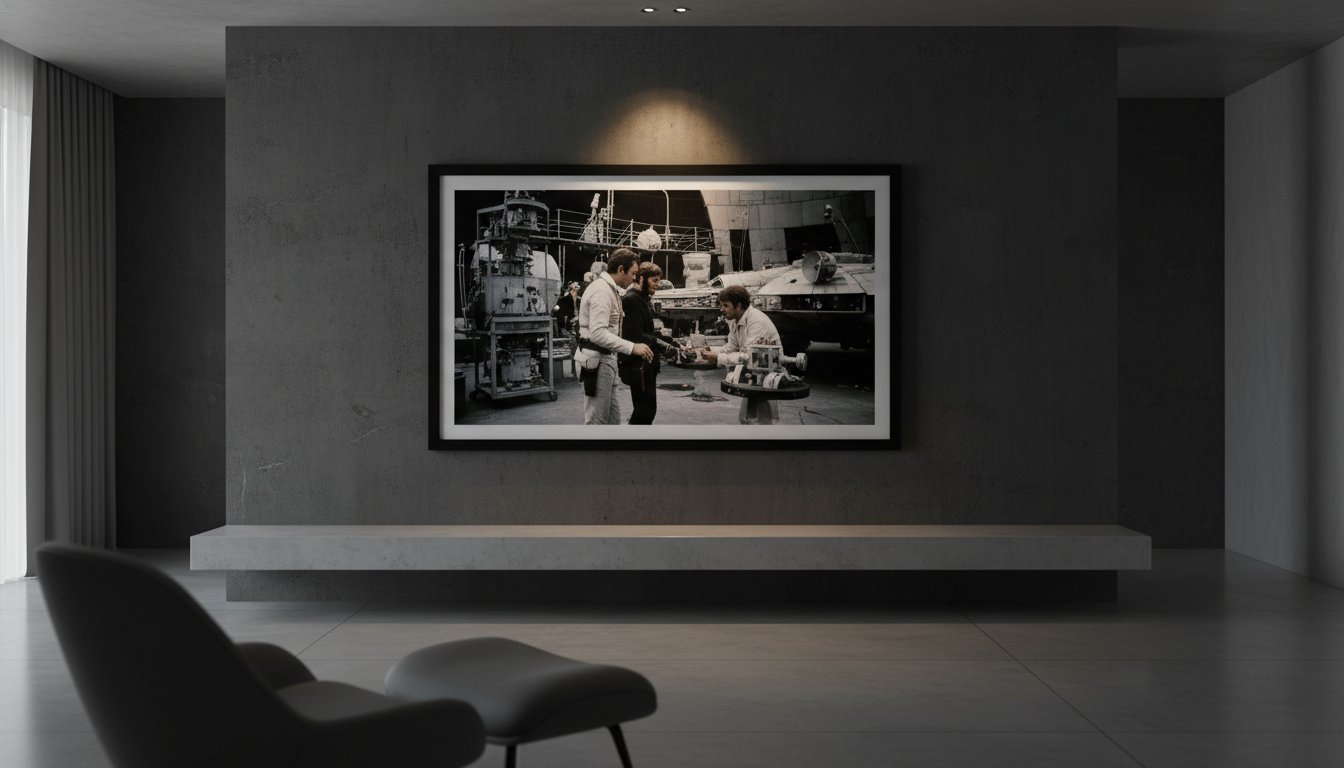
Subject matter plays a critical role in determining a print’s desirability. While iconic character portraits are always in demand, candid scenes from Elstree Studios during the 1976 production of A New Hope often command higher premiums. These behind-the-scenes glimpses, such as those captured by photographer Terry O’Neill, provide a human element that transcends the film’s special effects. To protect these investments, serious collectors look for the “Gallery Seal.” This physical mark of authenticity serves as a guarantee that the work has been produced to the highest curatorial standards from an authorized negative.

Understanding Edition Numbering and Artist Proofs

The nomenclature of a limited run is straightforward yet vital. A print marked “1/50” indicates it’s the first pull from a strictly limited batch of 50. Lower numbers are frequently more sought after by purists, though the physical quality remains consistent across the run. More exclusive still is the “Artist Proof” (AP). Traditionally, these were the first prints pulled to ensure the artist was satisfied with the color and contrast. Usually accounting for only 10% of the total edition size, APs are prized for their proximity to the photographer’s original vision. Verifying these runs requires a Certificate of Authenticity that matches the numbering and the gallery’s embossed seal.

The Role of Provenance in Cinematic Art

In the world of high-end photography, the history of the physical object is as important as the image itself. Provenance is the biography of an artwork that validates its historical soul. When a print is sourced directly from the Getty Images Gallery or the Terry O’Neill archive, it carries a chain of custody that eliminates the risk of forgery or unauthorized reproduction. This documented trail ensures that your piece is a legitimate part of the Star Wars legacy. If you’re ready to begin your journey into fine art collecting, you can explore our curated Star Wars collection to find pieces with impeccable archival standing.

The Masters Behind the Lens: Terry O’Neill and the Archives

Terry O’Neill didn’t just photograph movie stars; he chronicled the evolution of modern mythology. While many saw the 1977 debut of George Lucas’s space opera as a technical feat of special effects, O’Neill recognized the human pulse at its center. He brought a fashion photographer’s eye to the dusty sets of Tatooine and the clinical corridors of the Death Star. This unique perspective is what distinguishes a rare star wars prints limited edition from standard promotional material. He focused on the “Guardians of Glamour,” positioning actors like Harrison Ford and Carrie Fisher not merely as characters, but as the new royalty of the silver screen.

The “O’Neill Aesthetic” is defined by a rare intimacy. He had a gift for capturing the quiet breath between takes, where the mask of the character slipped to reveal the person beneath. Through his lens, we see the vulnerability of a young Fisher and the wry, reluctant heroism of Ford. Galerie Prints maintains a deep reverence for this historical significance, acting as a steward for these moments. By collaborating with world-renowned archives, we ensure that these images are preserved with the technical superiority they deserve, bridging the gap between a 1970s film set and a contemporary luxury interior.

Terry O’Neill’s Iconic Star Wars Portraits

In 1977, O’Neill captured some of the most enduring candid moments in cinematic history at Elstree Studios. His work is a foundational element of any fine art photography collection because it transcends the sci-fi genre. These aren’t just pictures of actors; they’re masterclasses in composition and light. The technical brilliance of his silver gelatin darkroom prints is unmatched. Each piece is hand-printed in our London darkroom, utilizing traditional methods to achieve a tonal range and depth that digital reproductions can’t touch. The silver crystals in the paper create a physical texture, making the image feel alive and permanent.

Accessing the Getty Images Gallery Archive

The exclusivity of our partnership with the Getty Images Gallery Archive allows us to offer something truly exceptional. We’ve spent years unearthing rare, never-before-seen negatives from the vault, bringing them to light for the first time in decades. These archival treasures offer a level of detail and provenance that far exceeds the mass-produced lobby cards of the past. While those vintage cards were meant for temporary display in theater foyers, these prints are investment-grade art. Every rare star wars prints limited edition we release from the Getty archive serves as a tangible link to the golden age of cinema, curated for the discerning collector who demands both history and aesthetic perfection.

Archival Quality: The Technical Standard for Serious Collectors

Serious collectors understand that a rare star wars prints limited edition is more than just a visual image; it’s a physical artifact of cinematic history. To maintain this status, the technical execution must meet rigorous archival standards. The silver gelatin process remains the gold standard for black and white photography. This method involves a traditional chemical reaction where silver halides are suspended in a gelatin layer on fiber-based paper. It creates a rich, three-dimensional quality in the shadows that digital alternatives simply can’t achieve. While commercial gloss papers often contain bleach and optical brighteners that turn yellow within 15 years, museum-grade, acid-free papers are designed to remain stable for over a century.

Preservation extends beyond the paper itself. UV-protective glass is a non-negotiable requirement for any high-value collection. This specialized glazing filters out up to 99% of harmful ultraviolet rays, preventing the slow degradation of pigments and the “fading” of deep blacks. Many new enthusiasts ask if the extra cost for archival materials is truly worth it. The answer lies in the longevity of the investment. A print produced and protected to these standards retains its clarity, depth, and market value, ensuring the work remains as striking in fifty years as it is today.

The Darkroom Advantage: Hand-Printed in London

Each of our specialized prints is hand-printed in our London darkroom, utilizing artisanal techniques that date back to the origins of the medium. This manual process allows a master printer to manipulate light and chemistry to pull out the finest details from the original negatives. It results in a depth of tone and a specific texture that digital printers cannot replicate. Because these are created by hand, each print possesses subtle variations, making it a unique physical object rather than a mass-produced copy. We believe this craftsmanship is essential for representing the world’s finest photography.

Bespoke Framing: Protecting Your Investment

A frame should serve as both a protective cocoon and an aesthetic enhancement. Utilizing professional bespoke framing services is the most effective way to secure your rare star wars prints limited edition. Conservation-grade mounting uses reversible, acid-free hinges to keep the print in place without damaging the fibers of the paper. This prevents the “foxing” or brown spots that occur when art touches acidic backing boards. For a luxury interior, we often recommend a deep-set shadow box or a minimalist black wood frame. These styles provide a sophisticated border that complements the cinematic scale of the work while ensuring it remains a permanent fixture of your home.

Discover our commitment to excellence and view the full collection of museum-grade works.

Explore the World’s Finest Star Wars Photography

Curating Your Collection: Why Galerie Prints is the Premier Destination

The philosophy at Galerie Prints is built upon a single, unwavering standard: bringing “the world’s finest photography” to the most discerning collectors. We don’t view these images as mere movie memorabilia. Instead, we treat them as archival records of a cultural phenomenon. Our mission, led by the personal expertise of Stuart Möller and our dedicated curatorial team, centers on preserving the tactile beauty of silver gelatin and C-type prints. Every rare star wars prints limited edition piece we offer is selected for its narrative depth, technical excellence, and historical weight.

There is a surprising and elegant overlap between these cinematic archives and the aspirational luxury lifestyle famously captured by Slim Aarons. Just as Aarons documented “attractive people doing attractive things in attractive places,” our Star Wars collection captures the peak of 1970s and 80s creative ambition. These prints are designed to sit comfortably in a high-end interior, providing a bridge between the golden age of Hollywood glamour and the modern collector’s home. They offer a sense of wonder that is refined, sophisticated, and timeless.

From London to the World: Our Global Reach

Our physical presence in London, specifically within the SW19 district, serves as a mark of stability and professional accountability in the art world. We manage every aspect of the journey from our gallery to your walls. Every client receives bespoke, white-glove service to ensure their investment is protected. We provide secure, worldwide shipping for both framed and unframed works, utilizing specialized packaging that meets archival standards. Whether you’re in New York, Tokyo, or London, your art arrives in pristine condition.

Starting Your Star Wars Portfolio

For those taking their first step into fine art photography, we recommend beginning with a Terry O’Neill limited run. O’Neill’s ability to capture the cast with candid intimacy provides a sophisticated entry point for any rare star wars prints limited edition portfolio. Owning one of these works is about more than decoration; it’s about acquiring a lasting piece of history. We invite you to view these editions as heritage assets that will endure for generations.

Ready to elevate your space with cinematic history?

Explore our exclusive collection of rare Star Wars prints

Elevate Your Collection with Cinematic History

Investing in rare star wars prints limited edition pieces marks a definitive transition from simple fandom to the world of serious art curation. Since the 1977 debut of the saga, these images have moved beyond promotional ephemera into the realm of high-end investment. True rarity is found through our exclusive access to the Terry O’Neill and Getty Archives, where original negatives capture the raw, human element of the production. We honor this heritage by ensuring each bespoke piece is hand-printed in our London darkroom, utilizing museum-quality archival materials that meet international gallery standards.

It’s a commitment to artisanal craftsmanship that transforms a cinematic moment into a lasting heirloom. Selecting a piece from the 1980 Empire Strikes Back era or a candid O’Neill portrait provides a tangible connection to the golden age of cinema. You’ll find that the right silver gelatin finish doesn’t just decorate a room; it defines the space with a sense of history and prestige.

Discover the World’s Finest Star Wars Photography at Galerie Prints

Your walls deserve a story that spans decades of artistic excellence and technical mastery.

Frequently Asked Questions

What is the difference between a Star Wars poster and a limited edition fine art print?

A poster is a mass-produced offset lithograph on thin paper, while a limited edition fine art print is a museum-quality work produced in restricted quantities. Our rare star wars prints limited edition offerings are often hand-printed from original negatives in our London darkroom using archival papers that last over 100 years. Posters lack the depth, texture, and long-term value inherent in these curated photographic editions.

How do I know if my Star Wars print is a genuine limited edition?

Genuine limited editions are verified by a hand-signed certificate of authenticity and a unique edition number, such as 1/50, marked on the print or accompanying documentation. Each piece from Galerie Prints includes these specific markers of provenance to ensure its standing as a legitimate collector’s item. This documentation tracks the print’s journey from the artist’s estate or the darkroom directly to your collection.

Why is silver gelatin printing better for Star Wars photography?

Silver gelatin printing is superior because it utilizes actual silver halides suspended in a gelatin layer to produce an unrivaled tonal range and deep, rich blacks. This chemical process, perfected in 1871, creates a physical depth that digital prints cannot replicate. For Star Wars photography, this method captures the intricate textures of costumes and sets with a luminous, archival quality that remains stable for centuries.

Can I buy Star Wars prints with bespoke framing included?

Are Terry O’Neill Star Wars prints a good investment?

Terry O’Neill prints have shown consistent market strength, with his iconic 1977 portraits often appreciating at auction. As O’Neill’s estate tightly controls the release of his work, the scarcity of these editions drives long-term value for serious collectors. Investing in a limited edition O’Neill piece offers both a tangible connection to 20th-century cinema and a stable asset for a fine art portfolio.

How should I display my rare Star Wars prints to prevent fading?

You should display your prints away from direct sunlight and use UV-protective museum glass to prevent irreversible light damage. Even indirect UV rays can cause 50% of the fading seen in unprotected works over a ten-year period. Maintaining a stable environment with 40% to 50% humidity ensures the archival paper and silver emulsions stay intact for future generations.

What does “Provenance” mean when buying cinema art?

Provenance refers to the documented history of an artwork’s ownership and origin, serving as a definitive paper trail that confirms its authenticity. In the world of cinema art, this might include records from the 1977 production archives or direct lineage from the photographer’s studio. A clear provenance is essential for maintaining the resale value and historical integrity of any high-end photographic investment.

Does Galerie Prints ship framed Star Wars art internationally?

Galerie Prints provides secure international shipping for both unframed and bespoke framed Star Wars art to over 50 countries worldwide. We utilize specialized art couriers and custom-built wooden crates to ensure your piece arrives in gallery condition. Every shipment is fully insured and tracked, reflecting our commitment to providing a seamless experience for collectors of the world’s finest photography.

Conversation Starter Art Pieces: A Curator’s Guide to Narrative Decor

A room filled with exquisite furniture remains silent until a single, storied image gives it a voice. When a guest pauses to admire an authentic silver gelatin print, they aren’t just looking at a decoration; they are witnessing a preserved moment of photographic heritage. Many collectors worry their homes might feel like a sterile, mass-produced catalogue, yet they often struggle to find conversation starter art pieces that carry a genuine, verifiable backstory. You likely believe that your walls should reflect a discerning eye for the world’s finest photography, serving as a bridge to the golden age of glamour rather than a mere placeholder for empty space.

We understand that a premium art investment requires more than just aesthetic appeal; it demands provenance and technical mastery. This curator’s guide will show you how to transform your living space into a private gallery by selecting iconic photography that commands attention and rewards curiosity. You’ll learn how to justify the value of an archival print, from the meticulous hand-printing processes used in our London darkroom to the timeless allure of the 1970s Slim Aarons lifestyle. We’ll explore the specific elements that turn a rare print into a lasting legacy, ensuring you can discuss the history of your collection with absolute confidence and pride.

Key Takeaways

  • Learn why the most compelling interiors of 2026 prioritize narrative-driven decor over mere aesthetics, focusing on works with profound historical weight and technical rarity.
  • Discover how to leverage the “Slim Aarons” effect to introduce an air of aspirational luxury and social intrigue into your private living spaces.
  • Master the art of selecting conversation starter art pieces that utilize cinematic icons and music legends to forge deep, nostalgic connections with your guests.
  • Identify the curatorial secrets to positioning your collection, from matching a print’s visual “volume” to the room’s purpose to the transformative power of bespoke framing.
  • Understand the technical superiority of hand-printed silver gelatin prints and why archival excellence is the cornerstone of a lasting photographic legacy.

What Defines Conversation Starter Art Pieces in 2026?

By 2026, the philosophy of high-end home curation has evolved beyond simple coordination. We’ve moved past the era of sterile minimalism where art was merely a color-coded afterthought to the furniture. Today, sophisticated collectors seek narrative-driven interior design that reflects a personal history or a specific cultural moment. The most effective conversation starter art pieces are those that bridge the gap between aesthetic beauty and intellectual curiosity. This evolution reflects a broader movement in design where the story behind the frame is as vital as the image within it.

A true conversation piece must possess more than just visual appeal; it requires historical weight, a rare perspective, or a technical marvel that defies easy explanation. While the term historical conversation piece originally referred to 18th-century informal group portraits, the modern interpretation focuses on the dialogue between the viewer and the work. This psychological impact is profound. It forces a shift from passive viewing to active inquiry, prompting guests to pause and engage rather than simply passing by. Distinguishing these curated works from mass-produced novelty is essential. While a trendy print might catch the eye for a week, an archival silver gelatin print from a master’s original negative retains its power for decades.

The Anatomy of a Statement Piece

The first glance is critical. A statement piece often uses scale or an unexpected color palette to disrupt the visual flow of a room. This disruption creates the narrative hook, leading guests to wonder about the context of the shot or the identity of the subject. A conversation piece is a visual anchor that demands a verbal response. Whether it is the sun-drenched glamour of a Slim Aarons poolside scene or the gritty elegance of a 1960s London streetscape, the visual impact must be undeniable. It’s the difference between decor that whispers and art that speaks.

Provenance vs. Presence

Exclusivity drives intrigue in any high-end collection. The story of the photographer, their journey to capture a fleeting moment, and the rarity of the edition add layers of value that go beyond the physical paper. This is why fine art photography remains the ultimate medium for modern storytellers. Limited editions create a sense of urgency and prestige, ensuring that the piece remains a unique focal point. When a print is hand-printed in a London darkroom from an original negative, it carries a sense of permanence and stability that digital reproductions simply cannot replicate. Collectors in 2026 value this authenticity, viewing their acquisition as a lasting piece of history rather than a temporary trend.

The Slim Aarons Effect: Aspirational Luxury as a Social Catalyst

Slim Aarons didn’t just photograph subjects; he documented an aspirational ideal. His work remains the gold standard for conversation starter art pieces because it transcends simple decoration to become a narrative experience. By adhering to his famous mantra of capturing “attractive people doing attractive things in attractive places,” Aarons created a visual language of leisure that continues to resonate with modern collectors. These images serve as more than just aesthetic additions to a room. They act as social catalysts, drawing guests in with the promise of a story hidden behind every sun-drenched frame.

The enduring appeal of these photographs lies in their ability to evoke a specific sense of nostalgia for a lost world. When a guest encounters a work like the 1970 masterpiece ‘Poolside Gossip’ at the Kaufman House in Palm Springs, they aren’t just looking at a pool. They’re engaging with a sophisticated social tableau. This aligns perfectly with Tate’s definition of a conversation piece, which describes art intended to portray a group of people in a domestic or social setting. Aarons’ work elevates this concept, offering a window into the 1950s and 60s glamour that feels both exclusive and welcoming.

Bringing the Jet-Set Lifestyle Home

Whether you’re decorating a sleek penthouse or a mid-century modern residence, these prints offer incredible versatility. Large-scale photography possesses the unique power to anchor a room’s social energy, providing a focal point that dictates the atmosphere of the entire space. It’s why many designers consider Slim Aarons to be more of a lifestyle curator than a mere photographer. His ability to frame the jet-set lifestyle allows homeowners to inject a sense of permanent vacation into their daily lives. For those looking to build a collection, exploring our curated archive of the world’s finest photography is an excellent starting point.

The Story Behind the Lens

The authenticity of these moments is what truly sparks dialogue. Unlike modern editorial shoots, Aarons worked without a fleet of stylists or make-up artists. He relied on natural light and the genuine charisma of his high-society subjects. This raw yet refined approach stems from his background as a WWII combat photographer for Yank magazine. After witnessing the horrors of war, he dedicated his career to capturing beauty. New collectors often mistakenly search for ‘Aaron Slims’ when they first enter the market, but they quickly learn the name represents the pinnacle of archival prestige. Each piece tells a story of a man who traded the front lines for the front rows of the world’s most exclusive resorts, ensuring his work remains a permanent fixture in the history of luxury.

Cinematic Icons and Music Legends: Cultural Touchpoints

Art that taps into our collective memory holds a unique gravity within a home. When you hang a portrait of a music legend or a cinematic star, you aren’t just decorating a wall; you’re inviting the spirit of a definitive era into your living space. These works act as conversation starter art pieces because they bridge the gap between personal aesthetics and shared cultural history. Whether it’s the rebellious energy of the 1970s rock scene or the structured glamour of Mid-Century Hollywood, these images resonate because they represent moments that shaped the modern world.

Terry O’Neill: Capturing the Soul of the Sixties

Terry O’Neill’s lens offered a rare, unvarnished look at the 1960s and 70s, moving beyond the artifice of traditional celebrity photography. His portraits of The Beatles or Brigitte Bardot feel like private moments shared between confidants rather than staged publicity shots. This intimacy is heightened when you choose black and white pictures, as the absence of color focuses the eye on the texture, grain, and raw emotion of the subject. O’Neill’s work serves as a vital historical document of pop culture, immortalizing the fleeting energy of London’s youth revolution with an artist’s precision. These prints bring a sense of quiet authority to a room, suggesting a collector who values both historical depth and the craft of silver gelatin printing.

Rare Cinema Memorabilia as Art

There is a significant distinction between a mass-produced movie poster and a rare, archival photographic print. While a poster is a promotional tool, an archival print from an original negative carries the weight of provenance and technical excellence. For those working with smaller, more intimate spaces, cinema lobby cards offer a tactile, vintage charm that larger formats cannot replicate. These pieces were originally used by theaters to entice audiences, and their smaller scale makes them perfect for grouping together to create a curated corner or a mini-gallery.

  • Investment Value: Rare memorabilia from franchises like Star Wars or original 1950s film noir posters have shown consistent growth in the secondary market over the last 20 years.
  • Curation: Grouping themed prints by director or era creates a narrative thread that guides a guest’s eye through the room.
  • Authenticity: Archival prints preserve the fine details of the film’s production, from the costume textures to the specific lighting setups used on set.

Icons like Marilyn Monroe or David Bowie never fail to spark dialogue because they are more than just faces; they are symbols of social evolution. A high-quality print captures the nuance of their expression, demanding a closer look and a longer pause. By selecting conversation starter art pieces with such rich heritage, you transform your walls into a gallery of human achievement and style.

The Curator’s Eye: Selecting and Positioning Your Piece

Selecting a photograph involves more than mere aesthetic preference; it requires an understanding of spatial volume. A piece must resonate with the room’s energy. In a quiet study, a smaller, intimate silver gelatin print invites a guest to step closer and discover the texture of the grain. In a grand living area, the Rule of One often prevails. A single, large-scale work creates a definitive focal point that anchors the entire interior narrative. Lighting acts as the silent partner in this curation. Professionals recommend using LEDs with a Color Rendering Index (CRI) of 95 or higher to ensure colors remain true to the original negative. Aim for a color temperature of 3000K to provide a warm, gallery-like glow that highlights exquisite details without washing out the shadows.

Bespoke Framing: The Final Touch

Museum-quality mounting and framing are non-negotiable for serious collectors. A bespoke frame serves as a bridge between the historical significance of the photograph and the contemporary lines of your home’s architecture. At Galerie Prints, we emphasize archival standards to protect your investment for decades. This includes the use of acid-free matting and 99% UV-protective glass. This specialized glazing prevents the fading of delicate pigments and maintains the deep blacks of a hand-printed silver gelatin photograph. The frame’s profile should complement the era of the shot; a sleek, dark wood often suits a 1950s fashion plate, while a minimalist white frame allows a vibrant Slim Aarons poolside scene to radiate modern luxury.

Placement Strategies for Maximum Engagement

The placement of conversation starter art pieces dictates how guests interact with your collection. The entry hall is your first opportunity to set a narrative tone. A striking, high-contrast image here acts as a bold introduction to your personal style. In the dining room, art serves as a catalyst for dinner party conversation. Position these pieces so they’re visible from a seated position, fostering a shared experience during the meal. For the best viewing angle, follow the gallery standard of hanging art at eye level. This typically means the center of the print sits 145 cm (approximately 57 inches) from the floor. This height ensures that the viewer’s gaze meets the subject naturally, whether they’re admiring a candid moment from a 1960s film set or a serene landscape.

  • Entry Hall: Use bold, iconic imagery to establish an immediate sense of prestige.
  • Dining Room: Hang pieces at a slightly lower “seated” eye level to maintain engagement during long evenings.
  • Large Walls: Don’t fear empty space. A single oversized print often carries more weight than a cluttered gallery wall.
Explore our curated selection of conversation starter art pieces to find a work that speaks to your unique aesthetic.

Investing in Legacy: The Galerie Prints Difference

Acquiring conversation starter art pieces is an investment in a narrative that transcends temporary trends. At Galerie Prints, we operate as guardians of a photographic heritage, offering what we confidently term the world’s finest photography. Our collection isn’t a mere catalog of images; it’s a curated gateway to the golden age of glamour, sourced through exclusive access to the Getty Images Gallery and iconic archives containing over 80 million historical negatives. Every piece we provide carries a weight of authenticity that digital reproductions lack, turning your walls into a gallery of historical significance.

Hand-Printed in Our London Darkroom

The distinction between a mass-produced digital print and a hand-printed silver gelatin photograph is profound. In our dedicated London darkroom, master printers utilize a traditional chemical process that remains the gold standard for fine art photography. This method involves exposing light-sensitive paper to an original negative, then developing it through a series of meticulous chemical baths. The result is a piece with a three-dimensional depth and a range of rich, tonal blacks that digital ink simply cannot replicate. It’s a tactile experience as much as a visual one.

  • Archival Excellence: We use heavy-weight, fiber-based archival paper, ensuring your investment remains vibrant and stable for over 100 years.
  • Tactile Authenticity: Every print bears the unique characteristics of a handcrafted object, making it a true bespoke addition to your collection.
  • Provenance: By working directly from original negatives, we maintain a direct physical link to the photographer’s initial vision.

A Trusted Guide for Global Collectors

Our role extends far beyond the darkroom. We act as a bridge for collectors, providing professional consultancy led by Stuart Möller and our team of seasoned experts. Whether you’re seeking a rare Slim Aarons poolside scene to evoke aspirational luxury or a gritty 1960s street portrait to anchor a room, we help you identify the specific conversation starter art pieces that resonate with your personal aesthetic. We manage the entire lifecycle of your acquisition, from the initial discovery to bespoke professional framing that protects and enhances the work for decades to come.

Logistics shouldn’t be a barrier to luxury. We’ve refined our worldwide shipping processes to ensure that framed art arrives at your door in pristine condition, regardless of whether you’re in London, New York, or Sydney. Every shipment is handled with the precision and care that a piece of history deserves. If you’re ready to transform your living space into a gallery of stories, explore our curated collections at Galerie Prints and find the work that speaks to you.

Curate Your Living Narrative

Transforming a room into a private gallery requires a discerning eye for authenticity and cultural resonance. As we approach 2026, the most compelling interiors move beyond simple decoration to embrace conversation starter art pieces that tell a profound story. Whether it’s the aspirational luxury found in the Slim Aarons archive or the raw energy of a cinematic icon, these works act as social catalysts. They don’t just sit on a wall; they invite engagement and reflect a sophisticated worldview.

Investing in such a legacy requires a commitment to archival excellence. Every order we fulfill is hand-printed in our London darkroom, ensuring that the silver gelatin or c-type print you receive meets the highest standards of the art world. We provide exclusive access to historic negatives and offer bespoke museum-quality framing on all orders to preserve the provenance of your selection. It’s time to elevate your environment with a piece that transcends time and trends.

Discover the World’s Finest Photography at Galerie Prints

Your walls are the canvas for your personal history; choose images that speak with authority and grace.

Frequently Asked Questions

What makes a piece of art a ‘conversation starter’?

A piece of art becomes a conversation starter when it possesses a compelling narrative or a historical provenance that invites immediate inquiry from guests. These conversation starter art pieces often feature iconic subjects, such as those found in the Slim Aarons archive, which represent a specific era of mid-century glamour. Whether it’s the technical mastery of a 1954 fashion shoot or a rare candid of a Hollywood star, the work must offer more than just aesthetic appeal. It acts as a bridge to a story that the homeowner is eager to share.

Are Slim Aarons prints a good investment for home decor?

Slim Aarons prints have demonstrated consistent desirability, with his most famous work, “Poolside Gossip,” remaining a definitive symbol of aspirational luxury since 1970. Collectors value these pieces because they capture an era of “attractive people doing attractive things in attractive places” that no longer exists. Since the Getty Images Gallery acquisition of the archive in 1997, the global recognition of these works has solidified their status as blue-chip photographic investments. They bring both historical weight and timeless style to any curated interior.

What is the difference between a standard print and a silver gelatin print?

The primary difference lies in the artisanal chemistry of the darkroom versus modern digital inkjet methods. A silver gelatin print is created through a light-sensitive process where silver salts suspended in gelatin are exposed to an original negative. This method, which has been the gold standard of fine art photography since the 1870s, produces a rich tonal range and deep blacks that digital prints cannot replicate. We continue this heritage by offering works hand-printed in our London darkroom to ensure every piece meets the highest curatorial standards.

How do I choose the right size art for a large living room wall?

You should aim for the artwork to occupy approximately 60 percent to 75 percent of the available wall space not covered by furniture. For a standard 96-inch sofa, a single large-scale piece or a curated triptych should span at least 58 inches to maintain visual balance. Positioning the center of the image at the 57-inch “eye level” standard used by major international galleries ensures the work feels integrated into the room’s architecture. Choosing the wrong scale is the most common mistake in interior curation.

Can I buy framed conversation starter art pieces online safely?

You can safely acquire conversation starter art pieces online when the gallery utilizes specialized fine art couriers and museum-grade packaging. At Galerie Prints, we protect our world’s finest photography using reinforced crates and shatter-resistant acrylic, which is 17 times stronger than standard glass. We provide full tracking and insurance for every shipment leaving our London studio. This professional approach ensures that bespoke frames and delicate silver gelatin prints arrive in pristine, gallery-ready condition regardless of their destination.

Why is bespoke framing important for fine art photography?

Bespoke framing is essential because it provides a pH-neutral environment that prevents the degradation of the photographic paper over time. Unlike mass-produced frames, custom solutions use acid-free mounting boards and UV-protective glazing to block 99 percent of harmful rays. This meticulous attention to detail preserves the provenance of the work while ensuring the frame complements the specific aesthetic of the photograph. It’s a critical step in transforming a simple print into a lasting piece of history for your home.

What are cinema lobby cards and why are they collectable?

Cinema lobby cards are 11 by 14-inch promotional photographs that movie studios distributed to theaters to entice audiences during a film’s original release. These cards were typically produced in sets of 8 and were never intended for public sale, making surviving examples from the 1940s and 1950s highly sought-after rarities. Collectors prize them for their vibrant lithographic colors and their ability to capture a film’s most iconic moments in a compact, displayable format. They represent a tangible connection to the golden age of cinema.

How can I tell if a print is of archival quality?

A print is considered archival if it’s produced on acid-free, 100 percent cotton rag or fiber-based paper designed to last for over 100 years without yellowing. You should look for certifications such as the ISO 9706 standard, which dictates the permanence requirements for fine art materials. Our darkroom processes use traditional chemistry and premium papers to ensure that every image remains as vivid as the day it was captured. Verifying the printing method and paper weight is the best way to confirm a piece’s longevity.

Gallery Wall Ideas for Staircase: Curating a Vertical Narrative in 2026

What if the ascent to your upper floors was not merely a transition, but a curated journey through the golden age of glamour? For many homeowners, the vertical expanse of a stairwell remains an intimidating canvas, often left bare due to the fear of damaging plaster with trial and error holes or the struggle to apply gallery wall ideas for staircase design against a shifting 45 degree incline. You likely recognize that a staircase possesses the unique potential to become a private museum; yet, the technical precision required to balance diverse art styles often feels out of reach.

Salon arrangements offer a more evocative, narrative-driven experience. This style allows you to mix various sizes and orientations, creating a visual weight that feels balanced yet dynamic. Start with a large anchor piece, perhaps a 30×40 inch Slim Aarons landscape, positioned at the landing or the first major turn of the stairs. This grounds the collection and provides a focal point for the viewer. From there, use the organic growth method to expand the collection upward and downward. It’s a strategy favored by those who view their walls as a living archive, adding new acquisitions over many years. By keeping the 2 inch spacing rule consistent, even the most diverse gallery wall ideas for staircase remain sophisticated. This method celebrates the history of each piece, allowing a vintage print to sit comfortably beside a contemporary bespoke work hand-printed in a London darkroom. To complement such a collection of archival prints, you can explore Original Abstract Paintings options to add vibrant, hand-painted textures that bring a unique energy to your vertical gallery.

This guide will transform those anxieties into a masterclass in curation, offering a definitive roadmap to create a sophisticated home gallery in 2026. You’ll learn to select investment-grade, archival prints that harmonize across diverse frames while preserving the integrity of your walls. We will examine the exact measurements for sloped displays, the art of mixing iconic photographers, and the secrets to creating a vertical narrative that feels both timeless and intentional. From the hand-printed depth of a silver gelatin photograph to the measured spacing of a tiered layout, this journey reveals how to build a collection that tells a compelling story with every step.

Key Takeaways

  • Discover how to transform your staircase into a curated vertical narrative that guides the eye through a cohesive story as you ascend.
  • Explore sophisticated gallery wall ideas for staircase design by anchoring your collection around an evocative theme, such as iconic cinema or the aspirational world of Slim Aarons.
  • Master the “Sloping Horizon” rule to achieve perfect visual balance, whether you prefer the structured precision of a symmetrical layout or the artistic flow of a salon-style arrangement.
  • Learn professional secrets for technical execution, including the “Paper Template” method and the 57-inch rule for maintaining ideal eye-level placement on an incline.
  • Understand the enduring value of archival-quality silver gelatin prints, hand-crafted in our London darkroom, to ensure your home gallery remains a lasting piece of photographic history.

The staircase is often the most neglected architectural feature of a home, yet it provides the most compelling canvas for visual storytelling. It’s a vertical journey. By 2026, homeowners have shifted away from haphazard arrangements toward a more deliberate, curatorial approach. A well-executed staircase gallery wall functions as a vertical axis, guiding the viewer through a narrative that transcends mere transit. This is where a functional passage transforms into a high-impact interior design focal point.

When planning these spaces, designers lean on fundamental design principles to ensure the rhythm of the art matches the rhythm of the architecture. This involves moving beyond temporary decor toward investment-grade displays that retain their allure for decades. Choosing archival pieces, such as silver gelatin prints hand-printed in a London darkroom, ensures that your gallery wall ideas for staircase aren’t just decorative but are legacy pieces. These displays create a sense of permanence and stability that standard retail frames cannot replicate.

The Psychology of the Ascent

The human eye behaves differently when we’re in motion. As you move upward, your gaze naturally tracks along a diagonal path, making the 25-to-45-degree incline of a staircase a unique psychological opportunity. Unlike a static gallery in a living room, a staircase allows for a sense of discovery with every step taken. Alignment is critical; art should follow the eye-level of the viewer as they climb. This creates a cinematic experience where each frame reveals a new chapter of the home’s narrative. It’s a rhythmic progression that rewards the viewer for their movement.

Moving Beyond the “Family Photo” Cliche

While personal snapshots have their place, a sophisticated home in 2026 demands a more elevated aesthetic. Integrating fine art photography into your staircase gallery establishes a sense of timelessness and quiet authority. It’s about balancing personal memories with iconic cultural heritage. Consider the impact of a curated collection that includes:

  • Iconic Photography: Works that capture the golden age of glamour or historic moments.
  • Aspirational Lifestyle: The sun-drenched, sophisticated world of Slim Aarons.
  • Textural Depth: Bespoke framing that complements the architectural materials of the home.

Fine art photography serves as a bridge between the past and the present. It creates a home’s personality by showcasing a discerning eye for the world’s finest photography. This approach avoids the cluttered look of small, mismatched frames. Instead, it favors a professional, polished distance that befits a luxury gallery. You’re not just hanging pictures; you’re acting as a guardian of photographic heritage within your own walls.

For homeowners who wish to balance this curated aesthetic with the practical needs of a family environment, Print My Worksheets offers high-quality educational resources that can be utilized in more functional areas of the home, ensuring that learning remains a priority alongside design.

Curating Your Theme: From Slim Aarons to Iconic Cinema

A successful staircase installation requires more than just hanging frames at eye level. It demands a cohesive anchor theme to prevent the transition between floors from feeling like an afterthought. Without a central narrative, the vertical climb can quickly become a cluttered visual experience. By implementing effective design strategies that prioritize thematic consistency, you transform a functional thoroughfare into a private gallery. Selecting a specific era or a single photographer’s body of work provides the architectural discipline needed for these often narrow, high-traffic spaces.

The Aspirational Luxury of Slim Aarons

Bringing the “poolside glamour” of Slim Aarons to an interior staircase offers an immediate injection of light and leisure. His work, which famously captured “attractive people doing attractive things in attractive places,” utilizes a vibrant color palette from the 1950s and 60s. These saturated hues of Mediterranean blues and Palm Springs pinks are particularly effective for brightening enclosed stairwells that lack natural light. Pairing these large-scale scenes of the jet-set lifestyle with minimalist, modern frames ensures the focus remains on the narrative of mid-century prestige. It’s a sophisticated way to execute gallery wall ideas for staircase projects that aim for an airy, expansive feel.

Cinema Heritage: Lobby Cards and Vintage Posters

For collectors with a passion for the silver screen, incorporating cinema lobby cards creates a nostalgic, cinematic climb. These cards, typically measuring 11×14 inches, offer a uniform size that’s ideal for negotiating tight corners or awkward landings where larger frames won’t fit. Mixing these smaller, detailed pieces with bold, graphic vintage film posters creates a dynamic rhythm. This approach allows you to weave a story of Hollywood’s photographic heritage, using the staircase as a chronological timeline of cinematic history. The repetition of the lobby card format provides a sense of order that grounds the more eclectic, larger posters.

Timeless Monochrome: The Black and White Aesthetic

If you’re looking for the most forgiving layout, black and white pictures offer a masterclass in architectural consistency. A monochrome palette hides inconsistencies in frame spacing and allows for a diverse mix of subjects, from 1960s fashion archives to gritty street photography. The impact of silver gelatin prints on a staircase is profound; the depth of the blacks and the crispness of the whites provide a museum-quality finish. These prints, often hand-printed in our London darkroom, bring a tactile sense of history to the home. This aesthetic is one of the most enduring gallery wall ideas for staircase designs, as it remains unaffected by changing interior trends. Explore our curated collections at Galerie Prints to find the archival pieces that will define your home’s vertical narrative.

Staircase Layout Strategies: Symmetrical vs. Salon Style

The ascent of a staircase presents a unique architectural canvas for the discerning collector. To master gallery wall ideas for staircase design, you must choose between two distinct philosophies: the disciplined grid or the fluid salon. Regardless of the chosen aesthetic, success relies on the Sloping Horizon rule. This principle dictates that the art maintains a consistent distance from the stair treads, typically 57 to 60 inches from the floor to the center of the frame. This height mirrors the eye level of a person standing mid-ascent, ensuring the work remains intimate and engaging.

To calculate the center line, measure upward from every third step to establish a diagonal path that mirrors the staircase angle, which usually sits between 30 and 35 degrees. Precision is the hallmark of a luxury display. Maintaining a 2 or 3 inch gap between frames is the golden rule for high-end installations. This specific spacing prevents the collection from feeling crowded while ensuring the individual provenance of each print is respected. It’s a technical detail that separates a professional gallery installation from a casual home display.

The Symmetrical Grid: Order and Precision

This approach favors collectors who appreciate the rhythmic stability of uniform print sizes and identical bespoke frames. It creates a clean, architectural silhouette that complements modern or minimalist interiors. The technical execution is demanding; you’ll need to calculate precise vertical offsets for every frame to ensure the grid follows the stairs’ incline perfectly. This method works best with a series of silver gelatin prints from a single photographer. The repetition of form enhances the archival quality of the work, turning a functional transit space into a structured exhibition of the world’s finest photography.
The Salon Style: Curated Eclecticism

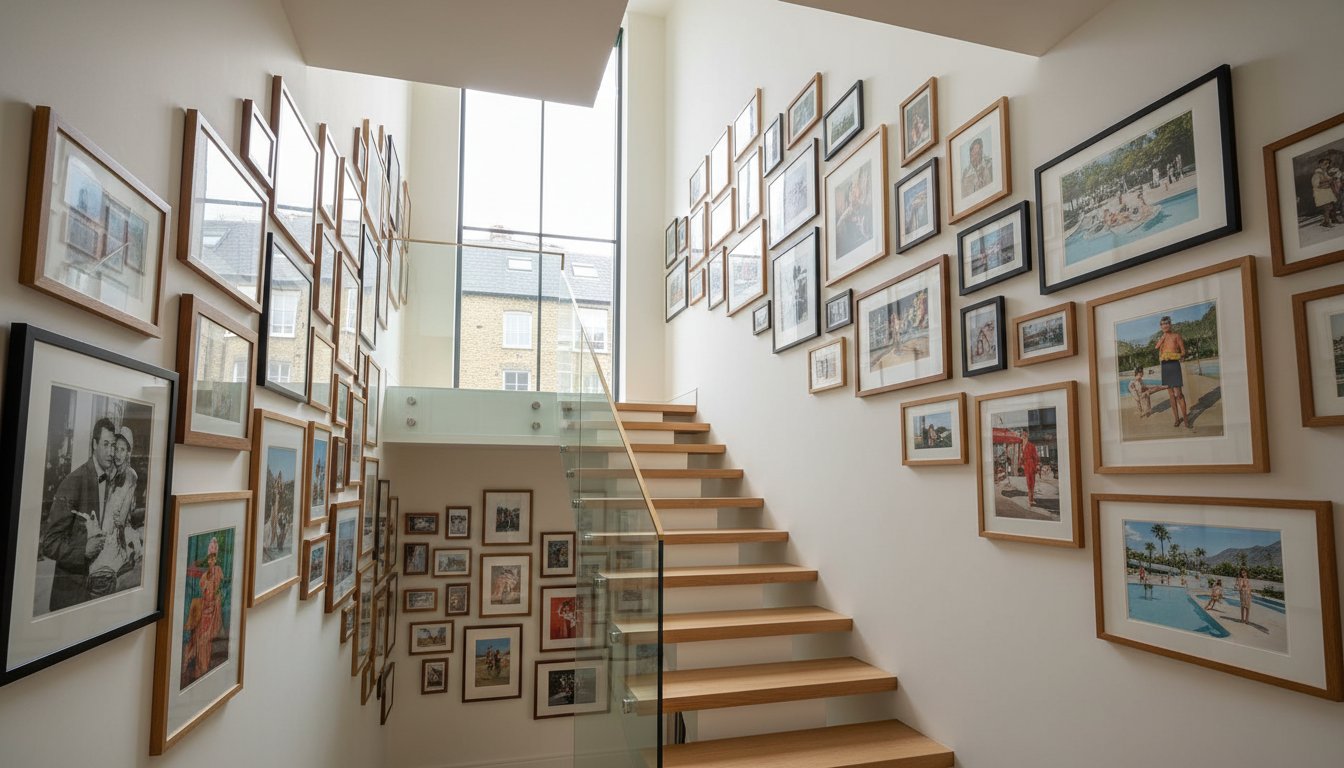
Salon arrangements offer a more evocative, narrative-driven experience. This style allows you to mix various sizes and orientations, creating a visual weight that feels balanced yet dynamic. Start with a large anchor piece, perhaps a 30×40 inch Slim Aarons landscape, positioned at the landing or the first major turn of the stairs. This grounds the collection and provides a focal point for the viewer. From there, use the organic growth method to expand the collection upward and downward. It’s a strategy favored by those who view their walls as a living archive, adding new acquisitions over many years. By keeping the 2 inch spacing rule consistent, even the most diverse gallery wall ideas for staircase remain sophisticated. This method celebrates the history of each piece, allowing a vintage print to sit comfortably beside a contemporary bespoke work hand-printed in a London darkroom.

Technical Execution: Measuring, Spacing, and Bespoke Framing

Transforming a staircase into a curated corridor requires more than just an eye for beauty; it demands the precision of a master technician. When implementing gallery wall ideas for staircase projects, the physical execution must match the caliber of the photography itself. The process begins with the “Paper Template” method. Trace each frame onto kraft paper and secure these mockups to the wall using low-tack tape. This allows you to visualize the vertical narrative and adjust the flow without committing to a single nail hole. It’s a vital step for maintaining the rhythm of the collection as it ascends.

The core of a successful installation lies in the 57-inch rule, a gallery standard that places the center of the artwork at the average human eye level. On a staircase, this measurement must be taken vertically from each individual tread to ensure the diagonal axis remains fluid. For instance, a 2024 study on gallery ergonomics suggests that maintaining this 145 cm height creates a more immersive experience for the viewer. To protect your investment, especially in stairwells flooded with natural light, specify anti-reflective museum glass. High-quality glazing provides up to 99% UV protection, preventing the degradation of silver gelatin prints while eliminating the glare that often obscures art in bright transitions.

Step-by-Step Hanging Guide

  • Find the Anchor: Start at the midpoint of the staircase. Hang your primary, largest piece here and work outward toward the upper and lower landings to maintain balance.
  • Maintain the Axis: Use a laser level or a taut string line to define the diagonal slope. This ensures your gallery wall ideas for staircase don’t feel disjointed or haphazard.
  • Prioritize Safety: Never balance a standard ladder on steps. Use a specialized multi-position ladder or a stair-platform system to ensure a stable base while reaching higher points of the wall.

The Importance of Bespoke Framing

Retail frames often lack the structural integrity and chemical purity required to protect high-end photographic art in high-traffic areas. Bespoke framing offers a marriage of aesthetic harmony and archival security. When selecting finishes, consider how a deep black ash or a warm natural oak might echo the texture of your banister or the grain of the floorboards. A gilt frame can add a touch of 1950s glamour, reminiscent of the Slim Aarons lifestyle, while a minimalist white frame allows the subject matter to breathe.

Archival mounting is the standard for preserving print provenance, utilizing pH-neutral adhesives and acid-free mounting boards to prevent the chemical yellowing that destroys paper fibers over time. Every print we offer is a piece of history, often hand-printed in our London darkroom, and deserves a housing that reflects that heritage. Choosing bespoke materials ensures your collection remains as vibrant in 2046 as it is today.

Discover how our curated collections can elevate your home by exploring the world’s finest photography at Galerie Prints.

The Galerie Prints Standard: Crafting Your Museum-Quality Staircase

Selecting the right gallery wall ideas for staircase projects requires more than just an eye for design; it demands access to the world’s finest photography. At Galerie Prints, we serve as a bridge to the golden age of glamour, sourcing imagery from prestigious archives like Getty Images and the estate of Terry O’Neill. Our commitment to authenticity begins in our London darkroom. Here, we produce silver gelatin prints from original negatives, a process that captures a depth of tone and level of detail that digital alternatives simply cannot replicate. These aren’t mere decorative items. They’re archival treasures designed to last for generations, ensuring your investment remains as vibrant in fifty years as it is today.

Our bespoke framing service arrives ready to hang, removing the guesswork from your installation. By choosing museum-quality materials, we protect the art from environmental factors; this makes it a permanent fixture of your home’s architectural narrative. We don’t just sell prints; we provide the components for a legacy.

Curatorial Assistance for Your Project

Our experts understand that every vertical space presents unique challenges. We provide tailored advice to help you select a cohesive set of prints that respect your home’s specific dimensions. Whether you’re filling a vast three-story void or a small architectural niche, we offer custom sizing to ensure a perfect fit. Every piece comes with a documented history. This provenance ensures that your gallery wall ideas for staircase aren’t just visually stunning but also intellectually rich, telling the story of photographic heritage with every step you take.

From Darkroom to Destination

The journey of your print is one of meticulous London-based craftsmanship. From the initial chemical bath in the darkroom to the final join of the bespoke frame, every step is handled by artisans. There’s a distinct sensory experience in unboxing a Galerie Prints delivery. The weight of the solid wood frame and the crisp clarity of the archival glass signal a standard of quality found in the world’s leading institutions. Your home deserves nothing less than this level of prestige.

Mastering the Art of the Curated Ascent

Transforming a transitional space into a meaningful journey requires more than just hanging frames; it demands a vision for storytelling. By 2026, the most compelling interiors will prioritize the vertical narrative, using the staircase to bridge the gap between architectural function and artistic expression. Whether you opt for the rigid discipline of a symmetrical grid or the storied charm of a salon-style arrangement, your choices should reflect a commitment to archival quality. These gallery wall ideas for staircase designs succeed when they pair iconic imagery from the Getty Images archives with the precision of museum-standard craft.

Every piece we produce is hand-crafted in our London darkroom, ensuring that the silver gelatin prints you hang today remain legacies for the next generation. We provide exclusive access to the Slim Aarons collection, offering a window into a world of mid-century glamour that’s preserved through our bespoke framing process. It’s about investing in a piece of photographic history that resonates every time you move between floors.

Begin your curated ascent with the world’s finest photography at Galerie Prints

Your walls are a canvas for your most sophisticated stories; let them speak with authority.

Frequently Asked Questions

How high should art be hung on a staircase wall?

Aim for a center point approximately 145 centimeters above each stair tread to mirror the natural eye level of an ascending viewer. This measurement ensures your collection maintains a rhythmic flow as one climbs the stairs. If you’re curating a bespoke arrangement of silver gelatin prints, this 145 centimeter baseline provides the structural integrity needed to anchor more expansive, floor to ceiling compositions.

Can I mix black and white photos with color prints on a staircase?

You can absolutely blend monochrome photography with vibrant color prints to create a layered, editorial aesthetic. A successful ratio often involves 70 percent black and white imagery punctuated by 30 percent color accents to maintain visual cohesion. This technique allows iconic archival shots to sit comfortably alongside contemporary Slim Aarons poolside scenes, bridging the gap between historical provenance and modern interior design.

What is the best way to plan a staircase gallery wall without making extra holes?

The most effective method involves cutting paper templates to the exact dimensions of your frames and securing them with low tack painter’s tape. This allows you to visualize your gallery wall ideas for staircase without committing to a single nail. By mapping out the 5 centimeter gaps between each piece on the wall first, you ensure the final installation of your hand printed collection is precise and balanced.

Should all frames on a staircase gallery wall be the same color?

Frames don’t need to be identical, though a unified material palette often enhances the prestige of the collection. Mixing three distinct finishes, such as hand stained oak, matte black, and antique gold, adds a curated depth that feels like a professional gallery. Using bespoke framing for every piece ensures that even if the colors vary, the quality of the craftsmanship remains a consistent thread throughout the vertical journey.

How many pictures do I need for a standard staircase gallery wall?

A standard residential staircase typically requires between 7 and 12 pieces to feel fully realized. For a 13 step flight, a curated grouping of 9 prints provides enough visual interest without overwhelming the architectural space. Smaller landings might only need 3 larger, high impact archival prints to establish a sense of permanence and luxury without cluttering the narrow passage during your gallery wall ideas for staircase project.

How do I handle lighting for a staircase gallery wall?

Install directional LED spotlights with a 30 degree beam angle to illuminate each print without creating harsh glare on the glass. Proper lighting is essential for showcasing the silver gelatin textures and fine details of your photography. Position the fixtures 45 to 60 centimeters away from the wall to ensure the light washes evenly over the frames, highlighting the provenance of each individual work.

Is it better to use large prints or several small ones on a stairs?

A combination of one large anchor piece and several smaller supporting prints creates the most compelling narrative. Using a single 70 by 100 centimeter statement print at the turn of the stairs provides a focal point that grounds the entire installation. Surrounding this with smaller 20 by 30 centimeter frames allows for a nuanced exploration that invites closer inspection from guests as they move through the home.

What is the most common mistake when hanging art on stairs?

The most frequent error is ignoring the 5 centimeter spacing rule, which results in a disjointed and chaotic appearance. Many homeowners hang their art based on the ceiling line rather than the staircase incline, creating a visual disconnect. Maintaining a consistent distance from the stair treads ensures the collection feels like an intentional, permanent installation rather than an afterthought in a high traffic area.

Decorating with Photography Prints: A Curatorial Guide to Fine Art Interiors

What if the most profound architectural detail in your home isn’t the crown molding or the hearth, but a single, exquisitely captured moment of 1950s Riviera glamour? Many collectors find that while they appreciate the allure of fine art, the actual process of decorating with photography prints often brings a sense of hesitation regarding frame styles or the delicate balance between monochrome and color. It’s a common concern that a space might feel cluttered rather than curated, especially when dealing with the prestigious weight of iconic imagery.

This curatorial guide will teach you how to transform your living environment into a sophisticated private gallery using professional curation techniques and bespoke framing. You’ll learn to navigate the archives of the world’s finest photography to find pieces that offer both aesthetic beauty and historical provenance. We’ll examine the technical superiority of prints hand-printed in our London darkroom and provide practical steps for creating layouts that reflect a life well-lived. From the aspirational Slim Aarons lifestyle to the stark power of black and white portraiture, you’re about to discover how to invest in timeless art that anchors your interior with quiet authority.

Key Takeaways

  • Understand the transformative power of fine art photography and how a deliberate creative vision can redefine the psychological atmosphere and mood of your home.
  • Master the art of decorating with photography prints by selecting themes that harmonize with your interior architecture, from the jet-set glamour of Slim Aarons to iconic cinematic archives.
  • Learn to navigate the technical nuances of sizing and bespoke framing to ensure your artwork commands the presence it deserves while avoiding common scale mistakes.
  • Discover room-by-room curation strategies for placing evocative imagery that serves as both a sophisticated focal point and a timeless conversation starter.
  • Gain insight into the value of archival excellence and the prestige of hand-printed works produced within a traditional London darkroom.

What is Fine Art Photography and Why Does it Transform a Room?

Fine art photography isn’t a mere record of a moment; it’s a curated vision that commands attention. Unlike the billions of digital images captured daily, a fine art print is a deliberate act of creation. To understand What is Fine Art Photography?, one must look at the photographer’s intent. It’s the difference between a casual observation and a profound statement. When you begin decorating with photography prints, you aren’t just adding color to a wall. You’re inviting a specific atmosphere into your home, whether that’s the high-society glamour of the 1960s or the quiet stillness of a remote landscape.

The medium’s versatility makes it a cornerstone of sophisticated interior design. Photography bridges the gap between the historical and the contemporary. A vintage silver gelatin print feels at home in a traditional wood-paneled library, while a large-scale C-type print can anchor a minimalist penthouse. This adaptability stems from photography’s unique ability to feel both grounded in reality and elevated by artistic perspective.

The Narrative Power of the Lens

A single image can define the personality of a room. It acts as a silent storyteller, setting a tone that influences how guests feel the moment they enter. If you choose an iconic Slim Aarons piece, you’re injecting a sense of aspirational luxury and mid-century sunshine into your living space. The photographer’s intent dictates the room’s aesthetic direction. A high-fashion shot from a 1950s London studio brings a sense of poise and structure, while a candid street scene might evoke nostalgia and curiosity. The lens captures more than a subject; it captures an era’s soul.

Archival Quality vs. Standard Prints

There’s a vast chasm between mass-produced wall art and true archival gallery prints. Standard commercial prints often use thin paper and fugitive inks that fade within a decade. In contrast, fine art prints are built for longevity, intended to be passed down as family heirlooms. At Galerie Prints, we emphasize the tactile and chemical excellence of traditional methods. Many of our works are hand-printed in our London darkroom, ensuring each piece meets the highest standards of provenance and quality.

  • Silver Gelatin Prints: A classic black and white process using light-sensitive silver salts, producing deep blacks and exquisite tonal ranges.
  • C-type Prints: The gold standard for color photography, using a chemical development process that results in rich, archival-stable imagery.
  • Longevity: Archival prints are designed to last 100 years or more without significant degradation when stored or displayed correctly.

Investing in these materials ensures your home remains a gallery of history rather than a collection of temporary decor. For those ready to deepen their understanding of the medium, exploring a comprehensive guide to fine art photography provides the collector’s insight needed to make an informed acquisition.

Selecting a Theme: From Slim Aarons to Iconic Cinema

Selecting a theme is the foundational step in decorating with photography prints; it’s the thread that binds your interior architecture to the art on your walls. A successful curation considers the era of the building. For instance, a brutalist apartment finds its soul in the stark, industrial lines of abstract architecture photography, while a Georgian townhouse provides a stately backdrop for the cultural weight of iconic cinema. Adding Terry O’Neill’s portraits or vintage lobby cards brings a layer of intellectual prestige to a room, transforming a simple wall into a narrative about 20th-century history. Whether you choose abstract subjects to complement the geometric legs of a mid-century sideboard or figurative works to add a human element to a cold space, the choice must feel intentional.

It’s about more than just filling a void. The subject matter should echo the room’s purpose. A study might benefit from the quiet authority of a black and white jazz session, while a dining room could be elevated by a large-scale, vibrant scene of 1960s socialites. By matching the photograph’s era to your home’s structural DNA, you create a sense of permanence. This approach ensures your decor doesn’t feel like a temporary trend but rather a curated collection with deep provenance.

The Allure of the Golden Age

For those seeking a sense of escapism, Slim Aarons remains the gold standard for luxury decor. His work captures an era of “attractive people doing attractive things in attractive places.” Incorporating these “Poolside” and “Palm Springs” aesthetics into a modern living room injects a vibrant, jet-set energy. These prints work best when their sun-drenched palettes contrast against neutral, minimalist furniture. The goal is to let the photograph act as a window into a world of leisure and high-society glamour. The lush blues of a Mediterranean villa or the sharp pinks of a desert social club provide a focal point that anchors the entire room’s color story, offering a daily dose of aspirational beauty.

Black and White: The Timeless Choice

Monochrome imagery is often the preferred route for a sophisticated, minimalist look. It strips away the distraction of color, focusing instead on form, texture, and light. When you explore our guide to black and white pictures, you’ll see how silver gelatin prints add depth to dimly lit spaces or small studies. These archival works, often hand-printed in our London darkroom, offer a tactile quality that digital prints lack. Proper Sizing and Bespoke Framing ensures these pieces command the room without overwhelming it. A well-placed black and white print acts as an anchor, providing a timeless stability that color trends can’t touch. To begin your collection, consider how a single, powerful image can redefine your space by visiting our curated archives today.

The Technicals of Display: Sizing and Bespoke Framing

Selecting the right piece is only the first step. The true alchemy of decorating with photography prints lies in the precision of their physical presence. A common error involves the “floating” print, where a masterpiece appears lost on a vast expanse of plaster. You should measure your wall space with the same care a curator applies to a museum wing to avoid the “too small” art mistake. A print that lacks scale fails to command the room’s attention; instead, it looks like an afterthought. When you get the proportions right, the art doesn’t just sit on the wall, it defines the entire atmosphere of the room.

Sizing Guide for Standard Rooms

Interior designers often rely on the 60/40 rule for wall coverage. This guideline suggests that your art should occupy approximately 60% to 75% of the available wall space that isn’t already obscured by furniture or architectural features. For a grand living room, an oversized statement print creates an immediate focal point, drawing the eye toward the world’s finest photography with effortless authority. Conversely, smaller spaces benefit from intimate works. Using cinema lobby cards is an excellent strategy for decorating nooks or library shelves. These 11×14 inch vintage treasures offer a window into Hollywood’s photographic heritage while fitting perfectly into more compact, personal environments.

Bespoke Framing: The Gallery Secret

Professional framing serves as a bridge between the artwork and your existing decor. While the print itself captures a moment in time, the frame grounds it in your home. Bespoke framing is essential for archival protection, especially for prints hand-printed in our London darkroom. Choosing the right finish is a matter of architectural dialogue:

Fortunately, accessing professional-grade materials is simpler than ever, with a variety of sources for custom picture frames online that can cater to specific archival needs.

  • Classic Black: Provides a crisp, modern boundary that emphasizes the contrast in monochrome silver gelatin prints.
  • Natural Wood: Offers a warm, organic feel that complements mid-century modern aesthetics or coastal interiors.
  • Ornate Gold: Creates a sophisticated juxtaposition when paired with gritty, candid street photography or fashion archives.

The technical details matter just as much as the aesthetic ones. Opt for anti-reflective UV protection glass to ensure your investment remains shielded from sunlight while maintaining 100% visual clarity. This specialized glazing eliminates the distracting glare that often plagues standard glass. Finally, never overlook the “breathing room” provided by a high-quality mount. A generous border within the frame prevents the print from touching the glass, ensuring the decorating with photography prints process results in a display that is both beautiful and permanent.

Room-by-Room Curation: Where to Hang Your Prints

The placement of a photograph determines its narrative impact within a home. In the living room, a large-format print serves as a commanding focal point, especially when positioned with precision above a mantle or a velvet sofa. For those seeking an aspirational aesthetic, a Slim Aarons piece depicting the mid-century leisure of the 1960s can transform a communal space into a portal to a more glamorous era. Decorating with photography prints in these high-traffic areas requires a sophisticated balance of scale and subject matter that invites guests to linger.

Dining rooms benefit from imagery that functions as a silent dinner guest, sparking dialogue and curiosity. Consider iconic silver gelatin portraits of film legends or candid music photography from the 1970s to provide a rich historical backdrop to evening gatherings. Conversely, the bedroom demands a retreat into serenity. Opt for low-contrast landscapes or soft, ethereal abstracts that evoke a sense of calm. The goal is to select work that resonates with the room’s intimate function, ensuring the art complements your rest rather than competing for your attention.

Hallways and staircases offer a unique opportunity to curate a chronological or thematic journey. These transitional spaces are ideal for the intricate art of the gallery wall. Here, a collection of smaller, hand-printed works can be appreciated at eye level as one moves through the home, creating a sense of permanence and architectural depth.

Mastering the Gallery Wall

Creating a cohesive arrangement requires a disciplined, curatorial approach. To achieve a professional result, follow these three steps:

  • Step 1: Select a central anchor print. This should be your largest or most visually striking piece, placed at the heart of the arrangement to ground the composition.
  • Step 2: Mix sizes and orientations while maintaining a common thread. Combine landscape and portrait frames, but ensure they share a unifying element like consistent black-and-white tones or matching bespoke frames.
  • Step 3: Use paper templates to test the layout. Cut craft paper to the exact dimensions of each frame and tape them to the wall, allowing you to refine the spacing before any drilling occurs.

Lighting Your Photography

Preserving the archival quality of your collection is paramount for any serious collector. It’s essential to avoid hanging prints in direct sunlight, as UV rays can cause even the most resilient silver gelatin prints to fade over several decades. For illumination, dedicated picture lights offer a focused, museum-quality glow that highlights the depth of the image. Ambient ceiling spots can also work effectively, provided they’re angled to minimize glare. The finish of the paper plays a significant role; high-gloss prints require careful positioning to avoid distracting reflections, whereas matt finishes absorb light, revealing the exquisite texture and London-based craftsmanship found in every piece from our darkroom.

Explore our curated collections and begin decorating with photography prints that define your space by visiting Galerie Prints today.

The Galerie Prints Difference: Archival Excellence

Our London-based craftsmanship sets us apart from mass-market retailers. We handle production in-house, hand-printing in our own London darkroom to maintain total control over quality. This artisanal approach allows us to produce silver gelatin prints and archival pigment pieces that meet the rigorous standards of professional galleries. By preserving traditional techniques, we offer a level of depth and texture that digital shortcuts cannot replicate.

This dedication to technical mastery is also found in the professional sphere; for instance, TPG Events (The Technical Production Group) provides the creative and technical solutions required for large-scale exhibitions and high-profile events.

Provenance matters when you’re investing in art. Our exclusive partnerships with renowned photographic estates, such as that of Terry O’Neill, and direct access to major historical archives, allow us to offer prints with impeccable pedigree. These aren’t mere reproductions; they’re official releases sourced directly from original negatives. Whether you’re interested in an iconic 1960s fashion shoot or a candid moment from the golden age of cinema, these pieces carry the weight of history. You’re not just decorating with photography prints; you’re building a collection that lasts for generations.

Bespoke Service for Discerning Collectors

Stuart Möller and our curatorial team bring decades of expertise to every project. We understand that decorating with photography prints requires a tailored approach to fit the unique proportions of your home. We offer custom sizing and bespoke framing options designed to complement your specific aesthetic. Your investment is protected by our professional international shipping, ensuring your piece arrives ready to hang and in pristine condition. To stay informed on delivery timelines, resources from Linemark offer clarity on postal schedules, helping you prepare for your print’s arrival. For those looking to apply this same level of print precision to business outreach, you can learn more about Micro Printing and their specialized marketing solutions. We provide the guidance needed to turn a single wall into a curated gallery experience.

Starting Your Collection Today

Photography represents an an accessible entry point into high-end art collecting. It offers a tangible connection to the “lifestyle” and glamour of eras past. When selecting your first piece, follow your instinct rather than passing trends. Look for an image that evokes a sense of nostalgia or reflects your personal aspirations. It’s about finding a visual narrative that resonates with your daily life. Explore our curated collections to find your statement piece and begin a journey of sophisticated home transformation.

Curation for the Modern Collector

Elevating a residence through fine art requires a discerning eye for both historical narrative and artisanal craftsmanship. We’ve explored how selecting iconic subjects from the Slim Aarons archive or cinematic history creates a focal point that transcends mere decor. It’s the technical precision, from bespoke museum-quality framing to archival silver gelatin processes, that ensures these investments endure for generations. When you begin decorating with photography prints, you aren’t just filling wall space; you’re preserving a specific moment of cultural heritage within your own home.

Every piece at Galerie Prints is hand-printed in our London darkroom, maintaining a standard of excellence that has defined our collection for years. By focusing on provenance and the tactile quality of the print, you transform a room into a curated gallery. We invite you to explore our heritage collections and bring the allure of the 20th century into your contemporary interior. Discover the world’s finest photography prints at Galerie Prints and find the piece that speaks to your unique aesthetic. Your journey into the golden age of glamour starts with a single, exquisite frame.

Frequently Asked Questions

How do I choose the right size photography print for my wall?

You should select a print that occupies two thirds to three quarters of the available wall space above a furniture piece. For a standard 215cm sofa, an artwork width of 140cm to 160cm creates the most balanced visual impact. This prevents the art from appearing lost or overwhelming the room. Decorating with photography prints requires this precise attention to scale to maintain the curated atmosphere of a professional gallery.

Should I choose black and white or colour photography for my decor?

Choose black and white for a timeless, archival aesthetic or colour to evoke specific moods like the sun-drenched glamour of a Slim Aarons poolside scene. Silver gelatin prints offer a rich tonal range that anchors minimalist rooms. Conversely, vibrant C-type prints can define a room’s palette. Since 1950, interior designers have used monochrome to provide a sense of permanence and history within the world’s finest photography collections.

How do I create a gallery wall with photography prints?

Start by placing your largest, most iconic piece at eye level, which is exactly 145cm from the floor to the centre of the image. Arrange smaller works around this anchor, maintaining a consistent 5cm gap between each frame for a cohesive look. This structured approach ensures your collection feels intentional. It transforms a blank wall into a narrative of photographic heritage that reflects the high-end nature of a curated gallery.

What is the best way to frame fine art photography?

Use bespoke wooden frames paired with acid-free, archival mounts to ensure your investment remains pristine for decades. Fine art photography demands UV-protective glass to prevent environmental damage. Our London darkroom experts recommend a 50mm border for the mount to give the image breathing room. Professional framing creates a physical bridge between the raw negative and your home’s interior aesthetic, providing the protection your collection deserves.

How can I protect my photography prints from fading?

Protect your prints by hanging them away from direct sunlight and using museum-grade acrylic that filters 99% of ultraviolet rays. Traditional silver gelatin processes are remarkably stable, yet prolonged exposure to high humidity levels above 60% can still degrade the paper. Ensure your room maintains a consistent temperature. These archival standards preserve the exquisite detail of the original negatives for future generations to admire in your private collection.

Can I mix different photography styles in the same room?

You can successfully mix disparate styles by using a unified framing choice or a consistent tonal palette across the collection. Pairing a 1960s fashion study with a mid-century architectural shot creates a sophisticated dialogue between different eras. Decorating with photography prints is about curation, not just matching. A blend of styles reflects a worldly, cultured perspective that values the breadth of history found in the world’s finest photography.

Is it better to have one large print or several small ones?

One large statement piece exceeding 100cm in width commands immediate attention and defines the character of a room. In contrast, a series of three 30cm by 40cm prints offers a more intimate, detailed experience for the viewer. Large-scale works capture the expansive luxury of the Slim Aarons lifestyle perfectly. Smaller prints allow for a more nuanced exploration of technical excellence and the delicate textures produced in our London darkroom.

Curated Gallery Wall Ideas: From Classic Grids to Eclectic Salon Styles

The silent expanse of a blank wall presents both a daunting challenge and a magnificent opportunity. The ambition to create a personal gallery, a wall that speaks to your own story, can often be tempered by apprehension-the fear of a disjointed result or the uncertainty of mixing frames and subjects. How does one artfully combine iconic moments and quiet landscapes into a singular, harmonious statement? This is where our expertly curated gallery wall ideas serve as your guide, transforming creative hesitation into confident execution.

Within this journal, we demystify the art of arrangement. We invite you to explore a collection of timeless layouts, from the disciplined elegance of the classic grid to the free-spirited charm of the eclectic salon style. Discover the principles that will empower you to select and arrange the world’s finest photography, creating a bespoke display that not only elevates your interior but also serves as a lasting reflection of your discerning taste. Your masterpiece awaits its composition.

Key Takeaways

  • Move beyond simple arrangement to true curation by establishing a distinct visual narrative for your collection of fine art prints.
  • Understand the distinct impact of different layouts, from the ordered elegance of a classic grid to the expressive freedom of an eclectic salon style.
  • Discover thematic gallery wall ideas that transform a group of photographs into a cohesive, personal statement reflecting your passions and travels.
  • Master the fundamental principles of balance, scale, and spacing to compose a gallery wall with the confidence of a professional curator.

A truly captivating gallery wall transcends mere decoration; it is a deeply personal exhibition, a visual narrative that tells a story. The art of curation moves beyond the random placement of images, inviting a more intentional approach. Transforming a personal space into a gallery is a practice with a rich lineage, drawing from the long history of art display to create something bespoke and meaningful. The wall itself becomes your canvas, its size and colour informing the composition. Whether you seek the quiet harmony of symmetry or the dynamic energy of an asymmetrical arrangement, the foundational principle remains the same: balance is paramount. These foundational gallery wall ideas will guide you in creating a collection that is not just seen, but felt.

Choosing a Unifying Theme or Colour Palette

The most compelling collections are bound by a unifying thread. This could be a narrative theme, a consistent colour palette, or the signature vision of a single artist. Consider curating your display around a central concept to create a cohesive and impactful statement. A shared colour palette can elegantly tie together disparate images, while a monochrome collection, rendered in timeless black and white, offers an effortlessly sophisticated aesthetic. For inherent cohesion, consider centring your collection on a single photographer, such as the iconic Slim Aarons, to capture a specific era and lifestyle with inimitable grace.

Mastering Scale, Proportion, and Spacing

The interplay of scale and proportion is critical to achieving a professional, balanced composition. Begin by selecting a large ‘anchor’ piece-the gravitational centre of your arrangement-and build outwards from there. Introducing a variety of print sizes creates a visual rhythm, preventing monotony and drawing the eye across the display. For a polished, gallery-quality finish, maintain consistent spacing between each frame, typically between two and four inches. Finally, consider the context of the room; the gallery wall’s overall footprint should relate harmoniously to the furniture it presides over, feeling neither too dominant nor too diminutive.

The Art of the Frame: Unifying Your Collection

A frame is far more than a simple border; it is an essential extension of the artwork itself, shaping its final presentation. A set of matching frames in a classic finish imparts a formal, structured elegance, perfect for a cohesive series. Conversely, mixing frame styles, materials, and finishes can cultivate an eclectic, storied character that feels collected over time. For smaller prints, the addition of a generous mat provides necessary breathing room, lending them greater visual presence and preventing them from feeling lost within the larger arrangement. The frame completes the art, and the right choice is paramount.

For the discerning collector, a gallery wall is more than an arrangement; it is a statement of intent. Classic and symmetrical layouts, with their emphasis on balance and precision, offer a timeless appeal that brings a profound sense of order and calm to a space. These curated configurations are particularly suited to more formal settings-a stately dining room, a gracious living area, or a grand entryway-where they impart a clean, architectural feel. Achieving this level of polish requires careful measurement and a curatorial eye, but the result is a composition of enduring elegance. For those seeking inspiration, exploring the fundamental gallery wall decorating elements can provide a foundational understanding of balance and theme.

The Grid: A Study in Order and Precision

Perhaps the most disciplined of all arrangements, the grid layout is a powerful study in order. By using identically sized frames and prints, this approach transforms individual photographs into a singular, large-scale work of art. It is the ideal format for presenting a cohesive series-such as a collection of iconic black and white portraits or a study of architectural details. An even number of pieces, typically four, six, or nine, creates the most harmonious visual rhythm, making it one of the most impactful gallery wall ideas for a modern interior.

The Triptych or Diptych: A Narrative in Parts

A more narrative approach to symmetry, the triptych (three pieces) or diptych (two pieces) tells a story across complementary images. This layout is exceptionally effective for displaying panoramic landscapes or sequential photography, where the visual narrative flows seamlessly from one frame to the next. Hung horizontally, this arrangement can anchor a large piece of furniture like a sofa; positioned vertically, it brings a sophisticated focus to a narrow wall, guiding the eye through its unfolding story.

The Vertical Stack: Drawing the Eye Upward

An elegant solution for challenging spaces, such as a narrow wall or the column between two windows, the vertical stack creates a dramatic sense of height. This composition involves arranging three to five similarly-sized pieces in a single, perfectly aligned column. The effect is immediate, drawing the eye upward and making ceilings feel considerably taller. This layout lends itself beautifully to a curated collection of classic portraits or botanical prints, offering a refined and space-enhancing display.

Modern & Eclectic Styles: Expressing Your Unique Vision

While the precision of a grid has its place, the true art of curation often lies in embracing a more organic, free-flowing arrangement. These modern and eclectic gallery wall ideas move beyond rigid rules, allowing your collection to breathe and tell a deeply personal story. The objective is not perfection, but personality; a display that showcases a diverse collection of archival prints, treasured objects, and unique finds. The secret to success lies in establishing a subtle visual thread-a consistent colour palette, a shared theme, or a complementary frame style-that unifies the disparate elements into a cohesive, captivating narrative.

The Salon Style: A Rich and Layered Display

Evoking the grandeur of 19th-century Parisian art salons, this style is a celebration of abundance. A truly magnificent way to fill a dramatic, large-scale wall, the salon hang thrives on a rich mixture of sizes, orientations, and bespoke frame styles for a truly collected-over-time aesthetic. To achieve this layered look, begin with a central, prominent piece and build outwards, keeping the spacing between frames tight and consistent to create a dense, visually arresting mosaic of art.

The Staircase Gallery: A Journey Through Art

A staircase offers a unique architectural canvas, presenting an opportunity to guide the eye on a journey. This dynamic display follows the ascending line of the stairs, creating a sense of movement and progression. The key to a polished execution is to use the bottom edges of the frames to create a consistent diagonal line that echoes the angle of the banister. This layout is particularly suited for telling a chronological story, perhaps with a collection of family portraits or photographs from world travels.

The Picture Ledge: Flexible and Effortless Style

For the collector who delights in change, the picture ledge offers unparalleled flexibility and effortless style. By installing one or more narrow shelves, you create a versatile stage for your art that can be rearranged at a moment’s notice-no new nail holes required. This approach encourages a more dimensional display; layer frames of varying heights and depths, overlapping them slightly to create visual interest. Enhance the curated feel by incorporating small sculptures or cherished books alongside your favourite prints from the Galerie Prints collection.

Thematic Inspiration: Curating a Wall with a Story

A truly exceptional gallery wall transcends mere decoration; it becomes a personal exhibition, a narrative statement crafted from carefully chosen images. The most compelling gallery wall ideas are born from a strong, unifying theme that transforms a collection of individual prints into a cohesive and evocative story. Draw inspiration from your deepest passions—be it the allure of travel, a reverence for cinematic history, or an appreciation for local craftsmanship from purveyors like The Artisan Butcher. Fine art photography, with its unique ability to capture a moment in time, allows you to curate an atmosphere and let the art itself guide the narrative of your space.

The ‘Jet-Set’ Wall: The Glamour of Slim Aarons

Channel the effervescent spirit of mid-century high society by curating a wall dedicated to the master of aspirational photography, Slim Aarons. This theme captures the essence of poolside leisure and exclusive glamour. Combine iconic, sun-drenched shots from Palm Springs, the snowy peaks of the Alps, and the azure coastlines of the Riviera. To allow the vibrant, saturated colours to command attention, frame each archival print in clean, minimalist white. Explore the Slim Aarons Collection to begin your journey into this timeless world of elegance.

The ‘Golden Age’ Wall: Icons of Cinema & Music

Pay tribute to the enduring legends of the silver screen and the pioneers of rock and roll with a wall that exudes timeless cool. This curated collection is perfect for a media room, home office, or study. Create a powerful visual history by mixing classic portraits with rare, candid on-set photography and vintage poster art. A strictly monochrome palette, presented in elegant black frames, evokes a classic, almost cinematic feel, honouring the iconic status of your chosen subjects and creating a sophisticated, contemplative mood.

The ‘Wanderlust’ Wall: A Traveller’s Diary

Transform a blank wall into a visual diary of your global adventures. This deeply personal theme allows you to showcase stunning landscapes and evocative cityscapes from destinations that hold a special significance. For a harmonious display, consider grouping images by location, a shared colour palette, or a common architectural style. Create a dynamic rhythm by mixing large-scale, immersive hero shots with smaller, more intimate images that capture a specific detail or memory-a daily reminder of cherished past journeys and the promise of future destinations.

Transforming Your Space into a Curated Story

As we have explored, a gallery wall is far more than an arrangement of pictures; it is a deeply personal narrative expressed through art. Whether you are drawn to the timeless discipline of a symmetrical grid or the expressive freedom of an eclectic salon hang, the most compelling gallery wall ideas are those that tell your unique story. The key lies in curating with intention, allowing each piece to contribute to a cohesive and evocative whole that transforms your interior.

The foundation of any magnificent collection is, of course, magnificent art. At Galerie Prints, we provide exclusive access to the iconic Slim Aarons & Getty Images archives, offering a bridge to a golden age of glamour. Each piece is an investment in history, protected by our bespoke, archival-quality framing, meticulously handmade in London. Allow our expertly curated collections to provide the inspiration and the iconic imagery for your vision. Discover the world’s finest photography and begin your collection.

Your personal gallery awaits. Begin the journey today.

Frequently Asked Questions

How high should I hang a gallery wall?

To achieve a professional, gallery-like presentation, the central point of your entire arrangement should be positioned at eye level, approximately 145-152 cm (57-60 inches) from the floor. This principle ensures the collection is viewed comfortably and creates a harmonious visual anchor. When hanging above furniture, such as a sofa or console, maintain a clearance of 15-20 cm (6-8 inches) to create a cohesive relationship between the art and the object below, ensuring a balanced composition.

Should all the frames in a gallery wall match?

The choice of frames is a pivotal curatorial decision. Utilizing matching bespoke frames lends a formal, cohesive symmetry to your display, creating a powerful, unified statement. Conversely, an eclectic mix of styles and materials can tell a more personal story, reflecting a collection amassed over time. The key is to establish a unifying element-be it a consistent colour palette or a common matting style-to ensure the final composition feels intentional and artfully balanced.

How far apart should pictures be in a gallery wall?

Proper spacing is essential for achieving spatial harmony and allowing each piece to command its own presence. We recommend a consistent distance of 5-8 cm (2-3 inches) between each frame. This measured gap provides sufficient visual breathing room without allowing the individual works to feel disconnected from the whole. Maintaining this consistency, especially in structured layouts, is the secret to a polished, professionally curated appearance that elevates the entire collection to a true art installation.

Can you create a gallery wall on a small wall or in a tight space?

Absolutely. A smaller wall or an intimate nook presents a superb opportunity for a focused, jewel-box-like installation. These spaces are ideal for thematic collections or a vertical arrangement that draws the eye upward, creating an illusion of height. Excellent gallery wall ideas for such areas often involve smaller-scale prints, allowing you to curate a dense and impactful display. An artfully arranged collection in a hallway can transform a transitional space into a captivating destination within your home.

What is the best way to mix fine art with personal photographs?

To create a seamless narrative between fine art and personal memories, the key is unified presentation. Services that specialize in personal photo products, such as Nfoto, can help you achieve this by printing your photographs with archival-quality inks and paper, mirroring the permanence of your collected artworks. Then, establish a visual dialogue through a common element, such as a consistent framing style or a shared colour palette. This elevates your personal images, allowing them to hold their own alongside iconic pieces, creating a deeply personal yet sophisticated collection.

How do I start planning my gallery wall layout before making holes in the wall?

The most prudent approach, one favoured by professional curators, is to map your composition before a single nail is used. Trace each frame onto kraft paper, cut out the templates, and arrange them on the wall with painter’s tape. This method allows for limitless adjustments, ensuring you perfect the balance and flow of your gallery wall ideas. Live with the paper layout for a day or two to appreciate it in different lights before committing to the final, exquisite installation.

Large-Scale Photography for Your Living Room: A Curator’s Guide

The decision to introduce a magnificent work of art into the heart of your home is one of profound significance, often accompanied by a quiet trepidation. The fear of choosing the wrong size, the concern that a bold image might overwhelm a carefully considered decor, the weight of making a lasting investment-these are the valid hesitations of a discerning collector. This is particularly true when selecting large scale photography for living room spaces, where the chosen piece is destined to become the very soul of the interior narrative, a silent storyteller for all who gather there.

Consider this your personal curatorial consultation. Within this guide, we will demystify the process of acquiring a statement piece, transforming apprehension into confident assurance. You will discover how to select an archival print with timeless resonance, determine the perfect scale to complement your architecture, and style your chosen work to create a sophisticated focal point that feels both deeply personal and effortlessly elegant. Prepare to transform your living room into a curated gallery space that will captivate for years to come.

Key Takeaways

  • Understand the essential principles of scale and proportion to select a piece that truly anchors your living space, creating a definitive focal point.
  • Develop a cohesive strategy for selecting, sizing, and styling large scale photography for your living room, transforming it into a curated gallery space.
  • Discern the critical difference between a standard poster and an archival fine art print to ensure your investment possesses lasting impact and exquisite clarity.
  • Learn to view framing not as an accessory but as an integral component that elevates the narrative of the photograph and protects its legacy.

The Transformative Power of Statement Photography

To introduce a significant photograph into a living space is an act of curation, not mere decoration. It is a declaration of taste and a commitment to a particular narrative. The decision to invest in large scale photography for living room design is one that promises profound impact, moving beyond simple ornamentation to become an architectural element that fundamentally shapes the experience of a home. A single, powerful image commands attention, anchors the surrounding decor, and establishes the emotional frequency of the entire room.

This is the essential distinction between a piece with provenance and a mass-market poster. An archival print is a work of Fine-art photography, conceived by an artist to convey a specific vision or emotion. Its value is rooted in its story, its rarity, and the meticulous craftsmanship of its creation-from the original negative to the final, hand-printed silver gelatin or C-type print. It is an investment in a piece of history, designed to be cherished for a lifetime.

Beyond Decoration: Creating a True Focal Point

A true focal point is more than just the first thing one sees; it is the visual centre of gravity around which all other elements in a room orbit. The generous dimensions of large scale photography for living room interiors create an immersive experience, inviting the viewer to step into the scene. This scale gives the artwork the necessary weight to unify disparate elements-the colour palette of a bespoke sofa, the texture of a rug, or the line of a console table-into a cohesive and intentional design statement.

Setting the Emotional Tone of Your Living Space

A photograph is a vessel for mood. The image you select has the singular ability to define the atmosphere of your most lived-in space. Consider the difference in tone evoked by:

  • A serene landscape: A tranquil, expansive vista from the likes of Slim Aarons can instill a sense of calm and escape, perfect for a space dedicated to relaxation.
  • An energetic, iconic portrait: A dynamic, black-and-white shot of a cultural icon can spark conversation and infuse a room with sophisticated energy.
  • A nostalgic moment: An image capturing a bygone era of glamour or adventure tells a personal story, reflecting your own aspirations and history.

Ultimately, the right piece of photography does more than fill a wall; it completes a vision, transforming a house into a curated home.

A Curator’s Method for Selecting the Perfect Piece

Selecting significant large scale photography for your living room is an exercise in both aesthetic judgment and personal expression. It is a deliberate, curatorial process that transcends mere decoration, transforming a room into a gallery of one’s own narrative. The piece you choose is an investment not only in your home’s ambiance but in a tangible piece of history, crafted with meticulous care from archival-grade materials to ensure its legacy. This methodical approach ensures the final selection resonates with perfect harmony and authority.

Mastering Scale and Proportion

The first principle in a curator’s toolkit is an innate understanding of scale. An improperly sized work can disrupt the balance of a room, while a perfectly proportioned piece creates an immediate sense of intention and grace. As a guiding rule, your artwork should occupy approximately two-thirds to three-quarters of the width of the furniture it hangs above, such as a sofa or console. Consider the vertical space as well; high ceilings can command a portrait-oriented photograph, drawing the eye upward, while a sweeping horizontal format can accentuate a room’s width and create a panoramic focal point.

Choosing a Subject and Mood

The subject of your chosen photograph dictates the emotional tenor of your living room. It is the story you choose to tell. Consider the atmosphere you wish to cultivate:

  • Iconic Portraits: A portrait of a cultural titan introduces a layer of history and personality, offering a compelling human connection.
  • Sweeping Landscapes: Vast seascapes or serene natural vistas provide a window to another world, instilling a sense of calm and escape.
  • Abstract & Architectural Forms: For the modern interior, clean lines and abstract compositions offer a sophisticated, contemplative mood without a literal narrative.
  • Aspirational Lifestyle: The work of photographers like Slim Aarons captures a timeless glamour, infusing a space with an air of effortless elegance and sun-drenched nostalgia.

Harmonising with Your Interior Style

The final layer of consideration is the dialogue between the artwork and your existing decor. A piece of large scale photography for living room spaces should not simply match, but harmonise. You might select a photograph with a colour palette that complements your furnishings, or choose a bold, contrasting piece to serve as a dramatic anchor. Black and white photography offers unparalleled versatility, its timeless quality allowing it to integrate seamlessly into any aesthetic, from the traditional to the starkly contemporary. Do not be afraid to create an intriguing juxtaposition-a modern print above a classic piece of furniture can be an exceptionally chic statement, reinforcing your home’s unique, curated identity.

The Unseen Details: Why Print Quality is Paramount for Large Formats

When selecting large scale photography for living room walls, the distinction between a simple decoration and a commanding work of art lies not in the image alone, but in its physical manifestation. A mass-produced poster, while accessible, lacks the permanence and depth of a true fine art print. The integrity of an oversized photograph is a direct result of its material composition and the mastery behind its creation, where every detail is magnified and every flaw becomes unforgivable.

Understanding Archival Papers and Inks

The term ‘archival’ or ‘museum-quality’ is more than a descriptor; it is a guarantee of permanence. It signifies the use of acid-free, cotton-rag papers and stable, pigment-based inks engineered to resist fading and degradation for generations. This commitment to preservation, which is completed by properly framing the piece against environmental harm, ensures your investment endures. The paper’s finish further shapes the narrative of the image:

  • Lustre: A refined semi-gloss finish that enriches colour and depth without distracting reflections, offering a classic, versatile appeal.
  • Gloss: Highly reflective and sleek, this finish produces deep, dramatic blacks and vibrant colours, lending a contemporary edge to the photograph.
  • Matte: With its non-reflective, tactile surface, matte paper imparts a soft, painterly quality, ideal for more subtle, evocative imagery.

From Original Negative to Masterpiece

The journey to an exquisite piece of large scale photography for your living room begins at the source: the original negative. Sourcing directly from the artist’s or archive’s negative is the only way to capture the full spectrum of detail and tonal nuance intended by the photographer. This pristine image is then brought to life through the time-honoured craft of hand-printing. In our London darkroom, master printers meticulously create each silver gelatin print, an alchemical process that imbues the photograph with a luminosity and three-dimensional depth that digital methods cannot replicate. This is the nexus of art and science, where heritage techniques yield a truly timeless masterpiece. Discover our commitment to quality in every print.

This same appreciation for meticulous, small-batch craftsmanship can be found in other sensory details that complete a home’s atmosphere. For those who value this level of quality, the artisan approach of a family-owned roastery like The Roast Haus Coffee Co. offers a similar commitment to excellence, enhancing the moments spent contemplating the art on your walls.

The Art of the Frame: Elevating Your Chosen Photograph

A photograph is only truly complete once it is framed. This final curatorial step is not a mere accessory but an integral part of the artwork itself, a decision that defines its presence and permanence within your home. The right frame serves a dual purpose: it protects your investment for generations with archival-quality materials while seamlessly integrating the piece into your interior aesthetic, transforming it from a simple print into a gallery-worthy statement.

How Framing Complements the Artwork and Your Room

The selection of a frame is a dialogue between the art and its environment. A slim, black gallery frame might complement a minimalist living room, allowing a monochrome photograph to command absolute attention. Conversely, a rich, hand-stained wood frame can lend warmth and tradition to a classic space. The inclusion of an archival window mount, or matboard, provides essential breathing room, guiding the viewer’s eye inward and adding a layer of visual sophistication to your large scale photography for living room. Consider using the frame’s colour to echo a subtle tone within the image or a key accent in your decor, creating a cohesive and polished narrative.

Bespoke Framing vs. Ready-Made Solutions

While ready-made frames offer convenience, they often lack the precision and archival qualities required for fine art. A bespoke frame, crafted by artisans, is tailored to the exact dimensions of your print, ensuring perfect proportions that honour the artist’s composition. This commitment to craftsmanship extends to the materials and protective measures:

  • Superior Quality: We utilise only the finest solid woods and archival, acid-free mounting materials to prevent degradation over time.
  • Protective Glazing: Opting for UV-protective glazing is paramount. It acts as an essential shield against light damage, preserving the vibrancy and detail of the original print for decades to come.

Mounting Options for a Polished Finish

The mounting technique dictates the final presentation, offering distinct visual effects to suit your chosen piece and personal style.

  • Classic Window Mount: The traditional gallery standard, where the print is set behind a cut-out window in a pristine, acid-free board. Timeless and eternally elegant.
  • Float Mount: A contemporary approach where the artwork is raised from the backboard, creating a subtle shadow and a striking three-dimensional effect.
  • Full-Bleed: For a bold, modern statement, the photograph extends to the very edge of the frame, creating an immersive and impactful viewing experience.

Each decision, from the frame profile to the mounting style, contributes to the final masterpiece. To ensure your chosen artwork is presented with the reverence it deserves, we invite you to explore our expert, London-based framing services.

Curated Inspiration: Iconic Photography for the Living Room

Selecting the perfect artwork is the final, defining gesture in interior design-the element that transforms a room from a decorated space into a curated home. To inspire your choice, we explore how different genres of iconic photography can anchor and elevate your central living area. The right piece of large scale photography for living room walls does more than fill a space; it introduces a narrative, sets a mood, and reflects a life of discerning taste.

The Timeless Glamour of Slim Aarons

No photographer captured the rarefied world of high society with more charm than Slim Aarons. His sun-drenched poolside scenes and exclusive resort vistas offer a portal to a bygone era of effortless glamour. Introducing a large-scale Aarons print into your living room infuses it with a vibrant, aspirational atmosphere-a daily dose of luxury and escape. This aesthetic pairs exquisitely with the clean lines of Mid-Century Modern furniture or the opulent textures of Hollywood Regency decor, creating a space that is both sophisticated and endlessly inviting.

The Power of Black and White Portraiture

For a statement of profound soul and quiet authority, consider the impact of large-format black and white portraiture. The work of legendary photographers like Terry O’Neill, who captured the world’s most famous faces in their most candid moments, brings a deeply human element to an interior. The inherent versatility of monochrome art ensures it complements any colour scheme, from minimalist neutrals to bold jewel tones. It creates a mood that is at once dramatic, sophisticated, and utterly timeless, turning a simple wall into a point of powerful reflection.

This classic approach is not limited to famous subjects; for those seeking to capture their own history, studios like the award-winning Wow Photography specialize in creating timeless, personal portraits with a similar soulful quality.

Cinematic Drama with Vintage Film Stills

For the connoisseur of film, a vintage movie still offers a unique opportunity to embed narrative and intrigue directly into your decor. An iconic scene from a classic film can serve as a compelling focal point, sparking conversation and expressing a deep personal passion for the art of cinema. This genre of large scale photography for living room spaces is perfect for media rooms or any living area with a storytelling focus, transforming a wall into a piece of cultural history. It is a sophisticated way to share what you love, making your home a true reflection of your identity.

Each photograph tells a story. To find the one that will become part of yours, explore our collection of statement prints and discover a piece of history that will define your living space.

An Enduring Statement: Your Final Curatorial Step

As we have explored, selecting a statement photograph is a deeply personal, curatorial journey. It moves beyond mere decoration, demanding a consideration for not only the image itself but also for the archival quality of the print and the bespoke elegance of the frame-the very details that transform a wall into a gallery. This thoughtful approach ensures that the large scale photography for living room you choose will not simply occupy a space, but define it, imbuing it with history, glamour, and a profound sense of character.

At Galerie Prints, we are custodians of this legacy. Each of our prints is meticulously hand-printed in our London darkroom, offering exclusive access to archives like the world-renowned Slim Aarons collection, and is completed with a bespoke, museum-quality framing service. We invite you to explore our curated collection of large-scale photographic prints and begin the final, most rewarding step: selecting a timeless piece of history to call your own.

Frequently Asked Questions

What is the best height to hang large-scale art in a living room?

As a guiding principle, galleries and designers adhere to the standard of hanging artwork with its centre at eye level, which is approximately 57-60 inches (145-152 cm) from the floor. When positioning a piece above furniture, such as a sofa, ensure a clearance of 6-8 inches between the top of the sofa and the bottom of the frame. This measured placement creates a deliberate and cohesive visual anchor within your interior design.

Can a very large piece of photography work in a smaller living room?

Most certainly. A single, dramatic artwork can masterfully create an illusion of space, serving as a captivating focal point that expands the room’s perceived dimensions. Introducing bold, large scale photography for a living room with more intimate proportions is a classic interior design technique. It lends an air of uncluttered sophistication and grandeur, proving that scale is not a limitation but an opportunity for profound visual impact.

How do I choose between a single large piece and a gallery wall?

The decision rests on the narrative you wish to create. A single, large-format photograph delivers a powerful, singular statement, establishing an immediate and confident focal point that commands attention. A gallery wall, by contrast, offers a more personal and evolving story, allowing you to curate a collection of complementary images. Consider whether your space calls for the bold simplicity of one iconic piece or the rich, layered dialogue of many.

Is large-scale fine art photography a good financial investment?

Indeed, acquiring fine art photography from celebrated artists can be a discerning financial decision. Prints with established provenance, particularly limited editions hand-printed using archival methods like our silver gelatin process, tend to appreciate over time. Beyond its profound aesthetic value, such a piece is a tangible asset that enriches not only your home but also your portfolio, representing a lasting piece of cultural history and artistic heritage.

How do I care for and clean my large framed photograph?

To preserve the archival integrity of your artwork, gentle care is paramount. We advise dusting the bespoke frame and its acrylic glazing periodically with a soft, dry microfibre cloth. For any marks on the glazing, lightly dampen a separate cloth with water-never spray liquid directly onto the surface. Avoid all chemical cleaners and abrasive materials, which can irrevocably damage the exquisite finish of the frame and the print within.

What are the best lighting techniques to showcase large artwork?

Proper illumination is essential to reveal the depth and nuance within fine art photography. We recommend using a dedicated picture light or adjustable, ceiling-mounted spotlights with a narrow beam. To minimise glare on the glazing, position the light source at a 30-degree angle to the piece. For true colour fidelity, select LED bulbs with a high Colour Rendering Index (CRI) of 90 or above, ensuring the image is seen exactly as the artist intended.