Tag: Film History

Cult Classic Movie Posters: A Curated Guide to Cinematic Heritage

A movie poster was never intended to survive the weekend, let alone grace the walls of a sophisticated residence as a permanent piece of photographic heritage. Most of these ephemeral works were discarded once the projector stopped spinning, yet the few that remain have transcended their marketing origins to become icons of visual culture. You likely recognize the magnetic pull of cult classic movie posters, but you may feel overwhelmed by the flood of low-quality reprints that lack the depth and texture of a true gallery piece. It’s a common challenge for the discerning collector to find works that offer both historical authenticity and the archival longevity required for a luxury interior.

In this curated guide, you’ll discover the rich history and design evolution of these cinematic treasures, learning why they’ve become such essential components of high-end art collections. We’ll explore the transition from the cinema lobby to the fine art gallery, providing you with the knowledge to identify significant provenance and artisanal quality. By the end, you’ll understand how to select and display these rare prints as lasting pieces of history that reflect a refined, worldly aesthetic.

Key Takeaways

  • Understand how cult classic movie posters transitioned from temporary marketing ephemera to significant pieces of photographic heritage for the sophisticated home.
  • Identify the specific design markers of iconic genres, from the moody shadows of Noir to the futuristic optimism found in mid-century Science Fiction.
  • Master the art of the connoisseur by learning to verify provenance and distinguish between mass-produced reprints and rare, investment-grade editions.
  • Discover the necessity of bespoke framing and museum-grade archival materials in transforming a vintage poster into a lasting piece of gallery-quality history.

The Allure of the Cult Classic: Why Movie Posters Transcend Cinema

A cult classic isn’t merely a film with a loyal audience; it’s a cultural phenomenon that develops a devoted, almost ritualistic following over decades. The cult film definition often highlights works that were initially misunderstood or overlooked by the masses, only to be reclaimed by a discerning subculture. This deep reverence naturally extends to the physical artifacts of the era. For the modern collector, cult classic movie posters represent the pinnacle of this devotion, serving as a bridge to a bygone era of cinematic daring. They’ve shifted from promotional ephemera, once destined for the bin after a weekend run, to highly sought-after photographic heritage that commands respect on the gallery wall.

Unlike mainstream blockbusters that often rely on safe, formulaic imagery, cult films frequently utilized daring, avant-garde designs. These posters were the experimental fringe of graphic art, often created by artists who were unburdened by the necessity of broad market appeal. This artistic freedom resulted in visuals that possess a magnetic pull, balancing nostalgia with a sophisticated, luxury interior aesthetic. They don’t just decorate a room; they anchor it with intellectual depth and a sense of permanence.

The Cultural Significance of Film Archives

These posters serve as a potent visual shorthand for the social and political movements of the 20th century. When you look at a vintage print, you aren’t just seeing an advertisement. You’re witnessing the aesthetic zeitgeist of its time. The transition from the dusty cinema lobby to the high-end gallery wall reflects our growing appreciation for these archives as legitimate art. Iconic imagery, such as the primal terror captured in the Jaws poster, has become a pillar of modern graphic art. These works act as guardians of our collective memory, preserving the raw energy of independent and underground cinema in a format that demands archival preservation.

Artistic Value Beyond the Box Office

It’s a curious reality that many cult classic movie posters have outlived the films they were meant to promote. A singular, evocative image can possess a gravity that the moving picture itself lacks. Serious collectors prioritize original design and traditional production methods over modern digital reproductions because they value the tactile connection to history. These pieces preserve the “golden era” of Hollywood elegance and the gritty realism of 70s noir. By utilizing museum-quality materials and bespoke framing, these posters are elevated into “ready-to-hang” history. In 2026, the focus remains on the preservation of original source materials, ensuring that the artisanal craftsmanship of the past remains a stable investment for the future.

Analysing the Cult Aesthetic: Design Heritage and Visual Impact

The visual impact of cult classic movie posters isn’t accidental. It’s a calculated synergy between cinematic photography and bold typography. In the moody shadows of a noir thriller, the palette is often restricted, using high-contrast monochrome to suggest moral ambiguity. Contrast this with the psychedelic 1970s, where vibrant, clashing hues were used to mirror the era’s counter-cultural shift. These posters don’t just sell a film; they distill its spirit into a singular, iconic frame that communicates deep themes through symbolism. A single image of a shark’s fin or a silhouetted figure under a streetlamp tells a complete story before a single word is read.

Tactile authenticity is paramount for the serious collector. Traditional printing methods, such as lithography or early screen printing, imbue the work with a texture that digital reproductions simply cannot mimic. The weight of the paper and the way it holds ink creates a depth of field that honors the original artist’s intent. This material quality is why we treat these works as photographic heritage rather than simple merchandise. In 2026, the appreciation for these physical archives has only deepened as we seek permanence in an increasingly digital world.

The Role of the Photographer in Cinema Art

Cinema art often finds its soul through the lens of masters like Terry O’Neill or Slim Aarons. While Aarons captured the aspirational lifestyle of a bygone era, O’Neill’s work on film sets provided an intimate, raw perspective that defined the “cool” of the 1960s and 1970s. Still photography captures the “soul” of a production in a way that moving images sometimes miss. Using archival photo paper is essential here. It ensures that the subtle nuances of light and shadow remain vibrant for decades, preserving the integrity of the image for future generations.

Typography and Graphic Innovation

The evolution of title design reflects broader artistic movements. In the 1960s, minimalist typography often allowed the imagery to breathe, using clean lines and plenty of negative space. By the 1980s, this shifted toward a maximalist aesthetic, with bold, hand-drawn lettering that felt tactile and artisanal. These hand-rendered elements provide a human touch that modern fonts lack. They remind us that behind every iconic piece of cult classic movie posters history was a craftsman with a pen or a brush. If you’re looking to bring this level of artistic heritage into your home, exploring a curated selection of vintage movie posters is a perfect starting point for any discerning collector.

From Sci-Fi to Noir: Categorising Cult Poster Genres

The landscape of cult classic movie posters is as varied as cinema itself, offering collectors a spectrum of aesthetics that range from the starkly minimalist to the vibrantly surreal. Art house and avant-garde works, such as those promoting the films of Andrei Tarkovsky, Alejandro Jodorowsky, or David Lynch, often function as pure abstract art. These pieces don’t merely represent a film; they translate complex, non-linear narratives into a single visual experience. Similarly, action and adventure genres provide a different energy, featuring iconic hero imagery that defined 20th-century masculinity. These posters capture the raw charisma of the era’s leading men, serving as powerful focal points in a contemporary gallery setting.

The Enduring Appeal of Horror and Noir

Collectors who specialize in cult classic movie posters often find that the moody atmospheres of noir and horror resonate most deeply with the architectural character of their homes. Classic noir posters rely on high-contrast visuals to evoke a sense of mystery and moral ambiguity. This aesthetic is deeply connected to the timeless allure of black and white pictures, where the absence of colour forces the viewer to focus on texture, light, and composition. In contrast, the 1970s horror genre introduced a visceral, often macabre impact that has become a staple of modern interior design. These posters are prized for their ability to provoke an emotional response, grounding a room with their bold, unapologetic presence.

Sci-Fi and the Star Wars Legacy

Science fiction captures a unique duality: the futuristic optimism of the mid-century and the dystopian anxieties that followed. Within this genre, Star Wars limited edition prints hold a position of quiet authority, representing a pinnacle of cinematic heritage by blending epic storytelling with meticulous graphic detail. For the serious connoisseur, the search often extends beyond the standard one-sheet to include rare cinema lobby cards. These smaller, photographic pieces offer an intimate glimpse into the production, providing a narrative depth that complements larger-scale works. By 2026, these space-age aesthetics have fully transitioned into sophisticated “retro-future” decor, and for readers who want to dive deeper into these visionary worlds, Jack to the Future offers an evocative collection of speculative science-fiction e-books that complement the genre’s visual legacy.

Collecting cult classic movie posters requires a shift in perspective from enthusiast to curator. While the visual impact of a print is what first draws the eye, its provenance defines its lasting value. Provenance is the documented history of the piece, serving as its artistic DNA. For the serious collector in 2026, understanding whether a print is a limited edition or an open-run reproduction is vital. Limited editions carry a sense of exclusivity and permanence that mass-produced items lack. This distinction is why we prioritize traditional production methods and museum-quality materials. Archival storage and UV-protective glazing aren’t just options; they’re essential for preserving the tactile integrity of the paper and the depth of the original inks.

A sophisticated interior benefits from a cohesive visual narrative. When selecting pieces, consider how they complement a broader fine art photography collection. A vintage poster shouldn’t exist in isolation. It should echo the tones, textures, and themes of the other works in your home. This curatorial approach ensures that your cinematic archives feel like a deliberate part of your architectural space rather than a mere afterthought.

Building a Curated Gallery Wall

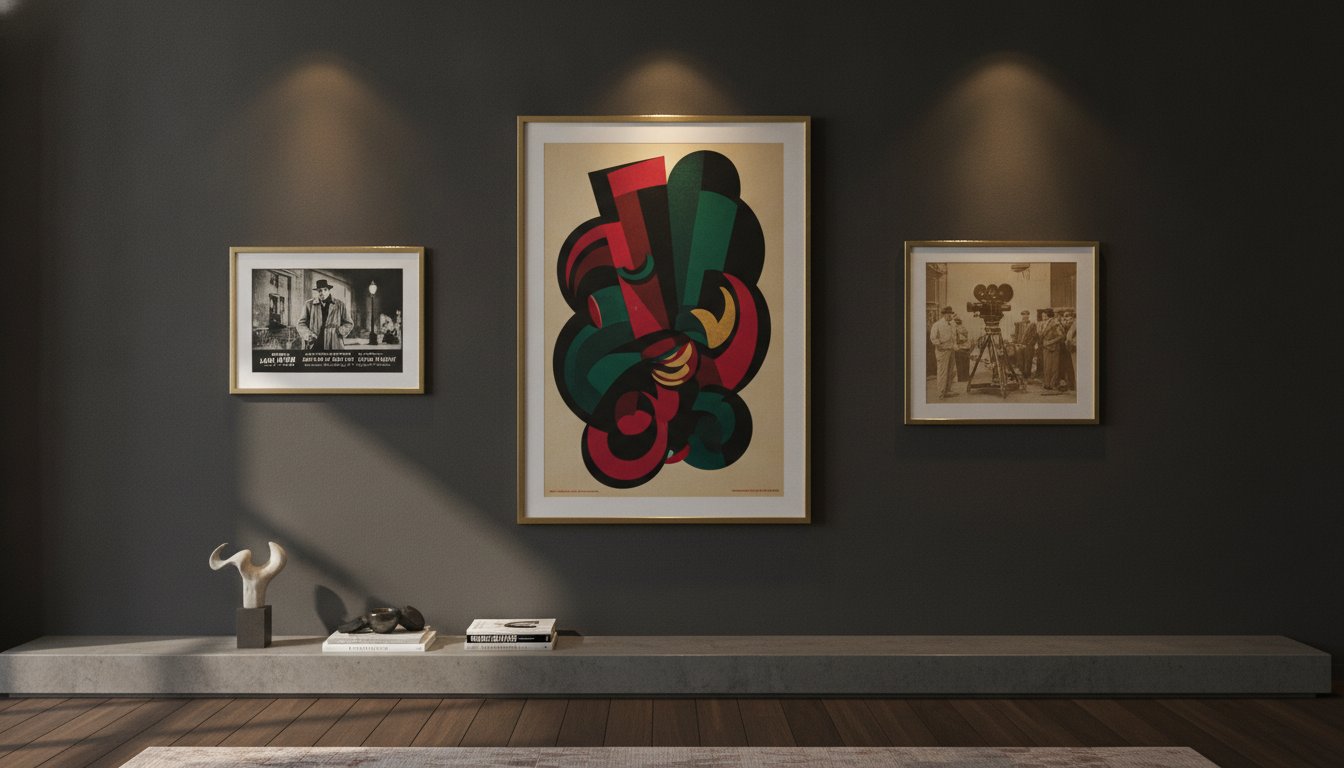
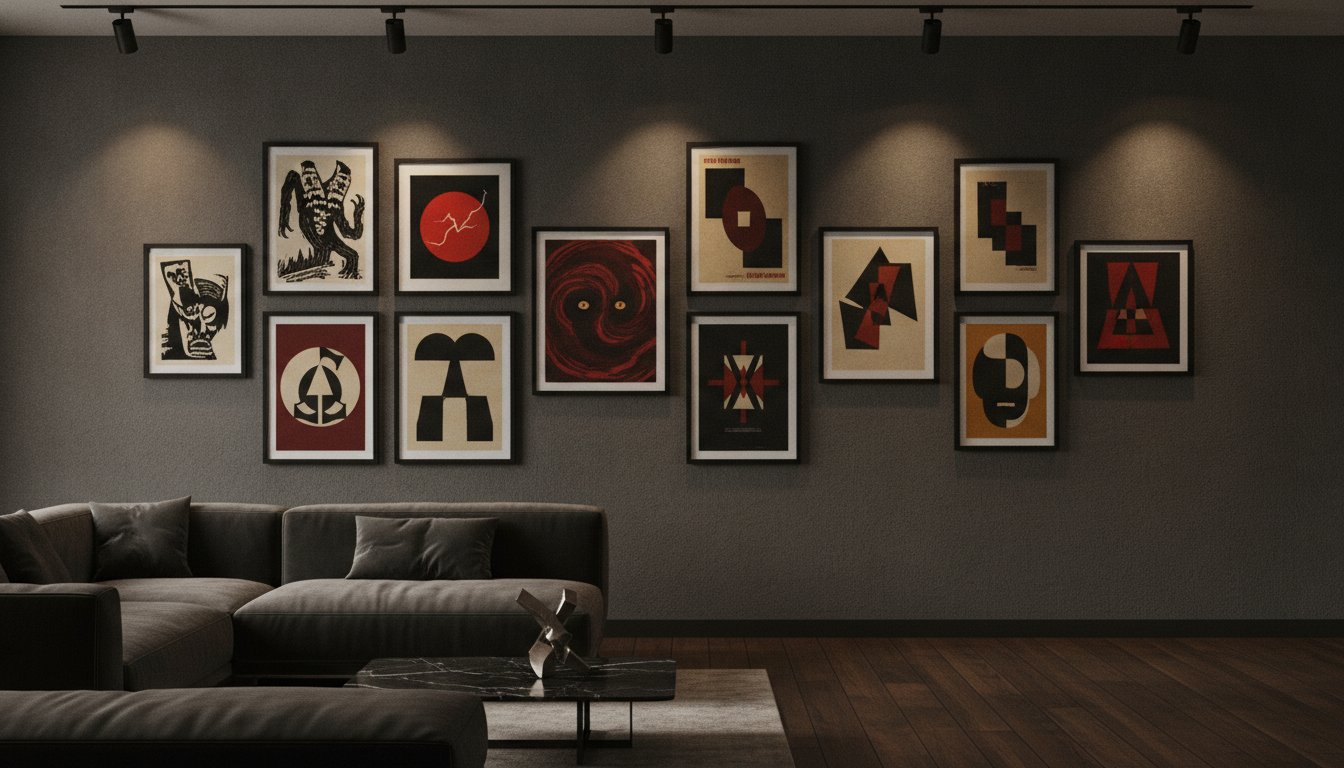
A well-executed gallery wall is an exercise in balance and scale. Don’t be afraid to mix film posters with music photography or celebrity portraits to create a rich, multi-layered story. The key is finding a narrative thread. Perhaps it’s a shared era, such as the gritty elegance of the 1970s, or a consistent colour palette that ties disparate genres together. Scale is equally important. A large-format one-sheet can anchor a room, while smaller pieces or lobby cards work beautifully in more intimate architectural spaces. This variety adds a sense of rhythm and discovery to your walls.

Recognising Quality in Reproduction

In a market flooded with digital downloads, the prestige of a physical archival print is more significant than ever. Digital files lack the soul, texture, and historical weight of a gallery-grade lithograph. They’re fleeting, whereas a physical print is a piece of history you can hold. This search for authenticity extends to identifying masters of the craft. It’s crucial to know how to spot the difference between a low-quality “aaron slims” knockoff and an authentic Slim Aarons print. True quality is found in the weight of the paper and the artisanal precision of the mounting. To begin building your own archive of cinematic history, you can browse our curated vintage movie posters and discover pieces that offer genuine heritage and value.

Elevating the Archive: Galerie Prints and the Bespoke Framing Tradition

A collection of cult classic movie posters only reaches its full potential when it is presented with the same reverence as a fine art photograph. Professional framing is the final, essential step in the journey from cinema lobby to gallery wall. At Galerie Prints, we operate with a quiet authority, treating every piece as a significant cultural archive rather than mere decoration. By 2026, our commitment to localized, artisanal craftsmanship has become a hallmark of our service, ensuring that each vintage work is transformed into a “ready-to-hang” piece of history that commands attention in any sophisticated architectural space.

The transition from a loose print to a framed masterpiece requires a deep understanding of material science and aesthetic balance. We don’t just provide a border for your art; we provide a sanctuary for it. Our curatorial care ensures that the framing enhances the narrative depth of the imagery without overwhelming its original character. This meticulous approach is what separates a true gallery offering from the mass-produced alternatives found in standard retail environments.

The Importance of Archival Mounting

Mass-market frames often lead to the slow, silent degradation of rare cinema memorabilia. Acidic backings and standard glass cause warping and irreversible fading, stripping the work of its historical and financial value over time. Our bespoke framing service utilizes museum-quality paper and strictly acid-free materials to guarantee longevity. This technical superiority is vital for preserving the delicate inks and paper textures characteristic of original cult classic movie posters. By creating an airtight, archival environment, we ensure the image remains as vibrant and evocative as the day it was first displayed in a mid-century theatre.

A Heritage of Elegance for Modern Interiors

The true power of cinematic art lies in its ability to bridge the gap between 20th-century nostalgia and the clean lines of contemporary aesthetics. A Galerie Prints archive piece serves as a stable anchor in a home, offering a sense of permanence in a world of fleeting digital trends. Investing in our curated collections is an investment in stability; these are not just images, but tactile links to a bygone era of elegance. Whether you’re seeking a bold centerpiece or a subtle addition to a multi-layered gallery wall, our focus on artisanal precision ensures your selection will stand the test of time.

We invite you to explore our extensive archives, where you’ll find everything from Star Wars limited edition prints to rare noir masterpieces. Visit our gallery today to discover how our curatorial expertise can help you build a collection that serves as a lasting piece of history.

Securing Your Piece of Cinematic History

The journey from a dimly lit cinema lobby to a curated gallery wall is one of refined appreciation and historical preservation. We’ve explored how cult classic movie posters serve as significant photographic archives, capturing the avant-garde spirit of 20th-century visual culture. By prioritizing provenance and understanding the nuances of genre aesthetics, you can transform a personal passion into a sophisticated art collection. The final, essential element remains the commitment to archival quality, ensuring that these tactile pieces of history are protected for future generations through artisanal craftsmanship.

At Galerie Prints, we provide exclusive access to the Getty Images and Slim Aarons archives, offering a bridge to a bygone era of elegance. Our bespoke, museum-quality framing is crafted by experts to ensure your collection serves as a lasting piece of history. With worldwide delivery of ready-to-hang cinematic treasures, starting your journey into the world of film art has never been more seamless.

Explore our curated collection of Cult Classic Movie Posters and Bespoke Framing Services and begin curating a home that reflects your unique appreciation for cinematic heritage.

Frequently Asked Questions

What exactly makes a movie poster a “cult classic” in the eyes of a collector?

A poster gains cult status when it represents a film that has developed a passionate, long-term following beyond mainstream success. For collectors, cult classic movie posters often feature avant-garde graphics or photography that was initially too daring for general audiences. These pieces are valued for their ability to distill complex, subcultural themes into a single, magnetic image that transcends the film’s original box office performance and becomes a visual icon.

Are these original vintage posters or high-quality archival reproductions?

We provide a curated selection of both vintage movie posters and museum-quality archival prints. Our collections include rare original cinema memorabilia alongside high-end reproductions sourced from the official Getty Images and Slim Aarons archives. Each piece is treated as a guardian of photographic heritage, ensuring that whether you select a vintage find or a modern archival print, you’re investing in a lasting piece of history for your collection.

How does bespoke framing protect the value of a cult movie poster?

Bespoke framing acts as a protective sanctuary for your investment, utilizing acid-free materials and museum-quality paper to prevent degradation. Standard commercial frames often use acidic backings that cause irreversible warping and yellowing over time. By choosing our professional mounting service, you ensure that the vibrant inks and tactile paper textures are shielded from environmental damage, maintaining the print’s financial and aesthetic value for decades in a luxury interior.

Can I buy cult classic posters as digital downloads?

No, Galerie Prints does not offer digital image downloads for any of our collections. We believe that the prestige and permanence of cult classic movie posters are found in their physical form. A digital file lacks the soul, artisanal craftsmanship, and historical weight of a gallery-grade archival print. Our focus remains on delivering tangible, high-caliber visual art that serves as a permanent and stable fixture in your architectural space.

What is the best way to clean and maintain an archival film print?

The most effective way to maintain an archival film print is to keep it within a professional frame equipped with UV-protective glazing. You should avoid placing the artwork in direct sunlight or areas of high humidity, as these factors lead to fading and paper instability. Dust the exterior of the frame with a soft, dry cloth; never apply cleaning agents or moisture directly to the print or its mounting materials.

How do cinema lobby cards differ from standard cult movie posters?

Cinema lobby cards are distinct from standard posters due to their smaller scale and photographic nature. Typically issued in sets of eight, these cards were designed for display in theatre foyers to provide an intimate glimpse into specific scenes. While a standard poster anchors a room with its scale, lobby cards offer a narrative depth that collectors prize for creating multi-layered gallery walls with a focus on authentic cinematic photography.

Why should I choose archival photo paper over standard poster paper?

Archival photo paper offers a technical superiority that standard poster paper cannot match. It’s designed to preserve the integrity of light and shadow, ensuring that the deep blacks and vibrant hues of cinematic photography remain stable for over a century. Standard paper often contains wood pulp that yellows and becomes brittle, whereas our museum-grade materials provide the permanence and material quality required for serious collectors of high-end visual art.

Does Galerie Prints offer international shipping for framed posters in 2026?

Yes, in 2026, Galerie Prints continues to offer comprehensive worldwide delivery for all our framed and unframed collections. We’ve refined our logistics to ensure that even the most delicate bespoke framed pieces arrive at your global destination in pristine condition. This service allows international collectors to acquire ready-to-hang pieces of cinematic history, supported by the same artisanal craftsmanship and curatorial authority that defines our London-based gallery operations.

Terry O’Neill James Bond Photos: A Collector’s Guide to 007 Iconography

Terry O’Neill did not merely document the 007 franchise; he dismantled the impenetrable armor of the world’s most famous spy to reveal the quiet humanity beneath the tuxedo. While many photographers captured the action, O’Neill captured the aura, transforming candid moments on set into definitive symbols of mid-century elegance. You likely recognize the effortless poise of Sean Connery or the playful sophistication of Roger Moore in these legendary frames, yet owning these images requires a discerning eye for authenticity and craft. If you’re equally discerning about the gear and equipment that defines the spy’s world, you can discover Socom Tactical Airsoft for premium replicas and tactical supplies.

In this guide, we explore the definitive history and aesthetic allure of terry o’neill james bond photos, offering the clarity you need to build a collection that transcends the common movie poster. You’ll learn how to identify the nuances of silver gelatin prints, understand the significance of limited edition provenance, and discover how museum-quality framing preserves these cinematic milestones. We begin by examining the unique perspective O’Neill brought to the Bond legacy and provide a framework for securing these rare, artisanal investments for your own home or office.

Key Takeaways

  • Learn how Terry O’Neill’s unprecedented access to 007 sets transformed standard publicity stills into the intimate, candid terry o’neill james bond photos that define the character’s legacy.
  • Discover the visual evolution of Bond from Sean Connery’s roguish grit to Roger Moore’s sophisticated lifestyle aesthetic through the lens of a master portraitist.
  • Understand why these high-contrast black and white captures serve as essential statement pieces for achieving a refined, mid-century modern aesthetic in contemporary interiors.
  • Master the technical distinctions between Lifetime and Posthumous editions and why Gelatin Silver prints remain the gold standard for archival longevity and investment value.
  • Explore the necessity of bespoke, museum-quality framing to protect your photographic investment and ensure its permanence as a piece of cinematic history.

The Man Who Shot 007: Terry O’Neill’s Legendary Bond Legacy

Terry O’Neill didn’t just walk onto the set of Goldfinger in 1964; he slipped into the shadows, a quiet observer of a cultural revolution. While the studio’s official photographers were preoccupied with arranging stiff, staged publicity shots, O’Neill was capturing the moments in between the action. This fly on the wall access allowed him to document the birth of a global phenomenon with an intimacy that remains unmatched in cinematic history. His unique relationship with the production meant he wasn’t just a visitor but a fixture of the Bond universe. Consequently, Terry O’Neill’s Legendary Bond Legacy is defined by a shift from the plastic perfection of traditional Hollywood marketing to a raw, roguish reality. O’Neill’s Bond style was the ‘humanisation of a cinematic titan’.

The photographer’s friendship with stars like Sean Connery was instrumental in this transition. It provided a level of trust that allowed the actors to drop their guard, revealing the man behind the Walther PPK. When you look at terry o’neill james bond photos, you aren’t just seeing a character; you’re seeing the exhaustion, the focus, and the effortless cool of the performers themselves. This authenticity is what elevates his work from mere film promotion to fine art, making these captures highly coveted by collectors who value the intersection of celebrity culture and photographic excellence.

A Career Built on Candid Moments

Rising to prominence during the vibrant “Swinging Sixties” in London, O’Neill brought the energy of the street and the fashion world to the cinematic landscape. His approach was revolutionary for movie marketing because it sold an aspirational lifestyle rather than just a film title. By focusing on candid portraiture, he invited the audience into an elite world of glamour and intrigue. Today, the preservation of these archives through the Getty Images Gallery ensures that collectors can access authentic prints that maintain their historical integrity. These works represent a bridge to a bygone era of elegance, where the line between the actor and the icon often blurred into a single, perfect frame.

The Enduring Relationship with Eon Productions

His collaboration with Eon Productions spanned several decades, covering pivotal films such as Diamonds Are Forever and Live and Let Die. O’Neill’s lens even captured the eccentricities of Bond “spinoffs,” including the star-studded 1967 Casino Royale. This longevity allowed him to witness the character’s evolution across multiple actors and shifting cultural eras. His contribution to British culture was formally recognized in 2019 when he was awarded a CBE for his services to photography, cementing his status as a national icon. For the modern collector, owning these images is about more than decor; it’s about preserving a piece of photographic heritage that anchors a room with a sense of permanence and world-class prestige.

From Connery to Craig: Capturing the Evolution of Bond

The transition from the roguish intensity of Sean Connery to the polished urbanity of Roger Moore defines the visual history of the franchise. While Connery’s 007 was born of grit and a certain dangerous unpredictability, Moore’s iteration introduced a suave, lifestyle-centric Bond that resonated with the changing tastes of the 1970s. For those interested in Collecting Terry O’Neill, understanding these distinct eras is essential for selecting a piece that aligns with your personal aesthetic. Each actor brought a different energy to the frame, and O’Neill’s genius lay in his ability to adapt his technique to capture those specific temperaments. Even as the series moved toward the modern, physical reimagining of the spy with Daniel Craig, the foundation of Bond’s visual identity remained rooted in these early, definitive captures.

Iconic Shots: The Roger Moore Safari Suit and Connery on the Green

O’Neill’s work on the set of Live and Let Die produced some of the most enduring imagery of the Moore era, specifically the famous shots of the actor in his tailored safari suit. These images feel less like film stills and more like high-fashion editorials. They emphasize the ‘lifestyle’ Bond who was as comfortable in a luxury lounge as he was in a high-speed chase. In contrast, his photos of Sean Connery on the golf green during the filming of Diamonds Are Forever (1971) reveal a relaxed, roguish charm. These moments of leisure humanize the spy, offering a counterpoint to the high-octane action sequences that defined the films. It’s this balance of tension and tranquility that makes terry o’neill james bond photos so compelling for modern interiors. You can explore these contrasts within our curated collection of Terry O’Neill photography.

The Bond Women through O’Neill’s Lens

Drawing from his background in fashion photography, the artist captured Bond women with a level of sophistication that transcended the ‘damsel’ tropes of the time. His portraits of Honor Blackman as Pussy Galore in Goldfinger are studies in power and grace, capturing a character who was truly a match for 007. Similarly, his candid shots of Jane Seymour during the filming of Live and Let Die possess an ethereal, timeless quality. These portraits don’t just document a cast member; they celebrate the strength and elegance of the women who defined the series. By stripping away the cinematic artifice, O’Neill revealed the individual behind the icon. This approach ensured that his terry o’neill james bond photos would remain relevant long after the films left the box office, serving as a permanent record of photographic heritage and cinematic style.

The Aesthetic of Cool: Why O’Neill’s Bond Photography Defines Modern Interiors

Integrating terry o’neill james bond photos into a contemporary living space isn’t just a choice in decor; it’s an investment in a specific, high-end atmosphere. These images serve as the ultimate intersection of cinematic history and interior design, providing a focal point that commands attention without overwhelming the architecture of the room. In a home office or a sophisticated lounge, a large-format Bond print acts as a silent narrator of taste, anchoring the space with a sense of permanence and ‘mid-century cool’. This aesthetic aligns seamlessly with the enduring Mid-Century Modern design movement, where the clean lines of 1960s furniture find their perfect companion in O’Neill’s crisp, archival captures. To understand the deeper psychological impact of these works, one might consider The Timeless Allure of Black and White Pictures, which explores how monochrome imagery brings an unparalleled level of gravitas and sophistication to any high-end interior.

Monochrome vs. Colour: Choosing Your Vibe

The decision between black and white or colour often dictates the entire mood of a room. O’Neill’s black and white gelatin silver prints offer a sense of authority and historical weight, making them ideal for formal studies or minimalist galleries where texture and shadow take center stage. Conversely, his rare colour C-type prints from the 1970s provide a vibrant pop of nostalgia, capturing the saturated hues and flamboyant style of the Roger Moore era. Many collectors choose to balance these cinematic moments with works from the Slim Aarons collection, creating a visual dialogue between the high-stakes world of 007 and the sun-drenched leisure of the jet-set era. While both artists share an aspirational quality, O’Neill’s work adds a sharper, more roguish edge to a curated collection, providing a necessary counterpoint to more serene landscapes.

The Narrative Power of Contact Sheets

A growing trend among serious art investors is the acquisition of O’Neill’s contact sheet prints. These works are particularly fascinating because they reveal the meticulous process behind the icon, showing multiple frames from a single scene often accompanied by the photographer’s original grease pencil markings. They offer a storytelling element that a single image cannot replicate, inviting guests to linger and discuss the sequence of events as they unfolded on set. When displayed as part of a sophisticated gallery wall, contact sheets serve as exceptional conversation starters, offering a rare, behind-the-scenes look at the creation of 007 iconography. They provide a tactile sense of history, allowing the viewer to see the minute adjustments in a roguish expression or the technical lighting on a lavish set, further solidifying the value of terry o’neill james bond photos as museum-quality heritage pieces for the home.

Collecting Terry O’Neill: A Guide to Fine Art Prints and Rarity

Investing in terry o’neill james bond photos requires a discerning eye for the technical nuances that separate a mere reproduction from a museum-quality asset. For the serious collector, the most vital distinction lies between Lifetime and Posthumous editions. Lifetime prints were produced and signed by O’Neill himself before his passing in 2019, carrying a premium due to the direct involvement of the artist. Posthumous editions, while still highly collectable, are authorized by the Terry O’Neill Estate and typically bear an estate stamp rather than a hand-signed signature. Regardless of the edition, the technical superiority of a Gelatin Silver print is paramount. This traditional darkroom process utilizes silver salts suspended in a gelatin layer on fiber-based paper, resulting in a depth of tone and a rich, velvety black that digital methods cannot replicate. Archival quality ensures the print remains a family heirloom for decades.

Authenticity is the cornerstone of any high-end collection. A valid certificate of authenticity for O’Neill’s work must clearly state the edition number, the specific film or year of capture, and the provenance of the archive. At Galerie Prints, we ensure every piece meets these rigorous standards of verification. This transparency protects your investment and ensures the work maintains its value within the global art market.

Print Sizes and Limited Editions

The rarity of O’Neill’s work is often governed by strict edition sizes, frequently limited to 50 or fewer prints for specific formats. While standard gallery sizes offer versatility for smaller studies, large-format statement prints provide a cinematic scale that transforms a room. As the edition number approaches its limit, the market value typically climbs, making earlier acquisitions particularly strategic. We source our collection from the most reputable photography archives, including the Getty Images Gallery, to provide our clients with access to the highest-caliber photographic heritage available. You can view our available Terry O’Neill photography to find the right scale for your space.

Investment Value of Cinematic Photography

While high-end photography is a key focus for many, the world of Bond memorabilia also encompasses detailed physical models; those interested in such collectibles can visit Darlington Diecast Models Limited.

Bond memorabilia has long been a staple of prestige auctions, but the market for original photography has seen a marked shift since 2019. This ‘O’Neill Effect’ refers to the surge in demand and valuation following the photographer’s passing, as the supply of lifetime-signed works became finite. Collectors now view these captures not just as film history, but as blue-chip photographic art. Building a cohesive collection involves looking beyond a single image to create a narrative of 20th-century style. For those looking to expand their portfolio, our resource on Fine Art Photography offers deeper insights into the curation of a world-class home gallery. This strategic approach ensures your collection remains both aesthetically rewarding and financially sound over the long term.

The Galerie Prints Experience: Bespoke Framing for Your Bond Print

Acquiring a piece of cinematic history is a significant milestone, but the journey doesn’t end with the selection of the image. To truly honor the legacy of terry o’neill james bond photos, one must consider the architectural frame that preserves it. We view framing not as an afterthought, but as a critical extension of the artwork itself, acting as both a protective barrier and a visual amplifier. Our bespoke framing service is designed to meet museum standards, ensuring that your investment remains as pristine as the day it left the darkroom. By utilizing acid-free mounting and UV-protective glazing, we safeguard the delicate silver gelatin surface from environmental degradation, allowing the roguish charm of Connery or the suave presence of Moore to endure for generations as a true family heirloom.

Choosing the Right Frame for a 007 Classic

For many collectors, a sleek black wood frame remains the ‘gold standard’ for Bond photography. This choice echoes the high-contrast drama of the monochrome images while providing a contemporary finish that suits any luxury interior. However, we also offer bespoke options in crisp white and natural wood to accommodate more varied decor palettes. Each print is meticulously mounted using archival photo paper and pH-neutral materials to prevent the yellowing or fading that often plagues lesser productions. This artisanal mounting process creates a subtle depth between the glass and the print, elevating the visual impact of a Terry O’Neill portrait and providing the breathing room required for a gallery-quality display.

From London to the World: Global Delivery for Collectors

Operating from our roots in London, a city synonymous with the heritage of the 007 franchise, we’ve developed a global logistics network tailored for high-value art. We understand the anxiety that can accompany the transit of a limited edition print. That’s why each piece is crated in specialized, impact-resistant packaging to ensure safe transit across continents. Our service is comprehensive; we provide a ready-to-hang delivery that removes the logistical burden from the collector. From the moment you browse our exclusive Terry O’Neill James Bond collection to the final installation on your wall, we act as your dedicated curator and guide. This seamless, luxury experience ensures that your focus remains where it should be, on the timeless elegance and historical significance of the work itself.

Securing a Legacy of Cinematic Elegance

Terry O’Neill’s work transcends simple photography, capturing the roguish soul of the 007 mythos through a lens of unprecedented intimacy. By understanding the technical nuances of edition rarity and the archival superiority of gelatin silver prints, you can invest in a piece of history that defines the aesthetic of cool within your own home. These terry o’neill james bond photos aren’t just decorations; they’re permanent records of a cultural era that continues to inspire. To own an O’Neill is to possess a window into a bygone age of elegance, where the line between actor and icon remains forever blurred.

At Galerie Prints, we provide a seamless path to ownership, offering museum-quality archival prints curated by Stuart Möller. Each selection includes expert bespoke framing as part of our dedicated service, ensuring your acquisition is protected and ready for immediate display. We invite you to Explore the Terry O’Neill James Bond Collection at Galerie Prints and begin your journey into the world of elite photographic heritage. It’s a rare opportunity to bring the timeless allure of Bond into your personal space with absolute confidence and style.

Frequently Asked Questions

Are the Terry O’Neill James Bond photos at Galerie Prints original?

Yes, every piece in our collection is an authentic archival print sourced from world-renowned photographic archives. We operate as a guardian of photographic heritage, ensuring that our terry o’neill james bond photos meet the highest standards of provenance. We provide physical prints and bespoke framing rather than digital downloads, maintaining the integrity of the original work. This commitment to quality ensures your purchase is a lasting piece of history.

What is the difference between a Gelatin Silver print and a standard photo?

A Gelatin Silver print represents the pinnacle of traditional darkroom craftsmanship, utilizing silver salts suspended in a gelatin layer on fiber-based paper. Unlike standard digital prints, this method produces a chemical reaction that results in exceptional tonal depth and rich, velvety blacks. These prints are prized for their archival longevity, ensuring they won’t degrade like common photographic papers. This artisanal approach is essential for preserving the roguish detail of O’Neill’s early Bond captures.

How do I know if my Terry O’Neill print is a limited edition?

Every limited edition print is accompanied by a formal Certificate of Authenticity that documents its specific edition number and provenance. This document serves as your guarantee that the work is part of a restricted production run, which is vital for maintaining its future market value. You’ll typically find the edition number, such as 7/50, clearly indicated on the print or the estate stamp. This transparency is a cornerstone of the Galerie Prints experience for serious collectors.

Does Galerie Prints offer framing for all Terry O’Neill James Bond photos?

We provide a dedicated bespoke framing service for all terry o’neill james bond photos in our archive. Our in-house specialists utilize museum-quality materials to create frames in signature styles, including sleek black, crisp white, and natural wood. This service ensures your artwork arrives ready to hang, providing a complete, curated solution for your home or office. Professional mounting is included to elevate the visual impact and protect the print from environmental damage.

Which James Bond actor did Terry O’Neill photograph most often?

While Terry O’Neill captured several iterations of the spy, he photographed Roger Moore most extensively throughout the 1970s. He was a constant presence on sets like Live and Let Die, documenting Moore’s sophisticated lifestyle-centric Bond with unparalleled intimacy. However, O’Neill also produced iconic imagery of Sean Connery during the filming of Goldfinger and Diamonds Are Forever. This breadth of work allows collectors to choose from multiple eras of the franchise’s visual evolution.

Can I request a specific size for a Bond print not listed on the site?

Our online platform offers a selection of premium sizes designed to fit standard gallery formats and large-format statement pieces. If you require a specific dimension that isn’t currently listed, we encourage you to contact our London gallery directly. We strive to accommodate the unique architectural needs of our clients, ensuring that your Bond print serves as a perfect focal point. Each request is handled with the professional, polished distance befitting a luxury art destination.

How should I clean and maintain my framed photography print?

Maintenance requires a gentle approach to preserve the archival quality of the mounting and frame. You should use a soft, dry, lint-free cloth to remove dust from the glass, avoiding any harsh chemical cleaners that might seep behind the glazing. It’s also vital to hang your print away from direct sunlight and areas of high humidity. These simple steps ensure that the hand-framed, artisanal quality of your investment remains stable for decades.

What is a contact sheet print and why is it collectable?

A contact sheet print displays a series of frames from a single roll of film, often featuring the photographer’s original grease pencil markings. These pieces are highly collectable because they provide a narrative behind the final icon, revealing the technical adjustments and candid moments that standard stills omit. They offer a unique storytelling element, acting as an exceptional conversation starter. Seeing the sequence of a roguish expression or a set’s lighting offers a rare, behind-the-scenes perspective.

The Enduring Appeal of Horror Movie Posters: A Collector’s Guide to Cinematic Macabre

In 2017, a rare 1931 “Dracula” poster commanded a staggering $525,800 at auction, a moment that definitively elevated horror movie posters from ephemeral marketing materials to prestigious assets within the global art market. You likely understand that the most enduring cinematic shadows are those that linger long after the credits roll, captured in the ink and paper of a masterfully composed lithograph. This fascination speaks to a deeper appreciation for the macabre as a sophisticated form of visual storytelling that anchors a room with quiet authority.

In this collector’s guide, you’ll discover the historical significance, artistic mastery, and curatorial secrets behind the world’s most iconic horror movie posters. We’ll explore the evolution of the genre’s aesthetic, tracing the path from the lush, hand-painted nightmares of the 1930s to the hauntingly minimalist symbolism of modern classics. Whether you’re seeking to build a curated gallery wall or simply wish to understand the technical nuances of museum-quality prints, this exploration provides the expertise needed to integrate cinematic history into a refined home. We’ll also address the practicalities of discerning original theatrical releases from common reproductions, ensuring your collection maintains both its aesthetic power and its long-term investment value.

Key Takeaways

  • Understand how horror movie posters evolved from literal depictions of monsters into sophisticated psychological tools that use evocative symbolism to unsettle the viewer.
  • Explore the stylistic journey of cinematic macabre, from the shadow-heavy influence of 1930s German Expressionism to the bold, modernist abstraction of the 1960s.
  • Identify the legendary artists, including Saul Bass and Drew Struzan, whose distinct visual signatures defined the aesthetic of the genre for generations of collectors.
  • Learn how to curate a professional gallery wall by selecting a focal cinematic era and determining the ideal dimensions for a balanced, high-end home display.
  • Discover the essential role of museum-quality archival prints and bespoke framing in preserving the historical integrity and long-term value of your cinematic heritage.

The Visual Language of Fear: Why Horror Movie Posters are Fine Art

Horror movie posters function as a masterclass in psychological seduction. They’re designed to bypass the rational mind and speak directly to the primitive subconscious. While their initial purpose was purely commercial, the most iconic examples transcend these origins, operating at the sophisticated intersection of avant-garde graphic design and fine art photography. This visual evolution is deeply tied to a comprehensive history of horror films, where the visual shorthand used to market a film eventually became the very thing that defined its cultural legacy. Unlike other genres that often rely on the recognizable faces of stars, horror utilizes symbolic, often disturbing imagery to evoke a visceral reaction. This unique position makes these works highly desirable for collectors who value art that challenges the viewer.

The Psychology of the Macabre

The power of a horror poster lies in its ability to manipulate the viewer’s pulse through deliberate and calculated aesthetic choices. High-contrast palettes of deep crimson and obsidian black don’t just signal danger. Instead, they trigger primal responses associated with the biological markers of fear and survival. Designers frequently employ expansive negative space to create a suffocating sense of impending dread, forcing the eye to dwell on what is missing as much as what is present. In the context of 20th-century design, the Gothic Aesthetic is defined by a preoccupation with atmospheric decay, architectural shadows, and the romanticization of the supernatural. These elements work in concert to create a visual tension that is both unsettling and undeniably beautiful.

From Promotion to Provenance

What began as ephemeral street-level advertising has undergone a profound transformation into highly sought-after gallery pieces. This shift from promotion to provenance is driven by the rarity of original source materials and the historical context of the era they represent. Collectors today view horror movie posters as a form of “curated cinema” that reflects a sophisticated lifestyle and a reverence for photographic heritage. Investing in these pieces is about more than just decoration. It’s about preserving a moment of cinematic history that was once meant to be discarded.

  • The prestige of the artist: Many posters were created by renowned illustrators who brought a fine-art sensibility to the work.
  • Technical excellence: Traditional production methods like lithography offer a tactile depth that modern digital prints cannot replicate.
  • Historical rarity: Because these items were meant to be discarded, surviving examples in excellent condition are exceptionally rare.

The transition of these works from the lobby to the gallery wall underscores their status as legitimate art. By focusing on the visual impact and the story of the creator, we begin to see these posters not as ads, but as enduring pieces of history. This perspective is essential for anyone looking to build a collection that carries both emotional weight and artisanal quality. The result is a home environment that feels both intellectually stimulated and anchored by the permanence of classic cinema.

From Expressionism to Minimalism: The Aesthetic Evolution

The history of horror movie posters is a fascinating study in how art responds to the collective anxieties of the day. It isn’t merely about selling tickets; it’s about the visual evolution of horror posters as they mirrored broader movements in fine art and graphic design. From the lithographic textures of the early 20th century to the digital precision of today, each era has left a distinct mark on the genre’s aesthetic heritage.

The Golden Era of the 1930s and 40s

The 1930s marked the birth of the Universal Monsters, a period where the painterly style of posters for films like Dracula and Frankenstein drew heavily from the distorted shadows and jagged angles of German Expressionism. These works were often hand-painted, featuring rich, saturated colors and elaborate typography that established a film’s “brand” long before modern marketing existed. The stark, atmospheric contrasts found in classic black and white pictures heavily informed this early horror noir aesthetic. Collectors prize these pieces for their artisanal quality, as they represent a time when movie promotion was an extension of fine art illustration, created by artists who understood the power of a single, haunting image.

The Mid-Century Shift: 1950s-1970s

As the “Creature Feature” era took hold in the 1950s, the aesthetic shifted toward bold, sensationalist graphics designed to grab attention on a crowded street corner. This gave way to the 1960s, where Saul Bass and Alfred Hitchcock introduced a modernist abstraction that used simple shapes and negative space to imply violence rather than show it. This period of horror movie posters culminated in 1975 with the iconic Jaws poster, a masterclass in tension that used scale to create a visceral sense of dread. By the 1970s, the genre moved toward a gritty, photographic realism, reflecting the darker, more cynical tone of films like The Texas Chain Saw Massacre.

The 1980s introduced a golden age of illustrated “Slasher” art, characterized by vibrant maximalism and detailed, hand-painted compositions that captured the visceral nature of the films. This era eventually transitioned into the “Elevated Horror” trend of the 2020s. Modern posters often reject the clutter of the past, returning to minimalist photography and stark, symbolic imagery that prioritizes mood over literal plot points. This cyclical return to simplicity proves that the most effective way to unsettle an audience is often through what is left to the imagination. Those looking to anchor their own space with these historical movements can find a wealth of inspiration in our collection of museum-quality cinema archives.

The Masters Behind the Macabre: Legendary Poster Artists

Behind every iconic image that lingers in the mind long after the theater lights come up is a visionary artist who understood the unique power of the macabre. While the previous sections explored broader aesthetic shifts, it’s the individual mastery of legendary designers that elevated horror movie posters into the prestigious world of fine art. These creators didn’t just sell tickets; they crafted a visual legacy that continues to define the genre’s heritage.

Saul Bass and the Geometry of Fear

Saul Bass famously brought high-art minimalism to the marketing of suspense, forever changing how we perceive cinematic terror. By utilizing jagged lines and disjointed, abstract shapes, Bass didn’t just advertise a film. Instead, he mirrored the psychological fracture of the characters within it. His work for Alfred Hitchcock, particularly for Vertigo and Psycho, remains a definitive study in how simplicity can evoke profound unease. For the fine art photography collector, Bass’s posters are essential acquisitions. They represent a bridge between mid-century modernism and photographic heritage, offering a sophisticated visual language that avoids the literal gore of lesser works.

The Illustrative Genius of Drew Struzan

In contrast to the minimalist restraint of the mid-century, the 1980s heralded a return to lush, tactile illustration. Drew Struzan, often called the king of the illustrated poster, defined this era with his masterful use of airbrushing and hand-painted textures. His work for John Carpenter’s The Thing is perhaps the ultimate example of atmospheric dread. He used cold, blue palettes and a central figure obscured by light to create a sense of isolation and impending doom. Struzan’s ability to blend dark, moody horror palettes with a high-fantasy level of detail created a “cult” aesthetic that remains highly sought after by serious collectors today.

The history of the genre is also shaped by the prolific genius of Bill Gold, the man behind the hauntingly simple image for The Exorcist. Gold understood that the most effective horror is often grounded in reality. His use of a single, evocative photograph of a priest arriving at the MacNeil house suggested the battle between light and shadow without showing a single frame of the film’s more visceral effects. Similarly, Reynold Brown captured the atomic-age terror of the 1950s with his dynamic, larger-than-life illustrations of creatures and monsters. His work for Creature from the Black Lagoon utilized a sense of scale and movement that made the monsters feel truly unstoppable. These individual creators transformed horror movie posters from simple marketing tools into enduring pieces of cinematic history that anchor any sophisticated gallery wall.

Curation is the bridge between a mere enthusiast and a serious collector. When integrating horror movie posters into a living space, the goal is to balance the genre’s inherent intensity with the refined aesthetics of a professional gallery. Start by selecting a focal point that aligns with your interior’s existing narrative; perhaps choosing a specific cinematic era or a cohesive color story that anchors the room. Understanding movie poster sizes is the next critical step. A large-scale one-sheet requires significant wall space to breathe, while smaller formats can be grouped for a more intimate, layered effect. For those looking to replicate the backlit intensity of a classic theater lobby, you can discover Mobile Light Box for modular systems that provide high-impact visual displays.

Integrating a stark, expressionist Nosferatu poster into a contemporary minimalist interior creates a sophisticated point of tension. The high-contrast shadows of the silent era complement clean lines and monochromatic palettes perfectly. To add depth and varied texture, consider mixing large-scale work with cinema lobby cards. These smaller, historically significant pieces allow you to build a narrative-driven gallery wall that tells a chronological story of film history, moving from the atmospheric dread of the 1930s to the gritty realism of the 1970s. This approach transforms a simple collection into a curated visual archive.

The Role of Professional Framing

Preservation is as important as presentation. Archival-quality prints are essential to prevent the degradation of the paper and the fading of those deep, saturated blacks that define the genre. When you invest in a bespoke framing service, you aren’t just buying a border; you’re securing the piece’s future. UV-protective glass is non-negotiable for serious collectors, as it shields the artwork from the damaging effects of natural light. Additionally, choosing frame finishes that complement the dark tones of horror art, such as charcoal oaks or matte obsidians, ensures the frame enhances the mood rather than distracting from it.

Lighting your collection requires a delicate touch. Aim for indirect, low-heat LED sources that highlight the textures of the paper without risking heat damage. This creates an evocative ambiance that mirrors the cinematic experience itself. Professional mounting services further preserve the integrity of large-scale prints, preventing the rippling that often plagues cheaper reproductions. By treating your collection with this level of curatorial respect, you transform a room into a lasting piece of history. To begin your journey into high-end cinematic art, explore our curated collection of vintage movie posters and discover museum-quality prints that stand the test of time.

The Galerie Prints Curation: Investing in Cinematic Heritage

At Galerie Prints, we operate as more than a retailer; we are dedicated guardians of photographic heritage and a bridge to a bygone era of cinematic elegance. Our curation of horror movie posters represents a commitment to the preservation of visual history, ensuring that these masterworks of the macabre are treated with the reverence they deserve. Investing in a piece from our collection isn’t merely a decorative choice. It’s a commitment to owning a lasting piece of history, backed by the authority of a world-class gallery.

A Heritage of Quality

Our commitment to excellence begins with the material integrity of each print. We utilize traditional production methods and premium archival paper types to ensure that every image retains its depth, contrast, and tactile quality for generations. Our London-based gallery team possesses a deep expertise in sourcing rare imagery from world-renowned archives, providing our clients with access to works that are often unavailable to the general public. This artisanal approach acts as a seal of quality, distinguishing our collection from the mass-produced reproductions found elsewhere. We don’t just offer prints; we provide museum-quality artifacts that carry a palpable sense of prestige and permanence.

  • Expert Sourcing: Our curators meticulously vet every image for historical significance and visual impact.
  • Artisanal Production: We favor traditional methods that respect the original source materials.
  • Bespoke Readiness: Every piece is handled with precise care, ensuring it arrives ready to anchor your space.

Beyond the Poster: Lobby Cards and Rare Collectables

For collectors seeking a more intimate connection to film history, our collection of Cinema Lobby Cards offers a unique alternative. These smaller, historically significant pieces were once the primary way audiences engaged with a film’s narrative before entering the theater. They act as a fascinating window into Hollywood’s past, capturing specific scenes with a photographic clarity that complements larger-scale horror movie posters perfectly. By mixing these formats, you can create a layered, textured gallery wall that speaks to the breadth of your cinematic passion.

Our dedication to the arts extends beyond the silver screen. We invite you to explore our full range of music photography and fine art archives to find pieces that resonate with your personal aesthetic. Whether you’re drawn to the visceral energy of a rock archive or the quiet authority of a vintage movie still, our bespoke framing service ensures that your investment is protected and presented with gallery-level sophistication. This holistic approach to collecting ensures that your home reflects a life lived with discernment and a deep appreciation for the world’s most evocative visual heritage.

Preserving the Legacy of Cinematic Macabre

Collecting horror movie posters is far more than an exercise in nostalgia; it’s a deliberate act of cultural preservation. Throughout this guide, we’ve explored how these evocative images transitioned from ephemeral advertisements into prestigious assets that define the visual language of fear. By appreciating the technical mastery of legendary artists and the nuances of professional curation, you don’t just decorate a room. Instead, you build a personal gallery that reflects both intellectual depth and a profound reverence for the history of film.

To anchor your own collection with pieces of unparalleled quality, explore our curated collection of iconic movie posters and cinema art. Each selection from our world-renowned photographic archives is produced as a museum-quality archival print, ensuring the longevity of those deep, evocative tones that define the genre. Our London gallery team provides bespoke hand-crafted framing for every piece, treating each work with the artisanal care required for serious collectors. It’s time to embrace the enduring allure of the macabre and transform your living space into a lasting testament to cinematic heritage.

Frequently Asked Questions

What is the most iconic horror movie poster of all time?

While “iconic” is often subjective, the 1931 Dracula poster is widely considered the pinnacle of the genre, holding the world auction record of $525,800. For modern collectors, the minimalist moth imagery of The Silence of the Lambs remains a masterclass in symbolic design. These pieces aren’t just advertisements; they’re historical markers that define cinematic eras. Choosing a favorite often depends on whether you prioritize the painterly style of the 1930s or the modernist abstraction of the 1960s.

How can I tell if a horror movie poster is a high-quality print or a cheap reproduction?

High-quality horror movie posters are distinguished by their material weight and the depth of their ink saturation. Authentic theatrical releases and museum-quality prints typically utilize heavier archival paper, whereas cheap reproductions often feel thin and glossy. Look for sharp detail in the typography and a lack of pixelation in dark gradients. Standard theatrical one-sheets are traditionally 27 by 41 inches, while many modern commercial reprints use the smaller 24 by 36 inch format.

Are vintage horror posters a good financial investment?

Vintage horror posters have proven to be exceptionally resilient assets for serious collectors. With the global horror film market valued at $128.72 billion in 2026 and growing at a 7.2% CAGR, demand for tangible cinema heritage is rising. Record-breaking sales for titles like London After Midnight demonstrate that rarity and historical provenance drive significant value. Collectors often look for posters with a strong market history and recognizable imagery to ensure long-term stability in their art portfolios.

What is the best way to frame a large horror movie poster?

The best way to frame a large-scale piece is through a bespoke service that prioritizes archival safety and structural integrity. Large prints are prone to rippling, so professional mounting on acid-free backing is essential for maintaining a flat, gallery-standard appearance. You should always opt for a frame that complements the dark, moody tones of the artwork without overpowering it. Using a charcoal or matte black finish provides a sophisticated border that lets the cinematic imagery remain the focal point.

Can horror movie posters work in a sophisticated interior design scheme?

Horror art integrates beautifully into sophisticated homes when treated with curatorial intent rather than as mere merchandise. The “Elevated Horror” trend favors minimalist photography and symbolic imagery, which pairs naturally with contemporary furniture and monochromatic color schemes. A stark, black-and-white still from a classic noir film can act as a powerful anchor in a minimalist living room. By focusing on the artistic merit of the composition, these pieces provide a sense of worldly expertise and historical depth.

What is the difference between a movie poster and a cinema lobby card?

A standard movie poster is a large-scale theatrical one-sheet designed for street-level visibility, while a cinema lobby card is a smaller, photographic print, usually 11 by 14 inches. Lobby cards were typically issued in sets of eight, showcasing specific scenes to entice audiences. Because they utilize photographic processes rather than lithography, they offer a different tactile quality. They’re perfect for smaller spaces or for adding varied texture to a larger gallery wall of curated cinema archives.

How do I protect my horror movie prints from sunlight damage?

Sunlight is the primary enemy of vintage paper and ink, causing irreversible fading and brittleness over time. To protect your collection, you must use UV-filtering glass or acrylic, which blocks up to 99% of harmful rays. Even with protection, it’s wise to avoid hanging your horror movie posters directly opposite large windows. Indirect lighting or low-heat LED spotlights are much safer alternatives that enhance the atmospheric mood of the art without compromising its physical integrity.

What are the most popular horror movie posters for collectors in 2026?

In August 2026, collectors are showing intense interest in “Titans of Terror” titles from the 1950s and 60s. Recent auction estimates highlight The Blob (1958) at $700 to $1,000 and Son of Frankenstein (1965) at $500 to $800 as highly desirable mid-range acquisitions. Other trending titles include The Monolith Monsters and Terror From the Year 5,000. This shift suggests a growing appreciation for the vibrant, sensationalist graphics and the historical nostalgia of the atomic-age creature feature era.

Investing in Movie Memorabilia: A Curator’s Guide to Cinematic Assets

When a light-up C-3PO head from the 1980 classic The Empire Strikes Back achieved a remarkable $1,058,400 at auction in March 2026, the global market received a definitive signal that cinematic relics have ascended to the highest tiers of fine art. Investing in movie memorabilia is an exercise in both cultural preservation and strategic acquisition, yet the pursuit of a meaningful collection is often obscured by the fear of sophisticated reprints or the uncertainty of which eras truly hold enduring value.

You recognize that owning a piece of film history is a rare privilege, but you deserve the quiet confidence that your investment is as authentic as the performance it captures. This guide provides a clear framework for identifying rare photographic archives and evaluating the provenance of iconic cinema history. We’ll examine why vintage posters and limited edition photography often offer superior aesthetic and investment value over physical props, while also detailing the precise archival framing techniques necessary to protect these delicate paper assets from the passage of time.

Key Takeaways

  • Understand the transition of cinematic ephemera into high-value blue-chip assets within the current global art market.
  • Discover the strategic advantages of investing in movie memorabilia through rare visual assets, such as vintage posters and cinema lobby cards, which offer superior displayability.
  • Learn to evaluate rarity and provenance to distinguish between mass-produced reprints and authentic, studio-issued historical artifacts.
  • Master the essentials of preservation, including how bespoke framing and museum-quality materials safeguard the financial and aesthetic value of your collection.
  • Explore how to curate a portfolio that functions as both a prestigious financial asset and a sophisticated addition to your home’s interior design.

The Evolution of Cinema Memorabilia: From Fan Hobby to Blue-Chip Asset

The landscape of Film memorabilia has undergone a profound transformation. What was once considered ephemeral promotional material; discarded by studios after a film’s theatrical run; is now recognized as a legitimate blue-chip asset. In the 2026 market, the distinction between a fan and a curator has blurred. Serious investors now view these pieces as tangible links to our shared cultural heritage. This shift is driven by a realization that the physical artifacts of cinema are finite. Investing in movie memorabilia requires an understanding of how these items transitioned from studio waste to museum-grade investments.

As digital production and CGI dominate modern filmmaking, the scarcity of tangible, screen-used assets has reached a critical point. There are no physical props to salvage from a purely digital environment. This technical shift has cemented the value of items from the pre-digital era. The nostalgia cycle also plays a pivotal role. Investors typically gravitate toward the films of their youth, which explains the current surge in value for items from the 1980s and 1990s. When you’re acquiring these pieces, you’re betting on the enduring cultural footprint of a specific decade.

Why Film Assets Outperform Traditional Markets

The allure of cinematic assets lies in their absolute finite supply. While a company can issue more stock, there will never be another original production-used helmet from 1983. This inherent rarity is met with burgeoning global demand. Collectors in Asia and the Middle East are increasingly entering the market; they view these pieces as stable, physical hedges against the volatility of digital-first economies. They offer a tactile security that traditional paper investments lack.

The Cultural Significance of the “Hero” Item

In the world of high-end collecting, the Hero item commands a disproportionate premium. This is the specific prop or image used for close-up shots. These objects possess a unique energy because they were the focal point of the camera’s lens. Cultural longevity is the primary driver of blue-chip stability. Franchises like Star Wars or the James Bond series provide a predictable growth trajectory. Similarly, the work of legendary photographers like Terry O’Neill, who captured the intimate essence of stars like Marilyn Monroe, offers a bridge between celebrity culture and fine art. These images don’t just depict history. They are historical artifacts in their own right.

Beyond Props: Investing in the Visual Legacy of Film

While the auction of a screen-used vehicle or a cumbersome costume often captures global headlines, the discerning collector understands that investing in movie memorabilia is frequently most rewarding when focused on the visual legacy of a film. Bulky props present significant logistical challenges for the modern home, often requiring specialized climate control and substantial floor space. By contrast, “Visual Assets” such as vintage posters, lobby cards, and fine art photography offer a seamless integration into sophisticated interior aesthetics. These items allow you to curate a gallery-like atmosphere while holding a piece of history that is inherently more displayable than a fiberglass mold or a weathered tunic.

Limited edition photographic archives, particularly those capturing candid, behind-the-scenes moments, have emerged as a premier market segment. These images provide an intimate perspective that a mass-produced prop cannot replicate. As you seek out tips for investing in film memorabilia, you’ll find that the authenticity and rarity of these paper-based assets often provide a more stable appreciation curve. For example, a signed David Bowie “Diamond Dog II” print by Terry O’Neill was valued at £4,200 as of July 2026, illustrating the significant premium placed on established photographic provenance.

The Resurgence of Rare Movie Posters

The market for rare posters has moved beyond simple nostalgia into the realm of high art. Collectors specifically prize “First Advance” prints, which were often produced in smaller quantities before the final theatrical release. In the current market, specific genres like Horror and Sci-Fi command the highest premiums due to their dedicated global following. An original Japanese poster for The Empire Strikes Back, priced at £595 in mid-2026, exemplifies how international variations can add unique value to a portfolio. The artist-led designs of the 1960s and 70s remain particularly desirable, as they represent a period when poster illustration was at its creative zenith.

Cinema Lobby Cards: The Strategic Entry Point

Lobby cards occupy a unique “hybrid” space between promotional ephemera and still photography. Originally issued in sets of eight, these cards were designed to be displayed in theater foyers to entice audiences with key scenes. Because they were produced on heavier cardstock and often featured vibrant, lithographic colors, they have survived the decades with remarkable resilience. Building a thematic collection of cards around a specific director or star can significantly increase the aggregate value of your portfolio. For a deeper look at this niche, you may wish to consult our Cinema Lobby Cards: A Collector’s Guide to understand the nuances of Hollywood’s photographic heritage. You might find that the curated selection of vintage movie posters and photography at Galerie Prints provides the perfect foundation for such a journey.

Determining Value: The Pillars of Rarity, Provenance, and Cultural Impact

Establishing the true worth of a cinematic asset requires a shift in perspective from fan to custodian. While emotional resonance often sparks the initial interest, the financial trajectory of investing in movie memorabilia is governed by a rigorous set of criteria. Provenance serves as the foundational pillar; it’s the documented chain of custody that bridges the gap between a curious artifact and a blue-chip investment. Without a verifiable paper trail; such as studio letters, gallery certificates, or historical auction records; even the most visually arresting piece remains a speculative risk. This pedigree ensures that the item’s history is as authentic as the film it represents.

Material integrity is equally critical. In the prestigious world of vintage paper and silver gelatin prints, condition is the primary arbiter of price. A single vertical tear, a subtle corner crease, or UV-induced fading can diminish an item’s market value by as much as 50%. As of mid-2026, major auction houses like Propstore and Goldin have standardized buyer’s premiums between 22% and 26%. These figures highlight why investors must prioritize “near-mint” or “A-grade” assets to justify the entry costs. High liquidity is typically found in items that possess a “Star Power” multiplier; icons like Marilyn Monroe or the enduring silhouettes of the Star Wars universe create a global demand that ensures these assets remain easy to resell in international markets.

The Terry O’Neill Factor: Photography as Memorabilia

The work of Terry O’Neill represents a unique intersection where fine art photography meets cinematic history. His candid portraits of Hollywood’s elite are not merely images; they’re limited edition assets that offer a controlled supply in an often chaotic market. The “Limited Edition” status is the ultimate value protector, ensuring that the rarity of a specific print remains fixed. For a collector, an O’Neill print functions as a stable, high-caliber asset that transcends the trend-heavy nature of physical props, providing a sophisticated alternative that appreciates with the artist’s enduring legacy.

Identifying High-Value Archives

Success in this sector depends on sourcing from prestigious, authorized institutions and specialized archives that maintain original negatives or studio-sanctioned masters. Understanding the distinction between “Estate Stamped” prints; which are authorized posthumously by the artist’s estate; and “Open Edition” prints is vital for portfolio growth. Estate-stamped works carry a significant premium due to their official recognition and restricted production. For those looking to refine their eye, our Fine Art Photography: A Curator’s Guide provides a deeper exploration into the nuances of collecting and the technical superiority of archival production methods.

Building Your Portfolio: Acquisition, Preservation, and Bespoke Display

Sourcing is the foundation of any sophisticated collection. While public auctions provide a certain theatricality, they often lack the personalized, expert-led guidance found in a dedicated gallery. Investing in movie memorabilia through a trusted partner ensures that every acquisition is vetted for archival integrity and historical significance. This curatorial oversight is particularly vital when evaluating signatures. Casual “in-person” signatures gathered at stage doors often lack the rigorous documentation of studio-issued editions or limited prints. For the serious investor, the security of a verified, studio-sanctioned asset far outweighs the perceived charm of a street-signed item.

Acidity and ultraviolet light are the silent destroyers of cinematic history. Without professional intervention, these environmental factors cause irreversible yellowing and brittleness in vintage paper. There is a profound psychological benefit to “living with your investment,” but this requires a commitment to protection. When you display a rare lobby card or an original poster, you aren’t just decorating a room. You are acting as the temporary guardian of a cultural relic. This dual role of investor and curator is what gives the hobby its unique prestige.

To support this curatorial role, many collectors use professional organizational tools from DymoOnline to clearly categorize their archival storage and manage their growing inventory with precision.

The Necessity of Bespoke Framing

Off-the-shelf frames are a significant liability for high-value paper assets. Standard retail frames often utilize wood-pulp mats that leach acid into the artwork, causing permanent staining known as “foxing.” To maintain the asset’s resale value, you must insist on museum-grade glass and acid-free mounting. Professional framing does more than protect; it elevates the visual impact of the piece. A perfectly mounted and framed vintage poster signals to future buyers that the item has been treated with the reverence it deserves. You can explore our Bespoke Framing Service to ensure your collection meets these exacting archival standards.

Curating a Thematic Collection

A collection should tell a cohesive story. Whether you focus on a specific director, a cinematic era, or a particular aesthetic, a thematic approach creates what curators call the “Portfolio Effect.” This means a group of related items is often worth significantly more than the sum of its individual parts. For instance, you might build a collection around the aspirational lifestyle of the mid-century, perhaps referencing the Slim Aarons: The Definitive Guide to capture a specific era’s elegance. This strategic focus transforms a disparate group of objects into a curated archive, significantly increasing its appeal to future collectors and institutions.

Curating History: Why Galerie Prints is the Investor’s Choice

Galerie Prints serves as a definitive bridge between the silent vaults of historical archives and the private galleries of discerning collectors. While the broader market for investing in movie memorabilia can be fraught with uncertainty; especially as the October 2026 collectible posters auctions approach; our role is one of meticulous curation and preservation. We provide the peace of mind that comes from gallery-backed provenance. This ensures that every acquisition is a stable, authenticated piece of cinematic history rather than a speculative gamble. We don’t merely facilitate a transaction. We invite you into a lineage of cultural guardianship.

Our position as a premier destination for serious collectors is anchored by our exclusive access to legendary archives. From the iconic Terry O’Neill Photography to our Star Wars Limited Edition Prints, the collections we represent are chosen for their enduring cultural impact and investment potential. We recognize that a true cinematic asset must possess both aesthetic beauty and historical weight. By sourcing directly from authorized estates and prestigious photographic archives, we eliminate the risks associated with the secondary market. You aren’t just buying a print; you’re securing a legacy.

The Artisanal Approach to Production

The value of a photographic asset is inextricably linked to the quality of its production. We maintain the technical superiority of the original negatives by employing traditional, artisanal methods that mass-produced reprints simply cannot replicate. Our “Hand-Printed” quality is a testament to our reverence for the medium. Every piece is produced on museum-quality paper, ensuring that the silver-gelatin depths or the vibrant lithographic hues of our vintage movie posters remain stable for generations. This commitment to material excellence is why our work is found in the world’s most elegant homes.

Our Bespoke Framing Service acts as a final seal of quality. We understand that for the serious investor, the frame is not just a decorative choice; it’s a protective vault. We utilize acid-free mounting and UV-protective glass to ensure your assets are shielded from environmental degradation. This level of care simplifies the process of investing in movie memorabilia, allowing you to enjoy the visual splendor of your collection while its financial value remains meticulously protected.

Next Steps for the Discerning Investor

Building a world-class portfolio of cinematic art requires both patience and expert guidance. We invite you to browse our curated archives, where you can explore everything from the sun-drenched elegance of the Slim Aarons Collection to the raw intensity of our Music Archives. If you are looking to create a more significant statement, our team offers consultation services for building bespoke gallery walls that reflect your personal cinematic journey. We help you balance historical rarity with contemporary interior aesthetics to create a collection that is uniquely yours.

Explore our curated collection of cinema memorabilia and fine art photography to begin or expand your investment journey today.

Securing Your Place in Cinematic History

The transition from a casual enthusiast to a discerning curator is marked by a profound shift in perspective. You now understand that the most resilient cinematic assets are those that harmonize historical rarity with impeccable provenance and archival integrity. By prioritizing the visual legacy of film; particularly through rare photography and vintage posters; you bypass the logistical challenges of bulky props while securing a piece of history that elevates your private gallery.

Investing in movie memorabilia is an art form that demands both deep-seated passion and professional guidance. Under the direction of Stuart Möller, a dedicated expert in photographic heritage, Galerie Prints offers exclusive access to world-renowned photographic archives. Every acquisition is supported by our commitment to museum-quality archival paper and artisanal bespoke framing services, ensuring your assets remain pristine for the next generation of collectors.

Discover Iconic Cinema Memorabilia at Galerie Prints

Step into the role of a guardian of film history and begin curating a portfolio that reflects your own sophisticated appreciation for the silver screen’s enduring magic.

Frequently Asked Questions

Is movie memorabilia a good investment in 2026?

Movie memorabilia has matured into a sophisticated blue-chip asset class, offering a tangible hedge against digital market volatility in 2026. As traditional filmmaking shifts toward CGI, physical relics from the pre-digital era become increasingly finite and desirable. Success in investing in movie memorabilia depends on selecting items with high cultural resonance and verified provenance, ensuring they maintain demand among a prestigious global community of collectors.

What is the most valuable type of movie memorabilia?

The most valuable items are typically “Hero” props and images used for close-up shots in culturally foundational films. While screen-used costumes or iconic technological props command seven-figure sums at auction, rare paper assets like “First Advance” posters also reach high valuations. The ultimate value is dictated by a combination of the item’s screen time, its rarity, and the enduring legacy of the film it represents.

How do I know if a movie poster is an original or a reprint?

Identifying an original requires a meticulous examination of dimensions, paper weight, and the specific printing process used during the film’s release. Authentic vintage posters often feature industry markings, such as National Screen Service numbers, and were printed using lithographic methods that modern digital reprints can’t replicate. Discerning collectors look for the subtle tactile qualities of the paper and the sharpness of the original artwork’s color registration.

Why should I invest in movie photography instead of props?

Photography offers superior displayability and a more seamless integration into a sophisticated home aesthetic compared to bulky, often fragile props. Fine art prints, such as those from the Terry O’Neill or Slim Aarons collections, provide a bridge between cinematic history and high-end interior design. These paper-based assets are often easier to preserve and present a more stable market segment for those looking to build a curated portfolio.

How does framing affect the value of my movie memorabilia?

Professional framing acts as a protective vault, directly influencing the long-term resale value of your collection by preventing environmental degradation. Utilizing museum-grade glass and acid-free mounting prevents UV fading and chemical staining; two factors that can diminish an asset’s worth by half. A bespoke frame from a reputable gallery signals to future buyers that the piece has been maintained to the highest possible archival standards.

Which film franchises have the best investment potential?

Franchises with deep cultural longevity, such as Star Wars and the James Bond series, consistently demonstrate the strongest investment potential. These properties have built multi-generational fan bases, ensuring a liquid global market for their associated artifacts. Collectors also find significant value in the “Golden Age” of Hollywood, where the scarcity of items featuring icons like Marilyn Monroe creates a reliable ceiling for long-term growth.

What is provenance and why is it essential for movie memorabilia?

Provenance is the documented history of an item’s ownership, serving as the definitive proof of its authenticity and cinematic origin. It’s essential because it bridges the gap between a speculative object and a verified asset. Without a clear paper trail, such as studio letters or gallery certificates, the financial value of an item remains unconfirmed, making provenance the most critical factor when investing in movie memorabilia.

Can I display my movie memorabilia without damaging its value?

You can certainly display your collection, provided you employ museum-quality preservation techniques to shield it from environmental harm. It’s vital to avoid direct sunlight and areas with fluctuating humidity; these elements are the primary enemies of vintage paper and photography. By using UV-protective glass and climate-controlled environments, you can enjoy the visual splendor of your investment while ensuring its historical and financial value remains intact.

Iconic Behind the Scenes Movie Photos: A Collector’s Guide to Cinematic History

The most profound moments in cinema history often occur in the quiet intervals when the cameras stop rolling. While the finished film provides the illusion, it is the raw, unscripted sub-genre of iconic behind the scenes movie photos that captures the true tension between human vulnerability and the grand architecture of Hollywood. You likely feel a deep reverence for these glimpses into the past, yet finding museum-quality prints that honor the original source material is often a frustrating journey through low-quality digital archives and superficial lists.

This guide promises to bridge that gap. You will discover the artistry and historical depth of these images, learning how to distinguish between a mere marketing still and a piece of legitimate fine art. With film photography sales having surged by 127 percent since 2020, the world is witnessing a profound return to the authenticity of the grain and the silver halide process. We will explore the evolution of this medium, identify the legendary photographers who defined it, and offer expert advice on how to display these pieces of cinematic history within a sophisticated home environment.

Key Takeaways

  • Uncover why breaking the ‘fourth wall’ creates a unique emotional connection with legendary stars like Marilyn Monroe and Audrey Hepburn.
  • Discover the critical role of the unit photographer and the legendary artists who captured the unscripted reality of high-pressure film sets.
  • Master the nuances of cinematic aesthetics, from the stark timelessness of black-and-white film to the surreal spectacle of practical effects.
  • Learn how to curate and style iconic behind the scenes movie photos to transform your living space into a gallery-inspired reflection of cinematic history.
  • Gain insight into the technical superiority of museum-quality Giclée prints and the enduring value of preserving original photographic archives.

Beyond the Silver Screen: Why We Are Captivated by Iconic Behind the Scenes Movie Photos

There is an undeniable magnetism in the moment the architectural illusion of cinema falters. While a motion picture is a meticulously crafted dream, the images captured in the quiet intervals between “action” and “cut” offer something far more substantial: the unvarnished truth. For the discerning collector, acquiring iconic behind the scenes movie photos is not merely an act of nostalgia. It is a pursuit of the human element that exists behind the mask of celebrity. When we see Marilyn Monroe adjusting her costume in a quiet corner or Audrey Hepburn sharing a candid laugh with a stagehand, the “fourth wall” doesn’t just break; it dissolves, revealing the vulnerability of these seemingly untouchable icons.

The transition in how these moments were recorded marks a significant cultural shift. During the Golden Age of the 1950s, on-set photography was a highly controlled extension of the studio’s publicity machine. Every frame was curated to preserve the star’s mystique. However, the 1970s ushered in a New Hollywood era defined by raw photojournalism and a desire for authenticity. To understand the history of behind-the-scenes documentation is to witness this evolution from studio-sanctioned artifice to the gritty, unscripted reality of the set. An image achieves “iconic” status when it transcends the film it documents, standing alone as a masterpiece of composition and emotional depth that requires no cinematic context to justify its beauty.

The Evolution of On-Set Photography

In the early decades, photography was a rigid requirement for marketing, often resulting in stiff, posed stills. This changed with the rise of the independent unit photographer, a specialist tasked with capturing the atmospheric “soul” of a production. These artists operated on the periphery, documenting the tension and exhaustion of the creative process. The shift from physical film to digital formats has only increased the prestige of these original archives. Physical negatives from legendary sets represent a finite, tactile history of an artisanal era that digital files simply cannot replicate.

From Publicity Stills to Museum-Grade Art

What elevates a candid snapshot into a fine art print? It’s a combination of narrative depth, masterful lighting, and the preservation of original source materials. Collectors today look for iconic behind the scenes movie photos that exhibit the same technical excellence as traditional portraiture or street photography. These pieces serve as sophisticated conversational anchors in a home, offering a bridge between the grand spectacle of cinema and the intimate reality of the artistic journey. They are no longer seen as marketing ephemera, but as lasting investments in photographic heritage.

The Masters Behind the Lens: Legendary Photographers Who Captured Hollywood’s Rawest Moments

Behind every legendary film is a photographer who navigated the chaos of a set to capture the fleeting reality of creation. These unit photographers were more than mere observers; they were the guardians of a film’s lasting legacy. Establishing a deep sense of trust with stars was paramount. Without this intimacy, we would lack the iconic behind the scenes movie photos that now define our collective memory of cinema. These artists worked under immense pressure, often in cramped or dangerous conditions, to find the one frame that tells the story of the production’s soul. Their signature styles often mirrored the films they documented, using the same lighting palettes or compositional tensions to create a parallel narrative that exists outside the movie’s runtime.

Terry O’Neill: The Intimate Observer of Stars

Terry O’Neill possessed a singular gift for invisibility. In the 1960s and 70s, he moved through high-pressure sets with a quiet grace that allowed stars to drop their guards. Consider his portrait of Faye Dunaway at the Beverly Hills Hotel pool the morning after her Oscar win, or Brigitte Bardot caught in a moment of quiet repose. These aren’t just snapshots; they are masterclasses in fine art photography. O’Neill’s work remains a cornerstone for serious collectors who value the intersection of celebrity and vulnerability. He didn’t just take pictures; he curated a lifestyle that felt both aspirational and deeply grounded. You can explore the depth of his legacy through our curated collection of Terry O’Neill Photography.

The Power of the Archive: Preserving the Golden Age

The preservation of these moments relies heavily on the meticulous work of world-renowned archives. Organizations like The Society of Motion Picture Still Photographers champion the recognition of these artists, ensuring their work isn’t lost to time. Curated archives like Getty Images or the Hulton Archive serve as a vital reservoir for previously unseen negatives that were once destined for the cutting room floor. The process of digitising and restoring vintage film is an artisanal craft in itself. It requires a delicate touch to balance the original grain and tactile history of the film with the clarity required for modern large-format printing. For the collector, limited edition releases from these archives offer a rare opportunity to own a tangible piece of history. These prints aren’t mere reproductions. They are meticulously restored artifacts that justify their premium positioning through technical excellence and historical authenticity.

Defining the Aesthetic: Candid Portraits vs. the Spectacle of Practical Effects

The allure of iconic behind the scenes movie photos often lies in the jarring juxtaposition of the fantastic and the mundane. There is a profound visual tension when we see a terrifying entity, such as the animatronic shark from Jaws or the biomechanical terror of the Alien, resting amidst the utilitarian clutter of a film set. These frames strip away the carefully constructed terror, replacing it with a deep appreciation for the mechanical ingenuity and physical labor required to manifest such nightmares. Unlike the sterile wireframes of modern CGI breakdowns, photos of practical effects capture a tangible, three-dimensional reality. They document a lost era of miniatures and matte paintings, where the “magic” was a result of artisanal craftsmanship rather than digital rendering. This “workmanlike” beauty extends to the crew themselves. Seeing the focused faces of technicians and artists at work elevates the production from a product to a process, celebrating the unsung heroes who operate just out of the frame.

The Human Element: Stars in Repose

Actors exist in a state of quiet transition between high-drama sequences. Capturing this exhaustion, focus, or even a shared joke provides a narrative depth that scripted stills simply can’t reach. The aesthetic of black and white pictures is particularly effective in these instances. The monochromatic palette strips away the distractions of modern set equipment, emphasizing the “noir” soul of the performer and the timeless quality of their craft. These quiet moments often resonate more deeply than high-action shots because they offer a glimpse into the person behind the persona, grounding the legend in a recognizable human reality.

The Architecture of Illusion: Capturing the Craft

Beyond the performers, the set itself serves as a temporary, monumental sculpture. The intricate scaffolding of a Star Wars hangar or the dusty, physical depth of an Indiana Jones temple site offers a glimpse into the grand architecture of illusion. These images document a period when world-building was a tactile, physical endeavor. Lighting rigs, painted backdrops, and massive practical builds are preserved as historical artifacts through the lens of the unit photographer. For the collector, these photos are a testament to the preservation of original source materials, capturing a specific moment in time when cinema was as much about engineering as it was about storytelling. They represent a bridge to a bygone era of elegance and technical excellence that defines the heritage of the silver screen, a sentiment echoed in the masterful craftsmanship found at Art Of Guitar.

Curation and Display: How to Style Behind the Scenes Art in Your Home

The transition from a cinema enthusiast to a serious curator requires a shift in perspective. You aren’t merely purchasing a photograph; you’re acquiring a narrative that must harmonize with the architectural soul of your living space. Curating iconic behind the scenes movie photos involves more than just selecting a favorite film or a beloved star. It demands a discerning eye for theme, whether you choose to focus on the visionary output of a specific director, a particular genre, or the distinct visual language of a bygone era. These pieces serve as the ultimate conversational anchors in social spaces, sparking deep dialogue about the technical mastery and human vulnerability of the past. To ensure these investments retain their historical and financial value, the use of archival materials is non-negotiable. Museum-quality matting and UV-protective glass are essential to prevent the inevitable fading that plagues lesser prints, preserving the integrity of the work for decades.

Choosing the Right Era for Your Interior

Your existing interior design should dictate the era and aesthetic of your collection. If your home leans toward bright, airy rooms and a sense of effortless elegance, the aspirational luxury of the Slim Aarons era provides a perfect match. His work captures a world of prestige that complements mid-century modern furniture beautifully. Conversely, the gritty, unvarnished cool of 1970s New Hollywood—the shadowy, high-tension sets of Coppola or Scorsese—is better suited for the intellectual atmosphere of a library or a private study. For those seeking a more textured, nostalgic aesthetic, integrating vintage lobby cards into a gallery wall adds a layer of historical depth and tactile charm that larger formats might lack.

The Impact of Scale: Large Format vs. Gallery Walls

Scale is your most powerful tool when displaying iconic behind the scenes movie photos. A single, oversized statement print of a legendary moment can anchor an entire room, providing a sense of permanence and quiet authority. On the other hand, a meticulously planned gallery wall can tell the intricate story of a film’s production through a series of smaller, candid frames. Pay close attention to the role of negative space. Generous matting doesn’t just protect the physical print; it elevates the photograph to the status of a fine art piece, allowing the viewer to focus on the raw, unscripted details of the set. To ensure your collection is presented with the technical excellence it deserves, we invite you to explore our Bespoke Framing Service for a tailored finish.

Investing in History: Collecting Fine Art Movie Prints with Galerie Prints

Investing in iconic behind the scenes movie photos is a commitment to the preservation of a physical, tactile history. In an era where digital saturation is the norm, the market for authentic film photography has seen a remarkable resurgence. Wholesale demand for film photography increased by 127 percent between 2020 and 2026, reflecting a global desire for the authenticity of the grain over the sterile perfection of AI-generated imagery. At Galerie Prints, we position ourselves as more than a gallery; we are curators of provenance. Our collections are sourced directly from the world’s most prestigious archives, ensuring that every print carries the weight of historical authenticity. We don’t just offer images. We provide a bridge to a bygone era of elegance, where the technical mastery of the unit photographer was as vital as the director’s vision.

We utilize museum-quality Giclée printing processes on heavyweight archival paper to ensure that the depth of the original negative is honored. This technical precision is what distinguishes a fine art investment from a standard commercial poster. A professional print isn’t just about the visual impact; it’s about the longevity of the materials and the preservation of the artist’s original intent. By focusing on traditional production methods and the preservation of original source materials, we justify the premium positioning and exclusivity of our offerings for serious collectors.

Authenticity and Archival Quality

For the discerning collector, the choice of substrate and pigment is paramount. We use acid-free, heavyweight papers that resist yellowing and degradation over time. Our commitment to using original source materials means we don’t rely on third-party digital scans. Instead, we work with high-resolution captures of original negatives. This ensures that the silver halide texture, so characteristic of the 20th-century film sets we document, is reproduced with absolute fidelity. While standard commercial prints may fade within a few years, our archival-grade productions are designed to remain vibrant for generations, acting as a lasting piece of history in your home.

Bespoke Framing: The Final Touch of Elegance

The final step in your journey is our Bespoke Framing Service. A frame should never be an afterthought; it must act as an extension of both the artwork and your home’s unique architecture. We offer a range of premium moldings and museum-grade glazing options that protect your iconic behind the scenes movie photos from environmental damage. For our international collectors, we provide a seamless, ready-to-hang delivery service. This ensures that your chosen piece arrives in pristine condition, ready to be unveiled in your private gallery. Explore our curated collection of iconic movie photography and start building a legacy that celebrates the raw, unscripted beauty of cinematic history today.

Preserve the Legacy of Cinema in Your Private Collection

The transition to becoming a serious curator hinges on recognizing that the most profound cinematic stories often exist outside the frame. By choosing to collect iconic behind the scenes movie photos, you’re preserving the raw, unscripted reality that defined an era of unparalleled artistry. These images bridge the gap between the grand spectacle of Hollywood and the intimate focus of the creative process; they offer a sense of permanence and historical depth that modern digital media simply cannot replicate.

Galerie Prints grants you exclusive access to the prestigious Getty Images Gallery archive, ensuring every piece is grounded in verified historical provenance. Our bespoke framing service, executed by master craftsmen, provides the final touch of sophistication required for museum-grade display in a refined home. With our reliable worldwide shipping, these lasting artifacts of film history are available to enhance your collection, no matter where you reside. Each print is a testament to the technical excellence and human vulnerability that make cinema the world’s most captivating art form.

Browse the Curated Cinema Collection at Galerie Prints

Take the first step in building a legacy that celebrates the enduring soul of the silver screen and the masters who captured it.

Frequently Asked Questions

What is the difference between a movie still and a behind-the-scenes photo?

A movie still is a captured frame from the finished film or a staged recreation for marketing, while a behind-the-scenes photo documents the actual production process. While stills preserve the illusion of the story, behind-the-scenes images capture the reality of the set, including cameras, crew, and unscripted moments. This distinction is vital for collectors who value the raw, historical documentation of cinematic craftsmanship over promotional imagery.

Why are many iconic behind-the-scenes photos shot in black and white?

Many iconic behind the scenes movie photos were shot in black and white because it was the professional standard for press and archival documentation during the mid-20th century. Beyond technical necessity, the monochromatic palette emphasizes texture, lighting, and raw emotion without the distraction of modern set colors. This aesthetic choice creates a timeless quality that allows the human element of the production to take center stage.

Are behind-the-scenes prints considered a good investment for art collectors?

Fine art behind-the-scenes prints are increasingly regarded as stable investments due to their rarity and historical significance. As the global market for analog photography grows, limited edition prints from prestigious archives tend to appreciate in value. Collectors often prioritize works by legendary unit photographers because they represent a finite record of a bygone era of physical filmmaking, making them highly sought after in the art world.

How do I know if a movie print is of archival quality?

You can identify archival quality by looking for specific materials such as acid-free heavyweight paper and pigment-based inks. Museum-grade prints, often produced using the Giclée process, are designed to resist yellowing and fading for over a century. Always verify that the print is produced on archival-certified paper, which ensures the preservation of the original source material’s depth and clarity for long-term collection.

Can I find behind-the-scenes photos from modern movies as fine art prints?

While many fine art prints focus on the Golden Age and New Hollywood, high-quality behind-the-scenes photos from modern productions are available through specialized collections. These often highlight the spectacle of practical effects or intimate portraits of contemporary icons. However, the rarity of physical film archives from the digital era means that modern prints are often released in strictly limited editions to maintain their exclusivity and value.

What are the best movies for behind-the-scenes photography collectors?

Films with complex productions or legendary stars, such as The Godfather, 2001: A Space Odyssey, or Goldfinger, are perennial favorites for collectors. These sets offered rich visual environments where unit photographers could capture the tension of high-stakes filmmaking. Collectors also gravitate toward movies with significant practical effects, as these photos document the intricate craftsmanship that defined the pre-CGI era of cinema history.

How should I frame a large-format cinematic print?

Large-format prints should be framed using museum-quality materials, including UV-protective glass and acid-free mounting boards. A deep box frame or a classic wooden molding can provide the structural stability needed for oversized works while complementing the architectural style of your home. Proper matting is equally important, as it prevents the print from touching the glass and creates a sophisticated visual border that elevates the photograph.

Are these photos licensed from the original film studios?

Authentic iconic behind the scenes movie photos are typically licensed through the original film studios or the prestigious archives that hold the rights to the negatives. This ensures that the photographer’s estate and the copyright holders are respected, providing you with a legitimate piece of cinematic heritage. Purchasing licensed work guarantees the provenance of your print, which is essential for maintaining its long-term value as a fine art asset.

Authentic Cinema Lobby Cards: A Collector’s Guide to Vintage Film Memorabilia

A single 11×14 inch card from a 1942 noir classic carries more historical weight than a thousand digital advertisements. These artifacts weren’t just promotional tools; they were the first tactile bridge between the audience and the golden age of glamour. You likely recognize the quiet thrill of holding a piece of cinematic history, yet that excitement is often shadowed by the fear of acquiring a high priced reproduction. Distinguishing authentic cinema lobby cards from modern imitations requires a discerning eye for detail, particularly when identifying the technical shift from early stone lithography to the rich, deep textures of silver gelatin prints.

In this curatorial guide, you’ll discover how to verify the provenance of your collection and understand why certain cards have seen their market value increase by over 200 percent in the last decade. We’ll demystify the industry’s technical language, from standard sizing to the archival preservation techniques used in our London darkroom. By the end of this exploration, you’ll possess the knowledge to invest with confidence and find exquisite, framed pieces that transform a room into a private gallery. We’ll begin by tracing the 114 year history of the lobby card, starting with its 1910 debut by the Vitagraph Company of America.

Key Takeaways

  • Delve into the rich history and tactile allure of these 11×14-inch cinematic artifacts, originally designed to captivate audiences within the golden age theatre foyer.
  • Learn to identify the technical nuances and international variations that distinguish a rare collector’s piece from standard memorabilia.
  • Master the art of valuation by understanding how film popularity and specific card sequences influence the investment potential of authentic cinema lobby cards.
  • Discover how to transform your living space into a private gallery through bespoke framing techniques and archival-grade UV protection.
  • Understand the importance of provenance and curatorial expertise when sourcing rare film history from the world’s finest photographic archives.

What are Authentic Cinema Lobby Cards? Defining a Lost Art Form

The cinema lobby card represents a tactile bridge to a bygone era of theatrical promotion. These pieces aren’t mere advertisements; they’re 11×14 inch windows into the narrative soul of a film. Printed on heavy, durable card stock, these stills were designed for the high-traffic foyers of grand movie houses. Their primary mission was simple. They teased the audience with glimpses of “star power” and pivotal plot points before a single ticket was ever purchased. Unlike a poster that shouts from a distance, the lobby card whispers the secrets of the story to patrons as they linger in the lobby.

When seeking authentic cinema lobby cards, the distinction between a genuine historical artifact and a modern digital reprint lies in the physical soul of the object. True vintage cards possess a specific paper texture and a depth of color that only traditional lithographic or silver-based printing processes can achieve. You’ll feel the weight of the card and notice the subtle aging of the fibers, a patina that digital copies simply can’t replicate. Historically, studios released these in a “set,” typically consisting of eight distinct cards. While a complete set is a collector’s dream, individual cards are frequently sold today. This is because specific scenes or actors often hold more personal resonance for the modern curator, or perhaps only a few cards from a set survived the decades of theatre use.

Lobby Cards vs. Movie Posters: The Intimate Alternative

While a six-foot poster demands a grand hall, the 11×14 inch lobby card offers a more intimate alternative for domestic gallery walls. These pieces rely on the photographic reality of a film still rather than the broad, illustrative strokes of a traditional poster. This provides a raw, unfiltered look at the production design and the actors’ expressions. For those looking to build a sophisticated home collection, understanding these nuances is essential. You can explore more about this photographic legacy in our Cinema Lobby Cards: A Collector’s Guide to Hollywood’s Photographic Heritage.

The Golden Era of the Lobby Card (1913–1980s)

The history of the format spans from the first silent film cards in 1913 to a sharp decline in the mid-1980s. Studios like MGM and Warner Bros developed signature styles, often using vibrant hand-coloring techniques on black-and-white stills to create an ethereal, glamorous aesthetic. The year 1980 marked a significant shift in production quality. As studios moved toward cheaper, mass-produced glossies, the artisanal charm of the heavy card stock vanished. To understand how these evolved alongside other promotional media, one can look at the broader History of Film Posters and Lobby Cards. This timeline highlights why pre-1980 authentic cinema lobby cards remain the gold standard for serious investment and archival display.

The Anatomy of a Vintage Lobby Card: Technical Details for Collectors

To hold a piece of cinematic history is to understand its physical weight and texture. Standard authentic cinema lobby cards produced in the United States measure precisely 11 by 14 inches; a format designed to fit into standardized brass display cases within theater foyers. International variations exist, most notably the British “Front of House” cards, which typically adopt a smaller 8 by 10 inch dimension. These smaller iterations often mirror the size of standard publicity stills but retain the heavy card stock characteristic of theatrical advertising.

The tactile experience is a primary indicator of age and legitimacy. Unlike the thin, glossy paper used for modern one-sheet posters, vintage cards were printed on substantial, heavy card stock. This thickness provided the necessary rigidity for the cards to withstand the rigors of being pinned, taped, or framed during weekly program changes. The surface of an original card possesses a certain “tooth” or organic texture that is absent in modern digital prints.

The evolution of printing technology is etched into the surface of these artifacts. Early 20th-century cards utilized stone lithography, a process that resulted in rich, matte textures and deep color saturation. By the 1950s, offset lithography became the industry standard, offering a cleaner but slightly flatter aesthetic. This eventually gave way to the high-gloss, photographic finishes prevalent in the 1970s. For a deeper dive into the production and archival preservation of these pieces, the Library of Congress provides an excellent History of Cinema Lobby Cards. Provenance in the context of studio-stamped memorabilia refers to the documented history of ownership and the verified studio markings that confirm an item’s status as an original theatrical artifact.

The Beauty of Hand-Coloured Silent Era Cards

During the 1920s, before the widespread adoption of color film, studios employed skilled artists to hand-tint individual cards. This meticulous process added ethereal washes of rose, amber, and blue to monochrome scenes, creating a dreamlike quality. Collectors often compare these delicate works to antique Persian miniatures due to their intricate detail and artisanal soul. This era highlights the timeless allure of black and white pictures, where the absence of natural color invites a more profound appreciation of composition and shadow.

Identifying Studio Marks and Litho Credits

Authenticity is often hidden in the margins. From 1940 onwards, most American authentic cinema lobby cards featured National Screen Service (NSS) numbers, usually located in the bottom right border. These codes, such as “52/418,” indicate the year of release and the film’s specific production sequence. It is vital to distinguish between the copyright date and the actual release date; re-releases often carry the original copyright but updated NSS codes. Warning signs of modern inkjet reproductions include a lack of texture in the paper and microscopic pixelation that becomes visible under a 10x jeweler’s loupe. If you are looking to acquire a piece of verified history, you might view our curated gallery for inspiration on how to display such exquisite finds.

Investing in Cinema History: Rarity, Genre, and Market Value

Acquiring authentic cinema lobby cards represents more than a nostalgic pursuit; it’s a strategic investment in the preservation of 20th-century visual culture. The market value of these lithographic treasures is dictated by a precise triumvirate of film prestige, card sequence, and physical preservation. While most standard sets consist of eight cards, the Title Card, designated as Card #1, remains the crown jewel for any serious curator. This specific card usually features the film’s full credits and a central, evocative image that serves as a condensed, high-impact version of the theatrical poster.

  • Film Popularity: Cultural impact and the enduring legacy of the director or cast directly correlate with market demand.
  • Card Number: The Title Card often commands a 30% to 50% premium over standard scene cards (numbers 2 through 8).
  • Condition Grading: Professional grading is essential. Values fluctuate wildly between Near Mint (NM) specimens, which show virtually no flaws, and Fair examples that may include pinholes or tape marks from original theater displays.

Genre also plays a decisive role in valuation. While romantic comedies often struggle to maintain high price points, genres like Film Noir, Horror, and Science Fiction enjoy a significant “Genre Premium.” Collectors in these niches are notoriously dedicated; they often drive the price of a 1950s B-movie horror card well beyond that of a mainstream Academy Award winner from the same era. The visual language of these genres, often featuring dramatic shadows or avant-garde creature designs, makes them particularly desirable for high-end interior display.

Top-Tier Collectables: James Bond and Star Wars

The market for 007 memorabilia remains exceptionally buoyant, particularly for the Sean Connery era. Cards from Dr. No (1962) or Goldfinger (1964) are considered blue-chip assets, reflecting the same level of aspirational luxury found in our Slim Aarons: The Definitive Guide. Similarly, the 1977 Star Wars original release cards have seen a steady appreciation in value over the last 47 years. These are no longer mere promotional items. They are historical artifacts of a cinematic revolution, with the 1977 “Set A” cards being particularly prized by international investors.

The “Dead Actor” Bounce and Cultural Significance

The passing of a legendary star often triggers a “Dead Actor” bounce, where the scarcity of items associated with icons like Marilyn Monroe or James Dean drives prices upward. Provenance is everything. Collectors prioritize “original release” cards over “re-release” versions, which are easily identified by the “R” code in the bottom margin. An original 1955 authentic cinema lobby cards specimen for Rebel Without a Cause will always hold more gravitas and capital than a 1960s reissue. Cult classics also create unique micro-markets, where the rarity of a specific, obscure film can outweigh the fame of a standard blockbuster.

Displaying Your Collection: Bespoke Framing and Interior Aesthetics

Transforming a private collection into a visual narrative requires more than a simple frame; it demands a curatorial eye. Authentic cinema lobby cards, traditionally printed in a consistent 11 by 14 inch format in the United States or 8 by 10 inches in the UK, provide a rhythmic structure that few other mediums can match. Their uniform size makes them the ideal candidate for a sophisticated gallery wall, allowing for a balanced arrangement that feels both intentional and expansive within a modern home.

Preservation is the cornerstone of any serious display. The lithographic inks used in the 1940s and 50s are often fugitive, meaning they’re highly susceptible to light damage. We always recommend museum-grade UV-protective glass. This specialized glazing filters out 99% of harmful ultraviolet rays, preventing the vibrant Technicolor or rich monochrome tones from fading into a ghostly sepia. Lighting should be indirect; avoid placing your cards opposite south-facing windows where direct sunlight can bake the archival card stock and cause irreversible brittleness.

Bespoke framing elevates a vintage card to the status of fine art. A custom-cut, acid-free mount provides essential breathing room, drawing the eye toward the central action of the scene while protecting the paper from touching the glass. This isn’t just about aesthetics; it’s about creating a micro-environment that stabilizes the piece for decades to come. A well-chosen frame acts as a bridge between the historical artifact and your contemporary interior.

Creating a Narrative Gallery Wall

A truly curated space often blends mediums to tell a broader story. You can create a compelling dialogue by mixing your Fine Art Photography with lobby cards from the same era. Consider grouping cards by a specific director, such as the suspenseful compositions of Alfred Hitchcock, or by a shared color palette to anchor a room’s interior design. A disciplined grid layout offers a clean, modern look, whereas a “Salon Hang” celebrates a more bohemian, layered history of the silver screen.

Archival Mounting: Protecting Your Investment

When securing your authentic cinema lobby cards, the materials you don’t see are just as important as the frame itself. You should never use acidic tapes or permanent adhesives; these will leach into the fibers, causing yellowing and staining known as foxing. We favor “float mounting” for vintage memorabilia. This technique suspends the card slightly above the mount board, showcasing the original edges and the tactile quality of the vintage paper. Our London-based framing experts use only reversible, acid-free hinging methods to ensure the card’s integrity remains untouched, preserving both the provenance and the future market value of your collection.

To begin building your curated cinematic display, explore our exquisite collection of vintage film memorabilia today.

Why Source Authentic Lobby Cards from Galerie Prints?

At Galerie Prints, we view ourselves as much more than a retailer. We act as dedicated guardians of photographic heritage. Our unwavering commitment to “The world’s finest photography” extends beyond traditional silver gelatin prints into the specialized world of cinema history. Every piece we offer reflects an obsession with archival integrity and historical provenance. Our London darkroom heritage informs our curatorial eye, ensuring that we only select items that meet the most exacting standards of the international art world.

Acquiring authentic cinema lobby cards requires a discerning touch and a rigorous authentication process. We understand that serious collectors aren’t just buying paper; they’re investing in a tangible bridge to the Golden Age of Glamour. Our experts scrutinize every vintage item for correct card stock, period-accurate lithography, and original studio markings. This meticulous approach guarantees that each piece in our gallery is an exquisite artifact of a bygone era, preserved for the next generation of enthusiasts.

From Slim Aarons to Star Wars: A Curated Selection

Our collection spans the full breadth of 20th-century cultural history. We curate our inventory to include only the most evocative and high-condition cards, ranging from the sun-drenched, aspirational lifestyle of Slim Aarons to the legendary cinematic frames of Star Wars. Our expertise isn’t limited to the silver screen. We invite you to explore our specialized Music Photography collection to see how we capture the soul of sound through the lens. Once you’ve selected your piece, our team manages the logistics with professional precision. We provide bespoke packaging and worldwide shipping to ensure your delicate card stock arrives in pristine condition, regardless of your location.

Start Your Collection Today

Owning authentic cinema lobby cards is a way to claim a piece of history that won’t ever be repeated. These aren’t mere decorations; they’re sophisticated conversation starters that bring a sense of permanence and narrative depth to any modern home. As rare items from the mid-20th century become increasingly difficult to source, now is the time to secure your investment. Browse our current inventory today to find a timeless work that speaks to your personal style before these unique pieces sell out.

Own a Piece of Cinematic History

Collecting vintage memorabilia is more than a hobby; it’s an act of cultural preservation. These 11 by 14 inch artifacts represent a vanished era of film promotion that flourished from the early 1910s through the mid-1980s. By understanding the lithographic details and historical provenance of authentic cinema lobby cards, you ensure that your investment retains its archival integrity and aesthetic power. Whether you’re drawn to the stark shadows of 1940s Film Noir or the vibrant saturated hues of 1960s Technicolor, these pieces transform a room into a private gallery of the world’s finest photography.

At Galerie Prints, we bridge the gap between the golden age of glamour and your modern interior. Every piece in our collection is hand-curated for archival quality. We provide bespoke London framing to protect your acquisition and offer worldwide shipping with museum-grade packaging to ensure its safe arrival. It’s time to elevate your space with a tangible connection to the silver screen.

Explore our curated collection of Authentic Cinema Lobby Cards

Start your journey into the evocative world of vintage film today.

Frequently Asked Questions

What is the standard size of a cinema lobby card?

The standard dimensions for a classic U.S. cinema lobby card are 11 by 14 inches. While international variants like the British Front-of-House cards measure 8 by 10 inches, the 11 by 14 format remained the industry benchmark from the 1910s until the mid-1980s. These cards were printed on heavy cardstock to withstand the rigors of display in theater foyers during a film’s initial theatrical run.

How can I tell if a lobby card is an original vintage item or a reproduction?

You can identify authentic cinema lobby cards by examining the printing process under a 10x magnifying loupe. Original cards printed before 1970 typically feature a lithographic dot pattern or a continuous tone, whereas modern digital reproductions show a distinct CMYK honeycomb pattern. Authentic vintage cardstock also develops a specific acidic scent over 40 years and won’t glow under a long-wave UV blacklight.

Why are there usually eight cards in a lobby card set?

A complete lobby card set typically contains eight cards because this number allowed studios to provide a comprehensive visual narrative of the film. This standard was established by major studios like MGM and Warner Bros by 1920. The set usually consists of one “Title Card,” which features the main credits and artwork, followed by seven “Scene Cards” depicting pivotal moments from the movie’s plot.

Are lobby cards a good financial investment?

Vintage lobby cards have demonstrated consistent market growth, with rare examples from the 1930s appreciating by over 400 percent in the last two decades. Collectors prioritize cards from “blue-chip” titles like Casablanca or The Wizard of Oz. Because these items represent a finite historical resource, their provenance and physical condition serve as a stable hedge against inflation within the alternative asset market.

How should I clean a vintage lobby card that has surface dirt?

You should only attempt to clean surface dirt using a professional-grade vulcanized rubber soot sponge or a soft hake brush. Don’t use water or household solvents, as these will permanently warp the 100-year-old paper fibers. For heavy debris, a variable speed HEPA vacuum held 2 centimeters from the surface can safely lift dust without compromising the archival integrity of the original lithographic ink.

What does “NSS Number” mean on the bottom of my movie lobby card?

The NSS Number refers to the National Screen Service code, a system used from 1940 to 1984 to track and inventory theatrical advertising materials. This number typically appears in the bottom right corner as a two-digit year followed by a slash and a sequence number. For instance, a card marked “54/217” indicates the film was released in 1954 and was the 217th film processed by the NSS that year.

Can I frame lobby cards myself, or should I use a professional service?

While DIY framing is possible, a professional archival service is essential for protecting the long-term value of authentic cinema lobby cards. A bespoke framer will use 99 percent UV-protective glass and acid-free cotton rag matting to prevent “foxing” or light-induced fading. These museum-grade materials ensure that the card remains reversible and preserved for future generations of collectors who value cinematic history.

Which film genres have the most valuable lobby cards?

The horror and science fiction genres consistently command the highest prices at auction, particularly titles from the 1930s Universal Monsters era. Film Noir cards also see high demand due to their stark, high-contrast aesthetic. According to recent sales data from Heritage Auctions, a single Dracula (1931) lobby card has previously reached a price point exceeding 10,000 dollars, reflecting the extreme rarity of these specific genre pieces.

The Iconic Actors in How to Marry a Millionaire: A Study in Mid-Century Glamour

Could a single 1953 production truly define the visual soul of an entire decade? The legendary actors in how to marry a millionaire did exactly that, serving as the definitive ambassadors for an era of unmatched cinematic prestige. You likely recognize the magnetic presence of Marilyn Monroe, Betty Grable, and Lauren Bacall, yet their contribution to the heritage of glamour is far more profound than any standard film index suggests. They weren’t merely performers; they were the living subjects of a grand, curated aesthetic that still influences the world of high-end interior design and photographic art today.

At Galerie Prints, we believe these icons deserve a tribute that matches their own sophistication. This study moves past the surface to offer a deep understanding of the cast’s roles and the film’s lasting visual legacy, from the bespoke costume designs of Charles LeMaire to the technical brilliance of early CinemaScope. You’ll discover how to transition from a casual admirer to a discerning collector of the world’s finest photography. We’ll guide you through the history of these archival images and show you how a hand-printed silver gelatin piece from our London darkroom can bring the timeless spirit of 1953 into your own curated space.

Key Takeaways

  • Revisit the unparalleled synergy of the actors in how to marry a millionaire, exploring how Monroe, Bacall, and Grable defined a new era of mid-century elegance.
  • Understand the technical revolution of CinemaScope and how it transformed cinematic staging into a series of expansive, fashion-forward tableaus.
  • Discover the historical significance of the supporting cast, including William Powell’s poignant final performance that anchored the film’s sophisticated narrative.
  • Learn why these specific portrayals have transcended the screen to become essential icons of mid-century modernism in archival photography and curated interiors.
  • Gain expert insights into identifying authentic 1953 lobby cards and the critical role of provenance when collecting cinematic fine art.

The Iconic Trio: Exploring the Lead Actors in How to Marry a Millionaire

In 1953, 20th Century Fox unveiled a cinematic spectacle that would define an era of aesthetic ambition. The actors in how to marry a millionaire were not merely performers; they were the architects of a new visual language for mid-century glamour. By pairing Marilyn Monroe, Lauren Bacall, and Betty Grable, the studio created a curated blend of Hollywood royalty that transcended the screen. As detailed in the historical overview of How to Marry a Millionaire on Wikipedia, the film was a pioneer in the expansive CinemaScope process, providing a panoramic stage for its legendary leads. The narrative follows three models who lease a lavish Sutton Place penthouse to ensnare wealthy suitors, a premise that allowed the cast to showcase a rare blend of comedic timing and high-fashion poise. Their collective chemistry established a foundational template for the modern “buddy film,” proving that the power of an ensemble could be as magnetic as any solo star. The film stands as the definitive 1950s exploration of aspirational luxury and romantic pragmatism.

Marilyn Monroe as Pola Debevoise

Monroe’s portrayal of the “near-sighted” Pola Debevoise remains one of the most luminous performances in her expansive archive. Her comedic instincts are exquisite, particularly in scenes where her character’s refusal to wear glasses leads to charmingly clumsy encounters. This 1953 release marked a critical shift in Monroe’s career trajectory, transitioning her from a rising starlet into a global icon of prestige. The film’s lighting and composition helped cement her status as the ultimate subject for black and white pictures and vibrant Technicolor portraits alike, capturing a vulnerability that remains timeless to collectors and historians today.

Lauren Bacall as Schatze Page

As the pragmatic and sharp-witted leader of the group, Lauren Bacall brought a sense of quiet authority to her role as Schatze Page. This performance signaled a sophisticated departure from her sultry roots in film noir, moving her from the shadows of 1940s cinema into a world of vibrant, high-society elegance. Bacall’s character exudes a curated poise that continues to influence modern interior aesthetics and fashion photography. Her commanding presence and the architectural lines of her wardrobe reflect the same bespoke quality found in the world’s finest photography, anchoring the film with a sense of stability and intellectual wit.

Betty Grable as Loco Dempsey

Betty Grable served as the vital bridge between the pin-up culture of the 1940s and the refined glamour of the new decade. Known for her “Million Dollar Legs,” which were famously insured for that exact sum by the studio, Grable was the seasoned veteran on the set. Her role as Loco Dempsey provided the essential physical comedy and grounded energy that balanced the trio’s dynamic. Grable’s performance reminds us of the provenance of Hollywood stardom, where athletic grace and comedic talent were combined to create a lasting piece of history. Her character’s warmth and relatability ensured that the film’s pursuit of fortune remained lighthearted and accessible.

Behind the Glamour: The Supporting Cast and Creative Visionaries

While the central trio commands the frame, the male actors in How to Marry a Millionaire serve as essential foils, grounding the film’s aspirational fantasy in a complex post-war reality. These men represent the different facets of the 1953 American dream, from the established old guard to the emerging middle class. Their presence allows the film to move beyond a simple comedy, reflecting the genuine social anxieties of a nation navigating newfound wealth and shifting class boundaries.

The Millionaires: William Powell, David Wayne, and Rory Calhoun

William Powell delivers a masterclass in quiet restraint as J.D. Hanley. This performance marked his final major screen appearance before his retirement in 1955, and he brings a weary, silver-screen dignity to the role. Powell’s Hanley isn’t just a target for Lauren Bacall’s Schatze; he’s a symbol of a fading era of gentlemanly wealth. His presence provides a necessary weight to the narrative, acting as a moral compass among the more frantic social climbing of the younger characters.

The dynamic between the other actors in how to marry a millionaire highlights the film’s obsession with authenticity. David Wayne and Rory Calhoun provide the romantic tension that disrupts the girls’ cold-blooded plans. While Wayne’s Freddie represents the tax-troubled reality of the upper class, Calhoun’s Eben offers a rugged, sincere alternative to the Manhattan high life. The script cleverly pits these “real” men against the “fake” millionaires, a narrative choice that mirrored the era’s preoccupation with status and the fear of the “imposter” in the burgeoning suburbs.

  • William Powell: The elder statesman, bringing 1930s sophistication to a 1950s landscape.
  • David Wayne: A comedic anchor whose character’s financial woes drive the plot’s central conflict.
  • Rory Calhoun: The quintessential mid-century leading man, representing the triumph of love over material gain.

Jean Negulesco’s Curatorial Direction

Director Jean Negulesco approached the film with the precision of a gallery curator. His background as a painter informed every composition, ensuring that the wide frames never felt empty. This was particularly vital as it was the first feature film actually released in the revolutionary CinemaScope format, a detail highlighted in the AFI Catalog entry for How to Marry a Millionaire. The technical challenge was immense; the wide 2.55:1 aspect ratio required a new visual language that Negulesco mastered through careful blocking and set design.

Negulesco treated the New York skyline as a living character. He utilized the panoramic lens to capture the city’s architectural grandeur, making every wide shot feel like a fine art photography piece. This aesthetic choice elevated the film from a standard romantic comedy to a visual study of mid-century glamour. If you find yourself drawn to this specific era of high-society aesthetics, you might enjoy exploring our curated collections of vintage photography that capture the same spirit of aspirational luxury. By blending the technical innovation of CinemaScope with a painterly eye, Negulesco created a film that remains a benchmark for cinematic elegance.

A Milestone in Visual Art: The Significance of CinemaScope and Fashion

The introduction of CinemaScope in 1953 wasn’t merely a technical update; it was an aesthetic rebellion against the rising dominance of television. As home screens threatened the silver screen, 20th Century Fox pivoted to the 2.55:1 aspect ratio to offer an experience that felt truly monumental. This shift meant the actors in how to marry a millionaire could no longer hide behind the safety of tight, centered close-ups. Instead, the frame demanded an expansive, tableau-style staging where three icons could occupy the screen simultaneously without crowding. CinemaScope forced actors to perform with the spatial awareness of stage performers, requiring them to use their entire bodies to command the horizontal space and maintain the film’s visual rhythm.

The technical shift from intimate framing to wide, architectural compositions was a calculated risk that saved the studio from financial obsolescence. By 1953, theater attendance had dropped by nearly 20% from its post-war peak, and the immersive depth of the widescreen format provided a luxury experience that the small, boxy television sets of the era couldn’t replicate. The film became a testament to the power of the theatrical experience, blending high-end fashion with cutting-edge optics to create a curated world of prestige.

The First Film in True CinemaScope

History often remembers The Robe as the first CinemaScope release, but How to Marry a Millionaire was actually the first production to be completed in the format. While the former focused on biblical grandeur, this film used wide-angle lenses to capture the 1953 Manhattan skyline with a crispness that felt revolutionary. This panoramic perspective fundamentally altered the marketing of the era, influencing the composition and aesthetic value of movie posters and lobby cards that collectors now prize for their archival depth and historical provenance.

William Travilla’s Costume Design as Fine Art

The collaboration between William Travilla and Marilyn Monroe reached a zenith here, creating a visual language of luxury that still defines mid-century glamour. From the vibrant red swimsuit to the sculptural evening gowns, every stitch was designed to pop against the wide-angle backdrop. As discussed by TCM on How to Marry a Millionaire’s costume design, the film earned a well-deserved Academy Award nomination for its wardrobe, proving that the actors in how to marry a millionaire were framed as much by their clothing as by the lens. This saturated, high-society palette and the film’s focus on leisure and luxury laid the groundwork for the aspirational style later perfected by slim aarons, where the environment and the attire exist in perfect, curated harmony.

The Enduring Iconography: Why This Cast Still Defines Hollywood Elegance

The cultural footprint of the 1953 classic extends far beyond its box office success. Over the decades, the leading ladies have transitioned from mere film stars into permanent symbols of mid-century modernism. They represent an era where glamour was a disciplined art form. The actors in How to Marry a Millionaire didn’t just play characters. They established the visual vocabulary for an entire decade of aspirational living. This film serves as a visual encyclopedia for 1950s high-society decor, showcasing the sleek lines and opulent textures that define the period’s aesthetic.

Collectors and interior designers frequently return to this film for inspiration. The sets, characterized by their penthouse views and “Schiaparelli pink” accents, mirror the “good life” later immortalized by photographers like Terry O’Neill. While O’Neill captured the candid reality of fame in the 1960s and 70s, the 1953 production of this film laid the groundwork for that specific brand of celebrity worship. It presented a world where every cocktail hour was a curated event and every wardrobe choice was a statement of intent.

From Silver Screen to Gallery Wall

The process of transforming original film stills into museum-quality archival prints is a meticulous craft. Collectors gravitate toward behind-the-scenes photography because it strips away the studio artifice. These candid moments offer a glimpse into the genuine camaraderie between Monroe, Bacall, and Grable. The timelessness of the silver gelatin aesthetic remains unmatched for capturing the nuanced lighting of the 1950s. Each hand-printed photograph serves as a bridge to a vanished world of sophistication. It’s why images of the actors in How to Marry a Millionaire remain the most requested subjects in archival galleries today.

The Intersection of Celebrity and High-Society Photography

The film’s characters, particularly Betty Grable’s “Loco Dempsey,” mirrored the real-life socialites who frequented the Stork Club or the Waldorf-Astoria. This cast embodied the “jet set” lifestyle years before the term entered common parlance. Their influence on the visual language of fashion photography is profound. By the mid-1960s, photographers were still using the poses and lighting techniques perfected during this production. The film didn’t just reflect society; it dictated the standards of elegance for the next twenty years.

Every print curated from this era tells a story of craftsmanship and heritage. Whether it is a study of Bacall’s sharp profile or Monroe’s luminous presence, these images bring a sense of permanence to any space. They aren’t just decorations. They are historical documents of a golden age.

Explore our exclusive collection of the world’s finest photography and bring home a piece of Hollywood history.

Preserving the Golden Age: Collecting Cinema Memorabilia and Lobby Cards

To own a piece of 1953 cinema history is to hold a physical fragment of Hollywood’s most vibrant decade. Collecting memorabilia from the era of CinemaScope requires a discerning eye and a commitment to preservation. Authentic artifacts serve as a tangible connection to the legendary actors in how to marry a millionaire, capturing the precise moment when the film industry transitioned into a world of widescreen glamour and saturated color.

The Rarity of Original Cinema Lobby Cards

Lobby cards occupy a unique space in the world of fine art collecting. They are a hybrid of the movie poster and the photographic print, originally displayed in cinema foyers to entice audiences with glimpses of a film’s key scenes. The set produced for the 1953 release of How to Marry a Millionaire is particularly prized by collectors for its exceptional color saturation. Because this film was a pioneer in the CinemaScope format, the accompanying lobby cards often feature compositions that feel more expansive and cinematic than those of earlier decades.

Identifying authentic 1953 originals involves checking for specific markers of provenance. Most genuine cards from this set measure exactly 11 by 14 inches and are printed on a heavy, non-glossy card stock that has a distinct tactile quality. Collectors should look for the 20th Century Fox studio stamps and the production code 53/492, which is typically found in the lower margin. These cards weren’t meant to survive 71 years; their existence today is a testament to the enduring appeal of the actors in how to marry a millionaire and the archival care of previous owners.

Curating Your Own Private Gallery of Film History

Integrating vintage cinema aesthetics into a modern home requires a balanced, curatorial approach. A cohesive wall display often works best when it follows a specific theme, such as the evolution of mid-century fashion or the iconic trio of Monroe, Bacall, and Grable. By grouping these images, you create a narrative that honors the heritage of the Golden Age while maintaining a sophisticated interior style. This method of display reflects the “Slim Aarons” lifestyle, where art and luxury living are inextricably linked.

  • Archival Mounting: Always use pH-neutral, acid-free materials to prevent the paper from yellowing or becoming brittle over time.
  • Bespoke Framing: Protect your investment with UV-filtering museum glass to block 99% of harmful light rays that cause Technicolor hues to fade.
  • Provenance: Keep detailed records of where each piece was acquired to maintain its historical and financial value.

At Galerie Prints, we view the acquisition of such pieces as a commitment to heritage. Whether it’s a rare lobby card or a silver gelatin print hand-printed in our London darkroom, the focus remains on quality and technical excellence. Investing in the world’s finest photography is about more than decoration; it’s about preserving a standard of beauty that defined an entire century. By choosing bespoke framing and archival standards, you ensure these exquisite glimpses of the past remain vibrant for future generations.

Bringing the Golden Age into the Modern Home

The visual impact of the 1953 release remains a definitive study in mid-century sophistication. By uniting Lauren Bacall, Betty Grable, and Marilyn Monroe, the production established a standard of elegance that continues to influence contemporary interior aesthetics. These actors in how to marry a millionaire weren’t just performers; they served as the faces of a technological revolution when 20th Century Fox introduced the panoramic depth of CinemaScope. This era represents a peak in Hollywood history, where the creative synergy between director Jean Negulesco and cinematographer Leon Shamroy produced a visual language that remains timeless.

Galerie Prints serves as a guardian of this photographic heritage. We provide exclusive access to the Getty Images and Slim Aarons archives to bring the world’s finest photography into your private collection. Each piece is hand-printed in our London darkroom to ensure archival quality and technical excellence. Our master craftsmen provide bespoke framing to preserve the integrity of every image for generations to come. Explore our curated collection of Cinema Lobby Cards and Iconic Photography and discover a window into the golden age of glamour.

Frequently Asked Questions

Who are the three main actresses in How to Marry a Millionaire?

Marilyn Monroe, Betty Grable, and Lauren Bacall star as the central trio in this 1953 masterpiece. These three actors in how to marry a millionaire represent a pinnacle of Hollywood’s Golden Age, each bringing a distinct persona to the screen. Monroe plays the nearsighted Pola, Grable portrays the energetic Loco, and Bacall commands the screen as the pragmatic Schatze. Their collective presence solidified the film as a definitive study in mid-century elegance and cinematic charisma.

Was How to Marry a Millionaire the first movie in CinemaScope?

While it was the first production to begin filming in the 2.55:1 CinemaScope aspect ratio, it was the second to reach theaters. 20th Century Fox released the biblical epic The Robe on September 16, 1953, several weeks before this film’s debut on November 4, 1953. This technological shift allowed the studio to showcase the sprawling New York skyline and lavish interiors with a panoramic depth that remains breathtaking in archival prints today.

What is the plot of How to Marry a Millionaire?

The narrative follows three fashion models who lease a 1,000 dollar per month Manhattan penthouse with the calculated intent of ensnaring wealthy husbands. Throughout the 95 minute runtime, the women navigate the complexities of high society while balancing their romantic aspirations against genuine emotional connections. It’s a witty exploration of 1950s social climbing that eventually concludes with the trio prioritizing love over financial gain, all set against a backdrop of impeccable luxury.

Where was How to Marry a Millionaire filmed?

Principal photography took place at the 20th Century Fox studios in Los Angeles, though the film features extensive location footage from New York City. Iconic landmarks like the Rockefeller Center, the George Washington Bridge, and the luxury boutiques of 5th Avenue appear in the sweeping CinemaScope sequences. These authentic exterior shots provide a curated glimpse into the architectural grandeur of 1953 Manhattan, grounding the stylized studio sets in a tangible, historical reality.

Who designed the costumes for the actors in How to Marry a Millionaire?

The legendary William Travilla designed the exquisite wardrobe for the actors in how to marry a millionaire, creating some of the most recognizable silhouettes in film history. Travilla, who worked on 8 of Marilyn Monroe’s films, utilized vibrant colors and architectural tailoring to define each character’s status. From the hand stitched evening gowns to the structured day suits, his work serves as a primary reference point for the era’s high fashion aesthetic.

Are there original lobby cards available for How to Marry a Millionaire?

Original lobby cards and promotional lithographs from the 1953 release are highly sought after by collectors of fine photographic art. These archival pieces were typically issued in sets of 8 and featured vivid Technicolor stills designed to entice theatergoers. At Galerie Prints, we celebrate this heritage by offering curated selections that capture the same timeless allure, ensuring the provenance and technical quality of every piece meets the standards of a professional gallery.

Did Marilyn Monroe and Lauren Bacall get along during filming?

Despite media speculation regarding a rivalry between the three leads, Lauren Bacall and Marilyn Monroe maintained a supportive professional relationship on set. Bacall later noted in her 1978 autobiography that she felt a protective instinct toward Monroe, who often struggled with nerves during her takes. This camaraderie between the legendary performers contributed to the natural chemistry seen on screen, helping the production finish its 40 day shooting schedule with remarkable cohesion.

Why is this film considered a landmark in fashion history?

The film serves as a definitive visual record of 1953 couture, captured through the rich saturation of Three-Strip Technicolor. It was one of the first productions to use the wide CinemaScope lens to treat fashion as a landscape, emphasizing the movement and texture of the fabrics. The wardrobe includes 30 distinct costume changes for the lead trio, establishing a standard for cinematic glamour that continues to inspire interior designers and fashion historians globally.

Cinema Lobby Cards: A Collector’s Guide to Hollywood’s Photographic Heritage

The grand theatrical poster may command the street, but the 11 by 14 inch lobby cards produced during cinema’s peak between 1910 and 1980 capture the intimate, tactile soul of the silver screen in a way no billboard ever could. For the discerning collector, these small-scale masterworks represent a direct connection to the golden age of glamour, offering a bridge to a world of curated elegance and photographic heritage.

You’ve likely felt the allure of these pieces but hesitated due to the complexities of provenance or the nuances of eight-card set sizes. We’ll demystify the market, showing you how to distinguish a 1942 original from a later reissue and why their scarcity often surpasses that of their larger counterparts. You’ll learn to curate these photographic relics as sophisticated fine art, moving beyond simple memorabilia into the realm of archival investment. From understanding the hand-tinted artistry of the 1920s to selecting bespoke framing that honors their historical weight, this guide provides the curatorial expertise required to elevate your personal gallery with the world’s finest photography.

Key Takeaways

  • Uncover the historical evolution of cinema ephemera and how these intimate artifacts transitioned from simple advertisements to coveted pieces of photographic heritage.
  • Gain insight into the technical artistry of the Unit Still Photographer and the archival printing processes that captured Hollywood’s most iconic moments.
  • Discover why lobby cards provide a uniquely intimate perspective on the golden age of glamour, offering a versatile and sophisticated alternative to large-scale posters.
  • Learn to evaluate potential acquisitions through the lens of a professional curator, focusing on the nuances of condition grading and the prestige of provenance.
  • Explore the benefits of investing in hand-inspected, authentic vintage prints to elevate your home with a tangible connection to cinematic history.

Defining the Lobby Card: Cinema’s Most Intimate Ephemera

To understand the allure of What is a Lobby Card? one must look past the grand scale of the theatrical one-sheet. These artifacts exist as a delicate hybrid, blending the promotional intent of a poster with the narrative intimacy of a production still. While a six-sheet poster might dominate a building’s exterior, the lobby card was designed for the interior experience. It invited the patron to lean in, offering a curated glimpse into the film’s most evocative moments before the house lights dimmed. This format provided a tactile connection to the stars, rendered on a scale that felt personal rather than monumental.

The emergence of these cards coincides with the 1913 transition from cramped, utilitarian nickelodeons to the opulent grandeur of “movie palaces.” As cinema became a prestigious social event, studios needed a sophisticated way to entice audiences waiting in the foyer. They produced these sets to highlight star power and production value, ensuring that even a patron waiting for the next showing was fully immersed in the studio’s brand. By 1915, the format was a staple of the industry; it served as a silent salesman that promised romance, action, or intrigue through a sequence of frozen moments.

Functional design was at the heart of their production. Unlike posters that were pasted to walls, lobby cards were displayed in specialized glass frames or easel stands near the box office. Their role was to “sell” the film’s narrative beats to people who were already in the building. This created a unique marketing funnel where the external poster drew the crowd to the door, and the cards convinced them to purchase a ticket. It’s a testament to the era’s craftsmanship that these promotional tools are now regarded as significant pieces of photographic heritage.

Studios typically issued these sets in a standard “Set of 8.” This collection consisted of one Title Card and seven Scene Cards. The Title Card functioned as a miniature poster, featuring the film’s logo, lead credits, and often a composite of the main characters. The remaining seven cards showcased specific narrative highlights, carefully selected to build anticipation without revealing the climax. For collectors, finding a complete set of eight with its original provenance remains the ultimate goal, representing a preserved narrative arc from a bygone era of film distribution.

The Anatomy of a Classic Lobby Card

The industry gold standard for these pieces was established at 11 x 14 inches. Unlike the thin, foldable paper used for one-sheets, these were printed on heavy cardstock. This durability was essential for survival in high-traffic theatres. Today, the Title Card is the most coveted element. Because it contains the film’s primary branding and credits, it frequently commands a 50% to 100% price premium over individual scene cards in the same set.

A Century of Cinematic History

During the silent era of the 1920s, many cards featured hand-tinted colors, adding an artisanal layer to the promotion. The Golden Age, spanning from the 1930s to the 1950s, represents the peak of lithographic beauty with rich pigments and elegant typography. However, the practice faded by 1985. Studios shifted toward cheaper, glossy photographic prints and eventually digital displays, making original 20th-century sets rare relics of a vanished theatrical world.

The Artistry of the Still: How Lobby Cards Were Created

The creation of a lobby card began long before the printing press hummed to life. It started on the film set, where the unit still photographer captured the essence of a scene with a discerning, curatorial eye. These photographers used heavy 8×10 view cameras to freeze a moment in time, often meticulously recreating the lighting and drama of the film’s cinematography. Unlike the moving image, these stills required a different kind of precision. They were the bridge between the kinetic energy of the cinema and the static beauty of the gallery wall, serving as a permanent record of a fleeting performance.

In the early 1920s, the production of lobby cards was an intricate, multi-stage craft that mirrored the prestige of the films they promoted. Studios relied on stone lithography, a process that used heavy limestone plates to transfer ink onto thick cardstock. This method produced a soft, painterly texture that modern digital prints simply can’t replicate. By the mid-1930s, the industry moved toward photographic silver gelatin prints, which offered a sharper, more realistic depth. This transition marked a shift in how audiences consumed celebrity culture, moving from stylized illustrations to the raw, silver-hued reality of the stars.

The 1920s and 30s also saw the peak of hand-coloring, a technique that remains a “lost art” in the digital age. Since color film was prohibitively expensive and rare until the mid-1930s, studios employed teams of artists to manually apply delicate tints to black-and-white stills. This painstaking process turned each card into a unique piece of art, blending the realism of photography with the vibrancy of a painting. According to the Library of Congress Archival History, these cards served as the primary visual hook for audiences before trailers became a standard fixture in the 1940s. Understanding the provenance of these early works requires an appreciation for the tactile, artisanal methods used in our own London darkroom, where we continue to celebrate the world’s finest photography.

Lithography vs. Photography

Collectors often distinguish between the tactile, ink-heavy feel of early lithographs and the smooth, chemical emulsion of later silver gelatin prints. Early hand-painted cards are frequently described as “antique miniatures” because of their delicate brushwork and rich, saturated pigments. By 1950, the industry largely adopted offset printing for lobby cards to keep up with demand. This change allowed for mass production but sacrificed the exquisite tonal range found in earlier, hand-crafted iterations. If you’re looking to bring this sense of history into your home, you might explore our curated collections for inspiration.

Studio Styles and Branding

Each major studio cultivated a distinct visual identity through their promotional materials. MGM cards often featured opulent, gold-toned borders and elegant serif typography, reflecting their “more stars than there are in heaven” reputation. Warner Bros. opted for starker, more dramatic layouts that suited their gritty crime dramas and noir aesthetics. In 1940, the National Screen Service (NSS) began standardizing these cards, adding specific numbers to the bottom right corner. These codes, such as “41/234,” help collectors verify the year and film with archival precision, ensuring the authenticity of their investment.

Lobby Cards vs. Movie Posters: Which Should You Collect?

Choosing between a sweeping one-sheet and a delicate lobby card defines your perspective as a curator of film history. While a poster commands the room with graphic bravado, lobby cards invite a quiet, intimate observation. These 11 by 14 inch windows offer a proximity to the stars that larger formats often lack. You see the fine grain of a tailored suit in a 1940s noir or the precise shimmer of a starlet’s eye. This intimacy transforms the viewer from a spectator into a witness to the film’s production. It’s a tactile connection to the golden age of cinema that feels personal rather than performative.

Space remains the most practical differentiator for the modern connoisseur. A standard one-sheet requires substantial wall real estate, whereas a set of lobby cards offers modular flexibility. For the price of one rare 1931 Dracula poster, which might exceed $300,000 at auction, a collector can often acquire several high-grade individual cards from the same era. This accessibility allows for a broader portfolio without sacrificing the prestige of owning original studio-issued materials. It’s a sophisticated way to build a collection that spans multiple genres and decades without requiring a private museum to house it.

The Collector’s Dilemma

The Title Card stands as the crown jewel of any set. It features the film’s main credits and lead artwork, often mirroring the one-sheet’s design but in a more manageable, archival format. Collectors frequently target these because they survive in superior condition. Unlike posters, which were traditionally folded for distribution before 1980, lobby cards were shipped flat in heavy envelopes. This means they escaped the “cross-fold” wear that plagues vintage paper. For those seeking Library of Congress archival information on lobby cards, the historical record confirms their role as durable, high-quality promotional tools designed for tactile engagement. In the investment market, horror cards from the 1930s have seen a 150% value increase over the last decade, proving their stability as tangible assets with significant provenance.

Displaying the Narrative

A single image rarely captures the soul of a cinematic masterpiece. A full set of eight cards functions as a storyboard, tracing the narrative arc from the opening tension to the climactic resolution. This storytelling capacity makes them a favorite for sophisticated interior design. Arranging them in a 4×2 or 2×4 grid creates a rhythmic, cinematic installation. Many aficionados choose to mix these smaller gems with larger movie posters to build a layered gallery wall. This juxtaposition of scale creates visual depth and a sense of curated history. By 1950, the standard set of eight was the industry benchmark, providing a comprehensive visual summary that no single poster could replicate. It’s a curated experience that honors the film’s entire journey, preserving the atmosphere of the theatre for the home environment. The thrill of completing a set, piece by piece, adds a layer of discovery to the hobby that single-poster collecting cannot match.

The Curator’s Eye: Valuing and Displaying Your Collection

Acquiring vintage film memorabilia is an act of historical preservation. To the discerning eye, the distinction between a Fine and Very Good specimen is profound. A card graded as Fine retains the crispness of its original 1945 printing; it lacks the pinholes or adhesive residues often found in pieces that once graced theatre foyers. Very Good examples might show minor creases or slight corner wear, reflecting their functional history as working promotional tools. When a piece undergoes professional restoration, such as acid-free cleaning or expert color infill, it must be disclosed to maintain the integrity of the collection. These technical nuances dictate whether a piece is a casual decorative item or a serious investment grade asset.

Provenance acts as the invisible seal of authenticity in the high-end market. A card traced back to a specific studio archive or a renowned estate, such as the 2011 Elizabeth Taylor collection, commands a premium of 25% or more over anonymous listings. The Title Card remains the most coveted element of any set. It typically features the film’s main artwork and full credits, often accounting for 40% to 60% of the entire set’s market value. Collectors often prioritize securing the Title Card before hunting for the seven remaining scene cards to complete a 1940s or 1950s set.

  • Grading Precision: Fine condition implies no tears or stains; Very Good allows for minor handling marks; Restored indicates professional intervention.
  • Title Card Premium: Expect to pay significantly more for the lead card compared to individual scene cards.
  • Authentication: Use a 10x jeweler’s loupe to inspect for the CMYK dot patterns that betray modern reproductions.

Identifying genuine lobby cards requires a tactile understanding of mid-century printing. Authentic cards from the golden age were produced using lithography or rotogravure, resulting in smooth color transitions and a specific matte texture. Modern reproductions often reveal a mechanical dot pattern under magnification. Additionally, 1970s re-strikes may use original plates but often utilize a lighter, more modern cardstock that lacks the heavy, fibrous feel of 1930s originals.

Bespoke Framing for Small-Scale Art

Preserving these delicate 11×14 inch artifacts requires a commitment to archival standards. Standard commercial frames often use acidic backings that cause browning, or foxing, over a five to ten year period. We recommend a Floating Mount technique, which allows the card to sit atop the mat, showcasing its original deckled or cut edges. For long-term protection, UV-filtering glass is essential to prevent the vibrant vintage inks from fading under ambient light. You can explore our bespoke framing service to ensure your collection remains pristine for decades.

Interior Design Strategies

The compact nature of these cards allows for creative placement where larger posters might overwhelm. They are particularly effective in corridors, libraries, or intimate home cinemas. Designers often employ the Jewel Box effect, creating impact by hanging a cluster of four or six framed cards in a tight grid. This arrangement draws the viewer in, encouraging a close-up study of the cinematic detail. For a cohesive look, match the frame finish to the card’s vintage border art, such as using a matte black wood for 1940s film noir or a gilded profile for a 1950s Technicolor musical.

To ensure your collection is protected with the same rigor as the world’s finest photography, Explore our archival framing options today.

Investing in History: The Galerie Prints Lobby Card Archive

At Galerie Prints, we curate a collection that transcends mere movie memorabilia. Our archive of original, vintage lobby cards represents a meticulous selection of cinematic artifacts, each hand-inspected to meet the exacting standards of the world’s most discerning collectors. We operate as dedicated guardians of this photographic heritage. Our mission is to ensure every piece retains its historical integrity while serving as a sophisticated focal point for modern luxury interiors. This isn’t just about retail; it’s about providing a bridge to the golden age of glamour through tangible, physical history.

Our process begins with a rigorous focus on provenance and physical condition. We source pieces that capture the definitive moments of the 20th century, from the 1955 breezy glamour of Marilyn Monroe in The Seven Year Itch to the 1977 cultural phenomenon of the original Star Wars trilogy. Each card undergoes a detailed authentication phase. We verify print techniques, ink saturation, and paper stock against known studio specifications from the 1940s through the 1980s. This ensures your investment is both culturally significant and physically authentic, meeting the high expectations associated with the world’s finest photography.

To bridge the gap between a historical artifact and luxury decor, we provide bespoke framing solutions directly from our London-based workshop. Every piece is handled by our expert technicians who apply the same precision to a 1942 film noir card as they would to a limited edition silver gelatin print. This artisanal approach transforms a fragile paper relic into a resilient, gallery-ready masterpiece. We utilize museum-grade materials to ensure that the vibrant lithographic colors don’t fade, allowing the piece to maintain its visual impact for decades to come.

From the Archive to Your Wall

We focus on the icons who defined their eras, offering collectors access to imagery that shaped the global consciousness. Our collection features rare 11×14 inch sets that showcase the technical superiority of mid-century studio printing. These pieces are archival records of a lost promotional art form. By utilizing 100% acid-free mounting and UV-protective glazing, we ensure these artifacts remain lasting pieces of history. A 1962 James Bond card isn’t just a print; it’s a preserved fragment of the silver screen’s most stylish decade, presented with contemporary elegance.

Start Your Collection Today

Our curators are available to assist you in locating specific titles or genres, whether you’re seeking a 1950s Hitchcock thriller or a 1970s cult classic. We provide professional mounting services and secure global shipping to over 60 countries, ensuring your acquisition arrives in pristine condition. Each piece comes with the assurance of the Galerie Prints seal of quality, marking it as a premier investment. We invite you to Explore our collection of rare Lobby Cards and discover how these evocative snapshots can elevate your personal space. Our commitment to excellence ensures that every acquisition is a seamless journey into the heart of film history.

Owning a piece of Hollywood’s photographic heritage is more than a decorative choice; it’s an act of cultural preservation. These 11 by 14 inch artifacts transitioned from functional theatre advertisements in 1910 to highly sought-after collector pieces by the mid-1980s. You’ve explored how their intimate scale offers a unique narrative depth that larger posters often lack. By focusing on provenance and technical excellence, you ensure your collection remains a lasting investment in the history of the silver screen.

At Galerie Prints, we honor this legacy through meticulous craftsmanship. Our archive is curated by experts with 20 years of experience in photographic heritage to ensure every piece meets the highest standards of authenticity. Each selection is hand-printed in our London darkroom using archival-quality materials, including traditional silver gelatin processes that capture the luminous quality of the original negatives. Whether you’re a seasoned connoisseur or just beginning your journey, these lobby cards serve as a sophisticated bridge to cinema’s most glamorous eras. Much like the aspirational lifestyle photography that defined the mid-century aesthetic, these cards represent a time when aaron slims and the golden age of glamour photography captured the essence of sophisticated living. We invite you to explore our curated selection and find a piece that resonates with your own cinematic story.

Discover the World’s Finest Cinema Lobby Cards

Frequently Asked Questions

What is the standard size of a movie lobby card?

The standard dimensions for a classic American lobby card are 11 by 14 inches. These horizontal prints were designed specifically to fit into the standard display frames found in cinema foyers during the mid-20th century. While international variations exist, such as the 8 by 10 inch mini-cards, the 11 by 14 inch format remains the definitive standard for serious collectors focusing on Hollywood’s golden age between 1920 and 1960.

Are lobby cards still made for movies today?

Major film studios largely ceased the production of physical cards by 1985 as digital marketing and backlit lightboxes became the industry standard. While some independent distributors or boutique releases might produce limited edition sets for promotional events, the traditional practice of printing sets of 8 for every theatrical release ended 39 years ago. Modern collectors now focus almost exclusively on vintage sets produced between 1910 and 1980 to capture that authentic cinematic heritage.

How can I tell if a lobby card is an original or a reproduction?

Authentic lobby cards are typically printed on heavy, matte cardstock rather than the glossy, thin paper used for modern digital reprints. You should examine the bottom margin for specific lithograph information or National Screen Service (NSS) numbers, which were standard on US cards from 1940 to 1981. Original cards often show subtle age-related tanning on the reverse, a natural oxidation process that 21st-century reproductions fail to replicate convincingly, preserving their status as genuine artifacts.

Why is the Title Card more valuable than the other cards in the set?

The Title Card carries the highest market value because it functions as a miniature version of the main theatrical poster, featuring the film’s full credits and primary artwork. While the other 7 cards in a standard set depict specific scenes, the Title Card serves as the definitive anchor for the collection. In auctions held at Sotheby’s or Christie’s, a single Title Card often commands 50% to 70% of the total value of a complete set.

Do lobby cards increase in value over time?

Rare lobby cards from landmark films consistently appreciate in value, with some 1930s horror cards increasing by over 400% in the last 20 years. Scarcity drives this market, particularly for titles where few copies survived the rigorous use in vintage cinema lobbies. As these pieces transition from promotional ephemera to recognized fine art, their provenance and archival condition become vital factors in their long-term investment potential for the discerning collector.

How should I store lobby cards if they are not framed?

You should store unframed cards in chemically inert, acid-free Mylar sleeves to prevent yellowing and environmental degradation. These sleeved cards should then be placed inside archival-quality Solander boxes or flat files, kept in a climate-controlled environment with a steady temperature of 20 degrees Celsius. Don’t use standard PVC plastics, as these release harmful gases that can cause the ink to lift from the cardstock over time, destroying the print’s historical and financial value.

What is the difference between a lobby card and a press still?

A lobby card is a 11 by 14 inch color lithograph printed on heavy cardstock, whereas a press still is typically an 8 by 10 inch glossy photograph printed on thinner paper. Studios distributed press stills to newspapers and magazines for editorial use, while lobby cards were meant for public display within the theater. The tactile, painterly quality of the cardstock distinguishes these curated sets from the utilitarian nature of a standard publicity still used for 20th-century journalism.

Is it better to buy a full set of 8 or a single card?

Investing in a complete set of 8 cards is generally superior for maintaining long-term resale value and historical integrity. A full set provides the complete narrative arc as intended by the studio’s marketing department in the 1950s. However, if you’re looking to enhance a specific interior space, a single card featuring an iconic star offers a focused, curated aesthetic. This approach allows you to acquire the world’s finest photography while maintaining a bespoke collection.