
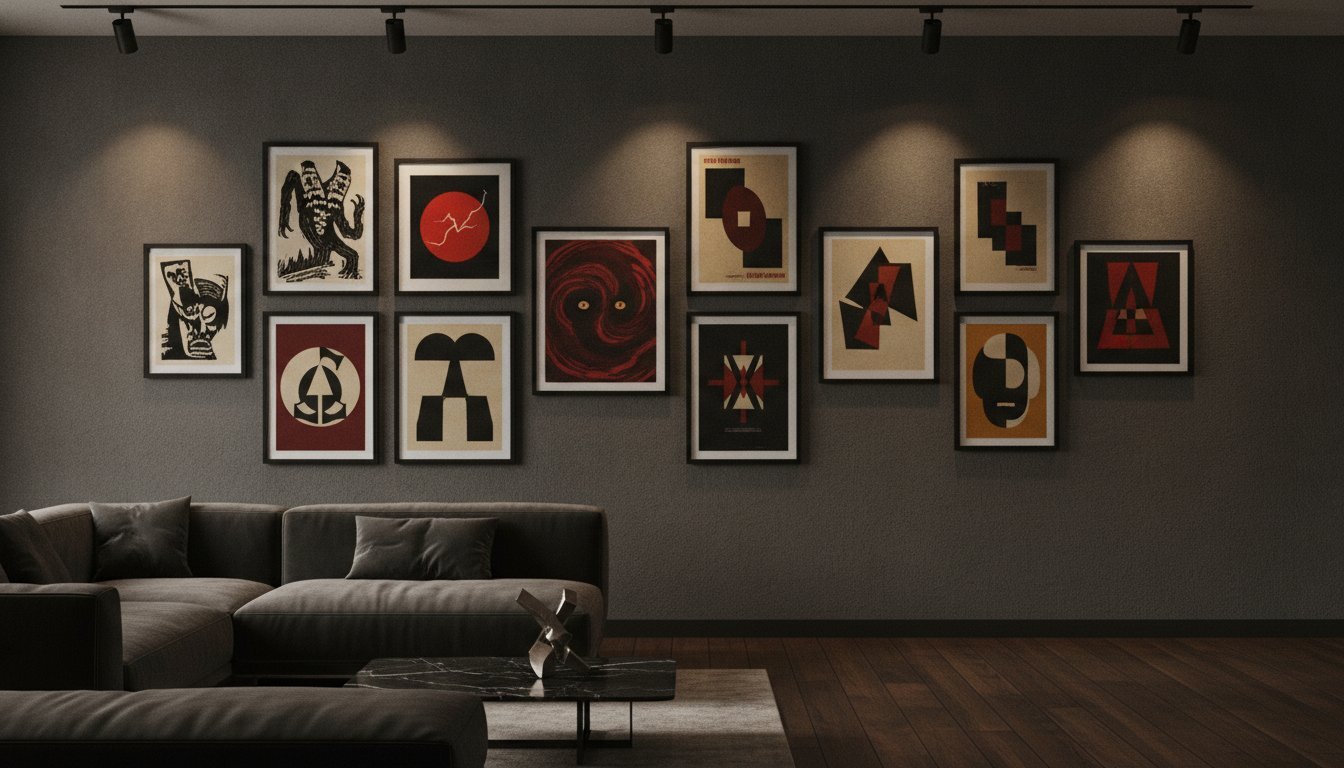
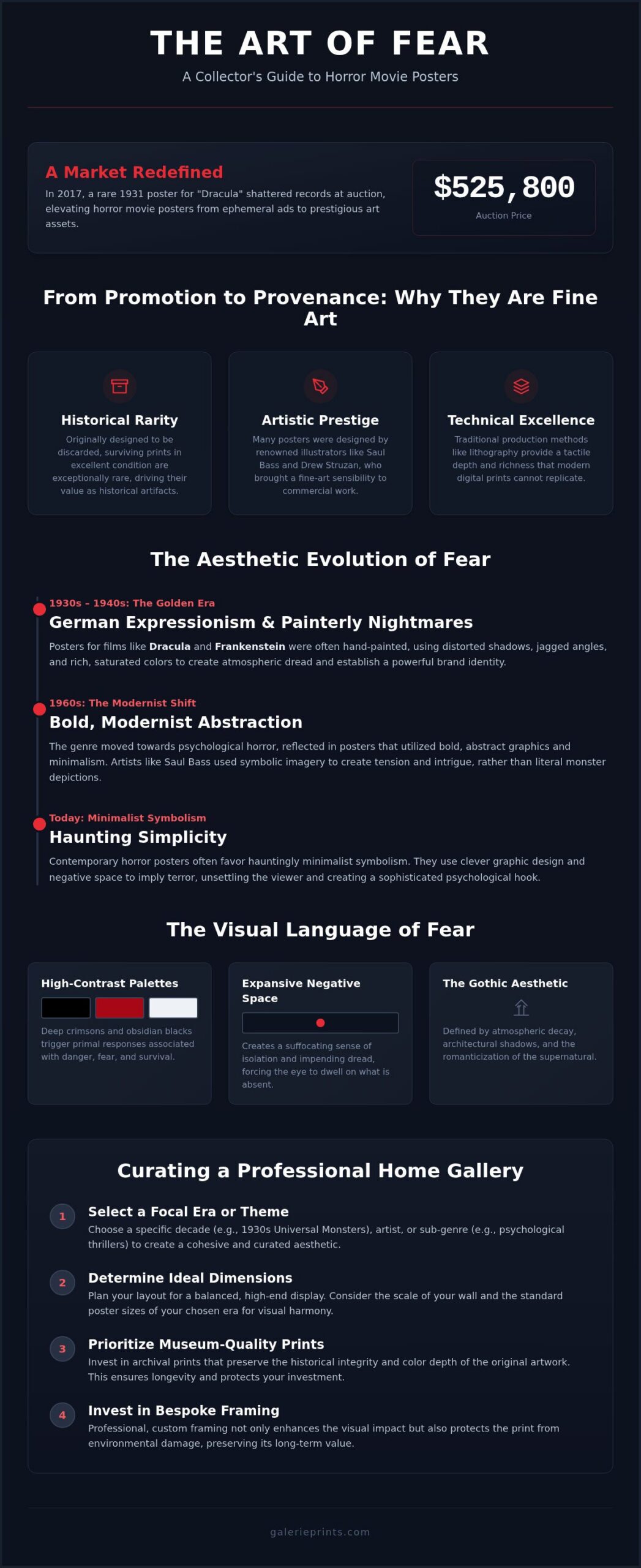
In 2017, a rare 1931 “Dracula” poster commanded a staggering $525,800 at auction, a moment that definitively elevated horror movie posters from ephemeral marketing materials to prestigious assets within the global art market. You likely understand that the most enduring cinematic shadows are those that linger long after the credits roll, captured in the ink and paper of a masterfully composed lithograph. This fascination speaks to a deeper appreciation for the macabre as a sophisticated form of visual storytelling that anchors a room with quiet authority.
In this collector’s guide, you’ll discover the historical significance, artistic mastery, and curatorial secrets behind the world’s most iconic horror movie posters. We’ll explore the evolution of the genre’s aesthetic, tracing the path from the lush, hand-painted nightmares of the 1930s to the hauntingly minimalist symbolism of modern classics. Whether you’re seeking to build a curated gallery wall or simply wish to understand the technical nuances of museum-quality prints, this exploration provides the expertise needed to integrate cinematic history into a refined home. We’ll also address the practicalities of discerning original theatrical releases from common reproductions, ensuring your collection maintains both its aesthetic power and its long-term investment value.
Key Takeaways
- Understand how horror movie posters evolved from literal depictions of monsters into sophisticated psychological tools that use evocative symbolism to unsettle the viewer.
- Explore the stylistic journey of cinematic macabre, from the shadow-heavy influence of 1930s German Expressionism to the bold, modernist abstraction of the 1960s.
- Identify the legendary artists, including Saul Bass and Drew Struzan, whose distinct visual signatures defined the aesthetic of the genre for generations of collectors.
- Learn how to curate a professional gallery wall by selecting a focal cinematic era and determining the ideal dimensions for a balanced, high-end home display.
- Discover the essential role of museum-quality archival prints and bespoke framing in preserving the historical integrity and long-term value of your cinematic heritage.
The Visual Language of Fear: Why Horror Movie Posters are Fine Art
Horror movie posters function as a masterclass in psychological seduction. They’re designed to bypass the rational mind and speak directly to the primitive subconscious. While their initial purpose was purely commercial, the most iconic examples transcend these origins, operating at the sophisticated intersection of avant-garde graphic design and fine art photography. This visual evolution is deeply tied to a comprehensive history of horror films, where the visual shorthand used to market a film eventually became the very thing that defined its cultural legacy. Unlike other genres that often rely on the recognizable faces of stars, horror utilizes symbolic, often disturbing imagery to evoke a visceral reaction. This unique position makes these works highly desirable for collectors who value art that challenges the viewer.
The Psychology of the Macabre
The power of a horror poster lies in its ability to manipulate the viewer’s pulse through deliberate and calculated aesthetic choices. High-contrast palettes of deep crimson and obsidian black don’t just signal danger. Instead, they trigger primal responses associated with the biological markers of fear and survival. Designers frequently employ expansive negative space to create a suffocating sense of impending dread, forcing the eye to dwell on what is missing as much as what is present. In the context of 20th-century design, the Gothic Aesthetic is defined by a preoccupation with atmospheric decay, architectural shadows, and the romanticization of the supernatural. These elements work in concert to create a visual tension that is both unsettling and undeniably beautiful.
From Promotion to Provenance
What began as ephemeral street-level advertising has undergone a profound transformation into highly sought-after gallery pieces. This shift from promotion to provenance is driven by the rarity of original source materials and the historical context of the era they represent. Collectors today view horror movie posters as a form of “curated cinema” that reflects a sophisticated lifestyle and a reverence for photographic heritage. Investing in these pieces is about more than just decoration. It’s about preserving a moment of cinematic history that was once meant to be discarded.
- The prestige of the artist: Many posters were created by renowned illustrators who brought a fine-art sensibility to the work.
- Technical excellence: Traditional production methods like lithography offer a tactile depth that modern digital prints cannot replicate.
- Historical rarity: Because these items were meant to be discarded, surviving examples in excellent condition are exceptionally rare.
The transition of these works from the lobby to the gallery wall underscores their status as legitimate art. By focusing on the visual impact and the story of the creator, we begin to see these posters not as ads, but as enduring pieces of history. This perspective is essential for anyone looking to build a collection that carries both emotional weight and artisanal quality. The result is a home environment that feels both intellectually stimulated and anchored by the permanence of classic cinema.
From Expressionism to Minimalism: The Aesthetic Evolution
The history of horror movie posters is a fascinating study in how art responds to the collective anxieties of the day. It isn’t merely about selling tickets; it’s about the visual evolution of horror posters as they mirrored broader movements in fine art and graphic design. From the lithographic textures of the early 20th century to the digital precision of today, each era has left a distinct mark on the genre’s aesthetic heritage.
The Golden Era of the 1930s and 40s
The 1930s marked the birth of the Universal Monsters, a period where the painterly style of posters for films like Dracula and Frankenstein drew heavily from the distorted shadows and jagged angles of German Expressionism. These works were often hand-painted, featuring rich, saturated colors and elaborate typography that established a film’s “brand” long before modern marketing existed. The stark, atmospheric contrasts found in classic black and white pictures heavily informed this early horror noir aesthetic. Collectors prize these pieces for their artisanal quality, as they represent a time when movie promotion was an extension of fine art illustration, created by artists who understood the power of a single, haunting image.
The Mid-Century Shift: 1950s-1970s
As the “Creature Feature” era took hold in the 1950s, the aesthetic shifted toward bold, sensationalist graphics designed to grab attention on a crowded street corner. This gave way to the 1960s, where Saul Bass and Alfred Hitchcock introduced a modernist abstraction that used simple shapes and negative space to imply violence rather than show it. This period of horror movie posters culminated in 1975 with the iconic Jaws poster, a masterclass in tension that used scale to create a visceral sense of dread. By the 1970s, the genre moved toward a gritty, photographic realism, reflecting the darker, more cynical tone of films like The Texas Chain Saw Massacre.
The 1980s introduced a golden age of illustrated “Slasher” art, characterized by vibrant maximalism and detailed, hand-painted compositions that captured the visceral nature of the films. This era eventually transitioned into the “Elevated Horror” trend of the 2020s. Modern posters often reject the clutter of the past, returning to minimalist photography and stark, symbolic imagery that prioritizes mood over literal plot points. This cyclical return to simplicity proves that the most effective way to unsettle an audience is often through what is left to the imagination. Those looking to anchor their own space with these historical movements can find a wealth of inspiration in our collection of museum-quality cinema archives.
The Masters Behind the Macabre: Legendary Poster Artists
Behind every iconic image that lingers in the mind long after the theater lights come up is a visionary artist who understood the unique power of the macabre. While the previous sections explored broader aesthetic shifts, it’s the individual mastery of legendary designers that elevated horror movie posters into the prestigious world of fine art. These creators didn’t just sell tickets; they crafted a visual legacy that continues to define the genre’s heritage.
Saul Bass and the Geometry of Fear
Saul Bass famously brought high-art minimalism to the marketing of suspense, forever changing how we perceive cinematic terror. By utilizing jagged lines and disjointed, abstract shapes, Bass didn’t just advertise a film. Instead, he mirrored the psychological fracture of the characters within it. His work for Alfred Hitchcock, particularly for Vertigo and Psycho, remains a definitive study in how simplicity can evoke profound unease. For the fine art photography collector, Bass’s posters are essential acquisitions. They represent a bridge between mid-century modernism and photographic heritage, offering a sophisticated visual language that avoids the literal gore of lesser works.
The Illustrative Genius of Drew Struzan
In contrast to the minimalist restraint of the mid-century, the 1980s heralded a return to lush, tactile illustration. Drew Struzan, often called the king of the illustrated poster, defined this era with his masterful use of airbrushing and hand-painted textures. His work for John Carpenter’s The Thing is perhaps the ultimate example of atmospheric dread. He used cold, blue palettes and a central figure obscured by light to create a sense of isolation and impending doom. Struzan’s ability to blend dark, moody horror palettes with a high-fantasy level of detail created a “cult” aesthetic that remains highly sought after by serious collectors today.
The history of the genre is also shaped by the prolific genius of Bill Gold, the man behind the hauntingly simple image for The Exorcist. Gold understood that the most effective horror is often grounded in reality. His use of a single, evocative photograph of a priest arriving at the MacNeil house suggested the battle between light and shadow without showing a single frame of the film’s more visceral effects. Similarly, Reynold Brown captured the atomic-age terror of the 1950s with his dynamic, larger-than-life illustrations of creatures and monsters. His work for Creature from the Black Lagoon utilized a sense of scale and movement that made the monsters feel truly unstoppable. These individual creators transformed horror movie posters from simple marketing tools into enduring pieces of cinematic history that anchor any sophisticated gallery wall.
Curating Your Gallery: Choosing and Displaying Horror Art
Curation is the bridge between a mere enthusiast and a serious collector. When integrating horror movie posters into a living space, the goal is to balance the genre’s inherent intensity with the refined aesthetics of a professional gallery. Start by selecting a focal point that aligns with your interior’s existing narrative; perhaps choosing a specific cinematic era or a cohesive color story that anchors the room. Understanding movie poster sizes is the next critical step. A large-scale one-sheet requires significant wall space to breathe, while smaller formats can be grouped for a more intimate, layered effect.
Styling Horror for the Modern Home
Integrating a stark, expressionist Nosferatu poster into a contemporary minimalist interior creates a sophisticated point of tension. The high-contrast shadows of the silent era complement clean lines and monochromatic palettes perfectly. To add depth and varied texture, consider mixing large-scale work with cinema lobby cards. These smaller, historically significant pieces allow you to build a narrative-driven gallery wall that tells a chronological story of film history, moving from the atmospheric dread of the 1930s to the gritty realism of the 1970s. This approach transforms a simple collection into a curated visual archive.
The Role of Professional Framing
Preservation is as important as presentation. Archival-quality prints are essential to prevent the degradation of the paper and the fading of those deep, saturated blacks that define the genre. When you invest in a bespoke framing service, you aren’t just buying a border; you’re securing the piece’s future. UV-protective glass is non-negotiable for serious collectors, as it shields the artwork from the damaging effects of natural light. Additionally, choosing frame finishes that complement the dark tones of horror art, such as charcoal oaks or matte obsidians, ensures the frame enhances the mood rather than distracting from it.
Lighting your collection requires a delicate touch. Aim for indirect, low-heat LED sources that highlight the textures of the paper without risking heat damage. This creates an evocative ambiance that mirrors the cinematic experience itself. Professional mounting services further preserve the integrity of large-scale prints, preventing the rippling that often plagues cheaper reproductions. By treating your collection with this level of curatorial respect, you transform a room into a lasting piece of history. To begin your journey into high-end cinematic art, explore our curated collection of vintage movie posters and discover museum-quality prints that stand the test of time.
The Galerie Prints Curation: Investing in Cinematic Heritage
At Galerie Prints, we operate as more than a retailer; we are dedicated guardians of photographic heritage and a bridge to a bygone era of cinematic elegance. Our curation of horror movie posters represents a commitment to the preservation of visual history, ensuring that these masterworks of the macabre are treated with the reverence they deserve. Investing in a piece from our collection isn’t merely a decorative choice. It’s a commitment to owning a lasting piece of history, backed by the authority of a world-class gallery.
A Heritage of Quality
Our commitment to excellence begins with the material integrity of each print. We utilize traditional production methods and premium archival paper types to ensure that every image retains its depth, contrast, and tactile quality for generations. Our London-based gallery team possesses a deep expertise in sourcing rare imagery from world-renowned archives, providing our clients with access to works that are often unavailable to the general public. This artisanal approach acts as a seal of quality, distinguishing our collection from the mass-produced reproductions found elsewhere. We don’t just offer prints; we provide museum-quality artifacts that carry a palpable sense of prestige and permanence.
- Expert Sourcing: Our curators meticulously vet every image for historical significance and visual impact.
- Artisanal Production: We favor traditional methods that respect the original source materials.
- Bespoke Readiness: Every piece is handled with precise care, ensuring it arrives ready to anchor your space.
Beyond the Poster: Lobby Cards and Rare Collectables
For collectors seeking a more intimate connection to film history, our collection of Cinema Lobby Cards offers a unique alternative. These smaller, historically significant pieces were once the primary way audiences engaged with a film’s narrative before entering the theater. They act as a fascinating window into Hollywood’s past, capturing specific scenes with a photographic clarity that complements larger-scale horror movie posters perfectly. By mixing these formats, you can create a layered, textured gallery wall that speaks to the breadth of your cinematic passion.
Our dedication to the arts extends beyond the silver screen. We invite you to explore our full range of music photography and fine art archives to find pieces that resonate with your personal aesthetic. Whether you’re drawn to the visceral energy of a rock archive or the quiet authority of a vintage movie still, our bespoke framing service ensures that your investment is protected and presented with gallery-level sophistication. This holistic approach to collecting ensures that your home reflects a life lived with discernment and a deep appreciation for the world’s most evocative visual heritage.
Preserving the Legacy of Cinematic Macabre
Collecting horror movie posters is far more than an exercise in nostalgia; it’s a deliberate act of cultural preservation. Throughout this guide, we’ve explored how these evocative images transitioned from ephemeral advertisements into prestigious assets that define the visual language of fear. By appreciating the technical mastery of legendary artists and the nuances of professional curation, you don’t just decorate a room. Instead, you build a personal gallery that reflects both intellectual depth and a profound reverence for the history of film.
To anchor your own collection with pieces of unparalleled quality, explore our curated collection of iconic movie posters and cinema art. Each selection from our world-renowned photographic archives is produced as a museum-quality archival print, ensuring the longevity of those deep, evocative tones that define the genre. Our London gallery team provides bespoke hand-crafted framing for every piece, treating each work with the artisanal care required for serious collectors. It’s time to embrace the enduring allure of the macabre and transform your living space into a lasting testament to cinematic heritage.
Frequently Asked Questions
What is the most iconic horror movie poster of all time?
While “iconic” is often subjective, the 1931 Dracula poster is widely considered the pinnacle of the genre, holding the world auction record of $525,800. For modern collectors, the minimalist moth imagery of The Silence of the Lambs remains a masterclass in symbolic design. These pieces aren’t just advertisements; they’re historical markers that define cinematic eras. Choosing a favorite often depends on whether you prioritize the painterly style of the 1930s or the modernist abstraction of the 1960s.
How can I tell if a horror movie poster is a high-quality print or a cheap reproduction?
High-quality horror movie posters are distinguished by their material weight and the depth of their ink saturation. Authentic theatrical releases and museum-quality prints typically utilize heavier archival paper, whereas cheap reproductions often feel thin and glossy. Look for sharp detail in the typography and a lack of pixelation in dark gradients. Standard theatrical one-sheets are traditionally 27 by 41 inches, while many modern commercial reprints use the smaller 24 by 36 inch format.
Are vintage horror posters a good financial investment?
Vintage horror posters have proven to be exceptionally resilient assets for serious collectors. With the global horror film market valued at $128.72 billion in 2026 and growing at a 7.2% CAGR, demand for tangible cinema heritage is rising. Record-breaking sales for titles like London After Midnight demonstrate that rarity and historical provenance drive significant value. Collectors often look for posters with a strong market history and recognizable imagery to ensure long-term stability in their art portfolios.
What is the best way to frame a large horror movie poster?
The best way to frame a large-scale piece is through a bespoke service that prioritizes archival safety and structural integrity. Large prints are prone to rippling, so professional mounting on acid-free backing is essential for maintaining a flat, gallery-standard appearance. You should always opt for a frame that complements the dark, moody tones of the artwork without overpowering it. Using a charcoal or matte black finish provides a sophisticated border that lets the cinematic imagery remain the focal point.
Can horror movie posters work in a sophisticated interior design scheme?
Horror art integrates beautifully into sophisticated homes when treated with curatorial intent rather than as mere merchandise. The “Elevated Horror” trend favors minimalist photography and symbolic imagery, which pairs naturally with contemporary furniture and monochromatic color schemes. A stark, black-and-white still from a classic noir film can act as a powerful anchor in a minimalist living room. By focusing on the artistic merit of the composition, these pieces provide a sense of worldly expertise and historical depth.
What is the difference between a movie poster and a cinema lobby card?
A standard movie poster is a large-scale theatrical one-sheet designed for street-level visibility, while a cinema lobby card is a smaller, photographic print, usually 11 by 14 inches. Lobby cards were typically issued in sets of eight, showcasing specific scenes to entice audiences. Because they utilize photographic processes rather than lithography, they offer a different tactile quality. They’re perfect for smaller spaces or for adding varied texture to a larger gallery wall of curated cinema archives.
How do I protect my horror movie prints from sunlight damage?
Sunlight is the primary enemy of vintage paper and ink, causing irreversible fading and brittleness over time. To protect your collection, you must use UV-filtering glass or acrylic, which blocks up to 99% of harmful rays. Even with protection, it’s wise to avoid hanging your horror movie posters directly opposite large windows. Indirect lighting or low-heat LED spotlights are much safer alternatives that enhance the atmospheric mood of the art without compromising its physical integrity.
What are the most popular horror movie posters for collectors in 2026?
In August 2026, collectors are showing intense interest in “Titans of Terror” titles from the 1950s and 60s. Recent auction estimates highlight The Blob (1958) at $700 to $1,000 and Son of Frankenstein (1965) at $500 to $800 as highly desirable mid-range acquisitions. Other trending titles include The Monolith Monsters and Terror From the Year 5,000. This shift suggests a growing appreciation for the vibrant, sensationalist graphics and the historical nostalgia of the atomic-age creature feature era.