Tag: Art Collectors

Hand Finished Picture Frames: A Collector’s Buying Guide

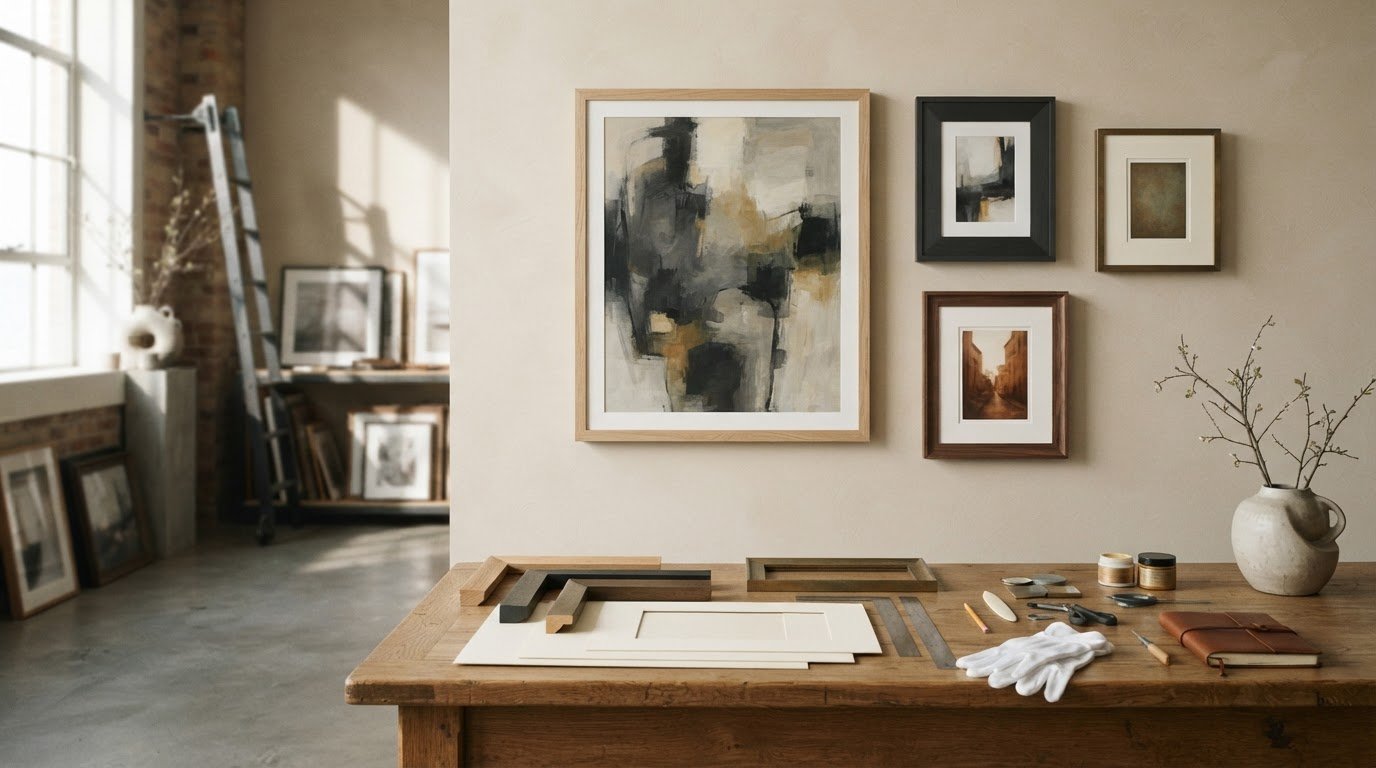
What if the best frame is the one you notice only after the artwork has drawn you in? Hand finished picture frames can bring depth, texture and character to a print, but the finish should support the image rather than compete with it. Choosing well involves more than matching colours: the frame’s scale, the space around the image and the room where it will hang all shape the result.

This guide explains what a hand-finished surface can contribute and how to compare frame proportions, materials and mounting choices. Use the practical checks to assess a frame in relation to the artwork and its setting, then make a choice that feels considered rather than based on a finish label alone.

Keep one principle in view: the frame serves the artwork first, then helps bring its materials and surroundings into harmony. Galerie Prints brings print selection and bespoke professional framing together. You can choose print dimensions, premium paper types and framing options, with framed prints delivered ready to hang.

Key Takeaways

  • Understand what hand finished picture frames means, and why the phrase describes the finish rather than every stage of making a frame.
  • Compare restrained and expressive finishes by considering the artwork’s character and the room where it will hang.
  • See how the frame, mount, glazing and artwork support each play distinct roles in the final presentation.
  • Use a practical checklist to move from identifying your artwork and measuring it to considering viewing distance, wall space and décor.
  • Discover how Galerie Prints’ bespoke framing brings print dimensions, premium paper and framing choices together in a finished print ready to hang.

What Does Hand Finished Picture Frames Mean for Your Artwork?

A hand-finished frame has finishing work applied or refined by hand. The phrase describes the frame’s surface treatment, not necessarily every stage of its design or construction. The surface might show subtle texture, gentle variation in tone or carefully worked decorative details. Since the term can describe different treatments, assess the frame’s actual appearance rather than relying on the label alone.

Hand-finished framing describes a frame whose visible finish has been applied or refined by hand; it doesn’t, by itself, tell you how every part was made. Nor does the label mean every frame is entirely handmade or one of a kind. Look at the surface, noting its sheen, colour and level of detail, then consider how those features will read beside the artwork. For broader context on frame forms and decorative elements, see Picture Frame Wikipedia.

How a hand-finished frame differs from a standard finish

A standard finish may look more even and consistent, while hand-applied or refined finishing can sometimes introduce delicate tonal variation or a more tactile surface. Neither is automatically superior. A softly varied surface may lend a crafted quality; a uniform finish can create a quieter outline. Compare the frame itself with the artwork, and don’t assume that “hand-finished” means the entire frame was made by hand.

Why finish matters for photographs and fine-art prints

A frame’s surface helps set the image’s visual register. A restrained finish can let a photograph’s composition, tonal range or subject hold attention. A more decorative finish may add presence and suit an image with a strong sense of period or drama, provided it doesn’t overwhelm the picture. Choose according to the artwork, the intended display and the atmosphere you want to create, rather than following a universal rule about which finish is best.

Keep the frame’s decorative role distinct from the functions of mounting and glazing. A mount sits between the image and frame, creating visual breathing room and changing the artwork’s proportions within the overall presentation. Glazing covers the image. These choices affect the finished display, but they aren’t the frame finish itself.

Choosing a frame is part of deciding how an image will live in a room. For a wider perspective on selecting and displaying photographic work, explore fine art photography collecting and decorating.

How Frame Finish, Colour and Proportion Shape the Final Look

A frame changes how an image meets the wall. Its colour can echo a tone in the photograph, its finish can introduce contrast, and its width can give the image more or less visual presence. Rather than seeking an exact match, consider how the artwork, frame and room relate as a whole. The comparison below offers starting points, not rules about which choice is best.

Approach Visual effect Artwork character Room context
Restrained finish Creates a quieter outline, keeping attention close to the image. Can suit photographs with delicate tonal shifts or a calm composition. May feel harmonious in a pared-back setting or among other framed works.
Expressive finish Adds visual emphasis and gives the frame a stronger presence. Can complement images with bold contrast, period character or dramatic subject matter. May provide a deliberate focal point in a room with more decorative elements.

Colour relationships needn’t be literal. A frame might pick up a subtle tone in the image, contrast with its darkest areas or connect with colours already present in the room. Consider the wall and nearby furnishings too, but don’t feel obliged to match them exactly. Whether arranging a print above refined furniture from Benjamin & Maxwell or on a minimalist feature wall, a little contrast can help the artwork stand apart, while a closer tonal relationship makes the overall display feel more composed.

Which frame finish suits a photographic print?

Let the photograph’s mood and tonal range guide your first thoughts. For black-and-white work, a restrained treatment may preserve a quiet, reflective quality, while a more expressive choice can heighten a dramatic or archival feel. Either approach can also work with colour images. Explore the enduring appeal of black and white pictures for more on the varied character of these prints.

How to judge frame width and visual balance

Width affects how much visual weight the frame carries around the image. A narrow profile can keep the boundary discreet; a broader one can make the finished piece feel more substantial on a large wall. Fine surface details may be visible up close but disappear when viewed across a room, so think about the distance from which the print will usually be seen. Step back and ask whether the frame gives the artwork presence without pulling attention away from it.

The frame should support, rather than distract from, the image. If you’re choosing a photograph for a particular space, browse the fine-art photography prints at Galerie Prints with the wall, viewing distance and desired atmosphere in mind.

Hand Finished Frames Compared: Finish, Mounting and Glazing

A framed print brings together several separate elements. The frame finish is the visible treatment of the frame itself; the mount, glazing and artwork support each have a different role. Keeping these choices distinct makes it easier to judge the complete presentation, rather than expecting one component to do everything.

When choosing hand finished picture frames, start by assessing the frame’s surface in relation to the image. Then consider how a mount might shape the space around it, how glazing will look in the intended setting, and how the print is held within the frame. No single combination suits every artwork or display environment.

What a mount adds to a framed picture

A mount creates a visible border between the image and frame, giving the photograph room to breathe and helping define its place within the overall composition. Its width changes the balance: a generous border can make the image feel more contemplative, while a narrower one keeps the presentation visually close to the picture. Colour matters too. A quiet tone may preserve a subtle mood; a contrasting one can make the image feel more distinct. A mount is a separate design choice, not part of the frame’s finish.

Distinguish the mount from the artwork support, which sits behind or holds the print within the framing. These components contribute to the construction of the finished piece, while the mount is visible around the image. Considering each separately helps you make more deliberate choices about appearance and presentation.

What glazing contributes to the finished presentation

Glazing is the transparent layer over the image. Its purpose and appearance are separate from the frame’s decorative finish, even though the two are seen together. Glazing choices can affect how the image is viewed, so consider reflections and the light in the room. A print displayed opposite a window, for example, may be seen under different conditions from one on a wall with less direct light.

Think about the usual viewing position, the room’s lighting and how clearly you want the image to read from different angles. Glazing options vary, so choose in relation to the print and its setting rather than assuming one type is right for every display. The artwork, its surroundings and the look you want all matter.

Finally, consider the frame, mount, glazing and support as a coordinated whole without confusing their functions. The mount can create breathing room; glazing places a transparent layer over the image; support holds the artwork within the frame. Together, these decisions complete the presentation, while the finish remains the frame’s own visible surface.

How to Choose Hand Finished Picture Frames: A Practical Checklist

A considered frame choice begins with the print, not a finish sample. Work through the decisions in sequence: identify what the artwork needs, record its dimensions, decide how you want it to feel on the wall, then review the complete framing choices in the room where it will hang. This keeps the frame in service of the image, even when you’re drawn to a distinctive finish.

  • Identify the artwork. Notice its subject, palette, contrast and mood. Decide whether your priority is an understated presentation, a stronger decorative accent or giving image preservation careful consideration.
  • Note the print’s dimensions. Start with the actual image size, then consider how the frame and any mount will shape the finished piece.
  • Set the visual direction. Choose whether the frame should recede, echo a tone in the image or add a deliberate point of contrast.
  • Review the display setting. Take account of viewing distance, available wall space, room light and surrounding décor.
  • Assess the whole presentation. Consider the finish, frame width, mount and glazing together before settling on the framing arrangement.

Checklist summary: Identify the print, measure it, choose the intended visual mood, consider the room, then review the complete framed composition.

Start with the print, its dimensions and its intended setting

Use the print’s dimensions as your starting point, rather than estimating from the wall or choosing a frame in isolation. Then picture its intended setting: will it have space to stand alone, or will it join a larger arrangement? A print displayed among other works may need to feel cohesive with its neighbours, while a single piece can take a more individual direction. For an example of a distinctive photographic sensibility, explore Slim Aarons’ photographic world.

Review the complete framed result before deciding

Imagine the frame, mount and glazing around the image as one composition, then consider how that arrangement will read from the usual viewing distance. A detail that feels subtle up close may become less apparent across the room; strong contrast may have greater presence on a quiet wall. Room light can also affect the viewing experience, so factor in where the piece will hang. The strongest choice is the one that feels coherent with both the artwork and its setting.

Galerie Prints brings print selection and bespoke professional framing together, with framed prints delivered ready to hang. Explore bespoke framing at Galerie Prints as you consider the finished presentation for your print.

Bespoke Framing at Galerie Prints: Complete Your Fine-Art Print

A photograph’s presentation begins with the image, then takes shape through the choices made around it. Galerie Prints offers bespoke professional framing as an add-on for purchased prints. Choose print dimensions, premium paper types and framing options to create a considered presentation around the photograph you’ve selected.

A considered frame for a curated photographic print

Galerie Prints’ collection brings together photography from established archives and photographers. Whether you’re drawn to an evocative portrait, a cinematic scene or a photograph that recalls a particular era, framing can help complete how that image lives in your space. Consider the artwork’s mood and visual character first, then decide whether you want a quietly complementary presentation or a more pronounced one.

As this guide has explored, hand finished picture frames describes a type of surface treatment, not a complete framing specification. When choosing framing for a print, focus on the visible finish and how it relates to the image, alongside the other available framing choices. The frame should contribute to the presentation without eclipsing the photograph.

From print selection to ready-to-hang artwork

Choosing a print and its framing options within one purchase journey brings the artwork and its presentation together. Professional framing and mounting options are available for purchased prints, so you can consider these elements alongside your chosen dimensions and paper type rather than treating framing as an entirely separate decision. The framed print is delivered ready to hang.

This gives your choices a clear order: begin with the photograph that speaks to you, select its dimensions and paper, then complete its presentation with framing. It keeps the artwork at the centre while making it easier to picture the finished piece in your home. When styling walls alongside modern interior accents, exploring curated home accessories at Artistry Deco Shop can help balance your artwork with the wider room. The aim isn’t to follow a formula, but to choose a presentation that feels coherent with both the image and its intended setting.

For a curated photographic print with framing considered as part of its presentation, explore fine-art prints and bespoke framing.

Choose a Frame That Lets the Artwork Belong

Considered framing begins with the artwork: its dimensions, character and intended place on the wall. A finish can add texture or emphasis, while frame width and colour shape the image’s presence. Mounting and glazing each contribute in a different way, so assess the complete presentation rather than treating “hand finished” as a guarantee of a particular technique or result.

Let the photograph lead, then weigh your priorities: a quieter presentation, a stronger decorative accent or thoughtful attention to how the print is displayed. Galerie Prints offers bespoke professional framing for purchased prints. Select print dimensions, premium paper types and framing options, then receive your framed print ready to hang.

Give a photograph a presentation that feels at home in your space. Explore fine-art prints and bespoke framing, and choose the image that speaks to you with greater confidence.

Frequently Asked Questions

What does hand finished mean on a picture frame?

On a picture frame, “hand finished” means finishing work has been applied or refined by hand. The phrase describes the surface treatment, not necessarily every stage of making the frame. Techniques and visible results can vary, so treat the description as a starting point rather than proof that the whole frame is handmade. Judge the finish itself, including its texture and sheen, and consider how it complements the artwork.

Are hand finished picture frames worth choosing?

Hand finished picture frames are worth considering if their appearance suits the artwork and the room. The label alone doesn’t determine value or quality. A carefully chosen finish can add character and give a print a considered presence, while a simpler frame may be preferable when you want the image to remain the focus. Compare the complete framed composition, including its proportions and any mount, rather than judging the frame surface in isolation.

How do I choose a frame finish for a photograph?

Start with the photograph’s palette, contrast and mood, then consider the room where it will hang and how prominently you want the frame to read. A restrained finish can keep attention on a subtle image; a more expressive one may add emphasis to a dramatic photograph. These are possible directions, not fixed rules. Assess the frame alongside any mount and glazing, since both influence the finished presentation.

Can I have a print framed when I buy it?

Yes. Galerie Prints offers bespoke professional framing as an add-on for purchased prints. You can select print dimensions, premium paper types and framing options as part of bringing the artwork and its presentation together. Framed prints are delivered ready to hang. This lets you consider the image, its scale and the overall framing choices within one purchase journey, without treating framing as a separate step after selecting your print.

What is the difference between a picture frame and a mount?

A picture frame is the outer structure around the artwork; a mount is a separate border between the image and the frame. A mount can create visual separation and change the proportions of the overall presentation, giving the image more space around it. The frame establishes the outer boundary, finish and presence. A mount is a design choice, not a requirement for every framed picture.

Does a hand finished picture frame protect a photograph?

Not necessarily. “Hand finished” describes finishing work or the frame’s appearance, not its protective qualities. A framed presentation can include several separate components, such as the frame, mount, glazing and artwork support, and protection depends on their specifications. Don’t assume a particular level of conservation, UV protection or archival performance from the finish label alone. Consider the components and their stated properties separately.

How do I choose the right frame size for my picture?

Start with the artwork’s actual dimensions, then decide whether a mount will form part of the composition. Consider the available wall space and how far away the print will usually be viewed. A broader frame can carry more visual weight, while a narrower one may feel quieter. Judge the finished proportions around the image as a whole, rather than relying on a universal sizing formula.

How to Store Fine Art Prints: A Collector’s Guide to Archival Preservation

What if the most significant threat to your collection isn’t the passage of time, but the invisible chemistry of its immediate surroundings? A fine art print is a silent dialogue between the artist’s vision and the paper’s texture, yet this conversation is remarkably fragile. Without a disciplined approach to preservation, even the most prestigious Terry O’Neill or Slim Aarons photograph can fall victim to the invisible ravages of oxidation and environmental decay. If you’re uncertain about how to store fine art prints to maintain their archival integrity, you’re not alone. Many collectors harbor a quiet fear that a simple storage error might diminish the value of their vintage movie posters or rare Star Wars prints.

It’s natural to feel overwhelmed by the technical nuances of pH-neutral barriers and atmospheric stability. You seek the confidence that your collection will retain its vibrant depth and historical significance for decades. This guide demystifies the curatorial secrets used by the world’s leading galleries to protect museum-quality works. We’ll examine the specific environmental benchmarks while identifying the essential acid-free materials required to safeguard your photographic heritage against the elements, ensuring your investment remains a pristine heirloom for generations to come.

Key Takeaways

  • Learn to manage the environmental alchemy of your storage space to prevent the chemical degradation of historical pigment-based inks.
  • Identify the non-negotiable archival materials, including Solander boxes and lignin-free barriers, required for how to store fine art prints with professional precision.
  • Adopt the professional curator’s “White Glove” rule to safeguard the tactile integrity of your collection during inspection or relocation.
  • Understand the role of bespoke framing as a permanent preservation tool that acts as a protective micro-environment for your most valued acquisitions.

The Stewardship of Art: Why Proper Storage is a Collector’s Duty

Owning high-end imagery isn’t merely an act of decoration; it’s a commitment to historical preservation. Archival storage is defined as the active prevention of chemical and physical degradation over time, ensuring the material remains in its intended state. When you acquire fine art photography, you’re accepting a role as a steward of a cultural artifact. Unlike temporary decorative posters, which are often printed on acidic wood-pulp paper, museum-grade editions are designed for centuries of stability. However, this longevity isn’t a passive guarantee. You must defend the work against the “Three Enemies of Art”: light, humidity, and volatile organic compounds (VOCs). Understanding how to store fine art prints ensures these forces don’t erode the artist’s original intent or the print’s structural integrity.

The Investment Perspective: Protecting Market Value

In the world of high-caliber art, condition is the ultimate arbiter of market value. A minor crease, a hint of yellowing, or the presence of foxing can drastically reduce the resale price of a limited edition piece. Condition reports serve as a clinical biography of the print’s life, documenting every nuance of its physical state. While your Certificate of Authenticity proves the work’s origin, only “mint condition” status secures your long-term financial upside. Professional collectors don’t just buy art; they manage it with the same rigor as a gallery curator—much like how property professionals utilize properlens.app for media wellness checks—to ensure their investment remains untarnished.

A Legacy of Preservation: From Archives to Heirlooms

Meticulous preservation transforms a modern purchase into a cherished family heirloom. Professional galleries adhere to strict photograph preservation guidelines to protect fragile assets like vintage cinema lobby cards. These items weren’t always intended to survive the decades, yet they endure through disciplined care. When you master how to store fine art prints, you’re protecting a specific, tangible moment in cultural history. It’s a bridge between the past and the future, ensuring the emotional depth and tactile beauty of the work remains vibrant for your children and grandchildren.

Environmental Alchemy: Controlling Light, Humidity, and Temperature

The endurance of a masterpiece depends on a delicate chemical equilibrium. When considering how to store fine art prints, you must view your storage space as a controlled laboratory where atmospheric stability is the highest priority. Modern giclée prints utilize a sophisticated technical alchemy where microscopic pigment particles are suspended in a liquid carrier and bonded to archival paper. This process, pioneered in the early 1990s through the Graham Nash legacy, transformed digital scans into museum-quality works. Nash’s insistence on archival stability pushed the industry to move beyond fleeting dyes toward the lightfast pigments we rely on today. These pigments are remarkably resilient, but they aren’t invincible. They require an environment that adheres to the strict museum standard: a stable temperature between 18-20°C and a relative humidity of 40-50%.

Atmospheric stability is your primary defense against the invisible forces of decay. For works not currently showcased behind UV-protective glass, dark storage is a non-negotiable requirement. Light damage is cumulative; even low levels of ambient exposure can slowly break down the molecular bonds of the ink. By following professional conservation storage guidelines, you can ensure that the evocative depth of your collection remains unchanged for decades. If you’re ever in doubt about the safety of your current display, our bespoke framing service provides a sealed, UV-shielded environment that offers the ultimate peace of mind.

Pigment vs. Dye: The Chemistry of Fading

The distinction between pigment and dye is the difference between a legacy and a memory. Dye-based inks are molecularly dissolved in water, making them highly susceptible to rapid fading and “bleeding” when exposed to light or moisture. In contrast, archival pigment is composed of solid particles of color that sit on the surface of the paper; it’s officially rated for 100-year stability under proper conditions. While these pigment particles are far more stable, their lightfastness ratings still depend on your storage choices. Direct sunlight will eventually bleach even the most robust Star Wars limited edition prints, making the choice of a shaded, climate-controlled room essential for long-term preservation.

The Humidity Hazard: Preventing Foxing and Mould

Moisture is perhaps the most insidious threat to paper-based art. High humidity encourages the growth of mould and the development of “foxing,” those distinctive reddish-brown spots that frequently mar antique black and white pictures. These blemishes are often caused by the oxidation of iron or copper particles within the paper fibers when they encounter moisture. Beyond chemical staining, fluctuating humidity causes the paper to “cockle,” creating an unsightly warping or rippling effect as the fibers swell and shrink. To prevent this, never store your collection in basements, attics, or against external walls, as these areas are prone to dampness and rapid temperature shifts. Consistent airflow and a dehumidifier are often necessary tools for anyone serious about how to store fine art prints in a residential setting.

The Anatomy of Protection: Archival Materials and Solander Boxes

The physical preservation of a masterpiece requires more than just a stable room; it demands a physical sanctuary. If you are researching how to store fine art prints, the Solander Box represents the pinnacle of this protection. Invented in the 18th century by botanist Daniel Solander, this book-shaped case remains the gallery standard because it allows prints to lie perfectly flat while offering a rigid, dust-proof barrier. Within this sanctuary, every material that touches the print must meet the non-negotiable standards of being both acid-free and lignin-free. Lignin, a natural component of wood pulp, is the primary culprit behind the yellowing and eventual “burning” of paper fibers. By utilizing alpha-cellulose or cotton rag materials that have been chemically purified, you ensure that the substrate remains as pristine as the day it left the press.

Interleaving is the quiet hero of archival storage. Choosing between Mylar and Glassine depends on the specific needs of your collection. Mylar, a brand of polyester film, is valued for its absolute chemical neutrality and transparency, making it ideal for frequent viewing of Star Wars Limited Edition Prints. Glassine, a translucent and glazed paper, provides a smooth surface that prevents ink transfer or “ghosting” between stacked works. When managing the complexities of how to store fine art prints, these layers act as the final defense against the friction of time and the subtle transfer of pigments.

Why Shipping Tubes are Only for Shipping

Tubes are a logistical necessity, not a storage solution. Paper possesses a “memory” that becomes more stubborn the longer it remains coiled. Long-term storage in a tube leads to permanent curling, making the print nearly impossible to frame without risking structural damage. The act of extracting a large-format print from a narrow cylinder often leads to “mooning” or crushed edges, particularly with fragile cotton rag papers. Beyond the physical risks, standard cardboard tubes often off-gas acidic vapors that can yellow the edges of a Slim Aarons photograph or a vintage movie poster within a few short years.

Selecting Your Substrate Protectors

The choice between buffered and non-buffered materials is a subtle but critical distinction in the art world. Buffered materials contain calcium carbonate to neutralize acids, which is excellent for most giclée prints and modern photography. However, certain historical photographic processes require non-buffered tissue to maintain their specific chemical balance. You should always avoid using adhesive tapes, even those labeled “archival,” directly on the print surface. Instead, utilize polyester corner mounts within your storage folders to secure the work. This method allows the paper to breathe and expand naturally without the risk of adhesive delamination or permanent staining.

The Curator’s Touch: Handling and Maintenance Protocols

Mastering how to store fine art prints requires a transition from collector to curator, starting with the physical touch. The moment a print is handled is the moment of greatest risk. Even the most pristine storage environment cannot undo the damage caused by a single careless fingerprint. The “White Glove” rule isn’t merely gallery theater; it’s a chemical necessity. The oils naturally present on human skin contain fatty acids and salts that can permanently etch the delicate emulsion of a photographic print, leaving marks that may only become visible years later as they oxidize. When you prepare to inspect your collection, always utilize lint-free cotton or nylon gloves to maintain the tactile integrity of the work.

Before unboxing any acquisition, establish a “Clean Surface” protocol. Your workspace should be a flat, rigid surface, significantly larger than the print itself, and cleared of all potential contaminants. When handling a large-format slim aarons print, never lift it by a single corner. This creates a fulcrum point that leads to “half-moon” creases, which are permanent breaks in the paper fibers. Instead, use two hands to support the print from opposite sides, or better yet, slide a piece of archival board underneath to act as a support cradle. This meticulous approach ensures that the “as-new” condition of your investment remains uncompromised during every viewing.

Unboxing Your New Acquisition

Opening a new shipment is a moment of high anticipation, but haste is the enemy of preservation. Avoid the temptation to reach inside a shipping tube and pull the print out by its edge. This friction can cause “scuffing” on the ink surface. Instead, use a gravity-assisted removal: tilt the tube and let the print gently slide out onto your prepared surface. Once removed, the print will likely retain its curled “memory.” Use the “24-hour Flattening” technique by placing the print between two sheets of acid-free glassine and weighted with archival weights at the corners. During this time, perform a close-range inspection for “silvering” or ink flaking, particularly in high-density color areas where the ink load is heaviest.

The Dangers of DIY Cleaning

A collector’s instinct is to keep their work spotless, but traditional cleaning methods are often destructive. You should never use liquids, glass cleaners, or “canned air” on a giclée surface. The propellants in canned air can leave oily residues, while liquids can cause the pigment-based inks to swell or delaminate. If you notice surface dust, the only safe method is a light pass with a soft hake brush made of natural hair. If you encounter stubborn spots or foxing on vintage movie posters or music archives, stop immediately. These issues require a professional conservator who understands the specific chemistry of historical paper. For the ultimate protection that allows for safe display, consider our bespoke framing service to seal your art away from domestic hazards.

Finally, maintain a rigorous documentation log for your growing collection. Every time a print is moved, inspected, or rehoused, record the date and any subtle changes in its condition. This log, combined with your Certificate of Authenticity, creates a comprehensive provenance that proves your commitment to professional standards. Understanding how to store fine art prints is a journey of constant vigilance, ensuring that the visual impact of your collection never fades.

The Galerie Prints Standard: Bespoke Framing as Permanent Preservation

While a Solander box offers a sanctuary for works in repose, the true culmination of a collector’s journey is the transition from archive to display. Many enthusiasts struggle with the dilemma of how to store fine art prints without hiding them from the world. The solution lies in the sophisticated micro-environment of a gallery-grade frame. At Galerie Prints, our bespoke framing service isn’t merely an aesthetic choice; it’s a rigorous extension of archival science. We view the frame as a sealed vessel, a silent sentinel that guards a Terry O’Neill portrait or a rare Star Wars limited edition print from the subtle, daily threats of a lived-in interior. By utilizing museum-grade materials, we allow you to “store” your art in plain sight, maintaining its “as-new” condition while it graces your walls.

Our London-based artisanal craftsmanship is rooted in the tradition of the master framer, where every component is selected for its chemical neutrality. We utilize only acid-free mounting materials and pH-balanced adhesives to ensure that the paper fibers of your acquisition remain undisturbed. There is a profound synergy between a museum-quality giclée print and a hand-finished frame. This partnership creates a stable atmospheric pocket that buffers the work against the temperature shifts and humidity fluctuations discussed in earlier chapters. It’s a commitment to localized, artisanal quality that serves as a seal of excellence for any serious collection.

Sealing the Heritage: The Anatomy of a Gallery Frame

The structural integrity of a frame depends on what remains invisible to the casual observer. We employ archival spacers to create a vital gap between the print surface and the glass. This prevents the delicate pigment-based inks from bonding to the glazing, a common tragedy in non-professional framing caused by moisture condensation. Our frames utilize high-density, archival backing boards that act as a primary defense against moisture ingress from external walls. These frames are designed to be heirlooms themselves, constructed with the same reverence for permanence as the Star Wars Limited Edition Prints or Music Archives they protect.

Quiet Authority: Selecting Frames for Your Collection

Choosing the right profile is an exercise in quiet authority. A frame should complement the aspirational lifestyle captured in iconic Slim Aarons photography without competing for attention. By incorporating UV-protective museum glass, which blocks 99% of harmful rays, we significantly reduce the need to rotate works out of sunlight. This advanced glazing allows the deep blacks of a vintage movie poster or the vibrant hues of cinema lobby cards to remain vivid for decades. Our ready-to-hang luxury experience ensures that from the moment a work leaves our London workshop, it’s prepared to endure as a lasting piece of history in your home.

Securing Your Photographic Legacy for the Future

With a deep commitment to preserving photographic history, Galerie Prints stands as a dedicated guardian of photographic heritage. We specialize in the iconic Slim Aarons and Terry O’Neill archives, offering bespoke, hand-made framing in our London workshop to provide the ultimate protective micro-environment. Your collection is a window into a bygone era of elegance, and it deserves nothing less than professional-grade preservation. Explore our curated collection of museum-quality Giclée prints and begin building a legacy that will inspire wonder for generations to come.

Frequently Asked Questions

How long do fine art prints last if stored correctly?

High-quality giclée prints can endure for more than 100 years without visible fading. This impressive longevity depends on the use of pigment-based inks and 100% cotton rag paper. When you maintain museum-grade environmental controls, your collection becomes a lasting piece of history for future generations.

Is it safe to store my art prints in the original shipping tube?

Shipping tubes are designed for transport, not for permanent storage. The physical “memory” of the paper will cause stubborn, permanent curling if it’s left coiled for more than a few weeks. Additionally, standard cardboard often off-gasses acidic vapors that can yellow the edges of your photography.

Do I really need to wear gloves when handling my photography prints?

Wearing lint-free cotton or nylon gloves is a non-negotiable requirement for any serious collector. Fingerprints are more than just surface smudges; they’re deposits of fatty acids and salts. These chemicals can permanently etch the delicate emulsion of a print over time, leaving marks that are impossible to remove.

What is the best temperature and humidity for storing art at home?

You should aim to maintain a stable temperature of approximately 20°C and a relative humidity between 40% and 50%. When researching how to store fine art prints in a domestic setting, remember that stability is your primary goal. Rapid fluctuations in these levels are what cause paper fibers to swell, leading to unsightly warping or cockling.

What is a Solander box and do I need one for my collection?

A Solander box is a specialized, acid-free case with a book-shaped design that protects prints from light, dust, and physical pressure. It remains the gallery standard for archival storage across the globe. If you own rare photography or Star Wars limited edition prints, it’s a necessary investment to ensure their long-term preservation.

Can I store my prints in a plastic storage bin from a hardware store?

Most hardware store bins are made from plastics that off-gas volatile organic compounds, which can be highly destructive to art. These vapors often lead to yellowing or the chemical breakdown of the ink. If you must use plastic, ensure it’s chemically inert polypropylene; however, archival-grade Solander boxes are always the superior choice.

How do I tell if my print has been damaged by “foxing”?

Foxing manifests as distinctive reddish-brown or yellowish spots that appear scattered across the paper’s surface. It’s a chemical reaction typically caused by fungal growth or the oxidation of metallic impurities within the paper when exposed to high moisture. If you notice these blemishes, it’s a sign that your storage environment is too humid.

Why is archival-grade paper so important for long-term storage?

Archival paper is chemically purified to be entirely acid-free and lignin-free, preventing the internal structural decay that turns ordinary paper brittle. This purity provides a stable foundation that allows pigment-based inks to remain vibrant. Understanding these material differences is a foundational part of how to store fine art prints with professional-grade results.

Bespoke Picture Framing for Art Prints Online UK: The Collector’s Guide

The true value of a Slim Aarons or Terry O’Neill masterpiece lies not just in the silver halide but in the story it tells upon your wall. You understand that a rare photographic print is a fragile piece of history, yet the fear of irreversible damage from acidic mounts or fading sunlight often lingers in a collector’s mind. Choosing bespoke picture framing for art prints online uk should never feel like a gamble with your heritage. It’s about finding a sanctuary for your art that balances aesthetic elegance with the rigorous standards of the Fine Art Trade Guild.

We’ll guide you through the nuances of museum-grade preservation, from selecting conservation-grade glazing that blocks 99% of harmful UV rays to understanding the structural integrity of artisanal London craftsmanship. You’ll discover how to visualize the perfect frame for your Star Wars limited edition or vintage cinema lobby card, ensuring it arrives as a ready-to-hang masterpiece. This guide provides the curatorial validation you need to protect the long-term value of your collection while elevating your interior to a gallery standard. It’s time to bridge the gap between a simple purchase and a lasting legacy.

Key Takeaways

  • Understand how the artisanal heritage of London’s creative heart remains the global benchmark for transforming fine art photography into a permanent legacy piece.
  • Learn to identify the museum-grade components, including acid-free mounts and UV-protective glazing, that are essential when investing in bespoke picture framing for art prints online uk.
  • Avoid the irreversible damage of chemical outgassing and fading by choosing custom solutions that respect the unique dimensions of rare cinematic history.
  • Master the curatorial nuances required to frame iconic Slim Aarons prints or vintage cinema lobby cards while preserving their historical and financial value.
  • Discover how an expert gallery’s eye ensures your selected artwork and its handcrafted frame exist in perfect aesthetic harmony for your home.

The Heritage of Bespoke Picture Framing in Soho, London

Soho has long served as the beating heart of London’s creative soul, a labyrinth of narrow streets where the worlds of cinema, music, and fine art collide. To understand the history of picture framing within this district is to trace the evolution of British visual culture itself. For decades, the area’s guild-style workshops provided the structural backbone for the film industry, crafting the surrounds for the very first lobby cards and movie posters that graced West End premieres. Today, this tradition has matured into a sophisticated network of artisanal studios. These spaces don’t merely produce borders; they act as guardians of photographic heritage. The “Soho Aesthetic” is a deliberate study in contrasts, seamlessly blending the raw, edgy modernity of the city with the uncompromising archival standards required by the world’s most prestigious galleries.

The Creative Pulse of Wardour and Berwick Streets

The proximity to legendary film houses on Wardour and Berwick Streets fundamentally shaped the local approach to presentation. When framing cinema memorabilia, the requirements were always twofold: immediate visual impact and long-term preservation. As Soho transitioned from a gritty trade hub into a premier luxury gallery district, the craft evolved to meet the needs of serious collectors. Galerie Prints continues this high-end artisanal tradition, ensuring that every frame reflects the same level of prestige as the artists themselves. This localized expertise remains the gold standard for global collectors who seek more than a simple product. They seek a piece of London’s storied creative history.

Why Discerning Collectors Demand Bespoke

In 2026, we’re seeing a profound shift toward “slow art” and intentional home curation. Collectors are no longer satisfied with transient decor; they’re investing in pieces that offer a sense of permanence and stability. Opting for bespoke picture framing for art prints online uk is a critical step in this journey. It isn’t just an aesthetic choice; it’s a financial investment in the artwork’s longevity. A custom frame serves as a conservation-grade sanctuary, protecting rare works like a Slim Aarons or a Terry O’Neill from the silent threats of environmental degradation. In a market flooded with mass-produced options, the expert curatorial guidance provided by a specialist framer is what distinguishes a mere print from a museum-quality masterpiece. This meticulous attention to detail ensures that your collection remains a lasting piece of history for generations to come.

Defining the Soho Standard: Archival Materials and Museum-Grade Glazing

In the world of high-end curation, “Museum Quality” is a precise technical benchmark rather than a marketing superlative. It represents a commitment to the absolute preservation of a photographic print’s soul. When you invest in bespoke picture framing for art prints online uk, you aren’t merely buying a border; you’re commissioning a controlled environment. The core of this standard lies in the chemistry of the materials. Traditional materials often contain lignin, an organic polymer that releases acidic gases as it breaks down, leading to the heartbreaking yellowing and “foxing” seen in poorly stored archives. By using chemically inert components, we ensure that the silver halide or inkjet pigments remain as vibrant as the day they were struck.

The Heritage of composition frame making in the UK reminds us that while the outward aesthetic has evolved, the fundamental need for structural integrity remains. Modern archival standards demand that every element touching the artwork is acid-free and pH-neutral. This prevents the slow, silent degradation that occurs when low-grade wood pulps or adhesives interact with the delicate surface of a Terry O’Neill or a Slim Aarons print. True conservation is a silent victory, one where the materials work in the background to halt the passage of time.

The Science of UV Protection and Conservation Clear

Ultraviolet light is the primary enemy of photographic longevity, capable of breaking down molecular bonds in both traditional silver halide and modern pigments. Standard glass offers minimal defense, often allowing up to 50% of harmful rays to penetrate. In contrast, museum-grade glazing acts as a high-performance filter. While 70% UV protection is a significant step up, serious collectors demand the 99% threshold found in Conservation Clear or Museum Glass. Archival framing is the use of reversible, chemically inert materials to ensure long-term preservation. This level of protection ensures that even in sun-drenched interiors, the deep blacks and subtle highlights of your collection won’t succumb to the inevitable fade of time.

Mountboards and Spacers: Protecting the Surface

Mounting is where technical precision meets visual narrative. We utilize cotton-core mountboards because their natural breathability prevents the buildup of micro-moisture, a common cause of “cockling” or buckling. To further safeguard the work, we employ discreet spacers that create a vital air gap between the print and the glazing. This prevents the emulsion from adhering to the glass, a risk that increases with humidity. These technical choices provide a physical depth that focuses the eye, turning a simple image into a three-dimensional object of desire. If you’re ready to secure your investment, exploring our Bespoke Framing Service allows you to tailor these museum standards to your specific aesthetic vision.

Bespoke vs. Off-the-Shelf: Why Collectors Choose Custom

The allure of a high-street frame often fades as quickly as the print it houses. While off-the-shelf options promise convenience, they carry a hidden tax on your collection’s longevity. It’s a false economy. Standard frames are frequently manufactured using composite materials like MDF or plastic veneers, which lack the structural integrity required to support large-scale works. More critically, these mass-produced items often utilize adhesives that release volatile organic compounds. This chemical outgassing can lead to the irreversible yellowing of your artwork, a tragedy for any serious collector. Choosing bespoke picture framing for art prints online uk ensures that your investment is protected by materials that are as noble as the art itself.

The Risks of High-Street Readymades

Standardized framing is built for the masses, not the masterpiece. The MDF backings common in budget frames are notorious for releasing harmful chemicals that compromise the paper fibers of your prints. Furthermore, the lack of structural reinforcement in mass-produced corners often leads to bowing or glass breakage over time. Ultimately, a “one size fits all” philosophy fails the unique spirit of fine art photography. It ignores the delicate relationship between the image’s borders and the surrounding mount, often resulting in a presentation that feels cramped and uninspired.

Hand-Finished Excellence in the London Workshop

In our London workshop, the process is one of quiet, methodical craft. We utilize traditional carpentry techniques, such as splined joins, to ensure lifelong durability. These aren’t just technical choices; they’re an homage to a bygone era of quality. Each frame undergoes an artisanal process of hand-staining and waxing, creating a unique patina that develops character over the years. There’s a profound psychological value in owning an object that has been touched by human hands. It transforms a simple display into a unique, artisanal object that resonates with the same prestige as the artists in your collection.

Framing the Extraordinary: From Slim Aarons to Rare Lobby Cards

To frame a masterpiece is to engage in a silent dialogue with the artist, a curatorial act that requires a deep understanding of the image’s emotional frequency. A photograph isn’t just a flat representation of a moment; it’s a window into a specific era, carryng its own weight, tone, and narrative intention. When you seek bespoke picture framing for art prints online uk, the choice of surround must resonate with the soul of the work. A gritty, high-contrast Terry O’Neill portrait of a rock icon demands a different structural language than the sun-drenched, aspirational vistas of a Mediterranean escape. The frame should act as a bridge, connecting the historical significance of the print to the modern aesthetic of your interior.

Aspirational Framing for Slim Aarons

The vibrant, saturated world of Slim Aarons photography requires a light touch to let the “Poolside” aesthetic breathe. We often recommend clean, white gallery frames for these large-format lifestyle pieces. This minimalist approach ensures the frame doesn’t compete with the iconic 1960s colour palette of azure waters and bright citrus hues. Oversized mounts are particularly effective here, creating a sense of space that mimics the expansive luxury of the scenes themselves. It’s a deliberate choice that elevates the work from a mere decoration to a focal point of high-end curation.

Archiving Cinema Memorabilia

Preserving the historical integrity of cinema lobby cards presents a unique set of challenges. These vintage artefacts are often fragile, requiring specialist mounting techniques that secure the card without the use of invasive adhesives. For cards featuring significant historical reverse markings or stamps, we utilize double-sided framing with conservation-grade acrylic on the rear, allowing the full story of the object to remain visible. Collectors of aaron slims should prioritise UV-glazing as a non-negotiable standard to protect the vibrant, sun-drenched pigments of their investment from the inevitable degradation of light.

The strategy shifts again when dealing with black and white pictures. For these timeless works, the frame’s weight and tone must be balanced against the silver-rich shadows of the print. A dark, slender oak frame can provide a sharp, modern edge, while a deeper, hand-finished walnut surround adds a layer of classical prestige. Every decision, from the width of the moulding to the texture of the mount, serves to validate your aesthetic choice and protect the long-term value of your collection. If you’re ready to transform your latest acquisition into a gallery-ready masterpiece, explore our Bespoke Framing Service to find the perfect curatorial match.

Galerie Prints: Your Destination for Expert Picture Framing in Soho

Choosing the right surround for a masterpiece is a responsibility we don’t take lightly. At Galerie Prints, we operate with the understanding that a frame is the final brushstroke on a photographic narrative. When you commission bespoke picture framing for art prints online uk through our studio, you’re accessing a lineage of craftsmanship rooted in the capital’s creative history. We don’t view framing as a secondary service or a commodity. Instead, it’s a vital extension of the curatorial process. Every project benefits from a curator’s eye, ensuring that the material, weight, and tone of the frame honor the artist’s original intent. By housing the entire process under one roof, we eliminate the friction between acquiring a piece and presenting it, offering a seamless journey from our archives to your walls.

Our commitment to local London production remains unwavering. In an era of globalized mass production, we find strength in the artisanal. Each frame is constructed by hand, utilizing the traditional carpentry and hand-finishing techniques discussed in previous sections. This localized approach allows for a level of quality control that simply cannot be replicated by automated systems. Whether you’re securing a Terry O’Neill portrait or a rare Star Wars limited edition print, the result is a piece of photographic heritage that’s built to last for generations. It’s a professional, polished approach that befits a luxury gallery and supports your journey as a discerning collector.

The Gallery-Led Advantage

The distinction between a framer and a gallery is profound. Most framing shops treat every image with a uniform technicality. We’re different. Because we manage exclusive archives like the Slim Aarons Collection and Music Archives, we possess a deep understanding of the historical production context of each print. We know how the silver halide of a vintage lobby card reacts to light and how the vibrant pigments of a 1960s poolside scene should be balanced. This gallery-led perspective ensures your bespoke picture framing for art prints online uk meets the highest museum standards. Our “Ready to Hang” promise means your artwork arrives fully sealed and fitted with heavy-duty hardware, delivered from our London base to your door globally.

Start Your Collection Journey

Beginning your project is a simple, refined experience. You can choose from our curated range of signature frame styles, each designed to complement specific photographic eras and interior aesthetics. Our online tools are built for international collectors, providing the clarity and precision needed to visualize a masterpiece from anywhere in the world. We invite you to explore our bespoke framing options and start your project today. Whether you’re looking for a minimalist gallery finish or a substantial hardwood surround, we’re here to act as your trusted guide in the world of high-caliber visual art.

Securing the Future of Your Photographic Legacy

Investing in fine art photography is an act of cultural preservation that extends far beyond the initial acquisition. By prioritizing museum-grade glazing and chemically inert materials, you ensure that the vibrant poolside scenes of Slim Aarons or the intimate portraits of Terry O’Neill remain as evocative as the day they were captured. We’ve explored how the structural integrity of hand-finished hardwoods and the technical precision of our London workshop provide a sanctuary for your collection, far surpassing the environmental risks inherent in mass-produced alternatives.

When you choose bespoke picture framing for art prints online uk, you aren’t just selecting a border; you’re securing a piece of history. Our gallery-led expertise ensures that every mount, spacer, and hand-stained moulding is selected with a curator’s eye to honor the specific narrative of your artwork. From the creative heart of London to your home, we provide the expert validation your aesthetic choice deserves, ensuring every piece arrives ready to hang and destined to last.

Discover our bespoke framing services and elevate your art collection.

Your collection is a testament to your discernment. We invite you to let us help you protect its future with the prestige and permanence it deserves.

Frequently Asked Questions

How much does bespoke picture framing in Soho typically cost?

Bespoke framing costs vary significantly based on the choice of artisanal mouldings and conservation-grade materials. For a medium-sized frame, industry standards in London suggest a range that accommodates both premium aesthetics and museum-level protection. Factors like UV-filtering glass and hand-finished hardwoods will influence the final investment. We recommend a consultation to discuss the specific requirements of your collection and ensure your artwork receives the curatorial attention it deserves.

What is the best glass for framing fine art photography?

Museum-grade glass with 99% UV protection is the gold standard for preserving fine art photography. This specialized glazing prevents the molecular breakdown of pigments and silver halide caused by light exposure. Anti-reflective properties are also essential; they allow the viewer to appreciate the depth and clarity of the print without distracting glares. It’s a critical component in bespoke picture framing for art prints online uk, ensuring your investment remains vibrant for decades.

How long does the custom framing process take in London?

The creation of a handcrafted frame typically requires approximately four working weeks to ensure every detail meets our gallery standards. This timeframe allows our London workshop to execute precise joins and hand-finished patinas with the necessary care. Once the artisanal process is complete, delivery within the UK usually takes an additional two to three working days. We prioritize the integrity of the craft over speed to ensure your masterpiece arrives in perfect condition.

Can I frame vintage lobby cards without damaging them?

Vintage lobby cards can be framed safely using reversible, acid-free mounting techniques that avoid invasive adhesives. We utilize conservation-grade materials to prevent chemical degradation and “foxing” over time. For cards with significant historical markings on the reverse, double-sided framing with museum-quality acrylic is an excellent solution. This approach preserves the card’s historical integrity while allowing it to be displayed as a centerpiece of your cinematic collection.

Do you offer international shipping for framed art prints?

What is the difference between archival and standard mountboard?

Archival mountboards are made from chemically inert cotton fibers, whereas standard boards often contain acidic wood pulps. Over time, the acids in standard boards can migrate into the paper of your print, causing irreversible yellowing and brittle edges. Archival options are pH-neutral and lignin-free, providing a stable environment for high-value works. It’s a non-negotiable choice for serious collectors who prioritize the long-term preservation of their photographic heritage.

Can you frame large-format Slim Aarons prints?

We specialize in framing large-format Slim Aarons prints, utilizing structural hardwoods and reinforced joins to support the substantial scale of these works. These iconic images often benefit from oversized mounts and clean gallery frames that mirror the expansive, aspirational lifestyle they depict. Our bespoke picture framing for art prints online uk ensures that even the largest poolside vistas are presented with the necessary rigidity and aesthetic elegance to command attention in any room.

Is it worth framing a movie poster with museum-quality glass?

Investing in museum-quality glass for a vintage movie poster is highly recommended if the piece holds historical or financial value. Standard glass provides minimal protection against UV rays, which causes the inks on older posters to fade rapidly. Museum glass not only blocks 99% of harmful light but also features an anti-reflective coating that enhances the visual clarity of the artwork. It transforms a piece of memorabilia into a lasting investment with gallery-level presentation.